



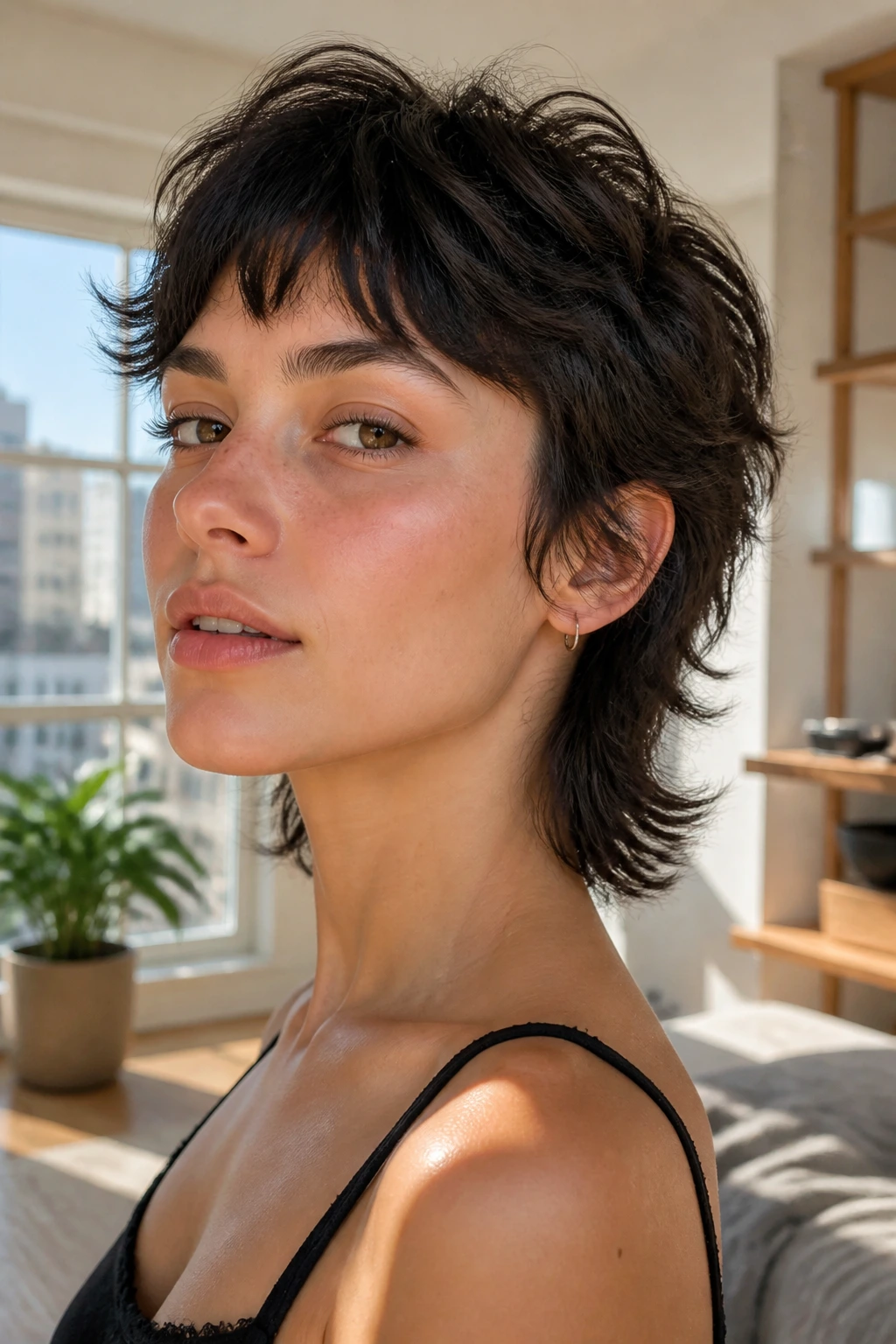
Fine wavy hair and round faces can make a wolf cut feel risky on paper. The wrong version eats too much density, puffs at the cheeks, and turns the whole head into a soft ball of layers that never quite settles down. The right version does the opposite. It lifts the crown, keeps the front pieces long enough to slide past the widest part of the face, and lets the waves do their own imperfect, slightly wild thing.
That balance matters more than people realize. On fine hair, a heavy chop can leave the ends see-through in a week. On a round face, layers that start too high at the cheeks can widen the look instead of narrowing it. A good wolf cut works with those limits, not against them.
I keep coming back to this haircut because it solves a very specific styling problem without demanding a huge routine. It gives you movement when your hair tends to lie flat. It gives your face length when you need a little vertical line. And if the cut is drawn well, it usually grows out with less drama than a blunt shape that has to be kept exact.
Why These 22 Wolf Cuts Earn Their Keep

-
They keep weight where fine hair needs it: The best versions leave enough perimeter length that the ends don’t disappear after one wash and a rough dry.
-
They flatter round faces with length, not width: A strong wolf cut builds lift at the crown and places face-framing pieces below the cheekbone, which changes the line of the cut in a useful way.
-
They work with loose waves instead of fighting them: You do not need a tight curl pattern for this shape to make sense; a gentle S-wave is enough to show off the layering.
-
They can be styled fast: A diffuser, a mousse, and a finger-comb are often enough. That’s the whole appeal for a lot of people.
-
They grow out better than sharper cuts: When the layers are placed well, the haircut softens instead of collapsing into a triangle the moment it grows half an inch.
-
They give your stylist room to tailor the shape: You can push them softer, choppier, longer, shorter, more fringe-heavy, or more face-framing without changing the basic idea.
1. Soft Crown-Lift Wolf Cut
A soft crown-lift wolf cut is the version I’d hand to someone with fine waves who wants movement without losing all their ends. The top gets a little internal lift, but the sides stay quiet. That keeps the silhouette from ballooning at the cheekline, which is exactly what a round face does not need.
Why it flatters a round face
The shortest layers sit high enough to create height, not width. The front pieces should drop below the cheekbone and brush the jawline or collarbone, so the eye keeps moving downward.
A clean center part can work here, but I usually like a slight off-center part better. It breaks the symmetry that can make a round face look fuller than it is.
Ask for: soft internal layers, not aggressive thinning.
Skip: razor-heavy ends if your hair already frizzes easily.
2. Curtain Bang Wolf Cut with Collarbone Ends
This is the safest entry point if you want a wolf cut but do not want the haircut to announce itself from across the room. The curtain bangs split the face in the middle, then taper out toward the cheekbones, which creates a nice vertical sweep. The collarbone length keeps the shape from stopping too high.
If your waves bend easily around the face, this cut can look polished with almost no heat. Let the bangs fall in a soft part, twist them once while damp, and let the rest air-dry with a little mousse.
The trick is restraint. Curtain bangs that end right at the cheekbone can widen a round face if they puff outward. Keep them a touch longer and let them graze the jaw instead.
3. Cheekbone-Skimming Wolf Cut
What if you want face-framing without the puffy triangle effect? This is the cut. The front layers skim the cheekbone instead of sitting on it, so the shape feels lifted rather than crowded.
What makes it different
The side pieces are cut to curve inward just a little, which matters on fine wavy hair. If the layer is too blunt, it can stick out. If it is too short, it can sit like a shelf. This cut keeps the line soft and movable.
Best when your waves are loose
- Choose this if your hair bends into broad S-shapes.
- Ask for point-cut ends, not a big chunk of texturizing.
- Keep the shortest face pieces below the cheekbone.
- Let the nape stay a little heavier than the crown.
It is a quietly useful cut. Not flashy. Good in real life.
4. Airy Micro-Mullet Wolf Cut
A micro-mullet wolf cut sounds sharper than it looks in practice. On fine wavy hair, the smaller back section gives the crown some lift without forcing the sides to carry too much bulk. The result is a cut that feels light at the top and still has a perimeter with enough shape to hang on to.
This is the one for hair that collapses fast. You know the type: it looks decent for about four hours, then it starts sliding flat against the head. A micro-mullet shape keeps a little personality at the nape while opening up the top.
The round-face benefit is simple. More height on top, less width at the sides. That’s the whole game.
5. Feathered Shag-Wolf Hybrid

This is where wolf cut and shag stop arguing with each other and just cooperate. The feathering around the top and sides keeps the hair from looking stringy, which matters when the strands are fine and the waves are loose enough to separate on their own. There is movement here, but not the harsh, broken-up kind that can make fine hair look thin.
The face shape benefit comes from the way the front is feathered longer than the sides. You get a soft frame, not a blunt halo.
Why stylists like this version
- It gives a round face a softer vertical line.
- It works with a diffuser or a quick rough-dry.
- The layers do not need to be razor short to show texture.
- It grows out into a very decent lived-in shape.
If your hair hates heavy styling products, this one is a strong pick. A pea-sized amount of mousse at the roots is often enough.
6. Long Wolf Cut with Collarbone Weight

Unlike a choppy short wolf cut, this version keeps the bottom line intact. That extra length matters on fine hair because it gives the ends enough visual mass to stay present after styling. The crown still gets lift, but the overall shape feels longer and leaner.
Round faces tend to benefit from this because the eye sees a long front line and a little movement underneath it. The haircut does not stop at the widest part of the face. It keeps going.
I’d recommend this for anyone who wants wolf cut energy without the mullet edge. It looks best when the wave pattern starts around the mid-lengths and bends more at the ends.
7. Side-Part Wolf Cut with Sweeping Fronts

A side part is one of the easiest tricks in the book, and I still think people underuse it. On a round face, it shifts the weight off the center of the face and creates a diagonal line that feels longer. Add wolf-cut layers, and the whole shape starts to look more deliberate.
The front pieces should sweep across the forehead and then break around the cheekbone. That little angle is doing a lot of work.
If your waves tend to split awkwardly in the middle anyway, stop fighting them. Let the part go where it wants, then shape the layers around that direction. Hair that resists a center part often looks better when it is not forced into one.
8. Bottleneck Fringe Wolf Cut

The bottleneck fringe is a smart middle ground between bangs and no bangs. It starts a little narrower at the center, opens wider near the eyes, then tapers out. On a round face, that shape creates a soft narrowing effect at the center of the forehead while keeping the sides open.
The rest of the wolf cut should stay airy, not chopped to bits. Fine hair needs some clear sections to read as shape. Too many tiny layers can turn the whole head fuzzy.
This cut is especially nice if your waves bend across the forehead with very little effort. The fringe falls into place without a lot of round-brush choreography. That matters.
9. Razor-Soft Lob Wolf Cut

A razor-soft lob wolf cut keeps the length around the collarbone, then whispers in movement instead of shouting it. The word “razor” can scare people off, but on fine wavy hair it can be useful when it is handled lightly. The goal is a soft edge, not a shredded one.
The lob length helps round faces by drawing the eye downward. The waves around the front should start lower than the cheekbones, otherwise the width lands in the wrong place.
I like this version for people who want to wear hair down often. It still gives you the messy, broken-up wolf cut feel, but it does not require a dramatic shorter-back silhouette.
10. Octopus Wolf Cut for Loose Waves

The octopus shape is all about the contrast between lifted top layers and longer, draped ends. On fine waves, that contrast can look expensive in the best sense of the word — not polished, not stiff, just clearly shaped. It gives the crown some air while letting the lower lengths stay visible.
For a round face, the front should curve past the cheeks and down toward the jaw or collarbone. That keeps the cut from sitting like a frame right around the widest point.
This one works well if you like a little separation in the ends. Use a light cream or mousse, not a heavy butter. Heavy products drag the shape down fast.
11. Piecey Mid-Length Wolf Cut

Some cuts try too hard to be soft. This one doesn’t. The piecey mid-length wolf cut looks better when the layers are visible, the ends are separated, and the wave clumps stay distinct. Fine hair often needs that kind of definition because all-over fluff reads as less hair, not more shape.
The mid-length keeps the cut from feeling too severe on a round face. The pieces around the face should begin lower than the cheekbone and finish with a little movement at the jaw.
Best when you want easy texture
- Air-dry with mousse.
- Scrunch with a microfiber towel.
- Avoid brushing once dry.
- Refresh with water, not more cream.
It’s a blunt little truth: this cut looks best when you stop touching it.
12. Wispy Fringe Wolf Cut

A wispy fringe can be a lifesaver if you want bangs without committing to a full wall of hair on the forehead. Fine wavy hair already has a natural softness, so the fringe should look light, not chopped to death. The result frames the face while keeping the forehead open enough that the roundness of the face does not feel boxed in.
The fringe should sit a touch longer at the temples. That taper is what gives it the soft drape.
If you have cowlicks near the front, ask for a longer fringe first. Short wispy bangs can kick up in odd directions and make morning styling annoying. Longer fringe is easier to live with and easier to pin back.
13. Shoulder-Length Wolf Cut with Soft Ends

Shoulder-length is a very honest place for a wolf cut to live. It gives fine hair enough length to show a wave pattern, but it does not go so long that the ends collapse into a sad curtain. On round faces, the shoulder line gives structure, while the soft ends keep it from feeling blocky.
This version is nice when you want a cut that behaves on days you air-dry and on days you use a diffuser. It does not demand precision every morning. That’s the appeal.
I’d keep the top layers gentle and the front pieces a little longer than you think. If the shortest layer hits right at the cheek, it can widen the face. A little lower is safer.
14. U-Shaped Wolf Cut

The U-shaped perimeter gives the haircut a softer hang than a blunt line. That matters on fine hair because a hard edge can look thin at the sides, while a gentle curve reads fuller. The wolf cut layering sits inside that U, which keeps the shape lively without breaking the silhouette apart.
For a round face, the longer front curve helps pull the eye down. The cut should never end in a wide horizontal line at the cheeks. That’s the shape to avoid.
This is a good option if you want movement but still like a clean outline. It also grows out with grace, which is useful if you are not in a salon every couple of months.
15. Clean-Perimeter Mullet Wolf Cut

This one keeps the edges cleaner than a lot of wolf cuts do. The nape still has a little mullet attitude, but the perimeter stays readable, which helps fine hair look thicker. Chopped to the bone is not the goal.
Round faces can wear this shape well when the front stays longer and the back does not flare out. You want the eye to see vertical movement, not side width.
Why this version works
The cut gives a little edge without turning the head into a poof. The crown lifts, the front frames, and the ends stay contained. That balance is rare, frankly, and worth asking for if you dislike overly shredded layers.
16. Diffuser-Ready Wolf Cut
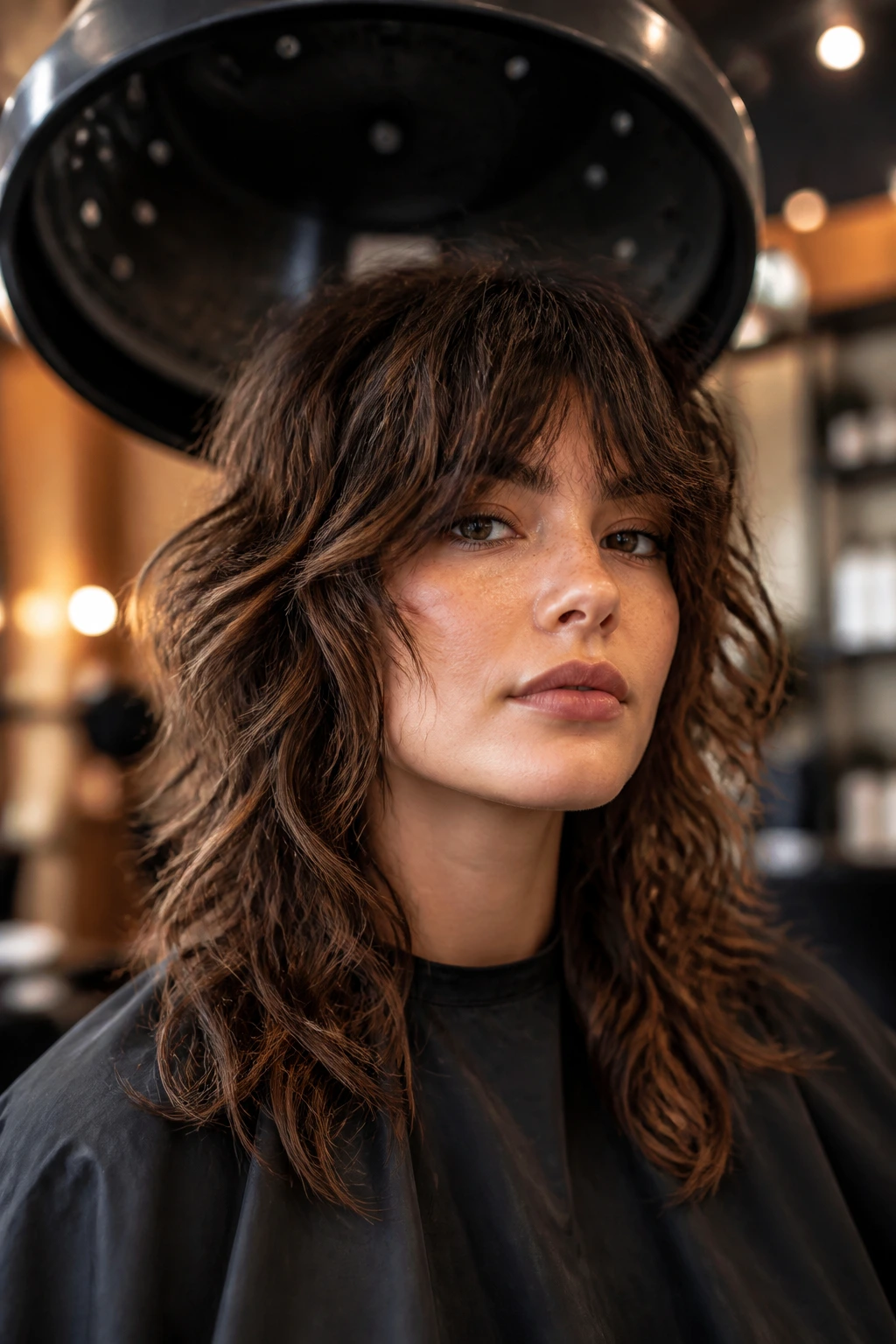
If you already own a diffuser and actually use it, this cut makes your life easier. The layers are arranged to catch that airflow and build lift at the roots, which is useful for fine wavy hair that goes flat the second it dries under its own weight. The shape also keeps the front from blowing outward at the cheeks.
Ask your stylist to keep the shortest layers around the crown and upper sides, not right on the cheekbone. That lets the diffuser create shape without widening the face.
A diffuser-ready cut also benefits from a little product discipline. Mousse at the root. A touch of cream through the ends. That’s enough. Too much product and the whole thing loses the airy look you paid for.
17. Root-Lift Wolf Cut

The root-lift wolf cut is for people who want height without obvious backcombing or sticky sprays. The cut itself does some of the lifting by shortening the internal layers near the crown while leaving enough length below to anchor the shape. It is a small structural trick, but it matters.
Round faces read a little longer when the top has visible height. That vertical line pulls focus away from width. Fine waves are useful here because they give you bend without needing ironed-in curls.
This is a good choice if your hair falls flat by noon. Ask for lift at the crown, not volume at the temples. Those are not the same thing.
18. Soft Razor Wolf Cut

A soft razor wolf cut can be beautiful on fine wavy hair, but only if the razor is used with some restraint. I like it when the stylist uses it to soften the ends and create a little swing, not to shred the whole head. Too much can leave fine hair stringy, and nobody wants that.
The round-face benefit comes from the soft tapering around the face. The lines are blurred, but the silhouette still moves downward. That keeps the haircut from feeling too round itself.
Use this version if…
- your waves separate easily,
- your hair gets bulky at the crown but flat at the ends,
- you like pieces that move when you turn your head,
- you do not mind a little texture in exchange for less styling time.
It’s a specific look. Not everyone needs it. Some people do.
19. Face-Slimming Front-Heavy Wolf Cut

This cut puts the most visible movement in the front and around the jawline, then keeps the back quieter. On a round face, that can be a smart move because it creates a longer front frame without turning the sides puffy. Fine hair benefits because the front pieces stay visible even when the rest of the hair is light.
The front should not be short and choppy. It should be long enough to brush the jaw or collarbone. That length matters more than people think.
I like this cut when someone wants the wolf-cut effect but needs the face-framing to do the heavy lifting. It is less rebellious than a full micro-mullet, more polished than a shag, and easier to live with than the photos make it look.
20. Sleek-Root Tousled-End Wolf Cut

This is my favorite compromise for people who want polished roots and messy ends. The crown is controlled, the top lies a little smoother, and the wave and texture live farther down the lengths. On fine hair, that can be a lifesaver because too much root fluff makes the head look bigger instead of shaped.
The round-face angle is subtle but useful. Sleek roots keep the top from expanding sideways, while tousled ends draw the eye downward.
If your hair frizzes at the top but bends nicely in the lower half, this cut makes sense. You are not forcing the wrong texture to do the wrong job.
21. French-Girl Wolf Cut

This version leans softer and less choppy than a lot of wolf cuts. Think long curtain pieces, a light fringe, and movement that seems to fall rather than explode. On fine wavy hair, that softness can look expensive without being fussy. On a round face, the longer front lines keep the cut from reading as too full.
It is a good choice if you want your hair to look like it dried in a natural bend, not a styling session. A little mousse, a little scrunching, done.
The danger here is going too delicate and losing shape. Keep some internal layers under the surface. Without them, the cut becomes a plain wavy lob with bangs, which is not the same thing.
22. Grow-Out-Friendly Wolf Cut

The best grow-out-friendly wolf cut is the one that still looks intentional eight weeks later. That means the layers are staggered enough to soften over time, but not so chopped that they split apart the second they lengthen. Fine wavy hair loves this if the perimeter stays a touch heavier.
Round faces benefit because the longer you go, the more the front pieces keep framing the face instead of climbing up toward the cheeks. The shape gets less sharp, but not less useful.
This is the cut for someone who hates frequent salon visits and wants a shape that forgives a missed trim. It is not the flashiest of the 22. It may be the most practical.
What Makes a Wolf Cut Behave on Fine Wavy Hair

A wolf cut only works on fine wavy hair when the layers are placed with purpose. Too many short bits at the crown can make the top look flyaway and thin. Too much thinning through the ends can leave you with a halo of texture and not much else.
The smarter version keeps a visible perimeter. That perimeter is what gives the hair weight, which is especially useful if your waves are loose and your strands are fine. You want the cut to breathe, not disappear.
Round faces need a second piece of strategy. The cut should build height at the top and length at the front. That means the shortest layers belong near the crown or upper back of the head, while the face frame stays below the cheekbone and usually lands near the jaw or collarbone.
How to Brief Your Stylist So the Layers Stay Light
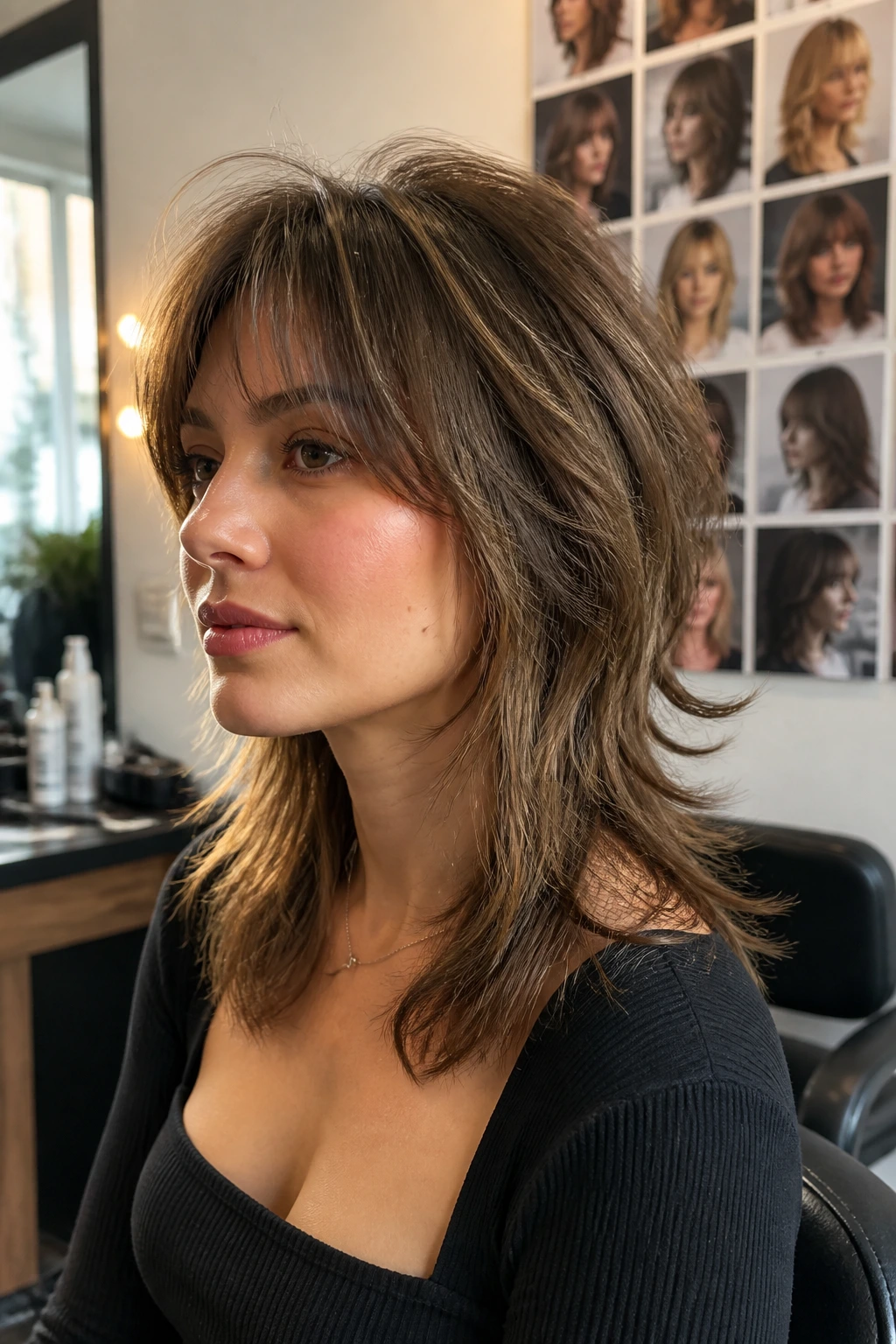
Bring more than one photo. One shot from the front is not enough, because the whole point of a wolf cut is the relation between crown, sides, and ends. I like to bring a front view, a side view, and a back view. That sounds fussy. It is not. It saves everyone time.
Tell your stylist you want lift at the crown without over-thinning the ends. That one sentence is doing serious work. Then name the face-framing length you want in plain terms: chin, jaw, or collarbone. If you know your waves collapse easily, say that too.
What to ask them to avoid
- Overusing thinning shears near the bottom.
- Cutting the fringe too high above the cheekbone.
- Building width at the sides instead of height at the crown.
- Removing so much weight that the ends look wispy in daylight.
If the stylist reaches for a razor, ask where they plan to use it. The answer matters more than the tool.
Tools That Make Styling These Cuts Easier
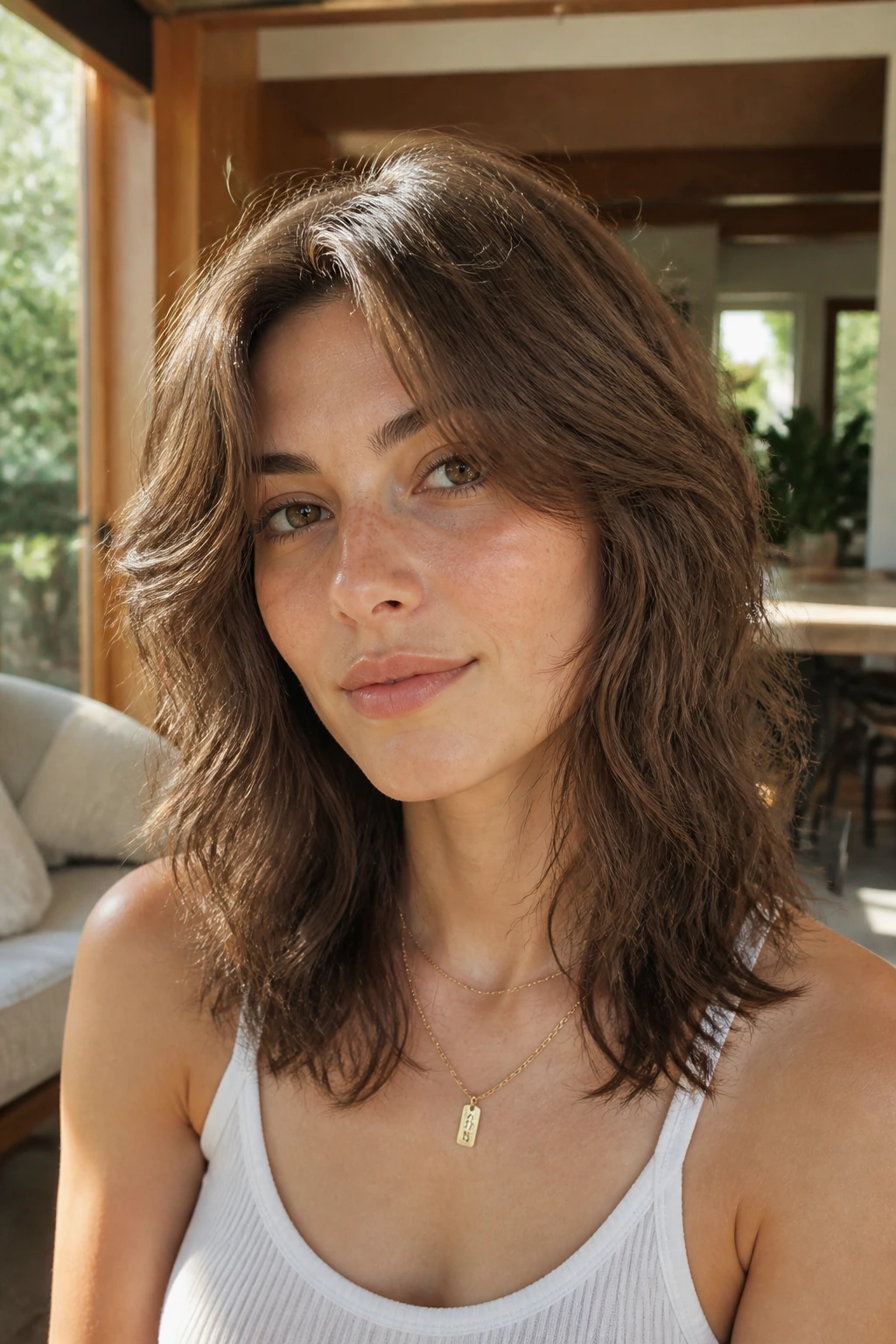
You do not need a counter full of gadgets. You do need the right few things, because fine wavy hair gets limp fast when it is overworked.
- Tail comb: Good for clean parts and lifting sections at the root without tearing through damp waves.
- Wide-tooth comb: Better than a brush for distributing product through fine waves while they’re wet.
- Microfiber towel or cotton T-shirt: Cuts down on rough frizz when you scrunch out water.
- Light mousse: Gives root support without sticky buildup; a golf-ball amount is usually enough for shoulder-length hair.
- Root-lift spray: Useful if your crown lies flat by noon.
- 1.25-inch curling wand: Handy for adding a few bends to face-framing pieces if your natural wave is uneven.
- Diffuser attachment: Helps preserve wave and build lift without blasting the shape apart.
- Duckbill clips: Great for clipping the crown up while it dries to encourage volume at the roots.
How to Style These Cuts on Wash Day and Day Two

Wash day should not feel like a production. The simplest routine is often the one that holds shape best.
Air-Dry Finish: Work mousse through damp roots and a light cream through the ends, then scrunch with a T-shirt. Leave the crown alone while it dries; touching it too much breaks the little lift you’ve built.
Diffuser Finish: Flip your head gently, cup 1- to 2-inch sections into the diffuser, and keep the heat on medium, airflow low. Stop when the hair is about 80% dry. If you dry it bone dry with hot air, the wave pattern often gets stiff and puffy.
Day-Two Refresh: Mist the front and crown with water, twist a few face-framing pieces around your fingers, then add a puff of dry shampoo at the roots if needed. Don’t soak the whole head. That usually resets the frizz without waking up the entire cut.
Smoother Finish: Rough dry the roots first, then bend only the front pieces with a wand. That keeps the cut from looking too “done.”
Practical Tips for Volume, Separation, and Frizz Control

Volume: Clip the top sections up while they dry. It’s old-school, and it works. Even 15 minutes of root clipping can make a difference on fine hair that wants to stick flat to the scalp.
Separation: Use less product than you think. Fine waves show product buildup fast, especially around the front. If the hair starts feeling tacky or stringy, you’ve gone too far.
Frizz: Put the cream on the ends, not the scalp. A lot of people reverse that and then wonder why their roots collapse. Frizz control near the top often looks like grease on fine hair.
Shape memory: If a front piece falls wrong, re-wet only that section and restyle it. Don’t dunk the whole head. That just creates more work and often ruins the set you already had.
Common Mistakes That Flatten the Whole Cut

Cutting the fringe too short: Short bangs on a round face can make the face feel wider and the forehead feel boxed in. Keep the front pieces longer than you think, especially if your waves spring up when dry.
Over-thinning fine ends: This is the fastest way to make the cut look stringy in daylight. Ask for point-cutting and soft internal layering instead of aggressive thinning shears at the perimeter.
Using heavy creams or oils everywhere: Fine wavy hair does not need a thick coat of product from roots to ends. Heavy formulas drag the crown down and leave the ends clumped in a tired way.
Building width at the cheekbone: If the widest wave lands right where your face is already broadest, the haircut can read rounder. Keep the front pieces longer so they fall past that zone.
Skipping root lift: A wolf cut without crown support can look like a flat shag. A little root spray, clip, or diffuser work keeps the top from collapsing.
Variations and Adaptations Worth Trying
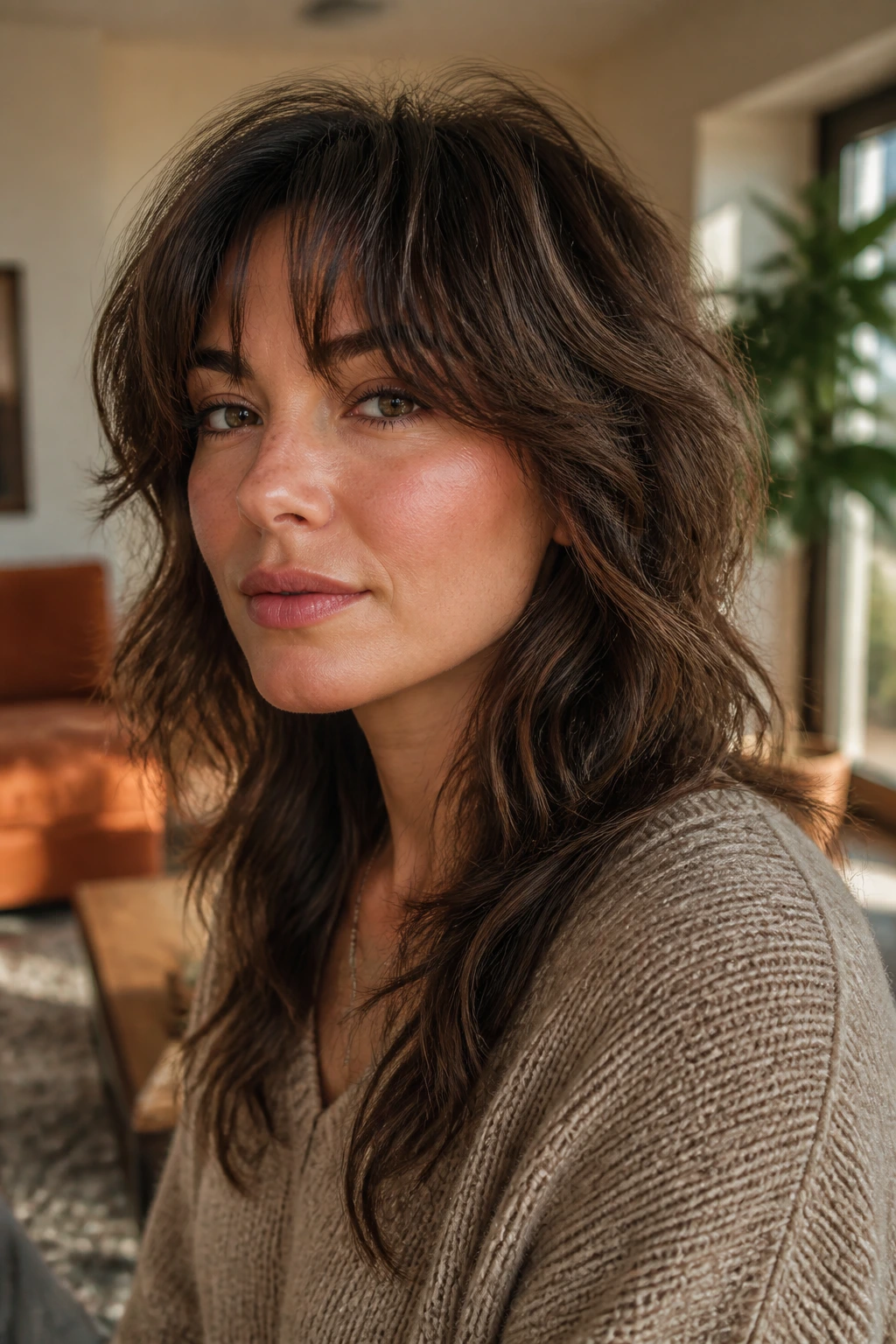
The Long Soft Wolf: Keep the length below the collarbone and soften the front layers. This works if you want the wolf shape without losing too much density on fine hair. It’s the calmest version in the bunch.
The Fringe-First Wolf: Add curtain bangs or a bottleneck fringe, then keep the rest of the cut gentler. Good for round faces that need a stronger vertical break through the forehead.
The Air-Dry Wolf: Ask for less visible chopping and more internal movement. This version depends on your natural wave pattern and does not need round-brush styling to look finished.
The Edge-Forward Wolf: Keep a slightly more pronounced mullet silhouette with a cleaner back. This is for people who want the cut to look sharper and a little less soft around the edges.
The Office-Friendly Wolf: Tone down the shortest layers, keep the outline neat, and use a side part. It still has movement, but it reads more like a polished shag than a full rock-and-roll cut.
Keeping the Shape Fresh Between Salon Visits

Fine hair does not hold the same layer map forever. If you want the wolf cut to keep its shape, plan on a trim every 8 to 10 weeks for shorter, more layered versions. Longer versions can stretch a little farther, but once the front pieces stop framing the face and start hanging straight, the haircut loses its point.
Sleep helps more than people think. A satin pillowcase reduces the weird mid-shaft bend that happens when fine waves get crushed all night. If the hair is long enough, a loose clip at the crown or a very soft pineapple can keep the front pieces from folding into the cheeks.
On day two, use a light mist and a dab of mousse on the roots if the lift disappears. If the ends start fraying before the rest of the cut grows out, a tiny dusting trim is often enough. You do not need to chop the whole shape down.
Questions People Ask Before They Book the Cut
Will a wolf cut make my round face look wider?
It can, if the front layers stop at the cheeks and puff out. The safer version keeps the face-framing pieces below the cheekbone and builds lift higher up.
Can fine wavy hair handle a wolf cut without looking thin?
Yes, if the perimeter keeps some weight. Fine hair needs movement, but it also needs a line at the bottom so the ends don’t vanish.
Should I get curtain bangs with this cut?
Curtain bangs work well when they’re cut long enough to taper past the cheekbone. Short bangs can widen a round face and need more styling than most people want.
Do I need heat styling every day?
No. A good wolf cut on wavy hair should air-dry into something decent. Heat just sharpens the front pieces or helps the crown when your wave pattern is lazy.
What if my hair is fine but frizzes easily?
Ask for softer layering and skip aggressive razor work. Use a light mousse, not a thick cream, and dry with a diffuser on low airflow.
How often should I trim it?
Shorter wolf cuts usually need shape maintenance every 8 weeks. Longer versions can go 10 to 12 weeks if the front still falls where it should.
Is this different from a shag?
Yes. A shag usually spreads texture more evenly. A wolf cut often has a stronger crown-to-ends contrast and a slightly more mullet-leaning outline.
What if I hate the mullet part?
Then keep the back longer and the crown softer. You can still have the wolf-cut movement without going full edge.
The Shape That Keeps Fine Waves Moving

The nicest thing about a good wolf cut on fine wavy hair is that it does not ask your hair to be thicker than it is. It works with what’s already there: a little bend, a little bend-over-time, a little mess. That’s enough when the layers are placed with care.
Round faces do best when the cut gives them vertical lines, not extra width. That means the crown needs lift, the front needs length, and the ends need enough weight to stay visible after the first wash. Get those three things right and the haircut starts carrying its own style.
A wolf cut should look lived in, not accidental. If you keep the shape light, the face frame long enough, and the perimeter honest, you get the kind of haircut that still looks good when you’ve had a long day and no interest in making it behave.