



Olive skin can be fussy with brunette hair, and the mismatch shows fast. Pick the wrong brown and the face can look a little tired, a little green, a little more muted than you expected. Pick the right one, though, and the whole complexion wakes up. Cheeks look cleaner. Eyes look sharper. Even a plain black sweater starts to look intentional.
Mid-length brunette hairstyles for olive skin work because they sit in that middle zone where shape and color can both do some heavy lifting. The cut gives you enough movement to keep the brown from reading flat, while the length stays long enough for waves, flips, bends, and face-framing pieces that sit close to the skin. That matters more than people think. Olive undertones change how brown hair reflects light, and a blunt, one-note color can turn dull in daylight faster than you’d expect.
The good looks here aren’t just “brown hair, but shorter.” They’re specific combinations: chestnut with a collarbone cut, espresso with a blunt lob, caramel ribbons threaded through curtain bangs, walnut curls, mocha shags, mushroom brunettes with airy layers. Some of these lean warm. Some lean cool. A few sit right in the neutral pocket that olive skin handles so well. The trick is choosing a cut that gives the color room to move instead of letting it sit there and sulk.
Why These Brunette Looks Work So Well on Olive Skin
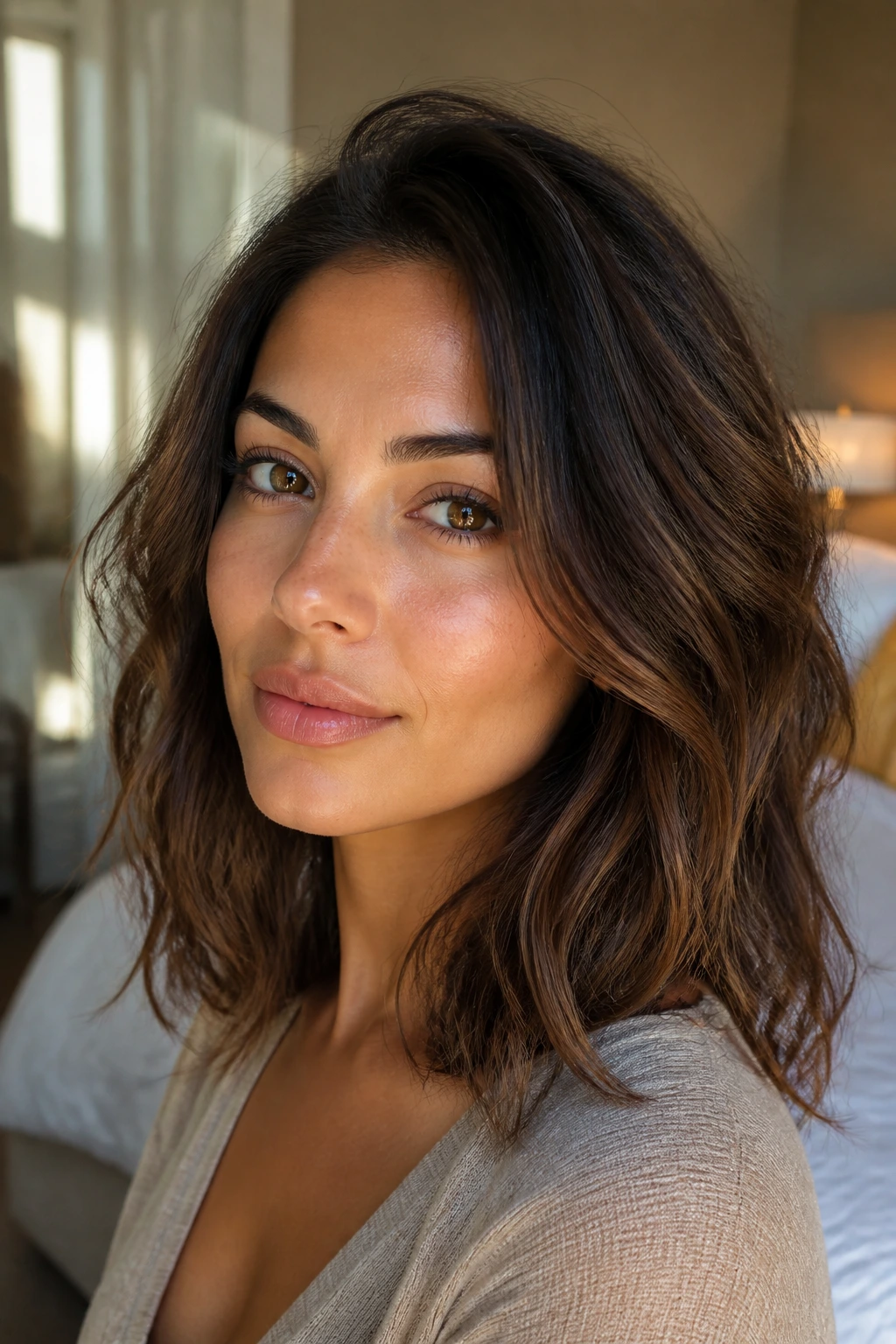
-
Balanced Contrast: Olive skin usually looks best with brunette shades that have depth, not flat darkness, because a level 4 to 6 brown keeps the face defined without swallowing it.
-
Movement Matters: Mid-length hair gives the ends enough room to bend, flip, or wave, and that movement stops brunette color from reading like one solid block.
-
Tone Control: Chestnut, mocha, walnut, and espresso each sit differently against olive undertones, so you can lean warm, cool, or neutral without fighting your skin.
-
Easier Grow-Out: Shoulder-skimming cuts and collarbone lengths tend to soften as they grow, which is useful when your color has highlights, gloss, or a root shadow.
-
Face Brightening: Strategic face-framing pieces around the cheekbone and jaw can make olive skin look clearer than chunky highlights ever will.
1. Collarbone Cut with Chestnut Gloss
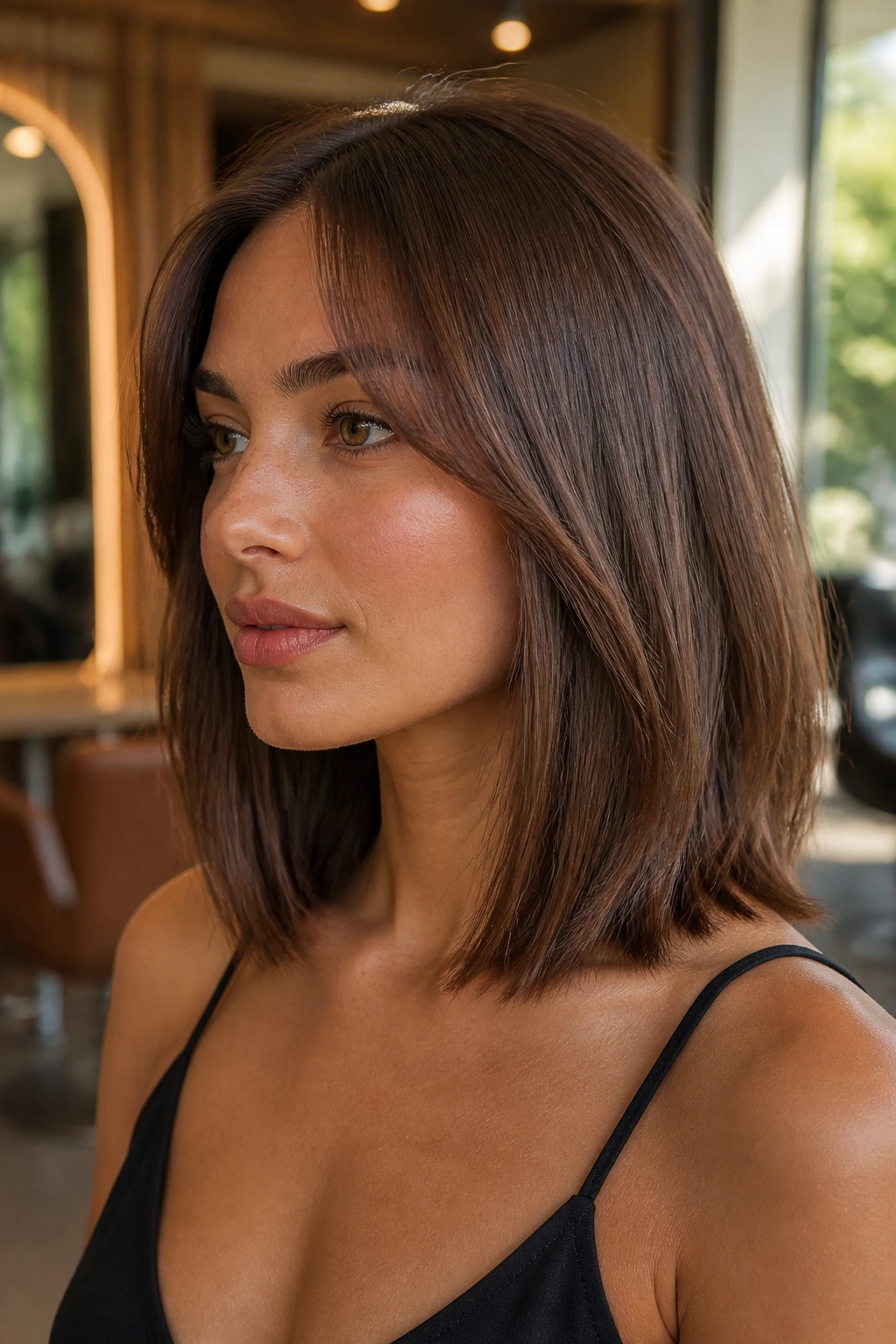
A blunt collarbone cut with chestnut gloss is the kind of brunette that looks clean even when you’ve barely touched it. The line sits right where the hair can still move, but not so long that the shape disappears into your clothes. Chestnut brings a soft red-brown warmth that keeps olive skin from reading flat or gray.
Why It Works for Olive Undertones
Chestnut brown sits in a friendly zone for green-gold skin because it adds warmth without drifting orange. If your olive skin leans muted and a little cool, keep the gloss closer to neutral chestnut than copper. That small decision matters more than most people realize.
Best For
- Straight or slightly wavy hair
- Fine to medium density
- Anyone who wants shine to do the work instead of heavy styling
Tip: Ask for the ends to be lightly point-cut so the collarbone line doesn’t look like a helmet.
2. Center-Parted Blunt Lob
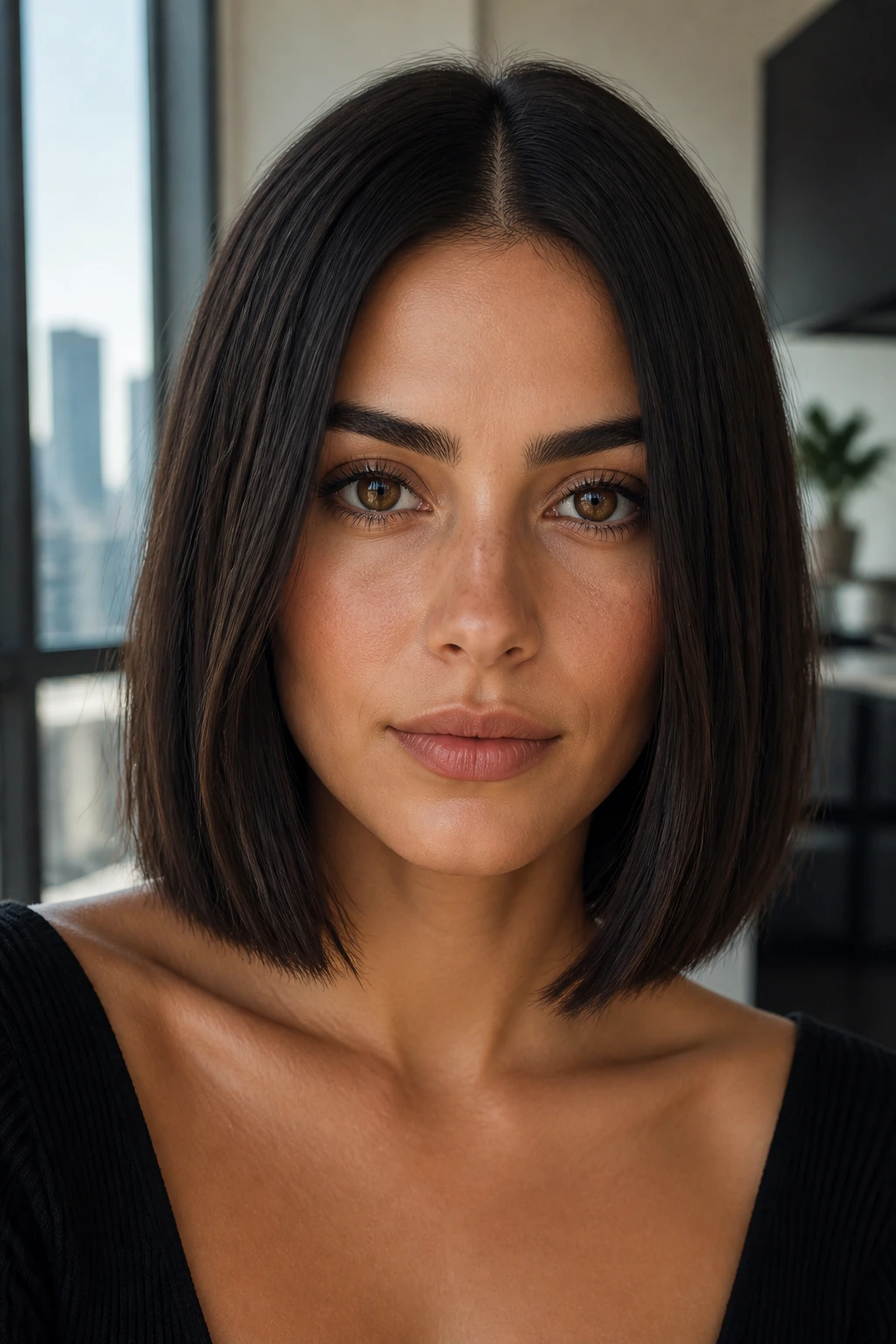
A center-parted blunt lob is a sharp little move when the color is right. The part gives symmetry, and the blunt edge makes the hair look thicker than it is, which is a gift if your brunette is naturally fine or straight. On olive skin, the best version uses espresso, mocha, or deep cocoa rather than a warm caramel that can drift brassy.
What Makes It Different
This cut does not rely on waves or texture to look finished. It relies on the line. That means the color has to be rich and polished, and the ends need to be cut clean so the shape lands just below the jaw or on the collarbone.
If your face leans long, keep the length a touch shorter. If your jaw is strong, let the lob skim past it. Tiny length changes shift the whole mood.
3. Curtain Bangs with Caramel Ribbons
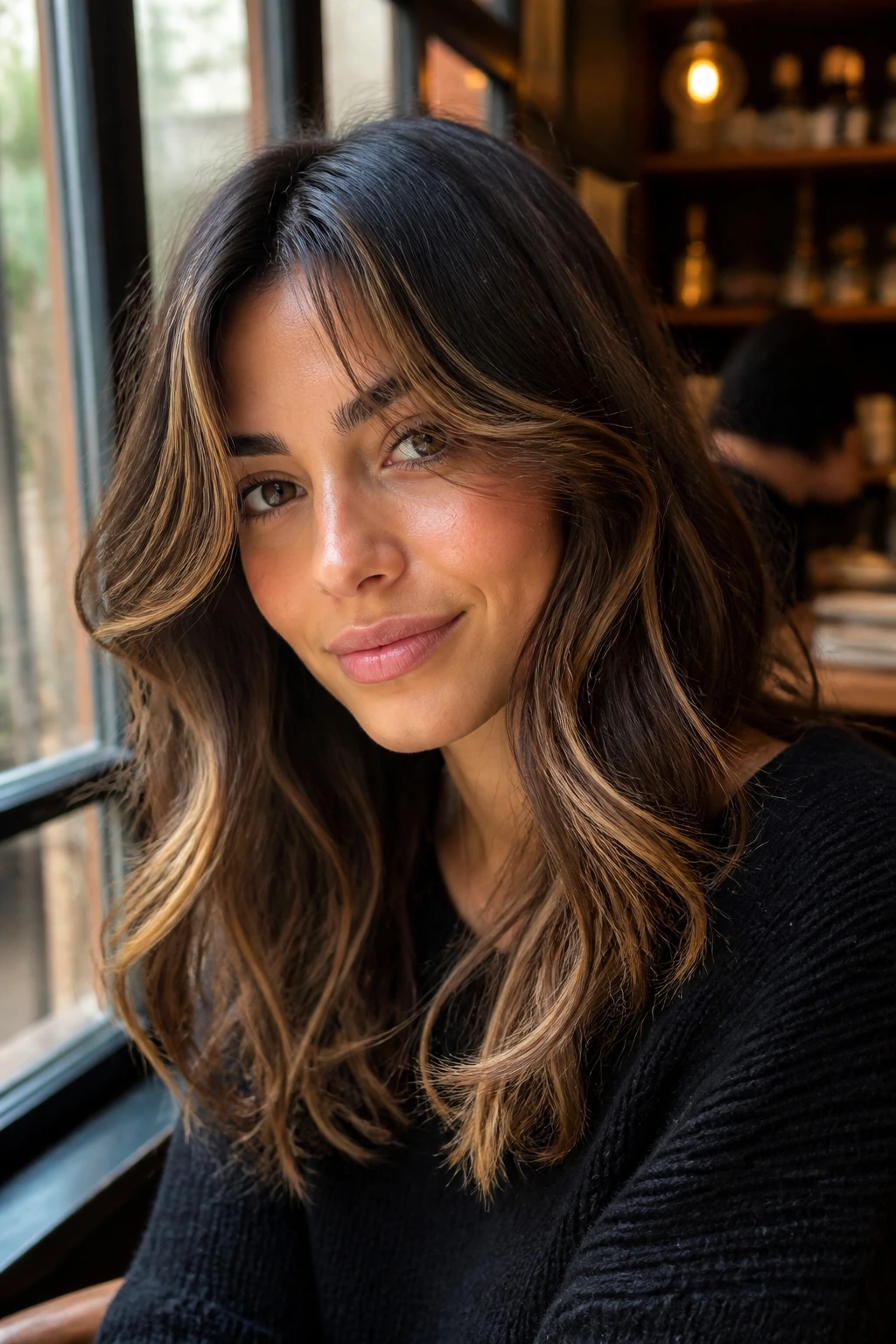
What if you want brightness around the face without committing to a full highlight job? Curtain bangs with caramel ribbons are the easy answer. The bangs split softly in the middle, the front pieces sweep toward the cheekbones, and the caramel lightens the face without turning the whole head golden.
How to Use It
Keep the base brunette at a medium level, then place the lightest strands only around the bangs and front layers. On olive skin, a beige-caramel reads cleaner than yellow caramel, and a honey tone works best when it stays thin.
This is one of those cuts that looks especially good when the bangs are blown dry with a round brush and bent away from the face. Flat bangs can make the color sit too heavily. A little lift does the trick.
4. Textured Shag with Mocha Ends
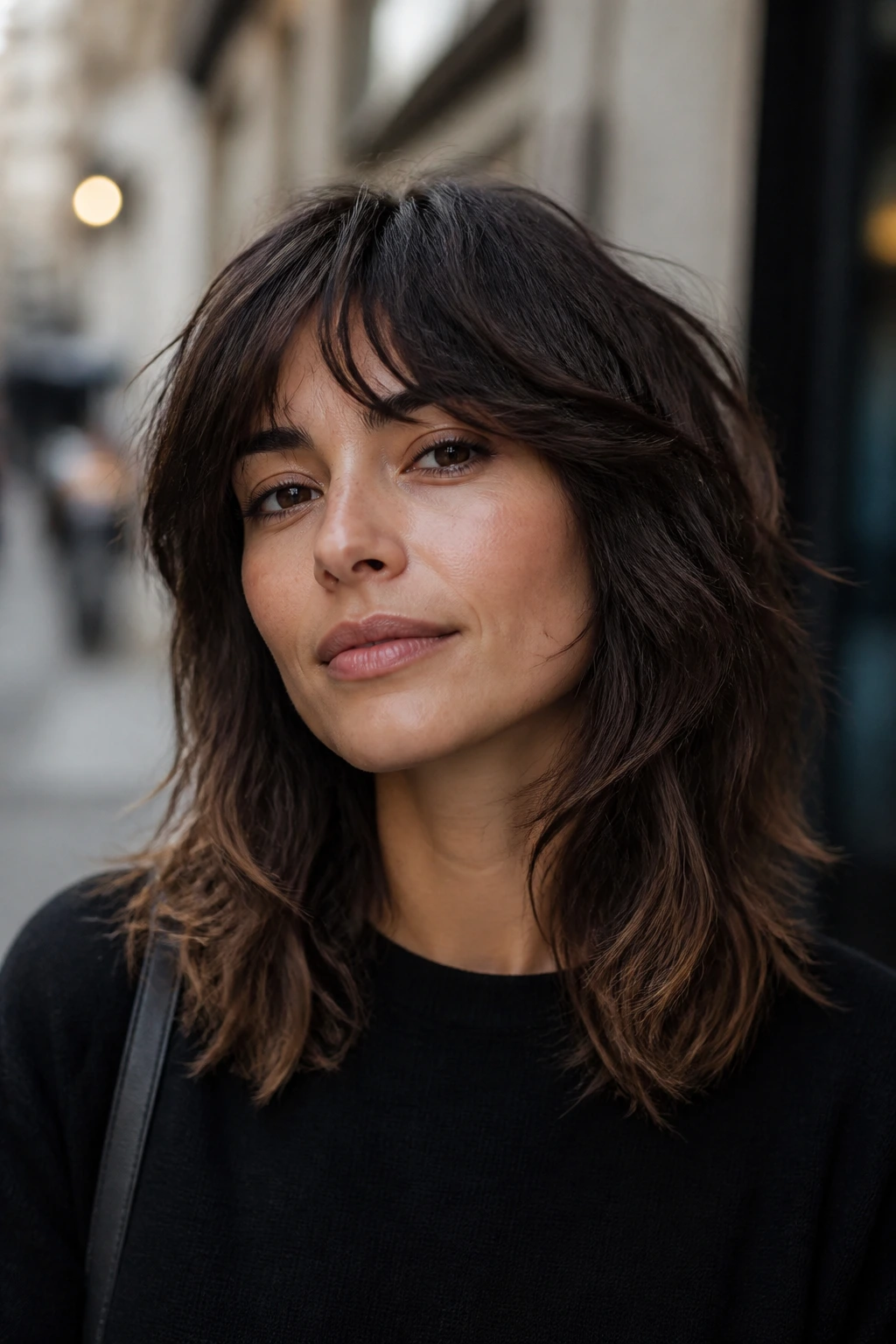
If your hair wants to puff at the crown and fall flat at the bottom, the shag fixes that imbalance fast. A textured shag with mocha ends gives you movement through the middle of the hair, so the shape feels lived-in instead of stripped down. The mocha tone keeps it grounded and looks especially good on olive skin that leans neutral.
A Good Fit When You Want Edge Without Drama
The layers should start around the cheekbone or just below it, not all the way up near the temples. Too-short layers can create that feathered triangle people spent years trying to escape. Keep the shag soft, and the brunette shade does the rest.
Best move: Use a sea-salt spray only at the mid-lengths and ends. The root should stay touchable, not crunchy.
5. Deep Side-Part Lob
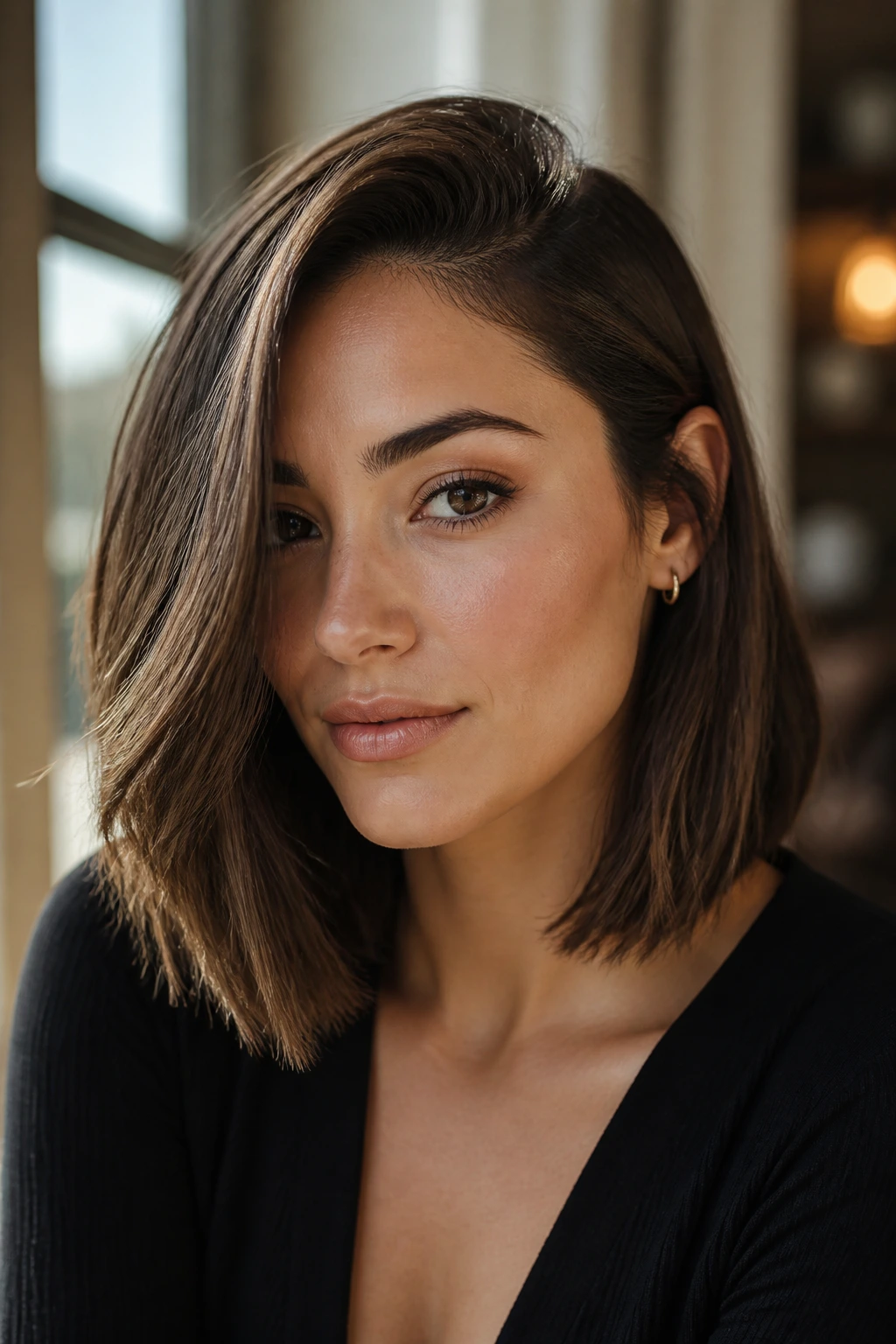
A deep side-part lob changes the whole face shape in about ten seconds. The heavier side gives you a little lift through the crown, which olive skin often benefits from because it keeps the complexion from looking too uniform. Pair it with a neutral brown or a soft walnut tone, and the result feels polished without being stiff.
The part shift also helps if one side of your hair falls flat or if you want to soften a broad forehead. I like this look with subtle face-framing pieces that start at the chin. They add movement without making the cut look layered to death.
6. Soft Wolf Cut
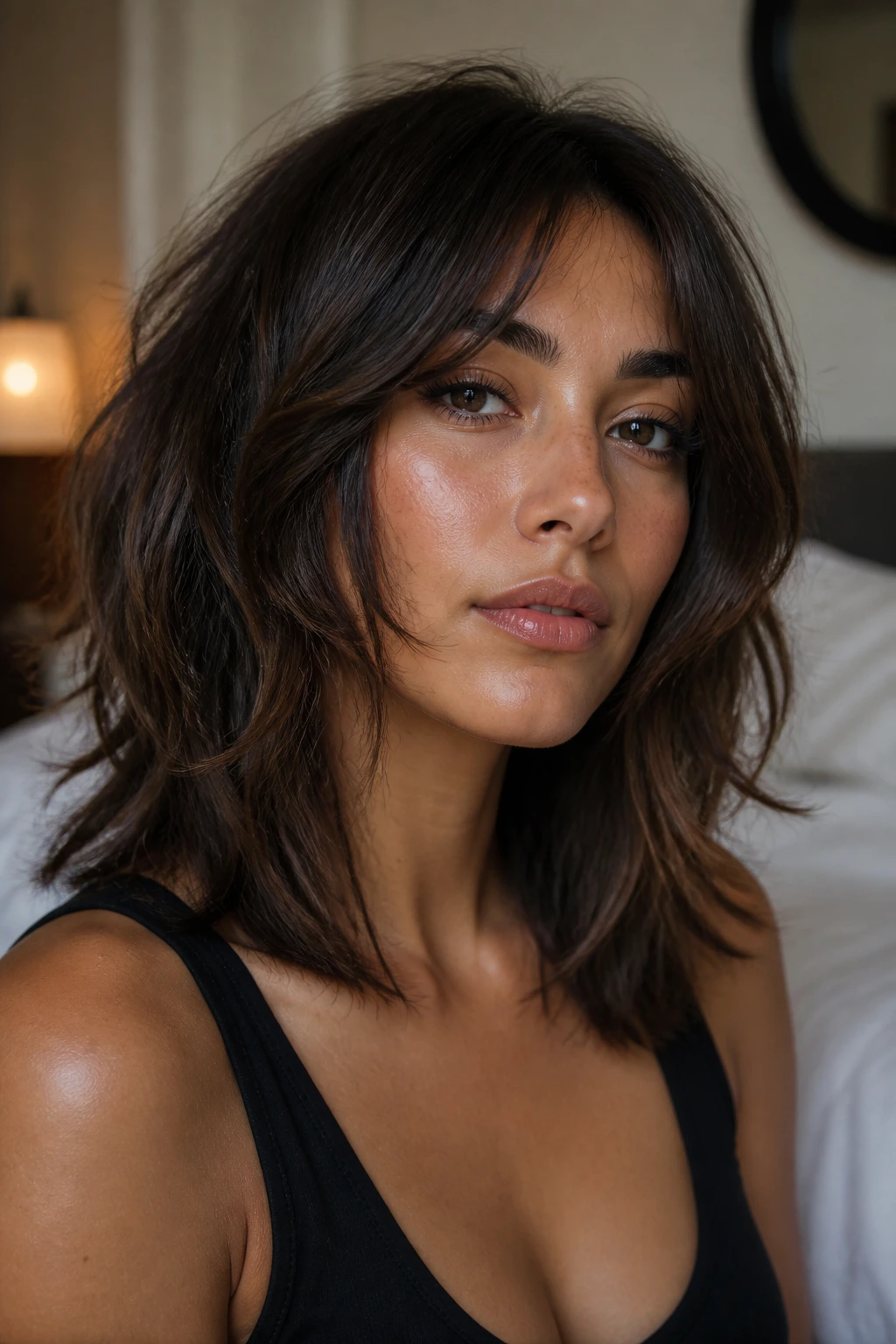
A wolf cut can look chaotic if it’s pushed too hard. On mid-length brunette hair, though, it can be oddly flattering on olive skin when the layers stay soft and the color stays moody. Think mocha root, smoky mid-brown, and ends that have a little bend, not a jagged chew.
Why It Works
The top layers create height, the lower layers break up bulk, and the whole cut keeps the brunette from reading heavy. That’s useful on olive skin because too much flat density can drain the face. The shape should feel airy, not shredded.
Best For
- Thick hair that needs removal at the crown
- People who air-dry half the time
- Anyone who likes texture that looks better when it’s not perfect
7. Sliced Layers with Honey Balayage
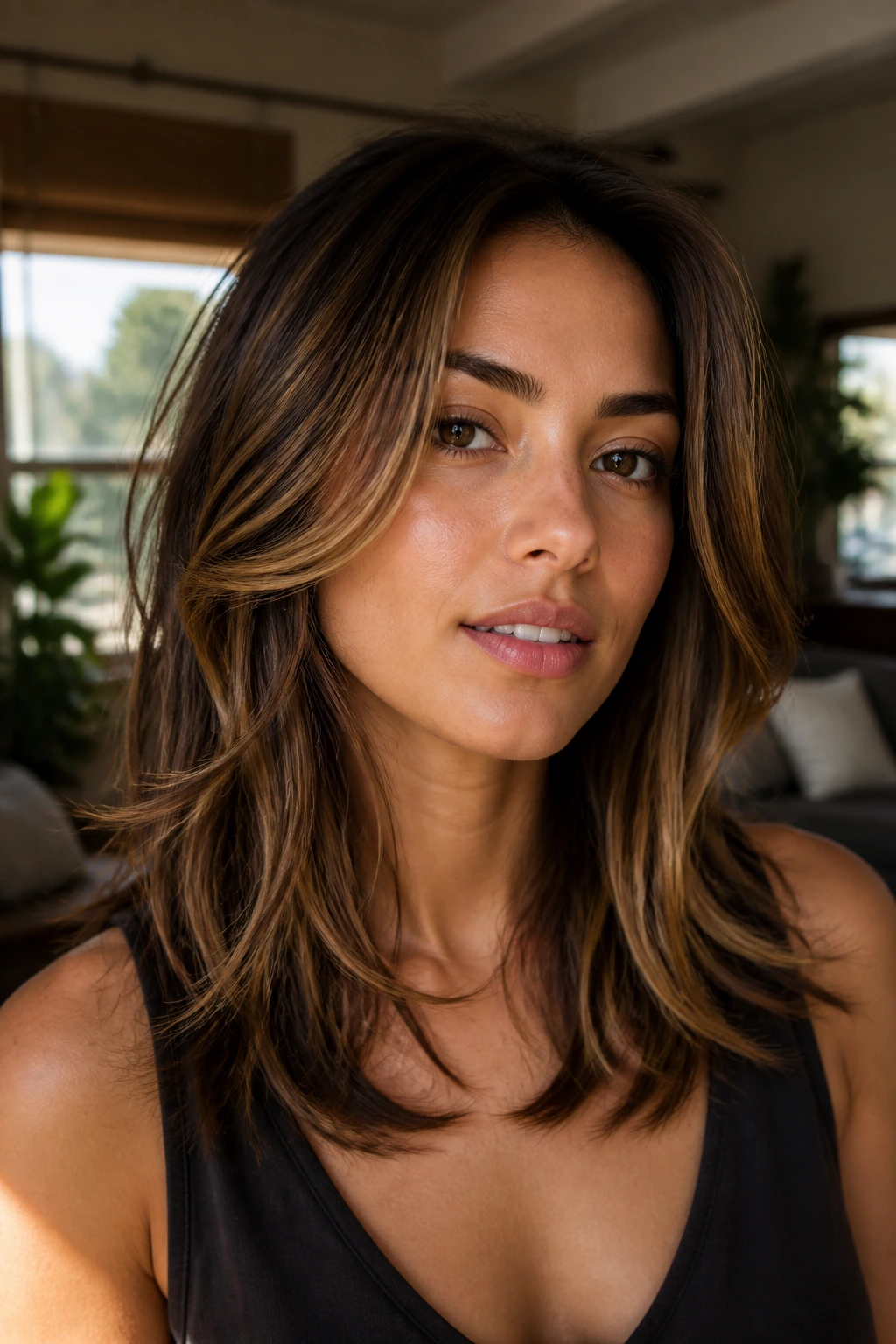
Sliced layers are cleaner than chunky ones. The hair falls in thinner, sharper sections, and that makes the balayage peek through instead of screaming from every angle. Honey balayage can be gorgeous on olive skin if it’s kept beige and soft, not bright yellow.
The placement matters. I’d keep the lightest honey near the outer layers and under the top veil of hair, so the brunette underneath still carries the look. That keeps the color expensive-looking, which is really what people want here.
A quick curl with a 1.25-inch iron makes the ribbons move. Straight hair can work too, but the balayage shows more life once the pieces separate.
8. Sleek Espresso Lob
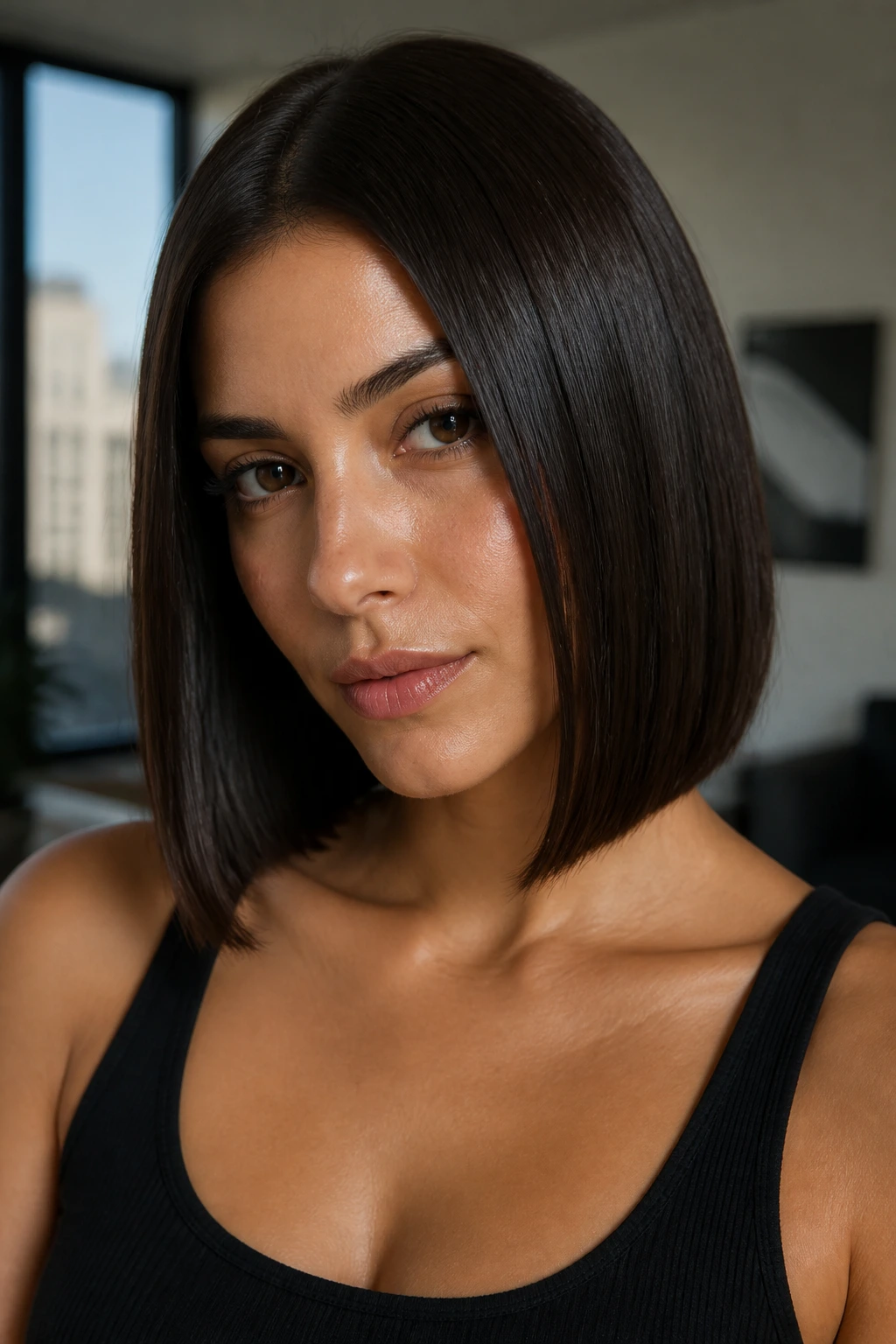
A sleek espresso lob is the blunt instrument of this list, and I mean that in a good way. No frills. No fuss. Just deep, glossy brown hair that frames olive skin with a clean edge. If your skin has cool undertones, espresso gives you the contrast many warmer browns can’t.
What to Ask For
Ask for a lob that lands between the chin and collarbone, with the ends cut as cleanly as possible. If you have thick hair, a tiny bit of internal weight removal keeps it from feeling blocky. If your hair is fine, don’t over-thin it.
This style lives or dies on shine. A smoothing cream plus a flat iron pass is usually enough. Burnish the surface, and the color looks richer.
9. Butterfly Cut with Warm Brunette
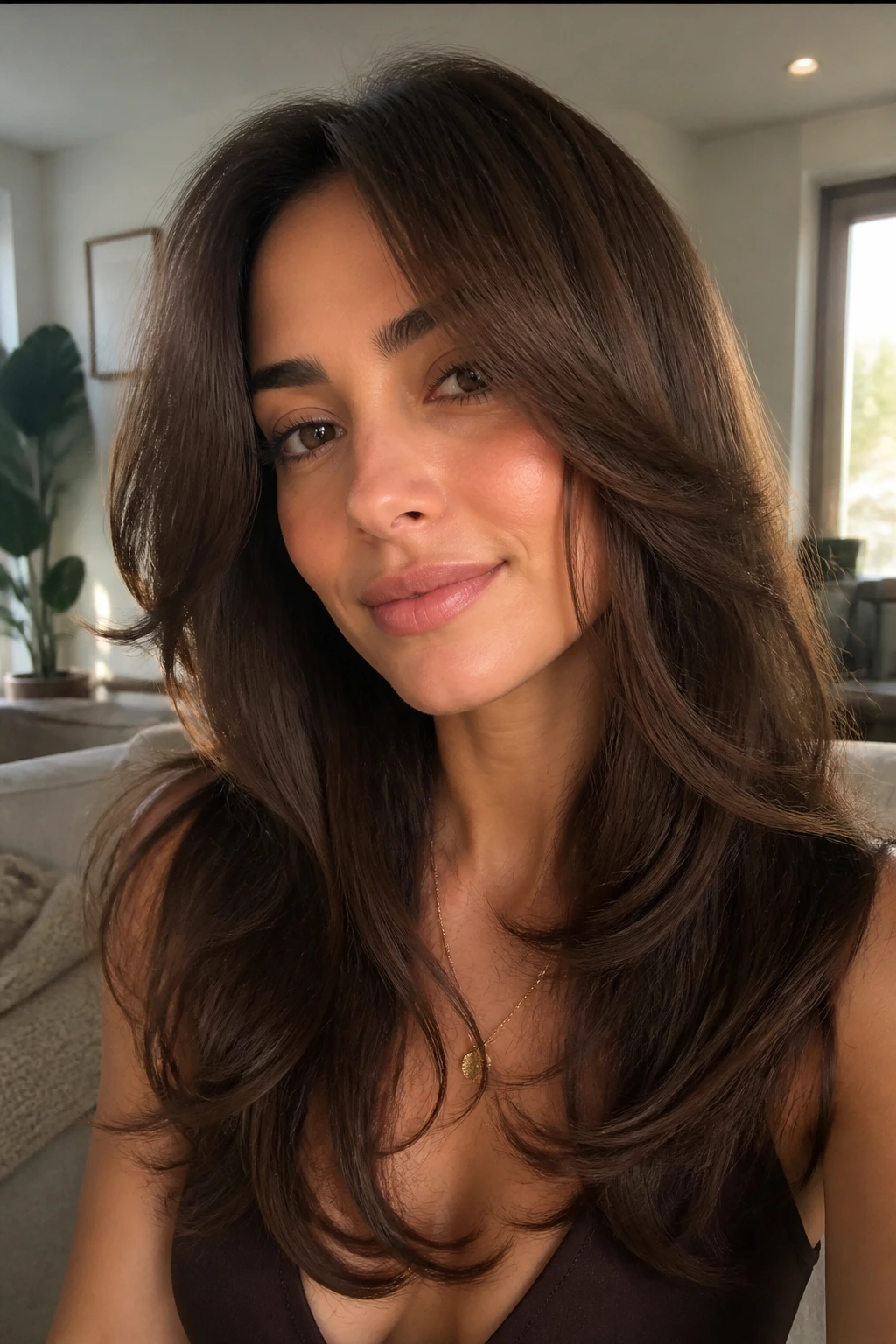
Need volume without sacrificing length? The butterfly cut answers that better than almost anything else here. Shorter face-framing layers sit on top of longer lengths, which creates a lifted shape around the face and a softer fall through the ends. On olive skin, warm brunette tones like cocoa-chestnut or toasted walnut keep the cut from looking washed out.
The best butterfly cut isn’t fluffy for the sake of fluff. It has structure. The shorter pieces should hit near the cheekbones, not halfway up the forehead, and the long layers need enough weight to swing instead of frizzing out.
10. Tousled Wavy Lob
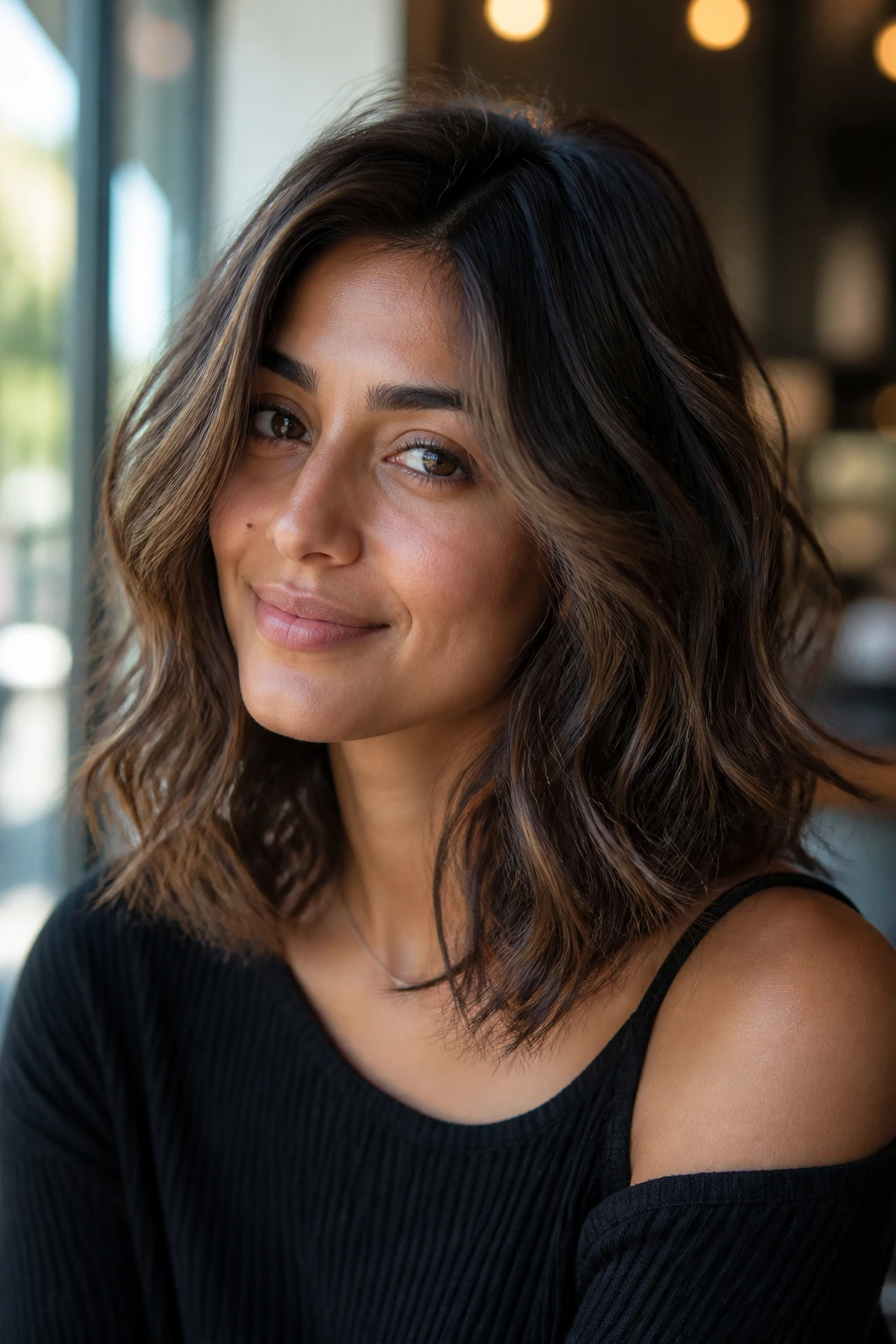
A tousled wavy lob is the haircut that survives a real morning. You can bend it with a curling iron, shake it out with your fingers, and still end up with something that looks deliberate. On olive skin, medium brown with a soft ash or neutral glaze keeps the waves looking fresh instead of orange.
The reason this style works so often is that the wave pattern breaks up the brown. A single flat plane of brunette can look dull against muted skin, but waves catch the light in little shifts. That keeps the face alive.
If your hair holds curl badly, put the bend only in the middle section and leave the ends straighter. It looks less done, which is half the charm anyway.
11. Face-Framing Layers with Cinnamon Lights
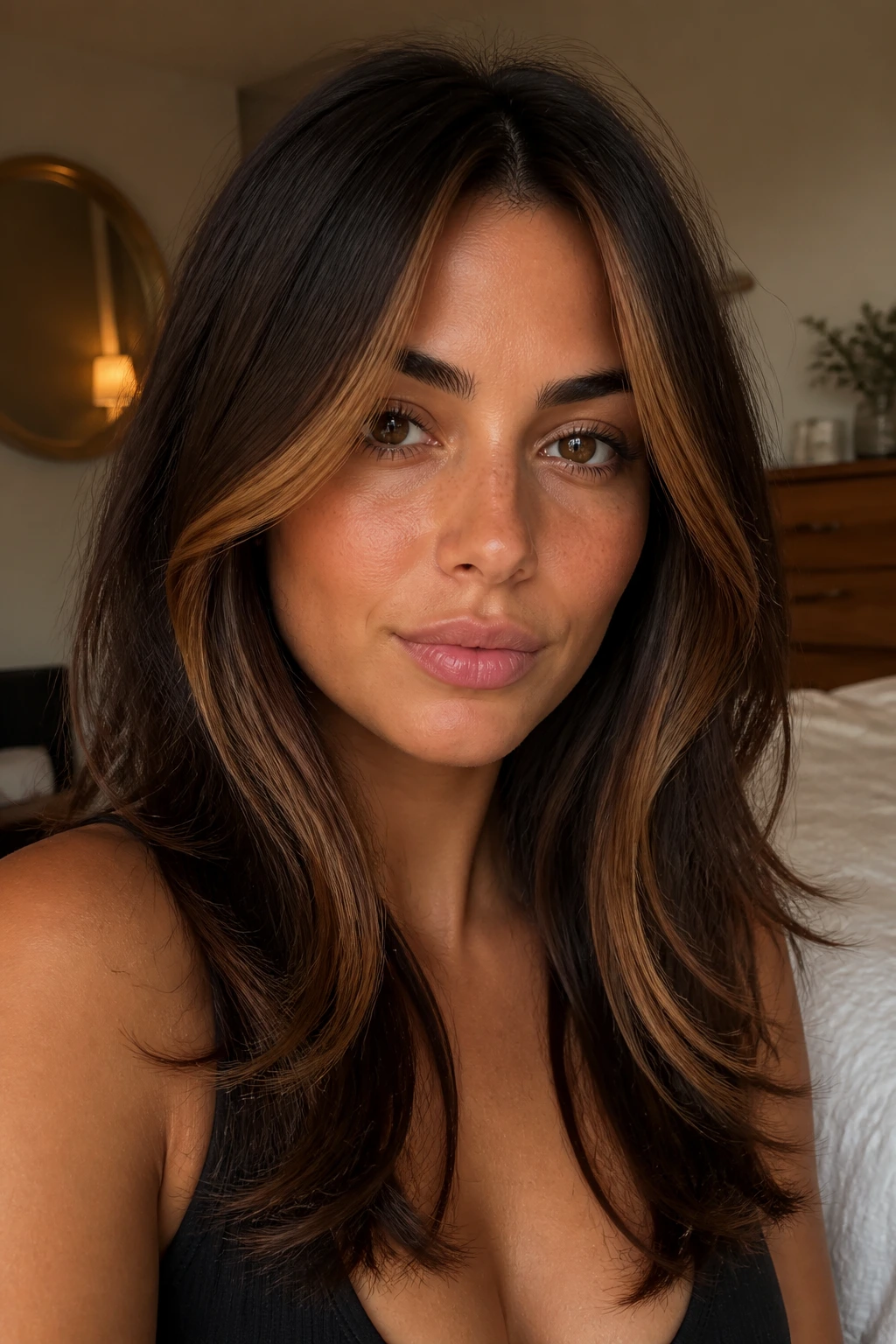
Face-framing layers are where a lot of olive-skin brunette looks get smarter. Add cinnamon lights around the cheekbone and jaw, and the whole face gets a soft glow without needing an all-over lighter color. The cinnamon should be more brown than red; if it starts looking coppery, it can fight the skin instead of flattering it.
Where the Lightness Should Sit
Keep the brightest strands near the front and let them fade quickly into the base. That makes the shape read like a frame instead of a stripe. It also grows out better, which is useful if you don’t want root lines every few weeks.
This is a strong choice for medium-density hair because it adds movement visually rather than by removing too much bulk.
12. Rounded Midi Cut with Glossy Chocolate Brown
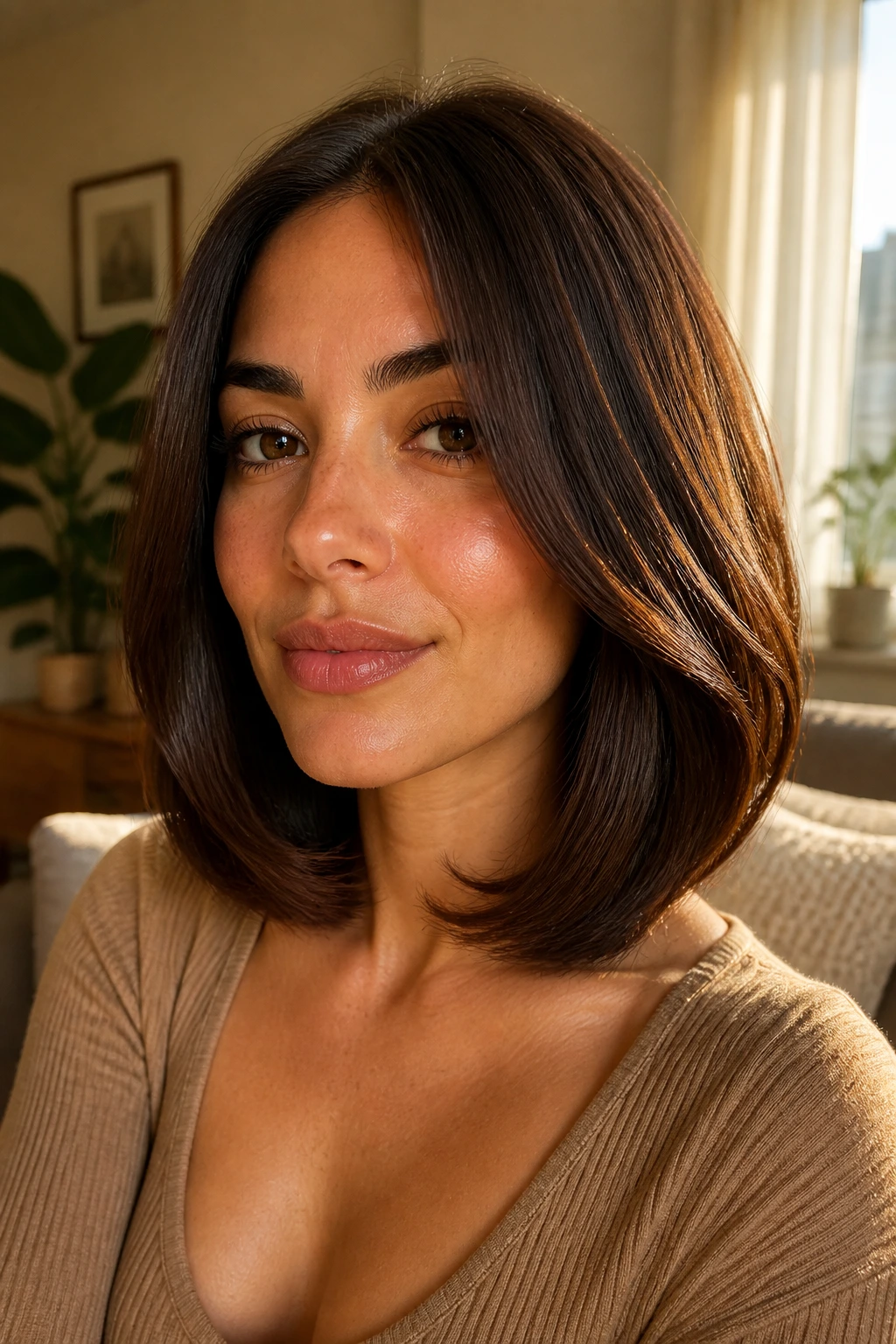
A rounded midi cut feels softer than a blunt one, and on olive skin that softness can be the whole point. The silhouette curves in slightly at the ends, which keeps the hair from hanging like a curtain. Pair it with a glossy chocolate brown, and the color looks deeper every time it catches light.
The rounded shape is especially useful if your face is angular or narrow. It adds fullness near the lower half of the hair, which balances sharp cheekbones and long chins. I’d keep the layers subtle here. Too much texture ruins the point.
13. Choppy Ends with Money Pieces
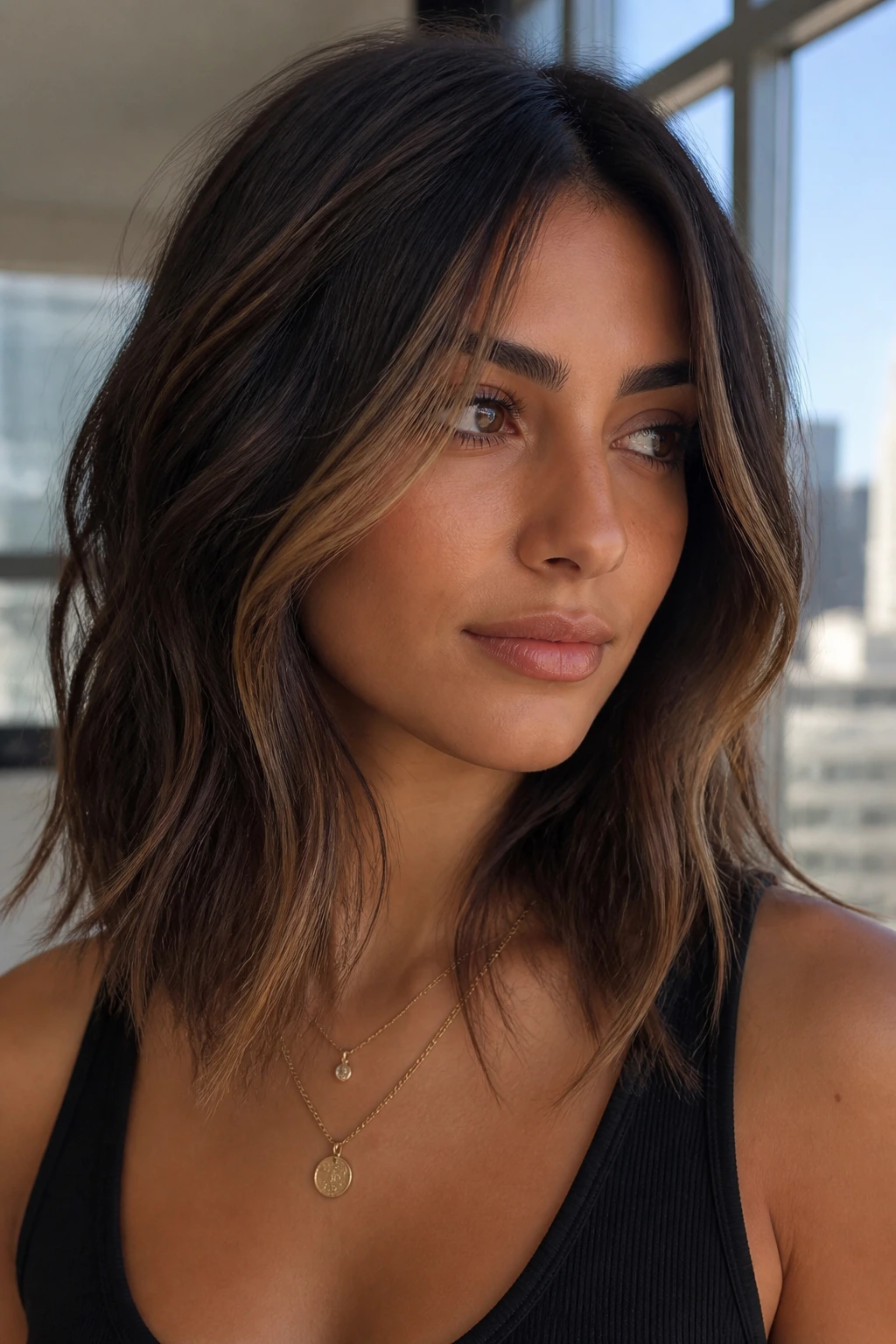
Choppy ends can look cool or messy. The difference is whether the shape has intent. Add a couple of brighter money pieces around the front, and a mid-length brunette can shift from plain to sharp in a single appointment. On olive skin, keep those money pieces muted—beige brown, soft caramel, or toasted almond.
A Small Brightening Move
You do not need a full head of highlights for this look to work. A front-focused lift around the temples and cheekbones often does more for the face than a scattered set of streaks through the whole head. The color reads bolder because it sits near the skin.
Best on hair that can take a little texture. If the ends are too heavy, the choppy line will disappear.
14. Mid-Length Curls with Walnut Brown
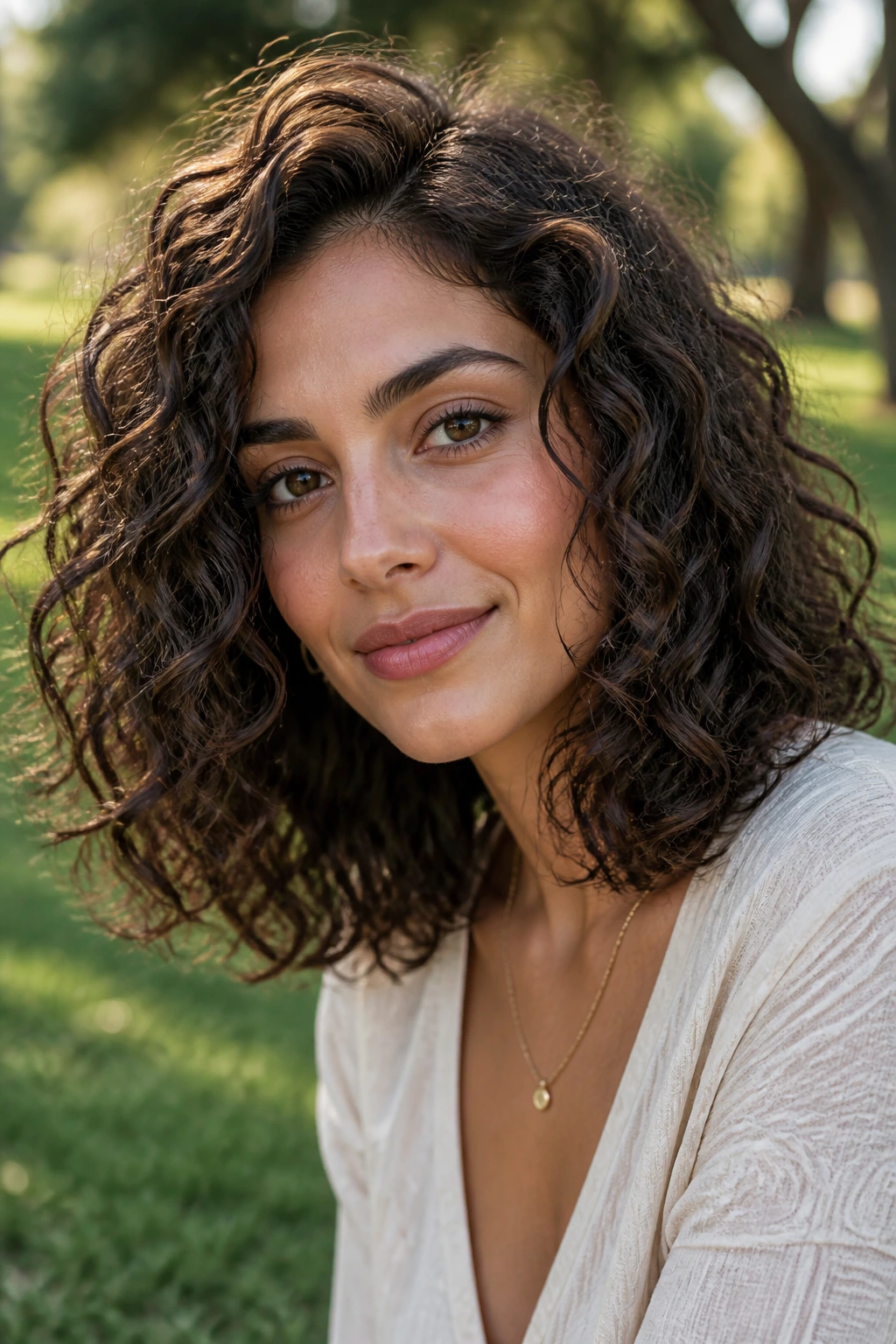
Curly brunette hair and olive skin make a strong pair when the shade has enough depth. Walnut brown is rich without being black, and it lets curls show their shape instead of turning them into one dark mass. Mid-length is useful here because it keeps the curl springy without stretching it down.
The trick is moisture and shape, in that order. A curl cream or light gel gives the curl a defined edge, while the cut should avoid too much bulk at the bottom. If the weight piles up near the hem, the whole style starts to expand sideways.
I’d ask for layers that support the curl pattern, not random thinning.
15. Feathered Layers with Side-Swept Fringe
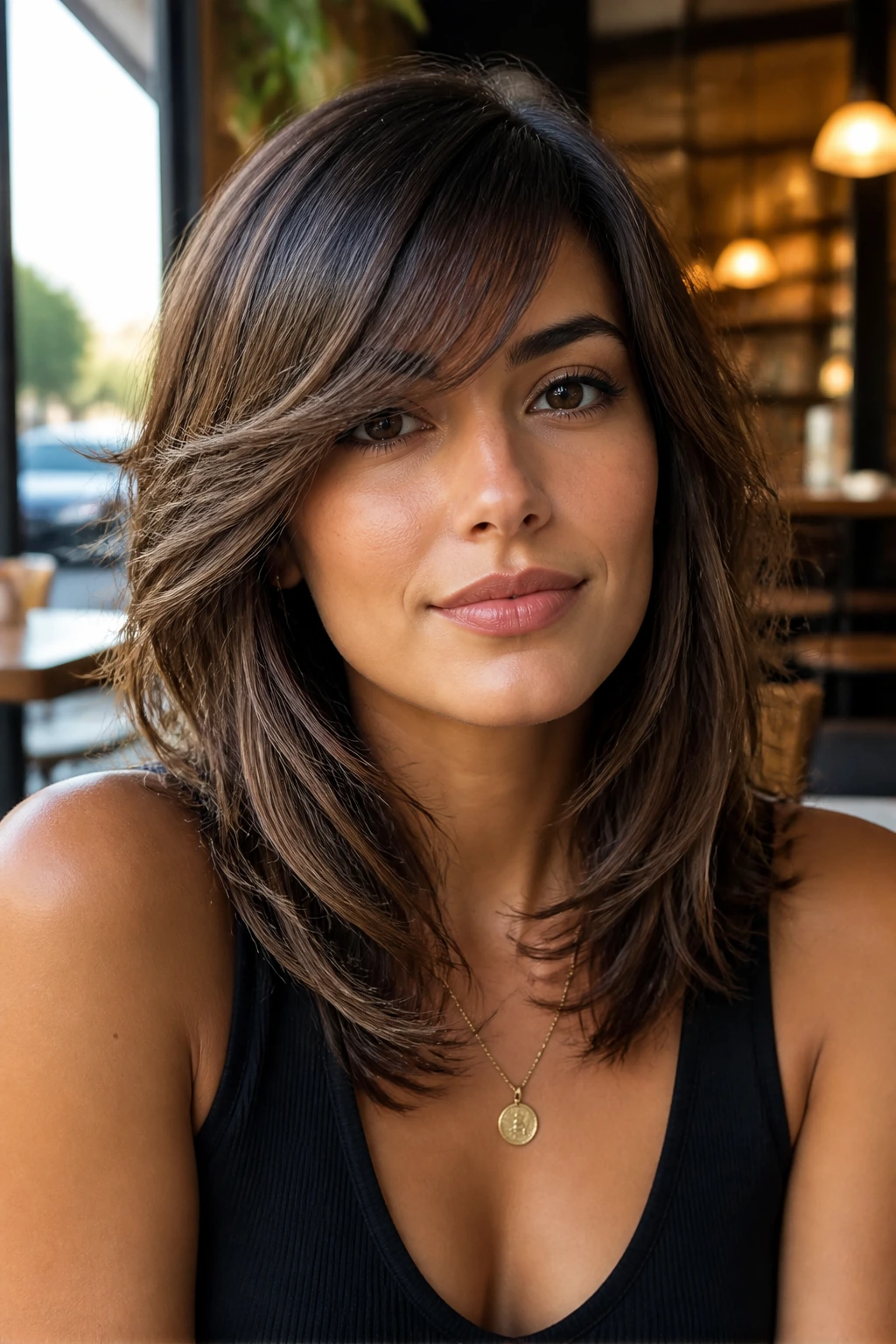
Feathered layers can look dated if the ends are too wispy. Keep them modern by letting the layers fall softly around the collarbone and pairing them with a side-swept fringe. On olive skin, a medium brunette with a neutral or cool glaze keeps the softness from getting yellow.
The fringe does a lot of quiet work here. It opens up the face, gives the cut motion, and softens a strong jawline without hiding it. This is one of the better choices if you want lift but don’t want curtain bangs that need constant styling.
A quick blow-dry with a vent brush is enough most mornings.
16. Old Hollywood Waves
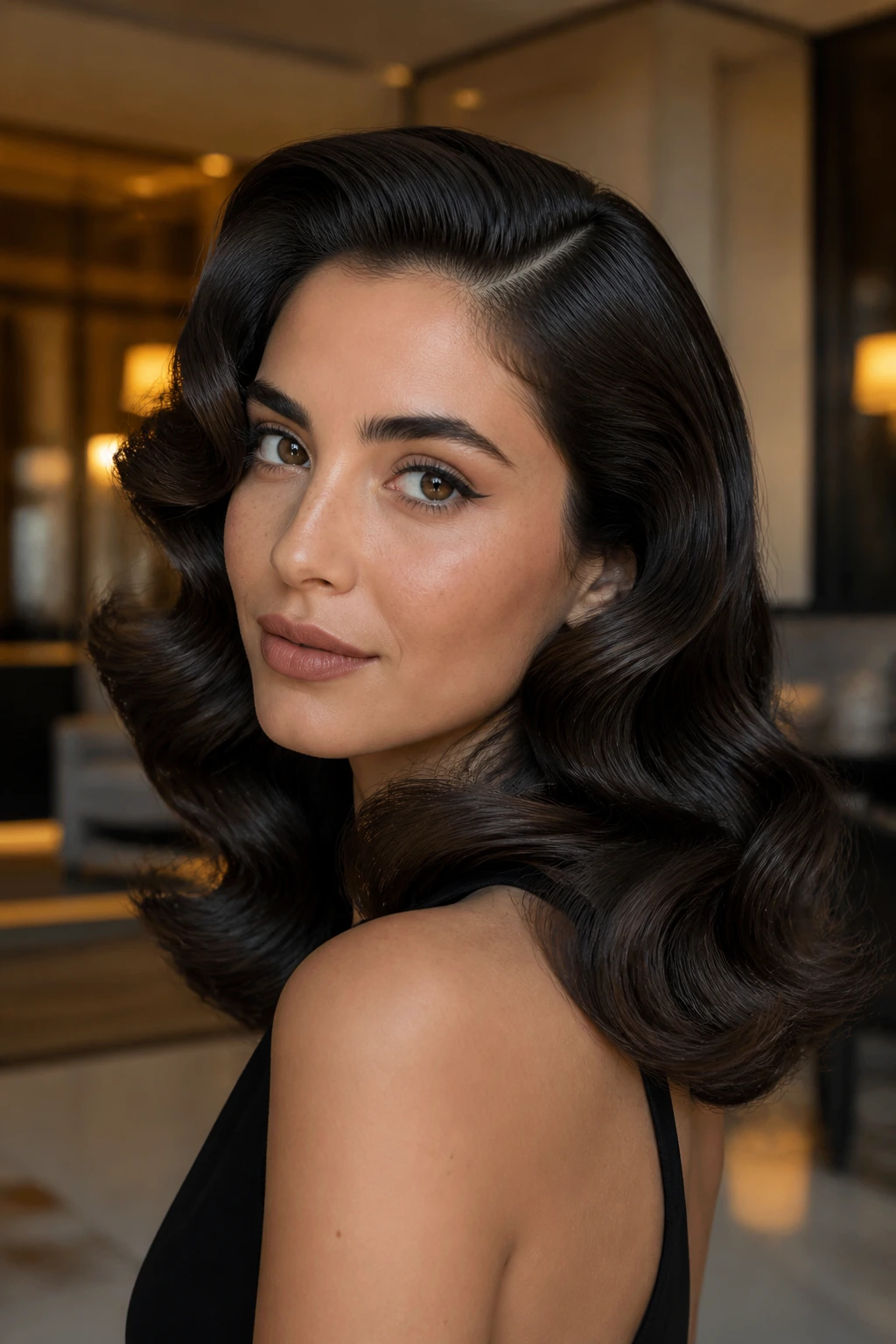
Old Hollywood waves are dramatic, but they’re not difficult once the sectioning is right. The style asks for smooth, sculpted bends through mid-length brunette hair, and it looks especially good on olive skin because the shine creates contrast without needing much color change. Deep brunette, chestnut brunette, and espresso all work here.
The real point is polish. The part is usually deep, the wave pattern is smooth, and the ends sit neatly together instead of fraying out. That makes the color look deeper, and deep brown against olive skin can be striking in a way that feels grown-up, not severe.
When to Reach for It
- Events
- Evening dinners
- Any day you want the hair to carry the outfit
17. French-Girl Lob
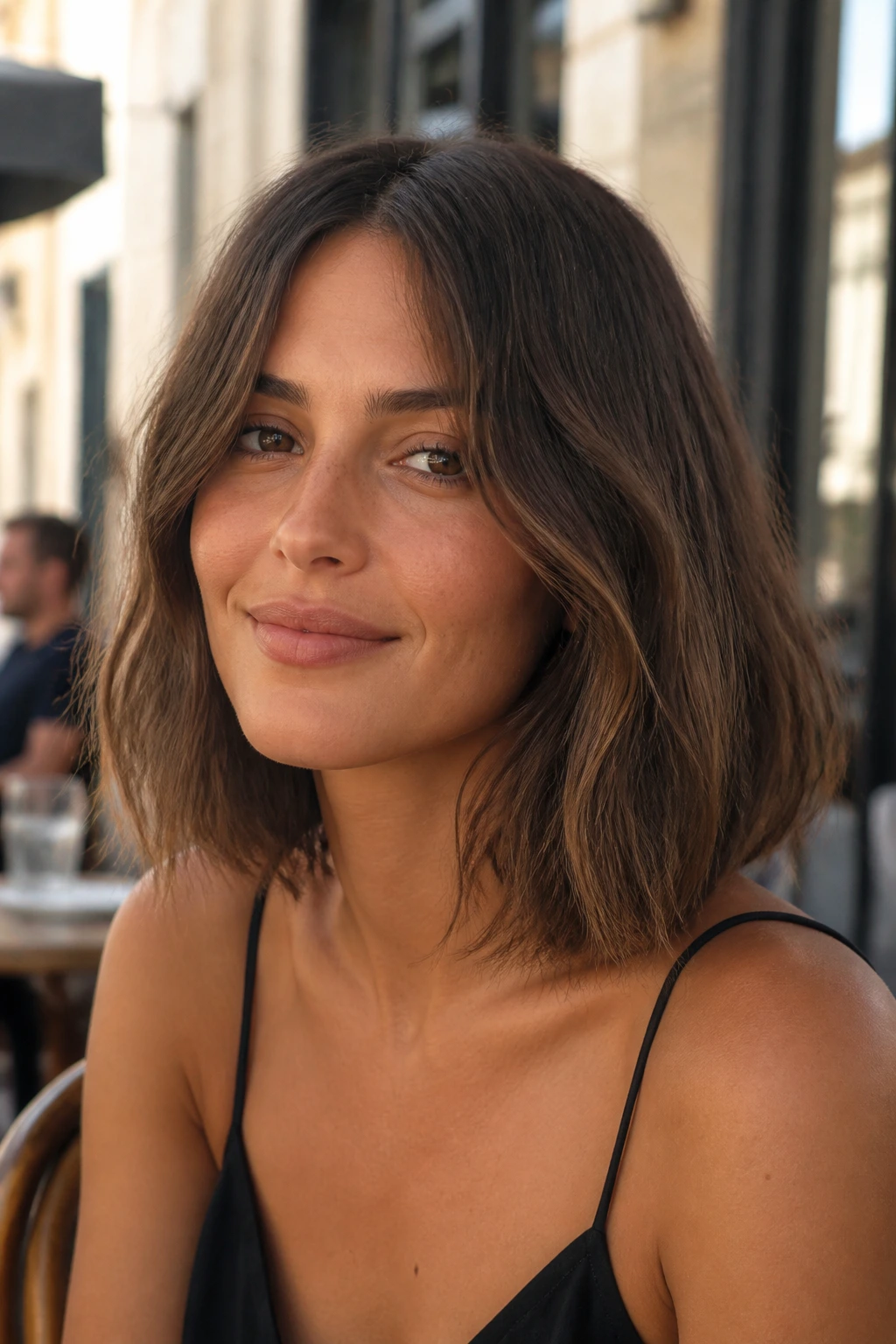
A French-girl lob is softer than a blunt bob and less styled than a formal wave. It lives in the slightly undone zone, which suits olive skin because the brunette shade can stay natural-looking. Think a medium mocha base, a small bend in the middle, and ends that fall without too much fuss.
This cut is good when you don’t want your hair to look “done” in a polished way every day. It can air-dry nicely, especially if the layers are subtle and the length stays around the collarbone. The charm is in the looseness.
A little dry texture spray at the roots helps. Too much and the cut starts to lose its easy shape.
18. Razor-Cut Brunette Midi
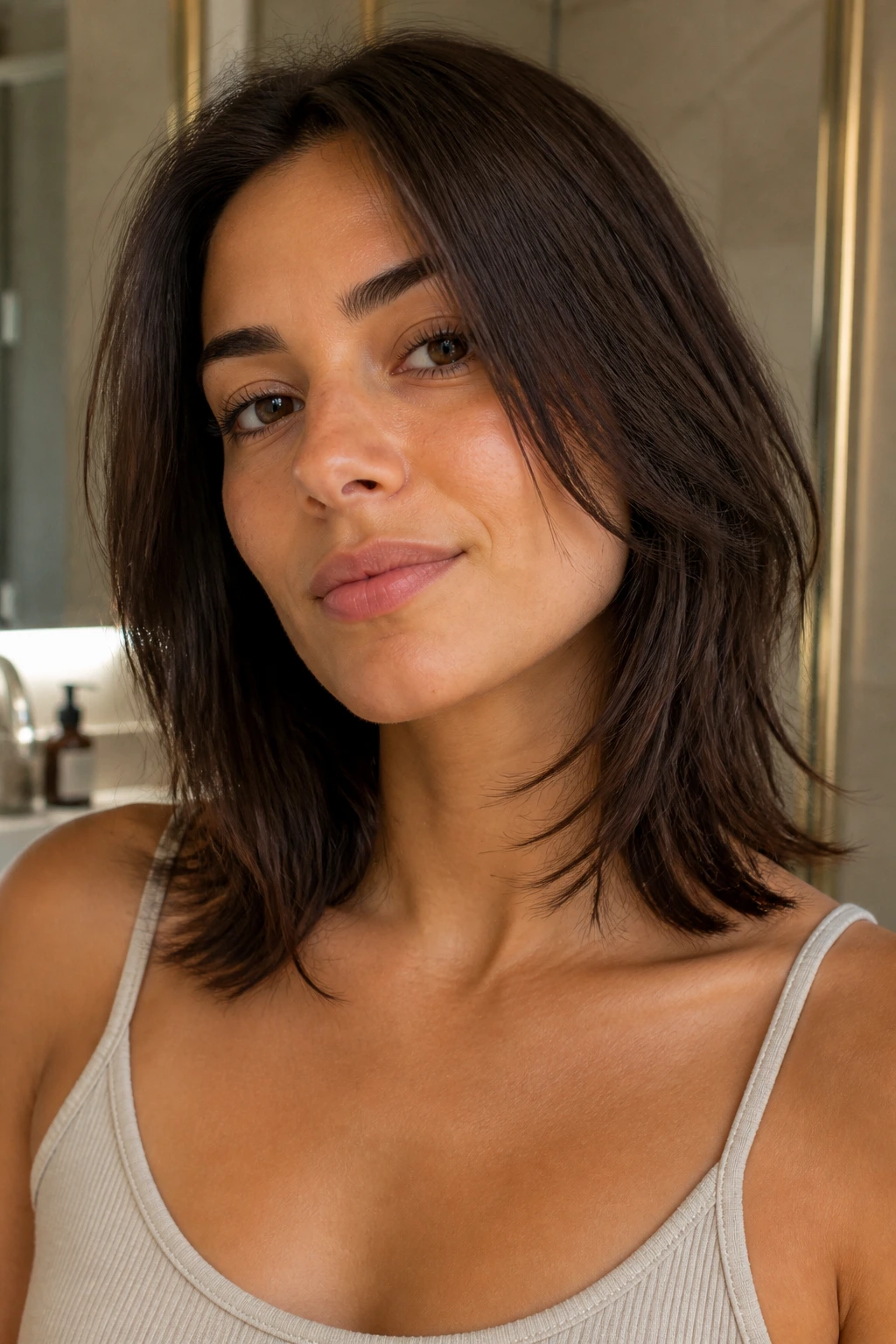
Razor-cut ends do a very specific job: they take the edge off dense hair. If your mid-length brunette feels too heavy, a razor cut can give it swing and movement without hacking it apart. On olive skin, smoky mocha or ash chocolate keeps the finish crisp.
What Makes It Different
Unlike blunt cutting, the razor softens the line and lets the ends taper. That can look beautiful on thick hair and on hair that bends naturally. It can also make fine, frizzy hair look a little ragged if the stylist goes too far, so this is one to choose carefully.
Best with a very controlled blow-dry or a loose wave. The cut needs movement to show well.
19. Bronde Balayage Lob
Bronde is one of those words people toss around loosely, but the good version is specific: brown first, blonde second, and a whole lot of softness in between. A bronde balayage lob works on olive skin when the highlights stay beige or caramel and the base stays medium brunette. Too light, and the balance gets lost.
The reason it works is contrast. Not a harsh one. Just enough lift around the face and on the top layers to keep the brown from going flat. I’d keep the blonde pieces broad enough to notice but thin enough to feel natural.
This is a good path if you like brightness but don’t want a major color change.
20. Soft Flip Ends
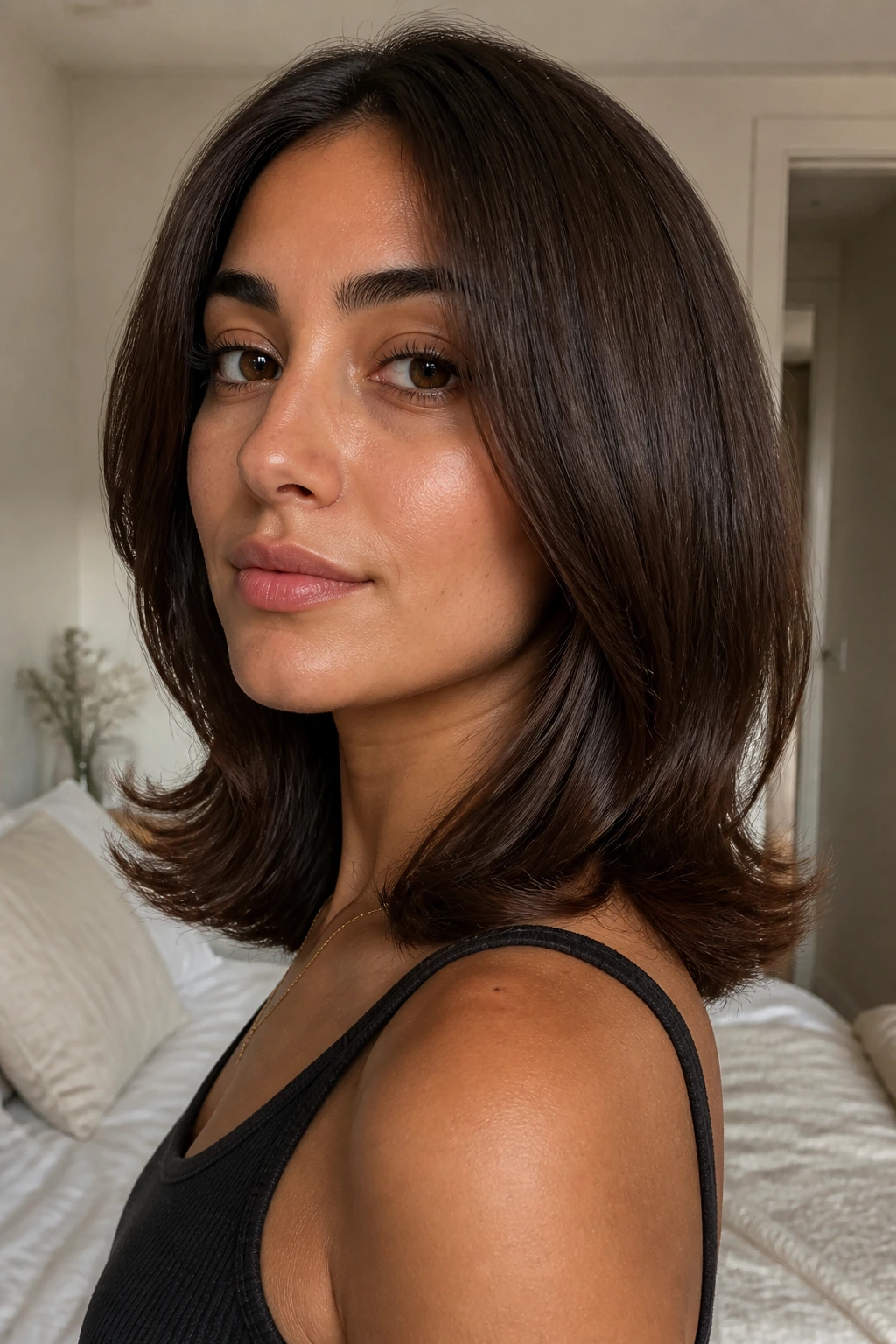
A soft flip at the ends can change a mid-length cut more than people expect. The shape feels livelier, a little retro, and less heavy around the shoulders. On olive skin, a glossy brown with a hint of chestnut or cocoa keeps the style from looking stark.
This is one of the easiest looks to build with a round brush or a large iron. Curl the ends outward just a touch, then brush them through. You want a curve, not a ringlet. The point is to keep the movement light.
It suits straight hair especially well because the flip gives the cut some attitude.
21. Asymmetrical Lob
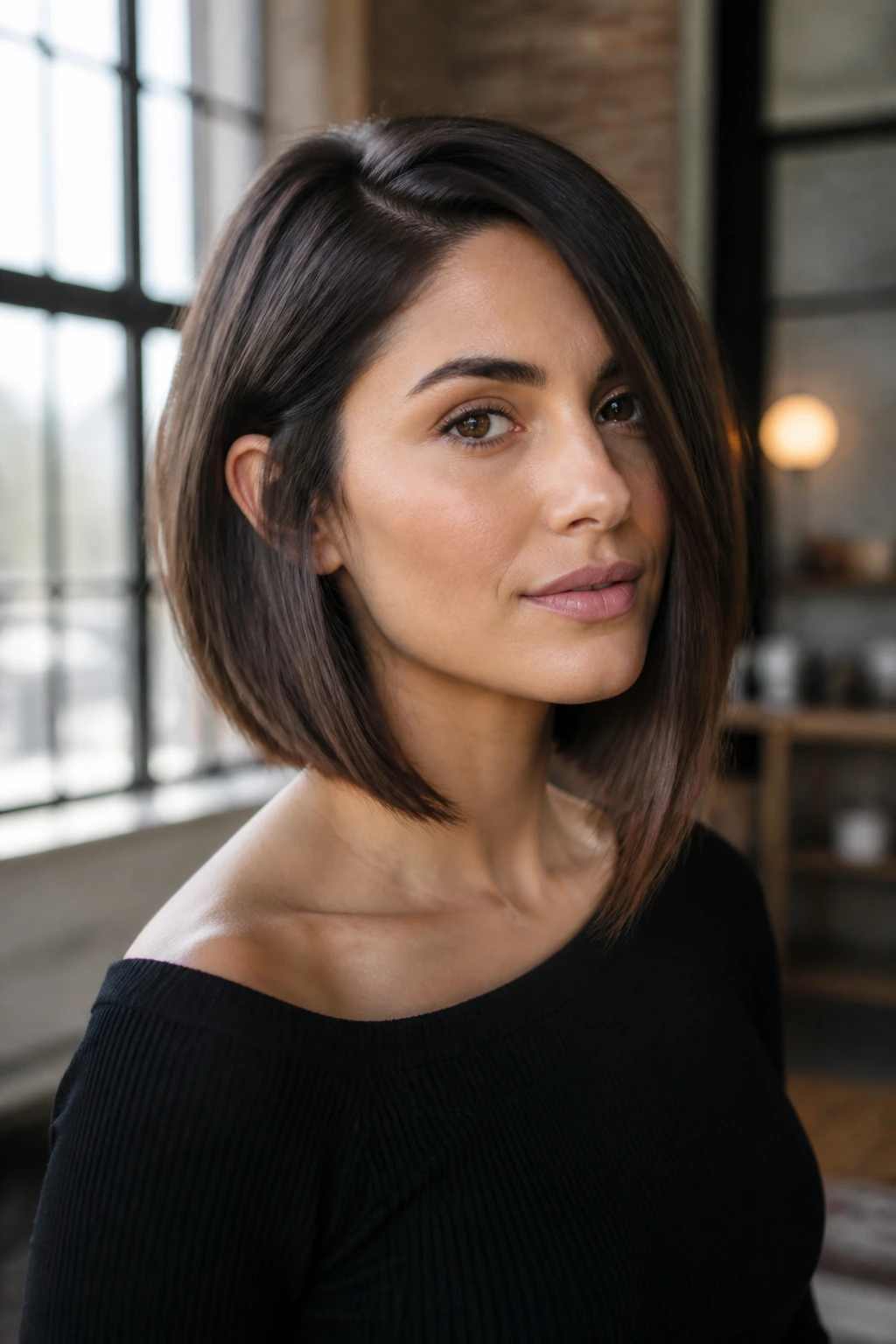
An asymmetrical lob is subtle if it’s done right. One side falls a little longer than the other, and that small difference creates a clean line that looks sharper than a standard cut. On olive skin, the best brunette version uses a neutral espresso or mushroom brown, which keeps the shape modern.
The asymmetry should be enough to notice, not enough to shout. Think a half-inch to an inch longer on one side, depending on how bold you want it. More than that and the haircut can start to feel like a stunt.
This style pairs well with a smooth finish and a side part that echoes the uneven line.
22. Clavicut with Airy Waves
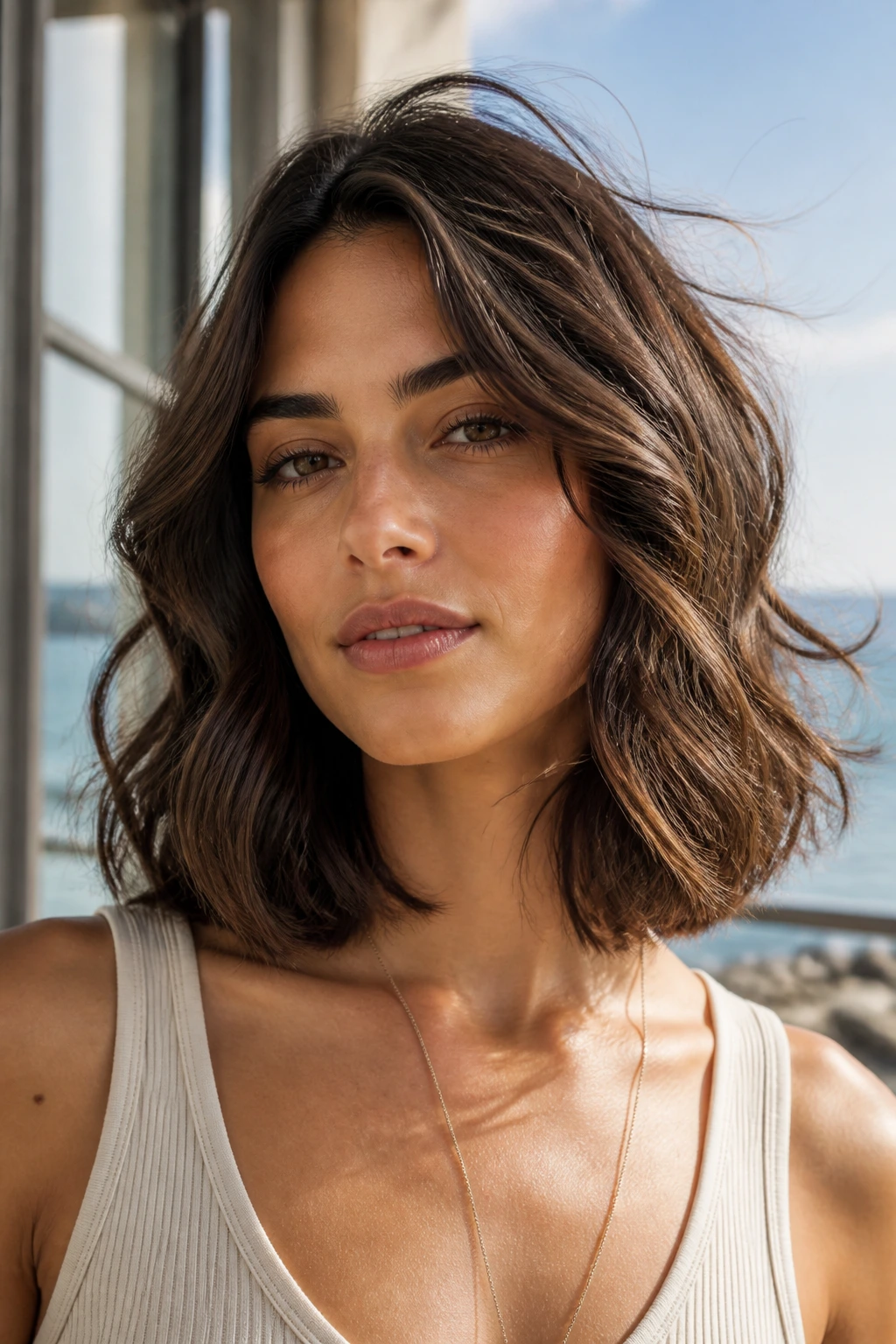
A clavicut sits right near the collarbone, which is one of the best spots for brunette hair on olive skin. Add airy waves and you get a look that moves but still keeps its shape. The brown should be soft and dimensional—mink, mocha, or a deep neutral chestnut all work well.
Why the Shape Helps
The collarbone length draws the eye along the neck and shoulders, which gives the face a little lift. Airy waves stop the cut from reading heavy. That combination is especially useful if your hair is medium to thick and you want something you can wear loose without it taking over.
A texturizing spray at the ends is enough. You do not need full curl.
23. Mocha Shag
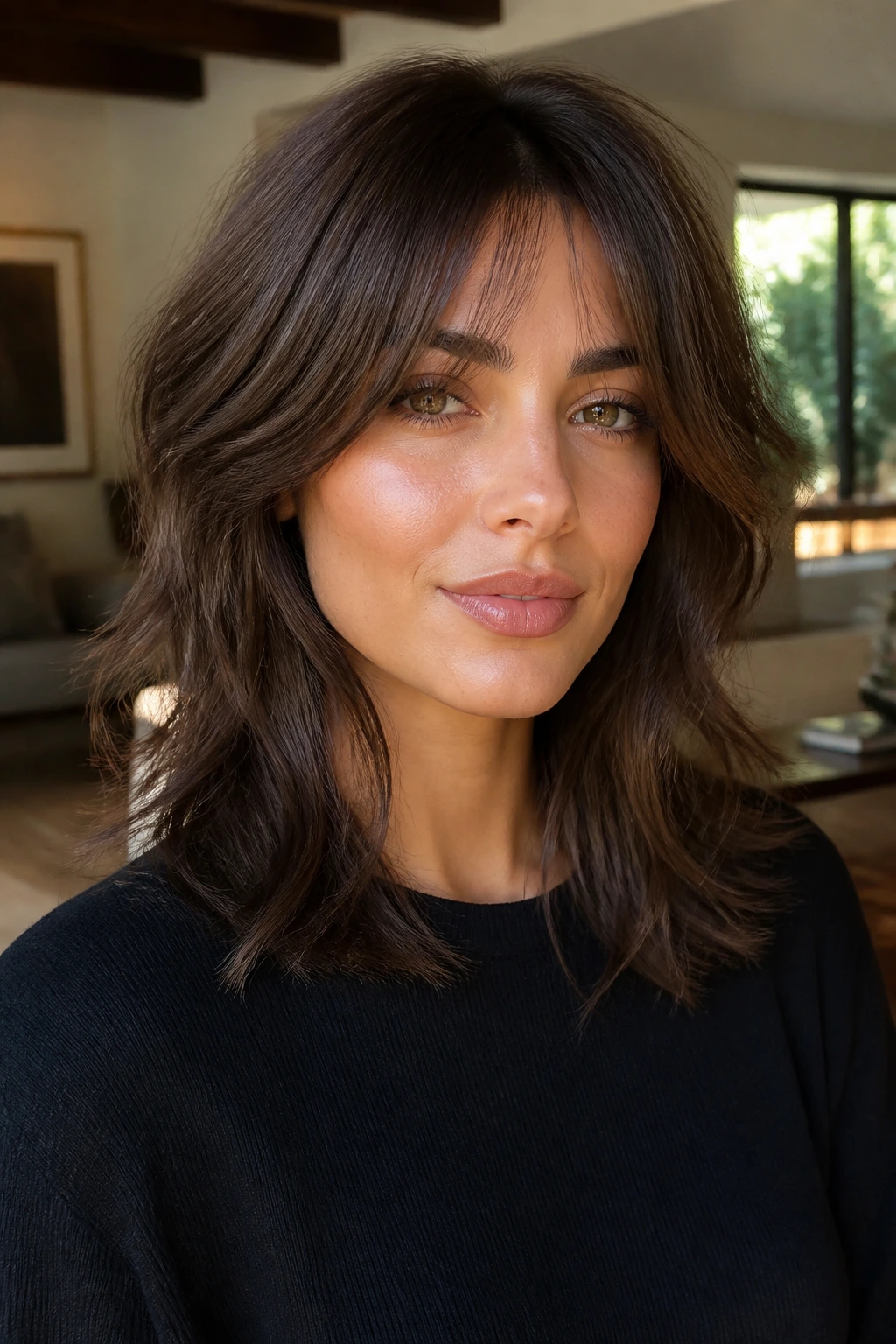
A mocha shag has more bite than a soft layered cut, but it doesn’t need to feel wild. The mocha tone keeps it grounded, and the shag shape gives you movement through the top and around the cheekbone. Olive skin likes this when the color stays neutral and the fringe is lightly broken up.
This cut is useful for people who want shape around the face without a lot of styling time. You can rough-dry it, bend a few pieces, and leave the rest alone. That unevenness looks intentional here.
If your hair is fine, keep the layers long enough to avoid stripping away density. The shag should feel airy, not sparse.
24. Polished Straight Cut with Gloss
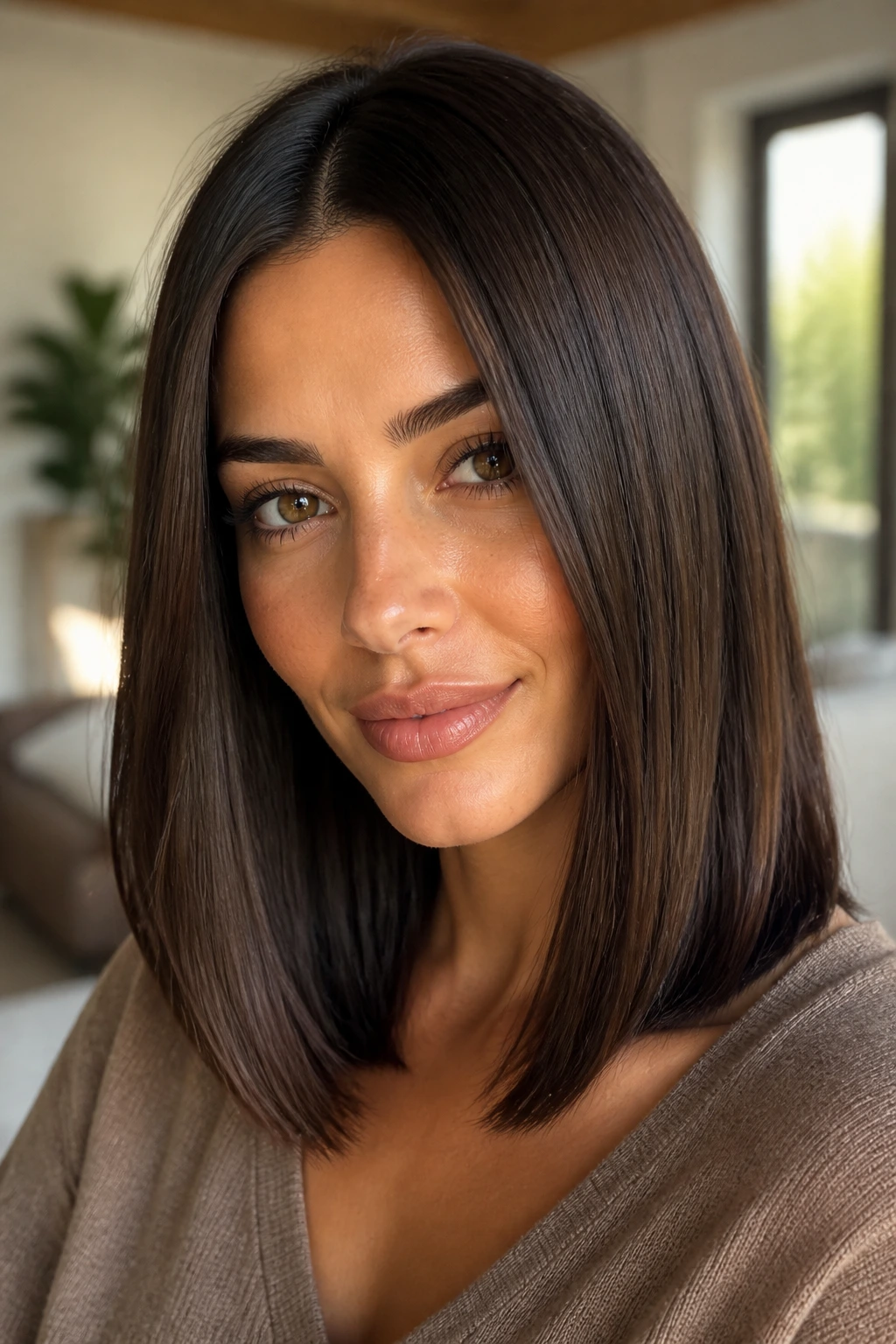
A polished straight cut is the no-nonsense answer when you want brunette color to speak for itself. On olive skin, a glossy brown with a little depth near the roots can make the complexion look clearer because the whole look feels deliberate. The shape is simple; the finish is the point.
Keep the Shine High
Use a heat protectant, a flat iron with smooth plates, and a light serum through the ends. That trio matters. Dry brunette hair looks flat fast, and olive undertones tend to show that flatness more than some other skin tones do.
This is a smart option if your hair already lies naturally straight. You’re working with the grain instead of against it.
25. Beachy Mink Brown Waves
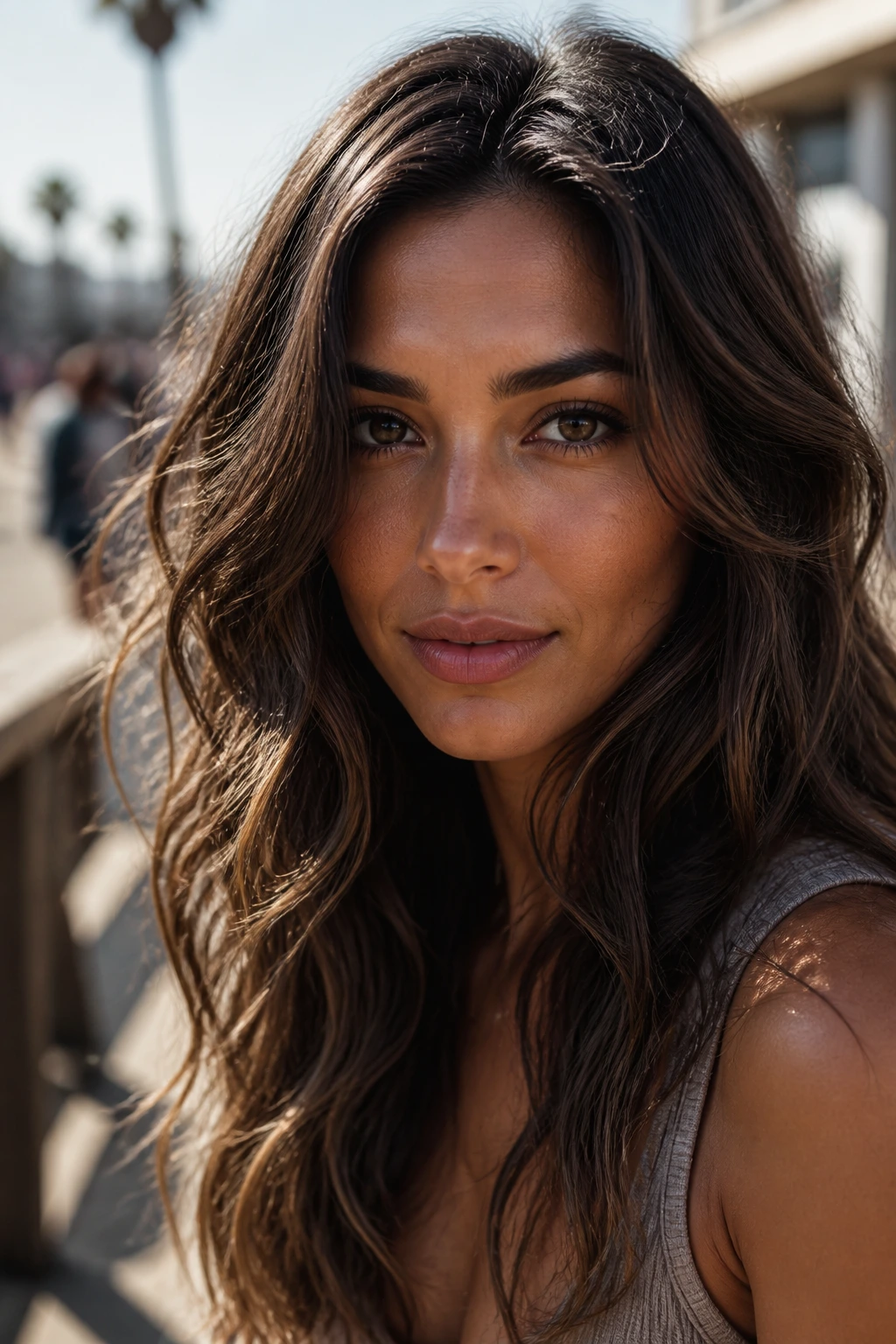
Mink brown sits in that cool-neutral pocket that often looks expensive on olive skin, especially when the undertone leans green or muted gold. Add beachy waves, and the color stops feeling severe. The movement softens the tone, and the tone keeps the waves from looking sugary.
The key is restraint. Don’t over-lighten the hair. Don’t over-curl it either. You want loose, irregular bends that feel like they came from a day out, not a curling contest.
This look is especially good when you want a brunette that feels modern without leaning warm.
26. Blunt Bangs with Collarbone Length
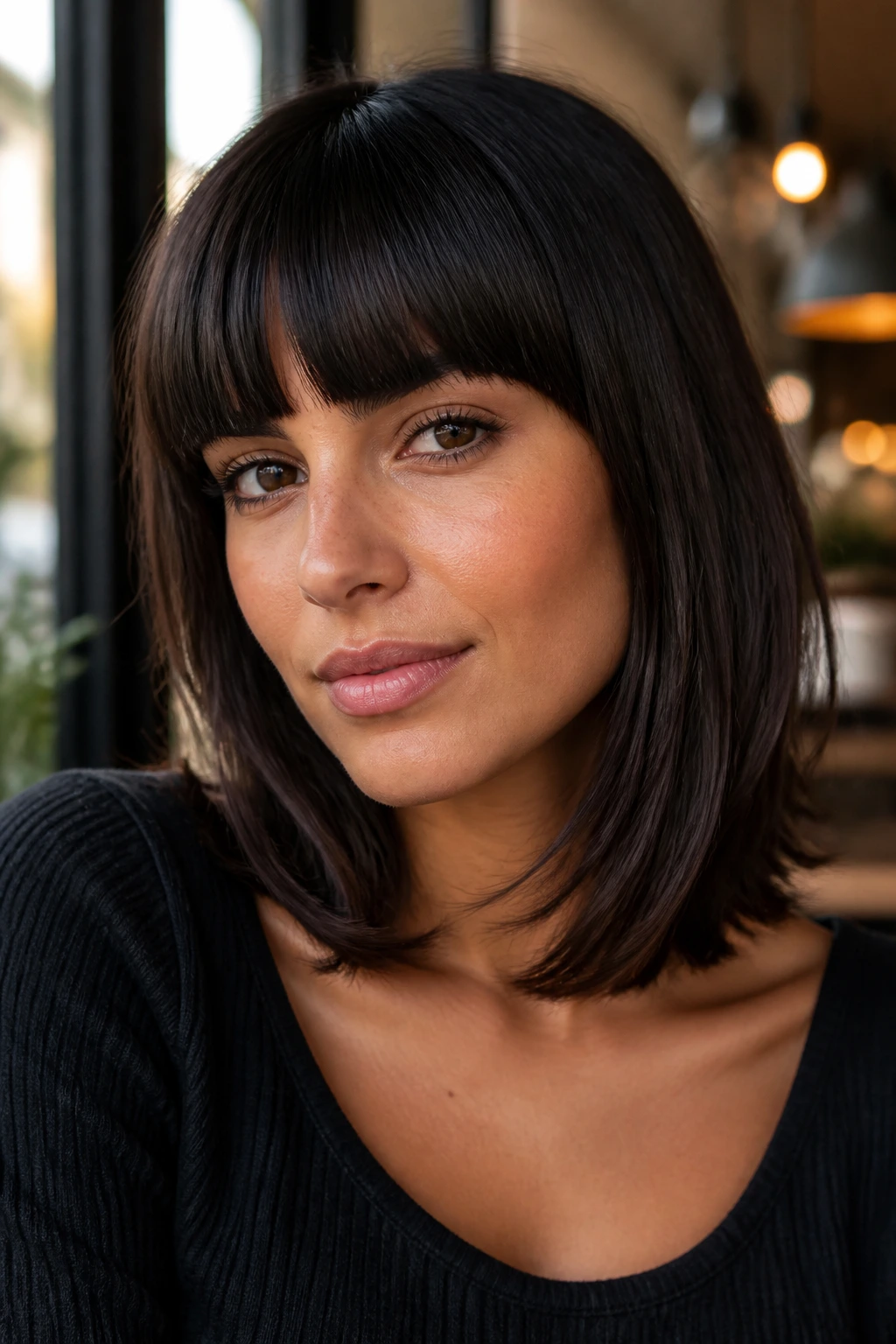
Blunt bangs are a bold choice, and they work best when the rest of the cut stays clean. A collarbone length with blunt bangs gives olive skin a strong frame, especially if the brunette shade is deep chocolate or espresso. The fringe should skim just above the brows or sit at them, depending on your forehead length.
The haircut does not need extra fuss. In fact, too much texture can fight the bang line. Keep the ends smooth, the fringe dense, and the color saturated. That’s the whole point.
If your face is round, ask for slightly longer side edges so the bangs don’t close the face in.
27. U-Cut with Subtle Highlights
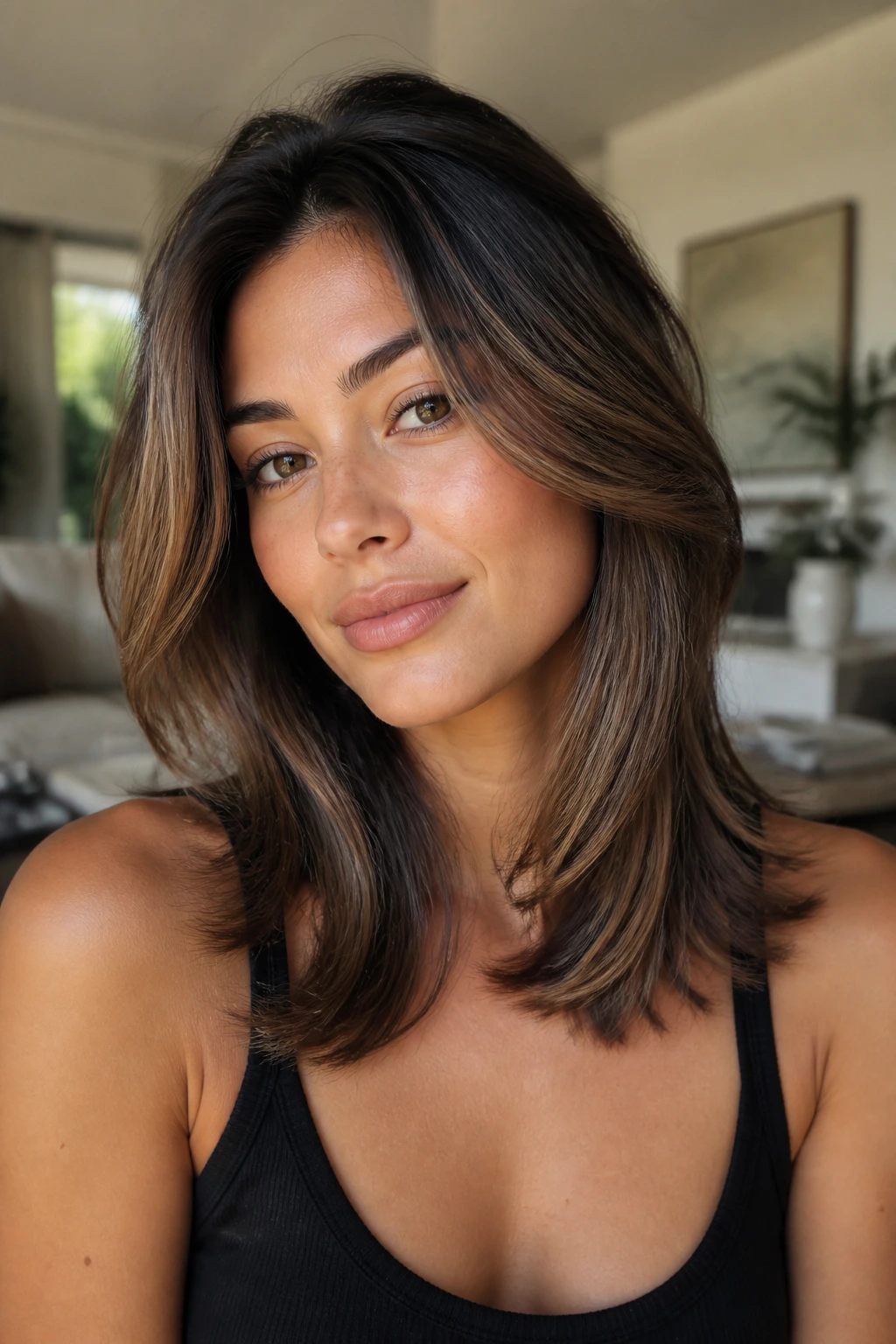
A U-cut keeps more length in the middle and gently curves up at the sides. That small difference is enough to soften the silhouette without changing the overall length much. On olive skin, subtle highlights in beige brown or soft caramel break up the base just enough to keep the brunette from turning flat.
Why the U-Shape Helps
The shape allows the hair to feel fuller at the center and lighter around the sides. That’s useful if your hair is thick or if you want the back to move nicely when it’s down. The highlights should follow the curve, not fight it.
I’d ask for very soft ribbons, not obvious streaks. The cut already has its own shape; the color only needs to support it.
28. Tucked-Behind-Ears Sleek Cut
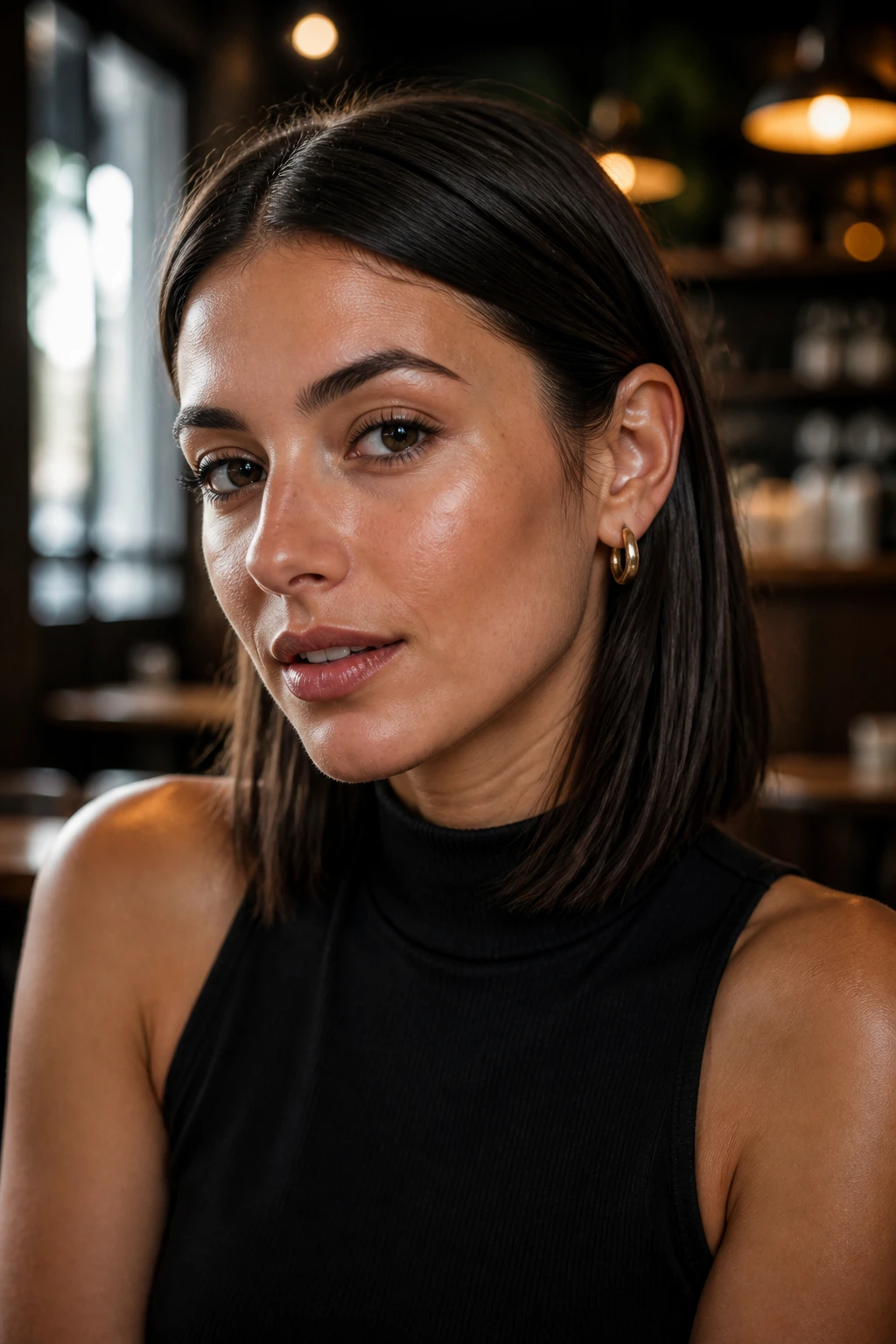
This is one of the simplest looks on the list, and I keep coming back to it because it works. A sleek mid-length brunette tucked behind the ears shows off cheekbones, earrings, and the natural color contrast of olive skin. Use a deep brown or neutral mocha so the finish looks clean, not flat.
The tuck matters because it changes how the hair frames the face. Instead of falling forward, the front pieces open the face and let the skin read brighter. It’s a small styling choice, but the payoff is big.
Best with a center or soft off-center part and a glossy finish.
29. Half-Up Mid-Length Style with Soft Volume
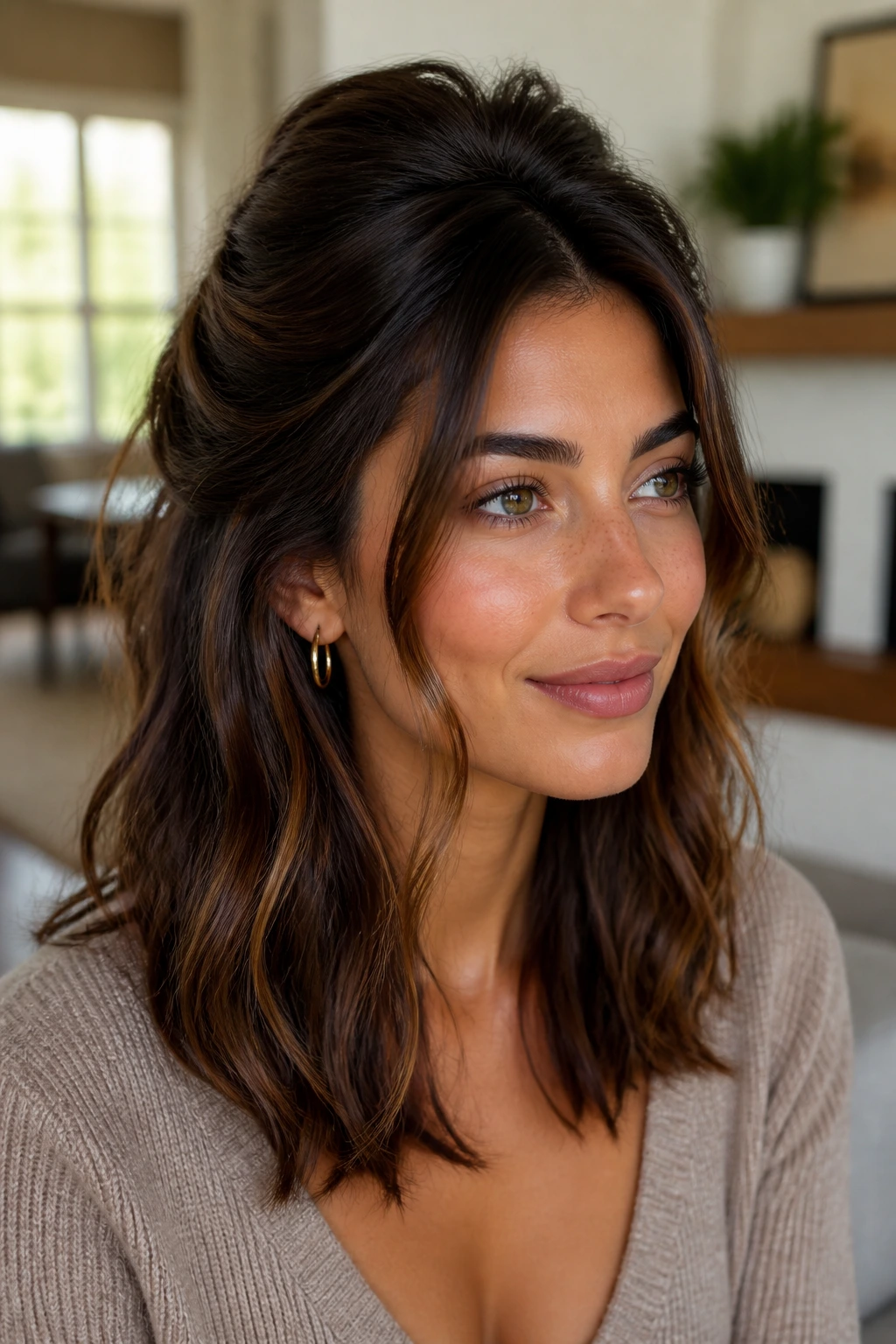
A half-up style is underrated on brunette mid-length hair. Pull the top half back, leave a little lift at the crown, and you get shape without losing the movement of the rest of the hair. On olive skin, this works well with brunette shades that have dimension—walnut, chestnut, espresso with a soft glaze.
A Good Everyday Fix
This is the style you reach for when the cut is fine, the roots are flat, and you still want the hair to look finished. Leave a few face-framing pieces out. Keep the top section loose enough to avoid that strained pulled-back look.
A small claw clip or silk tie works better than a tight elastic. Tightness kills the softness.
30. Tapered Layers with Cocoa Shine
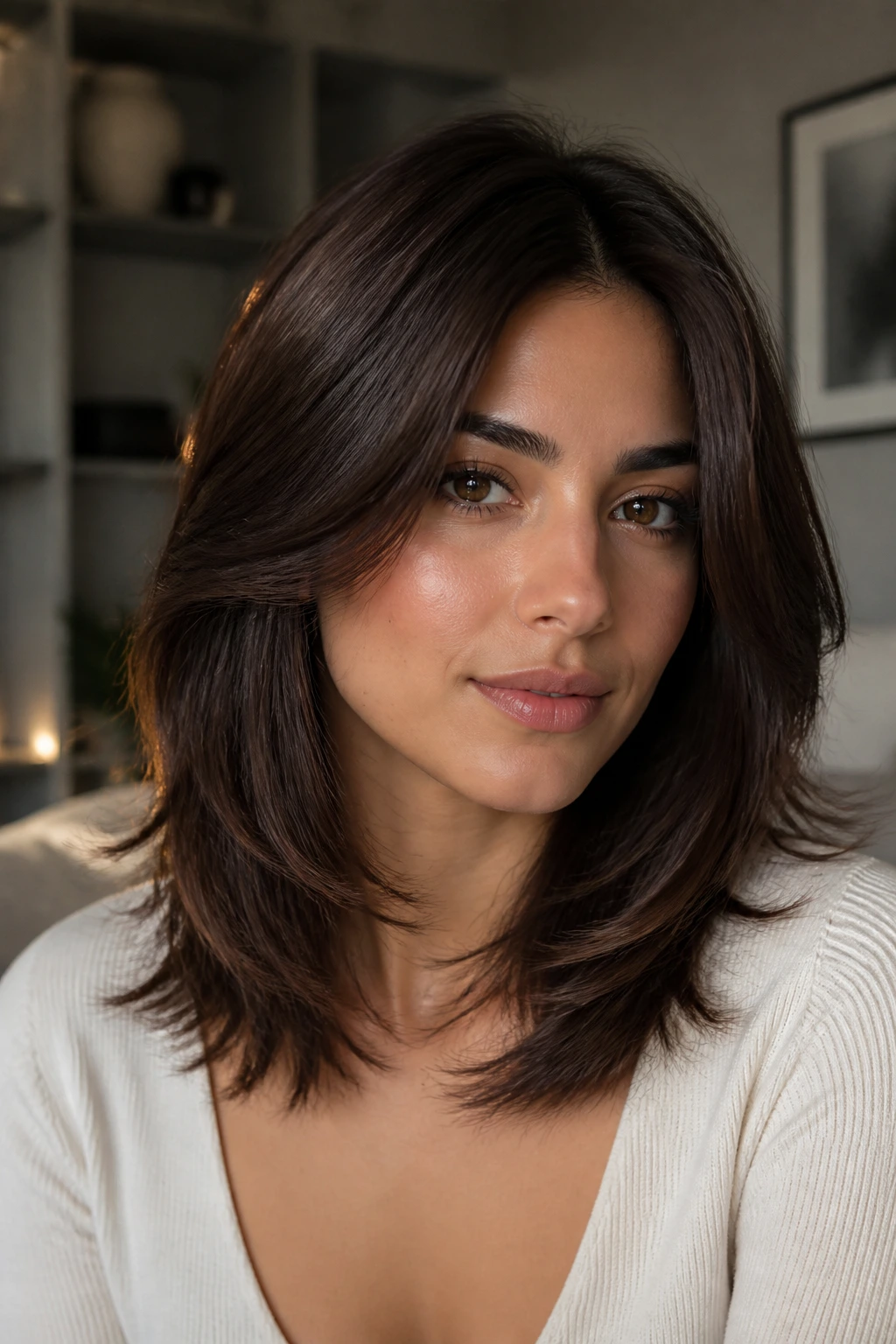
Tapered layers are a quiet finish that keeps the bottom from looking too heavy. On mid-length hair, they create a soft edge that feels lighter near the ends and fuller near the top. Cocoa shine gives olive skin a rich, neutral brown that feels calm and modern.
This is the style I’d pick if you want something elegant without looking overdressed. The layers should melt rather than jump. The color should stay dark enough to feel brunette, but not so dark that the face gets boxed in.
A light gloss every few weeks keeps the cocoa tone from turning dusty. That small refresh changes everything.
Why Mid-Length Hair Flatters Olive Skin So Easily
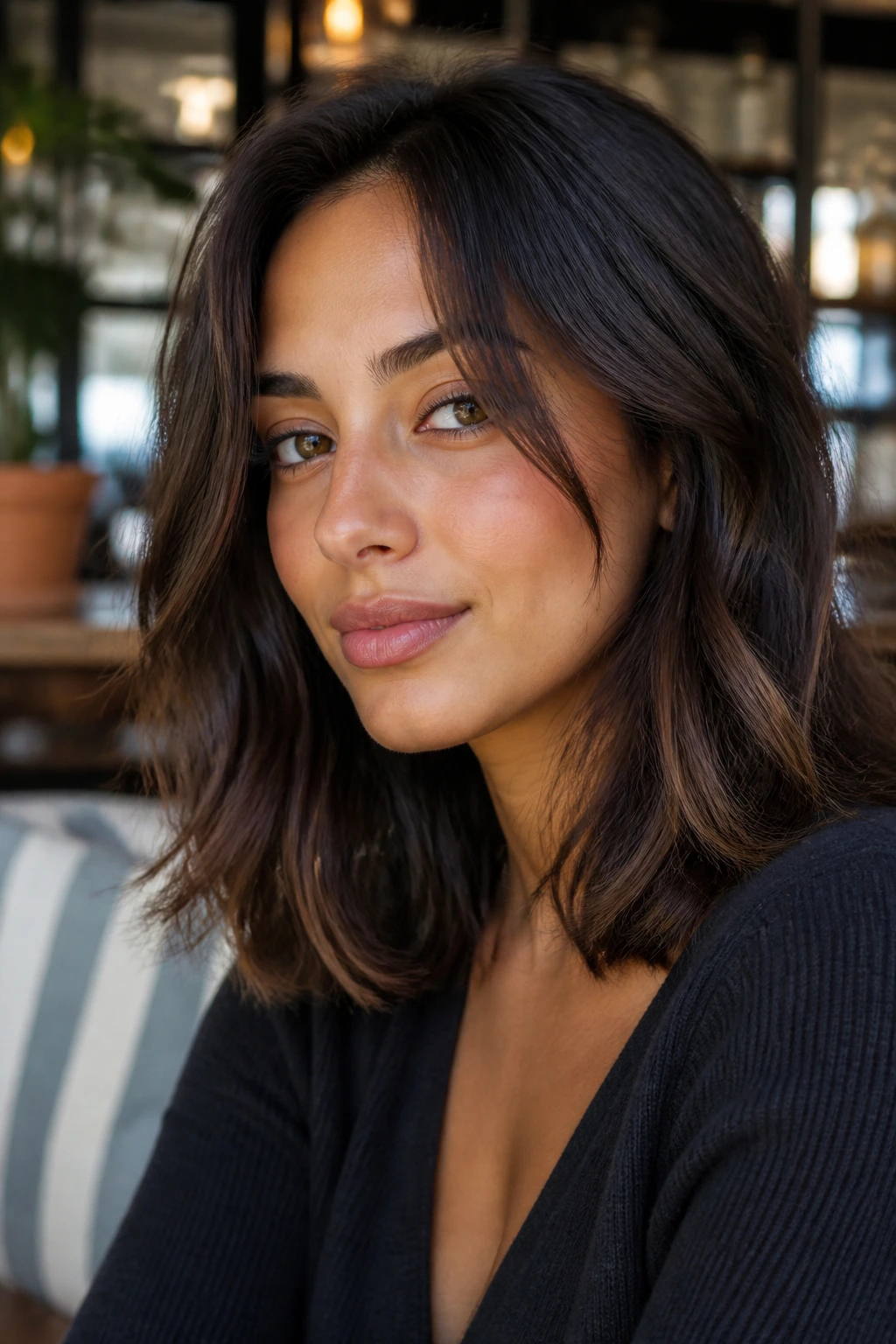
Mid-length hair has a useful habit: it sits right where the face still gets framed, but the hair doesn’t start to drag the complexion down. That matters for olive skin because too much length can make brunette hair feel heavy, especially when the shade is dark and the finish is flat. Collarbone cuts and shoulder-skimming layers keep the eye moving.
There’s also a color reason. Mid-length hair shows off dimension better than very short hair, yet it doesn’t need the same maintenance as long hair when you add balayage, gloss, or face-framing pieces. Olive skin tends to reward those small shifts in tone. A chestnut ribbon near the cheekbone does more than a full head of noisy highlights.
And yes, the cut itself matters just as much as the color. A blunt line, a soft shag, a curl pattern, a side part, a tucked ear—all of it changes how the brunette reads against the skin. That’s the real reason this length works so well. It gives you room to edit the whole effect.
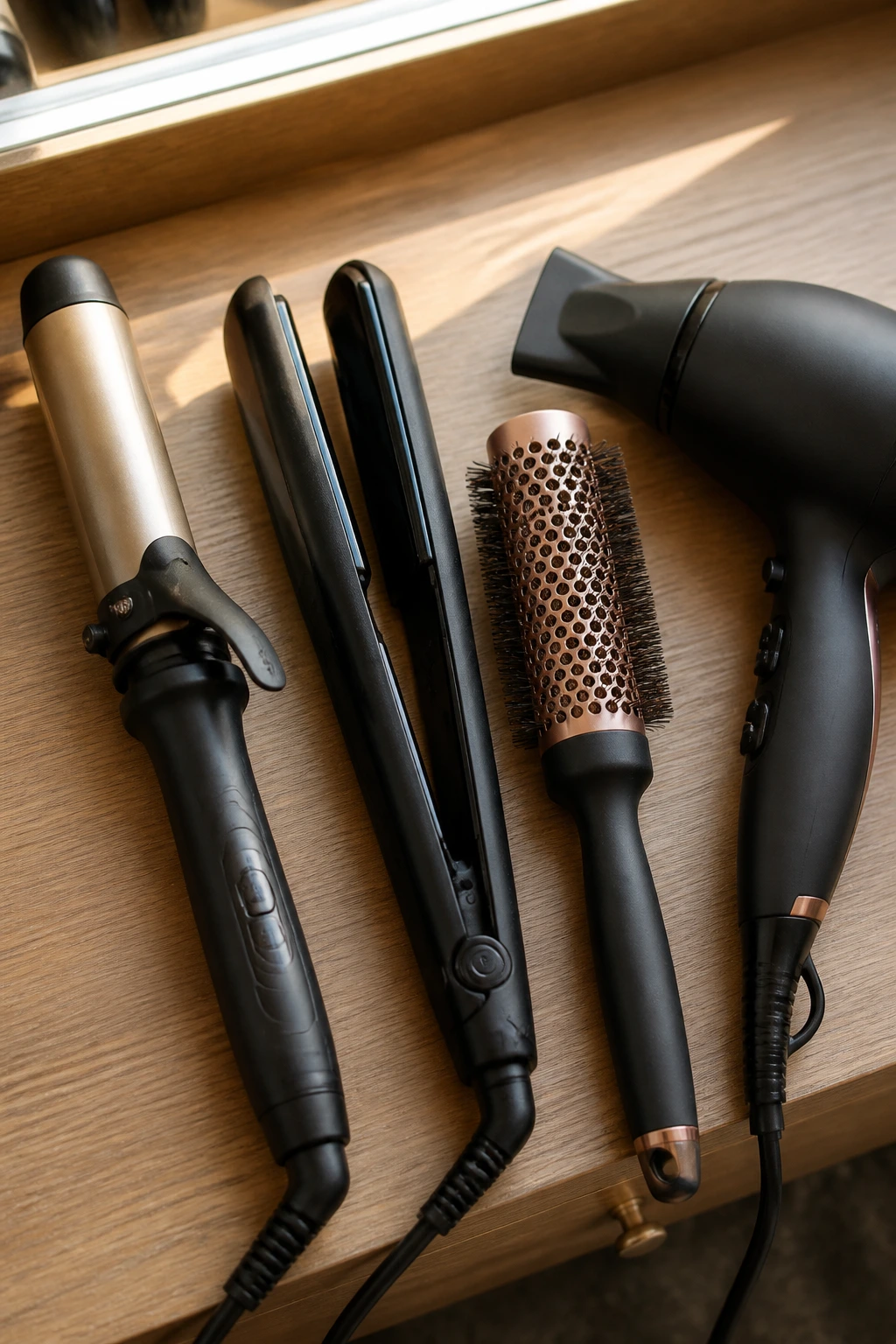
Essential Tools for These Styles
-
1.25-inch curling iron or wand: The sweet spot for soft bends, loose waves, and those not-too-perfect mid-length finishes.
-
Flat iron with smooth plates: Useful for sleek lobs, soft flips, and quick touch-ups at the ends.
-
Round brush, medium barrel: Great for curtain bangs, volume at the crown, and that little lift around the face.
-
Blow dryer with a nozzle attachment: Directs airflow so brunette hair dries smoother and shines more evenly.
-
Heat protectant spray or cream: Non-negotiable if you style often; brown hair shows dryness fast when it’s overworked.
-
Lightweight mousse or root-lift spray: Helpful for fine hair that needs body without sticky stiffness.
-
Texturizing spray: Best for shags, beachy waves, and anything meant to look slightly undone.
-
Glossing serum or oil: A few drops on the ends can make deep brunette shades reflect light instead of absorbing it.
-
Color-safe shampoo and conditioner: Keeps brunette tones richer between salon visits.
-
Blue shampoo for brunettes: Useful when warm brown starts turning orange; use it sparingly so the hair doesn’t go dull.
Choosing the Right Brunette Shade and Product Finish
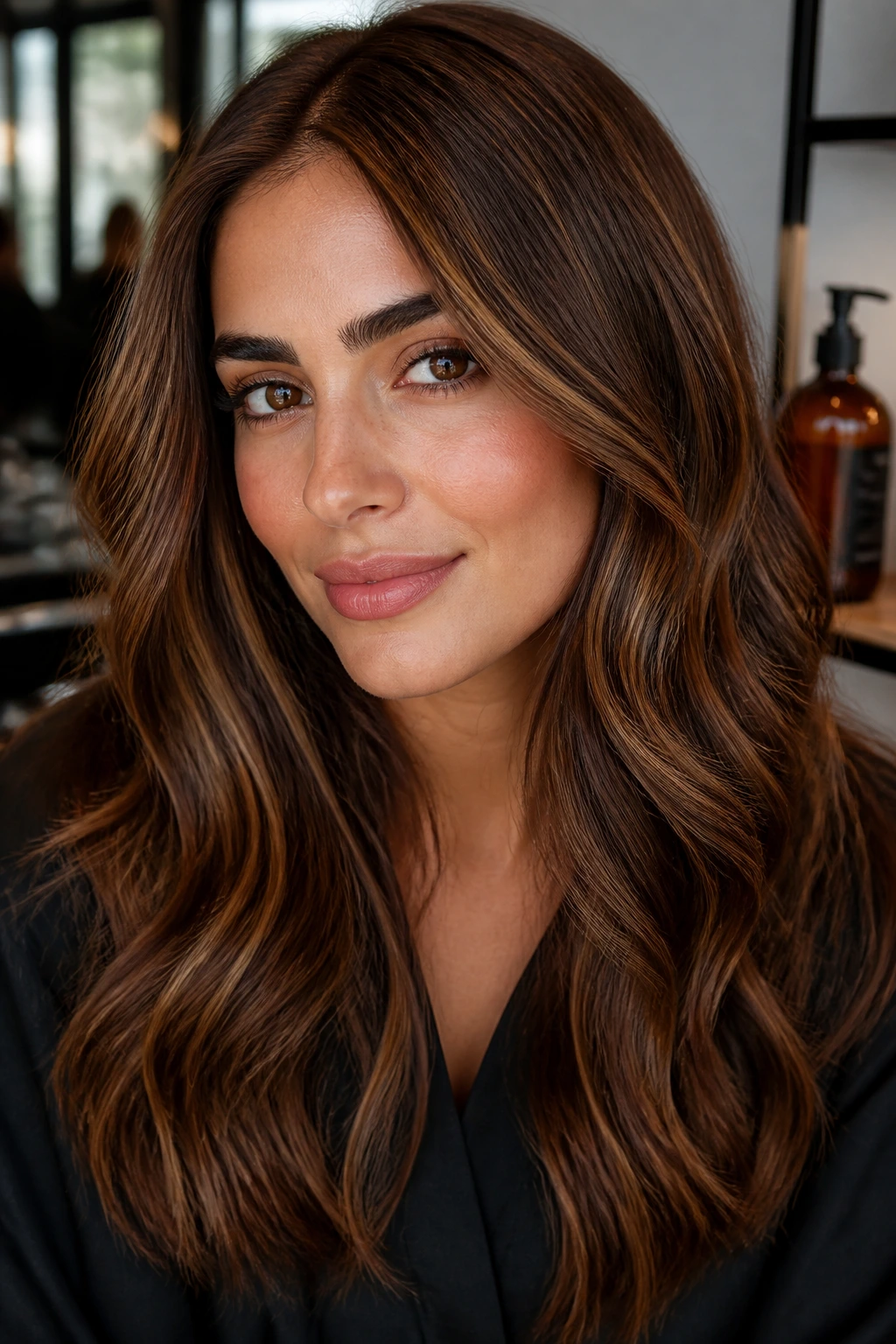
Olive skin usually wants brunette shade choices that look deliberate, not random. If your undertone leans warm-green or golden, chestnut, walnut, cocoa, and beige caramel tend to sit nicely because they echo the skin without flattening it. If your olive skin leans cooler or more muted, espresso, mushroom brown, ash mocha, and mink brown often look cleaner.
A level 5 to 6 brunette is a safe starting point if you want dimension. Level 4 reads deeper and richer, while level 7 starts drifting lighter and needs more careful tone control. That doesn’t mean you can’t go lighter. It means the warmer the highlight, the more exact the placement needs to be. Chunky blonde pieces can look disconnected fast.
When you’re buying products, think in layers. A color-safe shampoo keeps the tone from fading. A gloss or glaze can rescue brown hair that looks dusty. A heat protectant with a smoothing finish helps brunette strands reflect light instead of fuzzing out. And if your brown leans orange after a few washes, a blue-toned shampoo once every week or two can pull it back into line.
Bring photos in daylight, not filtered screenshots. That one habit saves a lot of regret.
How to Wear These Cuts From Desk to Dinner
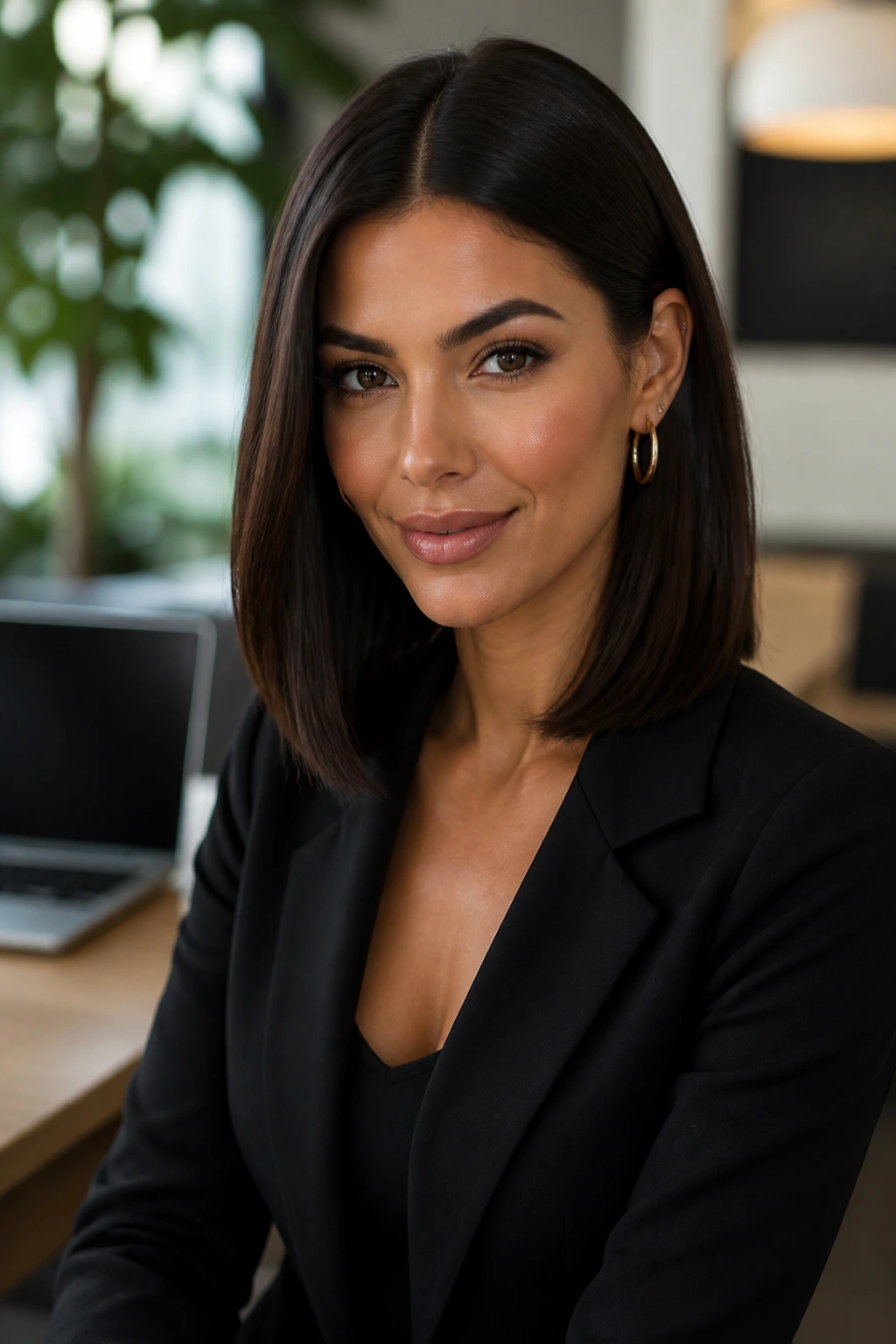
Polished Daytime: A sleek lob, tucked-behind-ears cut, or blunt collarbone shape looks sharp with little more than a smooth blow-dry and a side or center part. Keep flyaways down and the ends clean.
Soft Weekend Texture: Curtain bangs, beachy waves, shags, and butterfly cuts all look better with a bit of movement. A texturizing spray at the mid-lengths is enough; the hair should still look touchable.
Night-Out Lift: A deep side part, old Hollywood wave, or soft flip at the ends gives brunette hair a little drama without adding more color. Shine serum on the surface makes olive skin look brighter by contrast.
Accessories That Help: Slim clips, simple hoops, tortoiseshell barrettes, and satin scrunchies all play nicely with these shapes. Heavy, oversized accessories can drown out a mid-length cut, especially if the layers are soft.
Small Styling Tweaks That Change the Finish
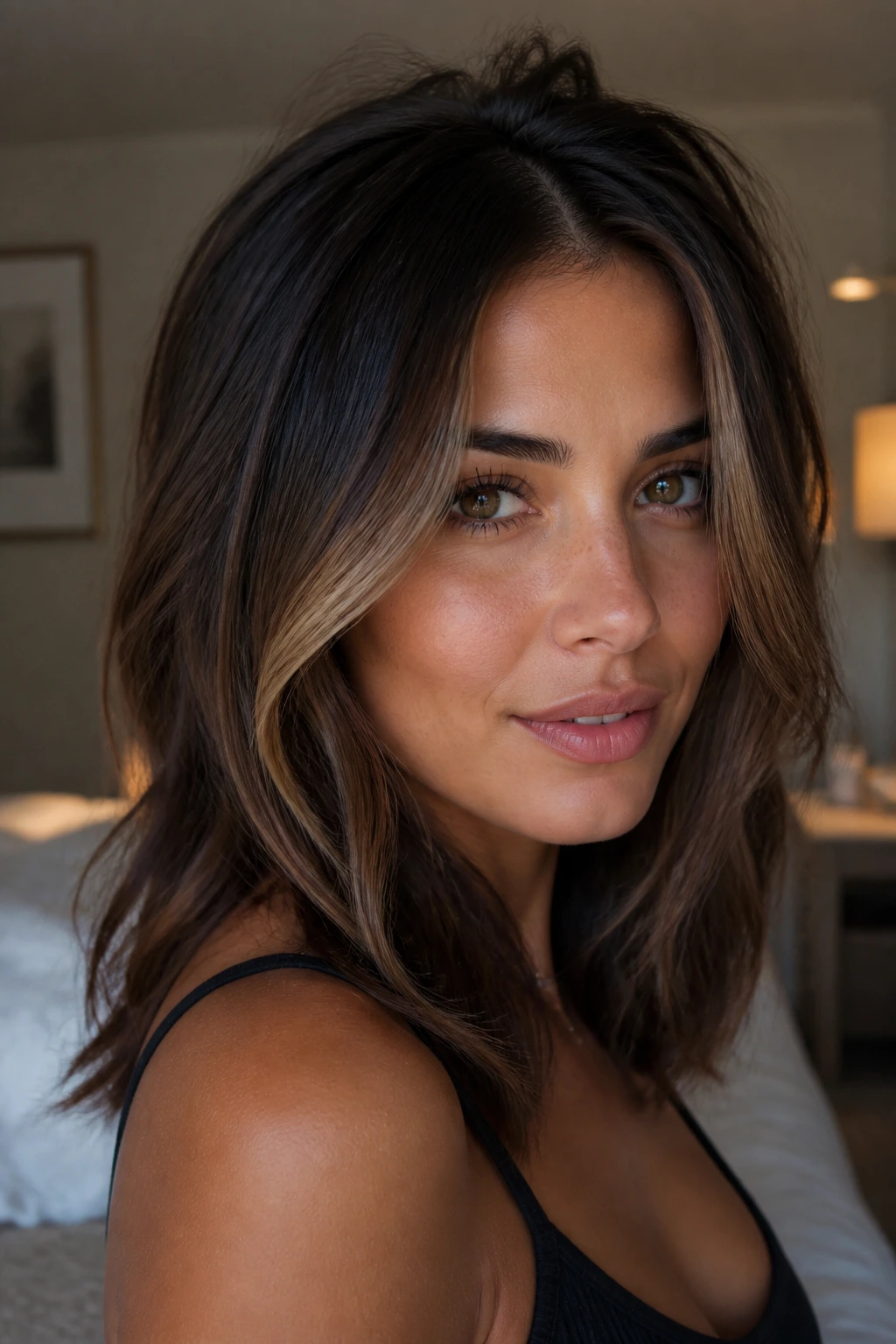
Root Lift: A touch of mousse at the roots before blow-drying can stop mid-length brunette hair from collapsing at the crown. That matters most on fine hair and on blunt cuts that need body.
Gloss Boost: A pea-sized amount of serum on dry ends adds shine without making the hair look greasy. Use less than you think you need. Brown hair shows buildup faster than people expect.
Part Shift: Moving a center part a half-inch off-center can change the whole face shape. It’s the fastest way to make a cut feel fresher without touching the length.
Face-Framing Control: If olive skin looks a little flat, ask for brighter front pieces or a shorter layer that starts near the cheekbone. If the face already feels open, keep the front softer and darker.
Texture Swap: Straighten the ends for a sharper finish, or bend only the mid-lengths for a more relaxed one. Same haircut. Different mood.
What Usually Goes Wrong with Mid-Length Brunette Hair
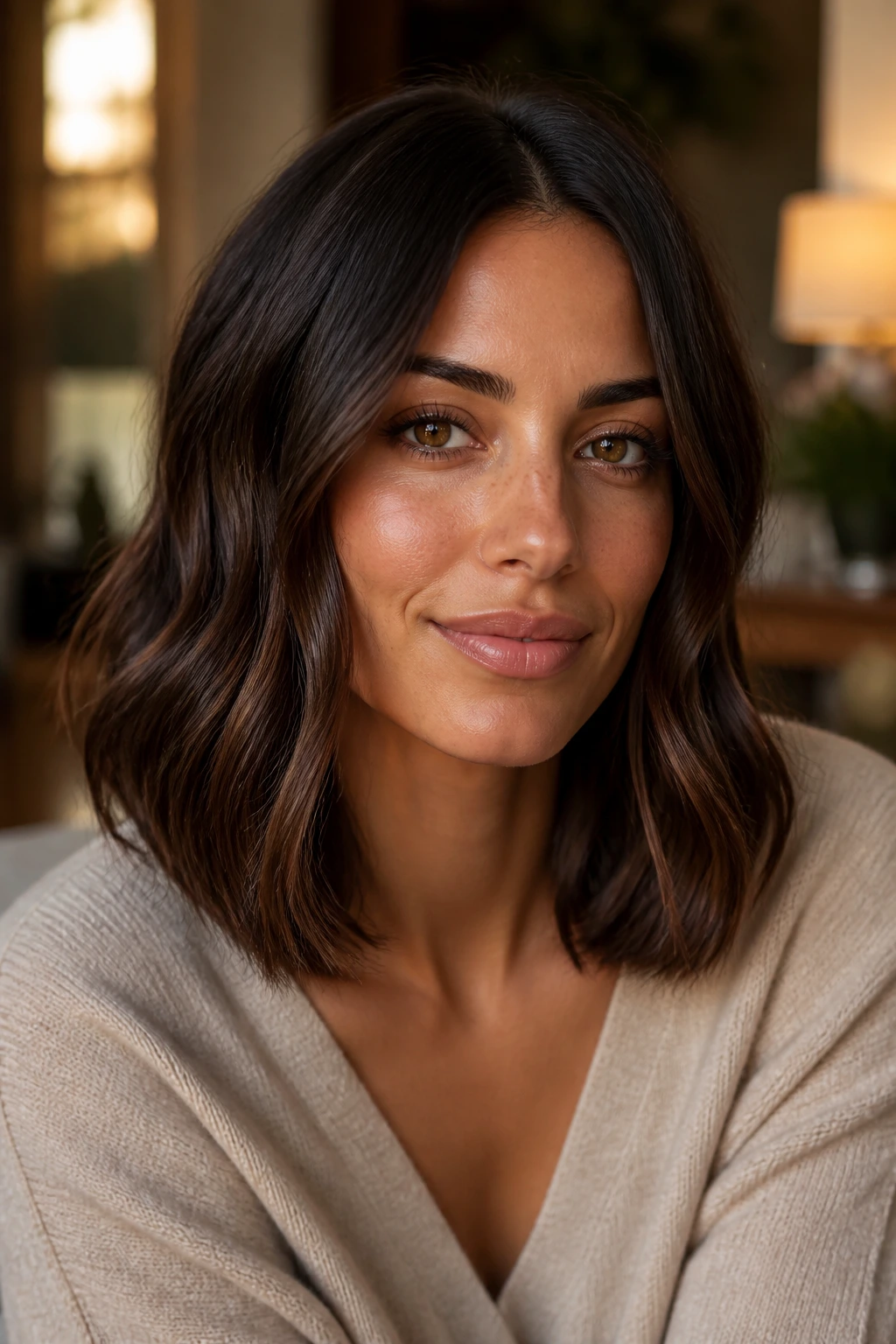
Picking a brown that’s too orange. The hair can look warm in the mirror but turn brassy against olive skin in daylight. The fix is a neutral or cool brunette base with warm pieces used sparingly, not all over.
Cutting too many short layers into fine hair. The shape starts to fray and the ends look thin. Keep the layers longer and more gradual if density is low.
Going too dark without contrast. Near-black brunette can look flat on some olive complexions, especially if the skin leans muted. Espresso with a little softness around the front usually works better than a hard, ink-dark brown.
Skipping the finish. A gorgeous cut can still look dead if the ends are dry. Olive skin tends to show that dryness because the contrast gets harsh. A glossing serum or trim helps more than another styling product piled on top.
Over-curling every strand. Tight, uniform curls can make mid-length hair feel dated and bulky. Leave some ends straighter, alternate curl direction, and break the pattern with fingers rather than a brush.
Variations and Adaptations to Try
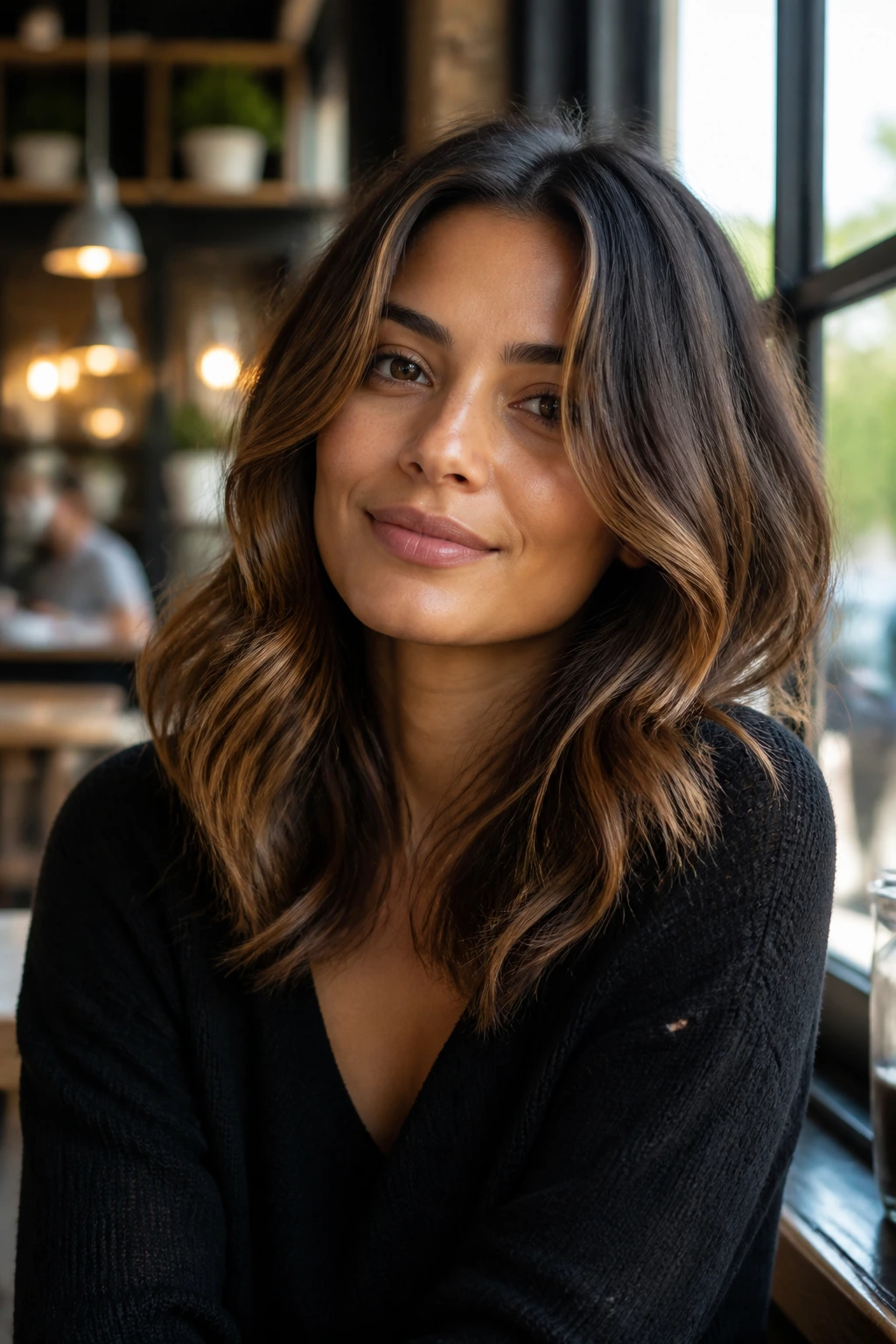
Warm Olive Chestnut: If your skin has gold in it, shift the brunette toward chestnut and use soft caramel around the face. It brings warmth without turning orange and works especially well on collarbone cuts and curtain bangs.
Cool Olive Mocha: If your undertone leans cooler, choose mocha, mushroom, or espresso with a neutral glaze. The result feels cleaner and more modern, especially on blunt lobs and sleek finishes.
Fine-Hair Volume Lob: Keep the cut blunt at the bottom, add a slight off-center part, and use root lift only at the crown. This version gives fine hair the look of density without over-layering.
Thick-Hair Airy Shag: Ask for long layers, not short choppy ones, and keep the fringe soft. The shape removes bulk while leaving enough weight for the brunette to look rich.
Curly Mid-Length Shape: Let the curls sit at collarbone length with shape-driven layers that follow the curl pattern. A walnut or cocoa tone keeps the color deep enough to show each curl without making the whole head disappear into one dark mass.
Low-Maintenance Balayage Grow-Out: Place the lightest pieces near the front and let the rest stay close to the base brown. It grows out softly and keeps olive skin bright without demanding constant salon visits.
Keeping the Cut and Color Fresh Between Appointments
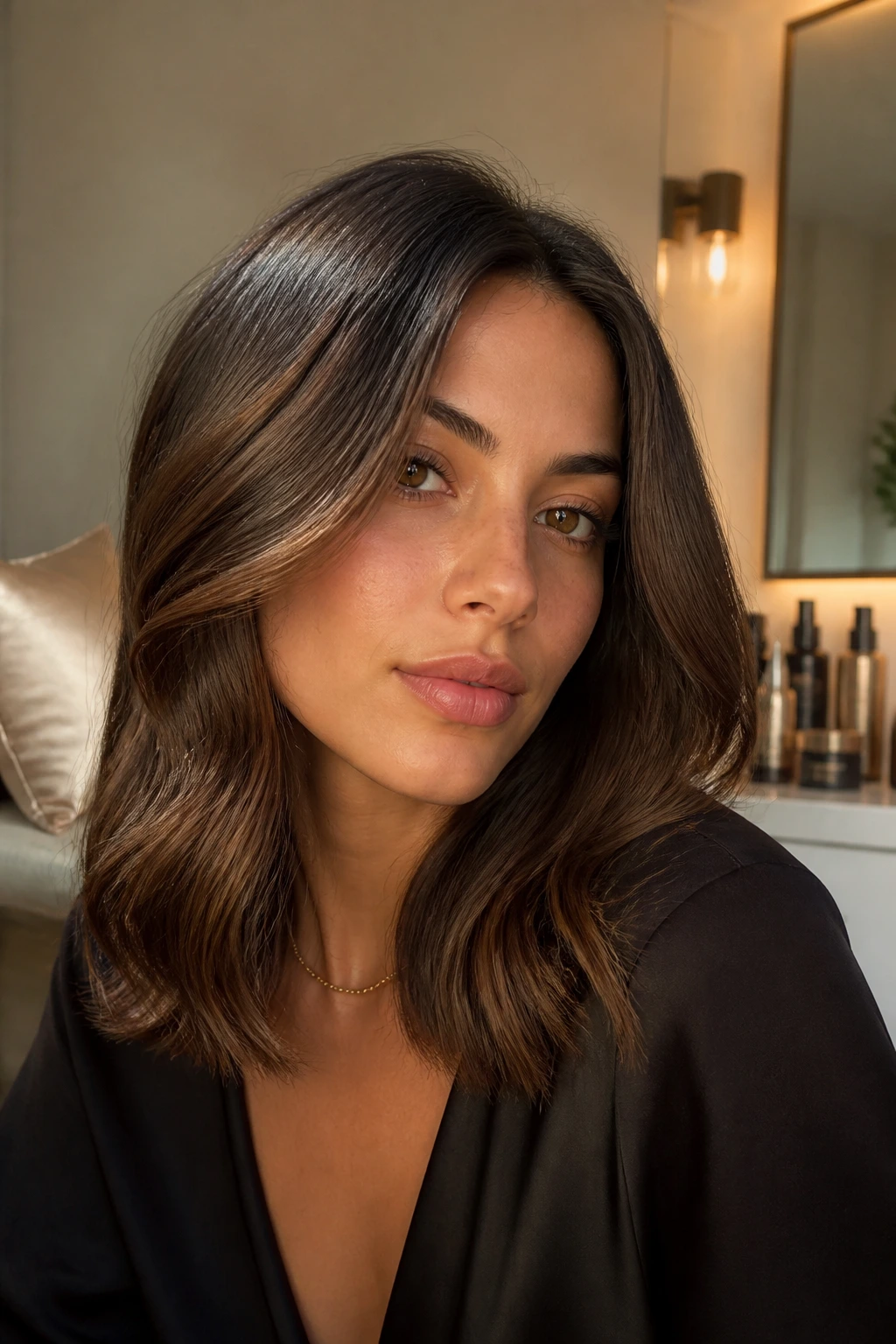
Mid-length brunette hair usually looks best when you stay on top of the ends and the tone. A trim every 6 to 8 weeks keeps blunt cuts crisp and layered styles from collapsing into one shape. If you’re growing it out, you can stretch that a bit longer, but once the ends start to flip awkwardly or feel see-through, the haircut is already telling on itself.
Color needs its own rhythm. Glosses or toners every 4 to 6 weeks help brunette shades stay rich, especially if you’ve got highlights or face-framing pieces. If your brown starts leaning orange, a blue shampoo once a week can pull the warmth back. Don’t overuse it. Too much tone-correction leaves brunette hair dull and hollow-looking.
At home, sleep on a silk or satin pillowcase if your hair tangles easily. It’s a small thing, but it helps preserve the bend in waves and keeps the ends from fuzzing out by morning. If you blow-dry often, keep heat protectant in arm’s reach instead of hiding it in a drawer. The best brunette styles are the ones that still look like brunette styles after three washes, not just on salon day.
Questions People Ask Before They Book the Cut
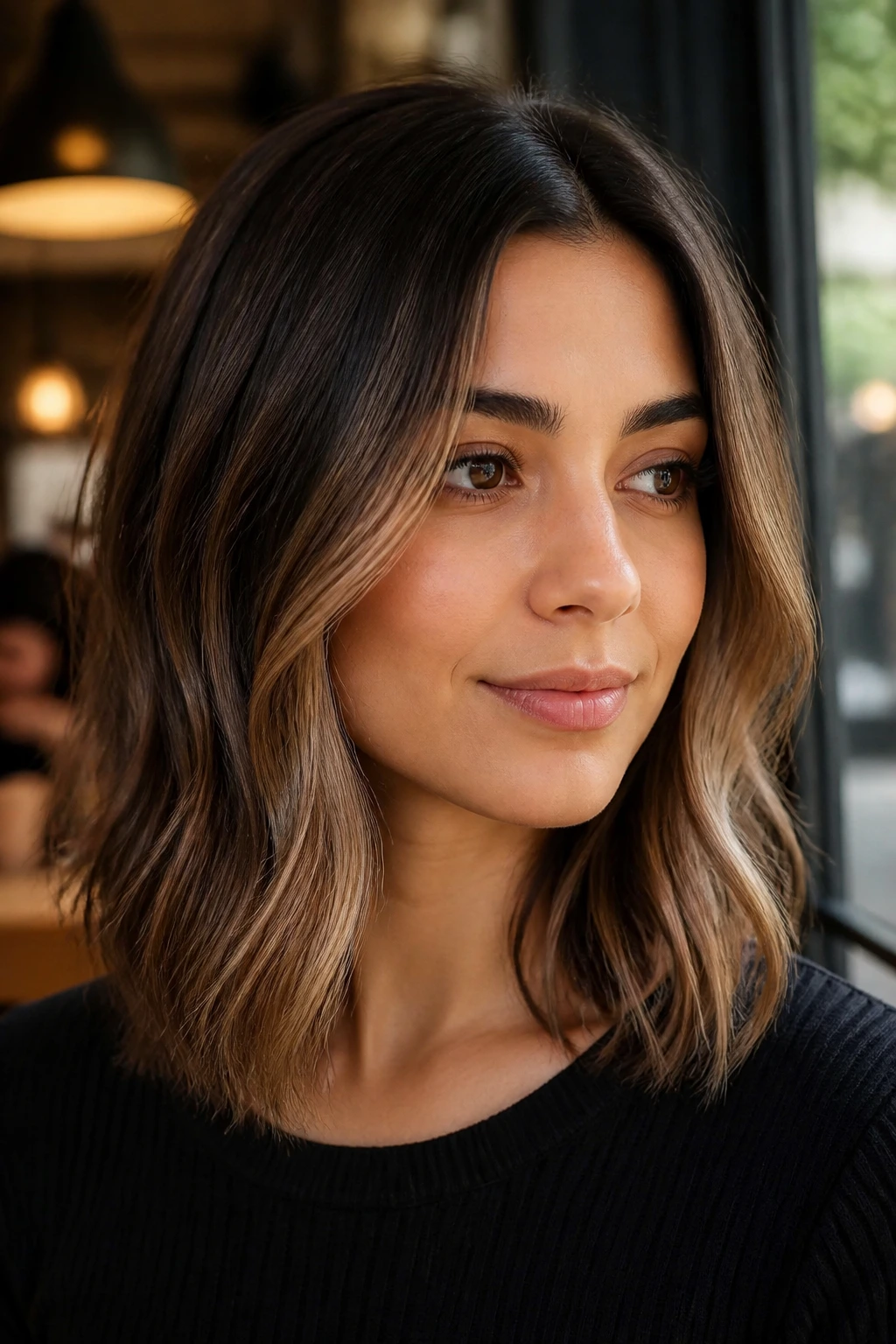
What brunette shade flatters olive skin the most?
Chestnut, mocha, walnut, and espresso all work well, but the best one depends on whether your olive skin leans warm or cool. Warm-leaning olive skin usually likes chestnut and caramel; cooler olive skin tends to prefer espresso, mushroom brown, or ash mocha.
Can olive skin wear ash brown?
Yes, if the ash isn’t so flat that it drains the face. A cool ash brown with enough depth can look crisp and modern on olive undertones, especially when the cut has movement or shine.
Are curtain bangs good for olive skin?
They usually are, because they let a little brightness sit near the cheekbones without a heavy fringe line. The trick is keeping the brunette base rich and the front pieces soft rather than stripey.
What if my hair is fine and flat?
Choose blunt or slightly layered mid-length cuts instead of heavy shagging. Fine hair usually looks better when the bottom line stays strong and the crown gets a little root lift.
Do mid-length cuts work on curly hair?
They do, as long as the layers follow the curl pattern and don’t remove too much weight. The goal is shape, not thinning. A collarbone length usually gives curls enough bounce without widening the silhouette too much.
How often should I refresh brunette color?
Glosses every 4 to 6 weeks keep the tone rich, while a trim every 6 to 8 weeks keeps the cut clean. If you’ve got highlights, the light pieces may need a toner sooner if they start looking brassy.
Should highlights be warm or cool for olive skin?
Usually somewhere in the middle. Beige caramel, soft honey, and muted beige-brown tend to be the easiest matches. Bright gold and orange-heavy highlights are the ones most likely to fight the skin.
What if my brunette hair looks dull in daylight?
That usually means the tone is too flat or the ends are too dry. A gloss, a trim, and a little shine serum can fix more than a full color change. Sometimes all you need is a better finish.
The Sweet Spot
The best mid-length brunette looks for olive skin do one simple thing well: they keep the color rich and the shape alive. That combination matters more than chasing the darkest brown or the lightest highlight. A good cut gives the color room. A good tone gives the skin room. Put those two together, and the whole face settles into place.
If you’re choosing between two options, pick the one with the better shape first and the cleaner brunette second. Olive skin tends to reward restraint, not noise. And once you find that collarbone-length sweet spot, it has a habit of making every outfit look a little more finished than it really is.