



Soft caramel hairstyles for medium skin tones work because they sit in that sweet stretch between sunlit blonde and deep brunette. The color has enough warmth to glow against golden, olive, and neutral undertones, but it does not slide into the orange, sticky-looking brass that ruins so many home dye jobs. When caramel is done well, it looks expensive in the way fresh coffee smells expensive: layered, smooth, and impossible to confuse with flat brown.
The trick is placement as much as shade. A soft caramel ribbon around the face can brighten a jawline by a half-step; the same shade buried under a blunt cut can look almost smoky. Medium skin has range, which is why caramel is such a useful color family here. You can wear honey, toffee, beige caramel, chestnut-caramel, even a deeper bronze melt, and the right choice depends less on a trend and more on how much contrast you want sitting next to your features.
And that’s where these looks get fun. A lob with balayage reads polished and easy. A shag with airy caramel pieces feels grittier and more lived-in. A tight curl pattern with ribbon highlights catches the light in a way straight hair never quite can. Once you stop treating caramel as one shade and start treating it like a tonal system, the options open up fast.
Why These Looks Work So Well on Medium Skin
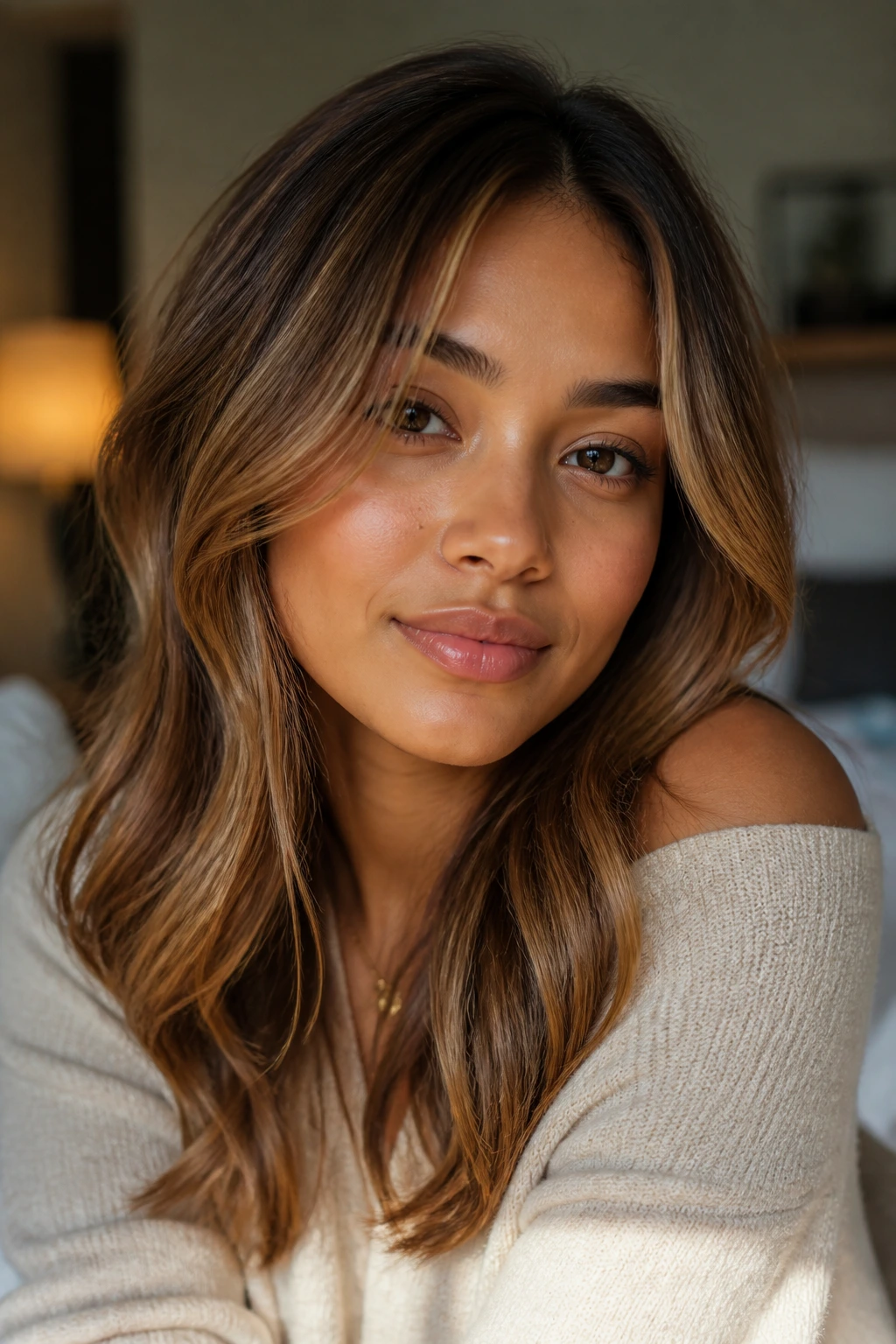
- Warmth Without Brass: caramel shades that lean honey, beige, or toffee bring warmth to medium skin without tipping into that loud orange cast that shows up under indoor lighting.
- Dimension Comes Naturally: the color changes tone as the hair bends, so waves, curls, and layers make the shade look richer with almost no extra effort.
- Low-Drama Grow-Out: balayage, money pieces, shadow roots, and peekaboo placement soften the line between salon visits, which matters when you do not want obvious regrowth.
- Face-Framing Power: a few lighter pieces near the cheekbones can lift the face faster than a full color overhaul, and that is one of the reasons caramel keeps winning.
- Works Across Textures: straight, wavy, coily, and curly hair all show caramel differently, which means the shade feels personal instead of cookie-cutter.
- Easy to Tune Up or Down: want subtle? Choose a beige melt. Want more glow? Ask for honey or golden ribbons. Same family, very different mood.
1. Honey-Caramel Balayage Lob
A lob gives caramel room to breathe. The length hits around the collarbone, so the color can move when you walk, and that soft bend at the ends keeps the shade from looking stiff or stripey. On medium skin, honey-caramel balayage reads bright in daylight and softer under warm indoor light, which is exactly why it looks so good on people who want polish without a heavy salon finish.
Why it works: balayage lets the lighter pieces sit where the sun would naturally land — around the face, on the mid-lengths, and through the outer layers. That makes the grow-out less obvious, and the lob shape stops the whole look from feeling too long or too precious. If your base is medium brown, ask for caramel pieces no more than 2-3 levels lighter than your natural color so the contrast stays soft.
What to ask for: keep the ends slightly lighter than the top half, not the other way around. A root that stays near your base shade gives the color depth.
Best styling move: one pass with a 1-inch curling iron, then brush the waves out so the highlight pattern looks melted, not striped.
2. Face-Framing Money Piece With Loose Waves
If you want the fastest payoff, start at the front. A caramel money piece near the temples and cheekbones can make medium skin look brighter without changing the whole head of hair. Loose waves help because the front sections bend toward the face and catch the light right where you want it.
Why it works: the contrast sits where people actually look first. That sounds obvious, but it’s the difference between hair color that photographs flat and hair color that gives the face some lift. Keep the money piece a shade or two lighter than the rest of the caramel so it reads intentional, not accidental.
This is one of my favorite options for anyone who wears their hair up half the week. Even when the rest is pulled back, those front pieces still do the work.
3. Soft Caramel Butterfly Cut
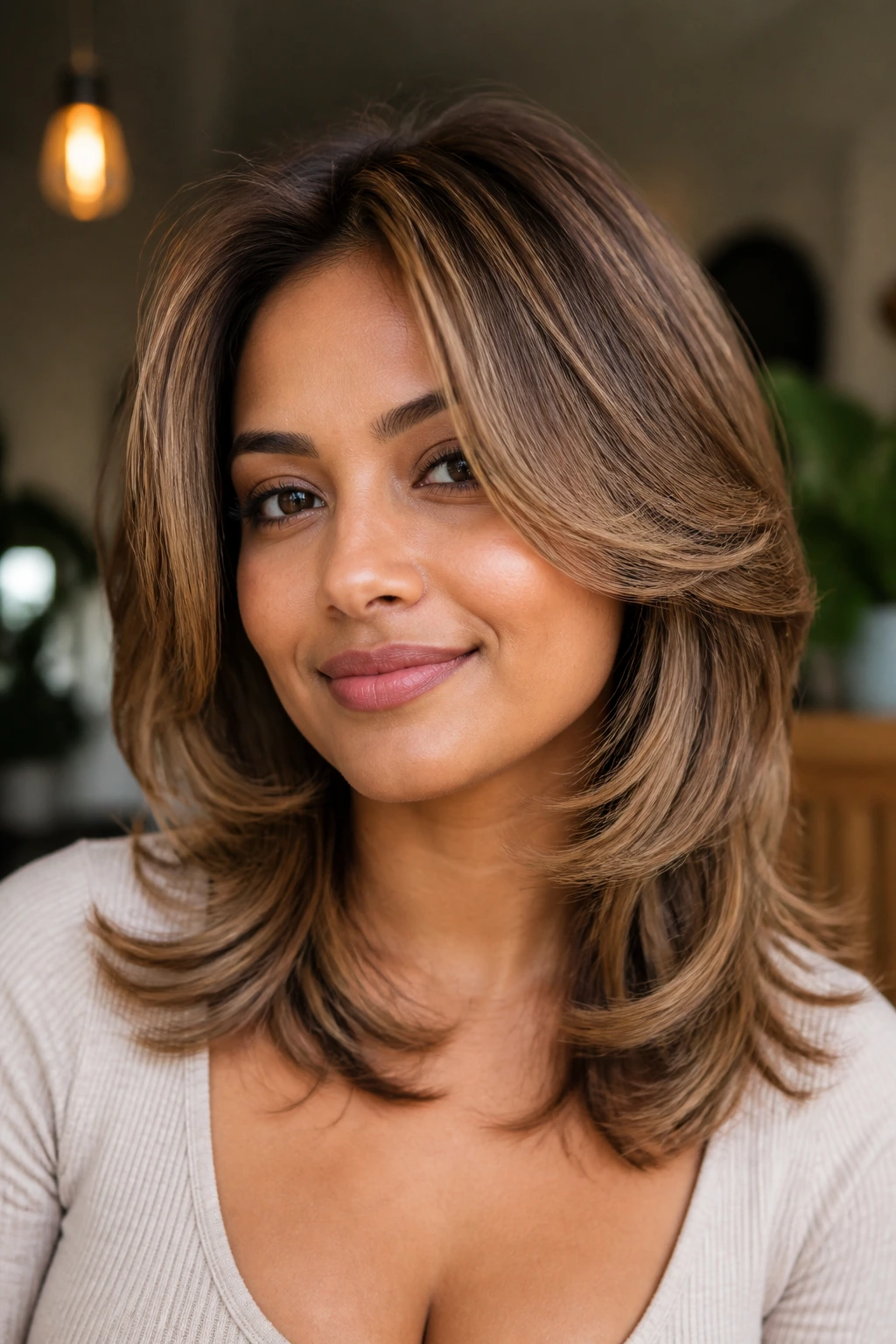
The butterfly cut has enough layers to make caramel look expensive. Shorter face-framing pieces sit over longer lengths, so the tones stack on top of each other and create movement that straight one-length cuts can’t fake. On medium skin, the warm ribbons near the front add glow, while the longer layers keep the overall finish from getting too blonde.
Why it works: caramel and layered hair like each other. The cut gives the color multiple surfaces to land on, which means every turn of the head shows a slightly different tone. That keeps the look soft, not chunky.
Ask for lighter pieces concentrated around the crown and front layers, with deeper caramel through the lower lengths. The result should look like a blowout that has already lived a little. That’s the sweet spot.
4. Curly Shoulder-Length Cut With Ribbon Highlights
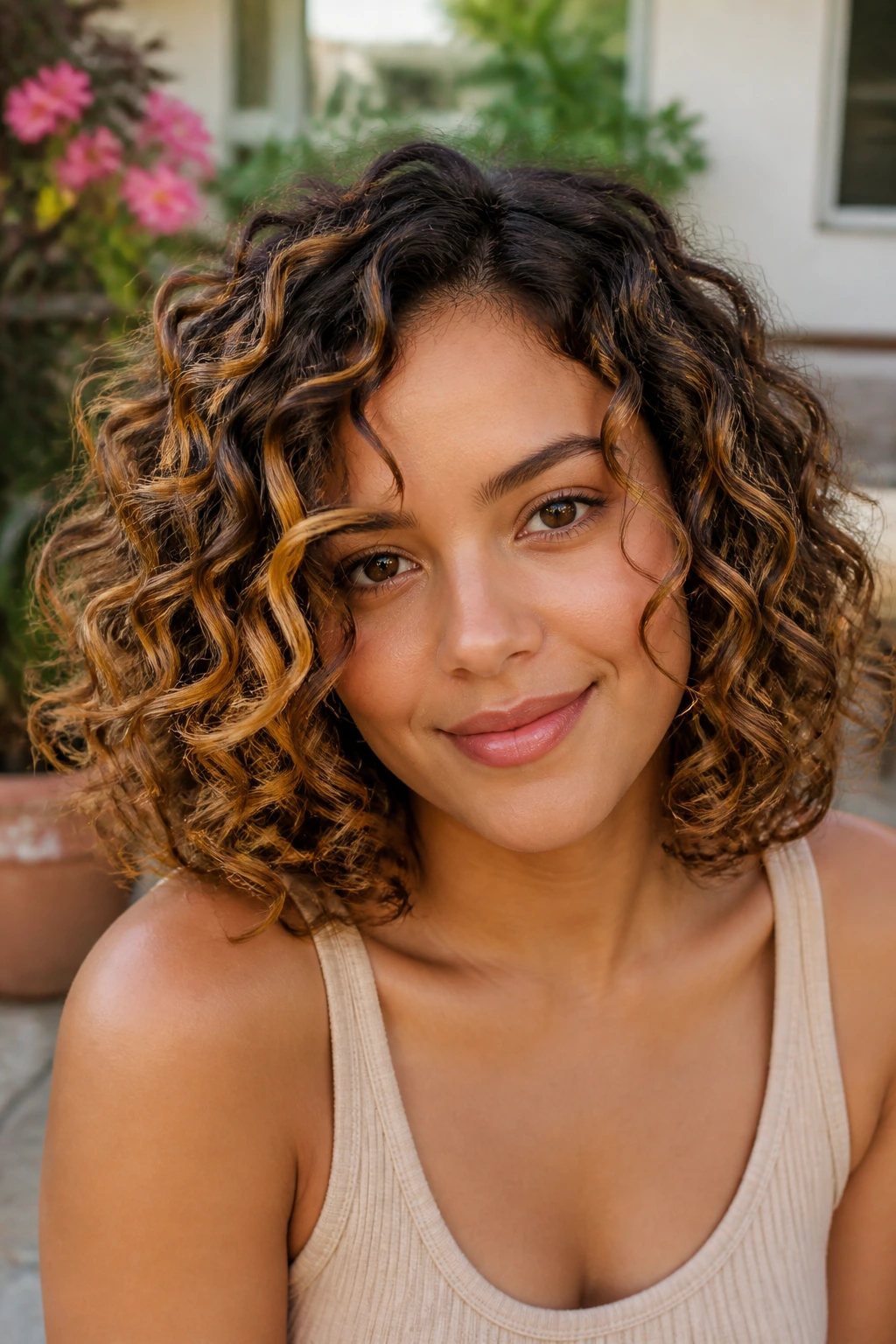
Curly hair does not need heavy color to make a statement. A shoulder-length cut with caramel ribbons placed along the outer coil pattern gives medium skin a warm frame without stealing the shape of the curls. The highlights should follow the curl family, not cut across it in harsh lines.
Why it works: curls naturally break up the color, so even a few carefully placed caramel pieces can look dimensional. The shoulder length keeps the shape springy and prevents the ends from dragging down. If your curls shrink a lot, ask your stylist to place the brightest strands a little lower than you think; they will bounce up once dry.
A leave-in cream and a diffuser are enough here. Too much product weighs the color down and kills the movement.
5. Sleek Blunt Bob With Beige Caramel Ends
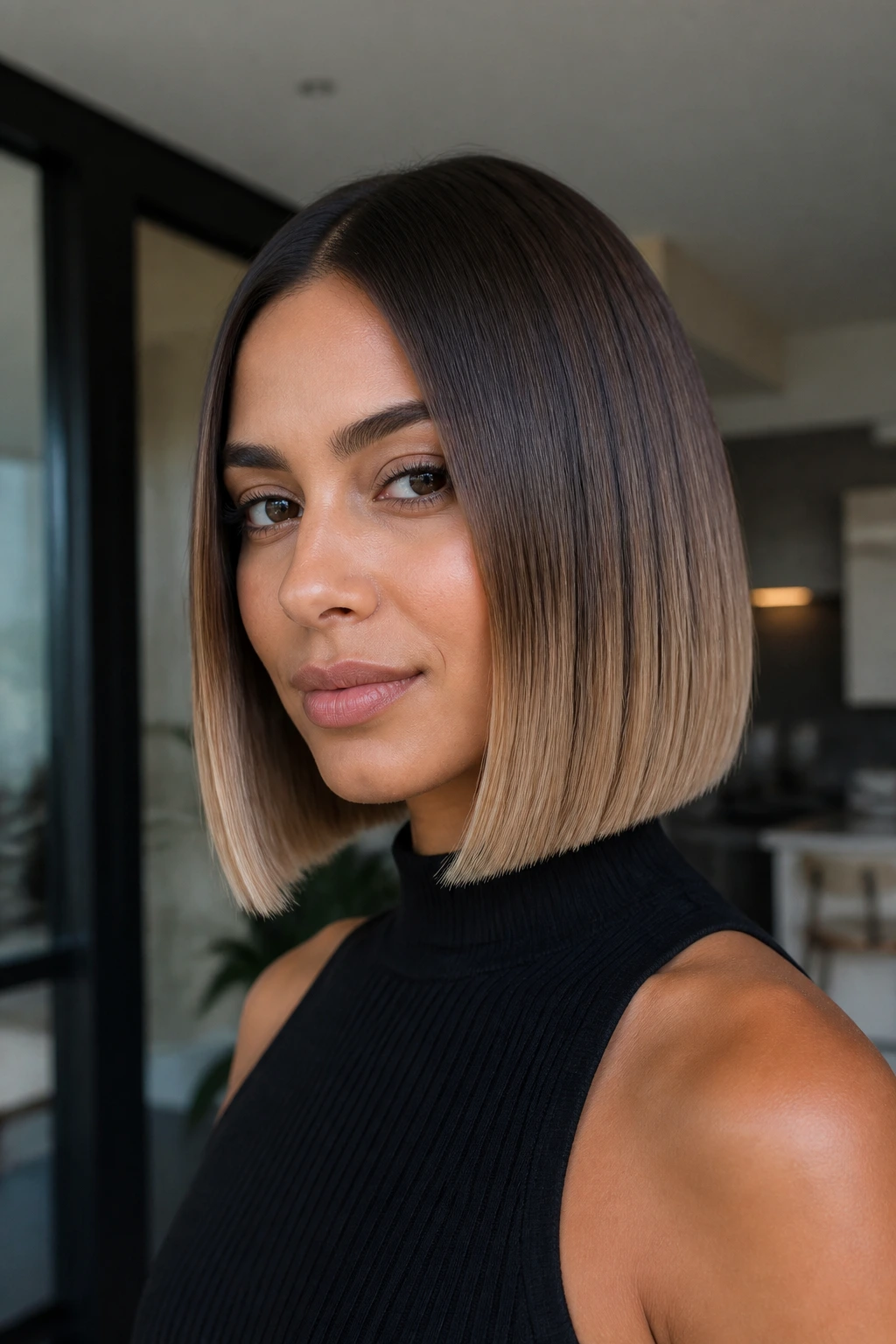
A blunt bob sounds severe until you add beige caramel toward the ends. Then it turns sharp in a good way. The crisp cut gives the color a graphic edge, while the softer caramel tone keeps the look from feeling too hard against medium skin.
Why it works: the straight perimeter makes the shade read cleanly. There is no curl or wave to distract the eye, so the color gradient has to be subtle and precise. Beige caramel is the right call if you want something cooler and less golden, especially on neutral or olive undertones.
I like this look best when the roots stay close to the natural base and the lightest tone stays below the jawline. It keeps the haircut looking expensive without turning it into a high-maintenance blonde situation.
6. Textured Shag With Warm Caramel Ribbons
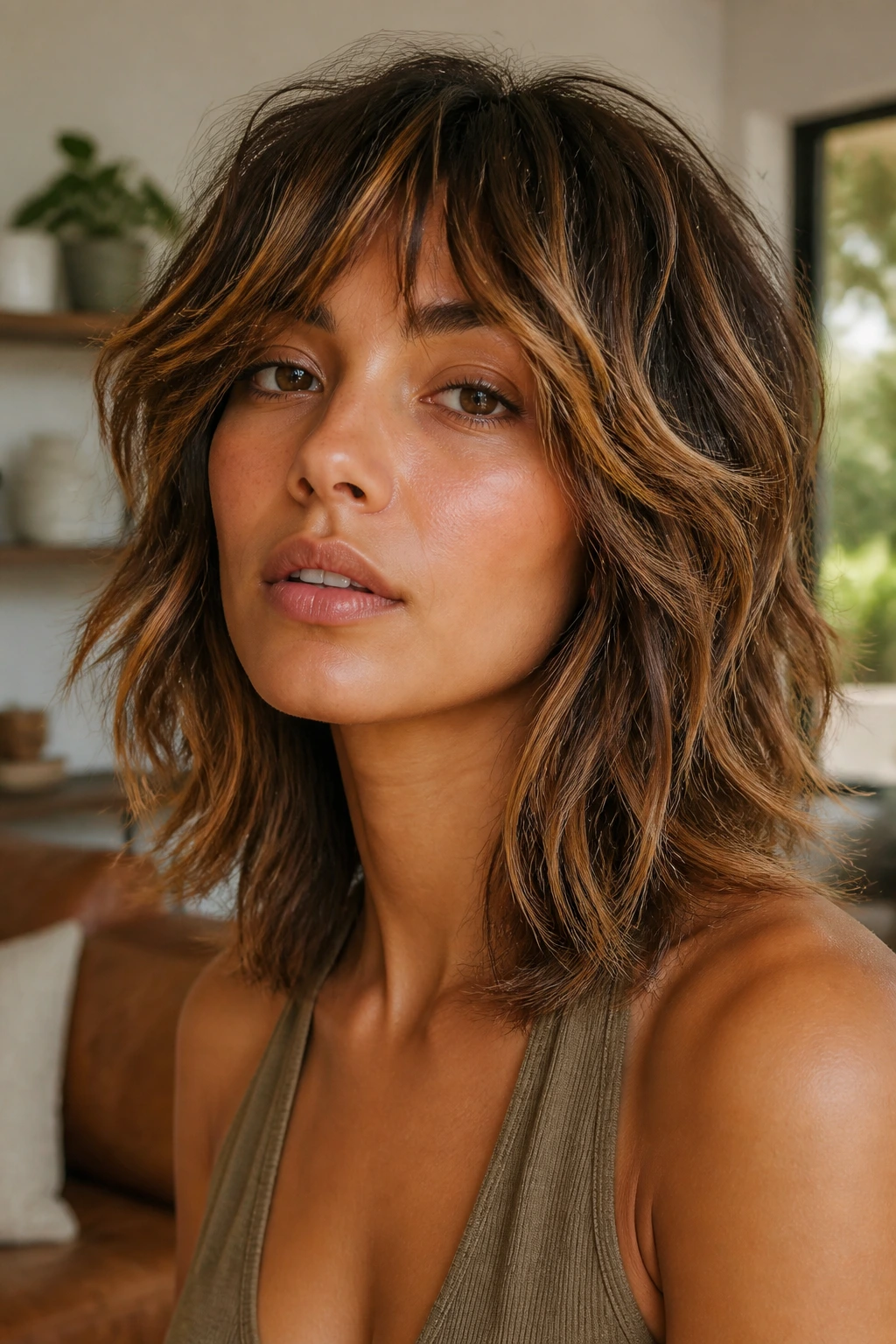
A shag needs movement, and caramel gives it that instantly. The layers create built-in swing, while the warmer ribbons show up in the flicked-out ends and broken fringe. Medium skin can handle the contrast here because the cut already has attitude; the color just keeps it from going flat.
This is the kind of style that looks better a little tousled than perfectly polished. That matters. If every strand is ironed straight, the shag loses its point. Ask for caramel pieces concentrated around the fringe, crown, and outer layers, with deeper brown left underneath to hold the shape together.
Dry texture spray helps, but not the crunchy kind. You want touchable, not helmet hair.
7. Long Layers With a Caramel Gloss
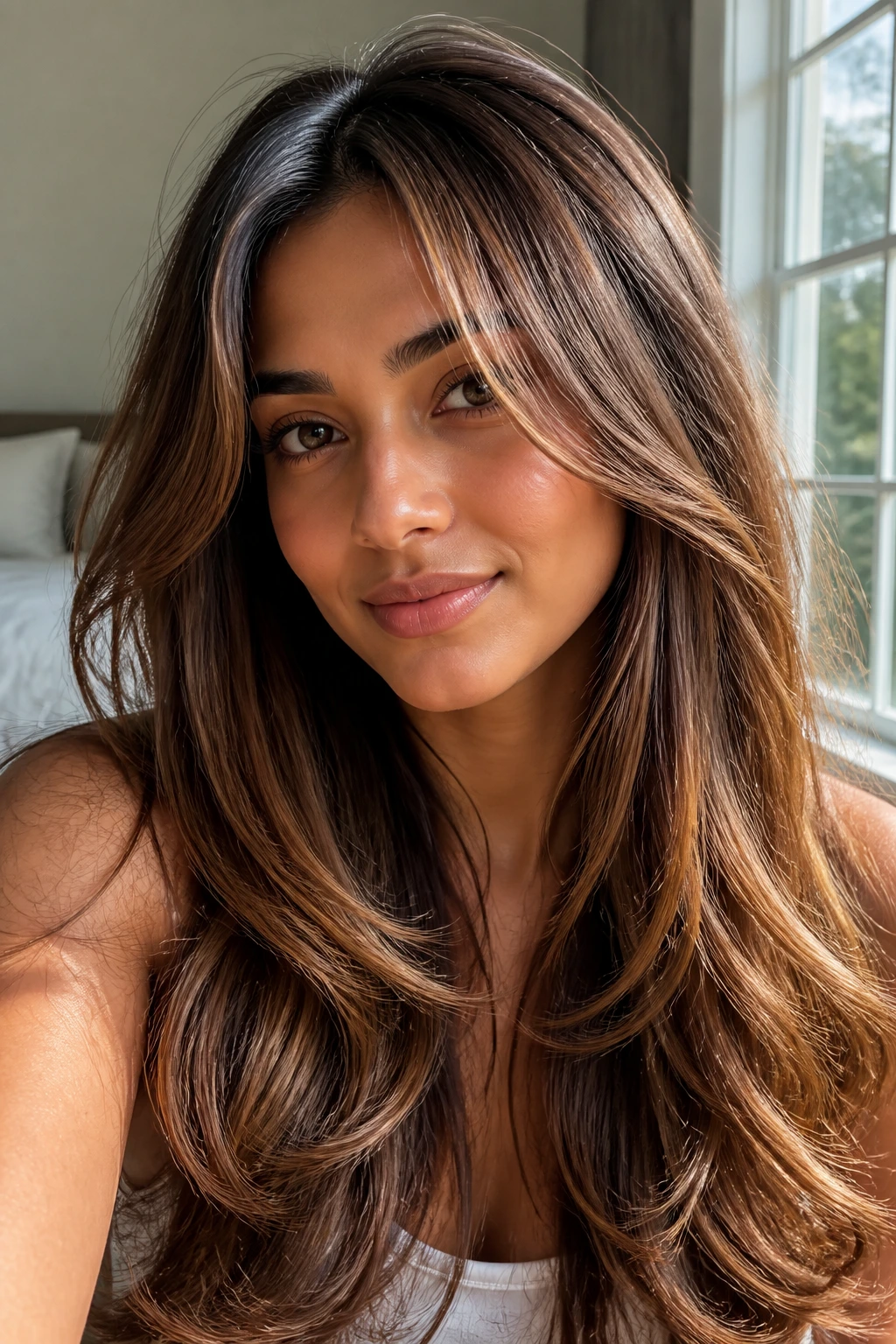
Sometimes the smartest move is not highlights at all. A caramel gloss over long layers can deepen your base, add a warm sheen, and make medium skin look richer without visible streaks. The color sits closer to a tinted polish than a full transformation, which is why it works so well for people who want softness.
Why it works: gloss catches light in a way matte color never will. Long layers give the finish enough movement that the tone shifts from top to bottom. If your hair already has some warmth, a caramel glaze can pull all the pieces into one coherent shade instead of fighting them.
This is one of those looks that seems understated until you see it in natural light. Then it wakes up.
8. Curtain Bangs and Soft Caramel Waves
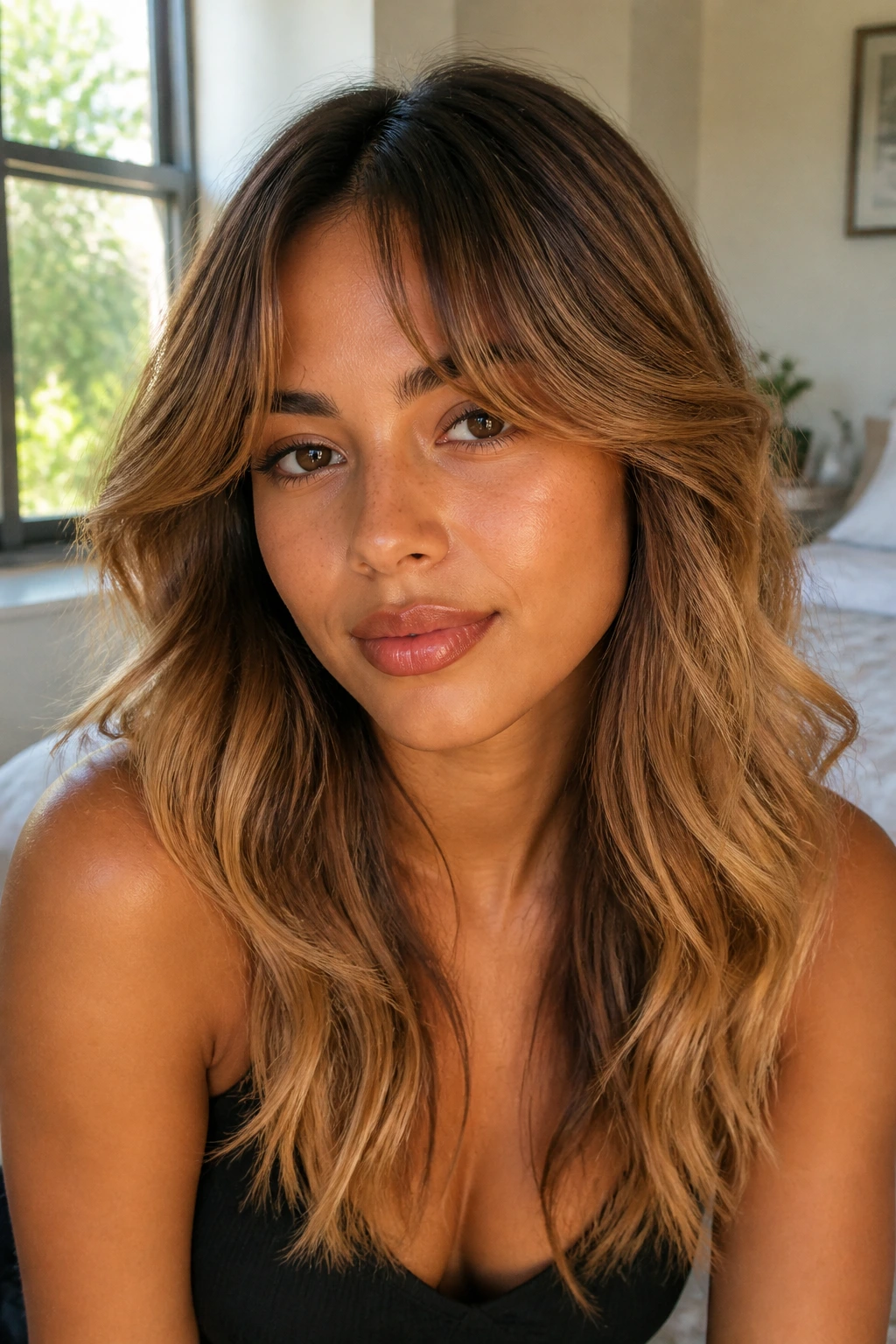
Curtain bangs are practically made for caramel. The center split opens up the face, and the lighter pieces near the front make the whole haircut feel lighter, even when the hair is thick. On medium skin, soft caramel waves around the bangs soften strong features and make the eyes stand out.
What makes it different: the bangs create a frame, and the caramel keeps that frame from feeling heavy. If the front is a little lighter than the rest, the shape reads brighter right where the cut bends away from the face.
Keep the wave pattern loose, almost lazy. A hard curl here looks fussy. A soft bend at the ends looks better and wears better on day two.
9. Caramel Ombré on Straight Mid-Length Hair
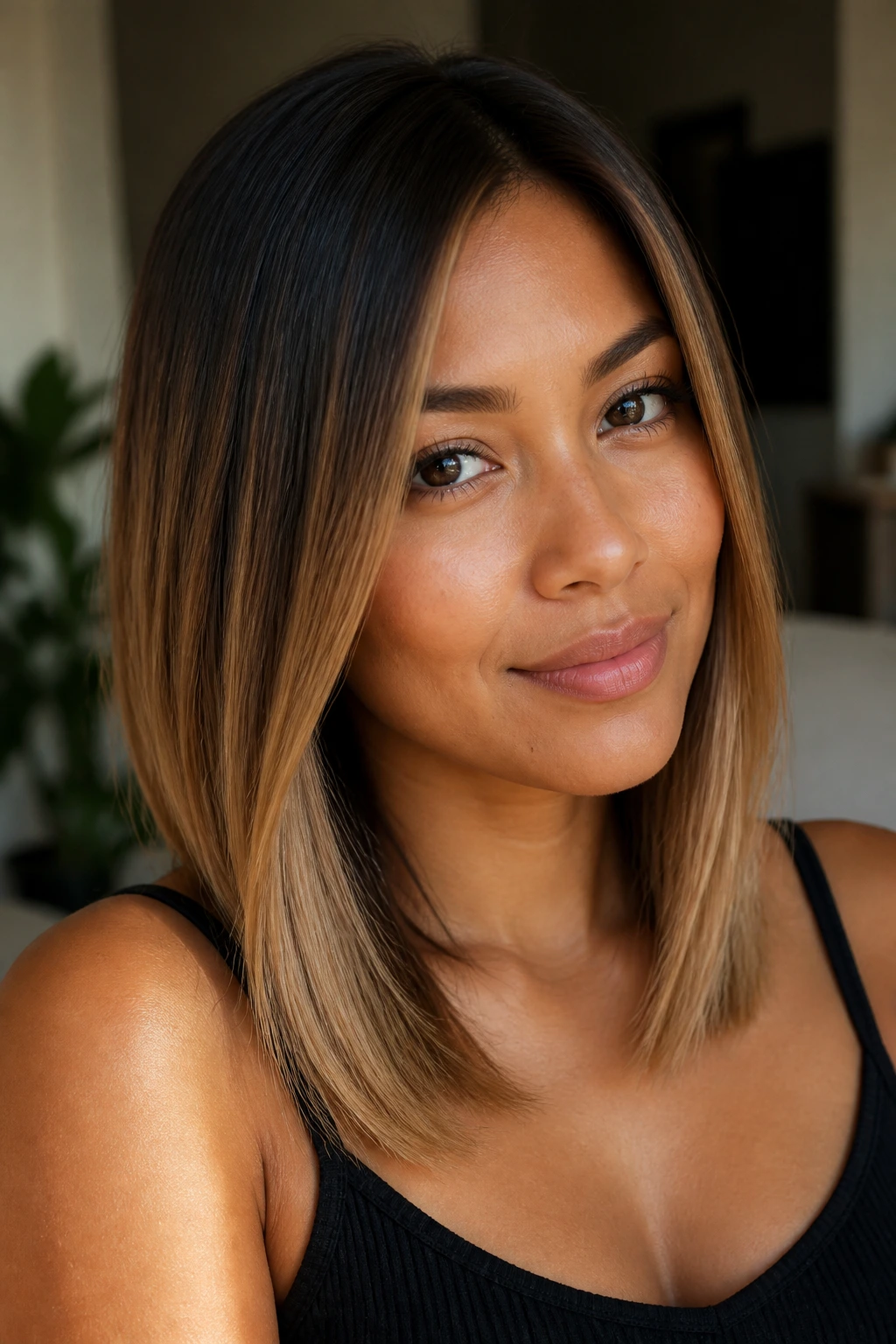
Straight hair can make ombré look severe if the fade is too obvious. Soft caramel fixes that. The transition from deeper roots to lighter ends should happen gradually, with the lightest tone sitting around the last third of the hair rather than starting high up near the cheekbones.
Why it works: the straight finish gives you a clear read on the gradient, so the transition has to be smooth. On medium skin, a caramel ombré adds warmth without forcing maintenance every few weeks. That’s the real appeal here.
If you want this to stay soft, avoid jumping from dark brown straight to pale blonde ends. A toffee or honey finish looks much more believable and grows out with less drama.
10. Voluminous Blowout Layers With Golden Caramel
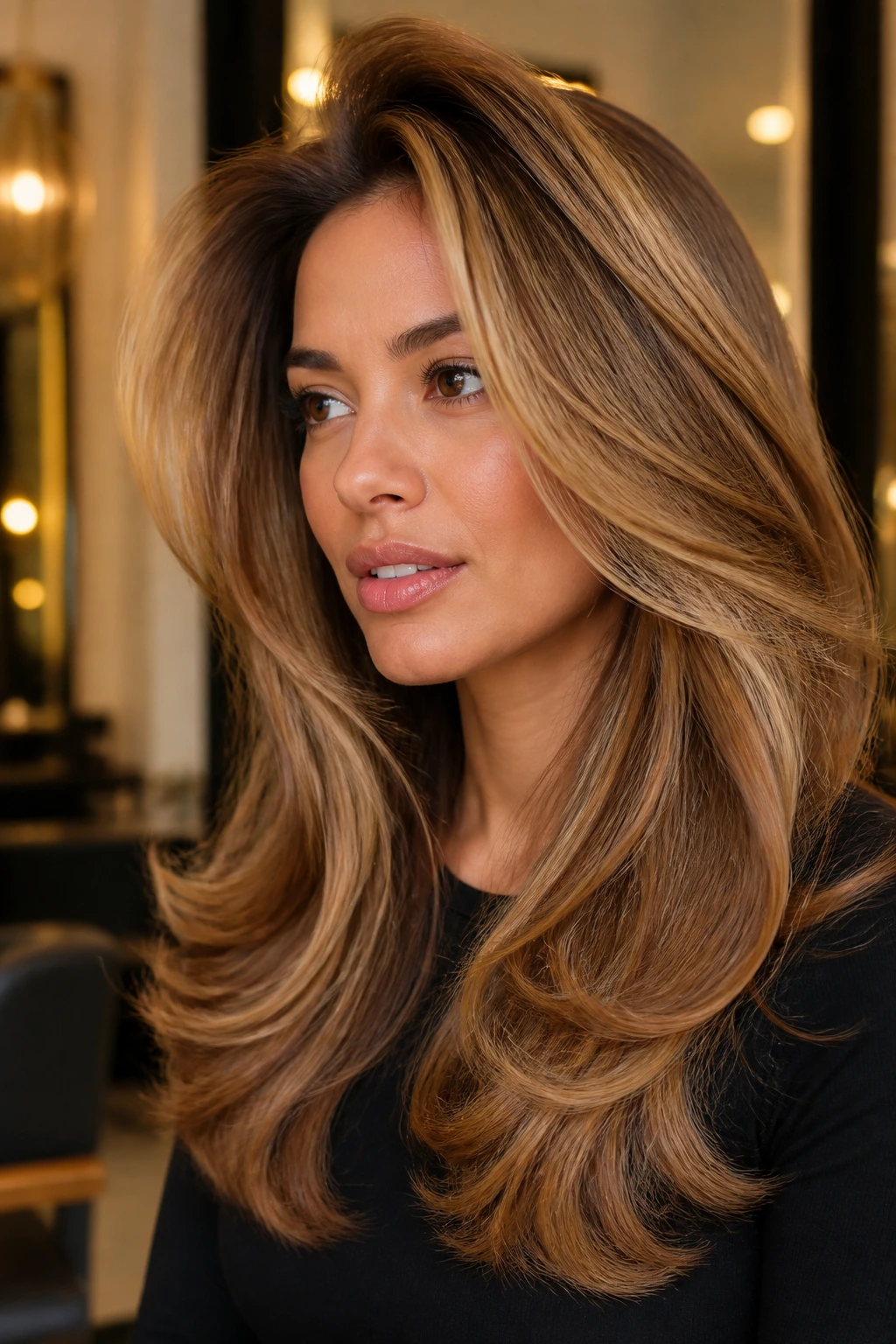
A full blowout and golden caramel are old friends. The big round-brush shape lifts the roots, the layers flick away from the face, and the color catches on every curve. Medium skin tends to look especially alive with this combo because the golden warmth echoes the skin without copying it too closely.
Why it works: volume gives the hair more surface area, and more surface area means more places for light to land. If the cut has face-framing layers, the caramel can brighten the cheek area without needing a separate money piece.
This is a polished look, but not a stiff one. You can wear it with a side part for more drama, or a center part if you want the color to feel balanced.
11. Low-Maintenance Caramel Pixie With Tapered Sides
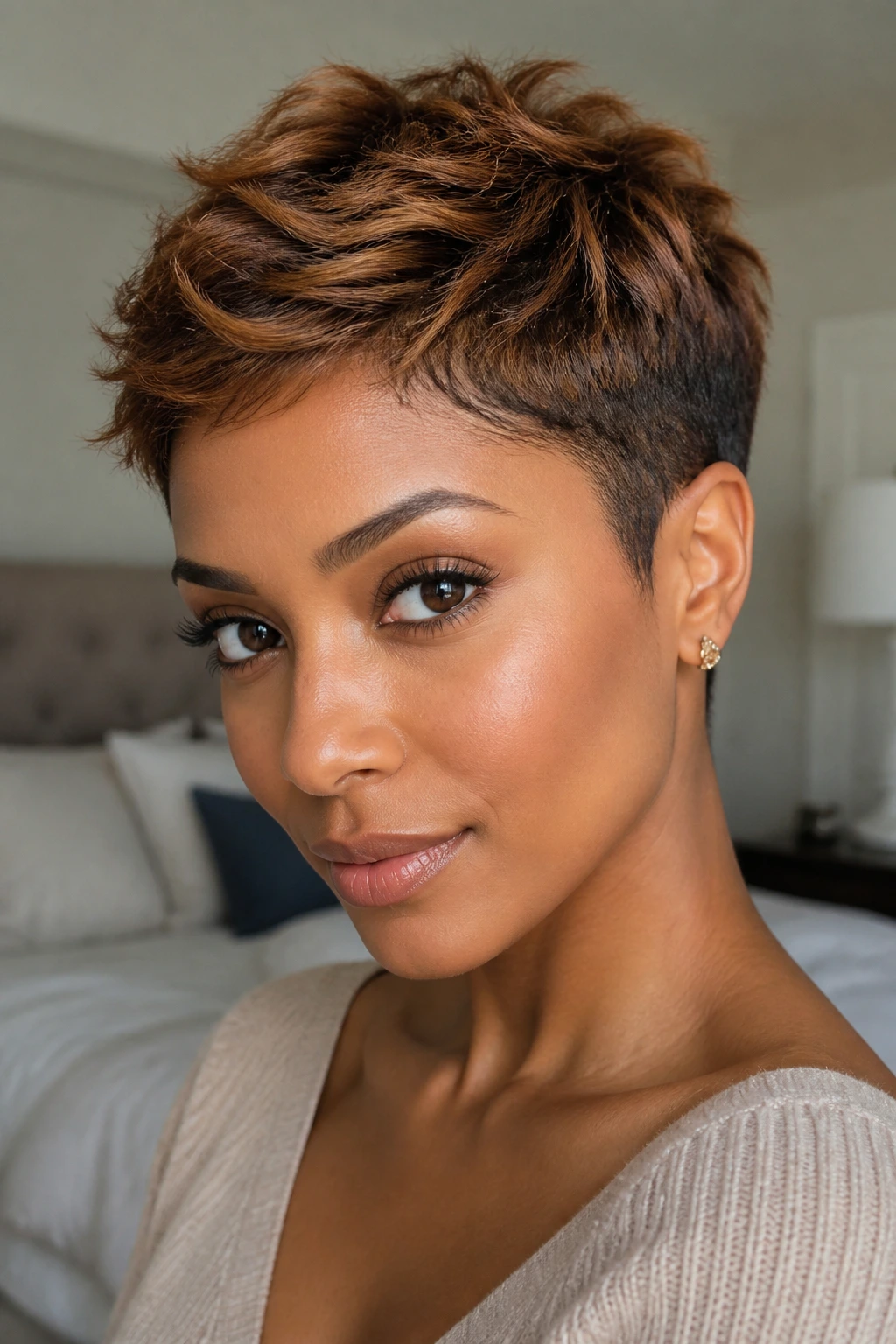
Short hair can absolutely carry caramel. A pixie with tapered sides and slightly longer top layers lets you place warmth where it matters most — around the crown, the fringe, and the front edge near the temples. On medium skin, that little hit of color adds shape fast.
The key is restraint. Too much lightness on short hair can make the cut look busy. Keep the caramel pieces fine and feathered so they blend into the base instead of sitting on top of it like stripes. A touch of pomade or styling cream will separate the top just enough to show the color variation.
This is a sharp cut. The caramel keeps it from feeling too severe.
12. Braided Crown With Caramel Dimension
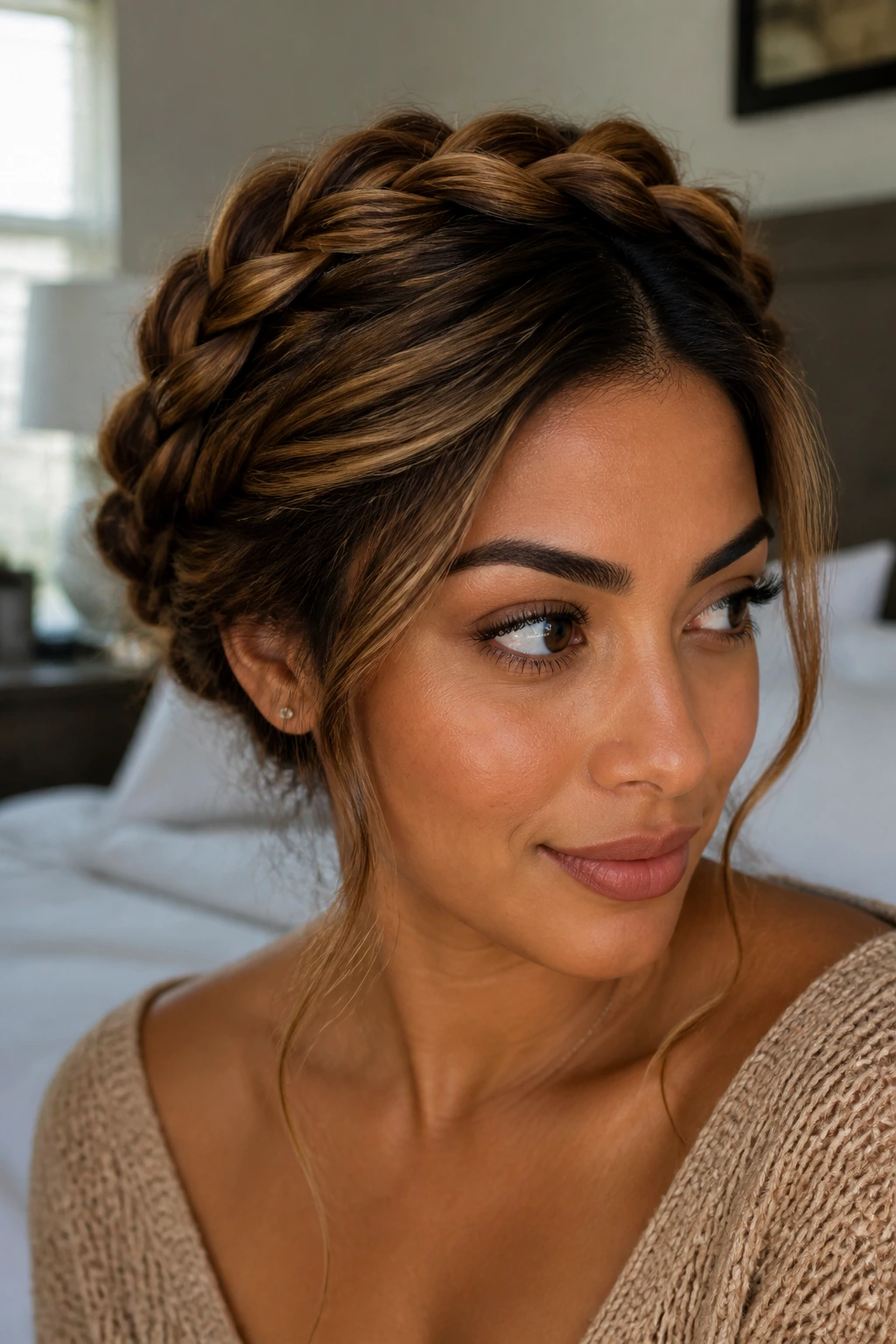
Braids are a sneaky good way to show off color because every twist reveals a different tone. A braided crown with caramel dimension turns the braid itself into the feature, especially if the hair has a dark base and softer warm highlights running through the lengths. On medium skin, that contrast can look rich rather than harsh.
Why it works: braiding compresses the hair into a pattern, and pattern makes color shifts easier to see. Put the caramel through the top layers and the front sections, then let a few lighter pieces escape around the hairline. The braid gets depth, and the face gets softness.
This is a nice option when you want your color visible but your hair protected. It also holds up well on second-day hair, which is never a bad thing.
13. Deep Side-Part Waves With Chestnut-Caramel Blend
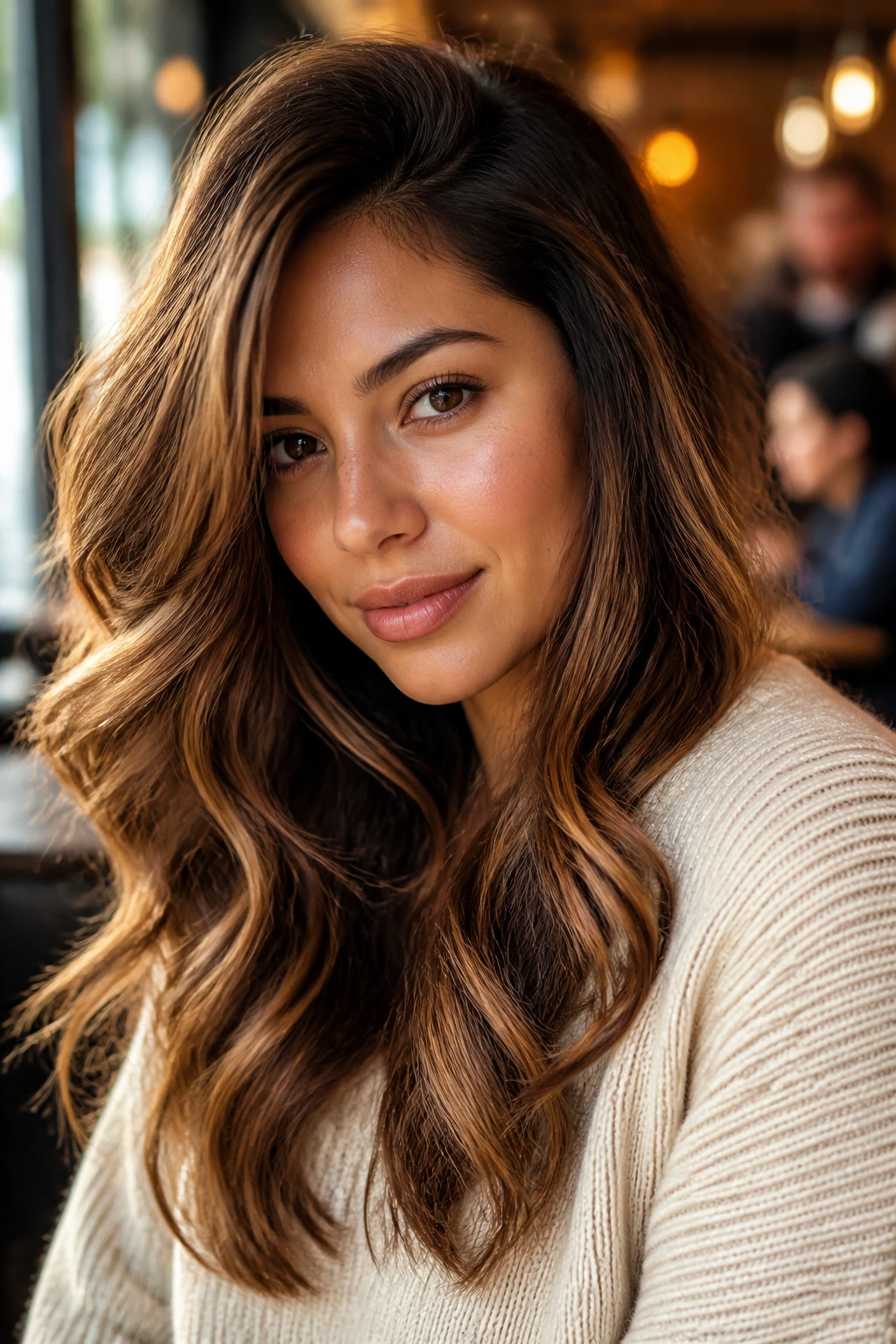
A deep side part brings old-school drama, and the chestnut-caramel blend makes it feel modern instead of costume-y. The darker caramel tones keep the style grounded, while the side sweep opens one side of the face and lets the light pieces do more work.
Why it works: the side part creates a visible line of contrast, and the waves push the lighter pieces forward. If medium skin has a little golden warmth, chestnut-caramel can look especially natural because it sits closer to brunette than blonde.
This is a smart choice if you want color that looks rich in dim light. It doesn’t vanish the way pale blonde highlights can.
14. Collarbone Cut With Hidden Caramel Panels
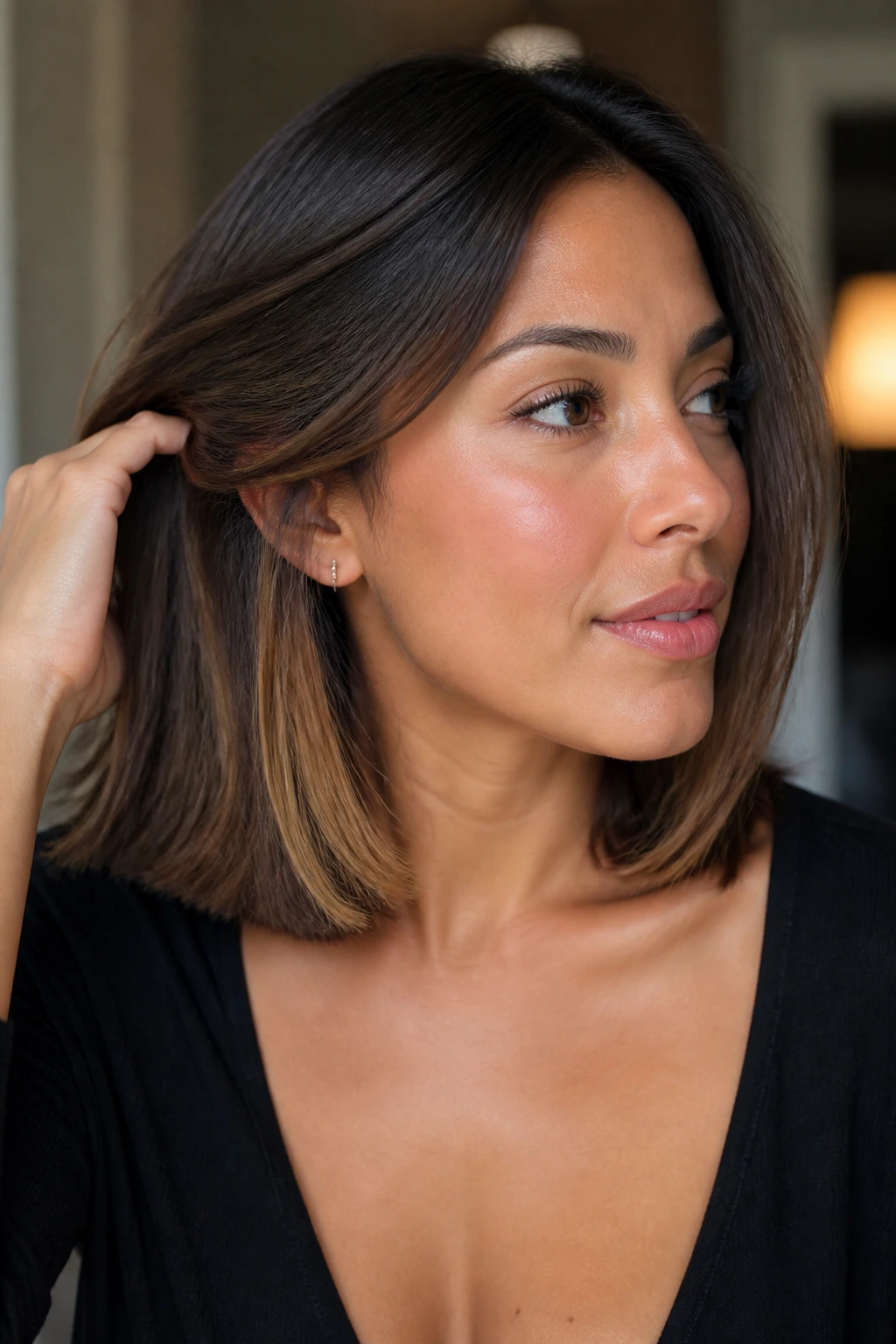
Hidden panels are for people who want a little surprise. On the outside, this collarbone cut can look like a standard brunette style. Turn the hair, and caramel panels underneath flash through the layers. Medium skin often benefits from this approach because the warmth is present without being loud.
It’s a practical option, too. The hidden placement means regrowth is less obvious, and you can control how much of the caramel shows depending on how you part or style the hair. Wear it smooth for a subtle look, or flip the ends and let the panels peek through.
Not every caramel style needs to announce itself from across the room. This one doesn’t. That’s part of the charm.
15. Tousled High Ponytail With Sunlit Caramel Ends
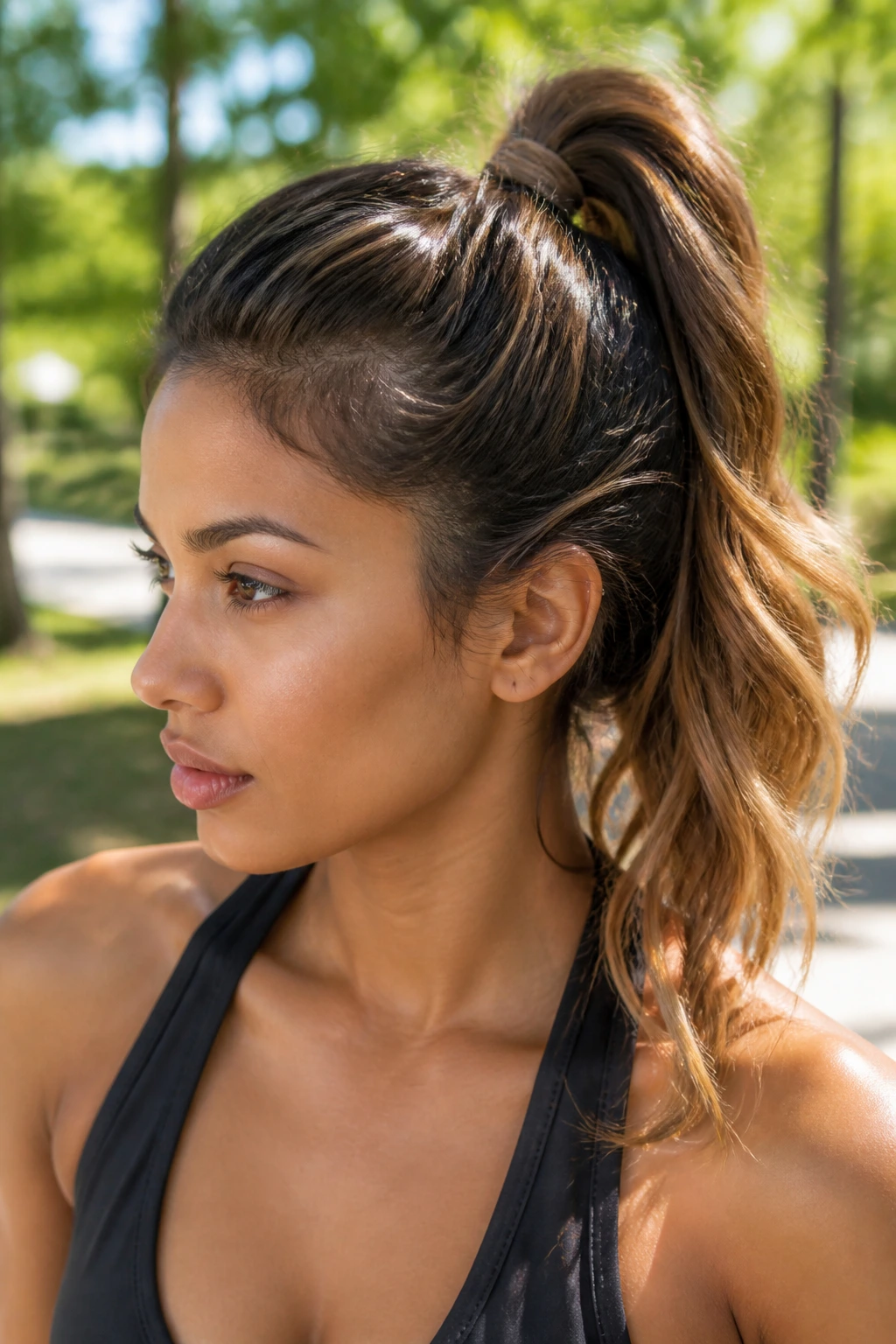
A high ponytail can look sporty, but caramel ends make it feel styled. The lifted crown gives height, and the lighter lengths swing when you move. On medium skin, sunlit caramel ends brighten the whole profile, especially if the base remains a shade or two deeper.
How to use it: curl only the ponytail length, not the root. Then wrap a small section of hair around the elastic so the finish looks cleaner. The caramel shows best when the ponytail is loose enough to move, not pulled so tight that it turns into a line.
This works well when you want the color visible but your face open. Simple. Effective. No fuss.
16. Half-Up Knot With Soft Caramel Face Frame
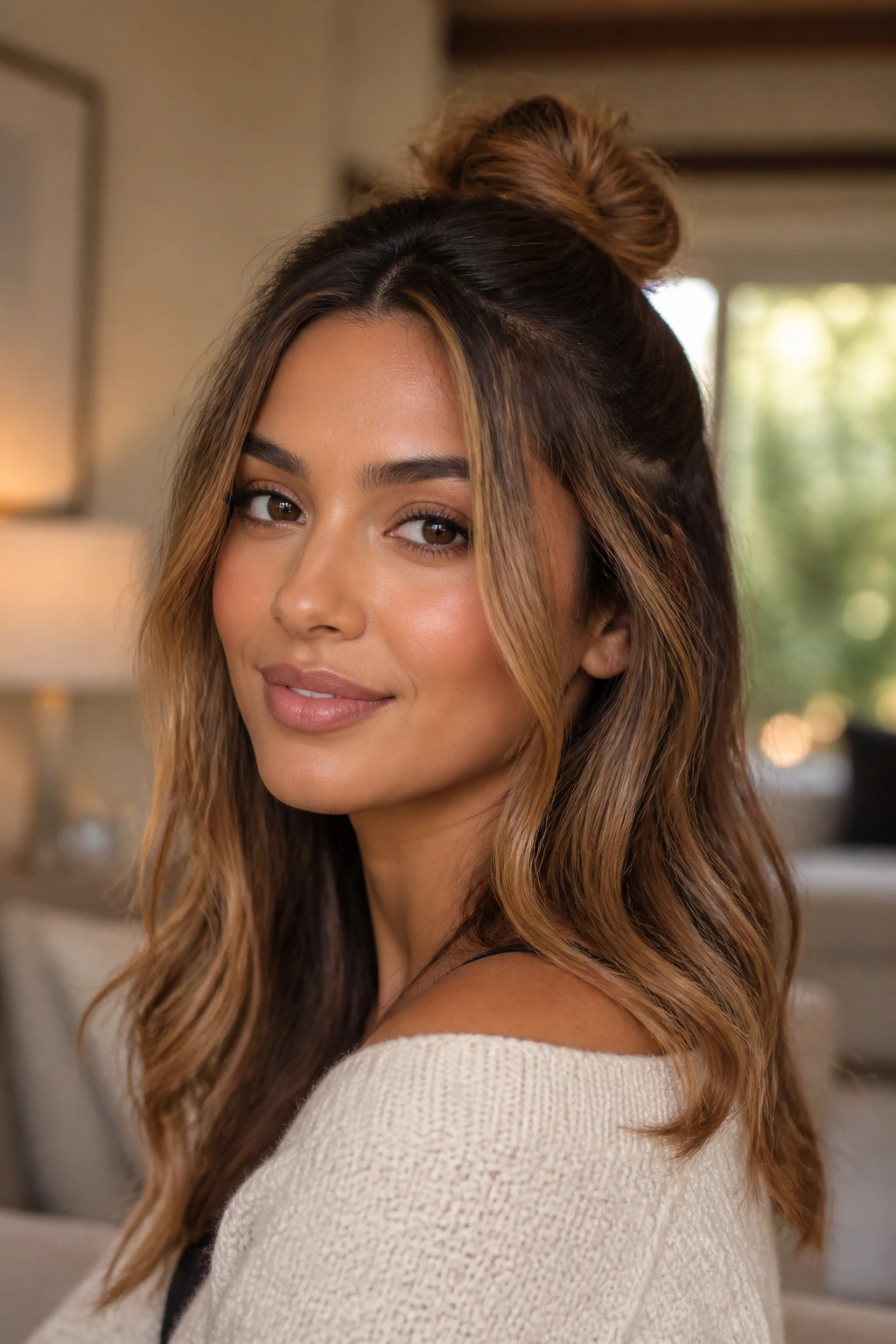
The half-up knot is one of those styles that can go from casual to polished with almost no effort. Add caramel face-framing pieces, and the whole look feels softer. The knot keeps the crown clean, while the lighter front sections keep the face from disappearing under too much hair.
Why it works: medium skin often looks best when the brightest color sits near the features, not scattered everywhere. The front pieces create that brightness, and the half-up shape keeps the rest of the color easy to manage.
A few loose ends around the ears make it feel less strict. If the knot is too neat, the caramel can look disconnected from the rest of the style.
17. Rounded Afro With Caramel Coils at the Crown
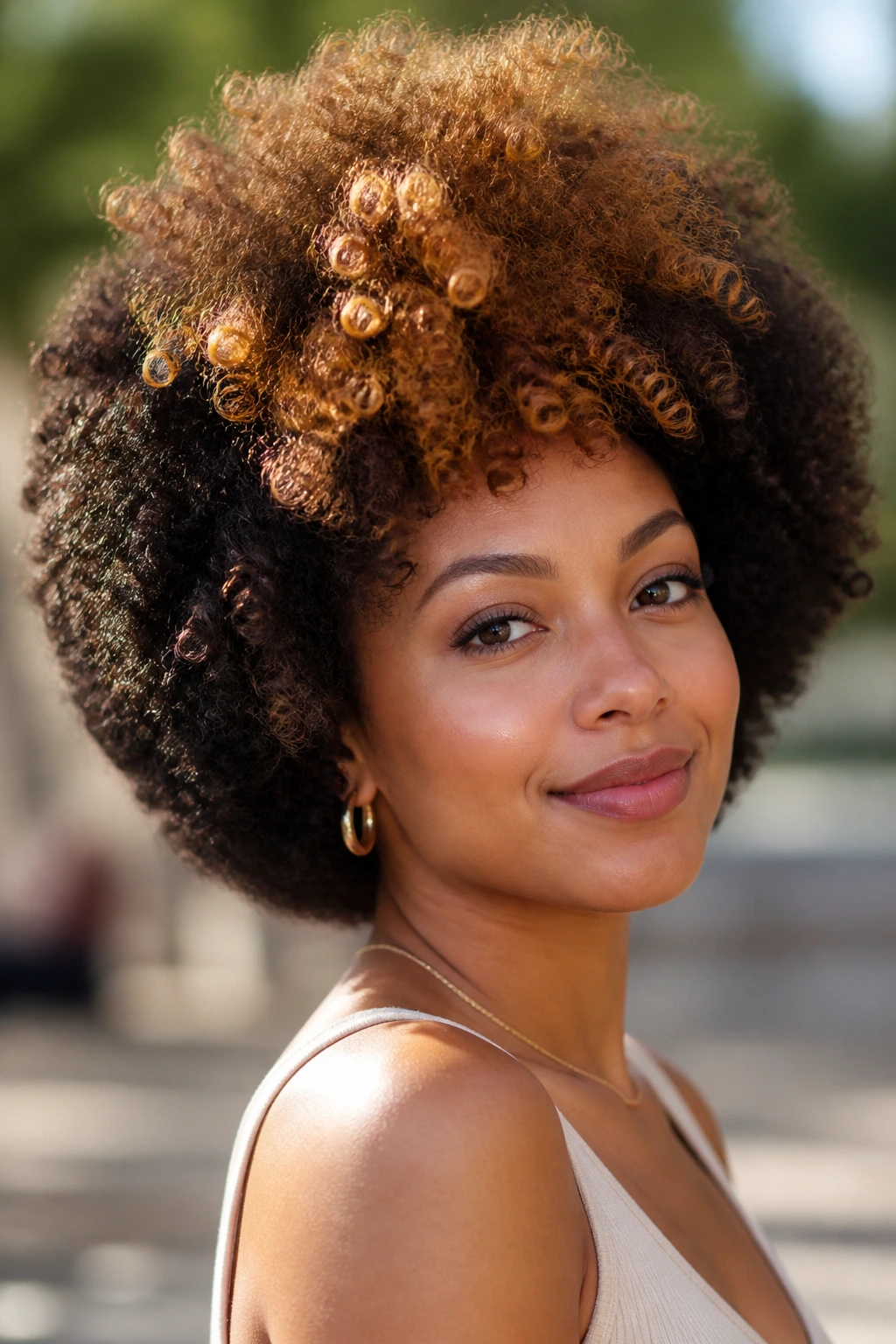
A rounded afro with caramel placed through the crown and outer coil pattern can be gorgeous on medium skin. The shape gives the hair a halo effect, and the lighter strands catch on the upper curve where light hits first. The trick is to keep the caramel woven through, not sprayed on top.
Why it works: curls and coils show dimension differently than straight hair. A little warmth at the crown and around the outer ring creates depth, while darker sections underneath keep the shape grounded. If you want the color to look soft rather than streaky, ask for fine, blended placement.
This is one of the more striking looks in the collection, and it still feels wearable because the color follows the hair’s natural volume.
18. Shoulder-Length Curls With Cinnamon-Caramel Depth
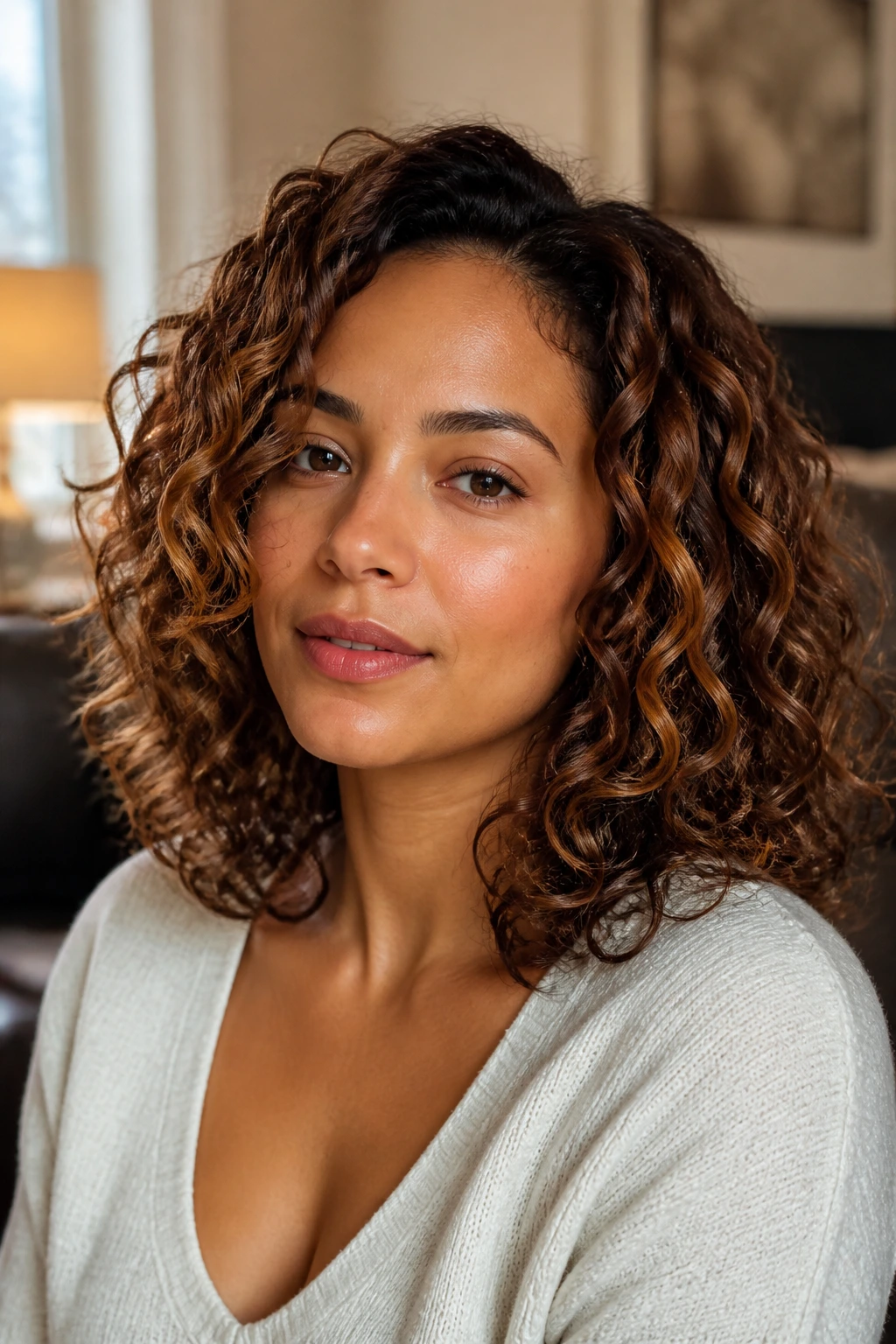
Cinnamon-caramel is deeper than honey and warmer than chestnut, which makes it a strong fit for shoulder-length curls on medium skin. The shade looks especially good when the curls are defined enough to show the color movement but not so rigid that the style feels built.
A shoulder-length cut keeps the curls springy at the ends, and the darker caramel depth prevents the look from veering too light. I like this choice for anyone who wants warmth without a lot of blonde contrast. It’s richer. Less noisy.
Use a curl cream that holds shape without crunch, then separate a few pieces with oiled fingertips once the hair dries. That small step makes the color pattern read more clearly.
19. Sleek Center-Part Blunt Cut With Glossed Caramel
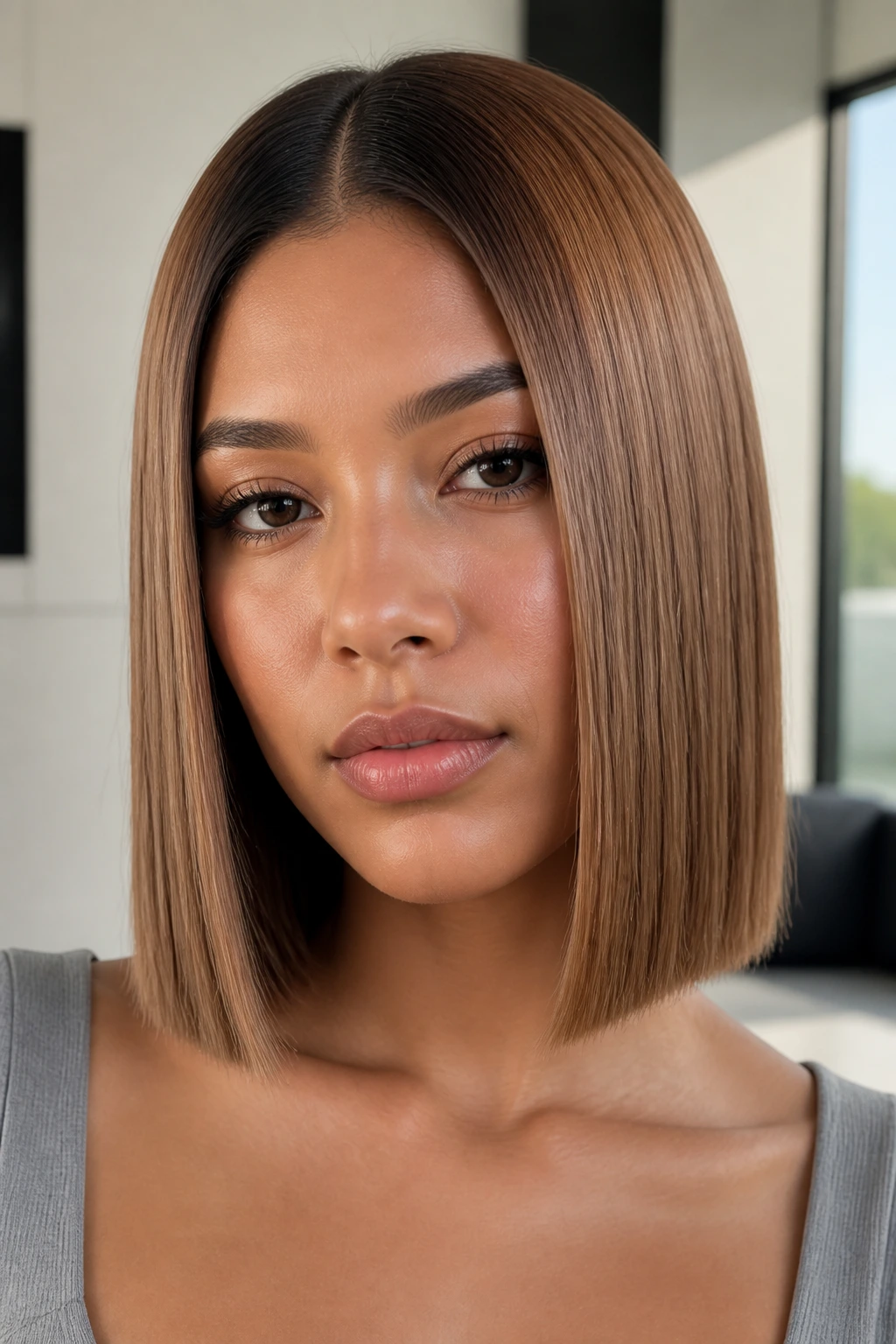
A center part and blunt ends can make a caramel gloss look almost mirror-like. The straight lines draw attention to the shine, while the warm gloss gives medium skin a clean, even glow. This is a cut that relies on precision, so the color has to be even and smooth.
Why it works: blunt cuts show every tone change. If the caramel is too chunky, the style starts looking blocky. A glossed finish keeps the shade close to your base and gives just enough warmth to brighten the face without losing the strong outline.
This is one of the cleanest-looking styles in the group. No fuss, no flying pieces, no excess movement. Just shape and sheen.
20. Bouncy Layered Midi Cut With Buttery Caramel
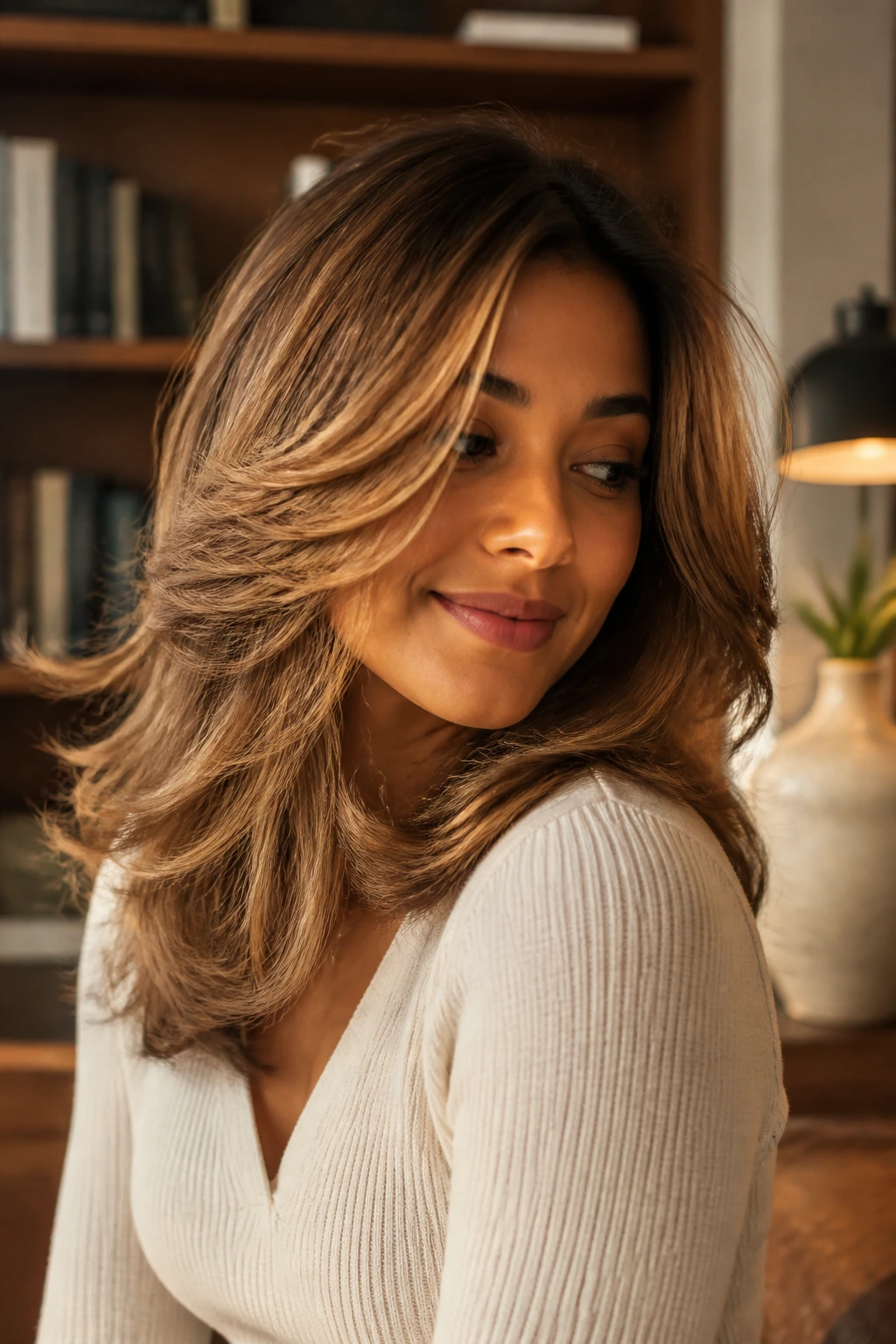
The midi cut sits in that useful middle length where the hair can move but still feels substantial. Add layers and buttery caramel, and you get a shape that looks full without feeling heavy. On medium skin, buttery tones have enough warmth to brighten the complexion without turning golden in an aggressive way.
Quick detail: keep the brightest pieces through the mid-lengths and face frame, then let the underneath remain a touch deeper. That contrast gives the layers a lift effect that shows up most when you walk or turn your head.
This is a good salon choice for someone who wants softness without endless upkeep. It grows out in a calm way, which is more than I can say for a lot of trendier color jobs.
21. Twisted Low Bun With Dimensional Caramel Strips
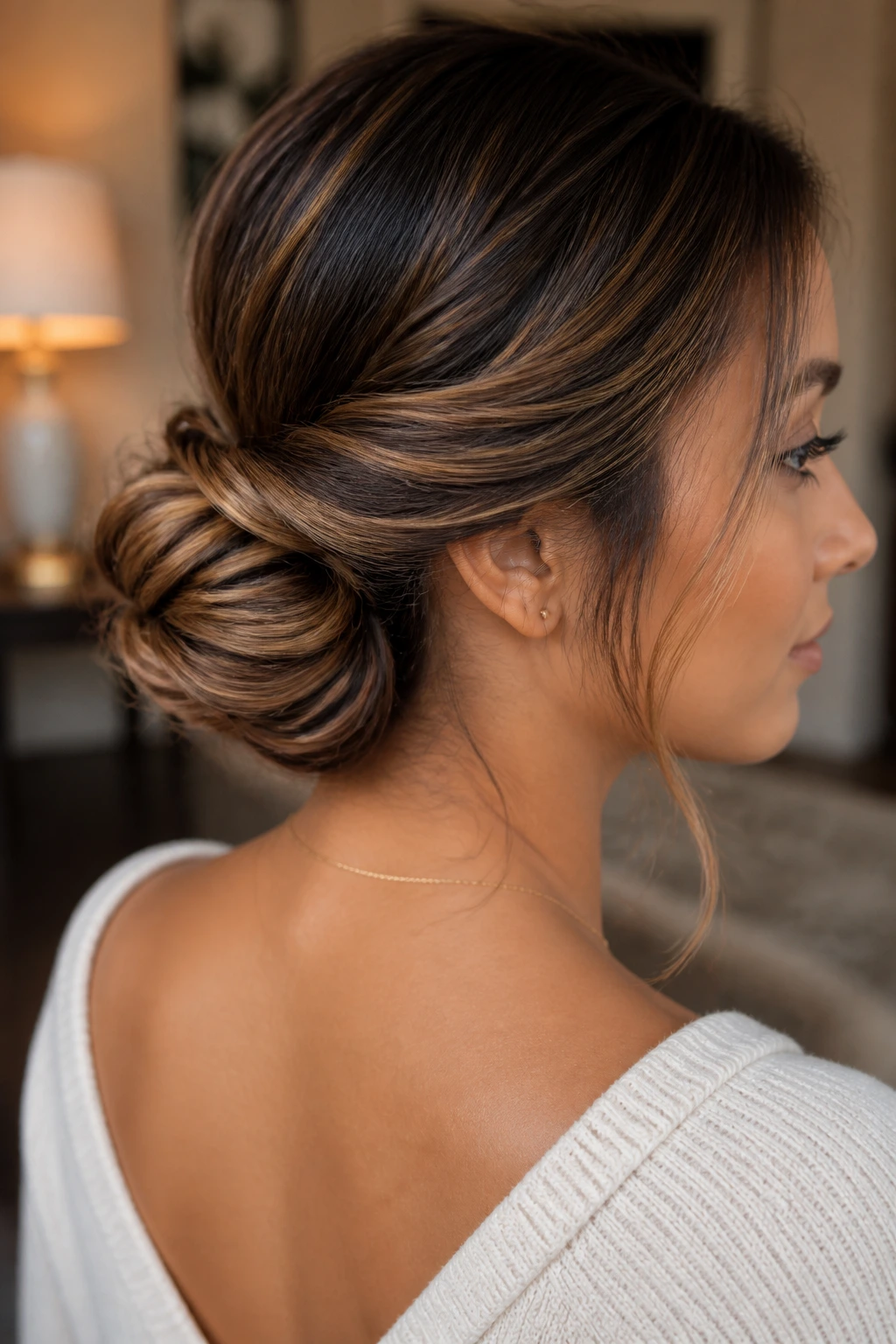
A low bun can look plain if the color is flat. Dimensional caramel strips fix that fast. When the twists cross over each other, the lighter strands break up the shape and give the bun depth, especially around the nape and the outer loop of the style.
Why it works: a bun compresses the hair, so the eye needs some contrast to keep the style interesting. Caramel strips do that without requiring a full head of highlights. On medium skin, the warm tones also keep the bun from feeling too severe.
Leave a few face-framing pieces out if you want the look to soften further. It stops the style from reading too formal.
22. Soft Wolf Cut With Airy Caramel Pieces
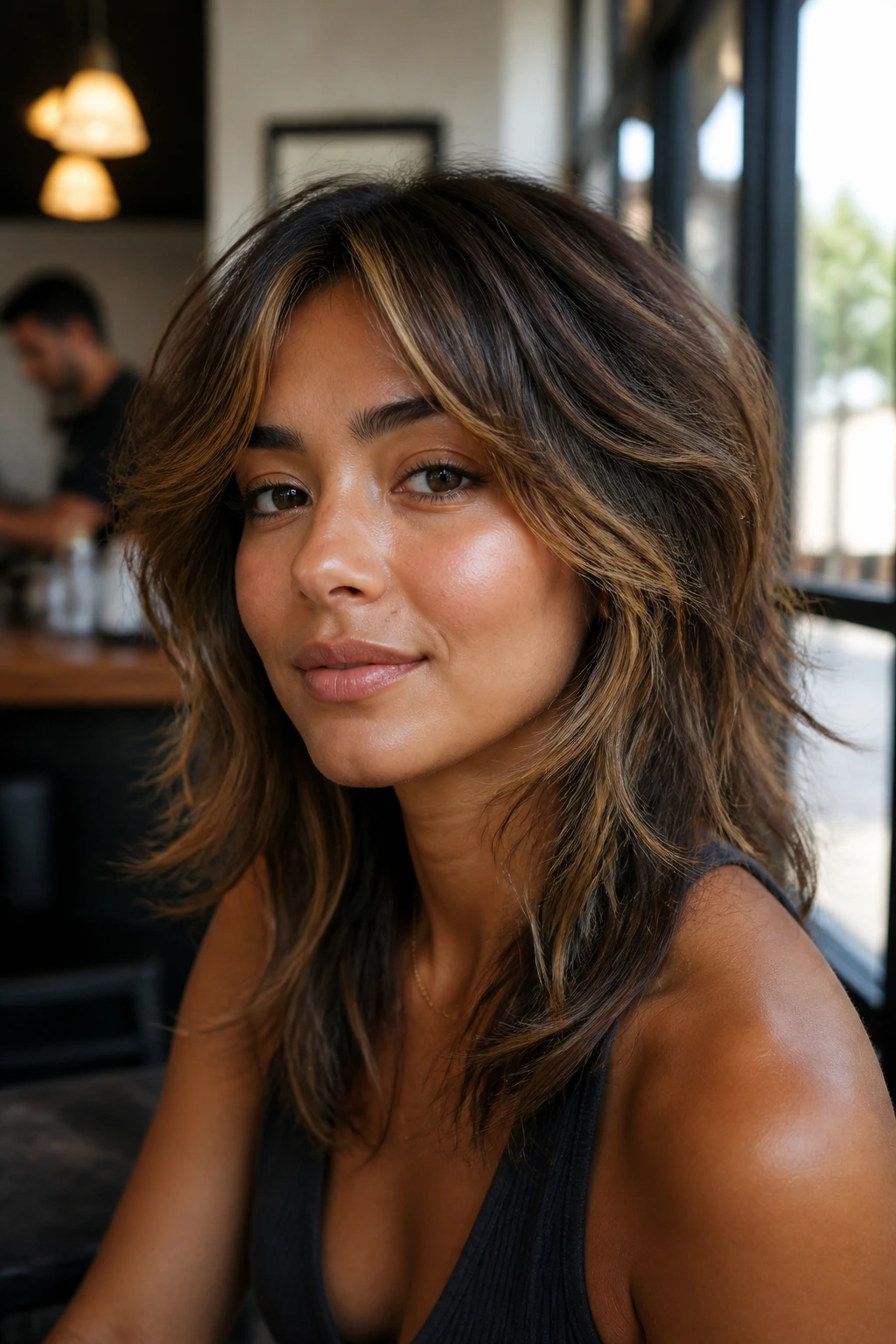
The wolf cut already has a little edge, so caramel keeps it from going too dark or too heavy. The short top layers and longer ends create a broken silhouette, and airy caramel pieces make those layers visible. On medium skin, that contrast feels modern without becoming harsh.
What makes it different: the cut lives on texture. If the caramel sits only on the top, it can look patchy. Spread it through the fringe, crown, and outer ends so the movement feels intentional.
This is a good pick for people who like hair that looks slightly undone. Too polished and it loses the point. A little mess is the charm.
23. Long Straight Hair With Peekaboo Caramel Layers
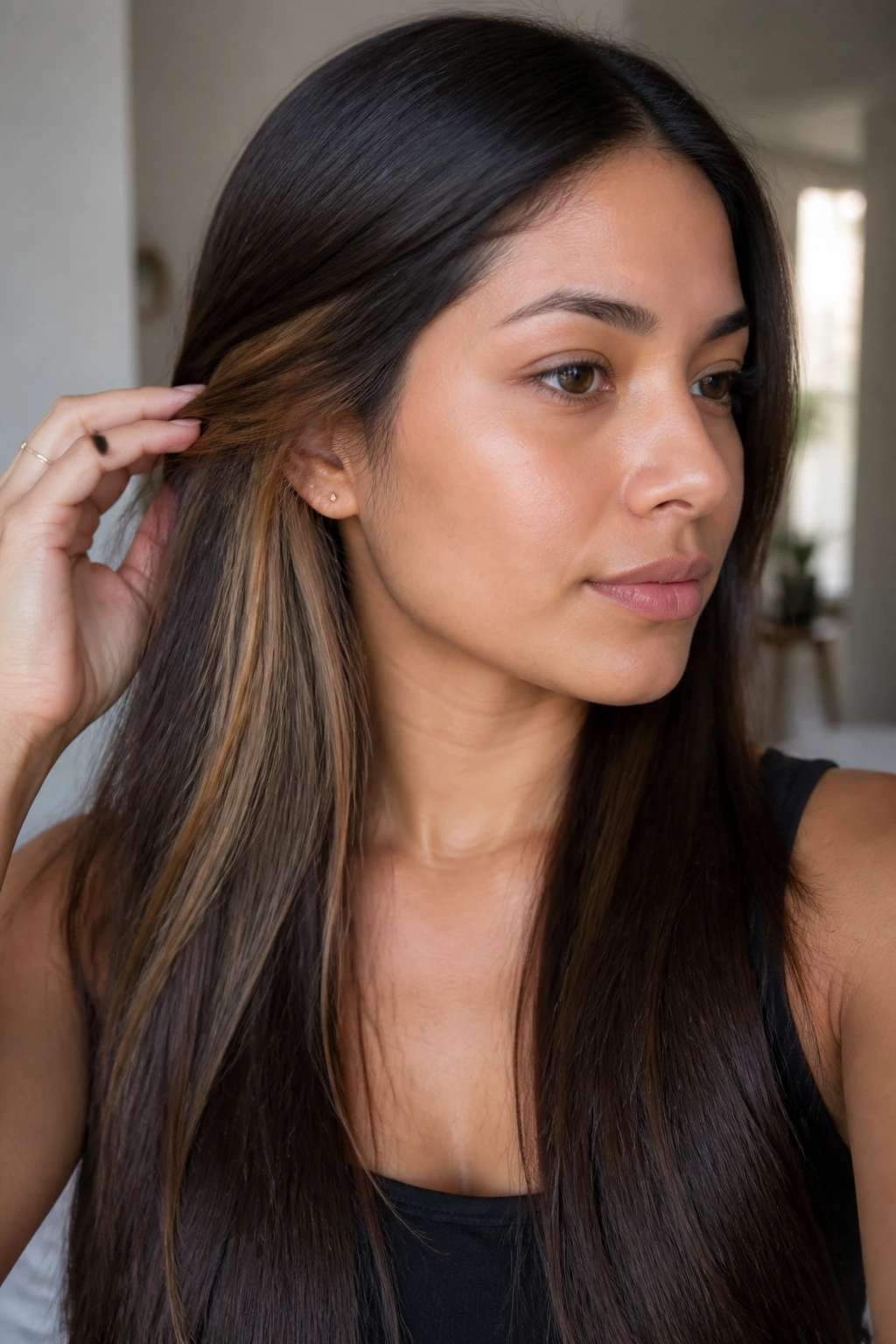
Long straight hair can swallow color if everything sits on the surface. Peekaboo caramel layers solve that by hiding warm pieces inside the lengths so they flash only when the hair moves. Medium skin benefits because the shade stays soft and controlled rather than overwhelming.
It’s one of the more discreet options here. You get brightness, but only in motion. That makes it ideal if your workplace or daily routine calls for something low-key. Keep the outer top layer close to your natural base and let the caramel live underneath.
When the hair is tucked behind the ear, the color peeks through. Small detail. Big payoff.
24. Wavy Shag Bob With Bronze-Caramel Movement
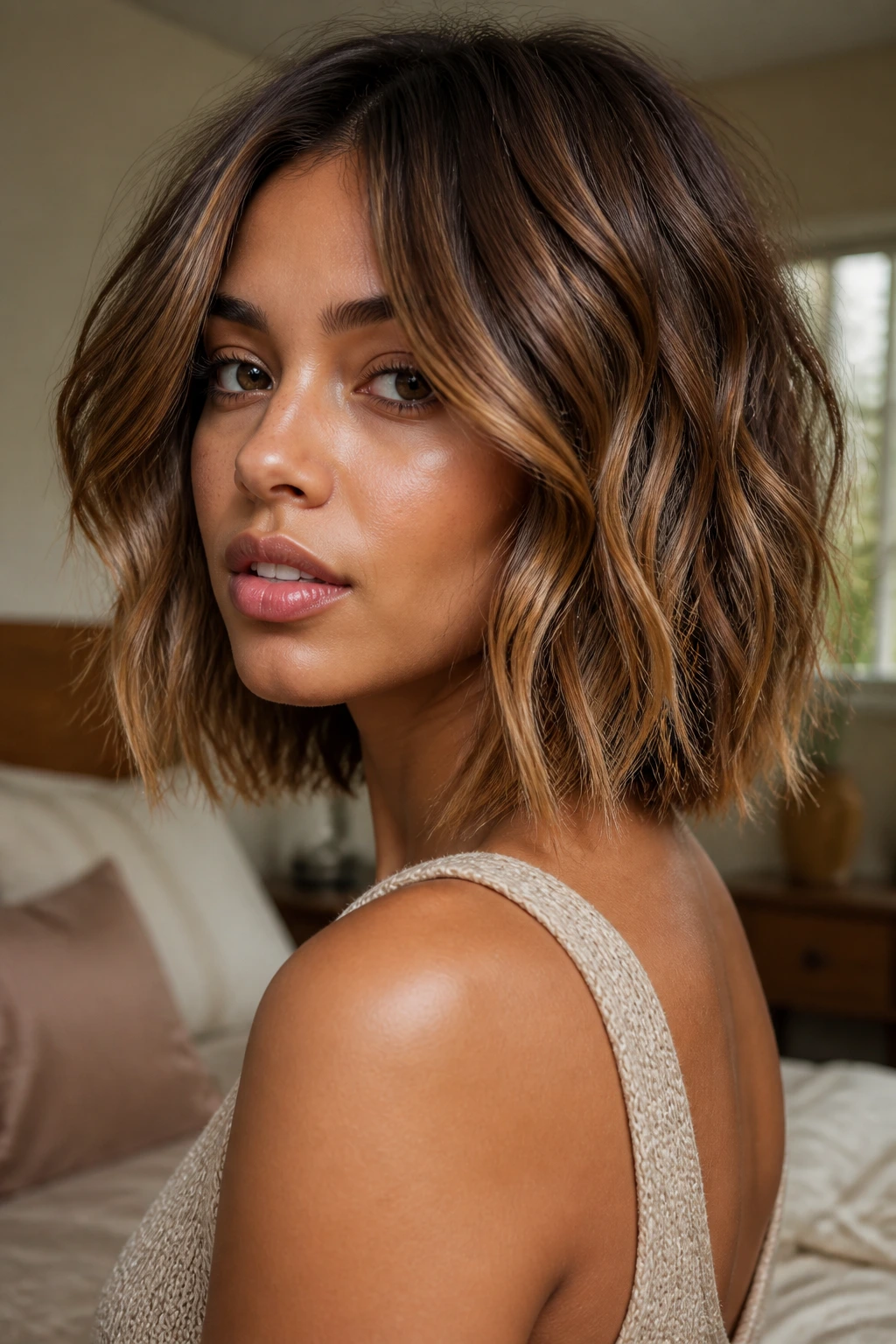
A shag bob with waves and bronze-caramel pieces has just enough grit to feel fresh. The shorter length keeps the hair lively, and the warmer bronze tone gives medium skin a little depth instead of washing it out. The style looks especially good when the ends are imperfect — soft bends, not perfect curls.
Why it works: bronze caramel sits slightly deeper than honey caramel, which makes it easier to wear on medium skin with neutral or olive undertones. The waves break the color into small sections, so the shade reads multi-tonal instead of single-note.
If you want more movement, add a light texture cream and scrunch the ends as they dry. That’s enough. No need to overstyle it.
25. Side-Swept Glam Waves With Melted Caramel Ends
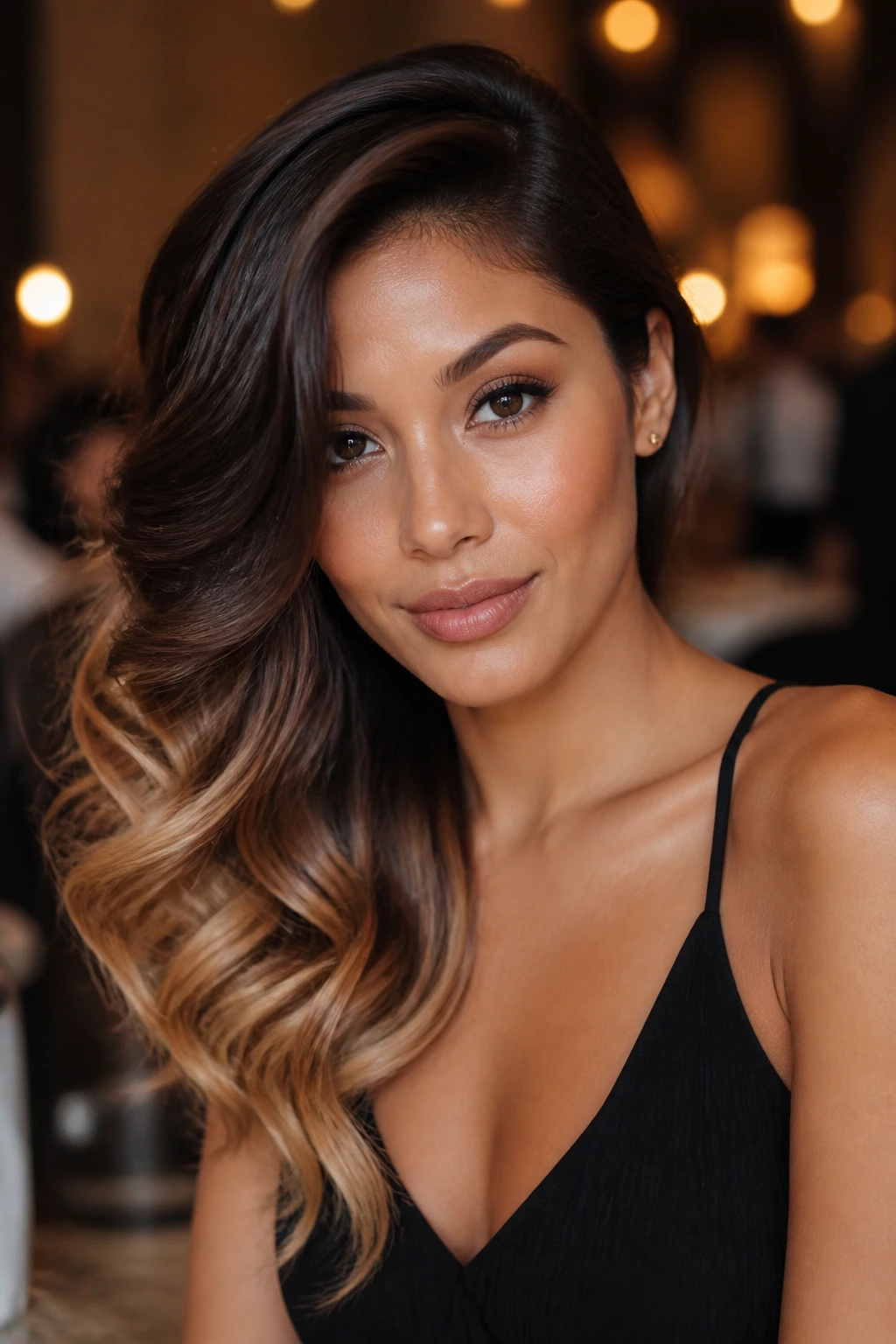
Side-swept waves are pure drama, and melted caramel ends keep the look from becoming too formal. The deeper roots hold the style down, while the lighter ends catch every curve in the wave. On medium skin, this blend can look especially flattering because the warmth sits close to the face without flattening the rest of the hair.
A side sweep gives the color a visual path to follow. That sounds fussy, but it matters. The eye moves from the deep side part through the waves and lands at the lighter ends, which makes the whole style feel connected.
This is the kind of look I’d save for a night out, a photo-heavy event, or any day you want your hair to do some heavy lifting.
Why Soft Caramel Loves Medium Skin
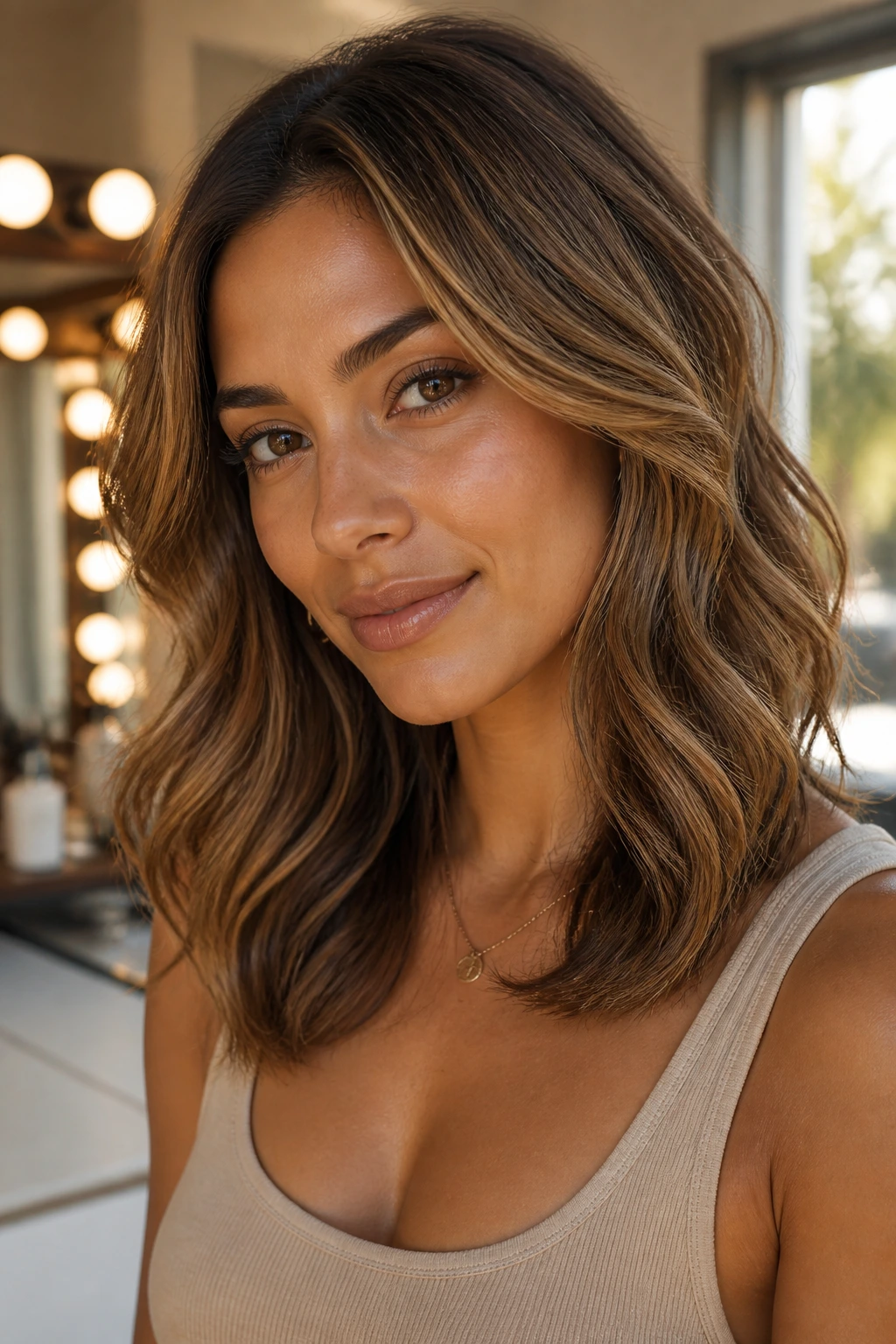
Medium skin can carry more color than a lot of people think. The undertone is the deciding factor. Golden or neutral medium skin usually likes honey, toffee, and beige caramel; olive medium skin often looks better with chestnut-caramel or bronze notes; cooler medium skin can handle beige caramel if the tone stays soft and not ashy to the point of looking dusty.
The real mistake is choosing a caramel shade that is too close to orange. That is where the color starts fighting the skin instead of reflecting it. A good caramel look should warm the face, not blur it. If the shade makes your skin look tired indoors, it is usually because the lightness is too high or the warmth is too loud.
Texture matters here, too. Straight hair shows every line. Waves blur the highlight placement. Curls split the color into tiny reflective pieces. The same caramel formula behaves differently on each texture, which is why the cut and the color have to be planned together.
Essential Tools and Products for These Looks
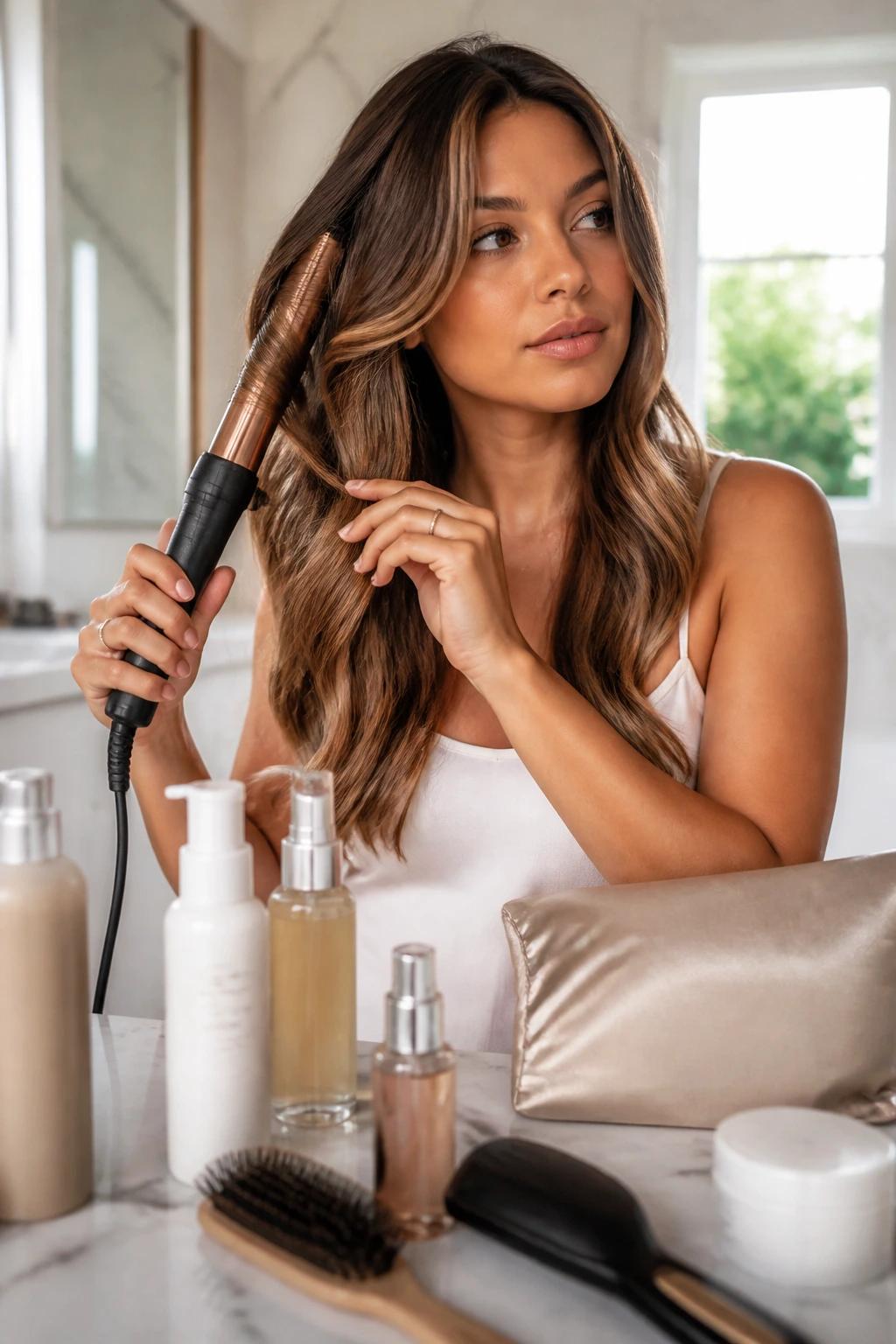
- Color-safe shampoo: use one that cleans without stripping the warm caramel tone from the hair.
- Moisturizing conditioner: caramel looks dull on dry hair, and dry ends make the color read patchy.
- Heat protectant spray: use it before curling, straightening, or blow-drying; it keeps the color from fading fast under heat.
- 1-inch curling iron or wand: this is the workhorse tool for soft bends, loose waves, and brushed-out movement.
- Blow-dry brush or round brush: useful for the lob, butterfly cut, and layered blowout looks.
- Wide-tooth comb: better than a fine comb for curls, waves, and wet detangling.
- Root-lifting spray: helpful if the caramel sits in layers and you want the shape to show.
- Gloss or color-depositing conditioner: a beige, honey, or caramel-toned gloss can keep the shade from looking washed out between appointments.
- Silk or satin pillowcase: it reduces friction overnight, which matters more than people want to admit.
- Sectioning clips: not glamorous, but they make highlight placement and styling much easier.
Smart Shade-Picking and Shopping Tips
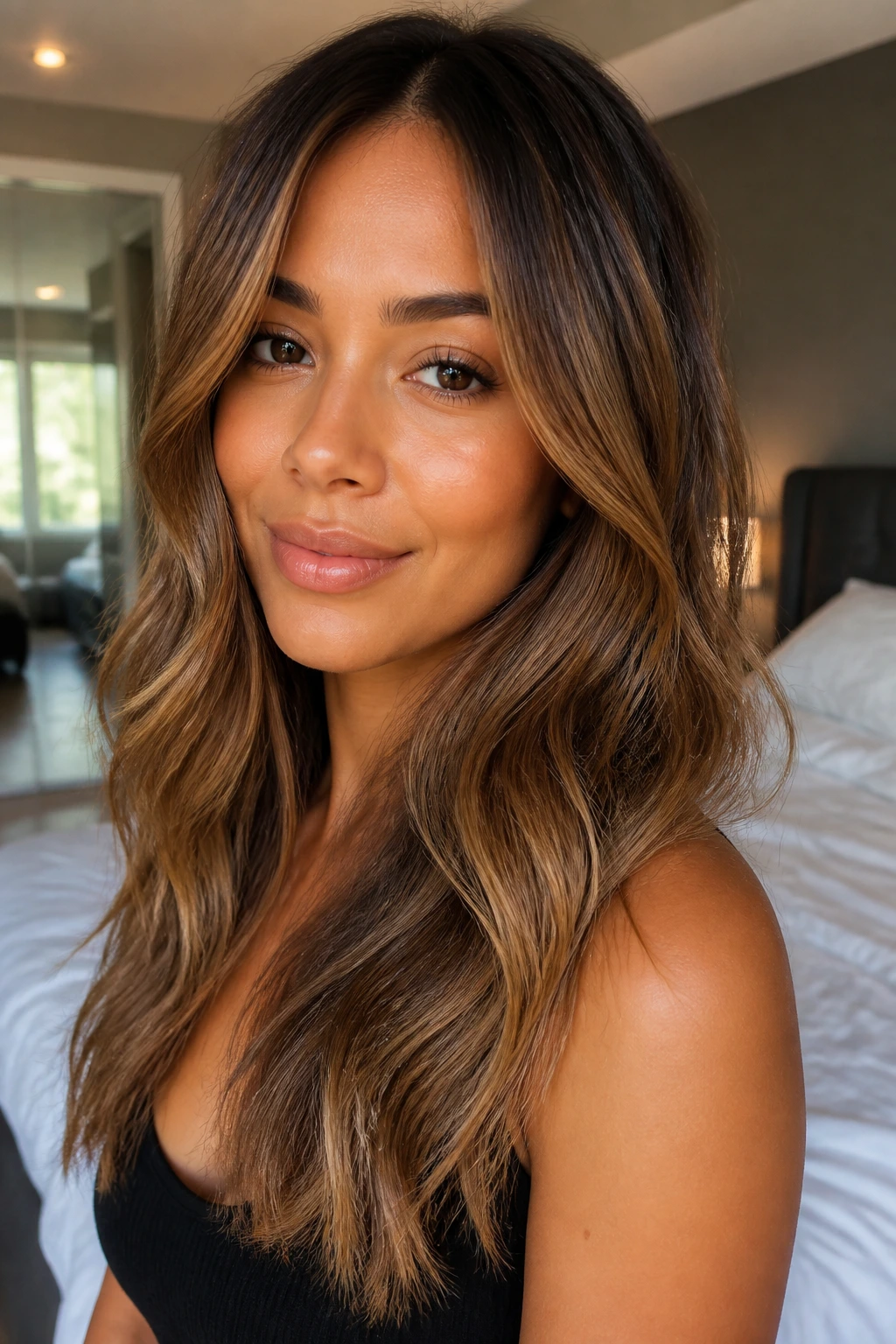
Start with your base color and undertone, not a photo saved from somewhere with different lighting. That’s the part people skip, and it is why they end up with caramel that reads too orange or too flat. If your skin leans golden, honey and toffee shades are easy to wear. If you have olive undertones, beige caramel and chestnut-caramel usually sit more naturally. Neutral medium skin can swing either way.
Ask for tonal words, not vague promises. Say you want soft caramel, not bright blonde highlights. If you want dimension, ask for a root shadow or lowlight woven through the lighter pieces so the color does not sit on one plane. And if your natural hair is very dark, expect the lighter pieces to be kept a little deeper than the photos you scroll past. That is not a downgrade. It is how caramel stays believable.
Shopping for at-home maintenance? Look for glosses, masks, and color conditioners labeled beige, honey, or warm caramel rather than copper unless you want a redder finish. Copper can be lovely, but it pushes the look in a specific direction fast. If you are unsure, choose the gentler tone first. You can always add warmth. Pulling it back is harder.
How to Wear These Caramel Hairstyles
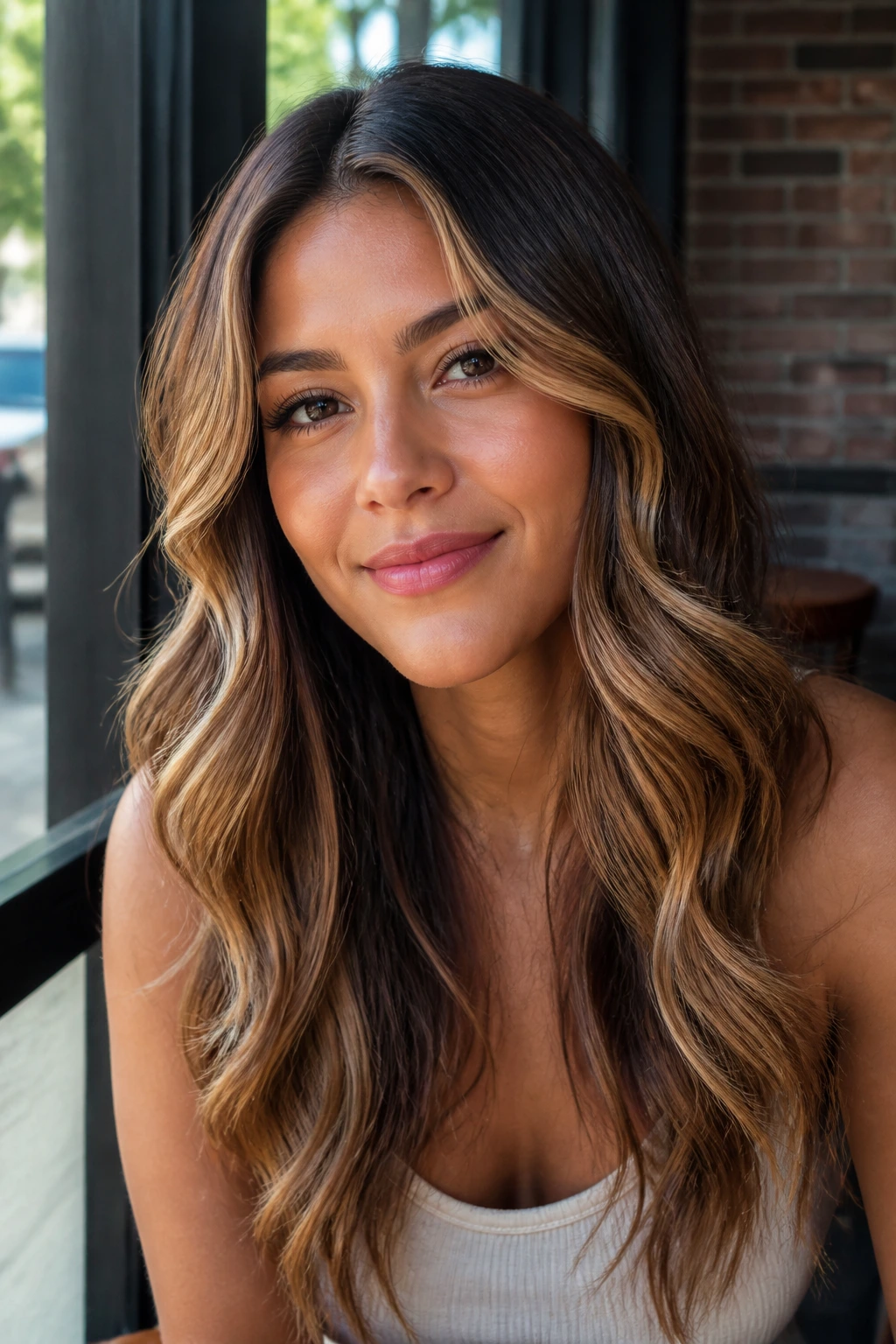
Placement: keep the lightest caramel pieces near the face, crown, and outer layers if you want brightness, or hide them under the top layer if you prefer a quieter look.
Styling: loose bends, soft blowouts, and brushed-out waves show caramel best because they blur the color lines. Tight curls work too, but they need finer placement so the highlights do not look chopped.
Face Shape: longer face shapes usually like volume at the sides; rounder faces often benefit from height at the crown and a few caramel pieces falling below the cheekbone. Square jawlines tend to soften nicely with face-framing waves and lighter front sections.
Maintenance: if you want the shade to stay fresh, plan for glosses or toners every 4-8 weeks and trims every 8-12 weeks, depending on the cut. That keeps the caramel from turning dry or uneven at the ends.
Extra Tips for Better Shine and Dimension
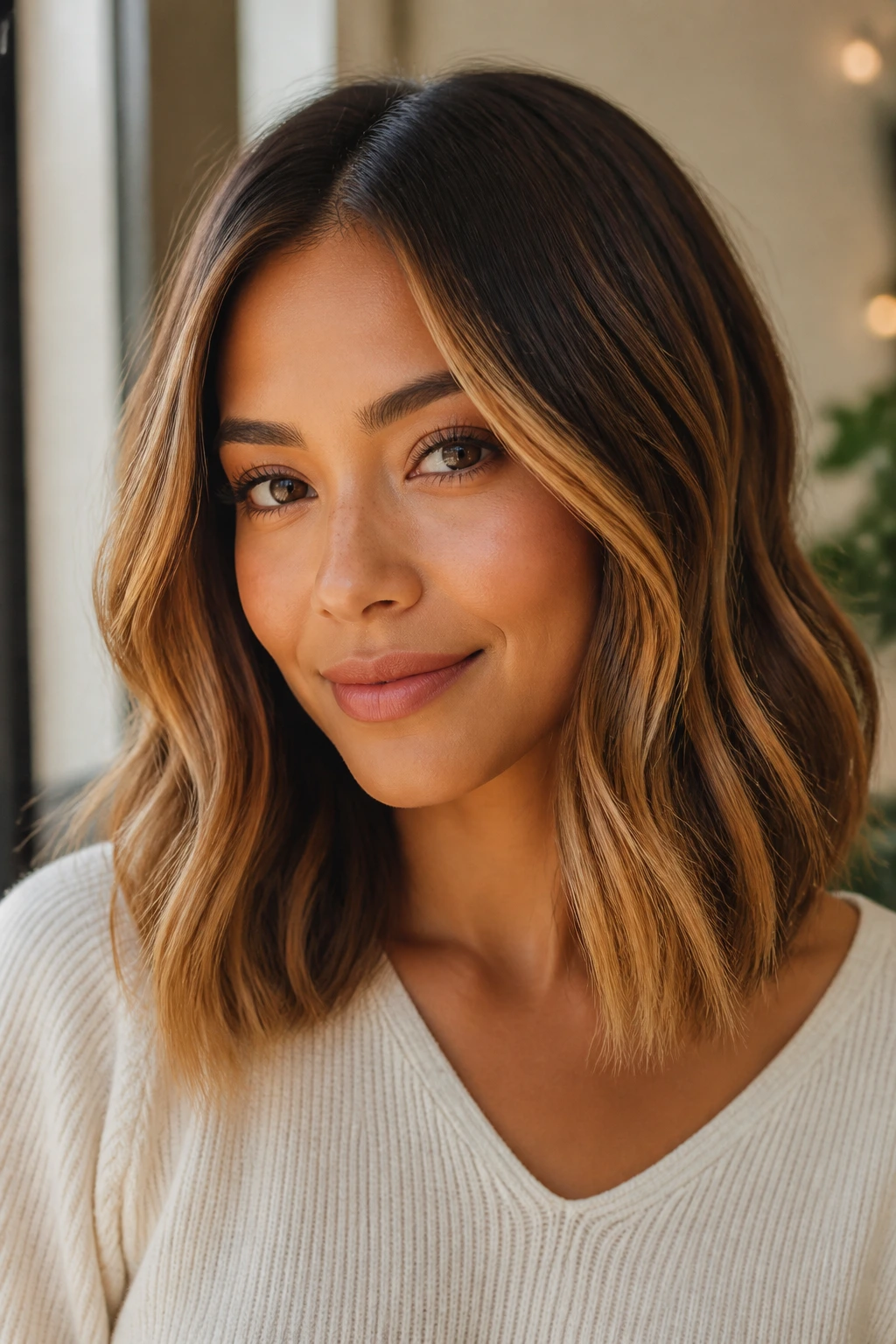
Flavor Enhancement: a clear gloss or demi-permanent glaze adds shine in a way dry shampoo never will, and it helps the caramel reflect light instead of looking dusty.
Customization: if your hair is thick, ask for deeper lowlights between the caramel pieces. If your hair is fine, keep the highlight pattern lighter and more feathered so the hair does not look overworked.
Serving Suggestions: tuck one side behind the ear, add a soft clip near the temple, or leave a few face-framing pieces loose around a ponytail. Small finishing moves matter. They change how the color sits against the skin.
Make-It-Yours: curly hair can use finer, ribbon-like placement. Straight hair usually needs softer blending and less contrast. If you wear glasses, brighten just above the frames and around the temples; that area tends to disappear first.
Keeping Caramel Hair Fresh Between Salon Visits
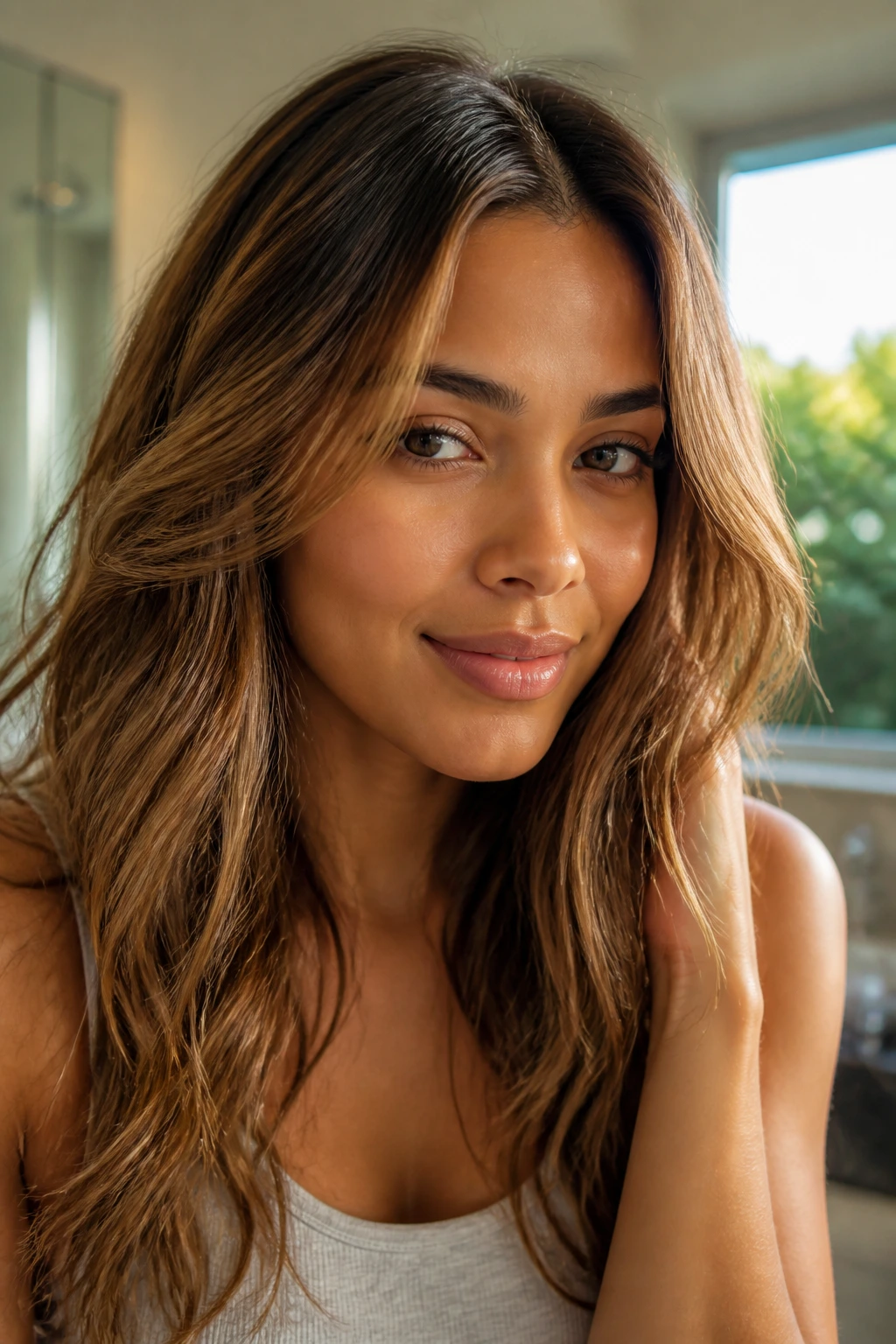
Soft caramel ages best when you do not wash it every day. Aim for every 2-4 days if your scalp allows it, and use dry shampoo at the roots in between so the style does not collapse. Water, heat, and rough towel drying are the three things that make warm color fade faster than it should.
Glosses and toners are your friend. Many people wait until the caramel looks dull and then panic. Better move: refresh the tone every 4-8 weeks, depending on how porous your hair is and how often you heat-style. If the color starts turning too golden or a little orange, a cool beige gloss can bring it back into balance without rewriting the whole look.
At night, a satin or silk pillowcase helps more than it gets credit for. So does a loose braid or low scrunchie if your hair is long. For curls and coils, a bonnet or scarf keeps the caramel from rubbing off at the edges and getting frizzy at the crown. Trim the ends every 8-12 weeks if you want the warm tones to stay clean rather than ragged.
Common Mistakes That Make Caramel Look Flat
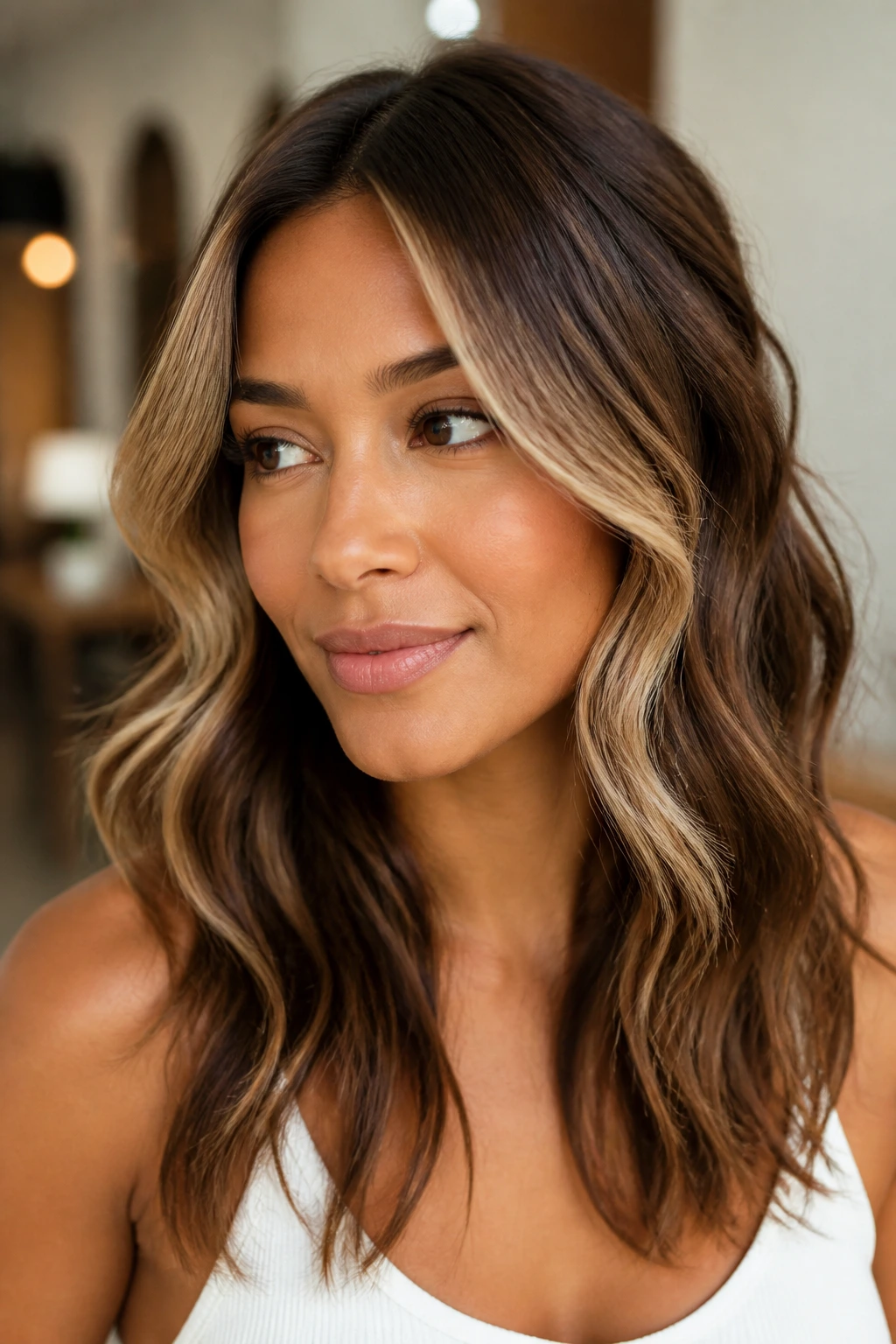
Going too light too fast: this is the big one. If the caramel jumps three or four levels above your base, it can start reading blonde instead of soft caramel. The fix is a gentler lift and a deeper root or lowlight underneath.
Using the wrong warmth: orange-brassy caramel is the fastest way to make medium skin look tired. Ask for honey, beige, toffee, or bronze depending on your undertone, and steer away from anything that sounds copper-heavy unless you want red in the mix.
Skipping dimension: one solid shade of caramel can look flat, especially on straight or fine hair. Layer in lowlights, shadow roots, or hidden panels so the color has somewhere to go when the hair moves.
Forgetting texture: a cut that fights your natural texture will make the color look worse. If your curls shrink, the highlights need to sit lower. If your hair is pin-straight, the placement needs to be softer so the lines do not show every inch.
Overusing hot tools: repeated high heat turns caramel dry and dull. Use a protectant, drop the temperature when you can, and give the hair a break between styling sessions. A brushed-out wave at 300°F often looks better than a tight curl at 400°F.
Variations and Adaptations to Try
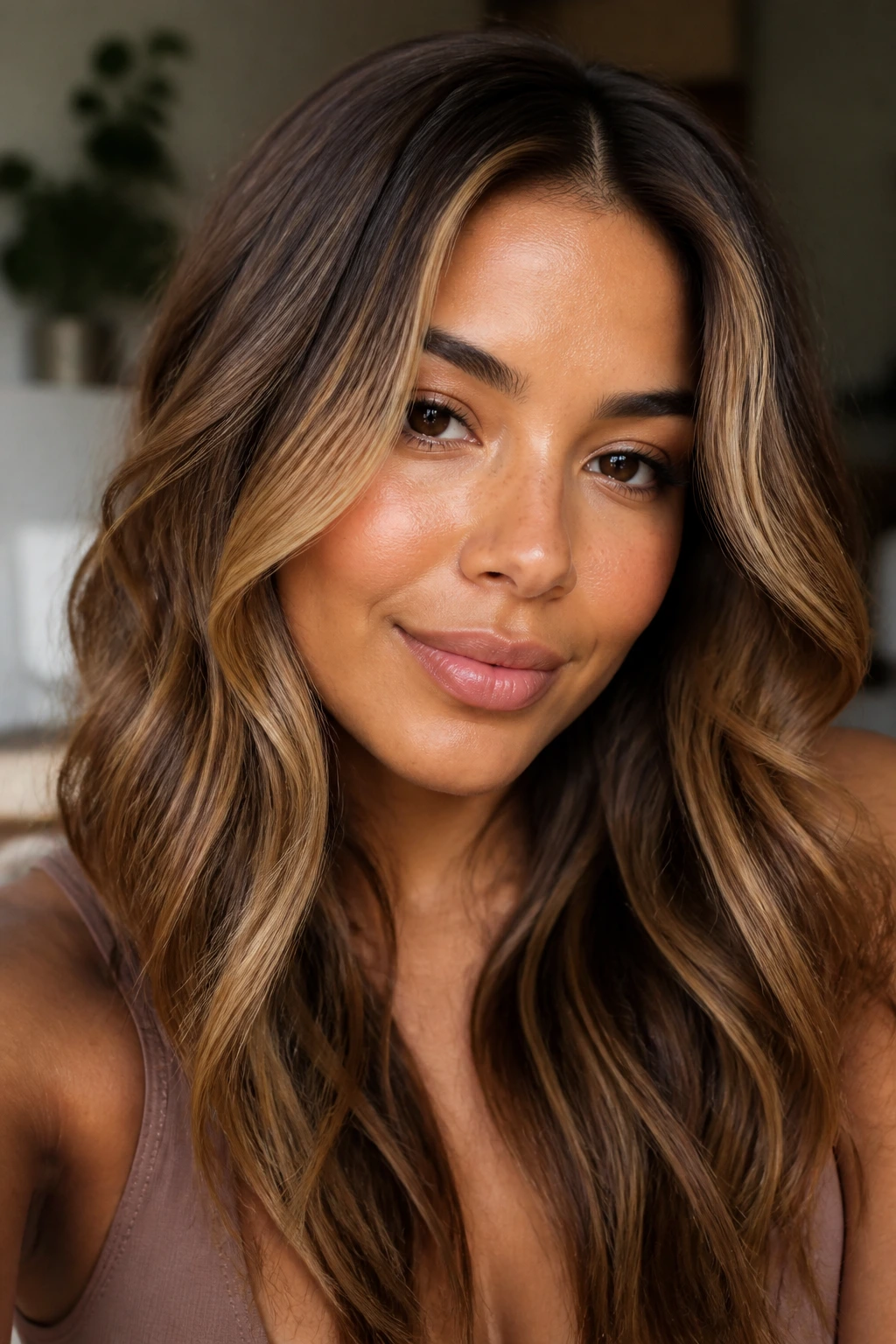
Honey Glow: lean into golden caramel with brighter pieces around the face. This suits medium skin that already has warmth and wants a sunlit finish without going blonde.
Beige Balance: choose a beige-caramel gloss or highlight pattern if your skin is neutral or olive. The cooler edge keeps the color soft and wearable, especially on straight cuts and blunt bobs.
Bronze Depth: mix deeper bronze-caramel ribbons with a darker brunette base. This is a strong pick for curls, shags, and layered cuts that need depth more than brightness.
Shadow-Root Softness: keep the root close to your natural color and let the caramel live through the mid-lengths and ends. The grow-out is easier, and the color stays low-maintenance for longer stretches.
Front-Light Focus: put the lightest caramel only on the front pieces, temples, and cheekbone area. This works when you want a brighter face without changing the rest of the hair much.
Curly Ribbon Placement: for coily or curly hair, ask for thin ribbons that follow the curl pattern rather than chunky highlights. The result looks softer and wears better as the hair shrinks and expands.
Frequently Asked Questions About Soft Caramel Hairstyles for Medium Skin Tones
Will soft caramel suit olive skin tones?
Yes, but the tone matters. Olive medium skin usually looks better with beige caramel, chestnut-caramel, or bronze warmth than with bright yellow-gold highlights, which can look too loud.
How do I keep caramel from turning brassy?
Use color-safe shampoo, wash less often, and keep a gloss or toner in the mix every few weeks if your hair is porous. Heat protection matters too, because high heat can push the tone warmer than you want.
Can I get caramel highlights on very dark brown hair?
You can, but the lift needs to be controlled. On very dark bases, the caramel usually reads softer when it stays a few levels lighter than the base instead of jumping to a pale blonde.
Does caramel work on curly hair?
Absolutely, and curls often show it better than straight hair because the light hits each bend separately. The trick is to place the lighter pieces in thin ribbons that follow the curl pattern.
What if I want low maintenance?
Ask for balayage, a shadow root, or hidden panels instead of full-head highlights. Those choices soften the grow-out and keep you from chasing roots every few weeks.
Can I wear caramel with a blunt bob?
Yes, and it looks especially sharp if the caramel sits at the ends or just under the top layer. Keep the tone soft — beige or honey — so the blunt shape still feels clean.
How often should I refresh the color?
Most soft caramel looks hold up well with a toner or gloss every 4-8 weeks, depending on washing habits and heat styling. Trims every 8-12 weeks help the ends stay smooth, which makes the color look better too.
What if the caramel comes out too orange?
A beige or cool-toned gloss can calm it down. If the color is far too warm, your stylist may need to soften it with lowlights or a toner rather than another round of lightening.
The Shade That Keeps Showing Up
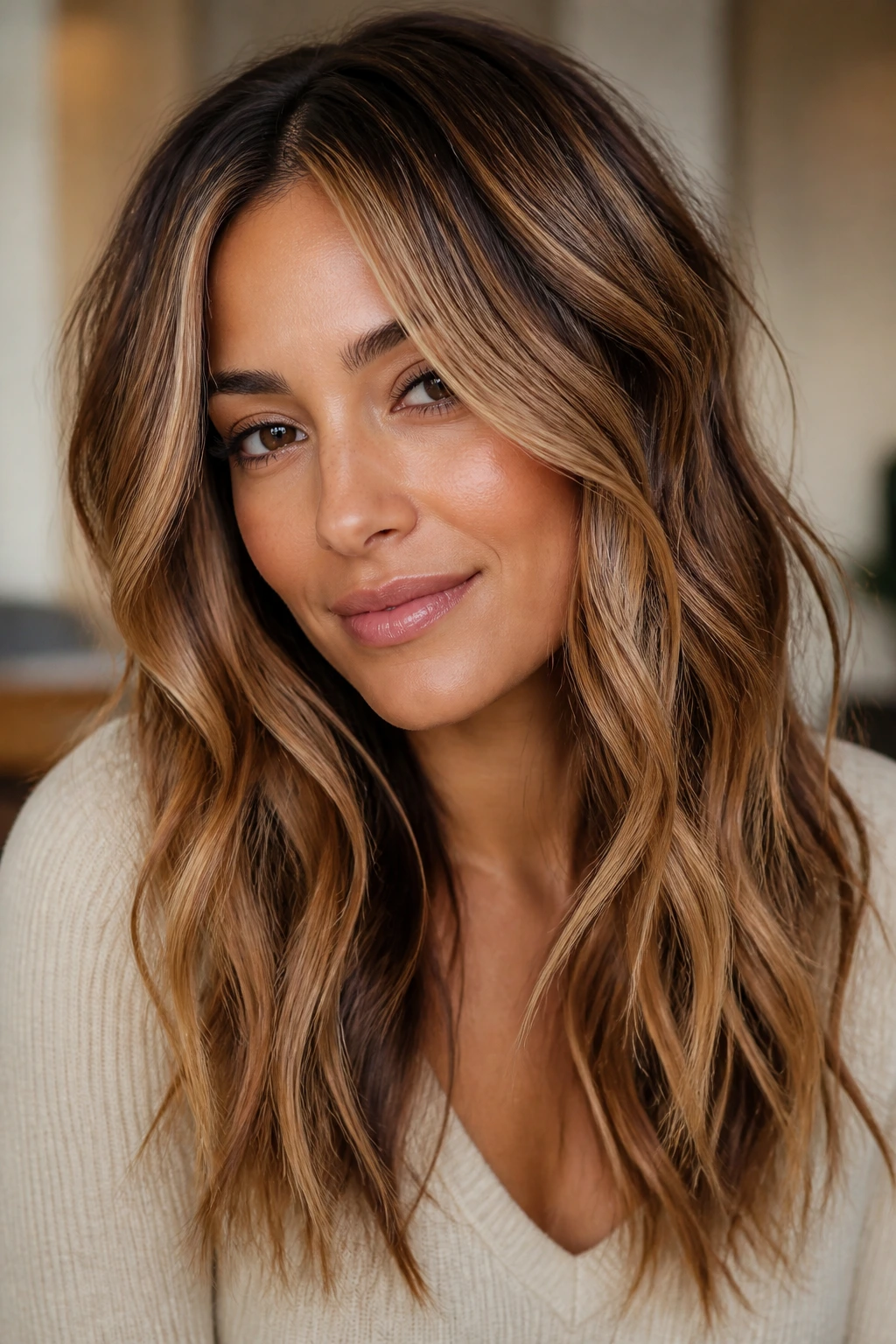
Soft caramel keeps working because it behaves like a good piece of tailoring: it fits a lot of faces, but never looks generic when it’s cut and placed well. On medium skin, it can brighten, soften, sharpen, or calm the whole look depending on where the color sits and how the hair moves. That range is the real draw.
The nicest part is that you do not need the loudest version to get the payoff. A beige money piece, a honey gloss on layers, a bronze ribbon in curls — each one changes the face a little differently. Pick the version that matches your texture and your upkeep habits, and the color will do what it does best: make the hair look like it belongs there.