



Blonde gray hairstyles for cool skin tones work best when the blonde looks frosted, smoky, or pearl-soft rather than buttery and sunlit. That one shift changes the whole face. Ash and silver shades calm redness, blur harsh gray regrowth, and make cool complexions look cleaner under indoor light, where warm blonde can turn a little yellow and a little tired.
Gray hair has its own personality, too. It’s often wirier, a bit more resistant to color, and it tends to show up first at the temples, hairline, and part. So the smartest looks don’t try to fight that pattern with a flat, one-note blonde. They work with it. A soft root shadow, a cool gloss, or a cut with enough movement to break up the line can make gray feel planned instead of patched over.
The best part is how many directions this can go. You can wear the color in a blunt bob, a feathered pixie, a shaggy midi, or a long layered blowout, and the right cool-toned blend still does the same quiet job: it makes your skin look less flushed, your eyes look brighter, and the regrowth less obvious by week three.
Why These Shades Earn Their Keep
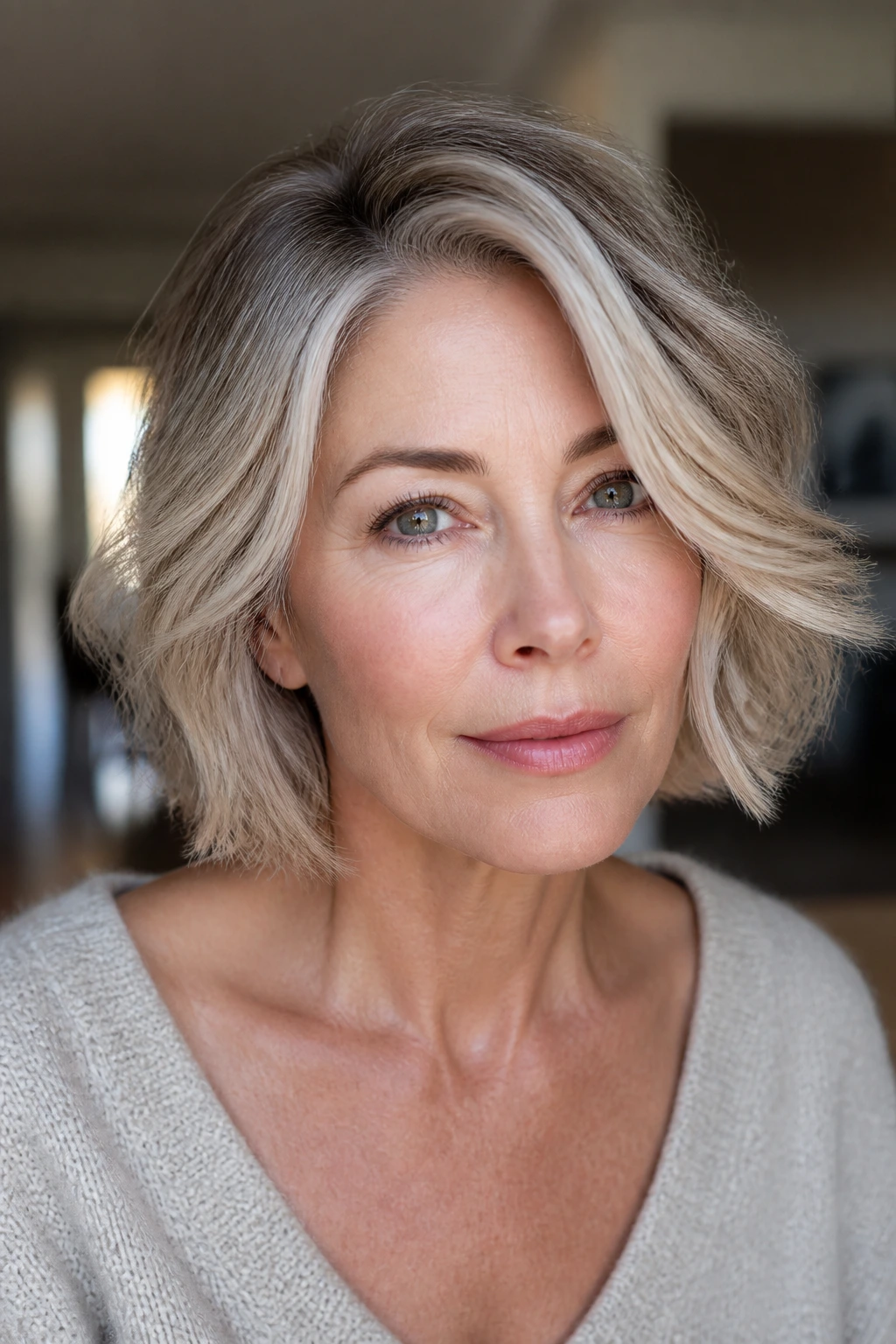
- Cool pigments suit cool undertones: Ash, pearl, silver, and mushroom blonde sit closer to blue and violet than gold, so they don’t pull extra pink into the cheeks.
- Gray blending looks softer than full coverage: A shadow root or lowlight doesn’t erase every gray strand; it folds them into the pattern, which is easier on the eyes and easier on your schedule.
- Layering matters as much as color: A blunt cut shows regrowth more sharply, while waves, shags, and feathered ends break up the line between dyed hair and natural gray.
- Brightness can stay near the face: Face-framing pieces around the cheekbone and jaw give lift without flooding the whole head with light blonde.
- The grow-out is kinder: When the root is intentionally darker or cooler, the first inch of regrowth looks like design, not neglect.
1. Ash-Blonde Bob with a Soft Root Shadow
A chin-length bob in ash blonde is one of those looks that makes cool skin look polished without trying too hard. The root shadow keeps the regrowth line soft, and the blunt edge at the jaw gives gray strands a clean place to disappear instead of shouting from the part line. It’s neat, but not severe.
Why It Works
The trick here is contrast control. If your grays are strongest around the temples, a level 6 or 7 smoky root melts into a level 8 or 9 ash blonde and makes the whole cut feel deliberate. The bob’s clean edge also keeps the hair from looking stringy when the color is on the pale side.
Quick Facts
- Best for: fine to medium hair that needs shape.
- Tone family: ash blonde, smoky beige, soft taupe root.
- Styling time: 10 to 15 minutes with a round brush.
- Regrowth look: very forgiving around the hairline.
Strongest tip: ask your colorist for a root shade that is cool but not flat brown; if it goes too dark, the bob can look heavy fast.
2. Icy Balayage Lob with Face-Framing Highlights
This is the look for anyone who wants brightness near the face and soft gray blending everywhere else. The lob keeps the shape modern, and the icy balayage ribbons make cool skin look crisp instead of washed out. It’s especially good if your grays come in scattered patches rather than one solid strip.
Balayage matters here because the placement is doing half the work. The lightest pieces should sit around the cheekbones, outer fringe, and ends, while the mids stay a touch deeper. That contrast gives the hair movement even when it’s air-dried and a little imperfect.
Keep the face-framing pieces cool, not white-hot. A pale ash or pearl blonde with a violet-based gloss keeps the look elegant in indoor light, where yellow tones tend to show their worst side.
3. Silver Pixie with Feathered Crown
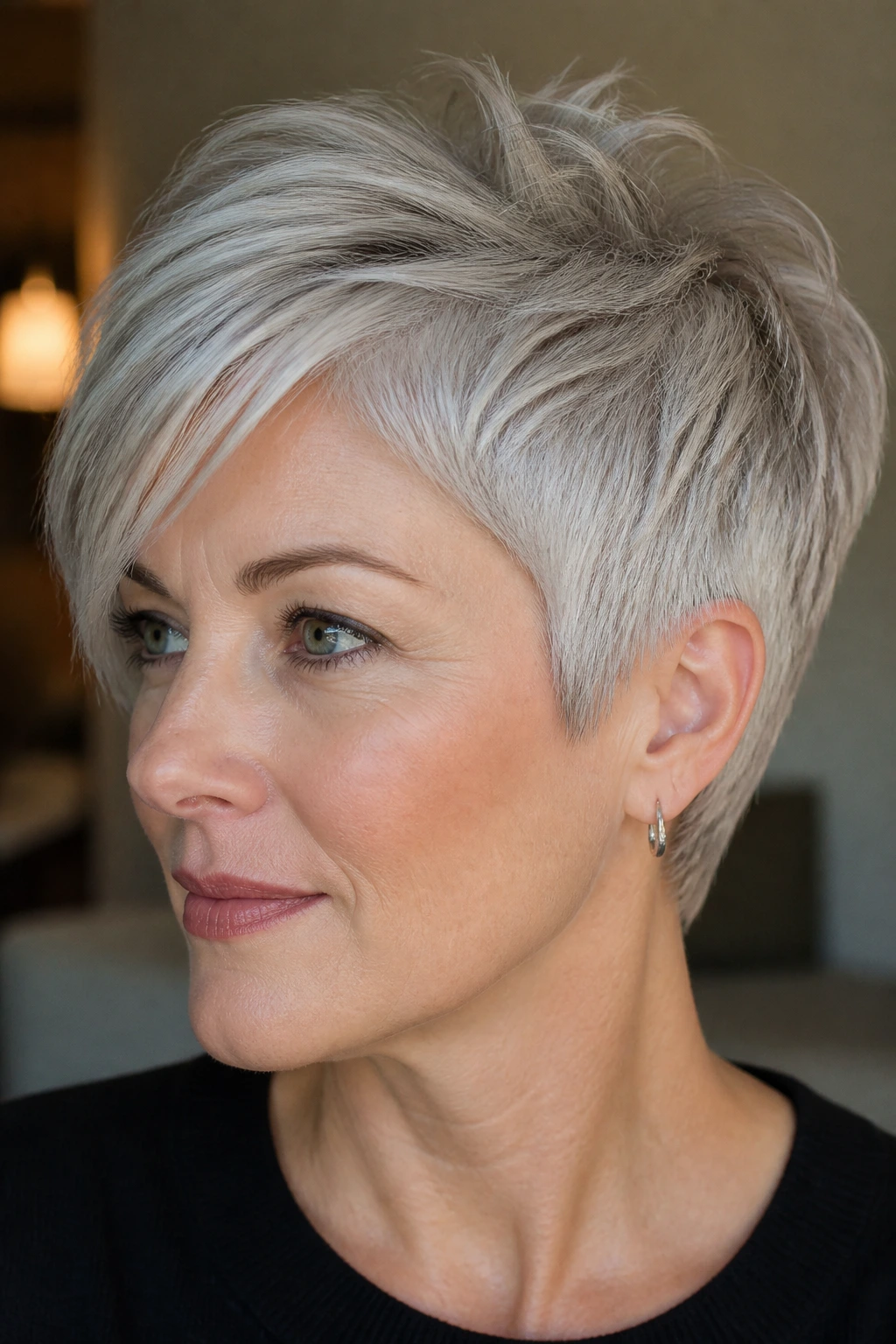
Can a pixie cover gray and still feel soft? Absolutely — if the top is feathered and the crown carries a little lift. A silver pixie works best on cool skin because the shade mirrors the undertones instead of fighting them, and the short length makes coarse gray hair feel lighter.
Why the Crown Matters
A flat pixie can look helmet-like if the hair is dense or wiry. Feathering the crown breaks that shape. The cut should have texture through the top, a snug nape, and a side fringe that drapes instead of sitting like a shelf.
How to Style It
A pea-sized amount of styling cream is enough for most days. Work it through damp hair, then blow-dry with your fingers or a small vent brush to push the top slightly forward and upward. A touch of matte paste at the ends keeps the silver from looking puffy.
4. Cool Beige Shag with Curtain Bangs
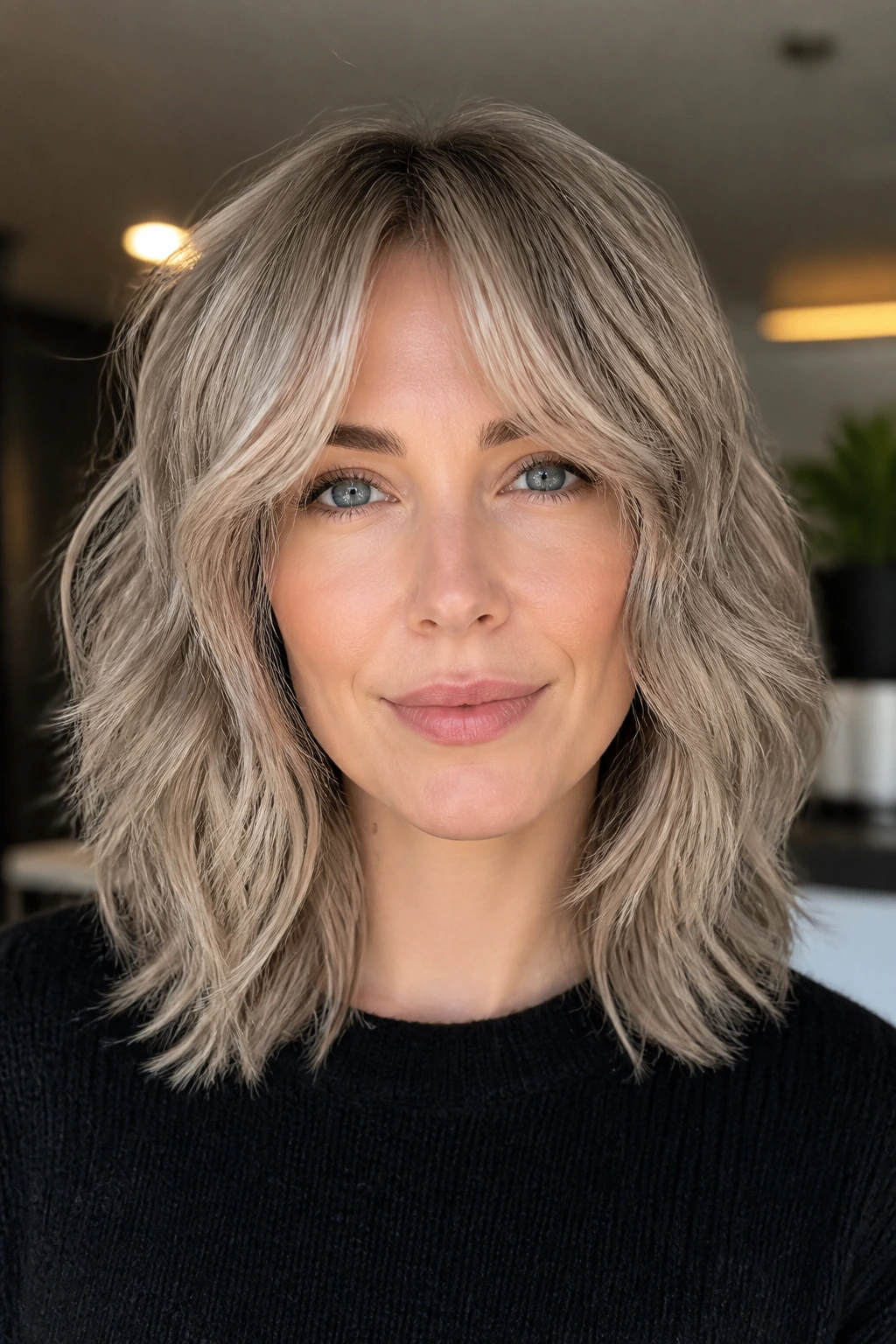
A shag with curtain bangs is one of the easiest ways to let gray blend into the haircut instead of standing on top of it. The layers move. The bangs soften the forehead. And the cool beige blonde keeps pink-leaning skin from looking more flushed than it already is.
The reason this cut works so well is simple: it doesn’t demand perfect color placement. Even if the gray grows in unevenly, the texture of the shag disguises the transition. I like this on medium-density hair that needs shape but doesn’t want the stiff finish of a one-length cut.
Ask for beige that leans ash, not honey. A neutral-to-cool beige with a few smoky lowlights around the nape gives the ends enough depth to keep the whole style from turning chalky.
5. Mushroom Blonde Collarbone Cut
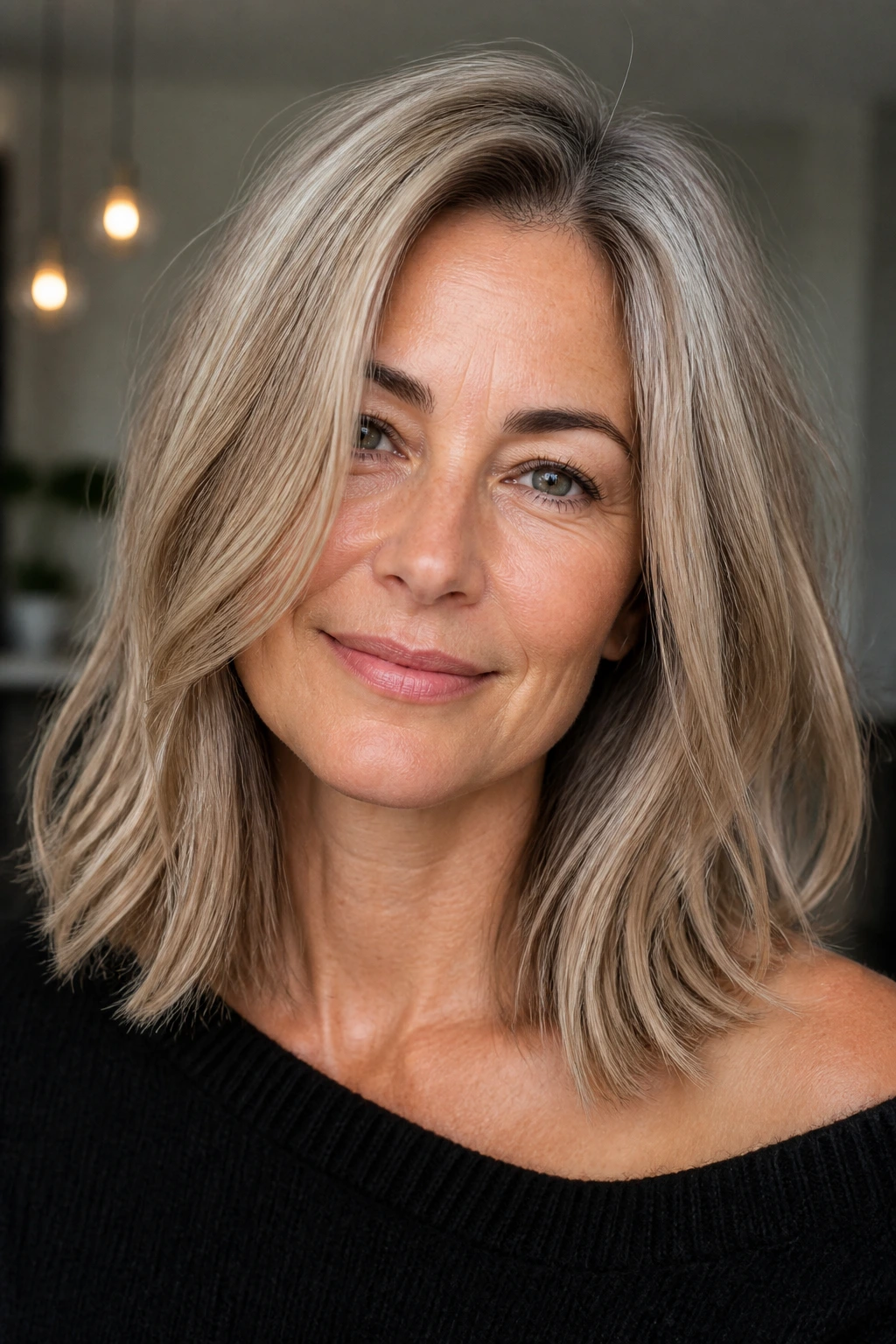
Mushroom blonde has a slightly earthy cast, but it stays in the cool lane when the taupe and ash are stronger than the gold. On a collarbone cut, that muted color looks expensive in the quiet sense — not flashy, just balanced and believable. It also hides gray better than a bright blonde because the lowlights do some of the blending.
This is a good choice if you don’t want the hair to read “blonde” from across the room. The tone sits in that soft middle zone where gray, beige, and ash can all live together. That makes regrowth less obvious and helps the skin look calmer.
Wear it straight for a sleeker line or bend the ends with a one-inch iron for a little swing. The cut can take both.
6. Pearl Blonde Waves with a Smoky Money Piece
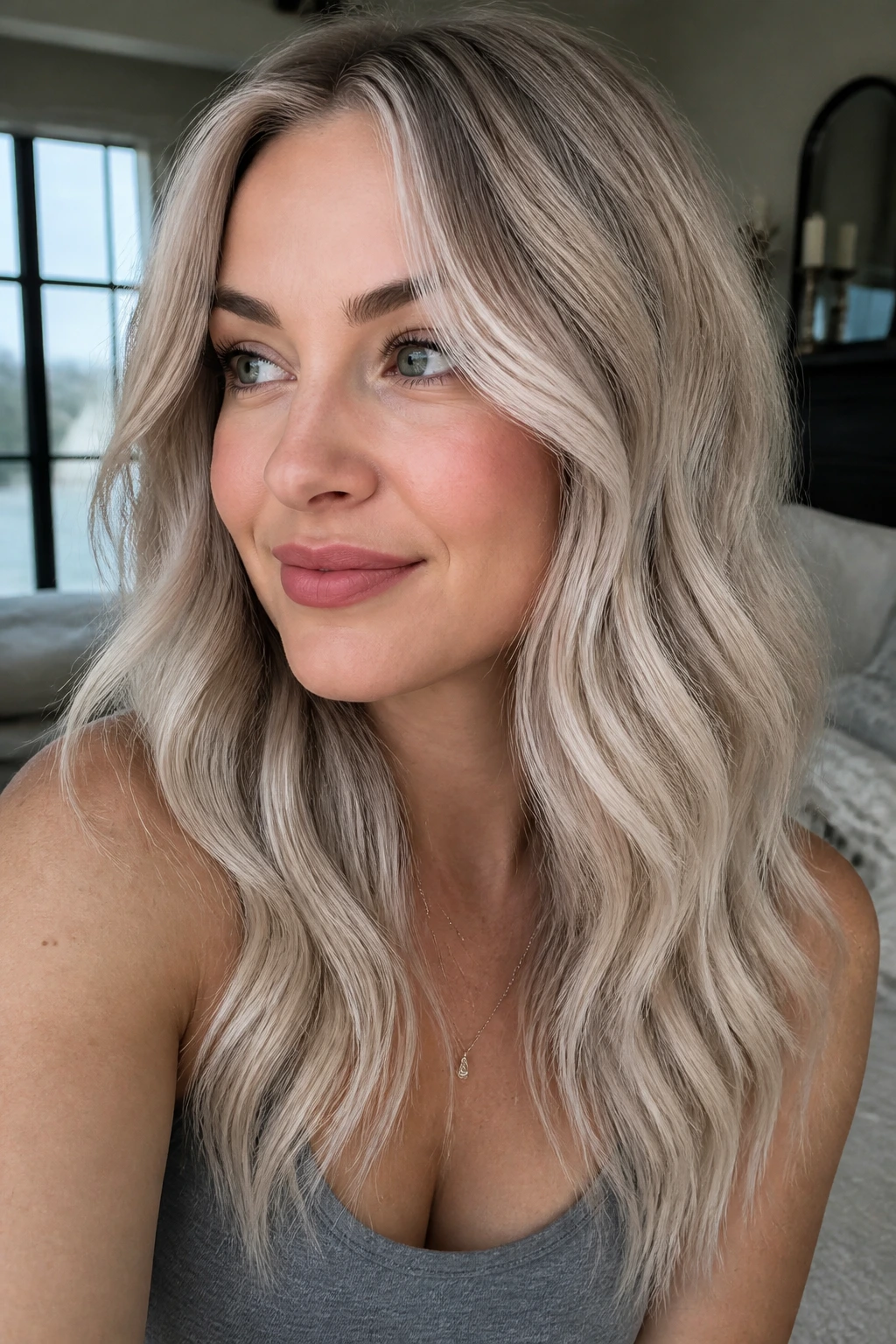
Pearl blonde has a soft shine that looks especially kind on cool skin. Add a smoky money piece at the front, and the whole face gets a subtle frame that pulls attention to the eyes instead of the roots. If your gray pops first at the hairline, this is a smart way to blur it without going heavy everywhere else.
The waves matter because they keep the color from flattening. Pearl tones can look almost too pale if the hair is pin-straight, but a loose wave gives the light something to catch on. The smoky front pieces keep the look grounded, which is the part many blondes miss.
What to Watch For
- Keep the money piece ash or neutral-cool.
- Ask for a gloss with a violet base, not a beige-gold one.
- Leave enough depth at the crown so the style doesn’t wash out your features.
7. Platinized Gray Blunt Bob
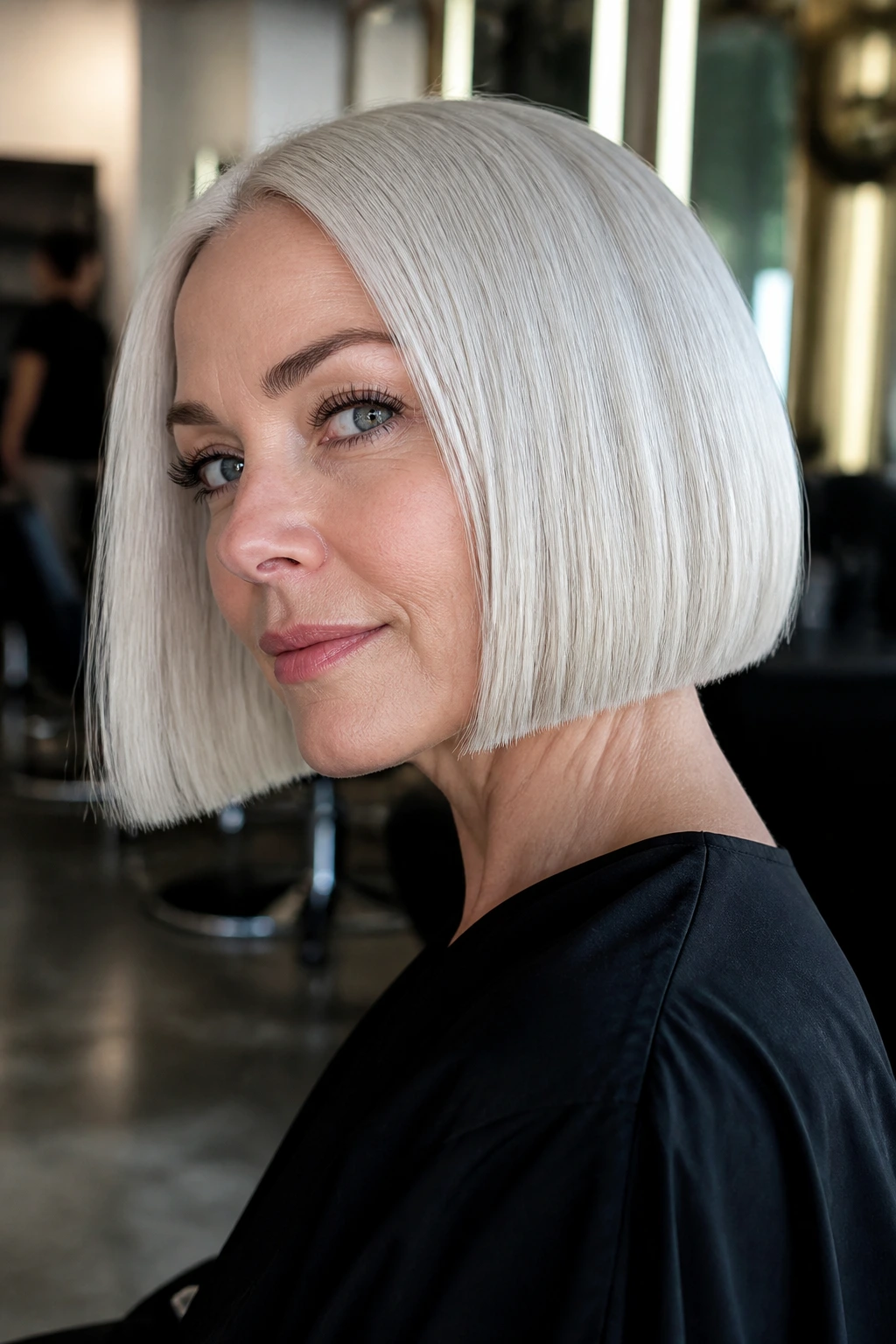
A nearly white bob can be stunning on cool skin, but it needs a sharp cut to keep it from looking tired. That’s why the blunt line matters here. The edge gives the pale color structure, and the slight gray cast makes the whole thing feel intentional rather than over-bleached.
This is not the cut to choose if you want softness first. It’s the one you pick when you want precision. The cleaner the line at the ends, the better the color reads. On dense hair, it can look wonderfully graphic. On finer hair, it can look airy if the ends are kept ultra clean.
The maintenance is real. You’ll need toning, careful heat protection, and trims that keep the line crisp. But if you like the icy, editorial feel of silver-blonde hair, this one earns its place.
8. Smoky Layered Long Cut with Soft Curls
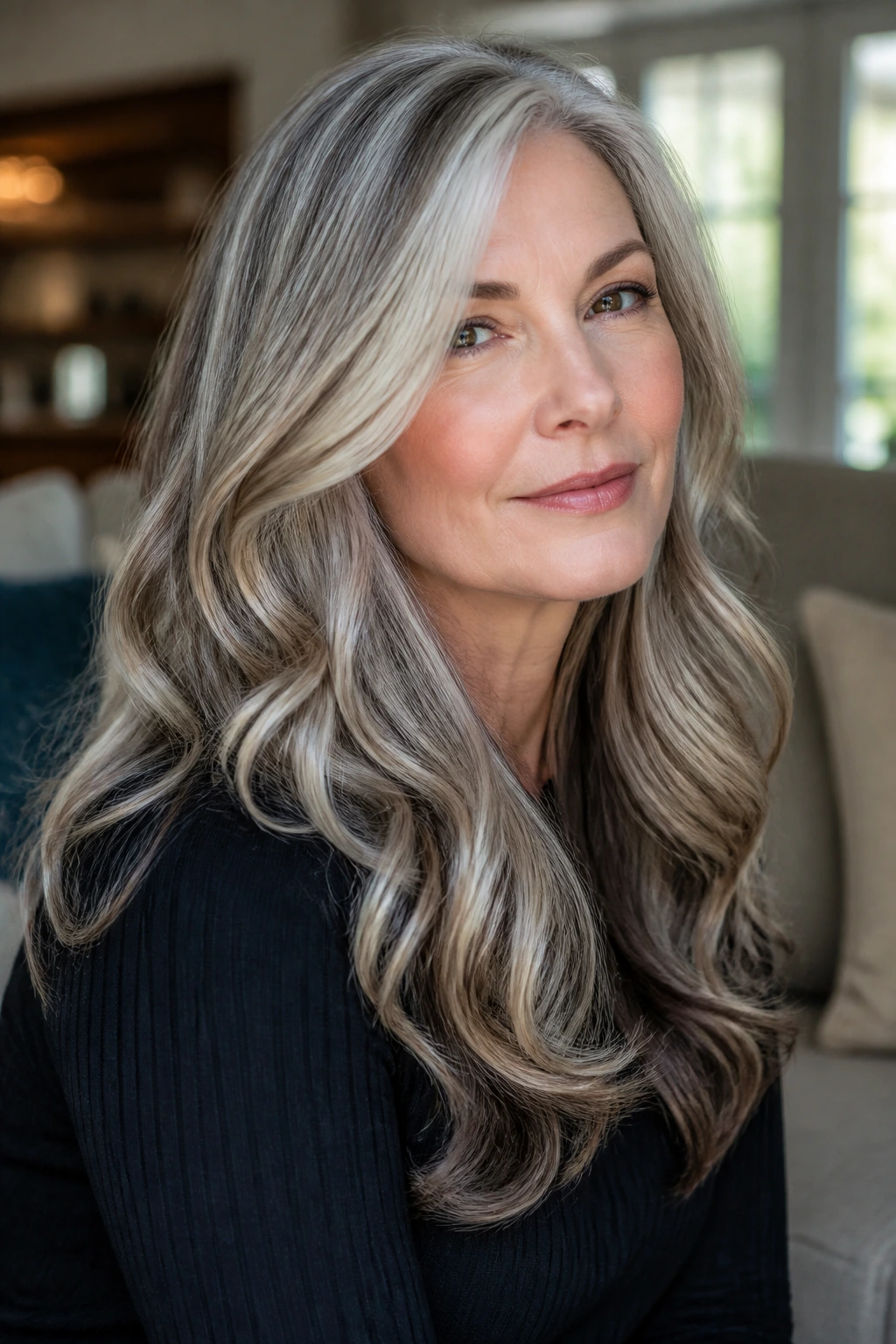
Long hair doesn’t have to fight gray; it just needs enough movement to make the grow-out less blunt. Smoky lowlights threaded through long layers do exactly that. Add soft curls, and the gray strands blend into the pattern instead of forming one obvious stripe at the part.
The nice thing about this style is how forgiving it is. If your roots come in faster on one side, the curls hide that. If the ends are a little drier than you’d like, the smoke-toned color still reads polished because the texture is doing the visual work.
Use a 1¼-inch iron and curl away from the face, then brush the bend out with your fingers. Keep the ends smooth rather than frizzy; that’s what keeps the longer length from looking dull.
9. Frosted Crop with Side-Swept Fringe
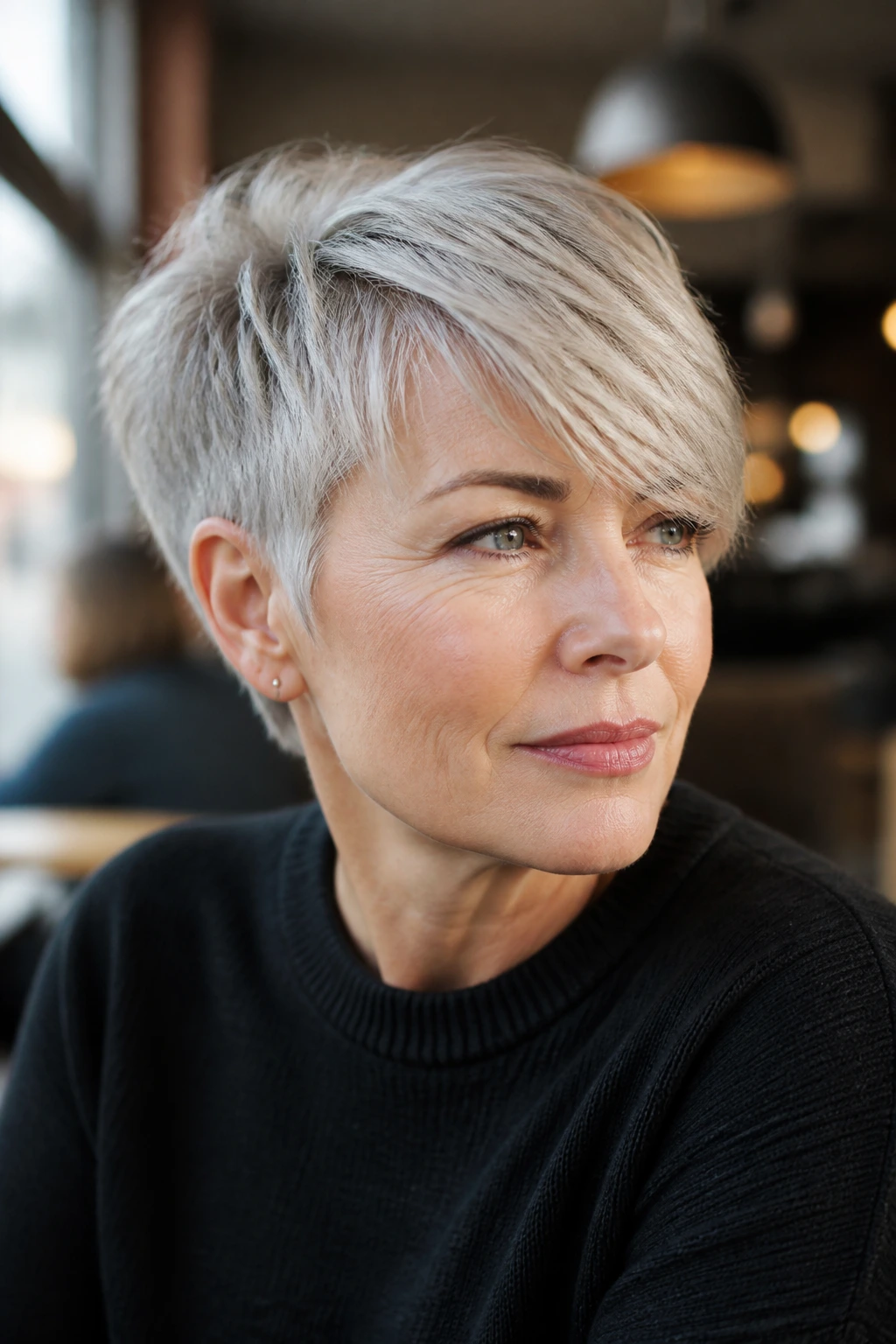
If your hairline is the first place gray shows up, a frosted crop with a side-swept fringe can be a small miracle. The fringe covers the temples just enough to soften the grow-out, and the frosted top gives the whole cut a cool, clean finish that flatters pink or rosy skin.
It’s a sharp look, but not harsh if the texture is right. The top should feel airy, never stiff. The fringe should move, not sit like a curtain. That motion matters because a frozen-looking crop can make the face feel stricter than it is.
This cut is a strong option for women who want gray coverage without living in the salon chair. It grows out with a nice shape, and the shorter length means toning and trims stay manageable.
10. Nordic Bixie with a Tapered Nape
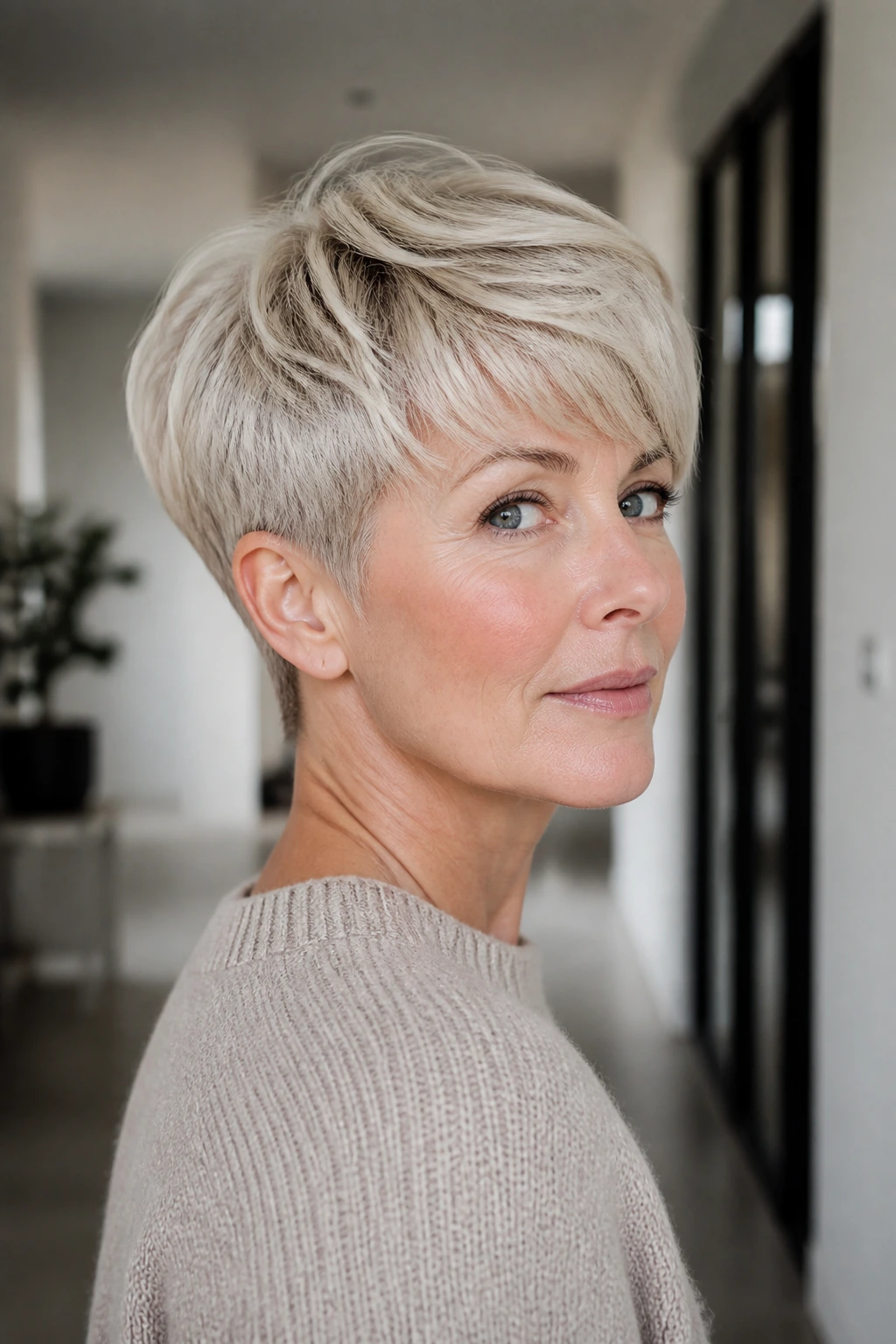
The bixie sits between a bob and a pixie, which makes it a very useful shape for gray blending. You get enough length on top to soften the line around the part, but the tapered nape keeps the back clean and light. On cool skin, a Nordic blonde tone gives the whole thing a pale, icy finish without the yellow cast.
This cut works especially well when the hair is fine and the gray is mixing in naturally rather than coming in as one solid stripe. The top layers can be styled forward for softness or swept back for lift. Either way, the shorter sides stop the look from feeling bulky.
A little root shadow goes a long way here. Too much darkness at the scalp can make the bixie feel heavy, which defeats the whole point.
11. Champagne Ash Lob with Invisible Layers
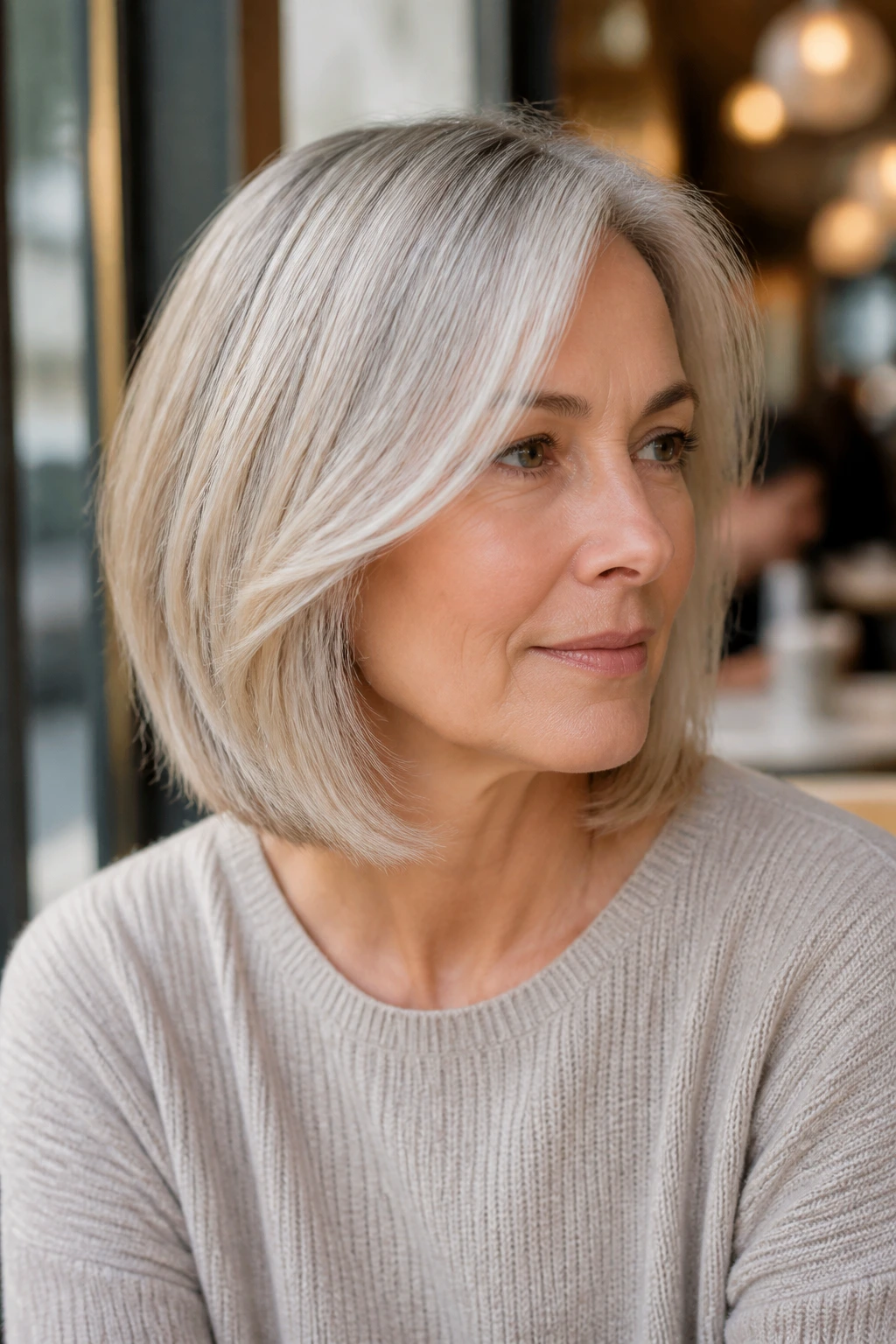
Champagne ash sounds warm until you see it done right. The good version stays muted, pale, and cool enough to flatter skin that leans pink or porcelain. On a lob, invisible layers keep the outline full while giving the hair enough air to move around gray regrowth.
This is one of my favorite choices for people who want a soft blonde rather than a bright one. The cut is forgiving, and the color can be adjusted anywhere from beige-cool to smoky-pearl depending on how much contrast you want.
If your hair is medium thickness, the invisible layers keep the ends from puffing out. If it’s finer, they prevent the lob from looking like a block. The whole thing sits in that useful middle zone.
12. Satin Silver Ponytail with Polished Ends
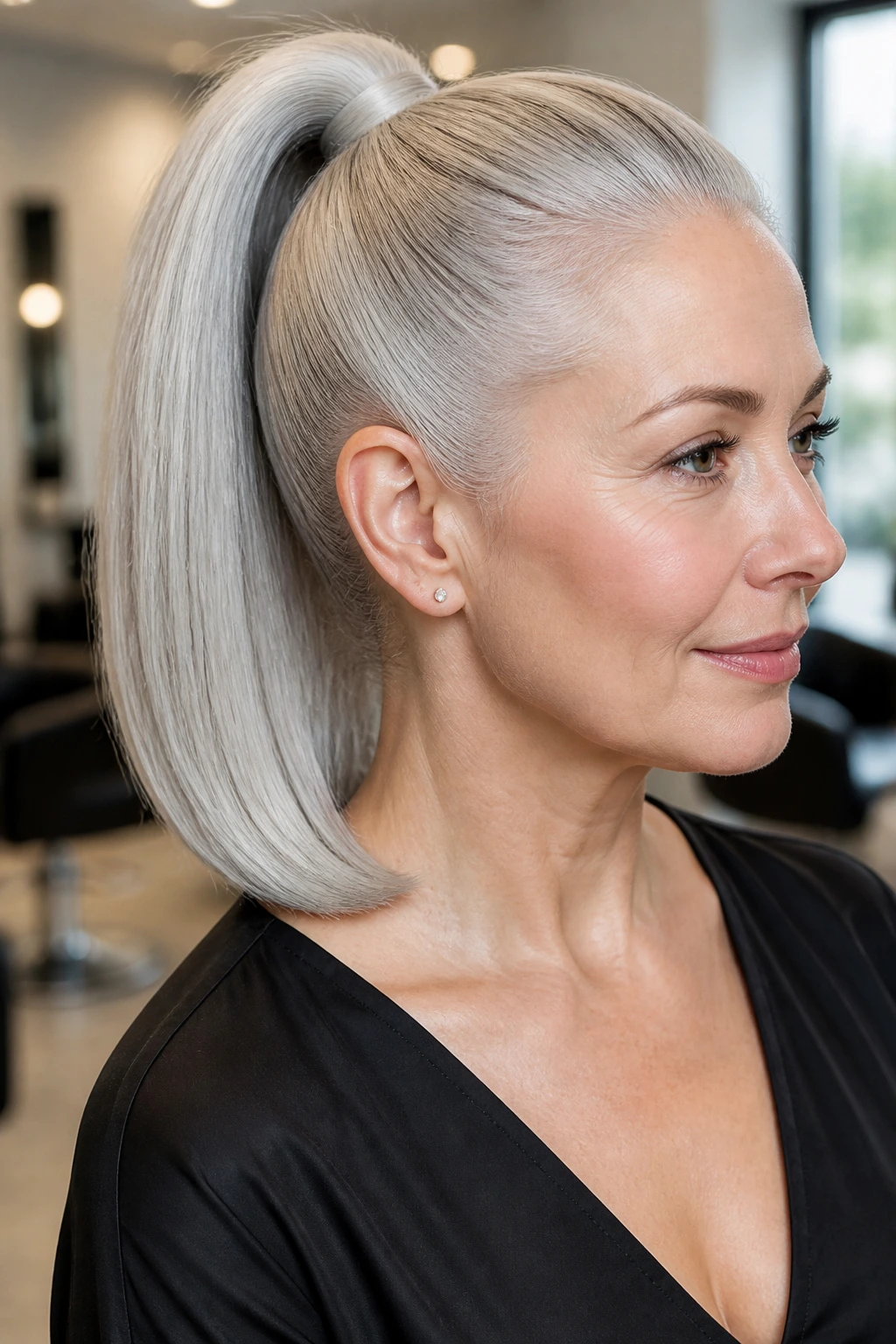
A ponytail sounds plain until the color does the heavy lifting. Satin silver hair pulled into a polished pony shows off the cool tone beautifully, and the simplicity of the style makes gray coverage look purposeful. It’s a smart move on busy days when you want the roots contained and the face open.
This look depends on finish. The crown should be smooth, the pony should sit cleanly, and the ends should be brushed into a neat line rather than left rough. A light serum on the mids and ends gives the silver a reflective surface without turning it greasy.
Wrap a small section of hair around the elastic if you want it to look more finished. That one move makes the style look considered instead of rushed.
13. Gray-Blend Butterfly Cut
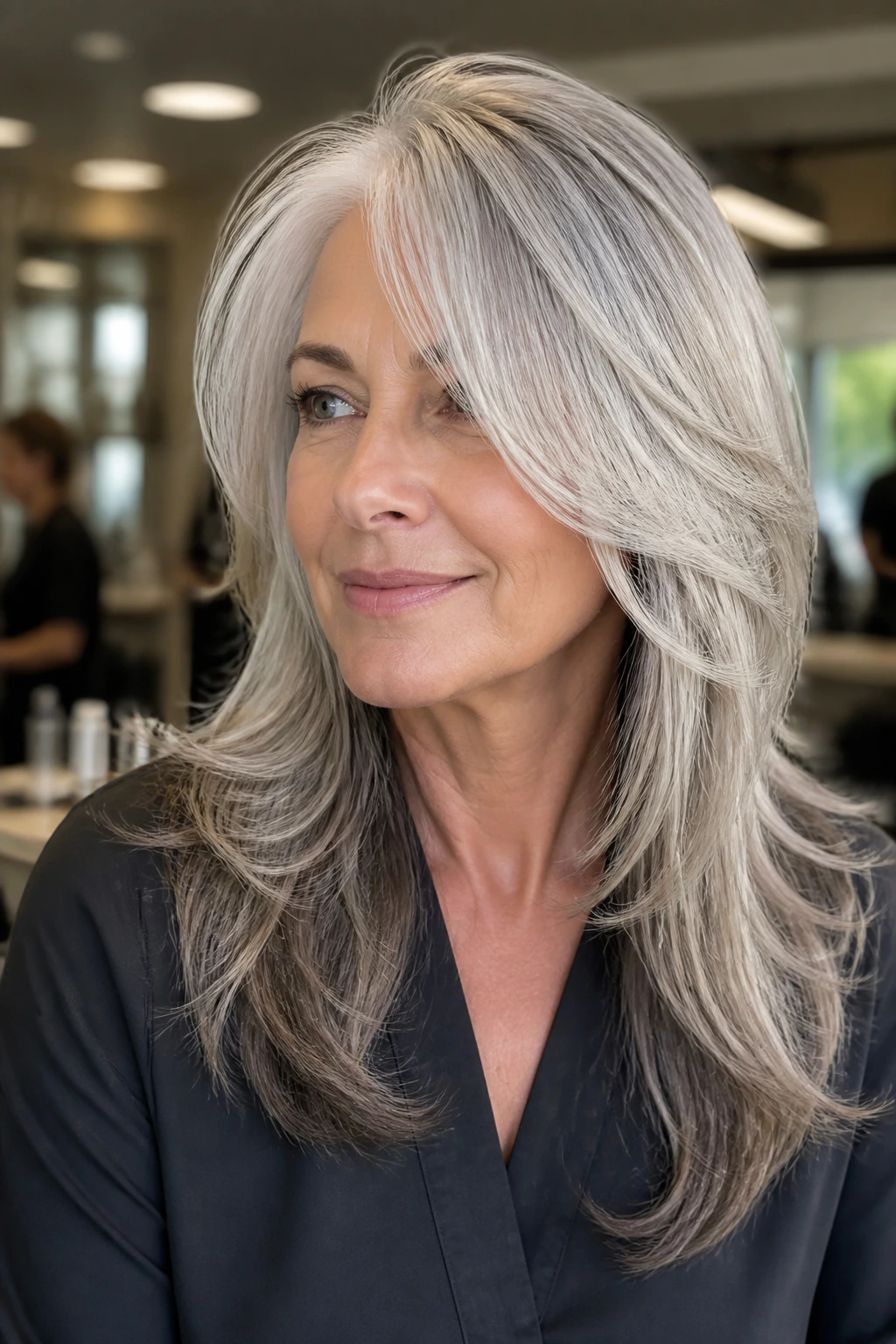
If you want length without the weight of one long curtain, the butterfly cut is a strong answer. The shorter face-framing layers create lift, while the longer back section keeps the shape soft. That layering also helps blend gray because it breaks up the eye line around the roots and temples.
Cool-toned blonde in a butterfly cut should stay dimensional. A single, flat blonde can make all those layers disappear, which is a waste. Ask for pale ash through the front, then a slightly deeper smoky blonde under the top layer so the movement shows.
This cut likes a round brush or large roller set. The lift at the crown makes the color look brighter, and the face-framing pieces keep the skin from looking dull next to the lighter lengths.
14. Beige-Blonde French Bob
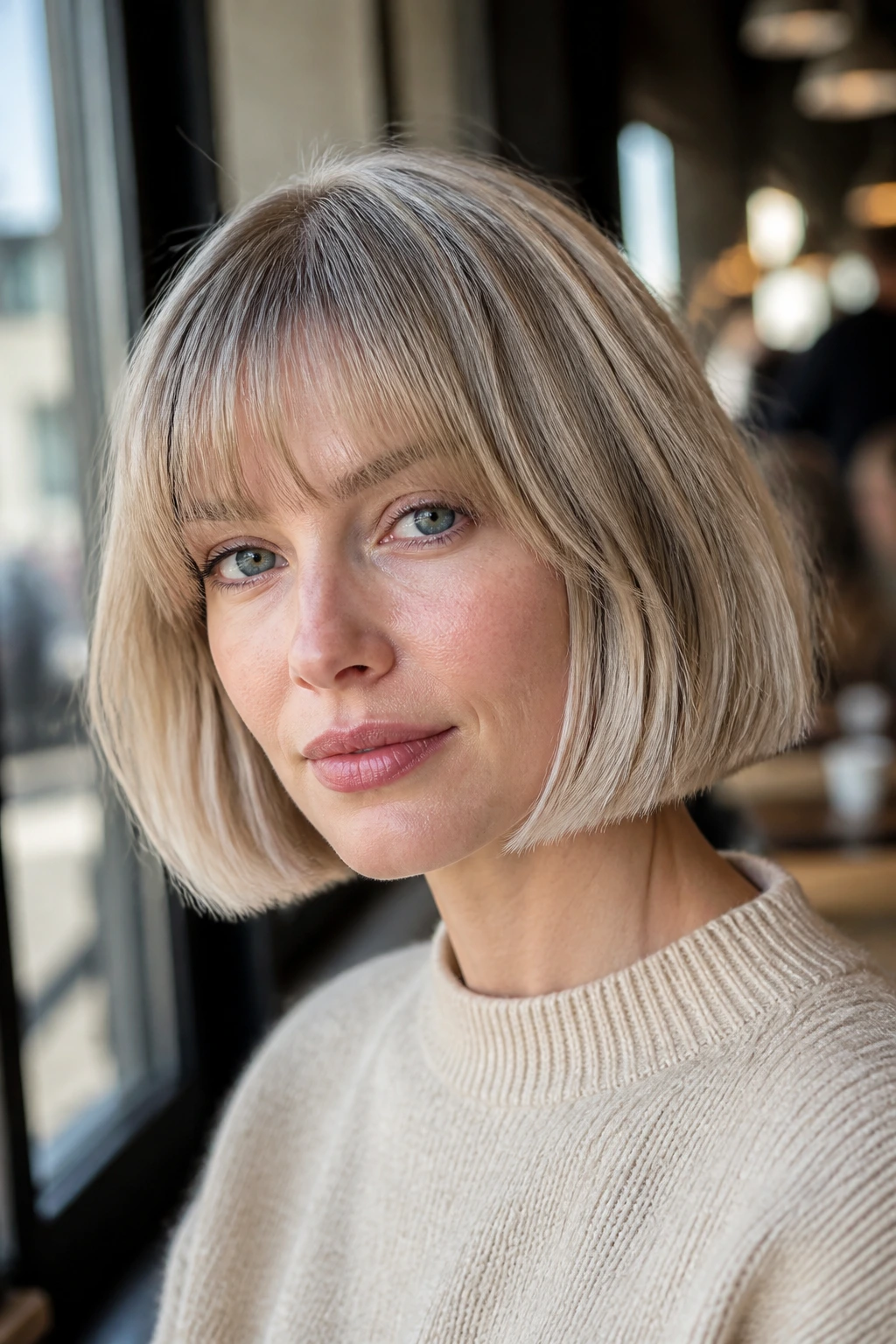
A French bob with a cool beige blonde is one of the most flattering short cuts for cool skin. The jawline length sharpens the face, the fringe softens the forehead, and the muted color keeps the whole look from sliding into brass. It has a little attitude, which helps if you don’t want gray coverage to look too precious.
The cut should have blunt confidence but not stiffness. A tiny bit of bend in the ends keeps it from feeling severe. The beige should lean ash enough that the hair reflects light softly instead of shining yellow under lamps.
I like this one for anyone who wants a low-maintenance style that still reads put-together. It also handles regrowth well because the fringe and blunt line give the eye somewhere else to land.
15. Pearl Curls with Low Lights
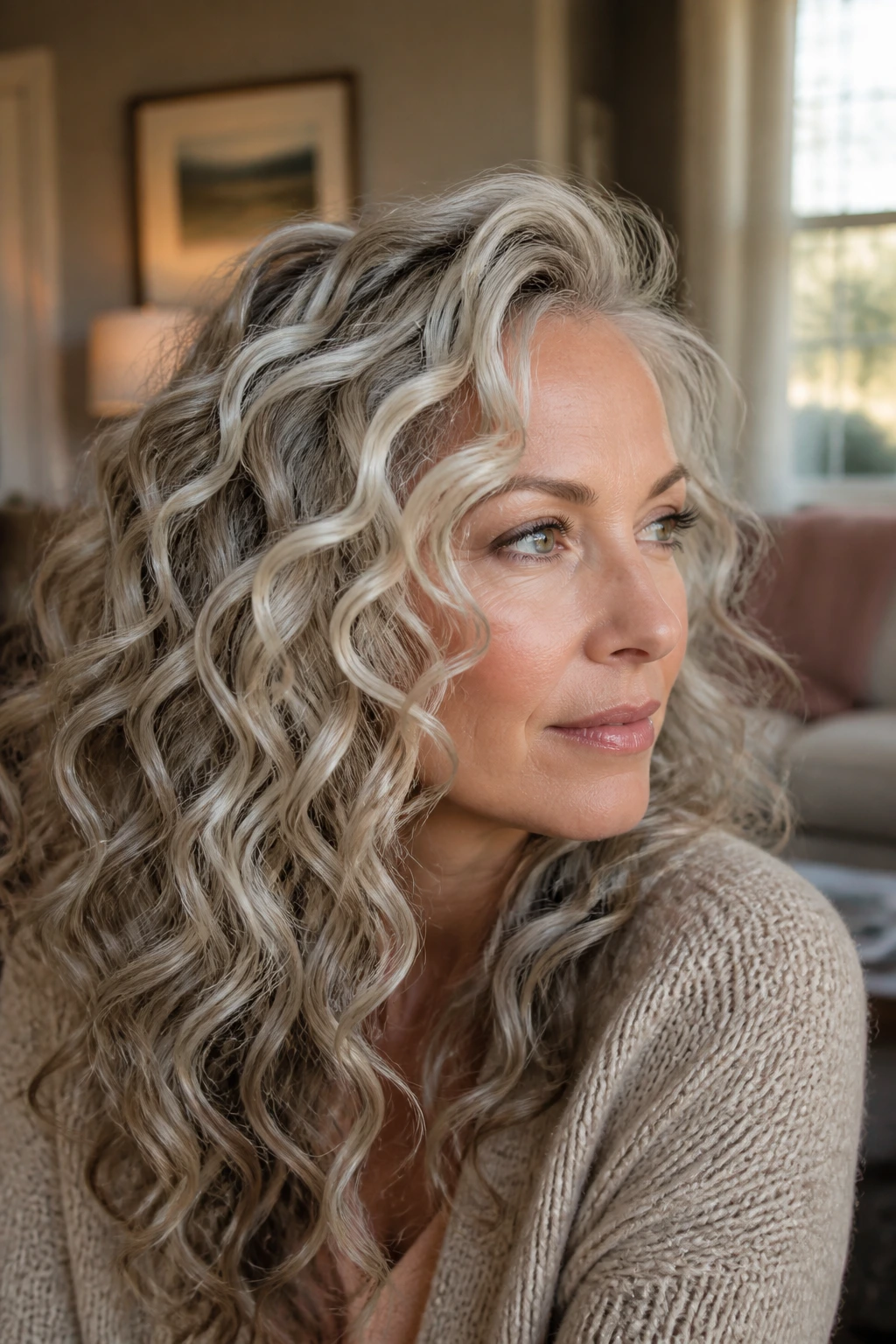
Curly hair and cool blonde can be a beautiful pairing, but only if the shade has enough depth. Pearl curls with lowlights keep the ringlets from going chalky. The darker ribbons between curls create shape, and that shape matters far more than people think when the hair is carrying gray.
The curls should be loose enough to show the color variation. Tight, uniform curls can eat the dimension, while soft spirals let the pearl and ash pieces breathe. If your grays are scattered through the crown, the lowlights help them disappear into the overall pattern.
A curl cream with a light hold is enough. Heavy products can make pale blonde look flat, and flat is the one thing this style does not need.
16. Ice-Blonde Shaggy Midi
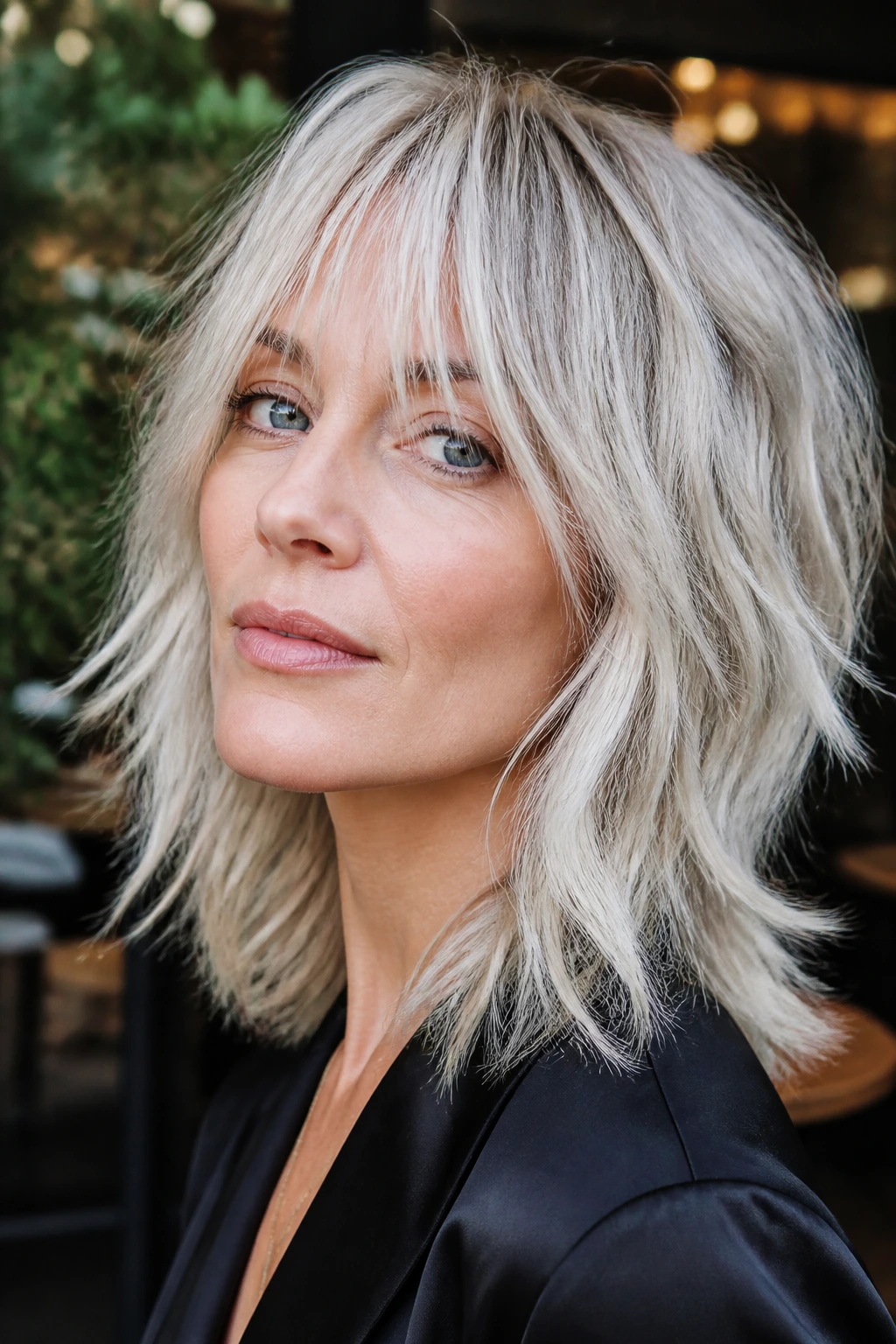
The shaggy midi is for people who want motion first and polish second. Ice blonde gives the cut a crisp finish, and the jagged layers keep gray blending from looking too neat. That roughness is useful. It makes the grow-out less obvious, and it gives cool skin a fresher edge.
The best version has a little bend around the cheekbones, a little length through the collarbone, and enough texture at the ends to stop the silhouette from getting wide. It’s a good cut if you like hair that feels lived-in rather than over-groomed.
Use a salt spray only lightly. Too much grit can dull pale blonde. A soft mousse at the roots gives lift without making the lengths dry.
17. Slate-to-Pearl Ombre Waves
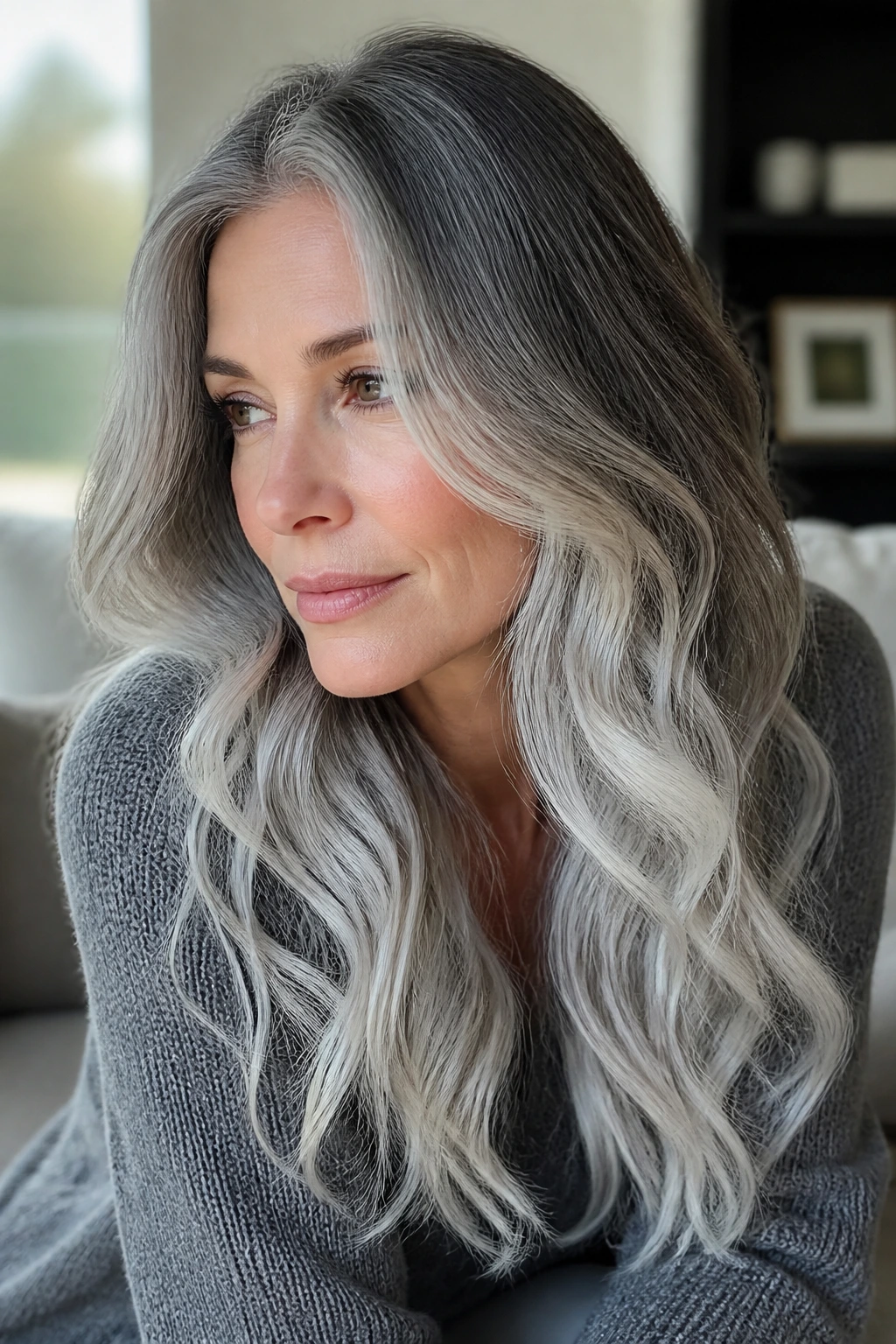
A hard ombre can look dated fast. A slate-to-pearl fade is different. It moves gradually from a cooler, deeper root area into pale pearl ends, so the transition feels soft on cool skin and forgiving on gray regrowth. The waves are there to blur the line even more.
This works best when the root color isn’t too dark. Think slate, charcoal blonde, or smoky taupe — not black. The ends should stay pale enough to reflect light, but not so white that they lose all dimension.
The style is especially nice on medium to long hair because the fade has room to show itself. On shorter hair, the color can collapse into a single block.
18. Braided Crown with a Cool Blonde Weave
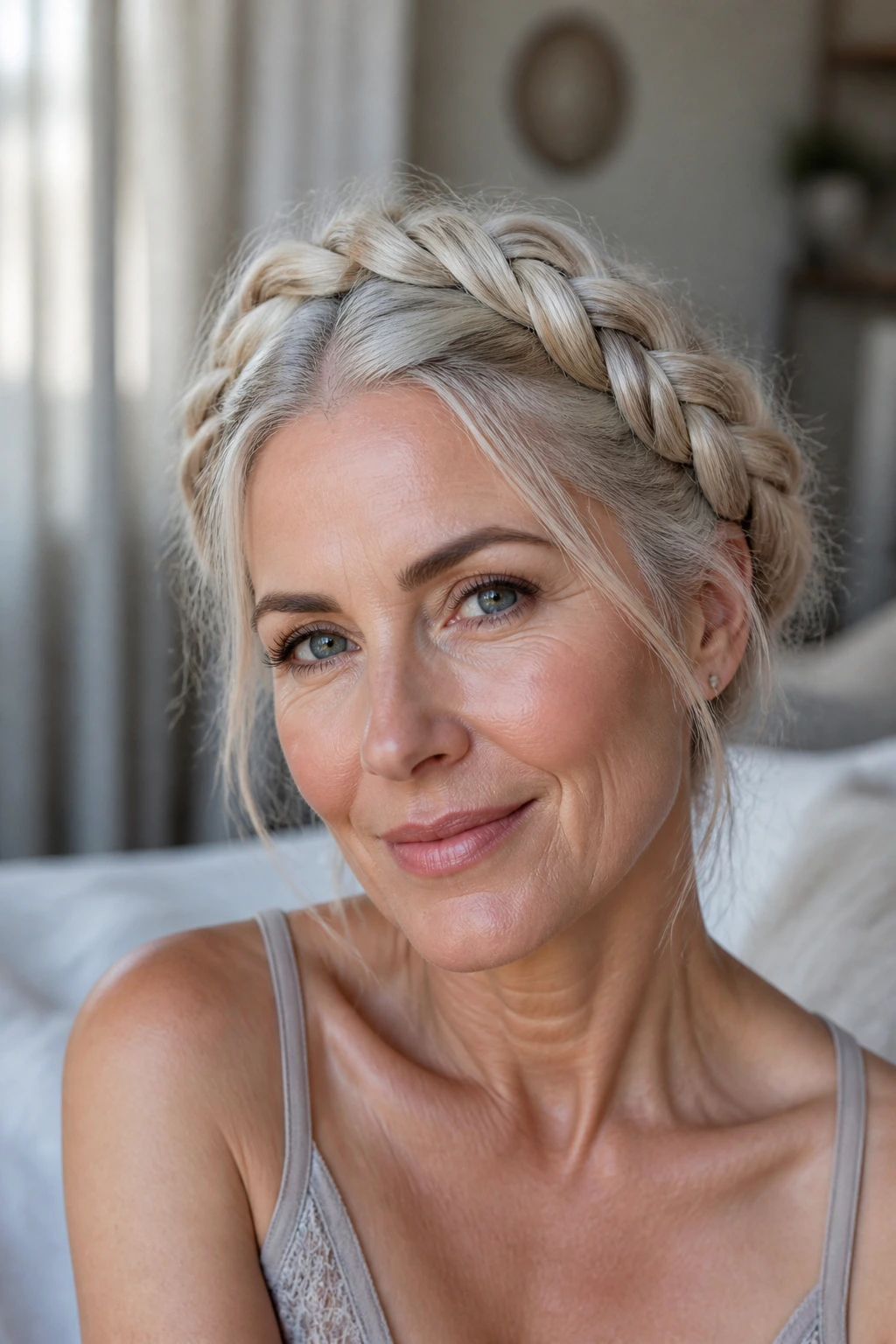
Braids are a sneaky good way to deal with gray because they break up the part line completely. A braided crown with cool blonde woven through the plait gives the face a lifted frame and hides the hairline in the best possible way. If you’re stretching time between color appointments, this one buys you breathing room.
The braid should stay loose enough to show color texture. Too tight, and the style can pull on the scalp and look severe. A little softness around the temples helps the look feel modern rather than costume-like.
This is one of those styles I’d keep in the pocket for events, humid weather, or any week when the roots are louder than you want them to be.
19. Silver Mushroom Lob with Textured Ends
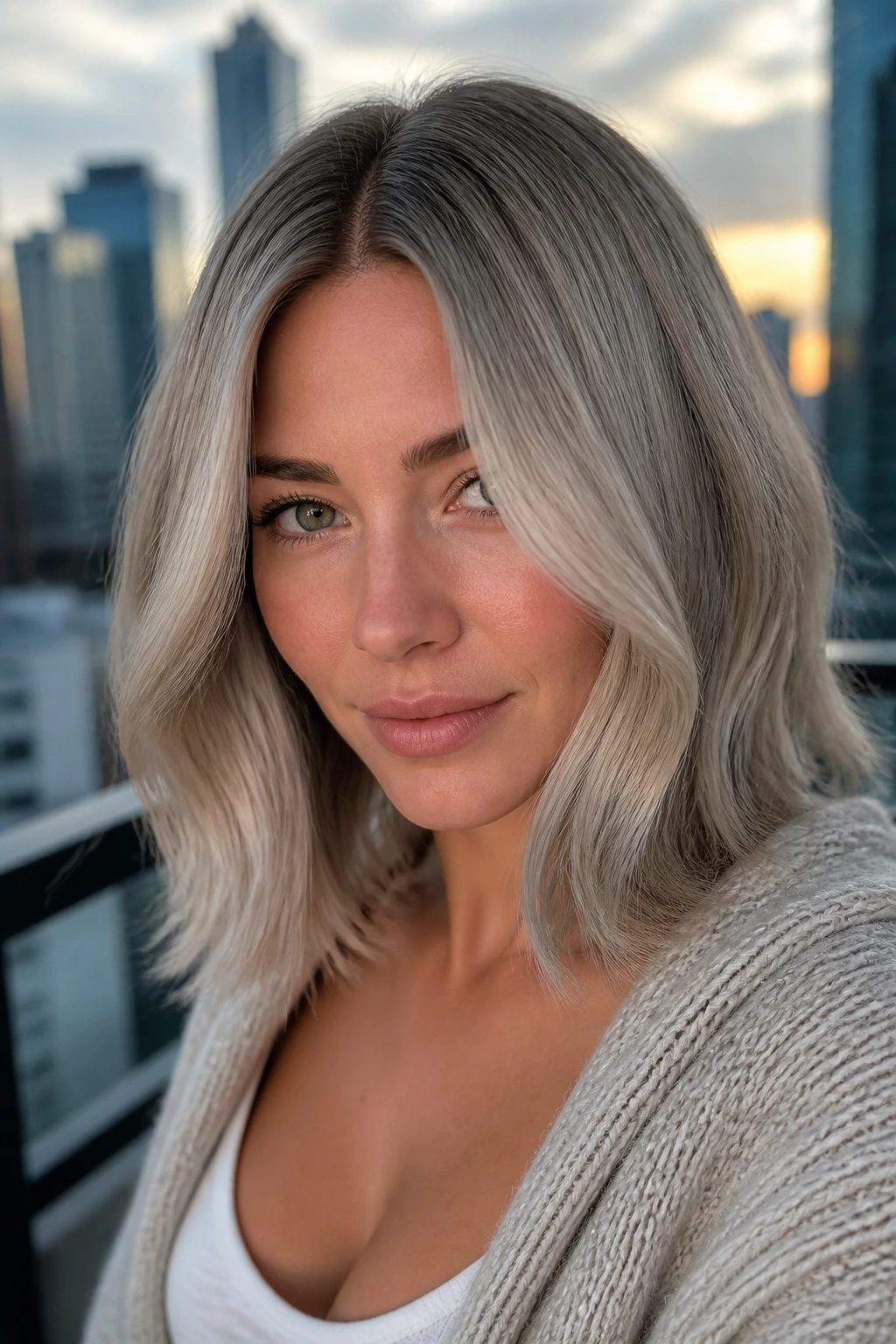
A mushroom blonde lob becomes a little cooler and a little smarter when the silver tones take over. Textured ends stop the color from reading dense. That matters because mushroom shades can turn heavy if the cut is too blunt or the hair is too one-note.
This style is especially useful for fine hair. The muted blend gives the illusion of thickness, while the textured ends keep the shape from collapsing against the neck. It also flatters cool skin beautifully because the shade lives in that gray-beige space that feels quiet rather than yellow.
Ask for a soft bend through the mids and a slightly lighter veil at the face. That keeps the lob from looking muddy.
20. Creamy Ash Beach Waves
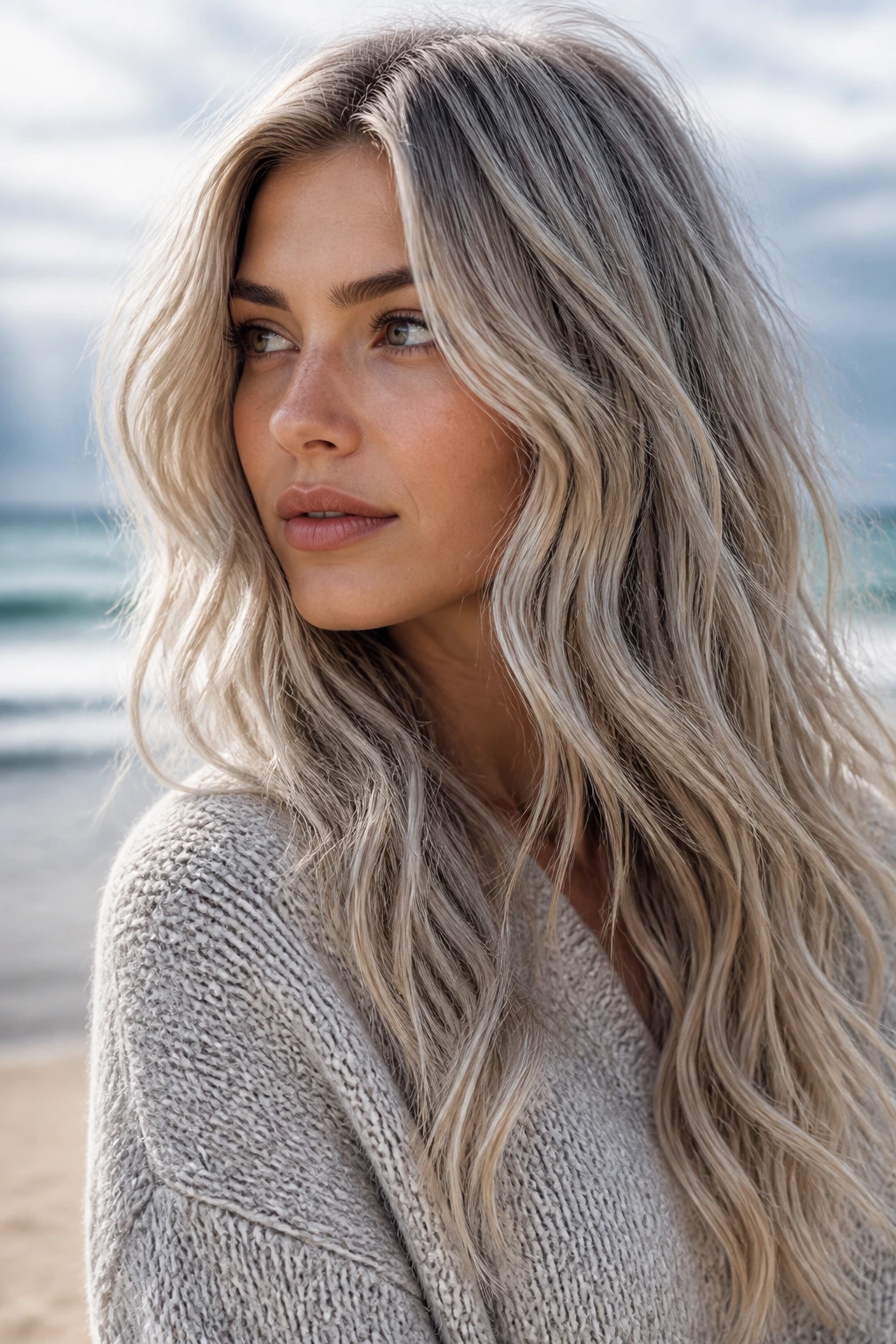
Beach waves don’t have to be warm, sun-kissed, or sticky-looking. On cool skin, creamy ash beach waves can be gorgeous if the tone stays pale and the texture stays loose. The waves give the gray blending movement, and the creamy ash keeps the overall look soft instead of icy to the point of chalk.
This style works best when the base has some depth. A flat, all-over pale blonde can make beach waves look puffed out and dry. A cooler root with ash highlights lets the bends show.
If your hair is naturally wavy, this is one of the easiest looks in the whole lineup. Scrunching in a light cream and air-drying halfway can give you enough shape without a long styling session.
21. Tapered Pixie with a Frosted Top
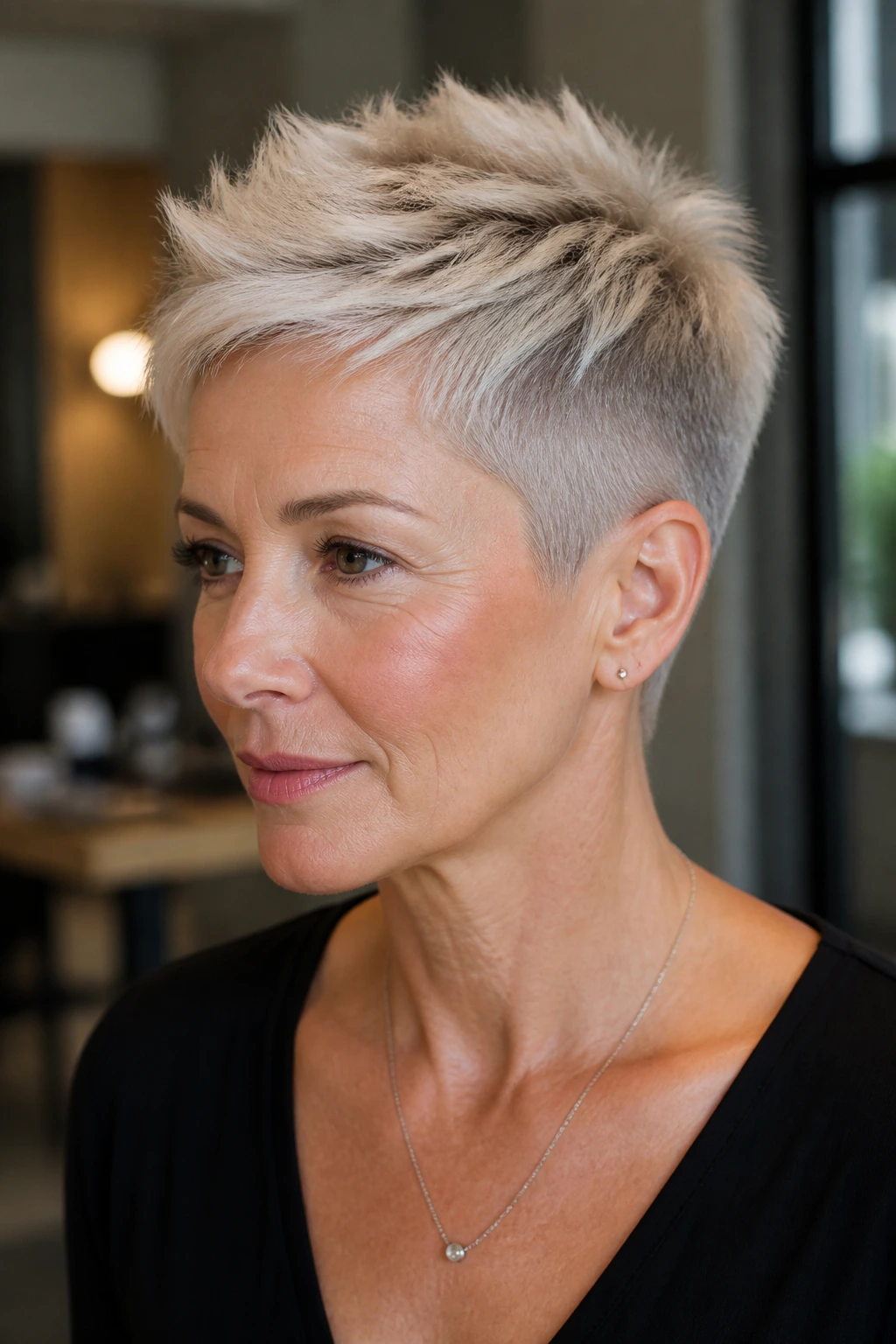
A tapered pixie gives gray hair a clean shape and puts the focus on the top, where the frosted color does its best work. The sides stay snug. The crown stays light. On cool skin, that contrast can look crisp in a way longer styles sometimes can’t manage.
The cut is strongest when the top has texture rather than height alone. A little lift is fine. A stiff, brushed-up top is not. The frosted color should sit on the tips and upper layers, leaving enough depth underneath to stop the shape from floating away from the head.
This is a bold choice, but not a difficult one to wear once the balance is right. It also makes weekly styling fast, which is a relief if you don’t want to think about your hair every morning.
22. Gray-Blend Blowout Layers
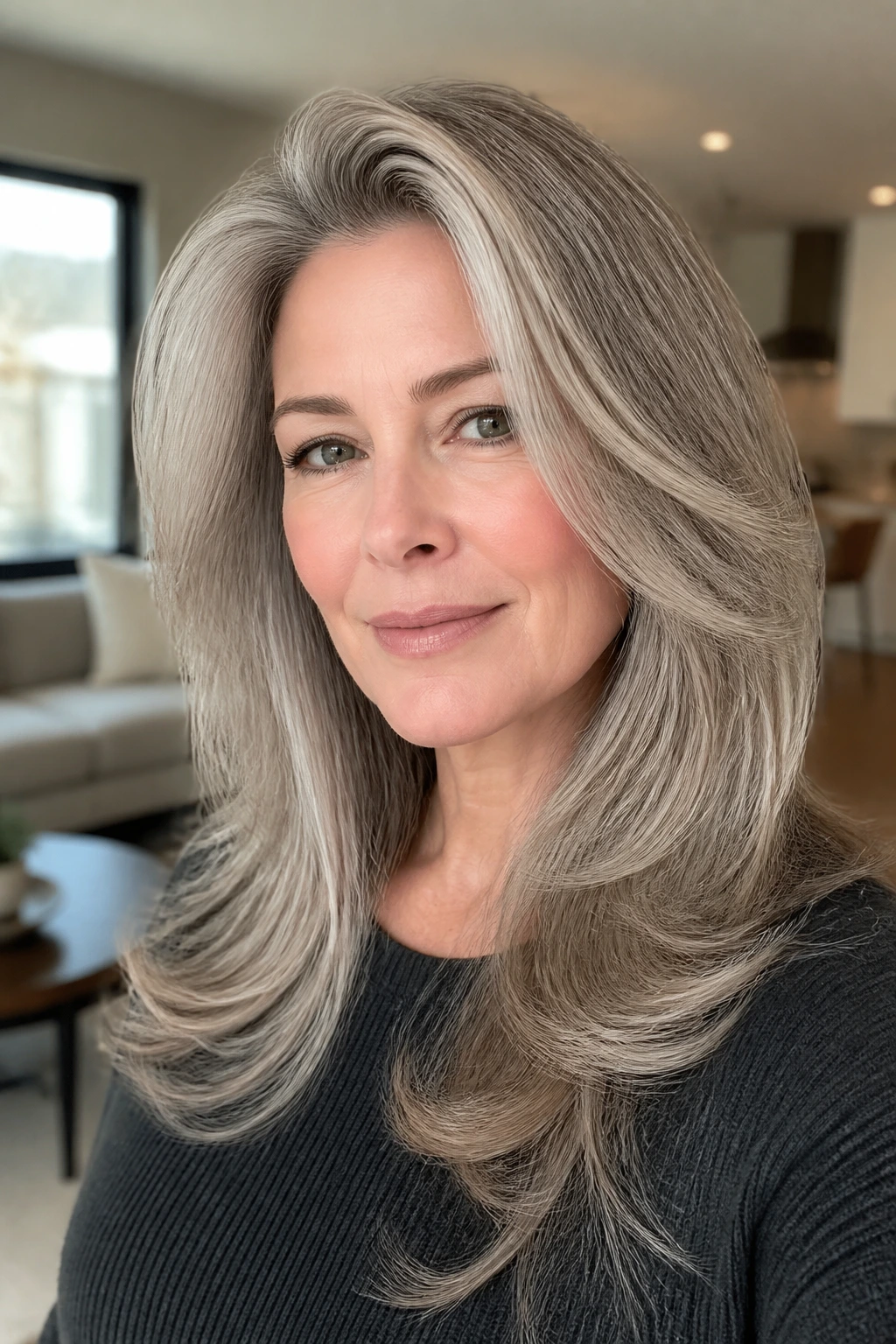
Some looks are built around color. This one is built around movement. A blowout on layered hair lets gray blend into ash blonde in a way that looks polished from every angle. The face-framing layers create lift, and the smooth bend at the ends makes the whole head feel more expensive than it has any right to.
The trick is volume at the roots and softness through the ends. Too much round-brush curl can make the style dated. Too little and the gray can sit in one obvious band. A medium round brush and a heat protectant with a light hold are enough.
This style flatters cool skin because the blowout reflects light rather than fighting it. The finish is clean, not warm. That difference matters more than people think.
23. Choppy Long Bob with Charcoal Roots
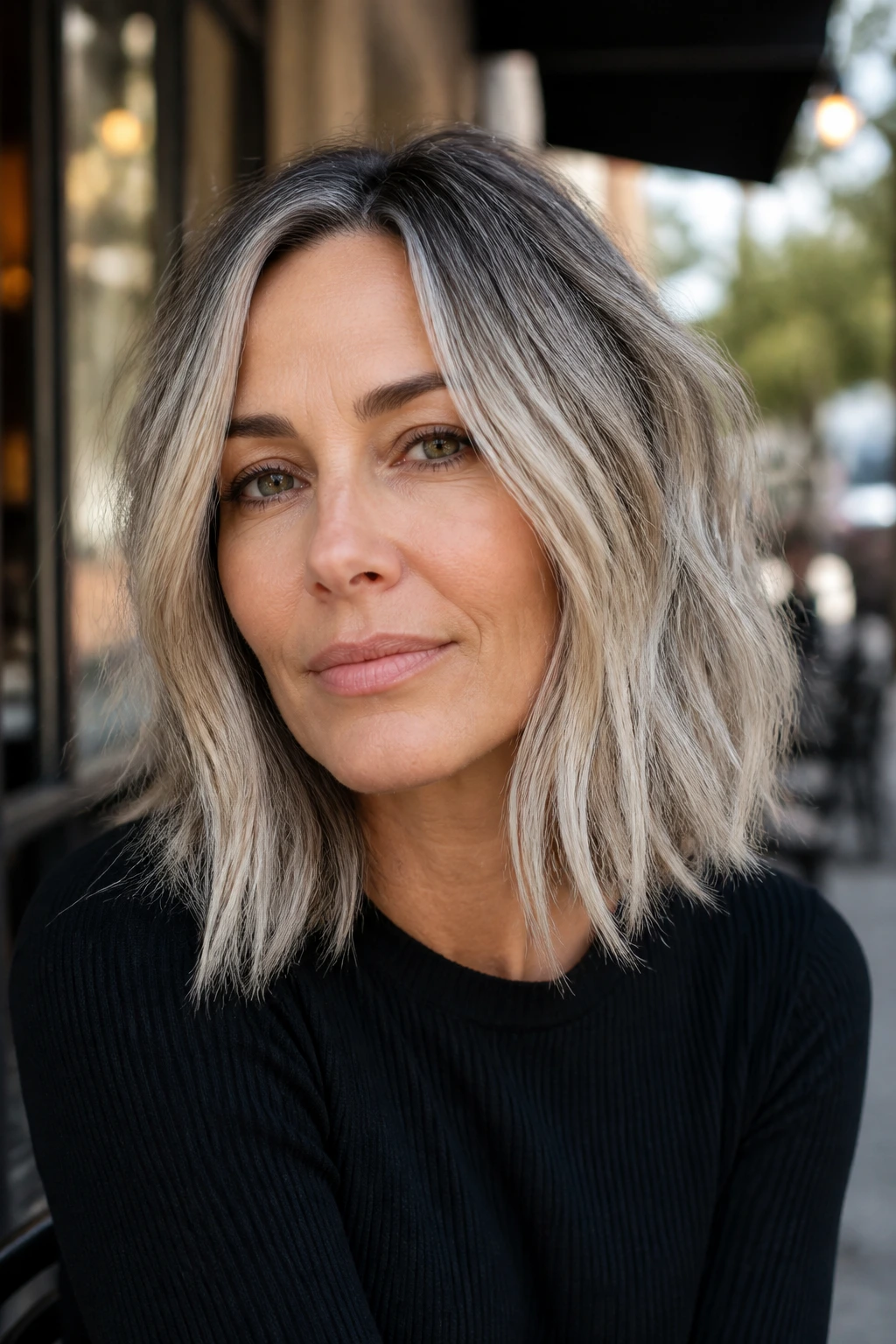
A choppy long bob with charcoal roots gives you a little edge and a lot of practicality. The deeper root masks regrowth, the choppy ends keep the style from looking weighed down, and the cool blonde lengths brighten the face without going gold. If your gray comes in fast, this is one of the easier ways to stay ahead of it.
The contrast should be intentional but not harsh. Charcoal is more useful than black because it still reads soft next to a cool complexion. The blonde through the ends should have ash in it, or the whole thing starts to look disconnected.
I like this cut on straight or slightly wavy hair. The texture keeps the line from feeling too neat, which is exactly what lets the gray blend in.
24. White-Blonde Half-Up Twist
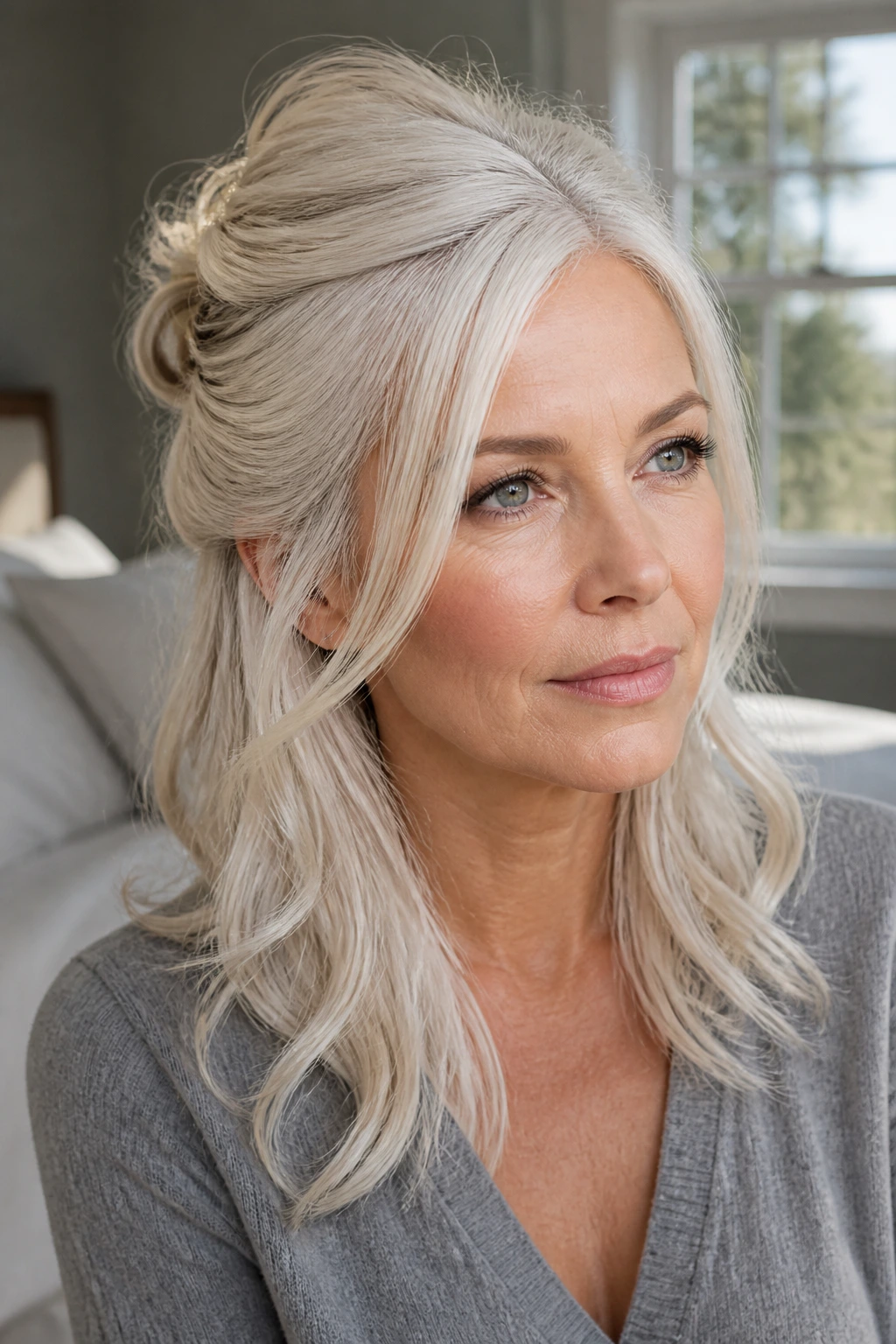
A half-up twist gives pale blonde a little structure and helps keep gray roots from taking over the whole impression. The top section pulls the eye upward, while the loose back section keeps the style soft around the neck and shoulders. On cool skin, white-blonde can look striking here because the styling keeps it from feeling flat.
The twist should be loose and slightly undone, not slicked tight. That softness helps the white-blonde stay wearable. A small bump at the crown gives the face a bit of lift, which matters when the hair is very light.
This is a good look for evenings, events, or any day when you want to look finished without doing a full blowout. It’s neat with a little texture. That’s the sweet spot.
25. Smoke-Gray Money Piece Layers
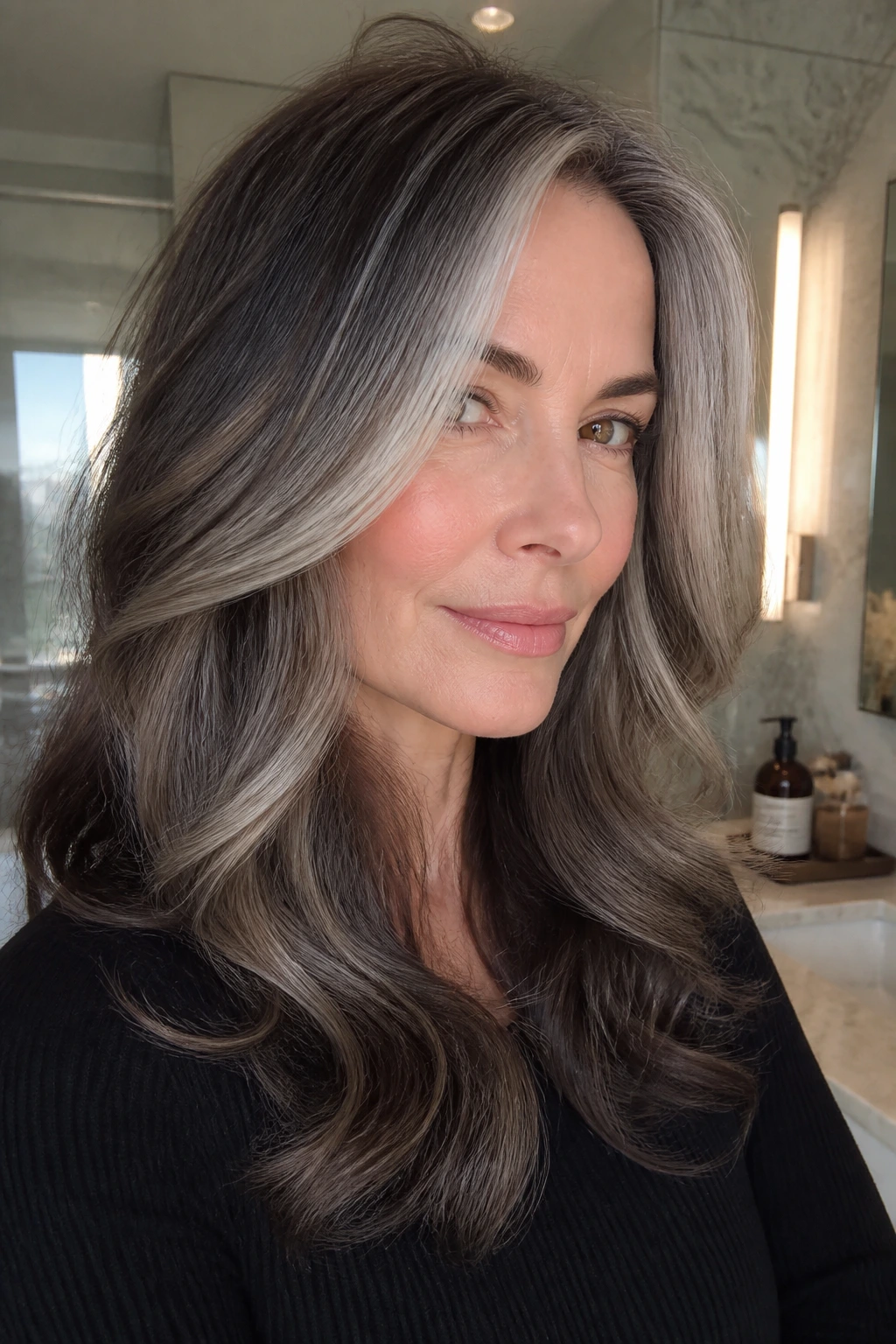
If you want a style that makes cool skin glow while hiding the loudest gray around the face, smoke-gray money piece layers are hard to beat. The front pieces brighten the cheekbones, the deeper smoky root blends regrowth, and the layered cut gives the color somewhere to move. It’s a smart, balanced finish.
The money piece should be cool, not icy to the point of chalk. Smoke-gray, pearl ash, or a cool beige with a violet gloss all work. Keep the rest of the hair slightly deeper so the front pieces can actually do their job. Otherwise, the look just turns pale all over and loses its shape.
This one is especially useful if your gray is concentrated at the temples or along a widening part. The front ribbons distract the eye in the best possible way.
How Cool Tones Keep Blonde and Gray Looking Intentional
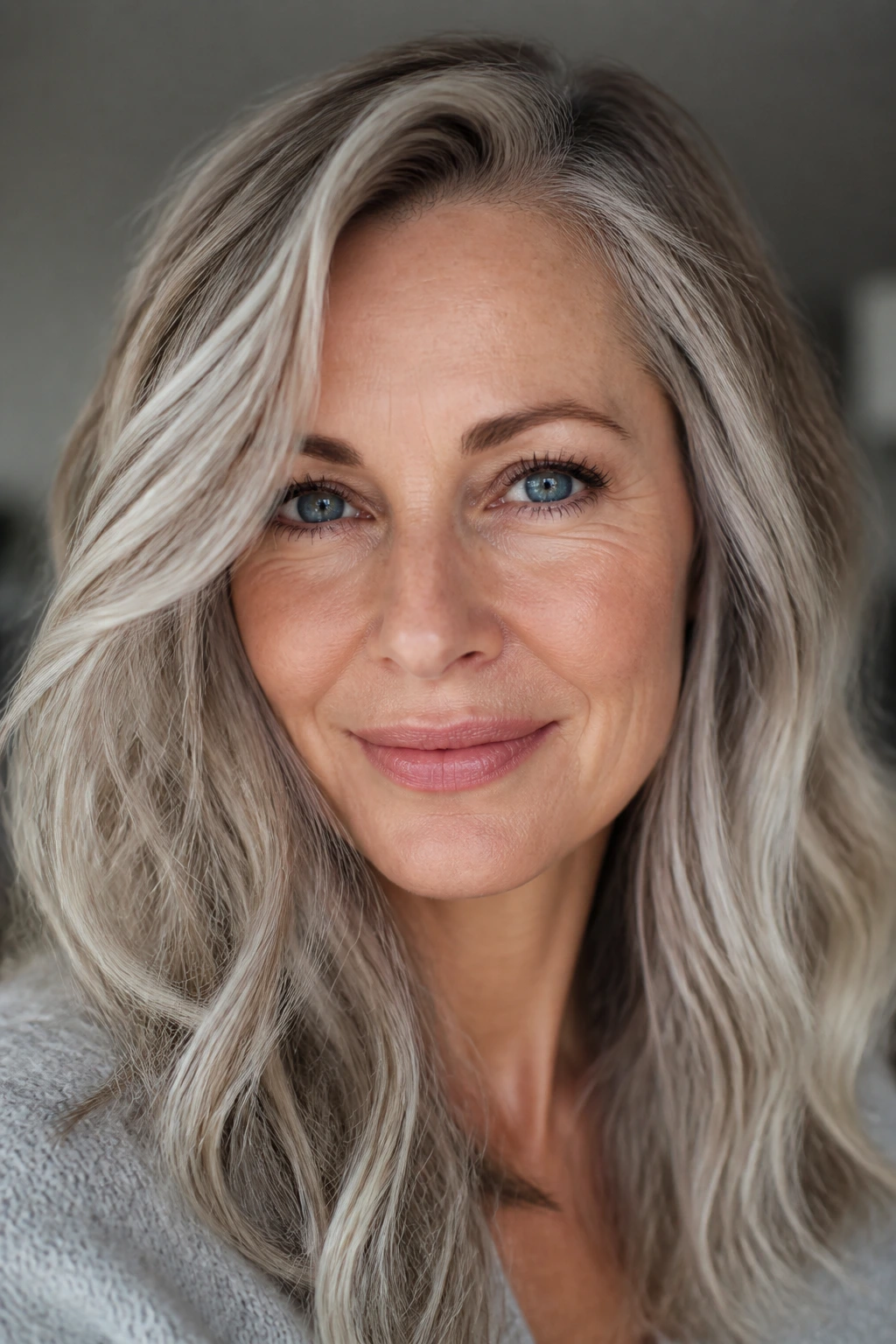
Cool undertones change the color conversation. A warm blonde can fight pink skin and make gray look accidental, while ash, pearl, and smoky shades sit closer to the skin’s natural cast. That’s why the same haircut can look harsh in one blonde and calm in another. The cut matters, yes, but the reflect in the color decides whether the style looks fresh or fussy.
Gray hair also reflects light differently than dyed hair. It can look brighter, flatter, or more wiry depending on the strand’s texture and the amount of pigment left inside it. A cool toner helps balance that, but it works best when there’s still some depth at the root or underlayer. Flat blonde everywhere is usually the quickest way to lose shape.
If you’re choosing between two shades, pick the cooler one and add warmth later only if the face looks drained. It’s much easier to soften an ash blonde with a beige gloss than it is to drag a golden blonde back into cool territory.
Picking the Right Lift Level for Your Starting Point
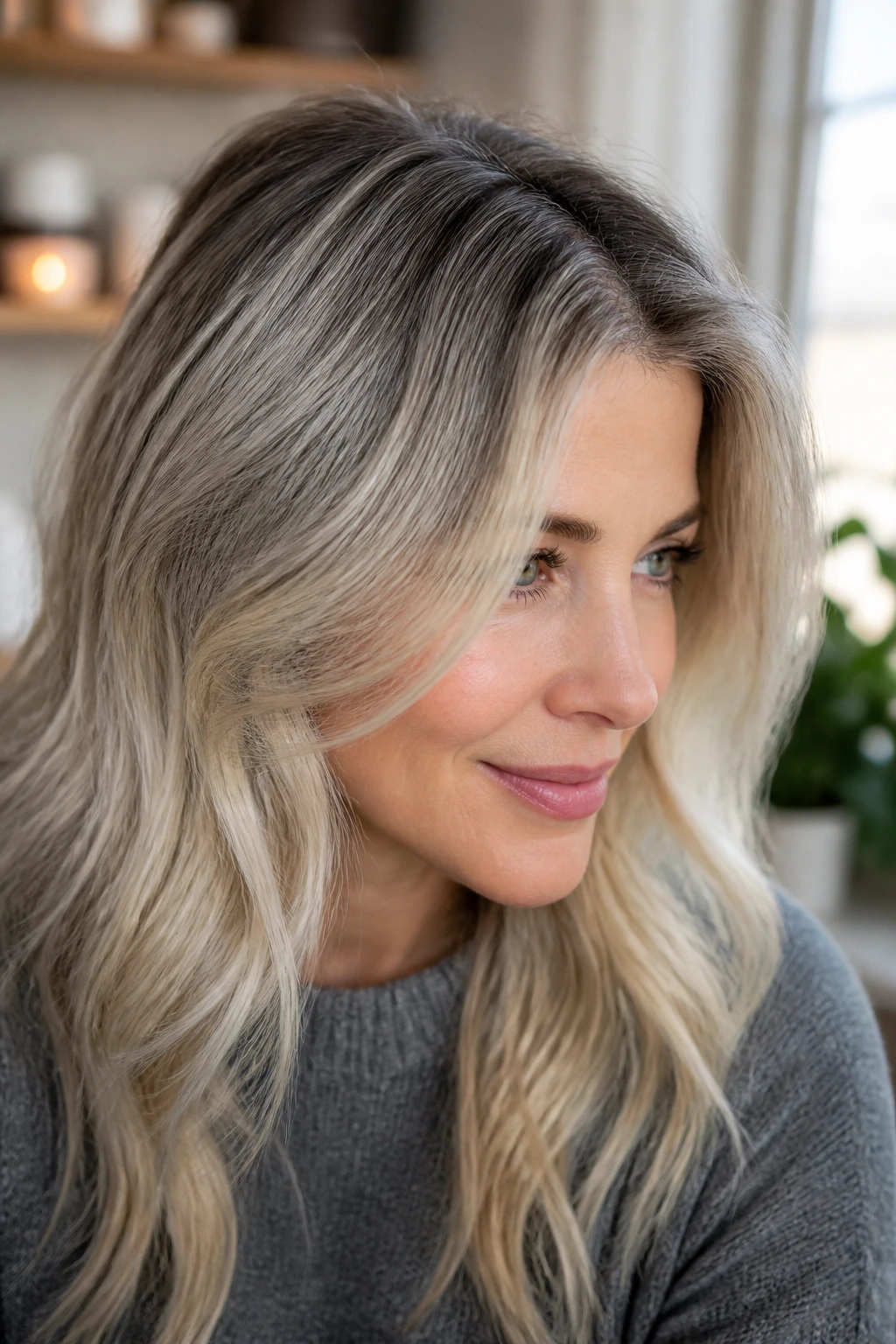
Not all blondes live at the same brightness, and that detail matters more than the shade name on the box. A natural brunette trying to cover gray with ash blonde will usually need a different strategy than someone already sitting at a level 8 or 9. If the base is dark, a root shadow plus lighter balayage often looks cleaner than trying to turn everything pale at once.
Hair that’s mostly gray can take on a beautiful silver-blonde finish with less lift. Hair that’s still mostly pigmented may need highlights, babylights, or a partial foil to keep the color from looking muddy. There’s no prize for going lighter than the hair wants to go. Past a certain point, the hair gets porous and the shine drops off.
If you’re unsure, ask your colorist where your hair sits on the level scale. Level 7, 8, 9, or 10 are the numbers that matter. The difference between level 8 ash blonde and level 10 platinum is visible on the face, and the maintenance is not the same at all.
Essential Tools and Products for Cool Blonde-Gray Styles
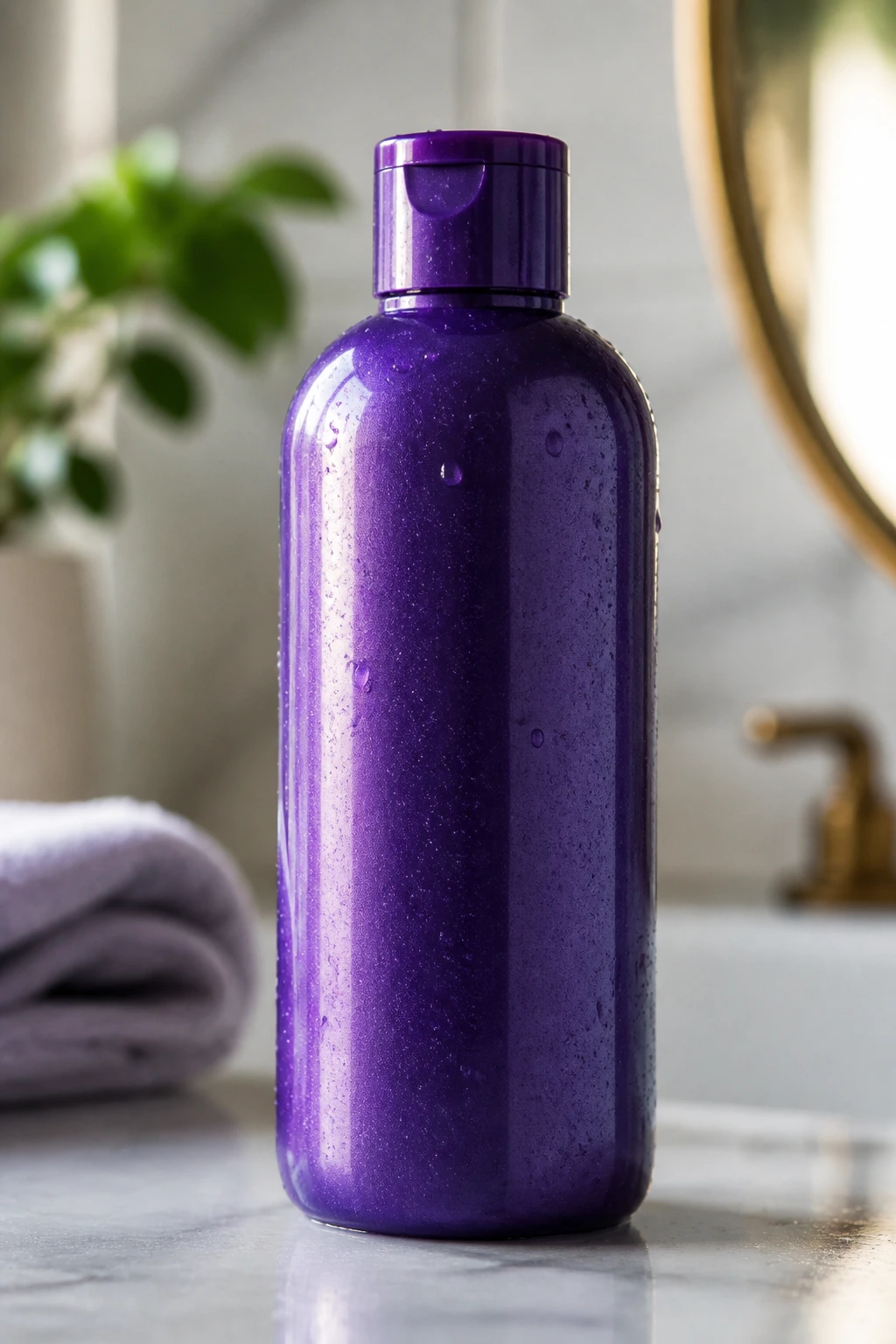
- Purple shampoo: Use it once every 7 to 10 days on lighter shades to keep yellow tones from creeping in.
- Blue-violet toner or gloss: Good for ash, pearl, and smoky blondes; it refreshes the tone between salon visits.
- Heat protectant spray: A must if you blow-dry or iron the hair, because pale blonde and gray both dry out fast.
- Round brush, 1 to 1¼ inches: Useful for bobs, lobs, and layered blowouts that need a little bend.
- Wide-tooth comb: Better than a fine comb on curls, waves, and porous blonde ends.
- Sectioning clips: They make face-framing highlights and root touch-ups much easier to control.
- Tint brush and color bowl: Handy if you’re doing a toner or gloss at home, though salon work is safer for major gray blending.
- Light styling cream or mousse: Keeps short cuts and layers from going frizzy without adding a greasy film.
- Satin pillowcase: Not glamorous, but it cuts down on friction, which matters when the hair is lightened and dry.
Smart Shade Notes Before You Book a Color Appointment
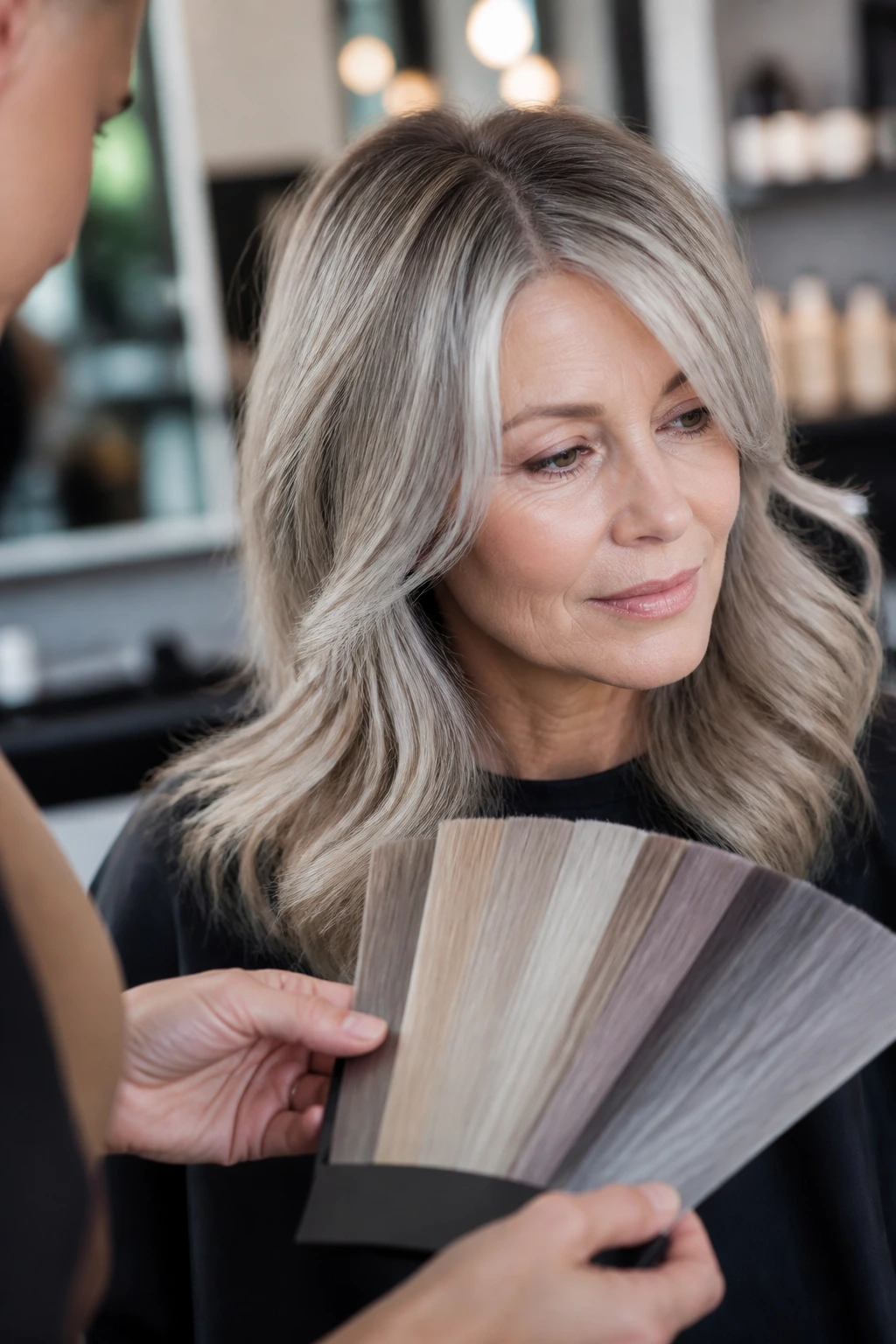
Bring photos, but bring the right kind. Screenshots from bright outdoor light can lie about the undertone. Ask for photos taken indoors and outdoors, and try to find one where the model’s skin tone is close to yours. That gives a more honest idea of how the blonde will sit next to the face.
Use plain words with your colorist. Say ash, pearl, smoky beige, silver, mushroom, or soft taupe. Say whether you want to keep some gray visible or cover it more fully. That choice changes the placement. A full cover root color is a different job from a blended highlight-and-gloss approach.
Tell the stylist where the gray shows first. Temples, crown, hairline, or part line all need different handling. Gray at the temples may call for finer highlights around the face, while a stubborn crown often needs a deeper root shadow. The more specific you are, the cleaner the result.
How to Wear These Shades in Real Life
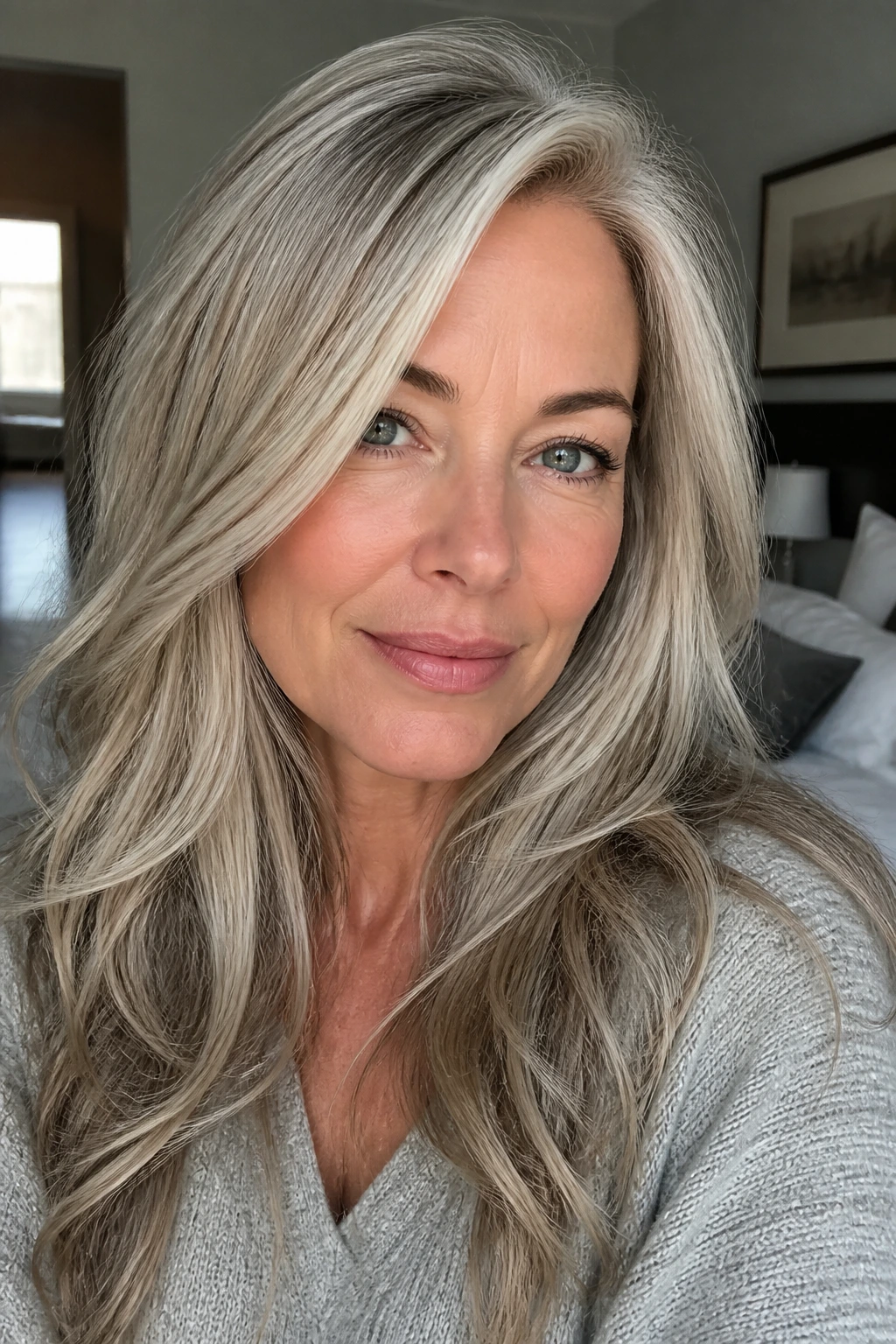
Face framing: If your hair is very light, keep a little more depth around the sides of the face so your features don’t wash out. A smoky ribbon at the temple can do more than a whole head of brightness.
Parting trick: Move the part half an inch off center. That tiny shift breaks up regrowth and stops the same gray line from showing every day in the mirror.
Texture choice: Sleek hair makes cool blonde look sharper; soft waves make it feel gentler. Pick the finish based on how much contrast you want against your skin.
Wardrobe and makeup: Cool pink blush, berry lips, navy, charcoal, soft white, and silver jewelry all support these shades. A yellow-leaning foundation or gold-heavy wardrobe can pull the whole look warmer than the hair wants to be.
Day-two hair: Dry shampoo at the root and a quick bend on the ends can rescue most of these styles. Don’t overbrush pale blonde. It tends to puff.
Extra Tips for Shine, Texture, and Gray Coverage
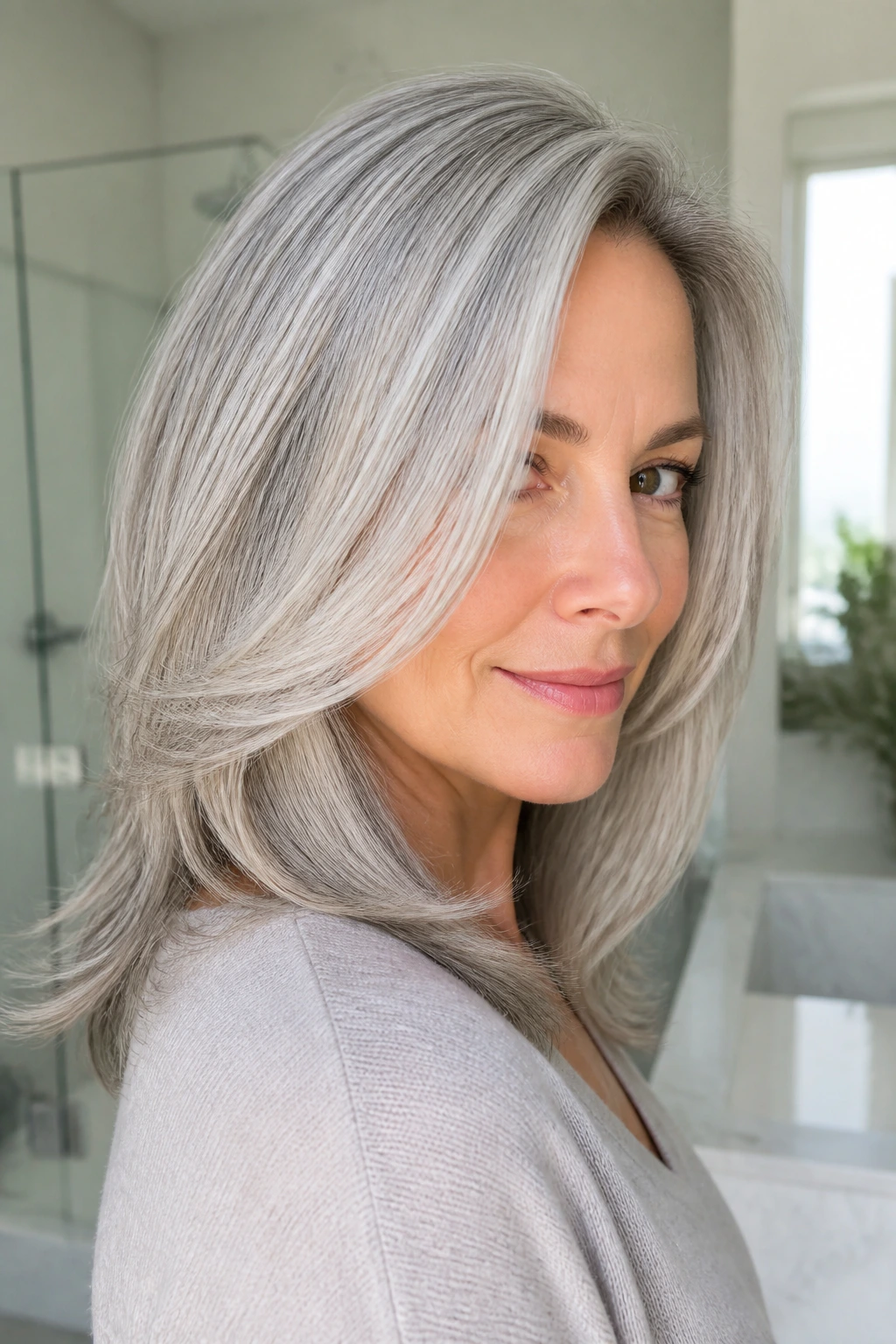
Tone Boost: A cool gloss every 4 to 6 weeks keeps ash and pearl blondes from drifting yellow. Ask for blue-violet if the blonde is pale, or blue-beige if the hair needs a little softness.
Texture Boost: Gray hair can be dry, so a lightweight cream on mids and ends makes the style move better. Avoid heavy oils at the root; they flatten layered cuts and can make silver tones look greasy.
Coverage Boost: If your gray is stubborn at the temples, ask for finer highlights there rather than bigger panels. Tiny woven pieces blend more naturally than chunky streaks.
Make-It-Yours: If you want less commitment, keep the roots a shade deeper and concentrate brightness around the face and ends. If you want more drama, push the color cooler and lighter, then keep the cut sharper.
Common Mistakes That Make Blonde-Gray Hair Look Flat
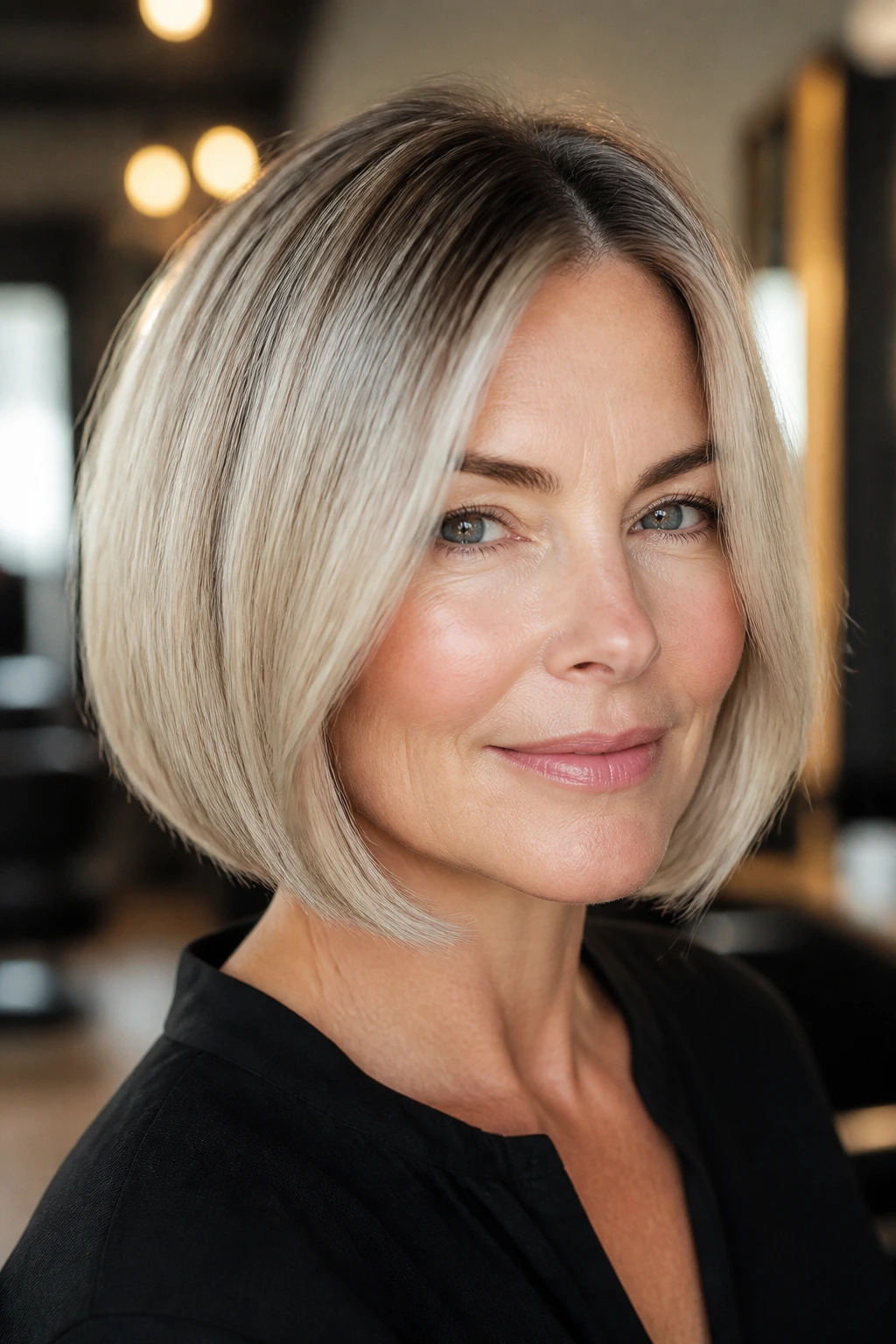
Choosing warmth by accident: A blonde that leans gold or caramel can make cool skin look pinker and gray look dull. The fix is to ask for ash, pearl, or smoky beige instead of warm beige.
Going too light everywhere: Full pale blonde without depth can erase the haircut. The ends and crown start to blend together, and the style loses shape. A root shadow or lowlight gives the eye a place to rest.
Overusing purple shampoo: A little purple goes a long way. Too much can leave pale hair with a flat violet cast or a dry, chalky finish. Use it sparingly and follow with moisture.
Skipping the cut: Color alone can’t save a bad silhouette. If the haircut is too bulky or too long in the wrong place, gray shows up in awkward bands no matter how nice the blonde is.
Trying to cover every gray strand at once: Resistant grays, especially at the temples, often need a slower, gentler approach. Pushing too hard with bleach or harsh permanent color can snap the hair and leave patchy results. Fine highlights, lowlights, and glossing usually look better.
Forgetting the finish: Pale hair without shine can look dusty. A light serum on the ends, a clean blow-dry, or a soft wave changes that fast.
Variations and Alternatives Worth Trying
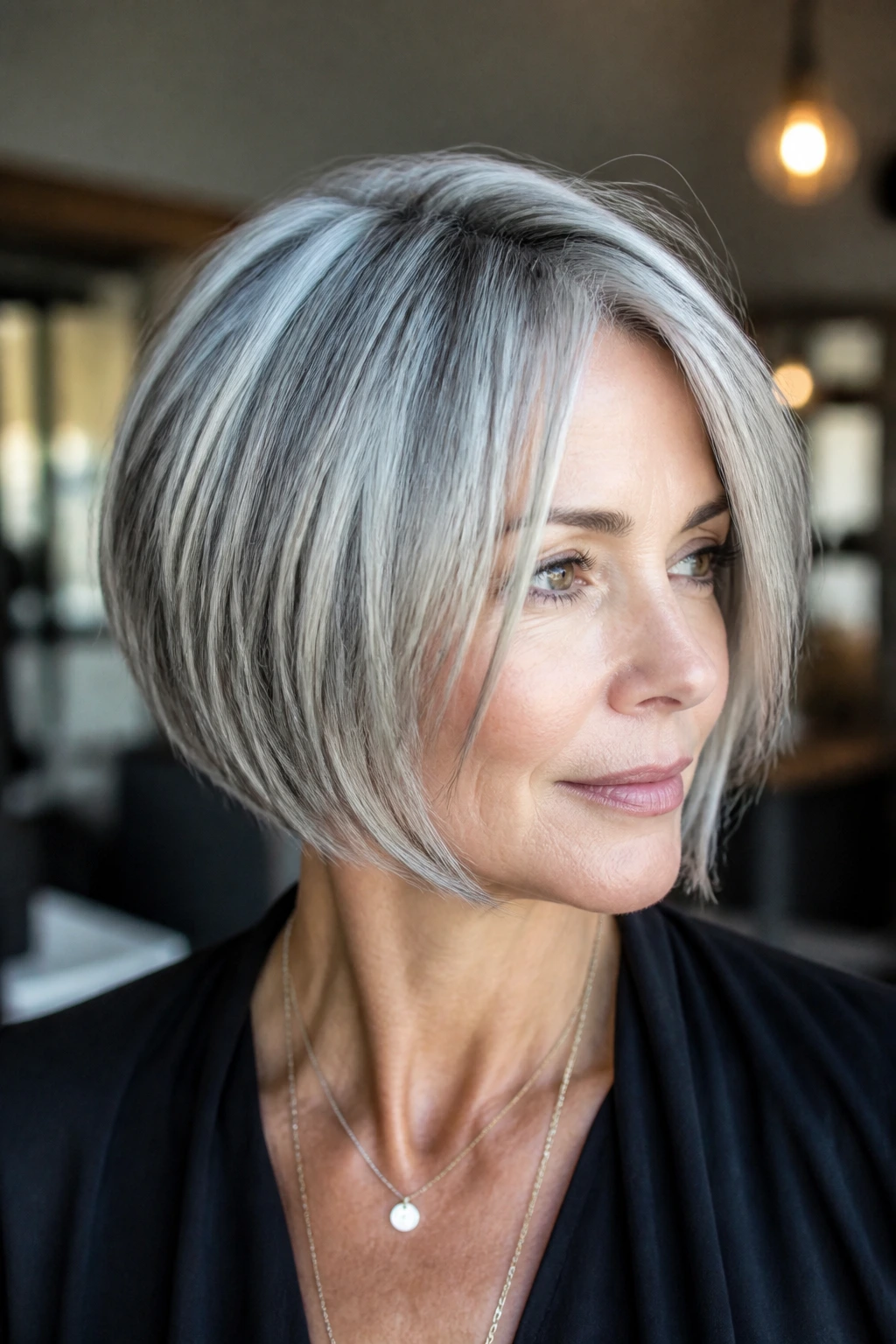
Smoked Root Melt: Keep the root one or two levels deeper than the mids, then melt into ash blonde through the lengths. This is the easiest route if you want softer grow-out and less time between appointments.
Pearl-Only Gloss: If your hair is already light, a sheer pearl gloss can cool the tone without adding much contrast. It works best when you want shine and softness more than visible change.
Curly Cloud Layers: On curls, use lowlights and pale cool ribbons instead of full bleaching. The shape of the curl does the blending work, and the cool tone keeps the whole halo from going yellow.
Salt-and-Ice Bob: A blunt bob with icy highlights and a slightly smoky base gives a strong shape without looking too harsh. This suits people who like crisp lines and clear color contrast.
Soft Contrast Grow-Out: Leave more gray visible at the root and build the blonde in the mids and ends. That keeps the look relaxed and lowers the maintenance if you don’t want constant color appointments.
Maintenance, Toning, and Grow-Out Rhythm
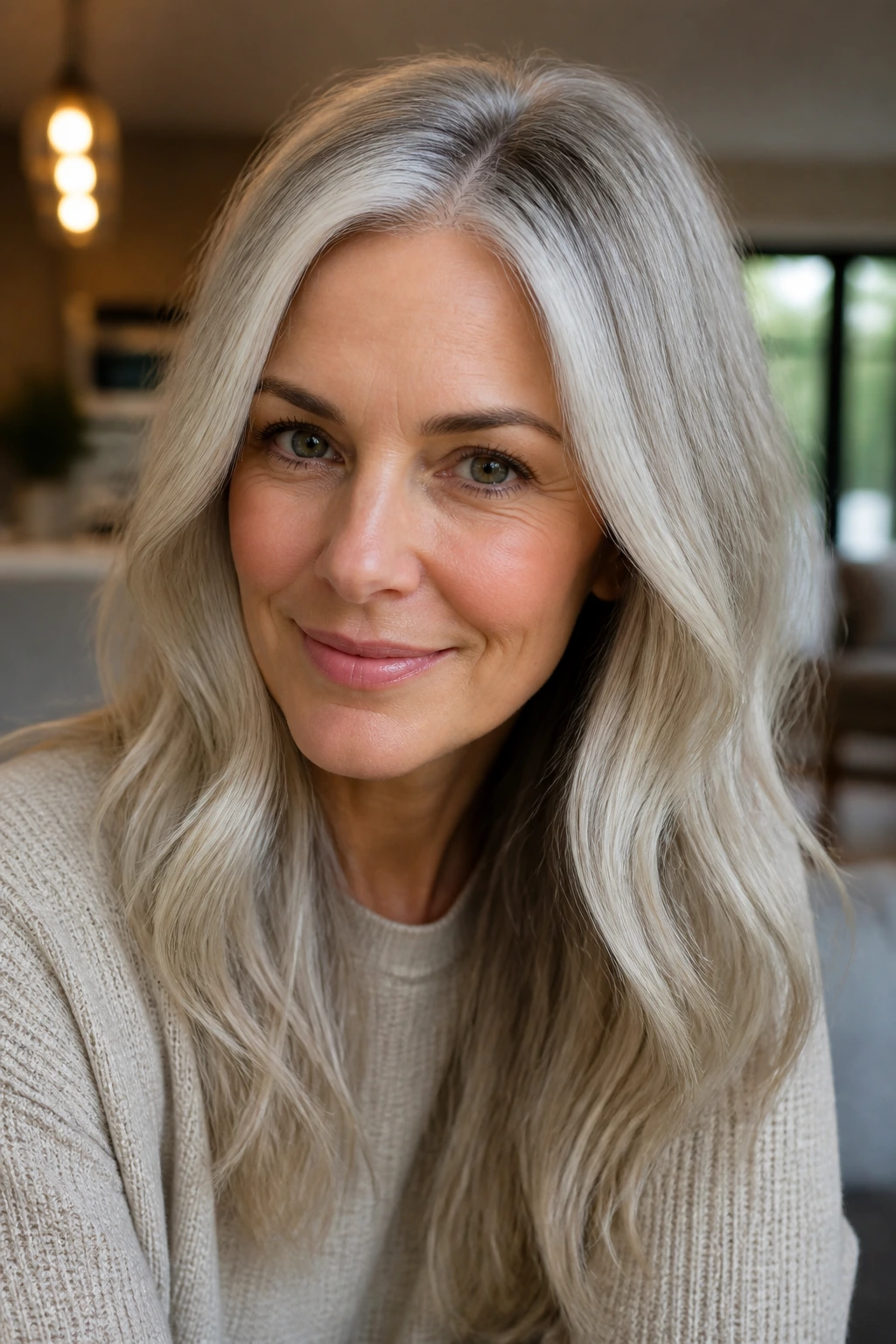
Cool blonde and gray blends stay prettier when the upkeep is paced, not frantic. Wash two or three times a week if you can. Gray and lightened hair both lose moisture quickly, and daily shampooing tends to strip the tone faster than most people expect. On wash day, use a color-safe shampoo, then follow with a mask once a week if the hair feels rough at the ends.
Toning usually needs a refresh every 4 to 8 weeks, depending on how light the blonde is and how hard your water runs. If the hair turns yellow at the front first, use purple shampoo once a week. If the hair starts to look muddy or overcool, back off and let a clear gloss or simple moisture mask do the work instead.
Trims matter more than people admit. Bobs and pixies usually need clean-up every 4 to 6 weeks to keep the shape crisp. Lobs, shags, and long layers can stretch to 8 to 12 weeks if the ends still move well. For root touch-ups, many cool-toned gray blends look best on a 6 to 8 week rhythm, though a partial foil or gloss can buy more time if the grow-out is soft.
Heat protection is non-negotiable. Pale hair shows damage fast, and gray strands can go frizzy with one too many passes of the iron. If you’re using hot tools, keep the temperature moderate and let the hair cool in shape before touching it again.
Frequently Asked Questions
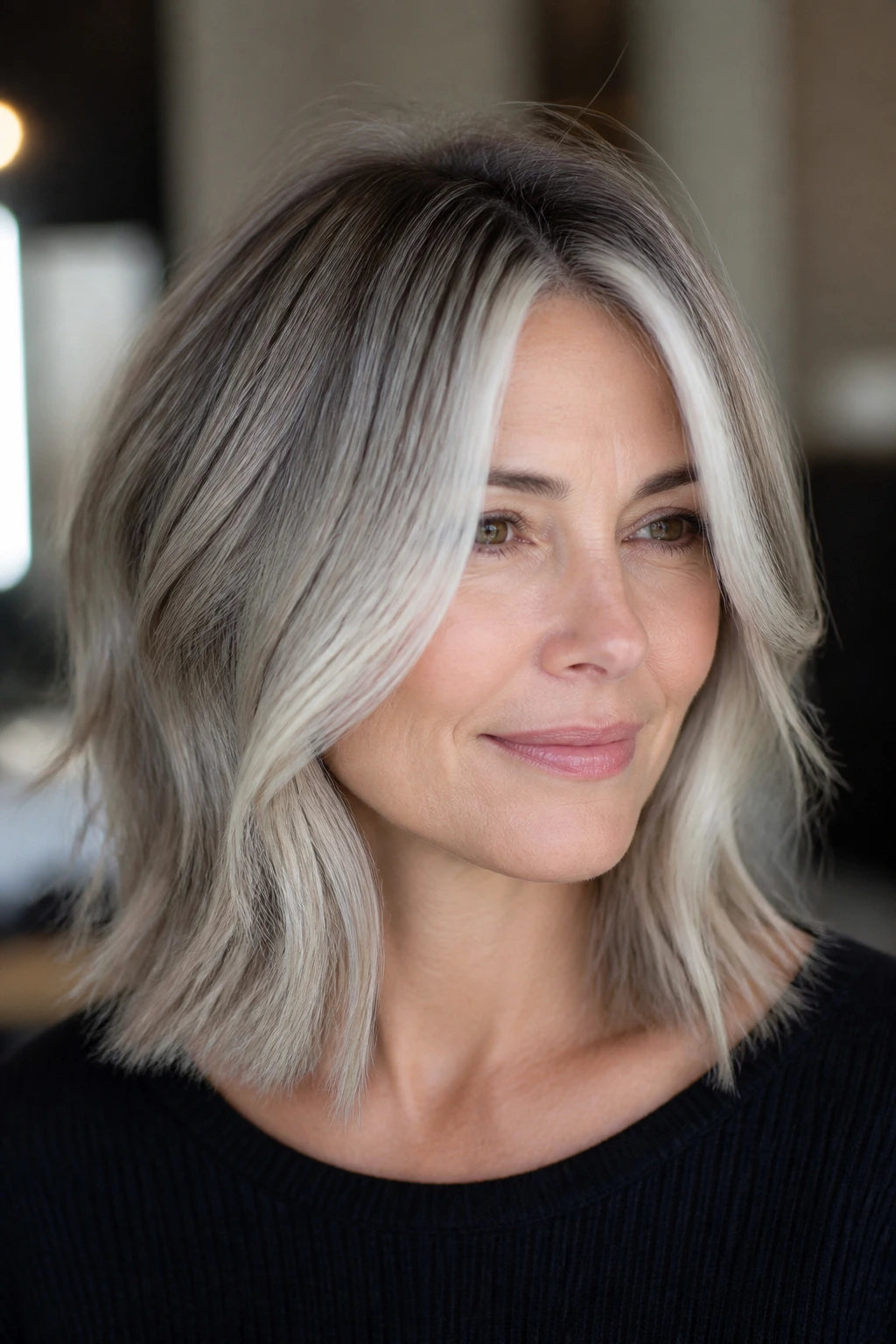
Which blonde shades flatter cool skin tones most?
Ash blonde, pearl blonde, silver blonde, smoky beige, and mushroom blonde usually flatter cool skin best because they don’t pull extra gold into the face. If your skin leans pink or porcelain, these tones tend to look cleaner than honey or copper shades.
Can I cover gray without going fully platinum?
Yes. A shadow root, babylights, and cool lowlights can hide gray well without taking the hair all the way to platinum. That approach often looks softer and grows out better, especially around the temples and part line.
How often should I tone cool blonde hair?
Most cool blondes need toning every 4 to 8 weeks, depending on how porous the hair is and how often you wash it. If the blonde starts to look yellow at the front or flat on the ends, that’s your cue.
What if my gray hair is stubborn at the temples?
Temples usually need finer placement and a bit more patience. Instead of loading that area with heavy color, ask for delicate highlights, a cool root smudge, or a softer fringe that breaks up the line naturally.
Do these styles work on curly or coarse hair?
They can, and often beautifully. Curly hair usually needs lowlights and a cooler gloss so the shape doesn’t go chalky, while coarse gray hair often benefits from layers that stop the style from feeling bulky.
Which look is lowest maintenance?
A soft root-shadow lob, a shag with curtain bangs, or a braided style that hides the part line tends to be the easiest to live with. Sharp platinum bobs and very light pixies usually need more frequent toning and trims.
What if my blonde starts turning yellow or khaki?
Yellow means the cool tone has faded and the hair wants a purple-based refresh. Khaki usually means the hair got over-toned or the color is too flat, so a clear gloss or a few days off the purple shampoo can help reset it.
Can I keep some natural gray and still look polished?
Yes, and that often looks better than trying to cover every strand. Letting some gray show through a cool blonde blend makes the result feel softer and more expensive-looking, especially when the cut has movement.
A Cooler Finish, Less Fuss
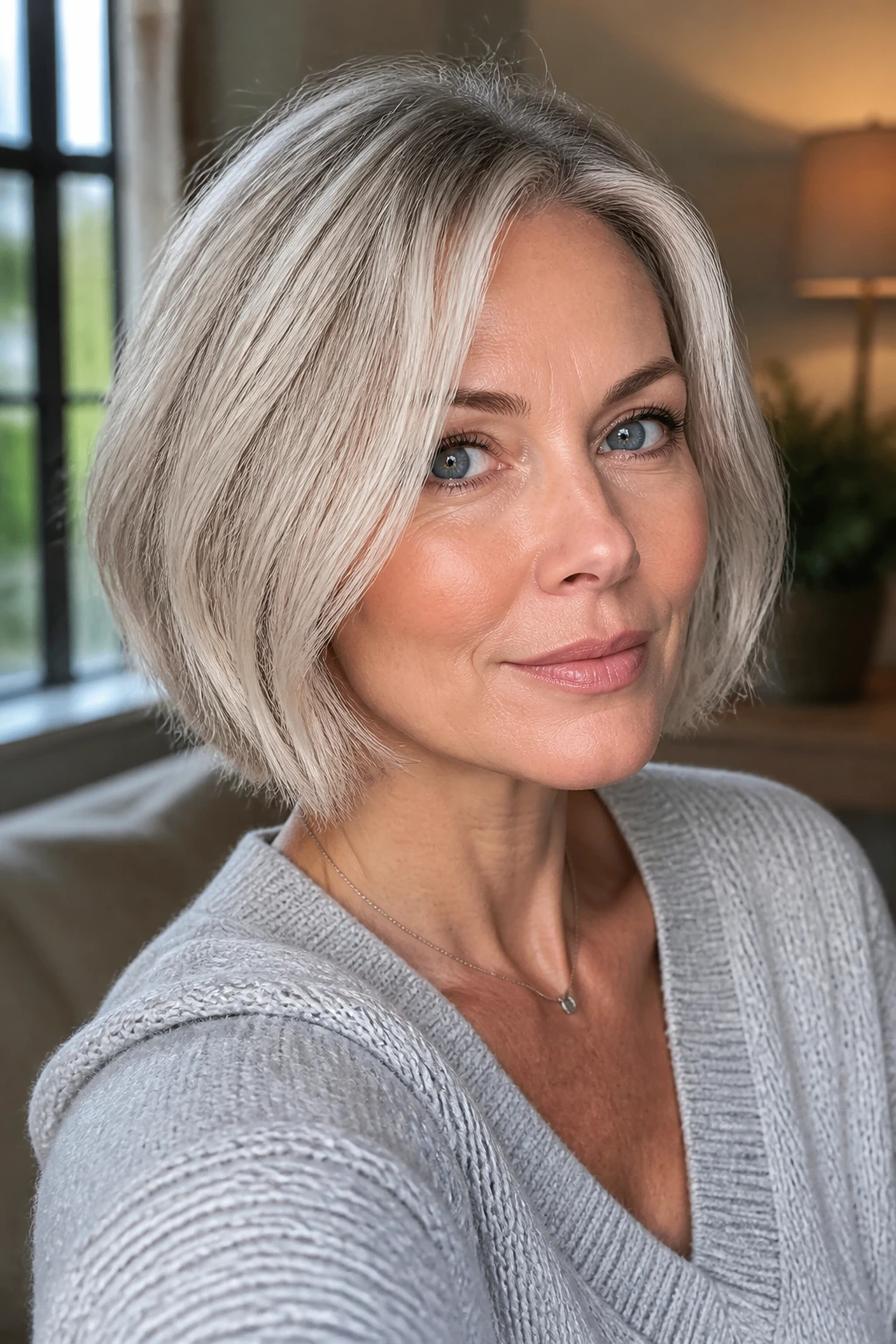
The best blonde-gray hairstyles for cool skin tones do not try to hide every sign of gray or force the hair into a warm blonde it never wanted. They use ash, pearl, silver, and smoky beige to make the face look calm, the grow-out gentler, and the cut more alive. That’s the real win here: not perfect coverage, but a finish that looks intentional even when the roots start to come back.
If you’re standing between two shades, choose the cooler one and let the cut do the talking. A smart bob, a soft shag, or a feathered pixie can make gray blending feel easy enough to keep wearing, which is the whole point.