



Tan skin can carry warmth in a way that makes hair color look expensive fast — but only when the placement and tone are doing the right work. Honey blonde caramel highlights for tan skin should look like light passing through syrup, not a stripy afterthought sitting on top of dark hair. The wrong blonde can go brassy, flat, or oddly yellow against golden or olive skin. The right one makes the whole face look cleaner, softer, and a little more awake.
The trick is not chasing the lightest blonde in the room. It’s choosing shades with enough gold, amber, and caramel depth to sit beside tan skin instead of fighting it. That means a level 7 caramel can look richer than a level 9 blonde on the wrong base, and a narrow face frame can do more for the face than a full head of bright ribbons. I’m a big believer in dimension here. Flat color gets old fast.
These 25 looks cover subtle babylights, chunky face-framing pieces, curly halos, bronde melts, reverse balayage fixes, and a few bolder options for people who want their highlights to read from across the room. Some are salon-friendly even if you want minimal upkeep. Others are for the person who likes their hair to look like it has been in the sun, near a window, with a good gloss on top.
Why This Collection Feels Different
- Warmth first: Every look stays in the honey-and-caramel family, so the color supports tan skin instead of washing it out.
- Placement does the heavy lifting: Some of these styles use tiny babylights, while others rely on chunky face frames or contour pieces, which changes the whole mood.
- Low-maintenance options are built in: Not every highlight needs a hard root line or a full-head commitment. A few of these grow out with barely a fight.
- There’s range without chaos: You’ll see soft, wearable ideas alongside bolder, makeup-friendly looks, so you can match the color to your actual life.
- Texture matters here: Straight, wavy, curly, and coily hair all hold honey and caramel differently, and the right placement makes that work for you.
- Tan skin gets the spotlight: These shades are chosen to flatter golden, olive, and neutral-warm undertones instead of pretending every complexion wants the same blonde.
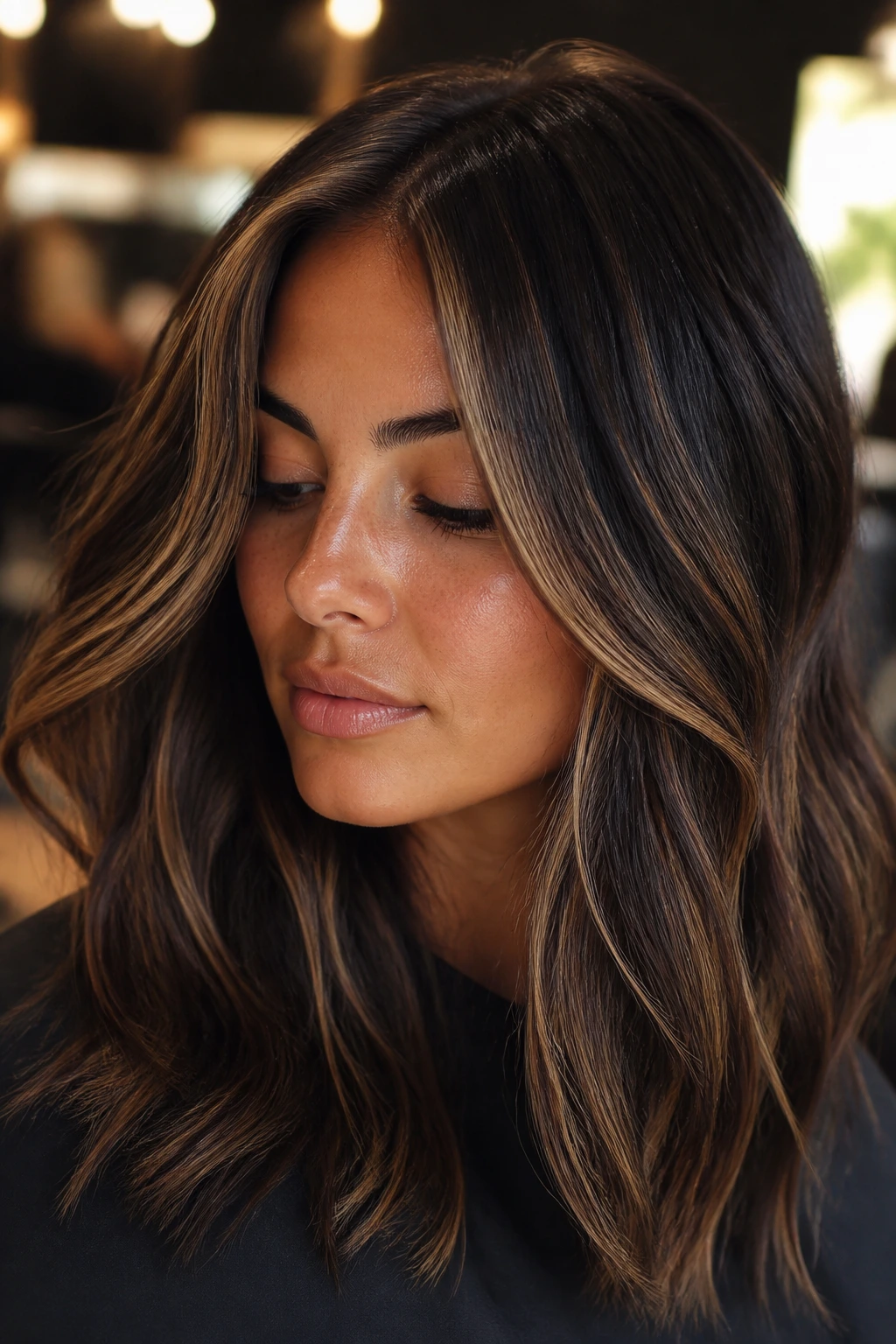
1. Espresso Brown With Soft Honey Ribbons
The cleanest version of honey blonde caramel highlights on tan skin starts with contrast, not brightness. A deep espresso base with thin honey ribbons gives you movement without turning the hair into a blonde project. It looks especially good when the ribbons sit around the face and through the top layers, where they catch light as you move.
Why This Works on Tan Skin
Tan skin tends to hold its own against deeper brown bases, which means the honey reads richer and less washed out. The lighter pieces don’t have to be huge; a few narrow ribbons at level 8 are enough to brighten the whole frame of the face.
Quick Shade Notes
- Keep the base around level 4 or 5 espresso brown.
- Lift the ribbons to level 7.5 to 8.5 honey blonde.
- Ask for fine placement through the crown and cheekbone area.
- Finish with a golden gloss, not a pale beige toner.
Best for: anyone who wants a polished look that still feels brown at the root.
Watch for: ribbons that are too thick. They can look stripey on tan skin, especially if the base is very dark.
2. Caramel Money Piece With a Root Shadow
A bright money piece can look fantastic on tan skin, but it needs a rooted base so the contrast doesn’t get harsh. The root shadow keeps the highlight from looking like a disconnected front stripe, and the caramel tone gives the face a warmer frame than icy blonde ever would.
The style is blunt in the best way. You get light right where the face needs it, then the rest of the hair falls back into a softer, deeper color. That contrast photographs well, yes, but more importantly, it looks intentional when the hair is worn up, tucked behind the ear, or parted dead center.
If your skin leans golden, this is one of the easiest ways to make the complexion glow without flooding the whole head with blonde. Ask for a money piece that starts softly a few centimeters off the hairline, not a hard block right at the root. That tiny shift matters.
3. Toffee Balayage Through Long Layers
Long layers are the perfect canvas for toffee balayage because the color can travel from mid-length to ends without looking heavy. The movement in the cut keeps the color from sitting still, and tan skin tends to love that kind of warmth in motion. A good toffee balayage has depth at the root, amber through the mids, and lighter caramel at the bottom.
What Makes It Lighter Without Looking Flat
The best part is the transition. Instead of one obvious highlight stripe, the light is feathered through the layers so it shows up when the hair bends. That gives you the sense of brightness without taking the hair into brassy territory.
Ask Your Colorist For
- Hand-painted pieces starting below the cheekbone.
- A level 7 to 8 toffee-caramel finish.
- Slightly darker root depth for better grow-out.
- A warm gloss that keeps the tone soft, not orange.
Pro tip: if your hair is thick, ask for color placement underneath the top canopy too. That hidden light stops the ends from looking like one solid brown block.
4. Amber Honey Halo for Curly Hair
Curls love warm highlights because the shape of the hair does half the work for you. An amber honey halo placed around the outer layer of curls adds brightness where the hair naturally catches light, and tan skin usually looks even richer beside that golden reflection. No stiff stripes. No helmet effect. Just curl pattern and color doing their thing.
The key is placement. Highlights that are too low can disappear under the curl pattern, and highlights that are too uniform can make curls lose depth. A halo approach keeps the bright pieces around the crown, temples, and outer edges, where they flash as the curls move. It’s one of those styles that looks better when the hair has been scrunched, diffused, and left with a little air in it.
Why Curly Hair Changes the Equation
Curls shrink and expand, so a highlight that seems subtle on wet hair can read much brighter once dry. That’s why caramel and honey tones need to be slightly warmer than you think. The pattern softens them.
5. Bronde Melt With Honey Ends
Bronde is the move when you want lightness but do not want to lose the brown foundation that flatters tan skin. This version keeps the roots and mids in a chestnut-bronze zone, then eases into honey ends that are bright enough to read as blonde in sunlight. It’s softer than a full blonde transformation and a lot easier to live with.
The melt matters more than the color names. If the transition from brown to honey is gradual, the eye reads shine and dimension. If the transition is choppy, the whole thing can look layered in a bad way. That’s why this style works best on hair with some length; the color needs space to fade.
I love this look on tan skin with neutral undertones. It gives the face warmth without leaning orange, and the ends keep enough golden light to feel fresh. A gloss every few weeks keeps the brown from going dull and the honey from drifting brass.
6. Face-Framing Panels for a Butterfly Cut
Butterfly cuts already have movement built in, so the highlights should follow the shape, not fight it. Face-framing panels in honey caramel can make the shorter front layers stand out and give the illusion of more lift around the cheekbones. On tan skin, that framing reads clean and flattering because the warm blonde sits close to the face instead of getting lost in the length.
This is not the place for tiny, timid pieces. The butterfly cut wants visible ribbons through the front, usually starting around the jaw and softening through the ends. The contrast between the airy layers and the caramel-gold front pieces makes the haircut look more expensive than the word “subtle” would suggest.
Best if you like: big blowouts, loose bends, or a round-brush finish.
Skip it if: you want invisible grow-out. Face-framing panels are lower maintenance than a full highlight, but they are still a statement.
7. Micro-Babylights for a Soft Glow
Micro-babylights are for people who want tan skin to look warmed up, not blasted with blonde. The pieces are so fine they almost disappear at first glance, but together they create a soft veil of honey across the top and sides. It’s the quietest option in the collection, and that’s exactly why it works.
What Makes Them Different
Babylights mimic the way sunlight naturally hits hair — tiny, random, and never too even. On tan skin, this keeps the color believable. You avoid the harsh “striped foil” effect that can make warmer skin look dull by comparison.
The style is especially useful on fine hair, where larger pieces can look sparse or chunky. A few dozen micro sections can give the illusion of fullness and texture without changing the base color dramatically. If your hair is already warm brown, this is one of the safest ways to test honey blonde caramel highlights without jumping in too hard.
8. Golden Ribbons on a Wavy Lob
A lob with loose waves is basically a highlight showcase. Golden ribbons add just enough contrast to show off the bend in the hair, and tan skin tends to love that glow because the warmth sits close to the face and collarbone. When the waves are soft, the color looks expensive; when they’re too polished, the ribbons can blur together and lose their shape.
The best part of this look is the way it moves from casual to dressed up with almost no effort. Air-dried waves show the ribbons in a relaxed way. A flat iron bend makes them feel cleaner and sharper. Same color. Different mood.
A Small Detail That Matters
Ask for a few brighter pieces around the front but keep the rest of the ribbons more caramel than blonde. That keeps the lob from looking too light at the ends, which can happen fast when a cut sits right at shoulder level.
9. Caramel Contour Pieces on Straight Hair
Straight hair can be tricky with highlights because every placement choice is visible. That’s why contour pieces are such a smart move: they follow the line of the face and add shape instead of noise. On tan skin, caramel contouring brings warmth to the cheekbones and jawline without turning the whole head into a highlight map.
The look is polished and controlled. You get defined front pieces, some lighter movement around the crown, and a deeper underlayer that keeps the finish from looking flat. If your hair tends to fall limp by noon, contour pieces can make it look fuller because they create visual breaks through the length.
What I like here is restraint. A huge amount of blonde can look too stark on pin-straight hair. Caramel contouring gives you dimension with fewer moving parts.
10. Honey Ombre Below the Cheekbone
Why does this ombre work when a high-contrast blonde doesn’t? Because the shift starts low enough to keep the roots grounded. Honey ombre below the cheekbone leaves the top half richer and darker, then gradually opens into golden ends that brighten the face without shouting.
This is a nice option if you’re growing out old highlights or trying to stretch salon visits. The grow-out is forgiving because the lightness starts lower on the hair shaft. It also looks good on tan skin that leans warm, since the lower honey ends echo the warmth already in the complexion.
What to Ask For
- A soft fade beginning below the cheekbone.
- No hard line where brown turns blonde.
- A honey finish with caramel depth in the mids.
- Ends bright enough to catch light, not bleach-white.
How to wear it: soft curls or bent ends show the fade best. Pin-straight hair will make the line more obvious.
11. Warm Chunky Highlights With a Modern Finish
Chunky highlights had a rough reputation for a while. Fair enough. They can look dated if the tone is too pale or the placement is too blocky. But on tan skin, chunky honey pieces with a modern blend can look bold in a very flattering way, especially if the blonde sits warm and the root has enough depth.
The modern version is not the zebra striping people remember. It uses wider pieces, yes, but the edges are softened and the color is more caramel than platinum. Think salon-brushed, not streaky. Think controlled brightness, not a paper doll.
This look is best if you like makeup that has a little presence — bronzer, blush, bold lips, the whole thing. The hair can hold its own. If your style leans clean and graphic, chunky highlights make sense. If you prefer soft, whispery color, skip this one.
12. Chestnut Base With Cinnamon-Caramel Weave
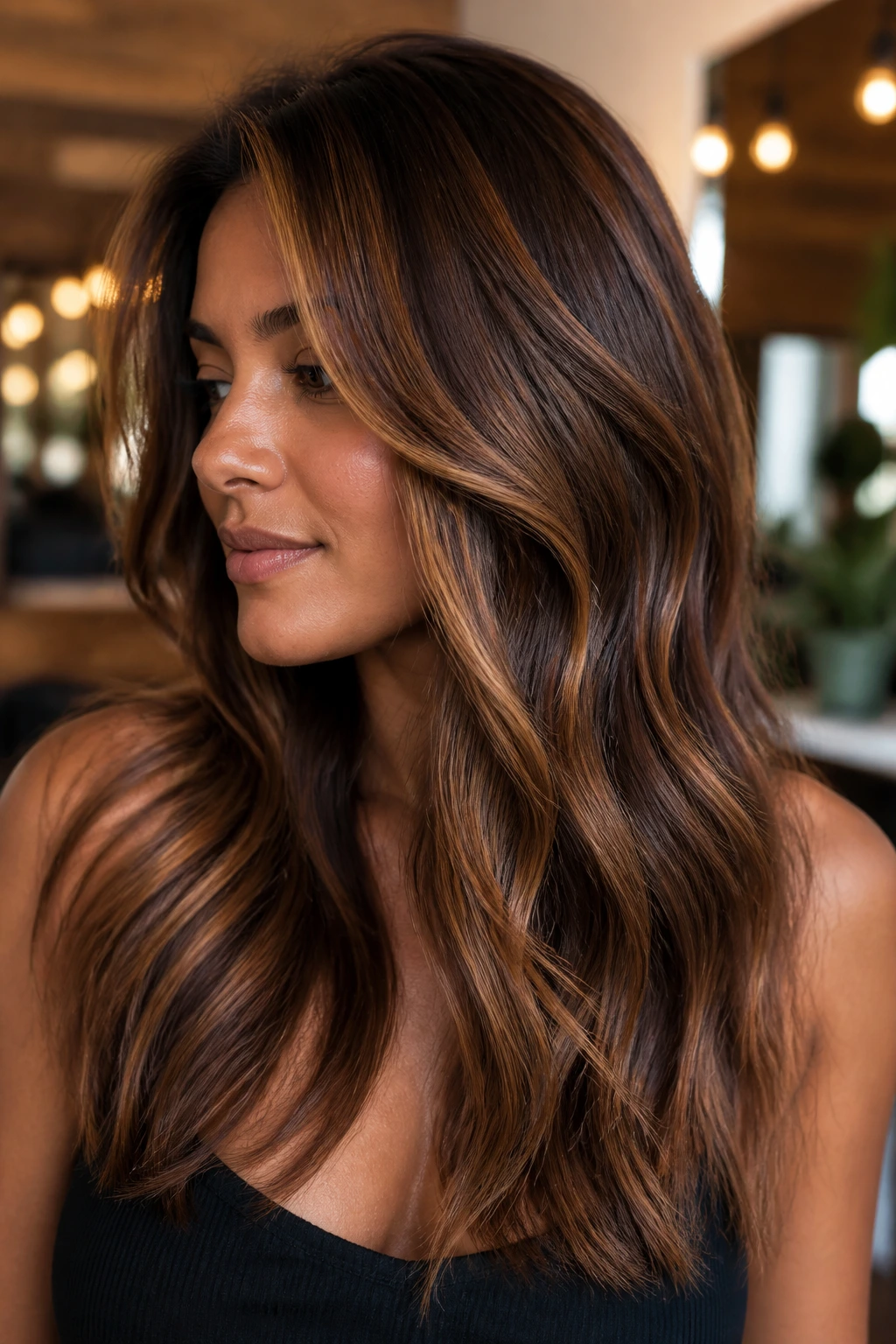
Chestnut and cinnamon-caramel sit close enough to each other that the hair looks rich instead of busy. On tan skin, that warmth can be a gift. The skin and the hair are not competing for attention; they’re speaking the same language. That’s a nice place to be.
This look is especially good for medium-density hair because the weave adds texture without making the ends look see-through. The brighter cinnamon bits sit between deeper chestnut strands, which gives the whole head a sort of woven effect. You see it most when the hair moves or when light hits from the side.
There’s a quiet luxury to this one. Not flashy. Not icy. Just layered warmth with enough blonde energy to keep things fresh.
13. Bright Crown Pieces on a Chin-Length Bob
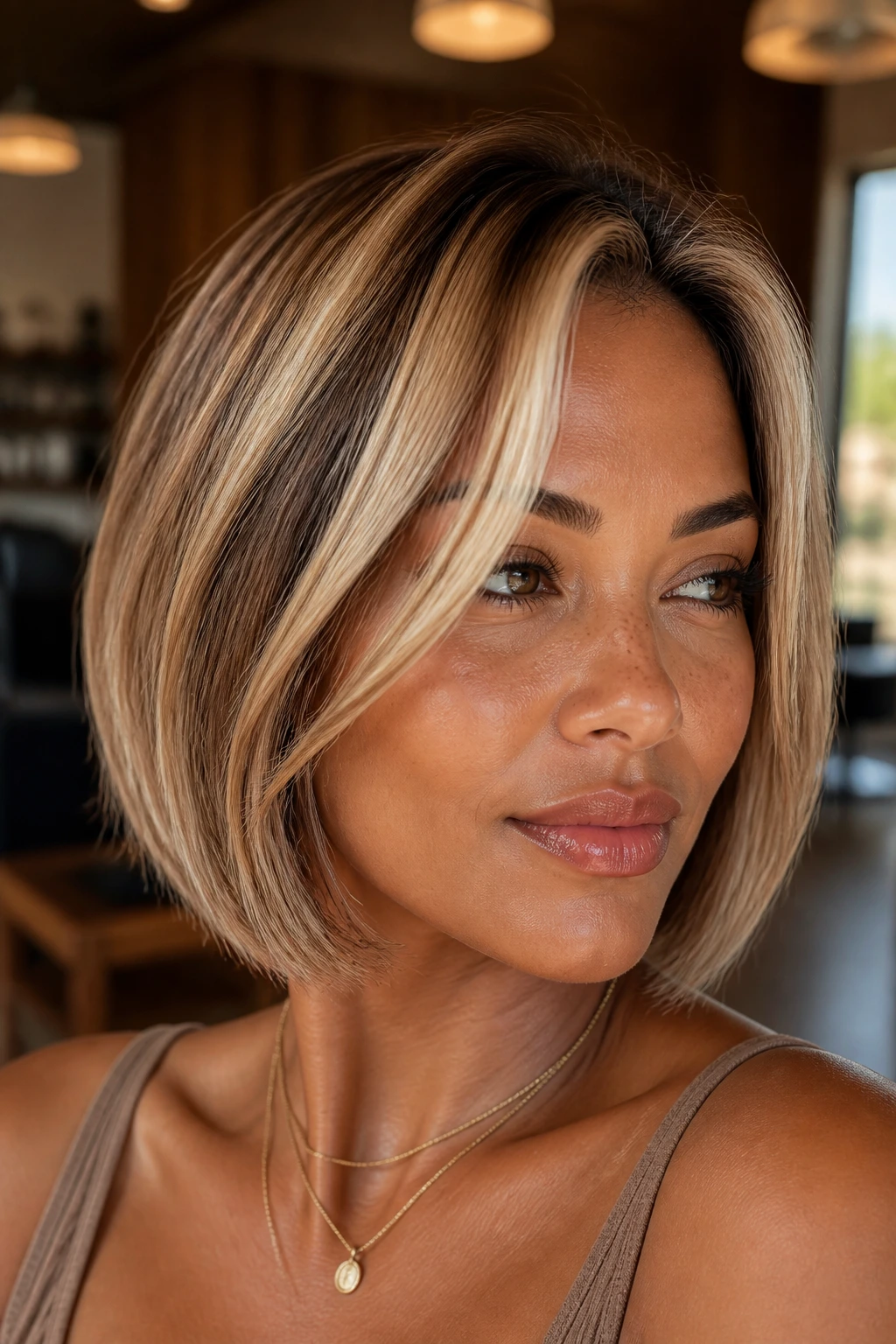
A chin-length bob can take bright crown pieces better than people expect. The shorter length keeps the brightness from overwhelming the face, and the crown placement adds lift where the hair can sometimes collapse. On tan skin, the honey blonde pieces at the top create a clean contrast that brings attention upward.
This is a sharp look. It works especially well with a slightly rounded bob or one with a blunt edge and a bit of bevel at the ends. Bright crown pieces make the shape read immediately, which is useful if you like your haircut to do the talking before your outfit does.
If you have a strong jawline, this style can balance it. If your hair is fine, the lighter pieces at the crown give the illusion of fullness without needing heavy teasing or styling spray.
14. Beige-Blonde Money Piece for Olive Tan Skin
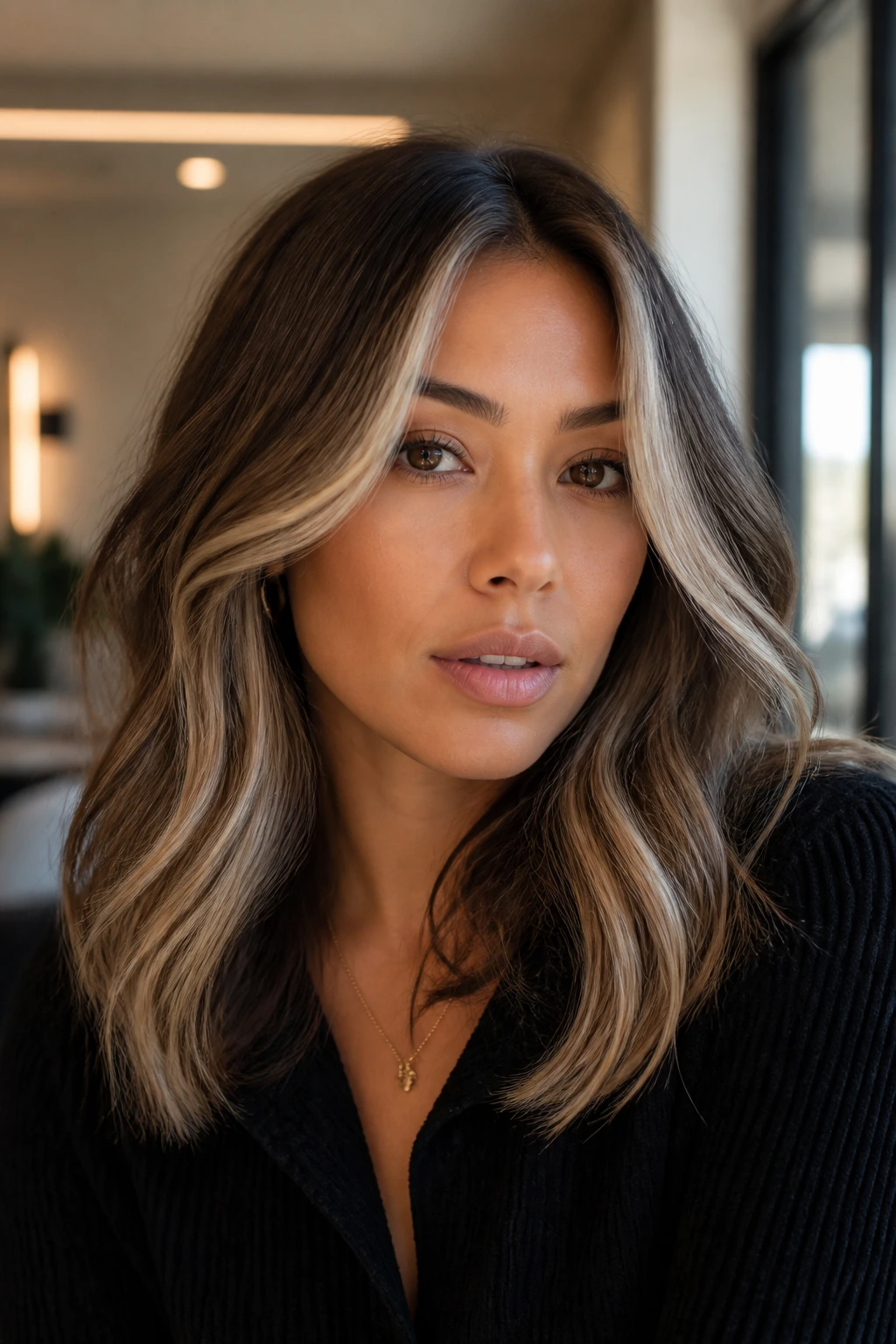
Olive tan skin can be fussy with overly golden blonde. Too much warmth and the face looks muddy. Too much ash and the complexion can go gray. A beige-blonde money piece threads that needle better than most shades because it stays soft, neutral, and lifted at the front.
This one is all about control. The money piece should be bright enough to frame the face, but not so warm that it turns copper under sunlight. Ask for a beige tone with a hint of honey, not a stark champagne blonde. That tiny shift keeps the color flattering instead of chalky.
Best for olive undertones: yes.
Best for very golden tan skin: maybe, but go slightly warmer than beige or the front can look flat.
15. Sun-Kissed Shag With Scattered Ribbons
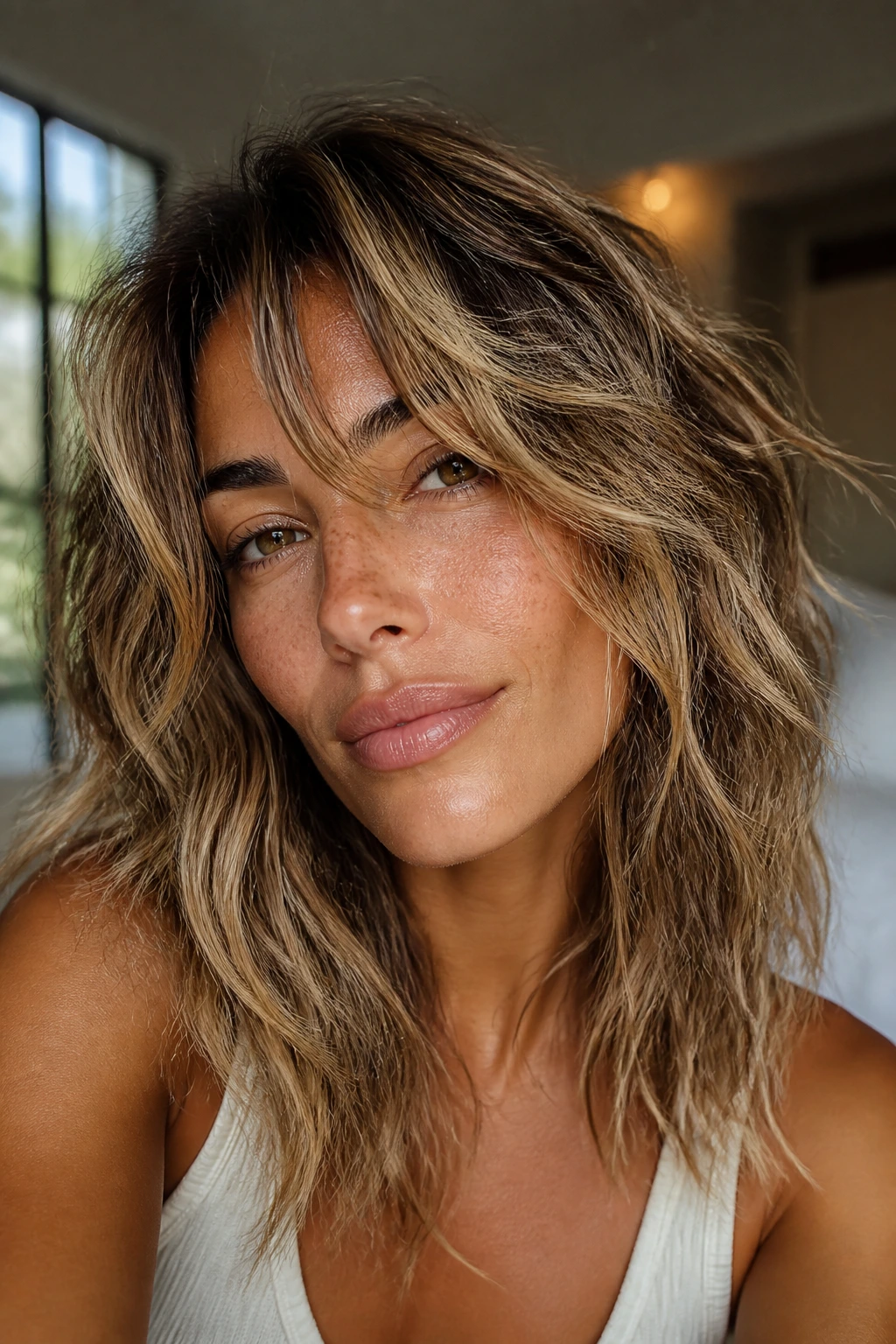
A shag cut already gives you texture, so the highlights should feel scattered and a little wild. Sun-kissed ribbons placed through the layers make the cut look lifted and airy, especially if the hair has a bend or natural wave. Tan skin can handle the varied warmth here because the style is supposed to look broken up, not sleek.
Why It Feels So Easy
The shag’s layers hide a lot of the grow-out line. That means you can place the highlights in a less rigid way, with some pieces closer together around the face and others spaced out through the ends. The result is movement everywhere without needing a perfect salon finish.
This look is for people who like hair with a little personality. It is not neat. That is the point. The honey and caramel pieces peek through the shag’s texture and make the cut feel lived-in instead of overworked.
16. Reverse Balayage for Overlightened Hair
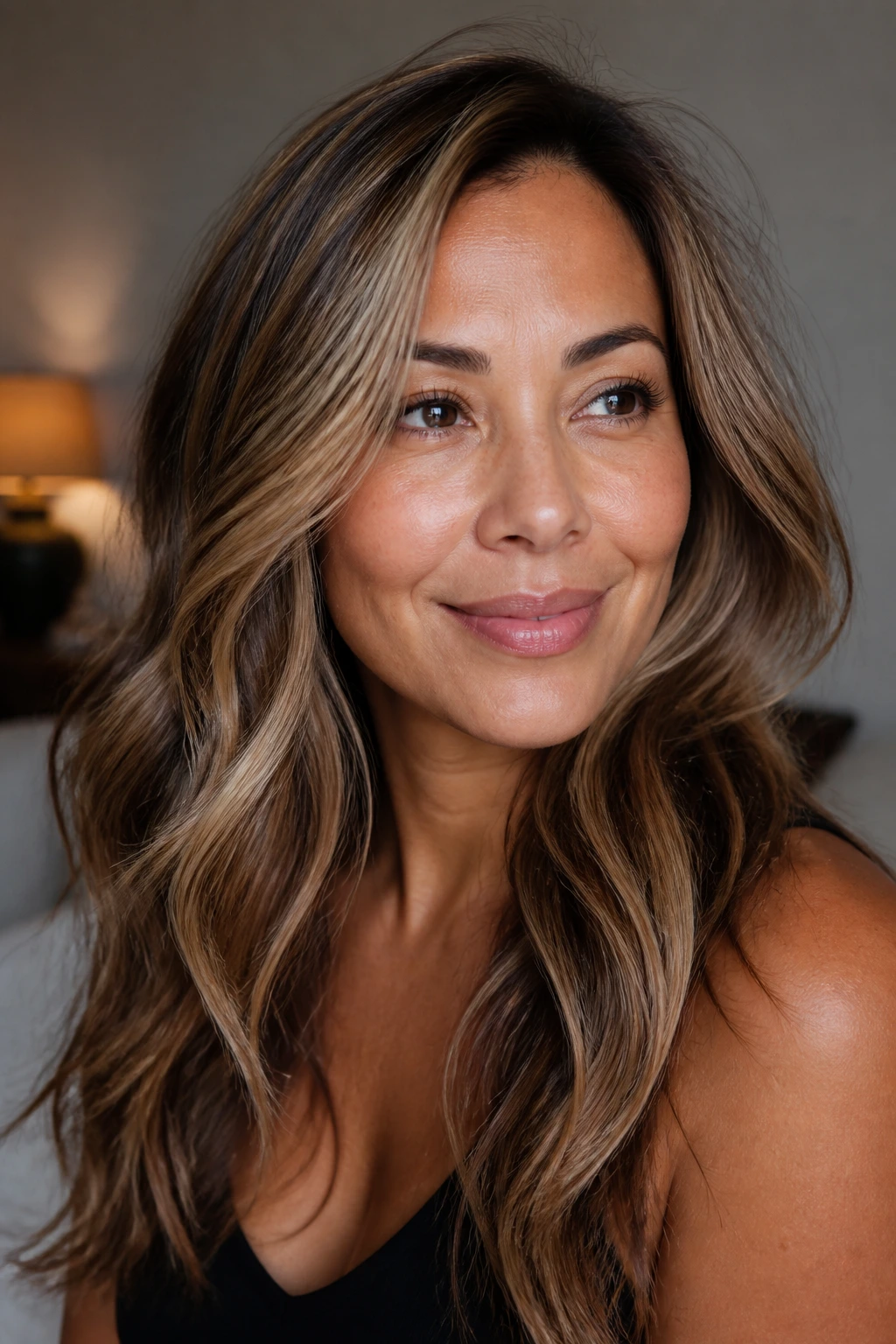
Sometimes the smartest highlight is the one that puts some color back in. Reverse balayage adds deeper caramel and brown ribbons into hair that has gone too light, and on tan skin that can be a relief. Too much pale blonde can make warm complexions look tired. A reverse balayage fixes that by restoring contrast.
The beauty of this approach is that it doesn’t erase brightness. It softens it. Darker pieces between the light sections create a more dimensional finish, and the honey blonde ends look richer because they’re no longer floating by themselves. If your highlights have gone too pale or too flat, this is the move.
This is also one of the better options for low-maintenance color lovers. The darker ribbons blend into the root and give you a softer grow-out, which means fewer salon emergencies and fewer toner panic moments.
17. Silk-Press-Friendly Honey Highlights
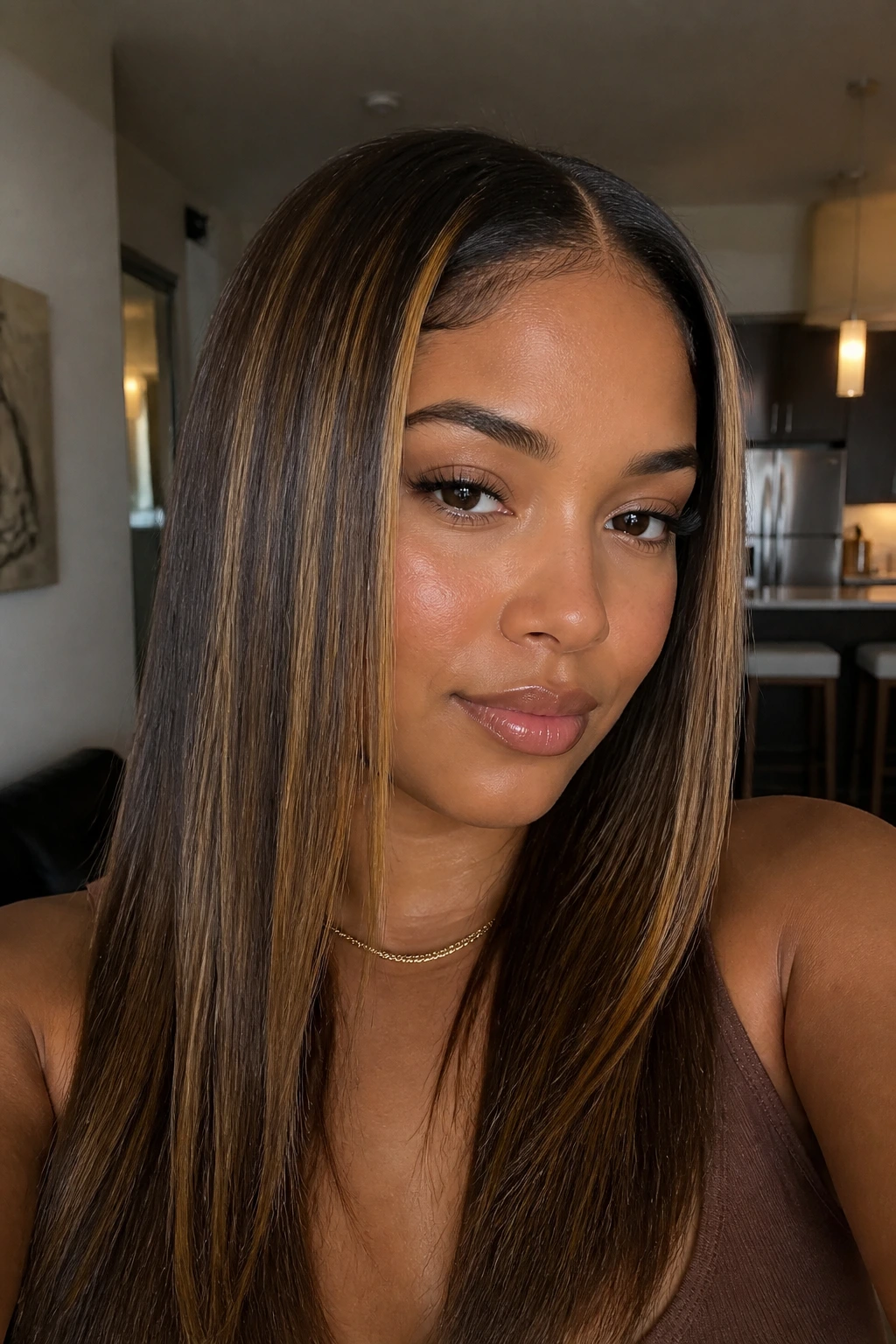
Silk-pressed hair shows everything. Every line. Every patch. Every shift in tone. That’s why the highlight placement has to be clean if you wear your hair straight and smooth most of the time. Honey highlights on a silk-press-friendly base should be thin, glossy, and evenly diffused so the hair looks sleek, not sliced up.
The best version keeps the lightness around the front and top layers, with just enough caramel depth underneath to maintain movement. On tan skin, that kind of polish reads elegant without being cold. The warm blonde catches the shine from a flat iron finish and turns the whole look into a glassy, reflective surface.
If you heat-style often, this is one of the looks that benefits most from a good gloss and a serious heat protectant. Straight hair shows tone drift fast. Keep the finish warm and the shape sharp.
18. Layered Midlength Cut With Toasted Ends
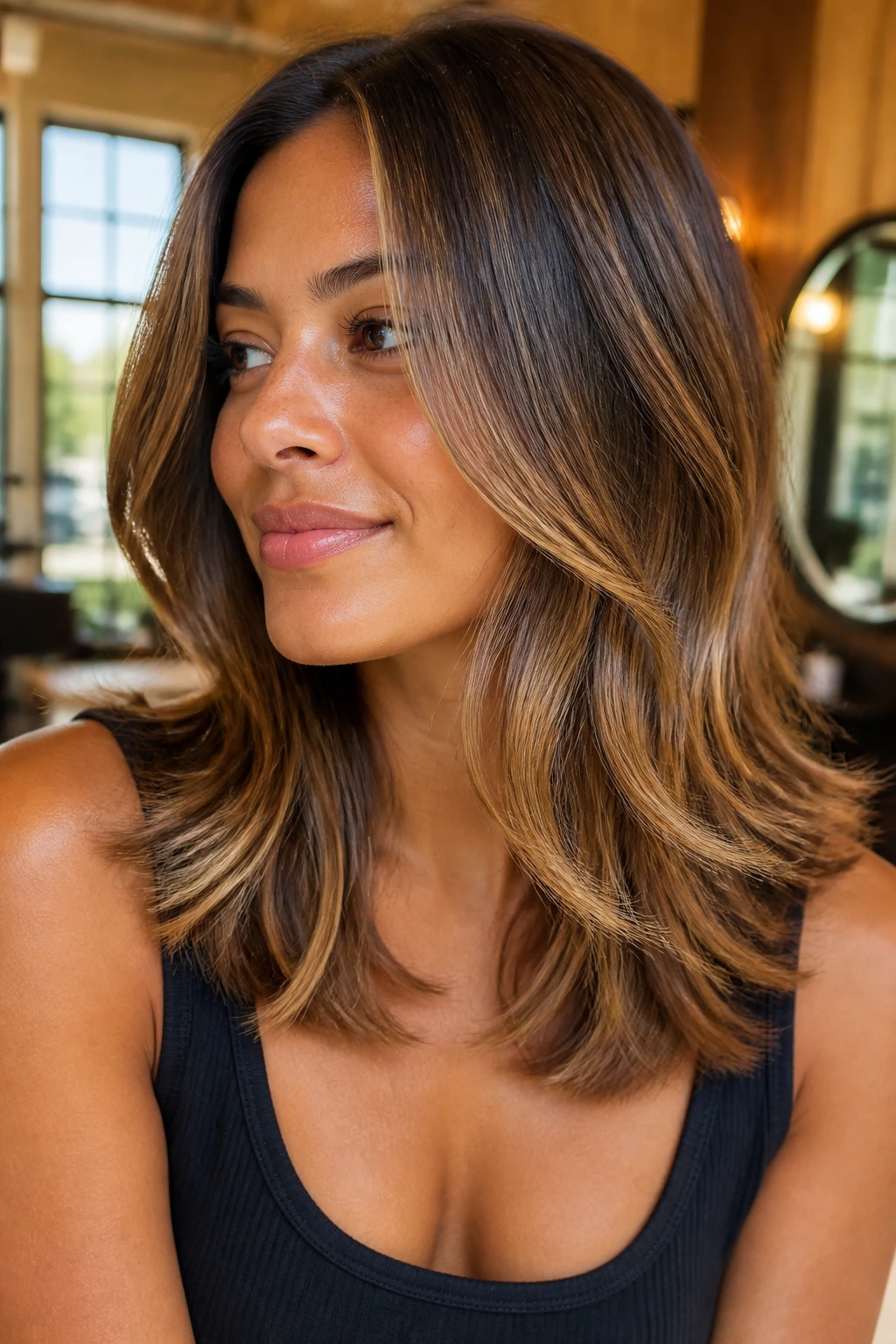
A layered midlength cut gives toasted ends room to breathe. The layers stop the color from clumping into one block, and the toasted honey-caramel finish at the bottom keeps the hair from looking too dark through the mids. On tan skin, this balance feels natural — warm at the ends, richer at the top, and never too washed out.
What to Ask For
- Layers that start around the collarbone.
- A gradual lift toward the ends.
- Toasted honey with caramel depth, not pale beige.
- A gloss that keeps the ends reflective, not chalky.
The style works especially well on thick hair because the layers remove weight and let the lighter ends show. It also keeps the haircut from disappearing when the hair is worn down. You get movement without needing a big color overhaul.
19. Soft Root Shadow for Easy Grow-Out
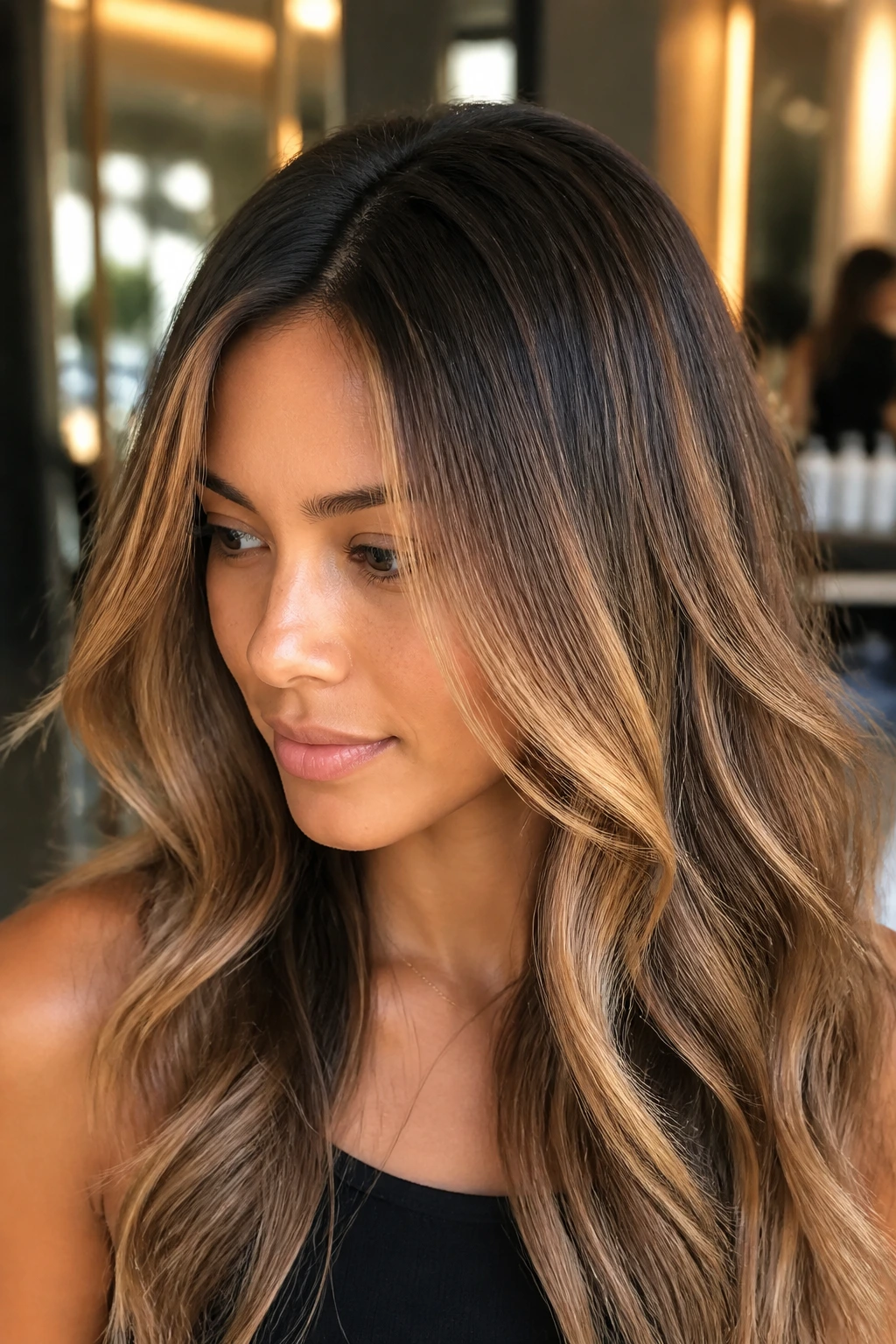
A soft root shadow is not boring. It’s practical, and it makes the highlights look more expensive. By keeping the root a shade or two deeper, the honey blonde caramel pieces can live underneath without screaming for attention every six weeks. Tan skin tends to look especially good with this kind of controlled contrast.
The trick is blending, not hiding. The shadow should melt into the lighter pieces instead of sitting like a line across the head. Done right, it gives the hair a lived-in finish that looks polished even when you haven’t styled it much.
This is one of my favorite ideas for people who hate obvious regrowth. The hair can go several weeks and still look intentional, which matters if your schedule is not built around salon appointments.
20. High-Contrast Face Frame for Makeup Days
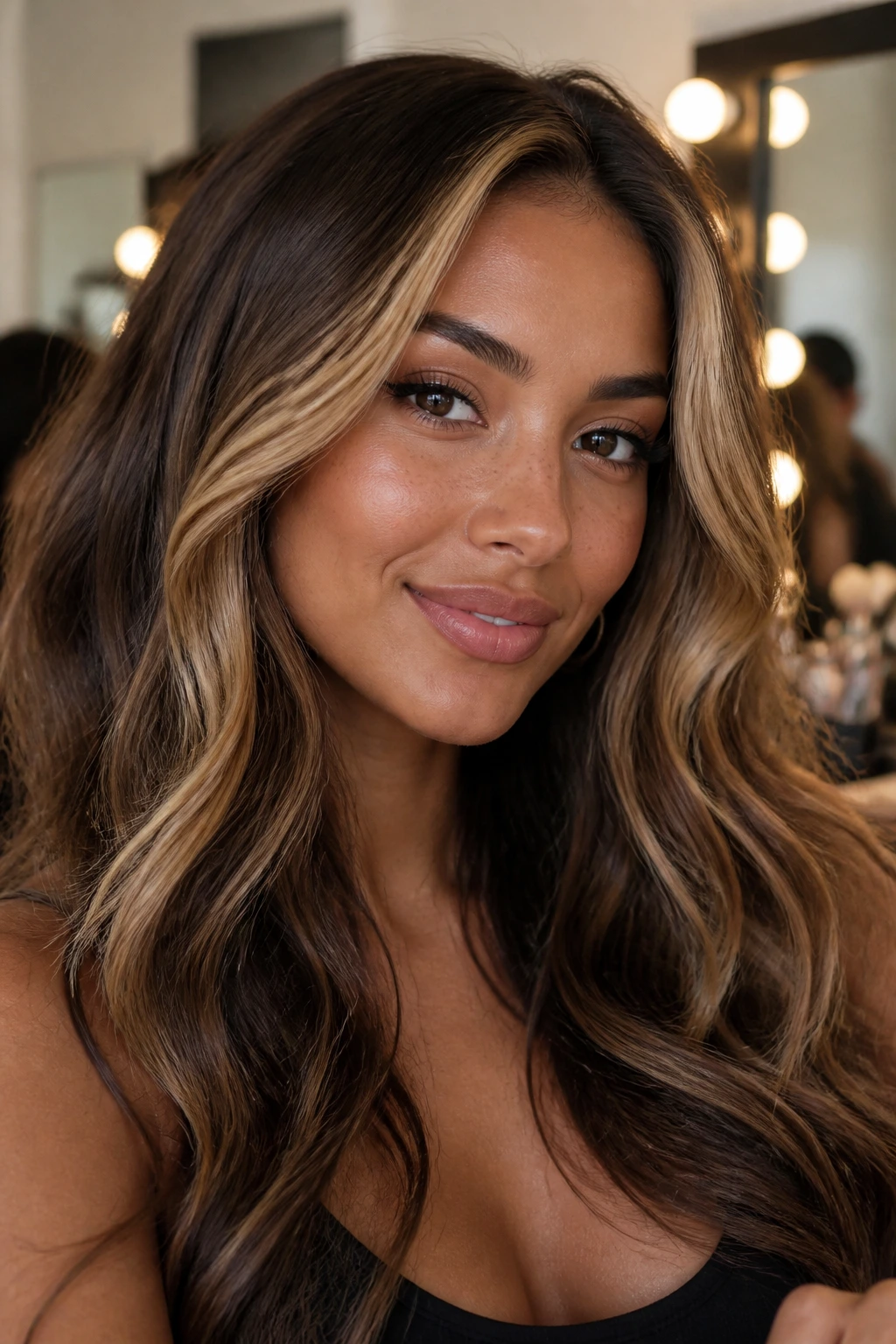
Some looks are soft. This one is not. A high-contrast face frame puts a brighter honey blonde panel around the front of tan skin, then leaves the rest of the hair deeper and calmer. The result is striking, and it pairs especially well with defined brows, bronzed cheeks, or a lip that has some color to it.
The reason it works is simple: the bright front piece creates a frame that makes the face read instantly. On tan skin, the warmth of the blonde keeps the look from going harsh, which is where this kind of style can go wrong if the tone is too beige or too white.
Best for: nights out, photos, and anyone who likes hair with a bit of attitude.
Not ideal for: people who want low drama. This is a statement, not a whisper.
21. Soft Copper-Honey Blend
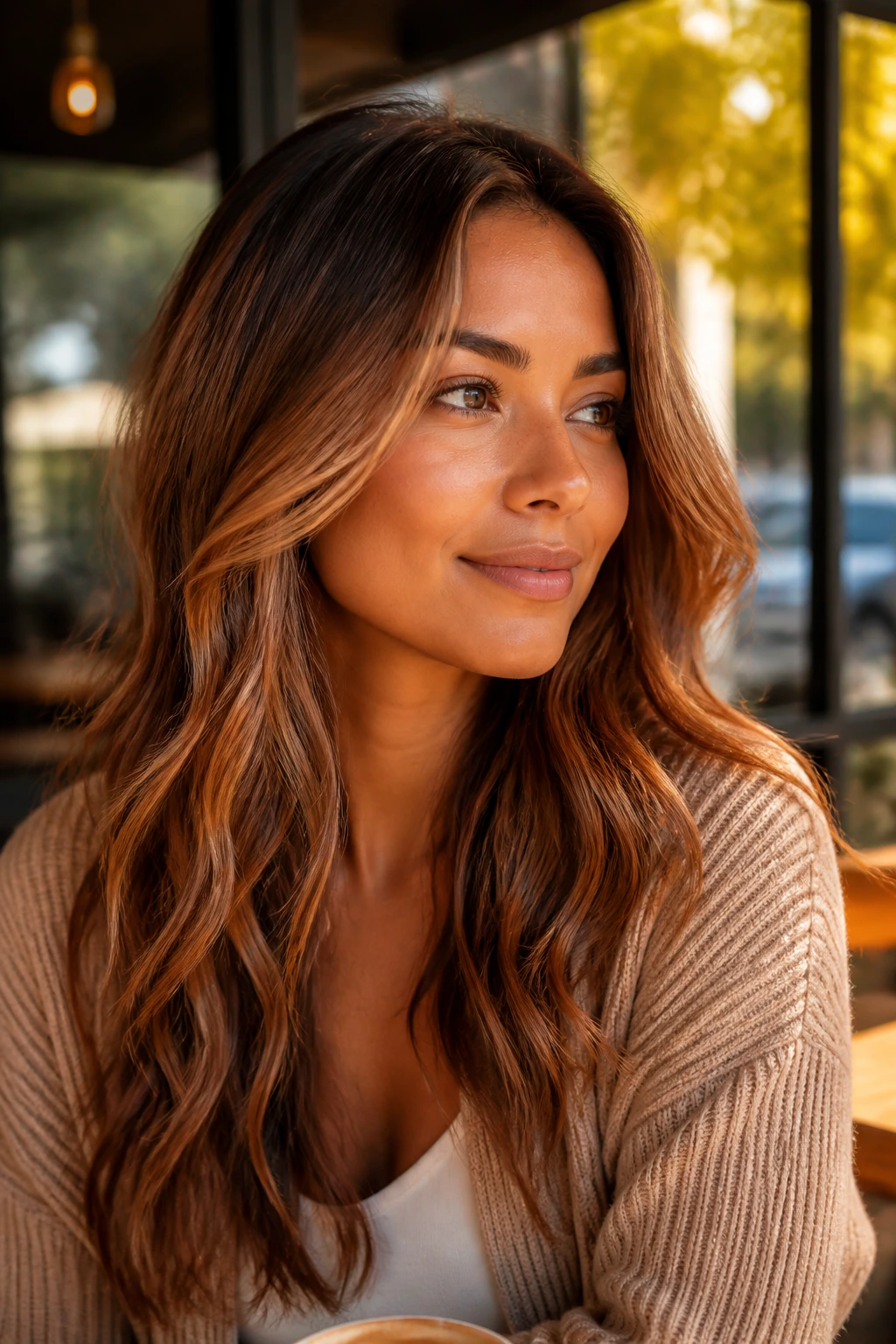
Can honey blonde lean a little copper without going orange? Yes, and on golden tan skin, that blend can look rich instead of noisy. The trick is keeping the copper warm and translucent, like a glaze, while the honey pieces hold the brightness. The color ends up reading autumnal without being tied to a single season.
This is a nice choice for people whose skin turns extra golden in sunlight. A fully neutral blonde can sit flat against that warmth, but copper-honey picks up the same undertones in the skin and hair. It’s especially pretty in curls and loose waves, where the different warm notes can separate instead of melting into one flat color.
Ask for a gloss, not a heavy toner. You want the copper to whisper.
22. Glossy Bronde With Caramel Veining
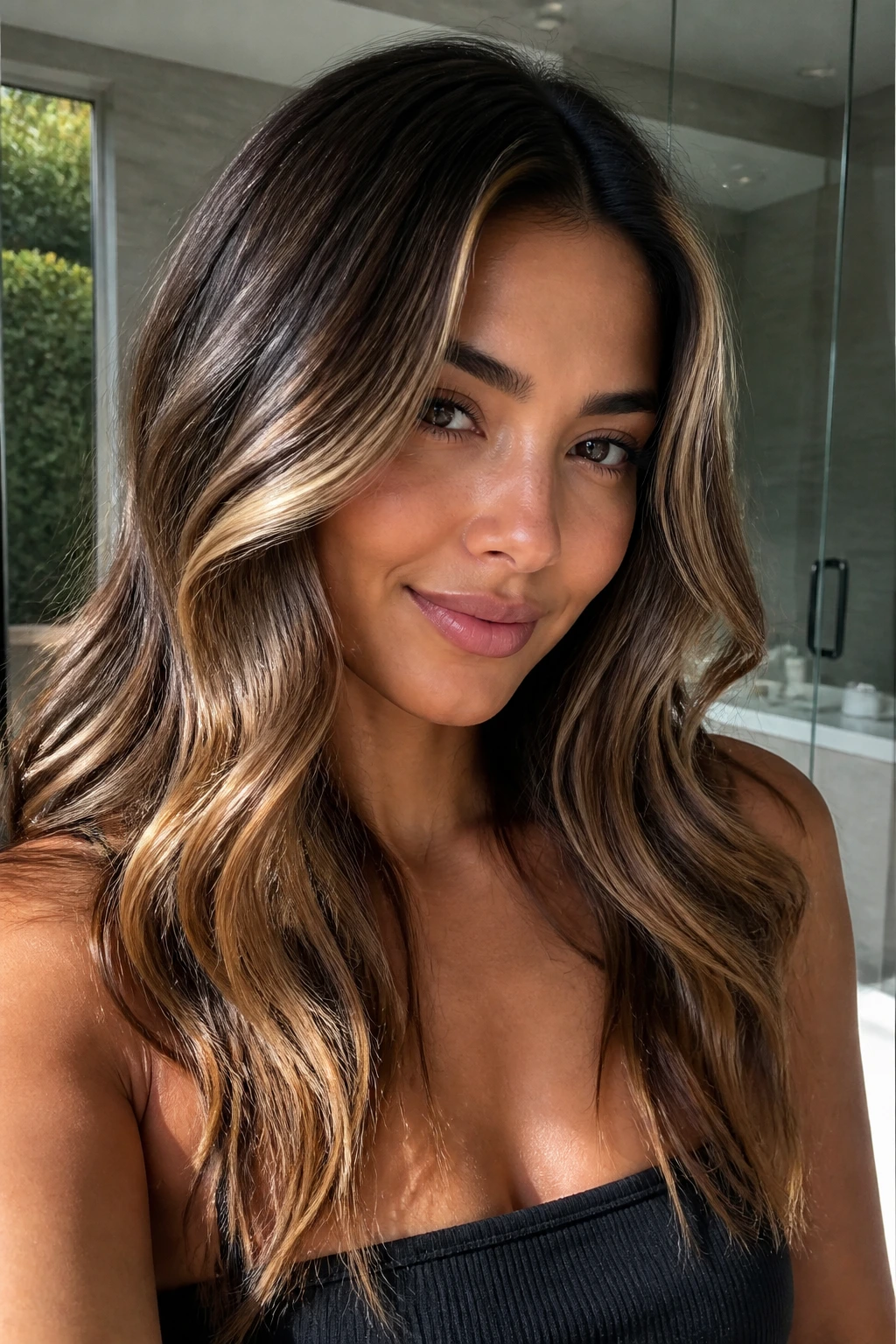
Bronde with caramel veining is one of those looks that seems low-key until the light hits it. Then the color wakes up. The base stays in a brown-blonde zone, and thin caramel strands run through it like veins, giving the hair movement without pushing it into full blonde territory. Tan skin likes that balance because the face stays warm and grounded.
The glossy finish matters here. Without shine, bronde can look dull. With a clear or golden gloss, the hair picks up reflections that make the caramel pieces look layered instead of painted on. If your hair is medium thickness and you want dimension without obvious highlights, this is a safe bet.
I’d choose this over a pale full highlight almost every time for tan skin. It ages better through grow-out, and it keeps the hair from looking overprocessed.
23. Curtain Bangs With Bright Front Pieces
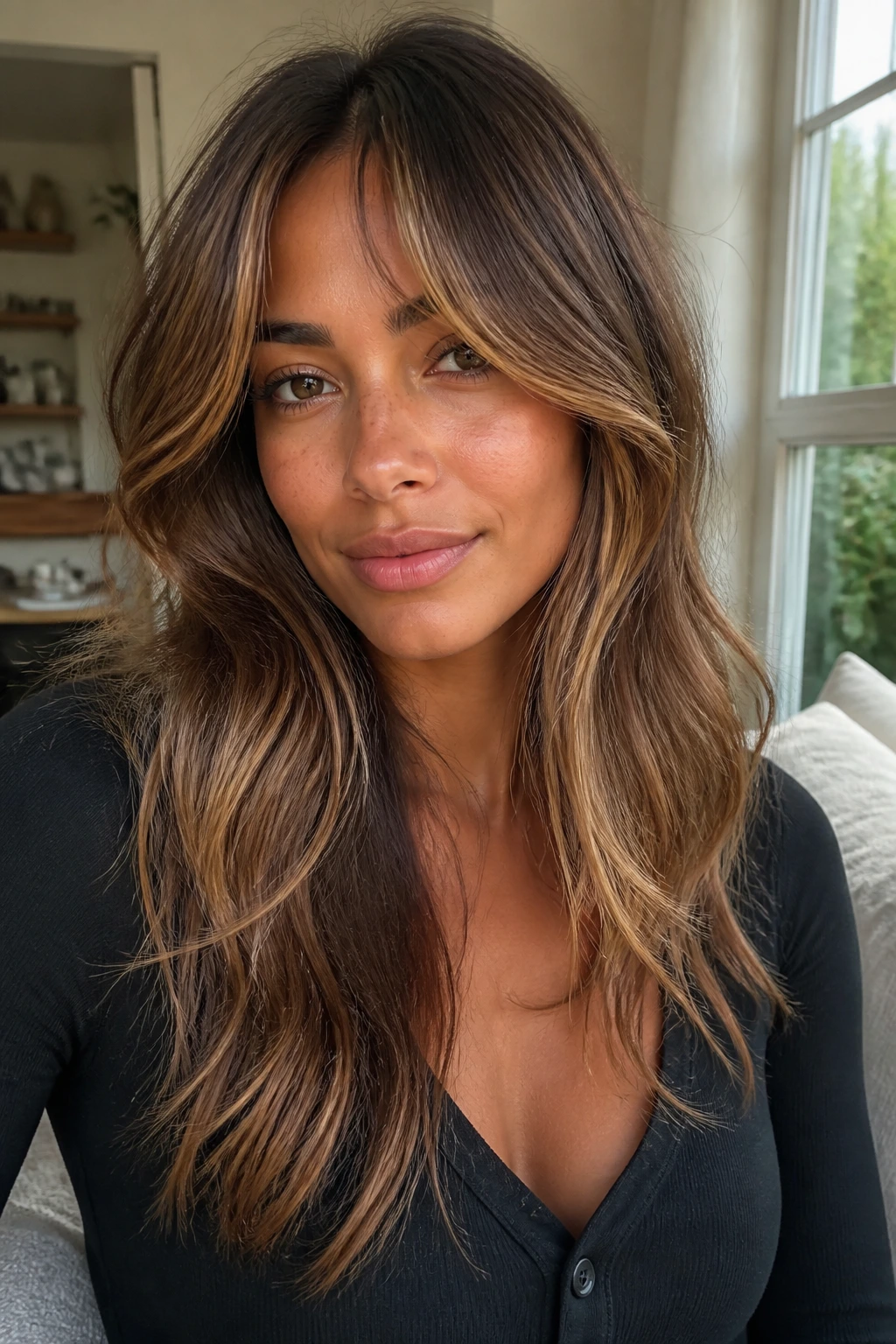
Curtain bangs already pull attention to the face, so bright front pieces can make the shape feel softer and more intentional. Honey caramel highlights around the bangs and front layers give the cut a lifted look, especially on tan skin where warm blonde tends to sit naturally beside the complexion. The color and the fringe work together.
The pieces should not be too wide. Around the bangs, thin but brighter strands make the curtain shape open up without looking patchy. If the highlight is too dense, the bangs lose that airy sweep that makes the haircut flattering. It’s a tiny technical detail, but it changes the whole vibe.
This is a strong choice if you wear your hair middle-parted most of the time. The color follows the part and draws the eye inward, which makes the face look more framed and the bangs look softer at the same time.
24. Dimensional Pixie With Micro Streaks
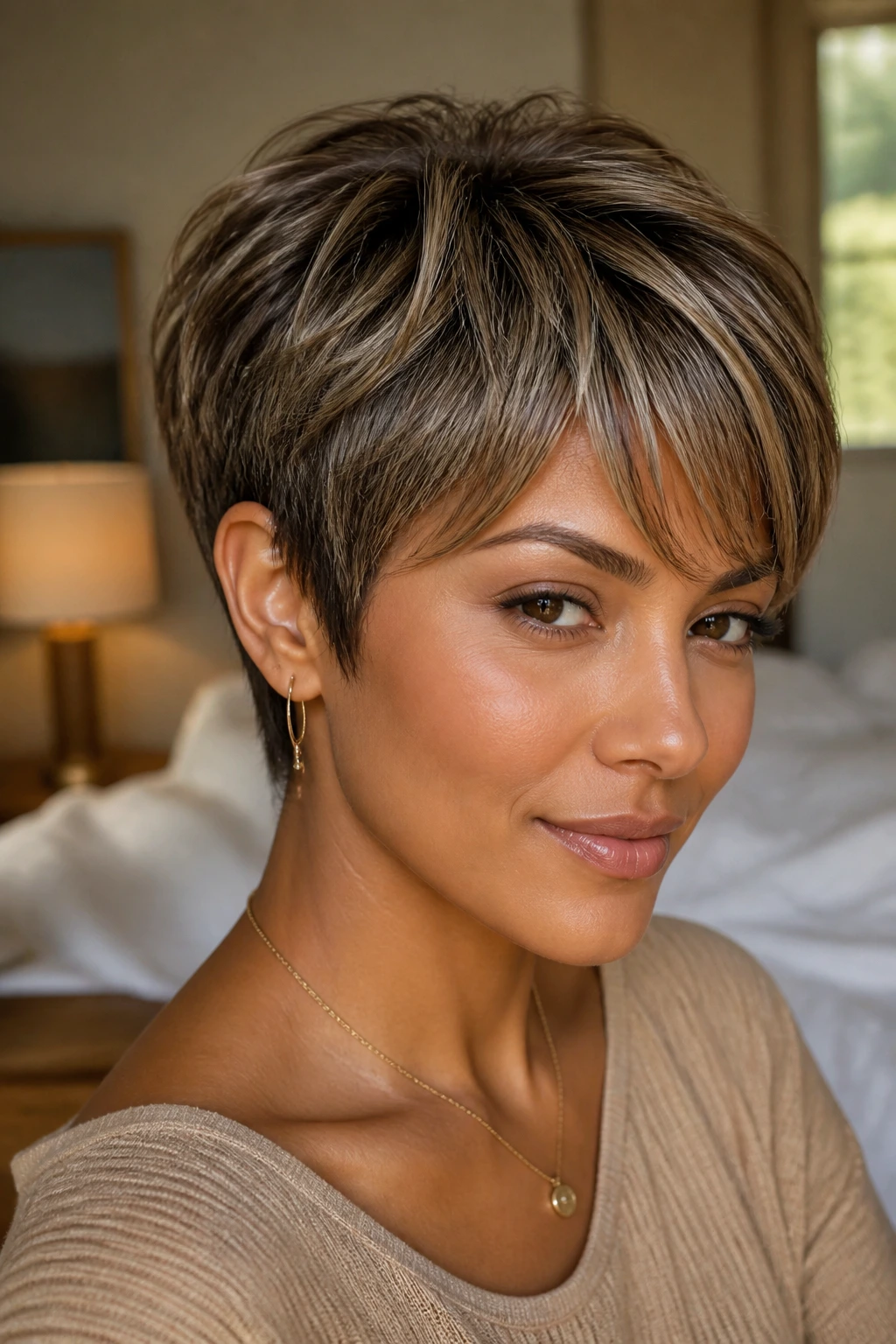
Short hair does not need to be bright everywhere to read dimensional. A pixie cut with micro streaks of honey and caramel can show texture beautifully, especially around the crown, fringe, and sideburn area. On tan skin, the warm tones keep the cut from looking severe.
The best version is tiny and precise. Too much blonde in a pixie can turn the shape into a helmet. Micro streaks let the haircut keep its edges while still giving you some shine and movement. You see it most when the hair is textured with a little paste or pomade and the pieces separate just enough to catch light.
This is a good option if you want color but don’t want a huge maintenance routine. The grow-out is less dramatic than it is on longer hair, and the short length means the highlights travel with the cut instead of sitting there doing nothing.
25. Full-Head Honey Caramel Blend With Extra Shine
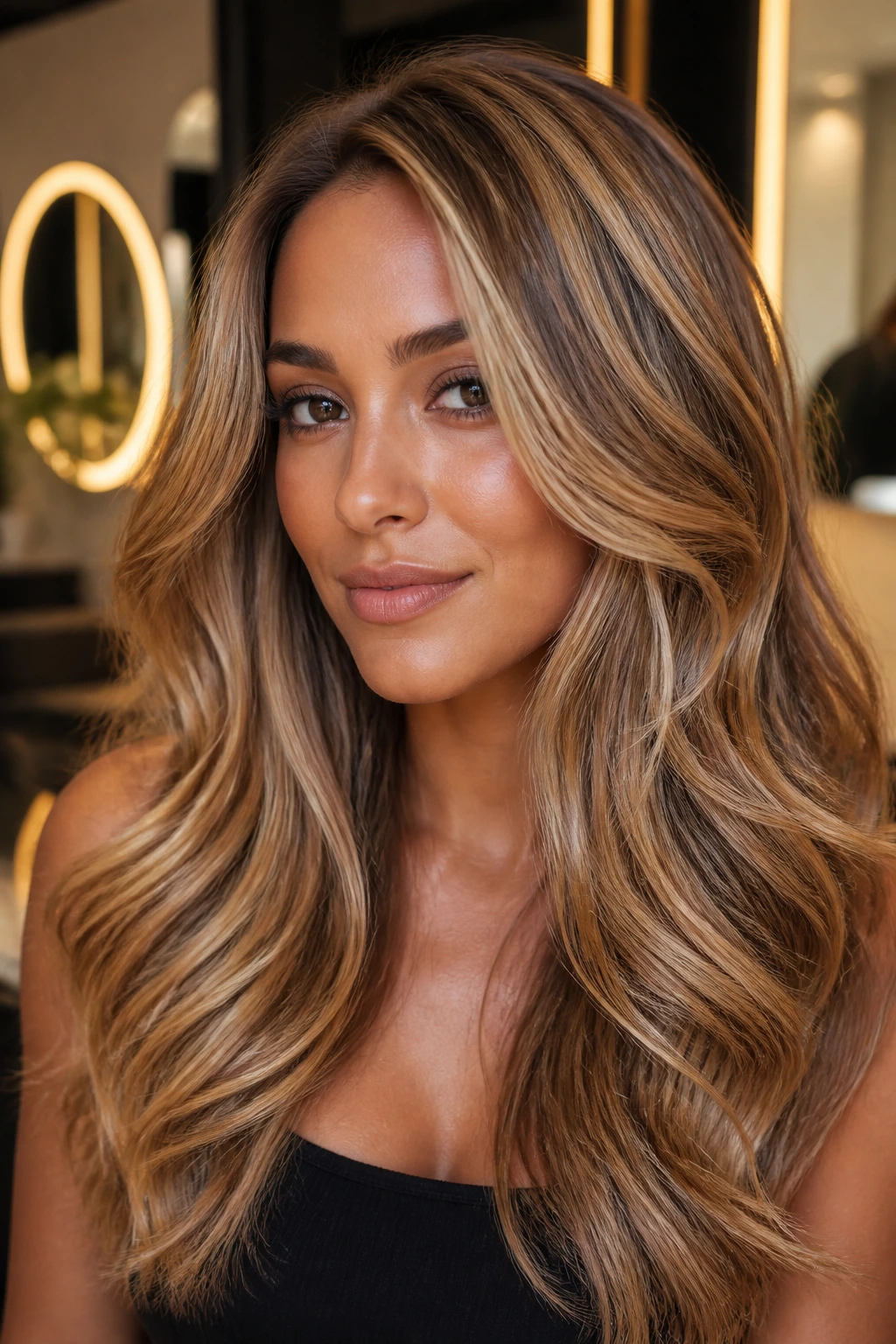
If you want the richest version of this whole idea, go for a full-head honey caramel blend with a lot of tonal variation. Not one flat blonde. Not one solid brown. A mix of honey, caramel, toffee, and deeper lowlight pieces gives tan skin a warm surround that looks balanced from root to tip. The key is keeping the pieces close enough in tone that the hair still feels harmonious.
This is the look that gives you the most movement when you flip your hair, tuck it behind one ear, or wear it in loose curls. It has depth at the base, warmth through the mids, and a brighter finish near the ends. If you like glossy hair that looks touched by light but not bleached out, this is the one to bring to the chair.
A clear gloss or warm demi-permanent glaze at the end makes a big difference. Without it, the blonde can read rough. With it, the whole head looks softer, richer, and more expensive.
Why Honey and Caramel Read So Well on Tan Skin
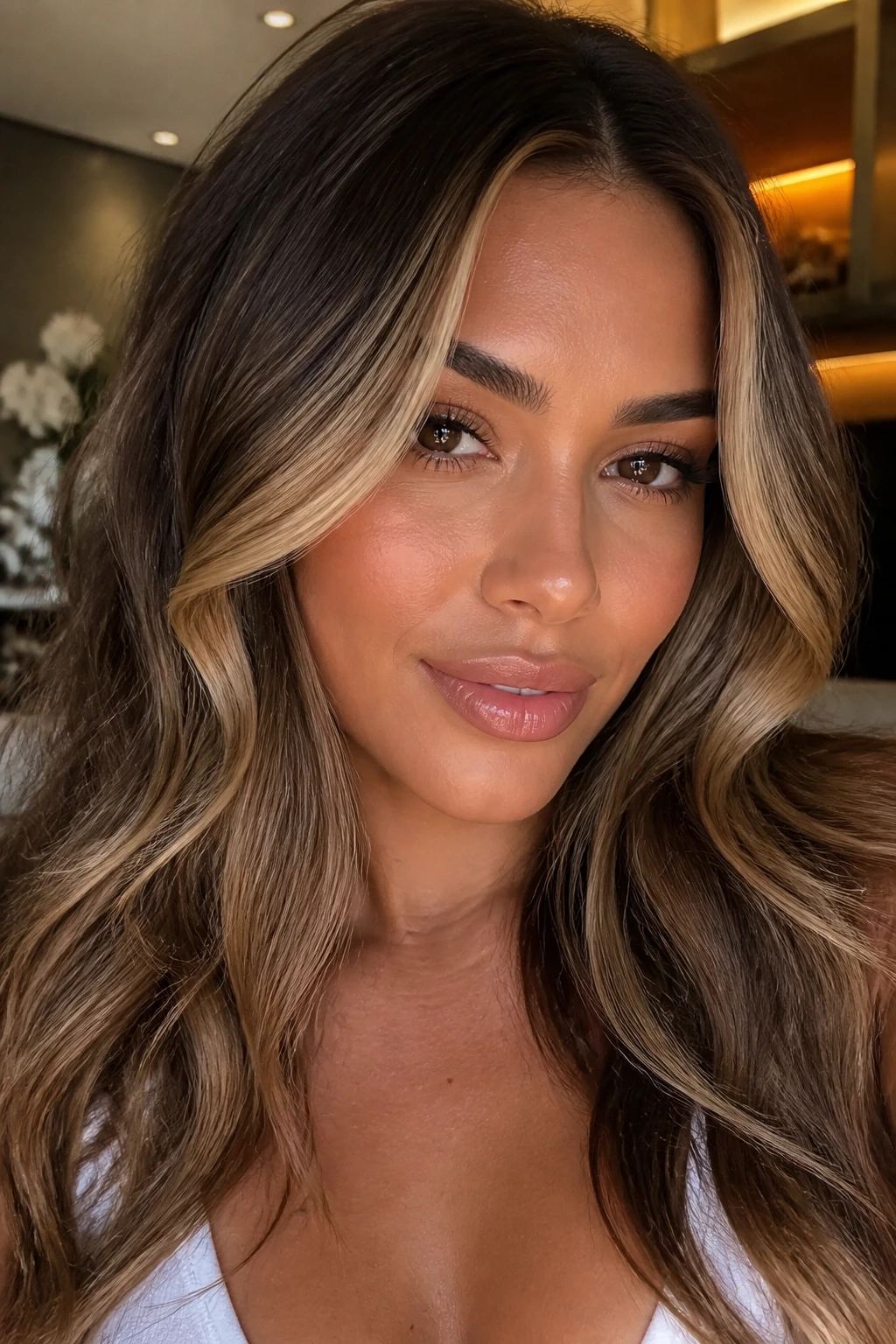
Tan skin already carries warmth, whether that warmth leans golden, olive, neutral, or slightly red under the surface. Honey blonde and caramel sit in the same temperature range, so the hair and skin don’t fight each other. That matters more than people think. A blonde that’s too cool can leave warm skin looking dull. A shade with enough gold and amber keeps the face alive.
Depth is the other half of the equation. Tan skin usually looks better when the hair has a real base — chestnut, espresso, brunette, bronde — and the lighter pieces are layered on top. That contrast gives the complexion room to breathe. If everything is lifted too evenly, the face can lose shape. If the hair is too dark with no light, the skin can feel heavier by comparison. Somewhere in the middle is the sweet spot.
Warm Undertones Need Warm Placement
Golden and olive skin tend to catch warm light in a pretty specific way. Front pieces, crown ribbons, and soft ends reflect back at the face. That is why caramel money pieces, honey babylights, and toffee balayage tend to look so good. They echo what the skin is already doing.
When the Tone Gets Off
Beige can work. Ash can work in tiny doses. But when the blonde goes too pale or too smoky, the hair starts to separate from the skin instead of supporting it. The result is a washed-out line around the face, especially in bright light. I’d rather see a richer honey with a little depth every time.
Tools and Products That Make These Looks Easier to Wear
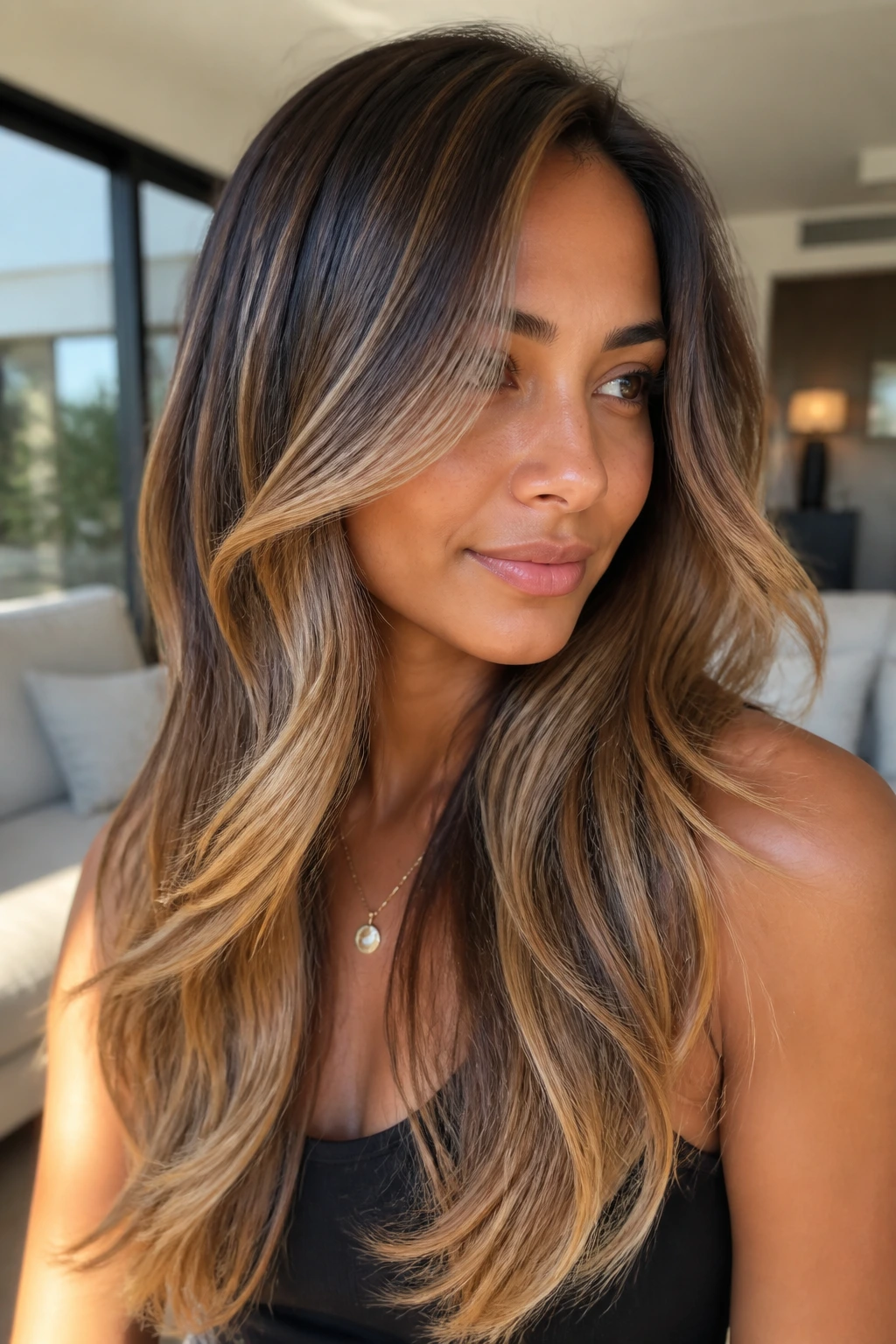
If you’re maintaining honey blonde caramel highlights at home, the tool list is not glamorous, but it matters. Good hair color is half the salon formula and half the upkeep.
- Sulfate-free shampoo: Helps keep the honey tone from fading too fast and keeps the hair from feeling stripped.
- Color-safe conditioner: A simple, everyday conditioner that protects the lighter pieces from drying out.
- Deep conditioning mask: Use it once a week if your hair is highlighted all over, especially after lightening.
- Heat protectant spray or cream: Non-negotiable if you blow-dry, curl, or flat iron.
- Wide-tooth comb: Useful for detangling without roughing up highlighted ends.
- Tail comb: Great for sectioning if you part your hair the same way every day and want to see the placement clearly.
- Clip set: Helps separate crown, sides, and nape when styling or applying a mask.
- Glossing treatment or shine spray: Keeps caramel and honey pieces reflective instead of dry-looking.
- Purple shampoo: Use sparingly. A little can help if the blonde gets too yellow, but too much will mute the warmth that makes these highlights work.
- Microfiber towel: Gentler on highlighted hair than a rough bath towel, especially near the ends.
Choosing the Right Honey, Caramel, and Gloss
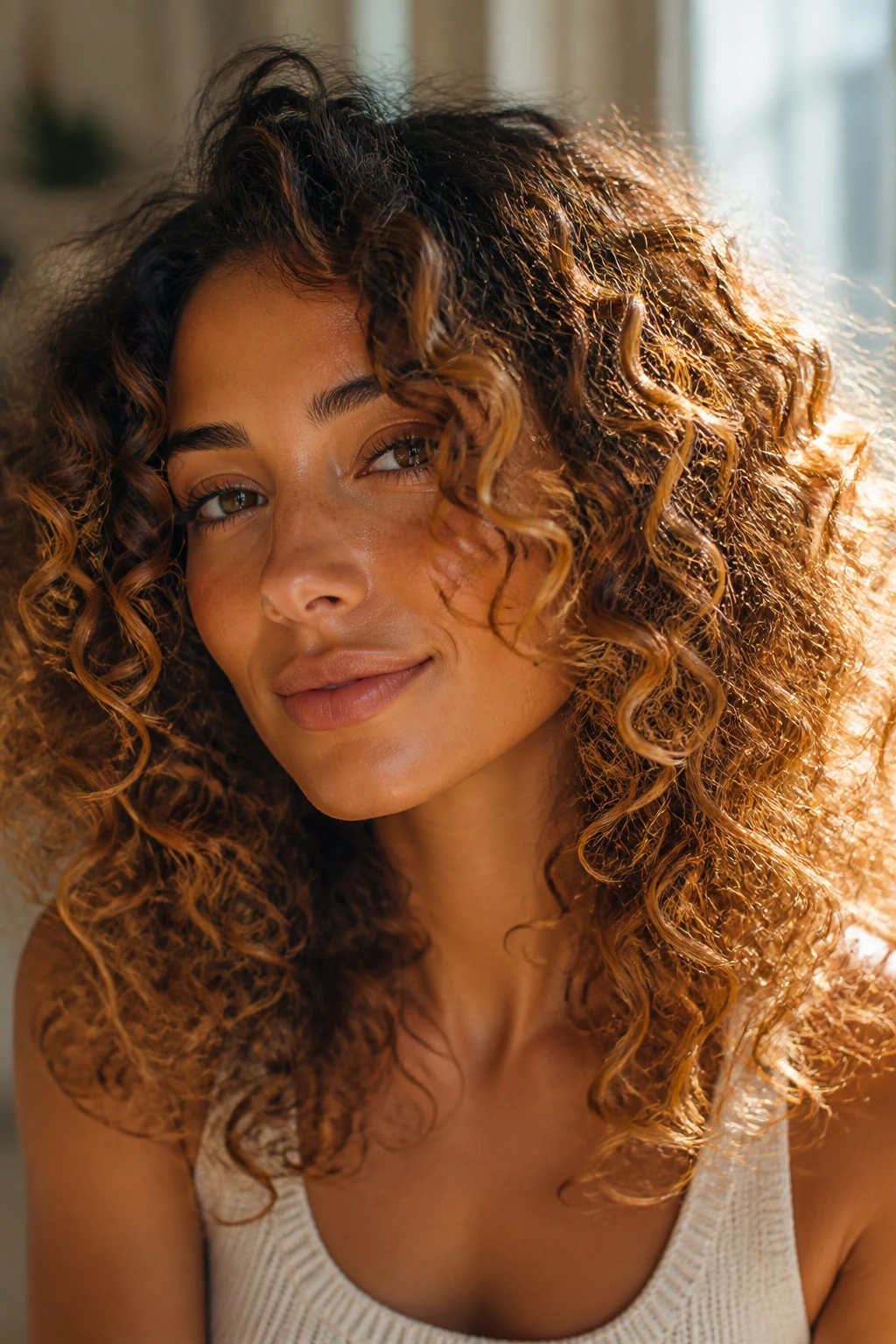
This part saves bad color decisions. Honey, caramel, beige, toffee, amber — all warm, yes, but not interchangeable. Honey is brighter and more golden. Caramel sits deeper and slightly richer. Toffee has more brown in it. Amber lands warmer and can lean a touch orange if overdone. Beige is softer and neutral-warm, which can work beautifully on olive tan skin if the rest of the look stays grounded.
If your skin looks better in gold jewelry than silver, you can usually handle more honey and caramel. If your complexion gets muddy next to orange clothing, keep the blonde more golden-beige and less copper. If your hair is already dark and you want a subtle change, stay closer to caramel than bright blonde. That keeps the contrast wearable.
Base Level Matters Too
A level 4 or 5 base has room for deeper caramel ribbons and warm honey ends. A lighter brown base can take more honey without looking patchy. The lighter the base, the less obvious the contrast needs to be. And if your hair has been colored before, the undertones underneath matter just as much as the new highlights. That’s where a good gloss earns its keep.
How to Wear and Style the Color
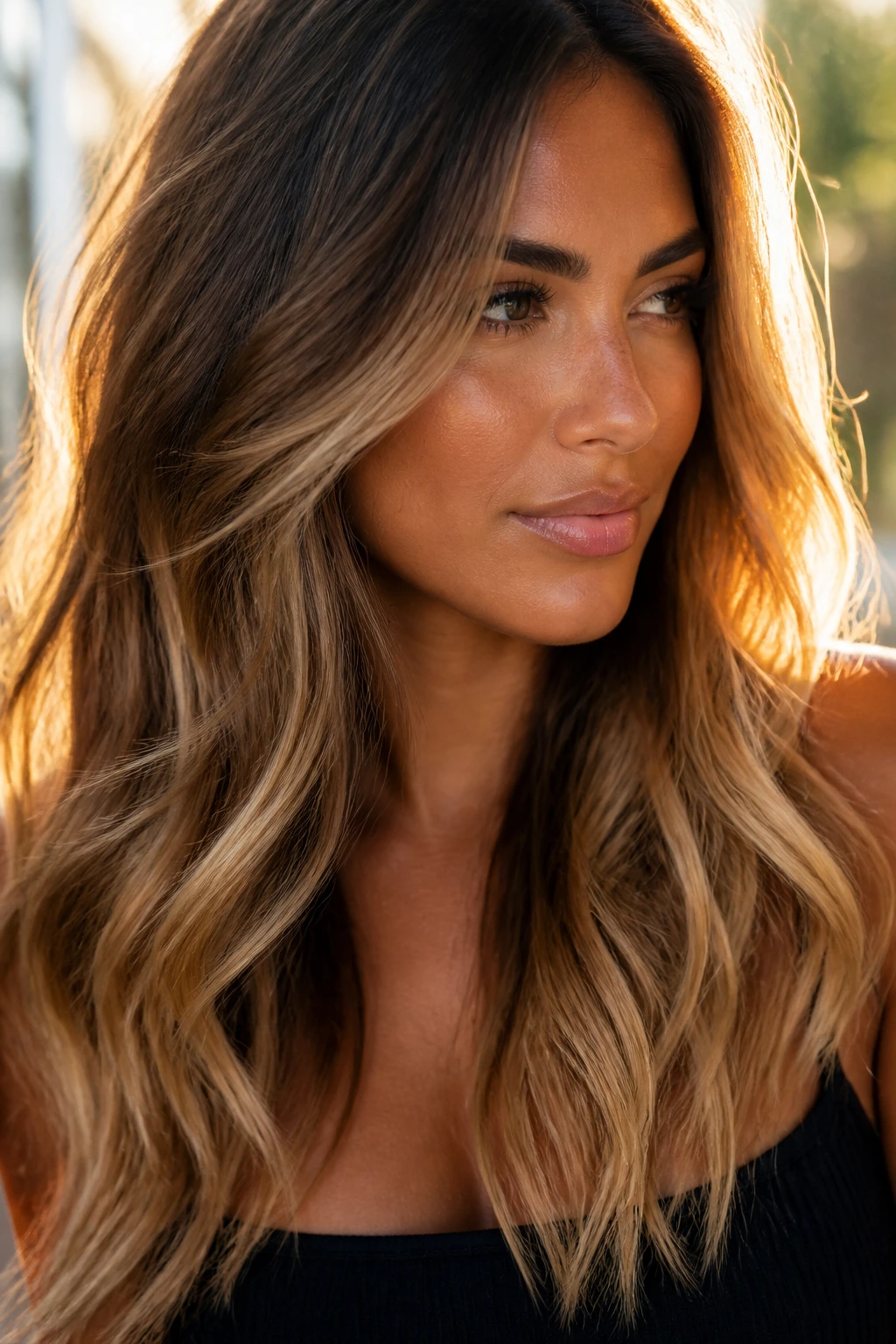
Presentation: Loose waves show off ribboned highlights best, because the bends create tiny shadows and reflections through the hair. A smooth blowout makes honey pieces look polished and expensive. Curls make halo placement pop, while a sleek finish makes face-framing panels look sharper.
Accompaniments: Warm makeup tones tend to sit nicely beside these colors — peach blush, bronzer with a soft golden finish, and lip shades that don’t fight the hair. Cream, camel, olive, chocolate, and rust in clothing also keep the color story coherent. Silver can work, but gold jewelry usually feels easier with honey and caramel.
Portions: For subtle wear, ask for babylights across the top and a few front pieces. For medium impact, choose half-head balayage with some brightness through the ends. For a full statement, combine a money piece, crown lift, and brighter lower ribbons so the whole head has visible dimension.
Beverage Pairing: That label makes more sense in a cafe than a salon, so here’s the real version — wear the color with the vibe that matches it. Soft waves and golden makeup for casual days. Sleek hair and a stronger brow for sharper outfits. The highlights should feel like part of the whole look, not an afterthought.
Small Tweaks That Change the Whole Result
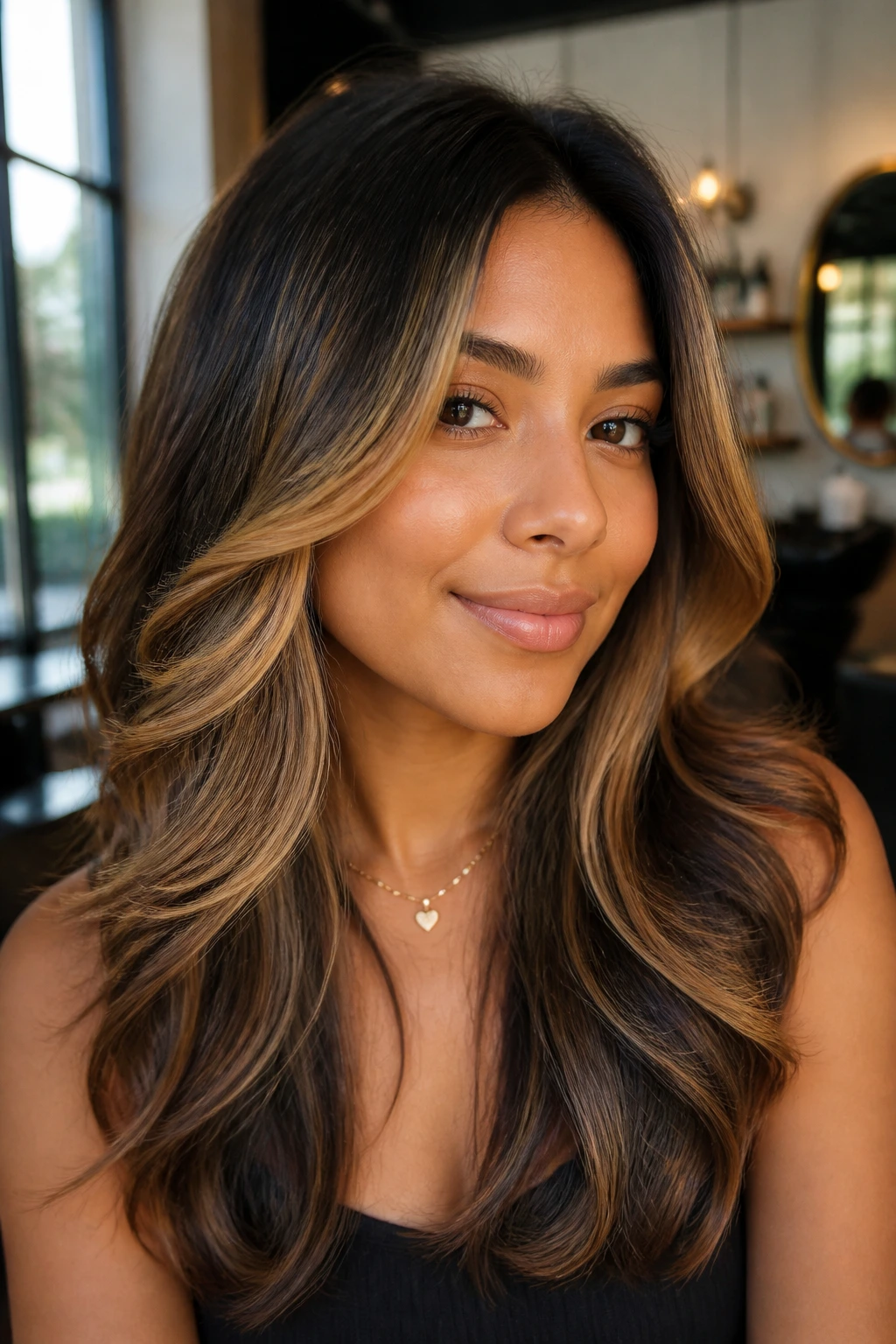
Warmth Boost: Ask for a golden gloss at the sink after highlighting. Even a clear gloss mixed with a warm pigment can keep honey from turning flat and keep caramel from reading muddy.
Customization: Move the lightest pieces closer to the face if you wear a middle part. Push them lower if you wear your hair up often, because those front pieces will do more work around the hairline.
Finish: A drop of lightweight oil on the ends makes the lighter pieces look smoother, but don’t soak the roots. Highlighted hair gets greasy-looking fast at the scalp.
Make-It-Yours: Fine hair usually looks better with thin ribbons and a softer root shadow. Thick hair can hold chunkier placement and more contrast. Curly hair benefits from brighter surface pieces. Straight hair usually needs a little more depth underneath so the color doesn’t look one-note.
Variations and Adaptations to Try
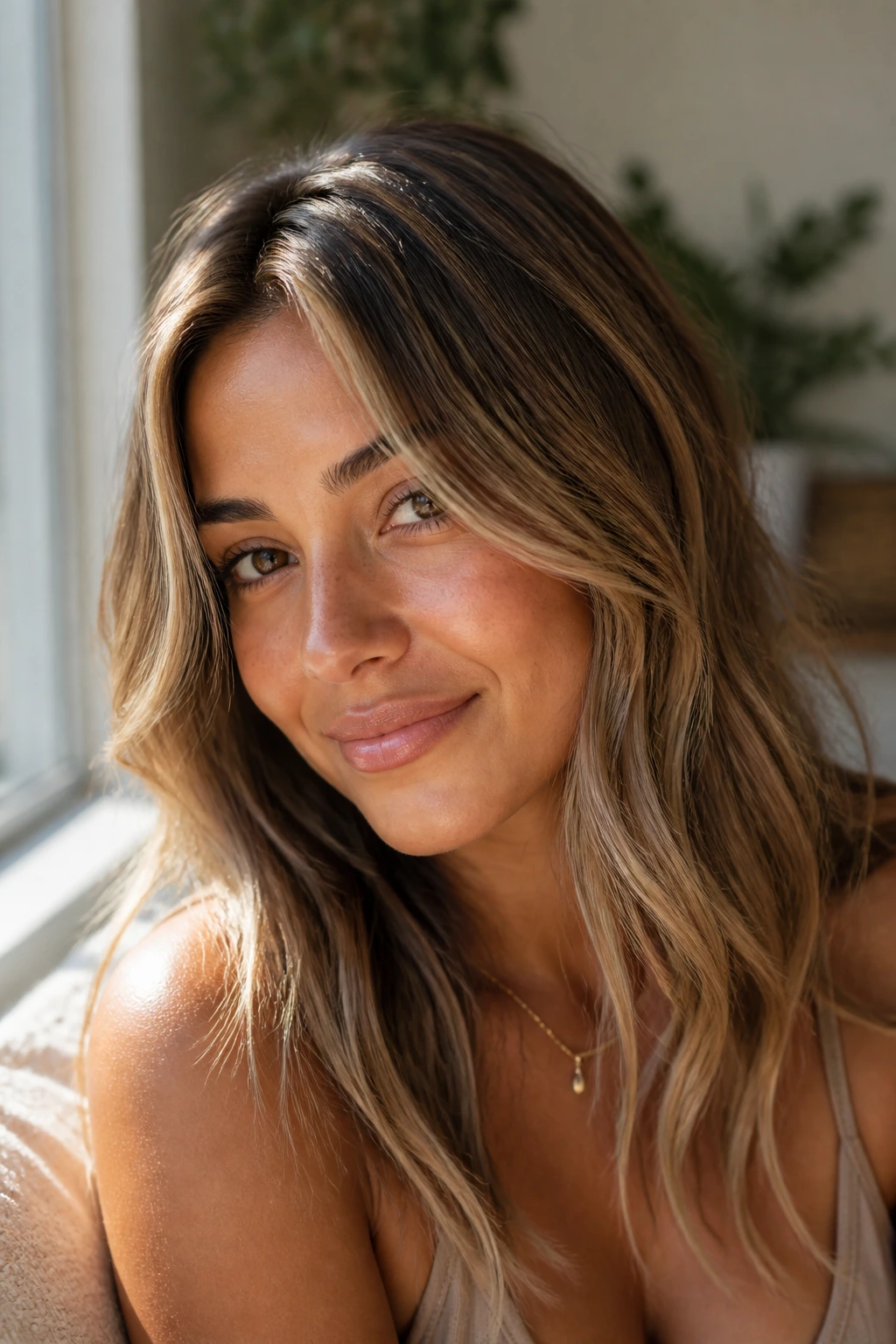
Bronde and Honey Blur: If you want less contrast, ask for a bronde melt with honey placed only on the outer layers. The result is softer grow-out and a color that reads rich instead of bright.
Golden Money Frame: Keep the rest of the hair deeper and focus on a bright front frame plus a few crown pieces. This is a good choice if you wear makeup often and want the face to pop.
Caramel Lowlight Rescue: If your highlights are already too light, add darker caramel ribbons back through the mids and ends. Tan skin usually looks better when there’s some brown left in the mix.
Copper-Honey Sheen: Add a touch of copper through the glaze if your complexion runs golden. This gives the blonde more warmth and keeps the hair from drifting pale beige.
Soft Curly Halo: For curly and coily textures, ask for placement that sits around the surface of the curl pattern, not buried inside it. You’ll get the brightness without losing depth.
Maintenance, Fade-Out, and Refresh Schedule
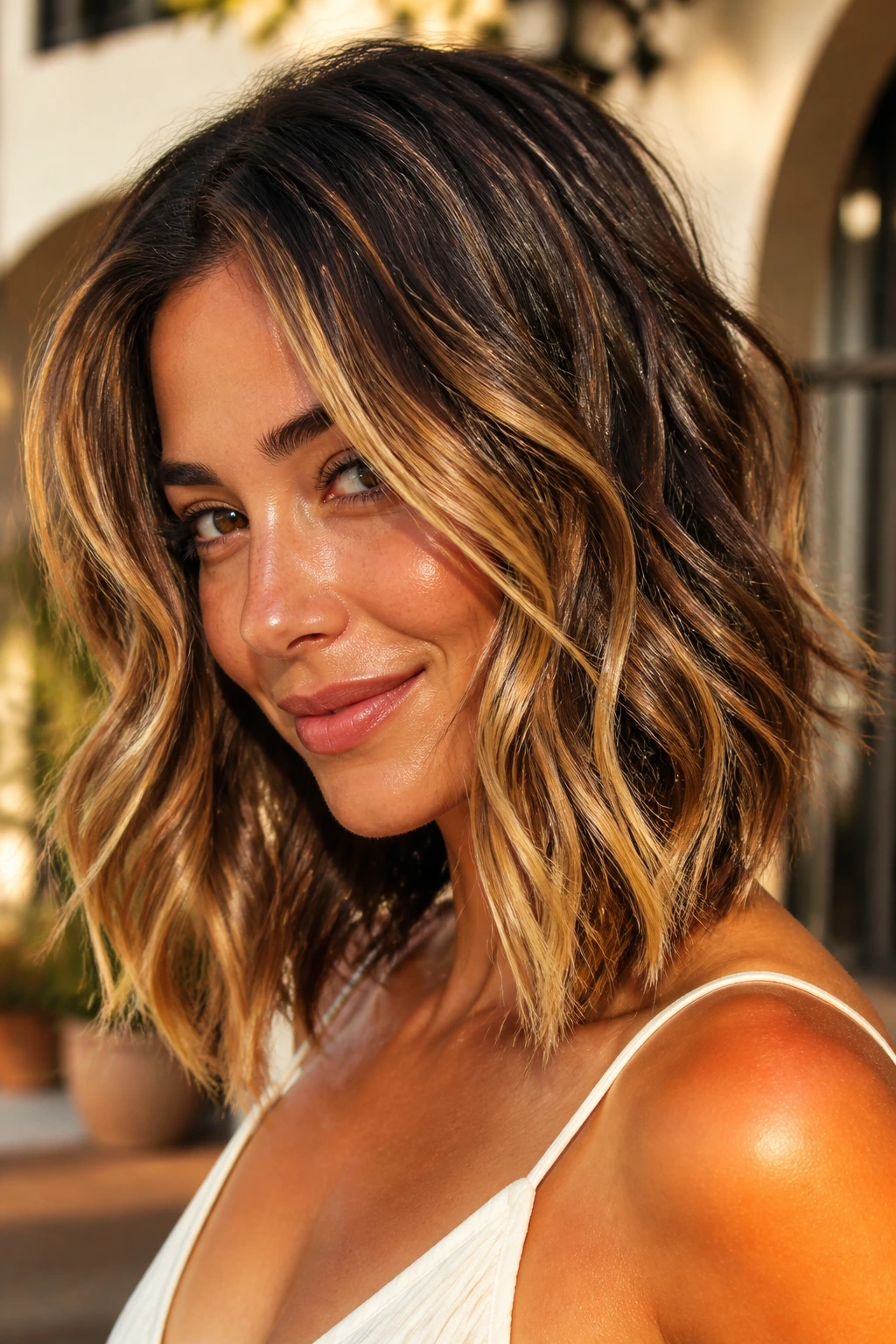
Honey blonde caramel highlights usually need more care than brunette hair, but not every look needs the same attention. A full-head blonde blend will ask more from you than a root-shadowed balayage or a money piece. The lighter the pieces, the more often they need a gloss or toner refresh to stay warm instead of yellow.
A good rule: wash highlighted hair 2 to 3 times a week if you can. Stretching washes helps the tone last and keeps the ends from drying out. Use cool or lukewarm water, not hot. Hot water strips the gloss faster than people expect. A deep mask once a week can keep the lighter pieces soft, especially if the ends were lifted more than two levels.
Salon Timing
- Money pieces and face frames: refresh about every 6 to 8 weeks if you want the front to stay bright.
- Balayage and root-shadowed looks: can often go 8 to 12 weeks before a major touch-up.
- Full-head lighter blends: may need a gloss in between appointments to keep the warmth clean.
If the blonde starts turning too yellow, use a purple shampoo once every one or two weeks, not daily. Too much will mute the honey and steal the warmth that makes the color flattering on tan skin. And if the hair feels rough or looks frayed at the ends, a trim helps more than another toner does.
Common Mistakes to Avoid
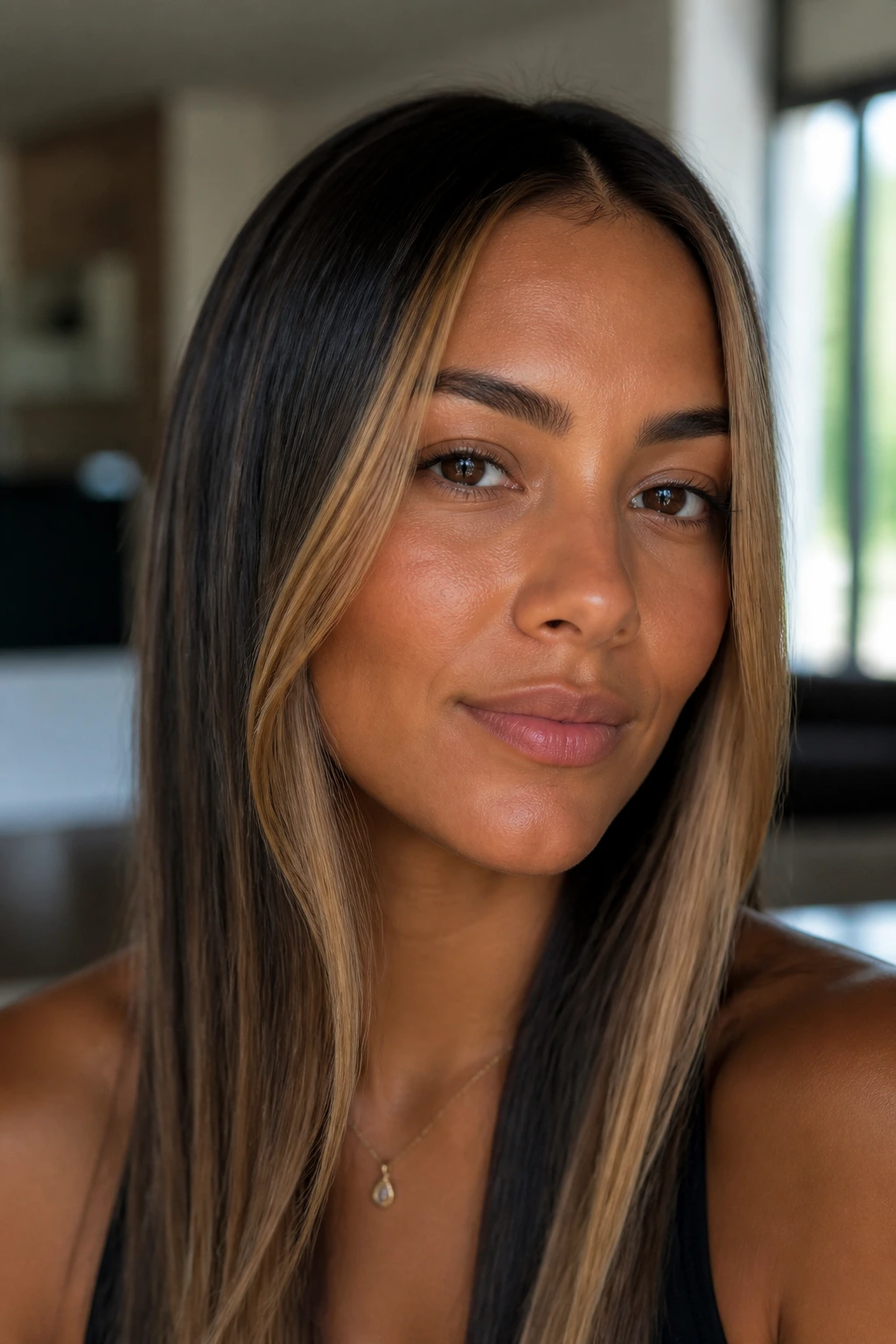
The biggest mistake is going too pale. Tan skin usually needs some warmth left in the hair, and a nearly white highlight can make the complexion look flatter. The fix is easy in theory and annoying in practice: stop one or two levels earlier and ask for a gold or caramel gloss.
Another problem is placing too much brightness all the way to the roots on darker hair. It creates a stripe effect that looks hard instead of dimensional. A root shadow or soft blend near the scalp usually solves it.
Over-toning is sneaky. Hair that has been toned too cool can look smoky for a day, then suddenly dull. If the blonde starts feeling dry and chalky, the issue is often too much ash, not too little product.
Skipping haircut maintenance causes a different mess. Even good highlights can look tired when the ends are blunt, split, or stringy. A clean trim helps the color read fresh because the lighter pieces fall properly.
Last one: ignoring your styling routine. Honey and caramel highlights look best when the hair has movement. If you wear it pin-straight every day and never add shine or bend, even excellent color can fall flat.
Frequently Asked Questions
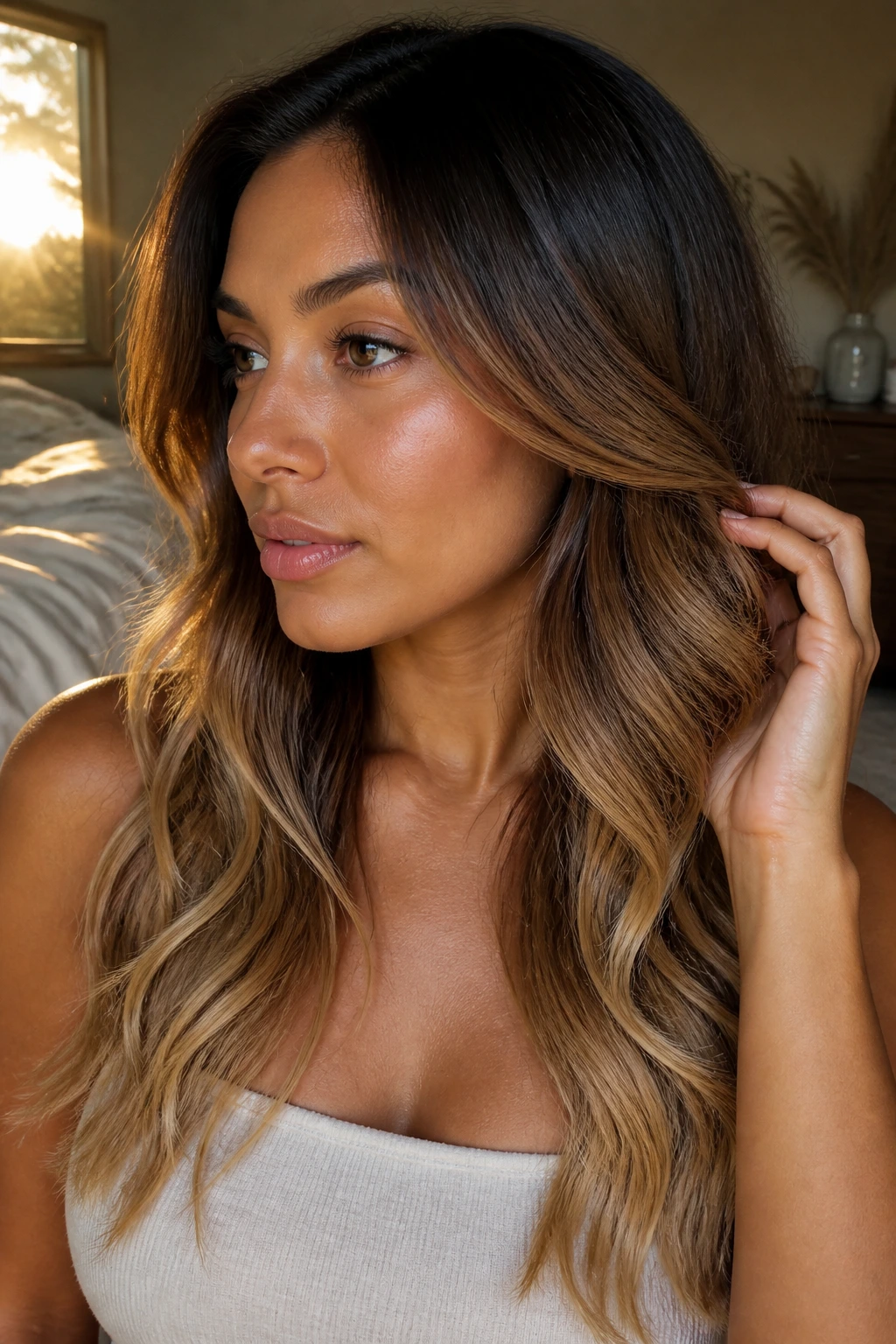
What honey blonde shade looks best on tan skin?
Golden honey with a little depth usually wins. It sits beside warm or neutral tan skin without turning yellow, and it gives the face a cleaner frame than icy beige blonde.
Will caramel highlights work on olive tan skin?
Yes, and sometimes they work better than brighter blonde. Olive skin often likes warmer caramel with neutral depth, since overly golden or overly ashy tones can look off.
Can dark brown or black hair get this look without looking striped?
It can, but the placement has to be softer. Ask for balayage or finely woven highlights with a root shadow so the transition from dark to light stays gradual.
How do I keep honey highlights from turning brassy?
Use sulfate-free shampoo, avoid scorching-hot water, and don’t overdo purple shampoo. A warm gloss every so often helps keep the blonde golden instead of yellow-orange.
Is balayage better than foil highlights for tan skin?
Balayage gives a softer grow-out and usually feels more natural. Foils can be better if you want a brighter front piece or a stronger blonde result, especially on darker bases.
What if the highlights look too orange after coloring?
That usually means the toner leaned too warm or the hair lifted unevenly. A salon gloss can cool it slightly, but the better fix is usually a more balanced glaze rather than trying to fight the warmth completely.
Do these highlights work on curly hair?
They do, and curly hair often makes the color look richer. The trick is placement on the surface of the curl pattern so the light sits where it can actually be seen.
How often should I touch up this kind of color?
For softer balayage or root-shadowed looks, every 8 to 12 weeks is common. Brighter face-framing pieces may need attention sooner if you want the front to stay crisp.
The Warm Finish
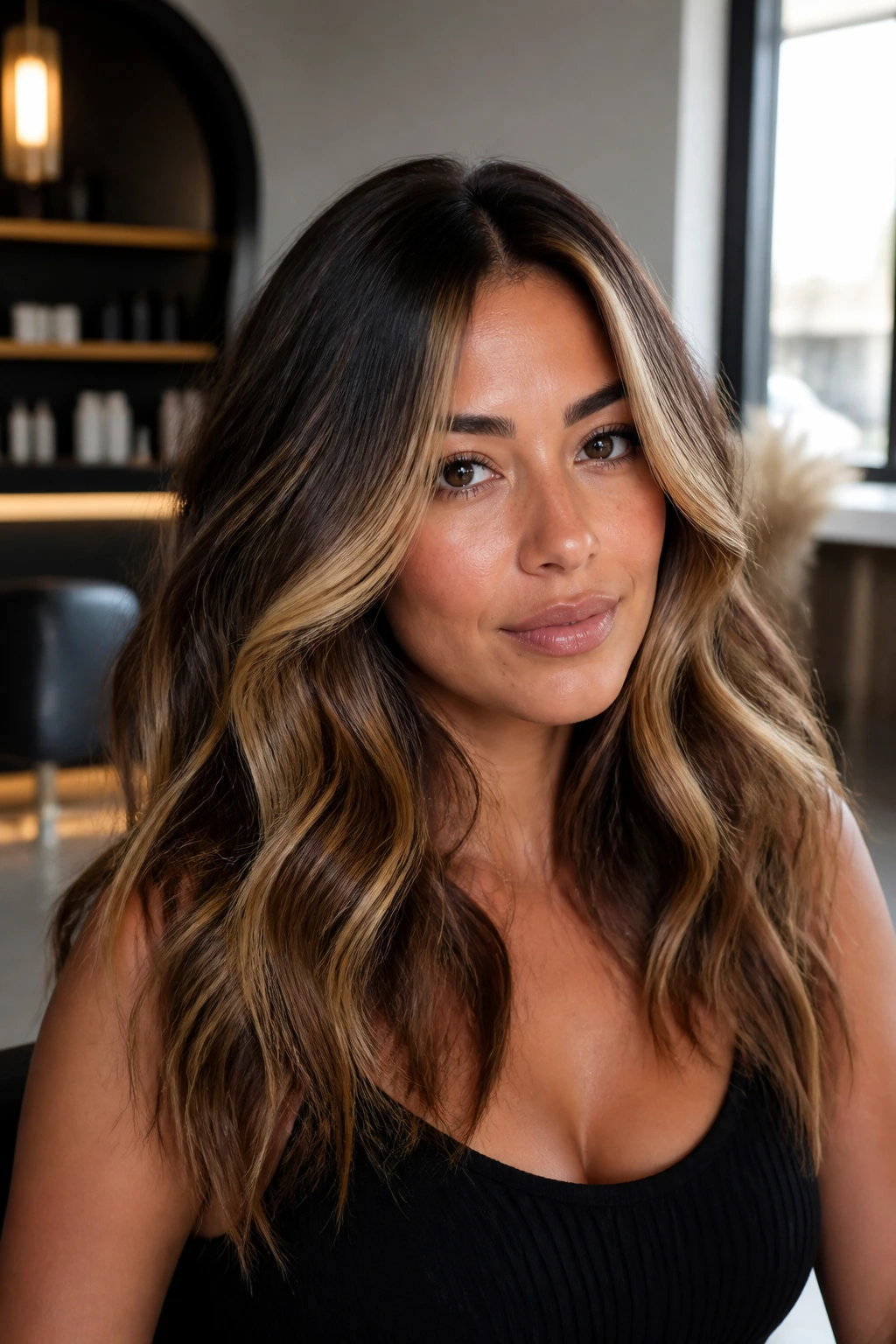
Honey blonde caramel highlights for tan skin work because they respect the skin’s warmth instead of trying to cancel it out. That sounds simple, but it’s the whole game. A thoughtful placement, a believable shade, and a gloss that keeps the color alive can do more than a full head of blonde ever will.
If you’re bringing this idea to a stylist, bring a photo and a clear opinion about two things: how bright you want the front, and how much root you’re willing to live with. That’s where the real decision lives. The shade is only half the story; the rest is how the color grows, moves, and frames your face when you’re not thinking about it.