



Blonde on deep skin does not have to whisper. The right spring blonde hairstyles for deep skin tones have enough warmth, depth, or crisp contrast to make the face look lifted instead of washed out, and that difference shows up fast in daylight. Honey, caramel, champagne, butter, and even a controlled platinum can all look gorgeous here — but only when the shade has a plan.
The mistake I see most often is treating blonde like a single color. It isn’t. On a deep complexion, blonde behaves more like a family of tones, and the exact sibling you pick changes everything: honey reads sunlit, beige reads soft, champagne reads polished, platinum reads sharp, and a rooted blonde can suddenly make the whole look feel expensive instead of loud. Texture matters too. A braid, a twist, a curl, or a layered bob gives the eye somewhere to land, which keeps the color from flattening out.
The 25 looks below range from protective styles to silk presses, wigs, short cuts, and textured installs. Some are low-commitment. Some ask for a stylist with a steady hand and a good toner. All of them can work on deep skin when the blonde is chosen with the undertone in mind and the shape does a little of the heavy lifting.
Why These Blonde Looks Work So Well on Deep Skin
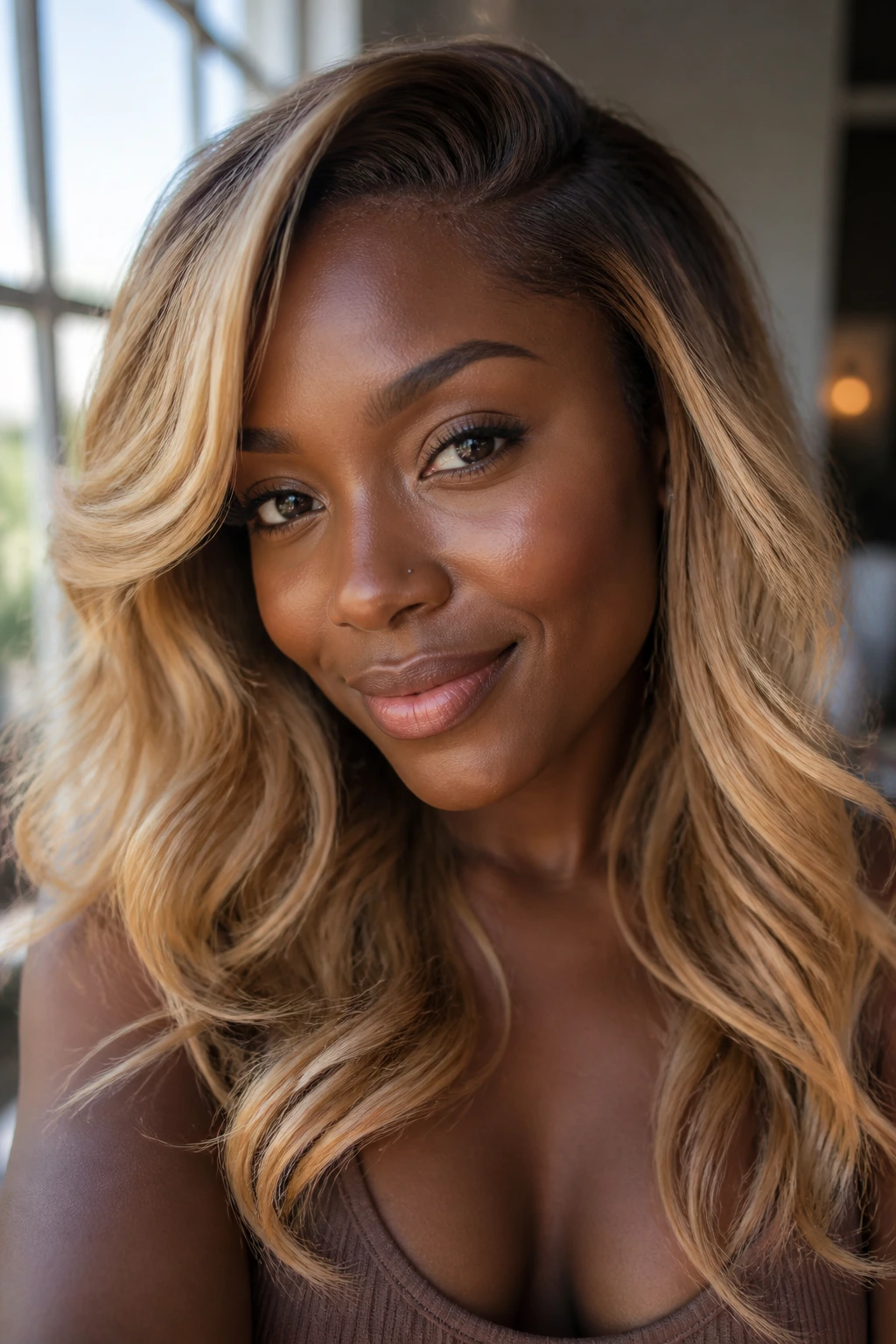
Warmth does a lot of the work: honey, caramel, butter, and golden beige sit close to the undertones many deep complexions already carry, so the color looks like it belongs there instead of fighting the skin.
Contrast needs some control: a deeper root, shadow melt, or darker braid base keeps the blonde from floating on top of the face like a paper cutout.
Texture saves flat color: curls, twists, locs, braids, and layered cuts break up the light so blonde looks dimensional instead of chalky.
Placement matters more than brightness: face-framing pieces, bright ends, or a highlighted top layer usually flatter faster than an all-over pale blonde.
Maintenance is part of the look: lighter blondes need toning, glossing, or careful cleansing, while deeper blondes can ride a little longer between refreshes.
How to Choose a Blonde Shade That Flatters Your Undertone
The safest place to start is with undertone, not with the shade card that looks prettiest under fluorescent salon lights. Deep skin can wear a huge range of blondes, but the tone needs to echo something already happening in the complexion. That’s the part people skip, then wonder why the blonde looks muddy, brassy, or weirdly pale against their face.
Warm undertones usually love honey, caramel, copper-gold, butter, and toasted beige. These shades make the skin look richer, not redder, and they play nicely with gold jewelry and warm makeup. If you want something bright but not icy, this is the lane.
Neutral undertones can slide between warm and cool, which gives you room for champagne blonde, soft beige, or a rooted butter blonde. Keep some depth at the base. Neutral skin can handle contrast, but a little shadow root makes the style look finished instead of over-bleached.
Cool undertones can wear platinum, ash-gold, and champagne with a cooler edge, but I’d still keep a darker root or a smoky glaze in the mix. Full-on pale yellow without depth tends to look harsh on deep skin, even when the actual lift is clean. A little control goes a long way.
One more thing people forget: the haircut or style itself changes the blonde. A sharp pixie can carry a paler tone than a long, straight install because the cut gives the color structure. A curly bob can hold a buttery blonde better than pin-straight lengths because the bends keep the light moving. That’s why the style matters just as much as the shade.
1. Honey Blonde Knotless Braids with Curved Ends
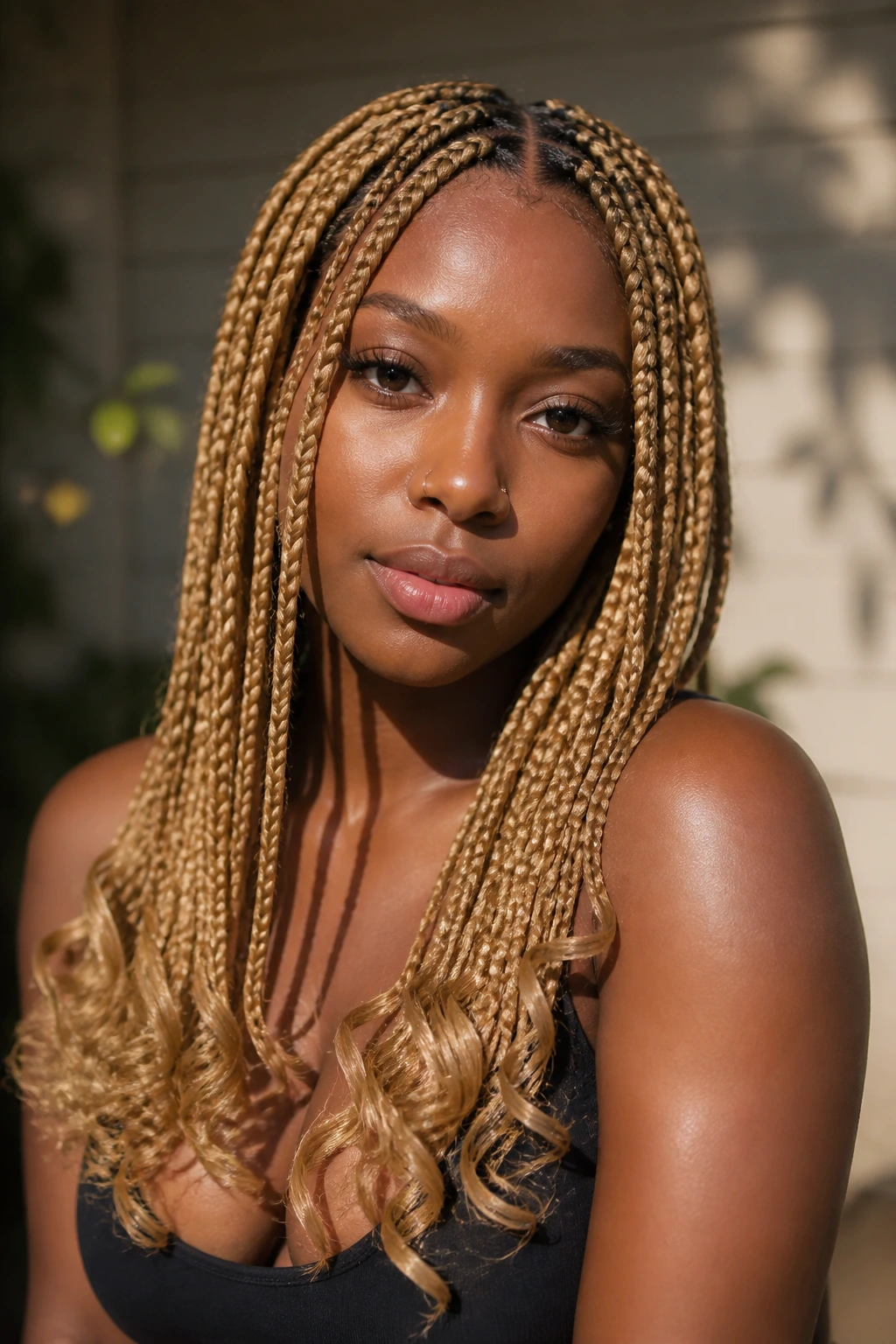
Honey blonde knotless braids are one of those looks that never need to shout. The color sits right in that warm middle ground — bright enough for spring, soft enough to flatter deep skin without bleaching the life out of the face. Add curved ends and the whole thing feels lighter, almost airy, instead of heavy at the shoulders.
Why It Works
The braid base can stay just a shade deeper than the extensions, which gives the scalp some breathing room and stops the color from looking flat at the root. I like this with 20 to 24 inches of pre-stretched hair, usually a mix that leans honey or golden blonde rather than platinum. If you want extra softness, curl the ends with hot water or a light rod set.
This is also a practical choice. The style can go 4 to 6 weeks if you keep the scalp clean and the braids wrapped at night, and the color stays readable even when the roots grow out a little. That “grown-in” look usually makes deep skin look more radiant, not less.
Best shade note: ask for a honey blend, not a brassy yellow.
2. Caramel Face-Frame Silk Press
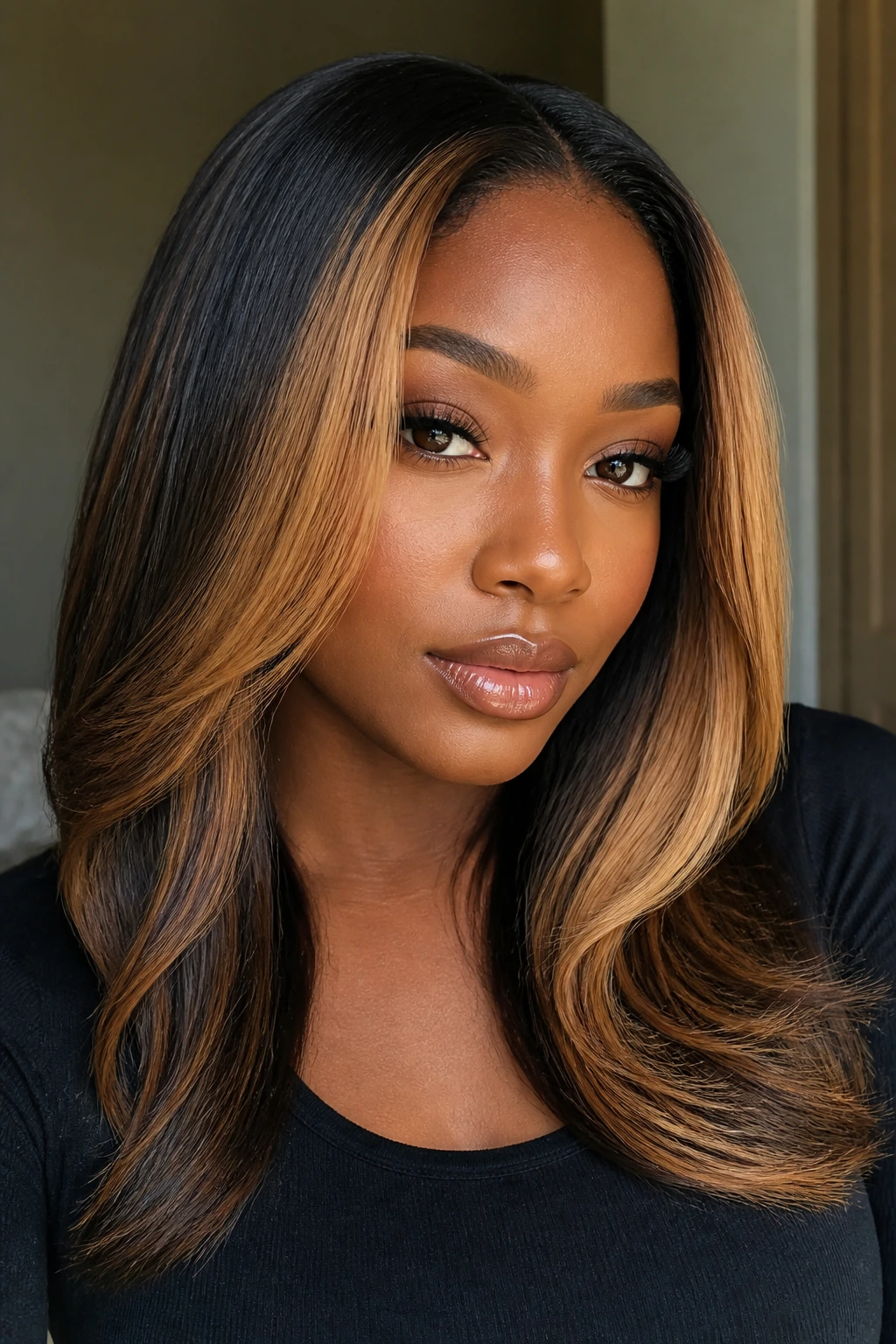
Can a silk press look springy instead of stiff? Absolutely — if the blonde is used around the face instead of all over the head. Caramel face-framing pieces give deep skin that lifted, luminous effect without turning the whole style into a maintenance headache.
Where It Shines
This works best when the stylist leaves the roots darker and paints the lighter pieces around the cheekbones, temples, and ends. A 1- to 2-inch face frame is enough. Too much brightness at the front can look stripey; too little and you lose the point. The rest of the hair can stay a rich brown or soft chestnut so the caramel reads as highlight, not costume.
A silk press like this looks sharp with a middle part, a tucked-behind-the-ear shape, or soft bends at the ends. Keep heat under control — usually around 375°F to 400°F depending on texture and condition — and use a protectant that doesn’t leave the hair greasy. Clean shine, not oily shine. That’s the difference.
3. Butter Blonde Curly Bob
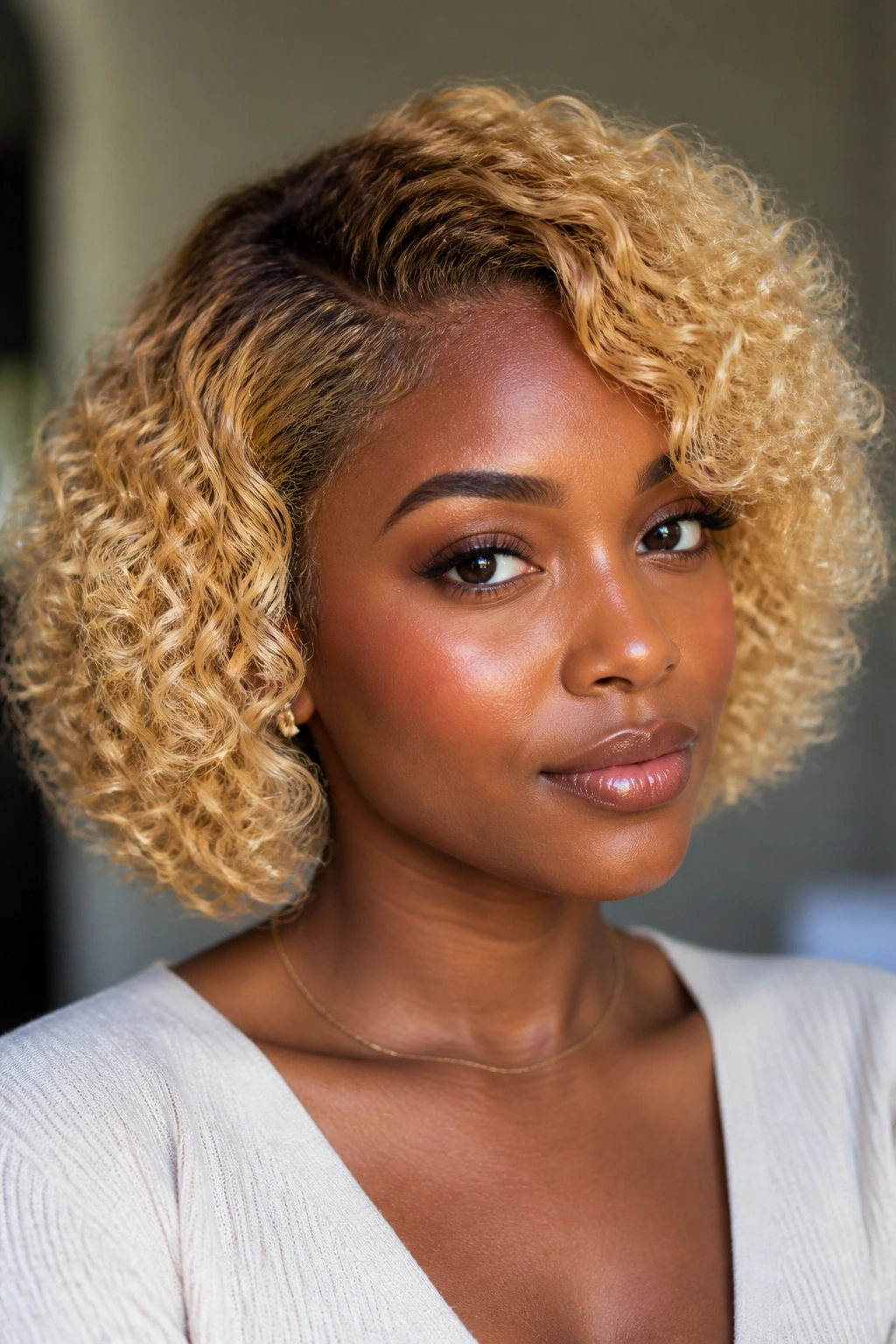
Butter blonde on curls has a sweetness that straight hair doesn’t quite catch. The curl pattern breaks the light, so the blonde flickers instead of sitting in one flat plane, and that makes deep skin look warm and alive rather than overexposed.
A bob that lands between the jaw and collarbone is the sweet spot here. Short enough to keep the tone vivid, long enough to show the curl pattern. Ask for buttery ends and a slightly deeper root, because that little shadow makes the blonde feel intentional. If the hair is on the finer side, a layered cut keeps the shape from collapsing under the color.
Quick take
- Best for looser curls, wand curls, or defined natural curls
- Works well at level 8 to 9 blonde depth
- Needs a curl cream that won’t dull the finish
- Looks best with side parting or a soft off-center part
4. Champagne Afro Puff
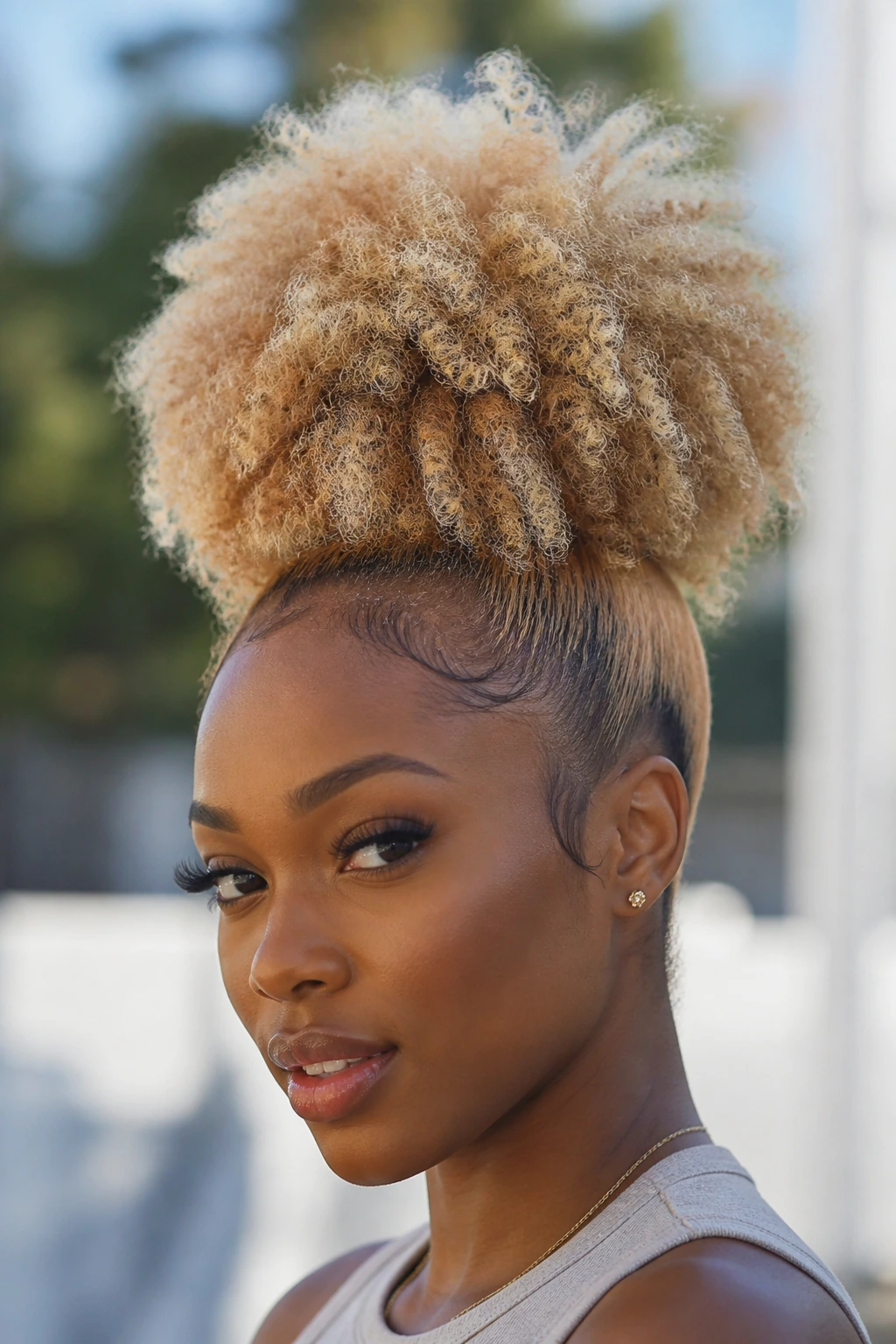
A champagne afro puff reads polished in a way that feels almost sneaky. You get height, texture, and that pale-gold sparkle around the crown, but the natural hairline and puff shape keep it grounded against deep skin.
This style works because the color sits inside a strong silhouette. The puff itself does the styling work, so the blonde can stay lighter without looking disconnected. Champagne is a better fit than icy platinum here — it has enough softness to flatter the skin, but still catches daylight beautifully around the edges. A small swoop of laid edges or a wrapped scarf at the base keeps the puff from looking unfinished.
If you want a dressier version, clip in a curly drawstring puff in champagne or beige blonde and leave your own hair polished underneath. That gives you height without having to over-style the natural texture.
5. Rooted Blonde Box Braids
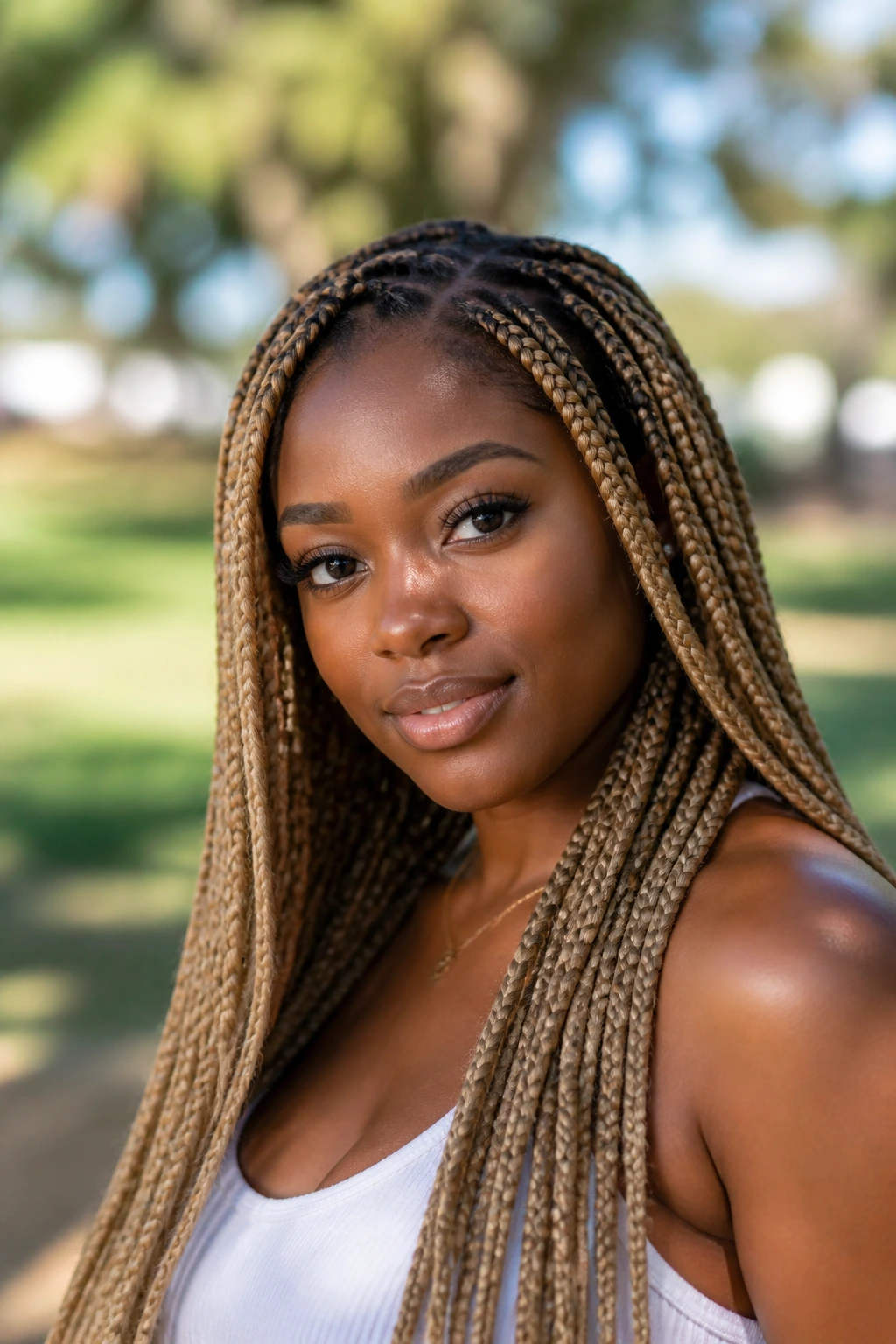
Rooted blonde box braids are for people who want contrast without the full commitment of bleach-heavy brightness. The darker base lets deep skin hold onto its depth, while the blonde lengths bring spring energy once the braids move.
The real trick here is balance. Keep the root 1 to 3 shades darker than the body of the braid. That shadow makes the entire style look richer and gives the blonde somewhere to land. I like a mix of caramel and honey blonde rather than flat yellow, especially if the braids are medium-size and long enough to swing a little.
A blunt finish can look a bit heavy, so a soft taper or bead detail at the ends helps. The style gets even better when the braids are parted cleanly and the scalp is moisturized without being slick. Greasy roots make blonde braids look cheap. Clean parts make them look sharp.
6. Cream Soda Butterfly Locs
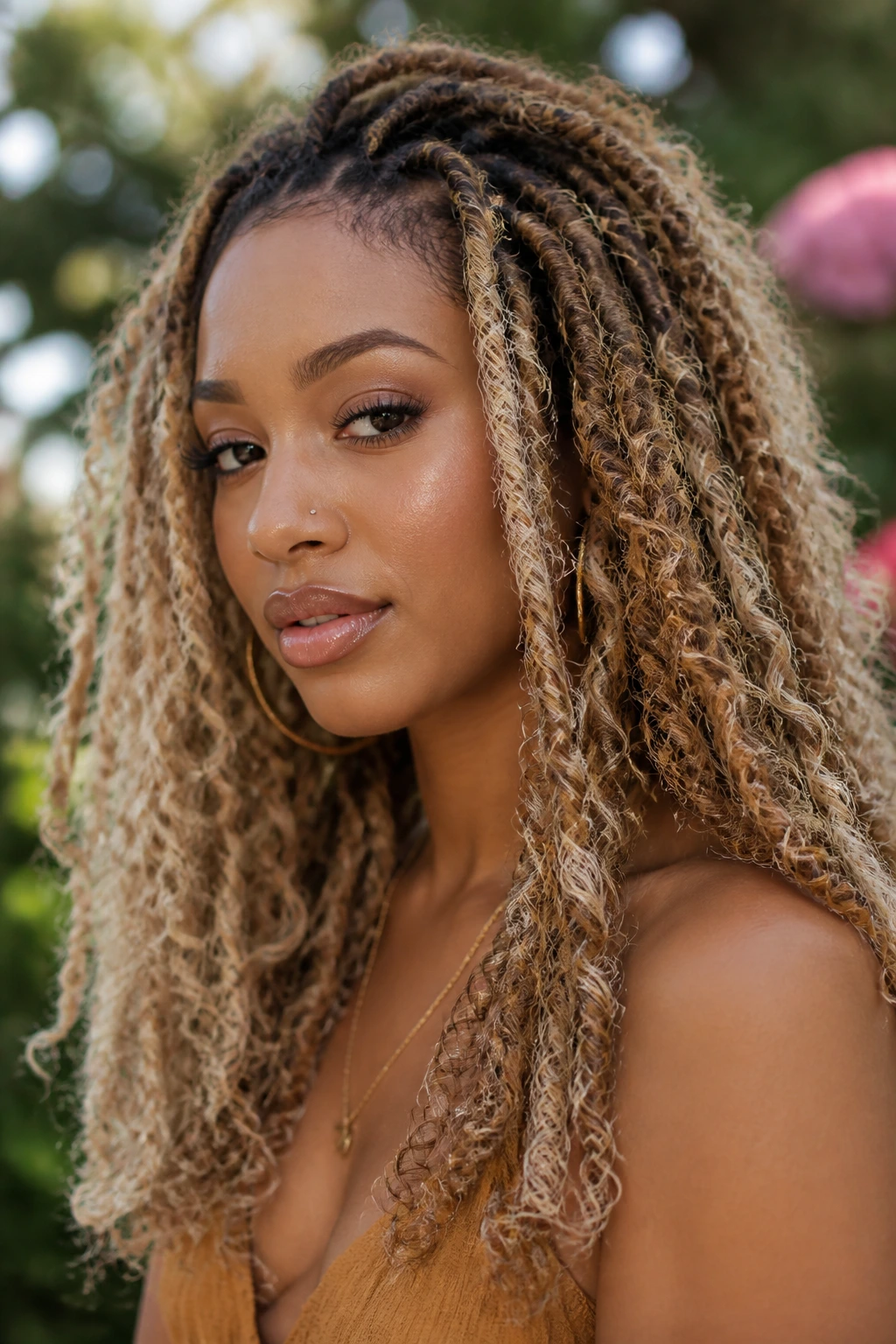
Cream soda butterfly locs have that easy, undone texture that feels right for spring. The blonde doesn’t need to be pale to stand out; in fact, a cream soda mix — beige, caramel, and soft blonde — usually flatters deep skin better than a harsh light blonde.
The looped texture of butterfly locs is the whole point. It breaks up the color so your eye sees movement first and shade second. That means you can wear more blonde without the style looking overprocessed. Ask for a shaded root and a slightly distressed finish through the mid-lengths. Too neat, and the color can look stiff. Too messy, and the blonde loses its shape.
This is one of the best low-manipulation options on the list. A quick mousse refresh and a silk scarf at night usually keep it presentable for weeks.
7. Golden Balayage Curly Lob
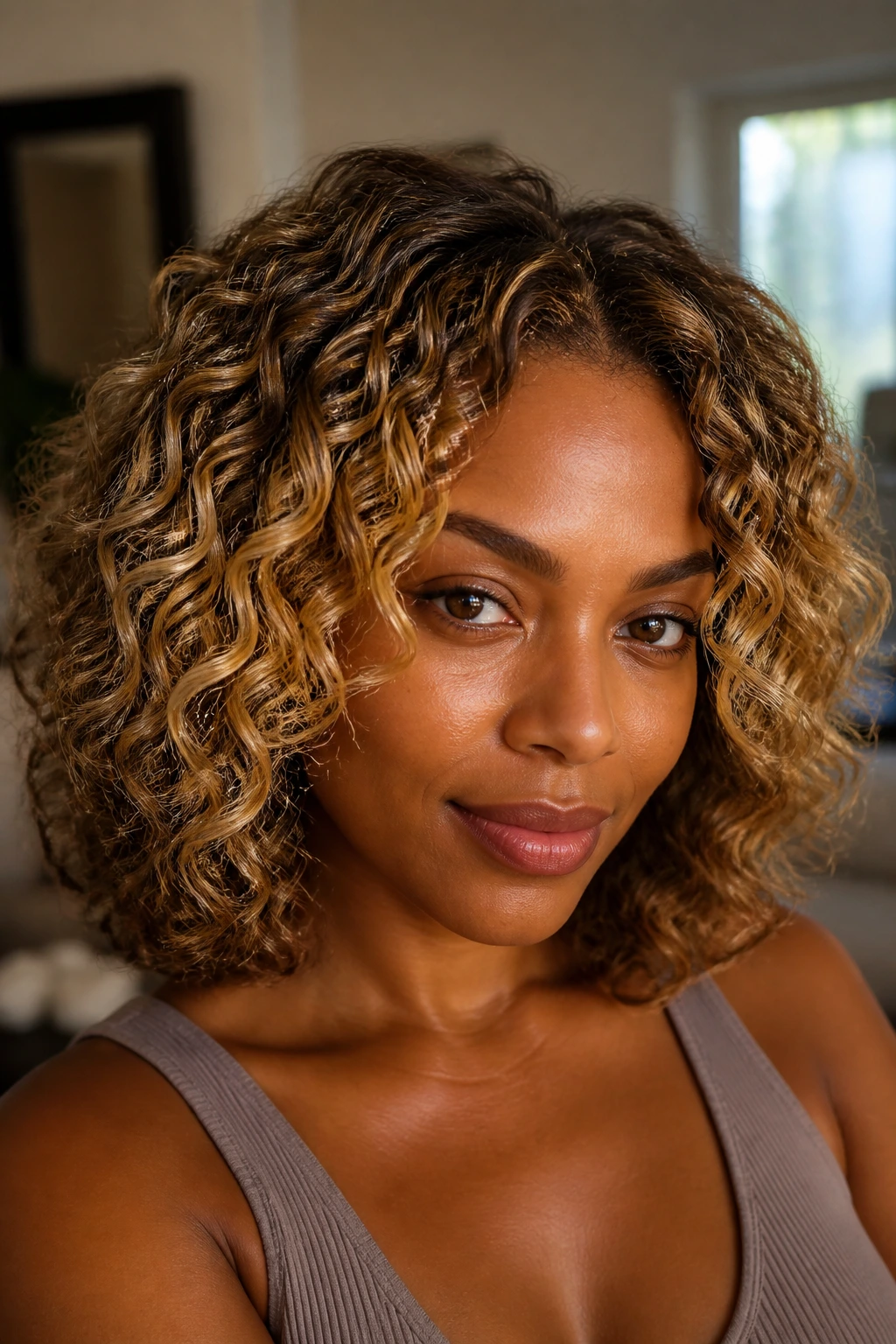
Golden balayage on a curly lob is one of my favorites because it doesn’t rely on the blonde to do everything. The cut gives structure, the curl gives movement, and the balayage gives enough brightness to catch light without bleaching the whole head.
A lob that grazes the collarbone is ideal. Shorter than that, the color can look a bit abrupt; longer than that, and the highlights can disappear in the curl pattern. Ask for golden ribbons concentrated around the top layers and face frame, with deeper color underneath. That keeps the style dimensional from every angle.
What to watch for
- Keep the brightest pieces away from the nape so the cut doesn’t look stripey
- Use a gloss every 4 to 6 weeks if the gold starts to dull
- Diffuse on low heat to keep the curl pattern soft
- Pair with warm makeup tones if you want the blonde to read richer
8. Platinum Pixie with Shadow Root
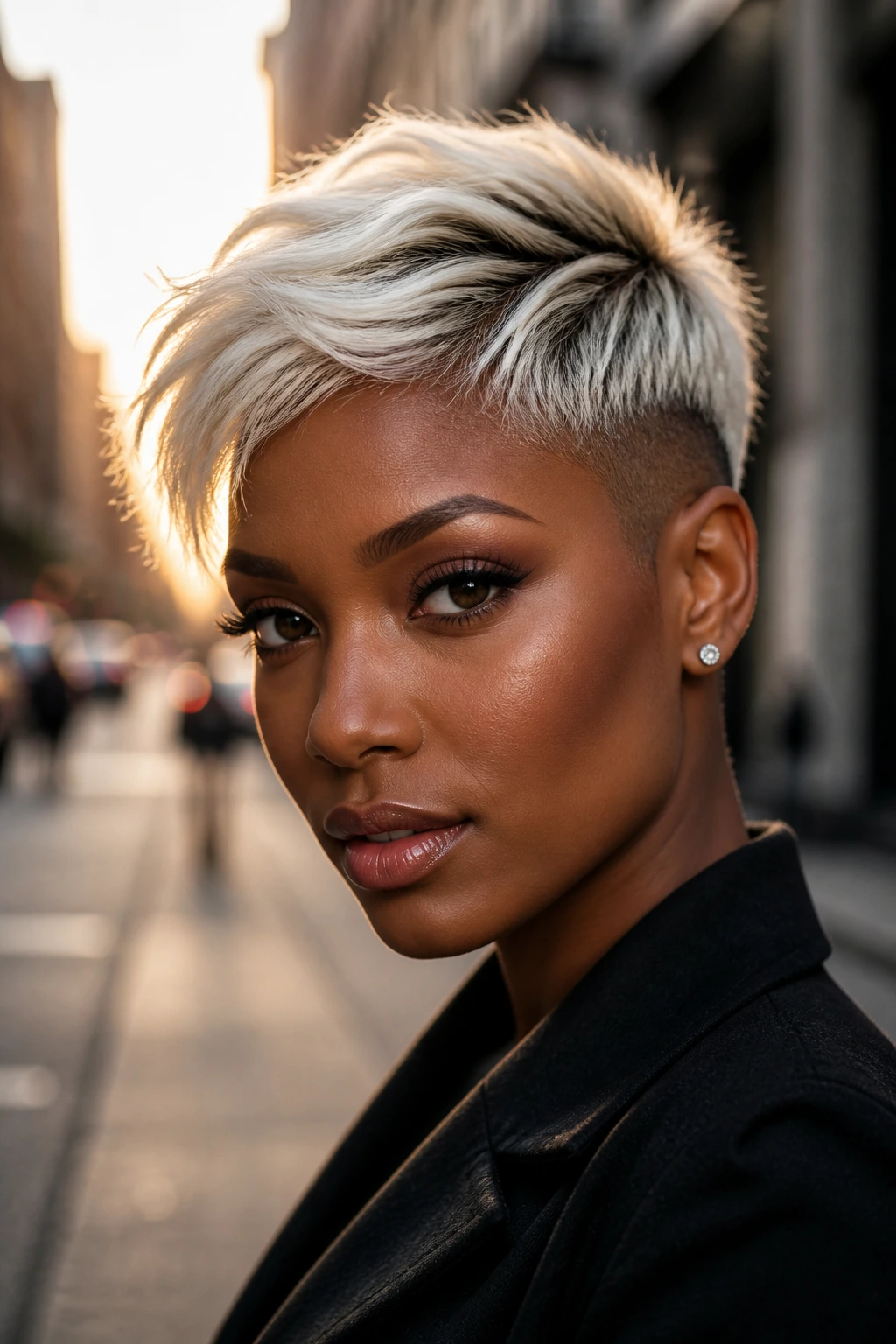
Platinum on deep skin is not the enemy. A badly planned platinum is. With a clean shadow root and a sharp pixie cut, the look can be crisp, expensive, and a little bit dangerous in the best way.
The key is contrast. The shadow root keeps the scalp from looking washed out, and the short length stops the pale blonde from overwhelming the face. If the cut is close at the sides and a little longer on top, you get dimension from the shape itself. That shape matters more here than on most colors because the platinum has nowhere to hide.
This style usually works best when the color is toned to a cool pearl rather than banana-yellow blonde. If the hair lifts too warm, the whole thing can look brassy against deep skin. If it lifts too cool, the face may need warmer makeup to balance it back out.
9. Honey Blonde Twist-Out
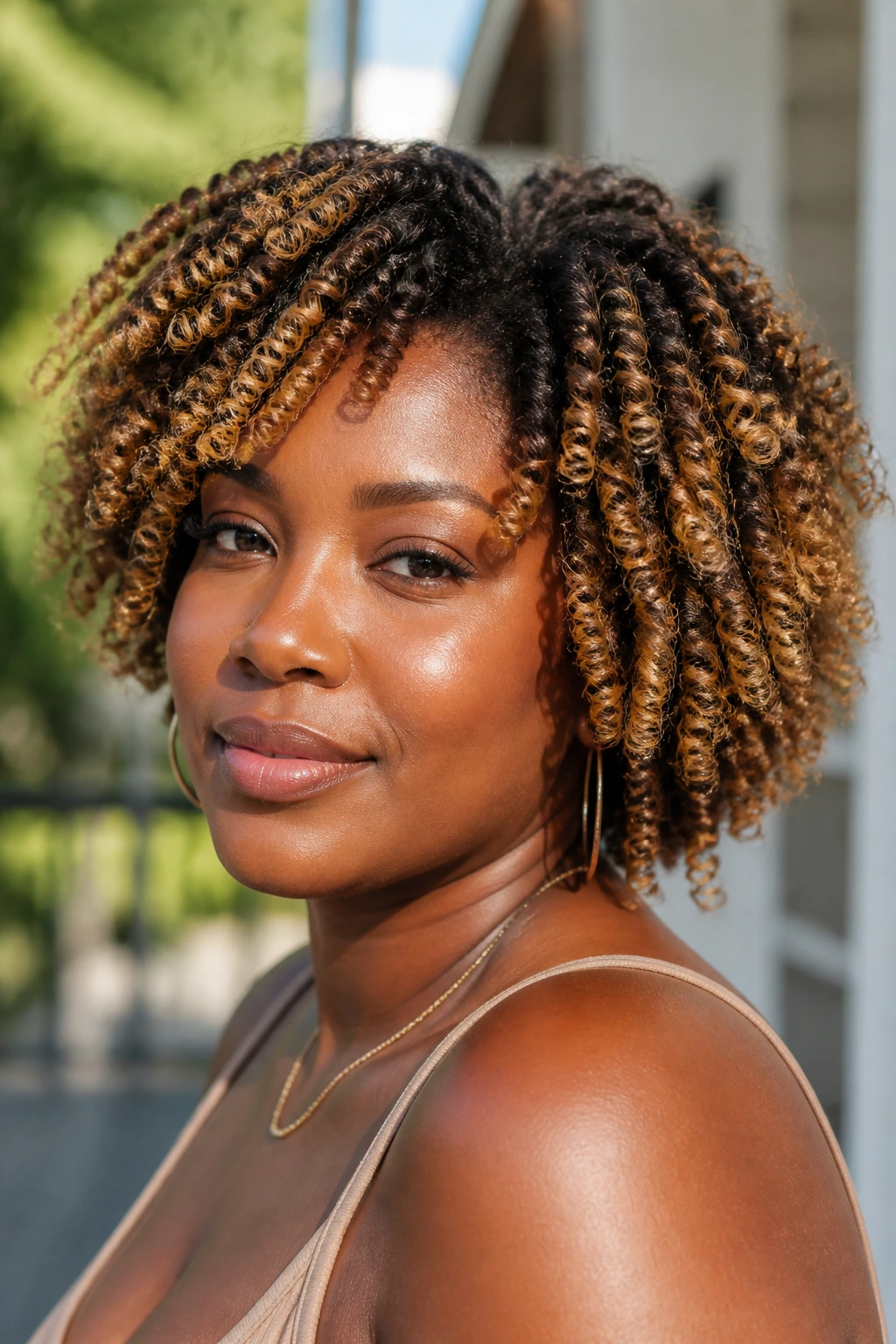
A honey blonde twist-out gives you texture first and color second, which is exactly why it works. Deep skin usually loves the way a twist-out keeps the blonde moving; the coils make the shade feel woven into the hair instead of painted on top.
The best version keeps a darker root and uses honey blonde on the twist lengths or on selectively lightened sections. That prevents the style from reading flat. Use a cream that defines without making the hair crunchy, because blonde hair shows product buildup faster than dark hair does. A little too much white residue and the whole finish looks dusty.
This is also a good option when you want a softer spring vibe. The silhouette stays natural, the blonde looks warm in sunlight, and the style doesn’t demand a full salon appointment every time it needs a refresh.
10. Sandy Blonde Sew-In with Layers
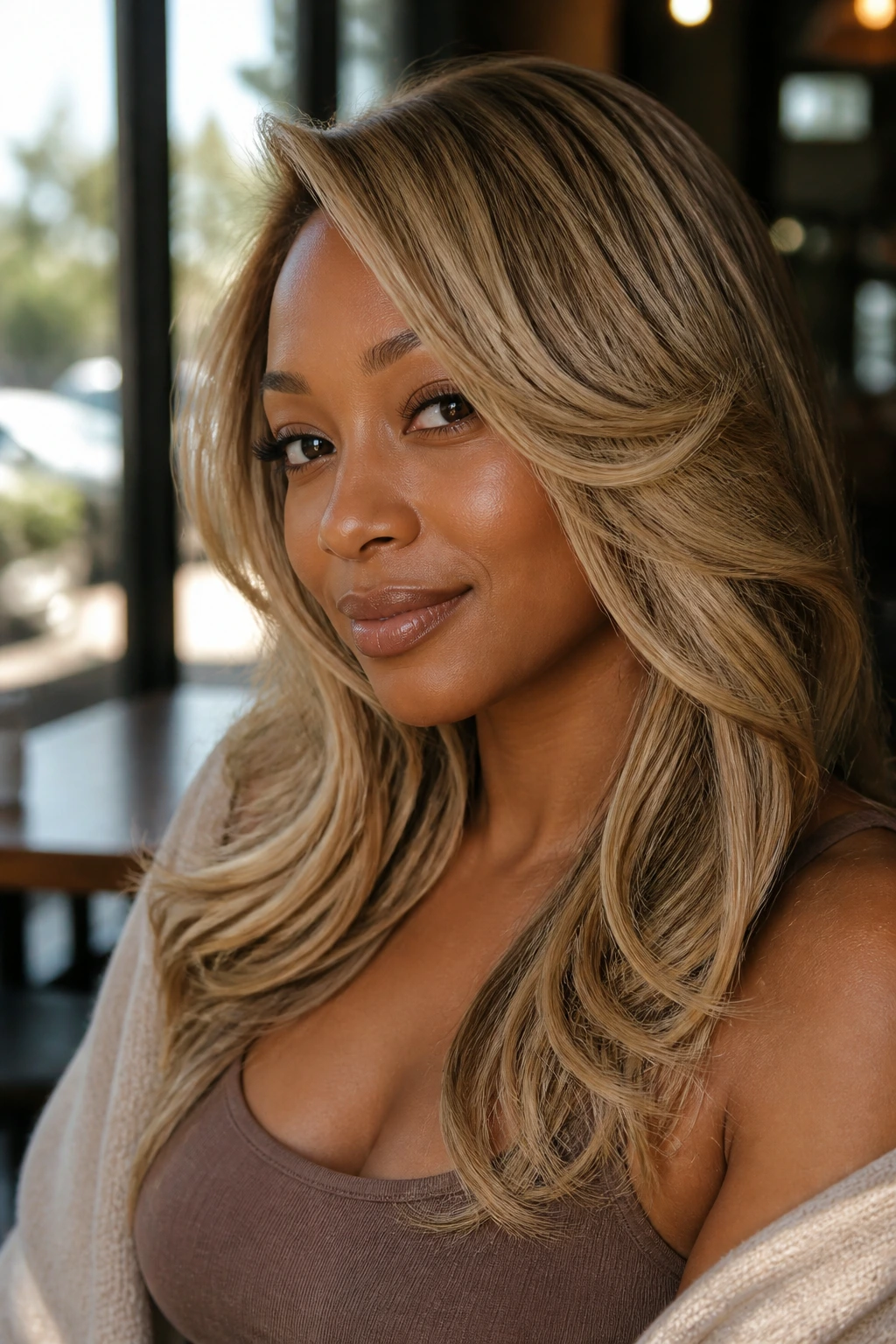
Sandy blonde on a layered sew-in is one of those looks that can go from casual to dressed up with a small change in parting. The color sits between beige and warm gold, which keeps it friendlier on deep skin than an ashy blonde with no depth.
Layers matter here. A sew-in with blunt ends can make sandy blonde look too uniform, especially if the hair is long. Layering the face frame and the lower sections gives the light places to hit, and that is where the style starts to shine. If you’re leaving out any of your own hair, match the finish carefully so the texture and tone don’t fight.
A middle part keeps the style modern, but a deep side part can add more drama if the blonde is on the lighter side. Either way, don’t skip the gloss. Sandy blonde gets tired-looking fast if it dries out.
11. Bronde Tapered Cut
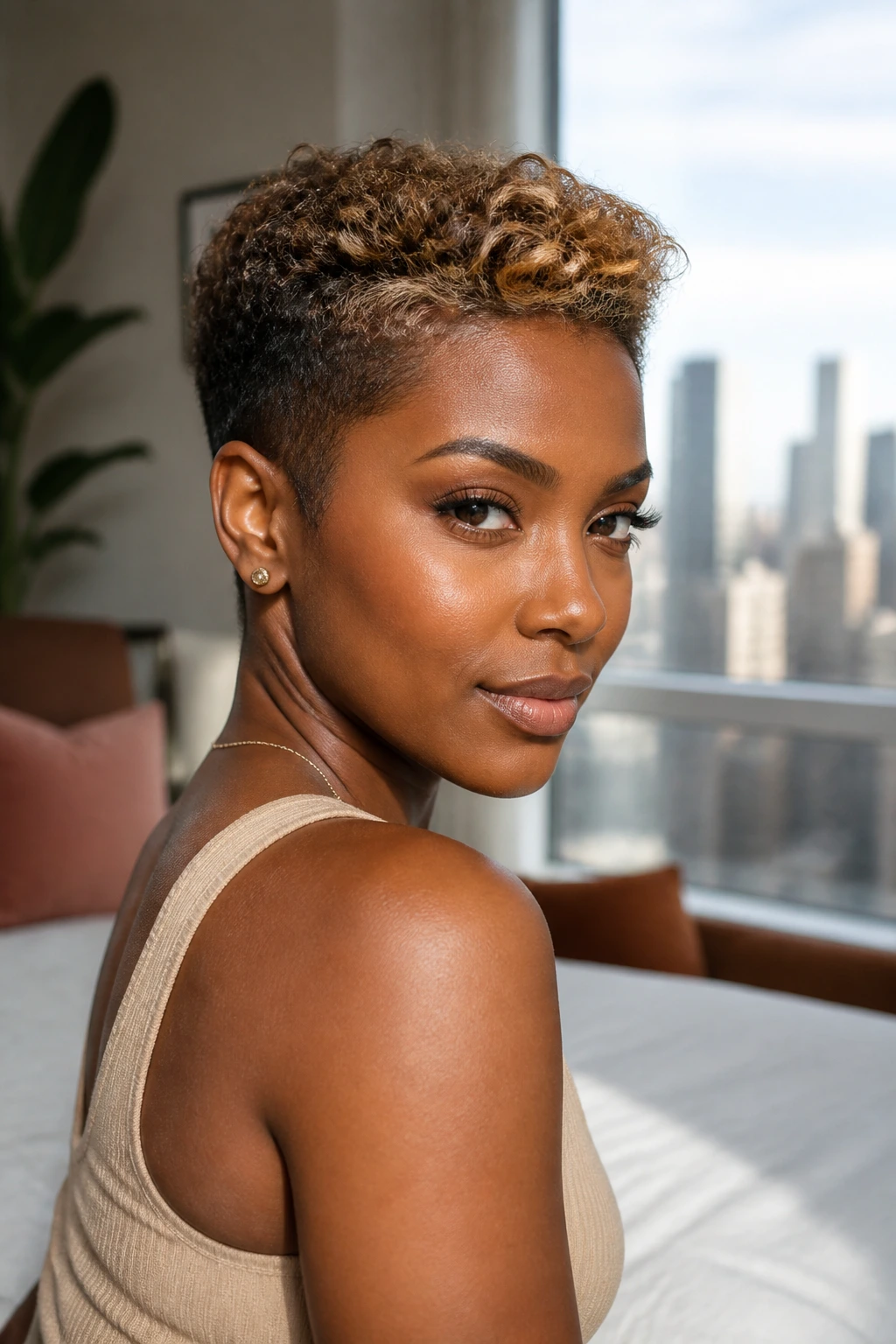
Bronde is the unsung hero of deep-skin blonde. It’s not quite brown, not quite blonde, and that in-between space is exactly why it works so well in a tapered cut. The shade gives you enough lightness to feel fresh, but the depth keeps the style grounded.
A tapered cut with blonde tips or a soft bronde top reads clean and sporty. The short shape keeps the color from spreading out too much, which helps the eye read the haircut first and the color second. That’s useful if you want blonde but don’t want to look like you’re wearing a wig of color.
A little curl cream or a light sponge twist on the top can make the shade look richer. On a cut this short, the finish is everything. Dry, dull blonde looks flat. A little sheen and shape make it come alive.
12. Butter Blonde Wig with Deep Side Part
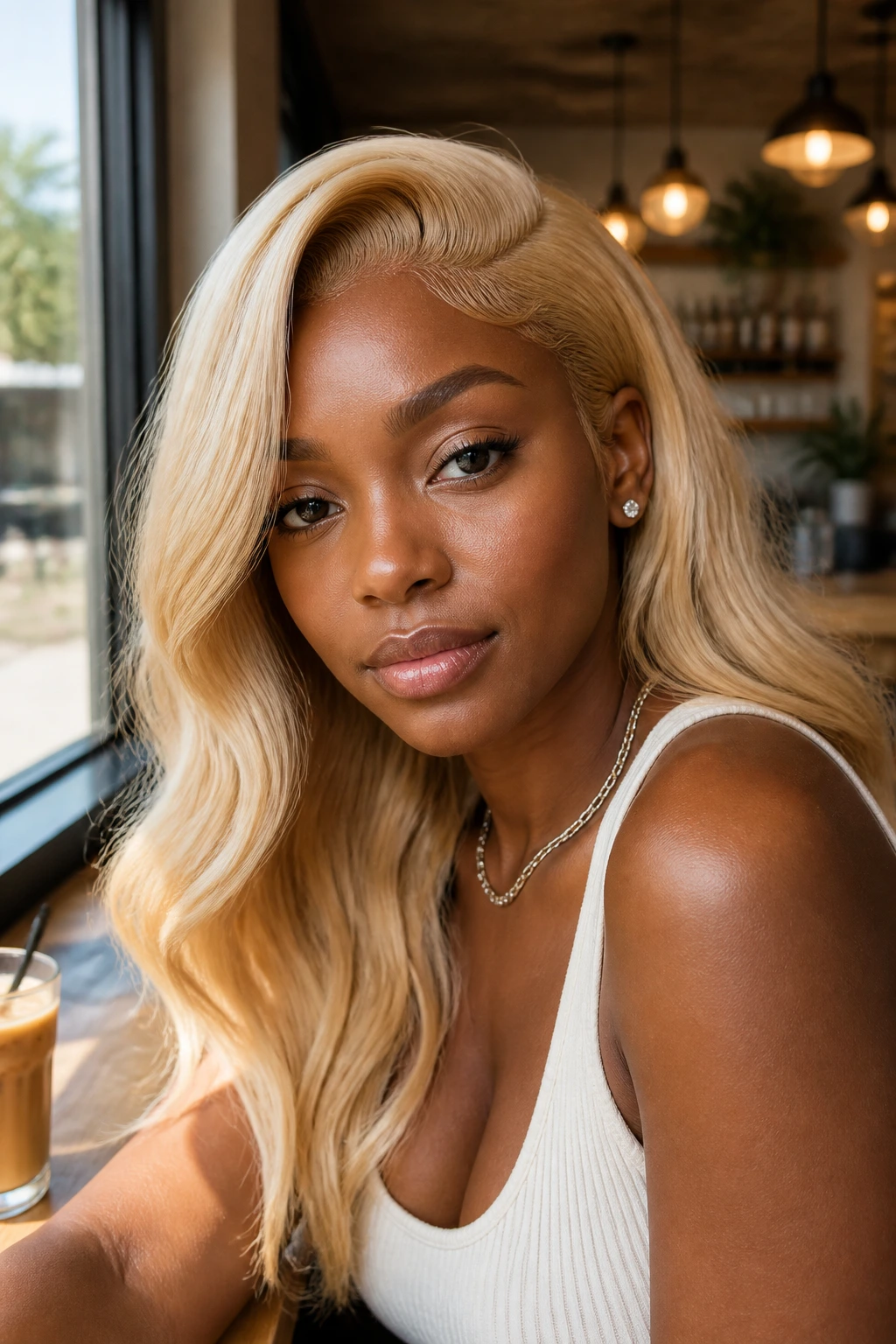
Why do wigs make blonde so much easier on deep skin? Because you can control the base, the root, and the part without asking your own hair to do all the lifting. A butter blonde wig with a deep side part gives you softness at the front and a strong frame around the face.
The butter tone is kinder than a stark pale blonde, especially when the part is slightly darker and the baby hairs are laid with restraint. Too much gel can make the whole look feel stiff. A clean side part, soft bends at the ends, and a little root depth usually do more for the style than extra accessories.
This is the kind of blonde that plays well with gold hoops and a warm lip. If you want the wig to look less “installed” and more “styled,” keep the density moderate and the part believable. Overly thick blonde hair can look costume-y fast.
13. Beige Blonde High Puff
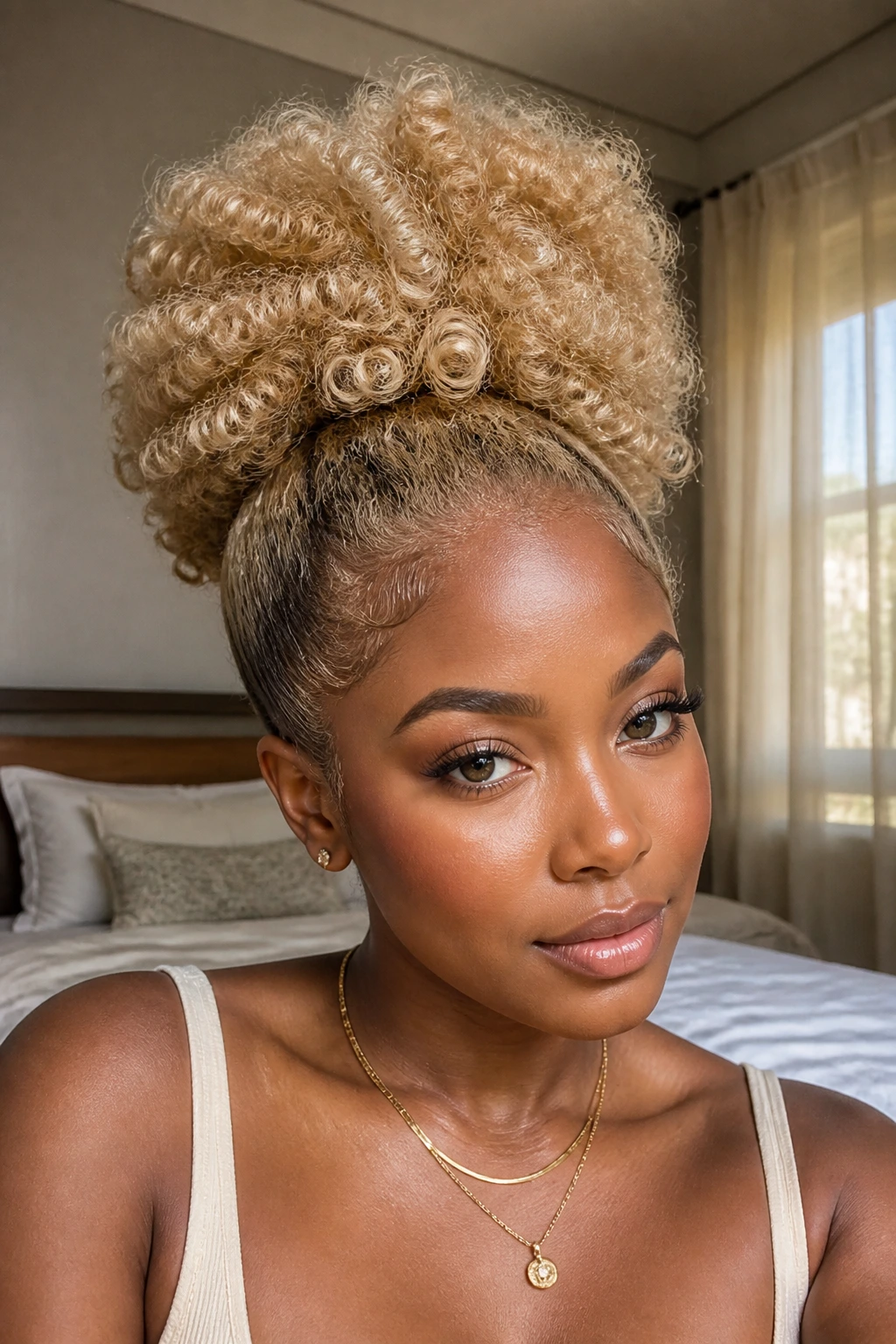
Beige blonde has a softer, more breathable feeling than bright gold, and that’s why it works so well in a high puff. The shape gives you lift; the color gives you that spring brightness without turning the whole style into a spotlight.
A high puff also solves a subtle problem: it keeps the lighter pieces away from the face just enough to avoid a washed-out effect. Let the top puff carry most of the blonde, and keep the edges and base neat. If you want more dimension, leave a few darker curls at the back or around the nape so the blonde isn’t total and uniform.
This is a fast style, but it still benefits from thoughtful detail. A silk scrunchie, a little edge control, and a soft satin wrap at night keep the puff looking crisp for more than one day.
14. Toasted Almond Passion Twists
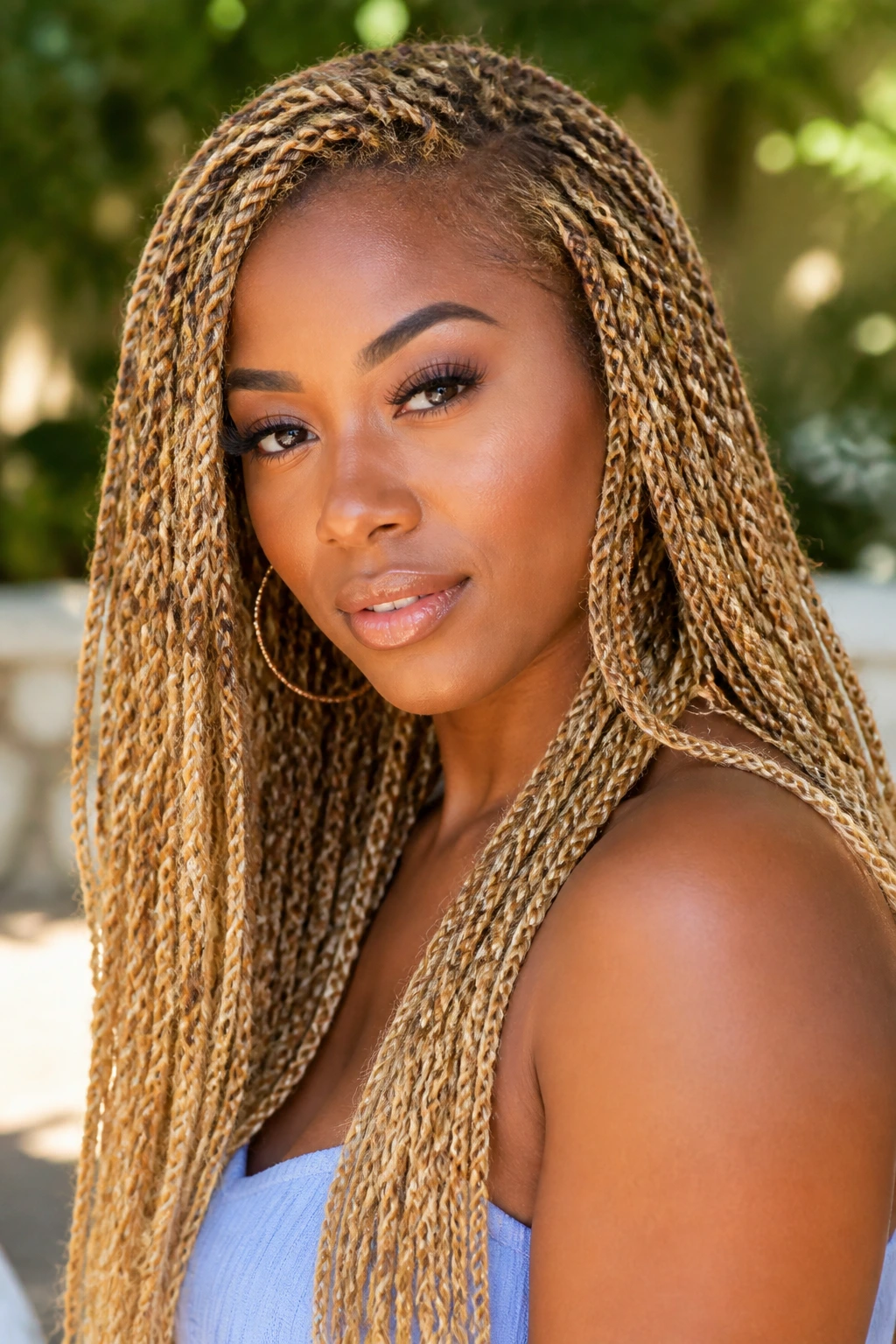
Toasted almond passion twists look like they were made for deep skin. The color has enough warmth to echo the complexion, and the twisted texture gives the blonde a woven, dimensional feel instead of a hard block of color.
I like this style best when the blonde is blended, not striped. Ask for toasted almond, honey, and a touch of caramel mixed through the hair rather than one flat yellow tone. The twists should move; if they sit too stiffly, the color loses some of its charm. Mid-length to long lengths work well because the twist pattern lets the highlights and lowlights catch light in layers.
Best use case
- Vacation hair
- Protective styling with a softer color story
- Medium to long lengths
- Looks especially good with gold cuffs or tiny wooden beads
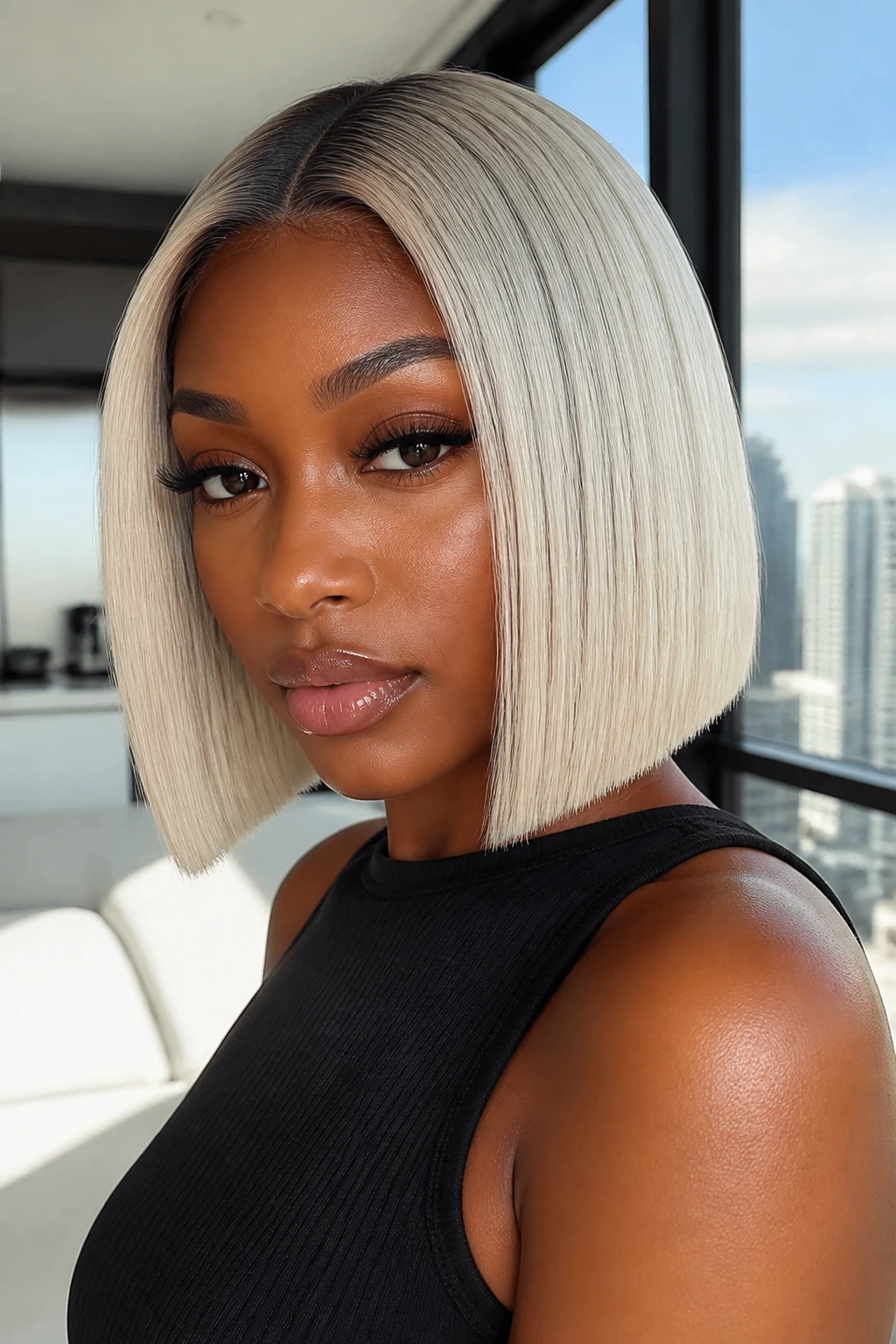
15. Buttermilk Blunt Bob
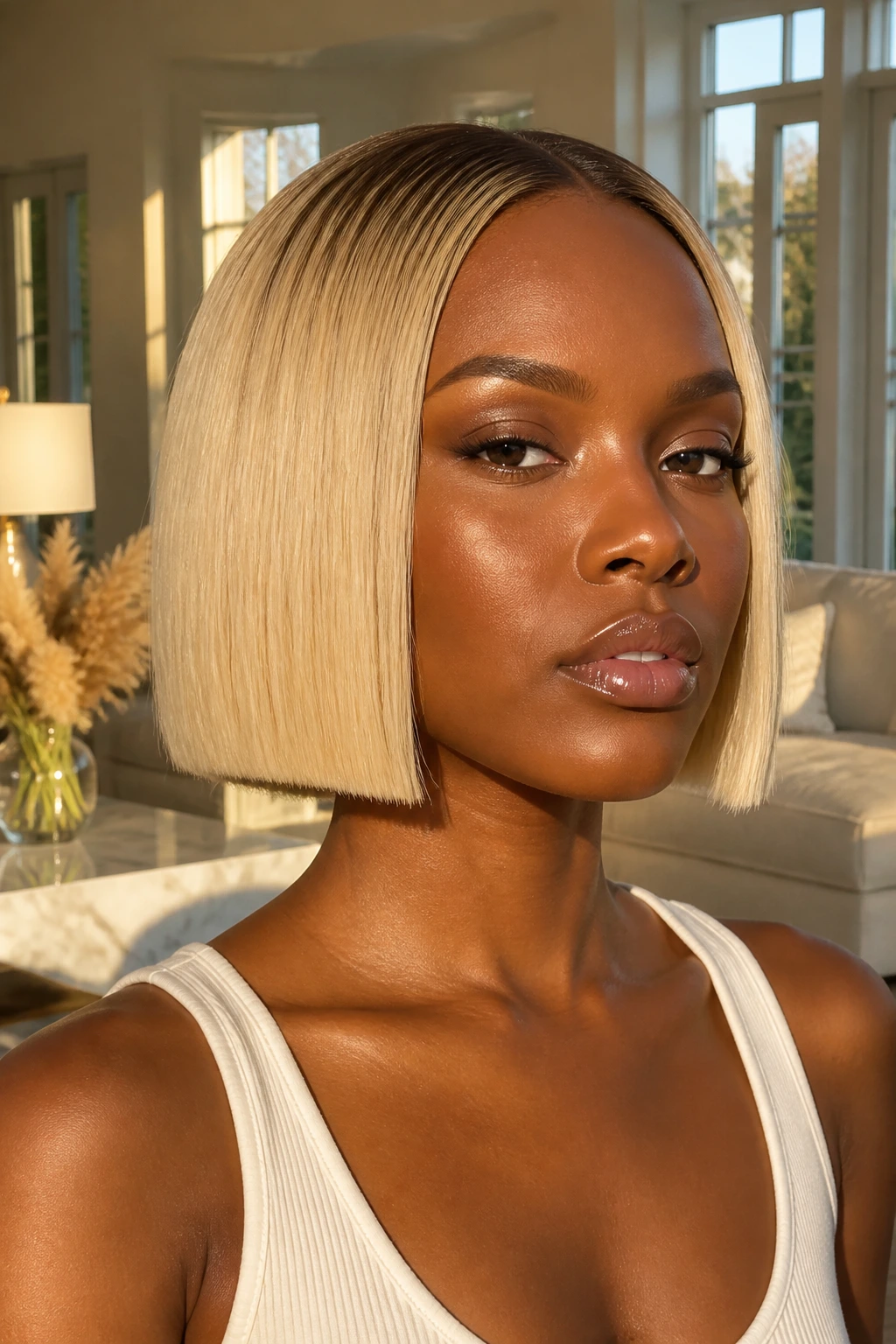
A blunt bob in buttermilk blonde is sleek, clean, and slightly unexpected on deep skin. The strong line of the cut keeps the light color from drifting into bland territory, and the creamy shade prevents the whole thing from turning icy or harsh.
The bob should hit somewhere between the jaw and the collarbone. Shorter makes it feel severe; longer makes it lose that sharp edge. If you want the style to feel more wearable, add a subtle shadow root or a deeper underlayer so the buttermilk sits on top with more dimension. That little bit of depth makes a huge difference.
This is one of the styles that benefits from a proper flat-iron pass and a crisp tuck behind the ear. The finish matters. A blunt blonde bob with fuzzy ends can look unfinished fast.
16. Cinnamon-Root Blonde Waves
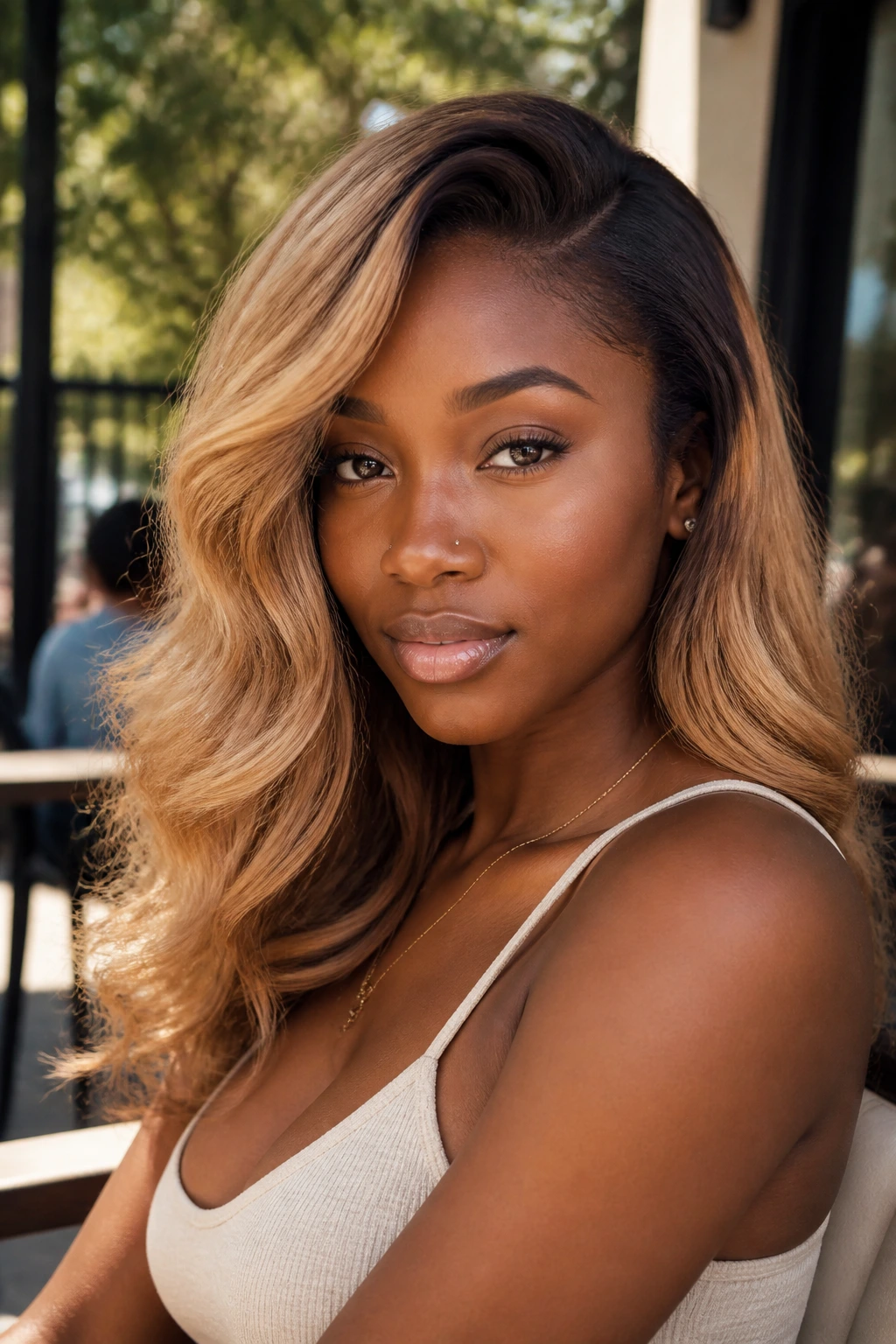
Cinnamon-root blonde waves are quietly smart. The darker root gives deep skin the contrast it needs, and the warm blonde waves that follow look more natural because the transition is gradual, not abrupt.
This style is especially good if you don’t want to maintain a full root touch-up every few weeks. The cinnamon base buys you time. The waves should be loose enough to show the color gradient, not so tight that the blonde disappears into a curl pattern. A 1.25-inch iron or a big rod set works well if the hair can take heat.
The whole thing looks even better with a side sweep at the front. That bit of movement pulls the eye into the lighter lengths and keeps the roots from feeling too dark.
17. Sunlit Cornrow Ponytail
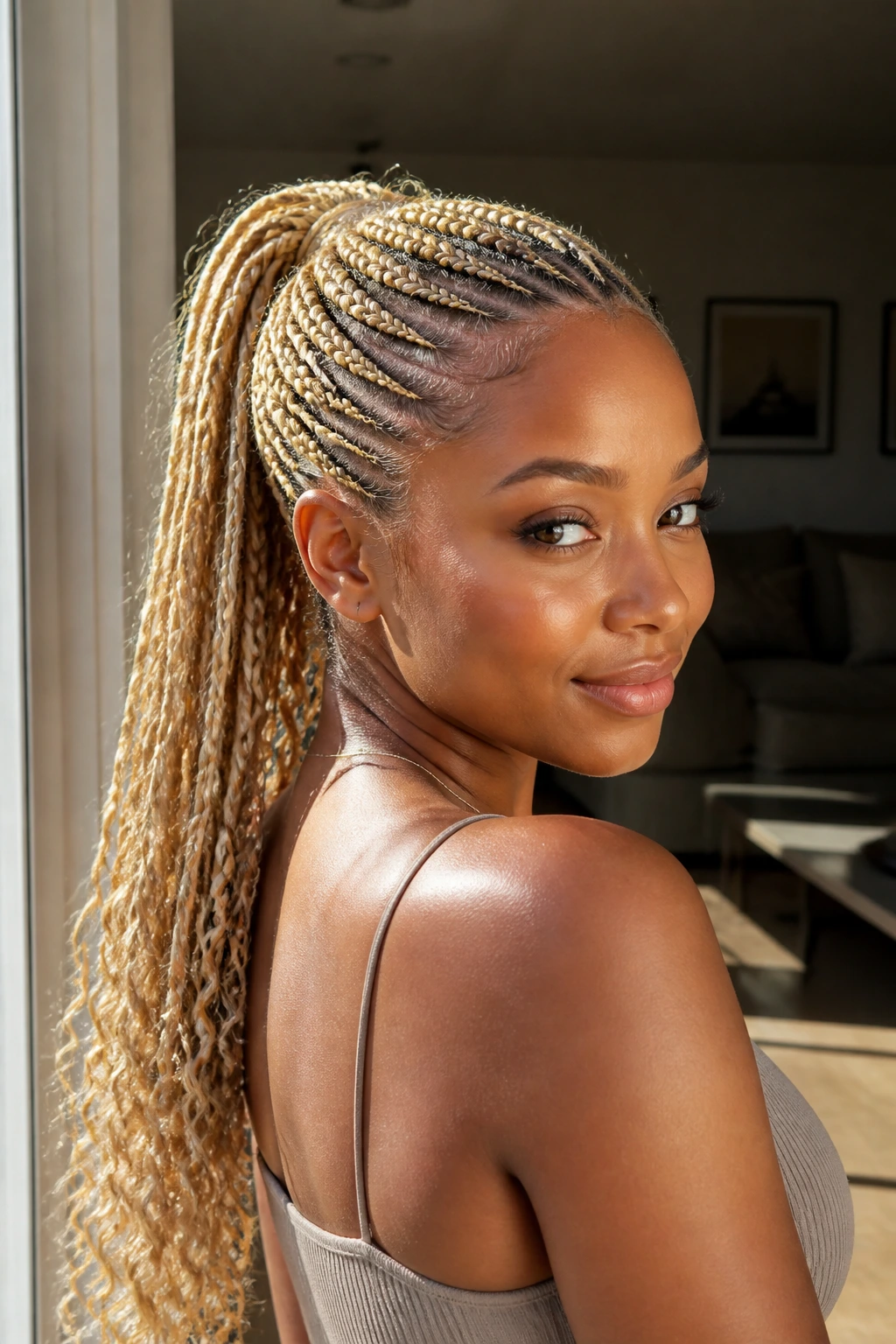
A cornrow ponytail in sunlit blonde can be crisp without feeling severe. The braids keep the color controlled, and the ponytail brings the lighter lengths up where they catch light at the face and shoulders.
This works best when the cornrows are neat, the parting is clean, and the blonde extension hair has a honey or golden cast rather than a flat pale tone. The ponytail itself can be straight, curled at the ends, or wrapped with a braid for extra texture. A few face-framing pieces can soften the style if you want less edge and more movement.
It’s a strong choice for anyone who wants blonde with structure. The scalp stays accessible, the style pulls the eye upward, and the hairline doesn’t have to carry the whole conversation.
18. Vanilla Blonde Water Wave Install
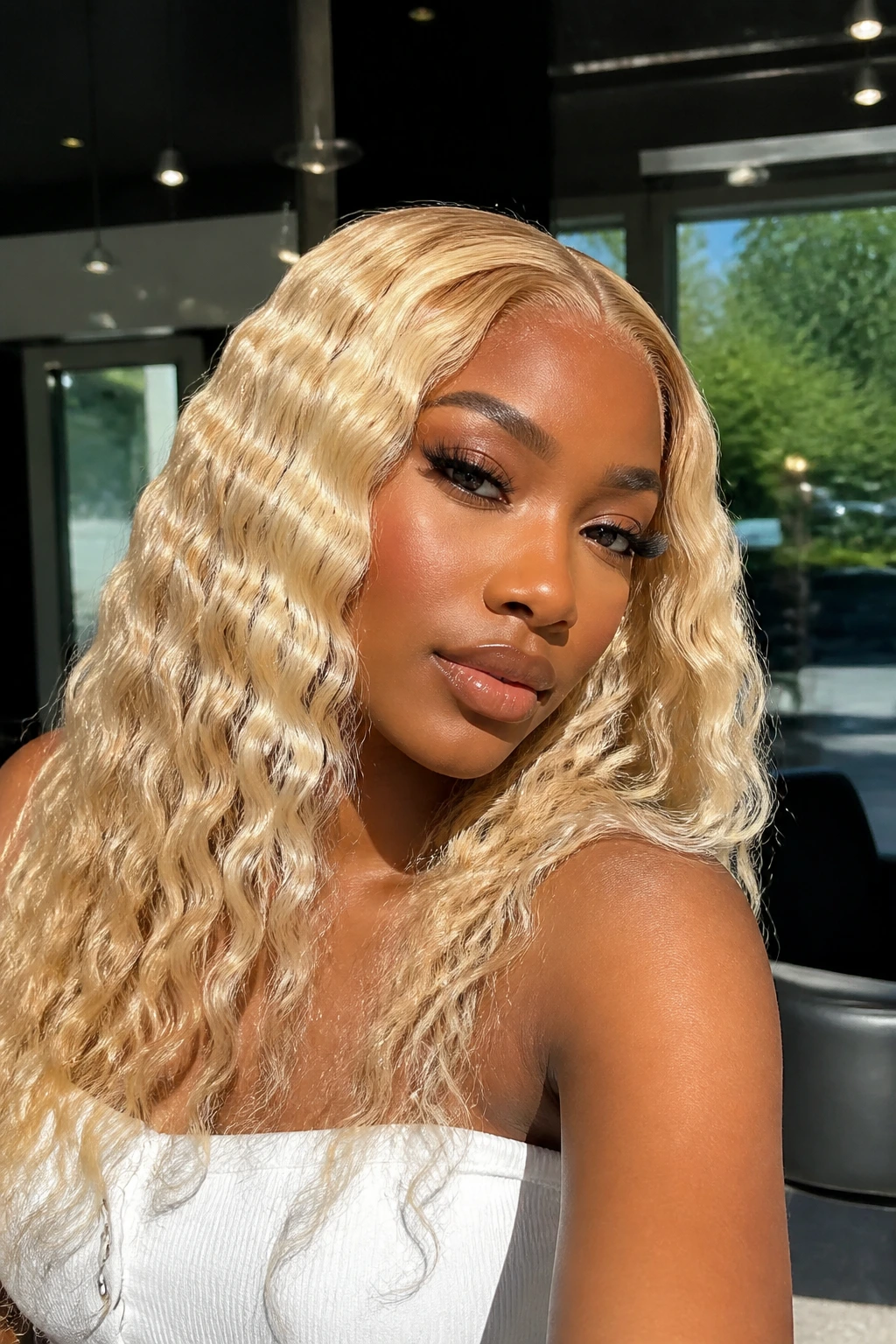
Vanilla blonde on a water wave install has that breezy, slightly glossy look that feels right for warmer days. The wave pattern keeps the color from reading one-note, and the vanilla tone is soft enough to sit comfortably against deep skin.
The trick here is density and placement. Too much blonde from root to tip can make the install look flat, so leave some darker lowlights underneath or at the back. That bit of contrast keeps the style rich. Water wave hair looks best when it’s brushed out just enough to separate the pattern, not so much that the wave disappears.
A middle part gives the style polish. A side part gives it softness. Either way, keep the ends hydrated with a lightweight serum so the vanilla tone doesn’t go dry and dusty.
19. Warm Beige Frohawk
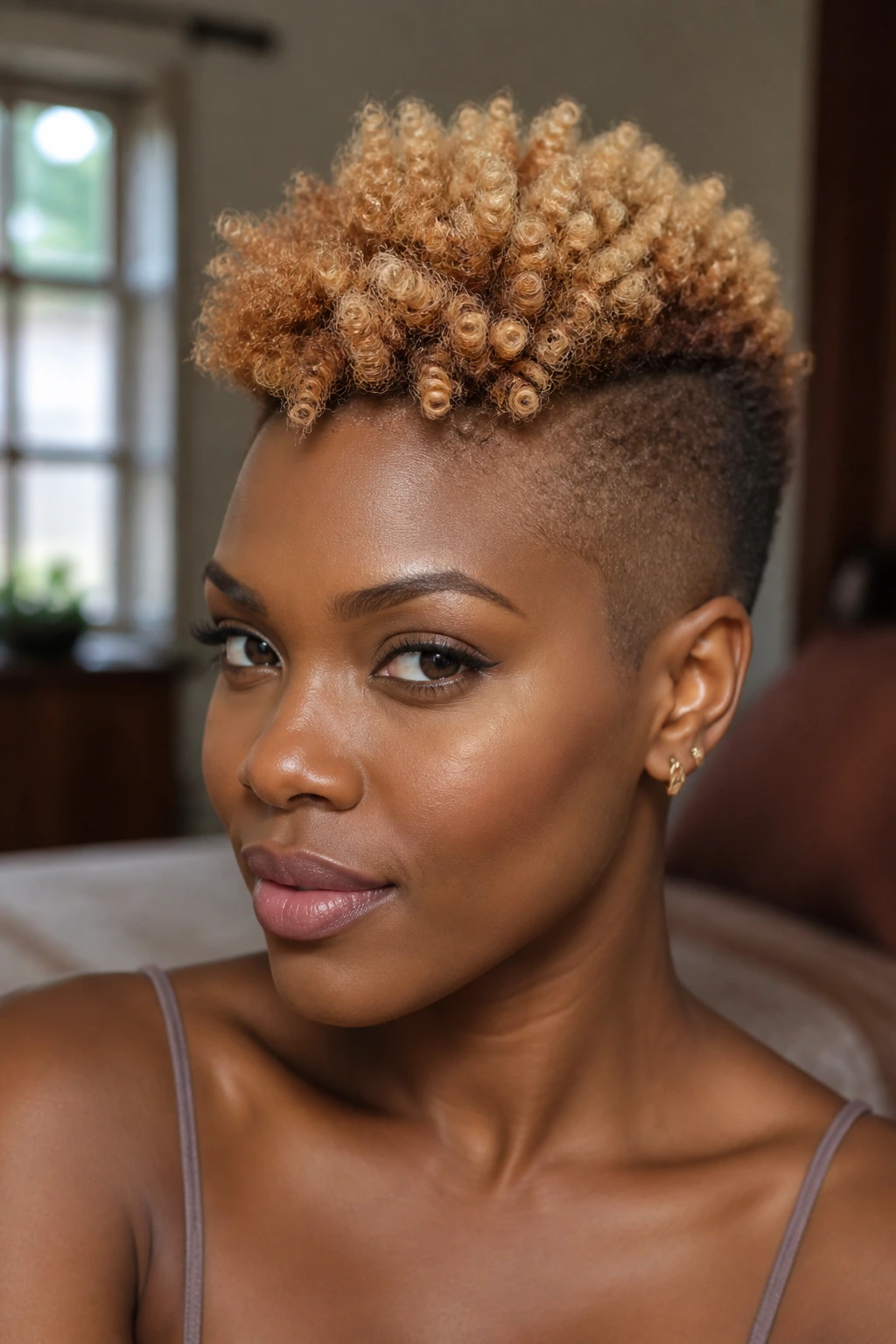
A warm beige frohawk has edge, but it’s not aggressive. The sides pull the eye upward, the center strip gives the blonde a stage, and the beige tone softens the whole shape so it flatters deep skin instead of fighting it.
This style works best when the center is full and the sides are tight but not shaved too low. You want height. You want shape. You do not want the color sitting in a flat stripe with nowhere to go. A twist-out, finger-stretched curl, or soft sponge pattern in the center gives the blonde texture and movement.
The beauty of a frohawk is that it can be dramatic without needing every strand to be light. If you keep the root depth and concentrate the beige on the raised center, the style feels balanced and much easier to wear.
20. Ash-Gold Finger Waves
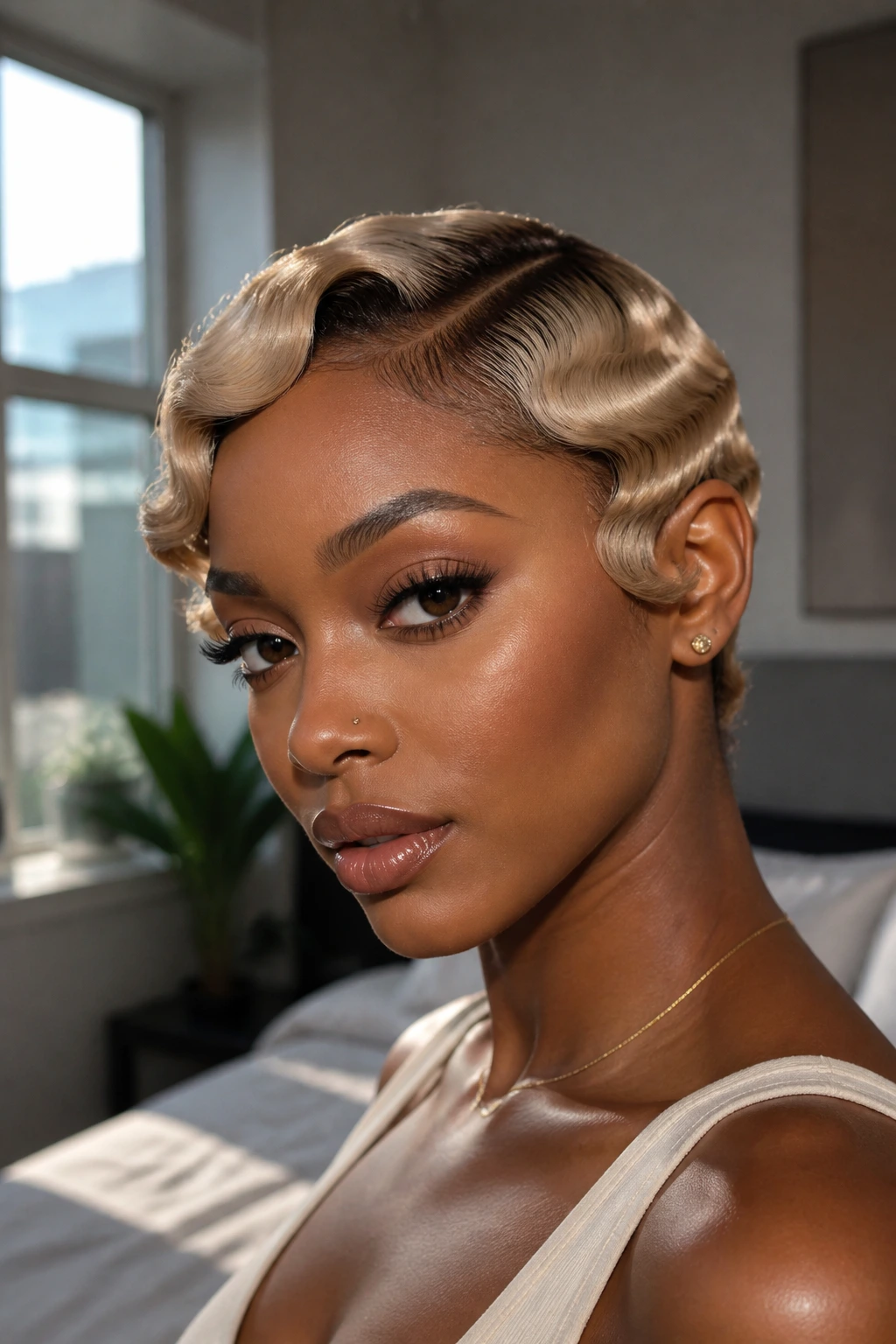
Ash-gold finger waves are for the person who likes structure. The waves themselves do half the styling work, and the ash-gold tone gives the finish a cool, polished edge that can look striking on deep skin when the root stays a little darker.
This is not a style that likes fuzz. It needs crisp sectioning, good setting lotion, and enough hold to keep the wave pattern visible. The ash tone should lean metallic, not green. That’s a thin line, and it’s why I’d keep the gloss gentle rather than too icy. Deep skin can carry this look beautifully, but only when the blonde has enough depth to keep the face from fading into the hair.
A side part and a sleek ear tuck make the whole style feel deliberate. It’s sharp. Very sharp.
21. Champagne Highlights on a Silk Press
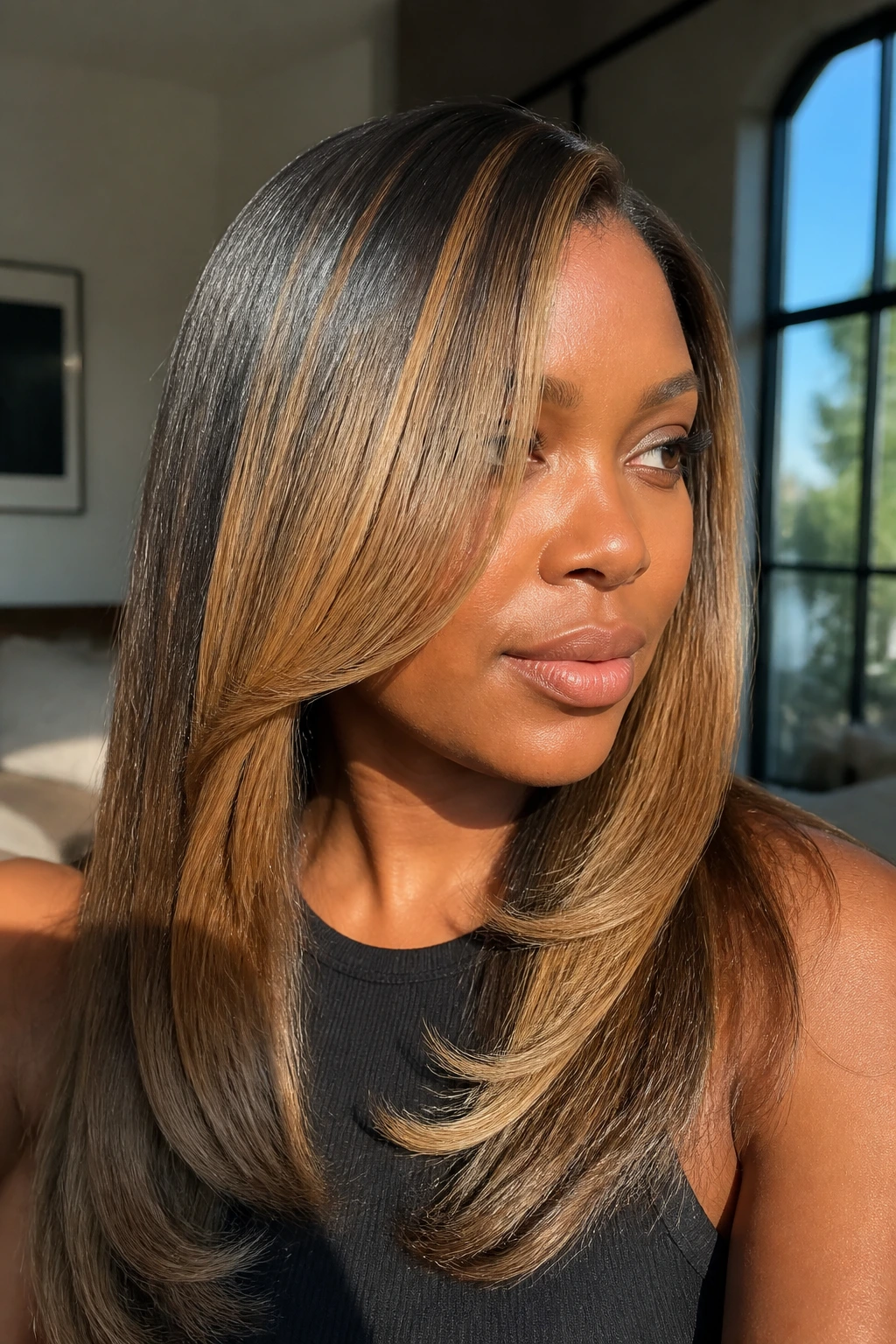
Champagne highlights on a silk press give you the kind of lift that shows up in daylight without announcing itself from across the room. The shade is lighter than caramel, softer than platinum, and flexible enough to flatter deep skin when the base stays rich.
The silk press should be smooth, but not pin-straight to the point of looking stiff. A little movement at the ends keeps the champagne ribbons from feeling pasted on. Concentrate the lighter pieces around the top layers and front sections, then leave the underlayers darker so the hair keeps depth when it moves.
This is a smart option if you want blonde but not a full head of it. The highlights do their job quietly, and the press keeps the finish clean. Honestly, this is one of the easiest ways to wear blonde without changing your entire identity.
22. Golden Ombré Fulani Braids
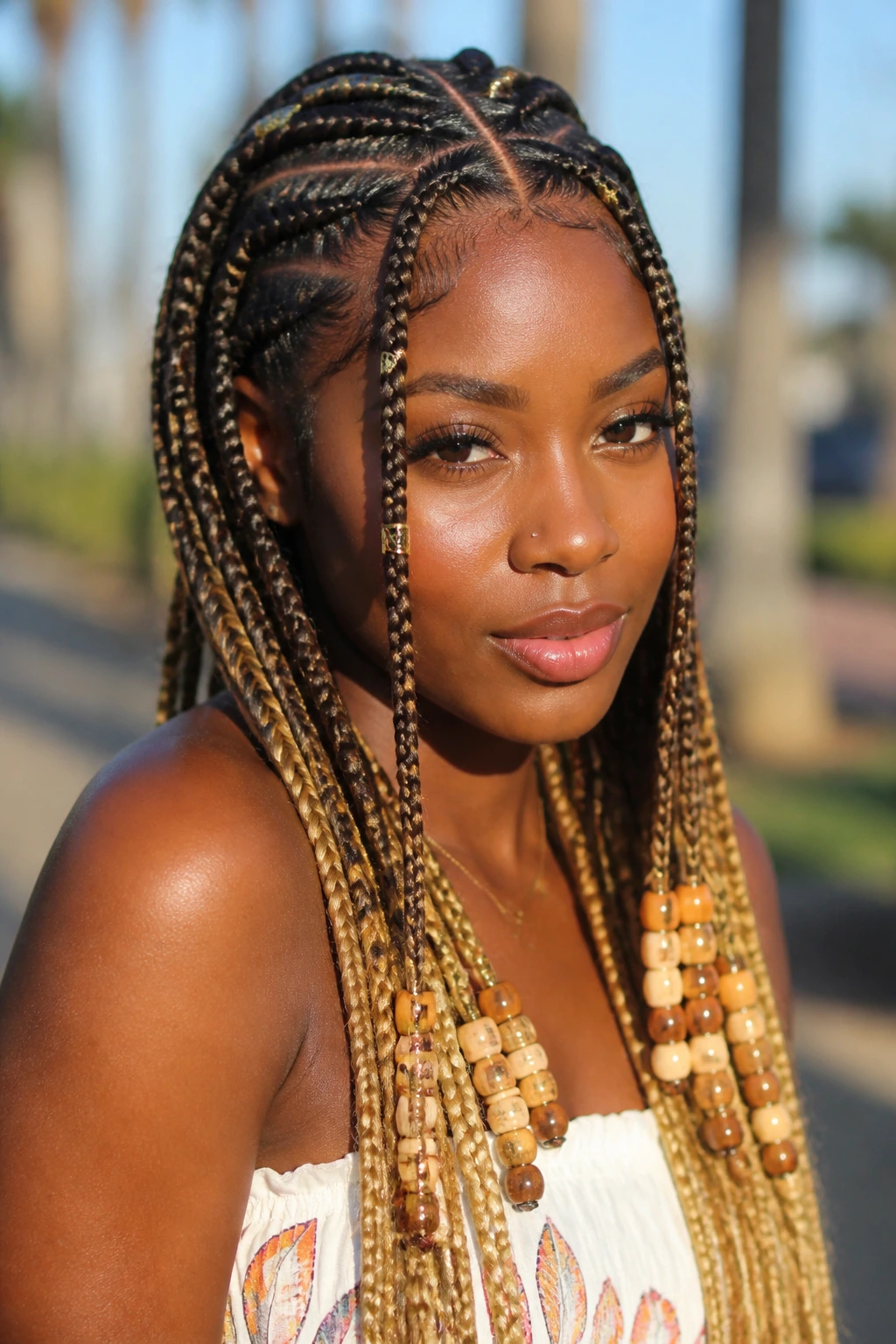
Golden ombré Fulani braids carry a lot of visual movement, which is exactly why they work on deep skin. The braids have structure, the beads or cuffs add rhythm, and the blonde shift at the ends keeps the style feeling spring-ready.
The ombré is important. Let the roots stay darker and build into golden blonde through the lengths or ends. That transition keeps the style from looking too stark against the complexion. A middle braid with side cornrows or small front pieces gives the style a balanced frame, and the blonde ends pick up light when you turn your head.
This is one of the best styles for anyone who wants ornament and color in one place. Gold cuffs, clear beads, and a clean part line all work. Muddy accessories do not.
23. Soft Platinum Curls on a TWA
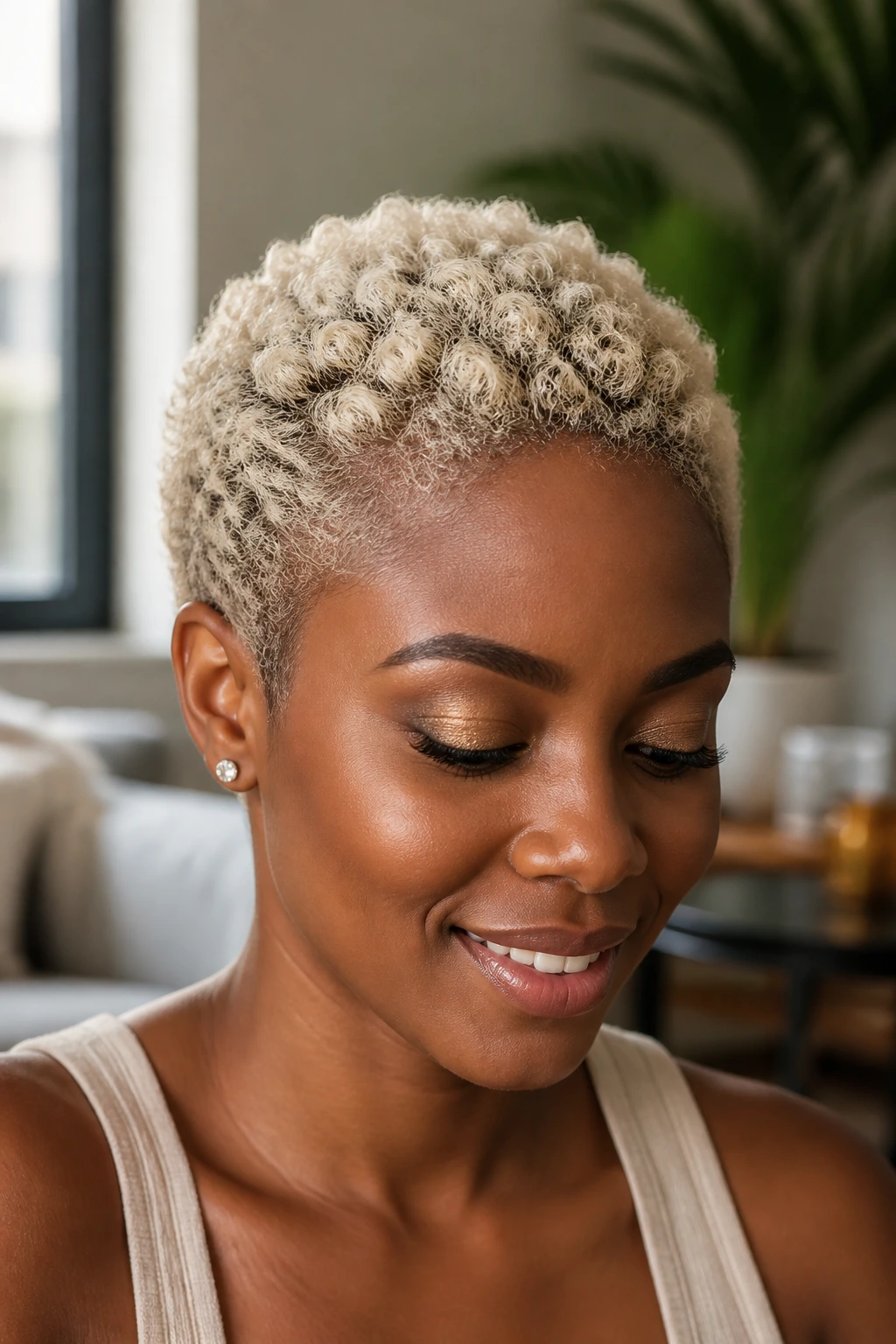
Soft platinum curls on a TWA are small in length and big in attitude. Because the cut is short, the platinum doesn’t have to cover much ground, which makes the style easier to wear on deep skin than a long head of all-over pale blonde.
The curls need softness, not crunch. Keep the shape rounded and let the top carry the brightness while the sides stay close. A slightly darker root helps the platinum look deliberate rather than accidental. If the toner is too cool, the face can look drained, so I’d rather see a pearl finish with a hint of warmth than a blue-gray cast.
This style is all about confidence and shape. It doesn’t need much else. Earrings, brows, and skin finish do the rest.
24. Caramel Blonde Loc Bob
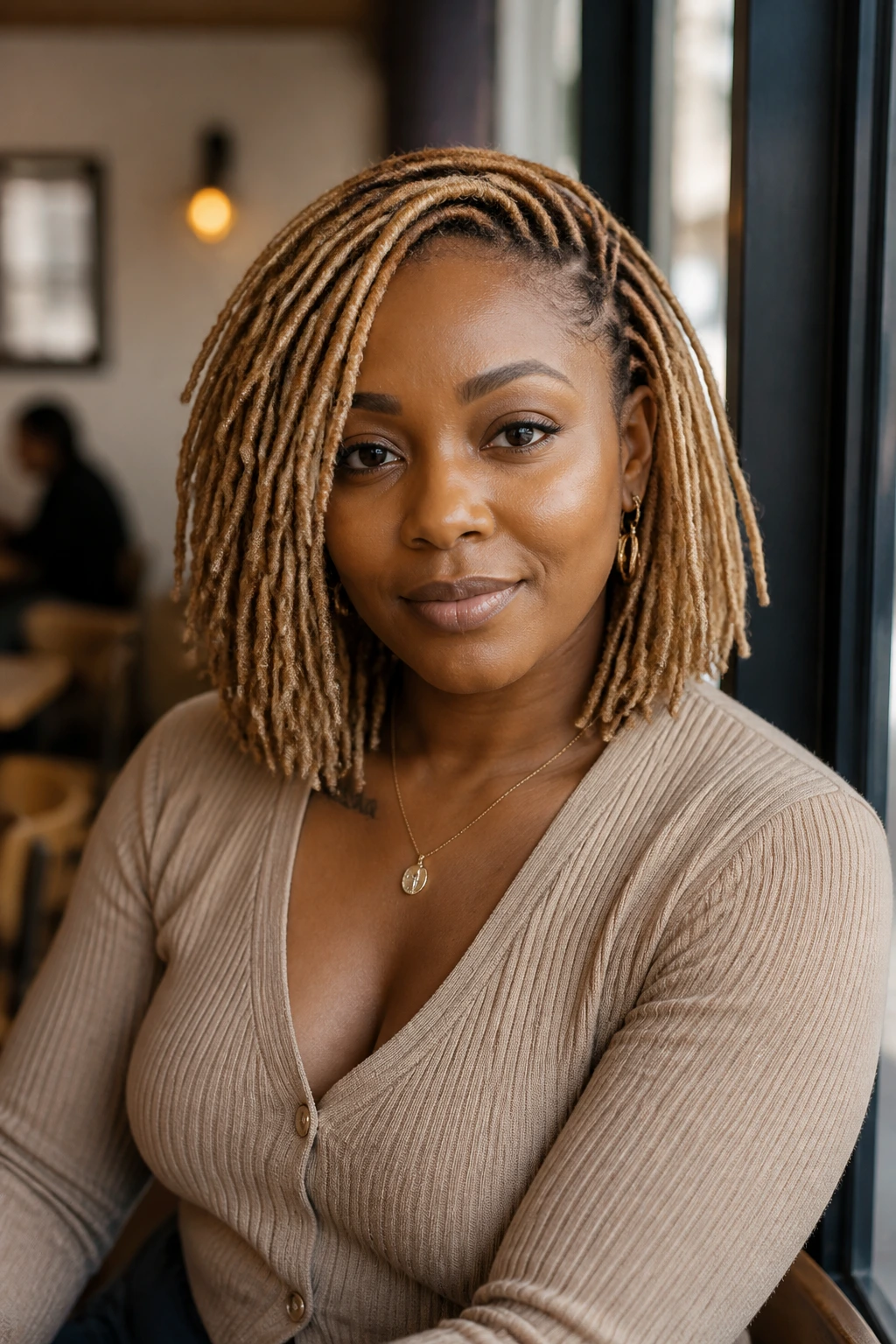
A caramel blonde loc bob is one of the easiest ways to make blonde feel grounded on deep skin. The loc texture adds weight and character, while the caramel color keeps the look warm enough to flatter instead of clash.
The bob length helps. Shorter locs make the blonde feel crisp and contained, which is useful if the shade leans lighter than honey. I’d keep the ends slightly tapered or rounded so the locs don’t sit in one blunt line. That small change makes the color look less blocky and more dimensional. A side part can also soften the face and make the caramel pop around the cheekbones.
This is low-drama hair in the best way. The color looks rich, the style stays practical, and the shape holds its own without constant fuss.
25. Sun-Kissed Half-Up Closure Style
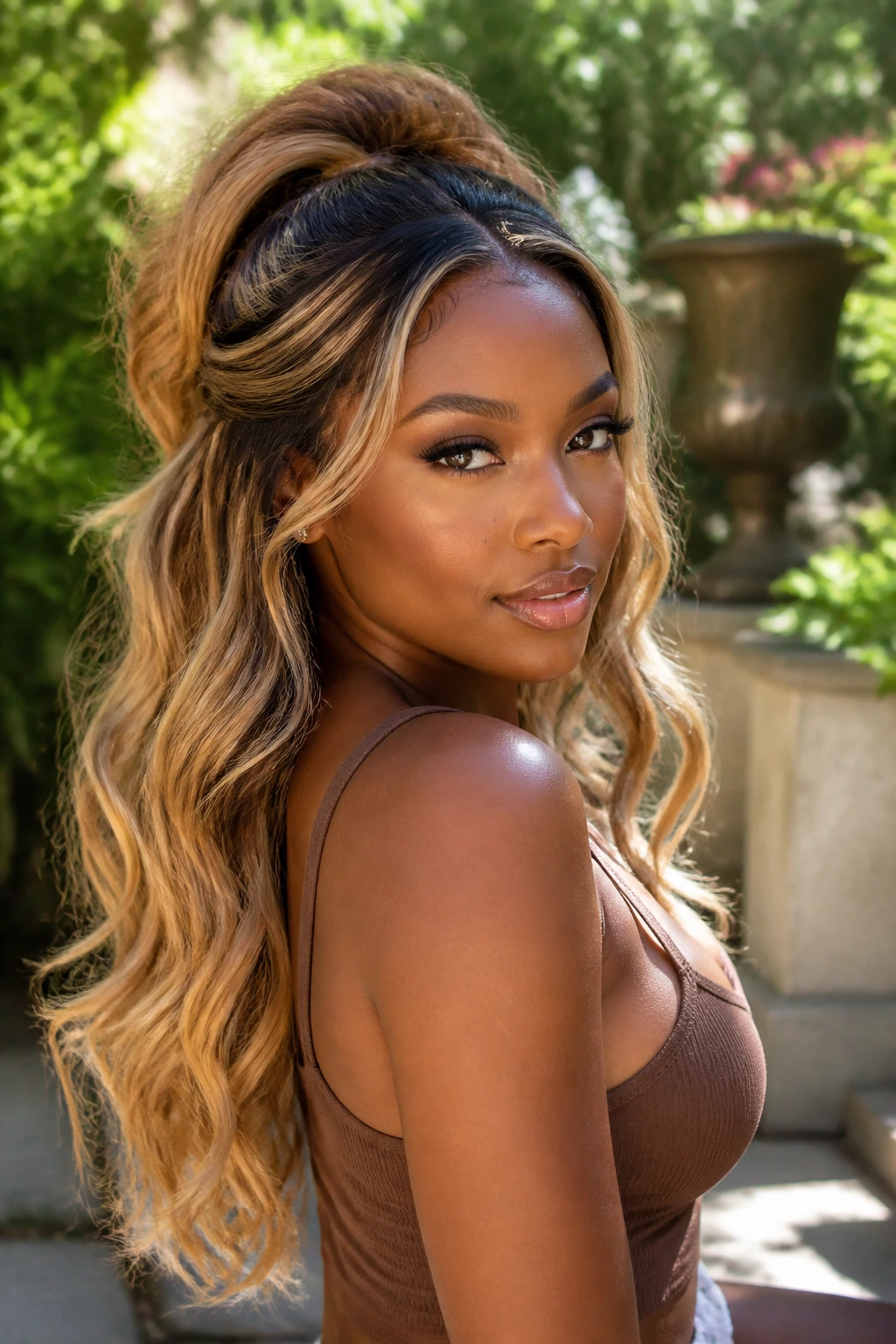
A sun-kissed half-up closure style gives you the blonde without handing all the visual work to your own leave-out. The closure keeps the base neat, the half-up shape adds lift, and the lighter pieces around the crown and ends make the whole style feel bright but controlled.
The best version keeps the blonde concentrated where the eye goes first: around the front, top, and moving ends. That’s the part deep skin tends to carry most naturally. If the lengths are long, add loose curls or a soft body wave so the color doesn’t feel too static. The shape should move when you turn your head. Otherwise the blonde sits there like a block.
This is a strong choice for anyone who wants polish without overthinking it. It can be dressed up fast, and it works with gold pins, a clean middle part, or a soft swoop at the front.
The Tools That Keep Blonde Styles Looking Intentional
A blonde style lives or dies by maintenance, and the tools matter more than people admit. The wrong brush can rough up light hair. The wrong shampoo can turn honey blonde dull. The wrong wrap can wreck the shape overnight.
- Color-safe sulfate-free shampoo: keeps lightened hair from drying out and stripping too fast.
- Purple or blue shampoo: useful for keeping brass down on lighter blondes, but don’t overuse it or the hair turns flat.
- Deep conditioner or mask: needed for any style that involves lift, heat, or extension hair left out in the air.
- Heat protectant spray: non-negotiable for silk presses, waves, finger styling, or any hot-tool work.
- Wide-tooth comb: safer for curls, waves, and installs than a tight brush.
- Rat-tail comb: clean parts make blonde look more expensive. Messy parting does the opposite.
- Edge brush and light edge control: enough to smooth, not enough to crust.
- Satin bonnet or scarf: protects both tone and shape at night.
- Blow dryer with concentrator: helps with silk presses and stretched styles.
- Flat iron with adjustable heat: useful only if you can control the temperature, especially on lightened hair.
- Wig stand or mannequin head: keeps wigs, closures, and some braided styles in shape between wears.
- Foam mousse: helps braid styles and curls hold their finish without a sticky feel.
How to Wear These Looks in Real Life
Presentation: keep the parts clean, the roots intentional, and the finish smooth where it needs to be. Blonde reads best on deep skin when the style looks shaped, not random.
Outfit Pairings: cream, olive, chocolate, black, deep red, and cobalt all make honey, caramel, and champagne tones pop. If the blonde leans cooler, crisp white and silver jewelry can sharpen it up.
Occasions: braids, locs, and puffs can handle daily wear without much drama. Pixies, bobs, and finger waves read sharper and can move into dinner, events, or work settings with almost no extra effort. Silk presses and installs sit in the middle and shift depending on the part, curl pattern, and finish.
Accessories: gold hoops, tortoiseshell clips, satin scarves, and pearl pins are safe bets. Avoid accessories that are too close to the hair color if you want the blonde to stay visible.
Scale: the longer the hair, the more you’ll want brightness near the face. Otherwise the color can disappear into the length and lose the whole point.
Small Color Tricks That Keep Blonde From Going Flat
Tone: Keep a light hand with purple shampoo. Once every 1 to 2 weeks is enough for most honey, beige, and champagne blondes; too much turns the hair dull and gray.
Gloss: A beige, gold, or clear gloss every 4 to 6 weeks keeps lighter blonde from looking dusty. If the hair is protective, use the gloss on your own leave-out or ask for a refreshed finish during reinstall time.
Root depth: A shadow root that’s only 1 level darker can change the whole mood of a blonde style. It gives deep skin more contrast and makes the blonde feel richer.
Texture: Straight hair can carry blonde, but texture gives it more life. Curls, bends, twists, and waves keep the shade moving, which matters a lot when the color is light.
Brows and makeup: If the blonde is pale, soften the brow a touch and add warmth to the cheeks or lips. A cool blonde with a cool face can look drained fast; one warm touch usually fixes that.
Keeping Tone, Shine, and Shape in Good Condition
The maintenance plan depends on the style, and that part is easy to miss. A silk press does not live like braids. A wig does not behave like a twist-out. Treat them the same and something will go flat, frizzy, or dry.
Silk presses and blown-out styles need the most nightly care. Wrap them with a silk scarf, sleep on a satin pillowcase, and refresh the front pieces with a light pass of heat if needed. I’d expect 5 to 10 days from a good press, depending on humidity and how much you sweat.
Braids, twists, and loc styles can last 4 to 8 weeks, but the scalp needs attention every 7 to 10 days. Clean it gently with a diluted cleanser or scalp-focused shampoo, then let everything dry fully before rewrapping. If the blonde hair is synthetic, avoid heavy oils; they make the color look greasy and attract lint.
Wigs and installs need storage discipline. Keep them on a stand or wrapped in satin when you’re not wearing them, and detangle from ends to roots before putting them away. If the blonde starts looking brassy, refresh the tone with a gloss or purple shampoo only on the hair that can take it.
Common Mistakes That Age Blonde on Deep Skin Fast
-
Going too pale too fast: pale blonde can look chalky if the skin still has rich warmth. The fix is a rooted honey, beige, or champagne tone first, then lighter pieces only if the style can carry them.
-
Ignoring the root depth: all-over blonde with no shadow base often looks flat against deep skin. A darker root or lowlight gives the face contrast and keeps the color from floating.
-
Over-toning the hair: too much purple shampoo or an overly cool toner can push blonde into a gray cast. If the hair starts looking dull instead of bright, stop toning for a few washes and bring back shine with a gloss.
-
Forgetting the hair’s texture: a cut or style that fights the texture makes blonde look forced. If the curl pattern is tight, keep some movement. If the style is sleek, keep the ends soft or the result can feel stiff.
-
Letting protective styles overstay their welcome: once braids, twists, or installs go too long, the blonde frays, the scalp gets unhappy, and the whole style loses shape. Pull them out or refresh them before the wear starts looking tired.
-
Skipping brows and makeup balance: platinum and ash blondes often need a little warmth somewhere else on the face. A soft brow, warm blush, or neutral lip fixes the mismatch quickly.
Variations and Adaptations to Try
The Softer Honey Start: If you’re nervous about blonde, begin with honey or caramel highlights, not all-over lift. That gives you warmth and contrast without a jarring change, and it grows out more quietly.
The Cool-Edge Platinum: Keep the blonde cooler, but pair it with a shadow root and a cut that has strong shape — a pixie, blunt bob, or finger wave works best here. It’s the style equivalent of wearing a sharp blazer with a loud shoe.
The Protective Blonde Shift: Choose braids, twists, locs, or a closure install if you want the blonde look with less manipulation on your own hair. This is the route I’d choose for anyone who wants to keep salon visits more spaced out.
The Texture-First Version: Keep the color but lean hard into curls, waves, or coils. Deep skin often looks best when blonde has movement, and a twist-out or curly lob gives you that without extra styling products.
The Event Ready Version: Add gloss, tighter parting, and polished edges for weddings, dinners, or photo-heavy days. The same blonde can look casual or dressed up depending on how neat the finish is.
Questions People Ask Before Going Blonde
Can deep skin wear platinum blonde without looking washed out?
Yes, but the cut and root depth matter. Platinum works better with a shadow root, a sharp shape, or a shorter style like a pixie or TWA, because the hair has structure and the color doesn’t have to do everything.
What blonde shade is safest for warm undertones?
Honey, caramel, butter, and golden beige are the easiest wins. They echo the warmth already in the skin, so the result looks richer instead of harsh.
How often should blonde hair be toned?
For lighter shades, every 4 to 6 weeks is a reasonable rhythm. Honey and caramel usually need less frequent toning than platinum, which can go brassy faster and needs more careful upkeep.
What’s the lowest-maintenance blonde style on this list?
Braids, twists, and loc styles are usually the easiest to live with. They hold their shape, give you styling time back, and let you wear blonde without constant heat.
Do blonde braids damage natural hair?
Not by default. Damage usually comes from too much tension, poor parting, or leaving the style in too long. Keep the braid size reasonable, avoid tiny pulls at the hairline, and take them down before the roots get matted.
Should my brows change when I go blonde?
Not dramatically, but a softer brow pencil or less harsh edge around the brow can help, especially with platinum or ash tones. The goal is balance, not matching the hair exactly.
How do I stop blonde from looking brassy after a few washes?
Use sulfate-free shampoo, limit purple shampoo to occasional use, and add a gloss when the tone starts to fade. Brass usually shows faster when the hair is dry, so moisture matters more than people think.
Can these styles work on natural curls and relaxed hair alike?
Yes, but the shape changes. Natural curls usually carry blonde better when the texture is left in place; relaxed hair often looks best with a silk press, bob, or layered install that keeps the finish soft rather than stiff.
A Final Look at Blonde on Deep Skin
Blonde works on deep skin when it has depth, not just lightness. That’s the part that changes the whole conversation. A honey braid, a caramel silk press, a champagne puff, or a platinum pixie can all look right because the style gives the color a frame and the shade respects the skin underneath it.
The best choice is the one that matches your texture, your maintenance tolerance, and your undertone. Pick those three things well, and blonde stops looking like a risky experiment and starts looking like a style you can actually live in.