



Round faces need shape, not more bulk. A blunt fringe that lands straight across the forehead can make the cheeks look wider than they are, while long thick layered bangs for round faces pull the eye down, skim the cheekbones, and leave room for the face to breathe. That difference sounds small on paper. It isn’t.
Thick bangs are not the problem. Thick bangs with no direction are the problem. Once the weight is broken up — by point cutting, slide cutting, or a soft diagonal sweep — the fringe stops sitting like a shelf and starts acting like part of the haircut. It moves. It bends. It softens the widest part of the face instead of sitting right on top of it.
Salon photos can be sneaky here. A fringe that looks airy in the chair can turn into a heavy curtain after the first wash, especially if your hair has any bend, cowlick, or puff at the roots. The smarter long fringe leaves room for the forehead, the brows, and the cheekbones, so the cut looks intentional on day one and still behaves when you skip a blowout.
Why This Collection Stands Out
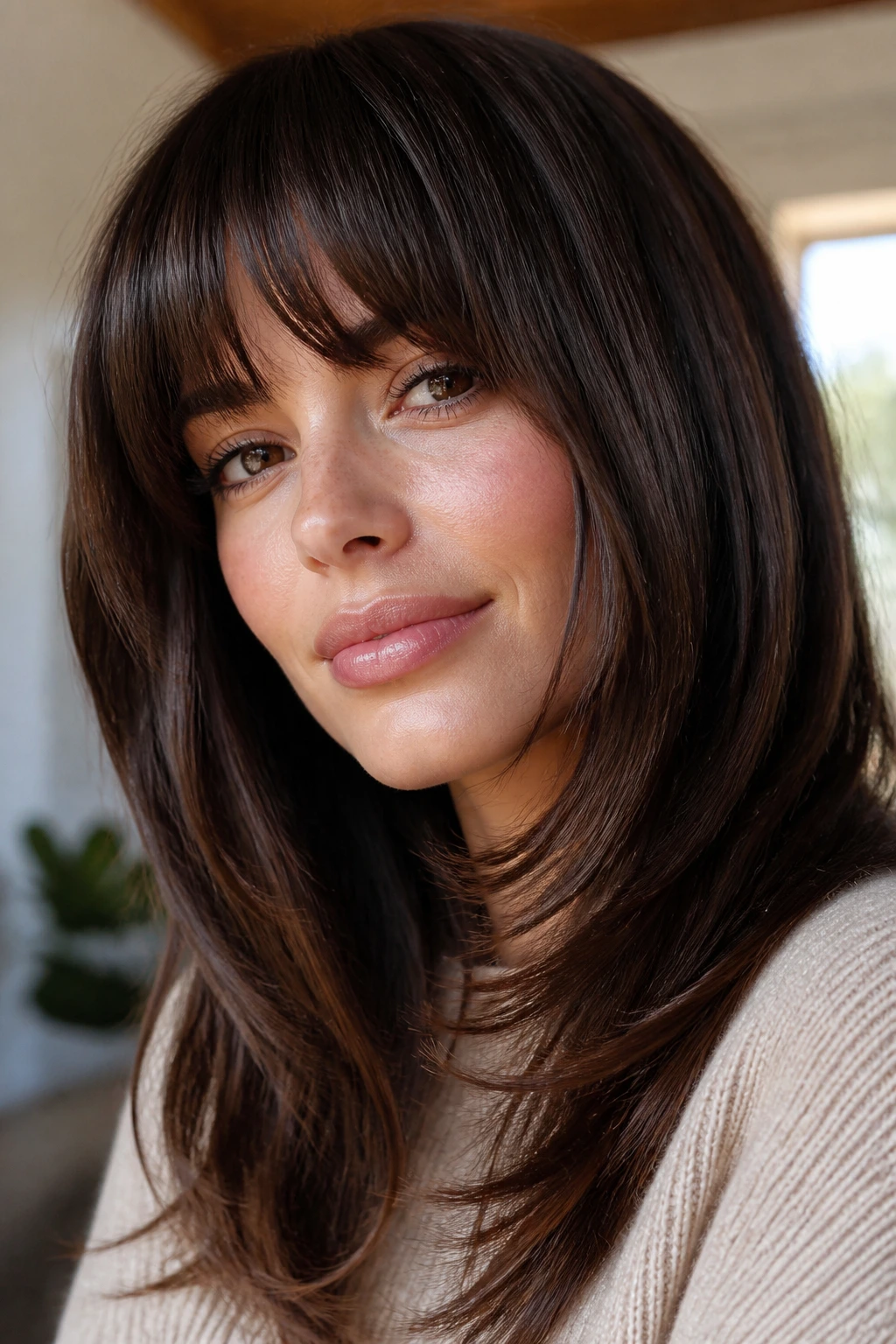
- Built for width control: every style here keeps the shortest point above or around the cheekbone, which helps a round face look longer without making the bangs feel thin.
- Made for dense hair: thick hair can turn into a block fast, so these cuts rely on layering, internal weight removal, and soft edges instead of one hard line.
- Easier grow-out: a long layered fringe usually folds into face-framing pieces instead of turning into an awkward shelf after a few weeks.
- Styling room matters: these cuts can be blown smooth, bent with a round brush, air-dried, or tucked aside when you want them out of your face.
- Less helmet, more movement: the right fringe moves with your cheeks and jaw instead of parking across the forehead like a curtain rod.
1. Curtain Bangs That Open at the Cheekbones
Curtain bangs are the safest place to start if you want long thick layered bangs for round faces without a dramatic commitment. The center sits shorter, the sides drift longer, and the whole shape opens away from the face instead of boxing it in.
Why This Shape Flatters a Round Face
The trick is placement. Ask for the shortest point near the bridge of the nose and the longest point around the cheekbone or upper lip. That line pulls the eye downward and gives the front of the haircut a little air.
- Have the stylist point cut the ends so they don’t sit in one heavy strip.
- Keep the center narrow; don’t let it sprawl too wide across the forehead.
- Blow-dry the fringe away from the center, then let it fall naturally.
Best move: leave the ends softly bent. Poker-straight curtain bangs can look flat and stiff on thick hair.
2. Bottleneck Fringe With a Dense Center and Soft Sides
This one is all about shape control. The center is a little denser, the edges soften out near the temples, and the whole fringe narrows before it expands again. On a round face, that narrowing in the middle matters more than people think.
The cleanest versions skim the forehead without sitting on it like a flat panel. If your hair is thick, ask for internal layering so the center doesn’t puff up when it dries. You want weight, yes, but not a solid chunk of it.
A bottleneck fringe also grows out well. The shorter middle fades into longer side pieces instead of leaving a harsh line. That’s useful if you like bangs one month and want less face in your face the next.
3. Deep Side-Sweep Bangs That Drift Past One Eye
A deep side part can do quiet magic on a round face. It breaks symmetry, creates a long diagonal, and makes the face read a little narrower without screaming “I’m trying to hide my cheeks.”
The best version starts with a heavy sweep at the part and then melts into longer face-framing pieces near the jaw. Thick hair helps here because the fringe needs enough density to stay put. Thin hair can do it, but the shape has to be lighter.
Ask your stylist to leave one side long enough to brush across one brow and tuck behind the ear if needed. That little bit of range is the difference between a cute sweep and a fringe that fights you all day.
4. Cheekbone-Brush Layers That Break Up the Width
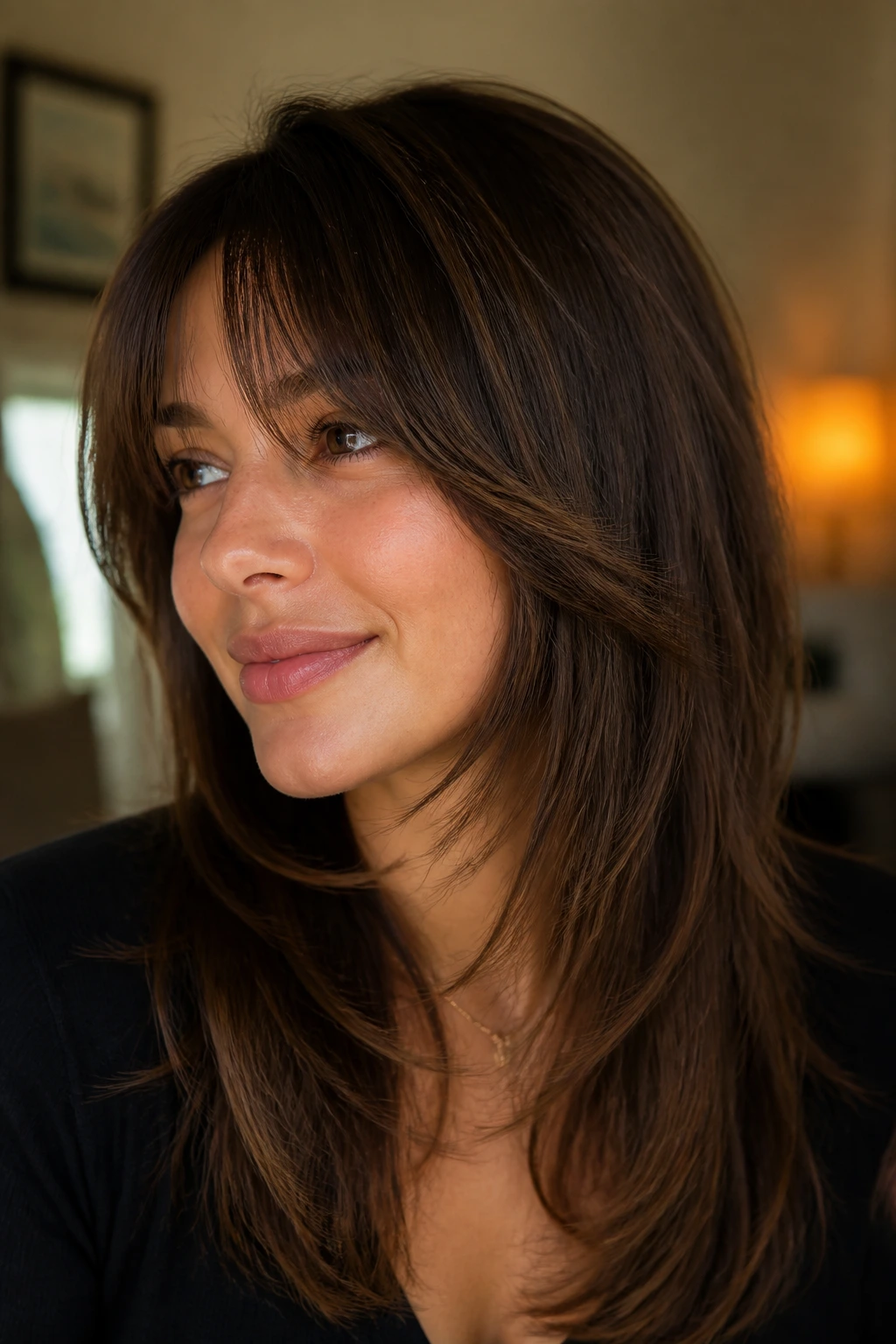
These bangs begin where the face starts to widen. That’s the whole reason they work. Instead of stopping at the brow, the shortest layers hit the cheekbone and the longer pieces slide toward the lip or chin.
How to Wear Them
A medium round brush gives these bangs their shape. Wrap the front away from the face, warm them with the dryer for a few seconds, then cool them while the hair is still curved. The bend softens the cheek line and keeps the front from lying flat.
A lot of people ask for layers and then leave the ends blunt. Nope. On thick hair, blunt ends make the front read heavier than it is. Point cut or slice the last inch so the fringe has movement.
5. Razor-Soft Fringe With Feathered Ends
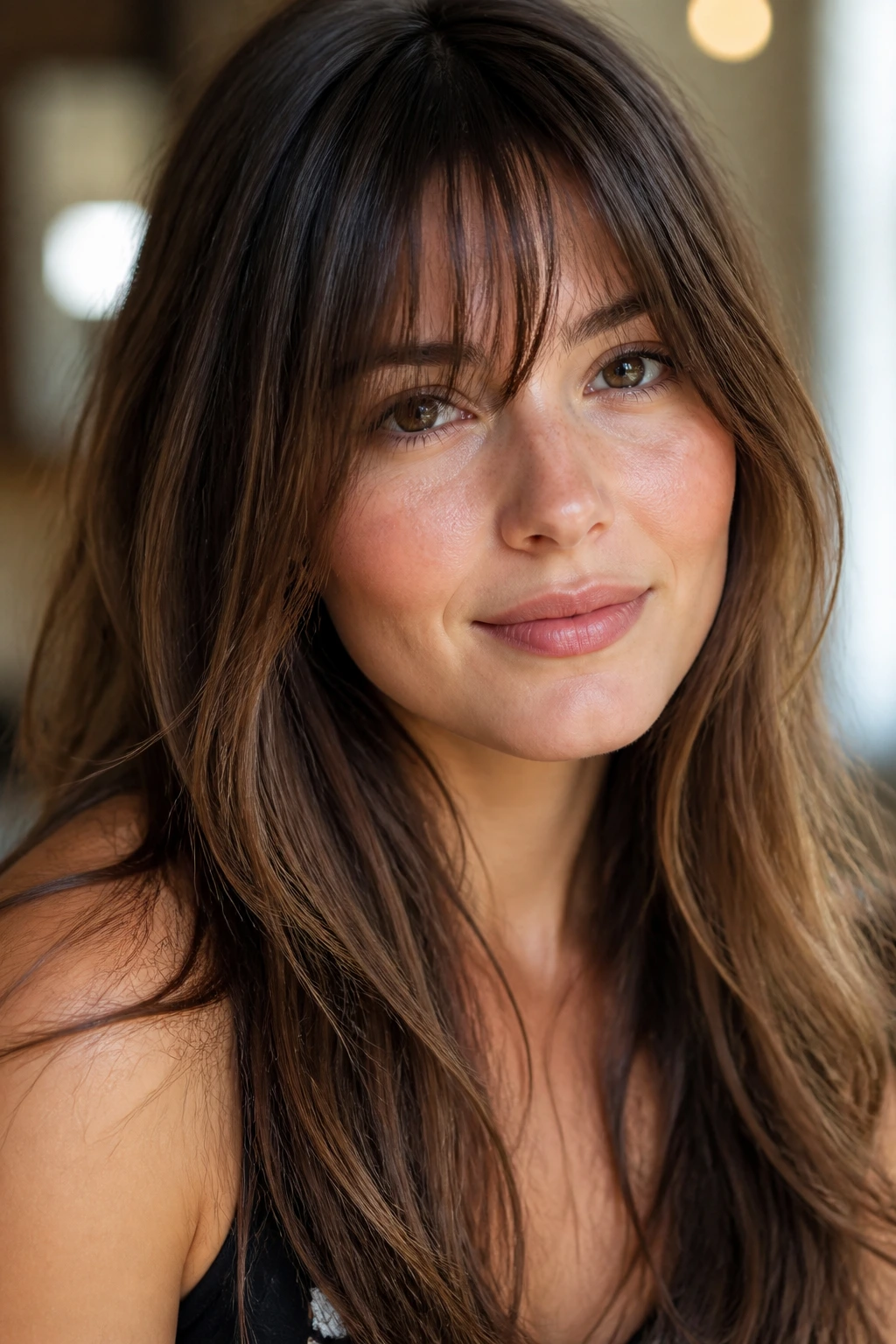
Razor cutting is useful when thick bangs need to lose some attitude. Not all of it. Just enough to keep the front from feeling like a curtain pulled straight down.
This style works best on straight to wavy hair. The razor chips into the ends and leaves a softer edge, which helps the fringe blend into longer layers around the face. On a round face, that blend matters because it keeps the eye moving vertically.
If your hair is coarse, ask for a light hand. A heavy razor can fray the ends and make thick hair puff in humidity. A little feathering goes a long way.
6. Brow-Skimming Bangs That Melt Into Long Sides
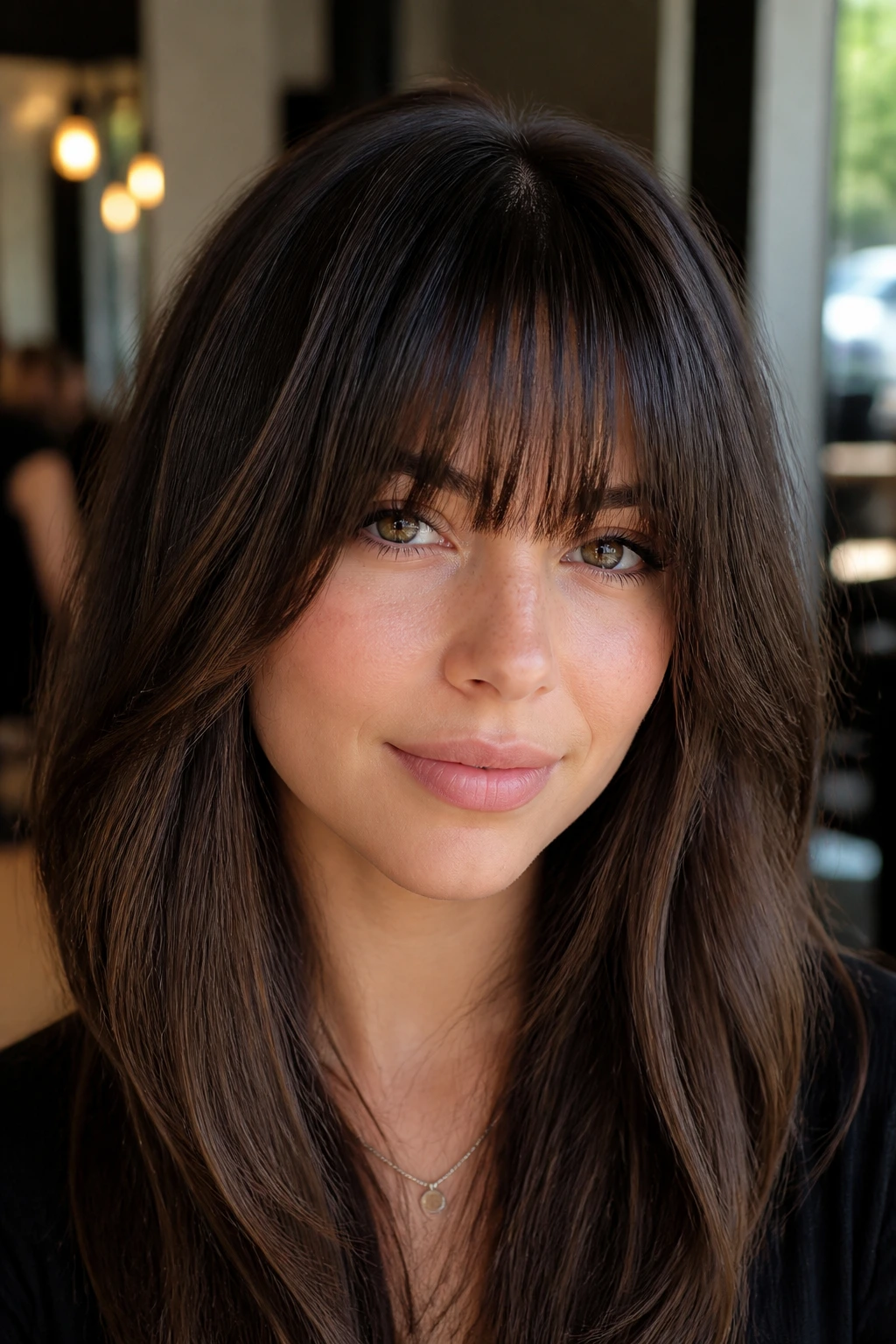
Here’s the thing: brow-skimming bangs can work on a round face if the ends are broken up and the side pieces are long enough. The mistake is making them a tidy little rectangle. That shape can widen the face fast.
The better version skims the top of the brows at the center, then angles into longer sides that hit near the cheek. The thick density stays useful because it gives the fringe body. The layering keeps it from becoming a helmet.
I like this cut for someone who wants fringe without a full curtain effect. It feels a little more classic, a little less obvious, and it still leaves room to tuck and pin on days when you want your forehead fully open.
7. Center-Parted Thick Bangs With a Clean Gap
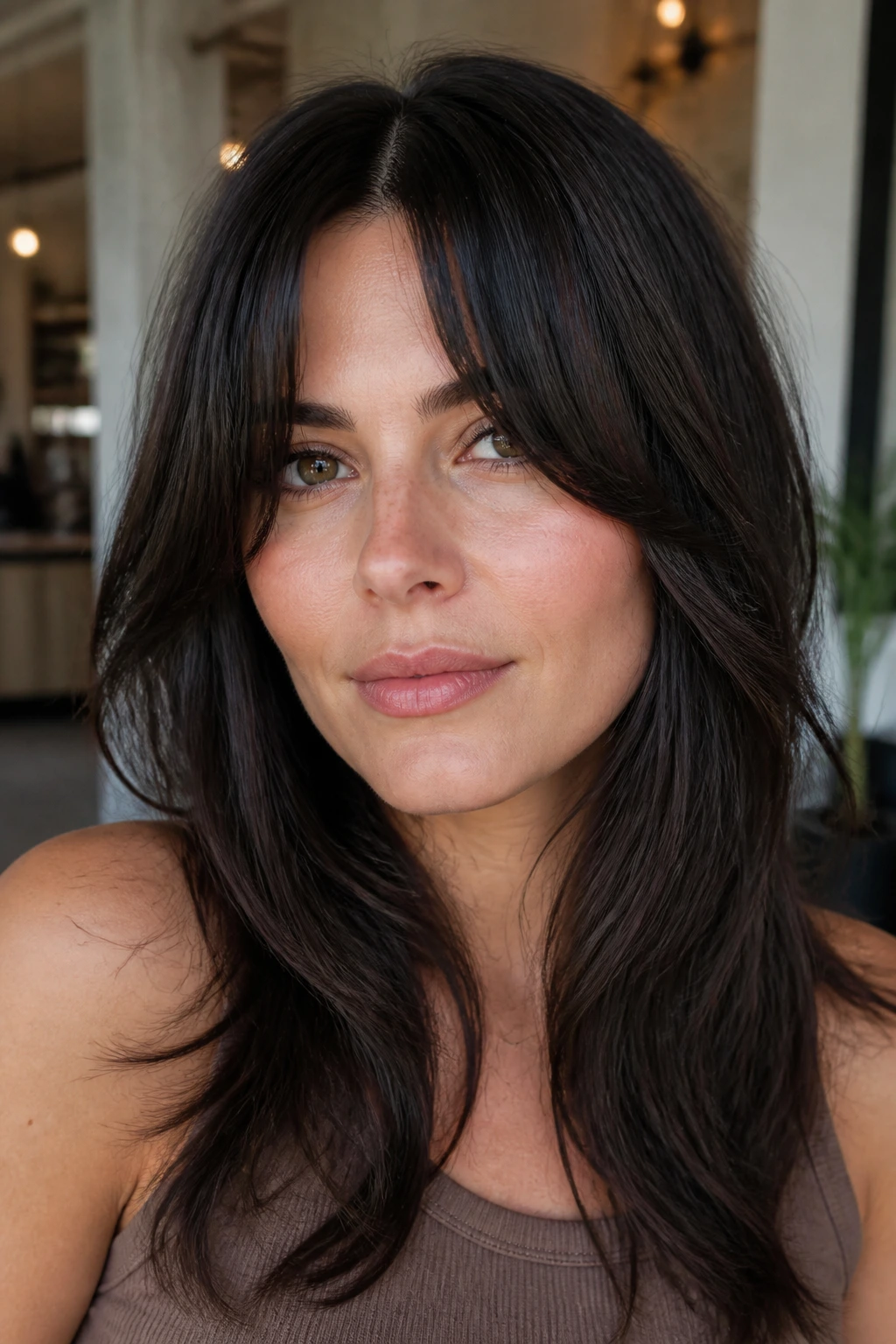
This is the more structured cousin of curtain bangs. The center part is clean, the volume sits on both sides, and the fringe fans outward in a controlled way. For round faces, the gap helps the face read longer because the center line is visible.
The shape works best when the shortest pieces stop around the brow or bridge of the nose and the outer pieces hit the cheekbone. Thick hair gives the style enough weight to hold the split instead of collapsing into one solid curtain.
Use a tail comb to train the part while the hair is damp. If you skip that step, the fringe usually defaults back to whatever your cowlick wants.
8. Shaggy Face-Frame Bangs With Built-In Lift
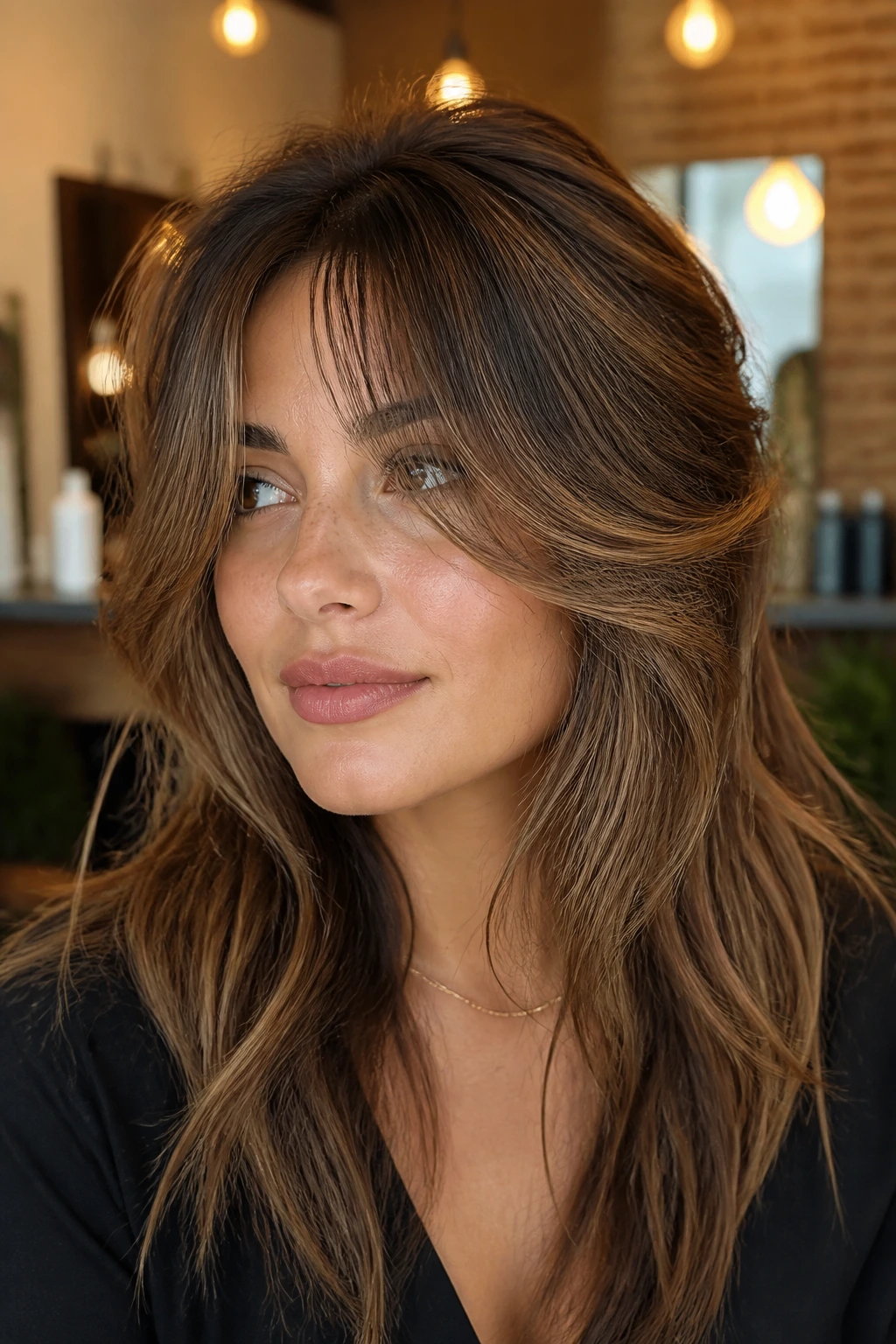
If you like a little mess in your hair, this one’s for you. The fringe merges into short face-framing layers, so the whole front has movement instead of one obvious bang line.
The shaggy version is useful on round faces because it lifts near the crown and breaks up the outline around the cheeks. You’re not trying to erase width. You’re trying to stop the width from being the first thing anyone sees.
Ask for soft texturing at the temples and a longer piece that lands near the jaw. That extra length keeps the style from puffing out beside the cheeks, which is the part that usually goes wrong.
9. Diagonal Fringe Starting Low on One Side
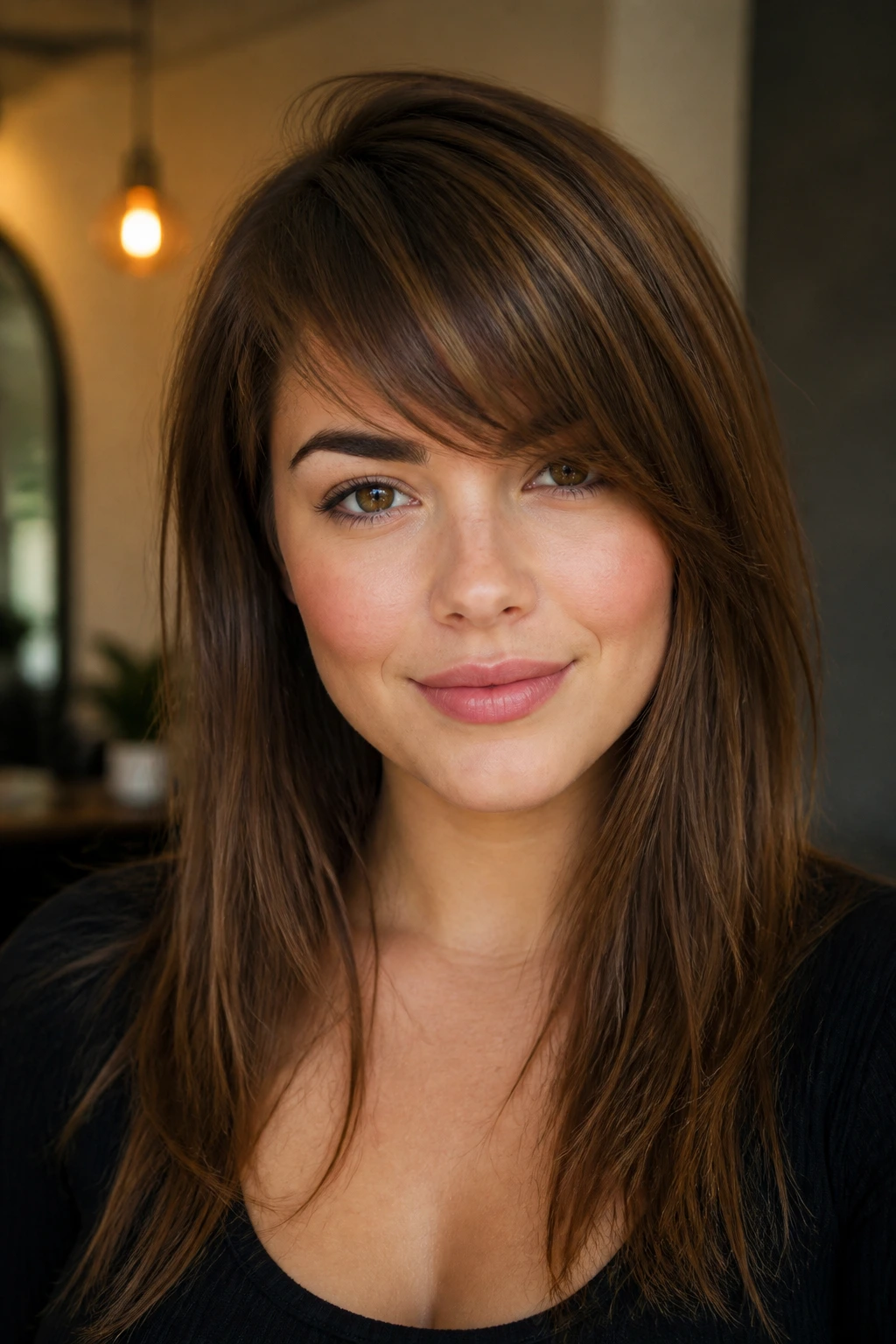
A diagonal fringe is blunt bangs’ more flattering cousin. One side starts lower, the line angles across the forehead, and the longest piece can brush past one brow or cheek. That diagonal movement is what round faces like.
This style is especially good if you prefer one side of your face in photos. The angle creates a break in the widest part of the face, which helps the cut feel longer and leaner without turning severe.
Tell the stylist not to over-thin the ends. A diagonal fringe needs enough body to hold the slant. Too much thinning and the line disappears.
10. Rounded Blowout Bangs With a Soft Bend
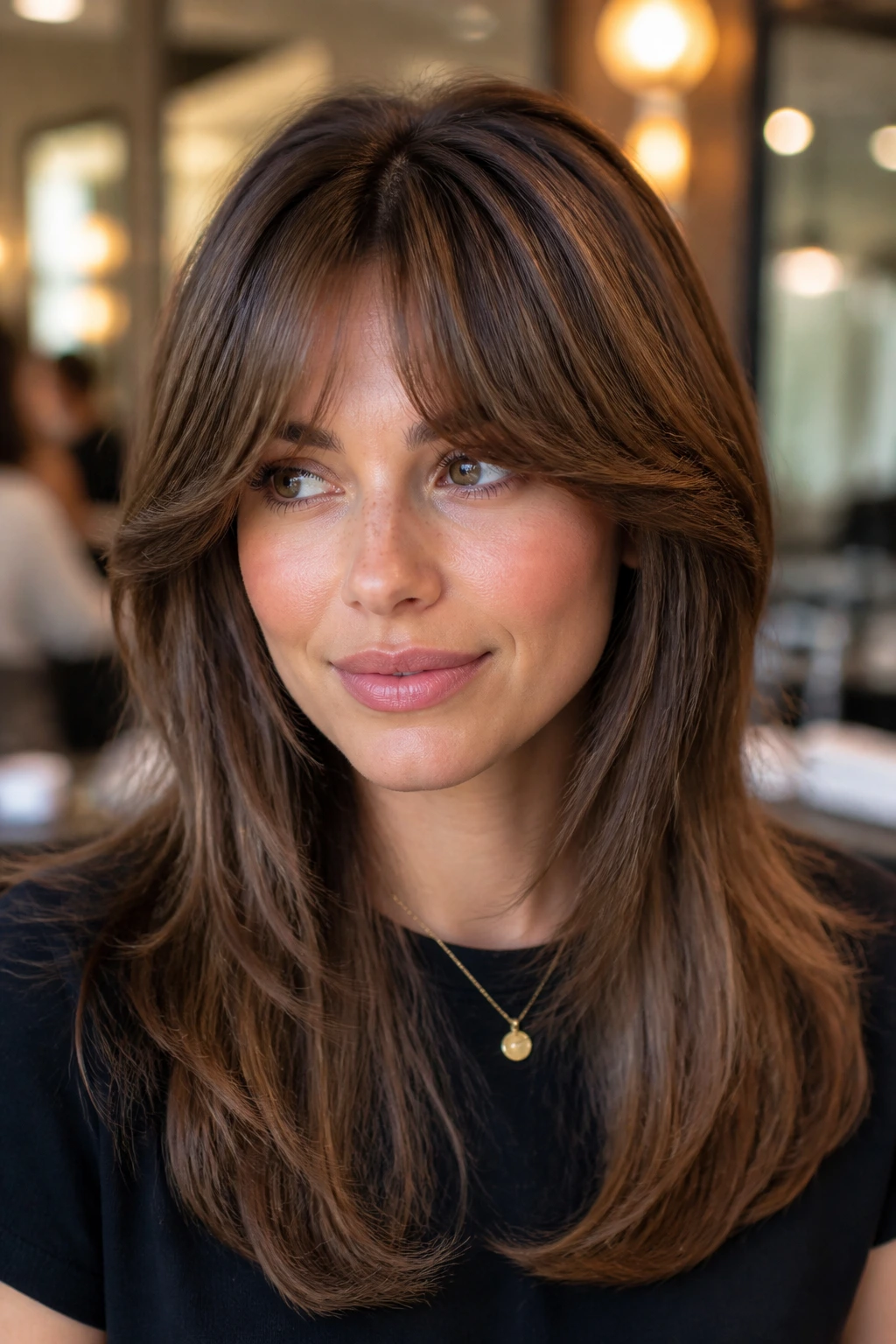
A big, brushed fringe can look expensive in the best sense of the word — polished, soft, and a little dramatic. The trick is not to make it flat. You want lift at the roots and a rounded bend through the middle.
This is the style that loves a 1.5-inch round brush and a dryer nozzle. Overdirect the bangs from side to side while drying, then wrap the ends under or away from the face depending on the look you want. The bend should be visible but not curled into a corkscrew.
Round faces benefit from the vertical line created by the lift. The hair moves up first, then down. That order matters.
11. Wavy Long Bangs That Follow Your Natural Pattern
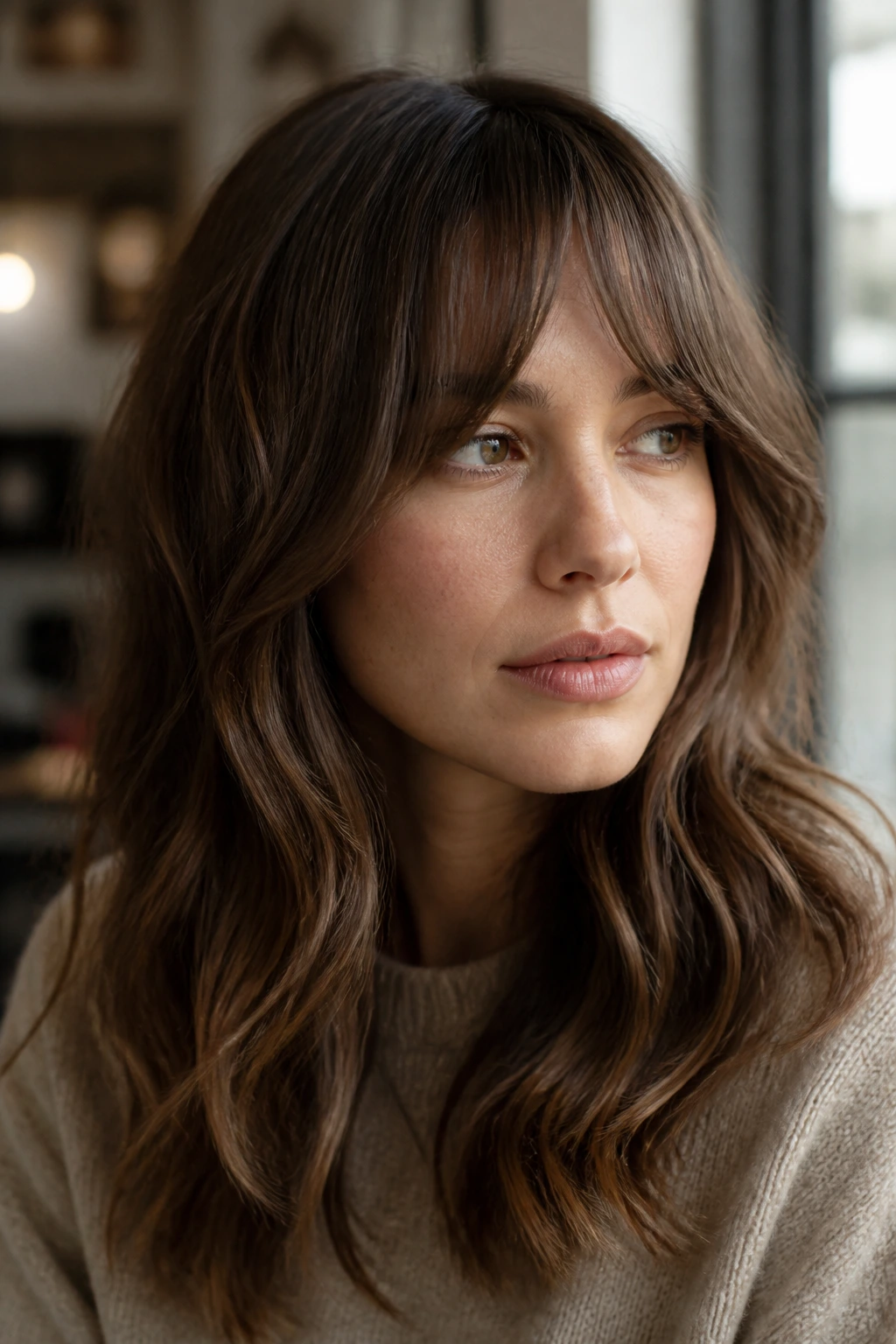
Why fight a wave pattern that’s already there? Long layered bangs can look better on wavy hair when they’re cut to follow the bend instead of trying to flatten it into obedience.
Ask for a dry cut or a mostly dry cut so the stylist can see where the bangs actually fall. On a round face, the long side pieces should start at the cheekbone and drift lower toward the jaw, which keeps the face from feeling boxed in.
This is one of the easiest styles to live with if you dislike daily heat styling. A little mousse, a quick scrunch, and you’re done.
12. Split Fringe With Fuller Sides and a Light Center
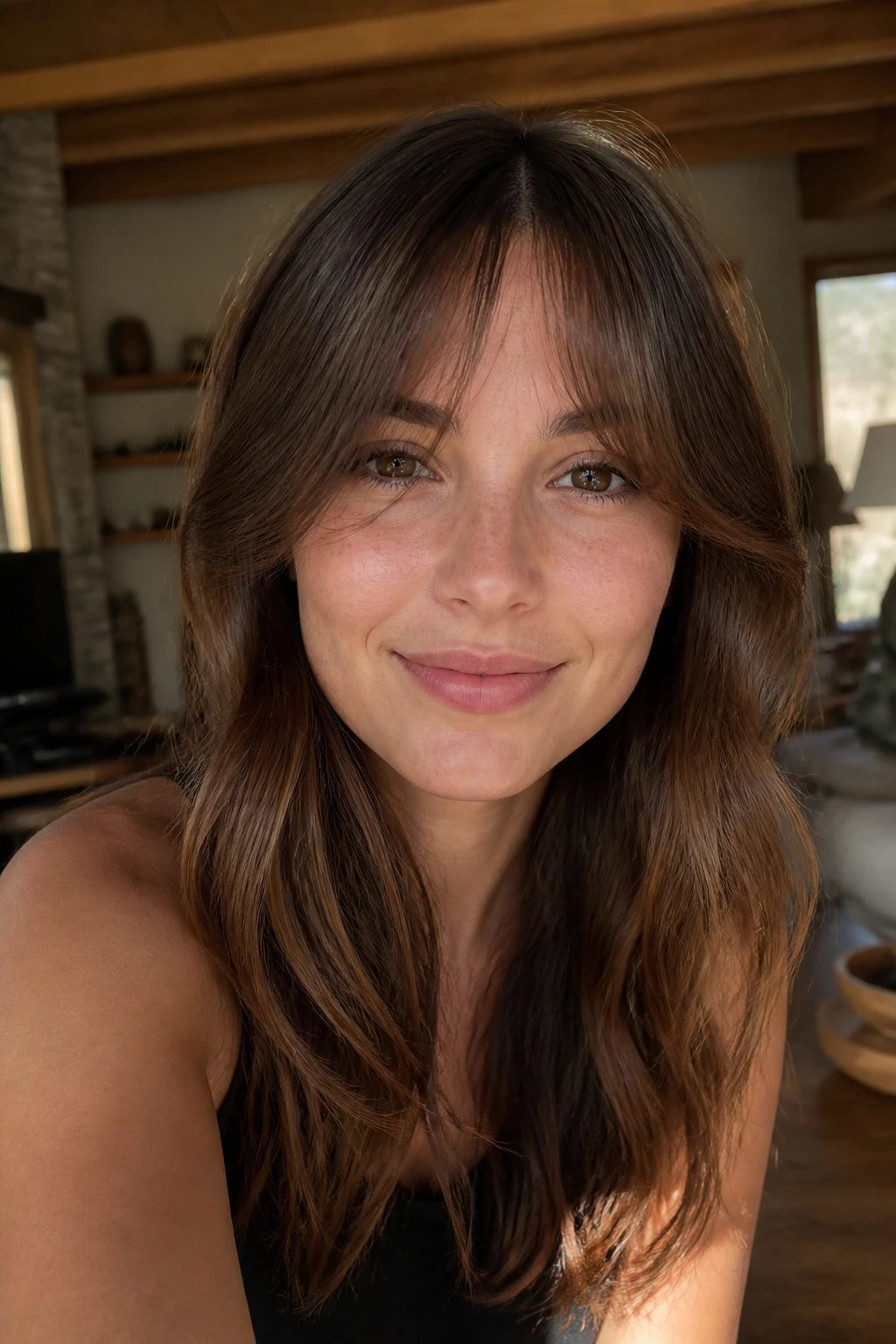
This shape puts the weight where it helps most: on the sides. The center stays lighter, and the side sections carry the look toward the temples and cheekbones. That helps narrow the middle of the face without making the fringe feel skimpy.
It’s a smart move for thick hair because the density can live in the side pieces instead of piling up right in the center of the forehead. The result feels balanced, not heavy.
If you wear your hair in loose waves, this style slips in nicely. The split lets the fringe disappear into the rest of the haircut instead of sitting on top of it.
13. Feathered Arc Bangs Across the Forehead

Arc bangs have a soft curve instead of a hard horizontal cut. That curve keeps the front from looking boxy, and on a round face, boxy is the thing to avoid.
Ask for a rounded shape that starts a bit shorter in the middle and grows longer toward the edges. The ends should be feathered just enough to move, not so much that they fray out and look wispy in a bad way.
This style is a good bridge between curtain bangs and traditional fringe. It gives you face framing without the full split down the middle.
14. Long French Fringe With a Textured Edge

French fringe usually gets described as effortless. I’d call it softer and less obedient. On thick hair, that can be a gift. The fringe sits a little loose, the edge is textured, and the front reads as lived-in instead of locked in place.
For a round face, keep the longest pieces near the cheekbone. That keeps the hair from stopping at the exact width of the face. A little texture at the edge helps the fringe break apart in a good way.
This cut shines when you don’t want to spend 20 minutes styling your bangs every morning. It’s happiest when it’s slightly imperfect.
15. Piecey Bangs That Sit Between Polished and Messy

Piecey bangs are what you ask for when you want visible strands, not one big front section. The thick density stays, but the layers break it into little movements that the eye can read separately.
That separation matters on a round face because it keeps the fringe from becoming one solid band across the forehead. A few narrow pieces around the temples help draw attention outward and downward.
Use a little styling cream on the ends, not the roots. Too much product at the root turns piecey into oily fast.
16. Temple-to-Collarbone Cascade Layers
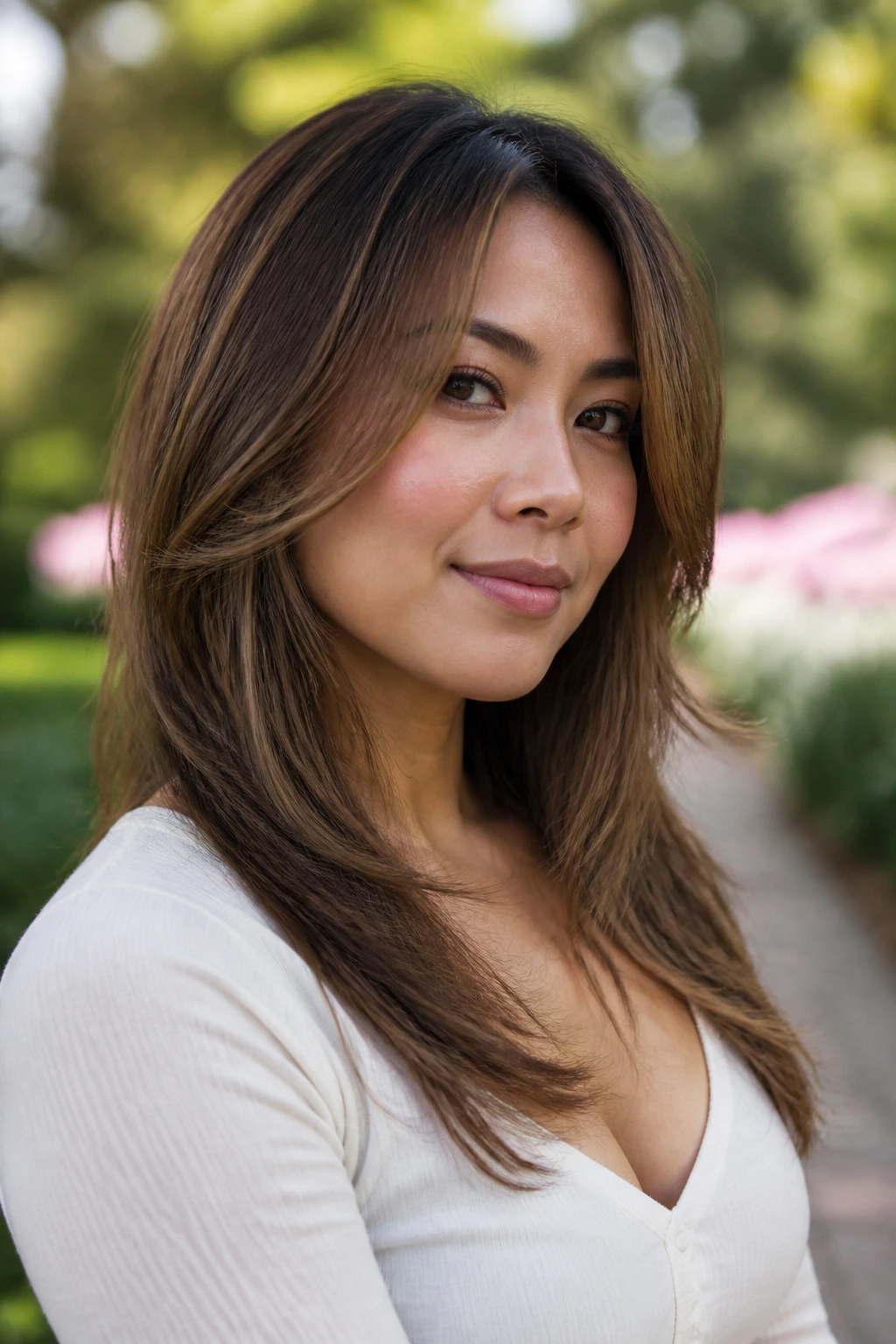
This one barely feels like bangs at all, which is why it works so well. The shortest pieces start around the temple and the longest front layers travel all the way to the collarbone. The face gets framed on a diagonal, and the roundness softens.
It’s a good choice if you want the effect of bangs without committing to a clearly cut fringe. Thick hair can carry the weight, and the long layers keep everything from puffing out near the cheeks.
If you’ve ever hated how bangs sit on your forehead but loved the idea of face framing, this is the version to ask about.
17. Straight-Hair Bangs With a Slight Bevel

Straight hair can make a fringe look sharp in a way that’s not always flattering on a round face. The fix is a slight bevel at the ends, just enough curve to stop the cut from reading like a ruler.
The stylist should keep the center shorter and the sides longer, then soften the last half-inch with point cutting. That tiny bend is what lets the shape slide into the rest of the haircut.
A flat iron can help, but use it lightly. One pass and done. Too much heat makes the bangs look stiff, and stiff bangs don’t do round faces many favors.
18. Wavy-Hair Bangs Cut to Dry Clean

Wavy hair likes honesty. If the fringe is cut wet and too short, it usually springs up in all the wrong places once it dries. A dry cut shows the real shape, which is the shape you actually live with.
Ask for the shortest point to stop above the brow and the sides to slide into longer face pieces. That gives the wave room to move without pushing width straight across the face.
A little salt spray can help, but don’t pile it on. Thick wavy bangs can turn fuzzy fast if the product is too heavy.
19. Curly Bangs That Stretch Past the Brows

Curly bangs need length. Always. The curl will shrink, and round faces need the fringe to stay long enough to break the face shape, not bounce up into a short puff.
The best version lands below the brows when dry and folds into long side pieces near the cheekbones. Thick curls can handle the density, but the ends should be shaped so the front doesn’t stick straight out.
If your curl pattern is tight, ask the stylist to cut in the direction your curls fall, not against them. That little detail saves a lot of frustration.
20. Thick Bangs That Stay Off the Forehead
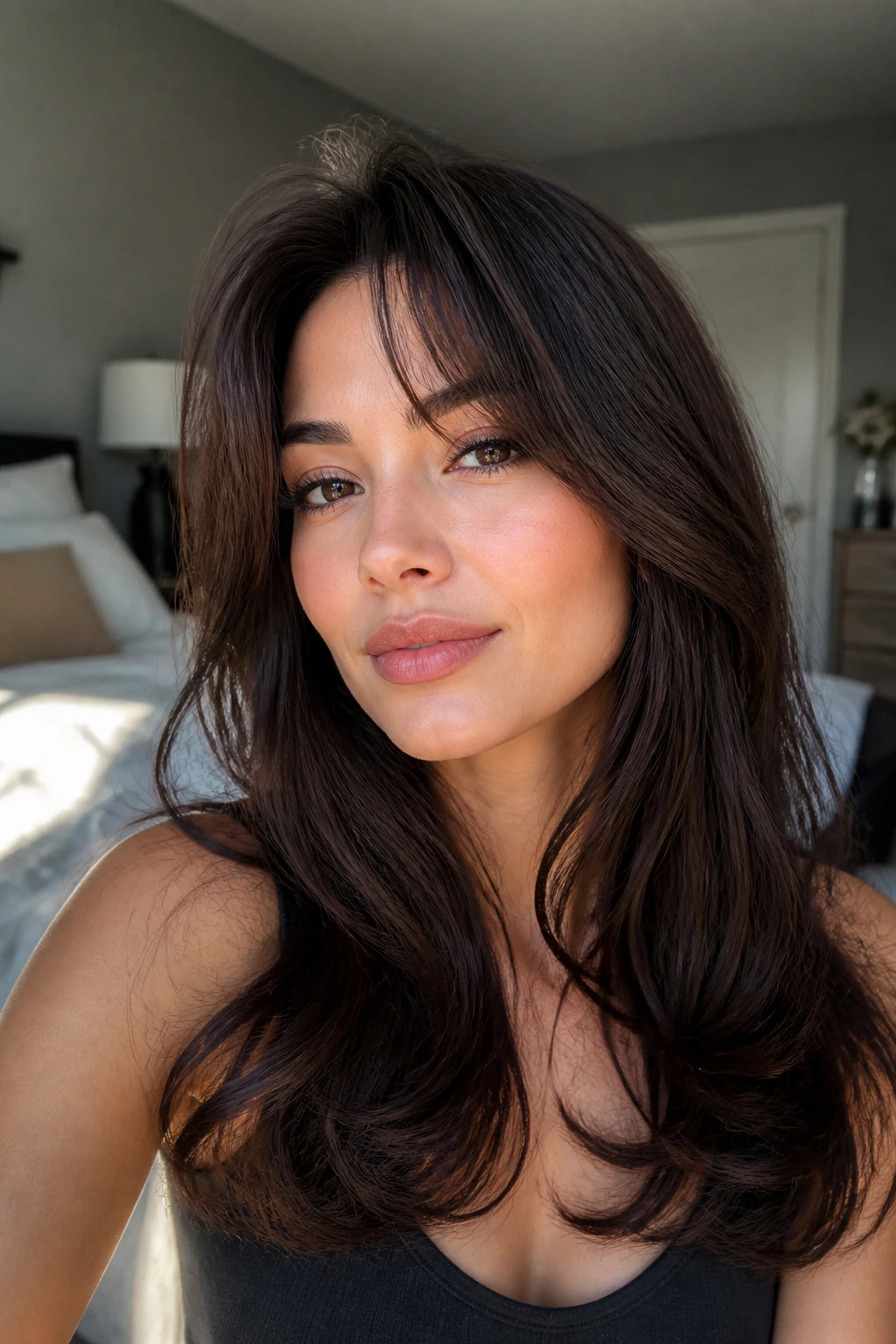
Some people want bangs, but they do not want bangs in their eyes, on their makeup, or stuck to their skin by noon. Fair. This version keeps the fringe thick but trains it to sit slightly lifted and separated from the forehead.
The shape depends on root volume and a long enough length to bend back or aside. On a round face, that lift matters because the fringe creates vertical space instead of closing off the top third of the face.
A quick blast with the dryer and a round brush usually does it. If your hair falls fast, a roller clip at the root for five minutes can help the shape cool into place.
21. Asymmetrical Long Bangs With One Strong Side
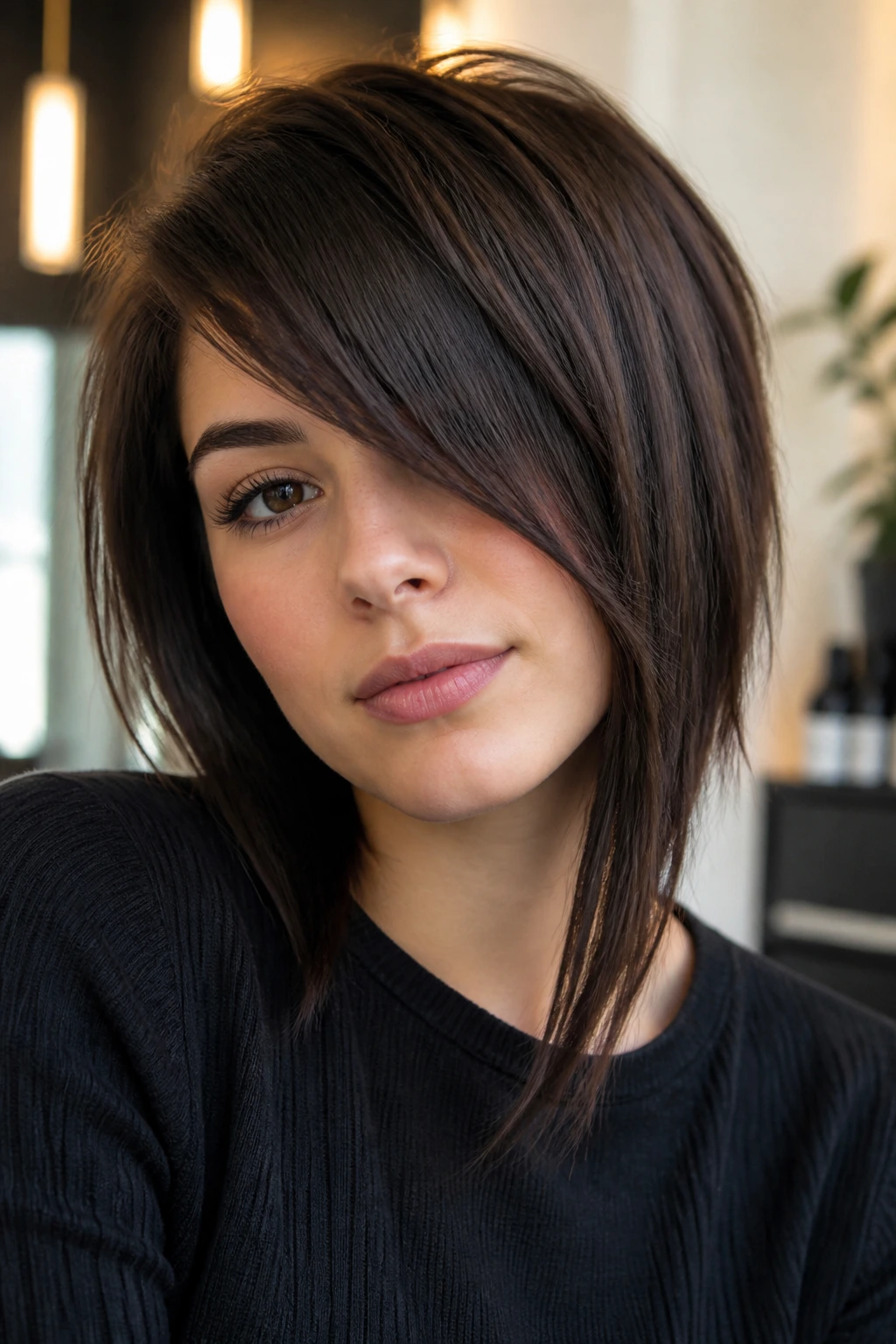
Asymmetry is underrated. One stronger side gives the face a line to follow, and a round face benefits from that directional pull. The cut feels modern without looking engineered.
Keep the shorter side soft, not choppy. The longer side should connect into the rest of the haircut around the jaw. That connection is what keeps the style from looking like a mistake made with scissors and a bad mirror.
This is one of my favorite options for people who want something less common than curtain bangs but still need length in front.
22. Invisible Layers Inside a Heavy Fringe
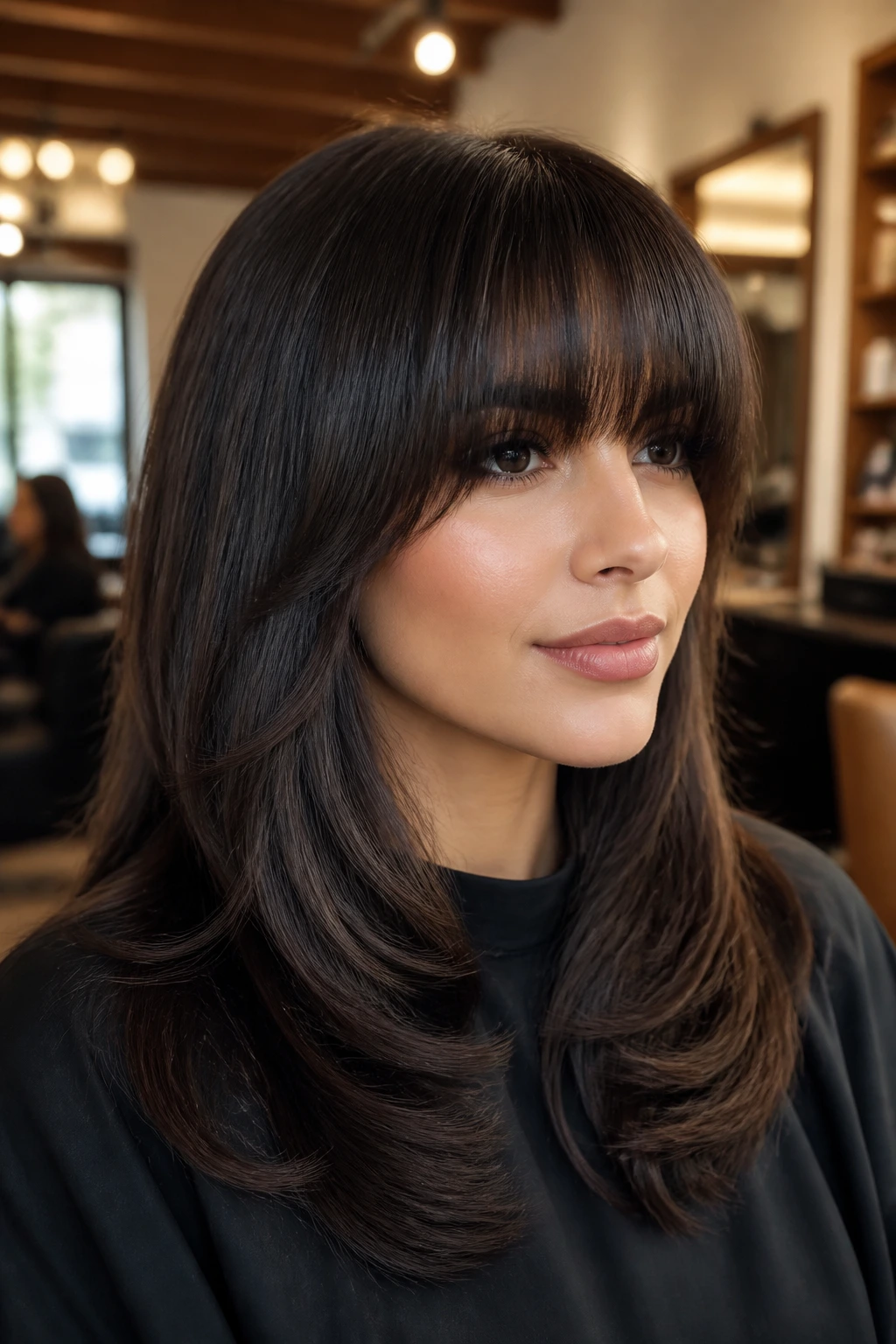
This cut is about sneaky weight removal. The outside still looks full, but the inside has layers that stop the fringe from ballooning out. For thick hair, that is a lifesaver.
Round faces usually do better when the fringe appears controlled rather than wide, and invisible layers help with that. The front keeps its body, but the ends don’t fight the rest of the haircut.
Ask for internal texturing rather than a giant thinning session. Too much thinning can leave thick hair frizzy. Hidden layering is cleaner.
23. Side Curtain Bangs With Lift at the Crown

A side curtain fringe gives you the softness of curtain bangs with a little more drama at the roots. The crown lift elongates the face, which is useful when the cheeks carry most of the width.
The shortest section should still land around the brow or bridge of the nose. From there, the front should sweep into a longer side that touches the cheekbone. That long diagonal is what changes the face shape.
If your hair tends to go flat at the roots, pre-dry the crown first, then set the fringe. The front holds better when the base has some air under it.
24. Soft-Shattered Bangs With Broken Ends

Shattered ends sound rougher than they look. In practice, it means the ends are broken up enough that no single line dominates the forehead. On thick hair, that broken edge can be the difference between soft and boxy.
The fringe should still feel full, just not heavy. Keep the length long enough to rest near the brows or slightly below them, then let the sides fall into the cheek area.
This is a good cut if you like a little edge but don’t want a high-maintenance shape. It looks best when it has some movement. Stillness is not its friend.
25. Glam Sweep Bangs for a Smooth Finish
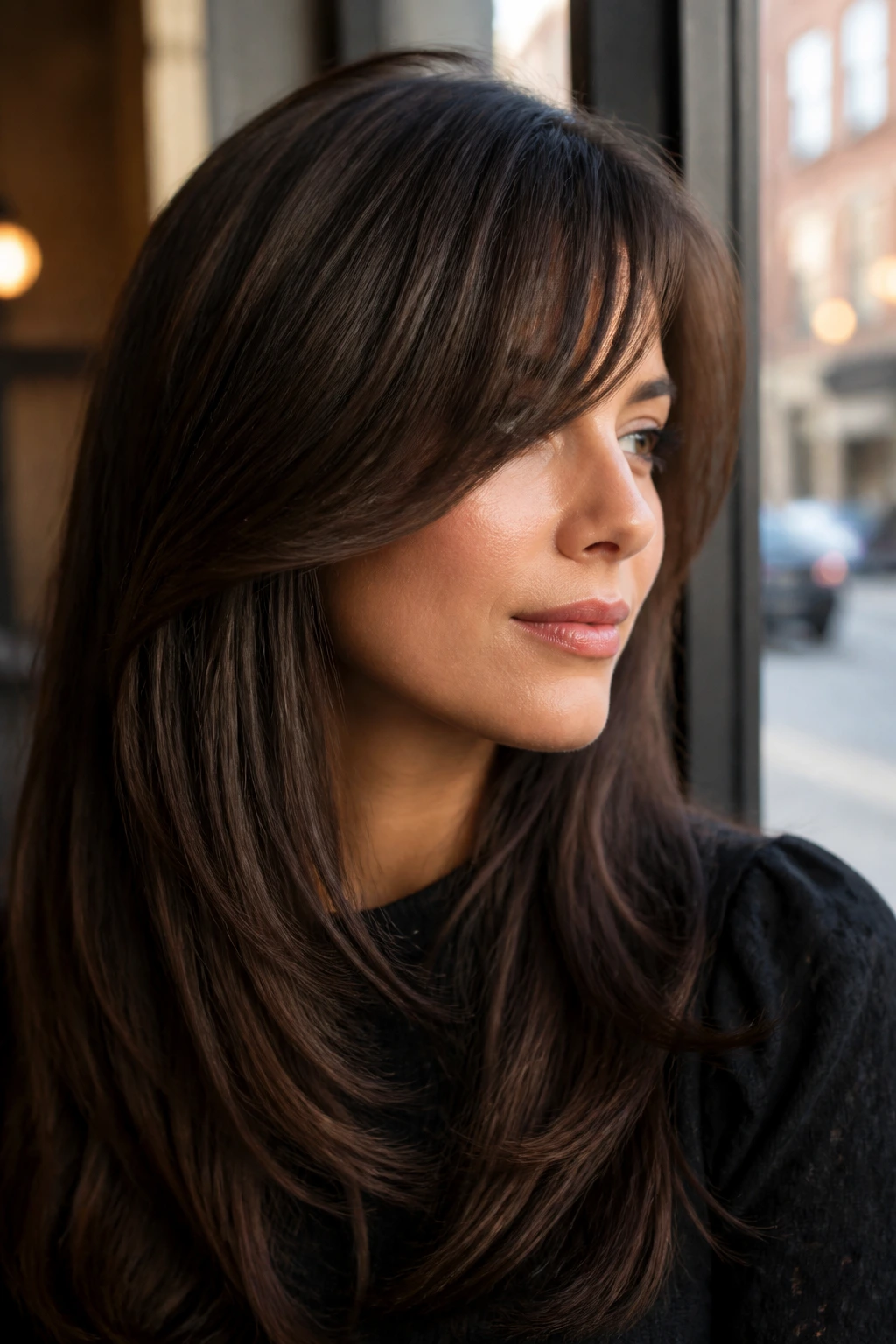
This one leans polished. The fringe sweeps cleanly to one side, the ends curve with a blowout, and the whole thing looks deliberate. On a round face, the long sweep gives you a diagonal line that slices across the width in a flattering way.
The key is smoothness, not stiffness. Use heat protectant, a round brush, and a flexible spray at the end. You want the hair to hold the shape but still move when you turn your head.
If you wear lipstick and earrings, this fringe frames the face like a good accessory. Just do not flatten the roots.
26. Ponytail-Friendly Long Bangs for Busy Days
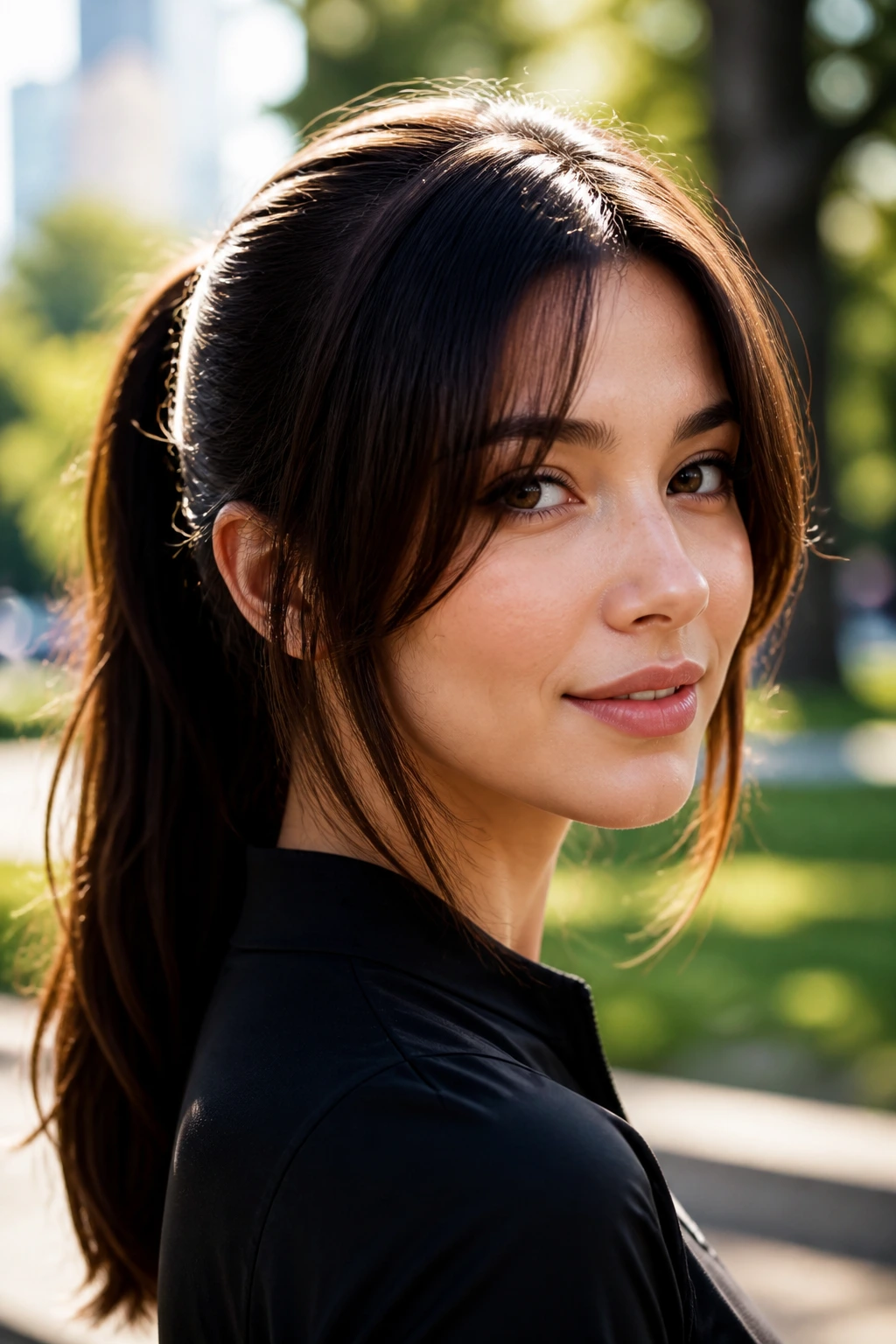
If you live in ponytails, this is the fringe to ask about. The shortest pieces are still long enough to tuck, pin, or blend into a low bun, while the side layers stay useful when the hair is down.
For a round face, the trick is keeping the face-framing pieces long enough to create a vertical line even when the rest of the hair is pulled back. Shorter bangs can look cute with a ponytail, but they can also make the face feel wider. These do not.
A little dry shampoo at the roots gives the front some grip. Clean hair can be too slippery for this shape.
27. Dense Bangs With Internal Weight Removal
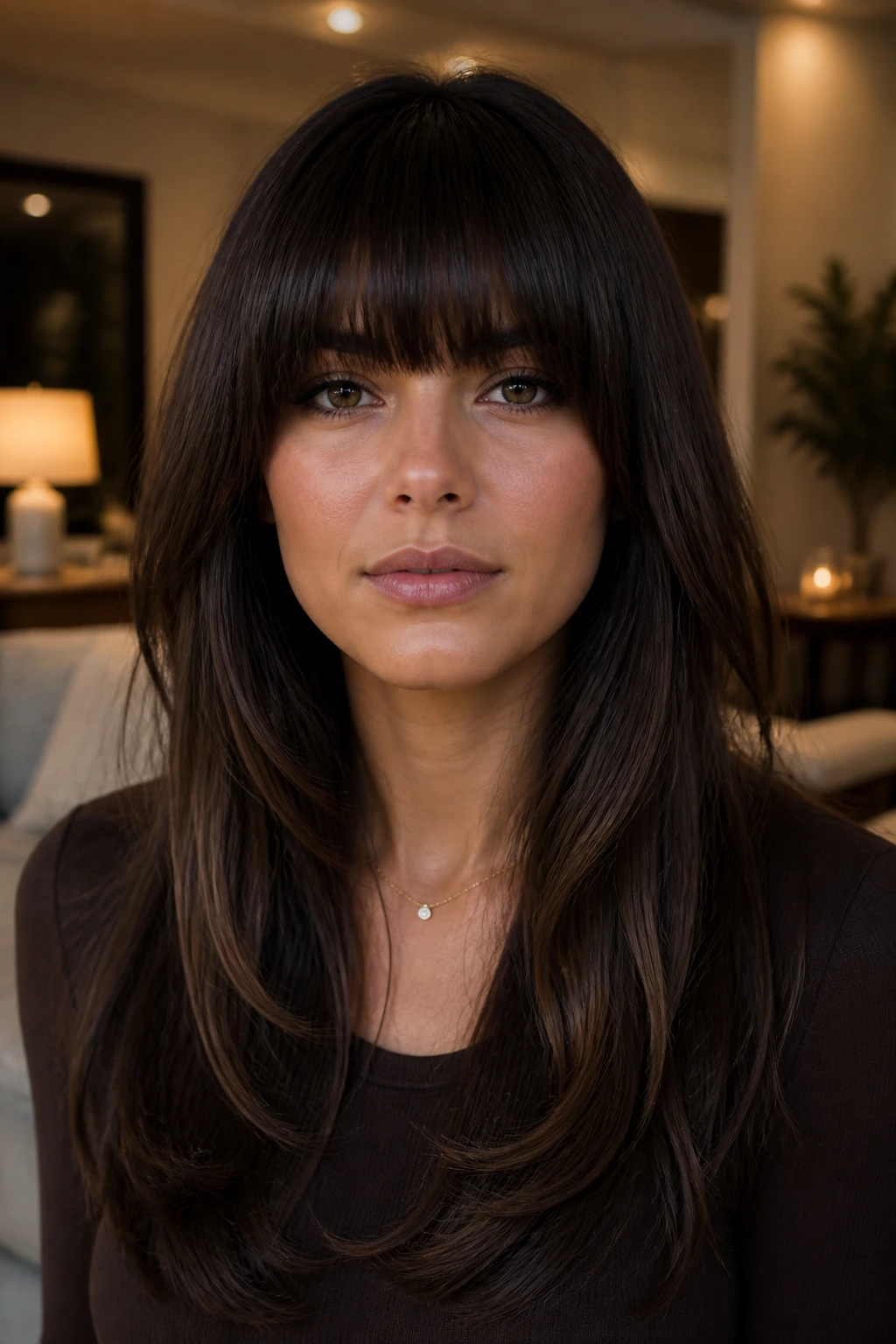
This is the bluntly practical version. The bangs stay thick, but the stylist removes bulk from the inside so the fringe lies flatter and cleaner. That’s especially useful if your hair is coarse or extra dense.
The ends should still be layered and soft. You do not want a see-through fringe. You want a dense fringe that sits like it was measured, not hacked.
It’s the best answer for people who keep saying, “I want bangs, but my hair is too much.” Usually it isn’t too much. It just needs structure.
28. Air-Dry Bangs That Fall Into Place

Some bangs only look good with a round brush in hand. These are not those bangs. The cut is long enough and layered enough to settle on its own after a quick comb-through, which makes life easier on the days you’re not in the mood.
That matters on round faces because an airy fringe keeps the center from feeling compressed. The face reads longer when the front has a little movement instead of a hard wall.
Use a touch of leave-in on the ends and keep the roots light. Heavy product kills the shape before it starts.
29. Salon-Blowout Bangs With a Big, Loose Bend
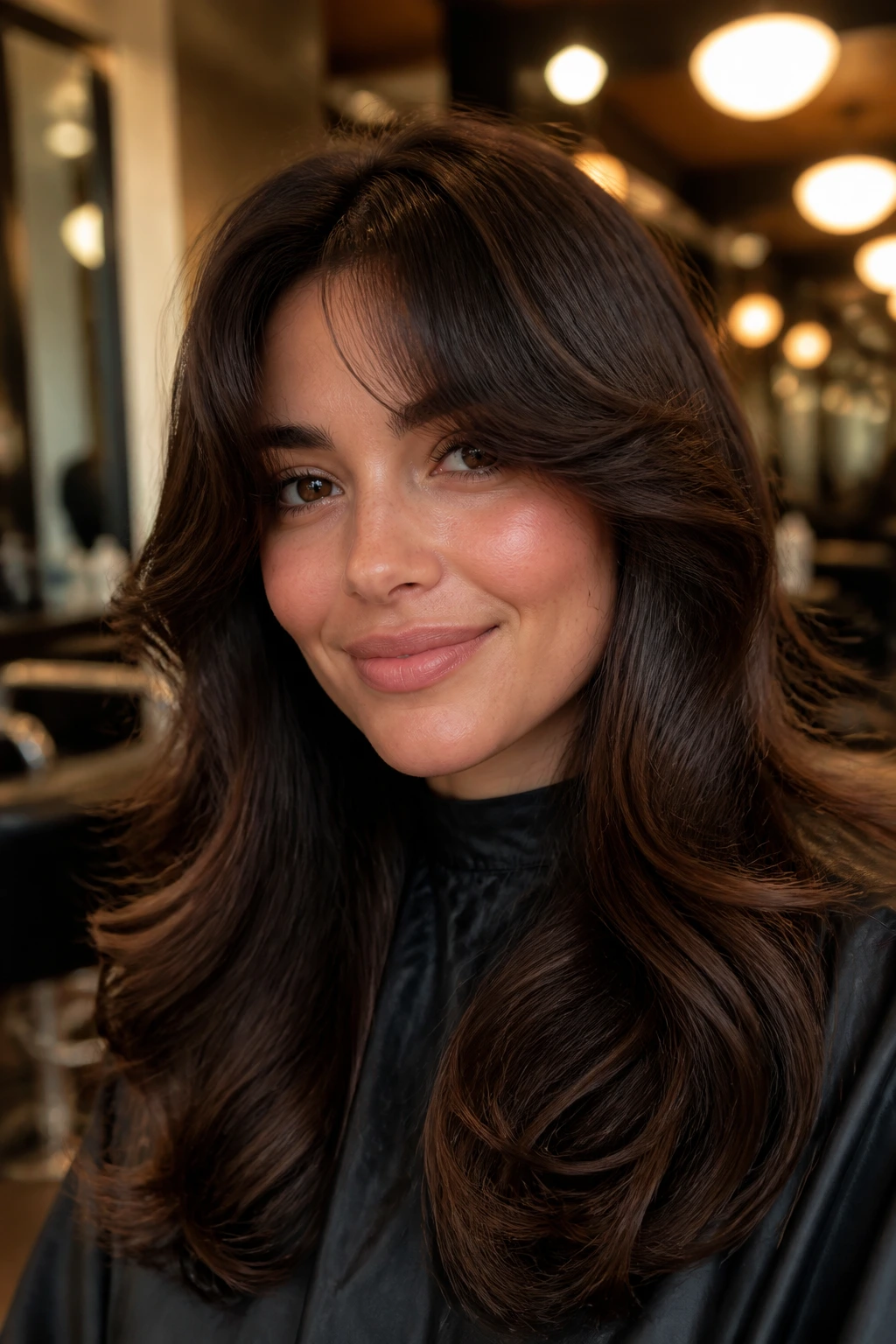
This is the one you pick when you want the front to look like it got styled on purpose. The bend is loose, the ends curve away from the face, and the fringe has enough body to sit above the brows without collapsing.
Round faces like this because the shape creates height and a long line at the same time. Thick hair helps the bend hold. Fine hair can do it too, but it usually needs more root support.
A medium round brush and a cool shot are non-negotiable here. Skip the cool shot and the shape fades fast.
30. Grow-Out Friendly Framing Fringe
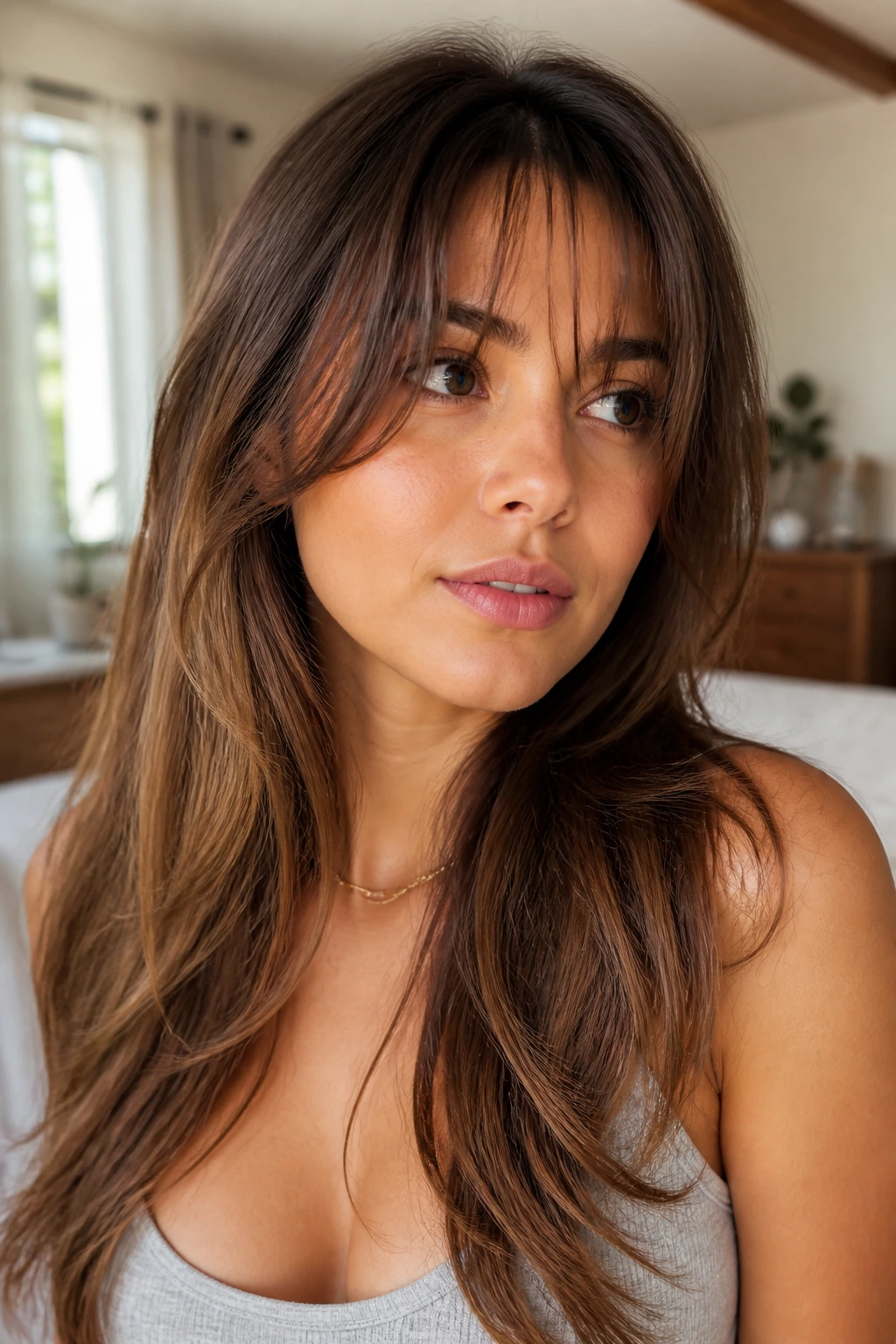
If you’re nervous about regret, start here. The fringe is long, layered, and connected to the face framing from the beginning, so it slides into the rest of the haircut instead of sitting as a strict line.
This is one of the best long thick layered bangs for round faces because it keeps the cheek area soft while giving you the option to push pieces aside, wear them center-parted, or let them drape naturally. The cut doesn’t punish you if you change your mind.
I like this version for anyone who wants bangs that behave like a shape, not a project.
Why Long Thick Layered Bangs Work on Round Faces

A round face has gentle width through the cheeks and a softer jawline. That’s not a flaw. It just means the front of the haircut has to do a little more work than it would on a more angular face. The goal is to create vertical movement, not more width across the widest part of the face.
Long thick layered bangs work because they break the forehead line into pieces. A clean center gap, a side sweep, or a longer edge near the cheekbone gives the eye somewhere to travel. The face feels longer because the hair stops acting like a horizontal bar.
Where the Length Should Land
Cheekbone, lip, and jaw are the useful checkpoints. A fringe that ends above the brow in a round shape can look boxy fast. A fringe that lands near the cheekbone or upper lip usually gives the face more length and keeps the front from feeling packed.
Why Thickness Needs Layering
Heavy hair loves to sit in one solid mass. Great for a ponytail. Not so great around the forehead. Layering opens space inside the fringe, which lets the hair bend instead of balloon. That little bit of air changes the whole cut.
And yes, cowlicks matter. If one side shoots up or splits, the stylist should work with it, not against it. A good fringe respects the way your hair falls. That is usually the difference between bangs you wear and bangs you fight.
Tools That Make Styling Easier

- A 1.25- to 1.5-inch round brush: small enough to shape the fringe, big enough to keep the bend soft instead of curly.
- A blow dryer with a nozzle: the nozzle points the air where you want it, which matters more than people admit.
- A fine-tooth tail comb: useful for clean parts and for separating the fringe from the rest of the hair.
- Duckbill clips or small sectioning clips: they hold the side pieces out of the way while the bangs cool.
- Heat protectant spray: use a light mist before any round-brush styling or flat-iron touch-up.
- Flexible-hold hairspray: one or two sprays keep the shape without making the front crunchy.
- Dry shampoo: handy for day-two roots, especially if your bangs get oily faster than the rest of your hair.
- A small flat iron, optional: good for a quick bend or one stubborn side, but it should not replace shaping entirely.
How to Ask for the Cut at the Salon
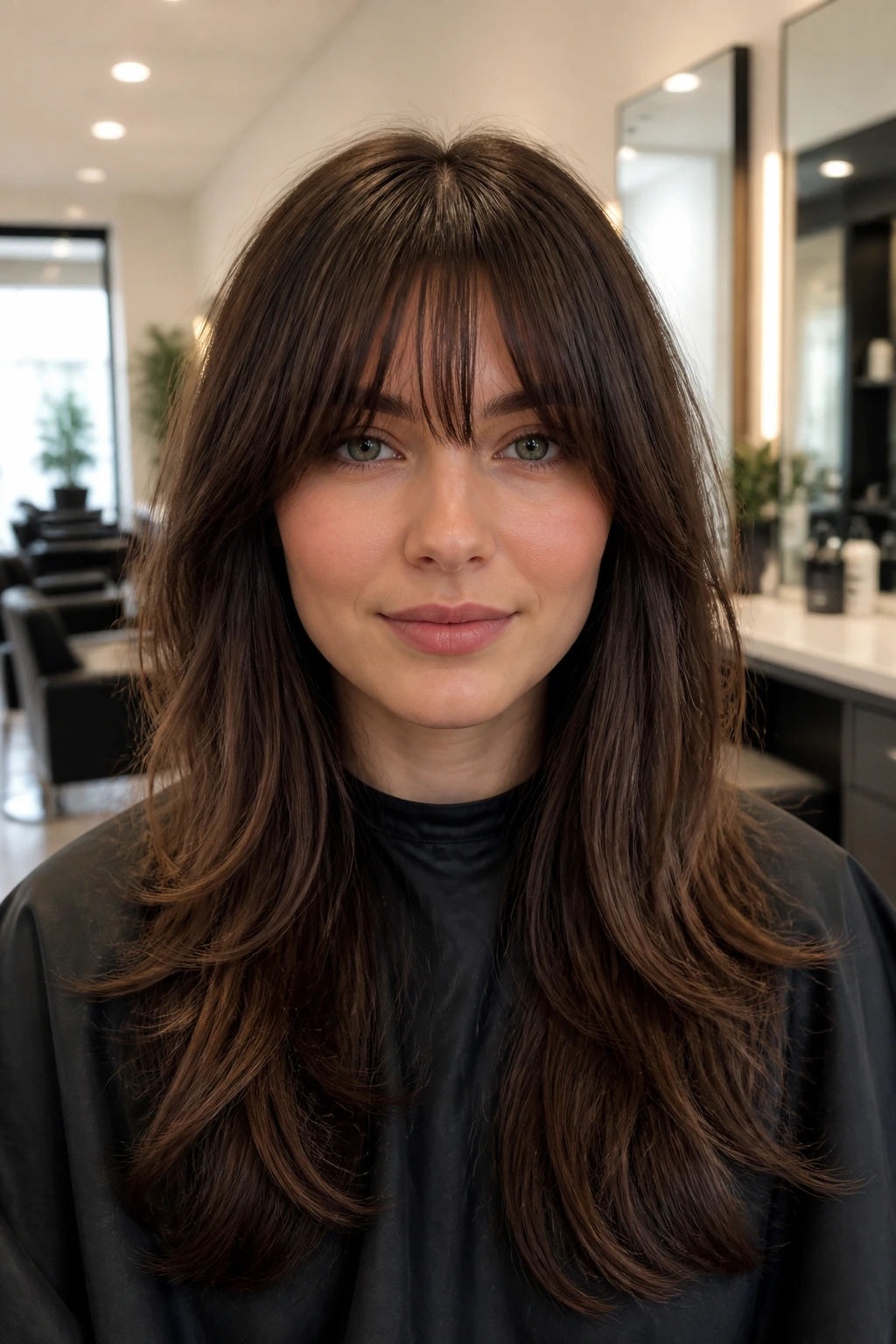
Bring photos, yes, but bring the right photos. One shot from the front is not enough. You want a front view, a side view, and ideally a photo of the same cut worn down and styled loosely. Haircut photos lie when they only show one angle.
Say this, more or less: “I want long thick layered bangs for round faces, with the shortest point around the bridge of the nose or brow and the longest pieces around the cheekbone or lip. I want weight removed inside the fringe, not a blunt edge.” That sentence does more work than “something face framing.”
If your hair is dense, mention how it behaves when it dries. Puffy? Flat? Split by a cowlick? That changes the cut. A fringe that looks gorgeous wet and impossible dry is a bad cut, not a bad morning.
How to Style Them on Busy Mornings
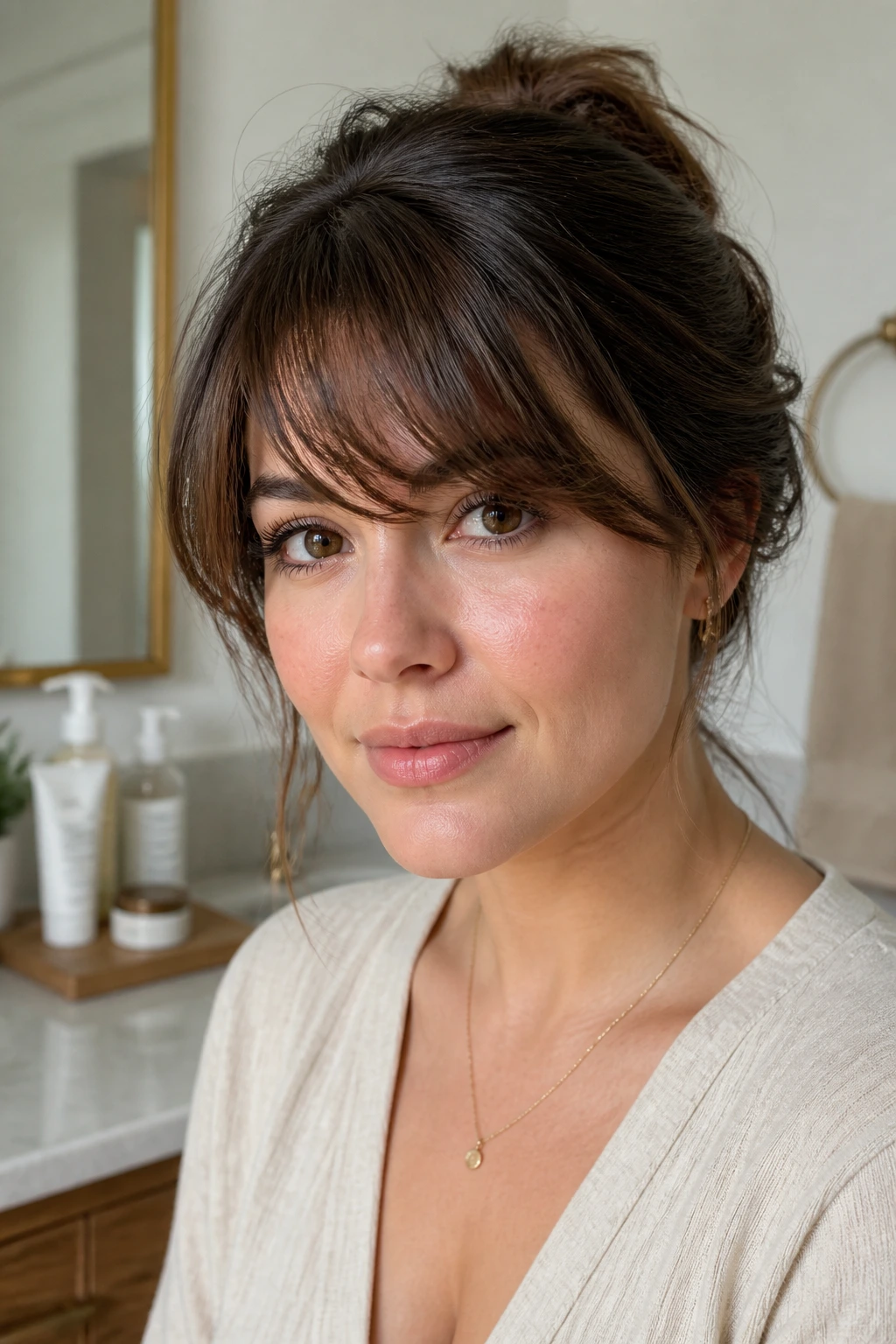
Rough-dry first: Start with the fringe about 80 percent dry. Wet bangs are harder to shape, and thick hair holds water longer than you think.
Set the direction: Brush the bangs side to side or away from the face first, then settle them into the shape you want. That quick reset helps them move instead of sticking to their natural habit.
Cool the bend: After you use the round brush or flat iron, let the fringe cool in place for 10 to 15 seconds. Warm hair bends. Cool hair remembers.
Use less product than you want: A pea-size bit of serum or one light mist of spray is enough. Too much product weighs thick bangs down fast and makes them separate in greasy-looking clumps.
Extra Tricks for Lift, Softness, and Hold
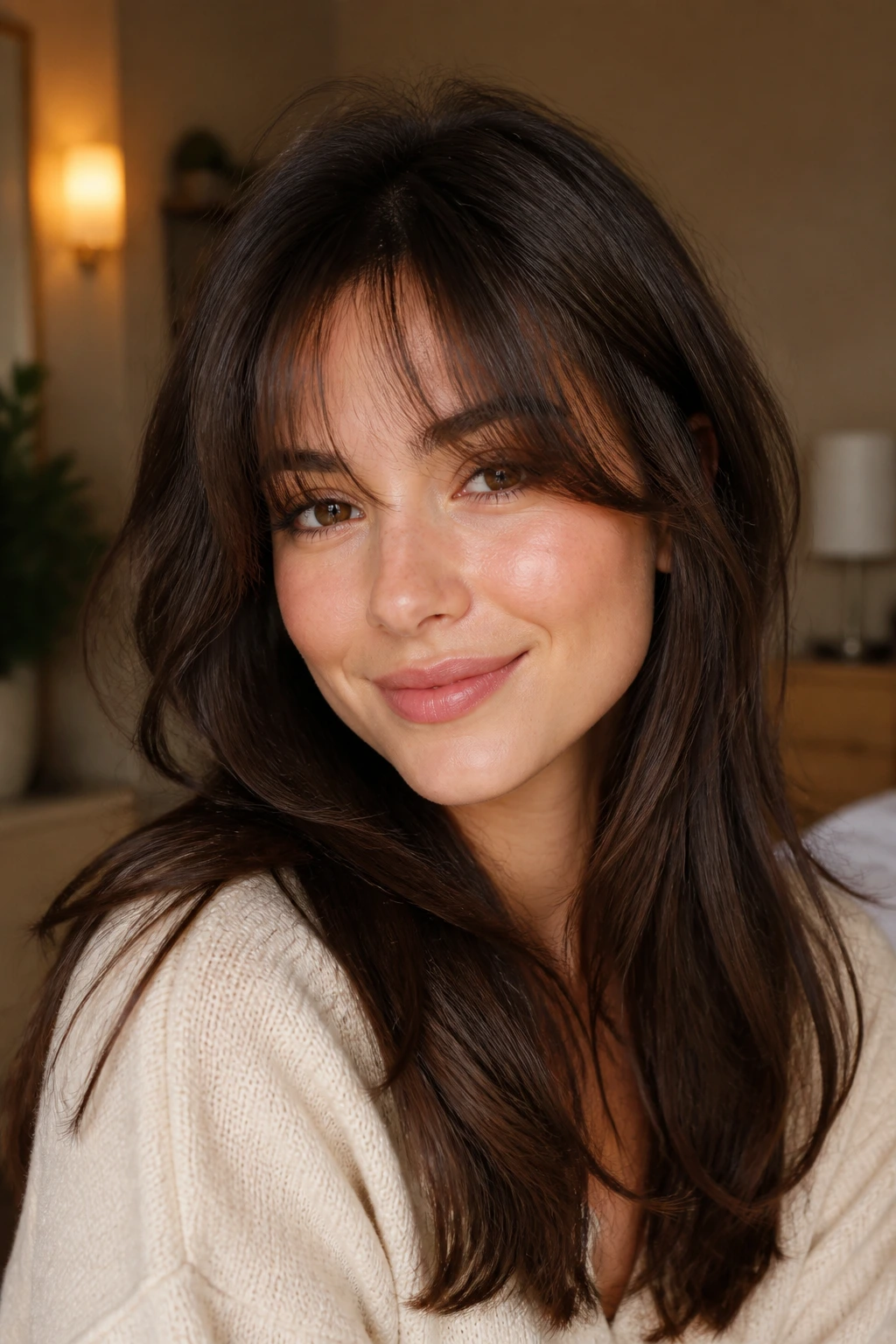
Flavor Enhancement: A touch of mousse at the roots gives thick fringe a little lift before the blow-dry. Use it on damp hair only, and keep it away from the ends.
Customization: If your face looks widest right at the cheeks, ask for the longest side pieces to hit below the jaw. If your forehead is shorter, keep the center slightly longer so the fringe doesn’t crowd your features.
Serving Suggestions: Tuck one side behind the ear, leave the other side loose, or pin the shortest center pieces back with a small clip when you want the face fully open. Tiny changes matter.
Make-It-Yours: Fine hair can use a lighter version with less interior removal. Curly hair needs more length. Very dense hair usually needs more layering inside the shape, not more thinning on the surface.
Keeping the Shape Between Trims
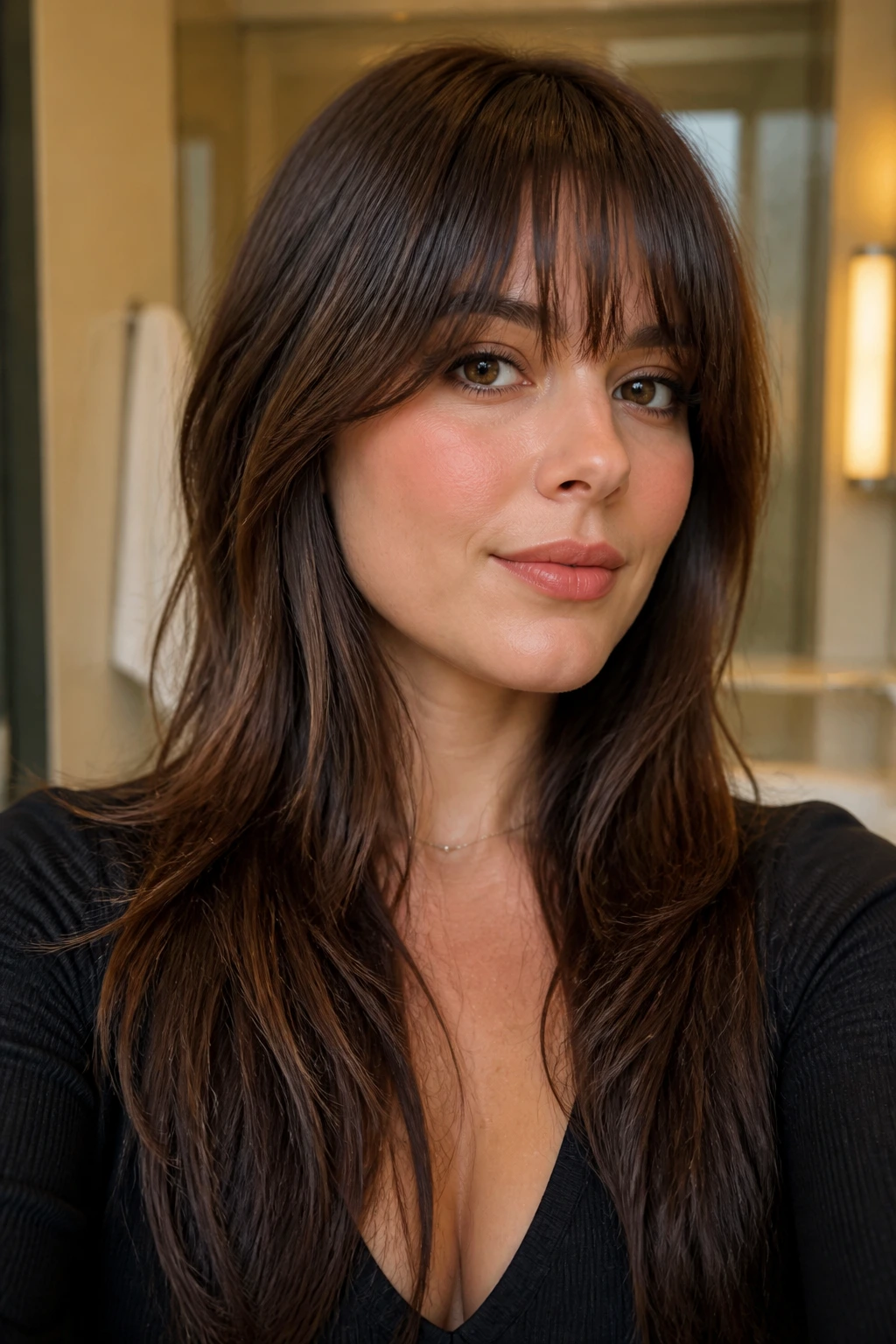
Bangs live at the front of your head, which means they get touched, sweated on, pinned back, and washed more often than the rest of the haircut. They can drift out of shape fast. I like a trim every 5 to 7 weeks for most long layered fringe shapes, with the shorter, denser versions needing attention a little sooner.
On non-wash days, dry shampoo at the roots keeps the fringe from collapsing. On wash days, dry the bangs first instead of leaving them until last. That one habit prevents the awkward half-dry puff that thick hair gets when it air-dries too long at the front.
If you’re growing them out, keep the face-framing pieces active. Don’t let the fringe sit in no-man’s-land for months. Ask for small shape-ups so the ends keep connecting to the rest of the haircut.
Variations and Alternatives to Try
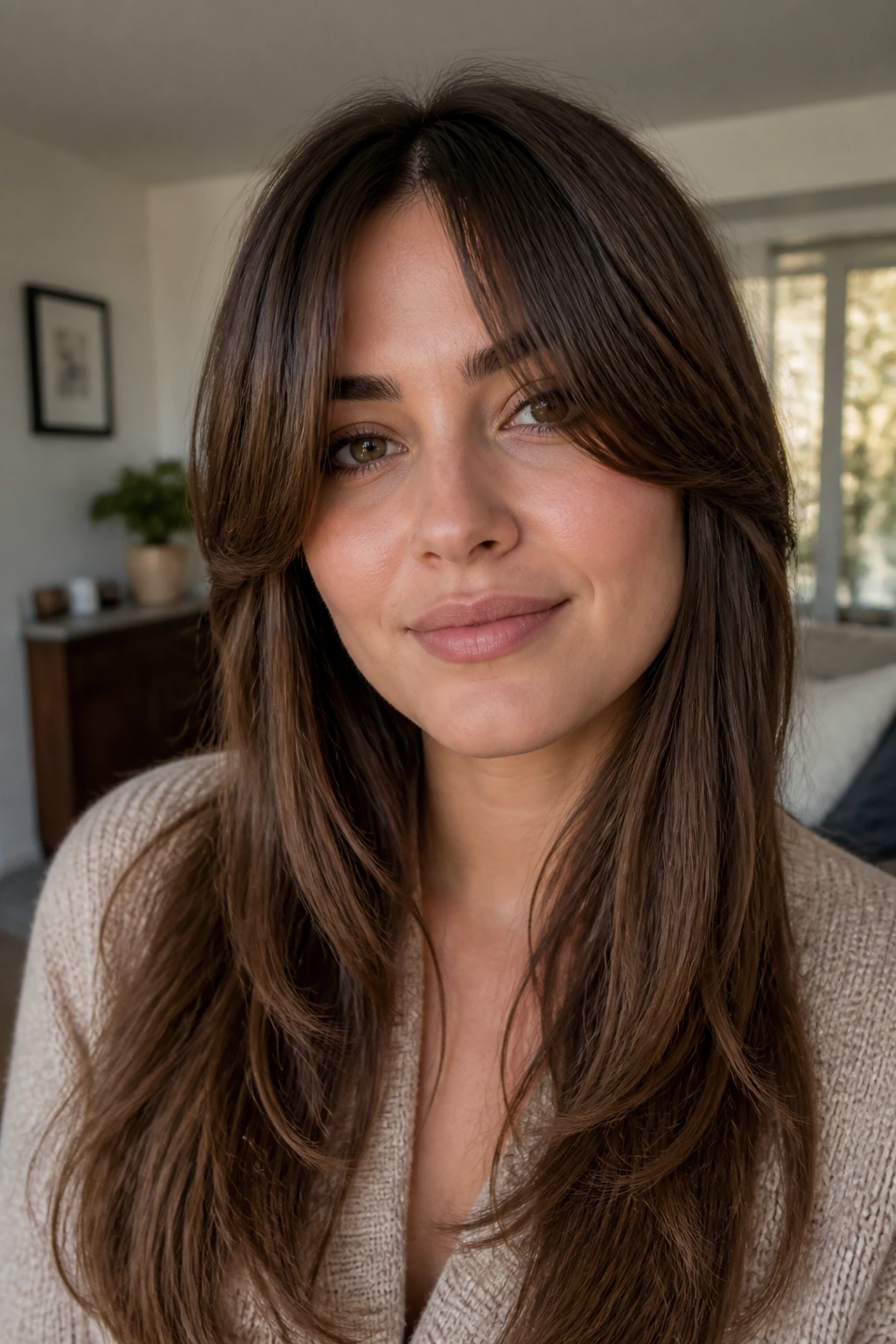
The Full Curtain: More center part, more opening at the cheeks, less density in the middle. Good if you want softness first and polish second.
The Side-Sweep Shift: Push the fringe deep to one side and let the opposite edge stay long. Better when you want a little drama and a cleaner forehead line.
The Curly Stretch: Keep the length longer than feels necessary and let the curl shrink into place. This is the version for coils, waves, and anything that springs upward after a dry.
The Blunt-to-Soft Hybrid: A stronger line across the middle with layered, feathered ends. Useful if you like structure but hate a hard edge.
The Almost-Bang: Temple pieces and face-framing layers with barely any true fringe. Ideal when you want the effect of bangs without a full front section.
Common Mistakes That Flatten the Shape

- Cutting the fringe too short at the center: that can make a round face look wider and leave you with not enough length to style.
- Thinning the surface too much: the bangs end up frizzy, stringy, or see-through in all the wrong places.
- Ignoring the cowlick: if one side lifts, the cut needs to account for it or the fringe will split every morning.
- Skipping root direction while styling: thick bangs need a little training while they dry, or they drop straight down and lose the shape.
- Making the sides too short: the fringe stops at the cheek and widens the face instead of softening it.
Questions People Ask Before They Cut Bangs
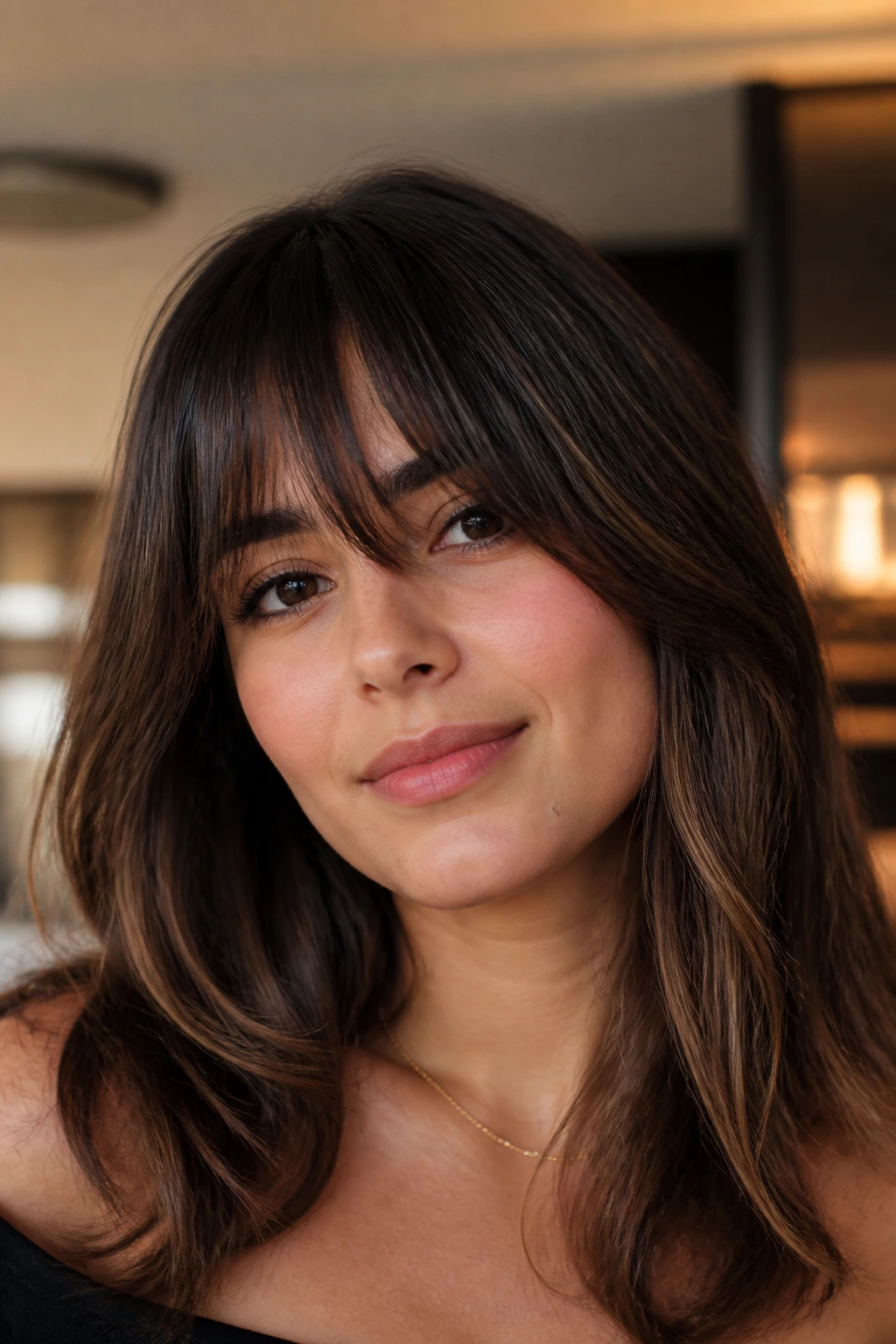
Will long thick layered bangs make my round face look wider?
Not if they’re cut with length and movement. The problem is a blunt, short, boxy fringe. A layered version that drops to the cheekbone or lip usually does the opposite and gives the face more length.
What length is safest if I’m nervous?
Start longer than you think. A fringe that can tuck, sweep, or split is easier to live with than one that lands high on the forehead. The grow-out is kinder, too.
Can thick bangs work on curly hair?
Yes, but they need extra length and a stylist who understands curl shrinkage. The cut has to happen where the curl settles, not where it looks best while wet.
How often should I trim them?
Most long layered bangs need a touch-up every 5 to 7 weeks. If the shape depends on a shorter center section, you may want sooner trims to keep the line clean.
Do I need heat styling every day?
No. Some of these cuts are built for air-drying or a quick rough-dry. If your hair is wavy or textured, asking for a shape that respects that pattern makes daily styling much easier.
What if my bangs separate into two pieces?
That usually means a cowlick or a part that wants to live somewhere else. Train the fringe while damp, and ask for a shape with a little more density at the split point.
Can I wear these with glasses?
Yes, and the longer versions are often better for glasses than short blunt bangs. Keep the shortest point above the frames and make sure the side pieces do not sit right on the temples.
What if the cut looks too heavy after one wash?
That usually means the interior wasn’t layered enough or the ends were left too blunt. A small trim with more internal removal usually fixes it. Don’t keep forcing a heavy front to behave with more product.
The Shape That Keeps Paying Off
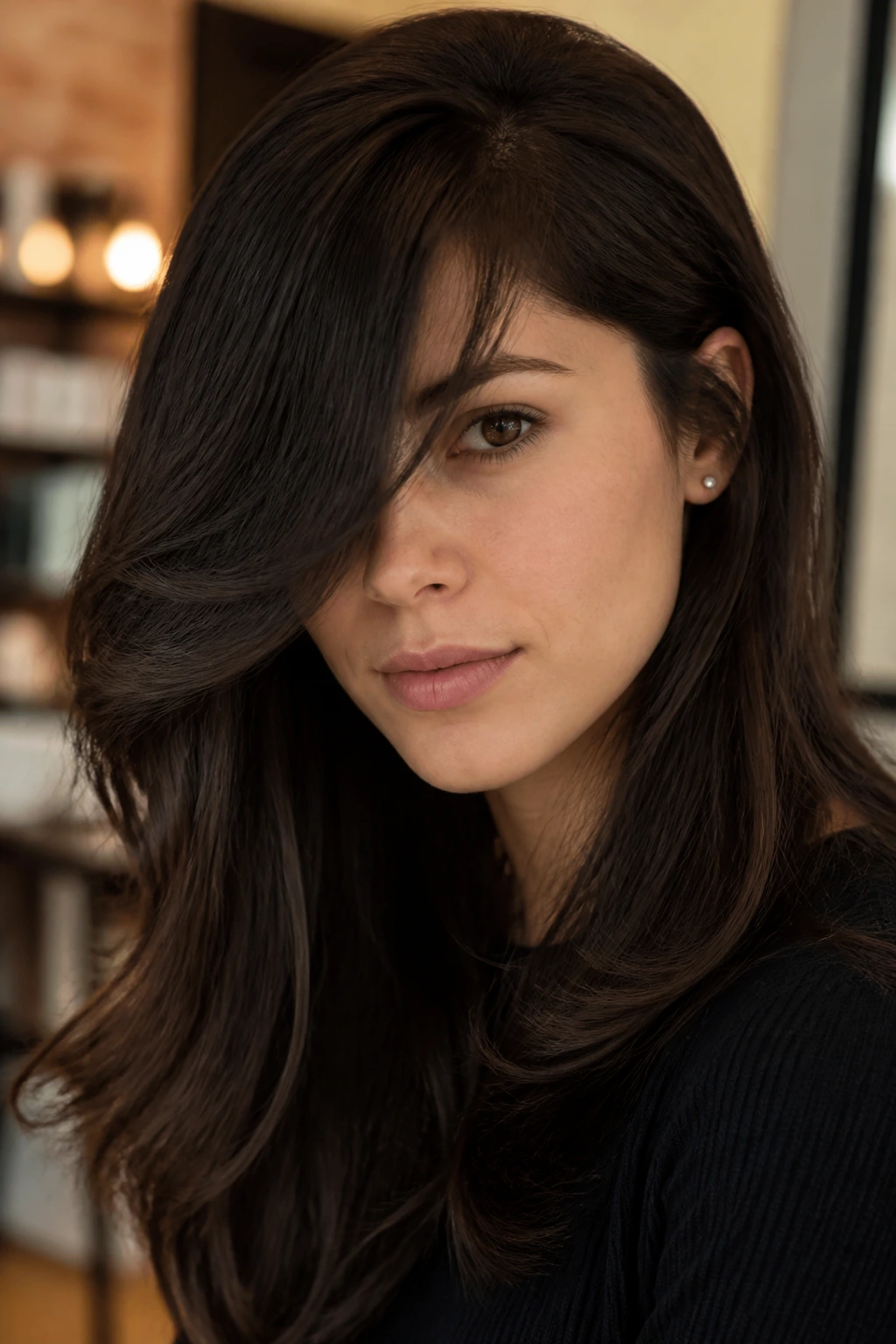
The best fringe for a round face isn’t the one that hides the most forehead. It’s the one that gives the face a cleaner line, a little lift, and enough movement to survive real life. Thick hair can make that harder, which is exactly why long layered shapes are so useful. They turn bulk into direction.
Pick the version that fits your texture, your part, and your patience level. Some of these cuts are polished. Some are shaggy. Some barely look like bangs at all. That range is the point.
If you want a front section that softens the cheeks without turning into a daily battle, start with the shape that leaves the most room for your hair to move. The right cut will do the work before you even reach for a brush.