



A short fringe can change the whole face fast. On a round face, the trick isn’t hiding the cheeks; it’s interrupting the curve with a front section that moves, lifts, and leaves a little negative space around the eyes and temples. That’s where wavy short bangs for long hair and round faces get interesting. When they’re cut with the wave instead of against it, they can look crisp, soft, and a bit undone in the right way.
Long hair changes the equation. The length already gives you vertical line, which means the front doesn’t have to do all the work. A short fringe can carry the shape if it’s airy enough, but if it’s too blunt or too dense, it can flatten the whole look and make the face read wider than it is. I keep coming back to that one detail: the bangs are never just bangs. They’re a framing tool.
And waves shrink. A fringe that kisses the brow when it’s damp can sit half an inch shorter once it dries, and that half-inch matters more than most people expect. The styles below are built around that reality — some are featherlight and shy, some are sharper and more editorial, and a few are the sort of fringe you can grow into without regretting the cut two weeks later.
Why These 25 Shapes Work on Round Faces and Long Hair

Face-lengthening lines: The better versions here keep the center shorter and the temples longer, which draws the eye up and down instead of straight across the widest part of the face.
Wave-friendly edges: These cuts leave room for the bend to happen. If your hair forms an S-wave by noon, the fringe still lands in a shape that looks deliberate.
Long-hair balance: When the lengths are past the shoulders, the front needs enough personality to stand on its own. A light fringe does that without turning the whole haircut into one heavy block.
Grow-out potential: A few of these styles soften into curtain pieces or face-framing layers after a month or two, which is a mercy if you hate that awkward middle stage.
Salon-language friendly: You can describe each look by length, edge, and temple shape. That makes the consultation easier, and frankly, it saves you from saying, “I want something like this but not too much.”
Texture-first cutting: Every one of these styles assumes texture matters. A wavy fringe cut wet and left untouched is a gamble; a fringe cut with the wave in mind usually behaves much better.
1. Featherlight Baby Bangs with Long Sides
This is the shortest option in the set, and it only works when the edges stay soft. On a round face, that tiny strip of forehead can look sharp in the best way, but the temples have to stay longer or the whole thing turns boxy. The contrast is what makes it interesting: a short, airy center with side pieces that graze the cheekbone.
What to ask for
- Keep the center about 1/2 to 3/4 inch above the brows when dry.
- Let the sides fall to cheekbone level or lower.
- Use point-cutting on the ends so the line doesn’t look like a ruler.
- Style with a pea-size amount of light cream, not a heavy balm.
The shape works because it opens the upper half of the face without swallowing the forehead. It’s a little daring, yes, but not in the heavy, helmet-like way a blunt micro fringe can be. If your wave is strong, ask the stylist to leave the center a touch longer than they think you need. That small buffer saves you from the “oops, I’m wearing air bangs” problem.
Tiny tip: keep the temple pieces longer than the center even if you love the short look. That detail does more for a round face than another half-inch off the middle ever will.
2. Bottleneck Fringe with Soft Waves
Bottleneck fringe is the safest short-bang shape for a round face when you still want movement. The center starts narrow and short, then opens wider through the temples, which gives the forehead room without boxing in the cheeks. On long hair, that widening at the edges helps the fringe blend instead of looking pasted on top.
The wave is doing real work here. A straight bottleneck fringe can look chic, sure, but a wavy one has a little bend that keeps the front from feeling stiff. I like this shape on hair that dries with a loose ripple rather than a tight curl, because the curve at the temple stays visible all day instead of disappearing into puff.
If you wear a middle part, this fringe settles into the look naturally. If you wear a side part, the short center still gives you enough face framing to make the cut feel intentional. It’s one of those styles that looks more expensive than it is, which sounds shallow until you’ve watched a bad fringe split at the first gust of wind.
3. Brow-Skimming Piecey Bangs

Why do some short bangs look airy and others look like one hard strip of hair? Separation. Piecey brow-skimming bangs break the line into small sections, and those little gaps keep a round face from looking wider. The brow stays visible, the eyes stay open, and the whole thing feels lighter than a solid block.
How to style the separation
- Mist the fringe with water until it’s damp, not soaked.
- Work in a tiny amount of texture spray or foam.
- Twist two or three small sections with your fingers, then let them dry that way.
- Separate the pieces once they’re dry, not while they’re still wet.
This style is especially good if your wave pattern changes shape during the day. A heavy straight fringe can fight that; a piecey one can absorb it. The key is not over-brushing. One pass too many and the separation disappears into fluff, which is the exact opposite of what you want.
A good piecey fringe still has a line. It’s just a broken line, not a blunt one. That little bit of irregularity is doing the flattering work.
4. Arched Micro Fringe

Imagine a tiny arc sitting just above the brows instead of a straight line. That’s the whole trick. An arched micro fringe follows the shape of the forehead rather than cutting across it, so it feels softer on a round face and less severe than a dead-straight mini bang.
The curve matters more than the length here. Keep the center short, then let the outer corners dip a little lower as they approach the temples. That subtle arc creates a kind of visual lift, which is why the cut reads more refined when the rest of the hair is long and loose. You get contrast without the harshness.
I’d call this one a style for people who like a clear shape but not a heavy finish. It looks especially good when the wave bends just enough to keep the edge from feeling blunt. Too much product kills it. Too little and it can split apart. The sweet spot is a light mist and a quick finger-style, nothing fussy.
5. Choppy Shag Fringe with Face-Framing Layers

This is the fringe for someone who wants the bangs to belong to the rest of the haircut, not sit on top of it like an afterthought. The choppy edge keeps the front soft, while the face-framing layers pull the eye downward along the sides of the face. That’s useful on a round face because it makes the overall shape feel longer and less circular.
The shag element matters more than the bangs themselves. If the lengths are full and smooth but the fringe is chopped up, the cut can feel disconnected. When the layers around the face carry the same broken texture as the fringe, the whole style reads as one shape. Messy? A little. But in a controlled way.
This is one of the stronger choices for thick wavy hair. The texture helps the fringe live a little instead of sitting like a solid curtain. Ask for internal weight removal, not just thinning at the ends. You want movement, not see-through patches that look accidental.
6. Side-Swept Short Fringe

A side-swept fringe does one thing very well: it cuts diagonally across a round face. That diagonal line is the whole advantage. Instead of widening the forehead with a straight horizontal edge, you get a sweep that makes the face feel longer and the haircut a little more relaxed.
It’s also one of the easiest short-bang styles to wear with long hair. The lengths can stay sleek, loose, curly, or blown out; the side sweep just sits on top and keeps the front interesting. If you hate fighting your bangs every morning, this is a smart place to start.
The trick is part placement. A deep side part gives the fringe enough momentum to fall naturally, and a quick blast with the dryer in the direction it wants to go keeps it from flopping into the eyes. Don’t try to make it perfectly smooth. A little wave at the end is part of the charm.
7. See-Through Bangs for Fine Waves
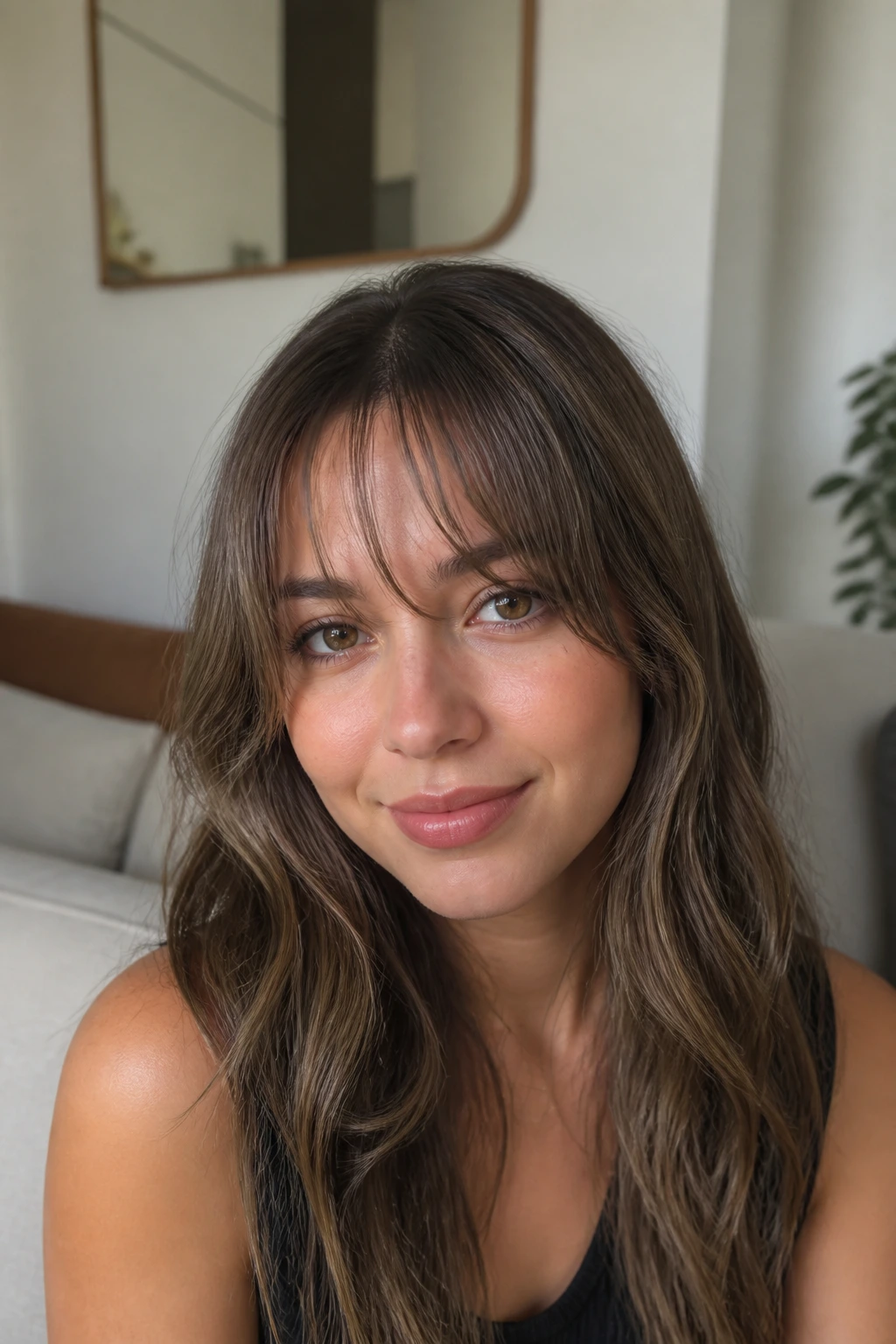
See-through bangs are for people who want the fringe to exist without taking over the face. The density stays light, the forehead peeks through, and the wave adds a soft bend that keeps the style from looking stringy. On a round face, that openness matters because heavy fringe can crowd the cheeks fast.
What makes this version work
- Keep the density sparse from the start; don’t thin out a heavy fringe later and hope for the best.
- Ask for soft point-cut ends, not a blunt edge.
- Dry the roots first so the bangs don’t separate into oily little curtains.
- Use a light root-lift spray or dry texture spray, not a creamy product.
This style is underrated on long hair because it avoids the “all front, no balance” problem. The lengths still do the heavy lifting. The fringe just sits there like a whisper, which is exactly why it flatters a fuller face without shouting about it.
8. Rounded Wispy Fringe
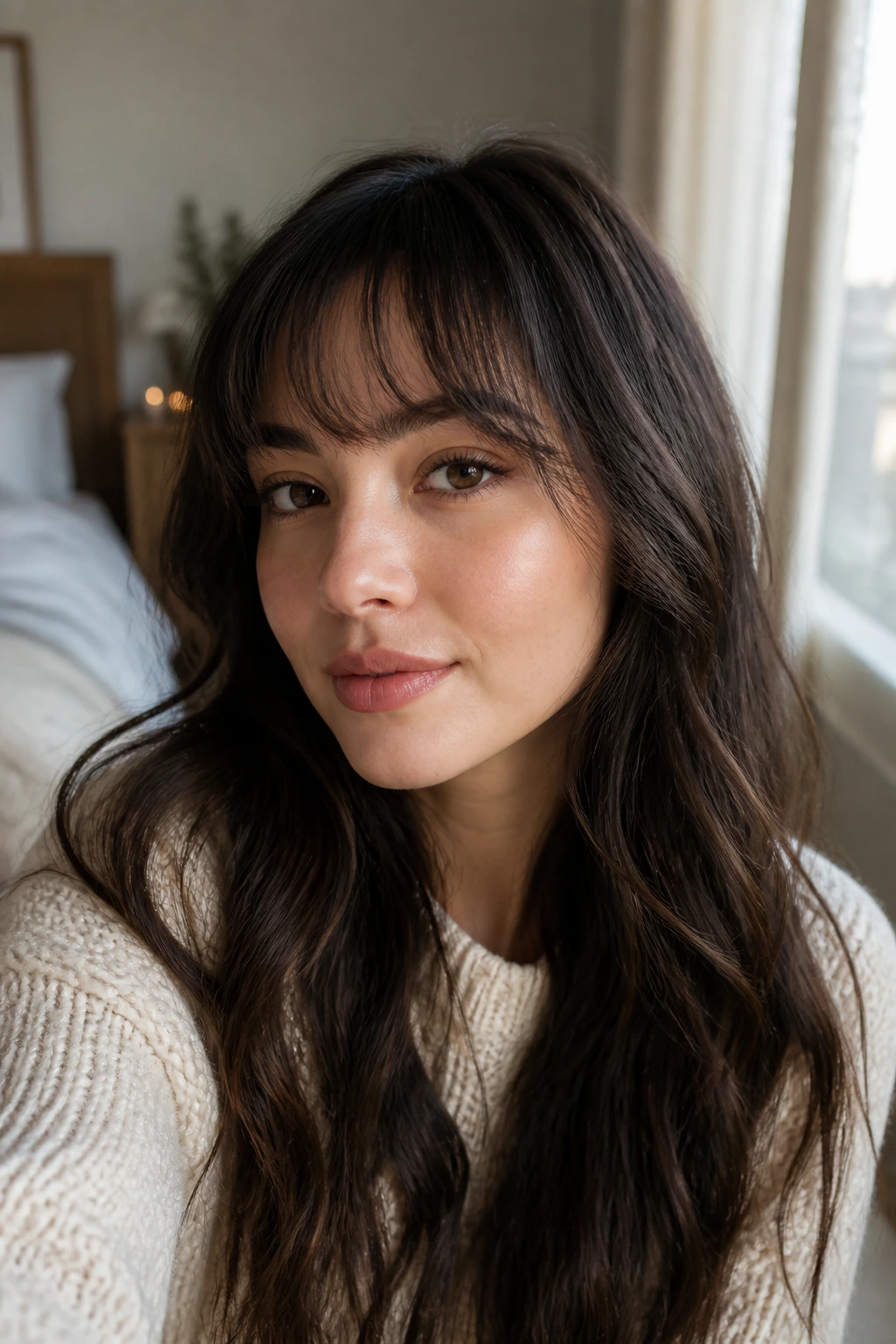
A rounded wispy fringe is what happens when softness gets a shape. The edge follows a gentle curve, but the ends stay light enough that the line never looks stiff. On a round face, that matters because a hard arch can feel too obvious, while a wispy rounded shape blends into the rest of the haircut.
The best versions are cut with a little internal texture so the fringe doesn’t collapse into one fluffy piece. You want movement, not frizz. If your wave tends to expand as it dries, ask for the fringe to be left slightly longer than the finished look you think you want. That extra length gives you room to shape it with a brush or fingers.
This is a good choice if you like your long hair polished but not severe. It’s softer than a blunt bang, cleaner than a shaggy one, and easier to live with than a micro fringe if you don’t want to trim every three weeks.
9. Short Curtain Bangs
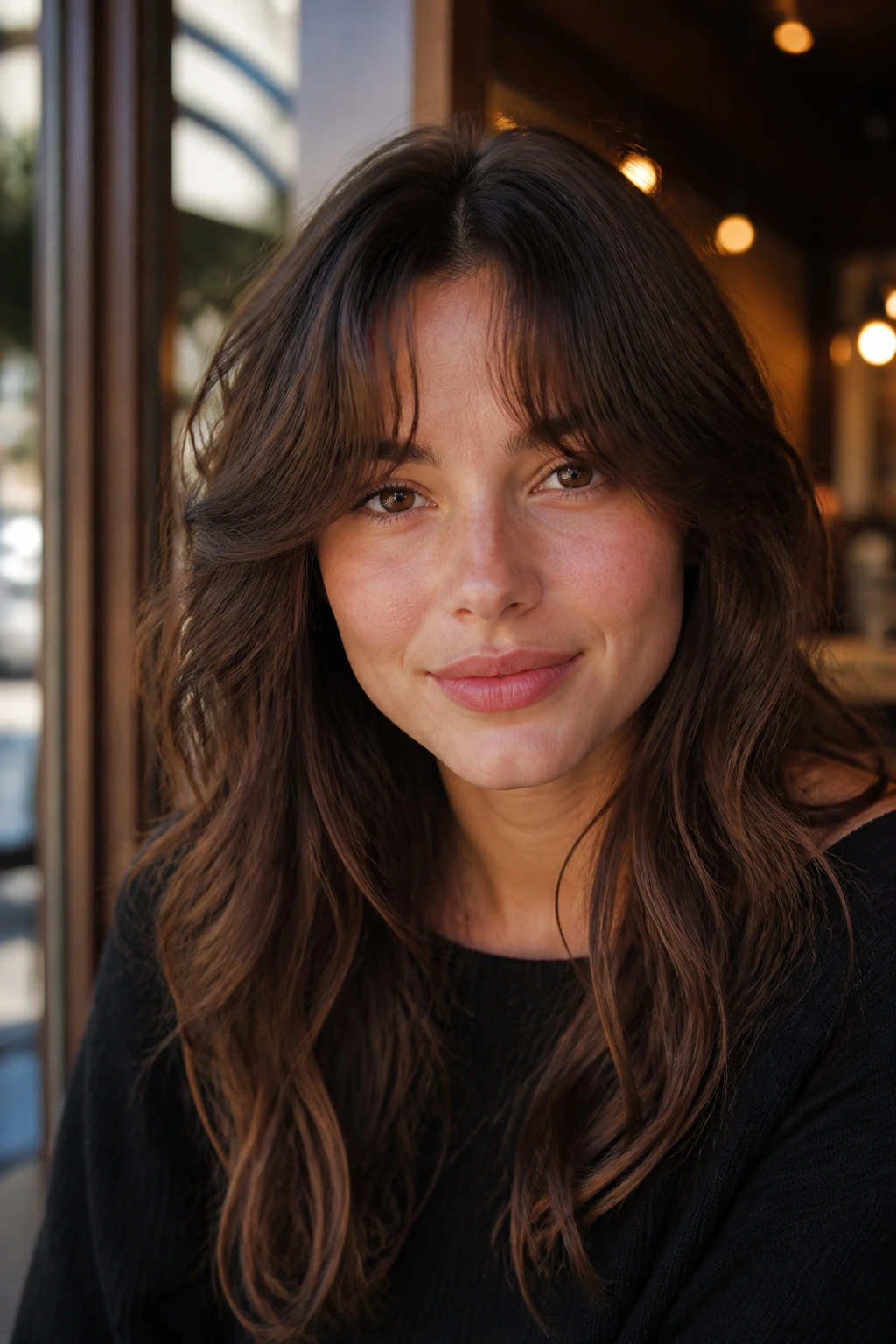
Can curtain bangs be short and still feel flattering? Absolutely, if the center stays short and the outer corners are allowed to fall away from the face. Short curtain bangs keep the middle open enough to avoid flattening a round face, while the longer sides add a vertical frame that works beautifully with long hair.
How to style them
Start with a middle part, then dry each side away from the face using a small round brush or your fingers. The goal is not a perfect flipped-out curtain; it’s a soft bend that leaves a little lift at the roots. If you over-direct the hair too much, the bangs can fold weirdly and look too tidy. Too little direction, and they just split down the middle with no shape at all.
I like this shape for anyone who wants a short fringe but doesn’t want to feel trapped by it. It grows out gracefully. That alone makes it worth considering.
10. French Girl Fringe

The classic French-girl fringe gets described in a hundred vague ways, and most of them miss the point. The real thing is less polished than people think. It’s slightly broken, a touch piecey, and soft around the temples, which is why it can work on a round face without turning the front into one heavy strip.
A good version on long hair gives you contrast. The lengths can be loose and a little undone, while the fringe keeps enough structure to look deliberate. I especially like this on wavy hair that clumps naturally, because the line doesn’t have to be perfectly even to feel finished.
- Keep the edge soft, not chopped to death.
- Leave the outer corners long enough to skim the brows or cheeks.
- Style with a finger-dry or a tiny round brush, then stop before it gets too smooth.
- Skip heavy oils at the roots; they make the fringe collapse.
It’s the kind of fringe that looks better after it has lived in for an hour. Fresh out of the chair, it can look almost too neat. Give it time.
11. S-Wave Mini Fringe

Some fringes need to be flattened, but this one wants to bend. An S-wave mini fringe is cut short enough to sit above or just at the brow, then styled so the natural wave forms a subtle S instead of a straight line. That bend softens the forehead and keeps the cut from looking severe.
This is a smart option if your hair refuses to lie poker-straight. Instead of fighting that, the cut makes the wave part of the shape. On a round face, the little curve adds texture without widening the cheeks. On long hair, it adds a playful front edge that keeps the whole style from feeling too safe.
The catch is that you can’t drown it in product. If the fringe is too wet, the S disappears. If it’s coated in cream, it turns limp and separated in the wrong way. A light foam or a mist of texture spray is usually enough. Let the hair tell you where it wants to sit, then shape it there.
12. Razor-Shattered Fringe
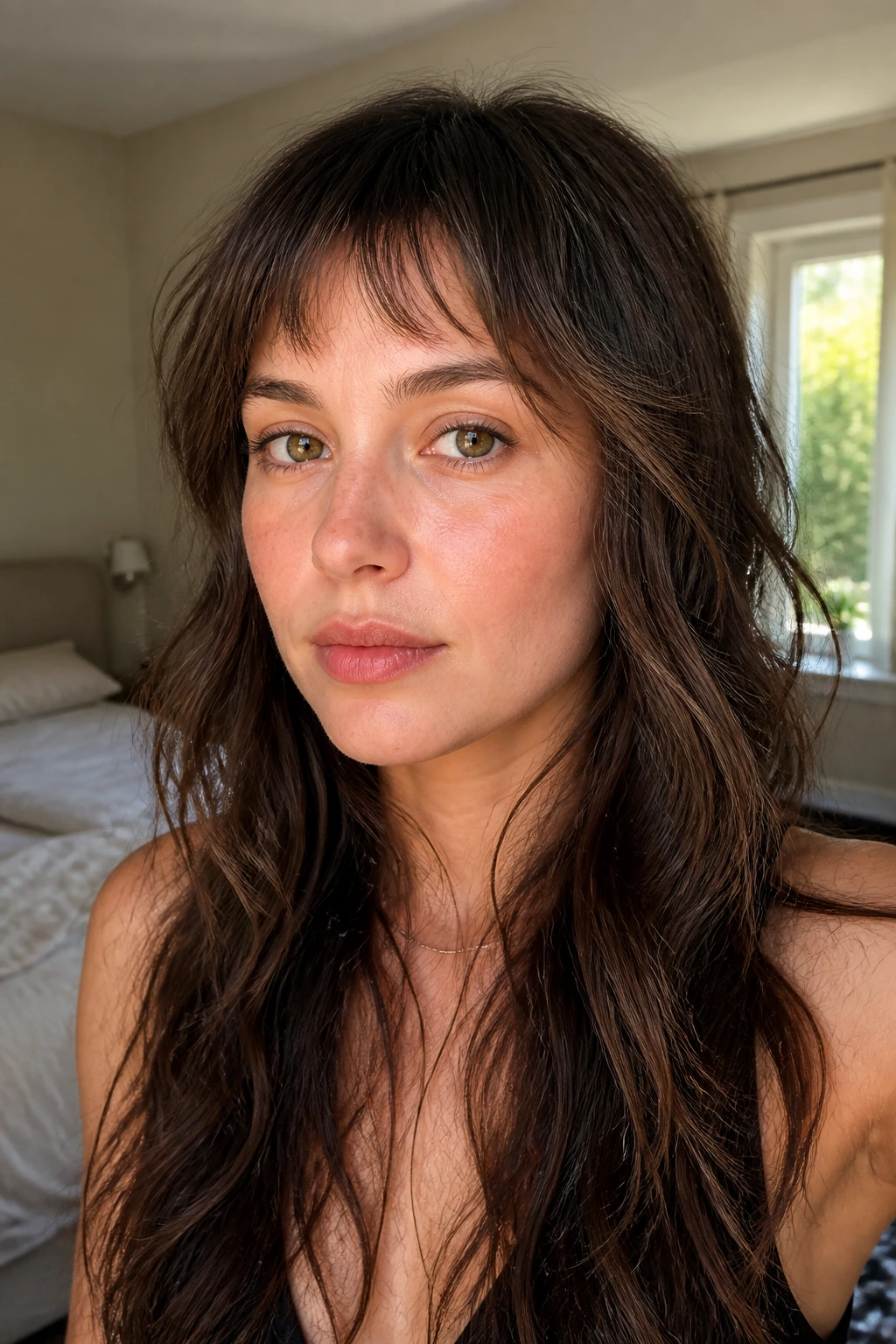
Unlike a scissor-cut fringe, a razor-shattered fringe has a softer, lighter edge that breaks up the front line. That matters when the hair is thick or coarse, because blunt bangs can turn into a heavy shelf almost overnight. The razor removes bulk and leaves tiny irregular ends that move instead of sitting still.
On a round face, that movement is doing real face-framing work. The line feels less horizontal, which keeps the eye from stopping at the widest part of the cheeks. Long hair below the fringe helps even more; the contrast between the loose lengths and the broken fringe makes the whole cut feel intentional.
This is not the choice for fragile, frizz-prone hair that hates being touched. If your strands puff the minute a comb goes through them, ask for point-cut texture instead of a full razor finish. Razor-shattered bangs are good, but they’re not magic. The texture has to cooperate.
13. Split Center Fringe
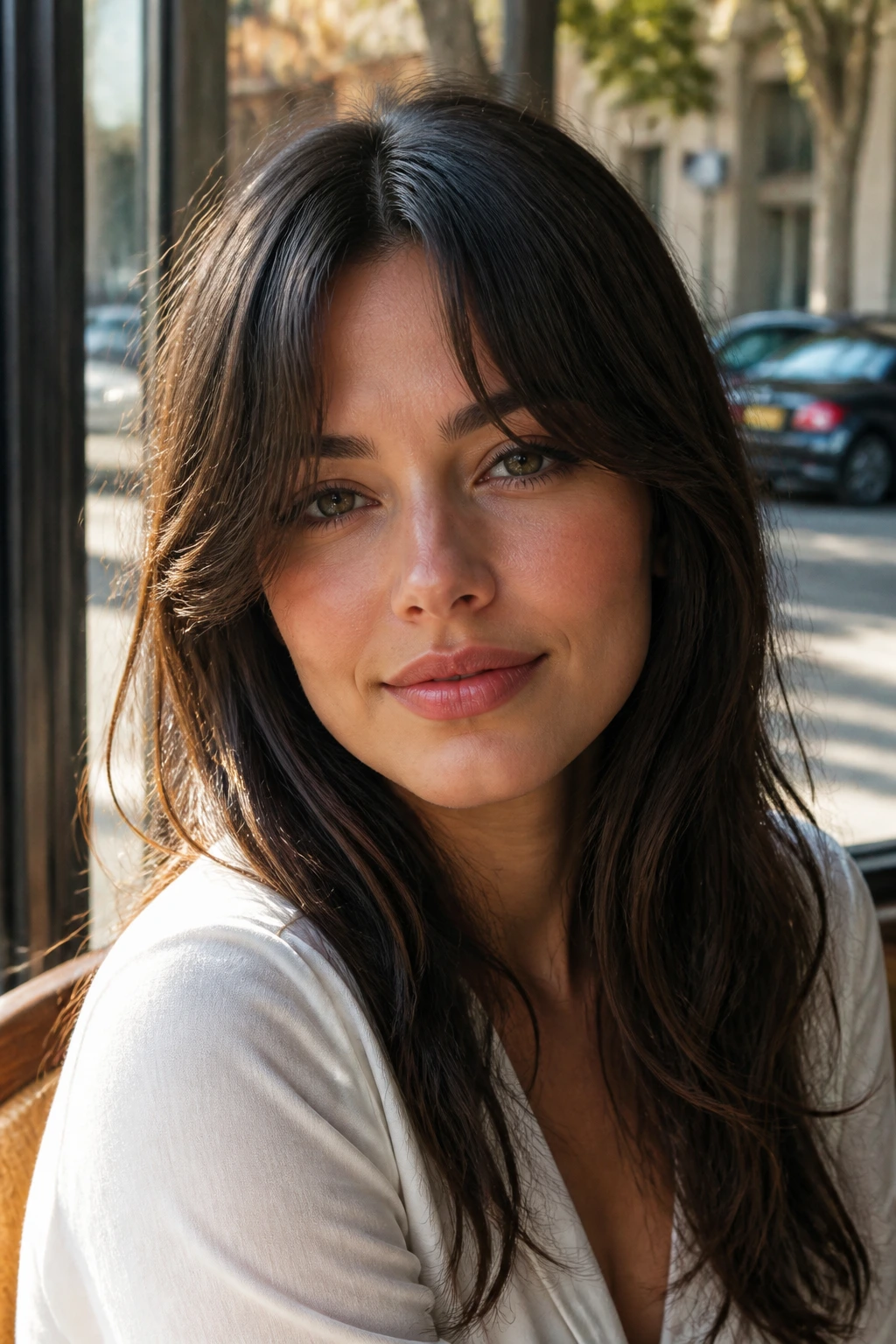
A split center fringe is a tiny variation with a surprisingly big effect. Instead of one solid bang, the front breaks in the middle and falls in two soft sections. That little opening gives the face room to breathe, which is useful when the cheeks are full and the hair behind you is long and dense.
Why it feels lighter
- The center part interrupts the width.
- The two sides create vertical lines next to the face.
- The wave naturally softens the split so it doesn’t look severe.
- It grows out into a curtain shape without a weird transition.
I like this one for people who are curious about bangs but don’t want a hard commitment to one full front shape. It feels like a halfway point between fringe and face frame. If your wave pattern changes during the day, the split actually helps, because a little separation looks deliberate instead of messy.
14. Crescent Fringe

A crescent fringe curves like a shallow moon across the forehead. The middle is shortest, the sides dip lower, and the whole line feels smooth rather than sharp. On a round face, that curve keeps the front from looking blunt while still giving you a real bang shape.
The style works especially well with long layers because the crescent can echo the movement around the cheeks and jaw. It’s not trying to be edgy. It’s trying to be flattering, which is a more useful goal than people admit. The fringe can be short without feeling aggressive.
If you want this shape to hold, ask the stylist to leave the ends a touch longer at the temples than at the center. That tiny difference makes the curve read clearly. Without it, the fringe just becomes a short line and loses the shape that makes it interesting.
15. Wolf-Cut Fringe

The wolf-cut fringe is for someone who likes a little bite at the front. It pairs short bangs with heavy layers and a shaggy finish, so the fringe doesn’t sit apart from the rest of the hair. Instead, it merges into the cut and adds movement all the way down.
A round face benefits from the messiness more than people expect. The broken texture keeps the eye moving, and the uneven layers stop the front from forming a wide, flat shape. If your long hair is thick, this can be a relief. The cut removes enough weight to keep the bangs from sinking into your eyes by lunchtime.
The downside is obvious: it won’t look polished unless you style it a little. But “a little” is the important part. A quick diffuser pass, some finger drying, and a touch of texture spray usually does it. No one needs to build a whole morning around their bangs.
16. Deep Side-Part Fringe
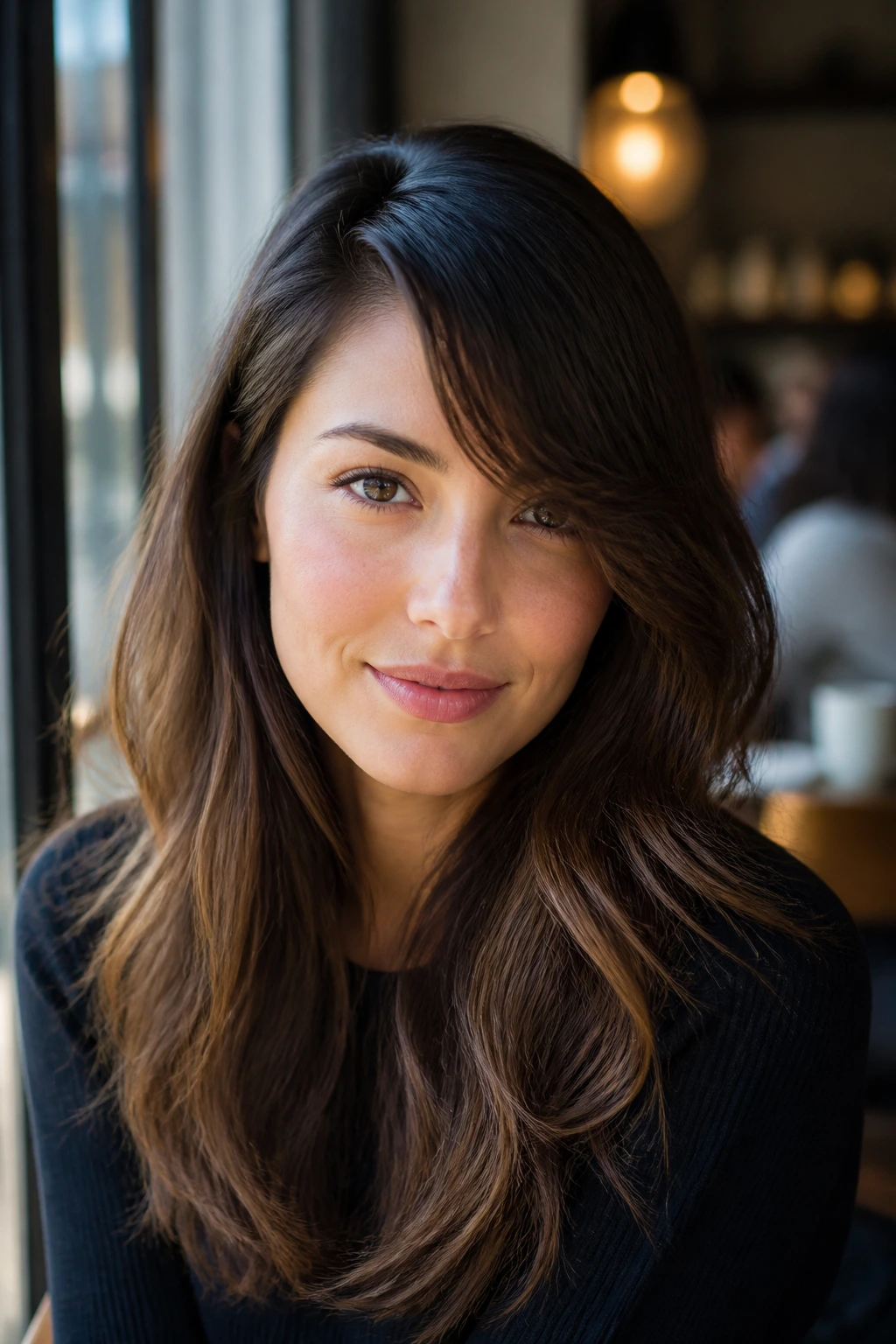
A deep side-part fringe is one of the cleanest ways to break up a round face. The part pushes the fringe across the forehead at an angle, which lengthens the face visually and keeps the front from feeling too centered or heavy. With long hair, the side part also helps the lengths move in the same direction, so the haircut feels cohesive.
This is the shape I reach for when someone wants short bangs but is nervous about fullness. The side sweep gives structure without a wall of hair. It’s especially useful if your face is very symmetrical and you want a little asymmetry to wake it up.
The cut matters less here than the fall. Even a good side fringe can flop badly if the root direction is ignored. A quick blow-dry in the direction of the part — with the nozzle pointed down, not outward — usually keeps the fringe from puffing up like a question mark.
17. Grown-Out Fringe
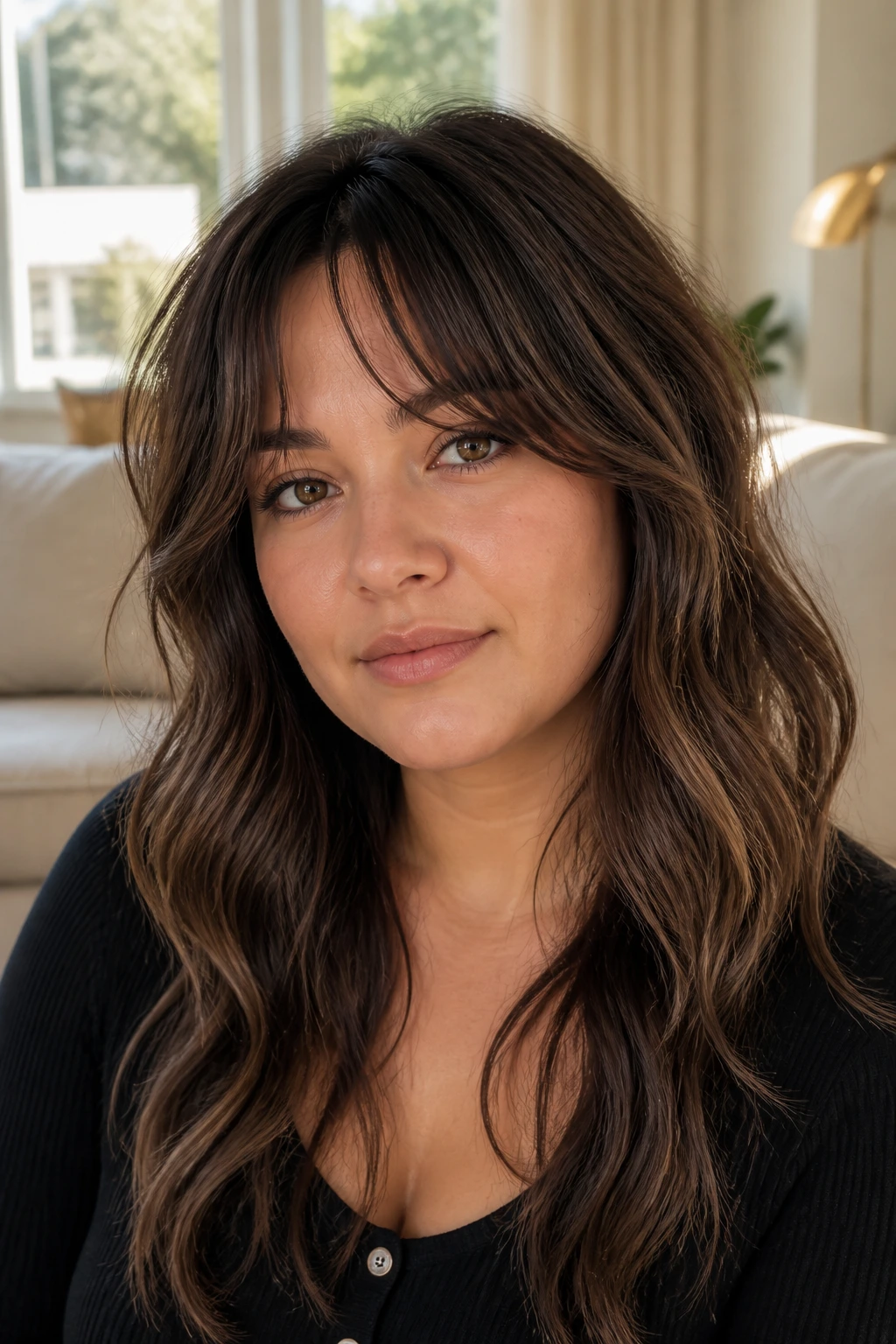
The grown-out fringe is not lazy. It’s strategic. This is the look for anyone who wants short bangs without having to live at the salon every four weeks. The center sits a little lower, the sides blend into longer face-framing pieces, and the wave makes the transition look natural.
It works well on a round face because the fringe doesn’t stop at one obvious line. It softens into the rest of the haircut, which means the eye sees movement instead of width. On long hair, that’s a big win. You keep the drama at the front without creating a hard break between bang and length.
This version also survives a bad hair day better than most. If it separates a little or falls off-center, it still reads as style instead of failure. That’s underrated. Not every fringe has to look fresh from the chair to do its job.
18. Temple-Tapered Fringe

The temple-tapered fringe is all about the corners. The center stays short and light, then the pieces at the temples stretch out and melt into the sides. That taper is what flatters a round face, because it stops the fringe from ending in one wide, blunt line across the forehead.
The cut works best when the stylist removes just enough weight to keep the outer sections soft. Too much thinning and the temples look wispy in a bad way. Too little and the fringe can feel boxy. The sweet spot is a gentle taper that you can still tuck behind the ears on one side if you want.
I like this shape on long hair because it connects the bang to the rest of the cut. You’re not wearing a separate front piece. You’re wearing a frame that fades into the rest of the length.
19. Blunt-Lite Fringe
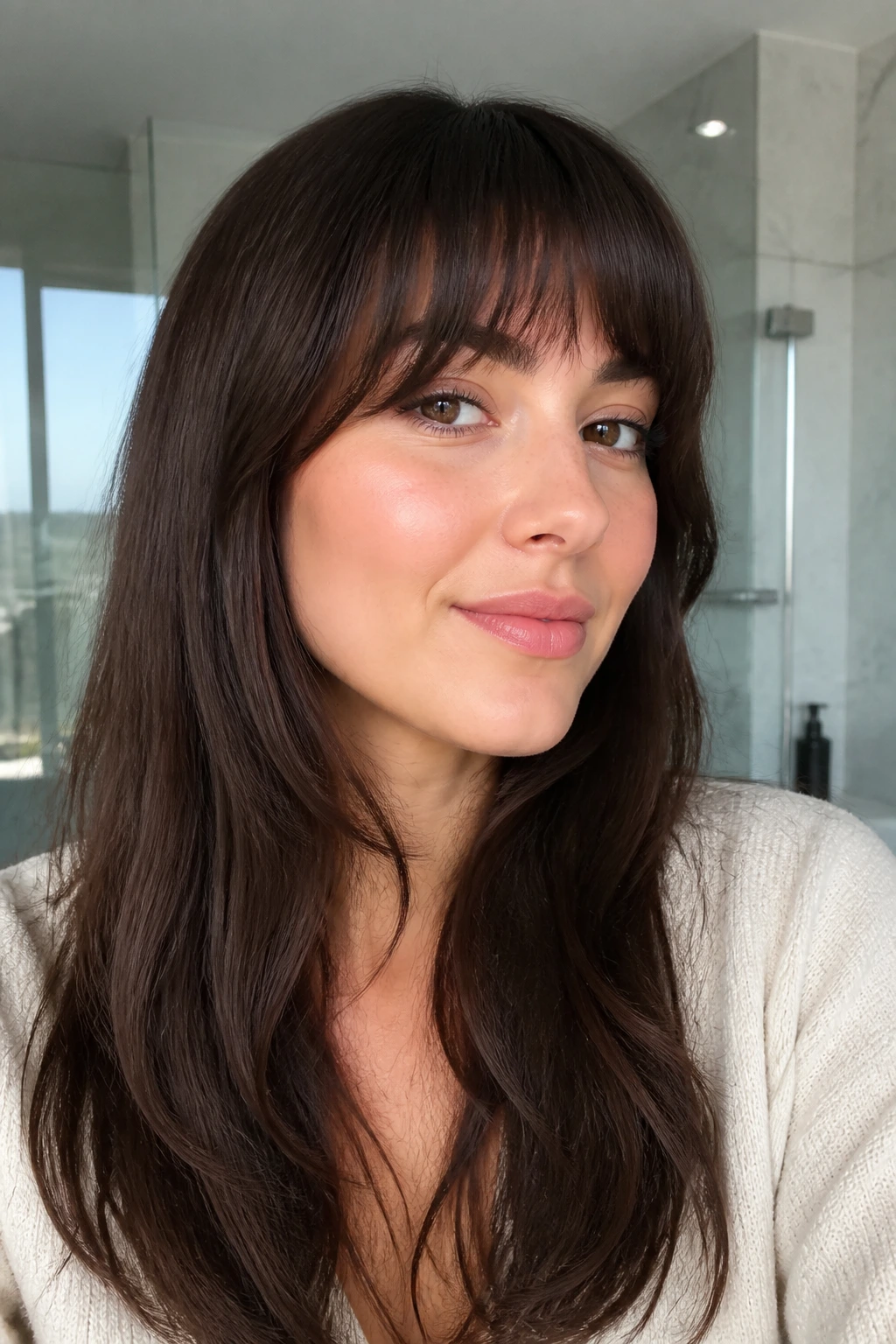
Blunt-Lite means blunt-looking, not blunt-feeling. That distinction matters. The line reads clean from a few feet away, but the internal texture keeps it from turning into a heavy block. On a round face, that softer bluntness gives you structure without the broad shelf that can make the cheeks look fuller.
This is one of the better choices if your long hair is sleek or blown out smooth. The contrast between polished lengths and a lightly textured fringe is what makes the haircut feel balanced. If both the fringe and the lengths are heavily layered, the shape can get too loose and lose the front impact.
Ask for subtle point cutting underneath the surface line. You want the edge to look even, but not dense. That’s the whole game here.
20. Invisible-Layer Fringe
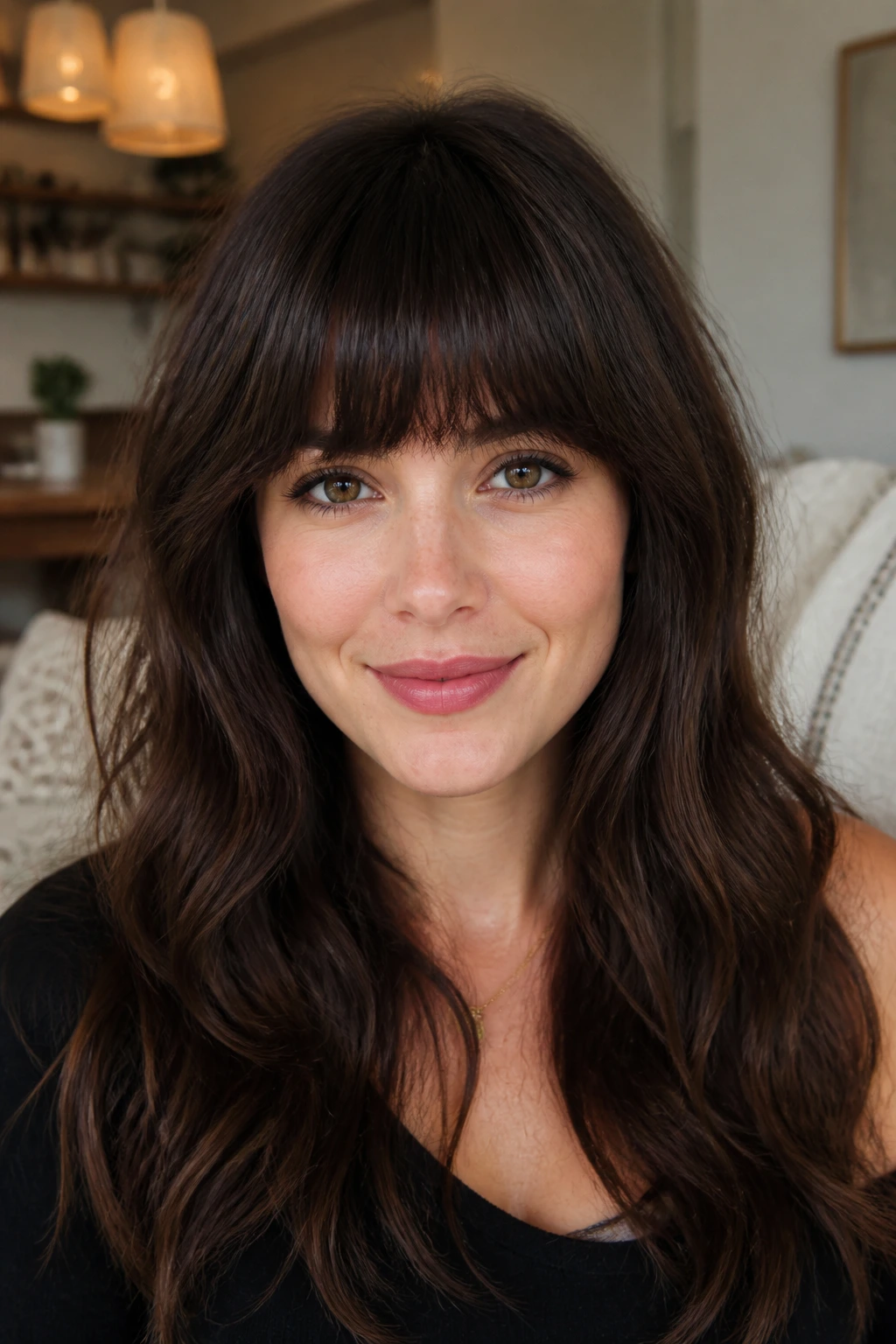
At first glance, an invisible-layer fringe looks almost solid. That’s the point. The layering lives inside the shape, not on the surface, so the fringe keeps its line while staying light enough to move. For round faces, that gives you the clean front you want without the boxy weight you don’t.
This style is a good fix for thick wavy hair that tends to spread outward. The internal layers remove enough bulk to keep the fringe from puffing up, but because they’re hidden, the style still looks full. It’s a little like tailoring a jacket from the inside. The shape comes from structure, not from cutting away so much that the front looks thin.
If you’ve ever had bangs that looked great at the salon and then exploded later that day, this is the kind of cut that prevents that drama.
21. Tousled Fringe Over Long Lengths
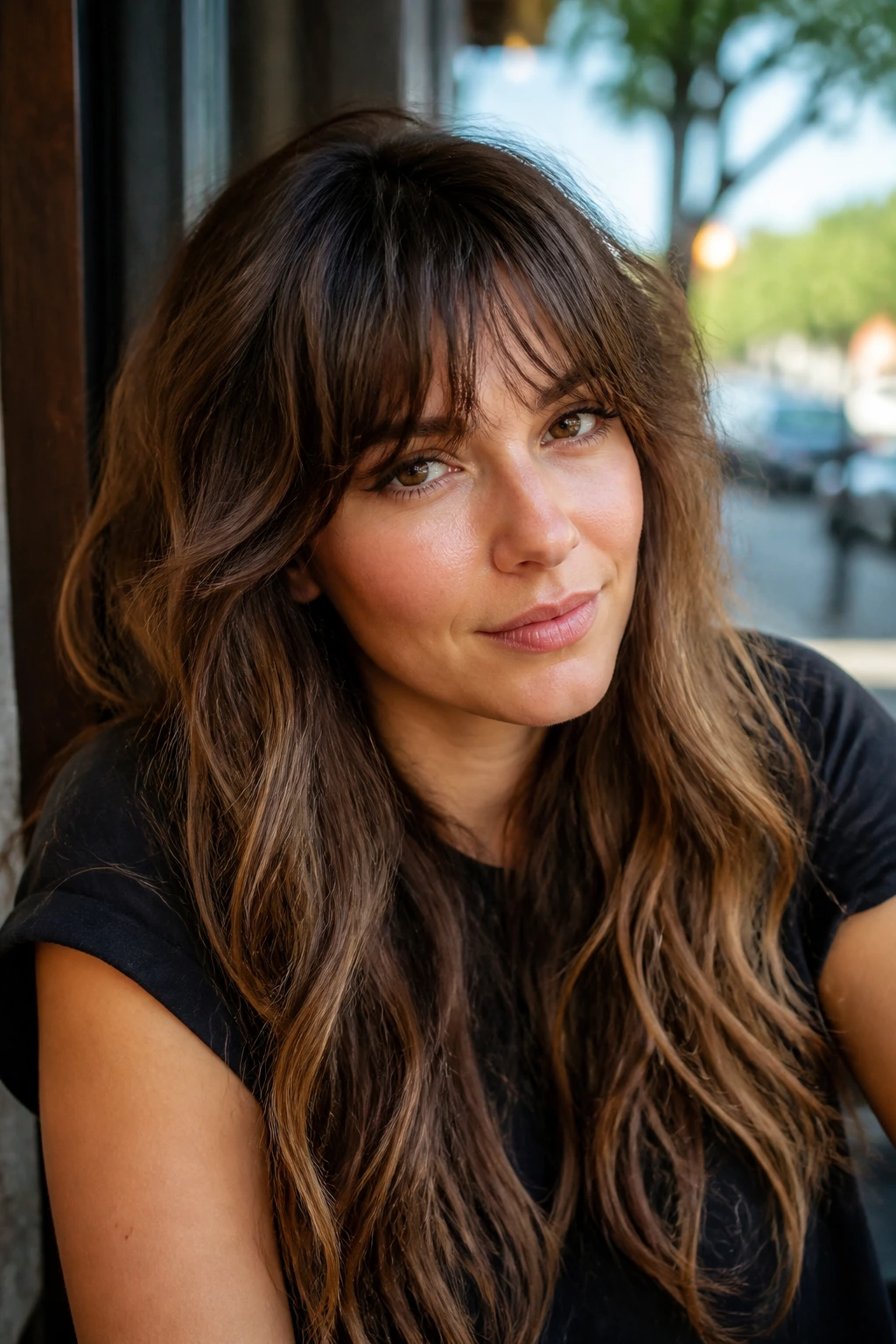
What makes a tousled fringe work is not the chaos. It’s the restraint. The fringe has movement, a few separated pieces, and a soft bend, but the overall shape still feels guided. With long hair underneath, that undone front gives the haircut enough edge to keep it from looking too sweet.
This is one of the easiest looks to live in if your wave pattern is loose and a little unpredictable. The fringe doesn’t need to be symmetrical every morning. In fact, it looks better when it isn’t. A few fingers through the front, a quick scrunch, and you’re done.
The face-shape benefit is simple: the softness keeps the front from widening the face, while the irregular pieces make the eye move. A round face usually likes that motion. Static bangs are the ones that get you into trouble.
22. Broken-Line Fringe

A broken-line fringe uses tiny changes in length to keep the edge from looking like one continuous bar. It sounds subtle, because it is, but subtle is the point. On a round face, a broken line is less likely to widen the forehead visually, and on long hair it keeps the front from feeling separate from the rest of the cut.
The shape works especially well if your wave clumps unevenly. Instead of fighting the clumps, the cut gives them a place to live. The result is a fringe that looks textured rather than messy. If the edge is too even, the wave can start puffing at the outer corners. Break the line a little, and the whole thing relaxes.
I’d call this one a smart choice for someone who likes hair that looks touched, not overworked. It’s not polished in a stiff way. It’s just arranged well enough that the eye reads style instead of accident.
23. Curled-Under Fringe
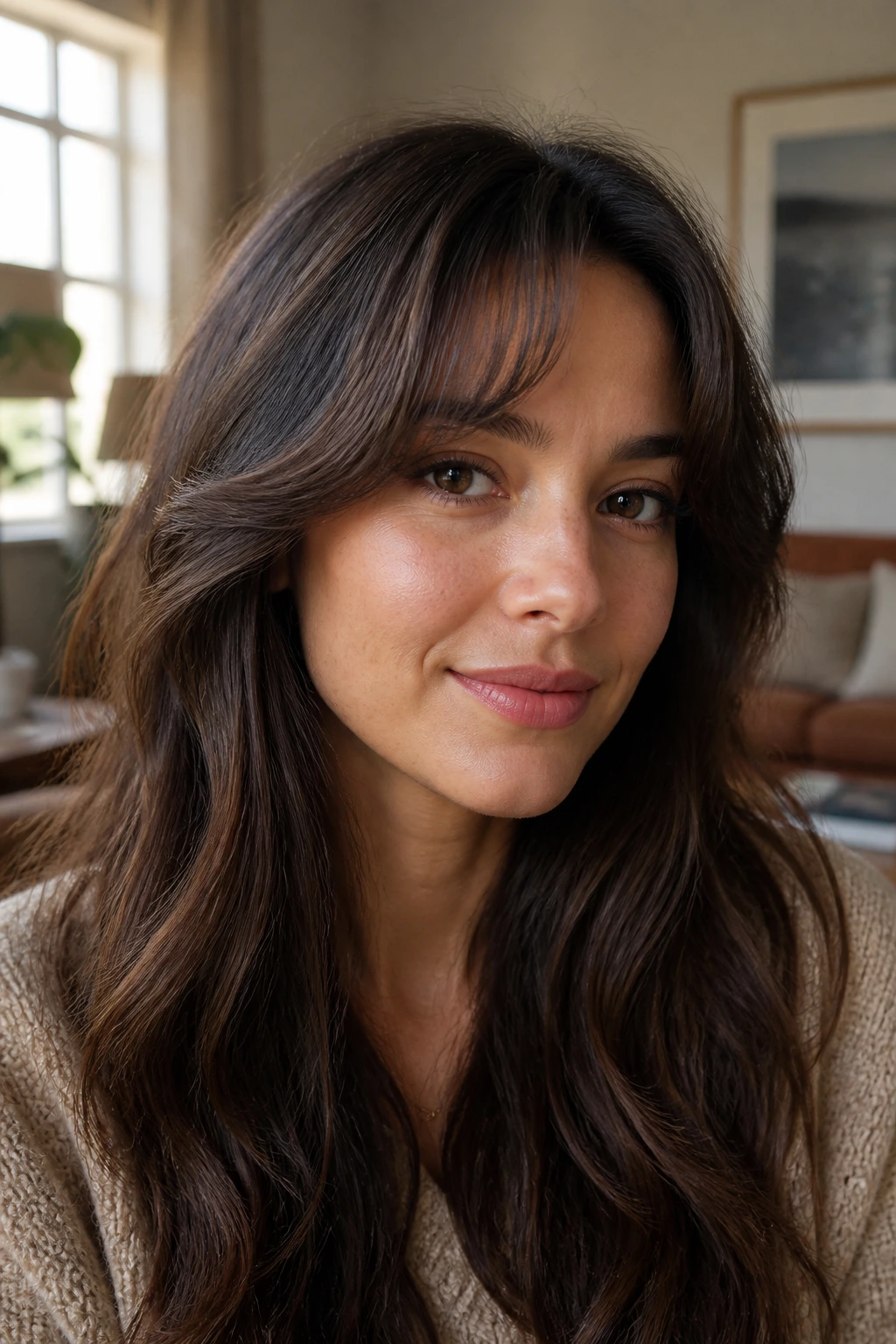
A curled-under fringe is cut with the finish in mind. The ends are meant to tuck slightly under with a round brush, a hot brush, or even a quick twist of the wrist as you dry. That tucked finish softens the forehead and keeps the short bangs from sitting flat and blunt.
On a round face, the little bend helps the fringe feel vertical rather than wide. The eye sees curve and movement, not a straight bar. On long hair, the effect is cleaner because the fringe gets just enough polish to match the lengths without becoming stiff.
This is a good option if you like a more groomed look on some days and a messier one on others. It can air-dry with a bend, or be brushed under for a neater finish. That flexibility is half the appeal.
24. Soft Bottleneck Fringe

The soft bottleneck fringe keeps the basic bottleneck shape but turns down the contrast. The center is still shorter, the sides still open, but the transition is gentler and less dramatic. That makes it a solid choice for round faces that want some framing without a strong cut line.
The softer version is easier to grow out, too. The temples already have length, so when the center starts to drop, the whole fringe doesn’t fall apart. It just loosens. That kind of grow-out matters if you don’t want to babysit your bangs every few weeks.
I like this style on wavy hair that tends to change from day to day. It leaves enough length that a weird wave pattern doesn’t ruin the shape. The fringe can be a little off and still look good. Sometimes that’s the whole point.
25. Air-Dry Fringe with Long Sides
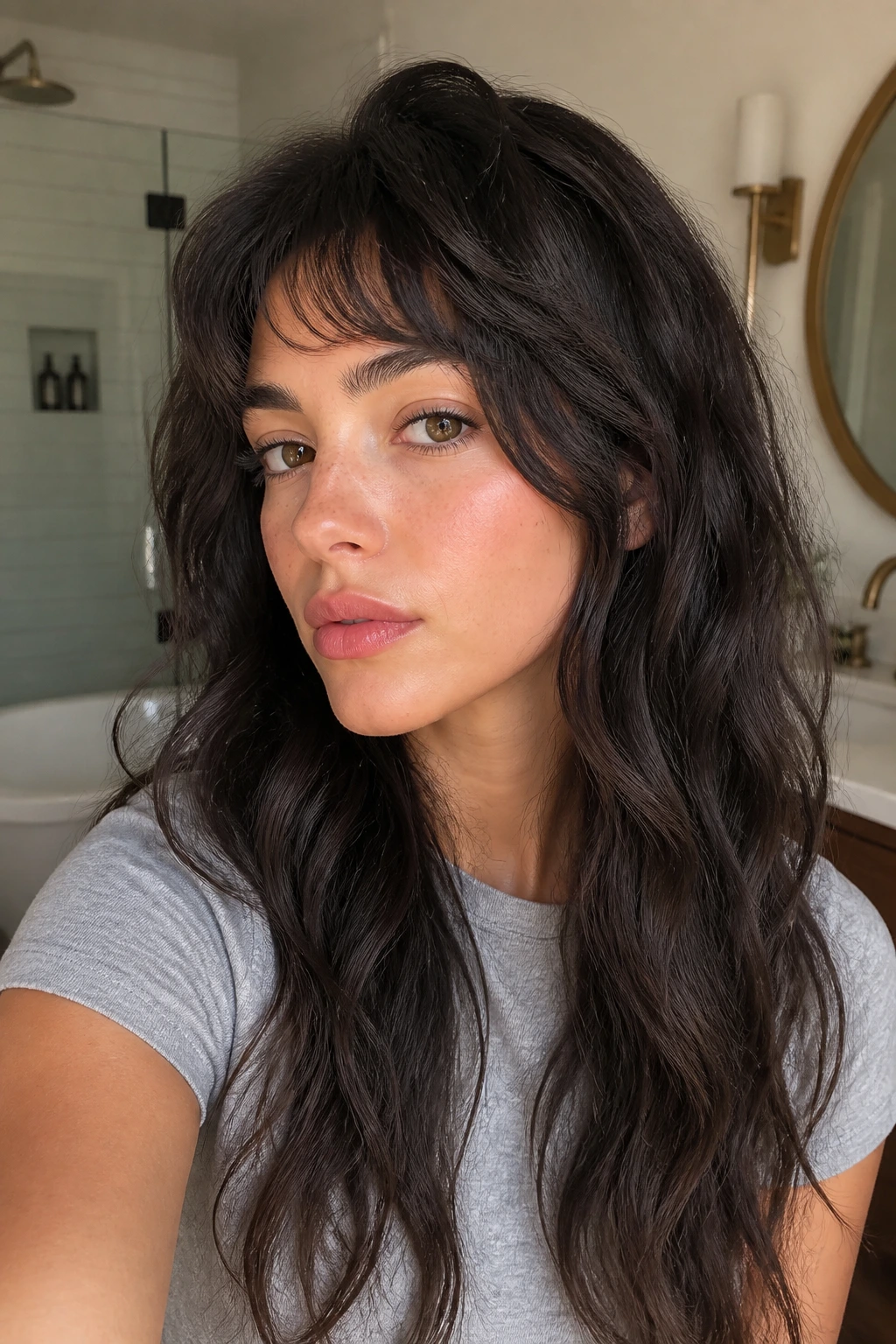
An air-dry fringe with long sides is for the person who knows their wave pattern and wants to stop fighting it. The cut is built to look finished without a blow-dryer: short in front, longer at the temples, and soft enough to settle on its own. On a round face, the longer sides keep the front from widening too much, while the wave adds movement that a blunt cut can’t fake.
This one needs honest texture. If your hair dries into a pouf, the shape has to be cut with that in mind. If it dries flat, the bangs can be a little fuller. Either way, the best versions leave room for the natural bend instead of trying to iron it out.
It’s the fringe I’d choose for someone who wants the style to look good on day one and day three. No heroics. Just a good cut that understands how hair actually behaves.
How Wavy Short Bangs Change the Shape of a Round Face
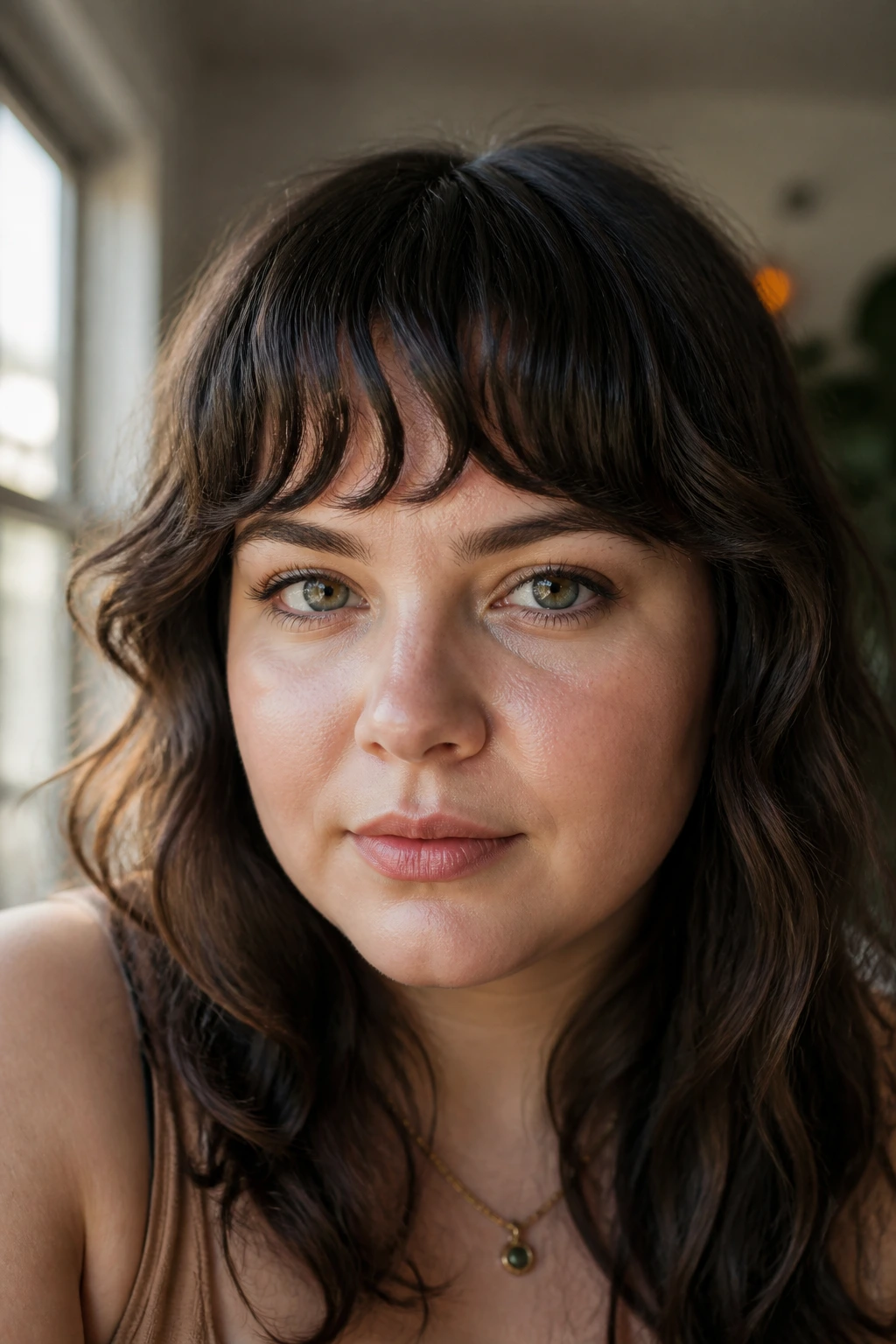
The biggest mistake people make is thinking bangs are all about forehead coverage. They’re not. They’re about where the eye moves first. On a round face, the goal is usually to add a little vertical pull, then break up the width around the cheeks with soft angles, gaps, or longer temple pieces.
Wavy hair helps when the cut respects it. A short fringe with natural bend can soften the front without creating one heavy shelf, which is the fastest way to make a round face look fuller. The wave creates irregularity. Irregularity creates movement. Movement is your friend here.
Long hair behind the fringe gives you room to play. It can handle a sharper bang because the length below acts like a counterweight, but only if the front is cut with enough air. If the fringe is too dense, the whole style feels top-heavy. If it’s too sparse, the haircut loses its point. That balance is the whole game, and it’s more about shape than length.
How to Ask for the Right Fringe at the Salon
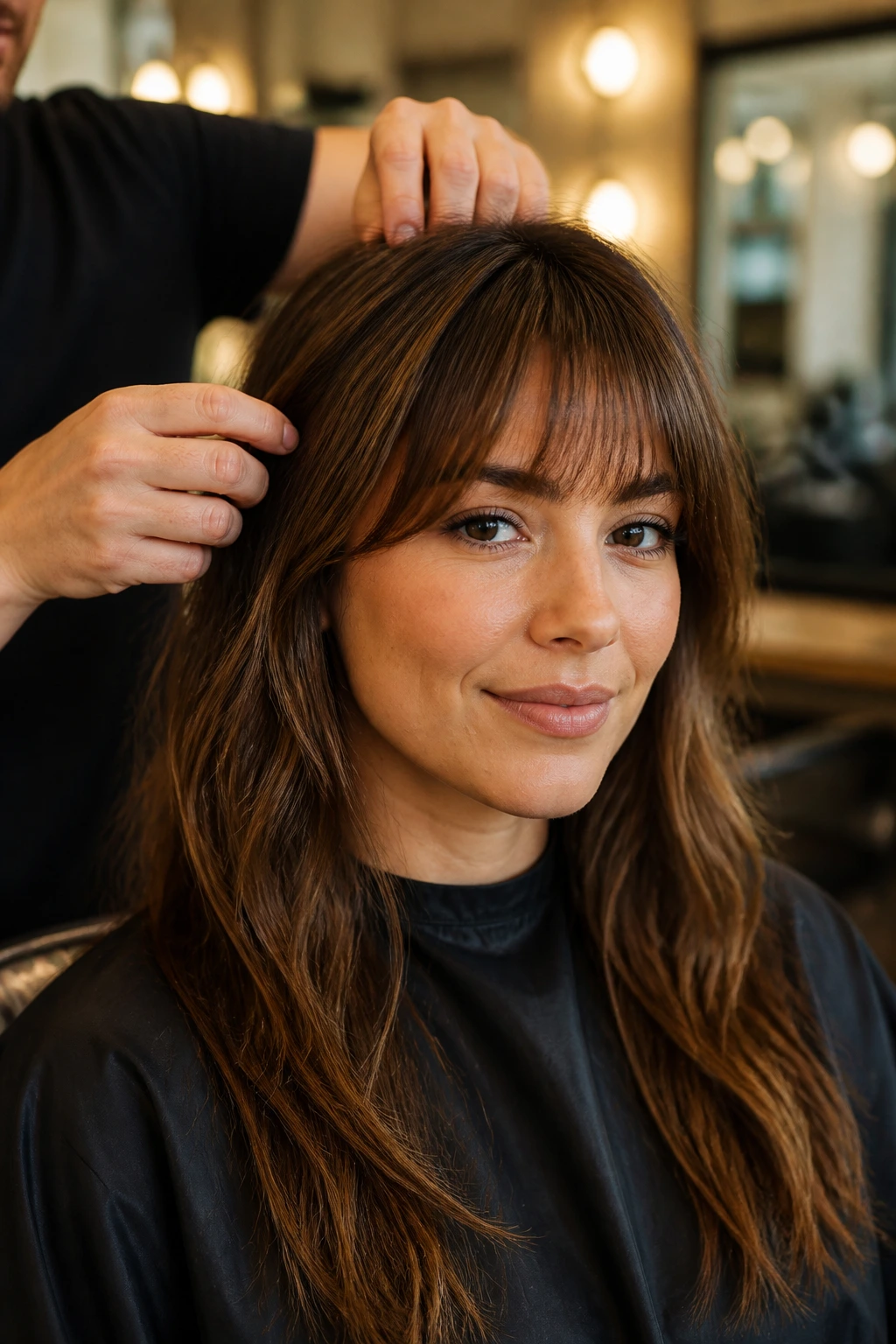
Walk in with one simple idea: tell the stylist where you want the fringe to land when it’s dry. Wet hair lies. Wavy hair lies even more. If you say “brow-skimming” and your wave shrinks half an inch, you could end up with bangs that live above your eyebrows whether you asked for that or not.
Say what you wear most often. Middle part? Side part? Air-dried? Blow-dried? That changes the cut. A center part needs different balance at the temples than a deep side sweep does, and a fringe meant to air-dry needs more length left in it than one you plan to brush smooth every morning.
Bring up the corners. Seriously. The temples are what keep short bangs from looking square on a round face. Ask for the outer pieces to stay longer if you want softness, or to taper sharply if you want more drama. Those side bits are doing a lot of quiet work.
If you have a cowlick, say so before the scissors come out. Not after. The growth pattern can push a fringe apart or lift one side higher than the other, and a good stylist will cut around that instead of pretending it doesn’t exist.
Tools That Keep the Front Piecey Instead of Puffy
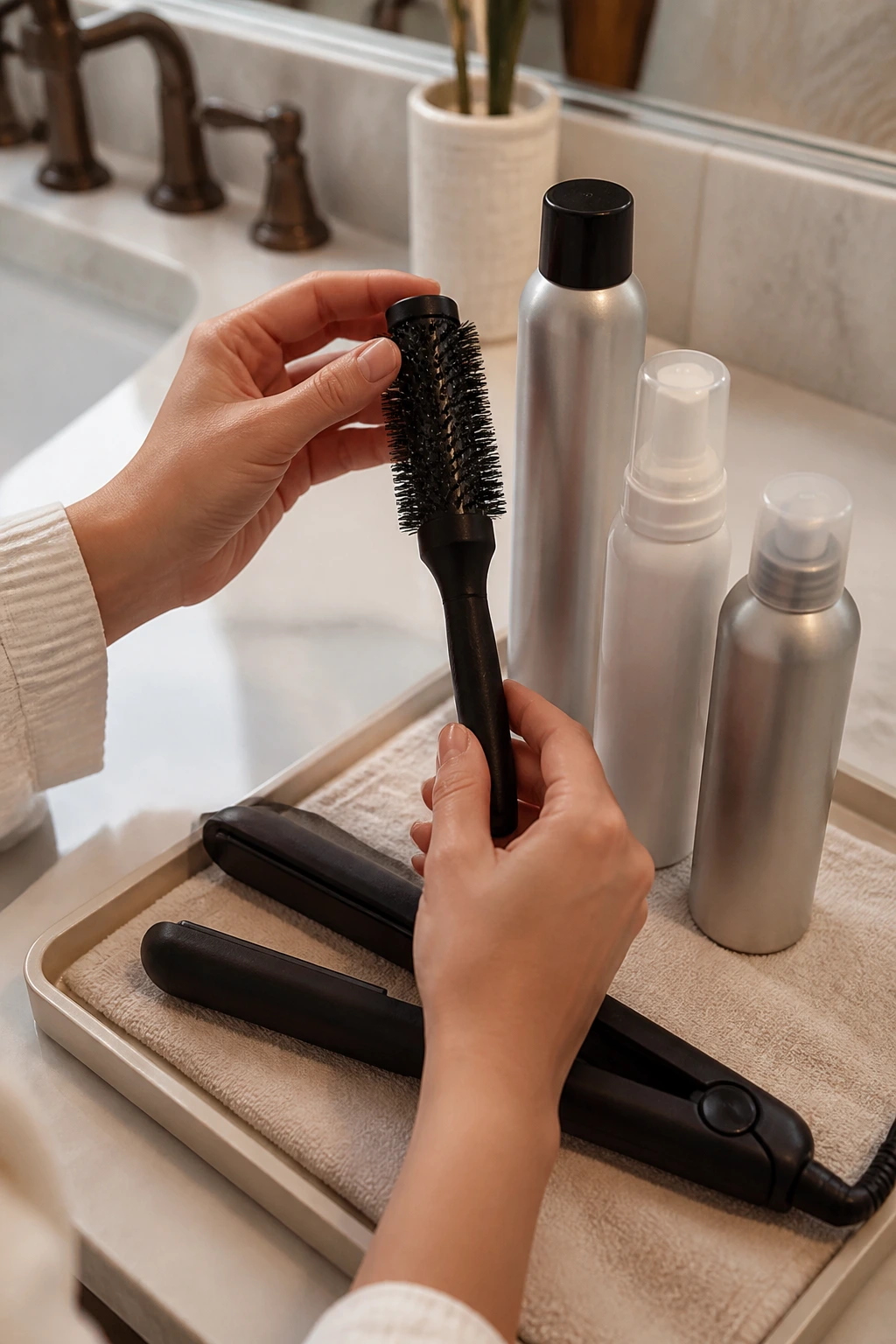
A fringe with wave needs a small tool kit, not a drawer full of stuff.
- Small round brush: Good for giving the roots a little bend without over-smoothing the ends.
- Mini flat iron or hot brush: Handy for touching up one bendy section without flattening the whole fringe.
- Blow-dryer with a concentrator nozzle: Helps aim the airflow down the hair so the bangs don’t puff open.
- Texturizing spray: Best on dry fringe when you want separation, not hold.
- Light mousse or foam: Useful on damp bangs if you want the wave to set with shape.
- Dry shampoo: Works at the roots when the fringe starts to look greasy by midday.
- Duckbill clips: Great for pinning bangs out of the way while you do the rest of your hair.
The secret is not buying the heaviest product and hoping for the best. Short wavy bangs tend to look better with less product than people think. A little control at the root, a little separation at the end, and not much in between.
How to Style Wavy Short Bangs Without Flattening Them
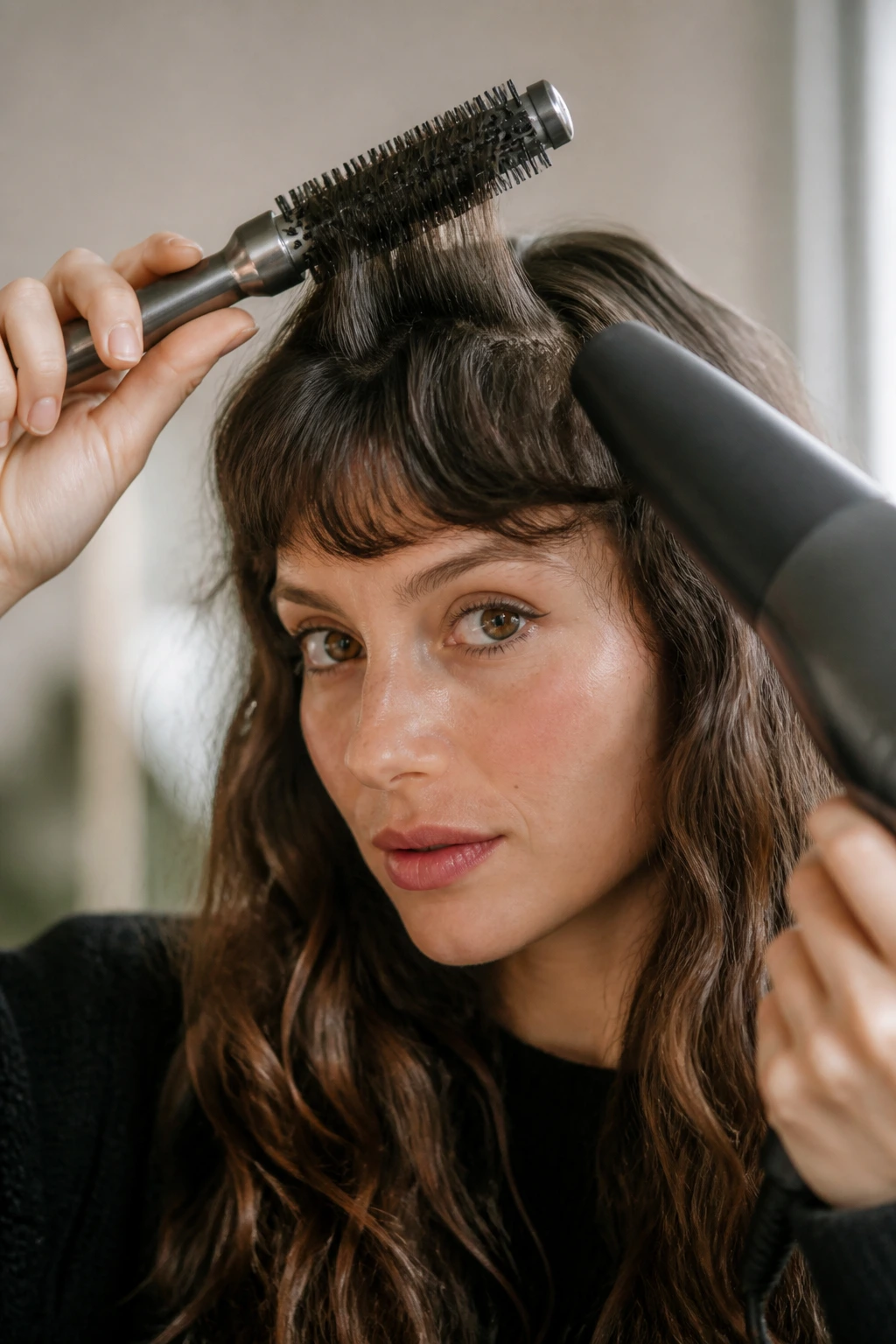
The fastest way to ruin short bangs is to treat them like the rest of the hair. They’re not. They dry faster, show oil faster, and change shape faster. I always start with the front section, even if the rest of the hair is still damp, because the fringe sets the tone for the whole haircut.
A practical routine looks like this:
- Mist the bangs lightly with water or leave-in spray.
- Work in a pea-size amount of foam or a tiny dab of cream, depending on density.
- Blow-dry the roots first using the nozzle, aiming the airflow downward.
- Use a small round brush or your fingers to guide the bend, not force it straight.
- Finish with a cool shot or let the fringe cool on its own before touching it.
If you want a looser finish, bend the fringe away from the face and let it fall back naturally. If you want a sharper shape, brush it just enough to control the line, then stop. Over-drying is a thing. So is over-brushing. Both make the fringe puff.
Humidity is its own beast. When the air gets heavy, bangs can split or rise. A quick dampening with your hands and a 20-second touch-up usually works better than piling on more product.
Common Mistakes That Throw Off the Shape
-
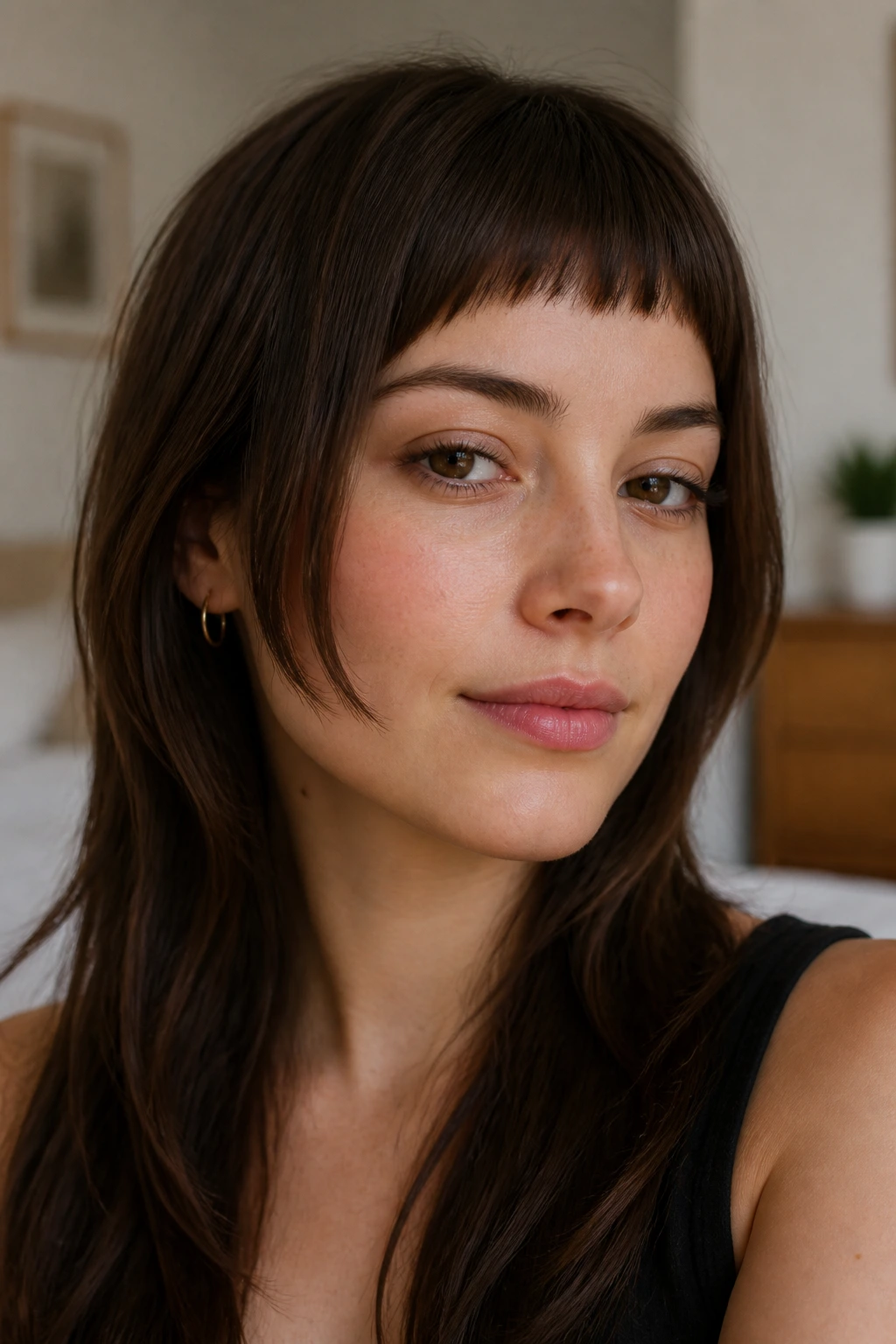
Cutting too short while the hair is wet: Wavy hair springs up when it dries, and that extra bounce can turn a cute fringe into a tiny shelf. Fix it by leaving more length than you think and checking the shape dry.
-
Making the whole fringe the same length: A straight, even line tends to widen the face. Keep the temples longer or the center broken up so the line doesn’t read as one horizontal bar.
-
Using heavy cream or oil at the roots: The bangs separate into greasy clumps and lose their lift. Apply product mid-shaft or use something light enough that the root still moves.
-
Ignoring the cowlick: If the growth pattern pushes one side up, the fringe will fight you every morning. Cut around the cowlick, and be honest about it during the consultation.
-
Over-thinning thick hair: It can look airy in the chair and frizzy two hours later. Remove bulk carefully and keep some structure in the center.
-
Trying to flatten the wave completely: That usually ends in a puffier fringe later. Work with the bend. A little movement is the point.
Named Variations and Adaptations to Try
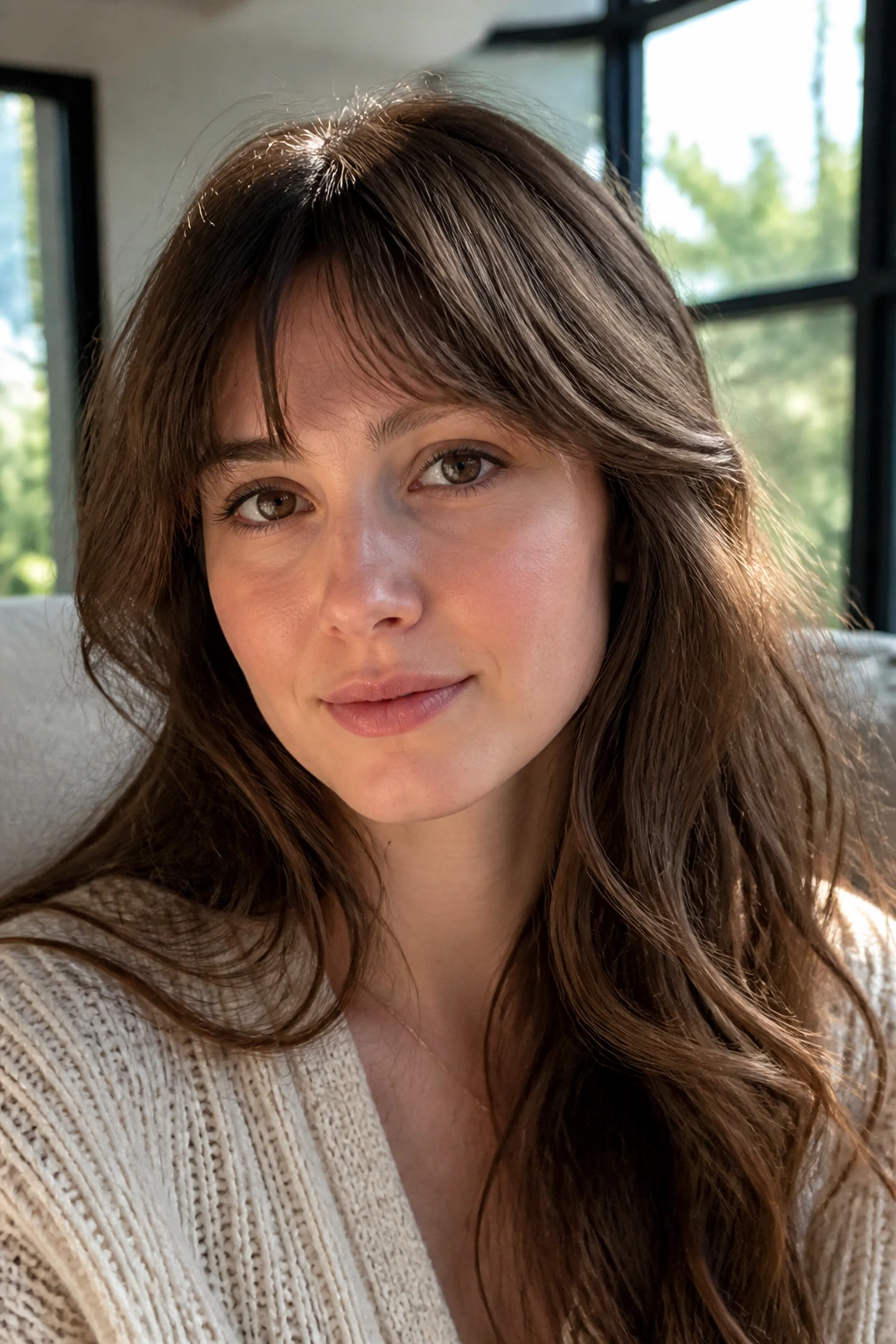
Soft Grow-Out Version
Leave the center a little longer and keep the temples feathered, not chopped. This is the fringe to choose if you want short bangs but hate awkward in-between stages. It can drift into curtain territory without looking like a bad mistake.
High-Drama Micro Version
Shorten the center more aggressively and keep the edge crisp. Pair it with long, smooth lengths so the contrast feels intentional rather than busy. This one likes confidence and a steady trimming schedule.
Thick-Hair Relief Cut
Ask for internal weight removal and a lightly shattered edge. The goal is to stop the fringe from sitting like a dense block across the forehead. It’s especially useful if your waves expand with humidity.
Fine-Hair Airy Version
Keep the density light from the start and avoid over-layering. A see-through or piecey finish gives the hair room to move without exposing too much scalp. Dry shampoo at the root helps a lot here.
Humidity-Proof Version
Leave the fringe slightly longer and shape it with a cooler blow-dry instead of a hot one. The extra length gives you room when the wave pulls up or puffs out. It’s not glamorous advice, but it saves frustration.
Keeping the Fringe Fresh Between Trims
Short bangs need maintenance, but not the dramatic kind. Baby bangs and micro fringes usually want a trim every 3 to 4 weeks. Softer bottleneck, curtain, or grown-out versions can often stretch to 5 to 7 weeks before they stop behaving.
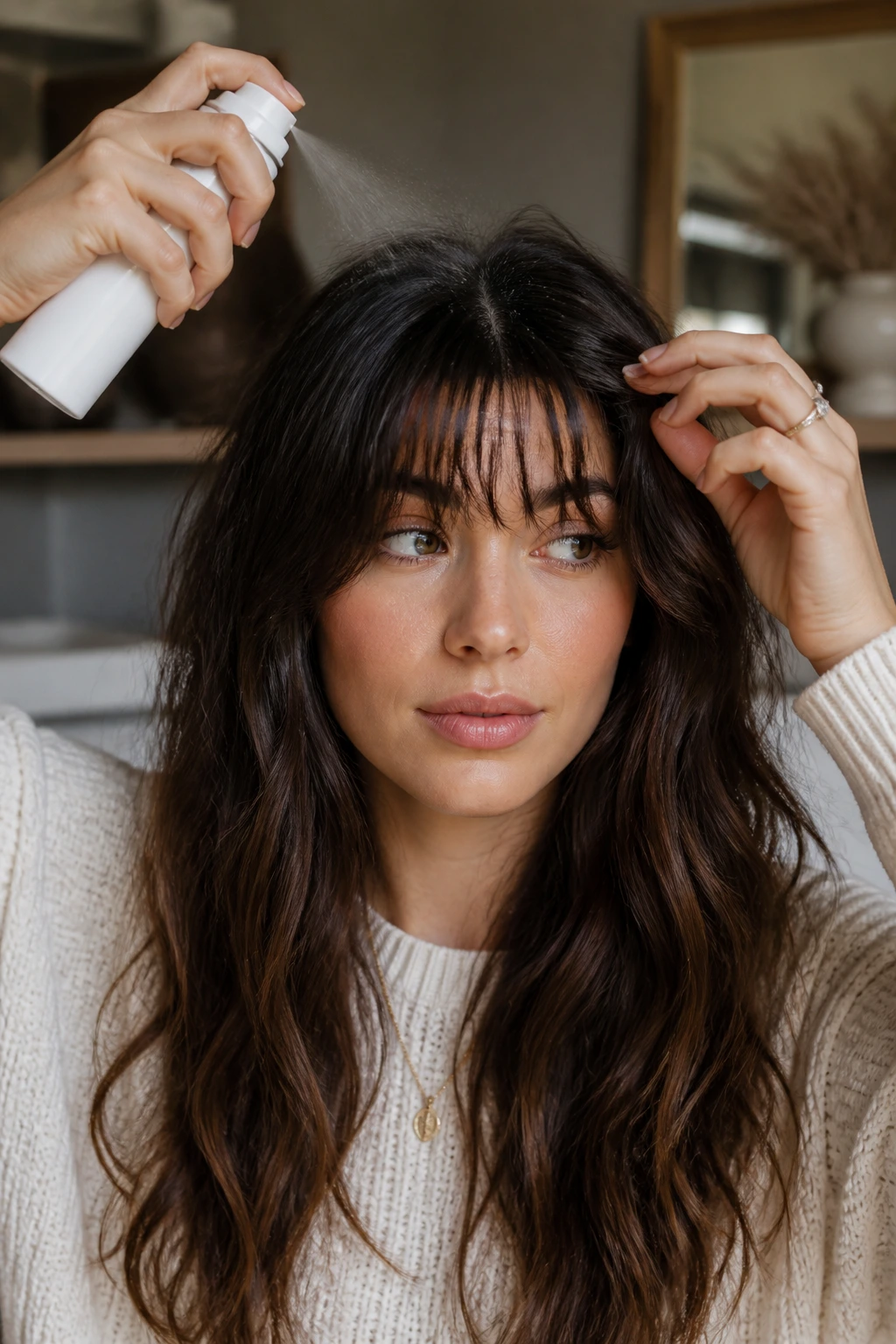
The day-to-day fix is simple. If the roots get oily, use a little dry shampoo at the front section only, then tap it through with your fingertips. If the ends start to split, a light mist of water and a quick blow-dry usually revives them faster than adding more product. If you sleep hard on your bangs, clip them off your face before bed or they’ll wake up bent in strange directions.
Wash them separately if you need to. A quick sink rinse on the front section can buy you another day. That’s not fussy. It’s practical. Fringe gets dirty faster than the rest of the hair because it sits against skin, makeup, and hands all day.
Questions People Ask Before They Commit
Are short bangs a bad idea for round faces?
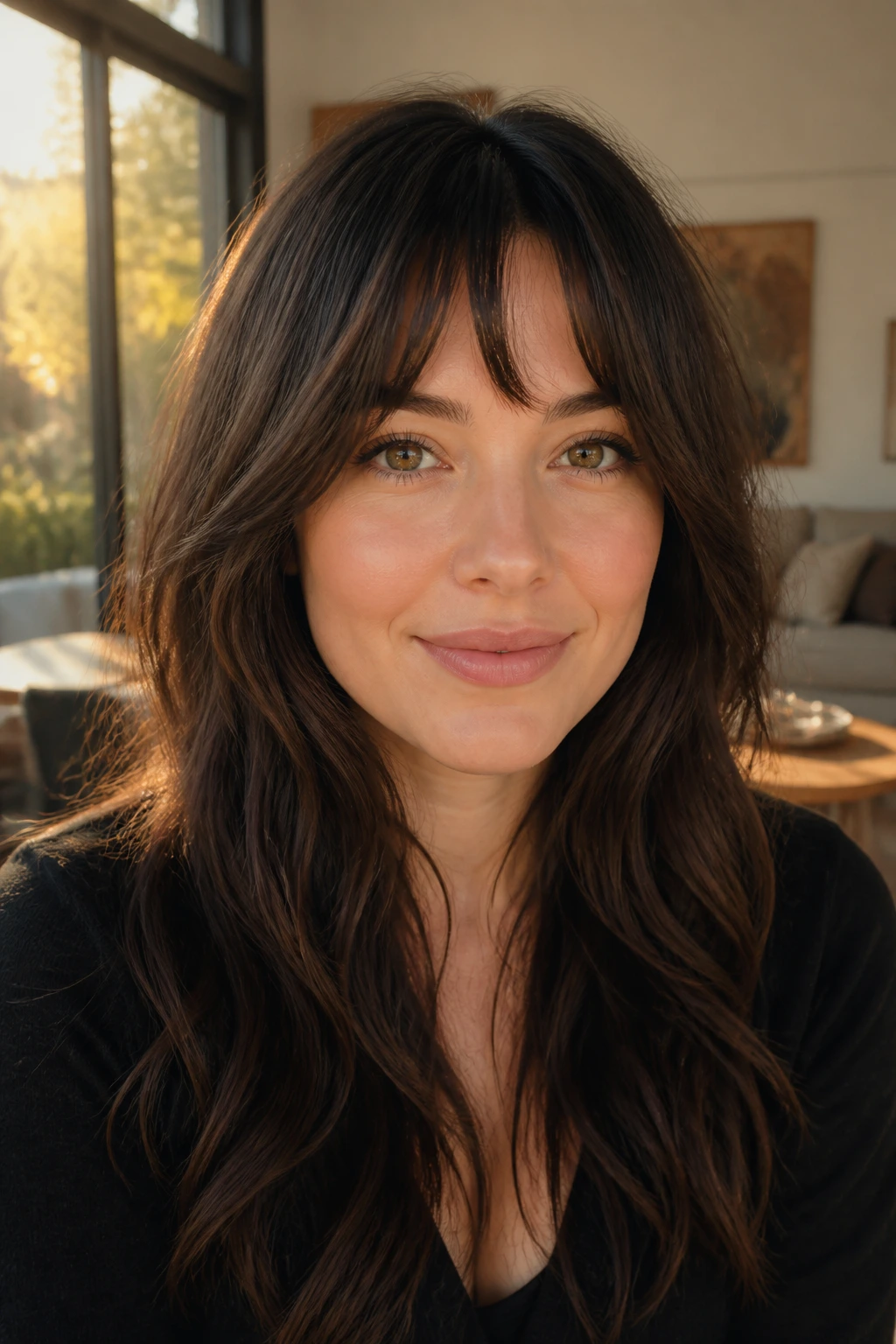
Not if the shape is right. A blunt, heavy line can widen the face, but soft, wavy, or temple-tapered fringe can do the opposite and add length where you want it.
How short is too short with wavy hair?
Too short is whatever lands several inches above where your wave dries naturally. If you love a micro look, leave extra length in the cut so the wave shrinkage doesn’t surprise you.
Do these styles work with thick hair?
Yes, especially the razor-shattered, bottleneck, and shaggy versions. Thick hair needs weight removal and a softer edge so the fringe doesn’t turn into a shelf.
Can I wear a middle part with short bangs?
Absolutely. In fact, short curtain shapes and split-center fringes work especially well with a middle part because they keep the forehead open and the face lengthened.
What if my bangs split down the middle on their own?
That’s usually a parting issue or a cowlick, not a disaster. Lean into a split fringe or ask for a cut that follows the growth pattern so the split looks planned.
Should I blow-dry them every day?
Not always. If your wave sits nicely on its own, a quick damp reshaping is enough. If the fringe puffs or bends oddly, a 30-second root dry makes a bigger difference than heavy product.
How do I grow them out without looking awkward?
Keep the temples longer and let the center relax first. Grown-out, bottleneck, and soft curtain shapes transition better than a harsh blunt edge.
Can I cut them myself?
You can trim the tiniest amount, but short wavy bangs are not the place to get brave with kitchen scissors. A quarter-inch here can become a whole mood after drying, and that’s a rough lesson to learn at home.
A Fringe That Keeps the Length in Charge
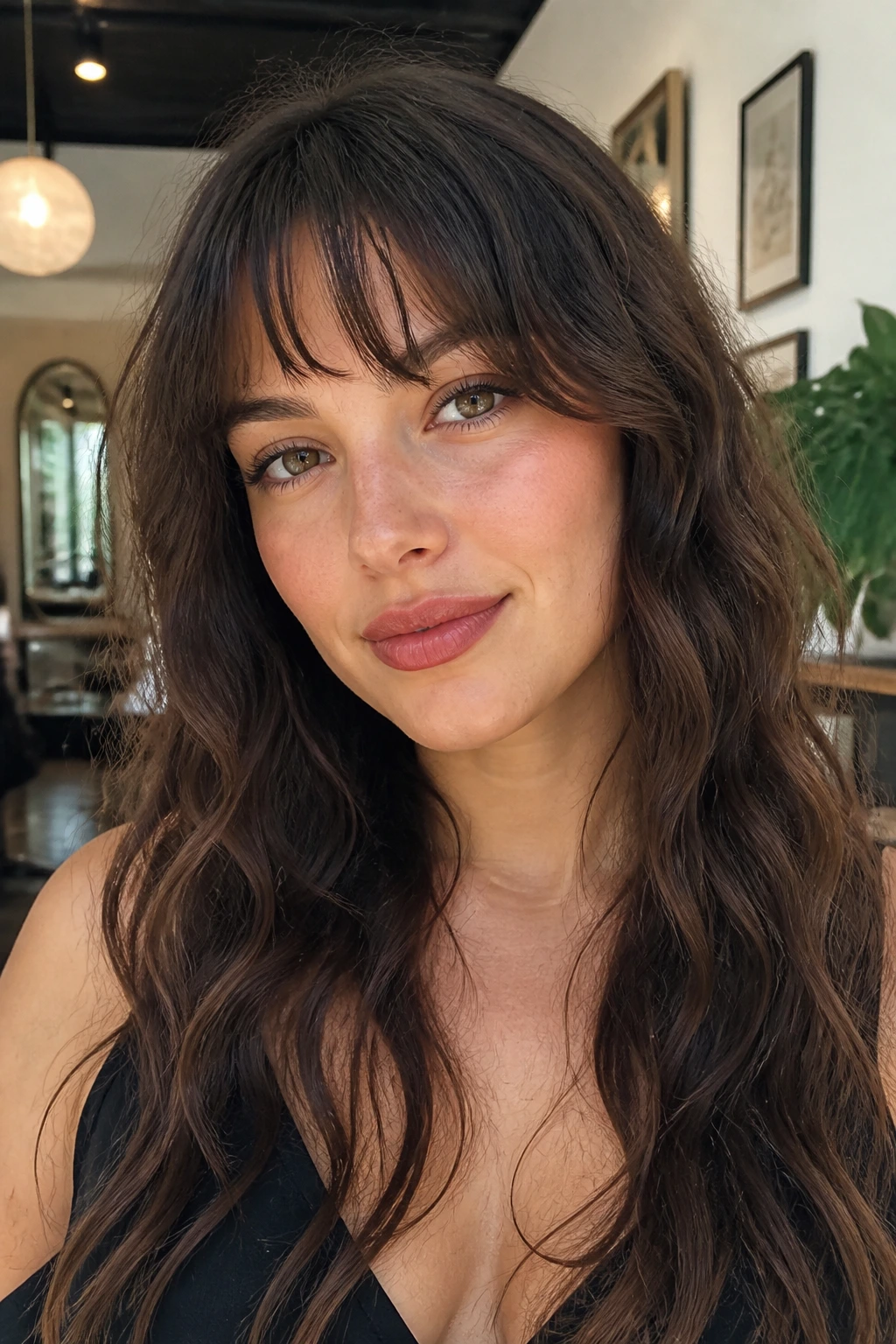
The best short bangs on a round face don’t fight the shape of the face or the weight of long hair behind it. They edit. They interrupt. They make the front interesting without stealing the whole haircut. That’s why the details matter so much — the temple length, the broken edge, the dry length, the amount of wave left in the ends.
If you’re taking one idea from all 25 looks, make it this: the fringe should work with the hair you already have. A strong cut respects the wave, leaves room for shrinkage, and uses the temples to soften the face instead of boxing it in. Get that part right, and the rest of the haircut gets easier.
Bring the shape to a stylist as a set of clues, not a fantasy. Tell them how your hair dries, where your part lives, and how short you’re willing to trim the center. Then let the fringe do what good fringe does best: frame the face, not fight it.