



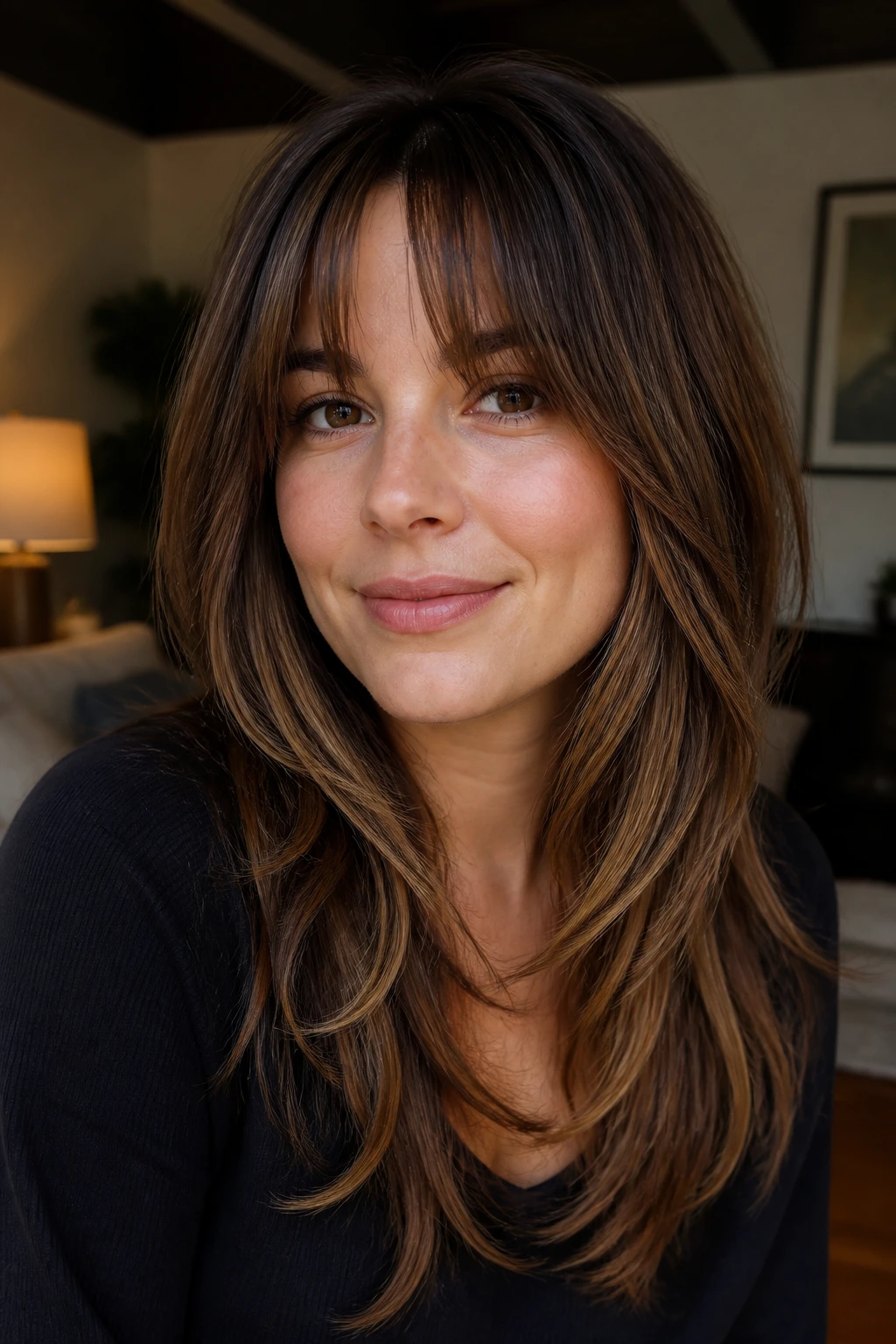
Round faces can wear more haircut movement than people give them credit for. Whiskey layers with bangs for round faces work when the shortest pieces start below the cheekbone and the fringe breaks up the forehead without stopping at the widest part of the face. That tiny shift in placement changes everything.
The trap is easy to spot in the mirror. Bangs that land in a straight line across the fullest part of the cheek can make the face read wider, while layers that flare out at the sides can add bulk exactly where you do not want it. Better to keep the front pieces angled, broken up, and a little longer than your first instinct says.
Some of these cuts are soft and easy to air-dry. Some need a round brush, a small iron, or a little product memory from day to day. All of them use the same basic trick: they pull the eye downward and create movement that works with a round face instead of boxing it in.
Why These Cuts Earn Their Spot
-
Face-Lengthening Lines: The best versions here keep the shortest pieces below the cheekbone, which gives the eye a vertical path instead of a wide one.
-
Bang Options: Curtain bangs, bottleneck bangs, side sweeps, and airy fringes all work because they break up the forehead without making a hard shelf.
-
Texture Flexibility: Straight, wavy, curly, fine, and thick hair all get a lane in this collection, so you are not trying to force one cut onto every head shape.
-
Better Grow-Out: Many of these styles still look intentional after a month or two because the layers are long enough to tuck, bend, or pin.
-
Salon-Friendly Language: These looks are easy to describe with clear placement notes — cheekbone, jawline, collarbone, temple — which keeps the chair conversation from turning vague.
-
Styling Range: You can wear them sleek, tousled, or blown out with a slight bend, and the shape still reads as deliberate.
1. Curtain Layers That Start Below the Cheekbone
Curtain layers are the calmest place to begin if you want movement without extra width. They split at the center, slide away from the face, and leave the cheeks open instead of boxed in by a blunt fringe.
Ask for the shortest face-framing pieces to land just below the cheekbone, then let them taper toward the mouth or collarbone. If the front pieces stop right on the fullest part of the cheek, the cut can feel trapped there.
What to ask for
- Long curtain bangs that open at the center
- Front layers that start below cheekbone level
- Ends that stay soft, not choppy
A loose bend with a 1.25-inch iron or a round brush makes this shape behave. Straight from the air-dry, the pieces can look sleepy; with a little curve, the whole cut gets more lift.
2. Bottleneck Bangs and Collarbone Lengths
Want bangs without the hard wall effect? Bottleneck bangs are the answer I reach for first. They sit narrower at the top, then open slightly near the temples, which gives a round face some breathing room.
The collarbone length matters here. Hair that grazes the collarbone gives you a clean vertical drop, and that line helps offset cheek width in a way a chin-length cut often cannot.
A good bottleneck fringe should not feel heavy in the middle. It should skim the brow, then soften as it reaches the outer corners of the eyes. If the ends are too blunt, the style loses its shape and starts acting like a curtain rod.
3. Side-Swept Fringe With Long U-Layers
Side-swept bangs are old-school for a reason. They cut diagonally across the face, and diagonals are flattering because they keep the eye moving instead of stopping it dead.
This works especially well with long U-layers, where the shortest point sits in the center of the chest and the sides taper longer. The U-shape makes the silhouette feel slimmer near the face while keeping the lower half of the haircut soft.
A small side part helps, but do not overdo it. A deep, heavy sweep can drag the front down and make the roots collapse. A gentle offset part gives you movement without stealing volume from the crown.
4. Butterfly Cut With Floating Front Pieces
The butterfly cut has become popular because it gives you two shapes at once: shorter front layers and longer length underneath. On a round face, that double length game works in your favor.
The shorter pieces should hover around the chin to mouth area, not the cheekbone. That space matters. It keeps the face frame from sitting on the widest point of the face, which is where a lot of layered cuts go wrong.
The long ends stay airy and swinging, so the haircut does not feel stuck to the head. If you blow-dry only one thing, make it the front section. Lift it away from the cheeks and let the rest fall long.
5. Shag Layers With Piecey Bangs
A shag can be a gift on a round face if the texture stays broken up and the bangs stay piecey. The point is not to create a cloud around the cheeks. The point is to add direction.
The best shag here has layers that kick out at the ends and a fringe that separates into small sections instead of one thick line. That little separation keeps the face from getting boxed in, and it gives the cut a more casual edge.
I like this shape on hair that has some natural wave. Straight hair can wear it too, but you need a bit of spray and finger-tousling or the cut can flatten fast. Ask for light internal texture rather than aggressive thinning near the temples.
6. Long Lob With Feathered Face Frames
A long lob — sitting somewhere between the chin and collarbone — gives a round face a useful amount of length. The feathered front pieces keep it from feeling blocky.
The key here is softness around the jaw. You want the face frames to bend away from the cheeks and then fall forward in a slow taper. That gives the haircut motion without adding a big bubble at the sides.
This is one of the easiest cuts to wear with or without styling. Air-dried, it looks relaxed. Brushed out, it looks polished. The length stays practical, too, because it still fits behind the ears and into a clip when you need it out of your face.
7. C-Shape Layers With Brow-Grazing Bangs

A C-shape cut curves inward at the ends, which keeps the silhouette from feeling wide at the jaw. On a round face, that inward bend is useful because it points the line of the haircut down and in, not out.
Brow-grazing bangs work here if they are kept light. The fringe should skim the brows and split a little at the center, not sit as a thick shelf. Too much density in the front can flatten the forehead and make the face feel shorter than it is.
A clean way to ask for it
- Long layers that curve toward the jaw
- Fringe that ends at or just below the brow
- Soft texturing at the ends, not at the temples
This is a polished cut, not a messy one. If you want shape without fuss, this is a strong pick.
8. Wolf Cut With Soft Curtain Fringe

The wolf cut can be a little wild if the top is cut too short, but the softer version is a good match for a round face. The trick is to keep the crown loose and the fringe split.
Soft curtain fringe prevents the front from becoming a flat wall. The layers underneath can still be shaggy and cool, but the bangs should open enough to show forehead and create that vertical break.
This one likes texture spray and a rough-dry. I would not chase a perfect blowout here. A bit of movement is the point. If the ends flip out naturally, even better — that irregularity keeps the haircut from reading too round.
9. Curly Layers With Deva-Style Fringe

Curly hair needs its own rules, and round faces benefit from them when the layers are cut to move with the curl pattern. Deva-style fringe keeps the front lighter and lets the curls fall where they want instead of forcing them into a straight line.
The best version keeps the shortest curls a touch longer than you think. Shrinkage is real. A curl that looks chin length when wet can bounce up to the cheek once it dries, and that is exactly the place you want to avoid crowding.
Ask for curl-by-curl shaping, with the fringe cut dry or nearly dry. That gives your stylist a better read on where the curls will live. A round face looks good with curls that frame and lift, not curls that spread wide at the cheek.
10. Wavy Midi With Tapered Bangs
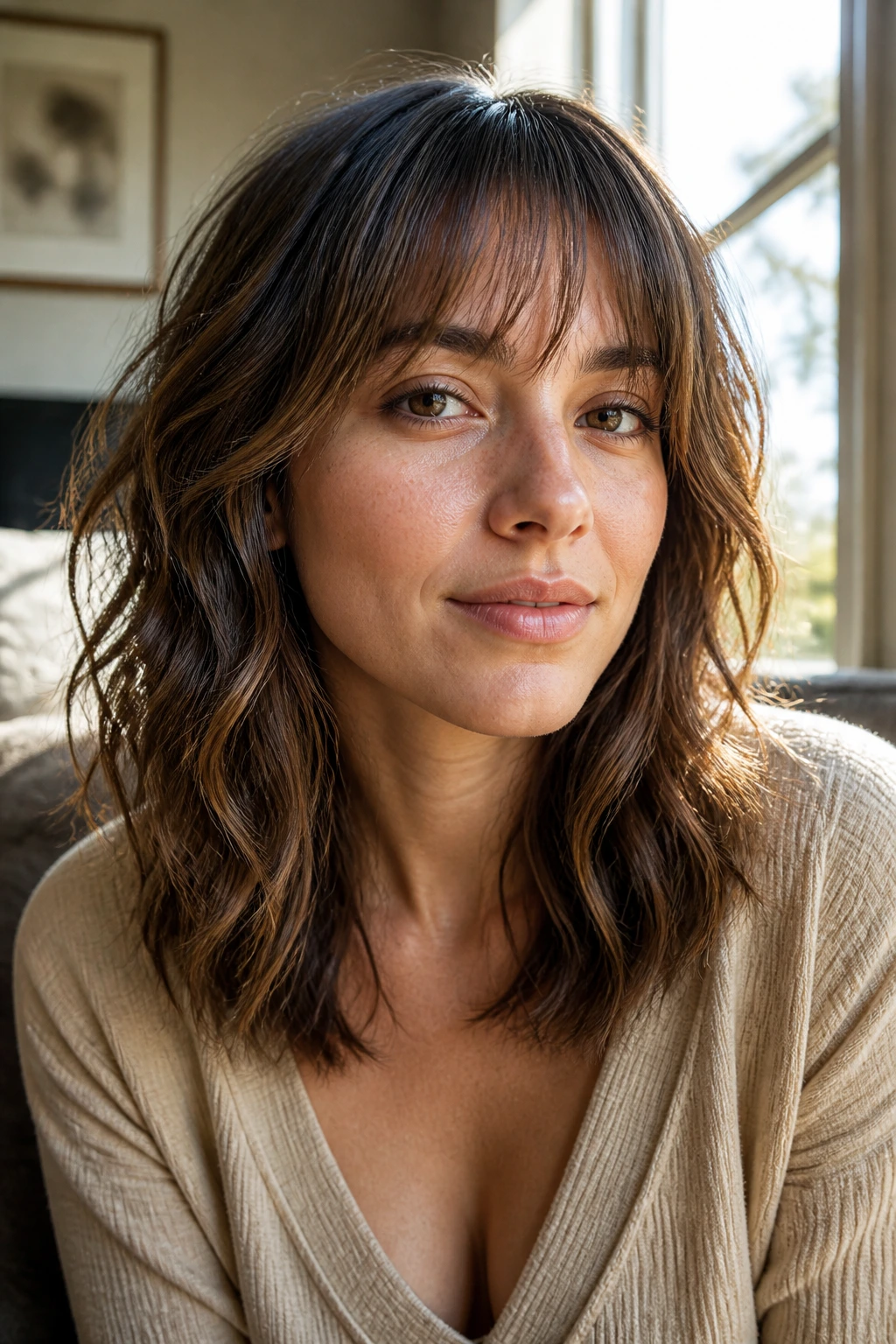
This is one of my favorite low-drama shapes. A midi length that falls around the shoulders gives you enough weight to control volume, while tapered bangs keep the forehead soft.
The taper matters. Instead of a blunt line, the fringe should be slightly longer at the outer edges and lighter through the center. That keeps the cut from creating a horizontal band across the face.
Wavy hair loves this shape because the bend does half the work. You can scrunch in a little cream, let the waves fall, and still have enough structure around the face to make the style look finished. It is not fussy. That’s the appeal.
11. Sleek Straight Layers With Invisible Ends
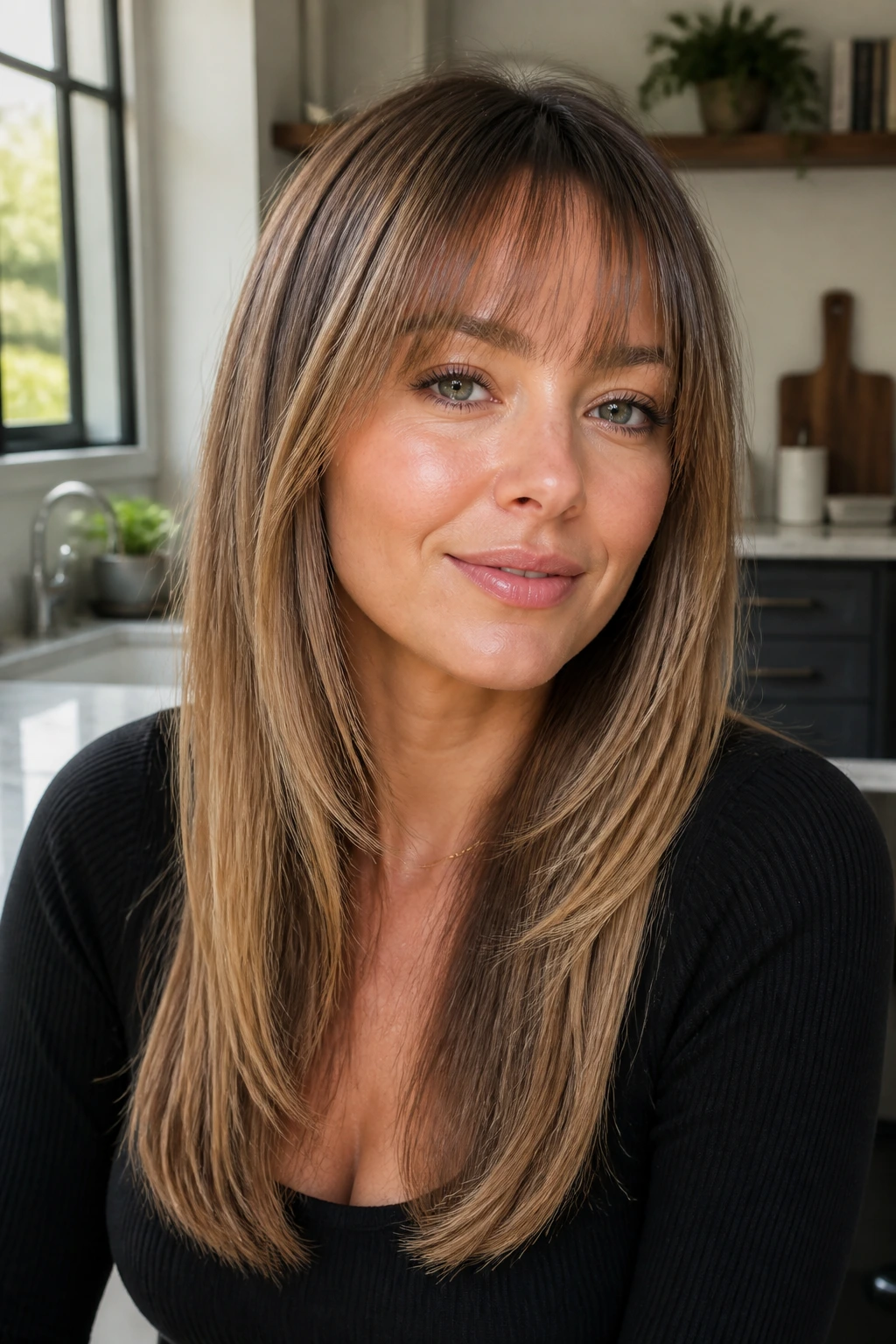
Straight hair can be tricky on a round face because it shows every line. That is why invisible ends — soft, nearly hidden layers — are worth asking for. They give movement without creating obvious bulk.
The bangs here should be feather-light or slightly see-through. A heavy straight fringe can shorten the face fast, especially if the hair is dense. Keep the front touchable and airy, not solid.
This cut looks strongest when the finish is clean. A flat iron bend at the last inch of the front pieces is enough. No need for a full curl. You want a quiet curve that nudges the eyes downward.
12. Razor Cut With Deep Side Part
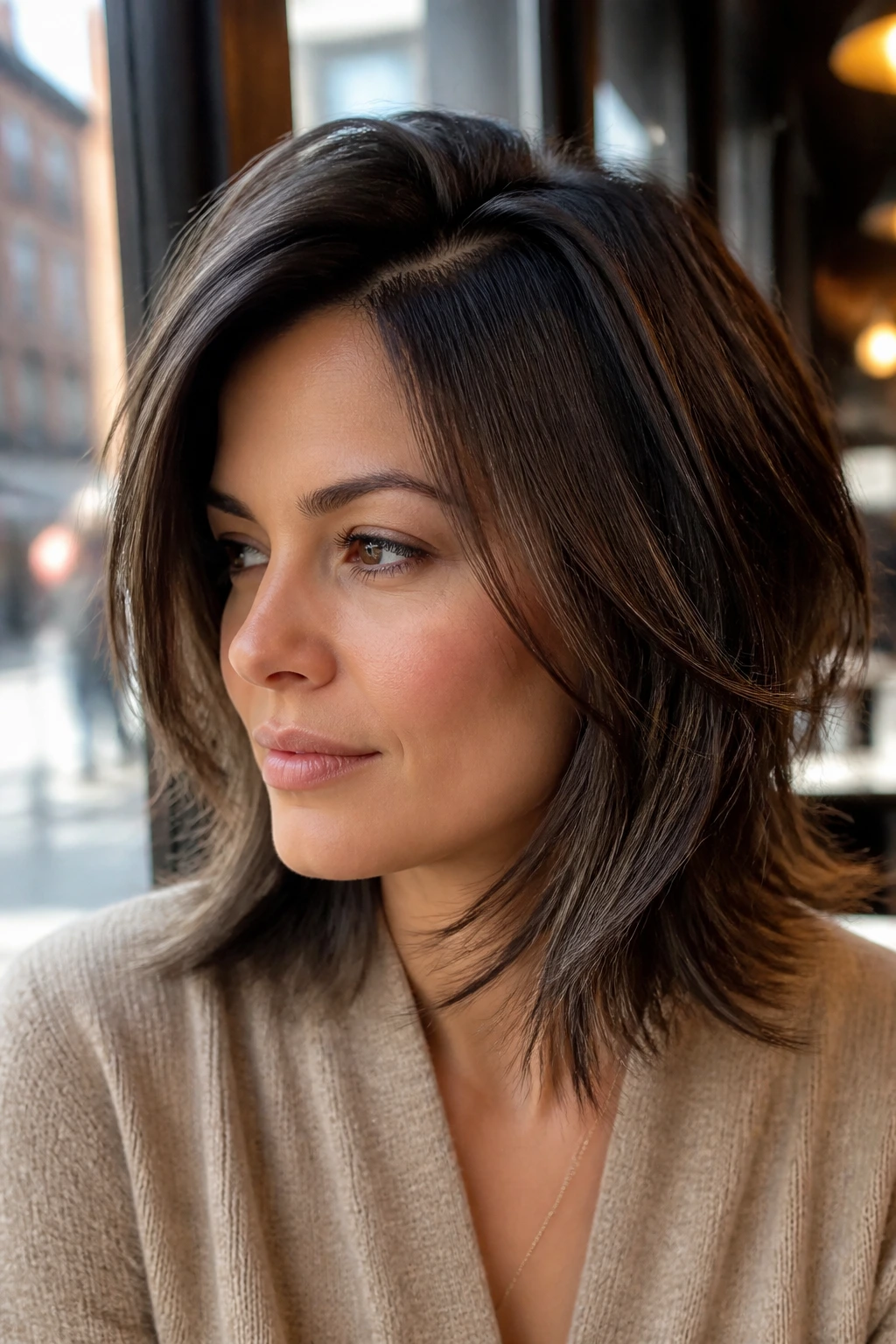
A razor cut adds broken edges, which is useful when you want the haircut to move instead of sit in one heavy shape. On a round face, a deep side part can be the difference between wide and sleek.
The part creates an asymmetry that interrupts the circle. The razor-softened layers keep the ends from feeling blunt, and that keeps the overall outline slimmer through the cheeks and jaw.
This style does best with medium-density hair. Very fine hair can lose its body if the razor work is too aggressive. Very thick hair, on the other hand, can handle the broken texture easily. Ask for movement near the bottom half, not aggressive thinning at the roots.
13. Blowout Layers With Arched Fringe
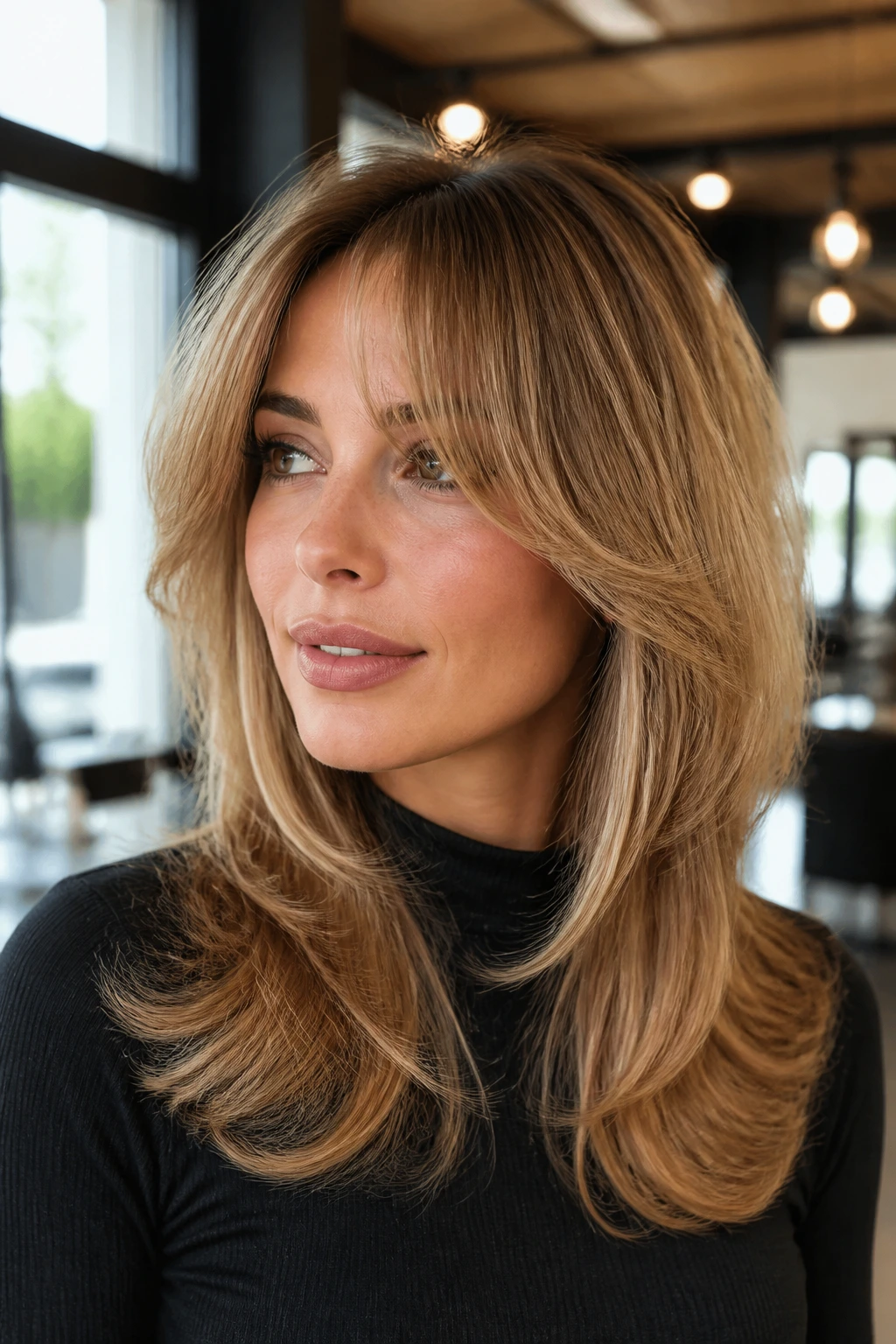
This is the cut for anyone who likes that round-brush finish and a little lift at the top. Arched fringe curves slightly longer at the temples, which keeps the forehead from reading as one flat strip.
The layers need to be feathered enough to bounce when you turn your head. If they lie flat, the blowout loses the softness that makes it work. You want the front pieces to bend around the cheeks and then drop.
A medium round brush does most of the work here. Roll the hair away from the face, give the roots a lift, and let the bangs cool in the shape you want. That cooling step matters more than people think.
14. Thick Hair With Internal Layers and Light Bangs

Thick hair on a round face needs weight removed from inside the shape, not chopped away from the top like a hedge. Internal layers reduce bulk, and that makes the front lie better.
Light bangs are the other half of the equation. A heavy fringe across thick hair can swallow the forehead. A lighter version — still present, but not dense — keeps the face open and stops the cut from swelling at the temples.
Keep in mind
- Ask for internal thinning, not a blunt carve-out
- Keep the longest face pieces at the jaw or collarbone
- Blow-dry the roots first so the shape does not puff out
This cut can look expensive when it is done right. It can also turn into a helmet fast if the weight is removed in the wrong place. That is the whole game.
15. Fine Hair With Wispy Fringe and Soft Volume

Fine hair needs a different kind of help. Too many short layers can make it look sparse, so the smart move is to keep the shape long and let the bangs stay wispy.
A wispy fringe on a round face should never feel stringy. It needs enough density to show on the forehead, but not so much that it becomes a hard bar. The softness keeps the front open and gives the style a little lift.
I like this with soft root volume, especially at the crown. A touch of mousse at the roots before blow-drying can keep the hair from sticking to the head. That tiny lift helps the face look longer because the top of the style does more of the work.
16. Rounded Bob With Choppy Bangs

A bob on a round face can work if the shape lands below the chin and the interior has some break in it. A rounded bob that ends at the jawline is where trouble starts; it repeats the face shape and can make the widest point feel wider.
Choppy bangs help break that up. They should be irregular, not blunt, with a little air between the pieces. That messiness is doing real structural work.
The best version feels modern, not severe. If the hair is tucked behind the ears, the silhouette should still hold. If it collapses into one perfect circle, the cut is too tidy for a round face.
17. Clavicle Cut With Slipping Face Frames
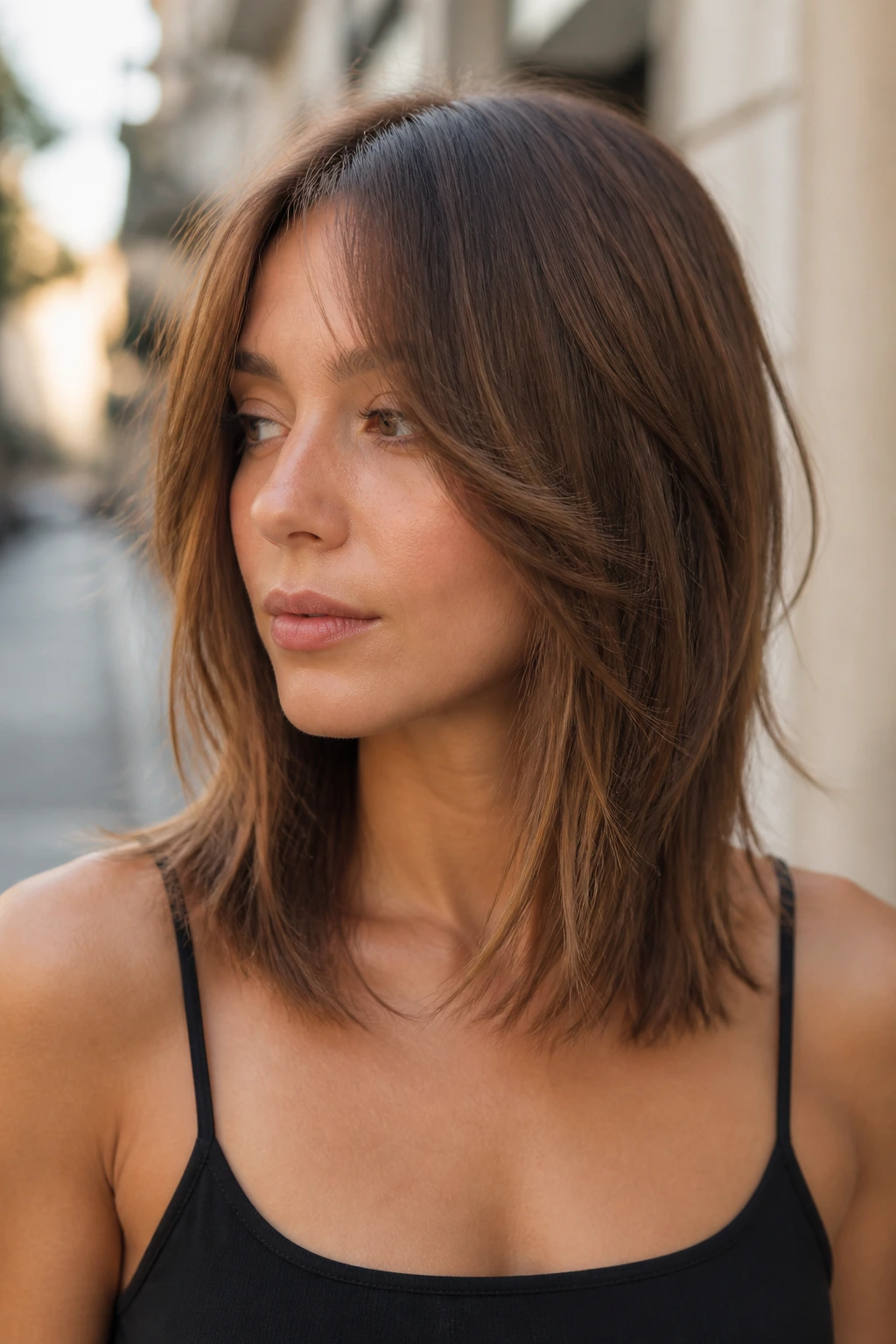
A clavicle cut — right around the collarbone — gives you the length you need without dragging the hair too far down the back. The face frames should “slip” past the cheeks rather than sit on top of them.
That slipping motion matters. Hair that slides forward at the cheeks and then drapes down toward the collarbone creates a long line, and long lines are the friend here. The bangs can stay center-parted or slightly off-center, depending on your cowlick pattern.
This is a strong choice if you like to tuck one side back. The cut still holds shape when one side disappears behind the ear, which makes it practical for work, glasses, and days when your hair needs to stay out of the way.
18. Long Layers With Glasses-Friendly Fringe

Glasses change the whole equation. Bangs that hit the frame and layers that crowd the cheeks can make the face feel busier than it needs to be.
The fix is simple: keep the fringe light enough to clear the top of the frame or split it so it falls on either side. Long layers should start below the cheekbone and stay clear of the temple area where glasses already create visual weight.
If you wear glasses every day, bring them to the salon. That one move saves a lot of guesswork. The stylist can see exactly where the frames sit, and your bangs can be cut to live with them instead of fighting them.
19. Brow-Length Bangs With Vertical Side Pieces
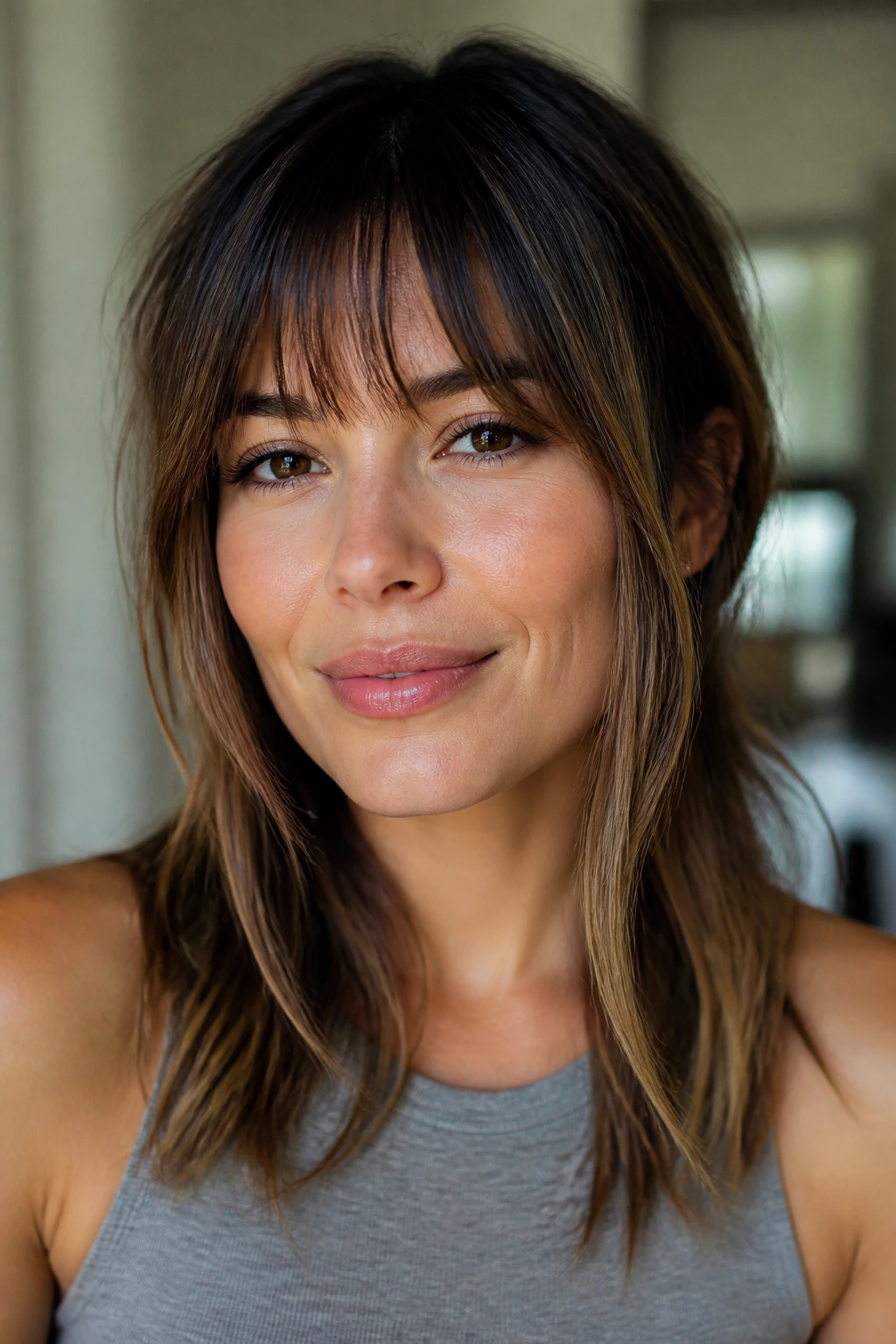
Brow-length bangs can work on a round face when they are paired with longer side pieces that keep the line from feeling boxy. The vertical pieces beside the face are doing the balancing act.
The fringe itself should be airy enough to show a little forehead through it. A thick, solid brow bang can shorten the face fast, while a softer version gives you the same drama with less width.
This is one of those cuts that looks best when the bangs are dry-cut or at least checked dry before finishing. Brow length changes a lot once the hair settles, and a round face is not the place to guess.
20. Midi Shag With Side Curtain Bangs

A midi shag gives you texture without the full wolf-cut edge. Side curtain bangs soften the front and create a diagonal line that works nicely on a round face.
The diagonal is the whole story here. A side curtain fringe starts near the brow and falls away from the fuller part of the cheek, which keeps the front from bunching up at the center of the face. The shag layers underneath add movement, but they should stay broken and light.
This cut is a sweet spot for people who want some shape but not a lot of salon drama. It reads relaxed, but not sloppy. That’s harder to pull off than it sounds.
21. Air-Dried Waves With Uneven Fringe
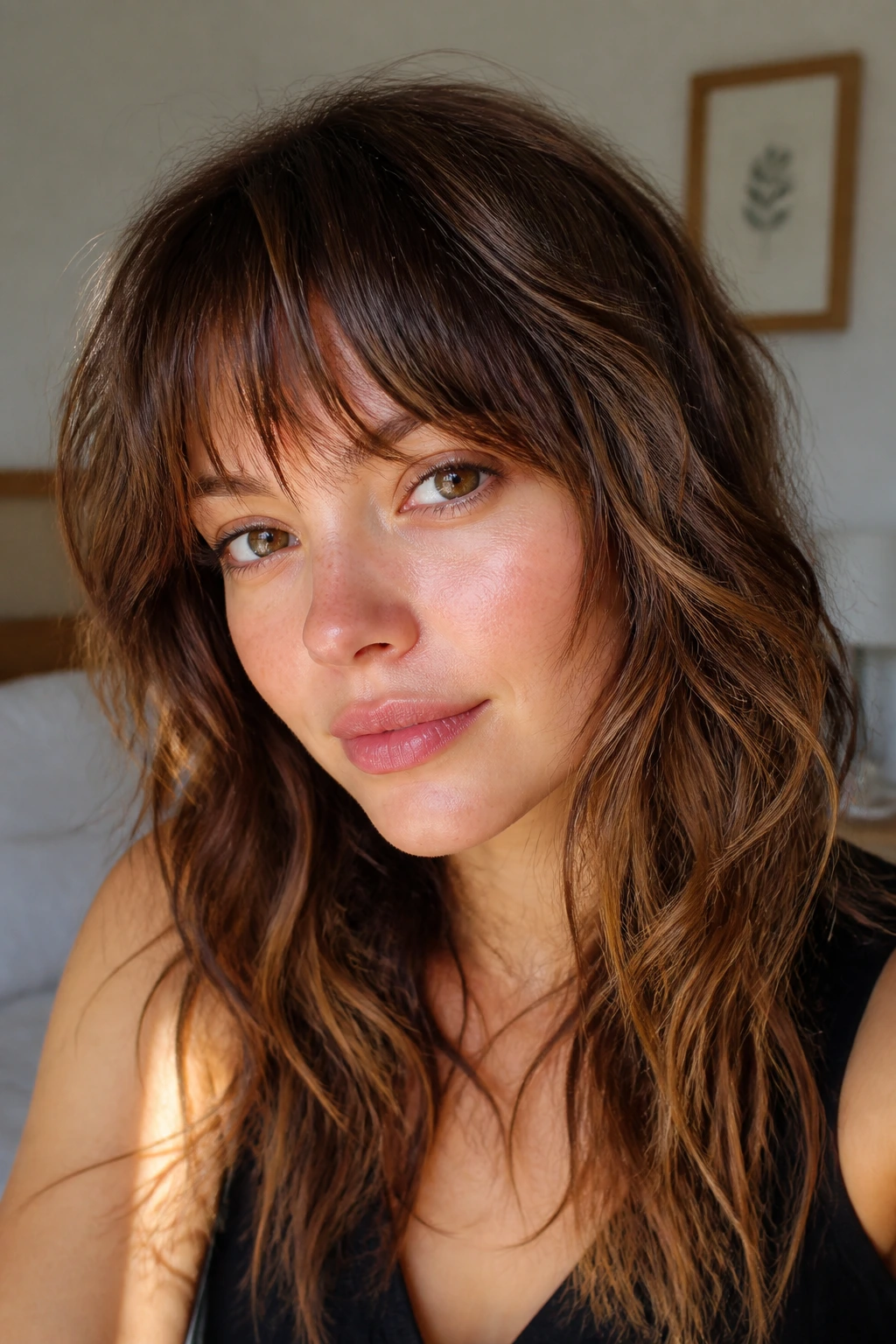
If you live for air-drying, uneven fringe can save you from the polished-but-fussy look that some layered cuts need. A little irregularity keeps the bangs from forming a hard line across the forehead.
The waves should fall in soft sections, not one broad curve. That separation helps a round face because it creates tiny breaks in the silhouette. The eye moves across the shape instead of bouncing straight out to the sides.
A salt spray or lightweight mousse is enough. Heavy cream can make the fringe collapse and stick together. Let the hair dry in a few loose clips around the front if it tends to puff up at the temples.
22. Grow-Out Layers With Long Curtain Bangs
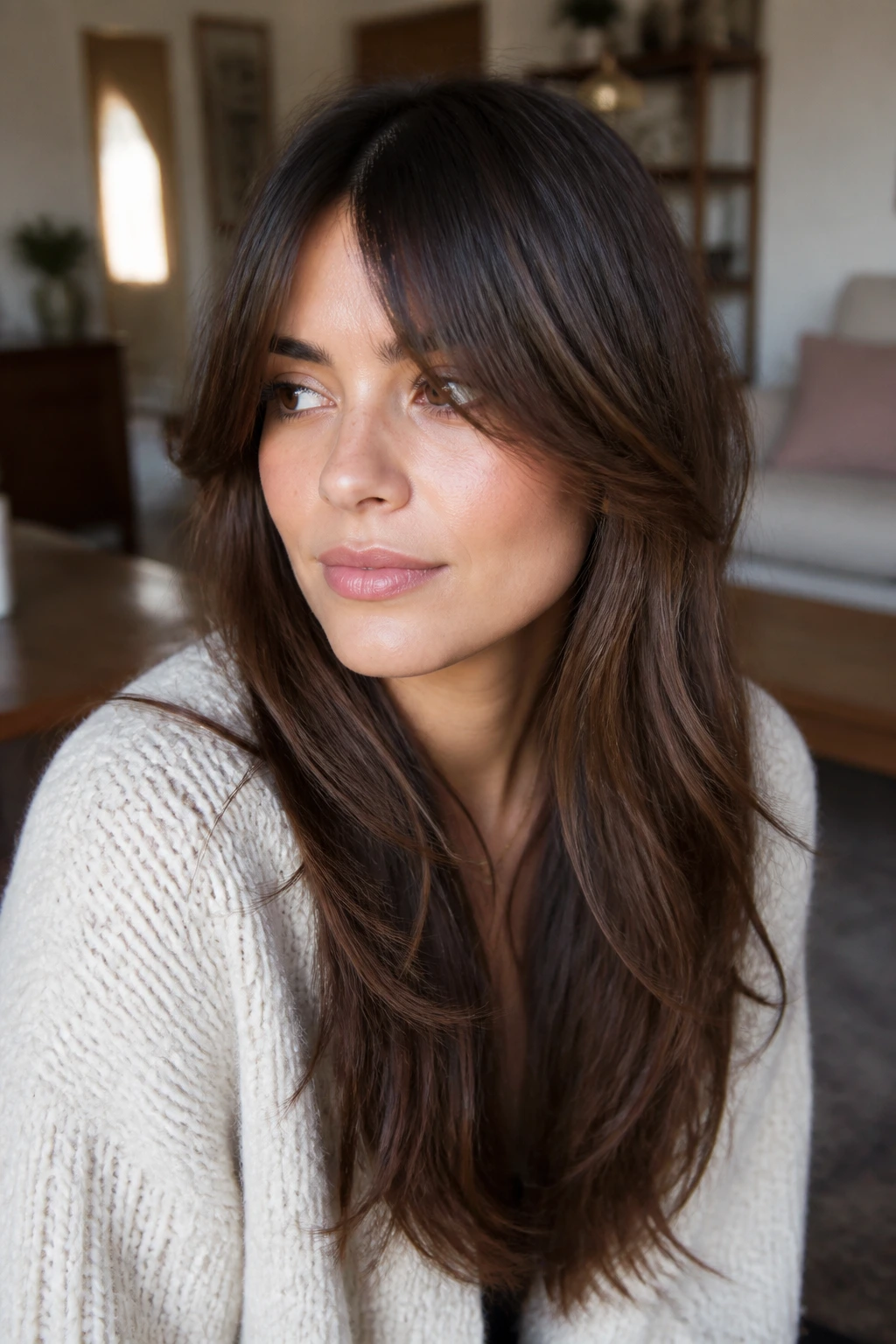
This is the haircut for people who do not want to live on a strict trim schedule. Long curtain bangs blend into the layers as they grow, so the shape stays useful for a long stretch.
The front pieces should be long enough to tuck behind the ear or fall past the cheek. That extra length gives you options when the bangs get into that awkward in-between stage. Round faces benefit from that flexibility because it keeps the front open rather than blocking the cheeks.
If you are growing out a shorter cut, this is the smartest direction to steer it. The longest face-framing pieces do the heavy lifting. The fringe is there to soften the forehead, not to take over the whole haircut.
23. Polished Layers With Full Fringe
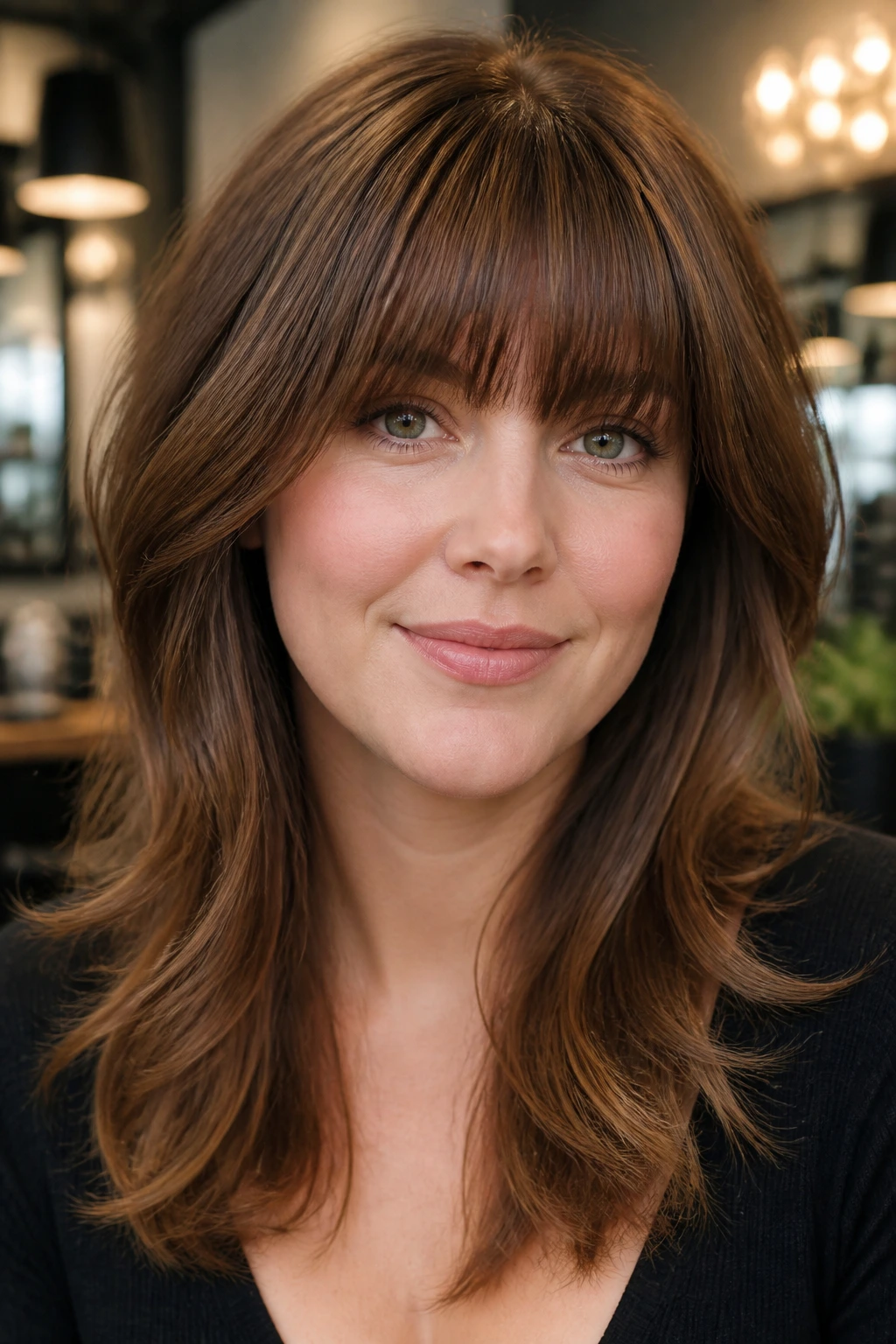
Full fringe can work on a round face if the rest of the haircut keeps its length and the layers stay soft. The mistake is pairing full bangs with too much width at the sides. That gives you a bowl effect. Nobody needs that.
Keep the layers long enough to stretch past the cheeks. The fringe should skim the brows and break slightly at the center or temple edges, so it feels full without turning into a hard slab.
This is a more styled look, and I like it when the hair has a smooth finish. A shine spray or light serum on the ends keeps the layers from fuzzing out. The fringe should still move, though. Stiff bangs age the whole cut.
24. Soft Razor Layers With Jawline Breaks
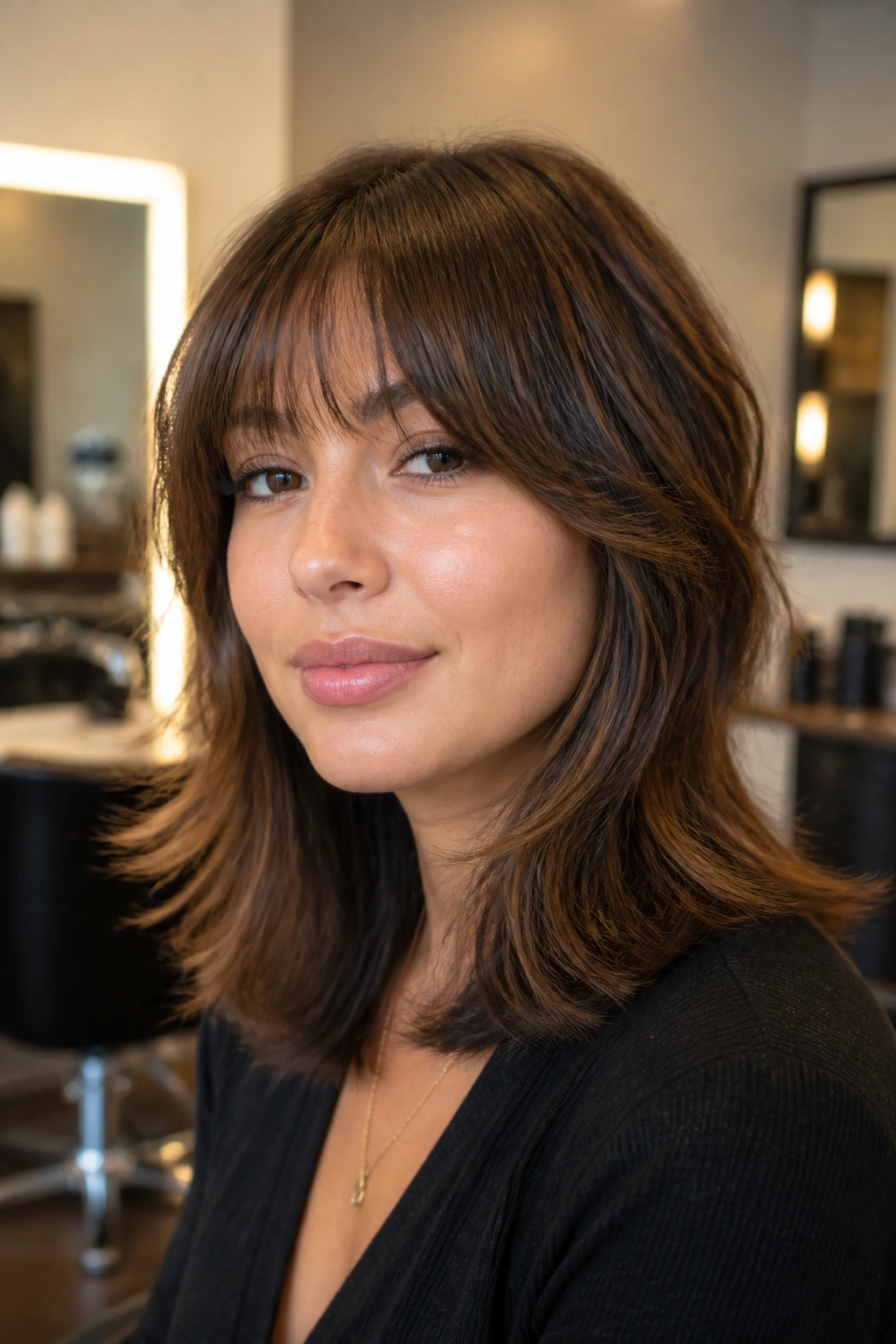
Razor layers can look very clean on a round face when they are used to break the line around the jaw. The idea is to interrupt the circle, not to carve the haircut into sharp pieces.
Those jawline breaks keep the silhouette from feeling too neat. If everything falls in one perfect curve, the face shape repeats itself. Breaks in the ends, especially around the front, give the cut a better outline.
This works especially well on hair that holds a bit of bend. A soft bend at the ends keeps the style from reading flat. If the razor work is too heavy, though, the ends can fray fast, so this is one to keep subtle.
25. Face-Slimming Layers With Temple Pieces
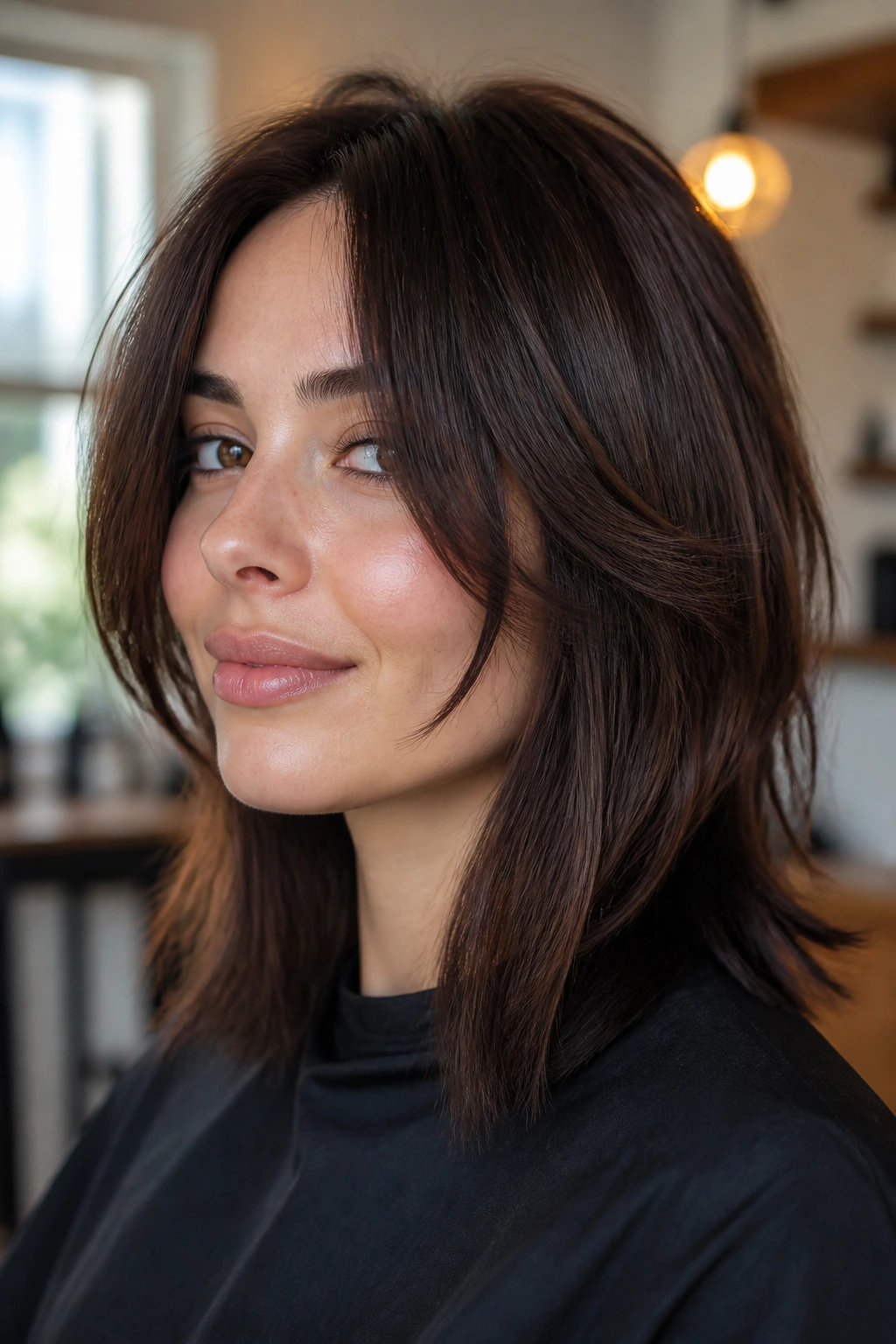
Temple pieces are underrated. They sit a little higher and narrower than the cheekbone, which means they can create a vertical pull without adding bulk to the fullest part of the face.
The layers should stay long enough to fall toward the jaw, not bloom out beside it. That is the difference between a face-framing cut and a face-widening one. A few well-placed strands near the temples can do more than a whole set of short layers.
I like this look when the rest of the hair stays soft and a little loose. It feels deliberate without feeling overworked. If you want movement around the face but do not want to commit to heavy bangs, this is the one I would hand you first.
Why Whiskey Layers Keep a Round Face from Reading Wider
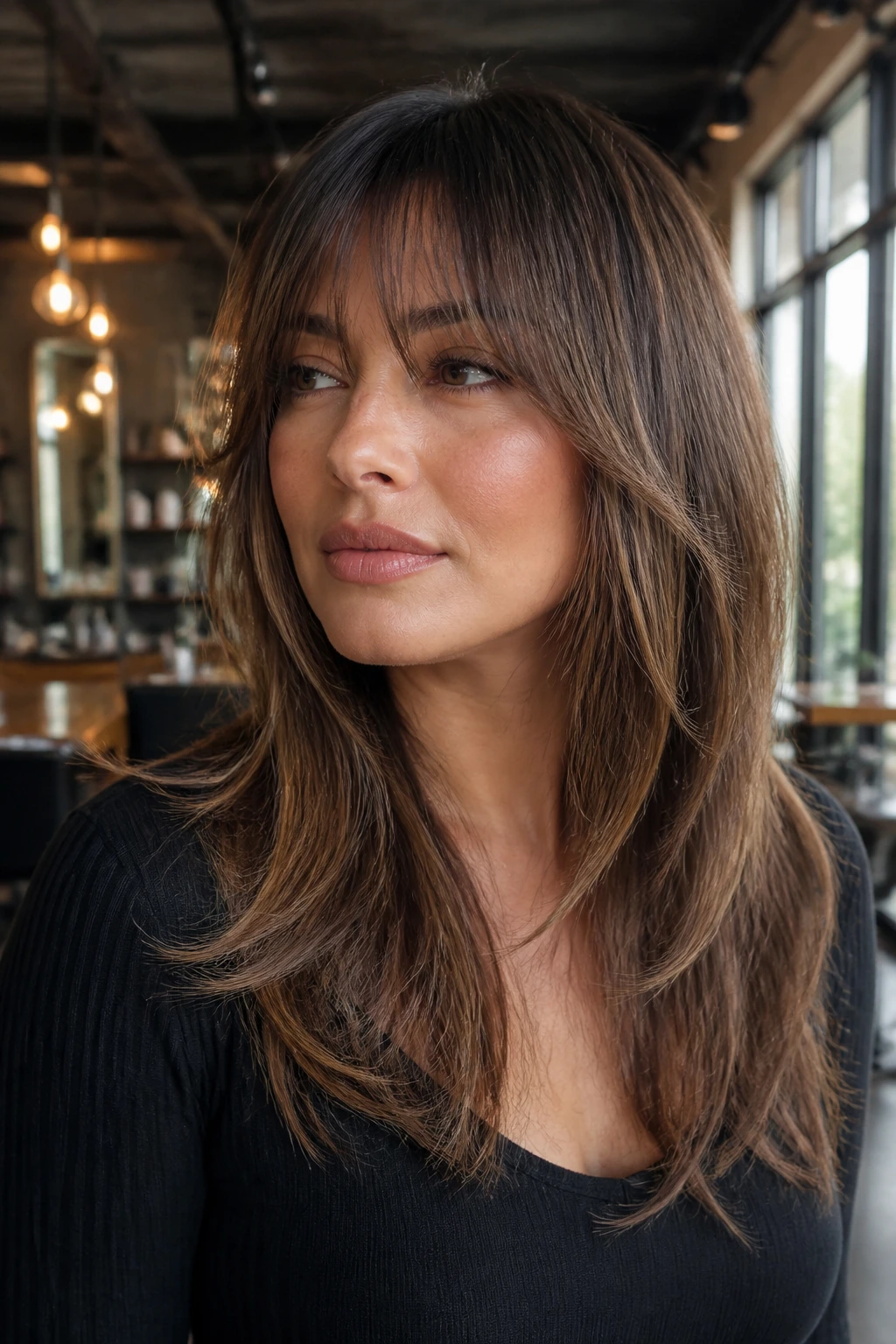
A round face already has a soft, even outline. The haircut’s job is to add direction. That means vertical lines, gentle diagonals, and face-framing pieces that fall below the widest point instead of sitting on it.
Whiskey layers work when the shortest pieces do not stop at the cheekbone. That one placement choice is the whole difference between “nice haircut” and “why does my face look more circular than usual?” Bangs can help, but only if they break up the forehead and then taper away. A blunt shelf across the center of the face does the opposite.
The best results come from keeping volume at the crown and movement at the ends. You want lift above, softness below, and nothing too puffy around the cheeks. That combination gives the face room to breathe.
Essential Tools for Styling These Cuts
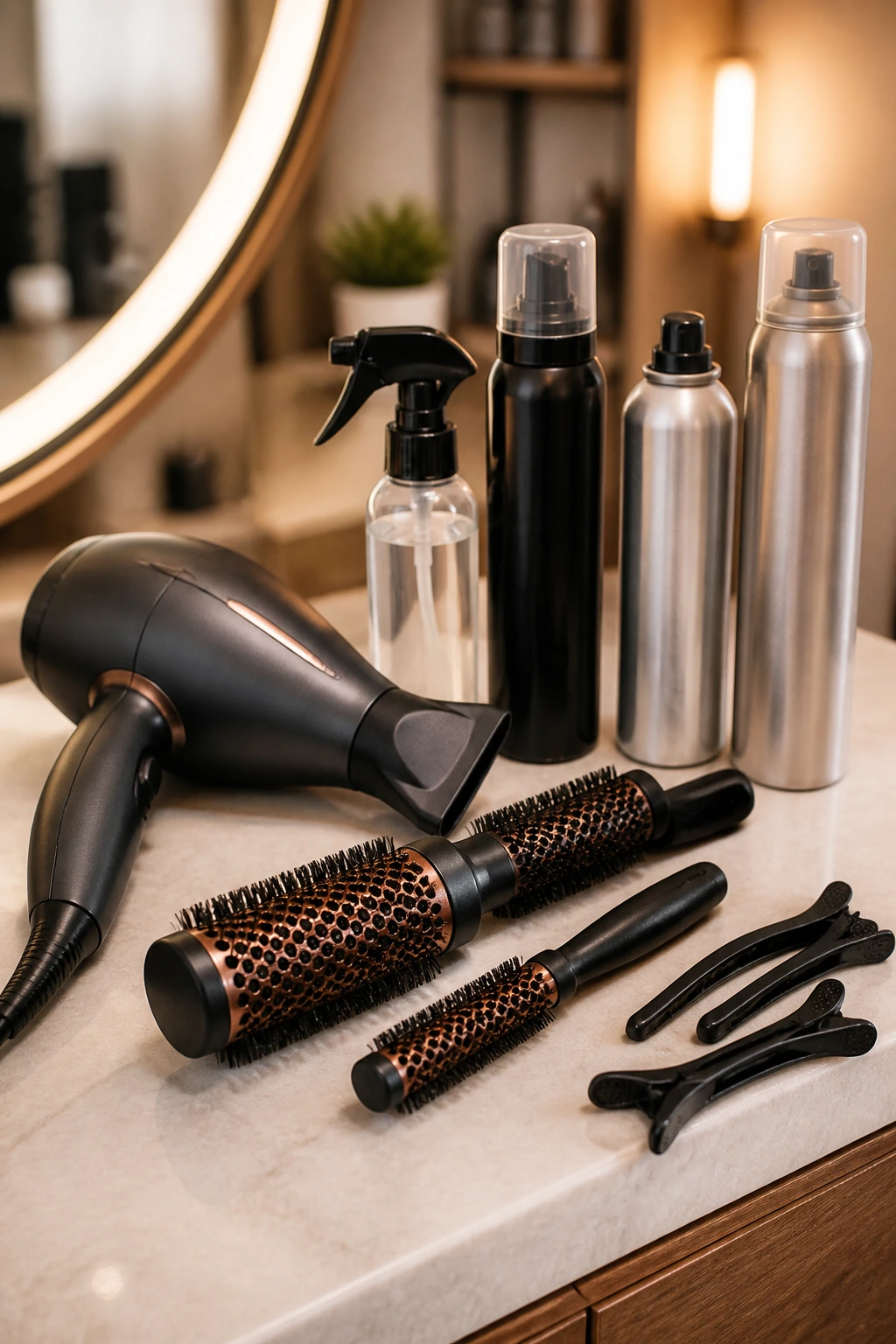
You do not need a drawer full of gadgets. You do need the right few tools, and each one earns its spot.
- Blow dryer with a nozzle: Directs airflow so you can lift the roots and smooth the fringe instead of blasting hair in every direction.
- Medium round brush, 1.25 to 1.75 inches: Good for bending curtain bangs, face frames, and blowout layers without making tight curls.
- Small round brush: Useful for bangs and temple pieces when you want a sharper bend.
- Sectioning clips: Keep the front and crown separate so the bangs do not dry flat while you work on the rest.
- Heat protectant spray: Non-negotiable if you use a blow dryer, iron, or hot brush.
- Light mousse or root foam: Gives fine or straight hair enough body to hold the shape.
- Texturizing spray: Helps shaggy, piecey, or layered styles hold separation without feeling crunchy.
- Dry shampoo: Useful on day two or for lifting the fringe when it starts to collapse.
What to Ask for at the Salon Chair and Which Products Actually Matter
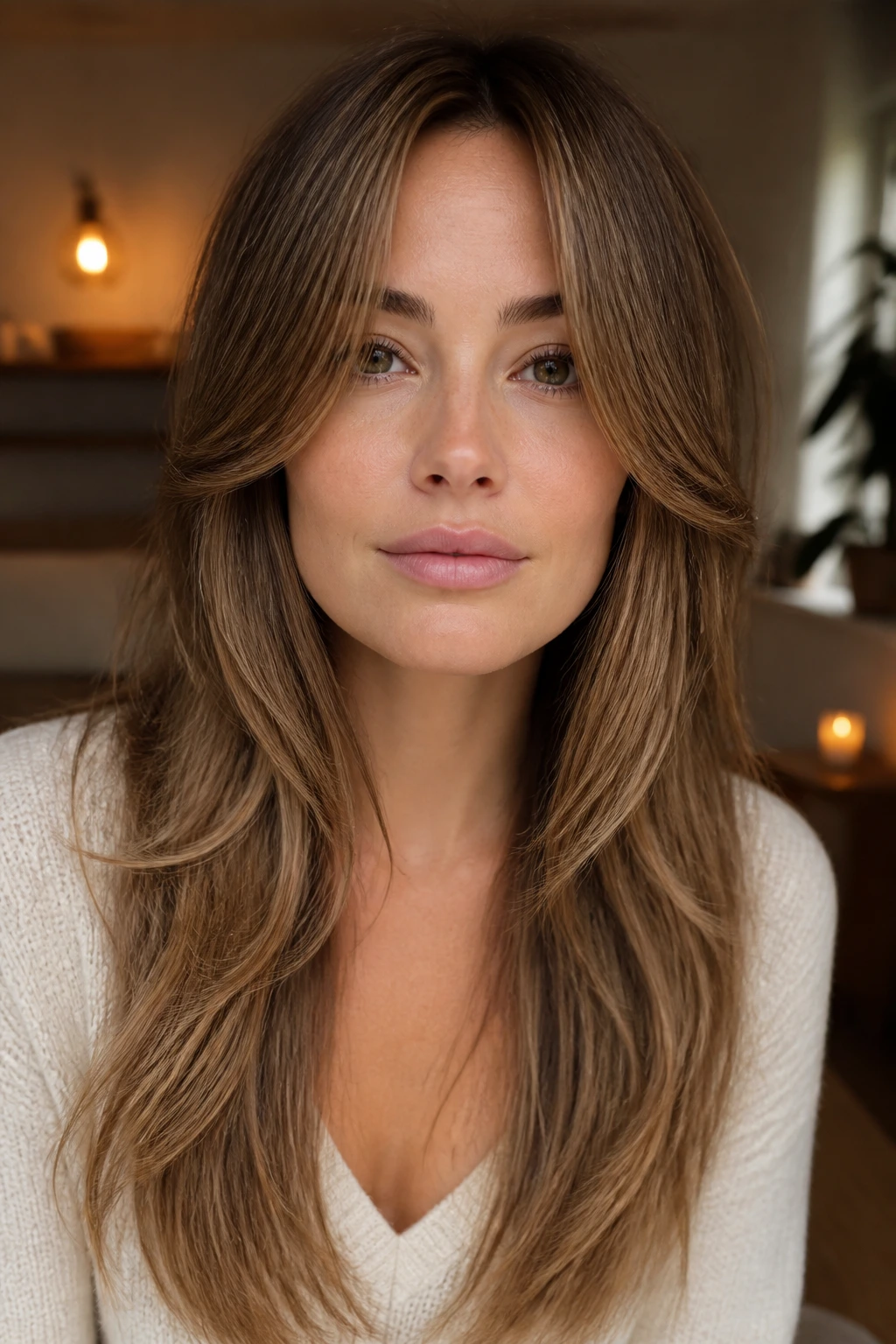
The best salon conversation is annoyingly specific, and that’s good news. Bring two or three photos, then point to the exact things you want: where the bangs land, where the shortest face frame begins, and where the longest front pieces finish. “Like this” is vague. “The shortest piece should hit just below the cheekbone and the longest piece should reach the collarbone” gives the stylist something to work with.
Ask about your natural part and any cowlicks at the front hairline. A bang cut against a strong cowlick can split in weird places, and that matters more than the trend name on the photo. If you wear glasses, bring them too. If your hair is thick, ask for interior weight removal. If it is fine, ask the stylist to keep the perimeter solid and avoid over-thinning.
Product-wise, look for heat protectant, mousse, light styling cream, and texturizing spray. If your roots collapse, a root-lift spray matters more than a heavy oil. If your hair gets puffy in humidity, keep the fringe light on cream and focus on smoothing just the ends.
How to Style Whiskey Layers Without Puffing Out the Cheeks
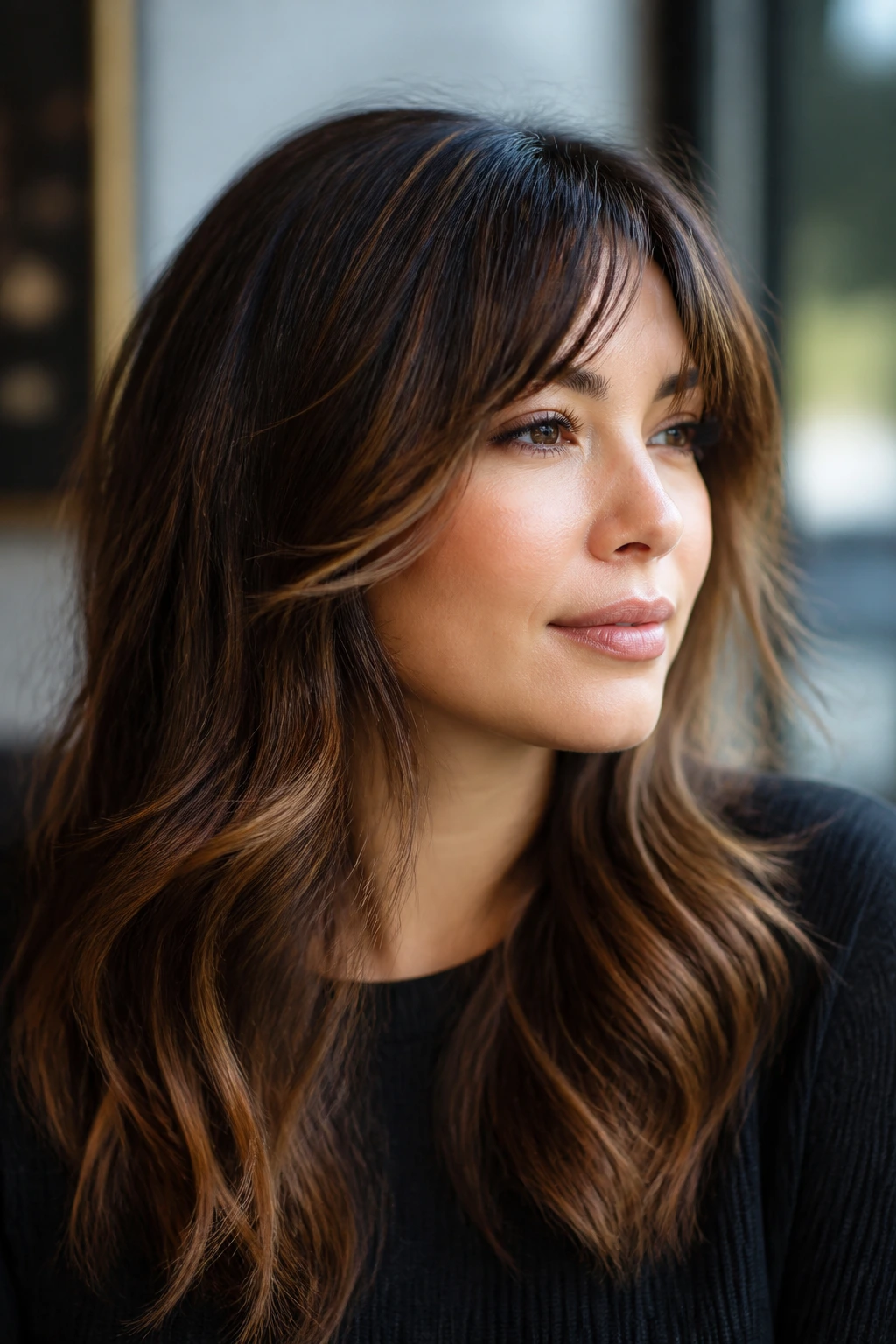
The front section decides the whole cut. Blow-dry that area first while it is still damp, not half-dry and rebellious. Use the nozzle on the dryer, aim the air downward on the lengths, then lift the roots at the crown so the shape gets height where you want it.
For curtain and bottleneck bangs, roll the front away from the face and let them cool in that curve. Cooling matters. Hair sets as it cools, which is why a perfect warm blowout can collapse ten minutes later if you keep touching it.
Air-dry styles need a different hand. Work in a small amount of mousse at the roots, then scrunch or twist the fringe so it separates instead of drying into one flat strip. If the bangs tend to split, clip them in the direction you want while they dry.
A flat iron can help, but use it like a bending tool, not a curl machine. One soft pass at the ends is enough. Too much heat around the cheeks can make the hair puff outward, and that is the exact shape you are trying to avoid.
Small Texture Moves That Change the Whole Shape
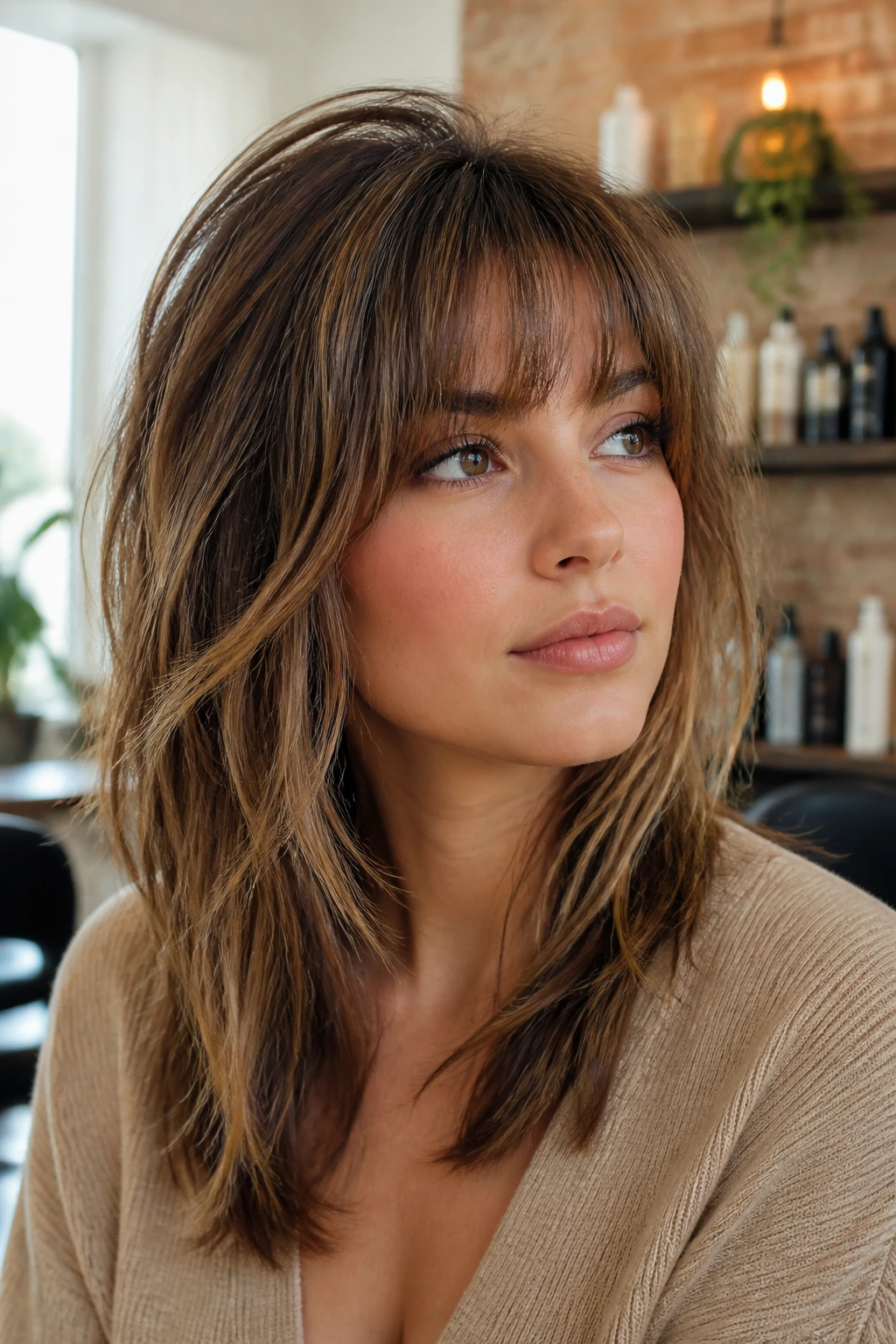
Root Lift: Lift the hair at the crown with your fingers or a brush and direct the dryer at the roots for 10 to 15 seconds per section. That keeps the top from falling flat against the head, which is what makes a round face read wider.
Bang Separation: Rub a tiny amount of styling cream between your fingertips and rake the fringe apart once it is nearly dry. You want piecey, not stringy. If the bangs sit in one solid line, they start acting like a shelf.
Face-Frame Direction: Bend the front pieces away from the cheeks, then let them fall toward the jaw or collarbone. That diagonal line is doing real work. It keeps the haircut from bunching at the cheekbone.
Finish With Restraint: A mist of flexible hairspray or a few taps of texturizing spray is enough. Too much product around the face can stiffen the layers and make them sit like cardboard.
Keeping the Cut in Shape Between Trims

Bangs need more attention than the rest of the cut. Plan on a fringe trim every 3 to 5 weeks if you want the line to stay where it belongs. Longer layers can usually go 8 to 12 weeks before they start losing shape, though curls and shags sometimes need a faster tidy-up because the texture shifts as they grow.
Day-to-day upkeep is mostly about the front. If your bangs get sweaty or separated by sleep, a quick mist of water and a round-brush bend can reset them in two minutes. For longer layers, dry shampoo at the roots can buy you another day or two before the whole shape starts to sag.
Sleep matters more than people admit. A loose clip at the top of the head can keep the fringe from getting smashed. So can a satin pillowcase, which cuts down on friction and keeps the front pieces from looking like they fought a pillow overnight.
If you are growing the style out, resist the urge to carve the bangs too short at home. That usually creates a weird hump in the middle and leaves the corners too thin. Better to let the fringe get a little long and blend it forward with the rest of the layers.
Variations and Adaptations to Try
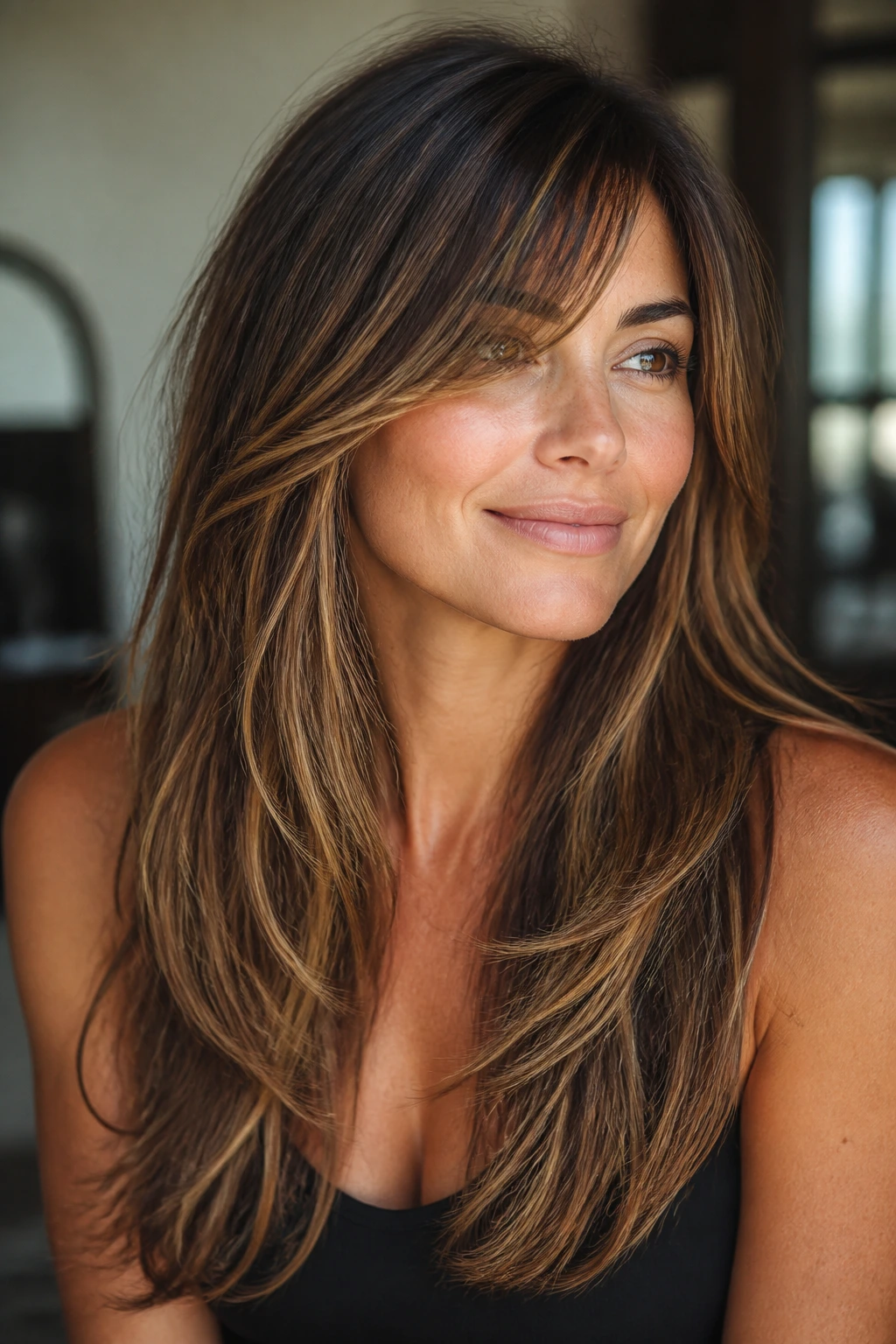
Fine-Hair Feathering: Keep the layers long and avoid overtexturizing the ends. Fine hair needs movement, not a thousand little snips that take away the little body it has.
Thick-Hair Debulking: Ask for internal layers and weight removal below the surface, not near the temples. That keeps the front from ballooning out around the cheeks.
Curly Coil Version: Cut the bangs and front pieces longer than you think you need. Shrinkage can pull curls up several inches, and a fringe that looks safe when wet can land squarely on the cheek once it dries.
Glasses-Friendly Fringe: Keep the bangs light enough to clear the frames or split them around the bridge. That stops the hair from crowding the eyes and keeps the face open.
Low-Maintenance Grow-Out: Choose longer curtain bangs and a collarbone length. The shape stays useful as it grows, and you can tuck, clip, or part it differently without the cut falling apart.
Common Mistakes to Avoid
-
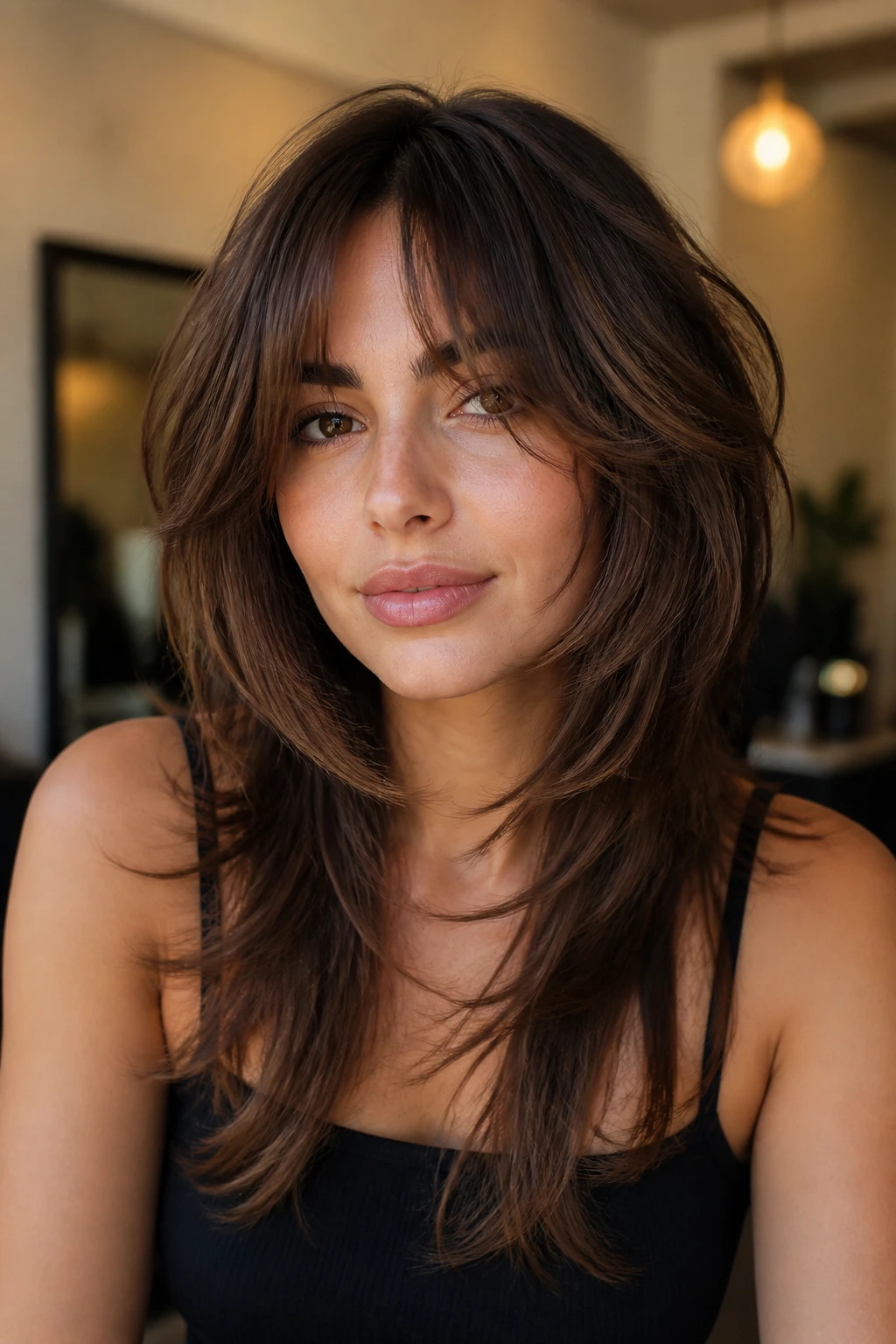
Cutting the fringe at the widest part of the cheek: That is the fastest way to make a round face look wider. Keep the shortest pieces above or below that point, not right on it.
-
Making the bangs too heavy: A dense fringe can shorten the face and flatten the forehead. If you want fullness, ask for softness at the edges, not a solid bar.
-
Adding bulk at the sides: Short layers that flare outward around the cheeks can make the silhouette puffier. Keep the movement lower and lighter.
-
Over-thinning fine hair: A lot of texturizing can leave the ends see-through and sad. Fine hair needs shape preserved at the perimeter.
-
Ignoring your part and cowlicks: If the bangs fight your natural growth pattern, they will split, swing, or stick up. Work with the cowlick, not against it.
-
Waiting too long to trim the fringe: Bangs that grow into the eyes lose their shape fast. A small trim keeps the whole cut looking deliberate.
Frequently Asked Questions
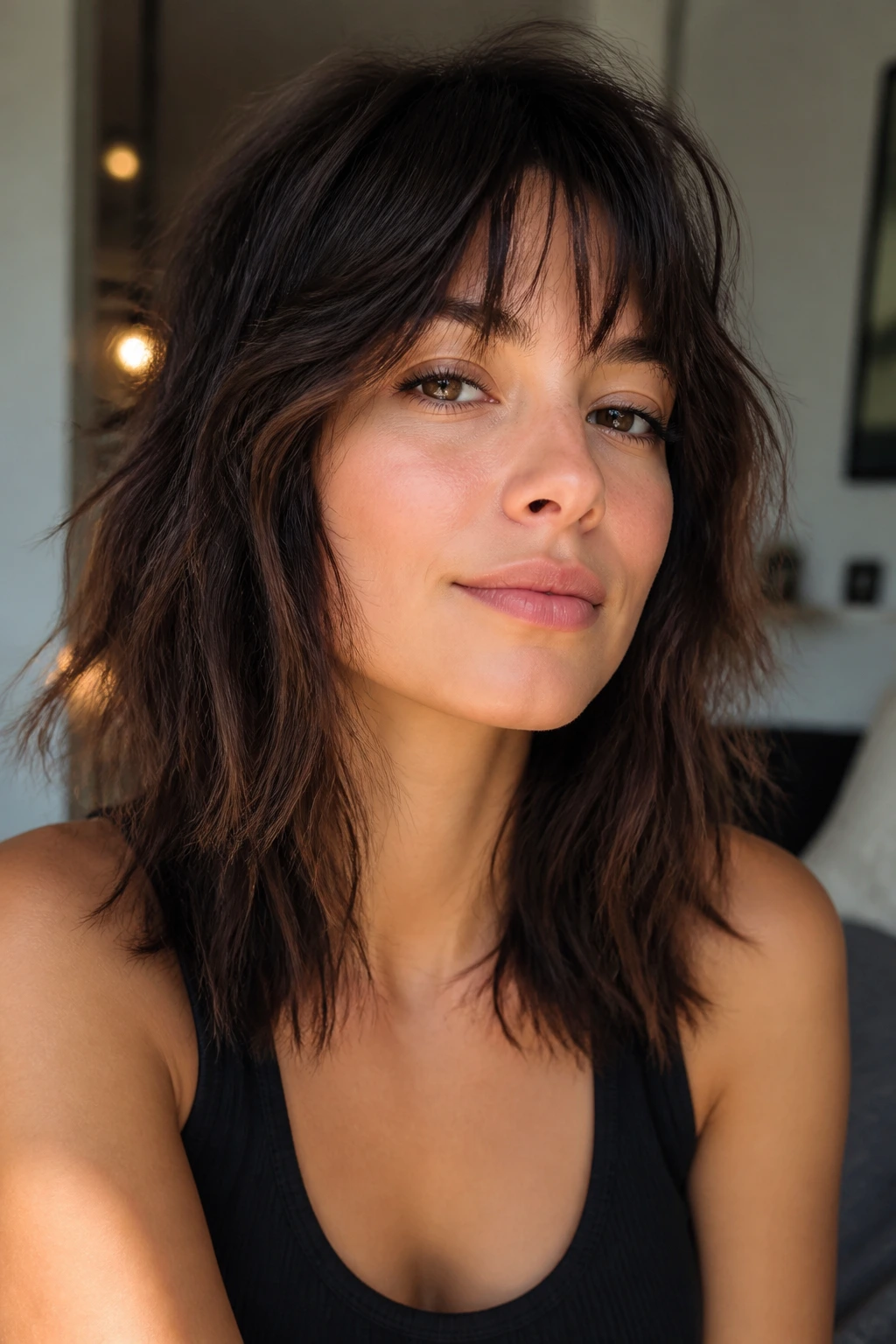
Which bangs are best for round faces?
Curtain bangs, bottleneck bangs, and soft side-swept fringes are the easiest starting points. They break up the forehead without creating a heavy horizontal line across the face.
Do curtain bangs make a round face look slimmer?
They can, if the shortest pieces start below the cheekbone and the fringe opens away from the center. A curtain bang that sits too short or too wide can do the opposite.
Can round faces wear blunt bangs?
Yes, but they need careful placement and usually a longer haircut underneath to balance them. A blunt fringe that lands low on the brow and stays too dense can shorten the face fast.
What length should the front layers be?
For most round faces, the shortest face-framing pieces work best around the cheekbone or just below it, with longer pieces falling toward the jaw or collarbone. That gives you length without adding bulk at the cheeks.
Will these cuts work on curly hair?
Absolutely, as long as the bangs are cut with shrinkage in mind. Curly fringe should usually be left longer than straight fringe, and the layers need to follow the curl pattern.
How often should I trim bangs?
Every 3 to 5 weeks is a good rhythm for keeping the fringe out of your eyes and the shape intact. If the bangs are longer and blended, you can stretch that a bit.
What if my bangs split in the middle?
That usually means the part or cowlick is stronger than the cut. Try setting them damp with clips or a small round brush in the direction you want, and mention the split at your next trim so the fringe can be adjusted.
Can I air-dry these styles and still keep the shape?
Yes, especially the shag, wavy midi, and long curtain-layer versions. Air-drying works best when you use a little mousse at the roots and keep the front pieces clipped or twisted while they set.
A Better Frame
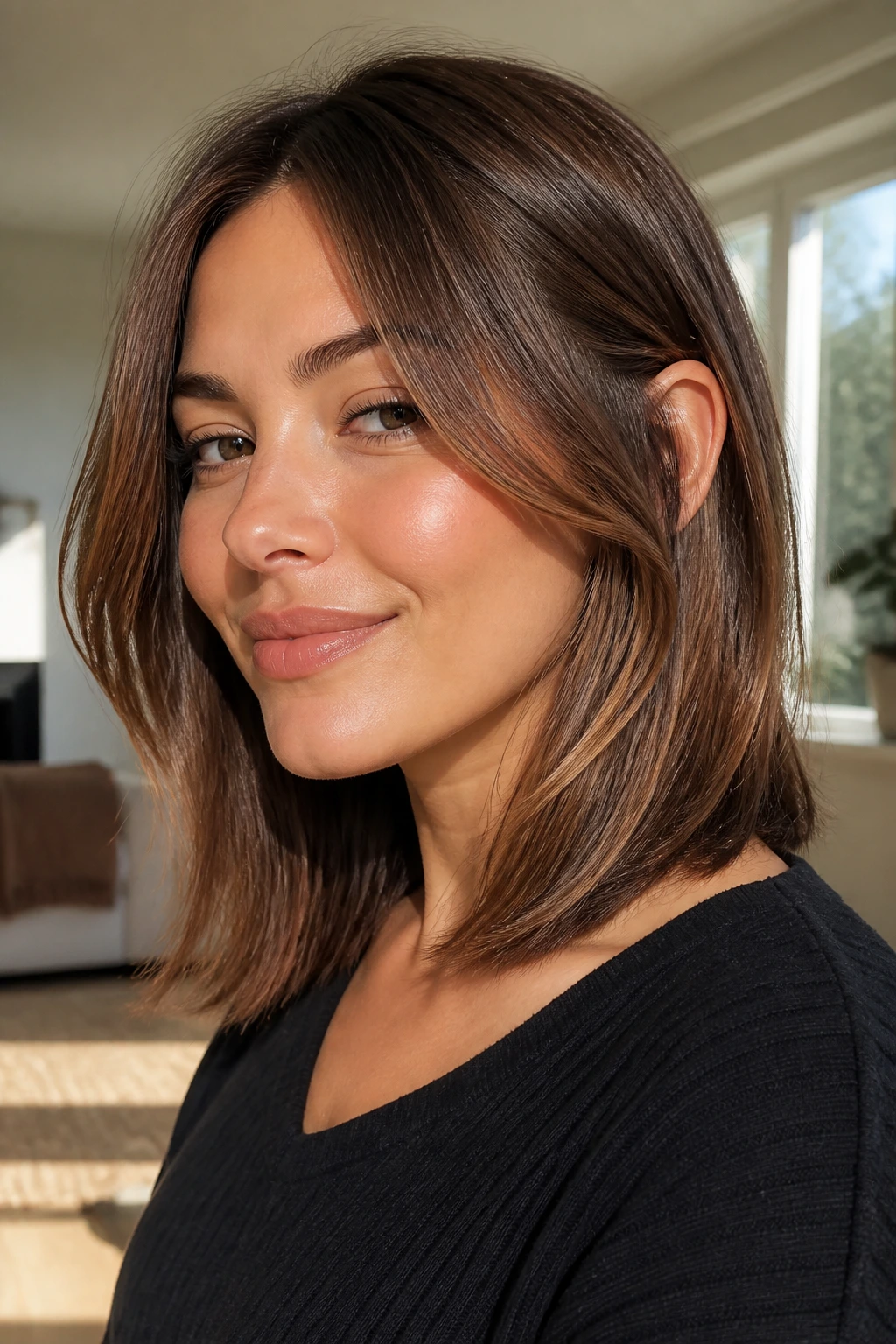
The best versions of these cuts do not try to hide a round face. They frame it with intention. That means a fringe that opens the forehead, layers that fall below the cheeks, and enough movement at the ends to keep the shape from feeling stuck.
Pick the version that matches your hair texture and your tolerance for styling. A round face does not need punishment from the scissors; it needs a cleaner line, a little lift, and bangs that know where to stop.