



Long layered straight bangs can do something blunt bangs rarely manage: they bring shape to the face without boxing it in. The longer fringe gives you room to move—down on a polished day, split down the middle when you want softness, tucked off to one side when you need the hair out of your eyes. That flexibility matters more once hair starts changing texture around the temples, the front hairline, or the crown. It also matters when you do not want your haircut to demand a full morning routine just to look deliberate.
A good fringe after 40 is not about hiding anything. It’s about giving the haircut a line to follow.
I’m partial to bangs that grow out with some grace. Long layered straight bangs do that better than the short, severe kind. They can skim the brows, brush the cheekbones, or melt into face-framing layers, which makes them far easier to live with than a hard, heavy line across the forehead. If you wear glasses, if your hair has thinned a little, if a cowlick at the front of your hairline has become annoyingly loyal, this is the category that tends to cooperate instead of fighting you.
Why This Collection Feels Different on Mature Hair
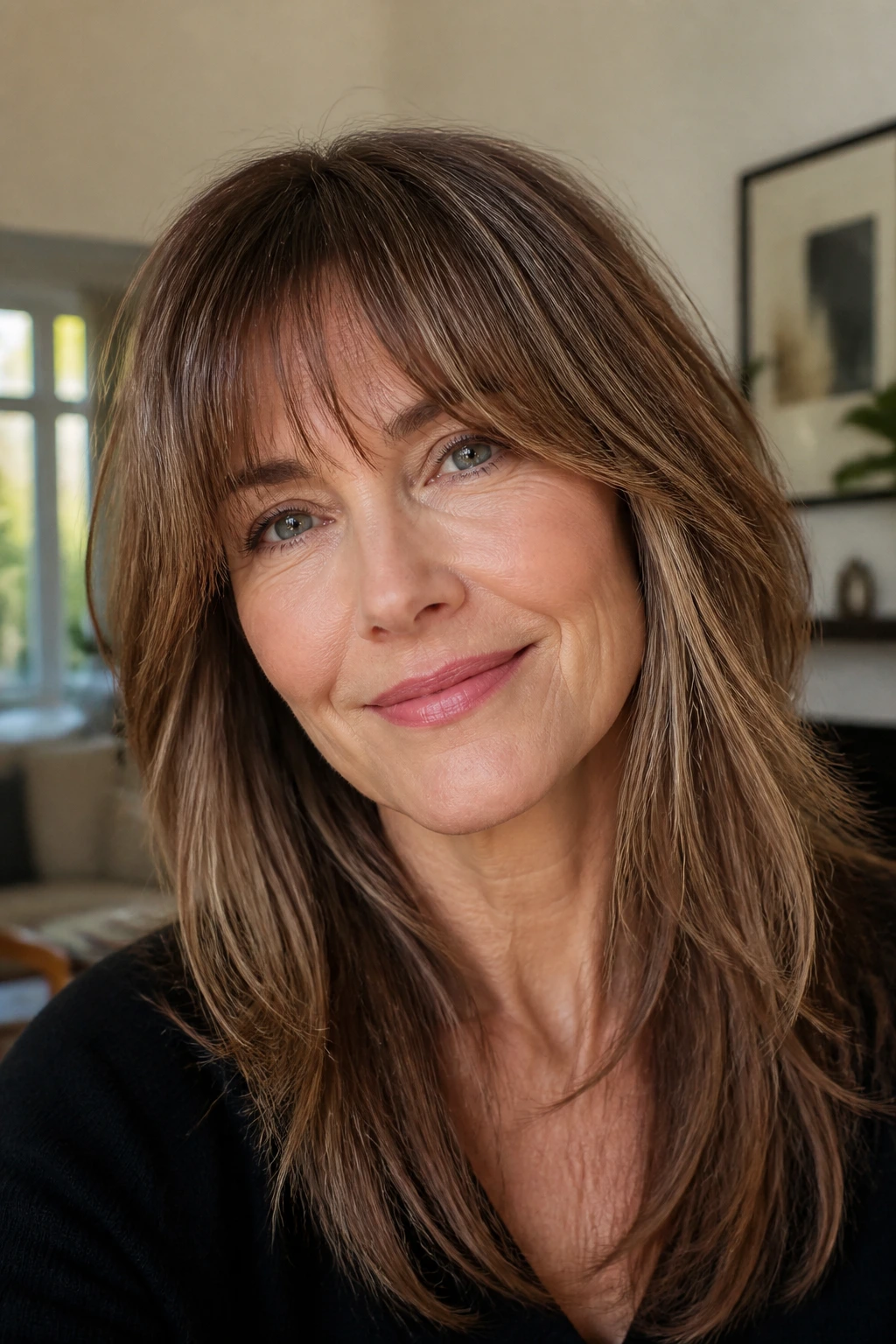
- They move with the haircut: Long layered straight bangs can be worn forward, split, or swept aside without looking like you changed your mind halfway through the day.
- They soften the forehead without hiding the face: The extra length keeps the fringe from looking abrupt, which is useful when you want shape but not a blunt block of hair.
- They play nicely with glasses: A longer fringe sits above or around frames instead of crashing into them every time you blink.
- They grow out better: The layered ends blur the line between bang and face-framing pieces, so the awkward grow-out stage is shorter and less obvious.
- They work with real-life texture: Straight hair, slightly wavy hair, and even hair that flips at the ends can wear this look if the cut is balanced well.
1. Feathered Brow-Grazer
This is the version I recommend to people who want bang energy without the full commitment of a blunt fringe. The ends are point-cut and feathered so the line skims the brows instead of sitting like a ruler across the forehead. On straight hair, it looks polished fast. On slightly coarse hair, it keeps the edge from feeling too dense.
Why It Works
The feathering removes just enough weight that the bang lays flat without looking stiff. Ask for the longest pieces to hit just below the brow, then let the sides blend into the front layers around the cheekbone. That little gradation matters; it keeps the cut from looking choppy when you tuck one side behind your ear.
If your forehead is medium to long and your hairline has a few cowlicks, this shape can be a lifesaver. It lets the hair sit naturally instead of forcing it into a hard line.
2. Center-Split Soft Curtain
This one sits right between a curtain bang and a straight fringe. The middle opens a touch, but the length stays straight enough to frame the face without that full, blown-out swoop some curtain bangs need. It looks especially nice when the rest of the hair is layered from collarbone to chest.
What Makes It Different
The split keeps the fringe from feeling heavy over the eyes. That helps if you wear makeup around the brow and want people to see it, or if your face is fuller around the cheeks and you want the hair to create a softer vertical line.
I like this cut on women who want their bangs to disappear into the haircut when necessary. Blow-dry the center forward with a round brush, then bend each side away from the face for a few seconds. That tiny bend gives the whole cut shape without turning it into a formal blowout.
3. Side-Swept Glasses-Friendly Fringe
If you wear glasses most days, this is the bang to keep on the short list. The fringe is long enough to skim one eyebrow and sweep diagonally across the forehead, so it does not land directly on the frame. It gives you movement without the constant glasses-bang collision that ruins a lot of otherwise good haircuts.
Best For
- Oval and square faces that benefit from a diagonal line
- Fine hair that needs a little lift at the front
- Anyone who wants bangs but hates constant trimming
- Frames with stronger rims or a slightly wider shape
The sweet spot is a bang that reaches the outer third of the brow. Any shorter, and it starts poking around your frames. Any longer, and you lose the lifted shape that makes the cut worth having.
4. Collarbone-Frame Straight Bangs
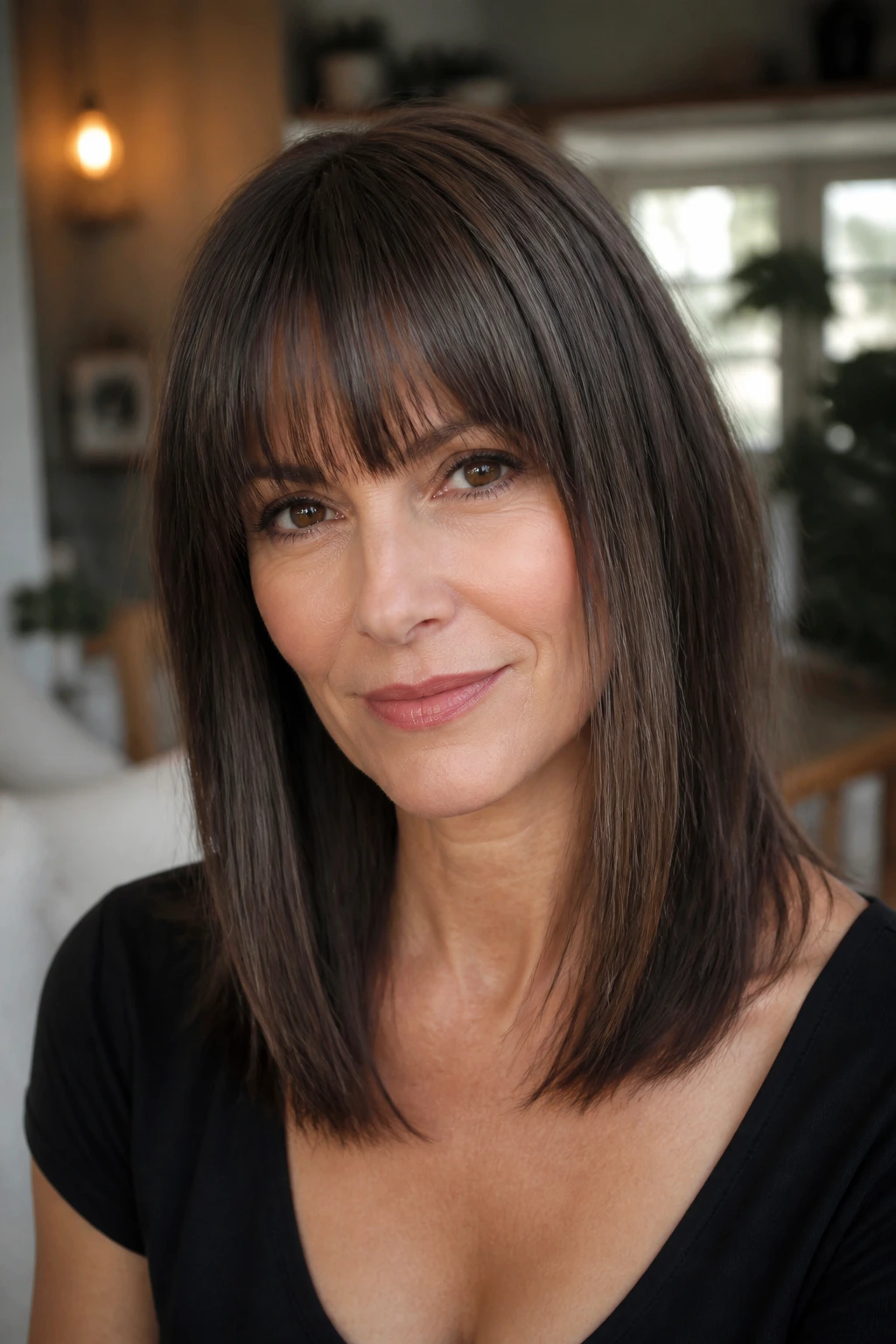
This style works because the bangs and the length are doing the same job. The fringe stays straight across the forehead, but the layers around it fall right to the collarbone and create a long line down the neck. That line is flattering if you want the face to look a little longer and the jaw a little softer.
The cut is especially useful on hair that is thick enough to hold shape but not so dense that the fringe turns bulky by noon. Keep the bang slightly longer at the temples, then ask for the front layers to graze the collarbone. It gives the whole haircut a clean front view and a little swing when you turn your head.
5. Dense Brow Skimmer
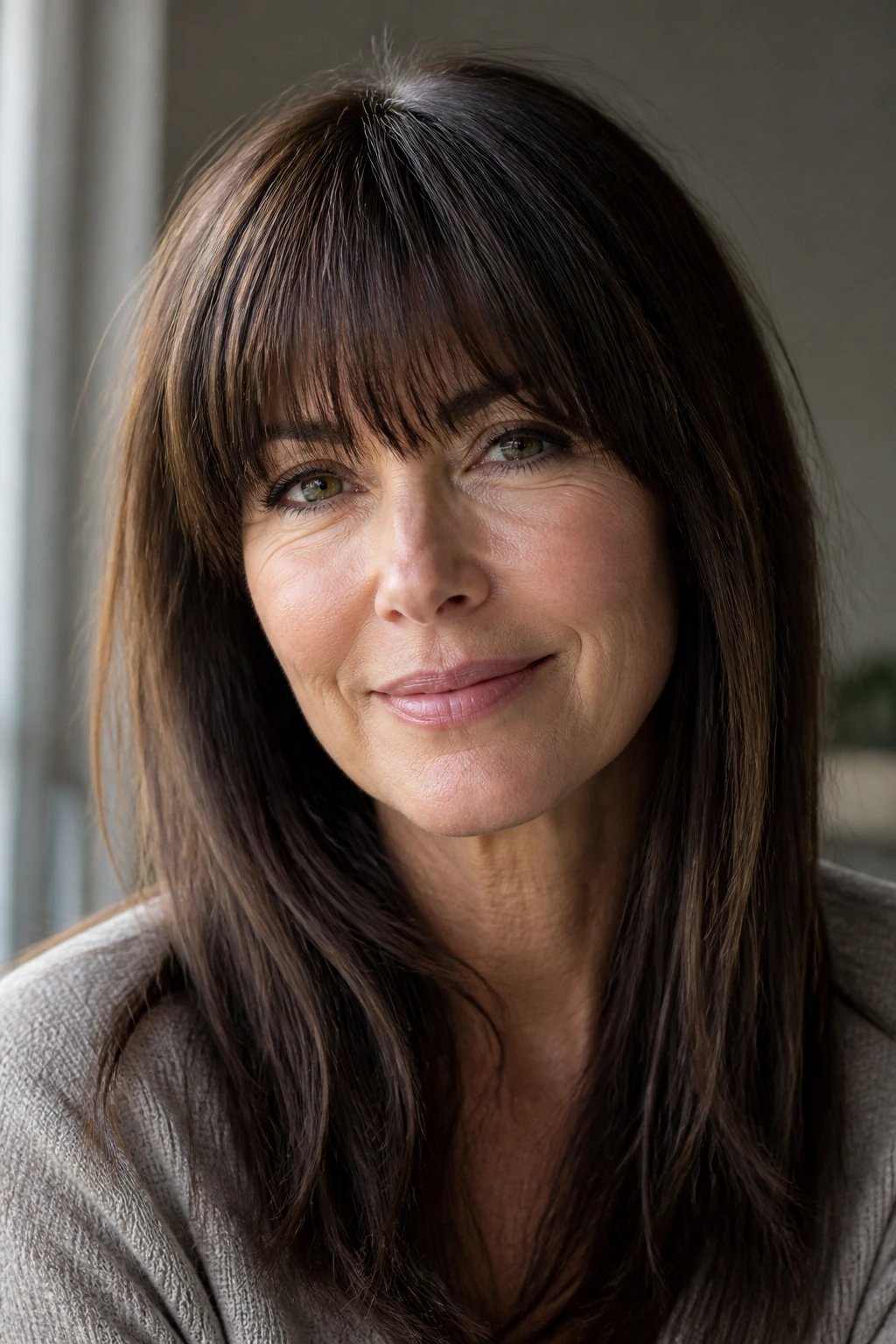
This is the fuller, more deliberate version. The bang sits thick enough to make a statement, but the edges still get a soft point cut so it does not feel severe. It’s a smart choice if your hairline is naturally full or if you want the forehead coverage to be more obvious without going heavy in a helmet-like way.
A dense fringe can look expensive when it’s cut well. It can also go wrong fast if it’s over-thinned, so ask for balance, not drama. You want the middle to read fuller and the sides to melt toward the temples. That shape makes the forehead look narrower in a flattering way without making the face feel boxed in.
6. Wispy Temple-Blend Fringe
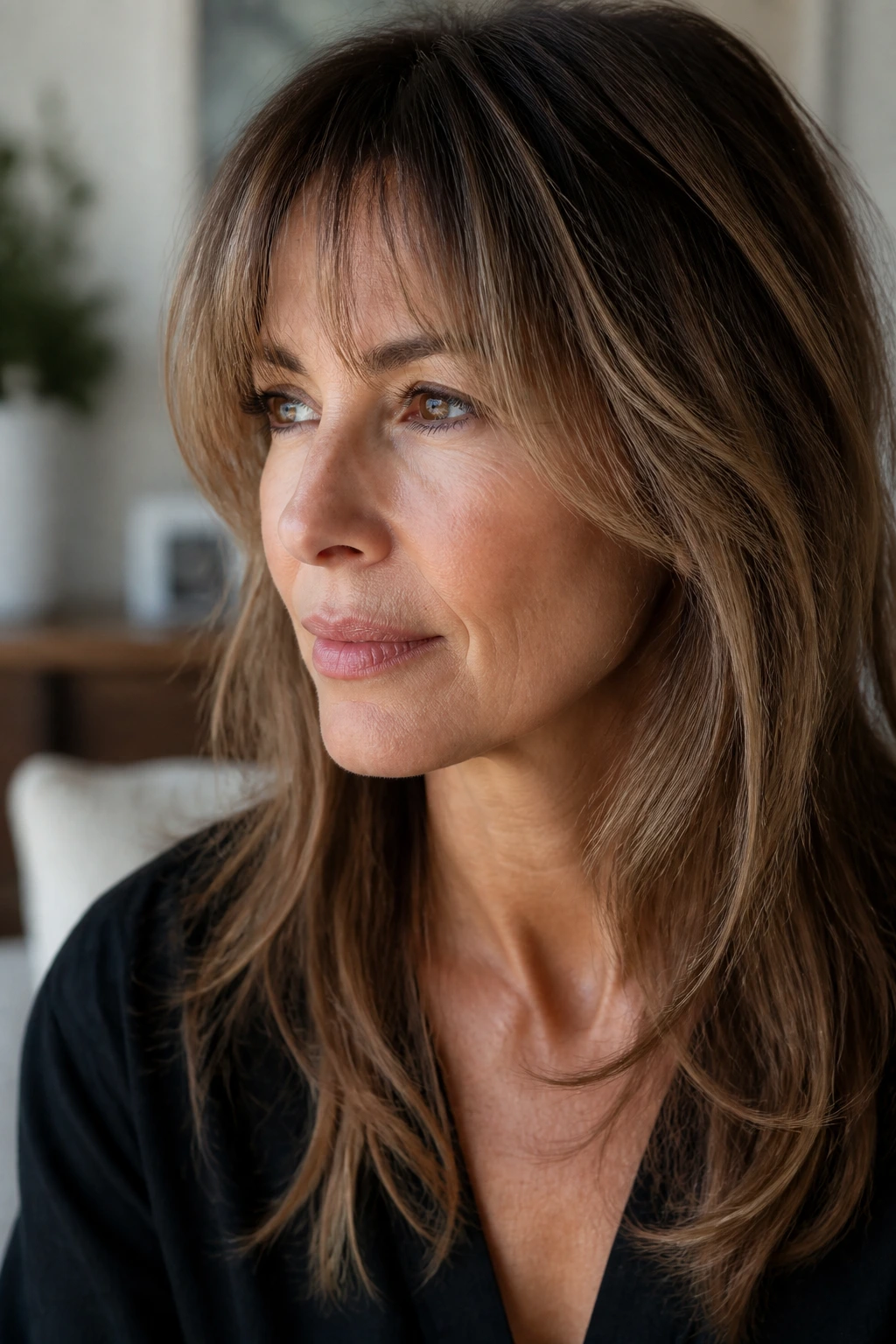
This one is for the person who likes the idea of bangs but doesn’t want a lot of maintenance. The center stays light and airy, while the temple pieces carry the weight into the side layers. The result is a fringe that feels almost accidental—in a good way.
How to Wear It
Dry the bangs with your fingers first, then finish with a paddle brush only at the last minute. If you over-round them, they can puff up and lose the airy feel. A pea-sized amount of lightweight cream at the ends is enough; too much product makes wispy bangs stick together and look stringy.
7. Soft Blunt with Tapered Ends
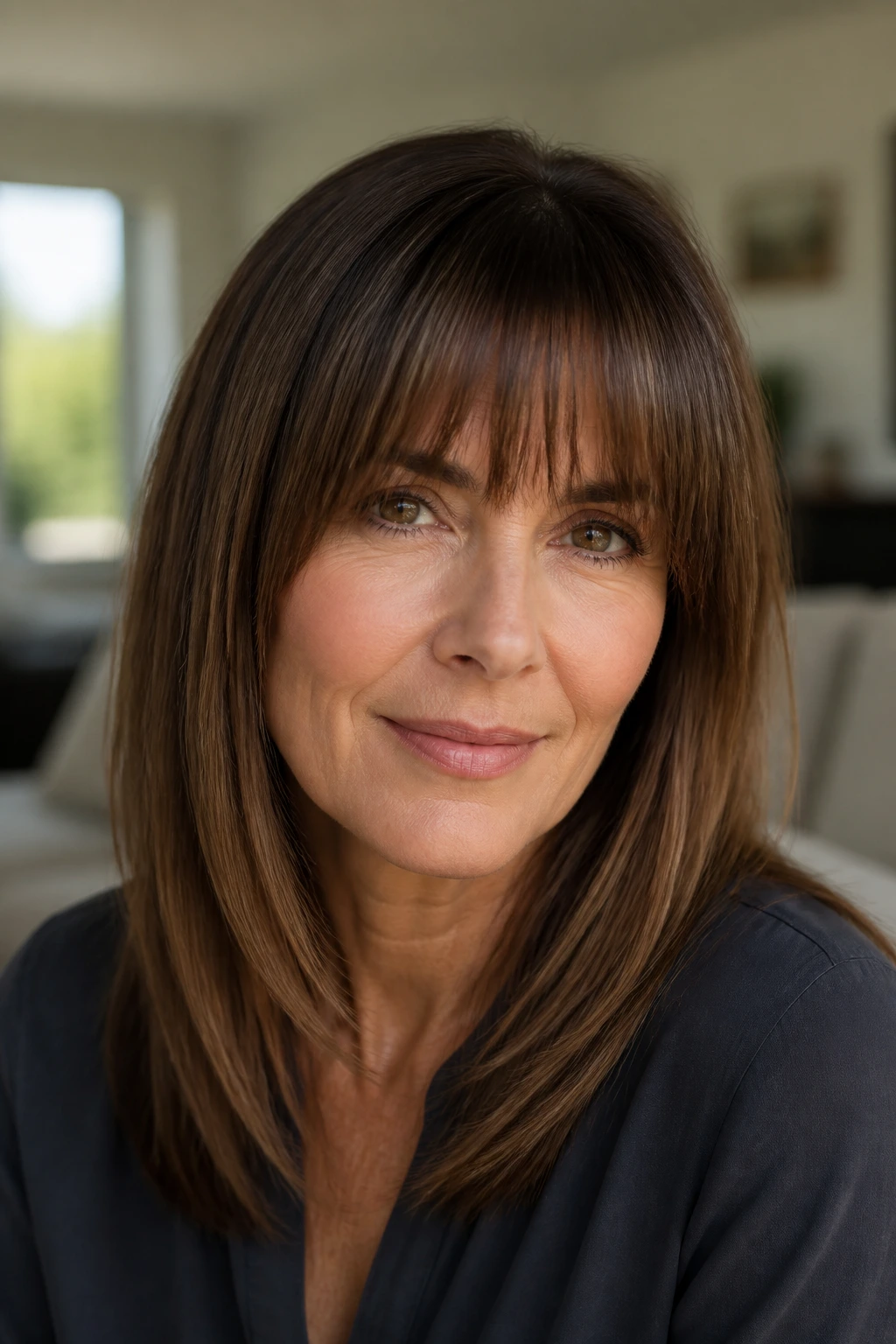
Blunt bangs do not have to look severe. The trick is to keep the edge straight but taper the underside and corners so the line is crisp without being hard. That makes this version better for women who want a stronger front view but still need the haircut to move.
The taper is doing a lot of quiet work here. It keeps the fringe from sitting like a shelf and gives you a smoother transition into the rest of the cut. If your hair has a bit of natural bend, this shape can still hold because the ends are narrow enough to follow the head instead of springing off it.
8. Piecey Parted Fringe

Piecey bangs are a good answer when full fringe feels like too much. The front is separated into small strands with a narrow center gap or a very soft split, so the forehead shows through just enough to keep the look light. It’s a particularly nice choice if your hair gets oily at the front by the end of the day.
A flat iron helps here, but only for a second or two. Bend the ends forward, then separate the strands with your fingers. The point is to look touched, not overworked.
9. Rounded Cheekbone Sweep
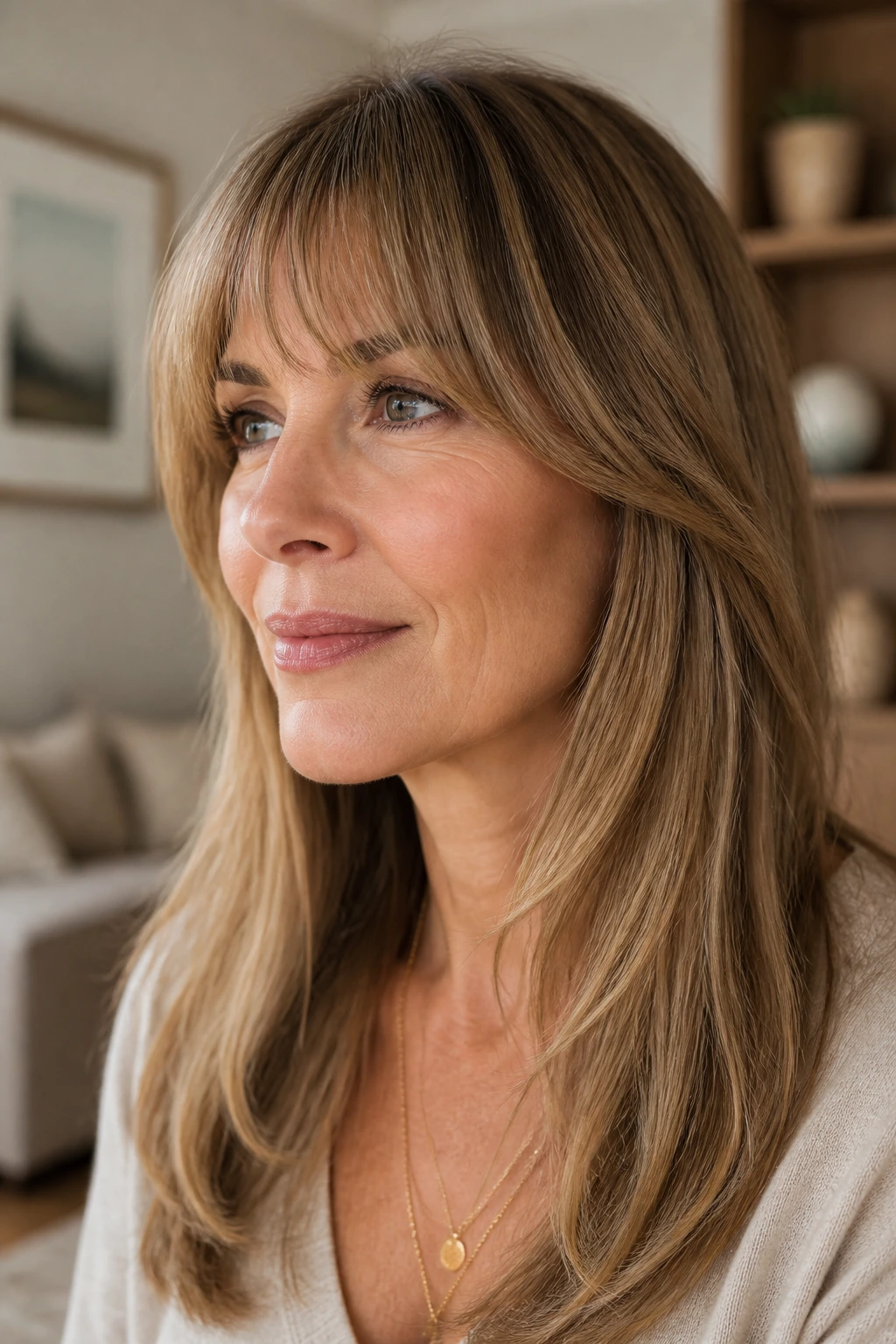
This cut starts straight at the brow and curves outward toward the cheekbones. The slight arc gives the face a lifted look, especially around the outer eyes and the upper cheek. I like it on women whose faces have softened a little and who want the haircut to echo that softness instead of fighting it.
The rounded shape works because it doesn’t end abruptly. It glides. That makes it easy to blend into layered lengths around the jaw or shoulder, and it prevents the bang from feeling like it belongs to a totally different haircut.
10. Airy Straight Bangs on Fine Hair
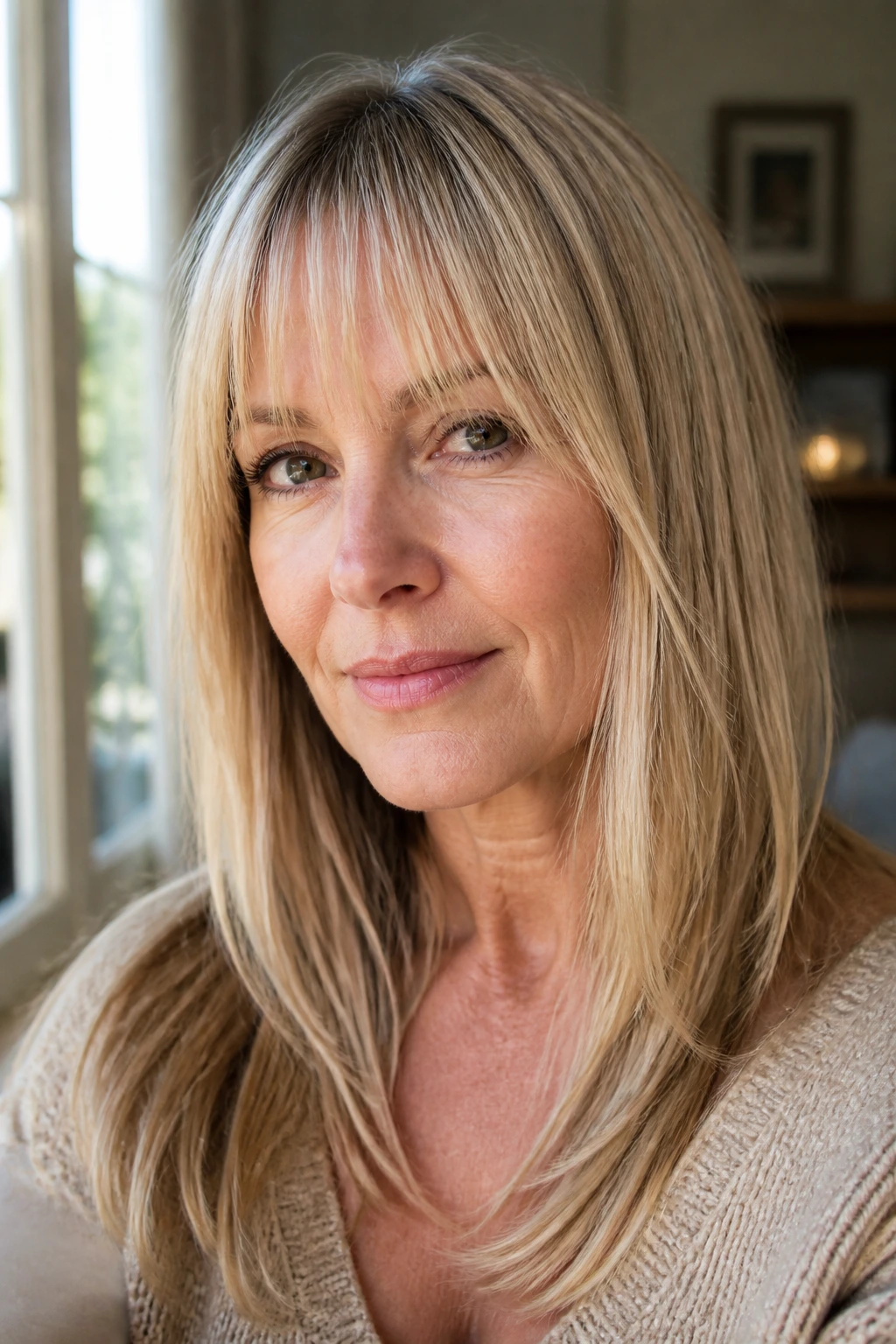
Fine hair can wear bangs beautifully, but the fringe has to be cut with restraint. Too much weight at the front and the hair falls flat against the forehead by lunch. Too little and you end up with see-through pieces that don’t frame anything. This version lands in the middle.
The best move is to keep the bang narrow enough to stay light, then leave a little extra length so the ends can sit with the rest of the haircut. A root-lift spray at the front and a quick blast from the dryer will do more here than any heavy styling cream ever will.
11. Dense Fringe for Thick Hair
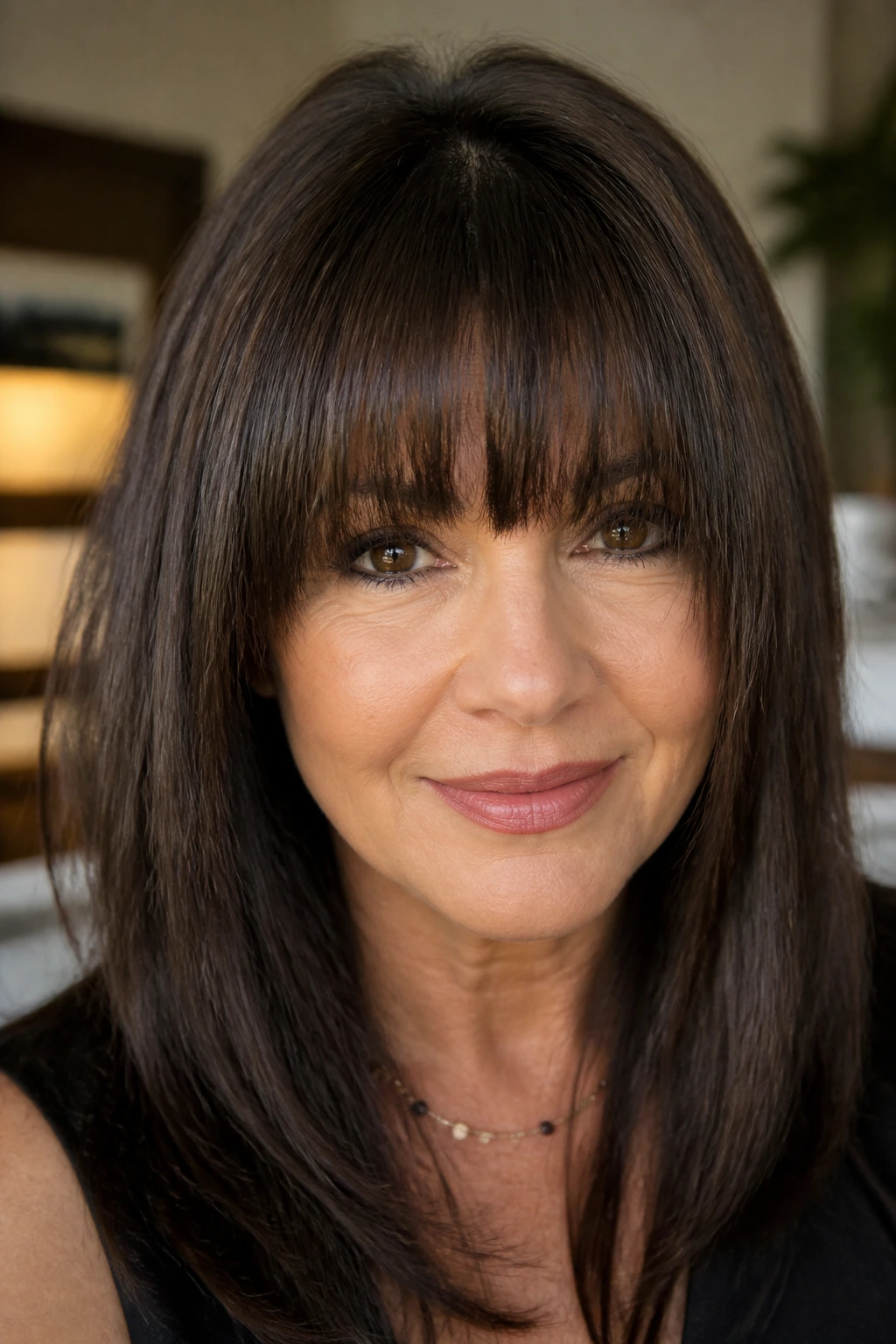
Thick hair needs room to breathe at the front. If the bang is cut too wide or too blunt, it can puff out like a curtain rod. A dense fringe works only when the inside weight is removed in small, careful sections. That keeps the hair from pushing forward in one bulky wall.
Quick Rule
If the bang feels too thick when it’s wet, it’s usually still too thick when it’s dry. Ask for internal weight removal, not aggressive thinning. The difference is huge. One makes the fringe sit. The other makes it fray.
12. Shattered Layers and Forehead Length
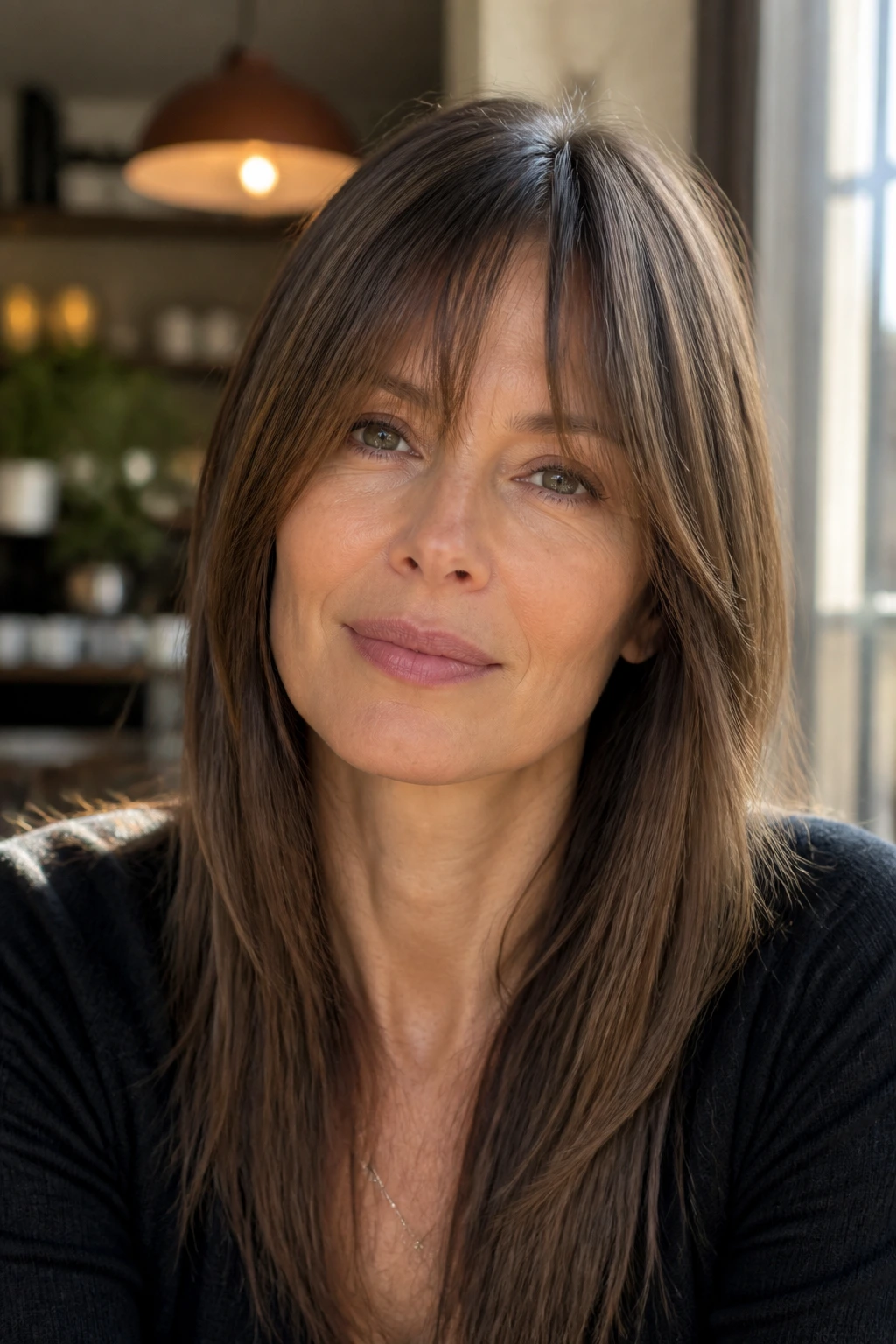
This one has a little edge. The bang is straight at the center, but the surrounding layers are deliberately shattered so the line looks broken up in a nice way. It suits straight hair that tends to lie too flat, because the uneven pieces create movement without needing curls or waves.
I’d reach for this if you like a haircut with some attitude but you still want it to be flattering at work, at dinner, and in a ponytail. It reads modern without being noisy. That’s a hard line to hit, and this one gets close.
13. Lob with Straight Bangs

A long bob and straight layered bangs are old friends for a reason. The shape gives the front a clean line while the length at the shoulders keeps the whole cut from looking fussy. On women over 40, it’s a nice middle ground: enough structure to feel current, enough length to pull back when needed.
The bang should not fight the lob. It should echo it. Keep the layers soft, and let the fringe hit somewhere between the brow and the top of the lashes depending on your face shape. That small shift changes the mood of the whole haircut.
14. Long Bob with Tapered Fringe
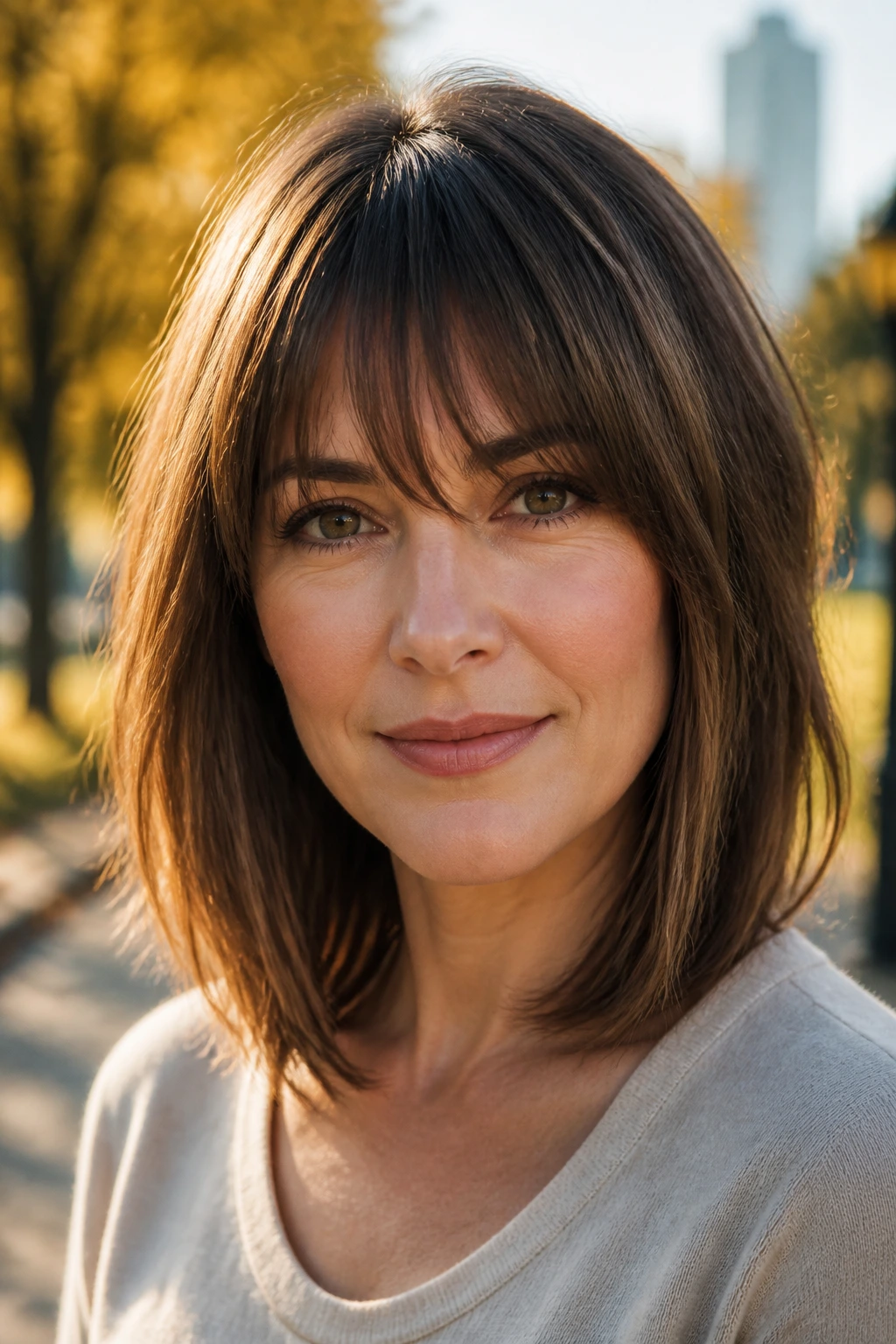
This is the softer cousin of the lob above. The fringe is trimmed straight but tapered at the edges so it opens the face more gently. If your jawline feels strong and you want the haircut to soften that angle, this cut does the job without looking delicate or overdone.
It also behaves well on days when you air-dry. The tapered corners let the hair settle into place instead of sticking out at the temples, which is a frequent annoyance with shorter front layers.
15. Soft A-Line Layers and Bangs
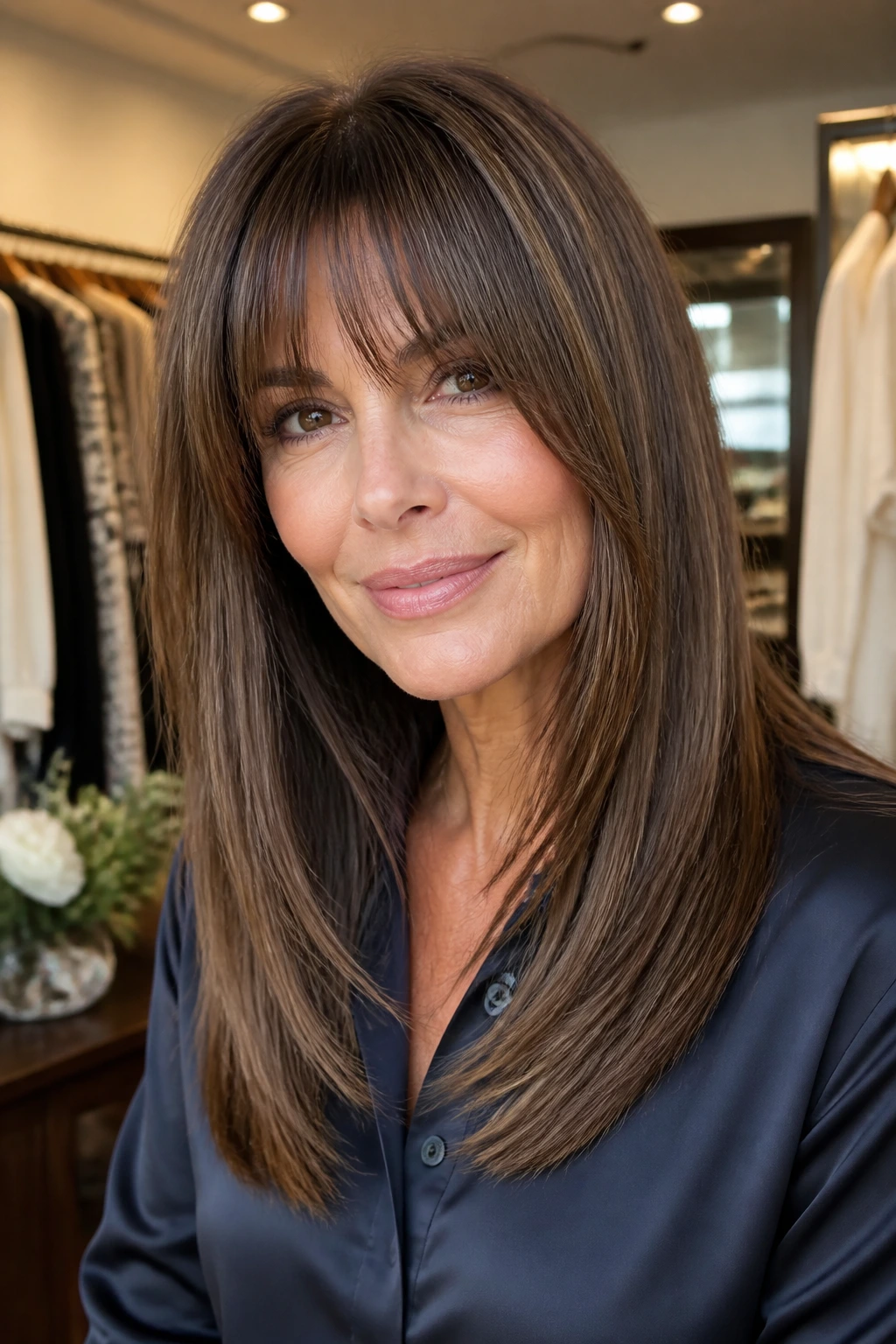
An A-line shape can make straight bangs look sharper without making them harsher. The front lengths are a touch longer than the back, and the bangs echo that forward movement. The result is a haircut that leans toward the face rather than falling straight down.
This is one of my favorites for women who want the front to feel polished. It draws the eye toward the cheekbones and chin, especially if the layers around the face are kept smooth. If your hair has natural shine, this shape shows it off immediately.
16. Invisible Fringe Blend
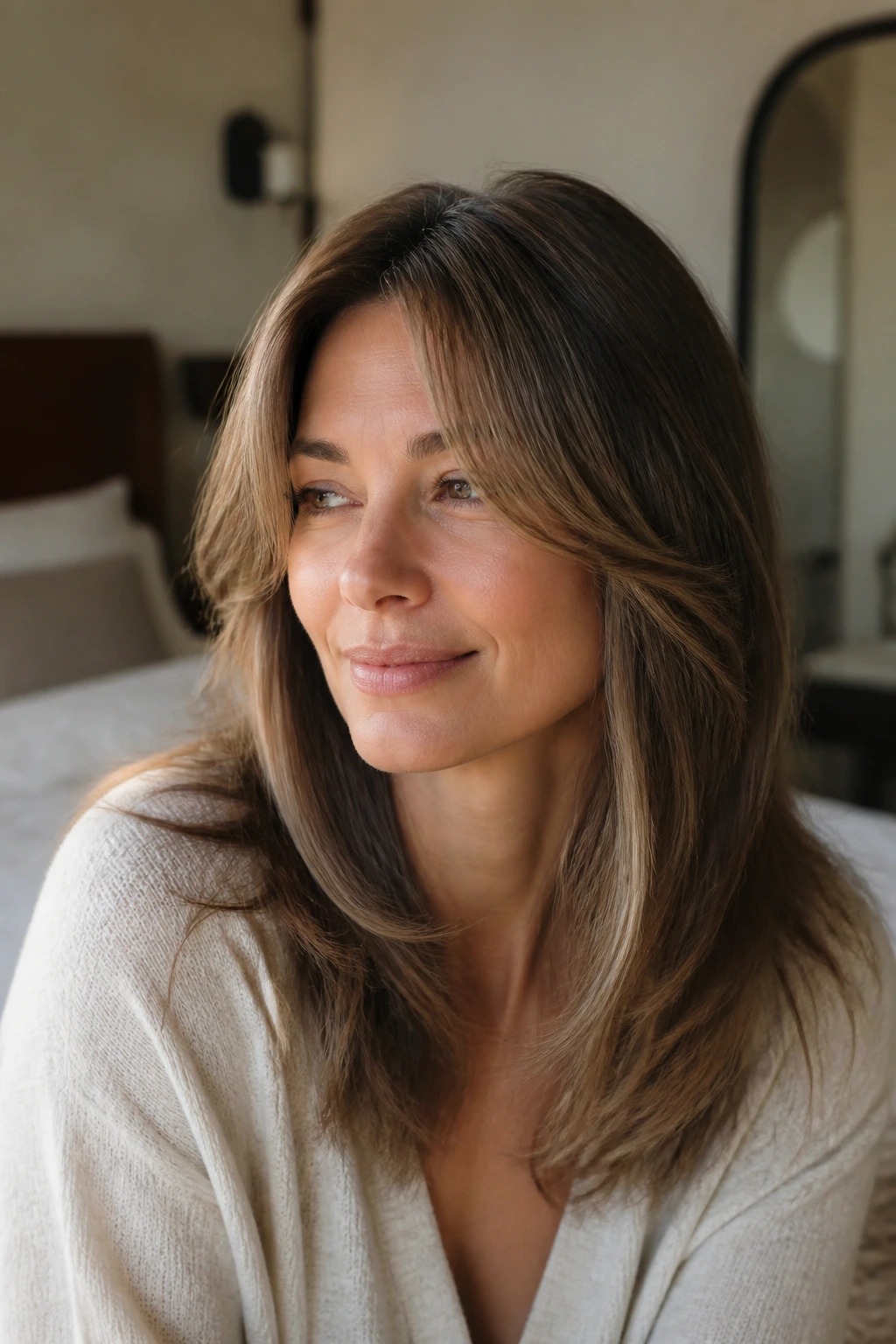
The invisible fringe is for people who want bangs that do not immediately read as bangs. The front pieces are long enough to merge with the face frame, so the forehead stays partially open and the haircut keeps its softness. You’ll still get shape. You just won’t get that obvious “I got bangs” look.
That makes it ideal for someone testing the waters. It also works when your hairline has fine baby hairs that don’t cooperate with harder lines. Keep the center slightly shorter and the sides longer, and the whole thing starts to behave like a grown-in version of a fringe.
17. French-Inspired Long Bang
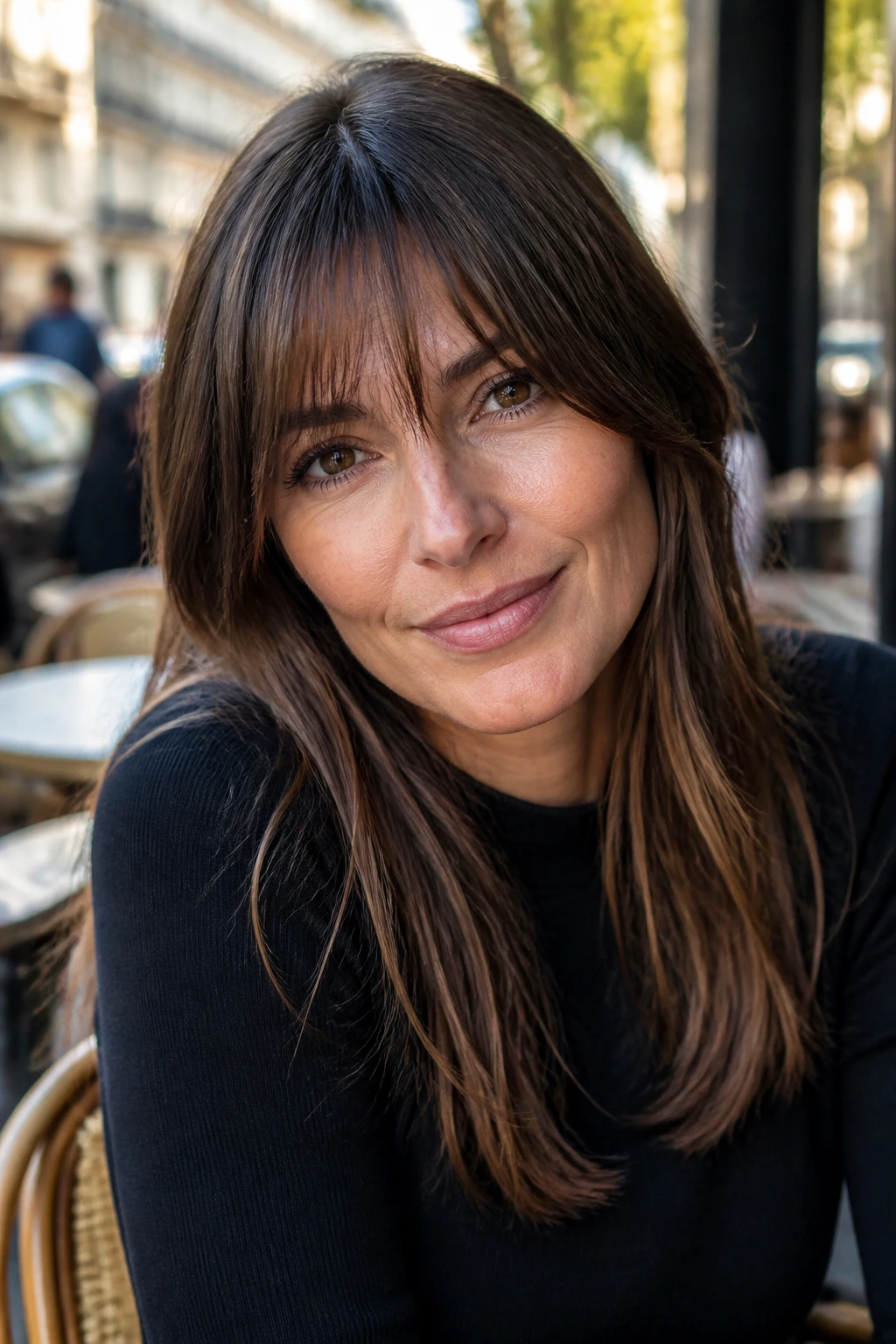
This style has a little attitude, but not the dramatic kind. The bang is slightly straighter, slightly fuller, and left just long enough to feel lived-in rather than polished to death. If you like hair that looks a little undone in a chic, deliberate way, this is the one.
The trick is not to over-style it. Use a brush only enough to remove the bend at the roots, then let the ends fall where they want. Over-smoothing kills the whole point. A bit of softness around the brow is what gives this cut its charm.
18. Tuck-Behind-the-Ear Fringe
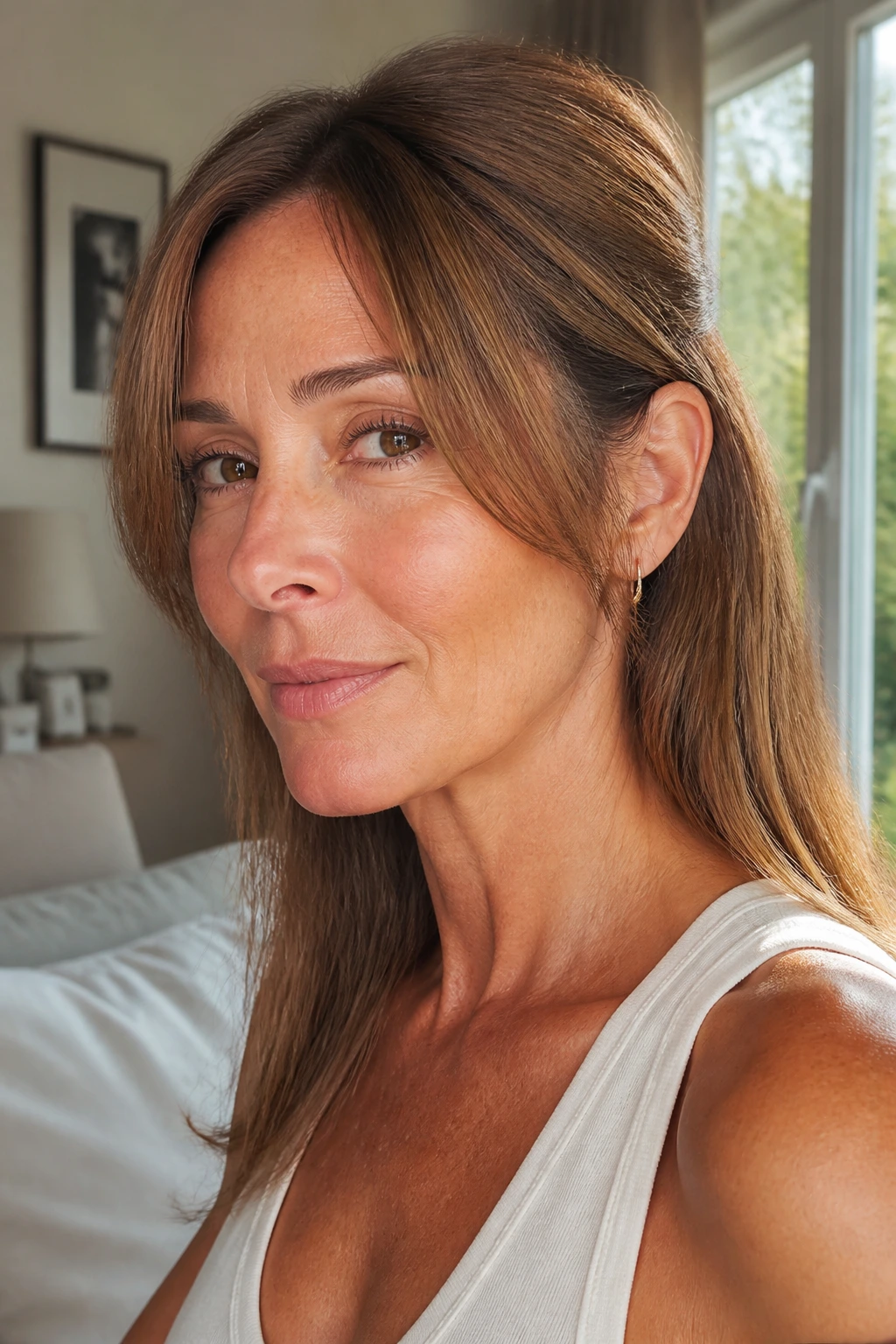
Not every bang has to stay on the forehead all day. This version is built so the front pieces can be worn down, then tucked behind the ear when you want a clearer face frame. It’s especially handy if you work in a warm environment or if your bangs bug you on the second day after a wash.
The length matters. If it’s too short, it springs out of the ear tuck. If it’s too long, it stops reading as a fringe. The useful zone is right around cheekbone level, with the center a touch shorter.
19. Volumized Blowout Fringe
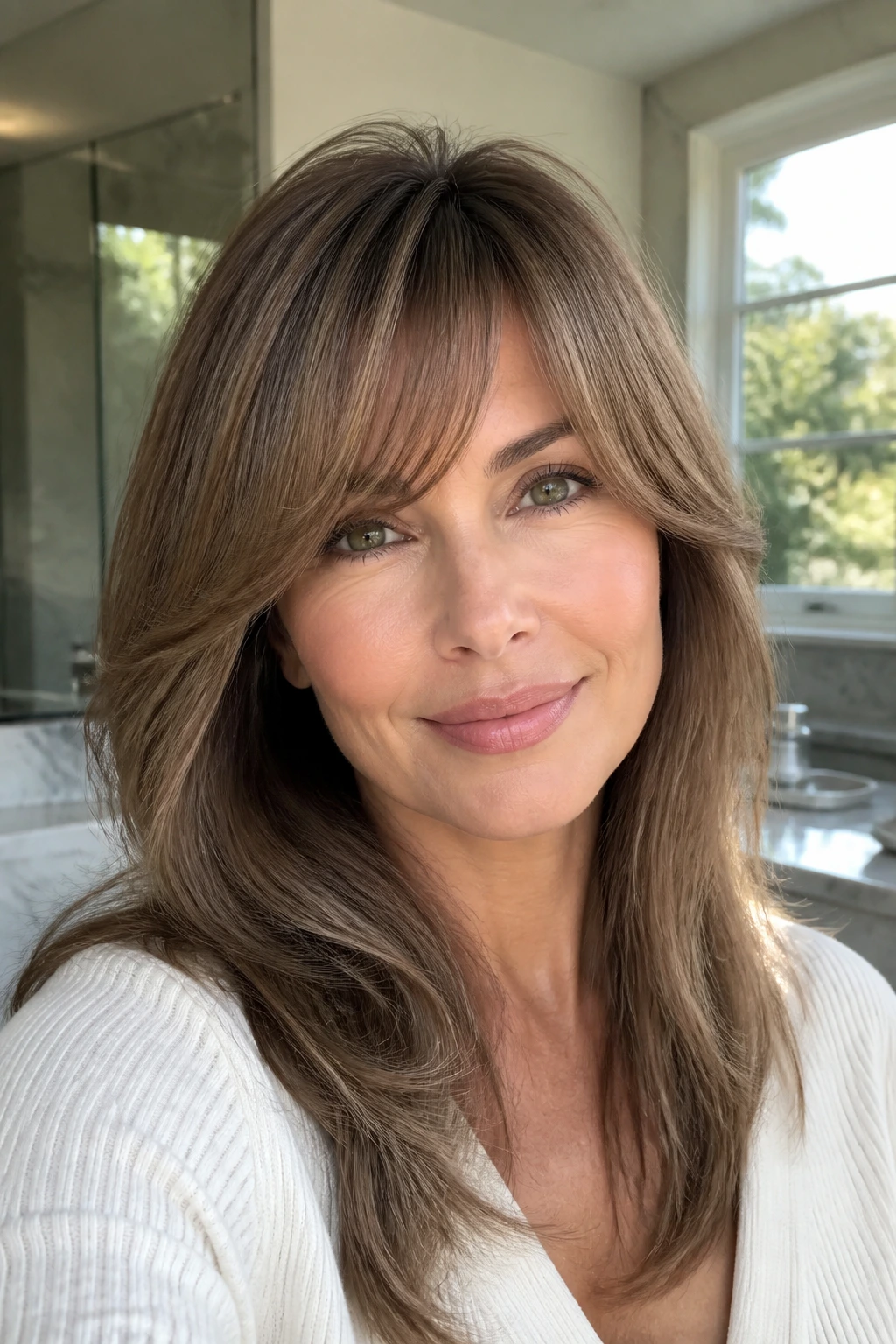
This one is for the people who love a rounded brush and do not mind spending three extra minutes in the morning. The bangs lift at the root, curve lightly over the forehead, and sit with a bit of movement instead of lying flat like paper. On straight hair, it can make the entire haircut feel fuller.
A little root mousse at the front helps, but the real trick is the direction of the blow-dry. Pull the fringe side to side with the brush first, then forward last. That gives it bend without creating a ridge line.
20. Gray-Blending Silver Fringe
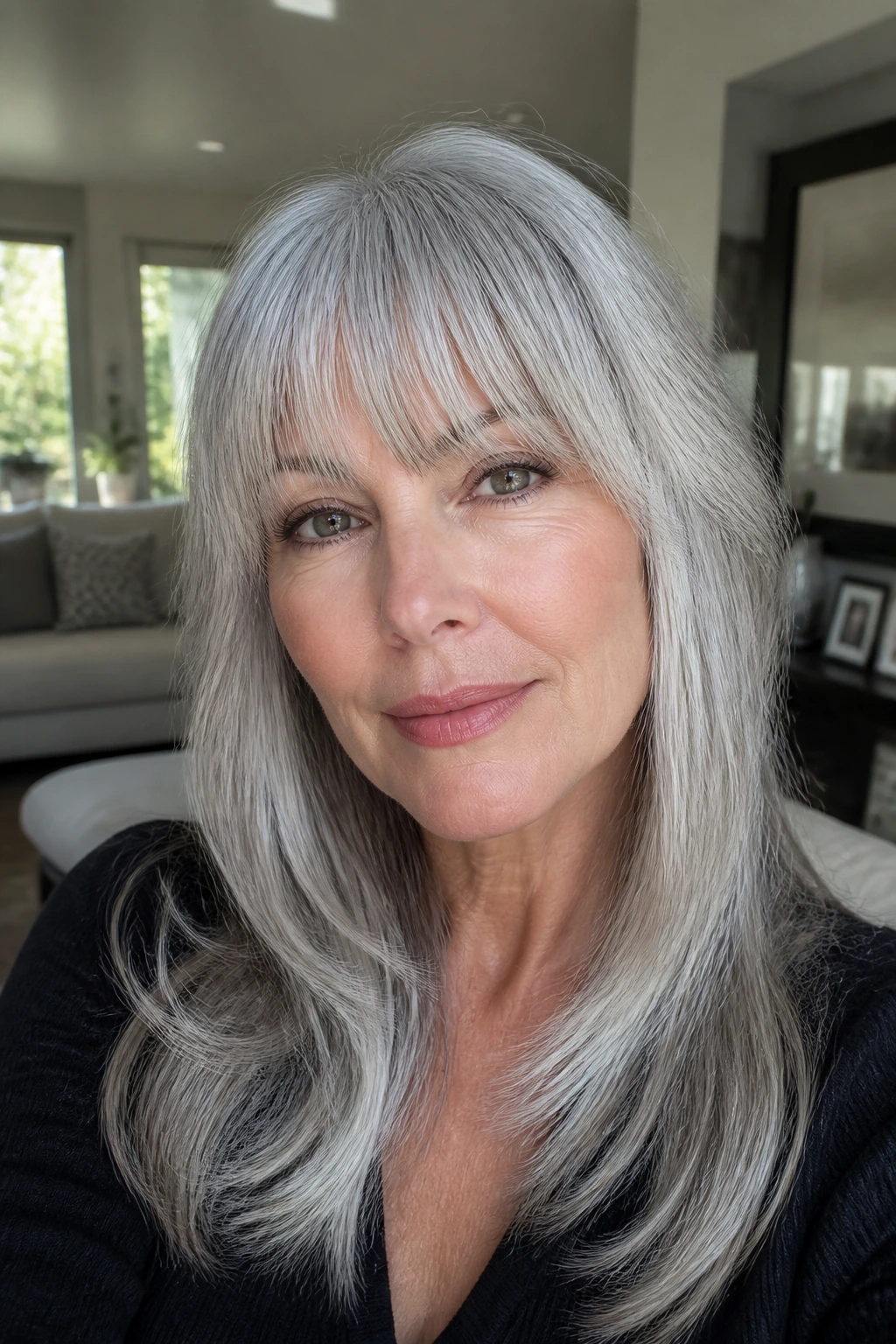
Gray hair and long layered straight bangs are a good match. The silver strands make the fringe look brighter, and the soft layering keeps the texture from feeling wiry or too stark. If you’re blending dye and natural gray, the front is often where that transition shows most, which makes a fringe surprisingly useful.
I’d cut this with a little extra softness around the temples. It helps the gray grow in without drawing attention to every new line of color. A cool-toned gloss can keep the silver looking clean instead of dull.
21. Brightening Face-Frame Fringe
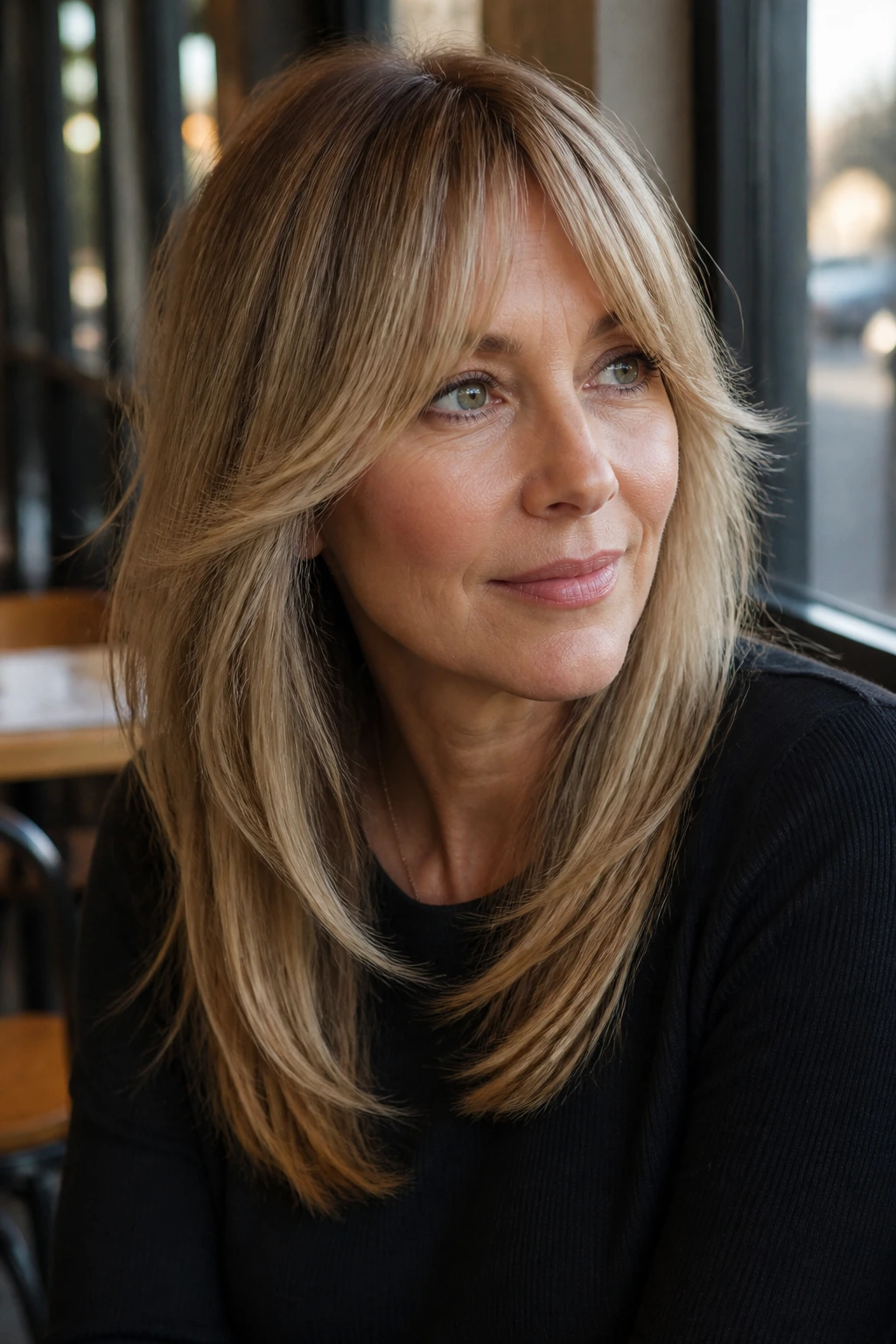
This cut does a small but useful trick: it puts the eye line around the face where the skin naturally looks livelier. The bangs start straight, then blend into lighter front pieces that sit near the cheekbones. You get emphasis around the eyes and upper face without needing a heavy bang.
It’s a smart choice if you want the haircut to work with makeup instead of covering it. The fringe should be long enough to show your brows. That alone makes the face feel more open.
22. Lifted Diagonal Layers and Fringe
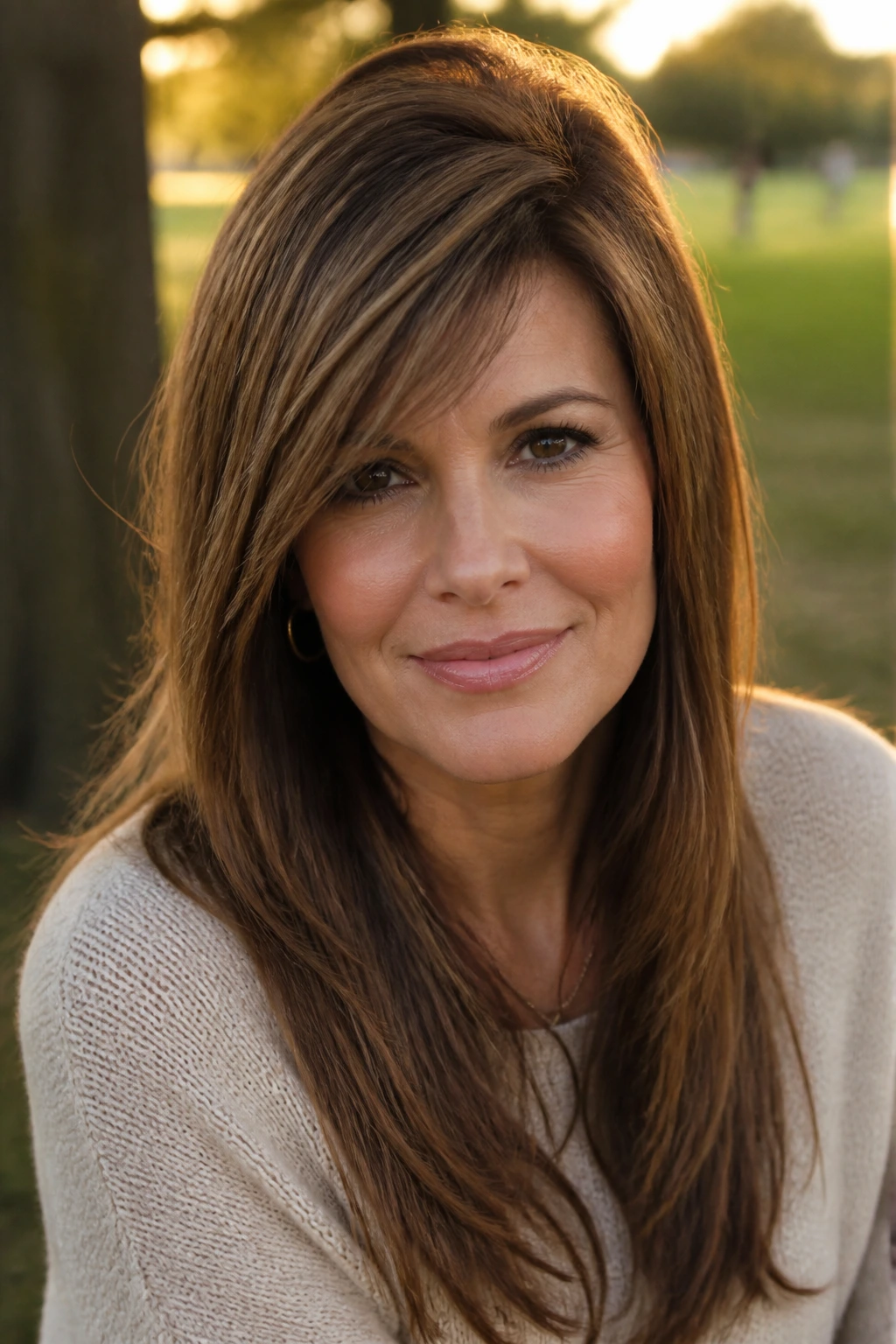
A diagonal line can be a relief if your features are strong or angular. The bang still looks straight from the front, but one side carries a little more length so the cut lifts across the face instead of cutting straight across it. That small tilt changes the mood immediately.
I like this on square or heart-shaped faces. It softens the side nearest the temple and creates a more gradual path from forehead to cheek. It also gives you a nice option when you part the hair off-center.
23. Grow-Out Friendly Fringe
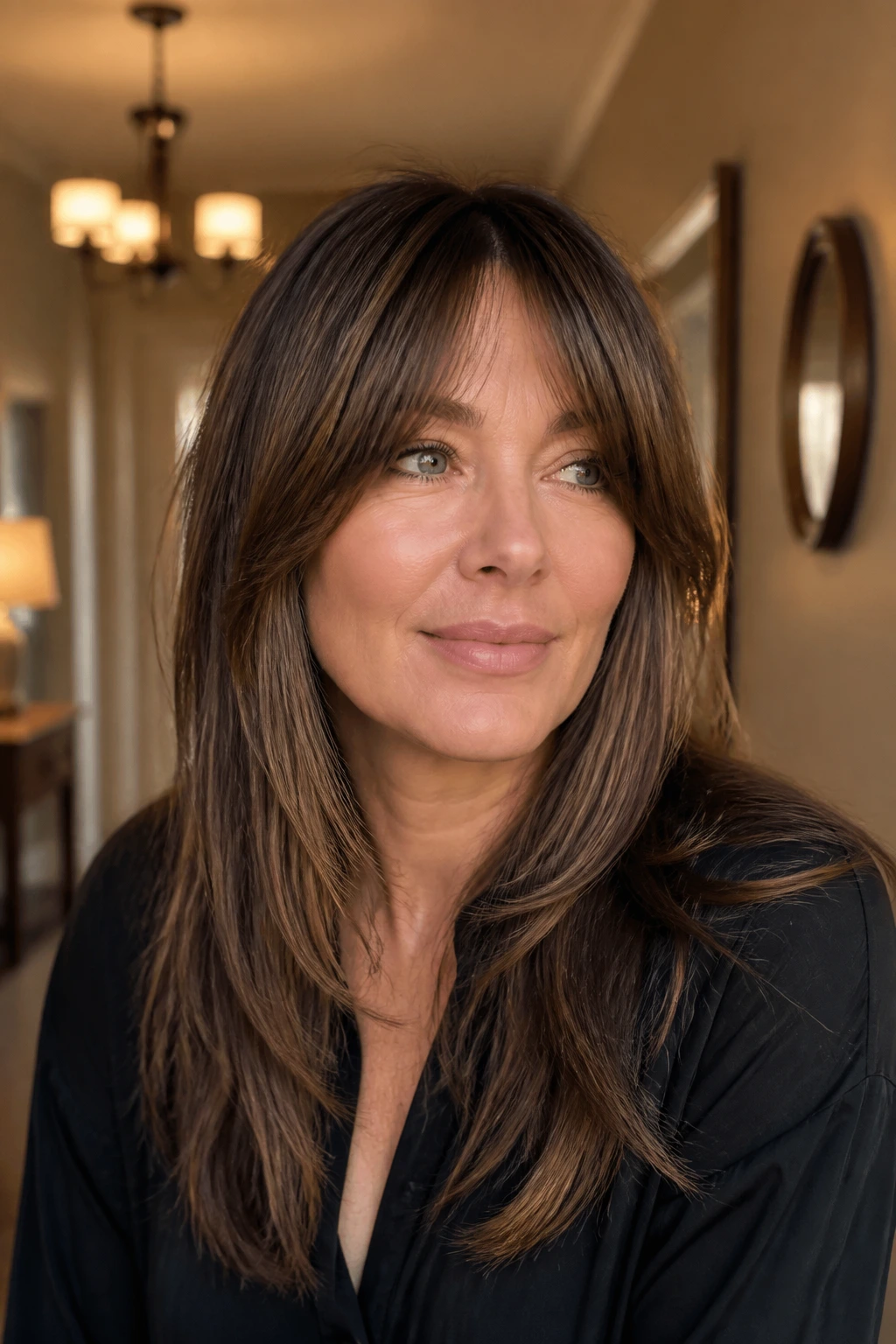
This is the fringe to choose if you know yourself. If you like bangs for six weeks and then hate maintenance, ask for a version that can travel into layers with a minimum of drama. The trick is keeping the shortest point still long enough to brush the brow, with the outer pieces sliced into the front layers.
That way, the cut does not turn into a strange shelf as it grows. It just starts acting like face-framing layers sooner. Very handy. Very practical.
24. Sleek One-Length with Soft Edges
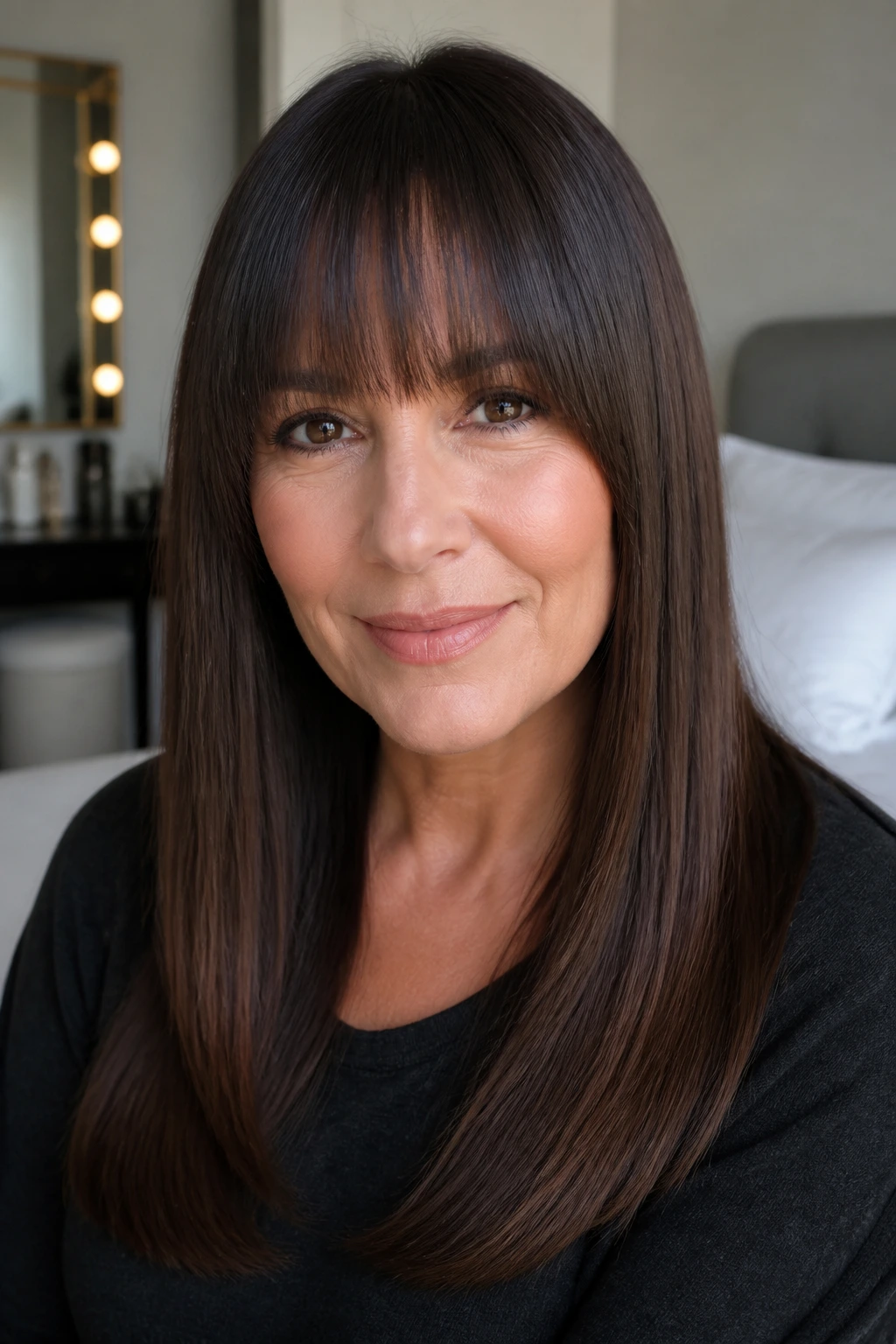
A one-length haircut can look severe, which is exactly why the bang has to soften it. The fringe here is straight, long, and lightly rounded at the corners so the overall style stays sleek without feeling rigid. It works best when the ends are glassy and the line is clean.
If your hair is naturally straight, this is a strong, confident cut. If it has wave, you’ll need a bit more heat styling. Not a deal-breaker. Just know the haircut asks for a little attention in exchange for that sharp finish.
25. Air-Dried Texture Fringe

Hair that dries on its own has a mind of its own, and this fringe respects that. The bangs are cut long enough to settle even when they dry with a tiny bend or flip. The layers around them are soft, so the whole front section can land in a way that feels relaxed instead of accidental.
A little leave-in cream at the ends is enough. Too much product and the front starts separating into greasy pieces. The point here is movement, not hold.
26. Chin-Frame Layers with Bangs
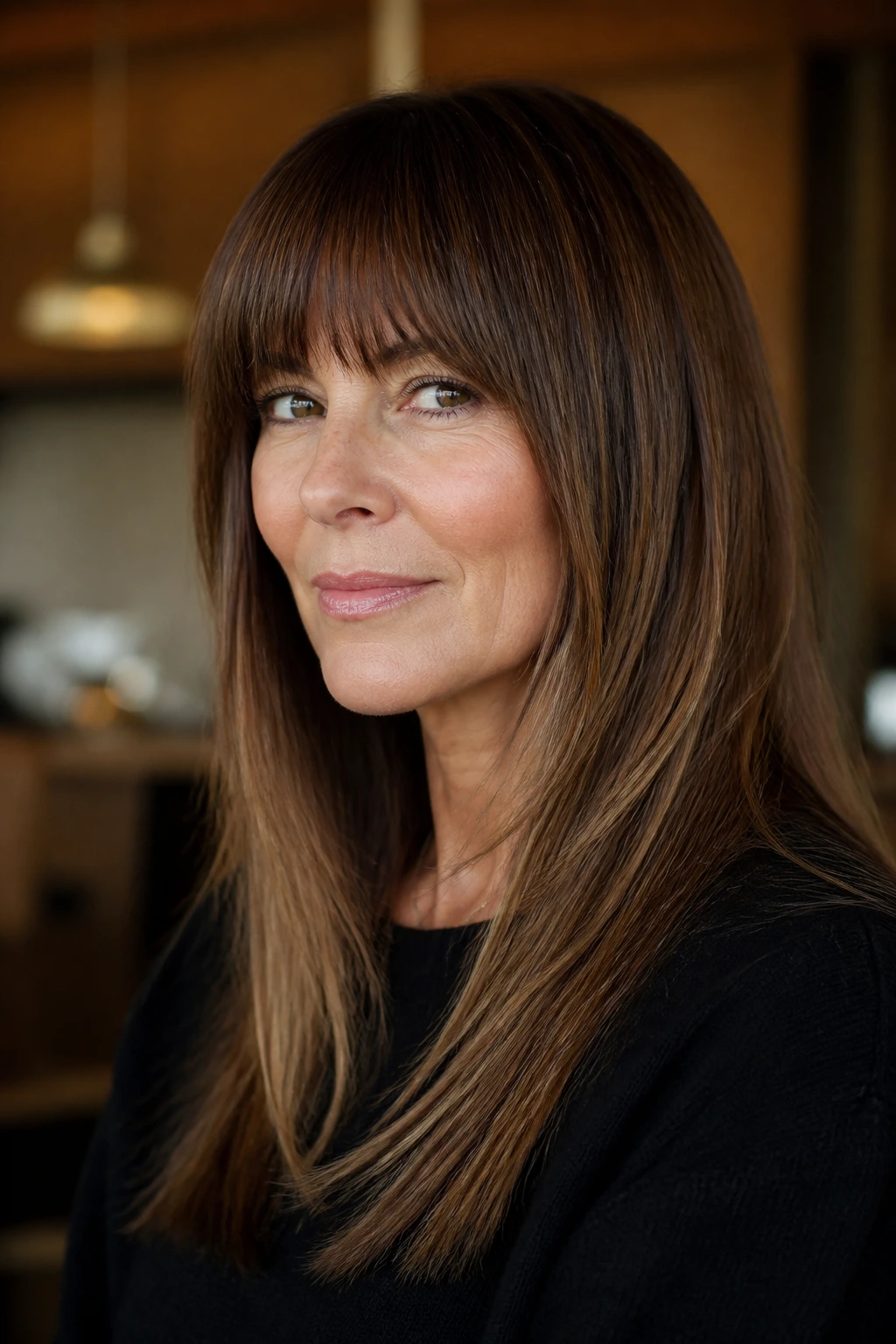
This style pushes the bang into the rest of the haircut by extending the front layers down toward the chin. It’s flattering if you want the face to appear narrower or if your jawline feels a little heavy and you want a softer line around it. The straight bangs act like a starting point; the chin-length pieces finish the shape.
The visual effect is strong. Your eye follows the line from forehead to jaw in one smooth sweep, which is more interesting than a blunt bang floating on top of a single-length cut.
27. High-Forehead Balancing Fringe
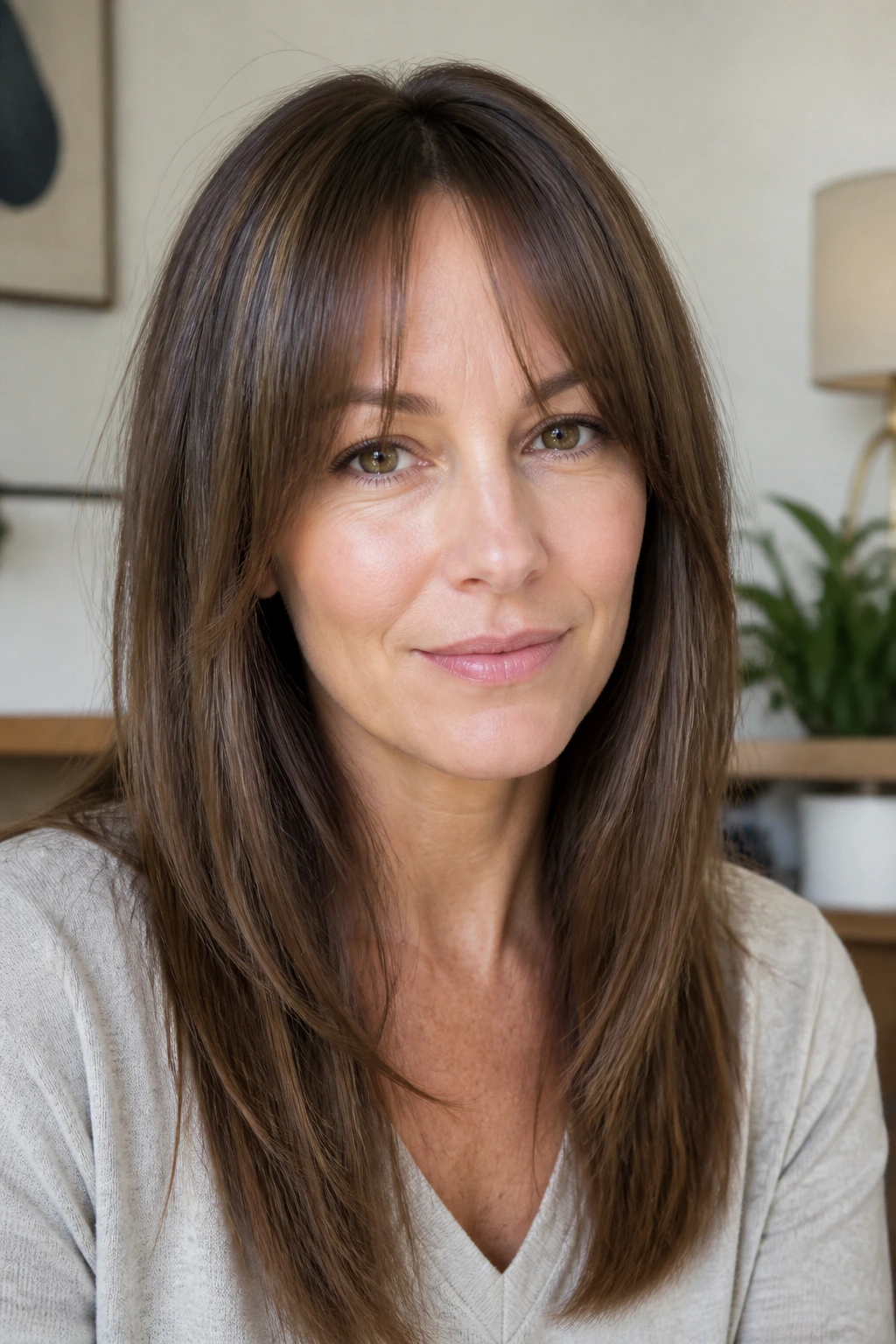
A longer forehead does not need to be hidden, but a bang can change the proportions nicely. This version sits low enough to break up the forehead space without swallowing it, and the layered edges keep the line from looking like a curtain. The result is balance, not coverage for coverage’s sake.
I’d keep this one a touch longer in the center than you might expect. That extra length gives the face room and keeps the bangs from creeping up too high when they dry. Small detail. Huge difference.
28. Softly Shattered Ends and Bangs
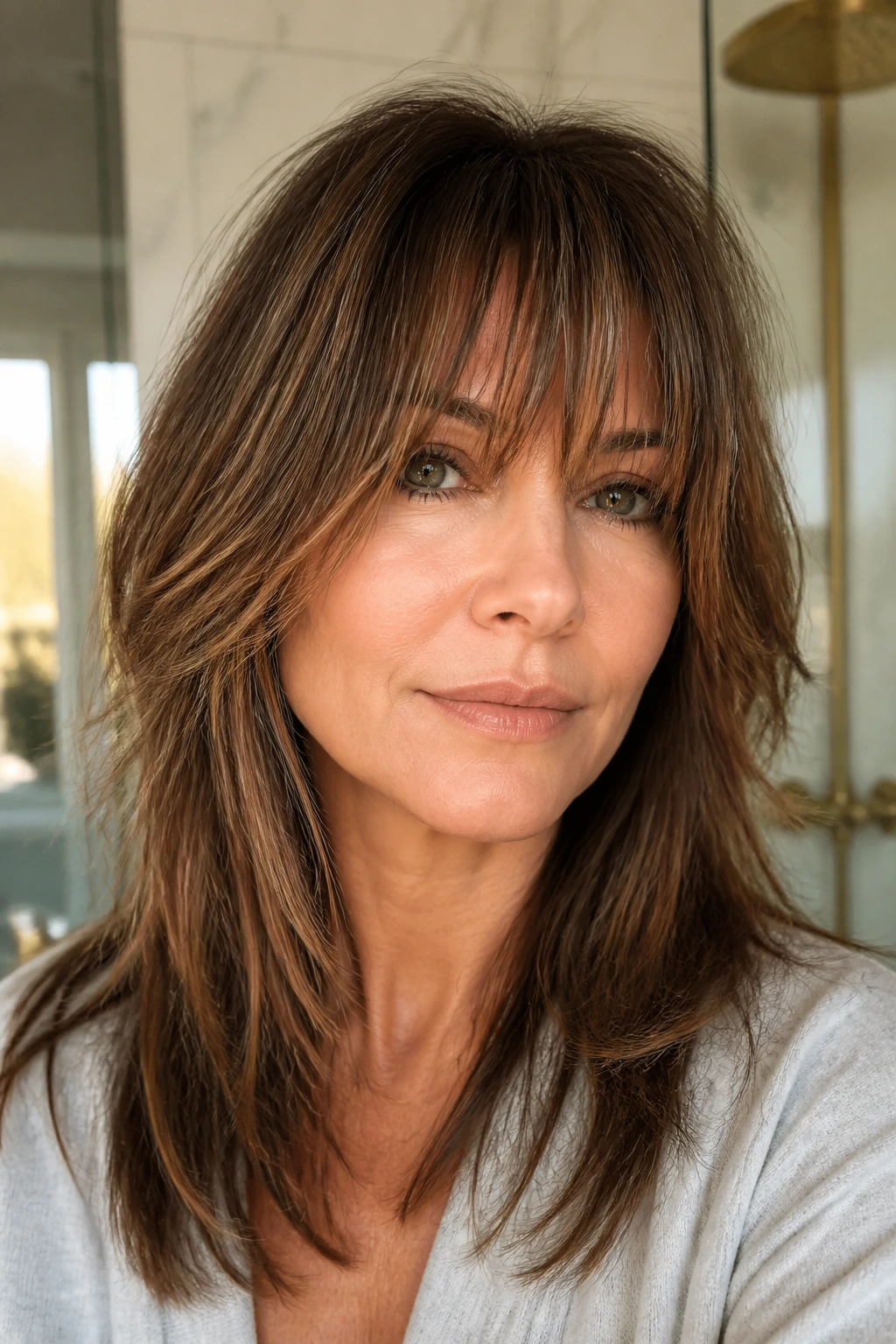
This cut has texture, but not the crunchy kind. The ends of the fringe and the layers are intentionally shattered so the movement feels feathered rather than blunt. It’s one of the easiest ways to keep straight bangs from looking too heavy against mature skin or a strong brow line.
A razor can help here, but only in careful hands. Too much razor work and the fringe frays. The good version feels soft to the eye and smooth to the touch.
29. Glam Side Part with Straight Fringe
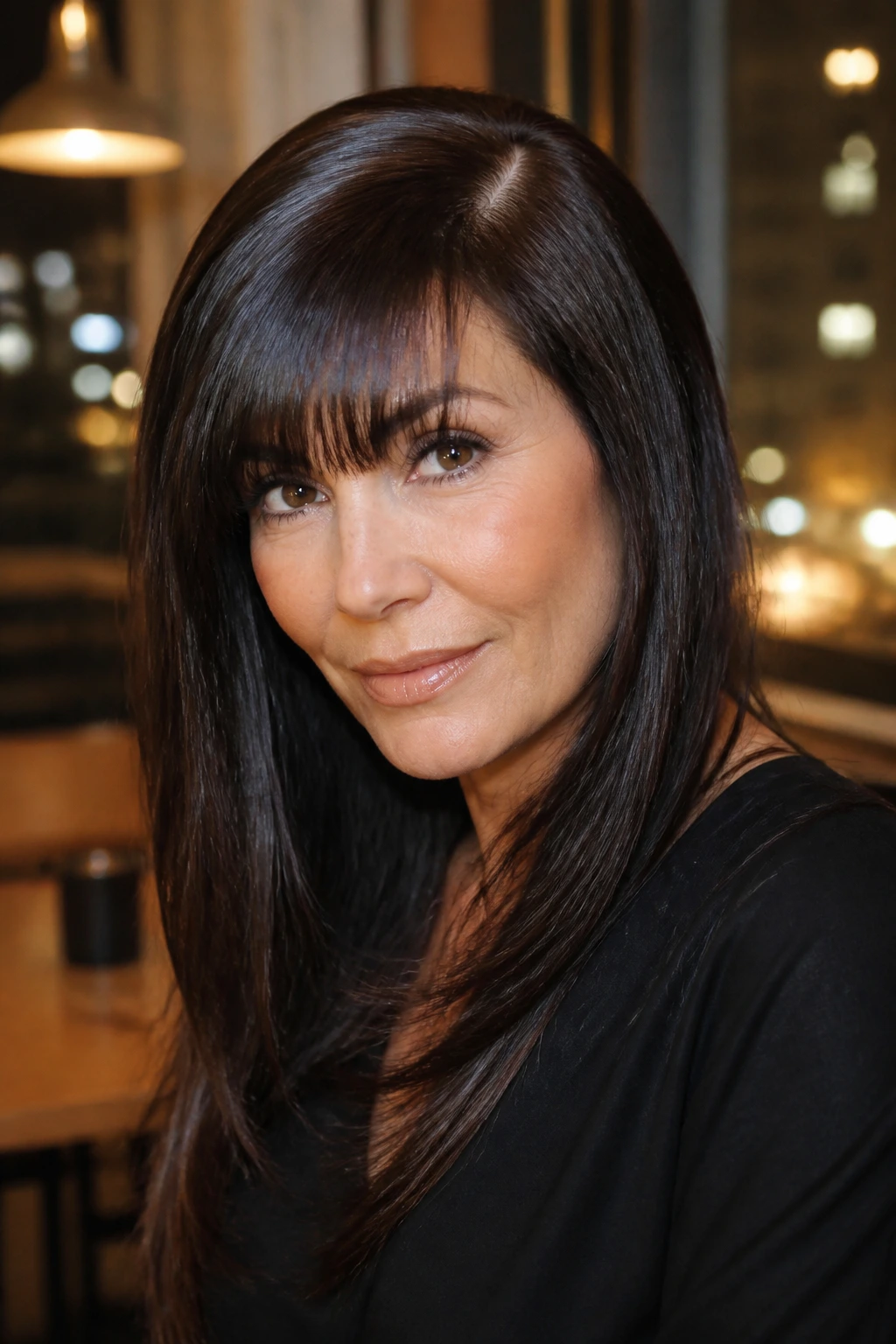
A side part changes the whole tone of straight bangs. Instead of sitting square on the forehead, the fringe drifts to one side and gives the face a little lift. It has a dressier feel than a center part, especially when the hair is brushed shiny and smooth.
This works well for nights out, but I also like it on ordinary days because it keeps the front from collapsing in the same place every time. Switch the side now and then. Your bangs will thank you.
30. The Bring-This-Photo-to-the-Salon Cut
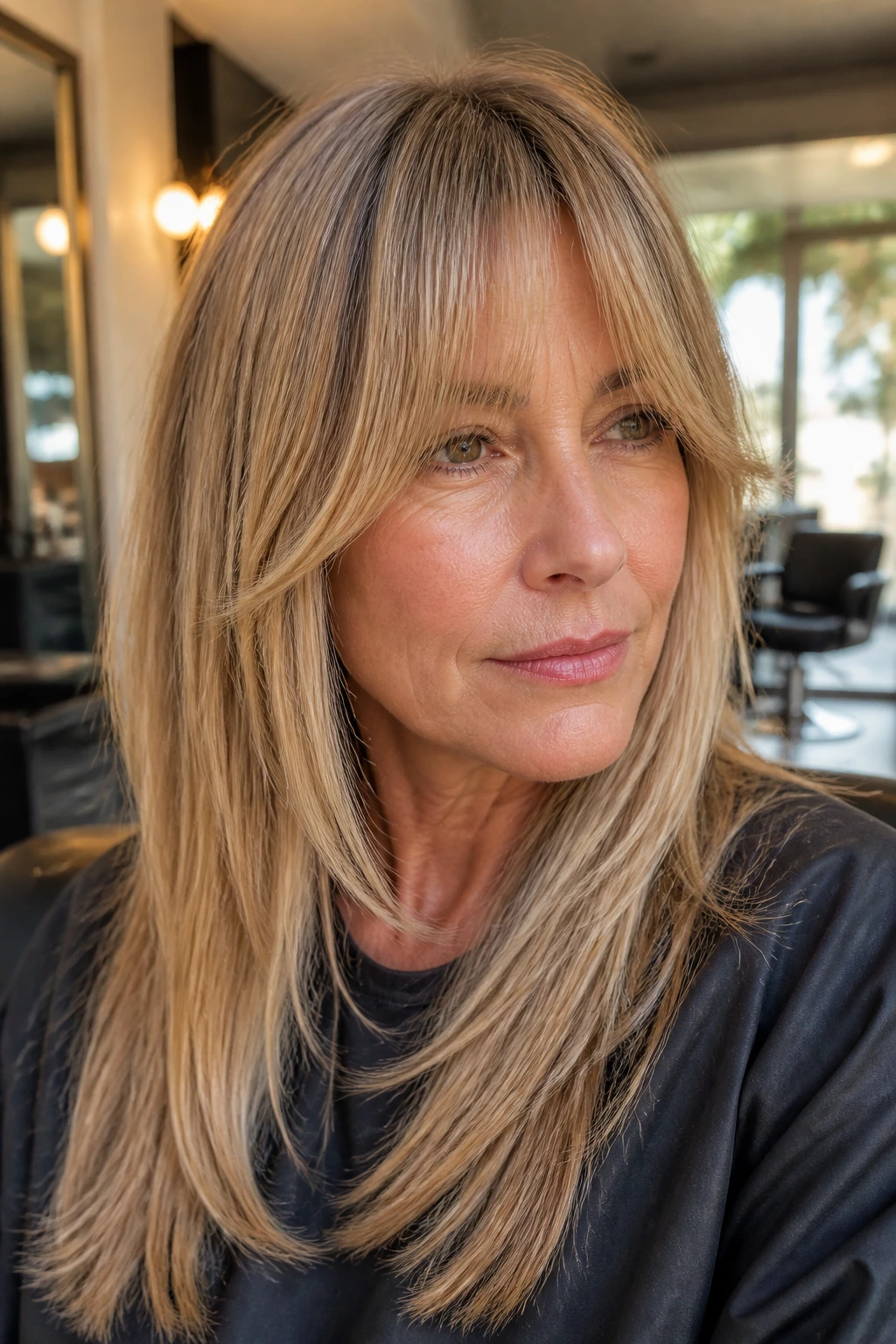
Some women do best with a literal reference cut: long, straight, layered bangs that sit just long enough to style three different ways. This version is built for communication. Tell the stylist you want a fringe that can wear down, split, or sweep aside without losing shape, and ask for the layers to begin around the cheekbone.
That request sounds simple, but it covers the real goal. You want movement at the front, not a rigid helmet of hair. If a cut can’t survive a humid day, a glasses day, and a no-makeup day, it’s not doing enough work.
Why Long Layers Keep Straight Bangs from Going Boxy
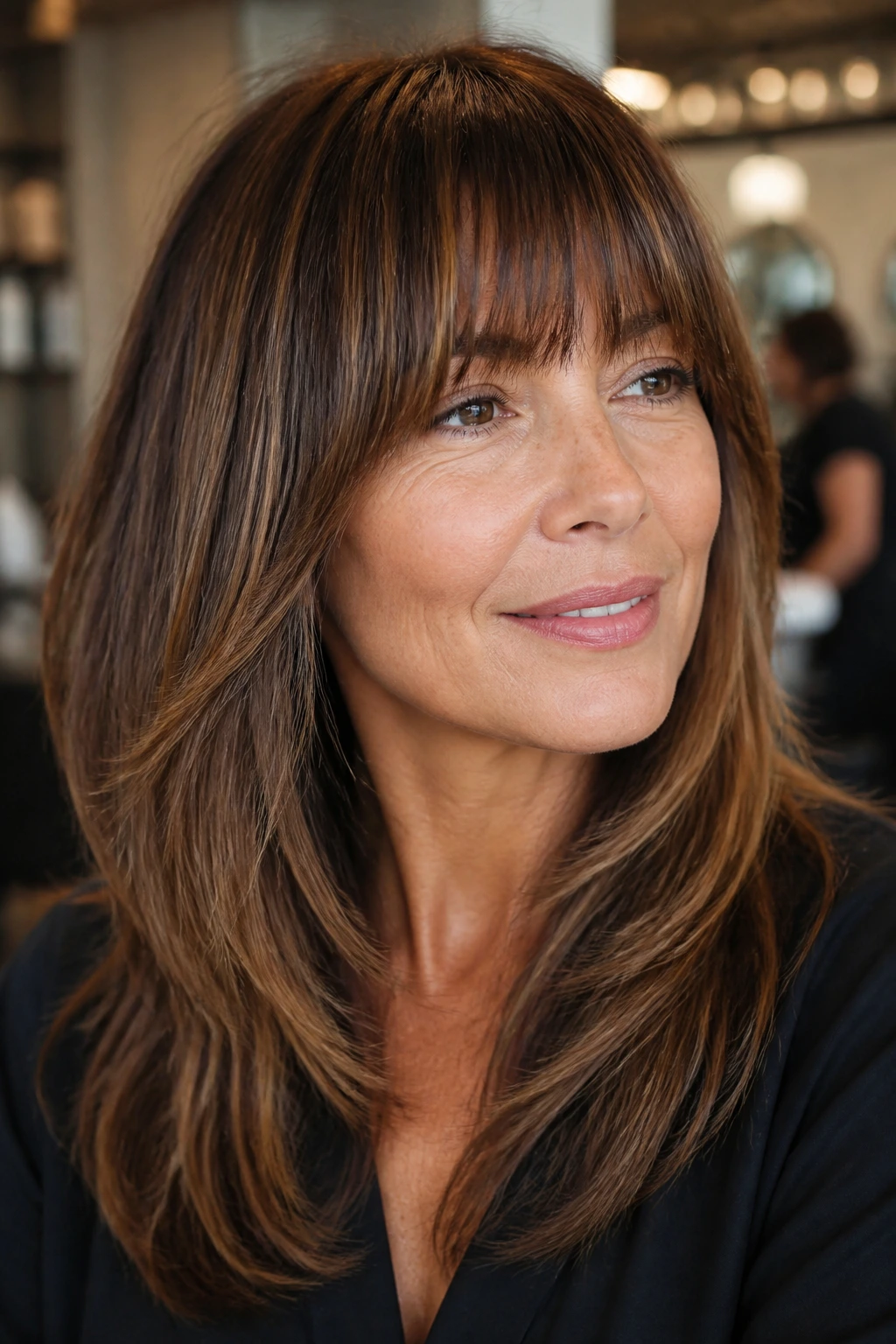
Straight bangs can go wrong fast when the rest of the haircut is too blunt. That boxy look is usually a weight problem, not a style problem. The front line is too heavy, the sides are too equal, and the hair has nowhere to fall except straight forward.
Long layers fix that by creating a path. The front pieces can move into the cheekbones, chin, or collarbone instead of stopping at the brow like a hard border. That movement matters even more on hair that has lost some density at the crown, because the layers keep the bang from looking like the only thing happening on the head.
I also like the way long layers make straight bangs easier to live with between appointments. A few uneven millimeters of grow-out do not ruin the shape. They usually help it. The fringe starts behaving like part of the haircut instead of a separate piece that needs babysitting.
Tools That Make These Bangs Behave
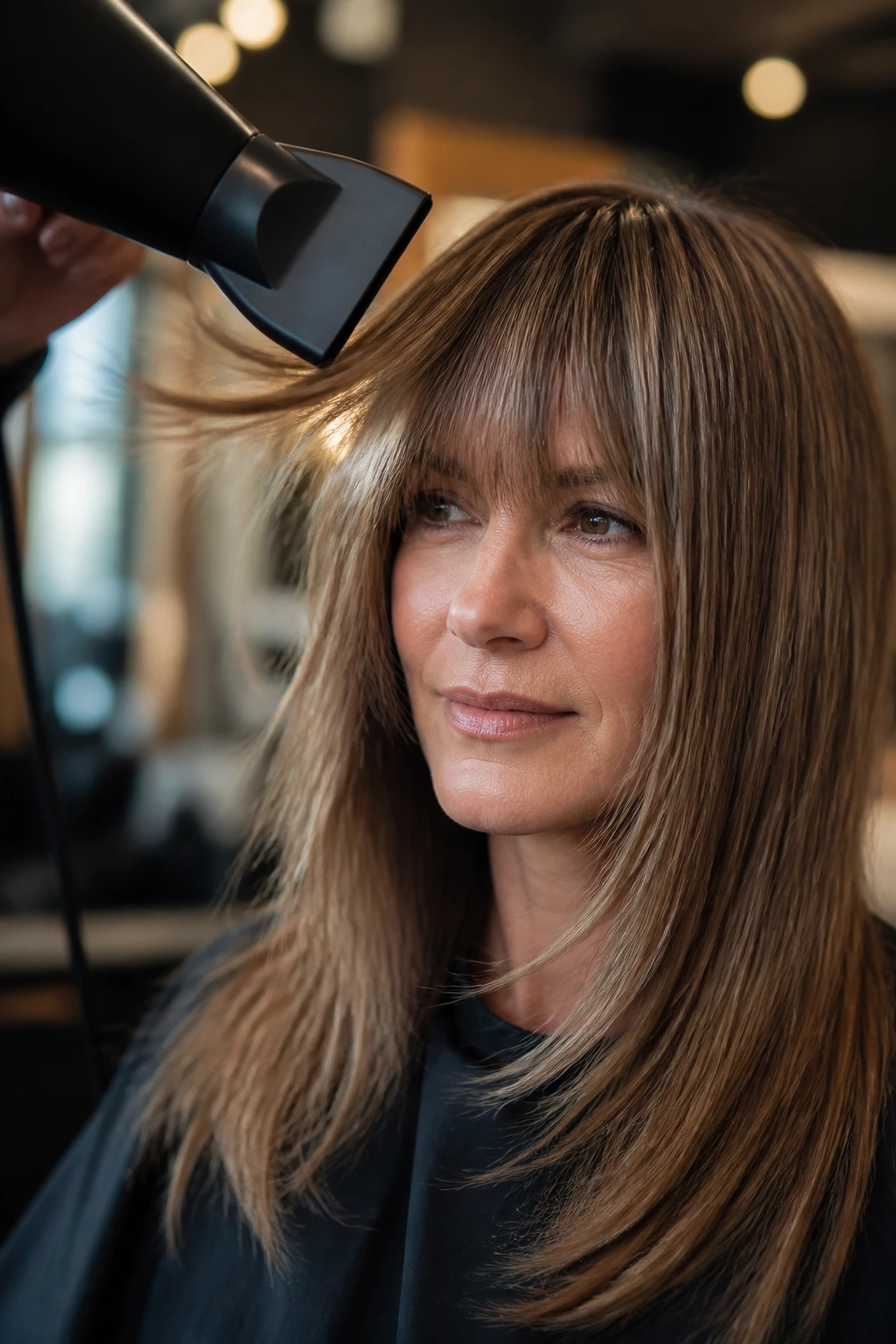
- Blow dryer with a concentrator nozzle: This keeps the airflow pointed where you want it, which matters when you’re smoothing the front without blowing the bangs all over your face.
- Small round brush, about 1 to 1.5 inches: The smaller size gives you bend at the roots and a gentle curve at the ends.
- Fine-tooth comb: Useful for separating a clean bang section and checking whether the middle is sitting straight.
- Flat iron with rounded edges: Good for a quick bend on the last inch of the fringe, not for pressing the hair flat like paper.
- Heat protectant spray: Use it every time you apply heat. The front section gets styled often and dries out faster than the rest.
- Lightweight root-lift spray or mousse: A little at the roots helps the bangs avoid that flat, sweaty forehead look.
- Hair clips: They keep the rest of the hair out of the way while you dry the fringe first.
- Dry shampoo: A small amount at the roots buys you another day before washing the front section.
How to Ask for Long Layered Straight Bangs at the Salon
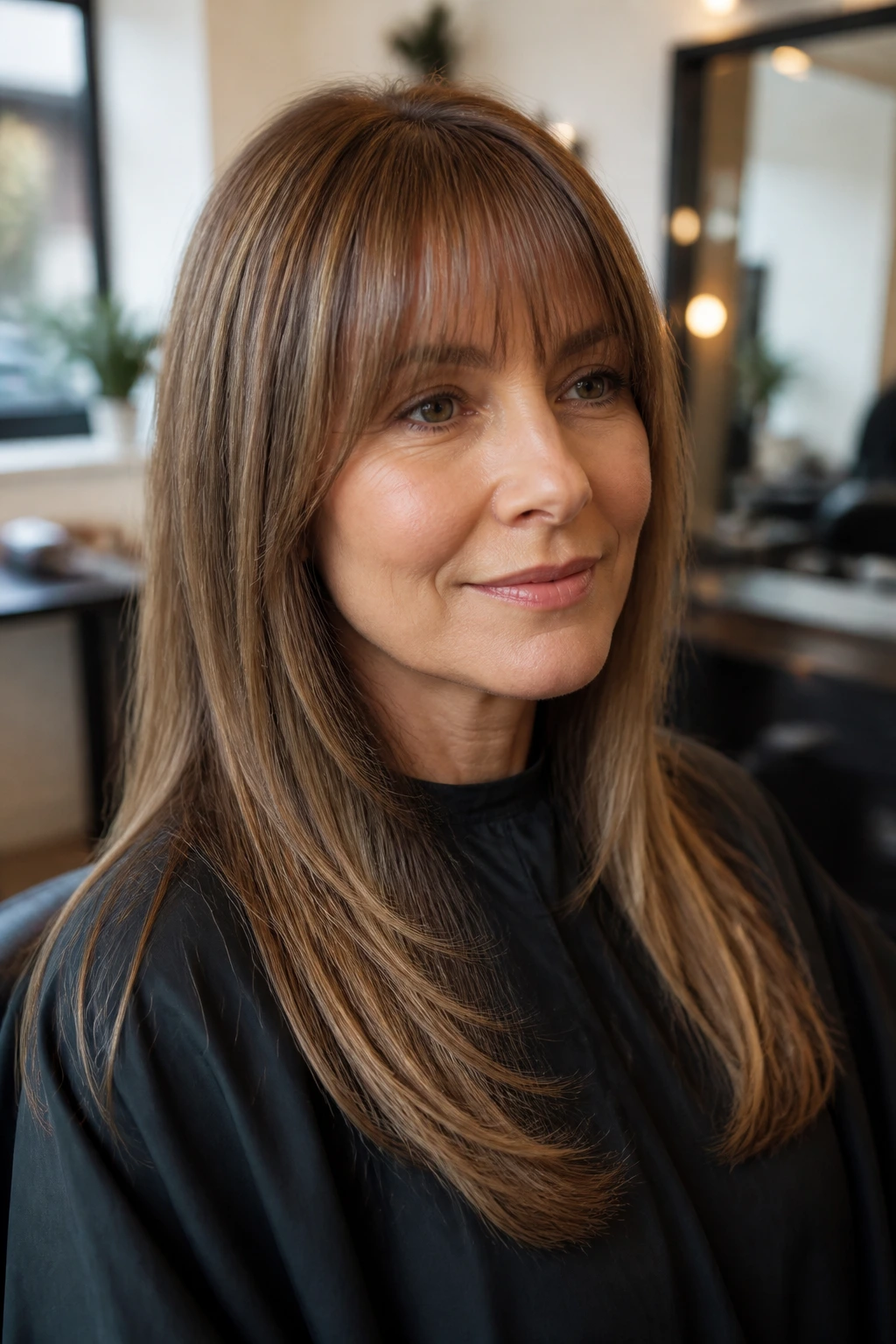
Bring a photo, but bring a sentence too. The photo shows shape. The sentence tells the stylist how much maintenance you want. Say whether you wear glasses, whether your hairline has a cowlick, and whether you want the bangs to sit above the brow, on the brow, or just below it.
Ask for the fringe to be cut with the hair dry or at least finished dry before the final trim. That is the part many people skip, and it matters because straight bangs can spring up or shrink more than expected. If your hair is fine, the stylist may leave a touch more length. If it is thick, they may remove weight from the inside rather than shredding the ends.
Be honest about your morning routine. If you’ll spend two minutes on the front and no more, say so. A bang that needs twelve minutes and a round brush the size of a salad plate is a beautiful nuisance.
How to Wear Long Layered Straight Bangs Well
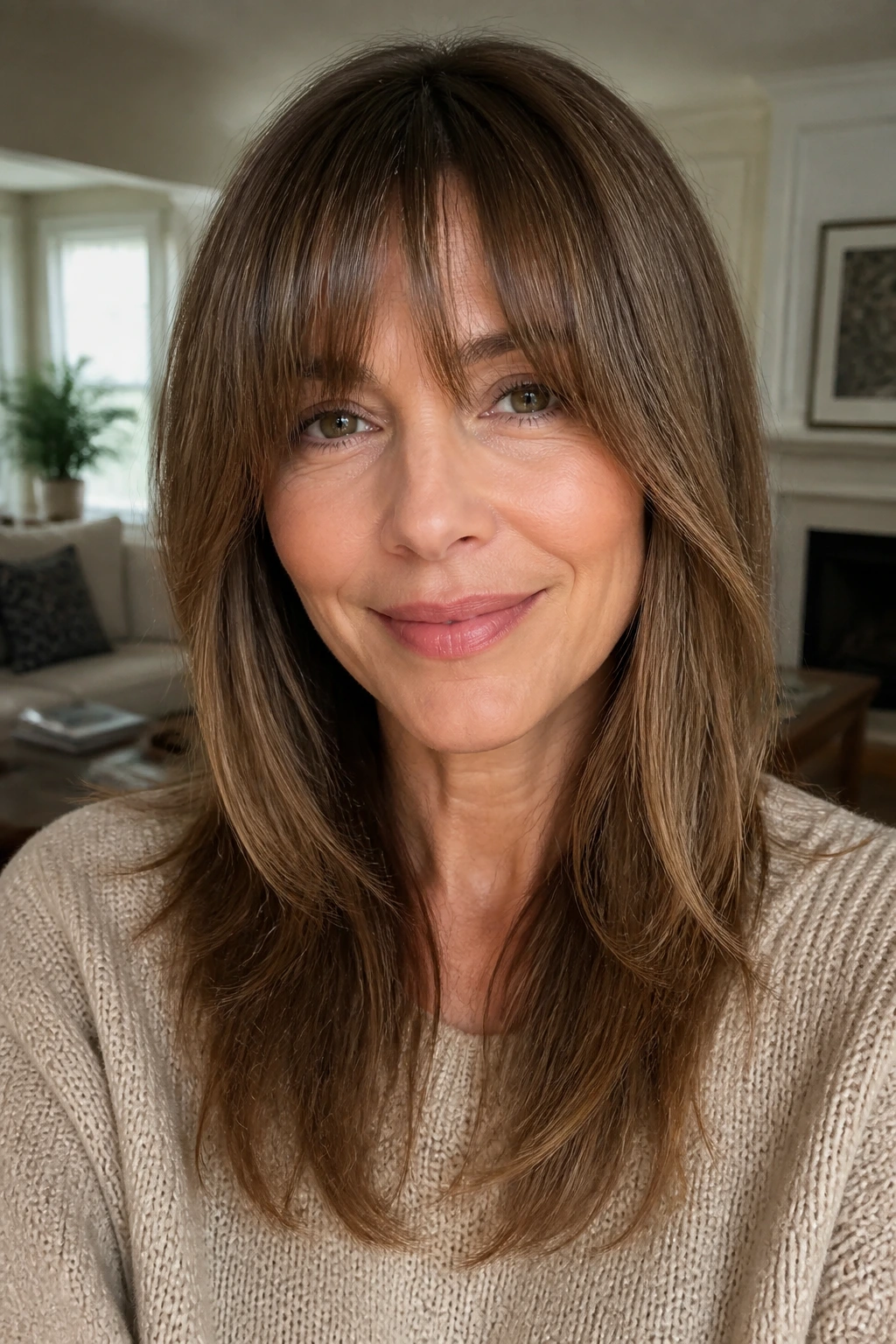
Presentation: Keep the fringe soft at the center and let the sides blend into the longest face-framing layers. A smooth root and a slightly curved end are usually enough; you do not need a salon blowout every day to make the cut look finished.
Pairings: These bangs work best with shoulder-length hair, lob cuts, long layers, and light texture around the jaw. Glasses, small hoops, and open necklines all help the front look intentional instead of crowded.
Portion: The bangs should cover enough forehead to change the face shape, but not so much that your brows disappear unless that is the look you want. A little space above or through the bangs often reads fresher than a solid wall of hair.
Finish: Choose either sleek or airy, then stay consistent. Shiny and smooth suits straight hair. Softly piecey suits hair that has a bend or a little natural wave.
Extra Polish and Personalization
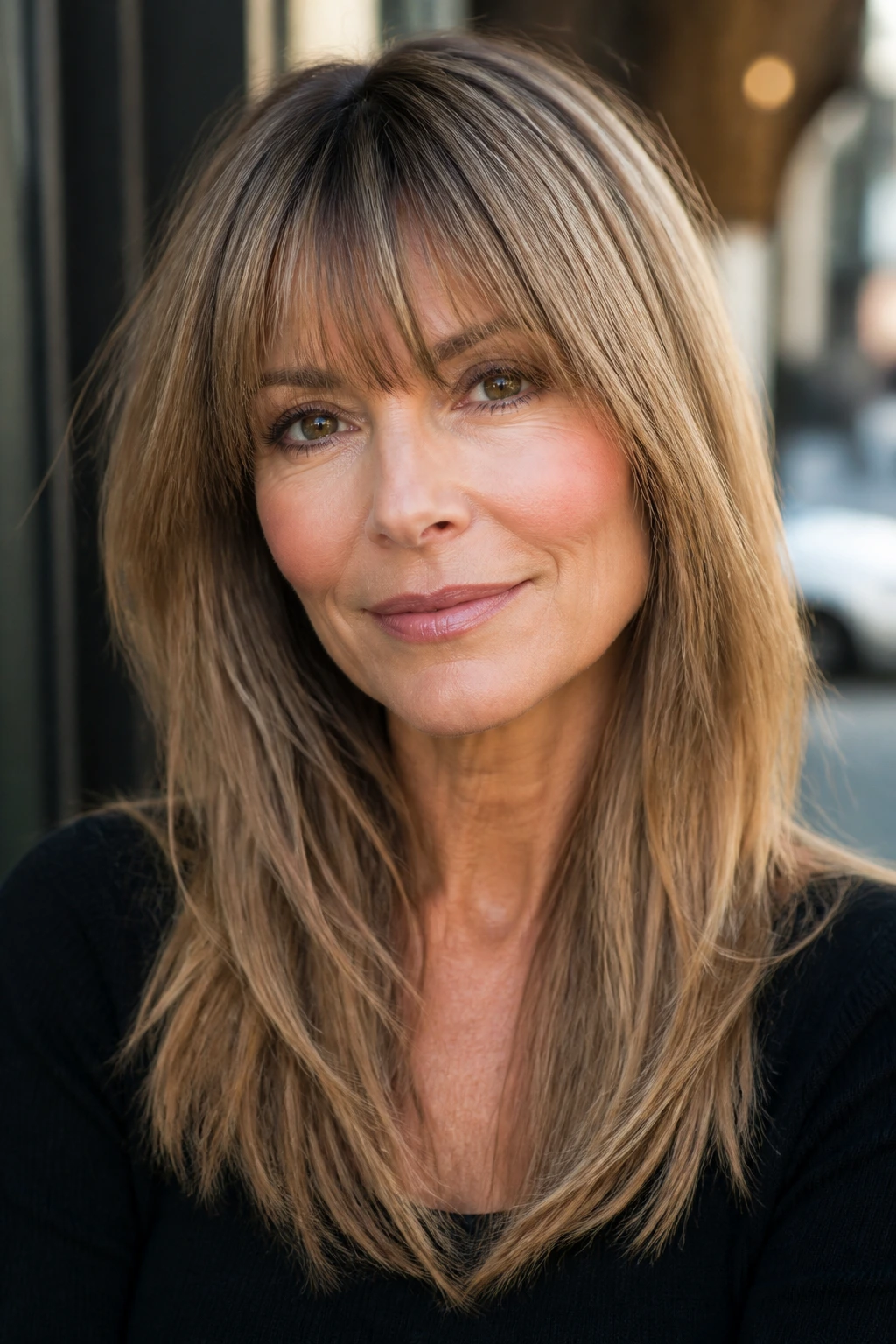
Root Lift: If the front collapses by noon, mist a root spray under the bang and blow-dry it from side to side for 15 to 20 seconds. That tiny change keeps the fringe from sticking to the forehead.
Texture Choice: A straight bang does not have to look flat. A slight bend at the ends—just one turn of a round brush or flat iron—makes the cut feel softer and more expensive-looking in the nicest, most practical sense.
Color Trick: Highlights around the fringe and temples can keep the front from looking heavy. On gray hair, a cool gloss or toner keeps silver pieces bright instead of muddy.
Make-It-Yours: If you like a little edge, keep the center fuller. If you want softness, make the side pieces longer. If you wear glasses, open the corners more than you think you need.
Keeping the Fringe in Shape Between Cuts
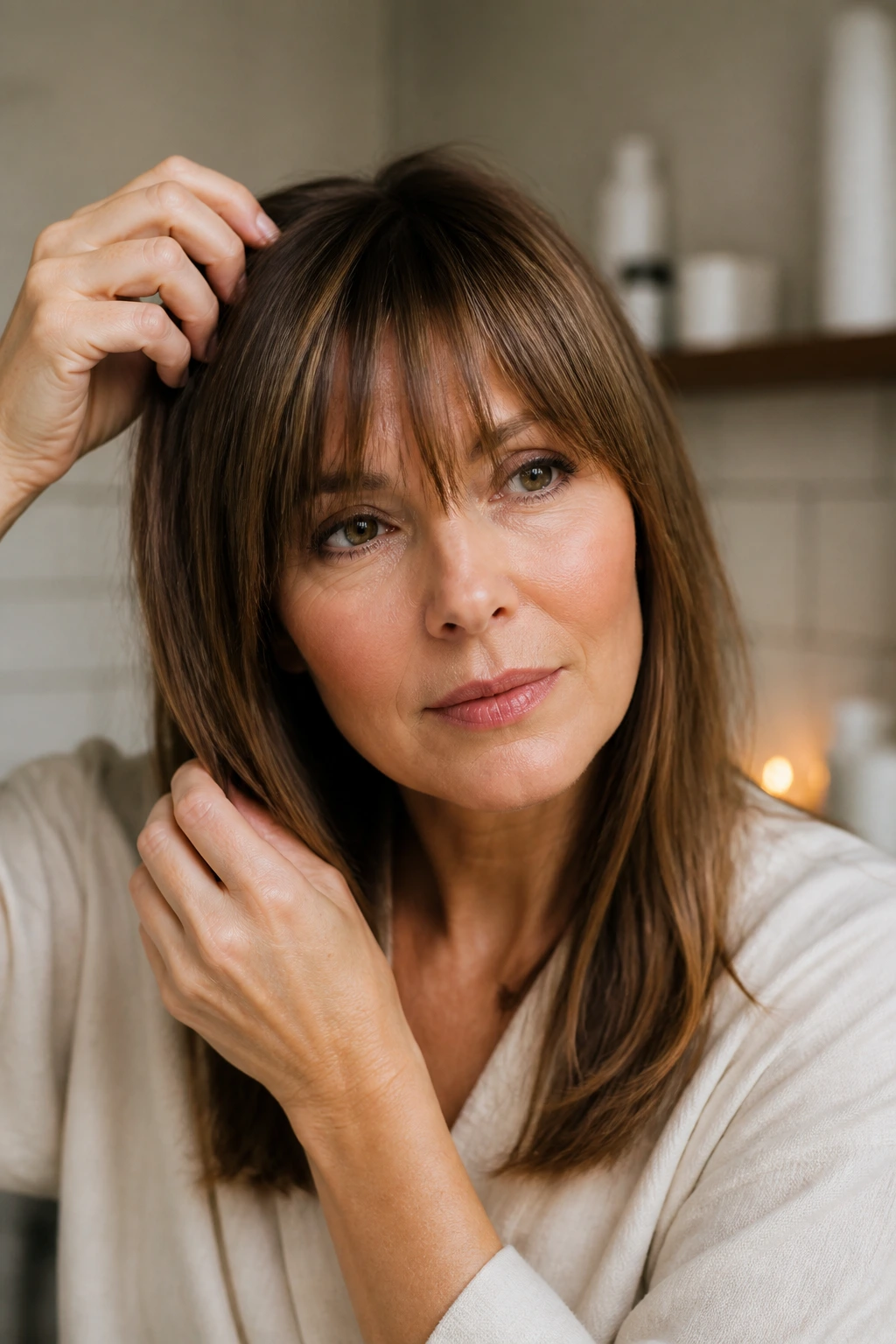
Bangs ask for more attention than the rest of the haircut. That’s the deal. Plan on refreshing the shape every 4 to 6 weeks if you want the line to stay clean, and give the face-framing layers a longer window—about 8 to 12 weeks—unless the rest of the haircut starts drifting out of balance.
Wash the front section more often than the lengths if your roots get oily. A quick sink wash or a little dry shampoo at the root can buy you time without dragging the rest of your hair into another full wash. If you use heat every morning, keep the temperature moderate and the blow-dry short; the front hairline can dry out and frizz faster than the back.
At night, pin the fringe loosely to one side or clip it back with a soft flat clip if it tends to kink while you sleep. It takes ten seconds and saves a lot of early-morning cursing.
Mistakes That Flatten the Whole Look
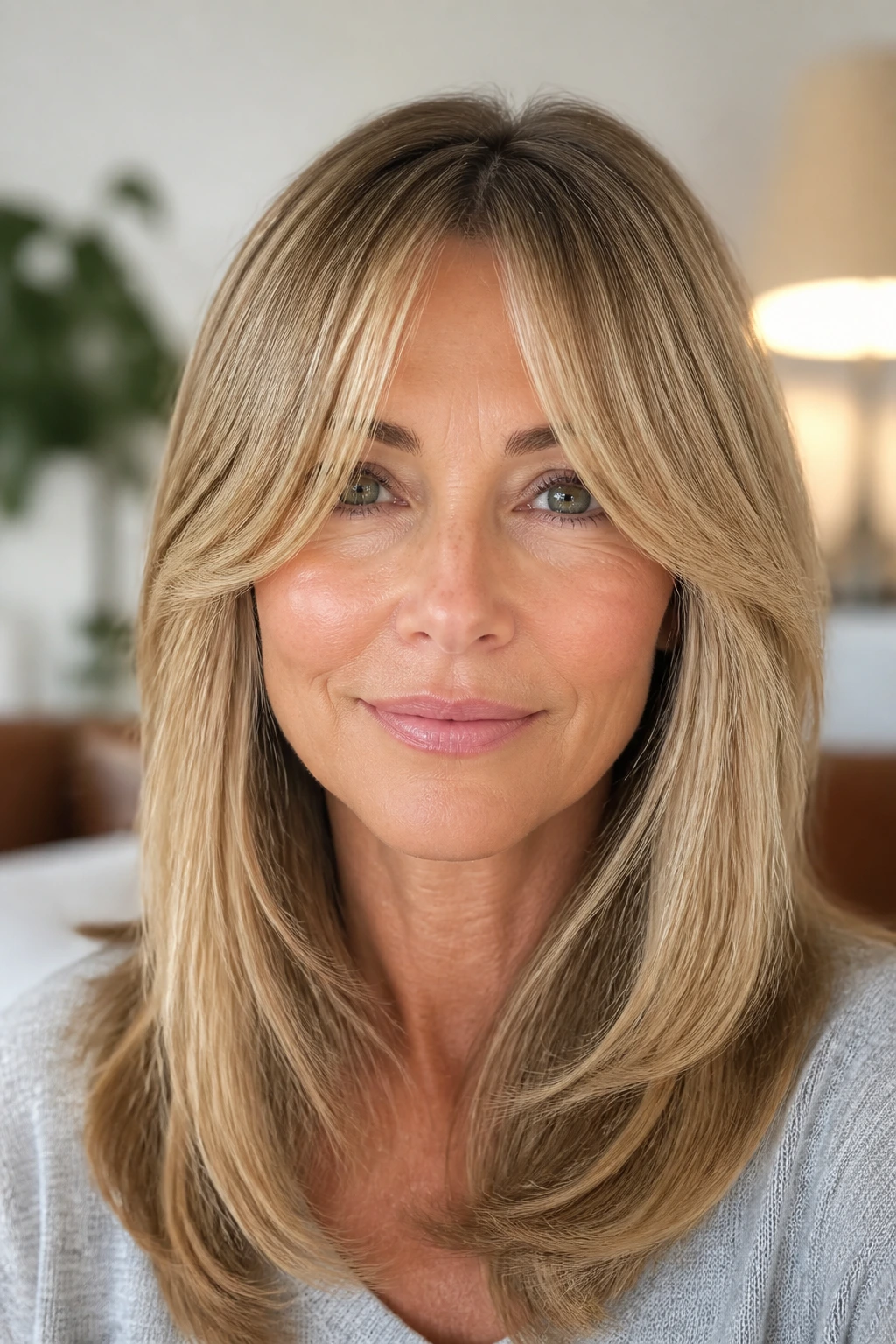
The biggest mistake is cutting the bangs too short on day one. They look cute in the chair, then they shrink, spring, or separate once you wash them. Leave a little length unless your hair grows downward very predictably.
Another one: over-thinning the fringe. If the ends are too wispy, they split into little strings that expose every forehead line and make the haircut look tired. The fix is a softer internal shape, not a shredded edge.
A third problem is ignoring the front hairline. Cowlicks do not disappear just because you want a clean line. If the fringe wants to split in one spot, work with it and shift the part slightly instead of forcing a fight you’ll lose every morning.
Variations and Adaptations to Try
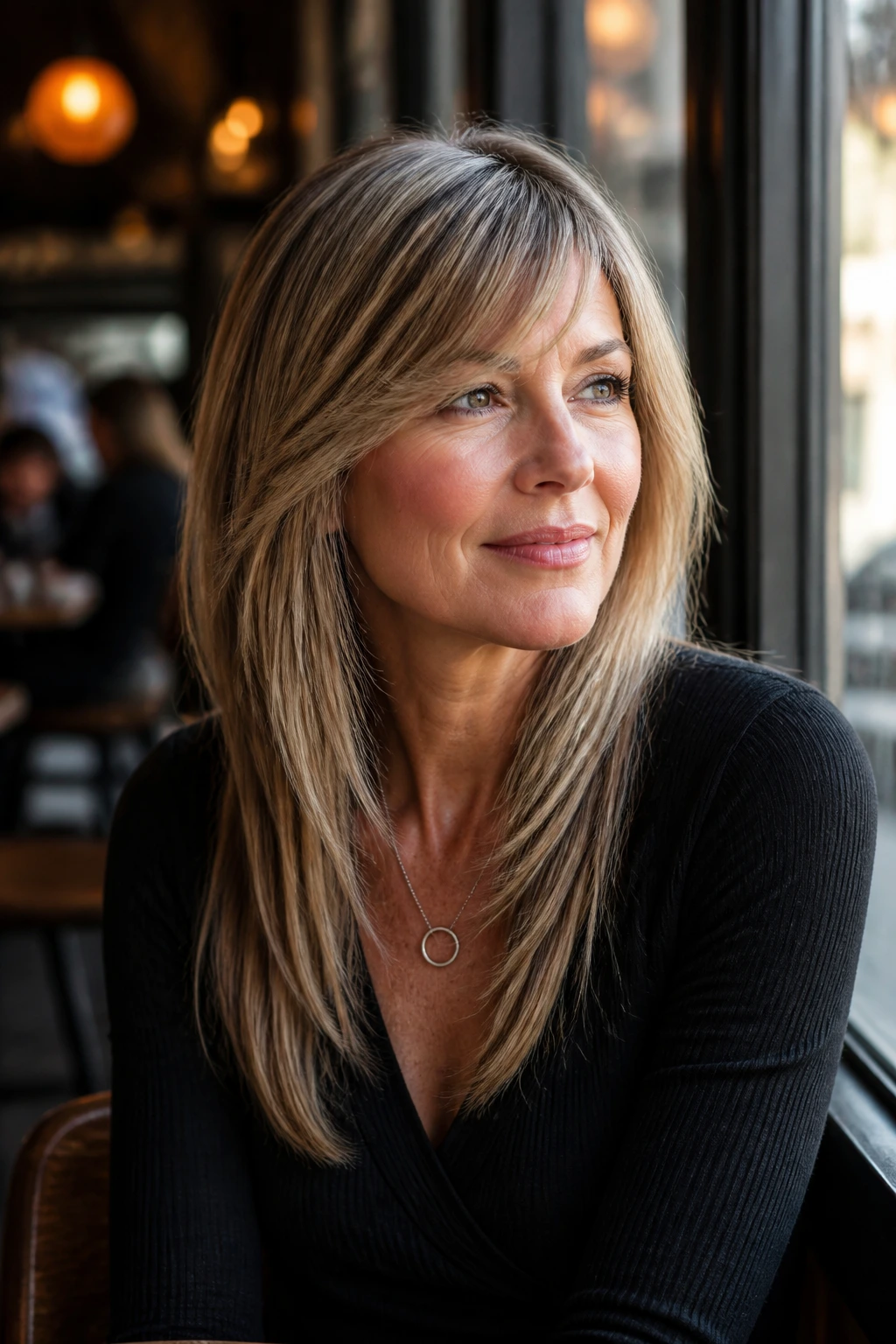
Soft Side-Part Reset: If the center feels too formal, move the part an inch off center and sweep the fringe diagonally. It opens the face fast and is kinder on days when your bangs are doing their own thing.
Thick-Hair Air-Out: Ask for weight removal inside the bang, not at the ends. That keeps the fringe from puffing outward and lets the front sit closer to the forehead.
Fine-Hair Lift Cut: Keep the fringe narrow and slightly longer. Fine hair needs shape more than density, and this version avoids the see-through effect.
Gray-Blend Softening: Let the bangs fall into lighter temple pieces so the natural gray blends into the haircut instead of stopping abruptly at the forehead.
Glasses-Friendly Arc: Trim the center just above the brow and allow the sides to lengthen toward the cheekbones. That curve stays clear of most frames and keeps the front from feeling crowded.
Frequently Asked Questions

Will long layered straight bangs work with glasses?
Yes, if the corners are left a little longer and the center is not cut too short. The best versions skim above the frames or sweep just beside them, which keeps the bangs from rubbing the lenses every time you move.
How often do these bangs need trimming?
Most need a shape-up every 4 to 6 weeks. If your hair grows fast or the fringe sits right on the brows, you may want a cleaner trim sooner. The rest of the layers can usually wait longer.
Can fine hair wear straight bangs without looking flat?
Absolutely, but the bang should stay narrow and lightly layered. A root-lift spray and a quick blow-dry at the front help far more than heavy cream or oils, which make fine hair slump.
What if my hairline has a stubborn cowlick?
Do not fight it head-on. Ask for a slightly longer fringe and a shape that can part a little off center. A cowlick usually behaves better when the haircut gives it room instead of trying to pin it down.
Are these bangs good for wavy hair?
They can be, as long as you’re willing to smooth the front section while leaving the rest of the hair more natural. The contrast can look good. The bang just needs enough heat styling to keep the line readable.
How do I grow them out without looking awkward?
Let the outer pieces lengthen first and keep the center trimmed only enough to stay out of your eyes. That turns the fringe into face-framing layers sooner, which makes the grow-out feel intentional instead of stuck.
Should I cut long layered straight bangs at home?
Only if you already know your hairline and have very good scissors. The front section shows every uneven snip. One small mistake is obvious in a way it never is in the back of the head.
Which face shapes do these bangs flatter most?
The honest answer: nearly all of them, as long as the length and density are adjusted. Round faces often like longer corners, square faces usually prefer softness at the temples, and longer faces often do best with a fuller center.
The Fringe That Earns Its Keep
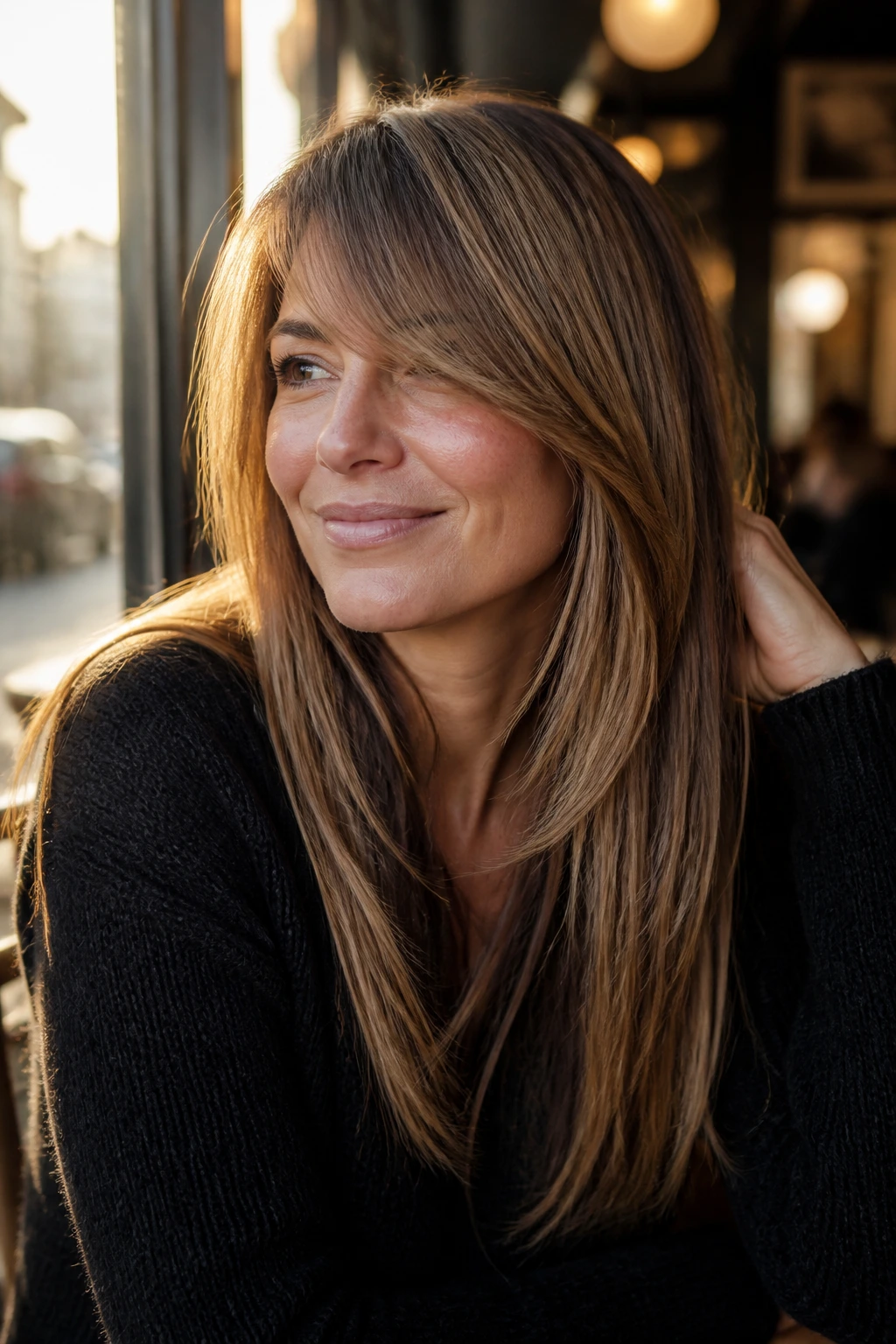
The best thing about long layered straight bangs is not that they’re trendy. It’s that they stay useful. They can sharpen a haircut, soften a forehead, work around glasses, and grow out without turning into a mess you hate looking at in the mirror.
That kind of flexibility matters more than a dramatic before-and-after. A bang that fits your mornings, your hair texture, and your patience is the one that gets worn. The rest just sits in the inspiration folder.
Pick the version that matches how you actually live, and let the cut do some of the work for you.