



A clean forehead can be a feature, not a problem. With Asian no bangs for short hair and oval faces, the cut works best when it stops pretending the face needs fixing and starts treating the face shape like an asset. Oval faces already give you room to play. Short hair just changes the room’s furniture. A blunt jaw line, a tucked ear, a lifted crown, a soft side part — those are the details that decide whether the cut feels crisp or forgettable.
And Asian hair texture changes the whole conversation. Many straight, dense, or silky strands sit differently than fine Western hair; they can fall flatter at the root, swing harder at the ends, and hold a sharp line with less effort once the shape is right. That means no-bang short cuts can look especially polished, but they can also go limp fast if the weight is in the wrong place. The trick is not “more hair.” It’s smarter weight control.
That’s why the best cuts in this category tend to do one of two things: open the face with a clean front, or build a shape around the cheekbones and jaw so the eyes still land where you want them. The forehead stays visible. The line stays intentional. And if your hair is the kind that grows out with a little attitude, that matters even more.
Why These 25 Cuts Earn Their Keep
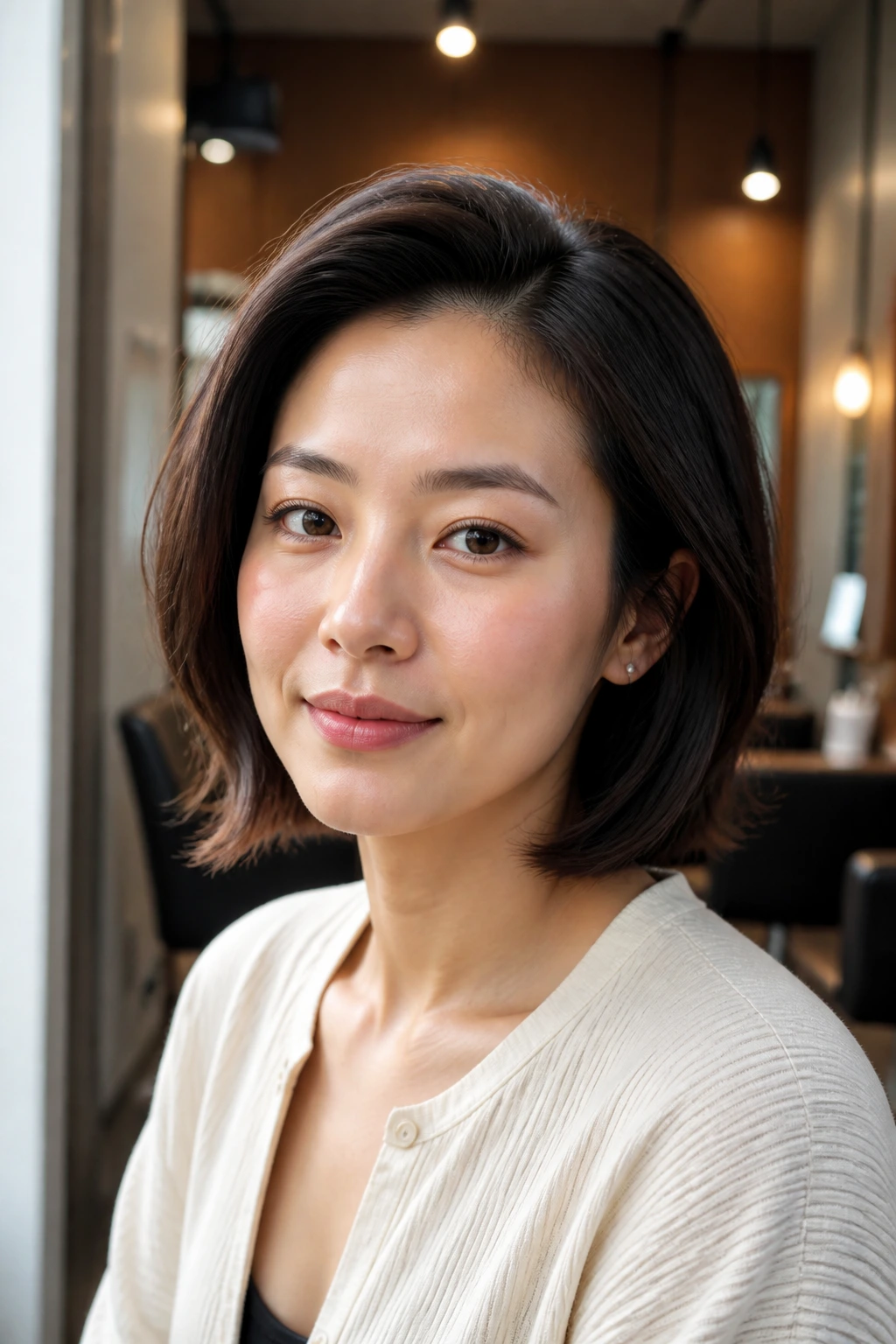
- They keep the forehead open: That matters on oval faces because you do not need fringe to create balance; a clean front line often looks stronger.
- They work with straight, dense strands: Asian hair that wants to lie flat can make blunt edges look polished instead of messy when the cut is precise.
- They give you parting freedom: Center, side, and deep side parts all change the mood without changing the haircut itself.
- They flatter glasses and earrings: Shorter hair with no bangs leaves room around the temples and cheeks instead of crowding the face.
- They grow out with less drama: A well-built bob or crop can stay wearable for weeks because the front is not fighting a fringe line.
- They let bone structure show: Oval faces can take sharp, soft, and airy shapes; the face does the heavy lifting, which is a nice break for everyone involved.
Why Asian No Bangs for Short Hair and Oval Faces Rarely Fight the Face Shape
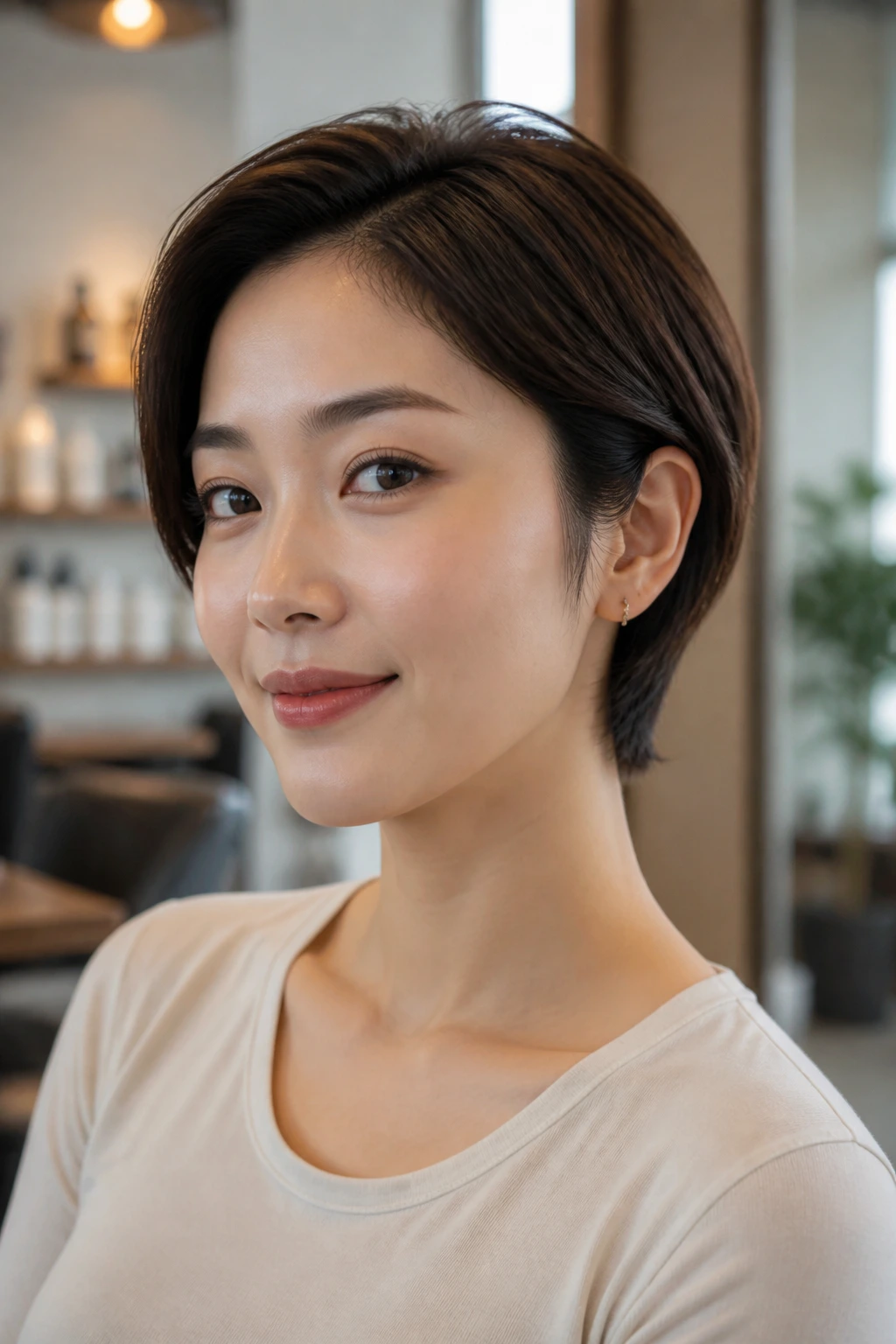
Oval faces are easy to underestimate. People talk about them like they’re a blank canvas, which is nonsense. They’re actually more like a very good frame: the proportions are already there, so a haircut only needs to decide what to emphasize.
Short hair without bangs works because the face doesn’t need a forehead curtain to “correct” anything. A chin-length bob can let the jaw do the talking. A pixie can open up the eyes. Even a blunt box bob reads better on an oval face than on a round or square one, because the length and width tend to land in a more forgiving spot.
The real work happens in the details. On straight Asian hair, a center part can look razor-clean or painfully flat. A side part can add lift, but if the root collapses, the whole shape slides toward the ear. So the best versions keep a little movement somewhere — crown texture, nape taper, face-framing that starts below the brow, or ends that bend under just enough to keep the cut from looking like one heavy block.
That’s the part most salon conversations skip. People ask for “short hair” and “no bangs,” then wonder why the result feels plain. The shape matters more than the label. And when the shape is right, the forehead can stay completely open and still feel finished.
1. Sleek Chin-Length Center-Part Bob
This is the cleanest place to start. The hair falls right at the chin, the part sits down the middle, and the whole cut looks strongest when the ends are blunt but not chunky. On an oval face, that straight line draws attention to the jaw without crowding the forehead.
It works especially well on naturally straight Asian hair because the texture already supports a smooth surface. If your strands are thick, ask for the interior weight to be softened a bit so the bob doesn’t puff out at the sides. A small bevel at the ends keeps it from reading helmet-like. I’d keep this one sharp, not fluffy.
Style it with a paddle brush and a quick bend under at the last inch. Flat. Polished. Done.
2. Soft A-Line Bob with a Tapered Nape
This cut is longer in front and shorter in back, which means the eye gets pulled forward instead of stuck on the back of the head. The tapered nape keeps the neck clean, and the longer front pieces skim the jaw in a way that feels deliberate rather than stiff.
On oval faces, the slight angle adds shape without needing fringe. It’s a good choice if your hair is dense and hangs heavy at one length. The back removal takes some of that bulk away, which is exactly what you want when the goal is movement, not puff.
Ask for this at the salon
Ask for the front to land somewhere between the jaw and the top of the neck, with a soft graduation through the back. If you wear your hair tucked behind one ear, mention that too. The cut should still hold its line when one side is exposed.
3. Tucked-Behind-the-Ears French Bob
A French bob without bangs sounds simple, but the ear tuck changes everything. Once the sides are pushed back, the cheekbones show more, the face opens up, and the cut starts to feel sharper than the average bob that just hangs there.
This one loves slightly wavy hair, but straight Asian hair can wear it too if you add a little bend through the ends. Keep the length around the lip or just under the cheekbone. Too long, and you lose the compact feel. Too short, and the whole thing can start to resemble a helmet unless the texture is broken up a bit.
The best part? It looks better slightly undone than perfectly groomed. A tucked side, a loose side, and no fringe is a very good combination.
4. Bixie with Long Crown Pieces
The bixie sits between a bob and a pixie, which makes it one of the smartest no-bang choices if you want short hair without going full crop. The crown stays a little longer, the sides stay soft, and the forehead remains open.
Oval faces handle this shape well because the longer top creates vertical movement while the sides stay close enough to keep the profile neat. On thick Asian hair, the key is not to leave the top too bulky. You want lift, not a mushroom. A bit of point-cutting through the crown can stop it from collapsing into one heavy sheet.
This is a good cut if you want easy styling with some edge. A pea-sized amount of matte cream on dry hair is usually enough.
5. Feathered Pixie Crop
A feathered pixie can be a lifesaver for hair that feels too strong at longer lengths. The crown stays soft and layered, the sides taper in close, and the forehead stays wide open, which can make oval features look even more balanced.
Because many Asian hair textures are thick and straight, feathering has to be handled with care. Too much thinning and the ends turn wispy in a bad way. Too little and the cut sits like a cap. The sweet spot is light internal texturing that breaks up the surface without stripping the shape.
Keep the top pieces long enough to sweep back with your fingers. That tiny bit of movement is what keeps the cut from looking severe.
6. Side-Part Pixie-Bob
A deep side part does a lot of work here. It creates a diagonal line across the forehead, lifts one side, and keeps the face from feeling too symmetrical. On an oval face, that asymmetry can be flattering in a way that feels modern instead of fussy.
The pixie-bob length gives you options. You can tuck one side, flip the part, or slick it down if you want the cut to look more formal. It’s also friendly to glasses because the front doesn’t crowd the frames.
If your hair falls flat at the root, spray a little root lift at the part line and blow-dry against the grain for ten seconds. That tiny move makes the whole style look more intentional.
7. Textured Hush Cut Bob
The hush cut is one of those styles that sounds soft because it is. The ends are lightly layered, the perimeter stays light, and the face is framed without any actual bangs sitting on the forehead. On oval faces, it keeps the face open while still giving the haircut some motion.
This version works well if your hair has a little natural bend or if you’re willing to rough-dry it and let the ends do their own thing. It’s not a stiff bob. It’s softer around the cheek, lighter near the jaw, and easier to grow out than many sharper cuts.
Best for
- Hair that goes flat when it’s all one length
- People who want movement without a full shag
- Oval faces that already have good balance and don’t need heavy front pieces
A little sea salt spray goes a long way here. Too much and the cut turns dry fast.
8. Rounded Bubble Bob
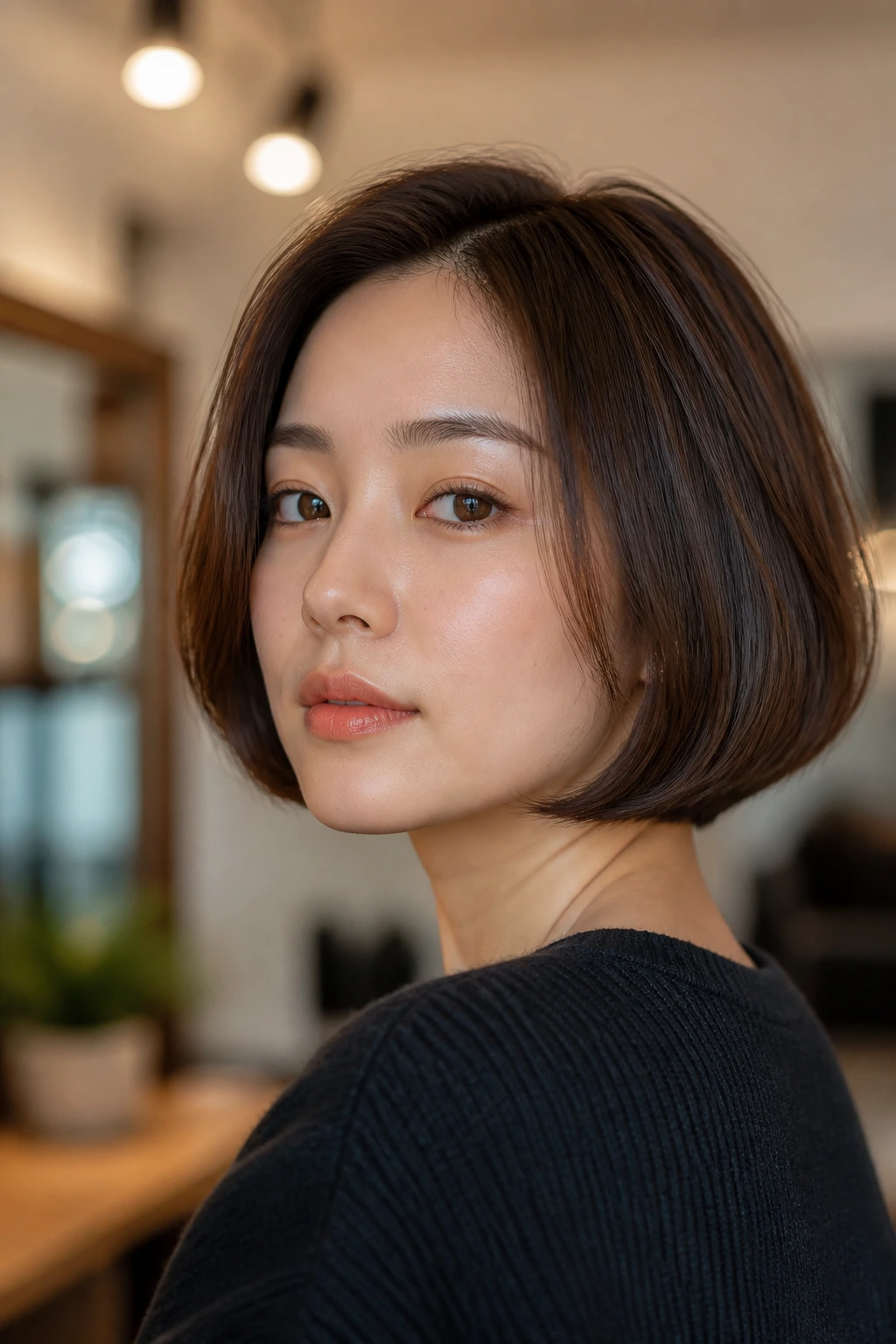
The bubble bob curves inward at the ends, which sounds simple until you see how much cleaner it makes the whole silhouette. Instead of hanging straight down, the line bends softly under the chin and around the jaw. That inward curve gives the face a frame without adding bangs.
Oval faces can take this shape easily because the rounded outline keeps the proportions neat. On straight Asian hair, it can look especially polished if the ends are beveled and the crown stays smooth. The danger is too much width at the sides. Keep the curve controlled, not puffy.
This is a good choice if you like a look that feels finished even when you haven’t styled it much. The shape does most of the work.
9. Asymmetrical Short Bob
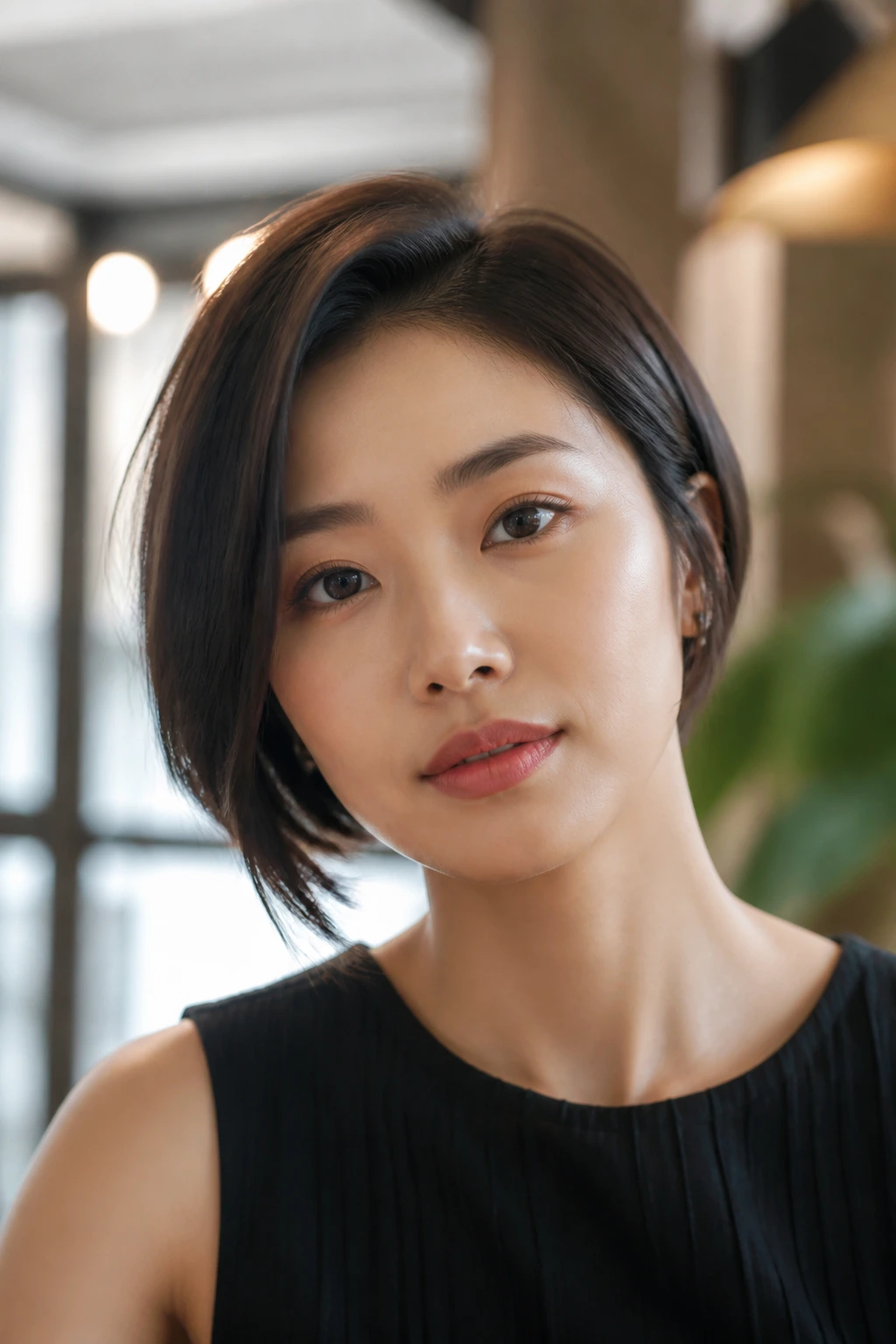
One side a little longer. That’s the whole point, and it’s enough. A slight asymmetry can make short hair feel less predictable while still keeping the forehead clear and the face open.
On an oval face, this cut adds angle without needing fringe. The longer side can skim the cheekbone or brush the jaw, while the shorter side stays tucked or exposed. Keep the difference subtle — usually just 1 to 2 centimeters. Any more and the cut starts to shout when it should just nod.
It’s especially nice if one side of your hair naturally wants to part differently from the other. Instead of fighting that habit, the cut borrows it.
10. Inverted Bob with a Clean Nape
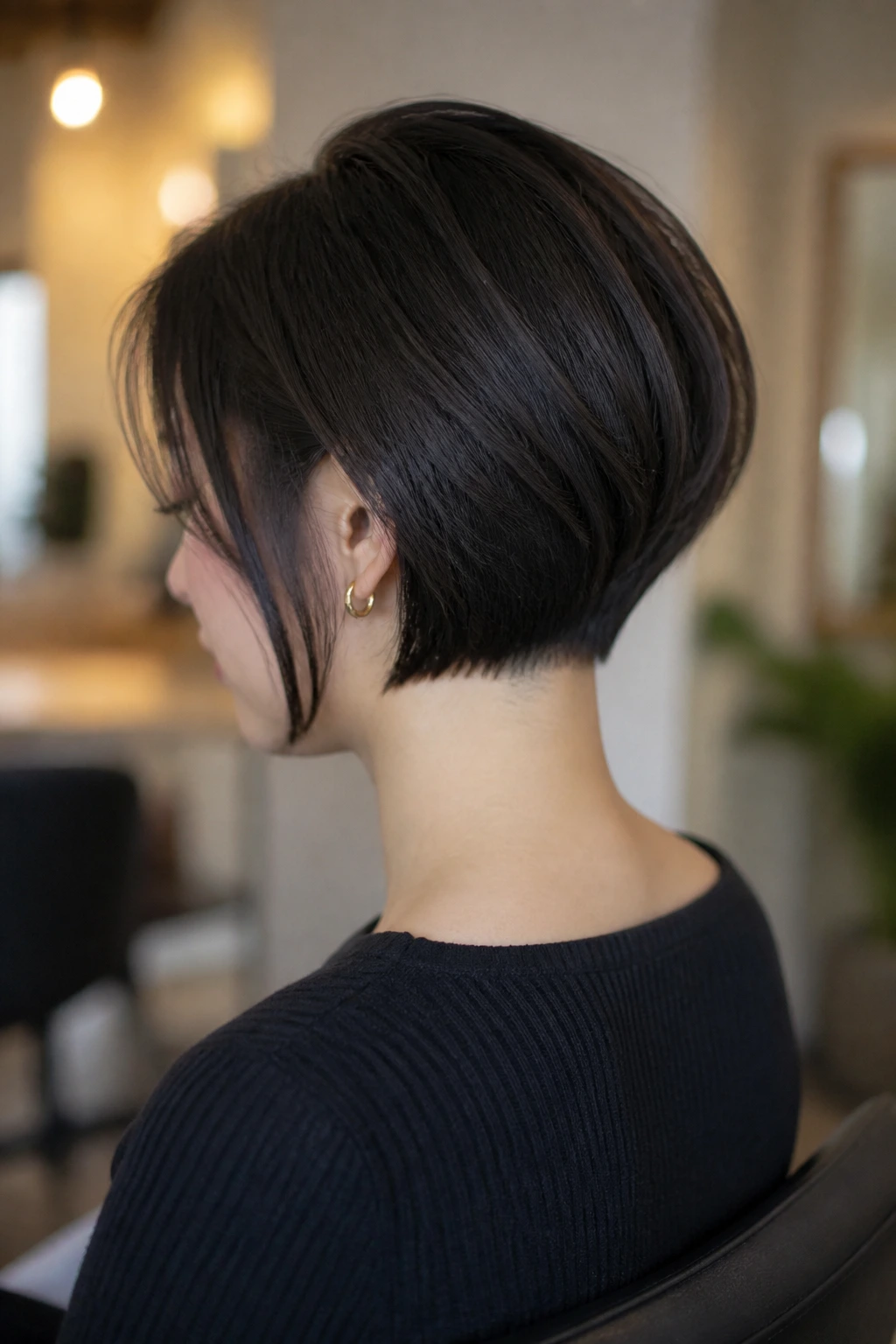
An inverted bob gives you stacked volume at the back and longer pieces at the front, which makes it one of the best options if your hair is dense and refuses to sit flat. The nape is neat. The front stays open. The forehead gets all the space it needs.
Oval faces work well with this shape because the front angles can follow the line of the jaw without dragging the face down. If your hair is naturally straight, the back stacking has to be done with care so it doesn’t turn bulky. A good stylist will remove weight from the lower back but leave enough structure to keep the shape lifted.
This is one of those cuts that looks expensive when it’s freshly blown out. Which is convenient.
11. Wavy Chin-Length Bob
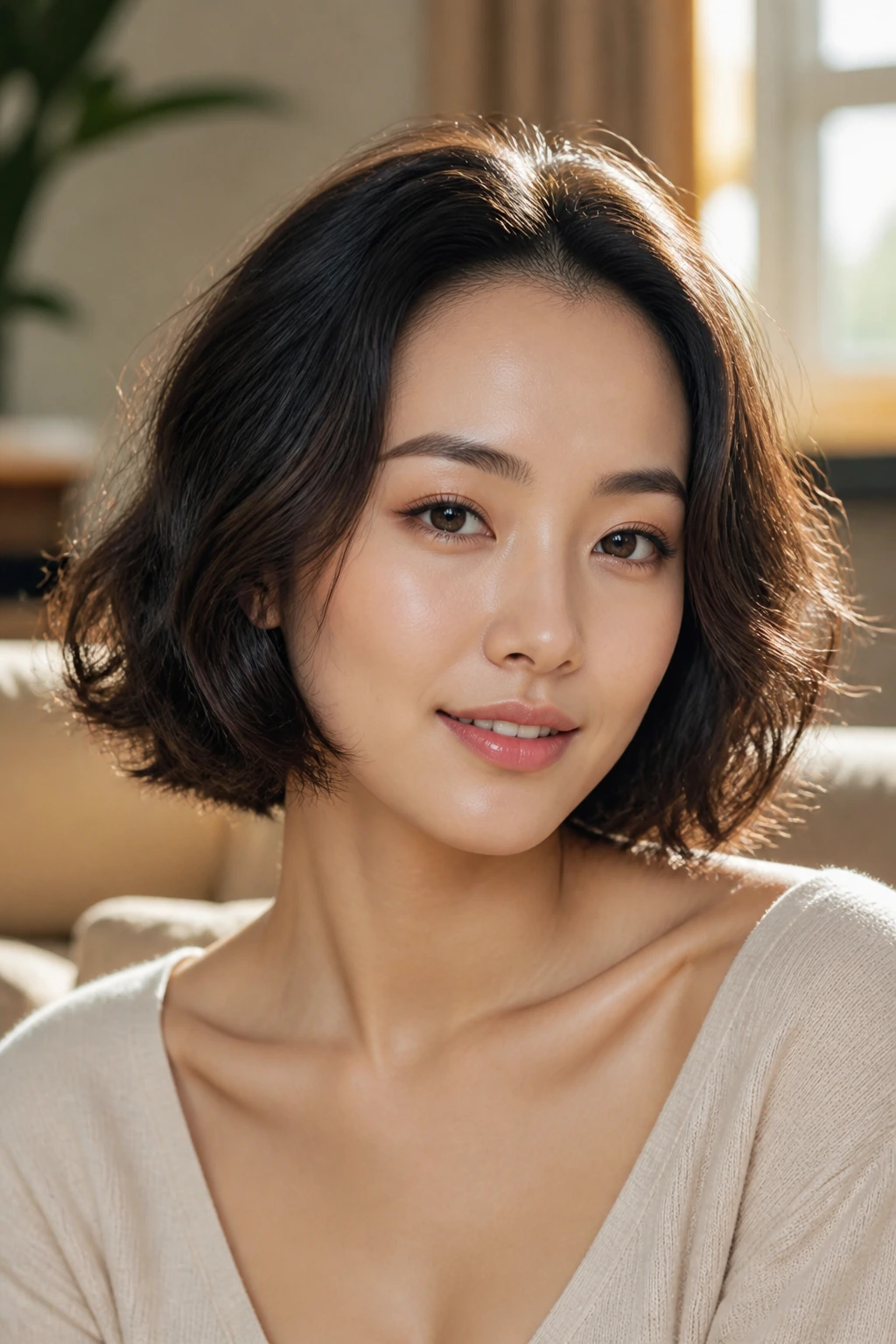
If your hair has any bend at all, let it show. A wavy chin-length bob keeps the ends loose and the forehead completely open, which can make an oval face look even longer in the best way — not stretched, just elegant and clean.
The key is not to overstyle the wave. If you force every strand into the same bend, it loses the easy shape that makes this cut work. Use a diffuser if your hair is naturally wavy, or twist a few damp sections around your fingers and let them dry that way. Leave the part soft. The cut should move.
This one reads casual, but not sloppy. There’s a difference.
12. Slicked-Back Wet Look Crop
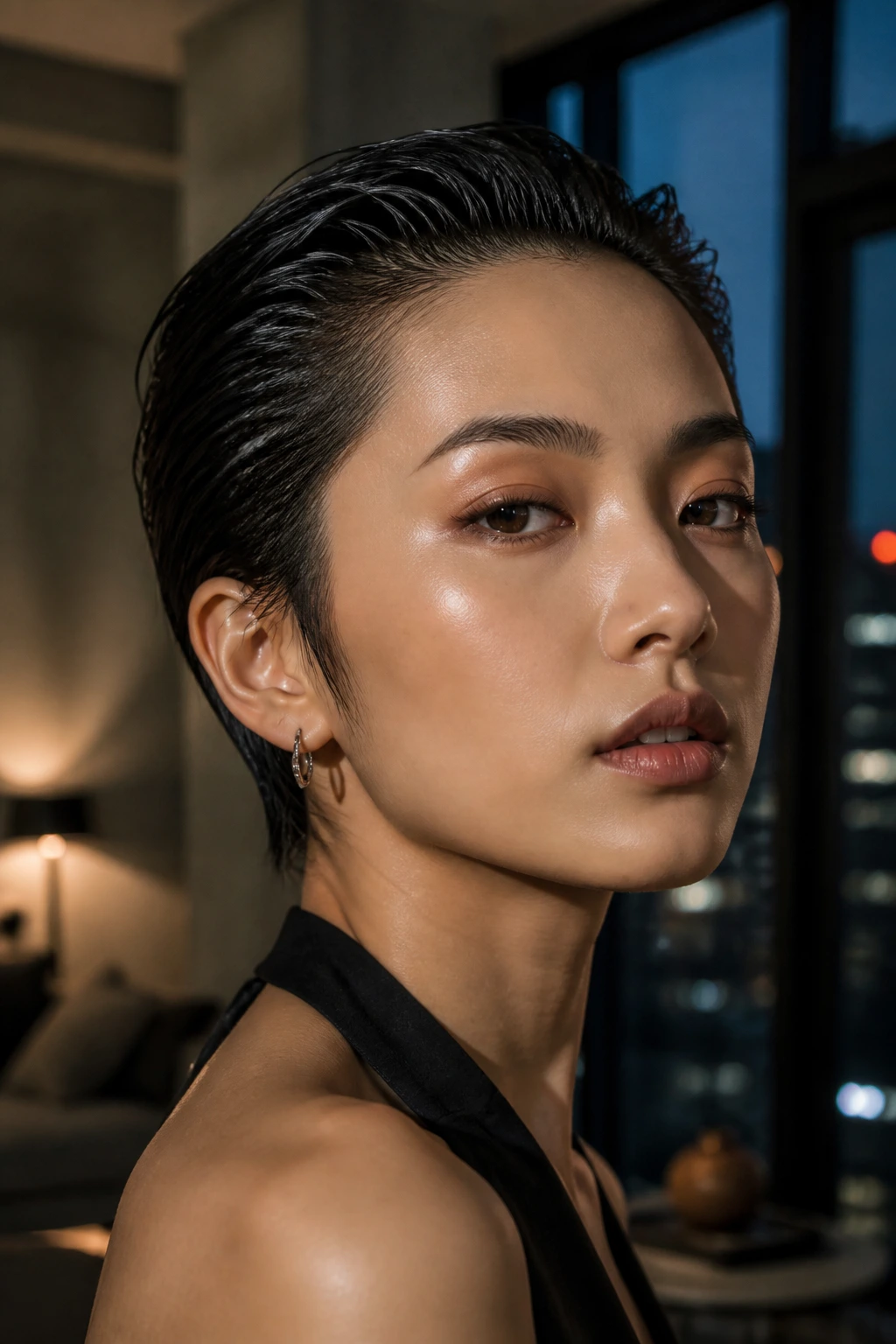
This is the bold one. The forehead is fully exposed, the hair is combed back or swept close to the head, and the finish has that glassy, wet look that turns a short cut into a statement. On an oval face, it works because the shape is already balanced enough to carry the openness.
It’s not an everyday style for most people, and that’s fine. It doesn’t need to be. Use it for evenings, photos, or any day when you want the haircut to look sharply intentional. A strong gel or styling cream, a fine-tooth comb, and a fast blow-dry at the roots are enough.
The caution? Don’t overload the front with product. Too much and it slides instead of staying sculpted.
13. Curly Rounded Bob
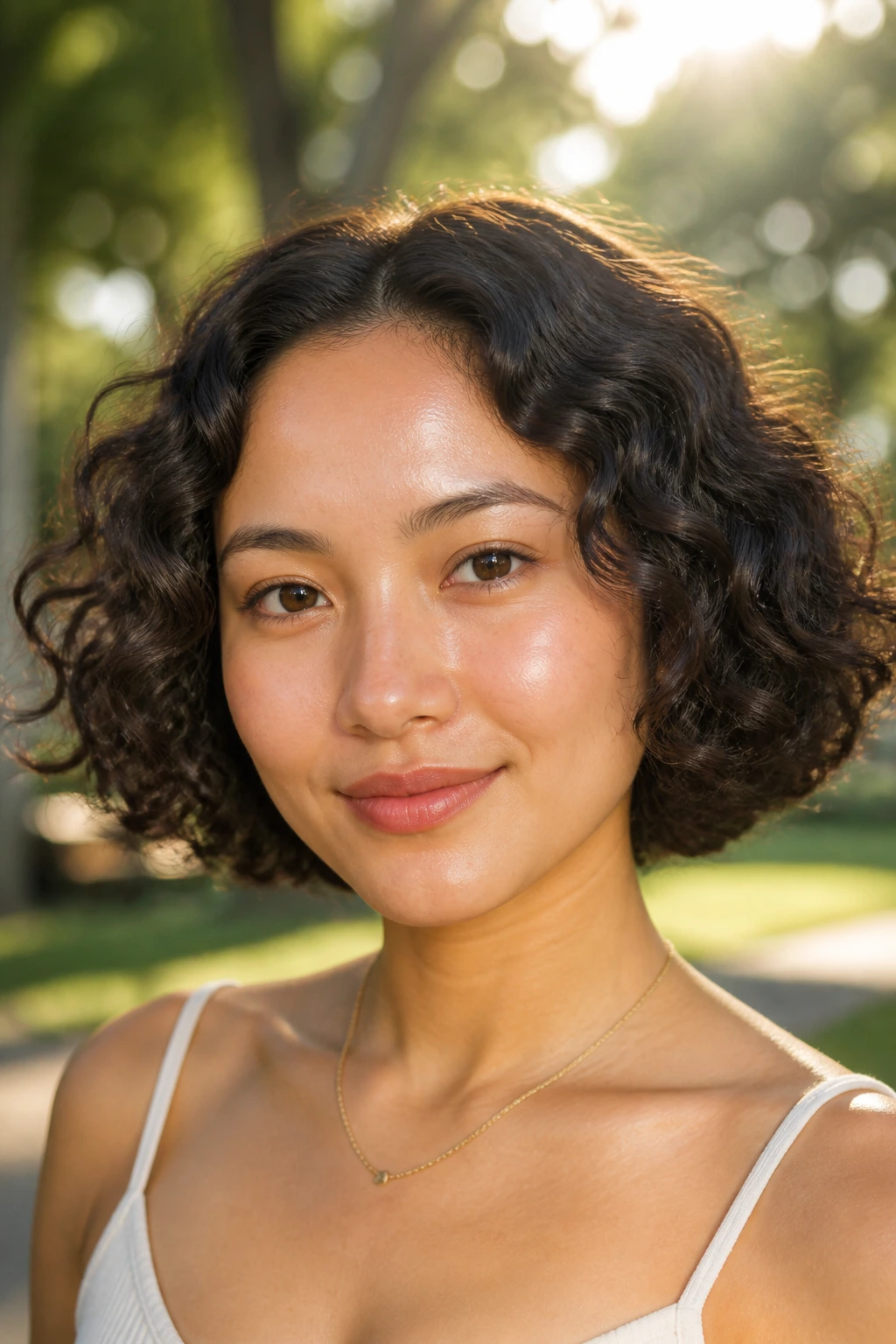
Curly hair in a short no-bang shape can be lovely, but it needs respect. The rounded bob lets the curls sit around the face like a halo while leaving the forehead open, which keeps the whole thing from turning into a curly curtain.
On oval faces, this shape brings width in the right place — around the cheeks and jaw, not over the brows. If your curls shrink a lot, cut it longer than you think. Length disappears fast once the hair dries. I’d also ask for the shape to be adjusted on dry hair if possible, because curl pattern changes everything.
A little leave-in and a diffuser are enough. Resist the urge to stretch the curls out too much. Their shape is the point.
14. Wolf Cut Lite Crop
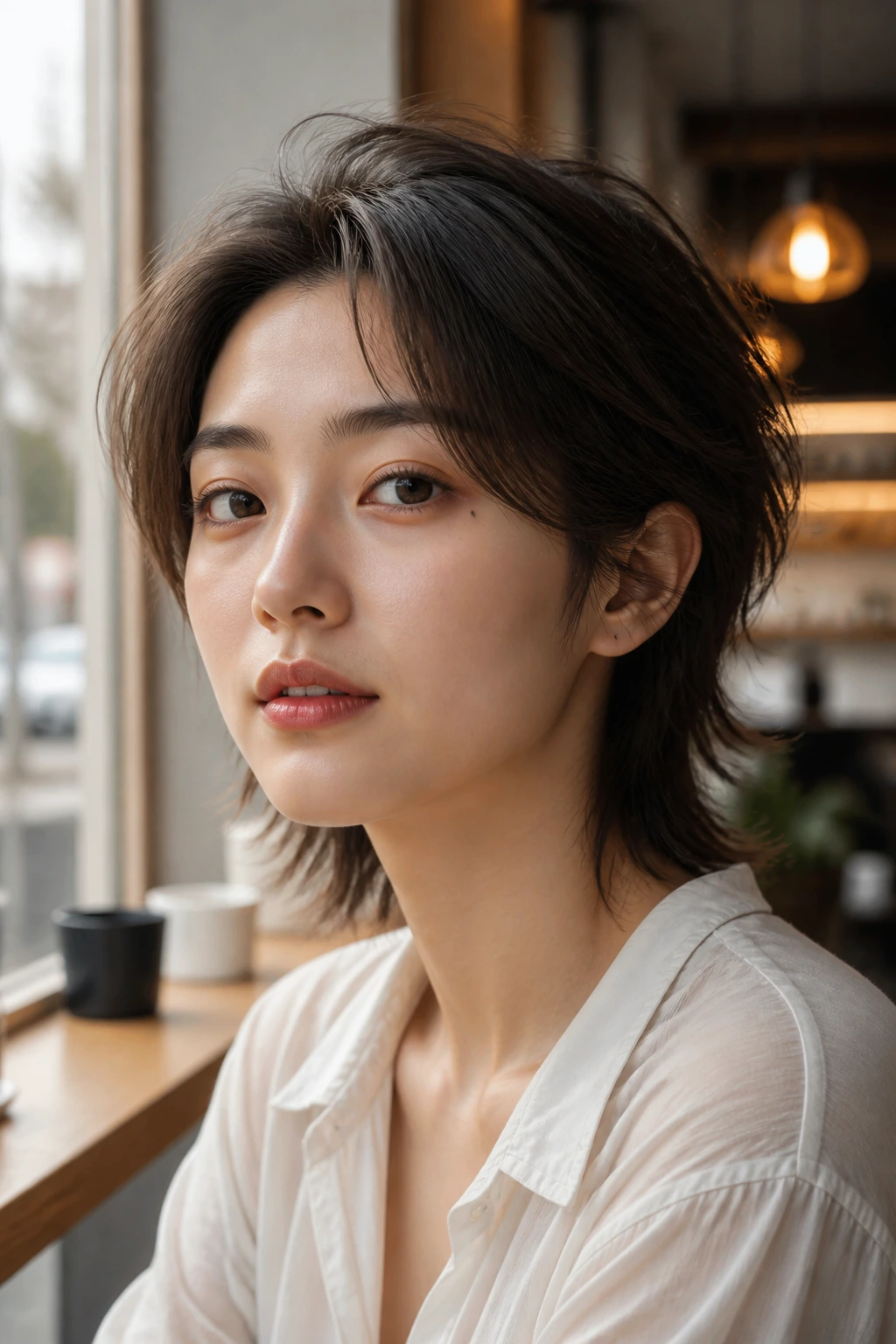
The wolf cut gets dragged around a lot, usually by people who want it to do too much. A lite version is smarter. It keeps the top airy, the ends piecey, and the nape a little longer without dropping into full shag territory.
Without bangs, this cut uses the layers around the sides and crown to keep the face open while still adding texture. On oval faces, the extra movement stops the short cut from looking too tidy. It’s especially useful for hair that turns triangular at the ends if left one length.
Keep the layers soft, not chopped to bits. The goal is movement with shape, not chaos.
15. Mixie Cut
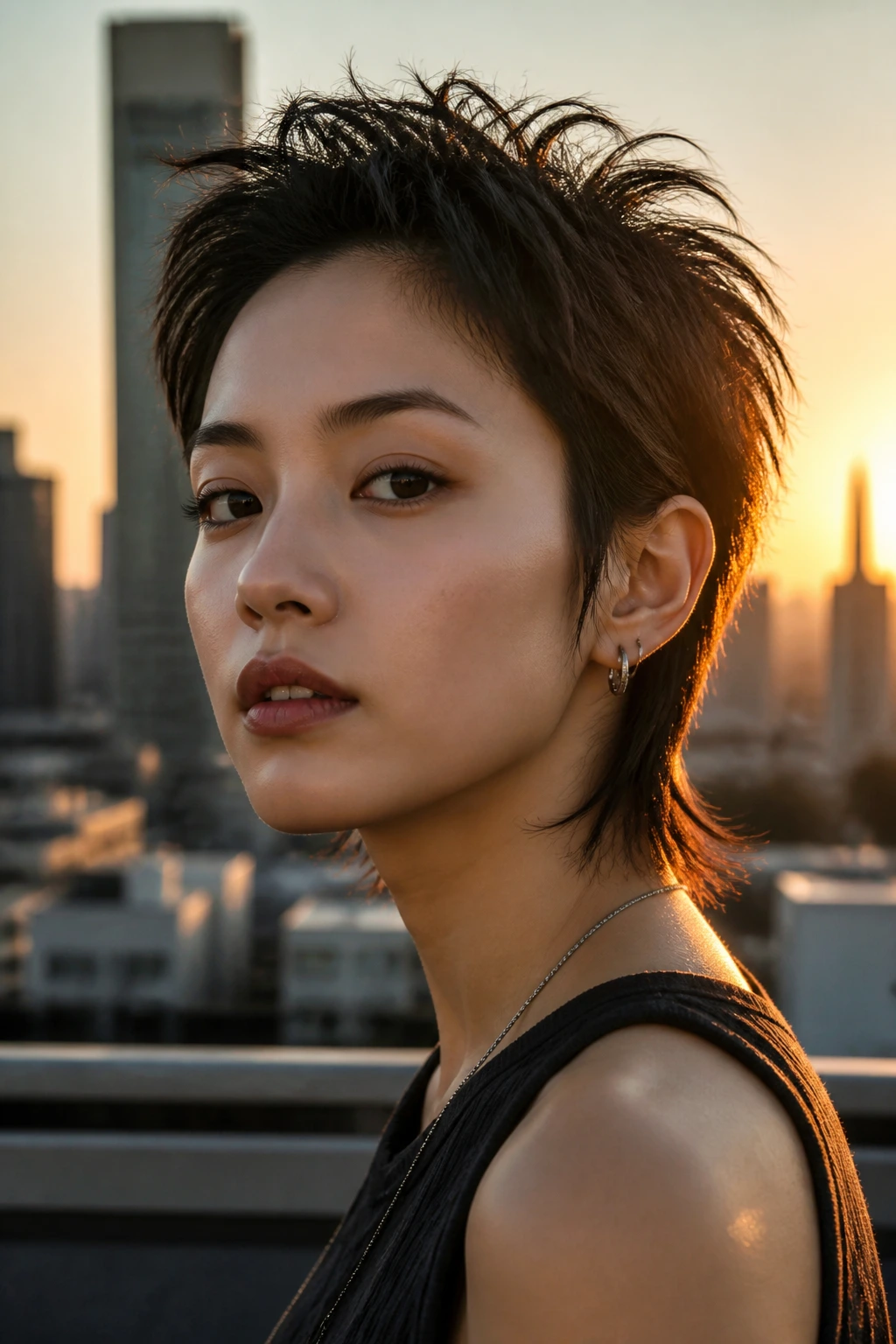
The mixie lives between a pixie and a mullet, and yes, that sounds slightly odd until you see how good it can look on straight, thick hair. The top stays short and lively, the nape hangs a little longer, and the forehead stays clear because there’s no fringe sitting across it.
This cut gives oval faces something to work with: a little edge at the back and softness near the temples. It’s one of the more modern-feeling short styles on this list, but it does ask for some styling. A matte paste or styling balm helps separate the top layers so the shape doesn’t collapse into one block.
It’s not for someone who wants their hair to behave politely. That’s part of the charm.
16. Ear-Length Blunt Bob
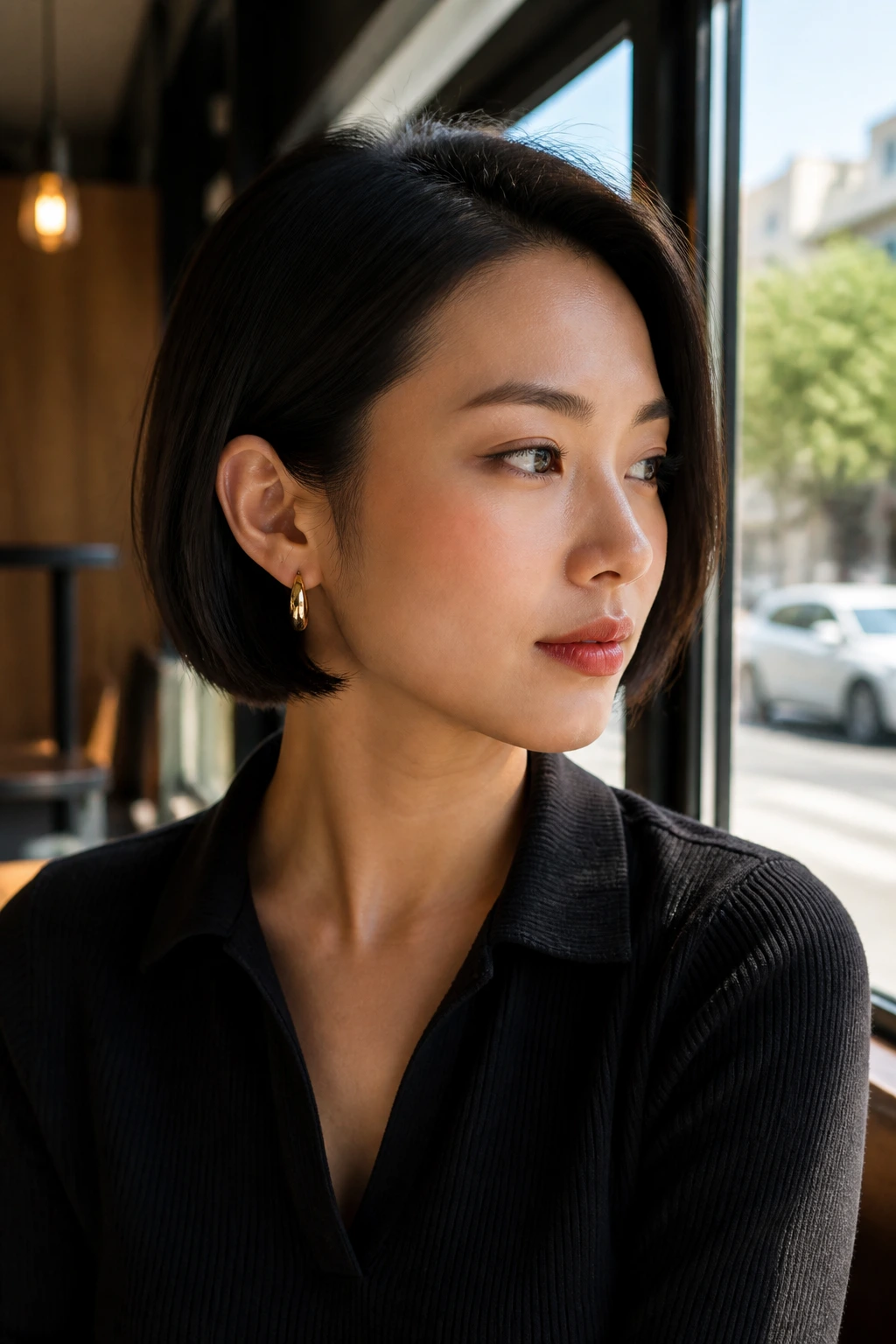
A blunt bob that stops around the ears or just below them looks bolder than people expect, especially on straight Asian hair where the line can stay clean all day. With no bangs, the whole cut depends on its perimeter and the way it sits against the jaw.
Oval faces can carry this length well because the proportions stay open. The face doesn’t get chopped in half by fringe, and the strong horizontal line gives the style a little attitude. If your hair is very dense, make sure the underside is not too heavy. Otherwise it can puff out and lose that crisp edge.
This is one of the easiest cuts to wear with statement earrings. The ears are out. The neckline is visible. The whole thing feels deliberate.
17. Collarbone Lob with Invisible Layers
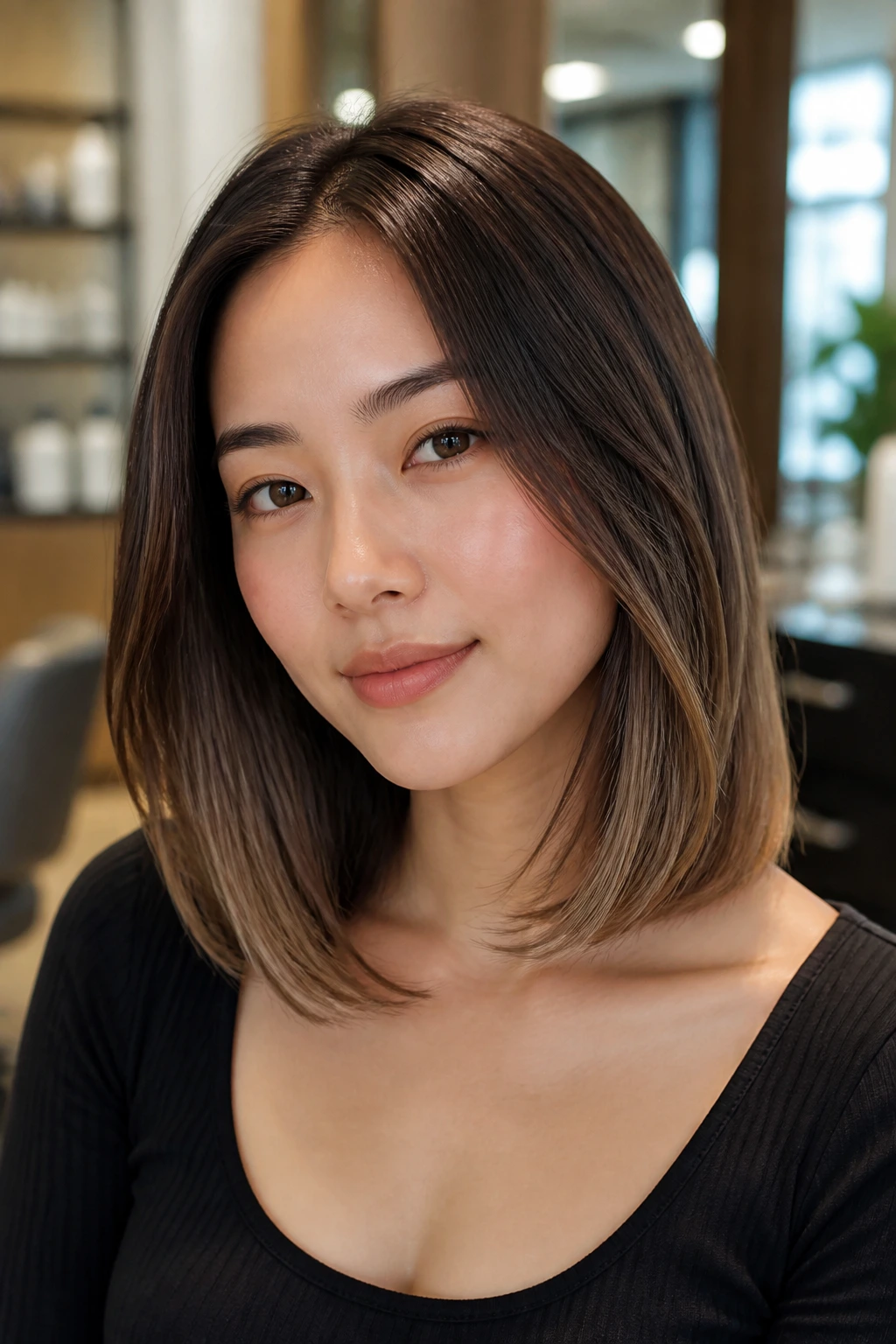
This is the longest cut in the group, but it still belongs here because the shape behaves like short hair once it’s styled. The front stays open, the layers stay hidden until the hair moves, and the collarbone length gives you enough room to tuck, wave, or leave it sleek.
On oval faces, a center part works well if the ends are light. If your hair is straight and heavy, the invisible layers keep the lob from hanging like one flat sheet. The cut should skim the shoulders, not bounce off them. That little detail matters more than people think.
It’s the safest choice if you want to test short hair without fully committing to a crop.
18. Undercut Pixie for Thick Hair
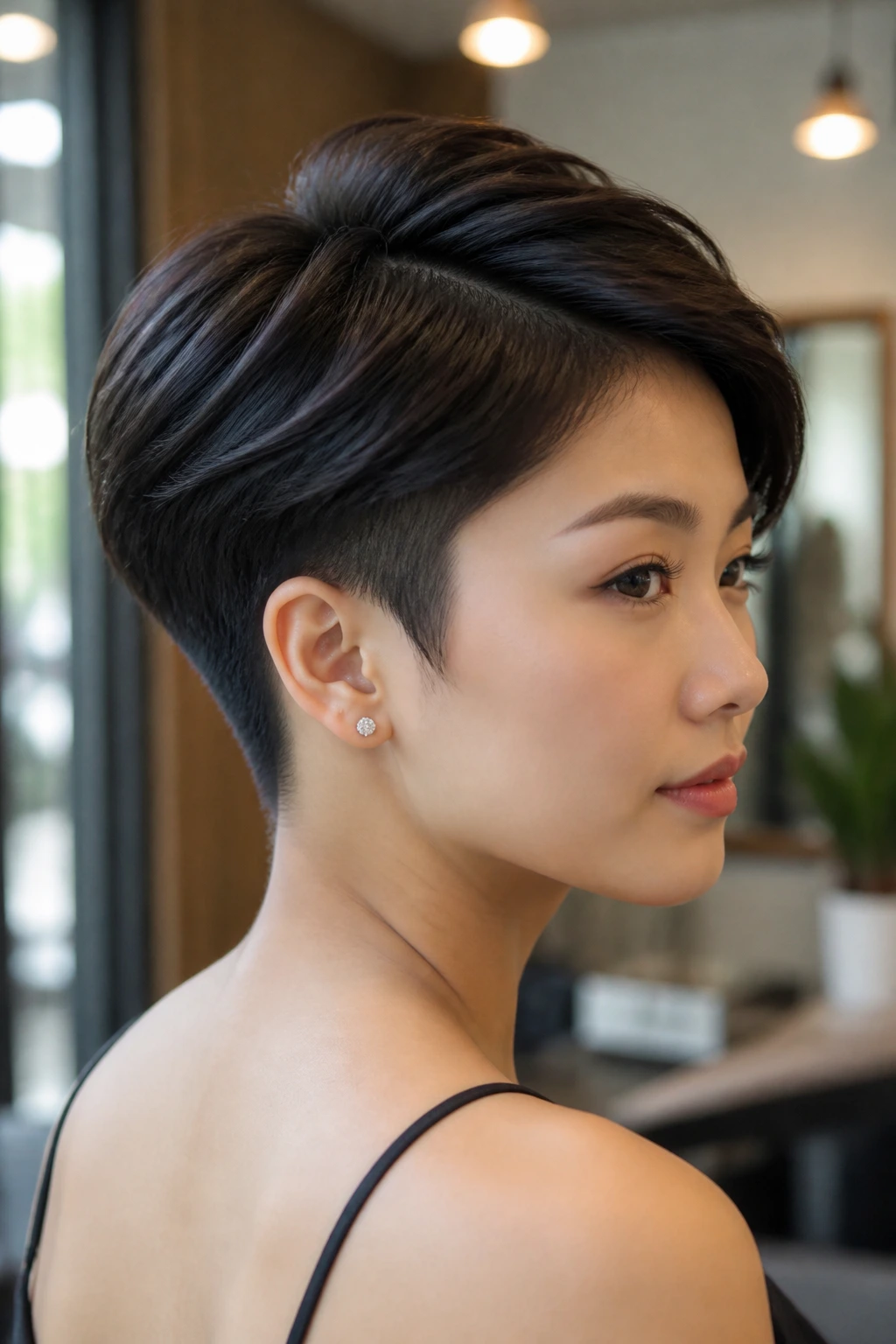
Thick hair can be glorious and annoying at the same time. The undercut pixie solves the annoying part. By removing bulk underneath, the top can stay short, light, and manageable without turning into a helmet.
For oval faces, this cut keeps the forehead open and lets the top fall forward, back, or to the side depending on how you style it. The undercut isn’t always visible, which is part of why it works so well. You get the shape without the bulk.
Ask for the undercut to be subtle if you still want softness around the head. Too much removal and the top can feel disconnected. The best version feels neat, not shaved for drama’s sake.
19. Graduated Bob with Crown Lift
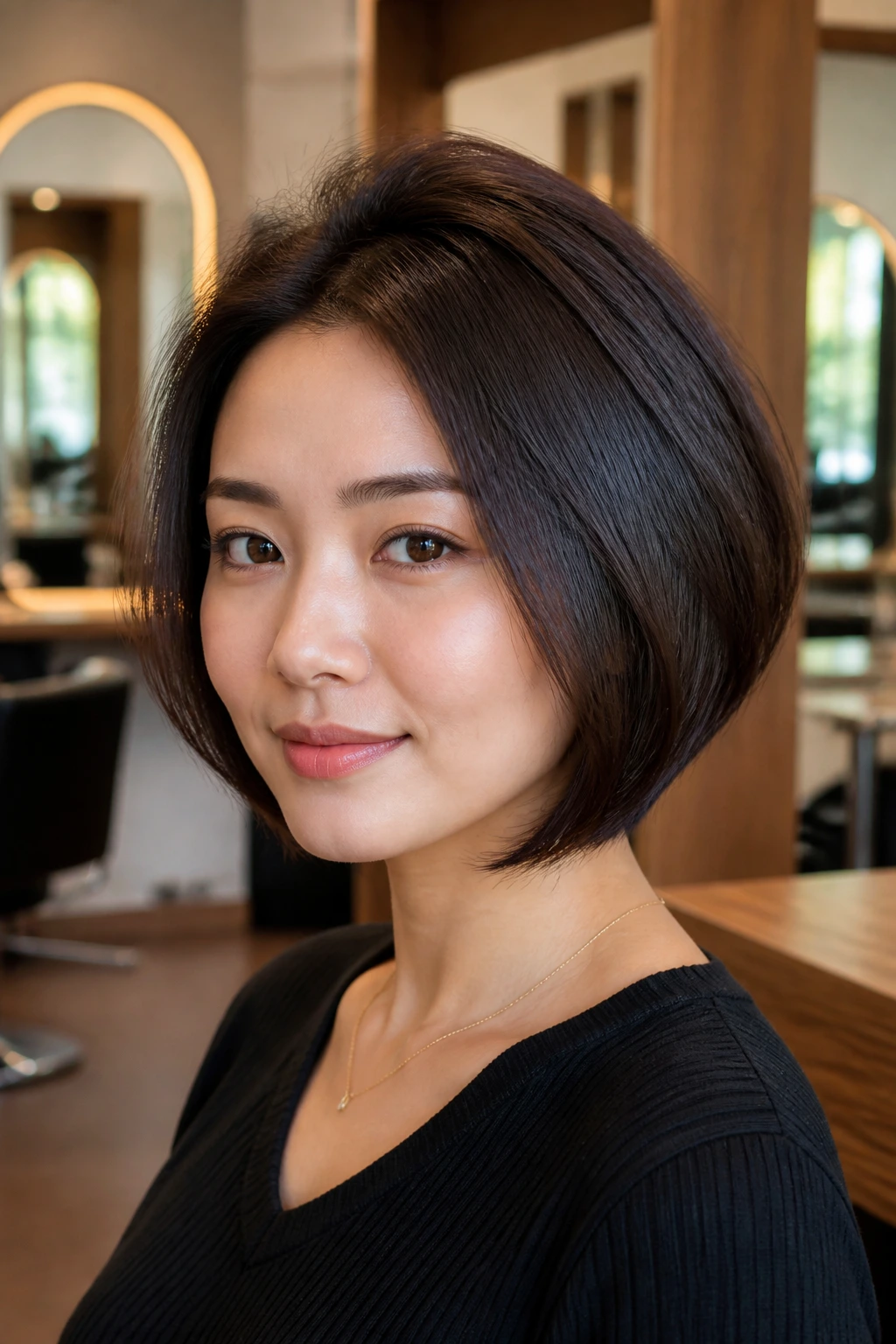
A graduated bob builds volume where it matters: the crown and upper back. That lift keeps the shape from sitting too low on the head, which is useful if your hair tends to flatten at the top and widen at the sides.
Without bangs, the face stays open while the back structure does the visual work. Oval faces can handle this shape because the extra height gives the haircut some presence. On straight Asian hair, the graduation should be clean and controlled so the back doesn’t look stacked in an old-fashioned way.
This is a very good choice if you like your short hair to look neat from every angle, not just from the front.
20. Piecey Shag Crop
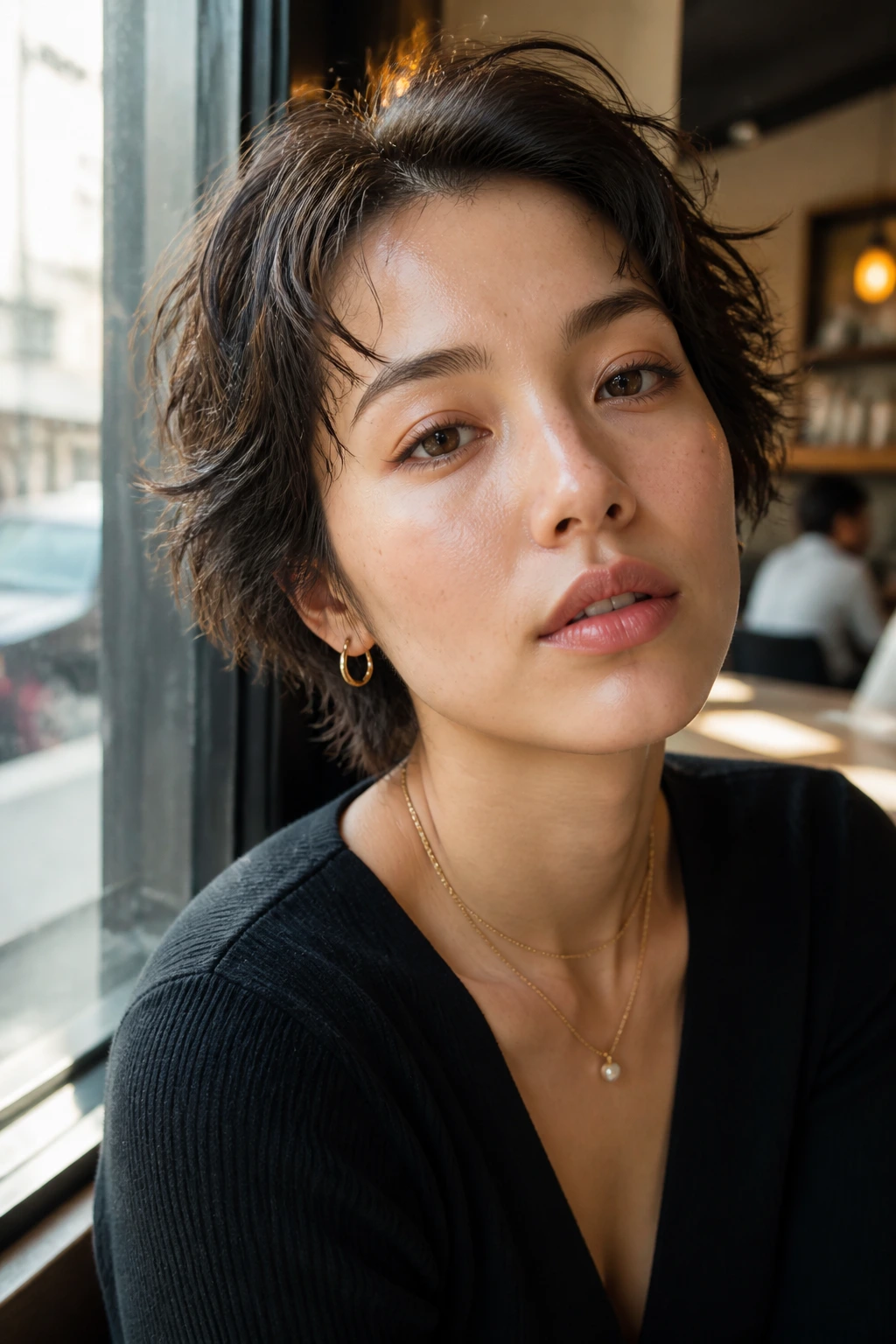
The piecey shag crop is all about separation. The ends don’t blend into one soft cloud; they break into small, visible sections that keep the haircut from feeling heavy. No bangs needed, because the texture itself carries the interest.
On oval faces, it’s a good way to add some edge without hiding the forehead. If your hair is thick and straight, a little point-cutting helps the pieces fall away from each other instead of locking together. On finer hair, keep the layers lighter so you don’t end up with a see-through top.
A dry texture spray makes this style come alive. Not a lot. Just enough to rough up the surface.
21. C-Cut Bob with Cheekbone Sweep
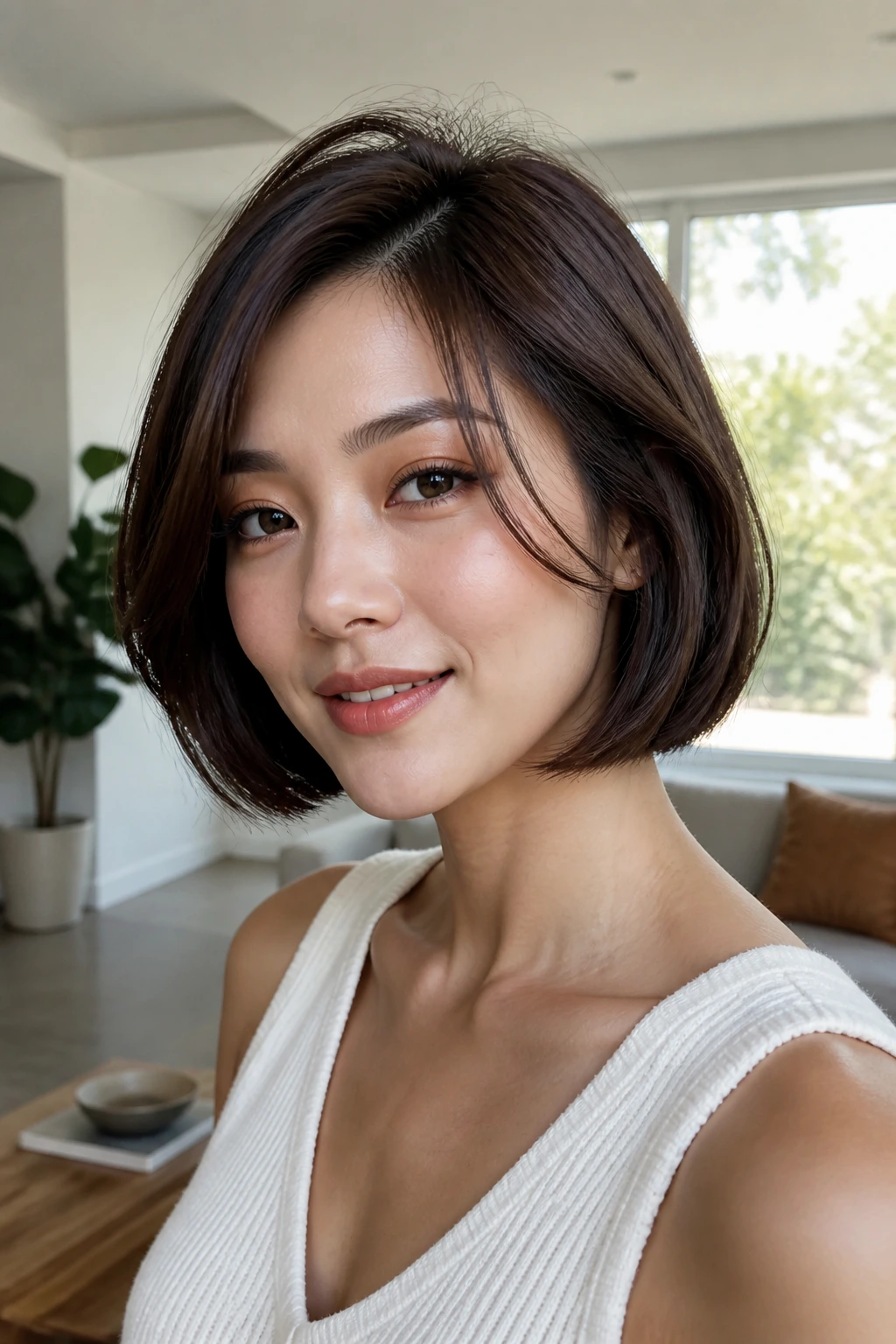
The C-cut bob curves inward around the face in a way that draws attention to the cheeks and jaw. It’s called a C-cut because the shape wraps like a gentle letter C instead of falling straight down. Without bangs, the face frame becomes the whole story.
This cut flatters oval faces by creating softness around the center of the face while leaving the forehead fully open. It’s one of the prettiest options for straight hair, especially if you want the end shape to look smooth and deliberate. The curve should sit just under the cheekbone or brush the jaw, depending on how much framing you want.
The finish matters here. A round brush and a cool-shot blast will keep the bend clean.
22. Deep Side-Part Short Lob
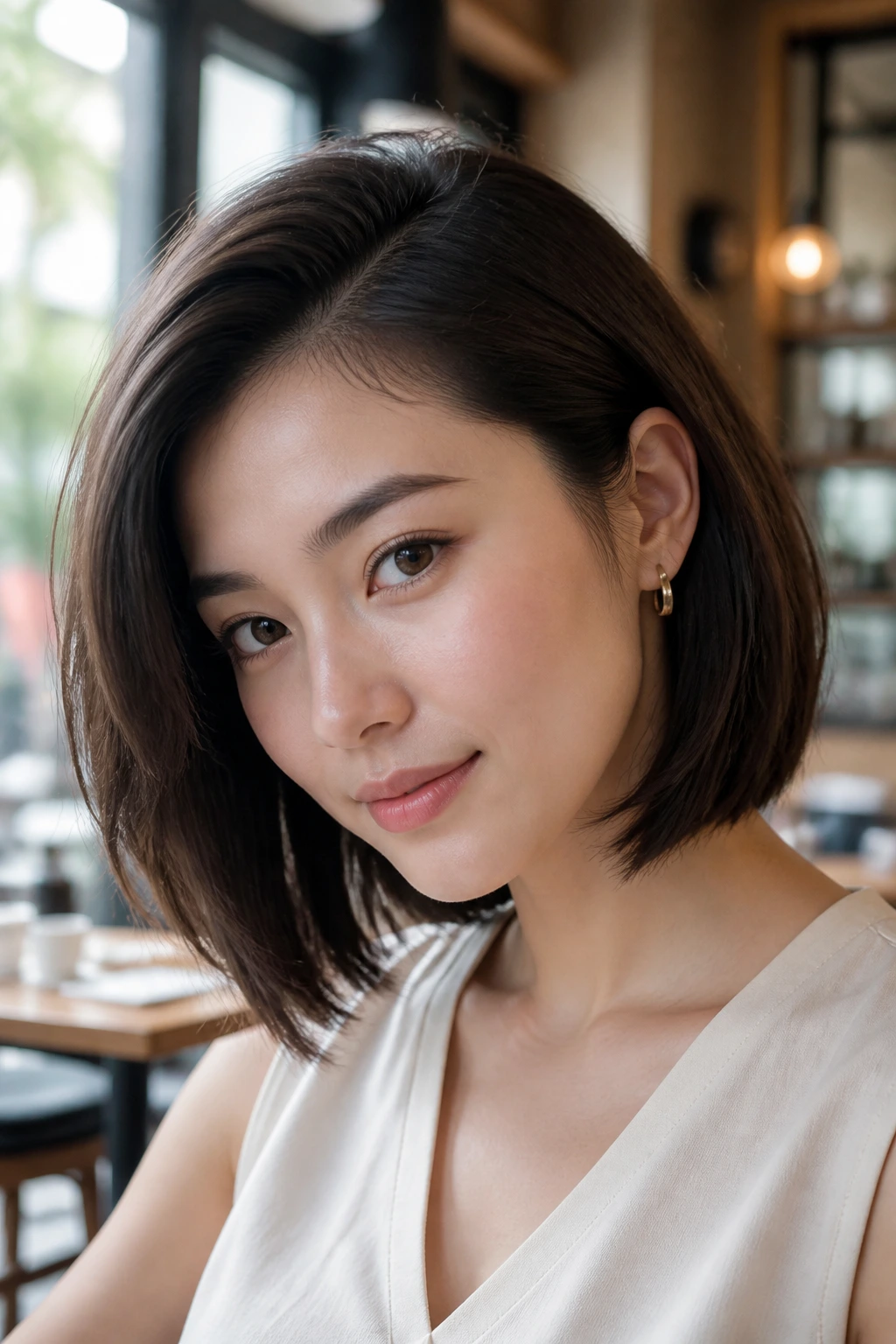
A deep side part changes the mood of almost any short cut, but it’s especially useful on a lob that sits between the jaw and collarbone. The part lifts one side, opens the forehead, and gives the face a little diagonal energy without adding bangs.
This is a smart option if you wear glasses or want a style that can move between work and off-duty without much fuss. Oval faces can handle the extra length because the proportions stay balanced, and the side part prevents the cut from feeling too symmetrical.
If your hair is straight and heavy, keep the ends slightly beveled. A dead-straight lob can feel severe. A tiny bend softens the whole thing.
23. Tapered Crop with Long Top
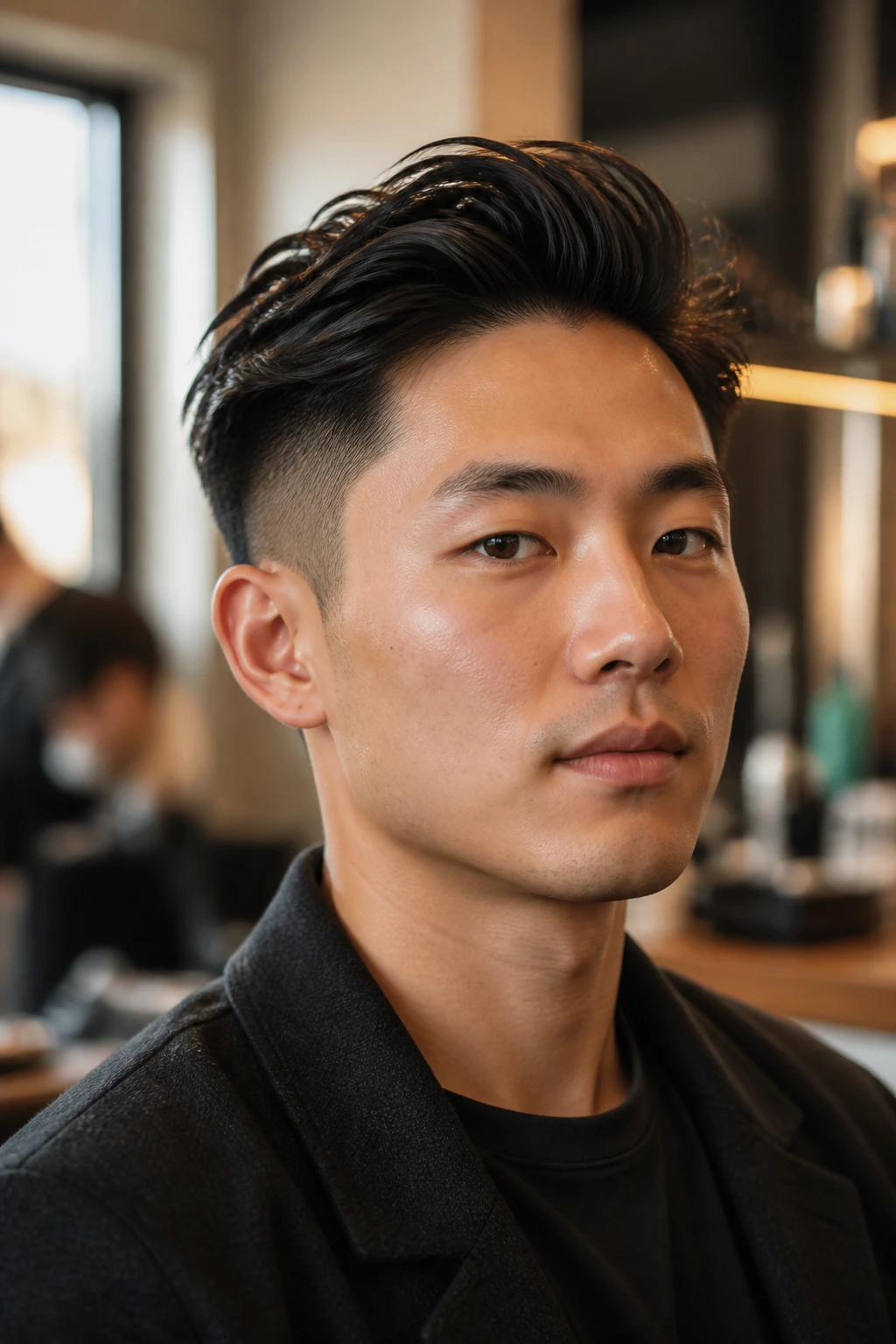
This cut has short, close sides and a longer top that can be swept back, to the side, or finger-styled for a little height. It’s one of the cleanest no-bang shapes on the list because the forehead stays open and the top creates the movement.
Oval faces can wear this easily, especially if you want something sharper than a bob but less fragile than a delicate pixie. Thick Asian hair benefits from the taper because it removes the bulk that would otherwise stick out around the ears. You do need regular trims, though. Short sides grow uneven fast.
A matte paste gives the top grip without making it shiny or stiff.
24. Soft Mushroom Bob
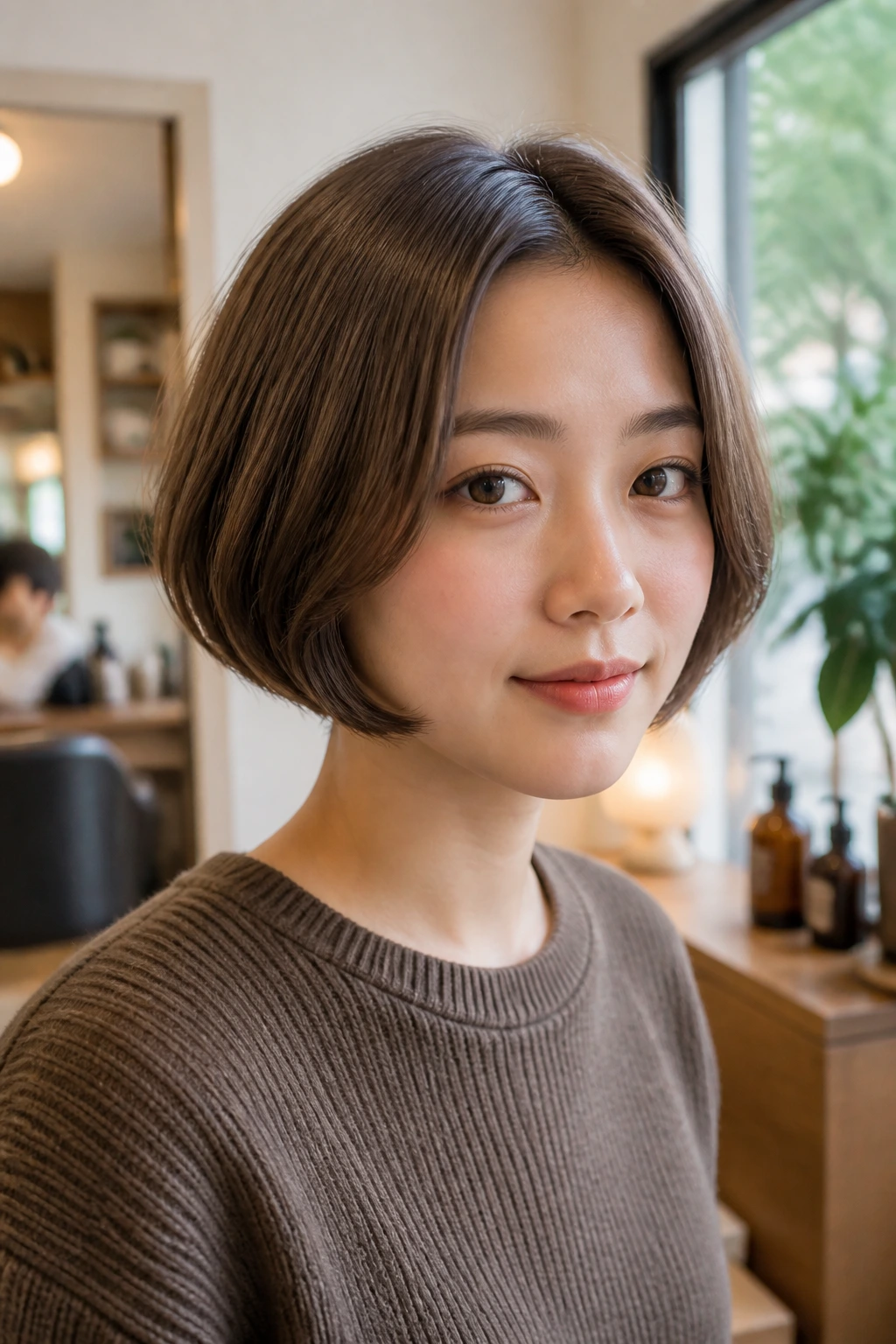
The mushroom bob has been unfairly mocked for years, which is a shame because a soft version can look fantastic on straight hair. The key is making the top smooth, the sides rounded, and the edge light enough that it doesn’t sit like a bowl.
Without bangs, the forehead remains visible, and the rounded shape around the temples softens the whole outline. Oval faces can wear this because the geometry is already forgiving. The cut works best when the top is a little longer than the sides and the ends bend under just enough to avoid a hard line.
If your hair is thick, keep the internal bulk in check. Otherwise the mushroom turns too puffy too fast.
25. Clean Box Bob at the Jawline
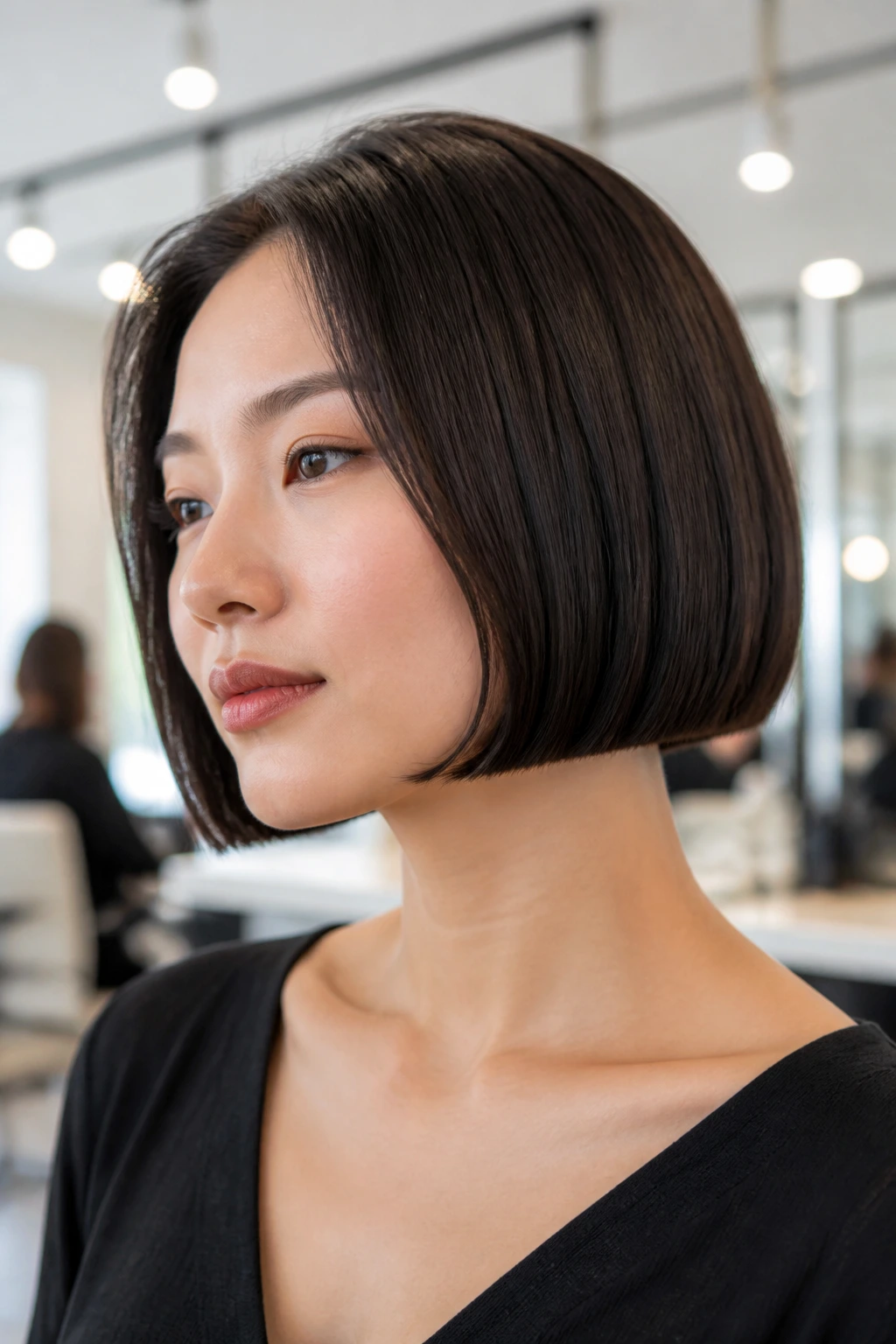
A box bob at the jawline is blunt, graphic, and very much not shy. The line lands right where the jaw starts to show, and with no bangs, the whole face stays open and direct. On an oval face, that minimalism looks controlled rather than harsh.
This is one of the strongest choices if your hair is straight and dense because the shape can hold its edges without much help. The trick is to keep the perimeter crisp while softening the inside just enough so the bob does not turn into a brick. There’s a difference. A good stylist knows it.
I like this cut on people who want short hair that still feels sharp in photos and in person. It has presence. No extra decoration needed.
Why the Right Short Shape Matters More Than the Fringe
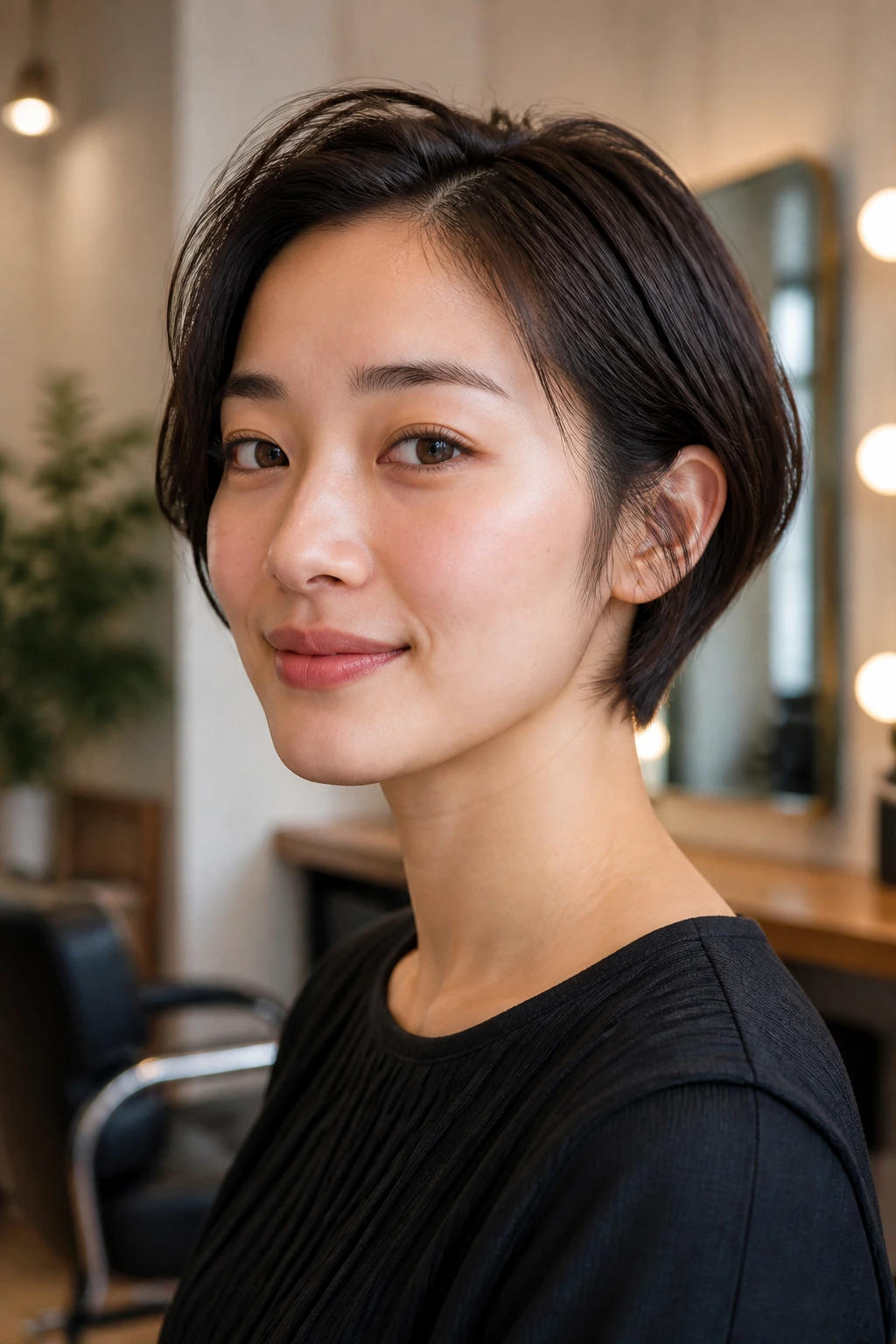
A lot of haircut advice starts and ends with bangs, which is lazy. On oval faces, the better question is where the haircut sits around the cheeks, jaw, and nape. If the line is too heavy at the sides, the face starts to disappear. If the back is too bulky, the whole head looks wider than it should.
That’s why short hair without bangs can feel more elegant than a cut with fringe. The forehead stays free, the brow line stays visible, and the haircut has to earn its place through shape instead of coverage. On Asian hair textures, where the strands often fall cleanly and show every line you create, that shape matters even more. A soft bevel, a narrow nape, a lifted crown — all of it changes the final read.
You can think of the forehead as just one part of the picture. The real story is the silhouette.
Essential Tools for These Cuts
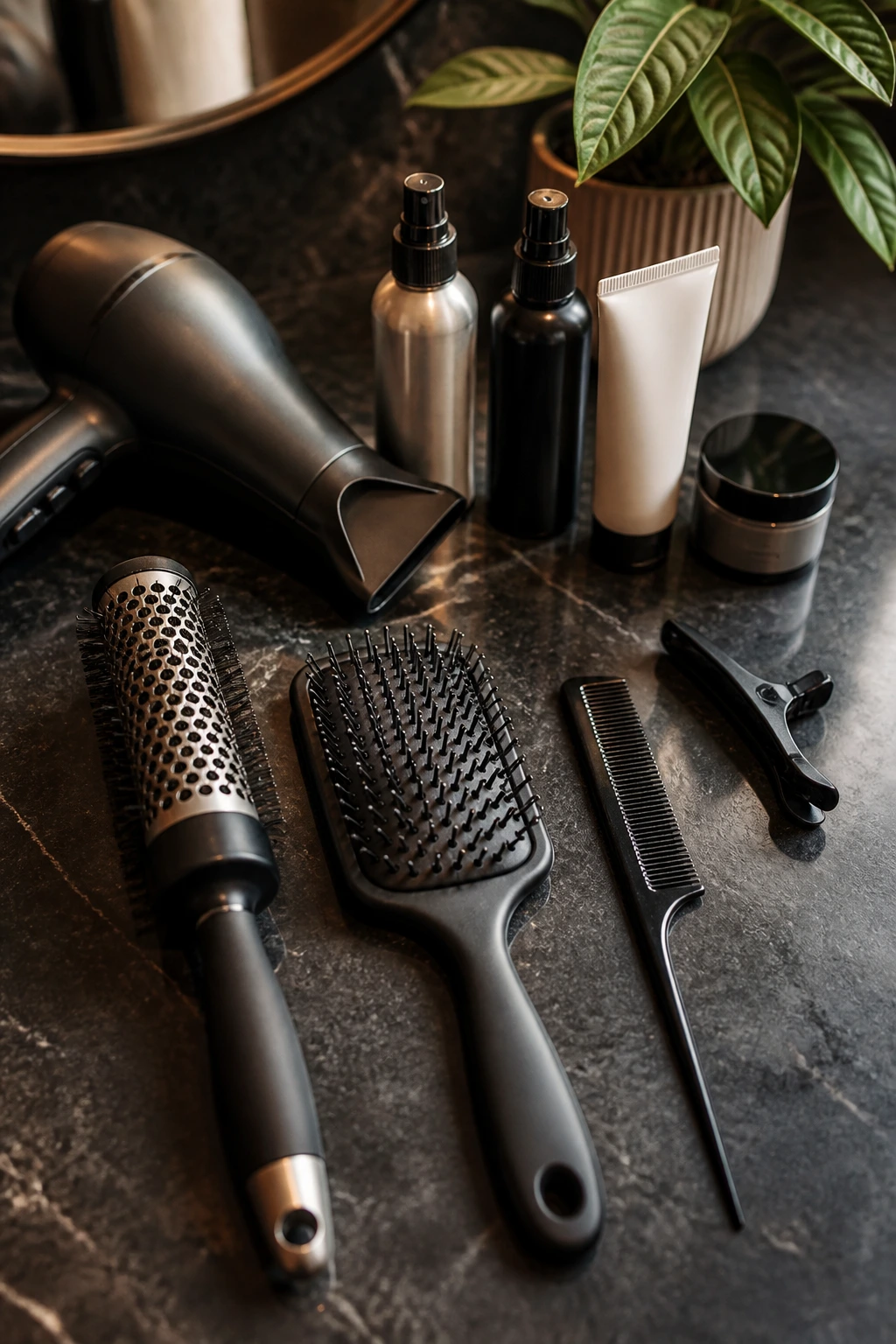
- Blow-dryer with a nozzle: The nozzle gives you directional control, which matters when you want short hair to sit smooth instead of puffing up.
- Small round brush, 1 to 1.5 inches: Good for chin-length bobs, crown lift, and bending the ends under without creating a big curl.
- Paddle brush: Best for sleeker styles like the center-part bob or box bob when you want the surface flat.
- Rat-tail comb: Useful for drawing a sharp part and smoothing the roots before styling.
- Lightweight styling cream or mousse: Gives movement without coating fine or straight hair in grease.
- Matte paste or balm: Better for pixies, bixies, and mixie cuts because it separates short pieces cleanly.
- Heat protectant spray: Short hair still gets heat damage. A quick mist before blow-drying is worth the 10 seconds.
- Dry shampoo: Handy for flat Asian hair that gets shiny at the roots fast.
- Sectioning clips: Makes it easier to style one side at a time, especially on bob lengths.
- Flat iron, optional: Useful for glassy bobs or a precise bend at the ends, but not mandatory for every cut.
Smart Salon Notes for Texture, Density, and Hairline
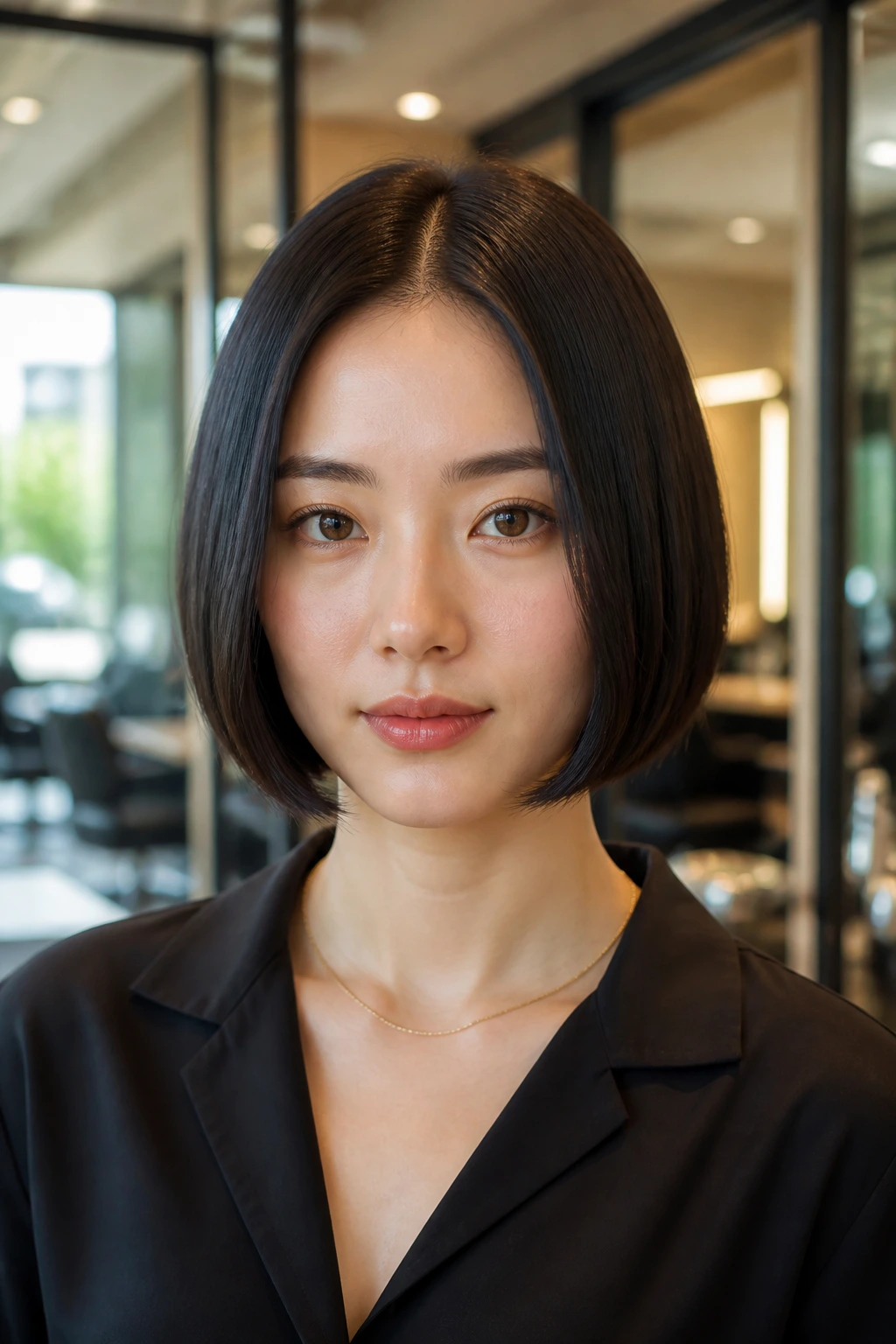
Bringing a photo is helpful. Bringing two or three is better. Show one cut you love, one that has the shape you want, and one that does not have the fringe or volume you don’t want. That gives the stylist something real to work with instead of a vague request for “short and cute,” which is how people end up with a cut that never quite settles.
If your hair is thick and straight, say so directly. Short Asian hair can behave very differently once it’s cut above the jaw, and some stylists will leave too much weight in the perimeter out of habit. You usually want the opposite: cleaner bulk removal underneath, careful shaping at the ends, and enough crown support that the cut doesn’t flatten after lunch.
Hairline and cowlicks matter more than people admit. A deep temple swirl can pull a side part shut. A crown cowlick can make a pixie kick up in the wrong direction. If you know where your hair fights back, point it out before the scissors come out. That conversation saves you more trouble than any styling product ever will.
How to Wear These Cuts from Morning to Evening
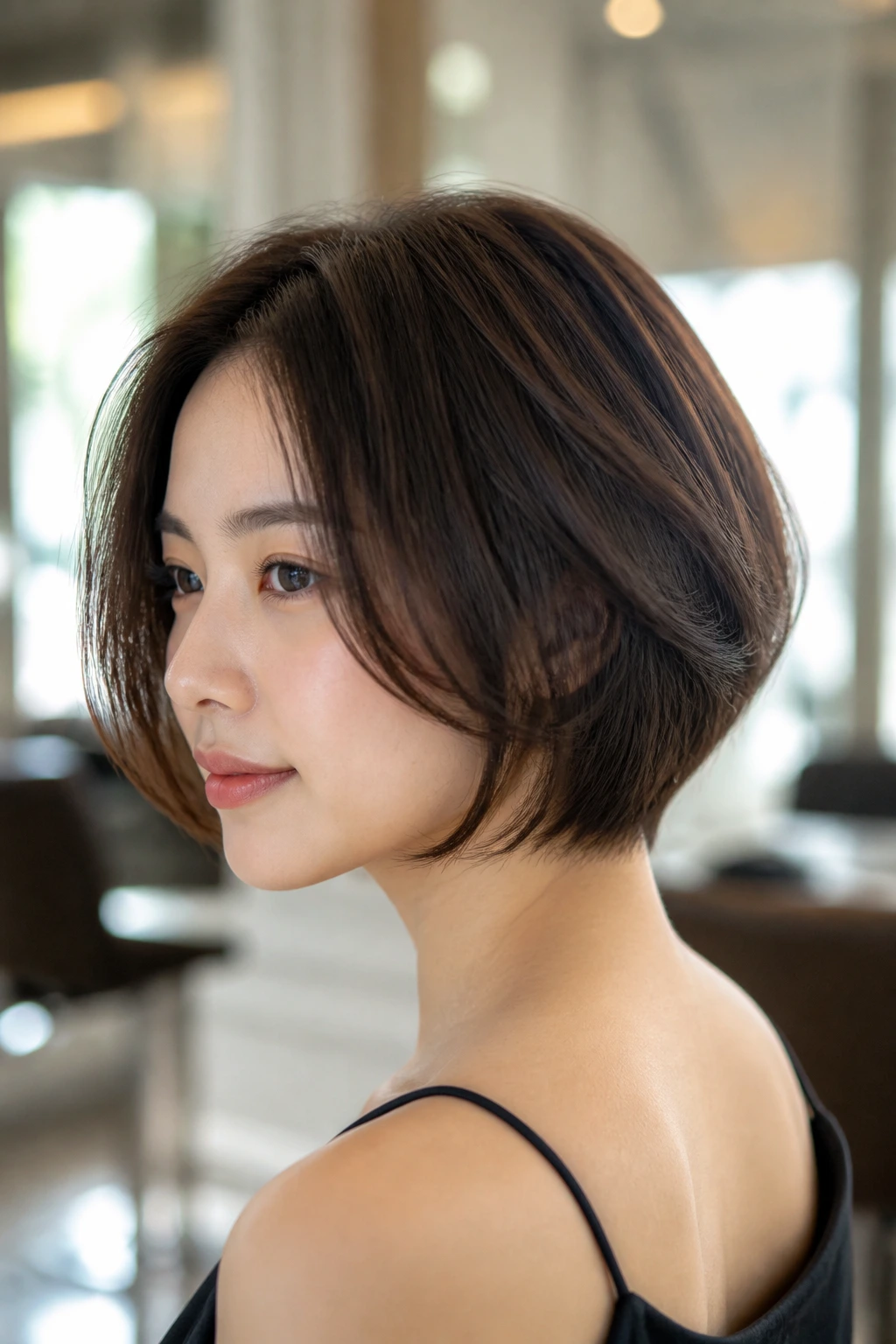
Finish: For the cleanest reads, keep the surface either glossy-sleek or lightly piecey — not both at once. A box bob wants shine. A mixie wants separation. A hush cut bob can live in the middle, but it still needs one clear finish.
Accessories: Small hoops, slim sunglasses, and ear cuffs work well because the cut leaves room around the temples. If your hair is tucked behind one ear, a single earring often looks better than two. A clip at the temple can also give a short cut a little lift without turning it into a bridal hairstyle.
Balance: If the front feels too exposed, tuck only one side or leave a few face-framing pieces at cheek level. You do not need to cover the forehead to soften the look. Sometimes opening one ear and leaving the other side loose is enough.
Occasions: Sleek bobs and box cuts feel sharper for work or formal settings. Feathered pixies, piecey shags, and mixies read more casual. Short hair is a shape-shifter that way; the same cut can look neat in the morning and more undone by evening if you rake a little texture product through the ends.
Styling Asian No Bangs for Short Hair and Oval Faces Without a Flat Finish
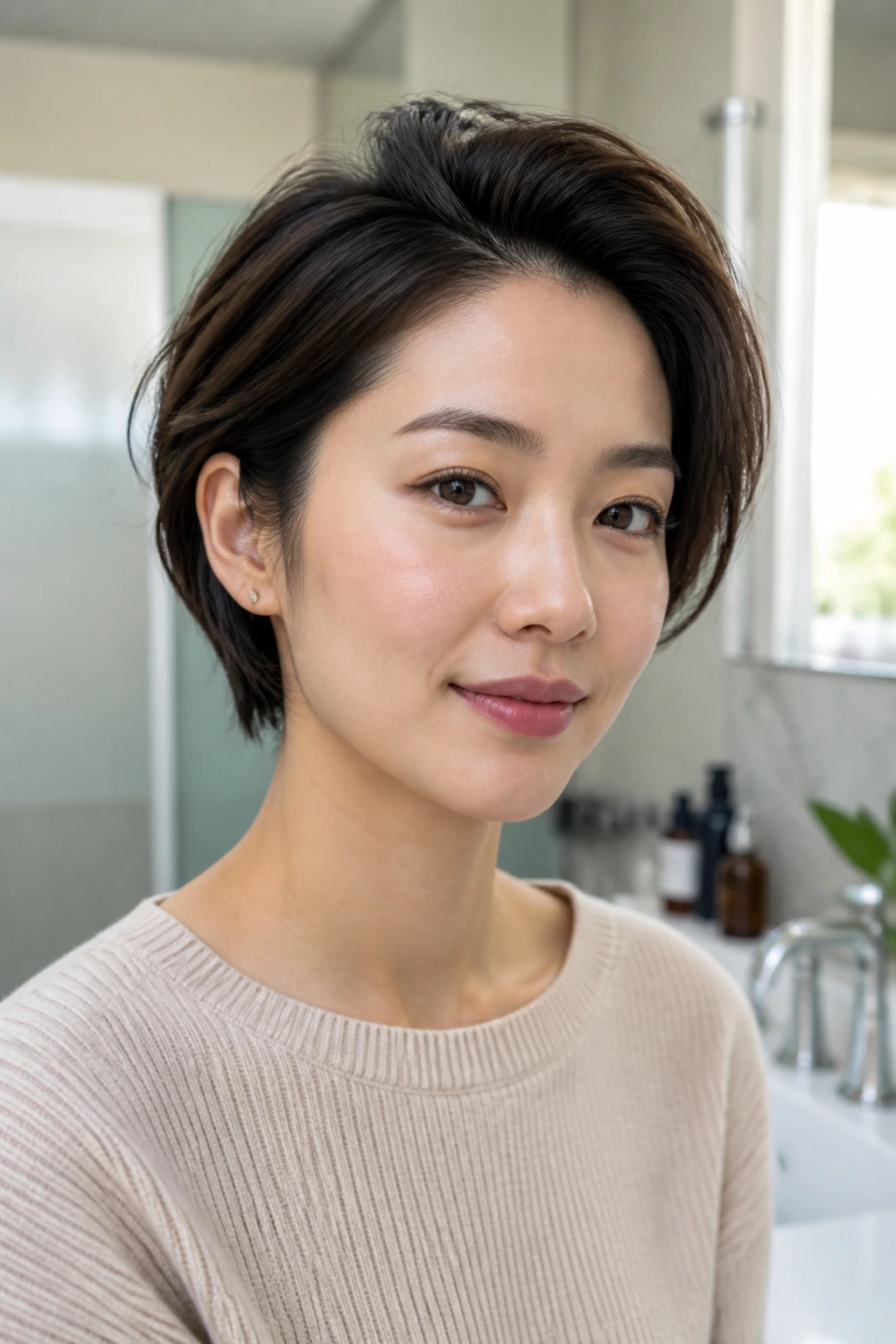
The biggest enemy here is collapse. Short hair can go flat at the crown, swell at the sides, and lose the shape line by lunchtime if you treat it like long hair and hope for the best. That’s not a moral failure. It just means the hair needs direction.
Start at the roots. A small amount of mousse, sprayed close to the part and the crown, gives short Asian hair more lift than a heavy cream ever will. Blow-dry in sections, pointing the nozzle where you want the hair to live. If you want volume, lift the roots for the first 15 to 20 seconds and then let the ends settle. If you want sleekness, dry the roots first and use a brush only on the last inch or two.
The finish should match the cut. A pixie wants a little separation. A bob wants smoother edges. A rounded bob needs the ends tucked under slightly, while a shag crop looks better with the ends broken up. If you try to force every cut into the same styling routine, it will show.
Additional Styling Moves and Texture Boosters
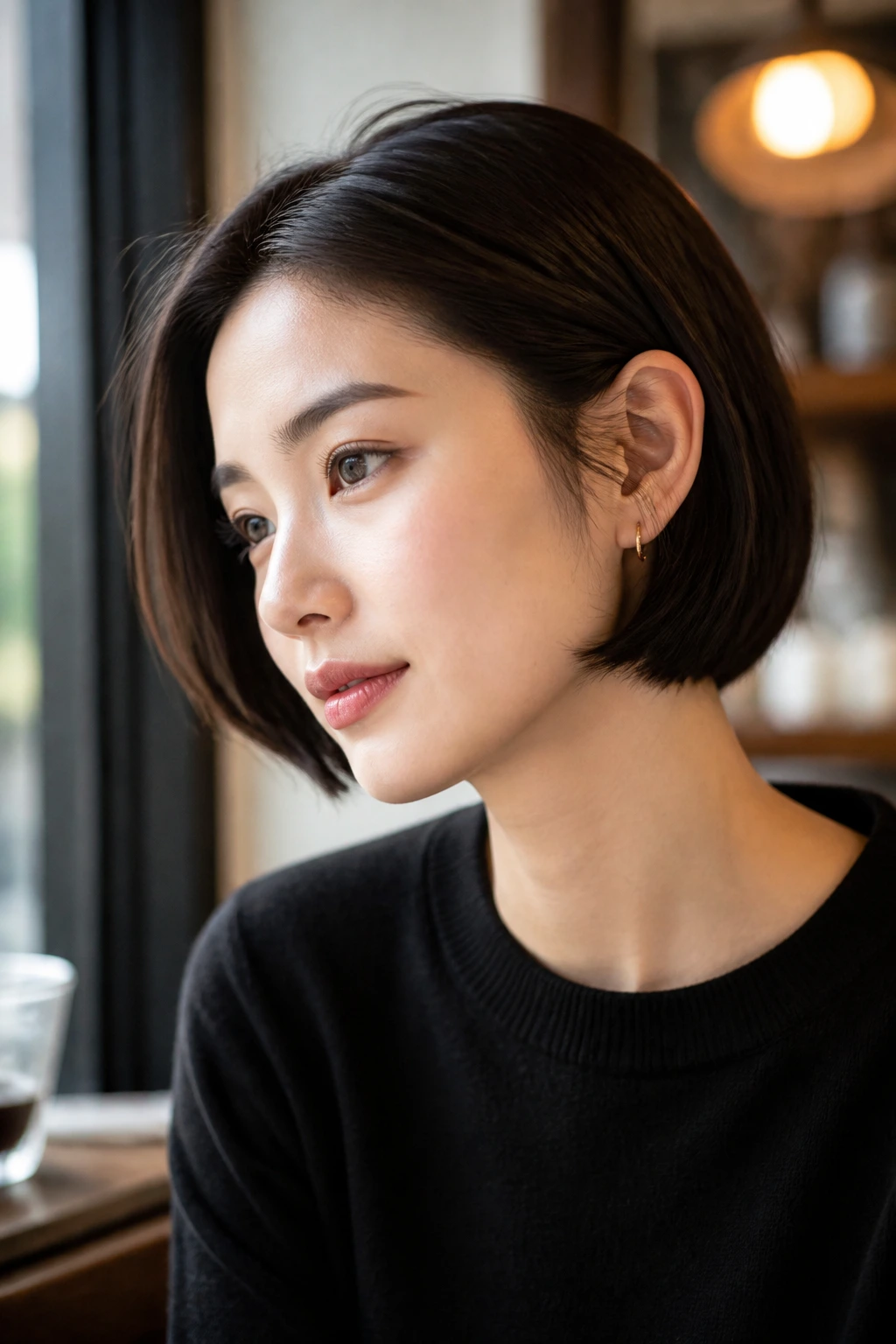
Texture Boost: A pea-sized amount of matte paste on dry ends can rescue a pixie, bixie, or mixie that starts to feel too neat by noon. Work it through the fingertips first. Don’t slam it straight onto the hair.
Time-Saver: If you’re rushed, blow-dry only the roots and leave the ends to air-dry. That’s often enough for a bob to look intentional, especially when the cut has a good perimeter.
Pro Move: Tuck one side behind the ear and leave the other side loose. It gives even the plainest bob some angle, and it keeps the face open without needing bangs.
Cost-Saver: If you don’t want to style every morning, choose a cut with a strong outline — box bob, inverted bob, or clean pixie — rather than one that depends on curl or volume. The shape should do the work when you skip the brush.
Make-It-Yours: Fine hair usually likes lighter layers and root lift. Thick hair usually needs internal removal and a tighter perimeter. If you wear glasses, keep the sides neat so the frames and the haircut don’t fight for space around the temples.
Common Mistakes With Asian No Bangs for Short Hair and Oval Faces
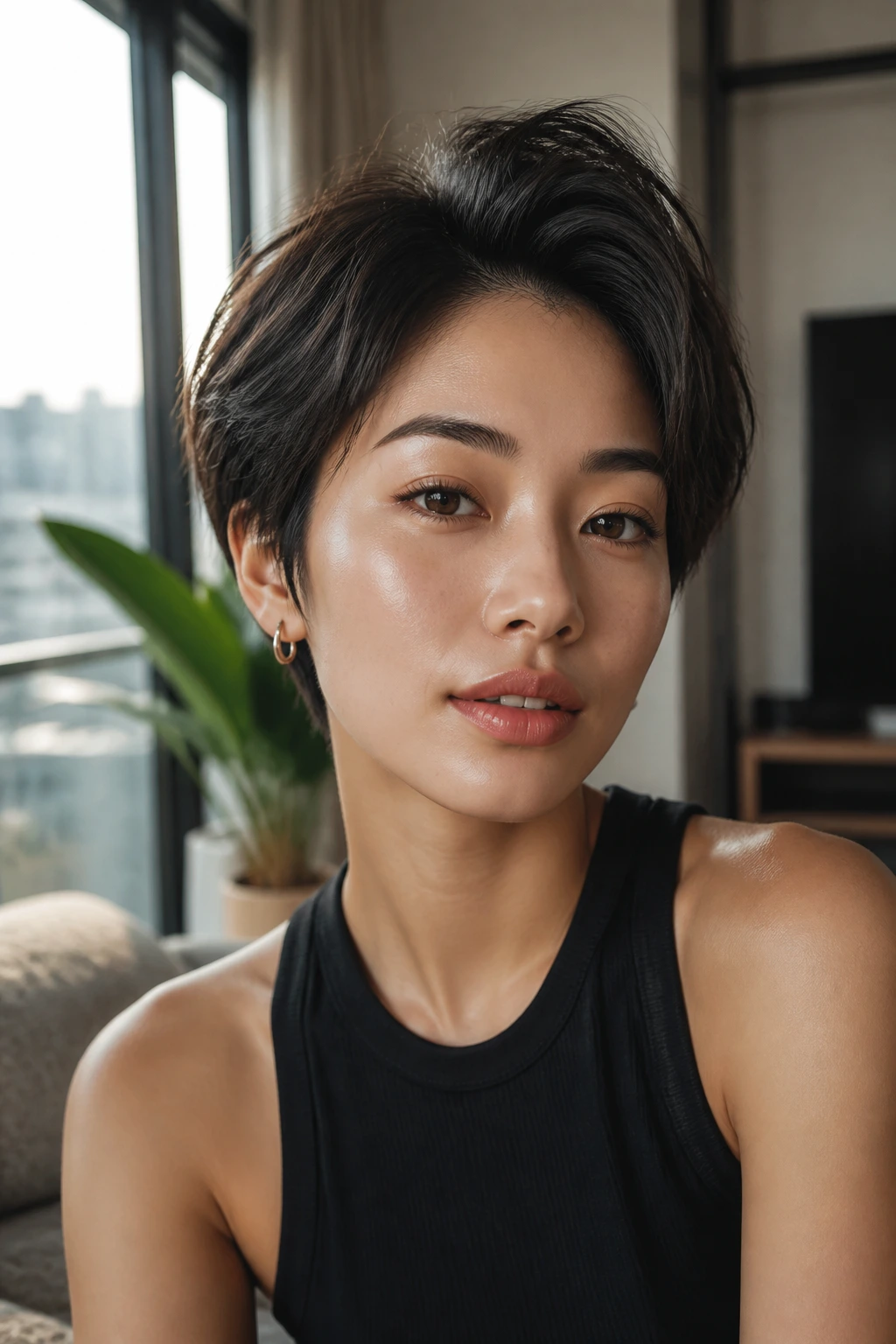
The first mistake is over-thinning dense hair. It sounds helpful, but too much thinning can make the ends frizz out and the cut lose its line. If the hair is already straight and strong, you usually want controlled removal inside the shape, not a shredded perimeter.
The second mistake is letting the sides balloon. Short hair that widens at the ears can make even an oval face look less clean than it should. Ask for the bulk to be controlled around the side of the head, especially if your hair grows out with a triangular shape.
The third mistake is ignoring the part line. A center part can be beautiful on an oval face, but if your crown naturally splits somewhere else, the hair may keep dragging itself back to that habit. Work with the part the hair wants to hold, or the style will spend its life arguing with your scalp.
And yes, too much product is a real problem. Short hair needs less than people think. A dab too much serum or wax can flatten the crown and make the front look greasy within an hour. Start small. You can always add more.
Fresh Variations and Alternative Directions
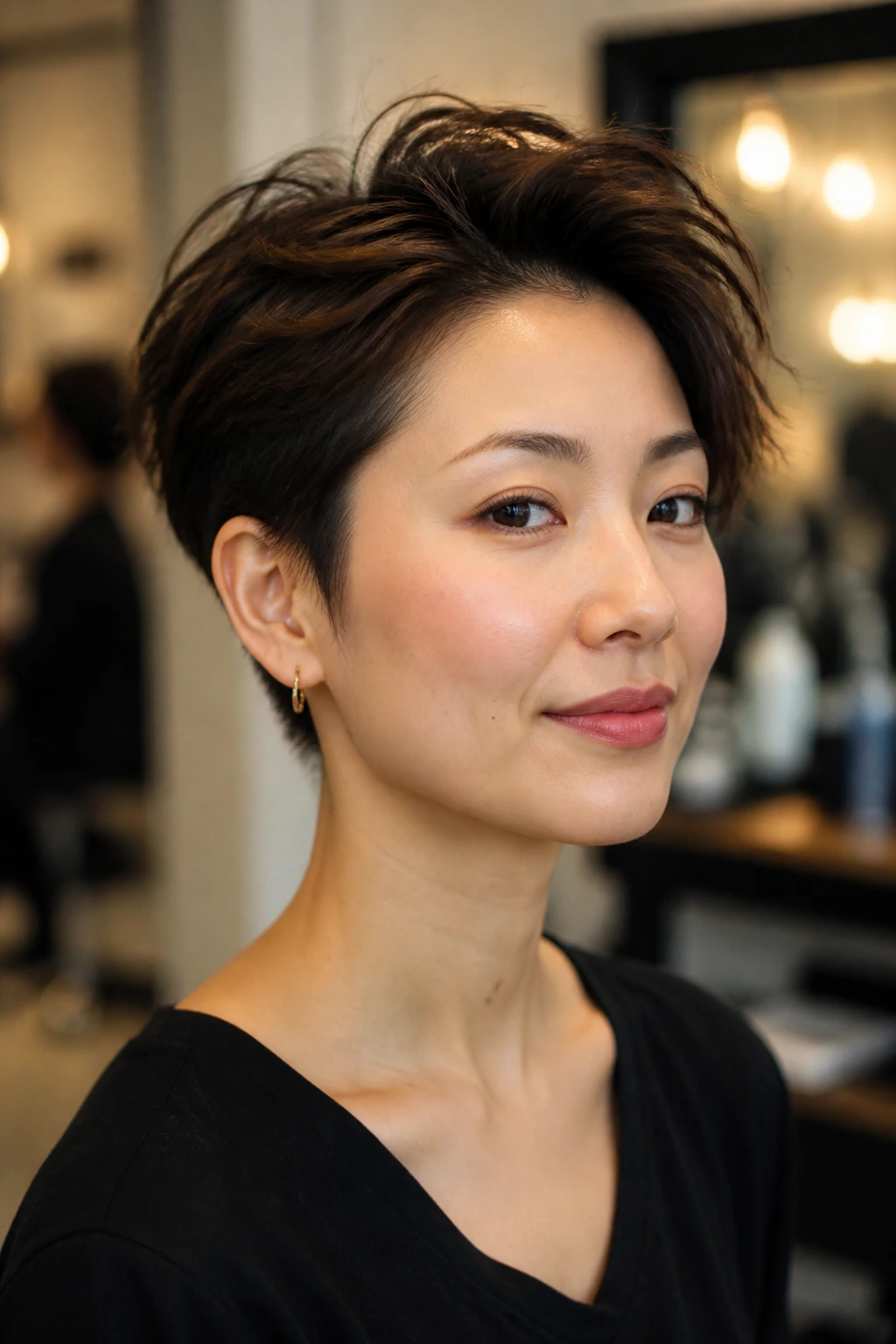
Glass-Smooth Version: Keep the cut the same, but blow-dry with a paddle brush and finish with a light serum on the mids and ends. This works best on center-part bobs, box cuts, and collarbone lobs that need a clean edge.
Air-Dry Texture Version: Use a curl cream or light mousse on damp hair, scrunch the ends, and leave some frizz in the texture on purpose. It suits hush cuts, wolf cut lite shapes, and piecey shags better than strict bobs.
Thick-Hair Control Version: Add an undercut, a tighter nape, or more internal removal. That keeps the outline from ballooning and makes short hair easier to live with when your strands are coarse or heavy.
Fine-Hair Lift Version: Choose shorter layers at the crown and keep the perimeter crisp. Too many wispy pieces can leave fine hair looking tired, while a neat outline and root lift make it look fuller.
Grow-Out Friendly Version: Start with a lob, bixie, or longer pixie-bob so the shape still looks good six to eight weeks later. A very sharp crop can lose its charm fast if you know you’ll be slow to return for trims.
Maintaining Asian No Bangs for Short Hair and Oval Faces
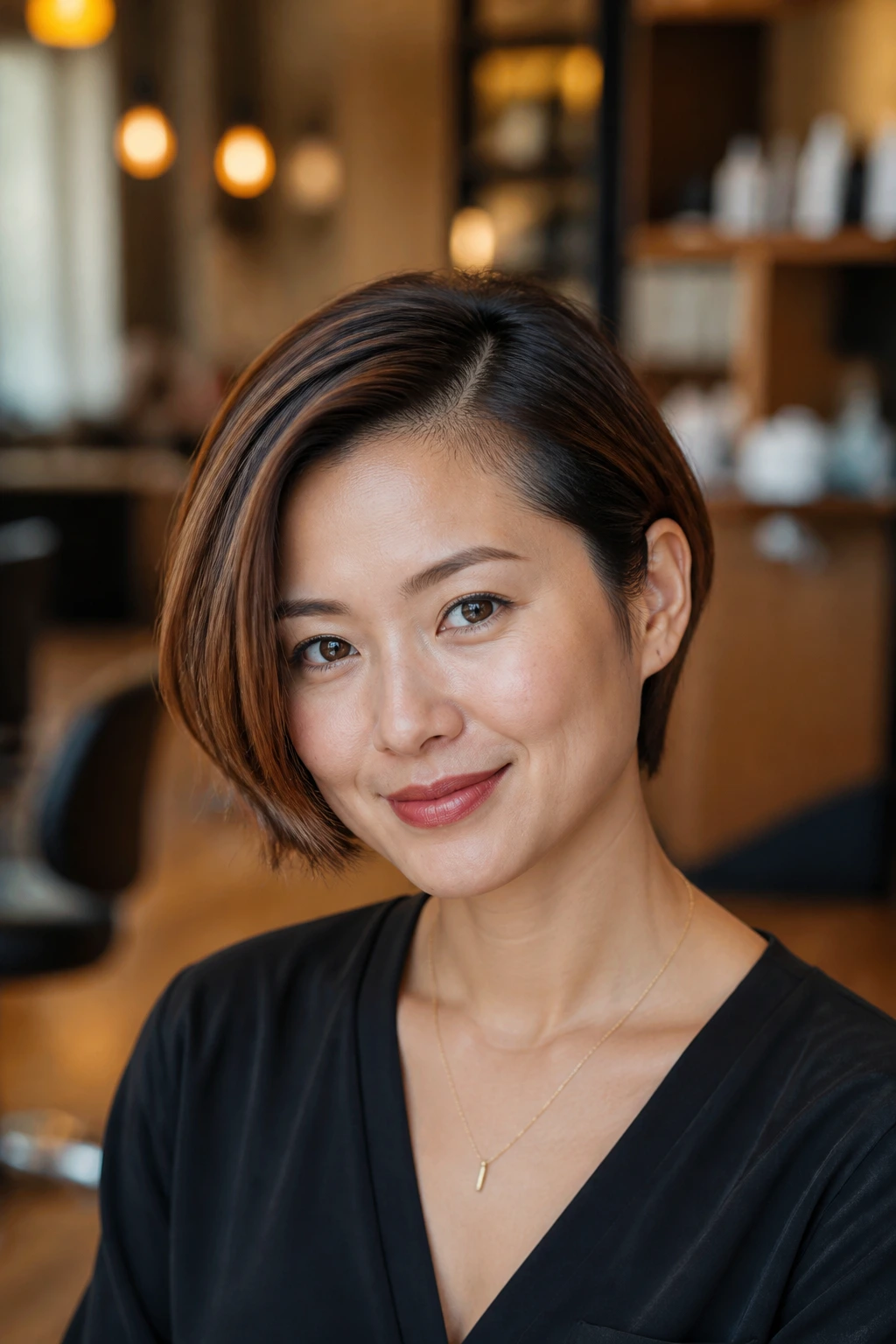
Short hair does not forgive laziness for long. The shape is the whole point, and once the nape grows, the line changes. For most bobs and pixies in this category, a trim every 4 to 6 weeks keeps the cut from sliding out of shape. If it’s a longer lob or a grow-out friendly bixie, you can often stretch that to 6 to 8 weeks.
Wash frequency depends on how much oil your scalp produces and how flat your hair goes. Straight Asian hair often shows root oil faster than textured hair, so some people need a wash every day or every other day. That’s not a flaw. It’s just how the hair behaves. Dry shampoo can buy a little time, but it should not be used to mask a cut that no longer fits the head.
If you heat-style often, use a protectant and keep the temperature moderate. Short hair gets hit by hot tools near the scalp, which is one reason it can feel dry faster than long hair. A quick trim and a light touch with products will keep the shape cleaner than trying to pile on more styling cream after the fact.
Frequently Asked Questions
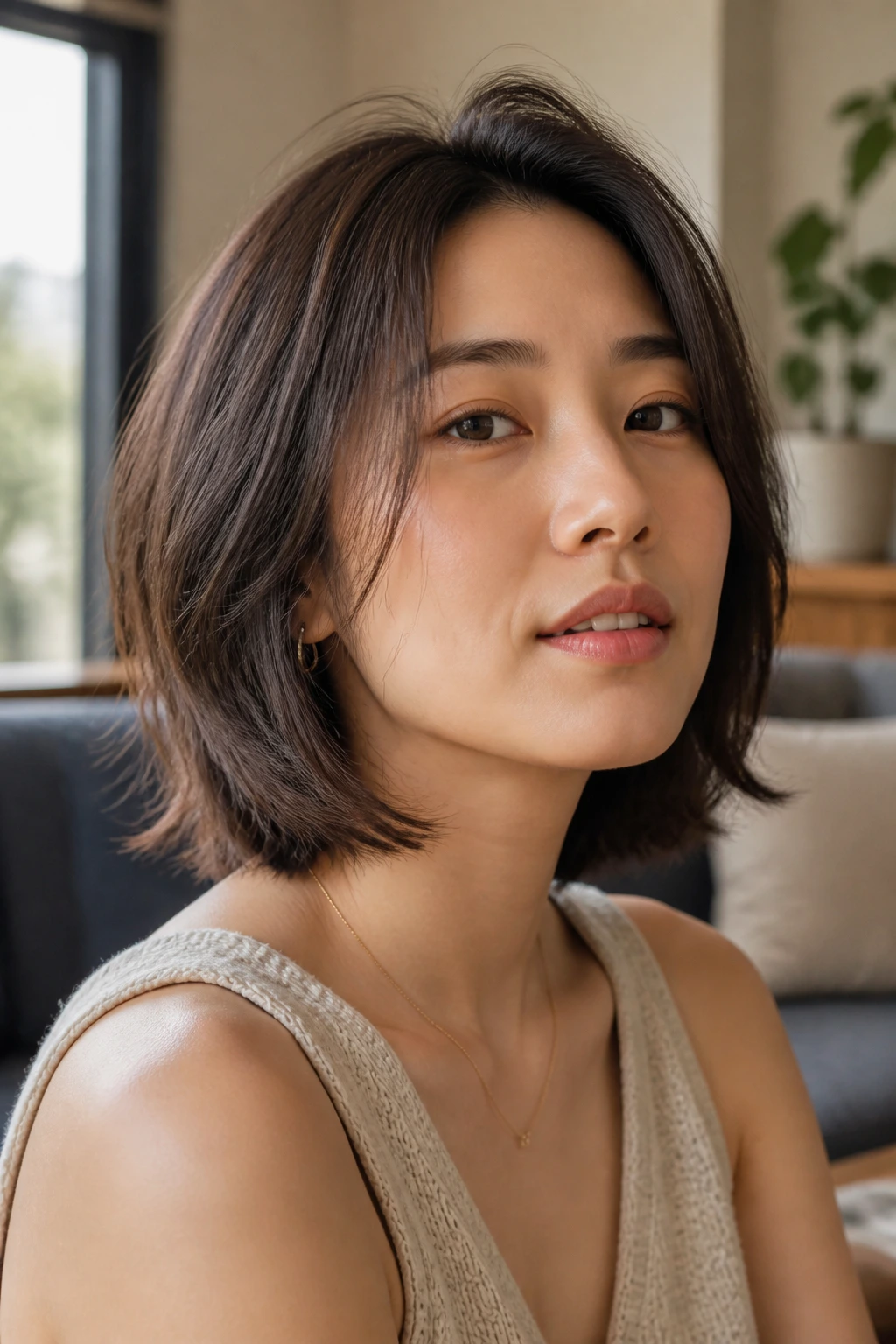
Will a center part make my oval face look too long?
Usually not, but the length of the cut matters. A chin-length bob or a textured crop keeps the face open without turning it into a vertical line, while a very long, flat lob can start to stretch things out if the crown has no lift.
What short cut works best if my hair is thick and pin-straight?
An inverted bob, box bob, or undercut pixie usually handles that texture well. The important part is bulk control underneath, because thick straight hair can look blocky fast if every strand is left at the same length.
Can I wear a short cut with no bangs if I have a high forehead?
Yes, if the rest of the shape is right. A side-part pixie-bob, a wavy chin-length bob, or a soft C-cut bob can keep the forehead open while still giving enough movement around the cheeks to balance the face.
How do I keep short Asian hair from going flat by midday?
Start with root lift at the crown, not just product on the ends. Blow-dry the roots in the opposite direction from where they naturally fall for a few seconds, then let the rest settle; that usually helps more than adding extra wax later.
Are pixies too harsh for oval faces without bangs?
Not if the top has some softness. A feathered pixie, bixie, or tapered crop can look clean and elegant rather than severe, especially if the forehead is open and the crown has a bit of movement.
Do these cuts need styling every day?
Some do, some don’t. A blunt bob or clean box cut can often be brushed into place with minimal effort, while a mixie, shag crop, or pixie usually needs at least a few seconds of product and finger shaping.
What should I tell my stylist if I don’t want fringe at all?
Say you want the forehead fully open, but still want softness around the face or cheekbones. That tells the stylist to build movement into the sides and crown instead of sneaking in short pieces that fall like accidental bangs.
How often should I trim a short no-bang cut?
Every 4 to 6 weeks for a pixie or sharp bob, and every 6 to 8 weeks for a lob or softer grow-out shape. Once the nape or side line starts to blur, the whole cut loses its shape faster than long hair does.
The Cuts That Let the Face Do the Work
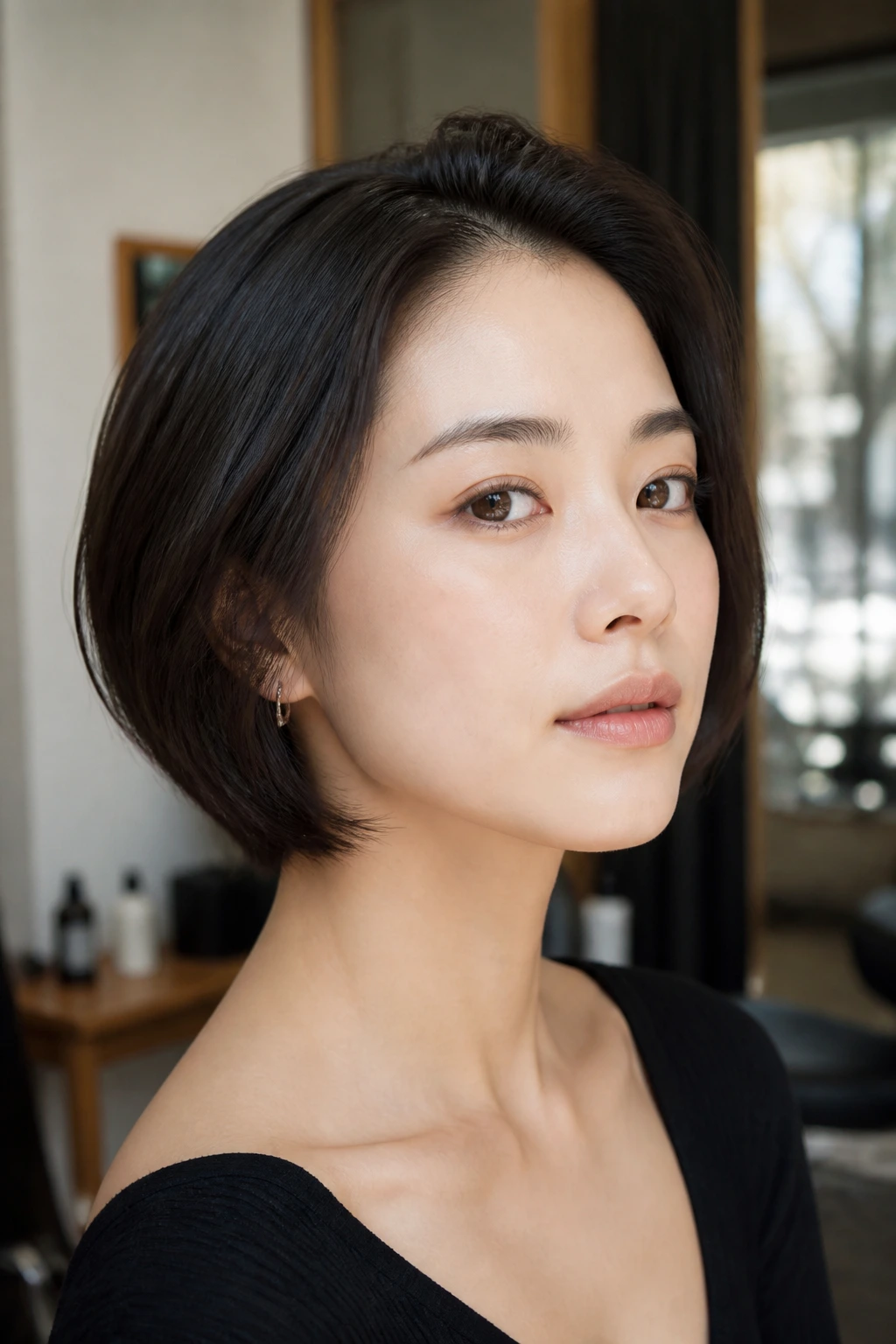
The best short no-bang cuts do not hide the face. They clear space for it. That’s the real reason these styles work so well on oval faces: the haircut frames bone structure instead of covering it up, and Asian hair texture often gives that framing a crispness you can’t fake.
If you’re choosing between two cuts, pick the one that respects your hair’s natural behavior. Straight hair likes precision. Thick hair likes weight control. Wavy hair likes a little room to move. Get that part right, and the rest gets easier.
And if you’ve spent years thinking bangs were the only way to make short hair feel finished, there’s a better answer sitting right there in the mirror.