



Loose curls change the whole bangs conversation. Wavy bangs for long hair and round faces are a different animal from straight fringe, because the front pieces do not sit still long enough to fake anything. They spring, bend, separate, and puff if the cut is wrong. Get the shape right, though, and the bangs do something very useful: they pull the eye up and down instead of letting it sit at the widest part of the face.
That’s why so many blunt, heavy bangs fall flat here. They make a round face feel wider through the middle, especially when the hair has that soft wave pattern that wants to bloom at the cheeks. A better fringe works with the movement. It lands a little longer than you expect, breaks up the forehead line, and leaves enough air around the eyes and cheekbones to keep everything feeling light.
The sweet spot is usually a bang that bends rather than blocks. On loose curls, half an inch can change the entire effect. A front section that looks tidy when wet can shrink into a short, fluffy shelf once it dries, and nobody wants to spend the morning wrestling a fringe that looks like it has its own opinions. The styles below lean into that reality instead of fighting it.
Why These Fringe Shapes Keep the Face Looking Longer
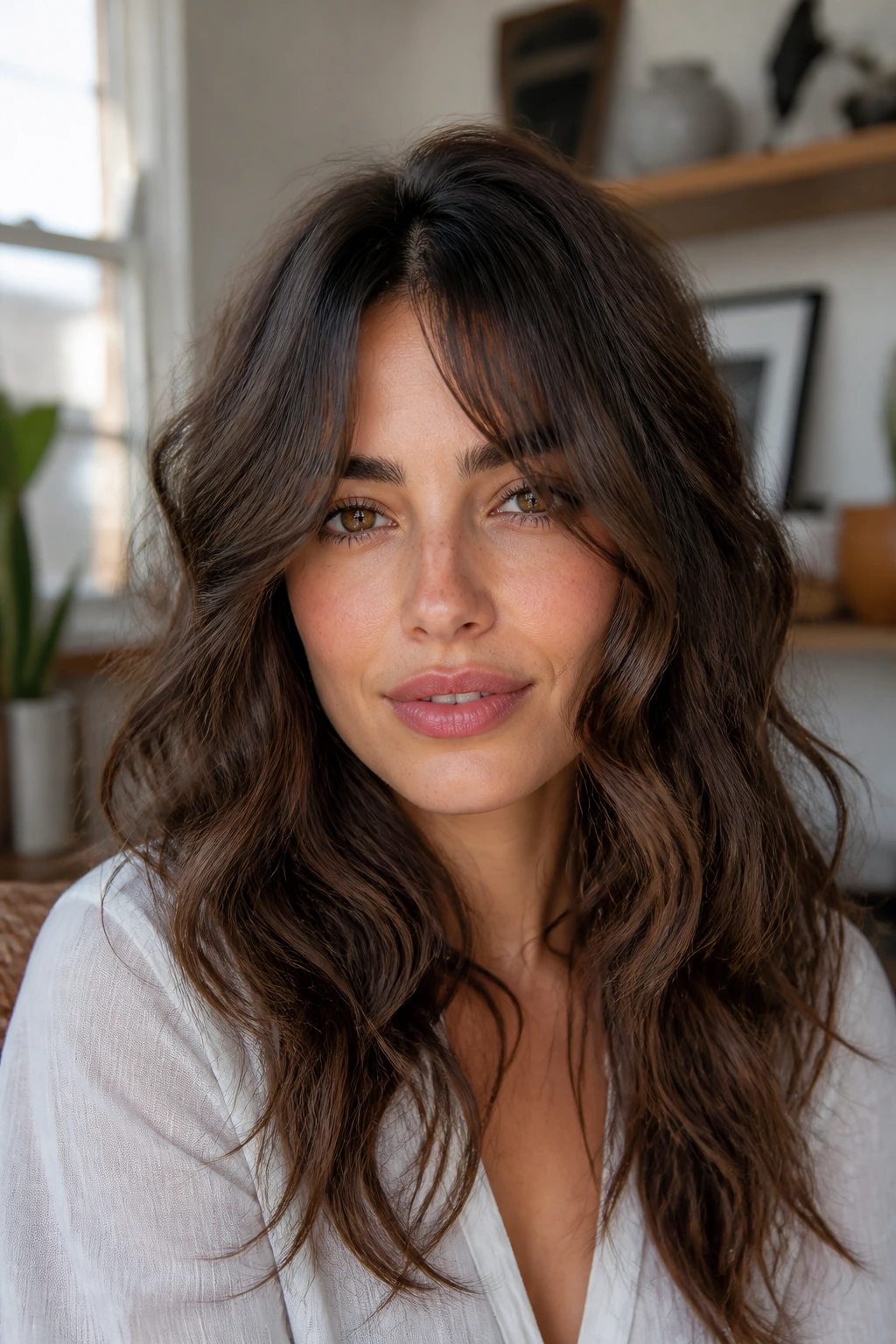
- They break the widest point: A fringe that starts at the brow, cheekbone, or just off-center creates a vertical line across the middle of a round face, which helps the face read longer.
- They respect curl shrinkage: Loose curls bounce up after drying, so the best cuts stay a touch longer and piece-y rather than chopped into a blunt line.
- They leave room for movement: The styles here keep the front soft, which matters when waves swell and separate during the day.
- They grow out with less drama: A good wavy fringe can melt into long layers instead of turning into a boxy block two weeks later.
- They work with long hair, not against it: The length in the rest of the hair gives the bangs somewhere to blend, which keeps the front from looking heavy.
- They flatter round faces by angle, not force: Diagonal shapes, center breaks, and cheekbone-grazing ends all help stretch the face visually without making it look overstyled.
1. Cheekbone Curtain Bangs
This is the safest place to start, and I mean that in the best way. Cheekbone curtain bangs split in the center and slide down toward the face so the shortest point sits around the brow or upper bridge of the nose, while the longer sides brush the top of the cheekbone.
That shape works because it interrupts the widest part of a round face without boxing it in. On loose curls, the front pieces keep their bend instead of lying flat, which means the fringe reads soft rather than stiff. Ask for the center to be cut a touch longer than you think you need — curls spring up, and a bang that lands at the bridge of the nose when wet can pop right to the brow once it dries.
- Best for: medium-density waves that need movement without losing length.
- Styling note: blow-dry the center forward first, then sweep each side back with a round brush.
- What to ask for: a soft center split, longer temple pieces, and point-cut ends.
If you like bangs that look intentional on day one and still behave on day three, this is the benchmark.
2. Bottleneck Bangs with a Soft Center Split
Why do bottleneck bangs keep showing up on round faces? Because they take the part where the forehead is narrowest, then widen gradually as they move toward the temples. That little taper is doing a lot of work. It narrows the top of the face for a second, then opens back out before the fringe can feel blocky.
Loose curls suit this shape because the ends do not need to lie perfectly. A few separated strands at the corners are part of the look. I like this style especially when the hair around the face is long enough to merge into layers at the jaw or collarbone; the whole cut feels stitched together instead of chopped into parts.
The key is density. Too much hair in the fringe and it turns into a curtain with no air. Too little and the center split goes wispy in a messy way. Ask your stylist to leave the middle slightly shorter than the sides, then taper the temples so the fringe slides into the long layers.
3. Side-Swept Bangs with a Deep Part
If your part already wants to live on one side, stop fighting it. Side-swept bangs are built for a round face because they bring the eye diagonally across the forehead instead of letting it settle in a horizontal line. Diagonals do a lot of face-shaping work. So do asymmetric pieces that skim the brow and then melt into the rest of the hair.
What Makes It Work
The best version starts with a deep side part and a long fringe that crosses the forehead in one clean sweep. On loose curls, that sweep has enough bend to feel soft, not pageant-y. The front should hit somewhere between the outer brow and the cheekbone, depending on how much lift you want near the face.
A flat side-sweep is the enemy here. You want a little root lift, a little curve, and a visible bend in the ends. A round brush, a low-heat blow-dry, and a cool shot at the end usually do more than a pile of product ever will.
This is one of the few bang styles that can look polished with very little effort on a good hair day. On a bad one, a deep part and a quick reset at the roots usually bring it back.
4. Wispy Brow-Grazing Bangs
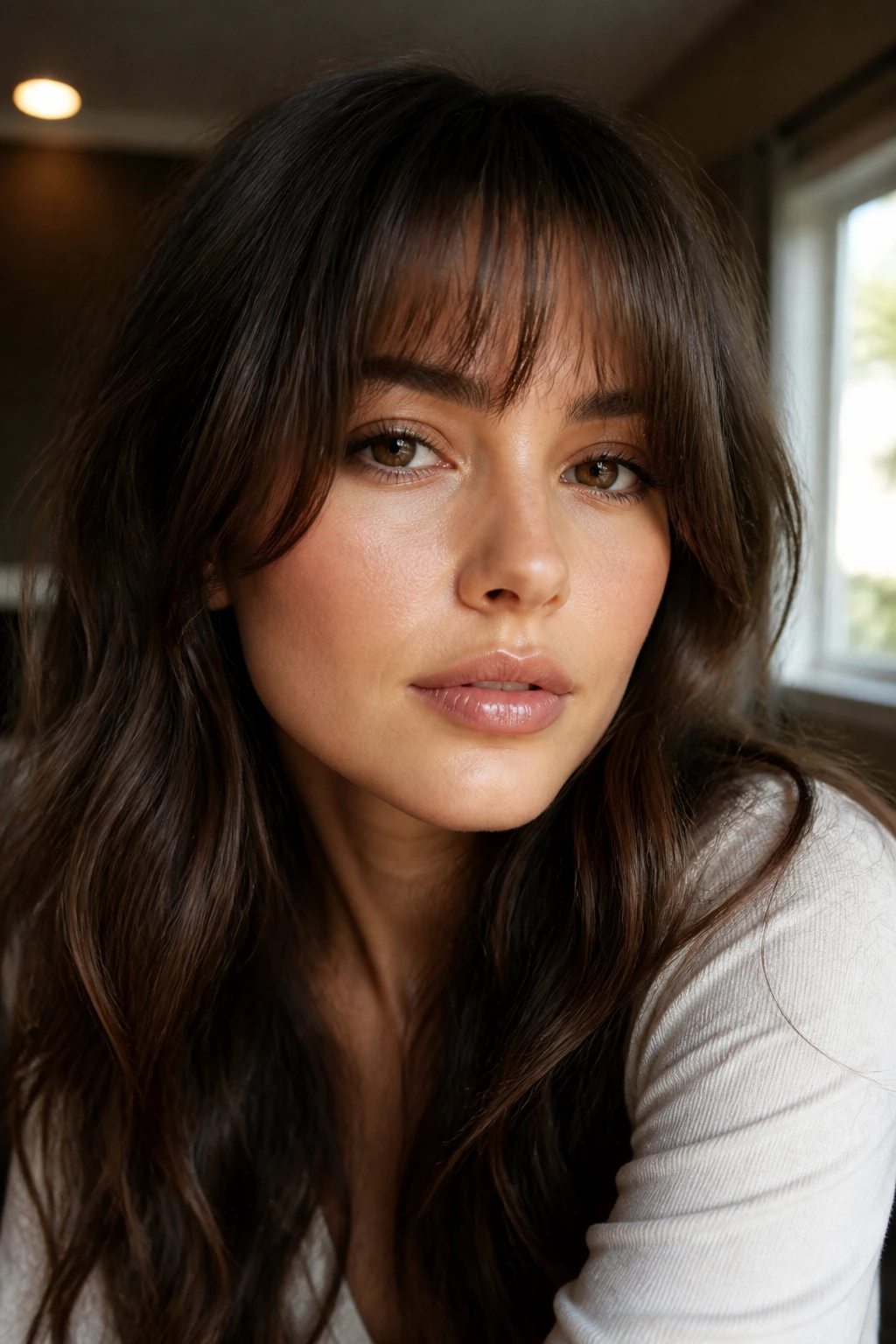
A full fringe isn’t the only way to wear bangs. Wispy brow-grazing pieces work well on round faces because they soften the forehead line without drawing a heavy bar straight across it. You still get the bang effect, but the skin showing through keeps the front from feeling boxed in.
These are especially useful if your loose curls have a finer texture or if you do not want to commit to a dense fringe. The pieces can be cut lightly above the brow and then allowed to separate a bit as they dry. That little bit of spacing matters. It keeps the fringe from puffing into one solid mass.
I like this style best when the rest of the hair is long and layered, because the lightness up front balances the weight in the length. It also grows out gracefully. No one wakes up to an obvious shelf.
5. Feathered Fringe with Long Layers
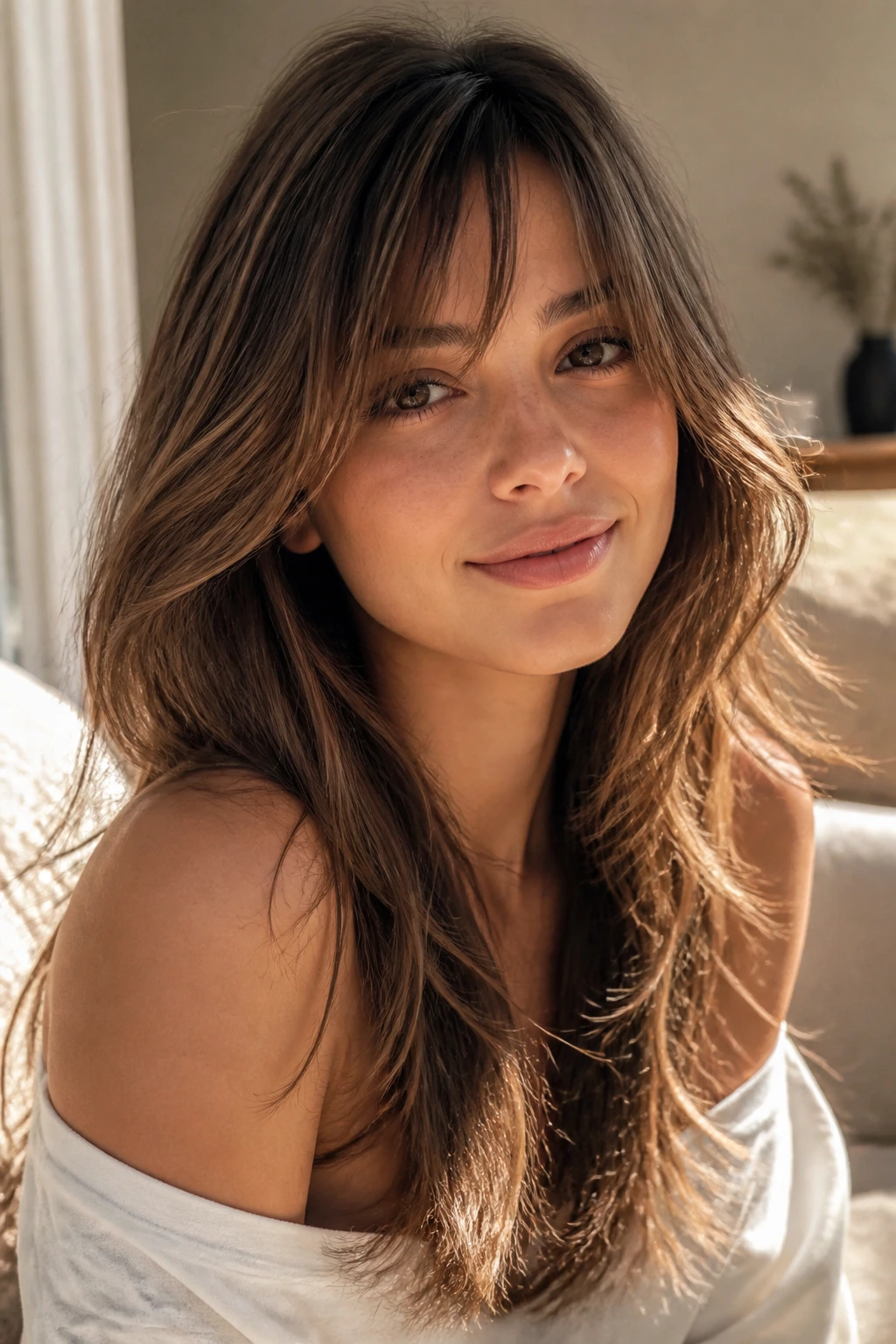
The front should feel like soft bristles, not a wall of hair. Feathered fringe depends on piece-y ends and a gentle taper into the longer layers, which makes it a smart choice for loose curls that tend to swell when air-dried. You get movement near the eyes without the front becoming too thick.
This cut is especially good if your hair is medium to dense, because the feathering removes some bulk from the front. That keeps the fringe from sitting on the cheeks like a curtain rod. Ask for the ends to be point-cut or slide-cut so the line breaks up, and make sure the longest front pieces blend into the first layer under the chin or jaw.
It’s a softer version of a shag fringe, less messy and a little more polished. Not stiff. Just cleaner.
- Best for: thicker wavy hair that needs weight removed near the forehead.
- Styling note: mist with a lightweight texturizing spray and scrunch the ends with your fingers.
- Avoid: heavy creams at the root; they flatten the feathering fast.
6. Shag Bangs with a Little Crown Lift
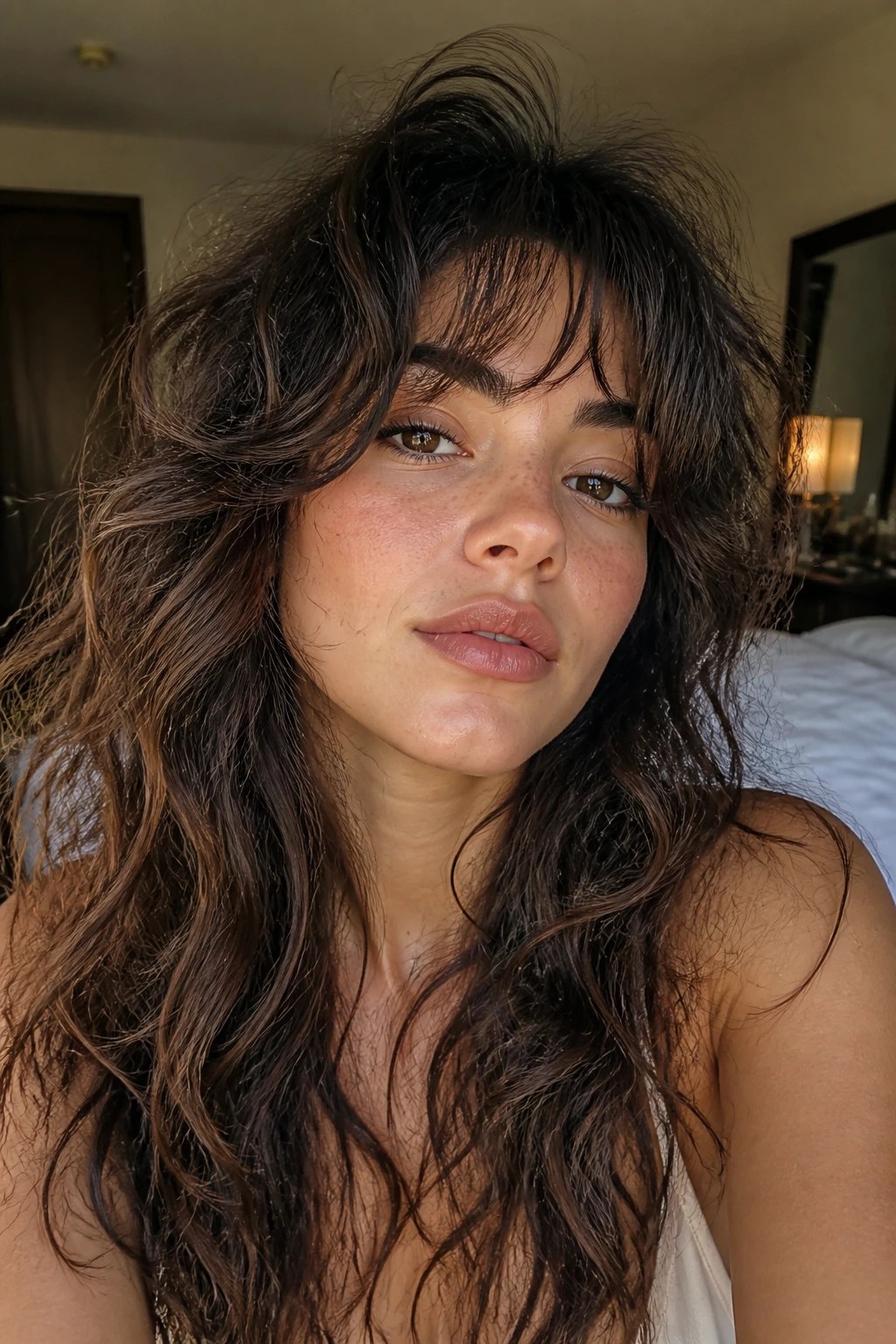
A shag fringe gives round faces a useful bit of disruption. The shorter center pieces and longer outer strands break up the curve of the face, while the crown lift keeps the whole style from collapsing downward. With loose curls, that lift matters. A fringe that sits too flat can make the forehead look wider than it is.
This is the rowdiest option in the group, and I say that affectionately. It has personality. It also looks better when it is a little imperfect, which is refreshing if you have ever spent too long trying to force every front curl into the same direction. Let the texture do the work. A diffuser, a bit of root mousse, and a side-to-side drying pattern are usually enough.
The best shag bangs do not end at one sharp line. They blur. They tumble into the face-framing layers and make the whole cut feel like it was meant to move.
7. Birkin-Inspired Soft Bangs
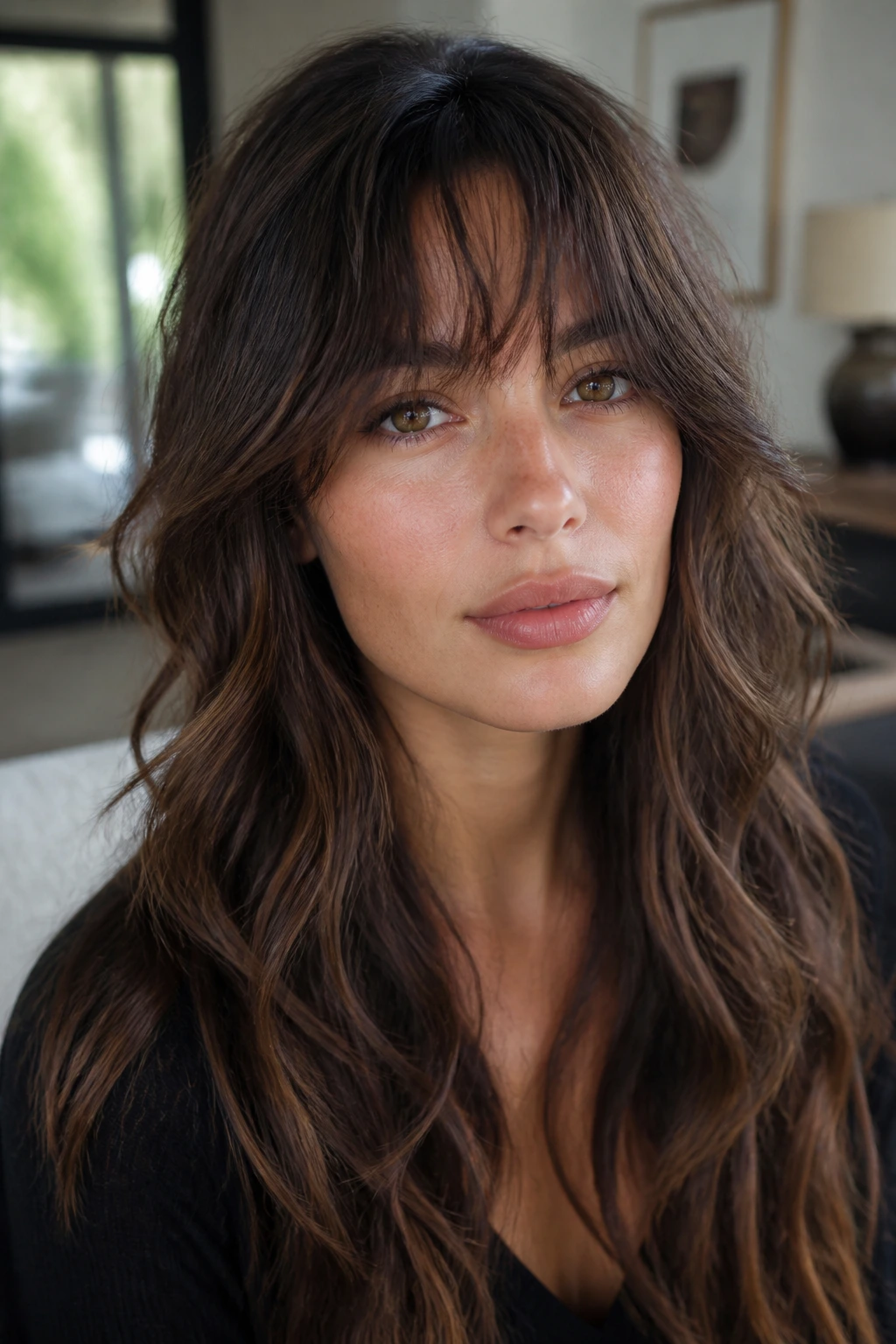
This is the chicest dense fringe in the lineup, but it only works if you keep it soft. Birkin-inspired bangs have more fullness than wispy fringe, yet the ends are broken enough that the line never looks heavy. On a round face, that softness matters. A straight, blunt bang can stop the eye cold. A broken edge lets it keep moving.
Loose curls make this style tricky in a good way. The wave pattern adds a little bend at the ends, which prevents the fringe from looking too exact. Ask for the bangs to be cut dry, or at least checked dry, so the curl pattern does not fool the scissors. That part is non-negotiable if your hair springs up a lot.
Who It Flatters
- Round faces that want more forehead coverage without a hard line.
- Long hair that can carry some weight at the front.
- Waves that fall in the 2A to 3A range and need shape more than structure.
It is elegant, but not fussy. That’s the charm.
8. Crescent Bangs That Open the Face
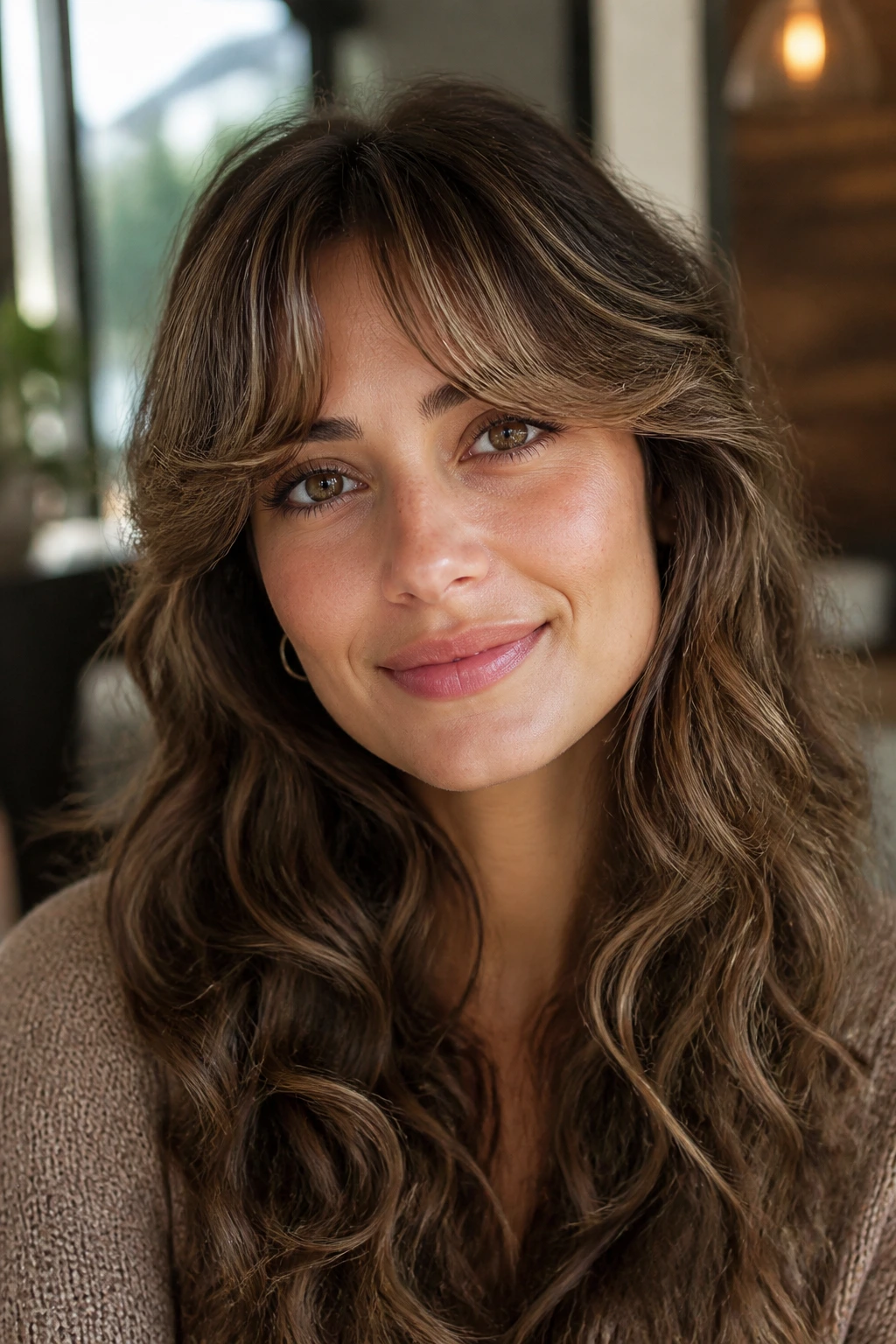
What if you want more coverage without losing openness? Crescent bangs solve that problem by curving gently through the middle and dropping longer toward the sides. The effect is almost like a soft arch sitting across the forehead, with the outer pieces lengthening enough to frame the cheeks.
That curve is a useful thing on round faces. It gives the center of the face a little lift while letting the sides slide downward, which helps lengthen the whole shape. On loose curls, the crescent looks best when the center stays a touch lighter than the edges. Too much density in the middle and the style gets heavy fast.
I also like this cut when the rest of the hair is very long, because the fringe creates a visible shape up top without taking away from the length below. It’s one of those styles that sounds subtle and ends up doing a lot of visual work.
9. Piece-Y Split Bangs for Natural Wave
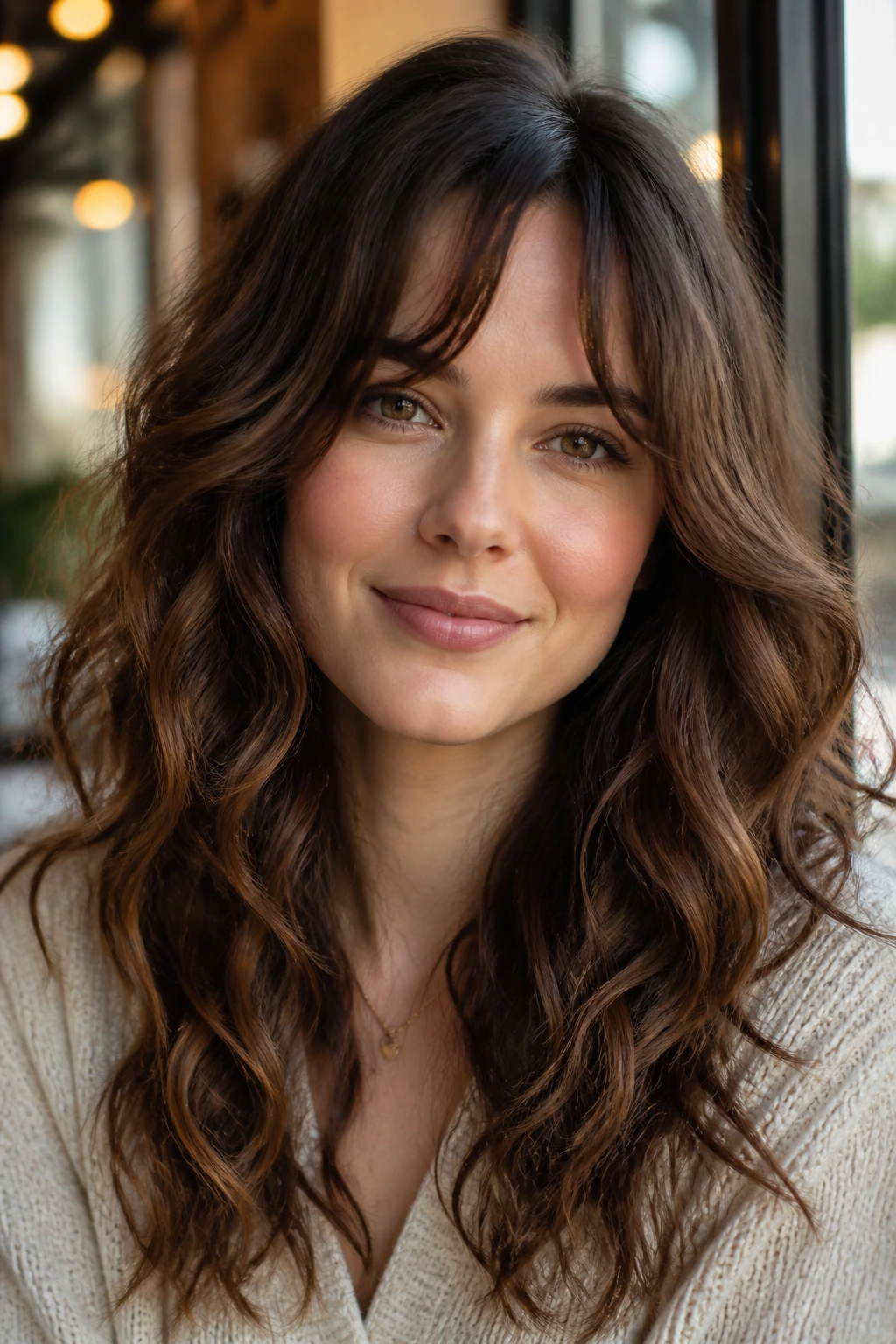
A little separation at the front is not a flaw. It’s the point. Piece-y split bangs work especially well on loose curls because they let the hair divide into soft sections instead of trying to sit as one perfect sheet. On a round face, that broken texture stops the forehead from looking wider.
This is a good option if you dislike the idea of a dense bang but still want something that reads as a fringe from across the room. The best version usually sits near the brow and splits into two or three visible ribbons, with the outer pieces tucked into the face frame. It feels easy. Not careless. Easy.
Keep styling light. A pea-sized amount of mousse, scrunched through wet fringe, usually gives enough hold without making the front sticky or stiff. If the pieces separate too much, a damp finger twist can pull them back together in seconds.
10. Hollywood Sweep Bangs
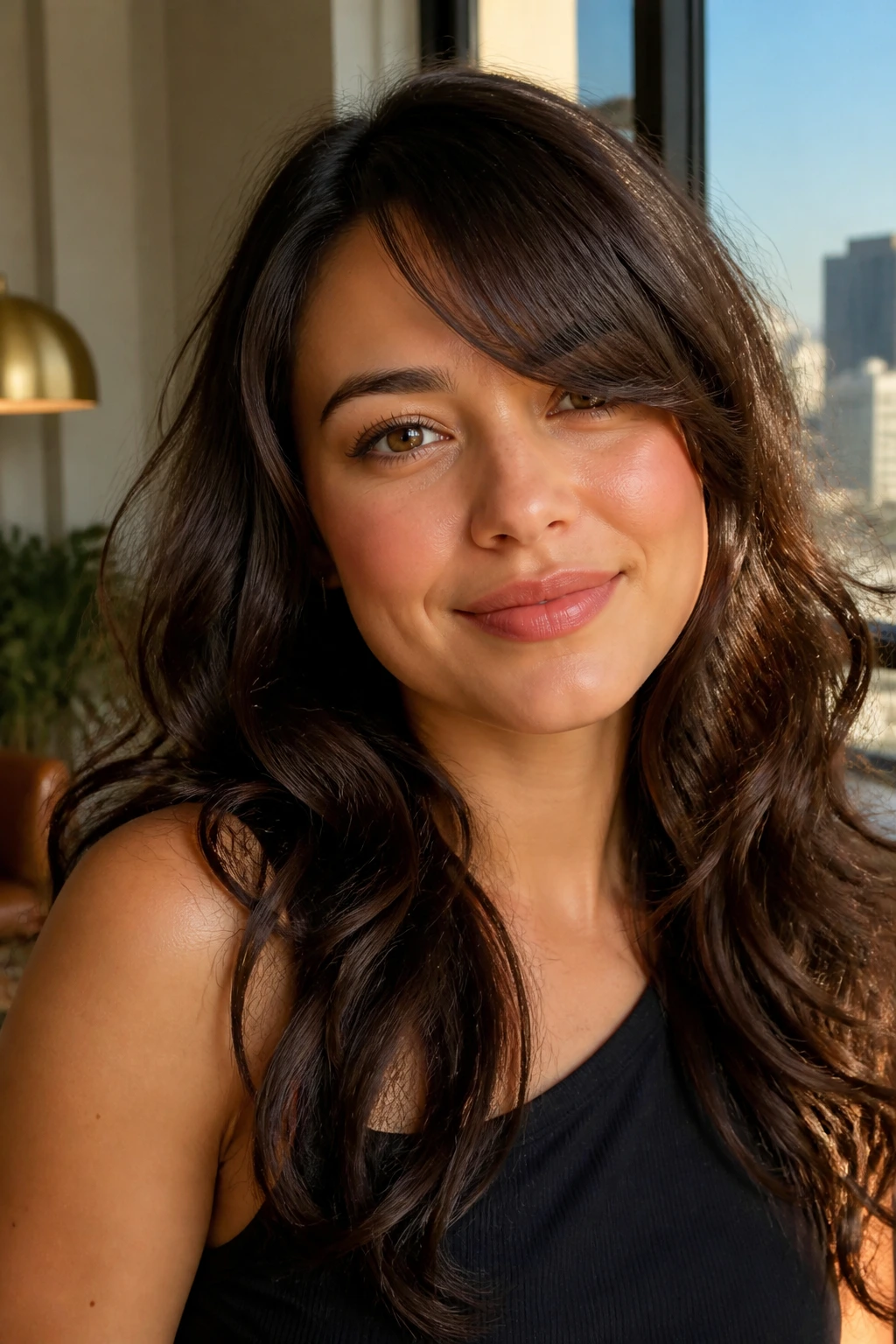
Not every round face needs a center break. A deep side part with a big, polished sweep can be even more flattering, because the long diagonal line cuts across the face in a way that feels deliberate and strong. The front is still soft, but it carries more shape than a casual side fringe.
Why the Diagonal Wins
The visual angle matters. When the bang sweeps from one temple toward the opposite cheekbone, it creates length through the face and keeps the widest part from sitting dead center. On long hair, that line looks even better because the length underneath echoes the same direction.
Loose curls make this style a little romantic, which is nice. You do not need a perfectly blown-out wave. You need a visible bend and some root lift where the part begins. A large round brush or a 1.25-inch curling iron on the front section can give you that curved finish if your natural wave does not set evenly.
It’s a bit more styled than the rest of the list, but that is the tradeoff. Some mornings, I’ll take a polished sweep over a fringe that behaves badly all day.
11. Razor-Soft Long Bangs
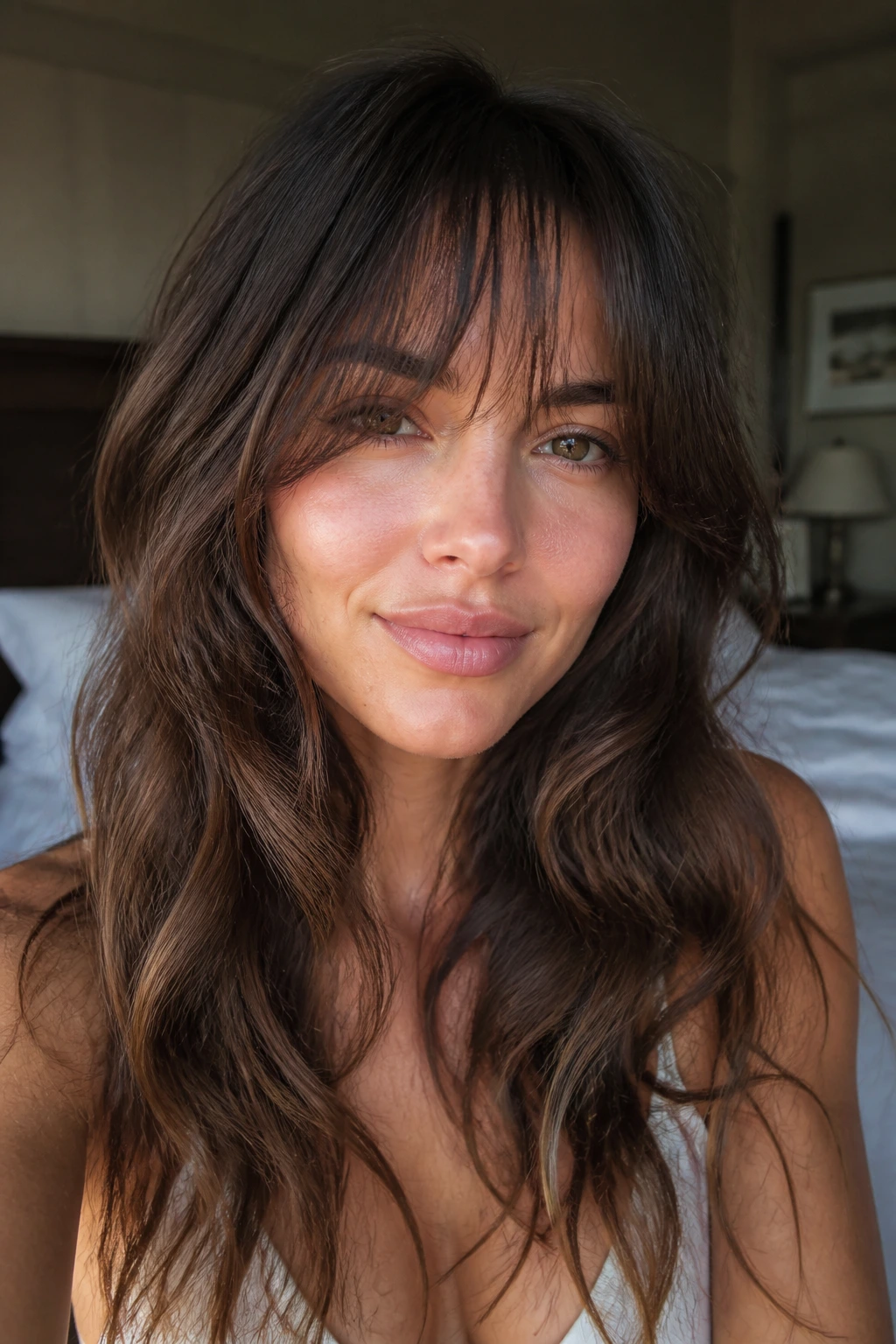
These should move like the frayed edge of a silk scarf. Razor-soft long bangs are cut to remove weight and create a whispery edge, which is useful if your loose curls are thick or want to bunch at the temples. The shape keeps the front from looking blunt and helps the hair bend around the face instead of across it.
On round faces, the softness matters more than the exact shape. A heavy, compact fringe sits squarely across the cheeks; a razor-soft version breaks that line into smaller pieces, so the face feels longer. I would not push this cut on hair that frizzes aggressively, because the same texture that makes it airy can also make it fuzzy. If your wave pattern is smoother, though, it can look excellent.
- Best for: thick but soft wave patterns.
- Styling note: use a lightweight cream only on the mid-lengths, not the roots.
- Ask for: point-cut or razor-finished ends with a longer perimeter.
12. Rounded Fringe with a Tapered Edge
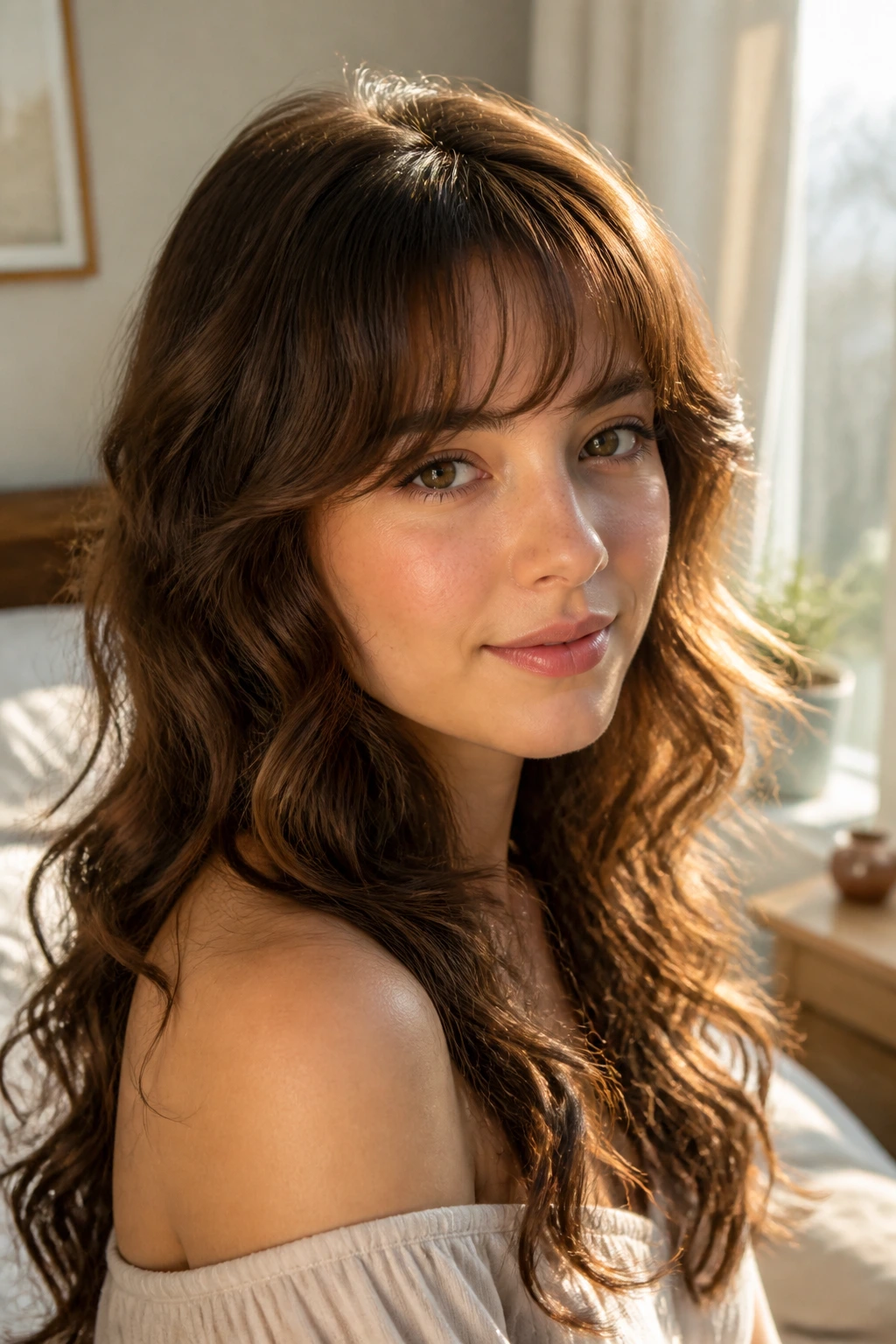
A round face can carry a curved bang beautifully if the edge is tapered. A rounded fringe follows the brow line in a soft arc, then lengthens a bit at the sides so it does not feel like a straight block. That little taper is the difference between sweet and squat.
The cut works best when the center lands just below the brows or brushes them lightly, while the corners skim the temples. That gives the front enough shape to be noticed without taking over the face. Loose curls help here, because they blur the arc into something softer and less literal.
If your hair is prone to poufing at the forehead, keep the roots light and dry the fringe forward first. Then direct the sides away from the face with your fingers or a small brush. A bang like this should look curved, not puffy.
13. Long Invisible Bangs
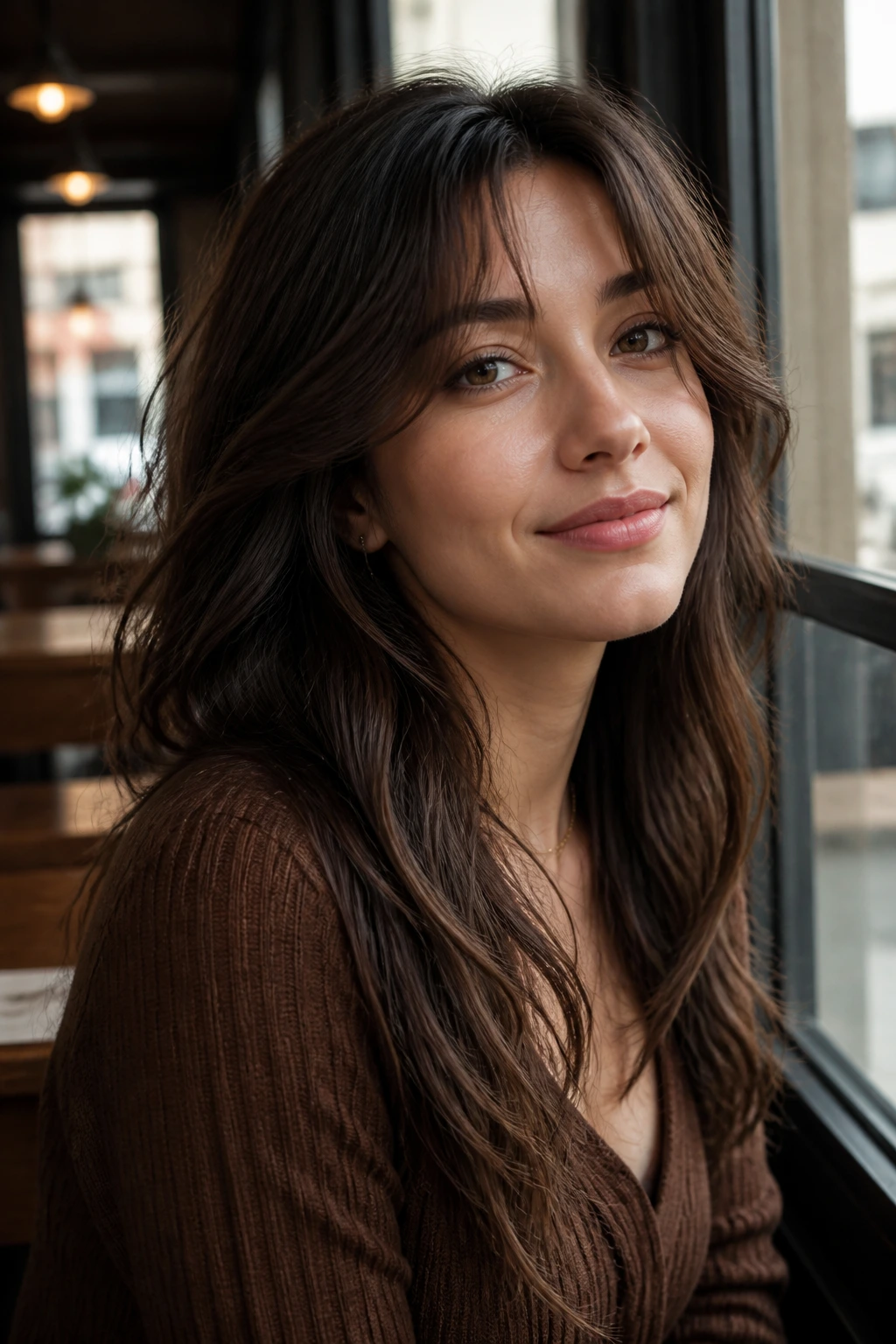
If you want bangs that can disappear into the rest of the hair by lunchtime, this is the trick. Long invisible bangs are really front layers with enough shape to be styled forward, but enough length to tuck behind the ears or blend into waves when you do not feel like wearing a fringe.
That makes them a smart choice for round faces, because they never lock you into one look. One day they act like bangs. The next day they become face-framing layers. The length usually starts around the cheekbone and drifts down toward the jaw, which is a nice place for loose curls to live.
A Good Fit If…
- You are nervous about a hard bang commitment.
- You like wearing your hair up or half-up often.
- You want a face-softening front without daily styling pressure.
I like this option more than most people expect. It’s underrated because it doesn’t scream bangs. It just quietly does the job.
14. Wavy Bottleneck Hybrid Bangs
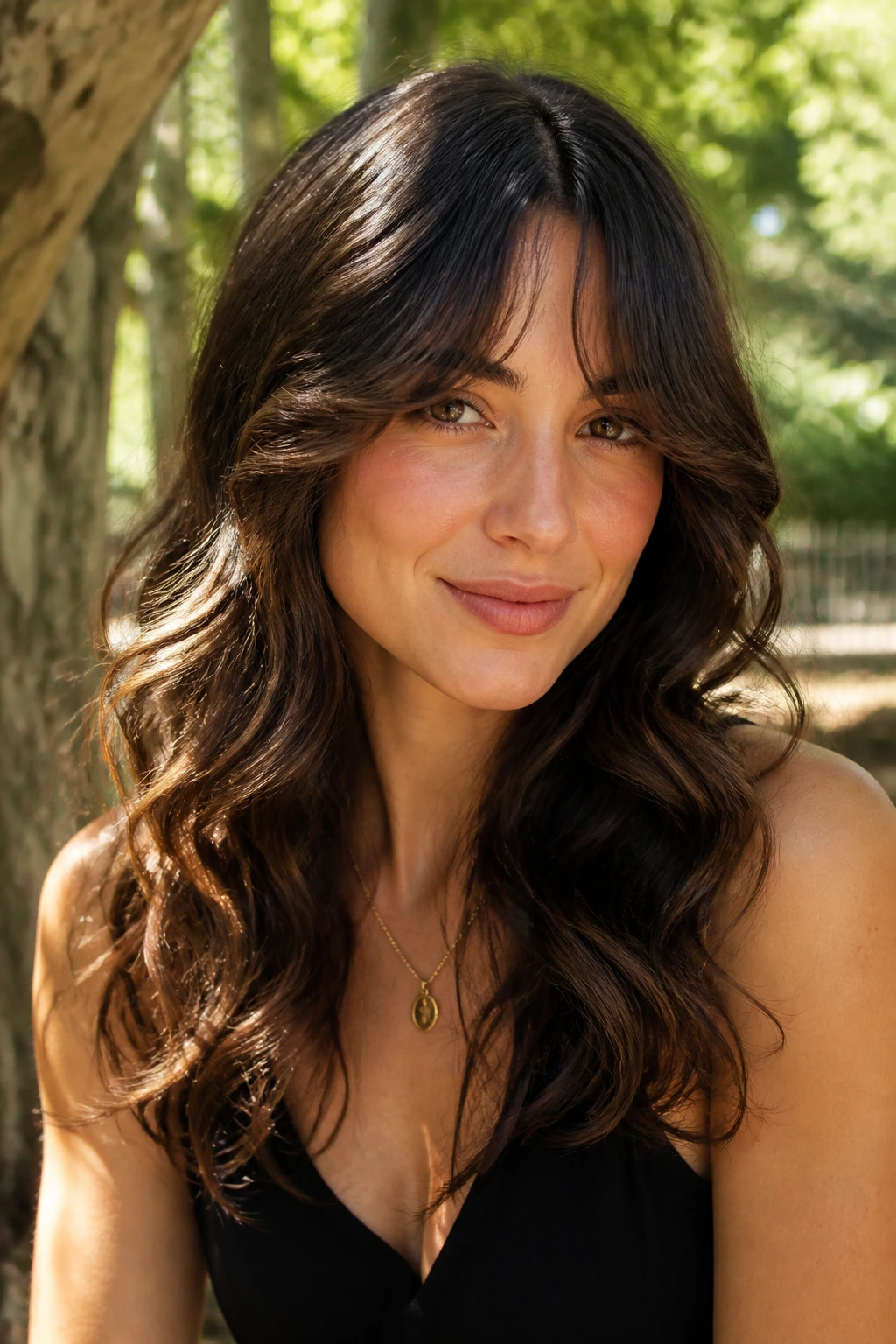
This may be the best compromise in the whole set. A wavy bottleneck hybrid takes the narrow center of a bottleneck fringe and gives it a little more length and softness through the sides, so the whole thing can bend naturally with loose curls. It feels tailored, but not fussy.
For a round face, that shape is gold. The center stays light enough to keep the forehead open, and the sides fall longer to break up cheek width. The result is a face frame that looks purposeful even when the rest of the hair dries loose and a little uneven. That’s the charm of it.
Ask for a dry check if your curl pattern varies from section to section. Some loose curls sit tighter near the hairline and looser underneath, and that inconsistency can throw off a fringe if no one looks at it after it dries. Tiny adjustment. Big difference.
15. Face-Framing Bangs with Collarbone Layers
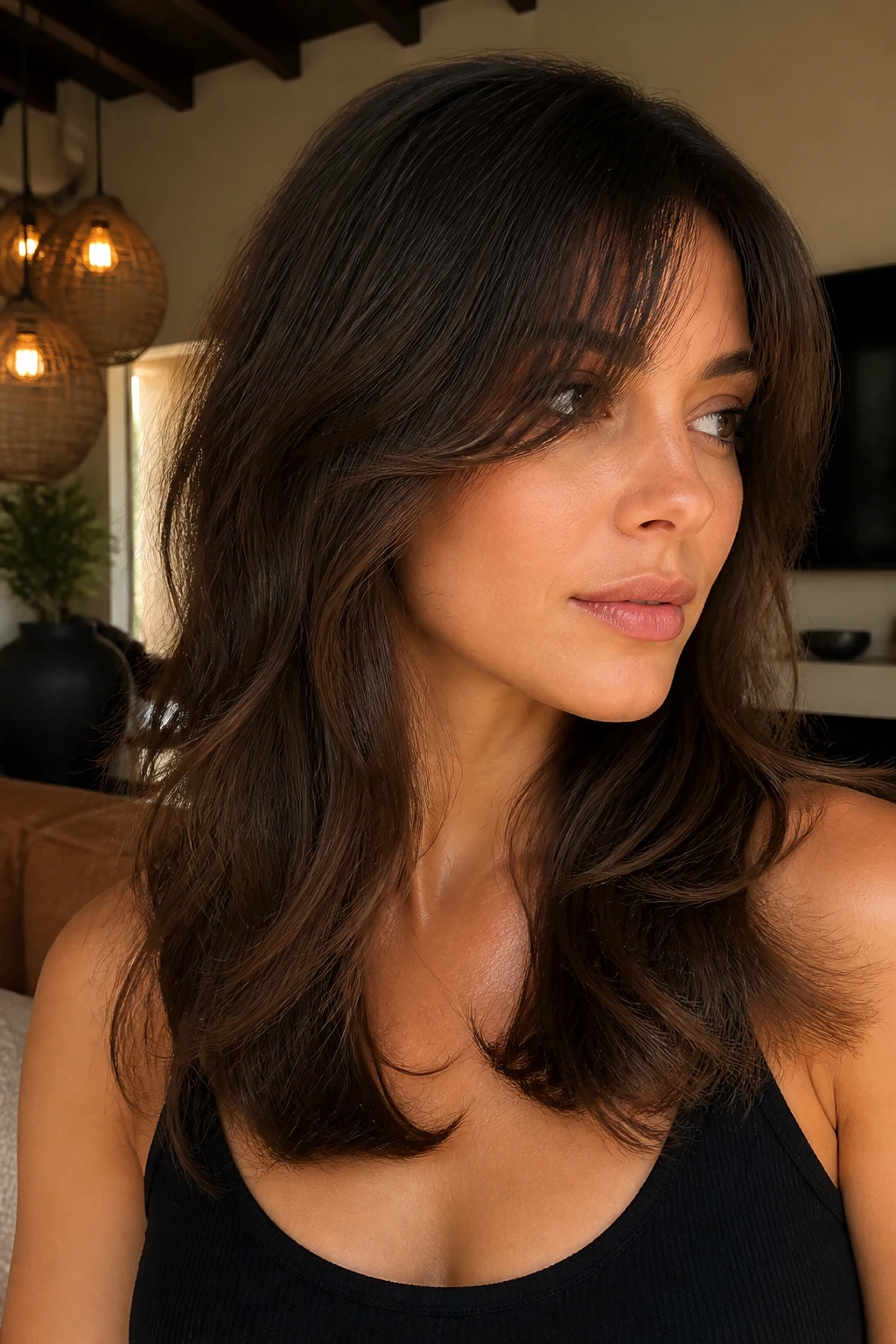
Sometimes the best bangs are the ones that are not really bangs at all. Face-framing front pieces that start near the brow or cheekbone and melt all the way into collarbone layers can create the same softening effect without giving you a dense fringe across the forehead.
That matters if you love long hair and do not want to lose much length near the front. The shape keeps the face open while still pulling focus inward, which is a useful trick on round faces. Loose curls make the transition even prettier, because the bend in the front layers echoes the movement in the rest of the hair.
This is one of the easiest styles to live with. It grows out like a layer, not a mistake. And when the weather gets humid or the front decides to do its own thing, you can tuck it back without looking like you gave up.
16. Arched Bangs Just Below the Brows
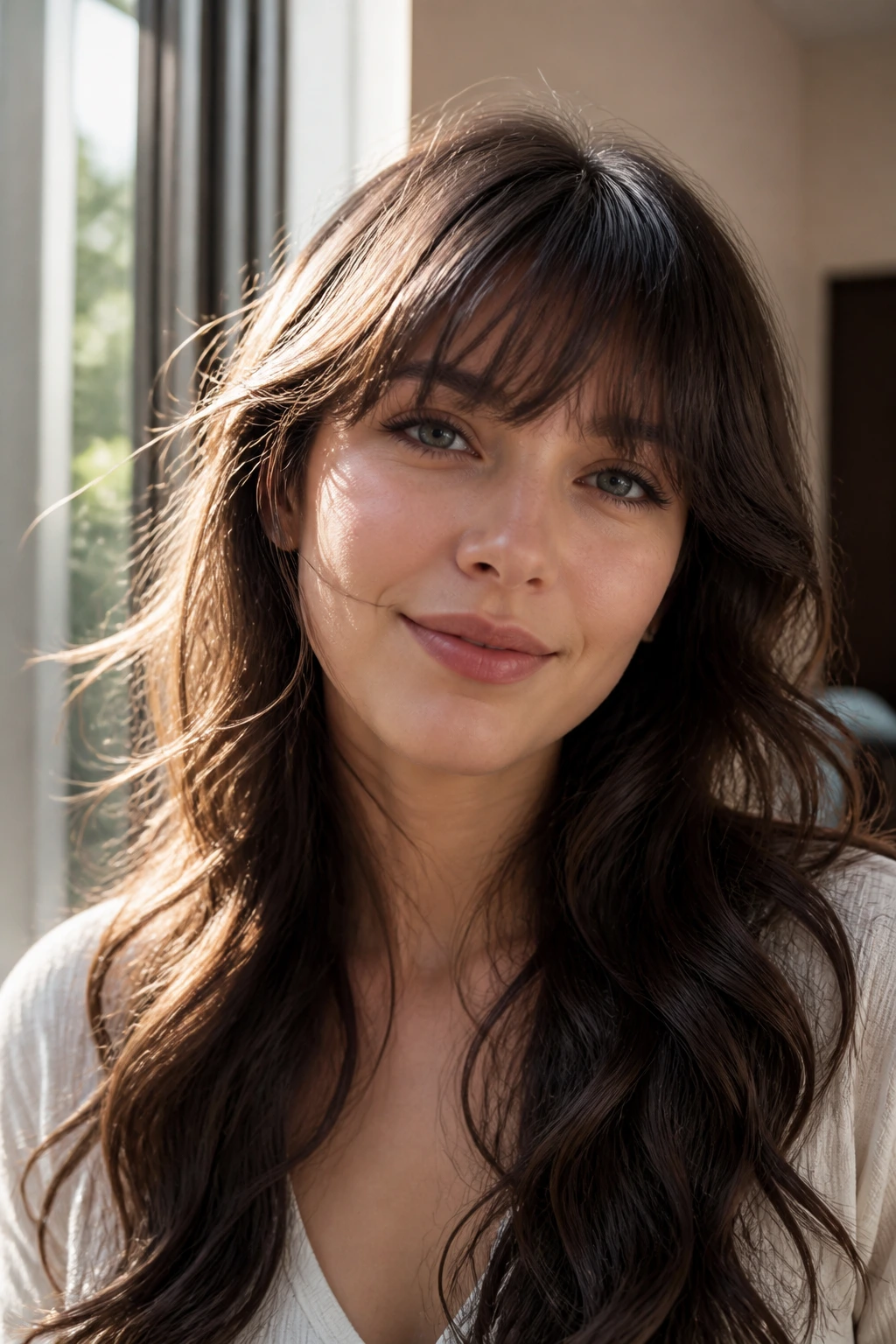
A little curve at the brow can soften a round face better than a straight line ever could. Arched bangs sit just below the brows at the center and curve slightly longer at the sides, which opens the eyes while giving the forehead a cleaner shape.
The trick is keeping them light enough to move. Too much density and the arch turns rigid. Too little and it vanishes before it has a chance to frame anything. Loose curls help because they add a bit of body to the curve, especially if the fringe is dried with a small round brush and a cool shot at the end.
I think this style looks best when the rest of the long hair has a loose, casual wave rather than a tight curl pattern. It makes the arch feel natural, not overbuilt. That’s a small distinction, but it changes the whole read of the haircut.
17. Grown-Out Bangs with Intentional Shape
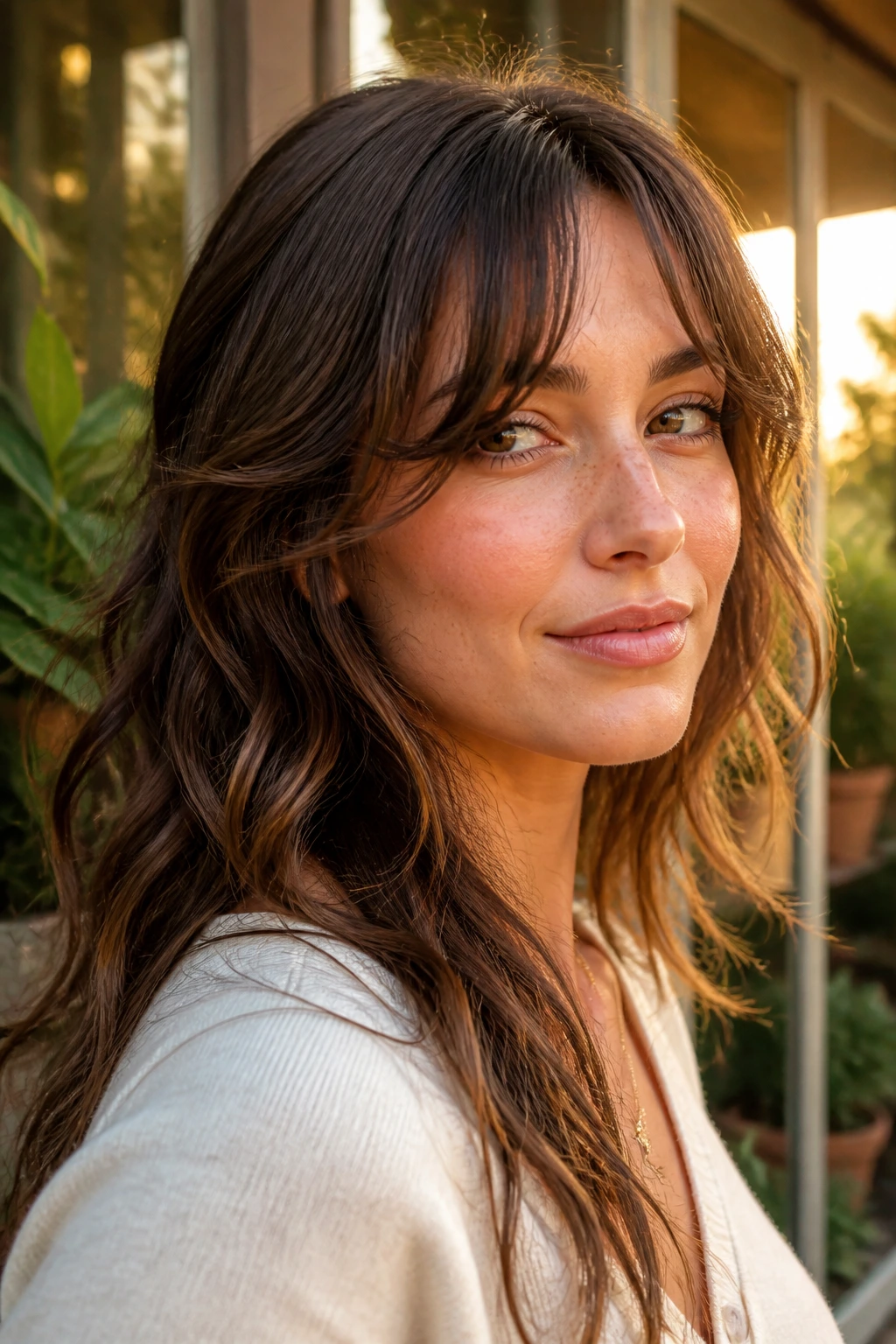
The grow-out stage is not an apology. If you let the fringe keep its shape as it lengthens, it can actually become one of the prettiest looks in the lineup. Grown-out bangs on loose curls often drift into cheekbone layers, which is exactly what round faces need: softness at the front without a hard edge.
This is the right answer for anyone who wants lower maintenance or has already lived through the short-bang regret stage. The key is to keep the corners trimmed so they do not hang in the eyes while the center gets too heavy. A stylist can keep the contour alive every 6 to 8 weeks without losing the grow-out progress.
Why It Stays Useful
The line never gets stale. It changes as your hair moves, and that movement keeps the face frame alive. You can part it in the middle, slide it to one side, or let it break naturally if the curls want to do that on their own.
18. Deep Side-Part Fringe with a Soft Flip
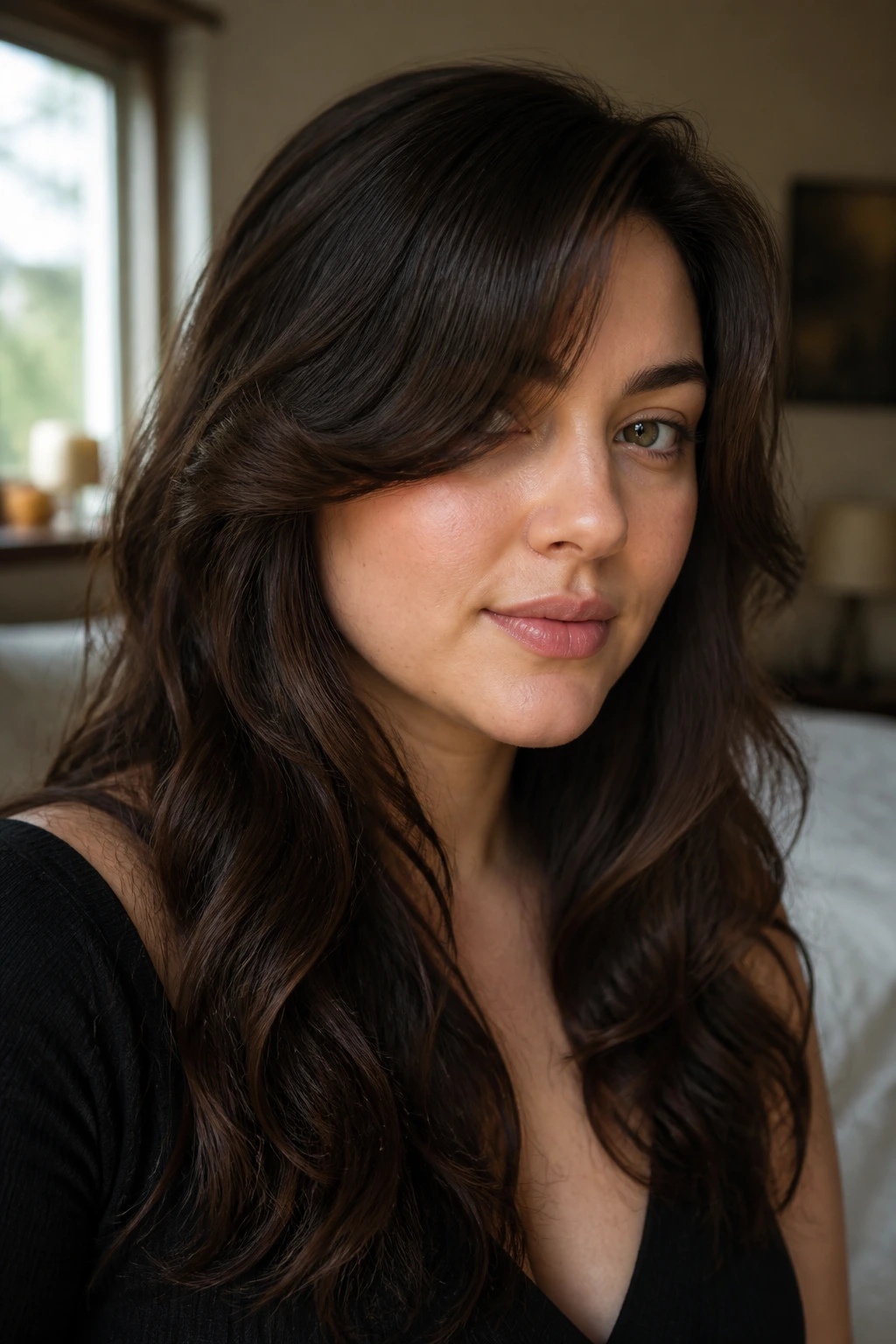
Want the most face-lengthening effect without a center fringe? Go deep on the side part and let the front flip away from the face. The result is a diagonal line that lifts at the root, sweeps across the forehead, and ends in a soft curve near the cheekbone.
That shape is especially good for loose curls because the bend at the end makes the whole fringe feel alive. It is one of the easiest ways to make a round face look a little narrower through the middle without sacrificing length everywhere else. I’d pick this if you like movement more than symmetry.
- Ask for: a long front section with enough weight to sweep, not so much that it hangs flat.
- Styling note: set the root with a round brush or a large Velcro roller for 5 to 10 minutes while the rest of your hair cools.
- Best for: people who hate babysitting bangs every morning.
How to Choose the Right Length for Your Curl Pattern
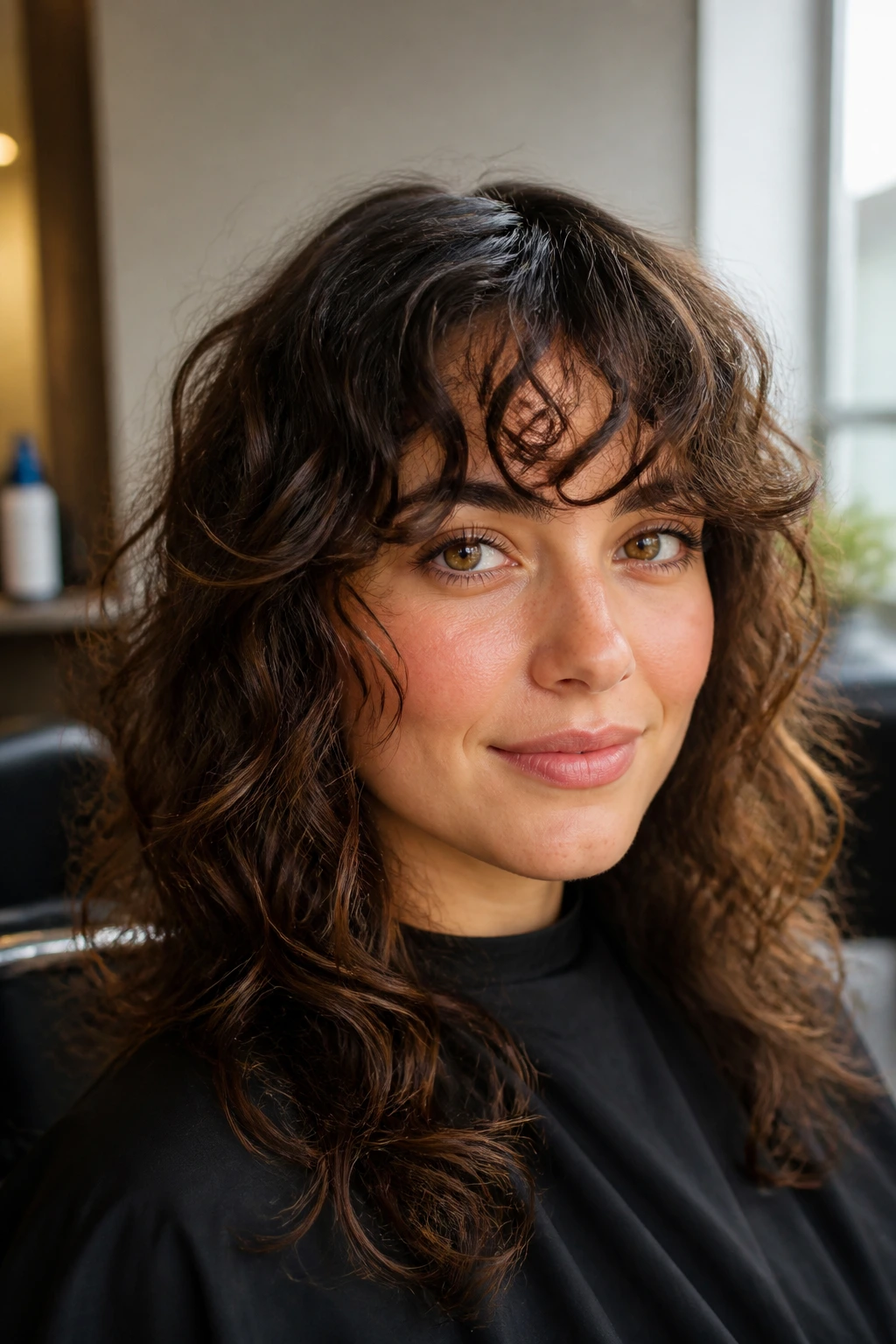
Loose curls are sneaky. A bang that looks like eyebrow length in the chair can jump up to the middle of the forehead once it dries. A bang that seems a little too long wet may land in exactly the right place an hour later. That is why the old “cut it where you want it to sit” rule does not work well here.
The safest approach is to think in dry shape, not wet shape. If your wave pattern springs tight near the hairline, ask for the fringe to be left a little longer in the center and checked dry before the final snip. If your curls stretch when wet and tighten as they dry, that final check is the difference between flattering and annoying.
Three Things That Change the Length
Curl spring: tighter loose curls shrink more than soft S-waves.
Density: thicker front sections sit heavier and often look longer when dry.
Forehead width: a shorter forehead usually needs a softer, lower bang line, while a longer forehead can carry more center coverage without feeling cramped.
A round face usually benefits from bangs that hit somewhere between the brow and cheekbone, but the exact spot depends on how much movement your curls have. There is no magic number. There is only the version that keeps breathing after it dries.
Tools That Make Wavy Fringe Easier to Style
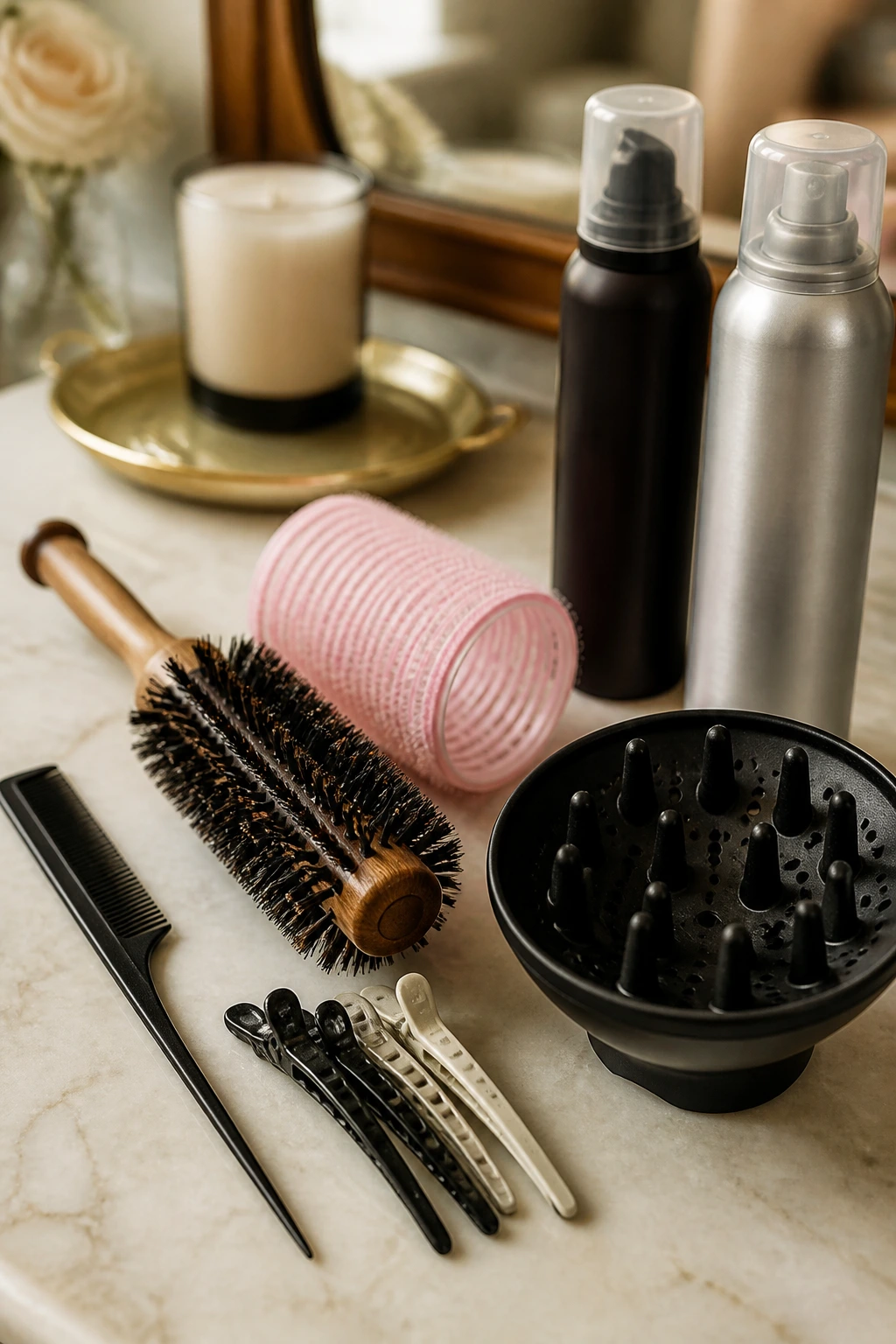
- Fine-tooth tail comb: Useful for drawing a clean part and sectioning the front without disturbing the curl pattern.
- Duckbill clips: Hold the rest of the hair out of the way while you dry the fringe first.
- Blow-dryer with a nozzle: Gives you control at the root so the bangs do not explode outward.
- Small round brush: Handy for creating a soft bend at the ends without flattening the wave.
- Large Velcro roller: Good for setting a front section while the rest of the hair cools.
- Diffuser attachment: Helps dry curls without roughing up the fringe.
- Lightweight mousse: Adds hold without turning the front sticky or crunchy.
- Dry shampoo: Works best at the roots on day two or day three, especially if the bangs separate.
- Microfiber towel or T-shirt: Removes water gently so the fringe keeps its wave shape.
- Satin bonnet or soft clip: Keeps the front from getting mashed overnight.
Smart Styling Tips for Day One and Day Three
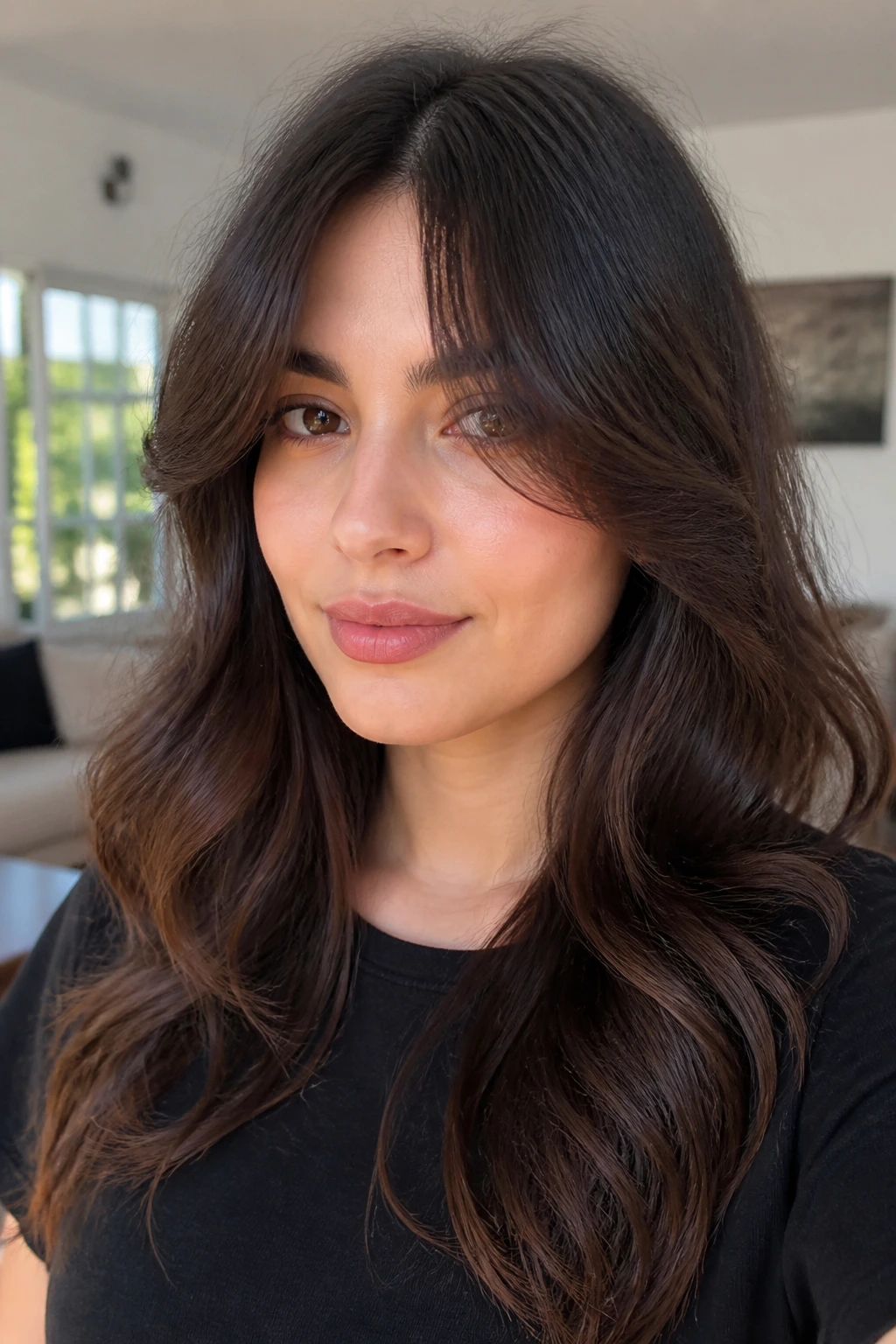
Dry the fringe first.
Clip the rest of the hair back and work on the bangs while they are still damp. That one change saves a lot of weird root bends later, because the front sets before the rest of the hair starts pulling against it.
Change direction at the root.
Dry the fringe left, then right, then forward. It sounds fussy, but that little zigzag gives the roots lift and prevents the bang from sticking to one side in a sad, flat sheet.
Keep the product light.
Use a small amount of mousse or curl cream, not a palmful. Heavy product at the front weighs the bangs down and makes them separate into oily-looking pieces by noon.
Refresh with water, not panic.
On day two or three, mist the fringe lightly, twist the front pieces once or twice with damp fingers, and let them air-dry for a few minutes. If you need more shape, add a quick pass with a round brush or a roller at the root.
Don’t chase perfection.
A fringe on loose curls should have a little movement. If every front piece is pinned into place, the whole style starts looking stiff, which is the opposite of what makes these bangs flattering in the first place.
Common Mistakes That Make Bangs Puff or Split
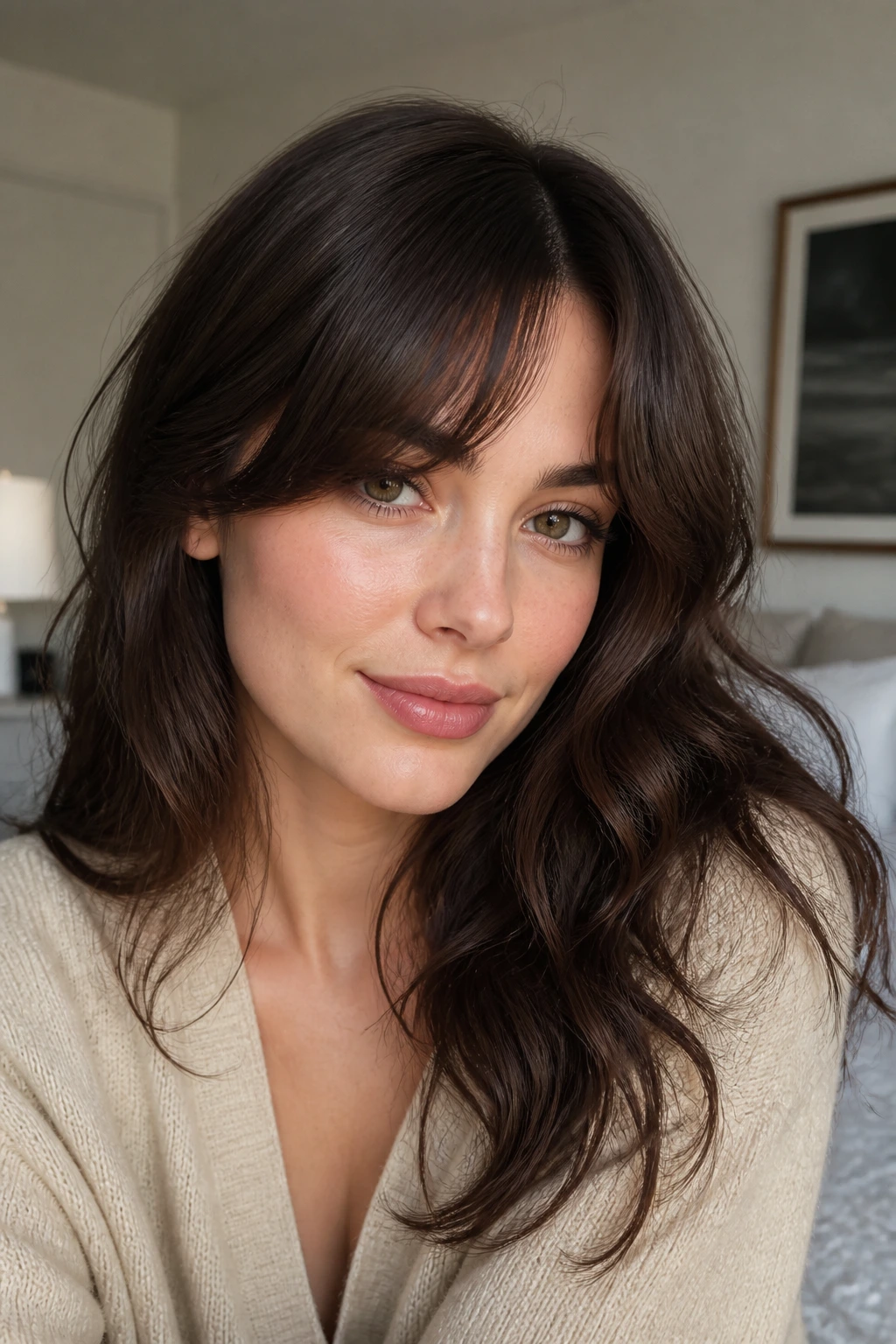
- Cutting them too short: A short fringe on loose curls can spring up into a floating shelf. The fix is to leave extra length in the chair and fine-tune after the curls settle.
- Making the front too dense: Heavy bangs look like a block across the forehead and widen the face. Ask for point-cut ends and some air between the pieces.
- Loading on thick cream at the root: That usually turns the fringe greasy before lunch. Keep the heavy products on the ends and use only a light mousse near the scalp.
- Ignoring the natural part or cowlick: A bang that fights a strong bend at the hairline will split every time. Work with the part you already have, or let the stylist cut around it.
- Letting the fringe dry untouched: Frizz and puff happen when the front air-dries in whatever shape it happened to land in. A quick dry-dry-reset gives you far more control.
- Demanding symmetry where the hair refuses it: Loose curls are not a ruler. If one side sits a little higher or lower, the shape can still look balanced once the rest of the cut is moving.
Variations and Alternatives to Try
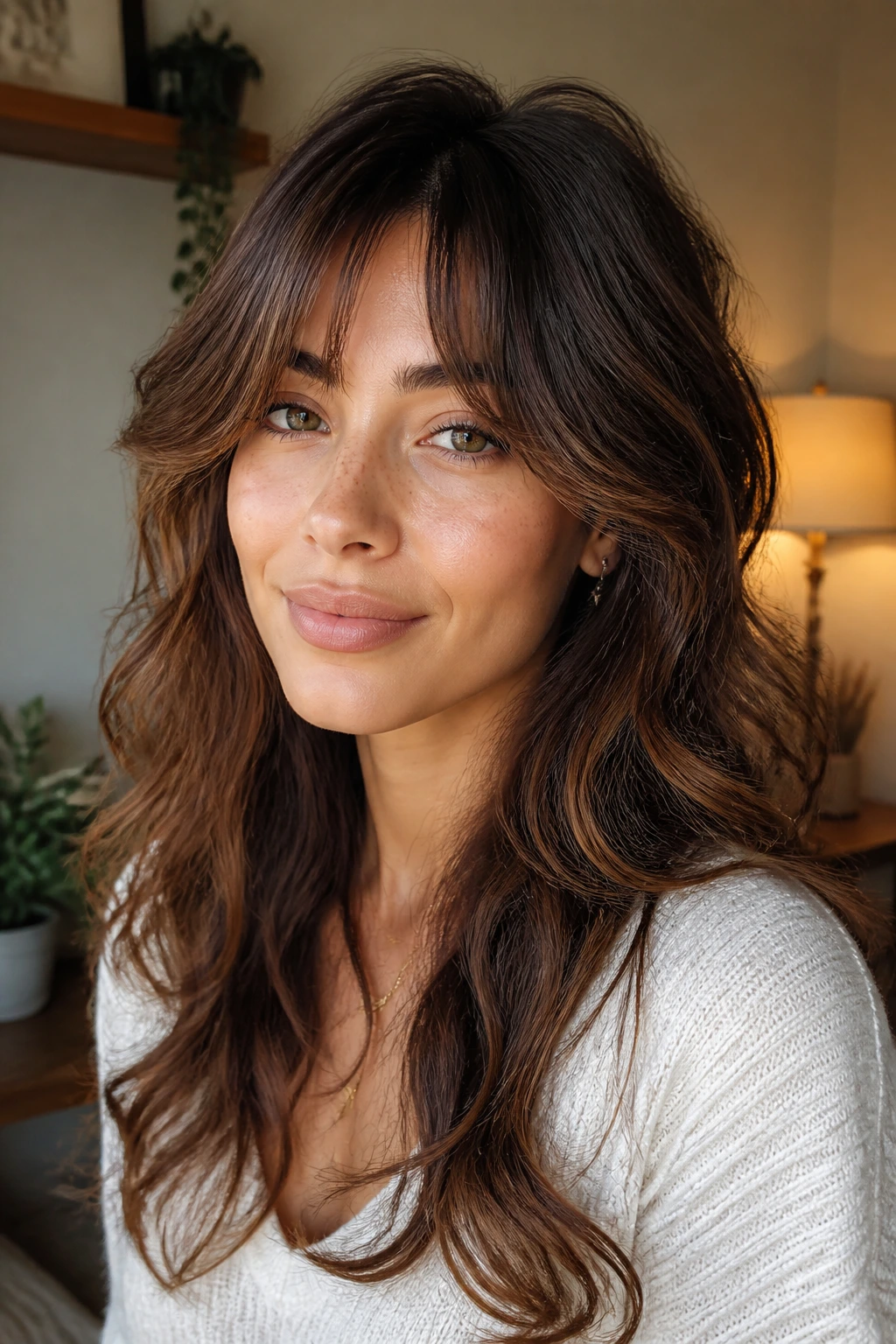
Air-Dry Curtain Version
Skip the round brush and let the front dry in a center split with a little mousse scrunched through the ends. This version is best if you want movement without daily heat styling.
Blowout-and-Go Fringe
Use a round brush or Velcro roller only on the front pieces, then leave the rest of the long hair loose and wavy. It gives the bangs a smooth bend while the body of the hair keeps its natural texture.
Low-Maintenance Grow-Out Shape
Ask for longer face-framing pieces that behave like bangs but can tuck back when needed. This is the easiest version to live with if you’re not sure how committed you feel about fringe.
High-Drama Side Sweep
Push the part deep and keep the front long enough to sweep across one eye line. It gives the round face a strong diagonal and works well for nights out or photos.
Soft Shag Blend
Bring the bangs into shaggy layers with plenty of texture near the temples. If your hair likes a bit of edge and movement, this version keeps the front from feeling precious.
Keeping the Shape Fresh Between Trims
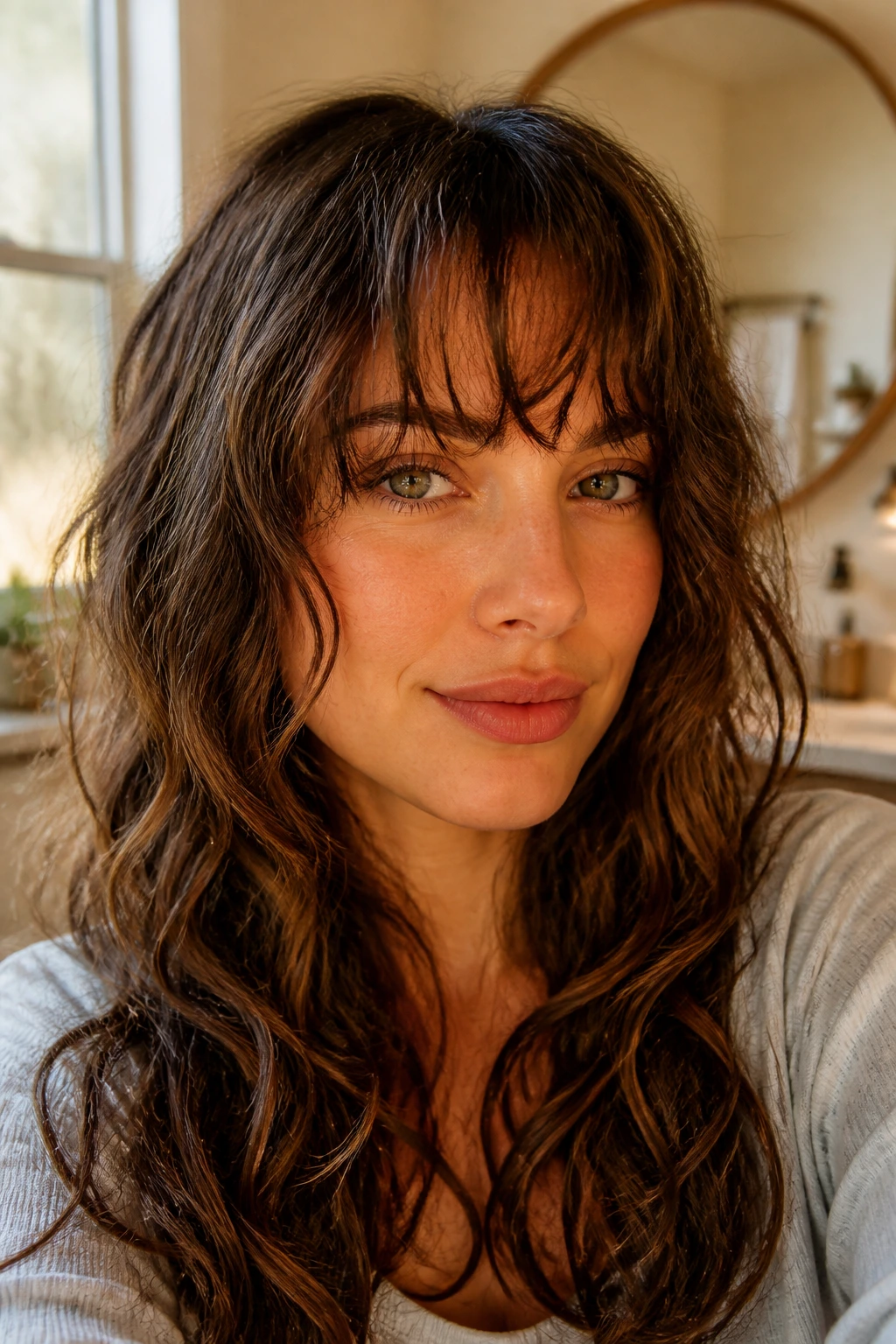
Bangs on loose curls need a little more attention than long layers, but not much more. Wash the fringe every 1 to 3 days if it gets oily fast, because forehead oil can flatten the front quicker than the rest of the hair. A quick rinse or a damp cloth at the roots often buys you an extra day.
Trim the shape every 6 to 8 weeks if you want to keep the original line. If you are growing it out, stretch that to 8 to 10 weeks and let the corners lengthen first. The danger zone is the point where the bangs hang in your eyes but are still too short to tuck back without sticking out. That stage tests everyone’s patience.
At night, clip the front loosely off the face or put on a satin bonnet if your hair gets flattened easily. A soft Velcro roller at the crown can also help keep the bend alive for the next morning. If the bangs wake up bent in the wrong direction, a few seconds of warm air at the root usually resets them faster than a full restyle.
Frequently Asked Questions About Wavy Bangs for Long Hair and Round Faces
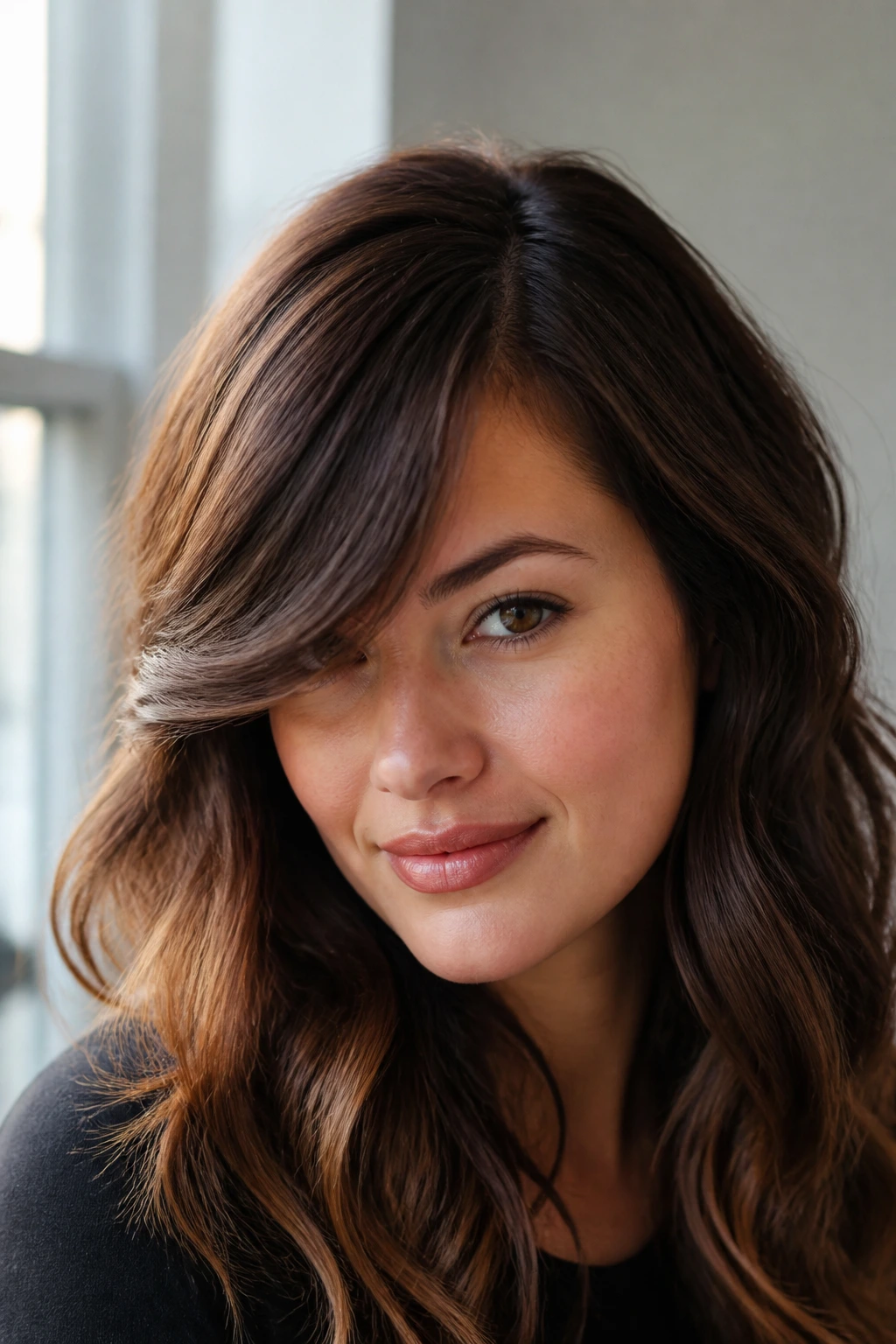
Are curtain bangs or side-swept bangs better for a round face?
Curtain bangs usually give the most balanced result because they split the face in the middle and add length without hard edges. Side-swept bangs work better if you want a stronger diagonal line or already have a deep side part that behaves well.
Should wavy bangs be cut wet or dry?
Dry is safer, or at least dry-checked before the final snip. Loose curls shrink in uneven ways, and a wet cut can land much shorter than planned once the front dries.
How do I stop bangs from splitting in the middle?
Set the root in both directions while drying, then finish by guiding the front forward or slightly off-center. If the split is caused by a cowlick, a stylist may need to leave more weight in the center so the pieces stay put.
Can thick, loose curls pull off bangs?
Yes, but the fringe needs weight removed at the ends and enough length to survive shrinkage. Heavy, blunt bangs are the wrong move here; piece-y or tapered shapes work much better.
How often should I trim wavy bangs?
Most of these styles need a cleanup every 6 to 8 weeks. If your curls are especially springy or the fringe grows fast, you may need a touch-up a little sooner.
What if I want bangs but hate using heat?
Choose a softer curtain, bottleneck, or long invisible fringe. Those shapes can air-dry with a bit of mousse and still look deliberate, especially if the front has enough length to fall into the face frame.
Can I grow bangs out without looking awkward?
You can, if the stylist keeps the corners blended into the long layers as they grow. The awkward stage gets shorter when the fringe is already soft at the edges instead of cut into a hard line.
The Fringe That Moves With You
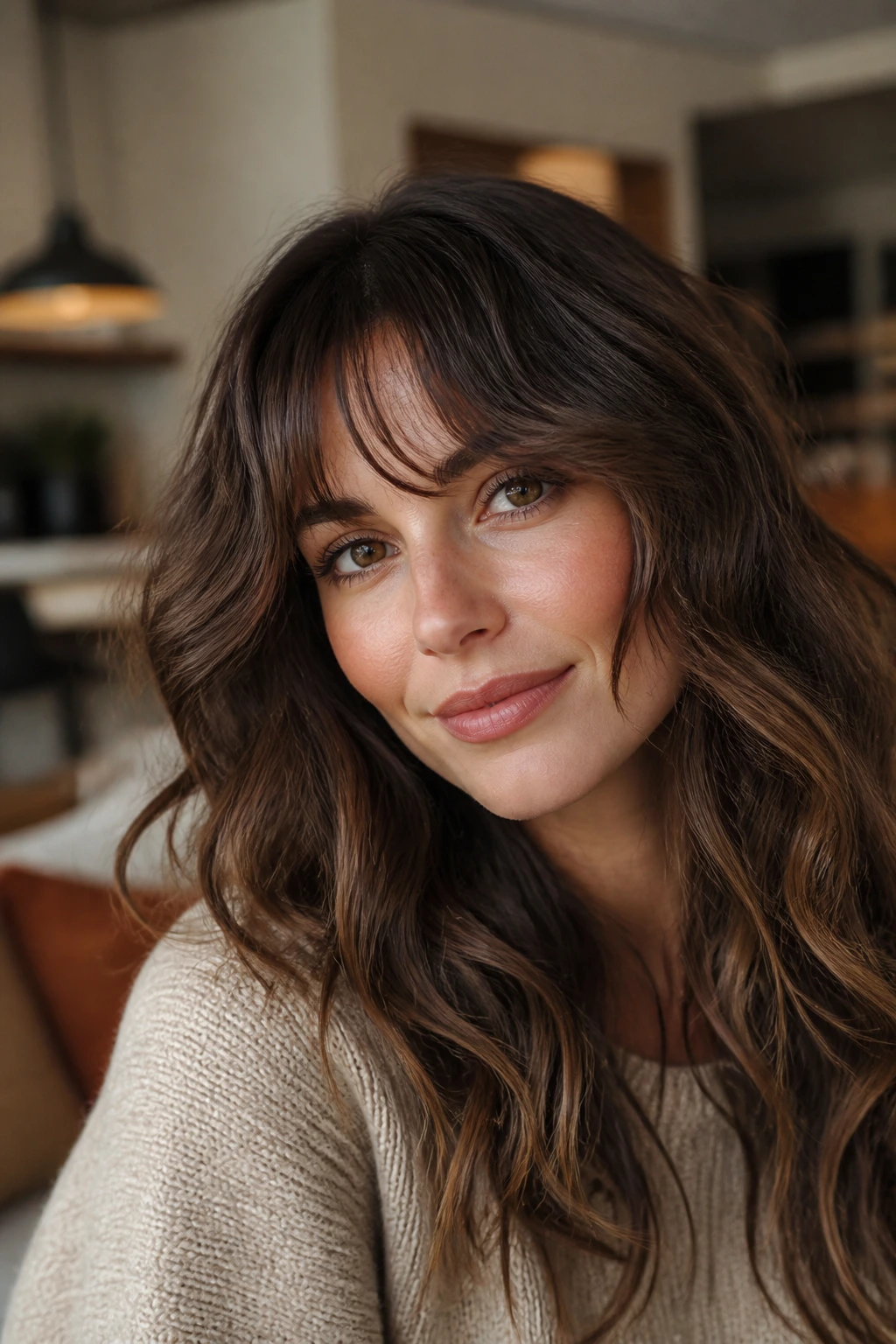
The best bangs for a round face and loose curls are the ones that keep breathing after the blow-dryer is put away. A fringe that bends at the cheekbone, splits at the center, or sweeps off to one side gives you shape without trapping the face in a fixed frame. That’s the real trick. Not more hair, just smarter hair.
If you want to try this look, start with the softest version that fits your texture and your tolerance for morning upkeep. A good fringe should help the rest of the long hair feel lighter, not add another chore to the routine. Get the length right, keep the ends piece-y, and let the curls do what they already want to do.