



Wavy hair extensions for women over 50 with curtain bangs work best when they look like the hair had a good sleep and a smart trim, not a dramatic reinvention. That’s the sweet spot: movement at the cheekbones, a little lift at the crown, and enough length to make the whole shape feel finished without dragging the face down.
The reason this pairing keeps showing up in good salons is simple. Curtain bangs soften the front of the hairline, while waves create width and body where hair often gets finer — at the temples, through the mid-lengths, and at the ends. When those pieces are chosen well, the result is not “trying to look younger.” It’s better than that. It looks intentional, polished, and alive.
And the details matter. A wave that’s too tight can feel costume-y. Bangs that are too short can fight glasses, forehead lines, or a cowlick. Color that’s too flat will show every extension seam. The looks below lean on the things that actually help: softer texture, believable density, face-framing length, and shades that behave well in real daylight.
Why These 18 Looks Earn Their Place
-
They add body where hair thins first: The best of these styles put fullness through the sides and ends, which keeps the profile from collapsing around the jawline.
-
They use curtain bangs as a soft frame, not a hard line: That split fringe opens the face without drawing a blunt stripe across the forehead.
-
They work with gray, blonde, brunette, and red hair: The color ideas here lean on blending, shadow, and dimension instead of one flat shade.
-
They give you options on extension type: Clip-ins, tape-ins, halo pieces, and hand-tied wefts all have a place here, depending on how much wear you want.
-
They keep the wave believable: Loose bends and S-waves tend to look more natural than tight curls once the hair moves.
-
They still look good tucked, pinned, or brushed back: That matters more than people admit. A good style survives a windy parking lot and a dinner table chair.
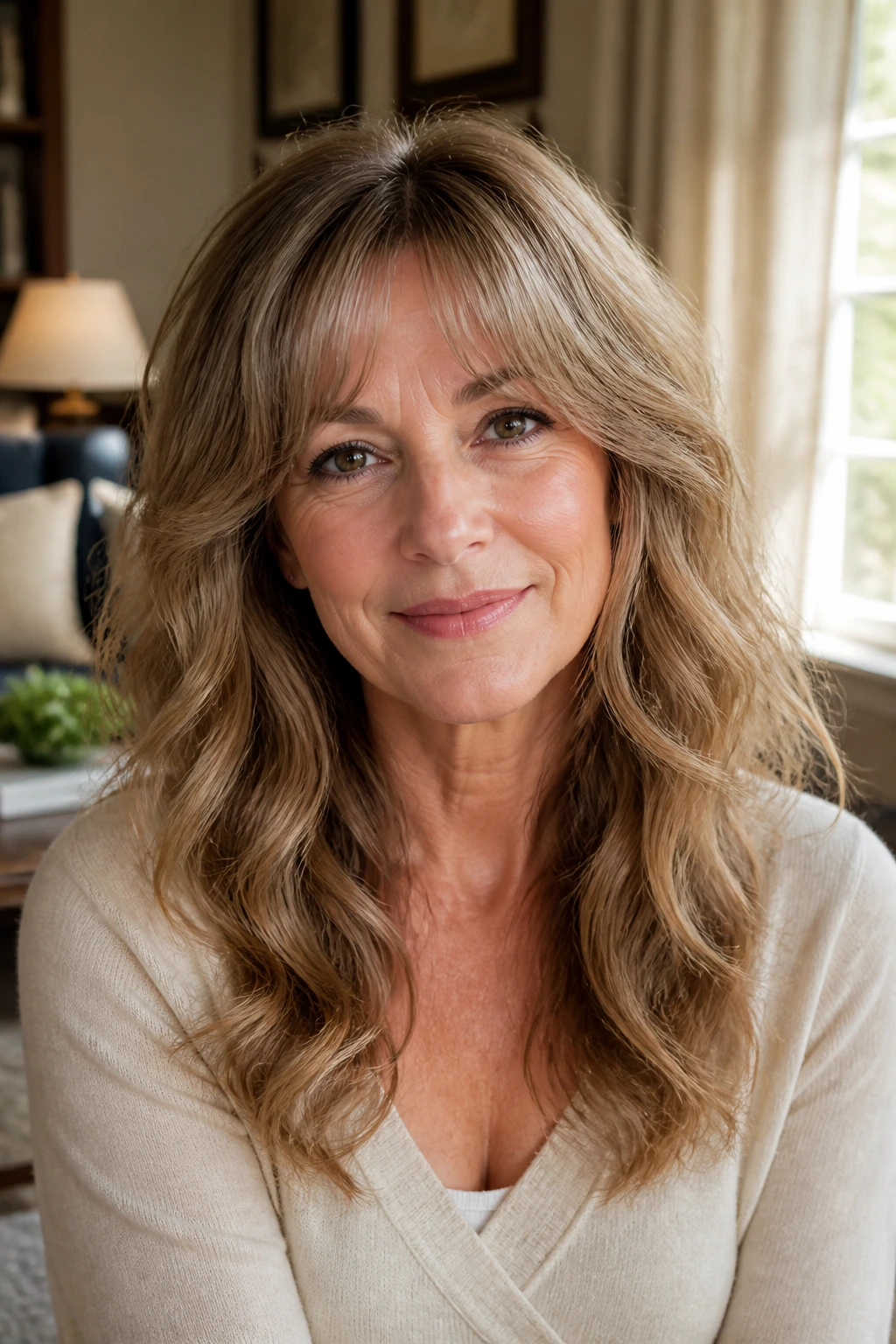
1. Shoulder-Grazing Champagne Waves
This is the easiest place to start if you want wavy hair extensions without a lot of fuss. The length sits right around the shoulders, so the waves have room to swing, but they do not get so long that the ends start looking heavy. Champagne blonde, with its soft beige-gold balance, keeps the whole style bright without tipping into harsh brass.
A shoulder-grazing cut also makes curtain bangs look more relaxed. The fringe can graze the cheekbone and fall back into the wave instead of standing apart from it. I prefer this shape with 16- to 18-inch clip-ins or tape-ins because the shorter length keeps the blend cleaner and the weight easier to manage.
Why It Works So Well
- The length keeps the ends light enough to hold a bend.
- The color sits softly against most skin tones, especially if your natural shade is medium brown, dark blonde, or silver-blended.
- It is one of the few styles that looks finished even when air-dried with a little mousse and no hot tools.
If you want a salon note, ask for face-framing layers that start at the cheekbone and a fringe that opens just below the brow arch. Too short, and you’ll spend all day pushing it aside. Too long, and it disappears into the rest of the hair.
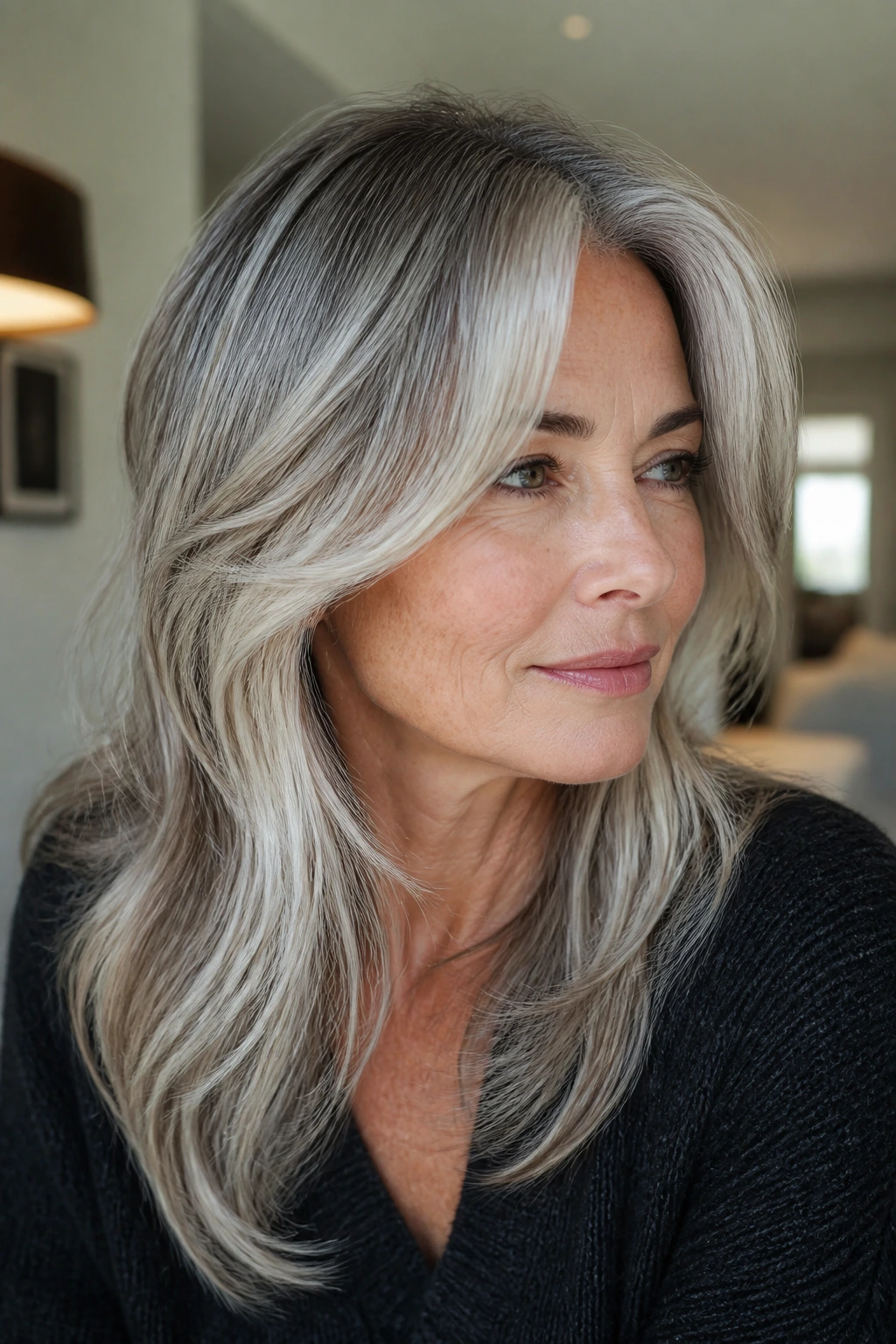
2. Silver Ribbon Layers With a Soft Root Shadow
Can gray hair wear extensions without looking like it’s pretending to be something else? Absolutely — if the color story is honest. This version leans into silver, pearl, and cool taupe ribbons rather than trying to cover the gray with a flat blonde cap.
The best part is the root shadow. A slightly deeper root, even just one or two levels down from the lightest silver, makes the fringe and waves look grounded. That small bit of depth keeps the extensions from floating on top of the natural hair like a separate layer.
Best Notes to Bring to the Stylist
- Length: 18 to 20 inches, but with layered ends.
- Texture: Soft body wave, not curl.
- Color: Silver mixed with beige-taupe lowlights and a cool root shadow.
- Bang line: Curtain bangs that begin near the outer brow and sweep to the cheekbone.
This style is strongest when the waves are loose and the finish is silky, not puffy. If your natural gray has a coarse texture, a light smoothing cream on the mid-lengths keeps the silver pieces from frizzing up and showing every seam.
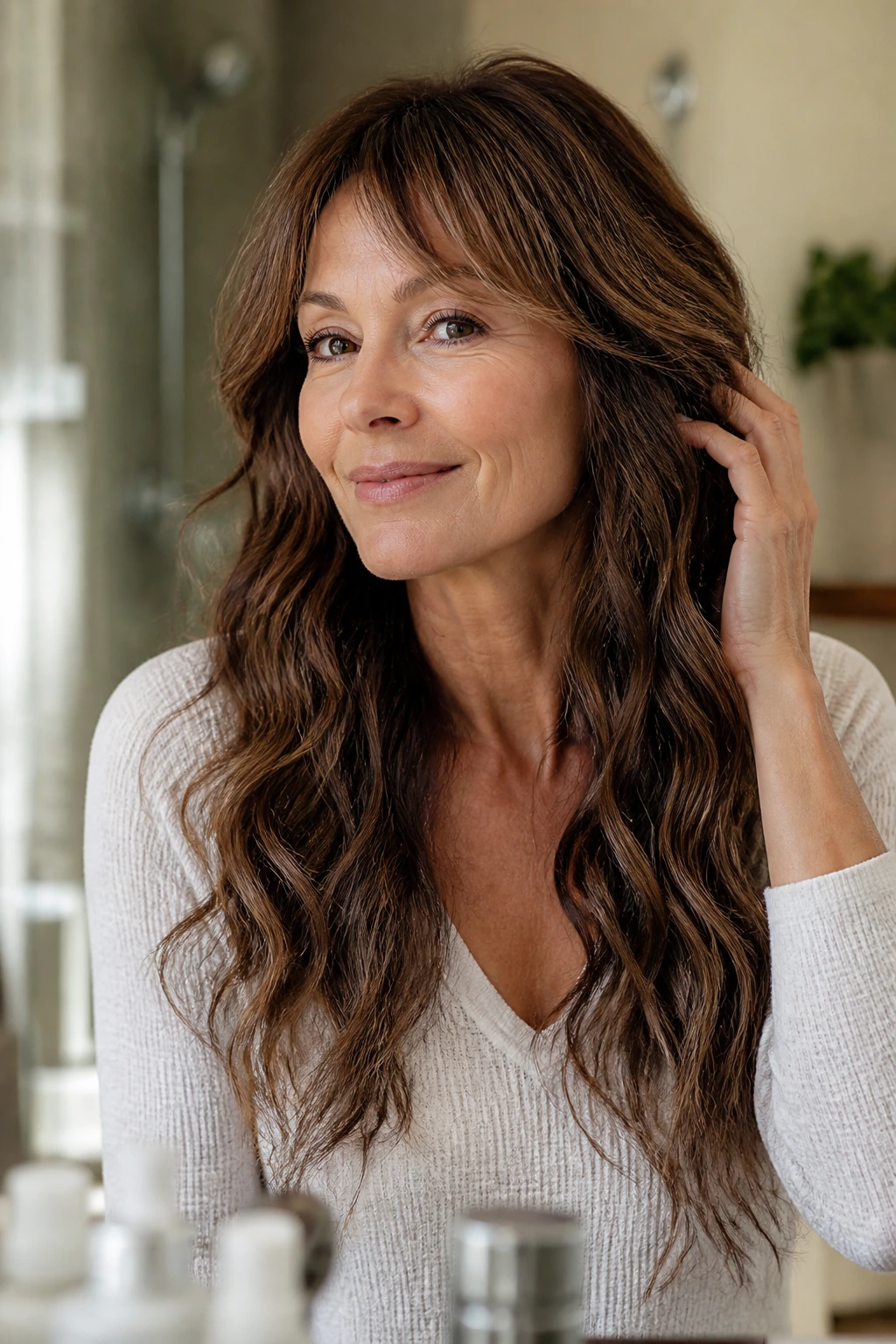
3. Chestnut Cascade and Cheekbone Curtain Bangs
Warm brunette hair can go muddy fast. Chestnut avoids that by keeping enough red in the color to stay alive under indoor lighting, which is where a lot of brown hair falls flat. The wave gives chestnut dimension; the curtain bangs keep the style from feeling too heavy at the sides.
I like this one on women whose hair has thinned through the ends but still has good density at the roots. A medium-density tape-in set works well because it lays flat and lets the chestnut ribbons move instead of sitting in one block. The color also blends nicely if your natural shade has a little warmth already — not orange, just enough red-brown to catch the light.
The fringe should be dry-styled forward first, then swept apart with your fingers. Don’t force it into a stiff center part. Chestnut needs a little softness, or the color starts to read as severe.
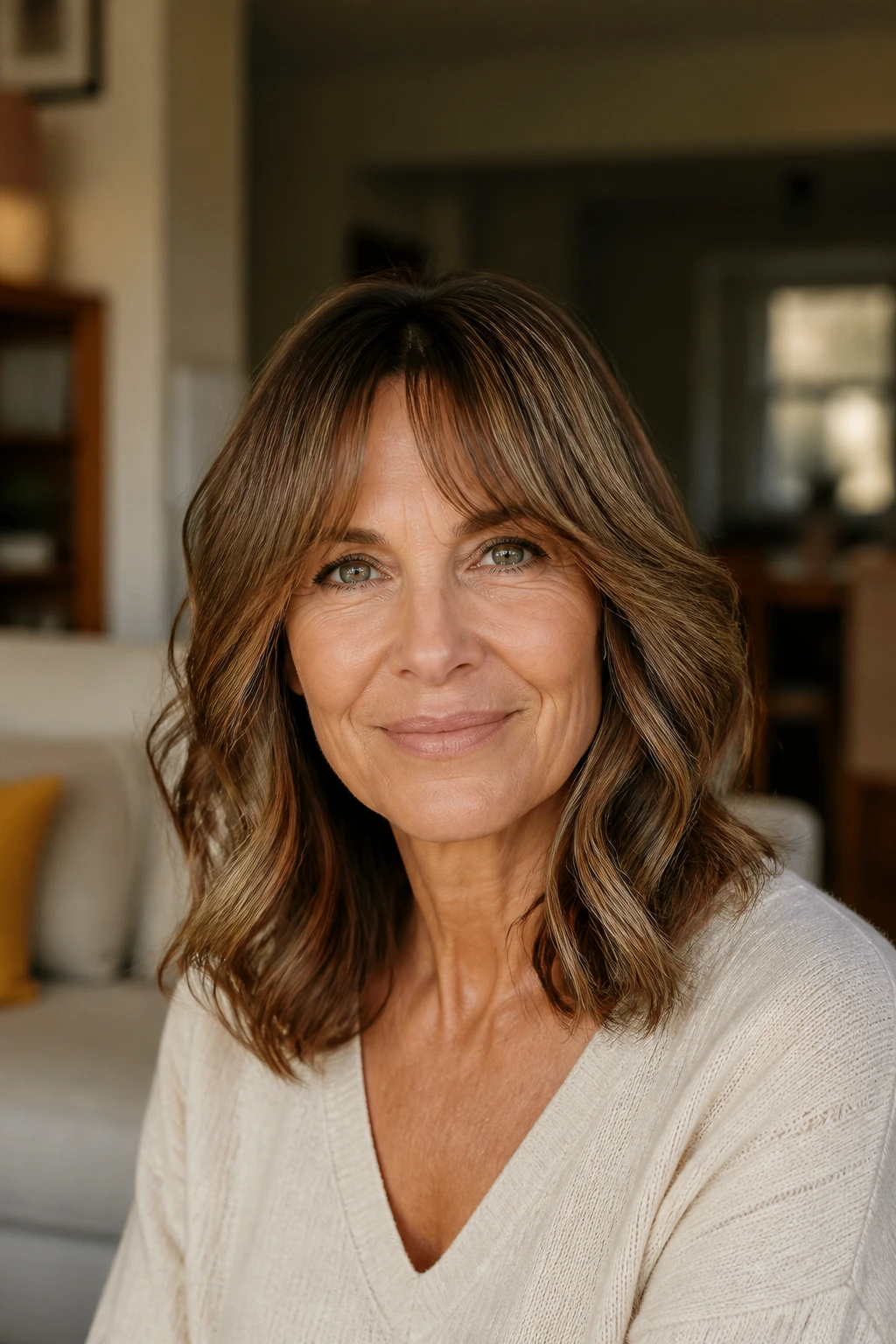
4. Bronde Lob With Airy Face-Framing Waves
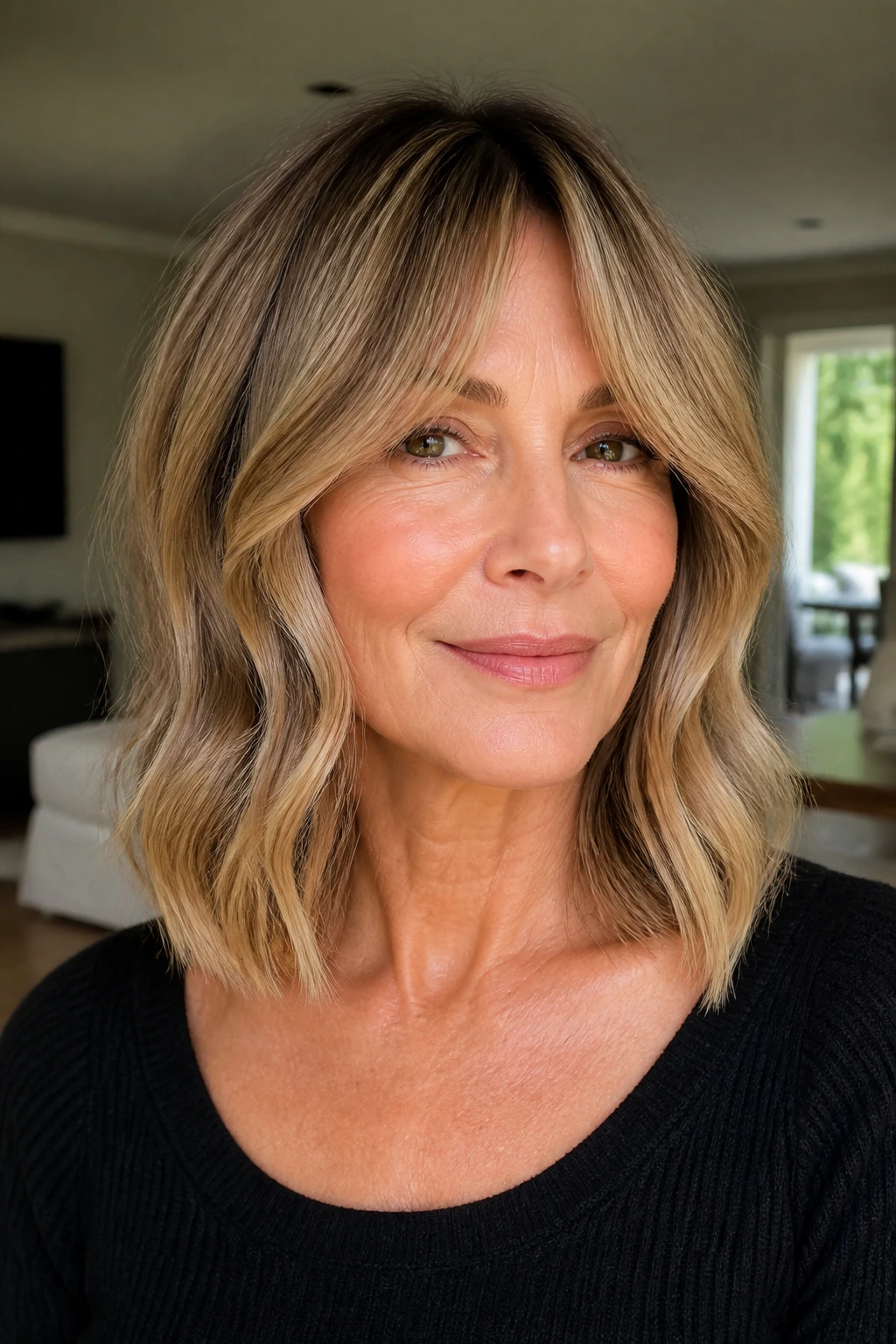
A lob stops the hair from eating the face. That sounds blunt, but it’s the truth. When extensions are too long on hair that has started to lose some width at the sides, the whole look can drag. A bronde lob — somewhere between brunette and blonde — keeps the profile light and the movement obvious.
This is one of my favorite shapes for women who want a modern look without a lot of maintenance. The length usually lands between the collarbone and the top of the shoulder, and the waves are loose enough to survive a brush-through. Curtain bangs help the cut by creating a vertical line in the middle and a soft frame around the eyes.
What Makes It Different
- The lob shape keeps weight off the ends.
- Bronde color hides regrowth better than a flat blonde.
- Airy face-framing pieces make the extensions feel built into the haircut.
If you wear glasses, this is one of the easiest styles to live with. The bangs can split just enough to sit around the frames instead of crashing into them every time you blink.
5. Glossy Mocha Length With Invisible Layers
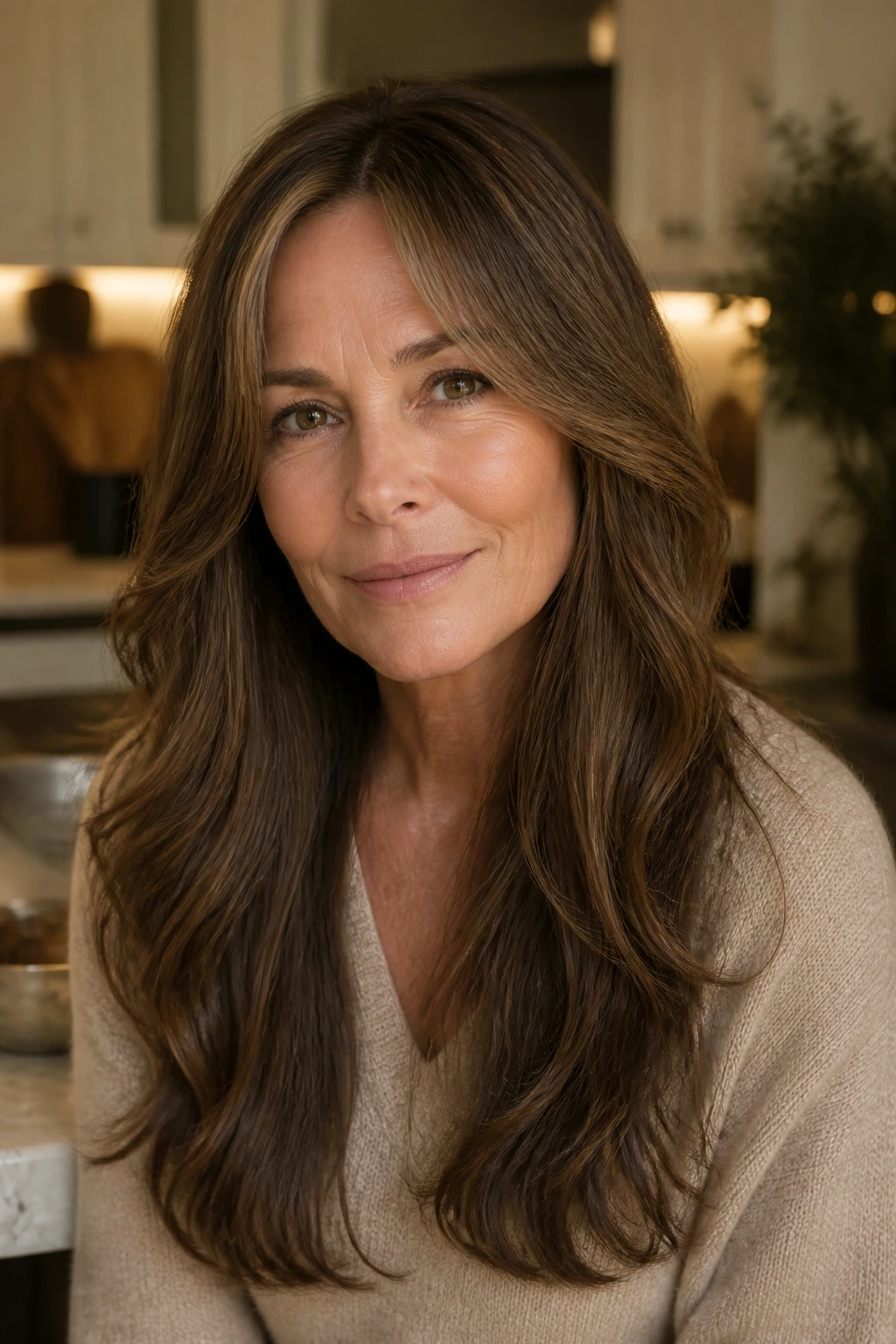
Dark hair shows everything. Every seam. Every mismatch. Every dry end. That’s why a glossy mocha look needs clean color work and a smooth wave pattern rather than a lot of noise. The payoff is worth it, though: mocha hair can look expensive in the plainest, least fussy way, especially when the curtain bangs are blended into the front.
The trick is to avoid one solid block of brown. Add soft espresso and cocoa ribbons so the waves have depth when they fold over each other. A tape-in application usually works better than bulkier methods here because dark hair makes attachment points easier to spot if the finish is thick.
I like this style with bangs that are a little longer than cheekbone length. They should bend away from the face, then fall back in, almost like they are undecided. That little bit of movement keeps the whole look from turning stiff.
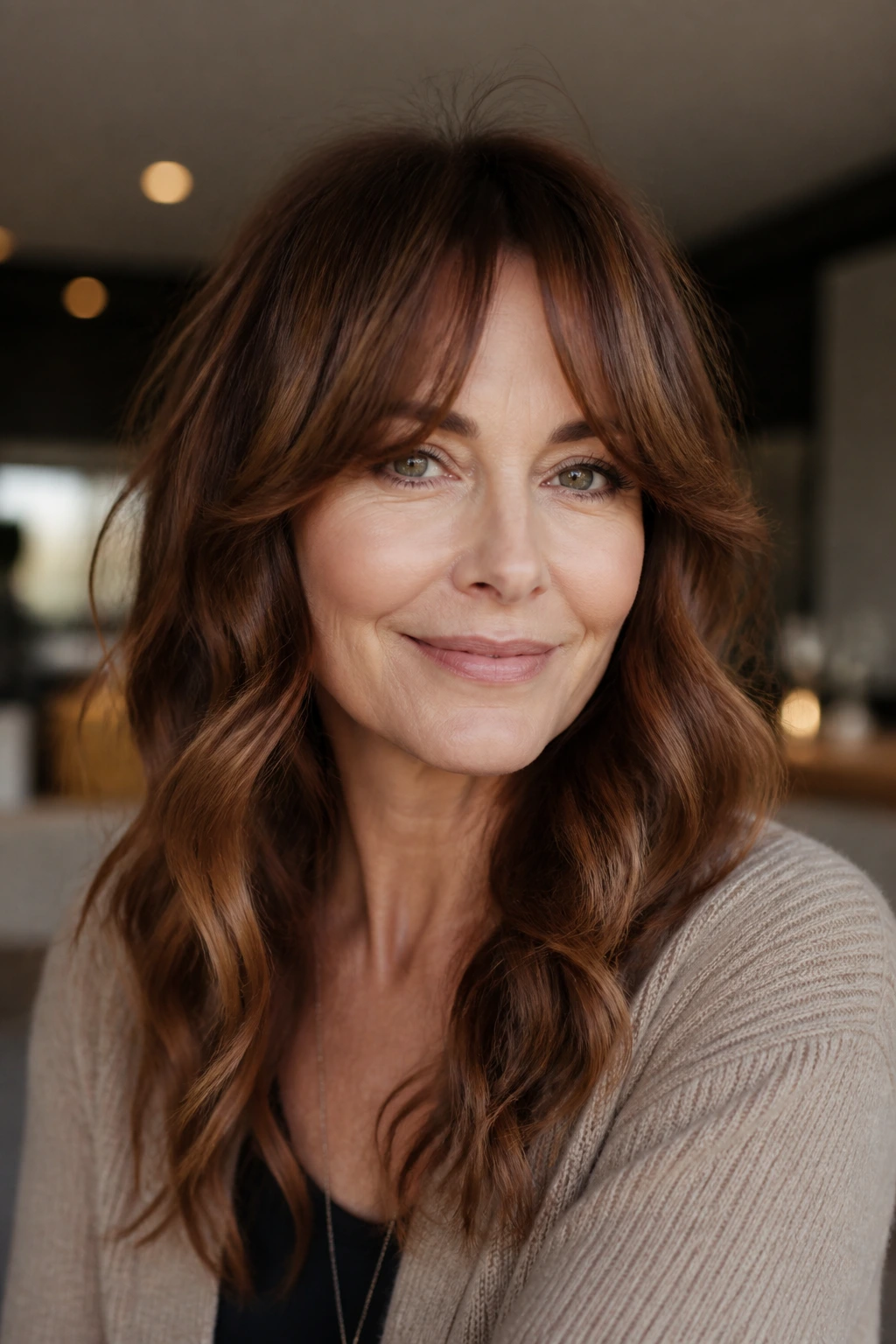
6. Copper-Kissed Waves That Warm the Face
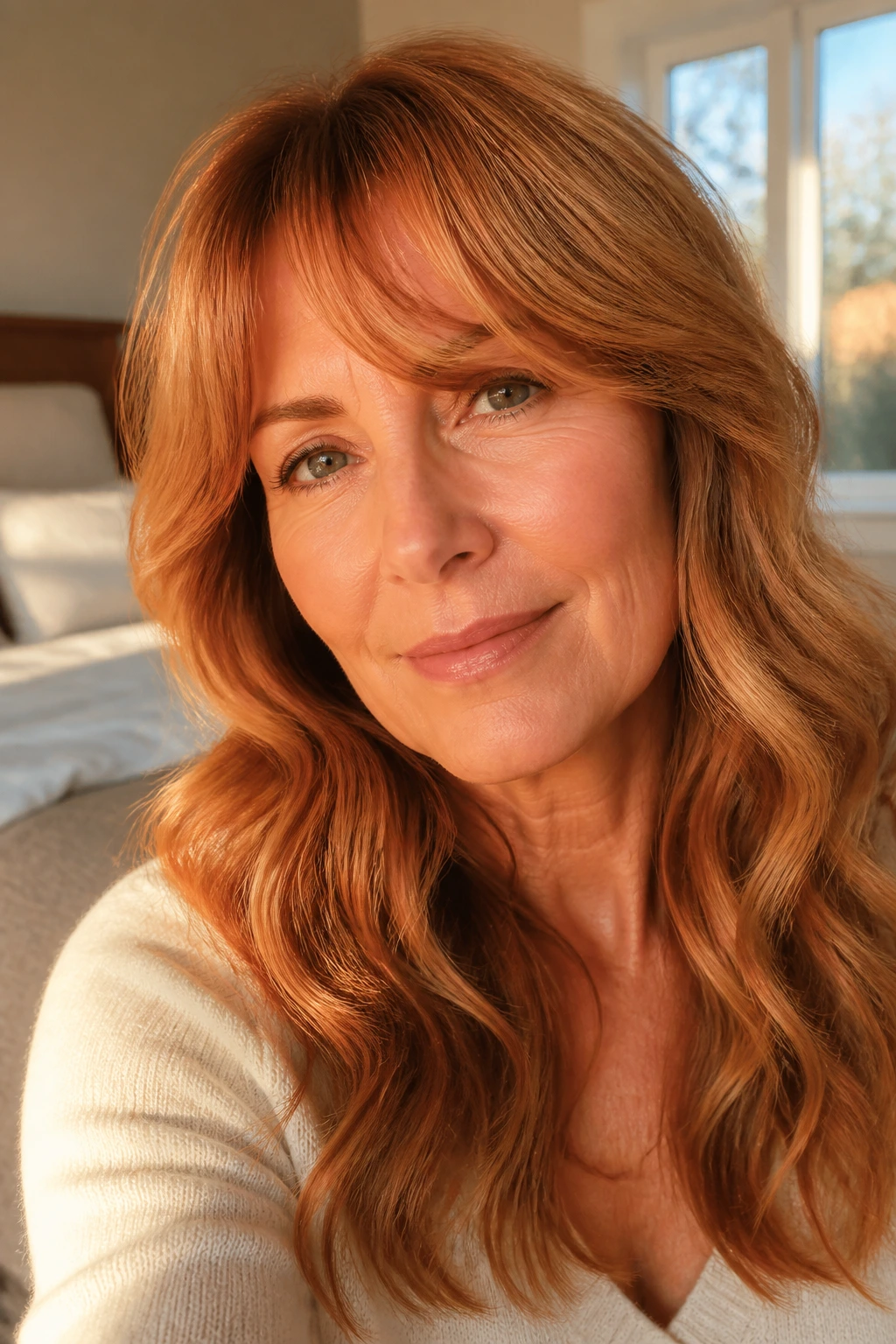
Copper can be tricky, and that’s exactly why I like it when it’s done with restraint. A muted copper or auburn-copper blend brings warmth around the face without shouting for attention. It works especially well when the skin has golden, olive, or neutral undertones, but the real win is the way it makes waves look full.
You do need to respect the upkeep. Red tones fade faster than brown or blonde, and extension hair does not hold pigment forever. If you love changing your color story often, clip-ins make more sense than a long-wear bonded method. That way you can swap shades without committing to a copper maintenance plan every few weeks.
A loose wave is the right call here. Tight curls can make copper look a little too theatrical. A bendy S-wave keeps the color soft and elegant, and the curtain bangs help bring the warmth toward the eyes instead of leaving it trapped in the lengths.
7. Rooted Blonde Waves With Bright Front Pieces
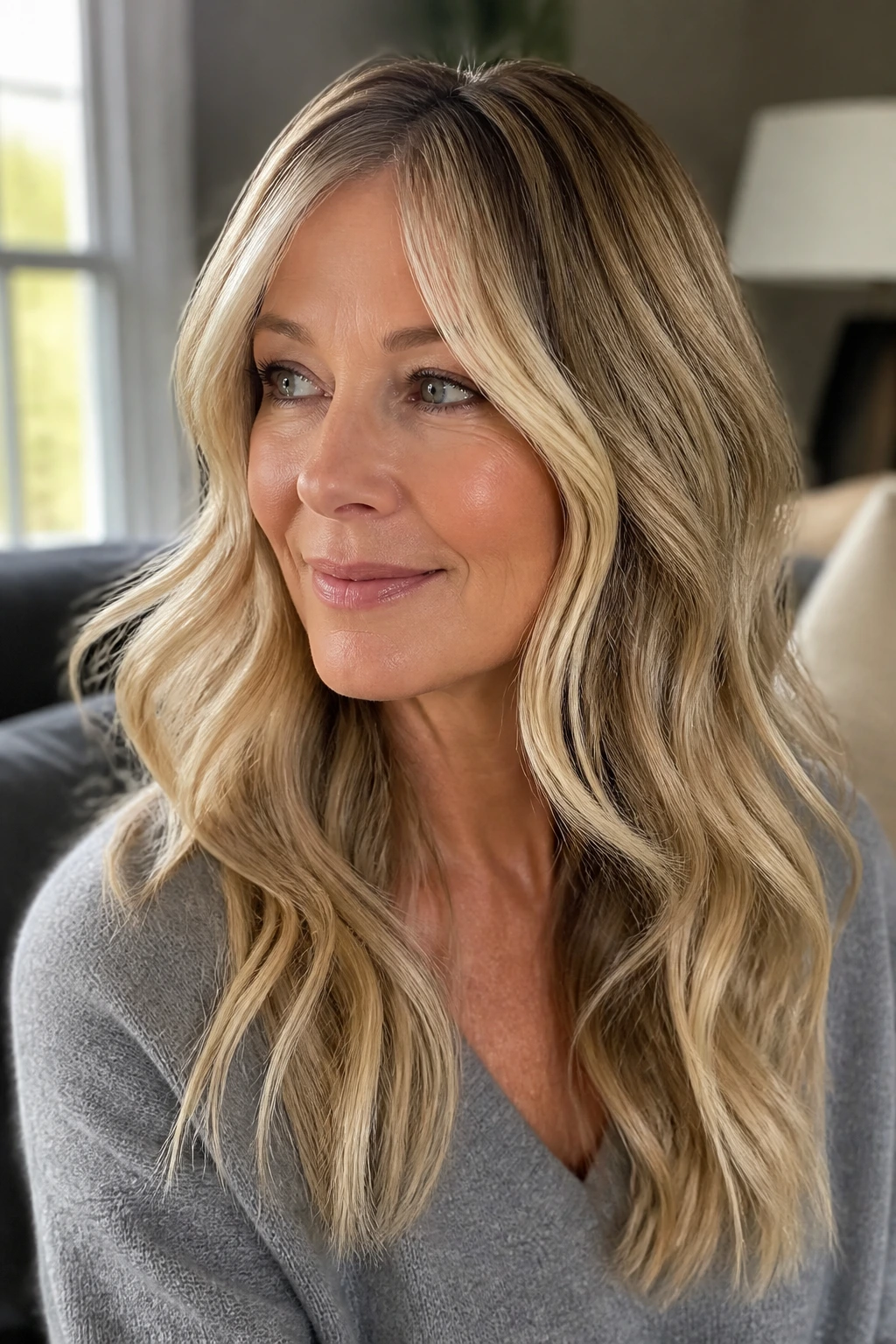
Bright blonde is not the problem. Flat blonde is the problem. The most flattering blonde extension looks usually have a slightly deeper root, then brighter pieces around the face where the curtain bangs fall. That contrast gives the haircut a shape you can actually see.
This style works well if your natural hair is already highlighted or naturally fair, because the root shadow helps the extensions blend instead of sitting on top like a separate color block. Ask for a root that’s one to two levels deeper than the lightest face-framing pieces. That tiny difference does a lot of work.
The front pieces should brighten the face, not frame it like a spotlight. A few softer strands around the cheekbone and temple keep the bangs from feeling disconnected. If your hair has a tendency to go brassy, keep a toning shampoo in rotation, but don’t overdo it — overly cool blonde can look dry in a hurry.
8. Shag-Inspired Mid-Length Waves
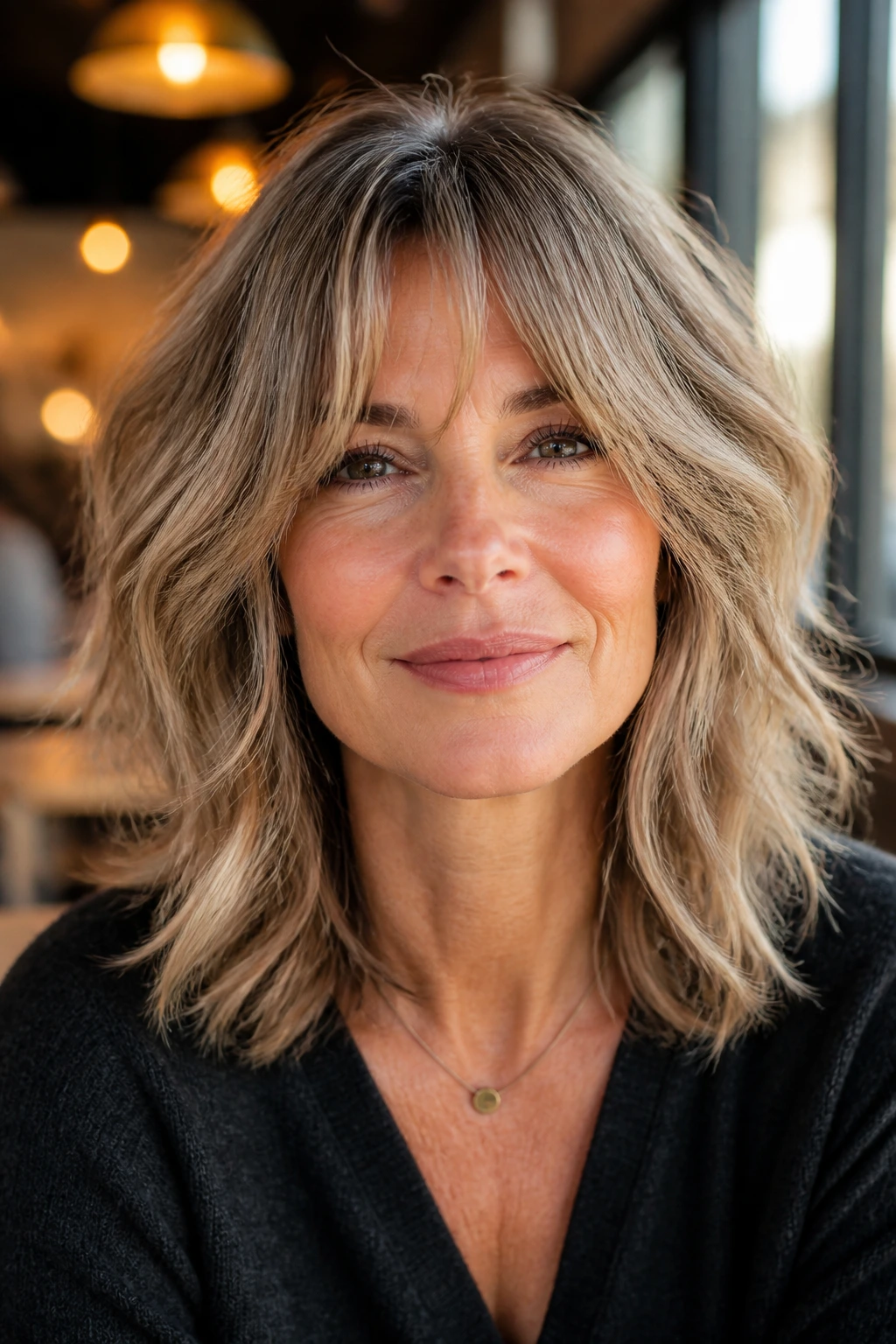
Shag energy is useful when hair needs movement more than length. The layers are choppier, the ends are less polished, and the curtain bangs blend into the front pieces with a little more attitude. It’s a good answer for women whose own hair has some wave and who don’t want the extensions to look too refined.
The best version isn’t ragged. That’s where people go wrong. You want piecey, broken-up ends, not a haircut that looks chewed on by scissors. A hand-tied weft or lighter extension method tends to work best because it lets the hair move in sections instead of hanging in a dense curtain.
One thing I like here: the style doesn’t need perfect symmetry. If the left side bends a little more than the right, the shape still works. In fact, it often looks better that way.
9. Red-Carpet S-Waves With Soft Curtain Bangs
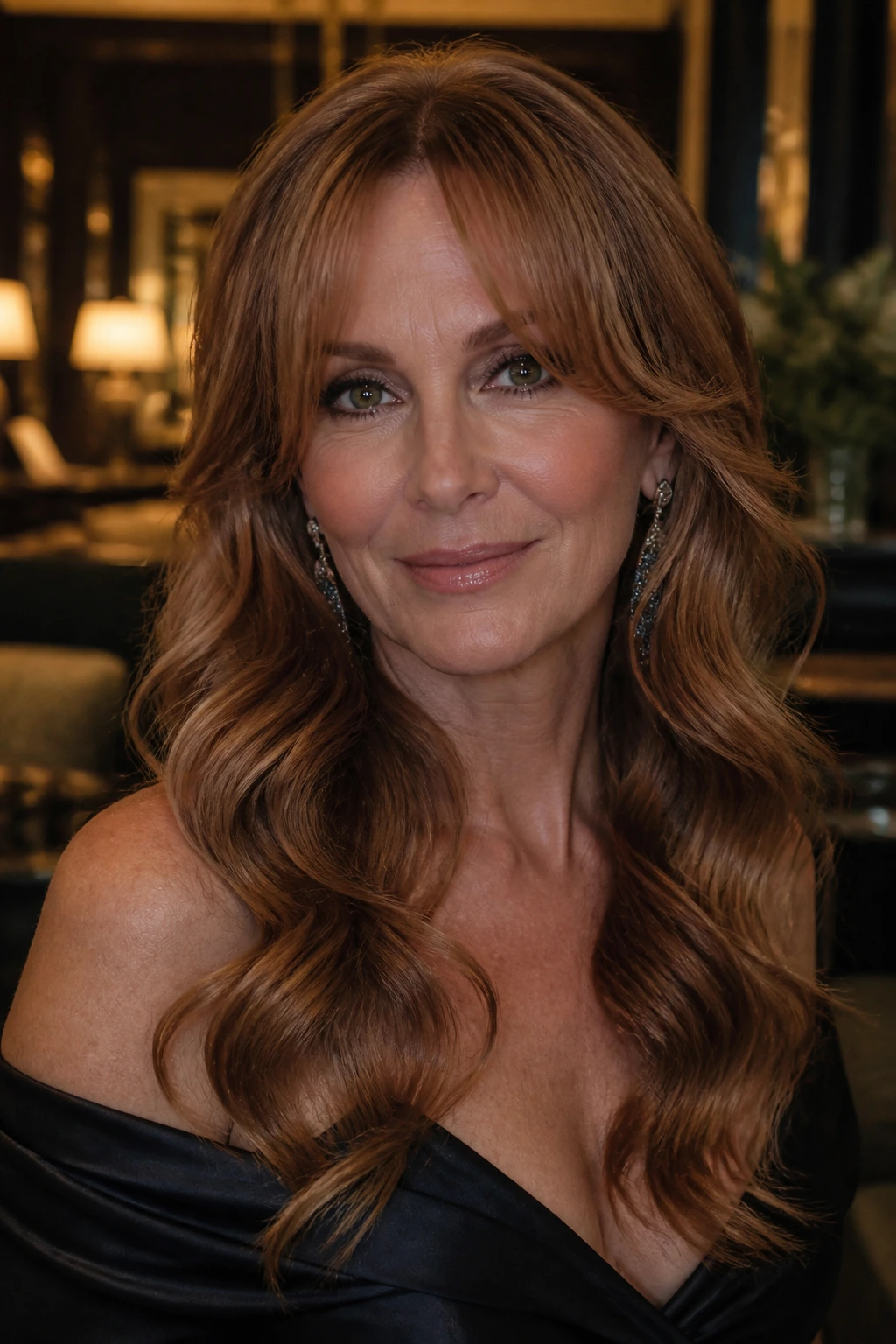
This is the polished one. The hair is waved in bigger sections, then brushed into an S pattern that lies smooth and glossy. It has more shine than texture, which makes it ideal for dinners, events, or any day when you want the hair to behave and sit where you put it.
Clip-ins make the most sense for this look because you can place fullness exactly where you want it, then style the whole set together. The bangs should be curled away from the face first, then brushed open so they sit in a soft split. If they’re too straight, the whole style feels unfinished. If they’re too curled, they start competing with the wave.
This look is less casual than the others, but it has a nice trick up its sleeve: the wave pattern is broad enough that it still looks good after the first brush-through. That makes it friendlier than a super-tight curl set, which often falls apart at the table.
10. Collarbone Lob With Feather-Light Bangs
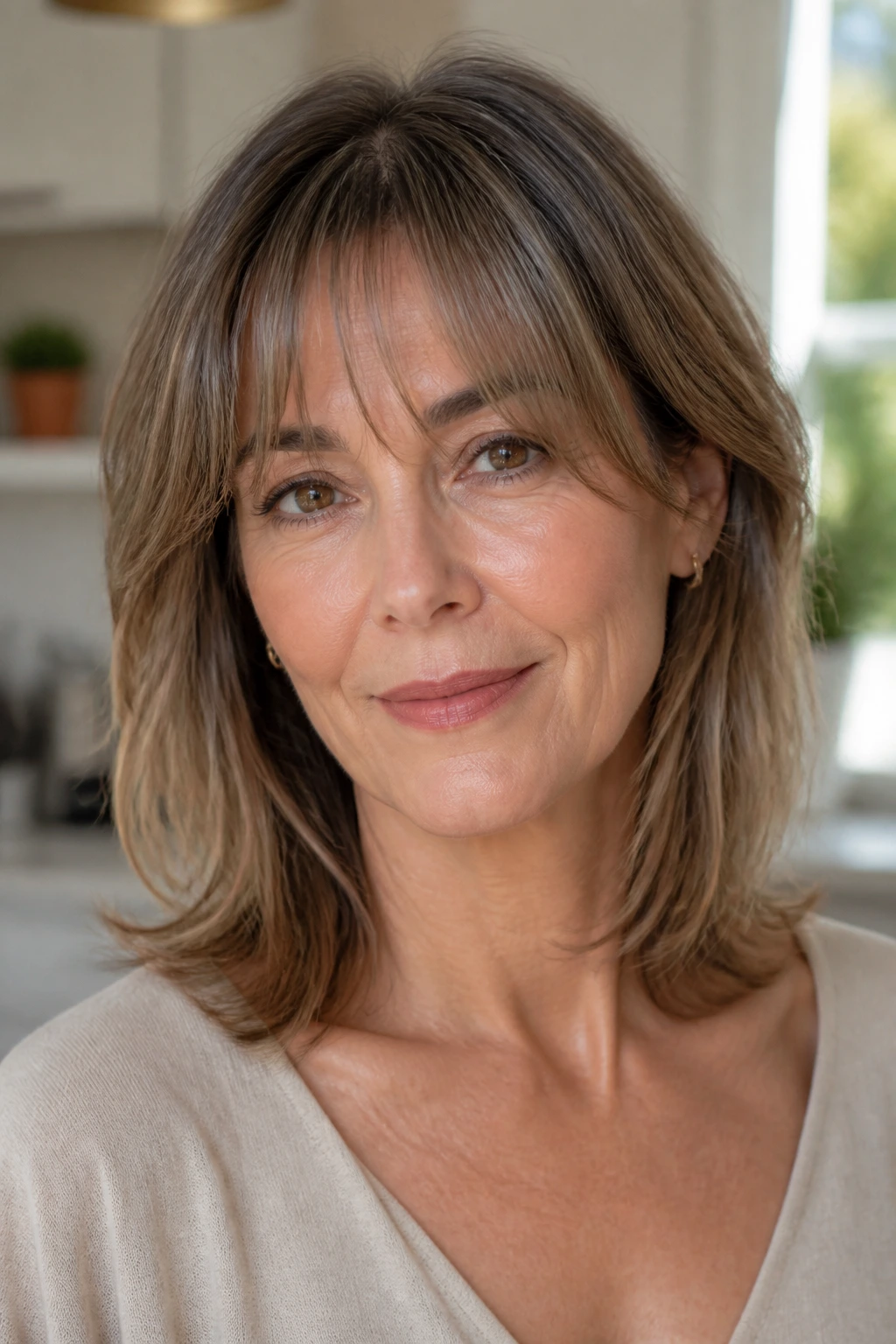
If you want something you can live in, the collarbone lob is hard to beat. It’s long enough to feel feminine, short enough to stay manageable, and soft enough to tuck behind the ears without flattening the whole style. The curtain bangs should be feather-light, not heavy or overbuilt.
This cut is especially good for women who wear glasses or who don’t want hair drifting into the mouth every time they talk. The lob gives the extensions a natural stopping point, and the fringe keeps the forehead open. There’s a nice balance there. Nothing fussy.
I’d keep the wave loose and the ends slightly beveled inward. Too much movement at the bottom can make a lob look frayed. A clean bend, with a little lift around the cheekbones, does the job better.
11. Long Romantic Layers and Sweeping Fringe
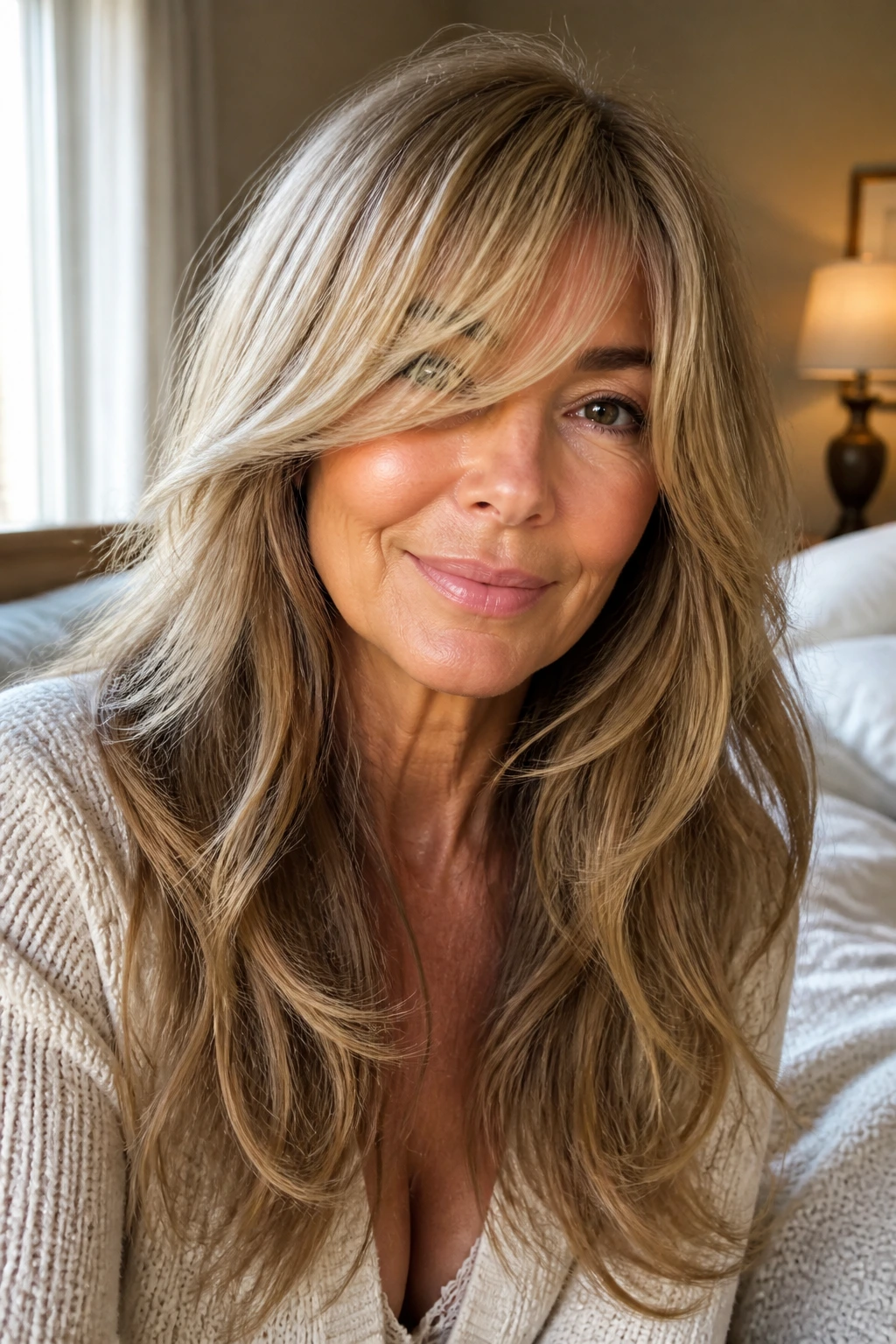
Long extensions only work when they’re layered. Otherwise, you get a heavy sheet of hair that looks expensive for about five minutes and then starts acting like a blanket. Romantic layers fix that by breaking the length into sections that move instead of hanging in one block.
This is the choice for women who want drama, but not the stiff kind. It suits thicker hair best, or anyone willing to invest in a fuller extension set so the ends don’t look skinny. The curtain bangs should sweep a little wider here, almost blending into the longest front layers. That keeps the face open while still giving the front some softness.
A long wave also gives you a nice side effect: it holds a braid, a half-up style, or a clip better than shorter hair. So while it sounds glamorous, it’s actually useful. That’s the part people forget.
12. Cool Ash Brunette With a Soft Bend
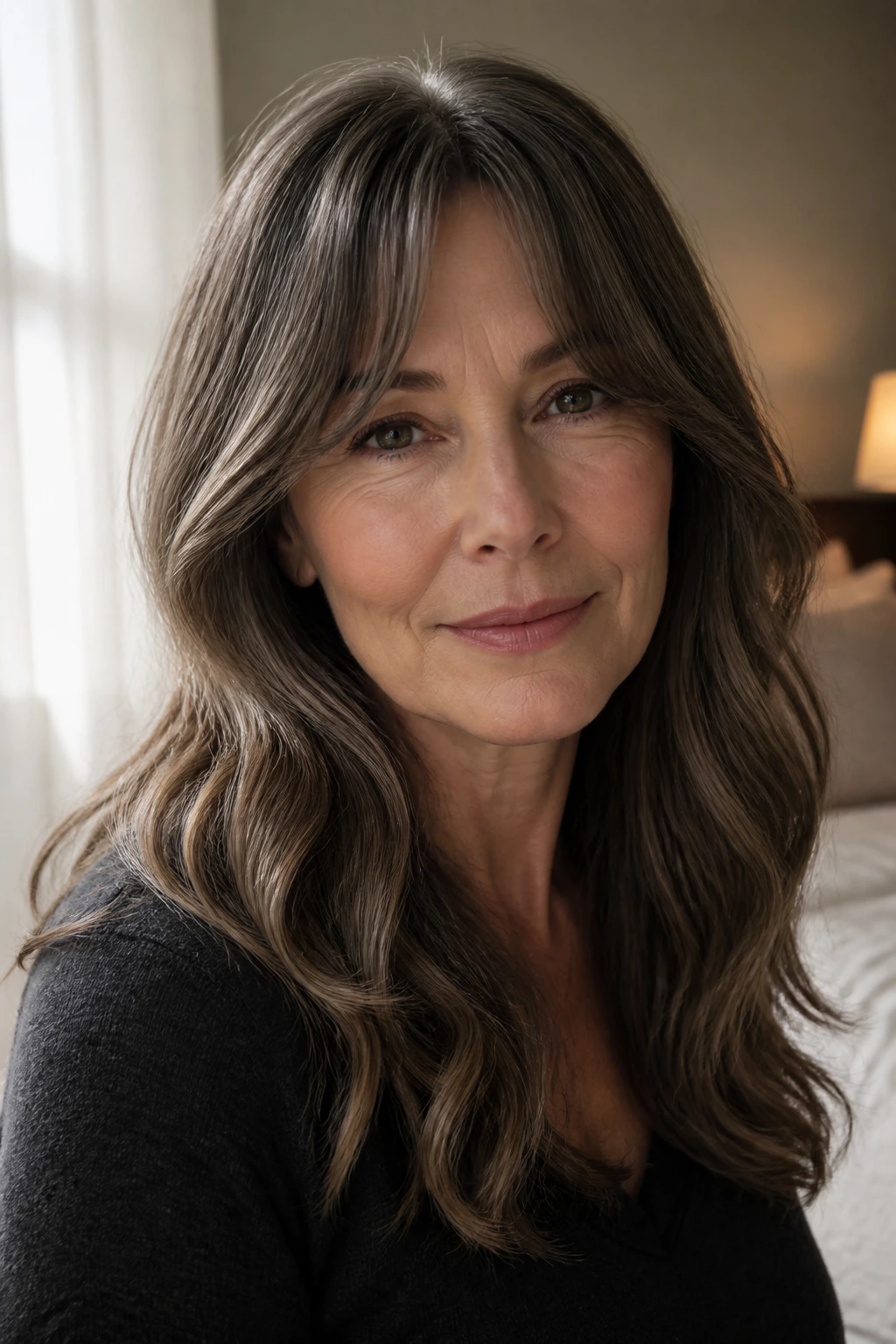
This is the antidote to orange. If warm tones make your skin look flushed or your brown hair tends to turn brassy, an ash brunette extension set can steady the whole look. The wave should stay soft, almost like a brushed-out bend rather than a defined curl.
The reason this works so well is that ash tones give the hair visual depth without adding warmth you don’t want. That matters around the face, where curtain bangs can either sharpen the features or soften them. Here, the cool brown keeps the fringe from feeling too sweet.
I’d pair this with a low-key finish: a small amount of serum on the ends, a light mist of flexible hairspray, and no heavy shine spray. Cool brunettes can go flat fast if you drown them in product. Let the bend do the talking.
13. Honey Caramel Waves With a Lifted Crown
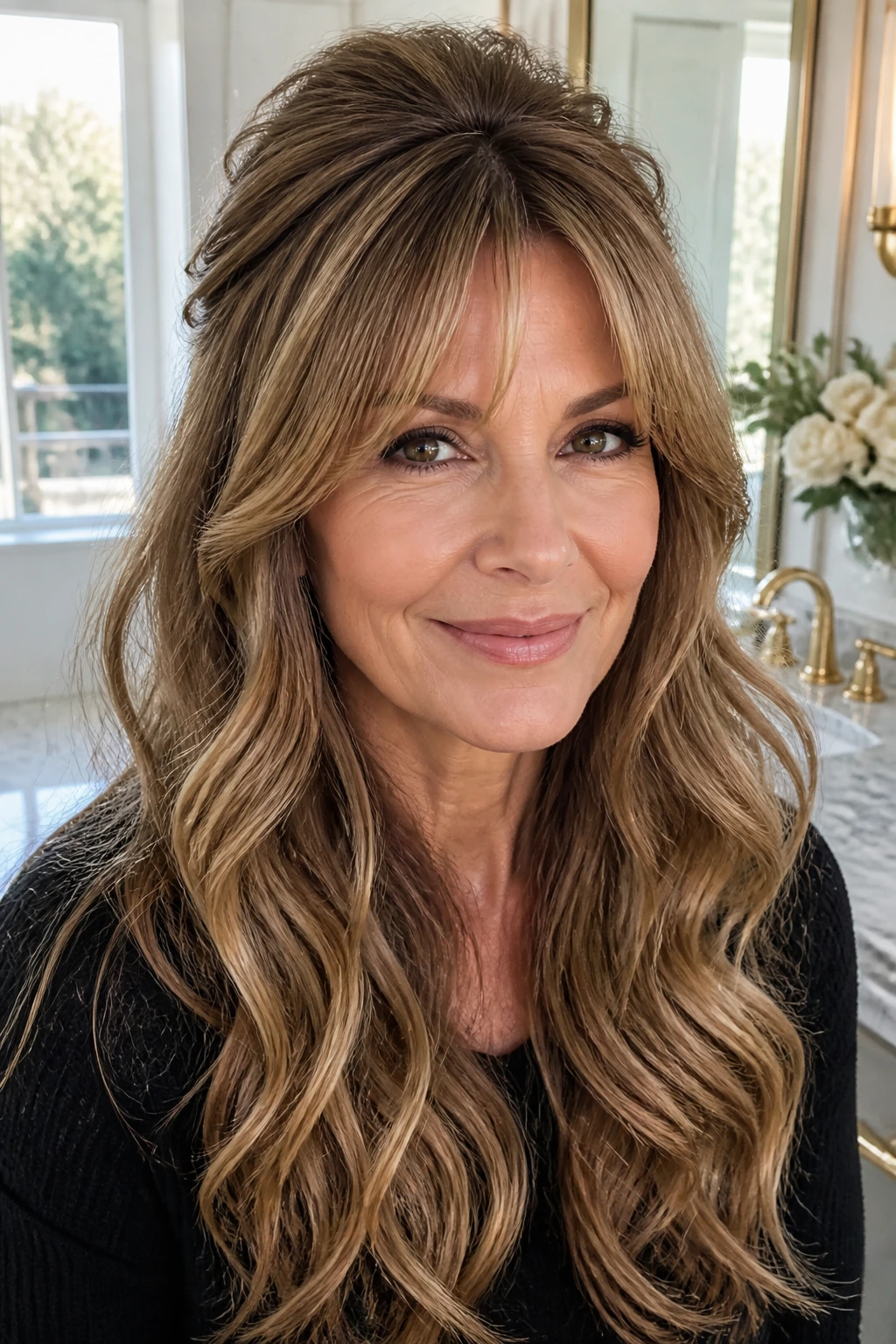
Honey caramel sits in that very useful middle ground — warm enough to soften the face, light enough to keep the hair from looking dark and heavy. When the waves have a little lift at the crown, the whole style looks fuller without needing a ton of extra hair.
This one is excellent for women whose hair feels narrow through the sides. A slightly deeper root, caramel mid-lengths, and lighter honey ends create a layered color effect that reads as thickness. The curtain bangs help by widening the front of the style just enough to balance the jaw.
A round brush at the crown makes a bigger difference here than people expect. Even 20 seconds of lift at the roots changes the way the waves fall. Don’t skip it if your hair tends to lie flat on top.
14. Beachy Tousled Clip-In Waves
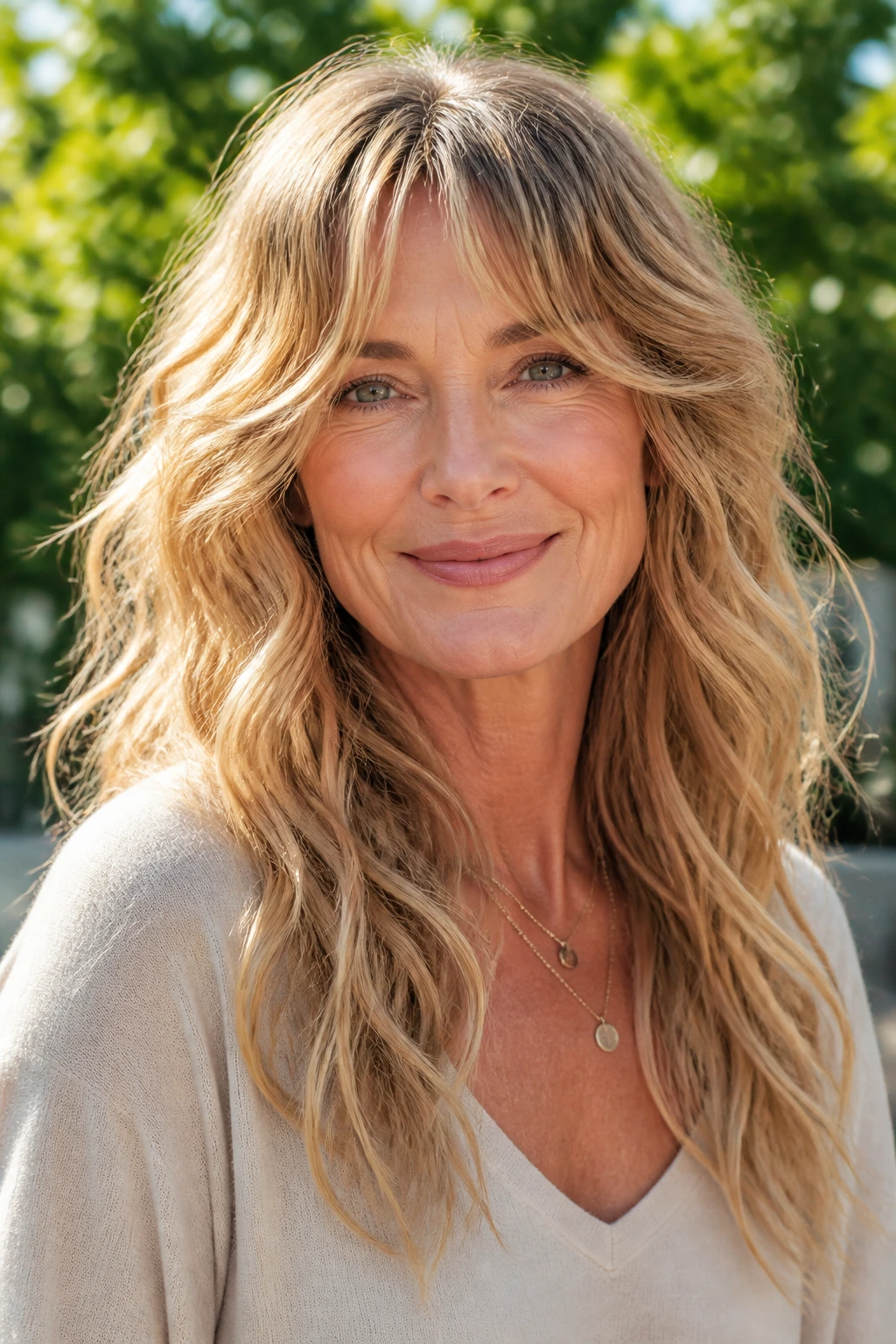
Beachy does not have to mean crunchy, and that’s a relief. The best version of this style has loose texture, soft ends, and a little separation between wave sections. Clip-ins suit it well because you can build volume for the day and take it out at night.
I prefer a matte texture spray over salty products for extensions. Real beach spray can dry out the hair faster than you think, especially if you wear the pieces often. A softer texturizer gives you that broken-up finish without turning the lengths stiff or sticky.
The curtain bangs should be the calm part of the look. Let them frame the cheeks and keep the rest of the wave a little undone. That contrast is what keeps the style from becoming one big puff of texture.
15. Gray-Blended Dimension With Silver and Taupe
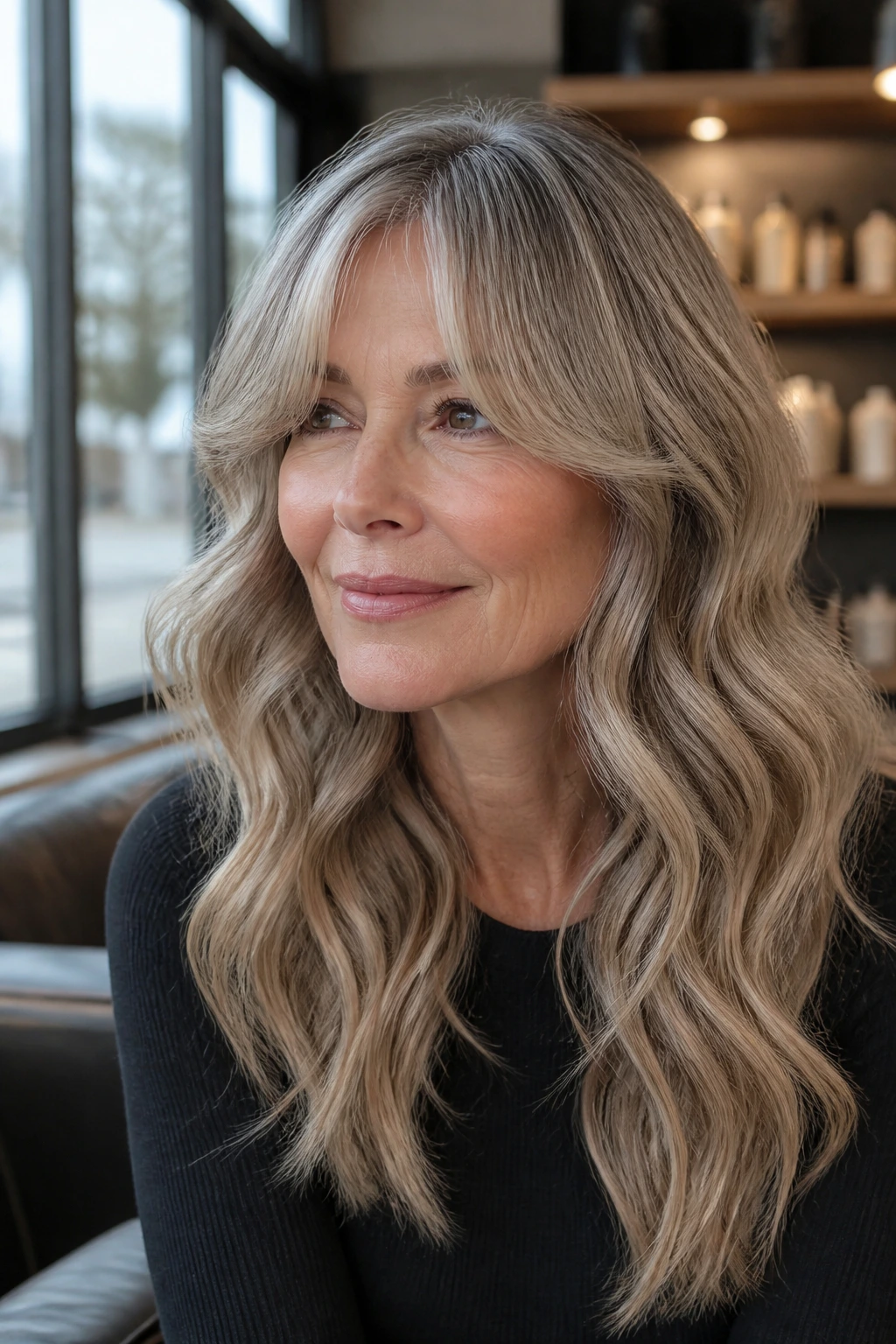
If your silver is already making an appearance, there’s no reason to fight it with a single flat shade. A mix of silver, taupe, and mushroom blonde can mirror natural gray patterns and make the whole style look more expensive because it looks more honest.
This style depends on placement. The brightest pieces should sit where the bangs split and around the face, while the cooler taupes live deeper in the lengths. That way the extension hair echoes the way real gray grows — streaked, not painted on.
The wave should stay soft and broken rather than neat. Gray blending looks best when the texture feels lived-in. One of the worst mistakes is over-toning the hair until it turns one icy note from root to end. Real gray has movement. Let the extensions do the same.
16. Crown-Lift Layers for Fine Hair
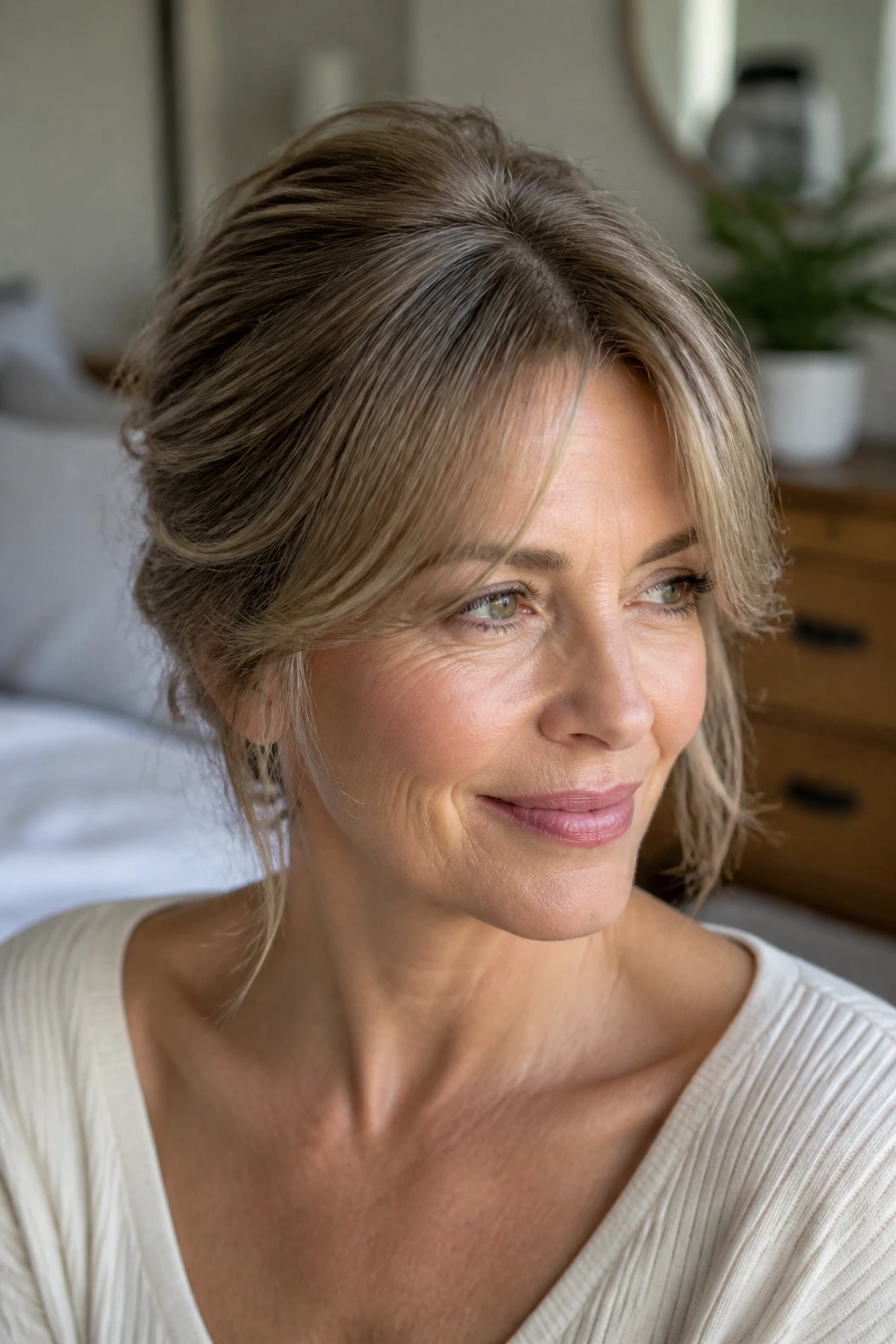
Fine hair needs strategy, not just more hair. The point here is to place density where it actually changes the silhouette: through the crown sides, the mid-lengths, and the front edge where the curtain bangs fall. Piling too much volume on the top can expose the extension line and make the hair look bulky instead of full.
I’d choose lighter wefts or a careful clip-in placement for this one. Keep the bulk lower and let the crown lift come from styling, not from stuffing in more pieces. A root-lifting spray and a round brush at the roots can do more than an extra row of hair.
This is also a good style for women whose hair has thinned at the temples. The curtain bangs soften that area, and the wave gives the sides enough movement that the head shape doesn’t look narrow.
17. Slight Off-Center Curtain Bangs and Loose Waves
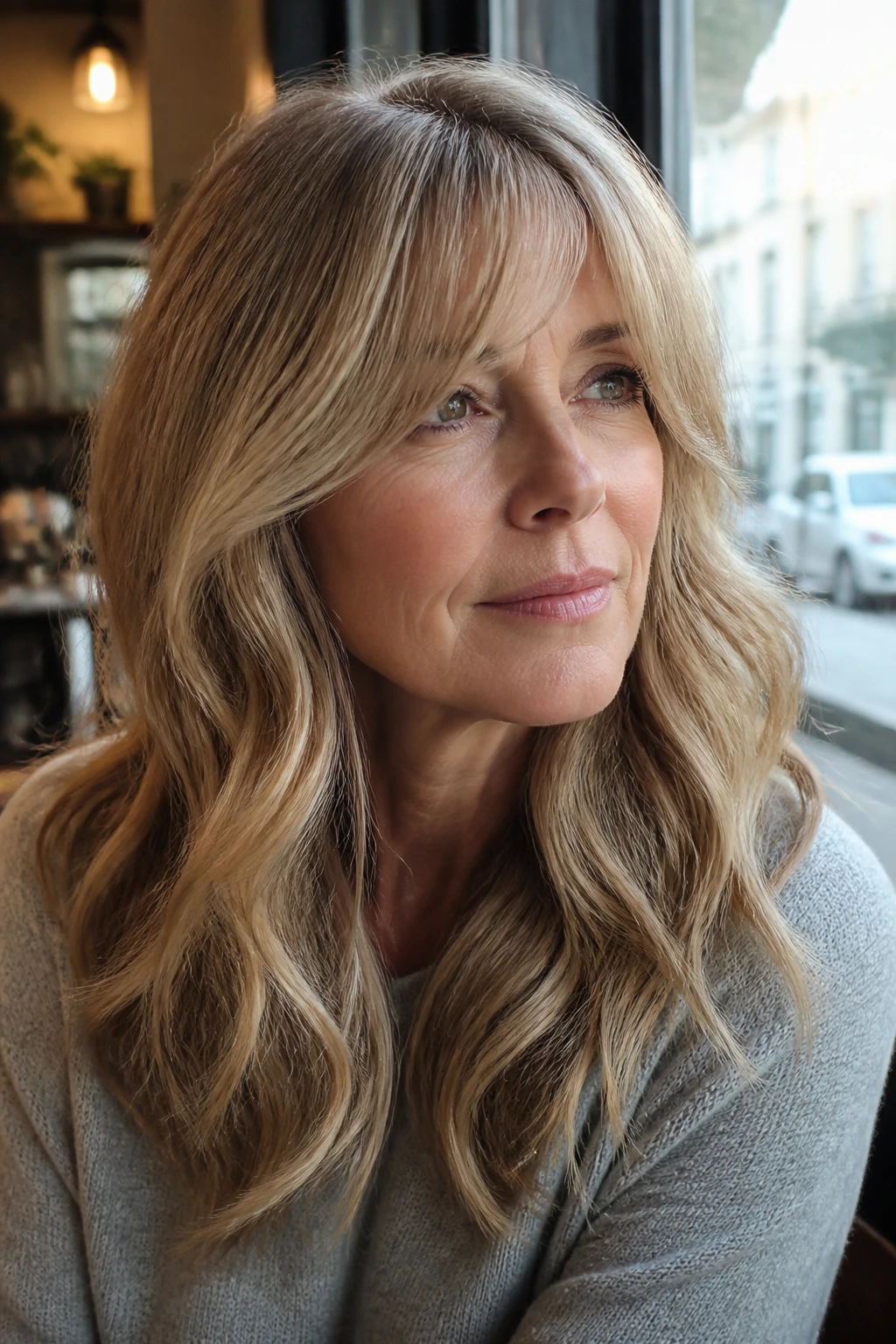
A perfectly centered part is not always the most flattering thing in the room. A slight shift off center — just enough to give the fringe a softer fall — can make the face look more relaxed and the hairline less exposed. It’s a small change, but it changes the mood.
This is a smart choice if one side of your hair naturally behaves better than the other, or if a dead-center part makes your crown feel too visible. The waves can stay loose and open, but the fringe gets a little nudge to one side so the whole look feels less rigid.
What to Tell Your Stylist
- Keep the split soft, not obvious.
- Let the longer side skim the cheekbone.
- Blend the fringe into the first front layer instead of stopping it abruptly.
That last point matters. A curtain bang should flow into the haircut. If it sits there like a separate piece, the style loses its ease.
18. Everyday Shoulder-Length Waves That Don’t Fight You
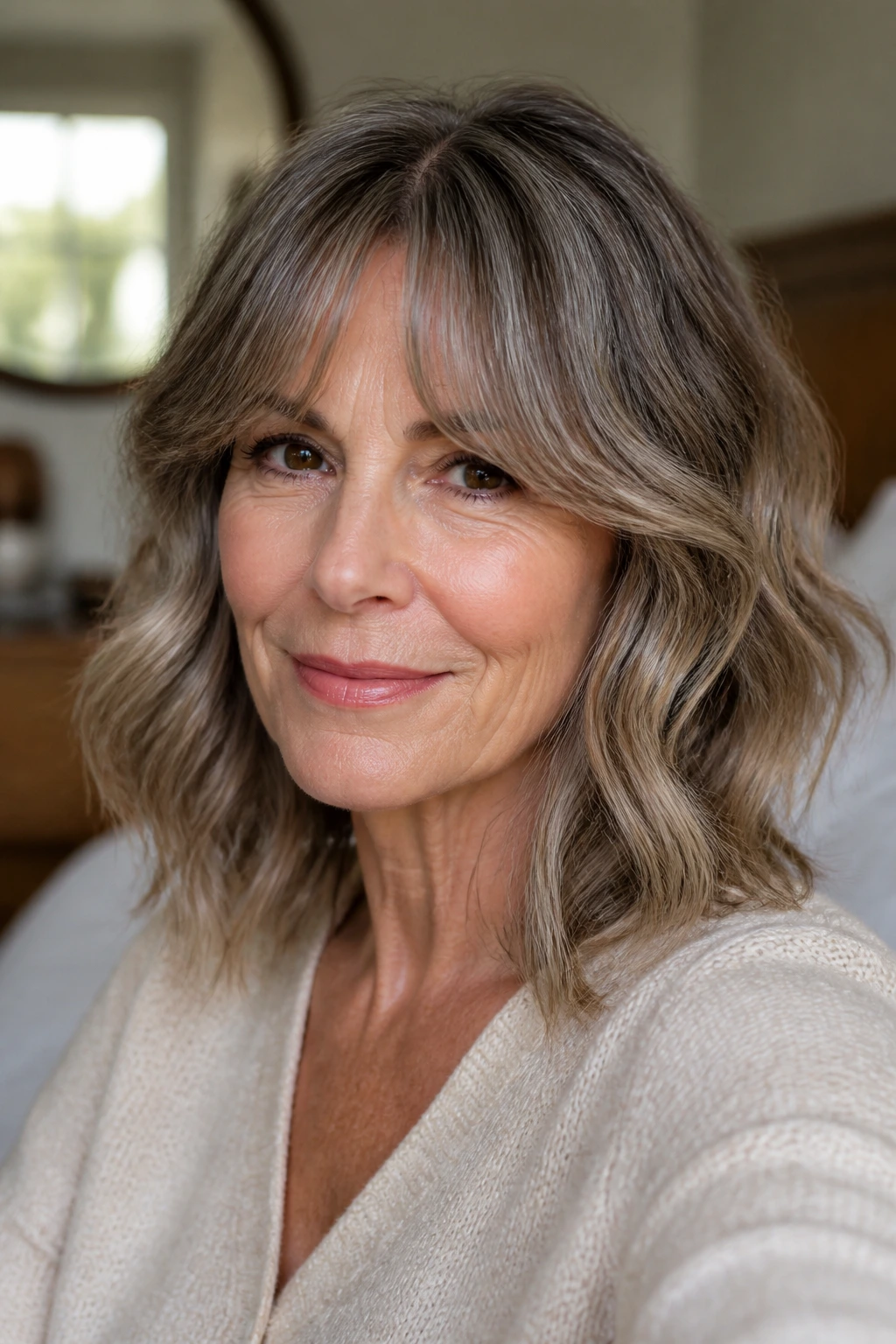
Some haircuts ask for a mood board. This one asks for a reasonable morning. Shoulder-length waves are the practical end of the spectrum — long enough to feel like extensions were worth it, short enough to style in a hurry. The curtain bangs keep the front soft, and the rest of the hair can be air-dried or given a few bends with a curling iron.
This is the style I’d point to for women who don’t want to babysit their hair. It looks good with a side tuck, with a low clip at the back, or just hanging loose after a quick brush. That flexibility is the whole point. If the hair is always fighting you, it will not get worn often. And if it does not get worn often, it is not a good choice.
Keep the layers subtle and the ends full. That’s the part that makes this look hang together.
Why Wavy Extensions and Curtain Bangs Work So Well After 50
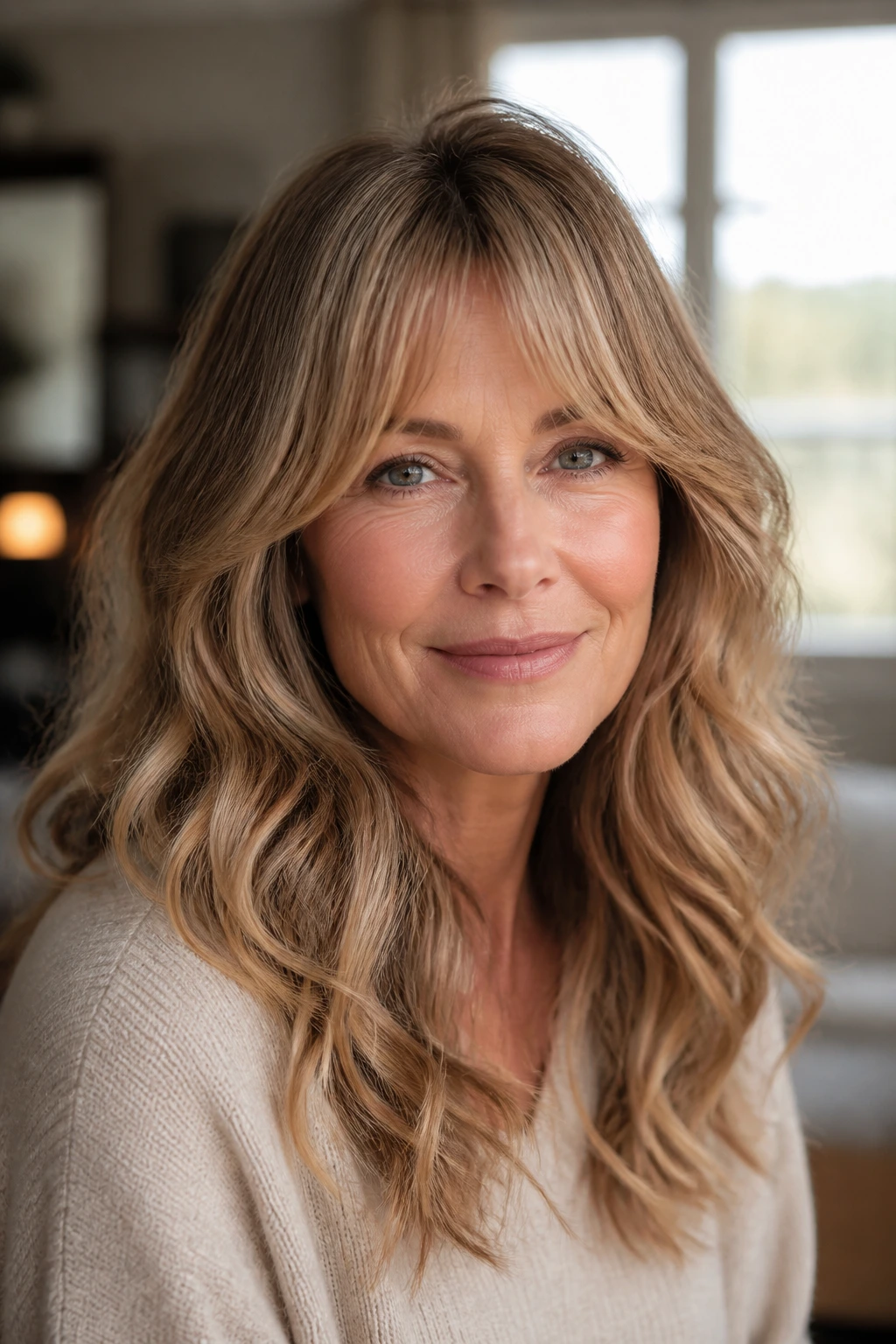
The real strength of this pairing is that it changes the shape of the face without making the hair look overbuilt. Curtain bangs open the center and soften the forehead line, while waves add movement around the cheeks, jaw, and shoulders. That matters because hair often loses density in exactly those places, and a straight, heavy style tends to announce the problem instead of solving it.
There’s also a practical reason this combination lasts. A blunt fringe needs perfect upkeep. A curtain bang is kinder. It can grow a little, shift a little, and still look deliberate. The same goes for waves: they forgive small imperfections in blend, especially when the color has depth and the lengths are layered.
The Shape Matters More Than the Length
A lot of people assume longer always means better. Not here. If the hair is too long and too dense, the style starts to drag the face down and the fringe gets lost. Shoulder to mid-back is usually enough for this look; after that, you need very smart layering or the whole thing turns heavy.
The Part Is Doing More Work Than You Think
The center split in curtain bangs creates a vertical line that opens the forehead and draws attention to the eyes. If the part is too deep or too sharp, the style loses that softness. If it’s too wide, the bangs split apart and stop doing their job. A little adjustment — often less than an inch — changes the whole frame.
Wave Pattern Beats Tight Curl
Loose waves read as hair. Tight curls read as styling. That distinction matters. The softer bend reflects light in a way that makes the extensions blend into the natural hair, especially when the texture has a bit of movement of its own. If you want the style to look believable from the side, this is the part to respect.
Essential Tools for a Clean Blend
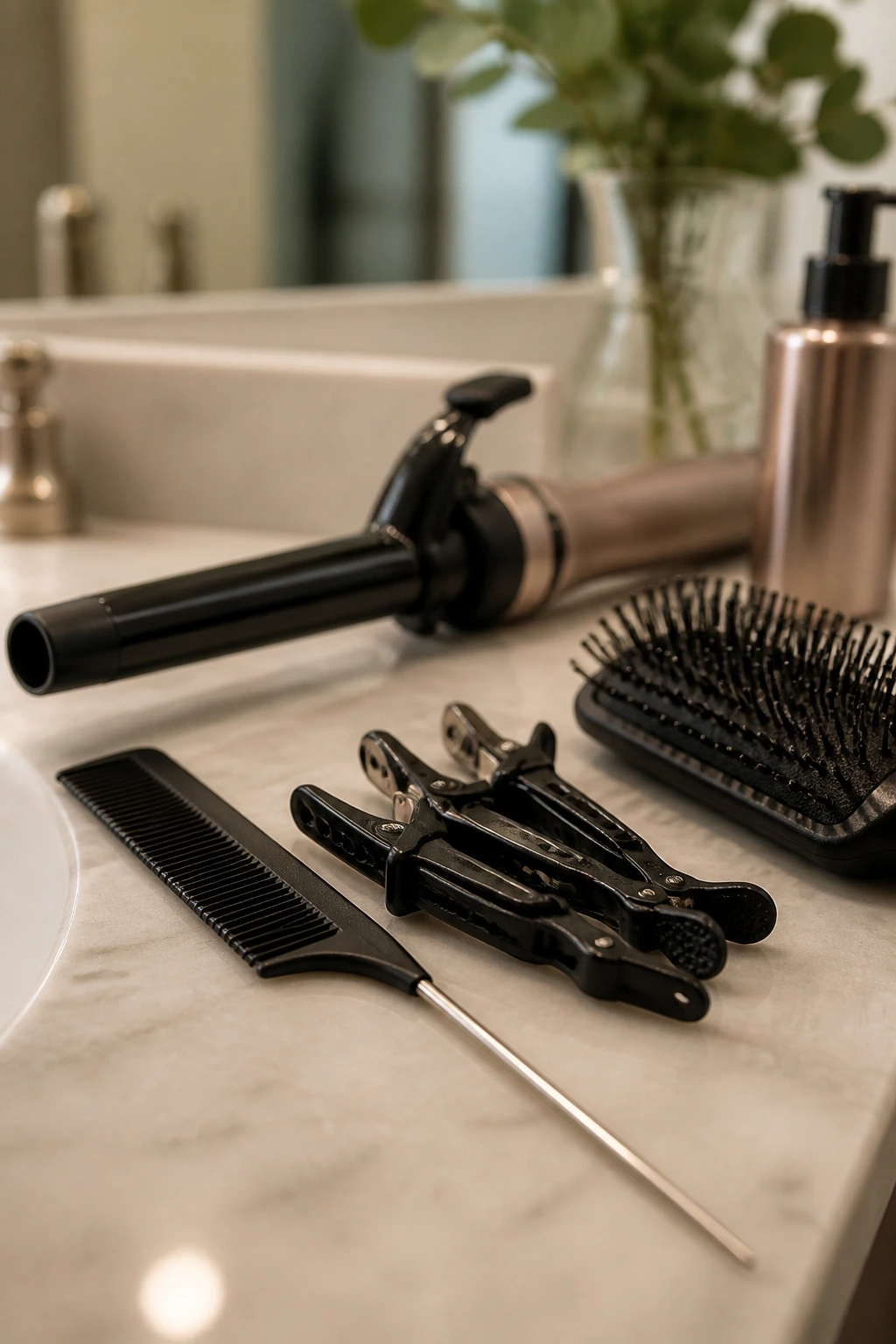
- Rat-tail comb: Helps section the hair cleanly so extension rows sit where they should.
- Sectioning clips: Keep the top layers out of the way while you place or style the extensions.
- 1-inch curling iron or wand: Creates soft waves that blend well with curtain bangs.
- Round brush, 1.5 to 2 inches: Useful for shaping the fringe and lifting the crown.
- Heat protectant spray: Keeps human hair extensions from drying out when you use hot tools.
- Flexible-hold hairspray: Holds the wave without turning the hair stiff or crunchy.
- Extension-safe detangling brush: A gentle brush is less likely to pull at the seams.
- Blow dryer with concentrator nozzle: Gives you more control when drying the bangs and root area.
- Hand mirror: Useful for checking the back placement of wefts or hidden clips.
- Silk or satin storage bag: Keeps clip-ins from snagging between wears.
Shopping Smart: Length, Density, and Color Notes for Wavy Hair Extensions
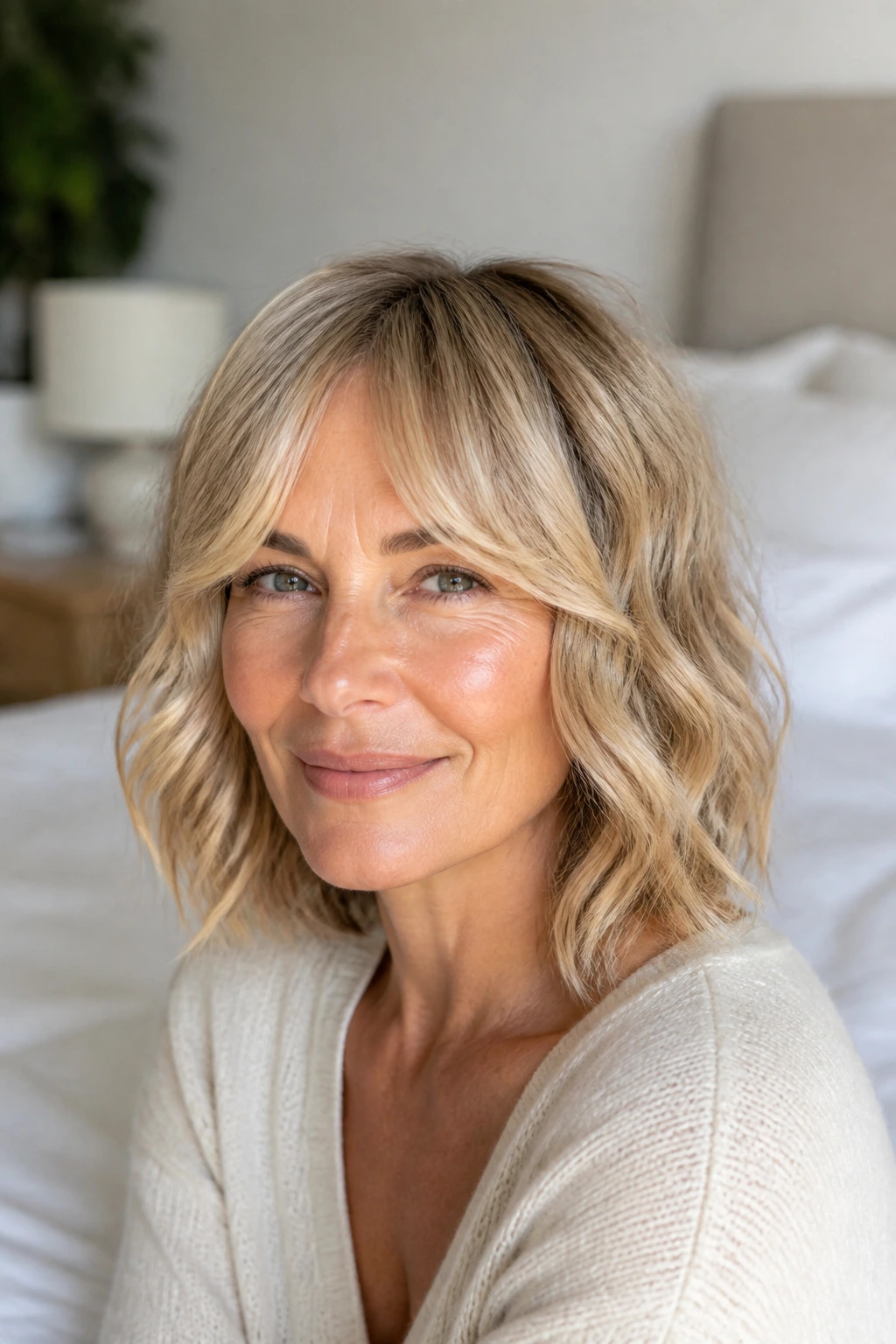
The most expensive-looking extension set is not always the longest one. It’s the one that matches your hair’s density, texture, and color well enough that nobody is thinking about the hair as a separate object. That starts with length. If your own hair lands at the shoulders, a set that finishes around the collarbone to mid-back usually blends better than something waist-length.
Density matters just as much. Fine hair does better with lighter pieces and fewer rows. Thick hair can carry more volume, but even then, too much bulk at the ends makes curtain bangs look disconnected. You want the wave to travel from the front fringe into the mid-lengths, not sit on top of a heavy curtain.
Color matching is where people get lazy, and that’s usually what gives the game away. Match the extensions to the mid-lengths and ends of your own hair, not just the root. If you’re between shades, I’d rather see the hair a touch deeper than too light. A slightly darker piece can disappear into the blend; a too-light piece catches the eye from across the room.
Texture is the final piece. If your own hair has a soft bend, choose body wave. If it’s very straight, still avoid anything with a tight curl unless you’re willing to style your natural hair to match. And if you’re blending gray, keep at least two tones in the mix. Flat color is the quickest way to make extensions look like extensions.
Getting the Bangs and Waves to Meet at the Cheekbone
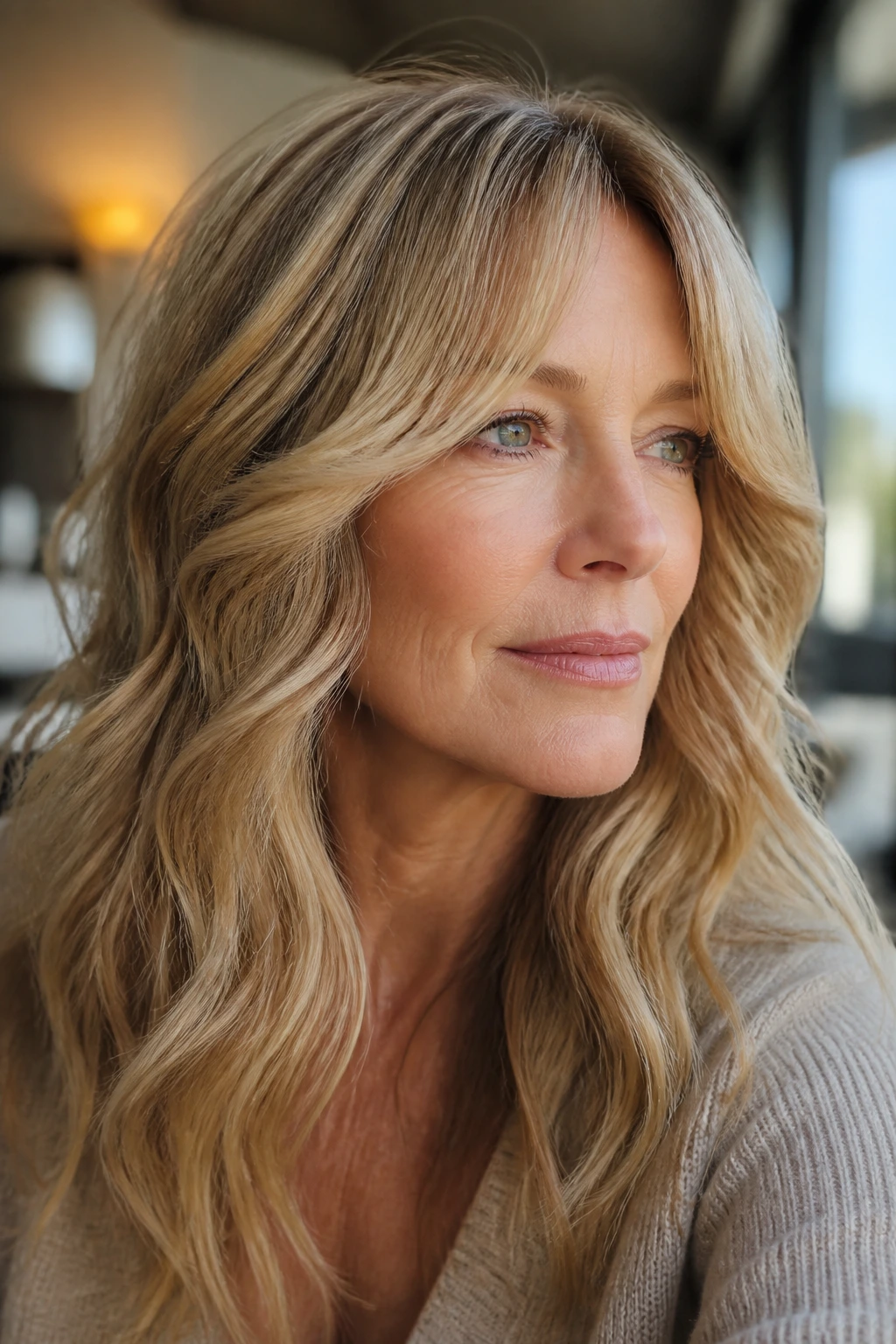
The curtain bang does the work when it starts at the right place and bends in the right direction. Too short, and it jumps off the forehead. Too long, and it disappears into the rest of the hair. The sweet spot is usually around the cheekbone, sometimes a touch below, depending on face shape and glasses.
Start the Fringe While It’s Damp
Blow-dry the bangs first, before the rest of the head dries fully. Use a round brush or even your fingers if the hair is cooperative, and direct the fringe forward, then slightly away from the face. A cool shot at the end helps the bend hold instead of collapsing flat to the skin.
Let the Wave Copy the Framing
Once the fringe is set, style the first front sections to echo it. Curl away from the face, not toward it, and keep the ends a little softer than the middle of the strand. That small difference helps the whole haircut look like one shape instead of two separate ideas.
Use Less Product Than You Think
A pea-sized amount of serum is enough for the ends on most extension sets. More than that, and the waves start clumping, which makes the bangs look too light by comparison. If you need hold, use a flexible spray from about 10 inches away and stop before the hair loses movement.
Common Mistakes That Make the Hair Look Added On
-
Choosing too much length: Hair that drops far past your natural density line can look glamorous for five minutes and then suspicious from the side. Keep the longest layers within a believable range for your frame and hair type.
-
Making the bangs too short: Short curtain bangs tend to spring up and separate awkwardly. If they’re not at least around the cheekbone when dry, they usually fight you more than they help you.
-
Using one flat color: A single-tone blonde, brown, or gray piece can sit on top of the natural hair like a wig cap. Add depth with root shadow, lowlights, or brighter front pieces.
-
Curling every section in the same direction: That can create a stiff, barrel-shaped result. Alternate the direction through the mid-lengths so the waves stack more naturally.
-
Overloading the hair with serum or oil: Extensions can go greasy near the top and dry at the ends. Keep product on the lower half only, and use less than feels necessary.
-
Placing too much bulk at the temples: That area is already visible because of the curtain bang. Too much hair there makes the fringe look bulky instead of soft.
Variations and Adaptations to Try
-
Clip-In Weekend Volume: Best if you wear extensions only when you want them. Clip-ins give you density and length without changing your daily routine, and they’re easy to remove before bed.
-
Tape-In Everyday Softness: Tape-ins sit flatter than most other methods, which makes them a good choice if you wear your hair down often and want the blend to stay quiet.
-
Halo Without Heat: If your scalp is sensitive or you dislike a lot of installation work, a halo piece can add the wave and the fringe-friendly fullness without adhesives or tight placement.
-
Silver-First Blending: Instead of hiding gray, build the whole color story around it with silver, ash, and taupe pieces. This works especially well when the curtain bangs are light around the face.
-
Humidity-Calm Texture: If the hair tends to frizz, keep the wave looser, use a smoothing cream on the mid-lengths, and skip anything too dry or matte at the ends.
Washing, Storing, and Refreshing Extensions
Wavy extensions do not need constant washing, and over-washing is one of the fastest ways to make them feel tired. For clip-ins, I’d wash only after several wears — usually when product buildup or a little outdoor grime starts making the wave limp. Tape-ins and other long-wear methods need a more regular salon schedule, often every 6 to 8 weeks, depending on growth and placement.
When you do wash, use lukewarm water and keep the shampoo on the top and mid-lengths rather than scrubbing the ends. Let the water rinse downward. Rubbing the hair in a ball is how you create knots that take forever to undo. Air-dry whenever you can, or use low heat with a concentrator nozzle and a brush that doesn’t snag.
Storage matters more than people think. Hang clip-ins on a hanger or keep them in a silk bag once they’re fully dry. If they’re damp when you put them away, they can get a sour smell or a weak wave pattern. For daily wear, a quick finger-comb in the morning and a light mist of water can revive the bend faster than starting over with heat.
Questions Readers Ask Before They Commit
Can women with fine hair wear wavy extensions and curtain bangs?
Yes, but the placement has to be lighter and smarter. Fine hair usually looks best with fewer rows, less bulk at the temples, and a shoulder-length or collarbone finish so the extensions don’t overpower the natural hair.
Are clip-ins or tape-ins better for this look?
Clip-ins are better if you want flexibility or wear the style only sometimes. Tape-ins are better if you want a flatter, more seamless result for everyday wear and you’re willing to maintain them on a schedule.
How long should curtain bangs be with extensions?
Most flattering versions land around the cheekbone or just below it when dry. Shorter bangs can puff up and separate; longer bangs blend more easily but may need a little blow-drying to keep the split visible.
What if my natural hair is straight and the extensions are wavy?
Then style your own hair to match the bend, even if it’s only through the top layers and bang area. A mismatch between straight roots and wave through the ends is the easiest way to spot extensions from across the room.
Can gray hair blend with wavy extensions?
Yes, and it often looks better when the pieces include silver, ash, taupe, or mushroom blonde rather than one flat blonde. The key is to mirror the natural streaking instead of covering it.
How do I keep the curtain bangs from separating too far apart?
Dry them with a round brush or your fingers while they’re still damp, then let them cool in place. If they split too wide later in the day, a tiny mist of water and a quick re-bend usually fixes it.
Will this style work with glasses?
Very often, yes. The best versions keep the fringe soft and a little longer so it sits around the frames instead of crashing directly into them.
A Softer Shape That Still Has Energy
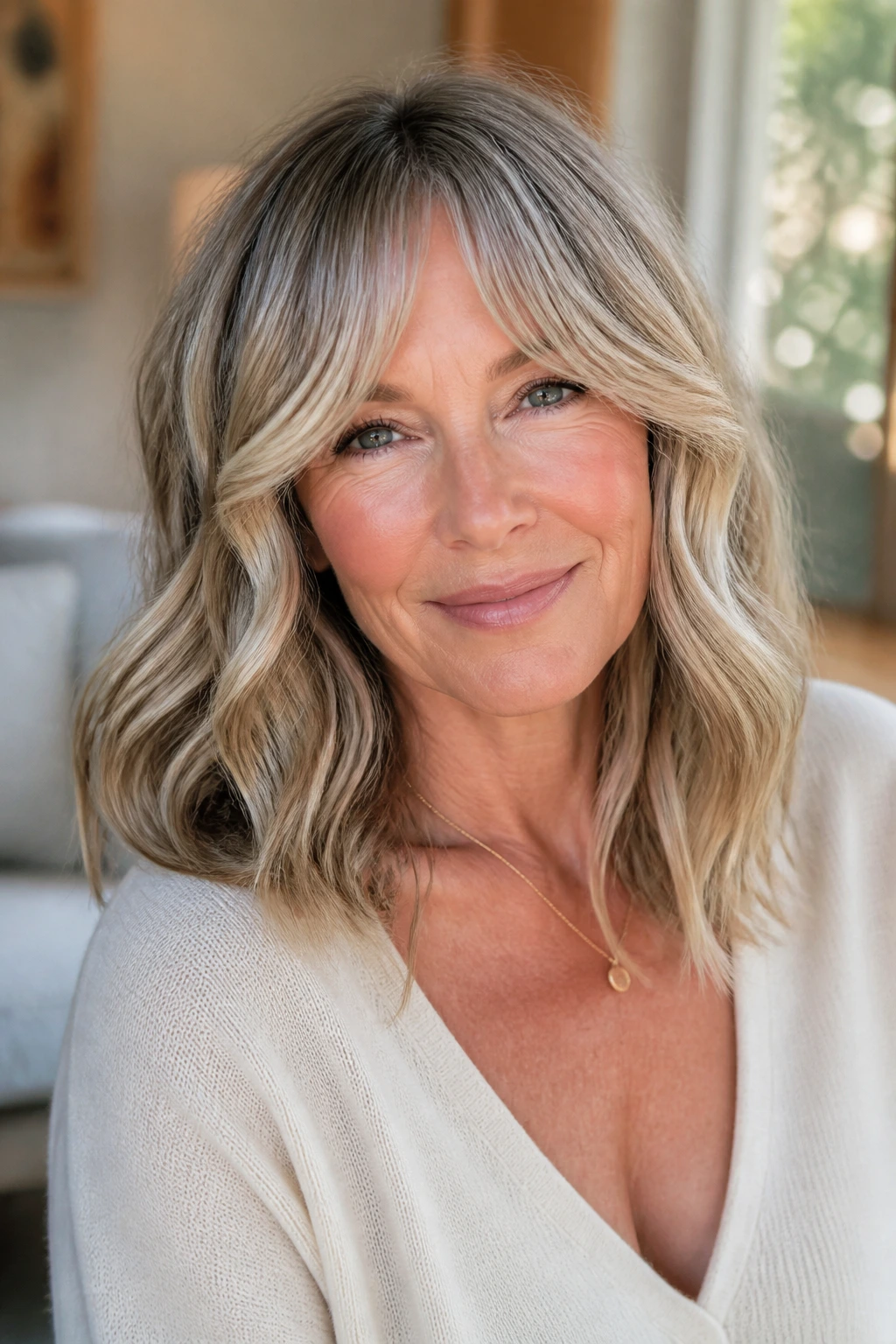
The nicest thing about this pairing is that it gives you movement without making the hair feel fussy. Curtain bangs open the front, waves add body, and the extension length can be tuned to your face, your hair density, and how much upkeep you want to live with. That’s a useful combination. Not glamorous in a loud way — just smart.
If you’re choosing one starting point, I’d begin with a shoulder-grazing wave, a soft root shadow, and bangs that sit at the cheekbone. That mix gives you the most flexibility for trimming, styling, and color matching later, which is exactly where a good hair decision starts to pay off.