



Curtain bangs can make medium hair look sharper, softer, and a little more deliberate all at once — but only when the layers are placed with some restraint. Too much snipping and the ends start to fray into wisps. Too little, and the fringe sits there like it arrived late to the party.
Medium hair is the sweet spot for this combination. It has enough weight to keep long straight layers from flying everywhere, but not so much length that the shape sinks and forgets itself by noon. That’s why this cut family keeps showing up in salons: the line stays clean, the bangs can swing away from the face, and the whole thing still looks like hair, not architecture.
The best versions don’t all look the same. Some lean sleek and polished. Some feel feathered and airy. A few work because they hide the layering almost completely until you turn your head and catch the movement at the cheekbones or collarbone. The good ones understand one simple truth: curtain bangs need a supporting shape, and medium hair gives them room to breathe.
Why These Cuts Work So Well on Medium Hair
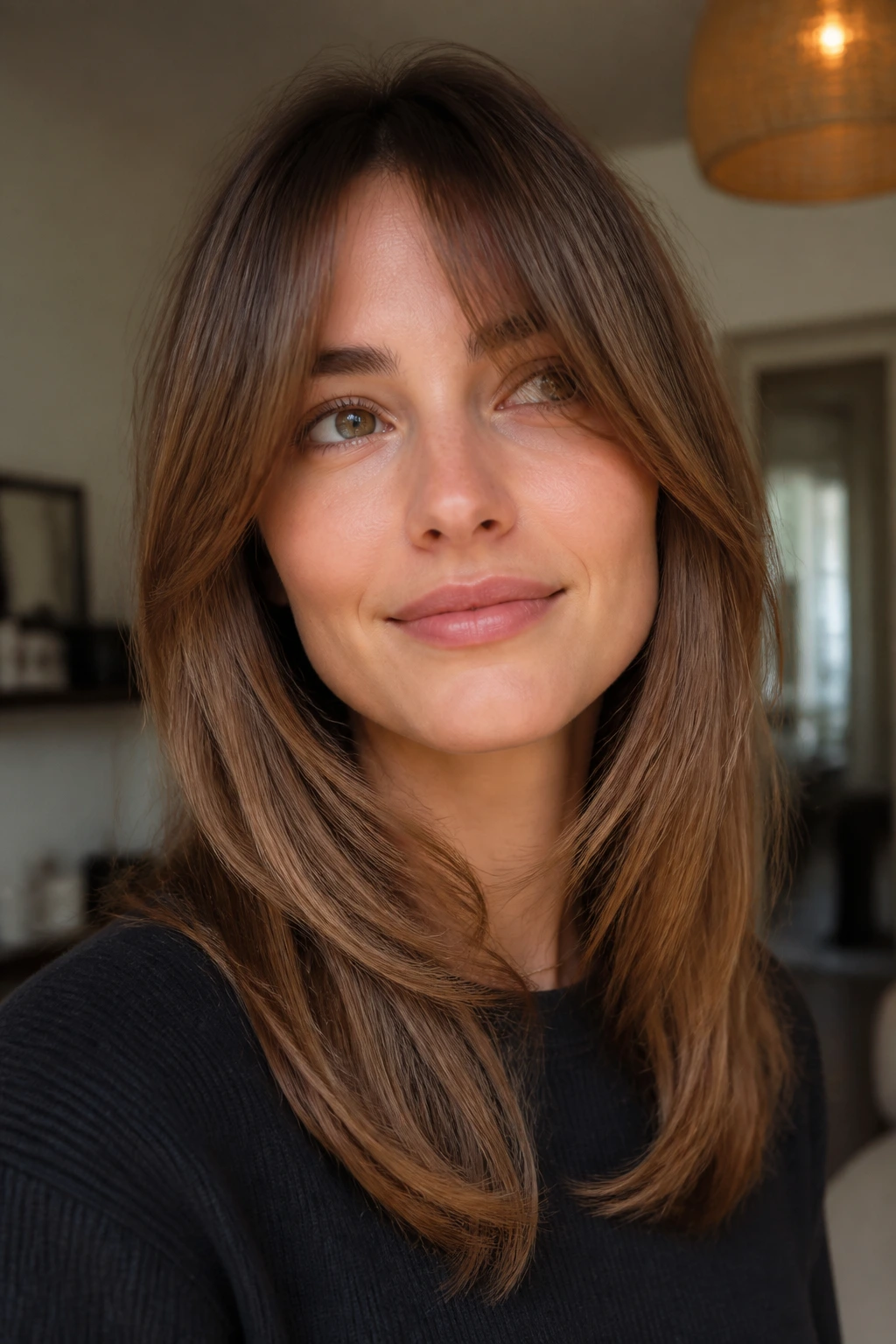
- Face frame without a helmet effect: The front pieces can open at the cheekbones while the rest of the length stays controlled, so the cut doesn’t swallow your face.
- Movement stays visible on straight hair: Long layers show up more clearly on sleek strands than on very textured ones, which means the shape reads even when you do almost nothing to it.
- The grow-out is kinder: A curtain bang that starts a little lower and blends into long layers will usually look intentional for longer than a blunt fringe.
- Thickness gets managed without losing length: Medium hair can carry enough length for drama, but the layering keeps the ends from feeling like one heavy block.
- Styling can be simple or fussy: A quick blow-dry gives one look, a flat iron gives another, and air-drying can still land in the right zone if the cut is balanced.
- It plays well with part changes: Shift the part an inch and the whole mood changes. That’s a gift, not a problem.
1. The Collarbone U-Shape
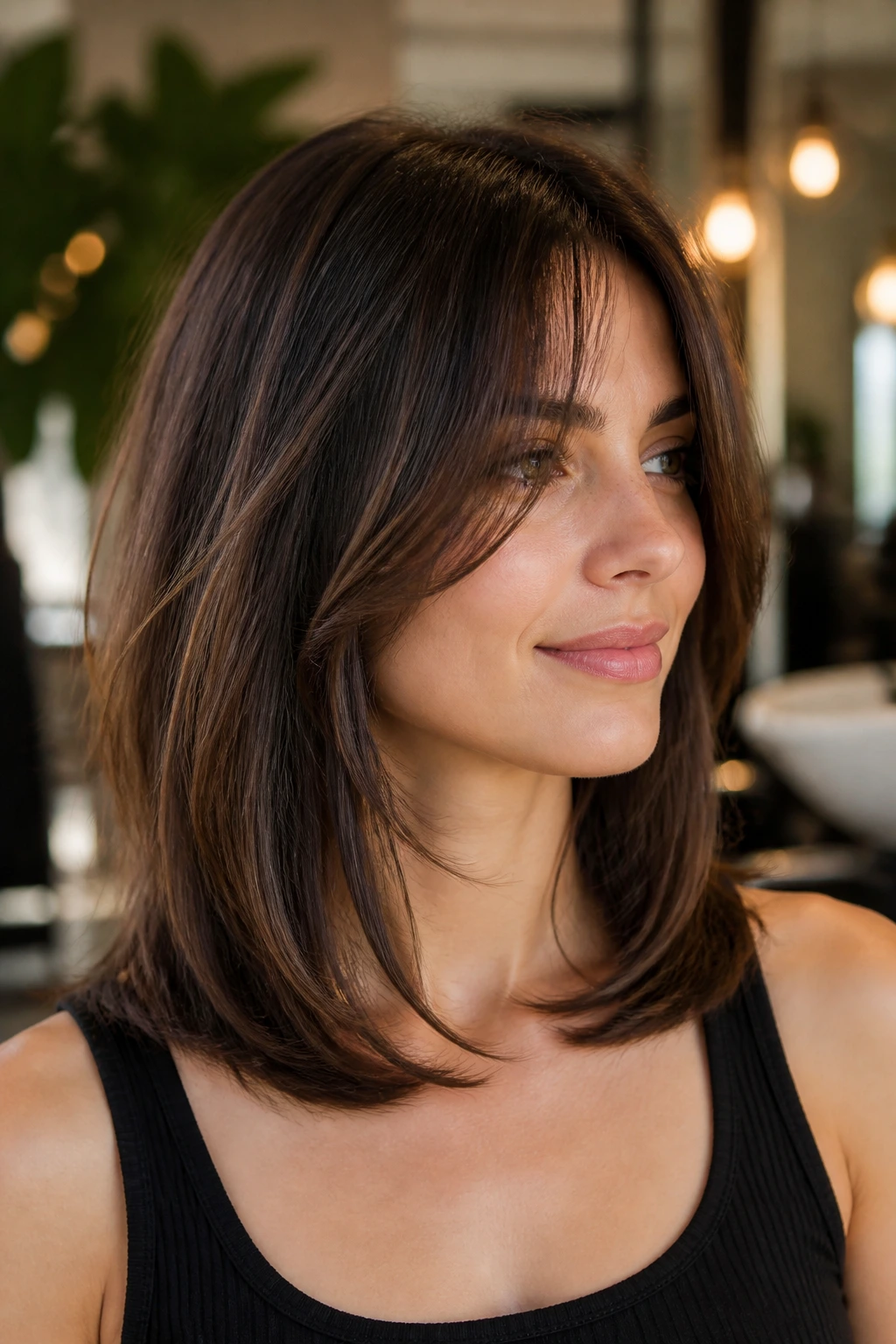
This is the cut I reach for when someone wants shape without making the layers shout. The perimeter dips gently lower in the back and rises just enough at the front to keep the hair from looking square. On medium hair, that U-shape gives curtain bangs a clean place to land, especially when the shortest bang piece sits around the cheekbone and drifts into the jaw.
I like this version because it keeps the weight line intact. Straight hair can look thin fast when the layers are carved too high, but the collarbone U lets the bottom stay full while the front opens the face. It reads polished without feeling stiff. A little bend at the ends is enough.
If your hair tends to puff at the sides, this shape calms that down. If it falls flat, the front curve gives it some life back.
2. Feathered Edge Layers
Want the cut to move even when you barely touch it? Feathered edge layers do that better than heavy chopping ever will. The idea is simple: the ends are softened in the last 2 to 3 inches, so the line still looks straight, but the finish feels lighter.
Why the Feathering Stays Soft
Feathering works best when the bangs and the first layer are blended instead of separated. Ask for curtain bangs that skim from the cheekbone toward the lip, then let the outer lengths taper into the edge of the cut. On medium hair, that makes the whole style look airier without making the body disappear.
A 1.25-inch round brush or a large hot brush gives this cut a bit of swing. I’d avoid heavy wax or gritty paste here; they make the feathered pieces stick together in ugly little ropes. A light cream or a mist of flexible spray is enough.
- Start the feathering low, not at the crown.
- Keep the fringe long enough to split naturally.
- Finish with a cool shot so the bend holds.
One good blow-dry matters more here than five styling products.
3. Blunt Base, Long Curtains
Picture medium hair that still has a strong outline in back, but the front softens just enough that the face never feels boxed in. That’s the appeal of a blunt base with long curtain bangs. The perimeter stays clean and solid. The movement comes almost entirely from the front.
This is the cut I like on people who have straight hair with decent density and don’t want layers everywhere. The blunt edge makes the hair look deliberate from the back, which is useful if your ends tend to look see-through after too much layering. The curtain bangs do the job of softening the whole thing without stealing the show.
Keep the shortest bang point around the cheekbone or just below it. Any shorter and the balance gets fussy fast. The long front pieces should fall into the jaw, then disappear into the length.
4. Invisible Layers for Fine Hair
Fine hair can get bullied by layer-heavy cuts. You know the look: the ends go stringy, the crown goes flat, and the whole thing seems to have lost a fight with the scissors. Invisible layers solve that by hiding most of the internal shape inside the cut instead of breaking the silhouette apart.
The trick is to leave the perimeter mostly intact and tuck the layers lower, where they add bend without exposing every strand. On straight medium hair, that creates a soft ripple when you blow-dry it, but the hair still looks full at the ends. Curtain bangs help even more here because they add shape around the face without thinning the whole head.
I’d keep this one away from aggressive razor work. Fine ends need a clean edge, not a frayed one. A bit of root lift and a light round-brush bend are enough.
5. Thick-Hair Debulking Layers
This is the version for dense hair that feels heavy by the second day after a wash. Unlike feathering, which mostly changes the finish, debulking layers remove weight from inside the head of hair so the outer line can sit better. The result is cleaner, not choppier.
If your hair looks like a solid block when it’s straightened, this cut gives it breathing room. The curtain bangs can stay generous, almost lush, while the back and sides lose enough bulk to move instead of sticking out. The shape matters more than the texture here.
I prefer this when the hair is thick from root to tip, not just at the ends. Ask for internal reduction and a controlled face frame, not random slicing all over the place. That’s how you keep the shape from getting fluffy.
6. Razor-Soft Straight Layers
A razor cut can be lovely on straight hair, but only when the ends are healthy enough to handle it. This version gives the layers a softer edge than scissors alone can manage, so the hair falls with a little more hush and less bluntness.
Best When the Ends Need Lightness
The razor should live in the mid-lengths and front, not all over the head. That way the curtain bangs melt into the face frame without leaving the bottom exposed. The look is especially good if your hair feels too rigid when it’s freshly cut with shears.
A small warning. If your ends are dry, split, or color-stressed, skip aggressive razor work. It can make the cut look airy in the chair and ragged a week later. For styling, a smoothing cream and a flat brush give this shape the best finish.
What to Ask For
- Soft razor work only in the front third of the haircut
- Curtain bangs that land around the cheekbone
- A blunt-ish bottom line to keep the body
7. The Rounded C-Cut
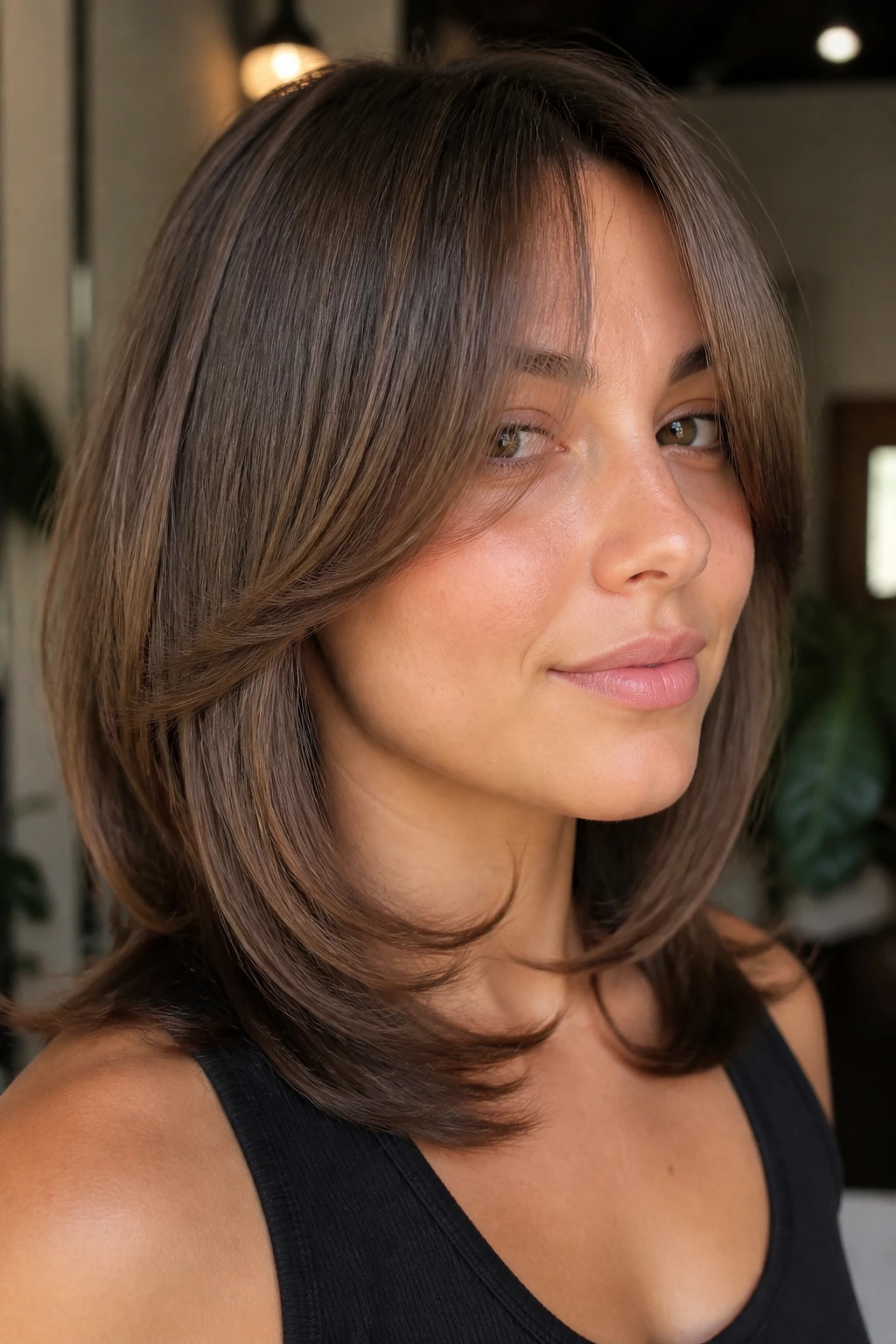
A C-cut is one of the easiest ways to make medium hair look intentional without screaming for attention. The front pieces curve forward in a soft arc, then tuck back in toward the ends, so the outline forms a gentle C when you see it from the side. Curtain bangs fit right into that shape.
This is a good choice if you want the face frame to feel visible but not harsh. The front can start around the cheekbone, then melt into collarbone length, which keeps the cut flattering even when the hair air-dries a little crooked. I like it on straight hair because the curve is clear instead of getting lost in texture.
It’s also one of the friendlier cuts for people who don’t want to visit the salon every few weeks. The arc grows out well. No drama.
8. Glassy Lob With Curtain Bangs
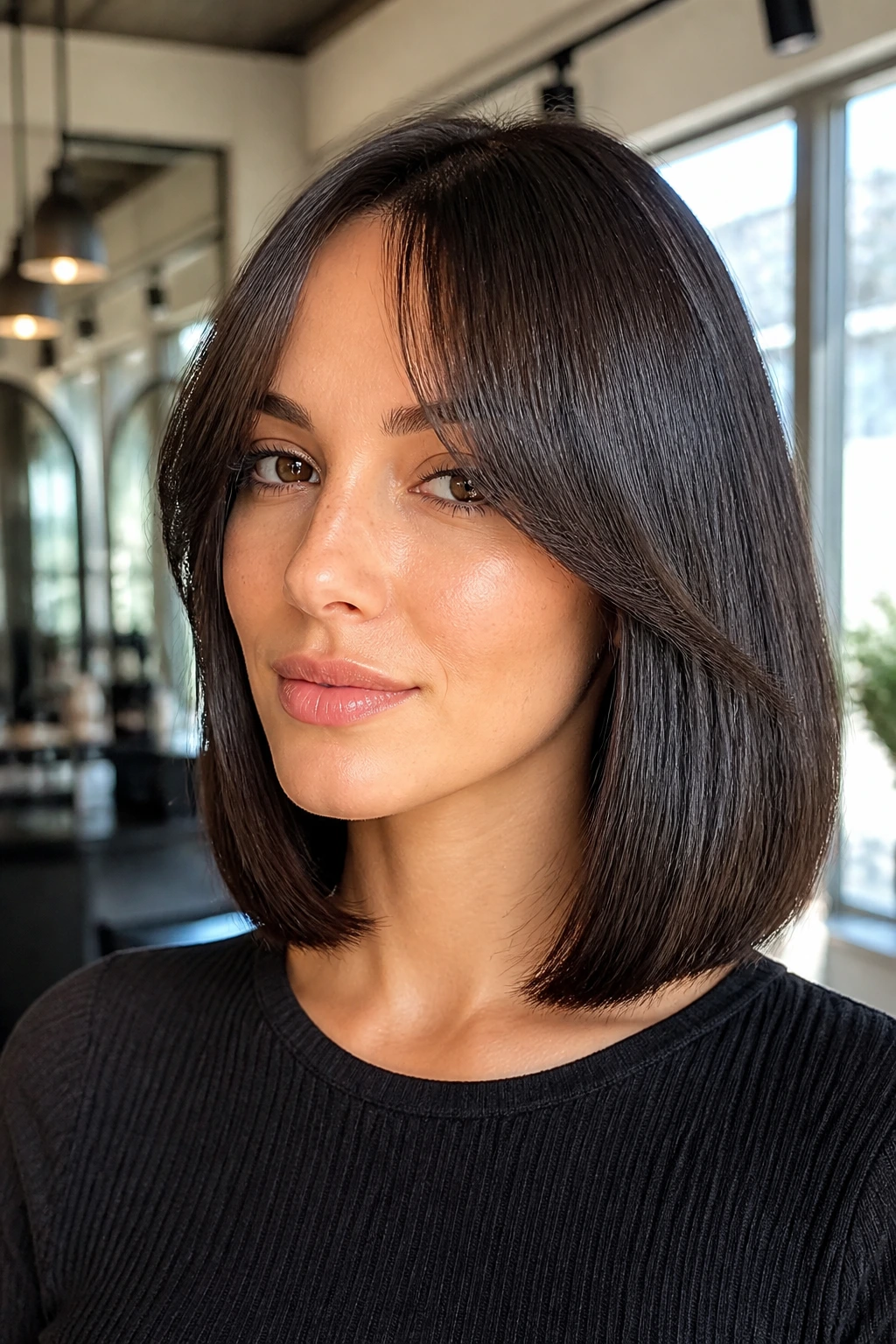
Do you want the cut to read sleek instead of layered? This is the version to save. A glassy lob keeps the line smooth from collarbone to ends, while the curtain bangs split cleanly and frame the face without making the whole haircut look busy.
How to Keep the Shine Line Clean
Use a flat iron with beveled edges and make one slow pass, not three rushed ones. The point is to keep the ends straight enough that they reflect light in a clean band, but not so ironed that they turn stiff. A pea-sized amount of serum on the ends is enough; if it touches the fringe roots, the bangs go limp fast.
This style looks especially sharp on hair that already lies flat and straight. If your hair bends easily, this cut still works, but you’ll need a little more discipline with the brush and the part. The payoff is worth it.
9. Face-Frame Ribbons
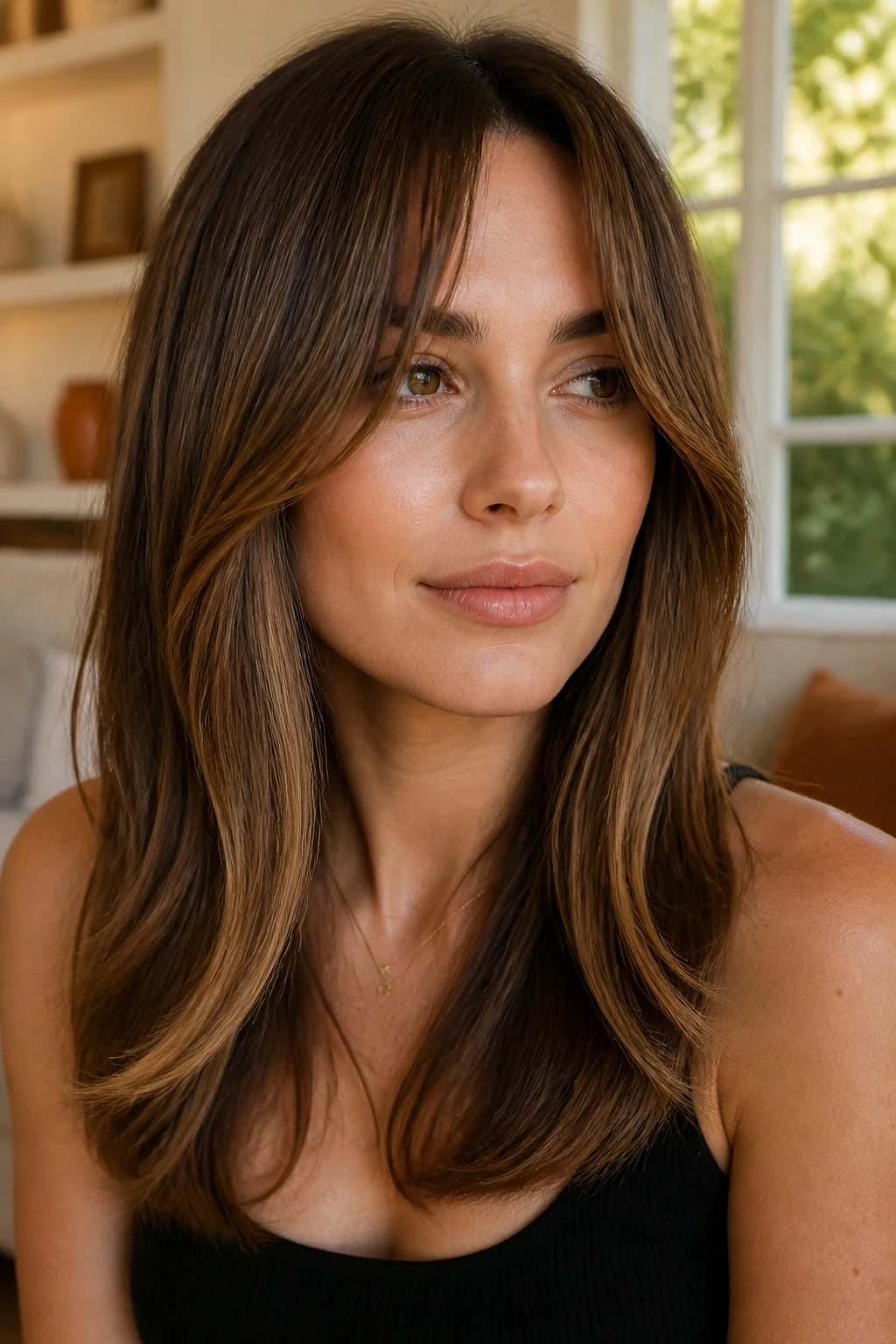
If your cheekbones are the part of your face you like most, this cut lets them do the talking. The front pieces are sliced into long ribbons that begin around the cheekbone and trail toward the collarbone, so the curtain bangs don’t stop abruptly. They just melt.
That ribbon effect works beautifully on medium hair because the length is long enough to stretch the line out, but short enough that the face frame still matters. It’s also a good answer for anyone who wears glasses. The pieces can sweep away from the frame instead of crashing into it every time you move.
I’d keep the back fairly simple with this one. The whole point is to let the front pieces do the visual work. A soft blowout around the face, then straighter lengths through the body, gives it the best shape.
10. Tapered Ends for Heavy Hair
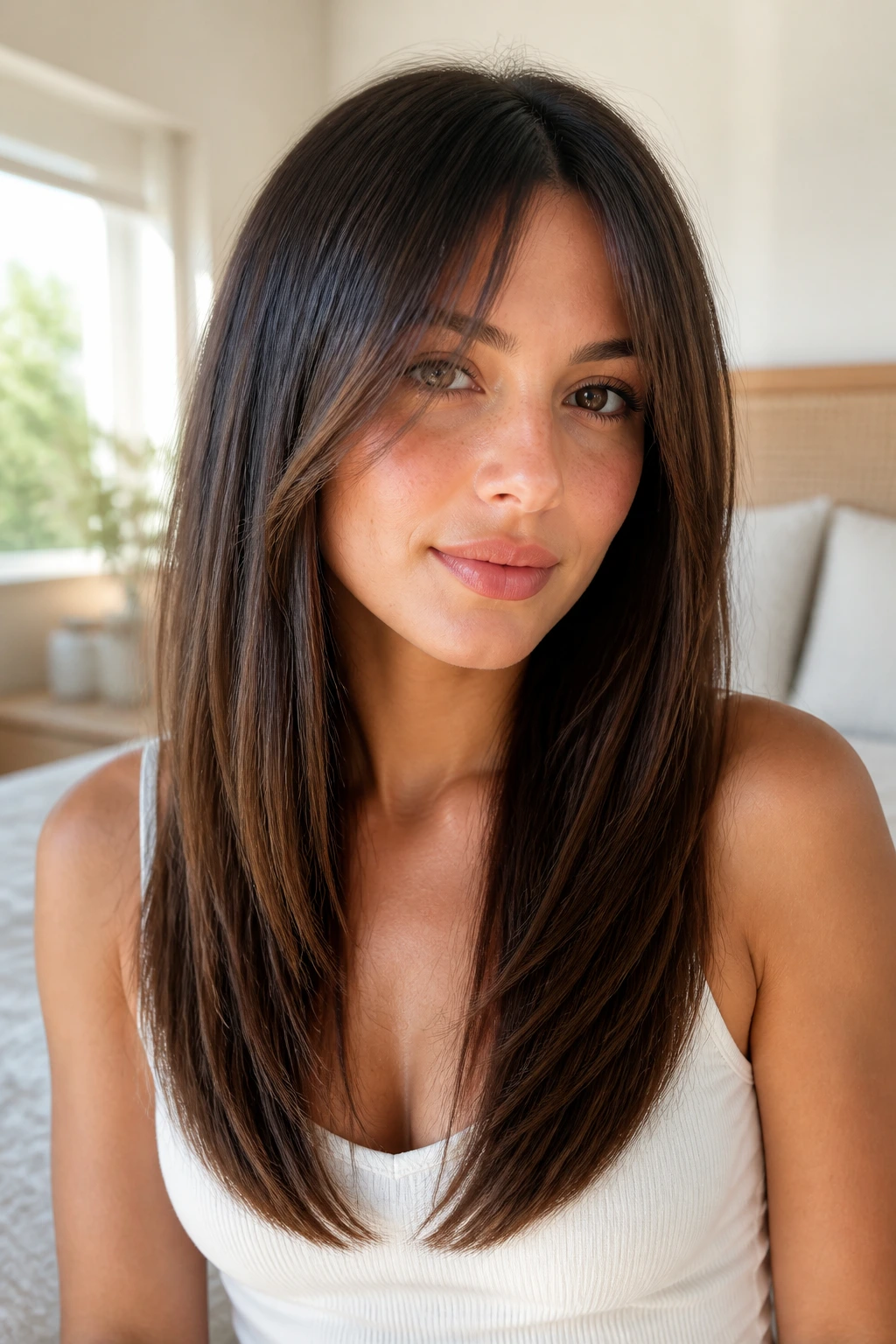
Heavy straight hair can look blunt in a way that feels more brick than style. Tapered ends fix that by narrowing the silhouette toward the bottom, so the ends don’t spread out like a shelf. The curtain bangs help soften the front, but the taper is what makes the haircut sit properly.
This is a smart cut if your hair takes forever to dry and then falls flat anyway. The taper removes enough bulk that the length hangs straighter and cleaner. It’s not about making the hair thin; it’s about letting the edge relax.
Keep the top layers modest. If the crown gets too short, the haircut starts to puff. The best version still feels solid from root to end, just less dense at the tips.
11. Shag-Lite Curtain Blend
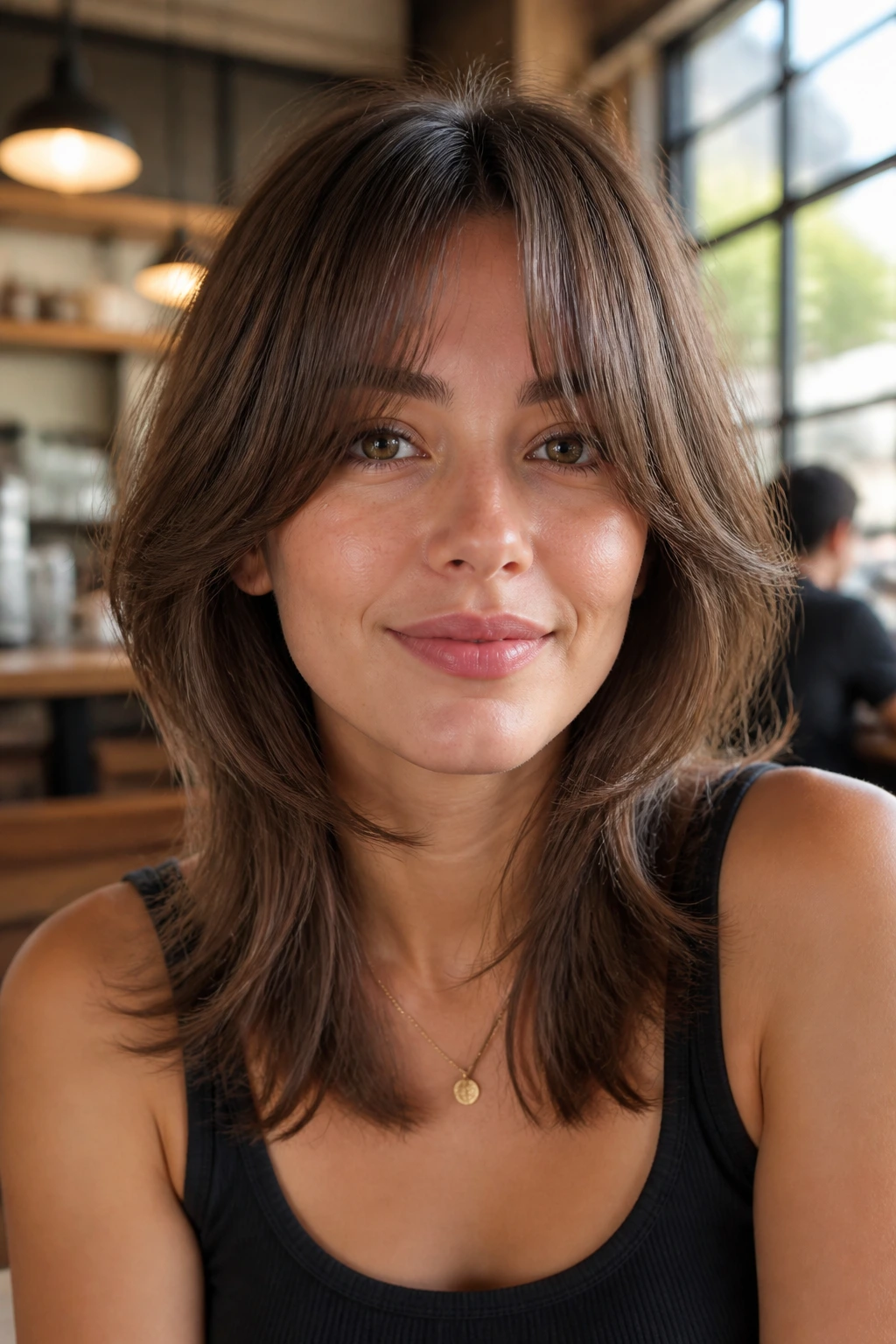
This is not a full shag. Good. Full shags can get too choppy on straight medium hair, and the fringe can turn into a maintenance project. The shag-lite version borrows the cheekbone framing and the slightly messier movement, then leaves the rest of the cut calmer.
It works when you want a little edge without losing the clean lines of straight layers. The curtain bangs can be a touch shorter here, and the side pieces can feather into the length a little more freely. I like it for hair that falls flat when it’s all one note.
The key is restraint. Too many short pieces and the haircut stops looking straight. Too few, and you’re back where you started. Aim for movement around the face, not everywhere.
12. Center-Part Sleek Cut
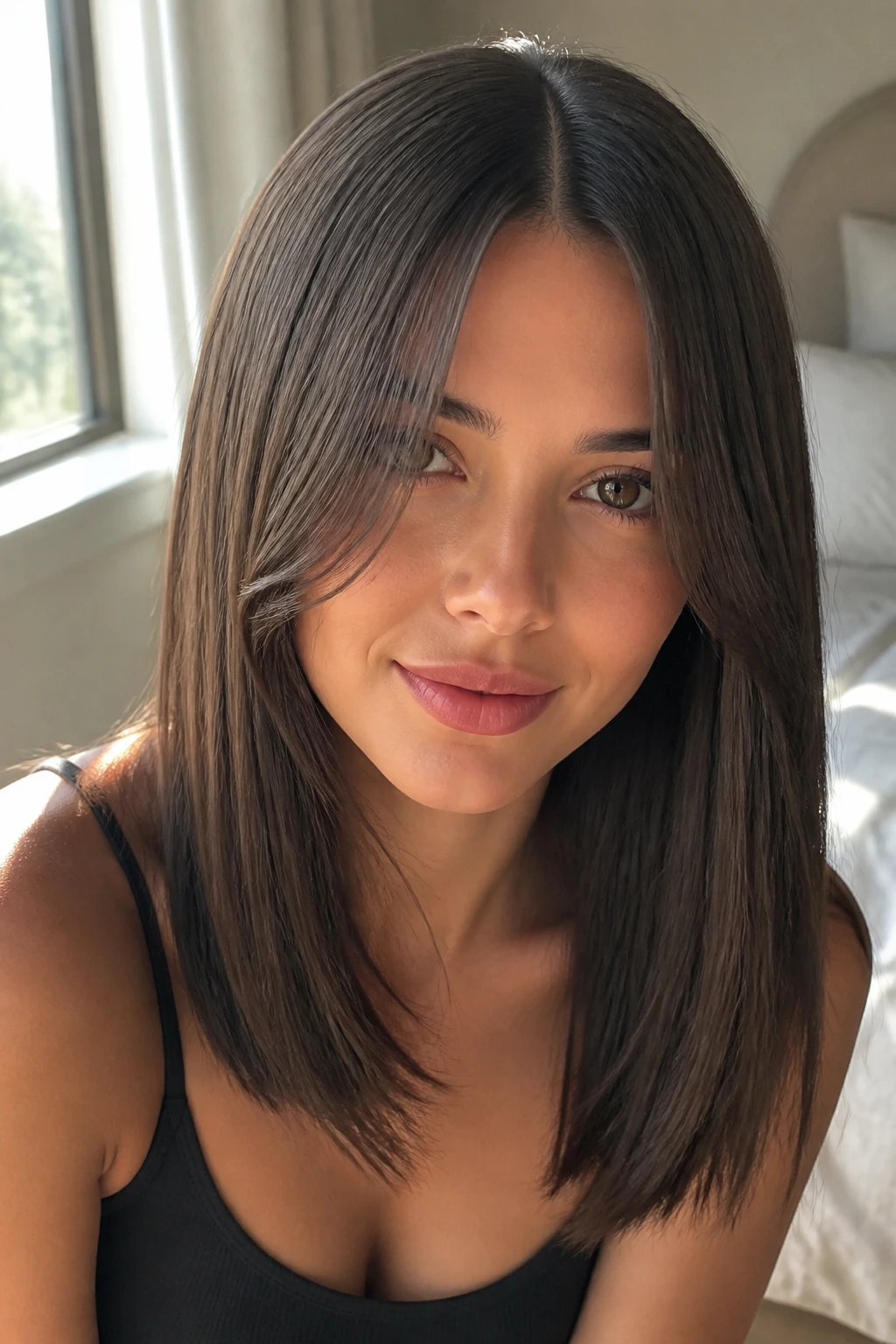
A center part can make a simple cut look more deliberate in a second. With curtain bangs, it creates a neat split right down the middle, so the front pieces fall on either side like frames instead of an afterthought.
What Makes the Center Part Work
The shortest bang point should skim the cheekbone or just below the brow line, then fall into the jaw without breaking into too many separate bits. The rest of the layers can stay long and clean. Straight medium hair handles this best when the line remains calm through the ends.
- Best on symmetrical faces or anyone who likes balance
- Works with a flat iron or a smooth blow-dry
- Needs roots to be directed from the part while drying
If the center part keeps wandering, dry the fringe in the opposite direction first and let it cool before settling it back.
13. Deep Side-Part Curtain Sweep
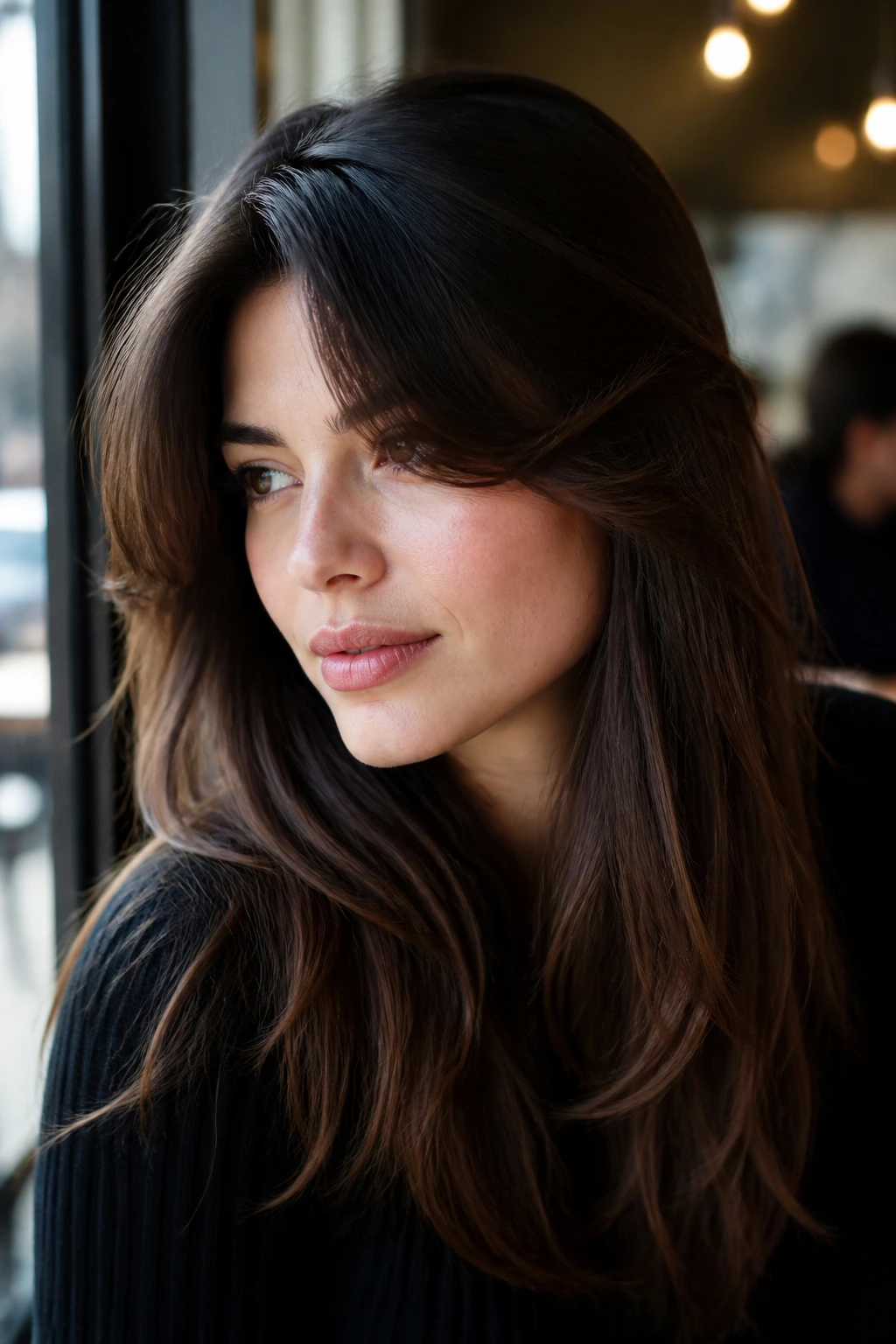
A side part can rescue curtain bangs that refuse to sit in the middle. It changes where the weight falls, and that tiny shift can make the front pieces look softer and more flattering at the same time. For medium straight hair, it also keeps the cut from feeling too studied.
I like this version on rounder faces and on anyone with a cowlick that pushes the front hair off-center anyway. Fighting the part usually looks worse than working with it. A deeper side sweep gives the curtain bangs a more relaxed bend and adds a little height on the heavier side.
Keep the layers long through the sides so the shape still reads straight. Otherwise the cut drifts into side-swept fringe territory, which is a different thing entirely. Not bad. Just different.
14. Soft V-Shape Finish
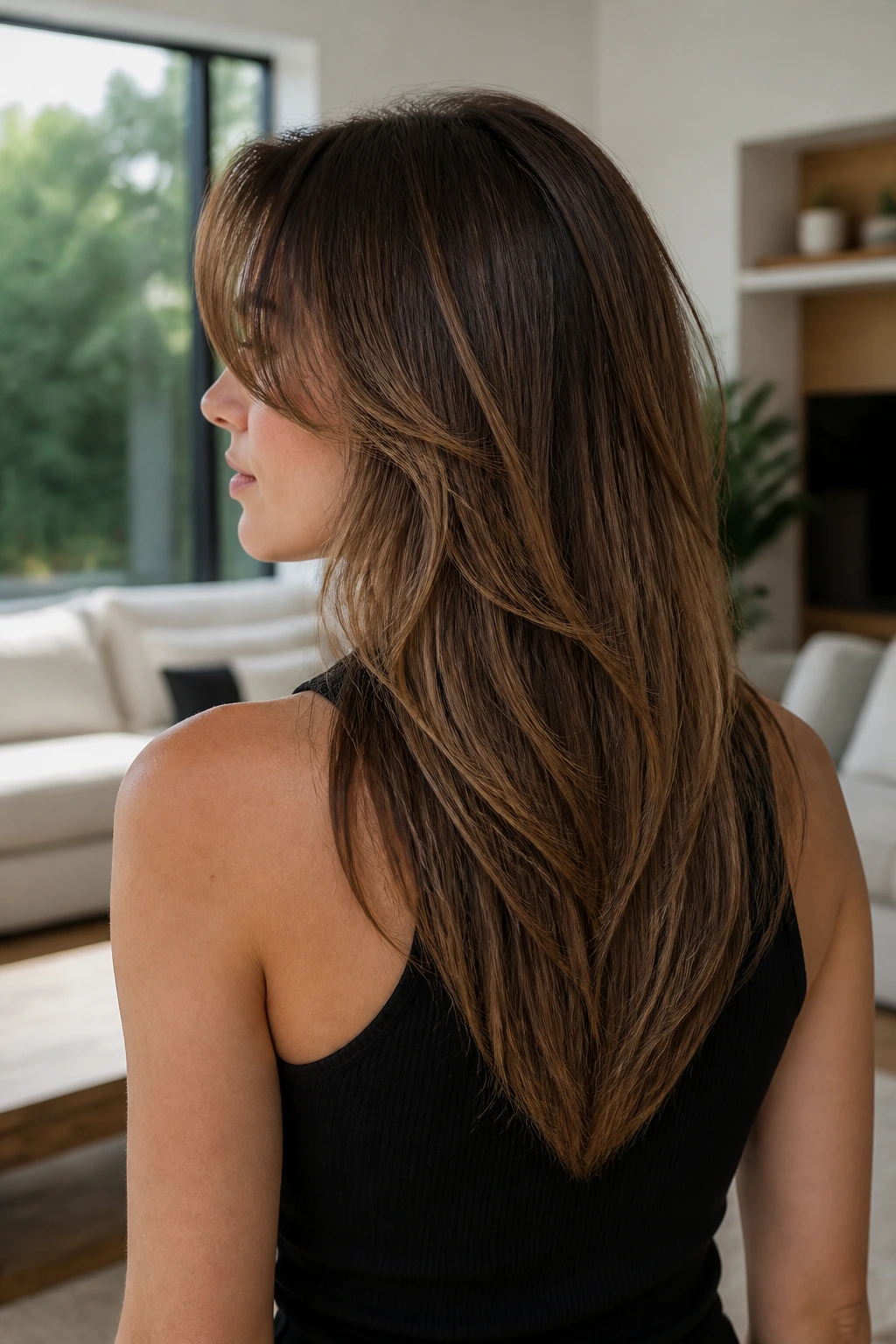
Why should the back stay as quiet as the front? Sometimes the V-shape gives medium hair the cleaner answer. The sides sit a little shorter, the center back stays slightly longer, and the whole cut narrows into a subtle point without turning sharp.
How to Wear It
This shape works best when the curtain bangs are long enough to blend into the front layers instead of stopping at the cheek. The visual line pulls the eye downward, which can make medium-length hair feel longer than it is. Straight hair shows the shape clearly, so you do not need much styling to prove it.
I’d choose this if your ends tend to flip out in a wide puff. The V-shape keeps the silhouette closer to the head and makes the layers feel more intentional.
15. Piecey Bend at the Ends
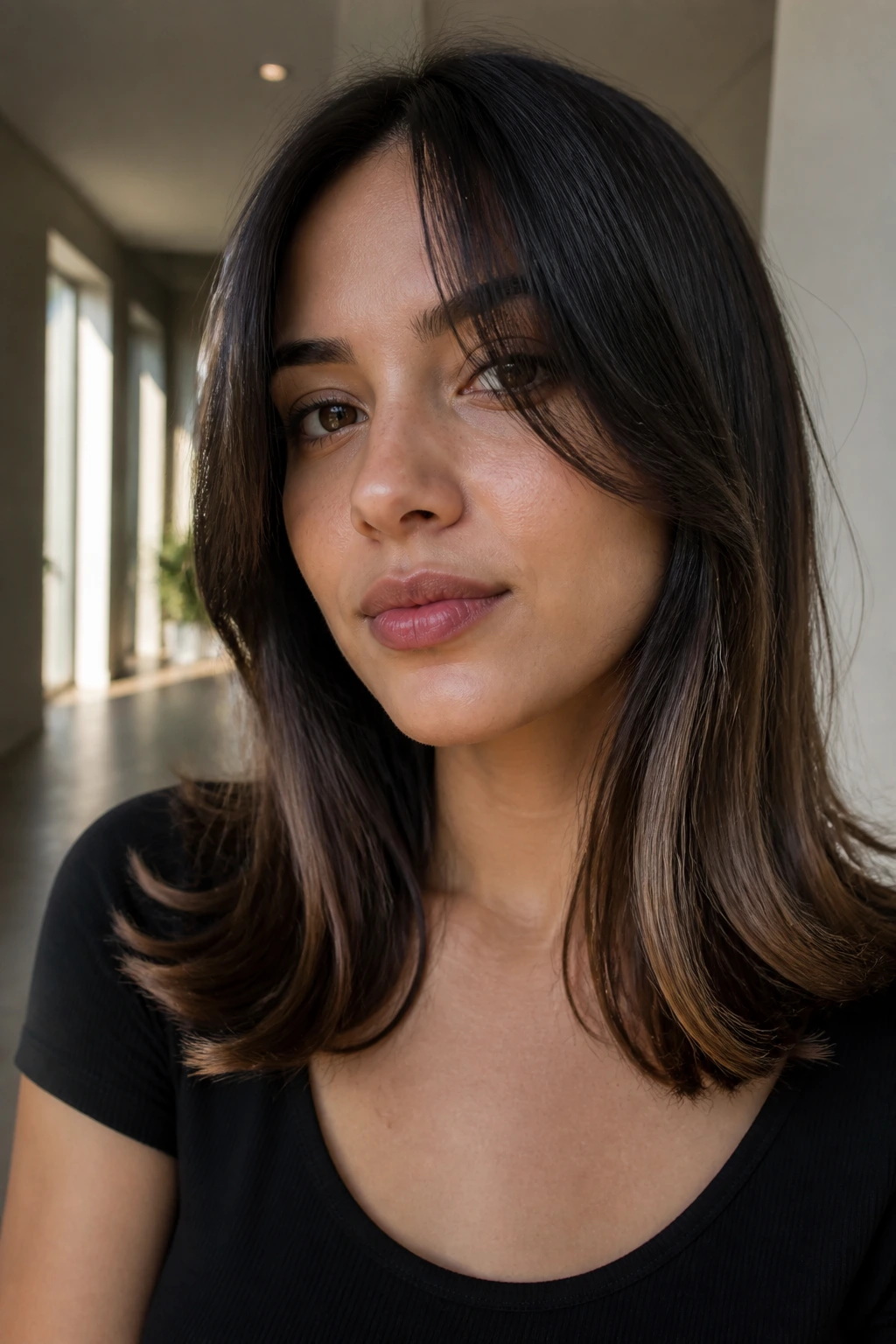
Straight hair can still look flat if the ends lie like a sheet. A piecey bend gives the haircut some irregularity in a controlled way — a little turn under here, a little flick out there, nothing overcooked. That contrast makes the curtain bangs feel lighter too.
The style works best when the layers are already well cut. Then you just add the bend with a flat iron or a medium round brush. I prefer bending only the last inch or so. If you start higher, the look gets too busy.
A dry texture spray at the mid-lengths can help separate the pieces without roughening the whole head. Keep it away from the fringe roots. Bangs hate that stuff.
16. Tucked-Under Polished Layers
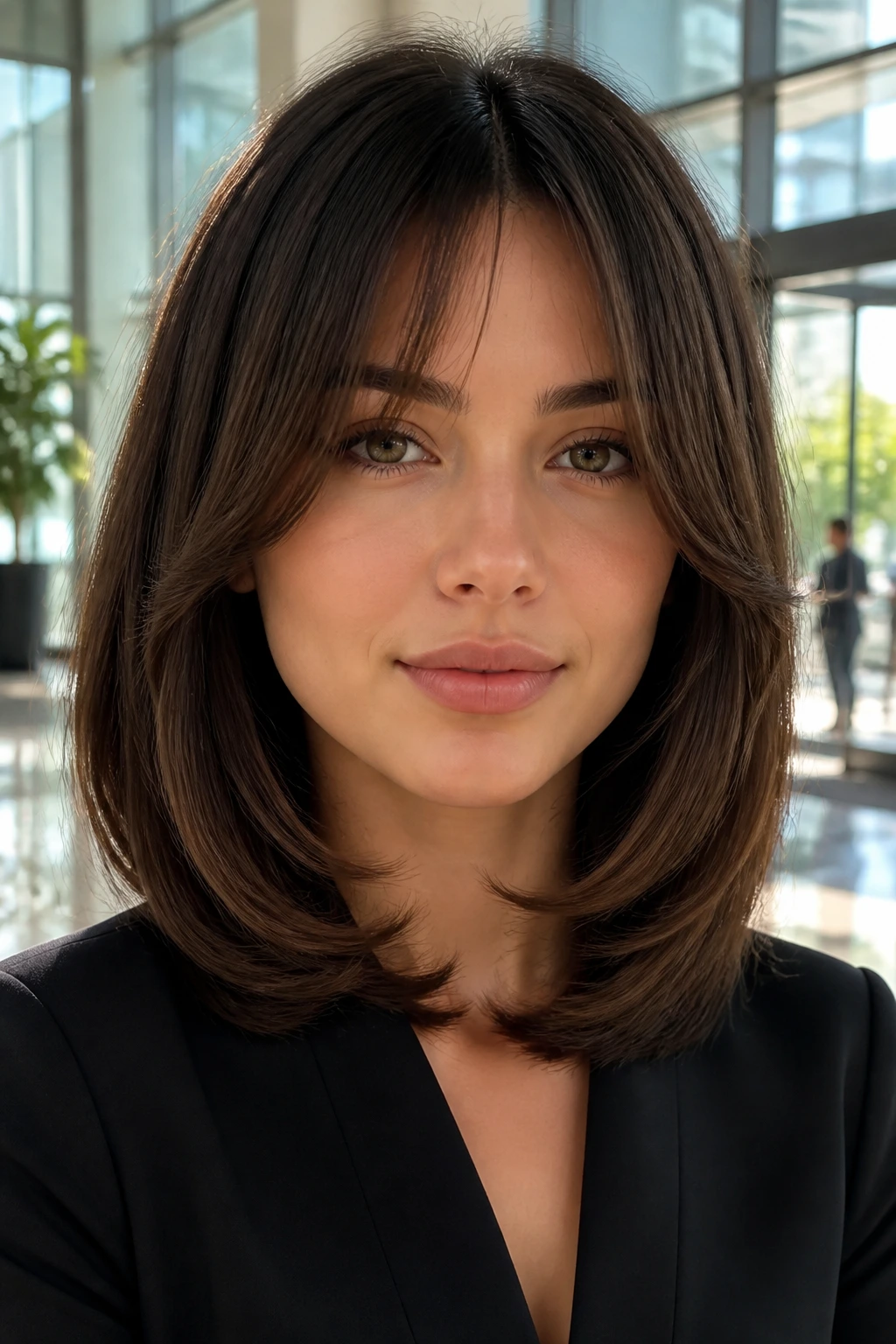
This is the cut for the person who wants medium hair to sit neatly around the jaw and collarbone. The layers are long and soft, but the finish curves under instead of flipping away, so the whole shape feels controlled. Curtain bangs fit because they also bend inward before opening at the sides.
It’s a clean look. Not severe. Just clean. I like it for straight hair that gets static or random flips at the ends, because the tucked-under finish settles the outline. A paddle brush and a final pass with a round brush on the ends are enough.
If you wear blazers, tailored shirts, or anything with a sharp neckline, this cut makes sense. It keeps the hair from competing with the clothes.
17. Crown-Lift Layers
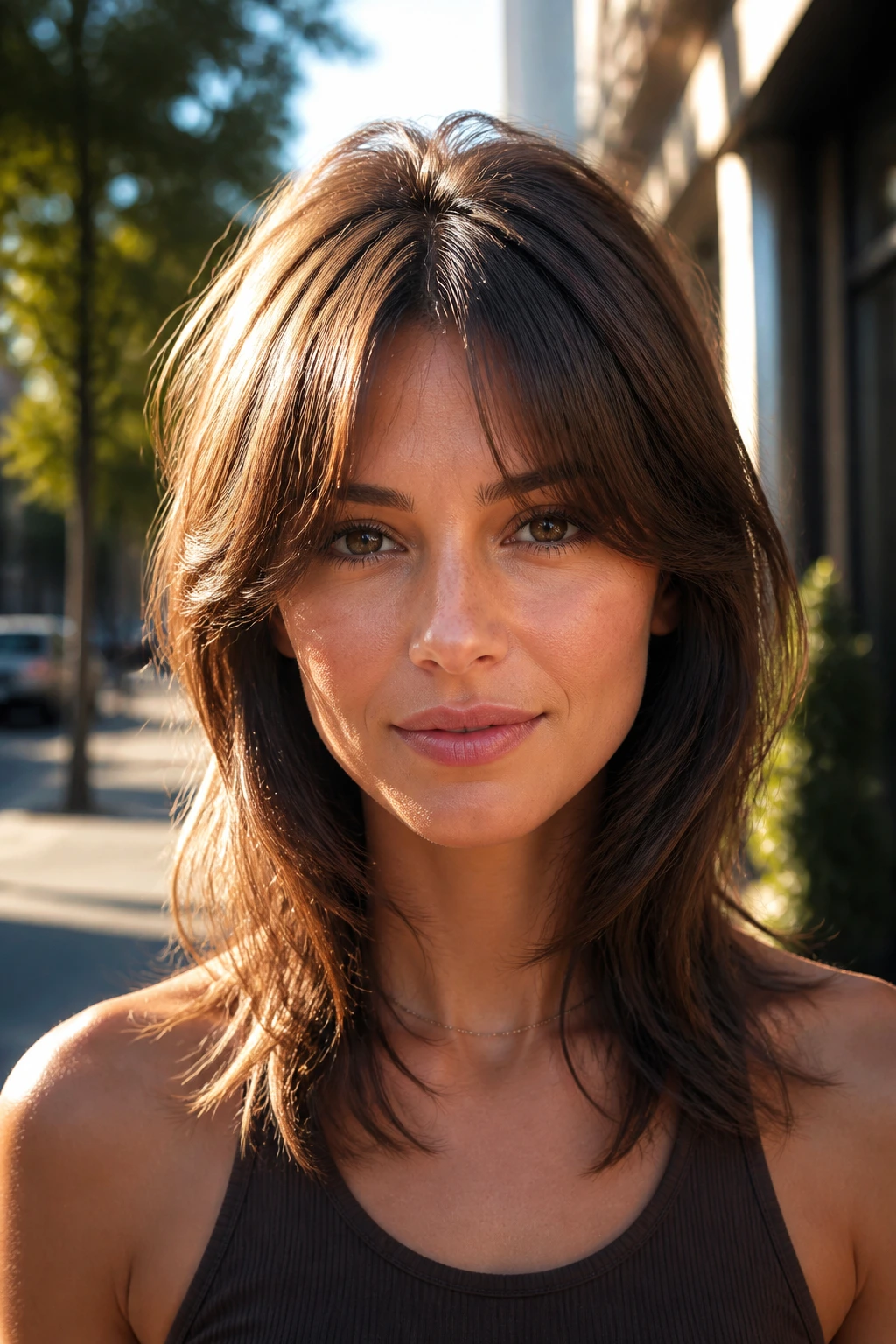
Some hair needs height more than it needs more pieces around the face. Crown-lift layers give you that. The top is shaped so the roots stand a little higher, while the length stays intact and the curtain bangs can fall with better balance.
Unlike cuts that pile all the action into the front, this one supports the whole silhouette. Medium straight hair often looks best with this kind of quiet lift because it stops the cut from lying too close to the scalp. A few root clips while the hair cools can make a bigger difference than another pass with the iron.
I’d reach for this if your head shape feels flat in profile or if your layers disappear the second your hair gets a little oily. The shape holds because the lift is built into the cut.
18. Chin-Skimming Curtain Bangs
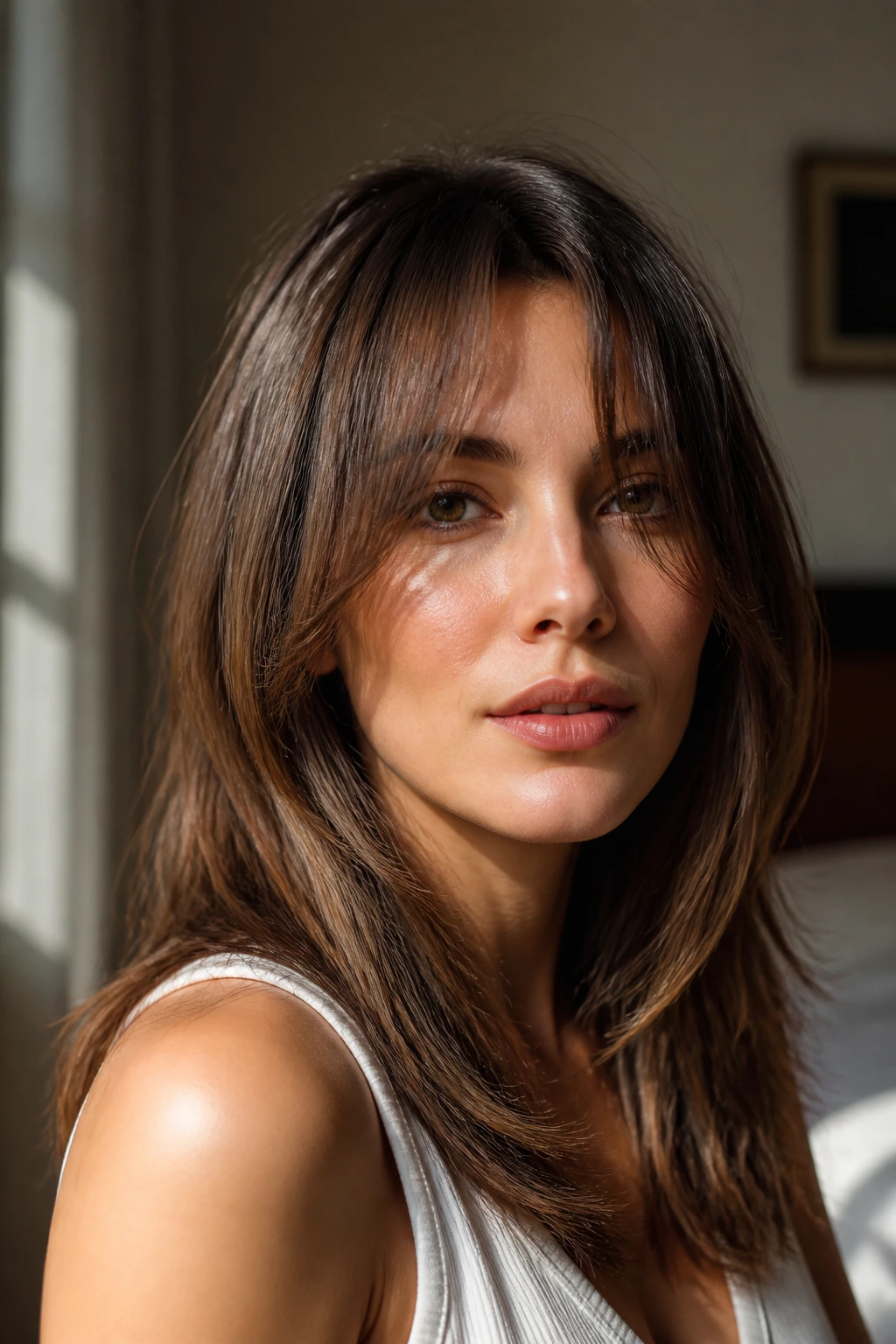
A longer curtain bang changes the whole mood. Instead of stopping high on the cheek, it brushes closer to the chin and folds into the front layers, which gives the face a slower, softer line. On medium hair, that extra length looks especially deliberate.
Why the Longer Fringe Helps
Longer curtain bangs are kinder if you wear your hair up half the time or if you hate the feeling of a short fringe hanging in your eyes. They also grow out better, which is handy if you know you’ll miss a trim. The face frame stays alive even when the bangs are between appointments.
- Best for long faces and stronger jawlines
- Easier to tuck behind the ears
- More forgiving if your part shifts during the day
Keep the shortest point no higher than the cheekbone unless you want a very obvious fringe moment.
19. Butterfly Lightness
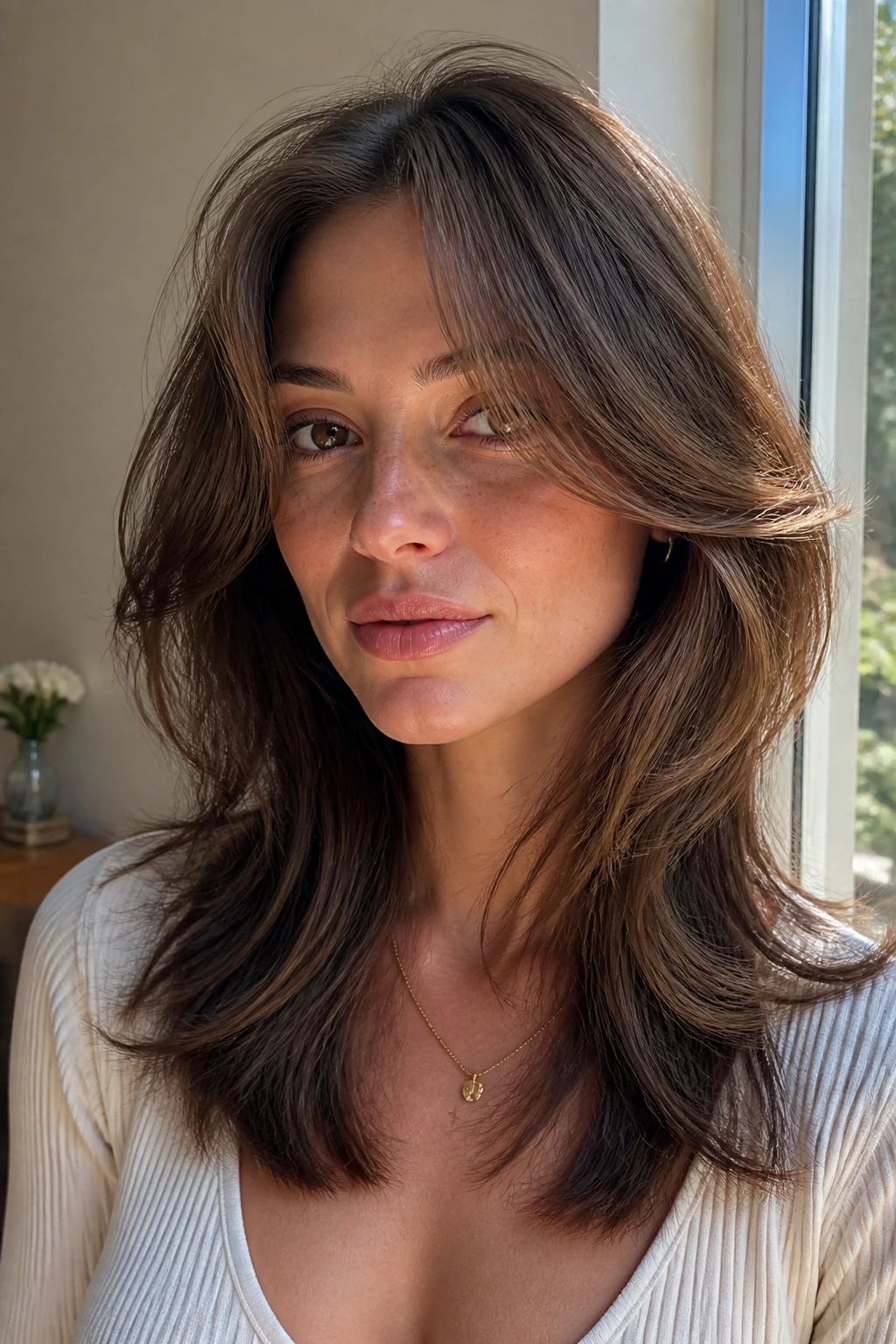
Butterfly layering sounds dramatic, but the medium-hair version is surprisingly wearable. The front pieces lift away from the face in shorter layers, then the back keeps more length, so the whole haircut has that winged shape without turning into a full shag.
This style works because curtain bangs become part of the bigger frame. They open the face, then the longer back gives you the weight that keeps straight hair from looking sparse. I like it when someone wants movement in photos and a cleaner outline in person.
The best styling is away from the face, not toward it. Roll the front pieces out and away, then let the length stay straighter. That difference is what gives butterfly cuts their shape.
20. Grow-Out Friendly Blend
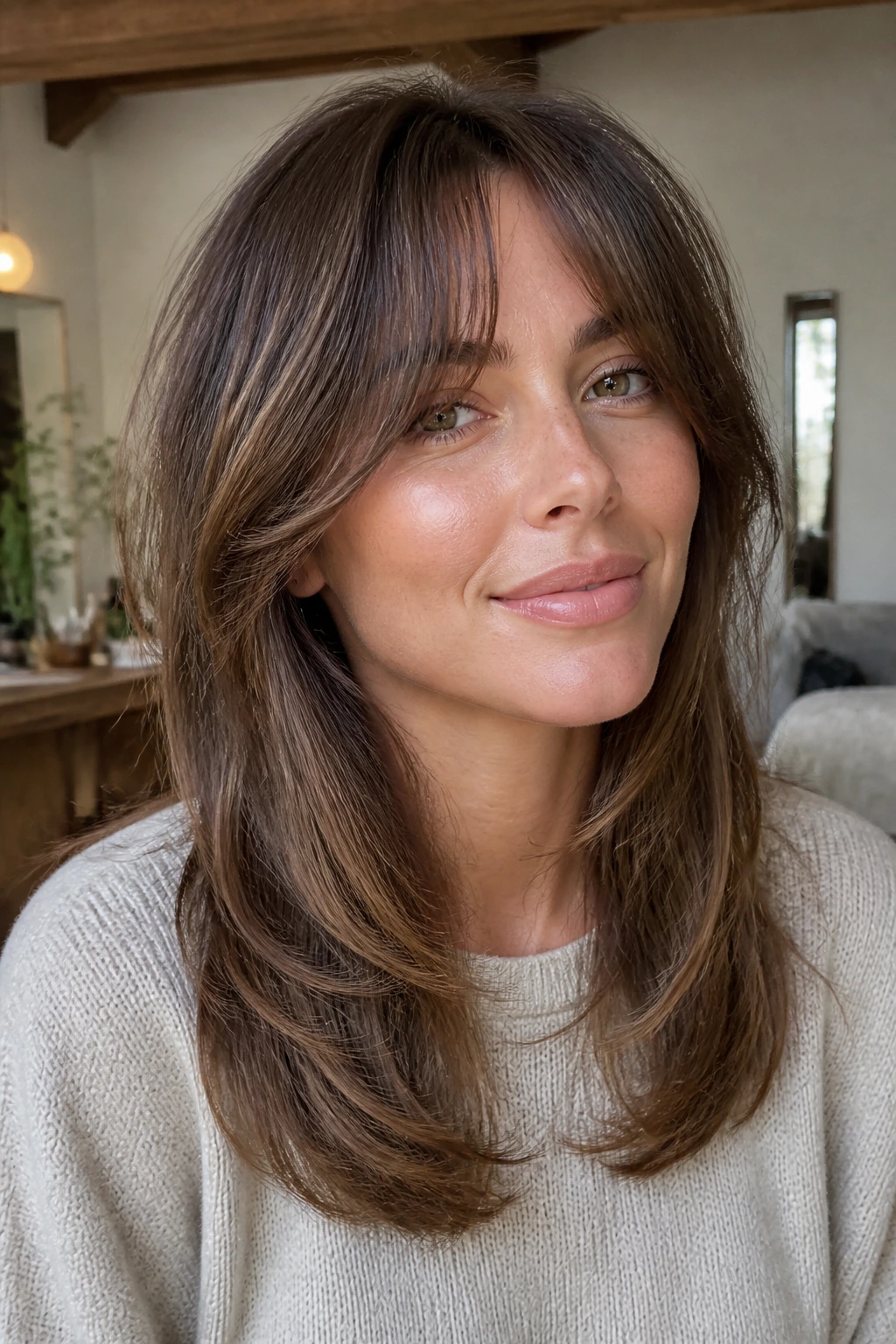
Do you hate the feeling of a haircut that starts misbehaving the minute the salon mirror fades? Then build for grow-out from the beginning. A grow-out friendly blend keeps the curtain bangs longer, the layers lower, and the silhouette soft enough to survive a missed appointment or two.
Why It Survives a Missed Trim
The shortest bang point should be just long enough to tuck behind the cheekbone instead of fighting it. The layers should start low enough that they still fall into place after another inch of growth. This is the version for people who want the haircut to age gracefully, not dramatically.
A small part shift can also keep this cut alive longer. If the fringe begins to separate, moving the part a half inch usually helps before anything else needs fixing.
21. Blowout Bounce Layers
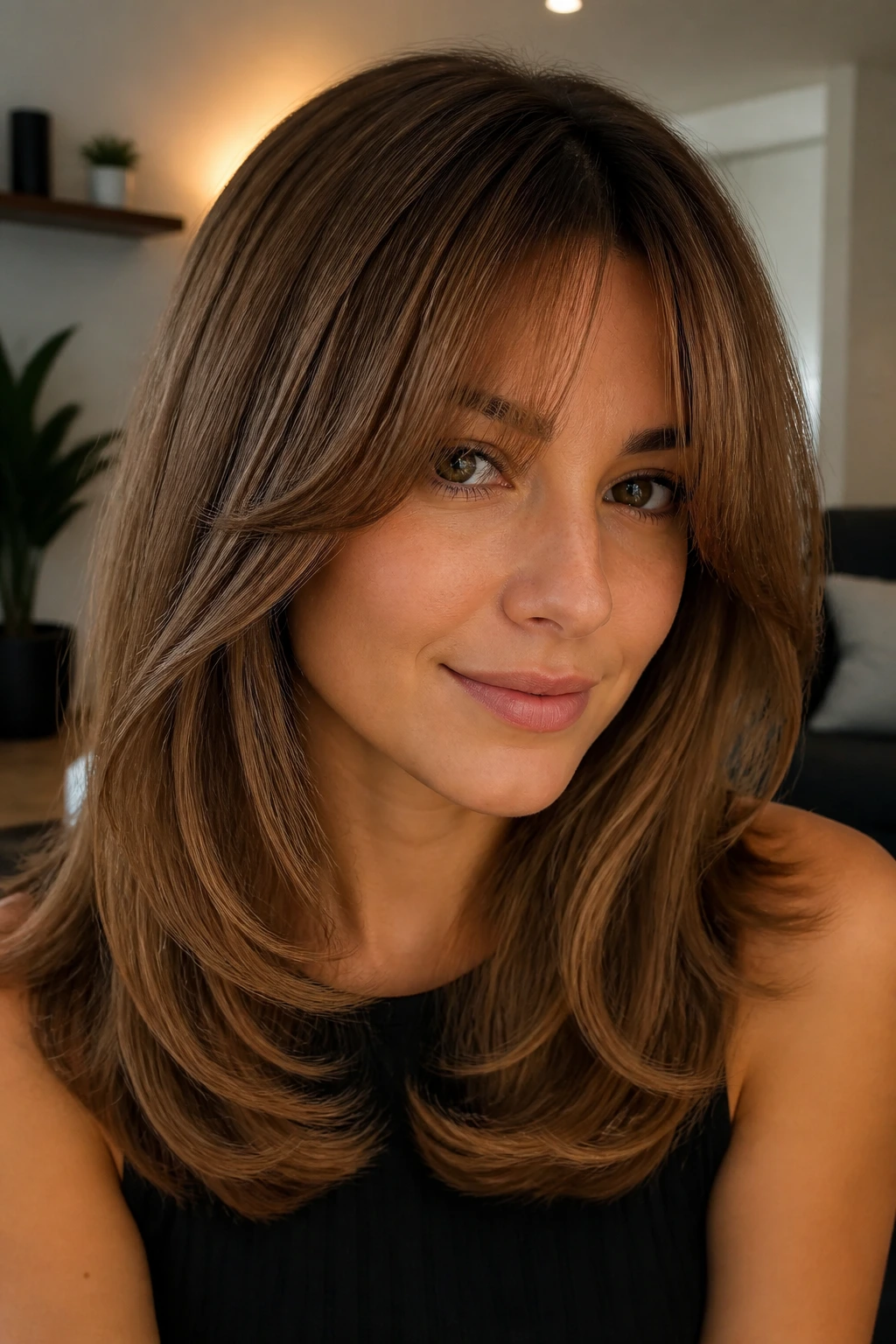
This one is made for a round brush. The layers are cut to respond to a blowout, so the ends curve with a little bounce and the curtain bangs open in a soft arc instead of hanging straight down. Medium hair gives the brush enough resistance to shape without getting floppy.
I like this version when someone enjoys a styled finish but doesn’t want curls. The blowout does the work. The haircut just knows how to hold it. A large round brush around 1.75 to 2 inches through the body and a smaller one near the fringe keeps the shape clean.
If you usually dry your hair in a hurry, this may not be your cut. It wants a few extra minutes. The payoff is in that lifted front and the subtle movement at the ends.
22. Gloss-First Editorial Finish
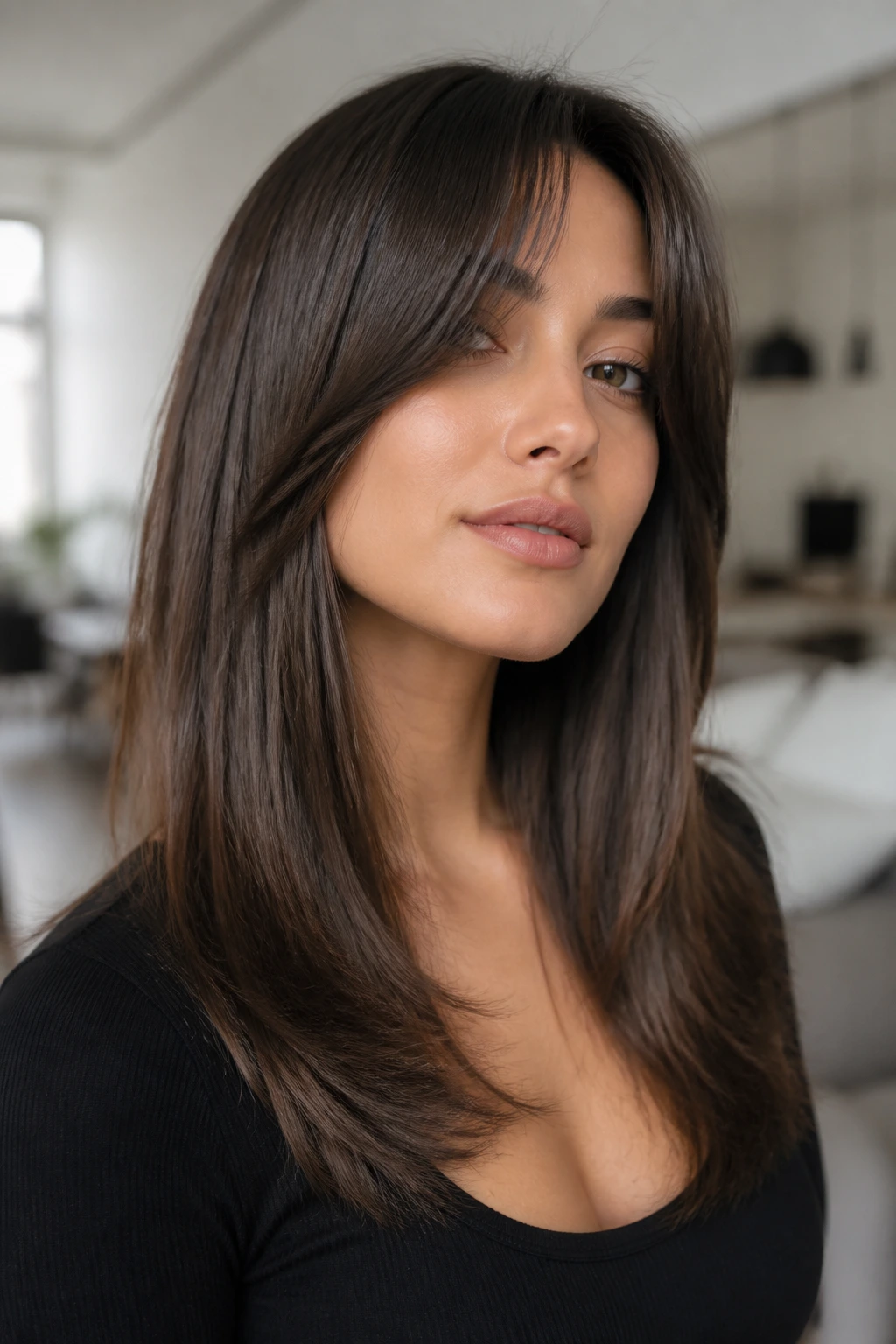
This is the version that looks almost one-length at first glance, then reveals the layers when the hair moves. The line stays sleek, the curtain bangs stay long and smooth, and the finish leans glossy rather than piecey. On medium straight hair, that restraint is what makes it feel expensive-looking without getting precious.
I prefer this when the hair is healthy and naturally shiny, or at least healthy enough to fake it with a serum and a solid blow-dry. Too much layering would ruin the effect. The point is to let the surface look calm while the internal shape does the work.
It’s a good reminder that long straight layers do not need to shout to be visible. Sometimes the quietest version is the strongest one.
What Makes This Shape Work at Collarbone Length
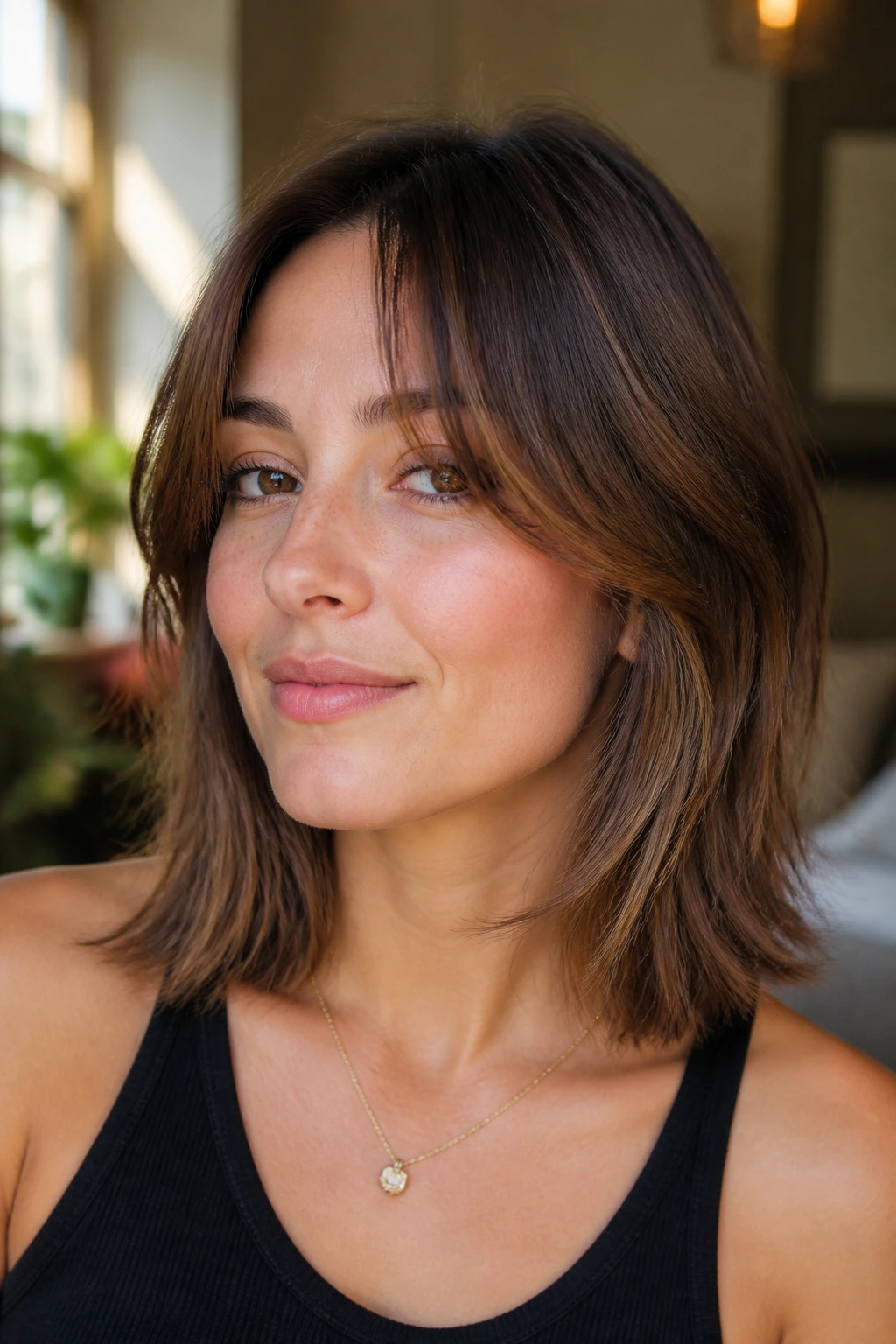
Medium hair has a specific job to do, and this cut knows it. The length sits close enough to the face that curtain bangs matter, but far enough away from the shoulders that the ends don’t just vanish into the neckline. That gap — collarbone to shoulder — is where the shape starts to show itself.
Straight layers rely on line more than texture. If the layers are cut too high, the silhouette can go wispy and uneven before you ever reach for a brush. If they’re kept too low, the haircut can feel heavy and static. The sweet spot is usually somewhere between the cheekbone and the collarbone, with the front pieces doing the softening and the perimeter keeping the structure.
I also like medium hair for curtain bangs because the fringe has a place to land. Shorter hair can make them feel abrupt. Longer hair can swallow them. Medium length gives the bangs a track to follow, and that makes styling less annoying. Not easy. Less annoying.
Essential Styling Tools for Straight Layers and Curtain Bangs
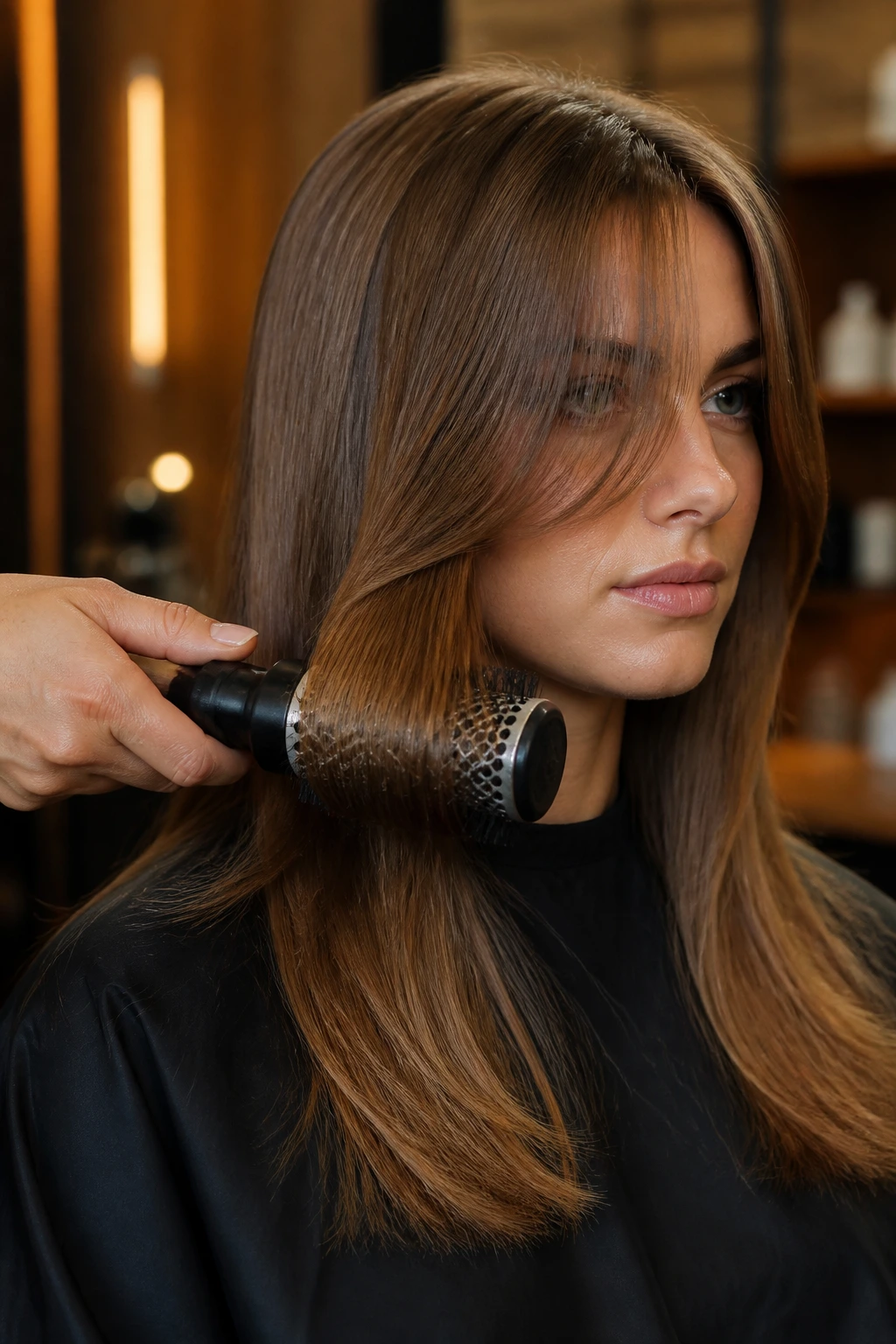
- 1.25-inch round brush: Best for shaping the curtain bangs and adding a small bend near the cheekbones.
- 1.75- to 2-inch round brush: Useful for the rest of the medium-length hair when you want a smooth blowout, not a curl.
- Blow dryer with a nozzle attachment: Directs airflow so the fringe doesn’t scatter while you’re trying to set a part.
- Flat iron with beveled edges: Helps keep straight layers sleek while still allowing a soft turn at the ends.
- Sectioning clips: These save time and keep the curtain bangs separate from the rest while drying.
- Heat protectant spray: Use it on every section you heat-style. Every section.
- Lightweight serum or cream: Controls frizz on the ends without turning the bangs greasy.
- Dry shampoo: Useful for the fringe between washes, especially if your forehead runs oily.
- Tail comb: Helps with parting and with lifting the bangs at the root before drying.
- Velcro rollers or root clips: Optional, but they’re handy if you want more lift at the crown.
What to Ask Your Stylist Before the First Snip
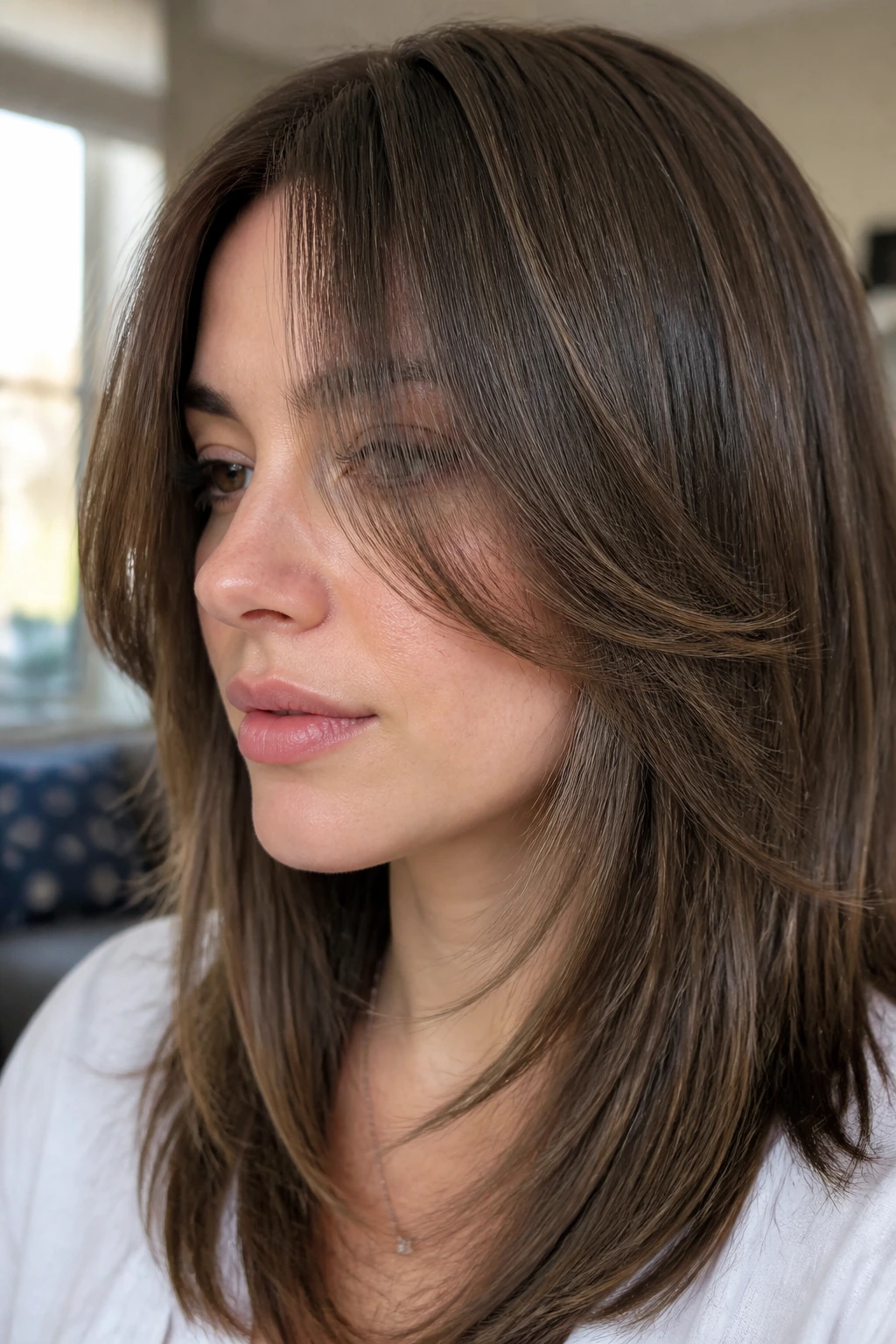
Bring photos, yes, but bring the right photos. Show one for the length you want, one for the bang shape, and one for the finish. A curtain bang can look entirely different depending on whether it’s cut to the cheekbone, the lip, or the chin, and that detail matters more than the color or lighting in the picture.
Say where you actually part your hair. That sounds basic, but it changes the whole cut. A center part with a strong natural cowlick needs a different bang angle than a soft side part that shifts on its own. Ask the stylist to check the front dry if your hair has a lot of movement; wet hair can hide a bad decision for a while.
Be clear about bulk. If your hair is thick, tell them whether you want weight removed from the inside or just a softer outline at the front. If it’s fine, say you want the perimeter left strong. Those are different jobs.
And mention your routine. If you air-dry, do not let anyone sell you on a cut that only behaves after a round brush and two hot tools.
How to Wear the Shape Without Fighting It

Smooth and Sleek: Dry the fringe first, then finish the rest with a flat brush and a single pass of the iron. This gives the layers a quiet shine line and keeps the bangs from splitting too far apart.
Soft and Rounded: Use a round brush on the front only, then let the mid-lengths stay straighter. That little bit of bend around the cheekbone is enough to make the cut feel finished.
Relaxed and Low-Effort: Rough-dry the roots, twist the curtain bangs away from the face while they’re damp, and stop before the ends become too uniform. This works best on cuts with lower layers and a forgiving perimeter.
With Glasses: Keep the shortest bang point long enough to clear the frames. The front pieces should sweep around the lenses, not sit on top of them like a curtain rod.
Small Tweaks That Change the Mood
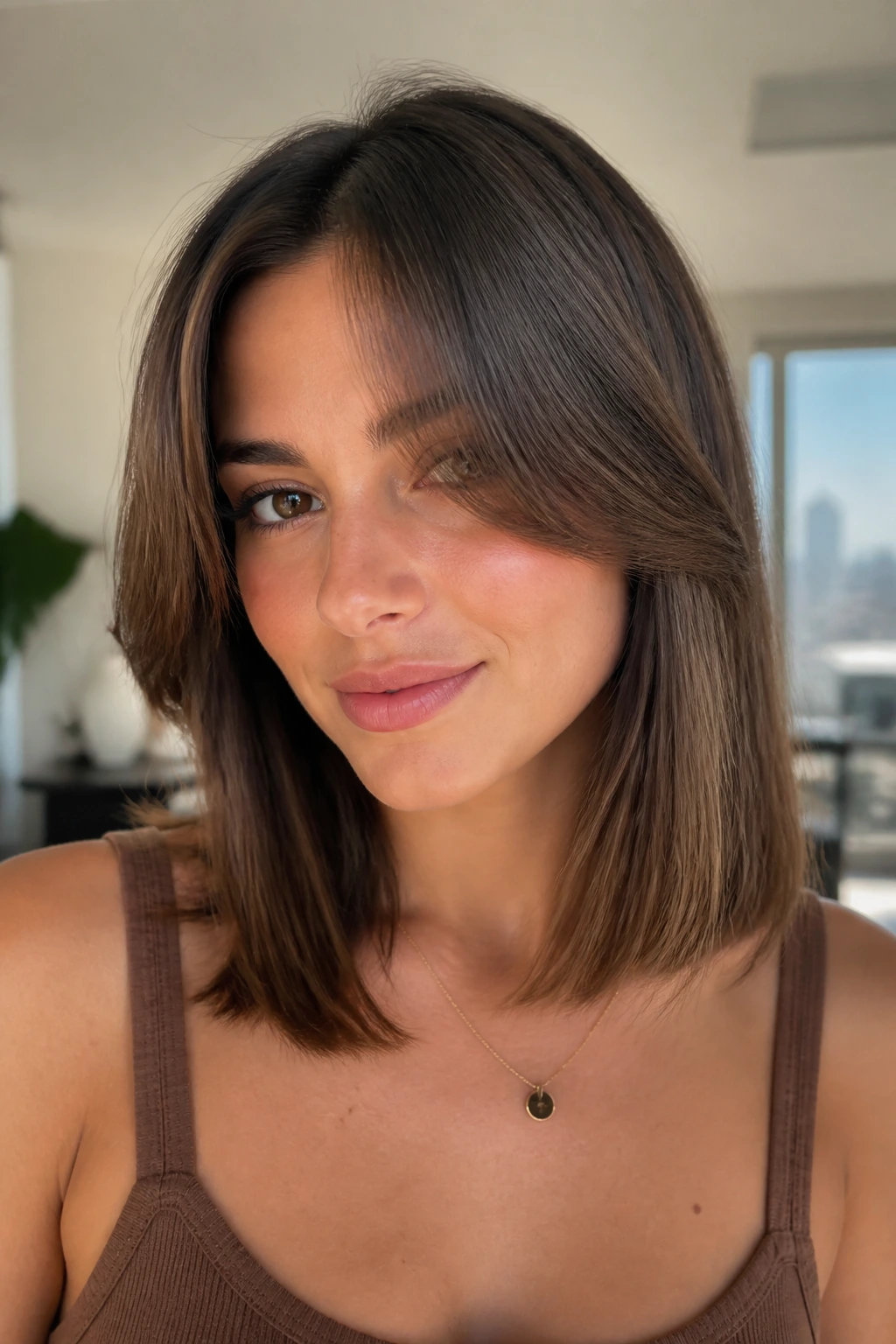
Gloss Factor: A tiny amount of serum on the ends makes the layers read cleaner, but keep it off the fringe roots or the bangs collapse. I like to rub it between my palms first, then touch only the last inch of hair.
Volume Factor: If the crown goes flat, clip the roots while they cool. That one move changes the whole silhouette, especially on straight medium hair that loves to lie down.
Texture Factor: A touch of texturizing spray at the mid-lengths breaks up the finish without turning the cut rough. Use it sparingly. Too much and the hair starts to feel dusty instead of soft.
Fringe Factor: Curtain bangs can be longer, shorter, straighter, or more open depending on how they’re dried. A side shift of even half an inch can change whether the bangs look soft or severe.
Make-It-Yours: If you want the cut to lean elegant, keep the ends blunt and glossy. If you want it casual, let the front pieces bend a little more and skip the perfect finish.
Common Mistakes That Flatten the Shape
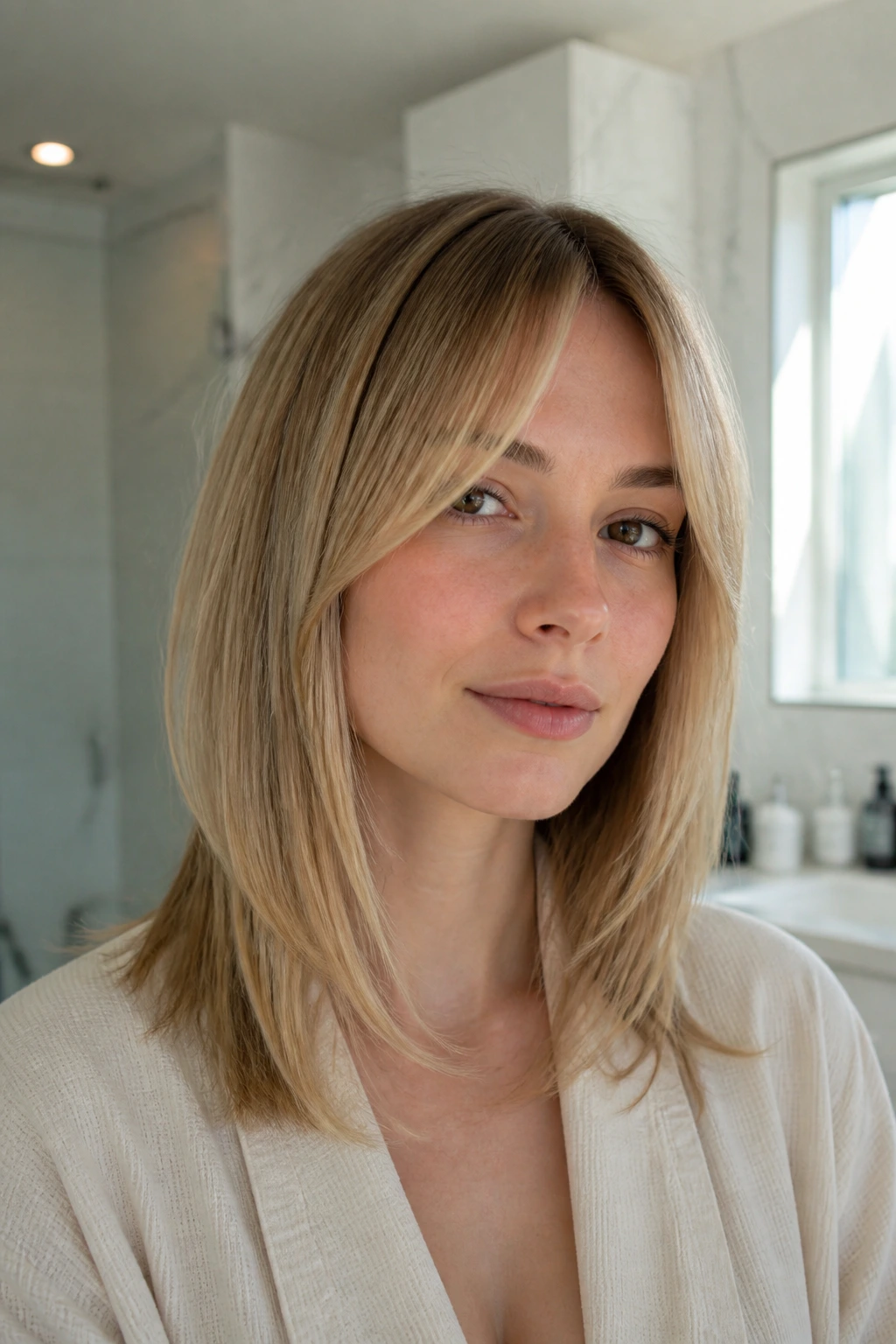
- Cutting the bangs too short: The fringe pops above the cheekbone, splits oddly, and starts feeling like a full-on bang instead of a curtain. The fix is to keep the shortest point long enough to sweep.
- Layering too high on fine hair: The ends look see-through and the cut loses body. Ask for lower, softer layering and keep the perimeter stronger.
- Thinning thick hair everywhere: The shape gets fluffy, not lighter. Bulk should come out from inside the haircut, not from the visible outline.
- Ignoring the natural part line: The bangs fight the cowlick and split in the wrong place. Work with the part you actually wear, even if it isn’t perfectly centered.
- Using too much product on the fringe: The bangs go greasy by lunchtime and stick in little clumps. Dry shampoo and a tiny bit of spray are safer than oil near the roots.
- Letting trims slide for too long: Curtain bangs can drift into your eyes, and layers can lose their edge. The cut stops looking deliberate and starts looking delayed.
Variations and Adaptations for Different Hair Types
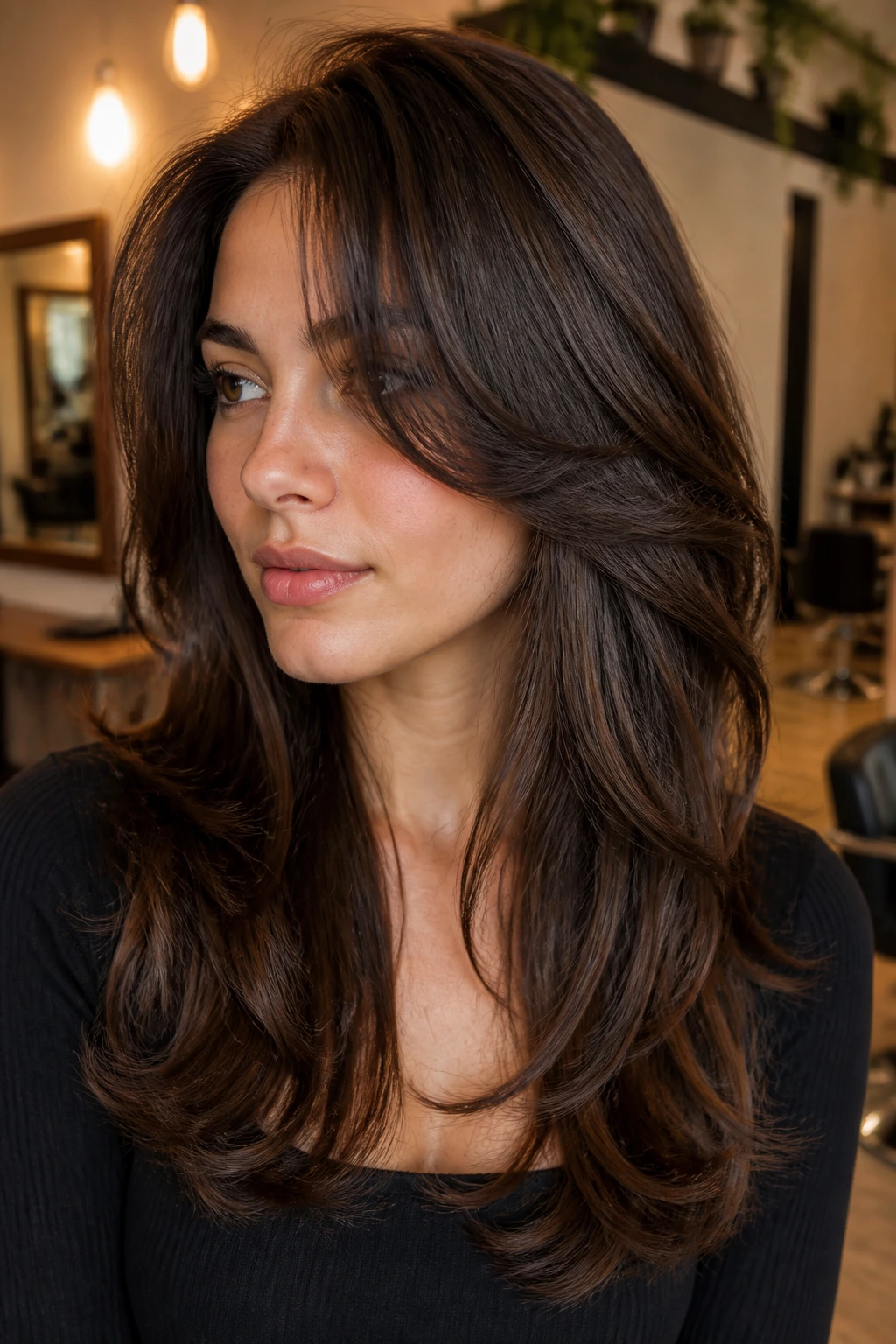
Fine-Hair Float: Keep the base blunt and the layers low so the ends stay full. Curtain bangs should be long and light, with root lift at the front, not all over the head.
Thick-Hair Funnel: Ask for internal debulking and a controlled face frame. The haircut should narrow gently toward the ends so the length hangs instead of puffing outward.
Glasses-Friendly Sweep: Let the curtain bangs sit longer, closer to the cheekbone and lip than the brow. That keeps the fringe from bumping the frames all day.
Round-Face Angle: Shift the part slightly off center and let the front pieces start lower, near the cheekbone. That creates a vertical line that lengthens the face without making the style severe.
Low-Heat Version: Choose a cut that falls well on its own, then use only a large brush and a little air. The layers should be soft enough that you’re not forced into daily ironing.
Air-Dry Blend: Keep the ends blunt-ish and the layers subtle. Twist the curtain bangs once while damp, then let them dry with a natural bend instead of trying to force symmetry.
Keeping the Bangs and Layers in Shape
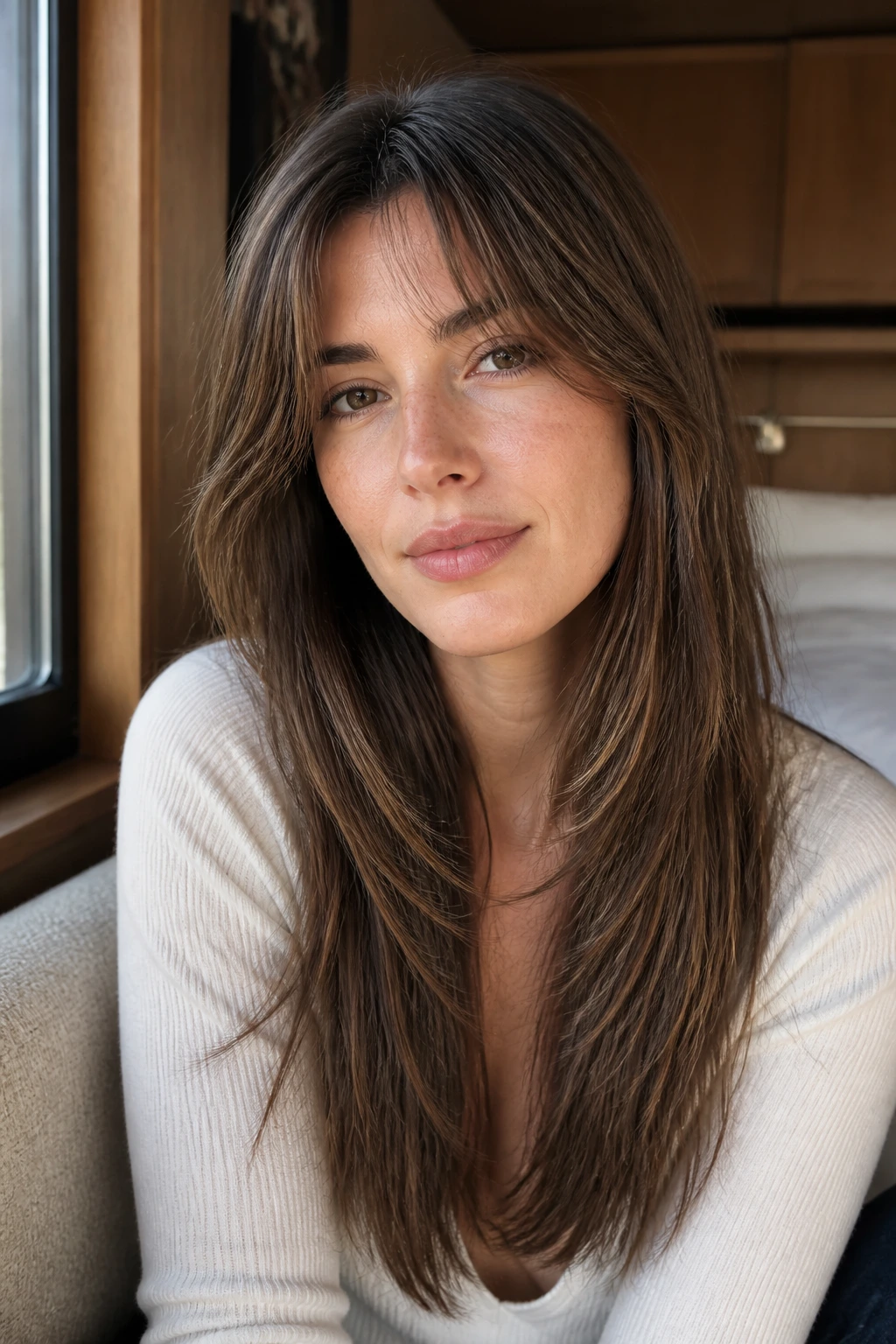
Curtain bangs usually need a trim every 3 to 5 weeks if you want them to keep their place. If you like them longer and softer, you can push that a little farther, but once they start brushing your lashes in a way you hate, they’ve already gone past the useful point. The layers themselves can usually wait 8 to 12 weeks, depending on how fast your hair grows and how clean you want the perimeter to stay.
Wash the fringe more often than the rest if your forehead runs oily. That sounds fussy, but it keeps the front pieces from going limp while the rest of the hair still has body. A quick splash of dry shampoo at the roots and a two-minute brush-through can save a full wash day.
Heat protectant is non-negotiable if you use a blow dryer or flat iron regularly. So is a clarifying shampoo every couple of weeks if you lean on serum, dry shampoo, or texture spray. Build-up weighs curtain bangs down faster than almost anything else.
Sleep also matters. If you want the front to keep its shape overnight, pin the bangs back loosely or set them on a large roller for a few minutes before bed. Not glamorous. Very effective.
Frequently Asked Questions
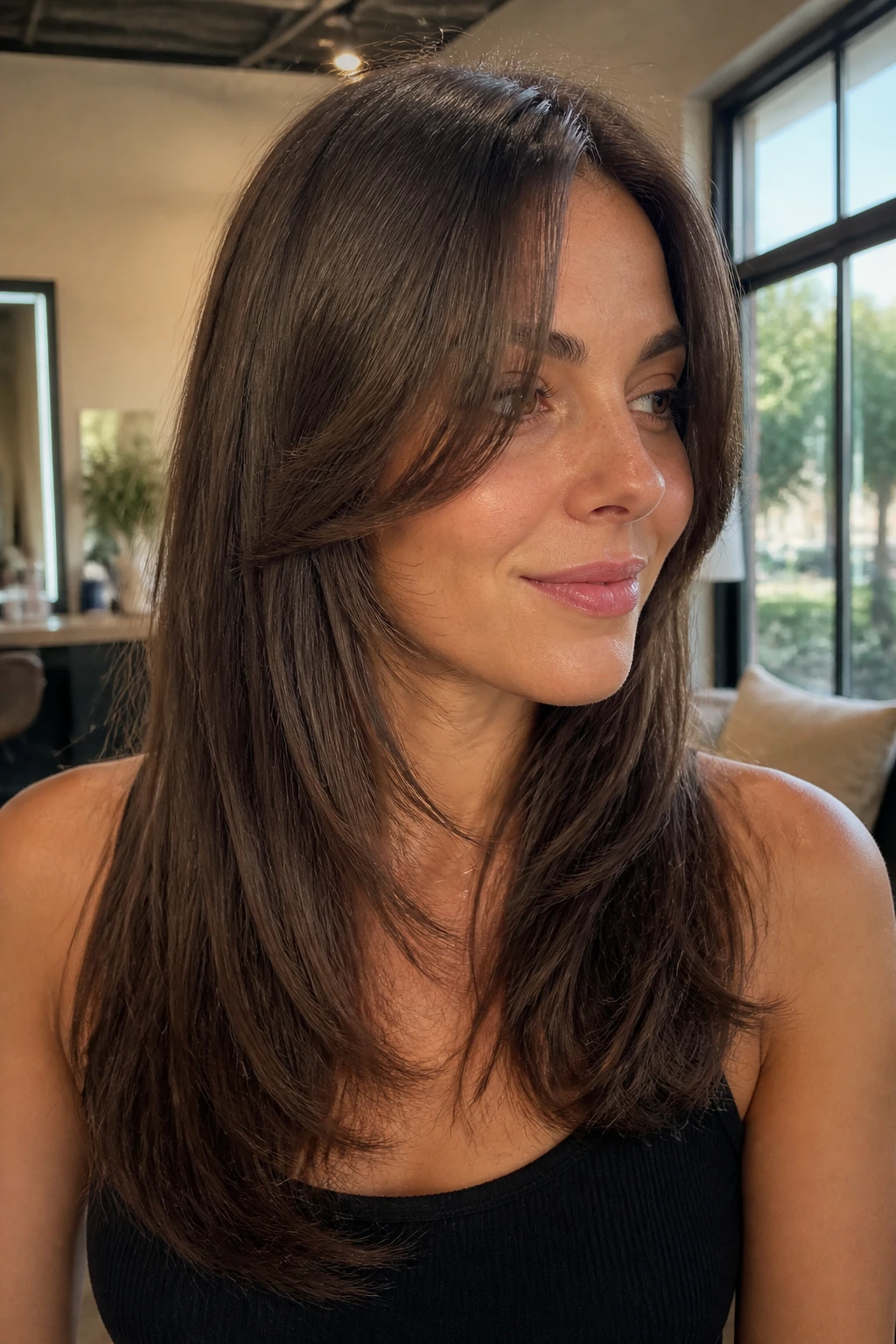
Will straight layers make my medium hair look thinner?
They can, if the layers are cut too high or too many are taken out of the bottom. The safer version keeps the perimeter strong and uses the front pieces to create movement instead of removing half the density.
How short should curtain bangs be on medium hair?
For most people, the shortest point lands somewhere around the cheekbone or just below the brow, depending on how much opening you want. Shorter can work, but medium hair usually looks better when the fringe has room to sweep instead of snapping into place.
Can I wear this cut if my hair is naturally a little wavy?
Yes, but ask for softer layers and a fringe that’s a touch longer than you think you need. Slight waves can make curtain bangs bend up more than expected, and the extra length keeps them from jumping too high.
How often do curtain bangs need trimming?
Every 3 to 5 weeks is the safe range if you want a crisp shape. If you prefer a more grown-in look, you can stretch that farther, but the bangs will start to sit differently around your eyes.
What if my bangs split in the middle all day?
That usually means the part or the root direction is working against the cut. Dry the bangs in the opposite direction first, let them cool, then settle them back into place; if they still split, the shortest point may be too short.
Can I ask for long straight layers without losing too much length?
Absolutely. Tell the stylist you want movement concentrated in the front and lower mid-lengths, not high around the crown. That keeps the overall length intact while still changing the shape.
Does this cut work with glasses?
Yes, as long as the bangs are cut long enough to clear the frames. I’d keep the front pieces slightly below the frames’ top line so the hair doesn’t fight the glasses every time you blink.
What if I air-dry most of the time?
Pick a softer version: lower layers, longer curtain bangs, and a blunt enough perimeter to keep the shape. A little twist at the front while the hair is damp helps the bangs fall where you want without a full blowout.
The Shape That Grows Out Cleanly
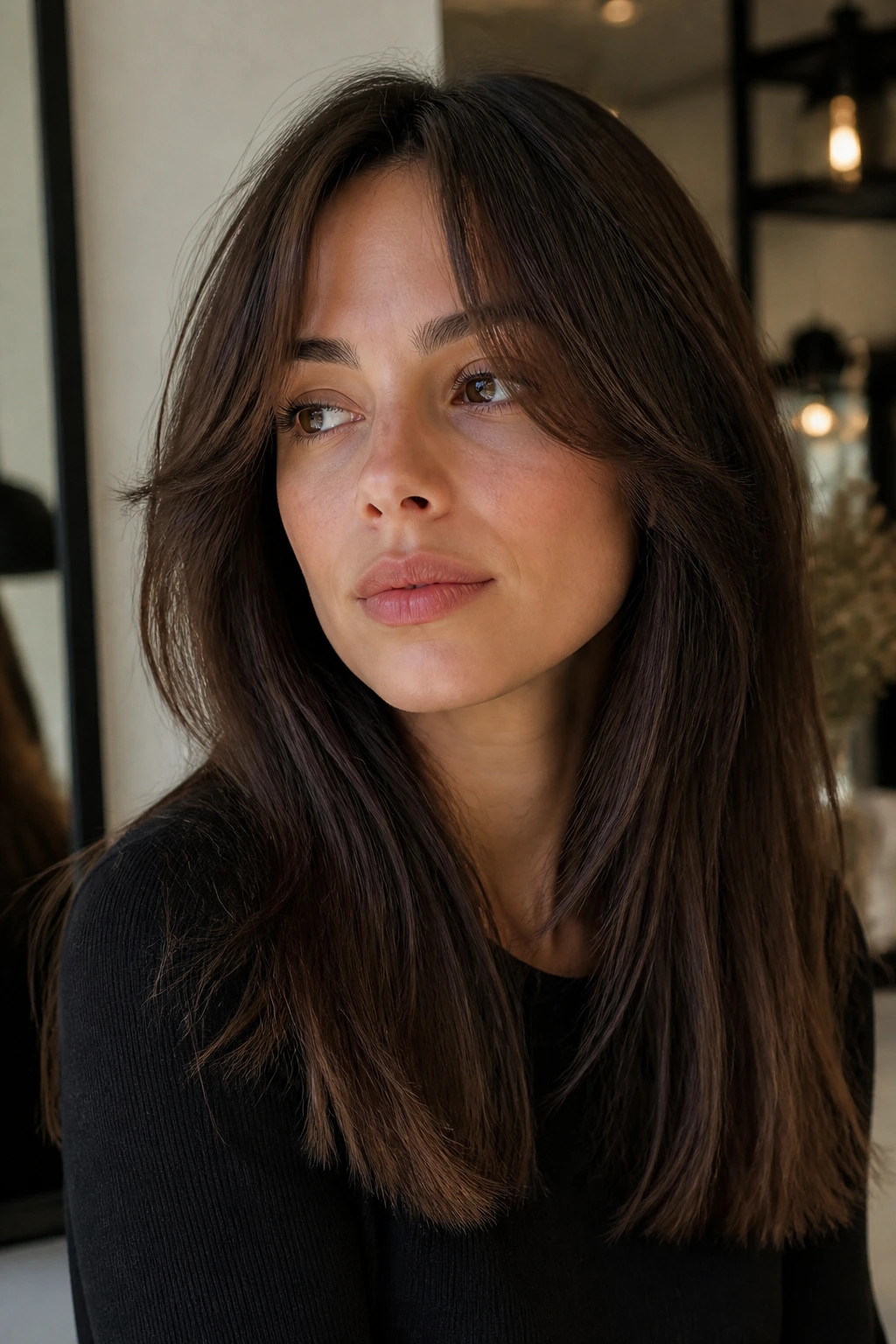
The best thing about long straight layers with curtain bangs on medium hair is not the first day out of the salon. It’s the third week, when the fringe has settled, the layers have relaxed, and the haircut still knows what it’s doing. That’s when a good cut earns its keep.
If you choose the right version for your density, part, and styling habits, the shape stays useful instead of turning into a project. That’s the real win here. Save the version that matches your hair’s habits, not the one that only behaves in a perfect mirror light.