



Oval faces get called “easy” a lot, and that word does them no favors. Yes, the proportions are balanced, the forehead and jawline usually sit in a tidy rhythm, and a lot of cuts will technically work. But long length layers with bangs for oval faces only look expensive when the bangs and the layers are doing the right kind of work: softening, framing, and keeping the eye moving instead of parking it in one place.
That’s where people get tripped up. A fringe that’s too blunt can steal vertical length from the face. Layers that start too high can puff out around the cheeks and make the whole cut feel wider than it needs to be. The sweet spot lives somewhere between cheekbone and collarbone, with enough movement to feel airy and enough length to keep the shape elegant. Not stiff. Not helmet-like. Just hair that falls in a way that feels deliberate.
And because oval faces can handle so many bang shapes, the real question is not “can I wear bangs?” It’s “which bangs make the rest of the cut look better?” Some versions lean romantic and soft. Others read polished, cool, or a little edgy. A good layered cut on an oval face should make the jawline look clean, the eyes look brighter, and the whole profile feel a little more awake. That’s the game.
Why This Collection Fits Oval Faces So Well
-
The balance stays intact: Oval faces already have a natural proportion, and these cuts keep that balance instead of chopping the face into short horizontal bands.
-
The fringe frames without boxing in: Bangs can highlight the eyes and soften the forehead, but only if they’re cut with enough movement to open where they need to.
-
The layers keep the length alive: Long layers prevent the ends from hanging like one heavy curtain, which matters a lot if you want the hair to move when you walk.
-
These shapes work with more than one styling mood: A smooth blowout, a loose wave, or an air-dried bend can all live inside the same haircut.
-
Grow-out is more forgiving: Softer bangs and blended layers can stretch longer between trims without turning into an awkward mess.
-
They let you keep the length you’ve earned: If you’re attached to long hair, these cuts give you the face-framing payoff without forcing a dramatic chop.
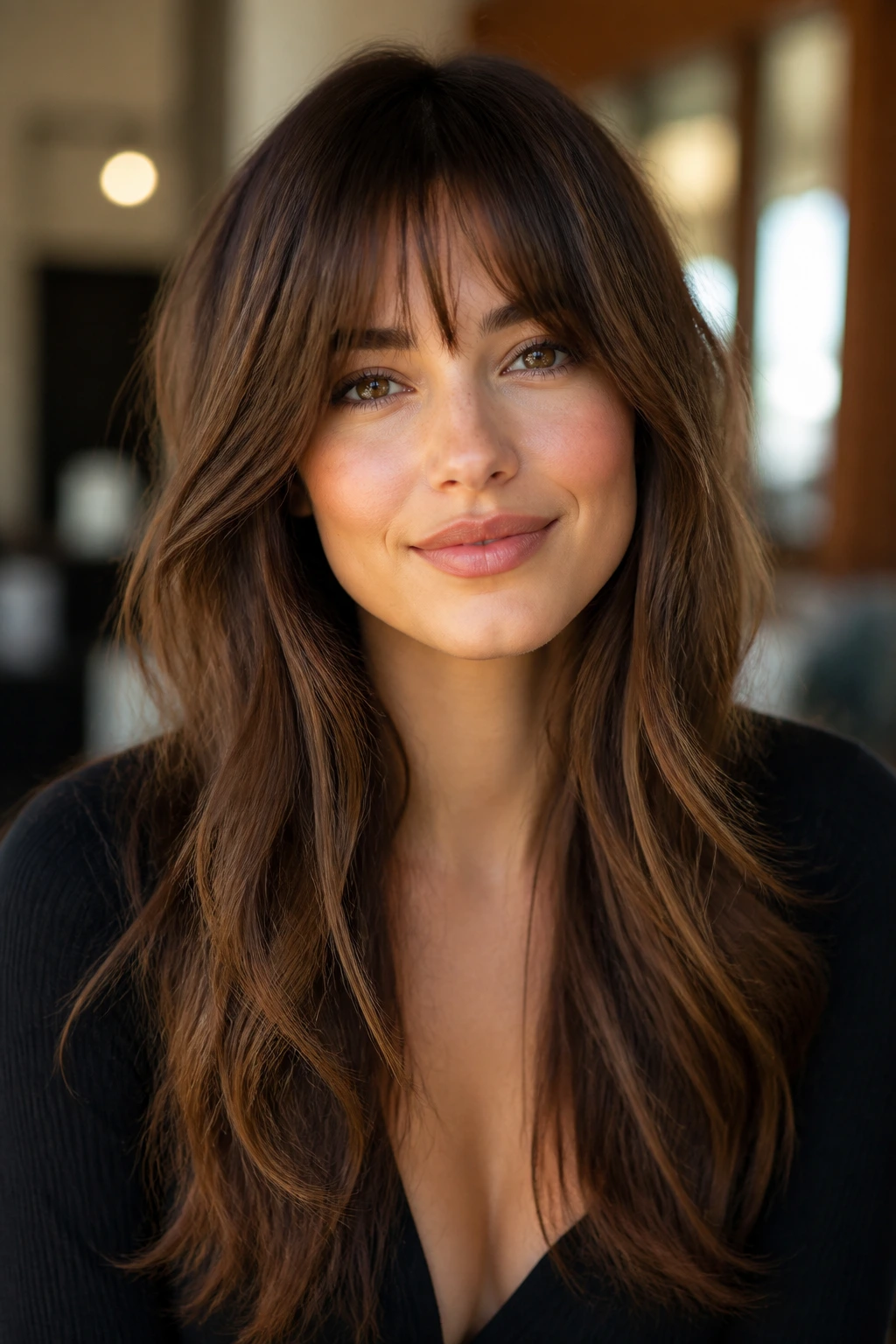
1. Soft Curtain Bangs with Collarbone Layers
Curtain bangs are the safest answer for a reason, but the good version is not the same as the lazy version. On an oval face, the fringe should open at the center just enough to show the brow line, then sweep down toward the cheekbones so the eye travels along the face instead of stopping at the forehead.
Ask for layers that start around the collarbone, not up near the cheek. That keeps the silhouette long and lets the bangs do the front-facing work. If your hair falls flat easily, this cut gets a little extra lift from a round brush at the roots and a bend through the ends. Very little effort. A lot of payoff.
Why it works
The middle split creates vertical movement, and the longer side pieces keep the cut from feeling chopped. On an oval face, that matters because you do not need to “fix” width — you just need to keep the structure elegant.
2. Bottleneck Bangs with Butterfly Layers
If you want the front of your hair to feel airy instead of heavy, bottleneck bangs do a better job than a thick straight fringe. They start narrower near the center, then widen as they fall, which gives the forehead shape without swallowing it. Pair that with butterfly layers, and the haircut gets this lifted, floating shape around the cheekbones.
This one suits oval faces that can handle a little drama without losing length. The shortest pieces should skim the brow or sit just above it, while the longer face-framing strands land around the lip or collarbone. It is a cut that looks best when the ends move. Curl them under. Bend them away from the face. Let them swing a little.
3. Wispy Brow-Grazing Fringe with Invisible Layers
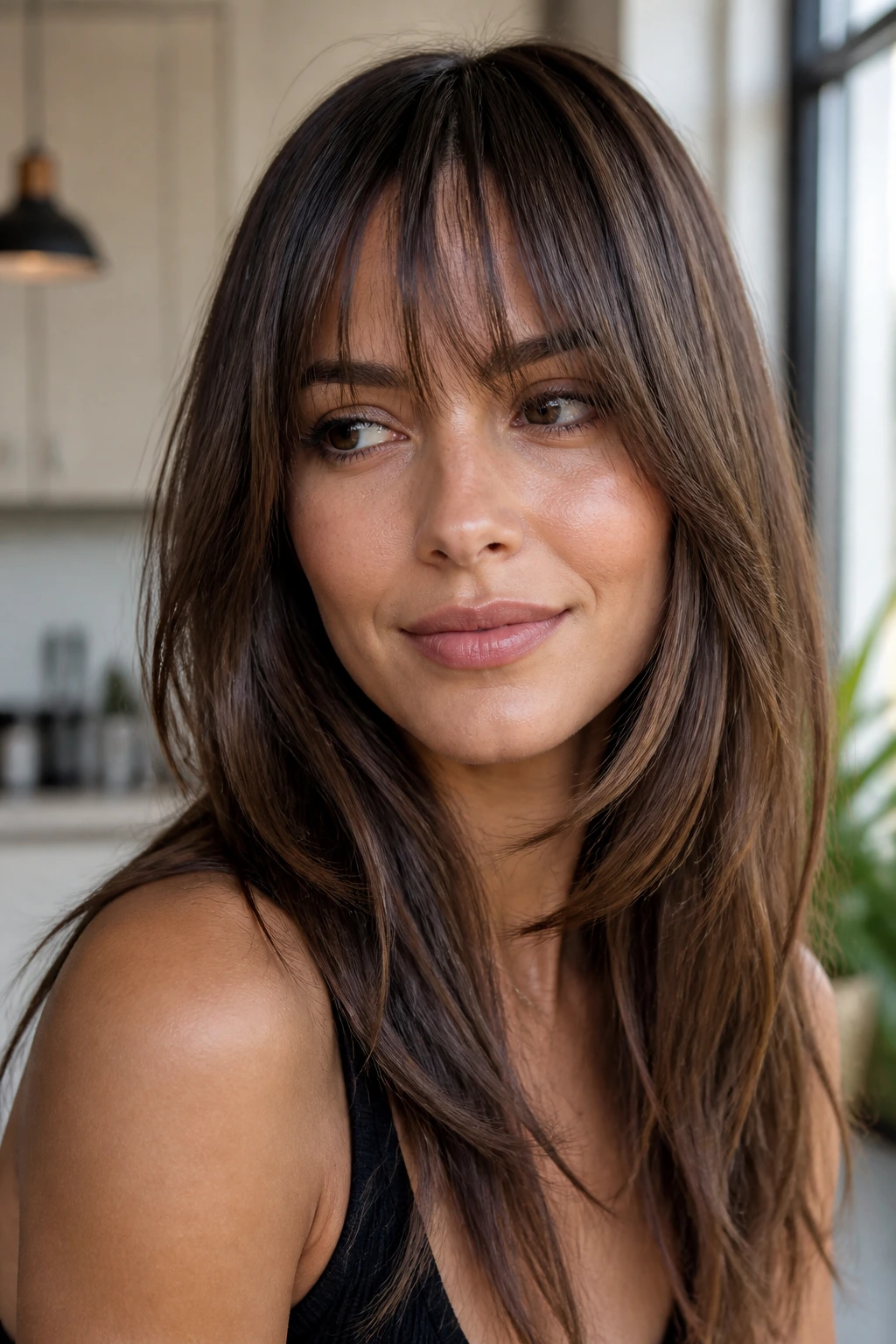
A wispy fringe is the move when you want bangs but not a lot of bang. The ends are soft, the density is lighter, and the forehead still shows through enough to keep the face open. On oval faces, that can be a smart choice because it adds interest without making the top third of the face feel crowded.
Invisible layers work underneath the surface here. You do not see a lot of choppy steps, but the hair stops feeling like one solid sheet. It falls better, especially if your hair is fine or straight and tends to collapse around lunch. Keep the fringe just at the brows, and let the layers whisper rather than announce themselves.
4. Side-Swept Bangs with Cascading Long Layers
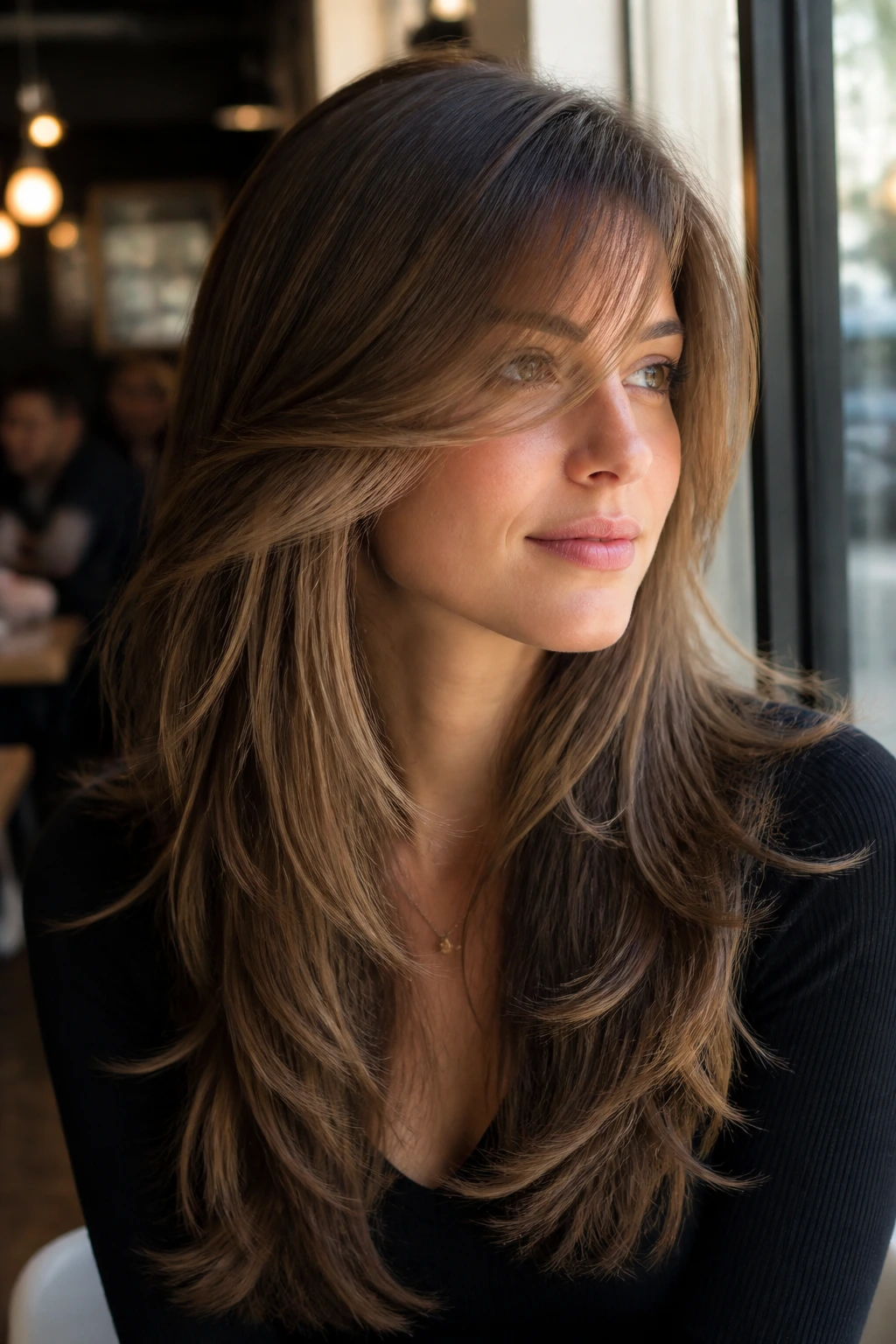
Side-swept bangs can look dated when they’re too thick and too stiff. When they’re cut with softness, though, they do one very useful thing on an oval face: they create a diagonal line that makes the face look even more lifted. That diagonal is flattering because it adds motion without stealing length.
The long layers should cascade from just below the cheekbone down through the ends. The result feels classic, but not fussy. I like this cut for anyone who wants bangs without committing to a center part every single day. It works with a deep side part, a loose blowout, or one of those quick morning bends from a flat iron.
5. Feathered French Bangs with U-Shape Ends
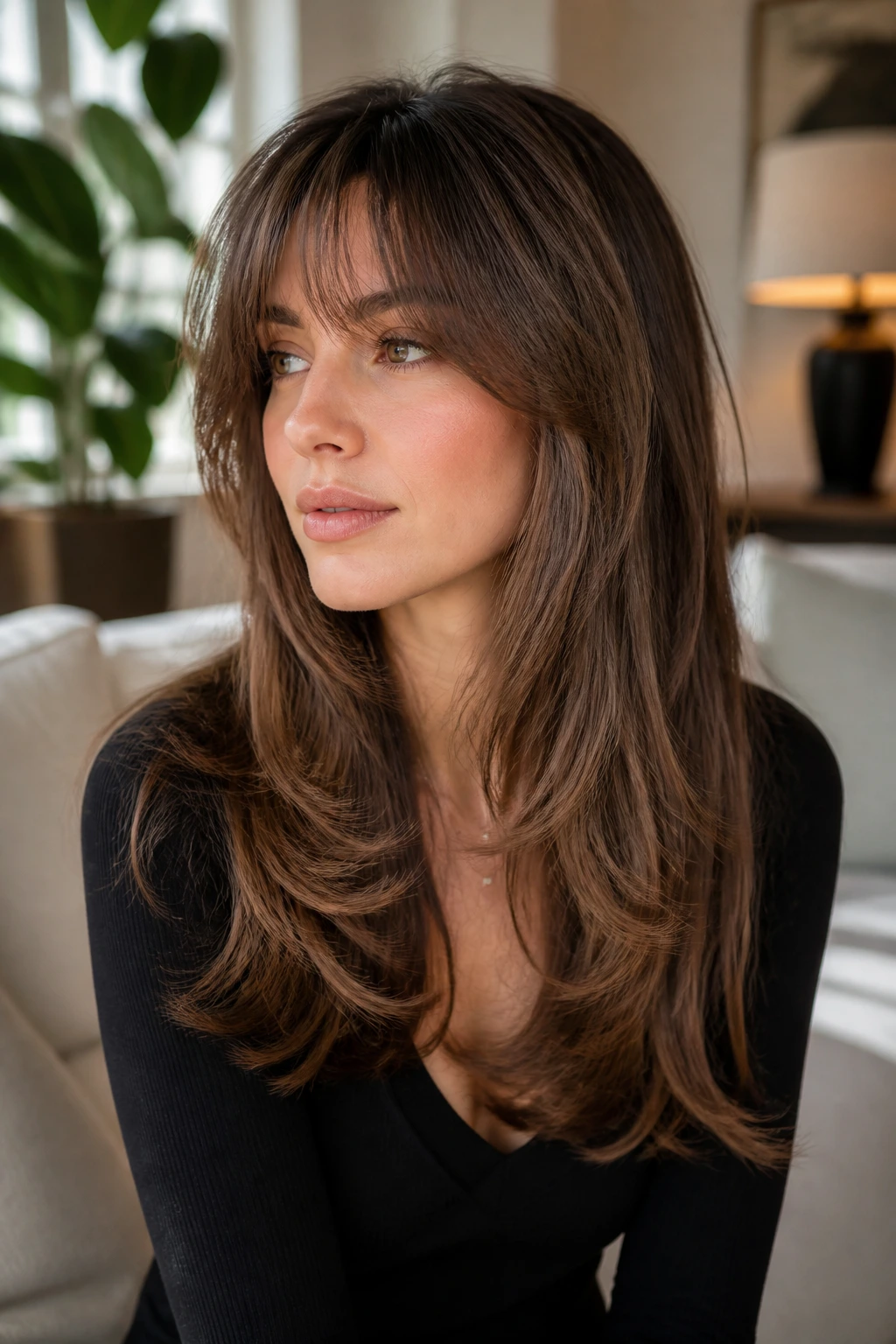
French bangs are softer than blunt fringe and a little more chic than standard curtain bangs. They sit across the forehead with a brushed, airy finish, usually grazing the brow rather than sitting below it. On an oval face, that softness keeps the top of the face from looking boxed in.
Pair them with a U-shaped perimeter and the cut gets a subtle curve that feels polished even when the hair is down and untouched. The shortest layers should kiss the cheekbone, then slide down into the longer lengths. If you wear your hair loose a lot, this shape is one of the easiest to make look intentional with just a quick blow-dry and a bit of smoothing cream.
6. Piecey Shag Layers with Long Bangs
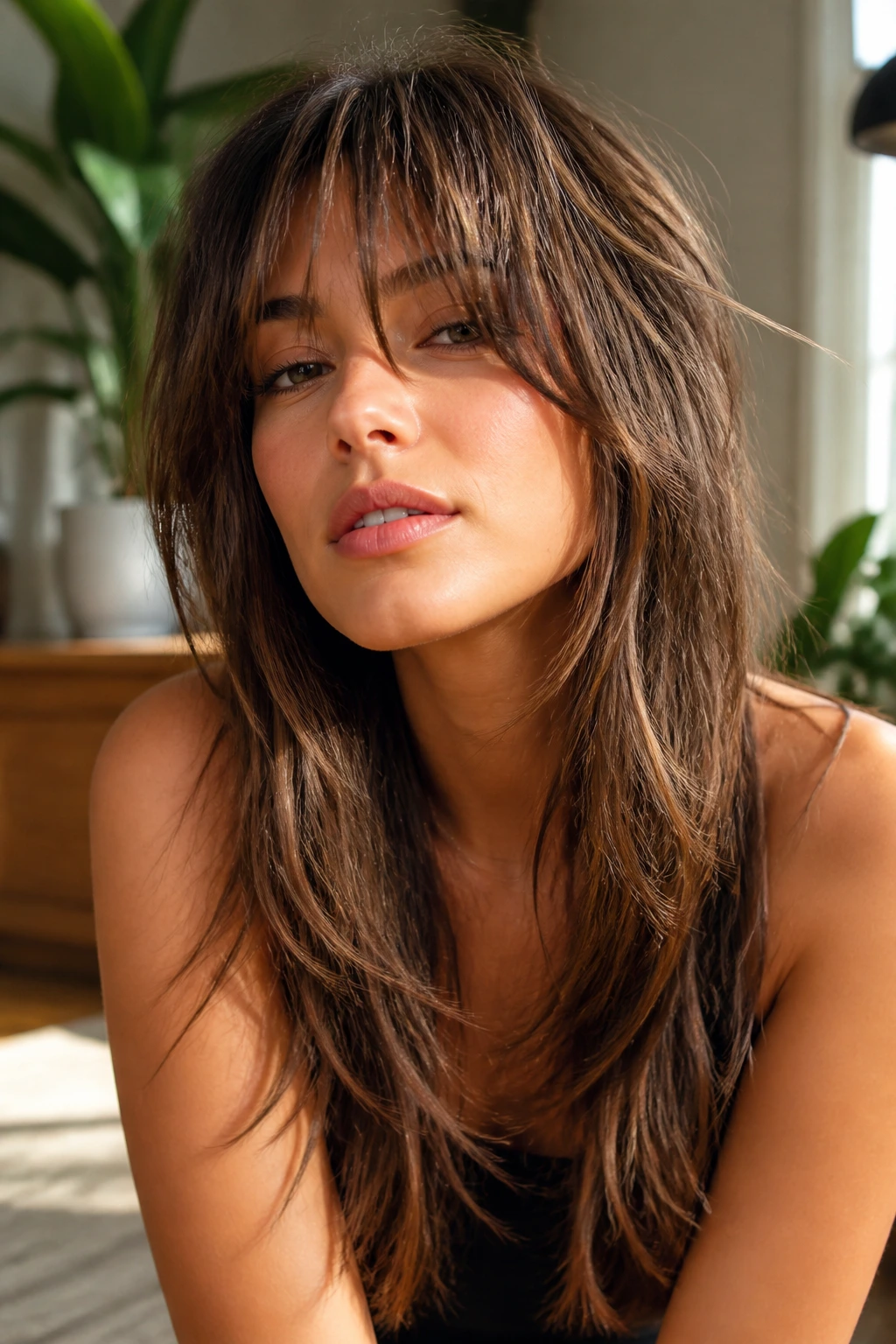
A shag on long hair can go very wrong if the layers get too aggressive. Too much texture and you get a triangle. Too little, and it loses the point. The good version on an oval face uses long, piecey layers that feather out around the face while keeping the bottom length intact.
The bangs should look broken up, not cut into one solid line. That gives the cut a little edge and keeps the forehead from looking crowded. This is the haircut for someone who likes their hair to look touched, not perfect. Air-dried waves help. So does a little grit spray at the roots.
Best for
- Wavy or slightly bendy hair
- People who like undone texture
- Oval faces that want shape without a polished blowout every day
7. Rounded Full Fringe with Soft Length
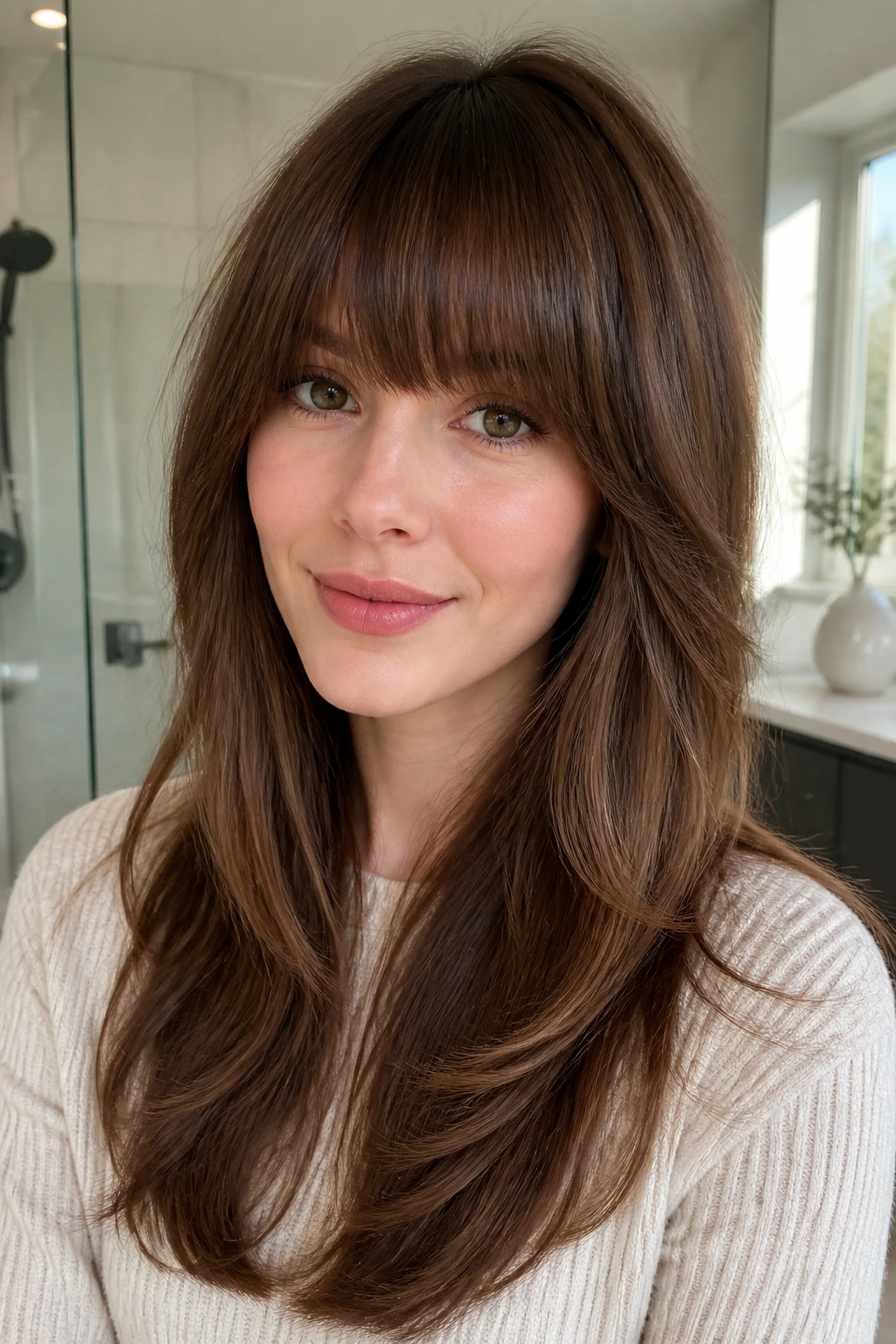
A full fringe on an oval face can be gorgeous if the line is rounded instead of sharp. The center should sit a touch shorter than the corners so the bang follows the curve of the forehead. That small detail makes the cut feel softer and less boxy.
Keep the layers long and fluid. You want the fringe to be the statement, not the only thing happening. If the ends are too choppy, the haircut starts to look top-heavy, and that’s a waste of good shape. I’d pair this with smooth styling and a slight inward curve at the ends. It reads clean, almost architectural.
8. Bardot Bangs with Blowout Layers
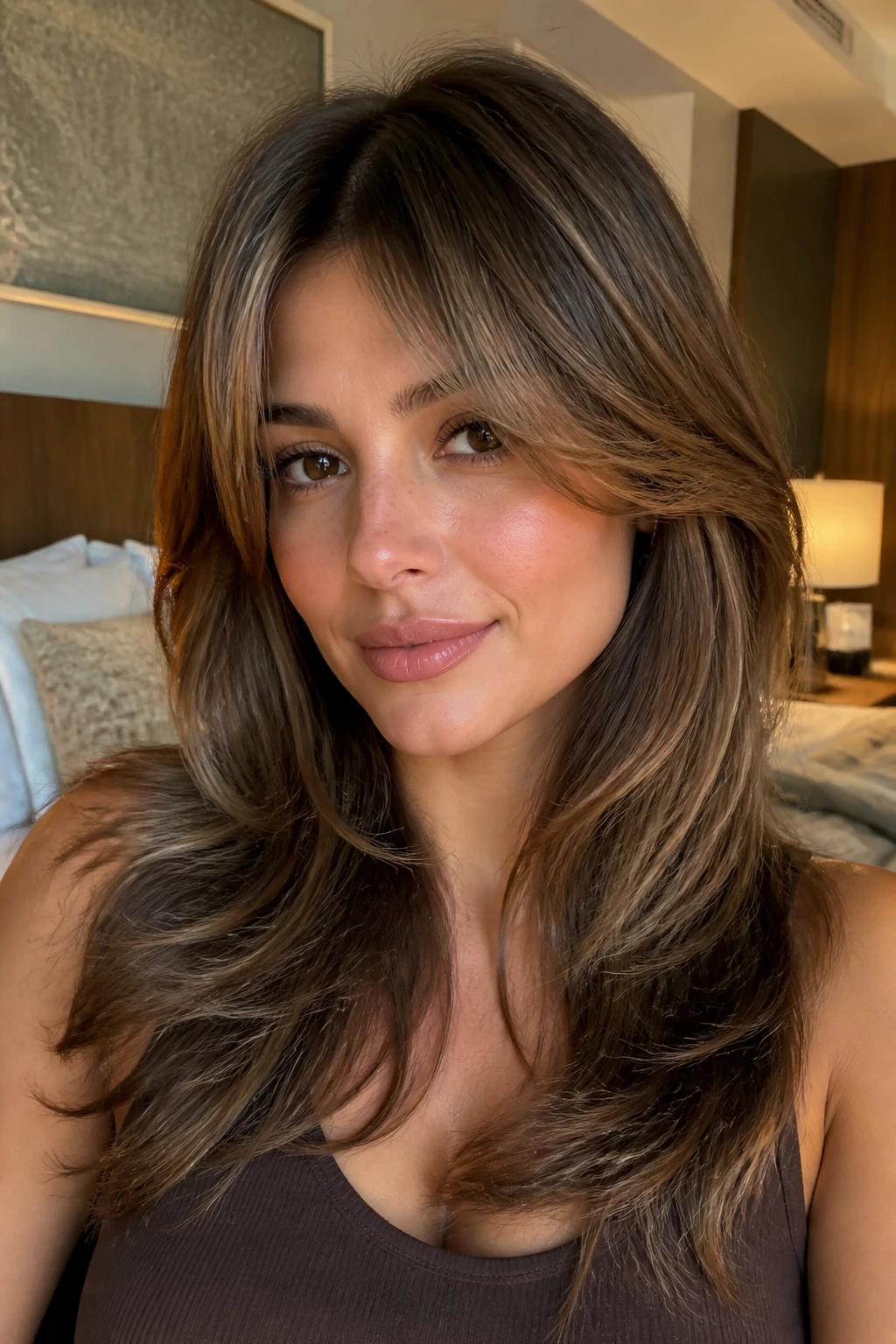
Bardot bangs carry that brushed-back, slightly glamorous feel that makes a plain long cut look more deliberate. They usually part in the middle or just off-center, then fall with a soft sweep that touches the brows and opens the face. On oval faces, they sharpen the cheekbone area without hardening it.
The layers should be styled with a round brush or large Velcro rollers so the movement sits through the mid-lengths, not just the bottom inch. That’s what gives this cut its polished look. If you want a hairstyle that can go from everyday to dressed-up with one better blowout, this is a strong pick.
9. Cheekbone Bangs with V-Cut Layers
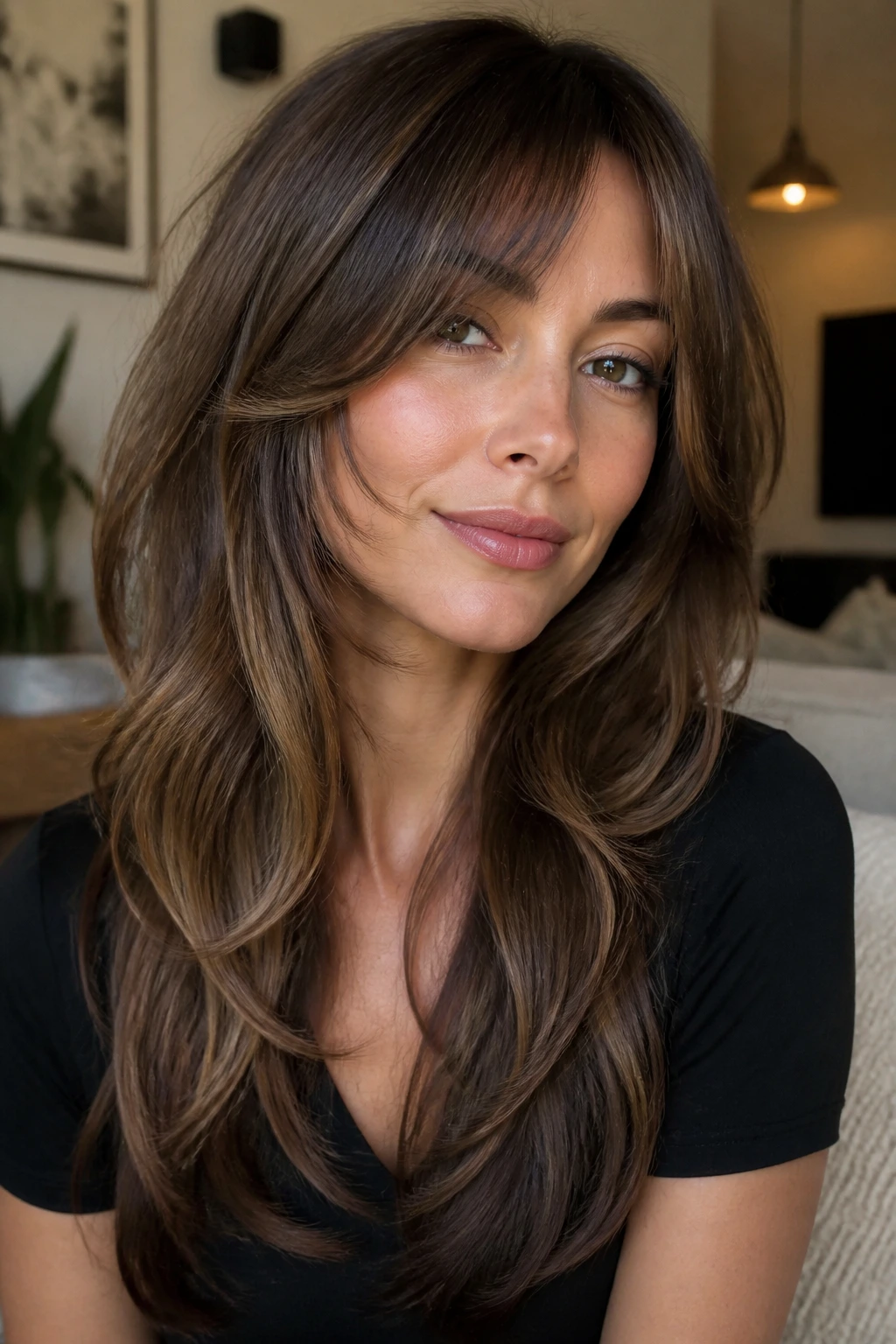
Here’s a cut that knows exactly where it wants attention. Cheekbone bangs land right where the face starts to curve inward, which makes them ideal for oval features that already have clean symmetry. The fringe directs the eye to the center of the face, then the layers fall away in a V-shape to keep the length dramatic.
The trick is to keep the front pieces long enough that they blend into the layers instead of sitting like a separate haircut. You want a visible diagonal, not a disconnected fringe. When it’s styled right, this shape looks especially good with loose waves and a little bend through the ends.
10. Deep Side Part with Sweeping Long Layers
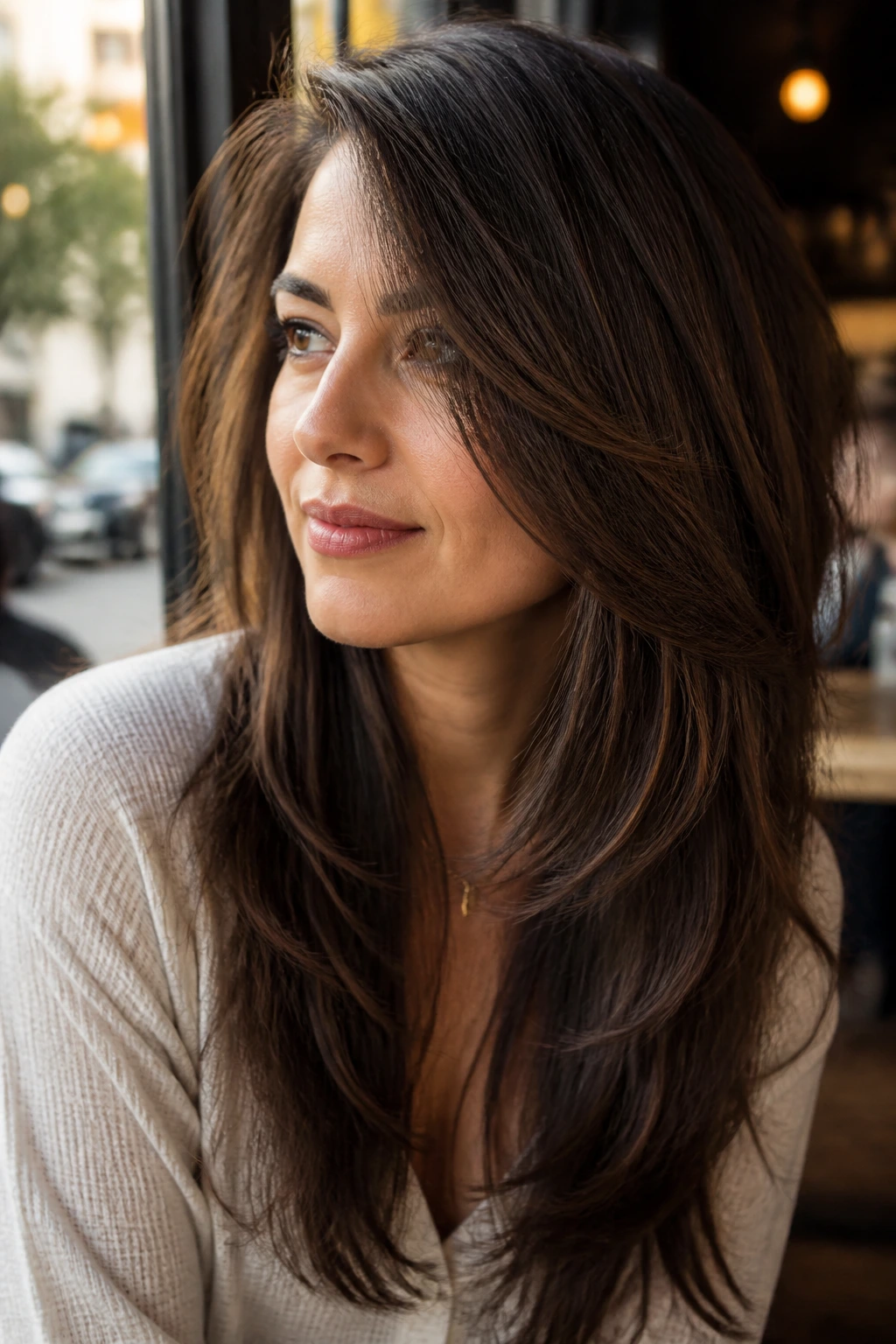
Not every bang needs to split the forehead in half. A deep side part creates lift at the crown and lets the front pieces sweep across the face in one smooth motion. On an oval face, that asymmetry is useful because it adds movement without changing the natural balance of the face.
The long layers should be subtle here, almost invisible when the hair is straight, but easy to see when you bend the ends or add a wave. It’s a quieter cut, which is part of the charm. If your style leans minimal or you wear a lot of tailored clothing, this haircut fits that mood without trying too hard.
11. Curly Curtain Bangs with Shape-Cutting Layers
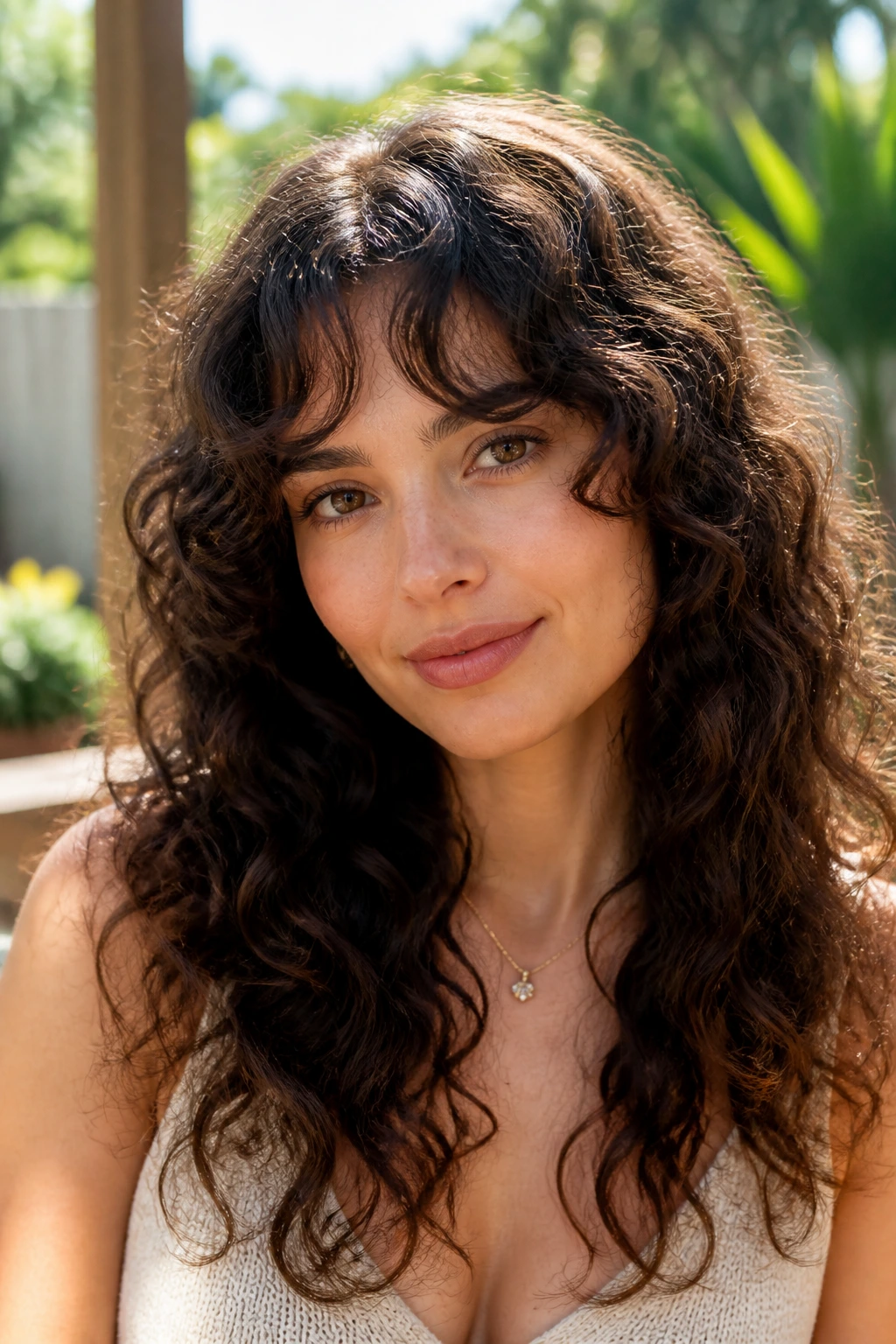
Curly hair and bangs can be amazing together, but only if the fringe is cut with the curl pattern in mind. Curtain bangs on curls should be longer than they look when wet, because the spring will bounce them up once the hair dries. On oval faces, that makes the eyes look bright and the cheekbones look sharper.
The layers need shape, not just removal of bulk. Ask for curl-by-curl or dry shaping if your stylist works that way. That keeps the crown from ballooning and lets the layers fall in a soft, stacked pattern. This is one of those cuts that gets better when it’s not over-styled. A diffuser and a little leave-in cream are enough.
12. Face-Framing Layers with a Narrow Fringe
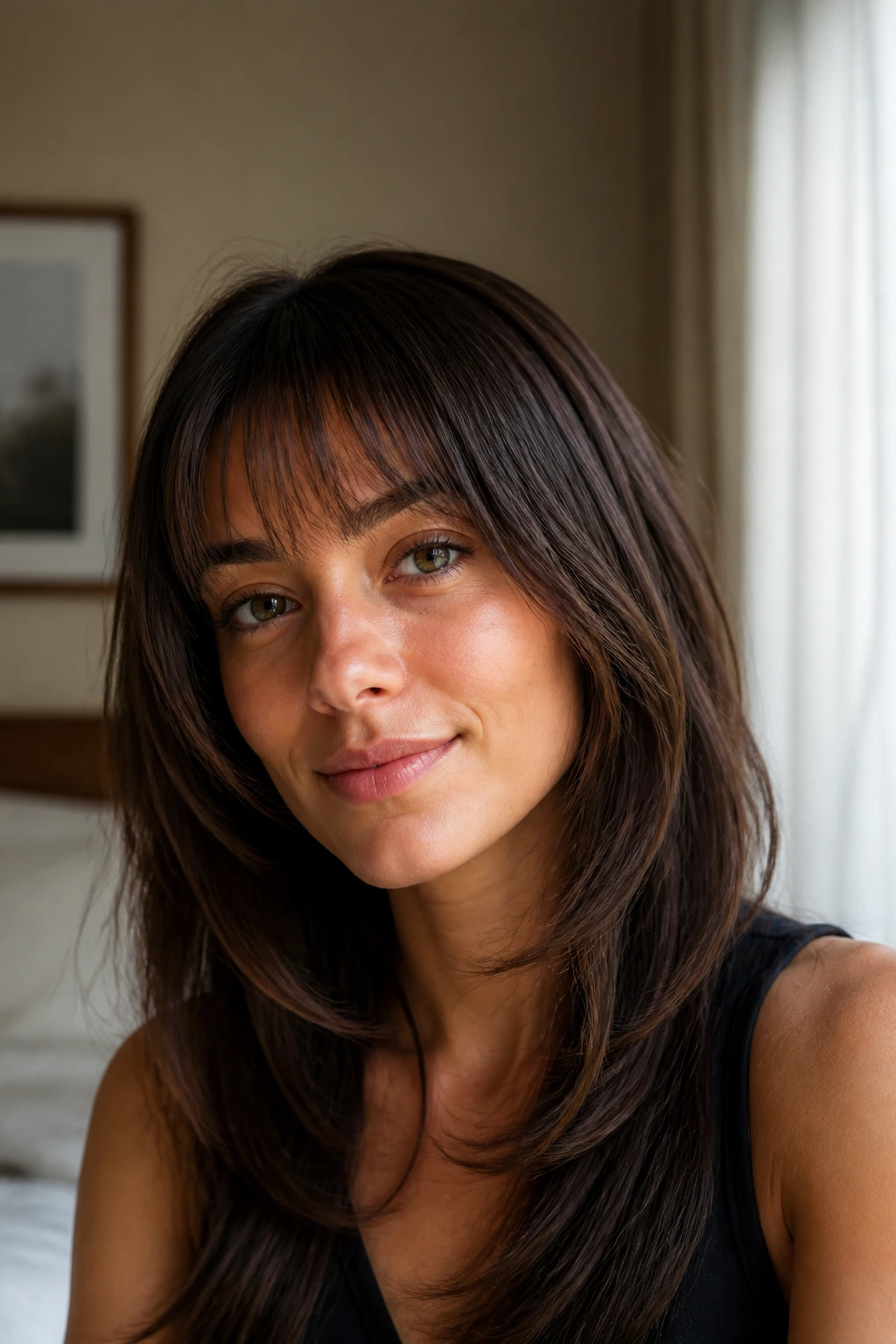
If your hair is fine, a heavy bang can overwhelm the top of the head fast. A narrow fringe solves that problem. It still gives you bangs, but the density is lighter and the line is more delicate. On an oval face, that delicacy is useful because it keeps the forehead visible and the overall cut feeling lifted.
The face-framing layers should start low, around the chin or a little below, so the hair keeps its length. That helps fine hair avoid the dreaded “all sides, no ends” problem. I like this shape because it looks good on day one and still looks good when the blowout has relaxed a bit.
13. Thick-Hair Layers with a Long Tapered Fringe
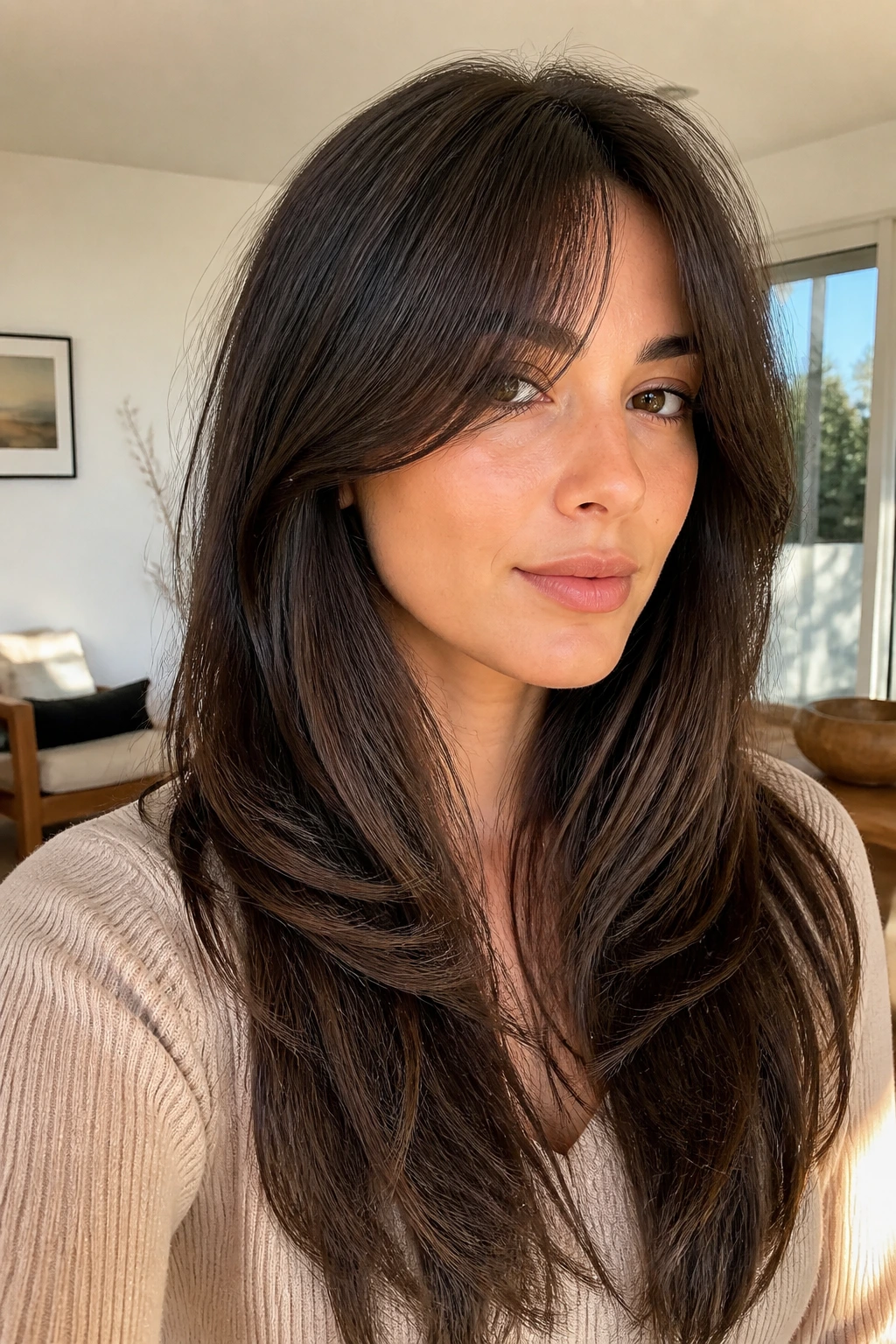
Thick hair needs room to move. If it’s cut too bluntly, it can sit like a wall. Long tapered layers stop that from happening by taking weight out of the interior while keeping the perimeter full. On an oval face, that fullness can be a feature, not a problem, as long as the shape stays soft.
The fringe should be long enough to tuck behind the ears if needed, which gives you flexibility on hot days or busy mornings. You can brush it into a curtain shape or wear it with a soft side sweep. Either way, the taper keeps the front from feeling dense and keeps the oval face from looking shorter than it is.
What to ask for
- Interior layers for movement, not choppy steps
- A fringe that starts around the brow and stretches to the cheekbones
- Enough length in the front to tuck or part easily
14. Split Bangs with Smooth Ribbon Layers
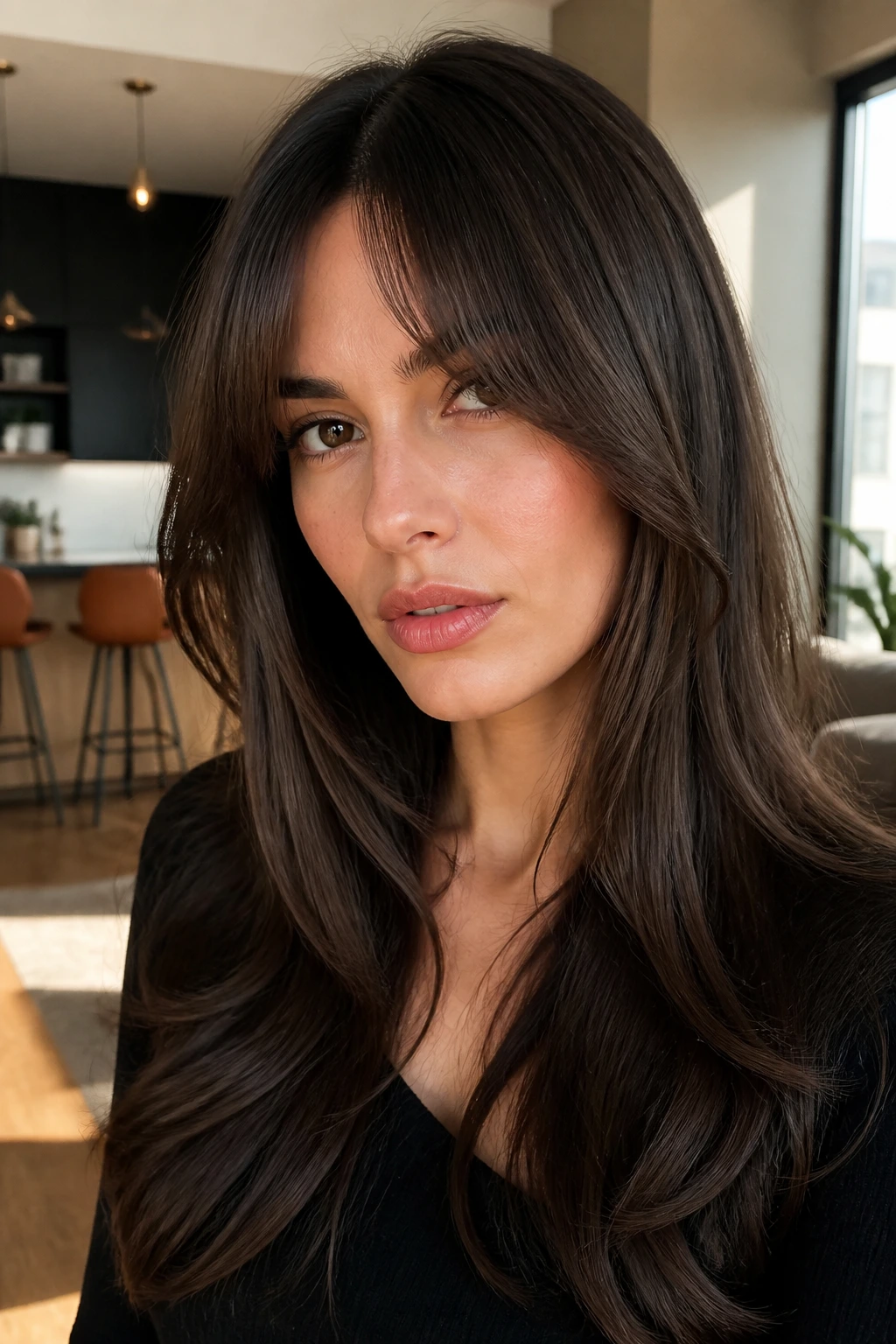
Split bangs are the more refined cousin of curtain bangs. They open cleanly in the middle and sit in a neat, almost ribbon-like curve around the face. On oval faces, that shape keeps the proportions intact while adding a little softness across the forehead.
The layers should be sleek and smooth, not heavily textured. Think ribbon movement, not feather dusting. This cut looks especially good on straight or slightly wavy hair because the lines stay readable. A quick pass with a flat brush or a blow-dryer nozzle keeps the fringe from separating too much.
15. Razor-Cut Layers with Shattered Bangs
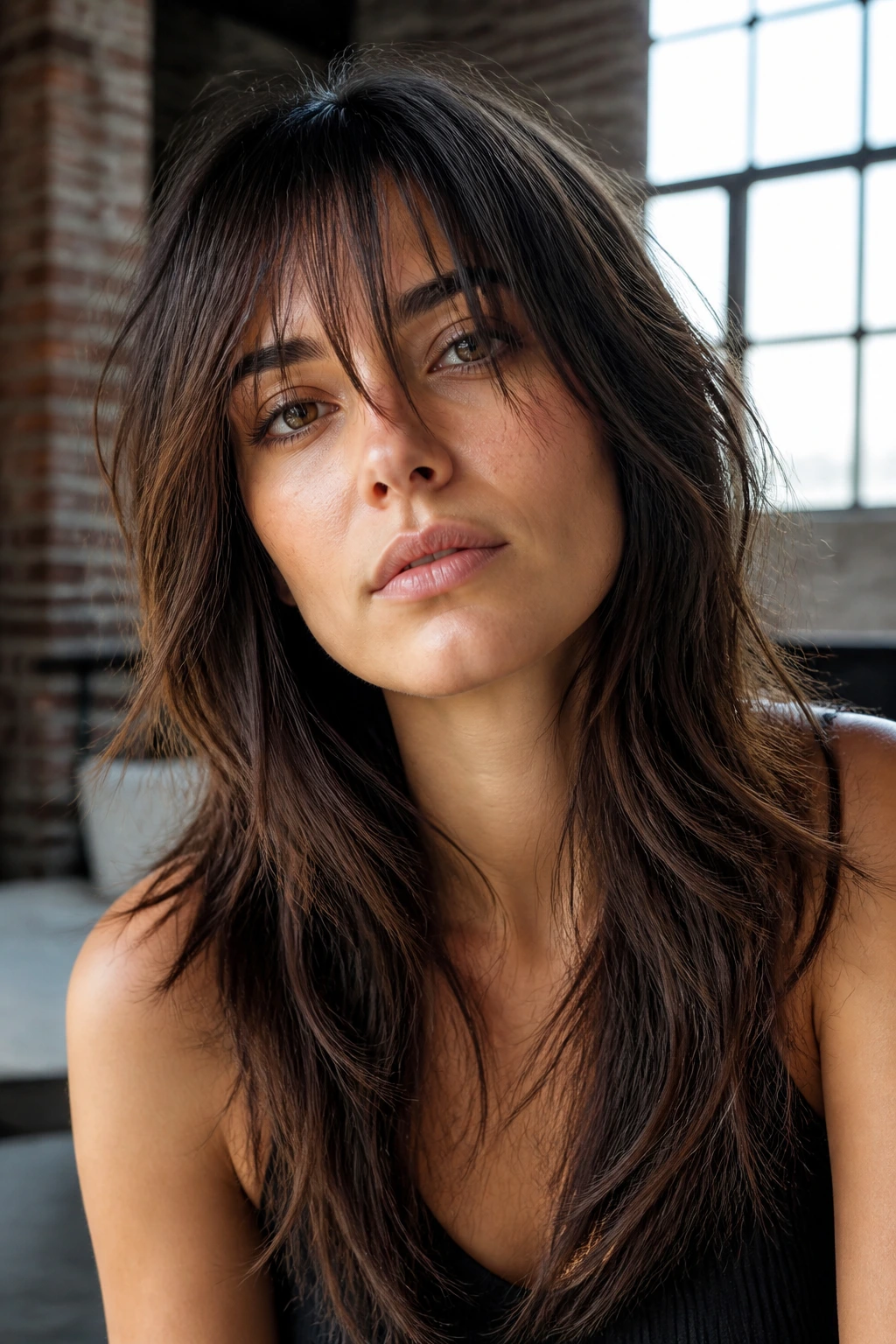
This one has edge. Razor-cut layers remove bulk in a way that gives the hair a broken, airy finish, and shattered bangs keep the fringe from looking too neat. On an oval face, the result can look cool rather than severe because the face shape can handle sharper lines without looking harsh.
The important part is control. Razor cutting should not mean random thinning. The layers still need a plan, especially around the cheekbones and jaw. If you want a cut that looks a little undone and a little rebellious, this sits in that lane nicely. It’s best when styled with texture spray or a light mousse.
16. Long Wolf-Cut Layers with Soft Fringe
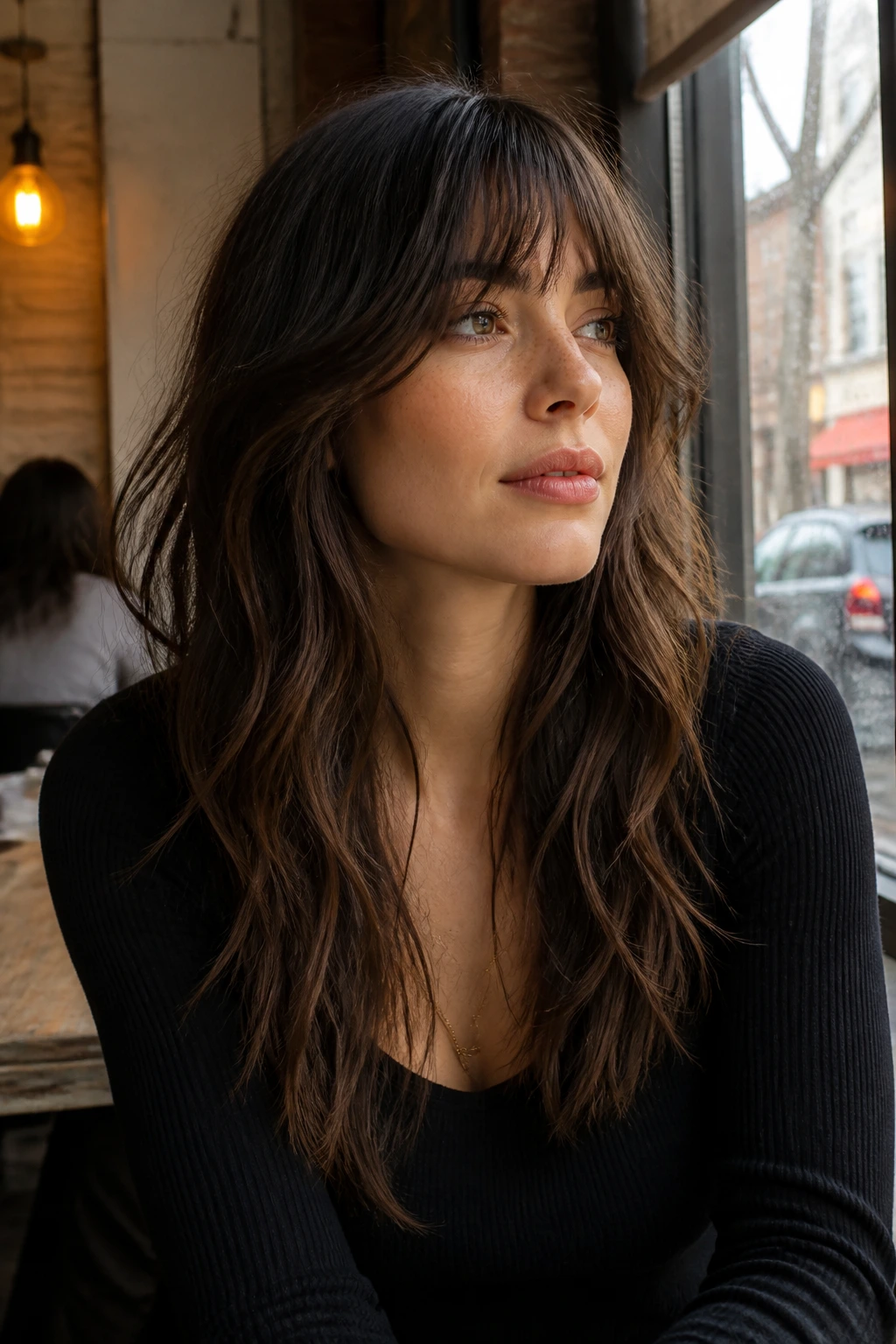
The long wolf cut has a rougher outline, but when it’s done with restraint, it can be wearable and flattering on oval faces. The layers sit higher through the crown and around the face, then soften into longer ends. That gives the haircut lift without sacrificing too much length.
The fringe should stay soft, almost like a grown-out curtain bang. Hard bangs would fight the shape. This version is for someone who likes a bit of rock-and-roll in the cut but still wants hair that can be tied back or brushed smooth when needed. It looks best with texture and a little bend.
17. Winged Bangs with Polished Lengths
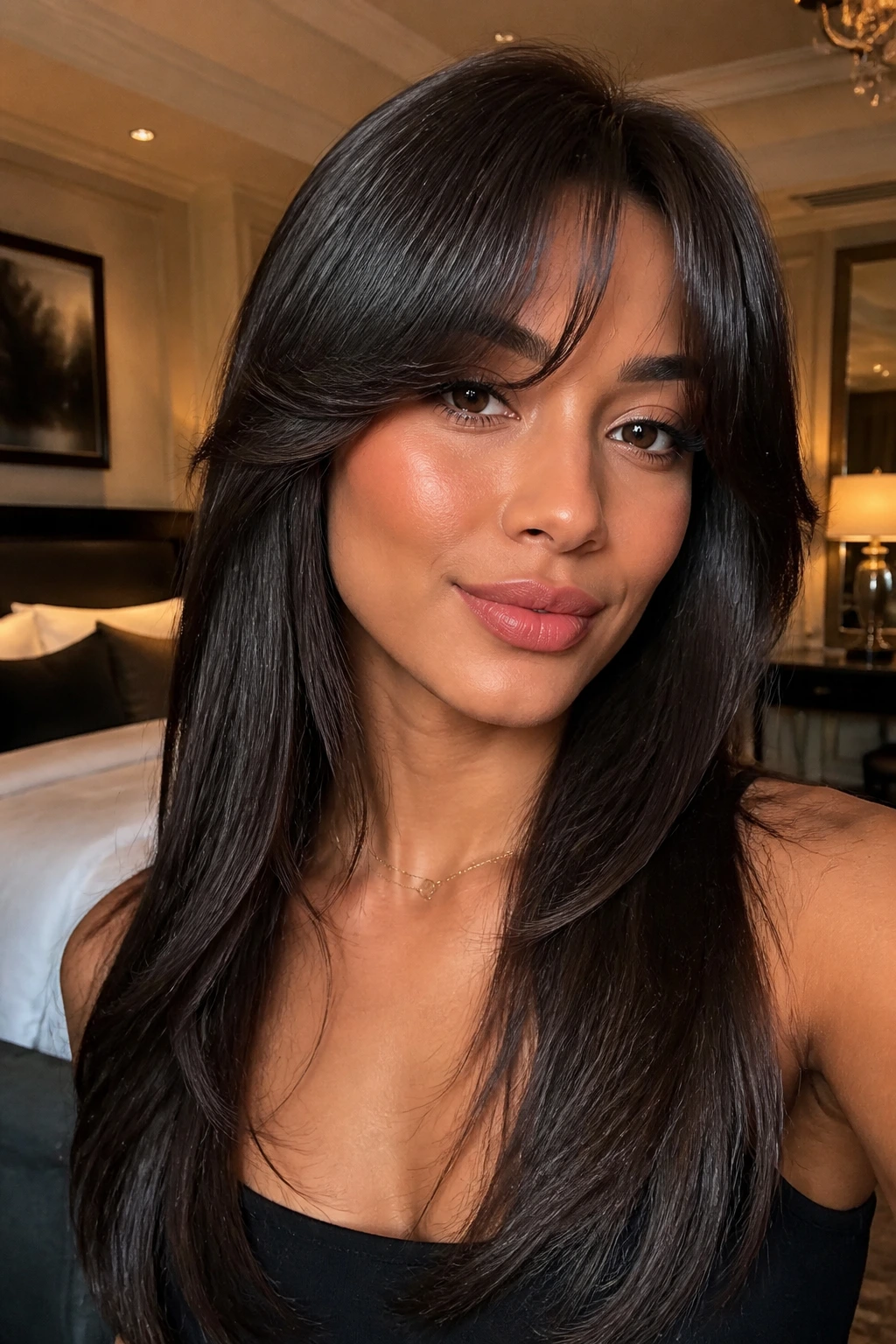
Winged bangs sweep outward from the center and create a lifted frame around the eyes. The look is a little retro, a little glam, and very good at making an oval face feel more sculpted. The wings should sit high enough to open the forehead but long enough to avoid a clipped, school-photo vibe.
The length below should stay polished and sleek. That contrast is what makes the cut interesting. If the layers get too broken up, the whole thing loses the clean line. Use a round brush on the front and a smoothing serum on the mids and ends. The hair should move, but it should also look controlled.
18. Air-Dried Layers with See-Through Bangs
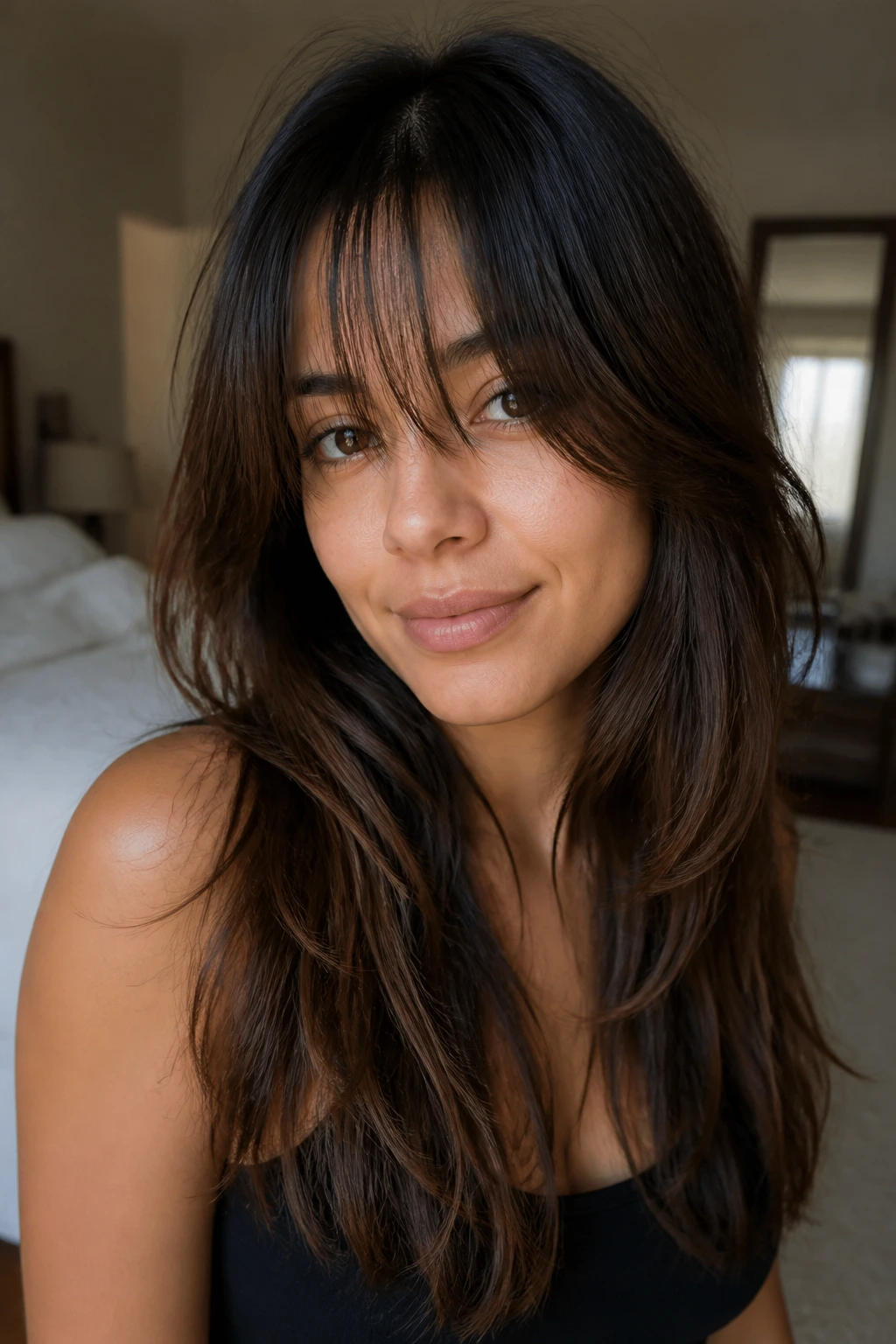
If you hate a full styling routine, this is the cut to watch. See-through bangs are light enough to dry naturally without puffing up too much, and long layers give the rest of the hair a soft bend that doesn’t need much help. On an oval face, that kind of softness reads relaxed and flattering, not careless.
The key is density. Keep the fringe sparse enough that it separates a little as it dries. If it gets too thick, it will shrink up and sit in an awkward block. A little leave-in conditioner and a finger-comb is often enough here. Some people want a haircut that behaves on its own. This is one of them.
19. Glossy Blowout Layers with a Soft Block Fringe
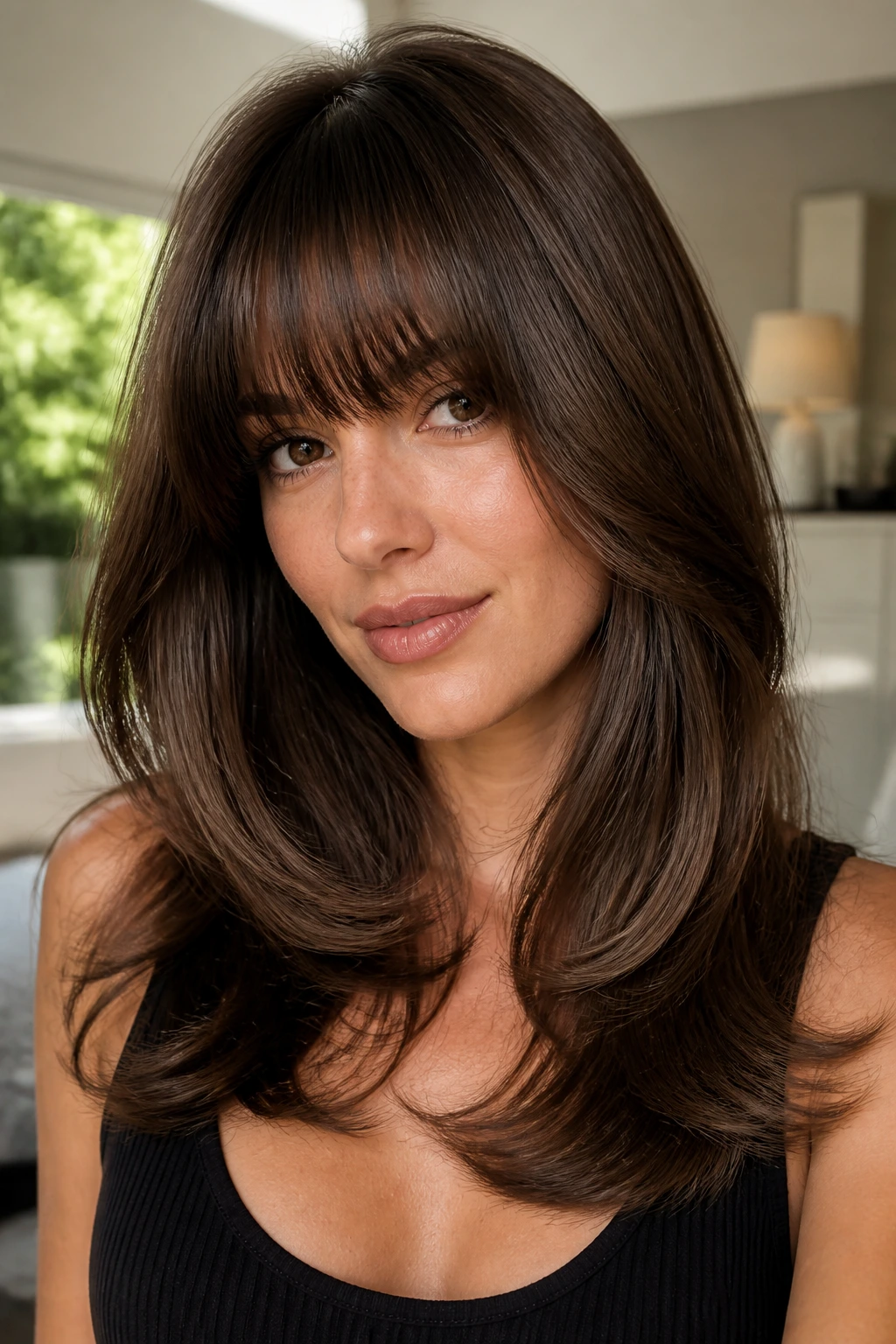
A soft block fringe is denser than curtain bangs but still rounded and movable at the corners. It gives the forehead a more structured frame, which can be lovely on an oval face as long as the layers around it stay long and glossy. The goal is shape, not severity.
This cut loves a blowout. The layers should bend under lightly through the mid-lengths so the whole silhouette feels smooth and expensive-looking without being stiff. You do not need a salon blowout every day, but the haircut should be able to hold that kind of finish when you want it. That’s the difference between a good cut and a haircut that only works in one styling mood.
20. Collarbone-Skimming Layers with Arched Bangs
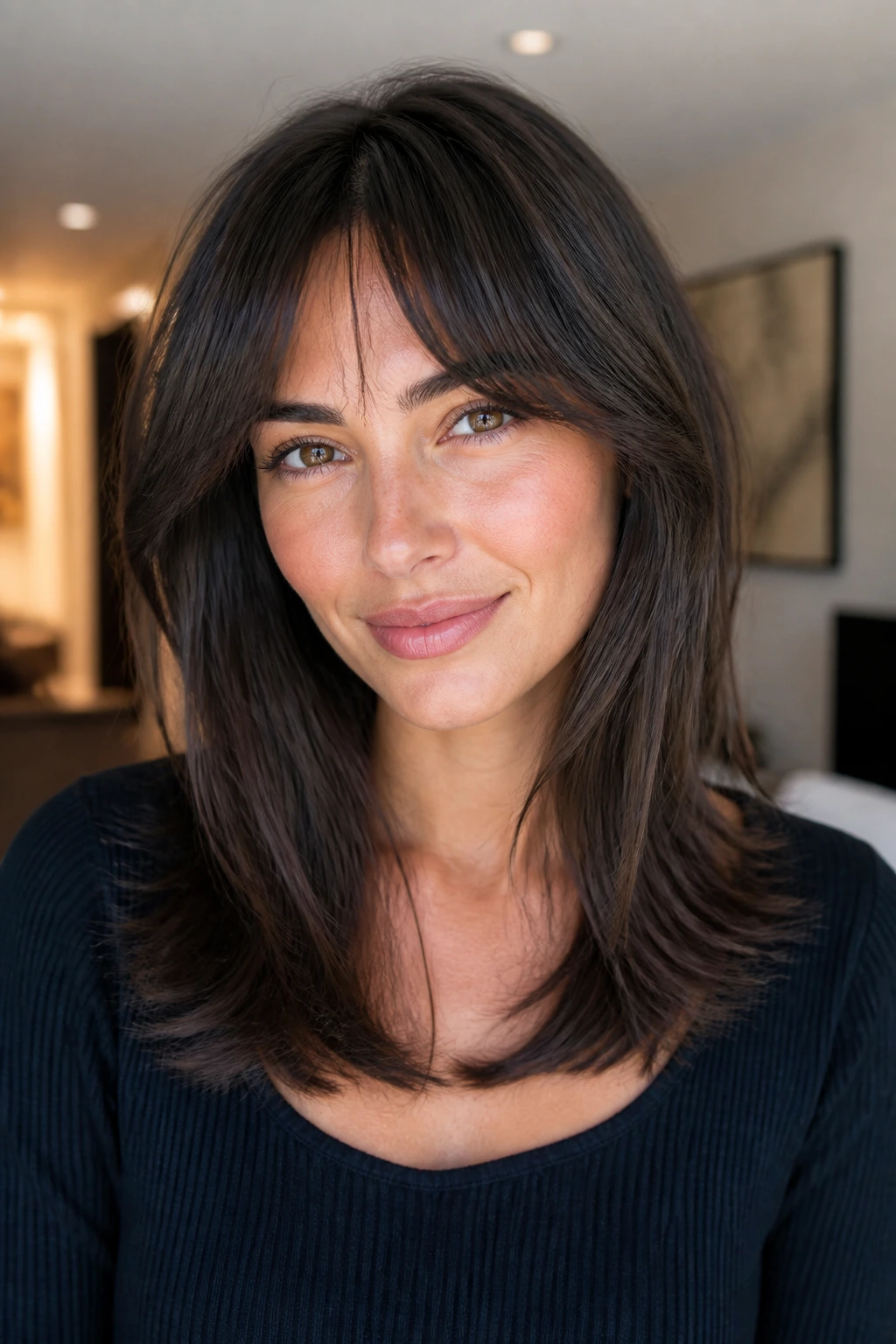
Arched bangs follow a soft curve that mirrors the brow line and opens the face without a hard edge. On an oval face, that curve helps keep the features lifted and gives the eyes a more obvious frame. It is a subtle shape, which is exactly why it works so often.
The layers should skim the collarbone and then fall longer in back, giving the cut a gentle drop. This one is good if you want bangs that feel tailored but not trendy in a loud way. The arch at the brow keeps things neat. The length keeps things feminine without getting sugary about it.
21. Long U-Shape Layers with a Light Brow Fringe
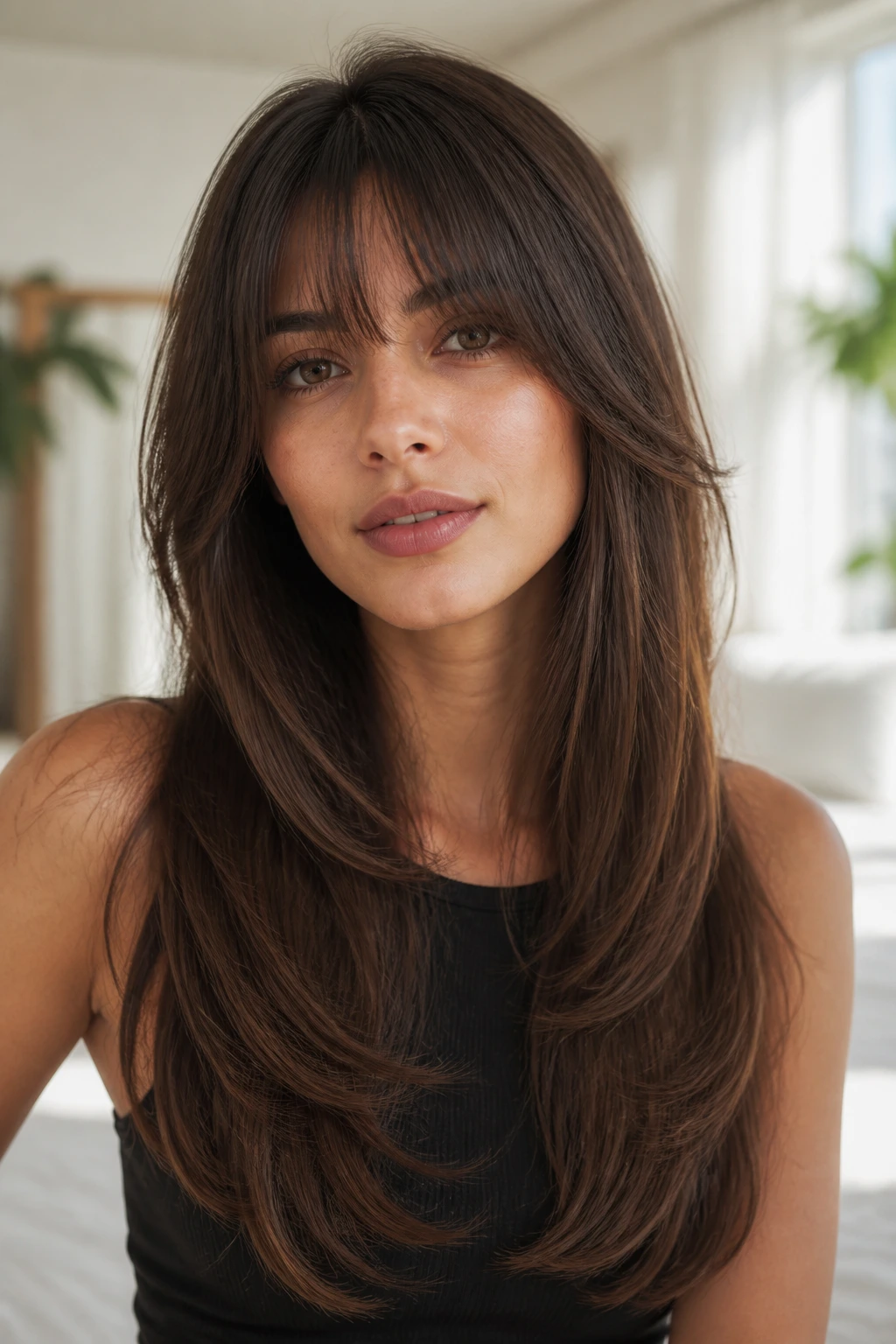
A U-shape cut keeps the center back longer and rounds the front edges just enough to show movement. Add a light brow-grazing fringe, and the shape feels balanced on an oval face without collapsing the length. It’s a soft structure, not a dramatic one.
This cut is especially useful if you wear your hair mostly down. The U-shape keeps the perimeter from looking flat from the back, and the fringe gives the front some life. I like it on hair that naturally has a little shine, because the shape shows up more clearly when the lengths are smooth.
22. Tucked-Behind-Ear Layers with a Swoop Fringe
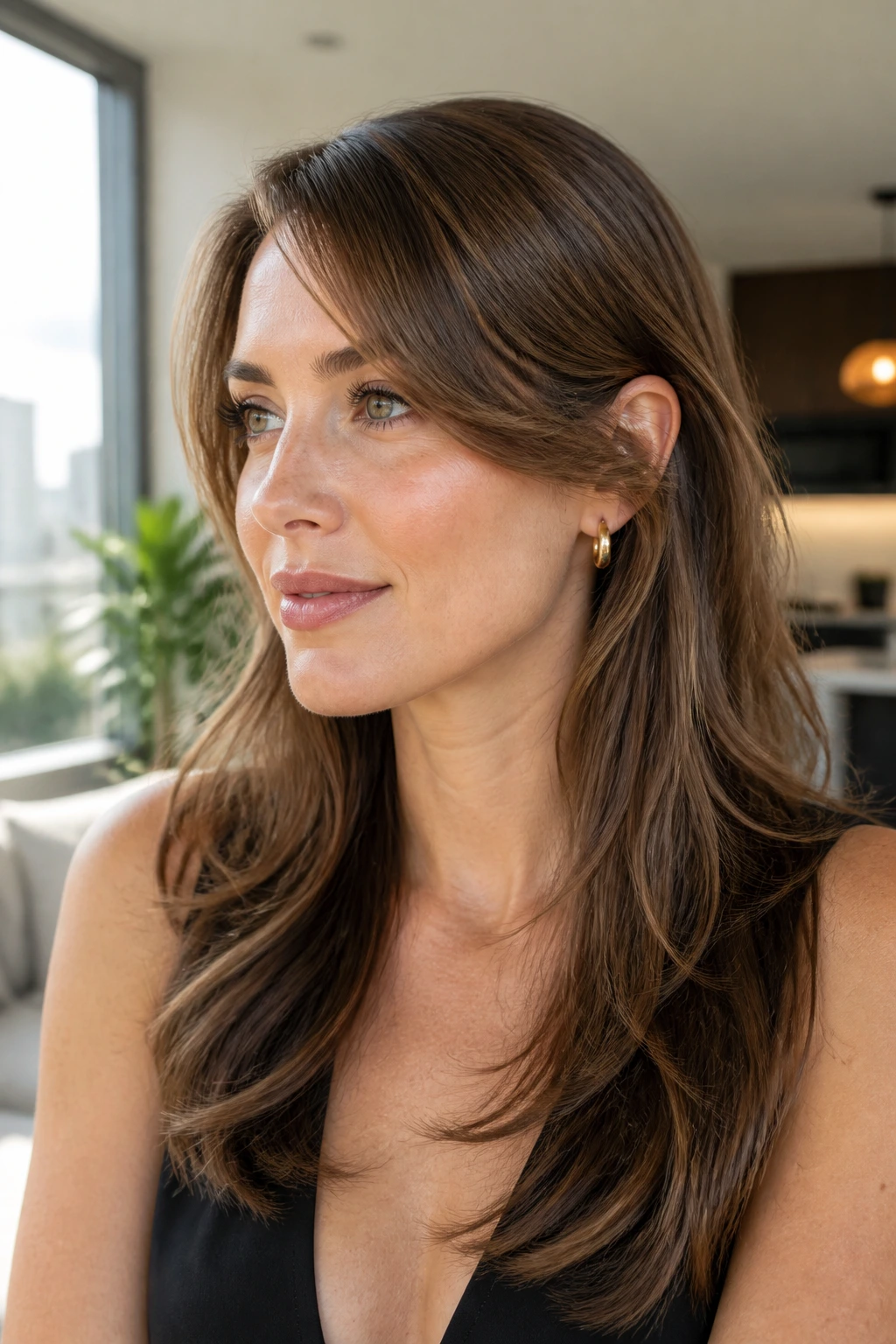
Some cuts are built for movement. This one is built for everyday life. The swoop fringe can fall forward, get tucked behind the ear, or split at the temple without losing its shape. On an oval face, that kind of flexibility keeps the front of the haircut from feeling precious.
The long layers should be soft enough to move when tucked but still defined enough that the ends don’t disappear into the rest of the hair. A little behind-the-ear tuck reveals the cheekbone and jawline, which is one of the simplest ways to show off oval proportions without doing much at all.
23. Mixed-Length Layers with a Narrow Center-Part Fringe
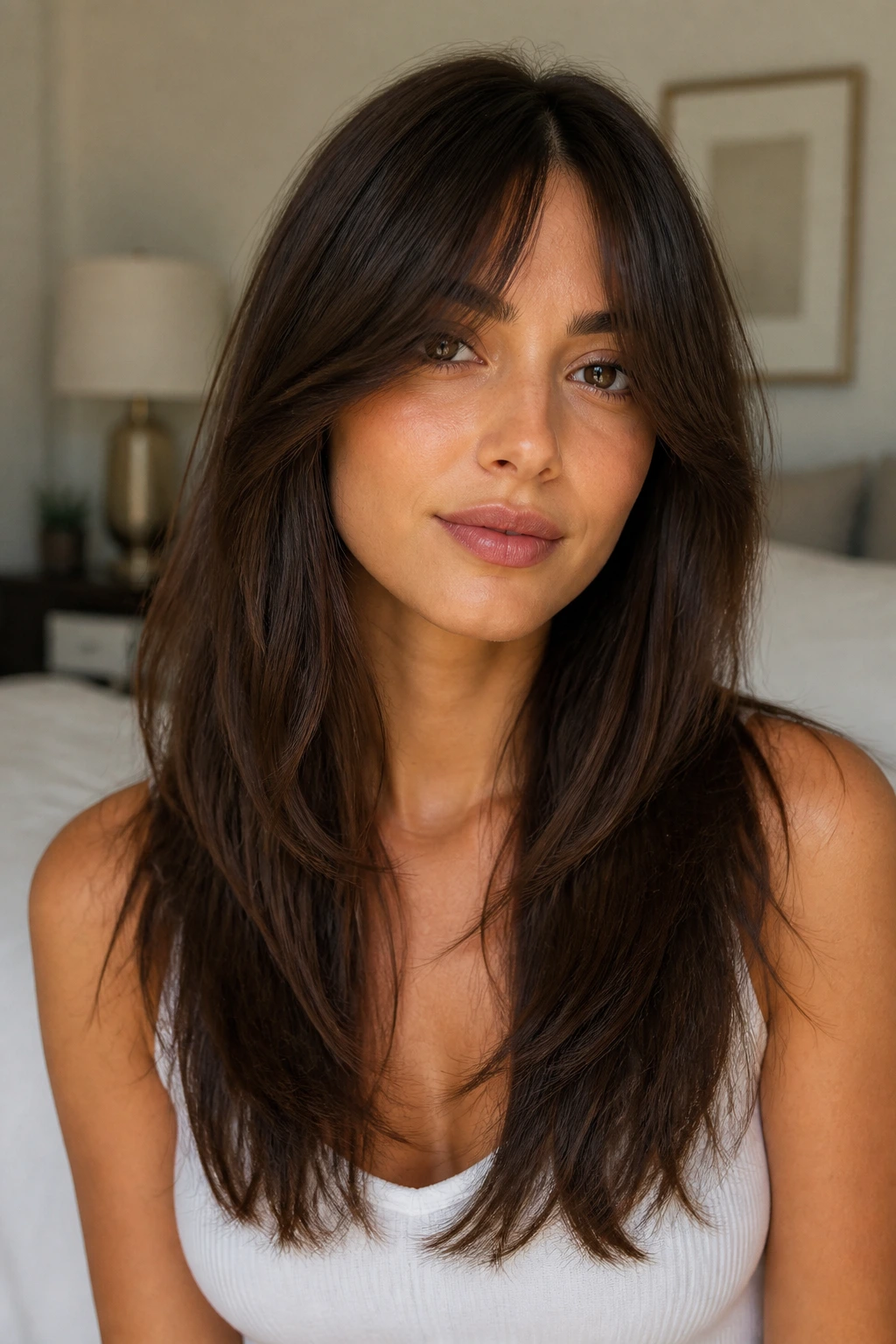
A narrow center-part fringe is a clean, modern choice if you want bangs without a lot of volume in the front. The hair opens in the middle, then falls in slim pieces that hit around the brow and cheek. On an oval face, that keeps the vertical line intact.
Mixed-length layers underneath create motion without making the whole cut look thin. It’s a good match for straight or lightly wavy hair and for anyone who likes a quieter shape. No drama. No hard edges. Just a long cut that stays neat as it grows.
24. Long Layers with a French-Girl Fringe
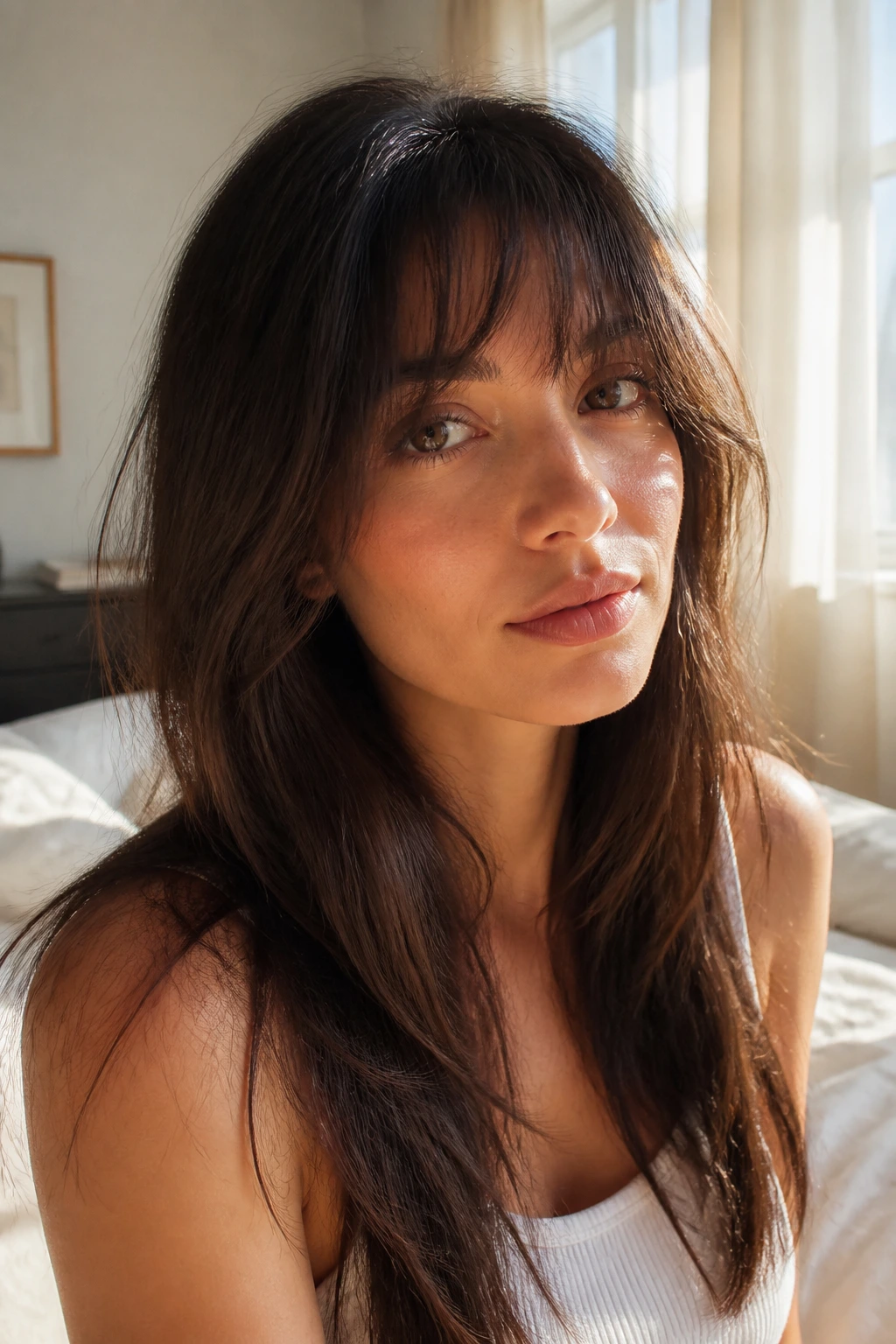
French-girl fringe usually means a soft, slightly imperfect bang that sits right around the brows and doesn’t look too constructed. That looseness is part of the appeal. On an oval face, it keeps the forehead framed while still leaving room for the face to breathe.
The long layers should be simple and flowing, not heavily chopped. Let the fringe carry the personality and the rest of the hair stay smooth. It works well with a bit of texture cream, a loose wave, or even a center part that isn’t perfectly exact. That small imperfection is the point.
25. Lived-In Layers with a Face-Hugging Fringe
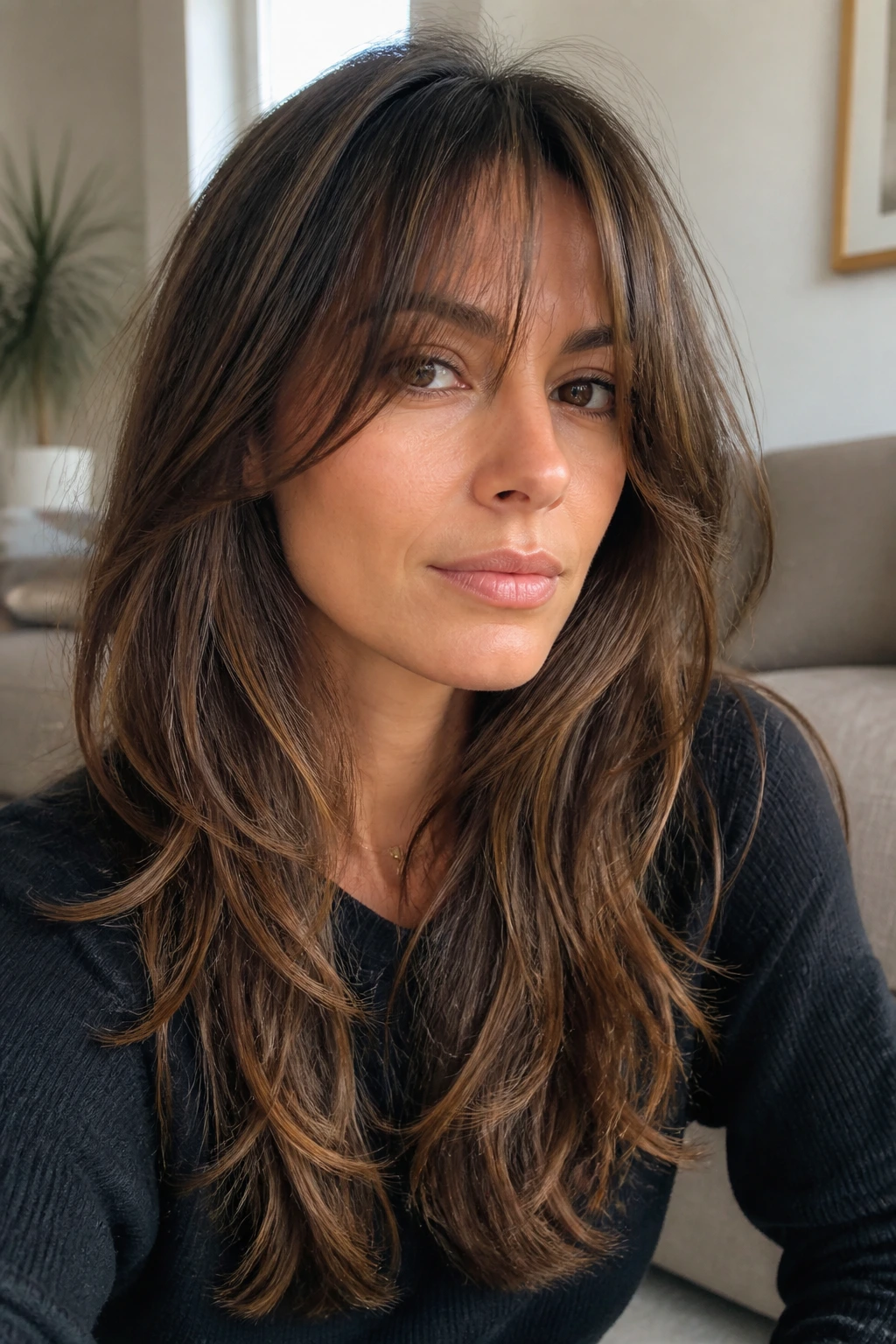
This is the cut for people who want their hair to look like it has lived a little. The fringe hugs the face in soft pieces instead of making one hard line, and the layers fall in a way that feels casual but not sloppy. On an oval face, that softness keeps the proportions balanced and the features easy to read.
A face-hugging fringe is useful if you want bangs that blend into the rest of the haircut fast. The grow-out is gentler, the styling is faster, and the shape still frames the eyes. It’s not the flashiest option in the list. It may be the one you end up wearing the longest.
How Long Layers and Bangs Keep Oval Faces Looking Balanced
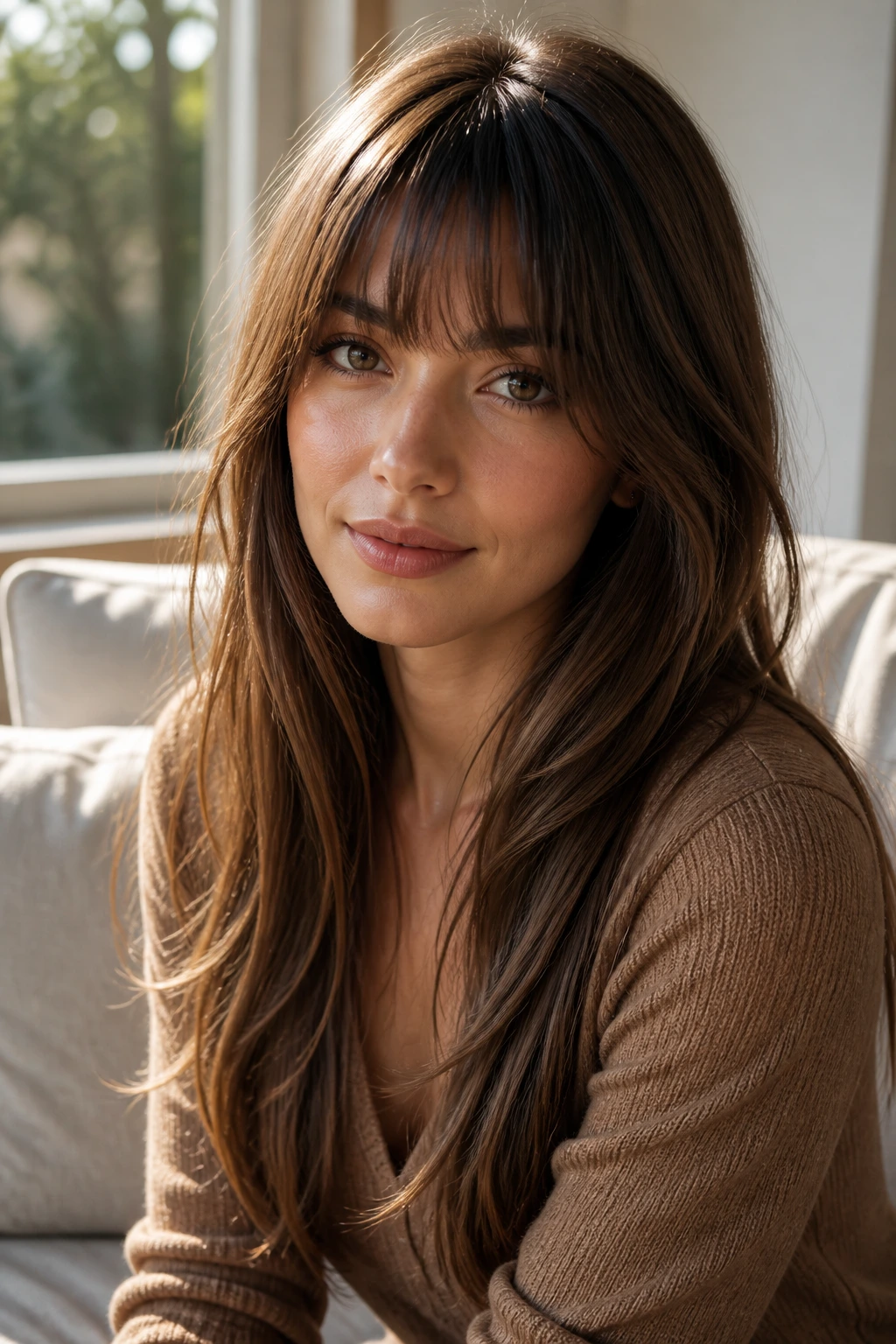
Oval faces have an even spread from forehead to jaw, which means the haircut does not need to create fake symmetry from scratch. What it does need is direction. Long layers with bangs add that direction by pulling the eye from the brow to the cheeks to the ends, instead of letting everything stop in one flat plane.
The biggest win is vertical movement. A good fringe can make the eyes stand out, but the layers keep the rest of the cut from feeling crowded. That matters more than people think. If the bangs are too thick, the face can look shorter. If the layers start too high, the hair can swell around the face and fight the natural shape.
The best versions keep the shortest pieces where they can frame the eyes and cheekbones, then let the length stay long enough to preserve that oval balance. Simple idea. Harder to do well than it sounds.
What to Tell Your Stylist Before the First Snip
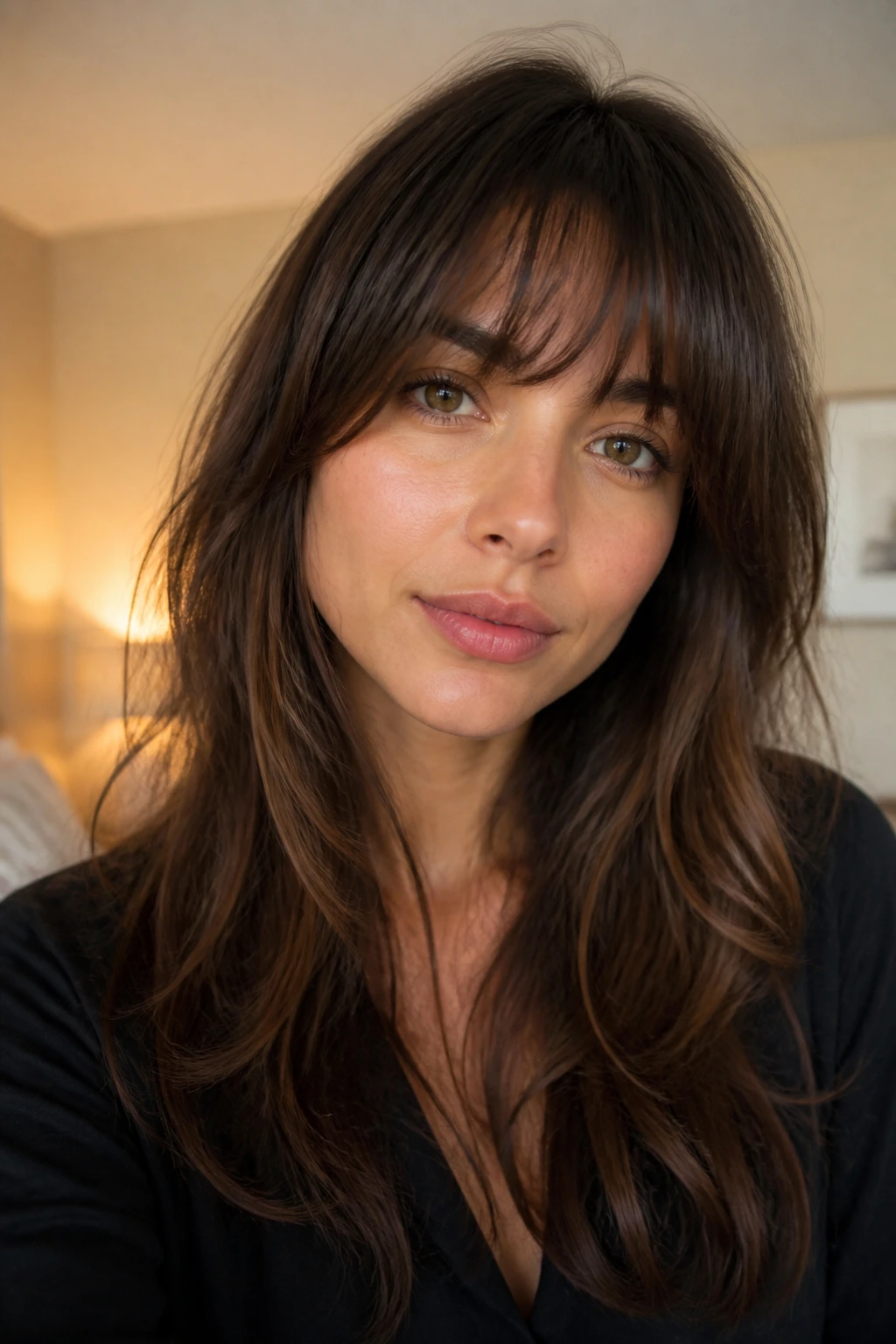
Bring photos, yes, but also bring a sentence that says what the haircut needs to do on your head. “I want my length to stay long, but I want the front to move away from my face” is more useful than “I want layers and bangs.” One sentence can save you a month of grow-out regret.
Be specific about the fringe. If you want curtain bangs, say whether you want them to hit at the brow or sit a little below it. If you want a side sweep, say how far across the forehead you want the piece to fall. Bangs are about placement as much as shape.
Tell your stylist how much time you spend styling. A fringe that looks great only after a 20-minute round-brush session is not the same thing as a fringe that falls into place after a quick blow-dry. That distinction matters, and honest conversations about it are cheaper than fixing the cut later.
Useful details to mention
- Your usual part: center, side, or switched
- Whether you air-dry or blow-dry
- How often you trim bangs
- Where you want the shortest pieces to land: brow, cheekbone, or lip
Styling Tools That Make the Cut Behave
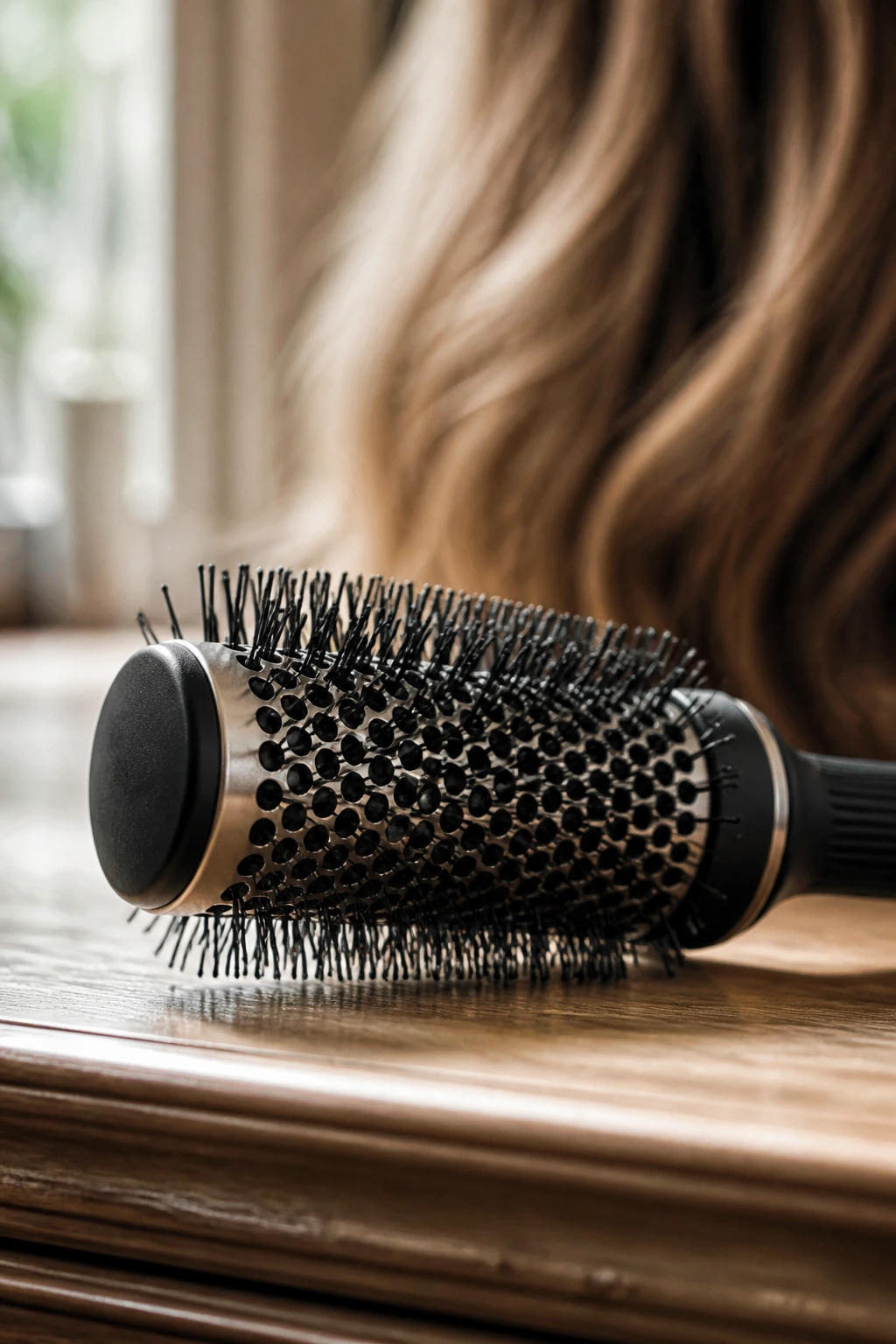
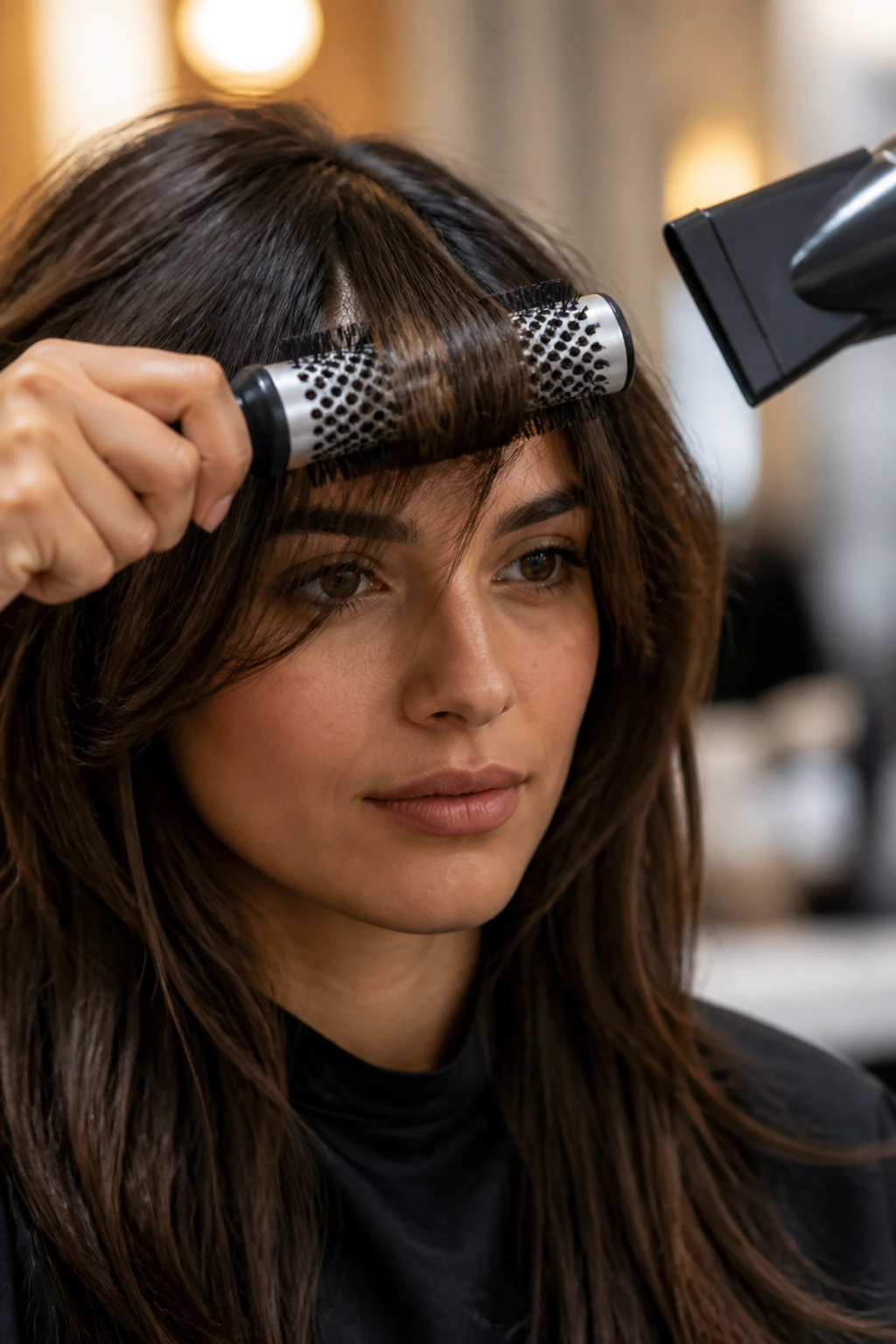
The right tools do not need to be fancy. They need to be consistent. A small round brush, around 1 to 1.5 inches, helps curtain bangs bend away from the forehead without flipping too much. A larger round brush, closer to 2 inches, gives the lengths a smoother curve and keeps the layers from looking stringy.
A blow-dryer with a nozzle matters more than people admit. The nozzle keeps the airflow from blasting the fringe into chaos. A heat protectant is non-negotiable if you use hot tools more than once a week, and a light mousse or volumizing spray can help the front keep shape instead of sinking flat by noon.
For curly or wavy hair, a diffuser and a wide-tooth comb are the real workhorses. And if your bangs split in odd directions, a couple of duckbill clips make it easy to pin them while they cool. Hair sets as it cools. That part is not glamorous, but it is true.
How to Style the Cut on Straight, Wavy, and Curly Hair
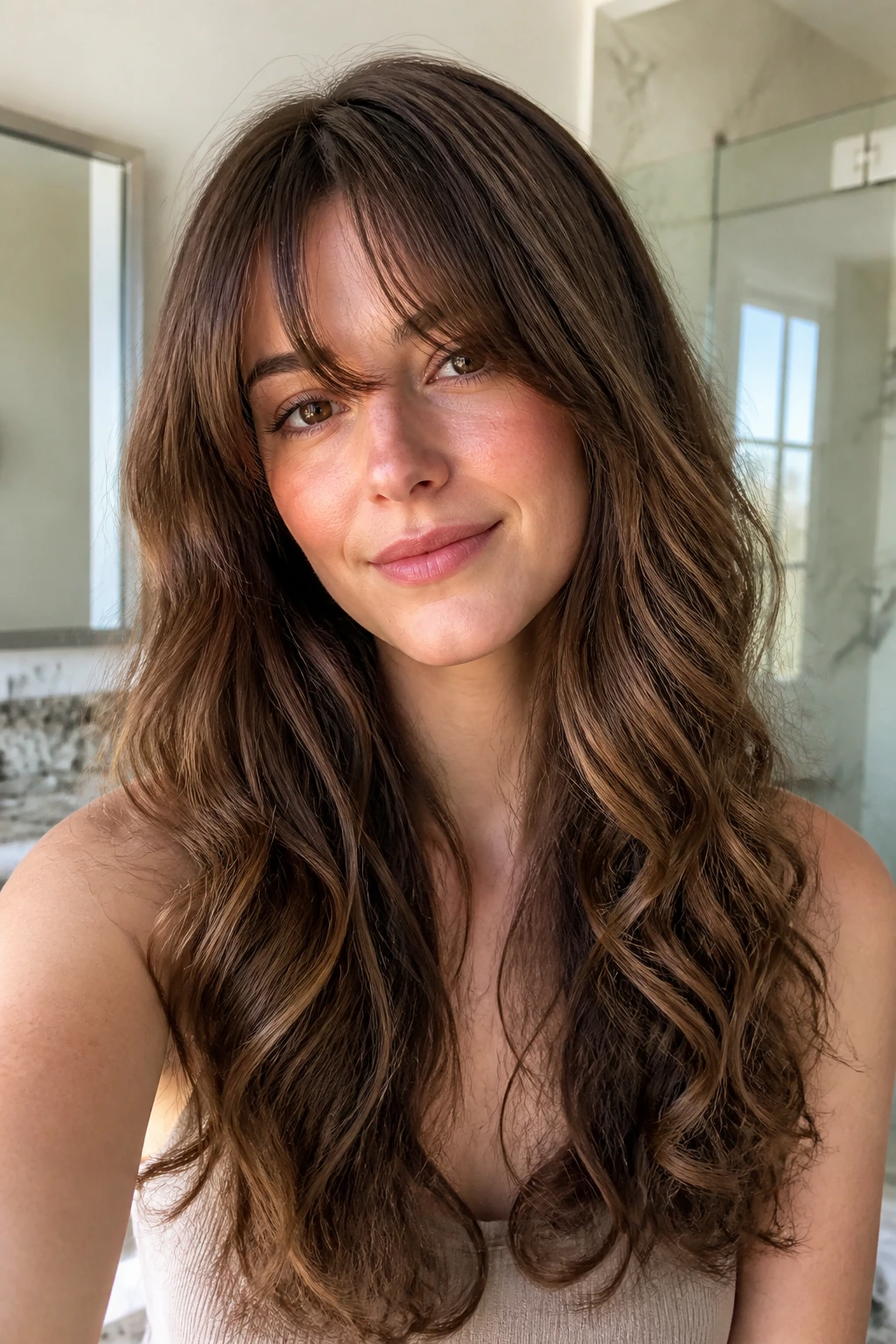
Straight hair usually needs bend, not more volume. A subtle turn under at the ends and a slight curve in the fringe will keep the haircut from looking limp. Use a round brush or a flat iron with a gentle twist at the front; hard curls at the ends can make long layers look dated fast.
Wavy hair gives you more room to play. The fringe can sit softer, the layers can show their movement, and you can skip perfection. A little sea-salt spray or curl cream on damp hair often works better than trying to force a smooth blowout every day. Let the hair keep some of its texture. It makes the layers look richer.
Curly hair needs the layers cut with the curl pattern in mind, or the fringe will bounce up into the wrong place. Keep the bangs longer than you think, and dry them in the direction you want them to sit. That small bit of control at the front can keep the whole cut from expanding too wide around the face.
Common Mistakes That Flatten an Oval Face
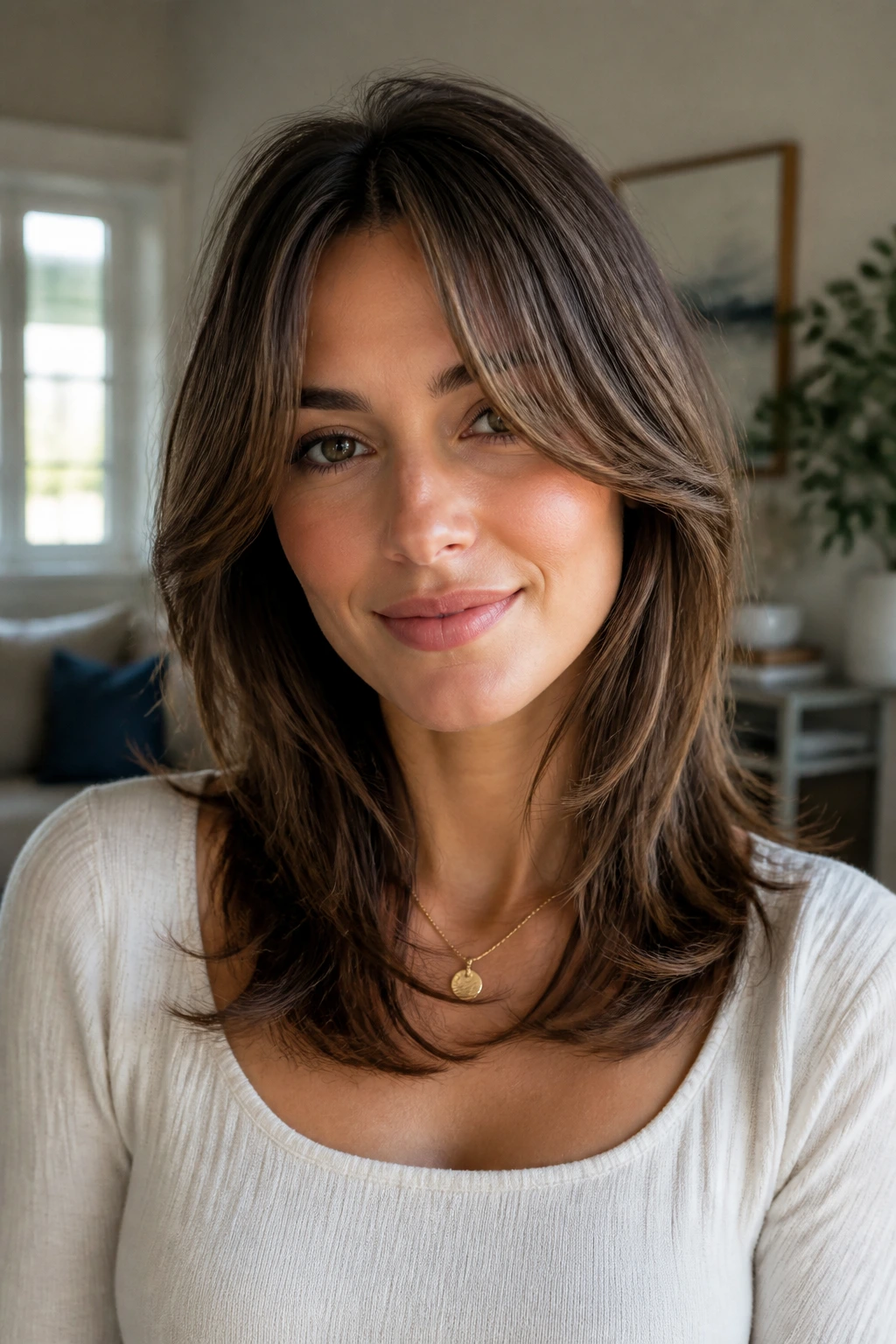
The easiest mistake is cutting the bangs too heavy. A thick, blunt fringe can swallow the forehead and make the face look shorter than it is. If you like fullness, keep the density, but soften the line at the corners so it opens.
Another one: starting the layers too high. That creates width around the cheeks and temples, which is the last thing you want if the goal is length and movement. Long layers should slide, not puff. If you can feel the shape building around your cheekbones instead of dropping through the ends, the layering is probably too aggressive.
Skipping styling is fine if the cut supports it. Skipping styling on a cut that needs a little bend is how good haircuts end up looking flat. You do not need a salon finish every day. You do need to know whether your fringe wants a brush or can live air-dried.
Finally, don’t ignore grow-out. Bangs that look gorgeous on day one can turn awkward at week six if you never trim or re-shape them. A quick bang dusting can keep the whole haircut from turning into a mop.
Variations and Alternatives to Try
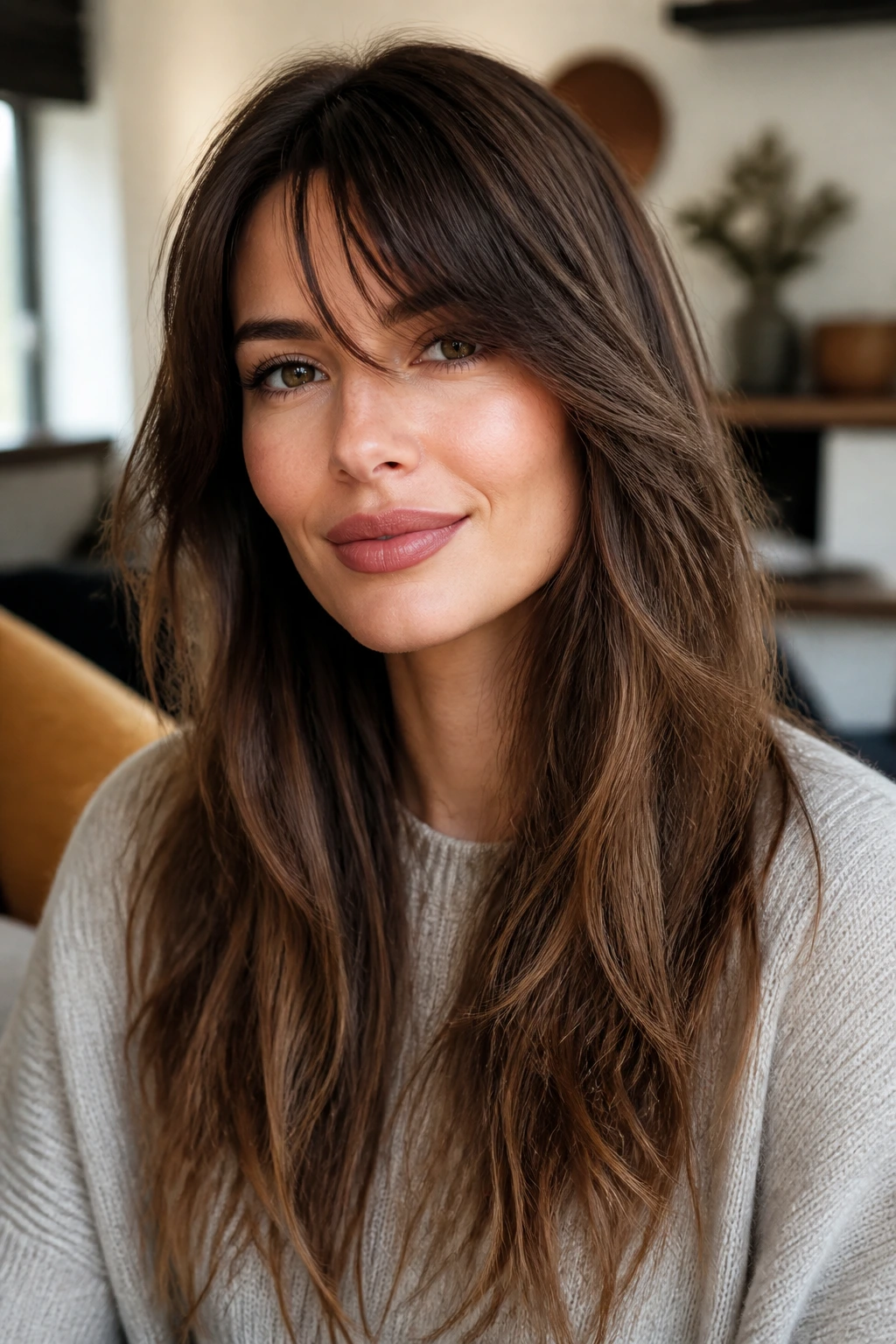
The Air-Dry Version: Keep the layers soft and the fringe sparse, then work in leave-in conditioner and a little cream. This is the one for people who hate hot tools and want a shape that survives a quick scrunch and go.
The Glossy Blowout Version: Ask for longer bangs and clean layers that bend under with a round brush. This version suits oval faces that want polish and shine more than texture.
The Curly-Control Version: Keep the fringe long and the layers shaped to the curl pattern. The aim is to prevent the sides from ballooning while keeping the top visible and soft.
The Low-Commitment Version: Choose a side sweep or a narrow curtain fringe. These grow out with less drama and are easier to pin back on days when you cannot be bothered.
The Edgier Version: Go for razor-cut texture, a split fringe, or a feathered shag outline. Keep the length long, though. The edge should live in the movement, not in losing inches.
Maintenance, Trims, and Grow-Out Timing
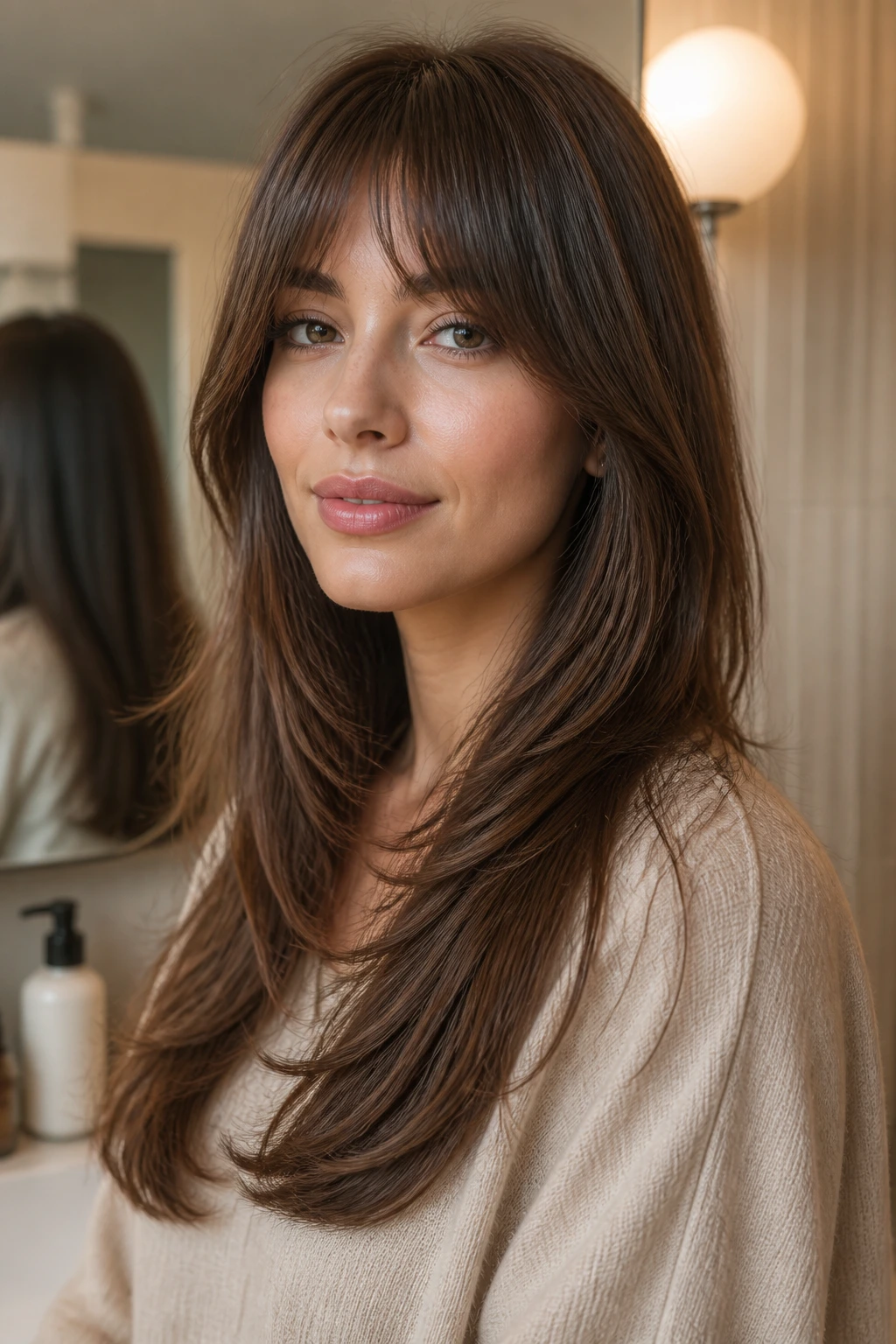
Bangs need attention sooner than the rest of the cut. A soft curtain fringe can often go 6 to 8 weeks between trims if it’s cut well and you don’t mind a little extra length. A blunt or denser fringe may need cleanup every 3 to 5 weeks to stay where it should.
The long layers themselves usually need shaping every 10 to 14 weeks, depending on how much weight your hair holds and whether the ends start looking straggly. Fine hair can show wear faster. Thick hair tends to keep its outline longer, though the front may lose shape first.
If you want the cut to grow out gracefully, tell your stylist that upfront. That one sentence changes where the shortest pieces land and how the layers blend. It is much easier to live with a cut that is designed to grow than to pretend you’ll remember to fight with it every morning.
Essential Equipment for These Styles
-
1 to 1.5-inch round brush — best for curtain bangs, swoops, and soft bend at the front.
-
2-inch round brush — useful for smoothing longer layers without making the ends curl too tightly.
-
Blow-dryer with a nozzle attachment — keeps airflow controlled so the fringe does not fly apart.
-
Heat protectant spray — protects the front pieces, which tend to get styled more often than the rest.
-
Light mousse or volumizing spray — helps the crown and front layers keep their shape.
-
Flat iron or curling wand — optional, but useful if your layers need a bit of bend.
-
Wide-tooth comb — the safest way to separate curls or waves without wrecking the pattern.
-
Duckbill clips or sectioning clips — make it easier to set bangs while they cool.
-
Dry shampoo — useful for bangs, which usually get oily before the rest of the hair does.
How to Wear These Layers Day to Day
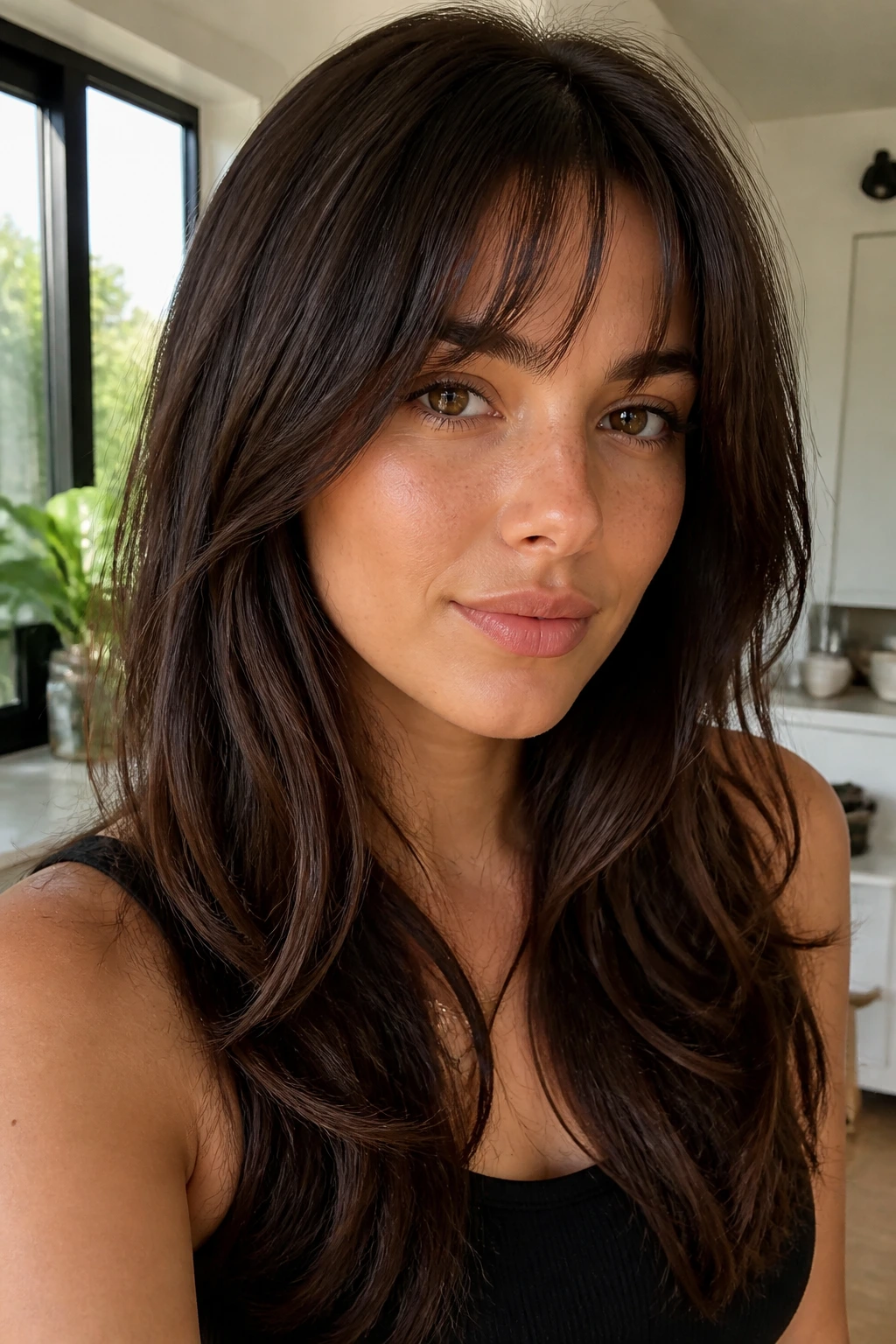
Presentation: Keep the fringe visibly separated enough that you can see the shape — bangs that sit like one solid sheet tend to flatten oval features instead of framing them. The rest of the hair should move away from the face in a soft curve, whether that’s a blowout bend, a loose wave, or a straight finish with tucked front pieces.
Accessories: Headbands, clips, and pins work best when they lift the front without crushing it. If you wear glasses, a softer fringe or a side sweep usually behaves better than a dense straight bang, because the frames and the fringe won’t compete for the same space.
Parting: A middle part gives a lot of these cuts that clean oval-frame effect, but a deep side part can add lift and drama if the hair is fine or flat. Switching the part once in a while can also stop the bangs from sticking in one direction.
Daily rhythm: If you have time for only one thing, style the front. The bangs set the mood for the whole cut. Even a quick bend with a brush or flat iron can make the layers look intentional.
How to Explain the Cut to Your Stylist Without Guesswork
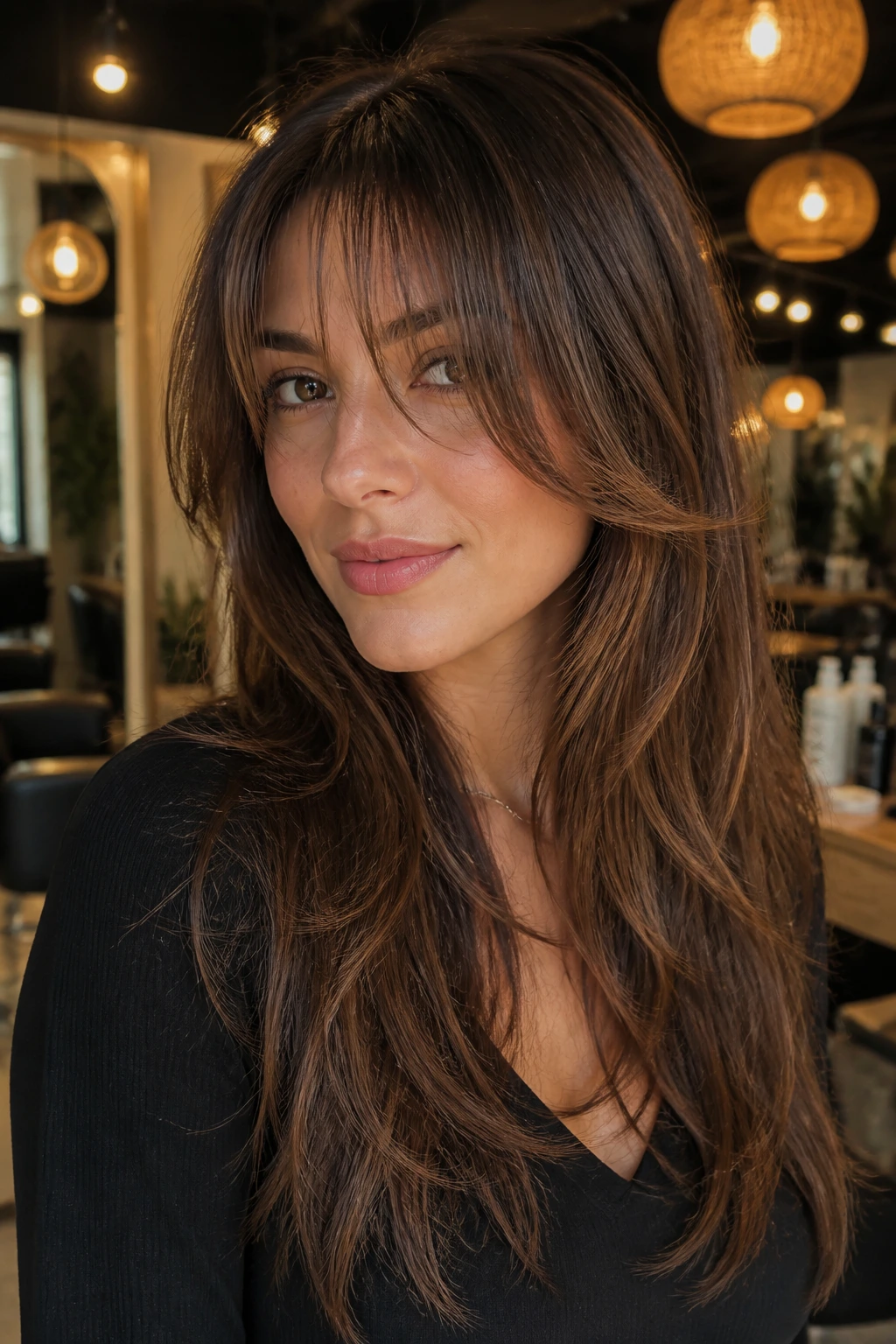
Say what you want the fringe to do, not just what it should look like. “I want my bangs to open at the cheekbones” is more useful than “I want curtain bangs.” “I want the layers to keep my hair long, not choppy” is a better sentence than “I want movement.”
If your hair is thick, ask to keep weight in the ends while removing bulk from the interior. If it’s fine, ask for softer, lower layers so the shape does not disappear. Curly hair needs an even more careful conversation because shrinkage changes everything once the hair dries.
Bring at least one reference photo with hair similar to yours. Same face shape is nice, but texture matters more. A photo of perfect bangs on someone with pin-straight hair will not save you if your hair bends like ribbon or expands like a cloud.
Frequently Asked Questions
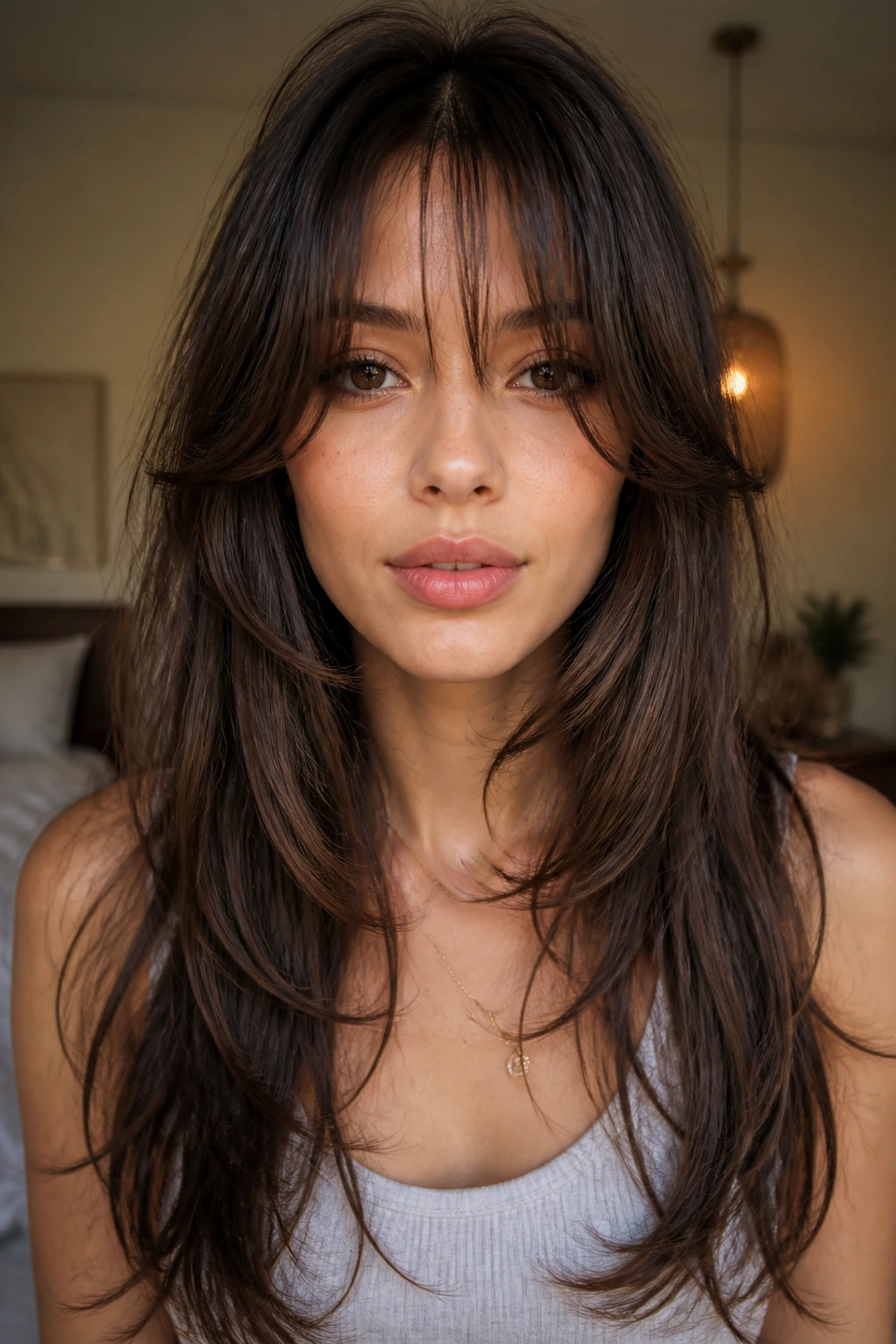
Do oval faces really suit any bangs?
They can wear a wide range, yes, but that does not mean every bang shape is equally flattering. The difference comes down to density, length, and where the fringe lands. Bangs that keep some forehead visible and blend into long layers usually work better than a heavy, straight-across chop.
Should the shortest layers hit the cheekbone or the jaw?
For most oval faces, cheekbone to lip is the sweet zone because it frames the face without widening it. Layers that start at the jaw can work, but if they are too blunt they can make the cut feel boxy. The best place usually depends on how dense your hair is.
Can fine hair pull off long layers with bangs?
Yes, but the layers need to be soft and placed carefully. Too much internal texturizing will make the ends look thin and the fringe look wispy in the wrong way. Ask for movement near the front, not a lot of removal through the bottom.
What if my bangs end up looking too short?
Resist the urge to cut the rest of the hair shorter to match them. That usually creates more trouble. Use blow-drying, a soft side part, or a pin-back trick while the fringe grows out; a good stylist can also reshape the corners so the bang feels less abrupt.
Do curtain bangs work on curly hair?
They can, as long as they’re cut with shrinkage in mind. Curly curtain bangs usually need to be longer than straight ones because the curl will lift them up once they dry. A dry cut or curl-specific shaping helps a lot here.
How often should I trim the fringe?
Most fringes need attention every 3 to 8 weeks, depending on how blunt or soft they are. A dense bang needs trims more often. A softer, blended curtain bang can usually stretch longer and still look good while it grows.
Can I style these cuts without heat every day?
You can, especially if the fringe is cut softly and the layers are not too high. Air-drying with a bit of cream or mousse works well for waves and curls. Straight hair usually needs at least a little bend at the front to keep the layers from falling flat.
What should I avoid if I wear glasses?
Avoid bangs that sit exactly where the frames hit the face unless you like a busy front line. A slightly longer fringe or a soft split bang usually works better, because it leaves room between the lenses and the hair.
The Shape That Keeps Working
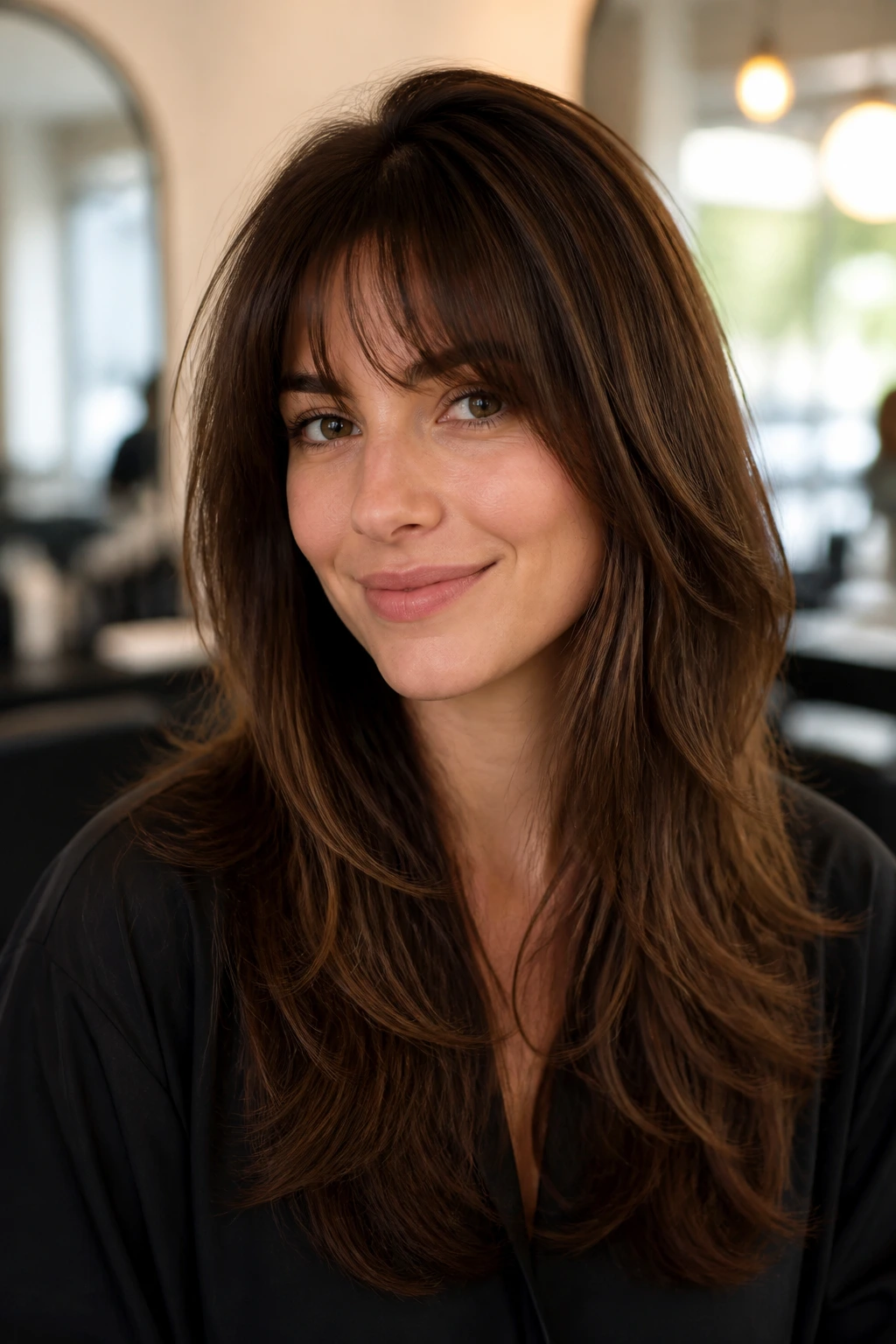
The best thing about long length layers with bangs on an oval face is that they do not fight the face you already have. They follow it. They sharpen the eyes, soften the forehead, and keep the length intact so the haircut still feels like hair, not architecture.
That’s the reason these styles keep showing up again and again in salons: they can be soft, polished, edgy, airy, or full, but they still preserve the easy balance that oval faces are known for. If you want to keep the length and make the front of your hair do more work, this is the lane worth staying in.
A good cut should look better the second day, not just the first. These do.