



Heart-shaped faces can make front bangs look either beautifully balanced or oddly top-heavy, and the difference usually comes down to where the fringe starts, how much weight sits in the center, and how softly it opens at the temples. With long hair, that matters even more. You’ve got length doing one job — dropping the eye downward — and the bangs doing another, which is to soften the forehead without swallowing the face.
Front bangs for long hair and heart-shaped faces work best when they ease the widest part of the forehead and keep a little movement near the cheekbones. That’s the sweet spot. Too blunt, and the face can look top-heavy. Too wispy, and the bangs disappear before they do any real shaping.
The good news? There isn’t one correct fringe here. There are a lot of good ones, and some of them are much more forgiving than people think. A heart-shaped face can wear curtain bangs, side sweeps, piecey fringe, feathered split bangs, and even a few sharper options if the rest of the cut is doing its job. The trick is knowing which shape gives you softness at the forehead and a bit of width at the lower half of the face.
Why These Fringe Shapes Earn Their Keep
-
They soften the forehead without hiding it: Heart-shaped faces usually carry width through the upper third, so a fringe that breaks up that line helps the whole cut feel more even.
-
They keep long hair from looking all one note: A long length with no front detail can drag the face downward; a fringe gives the eye somewhere to land near the eyes and cheekbones.
-
They grow out with less drama: The better choices on this list keep their shape as they get longer, which means fewer awkward weeks between trims.
-
They work with air-drying and blowouts: Some bangs collapse the second the humidity rises. These styles usually have enough movement and room to be reset with a round brush or a quick bend from a flat iron.
-
They let you keep your length: If you like long hair but want change, bangs are the cheapest-looking way to make the haircut feel new without losing six inches.
-
They can be tuned to your texture: Fine hair, thick hair, wavy hair, and straight hair all need different amounts of density. The styles here give you room to adjust.
1. Soft Curtain Bangs
Soft curtain bangs are the safe bet for a reason, and I mean that in the best way. They split at the center, skim the brows, and taper out toward the cheekbones, which gives a heart-shaped face a little softness right where the forehead starts to dominate.
What makes them work is the bend, not the bluntness. A good curtain bang doesn’t hang straight like a sheet; it opens like a drape and keeps the eye moving downward. With long hair, that downward line matters. It stops the top of the face from feeling crowded.
Why They Flatters the Face
The middle stays lighter, so you don’t box in the forehead. The longer outer pieces create width near the cheeks, which helps balance a narrower chin. If your hair is straight, ask for a soft internal texture so the bang doesn’t sit flat and heavy.
A quick note: curtain bangs look best when the part is real, not fake. If your hair naturally wants to split slightly off-center, work with that instead of fighting it.
2. Bottleneck Bangs
Bottleneck bangs start narrow in the center, then widen as they move out, almost like the silhouette of a bottle neck opening into a softer shape. On a heart-shaped face, that gradual expansion is useful because it draws attention away from a broad forehead without creating a hard line across it.
They feel a little more edited than curtains. Slightly cooler. Less beachy, more tailored. The center is usually shorter than the outer corners, but not in a way that looks blunt or fussy.
If you’ve got long hair and want bangs that feel intentional rather than trendy-for-five-minutes, this is one of the strongest options.
How to Wear It
Blow-dry the center forward first, then bend the sides away from the face with a round brush. Don’t overflatten them. These bangs need air between the strands so the shape reads as soft instead of helmet-like.
Best on medium to thick hair, but fine hair can wear them too if the ends are lightly textured. Keep the center just above the lashes and let the sides fall toward the cheekbones. That length sweet spot matters more than people think.
3. Side-Swept Fringe
A side-swept fringe is still one of the smartest answers for a heart-shaped face because it creates a diagonal line across the forehead. Diagonals are your friend here. They break up width, and they do it without shutting down the face.
This style also has a practical upside: it’s easier to live with than a straight-across fringe if your cowlick has a stubborn streak. The hair can be brushed into one direction, set with a little heat, and left alone.
The longer the hair, the better the side-swept bang tends to look. Long lengths give it somewhere to melt into, so the whole cut feels deliberate instead of like an afterthought.
Best For
- Strong forehead width that you want to soften
- Hair that naturally parts off-center
- People who want bangs but hate a rigid front line
- A more polished look with low daily effort
Keep the sweep long enough to graze the lashes or upper cheekbone. Short side bangs can get fluffy and awkward fast. Longer ones behave.
4. Wispy Full Fringe
Wispy full fringe is for the person who wants more bang than a curtain but less commitment than a blunt line. The strands sit across the forehead in a soft, see-through way, which is exactly why they suit a heart-shaped face. They cover without clamping down.
The trick is density. You want enough hair to create a visible shape, but not so much that the fringe becomes a solid block. If the bangs are too thick, the forehead can feel bigger by contrast. Strange but true. Lightness wins here.
This is a good choice if you wear long hair loose most of the time and want the fringe to read as part of the whole style, not a separate piece stuck on the front.
A wispy fringe also plays well with straight textures. On wavy hair, it can look a little piecey in a good way, especially if you let it dry with a touch of movement at the ends.
5. Cheekbone-Skimming Split Bangs
These bangs split just enough to open the center of the face, then drop toward the cheekbones like they know exactly where to stop. I like this shape on heart faces because it builds a frame around the lower half of the face without crowding the eyes.
The name sounds fancier than the cut really is. It’s basically a softer, more sculpted version of a curtain bang, but with a little more emphasis on the cheekbone line. That makes it useful if your face narrows a lot at the chin and you want some visual balance there.
What Makes It Different
The split starts earlier, and the side pieces tend to be a little heavier. That gives the bang a gentler fall. If your hair has a bit of bend, this style usually looks better on day two than on the day you leave the salon. The edges settle.
Ask for a soft center with longer wings that brush the top of the cheekbone. If the fringe starts too high, you lose the softness. If it starts too low, it turns into face-framing layers and stops behaving like bangs.
6. Feathered Bardot Bangs
Feathered Bardot bangs are the kind of fringe that looks easy only when someone else has done the cutting and styling. When they’re right, though, they’re excellent on a heart-shaped face because they build width through the sides and keep the center loose.
The feathering is the whole point. The ends shouldn’t sit blunt or choppy. They should flick out a little, almost like they’ve been brushed away from the face after a soft blowout. That movement keeps the forehead from feeling boxed in.
If your long hair has layers already, these bangs can blend beautifully into them. If your length is one solid line, the fringe will do more visual work on its own.
Styling Note
Use a medium round brush and roll the ends away from your face for a few seconds, not forever. Overheating them makes the fringe too fluffy. A quick bend is enough. Then let them cool in place. That cooldown sets the shape.
7. Long Layered Fringe
Long layered fringe is the least dramatic option here, and that’s part of its charm. It sits in the front, but it behaves like a front layer that happens to land around the eyes and cheekbones. For someone who likes long hair and wants a little face-shaping without obvious bangs, this is a smart move.
On a heart-shaped face, this style helps by softening the transition from forehead to cheekbone. Nothing is abruptly cut off. Nothing shouts. The hair just falls in a more flattering way.
It’s also easy to grow out. That sounds boring until you’ve lived through an awkward bang stage and realized boring is a gift.
Quick Take
- Best if you want a fringe that hides in plain sight
- Great for thick hair that needs front movement
- Easy to tuck behind the ears on busy days
- Good bridge style if you’re not ready for a full bang
Ask for the shortest point to land around the brow, then let the outer pieces drop longer. That keeps the face open and the style flexible.
8. Blended Face-Framing Bangs
This is the cut for people who want the front of the haircut to do something, but not too much. Blended face-framing bangs start as a fringe and dissolve into the first layers around the face, which means the result looks cohesive rather than separate.
That cohesion matters on a heart-shaped face. The forehead gets softened, but the cheek area gets some movement too. You end up with a frame, not a mask.
The best versions of this cut keep a little gap at the center or a very soft parting so the fringe doesn’t sit flat over the brows. A heavy front will fight the shape. A feathered front will work with it.
If you wear long hair straight, this can be one of the cleanest looks on the list. With waves, it gets softer and a bit more romantic. Either way, the cut survives a grow-out well because it’s already halfway to being layers.
9. Brow-Grazing Blunt Bangs
Yes, blunt bangs can work on a heart-shaped face. They just need the right density, the right width, and a touch of texture so they don’t feel severe. Brow-grazing blunt bangs sit right at the eyebrows and make a very clean line across the forehead, which sounds risky but can actually be very flattering when the rest of the hair is long and soft.
The key is not to make them too thick. A dense blunt fringe can overpower the face and steal attention from the eyes. A lighter blunt fringe, cut just to the brows, keeps the edge while still letting the face breathe.
What to Ask For
Ask for a blunt-looking line with a bit of internal softness at the ends. That tiny bit of texture keeps them from standing up like a wall. If your face is especially narrow at the chin, make sure the rest of the hair includes movement near the jawline so the cut doesn’t feel top-heavy.
These bangs are not the easiest to style, but they have presence. When you want your hair to look sharp, they deliver.
10. Choppy Piecey Fringe
Choppy piecey fringe is all about separation. Instead of one smooth line, you get individual sections that move a little on their own. That gives a heart-shaped face room to breathe, because the forehead isn’t hidden under one solid curtain of hair.
I like this fringe on long hair that already has texture. It suits waves, bends, and those slightly imperfect blowouts that happen on real people living real lives. The pieces can sit differently each day and still look intentional.
This is one of the easiest bangs to make look relaxed. Not sloppy. Relaxed. There’s a difference, and it usually comes down to whether the ends are too blunt.
Use a touch of texture spray or a very small amount of paste rubbed through the tips, not the roots. Too much product turns the pieces sticky. You want separation, not little ropes.
11. Arched Front Bangs
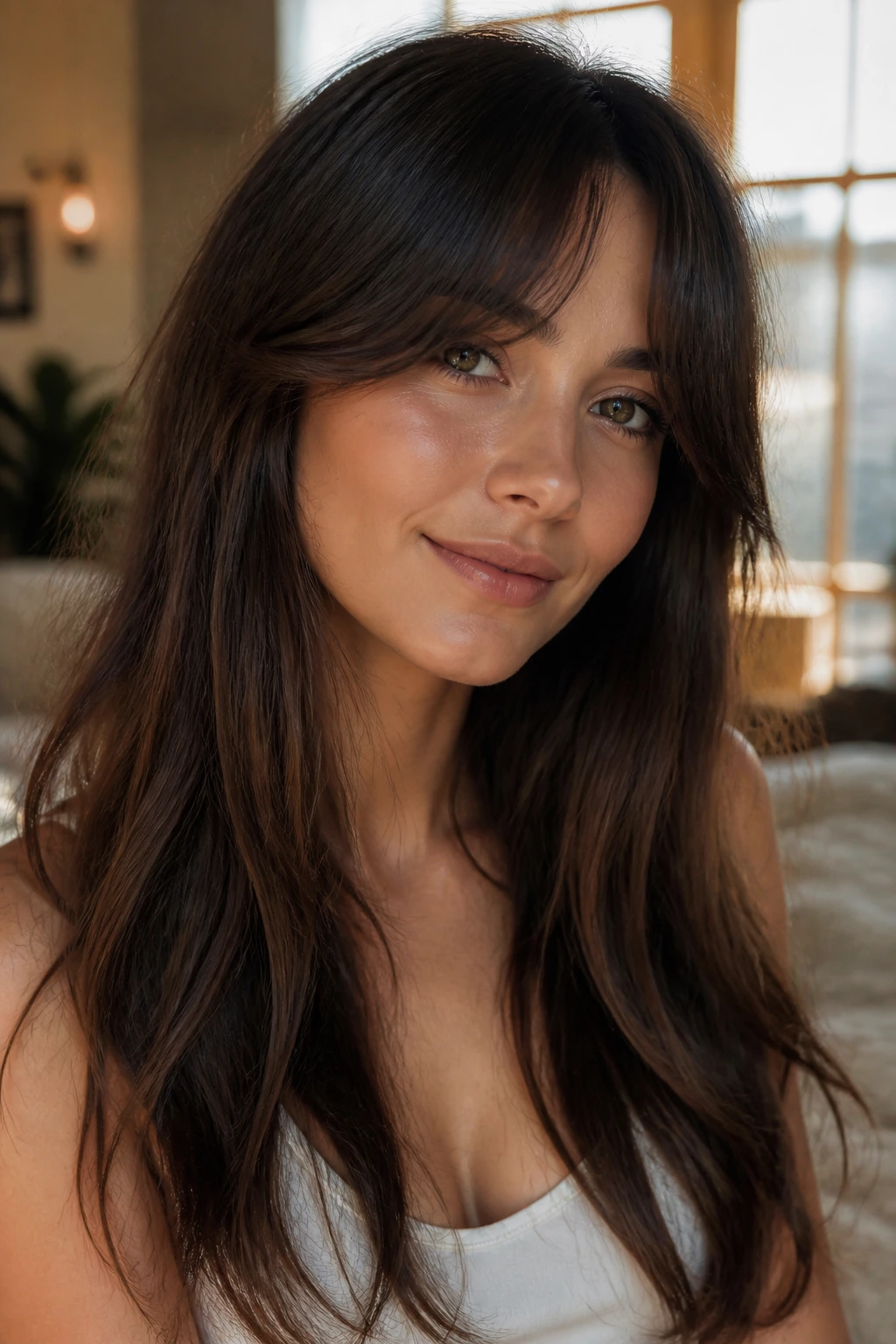
Arched front bangs curve gently in the center and lift a little at the sides, which creates a soft frame around the upper face. On a heart-shaped face, that arch can reduce the feeling of width at the forehead by avoiding a hard horizontal line.
The shape feels a little old-school in the best sense. Not dated. Just shaped. It works especially well if your hairline is naturally a bit curved or if your brows have a strong arch that you’d like to echo.
Why It Works
The center lands low enough to interrupt the forehead, but the sides stay light enough to keep the temples from feeling boxed in. That balance is the whole game with this face shape.
If your hair is very straight, you’ll need a decent blow-dry with a round brush to maintain the curve. If it’s wavy, the arch may come for free, which is convenient but also why it can puff at the corners if cut too short.
12. Soft Crescent Bangs
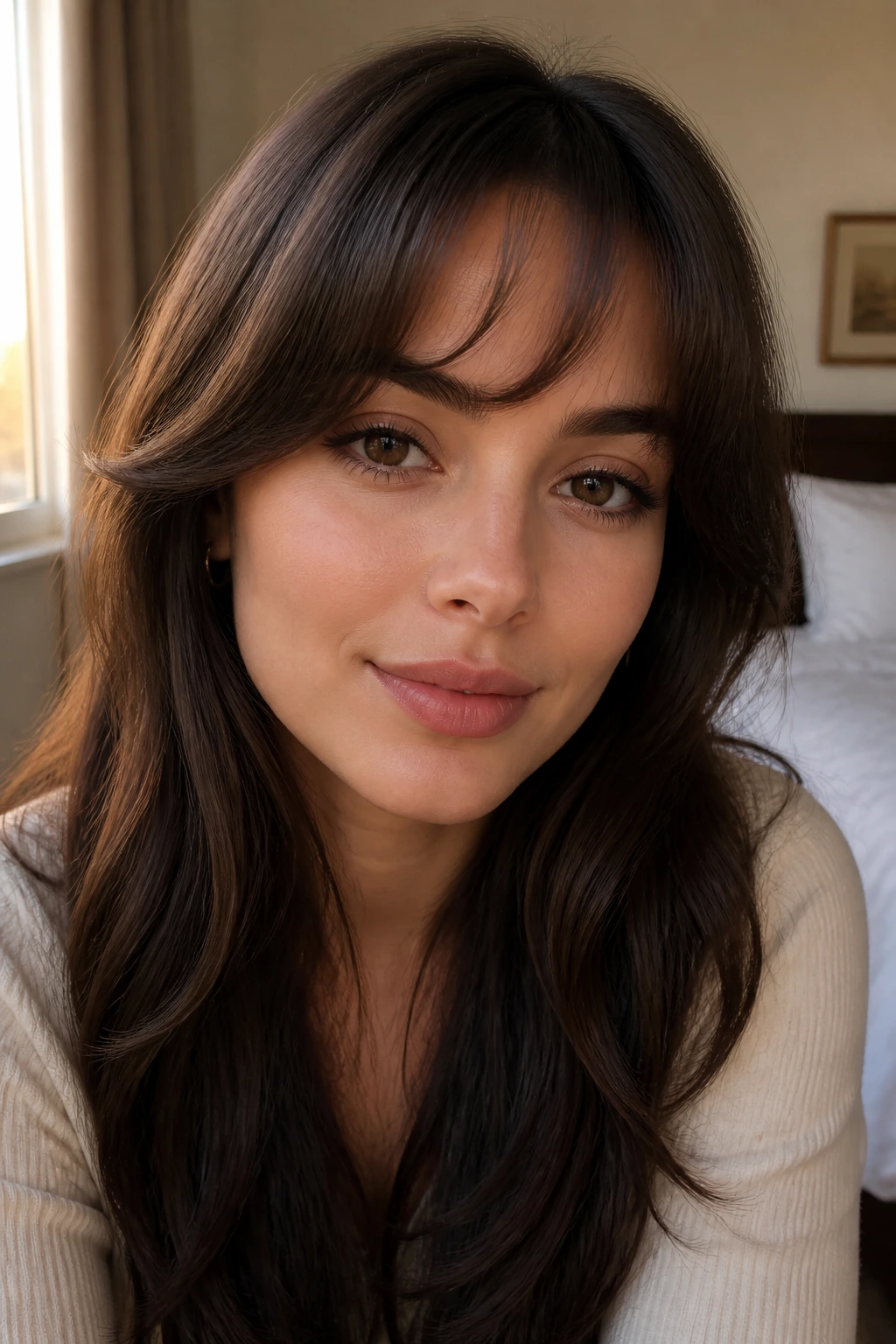
Soft crescent bangs are longer at the edges and shorter in the center, like a shallow smile across the forehead. They soften a heart-shaped face because the shortest part stays centered and the longer sides sweep down toward the temples and cheekbones.
They’re less obvious than blunt bangs and less parted than curtain bangs. A nice middle ground. If you’ve ever felt that curtains are too split and blunt bangs are too closed-in, this shape sits in the gap between them.
The best thing about crescent bangs is the way they frame the eyes without stealing them. They make the eyes look larger because the hair doesn’t stop dead at the brows; it curves away.
A crescent shape also gives long hair a little forward motion. That matters if your length tends to hang straight down and flatten the whole silhouette.
13. Peekaboo Fringe
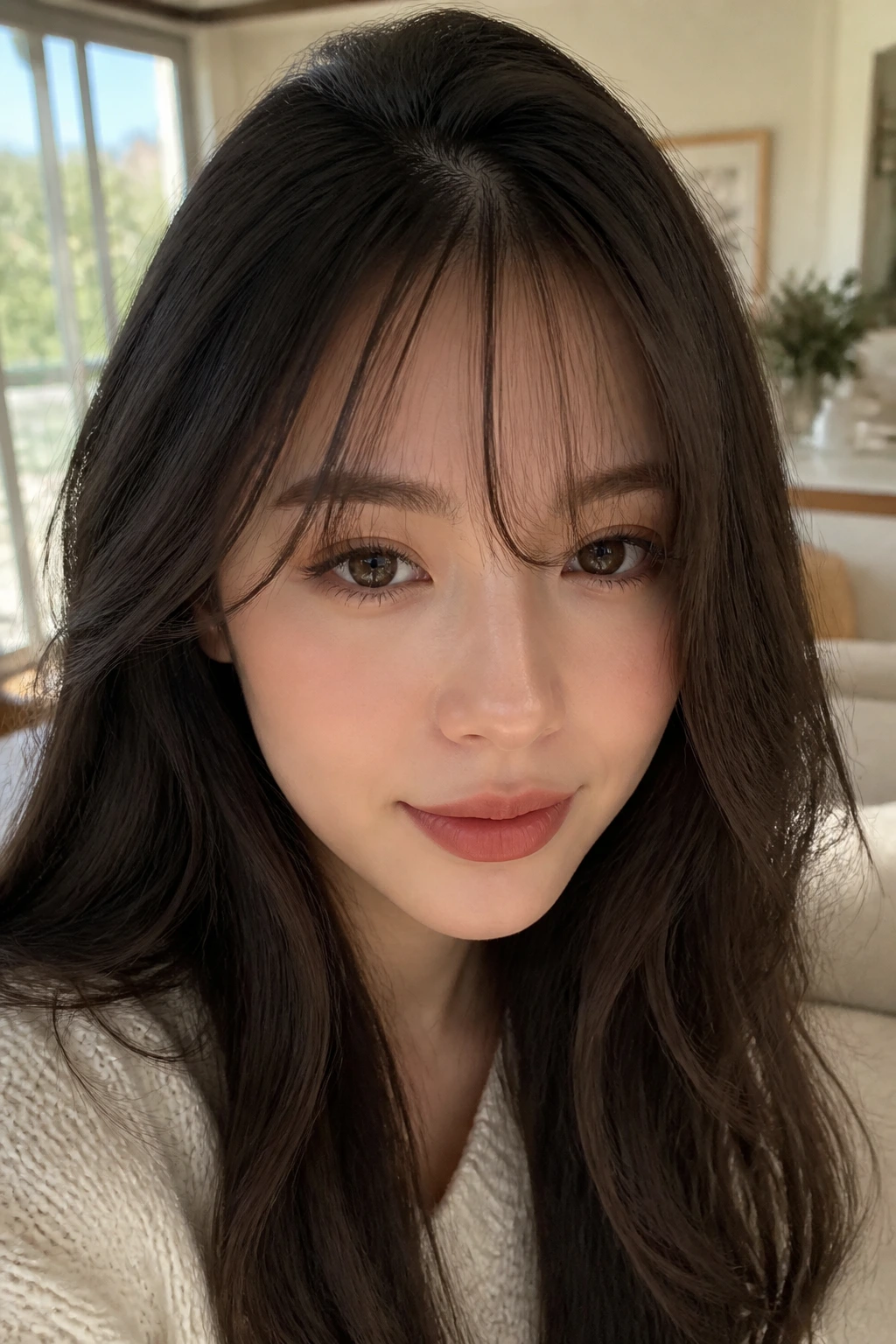
Peekaboo fringe is a sparse, airy fringe that lets a bit of forehead show through. On a heart-shaped face, that can be a relief. You get softness without a solid curtain, which helps if your forehead is broad but you still want the face to feel open.
This is a good match for fine hair or for anyone nervous about committing to a heavier bang. The fringe should look almost casual, like it fell there naturally and decided to stay.
A Practical Warning
Sparse bangs can look thin if they’re cut too far back into the crown. The result is not airy. It’s sad. Ask for the fringe to stay concentrated in the front and keep the density controlled, not over-thinned.
These also need regular trimming. Because they’re short and light, they can lose their shape fast if left alone too long. If you want low-maintenance, this is not the most forgiving bang on the list. If you want soft and easy to wear, it has a lot going for it.
14. Airy Shag Bangs
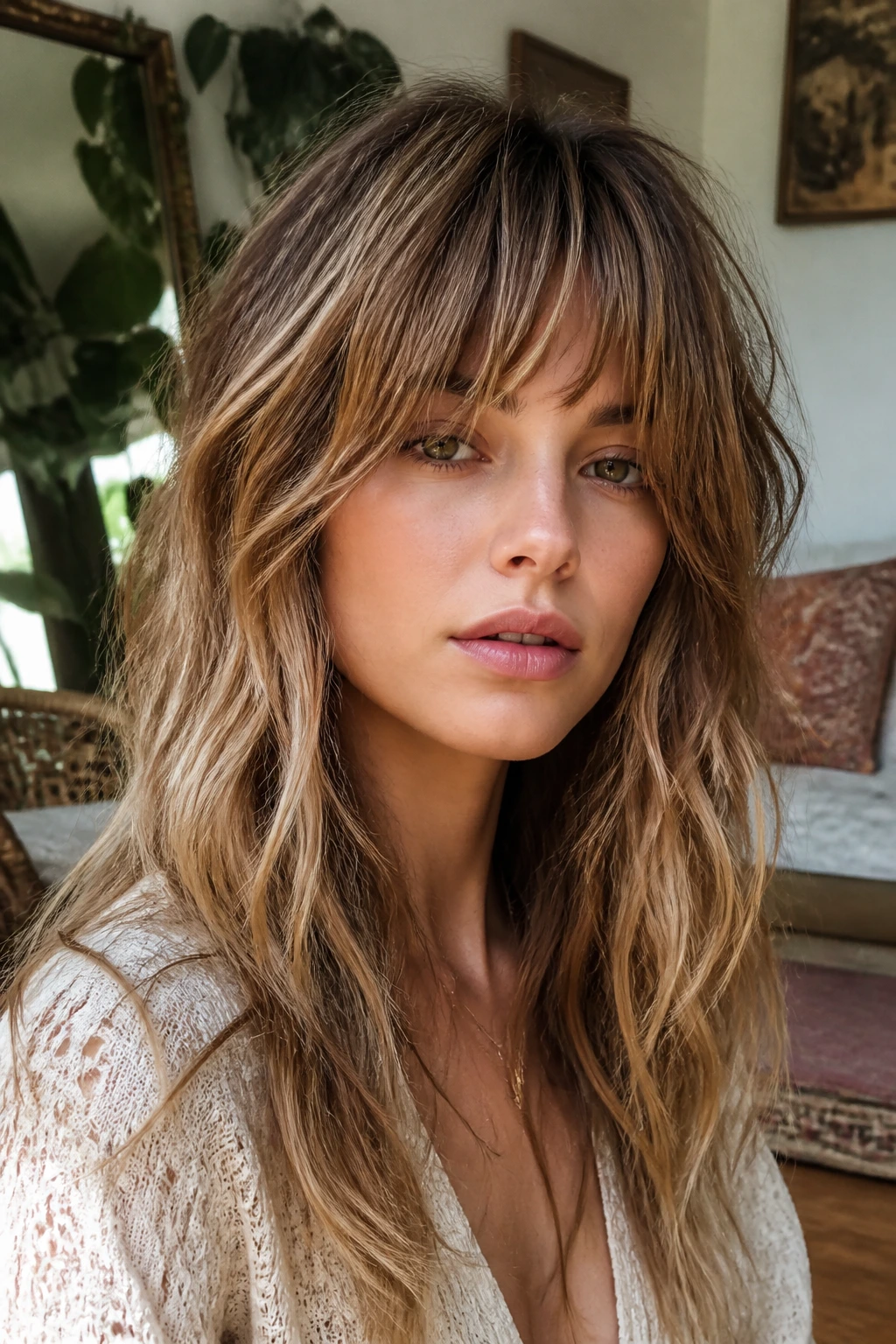
Airy shag bangs bring movement, texture, and a little messiness in the best possible sense. They’re built for long hair that already has layers, and they suit a heart-shaped face because the broken texture keeps the forehead from feeling visually heavy.
This is not a polished bang. That’s the point. It works when you want the front of the haircut to feel lived-in and a bit wild, not formal.
The shag element gives the fringe some lift at the roots and some scattered pieces near the eyes. That irregularity softens the forehead and sends attention to the cheekbones instead. It also makes the rest of the long hair feel connected to the bangs instead of separate from them.
If your hair falls flat at the front, a shag bang can wake it up fast. If your hair is already fluffy, keep the layers softer so the front doesn’t explode into a halo.
15. Deep Side-Part Bangs
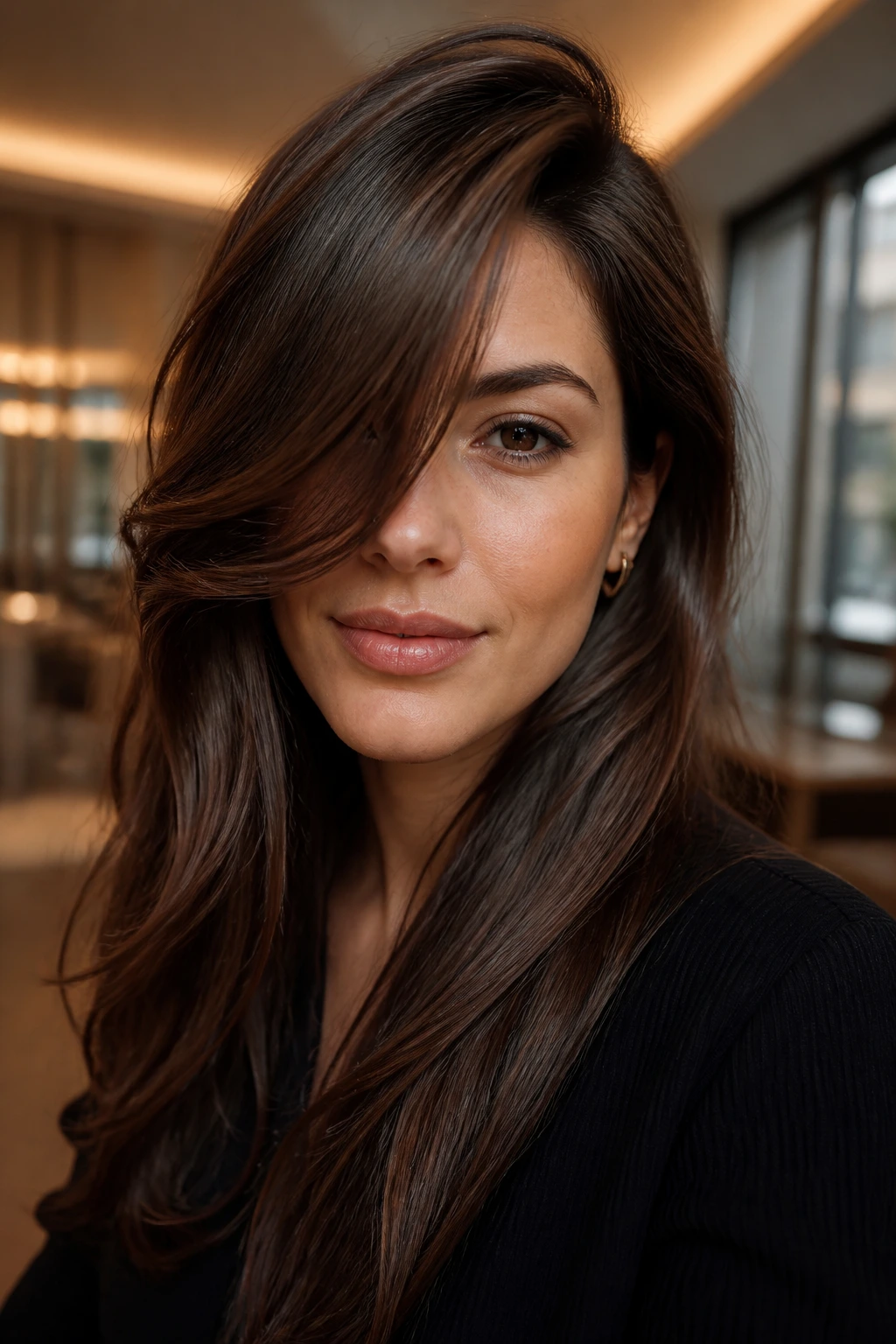
Deep side-part bangs take the side sweep and push it further. More drama. More diagonal. More cover at the forehead, which can be a good thing for a heart-shaped face because the part creates a long line that moves away from the center.
The cut itself often has a bit of layering through the front so the bang can fall across one eye without feeling heavy. That’s what separates this from an old-school side fringe. It’s softer, looser, and easier to blend into long hair.
Best For
- A strong forehead that you want to visually narrow
- Long layers that need a little front structure
- People who like a more glamorous side part
- Hair that holds a bend from a blow-dryer or iron
This style looks especially nice when the hair is tucked behind the opposite ear. That one move opens the face and keeps the fringe from swallowing your features. Handy trick. Not a miracle. Still handy.
16. Bottleneck-Curtain Hybrid Bangs
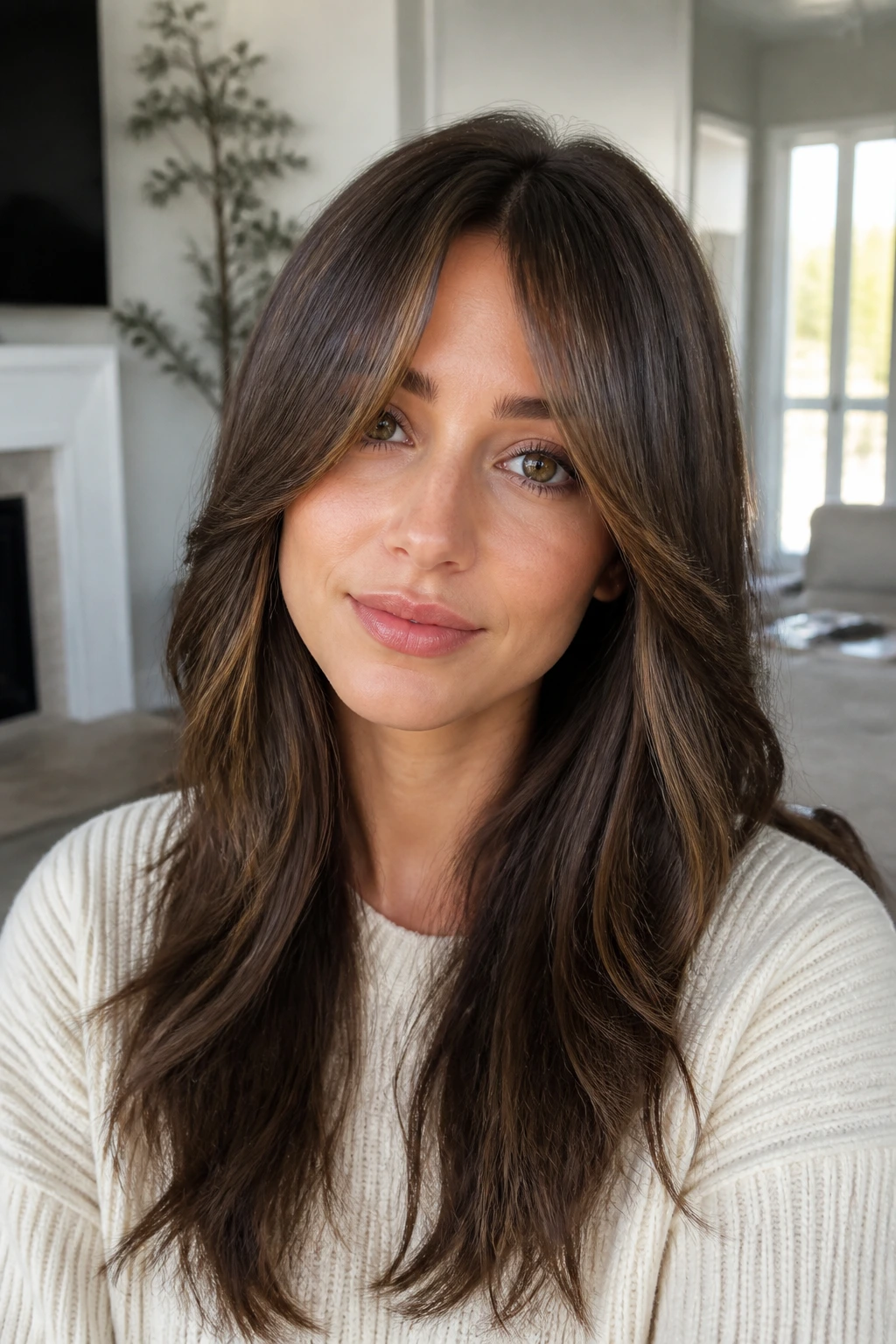
Think of this as curtain bangs with a little more shape built into the middle. The center starts narrow, almost tapered, then opens wider toward the outer edges. That hybrid shape is useful for heart-shaped faces because it gives a soft opening at the forehead without creating a big flat curtain across the brow line.
This version is for someone who likes structure but not rigidity. The center gives you a bit of coverage. The sides give you softness. And the long hair does the rest.
The reason I like this on long hair is that it can echo the length without looking repetitive. The fringe has its own shape, yet it still feels like part of the haircut.
If your stylist is precise with sectioning, ask for a small central section and two longer side pieces that are cut to fold back toward the cheeks. That language tends to get you closer to the right result than just saying “curtain bangs,” which can mean ten different things in ten different chairs.
17. Rounded French Fringe
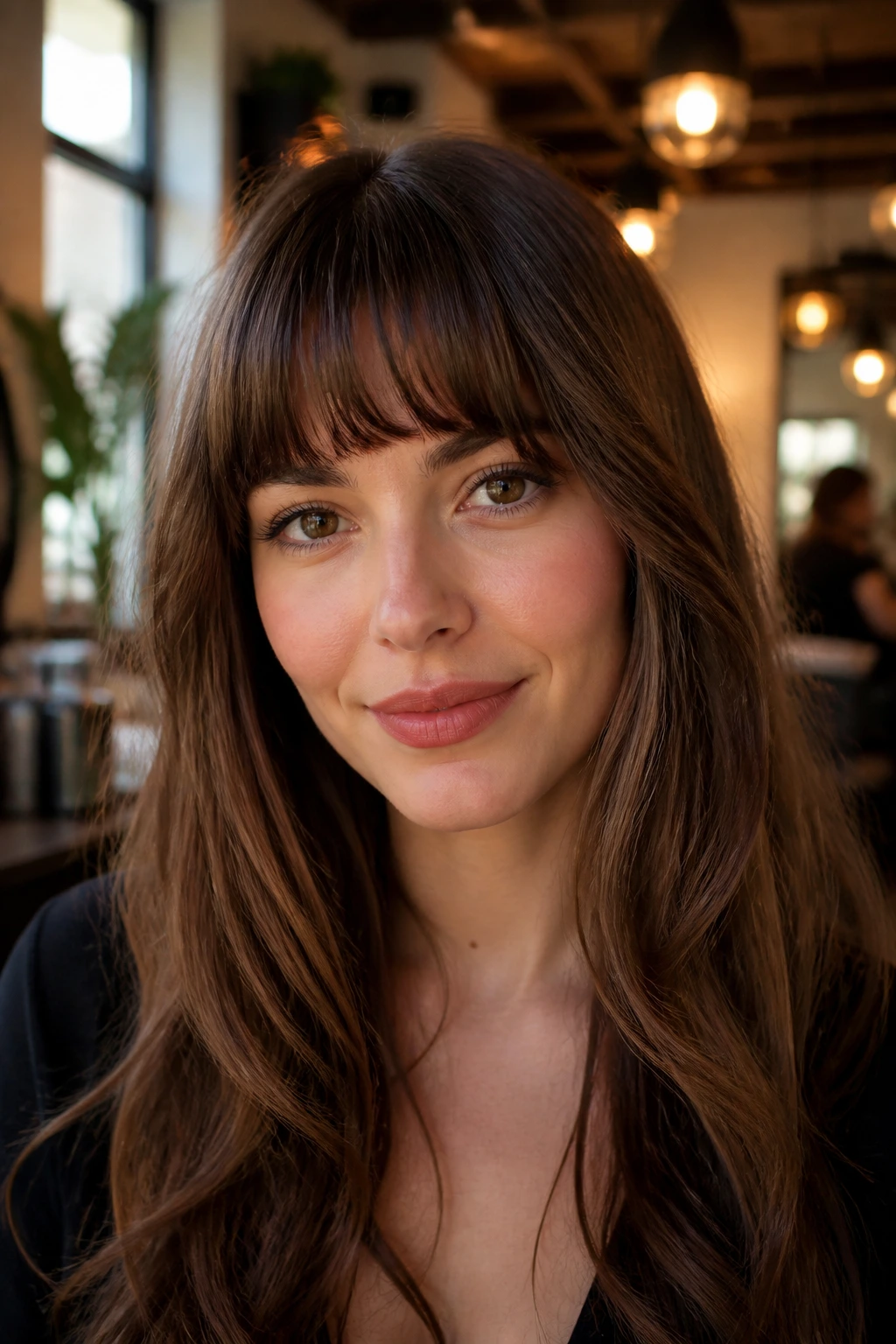
Rounded French fringe has a gentle curve and a little more density than a wispy bang, but less bluntness than a classic straight fringe. It can work on a heart-shaped face because the curve softens the upper face instead of cutting it off.
This style looks especially good if your eyebrows have a nice shape and you want the fringe to sit just above them. The curve should feel polished, not stiff.
There’s a small catch: if your forehead is very short, this shape can feel crowded. In that case, keep the fringe a touch longer and let the sides open earlier. The rounded line should flatter the face, not press on it.
The French fringe also has a nice grow-out phase. It doesn’t suddenly fall apart. It just eases into longer bangs, which is more useful than people give it credit for.
18. Cheekbone-Flip Bangs
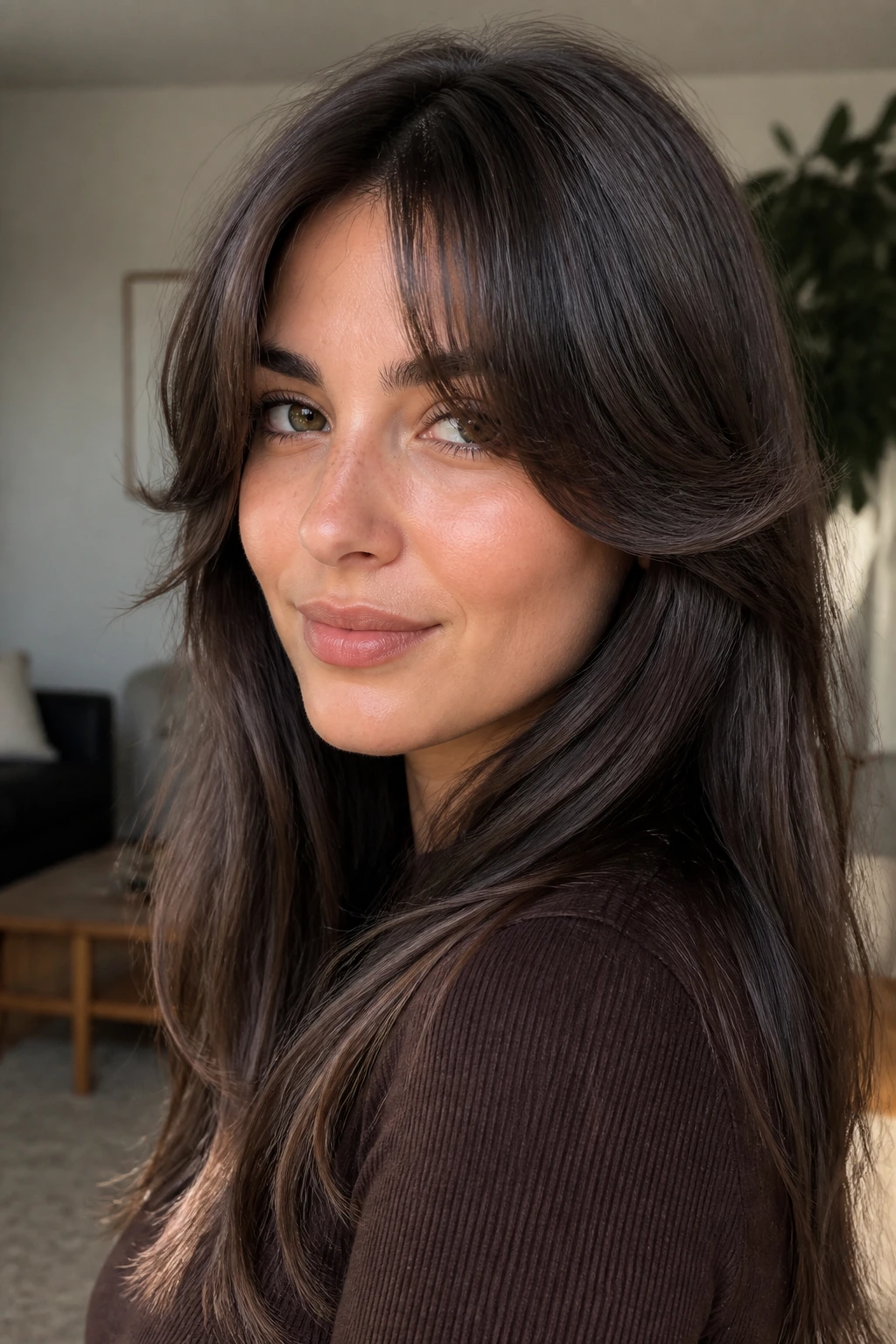
These bangs are all about the ends. They skim the front and flick away toward the cheekbones, almost like a tiny blowout built into the cut. On a heart-shaped face, that outward movement is useful because it sends width where the face tends to narrow.
The flip keeps the fringe from hanging too close to the eyes. That can make the front feel lighter, especially on thick hair. It also gives long hair a bit of lift without needing big volume at the crown.
A good cheekbone-flip bang usually sits between curtain and feathered fringe. You’ll want enough length to curve away from the face, but not so much that it disappears into the layers.
If your hair is stubbornly straight, you may need a round brush and a pinch of root lift spray. If your hair bends easily, this one may be a breeze. Lucky you.
19. Tapered Temple Fringe
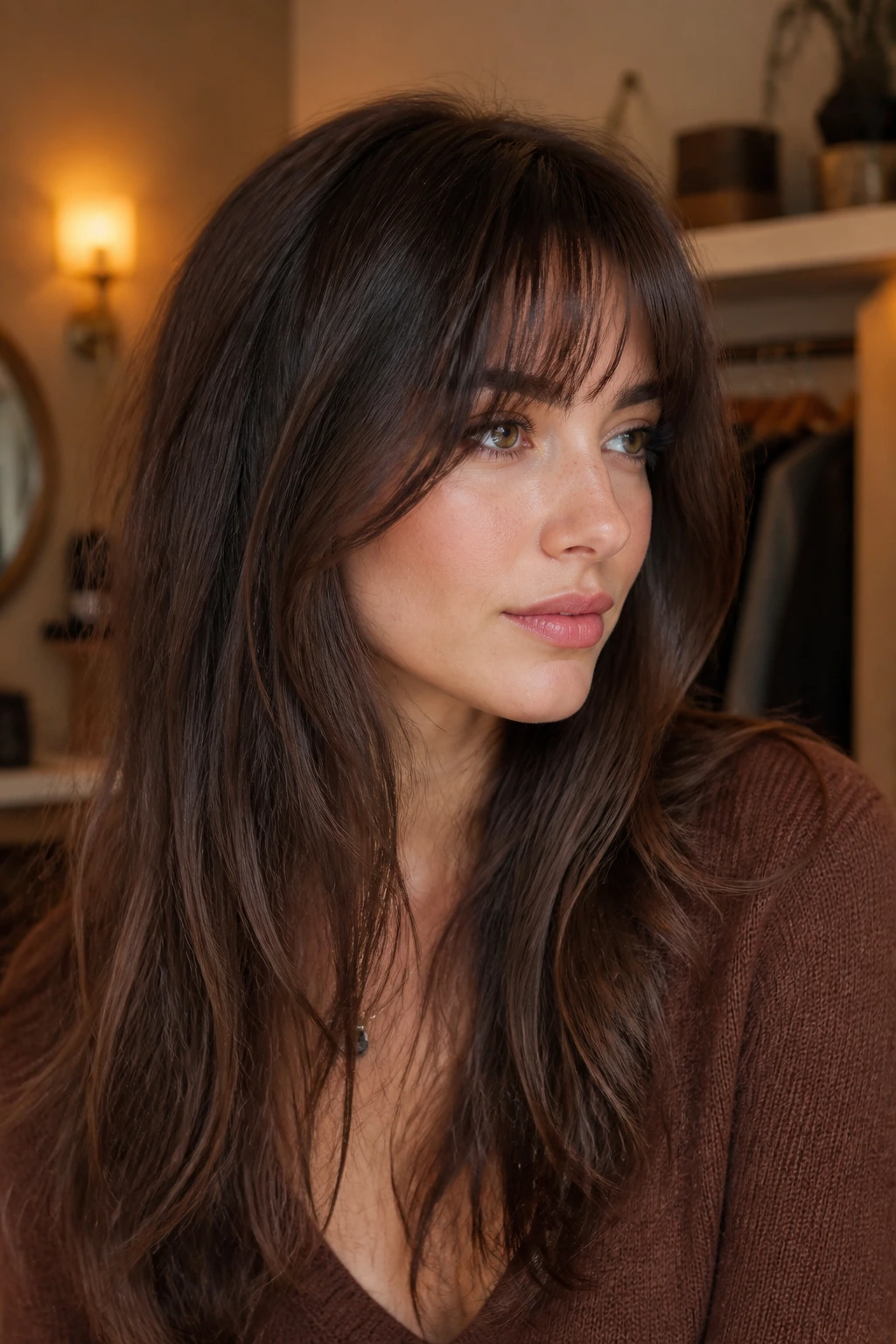
Tapered temple fringe gets softer as it reaches the sides, which makes it one of the smartest choices for a heart-shaped face. The temples are where a lot of fringes become too heavy, and this shape intentionally avoids that problem.
It’s a subtle style. The center has more presence, while the sides thin out toward the face-framing layers. That keeps the forehead from feeling boxed in and lets the lower face get some visual attention too.
This fringe is especially useful if you have thick hair. Without tapering, thick bangs can overwhelm the top of the face fast. With tapering, the fringe stays controlled and moves better.
Ask for the side pieces to be point-cut or lightly texturized, not thinned to nothing. There’s a difference. One keeps movement. The other creates bits that don’t know where they belong.
20. Soft Micro-Bangs with Length Around Them
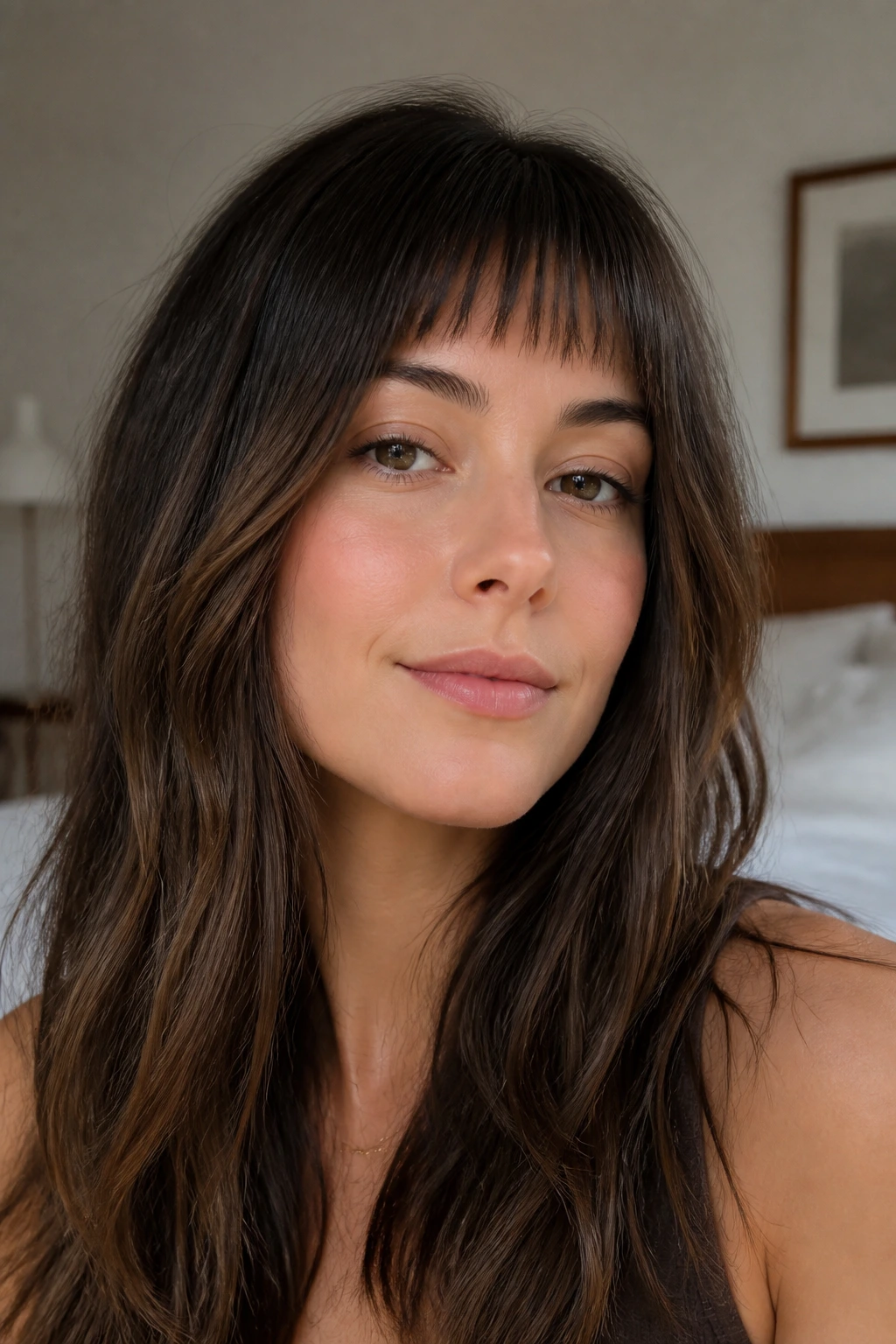
Micro-bangs are the bold choice here, and I’m not going to pretend they’re universally forgiving. But a soft version, paired with long hair and face-framing length, can be striking on a heart-shaped face because it creates a strong upper frame while the long lengths balance the lower half.
The key word is soft. These should not look chopped with a ruler. A slightly textured edge and a little transparency help them feel playful instead of severe.
This works best when the rest of the haircut is deliberately feminine or relaxed — think long waves, soft layers, or a fringe that sits inside a bigger shape. If the whole cut is sharp, the result can feel too hard for the face.
Not for everyone. Obviously. But if you like a little edge and don’t mind regular trims, it can be a memorable look.
21. Grown-Out Eyebrow-Skimmer Fringe
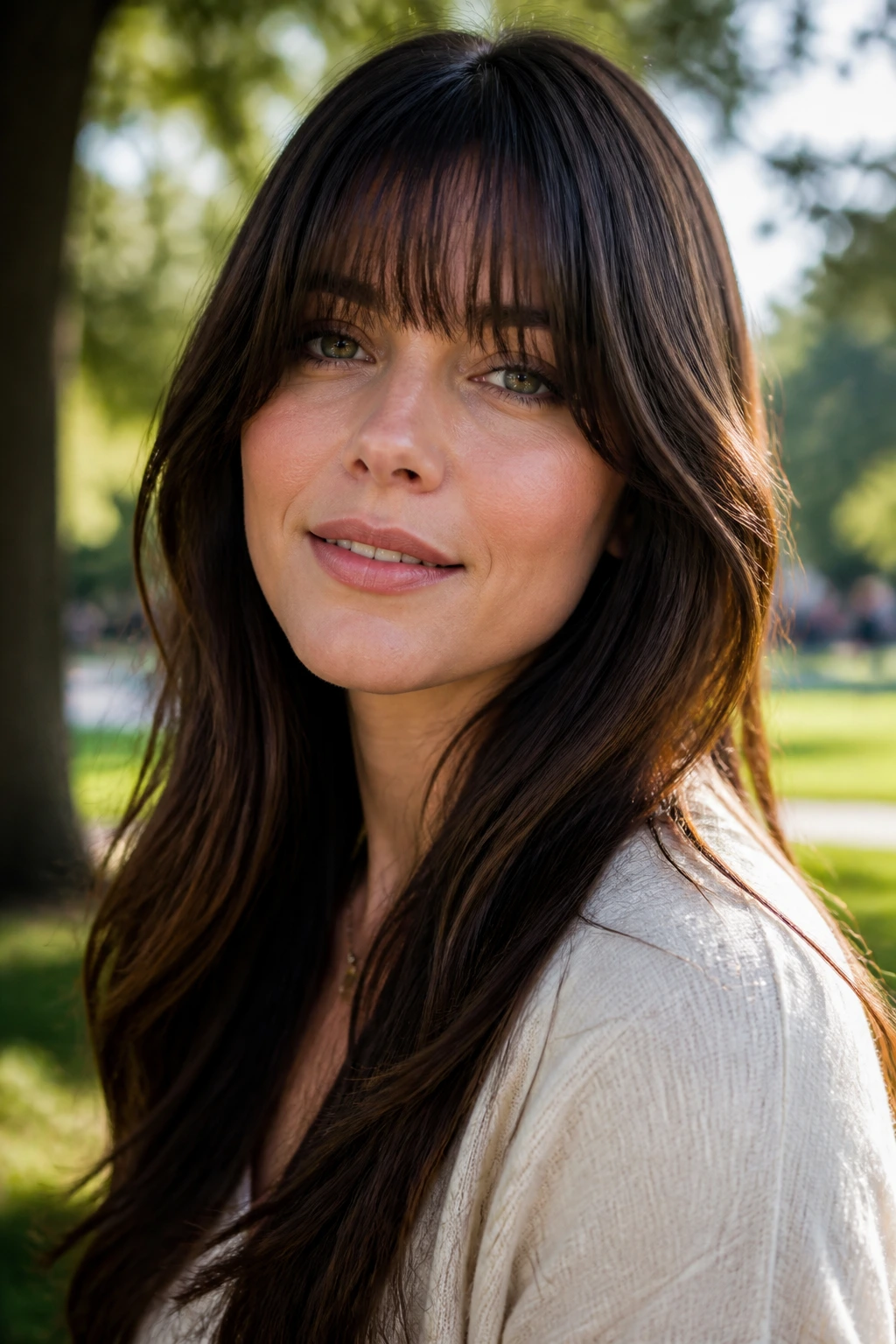
A grown-out eyebrow-skimmer is basically the fringe you get when you want to look like you didn’t fuss too hard, even if you did. It lands just at or below the brows, sits softer than a blunt bang, and blends into the sides enough to feel easy.
For a heart-shaped face, that softness is gold. The forehead is still framed, but there’s no hard chop across the top third of the face. Long hair helps the effect because it keeps the overall silhouette calm.
What It’s Best At
- Making a fringe look relaxed
- Stretching time between trims
- Working with slight waves or bends
- Avoiding the “too perfect” bang look
This style is good if you like bangs but hate the feeling of them being the entire haircut. They’re present, but they don’t dominate. That’s the appeal.
22. Long Swoop Bangs
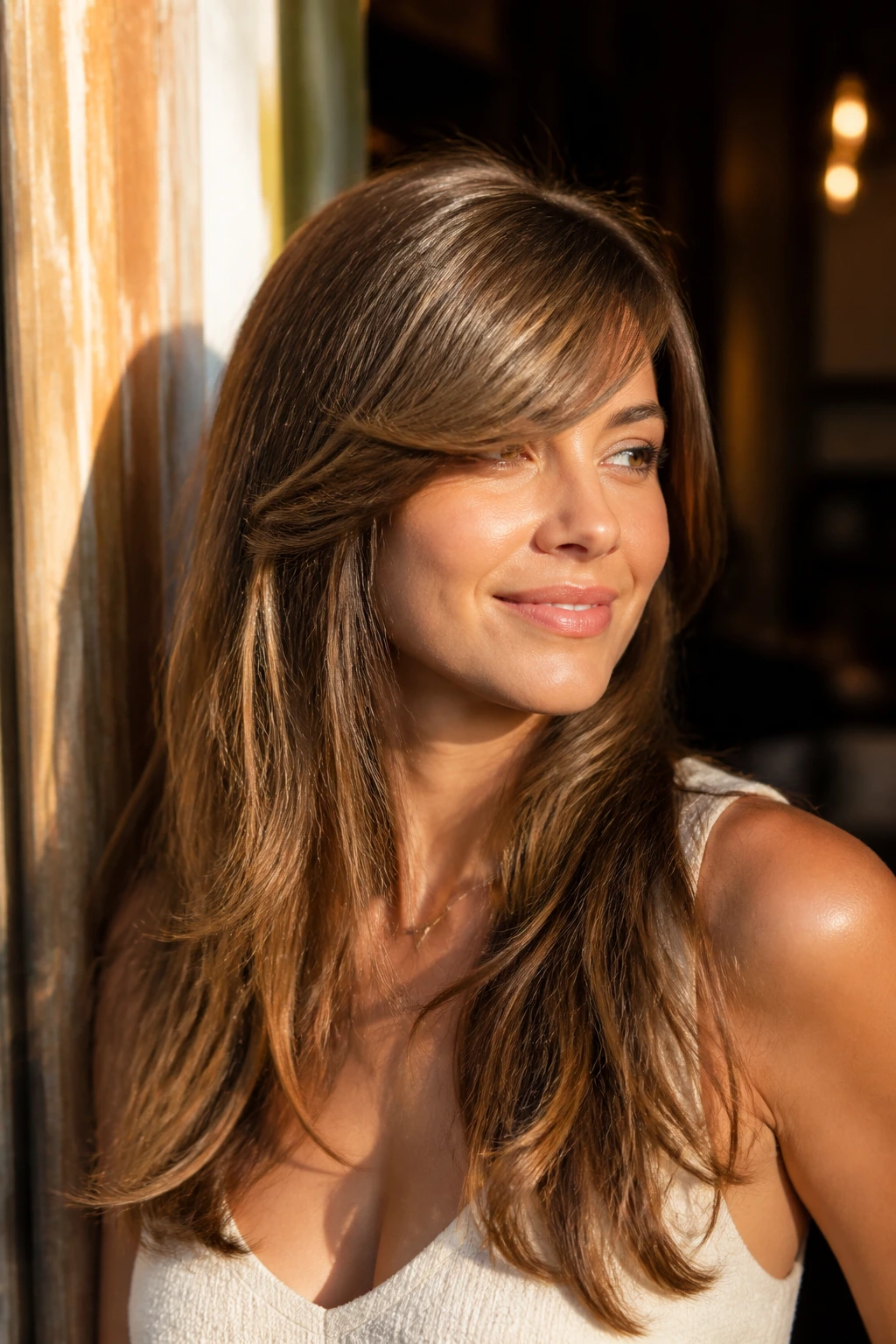
Long swoop bangs are the drama option without the bluntness. The fringe sweeps across the forehead in one long curve and blends into the length on the opposite side. On a heart-shaped face, that long diagonal does exactly what you want: it softens the forehead and directs the eye downward and outward.
They’re elegant without being precious. If you have long hair, the swoop can feel like a built-in styling choice, which is nice because it means you don’t always need a round brush and a perfect hand.
What makes this style stand out is the movement. It doesn’t sit still. The line slides across the face, then disappears into the rest of the hair. That makes it a strong match for someone who wants the front of the haircut to feel fluid rather than fixed.
If your part naturally sits deep on one side, this is one of the easiest bangs to live with. If your part is stubborn, it may take a few days of training. Worth it if you want that sweeping shape.
Why Front Bangs for Long Hair and Heart-Shaped Faces Work So Well
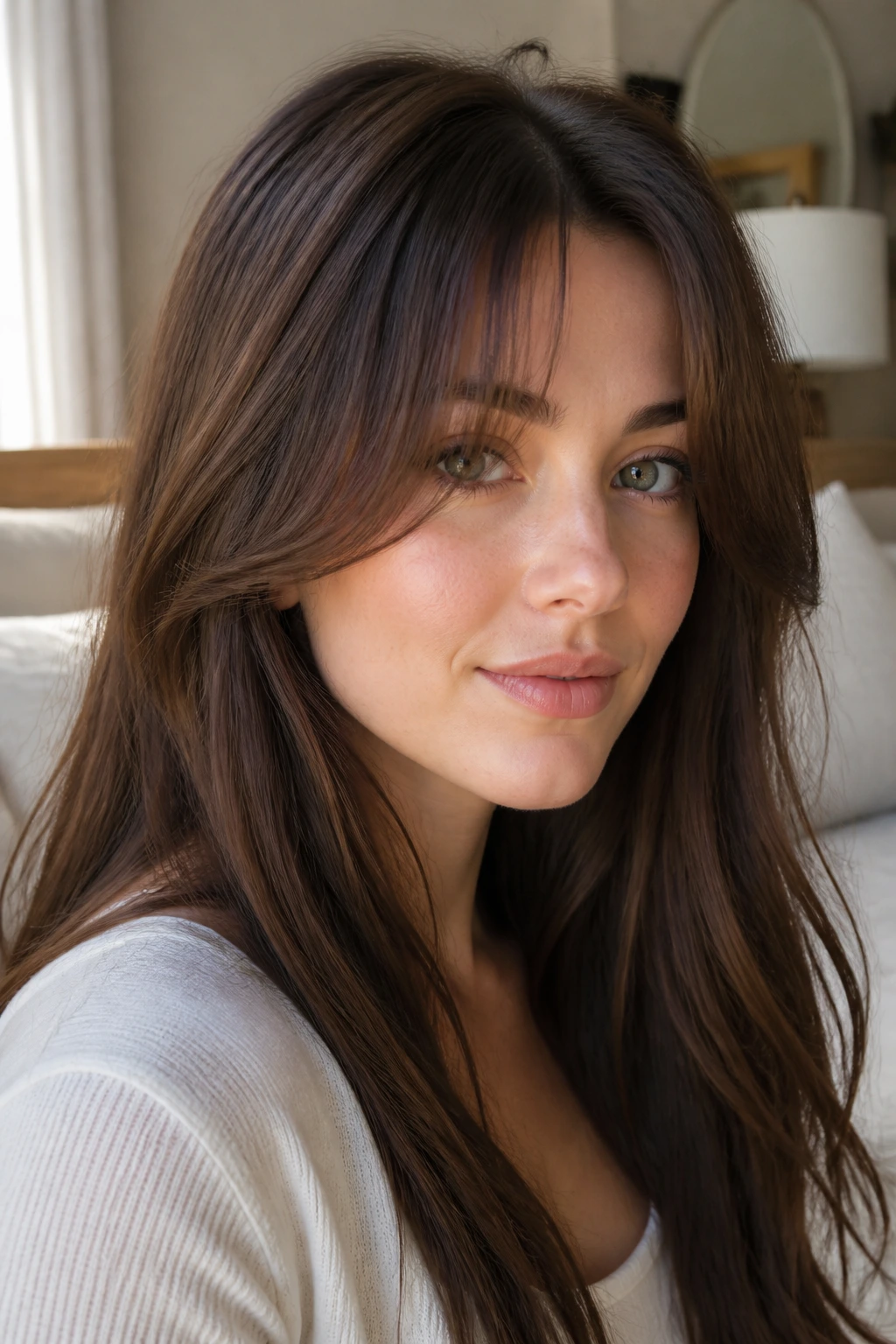
A heart-shaped face usually carries more width through the forehead and temples, then narrows toward the jaw. That shape is lovely, but it does ask the front of the haircut to do some balancing work. Front bangs can do that job faster than almost anything else because they change the visual weight of the face without sacrificing length.
Long hair matters here because it keeps the lower half of the face from feeling neglected. If the bangs are soft and the length has some movement, the eye travels from the forehead down to the cheekbones and then to the jaw. That’s the whole trick. The cut stops feeling top-heavy.
The styles that work best usually share one of three traits: they open in the middle, they taper at the sides, or they use texture to break up the forehead line. Straight, heavy, one-length bangs can still work, but they need more precision. A little too much width at the front and the face starts to look compressed.
I also think texture changes the whole conversation. Straight hair can carry a cleaner bang shape, while wavy hair often makes a fringe look softer and more forgiving. Thick hair needs more internal removal so the bang doesn’t sit like a slab. Fine hair needs a bit of density left in the cut so it doesn’t vanish at midday. Tiny details. Big difference.
What to Ask for at the Salon Before the Scissors Open
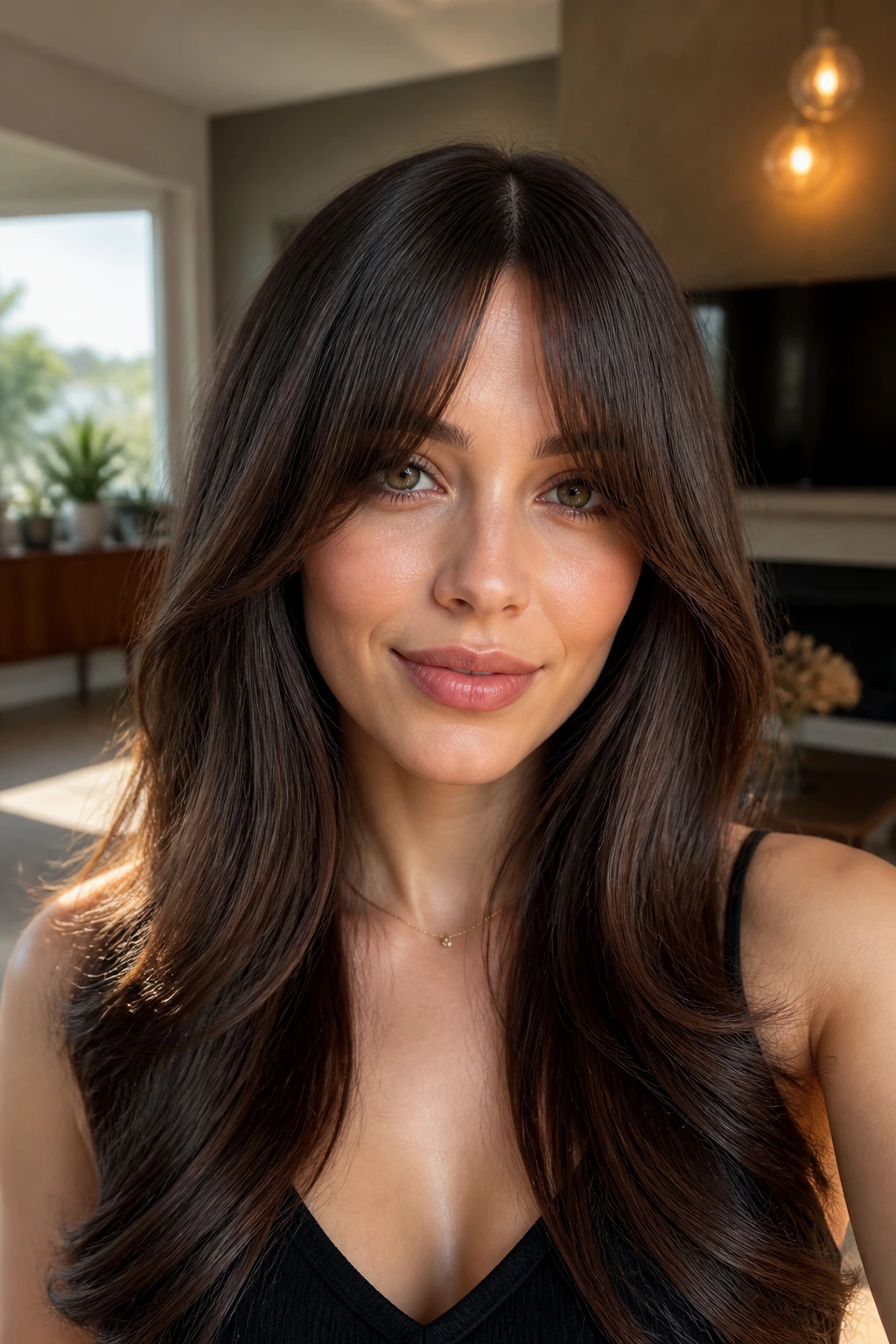
Bring photos, yes, but bring the right kind. A picture of bangs on someone with a totally different hairline, density, or face shape can confuse things fast. What helps more is a photo that shows the shape you want: center part, length at the cheekbone, brow-grazing line, textured ends, whatever matters most.
Tell the stylist how you usually wear your long hair. Middle part, side part, air-dried waves, blowout, ponytail, claw clip — all of that changes the best fringe. A bang that looks perfect with a polished round-brush blowout may fall flat on an air-dried wave pattern.
Be honest about maintenance. If you won’t trim every four to six weeks, don’t ask for a fringe that turns awkward after three. If you hate heat styling, skip the ones that need a sculpted bend every morning. There’s no prize for choosing the hardest option.
A heart-shaped face usually benefits from front bangs that are a bit longer at the temples and softer at the center. If you remember only one sentence when you sit in the chair, make it that one. It steers the whole conversation in the right direction.
Essential Tools for Cutting and Styling Front Bangs
-
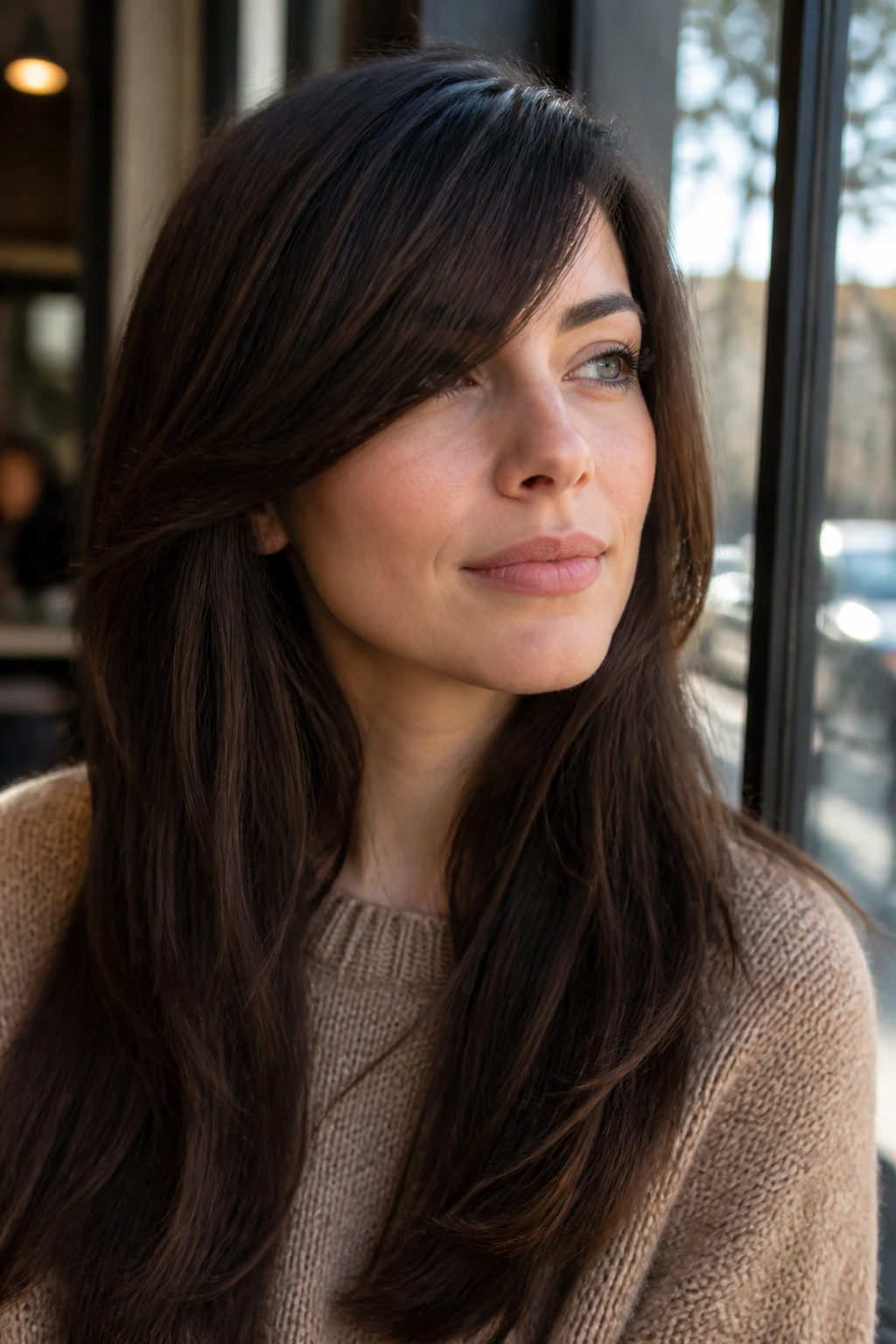
Sharp hair scissors: Kitchen scissors chew the ends and leave bangs looking fuzzy; real haircutting shears make the line cleaner.
-
Fine-tooth comb: Useful for sectioning, smoothing, and checking how the fringe falls before you dry it.
-
Sectioning clips: Keep the rest of the hair out of the way so you don’t accidentally pull extra length into the bang section.
-
Blow dryer with a nozzle attachment: The nozzle lets you direct airflow down the hair shaft, which helps bangs sit smoother and less puffy.
-
Small round brush, about 1 to 1.25 inches: Best for shaping fringe without making it curl into a tight little spiral.
-
Flat iron with narrow plates: Handy for a quick bend or touch-up, especially on side-swept and curtain styles.
-
Lightweight styling cream or mousse: A small amount gives the fringe hold without turning it crunchy.
-
Dry shampoo: Ideal for bangs, which pick up oil faster than the rest of the hair because they sit on the forehead all day.
-
Texturizing spray: Useful for piecey, shaggy, or feathered styles that need separation.
-
Hand mirror: Sounds obvious, but it helps you check the sides and temples while styling from the front mirror.
How to Wear the Fringe So It Balances the Face
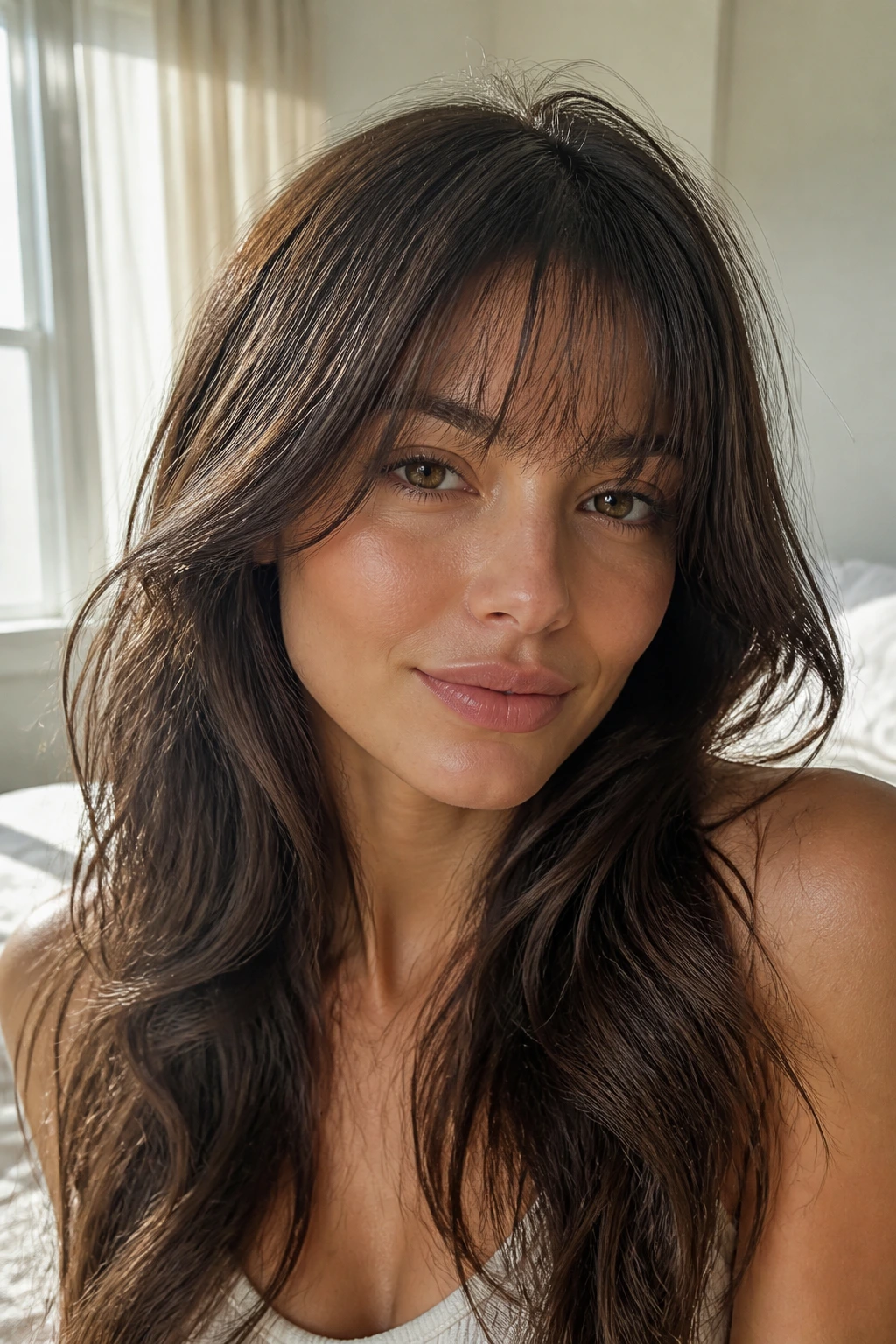
Parting: A heart-shaped face usually looks best when the fringe has room to open a little, even if you like a center part. If the part is too rigid, the forehead can feel exposed in a harsh way. A soft center or deep side part usually gives the best balance.
Texture: Straight styles should have a bend at the ends. Wavy styles can keep the shape softer and more casual. Don’t fight your texture so hard that the bangs stop moving; dead-straight fringe on naturally bendy hair often looks like it belongs to a different head.
Pairing: Long layers around the cheekbones are the best friend of almost every fringe on this list. They widen the lower half of the face just enough to balance the forehead. A blunt one-length cut can still work, but it usually needs a more precise bang shape to keep the silhouette from feeling too top-heavy.
Mood: Curtain, bottleneck, and feathered fringe work for relaxed days. Brow-grazing blunt bangs, arched fronts, and long swoops read sharper. Pick the one that fits your life, not just your camera roll.
How to Keep Bangs Looking Fresh Between Salon Visits
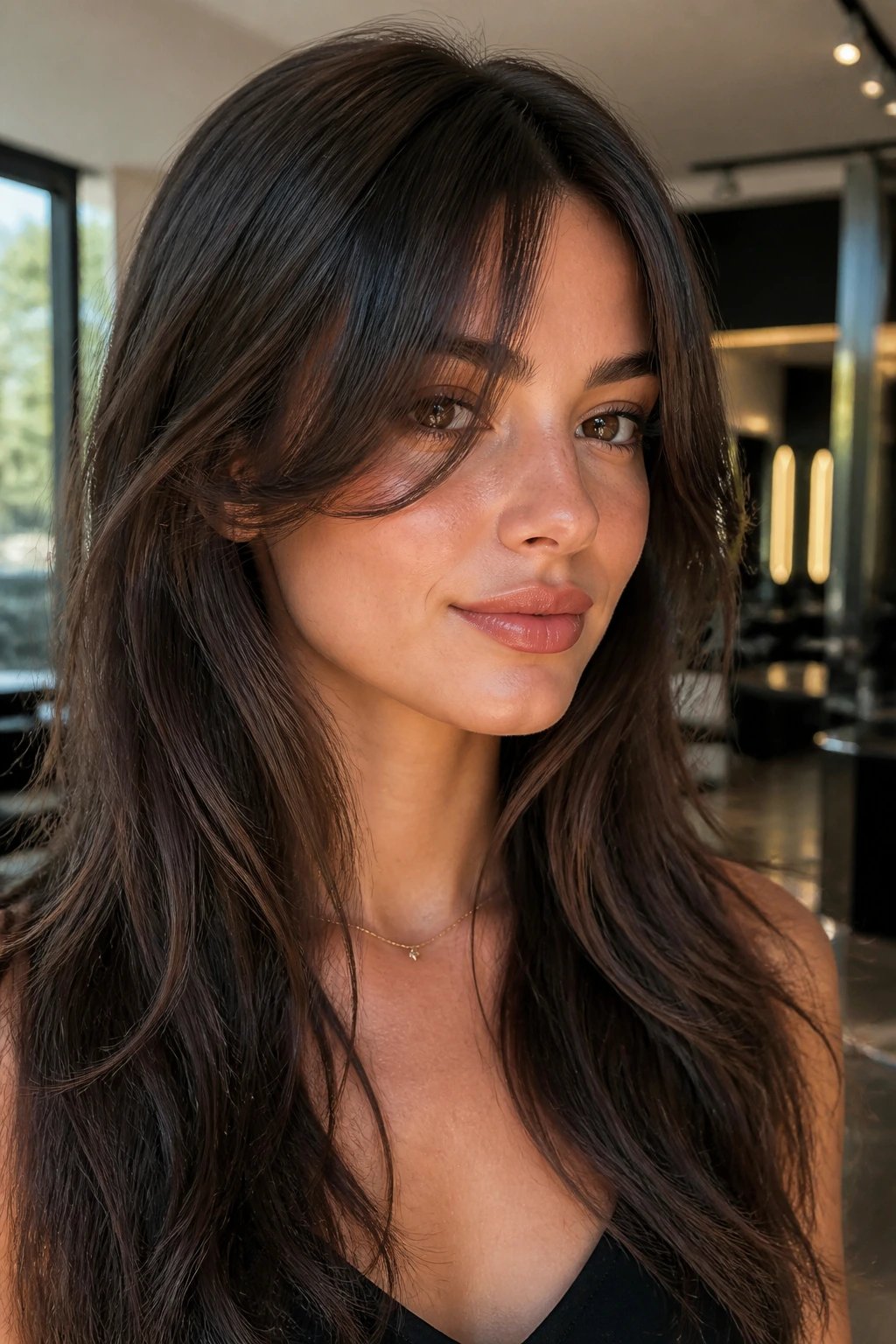
Bangs age faster than the rest of a haircut. That’s not a flaw. It’s just physics. They sit against the forehead, collect oil, and get touched more often, so they lose shape in a way that long lengths don’t.
A quick morning reset goes a long way. Mist the fringe lightly with water, then dry it from side to side with the nozzle pointed downward. That small side-to-side motion breaks the root pattern and stops the bang from drying in a cowlick shape. If you need more structure, wrap the ends around a small round brush for ten to fifteen seconds and let them cool.
Dry shampoo is your friend, but don’t drown the bangs in it. Two light sprays at the roots, then a quick finger massage, usually does the job. Too much powder can make the front look dusty and stiff, which is a bad trade for a five-hour-old fringe.
For trims, many bangs need a cleanup every four to six weeks. Softer styles can stretch longer. Blunter styles usually can’t. If you’re growing them out, ask for light dusting at the corners rather than chopping the center back to square one.
Extra Tips That Make the Cut Easier to Live With
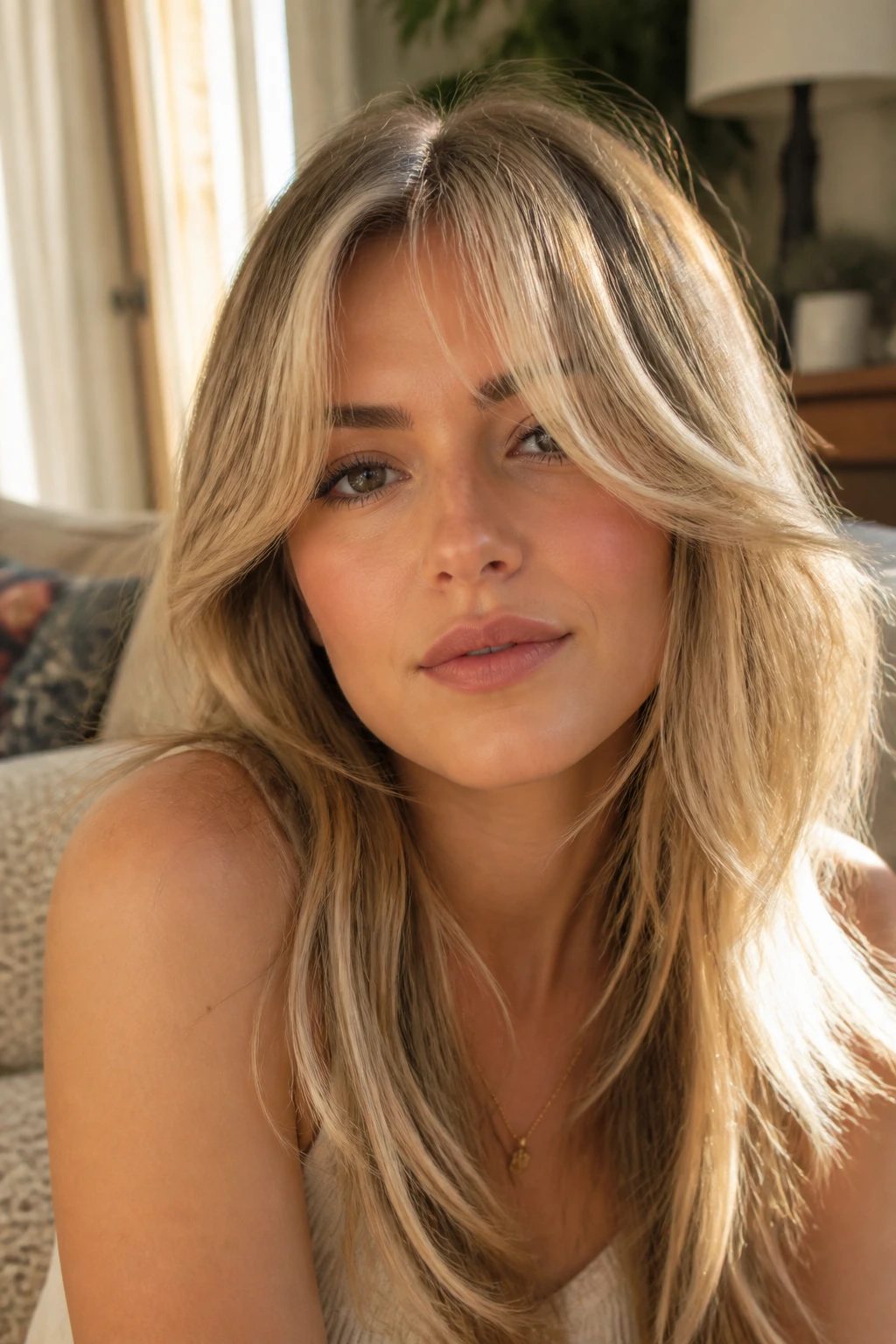
Drying Direction: Blow-dry the fringe in the opposite direction first, then back into place. That simple reset helps flatten cowlicks and gives the root a cleaner lift.
Cowlick Plan: If your hairline kicks hard at one side, don’t cut the fringe short enough that it springs up above the brows. Leave a little extra length and let the bend settle after drying.
Salon Photo Tip: Bring a second photo of what you don’t want. That saves more mistakes than a perfect inspo shot does, because stylists can avoid the wrong weight, width, or length.
Make-It-Yours: If your hair is fine, keep the fringe a touch denser. If it’s thick, ask for internal texture so the front doesn’t feel like a curtain rod. If it’s curly, plan for shrinkage before anyone picks up the shears.
Pro Move: Keep a small flat iron just for bangs if you style them often. Smaller plates give you more control than a big iron that wants to bend the whole front section into a wave.
Common Mistakes That Throw the Shape Off
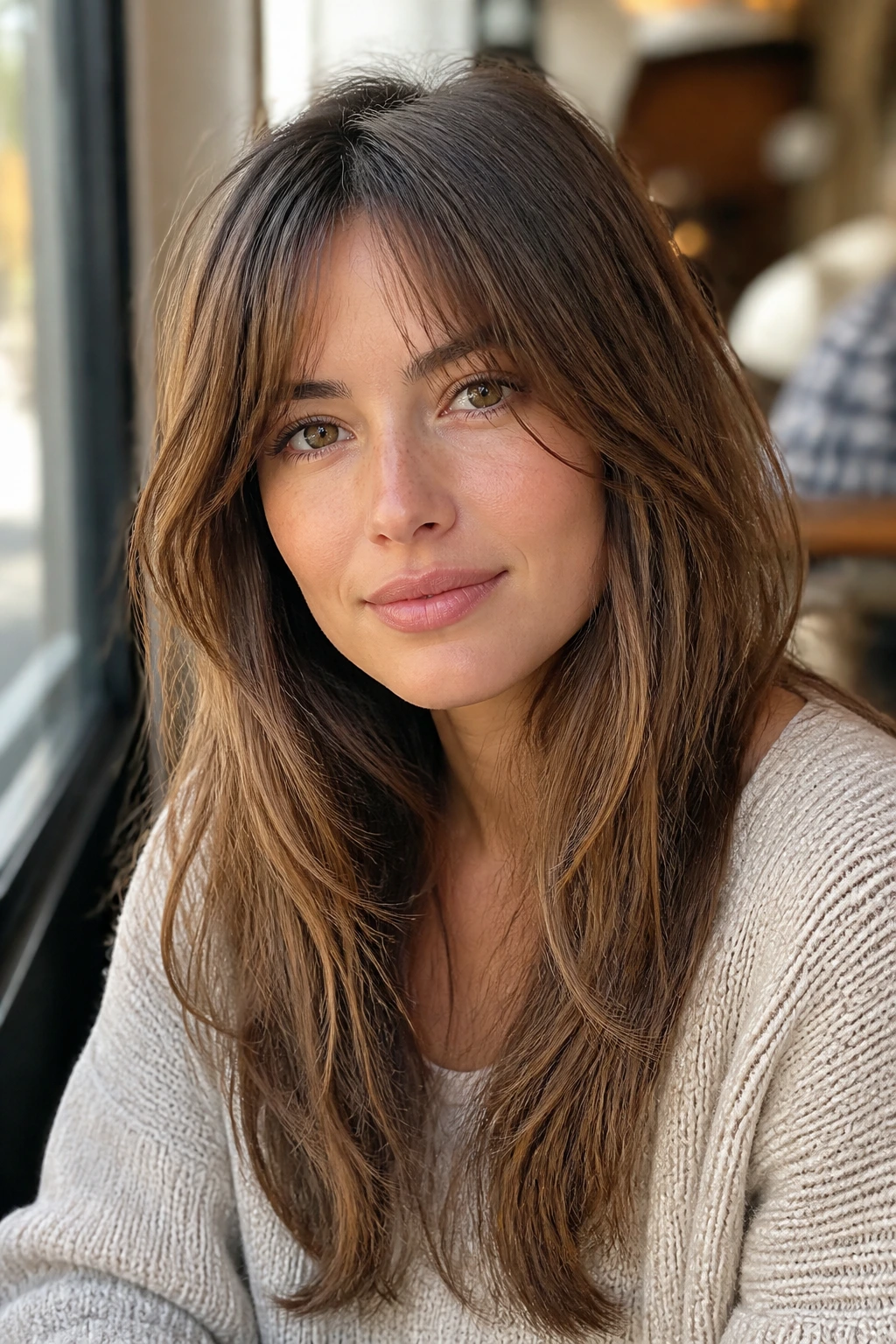
The first mistake is cutting bangs too short while the hair is wet. Wet hair lies. It lies a lot. Hair that seems perfect at the sink can jump half an inch or more when it dries, and that’s how people end up with fringe that sits above the brows and refuses to soften.
Another common one: making the fringe too dense. A heart-shaped face already has width up top, so a thick, solid bang can make the forehead feel even more dominant. Lighten the interior if needed, but don’t strip it so much that the fringe turns see-through and weak.
A third mistake is ignoring the temples. If the sides stop too abruptly, the bangs look pasted on. The outer pieces should taper into the front layers or cheekbone area so the whole cut feels connected.
Product overload causes trouble too. Creams, oils, and heavy sprays can make bangs separate into greasy strands by noon. Keep product light. If the fringe needs help, start with a blow-dry and only add a touch of texture product after.
Finally, don’t choose a bang shape that needs more daily styling than you’re willing to give it. That sounds obvious. People still do it every day.
Variations and Alternatives When You Want Less Commitment
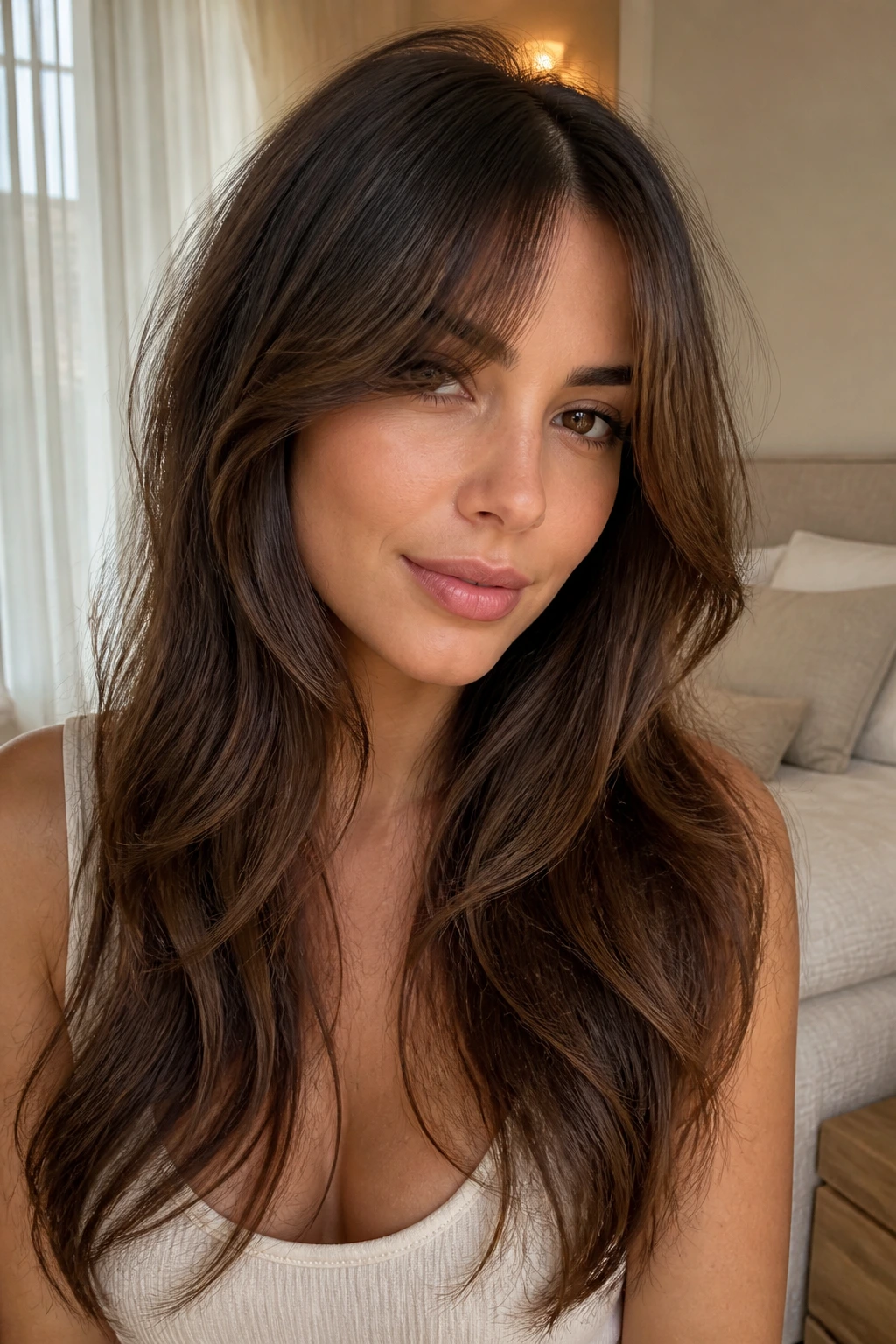
The Clip-In Test Drive: If you’re nervous about a full cut, clip-in fringe pieces let you test the look for a few days. They’re not a substitute for the real thing, but they help you figure out length and density before the scissors come out.
The Soft Grow-Out Plan: Start with curtain bangs or a long layered fringe, then let the sides become face-framing pieces. This is the easiest path if you want fringe now and regret later to be less painful.
The Curly-Texture Version: Curlier hair does better with longer, looser bang shapes — usually curtain, split, or shag-inspired fringe. Short blunt bangs can bounce up unpredictably unless the curl pattern is very controlled.
The Thick-Hair Edit: Thick hair needs internal removal and careful sectioning so the front doesn’t become a block. Bottleneck, feathered, and taper-heavy styles usually sit better than solid straight-across cuts.
The Fine-Hair Edit: Fine hair usually benefits from a slightly denser fringe with less aggressive thinning. A wispy bang that’s too light can vanish by lunchtime.
The No-Heat Version: If you hate styling tools, stick to side-swept, soft curtain, or long swoop bangs. These can be coaxed into shape with fingers and a little air-drying, which is about as low-maintenance as fringe gets.
Frequently Asked Questions
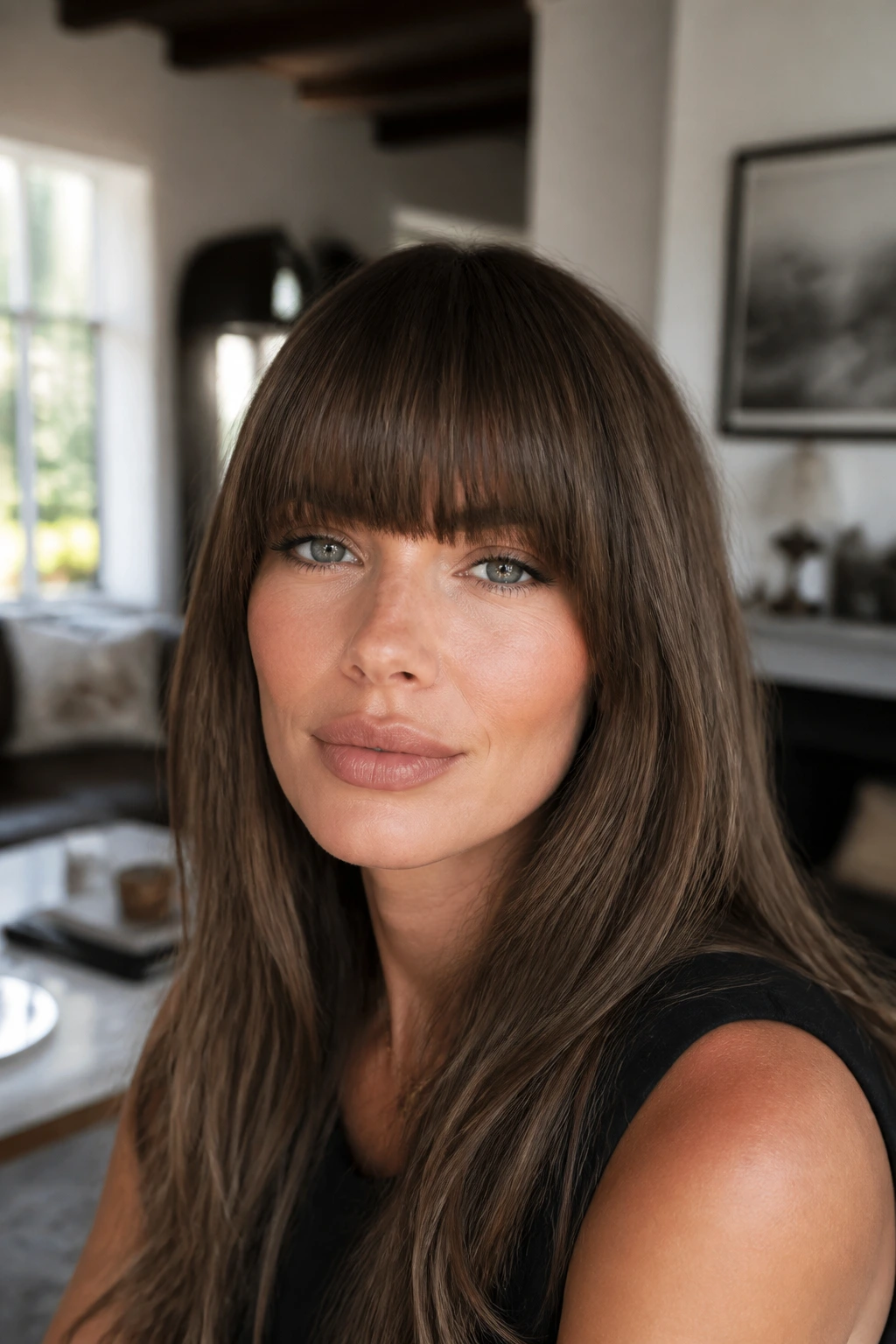
Which front bangs are most flattering on a heart-shaped face?
Soft curtain bangs, bottleneck bangs, and cheekbone-skimming split bangs are usually the easiest wins. They soften the forehead and add movement near the cheeks, which helps balance a narrower jawline.
Can blunt bangs work with long hair and a heart-shaped face?
Yes, if they’re not too dense and the rest of the hair has softness around the face. A brow-grazing blunt fringe with a little texture can look sharp without making the upper face feel too heavy.
Are curtain bangs still a good choice if I have a cowlick?
Usually, yes. They’re one of the more forgiving options because the parting gives the cowlick somewhere to live. You’ll still need to dry the roots in the opposite direction first, though.
How often do bangs need trimming?
Most fringes need a cleanup every four to six weeks, especially the sharper shapes. Softer, longer styles can stretch a little longer, but once they start hitting the lashes and splitting awkwardly, it’s time.
Will bangs make my face look shorter?
They can, if the fringe is heavy and ends too low. Softer styles that open at the temples usually keep the face from feeling compressed. The trick is width and weight, not just length.
What if I want bangs but I’m scared of the grow-out phase?
Start with a longer curtain, split, or layered fringe. Those shapes blend into the rest of the haircut more easily and give you a softer exit if you decide you’re done.
Can I style bangs without heat every day?
Some fringe shapes handle air-drying better than others. Side-swept, long swoop, and soft layered bangs are the easiest to wear with minimal heat. Blunt or sculpted styles usually need more help.
A Fringe That Knows How to Move
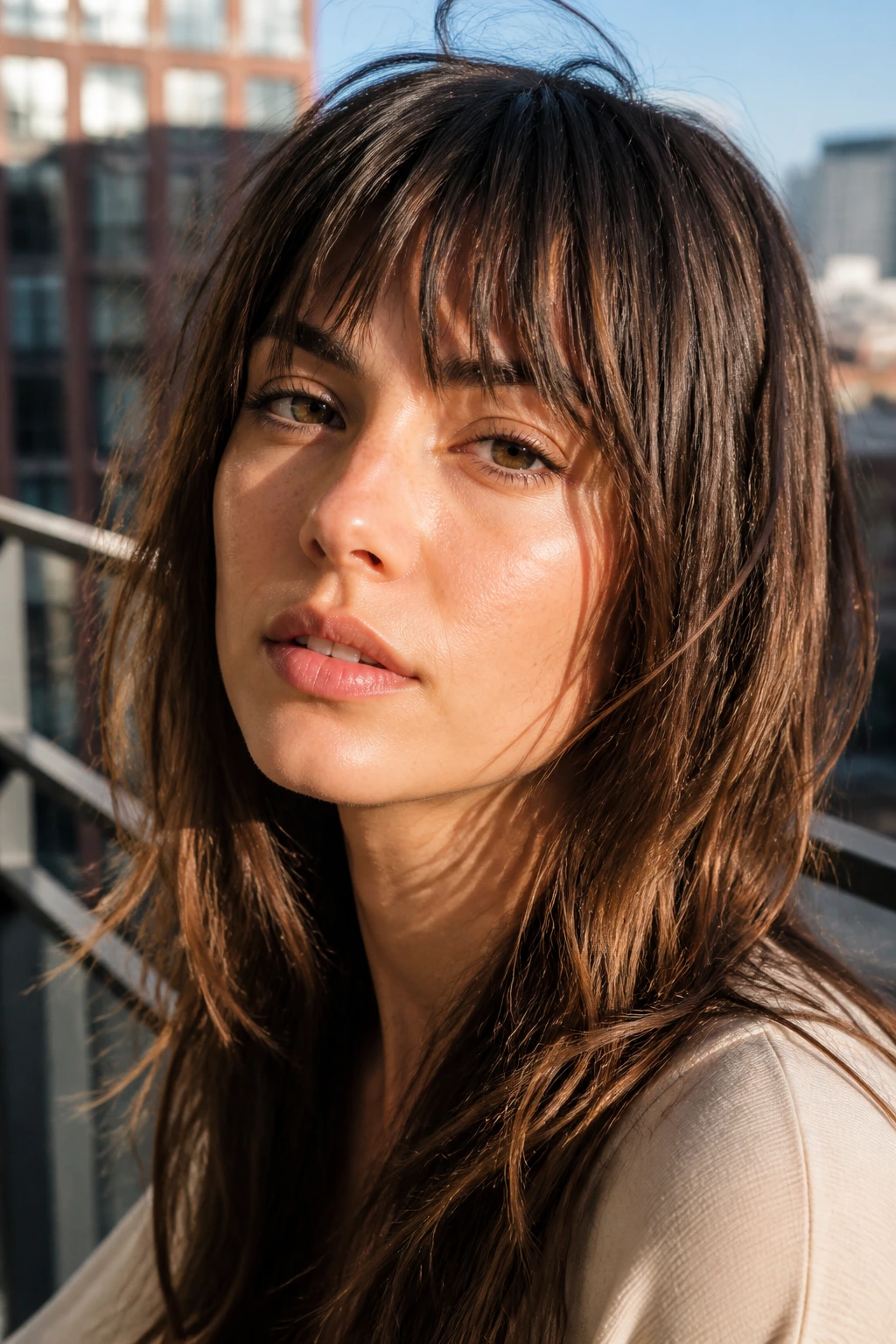
The best front bangs for long hair and heart-shaped faces don’t fight the face. They soften the forehead, give the cheekbones some company, and let the length do its part without turning the whole haircut into one long vertical line. That balance is why the right fringe can make a haircut feel more finished than a dramatic chop ever could.
Pick the shape that fits your texture, your part, and your patience. That last one matters more than people admit. A fringe you can live with beats a perfect photo every time, and the good ones on this list have a way of looking better the longer you wear them.