



Round faces and fringe are not enemies. The bad version is the heavy, straight-across cut that sits like a shelf and stops the eye right where the face is widest. Choppy fringe does the opposite. It breaks the line, throws in movement, and lets long hair keep doing the work of lengthening everything below the cheekbones.
On long hair, the front pieces can change the whole haircut. A few blunt millimeters too much weight and the fringe looks heavy; a few well-placed point-cut pieces and it suddenly looks lighter, more tailored, less like a helmet. That balance matters even more on round faces, where the wrong fringe can add width in the middle of the face instead of drawing attention upward.
The best versions are not uniformly thin. They have a shortest point, some softness at the temples, and ends that move when you blink. Too neat and they flatten the face; too ragged and they look like a mistake. Somewhere between those two is the sweet spot, and it changes a lot depending on whether your hair is straight, wavy, dense, or fine.
Why These 22 Fringe Shapes Earn Their Keep

-
Face-Lengthening Shape: The broken line of a choppy fringe interrupts the widest part of a round face, especially when the shortest pieces sit just above the brow and the longest pieces skim the cheekbones.
-
Long Hair Keeps It Balanced: Chest-length or longer hair gives the fringe room to breathe, so the front doesn’t look boxed in or crowded against the face.
-
Soft Grow-Out: Choppy ends stay wearable longer than a blunt fringe because the irregular edge still reads as intentional after a few weeks of growth.
-
Texture-Friendly: Wavy, coarse, and slightly unruly hair often suits this cut better than pin-straight hair, since the piecey finish hides tiny bends and cowlicks.
-
Easy to Adjust: A stylist can shift the shortest point by half an inch and change the whole mood from sweet to sharp without touching the overall length.
-
Glasses and Makeup Friendly: The right fringe leaves enough openness around the brows and temples that frames, mascara, and a little brow shape still show up.
1. Brow-Grazing Razor Choppy Fringe
A brow-grazing choppy fringe is the version I’d hand to someone who wants movement without drama. The shortest pieces sit just above the brow, the corners taper toward the temples, and the broken ends keep the line from reading like a hard ruler across the face. On long hair, that little bit of irregularity keeps the whole cut from swallowing the forehead.
Why It Flatters a Round Face
The line breaks up width instead of repeating it. Ask for the center to stay soft and for the side pieces to graze the tops of the cheekbones; that keeps the eye moving downward. Blow it side to side with a small round brush and finish with a whisper of texture spray, not a paste-heavy wax.
2. Curtain Fringe With Cheekbone Ends
Curtain fringe is the easy crowd favorite for a reason, but the choppy version is the one that earns its place on a round face. The center opens a little above the nose bridge, then the two sides fall away and skim the cheekbones like they’ve been lightly cut with scissors, not stamped into shape. That broken edge matters. It keeps the fringe soft enough to blend into long hair without making the front feel wide.
What I like here is the way it edits the face without calling attention to itself. A round face needs vertical movement, and curtain fringe gives you that because the center part draws the eye up while the longer sides pull it down. Keep the shortest point around the upper bridge of the nose and let the longest front pieces hit just below the cheekbone.
3. Feathered Shag Fringe on Lengthy Layers
This one feels like long hair that has decided to have some fun. The fringe is layered, feathered, and a little wild at the ends, which keeps it from sitting like a separate piece on the forehead. Instead, it melts into the first few inches of the haircut, especially when the lengths below are cut in long, soft steps.
It works because a round face usually looks strongest with some lift near the crown and some broken movement in the front. A feathered shag fringe gives both. Air-dry it with a little mousse, then rough it up with your fingers once it’s 80 percent dry. If you have thick hair, ask for the fringe to be thinned from the inside so it doesn’t puff into a shelf.
4. Deep Side-Swept Choppy Fringe
A deep side part can do a lot of quiet work for a round face. When the fringe sweeps diagonally across the forehead, it creates a longer visual line than a straight-across cut ever will. The choppy ends keep it from looking like prom hair from ten years ago. Good. Clean. Done.
This version is especially useful if you hate having hair sitting directly on your brows. Keep the shortest pieces around the higher eyebrow, then let the longer side fall toward the cheekbone or even the jaw. That diagonal pull makes the face feel longer, and the long hair behind it finishes the job instead of competing with it.
5. Bottleneck Fringe With Open Center
Bottleneck fringe is one of those cuts that sounds technical but wears easily. The center starts shorter and the sides open out gradually, so the forehead isn’t covered in one even block of hair. On a round face, that open middle gives breathing room where blunt bangs would shut the whole area down.
The choppy part is in the transition. The pieces near the temple should be broken and a little uneven, not razor-straight. That tiny irregularity keeps the fringe from looking too polished. If you wear long waves or soft blowouts, this shape sits nicely because it mirrors the curve of the face without copying its fullest point.
6. Soft Micro Fringe With Broken Ends

Micro fringe is not a shy haircut. It shows the forehead, puts the eyes front and center, and leaves zero room for hiding behind length. On long hair, though, it can work because the contrast between the tiny fringe and the long body of the cut gives the face a sharper outline. The key is to keep the edges broken, not blunt.
A round face can handle this better when the side pieces stay long and soft. Let the fringe sit high, but let the temples move down and out. That keeps the style from feeling like a block cut from a doll’s head. I’d save this one for someone who likes a little edge and doesn’t mind styling the fringe every morning.
7. Eye-Skimming Wispy Fringe

This is the fringe that makes people look twice because it hangs just close enough to the lashes to feel romantic, but the choppy ends keep it from turning heavy. The line is softer than a blunt brow cut and less fussy than a full curtain fringe. It works well with long hair because the lengths below can stay smooth while the front adds a little disorder.
Round faces usually benefit from anything that creates vertical movement near the eyes. Eye-skimming fringe does that, especially when the pieces are point-cut so they separate instead of clinging together. Blow it downward first, then split it with your fingers and let the center fall naturally. Don’t overstyle it. That’s where it loses the charm.
8. Piecey Full Fringe With Tapered Corners
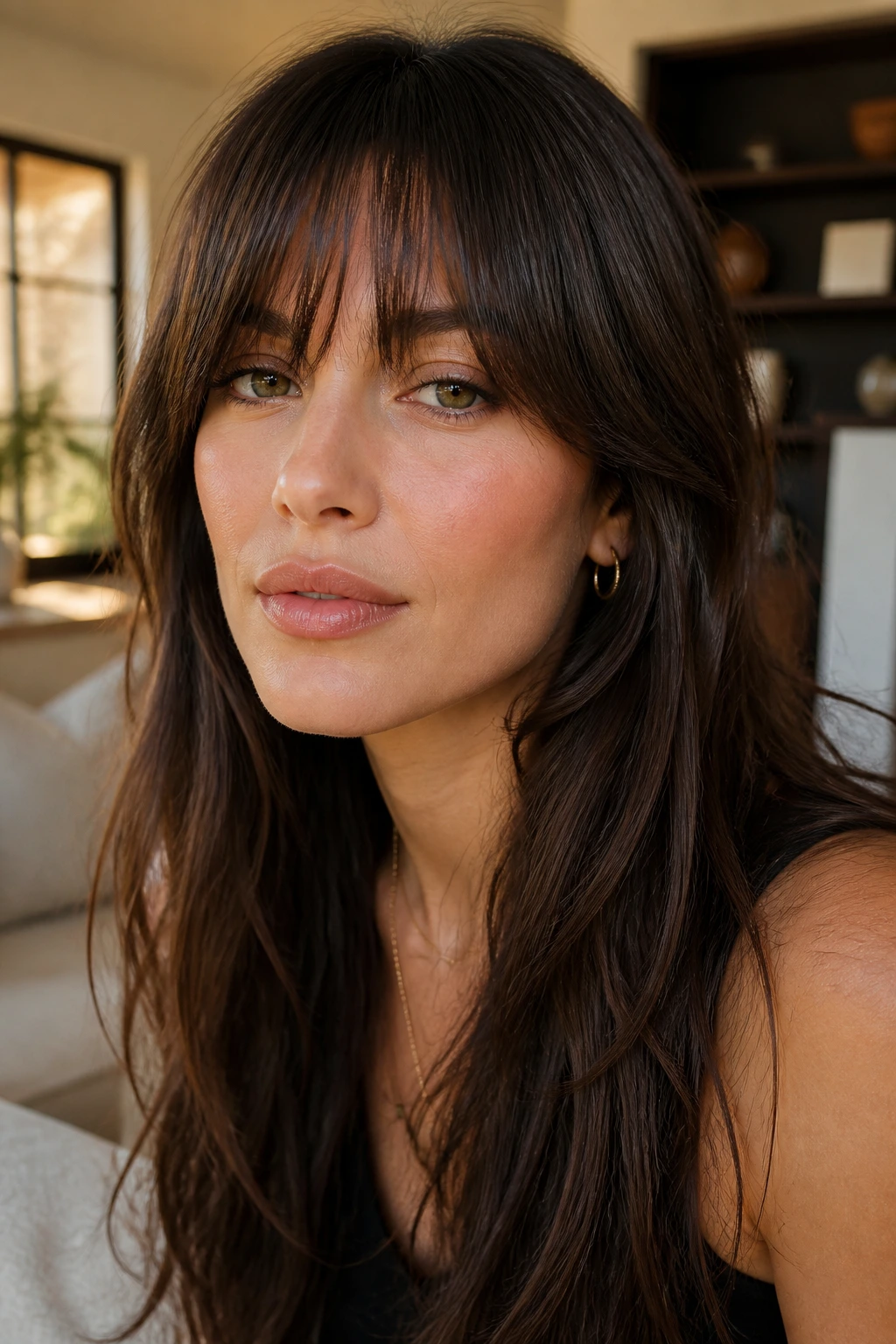
A full fringe doesn’t have to mean a thick, straight wall of hair. The piecey version keeps more coverage in the center but softens the corners so the face doesn’t get boxed in. On long hair, that’s a nice middle ground. You get the presence of bangs without the bluntness that can make a round face look shorter.
The tapered corners matter more than people think. They pull the eye out toward the temples and away from the widest part of the cheeks. A light texturizing mist helps, but only after the fringe is dry; put too much product in wet hair and it collapses into clumps. That’s a very different look, and not the good one.
9. Arc-Shaped Choppy Fringe
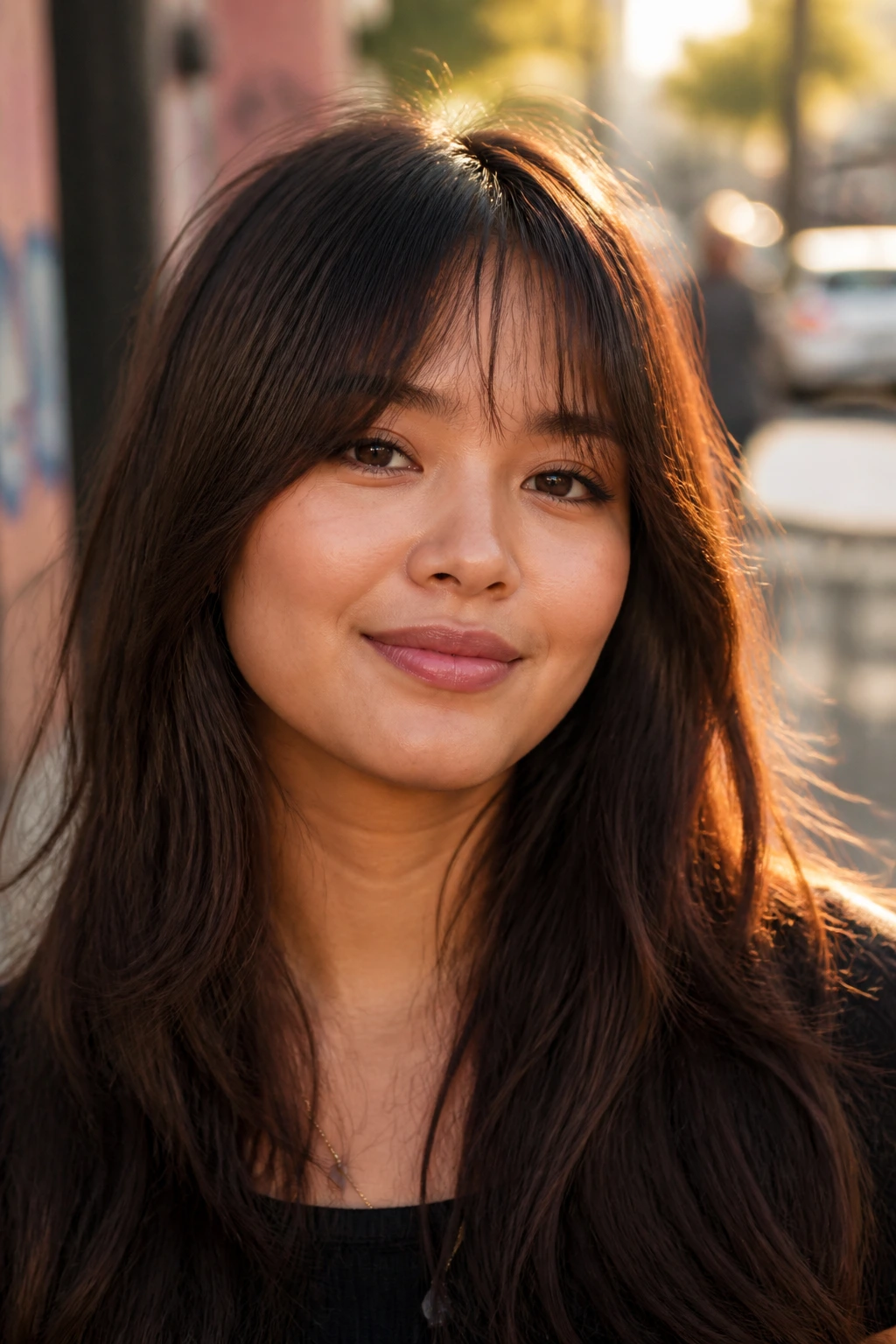
Arc-shaped fringe has a gentle curve instead of a flat edge, which makes it kinder to round features than a straight line across the forehead. The center can sit a little shorter while the sides stay longer, creating an upward shape that feels lifted rather than cut off. It’s subtle, which is exactly why it works.
On long hair, that arc keeps the front from looking disconnected. The eye moves up the curve, then drops into the length of the haircut. If you have a fuller cheek area, keep the longest pieces below the brow line and ask your stylist not to build too much width at the temples. The curve should lift, not widen.
10. Curly Choppy Fringe for Round Faces

Curly fringe should never be treated like straight fringe with a different texture. That’s how you end up with a puffed-up forehead triangle that does nobody any favors. The better version is cut dry, curl by curl, with enough length left that the spring settles where it wants to. On a round face, that softness can be gorgeous because it breaks the outline instead of tracing it.
Long hair makes this cut easier to wear because the curls in the fringe can live in front while the length below keeps the silhouette long. Ask for the fringe to be shaped around the strongest curl, not against it. And please, don’t flatten it with a brush once it’s dry. Use your fingers or a wide-tooth comb. That’s the whole point.
11. French-Girl Fringe With Airy Gaps

There’s a reason this fringe keeps showing up in places that care about texture. It isn’t perfect, and that’s the appeal. The airy gaps stop it from turning into a block, which helps a round face feel less enclosed. The choppy ends keep the line loose, so the fringe moves when you turn your head instead of sitting there like a curtain.
Pair it with long, slightly undone hair, not glossy perfection. A little bend through the mid-lengths is enough. The face frame should start around the cheekbone and drift toward the jaw. That way the fringe and the length talk to each other instead of fighting for attention.
12. Butterfly-Cut Fringe Blend
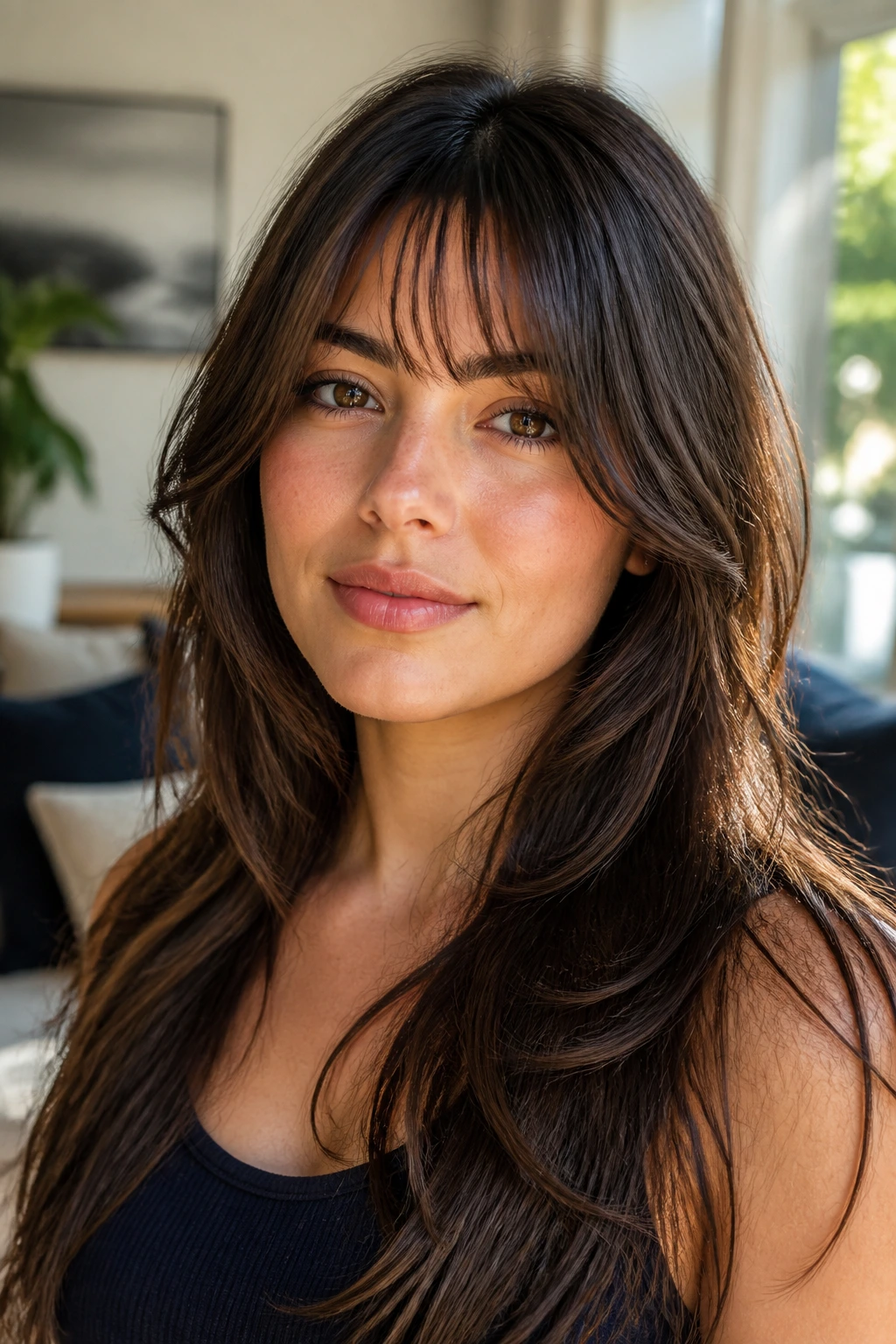
If your long hair already has butterfly layers, the fringe should feel like part of that system, not an add-on. This is where choppy fringe gets especially good. The shortest pieces sit high enough to lighten the forehead, while the longer temple pieces connect into the first face-framing layers. On a round face, that connection matters because it stretches the whole shape downward.
I like this best when the fringe starts with a soft center and the corners feather into the layer fall. The result is not stiff. It’s a haircut that keeps moving as you do. If you like a big blowout, this is a strong pick because the layers around the fringe can flip away from the face in a clean, flattering way.
13. Peekaboo Fringe With Long Face Frame

Peekaboo fringe is for someone who wants the idea of bangs without a full commitment to forehead coverage. The shortest pieces live just long enough to skim the brows, while the longest ones slip into the face frame and nearly disappear into the rest of the haircut. That near-hidden quality suits round faces because it softens the front without adding bulk.
The trick is contrast. The fringe stays lighter than the rest of the hair, and the face frame stays long enough to pull the eye downward. This is one of the easiest choppy fringe looks to grow out. It doesn’t trap you. A trim can keep it fresh, but if you miss one, the shape still holds.
14. A-Line Razor Fringe

An A-line fringe angles down from the middle toward the sides, which is a nice way to counter a round face’s width. The center gives a little lift, while the longer sides soften the cheeks and temples. With razor cutting, the ends stay airy, though I’d keep the razor work controlled so it doesn’t fray into fuzz.
This is the fringe I’d choose for straight or slightly wavy long hair that needs a bit of structure. It has shape, but not the heavy, graphic feel of a blunt bang. Blow the center forward, then guide the side pieces diagonally outward with the brush. If they fall too neatly, tug the corners apart with your fingertips once they cool.
15. Center-Split Fringe on Beach Waves

A center-split fringe can be a smart move on a round face because it opens the forehead and adds vertical space right where a blunt fringe would close things off. The choppy part keeps the split from looking too tidy. The pieces should land in different places, not mirror each other like a ruler cut them.
Long, beachy waves make this look even better. The fringe blends into the wave pattern and stops the face from feeling too circular. I’d ask for the shortest pieces to sit around the upper nose bridge, with the longest sides reaching the cheekbone or just below it. That keeps the split soft and useful, not fussy.
16. Thick Textured Fringe With Weight Removal
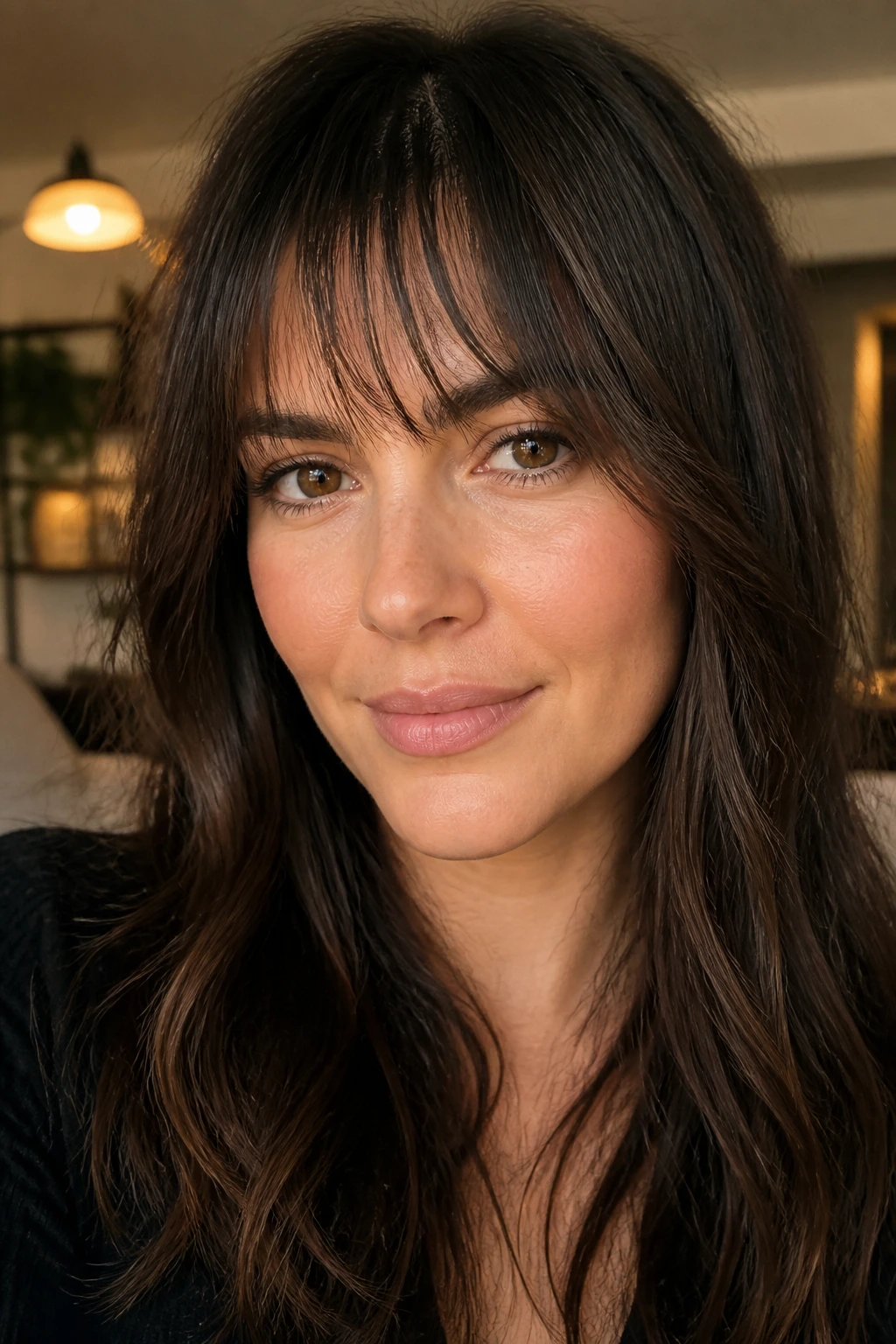
Thick hair can wear fringe, but only if the weight is removed with some care. Otherwise the front turns into a heavy shelf that sits too square on a round face. The answer is internal layering, point cutting, and a little restraint at the center. You want the fringe to look dense enough to be intentional, not dense enough to block your eyes.
This version is a good match if your long hair already has body. The texture at the front can balance the fullness of the lengths, especially when the longest pieces taper past the temples. Keep a styling cream light—about a pea-sized amount—so the fringe stays separated. Too much product will make the whole thing cling together and lose the choppy effect.
17. Swoopy Fringe That Tucks Into Cheeks

Some fringe shapes are about softness, and this is one of them. A swoopy choppy fringe curves across the forehead and then tucks toward the cheeks, which is useful when you want to soften fullness without making the face feel boxed in. The motion should feel easy, not stiff. If it looks like it needs to be held in place, it’s too structured.
Round faces usually look good when the front pieces travel diagonally. This cut gives you that line, then lets the long hair carry it down. It’s also one of the friendlier fringe shapes for people who like tucking hair behind one ear. The side can move without ruining the whole look.
18. Air-Dried Tousled Fringe

If you live by air-drying, don’t fight it with a fringe that needs a perfect blowout every morning. Tousled choppy fringe works with the hair’s natural bend and keeps the finish loose from the start. It’s especially nice on long hair because the rest of the length can dry in its own shape while the fringe settles into a slightly broken line.
The round-face part is simple: texture creates interruption. A soft, uneven fringe stops the forehead from looking like one smooth panel and gives the face more angles. Scrunch a little mousse into damp fringe, then twist the ends lightly with your fingers and let it dry. Once it’s set, break it apart with dry fingers. No brush. Seriously.
19. Feathered Fringe With Collarbone Layers
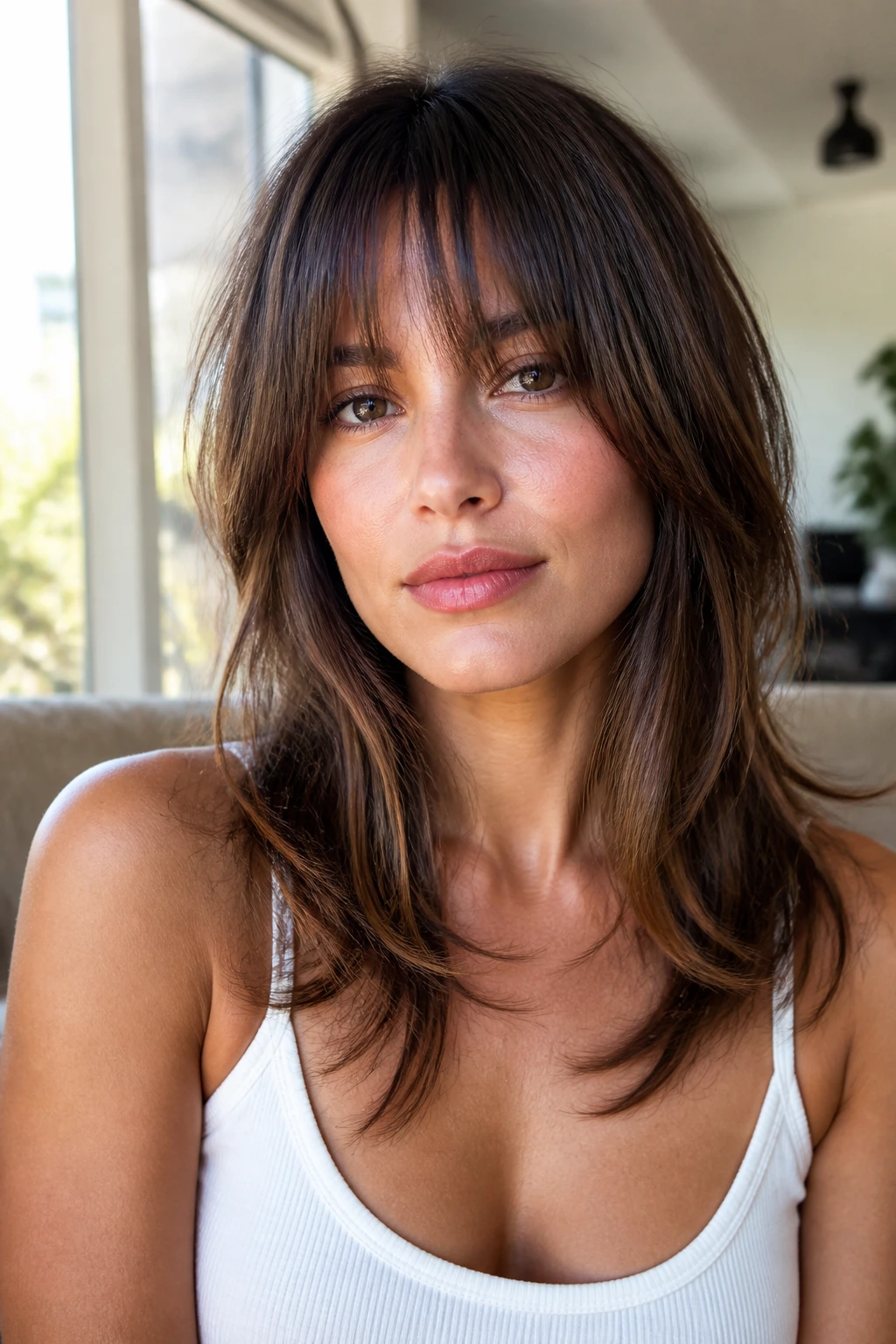
Feathered fringe feels light because the ends don’t sit in one heavy row. They taper into collarbone layers, which makes the whole haircut feel longer and less front-loaded. That helps a round face because the eye keeps traveling downward instead of stopping at a thick line of hair.
This cut looks especially good when the layers around the face are the same family as the fringe, not a separate idea. The forehead opens enough to show some skin, the sides stay soft, and the long hair finishes the shape. Ask for the feathers to start just below the brow and graduate longer at the temple. The result is subtle, but it changes the balance of the whole cut.
20. Sleek High-Contrast Fringe
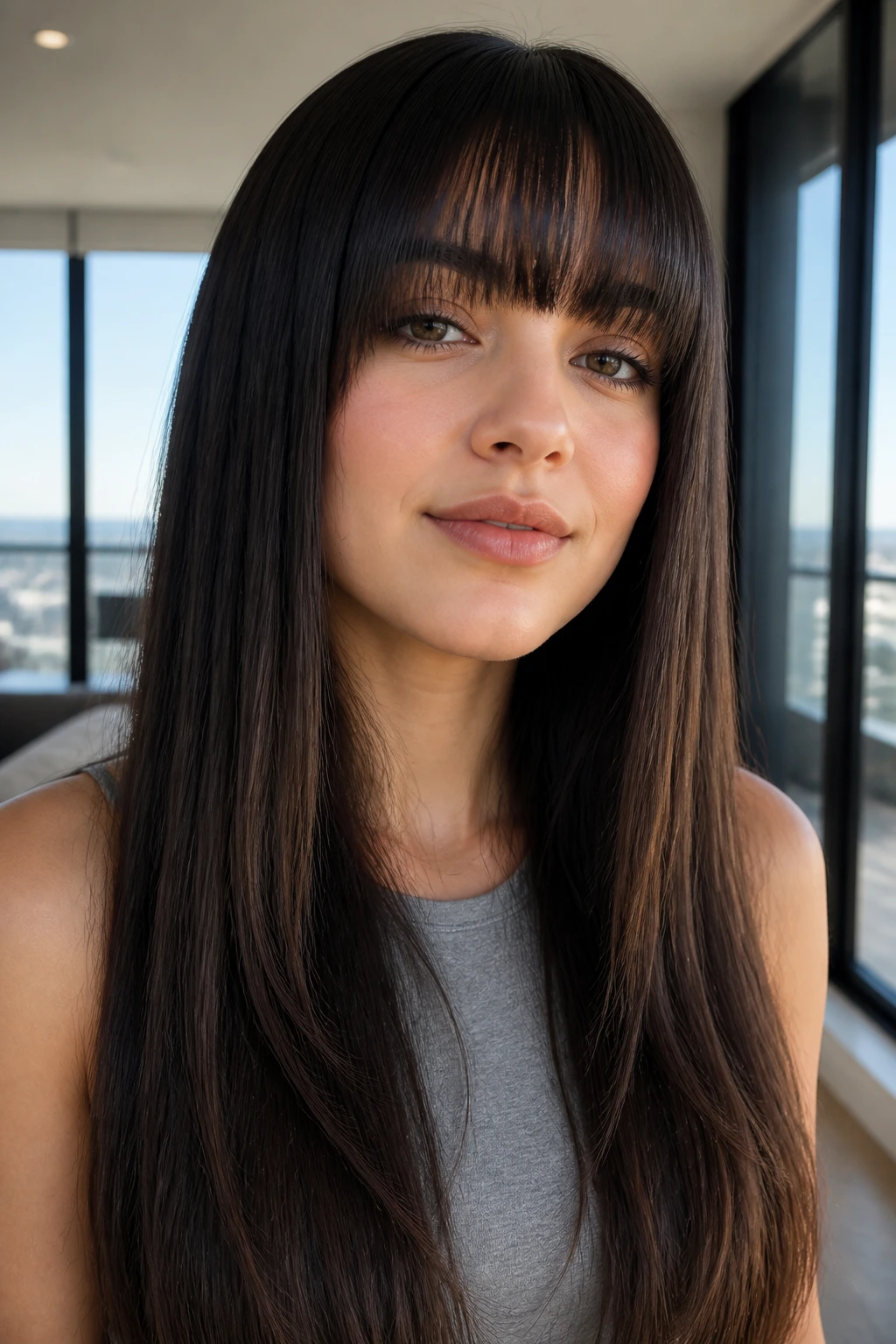
A sleek fringe on long hair can look sharp in the best way, but it needs choppy ends or it will flatten the face fast. The contrast between the smooth lengths and the textured fringe gives the haircut a cleaner outline. On a round face, that contrast can be useful because it creates strong vertical lines through the center of the face.
This one works best when the fringe is styled straight but not stiff. Think smooth, not shellacked. A tiny flat iron pass at low heat is enough if your hair is already fairly straight. If you have a strong cheek line, keep the side pieces slightly longer so the fringe doesn’t stop too abruptly at the widest point of the face.
21. Grown-Out Choppy Fringe

Not every good fringe needs to look freshly cut. A grown-out choppy fringe can be one of the easiest ways to wear bangs on a round face because the longer length creates more openness around the forehead. The choppy edges keep it from looking sloppy, even when the center is past the brows.
This is the version for people who do not want a salon visit every four weeks. It sits well with long hair because the fringe starts to act like face-framing layers instead of a separate piece. Ask your stylist to keep the center just long enough to split naturally and to taper the corners toward the cheekbones. It grows out in a softer arc, which is half the battle.
22. Edgy Shard Fringe
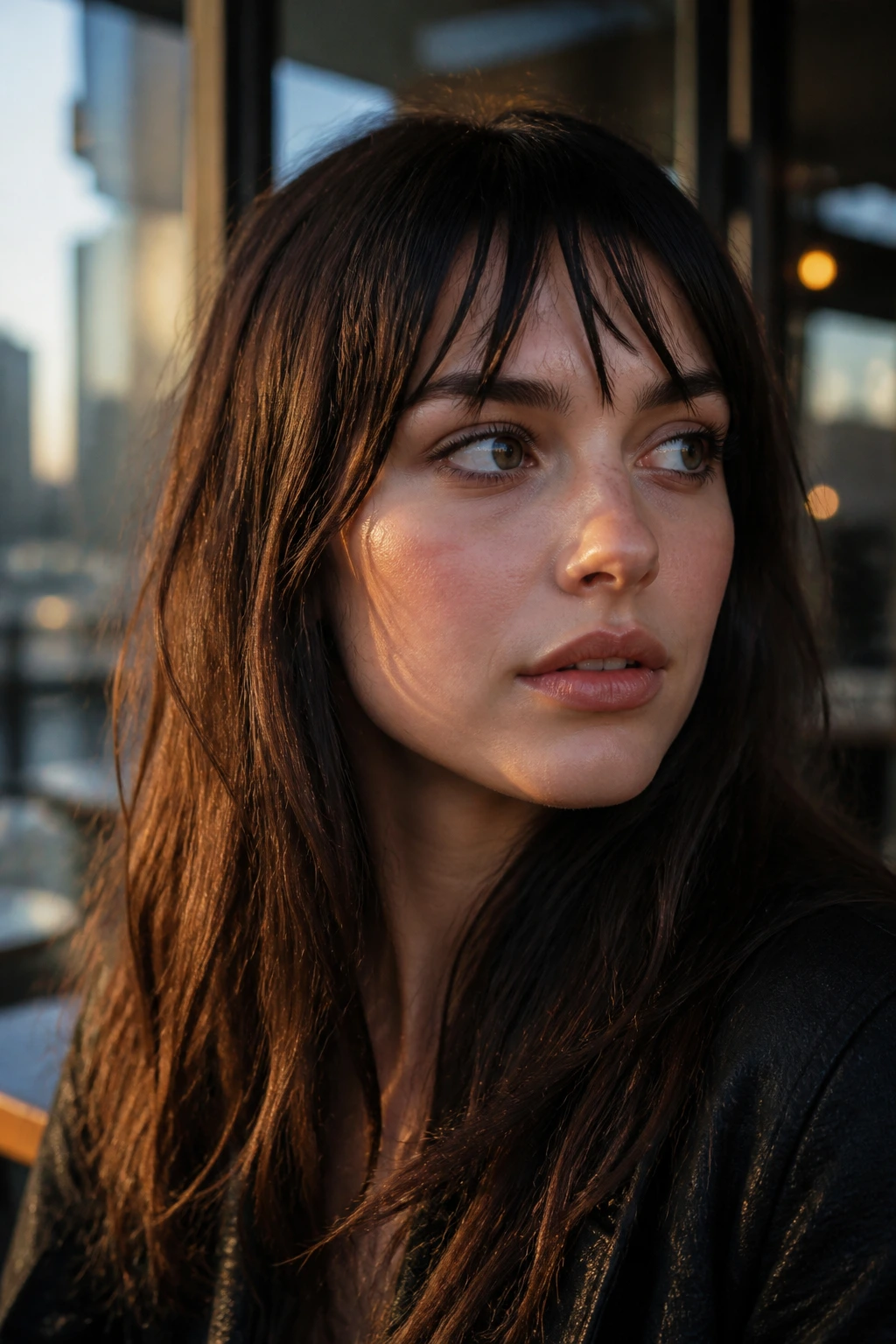
Shard fringe is the bold one in the group. The pieces are disconnected on purpose, with some sitting higher and others dropping lower across the forehead. On a round face, that broken pattern can be surprisingly flattering because it creates little pockets of space and shadow instead of one solid band of hair.
Long hair keeps the look from feeling too severe. The lengths below soften the edge and give the fringe somewhere to land. I’d only choose this if you like texture that reads a little rebellious. It needs a light hand with product and a trim that keeps the shards defined. Too much blending and the whole point disappears.
Why Choppy Fringe Works So Well on Long Hair and Round Faces
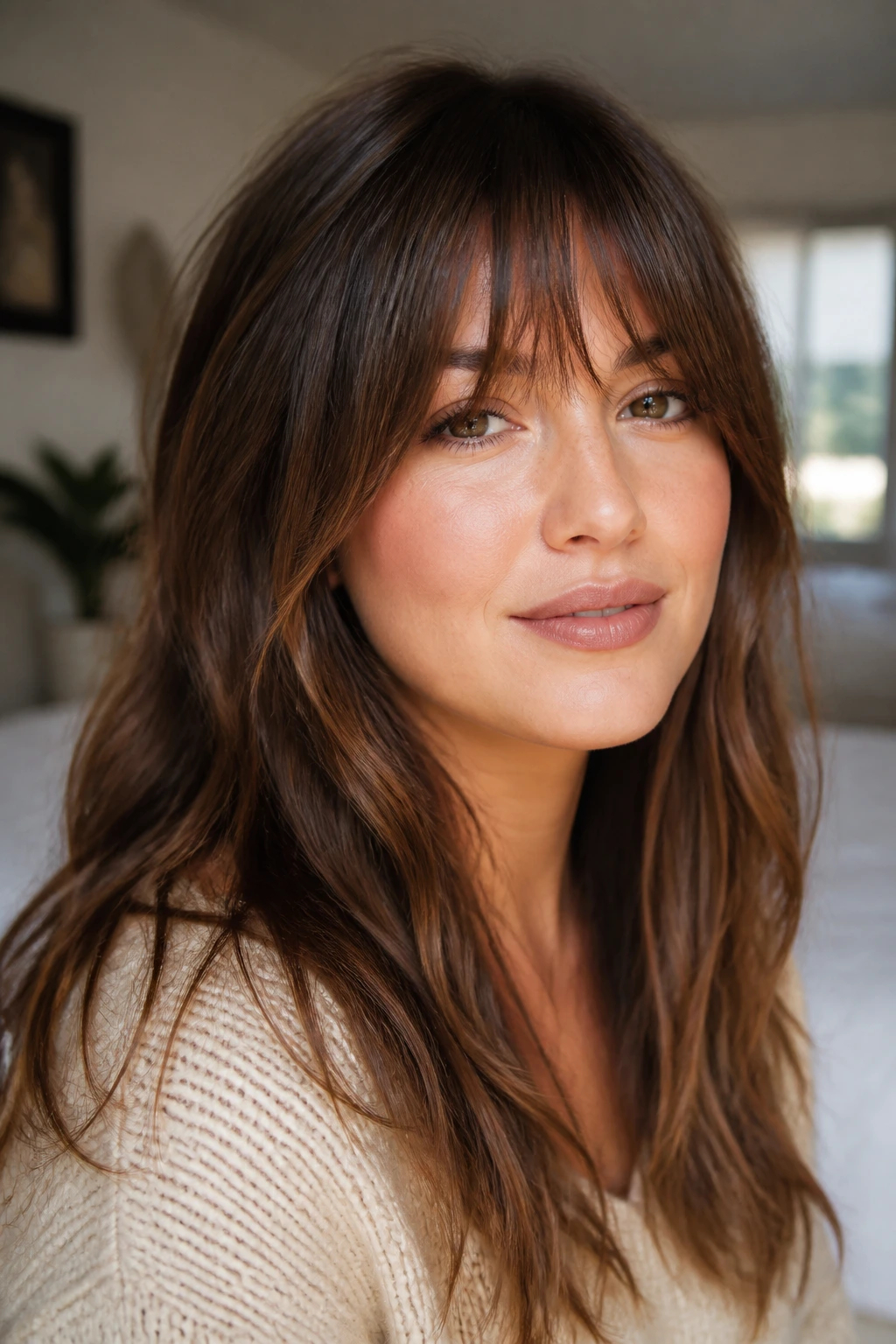
Round faces are soft by nature. That softness is lovely, but a fringe can either sharpen it or smother it, and the difference is usually in the line. Choppy fringe wins because the edge is broken. The eye doesn’t stop at one hard horizontal band; it moves through the fringe, into the cheeks, and then down through the length of the hair. That movement matters more than most people think.
Long hair helps because it gives the fringe somewhere to disappear into. A short cut with heavy bangs can make a round face feel more contained. Long hair does the opposite. It stretches the silhouette, especially when the fringe has tapered corners or face-framing pieces that reach the cheekbone. The best versions are rarely the fullest versions. They’re the ones that leave some forehead visible and keep the temples soft.
The Shape You Want in the Mirror
If the fringe makes the face look wider at the brow line, it’s too heavy. If it reveals enough skin to open the center of the face and still feels connected to the rest of the haircut, you’re in the right zone. That’s the sweet spot. Not tiny. Not blunt. Just broken enough to keep the shape moving.
How to Ask for the Cut at the Salon
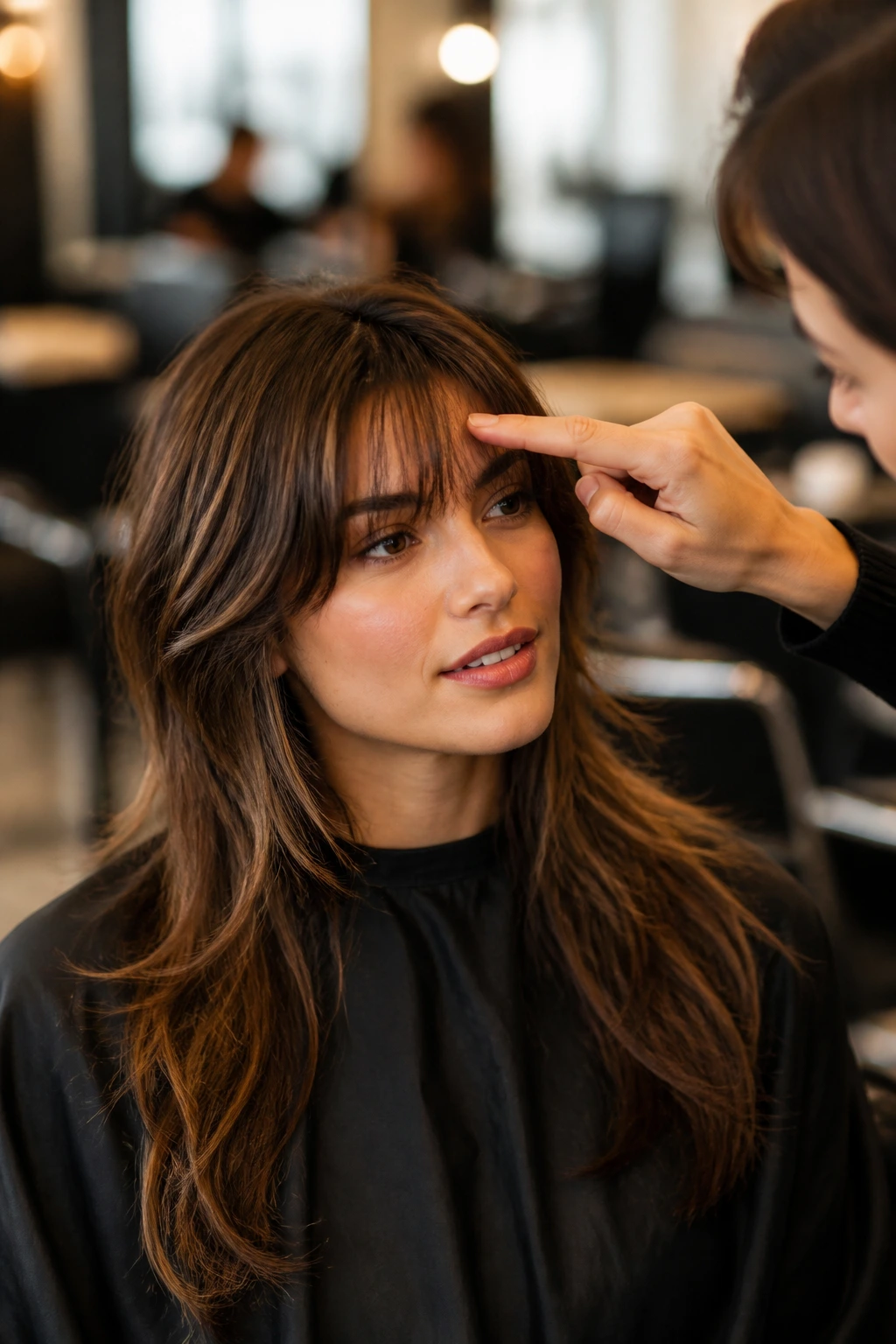
Bring photos, yes, but bring language too. A picture helps, though it won’t tell a stylist where you want the shortest point to sit or how much forehead you’re comfortable showing. Say whether you want the center just above the brows, at the brows, or closer to the lashes. That single detail changes the whole outcome.
The Three Things Worth Saying Out Loud
-
Shortest Point: Tell the stylist exactly where you want the center to land—half an inch above the brow, at the brow, or slightly below.
-
Temple Length: Ask for the sides to fall toward the cheekbone or jaw so the fringe doesn’t widen the face.
-
Texture Method: Point cutting works well for most straight hair; dry cutting is often better for waves and curls because it shows the true fall.
The part people skip is density. If your hair is thick, say so. If it’s fine, say that too. Thick fringe needs weight removed from the inside, or it grows into a shelf. Fine fringe needs enough bulk left in the center so it doesn’t split apart before lunchtime. Both problems are fixable when the cut starts with the right conversation.
Essential Tools for Styling Fringe at Home
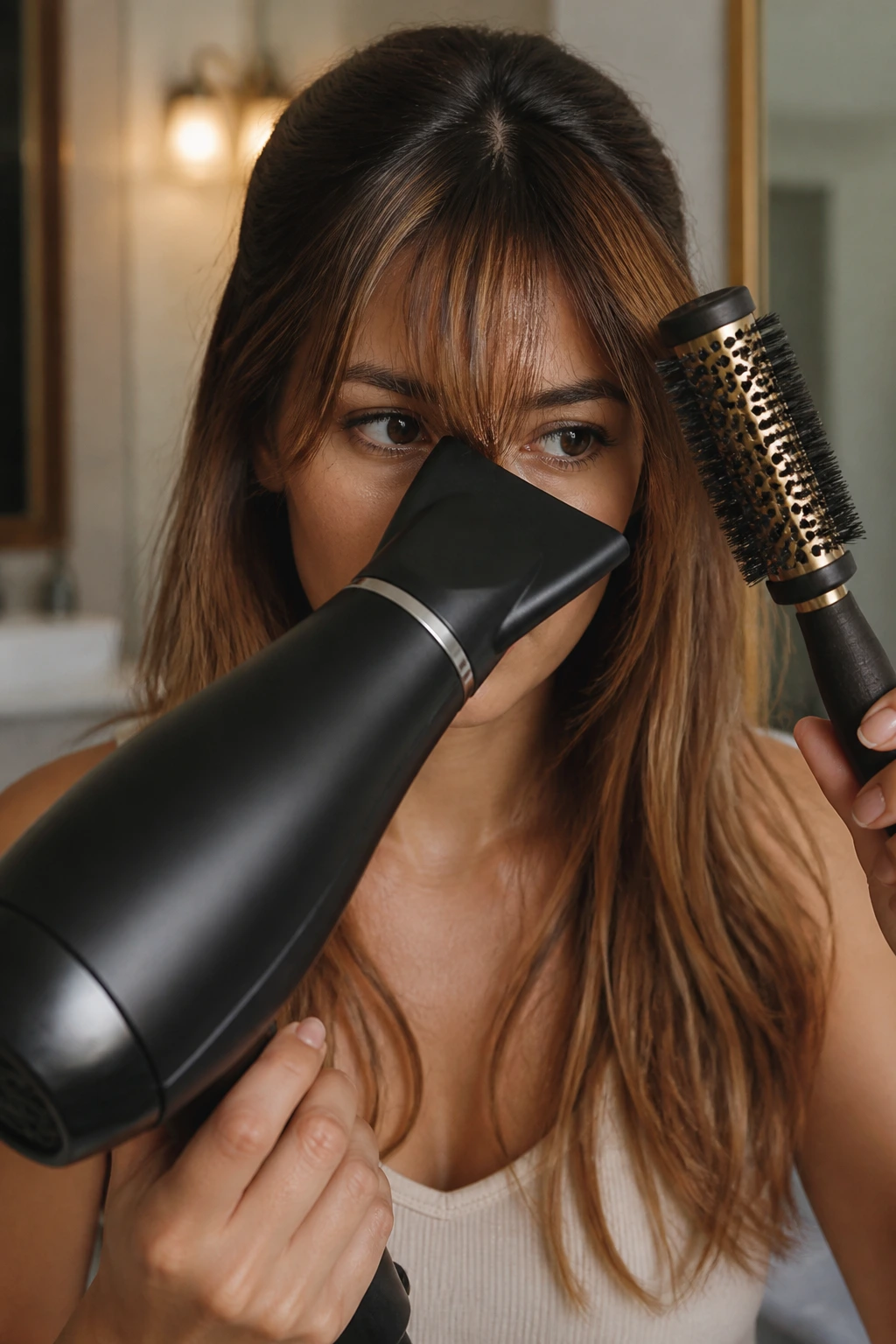
A fringe that looks easy usually takes four minutes and a few very specific tools. Nothing fancy. Just the right ones.
-
Blow Dryer With a Nozzle: Directs airflow so the fringe sits where you want instead of scattering in every direction.
-
Small Round Brush, 1 to 1.25 Inches: Best for shaping brow-grazing and curtain fringe without creating a giant curl.
-
Flat Iron With Adjustable Heat: Handy for sleek or stubborn pieces; keep it low and use it only on dry hair.
-
Texturizing Spray: Gives choppy ends separation without the sticky look of heavy wax.
-
Dry Shampoo: Useful at the roots of oily fringe, especially if your forehead tends to shine by midday.
-
Wide-Tooth Comb or Fingers: Better than a brush for curly, wavy, or air-dried fringe because it keeps the ends piecey.
-
Heat Protectant Spray: Worth using every time you reach for heat, especially if the fringe is the part you style most often.
Styling Tricks That Keep the Fringe Moving
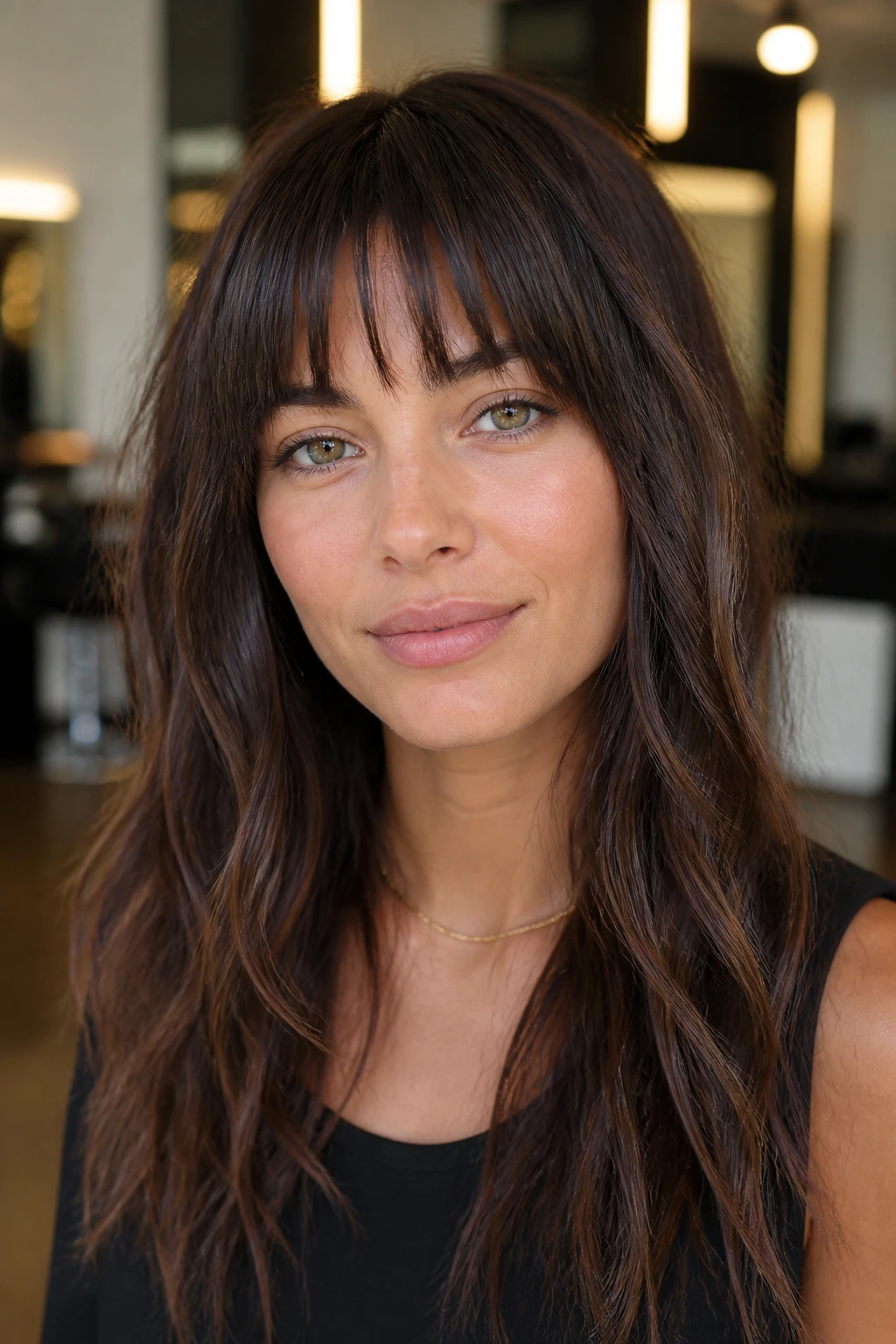
Dry Direction: Blow-dry the fringe in the opposite direction first, then swing it back into place. That tiny trick knocks out the flat, stuck-to-the-forehead look and gives the roots a little lift.
Product Amount: Use less than you think. For most choppy fringe, a pea-sized amount of cream or paste is enough. Too much product makes the ends merge, and once they merge, the fringe loses its lightness.
Root Lift: If the fringe keeps collapsing on a round face, lift the roots with a quick blast of warm air and a round brush at the very front only. You do not need to reshape the whole head.
Midday Reset: A mist of water on the fingers, a small twist through the front pieces, and a pinch of dry shampoo at the scalp will revive the shape faster than a full restyle.
How to Keep the Cut Fresh Between Trims
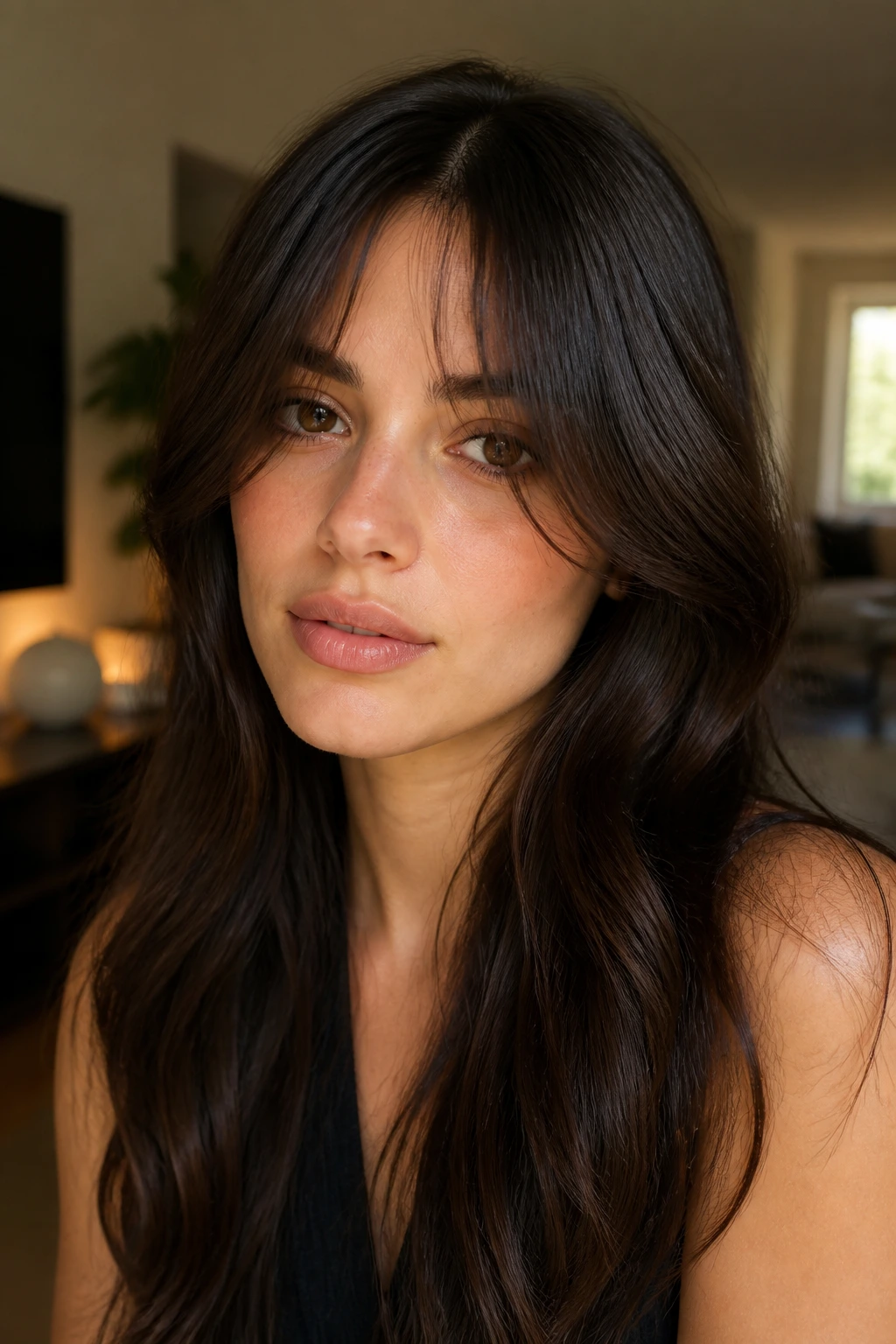
Fringe grows fast enough to matter. On most people, the first change shows up after three weeks. By week five or six, the shortest pieces may start touching the lashes or falling into the eyes, and that’s when the shape goes from choppy to blurry.
A quick trim every 4 to 6 weeks keeps the front under control. If you’re growing it out, stretch that to 7 or 8 weeks, but keep the temple pieces clean so the fringe still blends into the long hair. The rest of the haircut can usually go longer, though the front is the part that needs attention first.
Washing the fringe more often than the rest of the hair helps too. Even a quick sink rinse can reset oily roots. Dry it right away, either with a blow dryer on low or with a brush and a few passes of air. Sleeping with the fringe pinned loosely off the face can keep it from bending overnight, which is a small thing until you’re fighting a weird cowlick at 7:30 in the morning.
Common Mistakes That Make a Round Face Look Wider

Making the fringe too blunt: A hard, straight line right across the forehead stops the eye in the widest part of the face. The fix is simple: break the edge, soften the corners, and let some pieces sit longer at the temples.
Cutting it too short through the middle: A very short center fringe can look cute in photos and harsh in daylight. On a round face, it can make the forehead feel compressed. Leave a little length unless you’re committed to a very bold look.
Overloading it with product: Fringe that feels wet or sticky turns into chunks. That exposes the face in the wrong way and makes the cut look older than it is. Use the smallest amount of cream, balm, or wax you can get away with.
Ignoring the cowlick: If your hair splits in one direction every morning, the fringe will fight you. Work with that bend, not against it. A side sweep or a center split usually behaves better than a rigid straight-across cut.
Forgetting the side pieces: A fringe can be perfect and still look off if the first layers around the face stop too high. Keep the side pieces long enough to reach the cheekbone or jaw so the haircut keeps length in the silhouette.
Variations and Adaptations to Try

Fine-Hair Feathering: Keep the fringe airy with point-cut ends and avoid removing too much bulk. Fine hair needs a little body left in the middle or the fringe will separate into nothing by noon.
Thick-Hair Weight Control: Ask for internal thinning and longer temple pieces. Thick fringe reads best when the center has shape but the corners stay soft and movable.
Wavy-Air-Dry Version: Leave the fringe a touch longer and let the wave pattern form naturally. A light mousse at the roots gives it enough support without making the front feel stiff.
Curly Halo Fringe: Cut the curls dry and shape the fringe so the shortest point respects the shrinkage. This version works when the curls are allowed to sit around the forehead instead of being forced flat.
Glasses-Friendly Sweep: Keep the fringe slightly off the brow and open at the temples so frames do not compete with the face. A side-swept or curtain shape usually sits better than a heavy center fringe.
Low-Maintenance Grow-Out: Let the center pass the brows and keep the corners feathered. The cut will move into face-framing layers instead of hitting an awkward wall as it grows.
Frequently Asked Questions

Will choppy fringe make a round face look wider?
Not if the shape is right. A blunt, level fringe can add width, but a choppy fringe with tapered corners and a little forehead showing usually pulls the eye vertically instead of horizontally.
Where should the shortest piece hit?
For most round faces, a center point just above the brow or right at the brow works well. Go shorter only if you want a bold look and you’re willing to style it every morning.
Can I wear choppy fringe with glasses?
Yes, though the length matters. A fringe that sits slightly above the frame or opens at the center tends to work better than one that lands right on the glasses.
Does this cut work on curly hair?
It can, and often beautifully, but the fringe should be cut dry so the stylist sees how the curls spring. Wet curly fringe is a gamble; dry cutting gives you a much better shape.
How often should I trim it?
Most fringes need a clean-up every 4 to 6 weeks. If you prefer a grown-out look, stretch it a little longer, but keep the temple pieces shaped so the front doesn’t lose its line.
What if my fringe keeps splitting because of a cowlick?
Use the split as part of the style. Curtain fringe, center-split fringe, and side-swept fringe usually work better than forcing a straight line against the natural growth pattern.
Can I air-dry choppy fringe?
Yes, especially if your hair has a wave already. Use a little mousse or lightweight cream, twist the ends with your fingers, and let it dry without brushing it to death.
What should I do if the fringe looks too heavy after the cut?
Go back and ask for point cutting at the corners and a little internal thinning if the hair is dense. Sometimes the fix is tiny—a half-inch longer here, a softer temple there—but it changes the whole balance.
The Fringe That Keeps Moving
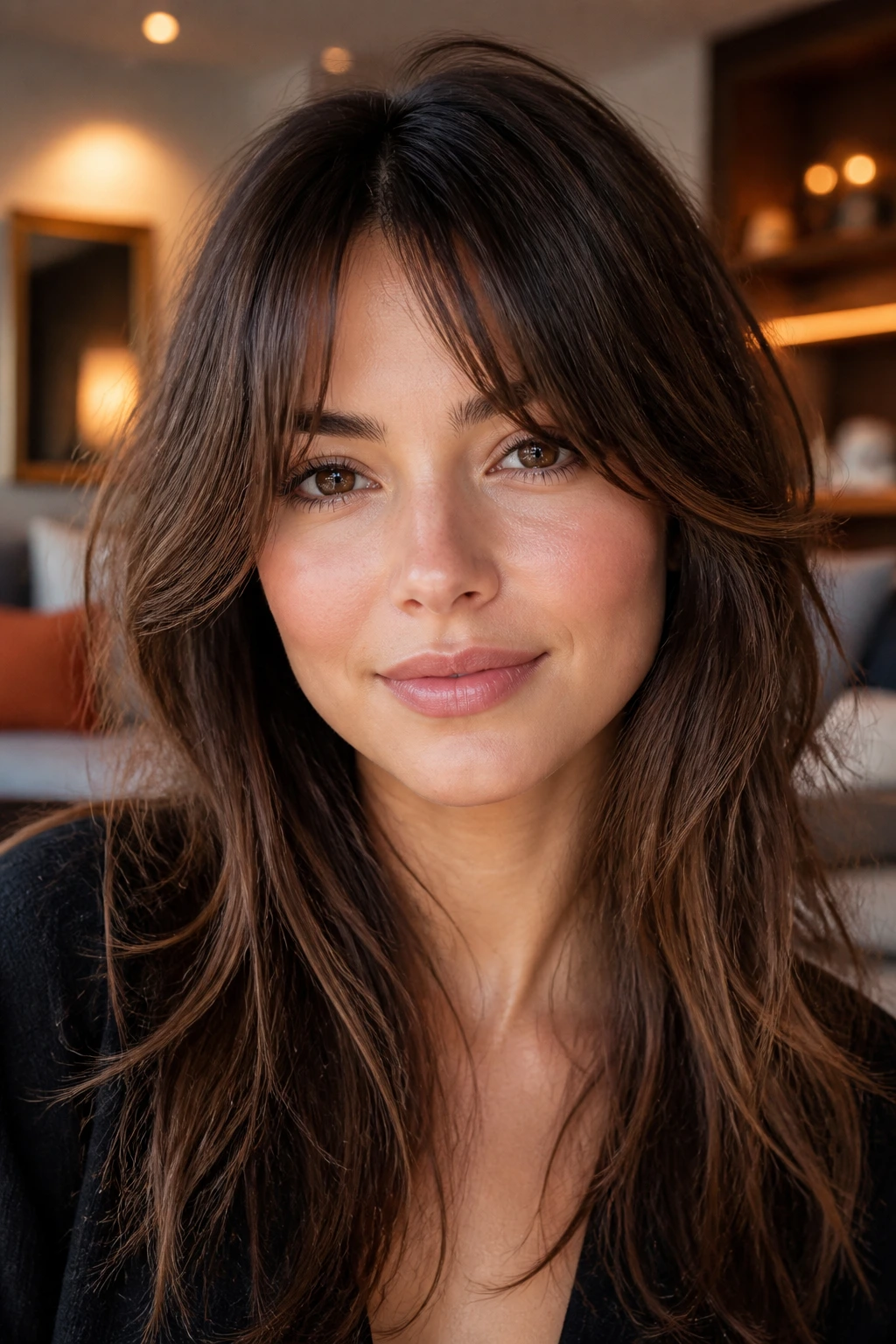
Choppy fringe works on long hair and round faces because it refuses to sit in one flat line. It breaks up the forehead, softens the cheeks, and keeps the haircut from feeling heavy in the center. That’s the whole trick. Not hiding the face. Giving it shape.
The best part is how adaptable these cuts are. Some are airy and easy, some are sharp and deliberate, and some live in the space between polished and undone. If the first version feels too neat, loosen the corners next time. If it feels too thin, keep more weight in the center. Small changes make a big difference here, and that’s what keeps this kind of fringe interesting long after the salon chair.