



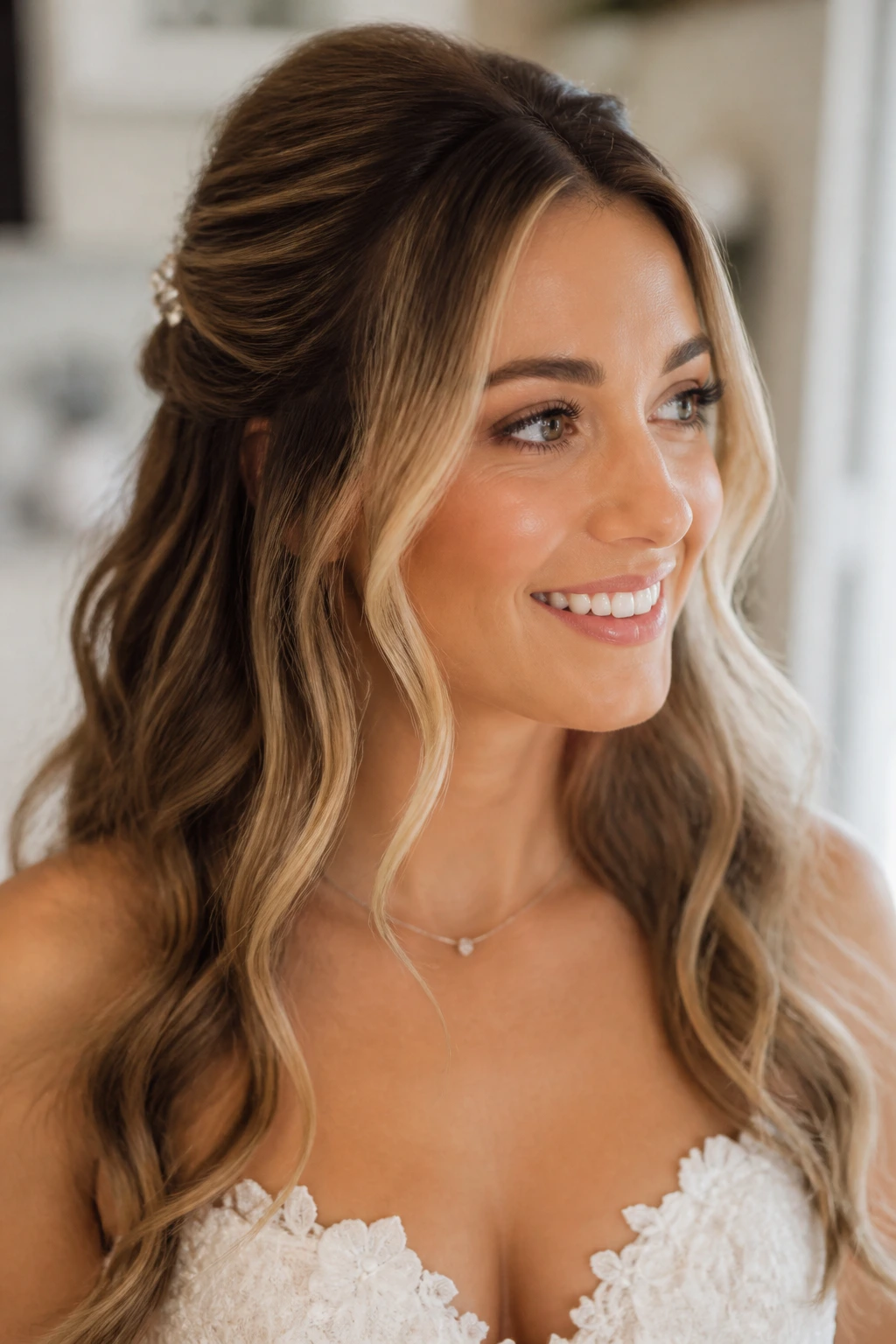
A good wedding half-updo does one thing better than almost any other bridal style: it keeps the face open without losing the softness of hair that moves when you do. That matters even more when money piece highlights are in the mix, because those lighter front sections can either frame the whole look or disappear the second somebody gets pin-happy near the temples.
And that’s the real trick with half updos for weddings with money piece highlights. The best versions don’t fight those brighter face-framing pieces. They make room for them. A twist, a braid, a sweep, a knot — each one can give the front strands a job, which is why the style reads finished instead of cramped. When it’s done well, the highlight catches the eye before the rest of the hair even gets a vote.
I like this category because it solves a very specific wedding problem. Full updos can look too sealed off. Loose hair can slide into your face or get swallowed by humidity before the cake is cut. Half-up styling sits in the middle, and the money piece adds a little brightness right where a camera lands first: around the eyes, cheekbones, and the edges of the smile. The good versions feel soft without getting mushy. The bad ones look like the front was pinned back out of panic.
Why These Half Updos Work So Well with Money Piece Highlights
-
Face-Framing First: These styles keep 1 to 2 inches of hair loose near the temples, which lets the lighter front pieces do their job instead of vanishing into the crown.
-
Built for Photos: A little height at the top and movement through the ends gives the highlight some contrast, so it shows up from the front, the side, and the dance floor.
-
Veil and Accessory Friendly: You still have room for a comb, pearl pins, a vine, or a clip without turning the whole back of the style into a crowded little nest.
-
Works on More Hair Types: Straight, wavy, curly, fine, thick — the half-up structure can be adjusted without losing the bright front frame.
-
Less Stiff, More Movement: Unlike a full updo, the down section keeps some swing, which makes the money piece look alive instead of lacquered into place.
-
Easy to Personalize: A braid, twist, knot, or pin placement can change the mood fast, which is handy when the dress is doing one thing and the venue is doing another.
1. Soft Twists and Glossy Ends
A pair of loose twists pulled from each temple into a low anchor at the back is one of the cleanest ways to show off a money piece highlight. The front stays visible. The crown gets a little lift. The rest of the hair falls in glossy lengths that don’t compete with the face.
Why it flatters the front pieces
The twists act like a frame, not a cage. That matters on wedding hair, because if you pull the front too tight, the highlight loses its edge and the whole style starts looking like a rehearsal, not a finished look. I’d keep the twist sections about 1½ inches wide and leave the front strands soft enough to bend with a 1-inch iron, then cool them before pinning anything.
Styling note
A light smoothing cream on the mid-lengths keeps the ends reflective without making the roots greasy. If the hair is fine, a tiny tease at the crown — no more than a half-inch of backcombing — gives the twist something to sit on. If the hair is thick, pin the twists in a shallow X so they don’t sag by dinner.
2. Boho Braid with Money Piece Tendrils
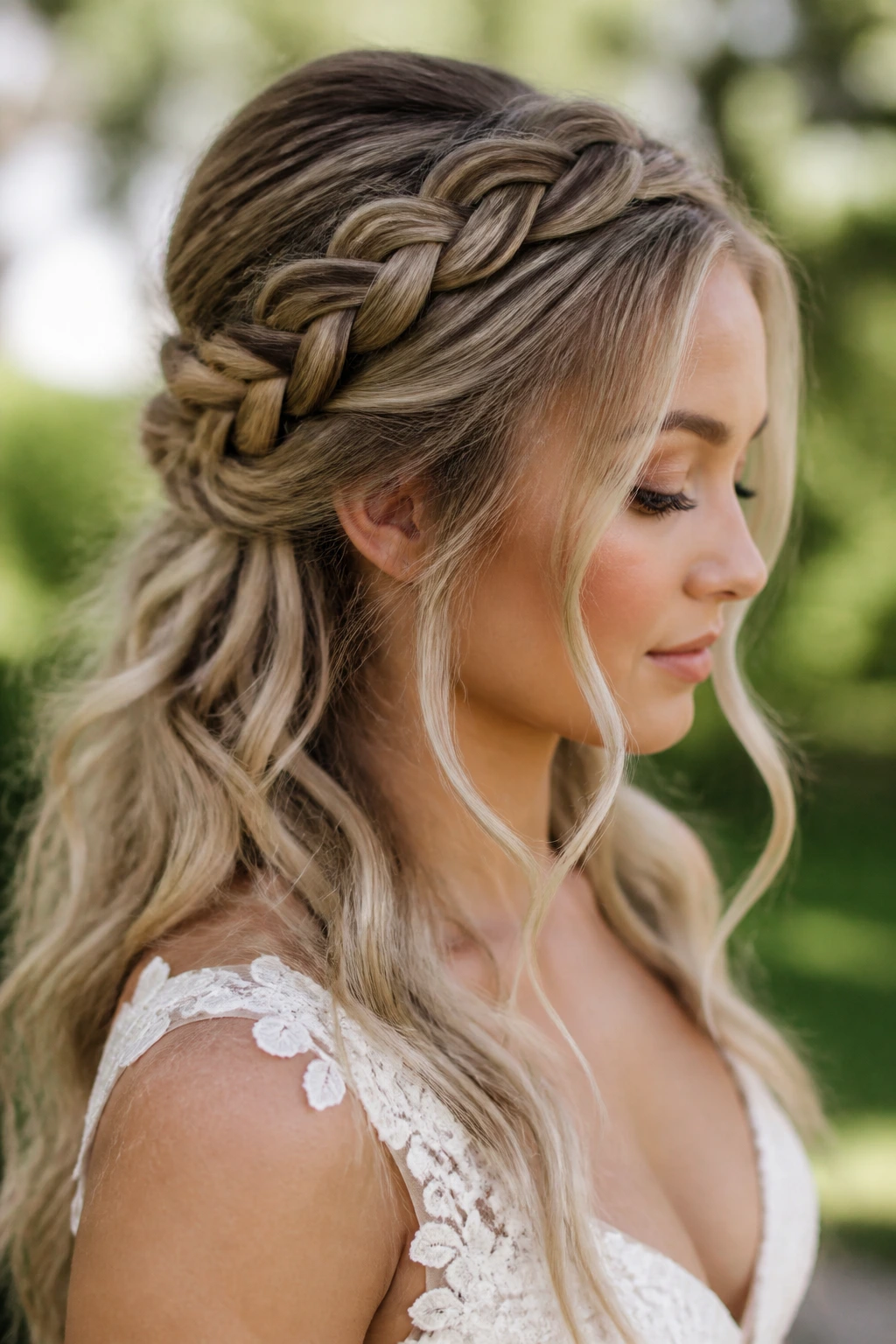
Want something that feels relaxed but still reads bridal? This is the lane. A loose Dutch or three-strand braid across the crown, paired with softly waved lengths and two narrow tendrils around the face, gives the money piece room to breathe.
The braid doesn’t need to be tight. In fact, I think it looks better when it’s a little full and not too neat. That wider braid texture creates contrast against the brighter strands in front, so the front pieces don’t look like random leftovers. They look planned. If your color has a strong blonde ribbon at the face, this style makes it obvious in the best way.
For outdoor weddings, this is one of the safer bets because the braid gives structure even if the air is damp or there’s a breeze. Keep the tendrils narrow, though. A thick front section can start to look heavy, and then the whole style loses that light, airy feel that makes it work.
3. Sleek Half-Up Knot
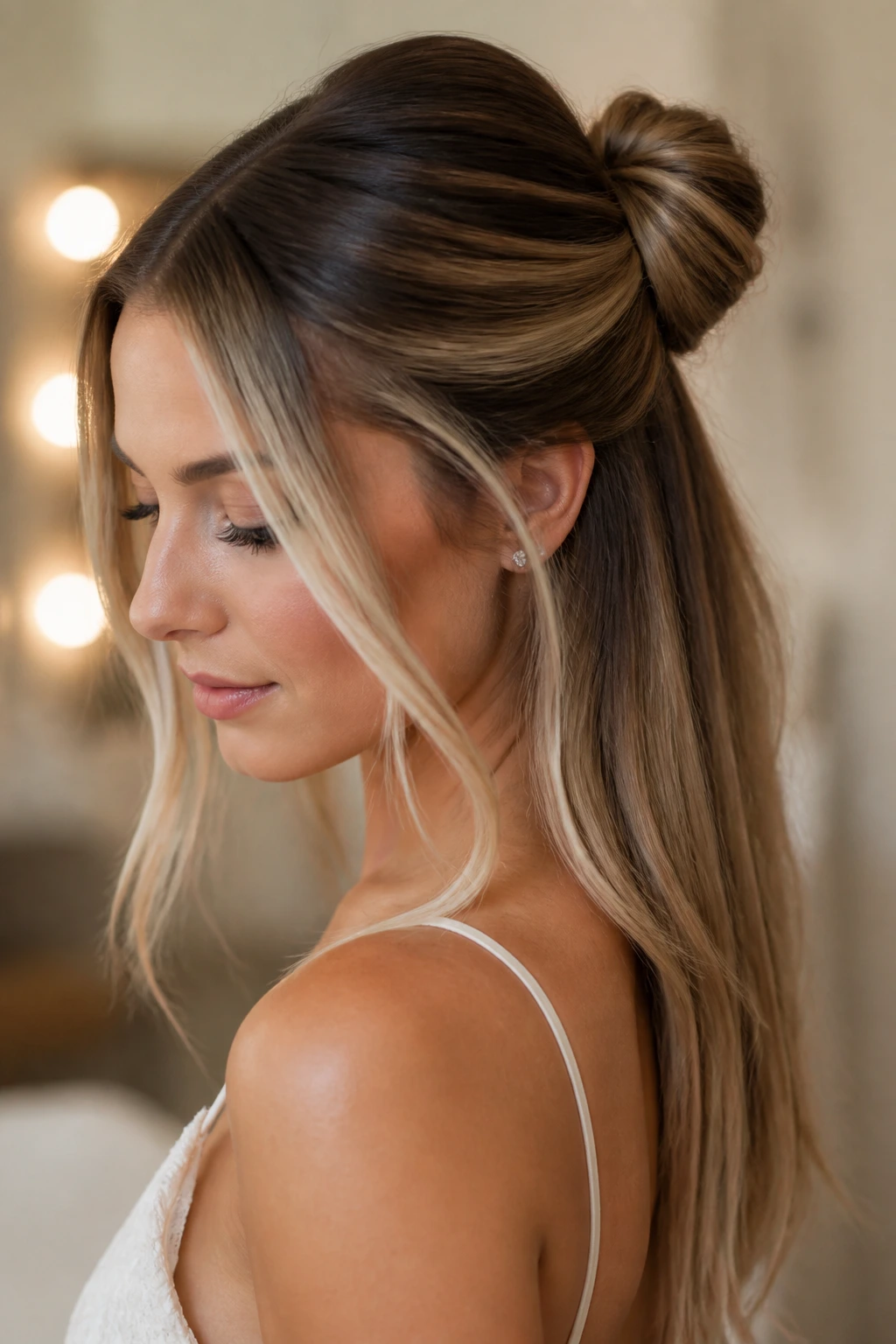
A polished half-up knot is the answer when the dress is clean, modern, or sharp around the neckline. The top section is gathered neatly into a compact knot at the crown or just above the occipital bone, while the bottom half stays straight or softly curved. The money piece gets to stay long and bright, which keeps the front from looking severe.
This style depends on control. Part the hair precisely, smooth the top with a flat brush, and use a pea-sized amount of serum only on the mid-lengths and ends. Too much product at the roots makes the knot slide and kills the shape. If your stylist pins the knot slightly off-center, it can keep the front pieces from looking symmetrical in a flat, predictable way.
Best for
- minimalist gowns
- strong necklines
- straight or softly waved hair
- brides who want the front highlight to read clearly from the aisle
4. Hollywood Waves with One-Side Sweep
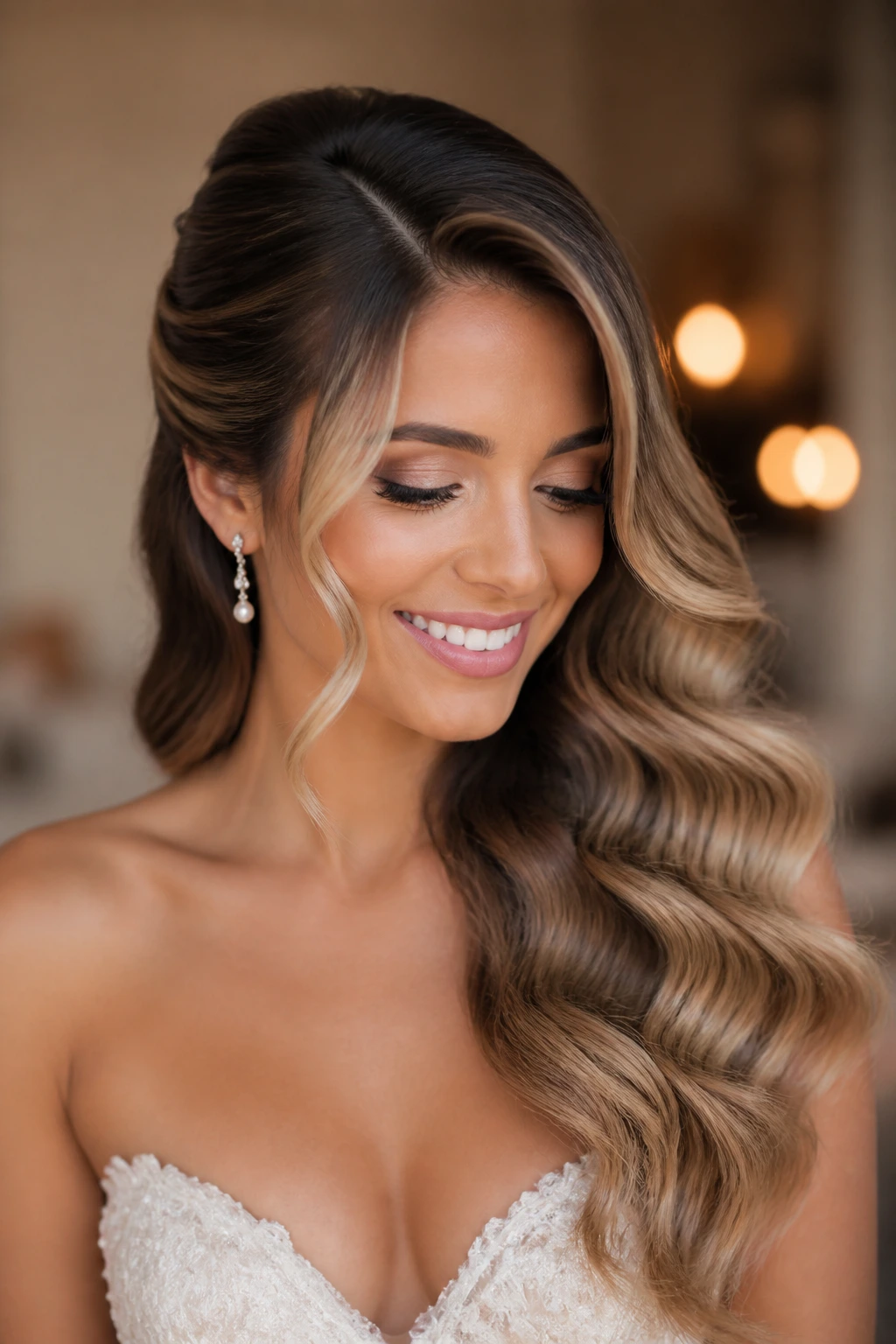
There’s a reason this one keeps showing up in bridal chairs. Big, brushed-out waves with one side tucked back let the money piece glow without forcing it into a rigid shape. The face framing stays visible, but the rest of the style still feels formal enough for a wedding.
The part matters here. A deep side part gives the front highlight more visual weight, especially if the brighter section is on the side with the sweep. Use a 1¼-inch curling iron, curl all sections in the same direction, then brush the set out once the hair has cooled completely. That’s the part people skip, and it shows. If you brush warm waves, they collapse into a soft blur.
I like this style for gowns with shoulder detail or a little drama at the bust because the waves echo that shape. It’s not a shy hairstyle. It enters the room.
5. Braided Halo with Soft Tendrils
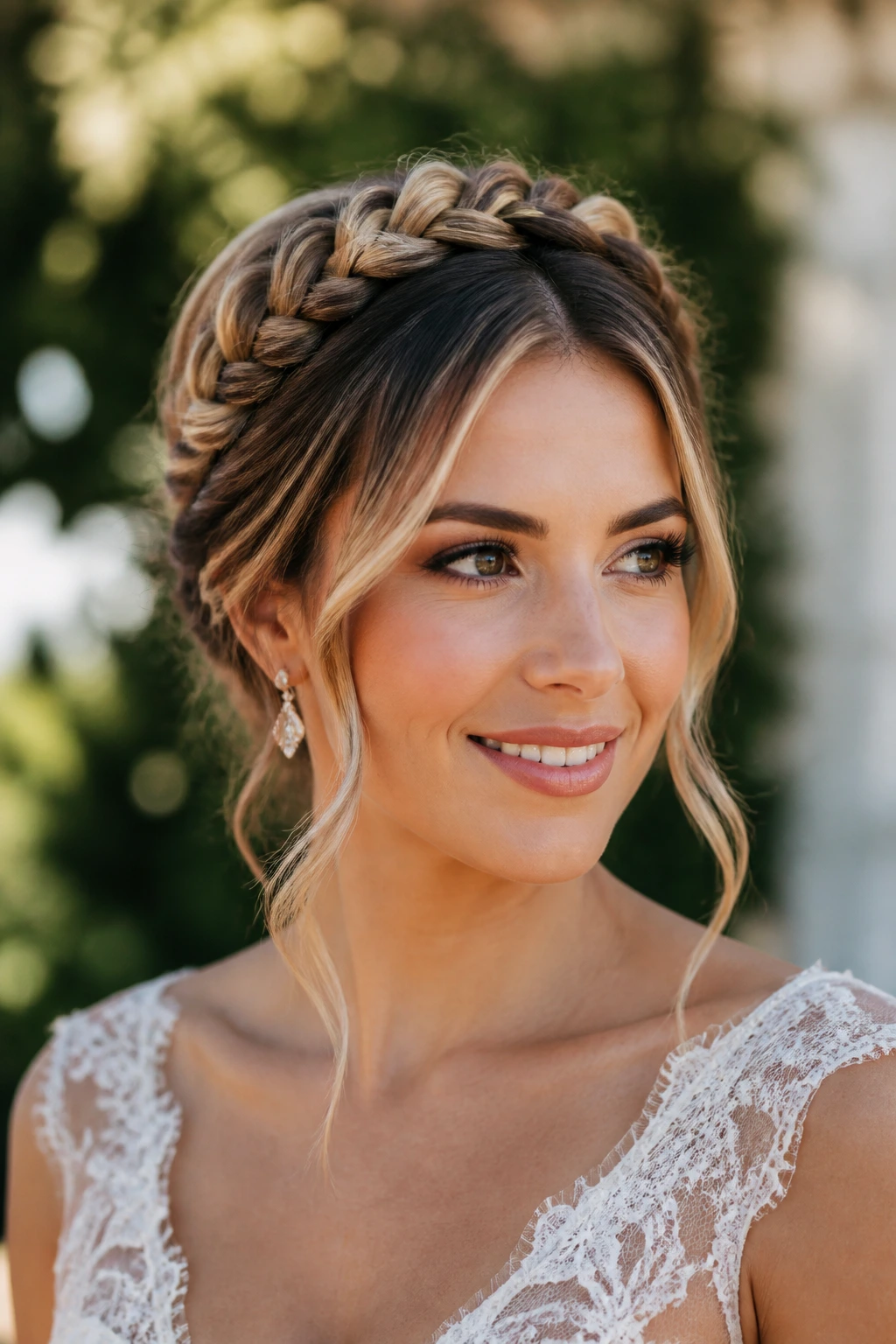
A braided halo can look precious if it’s too tight. Loosen it, and it becomes one of the nicest ways to support money piece highlights at a wedding. The braid wraps the crown, while two wispy front pieces stay free and curved around the face.
Why this one works with veils
The halo gives you a built-in anchor point for a veil comb or small pin placement, but it doesn’t have to sit so high that it steals the front highlight. Keep the braid about an inch back from the hairline and use the tendrils to soften the edges. If the face-framing pieces are too straight, curl only the bottom two-thirds so they still read light around the eyes.
This style is especially good when the bride wants a little romance without a lot of visible engineering. It looks intricate from the back and gentle from the front. That balance is harder to pull off than people think.
6. Bubble Half Ponytail
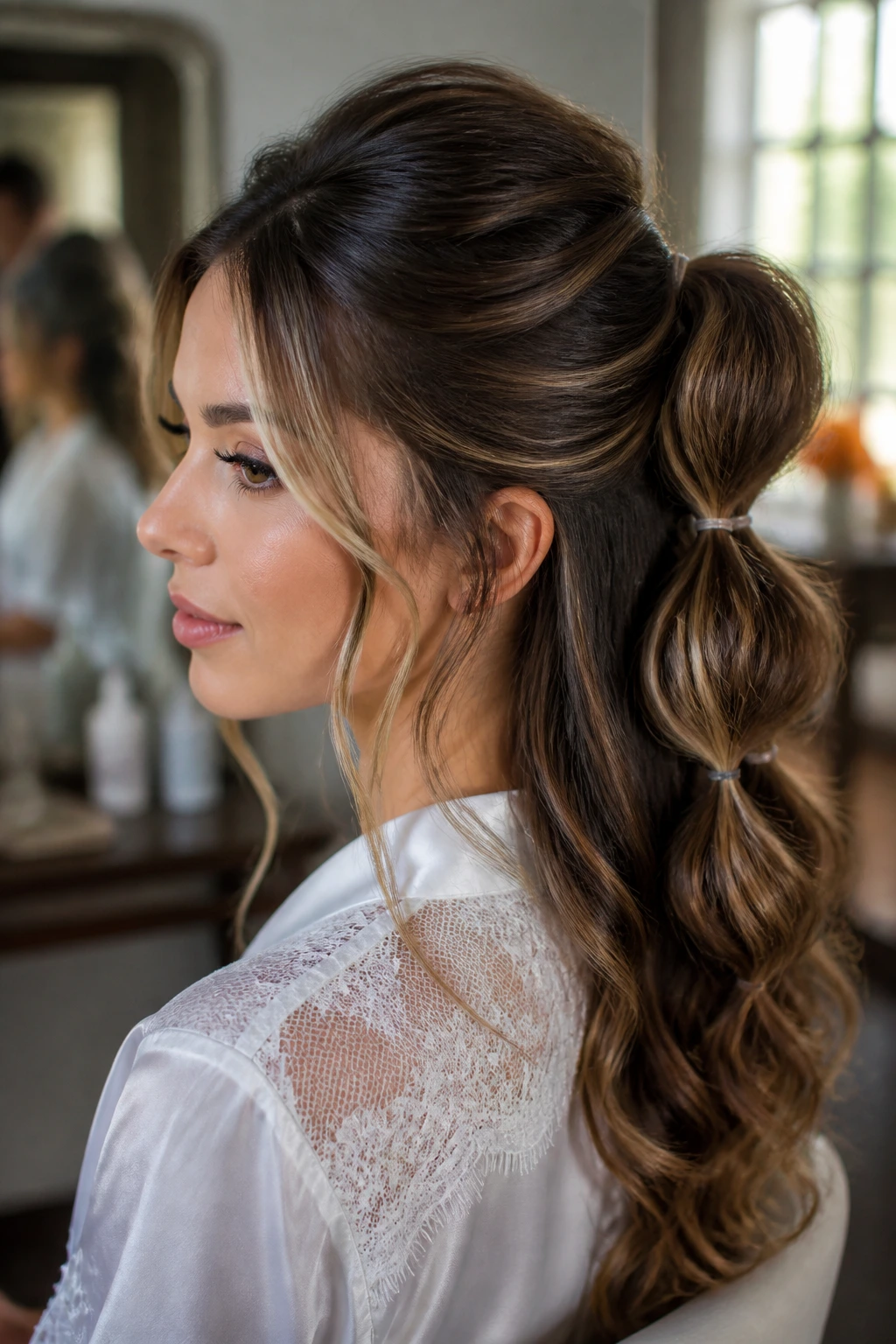
A bubble half ponytail brings a little fashion energy to a wedding look without turning it into a costume. The crown section is gathered into a half pony, then segmented with small elastics every 2 to 3 inches to create soft bubbles. The money piece stays loose in front, which keeps the style from looking too graphic.
The bubbles are the point, but they shouldn’t be overstuffed. Gently tug each section outward after securing it so the shape feels rounded rather than stuffed into shape. If the hair is fine, mist each section with texture spray before you start. If it’s thick, use clear elastics and wrap a tiny strand around each one so the finish looks deliberate.
This is one of the better choices for brides who want movement and a little edge. It has a bit of polish, a bit of play, and no shortage of shoulder-line interest.
7. Mini Bun with Loose Length
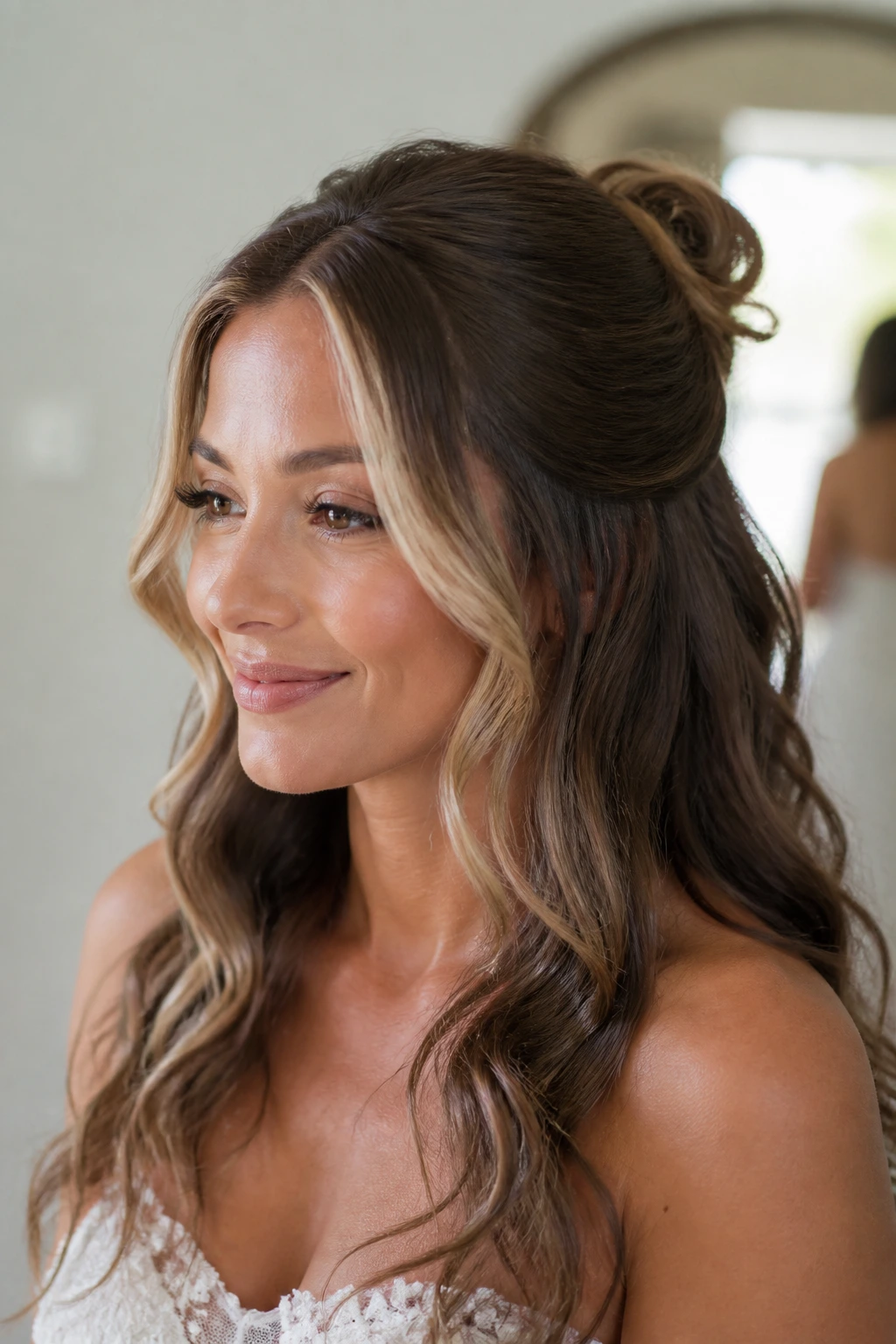
This style sits in that sweet spot between “done” and “not overdone.” A small bun or rolled knot sits at the back of the crown, but the rest of the hair stays down in soft lengths. The money piece can either be waved away from the face or worn with a slight bend, depending on how bold you want the contrast to feel.
It’s a strong pick for medium-length hair because it doesn’t ask for a huge amount of volume. That said, the bun needs enough density to hold its shape, so if your hair is very fine, a couple of hidden pins and a small filler pad can help. Nothing obvious. Just enough to keep the knot from folding into itself.
I like this one for dresses with open backs. The style gives you that little lift at the back, but it still leaves the front soft. That’s the whole game here.
8. Waterfall Braid with Loose Curls
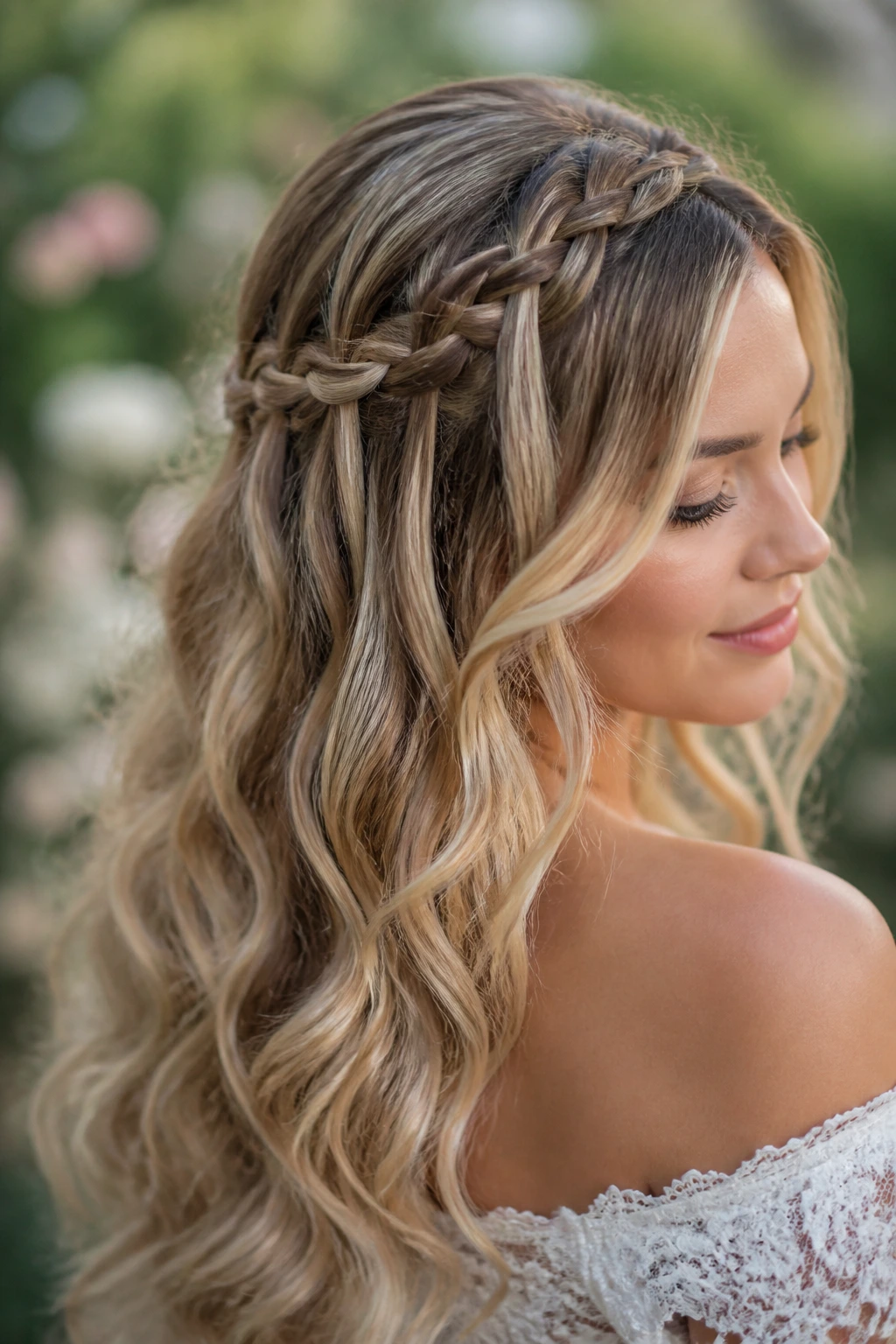
What makes a waterfall braid so useful at a wedding? It lets the braid do the architecture while the money piece handles the softness. The braid arcs across the crown and drops strands into the rest of the hair, which means the front framing never gets trapped in a hard line.
The trick is to keep the braid airy, not tight against the head. Tight waterfall braids can look fussy in photos. Loose ones let the lightened front sections sit beside the braid instead of under it. If the bride has layered hair, this style is especially forgiving because the layers become part of the texture instead of fighting it.
Curls below the braid should be polished enough to hold shape but not so curled that the look turns into a pageant helmet. A 1-inch barrel and a light brush-out are enough. You want movement, not stiffness.
9. Fishtail Medallion Half-Up
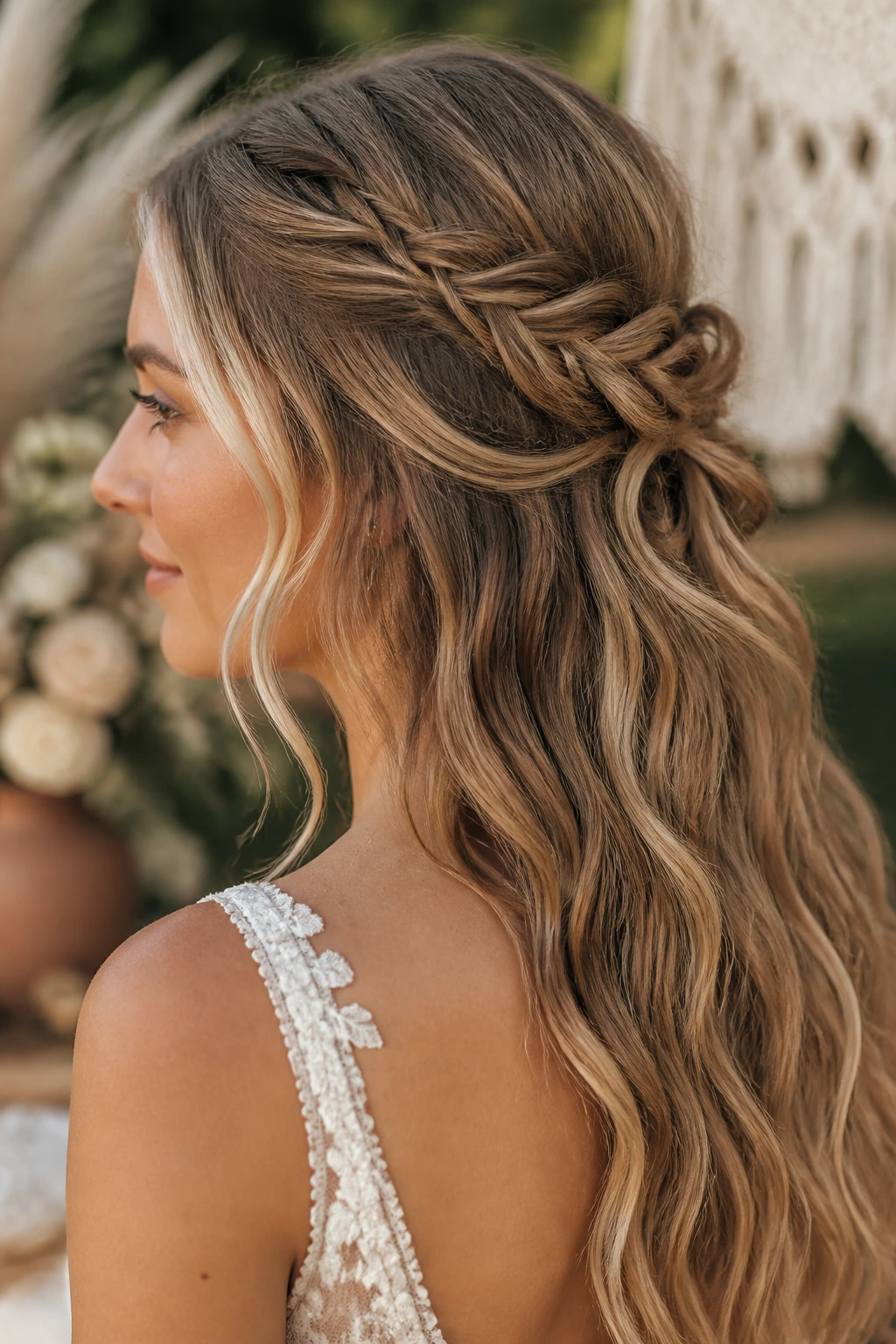
A fishtail braid has a sharper texture than a standard braid, and that texture looks fantastic against bright front pieces. In a half-up version, the fishtail starts at the temples or just above them, then gathers into a central medallion or knot at the back. The remaining hair falls loose underneath.
This style works especially well on thick hair because the braid has enough bulk to show its pattern. On finer hair, you can pancake the braid slightly — tug the sides outward after it’s secured — so it looks fuller and less skinny. The money piece should be left with a soft bend, not pinned flat, because the braid already brings enough structure.
I’d choose this when the wedding has a more bohemian or artisanal feel. It doesn’t need much sparkle. The braid texture carries the whole thing.
10. Side-Swept Twist with a Low Back Anchor
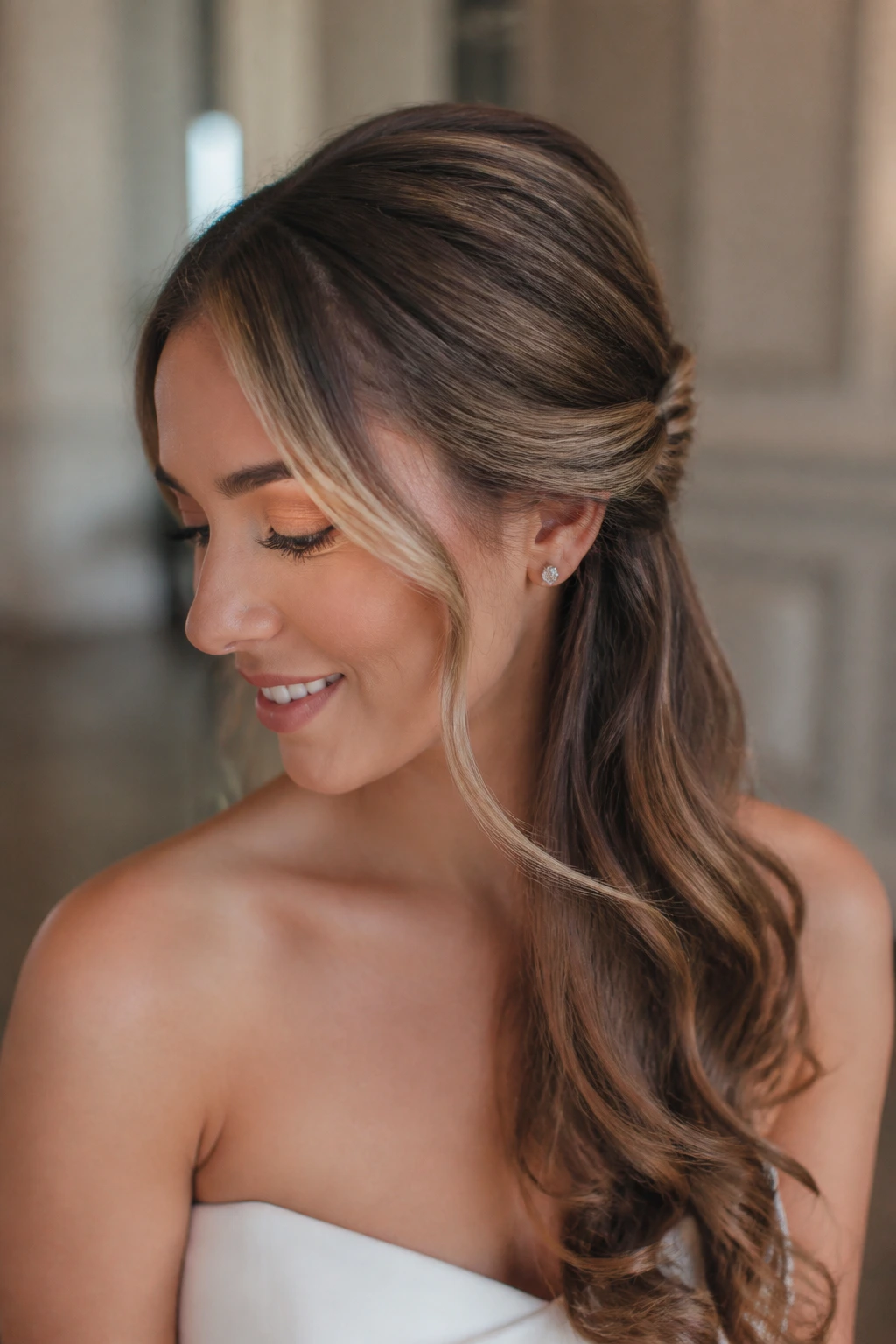
Some half-up styles feel balanced. This one feels intentional in a quieter way. The hair is swept mostly to one side, with a soft twist pinning back the heavier side and the lighter side left to fall in long, visible layers. The money piece becomes part of the sweep instead of sitting as a separate strip.
That asymmetry is the point. It’s excellent with one-shoulder gowns, dresses with sculpted sleeves, or any neckline that already has a strong shape. A centered half-up style would compete with that. This one doesn’t. It leans into it.
If you want the sweep to hold, anchor the twist just behind the ear and cross the pins in an X under the hair. The surface should still look soft, but the base needs real grip. Otherwise the style slips flat halfway through the first toast.
11. Half-Up Top Knot
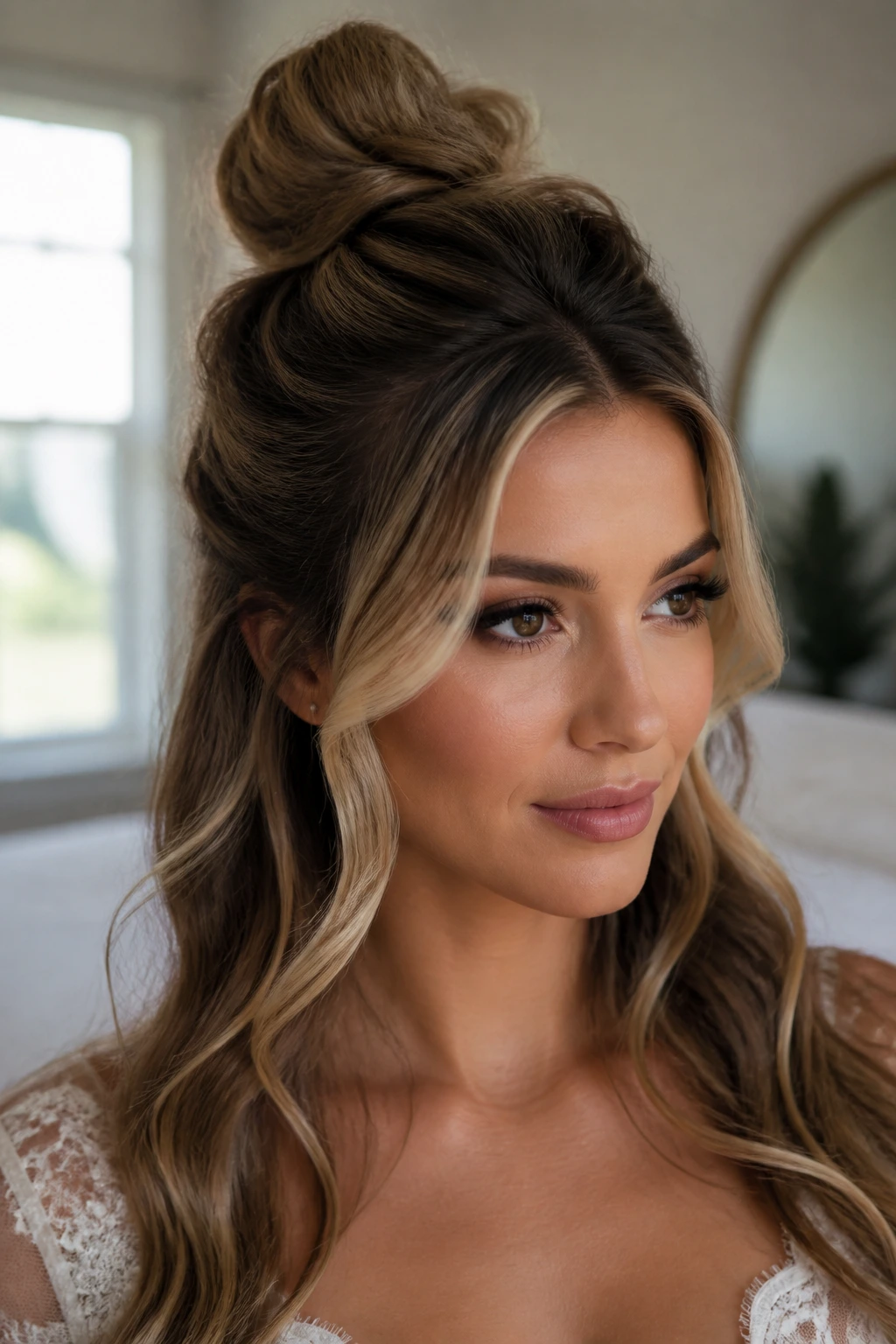
A half-up top knot can look too casual if it’s done without thought. Done properly, it gives a bride a little height, a little attitude, and a clear frame for the money piece highlights in front. The top section is gathered high enough to create lift, while the rest stays long and loose.
What keeps it bridal
The knot should be tidy, not messy. Leave enough volume at the crown so the style doesn’t sit like an afterthought, but keep the surface smooth and controlled. A soft wave through the lower section makes the top knot feel connected to the rest of the hair. Straight ends can work too, but then the knot needs to be especially clean.
This style is strongest on brides who want something a little less traditional. It works with sharper dresses, modern jewelry, and city weddings where the hair can lean polished instead of romantic.
12. Pearl-Rolled Vintage Half-Up
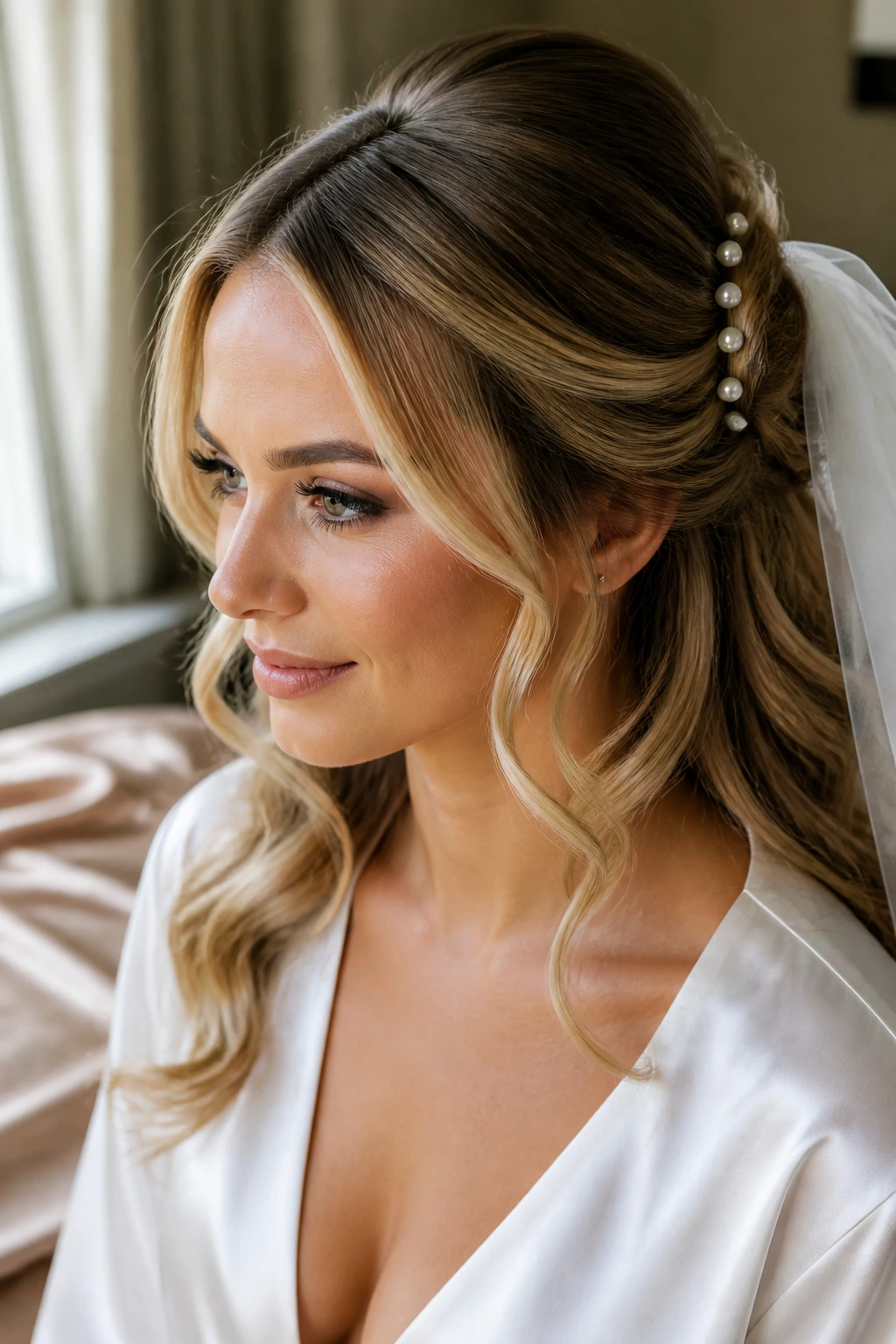
A vintage roll at the sides — tucked inward and pinned in neat, curved sections — creates a lovely backdrop for money piece highlights, especially when pearl pins are scattered along the seam. The face-framing pieces stay soft and slightly curled, which keeps the look from going too costume-y.
This is one of those styles where the details matter more than the overall silhouette. The roll shouldn’t be stuffed into a hard ridge. It should sit smooth and rounded, with the pins hidden as much as possible. Pearl pins can be practical here, not just decorative. If they’re placed at the point where the roll meets the loose hair, they help hold the shape and draw the eye toward the front highlight.
I like this for satin or structured dresses. There’s a little old-school glamour in it, but it doesn’t feel dusty.
13. Floral Sprigs and Soft Half-Backs
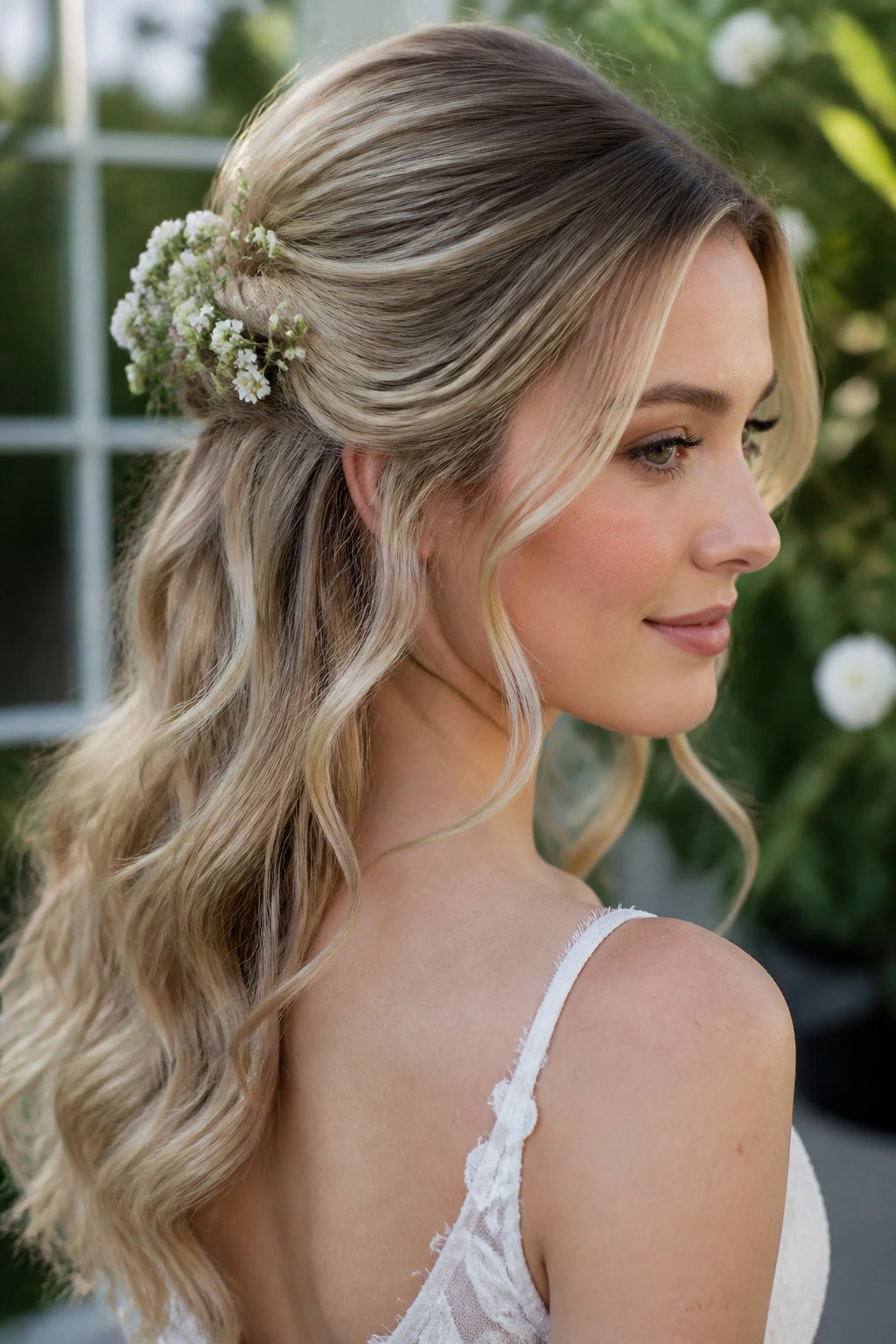
Fresh flowers can make a half-up style look dreamy, but they can also overwhelm the face if they’re placed badly. With money piece highlights, the safer move is to tuck a few small sprigs into the back section and keep the front pieces light and open. Think delicate, not bouquet.
This style works best when the blooms echo the dress or bouquet instead of competing with them. A single sprig near the braid or twist line is often enough. Too many flowers, and the front highlight starts to look like part of a crowded arrangement. The money piece should still be the first thing the eye sees.
Use hidden pins and a small amount of wax at the braid base if the flowers need support. Fresh stems can slide. Dried mini blooms are easier to manage if the wedding is outdoors or the schedule is long.
14. Curly Half-Up with Defined Ringlets
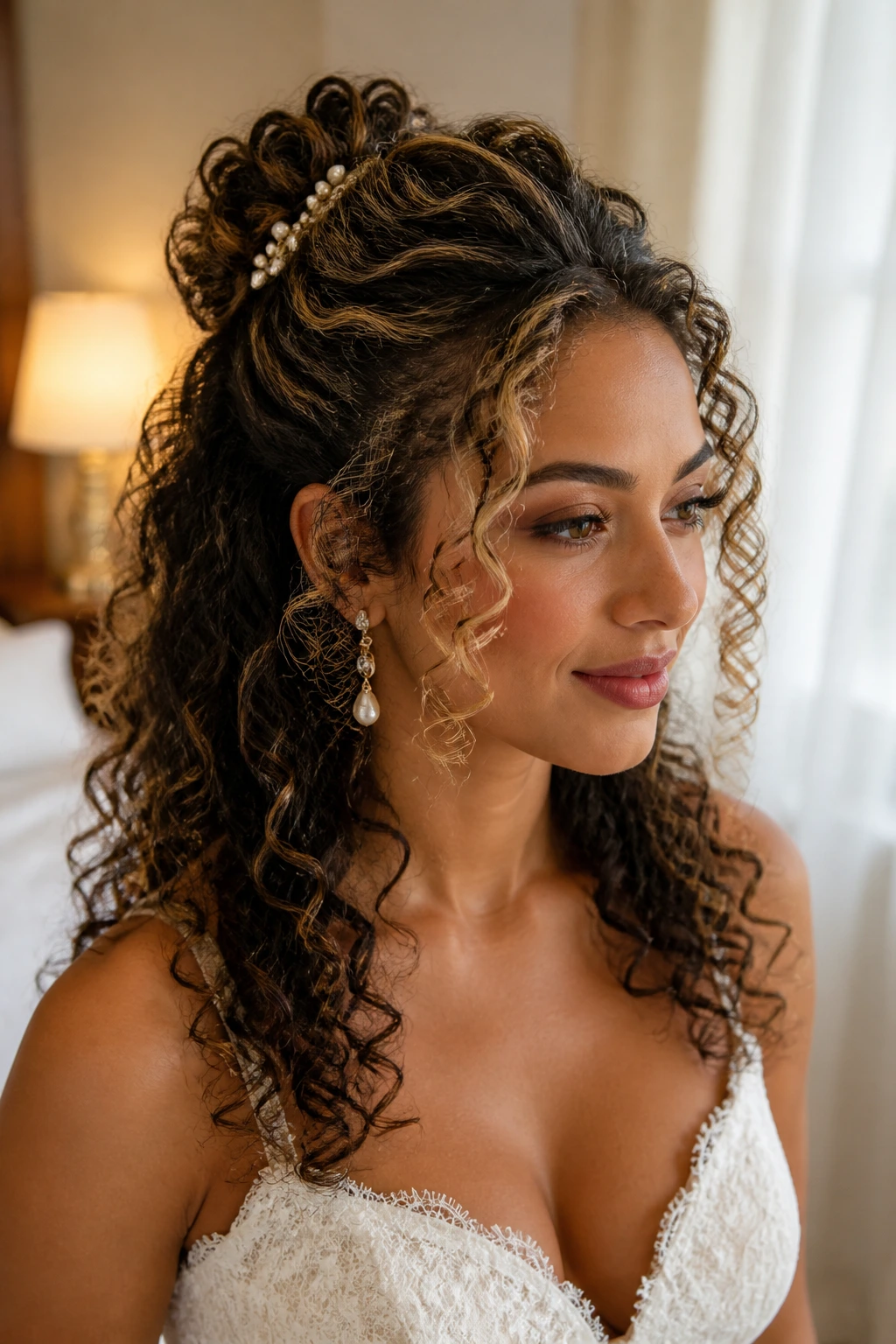
If the bride’s hair is naturally curly, this style is one of my favorites because it respects the texture instead of trying to flatten it into obedience. The top section is lifted and pinned back, while the curls around the face stay defined, shaped, and fully visible. Money piece highlights on curls can be gorgeous when they’re allowed to follow the curl pattern.
The front pieces should be styled separately. Don’t just scoop them back and hope for the best. Shape them with a small curling wand or a twist-and-set method so the curl clumps stay clean. A little curl cream on wet hair and a light gel cast that gets scrunched out after drying can keep the front from puffing up.
This version feels especially good on brides who wear texture every day and do not want to fight it for the ceremony. That honesty reads well. It also photographs with real movement, which matters more than flawless smoothness.
15. Mirror-Shine Straight Half-Up
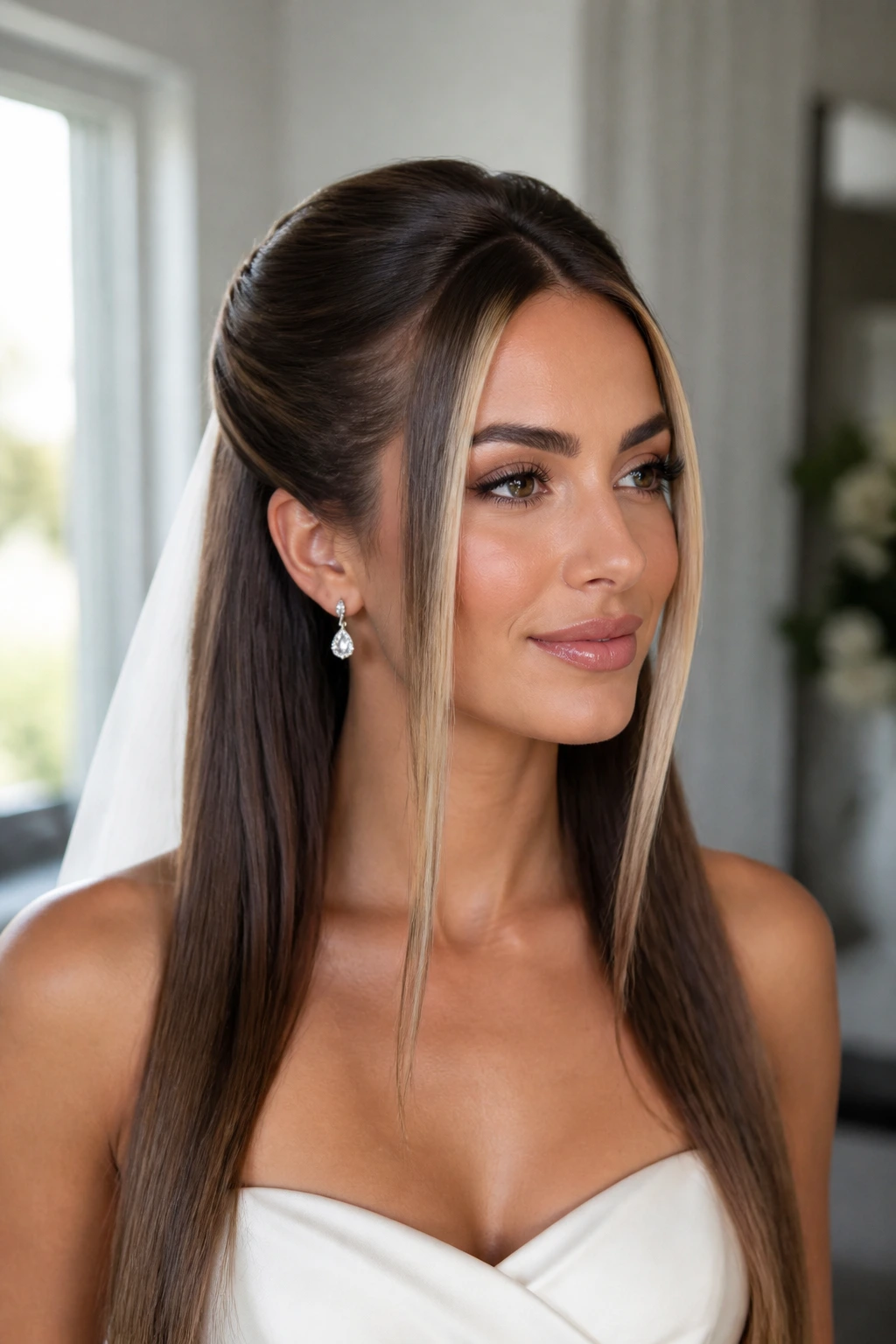
Straight hair can be dramatic in a wedding setting when it’s done with enough shine and control. The half-up portion should be sleek and precise, with the money piece left long enough to act like a bright frame around the face. No heavy bend. No floppy curl pretending to be something else.
This style is all about clean lines. A flat iron with a slow pass, a heat protectant that leaves a soft sheen, and a fine mist of finishing spray are the essentials. Keep the product away from the root area unless the hair is extremely flyaway. Too much serum will flatten the crown and make the whole look drag.
I like this for minimalist gowns and dramatic earrings. The hair doesn’t try to steal the scene. It just sharpens the face and gives the highlight a crisp edge.
16. Rope-Twist Half-Up for Fine Hair
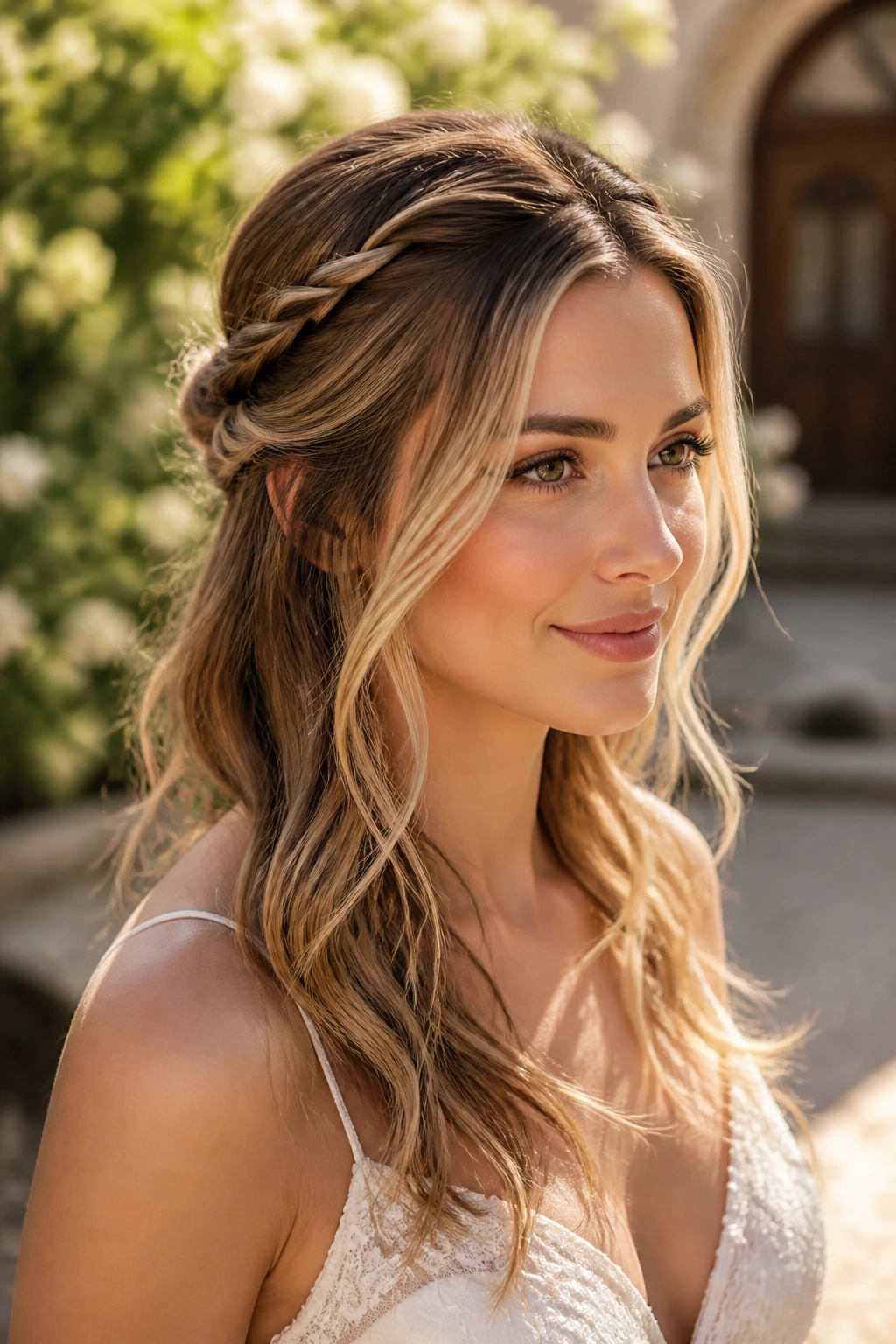
Fine hair often gets bullied by thick braids and bulky curls, so rope twists can be a smarter choice. Two sections are twisted in the same direction, then wrapped around each other and pinned back. The result looks fuller than it sounds, which is half the appeal.
Why rope twists help finer strands
The twist pattern creates the impression of density without needing a lot of hair. That makes the money piece show up clearly because the front pieces stay loose while the back gets just enough structure to feel secure. I’d keep the twist sections narrow — about the width of a finger and a half — and use texture spray before you begin so the sections don’t slip apart.
This one is underrated. It’s not loud, but it solves the “my hair looks thin when pulled back” problem better than a lot of fancier styles.
17. Crown Braid into Loose Waves
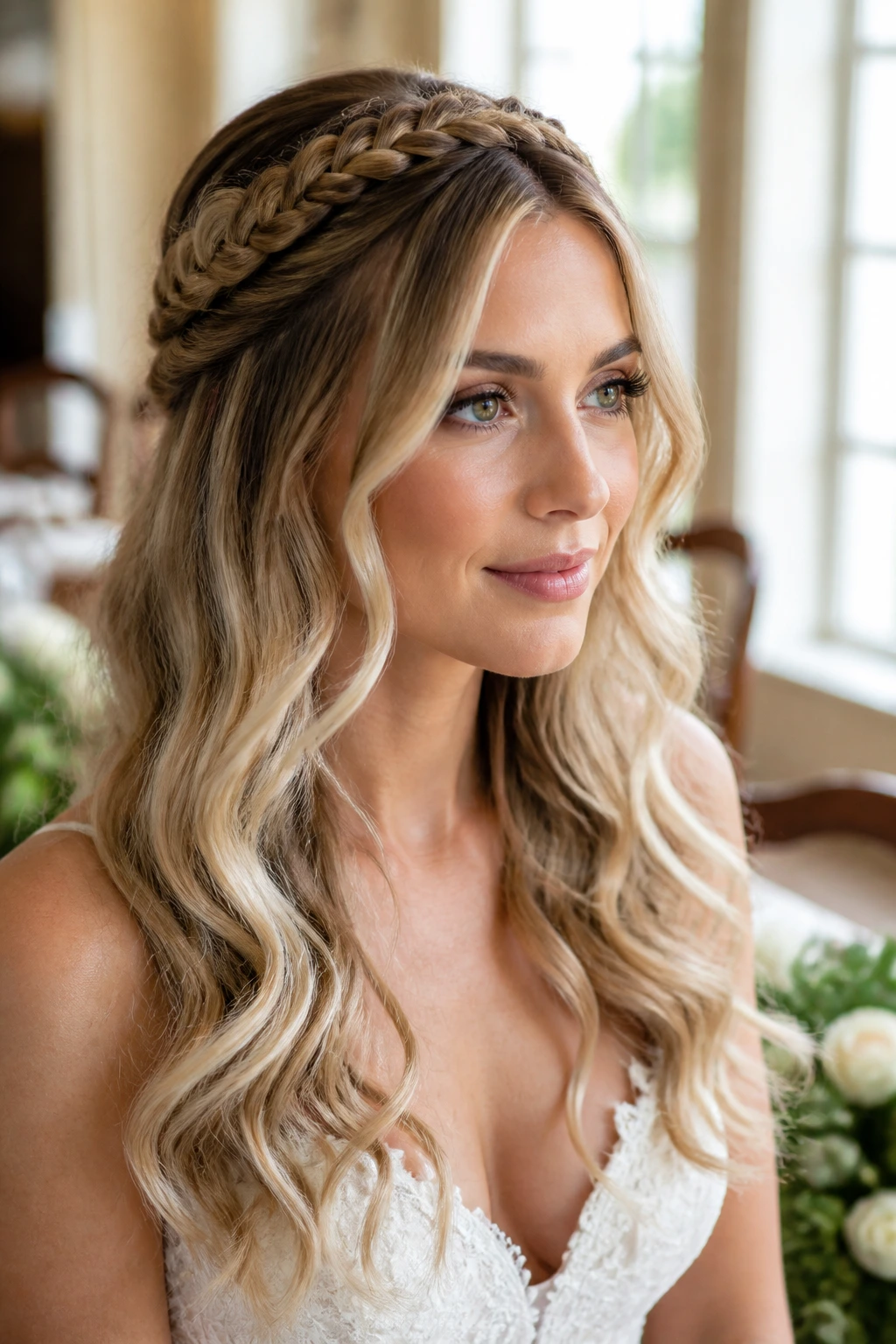
A crown braid that fades into waves gives you both structure and softness. The braid starts around the temple, circles or sweeps back, and then disappears into the loose lengths. The money piece is left to curve around the face, where it can break up the heavier shape of the braid.
The transition matters. If the braid ends too abruptly, the style can look chopped. Blend the braid ends into the pinned base, then brush the lower waves so they move as one section. A 1¼-inch iron usually creates a softer wedding wave here than a smaller barrel, which can feel too tight once the hair cools.
I’d choose this for brides who want movement from every angle. The front stays light, the crown has interest, and the ends don’t go limp.
18. Textured Messy Knot Half-Up
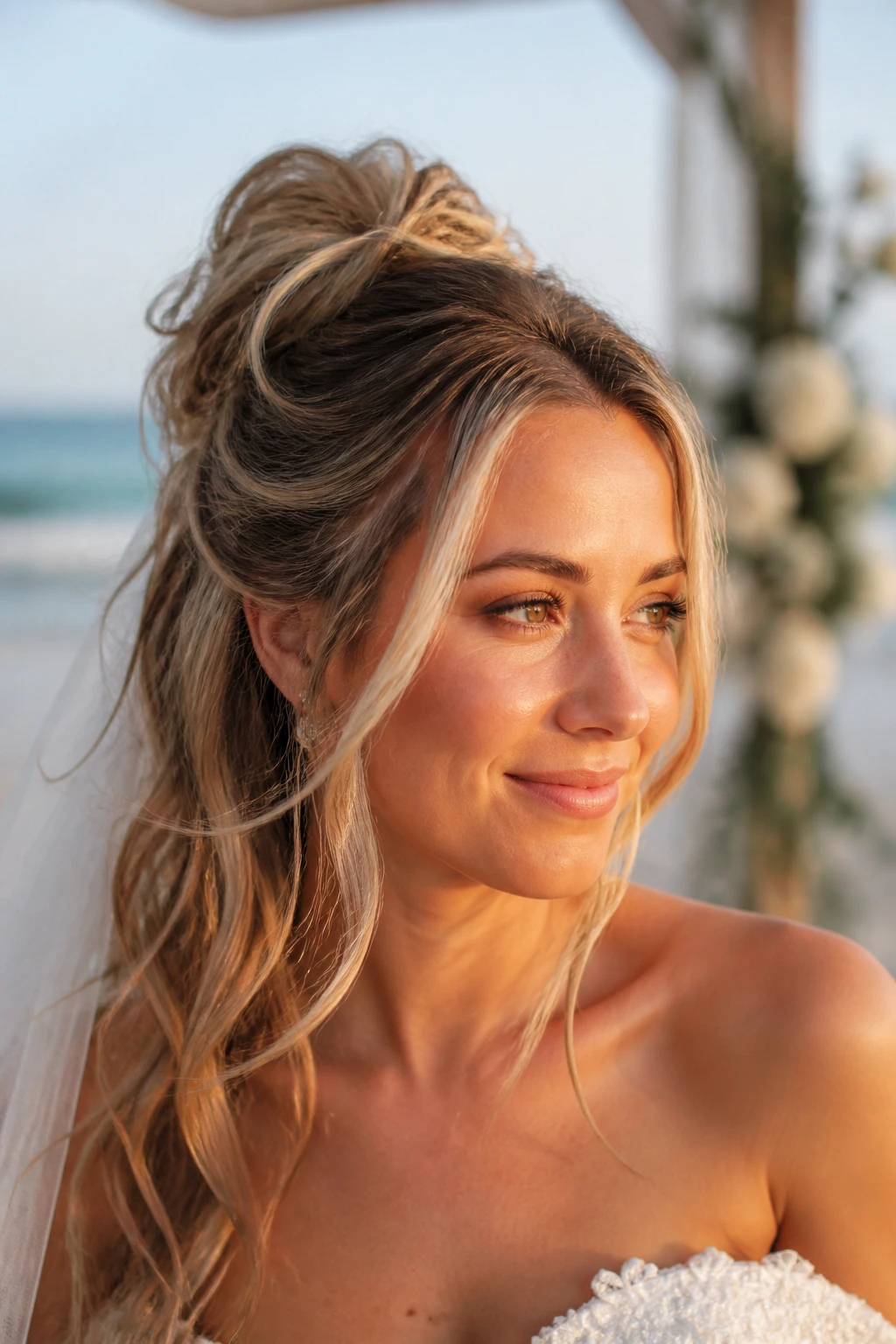
Messy is a dangerous word in wedding hair. Real mess rarely looks good. Controlled texture, though — that’s different. A soft knot with a few pulled pieces and a loosely waved money piece can look relaxed and expensive at the same time, which is probably why this style gets requested so often.
The trick is restraint. Pull only a small amount from the top section, twist it into a loose knot, then pinch the surface with your fingers before spraying. If you start yanking sections free like you’re trying to escape the style, it falls apart. The money piece should still look intentional, not like the hair escaped from the rest of the plan.
This is a strong choice for outdoor settings, beach ceremonies, or dresses that have a softer shape. It has movement, but it doesn’t collapse.
19. Ribbon-Tied Half-Up
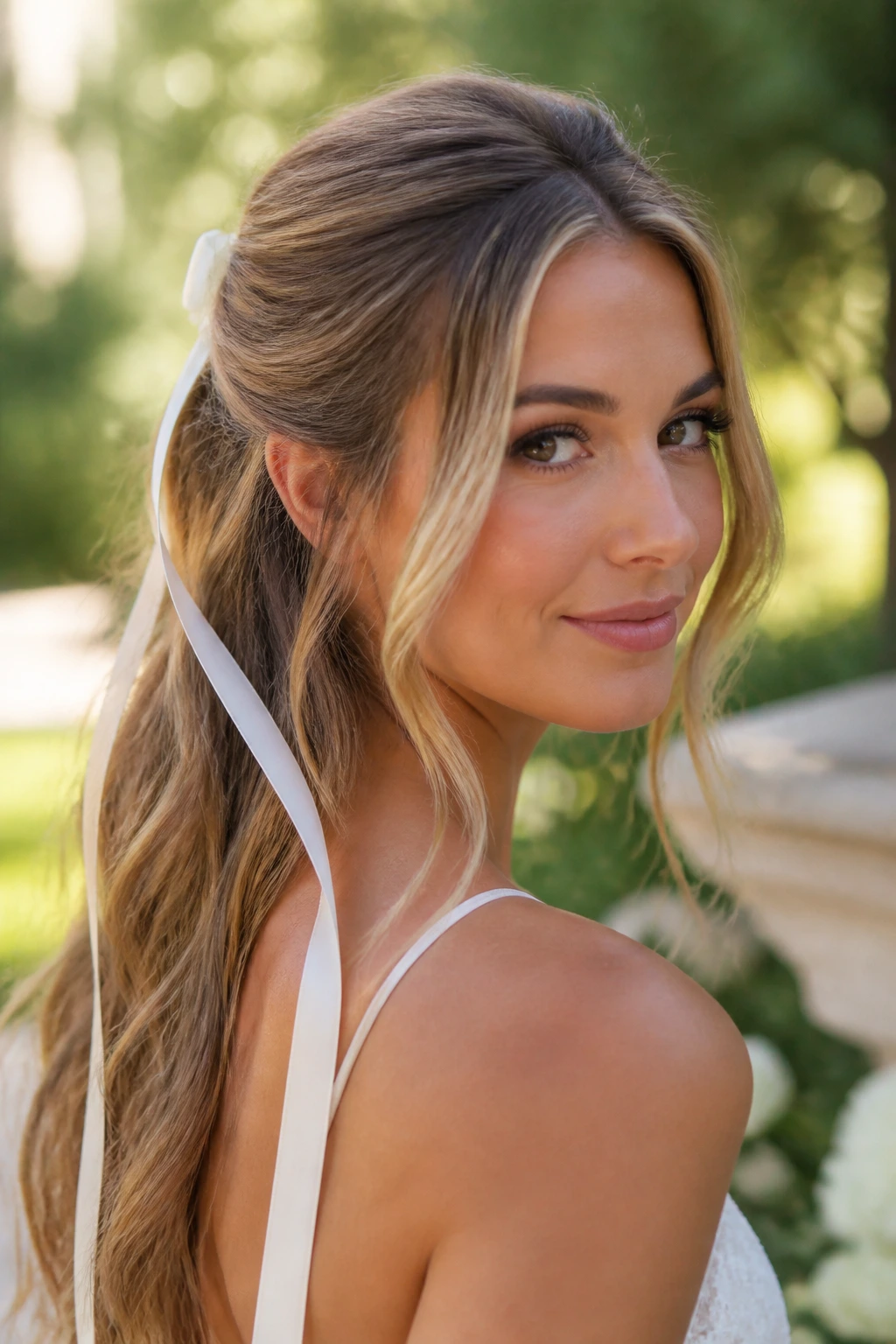
A narrow ribbon threaded through the half-up section adds a bridal note fast. Satin, velvet, or organza all work, but the ribbon should match the dress weight. A heavy velvet bow can overpower a light dress, and a flimsy satin strip can look unfinished against a structured gown.
The money piece should stay loose and slightly bent so the ribbon doesn’t become the only decorative element. I like this style when the front highlight is warm and bright, because the ribbon frames it almost like a soft border. It’s charming without being sugary.
Tie the ribbon after the half-up section is pinned so you can adjust the tails. Too long, and they start to drag into the shoulders. Too short, and they get lost. Somewhere around 6 to 10 inches of visible tail is usually enough.
20. Clip-In Length Half-Up
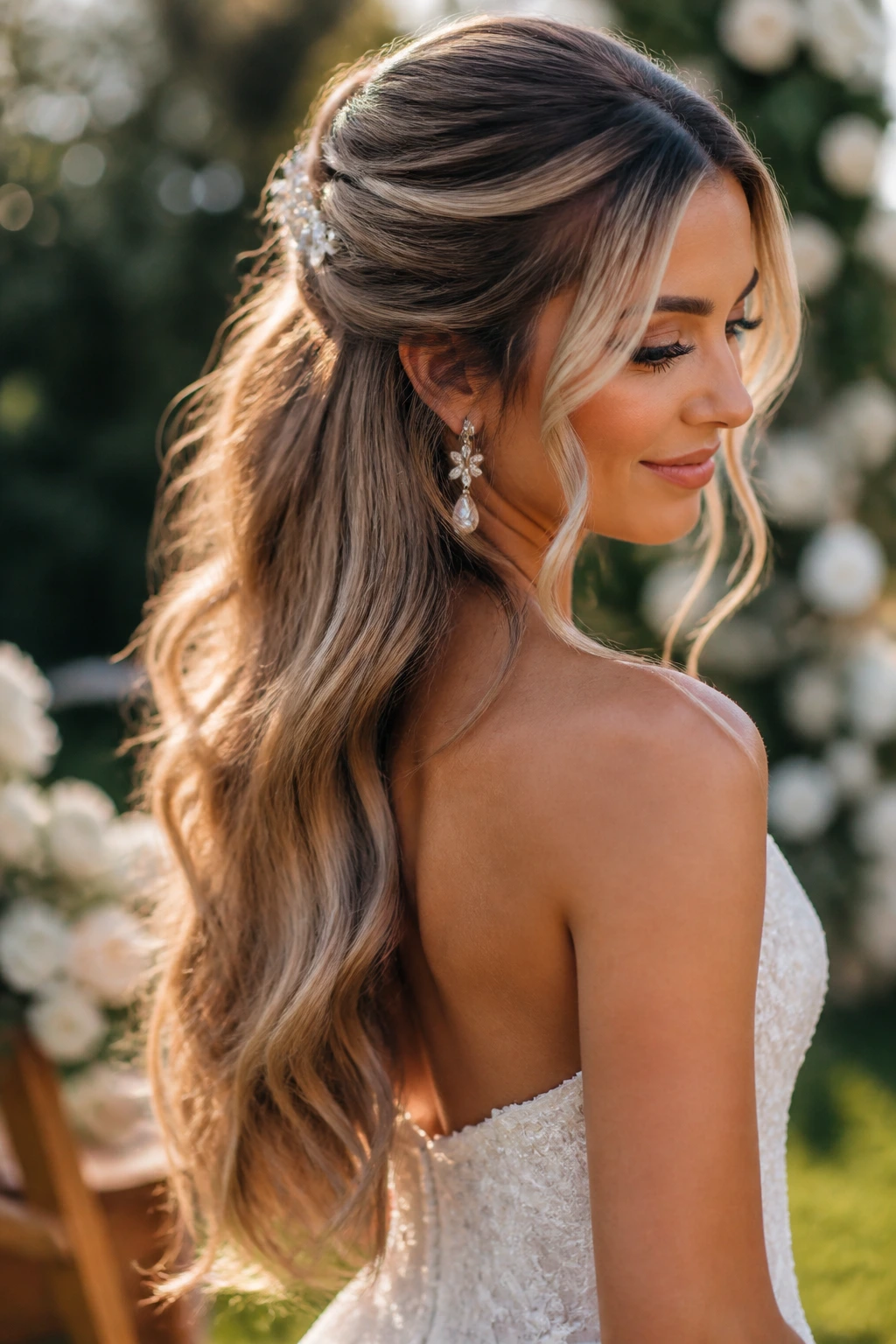
If the natural hair is short, shoulder-length, or just not dense enough for the style you want, clip-ins can change the whole silhouette. The goal isn’t to make the hair look fake. It’s to give the half-up structure enough length and body to support the money piece and the lower wave pattern.
Placement matters. Set the wefts low enough that the half-up section hides the clips but high enough that the extensions don’t peek through when the hair moves. A stylist who understands this can save you from the awkward “I can see the track” problem that ruins so many otherwise nice styles.
This is a practical choice, not a flashy one. And practical is not a bad thing at a wedding. Especially when the photo list is long and the hair needs to stay put for hours.
21. Retro Rolled Half-Up
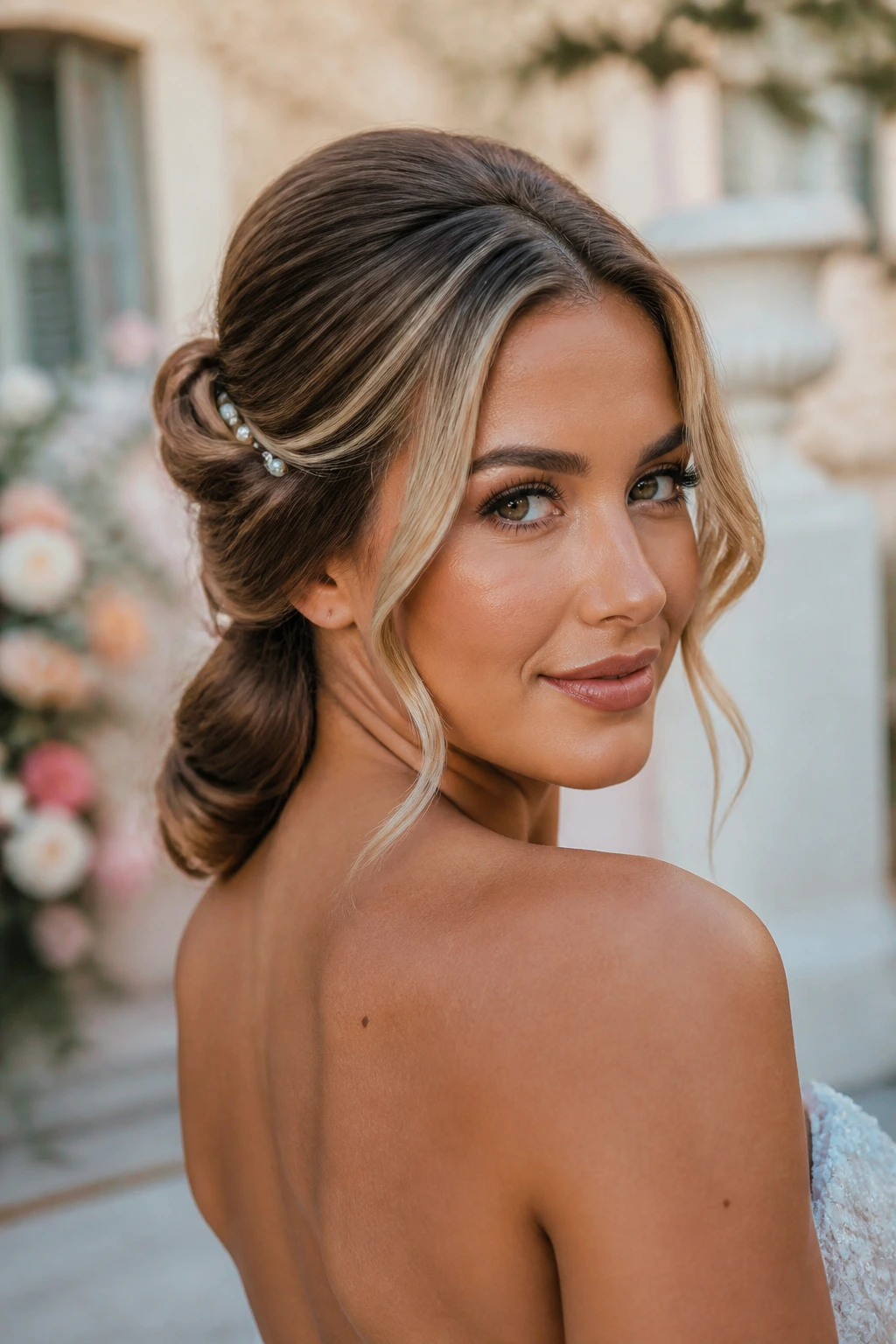
Retro rolls at the crown and temples give the hair a polished, vintage shape that still leaves the face-framing highlights visible. The front pieces should curve away from the face, not sit in stiff curls. Think soft structure, not pageant shell.
What to watch for
The roll should sit low enough to feel elegant, but high enough to keep the crown from collapsing. If the hair is slick or slippery, a little dry shampoo at the roots before styling gives the pins a place to bite. I’d avoid too much volume at the sides unless the dress has a very simple line. A busy neckline and big side rolls can start to fight each other.
This style has a strong opinion. It likes pearls, satin, and clean makeup. It does not love clutter.
22. Minimalist Side Part Half-Up Knot
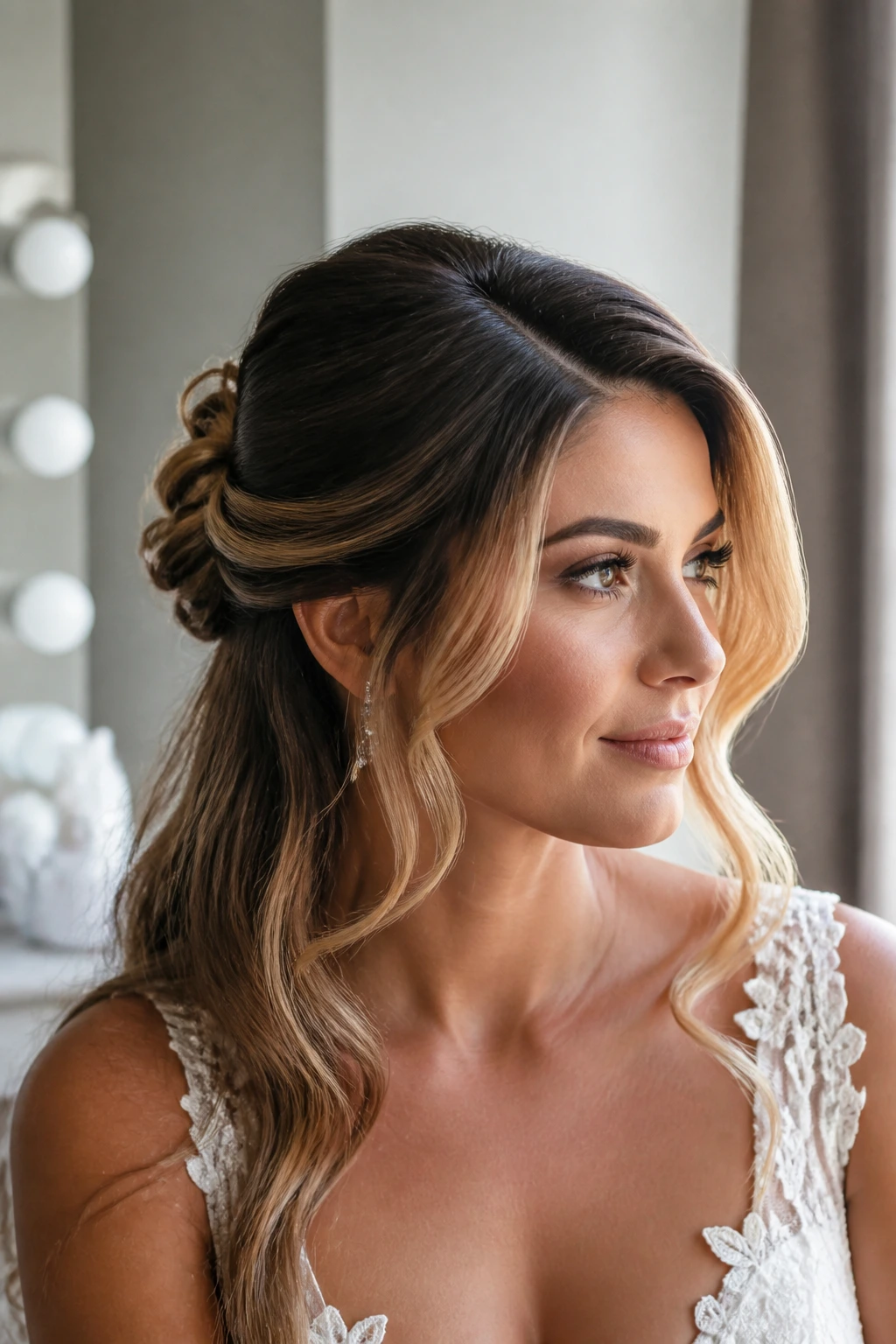
A deep side part with a low-profile knot at the back is a quiet style, but it has a lot of presence. The money piece highlights get to sit on the heavier side of the part, which makes the face frame feel deliberate rather than symmetrical and flat.
This is one of the easiest ways to make straight or slightly waved hair look expensive without loading it up with accessories. The knot should be tucked close to the head, almost like a small fold instead of a full bun. That keeps the focus on the front and on the line of the part.
It’s especially good with contemporary dresses, square necklines, or clean tailoring. Nothing about it shouts. That’s the charm.
23. Braided Mohawk Half-Up
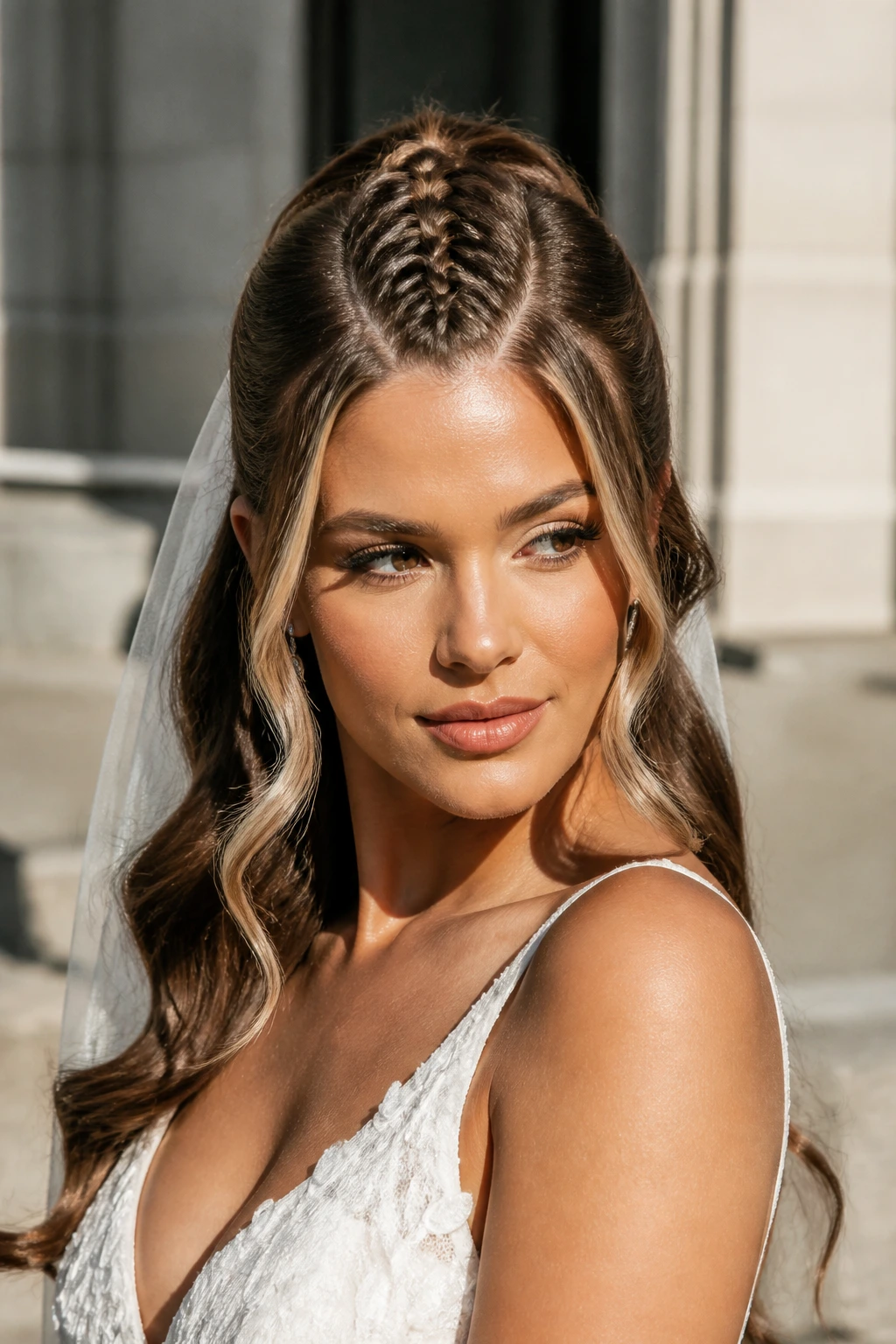
If the bride wants something sharper, a braided mohawk half-up brings texture right through the center while leaving the sides sleek and the money piece clear. The braid or twist runs along the top section, creating a raised line that reads strong from the front and dramatic from the side.
This style is best when the face-framing strands are given enough length to soften the structure. If they’re pinned too tightly, the mohawk effect becomes harsh fast. Keep the sides smooth and the top textured, and the contrast does the work for you.
I like this for brides who dress with a bit of edge. Leather shoes, sculpted gowns, statement earrings — the whole thing needs a style with backbone. This one has it.
24. Veil-Ready Half-Up with a Hidden Anchor
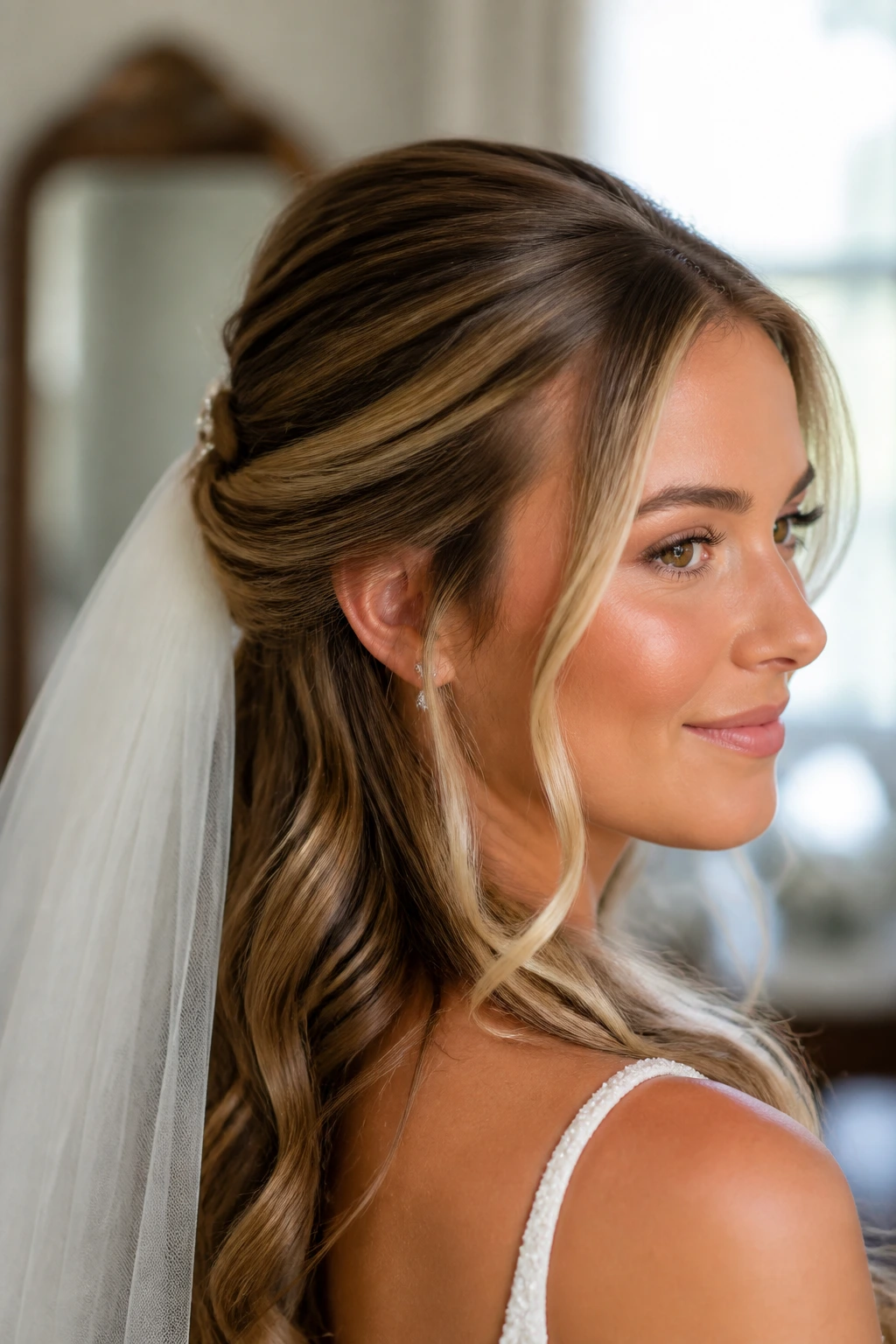
Some wedding styles are built for aesthetics. This one is built for logistics. A low half-up anchor placed just under the crown can hold a veil comb without making the back look bulky, while the money piece stays out front where it belongs.
The hidden anchor is the part most people miss. The base should be secure enough to support the veil’s weight, but not so high that the comb sits on top of the half-up section. If the veil needs extra stability, cross two pins underneath the anchor section and keep the outer surface smooth.
This is the style to ask for if you want the veil to come off cleanly after the ceremony without tearing up the whole structure. Smart placement now saves a lot of fuss later.
25. Barrel Curl Cascade Half-Up
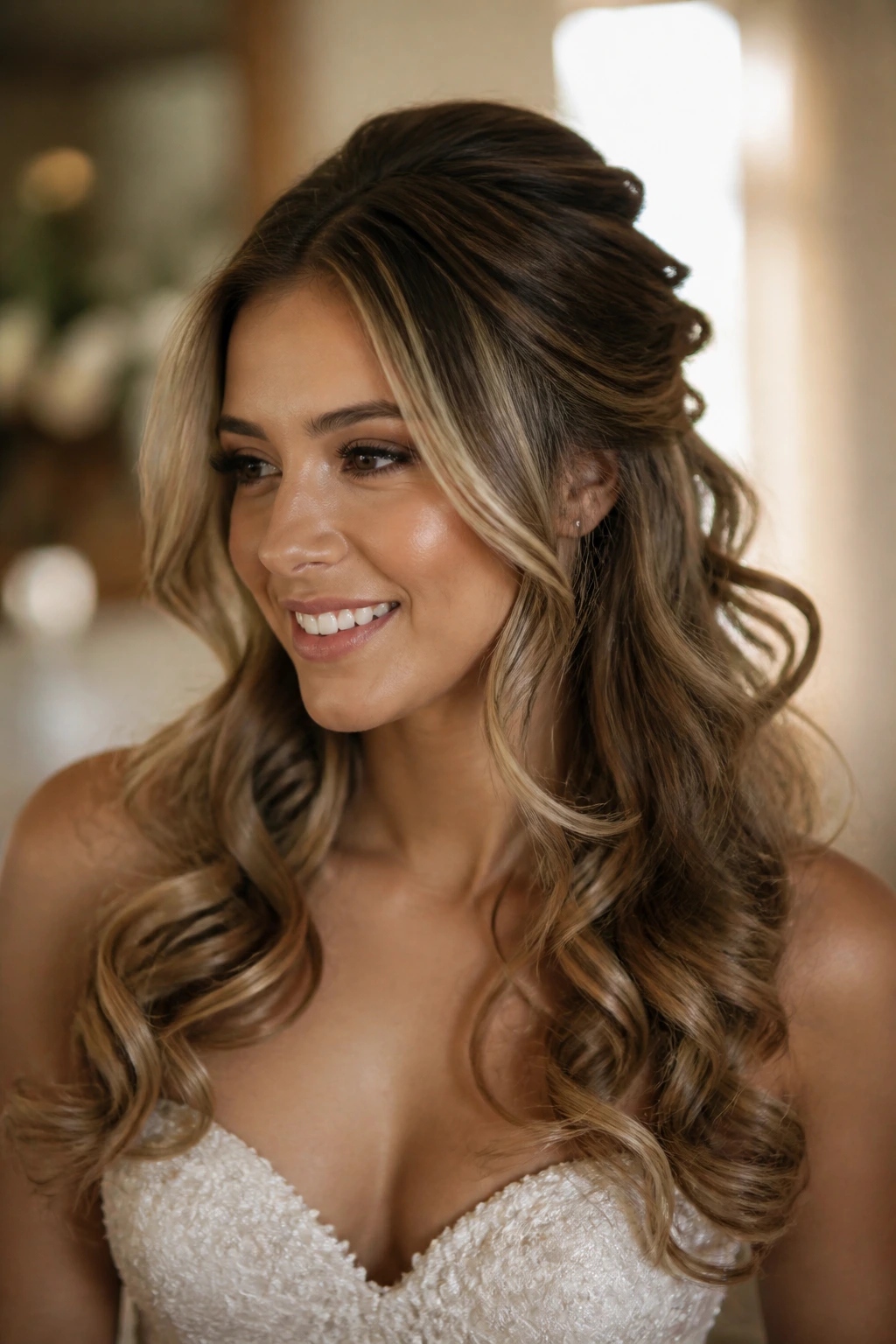
Big barrel curls falling from a half-up base are a wedding staple for a reason. They give the hair a generous shape, and the money piece can sit on top of that curve instead of getting swallowed by it. Use a 1½-inch iron if the hair is long, or a 1-inch barrel if the ends need more support.
The important part is the brush-out. Let the curls cool, then break them up with a wide brush or your fingers. If you brush too soon, they flatten. If you never brush them, the style can look too ringleted and lose that easy bridal movement.
This is the style you pick when you want something familiar but not dull. It holds up well in photos and still moves when you walk.
26. Medium-Length Side Twist
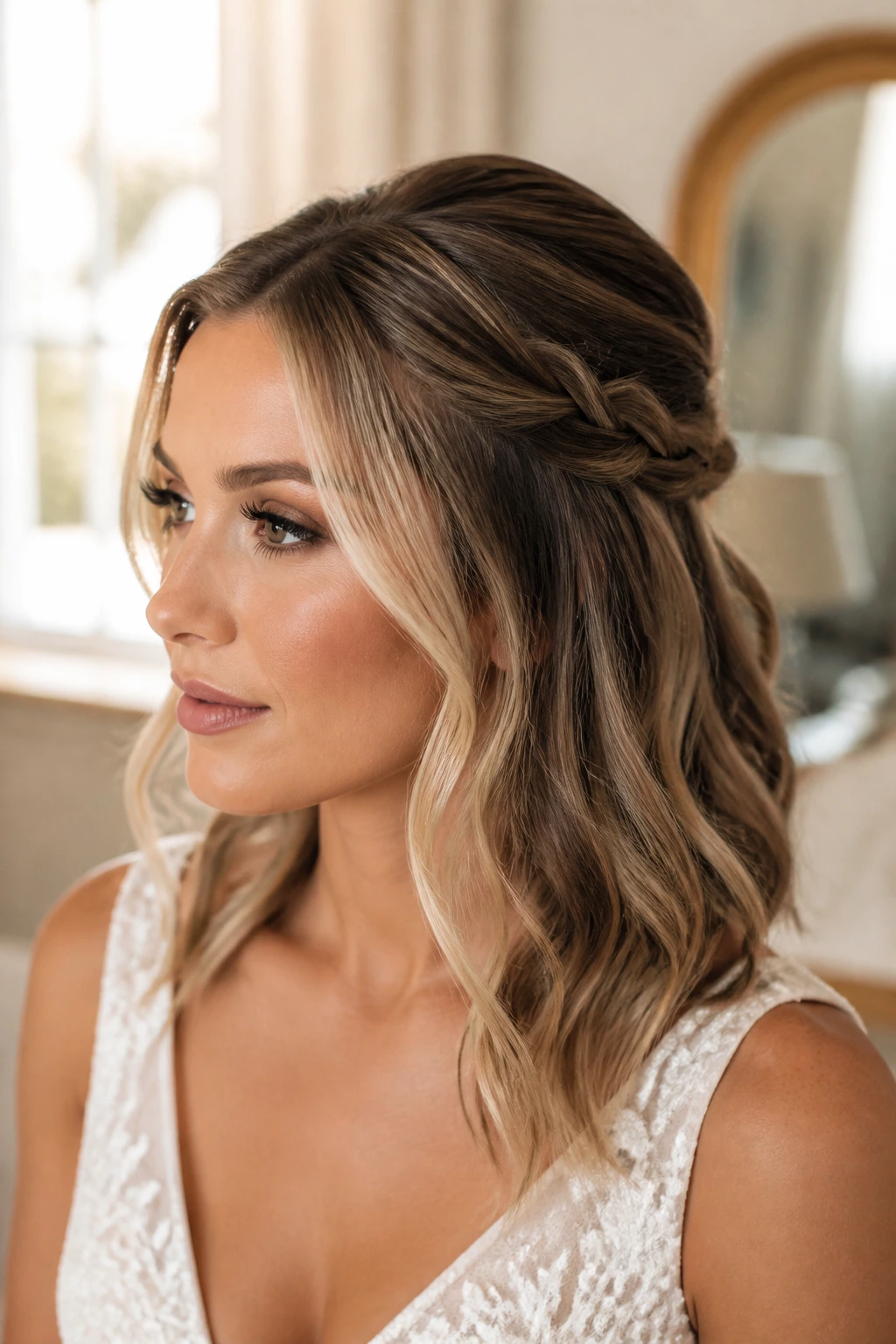
Medium-length hair often gets shortchanged in bridal inspiration, which is silly because it can handle a lot. A side twist that pulls back a chunk from one temple and anchors it into the middle gives the money piece a clean path while leaving enough length down to keep the style soft.
How to keep it from looking small
Use a little teasing at the crown and a light bend through the ends so the style has some body. If the hair is too flat, the twist looks like it’s hanging on for dear life. A medium-hold spray on the roots before pinning helps the shape stay up without getting crunchy.
I like this one for brides who wear their hair around collarbone length and don’t want to fight that length into something it isn’t.
27. Crystal Pin Scatter Half-Up
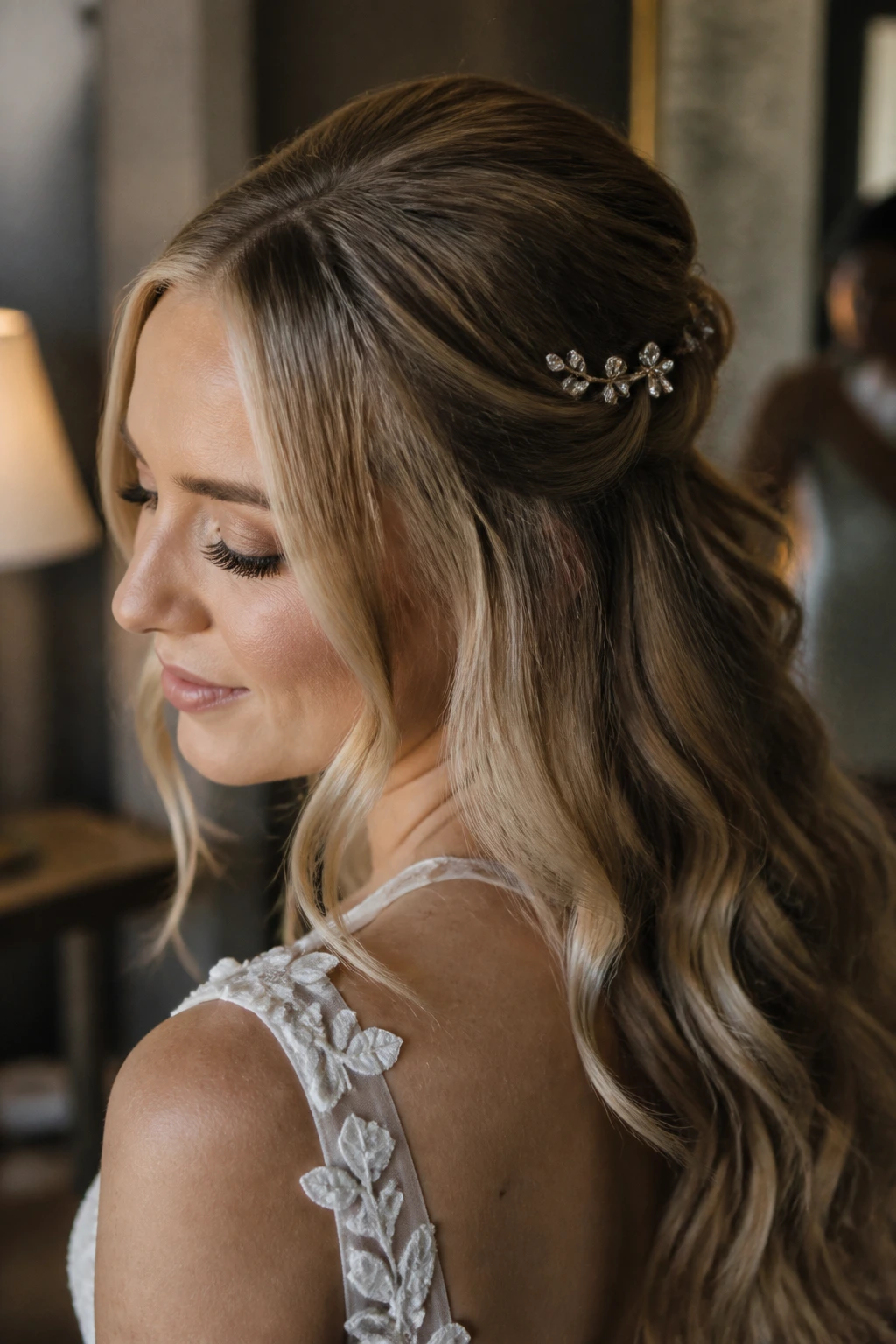
A scatter of tiny crystal pins can turn a simple half-up into something that feels special without being overworked. The front highlight stays loose, the back section stays modest, and the sparkle lands in little points instead of one giant decorative block.
The best placement is usually around the join between the pinned section and the loose hair. That way the pins support the style and catch light from the side. Too many pins near the face and the money piece starts to disappear behind the shine. Three to five pins is usually enough. More than that and the hair starts to look studded, which is not the same thing.
This is a nice answer for brides who want detail but do not want flowers, bows, or anything too literal.
28. Natural Hair Puff Half-Up
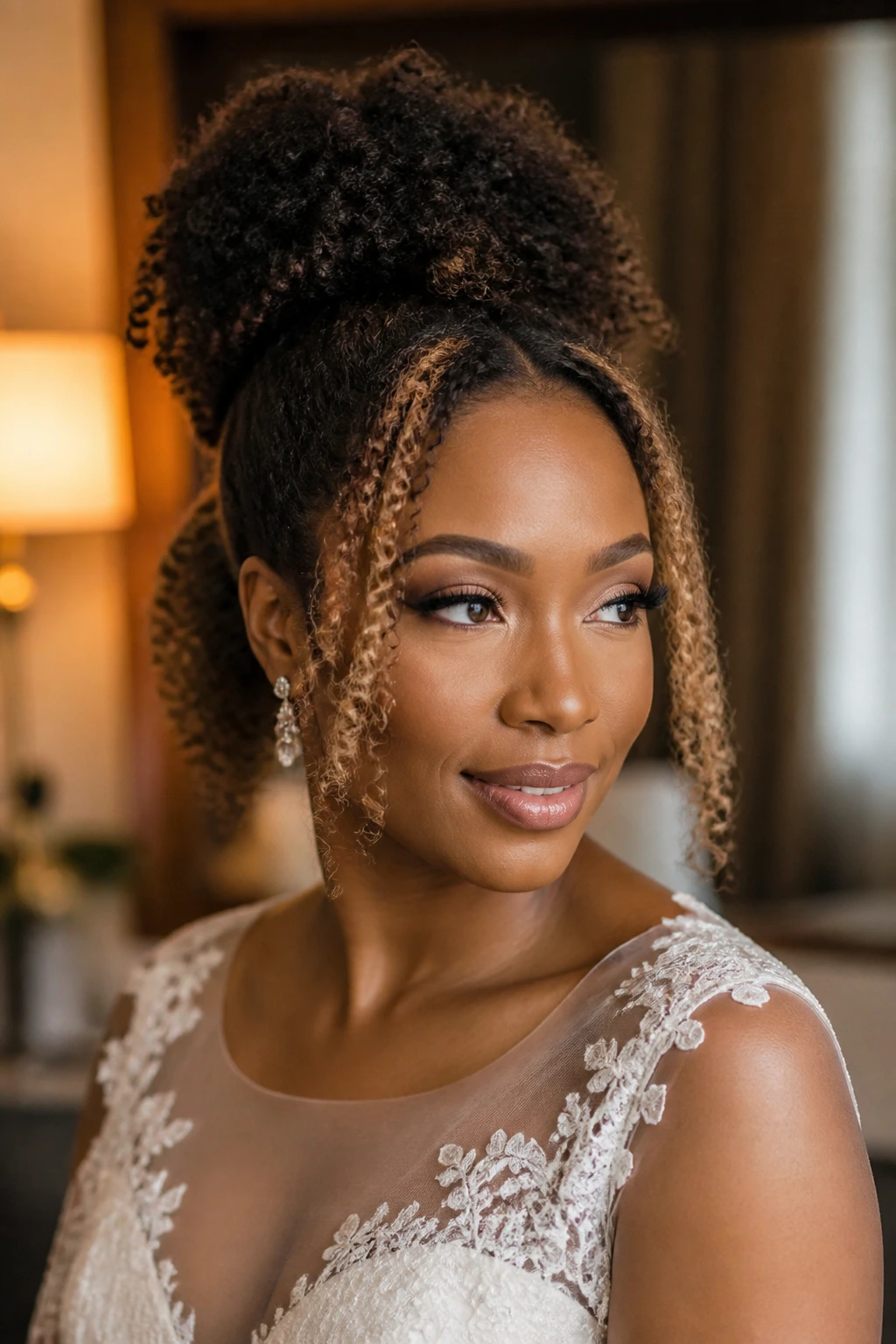
For coils, kinks, and textured hair that likes volume, a half-up puff can be one of the most flattering choices in the whole category. The top section is lifted and secured, while the front pieces are shaped to frame the face and let the money piece or lightened front color stand out.
The crown should not be crushed. That’s the mistake. Leave enough room for the texture to breathe, and use a soft gel or styling cream to define the front sections without stiffening them. If the hair is stretched, that can help with length, but the style still needs shape at the edges so it doesn’t look pulled tight.
This look feels honest in a way that over-smoothed bridal hair often doesn’t. It celebrates the texture instead of flattening it for the camera.
29. Soft French Twist Half-Up
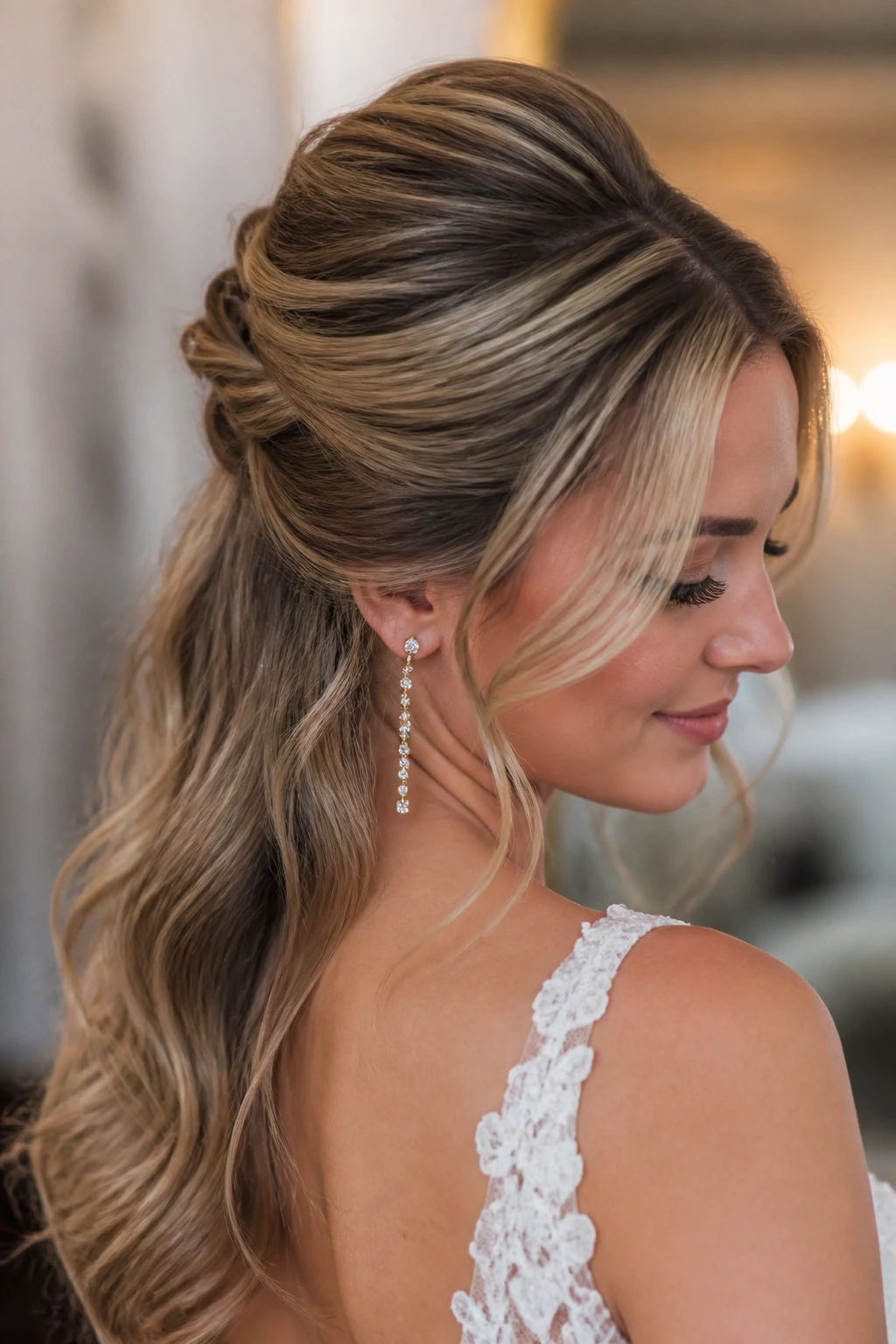
A half-up French twist takes a familiar shape and opens it up. The upper section folds inward in a slim vertical roll, while the lower half stays loose and curved. The money piece stays visible because the front is not dragged back into one hard line.
The result is cleaner than a messy twist and less severe than a full French twist. That middle ground is why I like it. The style can read formal without feeling rigid, and it has enough lift to suit a veil or statement earrings. Use a long pin or two shorter pins hidden within the fold so the twist stays flat against the head.
If the wedding is in a formal setting — ballroom, city hall, historic house — this is a strong option. It has manners.
30. Crown Volume with Money Piece Front
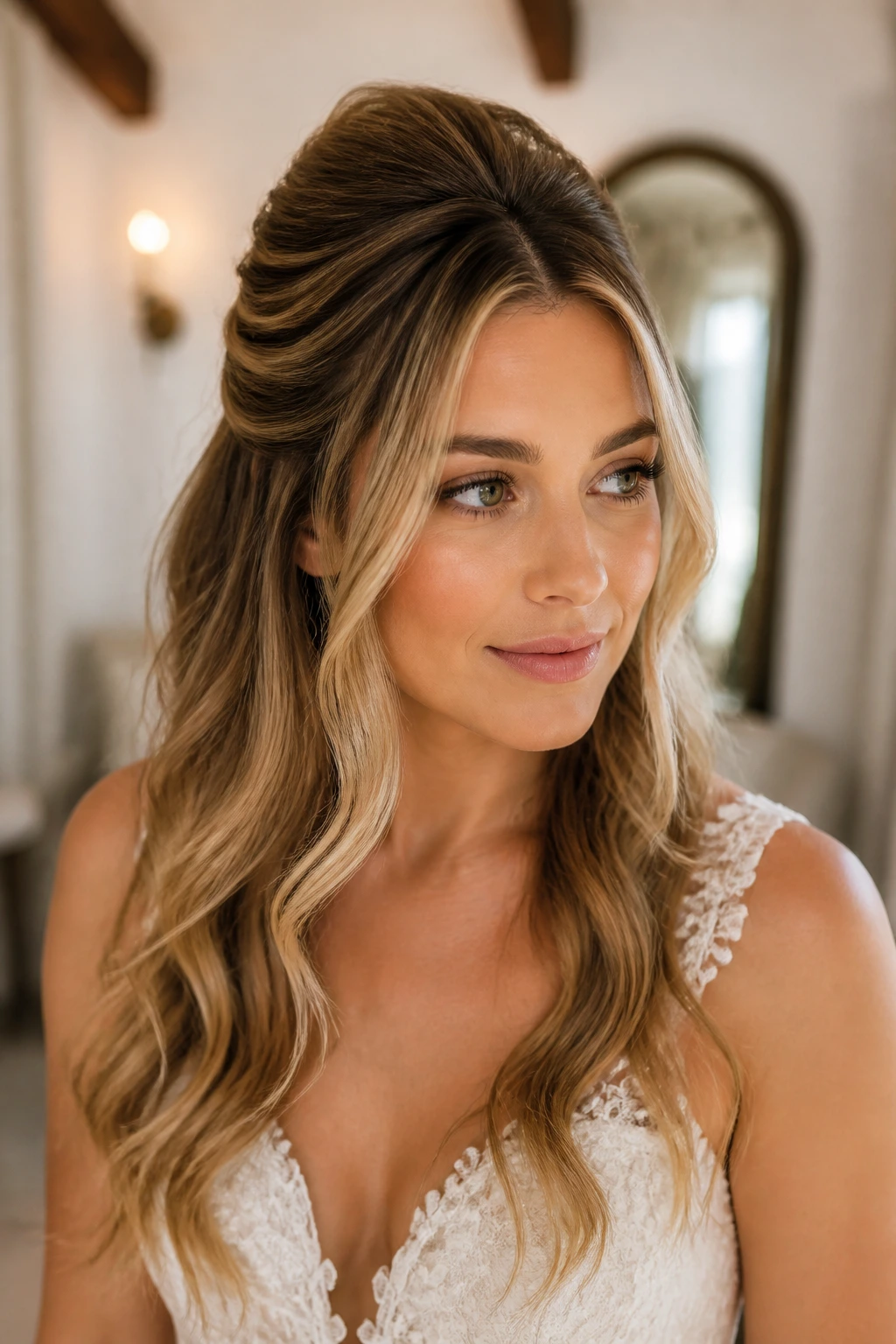
If you want one style that captures the whole point of this collection, it’s this one. Build a little crown volume, keep the front pieces loose and bright, and let the rest of the hair fall in soft waves or straight lengths. Nothing fights the money piece. Nothing buries it.
I’d call this the most forgiving option in the bunch. It works on medium and long hair, on straight and wavy textures, and with or without accessories. The volume at the top gives the style some ceremony, while the front frame keeps it youthful and open. Pin the crown section just behind the highest point of the head, not too far back, or the whole shape drops into the nape and loses its lift.
This is the one I’d recommend when a bride says, “I want to look like myself, only more finished.” That’s a sensible request. This style answers it.
Why Money Piece Highlights Change the Whole Half-Up Shape
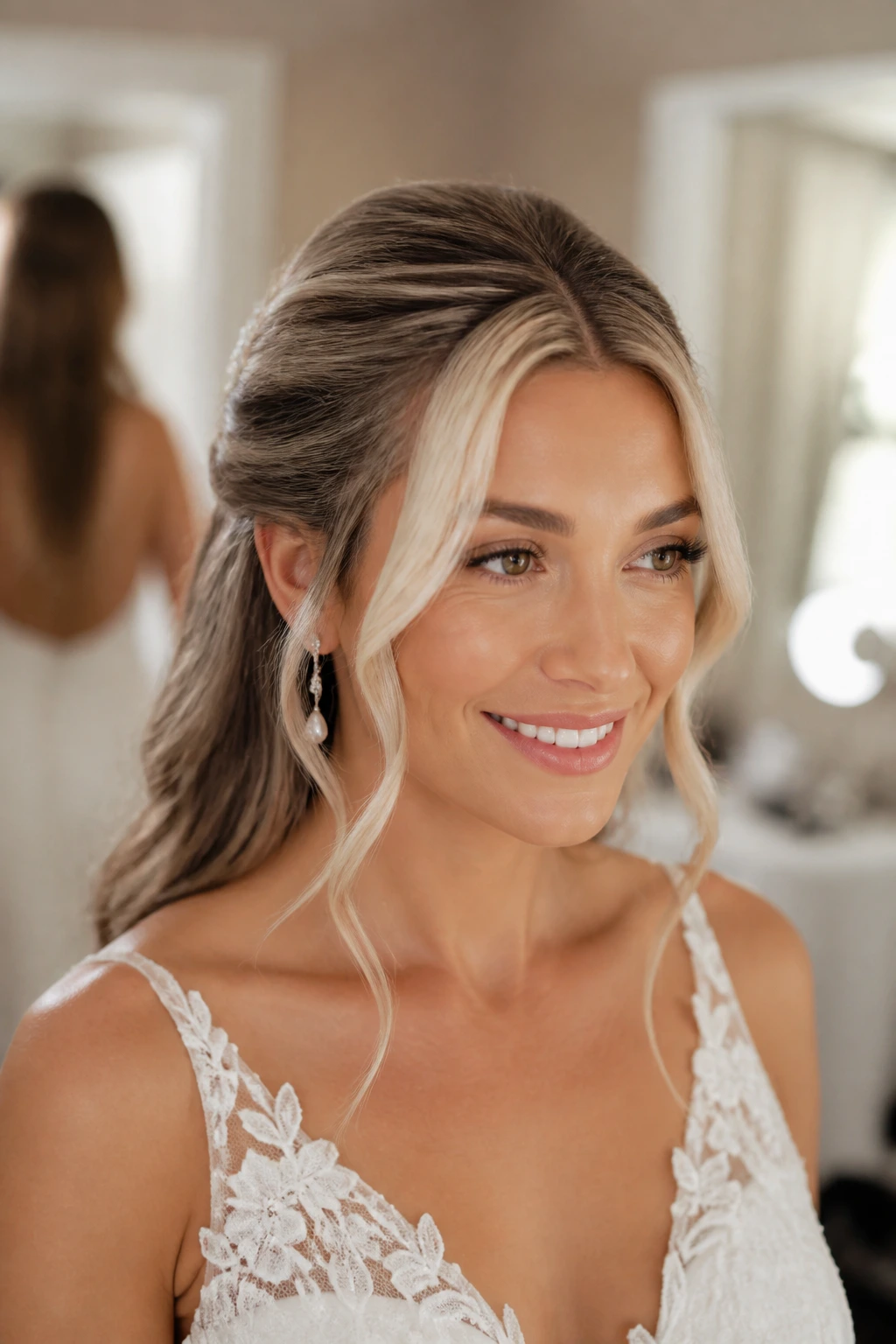
Money piece highlights are not just a color detail. In a half-up style, they become architecture. They draw a line down the face, break up the bulk of the hair, and keep the front from looking visually heavy. That little contrast at the front can make a hairstyle feel brighter without adding more volume or more accessories.
The catch is that the highlight has to be given room. If the front pieces are pinned straight back, they stop acting like a frame and start acting like an afterthought. The best half-updos leave enough bend or separation at the temples so the brighter strands still catch light from the front. I usually think in terms of width: narrow enough to feel soft, wide enough to show the color.
There’s also a practical piece here. Money piece highlights can make grown-out roots, layered cuts, and even simple waves look more intentional, because the front color leads the eye first. That means a bride can keep the back of the style uncomplicated. And honestly, that’s a relief. The front does the talking. The rest just has to keep up.
Essential Tools and Products for Bridal Half Updos
-
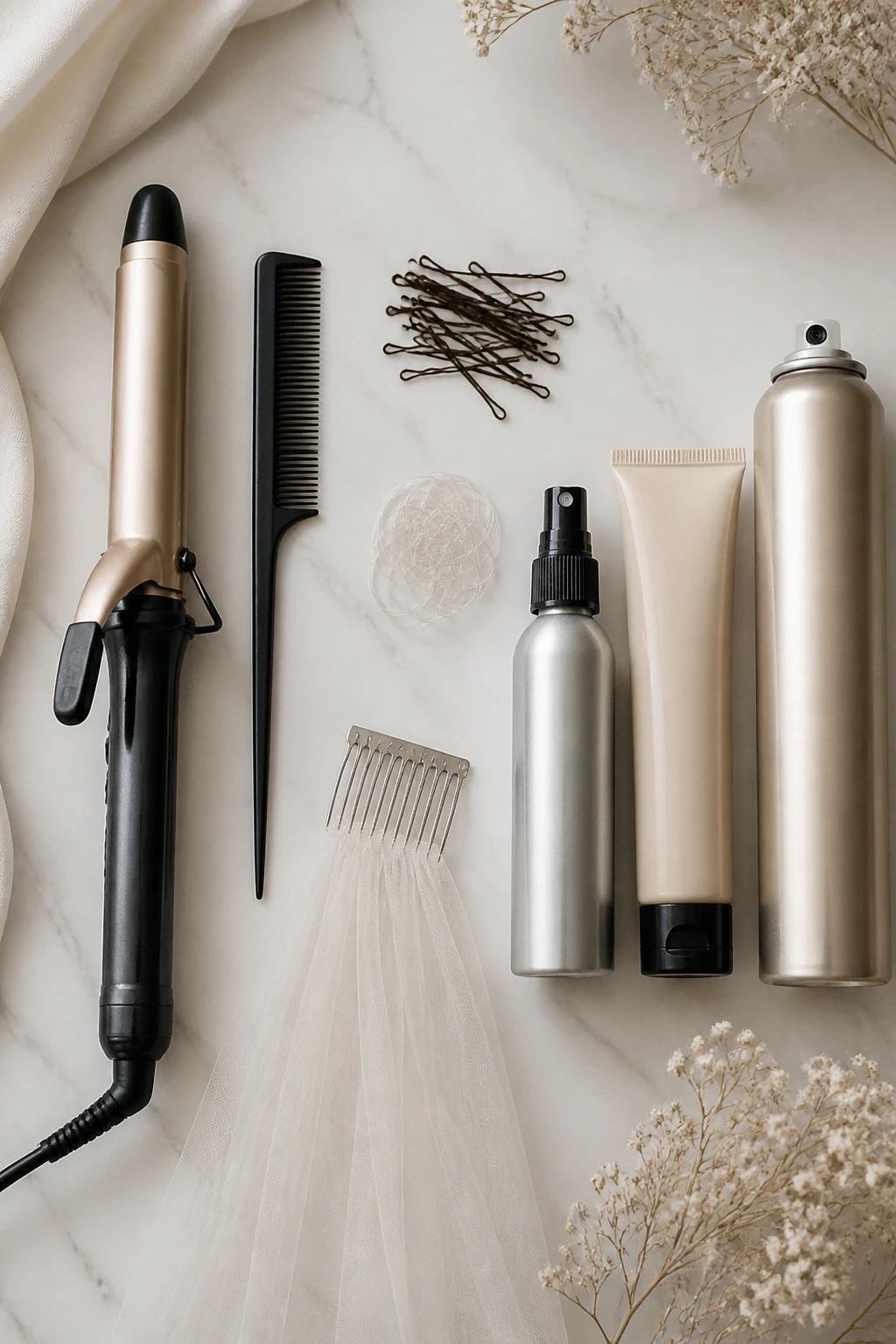
1-inch curling iron or wand: Best for shaping the front pieces and adding bend where a softer wave is needed.
-
1¼-inch curling iron: Better for longer hair or looser waves that won’t collapse once brushed out.
-
Tail comb: Useful for clean parts, sectioning the money piece, and teasing only the crown you actually want lifted.
-
Bobby pins in two sizes: Short pins for detail work, longer pins for heavier twists, veil anchors, and hidden support.
-
Small clear elastics: Handy for bubble ponytails, mini anchors, and any style where you want the tie to disappear.
-
Texture spray: Gives clean hair a little grip before braiding or twisting; a little goes a long way.
-
Light smoothing cream or serum: Best on the mid-lengths and ends, not the roots.
-
Strong-hold hairspray: Needed for ceremony-to-reception wear, especially if the hair is fine or the weather is damp.
-
Teasing brush or fine comb: For crown lift and root support without shredding the surface.
-
Veil comb or hair accessories: If the style is meant to hold a veil, pins or comb placement should be planned early.
How to Choose the Right Half-Up for Your Hair, Dress, and Venue
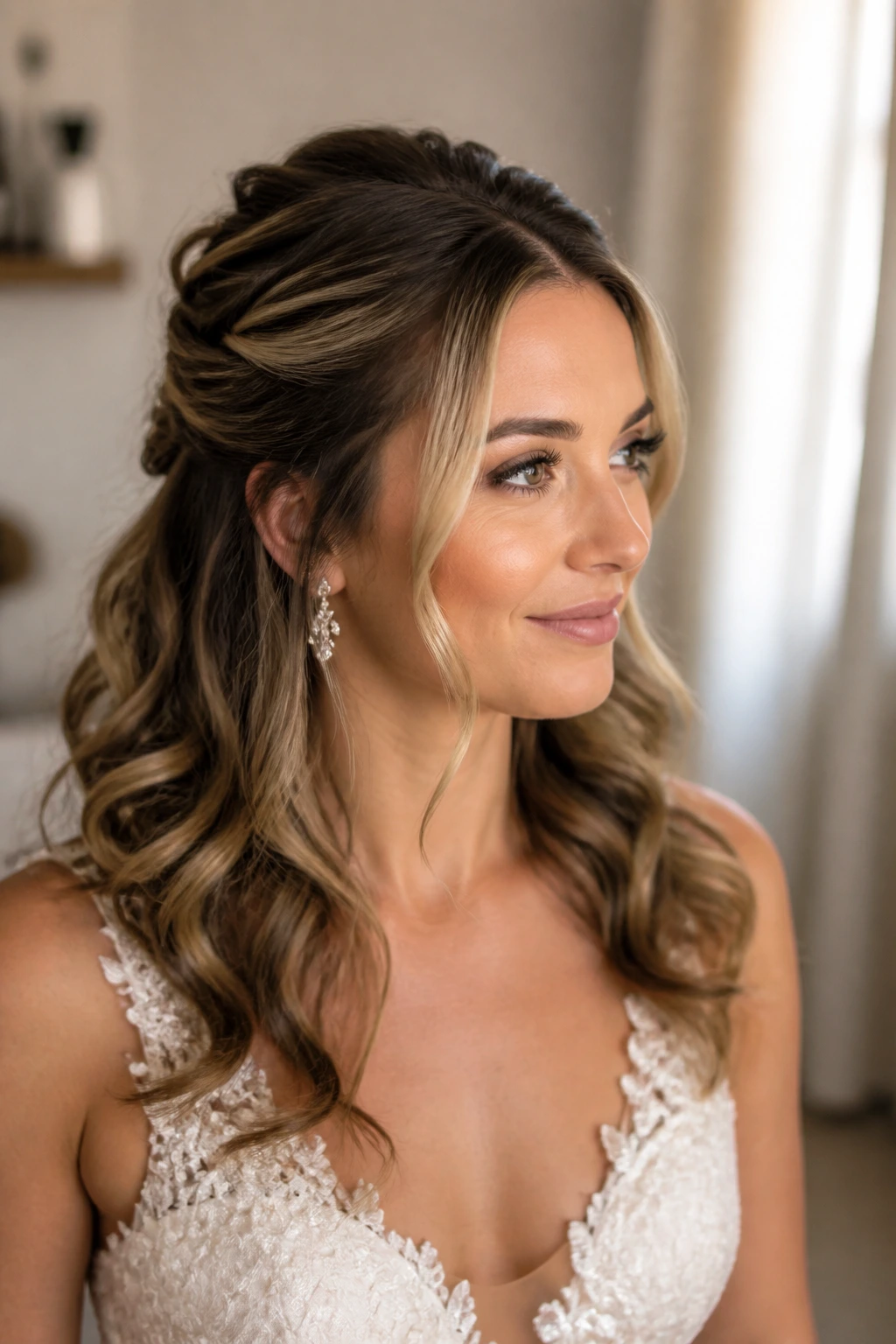
A wedding hairstyle isn’t only about what looks nice in a mirror. It has to work with the dress neckline, the weather, the veil, the length of the event, and the way your hair behaves after an hour in the chair. That’s why the same half-up style can look brilliant on one bride and plain on another.
Start with hair texture. Fine hair usually needs tighter anchors, smaller sections, and a little texture spray before pinning. Thick hair can carry a bigger braid, more volume at the crown, and heavier accessories. Curly hair often looks best when the shape follows the curl pattern rather than forcing it into smoothness. Straight hair tends to shine when the lines are clean and deliberate.
Then look at the dress. If the neckline is busy — lace, beading, high collar, or one shoulder — keep the half-up shape simpler so the outfit doesn’t argue with the hair. If the dress is minimal, a braided halo, bubble pony, or crystal pins can do more work. Outdoor venue? Choose styles with stronger pins and a tighter base. Ballroom or indoor ceremony? You can afford softer movement and looser texture.
How to Wear These Styles on the Wedding Day
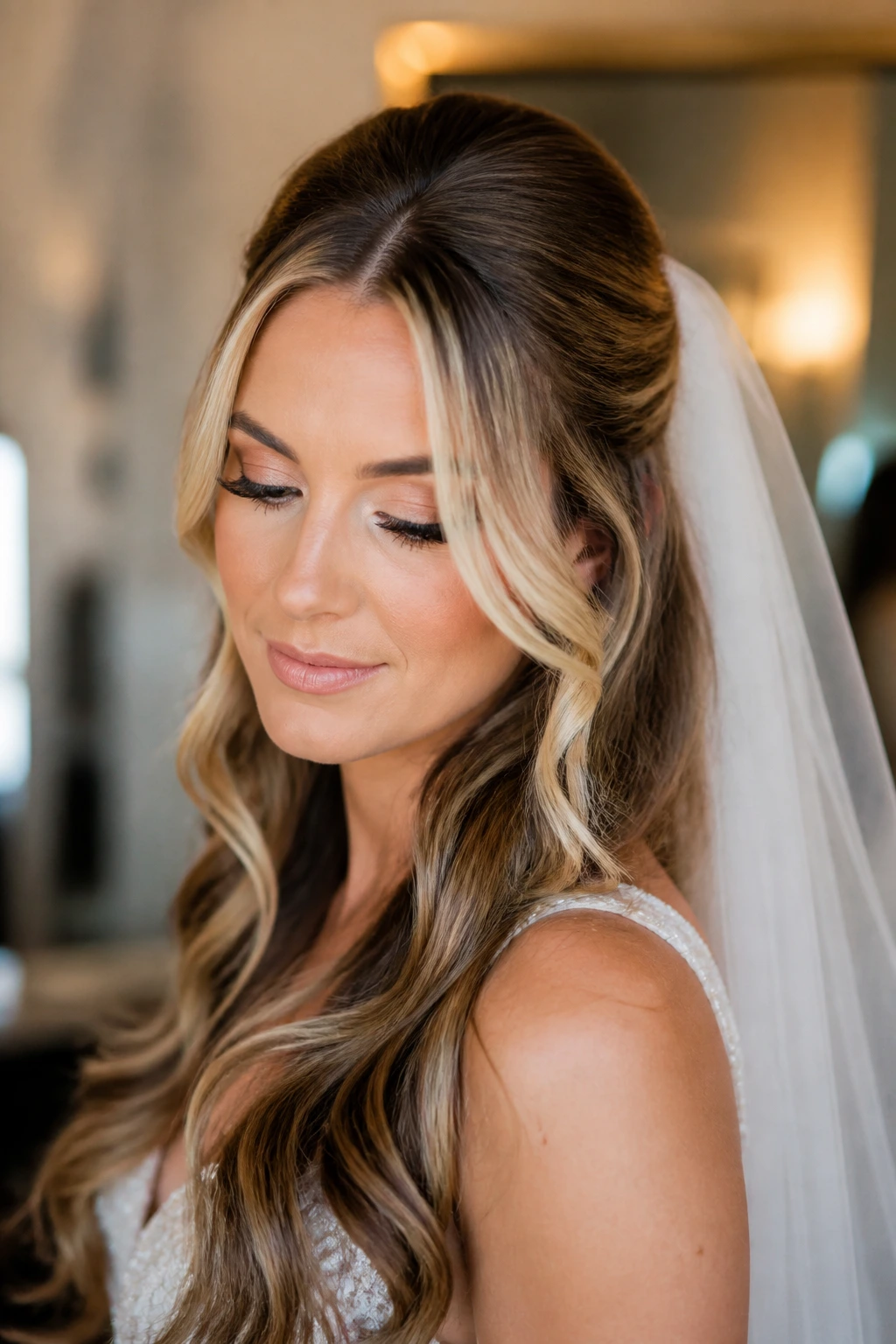
Presentation: The front highlight should sit where the light can find it, so ask for the money piece to be curved away from the cheekbones rather than pinned flat. A little lift at the crown and a clean side or center part will keep the shape readable from the aisle and in close-up photos.
Accompaniments: Veils, pearl pins, vines, and earrings should support the hairstyle, not crowd it. If the front pieces are already bright, keep the accessory placement slightly lower or farther back so the face frame stays the star.
Portions: For a softer half-up, leave about one-third of the hair down. For a style with more structure, gather closer to half the hair at the crown, but keep the temple sections loose. Brides with shorter or finer hair usually need smaller sections at the back so the style doesn’t look sparse.
Beverage Pairing: A glass of sparkling water, iced coffee, or a small toast of champagne all make sense while getting ready — but keep dark drinks away from the finished front pieces once the styling is done. A lipstick smudge is one thing. Coffee on a fresh curl is another.
Common Mistakes That Hide the Front Pieces
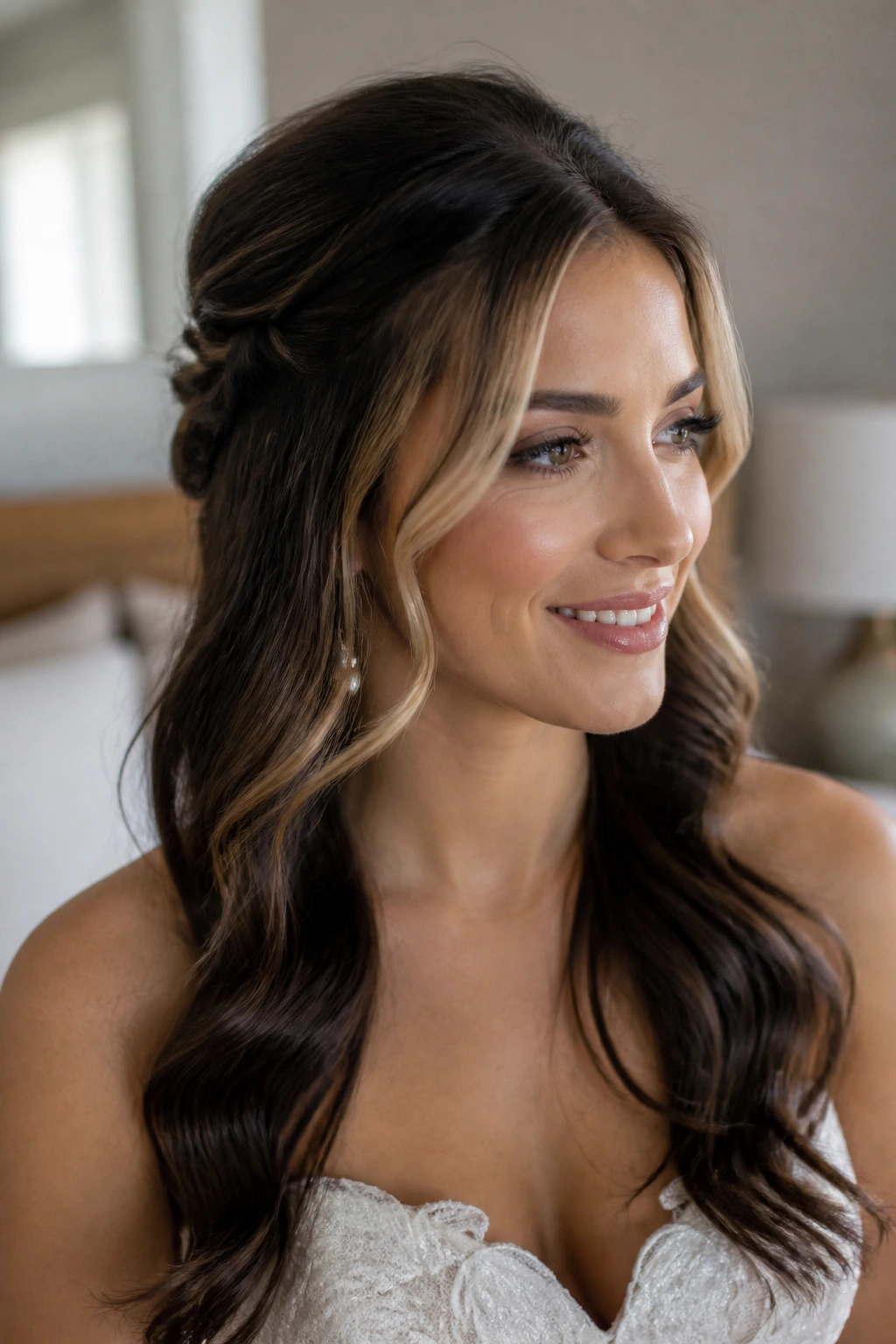
The biggest mistake is pinning the money piece too far back. Once the front strands are dragged behind the ears or tucked under the half-up section, the whole point of the highlight disappears. Keep the face frame loose enough to show color from the front, not just from the side.
The second problem is overloading the roots with product. Too much serum, cream, or oil near the crown flattens the lift and makes the style slip. Use product on the mid-lengths and ends first, then decide if the top needs a tiny touch. It usually doesn’t.
Another miss: curls that aren’t cooled before they’re styled. Hot curls lose shape fast, especially near the face. Let the hair set for a full 10 to 15 minutes before brushing or pinning. That cool-down matters more than people think.
Finally, a lot of brides forget to test veil placement or accessory weight. A comb that feels light in the hand can tug hard at the crown after 20 minutes. Always do a trial with the exact piece, the exact pins, and the exact part line.
Five Ways to Adapt These Styles
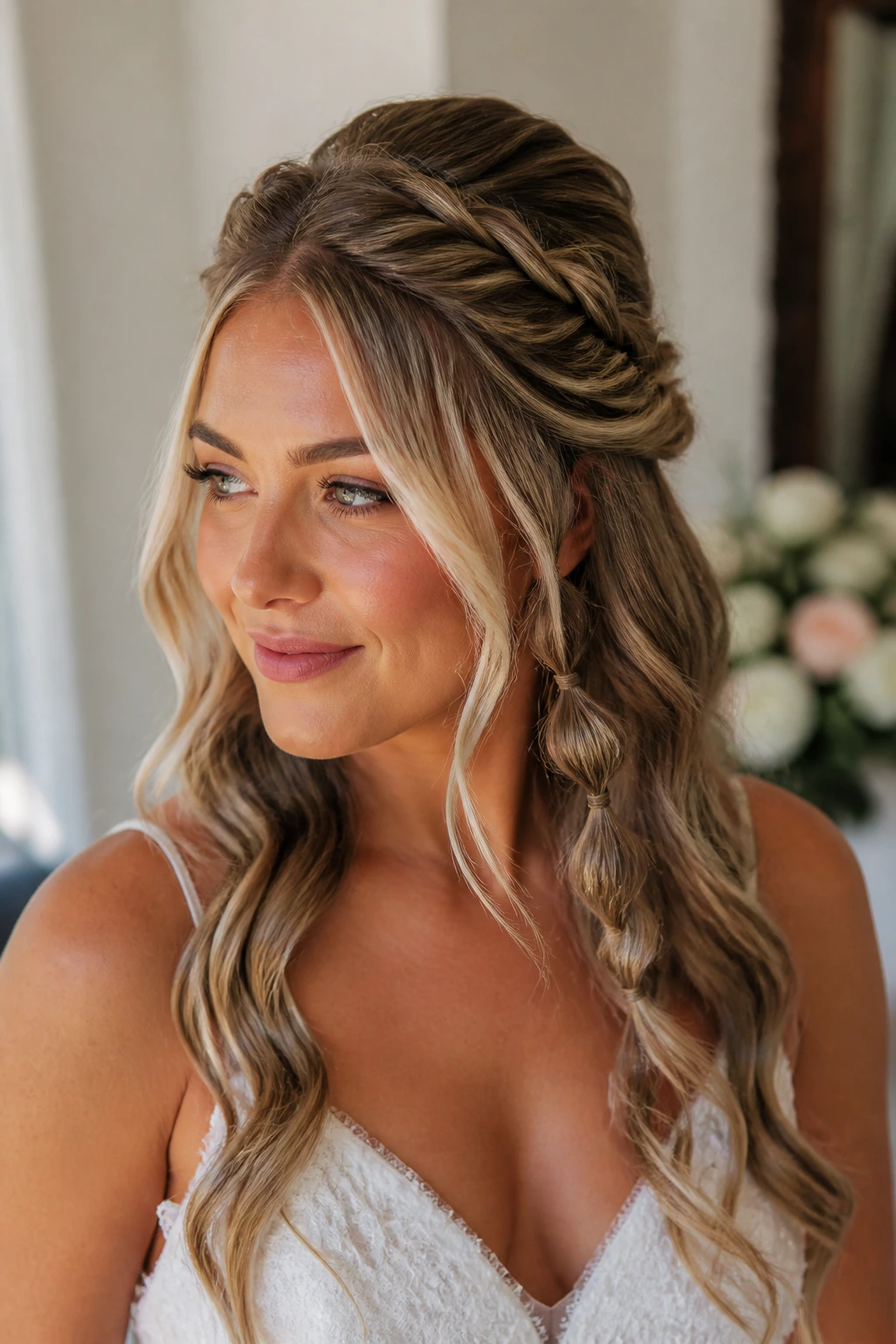
Fine-Hair Lift-Up: Use rope twists, small bubbles, or a polished side knot instead of oversized braids. A light teasing base and texture spray at the roots will give the half-up shape more grip without making the hair feel dirty.
Curly-Hair Soft Frame: Let the money piece follow the natural curl pattern and pin only the crown section back. A curl cream and a light gel cast keep the front shape defined so it doesn’t blur in humidity.
Short-Length Save: For lob-length or shoulder-length hair, choose mini buns, side twists, or sleek half knots. Clip-ins can add enough length for a richer wave pattern, but the attachment point needs to stay hidden under the pinned section.
Veil-First Layout: If the veil is non-negotiable, choose styles with a low anchor and a smooth crown. Braids, halos, and tucked rolls can still work, but the veil comb should sit beneath the main pinned shape, not on top of it.
Humidity Shield: In damp weather, keep curls a touch tighter than you want them to finish and use a stronger finish spray at the end. A slightly tighter set will relax into a softer look by reception time. That’s the one time a small bit of overpreparation helps.
Keeping the Style Fresh from First Look to Last Dance
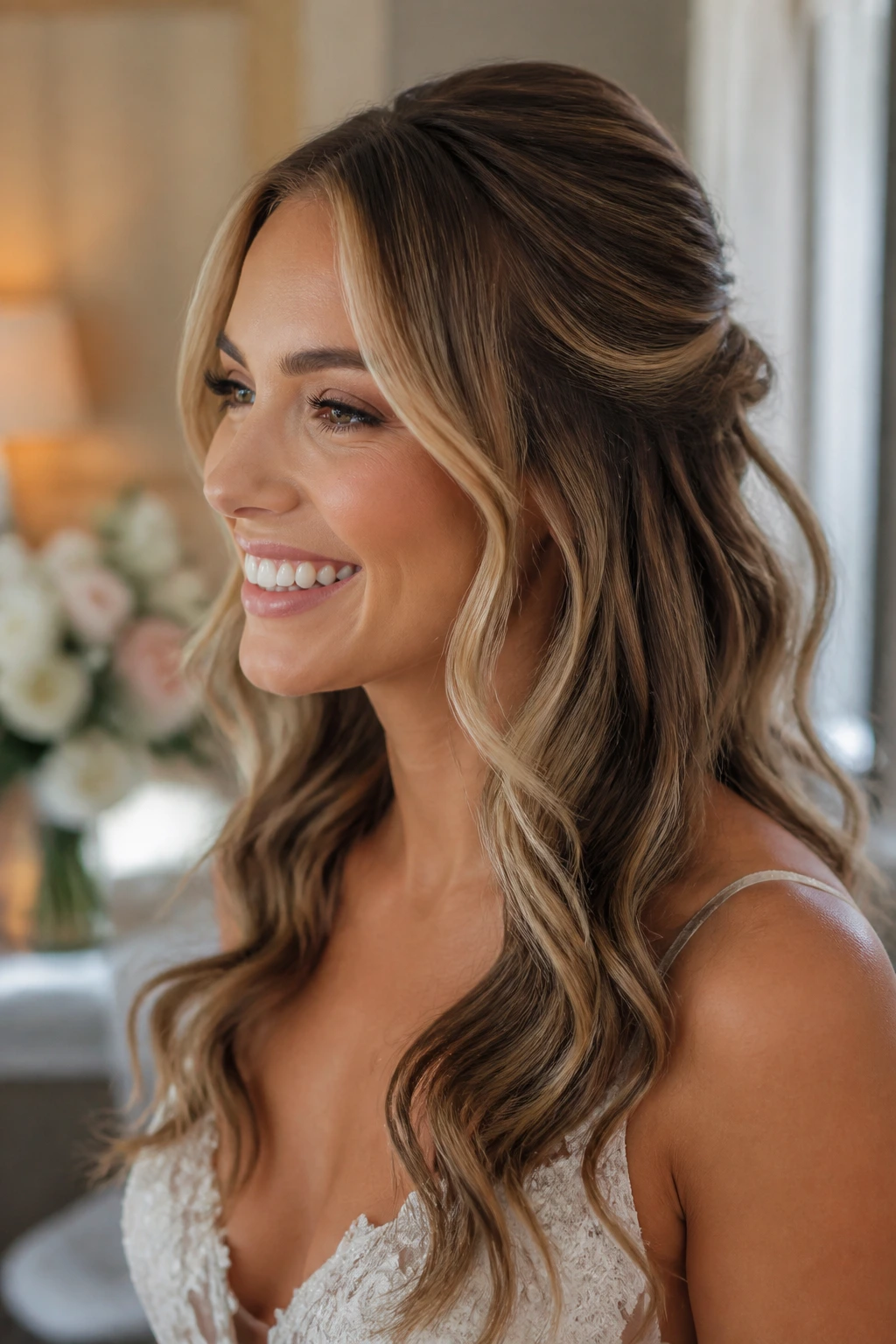
Most well-built half-up styles will hold through an 8- to 10-hour wedding day if the hair is set properly, fully cooled, and pinned with enough support. That means the prep matters more than the rescue plan. Start on clean or day-old hair depending on texture, then let the curls cool completely before the half-up section gets pinned.
Bring a small kit. A few bobby pins, a travel-size hairspray, and a tiny comb will fix most problems before they become visible. If the crown starts to settle, lift the hair slightly from underneath the pinned area rather than spraying the top until it feels stiff. Spraying the top usually makes the front pieces crusty, and that is not a good look under flash photography.
If the wedding includes an after-party or overnight stay, loosely clip the lower lengths or wrap them in a silk scarf before sleep. The half-up structure itself may not survive a full night, but the wave pattern can be revived with a 5-minute touch-up the next morning. That’s enough to keep the hair from looking crumpled if there’s brunch or photos the next day.
Frequently Asked Questions
How do I keep my money piece highlights visible in a half-up style?
Leave the front sections loose and shaped around the face instead of pinning them back tightly. A soft bend away from the cheekbones usually shows the highlight better than a flat straight section or a heavy curl pushed behind the ear.
Will a veil work with these half-updos?
Yes, but the veil needs a clear anchor point. Styles with a low half-up base, a braid, or a smooth crown usually hold a comb better than a very loose knot that shifts when you move.
What if my hair is fine and slips out of everything?
Texture spray at the roots, small sectioning, and crossed bobby pins help more than heavy product. Fine hair usually does better with rope twists, mini buns, or sleek knots than oversized braids that demand more bulk than the hair can give.
Should I curl my hair before or after the half-up section is pinned?
Curl first, let the hair cool, then pin. Warm hair loses memory fast, and the front pieces near the money piece will fall flat if they’re handled too soon.
Do these styles work with natural curls?
They do, and they can look better on curls than on straightened hair when the shape is handled well. Keep the curl pattern defined around the face, and pin the crown without crushing the texture.
How far ahead should I do a trial?
A trial about 2 to 4 weeks before the wedding is a smart window. That gives enough time to adjust the part, test any veil or pins, and decide whether the front pieces need more softness or more hold.
What if my highlight is grown out and not super bright anymore?
That can still work. Styles with stronger crown lift, a deep side part, or a smoother front section help the lighter front strands read more clearly. Sometimes a small bend in the money piece shows the color better than a tighter curl.
Can these styles handle wind or humidity?
The more structured options — braided halos, mini buns, rope twists, and low anchors — usually handle weather better than loose wave-only styles. If the ceremony is outdoors, plan for stronger pins and a firmer set at the crown.
The Styles That Let the Front Pieces Lead
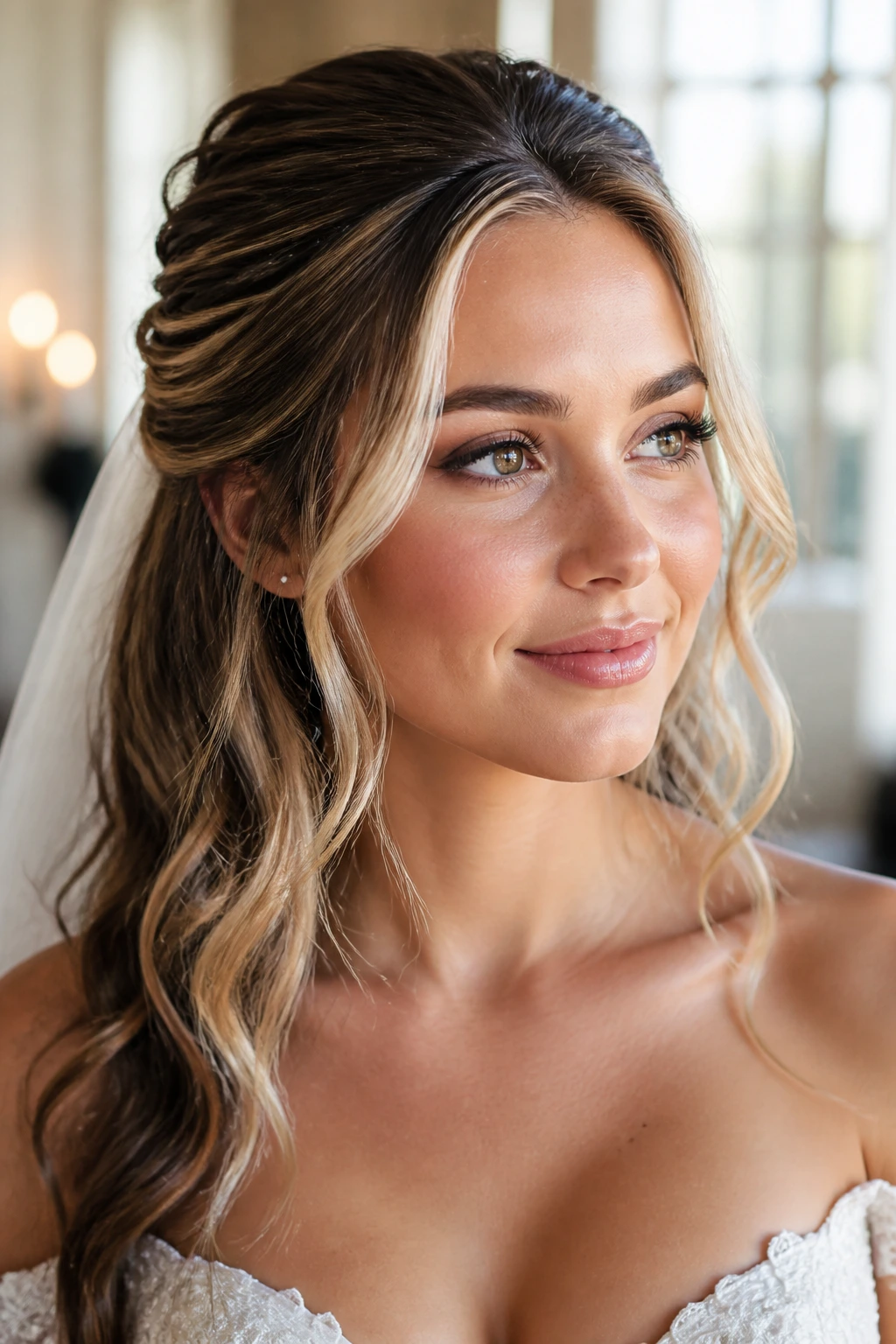
The nicest half-up wedding hair doesn’t hide behind effort. It gives the front pieces a job, keeps the crown from collapsing, and lets the rest of the style support the face instead of swallowing it. That’s why money piece highlights look so good here: they get space, shape, and a little motion.
Pick the version that matches the dress, the hair texture, and the kind of bride you want to look like in the photos. Polished, soft, romantic, sharp — the structure can change, but the logic stays the same. Give the front strands room, pin the back with purpose, and the whole style starts making sense from the first picture to the last dance.