



Wavy hair has a way of making a French weave braid look fuller than it has any right to. The bends give the braid grip, the braid gives the waves shape, and the whole thing lands in that sweet spot between neat and soft — which is why it works so well on kids who want their hair out of their face without looking like they’ve been strapped into a helmet.
The part I like most is the movement. A French weave braid on wavy hair doesn’t sit there stiff and shiny like a parade ribbon. It has texture. It sways a little. The ends puff and bend in a way straight hair can’t fake, and that keeps the style feeling playful instead of severe.
The catch is tension. Too tight and the child complains by lunchtime. Too loose and the braid starts drifting apart somewhere around recess. The best versions use a clean part, a light mist of water or leave-in, and just enough control to keep the braid tidy without squeezing the life out of the hair.
Why These Braids Work So Well on Wavy Hair
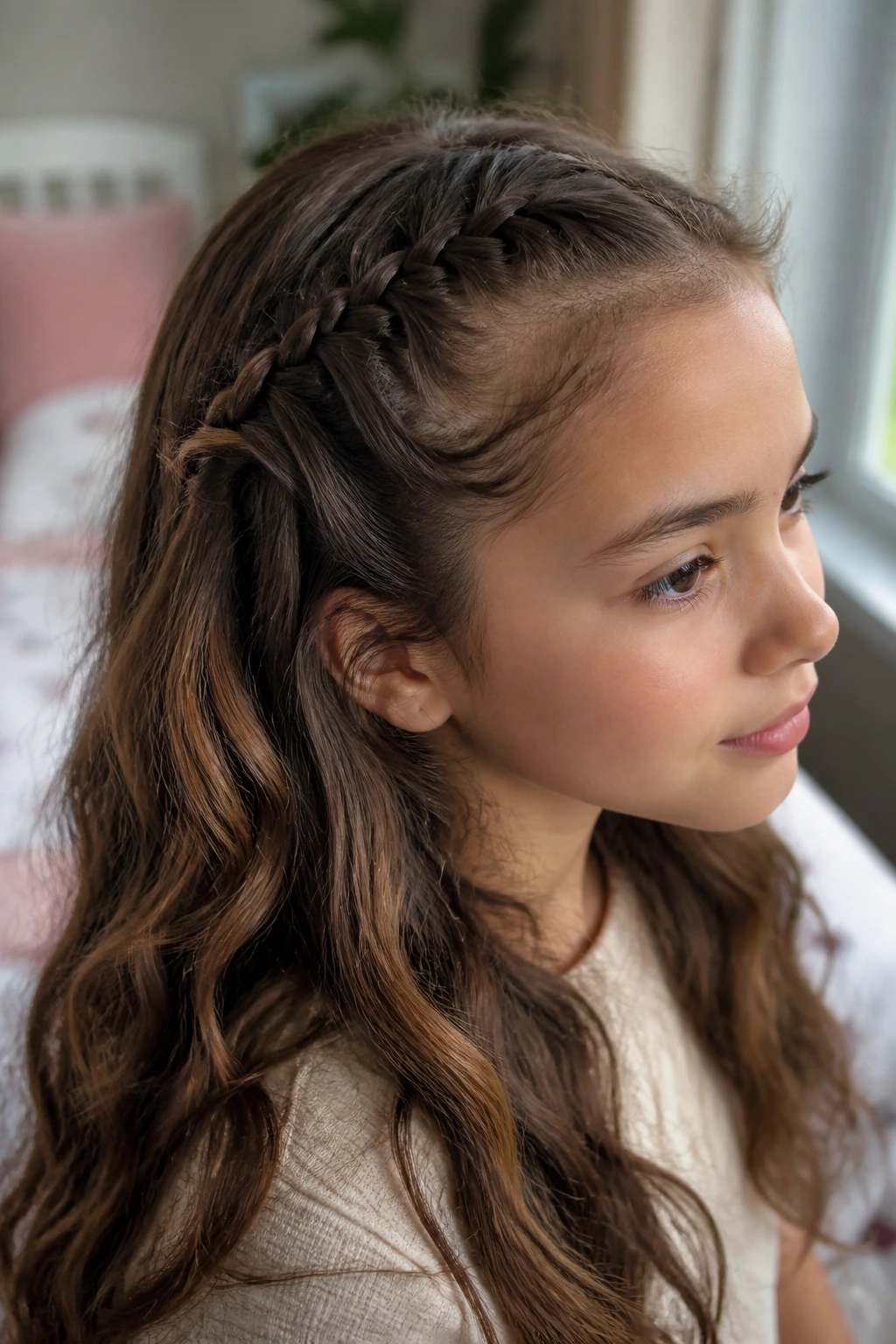
- Wave-Friendly Grip: The natural bends in wavy hair give the braid tiny anchors, so the sections hold better than they do on very slick hair.
- Fuller Shape Without Teasing: Wavy strands make each braid look thicker, which is handy for kids with fine hair that tends to disappear when it’s pulled back.
- Less Fight at the Hairline: A French weave can start softly and still stay put, so you do not need to yank the front sections tight to get control.
- Good for Busy Days: These styles keep hair off the cheeks, which matters when a child is reading, running, eating, or flinging a backpack around.
- Easy to Dress Up or Down: A ribbon, a clip, or a neat part changes the whole mood fast, and that matters when the same braid has to work for class and a birthday party.
1. Side-Swept French Weave with Loose Wave Ends
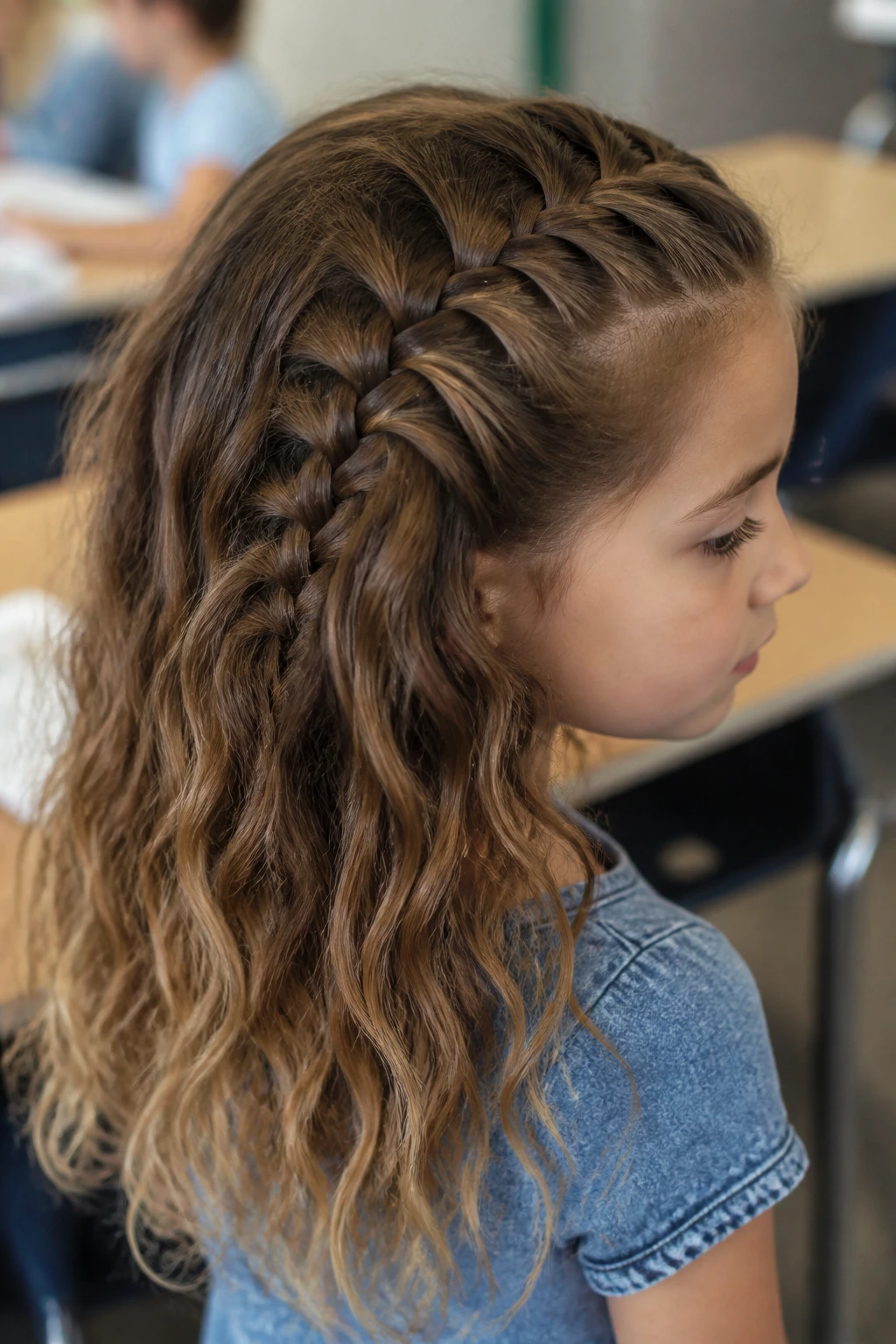
A side-swept French weave braid is the one I reach for when the goal is tidy hair without that stiff, pulled-back feel. The braid starts near the temple, leans across the head, and stops before the ends so the waves can spill out in soft, bendy pieces.
Why It Works
Wavy hair gives this braid a little extra bite, so the sections stay in place without a ton of product. That’s useful on kids, because too much gel tends to make the front look glued down while the rest of the hair frizzes at the ends.
The diagonal line also keeps the style from feeling severe. You get a clean front, a soft back, and enough movement that the braid still looks like hair, not a cast.
Quick Styling Notes
- Start with a side part and mist the hair lightly.
- Braid from the heavier side, adding small sections as you move back.
- Stop around mid-length and secure with a clear elastic.
- Gently separate the loose ends once, not repeatedly, or the waves will puff.
Best for: school mornings, picture day, or any time a child wants hair off one cheek but not pinned down everywhere else.
2. Twin Low French Weave Pigtails
Twin low French weave pigtails are practical in a way that feels almost old-fashioned, and I mean that as a compliment. Split the hair into two low sections, braid each side from the front down toward the ears, and let the rest hang in soft tails.
Why It Works
This style uses the wave pattern instead of fighting it. The braid catches the bends near the scalp, and the low placement keeps the whole thing calm, which is useful if the child runs hot or hates anything sitting high on the head.
Low pigtails also solve a common wavy-hair problem: puff at the crown. Once the braid is anchored low, the roots are less likely to spring out and create that fuzzy halo by noon.
What I like about it
- It keeps the face clear without pulling everything into one heavy bundle.
- It works on medium-length hair that’s too short for a full crown braid.
- It looks tidy even when the tails start to loosen a bit.
A small ribbon at each elastic helps, but I’d keep it flat. Big bows can tug.
3. Halo Crown French Weave
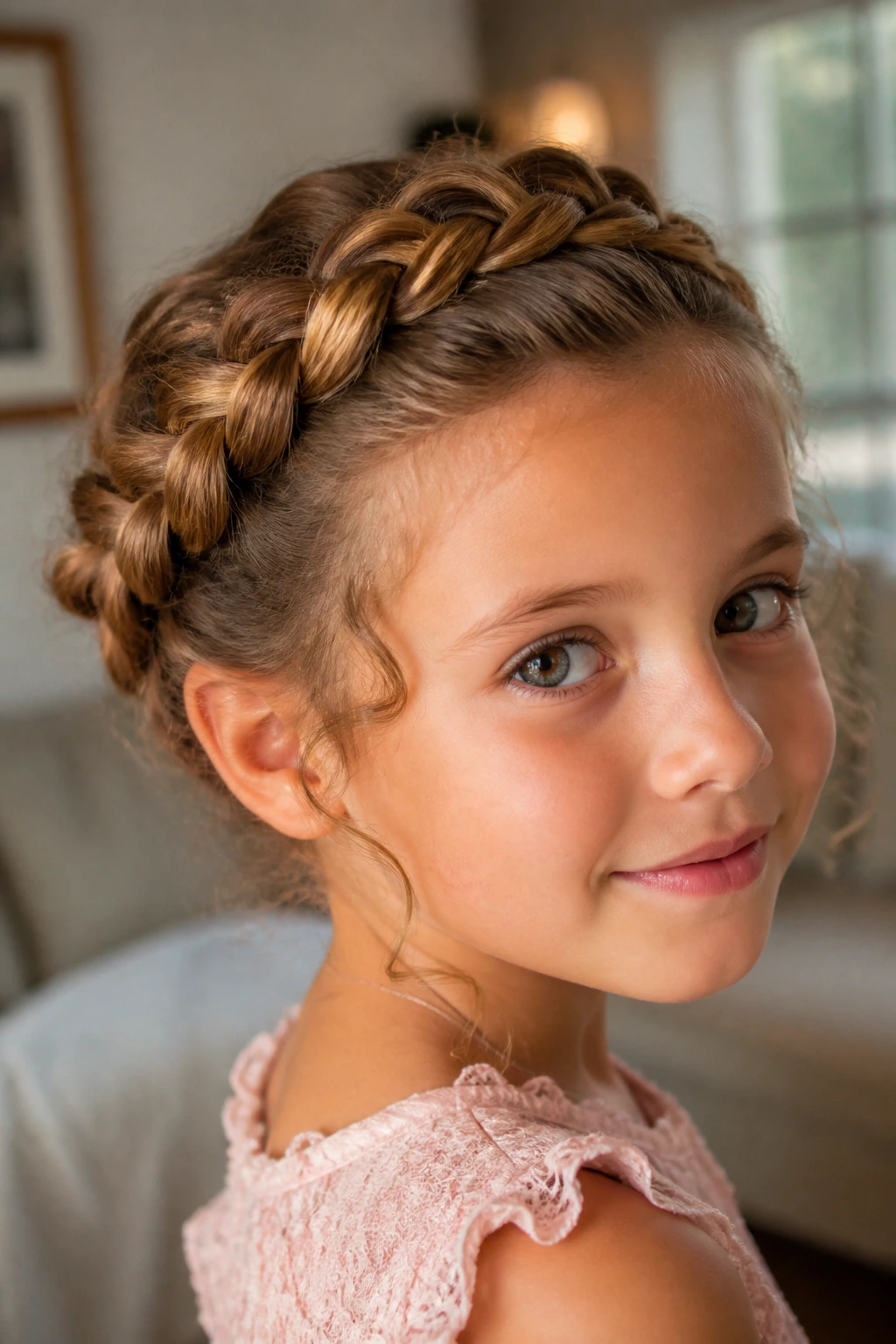
A halo crown braid on wavy hair has a nice trick going for it: the texture makes the braid look richer, so the style feels more finished than it would on pin-straight hair. The braid wraps around the head like a soft band, usually starting just behind one ear and traveling along the hairline.
Why It Works
Why do halo braids often look better on wavy kids’ hair? Because the texture keeps the braid from reading flat. Every feed-in section adds a bit of puff, and that puff becomes part of the design instead of looking messy.
This one also keeps the front hair completely out of the eyes. That sounds small until you’ve watched a kid spend twenty minutes flicking hair away from their face during homework.
What to watch for
- Keep the first few sections small so the braid sits close to the head.
- Use bobby pins that match the hair color and slide them in flat.
- Do not pull the braid too tight behind the ears. That spot gets sore fast.
Best for: dress-up days, family photos, or kids who want something that feels special without adding curls or heat.
4. Diagonal Ladder French Weave
This one looks more involved than it is. The braid starts high on one side, then drops in clean diagonal rows, almost like a ladder laid across the head. On wavy hair, the pattern stands out because the waves give each rung a little texture.
Why It Works
The diagonal shape is kind to uneven lengths. If your child has layers that escape braids at the nape, this style hides the issue better than a straight-back braid does. The side-to-side movement also keeps the braid from feeling too formal.
Key details that matter
- Part the hair with a rat-tail comb for a sharp start.
- Feed in only a small strip each time, or the braid gets bulky.
- Keep the angle steady as you travel back; wobbling sections make the ladder look broken.
Best use case
School, lunch out, piano practice — places where you want the braid to stay neat but not look like it belongs at a wedding. It’s a quiet style, and sometimes that’s the point.
5. Half-Up French Weave with a Ribbon Finish
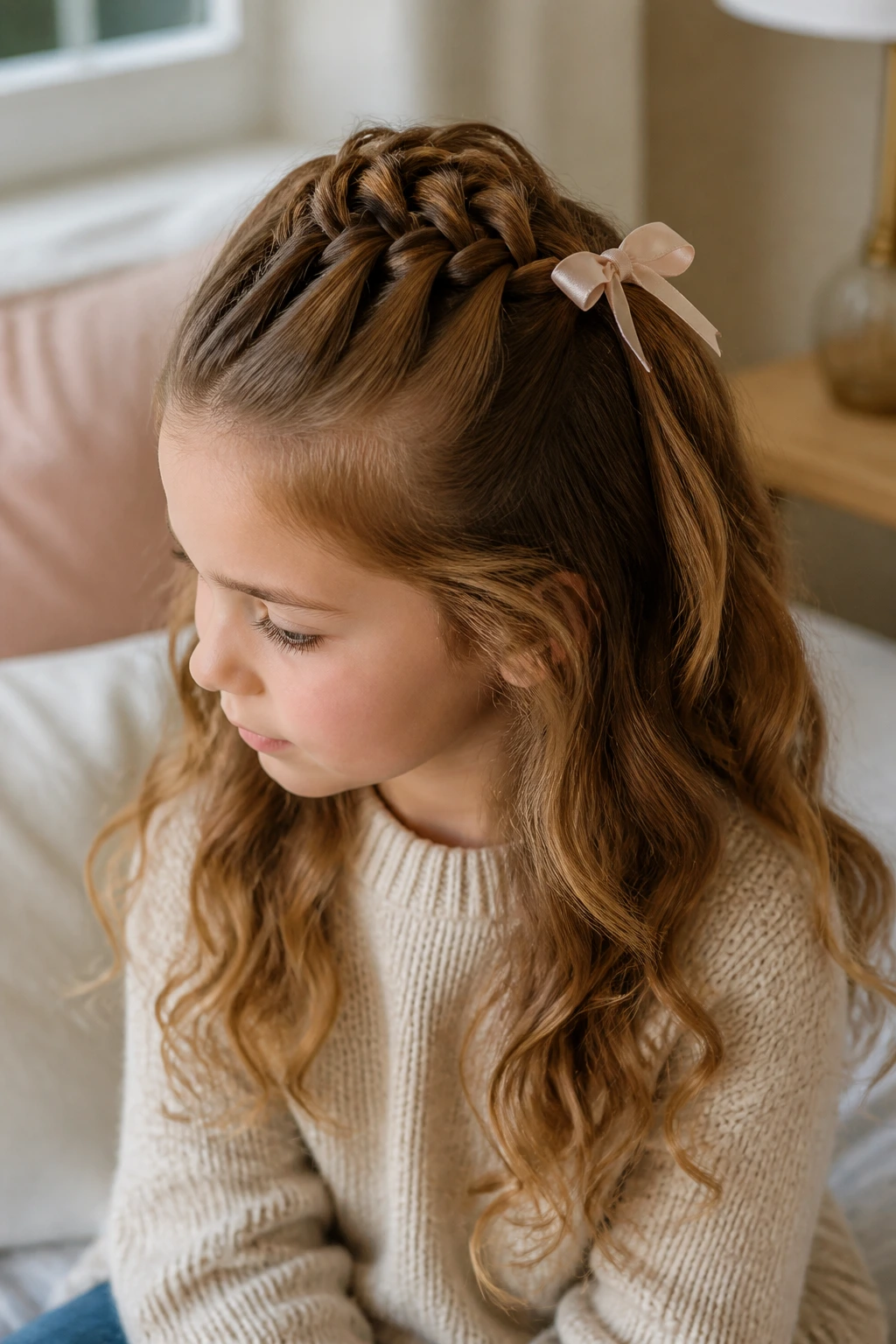
Half-up French weave braids are the easiest way to keep some hair down while still controlling the front. The braid starts at the hairline, gathers the top section, and ends at the crown or upper back of the head, where a ribbon can hide the elastic.
Why It Works
Kids who like their waves loose usually tolerate this style better than a full braid. The scalp feels lighter, the ends still bounce, and the braid controls the hair that most often ends up in the eyes.
A ribbon finish is not just decoration. It also covers the elastic, which makes the braid look cleaner if the braid itself is slightly uneven — and that happens. A lot.
A small note
Use a ribbon that’s soft, not stiff. Satin or grosgrain works better than a thick wired bow, which can poke and slide. If the ribbon is slippery, tie it in a double knot before making the bow.
This is one of those styles that looks planned even when you did it in ten minutes.
6. French Weave into a Low Ponytail
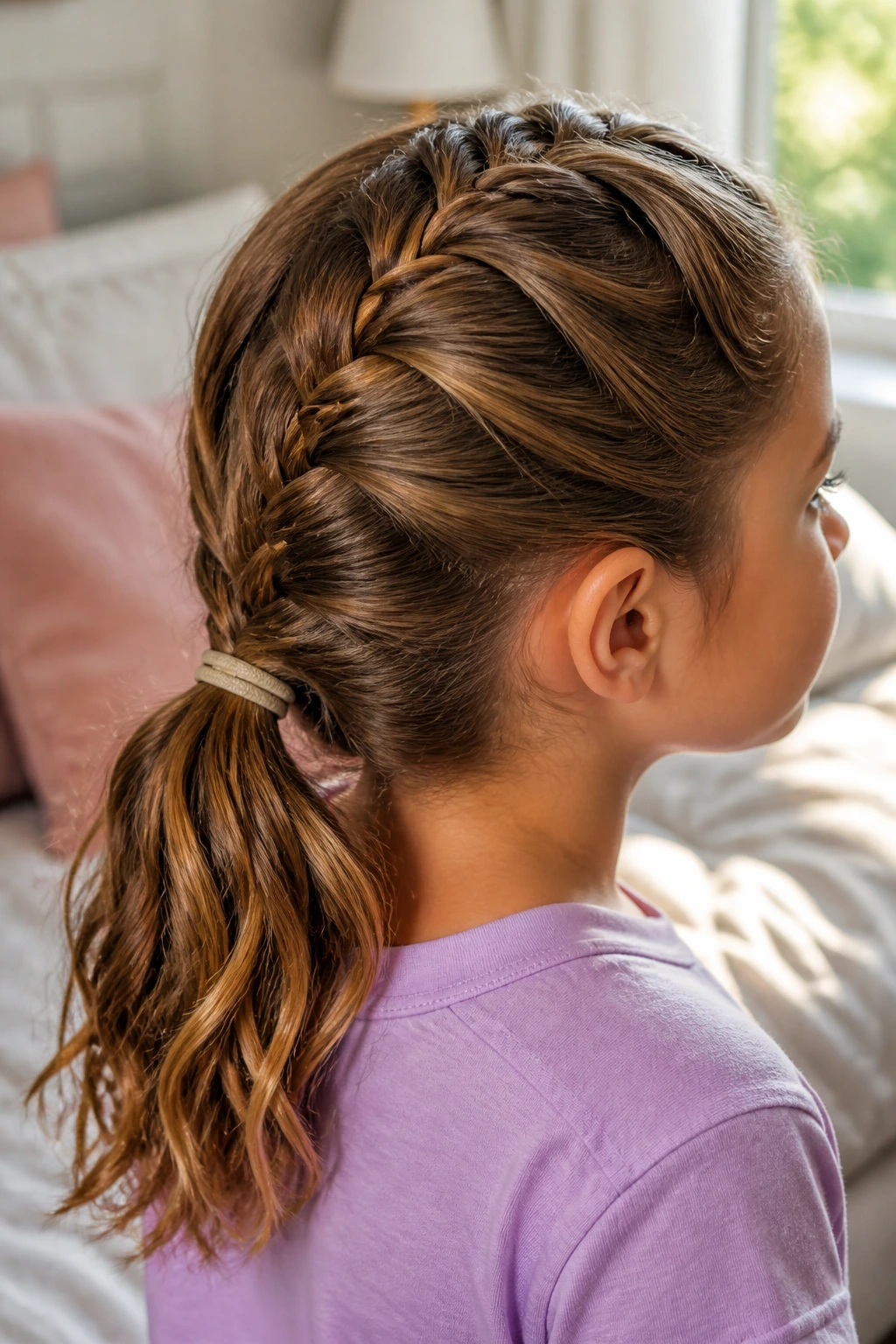
A French weave that feeds into a low ponytail is the braid equivalent of a reliable pair of sneakers. It is not trying to be fancy. It is trying to stay put, and it does that very well.
Why It Works
The braid controls the crown, and the ponytail collects the rest. That makes it useful for sports, windy weather, or any day when loose waves would spend the afternoon in the child’s mouth.
Unlike a high ponytail, the low version puts less pull on the scalp. That matters for kids, especially if their hair is thick or if they wear this style more than once a week.
How to style it
Start the French weave at the top front of the head and braid back until you reach the nape. Secure the braid with one small elastic, then gather the remaining hair into a low ponytail with a second tie. If the ends are extra wavy, leave them alone. They look better with a little texture.
7. Zigzag Part French Weave
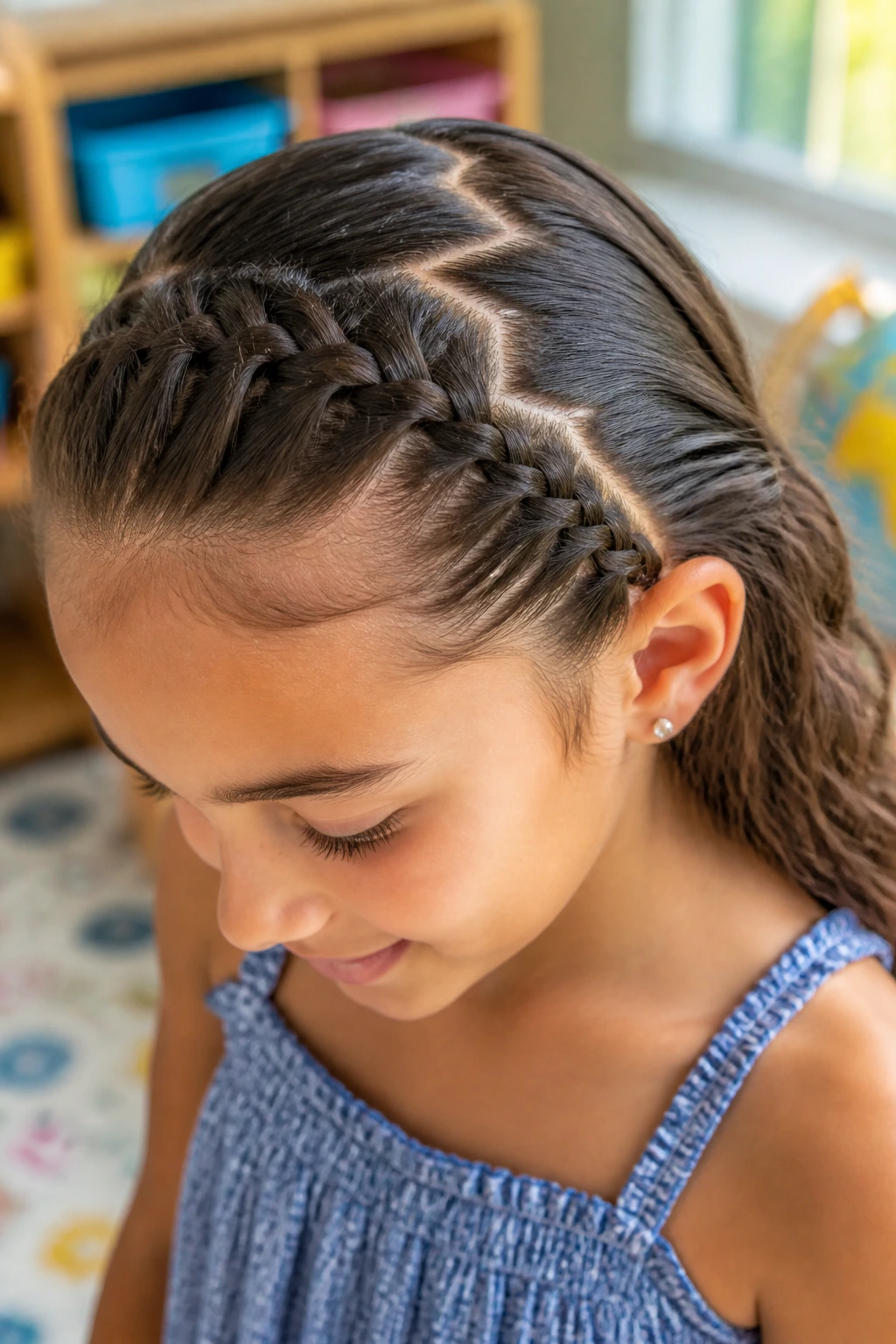
A zigzag part makes the whole braid feel playful before the braid even starts. The part line breaks up the scalp shape, and the French weave follows that line in a way that makes the style look deliberate instead of plain.
Why It Works
Kids often love this one because it feels fun without adding anything heavy. The zigzag part gives the hair some visual movement at the top, which pairs nicely with the natural movement of wavy strands.
It also helps disguise grow-out. If the hair is between lengths or the front layers are annoying, the zigzag part distracts the eye and makes the braid look fuller.
What to watch for
- Use the tail end of a rat-tail comb to draw the zigzag first.
- Clip each point of the part while you braid, or the section line will collapse.
- Keep the braid itself fairly simple. The part is the star here.
A little shine spray on the part can help, but skip anything greasy. Grease and wavy hair do not always stay friends for long.
8. Mohawk-Style French Weave
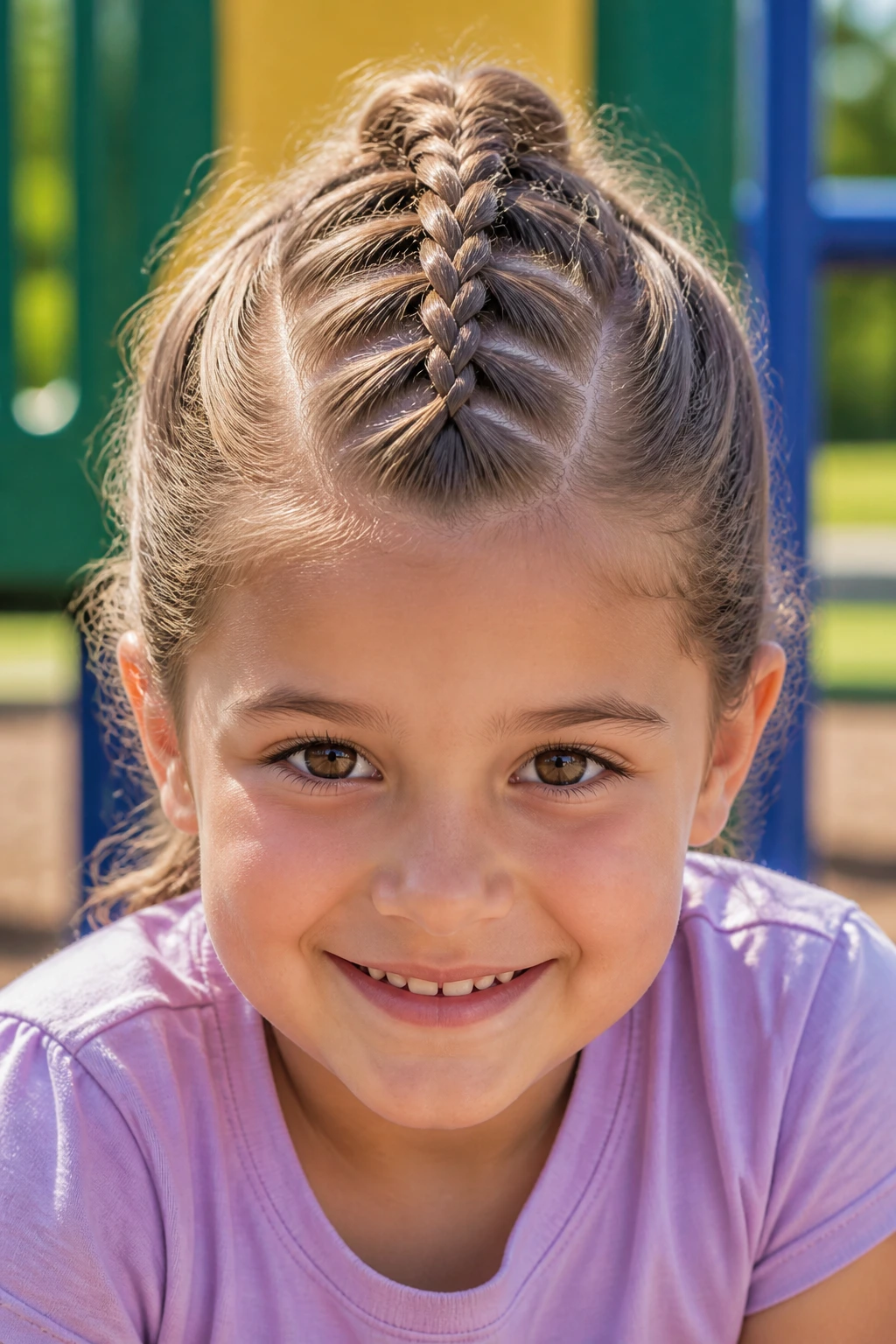
A Mohawk-style French weave runs down the center strip of the head and leaves the sides either smooth, tucked, or loosely pinned back. It has a sharper edge than the softer styles, but on kids it still reads playful if you keep the braid medium-sized and the sides not too slick.
Why It Works
This style is brilliant for thick wavy hair because it controls the center section without flattening the sides into a tight shell. The braid gets height and structure from the waves, while the side hair stays cleaner than it would in a plain center braid.
It also suits active kids. The braid sits where it won’t brush the face much, and the sides are less likely to drift loose because they’re not carrying the whole weight of the style.
My opinion
I like this one most when the child has a strong hairline and does not mind a bolder shape. It has personality. Not every braid needs to be sweet.
9. Curved Back French Weave
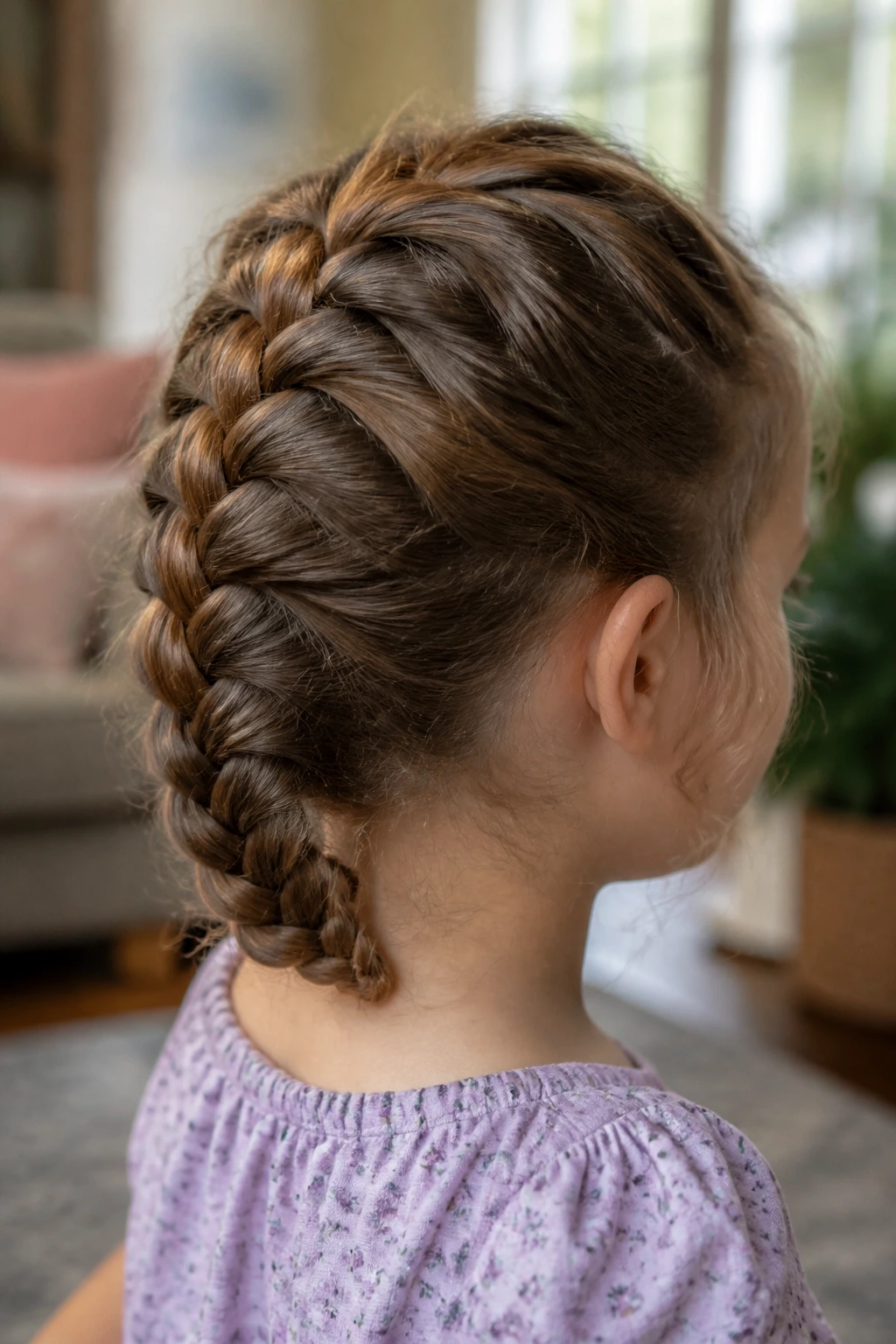
Instead of running straight down, the curved back French weave bends gently around the head before settling at the nape. That little curve changes everything. The braid feels softer, and the shape follows the head in a way that looks carefully planned.
Why It Works
A curve is kinder than a straight line on hair that naturally wants to spring sideways. Wavy hair tends to widen a braid a bit, so the curved path helps balance that volume instead of letting it balloon in one place.
Why parents like it
The braid stays secure without looking stiff, and it usually grows out more gracefully than a rigid center braid. If the child tends to touch the front of their hair, the curve also keeps the braid away from busy hands.
Simple rule
Do not force the curve too sharply. A gentle arc is enough. If you try to make it whip around the head like a ribbon, the sections twist and the braid starts fighting back.
10. Ribbon-Laced French Weave
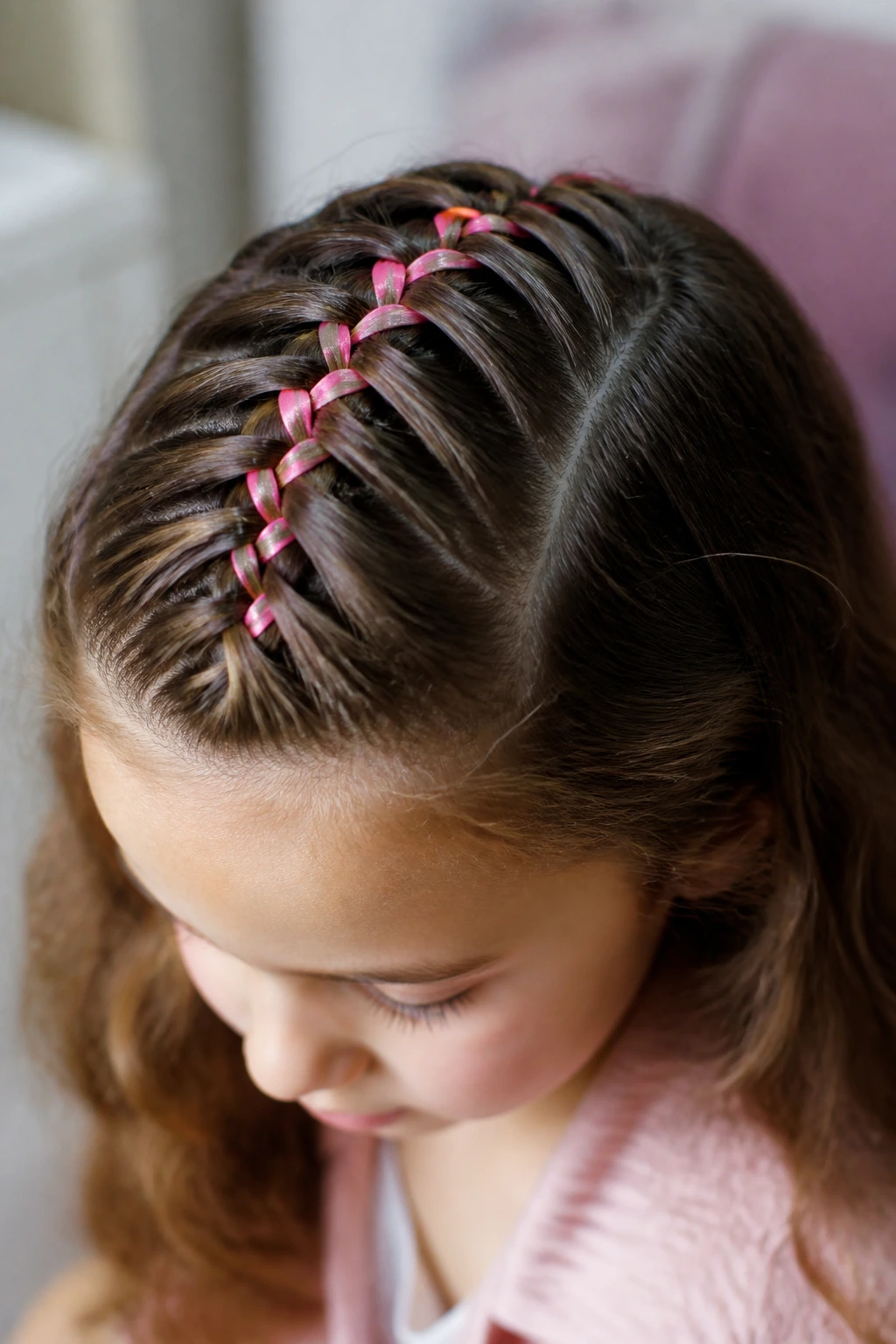
Ribbon-laced French weave braids are exactly what they sound like: a braid with a ribbon threaded alongside or through the sections so the color shows between the strands. On wavy hair, the ribbon catches the movement and makes each bend more visible.
Why It Works
The ribbon gives the braid a clear outline, which helps if the hair is a mix of textures or layers. It also adds grip in a small way because the ribbon sits alongside the strands and keeps the pattern from collapsing too fast.
Best choices for ribbon
- Satin ribbon: smooth and pretty, best for birthdays or dressier outfits.
- Grosgrain ribbon: less slippery, easier to control in small hands.
- Thin cotton ribbon: workable, but it can fray if the ends are rough.
Keep the ribbon narrow. Thick ribbon can overwhelm a child’s face fast, especially if the braid is already full from the waves. A narrow strip is enough to change the mood of the whole style.
11. Braided Headband with Loose Back Waves
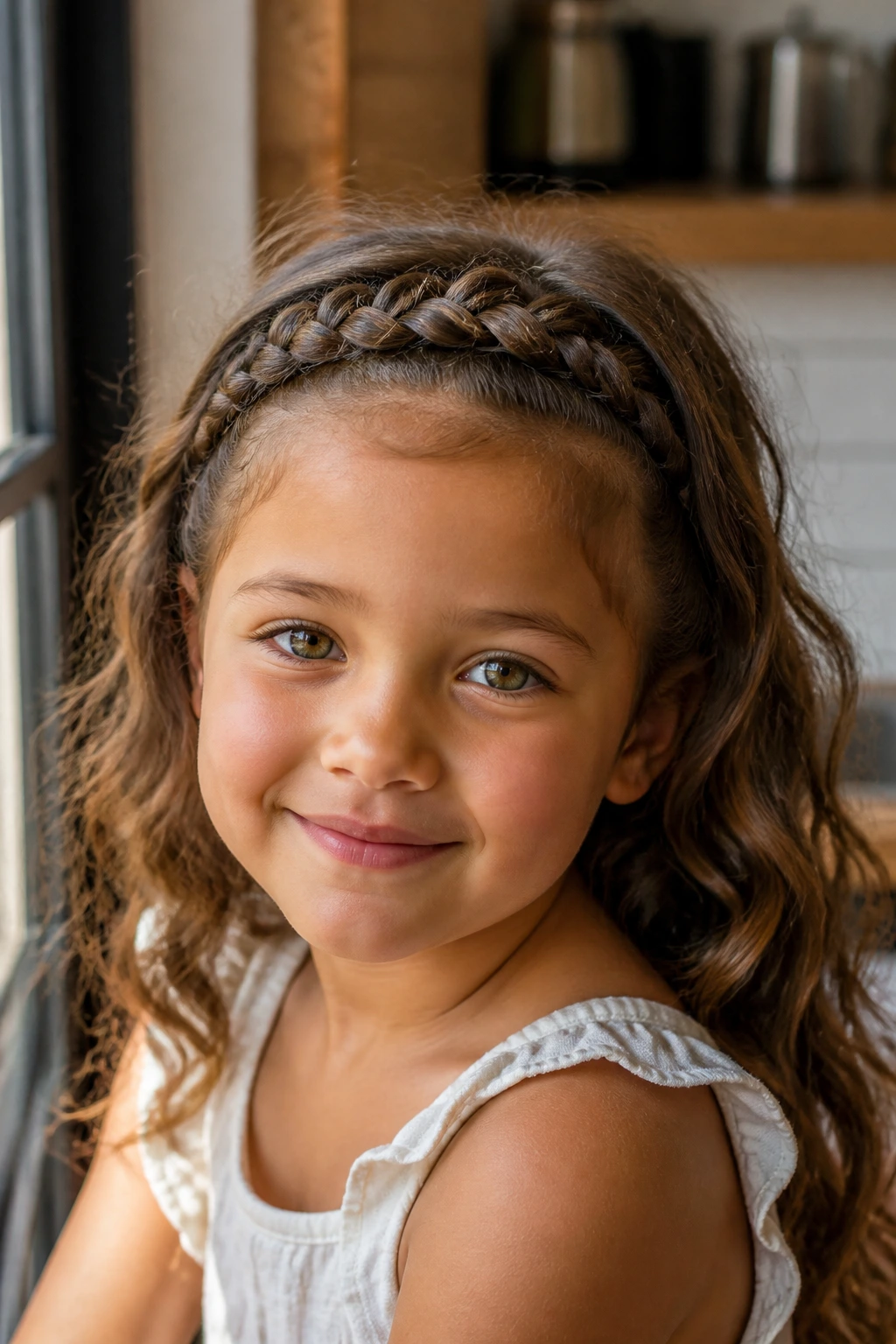
This is the braid you choose when bangs, front layers, and little stray pieces keep falling into the eyes. The French weave starts near one temple and travels across the front hairline like a built-in headband, while the rest of the hair stays down and wavy.
Why It Works
The front section gets the structure; the back section gets to keep moving. That split is why this style works so well for kids who dislike having all their hair up but still need the front controlled.
The waves in the back make the whole look softer. Without that texture, the braid can read a little severe. With it, the braid feels like a frame.
How I’d use it
This is one of the best styles for reading days, school assemblies, and any activity where a child will be looking down a lot. The braid doesn’t slide into their eyes, and the loose back hair keeps them from feeling overly done up.
12. Crisscross French Weave Feed-In
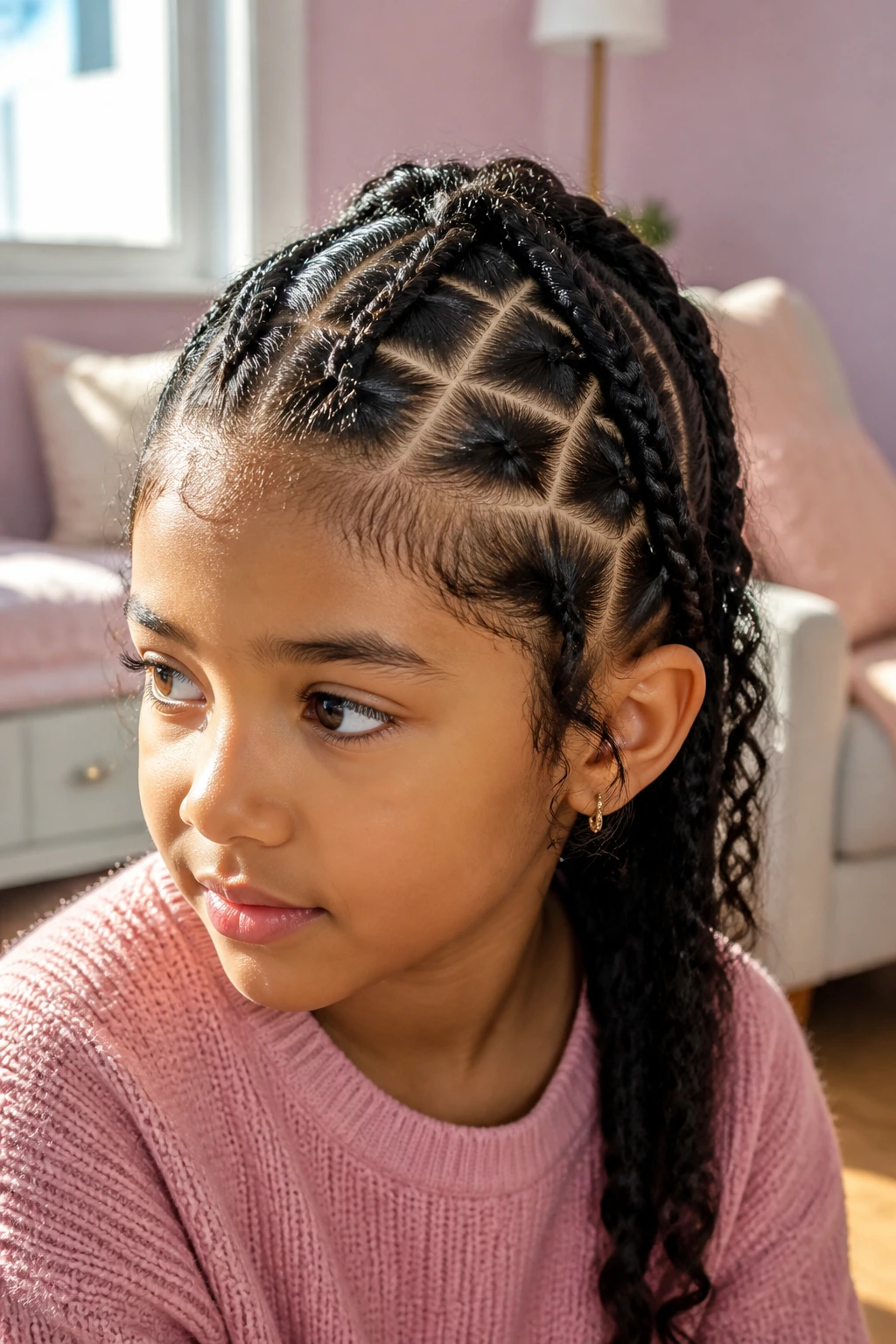
Crisscross styles look intricate because the sections travel in intersecting lines before they meet the main braid. On wavy hair, that cross-pattern has extra dimension, because the texture keeps each crossing visible instead of blending into one flat plane.
Why It Works
The crisscross feed-in gives you control over both direction and tension. That matters when the hair is thick at the crown and softer at the ends, which is common with wavy kids’ hair.
It also spreads the visual weight around. Instead of one heavy braid line, you get smaller directional pieces that make the whole style feel lighter on the head.
How to think about it
If the child has a stubborn crown cowlick, this style can hide it better than a standard French braid. The crisscross lines distract the eye, and the braid ends up looking more intentional than it felt while you were doing it. That’s a nice payoff for a little extra parting.
13. Flower Bun French Weave
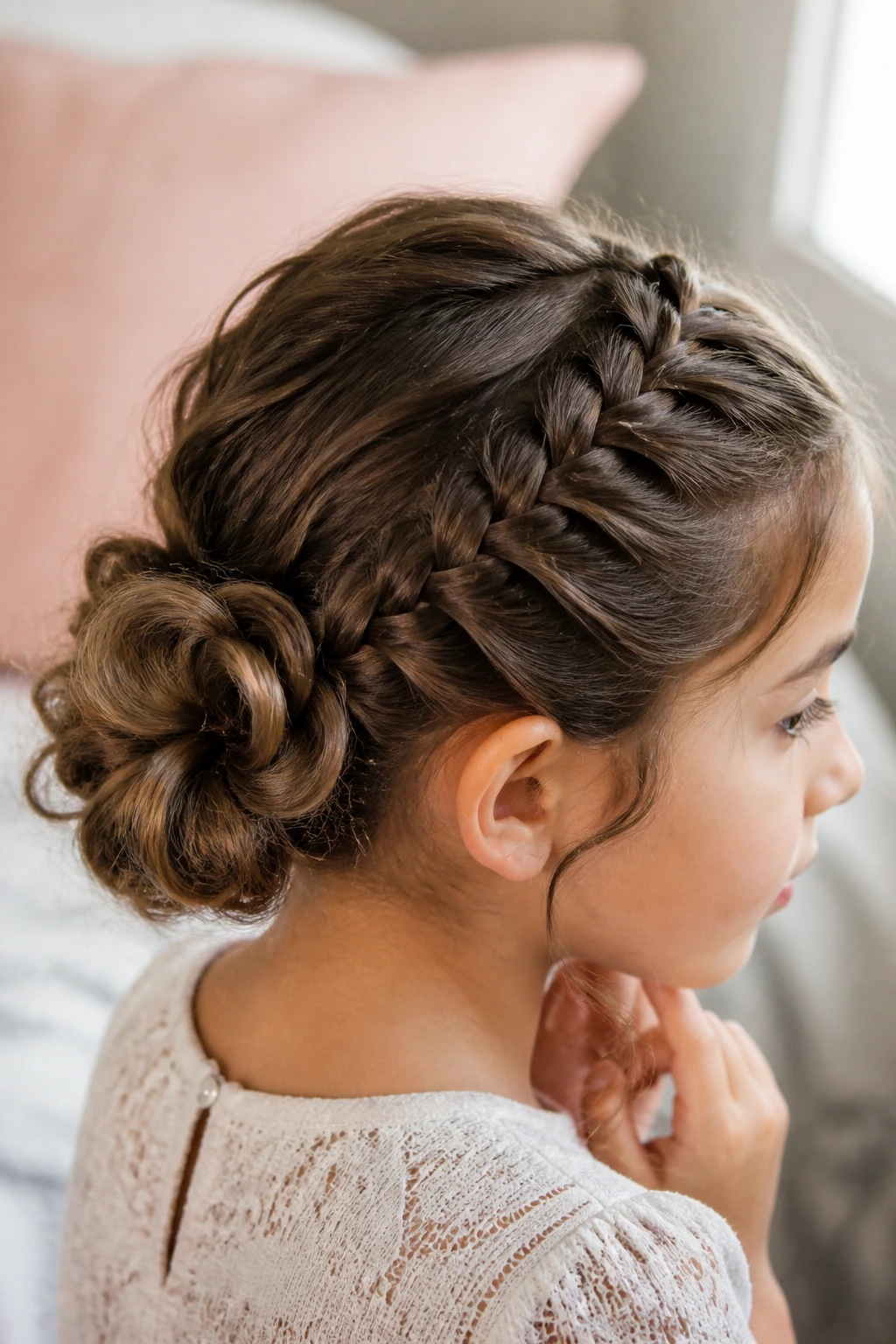
A flower bun made from a French weave braid wraps the braid into a bun shape and fans the loops so it looks petal-like. It sounds fancier than it is. The braid does the hard work; the bun is mostly about placement and pinning.
Why It Works
Wavy hair gives the bun a softer outline than straight hair does. The loops do not sit rigidly, so the shape looks fuller and more organic.
This one is smart for events where you want hair off the neck. Dance recitals, concerts, holiday photos — that sort of thing. It also works better than a plain bun on hair that slips, because the braid provides structure before you start wrapping.
What to remember
Use bobby pins in a crisscross pattern around the bun. One pin rarely does the job. Two or three small pins, placed flat, will hold better and feel lighter than one large one shoved in at an angle.
14. Beaded-End French Weave
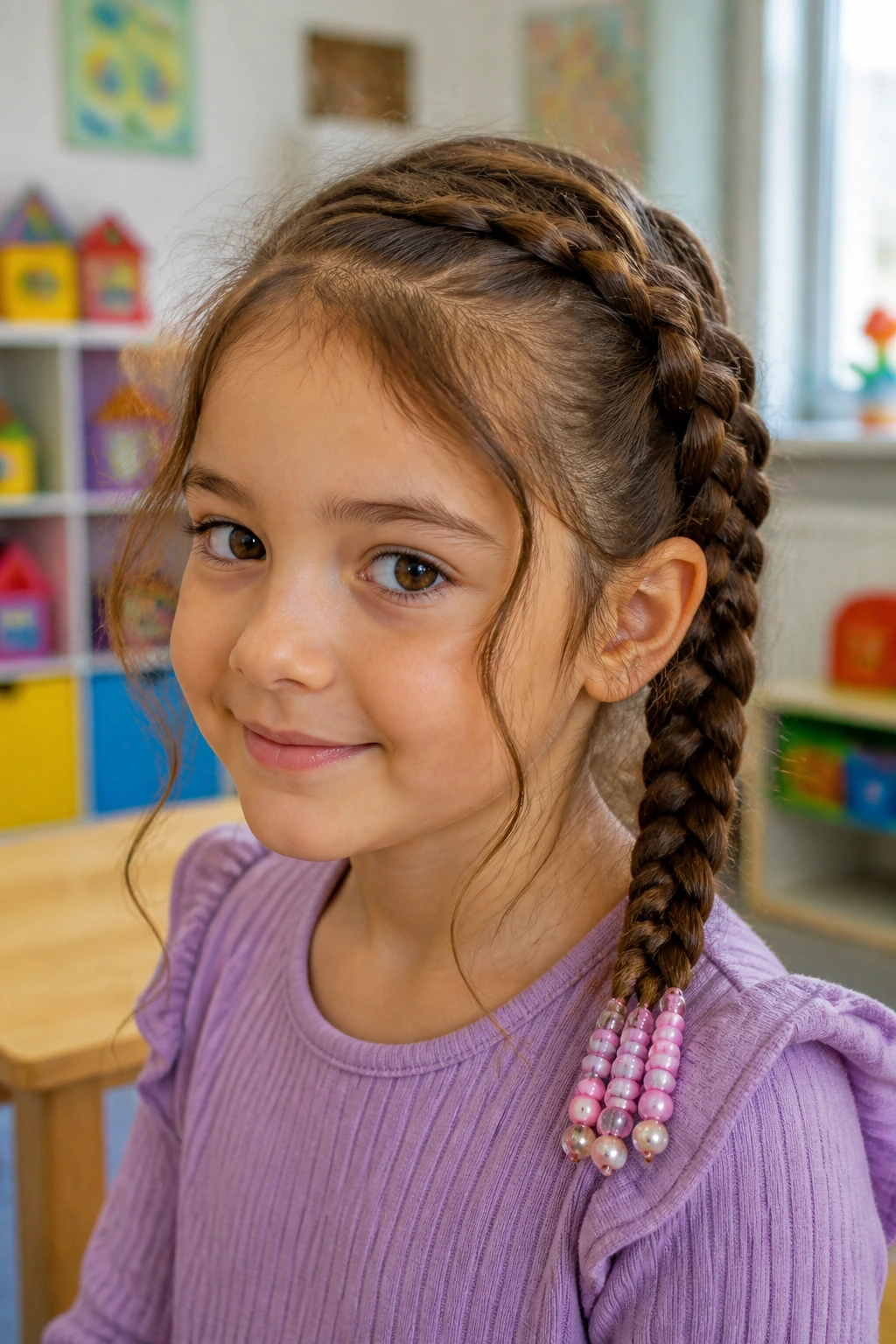
A beaded-end French weave adds small beads to the tips of the braid, usually after the braid is secured with a tiny elastic. On kids, the beads can be colorful, simple, or clear — but I would keep them light and few.
Why It Works
The braid itself stays the same; the beads are the payoff at the end. On wavy hair, the ends often have just enough movement to show the beads without swallowing them. That’s useful because the bead work needs a little swing to be seen.
Good choices
- Lightweight acrylic beads for everyday wear
- Wooden beads if you want a softer, matte look
- A pair of matching beads rather than a heavy cluster
Heavy beads tug. That’s the whole story. A few tiny ones are charming. A pile of them becomes annoying by lunchtime.
Best for: birthdays, family gatherings, school spirit days, or any child who likes a little sparkle but not a full hair accessory situation.
15. Sports-Ready Tight French Weave
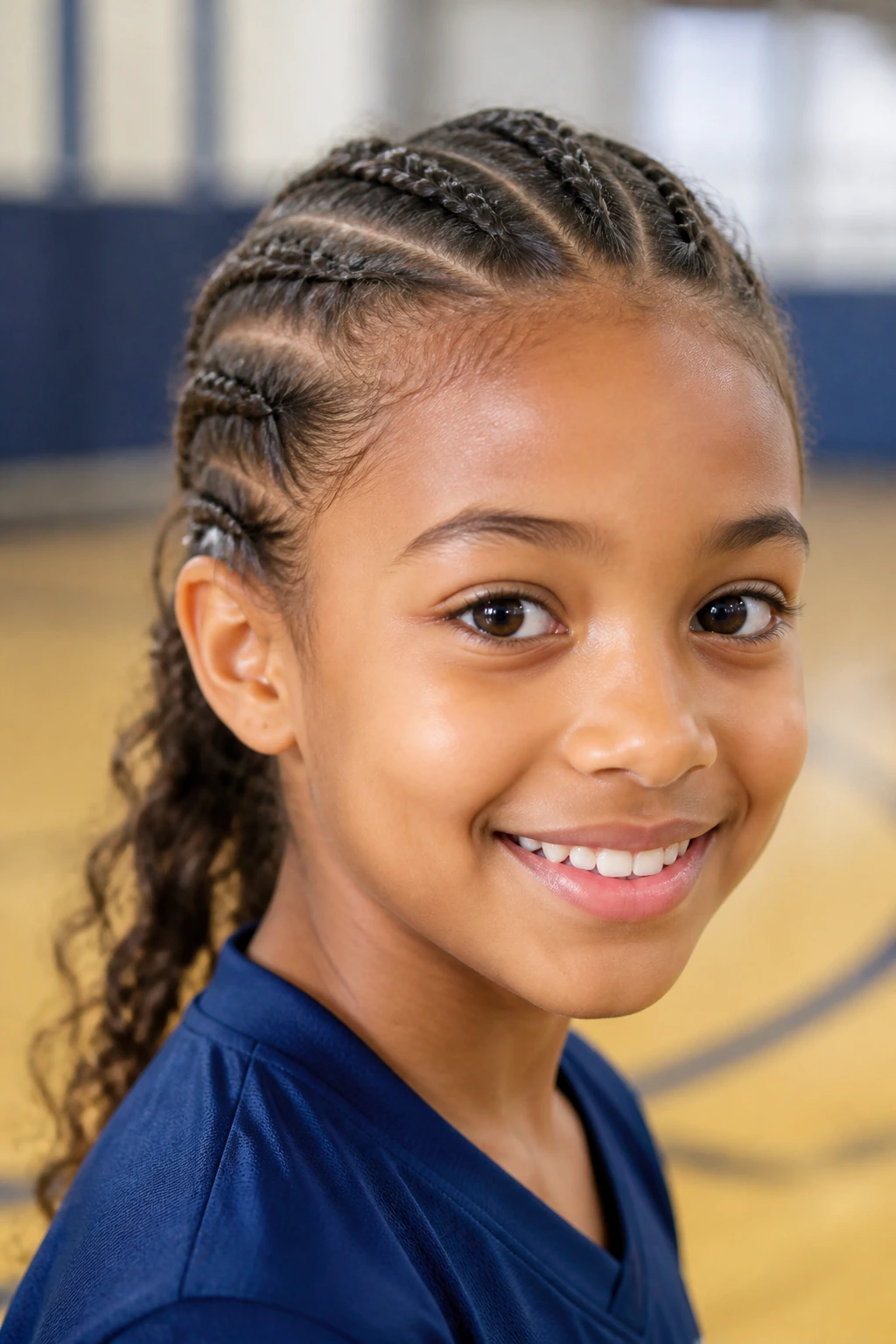
Can a braid survive running, jumping, and a full afternoon of chaos? Yes, if you keep the start neat, the feed-in sections even, and the nape secure. The sports-ready French weave is tighter than the soft party versions, but it should still feel comfortable.
Why It Works
The braid sits close to the scalp and takes the hair’s movement out of the equation. That matters when a child is upside down, sweating, or moving fast enough that loose sections would start whipping around the face.
Wavy hair helps here too. The braid catches the texture, so you do not have to over-tighten the roots to keep everything from escaping.
A warning I’d take seriously
If the child says the braid hurts, loosen it. Period. A style that looks neat but causes sore spots is not a win. The goal is firm, not painful.
I usually keep this one for game days, playground days, or field trips where the braid needs to last and nobody wants to stop for a full reset.
16. Party-Laced Loose French Weave
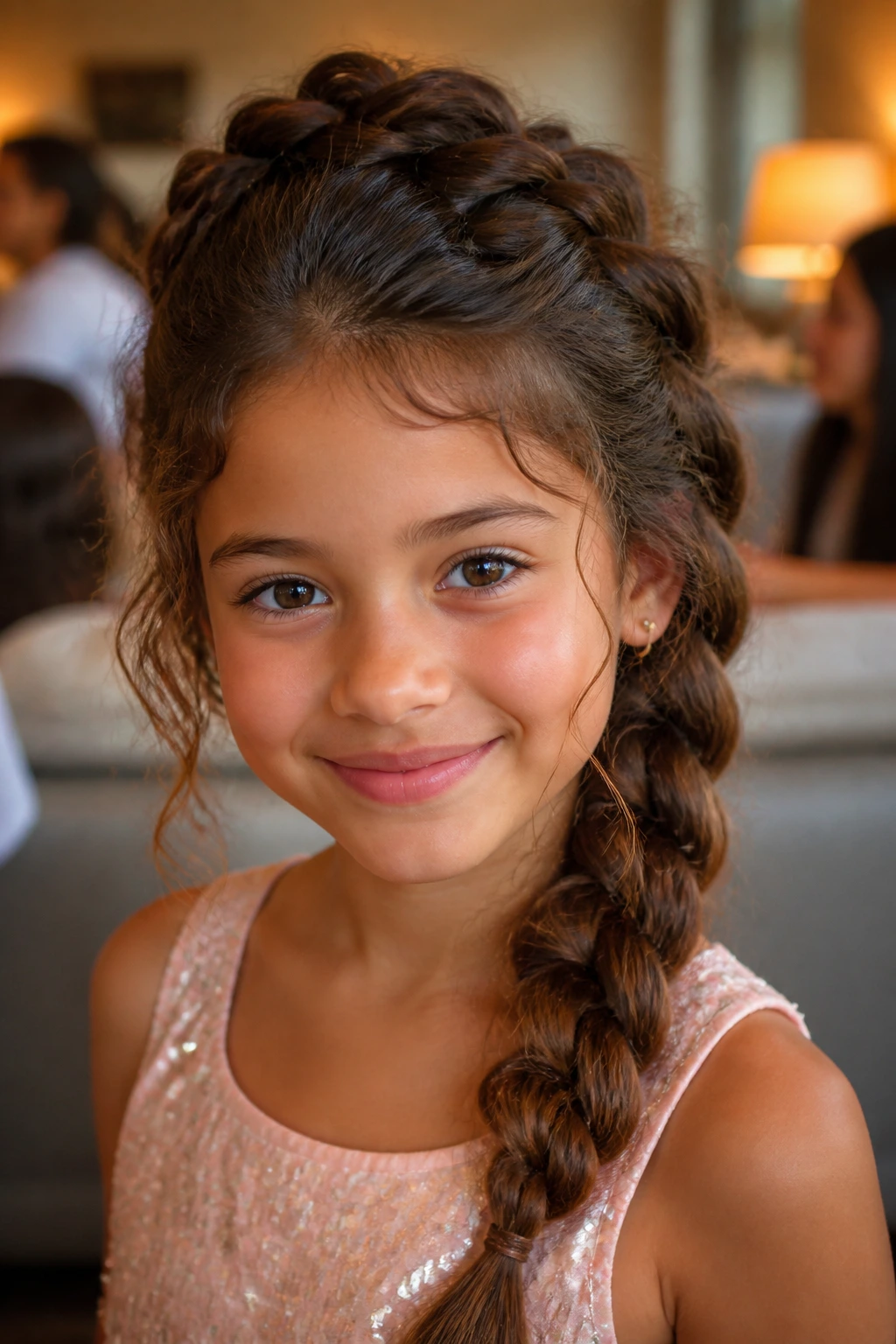
This version is softer, wider, and a little showier. The braid starts with a gentle part, feeds in larger sections, and gets lightly pancaked at the edges so the braid looks fuller. It’s the braid you reach for when the child wants to look dressed up but still feel like themselves.
Why It Works
Loose French weaves are made for wavy hair. The texture fills in the gaps naturally, and once you pull the outer edges of the braid a touch, the shape opens up without falling apart.
Quick style notes
- Use slightly larger sections than you would for a strict school braid.
- Tug the edges gently after securing the end.
- Add a bow, clip, or one narrow ribbon if the child wants something extra.
This is one of those styles that looks more expensive than it is. Not because it’s flashy — because the texture does the heavy lifting.
17. Side-Arc French Weave with Face-Framing Pieces
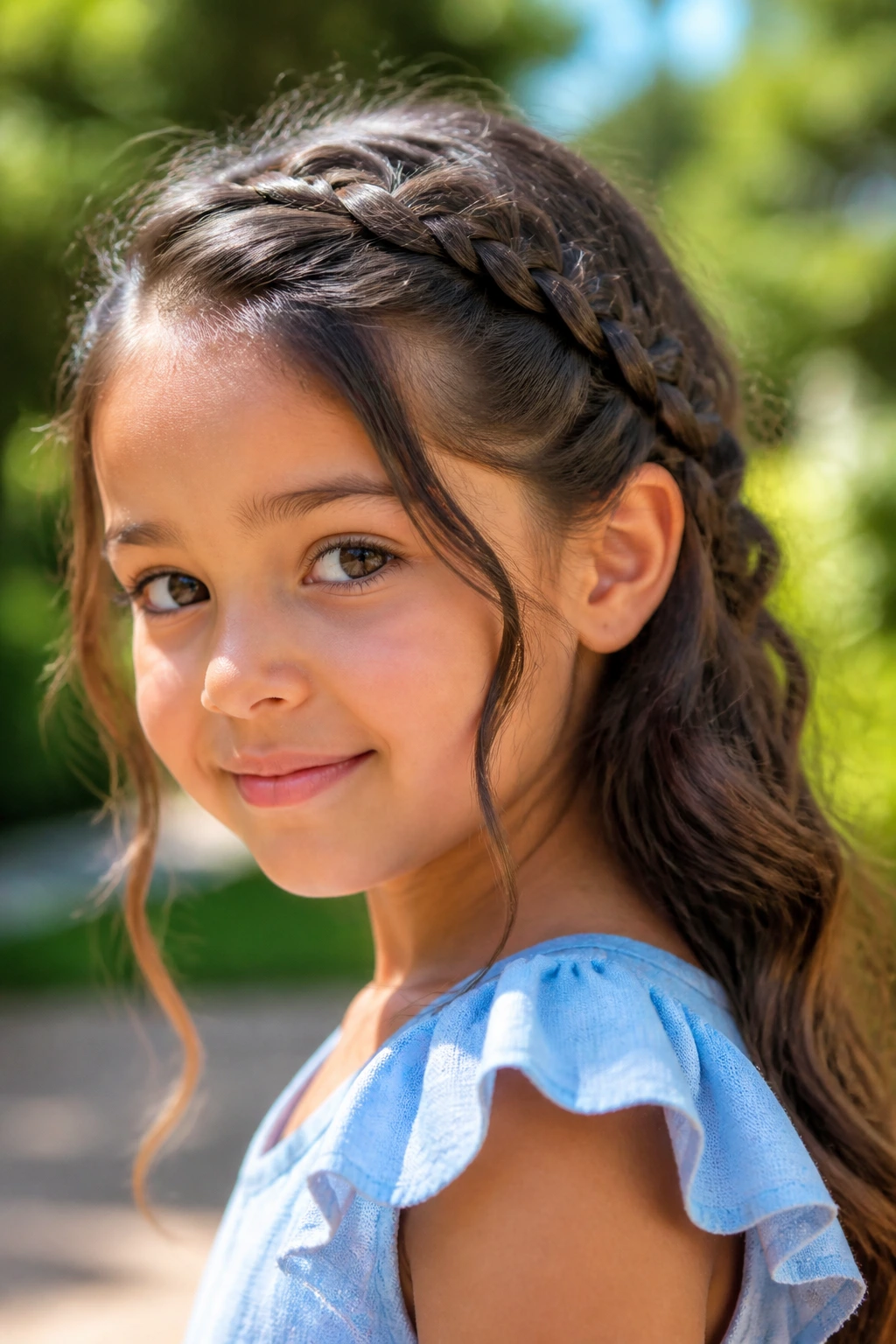
The side-arc braid starts near one temple, curves back along the head, and leaves two soft pieces around the face. Those loose pieces matter. They stop the style from reading too formal and give the face a little movement.
Why It Works
Wavy hair around the face can be annoying when it keeps slipping loose, but it also looks nice when it’s intentionally left out. This style gives you both: a braided frame and a few deliberate curls near the cheeks.
H3: What Makes It Comfortable
The braid does not sit straight across the forehead, which makes it easier for kids who dislike the feeling of hair pressing at the temples. The curve also helps the style blend into the rest of the waves instead of fighting them.
If the child has shorter layers near the front, leave them out on purpose. It looks better than trying to trap every last strand into the braid.
18. Split-Crown Double French Weave
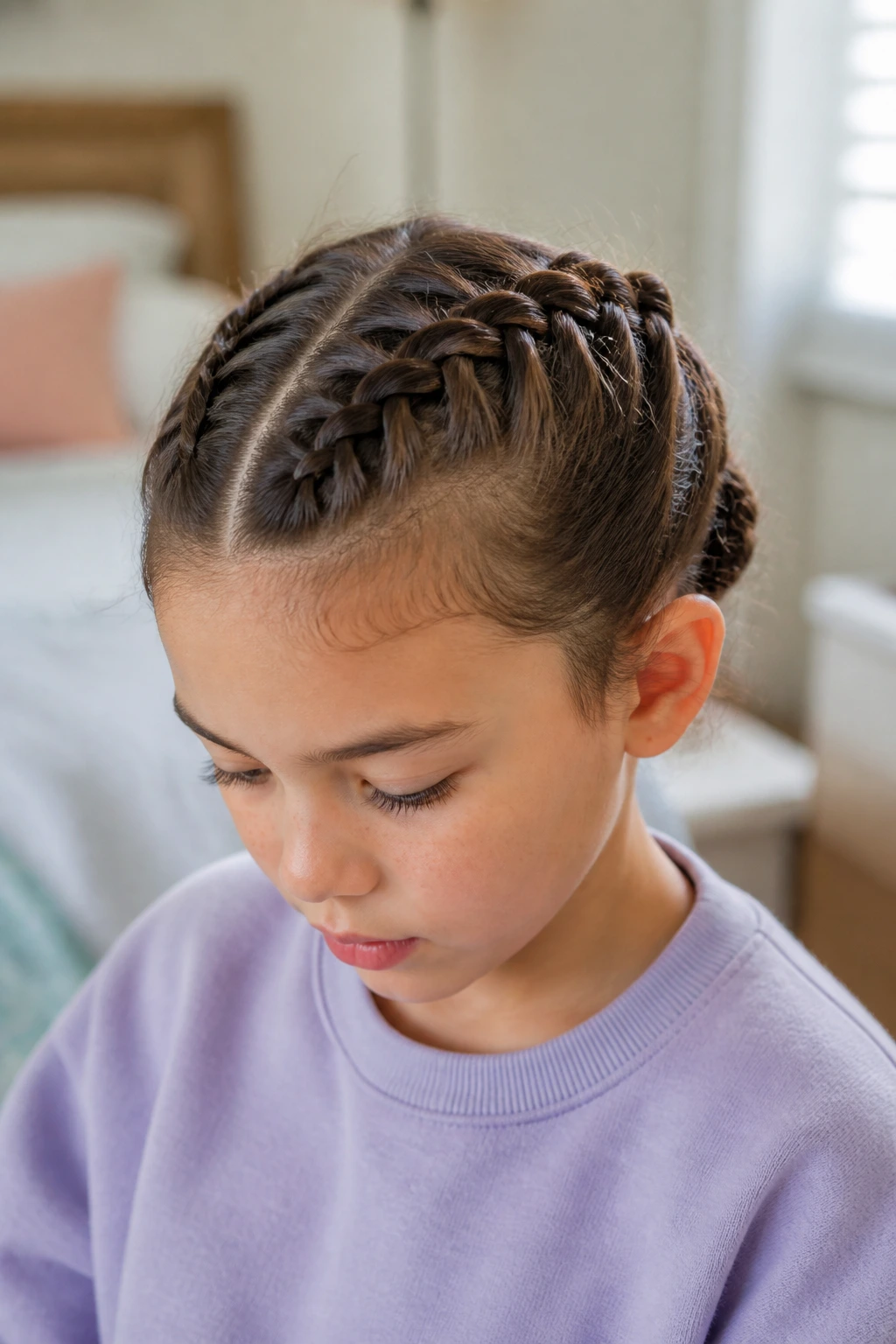
This one uses two parallel French weaves that begin at the front and travel back like twin rails before meeting near the crown or nape. It gives a strong shape without needing a full head of tiny sections.
Why It Works
The split-crown layout spreads the tension out across the head, which can feel better for kids with thick or dense wavy hair. It also creates a tidy top line while leaving enough body in the back to keep the braid from looking flat.
Comparison point
Unlike a single center braid, the split-crown style gives you more visual structure and a little more grip at the sides. That makes it a good pick for children whose hair flares out near the temples or who need a style that stays visible from the front.
It’s a clean, balanced option. Not the flashiest braid in the room, but one of the smartest.
Why French Weave Braids Hold Their Shape on Wavy Hair
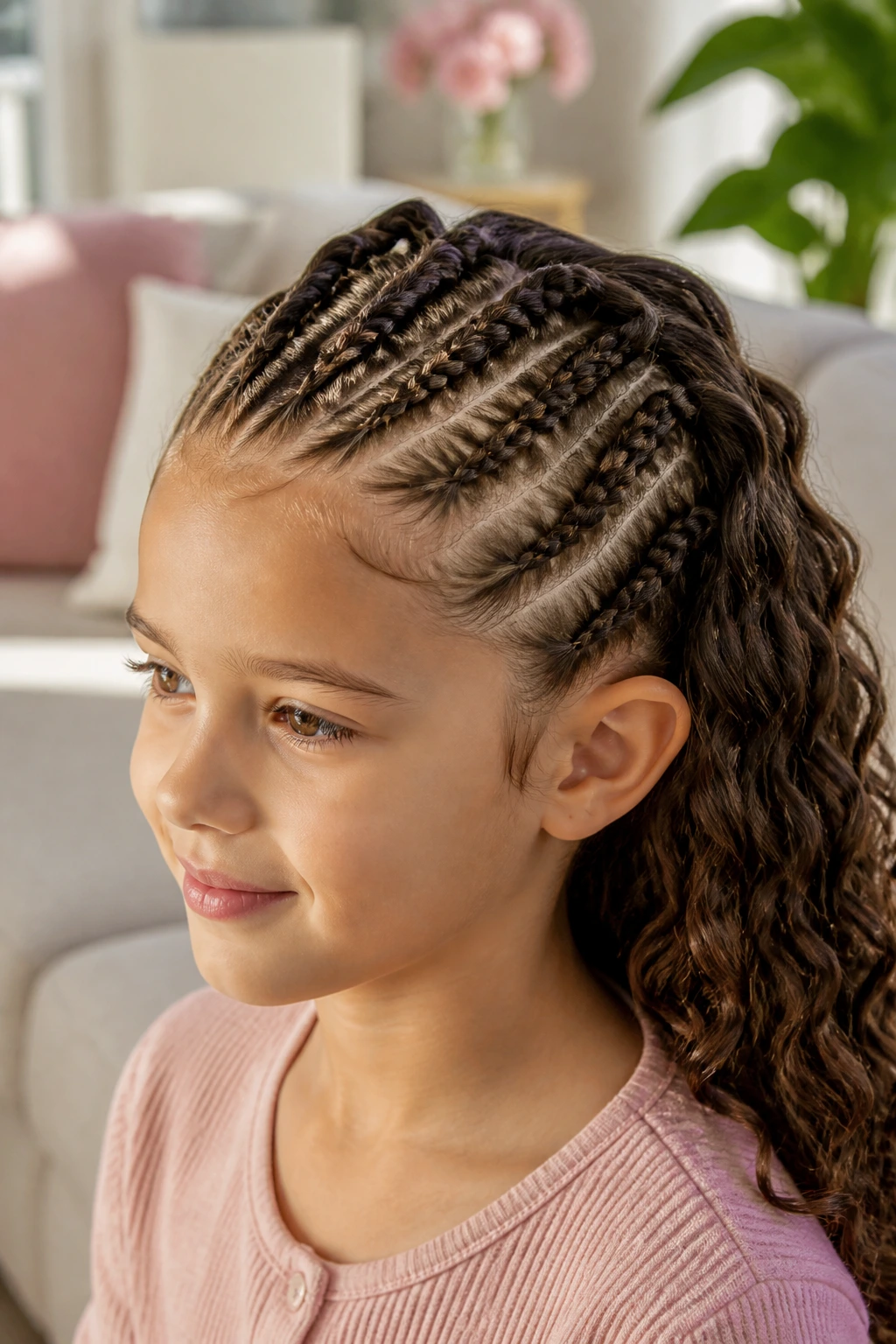
Wavy hair is a gift here, but not in the casual “hair is hair” way people like to say. The bends in the strand create friction, and friction is what keeps the braid from sliding apart before lunch. Straight hair can be slippery. Wavy hair usually offers a little more resistance, which helps every feed-in section lock into the next one.
The other reason these styles work is shape. A French weave adds structure from the scalp outward, and wavy hair fills that structure with body. That means you often get a braid that looks richer with less effort. You do not have to pancake it to death to make it visible.
There is a downside, and it is frizz. If the hair is overhandled, too dry, or coated in the wrong product, the surface starts puffing up around the braid line. That is why I keep coming back to light prep: dampen the hair enough to tame flyaways, but do not soak it. A small amount of leave-in conditioner or smoothing cream at the outer layer is plenty.
Essential Tools for These Braids
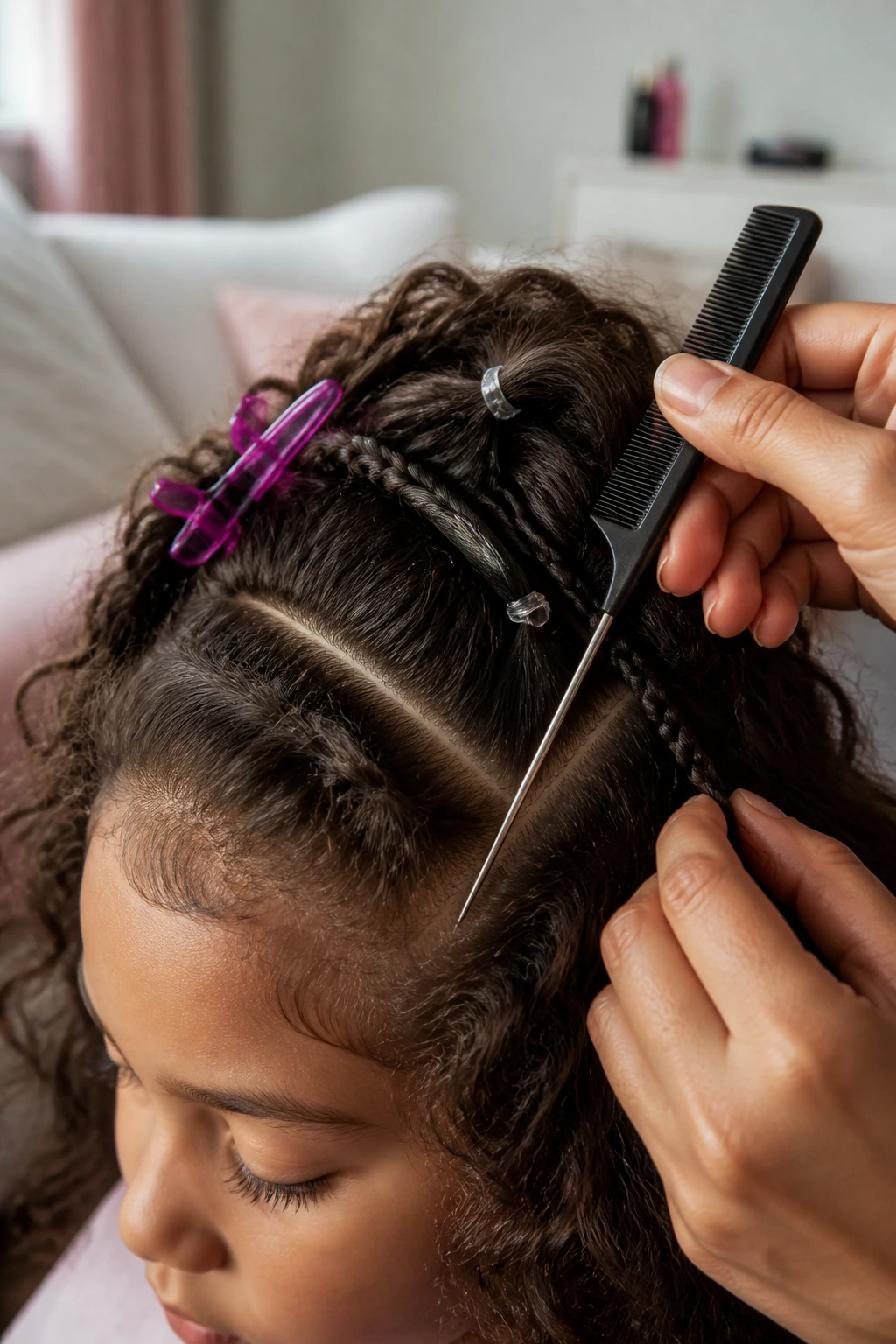
- Rat-tail comb: For crisp parts and clean sectioning along the scalp.
- Spray bottle with water: A few misted passes tame flyaways and make sectioning easier.
- Leave-in conditioner or detangling spray: Helps the waves slip through your fingers without snapping.
- Sectioning clips: Keep unbraided hair out of the way while you work on the front.
- Snag-free small elastics: Clear or hair-colored bands are easiest to hide at the ends.
- Bobby pins: Useful for crown braids, buns, and any style that needs a hidden anchor.
- Soft brush or smoothing brush: Good for the outer layer, especially around the hairline.
- Ribbon or light bows: Optional, but handy when the child wants something playful.
- Satin bonnet or satin pillowcase: Helps the braid survive sleep with less friction.
Smart Product Choices for Wavy Kids’ Hair
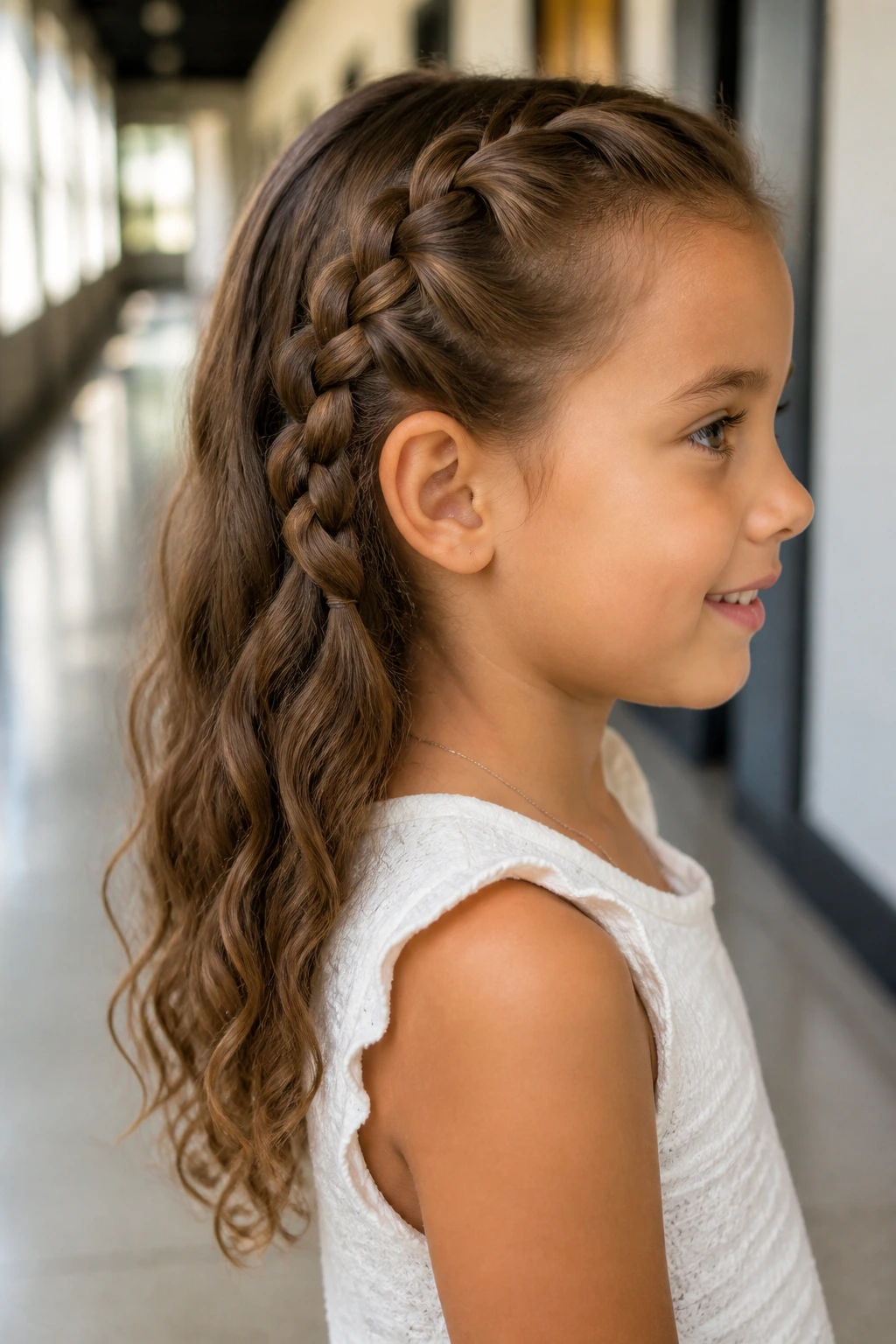
The best products for these styles are the ones that help the braid hold without freezing the hair in place. A light leave-in conditioner is usually enough for most wavy hair, especially if the child’s ends feel dry or the braid has to last through a long day. I’d keep heavier oils away from the roots. They make the sections slippery, and slippery sections are where braids start to slide.
For fine wavy hair, foam or lightweight mousse can be useful at the crown. It adds a touch of body without turning the hair crunchy. Thick or coarse waves usually need a little more slip at the ends, so a creamier detangler makes more sense there.
Small elastics matter too. The cheap, too-thick ones snag and break strands when you remove them. I prefer thin snag-free bands, even if they take a little more patience to wrap. That extra minute is worth it.
And one more thing: skip the heavy waxy edge products unless the child’s hair is extremely fuzzy at the hairline. On kids, a little softness looks better than a shellacked front.
How to Wear These Braids All Day
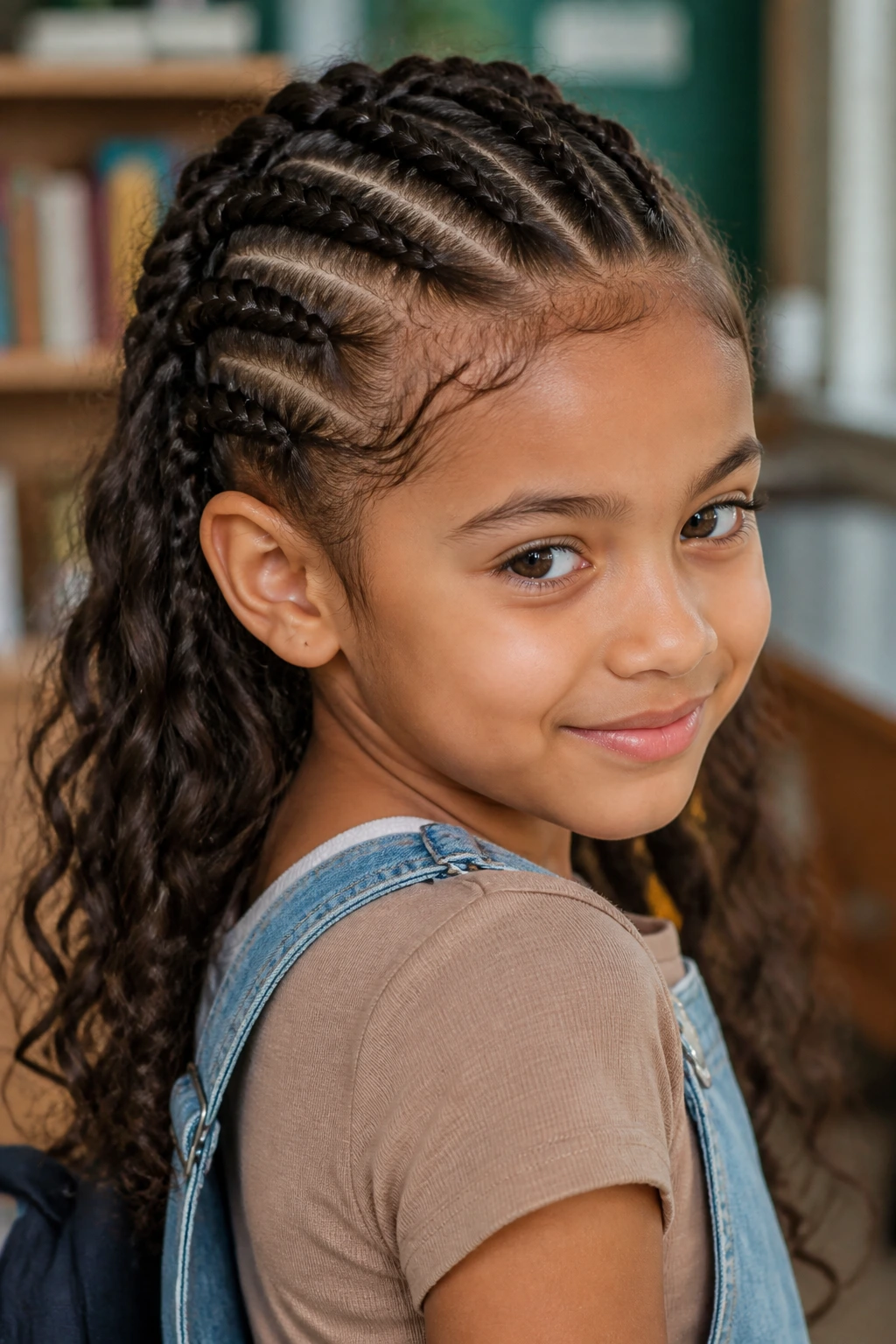
Presentation: Keep the part clean and the braid lines visible, but do not chase perfection around every tiny flyaway. A little softness near the temples looks natural on kids’ wavy hair, and it keeps the style from feeling overworked.
Activity Match: Low pigtails, low ponytail braids, and sports-ready styles hold up best for recess, errands, and anything sweaty. Halo crowns and flower buns look sharper for dressier events, though they need a few more pins.
Accessories: Ribbons, flat bows, tiny beads, and clip-on charms work best when they are light. If the accessory pulls on the braid, it is too heavy. Simple usually wins here.
Wear Time: Most of these styles stay neat for a school day and a half, sometimes longer if the child sleeps on a satin pillowcase. By day two, the crown usually needs a quick refresh, even when the braid itself is still holding.
Extra Polish and Personal Touches
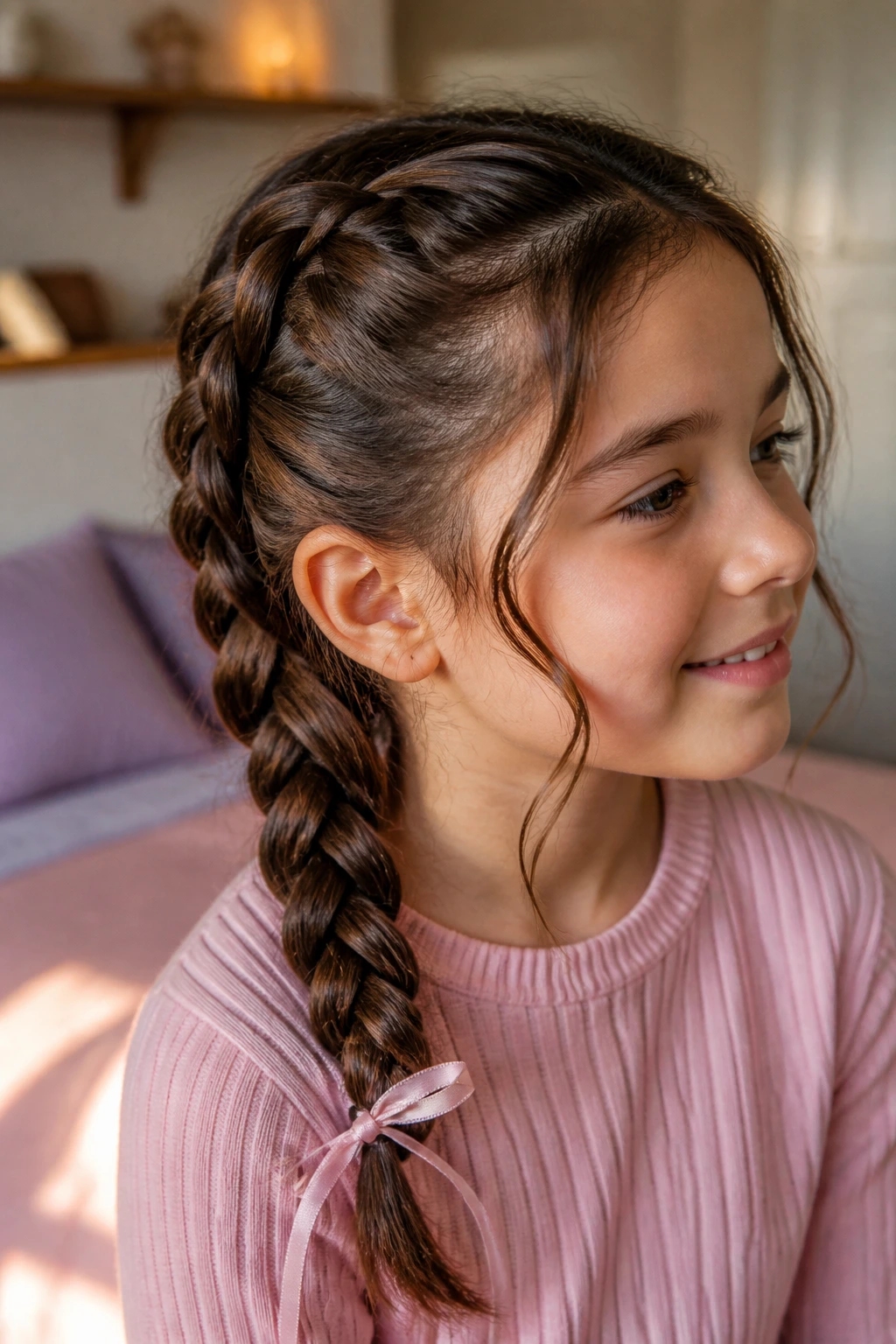
Texture Enhancement: If the braid feels too soft, smooth a pea-size amount of leave-in through the outer layer before you start. That gives the braid more control without making it greasy.
Customization: Switch from one side part to a zigzag part, add a ribbon at the end, or leave two face-framing pieces out in front. Small changes make the same braid feel new, which is useful when a child gets bored fast.
Finishing Touches: Once the braid is secure, pinch the edges very lightly to widen it. I mean lightly. Pull too hard and you’ll create gaps. A tiny tug along the outer loops is enough to make the braid look fuller.
Make-It-Yours: For sensory-sensitive kids, keep the braid lower and softer at the scalp. For thicker hair, take larger sections. For fine hair, use smaller sections and a touch more prep at the crown.
Night Before, School Morning, and Reset-Day Care
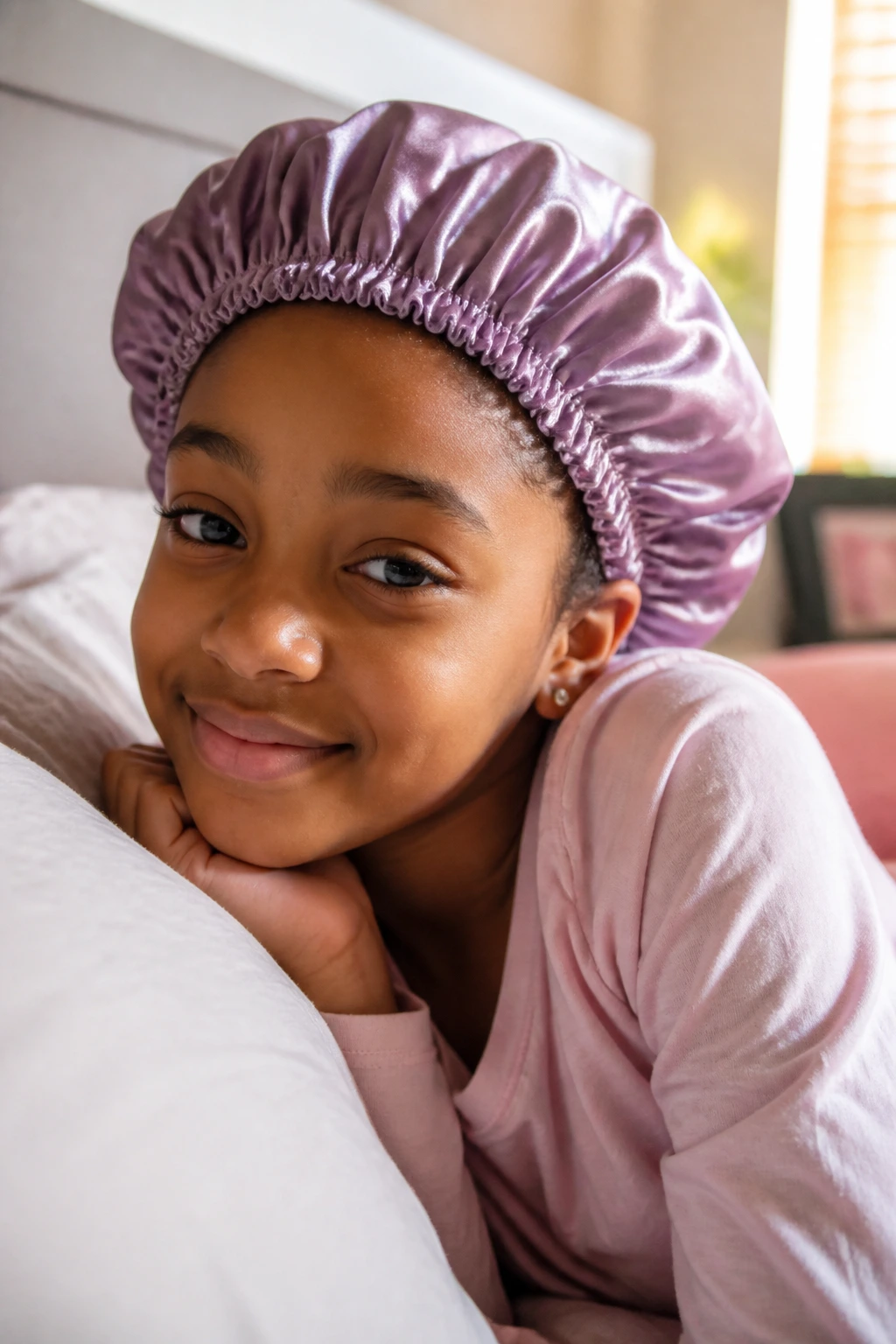
These styles last longer when you treat them like a two-day plan instead of a one-hour style. If the braid is meant to carry into the next morning, secure it with a satin bonnet or have the child sleep on a satin pillowcase. Cotton steals smoothness. You can see it in the morning when the top layer starts looking fuzzy even though the braid is still in place.
Most French weave braids on wavy hair hold through a full school day and sometimes into the next one, especially if the style is anchored low or pinned well at the nape. The crown is usually the first place to puff up. A quick mist of water, a little finger-combing, and one hidden pin often fixes that in under two minutes.
If the scalp feels tender, take the braid down the same day. Do not stretch a style just because it technically still looks good. Kids notice tugging before adults do, and wavy hair usually tells on you by getting frizz at the roots or a hard bend where the tension sat all day.
Common Mistakes That Make French Weave Braids Sag
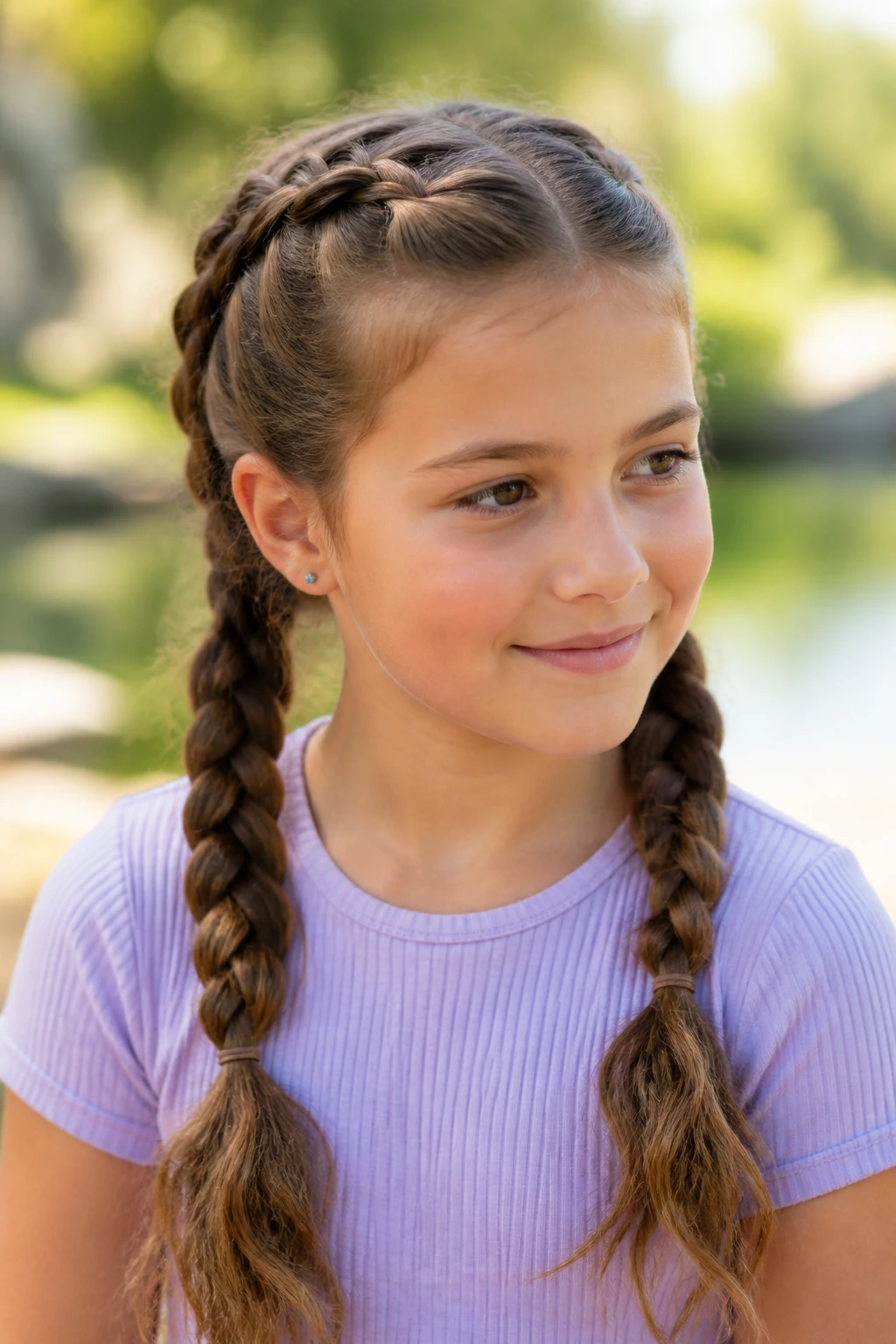
- Starting with hair that’s too wet: Soaking hair makes the sections slide, and the braid can loosen before it dries. Mist lightly instead.
- Pulling the first sections too tight: That gives you sore temples and a flat front. Use firm tension, not a scalp grab.
- Using too much cream or oil near the roots: Heavy product makes wavy hair slick, which sounds helpful until the braid starts slipping. Keep rich products on the ends.
- Taking feed-in sections that are too large: Big sections make the braid lumpy and harder to control. Smaller sections give a cleaner line.
- Ignoring the ends: If the tail is left tangled, the whole braid looks unfinished. Smooth the ends before you tie off the elastic.
- Rebraiding over and over in the same spot: That spot gets tired fast. If you need to redo the crown often, loosen the start and give the hair a break the next day.
Questions Parents Ask About French Weave Braids
Can you do French weave braids on wavy hair without straightening it first?
Yes, and that’s usually the better option. The natural wave gives the braid grip, and straightening often removes the texture that helps the style hold.
How do I keep the braid from frizzing by afternoon?
Start with detangled hair, use a light leave-in or mist, and avoid over-touching the braid once it’s done. If flyaways appear, smooth them with clean fingertips instead of brushing the whole style apart.
What if my child has fine hair and the braid keeps slipping?
Use smaller feed-in sections, keep the braid closer to the scalp, and add one hidden bobby pin near the nape or crown. A tiny bit of mousse at the roots can help, but do not overdo it.
How long do these styles usually last?
Most of them hold neatly for a school day. Softer styles can still look good the next morning if the child sleeps on satin, while sports-ready braids usually need a refresh after heavy activity.
Can I do a French weave braid on damp hair?
Yes, as long as the hair is only lightly damp. Wet hair slides, especially at the crown, and the braid can feel loose once it dries.
What’s the best style for a child who hates tight hair?
A side-swept braid, half-up French weave, or braided headband is usually better than a tight crown or mohawk style. These keep the front controlled without putting much pressure across the scalp.
Are ribbons and beads safe for everyday wear?
They can be, if they’re light and well secured. Keep bead clusters small and avoid anything that snags in jackets, backpack straps, or playground gear.
What do I do if the braid starts unraveling at the ends?
Tie off the tail with a small elastic and, if needed, add a second one an inch below the first. For very slippery ends, a tiny dab of leave-in on the last two inches can help the elastic grip.
Braids That Stay Friendly
French weave braids on wavy hair work because they respect what the hair already wants to do. The wave gives the braid grip. The braid gives the wave shape. That pairing is what makes these styles hold up without turning the scalp into a tug-of-war.
The best choice is rarely the most complicated one. It’s the braid that suits the child’s hair texture, their tolerance for tension, and the kind of day they’re having. Get those three things right, and the style stops feeling fussy.
Pick one, keep the tension kind, and let the waves do some of the work.