



A front streak changes the whole read of a haircut. A low taper can look polite until a pale curl panel sits at the forehead and the line-up suddenly has attitude.
That is why money piece highlights work so well on Black men’s hair when the cut underneath stays simple. You do not need a busy shape, a wild pattern, or a full head of blond to make the style register. A clean fade, a tight afro, or a row of twists gives the front color something to sit against, and that contrast is the whole trick.
The real skill is restraint. Too much width and the highlight starts looking like a skunk stripe. Too much bleach on already dry coils and the front section loses bounce, feels rough, and stops laying the way you want. Get the placement right, though, and the cut looks sharper from the barber chair to the street.
Why These Front-Focused Cuts Hit Hard
-
Low-risk color, high-payoff shape: A small front highlight changes the silhouette fast, so you get a noticeable shift without coloring the whole head.
-
The haircut does half the work: Tight sides, a crisp taper, or a clean shape-up make the money piece look intentional instead of random.
-
Texture makes the tone richer: Coils, waves, twists, and locs break light in different ways, so the same blond reads warmer or cooler depending on the texture.
-
The front panel frames the face: A lighter strip near the hairline pulls the eye to the brow, the eyes, and the line-up in one glance.
-
Grow-out is easier to live with: Because the color sits up front, a little root showing later does not wreck the whole cut the way a full dye job can.
-
It leaves room for personality: Honey, caramel, copper, platinum, or a soft beige lift all change the mood without forcing you into a dramatic haircut.
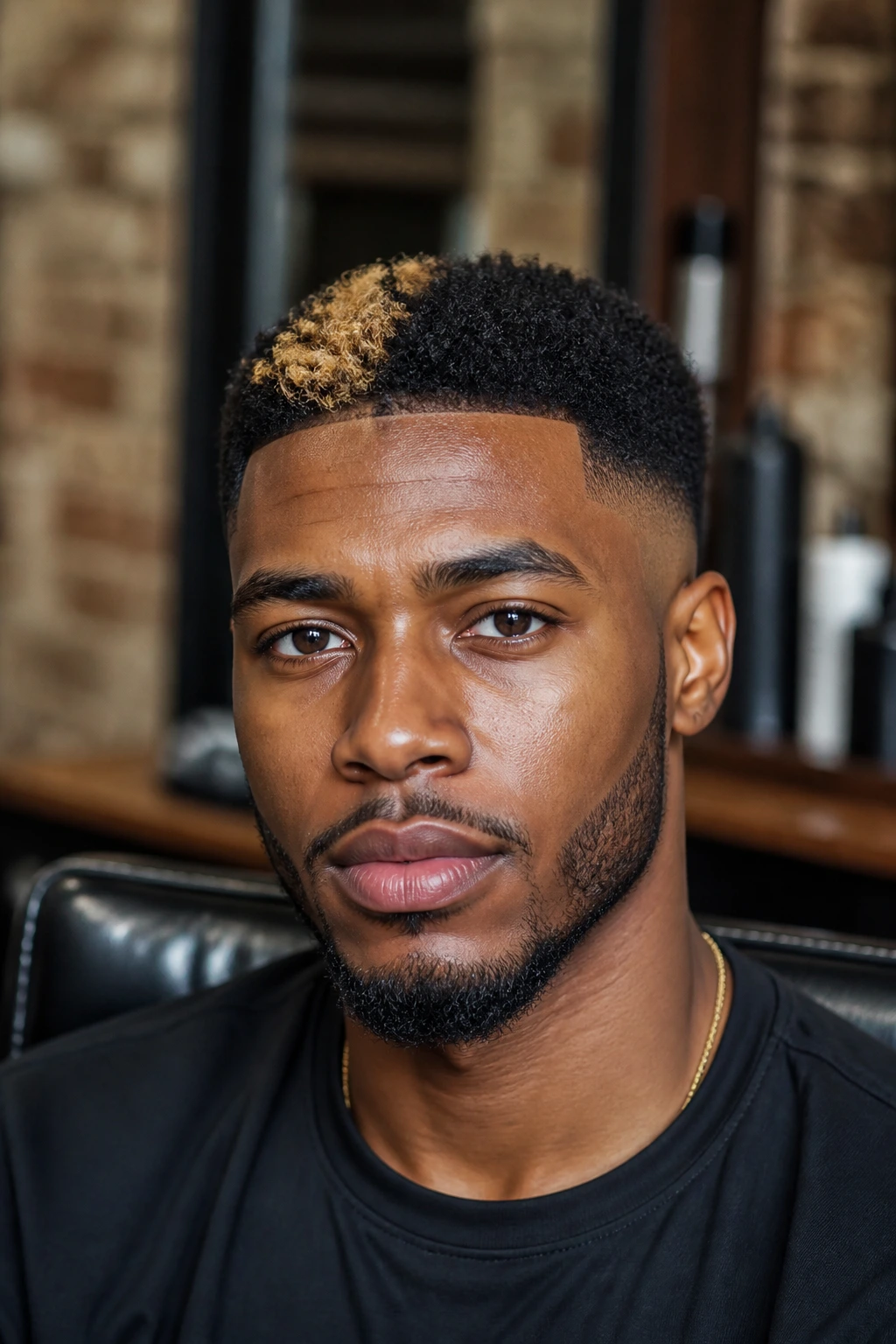
1. Low Taper Fade With Blonde Money Piece Highlights
A low taper fade gives you the cleanest possible backdrop for a front highlight. The sides fall away quietly, the outline stays neat, and the blond section at the hairline becomes the first thing anyone notices.
Why It Works
The low taper keeps the cut grounded. That matters, because a bright money piece on its own can look loud if the rest of the haircut is messy. With this shape, the front color sits inside a tight frame, so the contrast feels sharp rather than noisy.
Ask for the highlight to stay narrow, usually about 1 inch or less at the front edge. On tighter curls, that small strip reads larger than you’d expect once the light hits it. I like a warm blonde here more than ice blond, especially if the beard and brows are still dark.
- Ask for: a low taper, a clean lineup, and a front-only lightened section.
- Best tone: honey blond or soft beige, not a flat yellow.
- Keep it tidy: the taper should fade into skin or near-skin at the temples so the highlight stays the star.
One small warning: if the front section widens into the temples, the whole cut loses its quiet shape. Keep it tight. That’s the move.
2. Temple Fade With Honey Money Piece Highlights
A temple fade already has a clean, sharp feel, and the honey money piece warms it up without making the haircut fussy. The sides stay neat around the temples, the top remains compact, and the color gives the front a soft glow instead of a hard flash.
This is the cut I recommend when someone wants color but not drama. The honey tone sits nicely against dark hair because it looks lifted, not bleached into submission. On Black men with coarser texture, honey tends to read richer than platinum, and it grows out with less visual shock.
The best part is the balance. The temple fade keeps the face open. The highlight keeps the forehead from looking too bare. Put them together and the haircut feels deliberate from every angle.
If you wear a beard, this one gets even better. The warm highlight bridges the hairline to the beard line in a way that feels finished, especially when the beard is edged clean and kept a shade darker.
3. Short Afro With a Caramel Front Streak
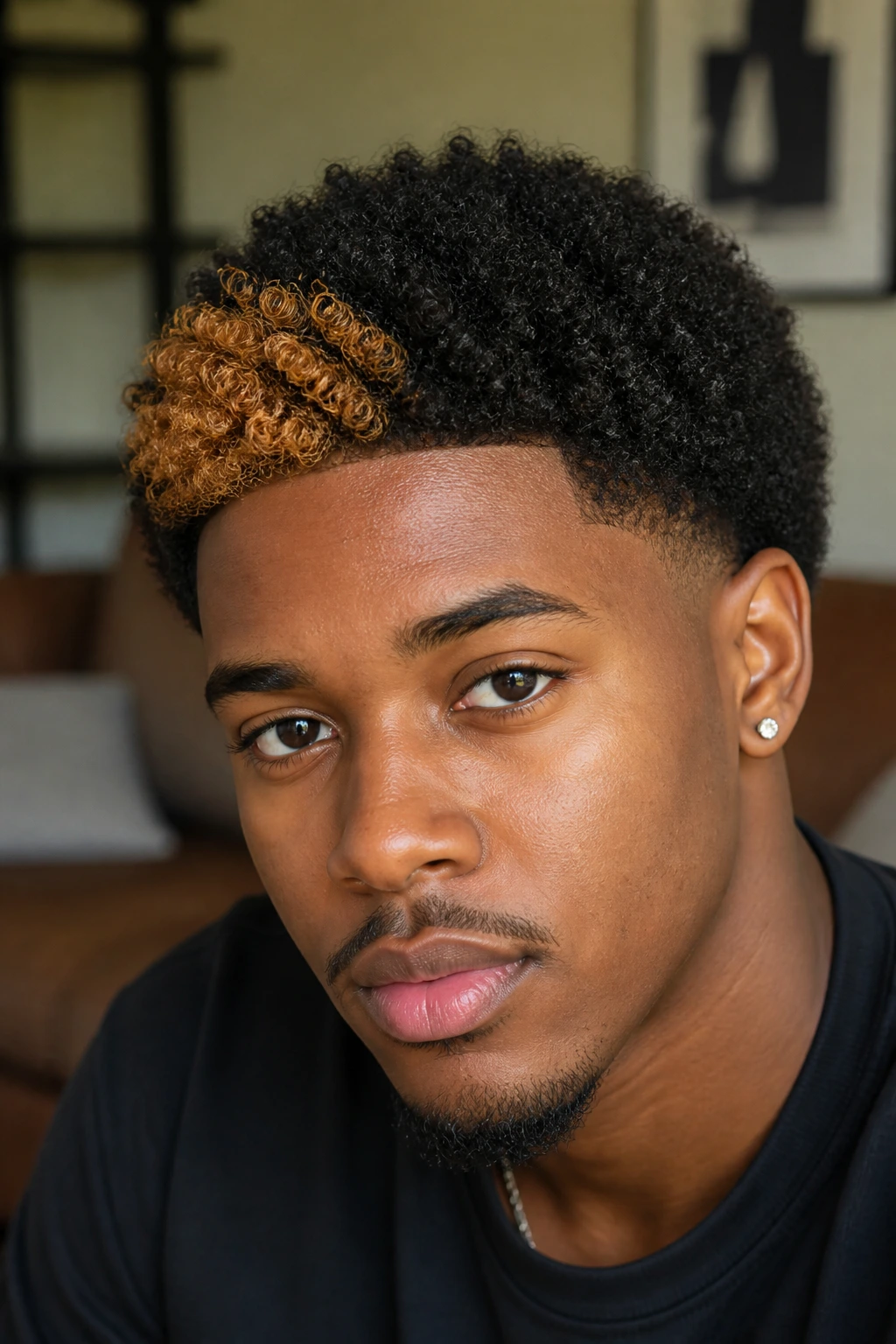
Why does a short afro look softer with one caramel streak at the front? Because the shape stays round and honest, while the lighter section gives the forehead a clean frame.
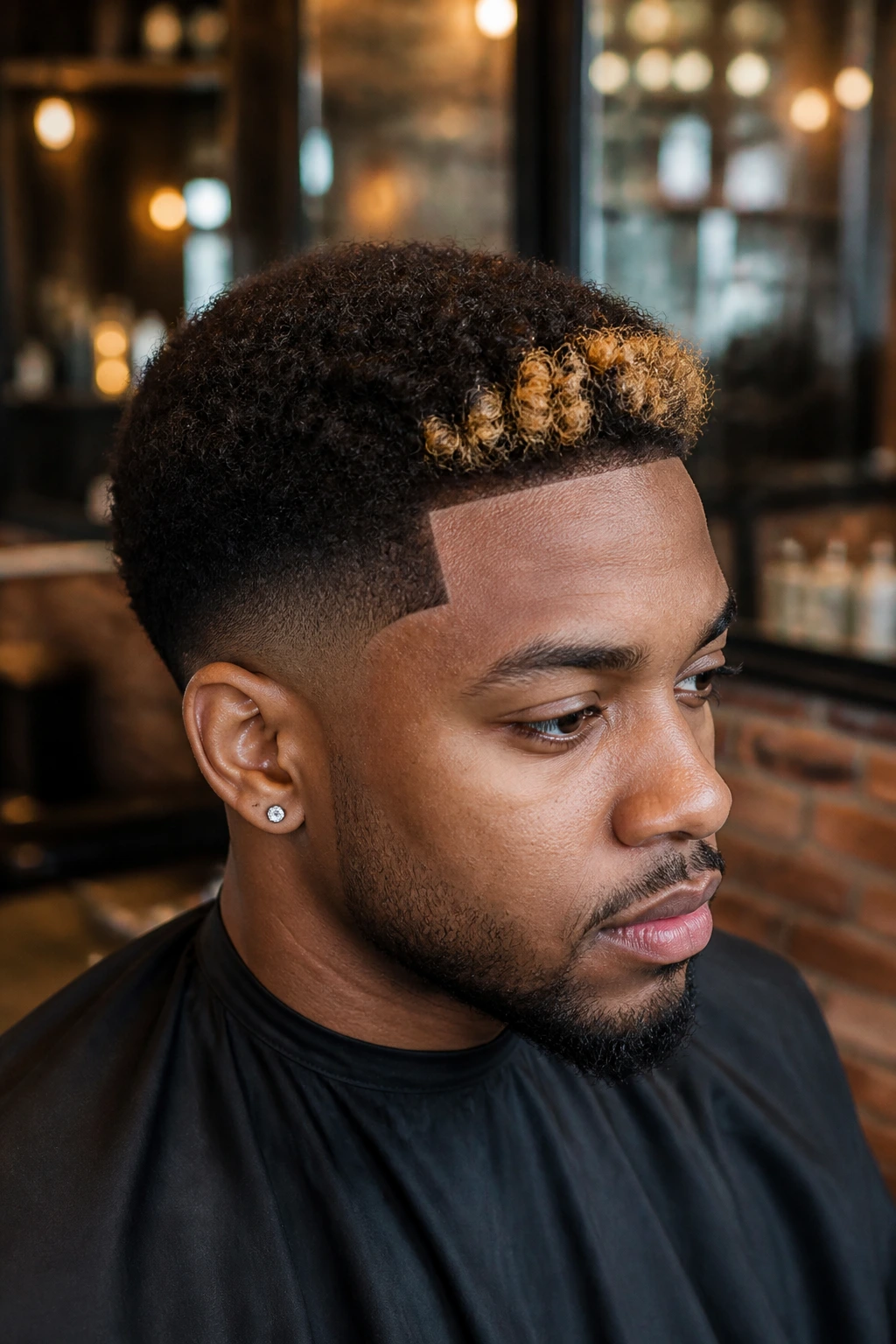
A short afro with money piece highlights is one of the easiest styles to wear if you like natural texture. The afro itself does not need much drama. A balanced shape, a good pick-out routine, and a single caramel strip at the front are enough. The light color sits on the curls like a ribbon, not a block.
How to Wear It
- Keep the afro rounded at the sides so the highlight lands on a clean curve.
- Let the caramel section sit slightly off center if your face is more angular.
- Shape the beard to match the roundness up top, or the cut can feel top-heavy.
I prefer caramel on this cut over bright blond because it keeps the texture visible. A very pale stripe can flatten the front if the curls are tight. Caramel keeps the curl pattern readable and gives you that lifted look without stealing the whole haircut.
4. 360 Waves With a Thin Platinum Slash
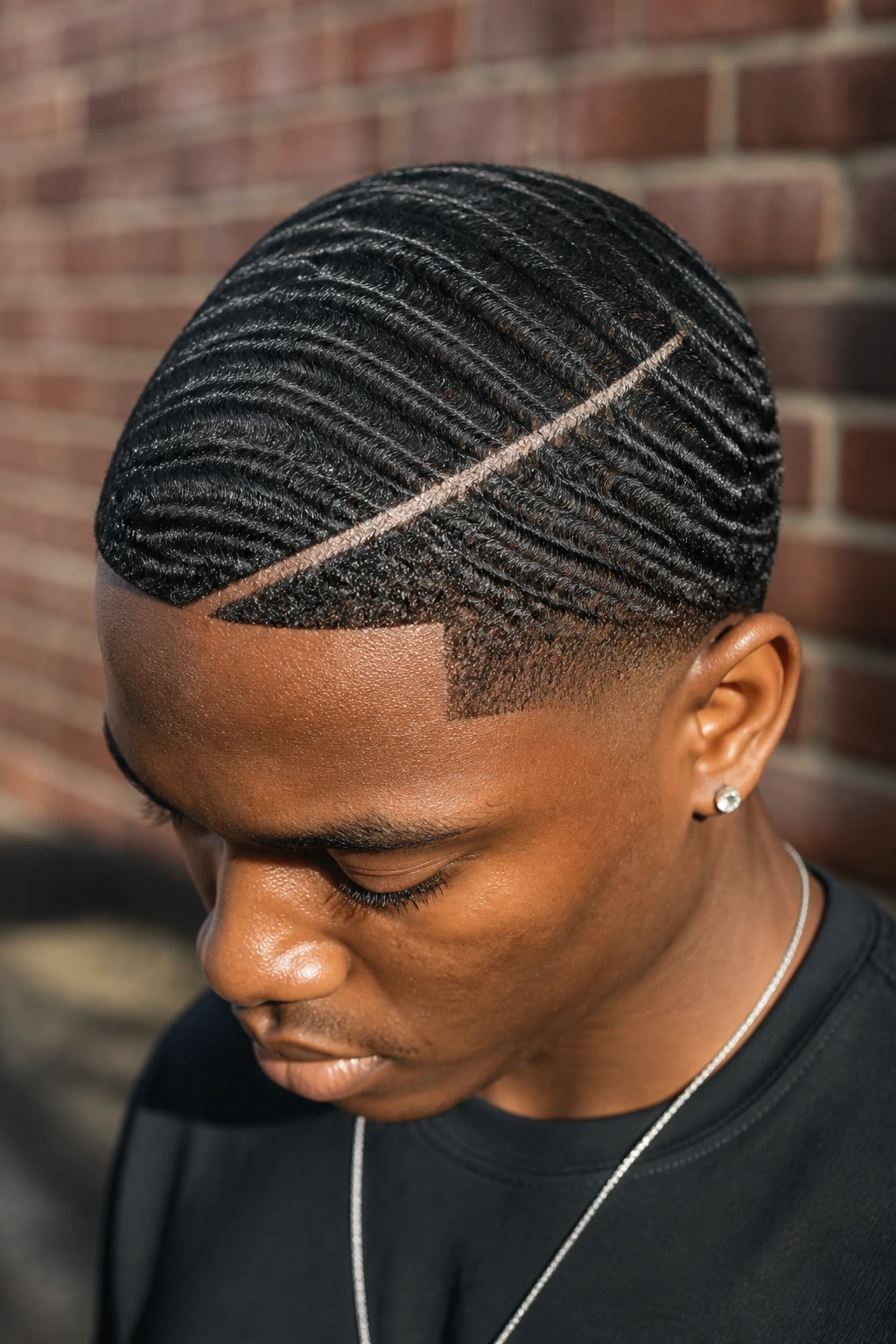
A thin platinum slash on 360 waves is for the man who wants the smallest possible color move with the biggest possible visual kick. The wave pattern stays the main event, but the front strip interrupts it just enough to catch light at the hairline.
This cut only works if the color stays slim. Think a narrow front panel, not a broad dyed patch. Waves rely on clean brush work and a tight lay, so the highlight should sit at the front edge and leave the crown alone. Once the stripe gets too wide, the wave pattern starts looking broken.
The platinum tone brings a colder, cleaner feel than honey or caramel. That can look hard in a good way, especially with a crisp edge-up. It does ask more from the hair, though. If the front is already dry or over-brushed, platinum will show the roughness fast.
The smart play is to keep the color on a healthy front section and let the rest stay deep and dark. That contrast turns the wave pattern into a frame instead of a distraction.
5. Two-Strand Twists With a Bright Front Part
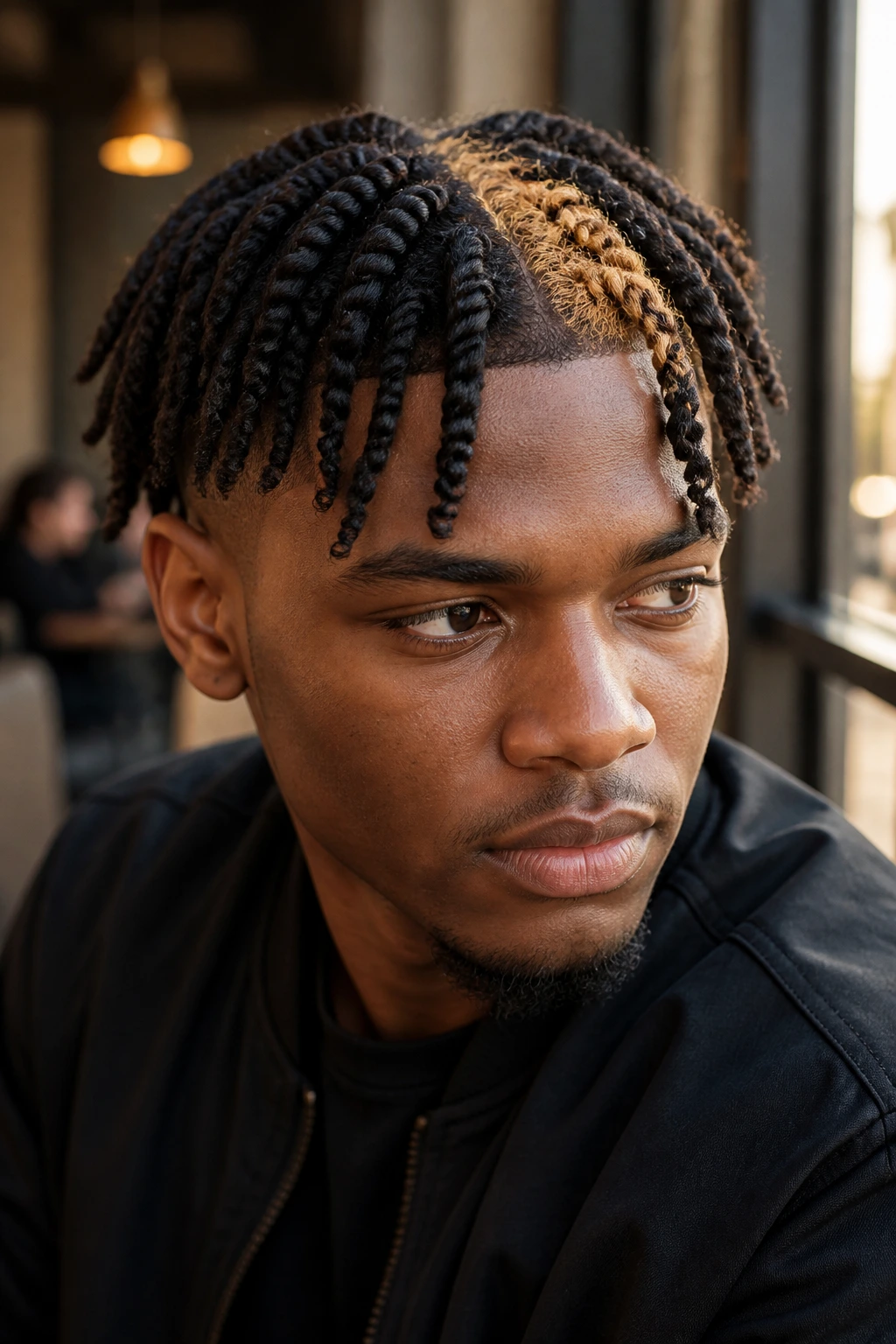
Two-strand twists take color well because the pattern already has built-in separation. A bright front part, whether it’s a single twist or the first two rows near the hairline, gives the style a clean focal point without requiring the whole head to go lighter.
I like this look because it handles grow-out better than a full front block. Twists move. They loosen a little, they settle a little, and that motion makes a front highlight look intentional longer than you’d think. The color rides on the twist surface instead of sitting flat, so it catches light in small pieces.
The best version is crisp at the roots and not too wide across the forehead. If the front section is too big, the style starts feeling busy. Keep the rest of the twists dark and let the front one do the talking.
This is also a good place to use a warm tone. Honey or light copper gives the twists some glow. Pure platinum can work, but it asks for cleaner upkeep and a barber or colorist who knows how to protect textured hair.
6. Sponge Curls With an Ice-Blond Fringe
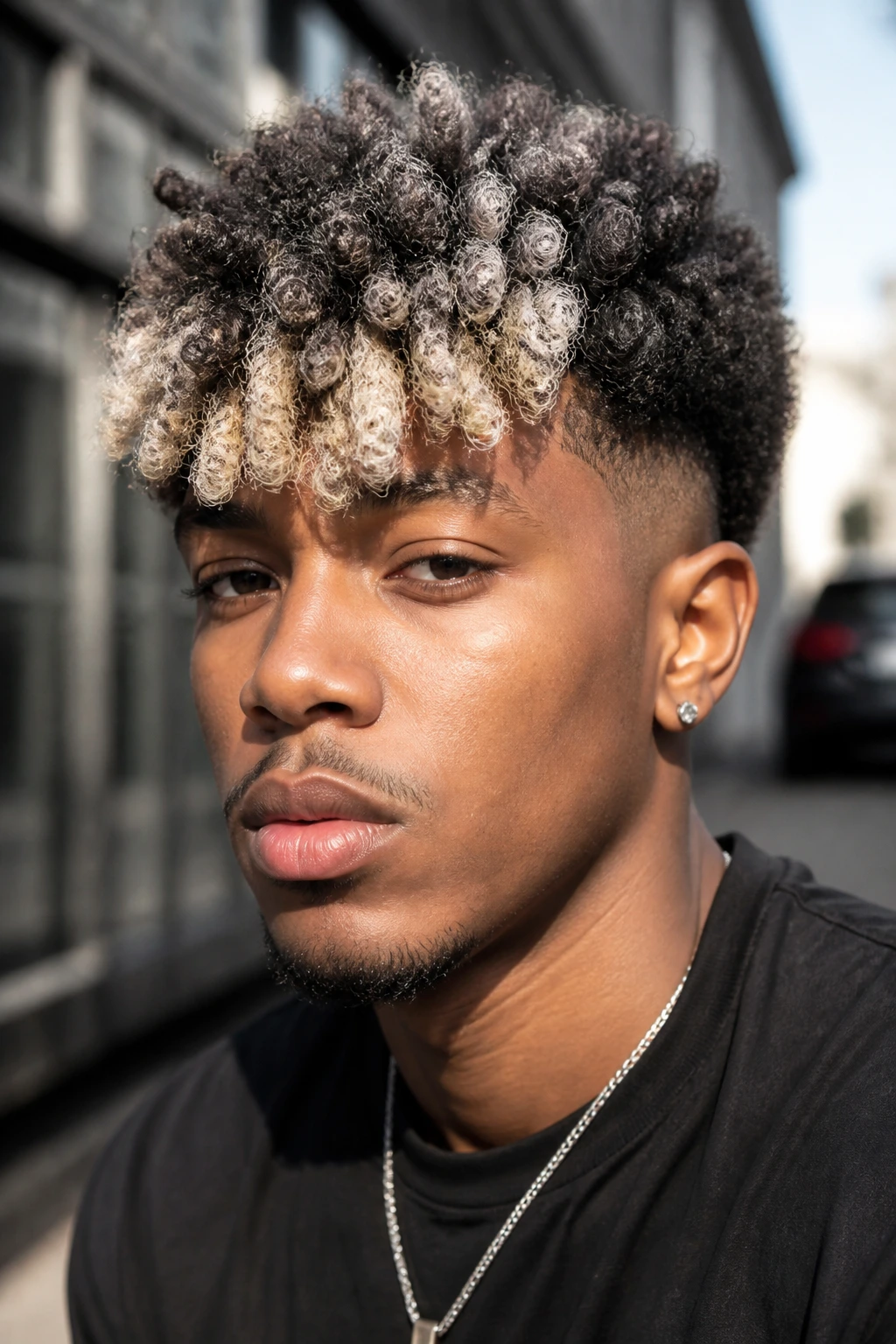
Sponge curls and ice blond are a loud pair, but they work because the texture stops the color from looking flat. A sponge curl top gives the light section edges, shadows, and movement, which makes even a pale fringe feel alive.
The fringe should stay compact. I’m talking about the front strip, not the whole top. Leave the sides dark, keep the fade tight, and let the icy front sit just over the brows or at the first row of curls. That placement keeps the look simple, which is the whole point.
This version is for someone who wants the lightest tone on the list. It reads clean, but it also needs the most care. I would never push ice blond on dry curls that are already fighting you. If the hair feels weak, back off to beige or honey and save yourself a rough grow-out.
A matte styling cream usually works better here than a heavy grease. You want the curls defined, not glazed into one shiny mass. The texture is what keeps the front fringe from looking like a painted block.
7. Drop Fade With a Copper Money Piece
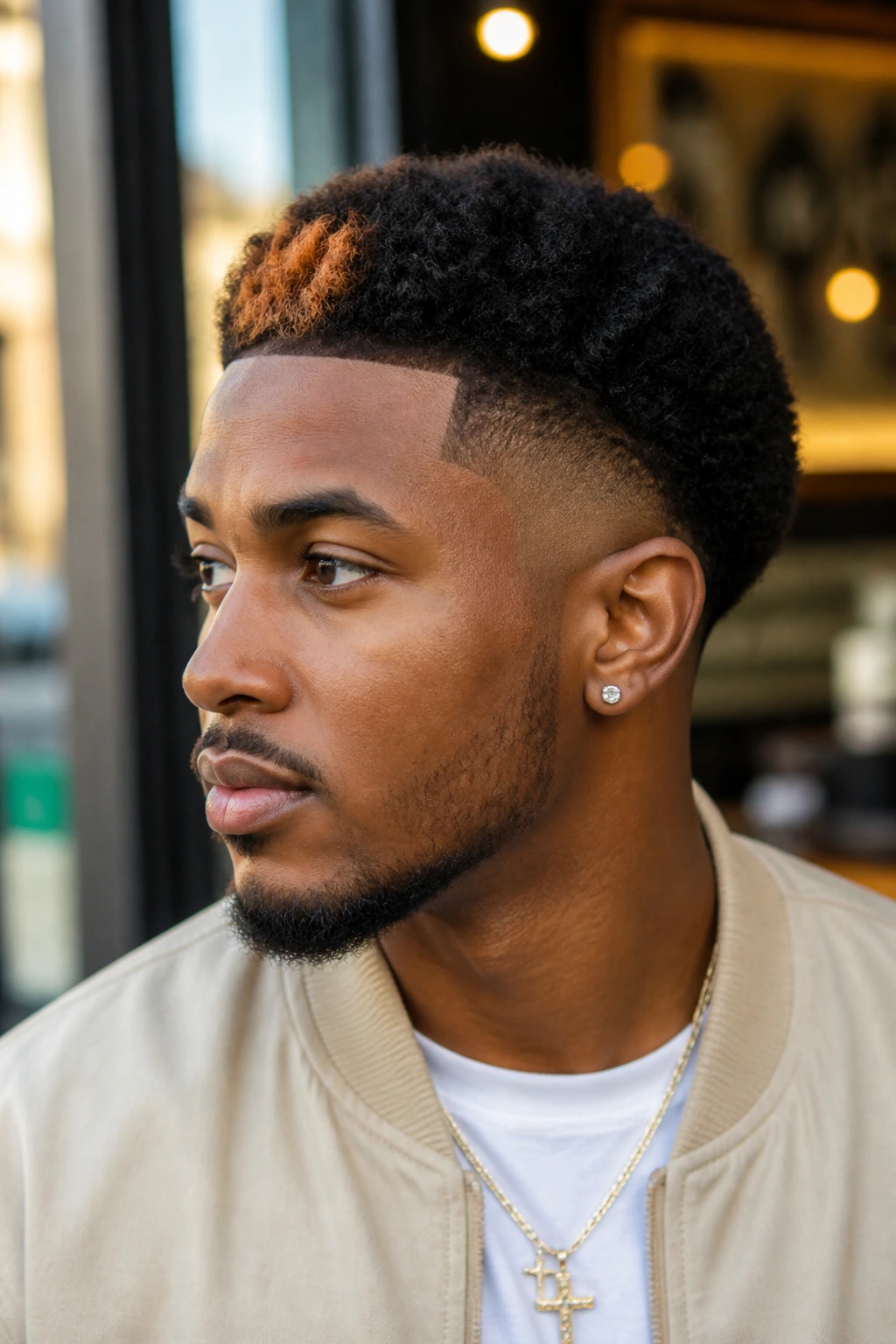
A drop fade gives the haircut a little curve, and copper makes that curve feel warmer and more dimensional. The fade dips behind the ear, the top stays modest, and the front color acts like a line that pulls the eye along the shape of the head.
Copper is one of my favorite tones for Black men because it has more depth than plain blond. It sits between gold and red, which means it looks rich under indoor light and even better outside. On darker hair, it has enough contrast to show up fast without looking chalky.
What to Tell Your Barber
- Keep the fade low enough that the front color remains the obvious accent.
- Place the highlight at the front hairline or the first curl row.
- Leave enough depth in the top so the copper has something dark to sit against.
This cut also works nicely with a beard that has warm undertones. The whole look feels connected, not matched to death. That matters. Too much matching can make a haircut look like a costume, and nobody needs that.
8. High Top Fade With Blonde Money Piece Highlights
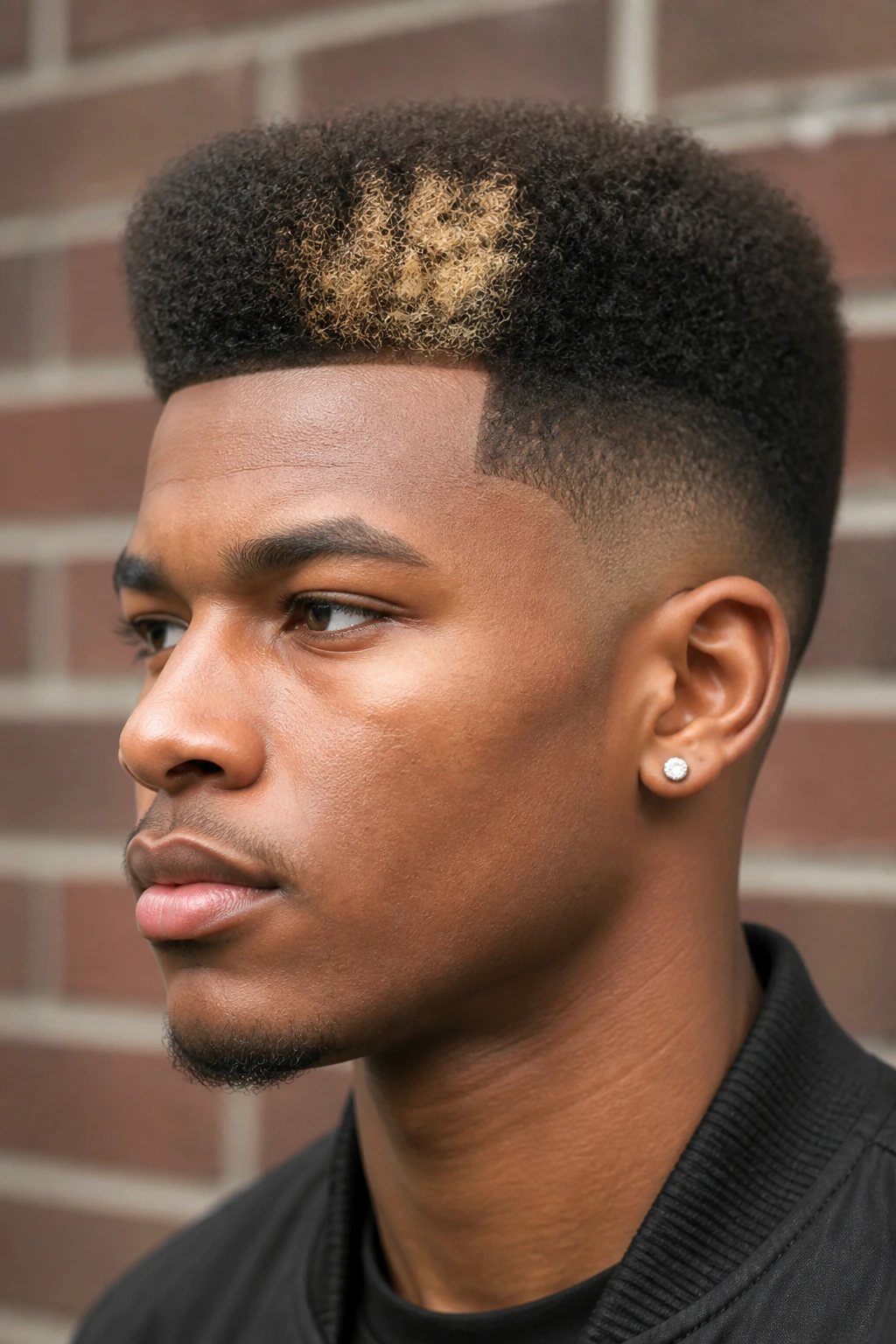
The high top fade is all about structure. A front highlight on that shape acts like a bright edge to a building. Clean walls on the sides, height in the middle, and a lighter front panel that sharpens the outline.
This is one of the more visible options, which is why it works best when the top is squared off with care. If the top leans uneven or the corners get fuzzy, the highlight has nowhere clean to land. But when the geometry is right, the front color feels almost architectural.
I like a slightly wider front block here than I would on a taper or wave cut. The high top can carry more visual weight. Still, the highlight should not swallow the entire forehead. The cut needs a face, not a billboard.
Warm blond or honey keeps it wearable. Platinum can look strong, but it pushes the look into a louder lane. If you want the haircut to remain easy to wear with a hoodie, a clean shirt, or a suit jacket, stay with a softer tone and keep the shape razor sharp.
9. Frohawk With Lightened Front Tips
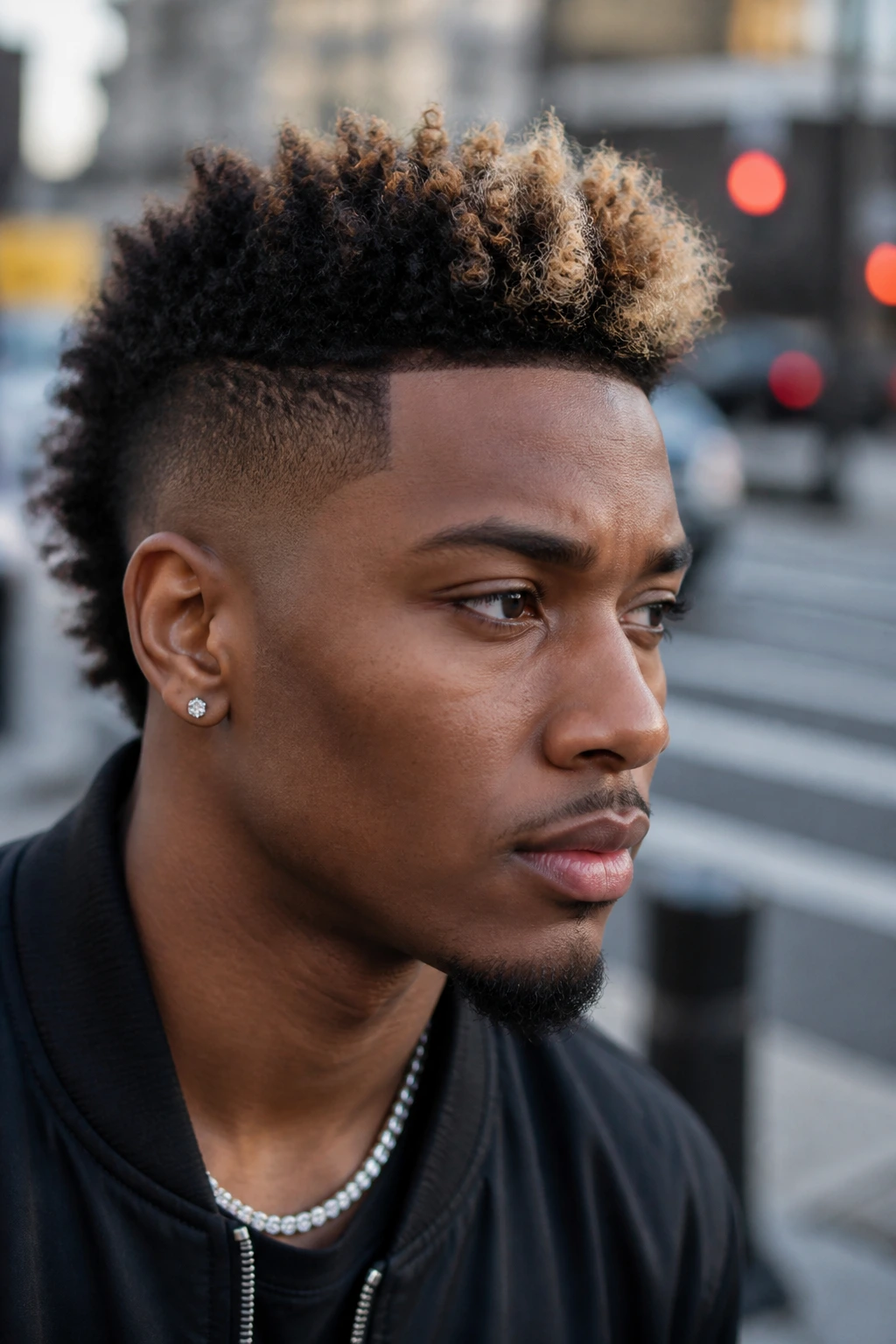
Want the haircut to look longer than it is? A frohawk with lightened front tips does exactly that. The center strip creates height, the sides stay low or tapered, and the blond front tips drag the eye upward and forward.
This cut is good when you want energy without full commitment to a mohawk. It keeps the shape simple enough to wear daily, but the highlighted tips give it movement. On tighter curls, those front tips show up first when you step into daylight, which is the whole fun of it.
The trick is not to color every bit of the hawk. Leave most of the top dark. Color the tips at the front ridge so the style has a starting point, then let the rest fall back. That keeps the cut from turning busy.
A frohawk like this also looks better when the front line is clean. If the front edge is fuzzy, the lightened tips lose their edge. A sharp outline changes everything. It lets the color feel placed, not sprayed on.
10. Short Dreads With a Face-Framing Highlight
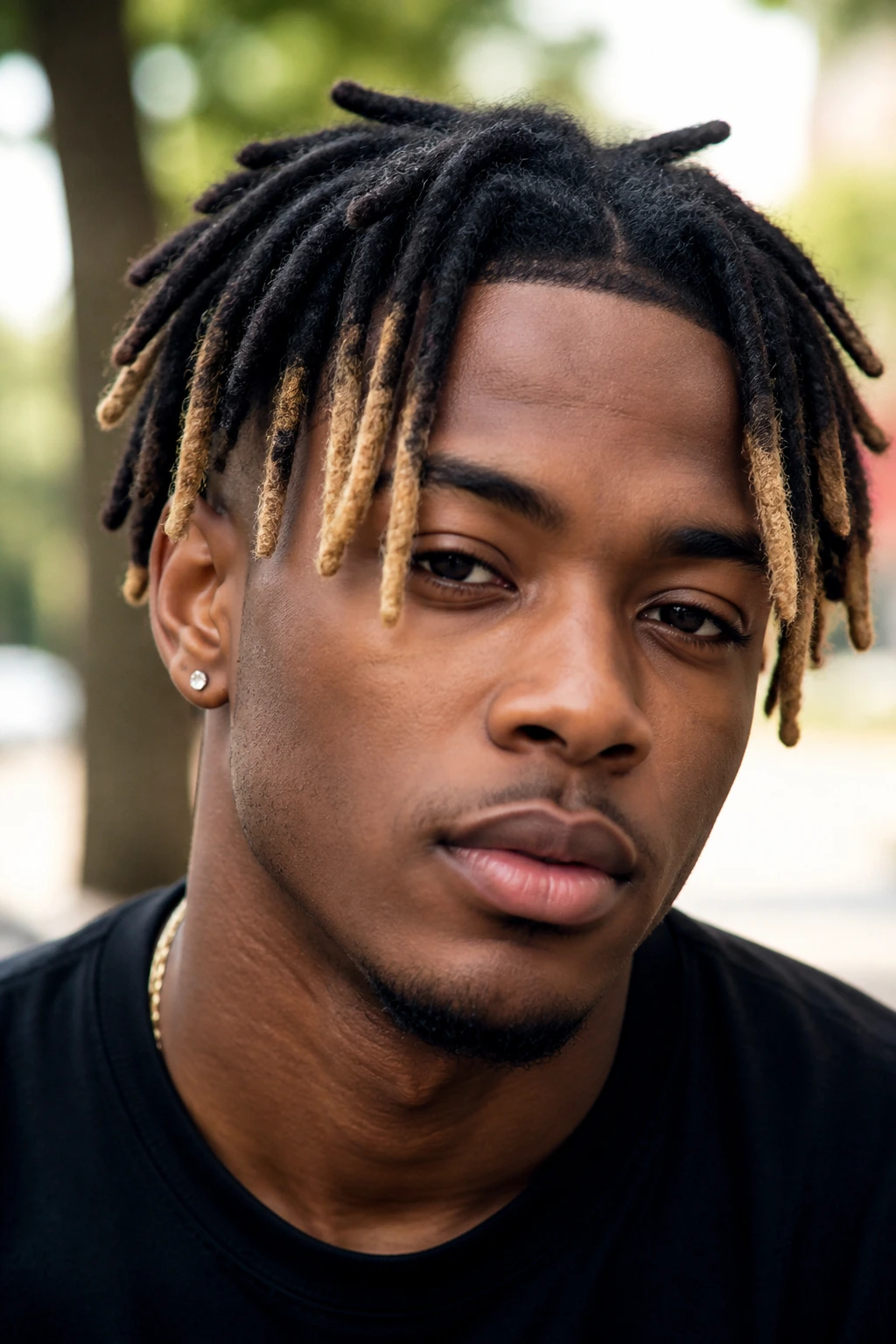
Short dreads can take a money piece in a way that feels bold but still controlled. The front locs frame the face naturally, so a lighter tone on just those pieces gives you a built-in highlight without touching the whole head.
The reason this works is simple: locs have weight. They hang, they twist, they catch light on different surfaces. A front highlight on two or three locs reads more sculpted than the same amount of color on loose curls. That makes the look feel chosen, not accidental.
I like keeping the color on the front locs only, or just on the outer faces of the first few locs near the hairline. That keeps the rest of the style deep and grounded. If you bleach every loc evenly, the style can lose depth fast.
One thing to watch: short locs can dry out if color work is too aggressive. Use a gentle lift and keep the front section conditioned. You want the locs to hold shape, not feel crunchy at the ends.
11. Burst Fade With a Gold Curl Crown
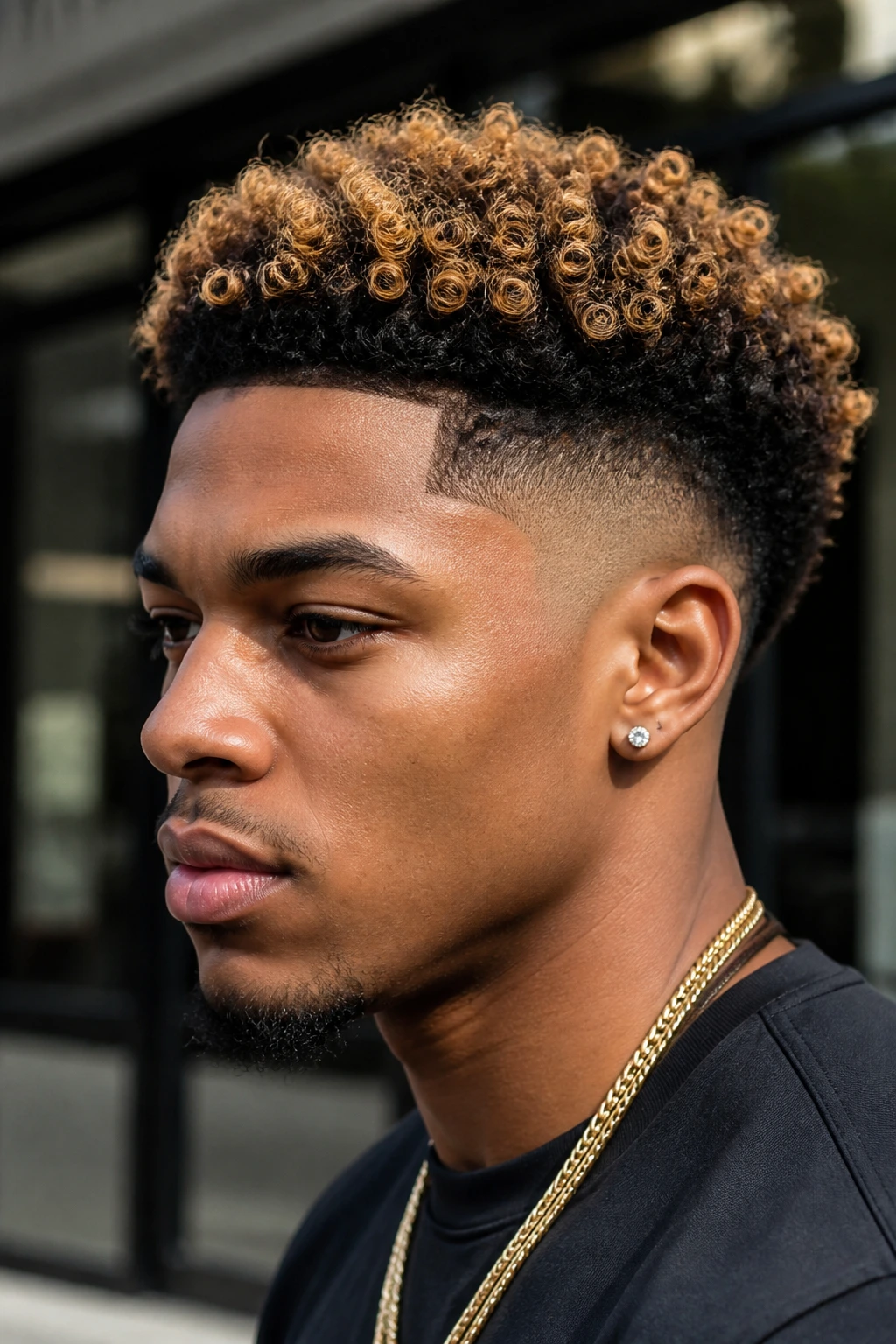
A burst fade curves around the ear and keeps the haircut tight where the head needs it most. Add a gold money piece to the crown area and the whole cut starts to glow from the front back toward the top.
Gold is a smart middle-ground tone. It is brighter than caramel but less stark than platinum, which makes it useful for men who want visible color without that icy, overprocessed look. On curly hair, gold also gives the crown a little warmth that reads well in daylight.
A burst fade needs clean lines around the ear. If those arcs blur, the front color loses its shape. Keep the fade crisp, keep the top textured, and let the gold sit just forward enough that the front of the style feels lifted.
This cut works especially well if you like to wear hats or hoodies often. The fade keeps the edges tight, and the crown highlight still peeks out when the cap comes off. That little reveal is half the appeal.
12. Caesar Cut With a Pale Front Edge
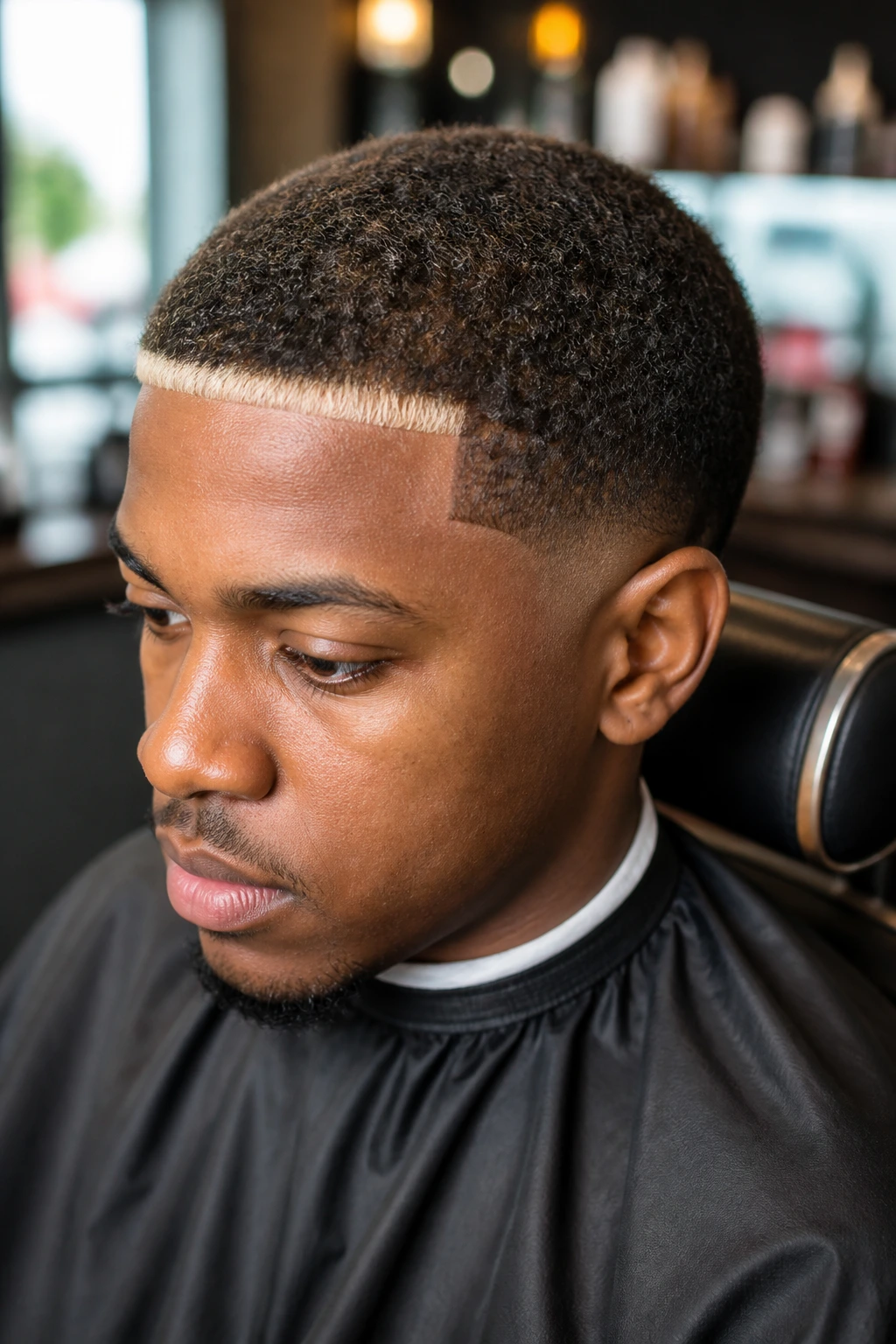
The Caesar cut is one of the easiest places to try money piece highlights because the top is short and the front line is already defined. A pale front edge gives the cut a hard, clean finish without asking for much length.
What makes this version useful is the lack of fuss. The Caesar sits low, the fringe is short, and the highlight becomes a straight visual line across the forehead. On the right head shape, that line looks crisp and controlled. On the wrong one, it can feel severe, so the barber has to keep the shape balanced.
I would keep the tone pale but not fragile-looking. Platinum can work, though it needs careful toning. A soft beige blond is easier to wear and less likely to look chalky against the skin.
Because the cut is short, the front highlight should be narrow. Too much width makes the whole thing read like a color block. Keep it thin. Let the edge-up do the heavy lifting.
13. Tapered Coils With a Soft Beige Streak
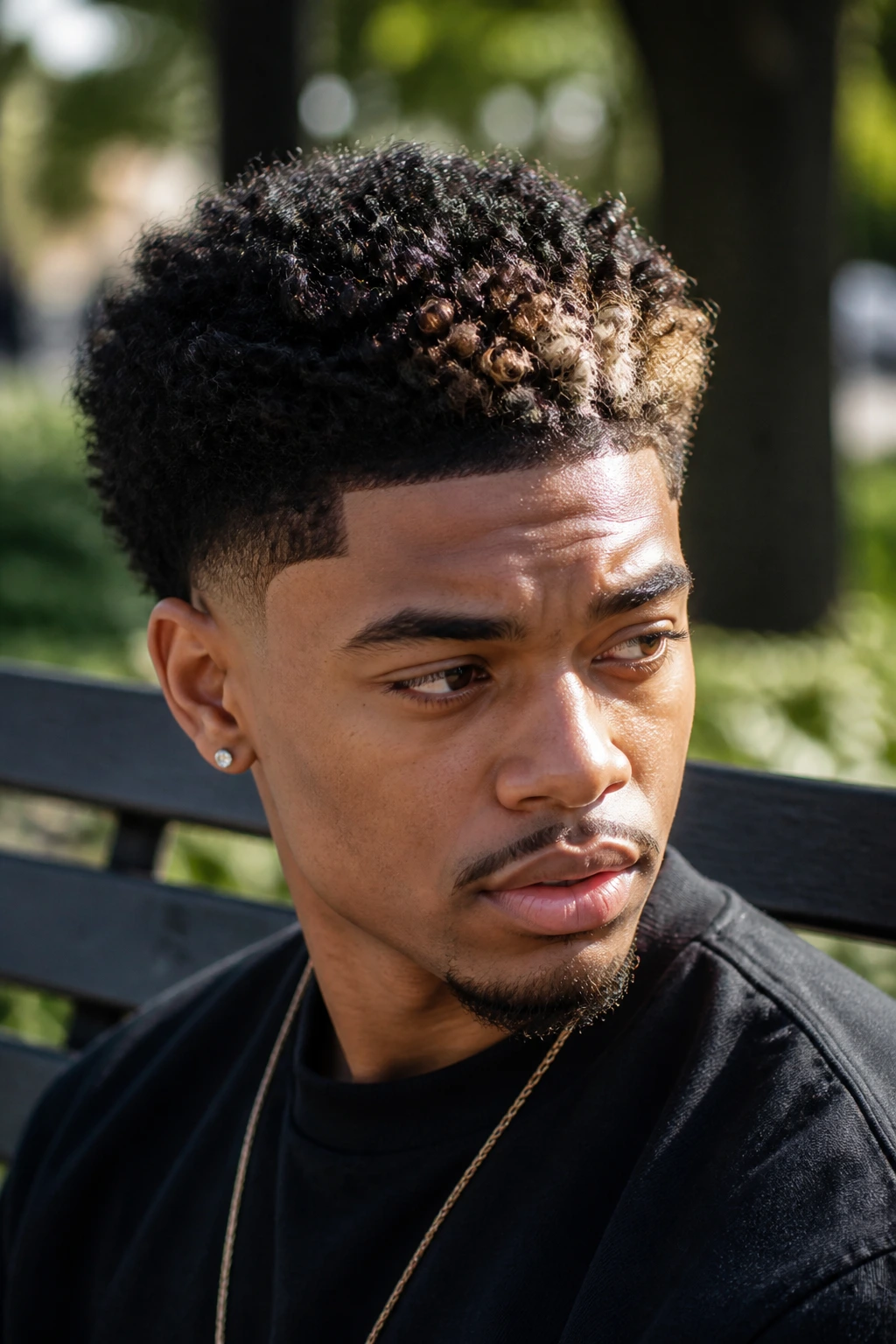
Tapered coils are one of the cleanest natural styles for a money piece because the top keeps movement while the sides stay neat. A soft beige streak at the front gives the coils a lifted edge without making them look bleached to the bone.
This is the haircut for somebody who wants people to notice after a second glance. Beige is subtle enough to sit inside the coil pattern, but light enough to frame the face. It does not fight the texture. It rides with it.
The taper matters here. When the sides are clipped down correctly, the beige front streak looks like part of the shape rather than a separate add-on. If the taper is uneven, the color feels disconnected, and that kills the whole effect.
This cut also ages well between visits. Beige grows out more softly than platinum, and on coils the root line does not shout as loudly. That buys you a little breathing room if you do not want to live in the barber chair.
14. Braided Top With a Single Blonde Front Braid
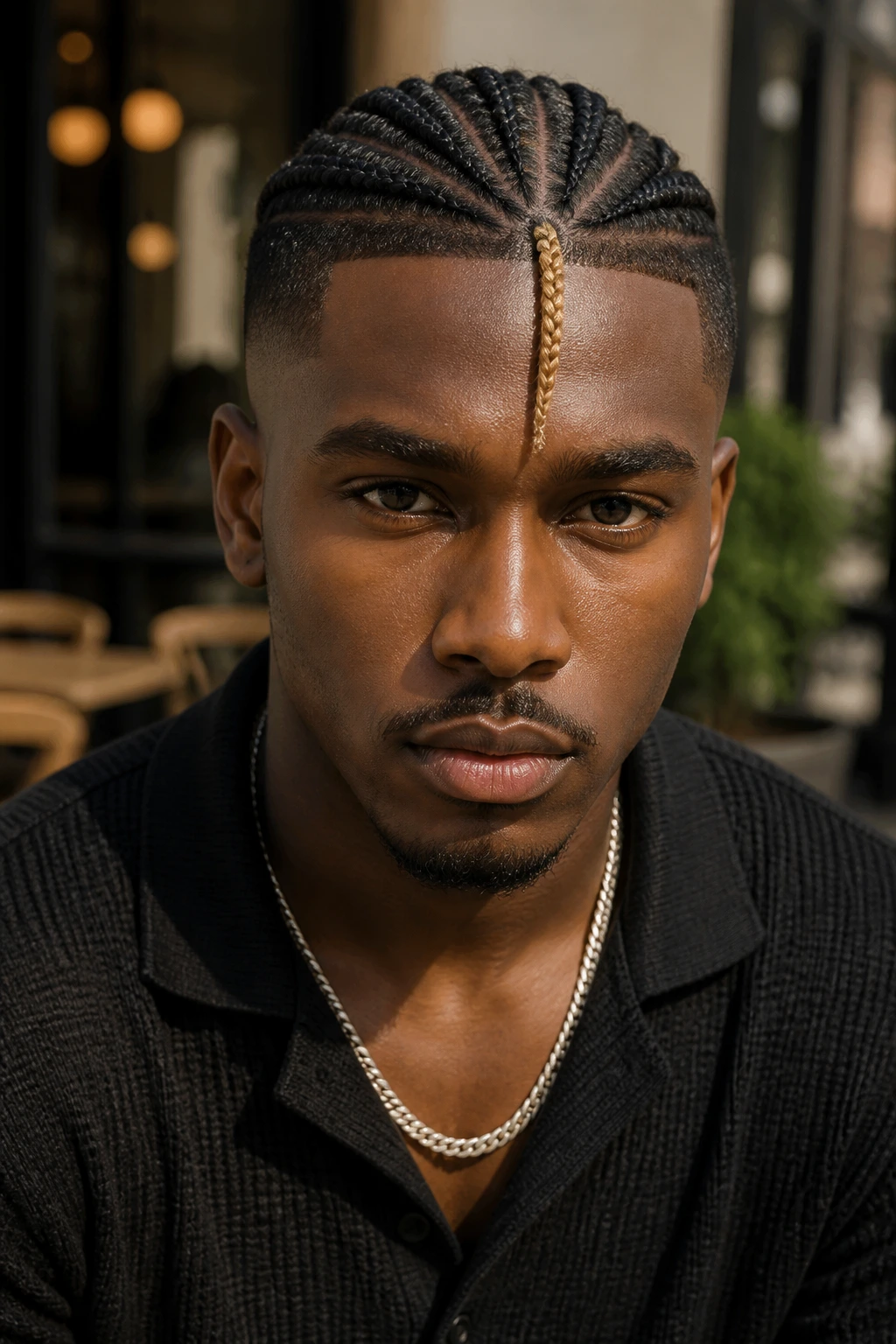
A single blonde front braid can change a braided style fast. The rest of the top stays dark, the pattern stays clean, and the colored braid becomes the anchor at the hairline.
This works because braids already have rhythm. A color change on just one front braid adds a visual break without needing a full set of lighter cornrows. It is a neat option if you want the money piece idea but prefer protective styling.
What to Ask For
- Keep the blonde braid on the dominant side if you part your hair that way.
- Leave the rest of the braids natural so the contrast stays clear.
- Ask for a clean front part line so the colored braid starts from a visible point.
I like this style with a fresh edge-up and a simple beard line. That keeps the face from getting crowded. If you start stacking too many details—sharp brows, designs in the fade, extra parts—the braid loses its punch.
The best part? It grows out gracefully. A single blonde braid can stay visible even when the roots start showing, which makes the style less high-maintenance than a full head of color.
15. Curly Fringe With a Warm Brown-to-Blonde Money Piece
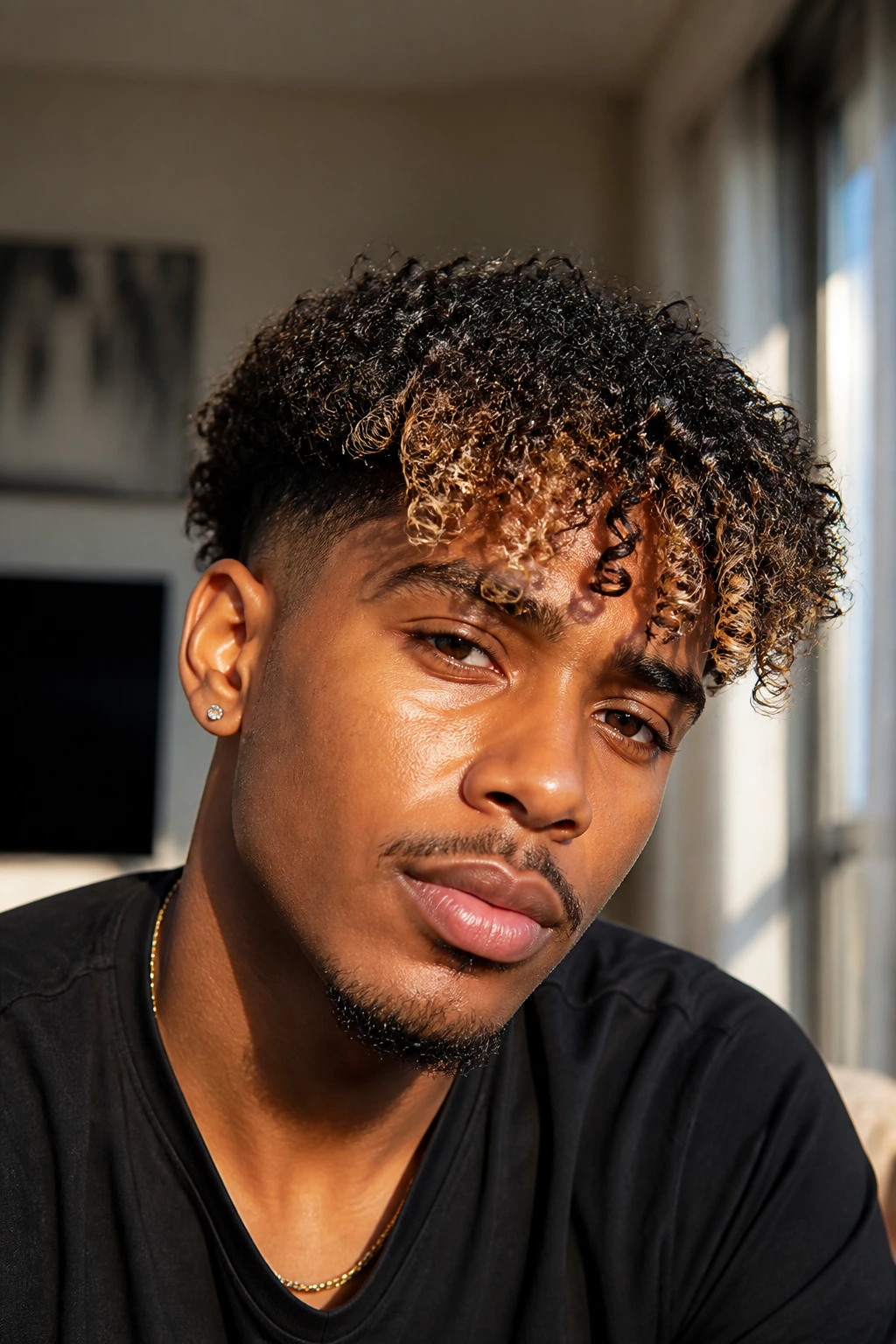
Why choose a gradient instead of a hard stripe here? Because a curly fringe already has movement, and the color looks better when it follows that movement instead of fighting it.
A brown-to-blonde money piece suits men who want something softer at the front. The color starts warmer near the roots and opens toward blond at the ends, so the front hair reads lifted rather than painted. On curls that hang over the forehead, this transition looks natural and grows out cleaner than a blunt block.
This cut is also a good fix if platinum feels too harsh against your skin tone or your beard. The gradient keeps the face framed without turning the hairline into a bright rectangle. It is still a statement. Just a quieter one.
Keep the fringe shaped so it falls forward in an even line. If the curls poke every which way, the gradient gets lost. One good trim changes the whole look.
16. Buzz Cut With a Clean Color Stripe
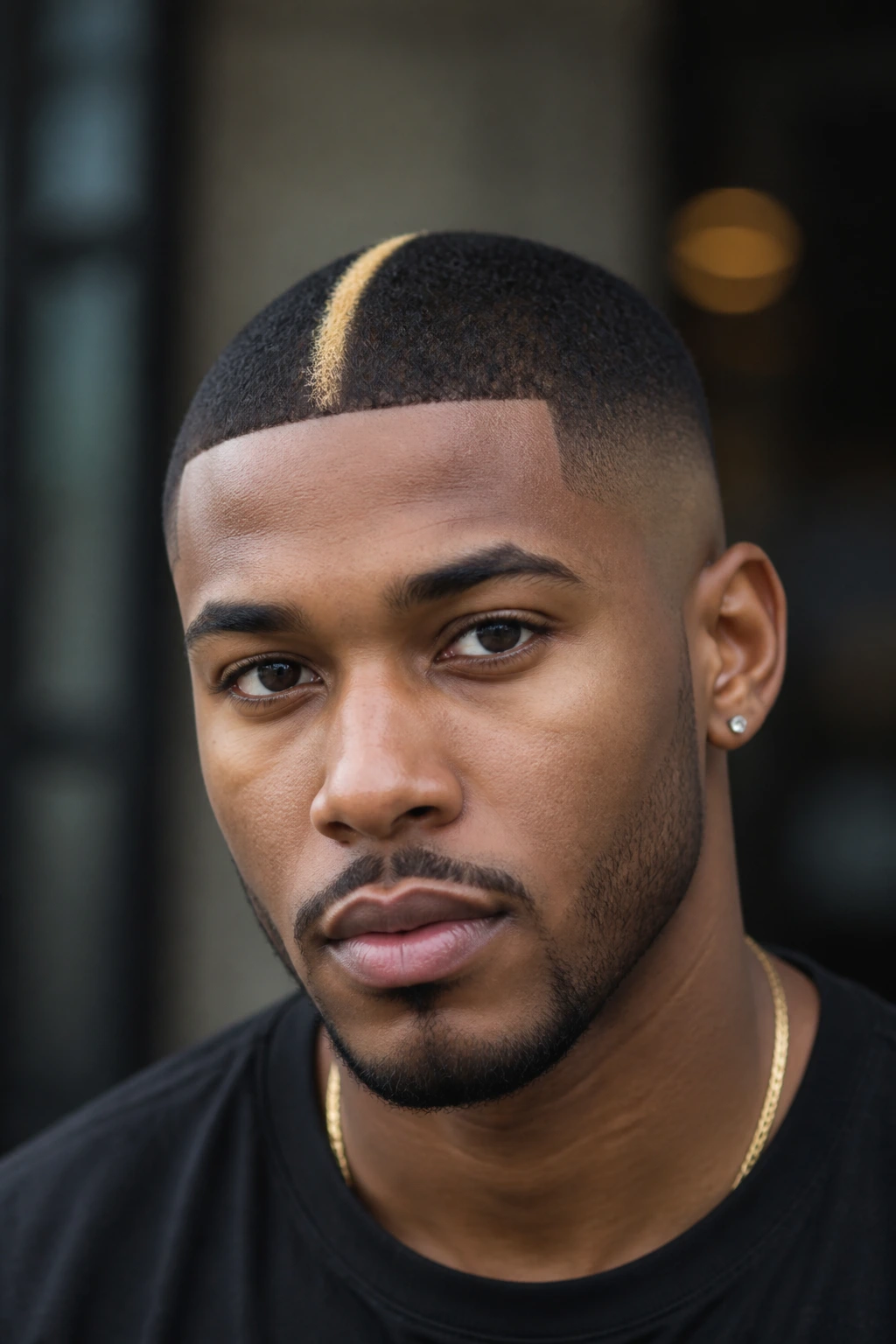
A buzz cut is the bluntest way to wear money piece highlights, and that is exactly why it works. Short hair, tight sides, and one clean color stripe at the front give you the sharpest contrast per inch on the list.
This style is for someone who wants almost no styling time. The cut itself is simple, and the highlight does the visual work. On very short hair, though, placement matters even more. The colored section should be planned before the clipper work is finished, or the stripe can end up looking patchy instead of crisp.
A thin stripe at the front edge keeps the style looking modern and controlled. Go too wide and it starts reading like a dye mistake. Keep the line straight, keep the fade clean, and let the front color be the only loud thing in the room.
This is also a good cut if you wear hats a lot. The buzz keeps the profile tidy, and the stripe still shows when the cap comes off. Easy. No drama.
17. Short Locs With a Side-Swept Money Piece
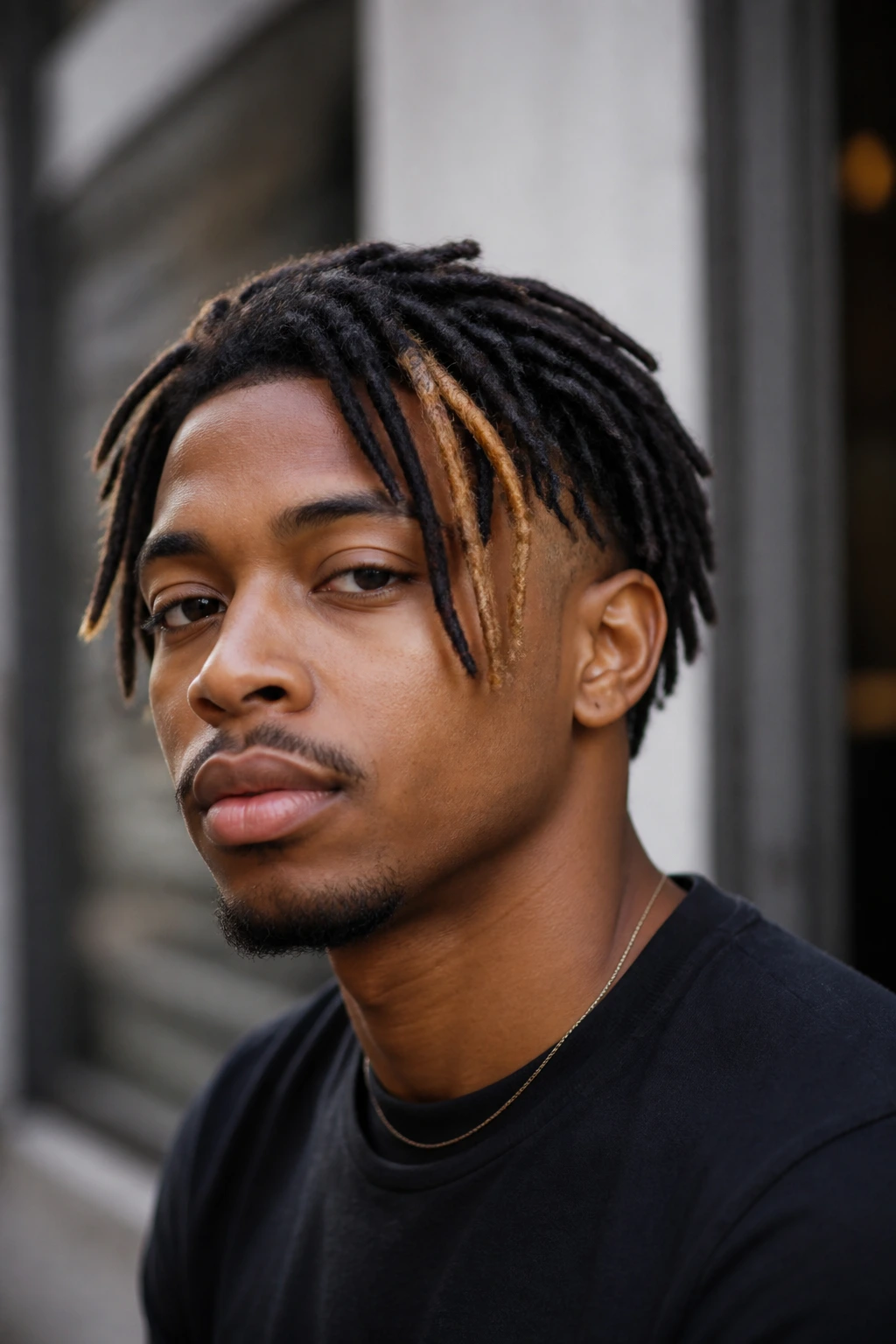
Short locs can wear a side-swept money piece with more shape than people expect. A few front locs moved slightly off center create a frame, and the lighter tone on those pieces gives the haircut a clear point of focus.
I prefer the color on one side rather than dead center here. Center placement can feel too symmetrical on locs, especially if the rest of the style is already neat. A side sweep breaks that up and keeps the haircut from looking helmet-like.
The tone can be warm or cool, but the cut benefits from a little depth at the roots. That shadow makes the lighter ends feel stronger. If the entire front loc is colored all the way to the scalp, it can lose dimension fast.
This style works well with a clean beard taper and a sharp neckline. The locs already add texture, so the rest of the face should stay controlled. Too much fuzz around the edges steals the clean front highlight.
18. Textured Crop With a Sharp Ice-Blond Front Panel
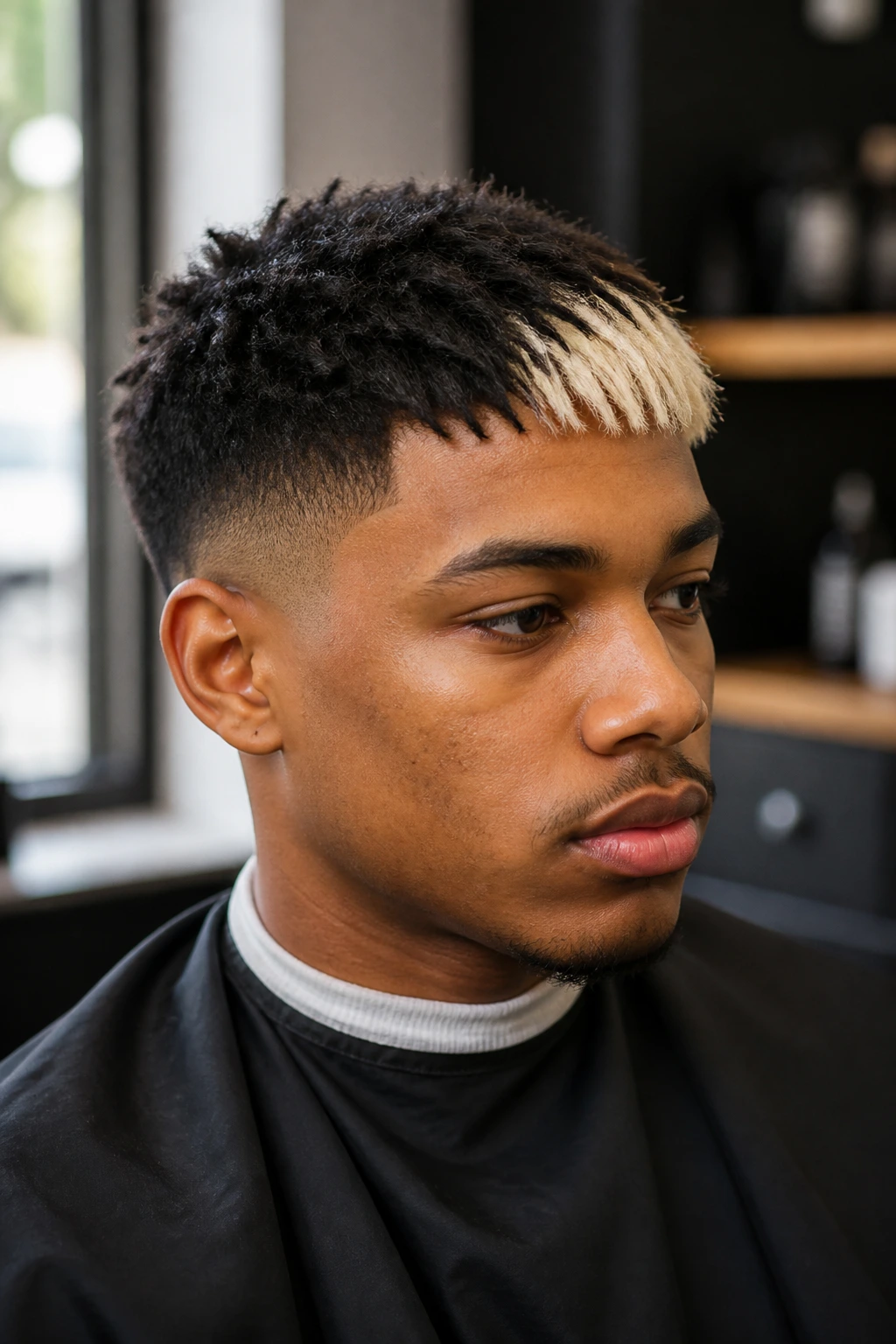
A textured crop with an ice-blond front panel is the most fashion-forward version of the bunch, but it is still a simple haircut at heart. The top stays short, the texture stays choppy, and the front highlight turns the whole cut into something sharper and cooler.
The cropped shape makes the ice blond feel focused. You do not need a lot of length for this one. In fact, too much length can muddy the effect. The cleanest version keeps the front panel tight, the fringe slightly forward, and the sides tapered enough that the blond has room to stand out.
Ice blond is unforgiving, though. It shows uneven lift fast, and it can look brassy if the toner is skipped. That said, when it is done well, the color has a crisp, almost metallic edge that looks excellent against dark textured hair.
I’d use this cut when someone wants the strongest contrast on the list without moving into a full-color style. It is direct, clean, and hard to miss.
Why Money Piece Highlights Work So Well on Short Black Hair
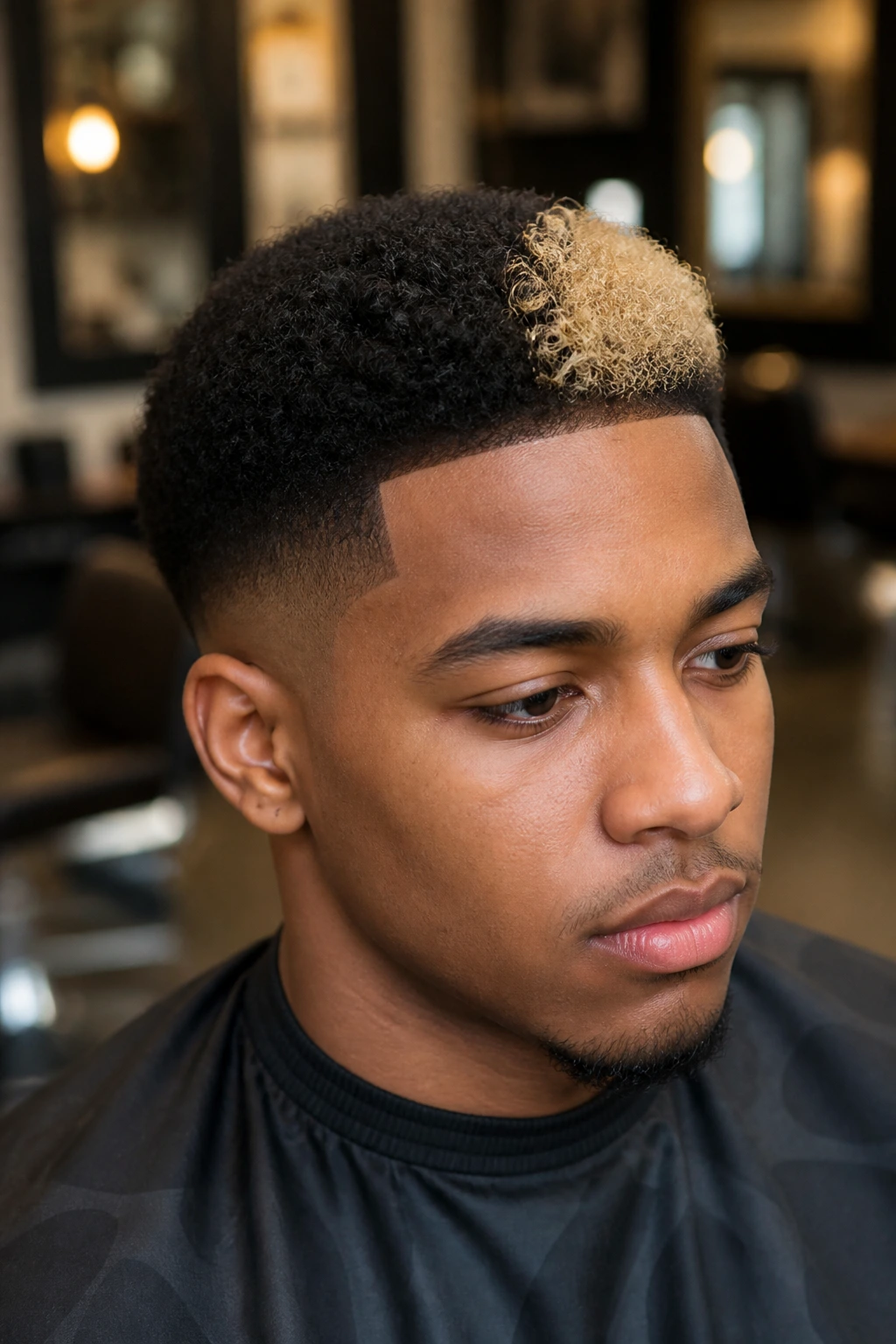
Short Black hair gives money piece highlights a built-in frame. The color sits against dark texture, so even a small lifted section pulls weight. That is different from straight hair, where a highlight can run flat and lose shape. On coils, waves, twists, and locs, the same blond picks up shadows and starts looking deeper.
The hairline matters just as much as the color. A clean edge-up around the forehead, temples, and sideburns makes the front panel feel like part of the haircut instead of a separate dye job. When the line-up is weak, the color has to work harder. When the line-up is sharp, the cut looks planned.
There is also the grow-out issue, and this is where a front highlight beats a full head of blond for many men. A little root at the front is easier to live with. You can refresh the color without reworking the whole head, and the darker sides keep the style grounded while the front gets all the attention.
One more thing: the front panel does not need to be huge. On short hair, a narrow strip often reads bigger than a wide one because the contrast lands right where people look first. That is why these cuts work. They get to the point.
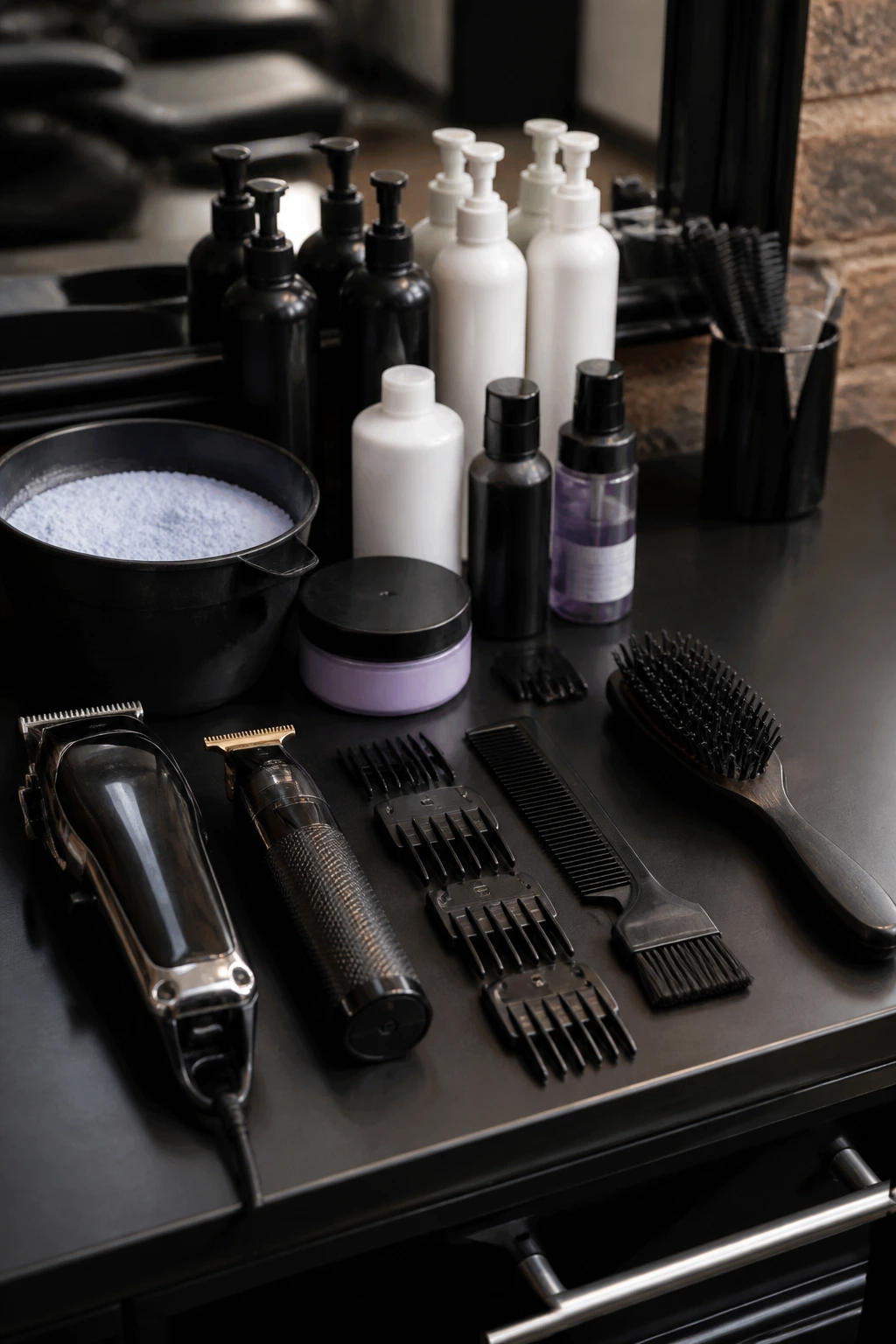
Essential Tools and Products for These Cuts
-
Clipper set with guards: Needed for the taper, fade, or crop shape; a clean #0.5 to #3 range covers most of these styles.
-
Detail trimmer: Sharpens the front line, temples, and beard edges so the highlight looks intentional.
-
Soft brush or wave brush: Helps lay waves, smooth curls, and keep the front section neat between washes.
-
Curl sponge: Useful for twist tops, sponge curls, and other textured cuts that need defined movement.
-
Tint brush and sectioning comb: Makes it easier to place color only where the front panel should sit.
-
Bleach powder and developer: For the lift, though stronger lift should be handled carefully on textured hair. Hair health first.
-
Toner or color mask: Pulls brass out of honey, beige, or blond panels so the color does not turn orange.
-
Bond-building treatment: Helpful after lightening, especially if the front section was already dry.
-
Sulfate-free shampoo: Protects the color and keeps the front panel from washing out too fast.
-
Leave-in conditioner or light cream: Restores softness without weighing the front hair down.
-
Durag, satin scarf, or bonnet: Keeps the shape laid overnight and protects the color from friction.
-
Hand mirror and phone camera: Sounds boring, but you need both to check the front from different angles and see whether the highlight sits too wide.
How to Brief Your Barber on the Money Piece
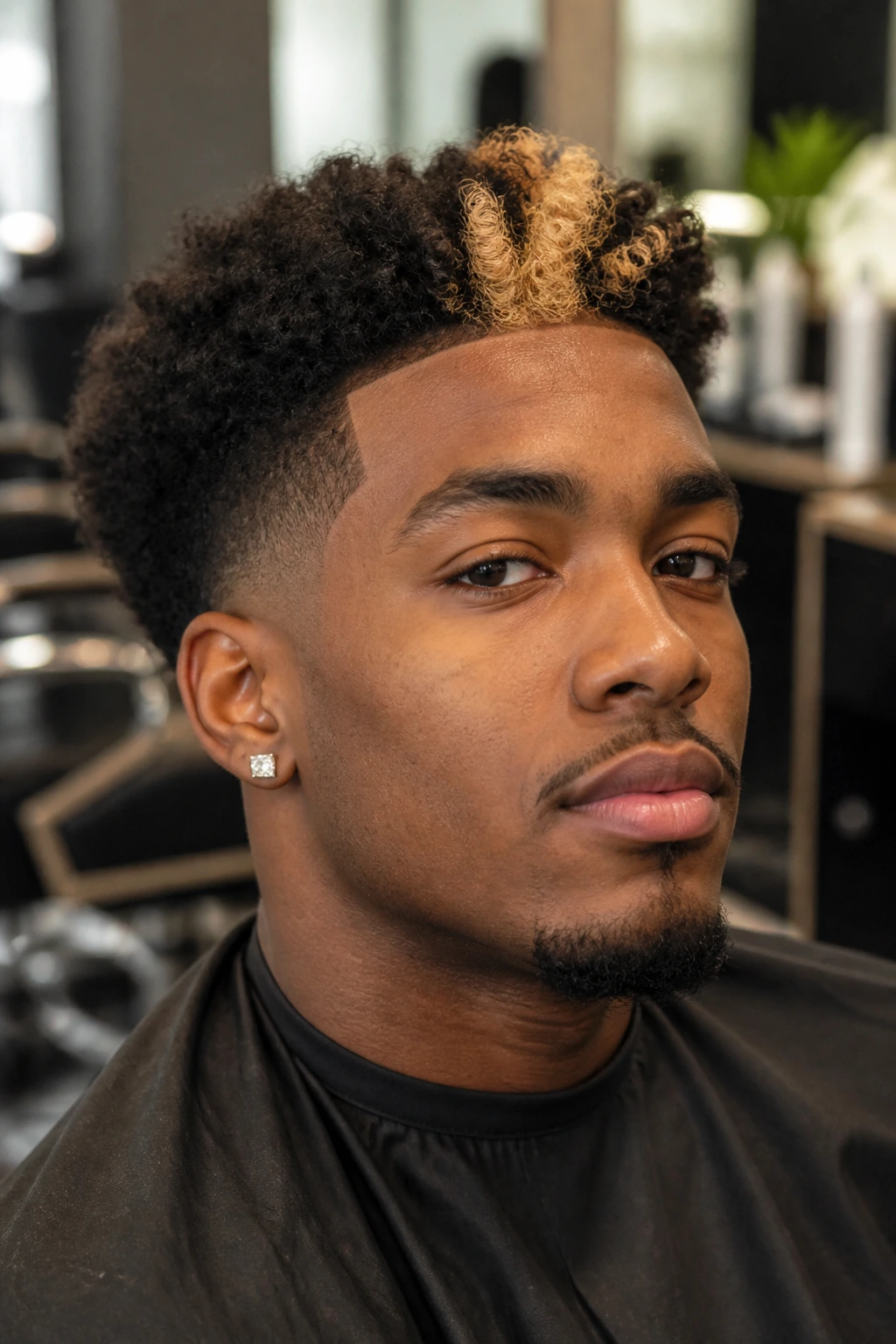
Say what you want in front of the mirror, not in vague words. “Make it blond” is too loose. “Keep the color to the front inch only” tells the barber where the work should happen, which saves everybody from guessing.
Bring two photos if you can. One should show the haircut shape, the other should show the color tone. A picture of a low taper and a separate picture of a honey front panel tells the barber more than one crowded screenshot ever will. The shape and the color do not have to come from the same head.
Tell them how much contrast you want. A thin beige strip says something very different from a broad platinum block. If you wear a beard, mention that too. A dark beard next to a bright front stripe can look sharp, but only if the line-up and the tone are both clean.
The order matters more than most people think. Shape the haircut first, then place the color, then clean up the edges once everything is set. That sequence keeps the front panel from getting chopped too narrow after the lift.
Smart Color Choices for Honey, Caramel, and Platinum
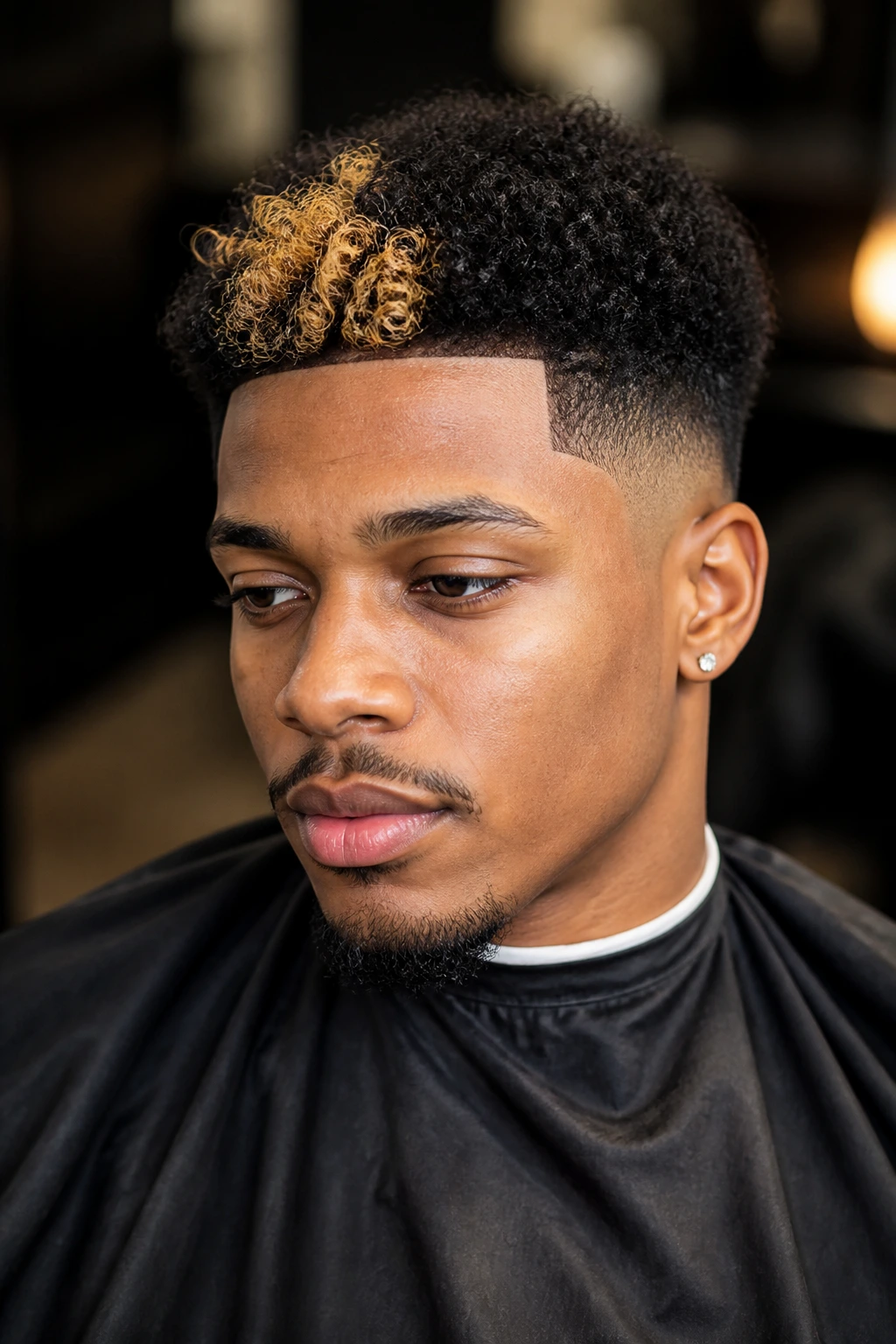
Honey, caramel, copper, beige, and platinum do not carry the same weight on Black hair. Honey is the softest way in. It gives you light without making the front section look pale or overprocessed. Caramel sits one step deeper and usually feels warmer against darker bases. Copper brings more red into the picture and works when you want the highlight to feel rich instead of icy.
Platinum is the most obvious choice, but it is also the most demanding. It shows brass, dryness, and patchy lift fast. If the front section is already fragile, I would skip it or keep it to a very thin strip. A level 7 or 8 blond often gives enough pop without taking the hair into the brittle zone.
Your beard and brows matter too. A cool platinum front panel next to very dark brows can look striking, but it also raises the contrast. Honey or caramel is easier if you want the haircut to stay soft. Copper sits in the middle and tends to work well when you want warmth without drifting orange.
There is no prize for going the lightest. The right tone is the one that still looks clean after three washes and a sweaty day.
How to Wear the Cut So the Highlight Reads Right
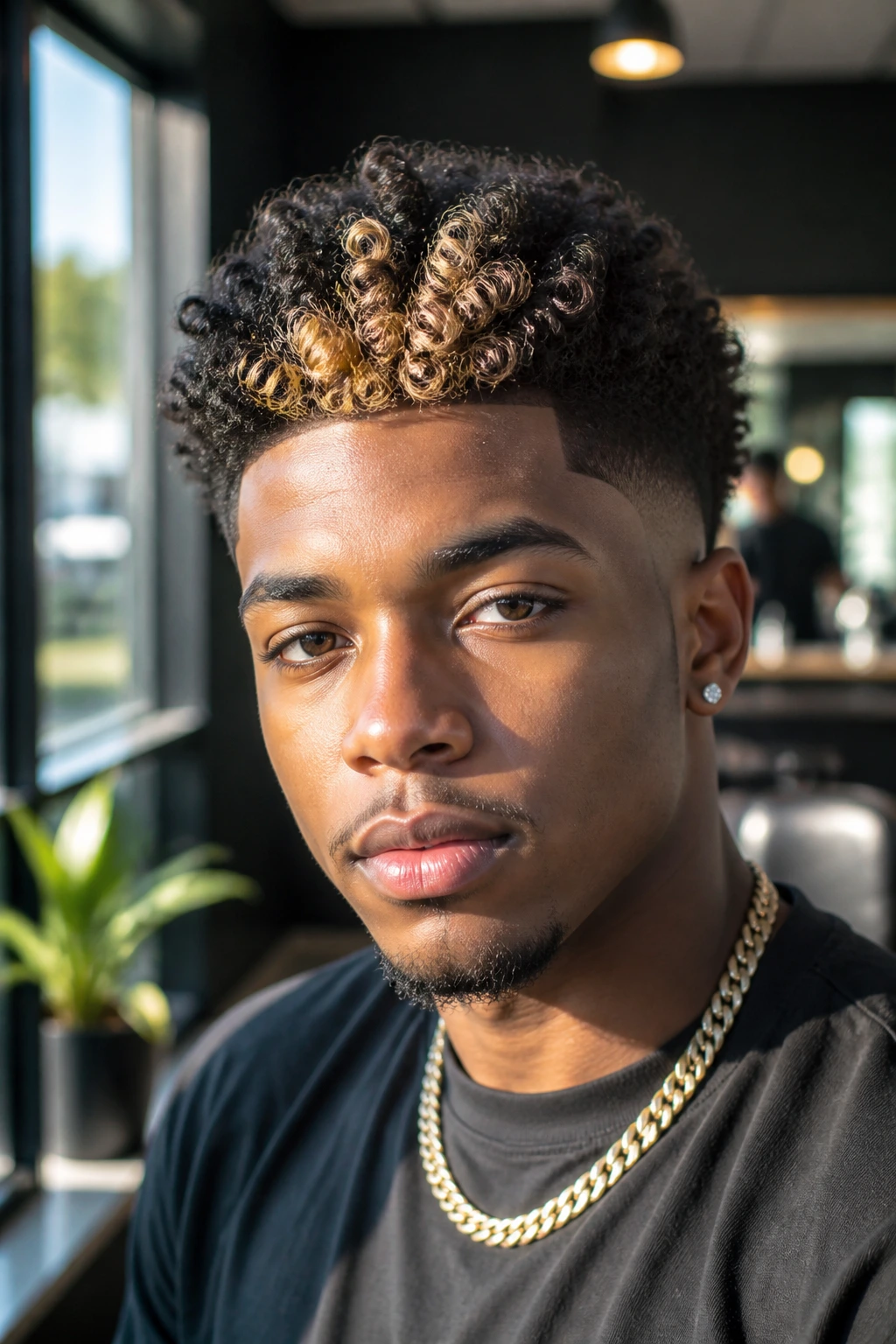
Presentation: Keep the front section shaped so it faces forward or angles slightly to the side. The color should be visible from the front without needing a full profile shot to make sense.
Accompaniments: A crisp beard line, a clean neckline, and a simple outfit near the face do more for the haircut than extra jewelry or busy patterns ever will. Let the front panel stay the main event.
Portions: On tighter cuts like waves, Caesar cuts, or buzz cuts, keep the highlighted section narrow. On fuller shapes like afros, frohawks, or high tops, the panel can be a little wider because the haircut has more visual room.
Setting: Daylight shows tone best. Bright indoor light makes the line-up and the color edges read cleaner. In dim light, the same cut feels quieter, which can be a bonus if you want the look to shift depending on where you are.
One small detail makes a big difference: brush or pick the front section the same way every time you style it. A consistent direction helps the highlight sit in the same place day after day.
Extra Moves That Make the Look Pop
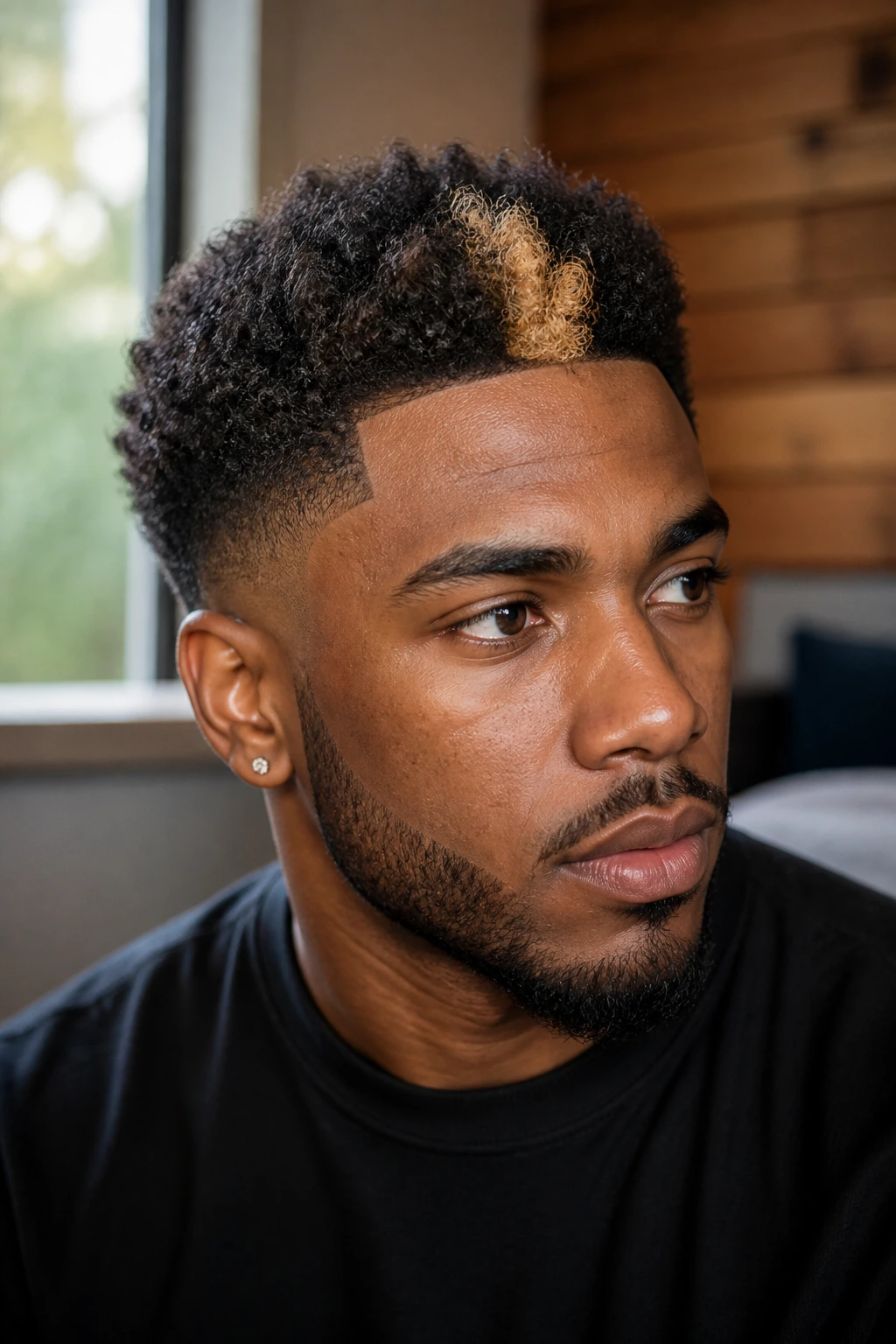
Texture Boost: If the front panel looks flat, add a little curl sponge work, light brushing, or a fresh twist near the hairline. The highlight needs texture to catch.
Contrast: Keep the fade darker and the beard a shade deeper than the front panel. That separation makes the money piece stand out without requiring a louder color.
Sheen: A light oil sheen gives textured cuts a subtle glow, while a matte cream keeps the finish dry and modern. Pick one lane and stay there. Mixing both usually creates a greasy mess.
Personal Touch: A razor part, a single front braid, or a slight asymmetrical sweep can make the highlight feel tailored to your face instead of copied from a photo. Small changes matter more than people think.
Keep It Narrow: I’m saying it again because it matters. The thinner highlight usually wins. It looks cleaner, costs less to maintain, and does not fight the cut.
Common Mistakes That Flatten the Whole Look
-
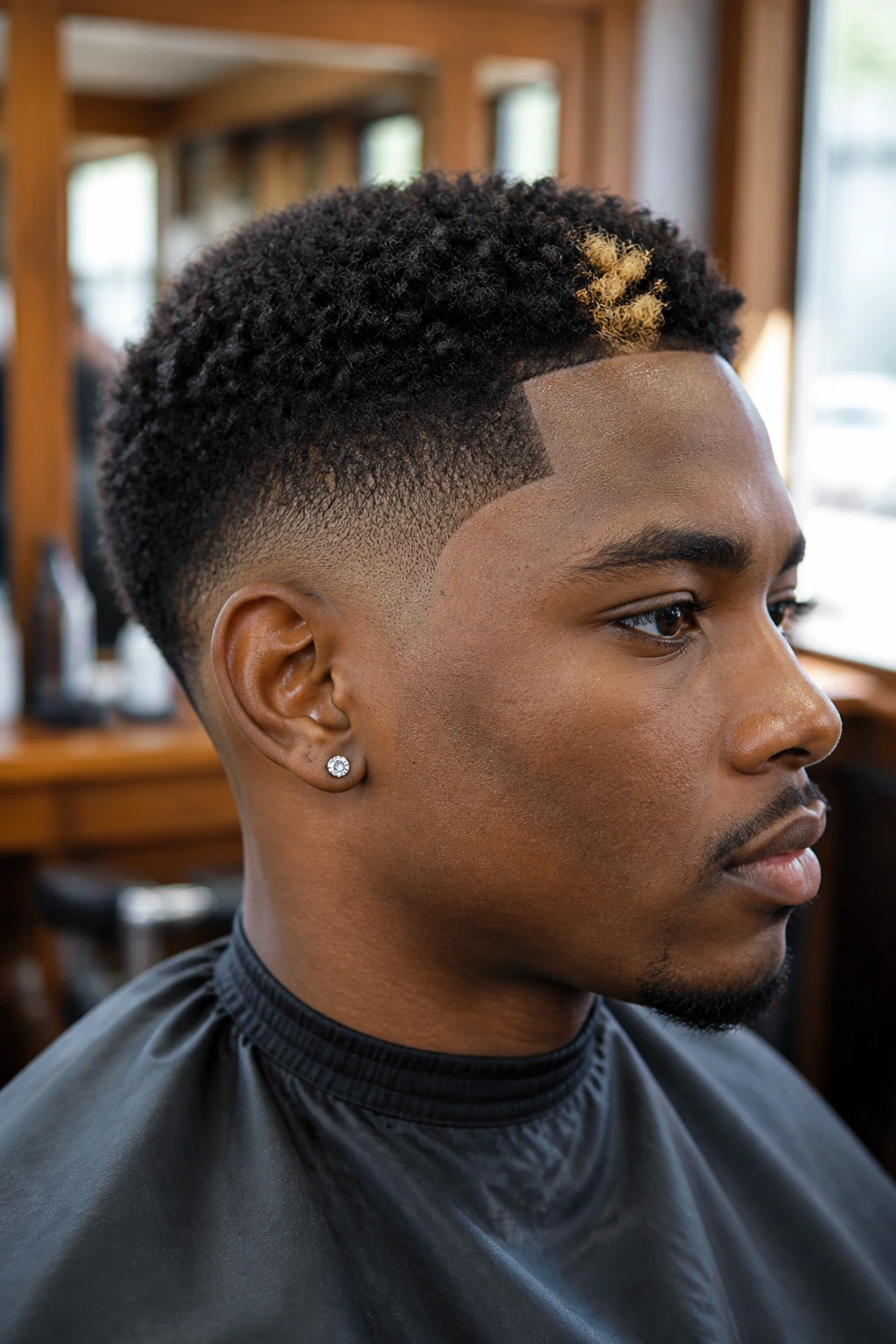
Making the front section too wide: The symptom is easy to spot—the haircut starts looking like a dyed block instead of an accent. Keep the highlighted section tight unless the shape can carry more width.
-
Trying to force platinum on weak hair: Dry, rough front pieces tell the story fast. If the hair is already stressed, stop at honey or caramel and protect the texture first.
-
Skipping toner: Brass shows up quickly on dark hair that has been lifted. If the blond turns orange or yellow, a toner or color mask fixes more than another round of bleach.
-
Ignoring the shape-up: A fuzzy front line makes even a good color job feel unfinished. Keep the edge-up sharp and the neckline clean so the highlight has a frame.
-
Overloading with heavy product: Thick grease or too much pomade can dull the front panel and make the texture clump. Use a lighter product and let the color breathe.
-
Coloring tired locs or brittle twists: If the front pieces are already weak, bleach will show it. Work on healthy hair, or keep the lightening small and professional.
Variations and Adaptations to Try
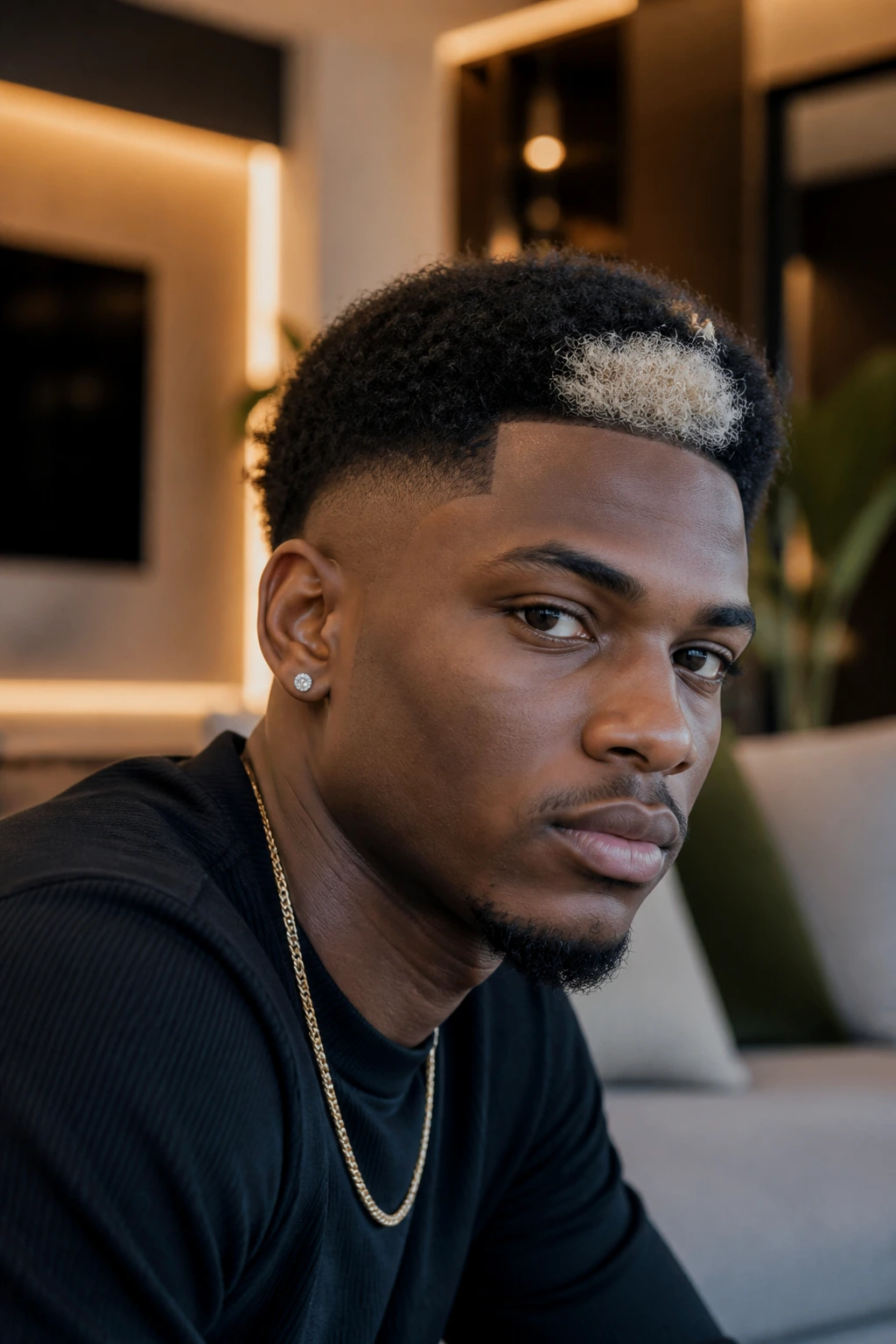
Honey Street Fade: Use a soft honey tone on any taper, temple fade, or low fade. It is the easiest version to wear if you want the highlight to feel warm instead of loud, and it grows out with less visual shock.
Copper Temple Flash: Shift the money piece into a copper or auburn lane and keep the rest of the cut dark. This works well when you want the front to feel richer and a little more unusual without jumping to platinum.
Platinum Front Block: Use this on a Caesar, crop, or high top when you want maximum contrast. The clean front panel gives the haircut a sharper edge, but the hair has to be in good shape or the color will look rough fast.
Shadow-Root Blend: Leave a little depth at the roots and let the lighter tone start an inch or so back from the hairline. That softens the grow-out and keeps the front from looking too painted.
No-Bleach Weekend Version: Use temporary color wax or a semi-permanent front streak for a night out, photo shoot, or event. It gives you the color effect without a long-term commitment, which is handy if you are still deciding on tone.
Loc and Twist Adaptation: On short locs or twists, color only the front row or one side of the front section. It gives the same face-framing effect while protecting the rest of the style.
Keeping the Cut and Color Fresh Between Visits
A sharp fade usually wants a touch-up every 1 to 2 weeks if you like the lines very clean. If you do not mind a little softness, stretch that a bit longer. The color itself tends to need refreshing every 4 to 6 weeks, sometimes sooner if you wash often or spend a lot of time in strong sun.
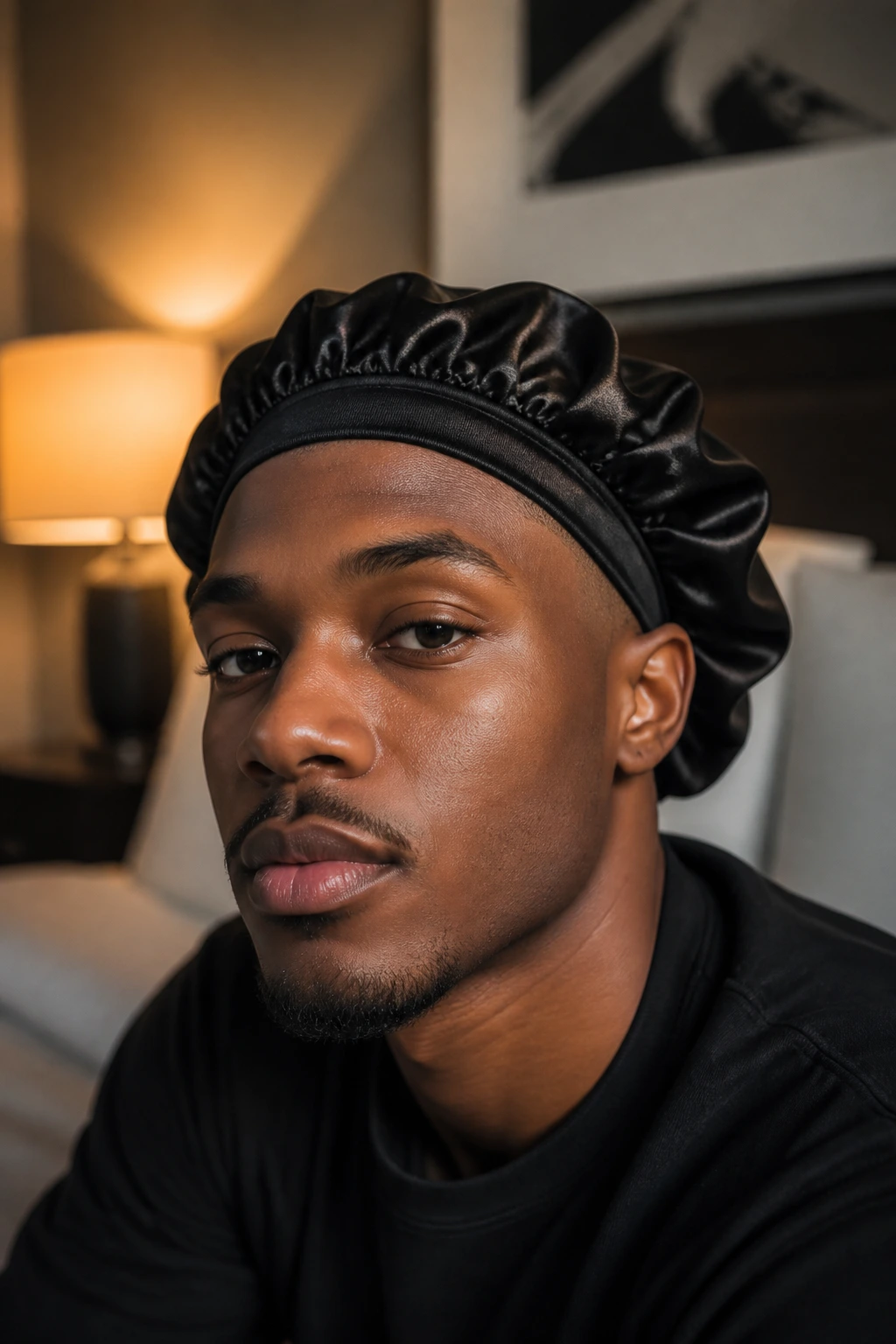
Night care matters more than people admit. Wrap the hair with a satin scarf, wear a durag, or use a bonnet so the front panel does not rub against cotton all night. Friction roughs up the color and flattens the texture, which is a bad trade.
Wash with lukewarm water, not hot water. Hot water pulls color out faster and can make the front section feel dry. A sulfate-free shampoo keeps things gentler, and a weekly conditioner or mask helps the highlighted hair stay soft enough to lay down clean.
If the front section starts feeling straw-like, skip another lightening round and work on moisture first. A color refresh on tired hair is a bad habit. Healthy hair carries the look longer, and that is the part that actually matters.
Frequently Asked Questions
What exactly is a money piece highlight on Black men?
It is a lighter section placed at the front hairline or front fringe so the face gets framed by contrast. On Black hair, the front panel usually sits on curls, twists, waves, or locs rather than a flat curtain of hair, which changes how the light reads.
Which haircut works best if I want the money piece to stay simple?
Low taper fades, temple fades, Caesar cuts, and short afros are the easiest starting points. They all give the front highlight a clean shape without asking for a complicated top.
Can you do this on waves without ruining the wave pattern?
Yes, if the color stays narrow and the hair is healthy enough to handle the lift. Keep the stripe small, leave the crown alone, and stay on top of brushing so the pattern still lays correctly.
Is honey blond easier to maintain than platinum?
Much easier. Honey and caramel show less brass and less dryness, and they grow out with a softer line than platinum. Platinum looks sharper, but it asks for more tone control and more moisture.
How wide should the front highlighted section be?
On short cuts, about half an inch to 1 inch is often enough. On fuller shapes like afros or high tops, you can go a bit wider, but the color should still look like an accent, not a painted block.
Can this work on locs or twists?
Yes, and it can look especially clean because the texture gives the color more depth. The safest move is to lighten only the front locs or the front twist rows, not the entire head.
What if the color turns orange or yellow after a few washes?
That usually means the tone needs adjusting. A toner, color mask, or salon refresh can pull it back into honey, beige, or a cleaner blond. Do not keep bleaching over brass unless the hair is in good shape.
Should I cut first or color first?
Cut first, then color, then clean up the edges after the color settles. That order keeps the highlight from getting chopped too small after the fade or shape-up.
How often should I touch up the barbering part of the cut?
Most men keep the fade and line-up fresh every 1 to 2 weeks if they like a crisp finish. The color can usually last longer than the cut, which is part of the appeal.
The Front Panel Wins
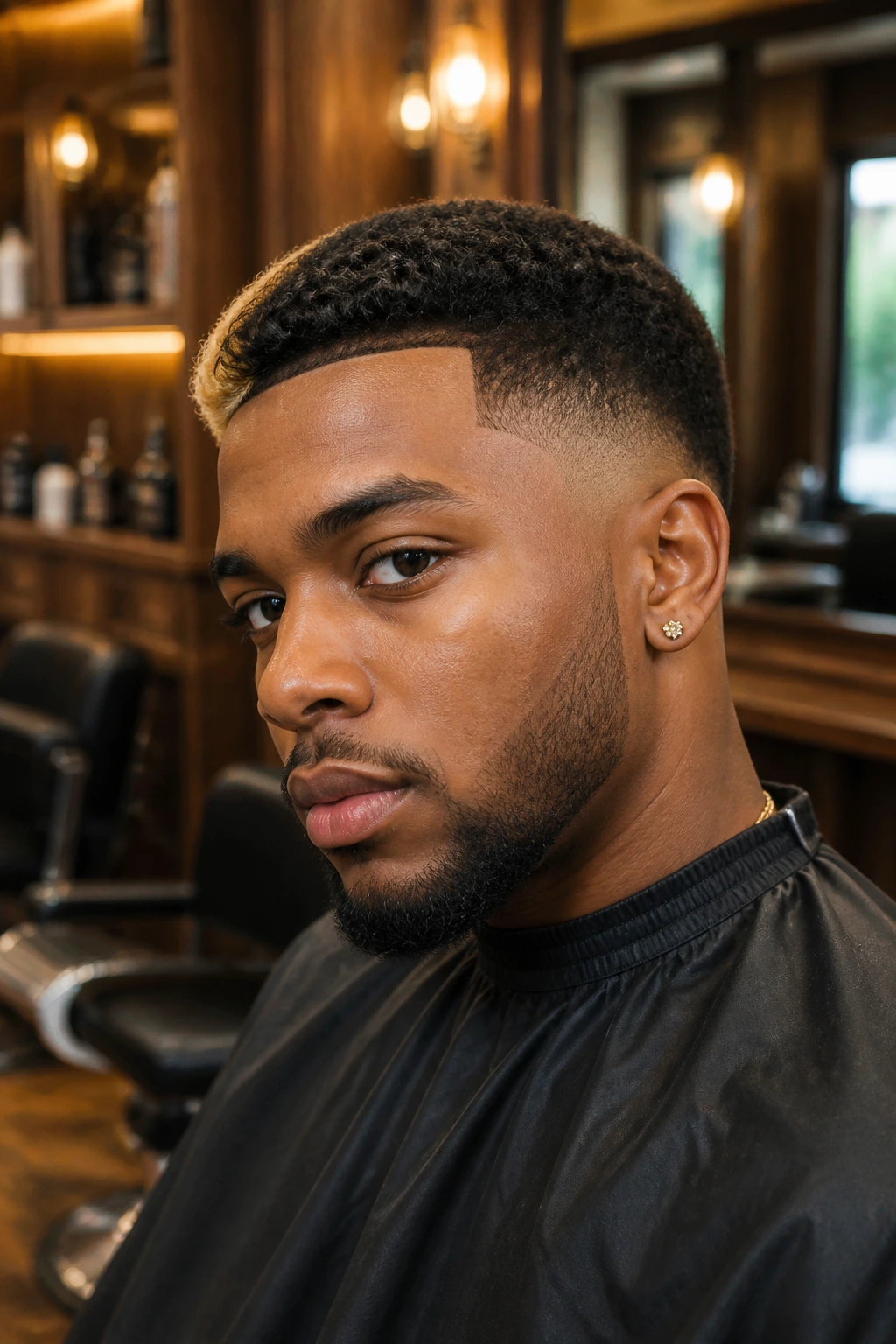
A simple haircut does not need much to feel intentional. On Black men’s hair, a front money piece can turn a low fade, a short afro, or a cropped top into something with actual shape and attitude. The cut stays wearable. The color does the talking.
The best versions keep the stripe narrow, the tone clean, and the rest of the haircut disciplined. That combination beats a loud, overworked dye job almost every time. If you want the look to age well, ask for the front panel to be treated like an accent, not the whole story.
Bring a photo, know your tone, and keep the shape sharp. That conversation is usually what separates a good highlight from a haircut that looks like it was guessed at.