



Straight haircuts for long hair with caramel highlights can look razor-clean or weirdly flat depending on one thing: the shape doing the work. Long, straight lengths don’t hide much. Every blunt edge, every uneven layer, every stripe of color shows up the second the hair settles against the shoulders. That’s why caramel matters here. It gives warmth and depth without the harsh contrast that can make long dark hair look sliced into bands.
On a straight base, caramel highlights do more than brighten. They change how the cut reads. A few well-placed ribbons can make thick hair feel lighter, fine hair feel fuller, and a long hemline feel like it was actually planned instead of just grown out. I’ve always liked caramel on straight hair better than icy blonde for this reason — it looks softer against brunette bases and doesn’t fight the shine. The color sits inside the cut instead of shouting over it.
The 25 ideas below lean into that. Some are blunt and glossy. Some are layered enough to move without losing length. Some use money pieces, underlights, or lowlights to keep the whole look from going one-note. The point is to give long straight hair some architecture, then let caramel do the rest.
Why This Collection Works So Well
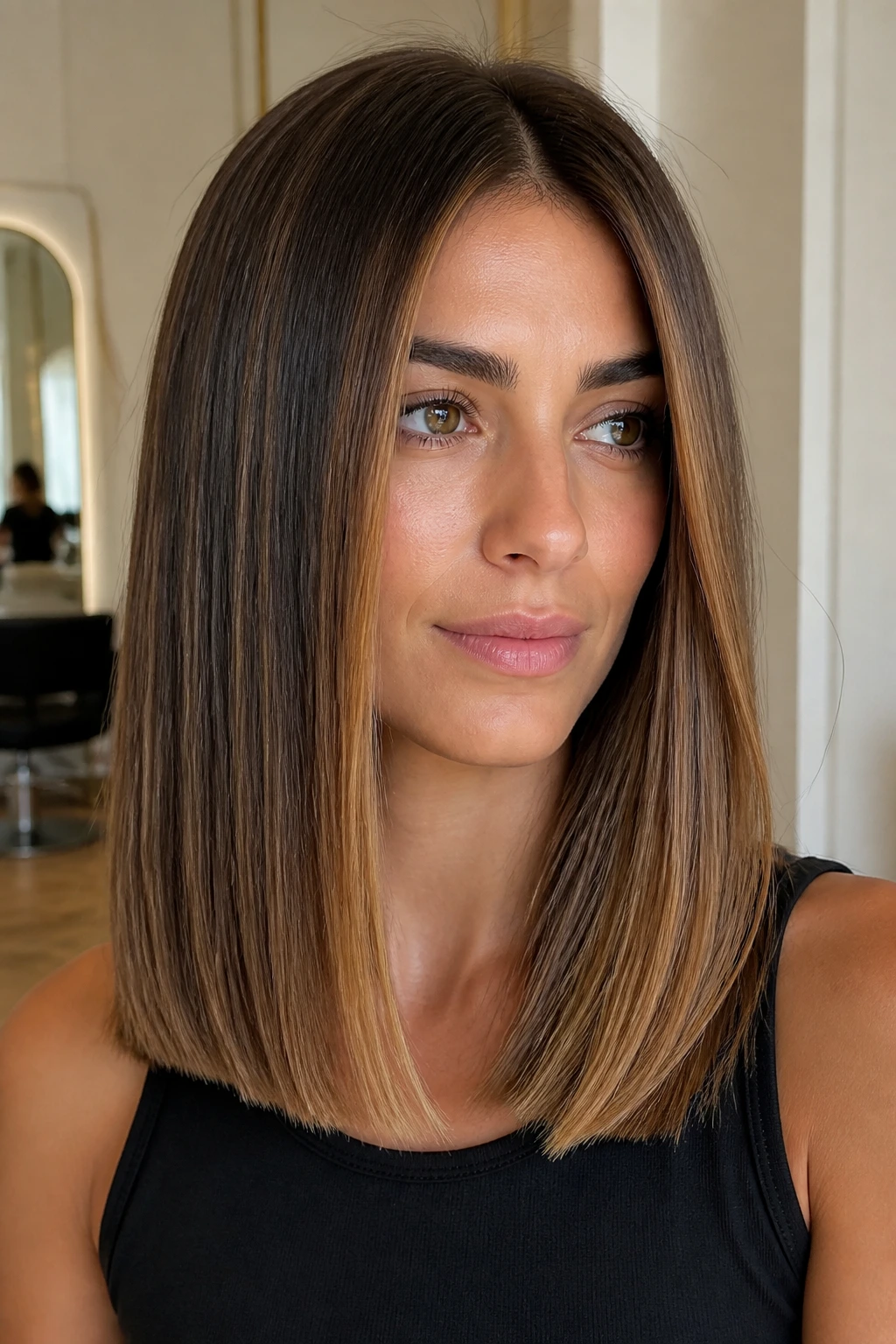
- Straight hair shows precision: A clean hemline or a well-shaped U-cut looks sharper on straight hair because there’s no curl pattern to blur the line.
- Caramel softens brunette bases: Warm brown tones brighten the hair without the stripey look that can happen with very light blonde highlights.
- The same cut can look totally different with color placement: Face-framing foils, underlayer panels, and ribbon highlights all change the mood of the haircut.
- Long hair keeps its length, but not its heaviness: A good layer pattern removes bulk where it matters and leaves the ends looking full instead of dragged down.
- These styles are easy to dress up or down: Straight hair can stay sleek for work and still look polished with a center part, a tucked side, or a flat-iron bend at the ends.
- Grow-out can look intentional: Caramel highlights fade more softly than high-contrast blonde, which helps the style keep its shape between salon visits.
1. Clean One-Length Cut with Caramel Veils
A one-length cut on long straight hair is blunt in the best way. The line at the bottom feels crisp, almost architectural, and the caramel highlights stay in the background until the light hits them. That’s the trick here: keep the color thin and airy, not chunky.
Why It Works
The straight edge makes the hair look denser, especially if your ends are naturally fine. Caramel veils placed around the front and just under the top layer add movement without breaking that solid shape. Ask for a center part if you want the cut to read modern, or a soft side part if you want the face frame to feel gentler.
What to Ask For
- A blunt trim that keeps the hemline level
- 2 to 4 thin caramel foils on each side
- A few scattered ribbons through the midlengths
- A gloss in warm beige or golden caramel if your base pulls dark
This is the cut I like for hair that already has shine. It doesn’t need help pretending to be something else.
2. Soft U-Shape with Face-Framing Caramel
A U-shape is what I reach for when long hair feels too blocky at the ends. The curve is subtle, not dramatic, so the length still looks long and thick. Caramel highlights around the face keep the shape from disappearing into the rest of the hair.
The best version starts the lightest pieces around the cheekbone and lets them taper down toward the collarbone. That keeps the front bright without turning the whole head into a highlight sheet. Straight hair loves this because the lines stay visible even when the hair hangs still.
3. Blunt Ends with a Bright Money Piece
This one has attitude. The ends stay straight and weighty, but the front gets a strong caramel money piece that opens the face right away. If you like a center part and a polished finish, this is a very clean way to get brightness without giving up the power of a blunt cut.
Best For
- Medium to thick hair that can support a strong line
- Oval, heart, and long face shapes
- Anyone who wants a visible highlight without full-head lightening
Keep the money piece a shade or two lighter than the rest of the caramel, not pale blonde. Too much contrast makes the front look disconnected from the rest of the hair. A toned, warm caramel stripe looks richer and ages better between appointments.
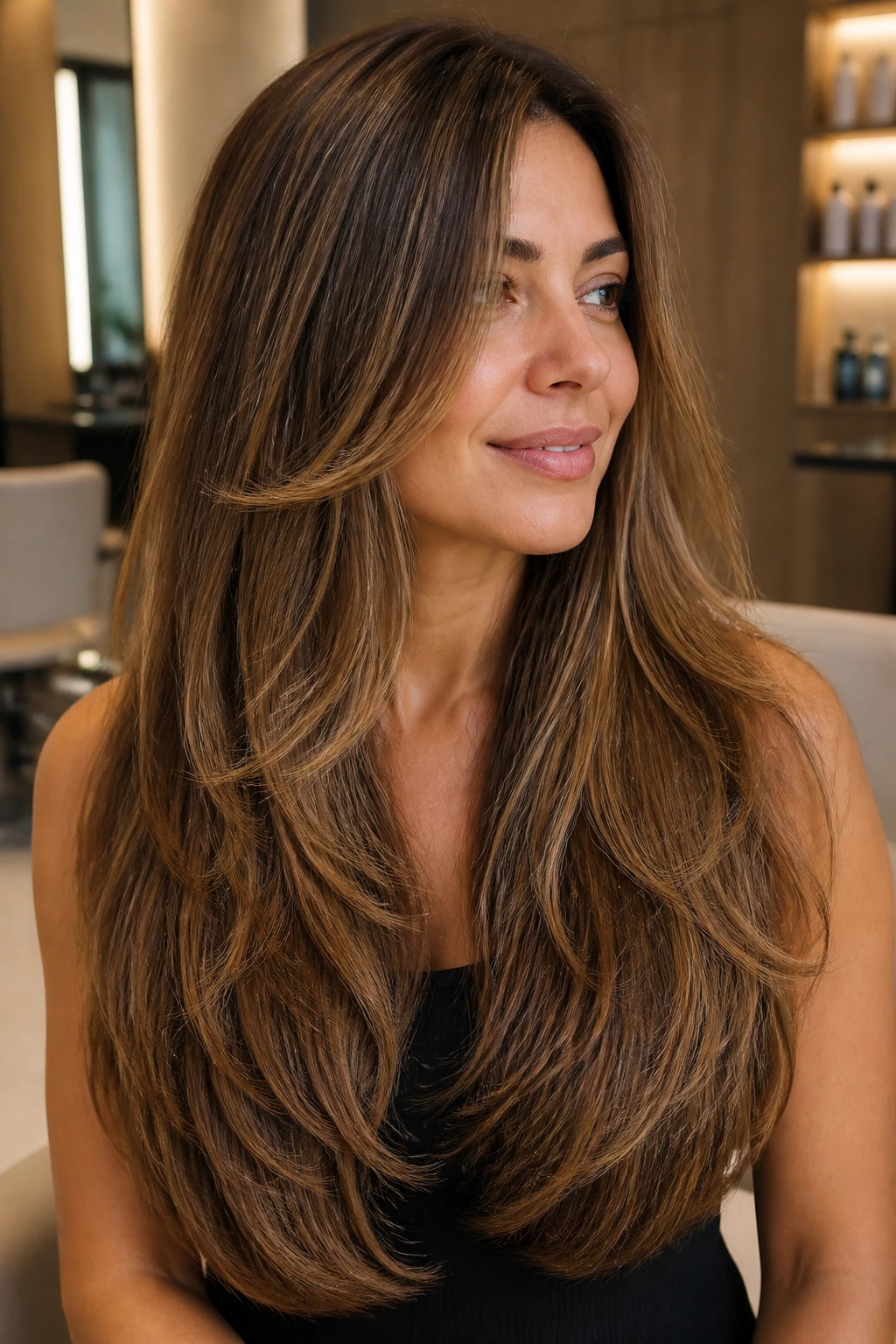
4. Long Layers with Ribbon-Like Highlights
Ribbon highlights are made for straight hair. They follow the layers instead of fighting them, which means the color still moves even when the hair is flat and smooth. Long layers keep the silhouette soft, while the caramel ribbons stop the length from reading as one solid block.
I’d choose this cut for hair that needs a little shape but not a drastic chop. The layers should start below the chin, then cascade slowly through the midlengths. If the highlights land along those longer interior pieces, the hair gets motion without looking choppy.
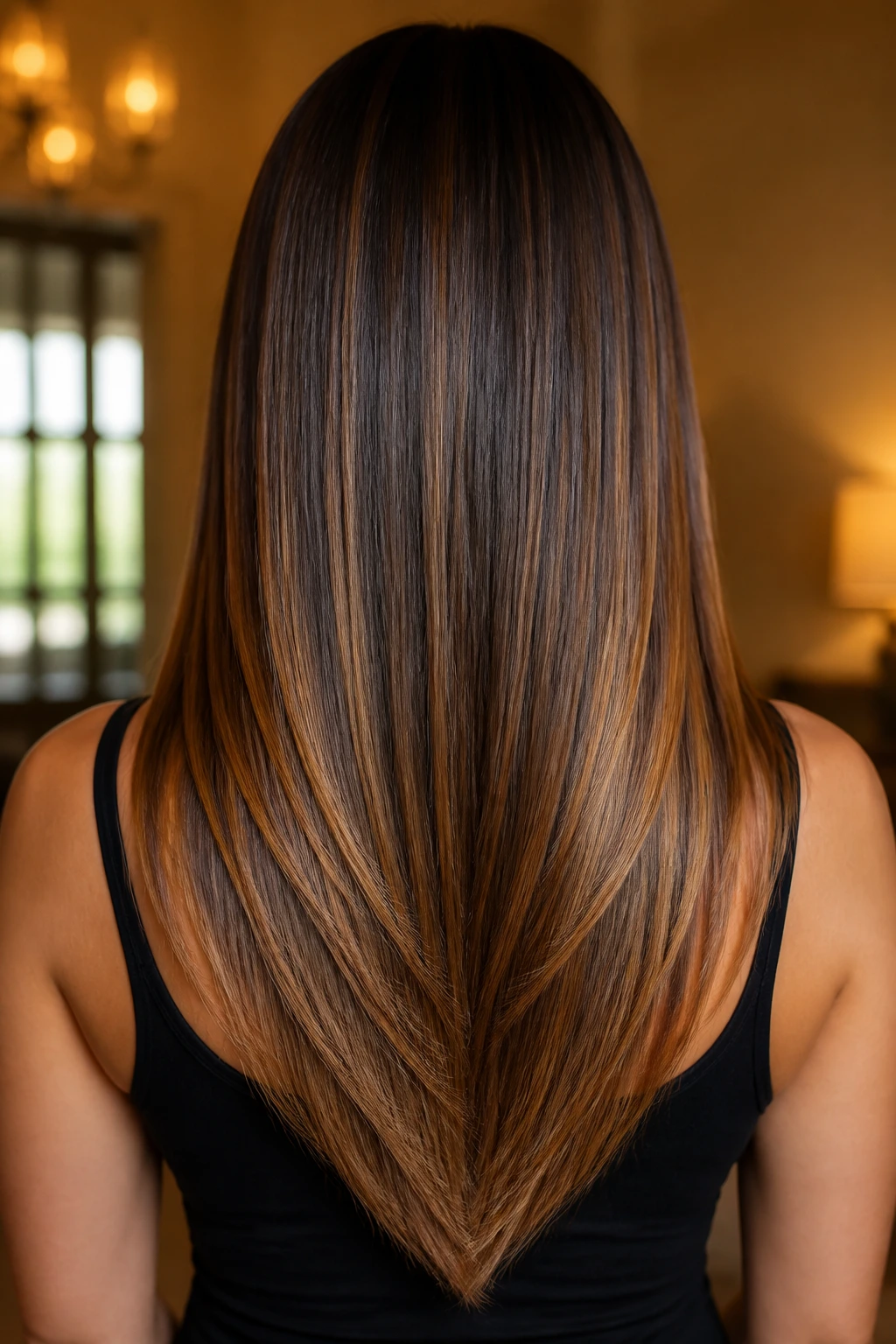
5. V-Cut with Caramel Through the Midlengths
A V-cut gives long hair that pointed back line people either love immediately or take a week to get used to. On straight hair, I think it works best when the back is kept clean and the caramel is concentrated through the midlengths, not just the ends. That way the point doesn’t look wispy.
A tight V can make very fine hair look thin, so keep it soft if your texture is light. For thicker hair, a deeper V helps remove bulk and creates a longer, leaner shape. The caramel should sit above the very bottom of the cut so the ends stay full instead of stringy.
6. Invisible Layers for Fine Straight Hair
Fine hair can look limp fast, which is why invisible layers are such a smart move. They remove weight from the inside of the hair rather than hacking at the outside. From the front, the cut still looks long and smooth. From the side, it has lift.
Caramel highlights help because they create the illusion of depth without forcing the cut to do too much. Ask for soft, scattered pieces around the crown and through the outer midlengths. If the color is too dense, the hair can look see-through; if it’s too sparse, the layers won’t register at all.
7. Heavy Layers for Thick Hair
Thick straight hair needs a firm hand. Not a butchered one. Real layering on heavy hair should remove bulk where it sits like a shelf — usually around the mid-back and lower sides — while keeping the bottom line strong enough to hold shape.
Caramel panels work especially well here because they break up the wall-of-hair effect. I like them placed in broader ribbons than on fine hair, with some brighter pieces near the front and softer ones running through the back. The result is cleaner, lighter, and easier to smooth with a flat iron.
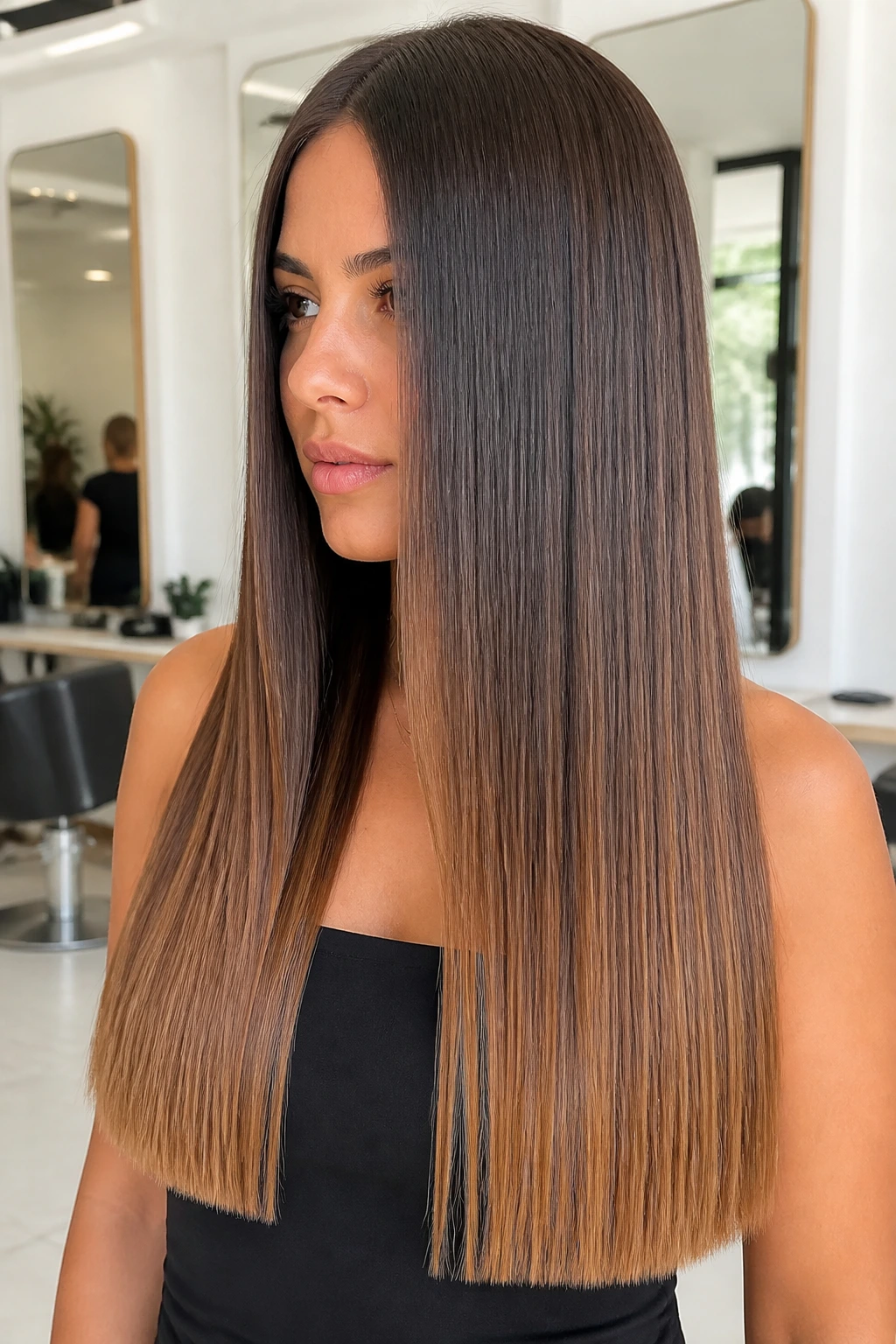
8. Center-Part Glass Hair with Melted Ends
Glass hair and caramel highlights are a slick combination when the color is melted, not striped. The cut is usually one-length or nearly one-length, with the ends trimmed sharp enough to reflect light. Then the color fades from a deeper root into a warm caramel finish near the bottom third.
This works because straight hair already wants to lie flat. Lean into that. Keep the heat styling smooth, use a shine serum sparingly, and let the color do the dimension. A tiny bend at the ends can look nice, but this cut is strongest when it stays clean and long.
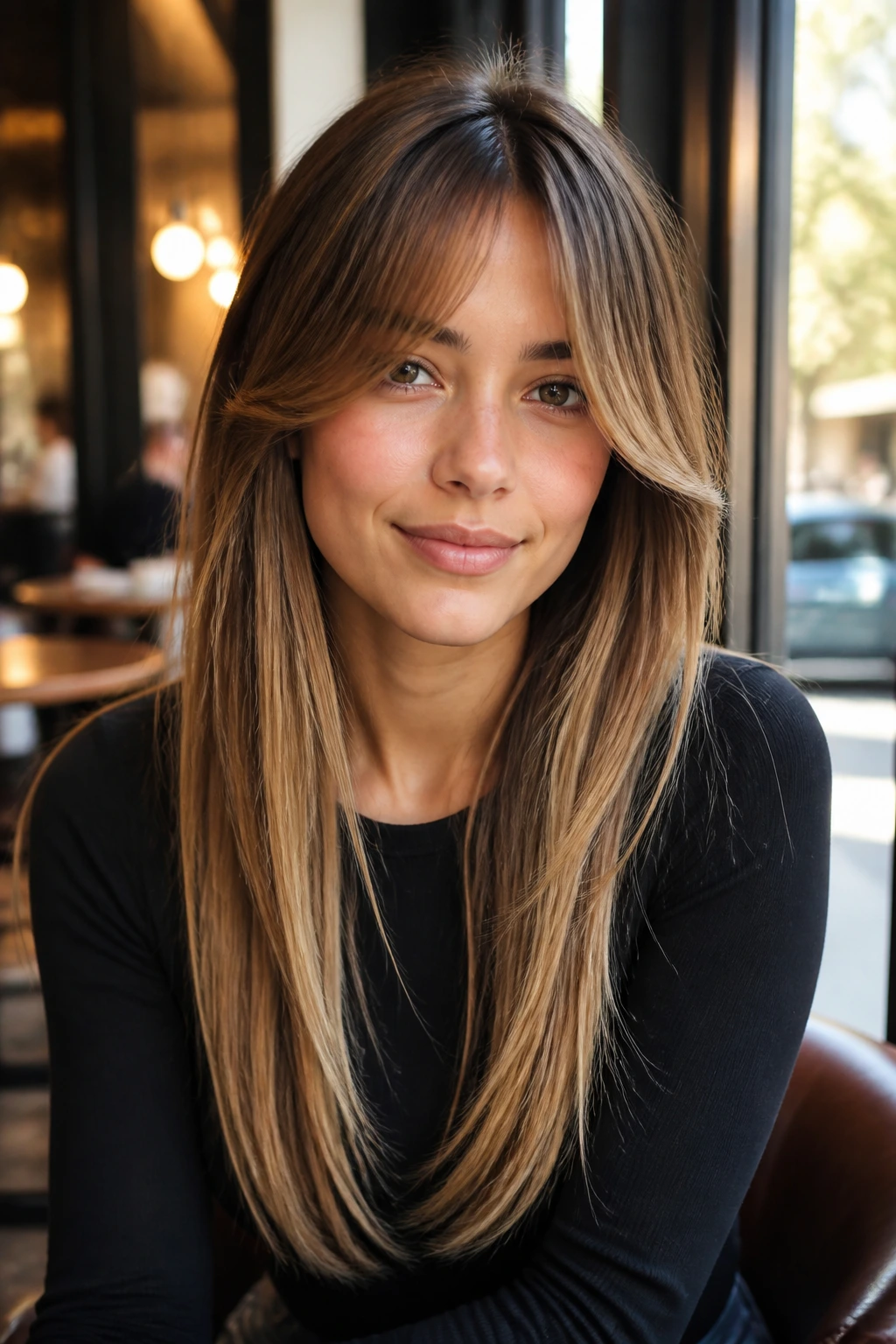
9. Curtain Bangs and Long Straight Lengths
Curtain bangs are one of the few bang styles that still make sense on long straight hair if you want softness without losing the length. They open in the middle, skim the cheekbones, and blend into the side pieces instead of stopping dead at the eyebrow line. Caramel around the fringe makes the whole front area feel lighter.
Why It Works on Straight Hair
Straight hair can make bangs look severe if the cut is too blunt. Curtain bangs avoid that by tapering out into longer pieces. When the caramel starts in the fringe and continues into the face frame, the eye moves down the hair instead of locking onto the forehead.
If you wear glasses, this can be a strong choice, too. The bangs can be adjusted to sit higher or softer depending on the frame shape. That little bit of warm brightness near the eyes changes everything.
10. Deep Side-Part Cut with Brighter Front Panels
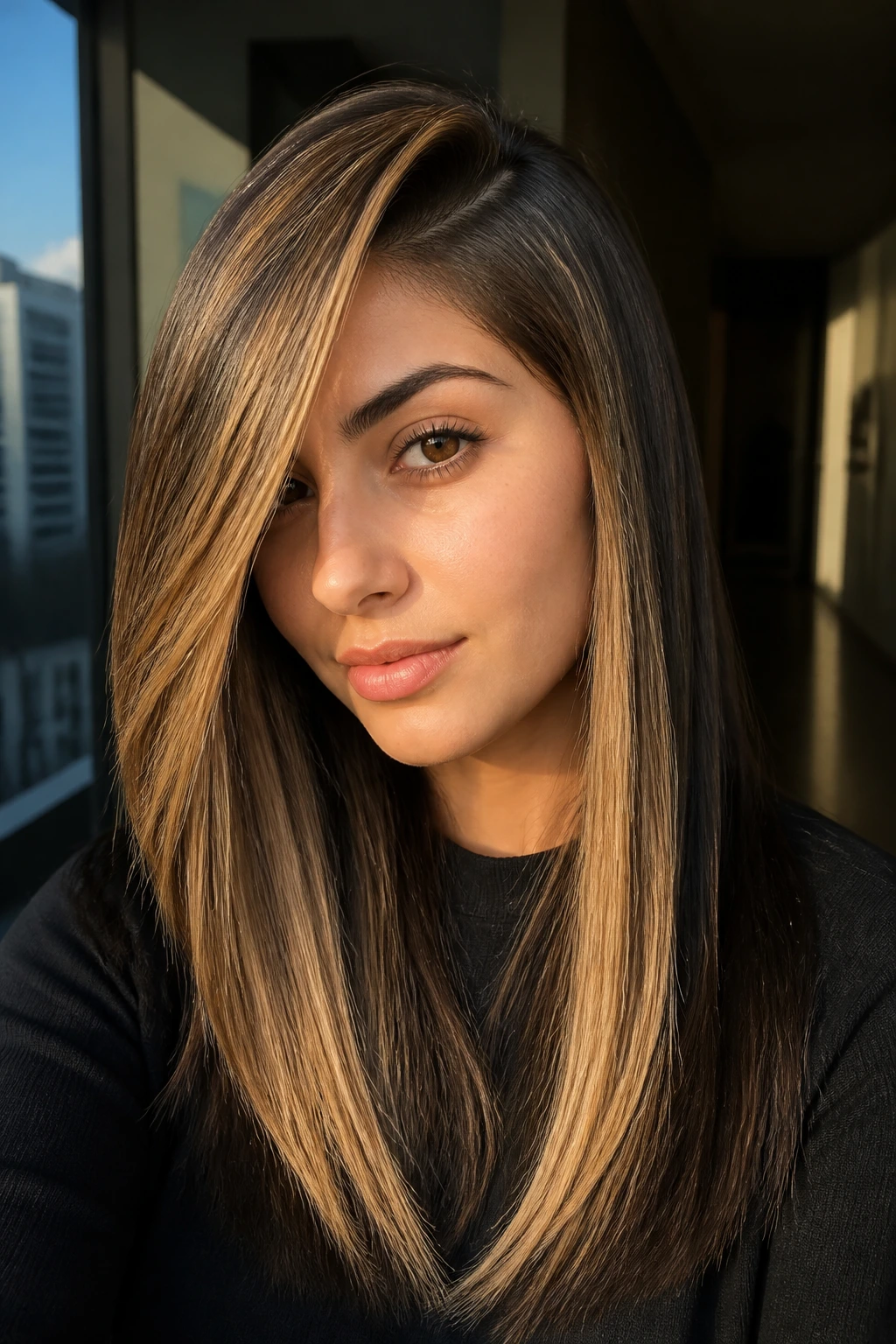
A deep side part gives long straight hair instant drama without adding layers everywhere. The part shifts the weight, and the brighter caramel front panels on the heavier side create balance. It’s a sharper look than a center part, but not fussy.
This cut is good for people who want their color to do the framing rather than cutting bangs. Keep the front panels a little brighter than the rest of the caramel, then let the rest of the hair stay softer and darker. That contrast creates a clean diagonal line across the face.
11. Feathered Ends and a Warm Sweep
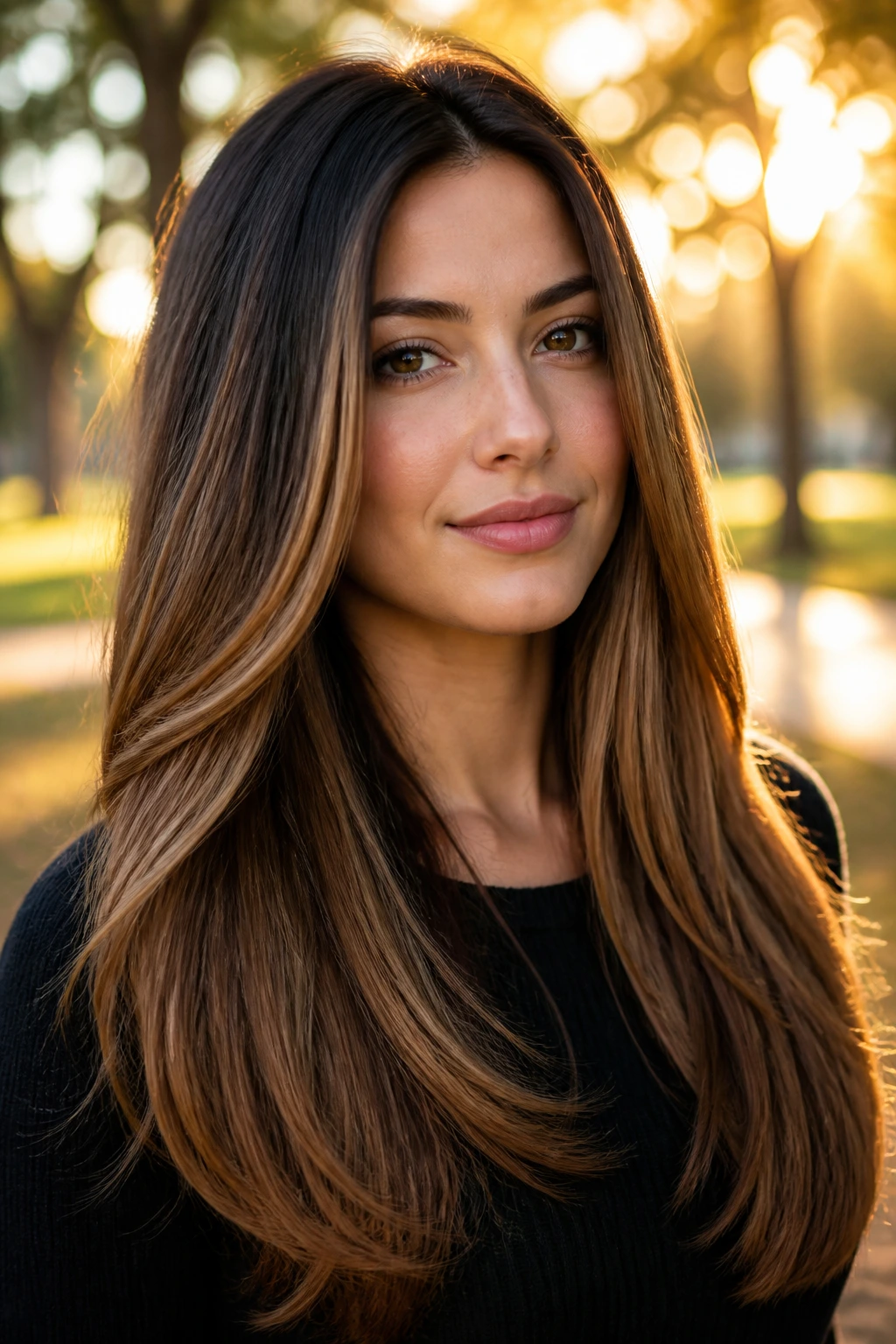
Feathered ends can go wrong fast if they’re overcut, but when they’re done lightly, they make long straight hair feel airy instead of heavy. Think of a subtle bevel at the bottom, not those wispy layers that fall apart after one wash.
Caramel highlights should sweep from the cheekbone down through the lower midlengths so the ends still look full. The color helps the feathering show up. Without it, the shape can disappear. With it, the cut reads as polished and a little old-school in a good way.
12. Long Shag for Straight Texture
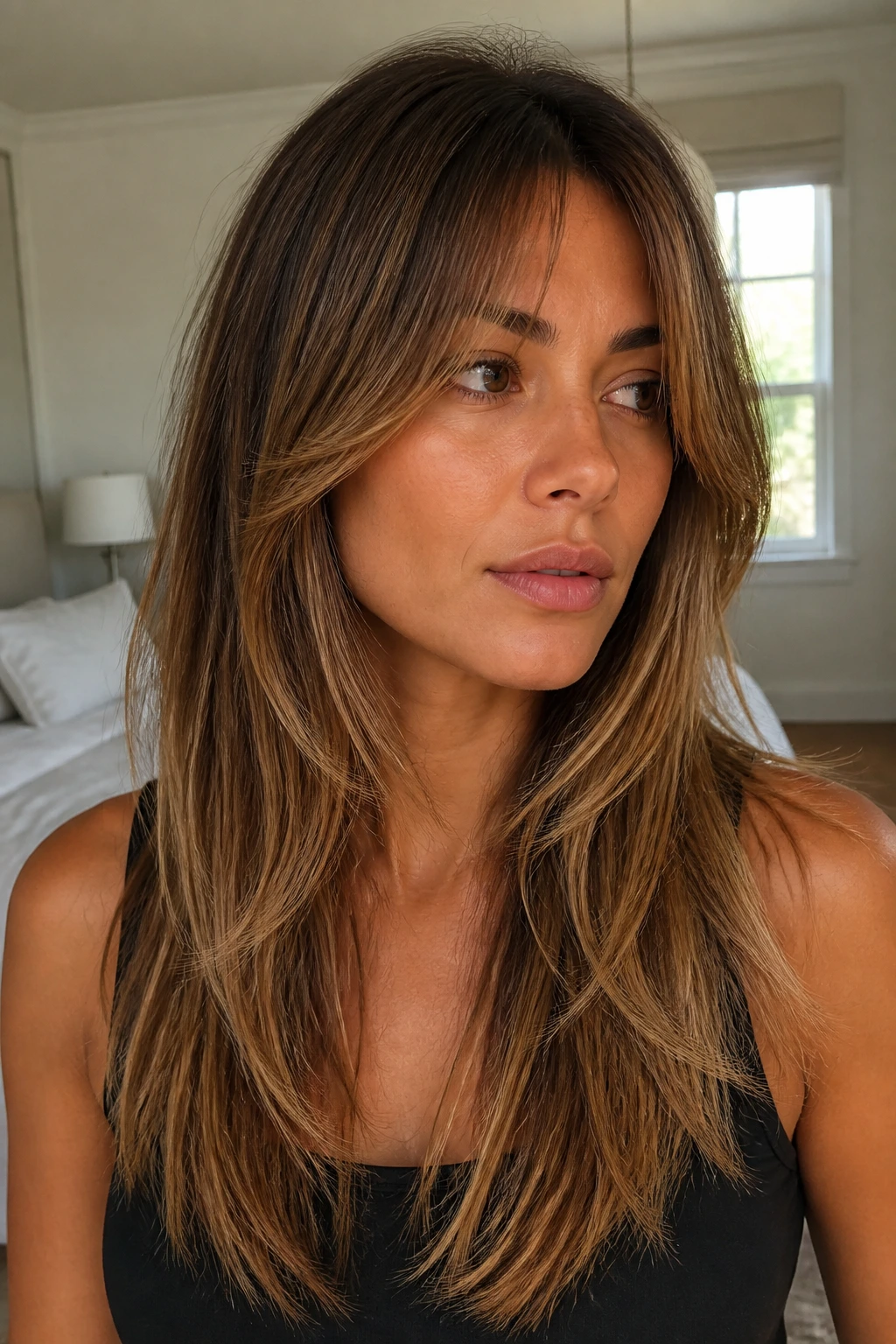
A shag on straight hair is a bit of a balancing act. Too many short layers and it turns ragged. Too few and it loses the whole point. The sweet spot is a long shag with disconnected layers that keep the top light while preserving length below the shoulders.
Caramel highlights fit this cut because they make the different lengths visible. I’d keep the lightest pieces around the front and crown, then use softer ribbons through the lower lengths. The whole thing should feel lived-in, not messy.
13. Underlayer Highlights on a Smooth Base
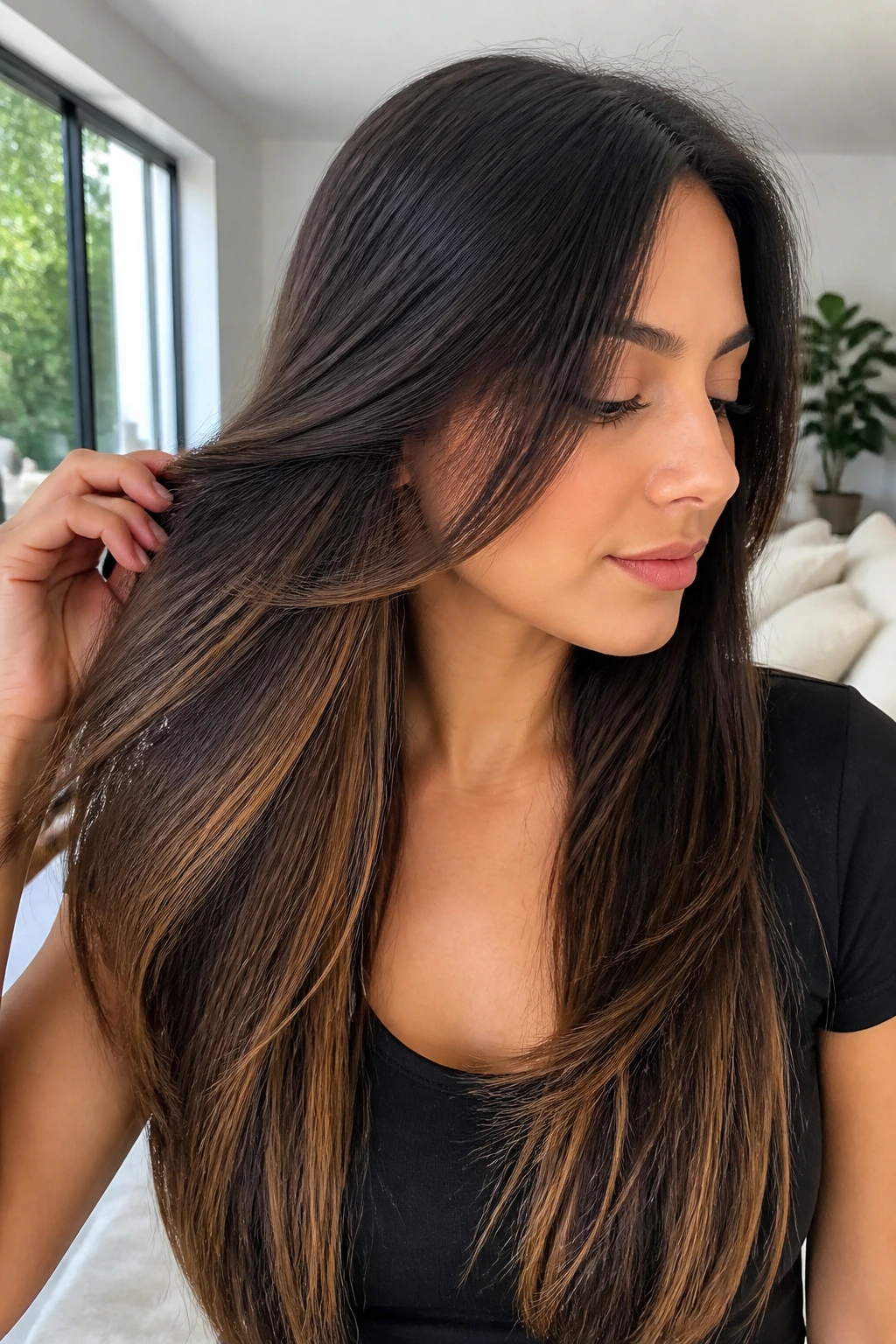
Underlayer highlights are for people who want color that shows up only when the hair moves. The top layer stays darker and smoother, while the caramel sits underneath, peeking through at the ends or around the sides. On straight hair, that hidden dimension is especially satisfying.
What Makes It Different
The contrast is quiet until you tuck the hair behind your ears or slide it over one shoulder. Then the caramel flashes through like a second surface. It’s a good option if your workplace is conservative, or if you just don’t want your color to announce itself from across the room.
Ask for the highlights to stay beneath the outer veil and to avoid chunky placement near the part line. That keeps the effect sleek instead of streaky.
14. Rounded U-Cut with Lowlights
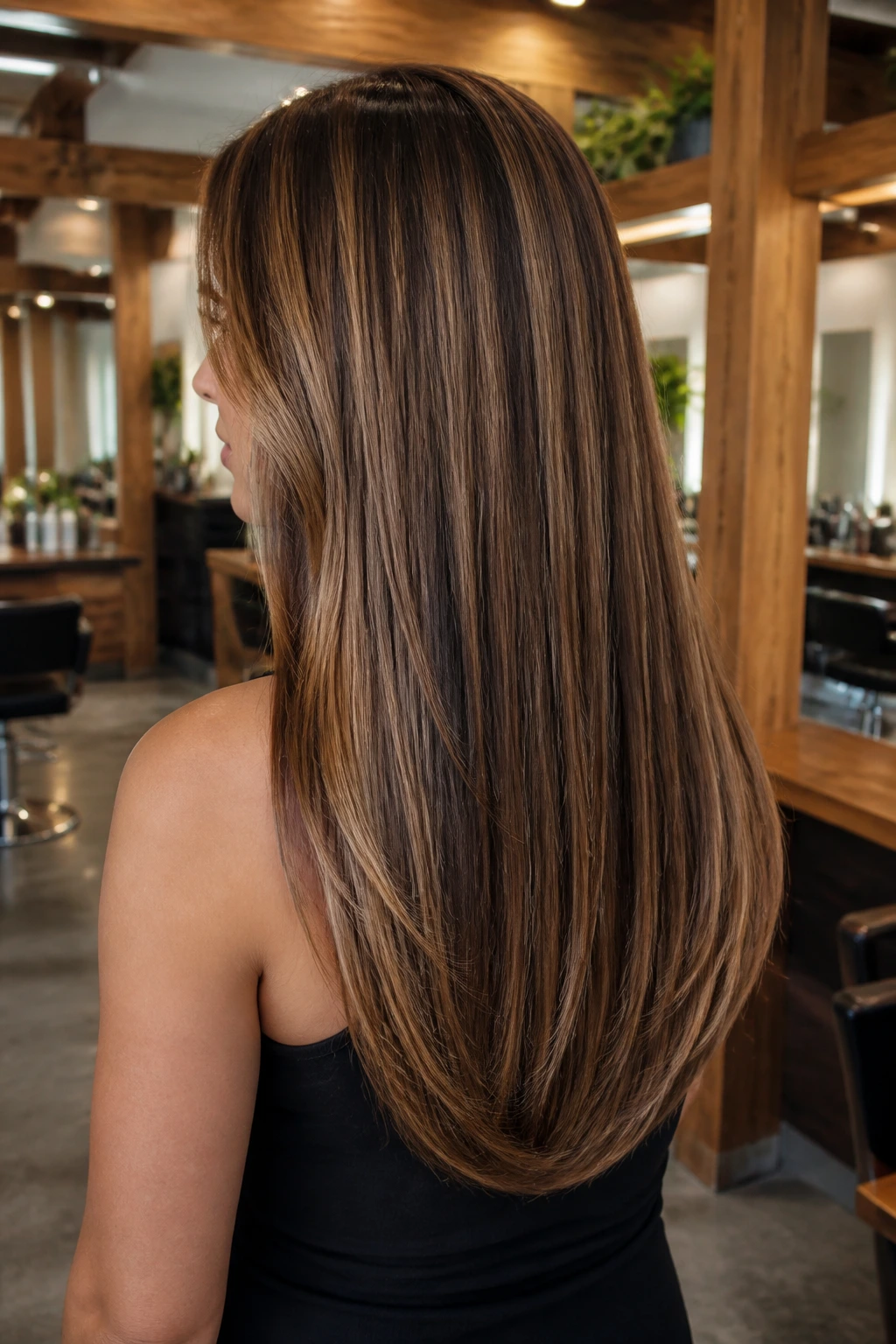
A rounded U-cut keeps the length soft and full, especially in the back. Add caramel highlights, then drop in a few lowlights to deepen the dimension and stop the color from running too warm. On long straight hair, lowlights matter more than people think. They keep the highlight pieces from floating alone.
This is one of my favorite looks for hair that has a naturally brown base and a lot of shine. The rounded edge makes the ends look healthier, and the darker strands between the caramel pieces give the whole head a richer finish. It’s not flashy. It’s balanced.
15. Waist-Length Hair with Narrow Highlight Panels
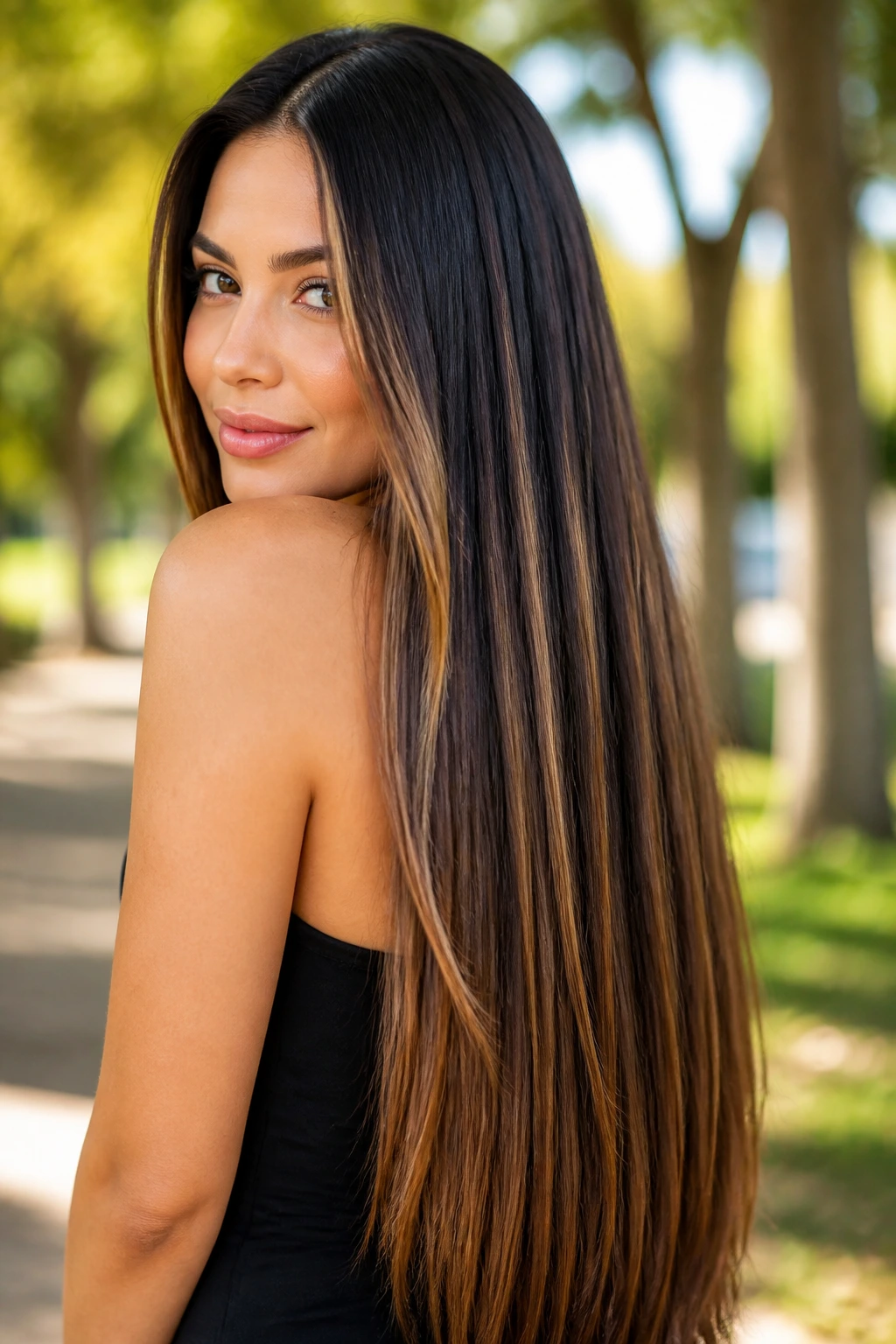
Waist-length hair can be gorgeous, but it can also look like one long sheet if the shape is ignored. Narrow caramel panels are the fix. They thread light through the length without turning the whole style into stripes. Think of them as vertical accents, not blocks of color.
The cut itself should stay simple and strong, usually one-length or very softly layered. Too much chopping at this length makes the ends look thin. Keep the highlights narrow and strategic — around the face, through the mid-back, and a few lower pieces to keep the length from feeling endless in the wrong way.
16. Bottleneck Bangs and Sleek Ends
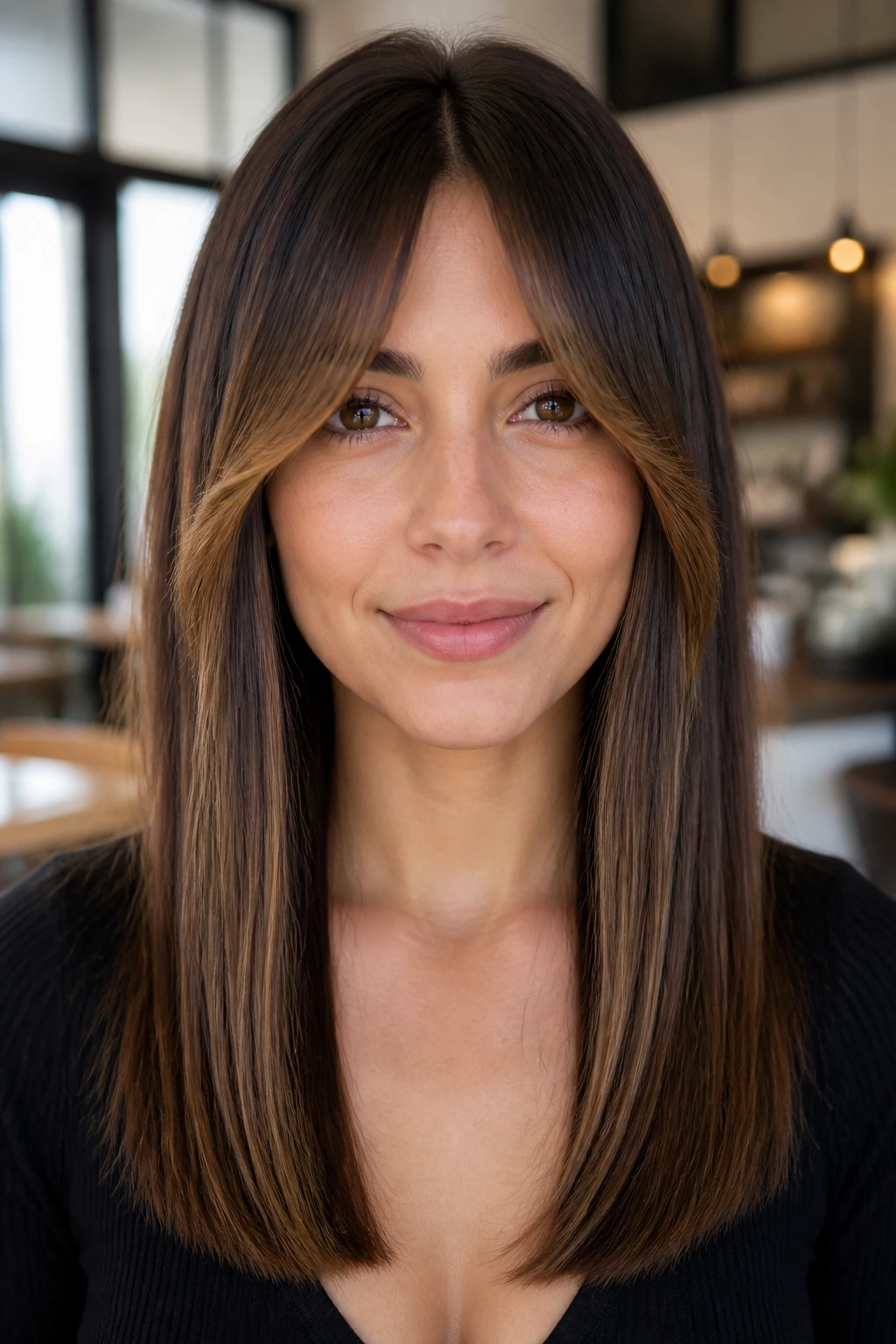
Bottleneck bangs sit somewhere between curtain bangs and a full fringe. They’re shorter in the center, then curve down and out toward the temples. On long straight hair, they create a face frame that feels current without stealing too much length.
Caramel works well here when it starts right at the inner edges of the bangs and continues into the side pieces. That creates a soft glow around the eyes and cheekbones. Keep the rest of the hair sleek and let the bangs do the talking. They don’t need much else.
17. Straight Cut with a Quiet Color Block
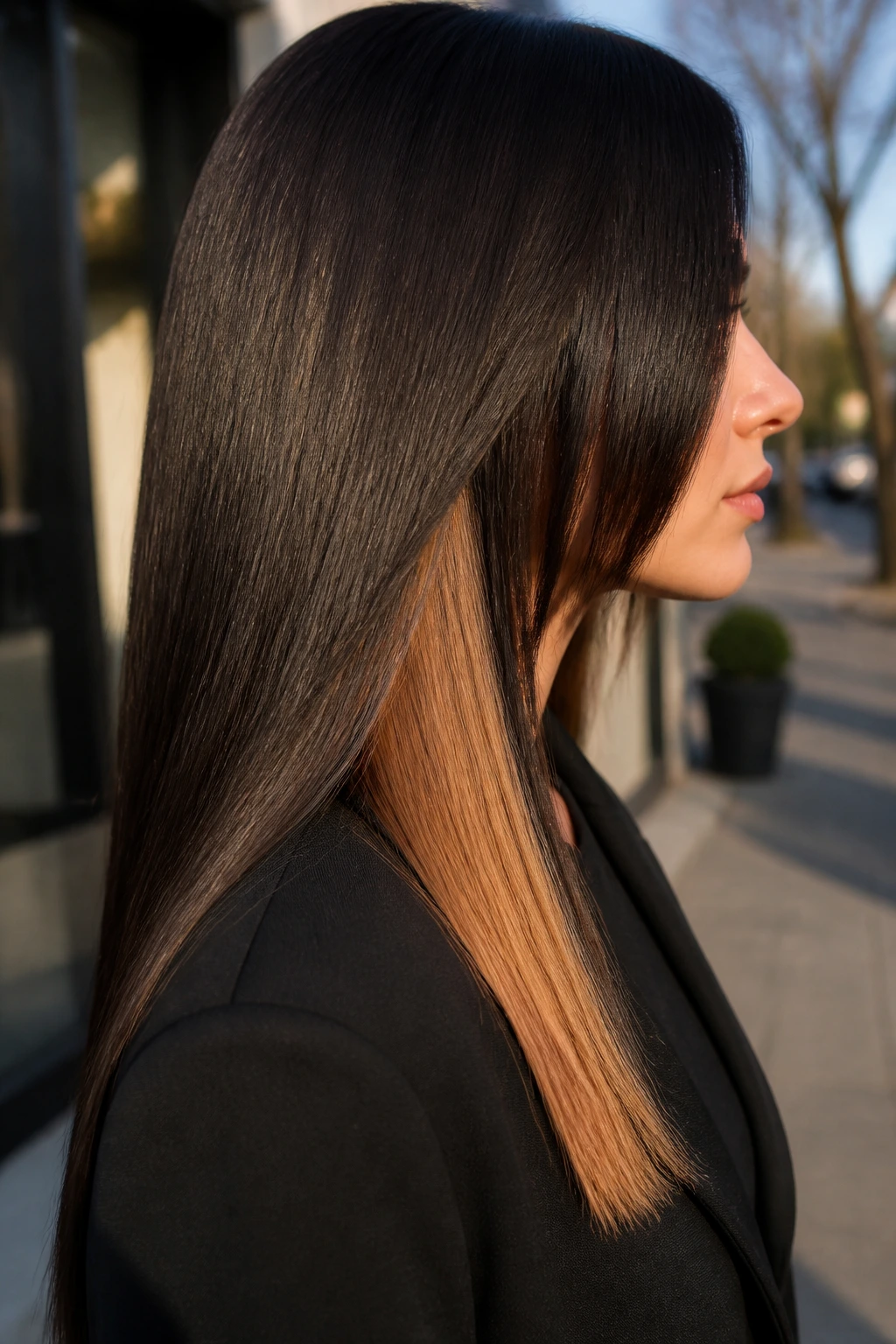
A color block on long straight hair sounds louder than it actually is. The idea is to keep most of the length one shade, then introduce a defined caramel section in a lower panel, underside, or front slice. Because the hair stays straight, the block reads clearly — but only when it moves.
Why It Works
The clean geometry of long straight hair makes color blocking look intentional instead of random. If you want something more editorial than a standard highlight, this is a smart lane. Keep the block in a caramel tone that stays in the same warm family as the base, or the contrast can feel harsh.
This one works best when the rest of the cut is simple. No choppy layering. No odd angles. Let the color be the statement and keep the shape disciplined.
18. Long Layers with Cinnamon-Caramel Blend
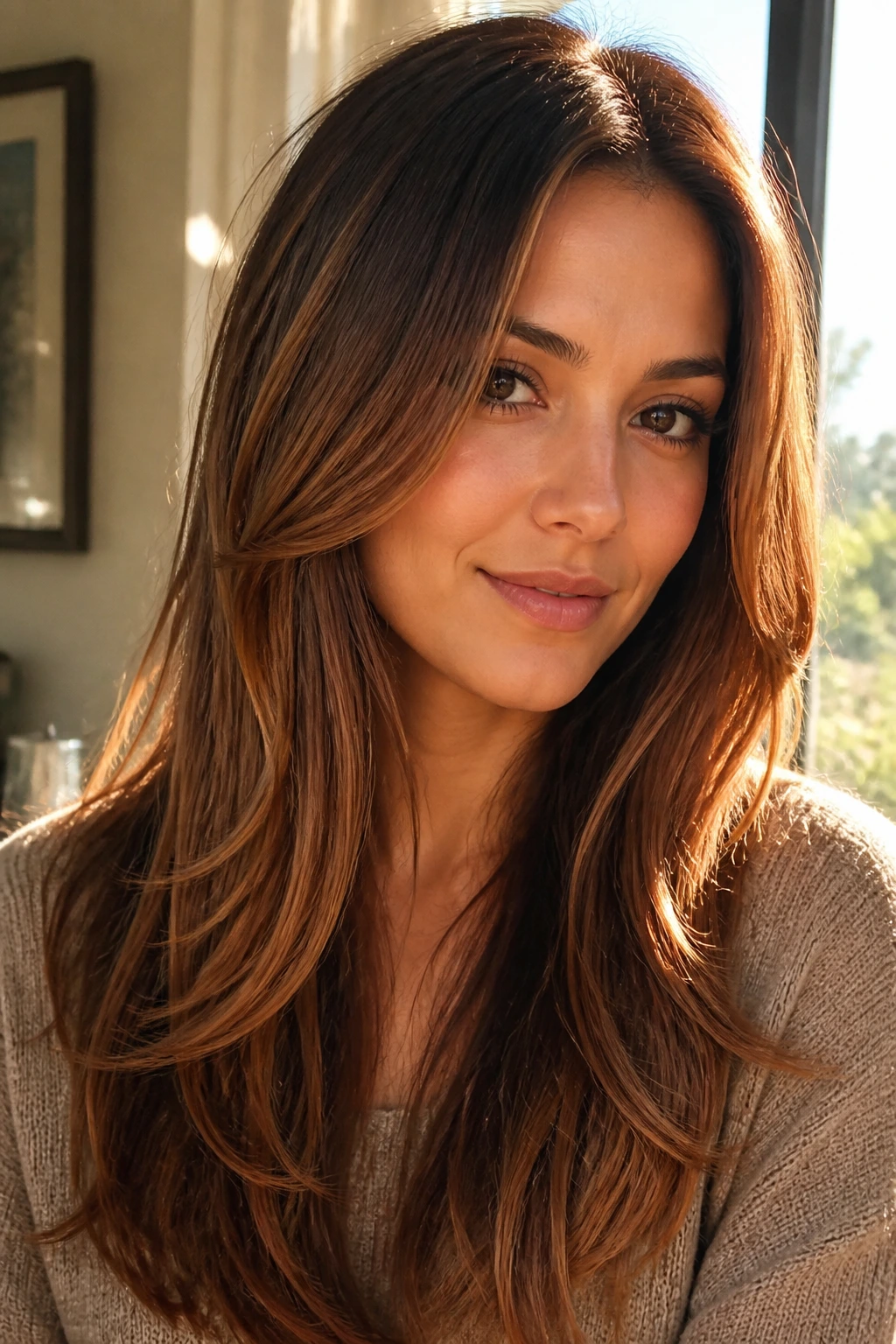
Cinnamon-caramel blend is warmer and deeper than a pale honey tone, which makes it a strong pick for darker brunettes. Long layers keep the bulk from sitting at the bottom, and the richer caramel tone ties the whole look together without making it brassy.
If your skin has warm undertones, this shade family can sit beautifully against the face. If your hair tends to go orange in the sun, ask for a beige gloss over the caramel so it stays soft. The cut itself can stay gentle and long; the color provides the mood.
19. Oval-Frame Layers and Cheekbone Light
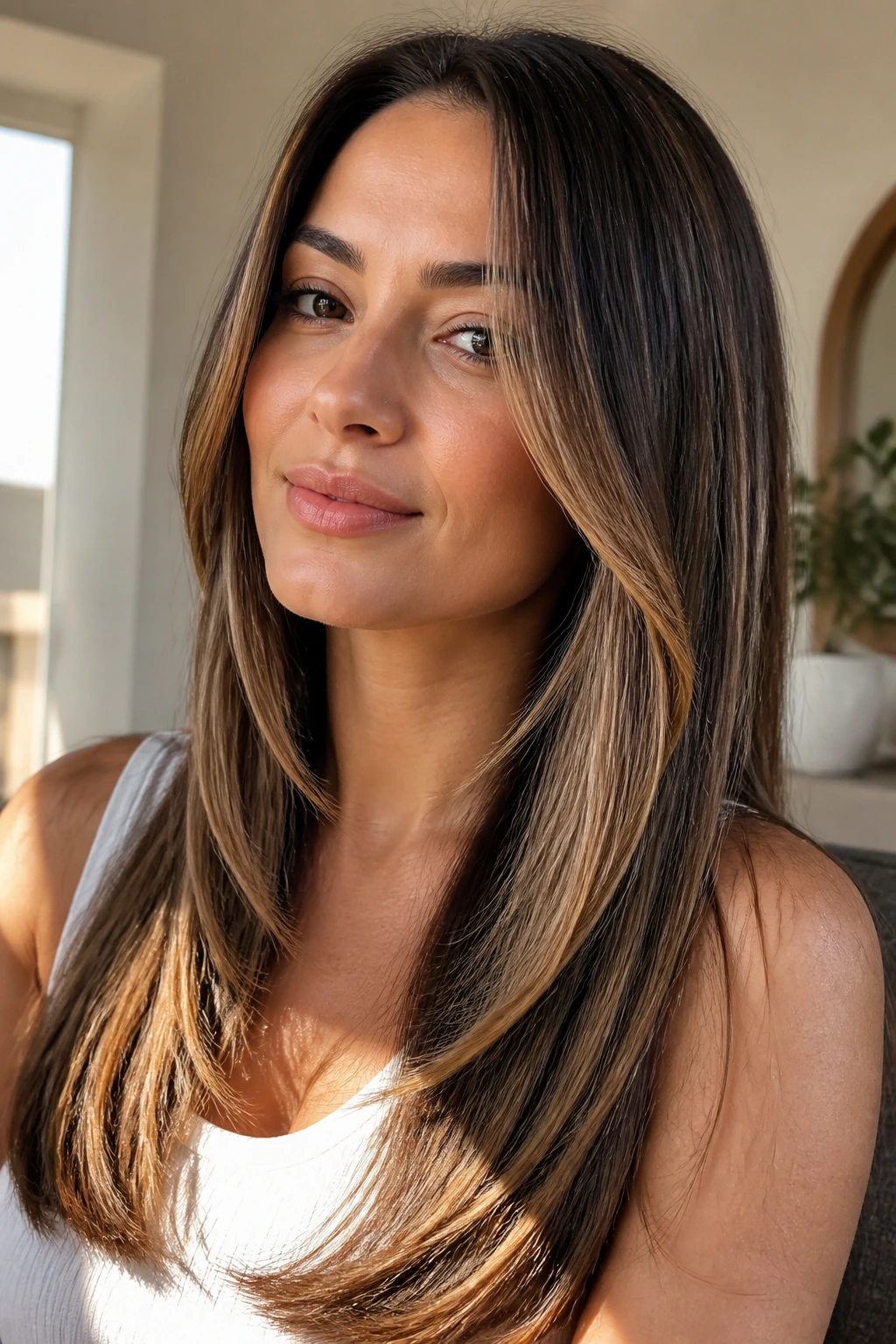
Oval faces are easy to flatter, but that doesn’t mean any cut works. The goal is to keep the sides from disappearing into the rest of the hair. Oval-frame layers start around the cheekbone and fall straight down through the front, with the rest of the length kept clean and long.
Caramel highlights should ride those front layers so the face gets a little extra lift. That bright strip near the cheeks keeps the long hair from swallowing your features. The rest of the color can stay softer and more diffused.
20. Long Layers That Elongate a Round Face
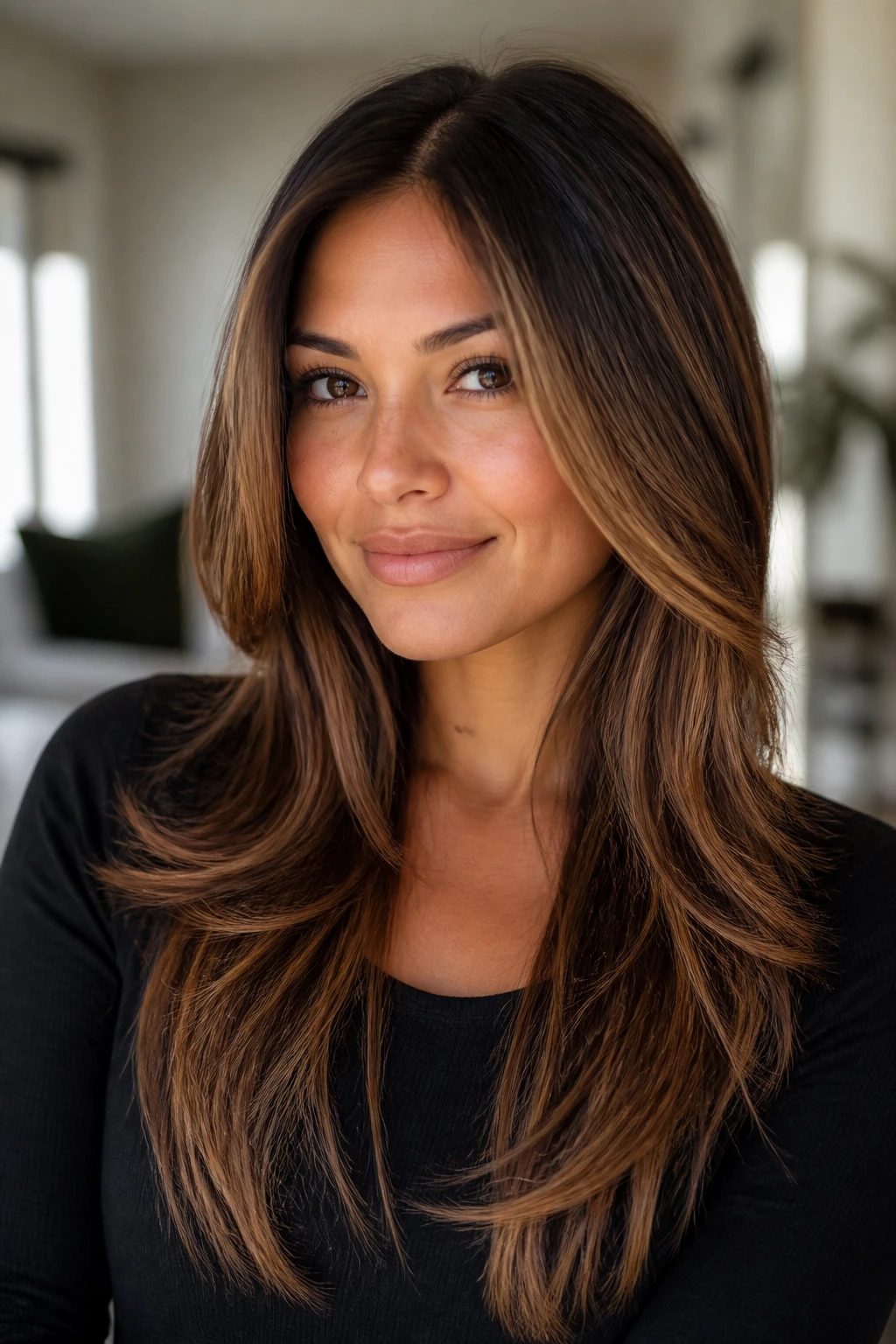
Round faces usually look best when the hair creates vertical lines instead of width. Long layers do that naturally, especially when the shortest pieces begin below the jaw and the caramel runs downward rather than outward. No fluffy side volume. No chin-length pieces flaring out at the cheeks.
Best Placement for the Color
- Brightest pieces should sit below the cheekbone
- Keep the sides a little softer near the jaw
- Let the ends stay full so the silhouette doesn’t collapse
This cut should feel lengthening, not heavy. A center part can work if the front pieces are narrow. A side part can work too, as long as the volume doesn’t build at the temples.
21. Soft Jawline Layers for Square Faces
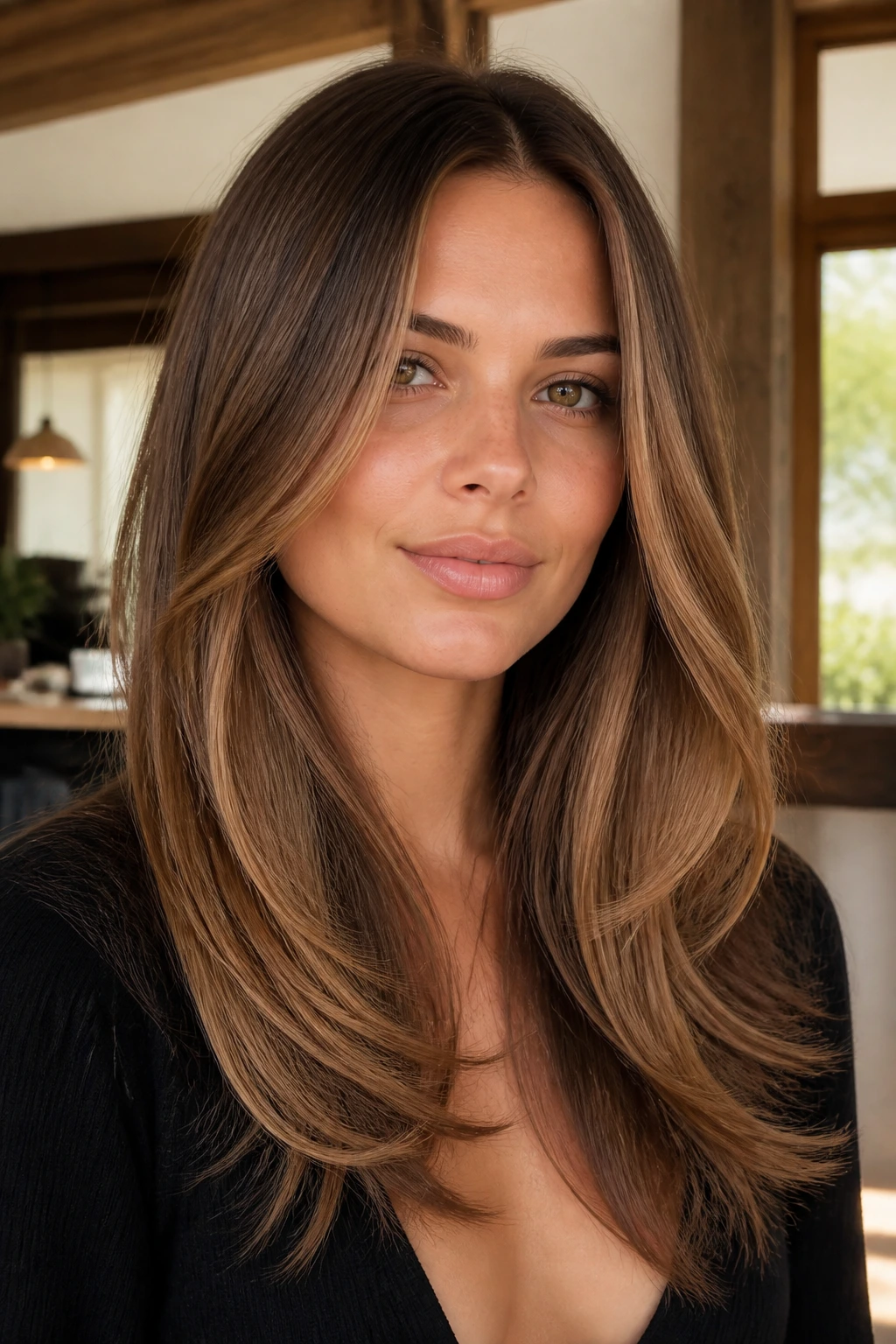
Square jawlines look strongest when the hair doesn’t stop right at the jaw. Soft layers that fall below that line keep the face from feeling boxed in. On straight hair, the trick is to keep the layers smooth and elongated, not jagged.
Caramel highlights should be placed where the hair curves around the face, especially around the cheek and collarbone. That softens the angle of the jaw without hiding it. I’d avoid a hard blunt line here unless the rest of the look is intentionally sharp.
22. Peekaboo Caramel Underlights
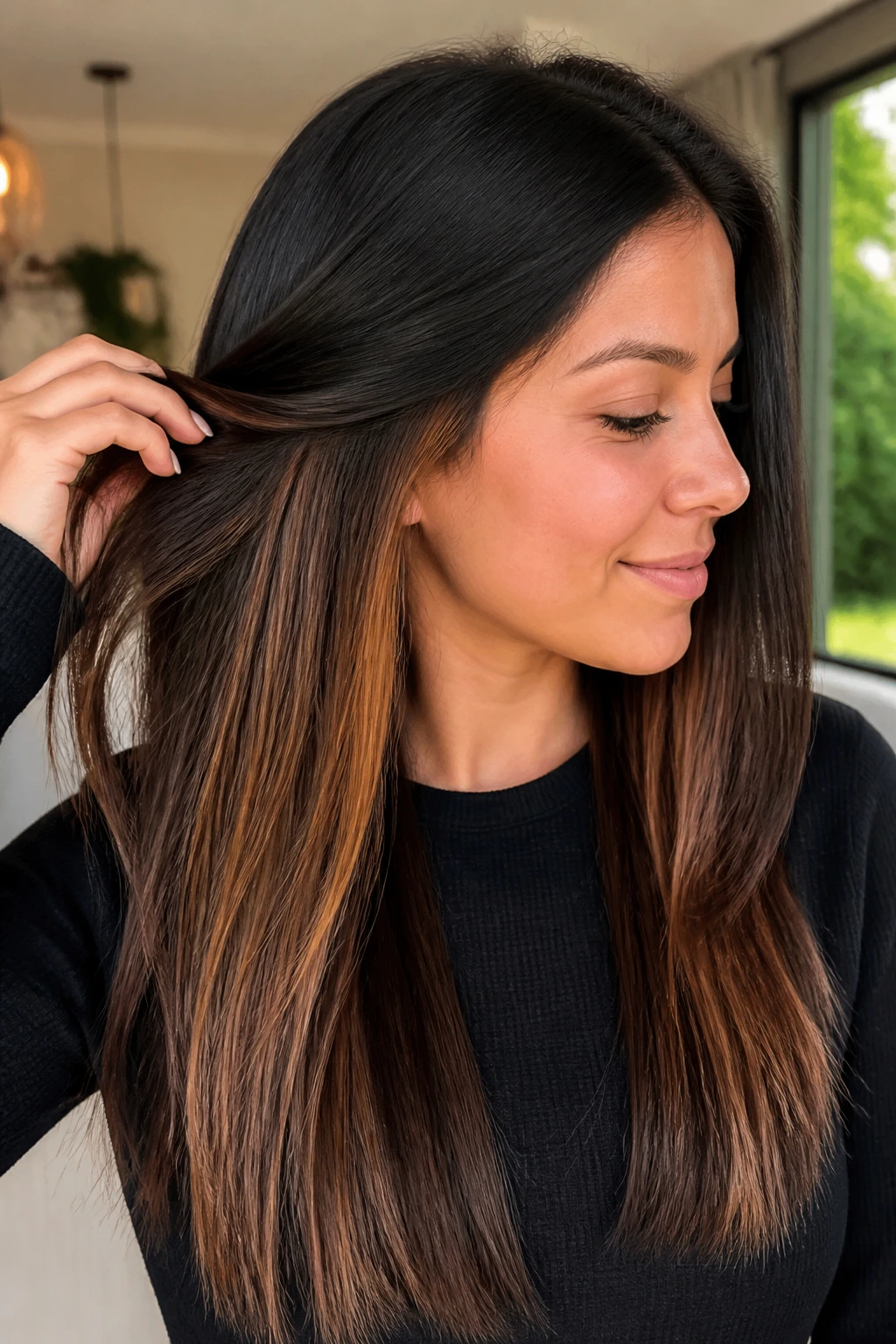
Peekaboo underlights are the quiet cousin of a full highlight job. The top remains darker, the underneath gets caramel, and the effect appears only when the hair swings or tucks behind the ear. Straight hair shows this beautifully because the contrast is so clear.
If you want dimension without a lot of commitment, this is one of the smartest choices. The grow-out is soft, the upkeep is easier, and the hair still looks polished from the front. It’s also a nice way to test warmth before committing to more visible color.
23. Glossed V-Cut for Easy Grow-Out
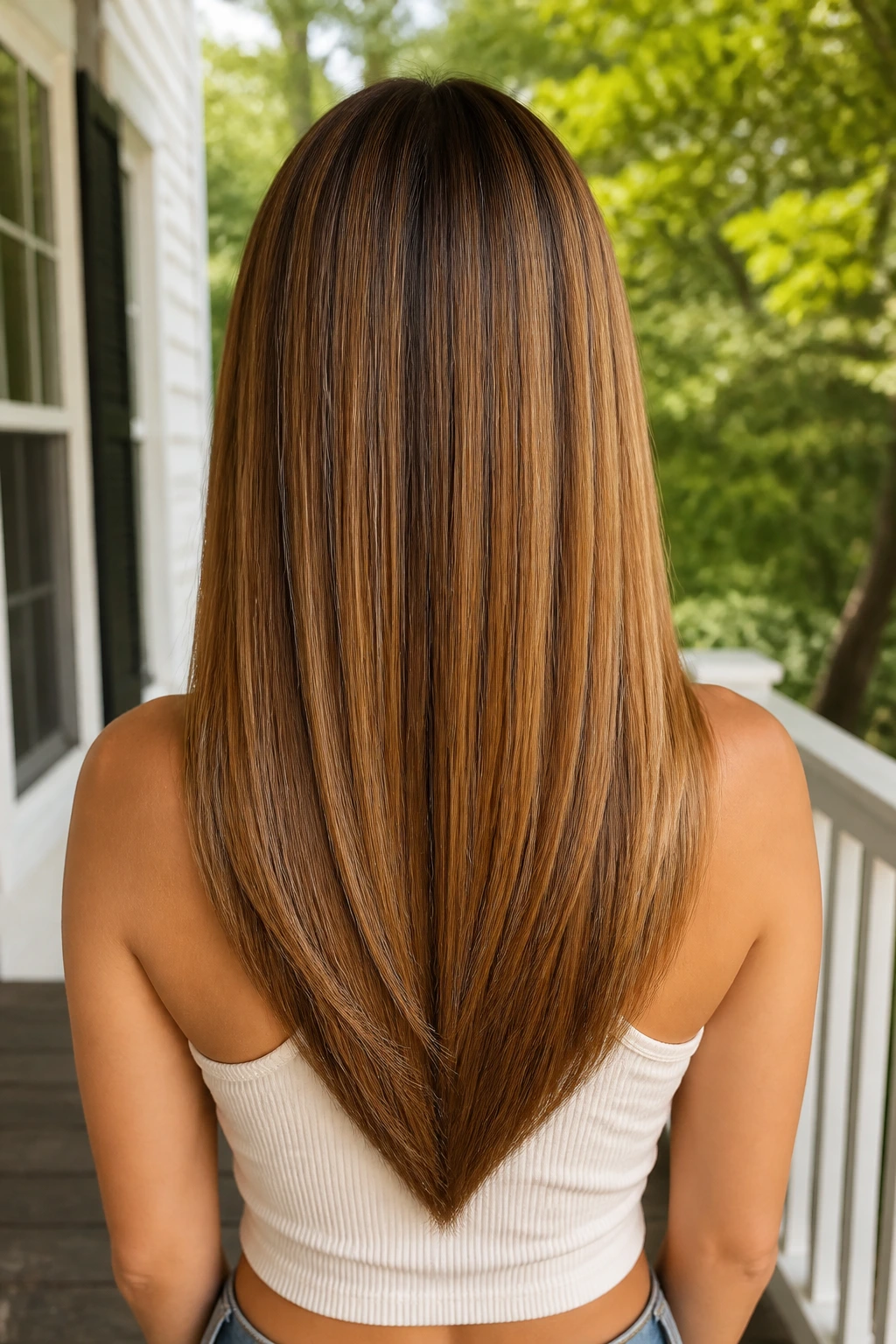
A V-cut can look dated if the layers are too pointy or the color is too loud. Keep it glossed, keep the caramel soft, and it becomes a very easy grow-out style. The V gives the back a little shape, while the gloss keeps the long straight surface looking deliberate.
This is a good option for someone who doesn’t want frequent reshaping. The point at the bottom stays clean longer than a heavily layered cut, and the caramel can fade gracefully if it’s built as a balayage rather than hard foils.
24. Slight Bevel Ends for a Softer Hemline
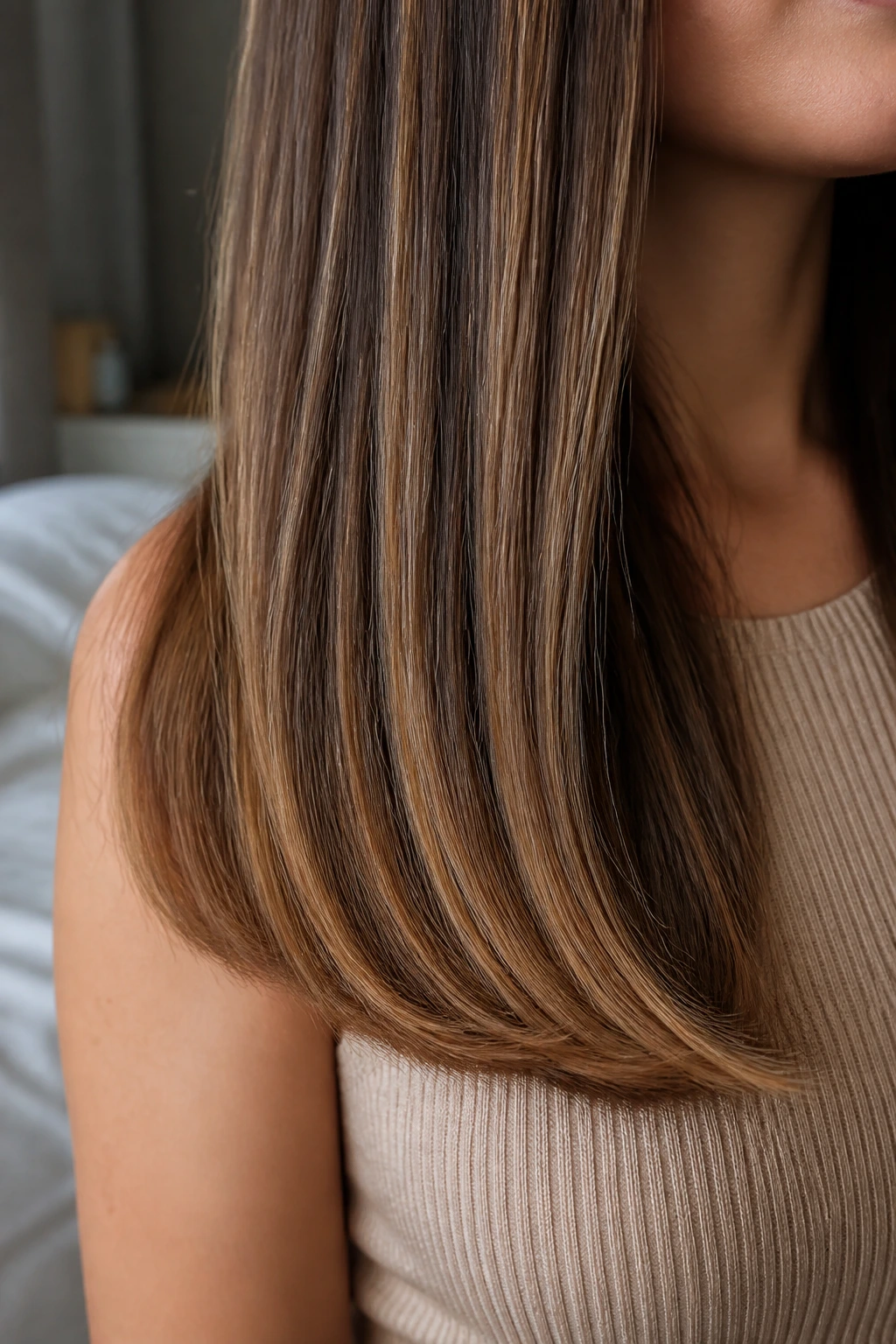
A slight bevel is one of those tiny details that makes a long straight cut look finished. The ends curve inward just enough to keep the line from feeling stiff. It works especially well with caramel highlights because the color catches on the bend and gives the hemline some glow.
What to Watch For
- The bevel should be subtle, not curled under
- Ends need to stay full, so don’t over-thin them
- Caramel should sit near the curve, not only at the very bottom
This cut is for someone who wants sleekness with a little softness at the edges. It’s neat. It’s low-drama. And it photographs well without looking overworked.
25. Straight Cascade with Caramel Lowlights
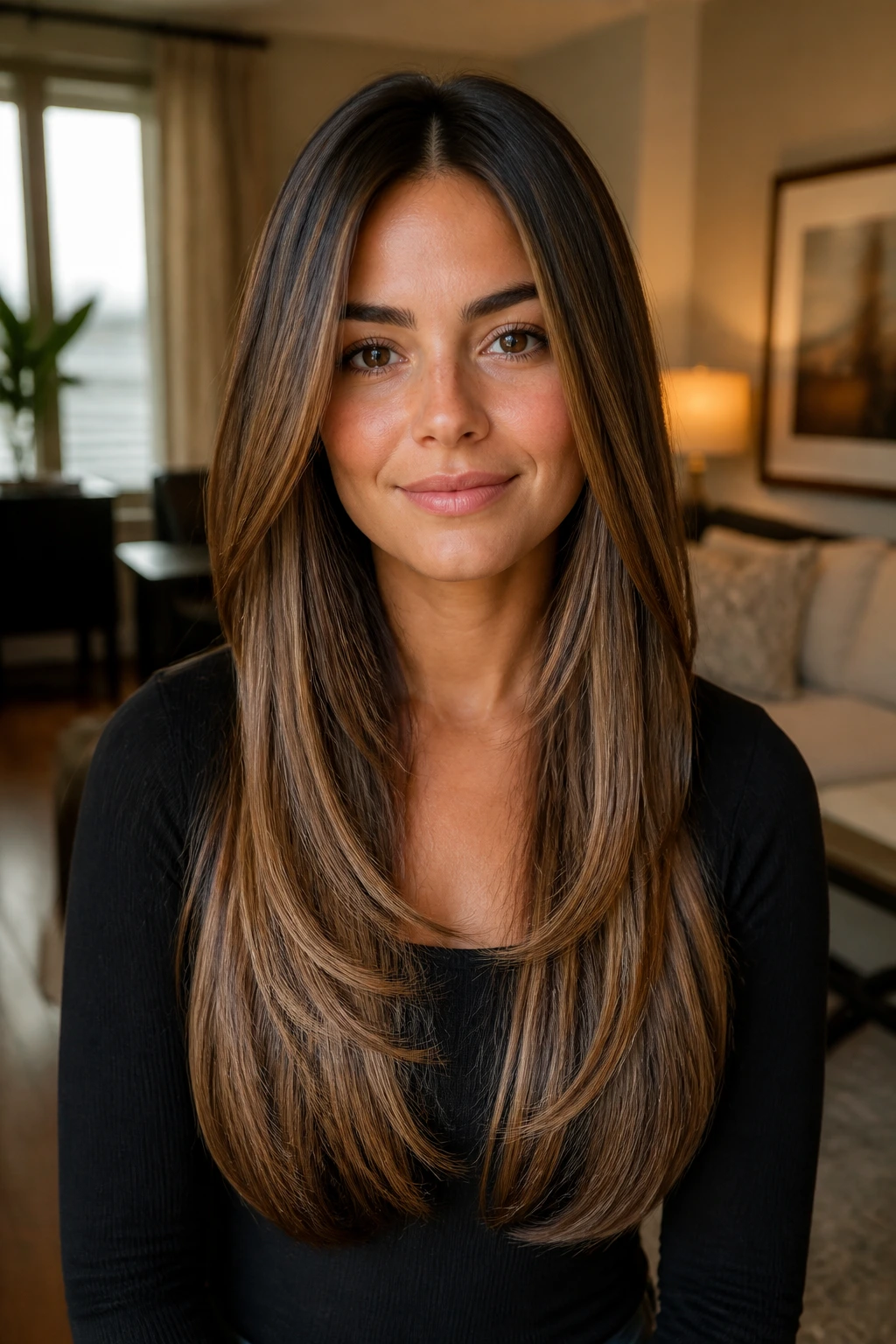
The straight cascade is for people who like long hair to feel layered in motion even when it’s worn dead straight. The layers are long, the surface stays smooth, and the caramel highlights are balanced with lowlights so the whole head has depth from root to tip.
This is the style I’d choose if the hair has lost some richness and needs a visual reset. The lowlights give the caramel something to sit against, which keeps the color from looking flat in indoor light. There’s a quiet luxury to that mix — darker base, warm midtone, clean line at the bottom.
Why Straight Hair and Caramel Highlights Work So Well Together
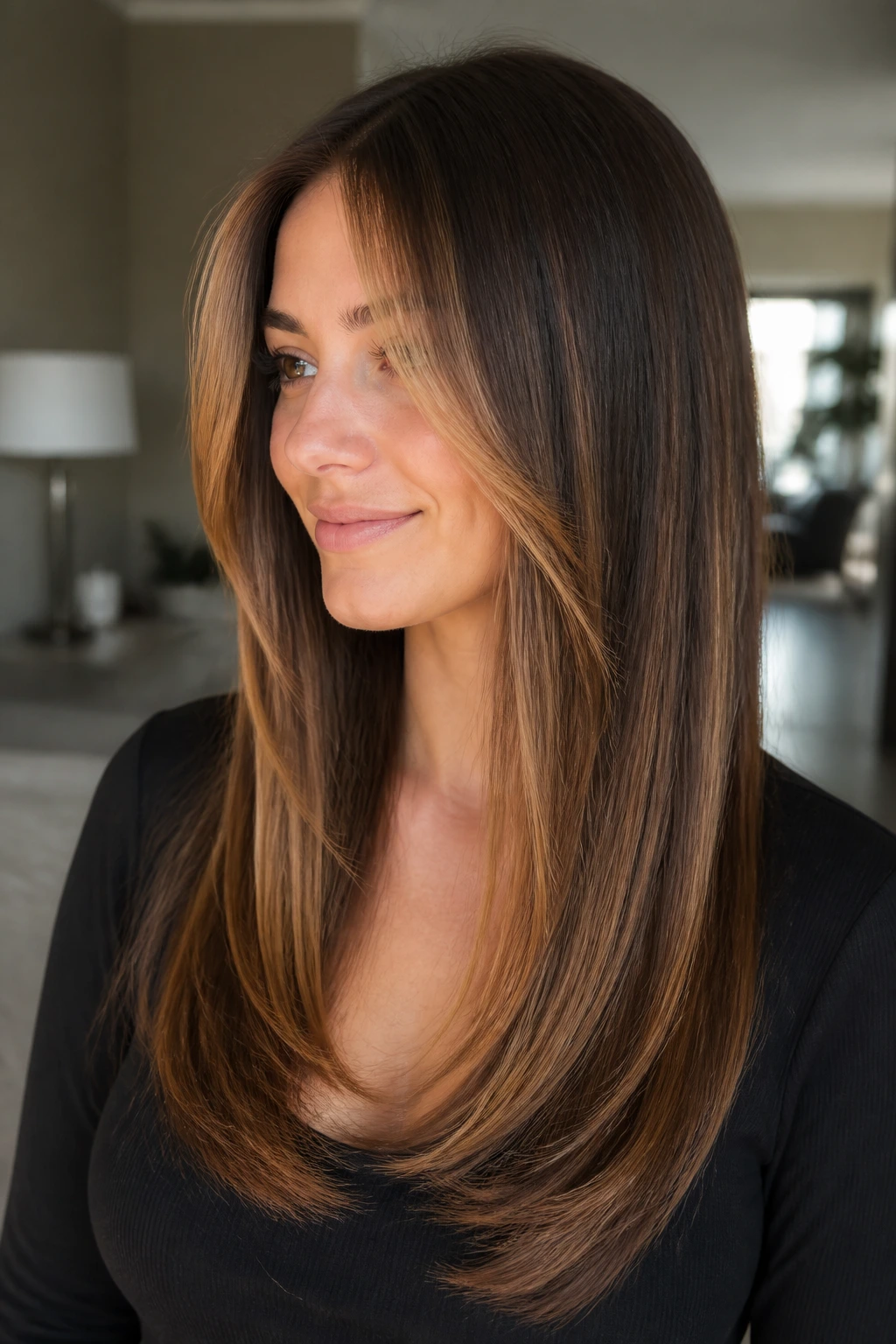
Straight hair is unforgiving in a useful way. It tells the truth about the cut. If the hemline is crooked, you see it. If the layers are uneven, you see that too. That can sound harsh, but it’s why straight hair rewards precision so well. A sharp U-cut, a blunt line, or a long layer pattern can look cleaner on straight hair than on almost any other texture because the shape stays visible.
Caramel highlights pull weight in the same quiet way. They don’t need to scream to change the look. A few ribbons around the face, a soft gloss through the midlengths, or a darker lowlight underneath can stop a long cut from looking like a single flat sheet. The warmth also matters. Caramel reads softer than pale blonde and usually sits more naturally against brown bases, especially when the hair is worn smooth and reflective.
The other thing straight hair does well is show placement. On waves or curls, color can disappear into the texture. On straight lengths, you can see whether the highlights were put in where the hair actually moves — around the face, through the center, under the top veil, or at the ends where the shape needs help. That’s why the best straight haircuts for long hair with caramel highlights feel planned from every angle. They don’t just rely on length.
What to Ask for at the Salon Before the Foils Go In
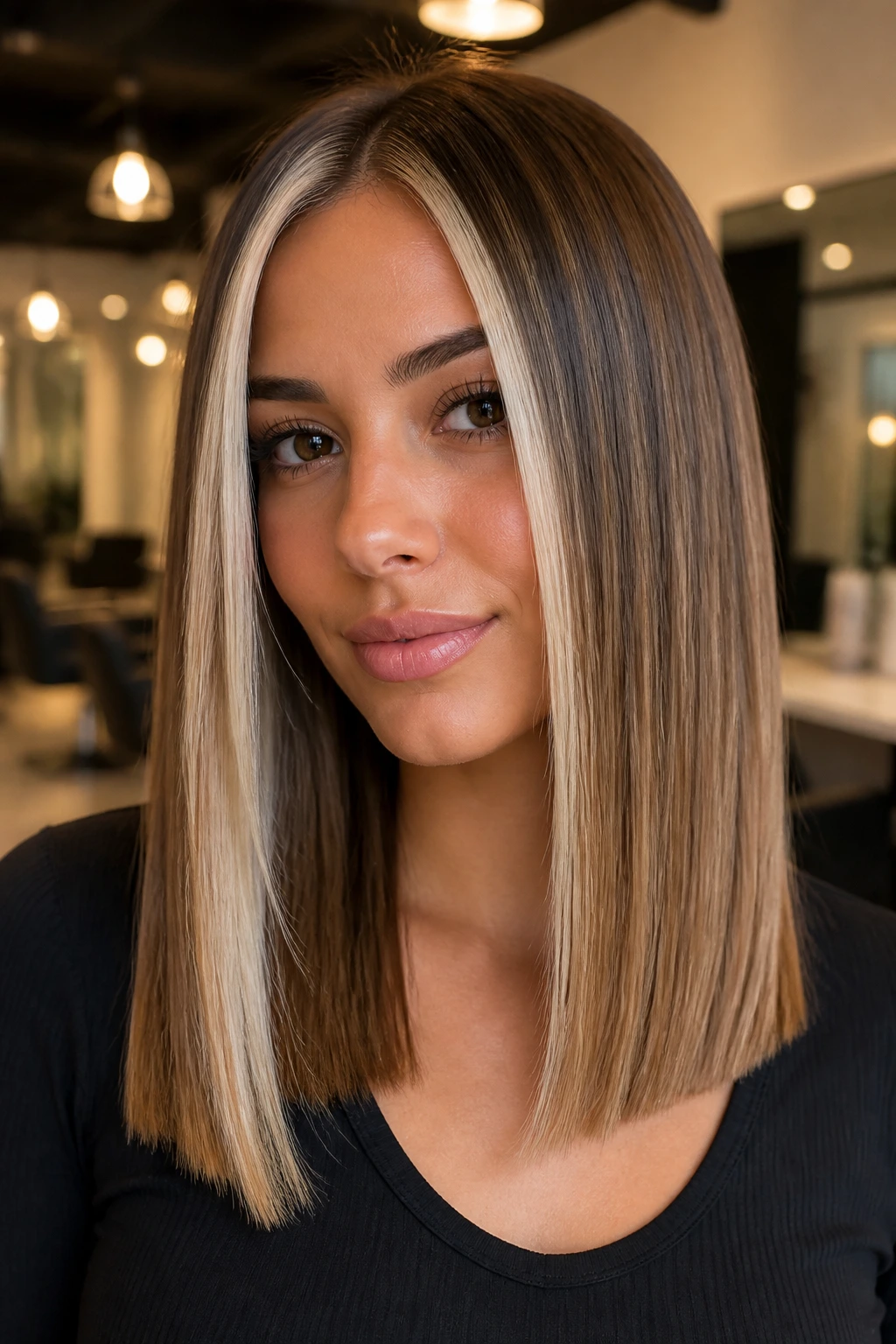
Bring two photos if you can: one for the cut and one for the color. People often show one picture and expect the stylist to guess the rest, which is a fast way to end up with layers you didn’t want or caramel that runs too gold. Say whether you wear a center part, a side part, or both. That detail changes where the light pieces should sit.
For color, ask for caramel in the warm brown range, not pale blonde. If your base is dark brown, a level 6 to 7 caramel usually looks richer and less brassy than something too light. If your skin looks better with softer tones, ask for a beige or neutral gloss over the highlights. If you want more glow, a golden caramel reads brighter without crossing into orange.
Ask about placement, too. Face-framing money pieces, midlength ribbons, underlights, and lowlights all do different jobs. A good colorist will not put the same highlight pattern on a one-length blunt cut and a long shag. They shouldn’t. The shape matters.
Tools That Keep Long Straight Hair Smooth
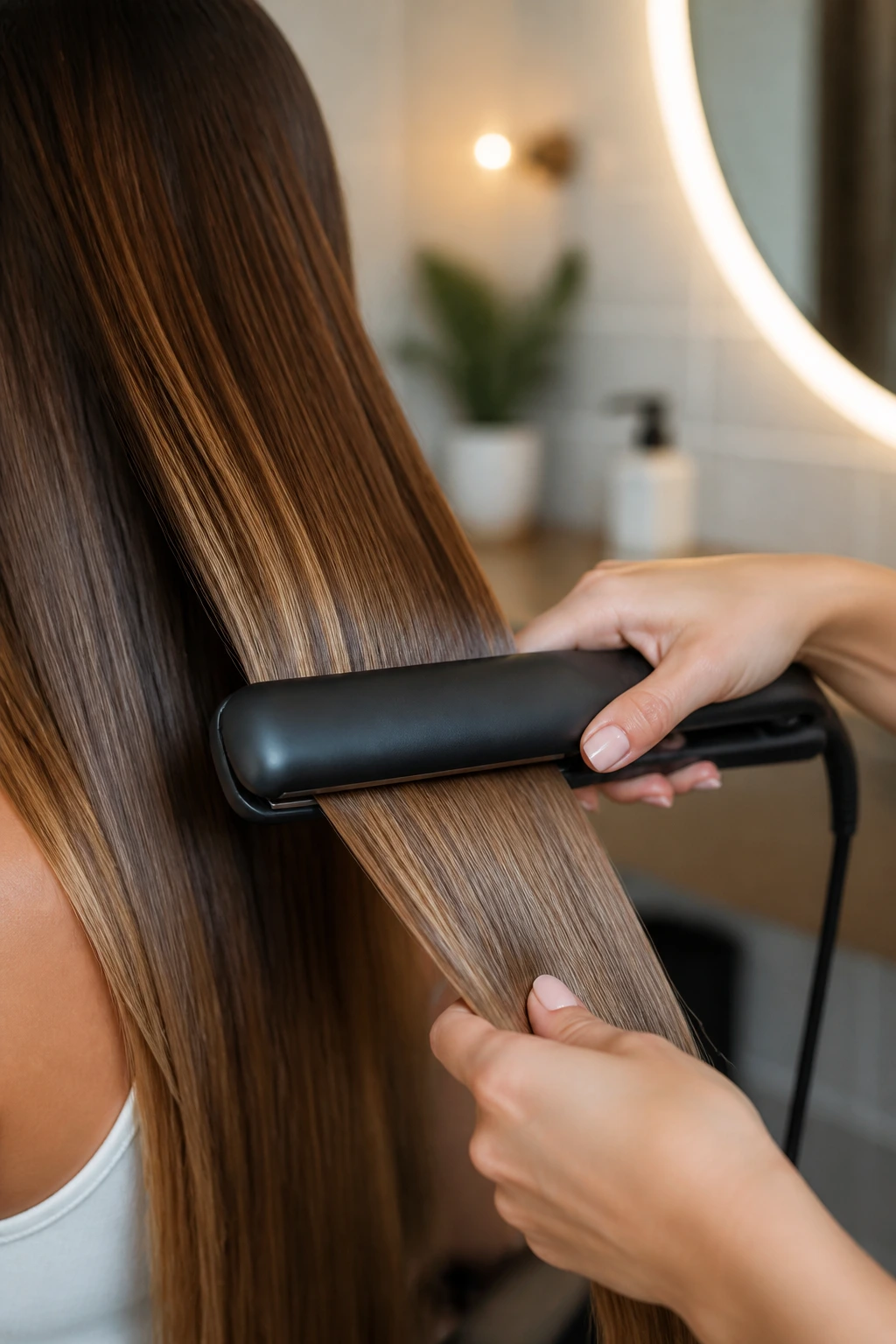
- Ceramic flat iron: A 1-inch iron works for smoothing the lengths and putting a tiny bend at the ends.
- Heat protectant spray or cream: Use it every time before hot tools; straight hair shows heat damage fast.
- Wide-tooth comb: Helps detangle long hair without yanking the highlight pieces.
- Tail comb: Useful for clean part lines when you want the caramel placement to show.
- Microfiber towel: Cuts down on frizz after washing, especially at the crown.
- Color-safe shampoo: Keeps the caramel from fading too quickly and helps the gloss last longer.
- Lightweight leave-in conditioner: Best on midlengths and ends so the hair stays smooth without going limp.
- Shine serum or finishing oil: A drop or two on the ends is enough; too much makes straight hair look greasy fast.
- Salon clips: Handy for sectioning when you’re blow-drying or flat-ironing in layers.
- Root-lift spray: Optional, but useful if your straight hair tends to collapse at the crown.
How to Wear These Cuts Day to Day
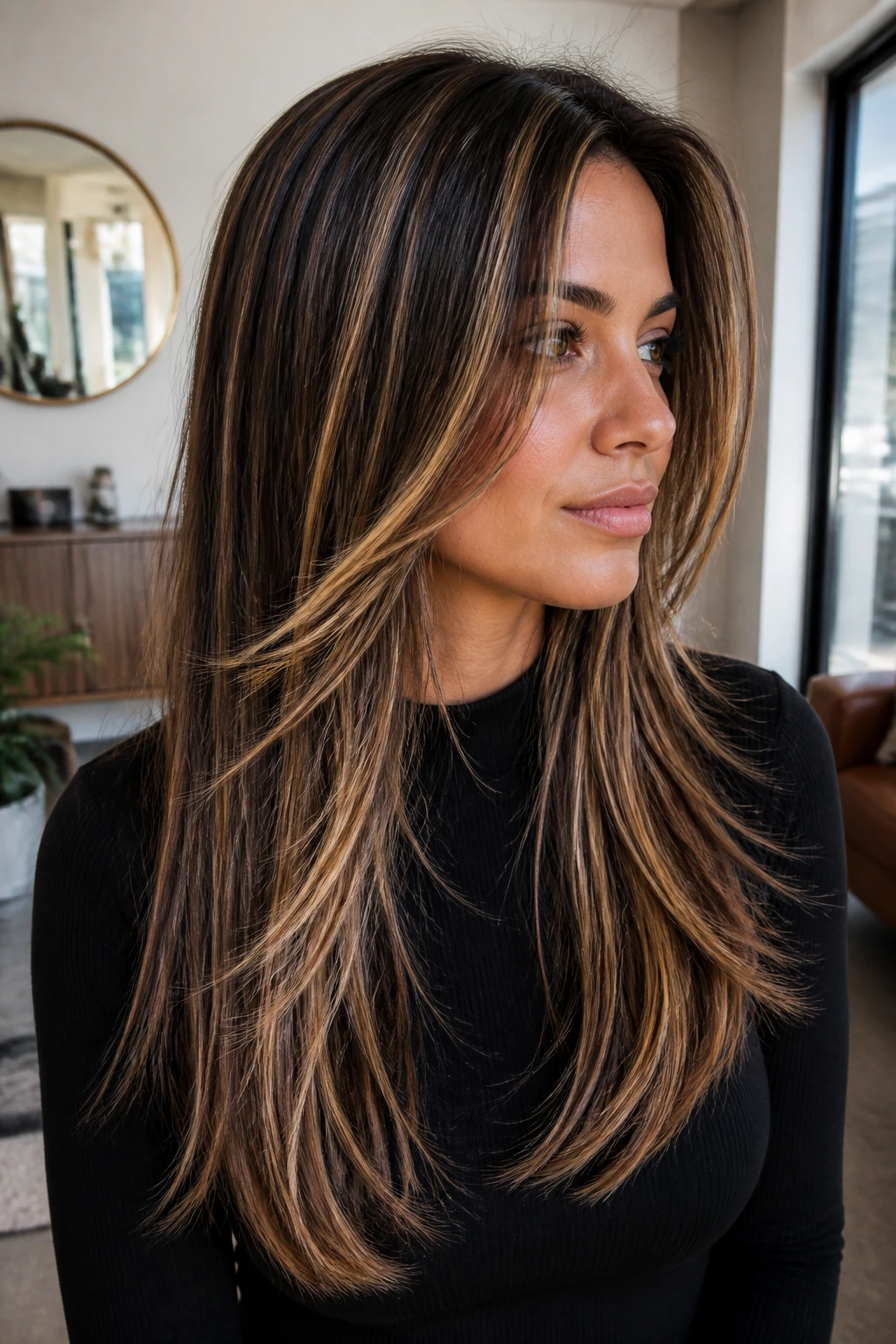
Polished center part: This is the cleanest way to show off a blunt cut, U-cut, or glass-hair finish. Keep the roots smooth, tuck one side behind the ear, and let the caramel frame the cheekbones. The result looks deliberate without much effort.
Slight bend at the ends: If your hair is pin-straight and tends to look harsh, put a tiny inward bend into the last inch or two. That works especially well on V-cuts, beveled ends, and long layers because it keeps the bottom edge from feeling abrupt.
Tucked and loose: One ear tucked and the other left forward is a small move, but it shows off money pieces, curtain bangs, and underlayer highlights. It also stops long hair from looking like one flat curtain. Small change. Big difference.
Soft side part: If your face feels overwhelmed by a center part, shift the hair a little off-center and let the caramel sit on the heavier side. This is especially good for deep side-part cuts and square or round face shapes, where the extra diagonal line helps.
Extra Styling Tips and Shine Boosters
Gloss refresh: If your caramel starts to look dull or a little orange, a clear or beige gloss can pull it back into shape. I like glosses because they don’t change the cut — they just make the color sit better on the hair.
Heat settings: Fine hair usually does better around 300°F to 325°F on a flat iron. Thicker hair may need 350°F, sometimes 375°F if the texture is stubborn, but don’t treat heat like a contest. More temperature is not more polish. It’s usually more damage.
Root lift without curls: Clip the roots while the hair cools after blow-drying, then release the clips once the hair is dry. That gives straight styles a little more height at the crown without turning the ends into a wave pattern.
Make-it-yours: If your hair feels too plain, add a money piece or underlights. If it feels too busy, cut back the highlight count and keep only the face frame. A style like this should fit your life, not just your reference board.
Care, Touch-Ups, and Grow-Out
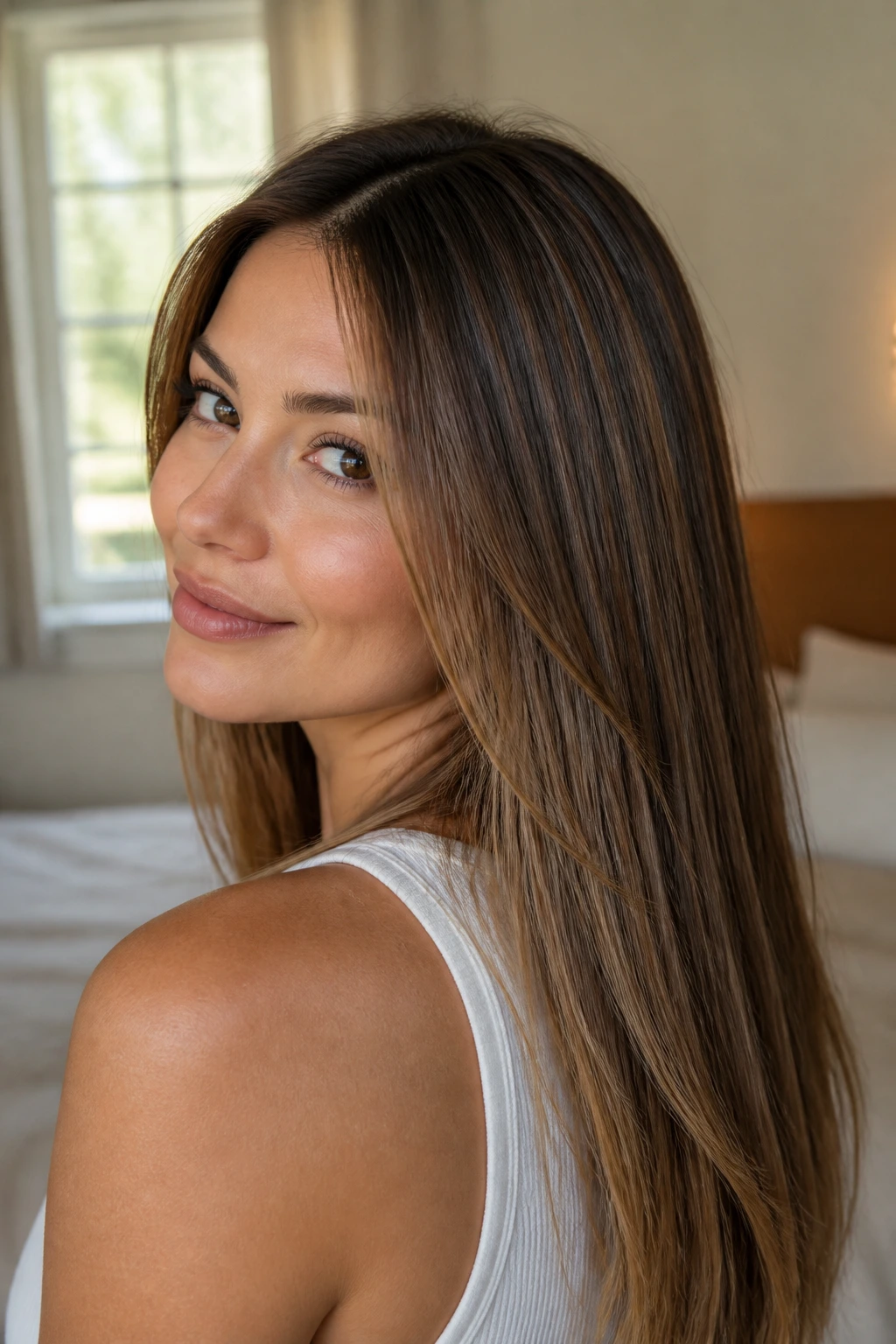
Long straight hair with caramel highlights stays nicest when you keep the trim schedule honest. For blunt cuts and beveled ends, trimming every 8 to 10 weeks keeps the hemline from fraying. Softer U-cuts and long layers can usually go 10 to 12 weeks if the ends still look full. Let them go much longer and the bottom starts to lose shape, especially on straight hair.
Color maintenance depends on how bright the caramel is. Subtle balayage and underlights can stretch to 8 to 12 weeks between salon visits, sometimes longer if the root area is soft. Money pieces and stronger face-framing foils usually need attention sooner because they grow out where you see them most. If the tone starts leaning too warm, a gloss appointment can reset it without a full re-lightening session.
At home, wash with cool or lukewarm water when you can, because hot water pushes color out faster. Use a color-safe shampoo, condition the midlengths and ends, and keep heat protectant in the routine every single time you style. Straight hair shows breakage in the light, and caramel highlights can make dry ends look even drier if you skip the basics. There’s no glamorous shortcut there. The upkeep is the style.
Variations and Adaptations to Try
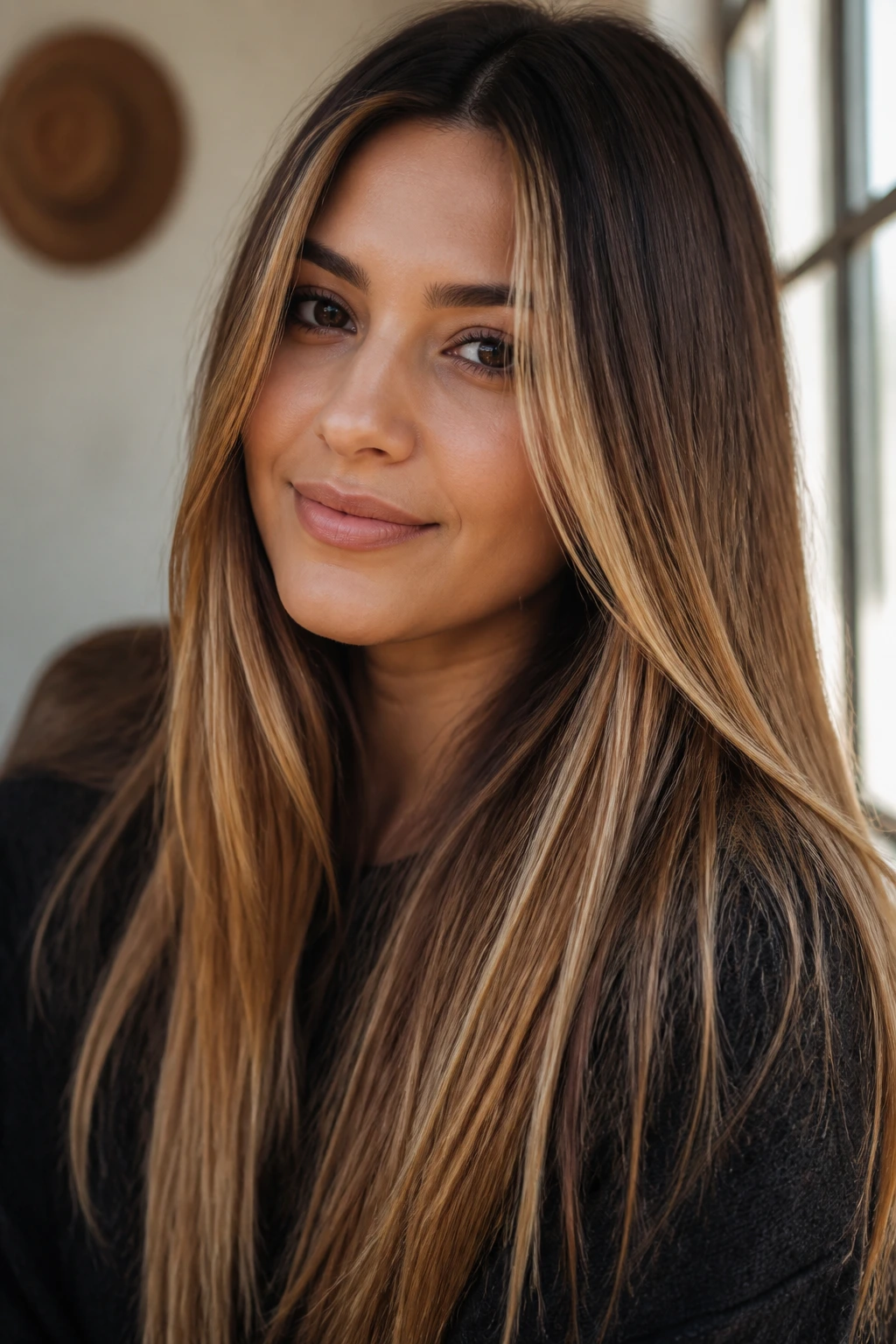
Soft Bronde Shift: Swap the caramel for a slightly cooler bronde if your skin looks better in beige tones. This keeps the hair warm without pushing it orange.
Honey-Gold Glow: Use a brighter honey caramel through the front pieces and midlengths if you want the hair to catch more light. It works best on medium brown bases.
Dark Root Melt: Keep the root area deeper and let the caramel start lower through the lengths. This makes grow-out easier and gives straight hair a more lived-in feel.
Low-Contrast Beige Caramel: Ask for a softer, less obvious caramel if you want the color to read expensive rather than loud. This is the one I’d pick for office-friendly hair.
Rich Lowlight Blend: Add a few brown lowlights if the highlights feel too one-note. The extra depth makes long straight hair look fuller, especially in indoor light.
Bright Front Frame: Keep the back quiet and concentrate the caramel around the face. If you want a quick visual lift without committing to a full head of color, this is the fastest route.
Common Mistakes That Flatten the Look
Too much lightness everywhere: If every section is highlighted the same way, the hair loses depth and starts looking thin. Straight hair needs contrast, not uniform brightness. Keep some darker space between the caramel pieces.
Over-layering the ends: This is a big one. When the bottom gets thinned too aggressively, long straight hair starts to look wispy and sad at the ends. Keep the perimeter strong, then build movement above it.
Caramel placed only at the very tips: That can make the hair look dipped instead of dimensional. Put the light pieces where the eye naturally goes — around the face, through the midlengths, and inside the shape.
Skipping tone maintenance: Caramel can drift too gold or too brassy if it’s ignored. A gloss or toner helps it stay warm instead of orange. If the color starts looking muddy, that’s the first fix I’d reach for.
Using too much oil: Straight hair gets greasy fast, and highlight pieces show buildup even faster. One small drop on the ends is enough. If the hair feels sticky, you used too much.
Questions People Ask Before Booking
Will caramel highlights work on very dark brown hair?
Yes, but the tone has to be chosen carefully. On very dark bases, a caramel that stays warm and rich — not pale — usually looks the most natural and keeps the hair from turning striped.
Are blunt cuts or layered cuts better for long straight hair?
Both can work. Blunt cuts look denser and sharper, while long layers add motion and stop the length from feeling heavy. If your hair is fine, I lean blunt or only lightly layered; if it’s thick, layers usually help.
How often do I need to trim this style?
Most long straight cuts need a trim every 8 to 12 weeks. Blunter hems need the tighter end of that range, because the line shows every uneven bit.
Is balayage better than foils for caramel highlights?
Balayage gives a softer grow-out and a more blended finish. Foils give more precise brightness, especially around the face. If you want a clean, glossy straight look, either can work — it depends on how visible you want the color.
Can I keep this style low-maintenance?
Yes, if the color is placed with grow-out in mind. Soft ribbons, a root shadow, and a good gloss can stretch salon visits farther than a high-contrast highlight job.
What if my ends are thin?
Skip heavy thinning and keep the perimeter fuller. A U-shape or blunt line will usually make the ends look thicker than a V-cut or shaggy finish.
Do caramel highlights make straight hair look flatter if they’re too dark?
They can, if the color sits too close to the base and there’s no contrast at all. The cut then carries all the visual weight. A few brighter face-framing pieces usually fix that.
Can I wear this look if my hair has a slight wave?
Absolutely. Straight styling just makes the shape and color more obvious. A little bend at the ends can actually help the caramel catch the light better.
A Finish That Still Looks Clean on Day Three
The nicest thing about long straight hair with caramel highlights is that it can look deliberate without looking overworked. A blunt line can feel strong. A layered cut can feel soft. The caramel can be barely there or obvious from across the room. The common thread is shape — when the cut is right, the color has somewhere to go.
That’s the part people miss when they ask for “lighter pieces.” The cut matters first. The caramel just gives the line more life. Keep the hemline tidy, keep the tone warm, and let the highlights support the shape instead of covering it up. If you do that, the style stays polished even when the rest of the day is a mess.