



Money piece highlights change the whole mood of an updo. A plain bun can go a little severe the second the hair disappears off the face, but those lighter front strands pull the eye back to the cheekbones, the jaw, the eyes. That’s why a low chignon, a French twist, or even a simple knot suddenly feels more finished when the front pieces are doing their own little bit of work.
There’s also a practical side to it. Date-night hair lives under restaurant light, car light, bathroom light, and the odd flash of someone’s phone camera, which means the shape has to hold up from more than one angle. Money piece highlights help with that because they create contrast at the front line of the style, so even the neatest bun keeps a bit of movement around the face. It reads softer. Sharper too, if that’s the look you like.
The best part is how forgiving this pairing is. You do not need waist-length hair or a salon-level blowout to make it work. A clean part, a few pins, a touch of texture at the roots, and a well-placed front piece can do more for the final look than another layer of spray ever will. The trick is choosing an updo that lets the highlights stay visible instead of burying them in the back of the head.
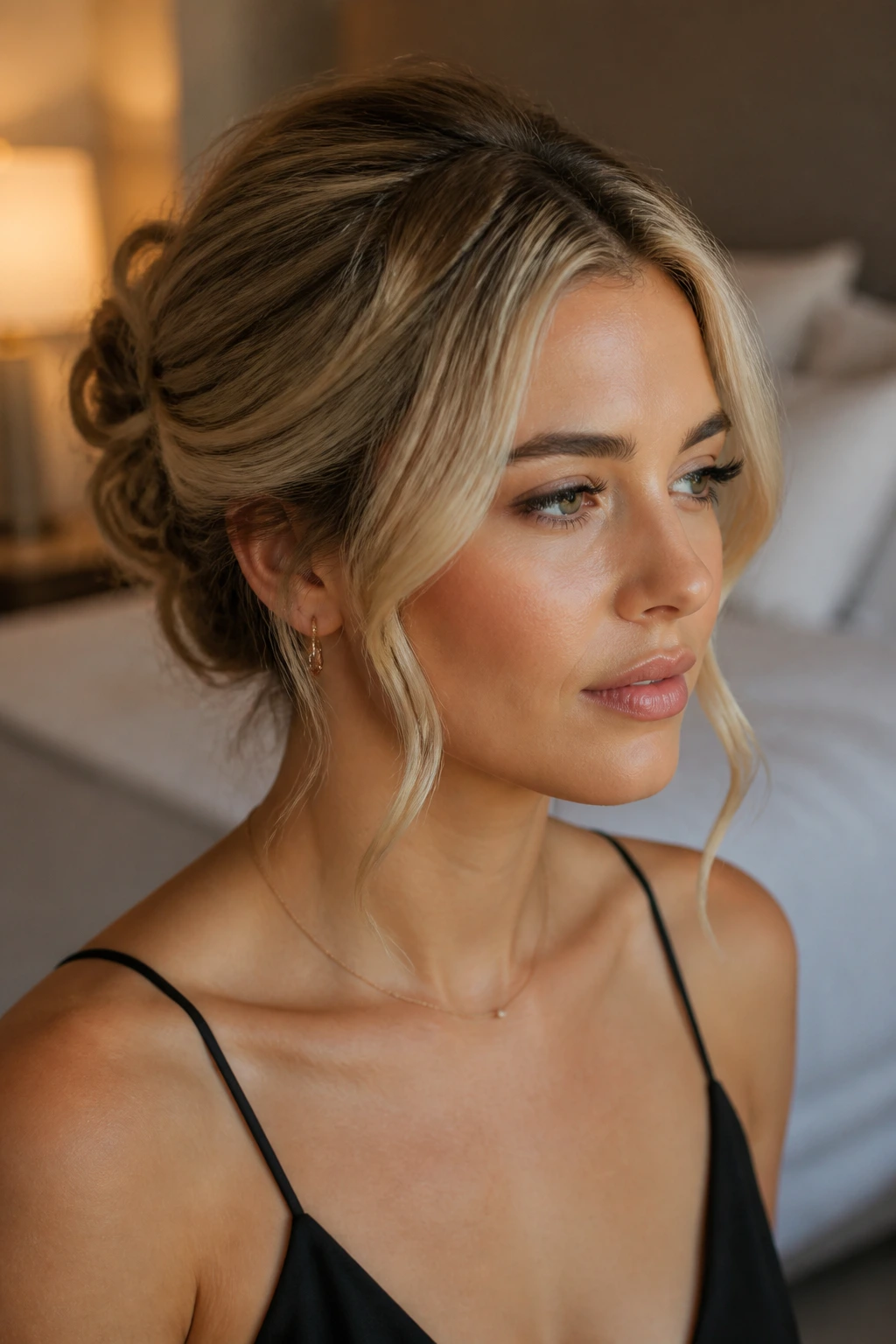
Why These Updos Work So Well with Money Piece Highlights
-
Face-framing contrast: Bright front strands keep a pinned-up style from looking flat by drawing attention back to the eyes and cheekbones.
-
Less severe shape: A soft bend at the temples or a loose front ribbon breaks up the strong lines of a bun, French twist, or chignon.
-
Color gets a job: When the lighter pieces sit near the face, they stop reading like leftover color and start acting like part of the style.
-
Works with different highlight widths: Chunky blonde money pieces, soft caramel ribbons, and cooler ash tones all change the mood in a useful way.
-
Easy to dress up or down: The same base updo can lean polished, romantic, or a little undone depending on how you place the front strands.
-
Better in low light: Dim rooms flatten a lot of hairstyles, but money piece highlights keep the front of the style readable even when the back disappears.
1. Low Chignon with Soft Face-Framing Pieces
A low chignon is the one I’d reach for first when I want the hair to look calm but not stiff. The knot sits just above the nape, which keeps the profile neat, while the money piece highlights are left out in slim ribbons around the temples and jaw. That contrast is the whole point: smooth back, soft front, no helmet shape.
The style works because the lower placement gives the face-framing strands enough space to fall naturally. If your money pieces are bright, bend them once with a 1-inch curling iron and brush them out so they sit in a loose S-shape. If they’re warmer and more blended, keep them straighter and let the color do the talking.
Why It Flatters the Front Pieces
A low chignon has enough structure to feel dressed up, but it does not swallow the hairline the way a tighter bun can. The highlight pieces sit right where the eye lands first. That matters. They stop the style from reading like a plain bun from the back of a church pew.
For a date-night look, I like a center part with two wisps left out, each about the width of a pencil. Any thicker and the style starts to feel fussy. Any thinner and the color vanishes into the rest of the hair.
If your hair is layered, use the shorter front layers to your advantage. Pin the rest into a compact knot, then leave the money pieces and the shortest face-framing bits free. The style will look intentional instead of like you ran out of pins halfway through.
2. French Twist with Soft Side Swirls
The French twist always looks a little expensive, even when it’s built with two hands, five bobby pins, and a prayer. With money piece highlights, it gets softer and more modern because the lighter front strands keep the style from becoming too vertical and severe. The contrast between the smooth twist and the loose front pieces is what makes it work.
This is one of the best choices if your highlights are chunky or high-contrast. A very bright money piece against a dark base gives the twist more shape at the temples, which is useful because the back of a French twist is all line and no fluff. Curl the side swirls away from the face, then tuck the rest into the vertical roll at the back.
How to Wear It
Keep the crown smooth, but do not flatten it so hard that the head looks pressed. A little lift at the roots keeps the twist from sitting too low. If your hair is fine, a dusting of texturizing spray at the roots before pinning helps the style hold without puffing out the front.
This style especially likes a clean neckline and earrings that move. Thin drops, small hoops, or a single bright stud all work. The highlight pieces do the framing, so the rest can stay simple.
3. Sleek Center-Part Bun
A sleek center-part bun is the blunt, direct one in the group. No romance tricks. No hidden volume. Just a clean part, a smooth top, and a bun placed low or mid-height so the money pieces can sit on either side of the face and sharpen the whole look.
What makes this version interesting is the contrast between the strict part and the lighter front pieces. If the highlights are narrow, they look almost like a thin line of contour around the face. If they’re wider, the effect is bolder and a little more editorial. Either way, the bun itself should stay small and tidy so the front doesn’t feel overwhelmed.
A boar bristle brush and a pea-size amount of smoothing cream are enough for the top. Do not overdo the product. Too much cream makes the roots collapse, and then the center part loses that crisp line that gives the style its edge. A fine mist of shine spray on the bun is plenty.
4. Braided Crown into a Low Bun
This one has more texture, which makes it a smart choice if your money pieces are soft caramel or honey blonde. The braid around the crown gives the highlights a place to thread through, so the lighter strands stay visible instead of getting tucked away. It’s a nice fix when you want an updo that looks a little more intricate without turning into formal hair.
Start the braid just behind the money piece zone, not too far back. That keeps the lighter face-framing sections loose enough to bend around the temples. Once the braid wraps into the low bun, the front pieces can hang free or get lightly pinned near the cheekbone.
Why It Works with Dim Lighting
Braids catch light in a way that plain twists do not. Under restaurant lamps, the woven sections show depth, and the money pieces add a second layer of brightness around the face. The result is less polished than a French twist, but often better for dinner because it has movement every time you turn your head.
If your hair is slippery, rough up the roots first with dry shampoo. The braid needs grip, and the bun needs something to hold onto. Without that, the whole style loosens too fast.
5. Side-Swept Low Bun
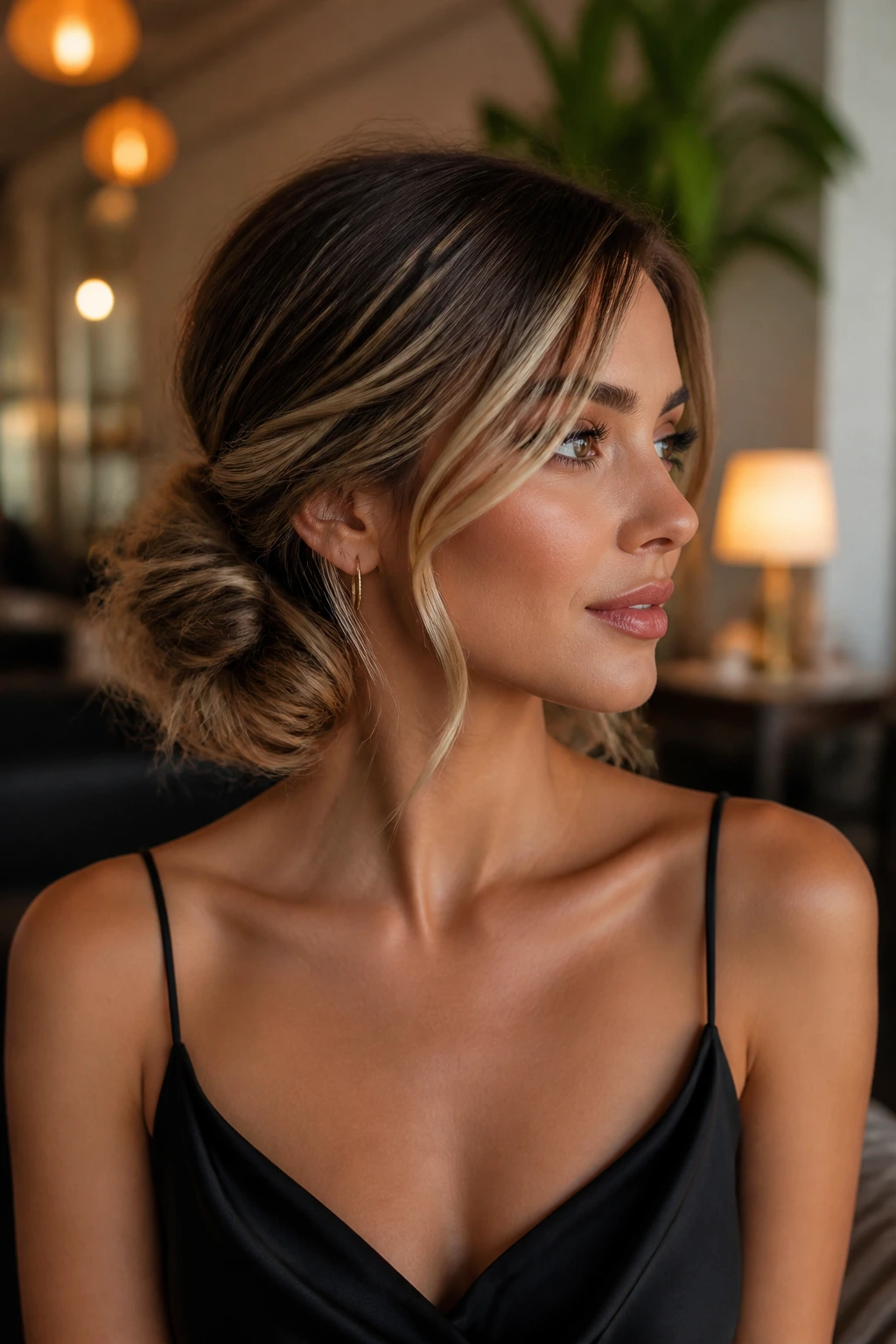
A side-swept low bun is all about asymmetry. One side gets more hair, more curve, more visual weight. The money piece highlights then act like little streaks of light that lead the eye across the face instead of straight down the middle. It’s a flattering shape if you like one shoulder bare, a side part, or a neckline with some detail.
The trick is to keep the front section soft while the bun itself stays snug at the nape. Pull the highlight pieces toward the heavier side and let them curve back toward the ear. If they’re too straight, the style can look accidental. A loose bend makes the whole thing feel designed.
This is one of the easiest styles to wear with statement earrings. The bun sits low enough that the jewelry doesn’t compete, and the brighter front pieces keep the face from getting lost. If you have a rounder face, the diagonal line helps stretch the shape a bit. If your face is longer, leave the front pieces slightly fuller so the style does not get too narrow.
6. Gibson Tuck with Loose Ends
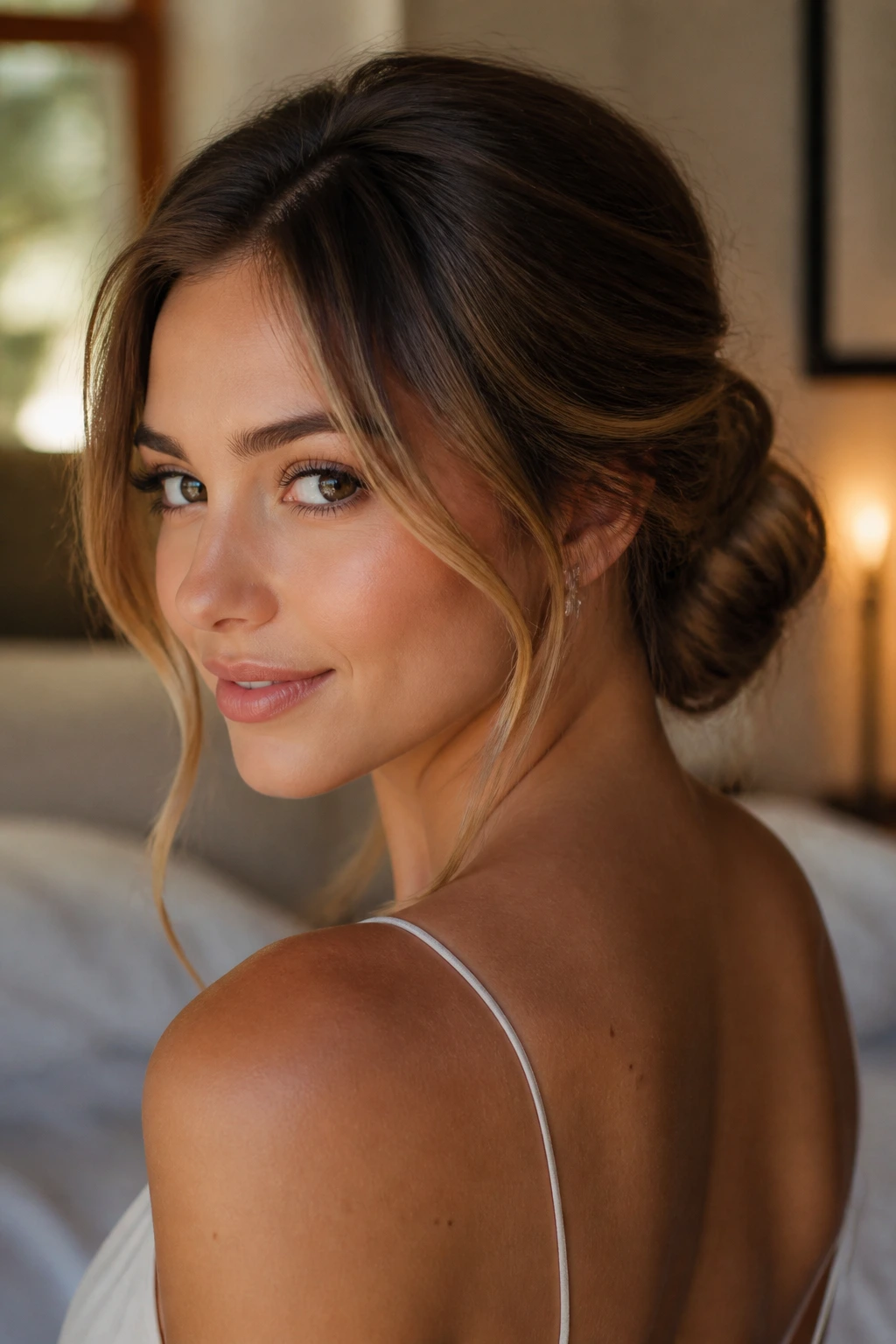
The Gibson tuck has this old-fashioned charm that never looks dated when it’s done with a lighter front frame. Hair is rolled inward along the nape, then tucked so the ends disappear into the fold. With money piece highlights left out around the temples, the style loses its school-photo stiffness and picks up a little softness.
I like this one for medium-length hair because it does not ask for a giant bun. The roll gives enough shape on its own. If your front highlights are very bright, curl the ends under once and leave them to graze the cheekbones. If they’re subtle, keep them straighter so they act like a clean line around the face.
The lovely part is how secure it feels. Once pinned right, it stays put better than most loose updos, which makes it a good dinner style. You can sit back, eat, laugh, and not spend the whole night thinking about your hair.
7. Twisted Nape Knot
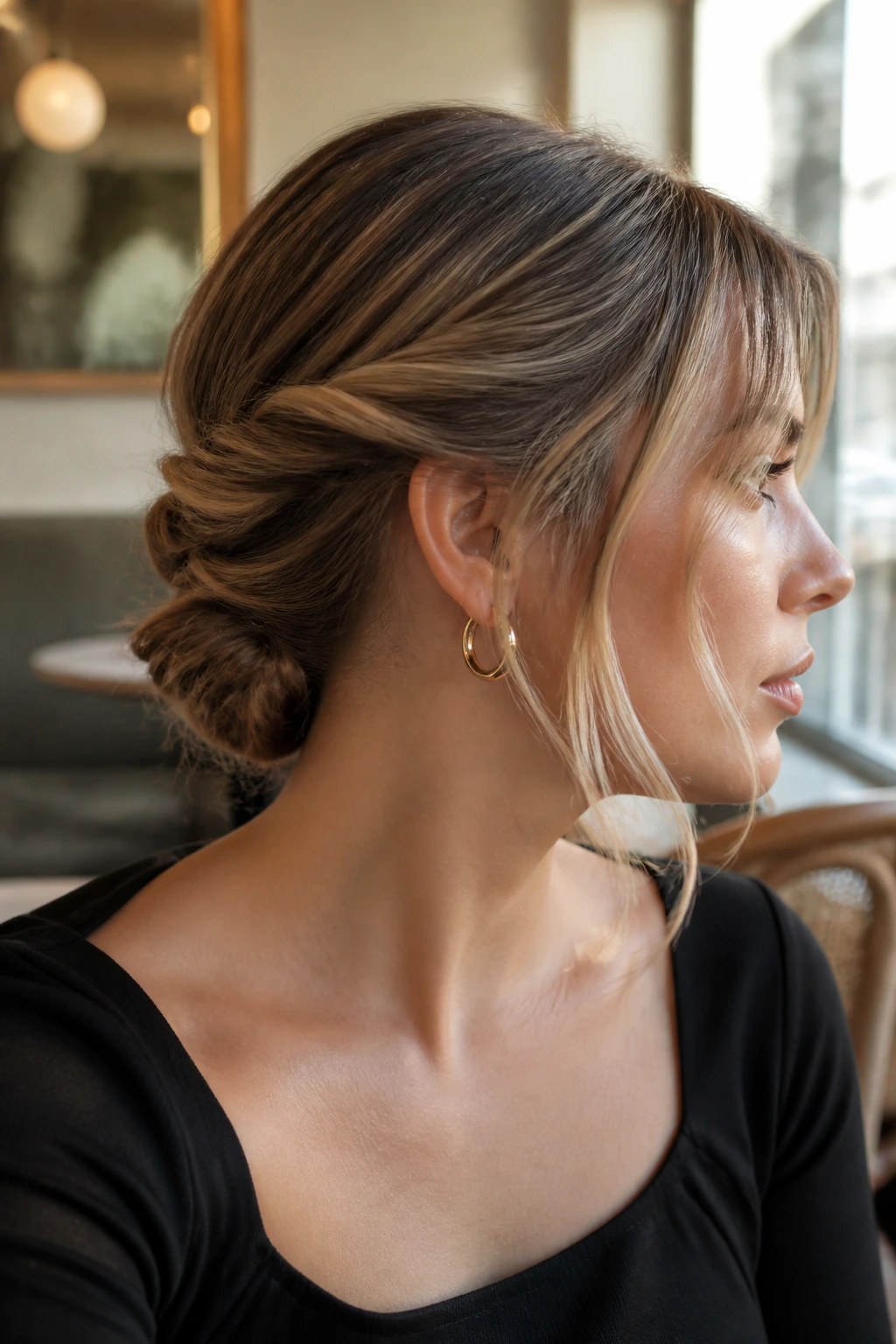
A twisted nape knot is basically the quieter cousin of the chignon. Two sections are twisted toward the back, crossed, and pinned into a small knot right at the base of the neck. It’s neat, fast, and good at showing off money pieces that start high near the temples.
What Makes It Different
The twist creates a little ridge of texture, which gives the highlights something to sit against. That matters with lighter face-framing pieces because a flat back can make them look disconnected from the rest of the style. The twist stitches the front and back together, and that’s what keeps the look coherent.
Leave one front piece thinner than the other if you want a more relaxed finish. It sounds minor, but that tiny imbalance keeps the style from looking copied and pasted. For very straight hair, a little bend in the front pieces is enough. For wavier hair, you can skip the curl and let the natural movement do the job.
This one loves a narrow hairpin rather than a giant claw clip. The shape is small, so the hardware should stay discreet.
8. High Ballet Bun
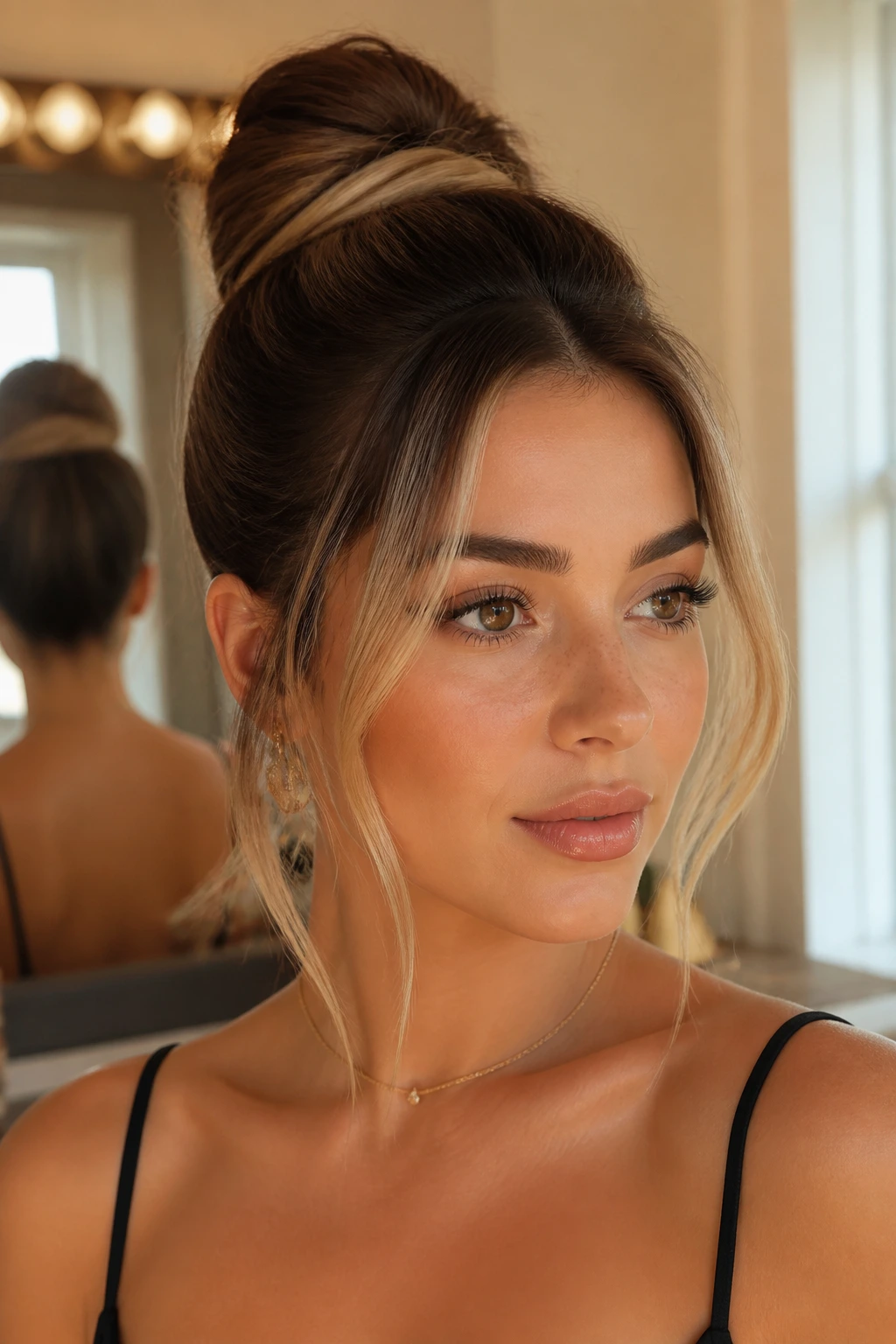
A ballet bun can look severe if it’s too tight, too shiny, and too high. With money piece highlights, though, it gets a sharper frame. The front pieces break up the smoothness and keep the style from looking like a dance recital unless that is exactly what you want.
The bun itself should be centered high enough to lift the face, but not so high that the front strands get pulled back into the scalp. I prefer a slightly off-center wrap for date night. It takes the stiffness down a notch. If the money pieces are pale blonde, a smooth top looks crisp against them. If they’re warm or brunette, a soft root lift makes the contrast read better.
This style is a good match for open necklines and structured clothing. Think square necks, satin tops, fitted jackets. The bun keeps the silhouette clean, and the front highlights do the decorative work the way a necklace would.
9. Wrapped Ponytail Bun
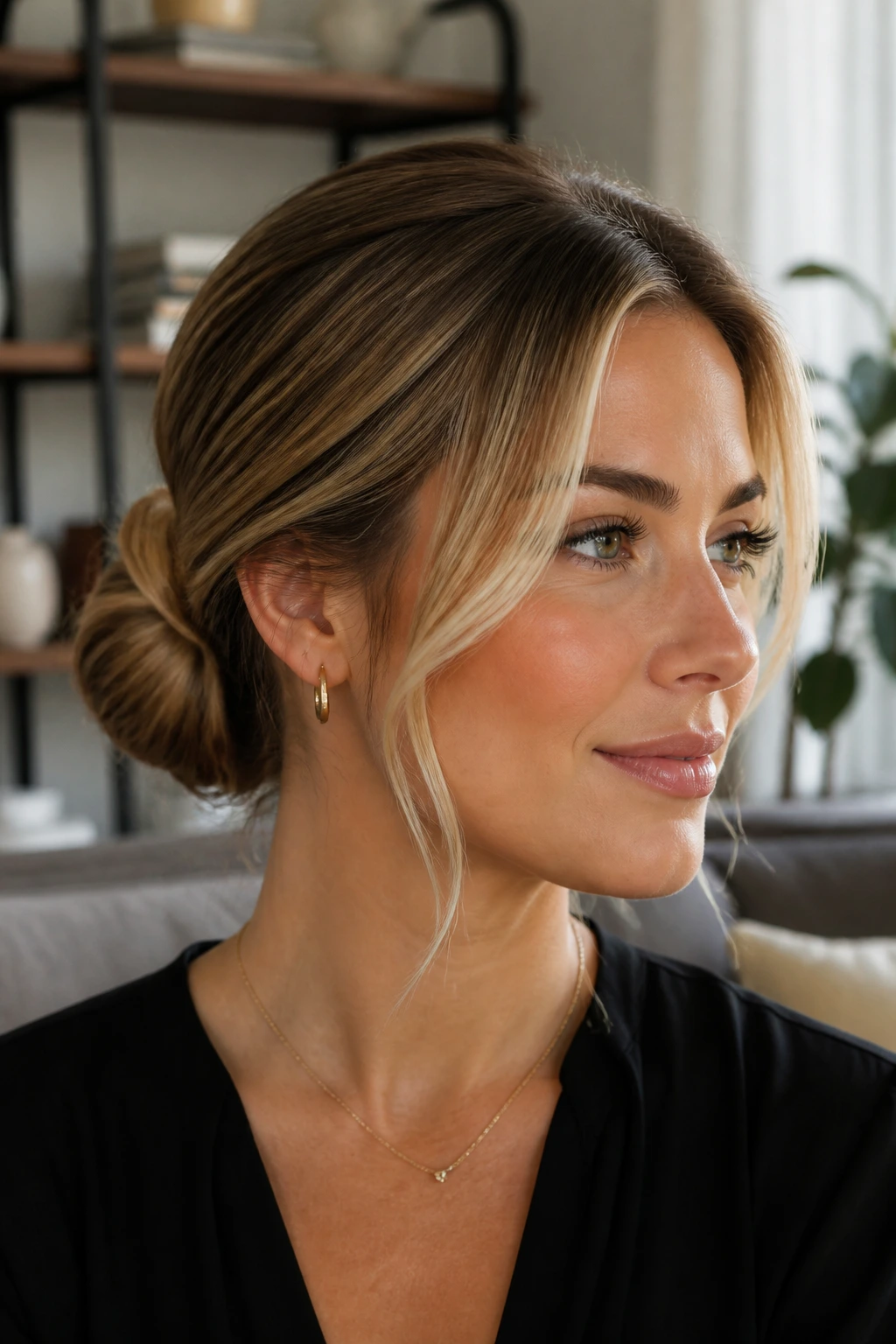
This is the practical one that still looks polished. Build a low ponytail, twist the length around the base, and pin it into a wrapped bun. The money piece highlights stay loose at the front, which keeps the style from looking too sporty or too plain.
Because the bun starts from a ponytail, it has a little more body than a chignon. That makes it a smart choice if your hair is thick or layered. The front pieces should be smoothed with a brush, then bent only slightly. Too much curl makes the style feel more daytime than dinner.
If your highlight pieces are placed a bit farther back, pull a fine strand from behind the temple and let it skim the cheek. That tiny move helps the color show up where the eye expects to see it. Small thing. Big difference.
10. Rope-Braid Bun
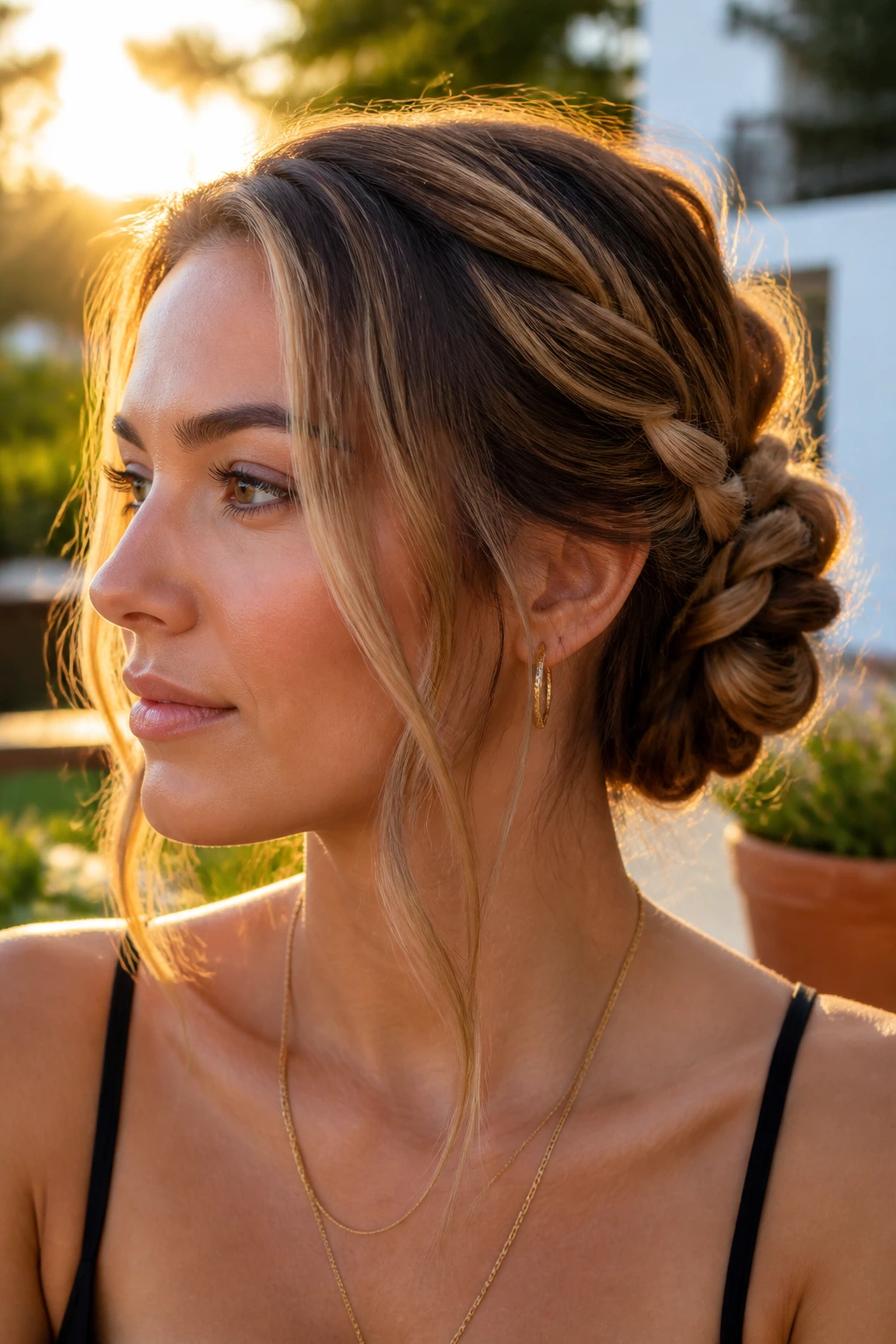
A rope-braid bun brings more texture without getting fussy. Twist two sections around each other, coil them into a bun, and pin the whole thing at the back. The money piece highlights catch along the twist, which makes the lighter strands look woven into the style instead of pasted on top.
This one works especially well when the front color is dimensional — think blonde with lowlights, or caramel with a shadow root. The rope twist gives those tones somewhere to show off. If the hair is very sleek, rough the mid-lengths a touch before twisting. Otherwise the bun can slide.
How to Get the Most From It
Keep the front pieces soft and slightly separated. A dab of styling cream on the ends only, not the roots, is enough. If you apply cream too high, the highlight strands lose their shape and look greasy under bright light. Nobody wants that at dinner.
This is one of the best choices for hair that refuses to stay in a smooth bun. Texture is part of the design here.
11. Rolled French Twist
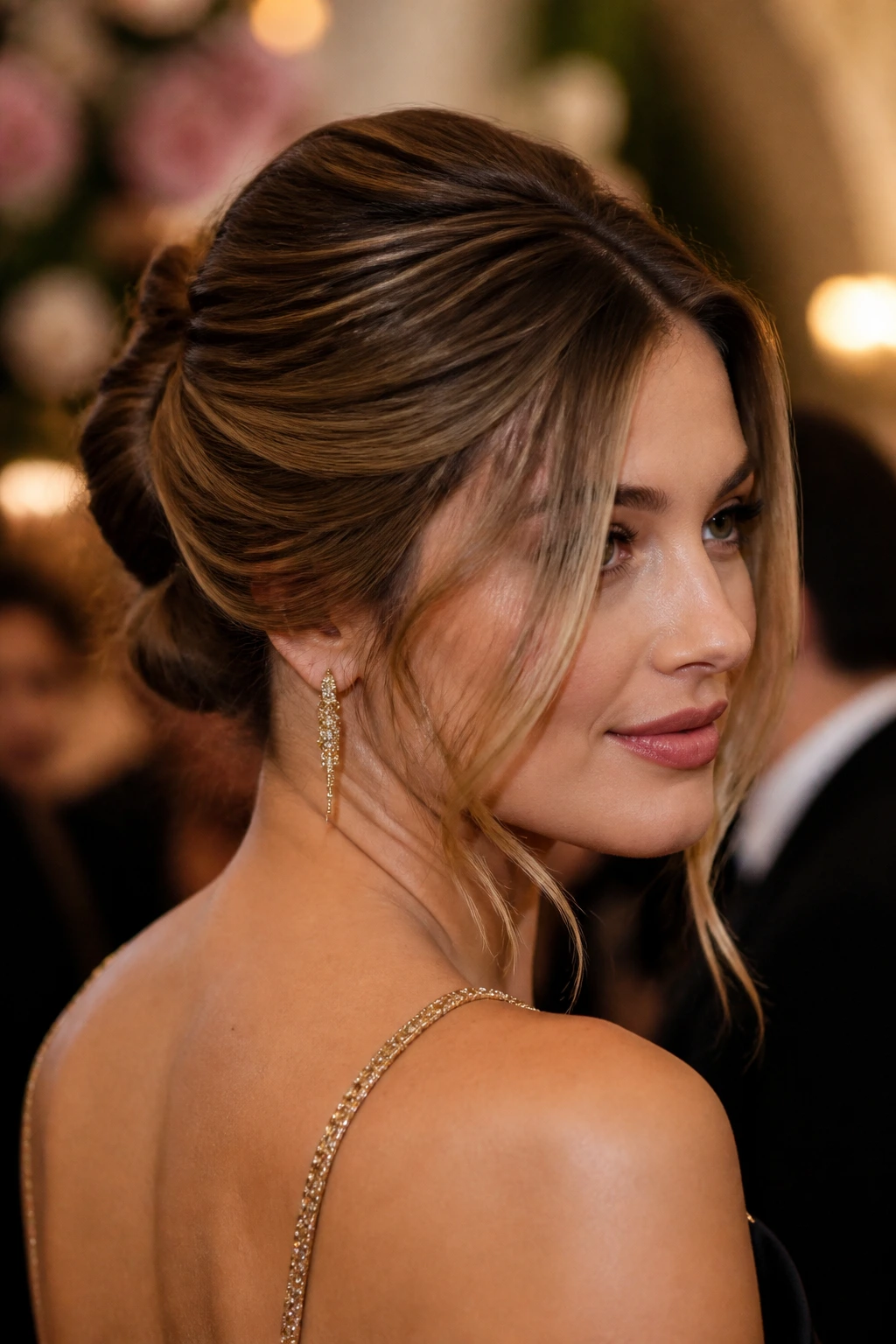
A rolled French twist feels a little softer than the classic version because the hair folds inward more visibly before it’s pinned. That roll makes a good backdrop for money piece highlights, especially if the front strands are left with a gentle curve and not an ironed-flat finish.
The style is strongest when the twist line stays clean and the front pieces stay loose. If the highlights are bold, let them stop around the cheekbone. If they’re delicate, keep them a bit longer so they can frame the mouth and chin too. The rolled back shape does most of the structural work, so the front does not need to be overworked.
This one is a favorite for dresses with a bare back or anything with a high neckline. The neck gets attention, the front pieces add warmth, and the whole thing feels finished without looking hard.
12. Soft Bouffant Bun
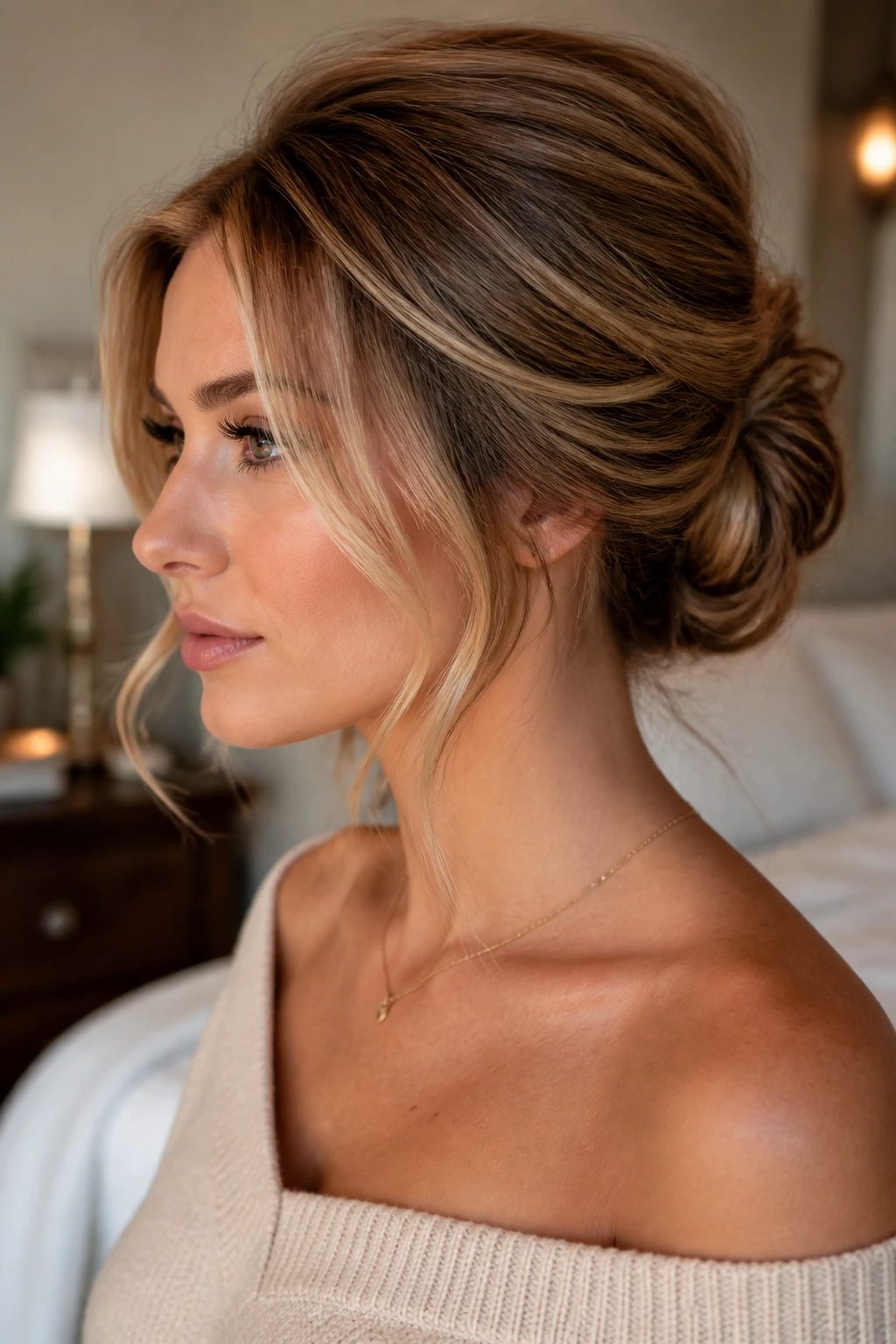
A soft bouffant bun starts with a bit of lift at the crown. Not a giant bump. Just enough height to give the updo some air. That crown volume makes money piece highlights look brighter because it opens up the face and gives the front strands a cleaner line to fall along.
If your hair is fine, tease only the top section and smooth the outer layer back over it. If your hair is thick, you may not need teasing at all; a rounded brush and a blow-dry at the roots can do enough. The bun itself can sit low, which keeps the style from getting too retro.
The crown volume is the piece people often underdo. Too little, and the front highlights feel glued to the head. Too much, and you’re in pageant territory. The middle ground is what looks best at dinner.
13. Double-Twist Low Bun
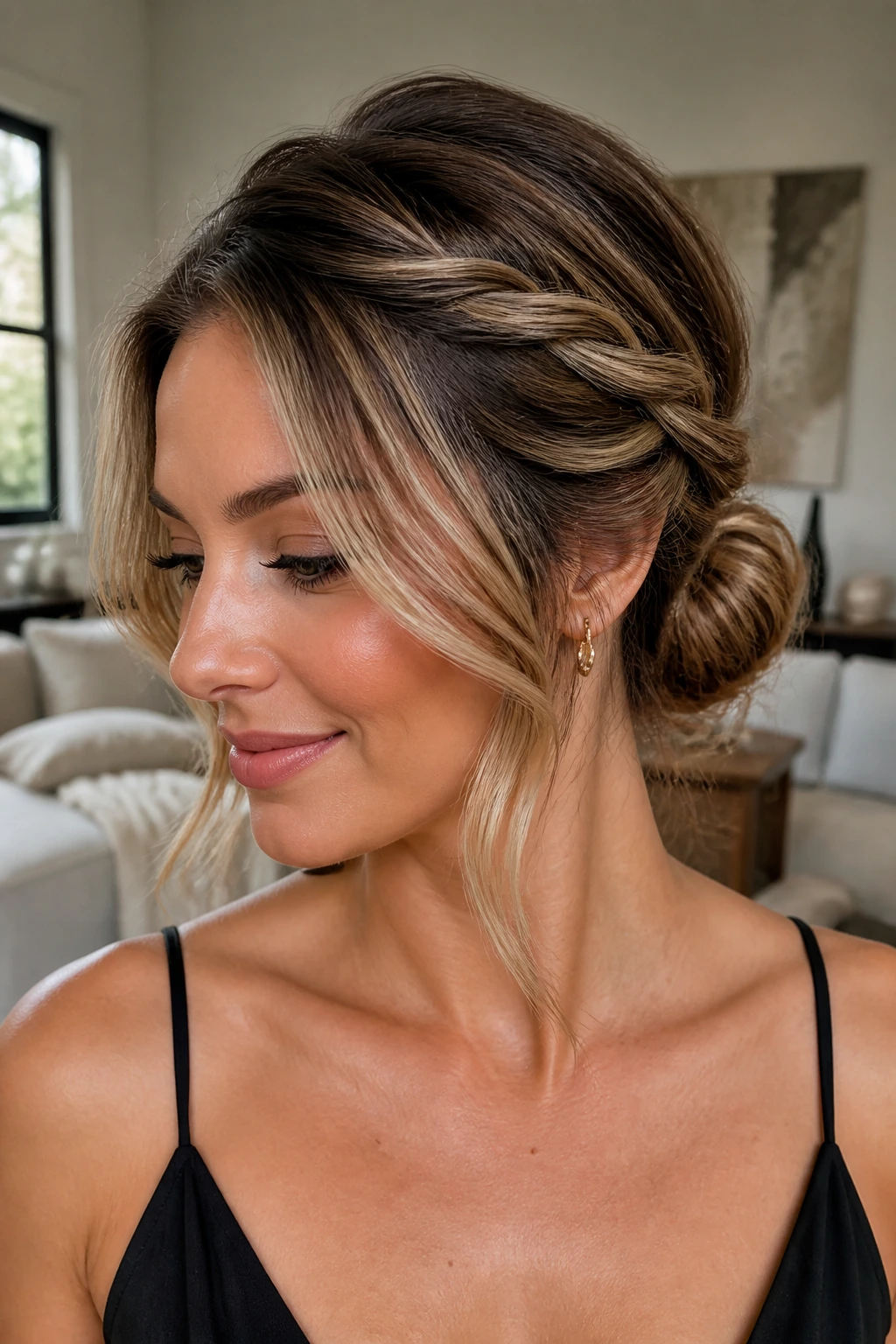
The double-twist low bun gives you a little more shape than a basic knot. Two twisted sections cross over one another before they’re pinned into a low bun, which creates a layered look that money piece highlights can echo at the front. It’s tidy, but not stiff.
This one is useful if your face-framing pieces are a slightly different tone from the rest of your hair. The twist creates enough movement in the back to keep the style balanced. Without that texture, the front color can feel too loud. With it, the whole thing settles nicely.
If you want it softer, pull one twist a little looser at the crown. If you want it cleaner, keep the sections taut and let the front strands do the softening. Either way, use pins that match your hair color. A bright silver pin in dark hair can throw the whole line off.
14. Pin-Curled Bun
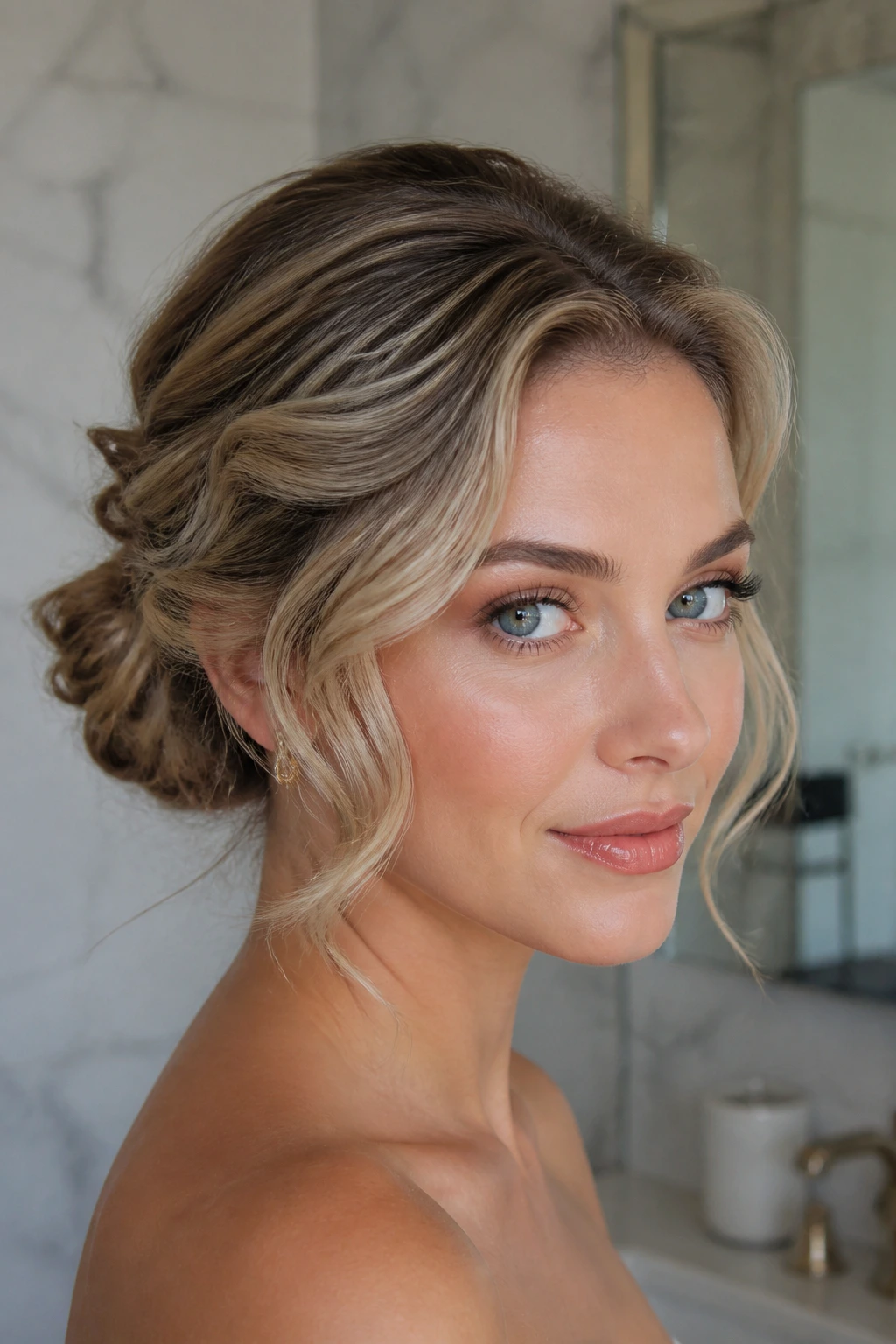
Pin curls are not only for vintage sets and old movie posters. Wrapped into a bun, they give date-night hair a slightly dressed-up shape that still moves. Money piece highlights are useful here because they keep the front from looking too tucked away or too formal.
I like this style for hair that holds curl well. Set the front pieces with a 1-inch iron, pin each curl while it cools, then release and brush them lightly before pinning the rest back. The result is a bun with soft front waves that look like they belong there, not like they were added in a rush.
If you have very straight hair, use a setting spray before curling the front pieces. It buys you a little more memory, which matters because pin curls can fall flat fast if the hair is slippery.
15. Messy French Twist
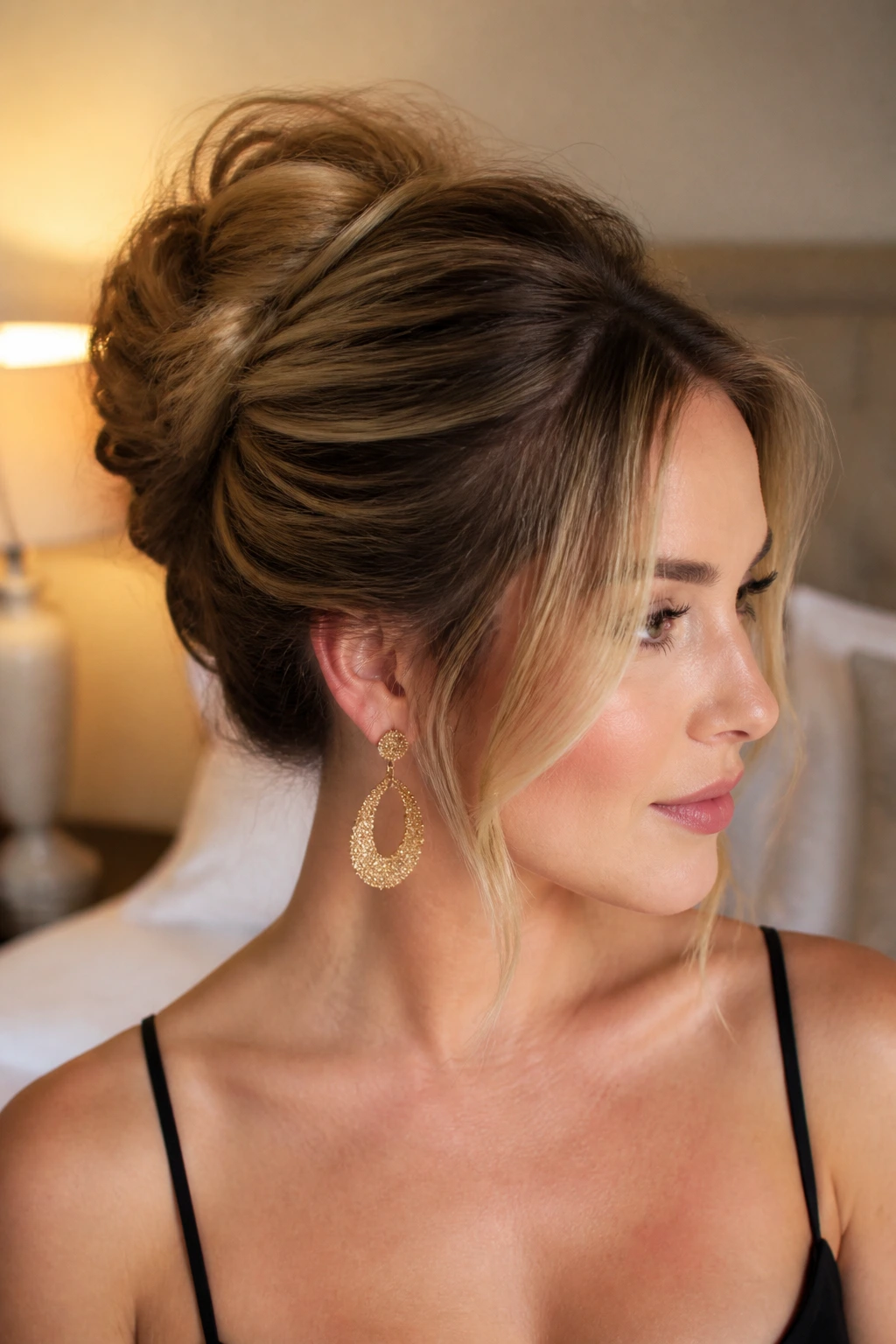
A messy French twist lives on the border between polished and undone, which is why it works so well for a date night where you don’t want your hair to look overmanaged. The money piece highlights make the looseness intentional by giving the face some brightness and keeping the front line readable.
A Quick Guide to the Texture
- Keep the twist itself secure, but leave the top a touch looser than you would for a formal event.
- Pull two thin strands from the temples instead of one thick chunk; the lighter pieces frame the face without taking over.
- Use a matte texturizing spray at the roots if your hair slips. A shiny, over-smooth twist can lose the “messy” part fast.
The beauty of this style is that it forgives a little imperfection. A tiny bump in the twist or a bent piece at the side reads as charm, not failure. That’s a useful thing when you’re getting ready in real life and not in a salon chair.
16. Sculpted Side Bun
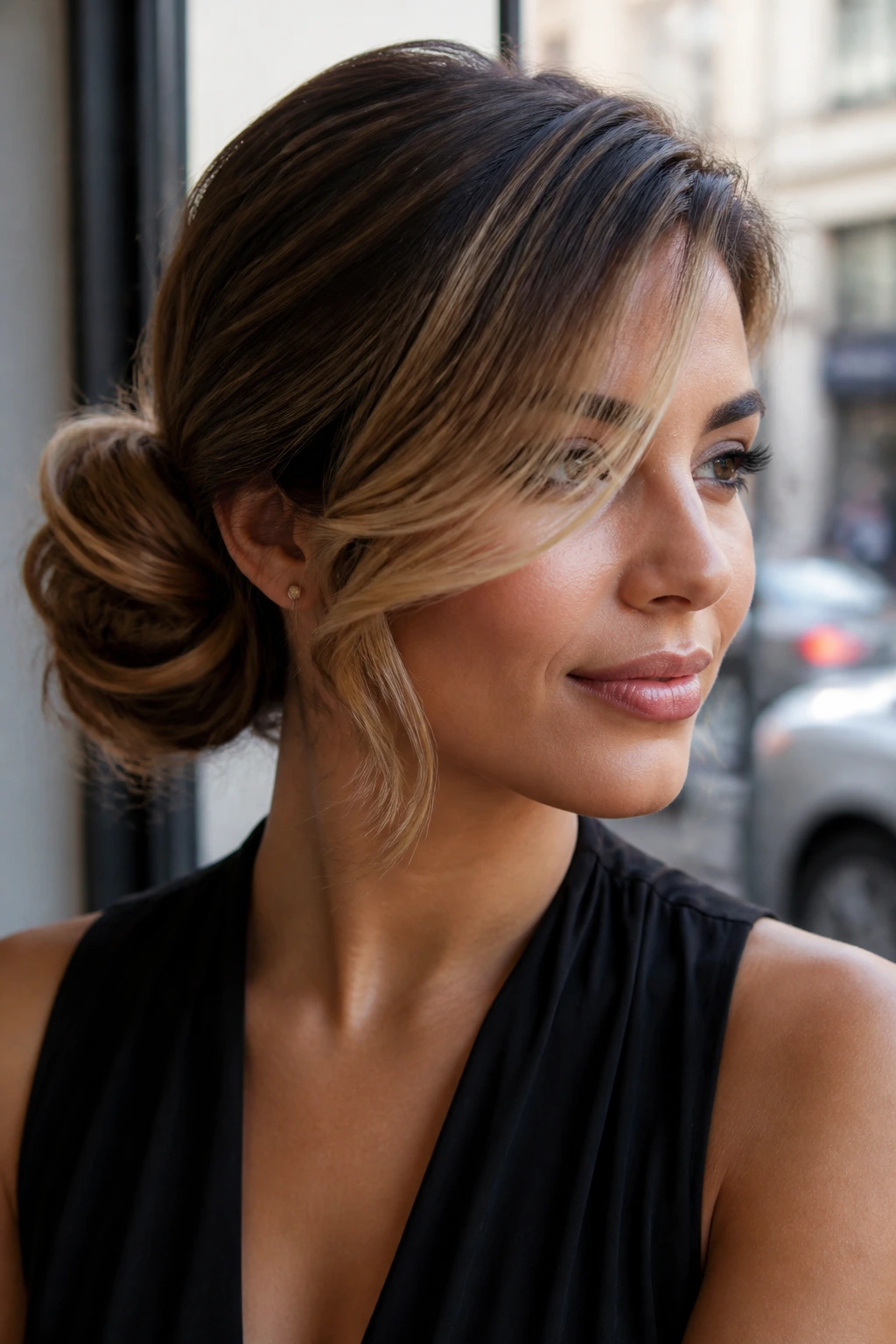
A sculpted side bun is the version you wear when you want the shape to feel deliberate. It sits off to one side, often just below the ear, and the money pieces sweep across the face in a diagonal line. That diagonal is what gives the style its edge.
Because the bun is off-center, the highlights get to do more work. They direct the eye toward the face, then the bun pulls it back to the neckline. It’s a nice loop. The style also plays well with one statement earring, which is a small luxury but one that matters.
Keep the front strands smooth and slightly curved. A hard bend makes the asymmetry look harsh. A gentle bend looks expensive in the most understated sense of the word — though honestly, I’d rather call it sharp than expensive.
17. Crown Braid Chignon
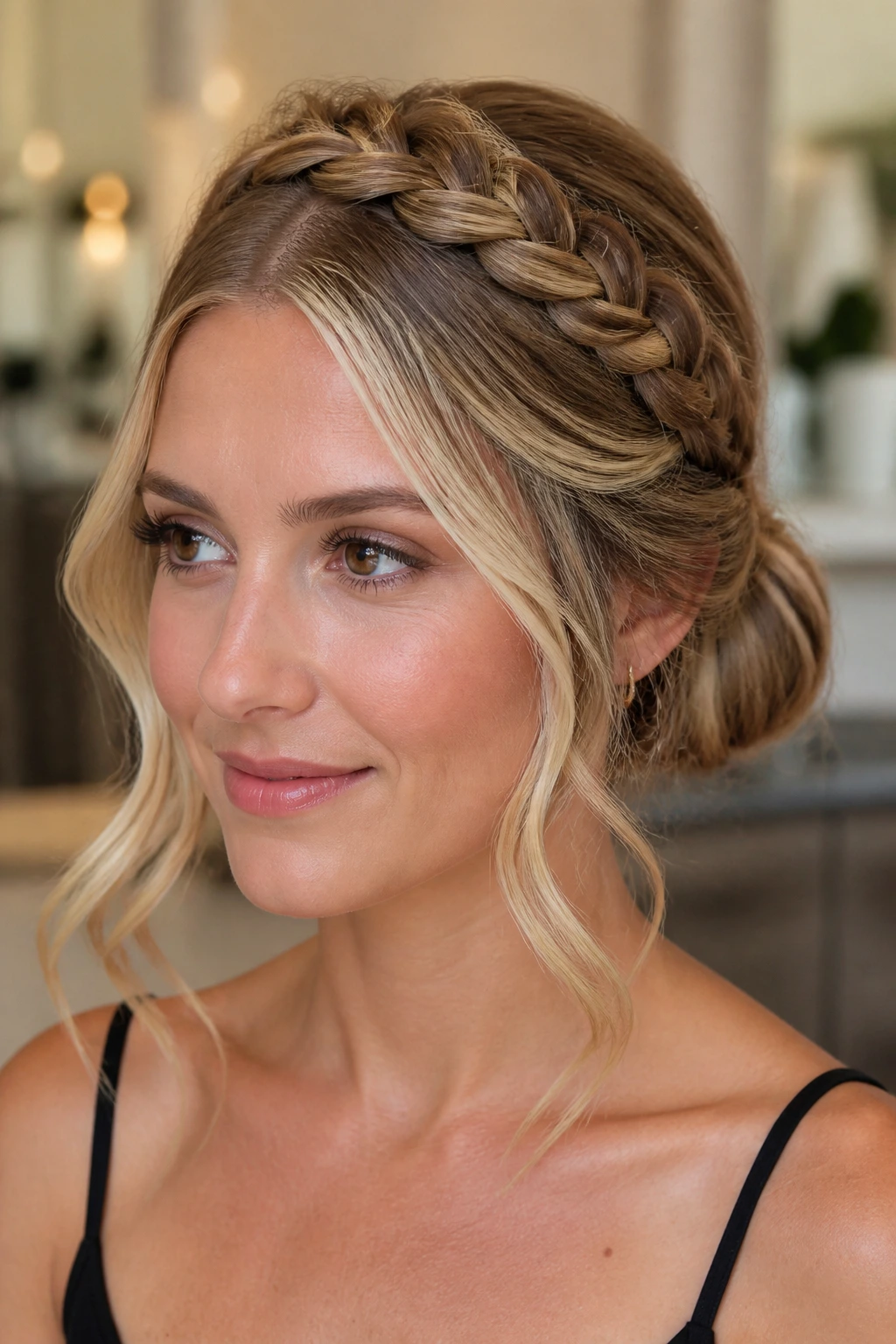
This is the style that makes the whole head look woven together. A crown braid arcs across the top or side, then disappears into a chignon at the back. The money piece highlights sit outside that braid line and brighten the face before the hair closes into the knot.
The braid gives the updo a little architecture. The highlights give it warmth. Without both, the style can feel either too heavy or too busy. With both, it lands right in the middle. It’s especially good for mixed textures, because the braid tames the front and the bun controls the back.
If your hair is layered, braid a little farther back than you think you need to. Short front layers can pop out of the braid and get fuzzy if you start too close to the hairline. That sounds small. It isn’t. The difference shows the second you turn your head.
18. Curved Nape Roll
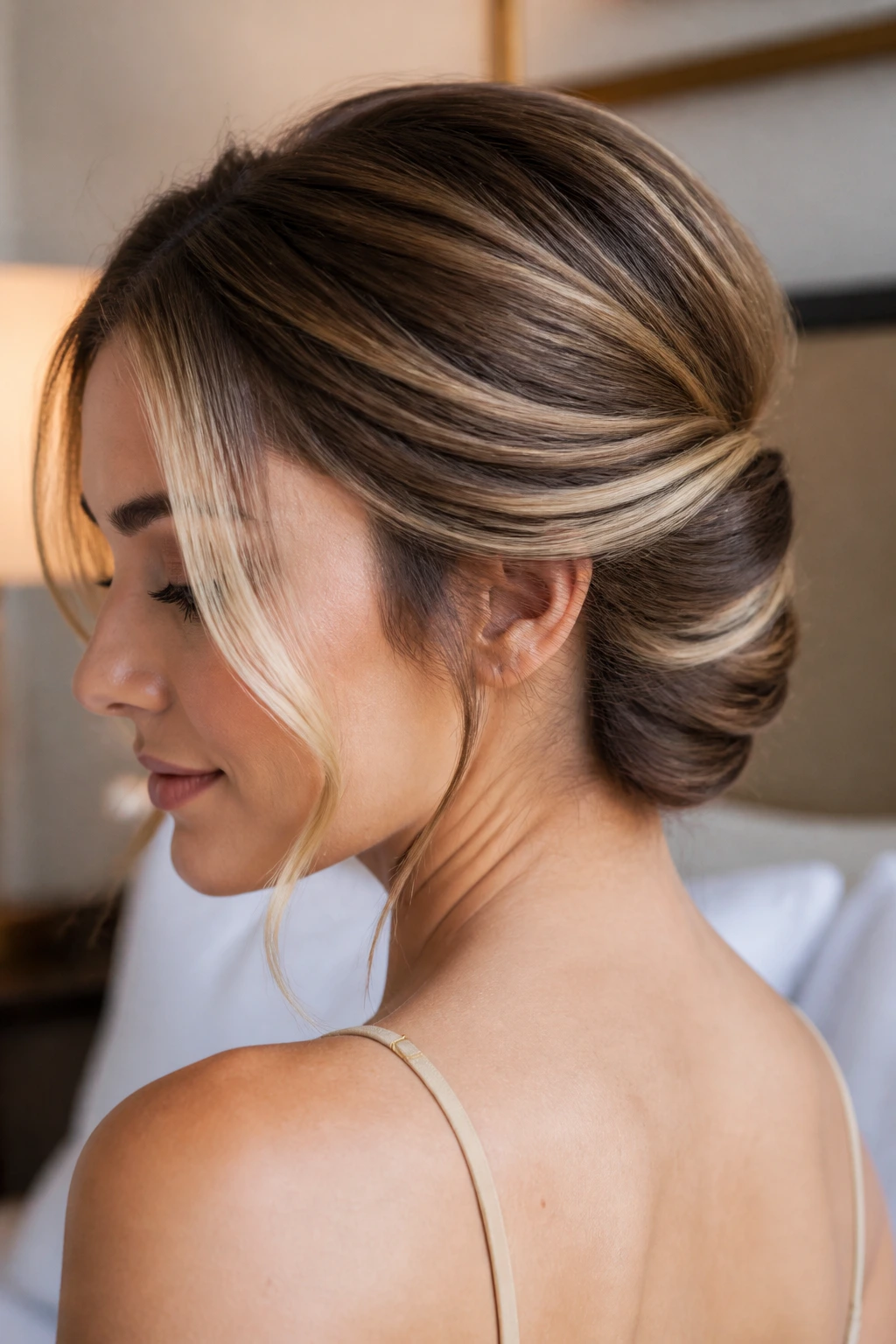
A curved nape roll is one of those styles that looks clean from every angle. Hair is rolled under and pinned into a horizontal arc at the nape, which gives the back a smooth line. The money piece highlights break up the front and keep the whole thing from feeling too shell-like.
This one works well with a side part. The side part and the curved roll echo each other, which gives the hair a more tailored shape. If the front pieces are very light, keep the rest of the hair brushed sleek so the color gets the focus. If the highlights are softer, you can leave a tiny bit of root lift for balance.
The nape roll is also practical if you want your earrings to stay visible. The style sits low enough that the hair does not crowd the ears, which gives you room for a little shine there too.
19. Infinite Twist Updo
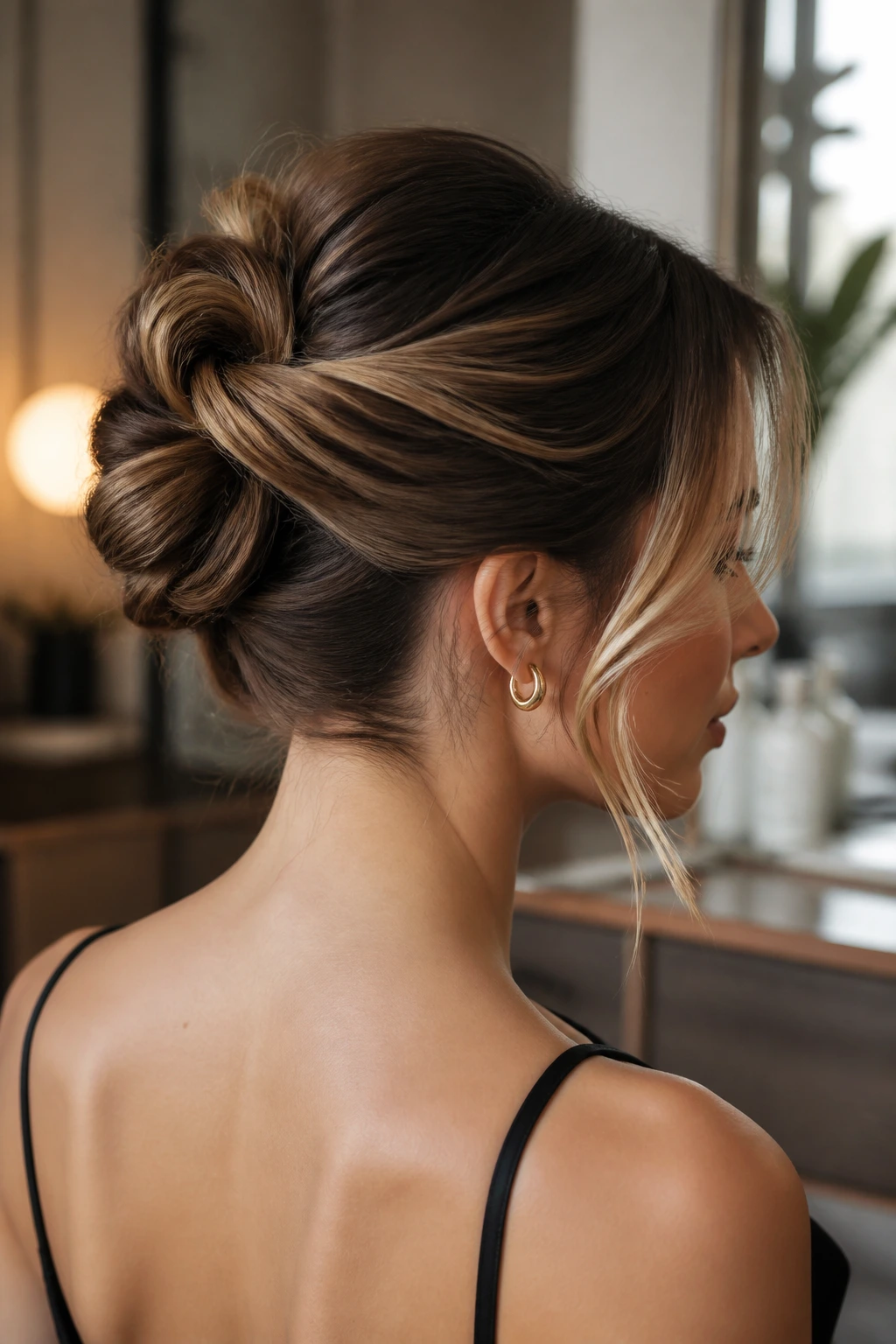
The infinity-style twist sounds fancier than it is. Two sections loop and cross in a figure-eight motion before they’re pinned into a compact updo. The pattern creates a lot of movement in the back, which is exactly what money piece highlights need if the front is going to stay soft instead of severe.
I like this one when the highlights are the same brightness as a second detail in the outfit — a silver shoe, a satin clutch, a bright necklace. The hair becomes part of the whole look instead of standing alone. If you want it more romantic, pull the front pieces wider. If you want it sharper, keep them narrow and smooth.
The infinity shape also hides pins better than you’d think. That matters because a date-night updo should hold without showing off the hardware.
20. Pin-Swept Vintage Bun
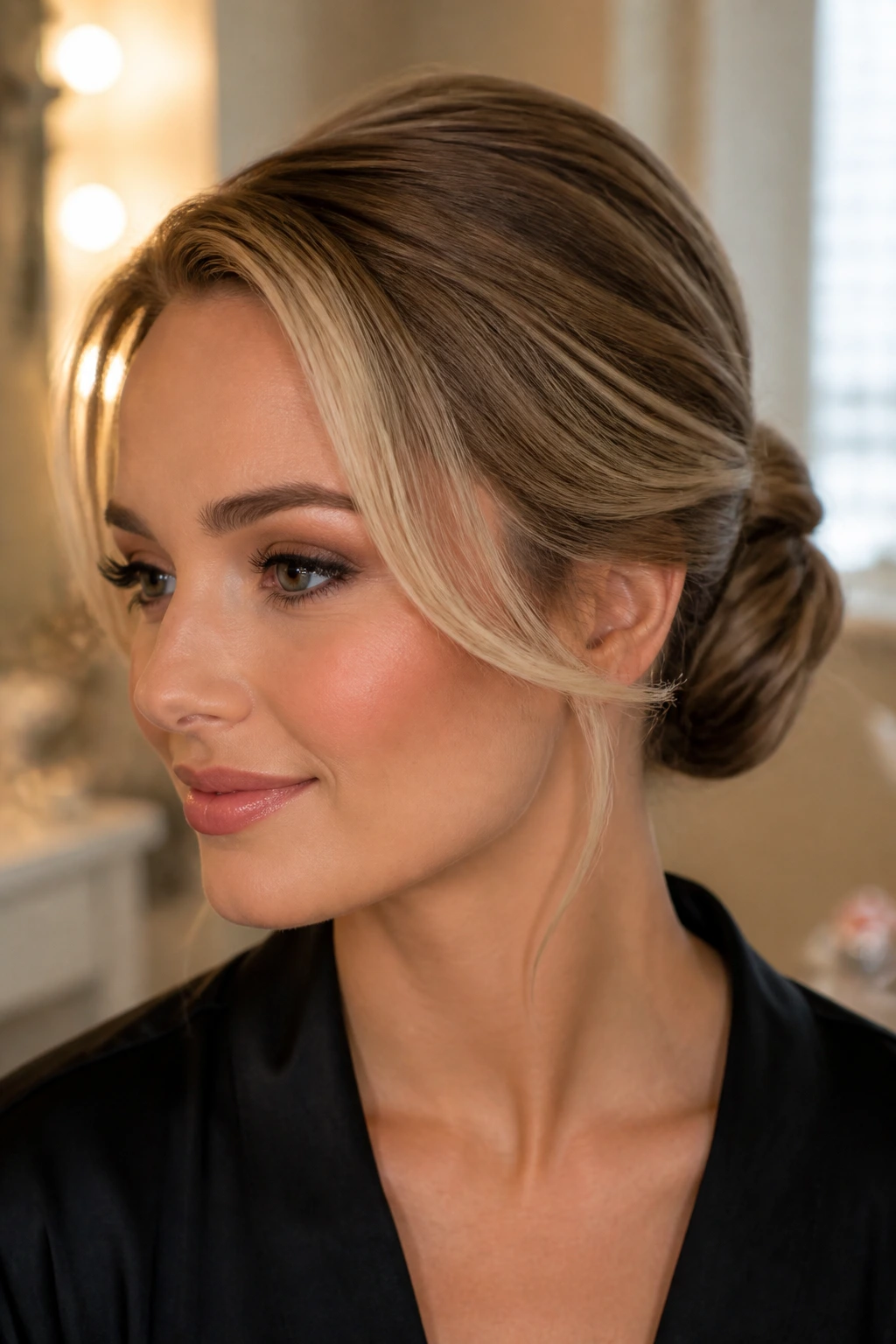
Pin-swept hair has that old-Hollywood wave energy without needing a full screen-star set. The front money pieces are swept back with a soft curve, then pinned into a rounded bun or roll. It’s elegant in a way that feels a little more graceful than rigid.
What I like here is the balance between structure and softness. The sweep at the front gives the highlights a path to follow, and the bun at the back holds the shape. If your hair is very dark underneath, those light front strands do a lot of work, so don’t flatten them. Let them keep a little body.
This style is especially good when the front highlights are blended rather than chunky. The sweep shows off the tonal shift gradually, which feels smoother in low light.
21. High Crown Knot
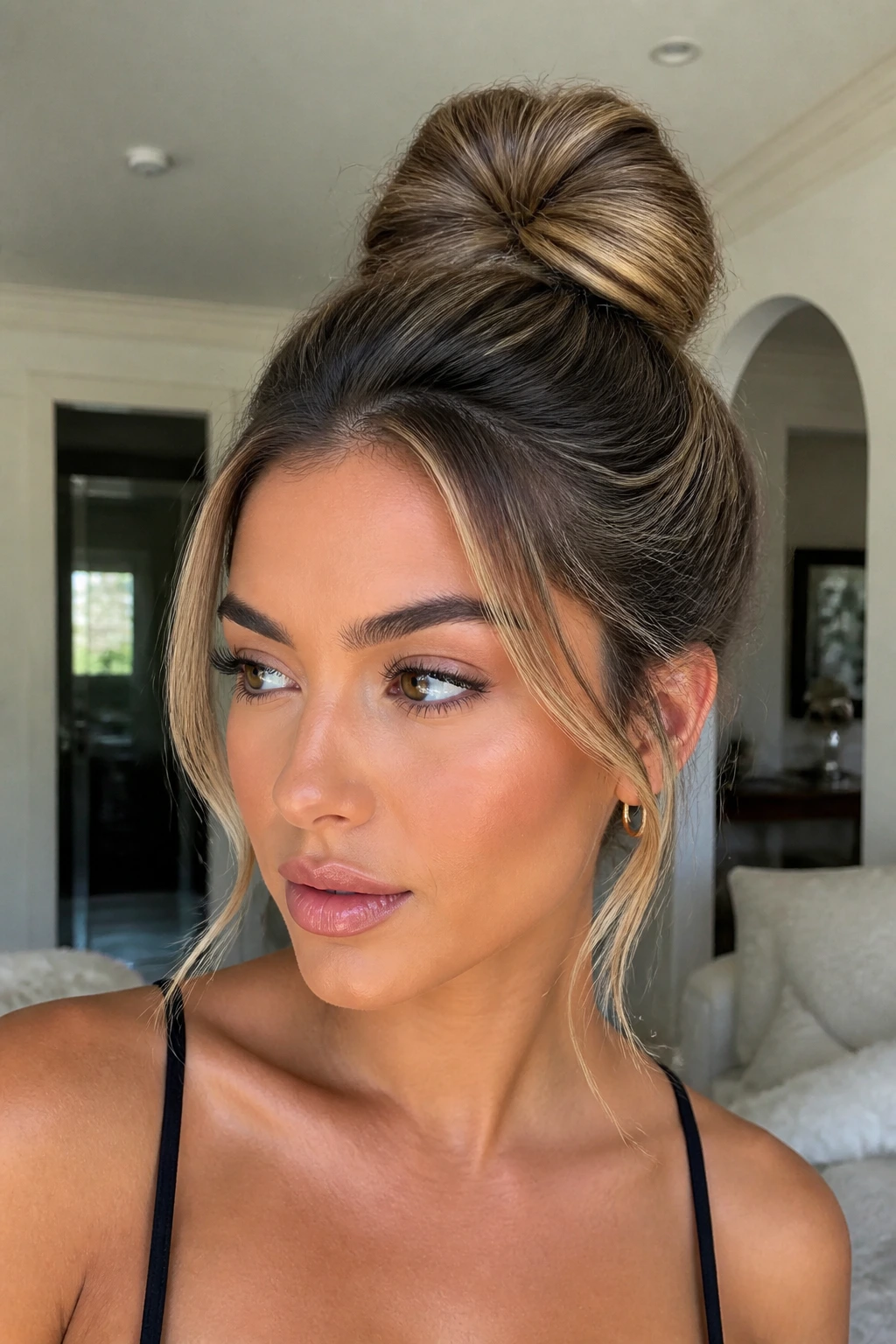
A high crown knot lifts the whole face, which is helpful if you want the money pieces to sit higher and brighter. The knot lands at the crown or slightly above it, and the front strands can be tucked just behind the cheekbones instead of hanging straight down. That creates lift without losing softness.
The danger with a high knot is making it too severe. The fix is tiny. Leave the front strands curved, not stretched. Keep the top smooth but not lacquered. And don’t bury the knot so tightly that it sits like a ball on the head.
This style looks especially good with square necklines and clean makeup. The face-framing pieces keep the hair from feeling too severe, while the height gives the whole look a bit of attitude.
22. Relaxed Low Knot with Loose Wisps
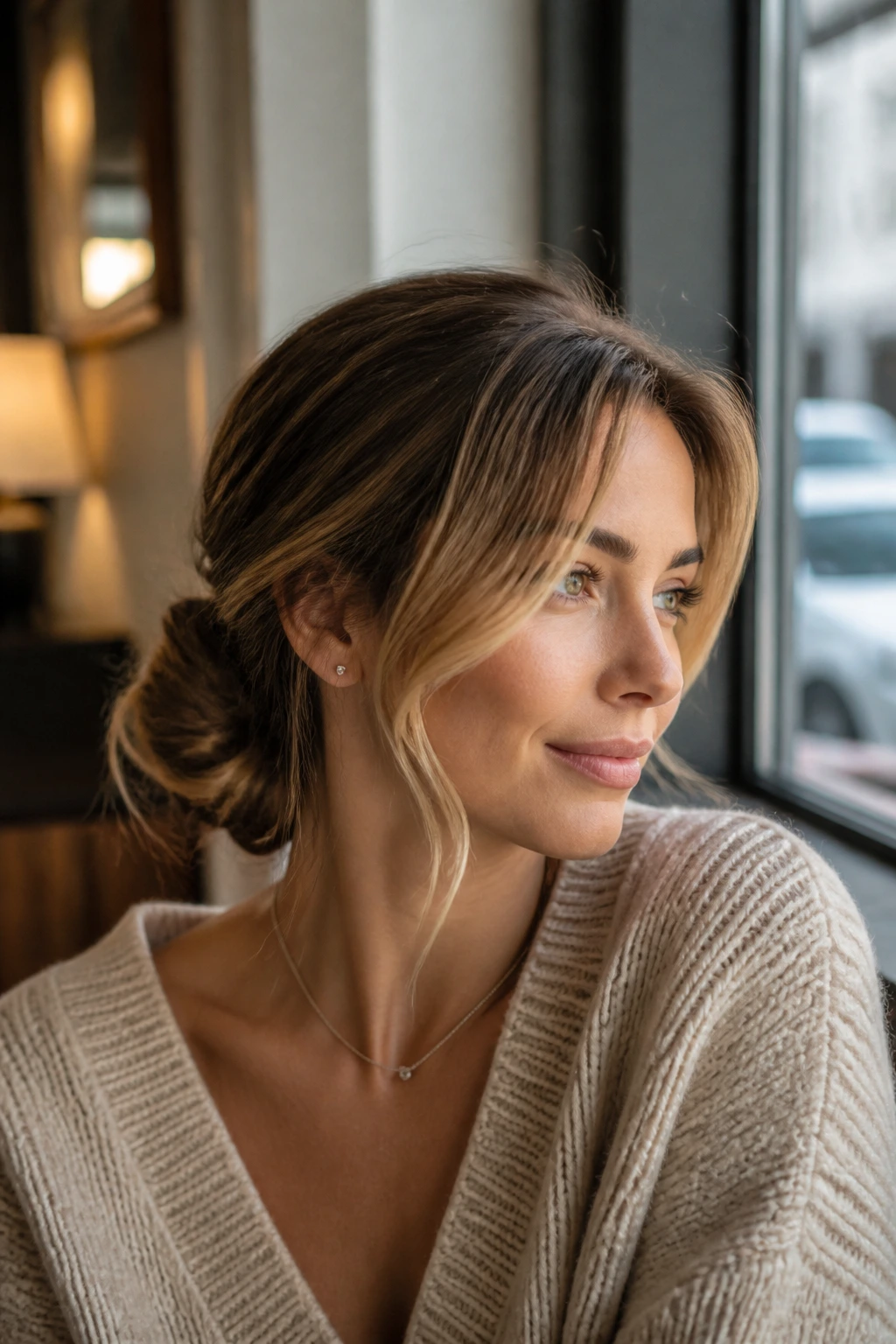
This is the easiest style to wear when you want the hair up but not overdone. The knot sits low and a little loose, the front pieces stay soft, and the money piece highlights do what they do best: brighten the face and keep the shape from falling flat. It’s a classic for a reason.
The knot can be twisted, folded, or pinned in sections. I like a slightly irregular shape here, because a perfectly round bun can make the front strands look too polished for the rest of the look. Let a few wisps stay free near the temples and just below the ear. Not too many. Enough to soften the line.
If your hair tends to slip, prep the roots with a bit of dry shampoo or texture spray before you start. If it holds well, you can skip that and lean into the softness. Either way, this style is the one that feels most like it was worn by an actual person who has dinner plans, not a mannequin.
What Money Piece Highlights Change in an Updo
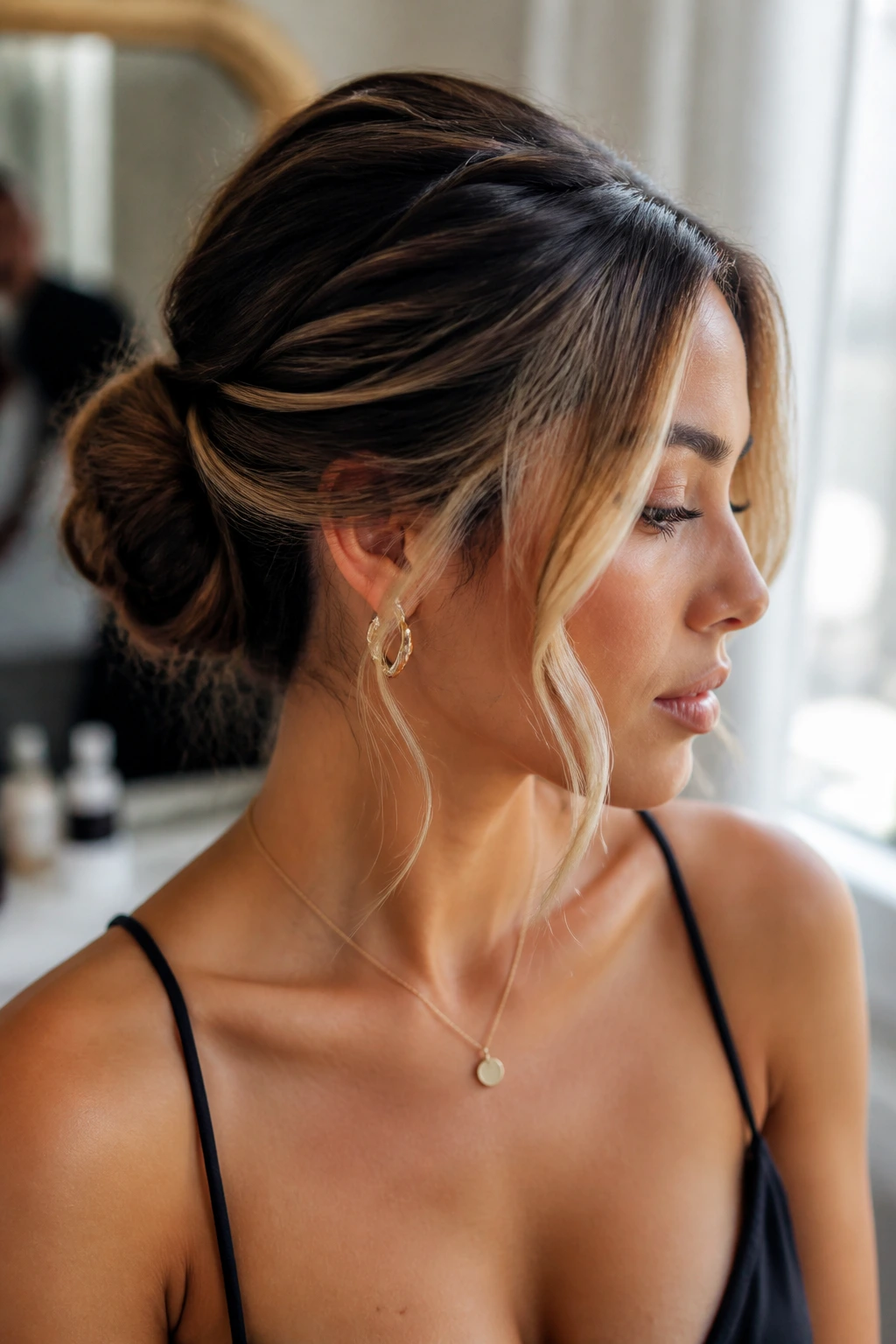
The face-framing pieces do more than show off color. They change the shape of the whole hairstyle. A bun without them can look like a circle sitting at the back of the head. Add lighter strands around the temples and suddenly the style has edges, movement, and a clearer frame around the face. That’s why the same chignon can look calm, flirty, or sharp depending on how those front pieces are handled.
Placement matters too. If the money pieces start high and stay bold through the ends, a sleeker updo usually works best because the color already supplies the drama. If the highlights are softer and more blended, you can lean into texture — braids, twists, loose knots, and curved rolls all make that color feel woven into the style instead of pasted on. Thick pieces want clean shape. Fine ribbons like a bit of movement.
The other thing people miss is how much the front strands influence the whole neckline. A low bun with soft pieces around the cheekbones feels different from a low bun with the front hair pulled tight behind the ears. Same bun. Different attitude. That’s the whole game here, and it’s worth paying attention to because it decides whether the style reads as polished or over-pulled.
Tools That Keep the Front Pieces Behaving
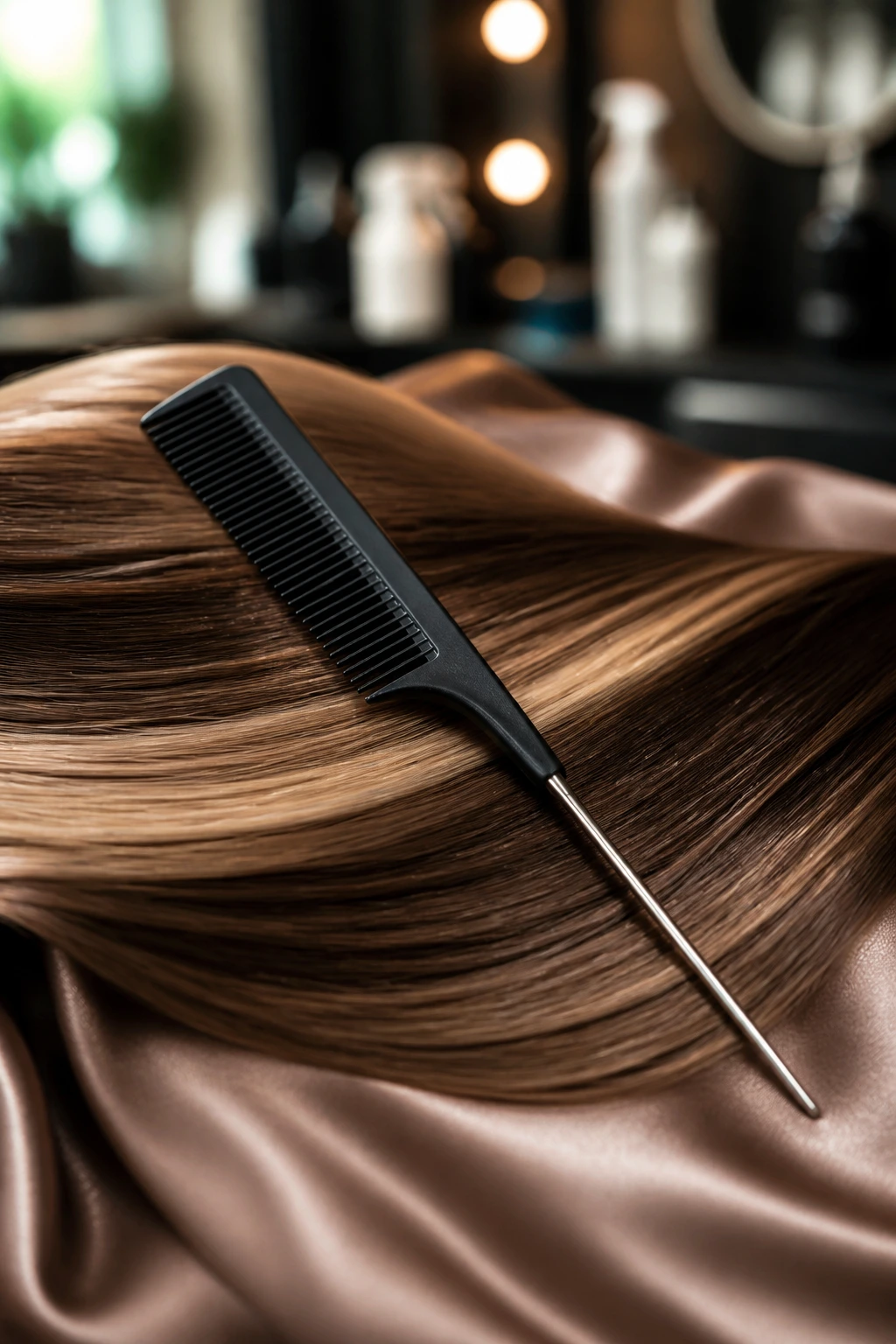
You do not need a drawer full of gadgets, but a few things make these styles much easier.
-
Tail comb: Clean parting matters with money piece highlights, and a tail comb gives you a sharp line without dragging the hair.
-
Boar bristle brush: Great for smoothing the top without flattening every bit of volume at the crown.
-
Texturizing spray: Useful on clean hair, especially if your strands are silky and want to slide out of pins.
-
Light-hold hairspray: Enough to set the front pieces without turning them crunchy.
-
Bobby pins in your hair color: The less visible the pins, the cleaner the shape.
-
U-pins: Handy for buns and twists because they hold a lot of hair with less obvious hardware.
-
Small curling iron, 1 inch: Best for bending the money pieces so they sit softly against the face.
-
Sectioning clips: These save time, and they stop the front from getting tangled into the back before you’re ready.
How to Choose the Right Style for Your Highlight Placement
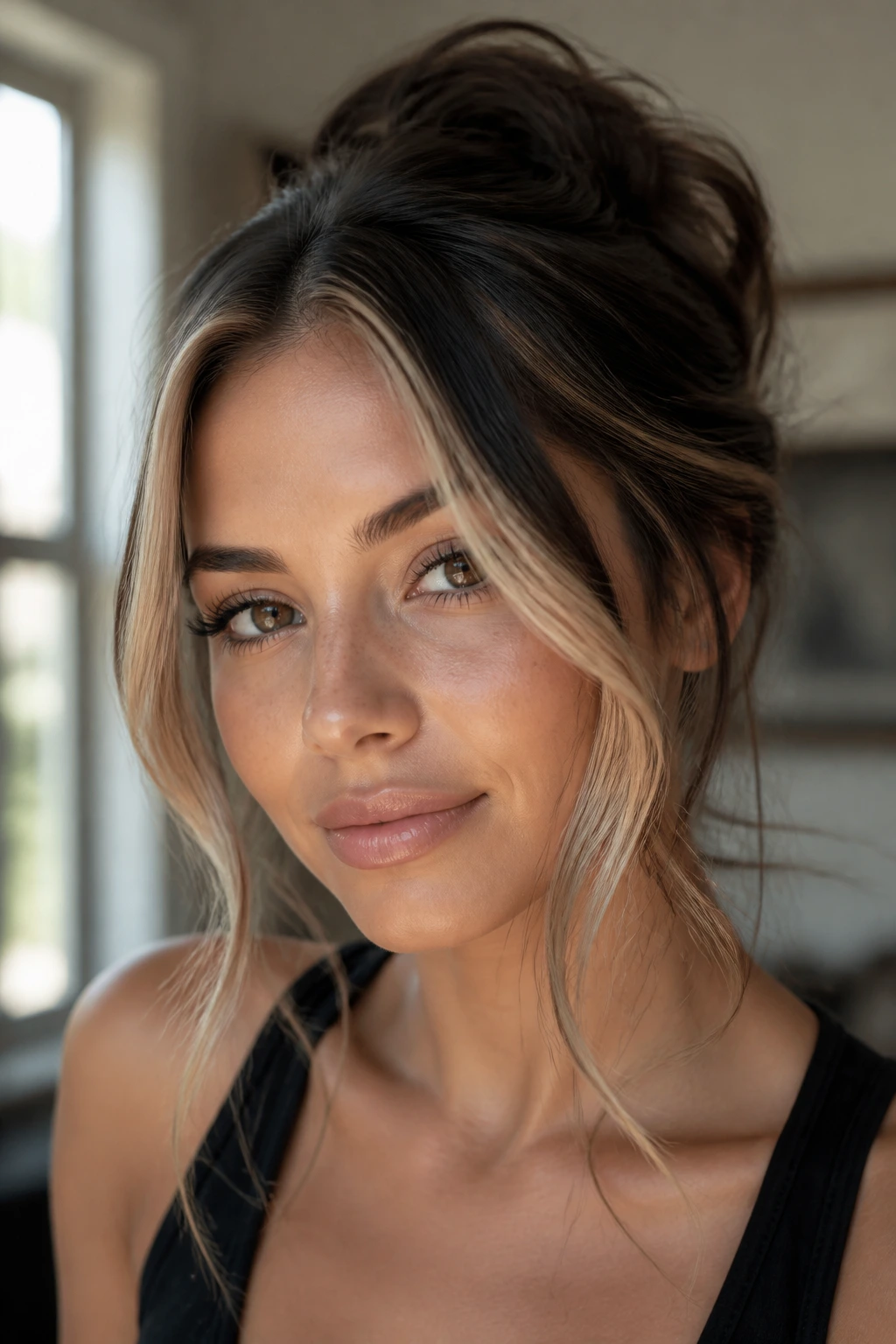
If your money piece highlights are chunky and bright, pick an updo with a clean silhouette. French twists, sleek buns, curved rolls, and polished knots make that front contrast look deliberate. The color becomes the star, and the style acts like the frame around it.
If the highlights are finer or more blended, texture helps. Braids, twisted buns, braided crowns, and soft chignons give the lighter pieces enough movement to show up without screaming for attention. I’m partial to that softer approach on longer hair because it keeps the style from looking too fixed.
Hair length changes the math too. Shoulder-length hair often does better with twists and tucked rolls because there’s enough length to fold but not so much that the bun gets bulky. Very long hair can handle high knots and larger chignons. Shorter layers need pins, sometimes more than you’d expect, plus a little patience around the nape where the shortest pieces like to escape.
Then there’s the finish. Cool blonde money pieces usually look sharp against a smooth top. Warm caramel pieces tend to look richer when there’s a bit more softness in the crown or around the temples. Neither is a rule carved in stone. It’s a useful starting point, and that’s all you need before you start pinning.
How to Wear These Looks
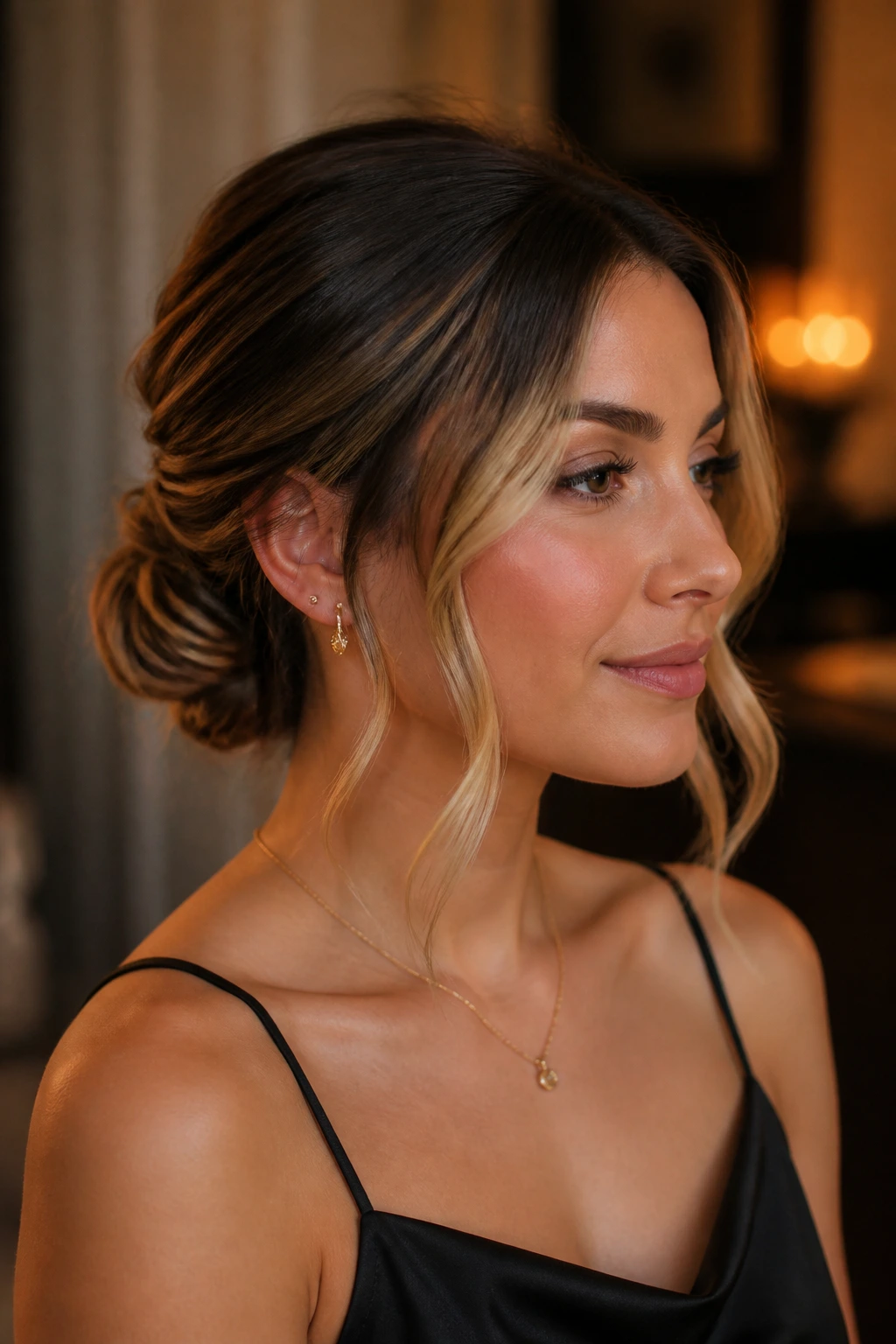
Presentation: Keep the front pieces intentional. If the money piece highlights are the lightest part of your hair, let them sit just outside the cheekbones instead of tucking them fully behind the ears. A tiny bend at the ends keeps them from hanging limp, and a clean part makes the whole style feel finished.
Accessories: Choose earrings and necklines that do not fight the hair. Small hoops, drops, pearl studs, satin straps, square necks, and open backs all sit nicely with these updos. If the bun is big and sculpted, keep the jewelry simple. If the bun is low and soft, you can go a little bolder.
Hair Length / Density Fit: Fine hair usually needs a texture spray or a little teasing at the roots so the updo has grip. Thick hair needs smaller sections and stronger pins so the bun doesn’t get lumpy in the back. If your hair is shoulder-length, twists and tucks often work better than giant buns because the shape stays cleaner.
Best Evening Match: A polished French twist feels right for a dressy dinner. A low chignon or side bun works when the evening is relaxed but you still want your hair to look thought-out. If the plan is drinks, movement, and not much time sitting still, choose a style that can survive being touched once or twice without falling apart.
Practical Tips That Save the Style
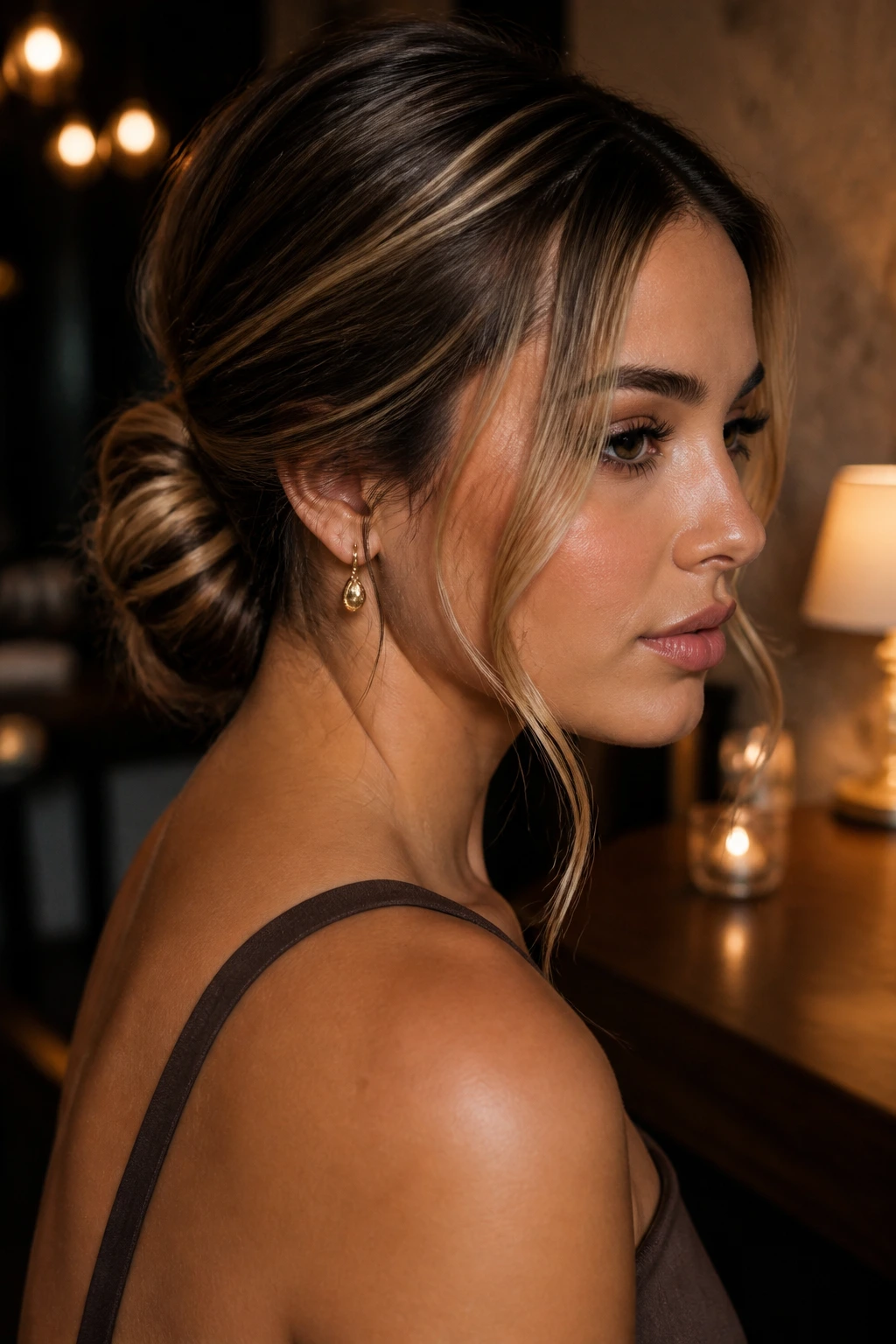
Texture Before Pins: Smooth hair is slippery hair. A mist of dry shampoo at the roots or a spray of texturizing product through the mid-lengths gives your pins something to hold onto, especially near the nape.
Front Pieces Last: Leave the money piece highlights out until the end. It is easier to build the back of the updo first and then decide exactly how much face-framing hair you want. Too many people pin the front too early and end up with a severe look they did not mean to make.
Bend, Don’t Curl to Death: The front strands usually look best with one bend, not a full spiral. A soft turn away from the face keeps the pieces graceful and avoids the dated ringlet effect.
Pin Direction Matters: Push bobby pins in against the direction of the hair twist, not straight out into it. That keeps the bun from loosening halfway through dinner. Small detail. Huge payoff.
Common Mistakes to Avoid
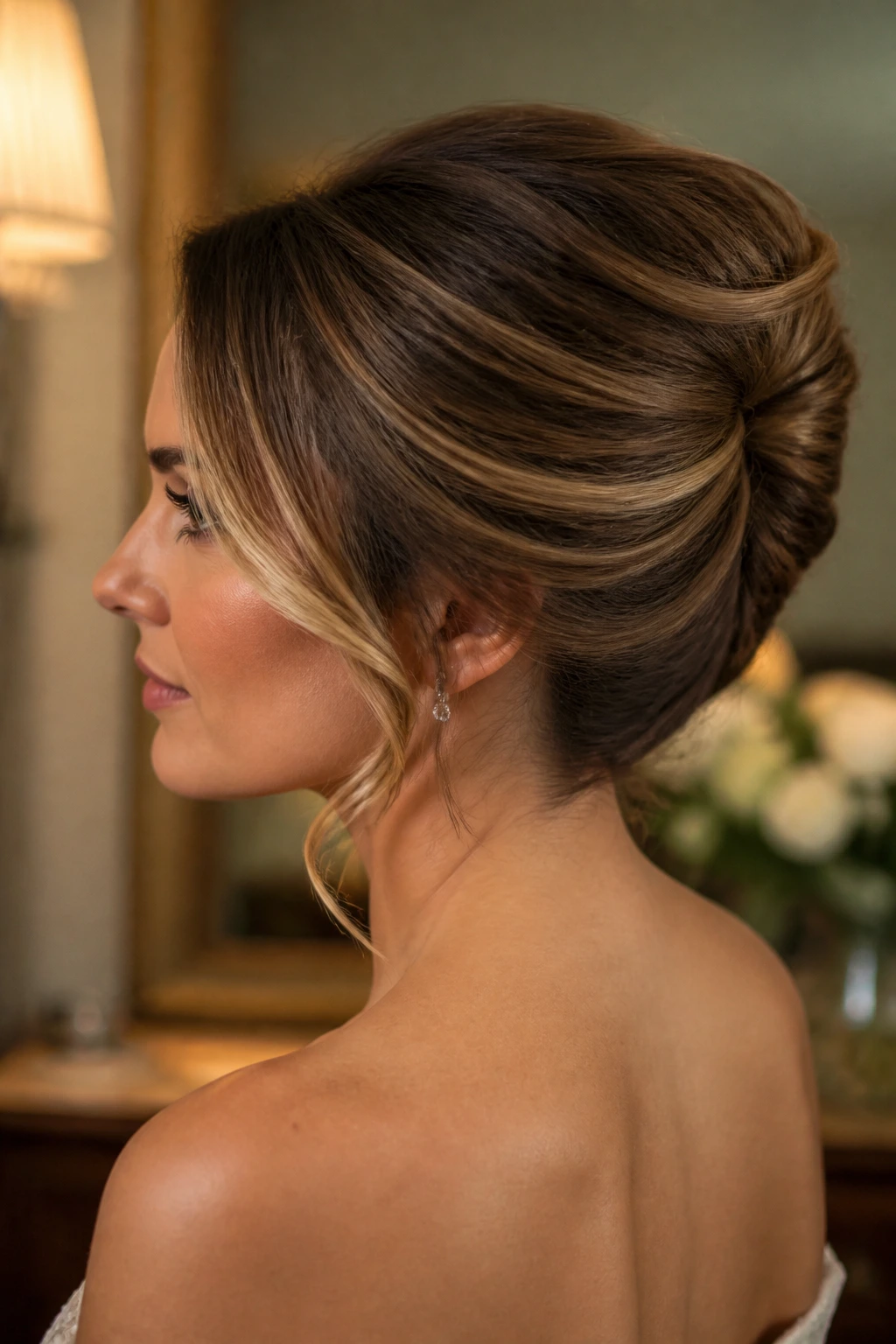
-
Burying the money pieces inside the bun: The whole point is to let the lighter front strands frame the face. If you tuck them back too tightly, you lose the contrast that makes the style work. Leave them visible, even if it is only a narrow strip.
-
Using too much shine product at the roots: Gloss can look nice on the bun, but oily roots make the top go flat fast. Keep serum on the ends and use only a thin layer, especially around the hairline.
-
Skipping texture on fine hair: If your hair is silky and clean, pins can slide out before you’ve even finished your makeup. Dry shampoo, grip spray, or a little roughing up at the roots will save you from rebuilding the style twice.
-
Overcrowding the face with loose strands: Two or three soft front pieces are charming. Six wisps that all want different jobs are not. The fix is simple: keep the front frame narrow and deliberate.
-
Making the bun too tight for the rest of the style: A tiny, hard bun paired with super-soft front pieces can look mismatched. Match the front and back. If the face frame is romantic, let the bun have some softness too.
Variations and Adaptations to Try
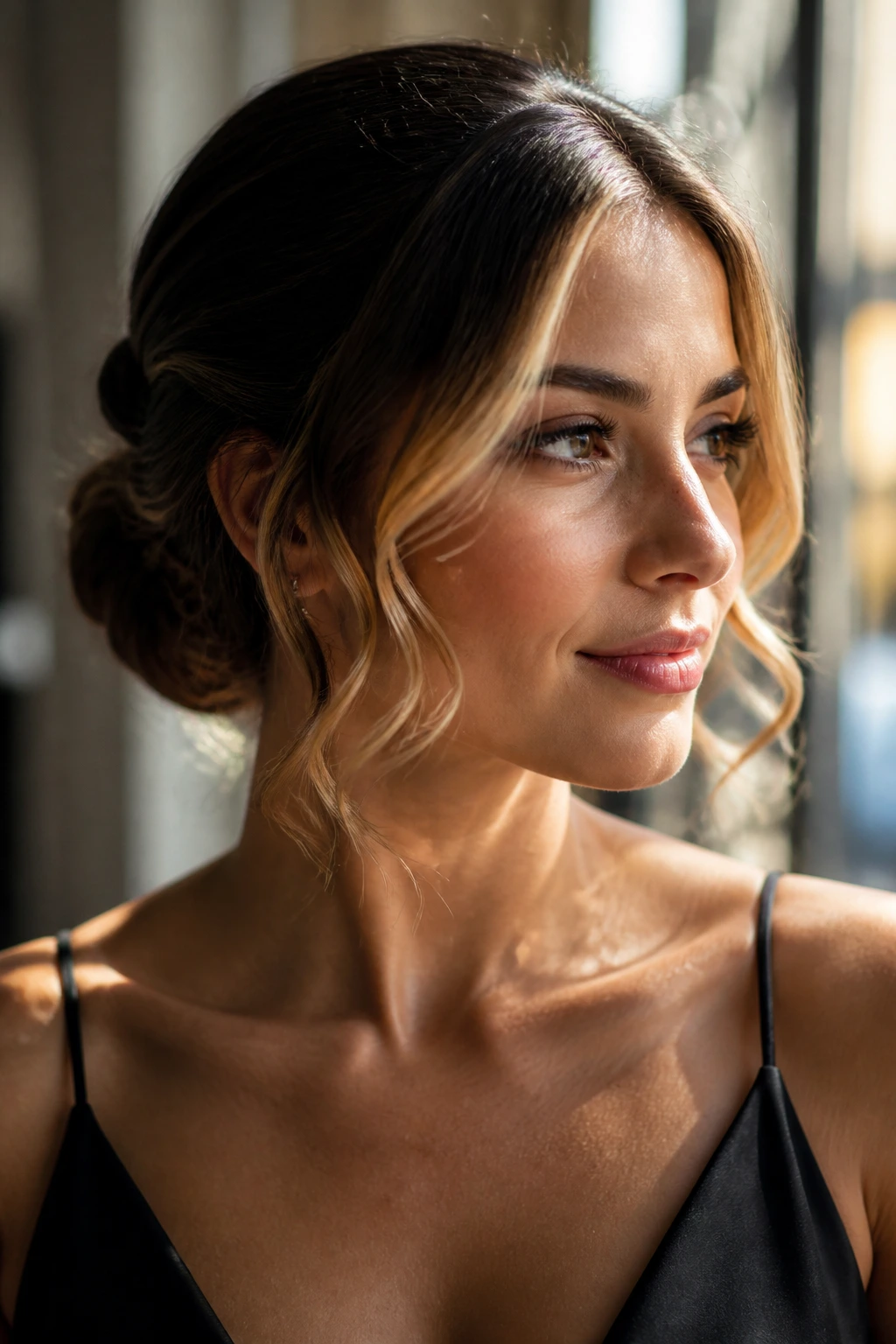
Soft Curl Frame: Curl the money pieces with a 1-inch iron, brush them out, and let them curve around the face. This works best with low buns, chignons, and French twists because the bend keeps the style feminine without making the front look busy.
Sleek Glass Finish: Smooth the top with a light cream and a boar bristle brush, then keep the bun compact and polished. This version suits high-contrast blonde money pieces or very crisp face-framing color because the shine gives the color a clean backdrop.
Curly-Hair Version: Leave the natural curl pattern in the front pieces and pin the back in sections instead of forcing everything straight. The highlight pieces will show shape better when they stay curly, and the updo gets a little more movement.
Short-Hair Cheat: If your hair does not reach a full bun, twist the back into a tucked roll and pin the ends tightly. Let the money pieces stay free or lightly waved at the front. You still get the frame without pretending the hair is longer than it is.
Thick-Hair Control: Divide the back into two or three sections before twisting or bunning. Thick hair looks cleaner that way, and the front pieces will not get lost under the weight of the style.
Keeping the Style Fresh Through the Night and the Next Day
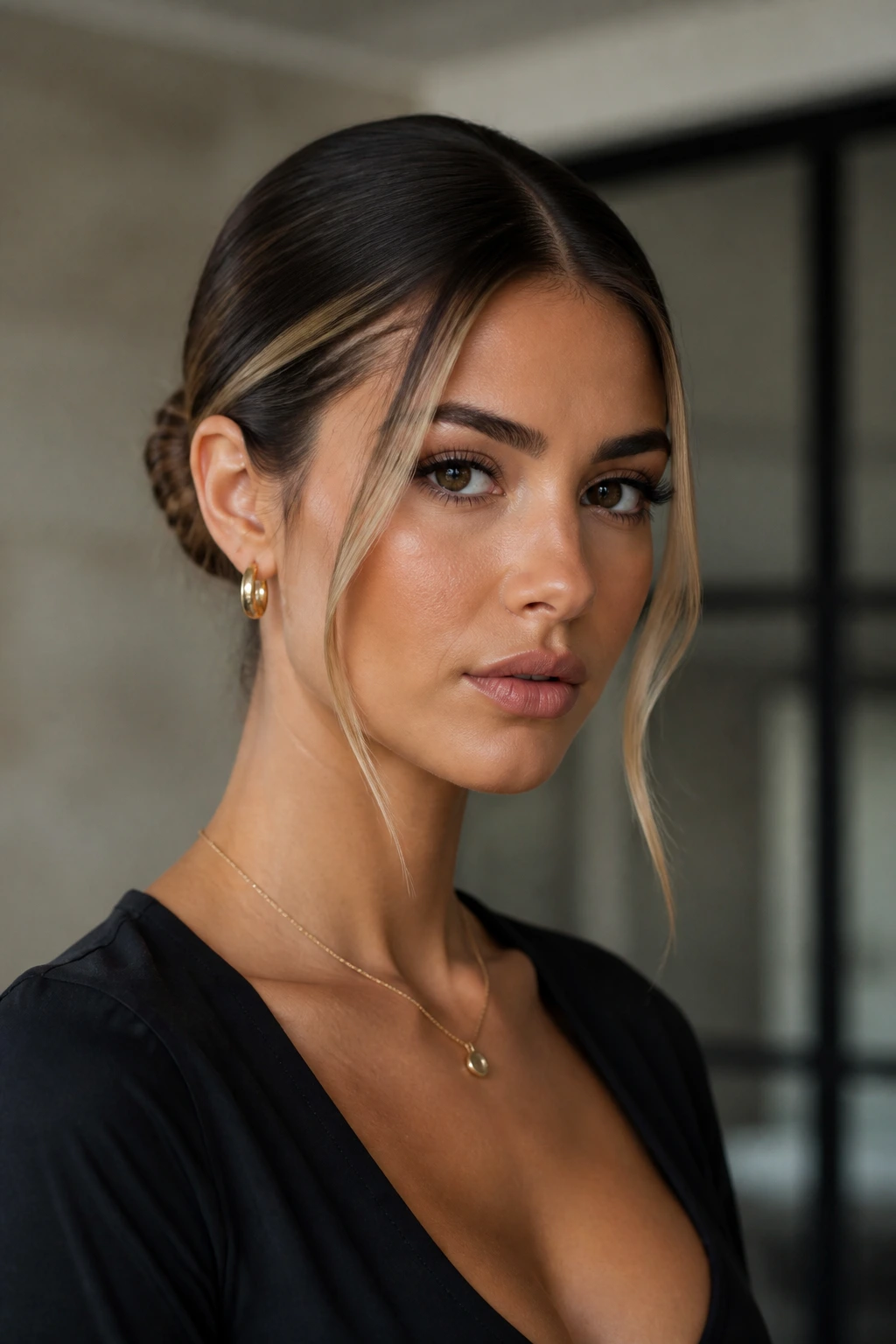
The best thing you can do for these updos starts before you even pin the first section. If the hair is too clean and soft, the style tends to unravel at the nape. If it has a little grip, it stays put longer and the front pieces keep their shape instead of collapsing into the cheeks. A quick mist of texturizing spray, then a minute to let it settle, usually does the trick.
After the evening, do not rip the pins out all at once. That is how you end up with dents and broken front pieces the next morning. Slide the pins out gently, shake the roots loose, and either sleep on a silk pillowcase or wrap the hair loosely if you plan to wear it again. If the money pieces are still curved nicely, you can refresh them with a touch of water on your fingertips and a quick bend from the iron.
Most of these styles can be worn again the next day with a little less polish. A low knot, twisted bun, or French twist can be softened and re-pinned in five minutes if the front frame still looks decent. That is one of the nicer things about money piece highlights: even when the updo starts to loosen, the bright front strands keep the hair looking deliberate.
Questions People Actually Ask
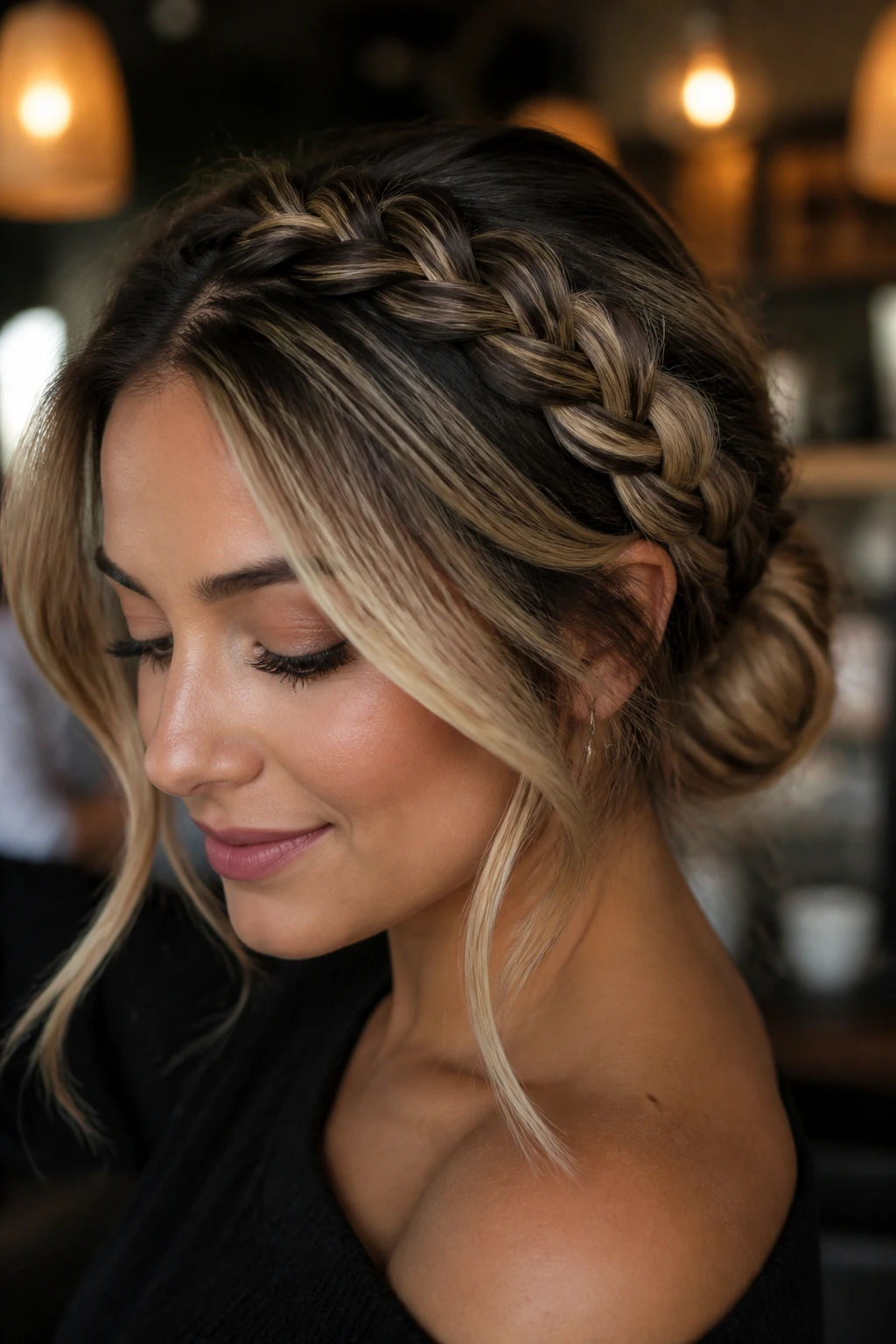
Do money piece highlights work better with updos or with loose hair?
They work with both, but updos make the contrast louder because the lighter front strands stand apart from the rest of the hair. If you want the color to frame your face, an updo is one of the easiest ways to show it off.
Should I curl the money pieces before styling an updo?
Usually, yes, but only a little. A soft bend away from the face looks better than a tight curl, especially with sleek buns or French twists. The point is movement, not ringlets.
What if my money pieces are chunky and bold?
Choose a cleaner style with a tighter base so the color does not look too busy. Sleek buns, rolled chignons, and French twists give bold highlights a strong frame.
Can short hair still do these styles?
Some can, yes. Gibson tucks, low knots, and tucked rolls work better than big buns because they need less length. You may need more pins than you expect, and that is fine.
How do I keep the front pieces from falling flat?
Start with dry shampoo or texturizing spray at the roots, then set the pieces with a light bend. If they still drop, pin them back loosely for a few minutes while you do makeup, then release them so they keep a little memory.
What if my highlights are grown out?
That can still look good. Softer styles like loose chignons, twisted nape knots, and side buns tend to hide the grow-out line better than sharply slicked styles. A little root shadow can actually make the updo look richer.
Will these styles work on curly hair?
Yes, and curly hair often gives the best shape. Keep the front curls defined and let the back be pinned in sections so the texture does not flatten out. The money pieces show up nicely when they keep their curl pattern.
What’s the fastest style if I’m running late?
A low knot or twisted nape bun. Both can be built in minutes, and they still leave room for the money pieces to frame the face. The clean part and a few pins do most of the work.
The Shape That Lets the Highlights Talk
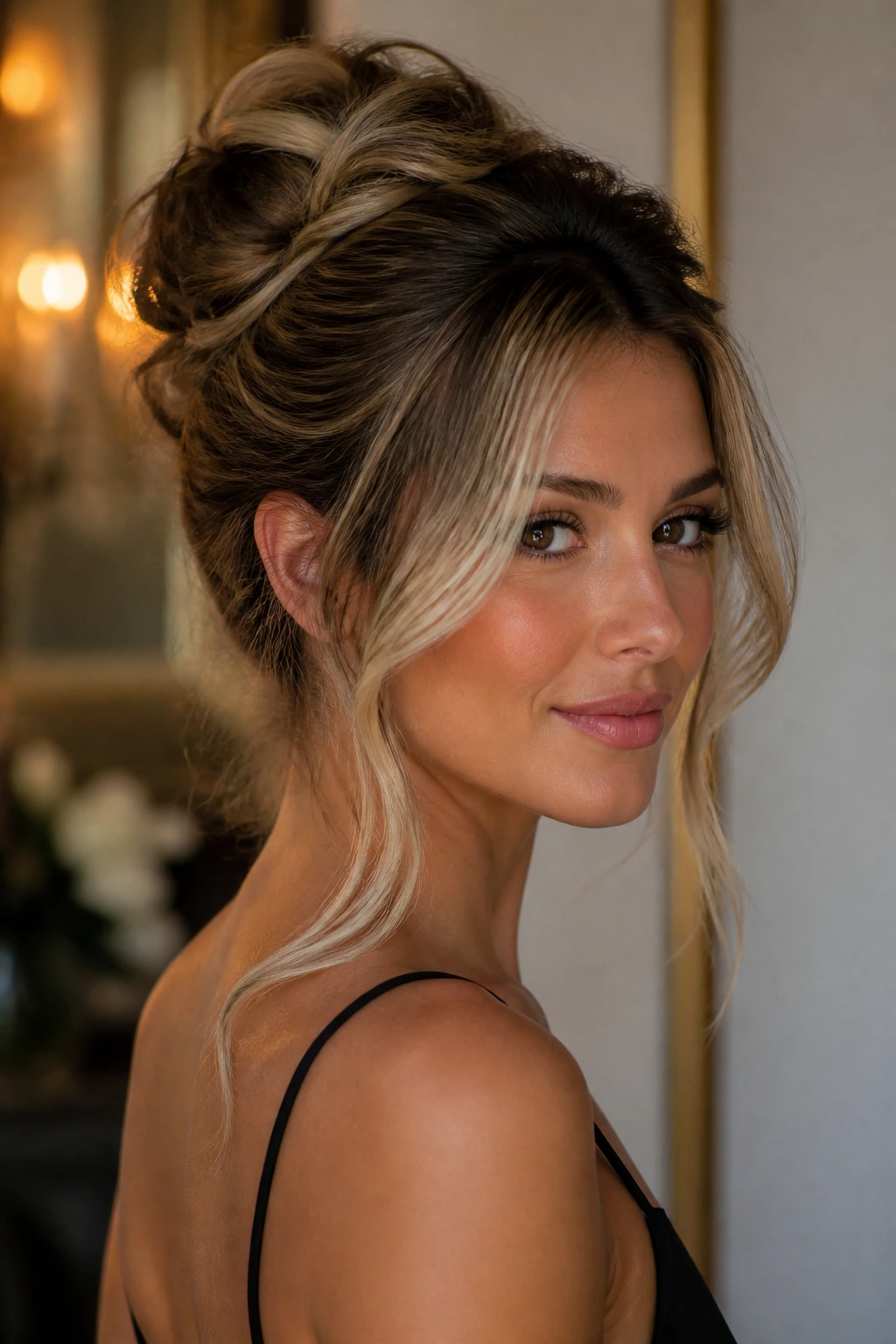
The nicest thing about these updos is that they do not ask the money piece highlights to sit quietly in the background. They give the lighter front strands a real job. Frame the face. Break up the silhouette. Keep the style from looking too tight around the temples.
That’s why the best version is rarely the one with the most pins or the most shine. It’s the one that leaves just enough room at the front for the color to show. Get that balance right, and a date-night updo stops being “hair up” and starts feeling like part of the outfit, which is where it should be.