



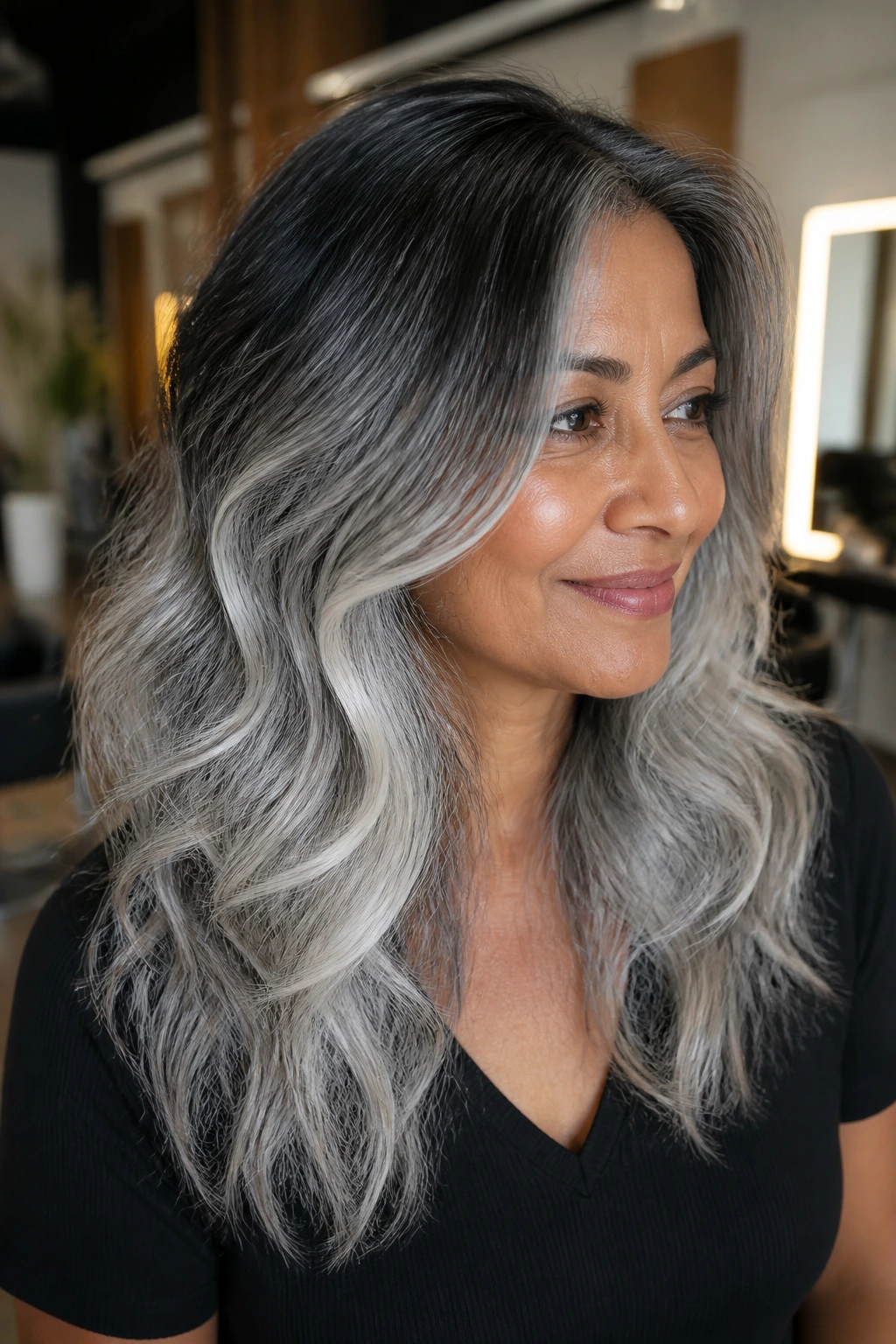
Grey hair transformations for medium skin tones work best when the color stops acting like a flat overlay and starts behaving like fabric—woven, smoky, and a little reflective. On a medium complexion, grey can look plush and expensive, or it can go chalky in a hurry. The difference usually comes down to three things: the undertone in the skin, the depth left at the root, and whether the finish has any beige, taupe, or pearl in it instead of screaming pure ice.
That’s why the best grey hair looks for medium skin tones are rarely one-note silver from scalp to ends. They lean on root shadows, soft melts, face-framing brightness, or a little smoke around the hairline so the color has somewhere to breathe. A blunt, high-pale grey can be gorgeous on the right person, but on medium skin it often needs a little help—especially if your skin reads golden, olive, or neutral in different light. Tiny shift. Big payoff.
I keep coming back to that because the whole thing is more about balance than brightness. A smoky balayage on shoulder-length waves, a graphite bob with a glossy finish, or a salt-and-pepper blend with a clean face frame can do more for medium skin than the iciest silver imaginable. The thirty looks below range from subtle transitions to bold metallic statements, and the common thread is simple: the shade is doing something with your skin tone, not fighting it.
Why These Grey Looks Work on Medium Skin Tones
-
Undertone-aware placement: Medium skin often has golden or olive notes, so these looks keep the brightest grey away from the scalp and build it through the mid-lengths and ends where it can shine without washing the face out.
-
Depth at the root: A soft shadow root gives grey hair somewhere to start. Without that darker anchor, silver can look pasted on instead of blended in.
-
Multiple grey registers: Pearl, pewter, graphite, mushroom, and steel all read differently on the same person, which is why this collection includes more than one kind of grey instead of pretending one shade fits all.
-
Texture does some of the work: Waves, curls, shags, pixies, and braids break up cool tones so the hair doesn’t look like a single sheet of color.
-
Wearable maintenance: Several of these transformations are designed to grow out without a harsh line, which matters if you don’t want to be back in the chair every few weeks.
1. Smoky Silver Balayage on Soft Layers
Smoky silver balayage has a nice trick up its sleeve: it looks polished without reading severe. On medium skin, especially skin with warm or golden undertones, the darker base keeps the face from going flat while the silver ribbons catch along the layers where the light moves. It’s the kind of grey that looks expensive because it never shows all of itself at once.
Ask for a level 6 or 7 brown base with hand-painted silver pieces around the crown, cheekbones, and ends. The root should stay soft, not stark. If your hair is shoulder-length or longer, soft layers are non-negotiable; they stop the silver from turning into a single heavy curtain.
A loose wave is the best way to wear it. Straight hair can work too, but the texture in the bend gives every ribbon a different shine, and that’s where this color really wakes up. If you want grey hair that still feels like hair—not polished metal—this is the one I’d start with.
2. Mushroom Brown Melt with Silver Ends
Mushroom brown is one of those shades that looks plain on a chart and rich on a head. The base sits in that cool-brown zone between taupe and ash, which is a very good place for medium skin with olive undertones. From there, the color melts into silver at the ends, and the whole thing feels gradual instead of dramatic.
What makes this transformation smart is the transition. The grey isn’t sitting next to your skin in one loud block. It lives lower, where the ends can carry the coolness and the root can keep the complexion grounded. If you’re growing out old dye, this is one of the smoothest bridges into grey.
Ask for the right shape
A softly layered cut gives the melt room to show. The color shift should be obvious when you move, but not striped when the hair hangs still.
This is also a good option if you hate constant upkeep. The darker root and mushroom midsection make new growth easier to live with, which is rare and useful.
3. Charcoal Root Shadow on a Lob
A charcoal root shadow on a lob is sharp in the best way. The cut gives you a clean line, and the charcoal root keeps the whole style from drifting too icy against medium skin. On neutral or slightly warm undertones, that depth gives the cheeks and jawline more shape.
The key is not to make the root black. Charcoal is smoky, not inky. You want a deep grey-brown or soft black-brown base that melts into steelier mids and ends. Too much blue-black and the hair starts looking heavy.
This style loves a center part and a smooth finish. You can tuck one side behind the ear and let the contrast do the work. No fuss, no frills. Just a very neat, very controlled grey that feels modern without begging for attention.
4. Pearl Gray Money Piece
If you want a grey transformation without committing to a full head of silver, the pearl gray money piece is the easiest place to start. It puts the lightest grey right around the face—usually a few thin ribbons near the temples and cheekbones—so medium skin gets brightness where it helps most.
Pearl grey is softer than platinum and less cold than steel. That matters. On medium skin with peachy or golden undertones, a pure icy front piece can look a little detached. Pearl keeps the shine but adds a touch of creaminess, which makes the color sit more naturally against the skin.
Pair it with a medium brown or beige base and keep the rest of the hair subdued. You want the face frame to lead, not compete. This is the kind of transformation that can be edgy or subtle depending on how thick the front pieces are. Thin streaks feel quiet. Chunkier pieces feel bold. Both work.
5. Steel Gray Curls with Lowlights
Curls need dimension or they collapse into one color block, and steel gray can be unforgiving if you skip the lowlights. Medium skin is actually a strong match here because the curl pattern breaks the grey into pieces, which keeps the color alive instead of flat. The lowlights—usually a deep beige-brown or soft espresso—give the curl cloud some shadow.
The trick is placement. Put the brighter steel on the outer ring, the top curls, and a few face-framing spirals. Keep the inside layers darker. That contrast helps the shape read from across the room, especially under indoor light where grey can go dull fast.
What to watch for
If your curls are dry, steel grey will expose every rough patch. A leave-in cream and a diffuser can make the difference between plush and frizzy. The color itself is only half the story.
6. Platinum-to-Gray Ombré Waves
Platinum-to-gray ombré is the showier end of the spectrum, and it works best when the root is left soft enough to keep medium skin from disappearing under the brightness. The fade starts in a beige or taupe root, lifts through platinum mids, then settles into a pale grey at the ends. That gradual shift keeps the whole head from feeling carved out of one block of color.
This look loves movement. Loose waves let the ombré show in bands, and those bands give the eye something to track. On medium skin with cooler or neutral undertones, the contrast is clean and very flattering. On warmer skin, you’ll usually want a slightly beige root so the platinum doesn’t look too stark.
It’s also one of the most maintenance-heavy looks in the group. Not because grey is difficult, but because platinum is needy. If you like the look of bright silver hair and don’t mind toning appointments, this is a strong one.
7. Gunmetal Pixie Crop
A gunmetal pixie cut is small in length and big in attitude. The shade sits darker than most of the other greys here, which is exactly why it works on medium skin. You get the metallic feel without a strong bleach-out around the face, and that keeps the color from going ghostly.
The cut matters just as much as the tone. A pixie with a little texture on top and tight sides gives gunmetal a cleaner shape. If the hair is too soft or too floppy, the grey can look accidental. A crop needs purpose.
This is one of my favorites for people who want grey hair without the ritual of long blow-drying. A matte pomade or light wax on the ends is enough. Quick, sharp, done.
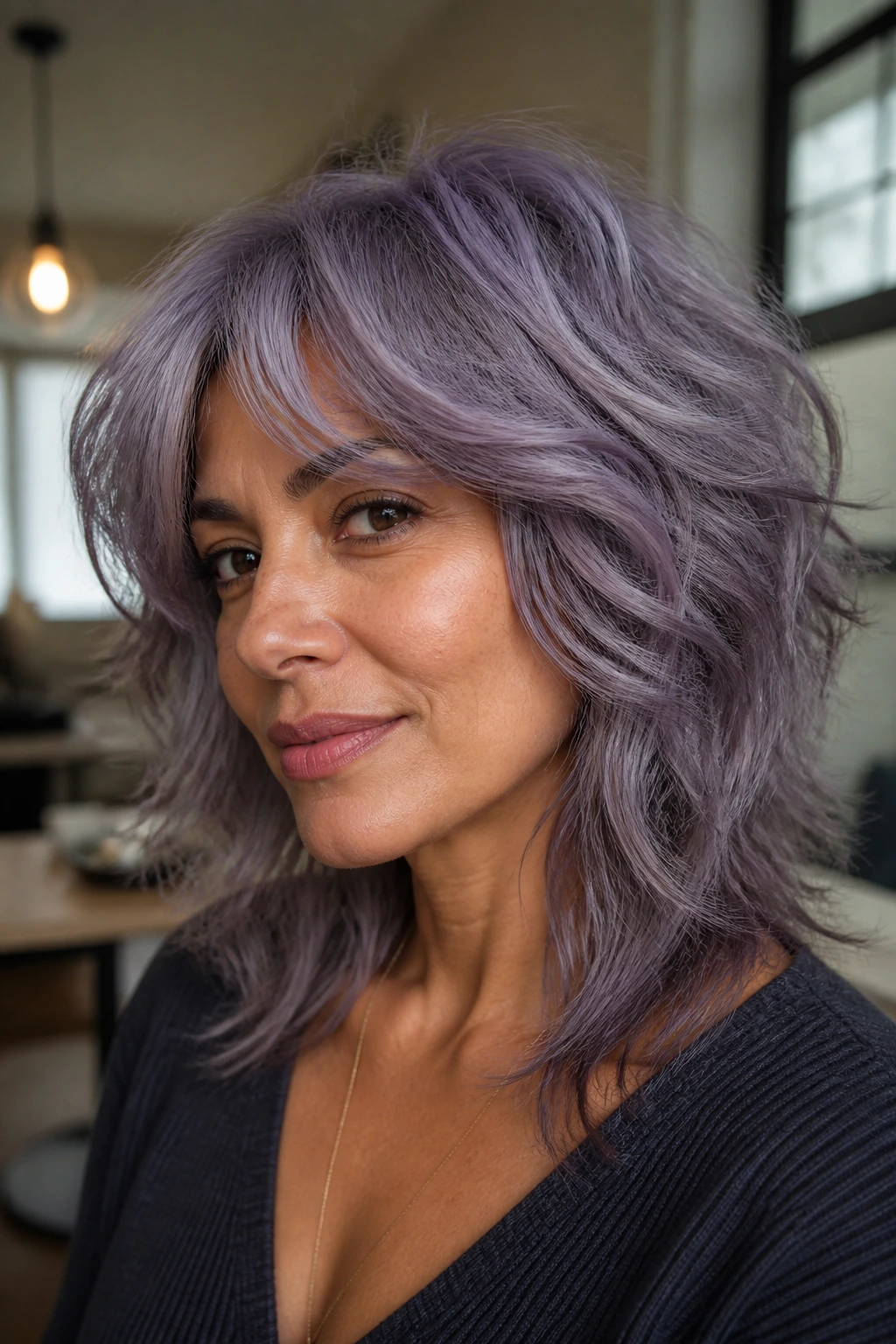
8. Smoky Lilac Gray Shag
Smoky lilac gray is for the person who likes grey but wants it to feel less stern. That whisper of lilac softens the tone and gives medium skin with rosy or neutral undertones a little lift. On a shag cut, the color reads airy instead of heavy because the layers keep breaking it up.
The lilac should be quiet. If it turns candy-bright, the whole thing loses the smoky effect. Think lavender mist, not purple dye. That’s the line. The best versions look like grey hair caught under a cool sunset, not a fantasy wig.
A shag is the perfect cut for this because the pieces move separately. Every time you turn your head, another note of grey or lilac shows up. It’s a good choice if you want grey to feel a little softer and more playful.
9. Salt-and-Pepper Blend with Face Framing
Salt-and-pepper is a transition look, but it doesn’t have to look unfinished. On medium skin, especially skin with olive or neutral undertones, a controlled salt-and-pepper blend can be one of the most elegant ways to wear grey. The face-framing pieces do a lot of the visual work, brightening the front while the rest of the hair keeps its natural depth.
The big mistake people make here is trying to turn the whole head silver too fast. Better to let the grey live with the brown. Blend, don’t erase. A few finer highlights around the hairline, a soft lowlight through the crown, and some untouched depth underneath can make natural greys look deliberate.
This is a strong choice if you want your color to move with your regrowth instead of against it. It grows out better than a full silver dye job, and that is not a small thing.
10. Velvet Graphite Bob
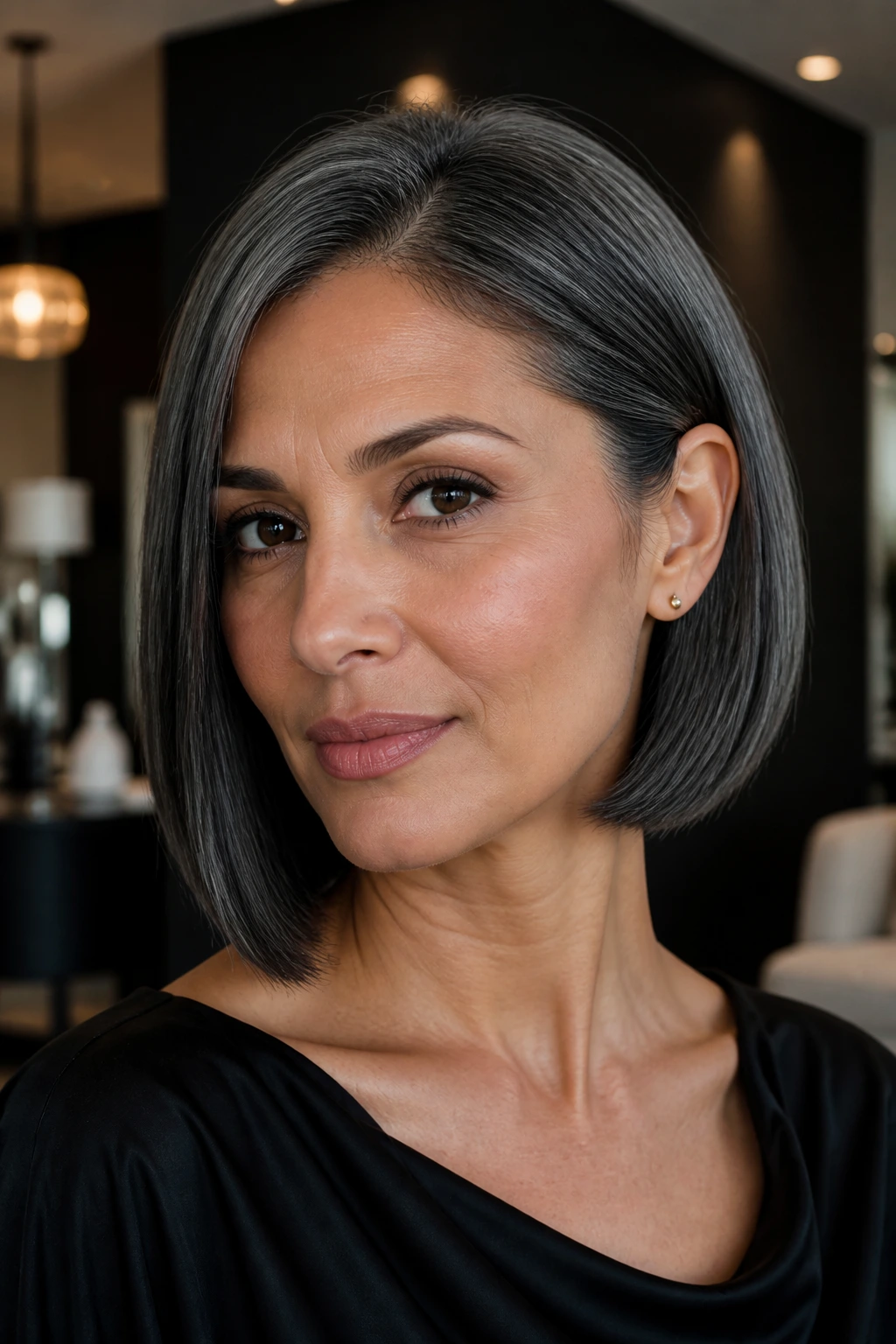
Graphite is a great grey when you want it to feel dense rather than icy. On a bob, it has a velvet quality—dark, smooth, and a little reflective. Medium skin usually likes this better than people expect, especially when the undertones lean golden and the hair needs some depth to keep the face from washing out.
The bob should be blunt enough to look intentional, but not so stiff that it feels helmet-like. A slight underbend at the ends keeps the shape from reading too hard. If you wear a side part or a deep tuck behind one ear, the graphite picks up light in a very clean way.
This is a color for shine. If the hair is dry and dull, graphite falls flat fast. A glossing serum or a lightweight oil on the mids makes a real difference.
11. Foggy Beige Gray Waves
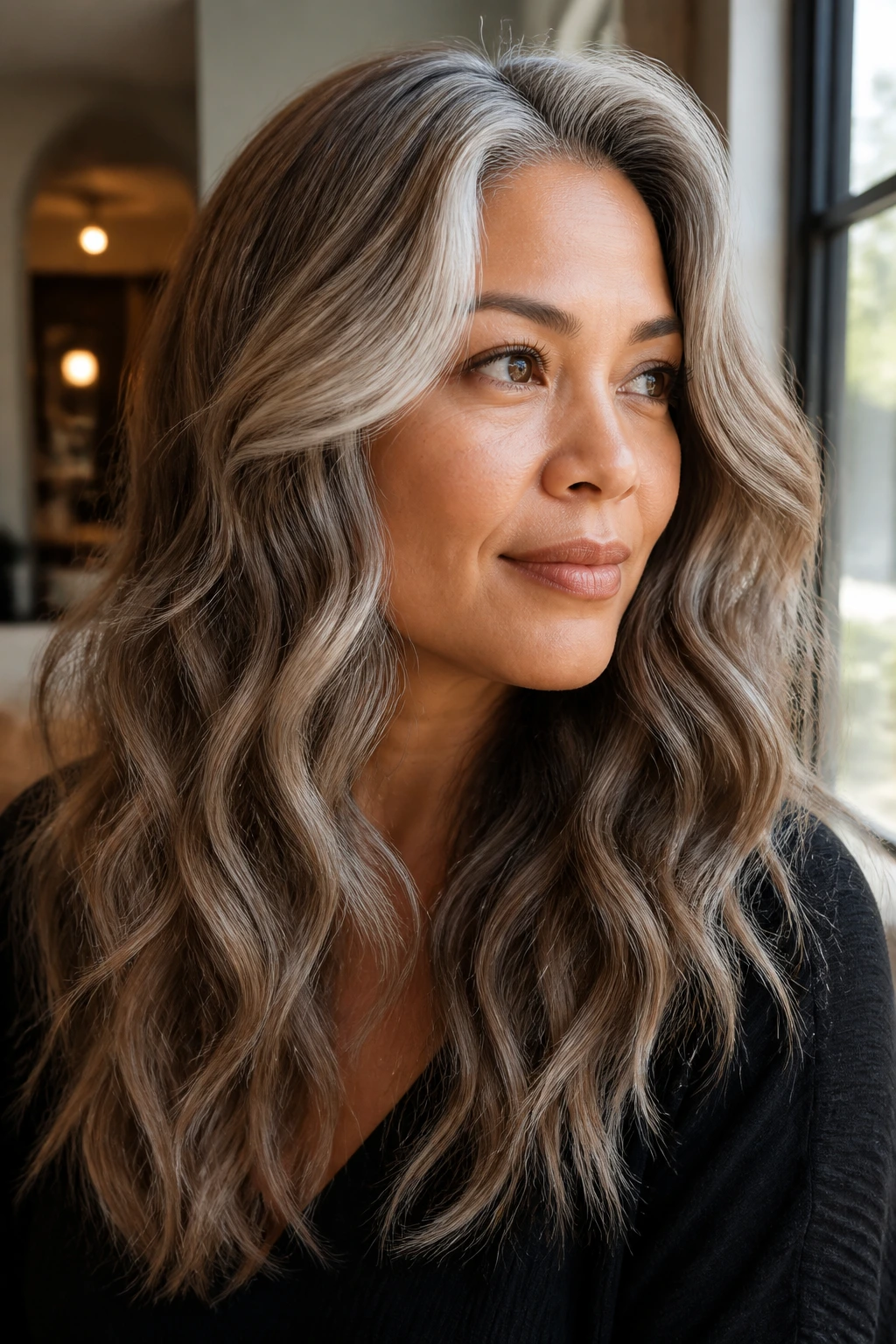
Foggy beige gray sits in that pleasing middle ground where grey doesn’t look cold enough to scare anyone. It’s softer than steel, warmer than silver, and especially kind to medium skin with golden undertones. If pure silver has ever made your face look a little tired, this is the correction.
The best version has a beige-brown root and smoky grey ribbons through the waves. That blend keeps the shade from looking pasted on. It also lets the color live in the movement of the hair instead of sitting as one flat sheet.
Loose waves are the obvious choice, but the real win here is the texture of the tone itself. Beige grey has enough warmth to flatter the skin and enough smoke to still count as grey. It’s a practical choice. I like practical hair color when it still looks special.
12. Moonstone Gray Crop
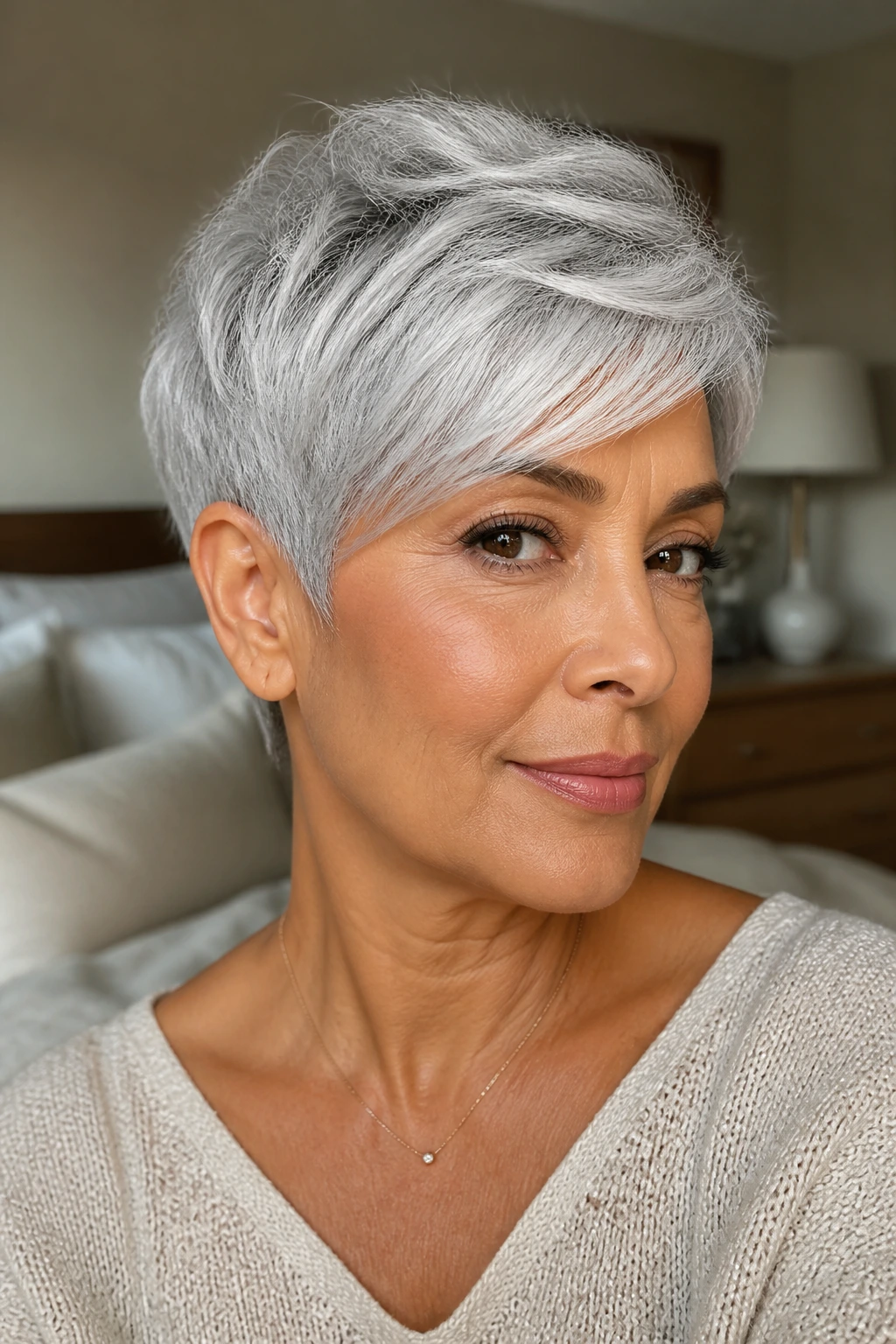
Moonstone gray has a pale, luminous finish that looks best when the cut is short and clean. On medium skin with neutral undertones, the color feels polished instead of harsh, especially if the crop has some texture at the crown. It’s one of those shades that catches the light without screaming for it.
A crop gives moonstone room to breathe. Too much length and the shade can start looking washed. Too little texture and it turns flat. A finger-styled finish, a side-swept fringe, and a little matte paste at the tips keep it modern.
If you like short hair and want grey without the softness of mushroom tones, this is a neat place to land. It’s cool, but not frozen.
13. Ashy Beige Ribbon Highlights
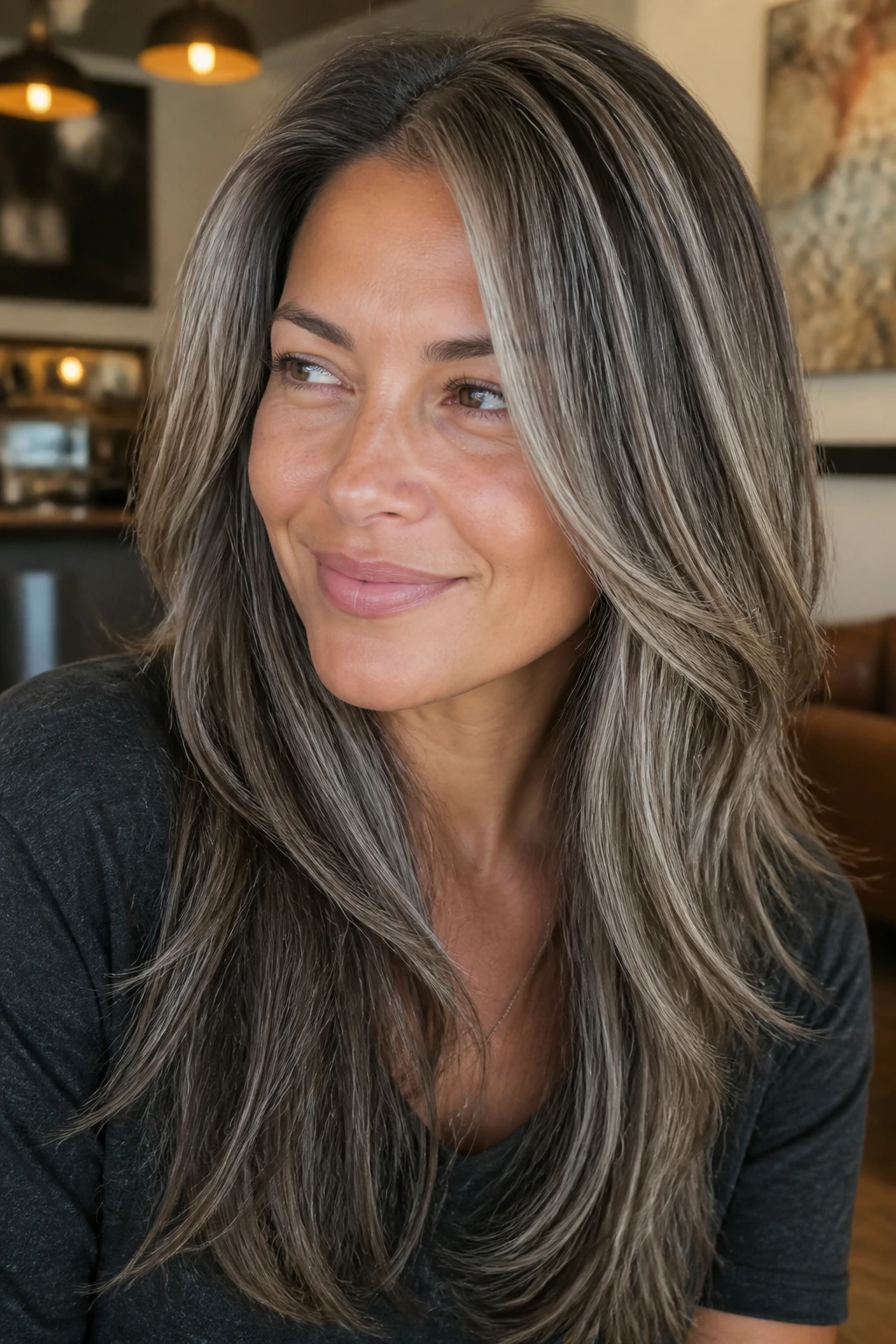
Ashy beige ribbons are for people who want grey in small doses. Instead of blanketing the head, the color comes through in thin, precise highlights that thread through a medium base. On medium skin, that matters because the warmth of the base stays present while the grey notes still show up.
This is one of the most flattering options for longer layered hair. The ribbons move differently from the base color, which gives the style a lived-in feel. If the highlights are too chunky, though, the effect can turn stripey fast. Thin, deliberate sections are the whole point.
The beauty of this look is that it doesn’t ask your hair to become something else. It just adds grey in a way that keeps the rest of your color intact. That makes it a good bridge if you’re curious but cautious.
14. Silver Smoke Underlights
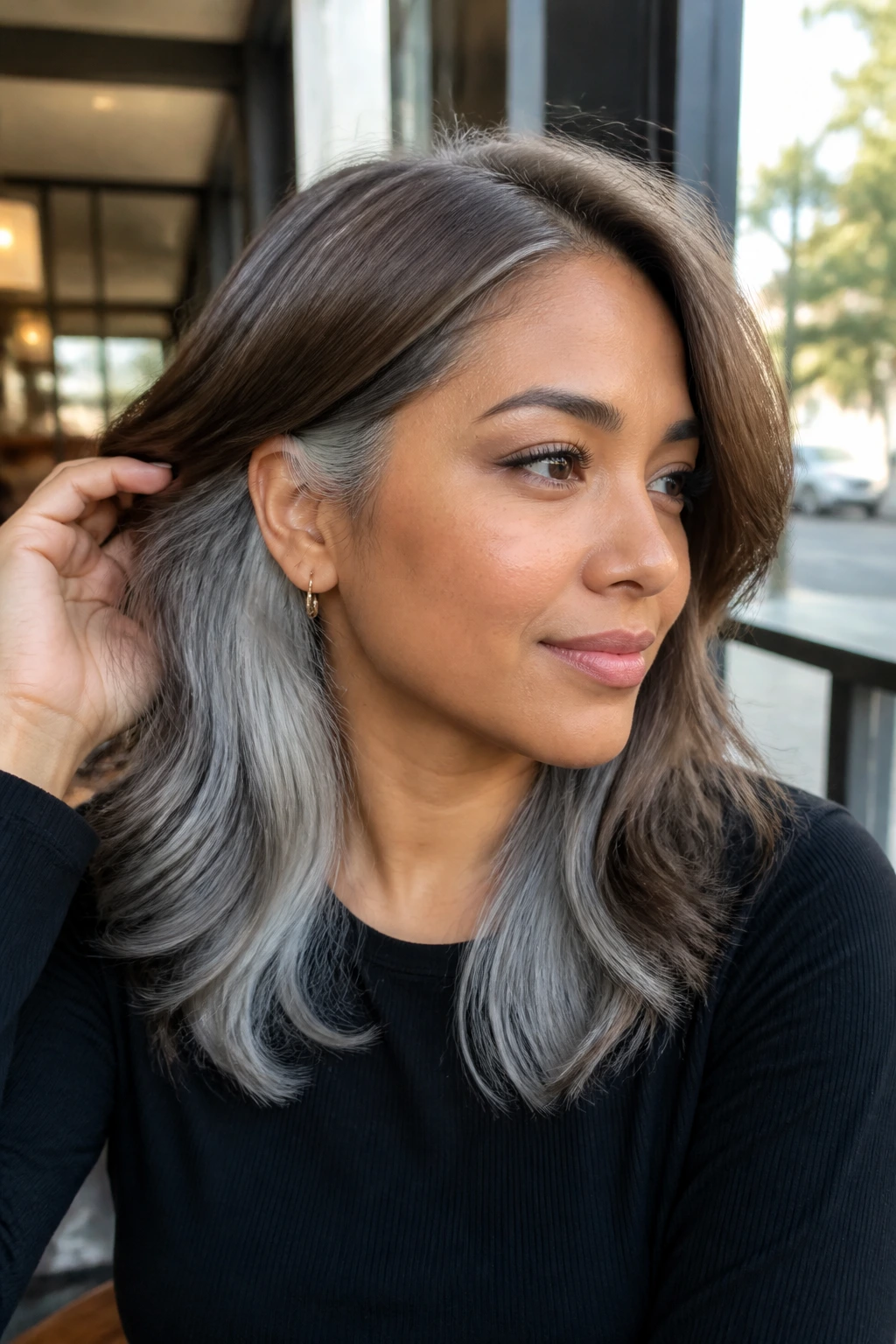
Underlights are the quiet rebel of grey hair. On the surface, the style can look soft and regular. Then you move, and the silver smoke underneath flashes through. That hidden contrast is especially nice on medium skin because it gives you coolness without throwing a bright silver panel right against the face.
This works best when the top layer is left in a softer brown, mushroom, or ash tone. The underlights can be a touch brighter, even full silver, because they aren’t competing with your complexion all day. They just show up in motion.
It’s a fun way to test the grey waters. Low commitment, but not boring. And yes, it looks better when the hair is tucked behind the ear or half-pulled back. Let the hidden color do its thing.
15. Pewter Curtain Layers
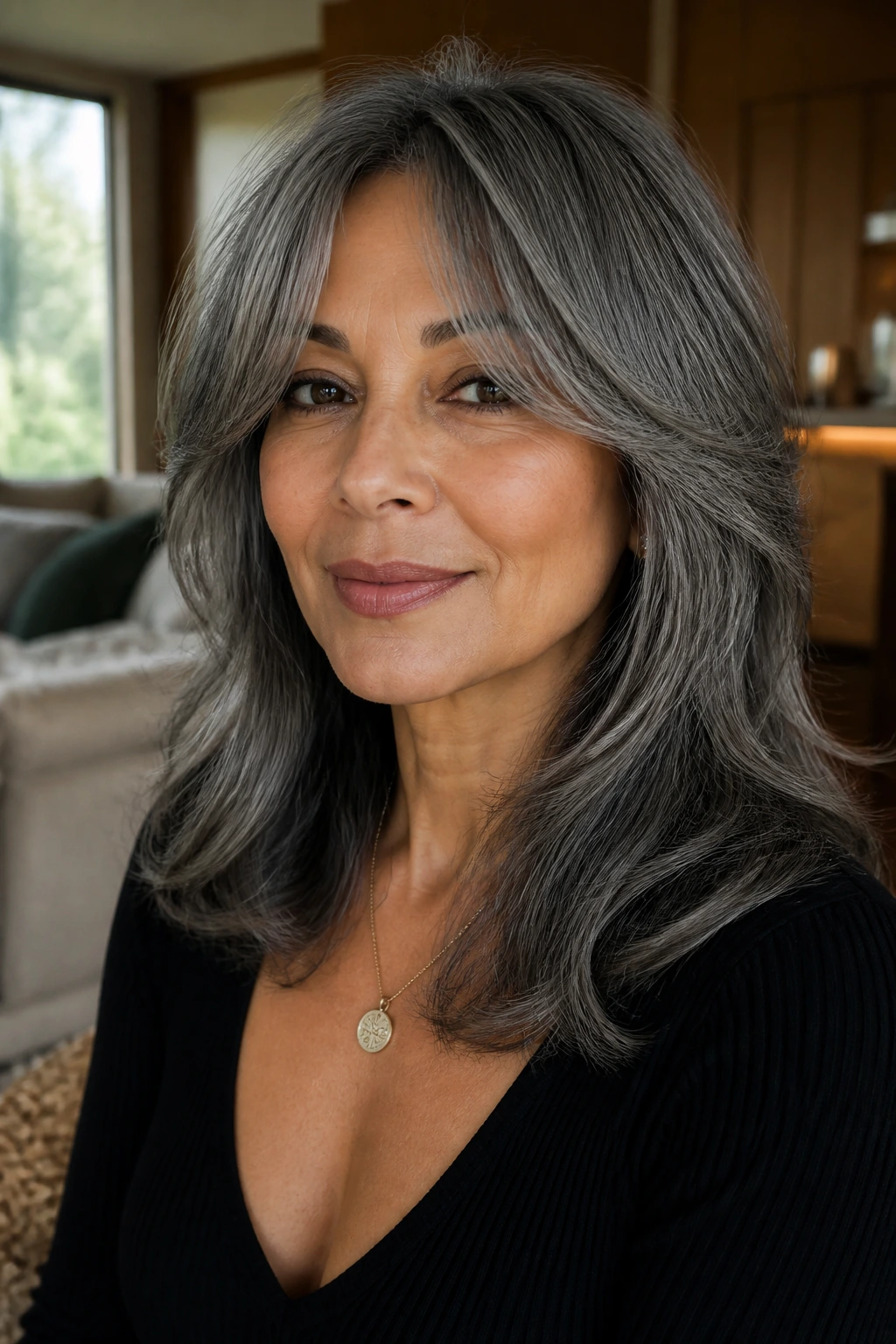
Pewter has a softer metallic note than gunmetal or charcoal, which is why it suits medium skin so neatly. Add curtain layers, and the whole look gets a face-framing sweep that takes the edge off the coolness. The bangs open the face; the pewter gives it shape.
I like this transformation on medium-length hair because it keeps the color from feeling too dense. The layered pieces bend around the cheekbones, and that stops grey from reading like one flat sheet. A round brush blowout or a large-barrel bend is usually enough to show the texture.
If your skin is neutral or olive and you want grey that feels tailored, not flashy, pewter is a very good answer. It’s quiet, but not meek.
16. Deep Charcoal Gloss on Straight Hair
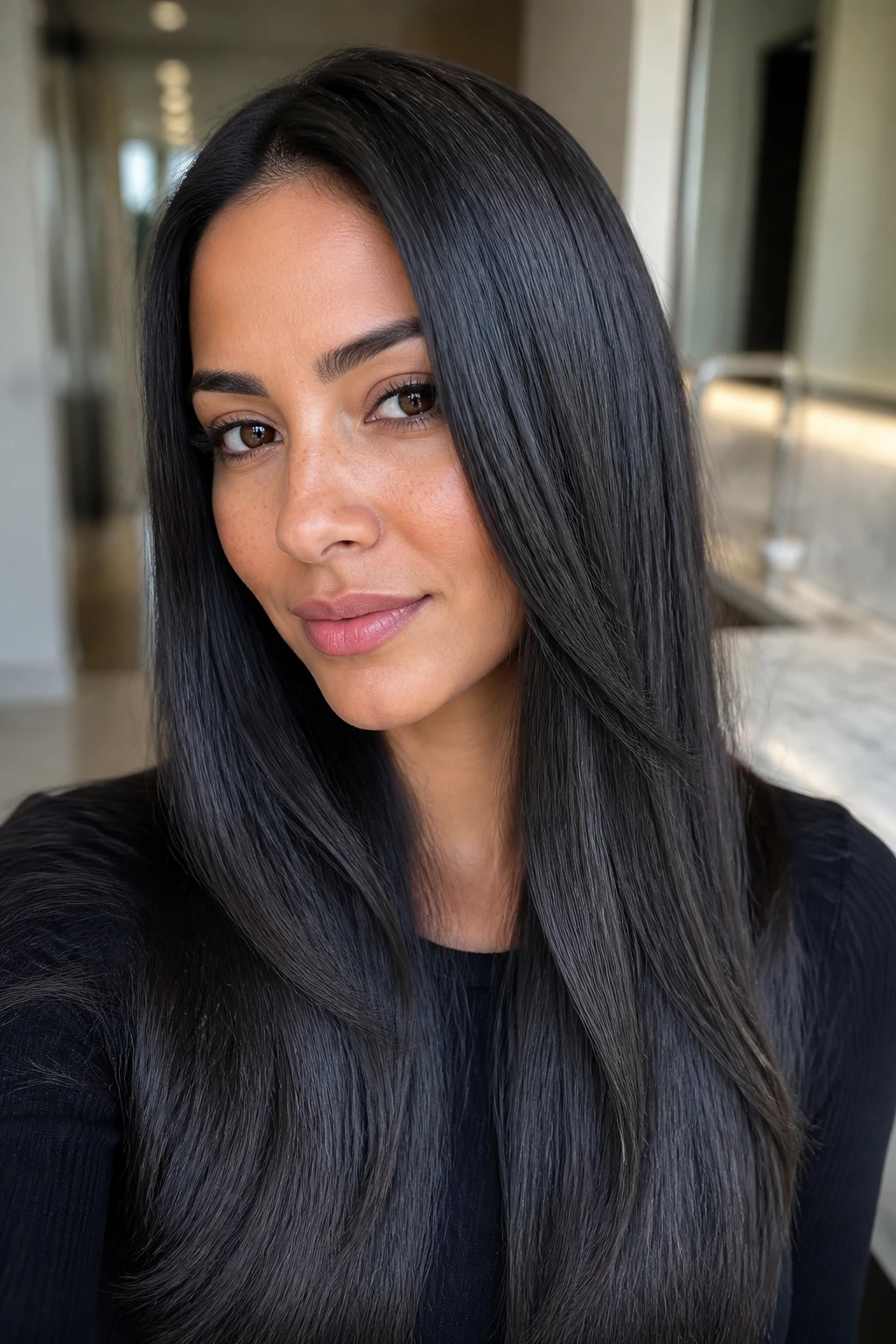
Deep charcoal gloss on straight hair has a sleek, almost liquid look. It isn’t silver in the obvious sense. It’s darker, moodier, and closer to a smoky black with grey sheen layered over it. Medium skin with warm undertones can wear this surprisingly well because the depth gives the face shape instead of draining it.
The key is shine. Straight hair and charcoal work together only if the finish is smooth. If the hair is dry or porous, charcoal can go muddy and lose that reflective quality. A gloss treatment or shine spray helps the color stay sharp.
This is one of the more dramatic transformations here, but it doesn’t need curls or waves to feel complete. The straight line is the point.
17. Opal Gray Afro
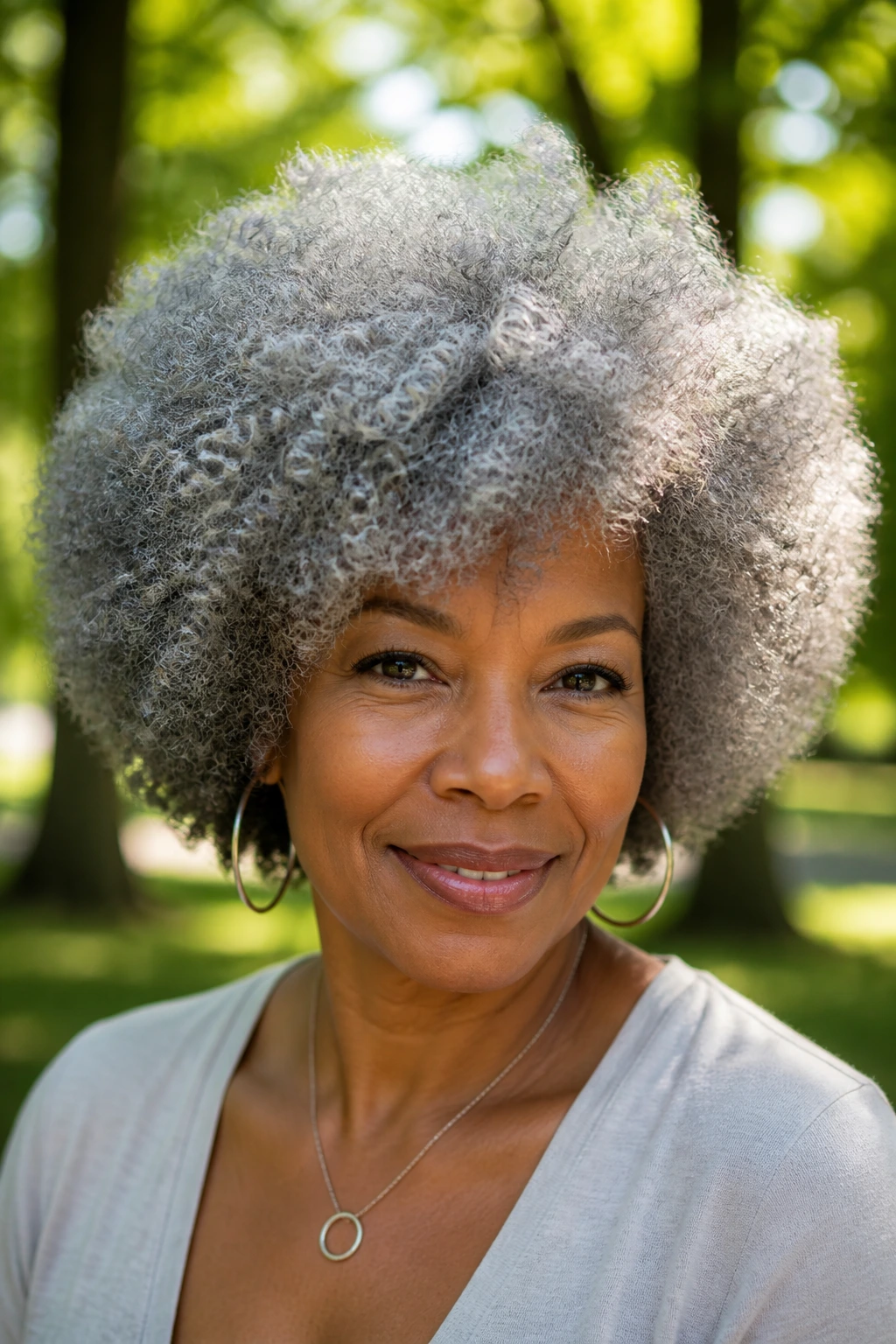
Opal gray on an afro is all about light and texture. The hair doesn’t need to be flattened to show off grey; in fact, the volume is what makes the color feel alive. On medium skin, the brightness reads beautifully because the curls and coils create tiny shifts of shadow and shine all through the shape.
The opal note can be subtle—silver, pearl, and a hint of cool blue-green all stacked into one reflective finish. It should never look one-dimensional. A short coil, a rounded shape, or a tapered silhouette all help the color hold its architecture.
Moisture is the real issue here. Grey hair, especially light grey, tends to feel drier, and textured hair shows that dryness faster. Deep conditioning and a good leave-in are not optional. They’re the difference between soft shine and a rough, frizzy halo.
18. Warm Taupe Gray Shag
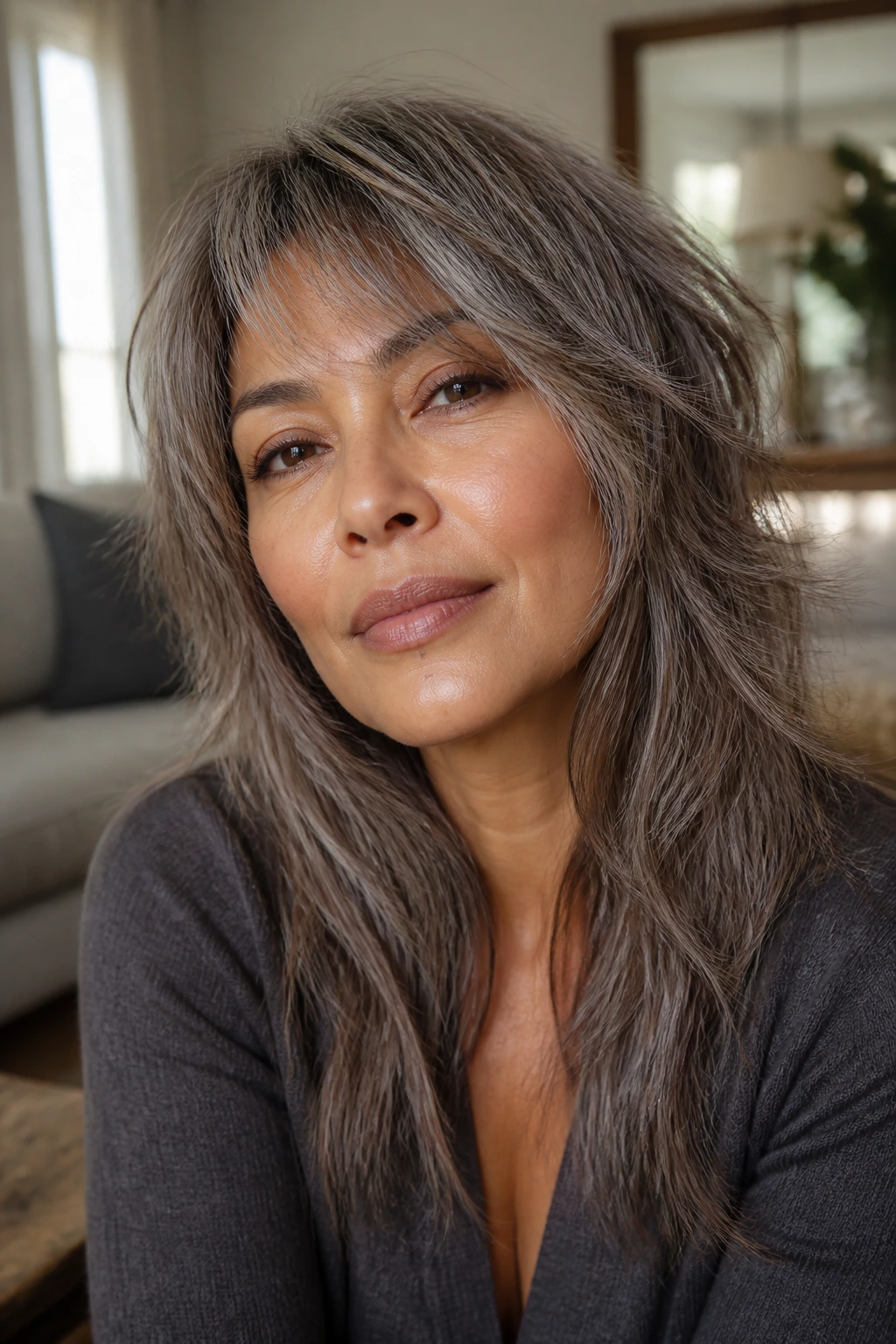
Warm taupe gray is for people who want grey with a brown backbone. That warmth helps medium skin, especially golden skin, stay alive next to the color. On a shag, the texture keeps the taupe-gray from feeling too polite.
This is a smart middle road. The grey is visible, but the warmth means the color blends into everyday life more easily than a pale silver would. If you wear makeup lightly or like neutral clothing, warm taupe gray tends to fit right in without making the rest of your styling feel forced.
The shag cut matters because it keeps the color moving. Long, soft layers around the jaw and cheekbones stop the shade from sitting heavy. If you want grey that feels wearable and not theatrical, this is one of the best bets.
19. Frosted Silver Flip-Out Bob
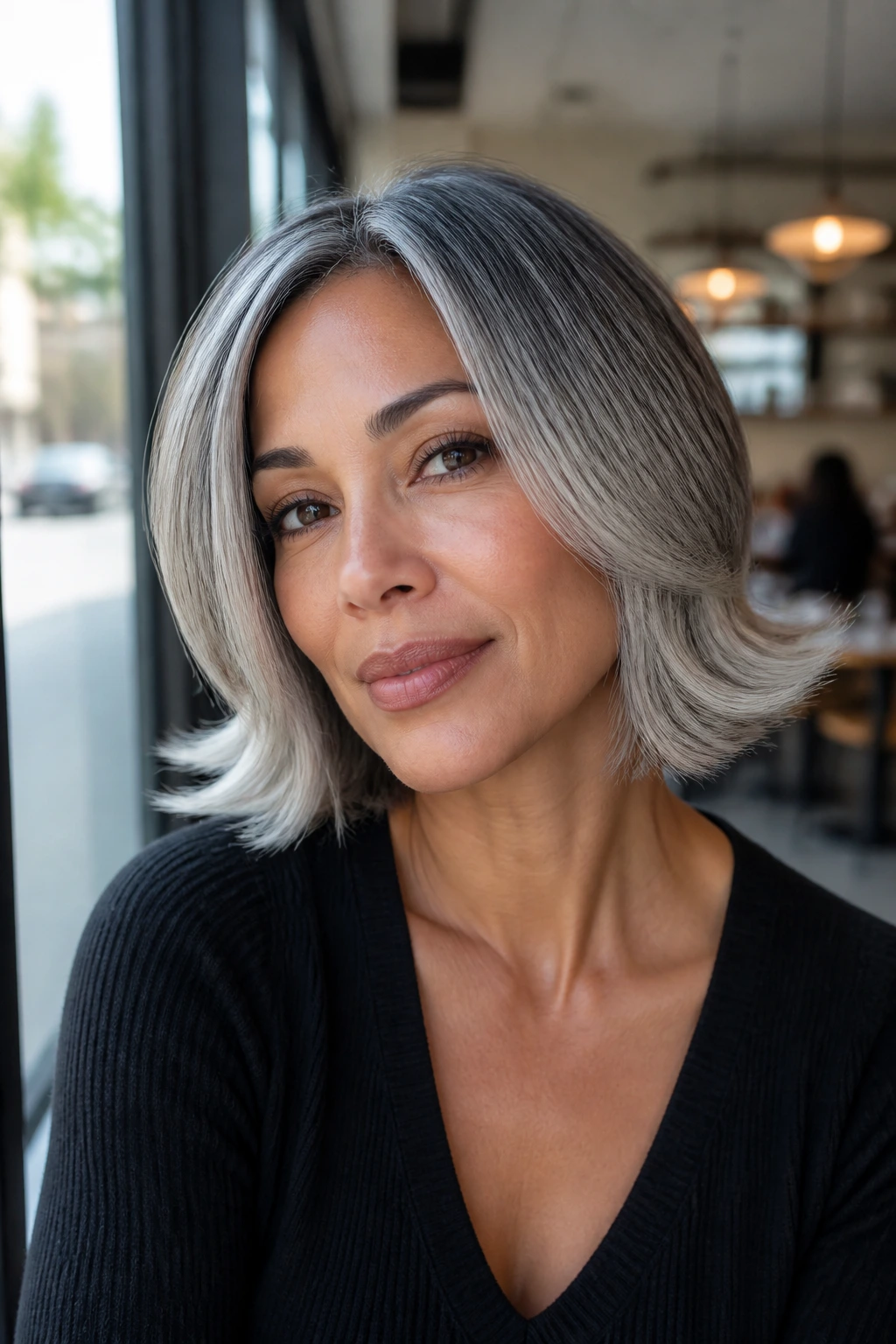
The flip-out bob brings a little retro shape to a very modern color. Frosted silver on the ends gives the style a light, crisp edge, while the flipped shape keeps it from feeling severe on medium skin. There’s just enough volume at the bottom to soften the cool tone.
The trick is to keep the root darker and the silver concentrated on the outer surfaces and the bent ends. That way, the grey acts like frosting on the shape instead of swallowing it. A round brush or a hot brush makes the flip easy enough to maintain.
This is one of those looks that feels cheerful without losing its edge. The motion at the bottom changes everything.
20. Graphite Balayage on Long Straight Hair
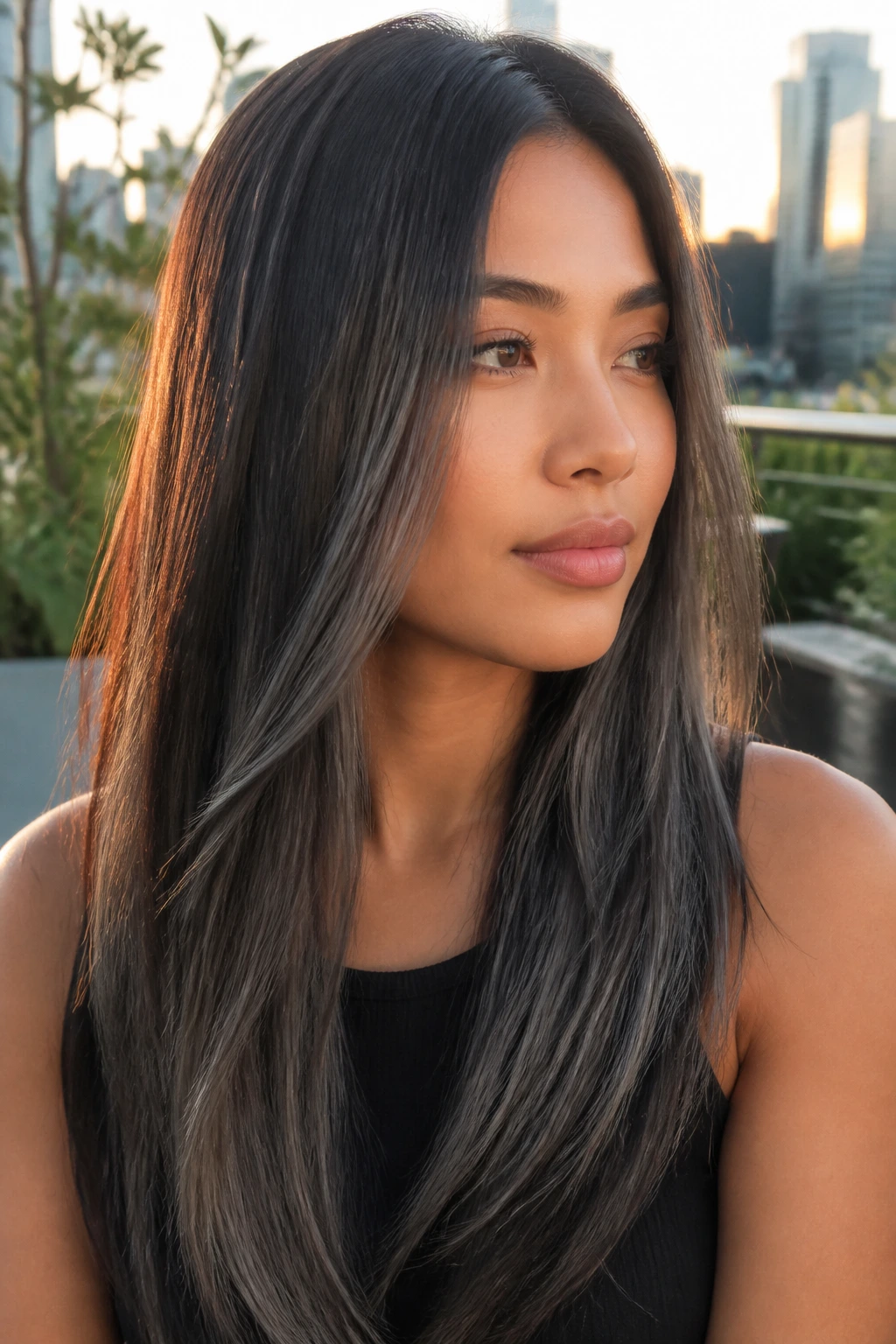
Long straight hair can be a trap for grey color. Without movement, everything can blur together. Graphite balayage fixes that by threading darker grey ribbons through a deep base so the length has breaks, shadows, and highlights instead of one endless sheet.
On medium skin, this is especially useful because the darker graphite pieces keep the complexion grounded. The balayage does not need to start high; in fact, mid-length placement usually looks better. That gives the face room and keeps the ends from disappearing into the same tone as the root.
Wear it with a center part if you want a cleaner line, or tuck one side behind the ear if you want the ribbons to show off. Either way, the dimension is doing the work.
21. Smoky Rose-Gray Lob
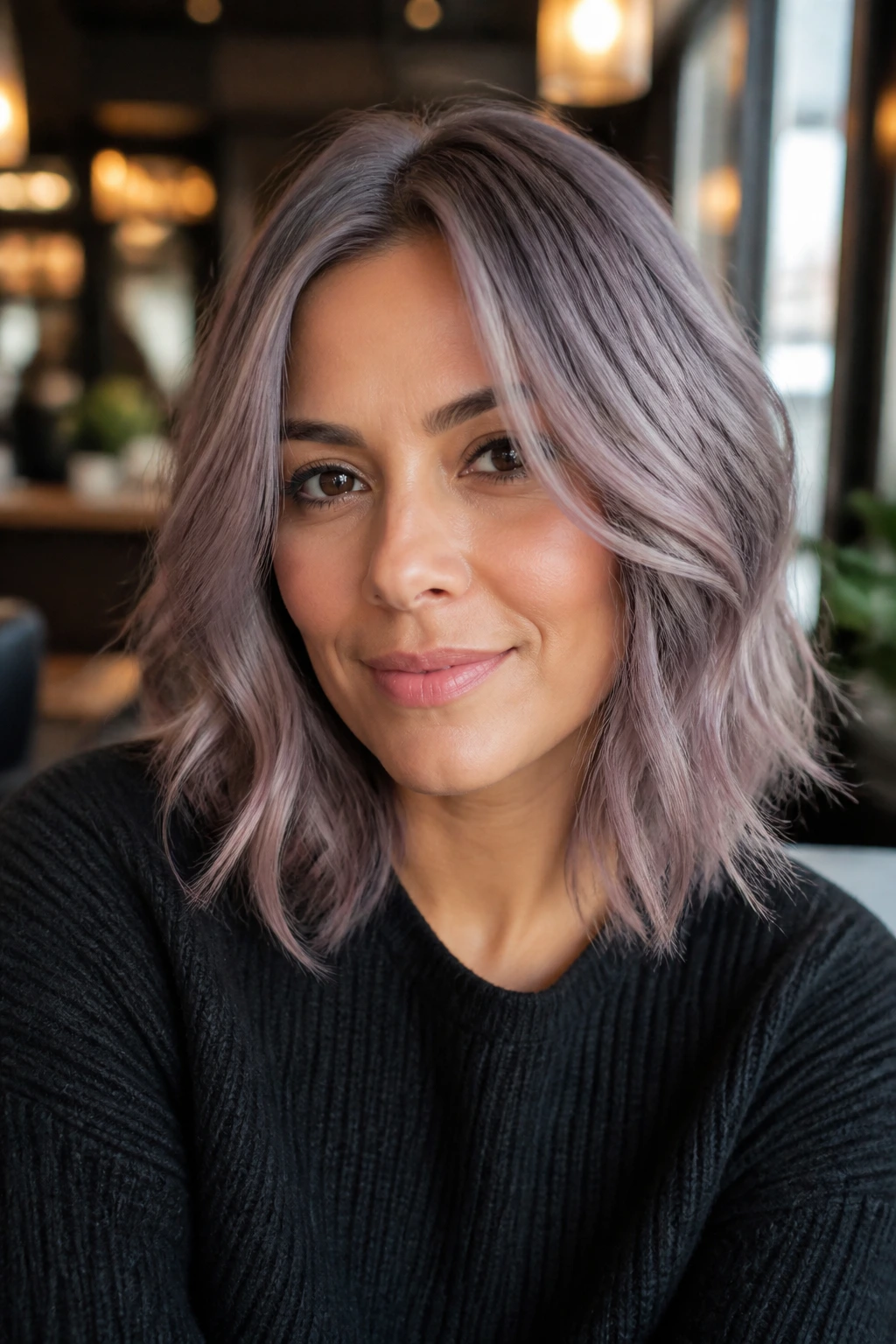
Rose-gray is what happens when grey stops being strict and starts getting a little soft around the edges. On medium skin with rosy or neutral undertones, the muted pink note helps the color feel flattering instead of cold. The lob keeps it modern and clean.
The rose should stay smoky. If it turns bubblegum or dusty mauve, the whole thing changes personality. You want a grey that has been warmed by pink, not a pink shade that has been greyed out. That distinction matters more than people think.
A lob is the right cut because it keeps the tone near the face without letting it overwhelm the whole look. Add a bend through the mid-lengths and the color starts to shift in the light.
22. Granite Braids
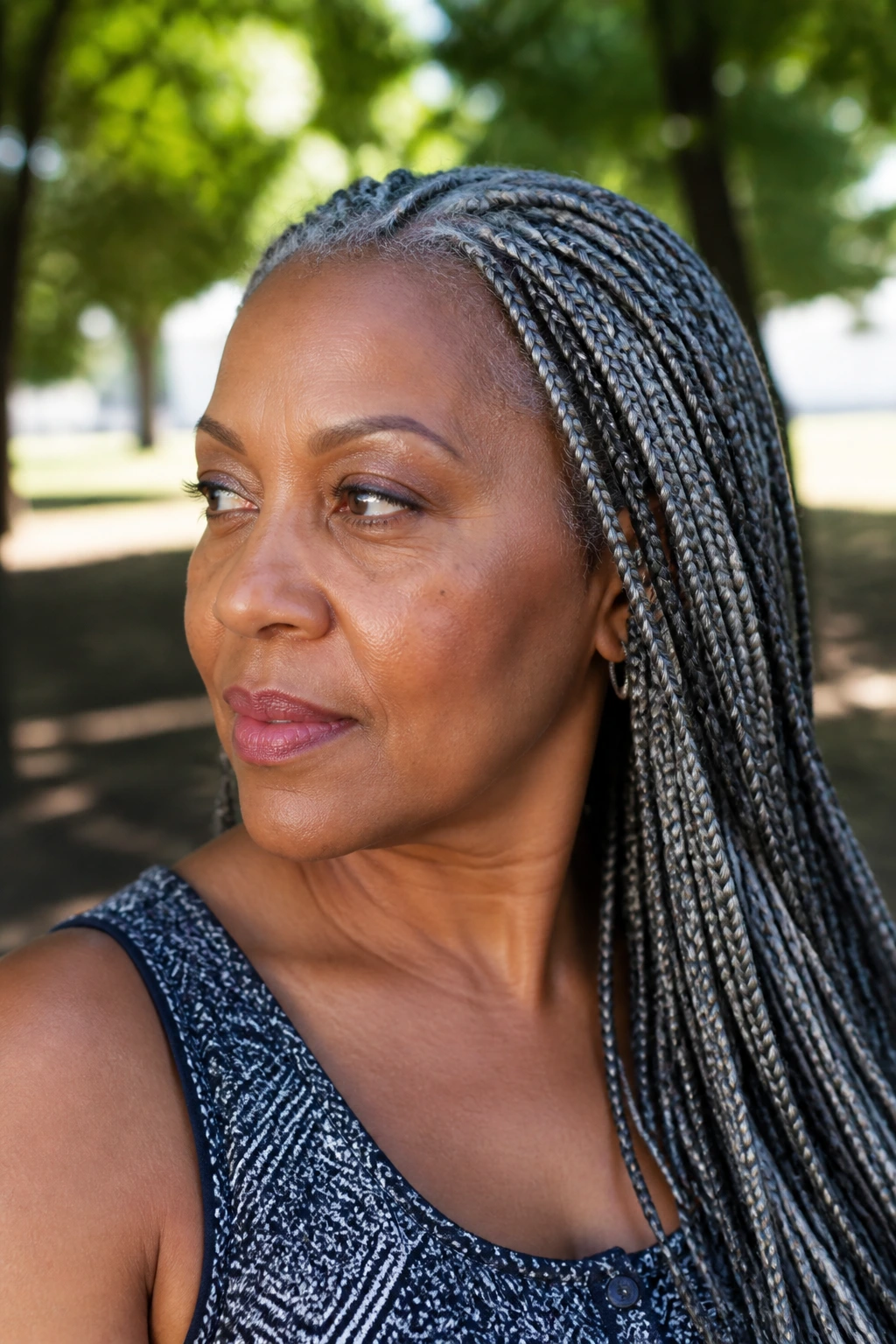
Granite braids are a smart way to wear grey if you like protective styling or just want the color to show up in a different format. Medium skin gets a lot of mileage from the contrast in the braid pattern itself; the strands catch light in one place and shadow in another, which keeps the grey from going flat.
You can work this look with silver feed-in extensions, grey highlights woven through braids, or a blend of dark and silver strands that reads granite from a few feet away. The exact braid pattern matters less than the depth. Thin braids create more texture, chunkier braids create more color blocks.
This style is practical, but it doesn’t need to look practical. The coolest part is the movement—grey flashes between the plaits when you turn your head. That’s the good stuff.
23. Urban Steel Fringe
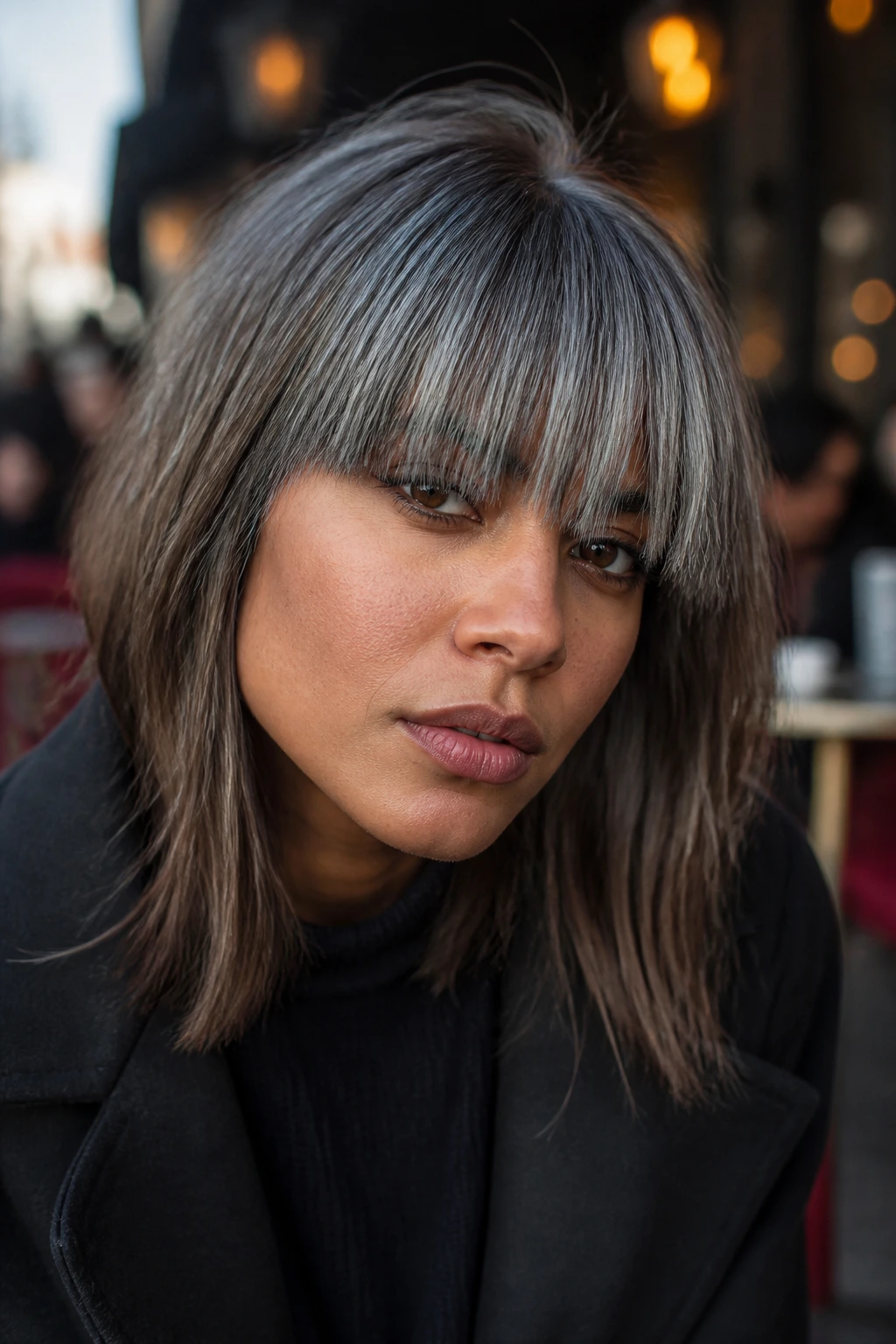
A steel-gray fringe changes the whole face. Suddenly the grey is not just a color choice; it becomes part of the cut. On medium skin, the fringe softens the forehead while the steel tone gives the style a clean edge.
I like this on shorter to medium-length hair where the fringe can sit a little heavy without swallowing the face. If the rest of the hair is kept in a softer grey-brown or charcoal, the fringe has enough contrast to stand out. That contrast is what keeps the style feeling intentional.
This is a good option for anyone who likes sharp lines but doesn’t want full metallic brightness everywhere. It’s tidy, a little dramatic, and very usable.
24. Ice-Kissed Silver Curls
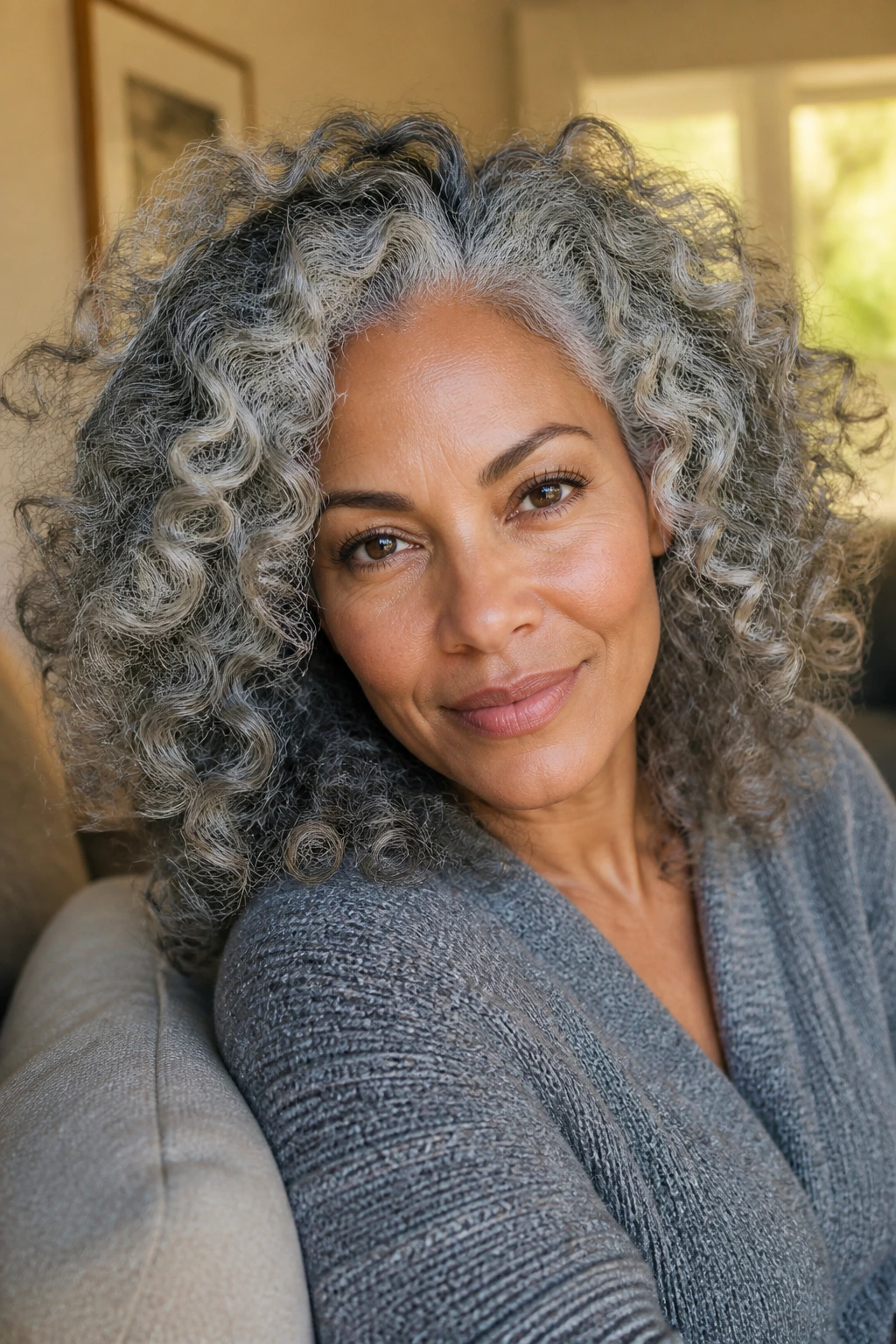
Ice-kissed silver curls work because the curls stop the ice from becoming too harsh. Medium skin benefits from the texture right away: the light catches the outer curves, the inner curves stay darker, and the whole style ends up with natural dimension. A darker base under the silver makes the color richer.
The silver itself should not live only on the tips. That’s too weak. Place it through the top and around the face, then let it taper through the body of the curl. The result is a halo rather than a stripe.
A gloss after lifting matters here. Curly hair can go dry fast, and dry silver curls can look stiff. A moisturized curl pattern makes the silver look expensive. Dry makes it look accidental.
25. Sand-to-Silver Melt
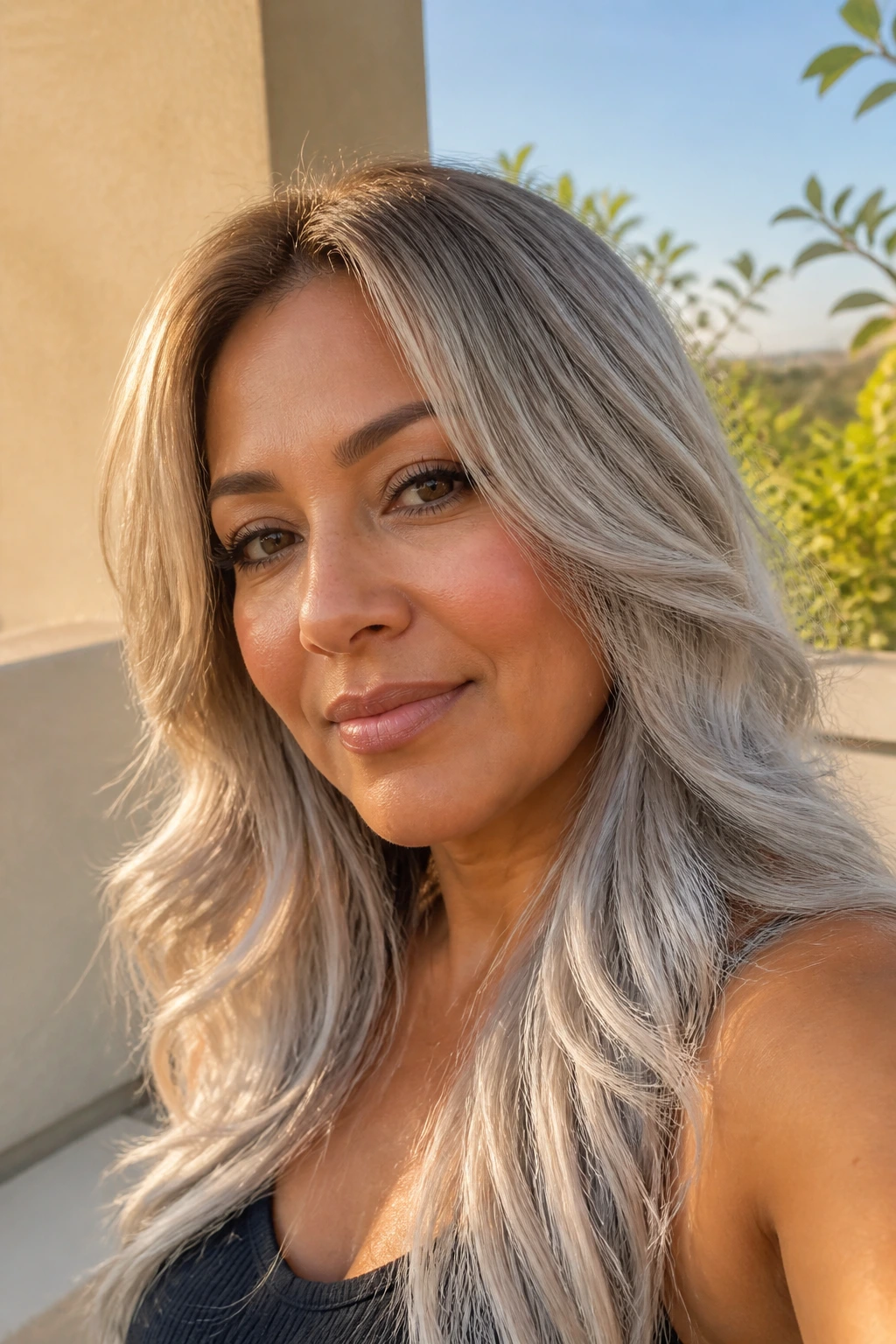
Sand-to-silver is a gentler version of the ombré idea. The root stays sandy—warm, beige, and a little sun-faded—then the tone drifts into silver through the lower lengths. On medium skin with golden undertones, that little bit of warmth at the top keeps the face from going pale.
This is one of the easiest grey transformations to live with if you’re nervous about going too cool. The change is visible, but it doesn’t hit you all at once. And because the root is warm, the grow-out tends to look cleaner for longer.
Loose waves help, but even straight hair looks good here as long as the transition is smooth. Think tide line, not stripe.
26. Moonlit Pewter Pixie
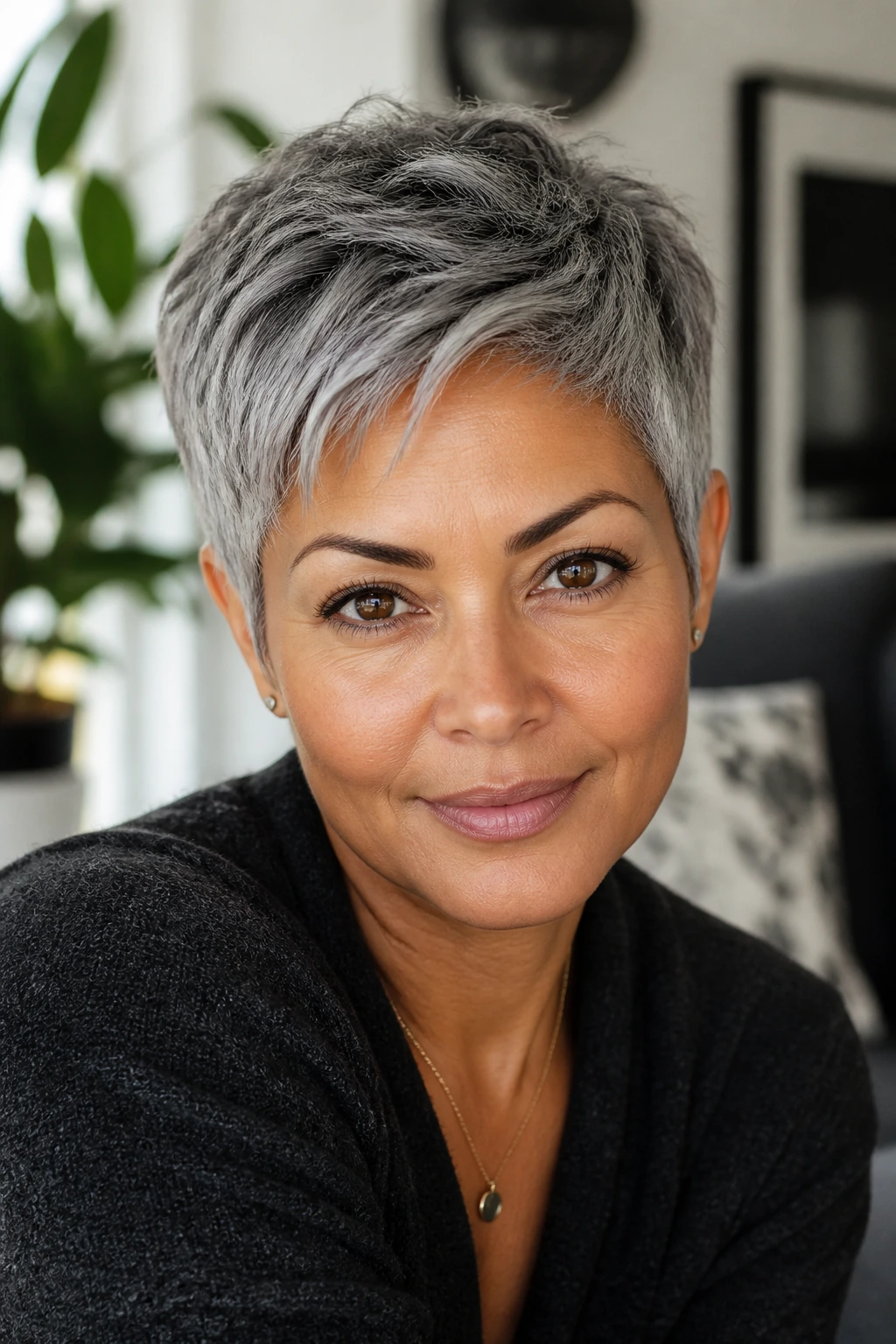
A moonlit pewter pixie is softer than graphite and less icy than silver. That makes it useful on medium skin because it leaves room for the complexion to stay warm and alive. The pixie cut gives the shade shape; the pewter gives it depth.
The best version has a slightly longer top with texture through the crown. That stops the color from lying flat against the head, which can happen with short grey cuts. A little piecey styling cream is enough.
This is a tidy look for people who like short hair but still want dimension. It’s polished without being stiff.
27. Steel Blue-Gray Bob
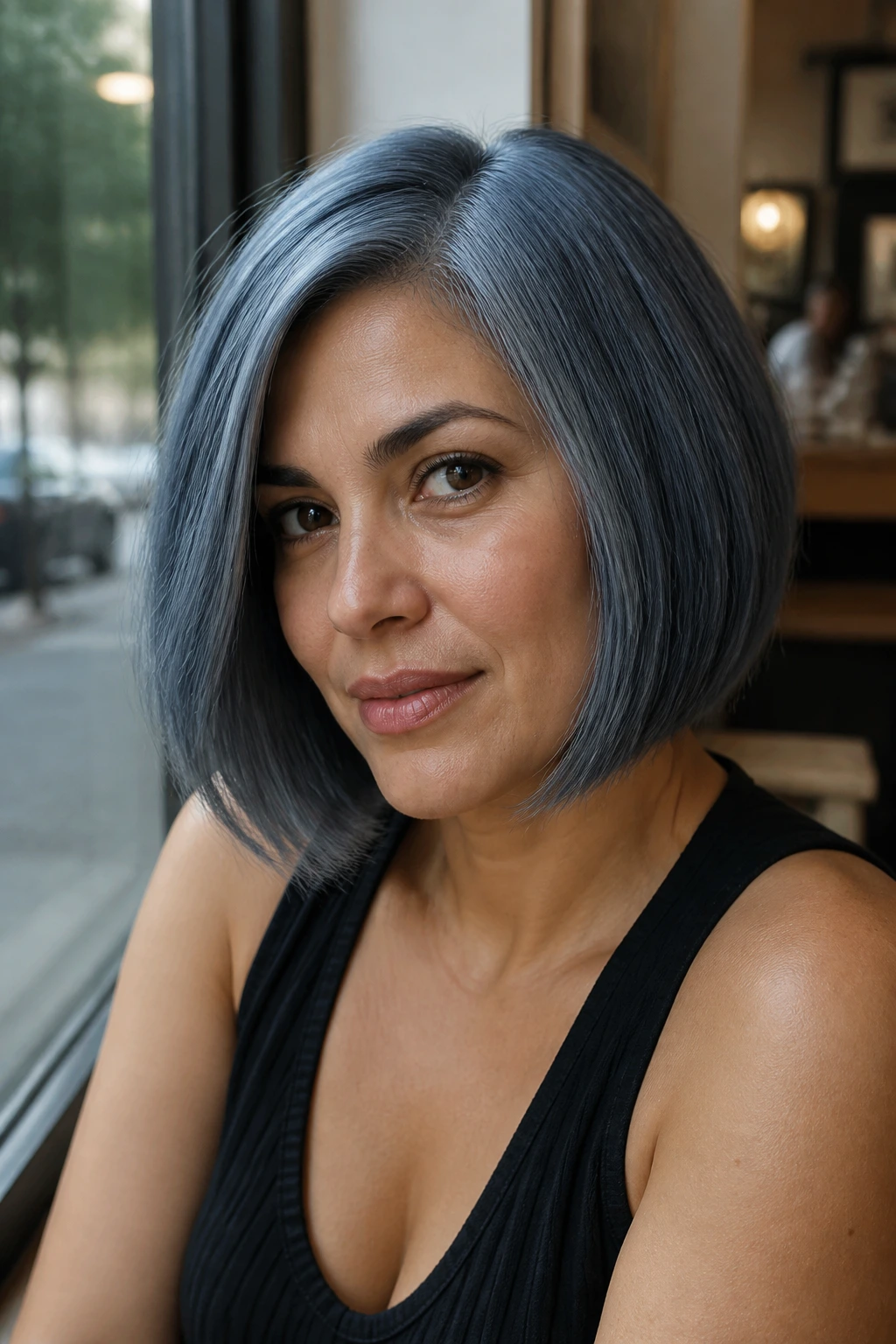
Steel blue-gray is bolder than most of the looks here, and that’s why it works so well when the cut is precise. On medium skin with neutral or olive undertones, the blue cast gives the grey a cooler edge without turning it chalky. A bob keeps the whole thing contained.
The blue should be subtle, not cartoonish. More storm cloud than denim. If it’s too bright, the shade can start to fight warm clothing and warm makeup. Keep the rest of your styling balanced—peach blush, soft brow tone, maybe a beige lip.
This is the look for someone who wants people to notice the color first and the cut second. Or maybe both at once. Either way, it has presence.
28. Ash Brown with Silver Ends
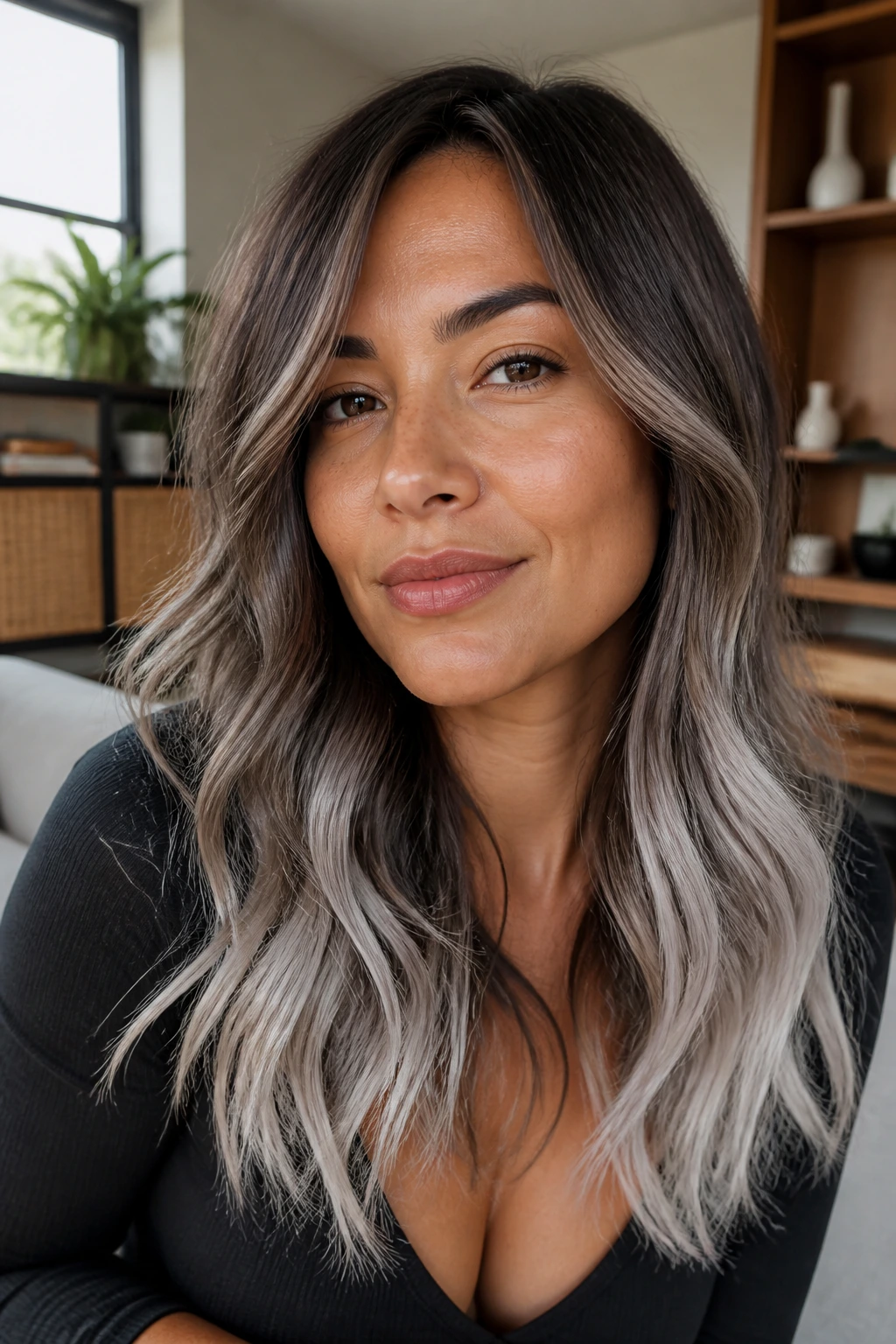
Ash brown with silver ends is one of the most practical transformations in the bunch. The root stays familiar and wearable, while the ends carry the grey shift. On medium skin, that means you get a cool finish without losing the depth that makes the face look alive.
It’s a smart bridge if you’re moving away from brunette or covering scattered grey. The ash brown root keeps the transition soft, and the silver ends give the style a clear point of view. You can wear it straight, waved, or curled; the end color does the talking.
I like this because it doesn’t demand a dramatic leap. It gives you grey in a way that still feels like you.
29. Dark Espresso with Gray Veil
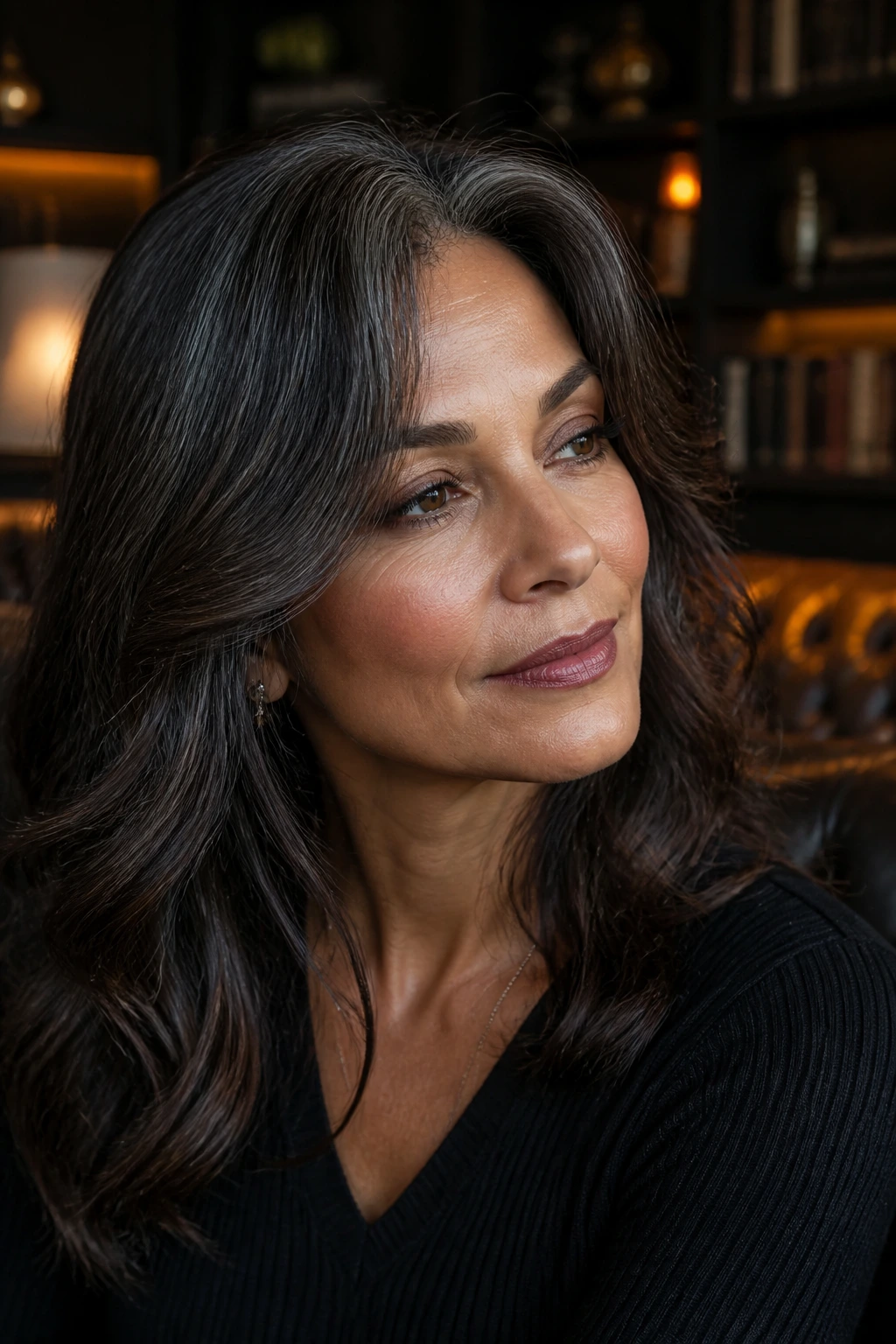
Dark espresso with a gray veil is about restraint. The base stays rich and deep, which is useful on medium skin when you want the hair to frame the face instead of outshining it. A thin veil of grey on top or through the outer layers adds the metallic note without turning the whole head pale.
This works especially well if you’re nervous about full silver or if your natural color is already dark. The gray veil can be fine and almost misty, visible mostly when the light hits the hair from the side. That makes it feel grown-up rather than obvious.
A soft wave or a loose blowout usually shows it best. The point is not to announce the grey. The point is to let it flicker.
30. Soft Slate Layers with a Dim Root
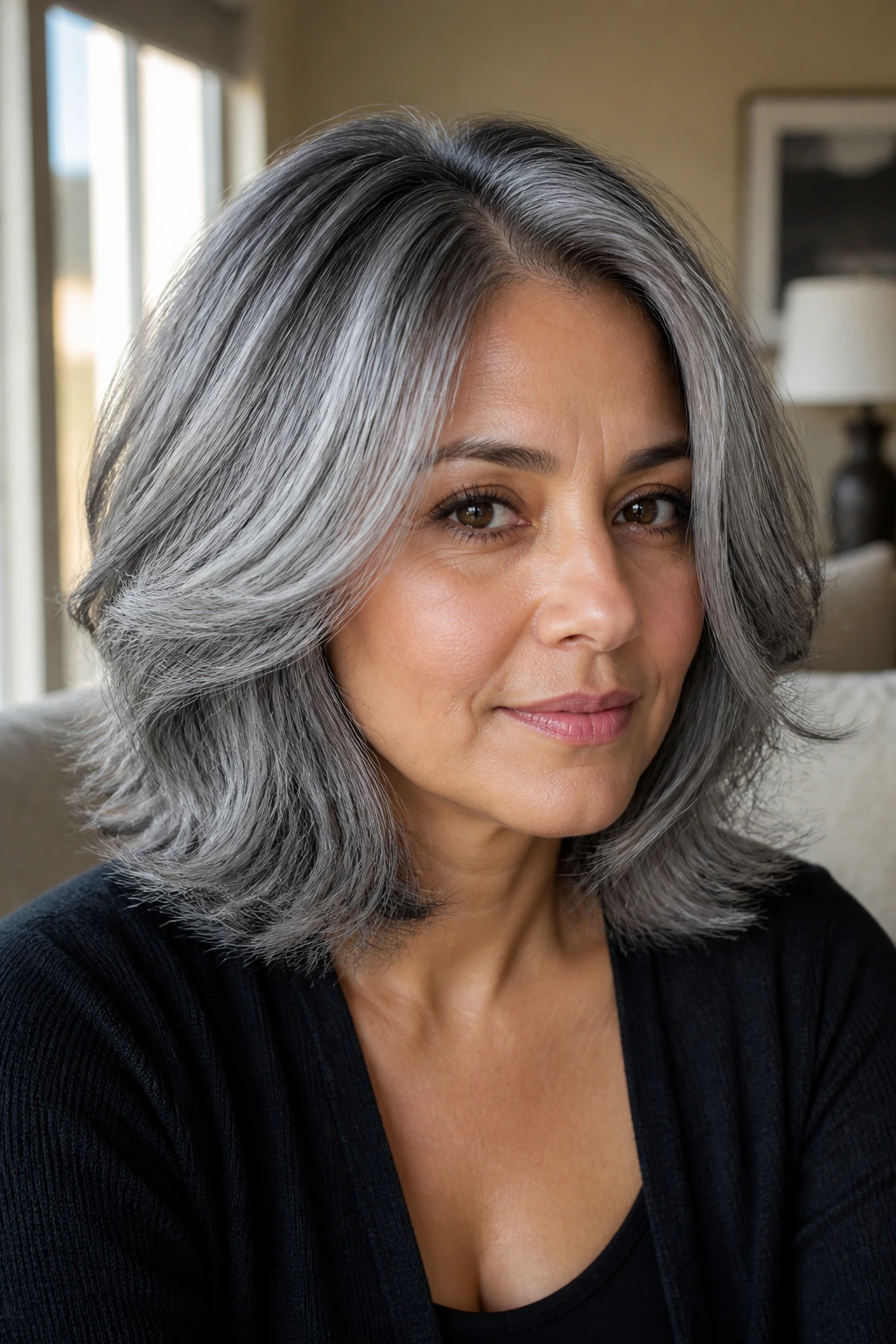
Soft slate layers might be the most wearable grey transformation in the group. The tone sits between silver and charcoal, which gives medium skin a cool finish without draining warmth. A dim root—one or two shades deeper than the mids—anchors the whole look and keeps the layers from going pale and dusty.
The layers are doing important work here. Slate can look heavy if it’s cut bluntly, but layered pieces let the color change with movement. That’s what keeps the shade lively.
If you want one grey that feels balanced, modern, and not too precious, this is the one. It’s not trying to be the coolest shade in the room. It just knows how to sit on the face.
Why Grey Hair Needs Dimension on Medium Skin
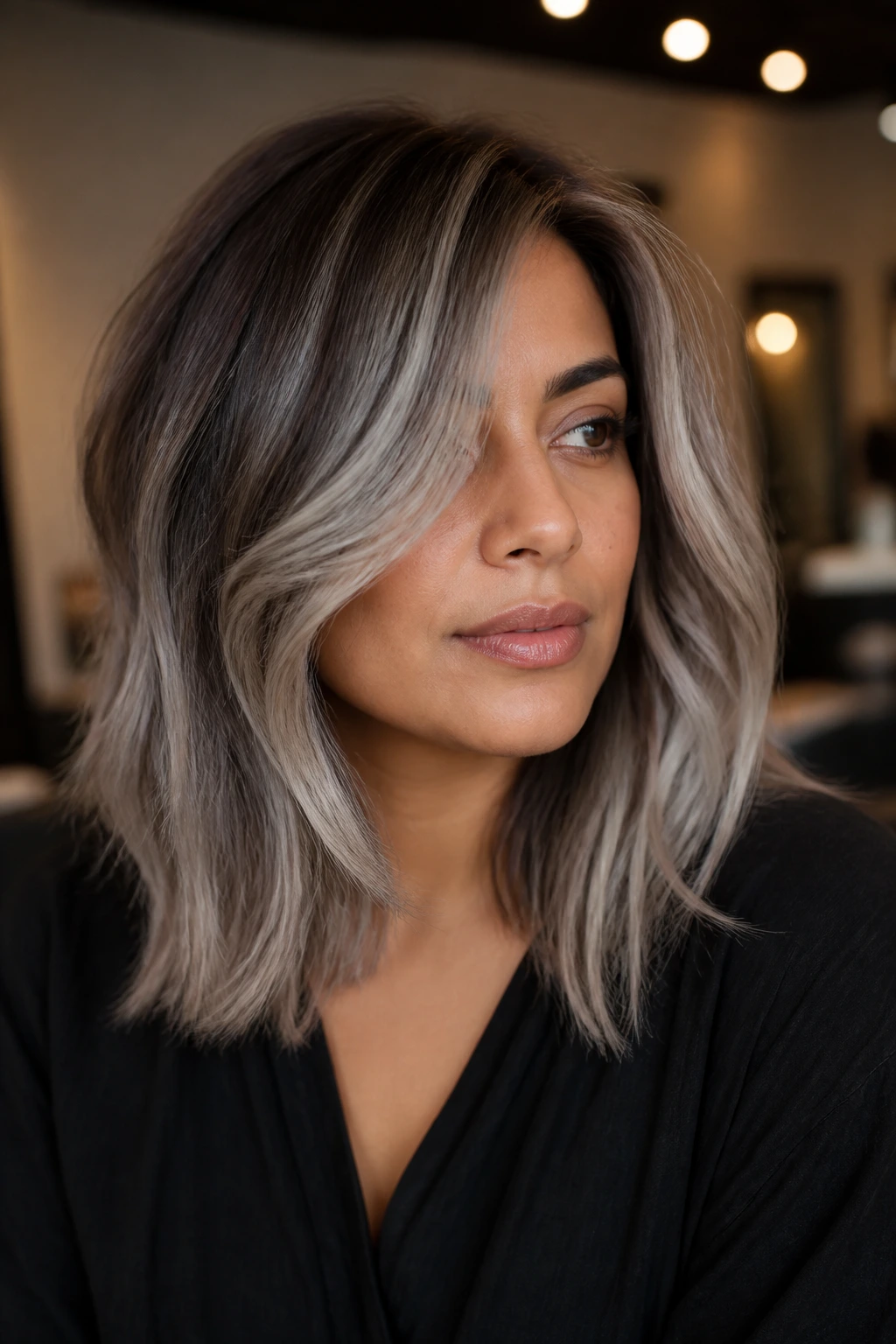
Grey hair can go flat on medium skin when it loses shadow. That’s the short version. The longer version is that medium skin usually has more than one note running through it—golden, olive, peach, sometimes a little red around the cheeks—and a single flat silver tone can erase the contrast that makes the face look lively.
A shadow root, lowlights, or a darker base lets grey keep its shape. Without those anchors, silver tends to reflect too much light across the same area, and the skin can look softer in a way that isn’t flattering. The fix is not “make it darker everywhere.” It’s “leave one part grounded so the light grey has somewhere to land.”
Texture matters too. Waves, curls, braids, and layered cuts scatter light in small pieces, which keeps grey from turning into a sheet. That’s why the same shade can look stunning in a shag and flat in a one-length style. The cut is not decoration here. It’s part of the color formula.
And yes, undertone matters more than most people want to admit. If your skin leans warm, taupe-grey and mushroom shades often look better than blue-white silver. If you’re neutral or olive, steel and pewter can work beautifully. The trick is matching the grey to the skin’s undertone, not to some imaginary idea of “going grey.”
Essential Tools for Grey Hair Transformations
-
Purple shampoo: Use it sparingly on silver and platinum looks to keep yellow tones from creeping in; once every few washes is usually enough.
-
Bond-building treatment: Bleaching and toning both stress the hair, and bond builders help keep grey lengths from snapping or feeling gummy.
-
Color-safe conditioner: Grey hair tends to feel drier and rougher than darker hair, so a creamy conditioner keeps the cuticle smoother between washes.
-
Heat protectant spray: Grey hair shows heat damage fast, especially on straight or glossy styles like graphite bobs and charcoal layers.
-
Tint brush and bowl: If you’re doing a gloss or a root smudge at home, these give you much cleaner placement than fingers alone.
-
Wide-tooth comb: Useful for distributing masks and toners through curls, waves, and braids without breaking the pattern.
-
Microfiber towel: Regular terry cloth roughs up the cuticle; microfiber cuts down on frizz and helps grey tones look smoother.
-
Shine serum or lightweight oil: A few drops on the ends make graphite, pewter, and steel shades look richer instead of dusty.
-
Diffuser: Curls and coils wear grey better when the shape stays defined during drying.
-
Shower filter: If your water runs hard, this matters more than people think. Grey hair can pick up dullness and mineral cast quickly.
Smart Shade Planning and Salon Notes
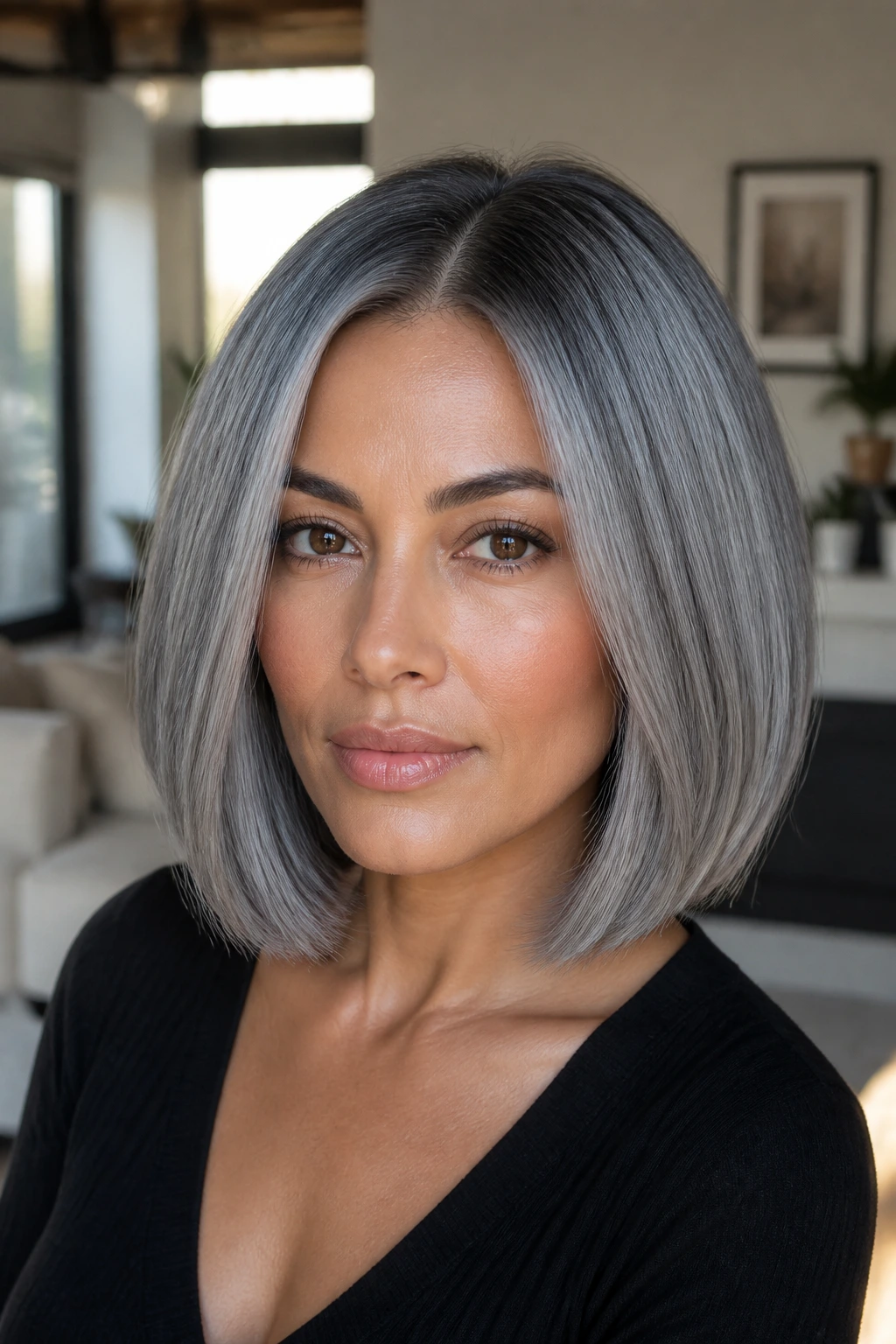
Grey color works better when it is planned around the base you already have. If your hair is dark brown, don’t expect one session to magically produce soft silver without some lift. Most grey looks need a pale yellow canvas first, then toner, gloss, or a root shadow to steer the tone where it belongs. That part is boring, but it’s the part that saves the color.
Bring more than one photo to a consultation. One photo should show the shade, another should show the root depth you like, and a third should show the cut. Those three pieces rarely travel together in one image, and that’s where a lot of salon disappointment starts.
If your skin is medium and leans warm, ask your colorist about beige-silver, mushroom, pewter, or taupe-grey rather than blue-white silver. If your skin leans olive or neutral, charcoal, steel, and graphite usually work well with more contrast. If your hair is already naturally grey in patches, a blend or gloss often looks better than trying to erase every silver strand and rebuild from scratch.
One more thing: porous hair drinks toner faster. If your mids and ends are thirsty, the grey can grab darker or cooler than expected. A good colorist will account for that. If they don’t mention porosity, ask.
How to Wear Grey Hair So It Feels Balanced
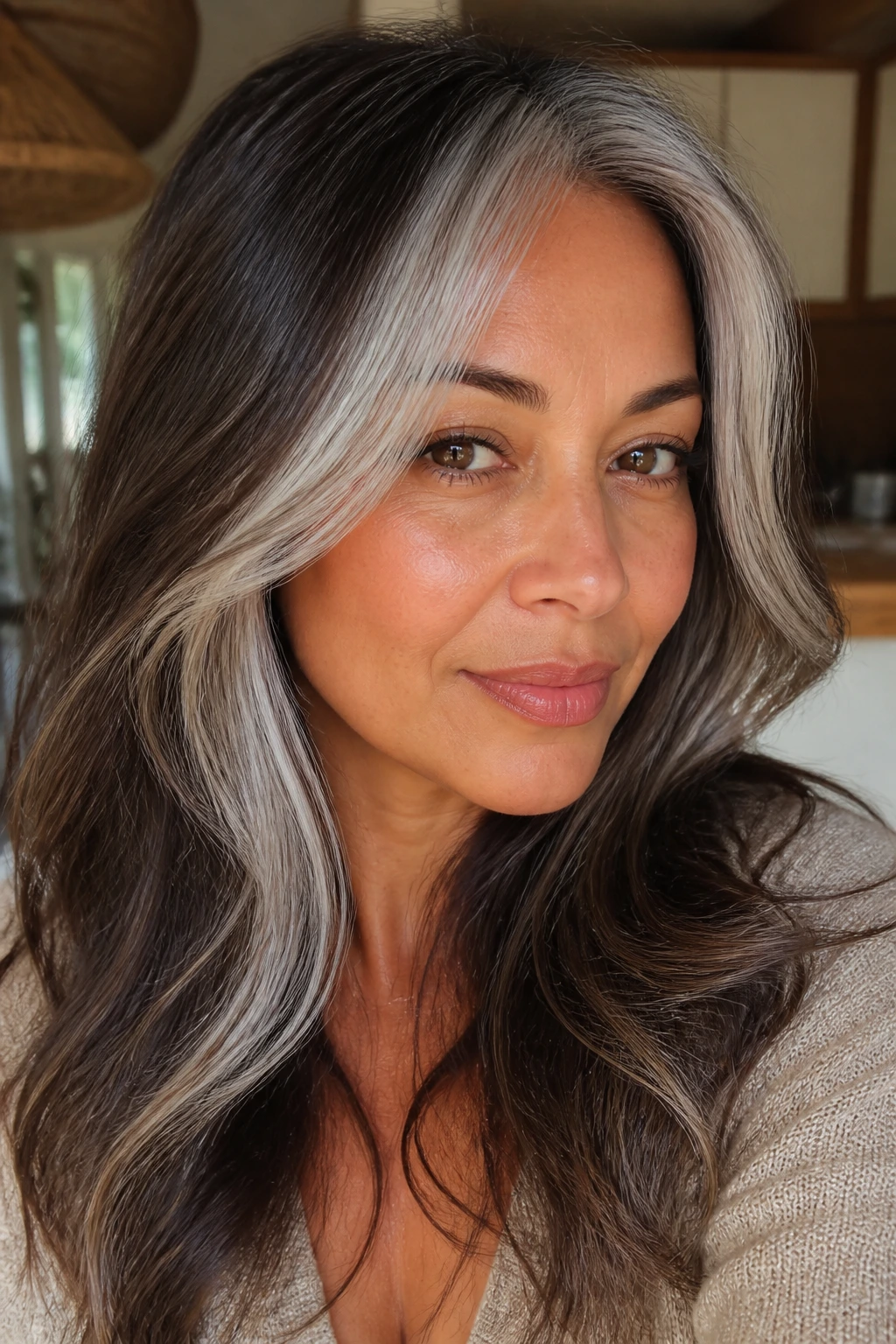
Face Framing: Keep the brightest grey near the cheekbones, temples, or fringe rather than all over the scalp. On medium skin, that placement gives the face light without bleaching out the whole complexion.
Makeup Pairing: Warm brows, soft peach blush, and a muted lip color usually keep grey hair from looking too stark. You don’t need a full makeup overhaul, but a little warmth around the face helps a lot.
Wardrobe Pairing: Cream, charcoal, olive, rust, deep teal, and warm camel tend to sit well next to grey hair on medium skin. Pure white can work too, but it needs more contrast in the hair or makeup so the whole look doesn’t flatten out.
Texture and Finish: Sleek styles suit graphite, charcoal, and blue-gray shades. Waves, curls, and shags make silver, pearl, and mushroom tones feel softer and more dimensional.
Parting and Shape: A middle part sharpens metallic shades. A deep side part or side-swept fringe softens them. Use the part as part of the color plan, not as an afterthought.
Extra Tips and Finishers That Make Grey Read Rich
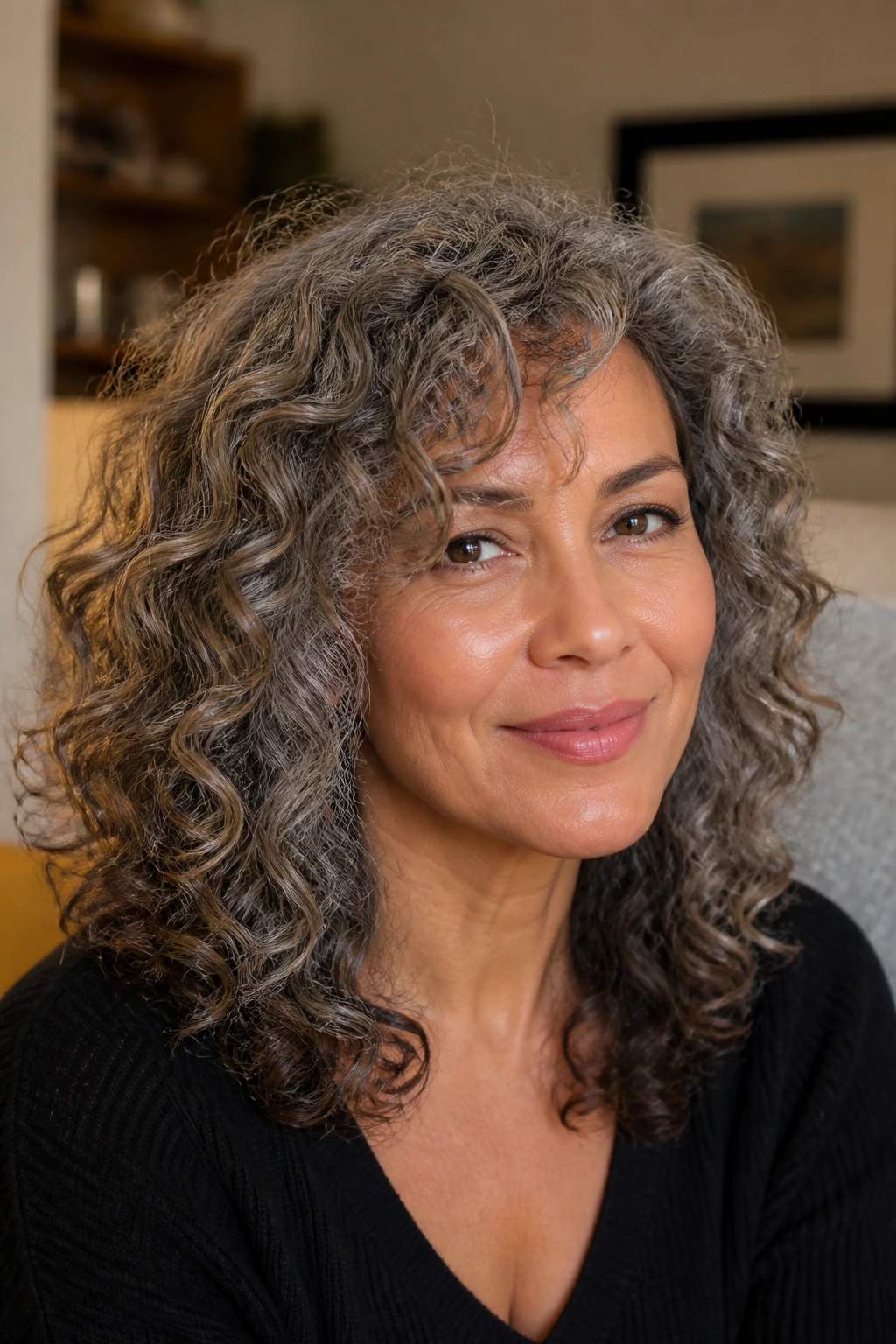
Gloss Trick: A clear or beige-toned gloss every four to six weeks can keep grey from turning dry and dusty. I like a gloss more than constant toning because it refreshes shine without loading the hair with extra pigment.
Root Softness: Leave one to two levels of depth at the root if you want grey to flatter medium skin. That little shadow gives the face shape and makes the rest of the color look intentional.
Cool Control: Purple shampoo is useful, but too much of it can turn silver hair flat or lavender-tinted. Use it like a seasoning, not a bath. Once every three to five washes is plenty for many people.
Make-It-Yours: If your hair is fine, choose ribbons or money pieces instead of all-over silver so the hair doesn’t look sparse. If it’s thick, build in lowlights so the grey has movement. Curly and coily hair usually looks best with brightness on the outer layers and richer depth underneath.
Keeping Grey Hair Bright Between Appointments
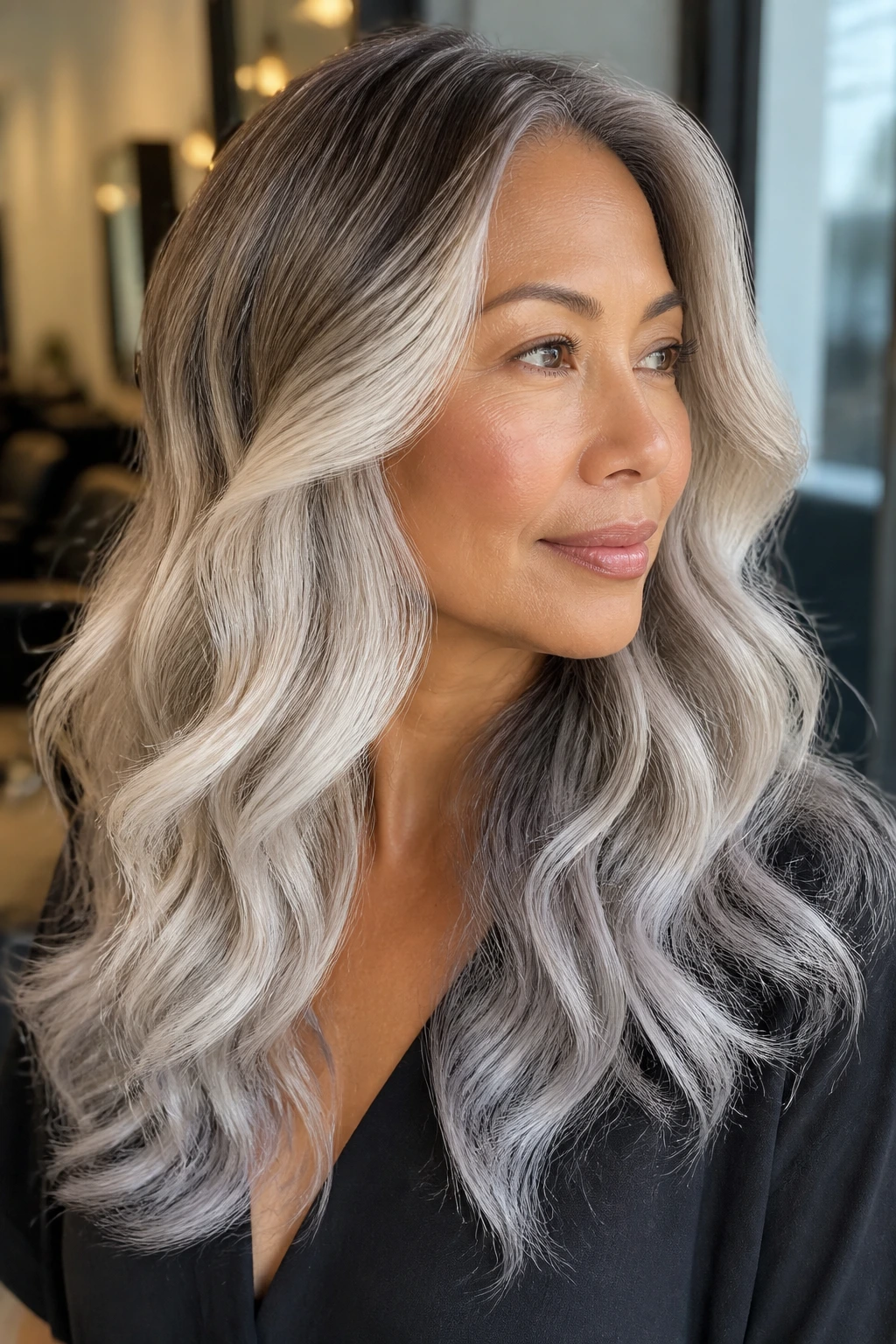
Grey hair asks for regular upkeep, but it doesn’t need constant fuss if the color was built well in the first place. For most silver and grey shades, washing two or three times a week is enough. More than that and the tone can fade faster, especially if your water runs hard or your hair is porous. Dry shampoo helps stretch the time between washes, but don’t let product pile up at the scalp; grey hair can look dusty fast when buildup sits on top of it.
Purple shampoo belongs in the rotation, not every wash. Use it once every three to five shampoos for pale silver or platinum-grey looks, and less often for mushroom, pewter, or charcoal shades. If the hair starts looking lavender or flat, back off immediately and switch to a color-safe moisturizing shampoo for a couple of washes.
Glossing appointments usually run on a four- to eight-week rhythm depending on how bright the grey is and how quickly your roots show. A soft root smudge can stretch that schedule longer, sometimes six to ten weeks, because the regrowth blends instead of shouting. That’s one reason I like rooted grey more than full scalp-to-ends silver.
Heat is another thing to watch. Flat irons and curling wands can burn the tone dull if you skip heat protectant. Grey hair already has a dry look when it’s neglected; it doesn’t need help. A heat spray and a lower setting go a long way.
If the shade starts to feel tired, don’t rush to repaint the whole head. Often the fix is a gloss, a trim, or a small tweak to the toner. Grey hair usually doesn’t need more color. It needs cleaner color.
Common Mistakes That Make Grey Look Flat or Chalky
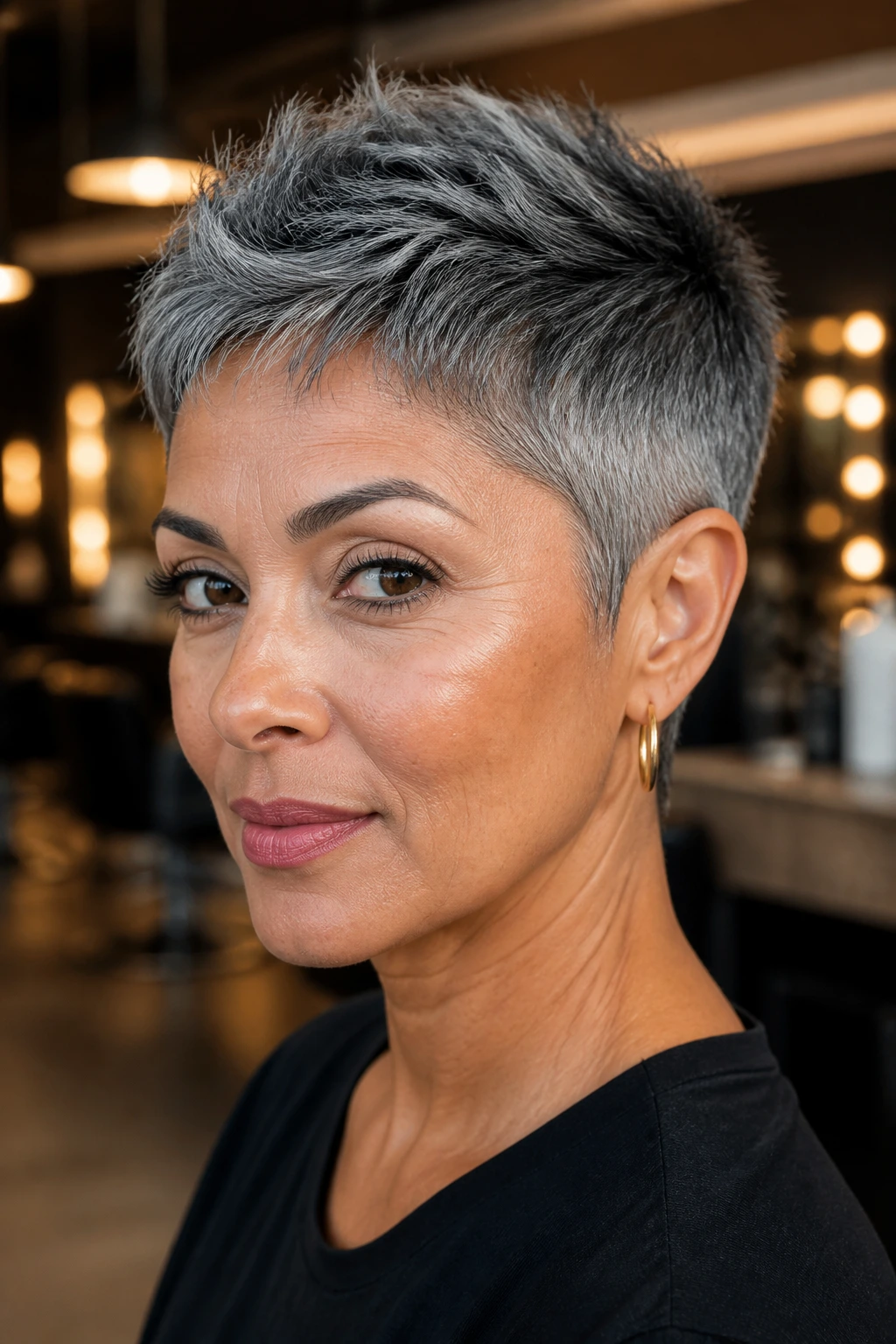
One mistake shows up over and over: people choose a grey shade that’s too cool for their skin and then wonder why their face looks dull. The symptom is easy to spot—washed-out skin, a faint green or pale cast, and hair that looks brighter than the person wearing it. The fix is a softer undertone, usually beige, taupe, or mushroom, plus a darker root.
Another problem is over-toning. If you keep putting violet or blue toner on already light grey hair, the shade can go dusty or lavender. That’s not the same as silver. It’s the hair equivalent of too much powder on a face. Use toner when brass shows up, not every time you open the bathroom door.
Flat color is a separate issue. All-over silver with no lowlights and no shadow root tends to look sheet-like, especially on medium skin. The cure is dimension: ribbons, face-framing brightness, or a root that stays one to two levels deeper.
Dry ends can ruin the whole effect. Grey hair exposes rough texture fast, and the color looks cheaper when the cuticle is fried. Deep conditioning, bond repair, and a trim every eight to twelve weeks help keep the finish smooth.
And then there’s the mismatch between color and styling. A very cool steel shade with zero makeup warmth and a stiff, dry blowout can feel harsh. If the hair is cool, soften the rest of the picture a little. Not a lot. Just enough.
Variations and Adaptations to Try
Low-Maintenance Root Melt: Keep the root darker and melt grey through the mids and ends so grow-out stays soft. This is the best route if you want grey without a hard salon schedule.
Curly Silver Halo: Push the lightest silver around the top layer and outer curl pattern, then leave the interior darker. The shape stays full, and the grey reads more dimensional on medium skin.
Warm Mushroom Transition: Blend taupe, ash brown, and muted silver into one slower fade. It’s especially good if your undertone leans golden and you want grey that feels easier to wear day to day.
Sharp Graphic Grey: Choose a blunt bob or pixie and keep the color in graphite, pewter, or steel. The cut carries the drama, so the shade can stay controlled and polished.
Soft Rosy Grey: Add a muted rose or lilac gloss over a silver base for a gentler finish. This tends to flatter medium skin with more pink in it and keeps the grey from going severe.
Frequently Asked Questions
Will grey hair wash me out if I have medium skin?
Not if the tone is chosen well. Medium skin usually needs some root depth, some beige or taupe in the grey, or at least a bit of face-framing contrast so the color doesn’t sit right on top of the complexion.
What grey shades work best for warm medium skin?
Mushroom brown, beige grey, warm taupe grey, and smoky silver with a soft root usually play nicely with warm undertones. Pure blue-white silver can work, but it usually needs more shadow and better makeup balance.
Can I go grey without bleaching my hair to death?
If your hair is already light or grey in spots, sometimes yes. Darker hair usually needs lift first, and the healthier route is often a gradual transition with lowlights, highlights, and gloss rather than one heavy bleach session.
How often do grey tones need to be refreshed?
Toner fades faster than most people expect. A gloss or toner refresh every four to eight weeks is common, while deeper root shadow work can stretch a little longer depending on how fast your hair grows.
Does grey hair work on curly and coily textures?
Absolutely. In fact, curls and coils often make grey look more dimensional because the pattern breaks up the color. The main thing is moisture—grey on textured hair needs leave-in conditioner, masks, and a gentle drying routine.
What if my grey turns yellow or brassy?
That usually means too much sun, hard water, heat, or a toner that has faded out. Use a purple shampoo sparingly, switch to color-safe care, and consider a gloss if the yellow cast keeps coming back.
Can I keep some brown in the hair and still do grey?
Yes, and on medium skin that’s often the smarter move. Grey ribbons, silver ends, or a salt-and-pepper blend can look richer than full silver because the brown gives the skin a frame.
Which cut makes grey hair look the most polished?
A blunt lob, a clean bob, or a textured pixie all work well, but the best cut is the one that gives the color a clear shape. Grey looks its best when the cut and the tone are doing the same job.
The Shade That Feels Like You
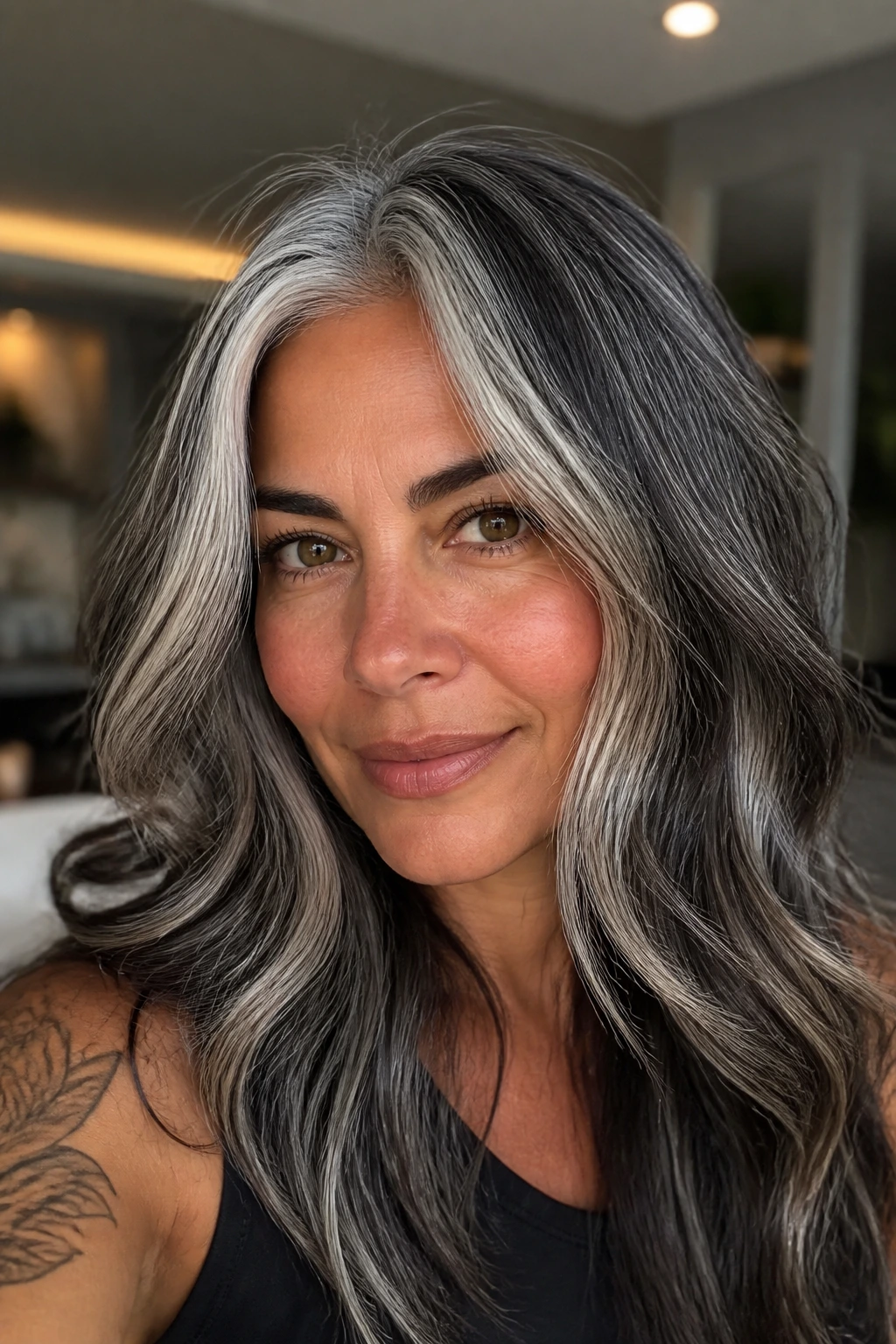
Grey hair on medium skin tones looks its best when it keeps a little depth somewhere. That can be a root shadow, a mushroom base, a graphite veil, or a soft brown underneath the silver. Without that anchor, the shade often loses shape before it ever gets a chance to shine.
The smartest grey transformations are the ones that respect both the skin and the cut. A silver bob can look sleek and expensive. A smoky balayage can feel softer and easier. A pewter pixie can be sharp without feeling cold. Pick the version that leaves your face alive, not the one that just looks bright in a photo.