



Honey blond hair color on deep skin tones works best when it behaves like jewelry, not paint. The shade needs warmth, yes, but not the chalky, pale kind that sits on top of the hair and fights the complexion. The sweet spot is richer: amber, caramel, toasted gold, a little bronze at the root, and enough depth left in the base so the blonde has somewhere to land.
That’s why honey blonde on deep complexions can look so striking when it’s handled with a little restraint. The hair does not need to be dragged all the way to banana yellow to read as blonde. In fact, the versions that flatter most are often the ones that keep a darker root, place the lightest pieces around the face, and let the mids and ends carry the glow. On textured hair, that dimension matters even more, because coils, curls, and waves all pick up light differently.
Some people want a soft caramel whisper. Others want a brighter, camera-ready gold. Both can work. The trick is choosing the honey tone that respects your undertone, your haircut, and your maintenance tolerance, then placing it where the light naturally hits first. The 25 ideas below cover all of that, from barely-there ribbons to fuller blonding that still keeps deep skin looking rich.
Why These Honey Blonde Ideas Earn Their Spot
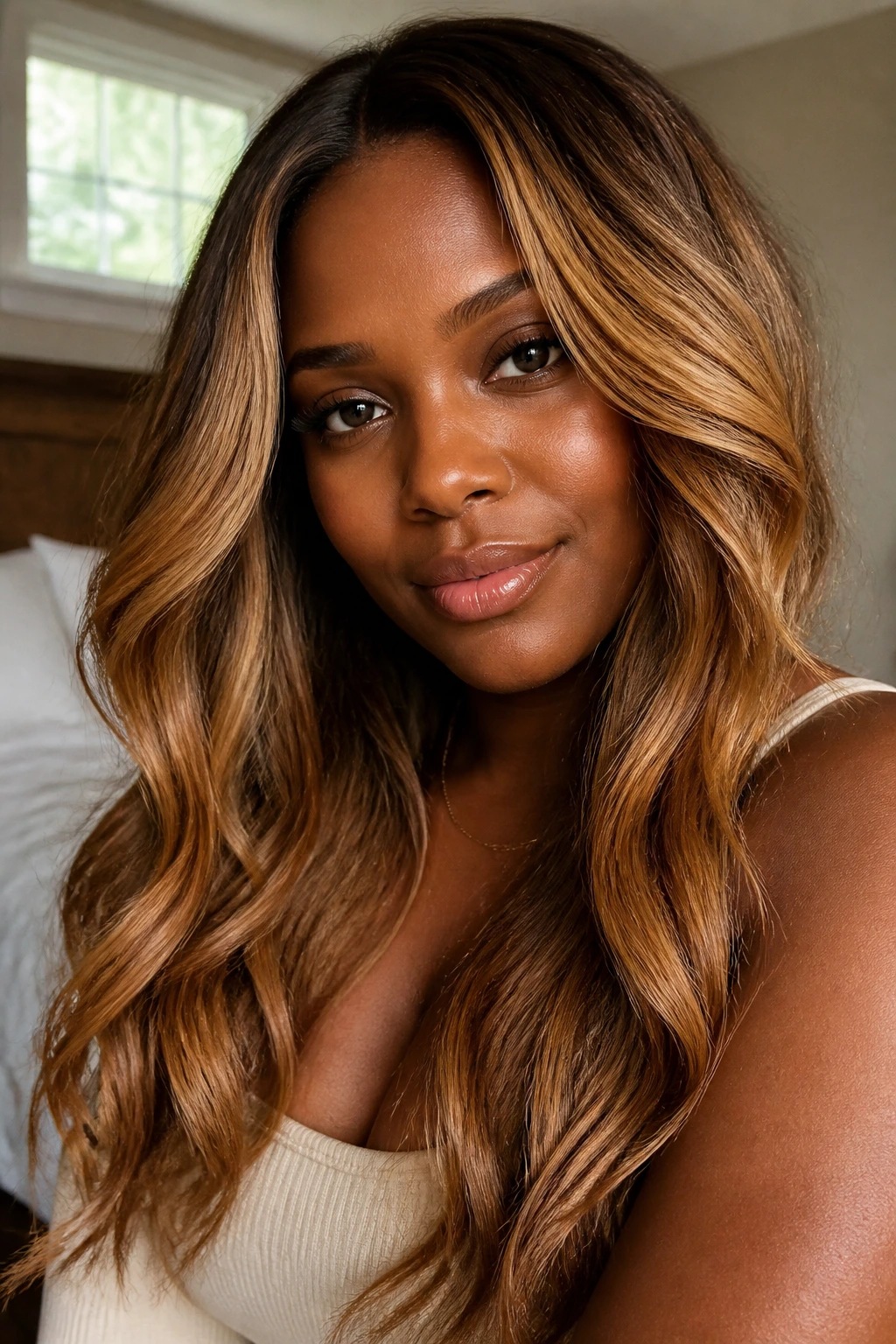
- Warmth Without Washout: Honey blonde sits between gold and caramel, so it warms deep skin instead of flattening it under pale yellow.
- Dimension Does the Heavy Lifting: A darker root and lighter mids keep the color from reading as one solid block, which matters a lot on dense, dark bases.
- Works Across Textures: Curls, coils, silk presses, bobs, braids, and pixie cuts all take honey differently, so the placement can change without losing the overall mood.
- Flexible Brightness: You can go soft with face-framing pieces or stronger with all-over ribbons, and the tone still stays in the same family.
- Salon-Friendly, Grow-Out Friendly: Several of these ideas keep the root deeper, which makes touch-ups less frantic and gives the color room to age in a better way.
1. Soft Honey Balayage with a Shadow Root
Soft honey balayage is the safest place to start if you want blonde to feel expensive rather than loud. The dark root keeps deep skin looking grounded, while the hand-painted honey ribbons lift the mids and ends just enough to catch the light when you move. It has that “I woke up with dimension” feel, except someone in a chair spent real time placing the pieces.
A shadow root matters here. On dark brown or black hair, it gives the honey something to graduate from instead of slamming it straight onto the scalp. Ask for the lightest pieces to sit from the cheekbone down, not right at the roots.
If your hair is thick or textured, this is the version I’d pick first. It grows out softly, and the contrast stays flattering for weeks, not days.
2. Honey Money Piece on Jet-Black Curls
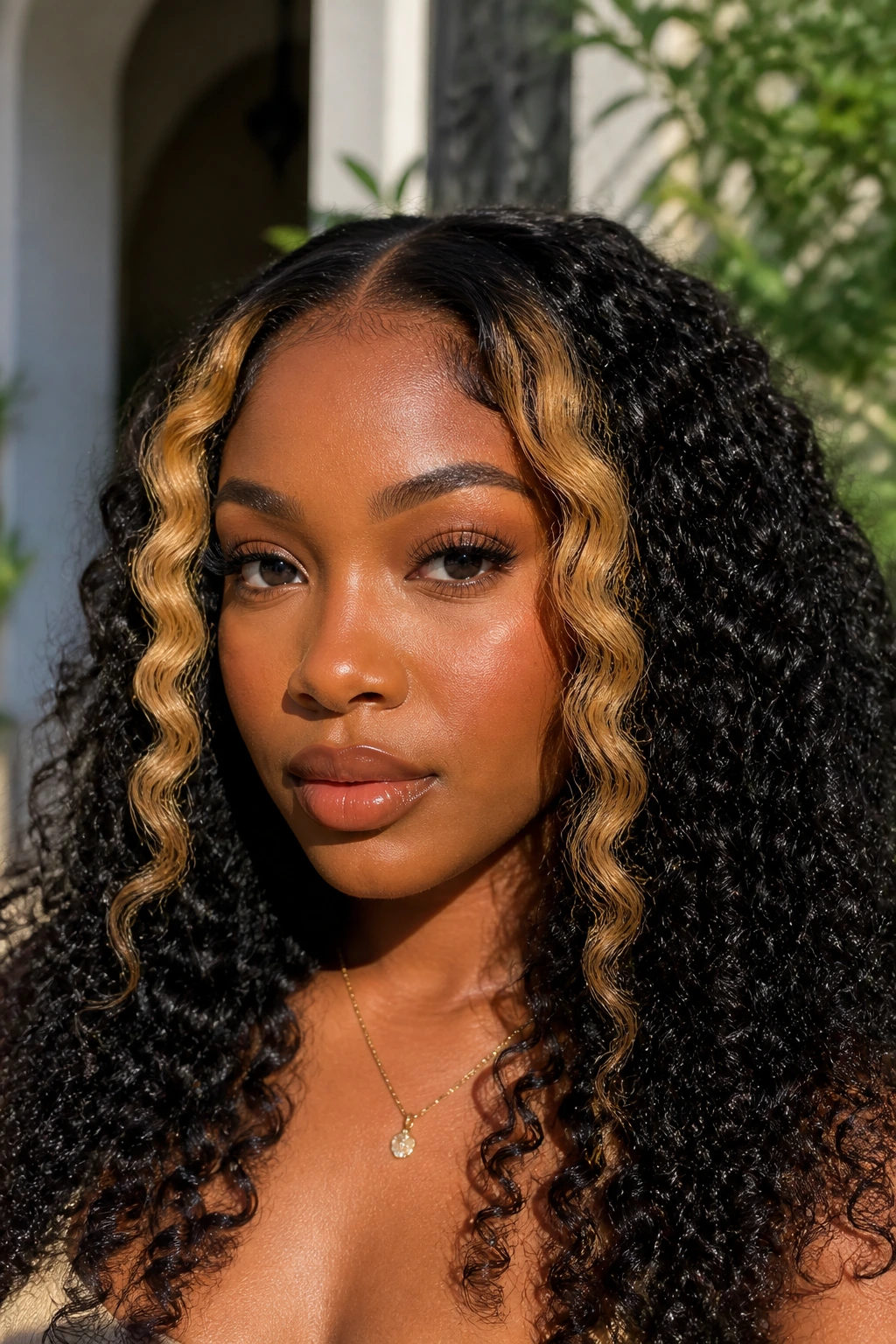
Why It Works on Deep Curls
Two bright front pieces can do more than a full head of fine highlights if you want the face to pop. That’s the whole trick here. A honey money piece on jet-black curls creates a frame that reads instantly, especially when the curls are defined and the front sections bounce forward.
Keep the front panels warm, not pale. Ask for honey at about a level 8 with enough gold left in the formula so it doesn’t turn brittle-looking against rich skin. On tightly coiled hair, that front brightness can be enough on its own.
- Best placement: One to two inches around the hairline.
- Best for: Locs, curls, coils, and curly silk presses.
- Tone to ask for: Gold-forward honey, not icy beige.
- Maintenance: Easier than full-head blonding, but the front pieces need moisture.
Small tip: If you wear your hair in middle parts a lot, ask the colorist to keep the money piece a touch wider at the temple. It saves the style from looking too skinny once the hair is parted.
3. Caramel-Honey Melt from Roots to Ends
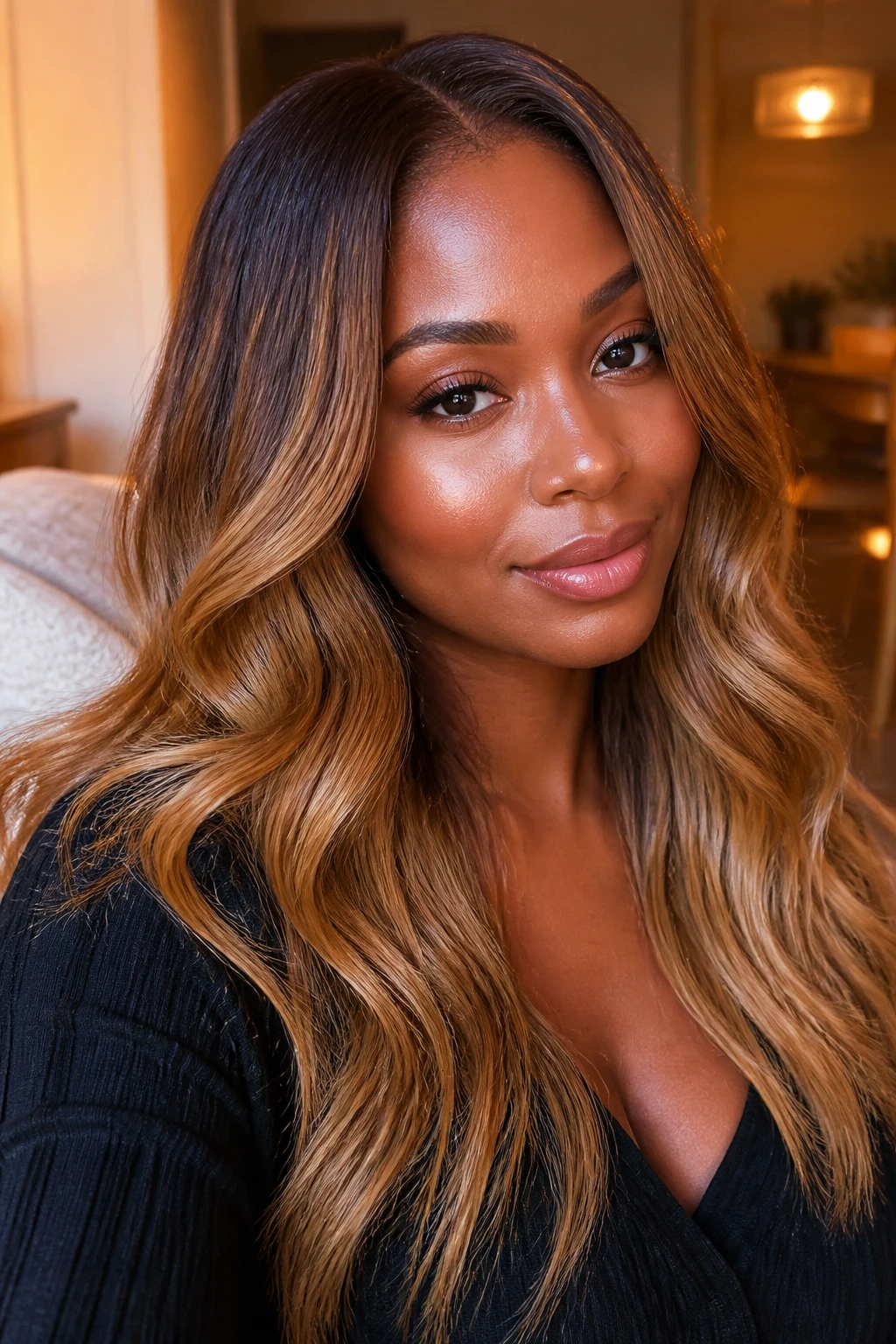
Can honey blonde stay soft all the way through? Absolutely, if the color melts instead of stops. A caramel-honey melt starts with a deeper root, eases through to a warm caramel midsection, and finishes in honey at the ends. There’s no hard line. No stripey business. Just a smooth shift that looks like the sun happened slowly.
This is especially good on long hair because the eye has space to travel down the length. On deep skin, the darker root prevents the lighter ends from floating off the face. That’s the part a lot of people miss.
Ask for the root to stay at least two shades deeper than the ends. If the stylist lifts everything the same amount, the whole look can go flat fast. A true melt needs that soft climb in color.
4. Warm Honey Beige Bob
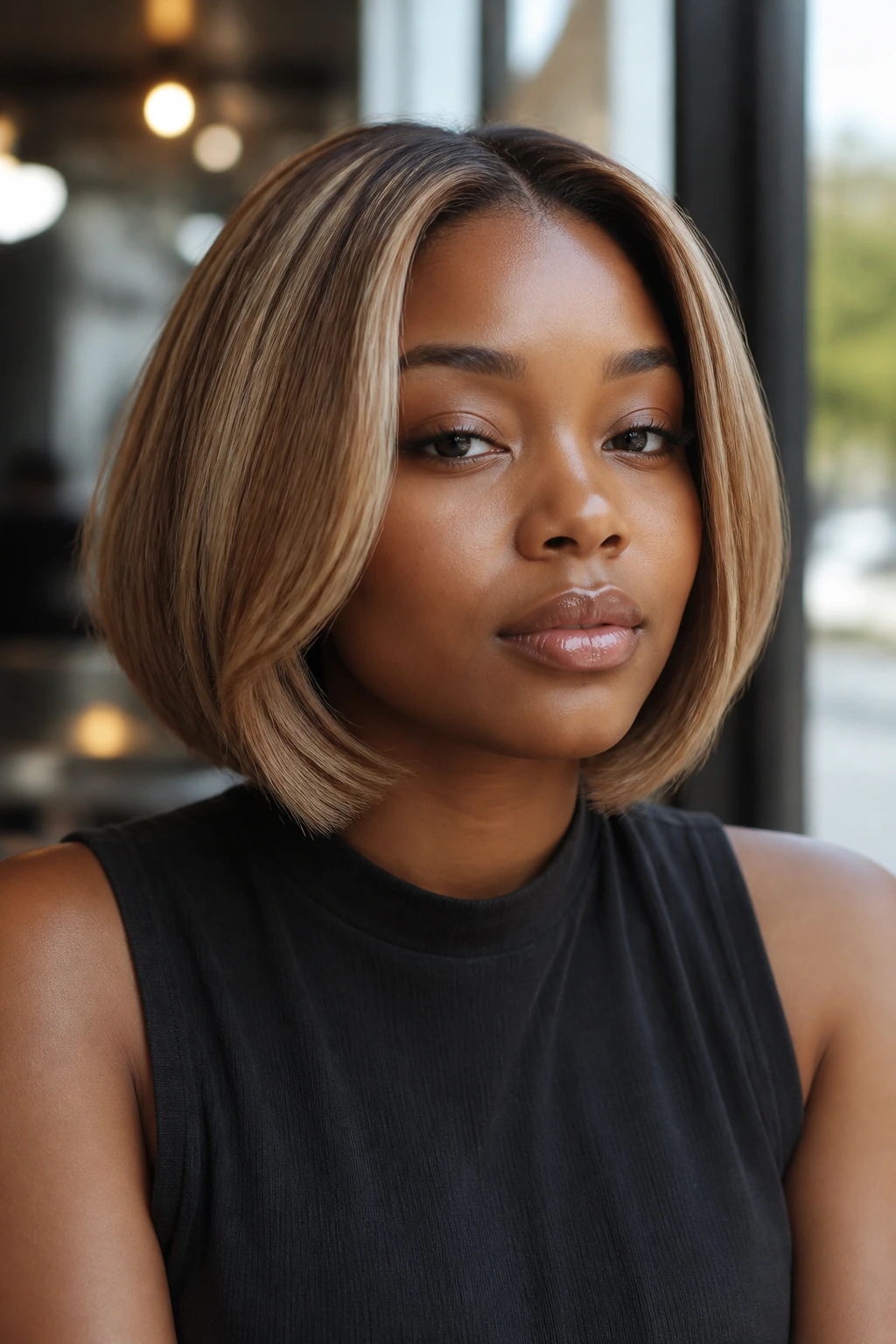
A bob and honey beige belong together because the cut gives the color shape. On deep skin, a chin-length or jaw-skimming bob with warm honey beige pieces feels crisp, clean, and modern without turning washed out. The beige keeps the blonde from getting too orange, while the honey keeps it from looking dusty.
Shorter cuts show off the edges of the color more clearly. That means placement matters. I like this look best when the lightest pieces sit at the front and the top layer, with the underside left a shade deeper. It keeps the bob swinging with depth instead of making it look helmeted.
This is the kind of shade that works if you want a neat shape but still want movement every time you turn your head.
5. Golden Honey Ribbon Highlights
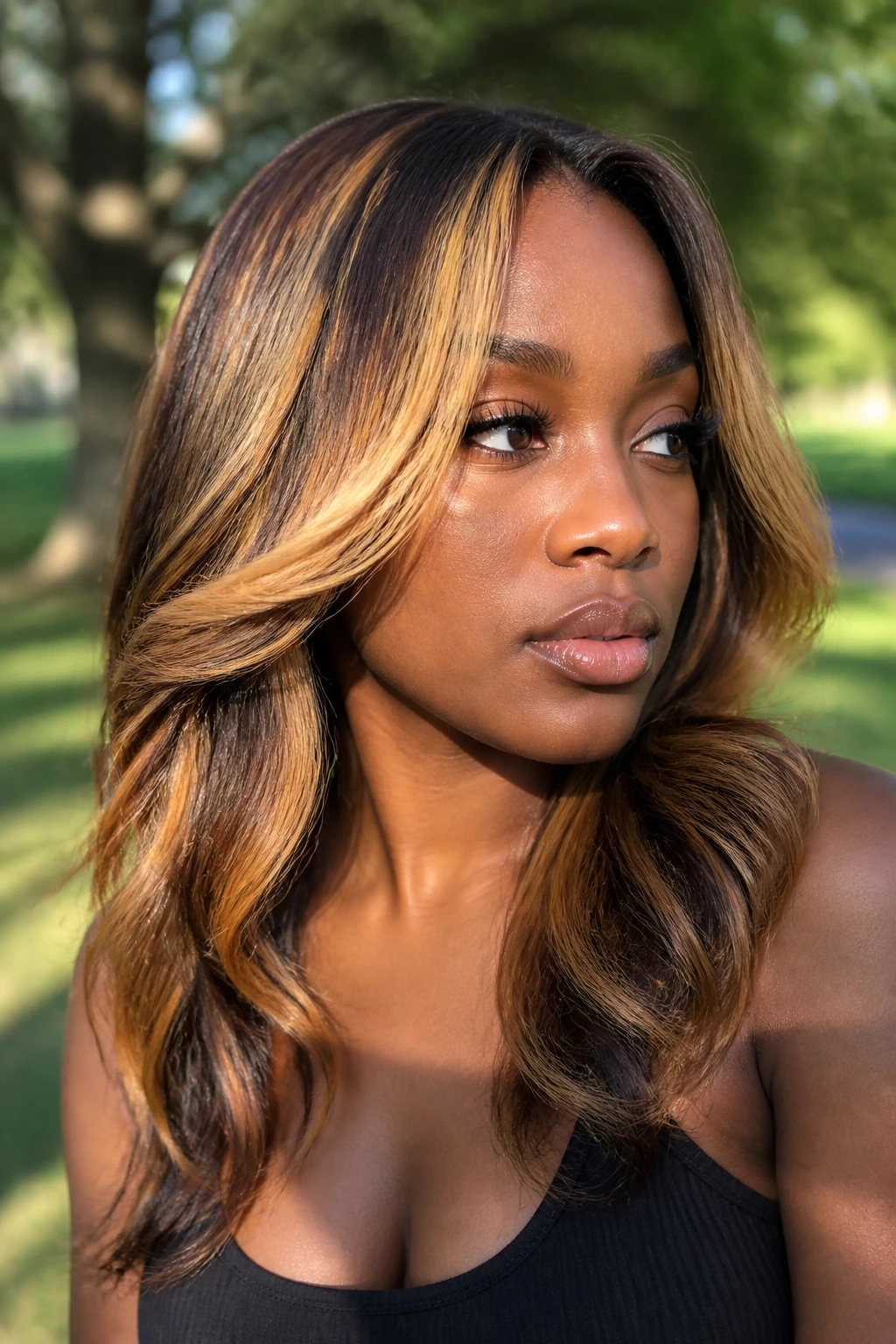
Chunky ribbons beat whisper-thin highlights when you want the honey to actually show up. That is especially true on deep bases, where very fine lights can disappear unless the hair is under bright sun or studio lamps. Golden honey ribbons give you visible contrast, a little drama, and a more editorial finish without needing a full blonding service.
What to Ask For
Ask your colorist for ribbon highlights placed in alternating widths. That means some pieces are a little wider, some are narrower, and the whole head reads dimensional instead of dotted. Keep the ribbons concentrated around the crown and face, then soften them lower down.
This version looks especially good on layered cuts and blown-out curls. The pieces move. They do not sit there like a flat strip.
6. Buttery Honey Ombré on Long Layers
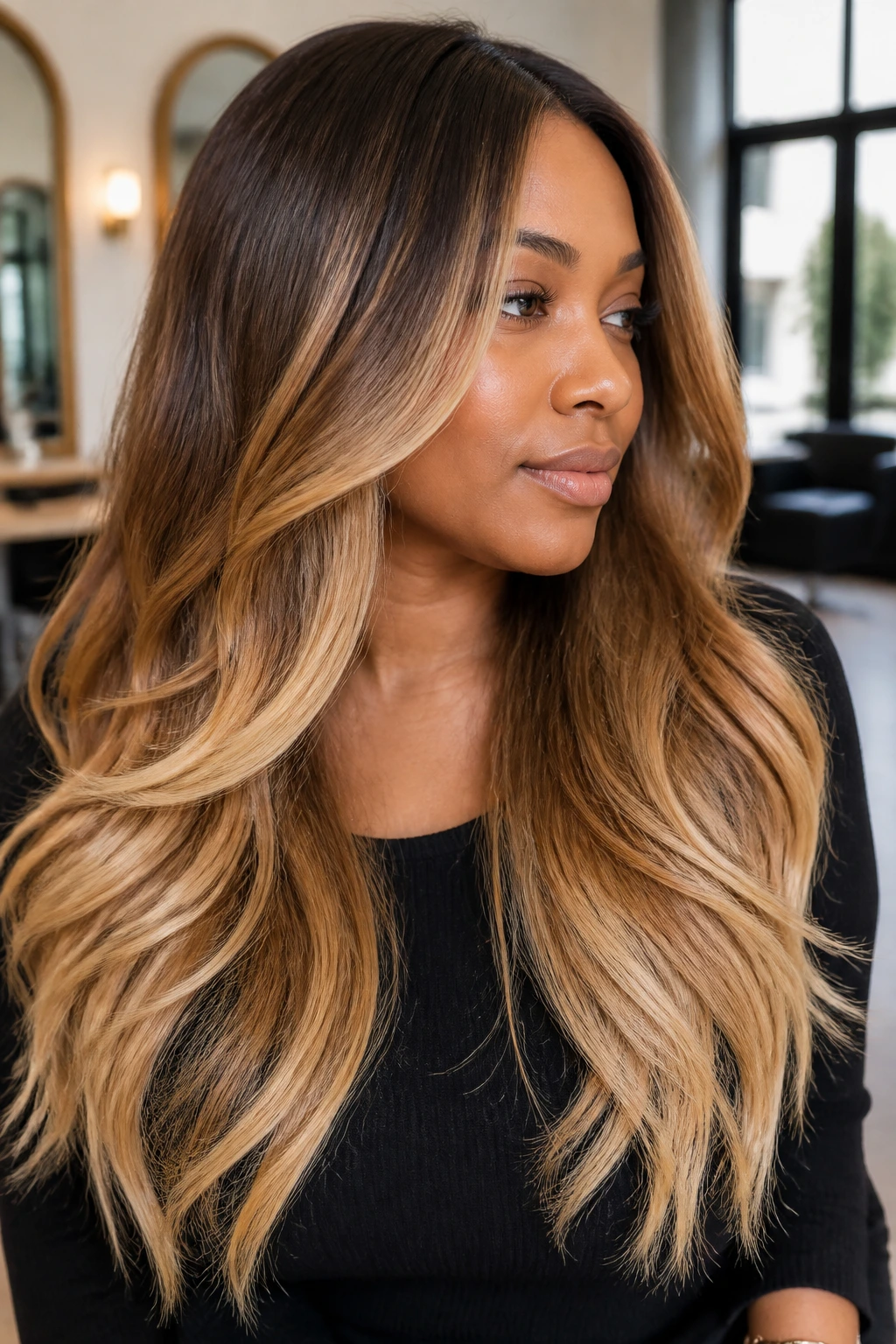
If your hair is long, ombré gives honey blonde room to breathe. The dark root stays intact, the middle softly shifts, and the buttery ends get most of the light. That slow fade keeps deep skin from losing contrast near the scalp, which is where a lot of all-over blonding starts to feel too heavy or too pale.
Long layers help the ombré look intentional instead of obvious. Each layer catches the lighter ends at a slightly different point, and that keeps the finish from looking like a single blunt line. It’s one of the easier ways to wear honey blonde if you don’t want to be in the salon every few weeks.
Best of all, the grow-out is forgiving. The darker root is part of the style, not a problem hiding under it.
7. Rooted Honey Blonde Pixie Cut
Why It Feels Sharp, Not Harsh
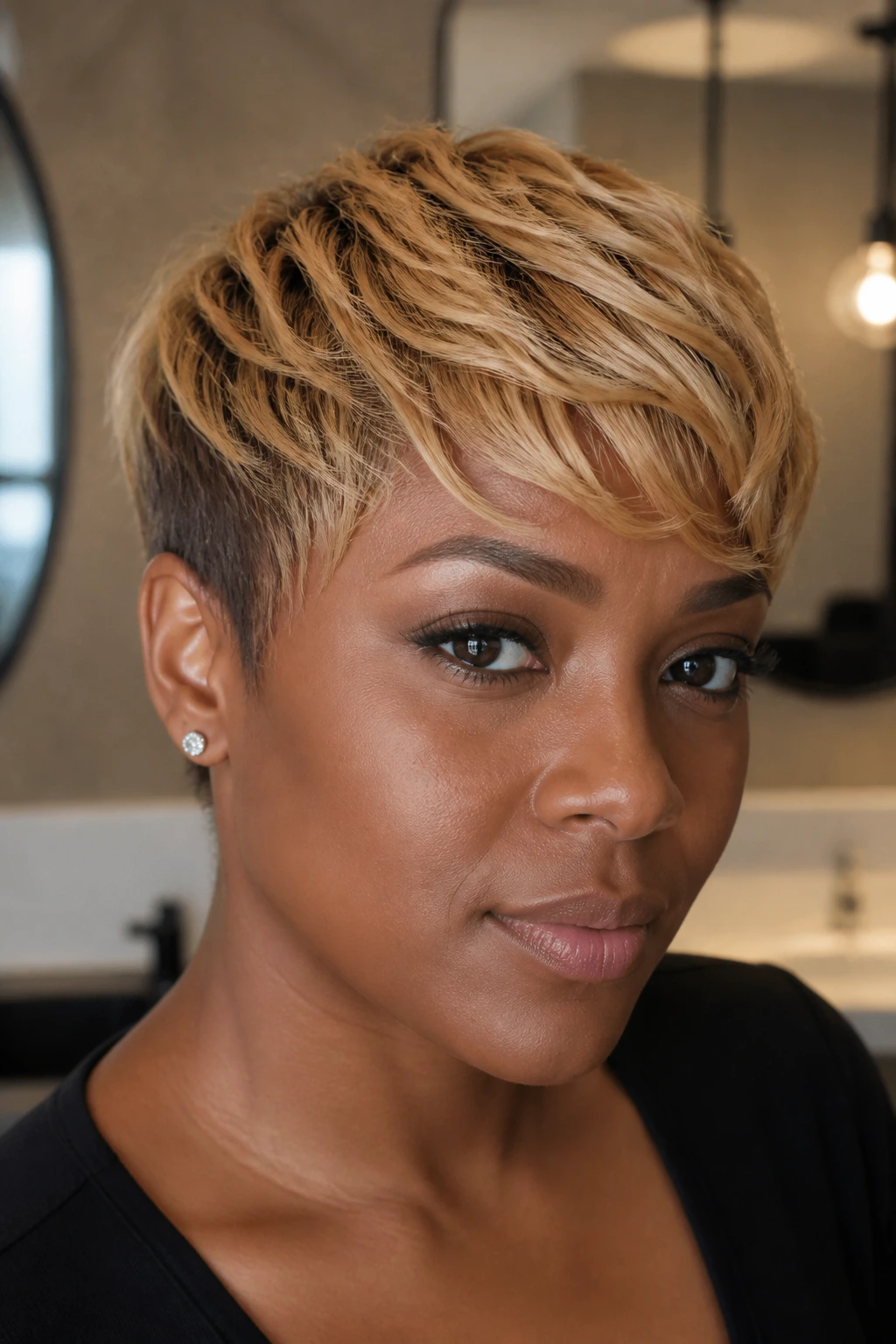
A pixie cut can carry more color than people expect. The short length means the eye sees the shape first and the honey second, which is a nice thing when you want brightness without all the maintenance of long blonding. A rooted honey blonde pixie keeps the sides deeper and places the light where the top can catch it.
- Root depth: Leave enough depth at the scalp so the color doesn’t puff out visually.
- Top placement: Focus the honey on the crown and fringe.
- Best finish: A satin or textured styling cream keeps it from looking dry.
- Who it suits: Clients who like clean edges and low-fuss touch-ups.
If you want the pixie to feel softer, keep the honey in a beige-gold lane. If you want it bolder, push the crown a shade lighter and let the sides stay dark.
8. Bronze-Honey Curl Pop
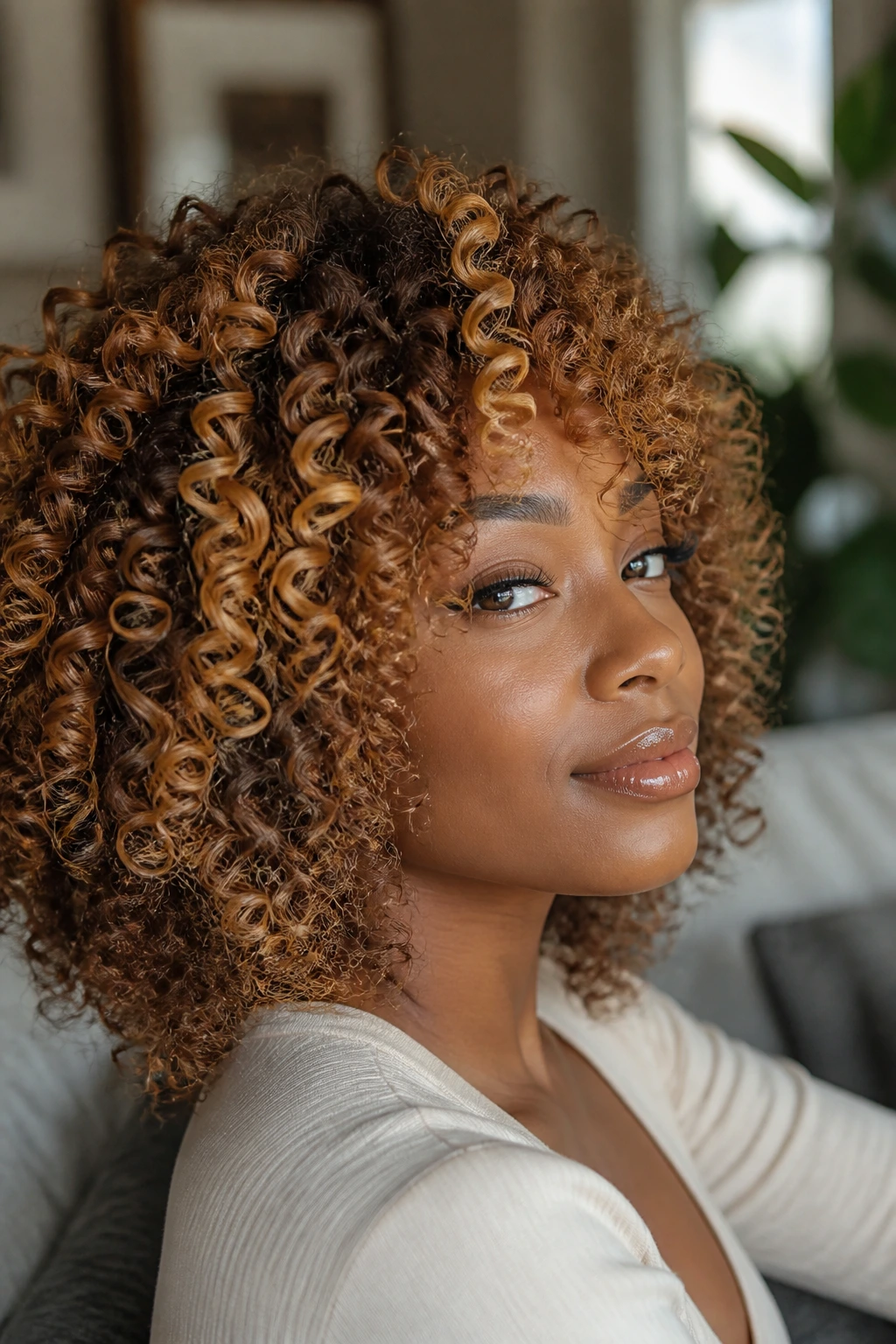
Curls love color that shows up in sections, not a single solid wash. Bronze-honey curl pop uses warm bronze at the base of the highlighted strands, then fades into honey on the outer parts of the curl. The effect is lively. Every twist catches a different bit of light.
This one is especially good if your curls have a lot of shrinkage. When the hair contracts, the highlight pattern compresses too, so you want enough warmth and contrast to stay visible. Bronze gives the honey a deeper partner, which keeps the look from feeling one-note.
It’s a smart choice for anyone who wants the color to look alive even when the curls are tucked, stretched, or pinned back.
9. Toasted Honey Lob with Glossy Ends
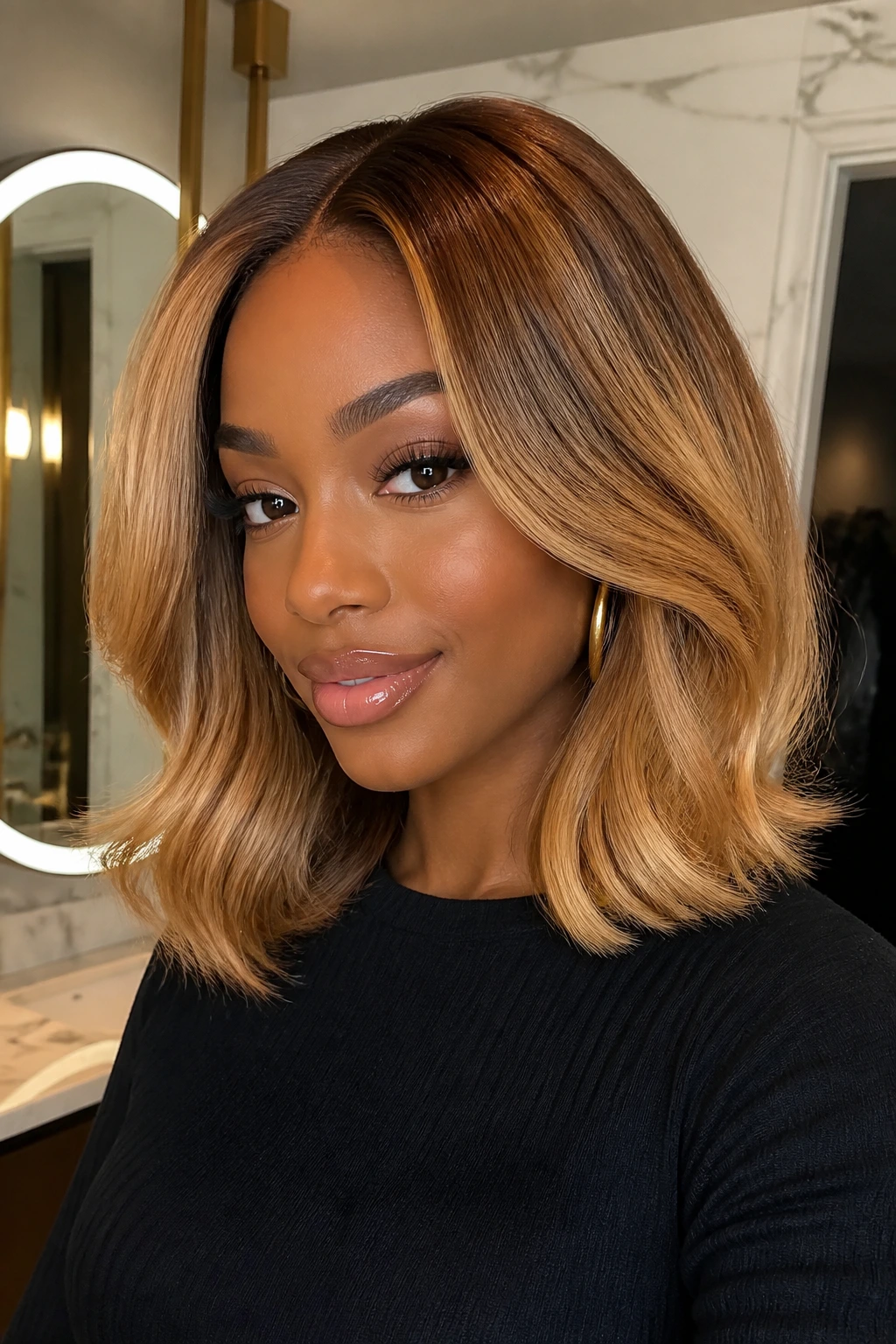
A lob gives honey blonde a little polish. It sits at that shoulder-grazing length where color shows but does not need to shout. Toasted honey works well here because it carries a hint of gold-brown at the root and lets the ends shift brighter without losing richness.
What I like about this length is the way it frames the collarbone and jaw. On deep skin, that line matters. A glossy honey lob makes the face look sculpted without relying on a blunt, flat blonde finish. Ask for soft layering through the ends so the color can move when you turn your head.
If your hair tends to dry out, this is a good length to stop at. You get visible color without asking over-processed ends to carry the whole style.
10. Sunlit Honey Highlights on a Silk Press
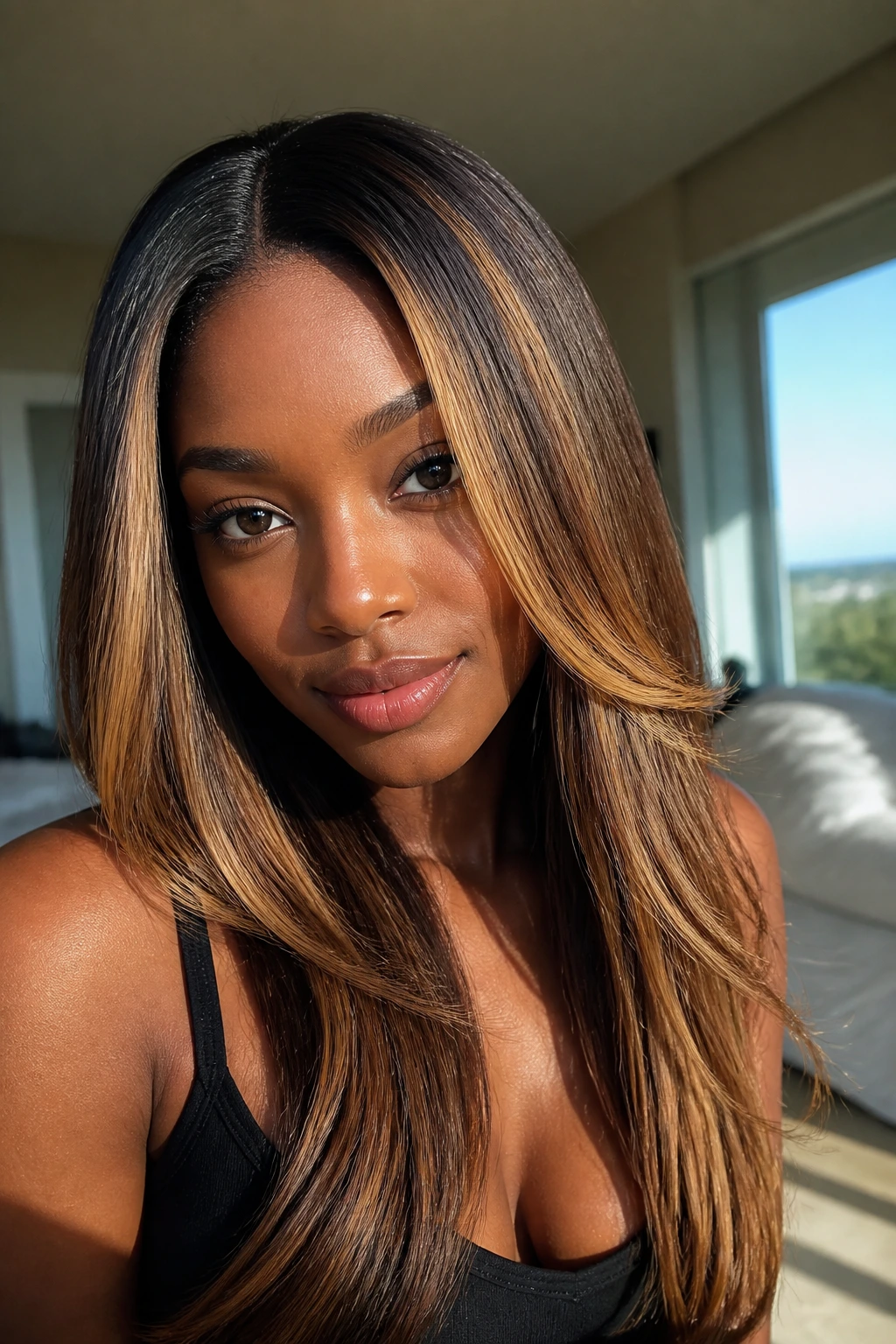
A silk press and honey highlights can look almost impossibly clean when the placement is right. The straight finish shows every ribbon, so the highlights need to be deliberate. I’d keep them fine at the crown and face-framing areas, then let them spread a little wider toward the mids.
The goal is sunlight, not stripes. On deep skin, the contrast between a sleek, dark base and warm honey pieces can look stunning, but only if the tone is rich enough. Too light, and the hair starts to look fragile. Too warm, and it veers orange.
This style is for someone who likes shine. Lots of it. The lighter pieces should reflect, not glare.
11. Honey Blonde Curtain Fringe
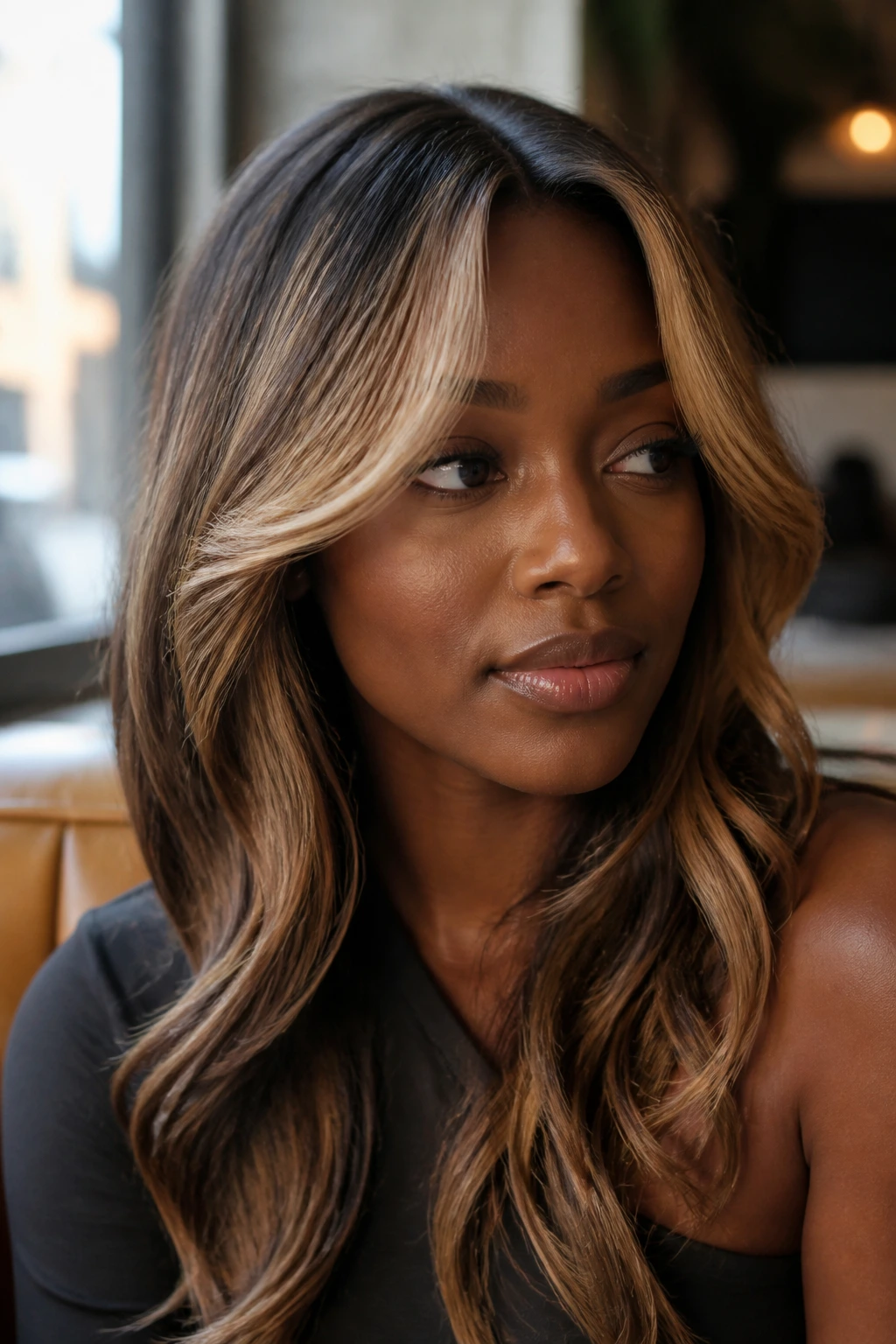
Could a fringe carry honey blonde on its own? Easily. Curtain bangs and face-framing fringe are where color gets noticed first, especially if the rest of the hair stays deeper and more grounded. A honey blonde fringe gives the face lift without forcing the whole head into a brighter place.
The best version is softly graduated. Keep the fringe a shade lighter than the sides, but not so light that it disconnects from the rest of the hair. The color should open the face, not float away from it. On deep skin, that warm frame can make the cheekbones read sharper and the complexion look more alive.
If you’re nervous about commitment, this is one of the smartest doors into blonde. Small section. Big payoff.
12. Creamy Honey Brunette Blend
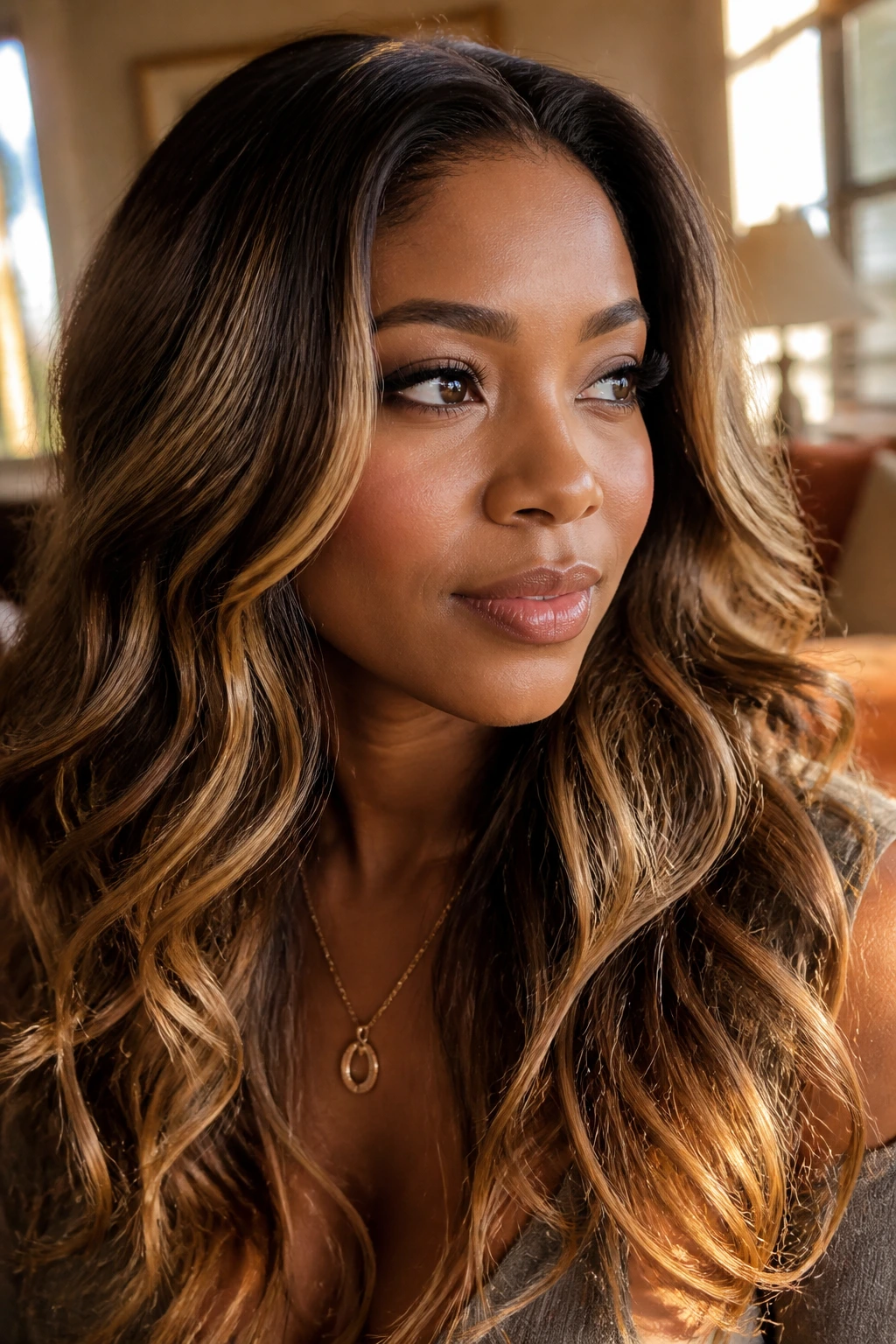
This is for the person who loves brunette depth and doesn’t want to lose it. A creamy honey brunette blend keeps the base dark, then threads in soft honey through the mids and ends so the whole style reads like an upgrade, not a reinvention. It’s more expensive-looking than all-over blonde because the brunette is part of the design.
That balance flatters deep skin beautifully. You still get warmth near the face, but the darker foundation prevents the color from getting too washed out. It also gives you a much easier grow-out line.
If you like your hair to look polished in a bun, this one’s a winner. When it’s pulled back, the honey pieces still show up.
13. Smoky Honey Blonde with a Soft Root Smudge
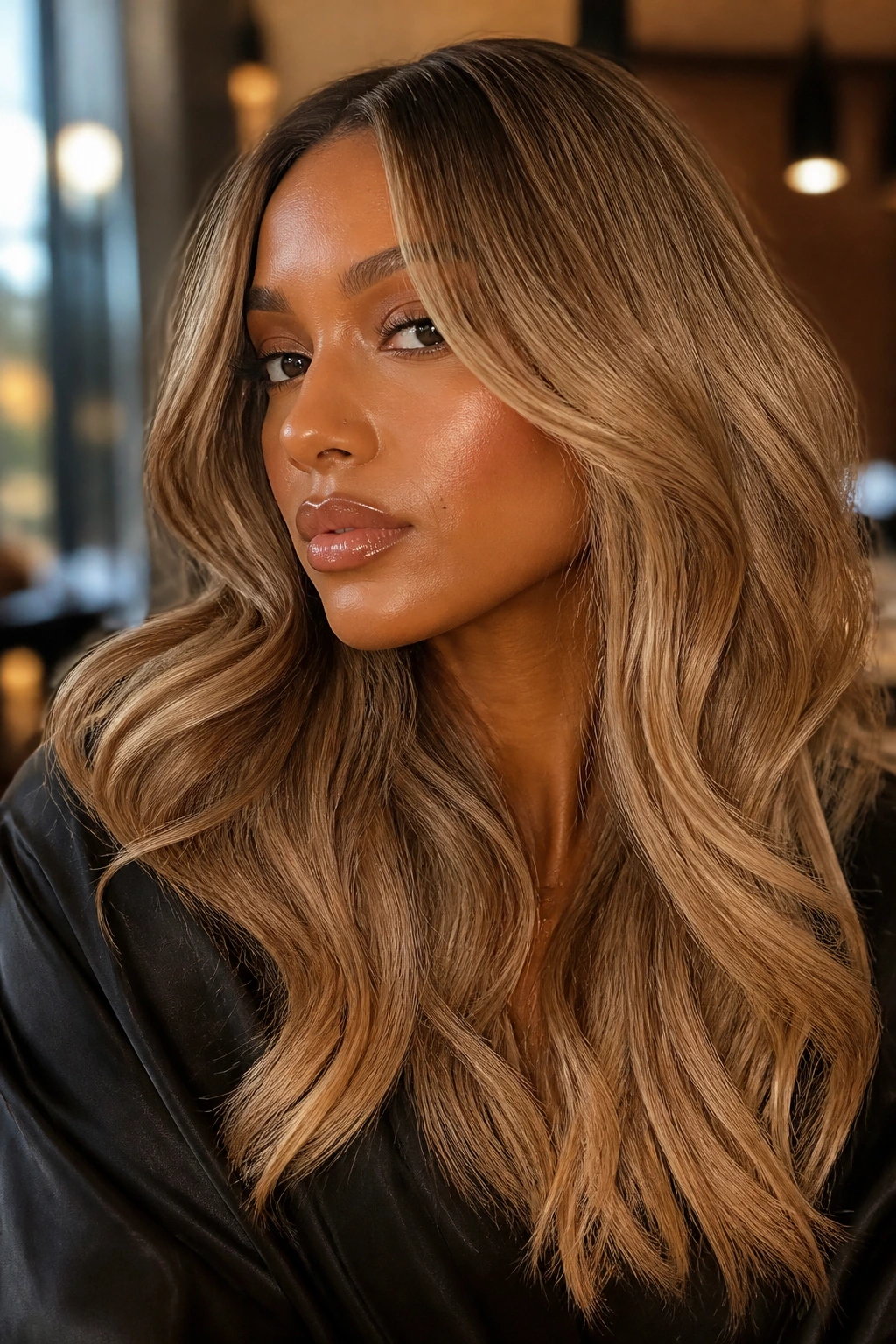
Smoky honey sounds like a contradiction, and that is why it works. The color keeps the honey warmth, but a soft root smudge adds enough beige tone to take the edge off the brightness. It’s not ash-blonde territory. That would be too dull on most deep skin tones. Smoky means softened, not drained.
This is a smart pick if you wear gold jewelry, warm makeup, or deeper lip shades. The shade sits in that middle space where it feels a little cooler than caramel but still reads warm in daylight. A root smudge also gives the color a better grow-out, which saves you from harsh regrowth lines.
If your stylist reaches for a toner, ask them to stay away from anything that turns the honey gray.
14. Honey Toffee Face Frame on Natural Coils
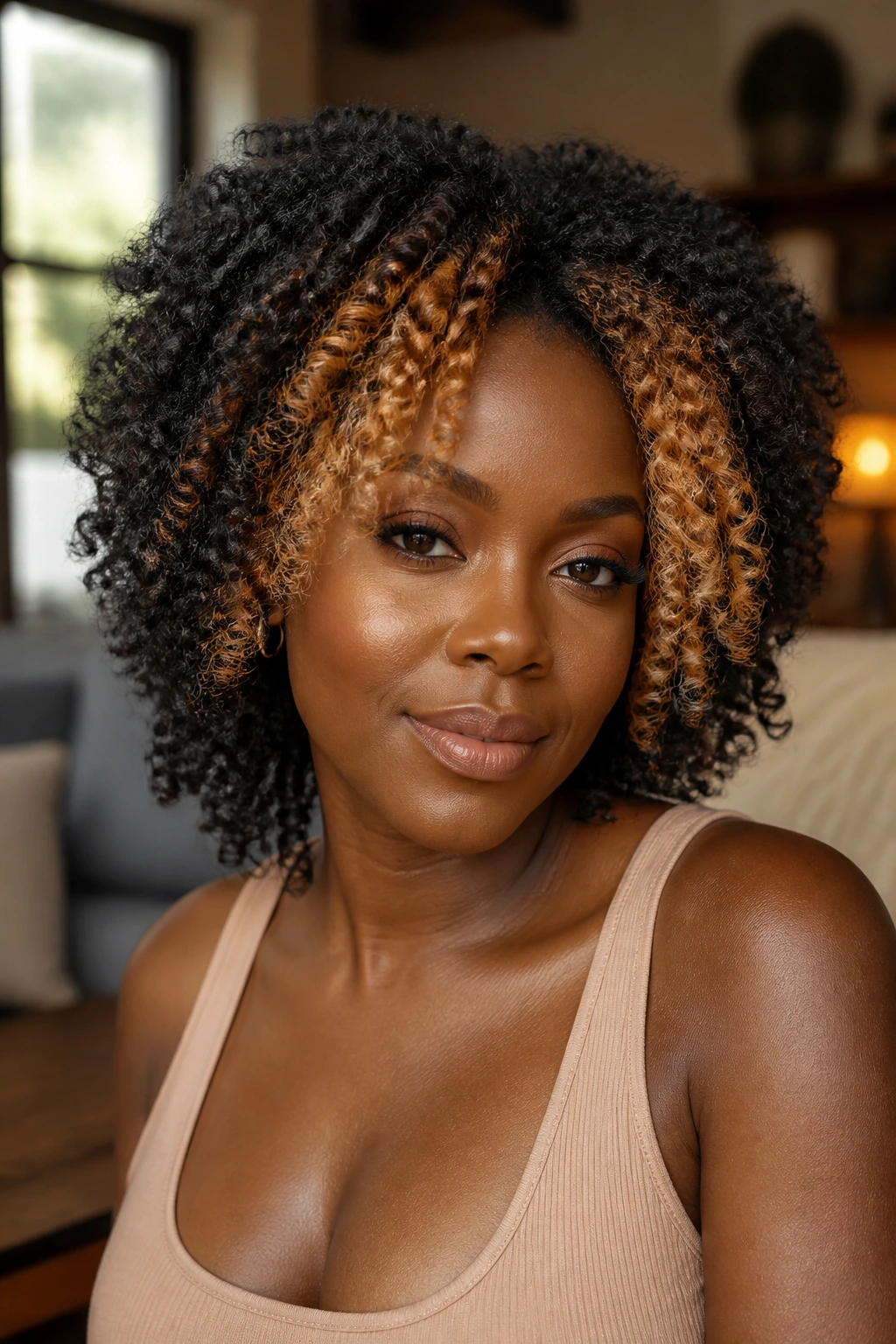
A face frame on natural coils works because it puts the brightness where the eye lands first: around the forehead, temples, and cheekbones. Honey toffee is warmer than beige honey and a little deeper than gold, which makes it ideal for coils that need dimension more than they need a full blonding service.
The rest of the hair can stay dark, defined, and healthy-looking. That’s the beauty of this idea. The face frame gives the glow, but the coil pattern still does the talking.
If you like twist-outs, braid-outs, or a wash-and-go with a strong side part, this one will show off the color from several angles. It feels tailored instead of generic.
15. Champagne-Honey Gloss for Short Hair
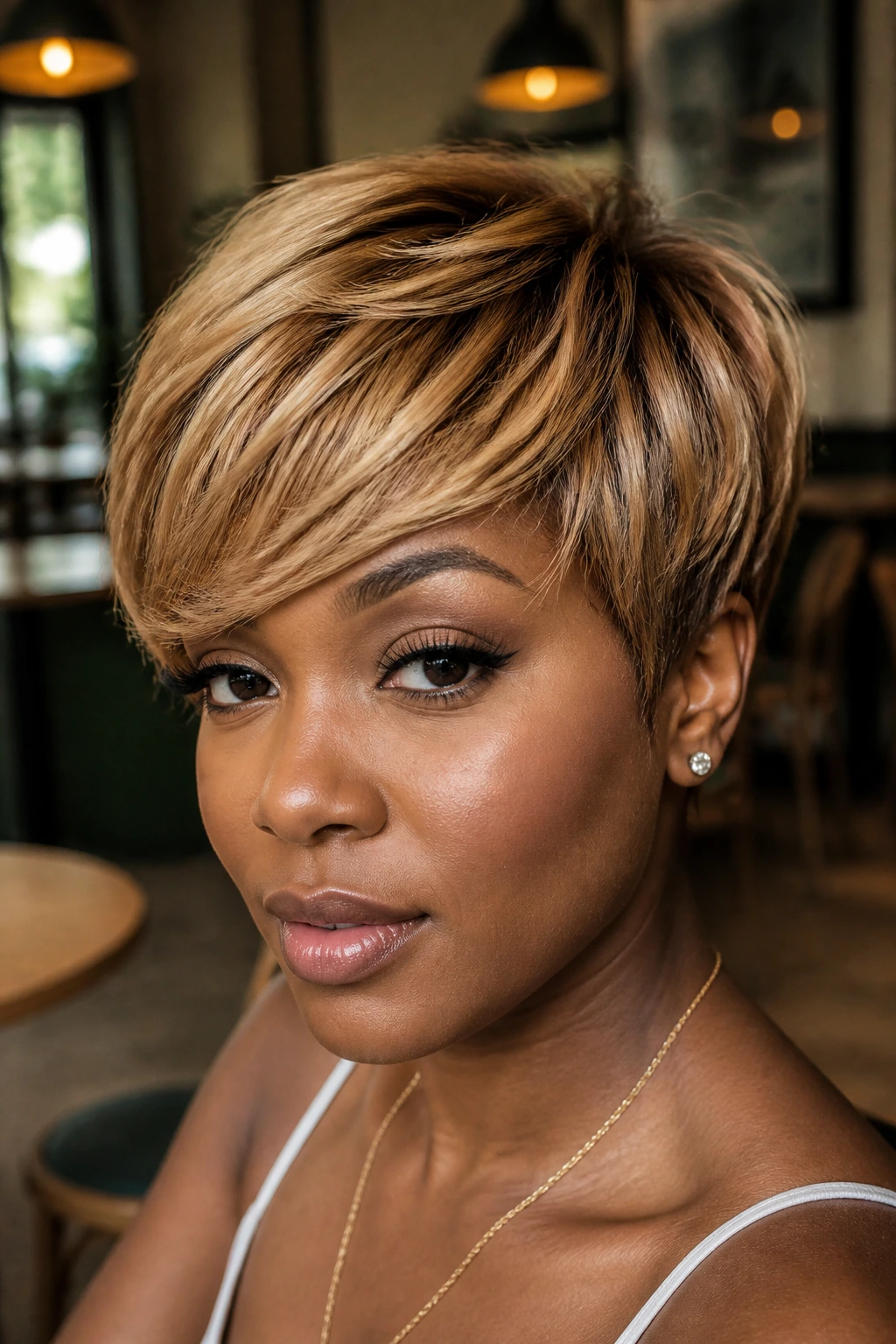
A gloss changes everything when the hair is already lifted enough to take it. Champagne-honey on short hair gives a brighter, smoother finish than a raw highlight pattern, and that can be the right move when the cut is the star. The color looks cleaner because the gloss blurs any rough edges.
Short hair makes tone decisions obvious. A champagne-honey blend can turn too cool fast, so keep the base gold-forward and the brightness controlled. That keeps deep skin from looking drained next to the color.
This is a good option if you want a quick visual refresh without a full lightening session. The shape stays sharp. The tone gets softer.
16. Honey Blonde Afro with Dimensional Foils
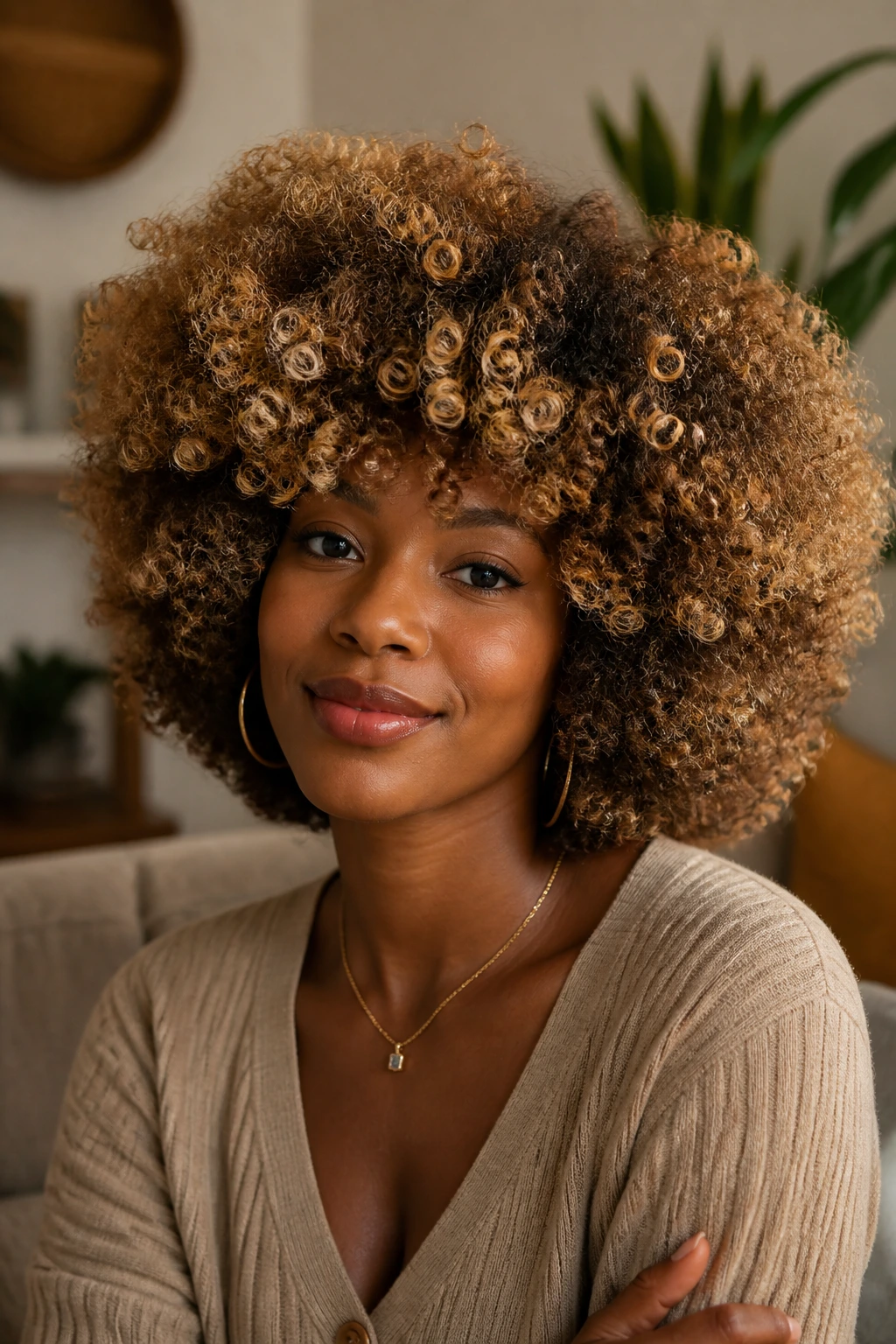
Why Placement Matters More Than Volume
An afro doesn’t need blanket blonding to look vivid. It needs strategic foils. Dimensional honey foils placed at the crown, front curve, and upper sides create movement inside the shape, which is exactly what makes the color pop on a full afro.
- Foil width: Keep some pieces narrow and some slightly broader.
- Lift level: Stay within a warm honey range so the afro doesn’t lose its richness.
- Styling note: Pick out the hair or shape it in a rounded silhouette to show the contrast.
- Best result: A halo effect, not a striped effect.
This is one of those looks that gets better the more the hair moves. The highlights appear and disappear as the curls shift.
17. Walnut and Honey Shadow Lights
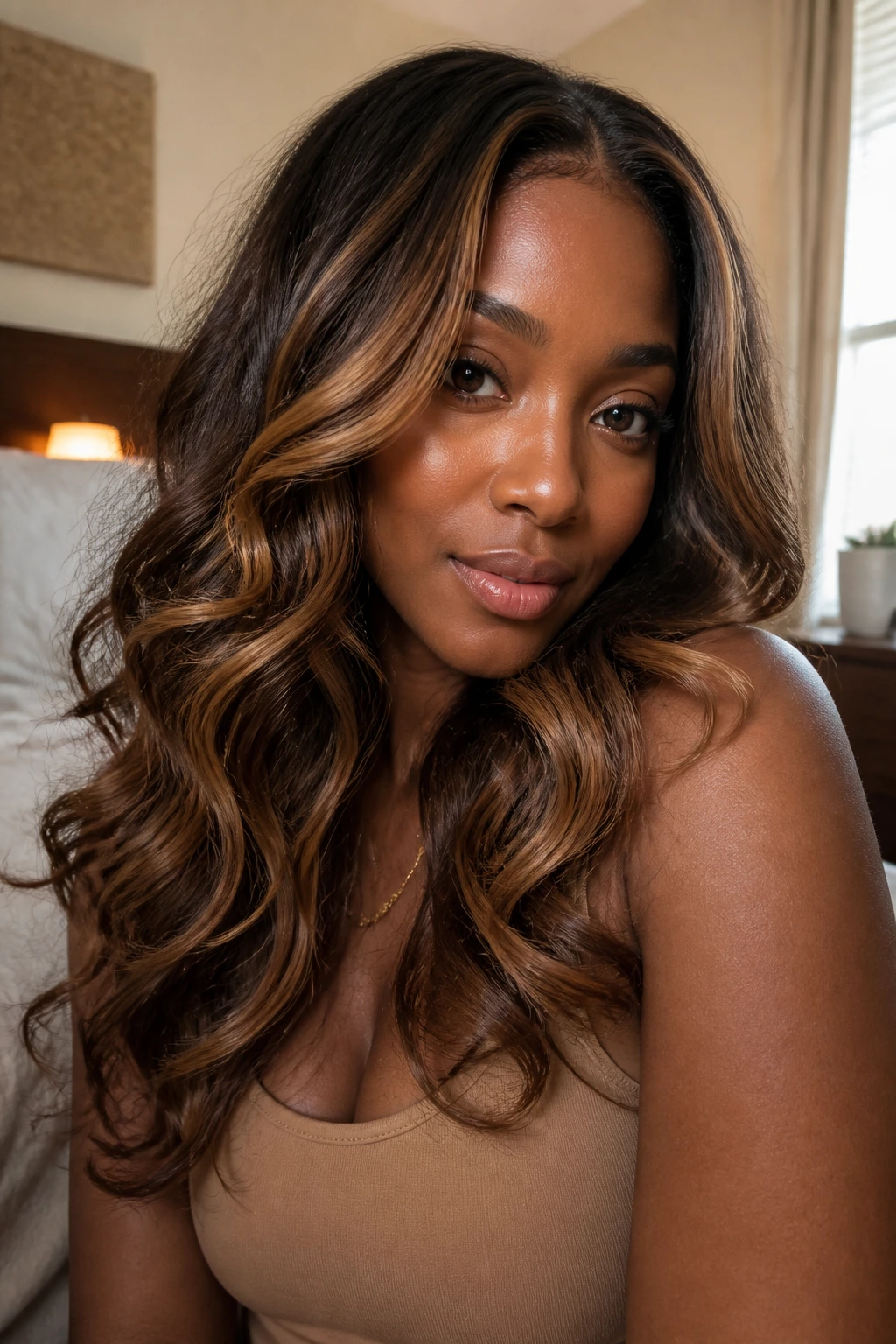
Walnut and honey together give you a brunette-blonde blend that feels grounded. Instead of lightening the whole head, shadow lights tuck honey strands between deeper walnut panels so the contrast shows up in slices. On deep skin, that’s a smart move because the richer brown keeps the blonde from taking over the face.
I like this look for people with thick hair. The darker pieces add visual density, and the honey pieces stop the hair from looking heavy. It’s especially good in layered blowouts and voluminous curls, where the color can separate naturally.
If you want color that looks planned but not obvious, this is a strong contender. It has range.
18. Honey Blonde Knotless Braids with Warm Ends
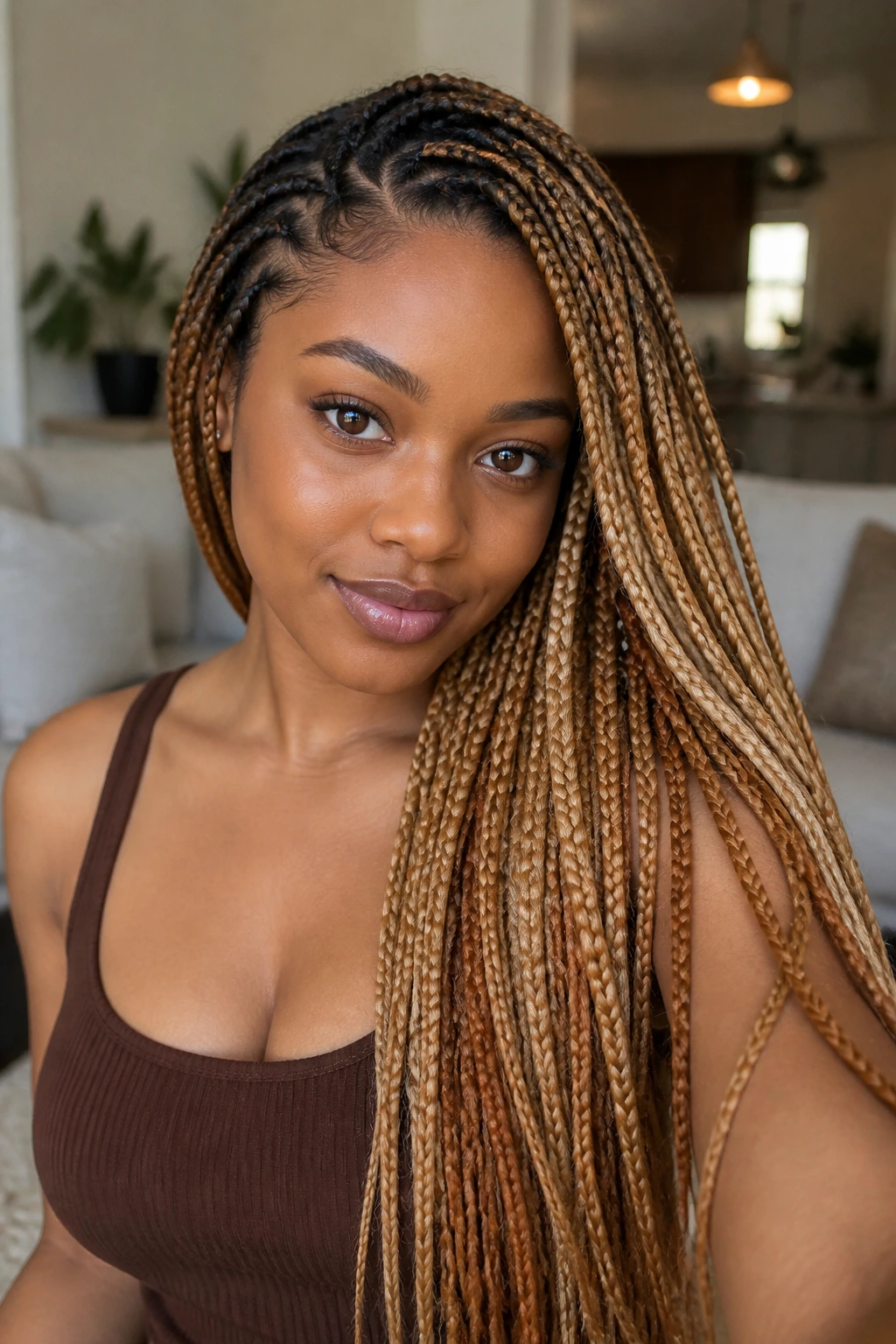
Braids do not have to stay one shade to feel polished. Honey blonde knotless braids with warm ends bring brightness into the style without making the roots fight the scalp. Keep the base deeper, then blend the honey through the lengths so the color looks like it belongs there.
This style works best when the warm ends are balanced with a slightly darker braid color near the top. That keeps the braids from looking flat or too light all at once. The lighter ends also make the movement stand out, especially when the hair is worn down over one shoulder or half-up.
It’s a protective-style approach that still gives you visible color. Very useful. Very wearable.
19. Bright Honey Streaks on a Tapered Cut
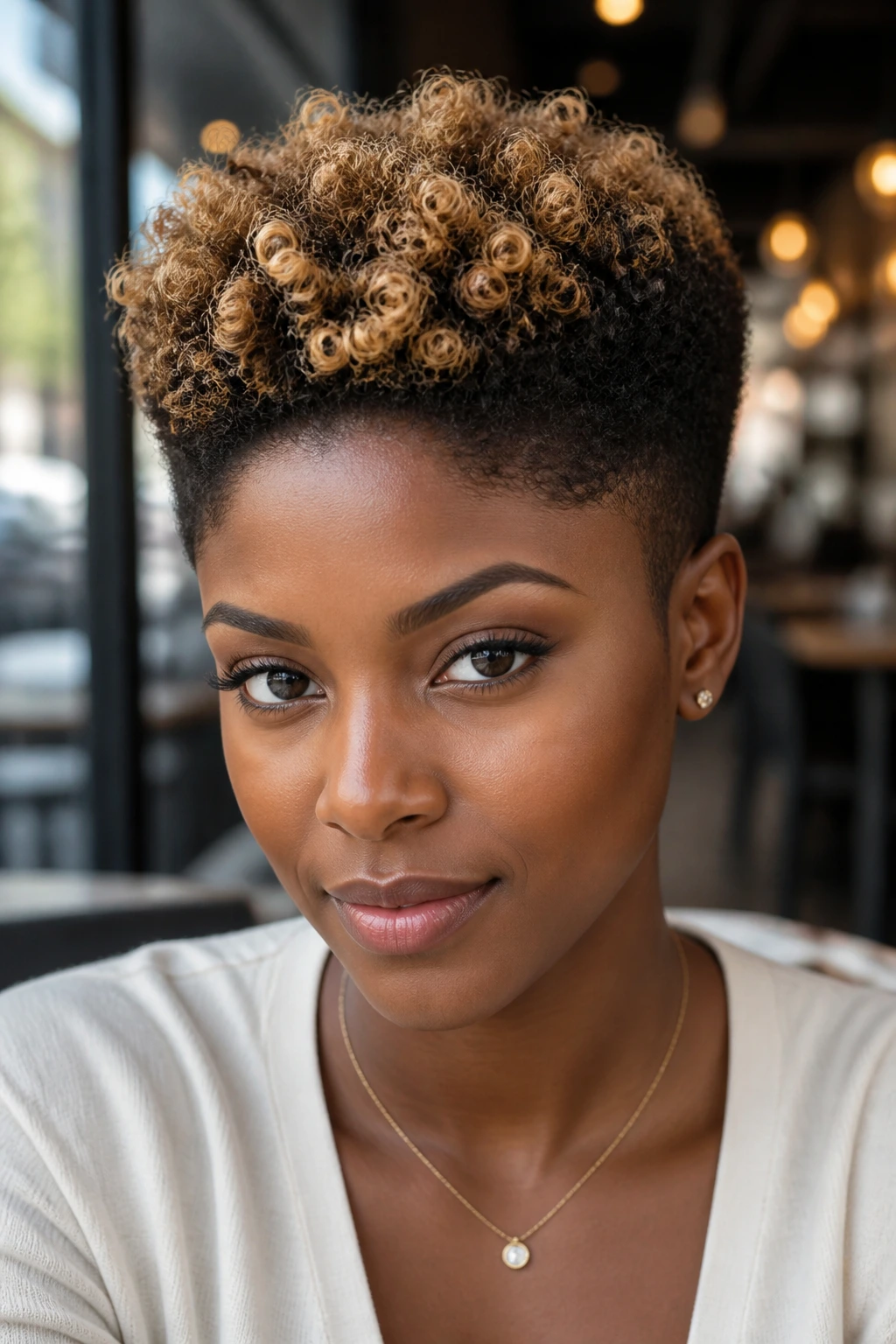
A tapered cut can carry brightness in a way longer hair sometimes cannot. Bright honey streaks on top give the shape more height and make the crown read fuller. Since the sides are close, the color has room to breathe on the longer top section.
The trick is not overloading the cut with too many streaks. A few deliberate pieces through the top and front do the job. On deep skin, that controlled brightness gives definition around the face and keeps the style from blending into the background.
This is a good choice if you want low-maintenance color and a sharp silhouette. The haircut already does half the work.
20. Honey Gold Ends on a Curly Shag
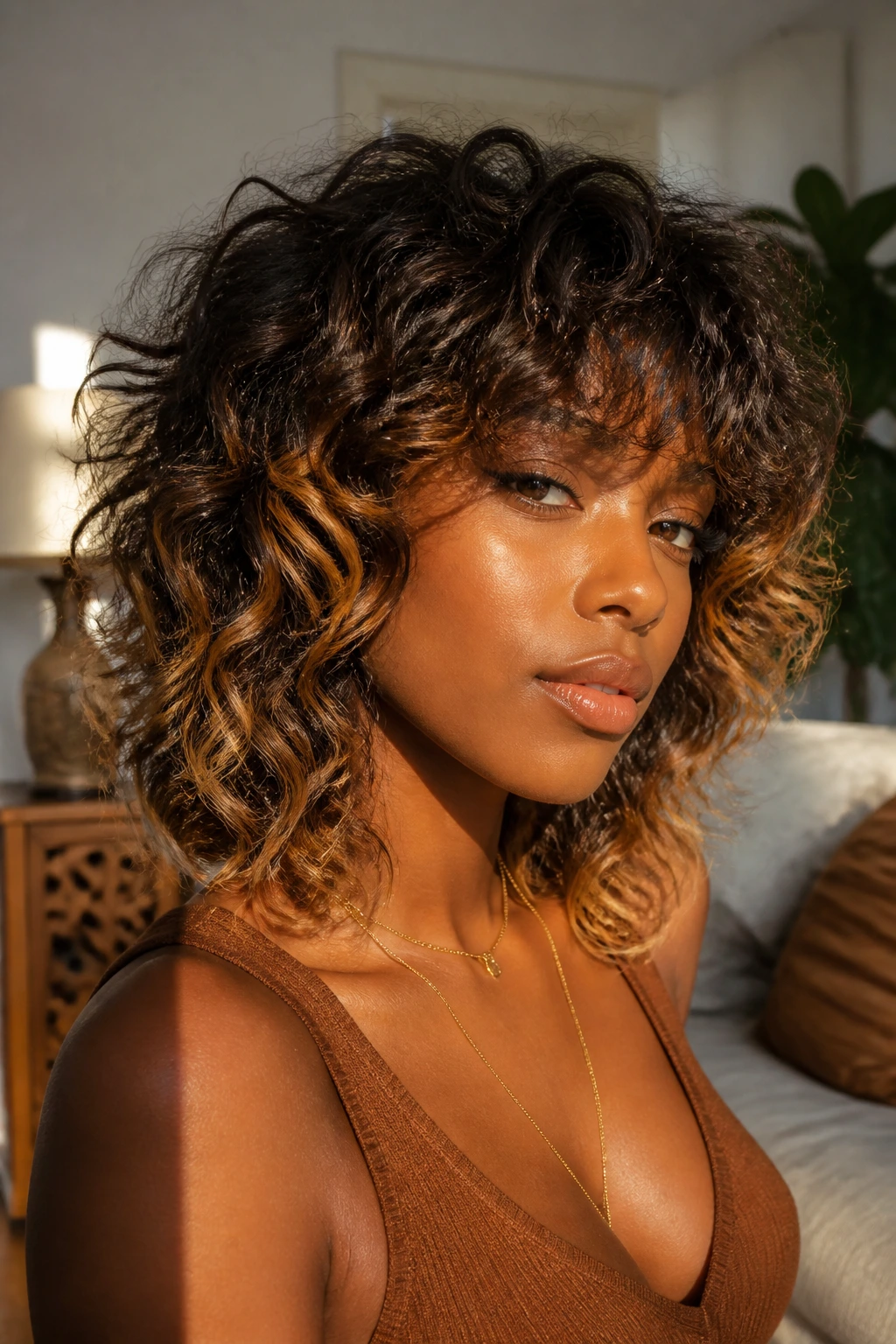
Why the Cut Helps the Color
A curly shag gives honey gold ends a place to show off. Layering creates movement through the perimeter, which means the lighter color can peek out from different lengths instead of sitting in one flat band. On deep skin, that kind of staggered brightness keeps the look playful without losing depth at the crown.
- Best placement: Concentrate the lightest ends on the outer layers.
- Best curl pattern: Loose curls, coils with definition, or airy waves.
- Best finish: A curl cream or light gel that keeps the layers separated.
- Why it works: The shag prevents the color from looking bottom-heavy.
If you’ve ever liked the idea of blonde but hated the blocky result, this is the sort of cut-color combo that fixes the problem.
21. Rich Honey Lob with Chunky Highlights
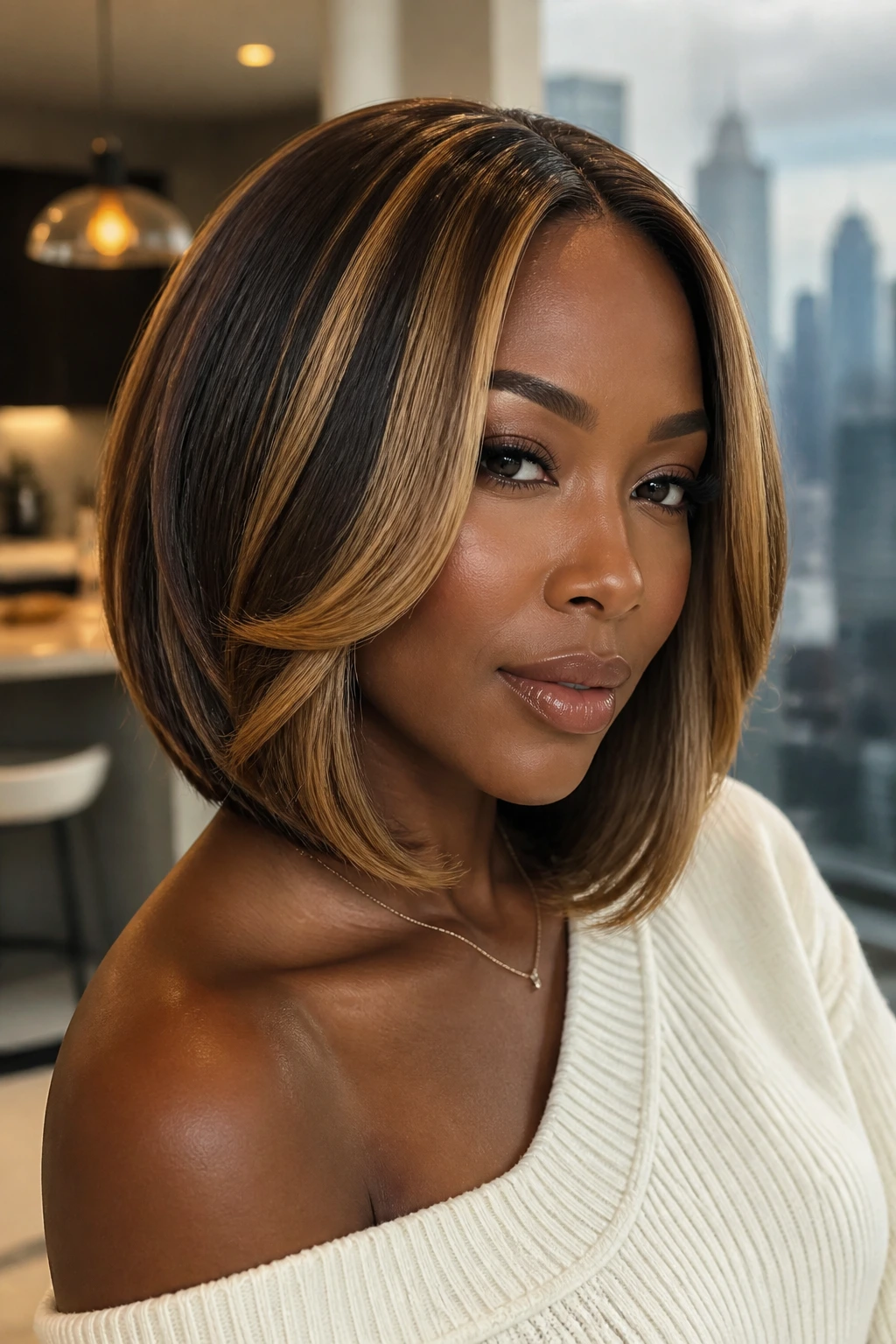
A rich honey lob with chunky highlights is not timid, and that’s the point. The lob gives shape. The chunky pieces give the blonde something to say. On deep skin, the wider highlights create contrast you can read across the room, while the darker base keeps the whole thing from drifting into pale territory.
This style works best when the highlights are placed with a pattern. Not evenly spaced. Not too symmetrical. A few bold pieces near the face, a few through the crown, and softer ones beneath create a cleaner result than random streaking ever will.
It’s a strong choice if you like your color to feel noticeable in pictures and in person. There’s no need to apologize for the brightness.
22. Sunkissed Honey Layers with a Center Part
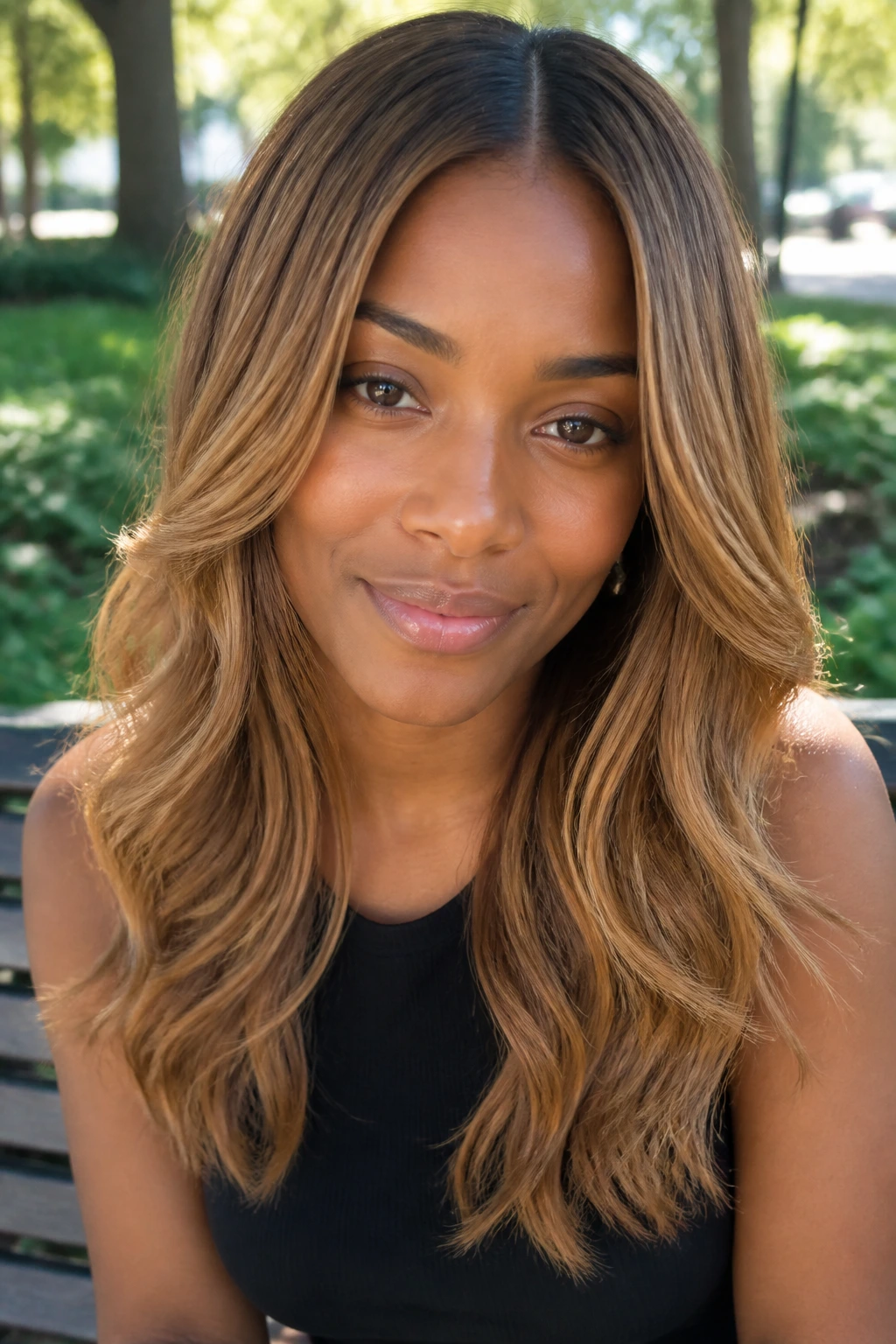
A center part gives honey blonde symmetry. On deep skin, that can be a nice way to keep the color looking balanced instead of overly face-framed. Sunkissed layers let the lighter pieces fall where the cut naturally opens, which makes the style feel like it was placed with the shape in mind.
This is a good one for medium to long hair with movement. The layers stop the honey from hanging in one curtain. Instead, the color flickers through the mid-lengths and ends as the hair swings. If you wear your hair straight, curled, or blown out, the center part keeps the whole look clean.
It’s subtle, but not shy. Those are different things.
23. Honey Cinnamon Melt for Warm Undertones
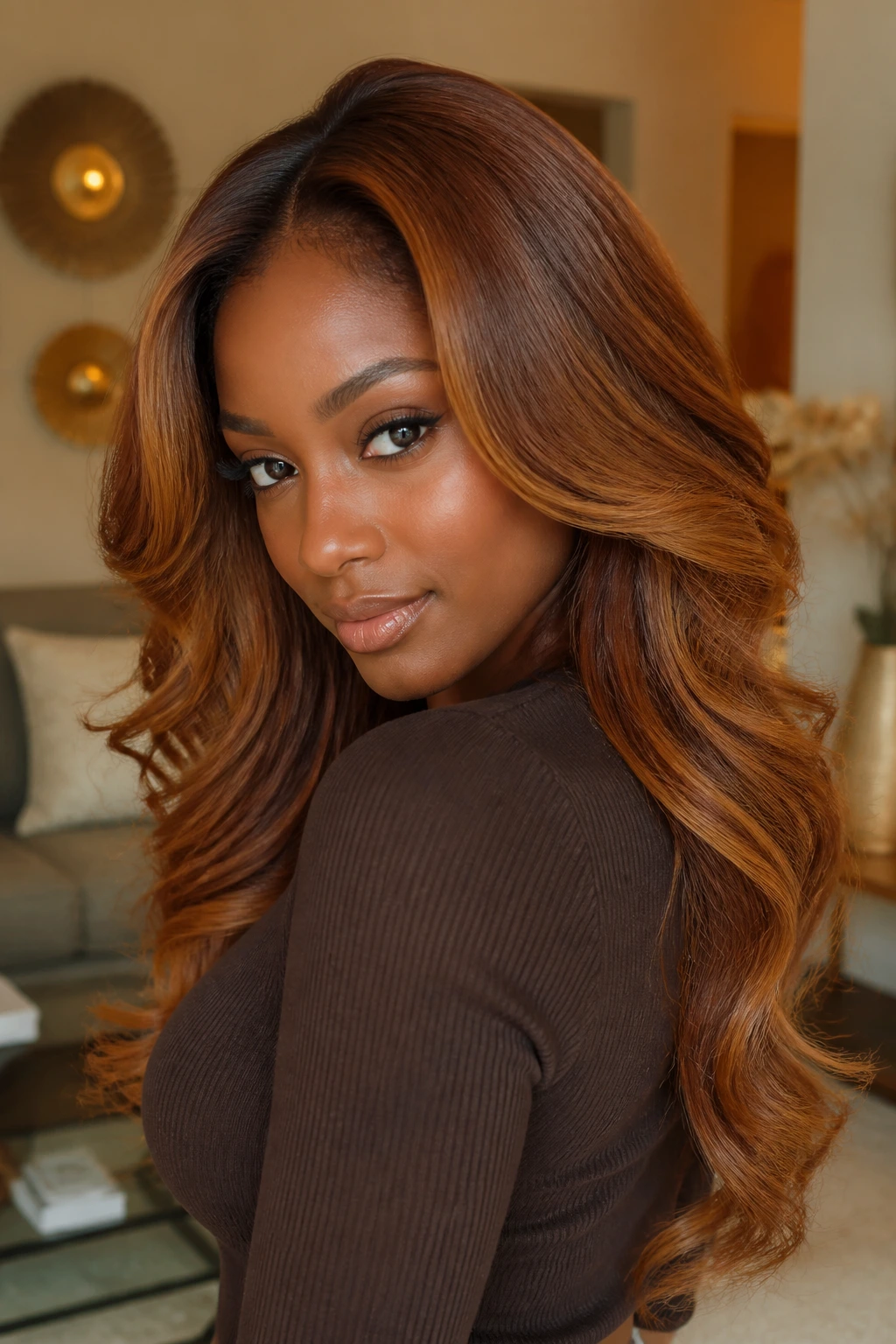
Honey cinnamon is the move when the warmth needs a little spice. The cinnamon note brings in copper and soft red-brown, which flatters deep skin with golden or red undertones especially well. It keeps the honey from reading flat and gives the hair a deeper glow in indoor light.
This color feels richest on layered styles and wavy textures, where the red-gold pieces can break apart a bit. If the hair is too smooth and pale, the cinnamon can dominate. If it’s blended properly, though, the result is lush and dimensional.
I’d recommend this for anyone who wears bronzy makeup, terracotta blush, or warm browns. The whole face starts speaking the same language.
24. Pearl-Honey Blend for Neutral Undertones
When You Want Honey, but Softer
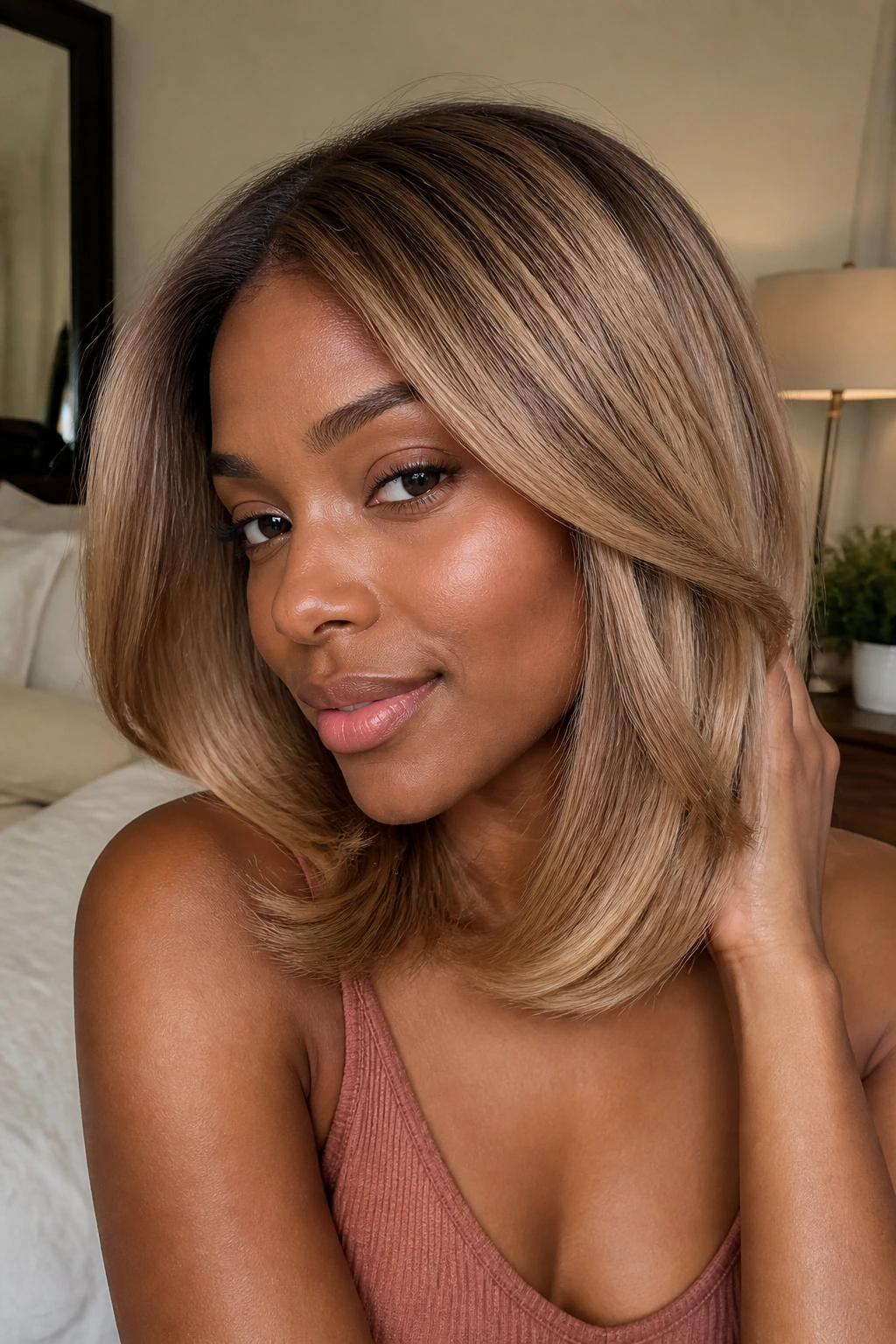
A pearl-honey blend walks a narrow line. It keeps enough gold to flatter deep skin, but adds a beige-pearl softness so the tone does not look too orange. That matters if your undertone is neutral and you want the blonde to feel calm rather than fiery.
This is a smart choice when you like lighter color but don’t want the hair to compete with your complexion. A good pearl-honey formula should still look warm in daylight. If it goes icy, it has missed the mark.
- Best for: Neutral undertones and people who wear both gold and silver jewelry.
- Best placement: Face frame, mids, and ends.
- What to avoid: Too much ash toner.
- Result: Soft brightness with less brass risk.
25. High-Gloss Honey Blonde with Lived-In Roots
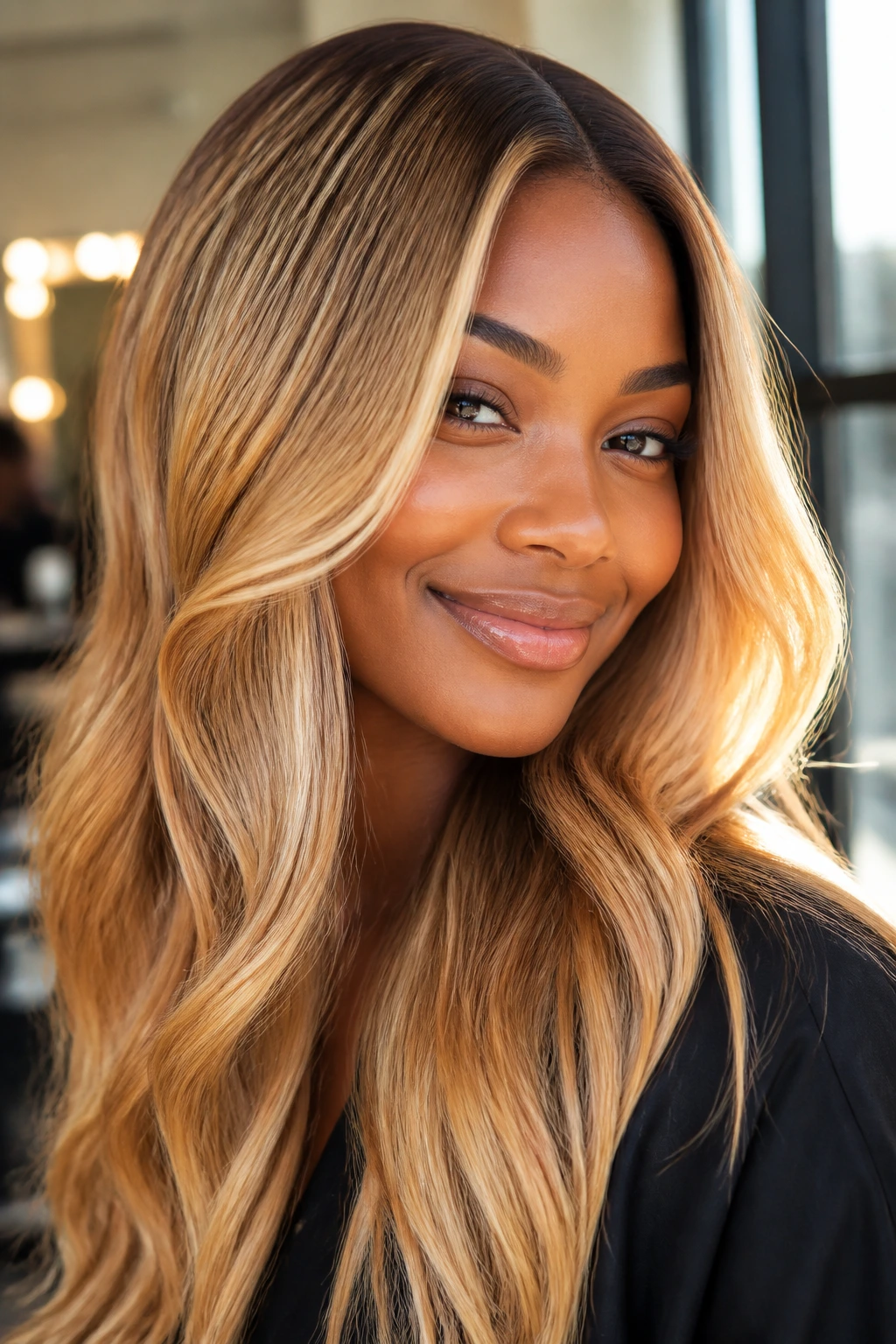
High-gloss honey blonde with lived-in roots is the version that makes the whole style read clean. The root stays deeper, the blonde stays warm, and the gloss pulls the strands together so the color looks deliberate instead of overprocessed. On deep skin, that shine matters. It keeps the honey from looking dry or thin.
This look is especially good if your hair is already lightened and you want to freshen the tone without starting over. A clear or warm beige gloss can smooth the finish, calm rough ends, and sharpen the contrast at the root. The grow-out remains part of the aesthetic, which is a gift if you hate constant touch-ups.
If honey blonde had a polished evening-out version, this would be it.
Why Honey Blonde Works on Deep Skin Tones
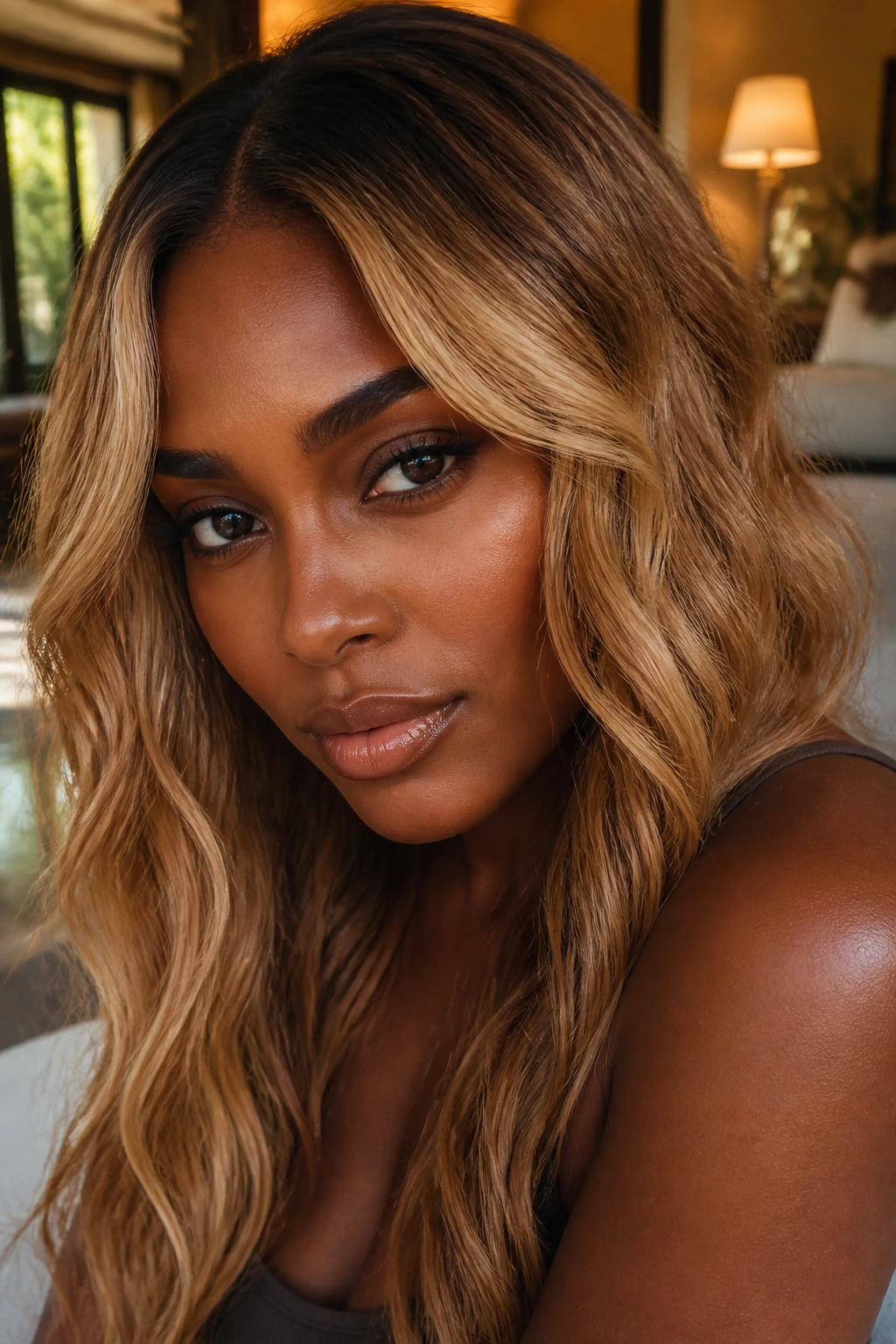
Honey blonde succeeds on deep skin when the shade carries enough depth to sit beside melanin instead of hovering over it. That is the whole thing, really. Pale blondes can look too hard against rich skin because the contrast is thin and sharp; honey blonde, by contrast, has enough gold, amber, or caramel in it to feel connected to the complexion.
The most flattering versions keep some darkness at the root or in the lowlights. That darker support makes the honey brighter by comparison, and the skin gets to stay the hero. Without that anchor, a blonde can start to look like a wig cap made a bad decision.
Texture changes the equation too. Coils and curls break up the color differently than straight hair, so honey can look softer and more natural on textured hair even when the lift is the same. Silk presses and straight styles show every highlight line, which means the placement has to be cleaner. Same color family. Different visual job.
A lot of people think “blonde” means “as light as possible.” Not here. On deep skin, richness beats paleness almost every time. That’s the rule worth keeping in your pocket.
How to Choose the Right Honey Blonde for Your Undertone
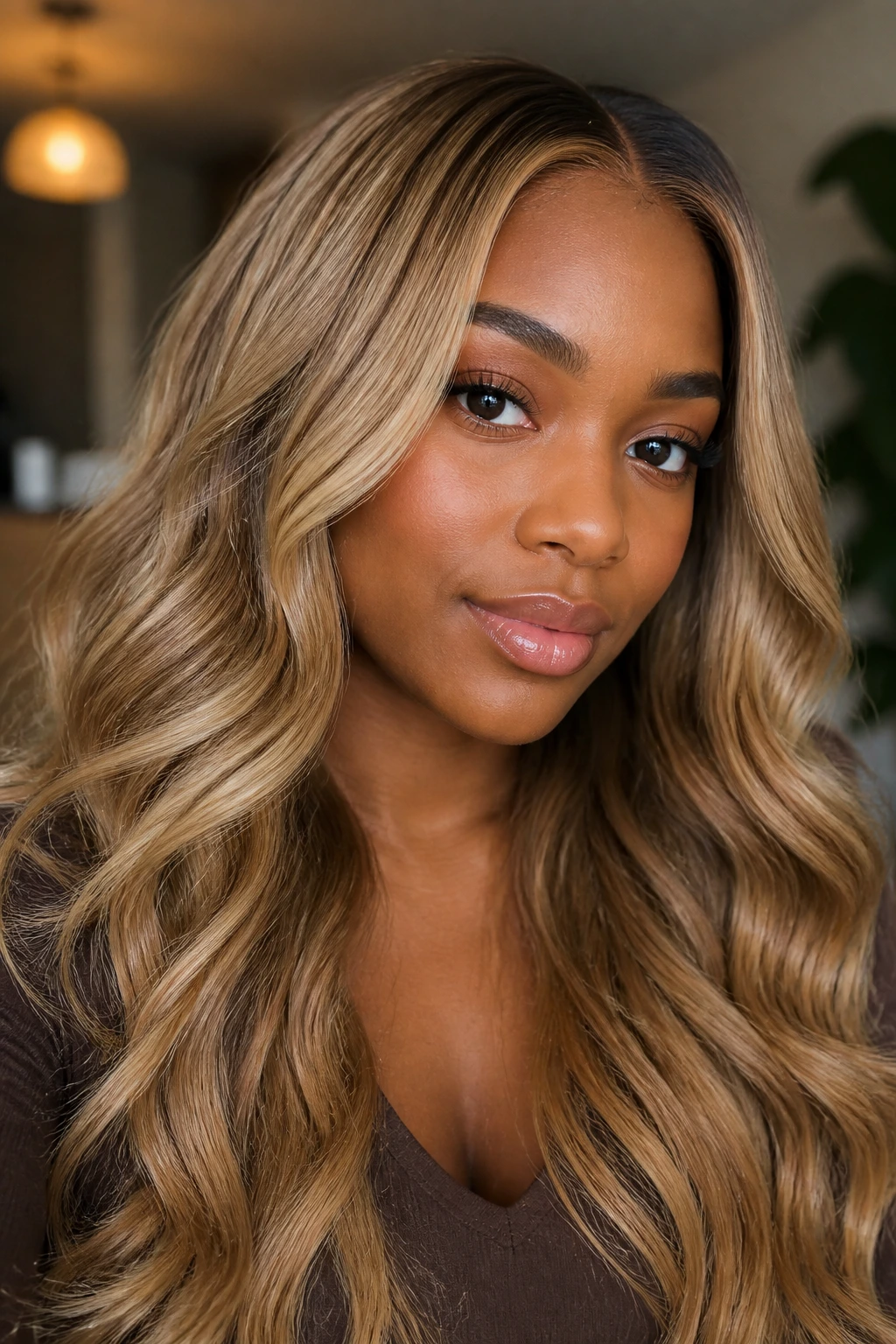
Honey blonde is not one shade; it’s a cluster of shades that sit between gold, beige, amber, and light caramel. If your skin pulls warm, look for honey with a little copper, toffee, or gold. If you lean neutral, beige-honey and soft caramel are safer than anything super yellow. If your undertone runs cooler, the color still needs warmth, but the root and gloss can stay slightly muted so the result doesn’t turn orange.
Warm Undertones
Warm undertones love cinnamon honey, golden honey, and bronze-honey blends. These shades echo the warmth already in the skin, so the color looks natural even when it is bright.
Neutral Undertones
Neutral undertones can handle more beige. Think pearl-honey, creamy honey brunette, and honey gloss with a soft root smudge. These shades keep the color soft and versatile.
Cool Undertones
Cool undertones need care. The honey should stay gold-based, but not too yellow. Ask for smoky honey, champagne-honey, or a honey blend with deeper roots so the tone reads balanced instead of brassy.
Salon Terms, Tools, and Products Worth Knowing
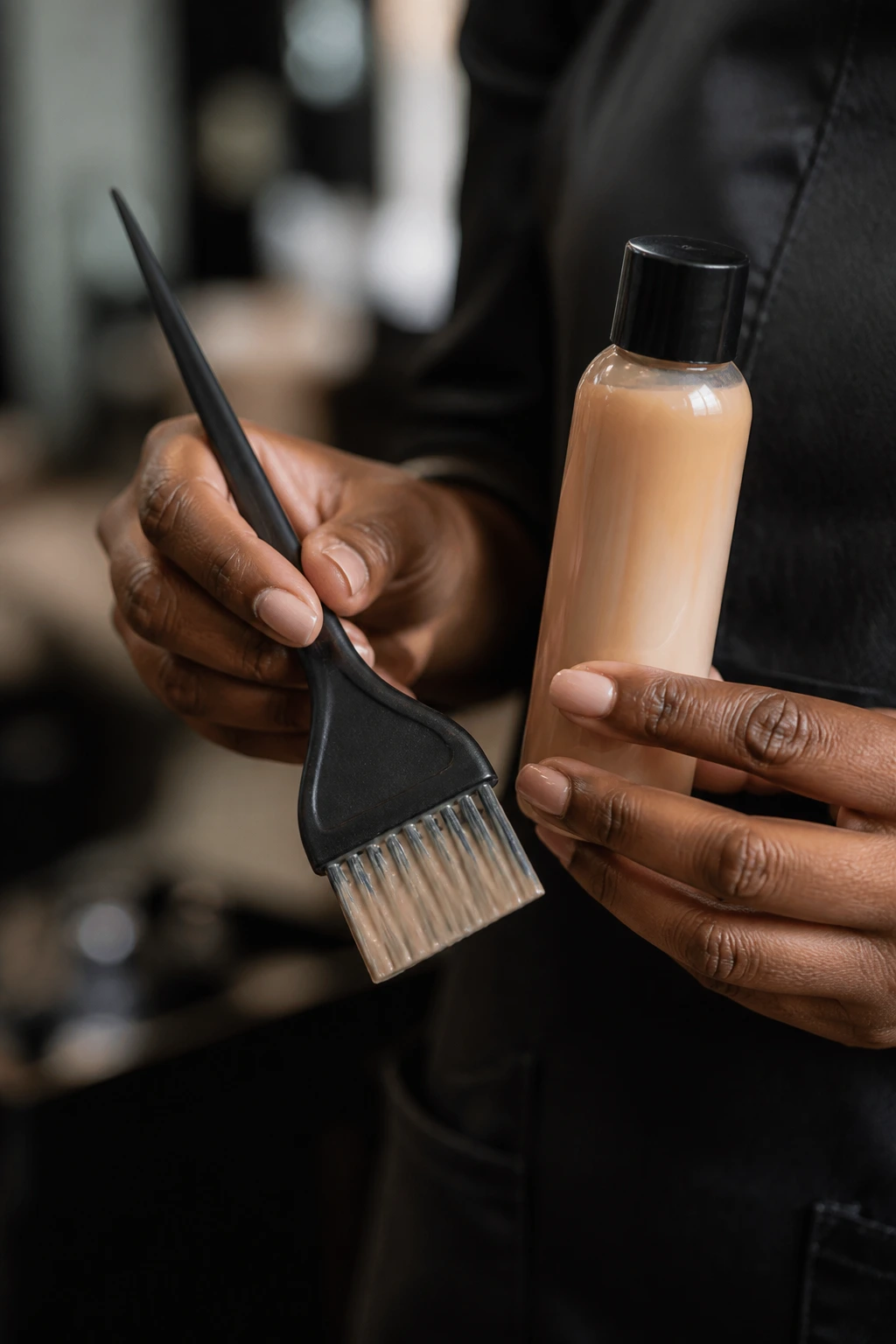
- Balayage brush or paddle: This helps the colorist paint soft, blended pieces without harsh foil lines.
- Foils: Useful when you want stronger lift or more controlled ribbon highlights on dense, dark hair.
- Shadow root or root smudge: A darker root area that keeps the grow-out soft and gives honey blonde a base to sit on.
- Bond builder: Helpful during lightening because it supports the hair while bleach or high-lift color is working.
- Color-safe shampoo: Use a gentle formula so the honey does not rinse away too fast or get stripped dry.
- Gloss or toner: This is what keeps the blonde in the honey lane instead of letting it go orange, yellow, or dull.
- Satin bonnet or pillowcase: Not glamorous, but it keeps the cuticle from roughing up overnight.
- Heat protectant: Needed if you wear silk presses, curls, or blowouts. Honey tones show dryness fast.
How to Wear Honey Blonde So It Looks Intentional
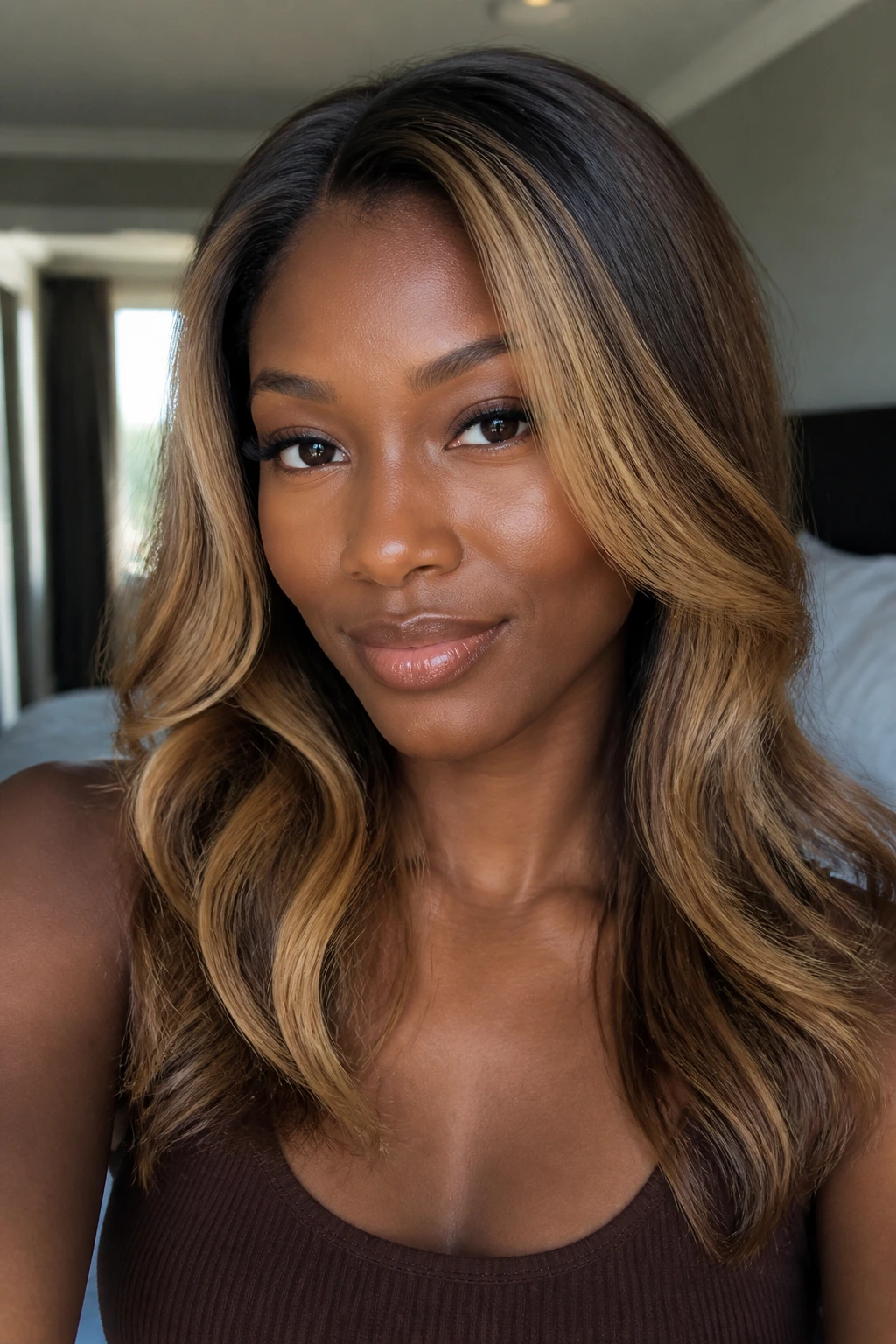
Placement: Keep the brightest pieces where the light hits first — around the face, crown, and outer layers. On deep skin, that placement does more than random all-over brightness because it creates shape before color.
Styling Pairings: Loose curls, blown-out coils, silk presses, bobs, and layered cuts all show honey well. Tight styles can still carry it, but the placement needs to be bolder so the tone doesn’t disappear into the texture.
Maintenance: Softer balayage and rooted looks are easier to live with than all-over blonde. If you hate constant salon visits, choose a style with a darker base and lighter mids instead of taking everything to the same level.
Best Cut Shapes: Lob, layered shags, pixies, curtain fringes, and rounded afros all give the color something to sit on. A blunt cut can work too, but it needs cleaner placement so the line doesn’t get too stiff.
Additional Tips for a Richer, Smoother Finish
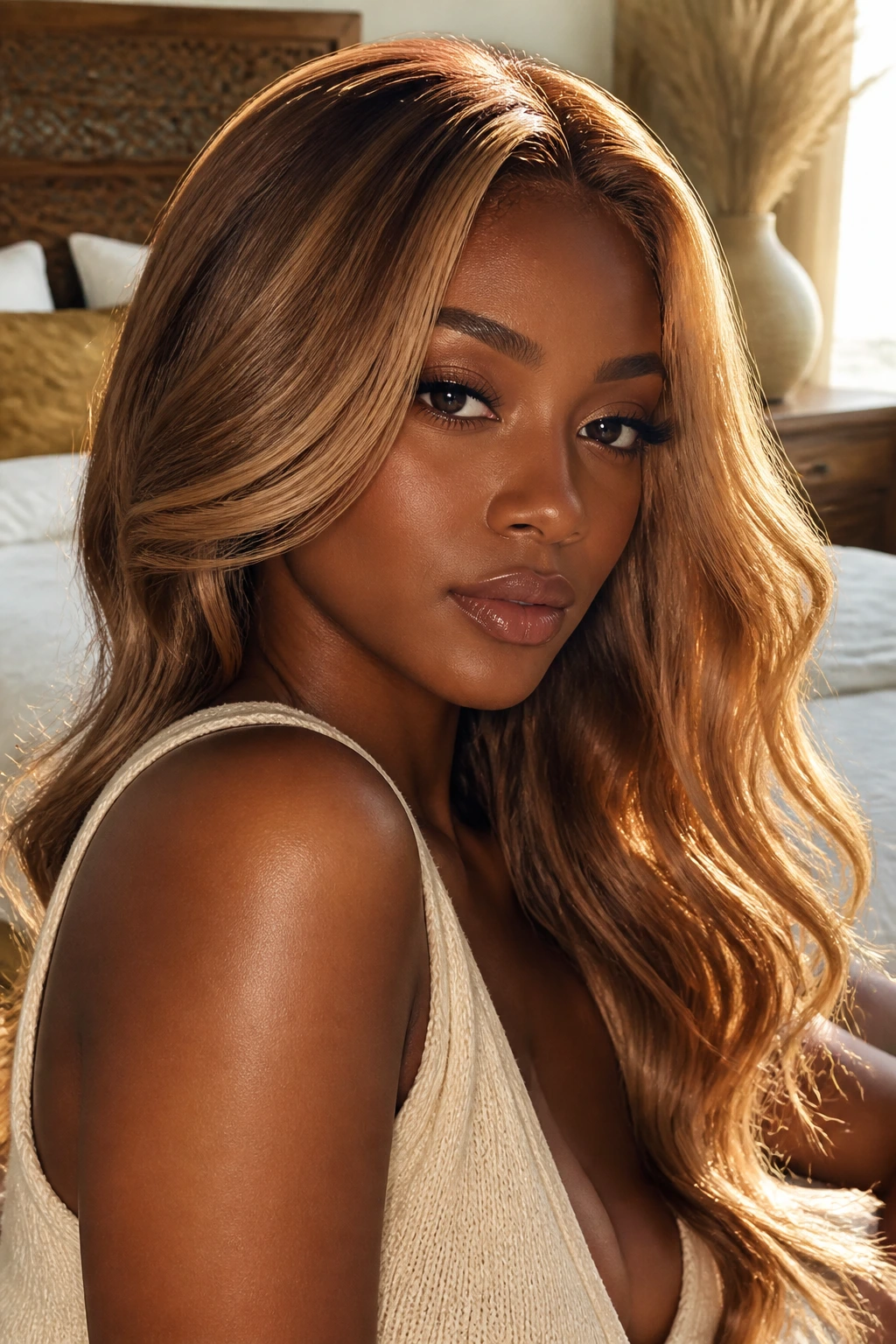
Tone Boost: Ask for a warm beige or gold gloss after the lightening service. That one step can pull the honey back into a richer lane if the bleach lifts too yellow or too pale.
Texture Boost: On curls and coils, leave a few deeper pieces in the interior. The contrast makes the lighter ribbons look brighter without having to push the whole head lighter.
Customization: If you love warmth, ask for toffee, cinnamon, or bronze lowlights under the honey. If you want something softer, ask for beige honey with a darker root and very light face-framing pieces only.
Serving Suggestions: Think of your hairstyle the same way you think about accessories. Gold hoops, warm makeup, and clean edges make honey blonde feel finished. A strong brow and a glossy lip do the same thing. The color looks better when the rest of the face shows up with it.
Common Mistakes That Flatten Honey Blonde
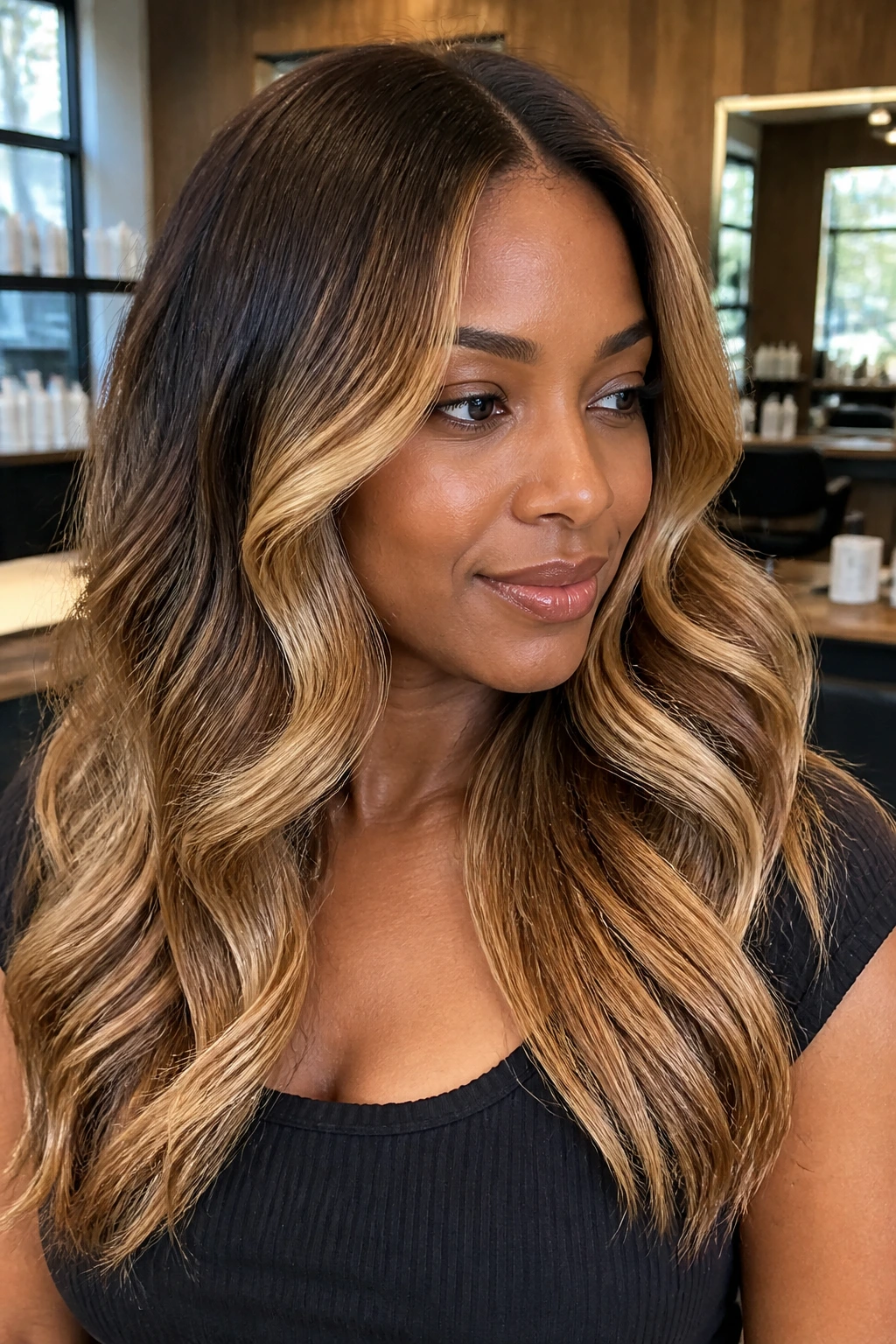
- Going too pale too fast: The color can start to look chalky or yellow against deep skin. Fix it by keeping the base deeper and asking for honey, not platinum.
- Ignoring the root: If the entire head is lifted evenly, the color can lose shape. A shadow root or root smudge gives the blonde structure and makes grow-out less obvious.
- Using ash toner like it’s a cure-all: Too much ash mutes the warmth that makes honey look right. The symptom is a grayish, dull finish. The fix is a warmer gloss or a lighter hand with toner.
- Spacing highlights too evenly: Uniform streaks look stripy on dark bases. You want alternating widths and intentional placement.
- Forgetting porosity: Porous ends drink up color fast and can turn darker or drier than the rest. A colorist should treat those ends gently and often keep them slightly deeper.
- Lightening textured hair without a moisture plan: Honey blonde on curls looks dry fast if the care routine is weak. Bond treatments, deep conditioner, and heat limits matter.
Variations and Alternatives to Try
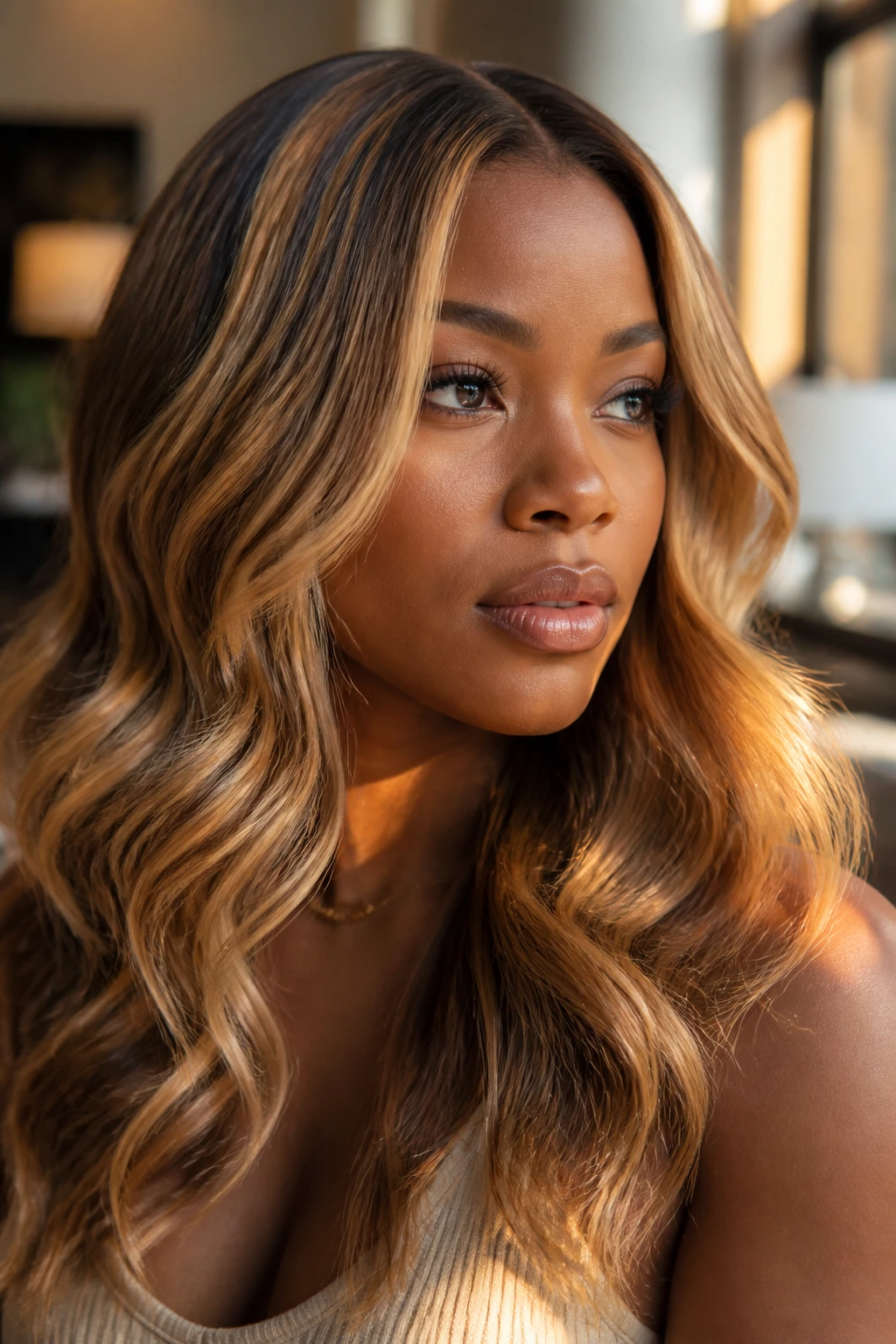
Soft Caramel Honey: If full honey blonde feels too bright, slide the shade a little darker and warmer. This version keeps the golden glow but reads closer to brunette, which makes it easier to wear daily.
Bronzed Honey Waves: Add bronze lowlights under the honey to deepen the finish. It’s a good fit for thick hair because the darker strands make the color look fuller and more dimensional.
Beige Honey Glow: This is the softer, cleaner version of honey blonde for neutral undertones. The beige tone reins in brass without making the hair look flat.
Honey Accent Braids: If you want color without fully blonding your natural hair, work honey tones into braids, twists, or loc extensions. The effect is especially nice when the base stays dark and the lighter pieces show up only in the lengths.
Cinnamon Honey Refresh: Great for warm undertones that need more glow than gold alone can give. A cinnamon gloss or warm lowlight adds depth and keeps the honey from feeling too bright on its own.
Keeping the Color Glossy Between Appointments
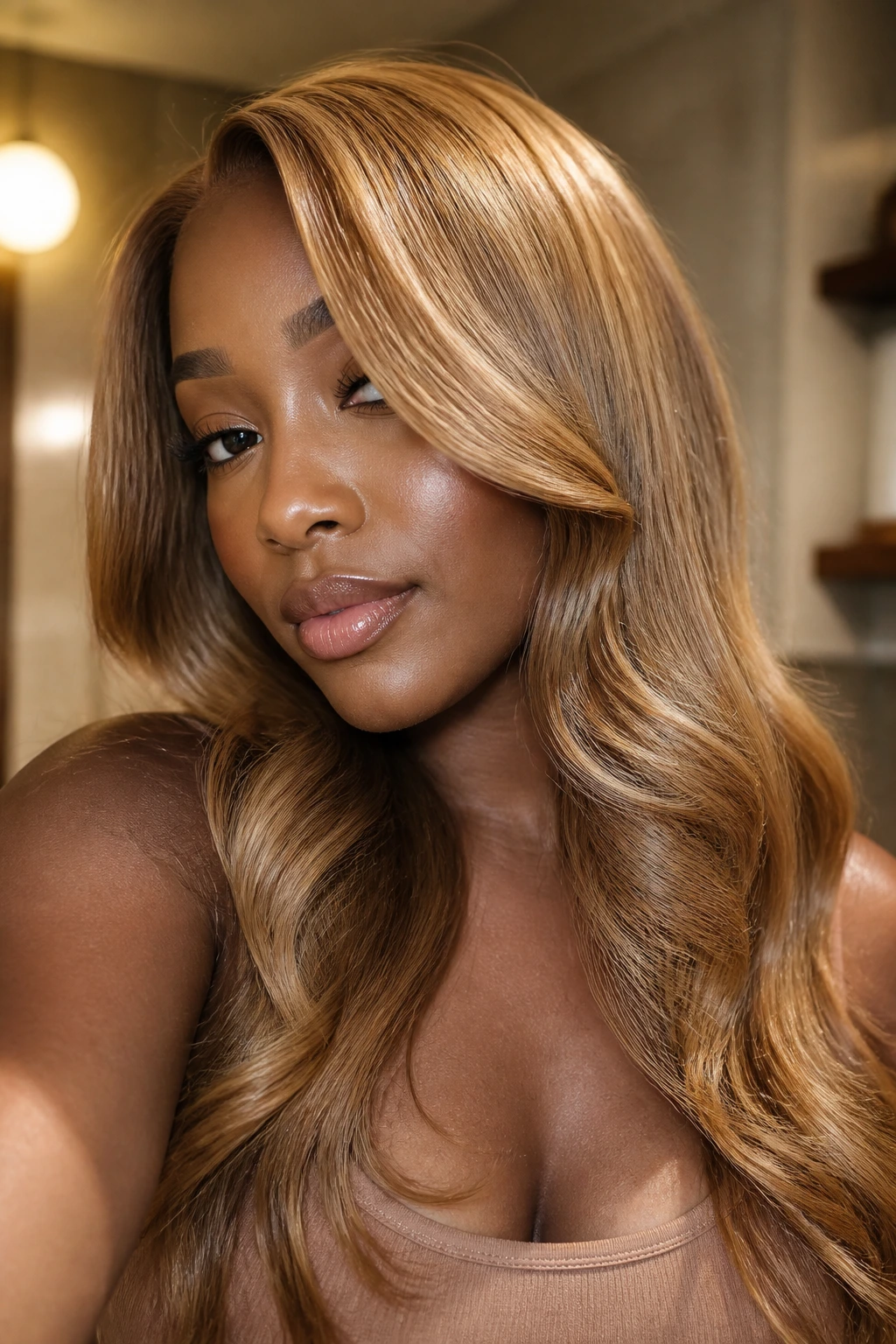
Honey blonde is easiest to live with when you treat it like a finish, not a one-time event. The first line of defense is wash frequency. Two to three washes a week is enough for most people, and if your hair is dry, stretching the washes even a little longer can help the tone stay richer. Use a color-safe shampoo and follow with a conditioner that gives slip, not just scent.
Glosses and toners matter more than people expect. A warm gloss every 4 to 6 weeks keeps the honey from slipping into brass or fading into a dull beige. If your hair is porous or heavily lifted, you may need refreshes closer to the shorter end of that window. If the hair is balayaged and the root is deeper, you can usually stretch it farther.
Heat styling deserves a little respect here too. Honey blonde shows dry ends and rough cuticles fast, especially on straight styles. Use a heat protectant every time, and keep flat irons around the 300°F to 350°F range unless your texture and stylist say otherwise. Higher heat on already-lightened hair is where you start to see snap, fade, and fried ends.
Night care counts. A satin bonnet or pillowcase keeps the cuticle smoother, which helps the color keep its shine between washes. If you wear curls, pineapple the hair loosely or use a satin scarf so the shape and color both survive sleep without getting crushed.
How Long Does Honey Blonde Usually Last on Deep Hair?
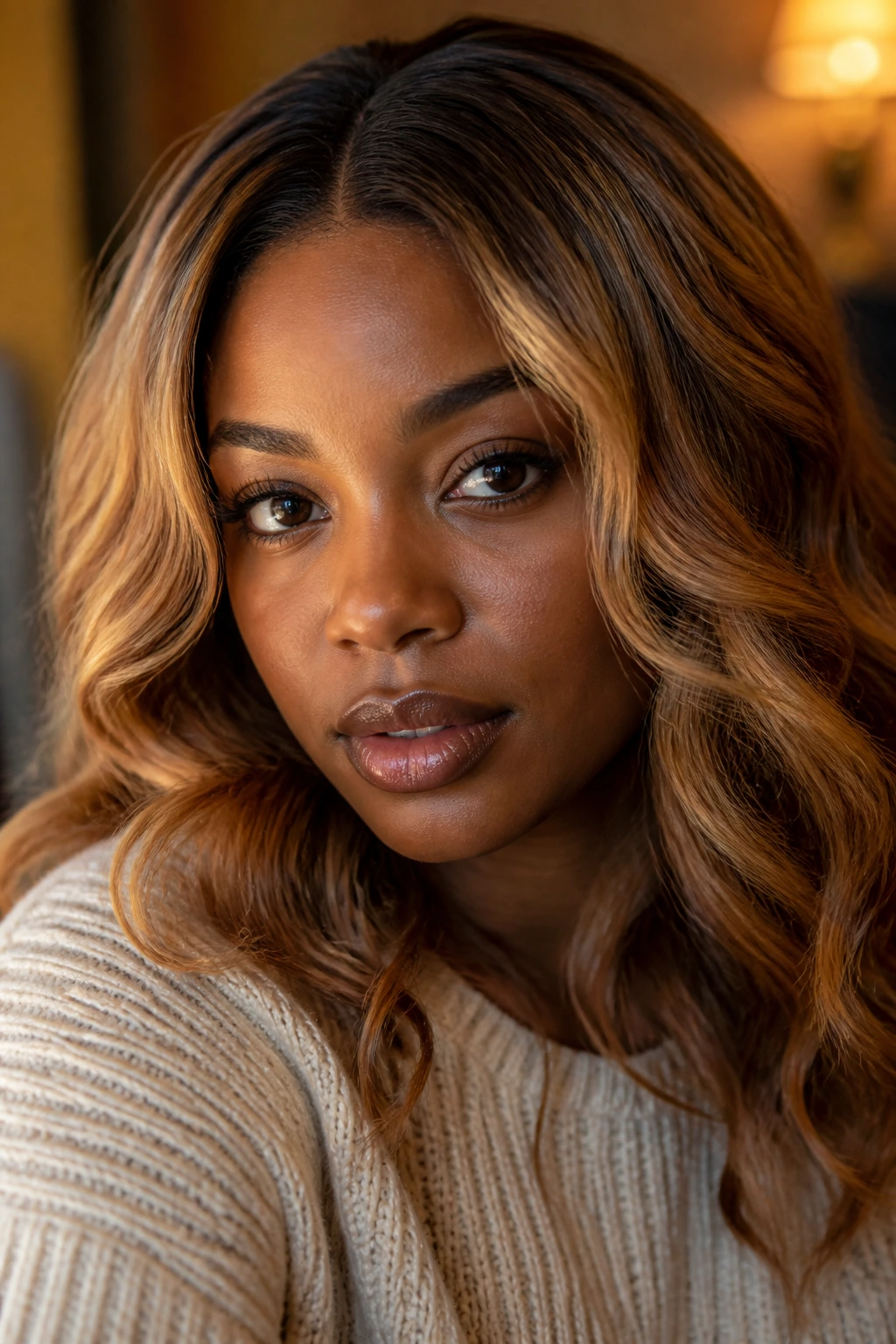
That depends on placement more than anything else. A soft balayage or rooted honey blend can look good for 8 to 12 weeks before it needs a touch-up, while a full blonding service may need a toner or glaze sooner if the tone starts drifting. On deeper hair, the grow-out line is usually more forgiving when the root is left dark on purpose.
Can Deep Skin Pull Off Bright Honey Blonde?
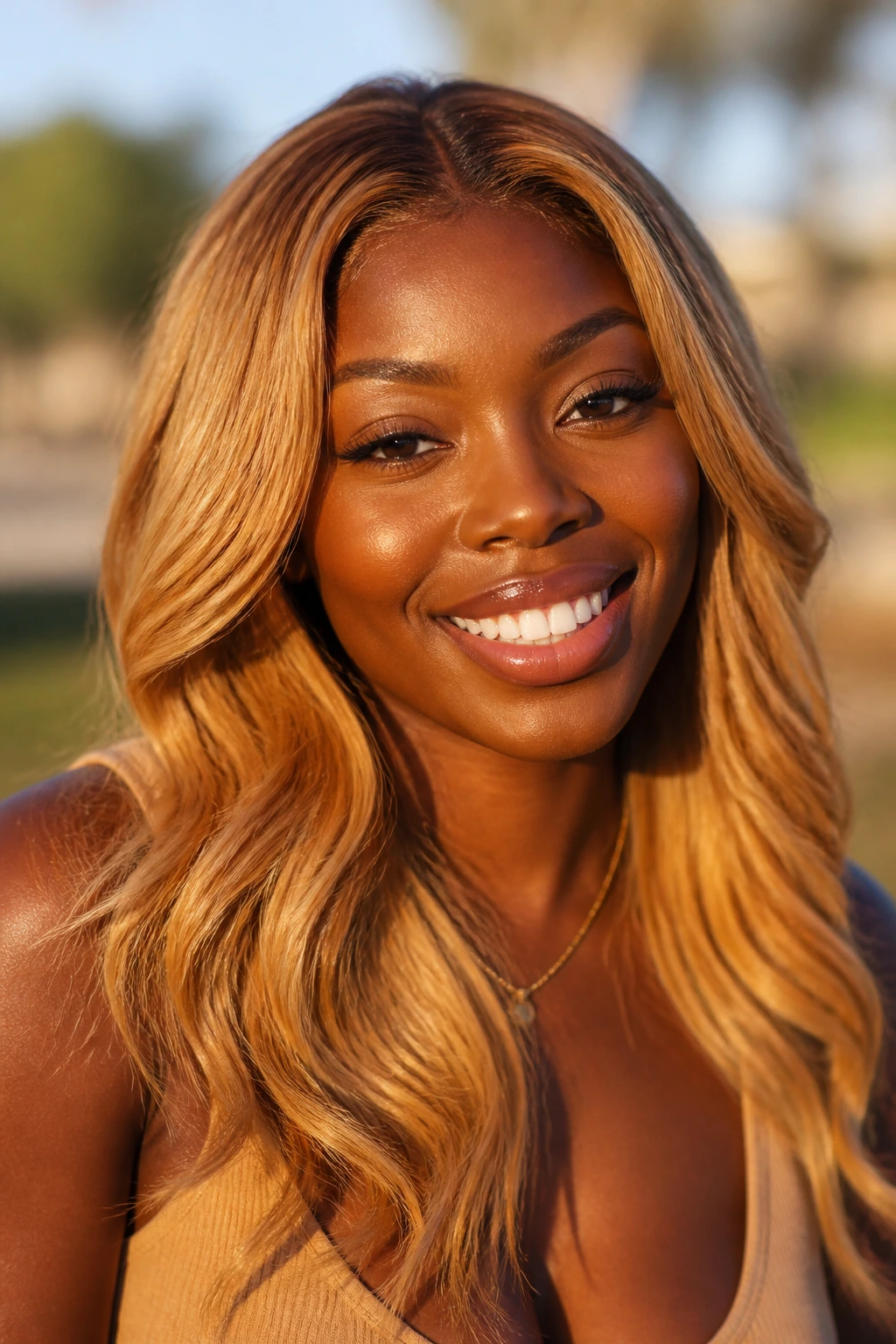
Yes, but the brightness has to be supported. Bright honey works when there’s still warmth in the formula and some depth left in the base. If the blonde is pushed too pale, the hair can start to look separate from the face instead of part of it.
Is Honey Blonde Hard to Maintain on Natural Curls?
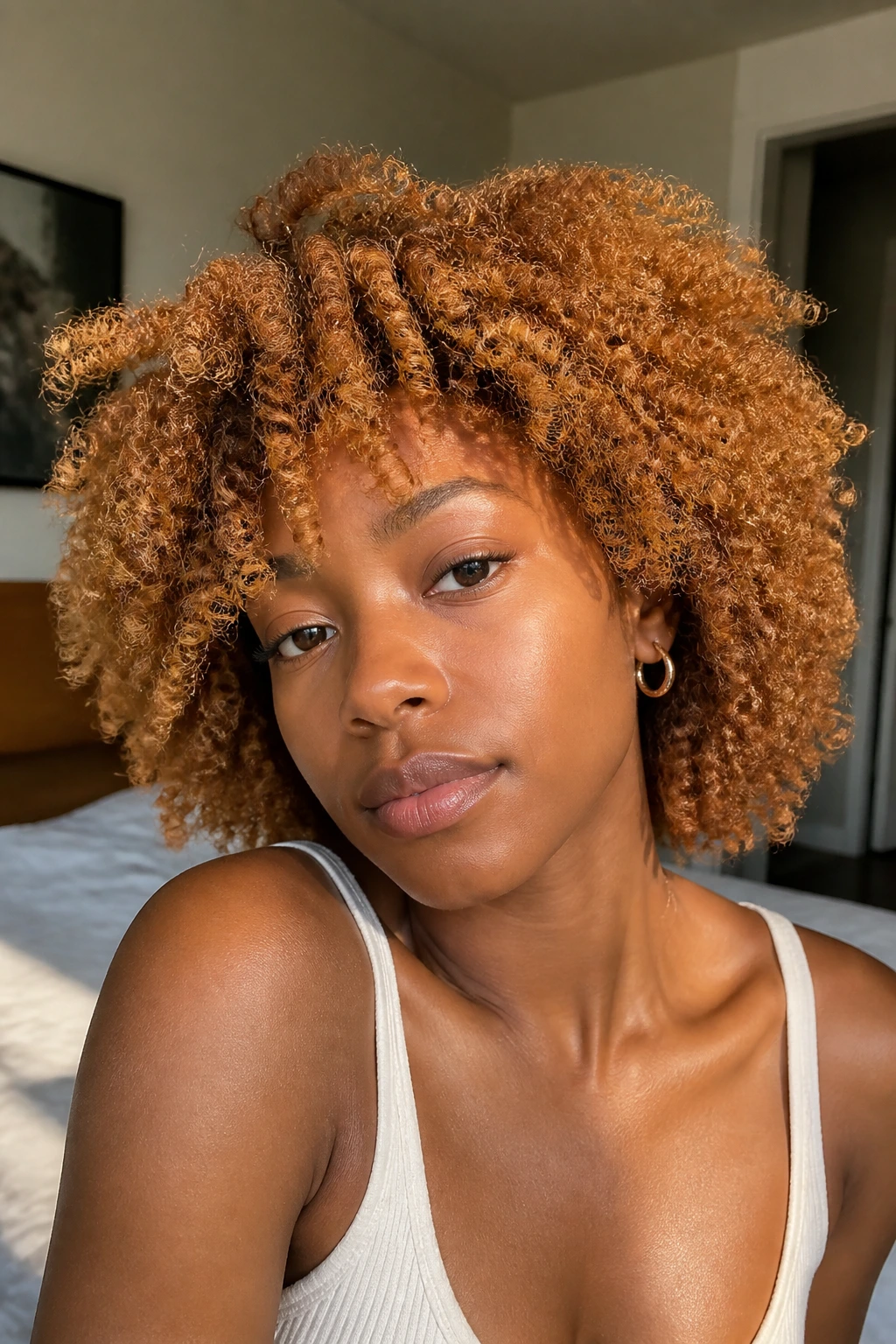
It can be, if the hair is lifted too aggressively or the care routine is lazy. On curls and coils, honey blonde looks best when the lightening is done in stages, the pieces are placed intentionally, and moisture stays high. A weekly mask and low-heat styling go a long way.
What If My Honey Blonde Turns Orange?
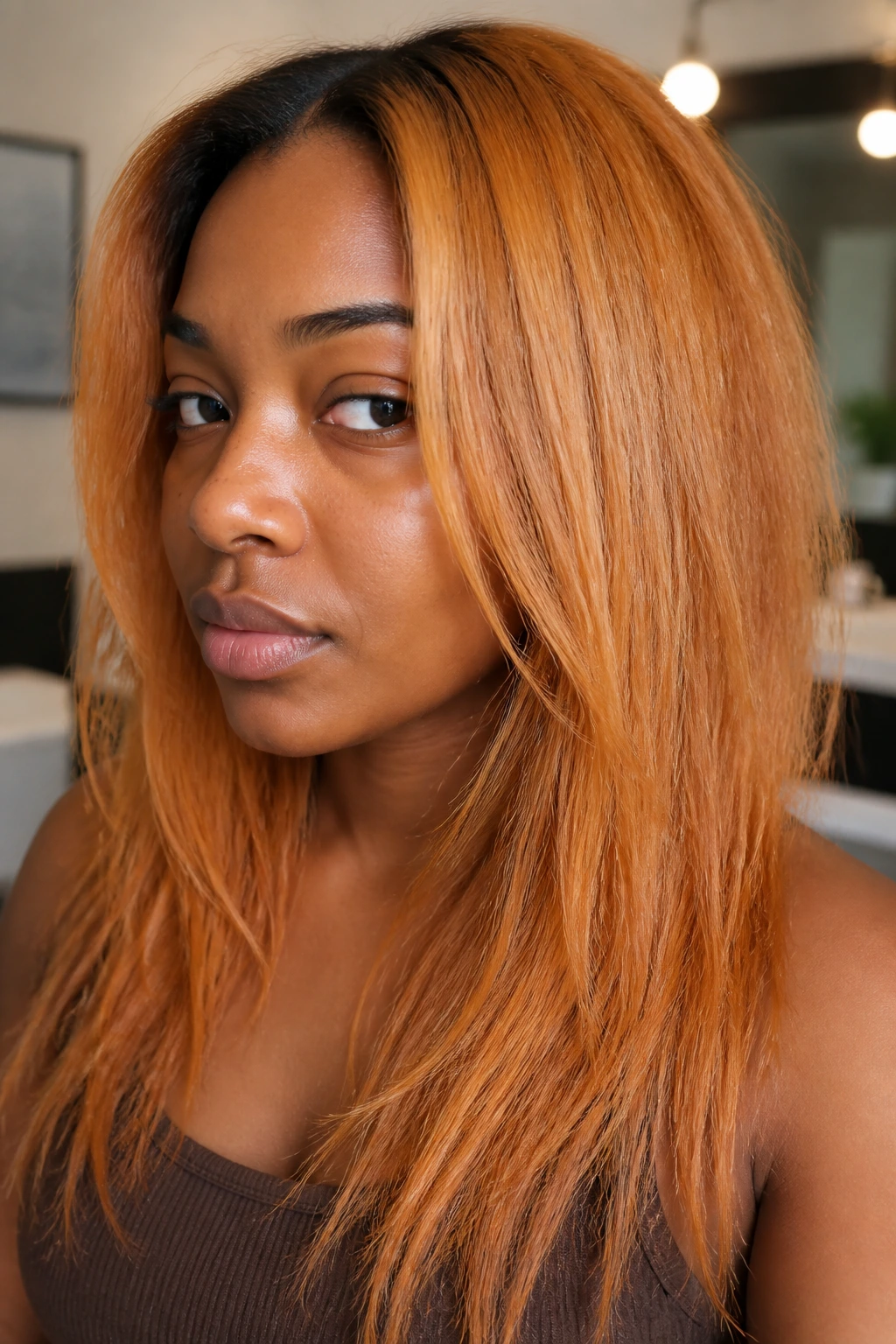
That usually means the hair was lifted enough to expose warm pigment but not toned back cleanly. An orange cast can be corrected with the right gloss, but the fix should be gentle. Purple shampoo is not always the answer; sometimes the hair needs a warmer beige toner, not more cooling.
Does Honey Blonde Work Better as Highlights or All Over Color?
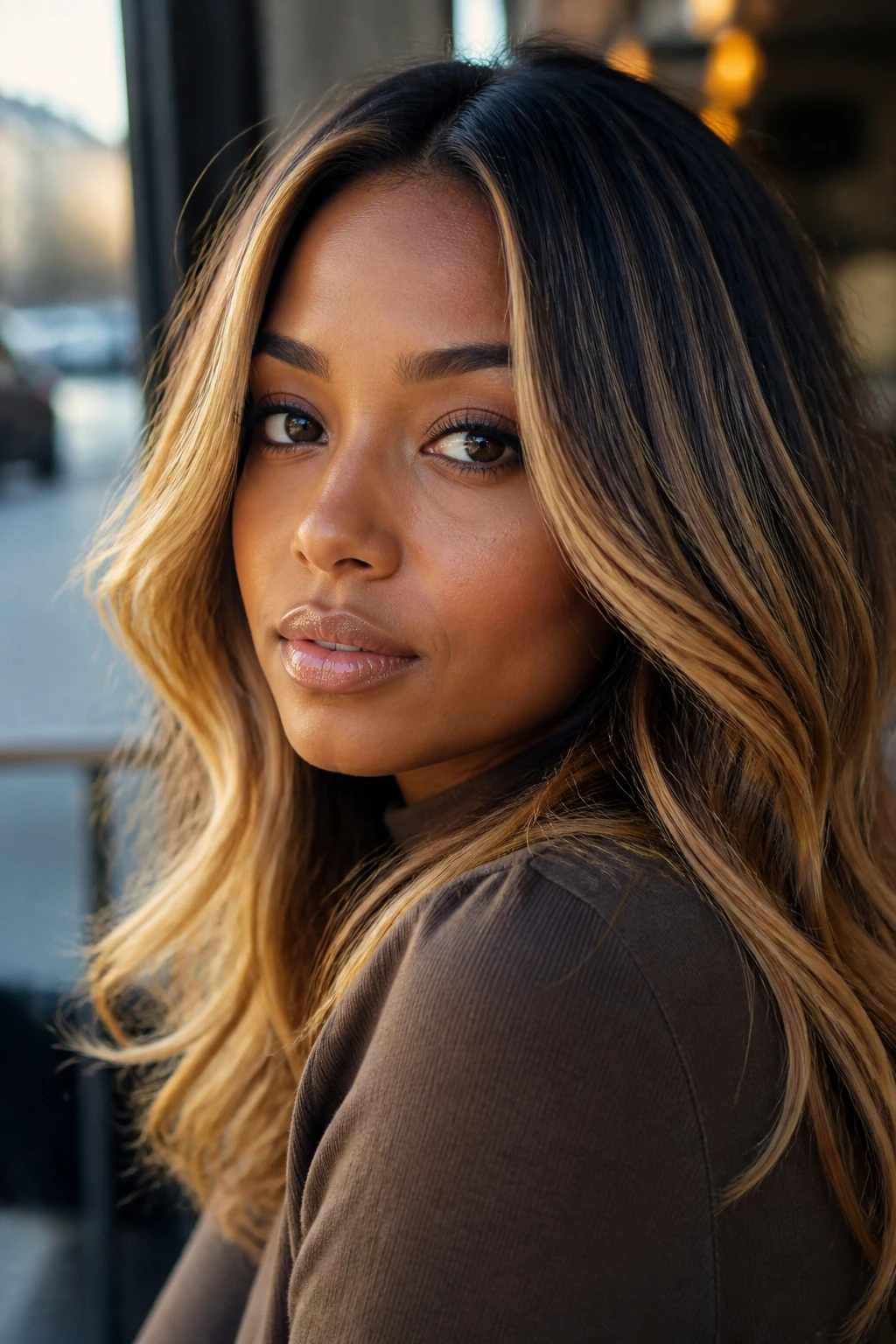
Highlights are easier to wear for most deep skin tones because they keep contrast at the root and let the blonde show where it matters. All-over honey blonde can be gorgeous, but it asks more of the hair and the maintenance schedule. If you are unsure, highlights or balayage are the smarter start.
Can I Get Honey Blonde Without Bleach?
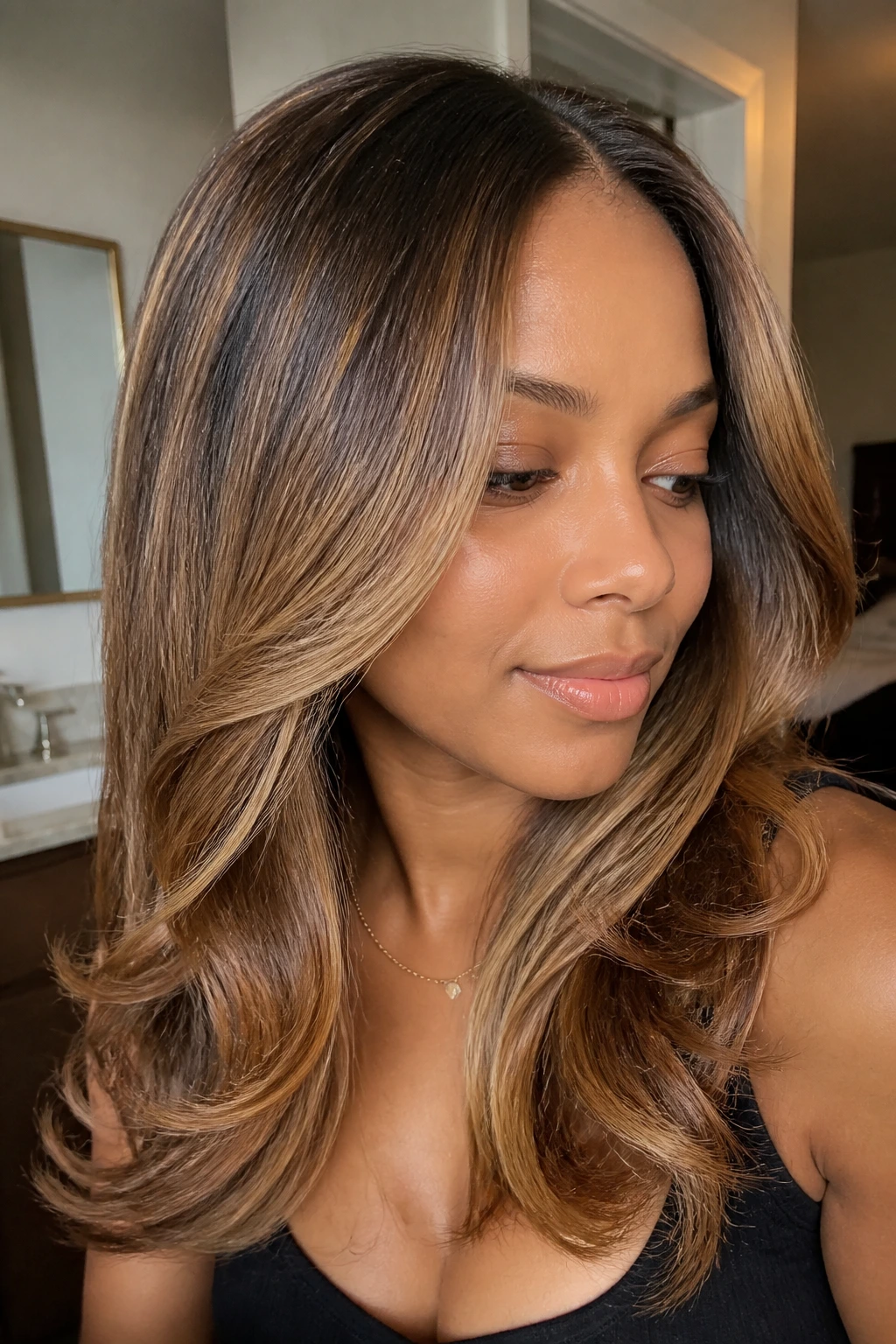
If your base is already light brown or medium brown, a high-lift color or gloss may be enough for a honey shift. If the hair is very dark, bleach or lightening is usually needed to reach a true honey result. A colorist can tell you which route is realistic after checking your base level and porosity.
What’s the Best Honey Blonde for Warm Undertones?
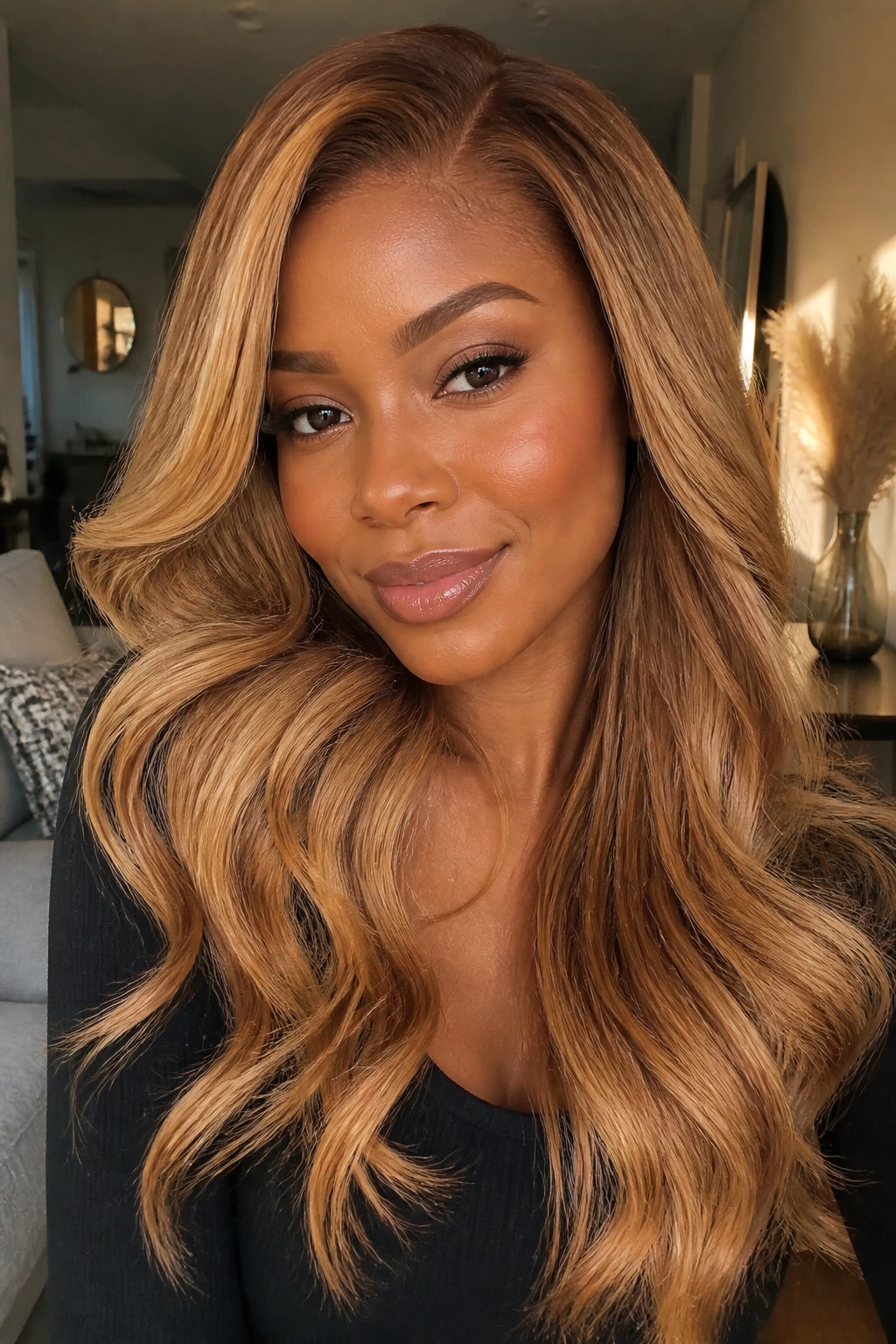
Warm undertones usually look strongest in golden honey, toffee honey, and cinnamon honey. Those shades echo the warmth already in the skin and make the whole face feel more alive. The wrong move is going too beige or too pale, which can mute the complexion.
Should I Ask for a Root Shadow Every Time?
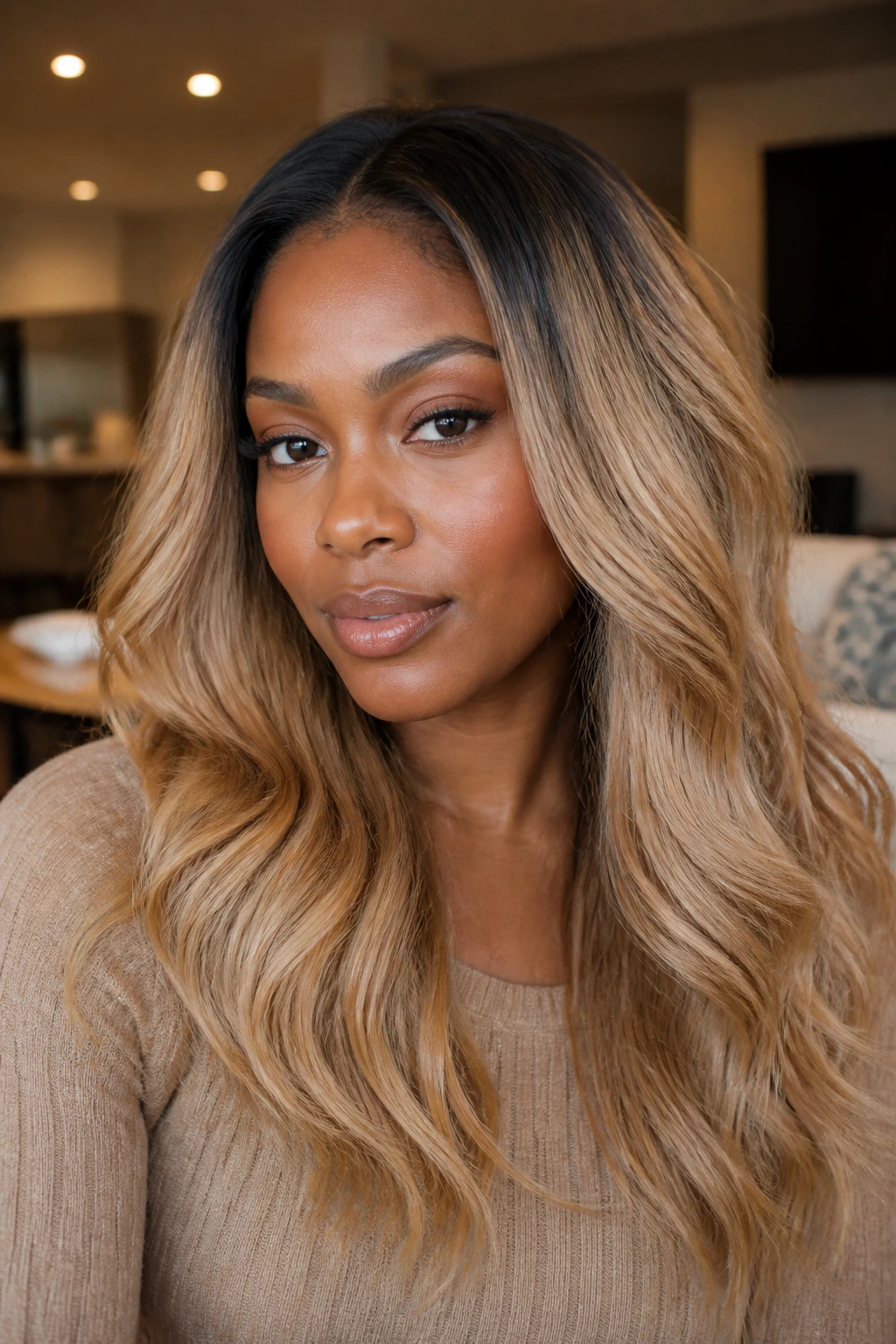
If you want easier grow-out, yes. A root shadow gives the blonde a darker base and makes the style look deliberate as it grows. It also keeps the honey from floating too high around the scalp, which is where a lot of blonding starts to feel harsh.
Honey Blonde That Fits the Skin, Not the Other Way Around
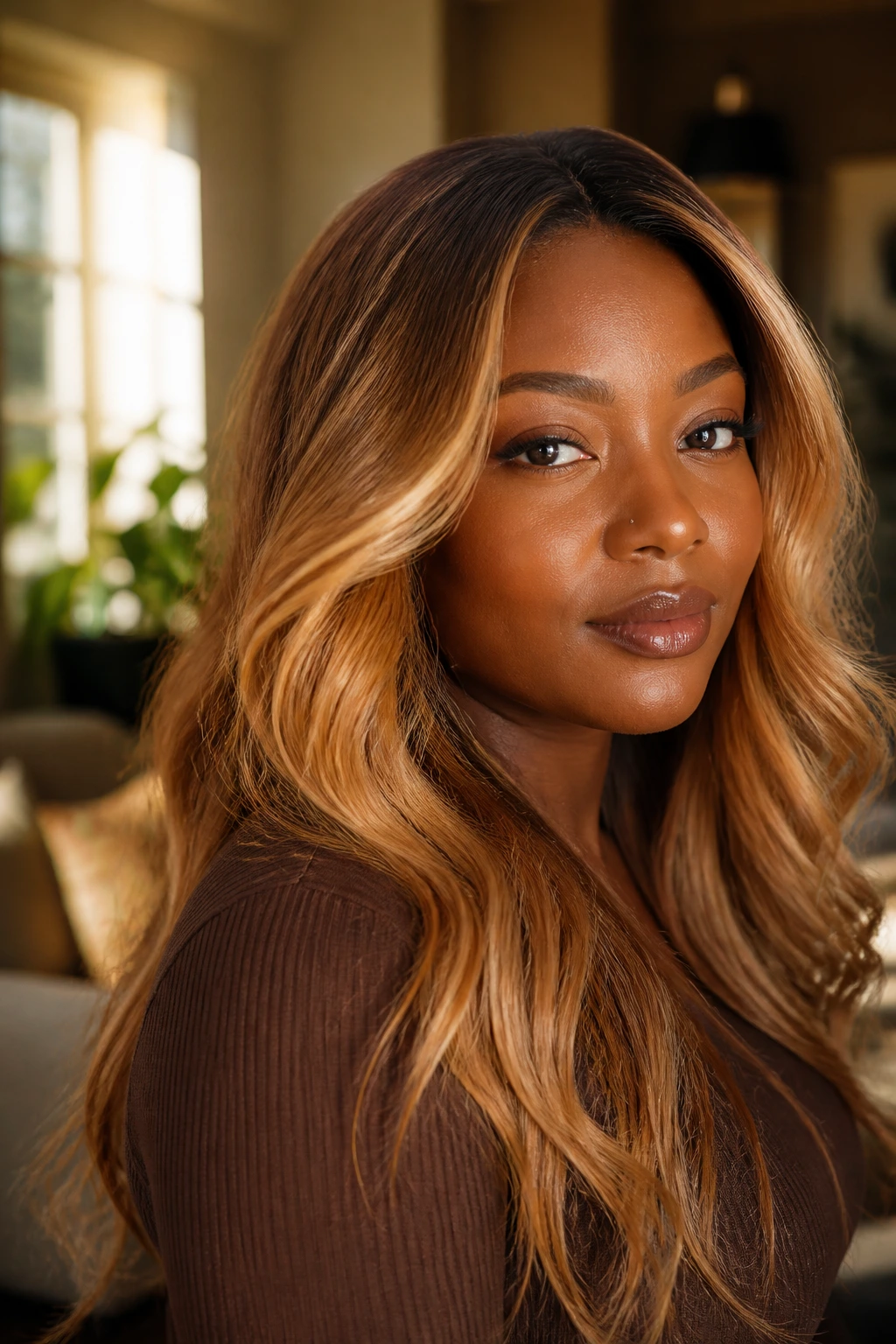
The best honey blonde ideas for deep skin tones do one thing well: they keep the richness of the complexion in the picture. That can mean a few face-framing pieces, a glowing balayage, a soft beige gloss, or a full honey melt with a dark root. None of these shades asks the skin to compete.
And that is the part that separates a flattering honey blonde from an average one. The color should look like it belongs to the person wearing it, not like it was borrowed from a completely different head. Keep the root honest, keep the warmth controlled, and choose placement that works with your haircut and texture. The result is a blonde that feels deliberate the second you walk into the room.
If you’re sitting on the fence, start with the smallest bright piece that still shows up on your skin — a money piece, a gloss, or a soft balayage ribbon. That first step will tell you a lot faster than a full head ever will.