



Thin hair and olive skin can be a tricky pairing, especially when the highlights are too pale, too chunky, or shoved in all the wrong places. The hair ends up looking thinner than it is, and the skin starts to look flat instead of warm. The fix is usually not more color. It’s better placement, better tone, and a cut that gives the eye somewhere to land.
That’s why highlighted hairstyles for olive skin with thin hair work best when the color does two jobs at once: it brightens the face and fakes density through the mid-lengths. Beige babylights, caramel ribbons, smoky brunettes, and soft copper all behave differently against olive undertones. Get the shade wrong and the whole head looks off; get it right and the hair suddenly feels fuller, shinier, and a little more expensive-looking without being fussy.
Below are the cuts and color placements I’d actually trust on real hair, not just on a mood board. Some are short and sharp, some are long with deliberate shadow, and a few lean warm enough to wake up green-gold undertones without turning brass. The details matter here. They always do.
Why These Looks Work So Well
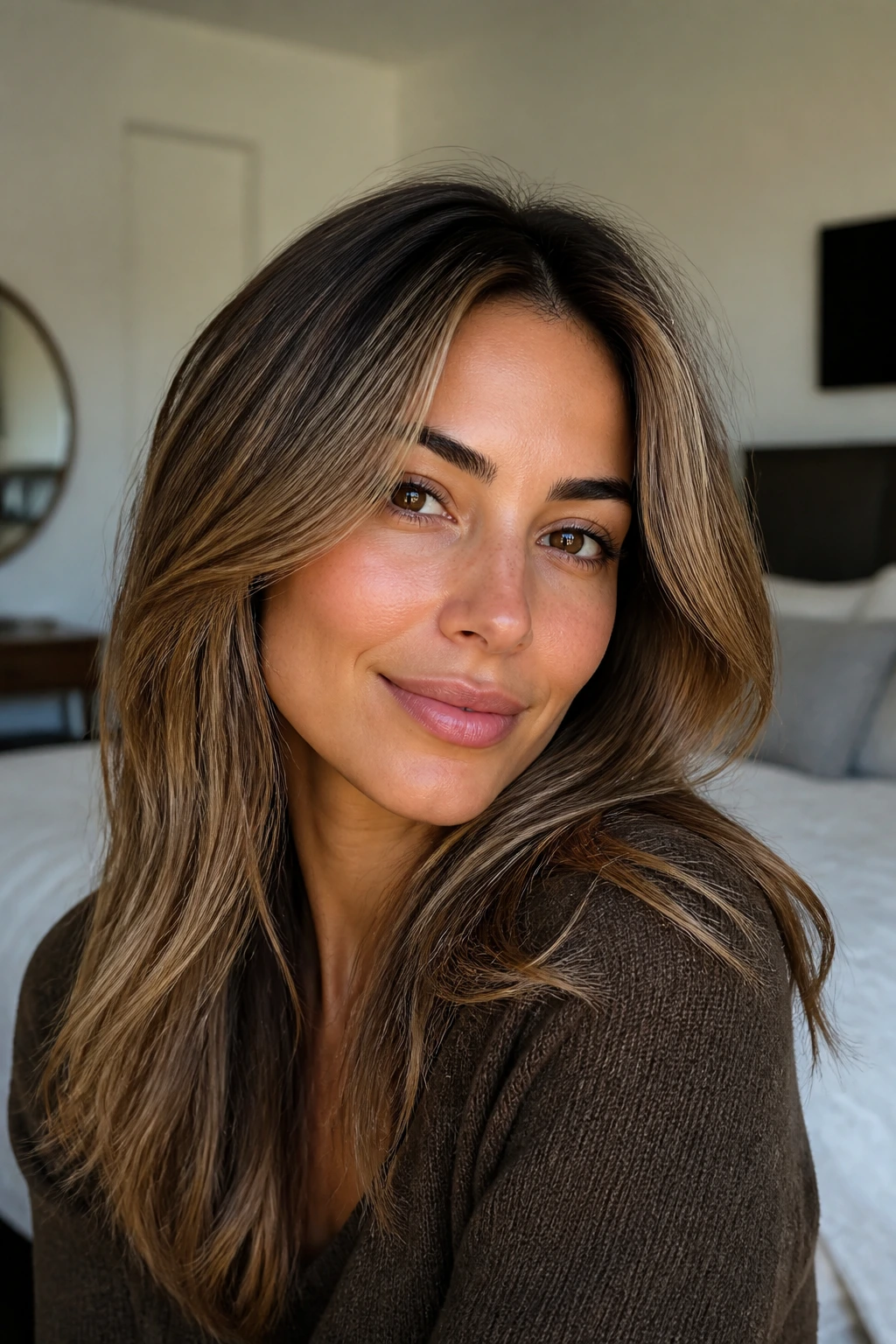
- Babylights beat chunky stripes on thin hair: Tiny, spaced highlights make the hair look like it has more strands, while thick ribbons can expose the scalp and steal density.
- Olive skin likes controlled warmth: Beige, caramel, honey, bronze, and soft copper tend to wake up green-gold undertones; icy white blonde can look harsh unless it’s balanced with root depth.
- Shorter shapes get a density boost from color: Bobs, lobs, and pixies hold highlight placement closer to the face, where the eye reads fullness first.
- Root shadow keeps the top from going see-through: A slightly deeper root gives thin hair a thicker-looking base and makes highlight grow-out less obvious.
- Face-framing light does more than all-over brightness: A few well-placed pieces around the cheekbones can lift the whole face without flooding the head with bleach.
- These cuts stay wearable: None of them rely on runway-level styling. A blow-dryer, a round brush, and a light mousse are usually enough to make them behave.
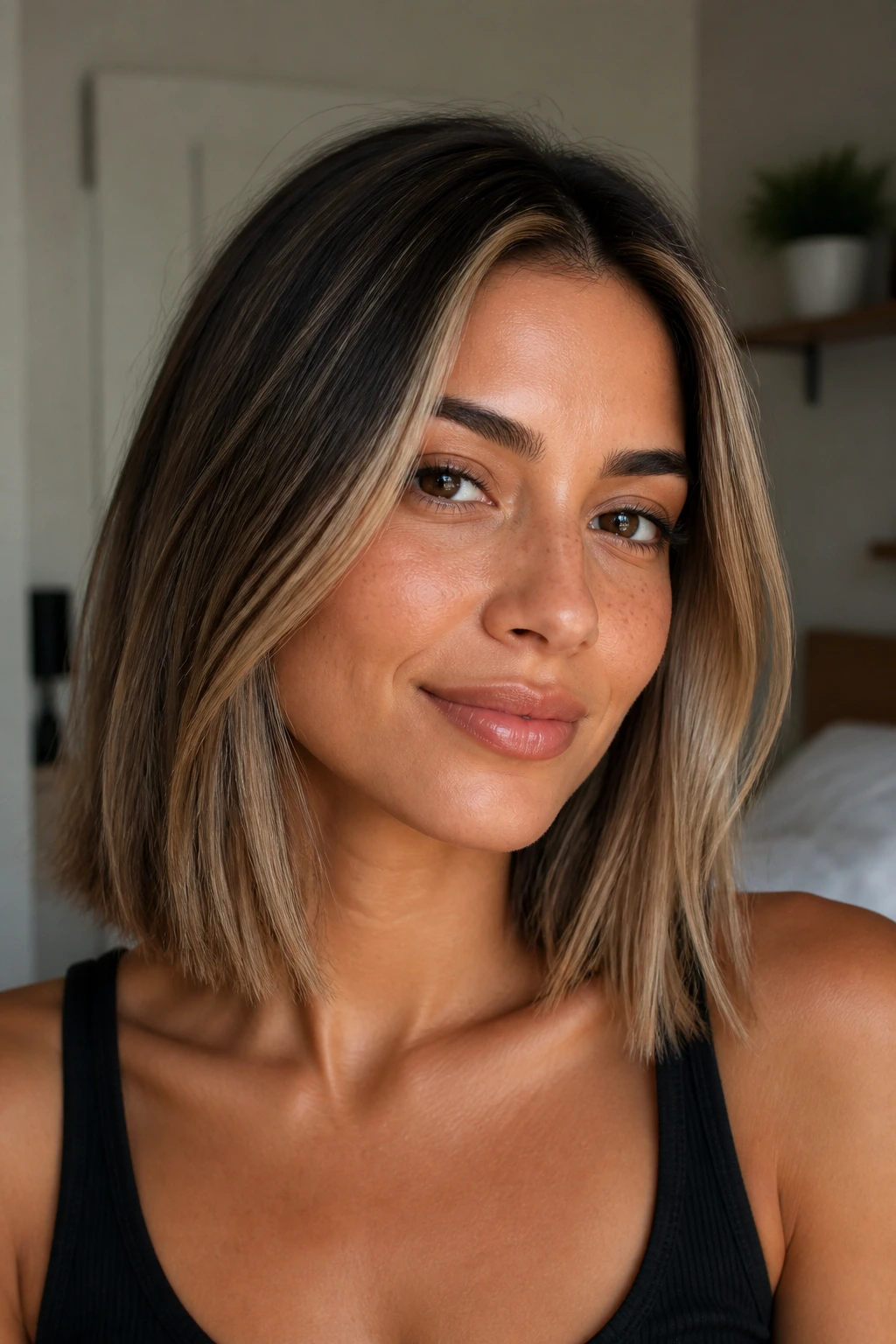
1. Collarbone Lob with Beige Babylights
A collarbone lob is one of the few cuts that can make thin hair look thicker just by stopping at the right point. It lands where the shoulder doesn’t constantly bend the ends under, so the perimeter stays visible instead of collapsing into a soft blur.
Why It Works on Olive Skin
Beige babylights are the sweet spot here. They brighten without swinging yellow, and they don’t go icy enough to gray out olive undertones. Ask for ultra-fine highlights concentrated around the part, temples, and top layer, with a root shadow one shade deeper than the mids.
What to Ask For
- Babylights no wider than a shoelace
- A soft beige blonde, not a white blonde
- Slightly darker roots for depth
- Ends kept blunt enough to look full
The best part is how low-drama this feels when it grows out. The beige tone stays soft, the lob keeps its shape, and the whole cut reads polished even when you air-dry it with a little mousse and a quick bend at the ends.
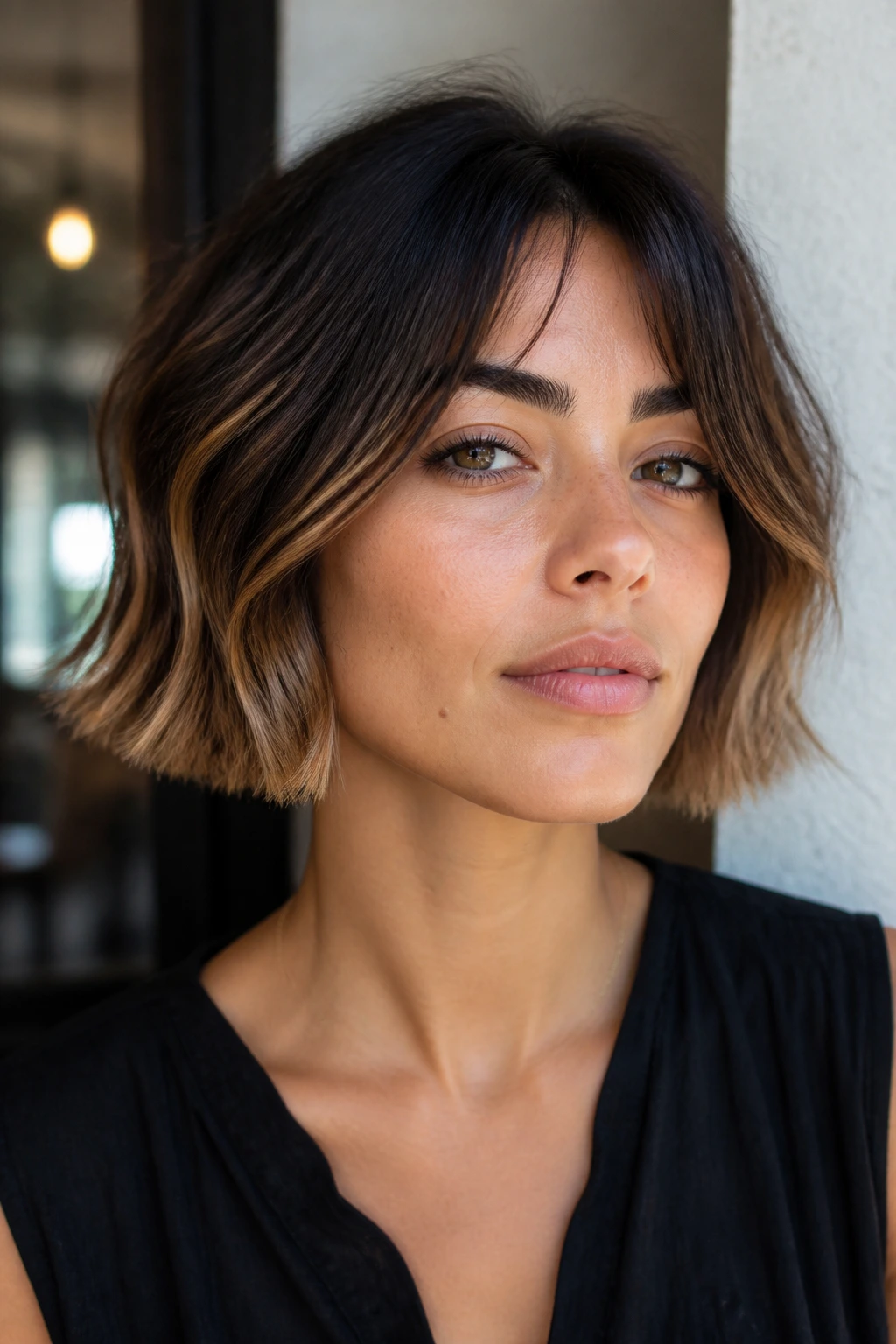
2. Textured French Bob with Honey Ends
What happens when a bob hits right at the jaw and the ends are kissed with honey? The face gets framed fast, and thin hair suddenly has a shape that looks intentional instead of wispy.
The French bob works because it keeps weight close to the cheeks, where fine hair often needs help most. Honey ends add warmth at the perimeter, which is a smart move for olive skin that can swallow cool blondes whole. I’d avoid pulling the brightest pieces up too high in this cut; the magic is in the lower half, where the color makes the line feel fuller.
This one looks best with a rough, not perfect, finish. A bit of bend in the mid-lengths and a slightly air-dried texture keep it from feeling helmet-like. And yes, the blunt fringe version can work too, but only if the color stays soft enough to keep the bangs from looking cut off.
3. Long Layers with Caramel Money Piece
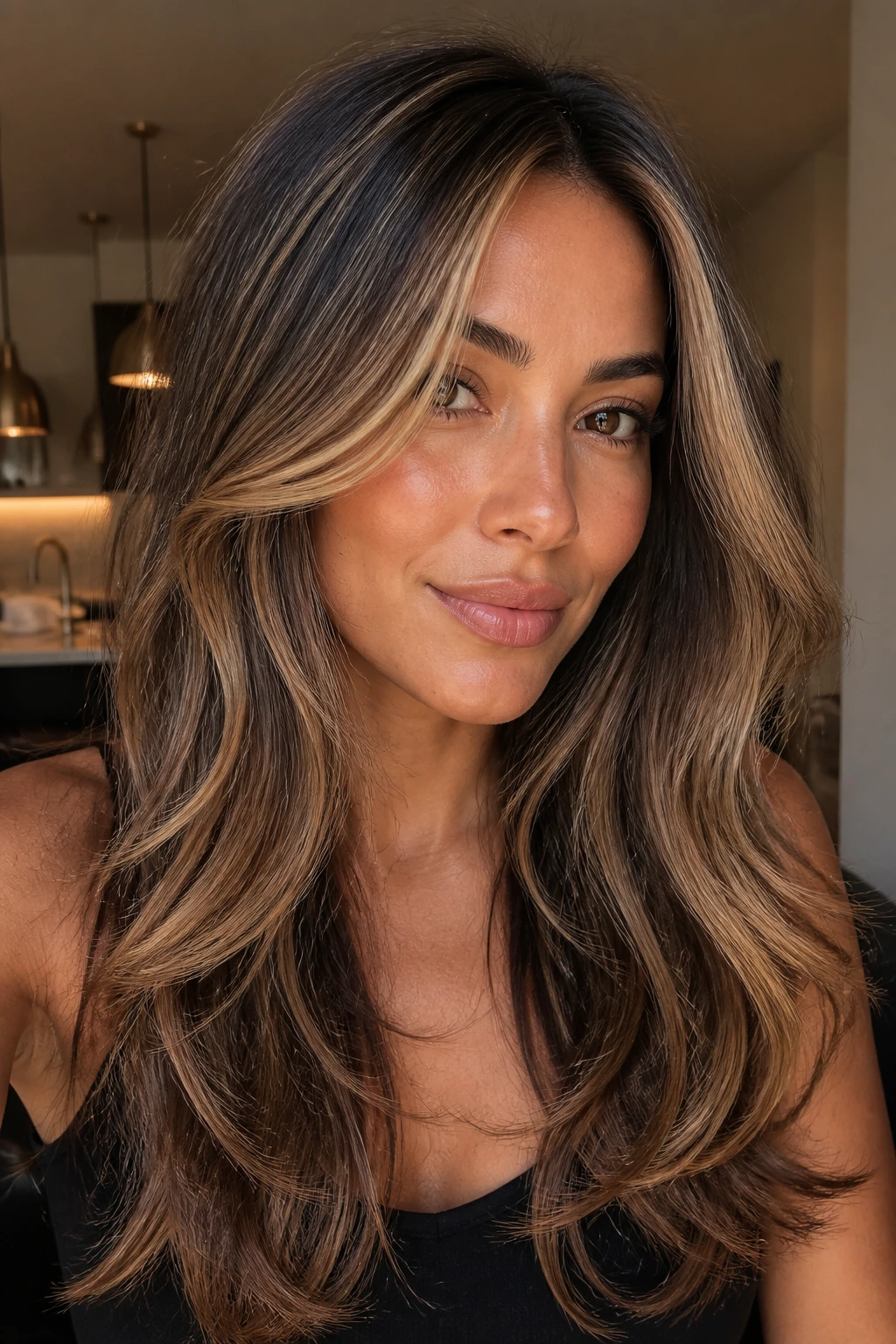
Do you want to keep your length and still make the front of your hair do something? Caramel money pieces are the cleanest answer.
The haircut itself should stay modest with layers beginning below the collarbone. Thin hair does not need a stack of short layers floating all over the head; that usually makes the ends look see-through. A narrow face frame, painted a shade or two lighter than the base, gives olive skin a glow right where it matters and keeps the rest of the hair looking anchored.
Ask the colorist to keep the money piece soft, not stripey. Caramel works better than gold on many olive complexions because it adds warmth without turning orange. If you wear your hair straight, the front pieces should fall just under the cheekbone. If you wear it wavy, they can be a touch brighter so they still show once the curl pattern eats some of the contrast.
4. Curtain Bang Shag with Bronde Balayage
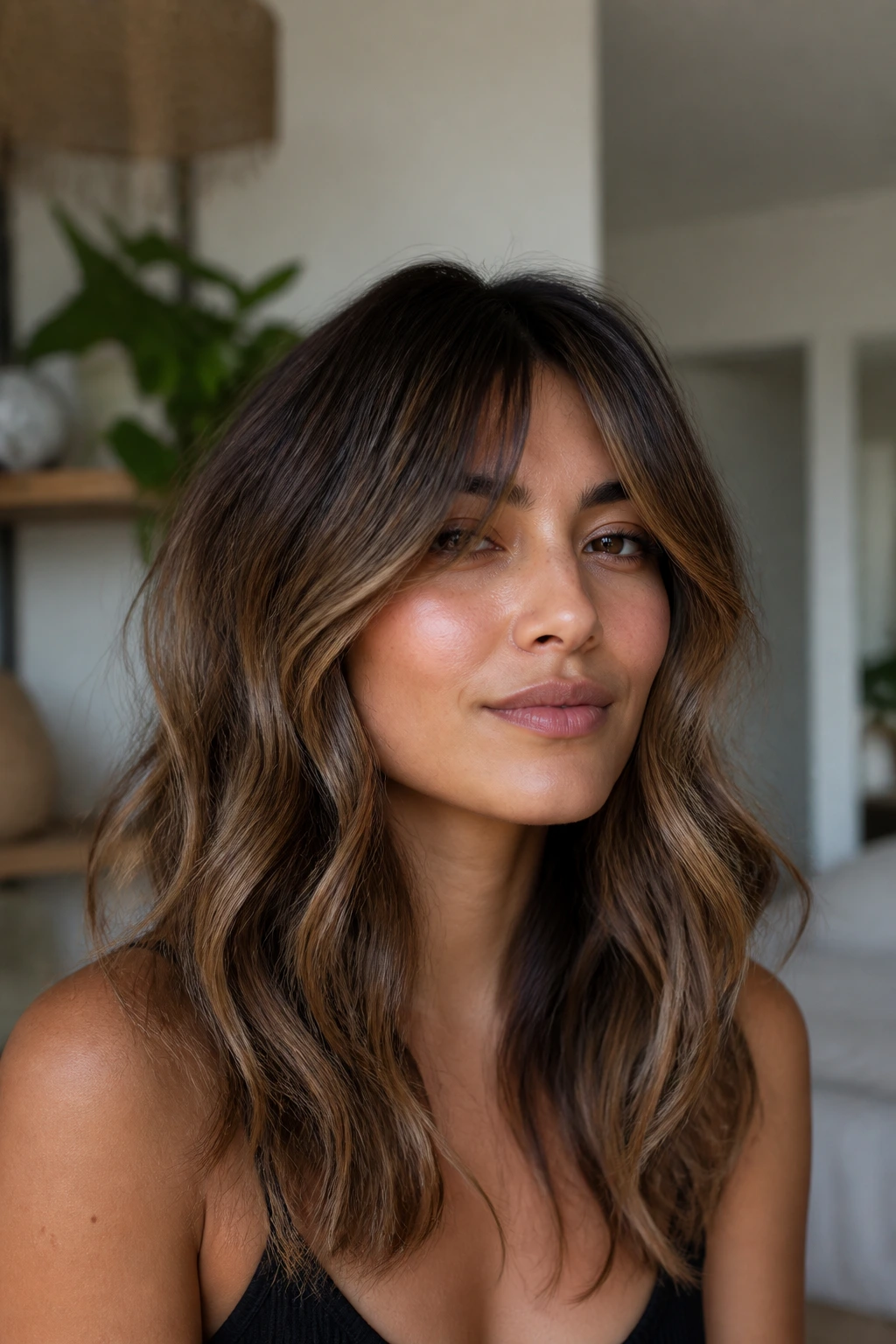
A shag with curtain bangs is one of the few layered cuts that can help thin hair without making it look shredded. The key is movement at the sides, not too much removal at the crown.
Bronde balayage fits olive skin because it sits between brown and blonde in a way that feels believable. That matters. Too much platinum on a shag can make the texture look stringy, while bronde keeps the whole shape warm and dimensional. I’d keep the brightest pieces around the bangs and the outer edges of the top layer, then leave the underneath a little deeper so the hair reads denser when it moves.
Styling note
Use a lightweight mousse at the roots and a soft diffuser or round brush. The goal is lift, not fluff.
Curtain bangs help because they split the forehead area and let the highlights fall like curtains around the face. That little break in the front is enough to make thin hair feel less flat without adding extra bulk.
5. Sleek Blunt Bob with Rooted Champagne Highlights
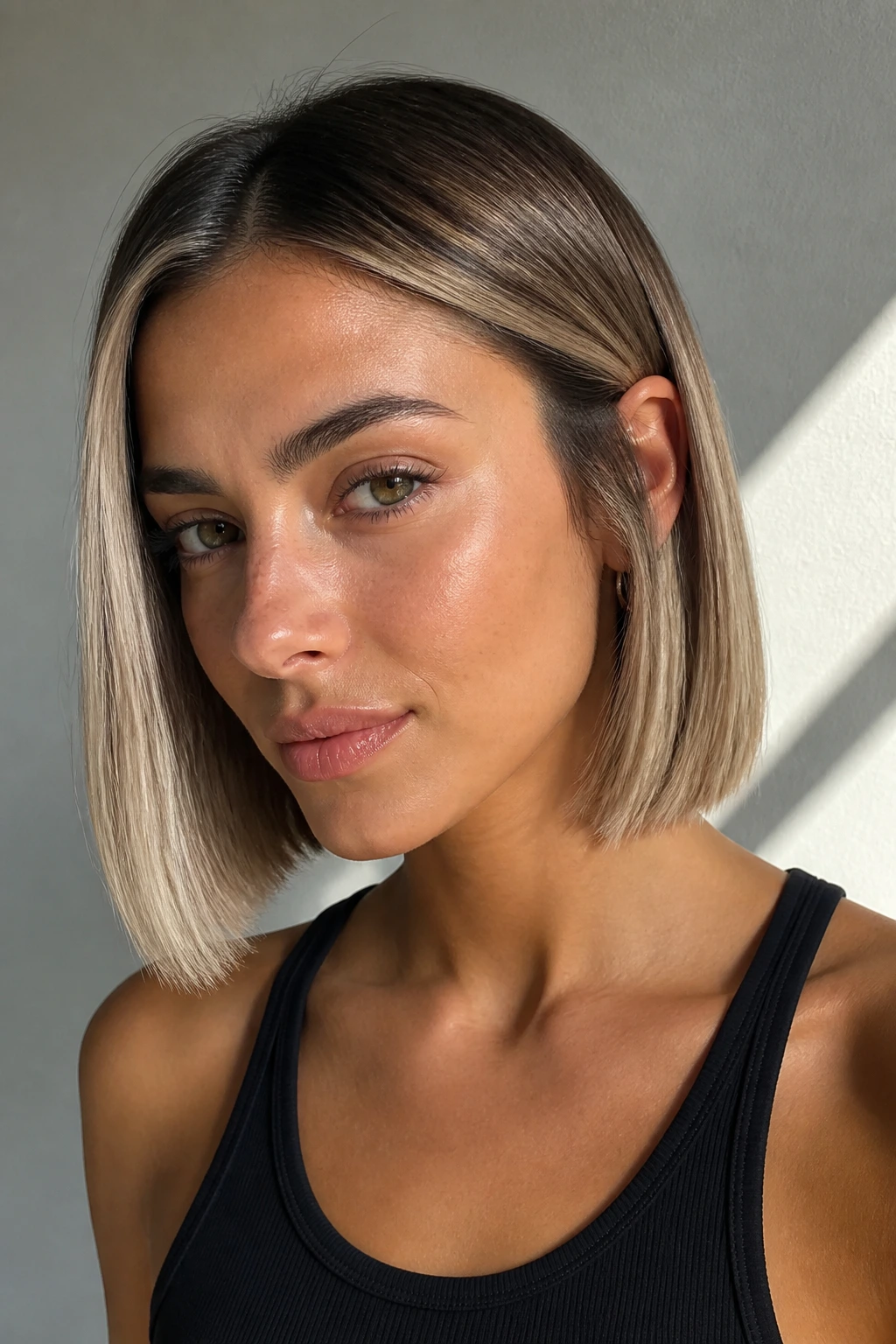
A blunt bob is brutal in the best way. It cuts off the ends cleanly, and that hard line makes thin hair look far denser than a soft, layered cut ever could.
Rooted champagne highlights keep the look from going too severe on olive skin. Champagne is prettier here than pure ash blonde because it has a creamy base that sits better against green-gold undertones. The root should stay darker, almost smoky, so the bright pieces feel like light sitting on the surface instead of bleach sitting on the head.
This is the bob for someone who wants polish with less drama. Blow it smooth, tuck one side behind the ear, and let the reflective color do the heavy lifting. If your hair bends easily at the ends, run a flat iron just through the last inch for a clean, glassy finish.
6. Pixie Cut with Micro Babylights
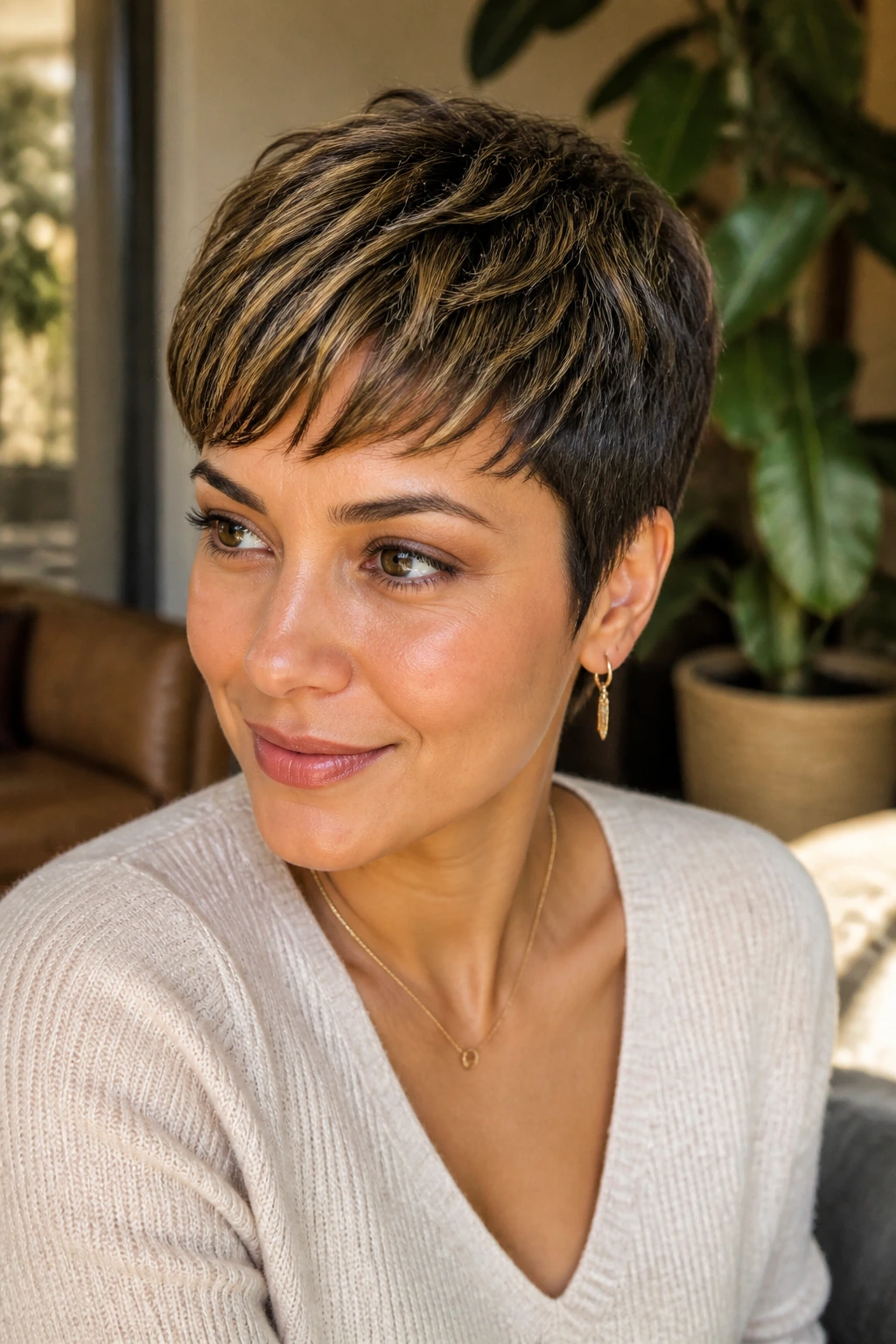
This is the one short cut that doesn’t need a ton of color to feel complete. A pixie with micro babylights can look expensive because the light catches tiny shifts in tone instead of obvious streaks.
On thin hair, the top is where the color should live. Keep the sides and nape a shade deeper, then whisper in beige or soft gold babylights through the crown and fringe. Olive skin usually looks fresher with that kind of narrow brightness than with a blanket of pale blonde all over the head.
Where the Light Should Sit
- Across the fringe, not just the top
- Around the crown for lift
- A touch near the temples to soften the face
- Minimal brightness at the nape
The trick is restraint. A pixie loses its shape fast when the color is too loud. Micro-babylights keep the cut looking textured without showing every scalp line, and that’s exactly what fine hair needs.
7. Soft Wolf Cut with Copper Ribbon Highlights
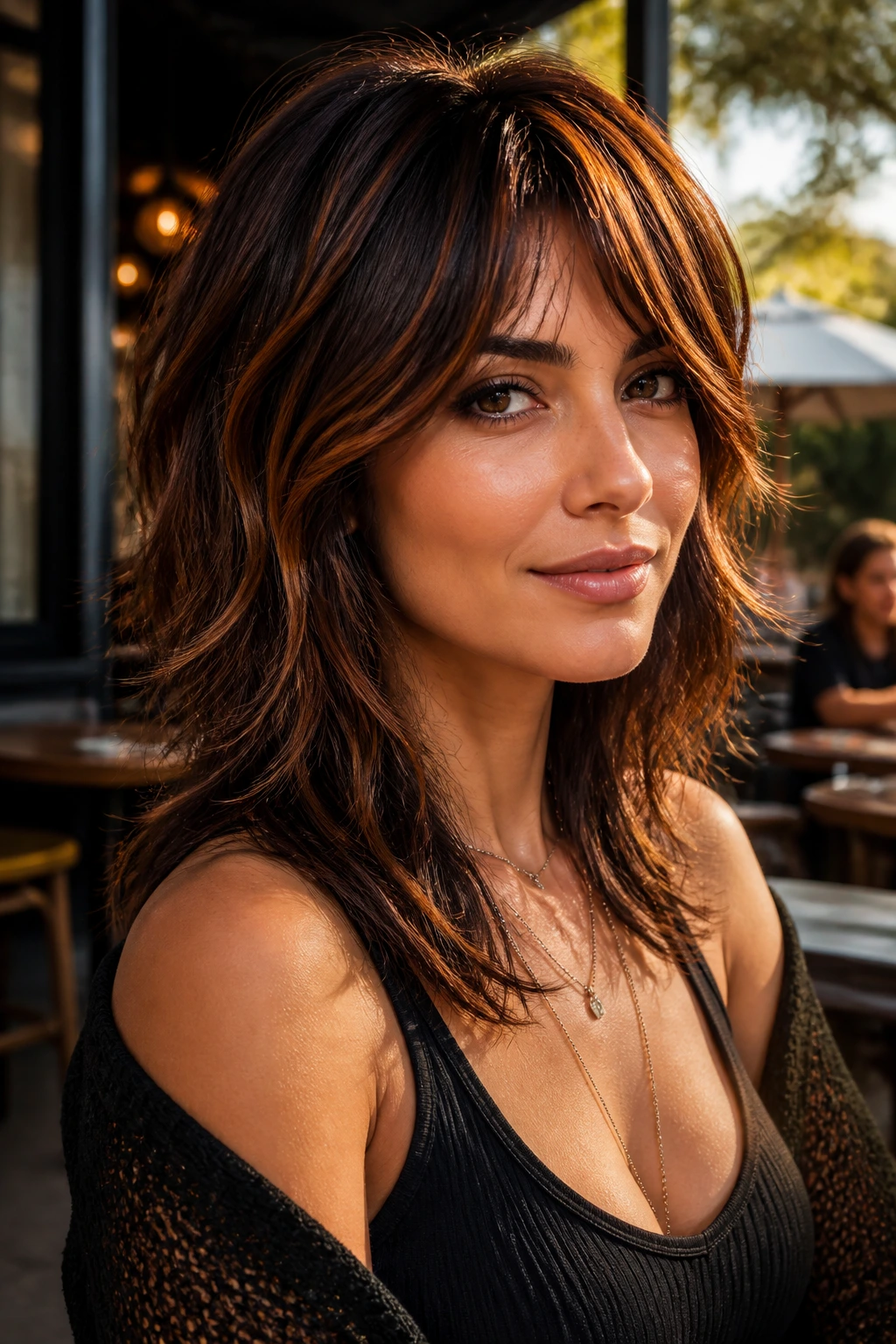
A wolf cut can look messy fast, so I prefer it only when the highlights are deliberate. Copper ribbons give the shape enough life to feel edgy without turning stringy.
Olive skin is one of the few skin tones that can carry copper nicely when the base stays brown enough. Go too orange and the whole look skews loud; stay in a muted copper range and the warmth makes the complexion look alive. Thin hair benefits from the shaggy crown and soft taper at the ends because it gives the hair a built-in sense of movement.
Keep the highlights thin and staggered through the outer layers. I would not flood the interior with brightness. A few copper ribbons near the fringe and through the longest face layers are enough. The result is a cut that looks fuller when you move, not just when you stand still under salon lights.
8. Angled Lob with Mushroom Brown Lowlight Mix
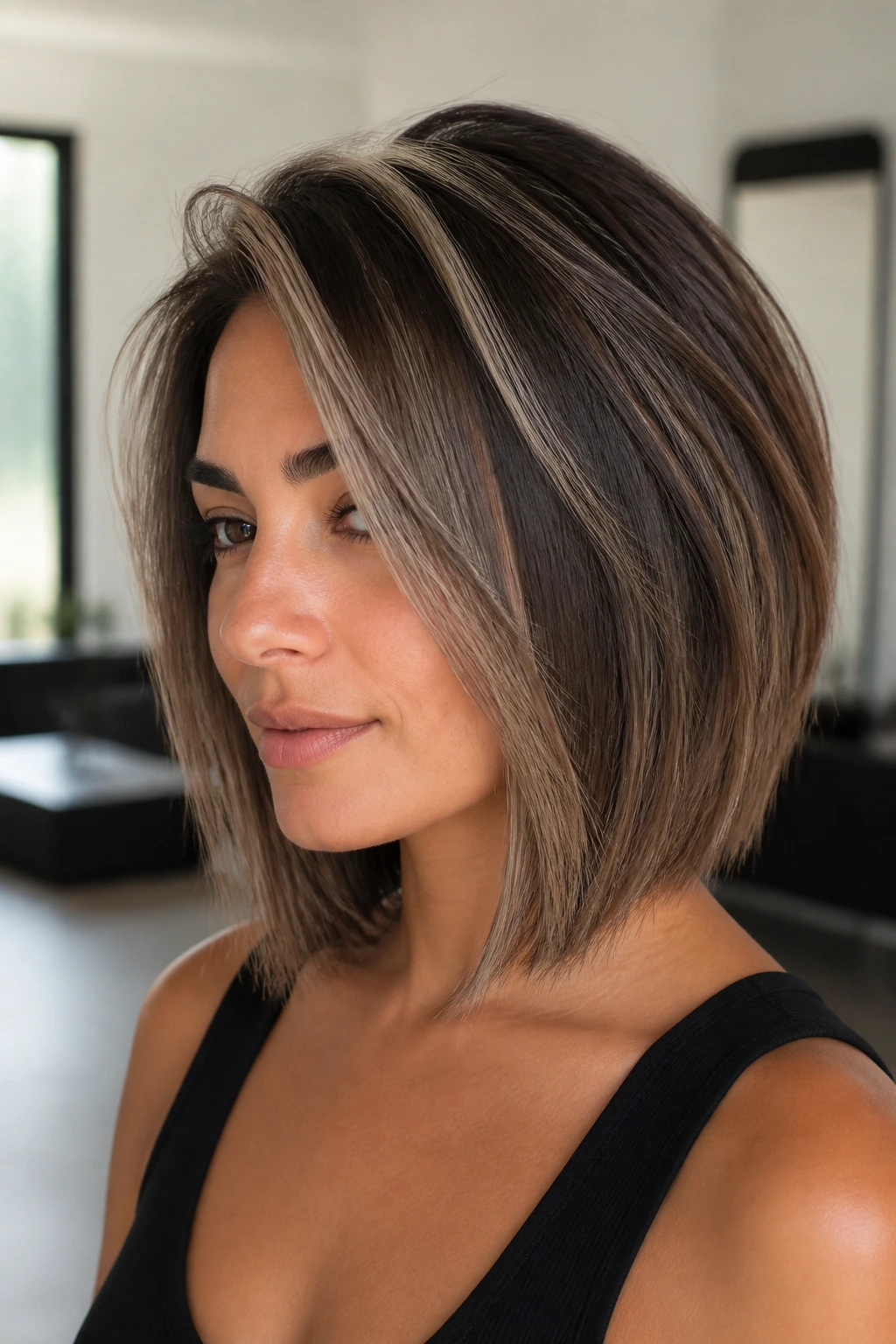
Here’s the quieter option, and I like it a lot. An angled lob gives thin hair a longer front edge that feels substantial, while the soft angle helps the back stay off the neck and keep its shape.
Mushroom brown lowlights are the secret. They add depth without going muddy, which matters on olive skin that doesn’t always love flat beige blonde. Use a mix of lowlights and a few cool-neutral highlights, then keep the front pieces brighter than the back. That contrast makes the cut read fuller, especially when you wear a side part.
It’s a good choice if you don’t want the hair to announce itself from across the room. The effect is more shadow-and-light than obvious color, and that usually looks better on fine hair anyway. If your hair is straight, the angle is visible right away. If it’s wavy, the lowlights prevent the whole shape from puffing out and losing its line.
9. Shoulder-Length Flip with Sandy Face-Framing Lights
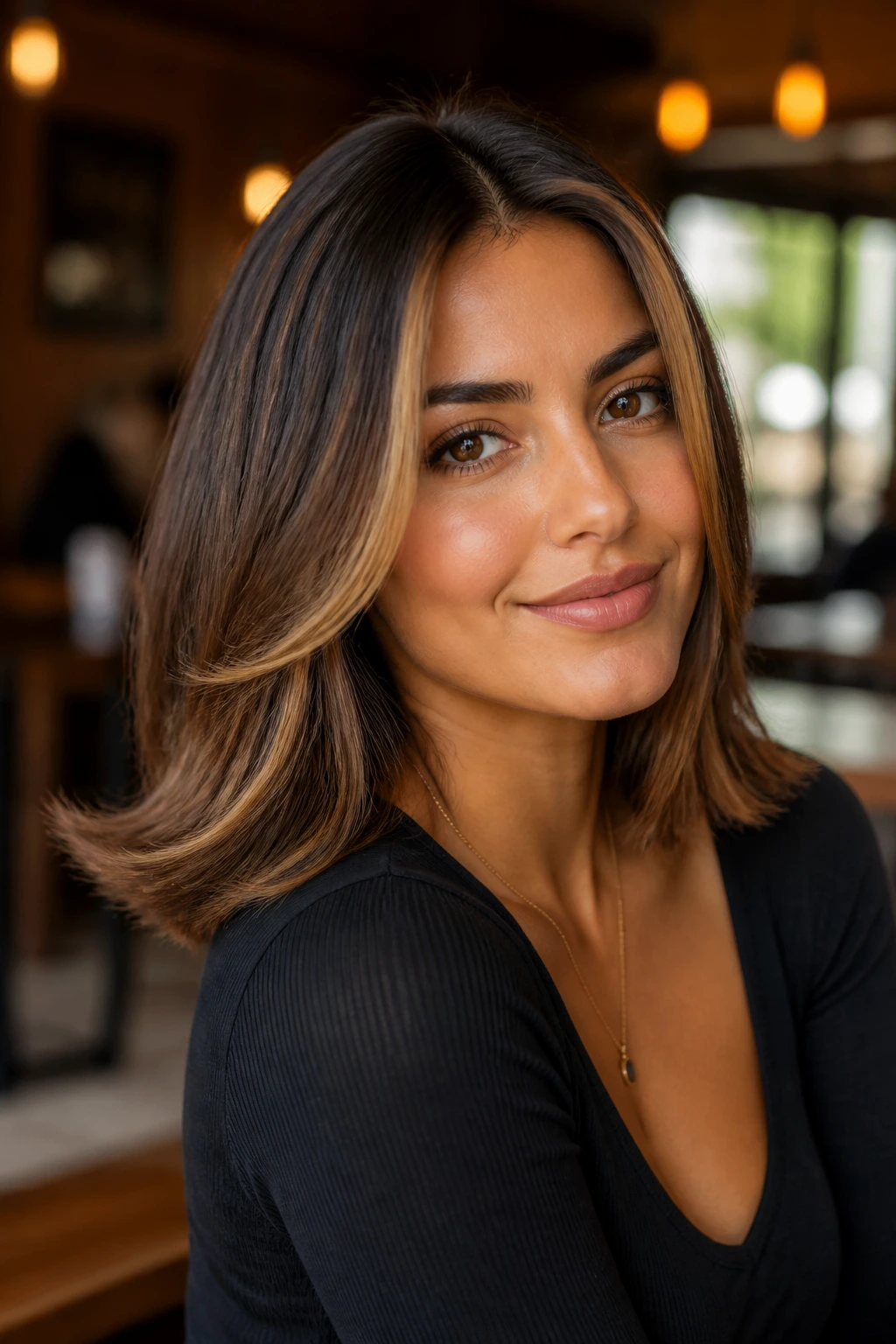
Need width without bulk? A shoulder-length flip does that nicely, especially when the ends are turned out just enough to catch the light.
Sandy face-framing highlights keep olive skin from looking dull under neutral brown hair. Sandy is better than cool ash here because it has a little warmth in it, but not enough to drift into orange. Ask for brightness only around the first two inches of the front layers, then let the rest of the hair stay a shade deeper so the finish doesn’t look washed out.
The flip matters more than people think. One outward bend at the hemline makes the hair feel airy, and the highlighted face frame pulls the eye up. That’s a nice combo on fine strands, which can go flat if everything hangs straight and heavy.
10. Feathered Midlength Cut with Toffee Veil
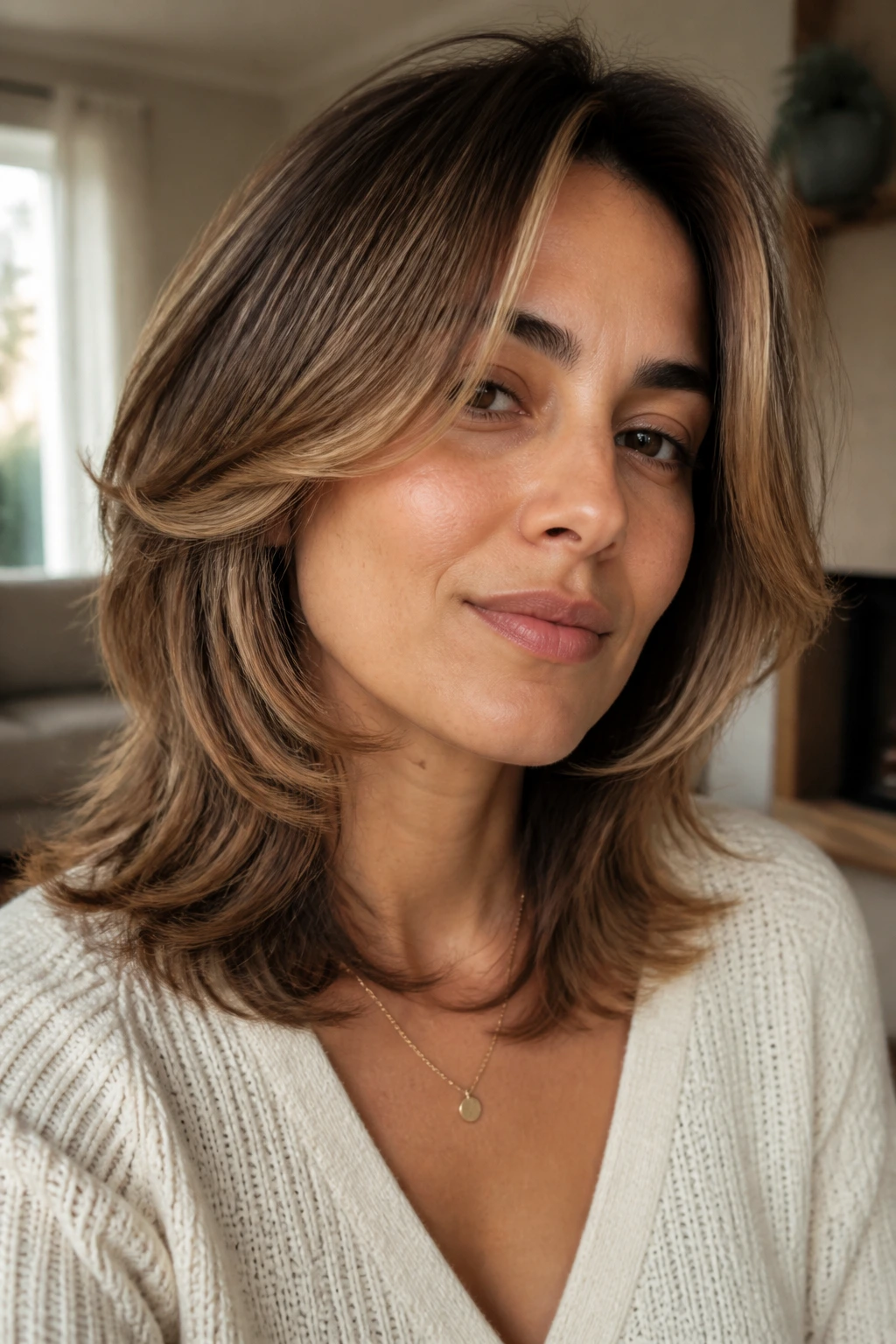
A feathered cut can be a little dated if the layering is too obvious. Keep it soft, and it suddenly makes sense again.
Toffee-toned highlights spread across the mid-lengths give this style a warm, lived-in look that sits well on olive undertones. The feathering should start low enough to preserve the density at the top. If the layers begin too high, the ends fray and the whole shape loses body. Ask for color concentrated along the outer sheet of hair, then a few thinner strands underneath to create shadow when the hair swings.
This works especially well if you like volume but hate teasing. A round brush at the roots, a quick flip away from the face, and a light mist of flexible spray are enough. No hard shell. No crunchy finish.
11. Side-Parted Chin Bob with Smoky Beige Panels
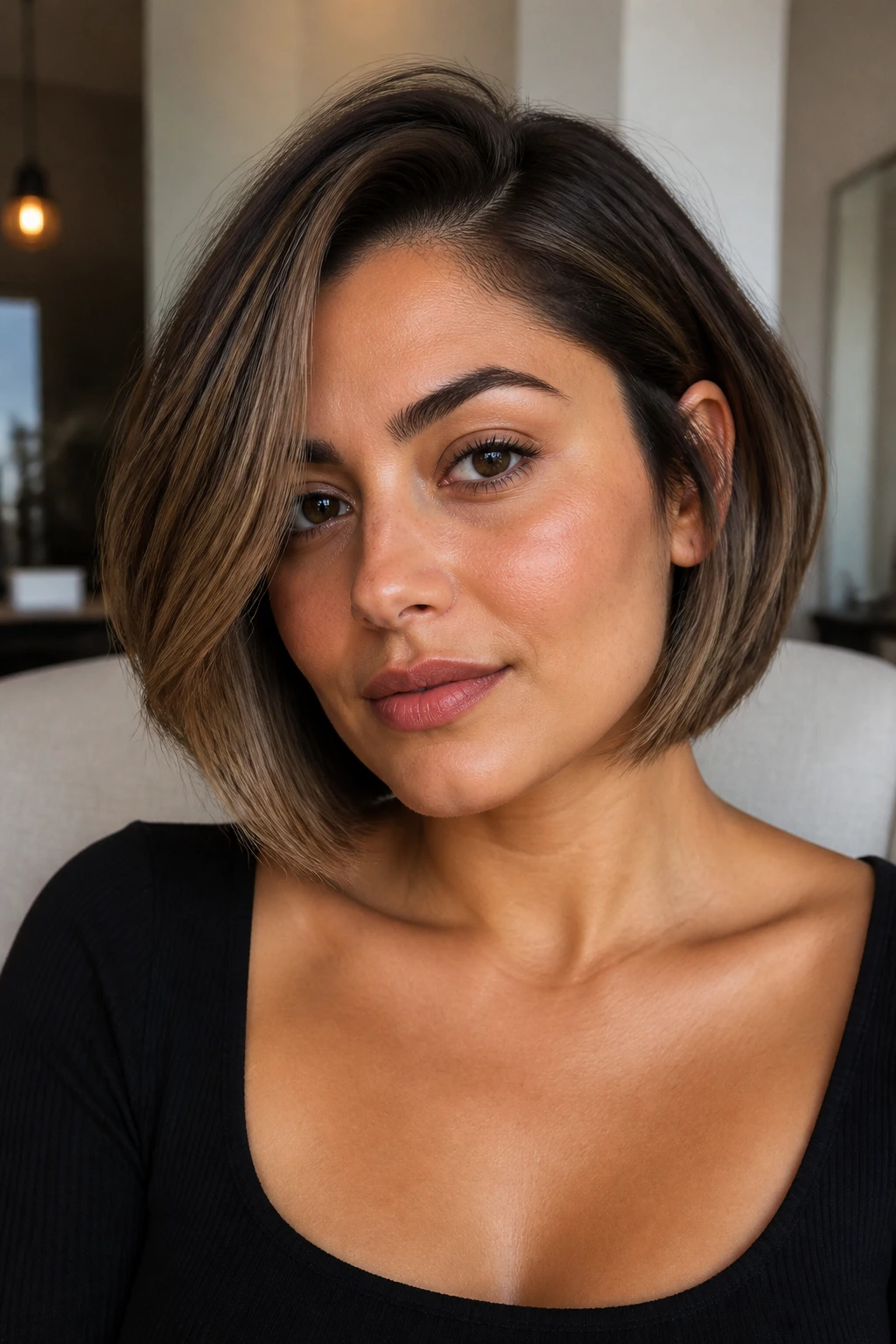
A side part changes everything here. The moment the hair shifts off center, thin hair looks lifted before you even touch the blow-dryer.
Smoky beige panels give the chin bob a softer edge than bright blonde would. Beige keeps olive skin from turning sallow, while the smoky note stops the color from reading too sweet. I’d place the lighter pieces on the heavier side of the part and leave the opposite side darker. That asymmetry creates the feeling of extra volume.
This cut is especially good if your jawline likes structure. The chin-length perimeter gives a clean frame, and the panels brighten the face in a way that feels tailored, not busy. It’s a neat little trick. One side darker, one side lighter, and suddenly the bob looks fuller.
12. Butterfly Layers with Golden Honey Ribbons
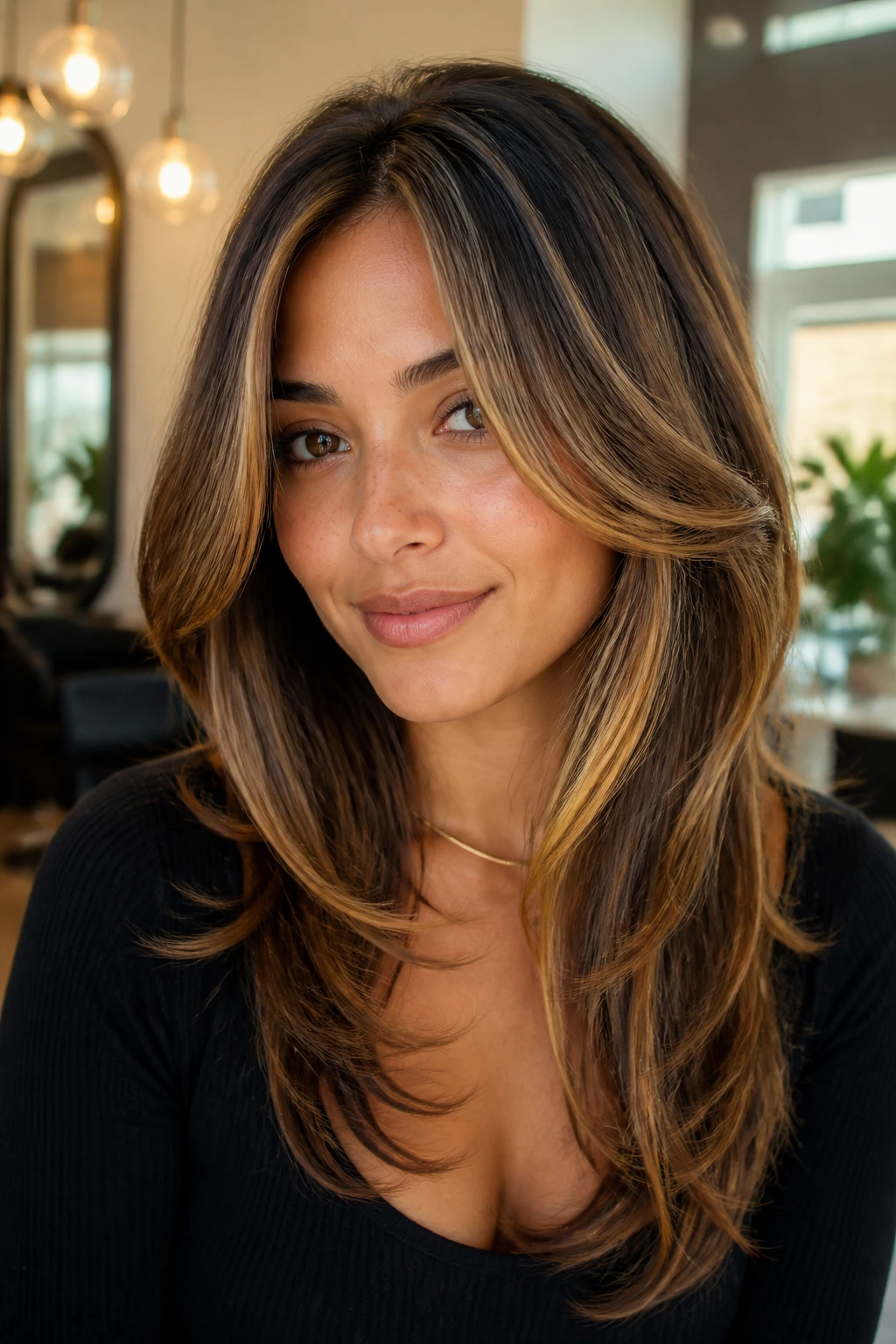
Butterfly layers are built for people who want length but don’t want their hair to hang like a curtain. The face-framing layer opens up the front, and the longer back keeps the shape from collapsing.
Golden honey ribbons work because they sit on top of the layered movement instead of fighting it. On olive skin, honey is one of those tones that usually looks warm without turning neon. Keep the brightest pieces around the upper face and the top layer, then let the lower lengths stay a touch darker so the cut has depth.
The part that matters
If the front layers are too short, the hair can look sparse. Keep them long enough to graze the jaw or collarbone, then style them away from the face with a large round brush. That little bend is what makes the ribbons show.
Butterfly layers also hold up well when you put the hair half up. The front pieces still drop around the face, and the honey ribbons keep the shape visible.
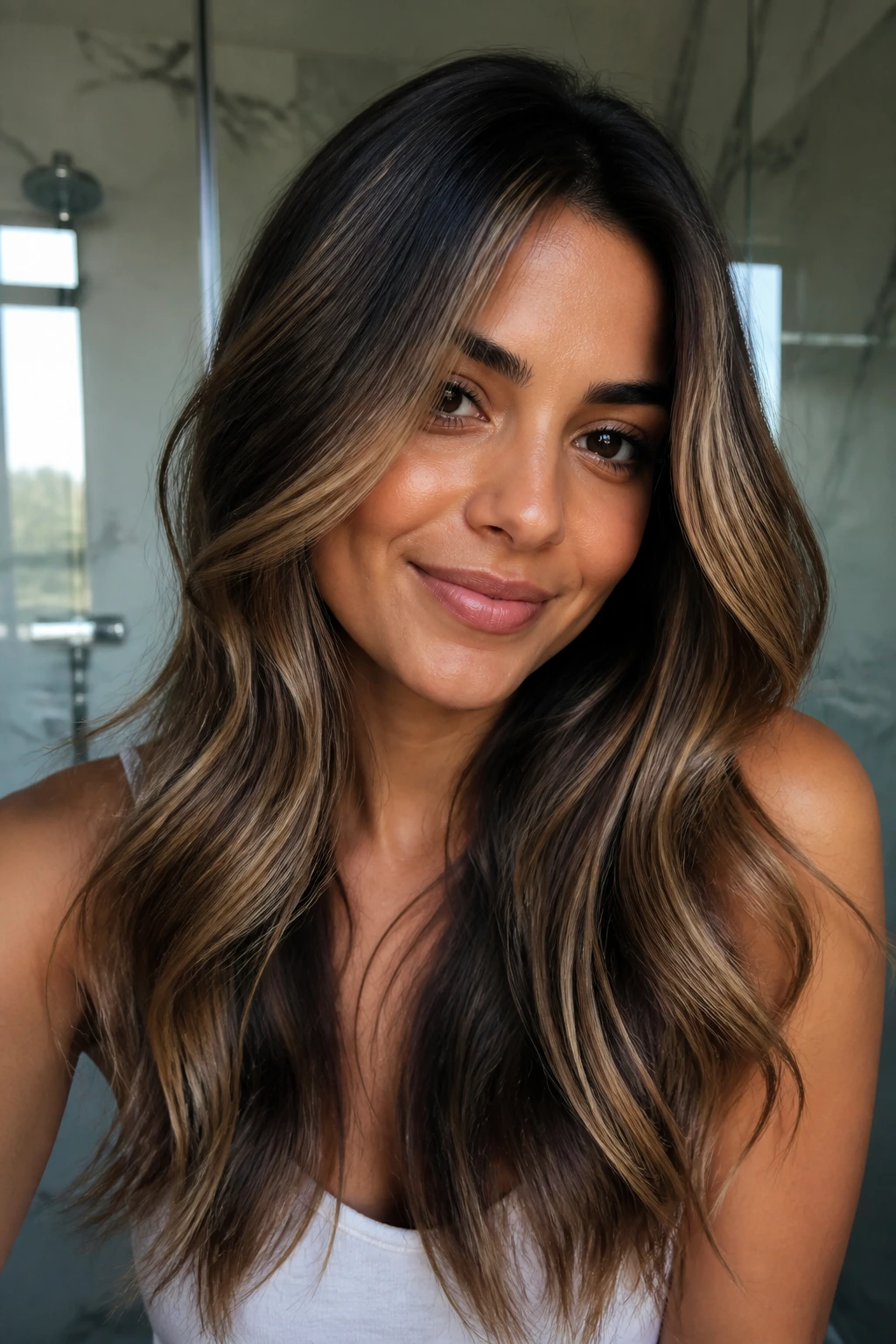
13. Wavy Midi Cut with Espresso-to-Bronde Melt
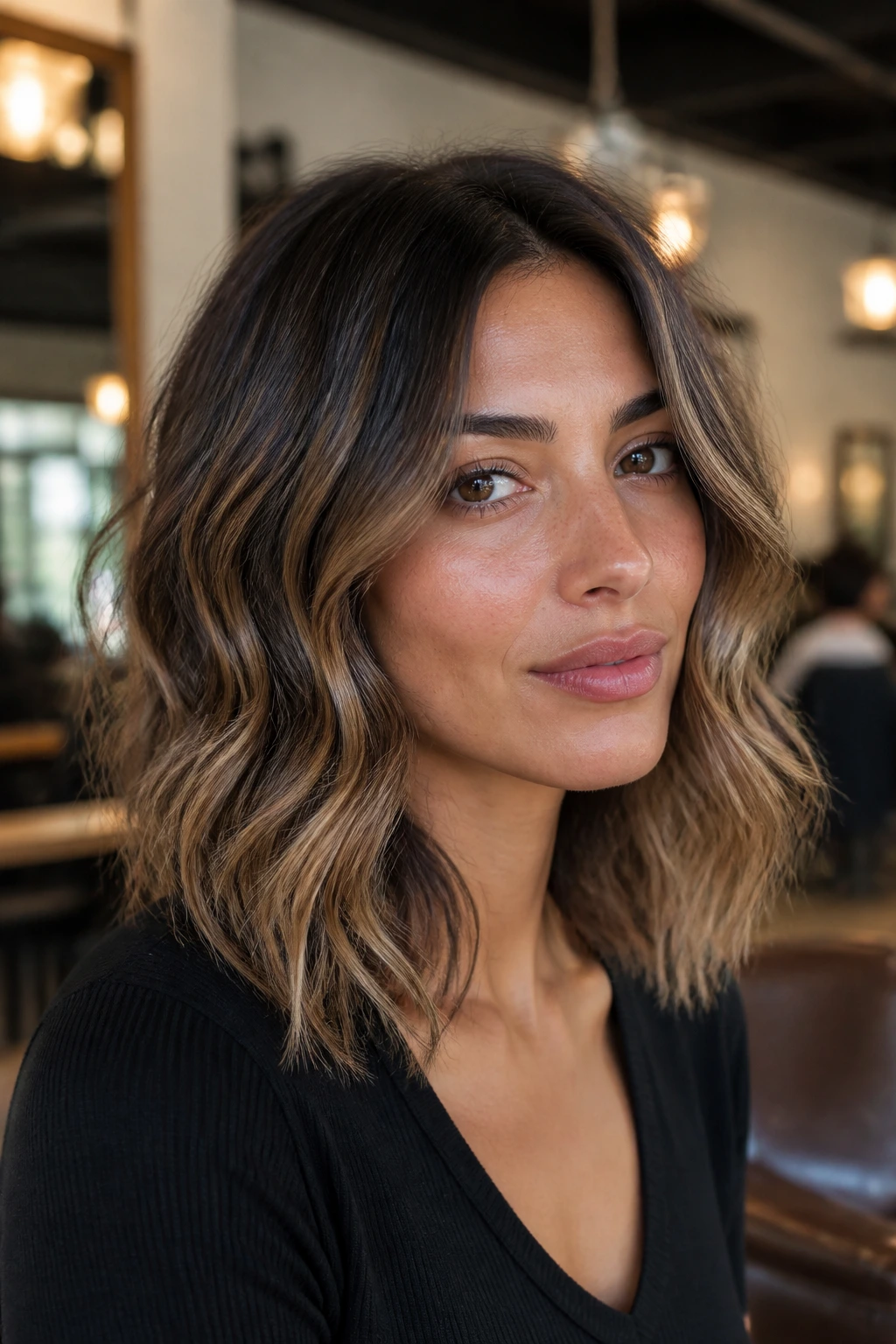
Why does a color melt work so well on fine hair? Because it hides the line where one shade stops and another starts.
An espresso-to-bronde melt keeps the top rich and dense while softening into lighter ends that catch the eye. Olive skin often looks best when the base isn’t too pale; that darker root gives the complexion contrast, and the bronde finish adds lift without making the strands look separated. If your hair is naturally dark, this is one of the easiest ways to brighten it without losing the impression of thickness.
How to use it
- Keep the root espresso or deep mocha
- Blend through chestnut and beige mid-lengths
- Let the ends land in soft bronde, not yellow blonde
- Wave the hair loosely so the transition shows
A midi cut gives the color room to move. On straight hair, the melt looks smooth and glossy. On loose waves, it gets a little more texture, which is nice because thin hair can use every visual trick it can get.
14. Rounded Crop with Sunlit Tips
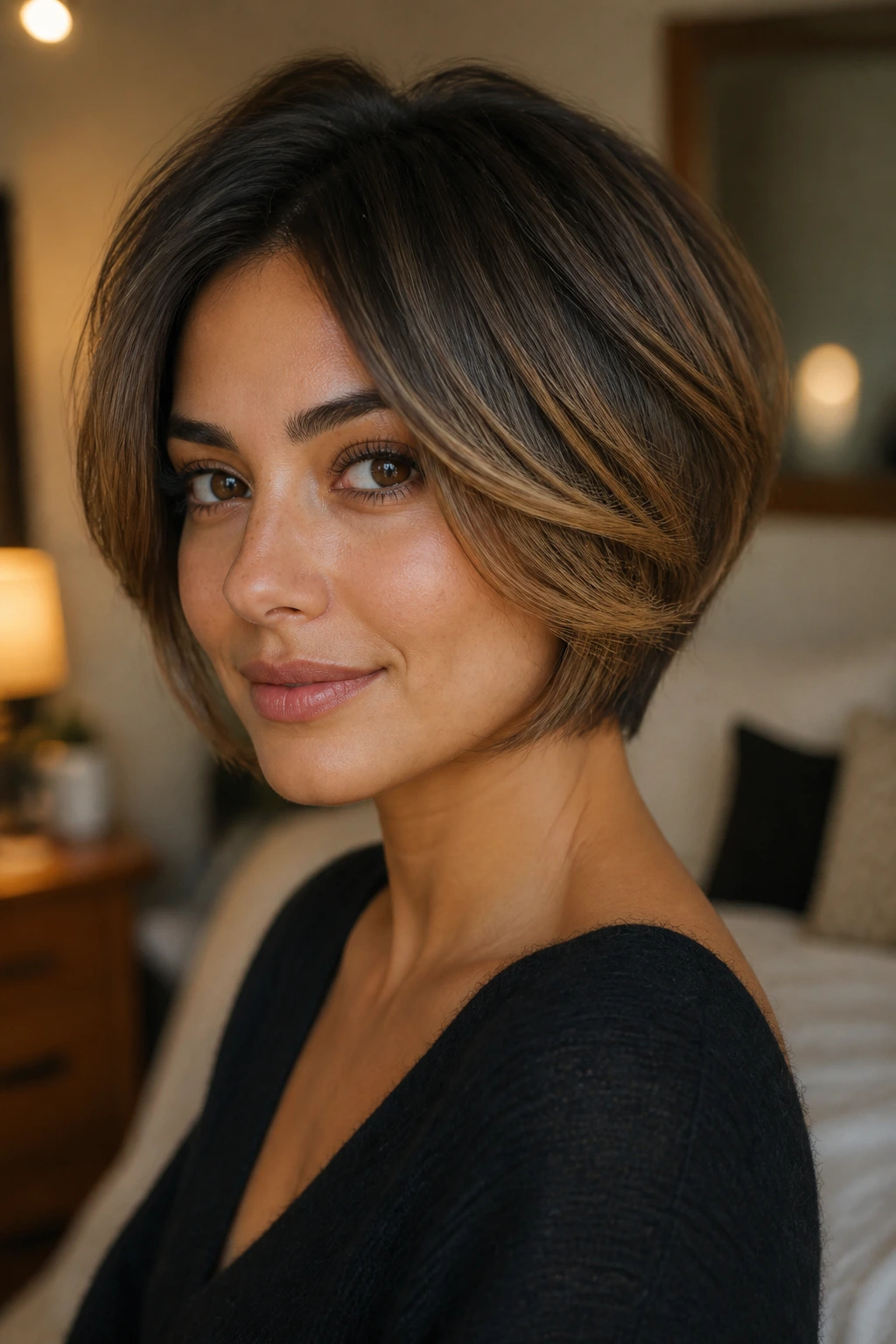
A rounded crop is one of those cuts that looks small until you realize how much shape it actually gives. The curve through the crown makes the head feel fuller, and the short length keeps the ends from thinning out.
Sunlit tips on the outer layer are enough. You do not need heavy brightness all over. For olive skin, a pale tip can work if the base stays deep and the lightness is kept warm enough to avoid that chalky look. I’d ask for the lightest pieces only on the top arc and around the fringe.
This is a sharp little cut. It feels tidy, and it gets even better when you rough it up with your fingers instead of over-styling it. Thin hair often loses its charm when you over-blow it, so let a few pieces fall where they want. That messiness gives the color room to breathe.
15. U-Cut with Cinnamon Lowlights
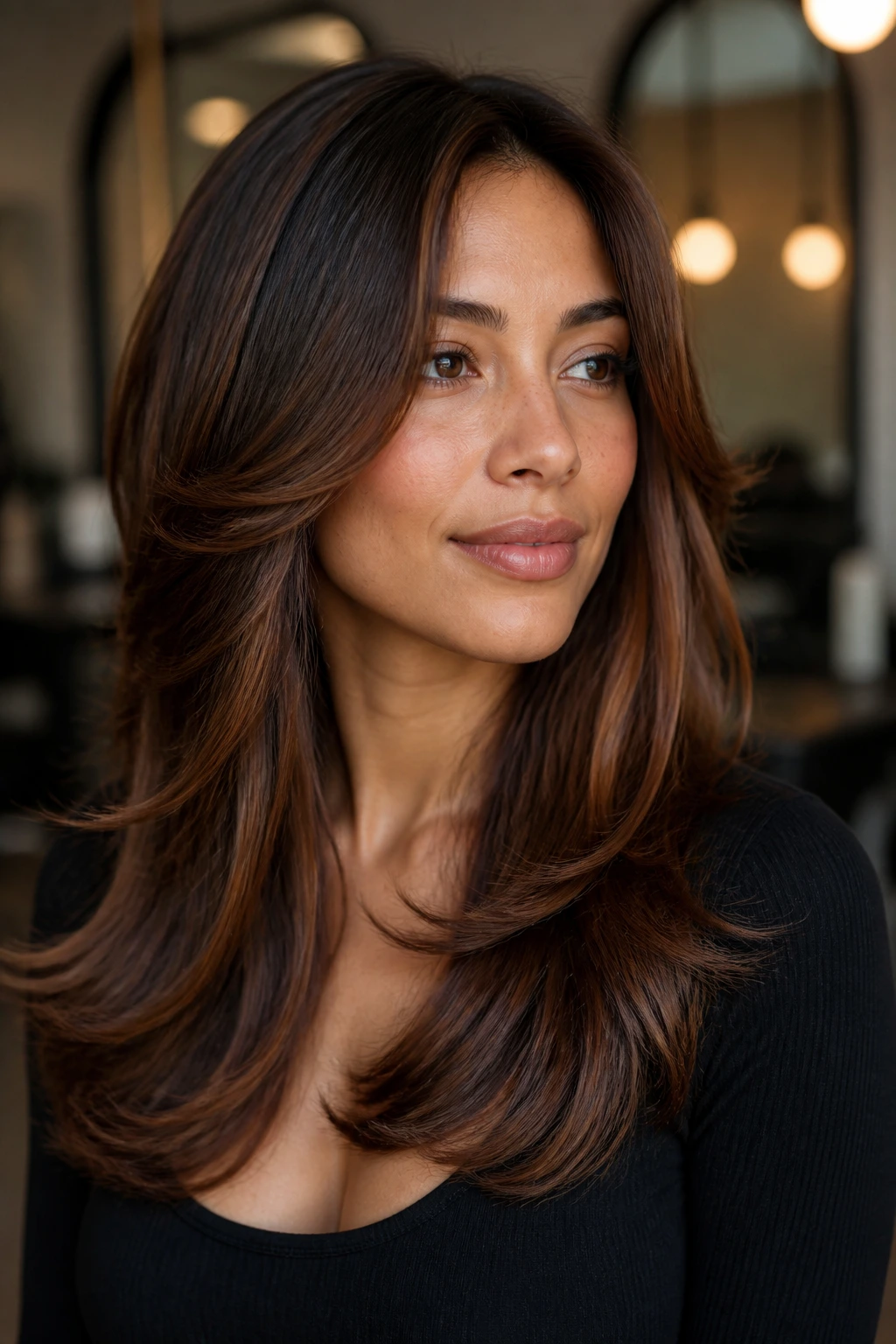
Long hair can still look full if the shape is doing the right thing. A U-cut keeps the weight at the back while still giving the length a softer outline than a blunt line.
Cinnamon lowlights tucked inside the layers help olive skin read warm and healthy instead of flat. They’re especially useful if your natural base is a medium brown and you want dimension without committing to a lighter overall tone. The lowlights make the inner lengths look denser, and the outer surface can stay a bit brighter for a soft glow.
This cut rewards movement. A little wave or even a loose braid and release will show the layers without exposing the scalp. If you’ve got fine hair that tangles easily, the U-cut is also kinder than a shag; it keeps more of the ends together instead of scattering them.
16. Tapered Pixie Bob with Pearl Blonde Veil
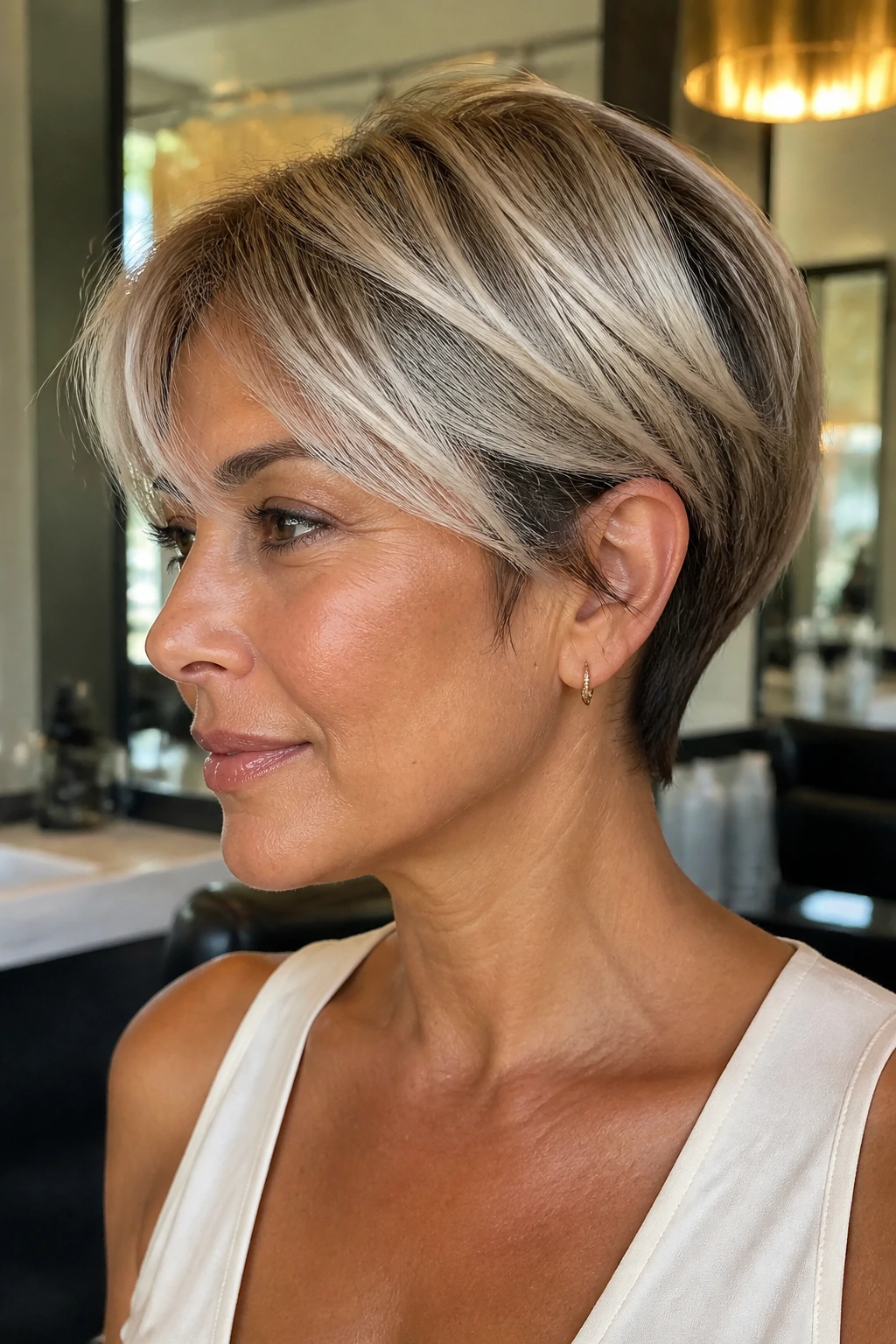
A tapered pixie bob is one of my favorite answers to thin hair because the nape is short, the top has lift, and the shape stays visible even on a rushed day. It looks neat without feeling stiff.
Pearl blonde can work on olive skin, but only if it leans creamy rather than icy. That veil of lightness should sit on top of a deeper base, almost like a whisper over the crown and fringe. The darker sides keep the shape grounded, and the pearl tone gives the cut a reflective finish that catches light at the temples.
Ask for this, not that
- Soft pearl beige instead of frosty silver-blonde
- Brightness at the top, not the whole head
- A tapered nape for clean shape
- Minimal layering at the edges
This one is good when you want short hair that still feels soft. The color gives the cut some sheen, and the taper keeps the back from puffing out.
17. Razor-Edged Lob with Chestnut Dimension
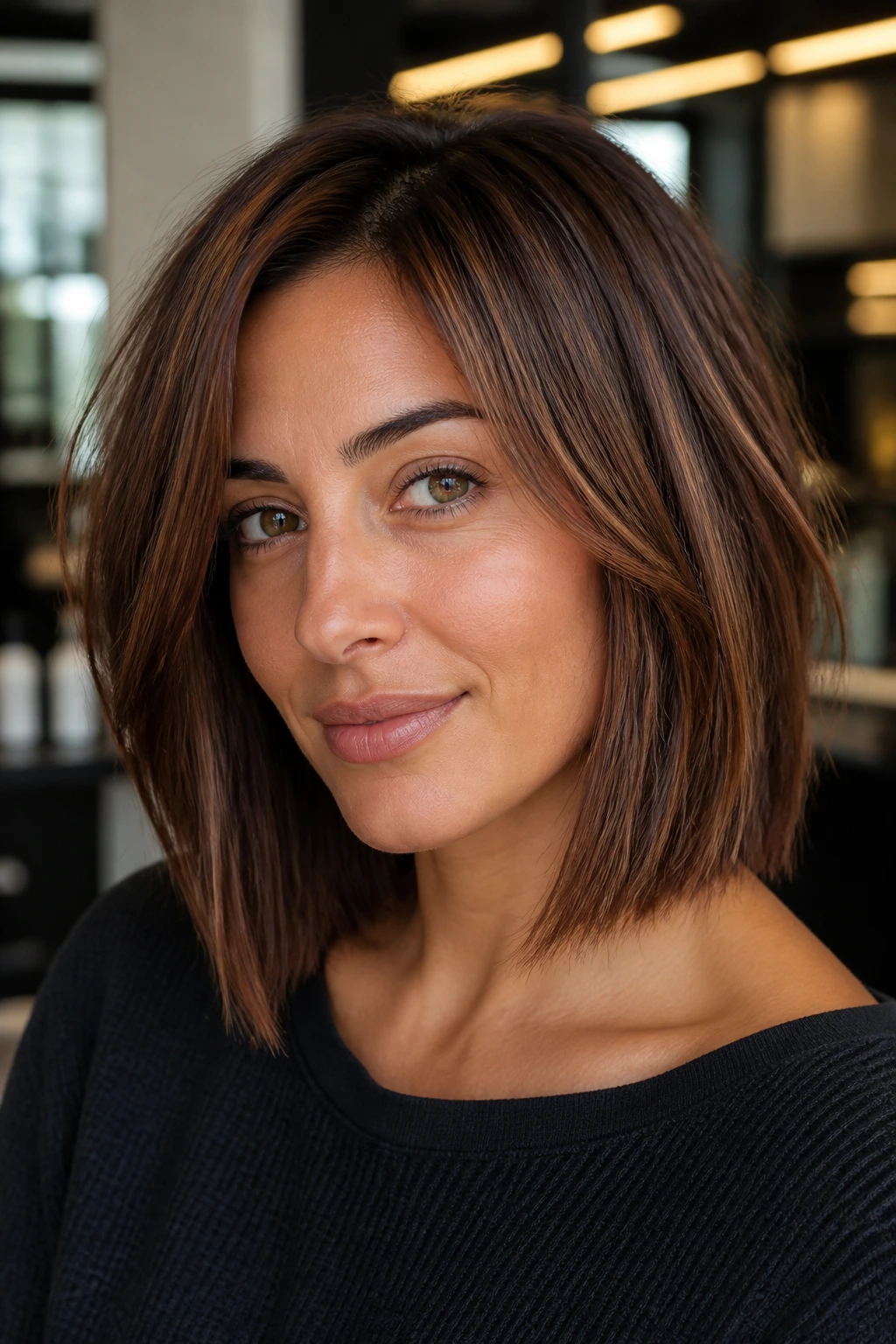
A razor cut can be risky on fine hair if it’s too aggressive. But when it’s handled lightly, the result is airy and modern, not skinny.
Chestnut dimension is the smart companion shade. It keeps olive skin looking rich and adds enough depth to stop the ends from looking transparent. Ask for chestnut lowlights through the underlayers and a few softer lights on top. The contrast is subtle, but it makes the lob feel fuller because the eye keeps moving.
This is a good choice if your hair falls flat when it’s all the same color. The razor edges create separation, while the chestnut depth creates shadow. Put the two together and the cut gets texture without looking frayed. That’s the line you want.
18. Long Straight Cut with Peekaboo Highlight Panels
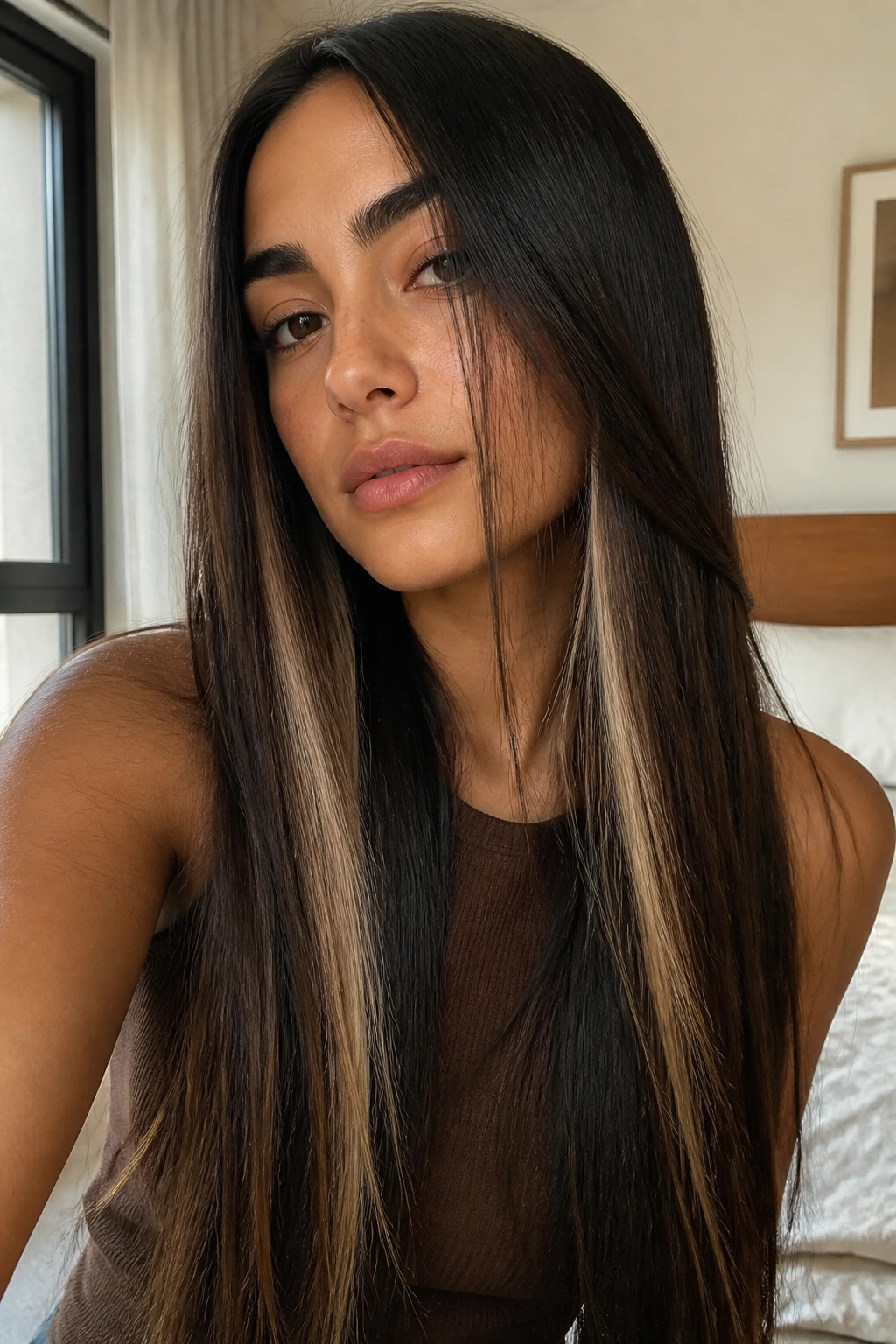
Straight hair can be beautiful on thin strands, but it needs help or it reads as one flat sheet. Peekaboo panels fix that by placing brightness where it appears only when the hair moves.
Keep the top darker and hide the lighter panels underneath or just behind the front section. On olive skin, caramel, beige, or muted gold usually works better than a very cool blonde here. The surprise is part of the charm. When you tuck the hair behind one ear or catch it in motion, the color flashes out for a second and makes the whole length look fuller.
This is one of the easiest styles to live with because it doesn’t demand constant heat styling. A smooth blowout or even a simple air-dry with a little serum on the ends can show off the panels. The cut stays long, but the color keeps it from looking heavy.
19. Curly Bob with Bronze and Copper Threads
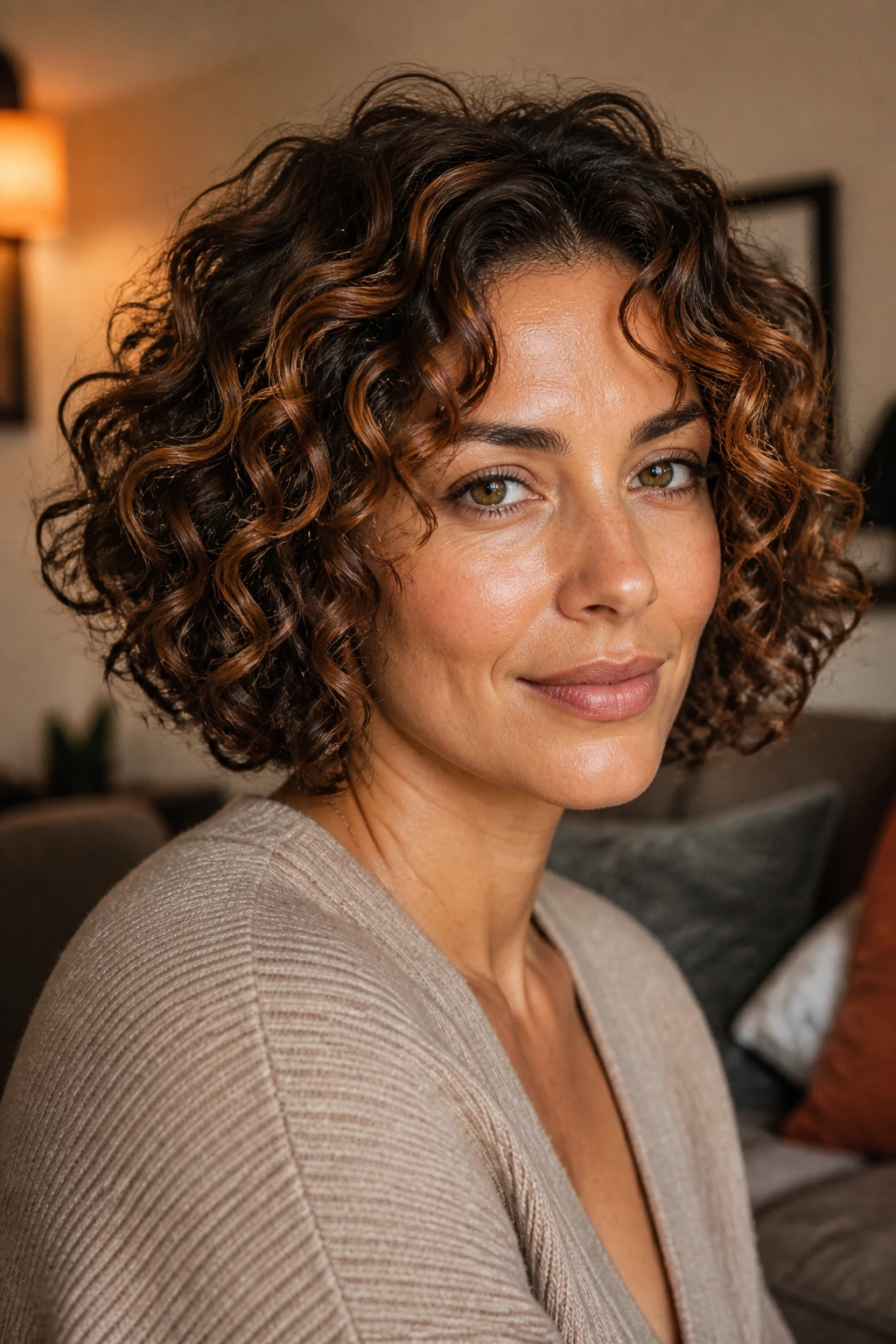
Curls can carry more color than straight hair, but they also need placement that respects the pattern. Put the highlights in the wrong spots and the curl clumps start to break apart.
Bronze and copper threads work well on olive skin because they warm the face without washing out the natural undertone. For a curly bob, the lighter pieces should sit on the outer curve of the curl, around the halo and face frame, while the interior stays a touch deeper. That keeps the pattern visible and the shape full.
What to ask for
- Fine painted ribbons, not broad stripes
- Bronze through the mids
- Copper just around the front and top layer
- A darker interior for density
The bob length helps the curls stack in a way that gives the illusion of more volume. Keep the finish soft with curl cream and a diffuser. Hard crunch kills the point of this cut.
20. Shaggy Shoulder Cut with Biscuit Blonde Ribbons
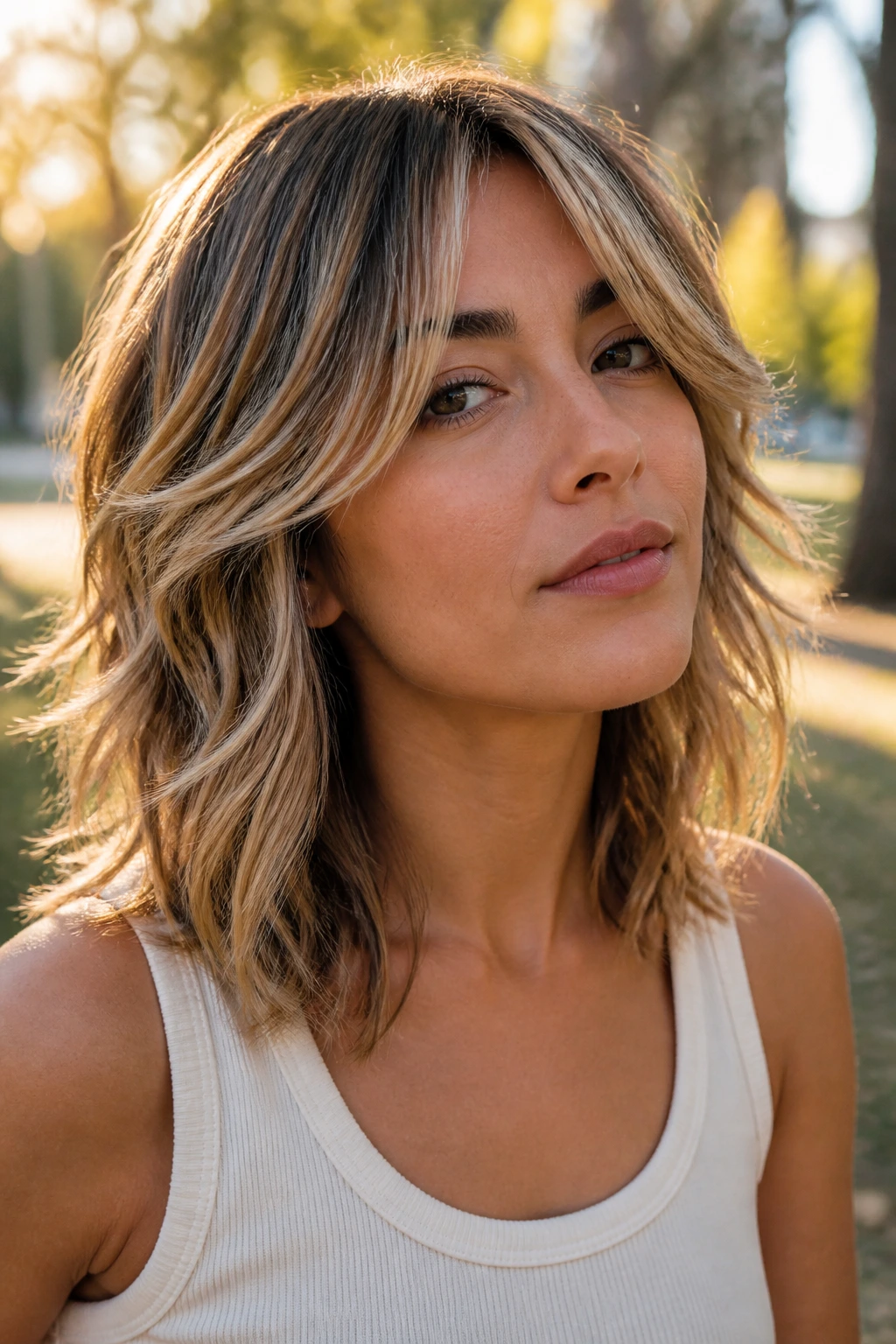
Biscuit blonde is one of those shades people overlook because it sounds quiet. Quiet is the point. It sits between beige and soft gold, and that middle ground is often kinder to olive skin than brighter blonde.
A shaggy shoulder cut gives those ribbons room to flick out and separate. Thin hair likes that because it creates motion without requiring tons of product. The layers should be soft enough to move, not sliced so hard that the hair looks scrappy. Put the lightest pieces around the top layer and the face frame, then keep the underside deeper so the hair doesn’t lose all sense of mass.
This cut looks best with loose, imperfect waves. A one-inch iron, brushed out lightly, gives the ribbons room to show. And if your hair naturally bends, even better. The shape does half the work for you.
21. Tucked-Back Bob with Sandstone Highlights
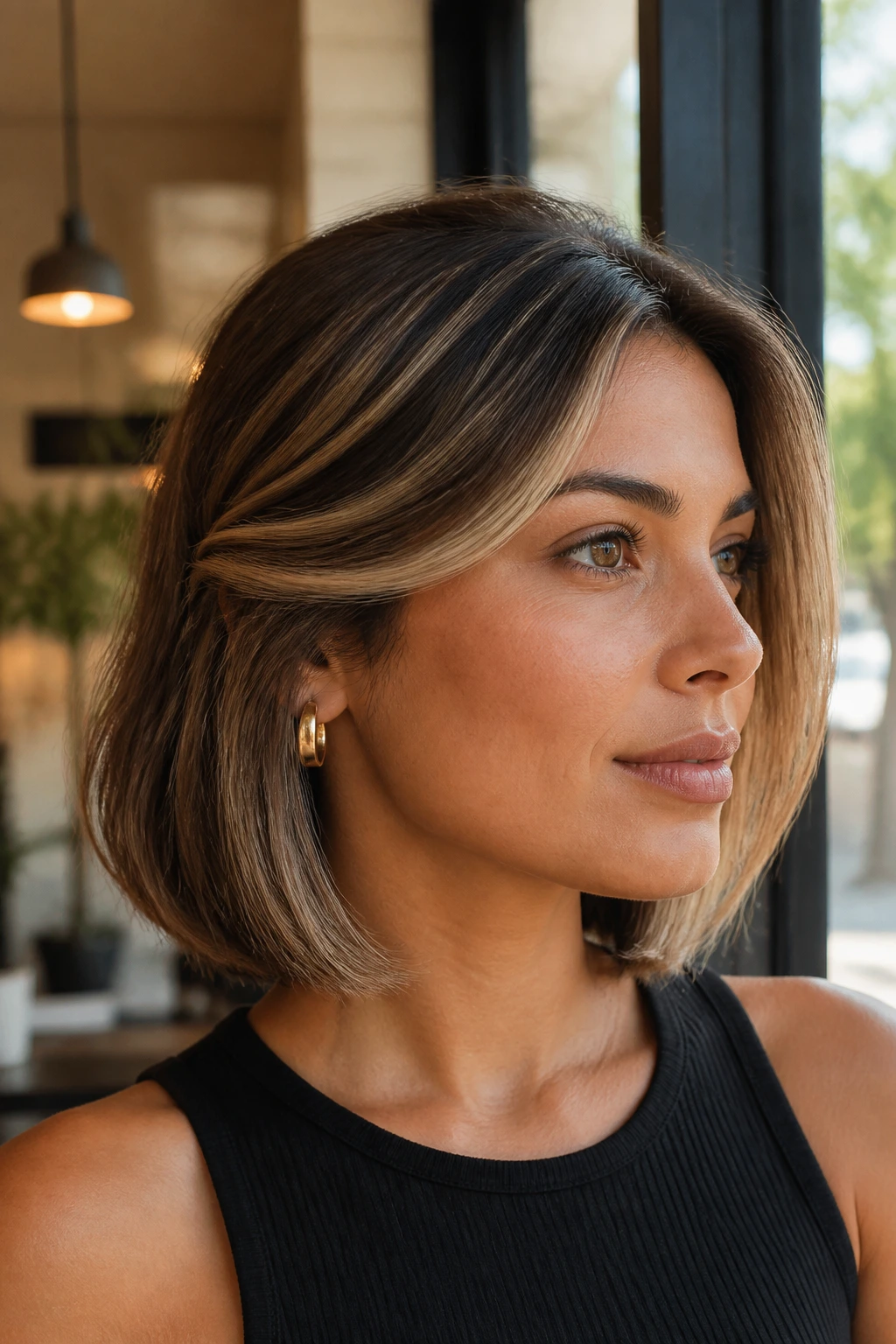
A tucked-back bob is elegant in a very practical way. The ear tuck opens the face, and the bob line still gives the ends enough weight to look deliberate.
Sandstone highlights are soft enough for olive undertones and warm enough to avoid that washed-out gray cast. I’d keep them close to the front edge and the top surface, where the hair catches light when it’s tucked. The rest can stay a little deeper, which makes the bob look fuller from the side.
Why it never looks heavy
- The tuck breaks up the line
- The highlights sit near the cheekbones
- The ends stay blunt enough to hold thickness
- The color stays soft, not stripey
This is a clean, wearable cut. It doesn’t shout. It just sits well, and for thin hair that can be a lot more useful than a dramatic shape that collapses after one commute.
22. Airy Lob with Soft Auburn Lacing
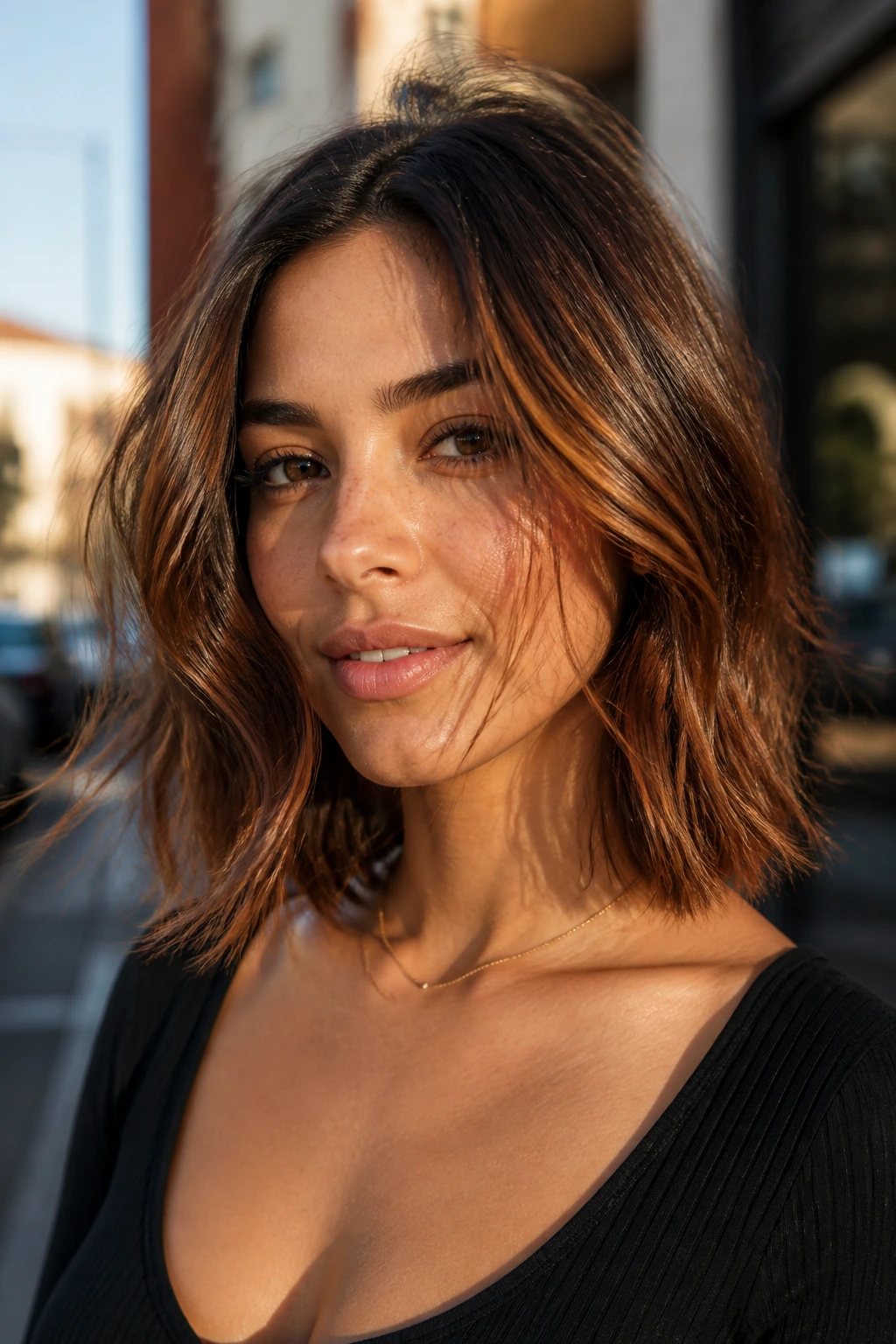
Soft auburn is a smart detour if olive skin tends to look flat in beige or ash tones. It adds a hint of red, but not so much that the hair goes loud.
The airy lob keeps the shape loose around the shoulders, which helps the color move. Auburn lacing works best when it’s threaded through the outer layers and face frame instead of poured over the entire head. Thin hair needs the contrast of deeper sections underneath. Too much red all over and the hair can look thinner, not fuller, because every strand becomes too defined.
This look is good if you want warmth without blonde. It’s also one of the nicer ways to transition out of grown-out brunette highlights, because auburn blends with both brown and soft gold.
23. Face-Framing Layers with Buttery Ends
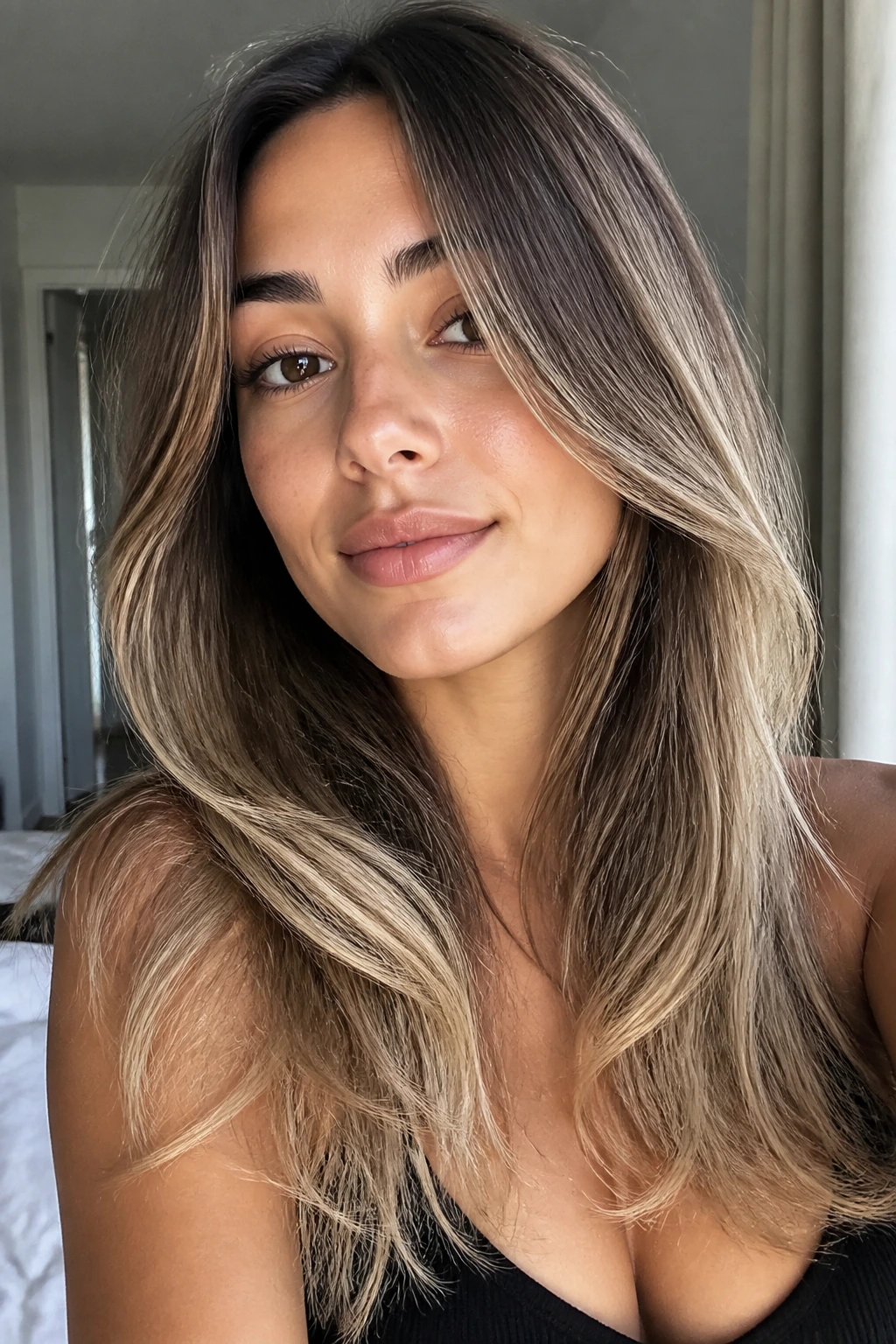
What if you want the simplest possible brightness trick? Put it at the edges.
Face-framing layers with buttery ends keep the top area calmer and reserve the lightest color for the part that shows first. Butter y here should mean soft cream-beige, not banana yellow. On olive skin, that gentler tone reads fresh without going brassy. The layers themselves should start low enough to keep the hair from getting wispy at the crown, which is the part thin hair can least afford to lose.
The best thing about this style is that it still works if you don’t curl your hair. The layers do the framing, the ends carry the brightness, and the overall shape stays easy. If your face is on the round side, ask for the brightest pieces a little lower so the color elongates instead of widening.
24. Medium Shag with Mocha Root Shadow
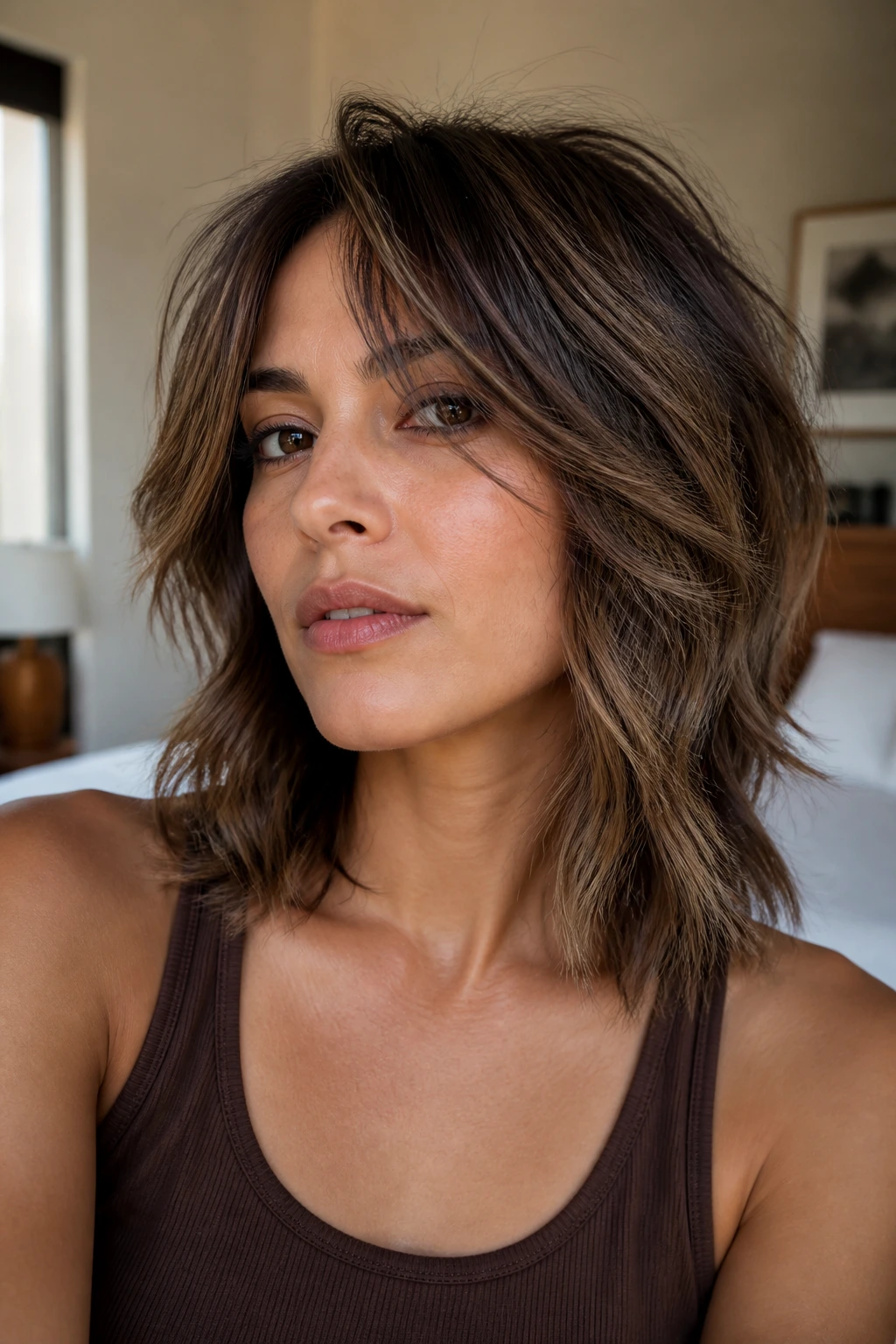
A medium shag is where root shadow earns its keep. The darker base keeps the top from looking sparse, and the shredded layers add enough movement to keep the cut from feeling heavy.
Mocha root shadow works especially well on olive skin because it holds warmth without drifting red. The lighter pieces can be woven through the mid-lengths and ends, but the shadow near the scalp should stay visible. That contrast gives thin hair a denser-looking base, which matters more than the exact shade of blonde.
A small but useful detail
Use a diffuser or a rough blow-dry with your fingers. If you flatten this cut too hard, the layers lose their point and the color starts to look scattered. Give it a little air.
This is one of the more forgiving styles on the list. It looks good on a good hair day, and it doesn’t fall apart on a lazy one. That’s a useful trait.
25. Long Butterfly Cut with Champagne Edge Lights
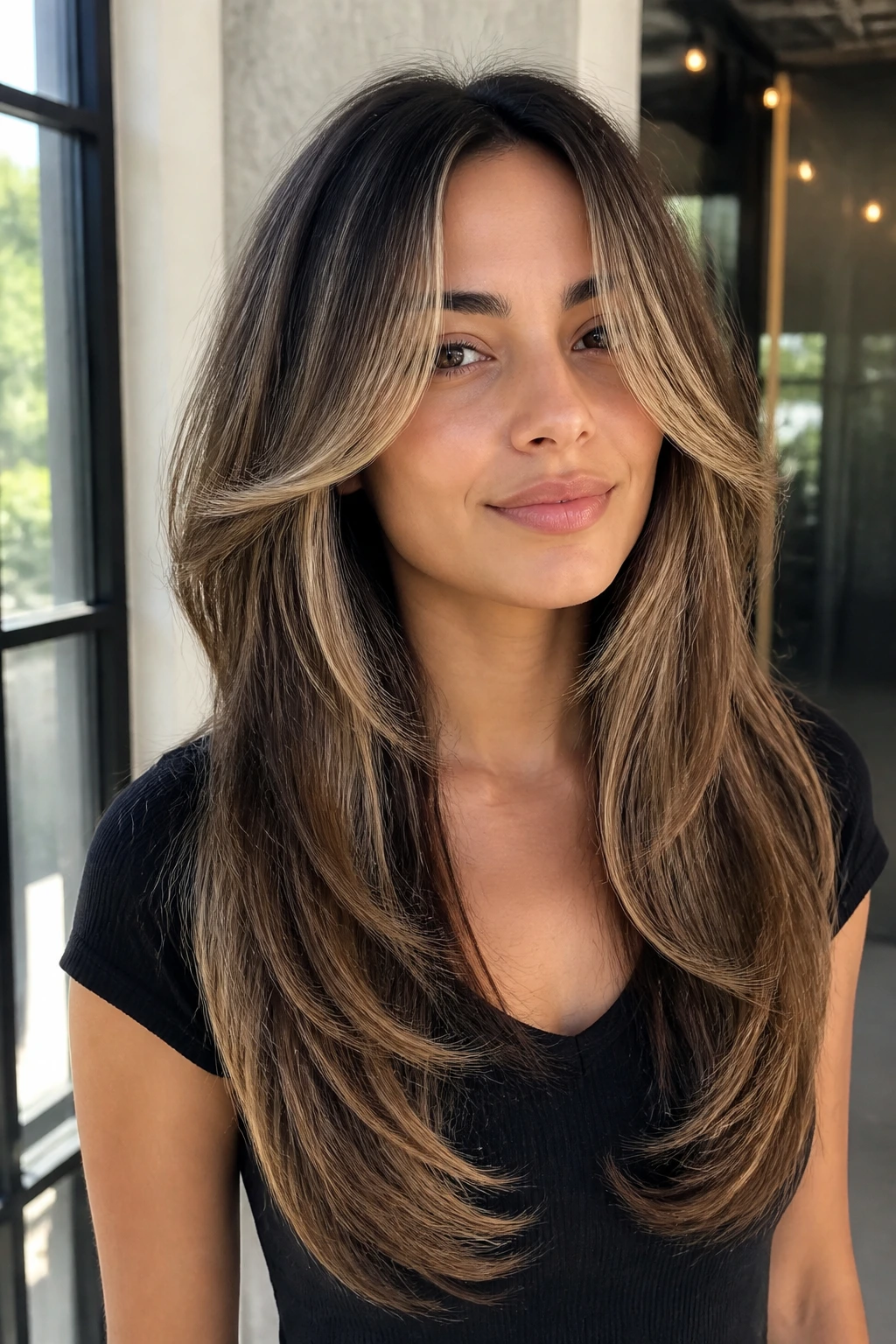
If you want length but not a curtain of hair, butterfly layers are the move. They give you that split-front shape that opens around the face while keeping the rest of the length intact.
Champagne edge lights keep the ends from disappearing into one heavy sheet. On olive skin, champagne works best when it’s creamy and a little beige, not icy. Ask for the brightest color along the outer edges and the top face frame, then leave the underlengths darker so the hair still feels full. That contrast is what makes the cut work.
A loose blowout or large-barrel bend helps the layers swing. And that swing is the whole point. The color rides the movement, the movement reads as fullness, and the whole style looks more expensive than the time it takes to style it.
Why Olive Undertones Need the Right Shade Map
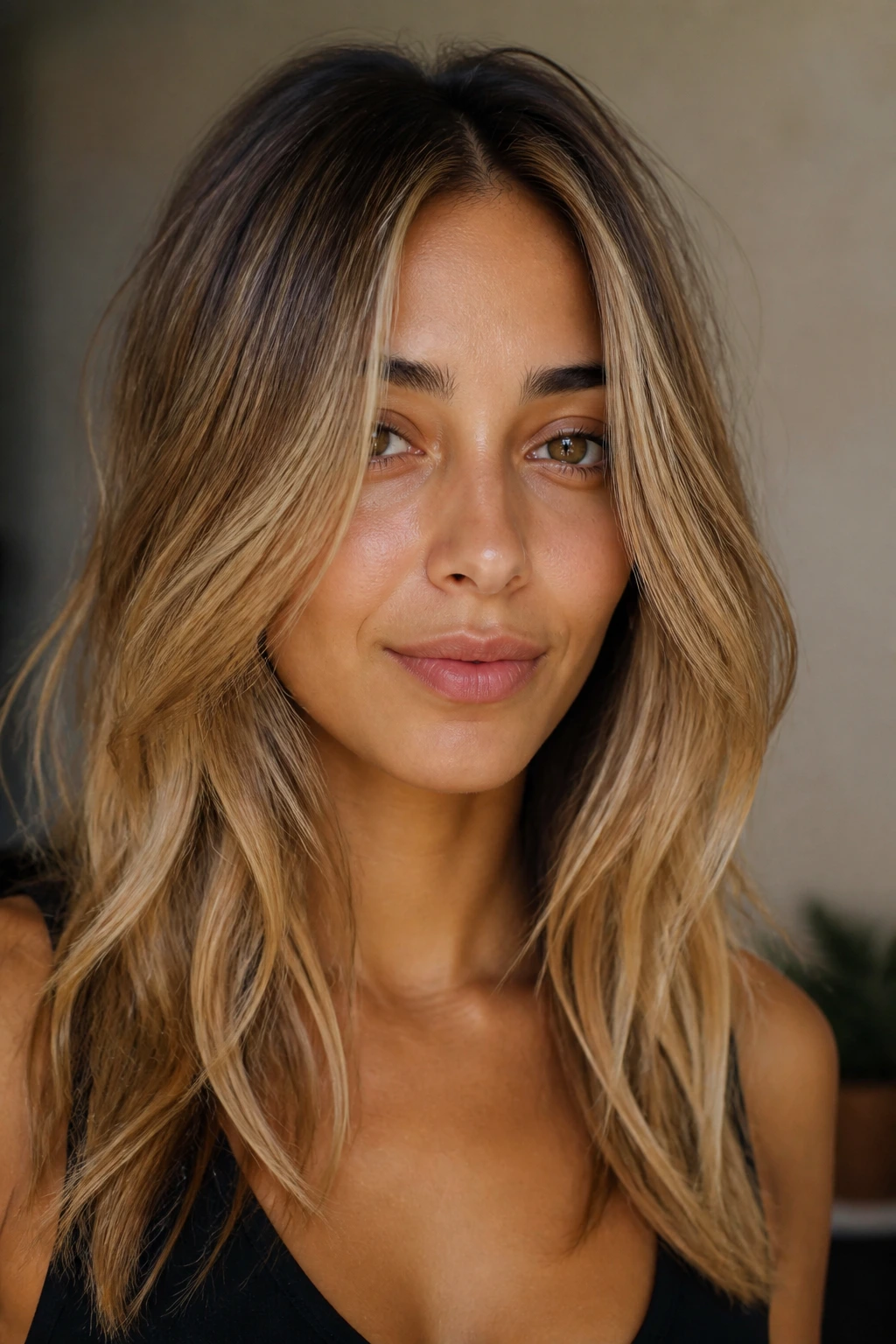
Olive skin sits in a funny place on the color wheel. It can look green-gold, neutral, or slightly muted depending on the light, which is why the same blonde that flatters one person can make another look tired. The wrong highlight doesn’t just look off; it can drain the skin and make the hair look thinner because there’s no depth left in the base.
Warm shades are usually safer than very cool ones, but warm doesn’t mean orange. Think beige blonde, caramel, honey, sandstone, bronze, chestnut, and soft copper. Those shades bring out the healthy part of olive skin without turning the hair into a flat gold block. If your skin leans more neutral, you can go a little ashier, but I’d still keep some beige or brown in the mix so the color doesn’t get smoky in a dull way.
What tends to fail is extreme contrast. Very pale blonde against very dark brown can look hard on olive skin, and it can also expose thin hair by making each strand too obvious. A softer root, a thoughtful face frame, and one or two deeper lowlights usually do more than a full head of bright foil.
The Tools That Keep Fine Hair From Collapsing
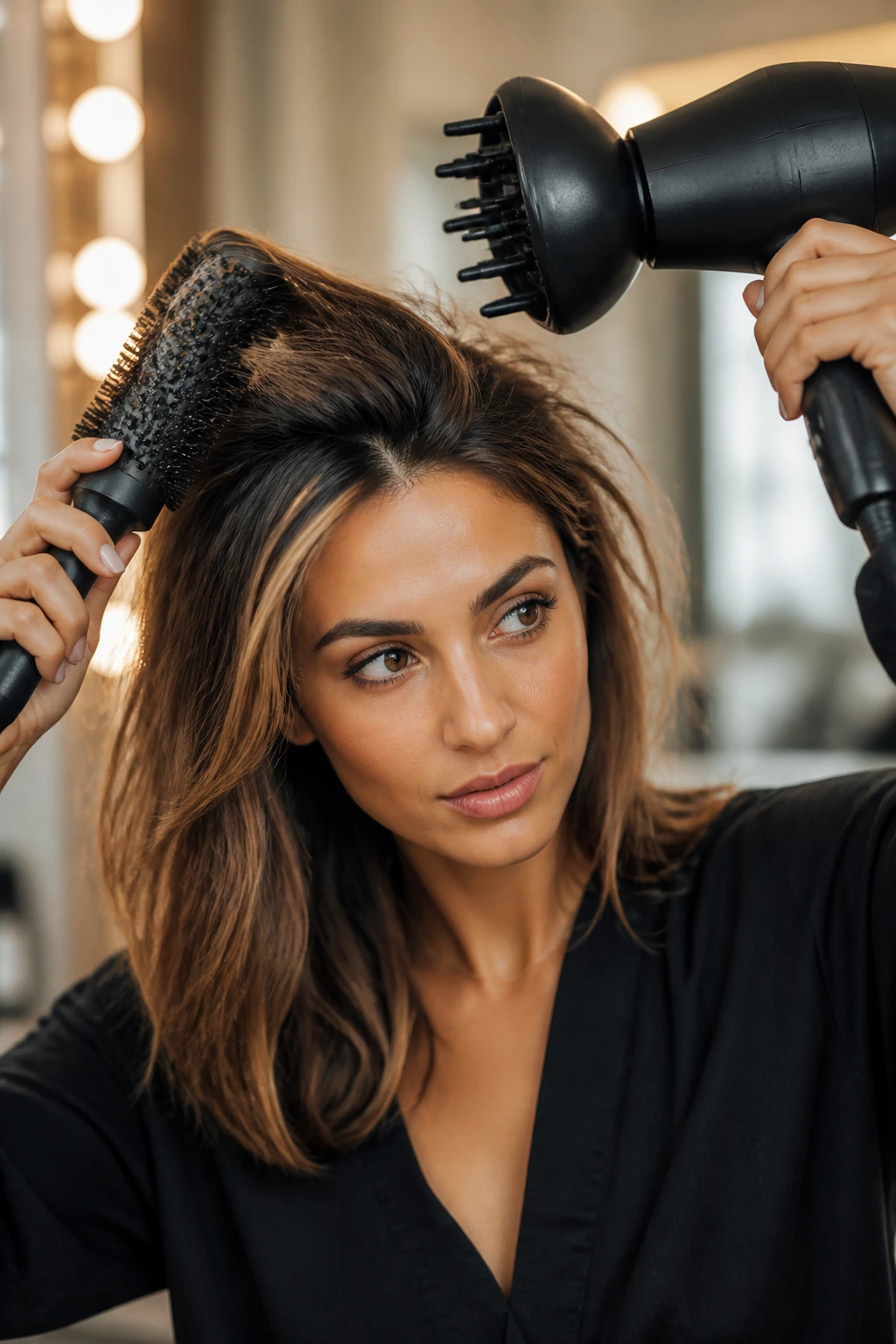
- A lightweight volumizing mousse: This gives roots lift without the sticky crunch that fine hair hates.
- A blow-dryer with a concentrator nozzle: You need the nozzle to direct air at the roots instead of roughing up the cuticle.
- A 1- to 1.25-inch round brush: Big enough to bend a lob or shag, small enough to grab the roots.
- A tail comb: Handy for moving the part a little off center and lifting sections at the crown.
- A 1- to 1.25-inch curling iron or wand: Loose bends show off highlights better than tight curls.
- Heat protectant spray: Non-negotiable if the hair is already fragile from lightening.
- Lightweight finishing oil or serum: Use one drop, not a palmful, or the roots will go limp.
- Root clips or sectioning clips: Helpful when blow-drying the crown for lift.
- Color-safe shampoo and conditioner: Fine hair gets weighed down fast by heavy formulas.
- A satin pillowcase: Keeps the cut smoother overnight so the highlights don’t look frayed by morning.
How to Wear These Styles So They Still Look Full
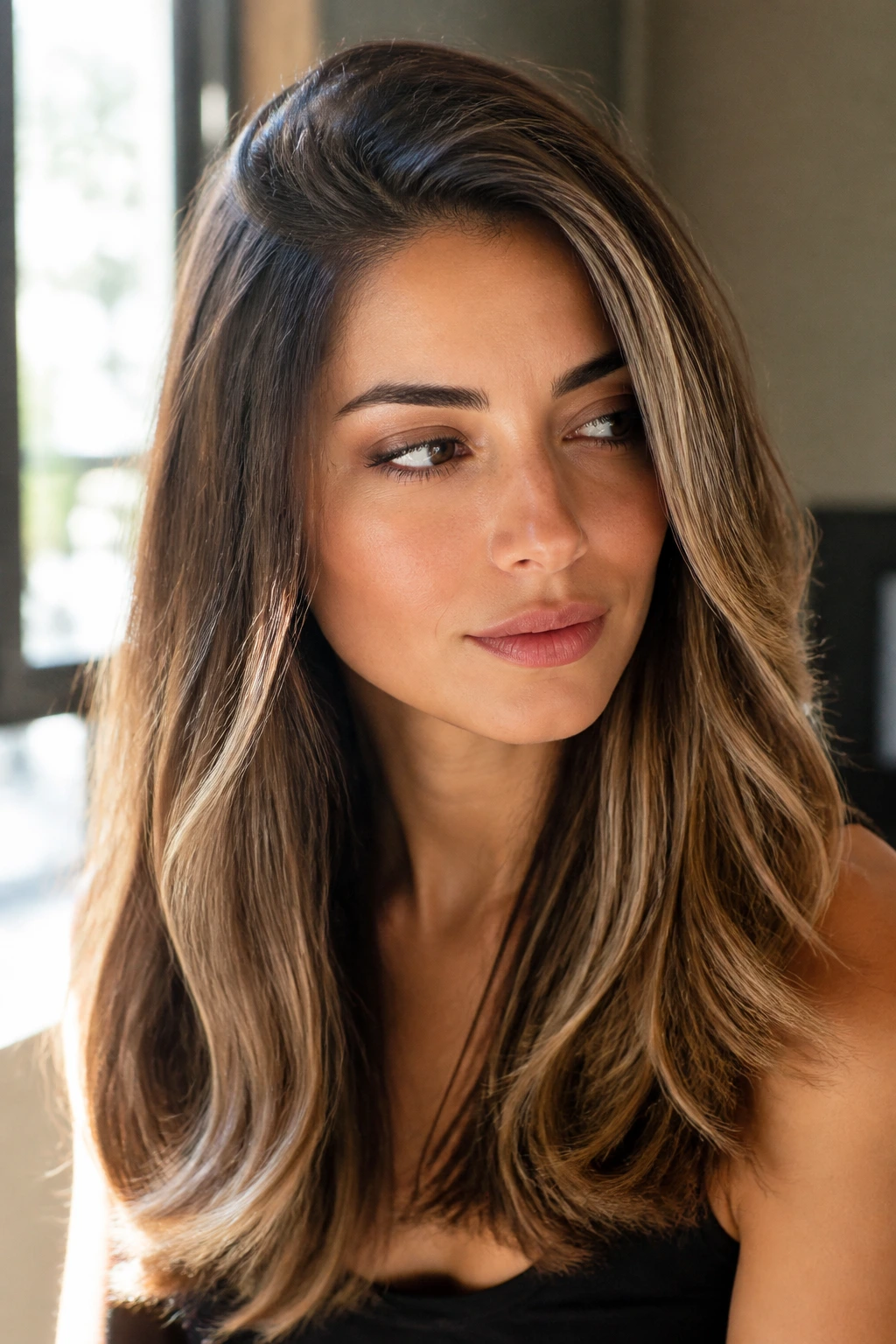
Parting: Shift the part a half-inch or an inch off center. That small move gives the roots room to lift and keeps the highlights from sitting in one flat line.
Texture: Fine hair usually looks fuller with a soft bend rather than a tight curl. A loose wave creates shadows between the highlighted strands, which is where the illusion of density starts.
Finish: Keep the crown a little airier than the ends. If you load oil onto the top, the whole look sinks. Put the shine on the last two inches instead.
Face framing: Let the brightest pieces fall where the cheekbones start, not all the way to the jaw if the face is already narrow. That keeps the light working for the face instead of competing with it.
Out-of-the-chair reality: Most of these styles are meant to look good with one simple blowout or quick wave, not with a full hour of styling. If a cut needs too much heat every time, it probably isn’t doing enough on its own.
Small Moves That Make the Whole Look Fuller
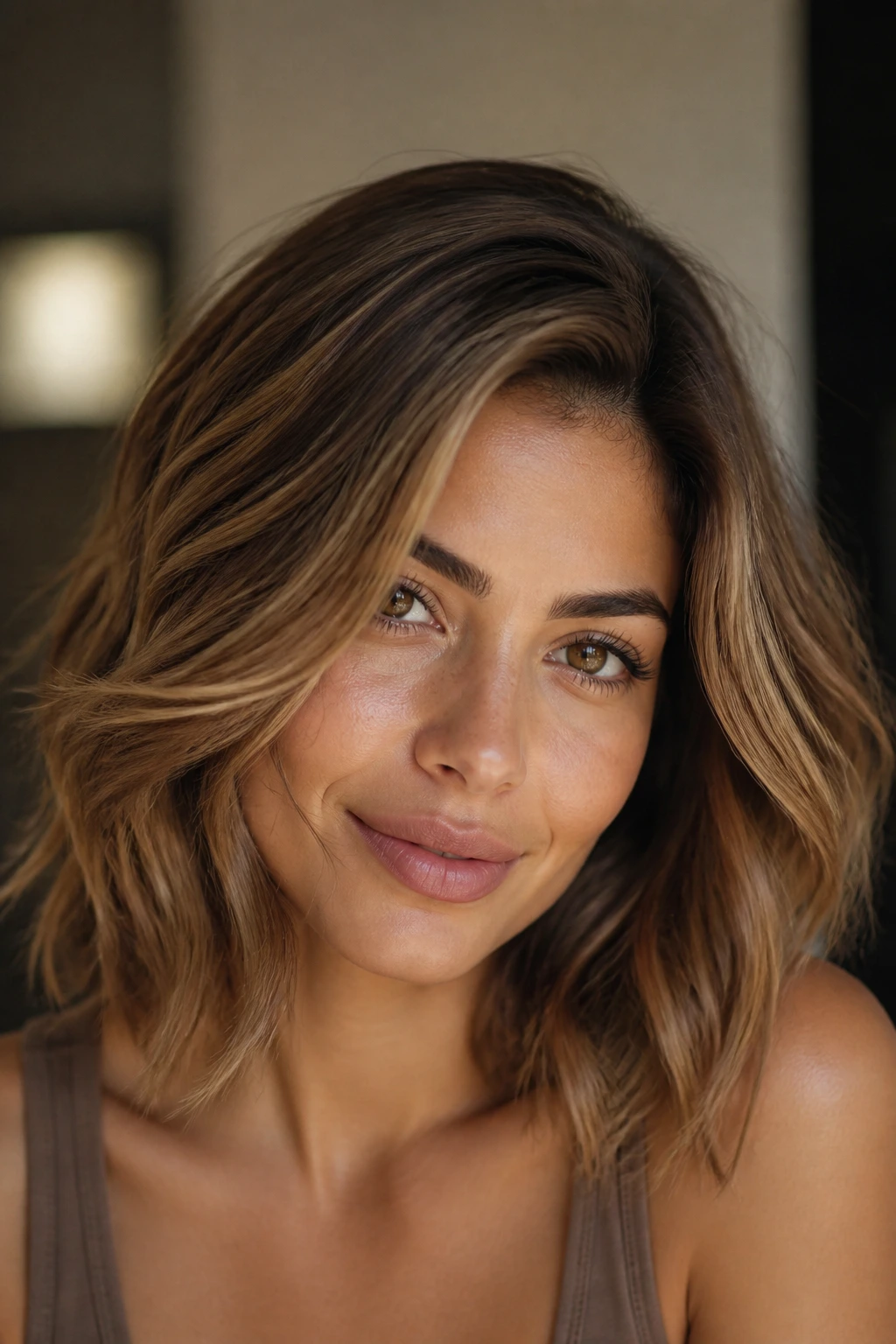
Depth Boost: Add one or two lowlights one shade deeper than the base under the crown and around the nape. That hidden shadow makes the top layer appear thicker from every angle.
Brightness Boost: Keep your lightest pieces near the front and outer layer. A narrow face frame does more for olive skin than spreading blonde everywhere.
Texture Boost: On damp hair, rough-dry the roots first, then finish the mid-lengths with a round brush or soft bend. That order matters. If you smooth the ends first, the roots usually fall flat before you’re done.
Low-Maintenance Swap: Ask for a root shadow and a gloss instead of high-contrast highlights if you want to stretch appointments. The grow-out is softer, and thin hair usually looks better with a softer line anyway.
Make-It-Yours: If you like warmth, lean caramel, honey, and bronze. If you prefer quieter color, choose beige, mushroom, sandstone, or chestnut and keep the brightness narrow.
Mistakes That Make Thin Hair Look Thinner
The biggest mistake is too much lightness at the root. It sounds flattering in theory, but on fine hair it often makes the scalp more visible and removes the depth that gives the style shape. Keep the brightest color away from the crown unless the cut is short and very deliberate.
Another common one: chunky highlights with no lowlights. The stripes may look bold in the chair, but once the hair is moved, the gaps between them can make thin hair look sparse. A little shadow between bright pieces gives the eye a place to rest.
Ash overload is a sneaky problem for olive skin. Too much gray-beige can drain the face and make the hair feel flat. If you want a cool tone, keep some beige or brown in the mix so the finish stays alive.
And then there’s over-layering. People think thin hair needs more layers, but short layers in the wrong spots can remove the very ends that make the style look full. If your hair is already fine, keep the shortest layers around the face or below the chin, not chopped all over the crown.
Finally, heavy styling products can kill everything. Thick creams and oils may feel nourishing, but they often flatten the roots before lunch. Fine hair usually wants lightweight mousse, a small amount of heat protection, and not much else.
Other Ways to Wear the Same Idea
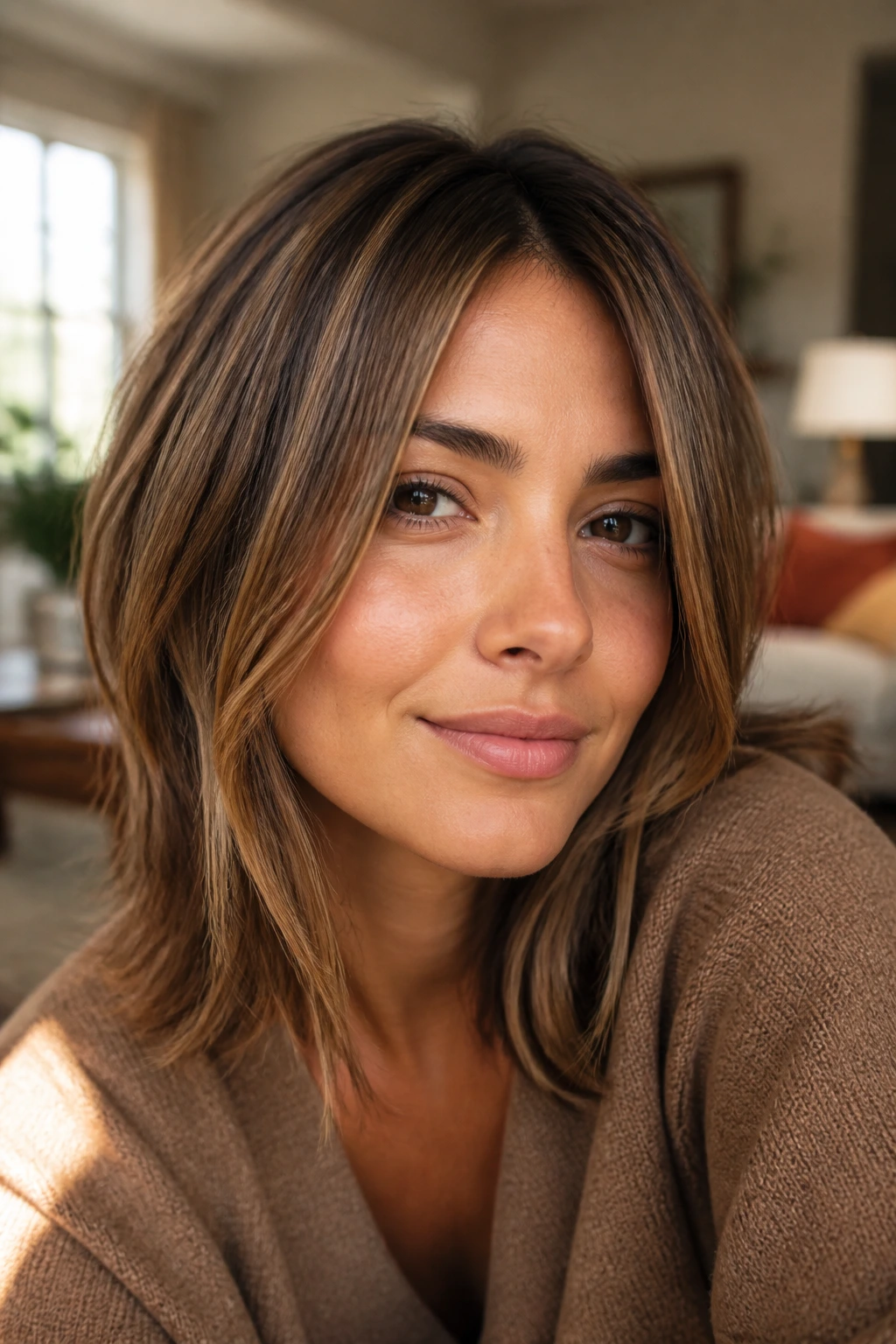
Warm Bronze Edit: If your olive skin leans golden, swap beige and ash tones for caramel, honey, bronze, and soft copper. The shape of the cut can stay the same, but the warmth will make the complexion look fresher.
Soft Beige Edit: If you like calm, low-contrast color, ask for beige blonde, mushroom brown, sandstone, and muted champagne. This is the cleaner route for people who want brightness without obvious streaks.
Copper Flush Edit: For more personality, add muted copper around the front and a little bronze through the mids. Keep the root dark enough to anchor thin hair, or the red can start to look too separated.
Low-Maintenance Rooted Edit: A shadow root, babylights, and a gloss are the easiest combination to live with. The grow-out stays soft, and the hair keeps its body because the top never goes too pale.
Curly-Pattern Edit: Curly hair should get highlights painted on the outer curve of the curl, not all the way through every coil. That protects the pattern and keeps the hair from looking frizzy or stretched.
Short-Cut Edit: Pixies and bob lengths need the tiniest color placements. Micro-babylights, face-framing pieces, and a deeper nape are enough. Anything bigger can swallow the shape.
Keeping Highlights Glossy Between Appointments
Wash highlighted fine hair about two or three times a week if you can manage it. More than that, and the tone usually fades faster than the cut can recover. Use a color-safe shampoo and a light conditioner on the mid-lengths and ends only. The roots don’t need a heavy coating.
A gloss or toner every 4 to 6 weeks can keep beige, honey, or champagne shades from drifting too yellow or too dull. That matters more on olive skin than people expect, because a tired highlight can make the whole face look muddy. If the blonde starts turning brassy, a purple shampoo once every week or two is enough; don’t grind it in daily or the hair can go flat and dull.
Trim the cut every 6 to 8 weeks if it’s short, or every 8 to 12 weeks if it’s long. Thin hair loses shape fast at the ends, and once the perimeter gets frayed, the highlights stop looking intentional. Sleep on a satin pillowcase if you want the style to look smoother on day two. It’s a small thing. It helps more than most expensive serums.
Questions That Come Up at the Salon Chair
What highlight shade usually flatters olive skin best?
Beige, caramel, honey, bronze, and soft chestnut are the safest starting points. They usually warm the complexion without turning orange or icy.
Can thin hair handle highlights without looking see-through?
Yes, if the placement is fine and the root stays a little deeper. Babylights and narrow face-framing pieces usually work better than chunky foils.
Should I ask for balayage or foils?
Balayage gives a softer grow-out, while foils give more control and brightness. For fine hair, I usually prefer a mix of both so the front stays bright and the crown keeps depth.
Will ash blonde wash out olive skin?
It can, especially if it goes too gray. A beige-ash blend is safer because it keeps some warmth in the tone.
What if my hair is dark brown and fine?
Keep the base rich and lift only a few sections. A dark root with caramel, cinnamon, or bronde ribbons is usually kinder than trying to go very light all over.
Do lowlights help thin hair?
They do. One or two shades darker in the right places can make the hair look thicker by creating shadow and contrast.
How often should I touch up highlighted hair?
Most of these looks stay clean with a gloss every 4 to 6 weeks and a real highlight refresh every 8 to 12 weeks, depending on how bright you went.
What if highlights make my hair look flatter?
The fix is usually shape, not more color. Add a little root lift, move the part, and ask for a deeper lowlight under the crown next time.
Soft Light, Better Shape
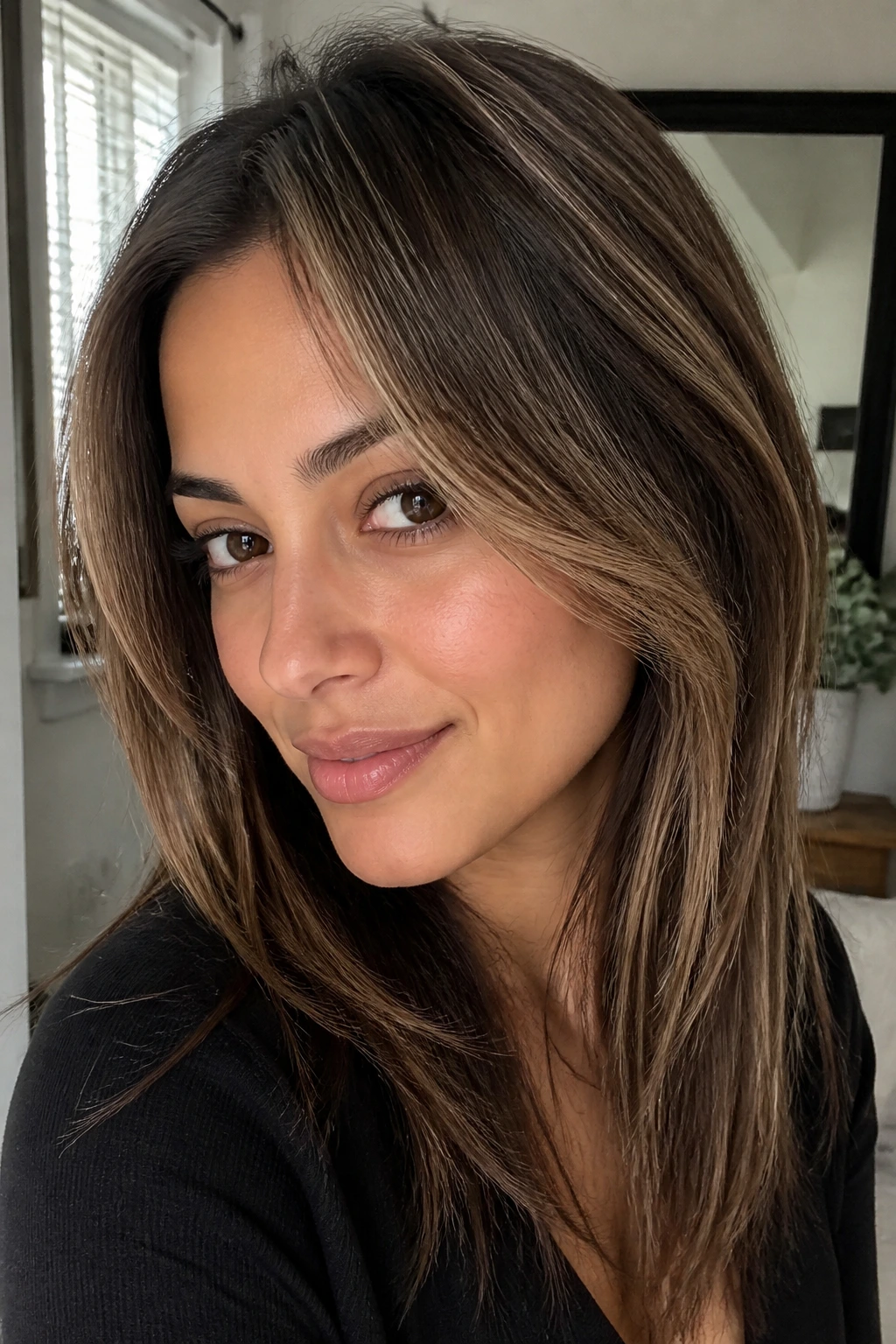
The best highlighted hairstyles for olive skin with thin hair do not scream for attention. They use light the way a good room uses a lamp: near the face, tucked into the corners, and never so bright that the shape disappears.
That’s the real trick here. A blunt bob with beige babylights can look thicker than a heavily layered cut with too much blonde. A lob with a caramel money piece can do more for the complexion than a full head of pale streaks. And a rooted, slightly darker base almost always helps fine hair hold onto its shape.
If you’re headed to the salon, bring a photo that shows both the cut and the color placement, not just the color. Those two things are doing different jobs, and the best looks on this list are the ones where both parts work together.
Olive Skin and Fine Hair — Recipe Card
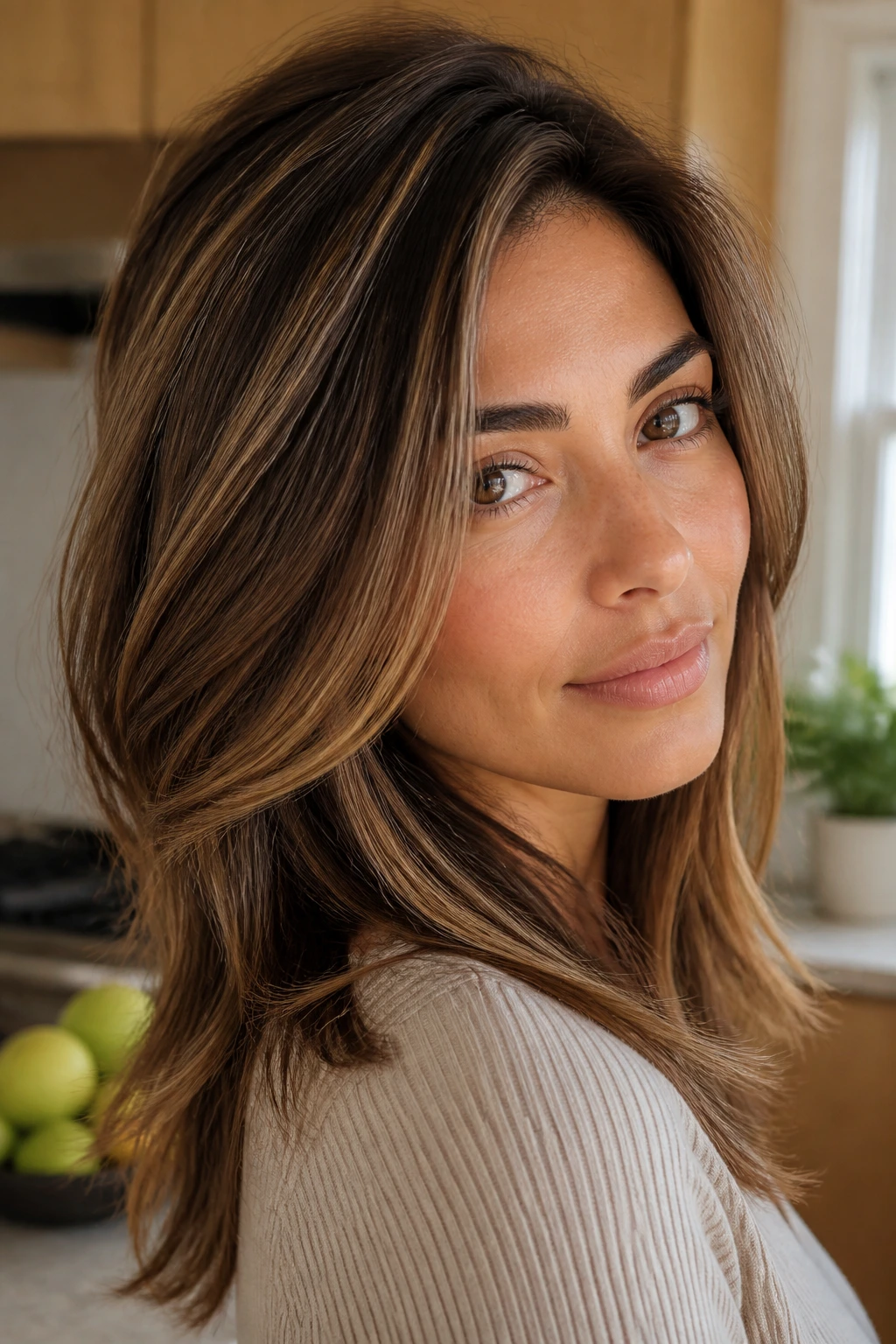
Recipe Name: 25 Highlighted Hairstyles for Olive Skin with Thin Hair
Description: A curated set of haircut-and-color combinations built to flatter olive undertones and give thin hair more shape, movement, and visible density. Each look balances brightness with depth so the hair stays full-looking instead of washed out.
Prep Time: 10 minutes
Cook Time: 0 minutes
Total Time: 10 minutes
Course: Hairstyle Inspiration
Cuisine: Beauty
Servings: 25 style ideas
Calories: N/A
Ingredients
- 1 inspiration photo for the haircut shape you want
- 1 inspiration photo for the highlight tone you want
- 1 note on your natural base color
- 1 note on your undertone: warm olive, neutral olive, or cool olive
- 1 salon consult or color appointment
- 1 lightweight mousse
- 1 heat protectant spray
- 1 color-safe shampoo
- 1 color-safe conditioner
- 1 gloss or toner plan for maintenance
Instructions
- Identify whether your hair is fine, thin, or both, because the cut and color placement change depending on density.
- Choose a highlight family that suits olive undertones, such as beige, caramel, honey, bronze, chestnut, or soft copper.
- Pick a cut that gives your hair shape first, then add highlights where the eye needs lift: around the face, part line, or top layer.
- Ask for root depth or lowlights if you want the hair to look thicker.
- Style with lightweight products and a soft bend rather than heavy, stiff finishing products.
Notes: Keep highlights finer near the crown and brighter near the face. Root shadow and lowlights usually help thin hair more than extra blonde. If a shade looks too icy, ask for a beige or caramel gloss over it.
Final Thought: The best color on thin hair is the one that makes the cut do its job. Keep the roots honest, the face frame bright, and the highlight placement narrow enough to leave some shadow behind, and the whole look tends to come together without trying too hard.