



The wrong caramel on cool skin can go coppery fast. One hour under salon lights and it seems fine; step outside, and the whole thing can start flashing orange against pink or blue-based skin. That is why brown caramel hair color ideas for cool skin tones need a different lens than the glossy, golden brunettes that tend to show up in mood boards. The sweet spot lives in beige, ash, taupe, mushroom, and smoky brown territory.
Cool skin tones usually look cleanest when the caramel stays muted. Not dull. Muted. There’s a difference, and it matters. A beige caramel ribbon through espresso hair can make the eyes look sharper and the skin look calmer; a gold-heavy caramel stripe can do the opposite, especially around the hairline where warmth lands hardest.
Placement matters almost as much as tone. A soft face frame, a root shadow, or a few thin babylights can be far prettier than a full-head lightening job that shouts for attention every time the light changes. The good versions of caramel brown look expensive because they look controlled. They have a little softness, a little depth, and none of the orange drift that ruins the mood.
Why These Shades Earn Their Keep
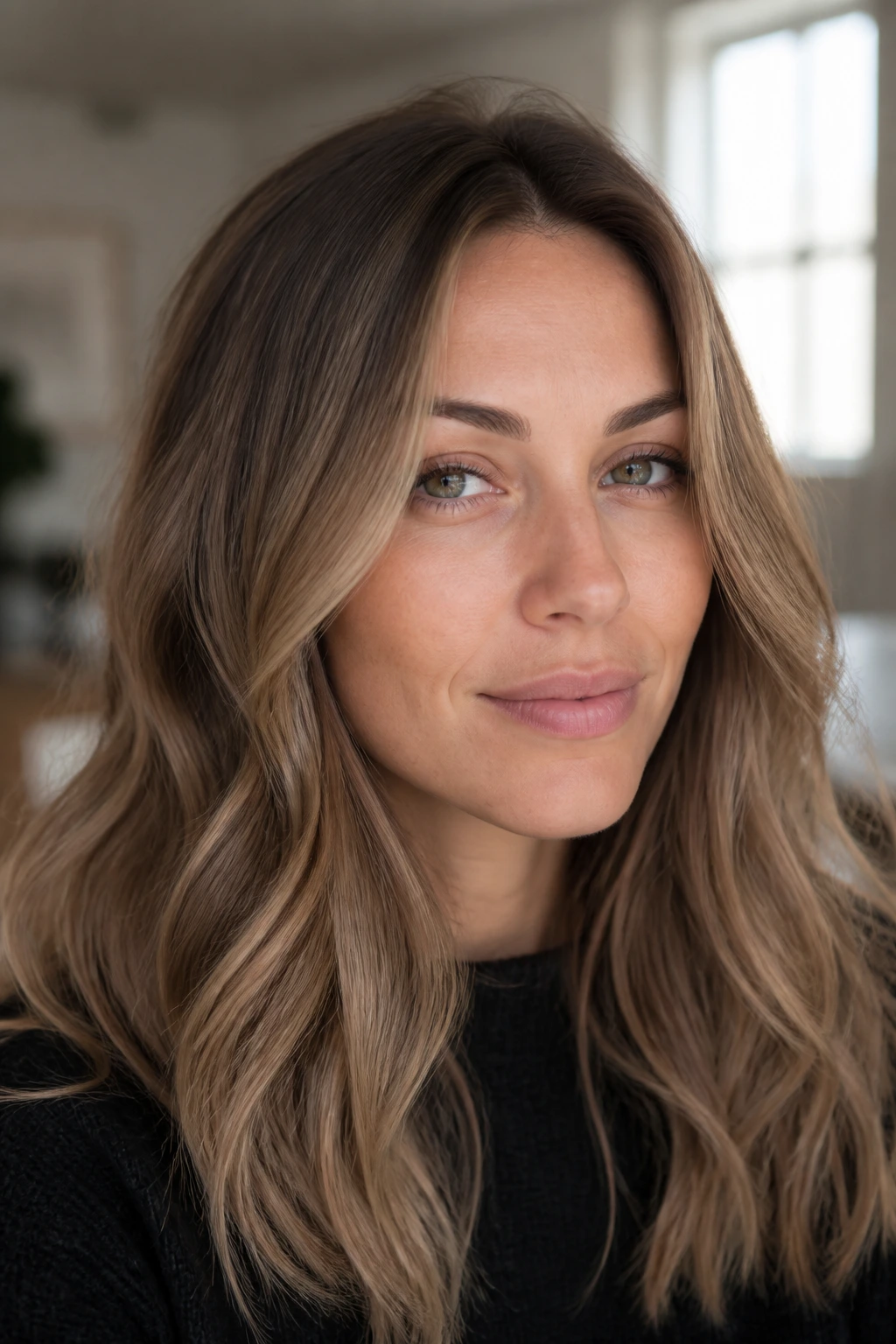
- Cool undertones stay in charge: beige, ash, and taupe caramel keep pink or blue-based skin from going ruddy, which is the whole point here.
- You can go subtle or bold: a whisper of babylights works just as well as a stronger money piece, as long as the warmth stays muted.
- Grow-out is easier to live with: shadow roots, balayage, and lowlights all soften the line at the scalp, so the color doesn’t look patchy after a few washes.
- The shades play well with brunette depth: these ideas keep the brown base visible instead of bleaching it out, which is why they look richer than flat all-over light brown.
- They work in real life, not just photos: a smoky caramel blend can look polished in daylight, office light, and camera flash without flipping into brass.
1. Smoky Espresso Caramel Melt
This is the shade I reach for when someone wants dimension without announcing it to the room. The base stays deep espresso, then the caramel melts in from the mid-lengths down in a beige-smoke tone that reads more like satin than shine. On cool skin, that smoky edge matters; it keeps the warmth from sitting too close to the face.
Ask for a level 5 espresso base with level 7 beige-caramel ribbons painted below the cheekbones. The effect is softer than chunky highlights and far more forgiving if your hair is naturally dark. On waves, the color shifts in little flashes. On straight hair, it looks smoother and darker, which I prefer.
2. Mushroom Brown with Soft Caramel Veils
Want caramel that doesn’t shout? Mushroom brown is the quiet answer. The base has that muted, slightly cool brown-gray cast, and the caramel sits on top in thin veils instead of wide panels. Nothing is stripey. Nothing looks fried.
This shade flatters cool skin because it keeps the whole head in the same temperature family. The caramel reads as lightness, not heat. It’s especially good if your hair is fine and you don’t want the ends to look see-through.
3. Ash Brown Balayage with Cool Caramel Ribbons
Ash brown balayage has a clean, smoky edge that cool skin tends to love. The caramel in this version should not look buttery. It should look as if someone softened it with a gray-beige filter before painting it onto the hair.
The best version starts around the cheekbone and gets a little denser toward the ends, which gives movement without breaking up the base too much. If you wear your hair in loose bends, the ribbons show up beautifully. If you wear it straight, you get a sleeker, more expensive-looking line of contrast.
4. Cool Mocha Base with Beige Money Piece
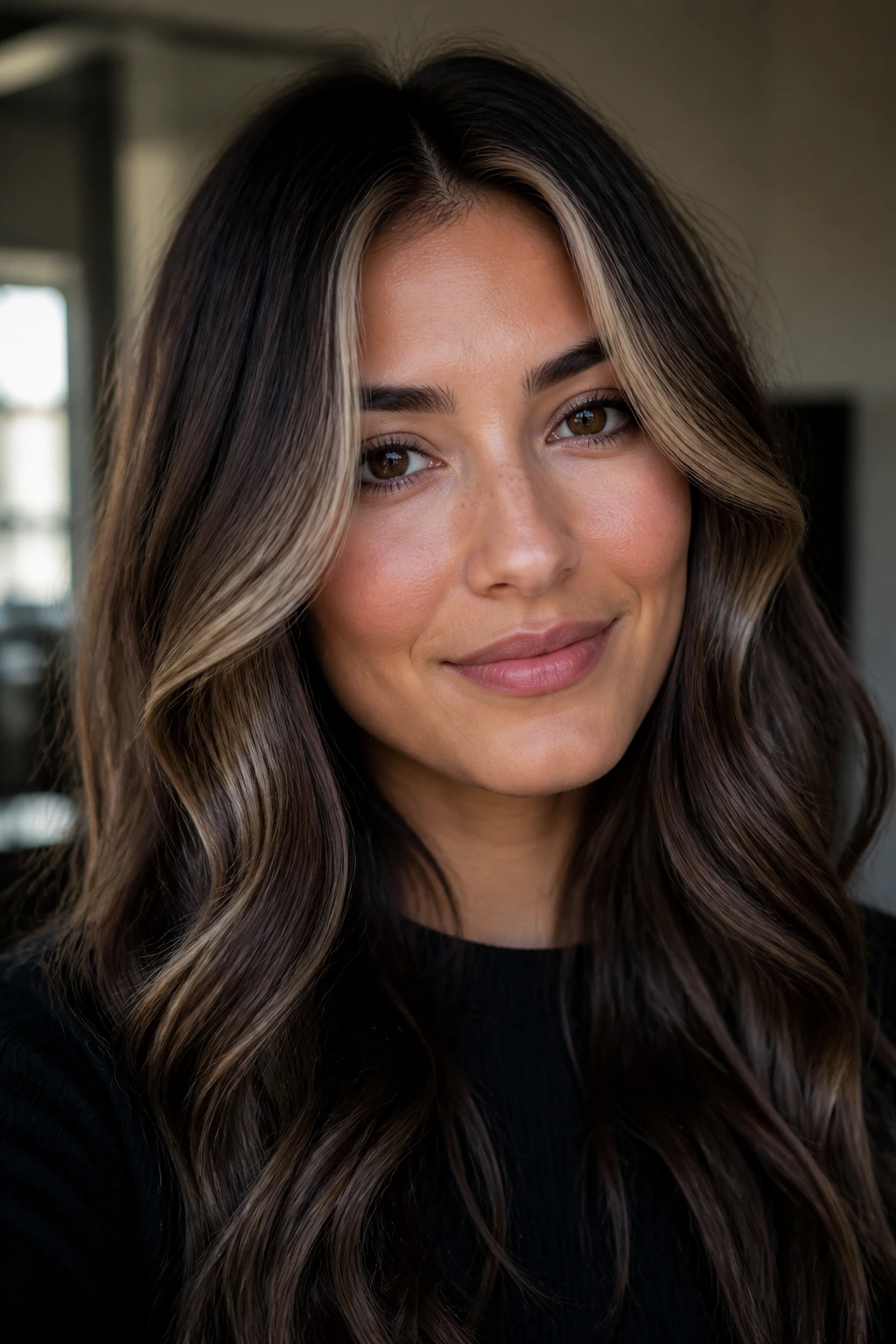
There’s a reason money pieces keep hanging around. Done well, they frame the face in one fast move, and on cool skin a beige-caramel version can brighten the eyes without turning the front sections orange. The mocha base keeps the look grounded.
The trick is restraint. One or two face-framing pieces around the temples and front hairline are usually enough. If the front gets too wide or too light, the style starts to look costume-y. Keep the rest of the head one or two levels deeper, and the front piece does the talking.
5. Walnut Brown with Muted Caramel Ends
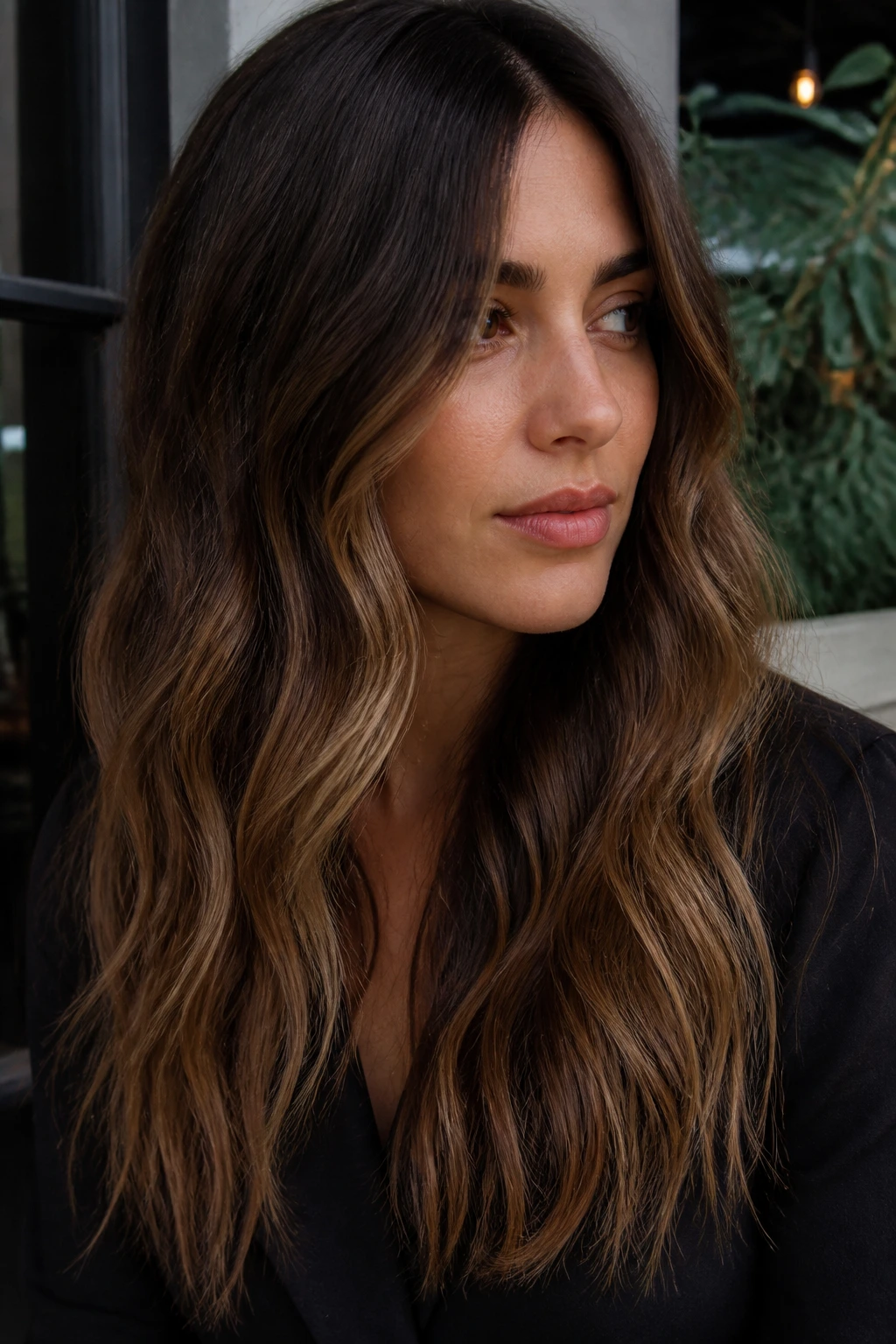
Walnut brown has a dry, refined feel that suits cool skin better than chestnut-heavy warmth. Add muted caramel ends and the whole look becomes softer, like the hair has been worn in rather than painted on. It’s one of the best low-maintenance options on this list.
This works especially well if you like long layers or waves that fall past the shoulders. The lighter ends catch movement while the root area stays dark and easy. If you want the least amount of salon upkeep, this is a smart place to spend your money.
6. Dark Chocolate with Latte Highlights
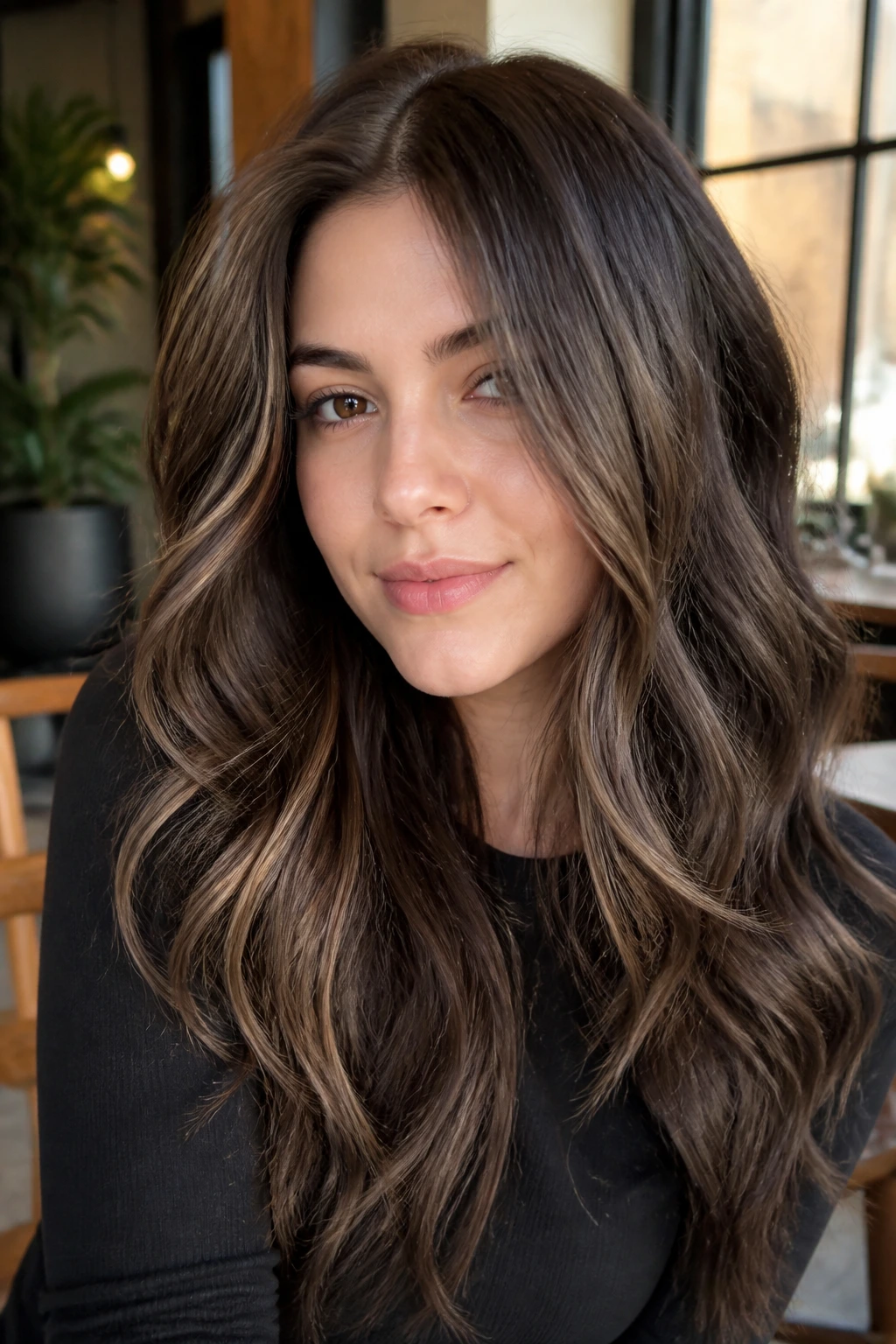
Dark chocolate plus latte highlights gives you more contrast than the softer looks above, but it still behaves if the latte tone stays cool. The highlights should lean beige, not honey. That small choice changes the entire mood.
I like this on thicker hair because the contrast can disappear a little in dense texture if the pieces are too thin. Give the colorist room to paint a few wider ribbons through the top and around the face, then let the darker chocolate do the heavy lifting underneath. The result feels plush, not loud.
7. Cool Bronde with Neutral Caramel
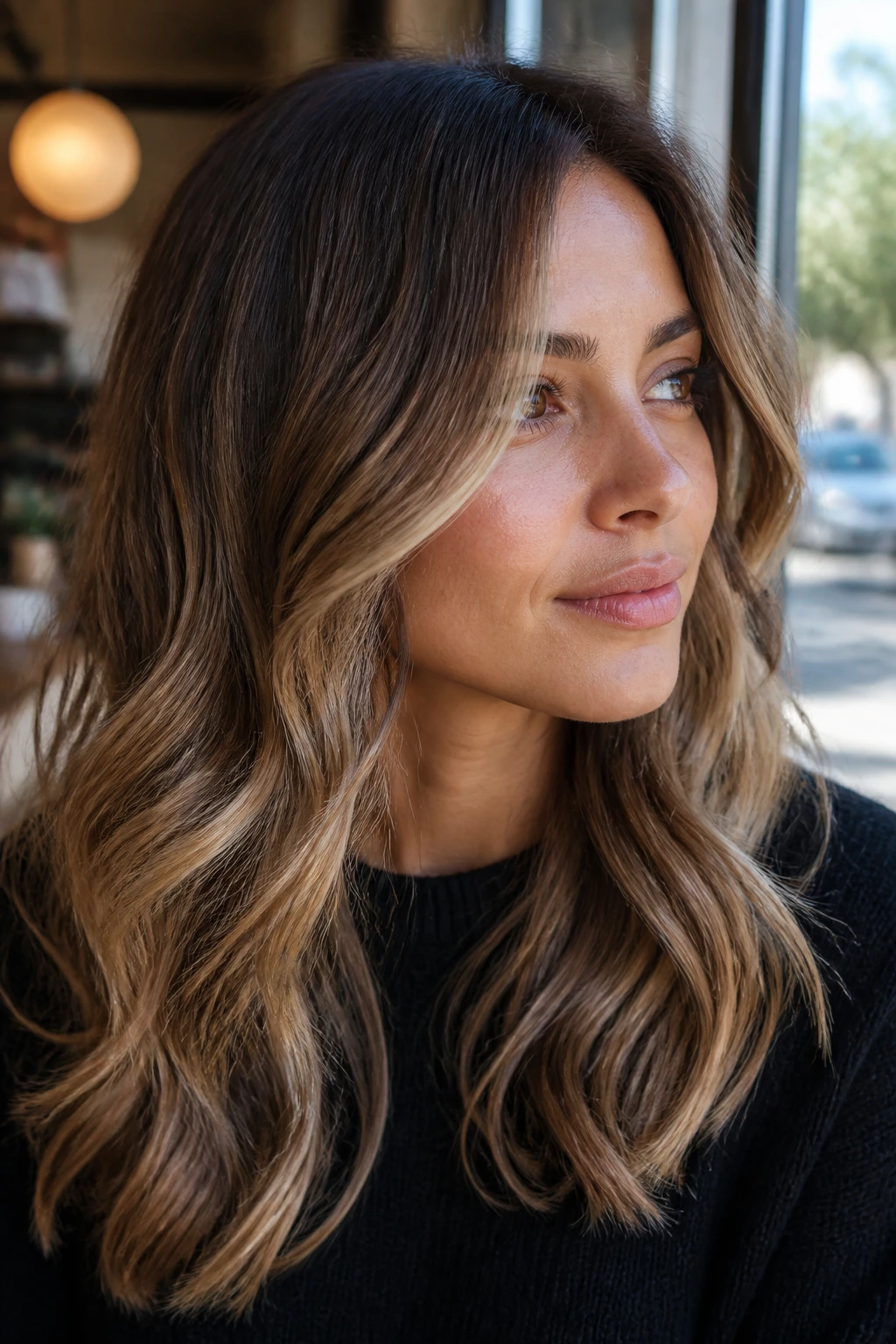
Bronde can go very yellow very quickly, which is why cool-skinned readers need the neutral version. Neutral caramel sits between brunette and blonde without tipping into gold. It’s the bridge shade for someone who wants brightness but does not want to look sunburned in daylight.
This is one of the easiest ways to lighten a brown base without losing the brunette identity. Ask for soft transitions rather than sharp contrast, and keep the root smudge a shade or two deeper than the ends. The grow-out is smoother, and the color stays believable for longer.
8. Cocoa Brown with Biscotti Strips
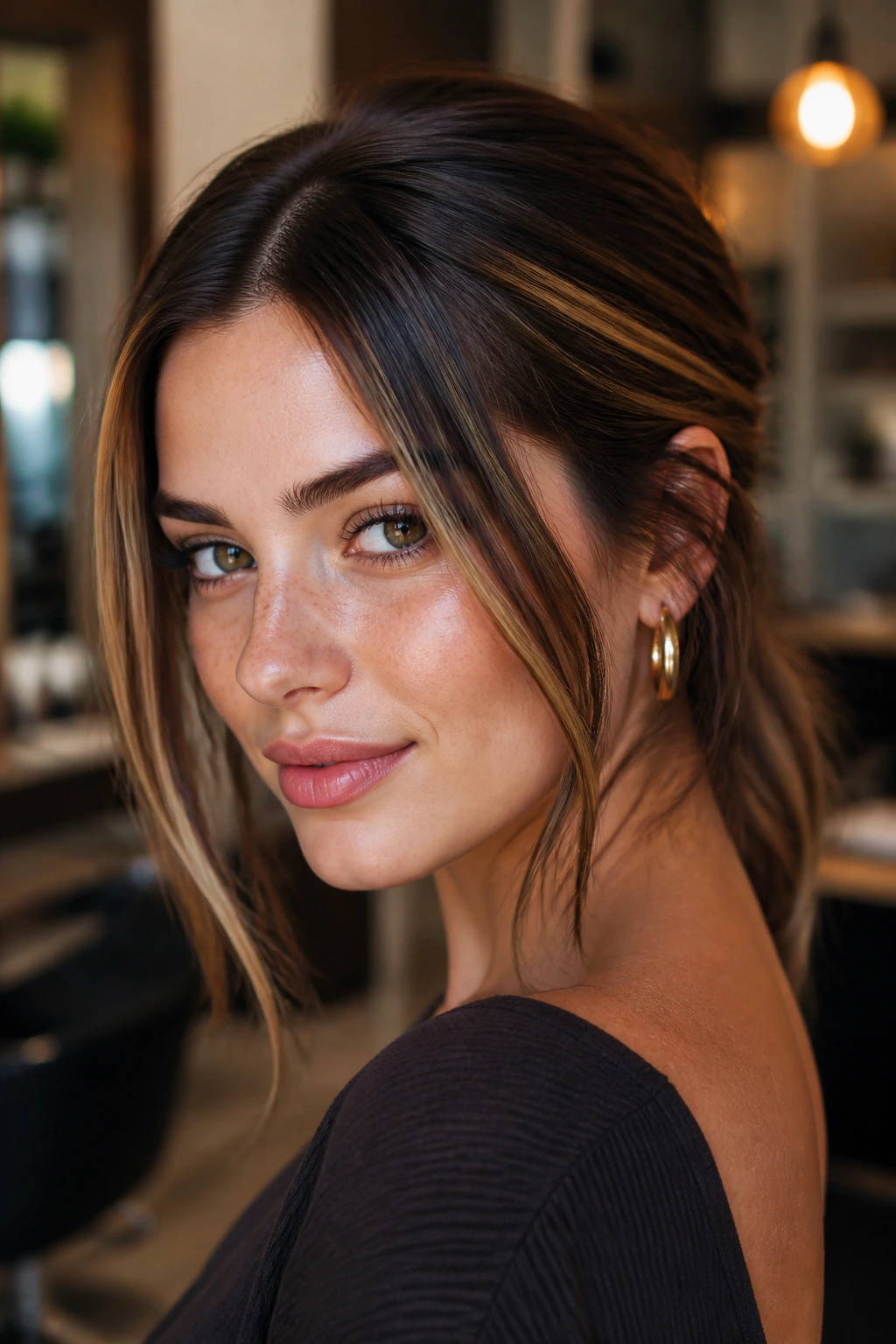
Cocoa brown gives the hair that deep, velvety base, and biscotti strips add a little lift without veering into blond territory. The caramel pieces should be thin enough to read as texture, not as a highlight map. I like this for layered cuts because the movement does half the work.
The look has a slightly editorial feel when the strands are tucked behind the ears or worn in a rough blowout. It’s a good choice if you want people to notice your hair without being able to name exactly why. That kind of confusion is often a compliment.
9. Mushroom Brunette Bob with Caramel Shadow
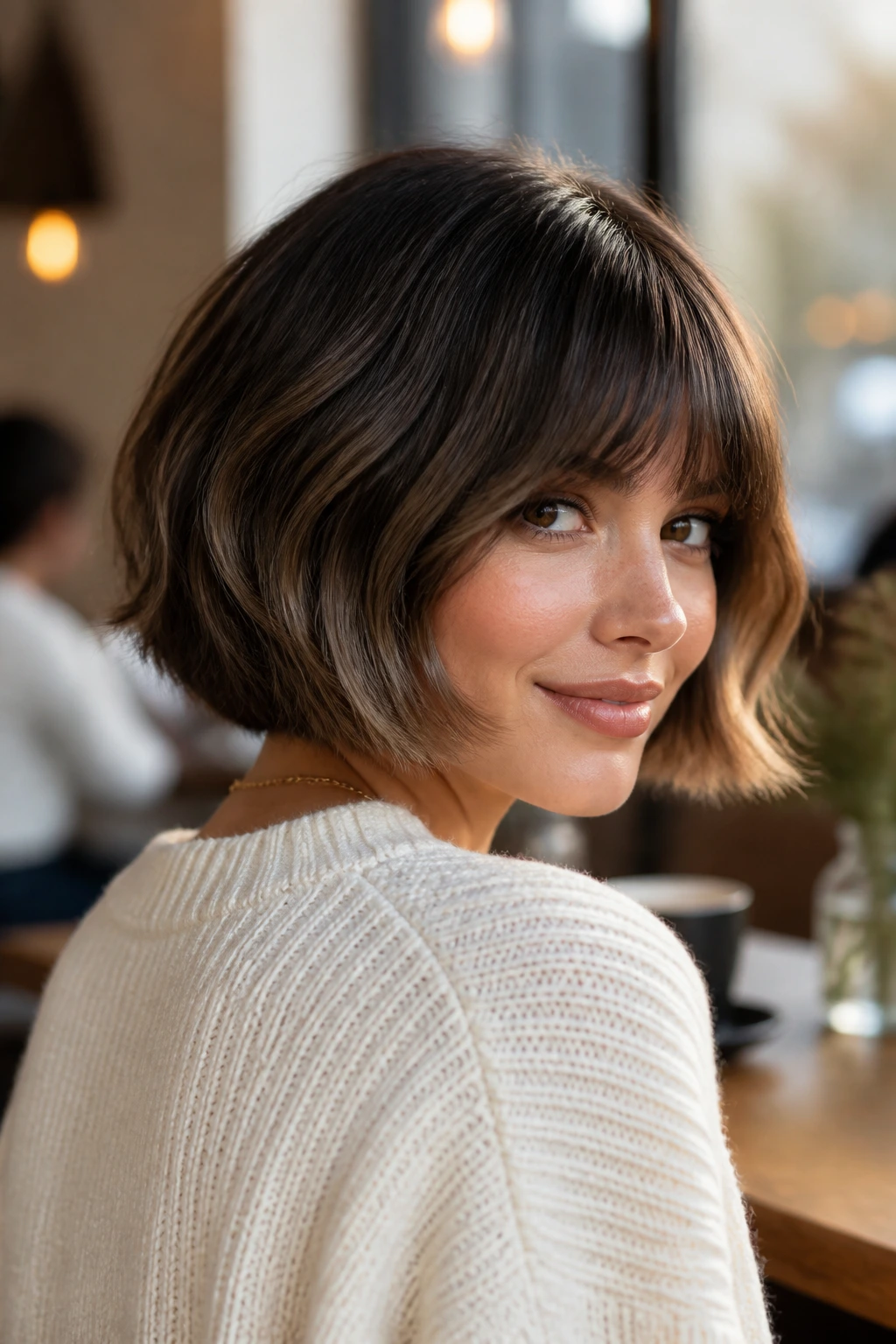
A bob needs a different kind of color story. With a blunt or softly angled bob, too much contrast can make the cut look choppy in the wrong way. Mushroom brunette with a caramel shadow keeps the shape crisp while still giving it dimension.
The caramel should sit mostly on the surface layers and around the jawline. That way the color follows the cut instead of fighting it. On cool skin, the mushroom base prevents the warmth from pushing too far orange near the cheeks.
10. Chestnut Brown with Smoked Caramel Lowlights
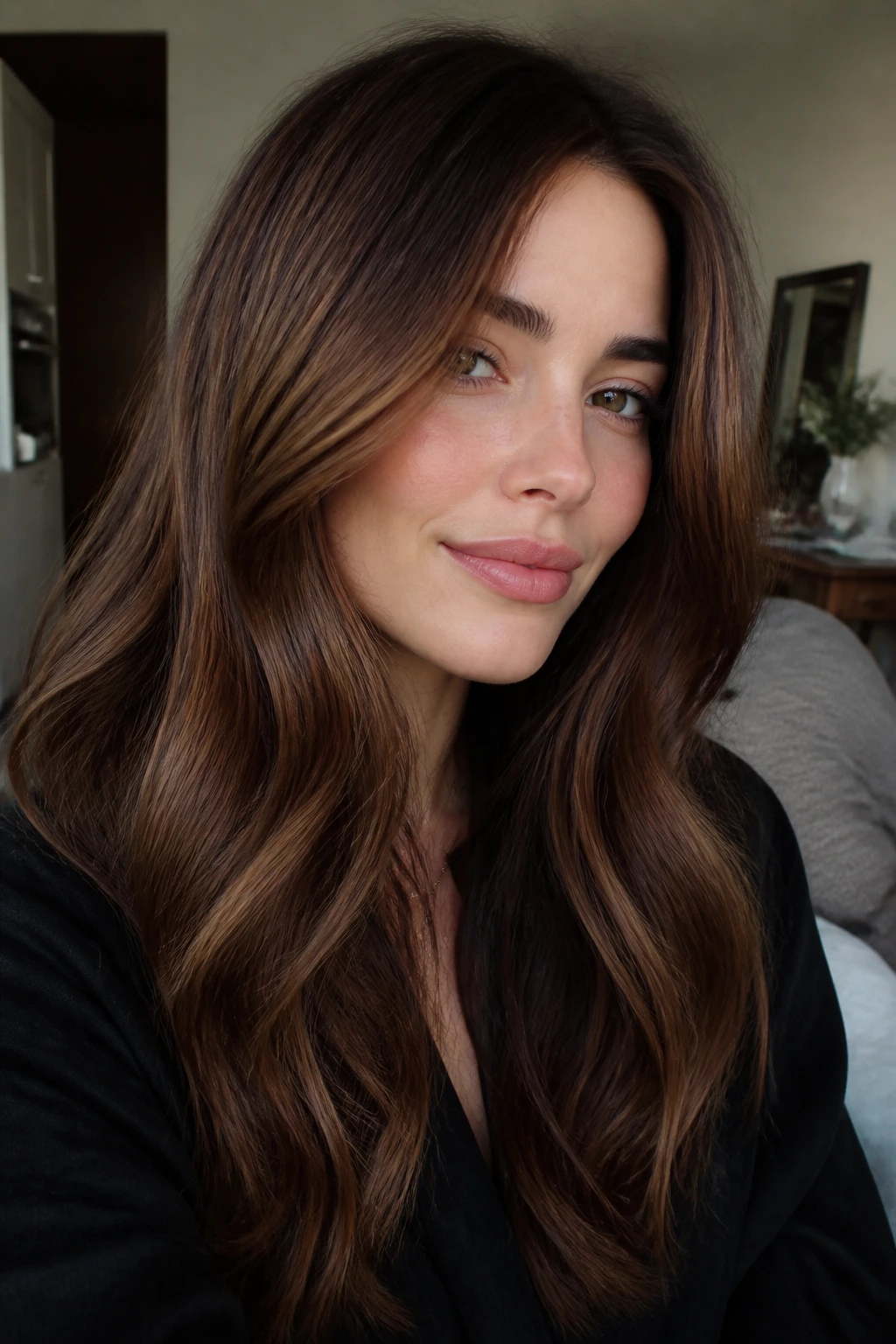
Most people think of caramel as a highlight, but lowlights can do just as much. Smoked caramel lowlights deepen the chestnut base and make the whole head look fuller. If your hair is thick, this can be the difference between “colored” and “colored well.”
The finish is especially nice if your natural color is already medium brown and you want depth rather than lightness. Cool skin benefits because the warmth is buried inside the brown, not sitting on top of it. It feels richer, darker, and less reflective in the best way.
11. Cold Brew Brunette with Thin Caramel Threads
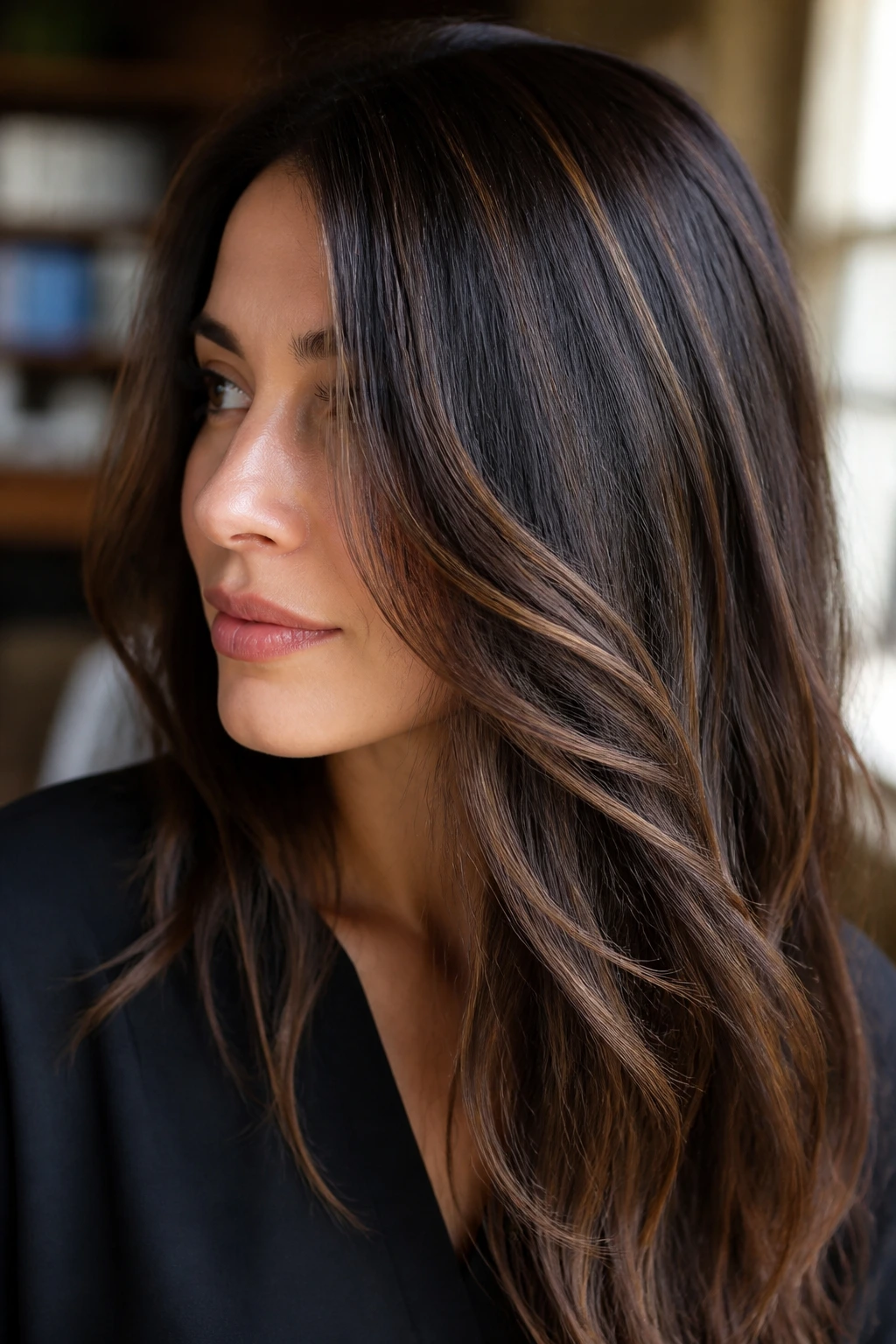
Cold brew brunettes are for people who want caramel but would rather whisper than sing. The threads are narrow, delicate, and spaced far enough apart that the brunette base still looks like the main event. This is a very good choice for work settings where obvious highlights feel like too much.
The color works because the caramel only shows itself in motion. Still hair looks almost uniform. Waves or a tucked-behind-the-ear moment reveal just enough light to keep the shade alive. If you have cool skin and prefer clean, understated color, this one lands well.
12. Tobacco Brown with Beige-Caramel Melt
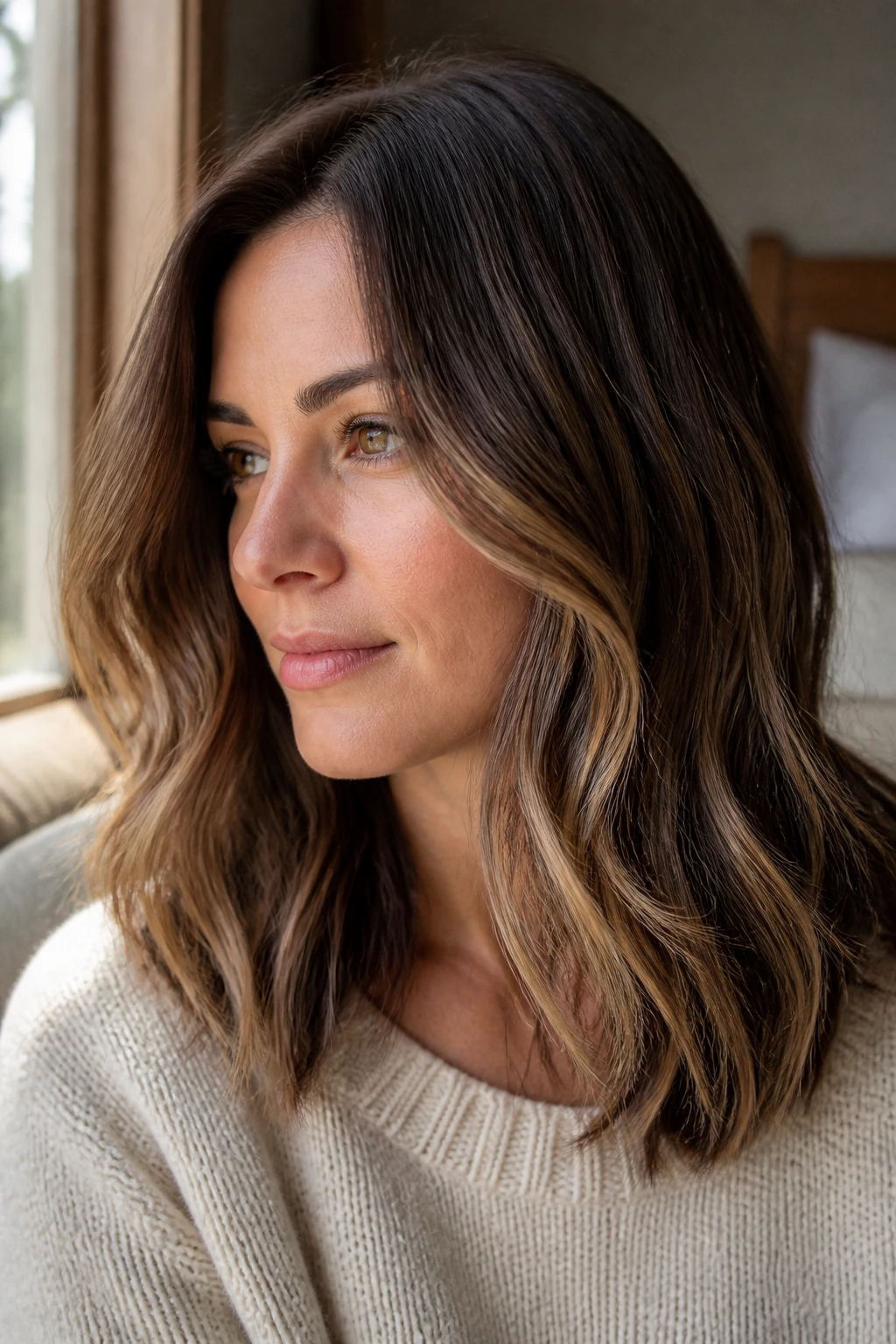
Tobacco brown sounds warm, but the right version is more smoky than spicy. Pair it with a beige-caramel melt and you get a soft gradient that sits comfortably on cooler complexions. The key is avoiding anything coppery at the ends.
This one suits medium-length cuts especially well because there’s enough room for the melt to show. Short hair can lose the gradient; long hair can make it look too blended if the lightness is weak. Medium layers let the whole thing breathe.
13. Espresso Pixie with Caramel Crown Lightening
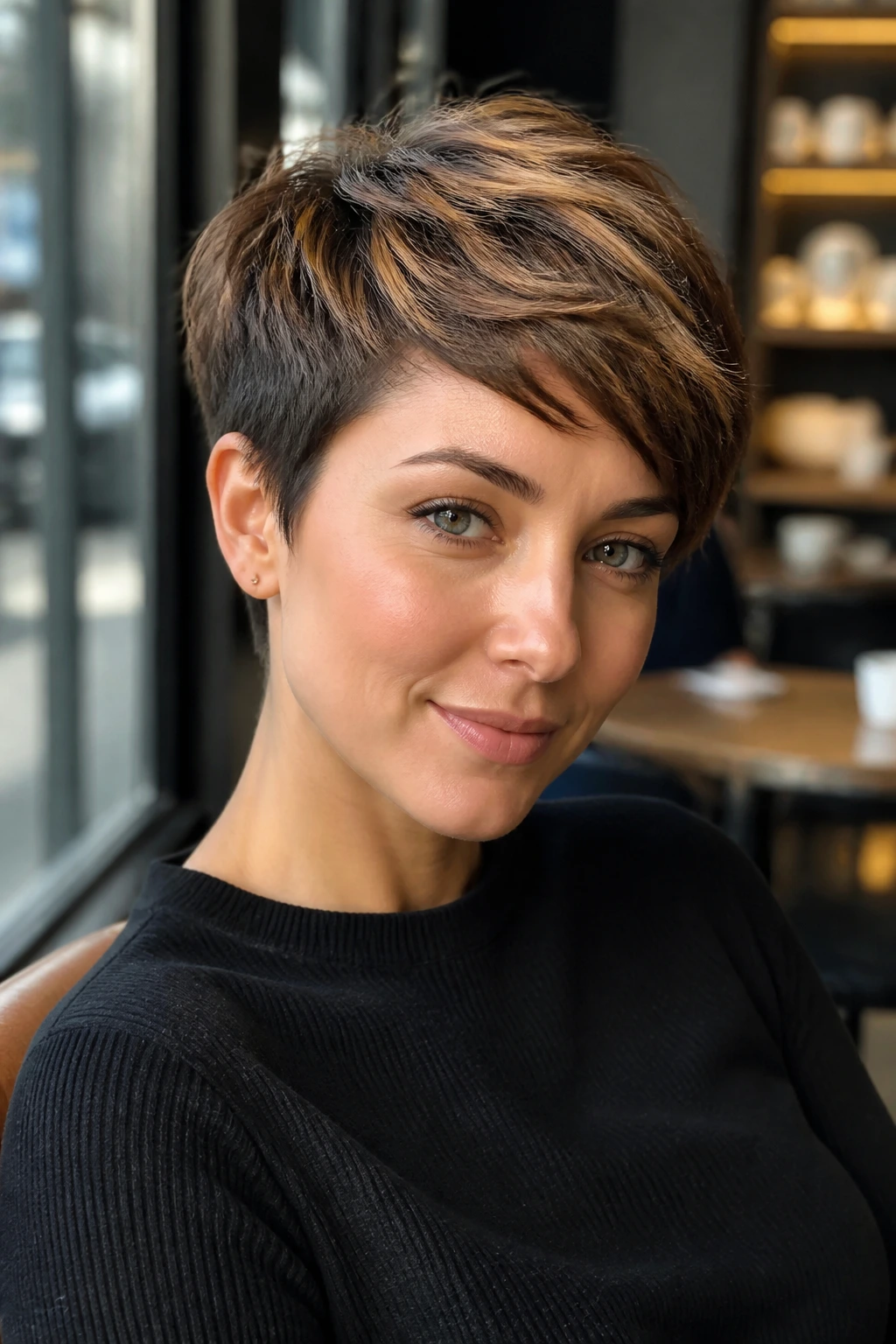
Short cuts can carry caramel, too. On a pixie, the smartest place to add lightness is the crown and top layers, where the texture needs a little lift. Keep the sides deeper and closer to espresso, then paint just enough caramel on top to show movement.
That little burst of brightness helps the cut read crisp instead of flat. Cool skin benefits because the warmth stays away from the cheeks and jawline, where it can be less forgiving. It’s sharp, compact, and surprisingly easy to live with.
14. Satin Brunette with Tonal Caramel Balayage
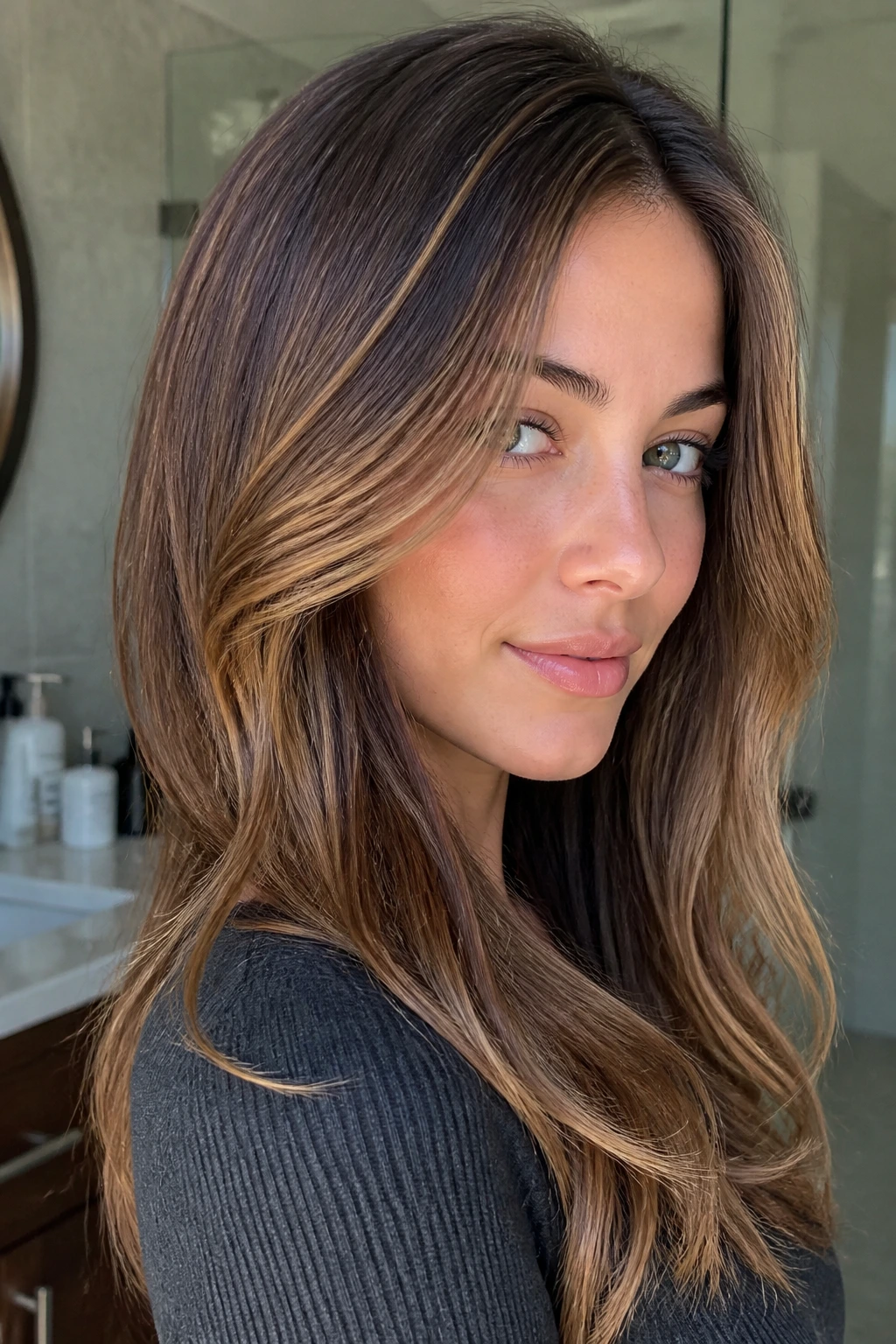
Some shades are about contrast. This one is about sheen. Satin brunette with tonal caramel balayage keeps the lightness close to the base color, so the finish looks smooth and polished rather than striped. It is one of the easiest brown caramel hair color ideas for cool skin tones to wear if you hate obvious highlights.
Ask for a glossy finish at the end. A cool or neutral glaze can pull the caramel back into line if it starts drifting warm. On straight hair, the result looks sleek; on curls, it gives shape without stealing the spotlight.
15. Taupe Brown with Melted Caramel Ends
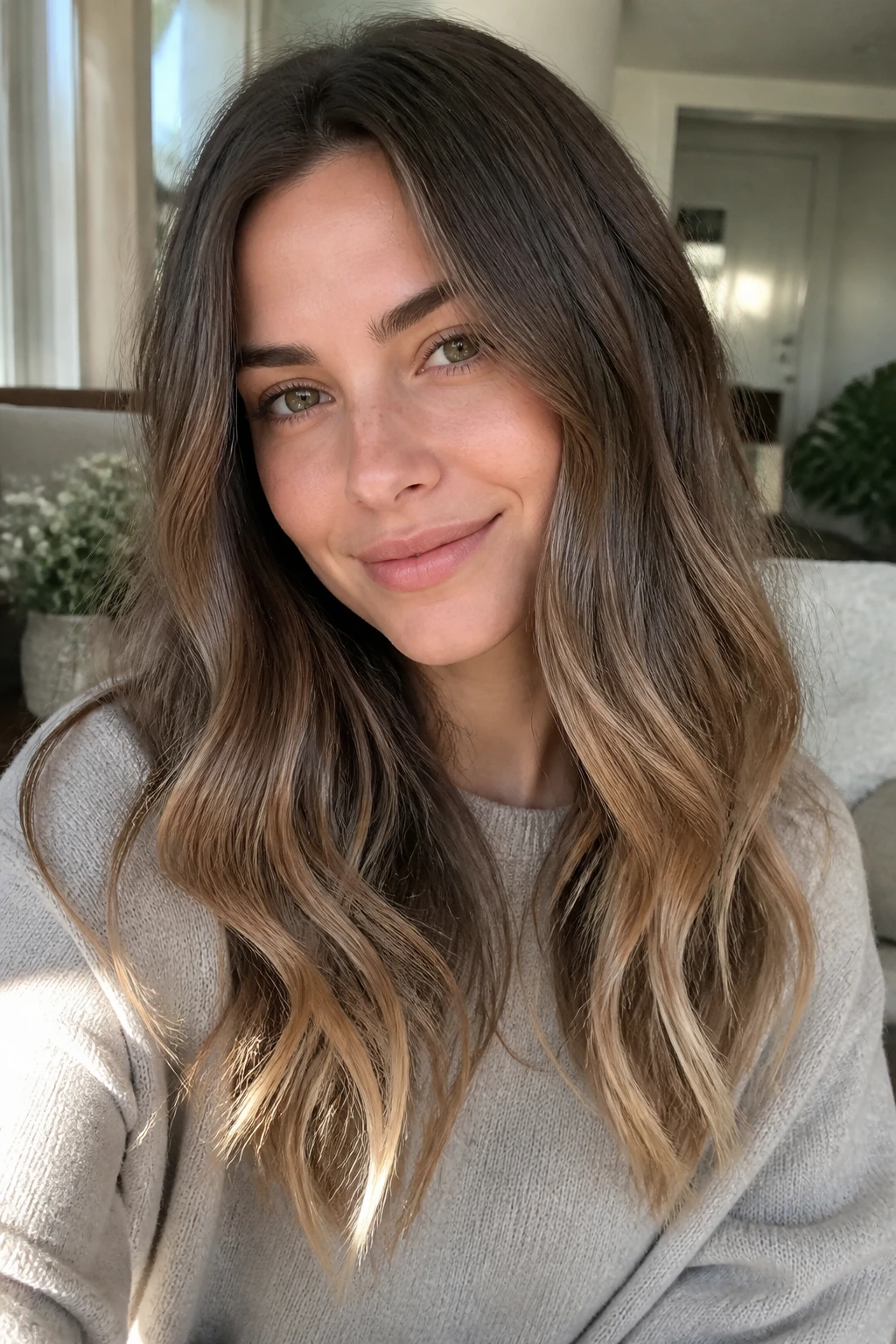
Taupe brown sits in that lovely middle zone between ash and beige. Add melted caramel ends and you get a color that feels soft from root to tip, never harsh. This is a favorite of mine for people who want something grown-up but not severe.
The lower half of the hair gets the most lightness, which makes the roots feel natural and the lengths feel richer. That’s useful if your cool skin looks best with contrast near the face but not a bright halo at the scalp. It keeps the whole head balanced.
16. Slate Brown with Sand Caramel Accents
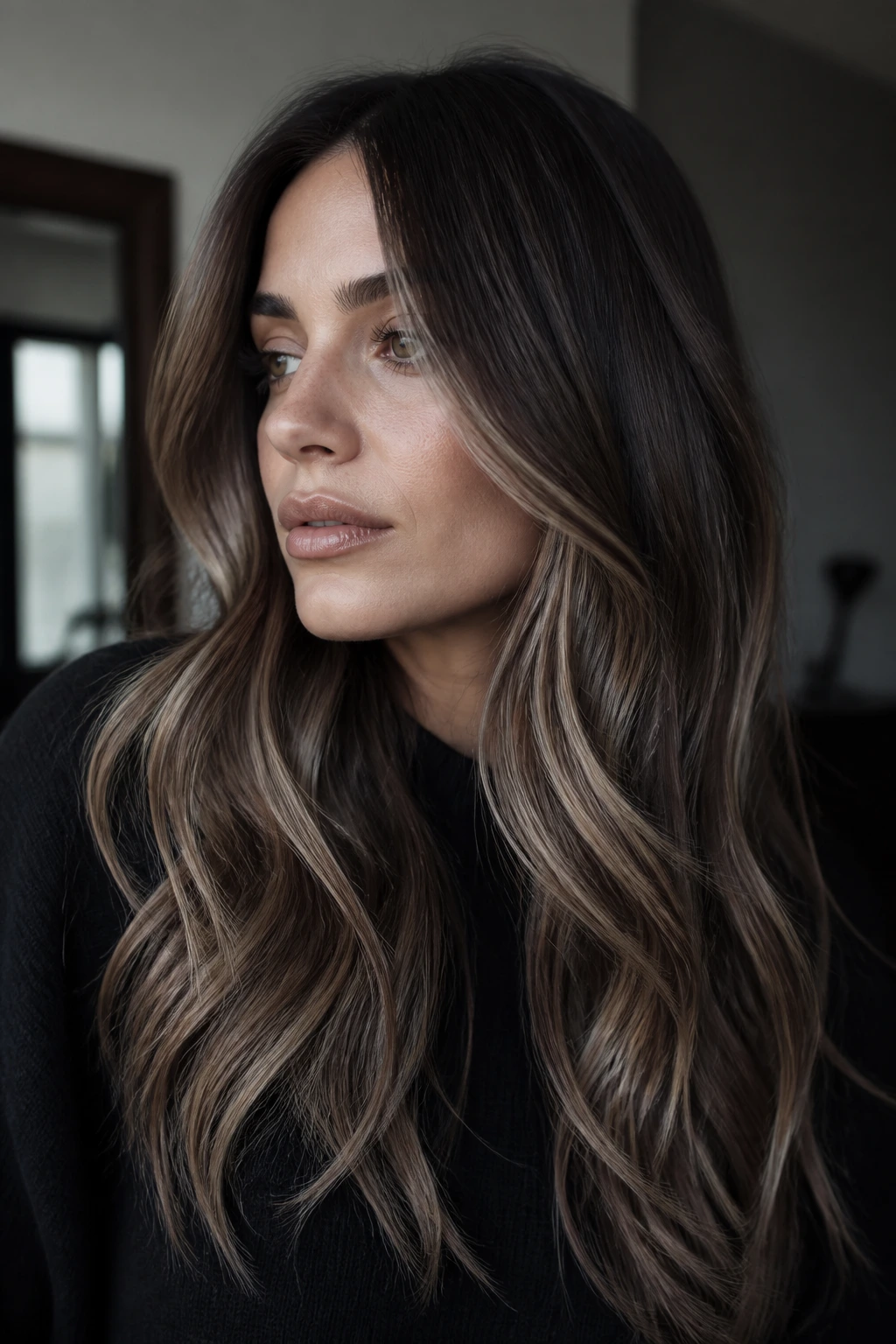
Slate brown has a cooler, slightly mineral feel that works surprisingly well with cool skin. The caramel accents should be more sand than gold, which keeps the overall effect from getting loud. Think of it as brunette with a little dry sunlight, not beach blonde energy.
This shade is a nice fit for people who wear a lot of black, gray, white, or navy. It doesn’t fight those clothes. In daylight, the accents show enough movement to keep the hair from going flat. Indoors, it stays moody and clean.
17. Almond Brown with Caramel Veil
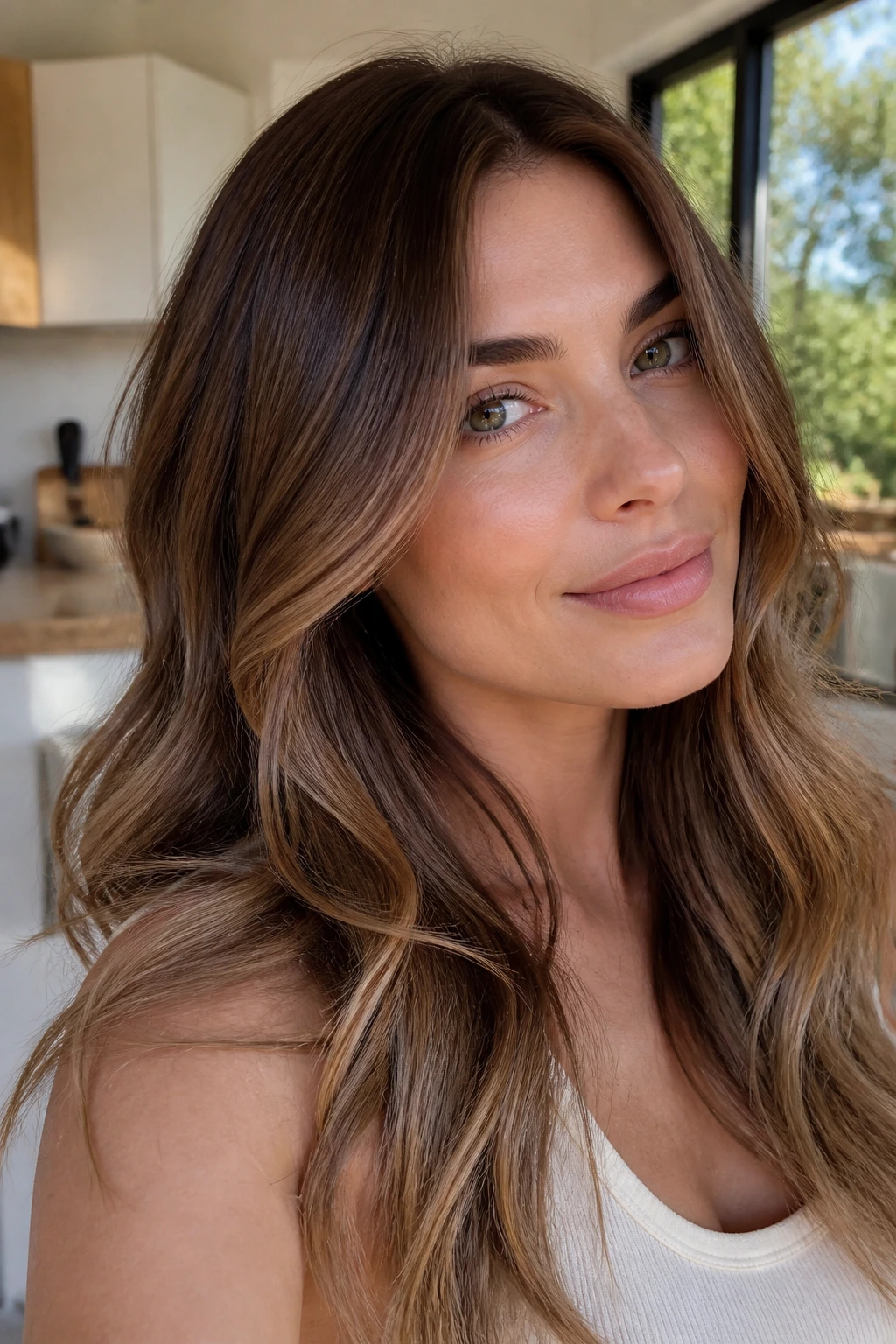
Almond brown is softer than espresso and lighter than mocha, which makes it useful if you want a gentle shift. The caramel veil should be transparent-looking, almost like light dusted over the surface. Fine hair handles this well because the color does not need heavy chunks to register.
Cool skin tends to like this kind of softness. The shade lifts the face without making the skin look red or flushed. If you want a color that reads polished from a few feet away and close-up, this does the job.
18. Sepia Brunette with Caramel Babylights
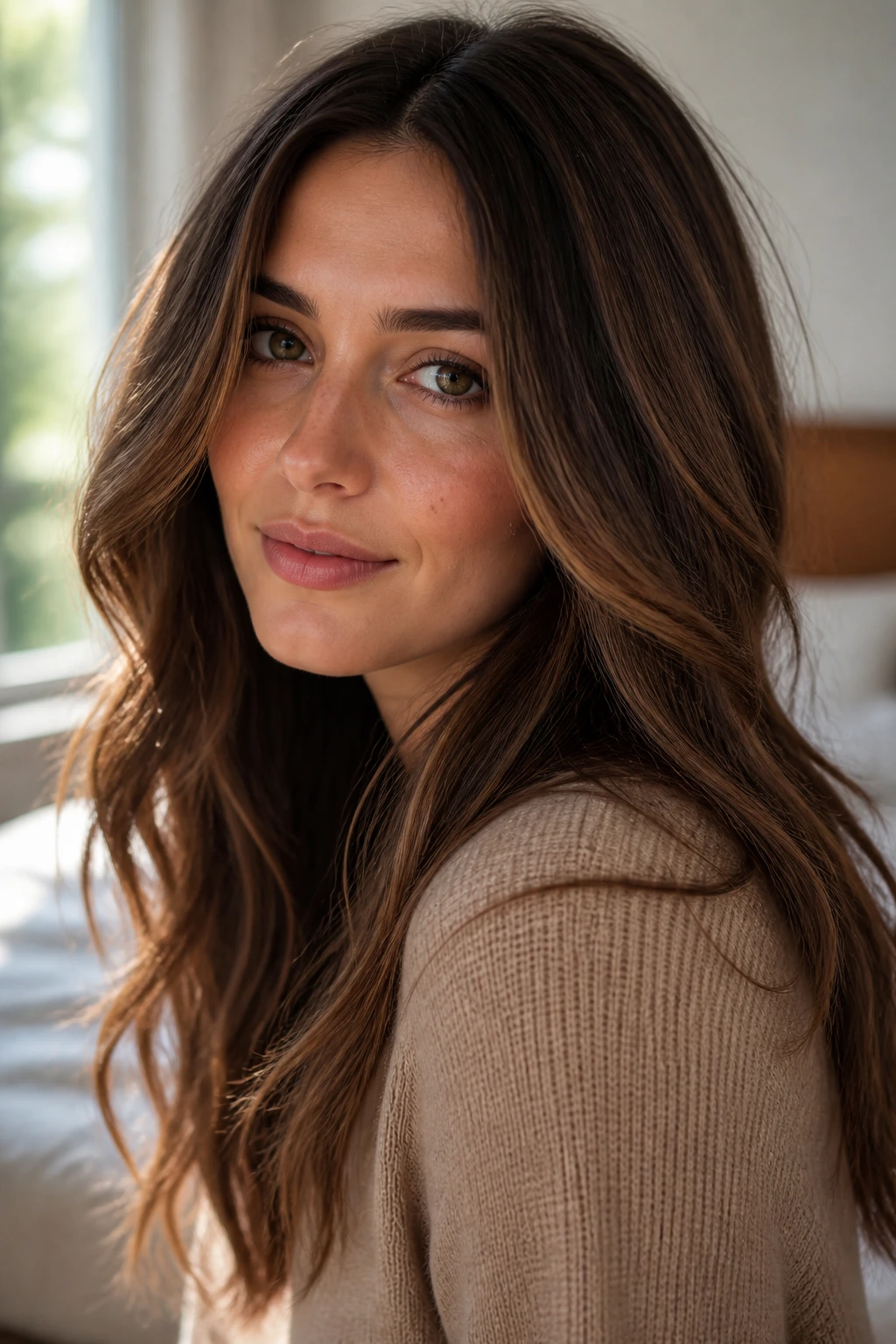
Babylights are tiny for a reason. They mimic the fine, scattered light you’d see in naturally sun-kissed hair, which makes the color feel believable rather than painted. Sepia brunette gives the base enough depth, and the caramel babylights add a faint shimmer.
This is one of the easiest choices if you are nervous about high-contrast highlights. The pieces are so fine that the overall color stays brown first, caramel second. That balance looks especially clean on cool skin with a soft rosy cast.
19. Dark Roast Brown with Pebbled Caramel Highlights
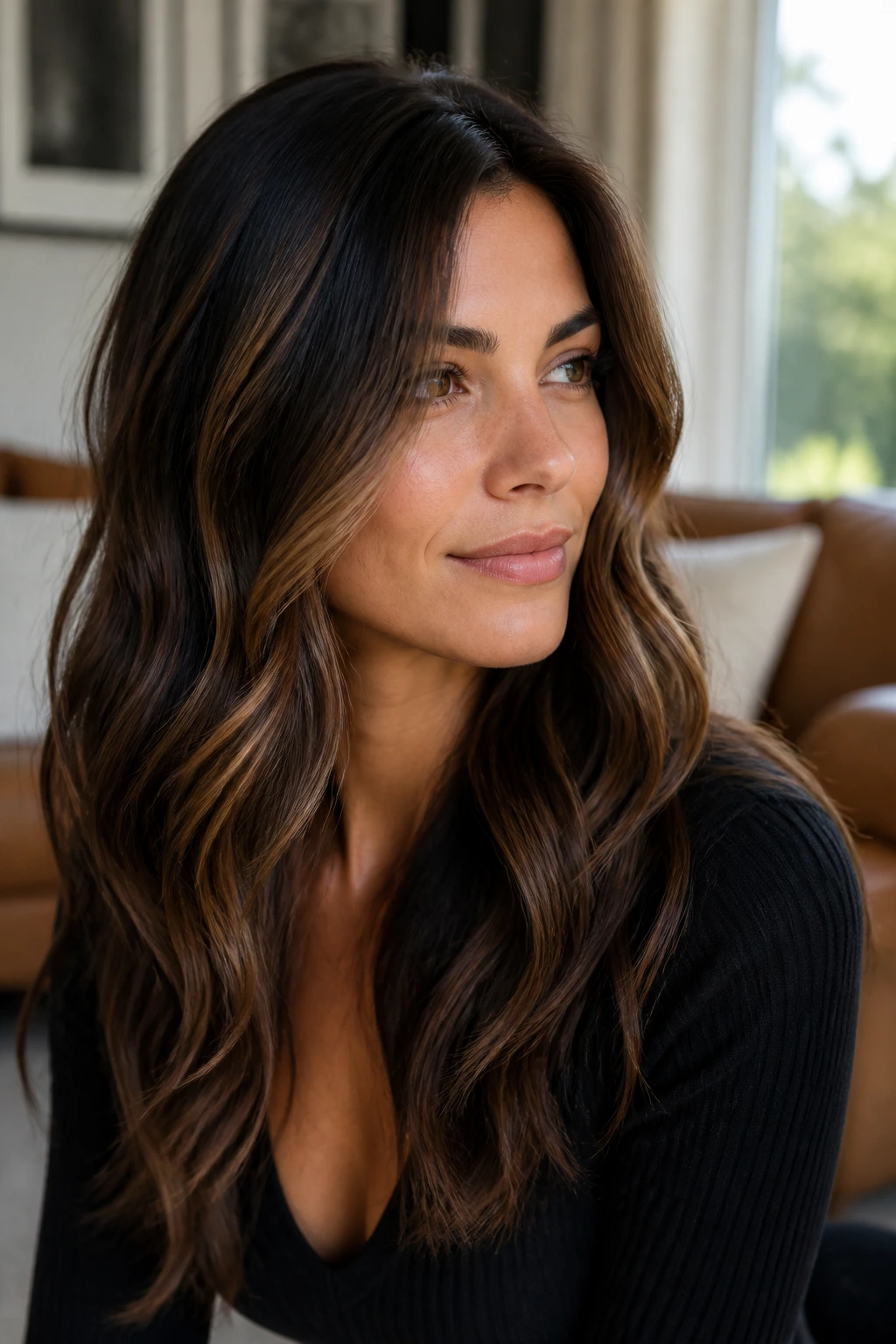
Thicker hair, curls, and coils can handle a little more surface texture in the color. Pebbled caramel highlights are chunkier than babylights but softer than old-school stripes. The name fits: small, rounded pieces of light that sit inside a dark roast base.
The best version follows the bend of the hair instead of trying to force every section into the same pattern. That gives the highlights room to move. Cool skin benefits because the caramel pieces can be kept beige and muted, which avoids the bright orange halo that happens when warm highlights sit too close to the face.
20. Velvet Brown with Hidden Caramel Panels
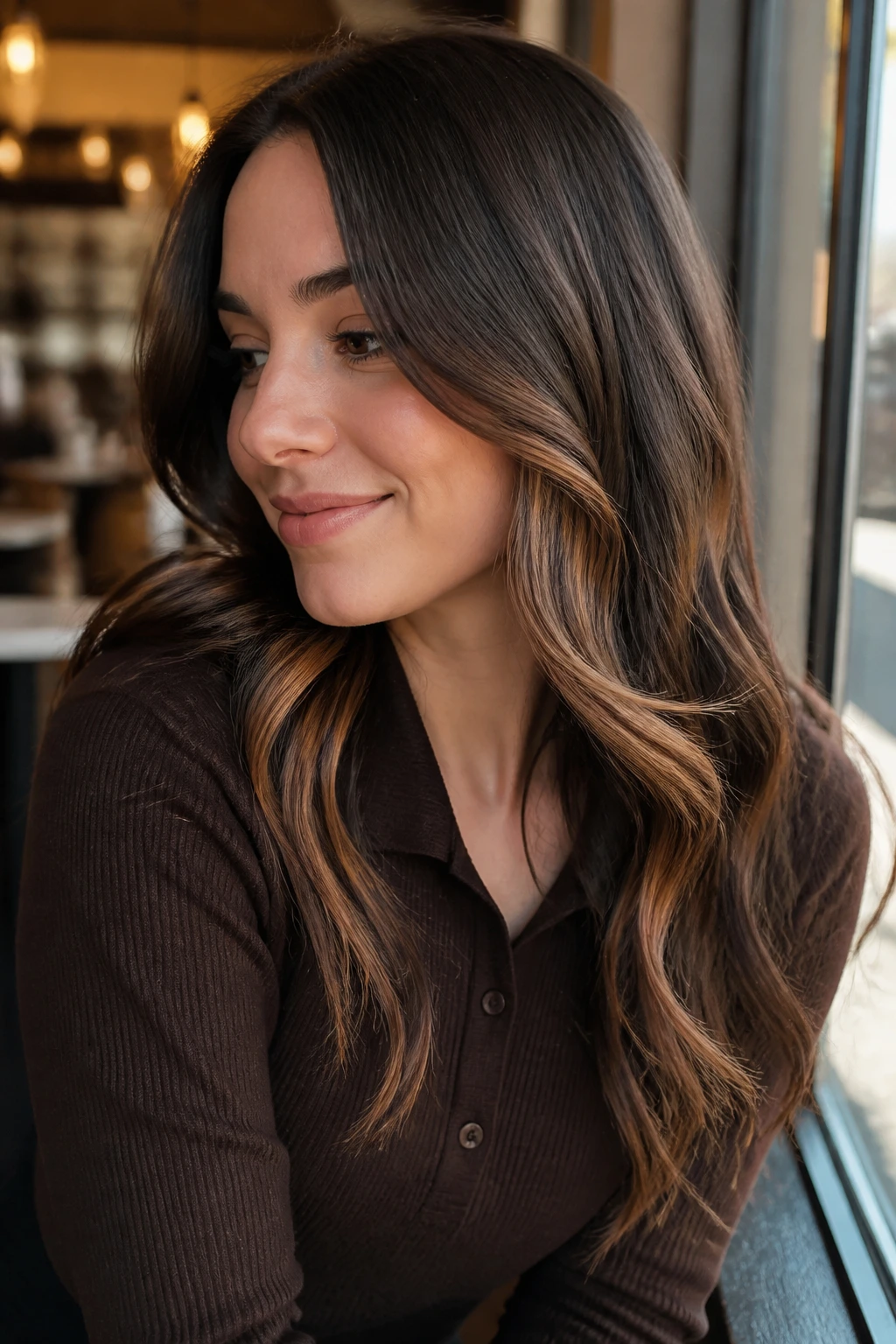
Hidden panels are for people who like a little surprise. From the front, velvet brown can look almost uniform. Turn the hair, tuck it behind the ear, or put it up, and the caramel panels show themselves in a controlled strip.
This works best when you want dimension without constant visibility. It’s also a smart option if your workplace or dress code prefers restrained color. The cool-toned brown base stays dominant, while the caramel adds movement in the places you notice only when the hair shifts.
21. Soft Mushroom Shag with Rooted Caramel
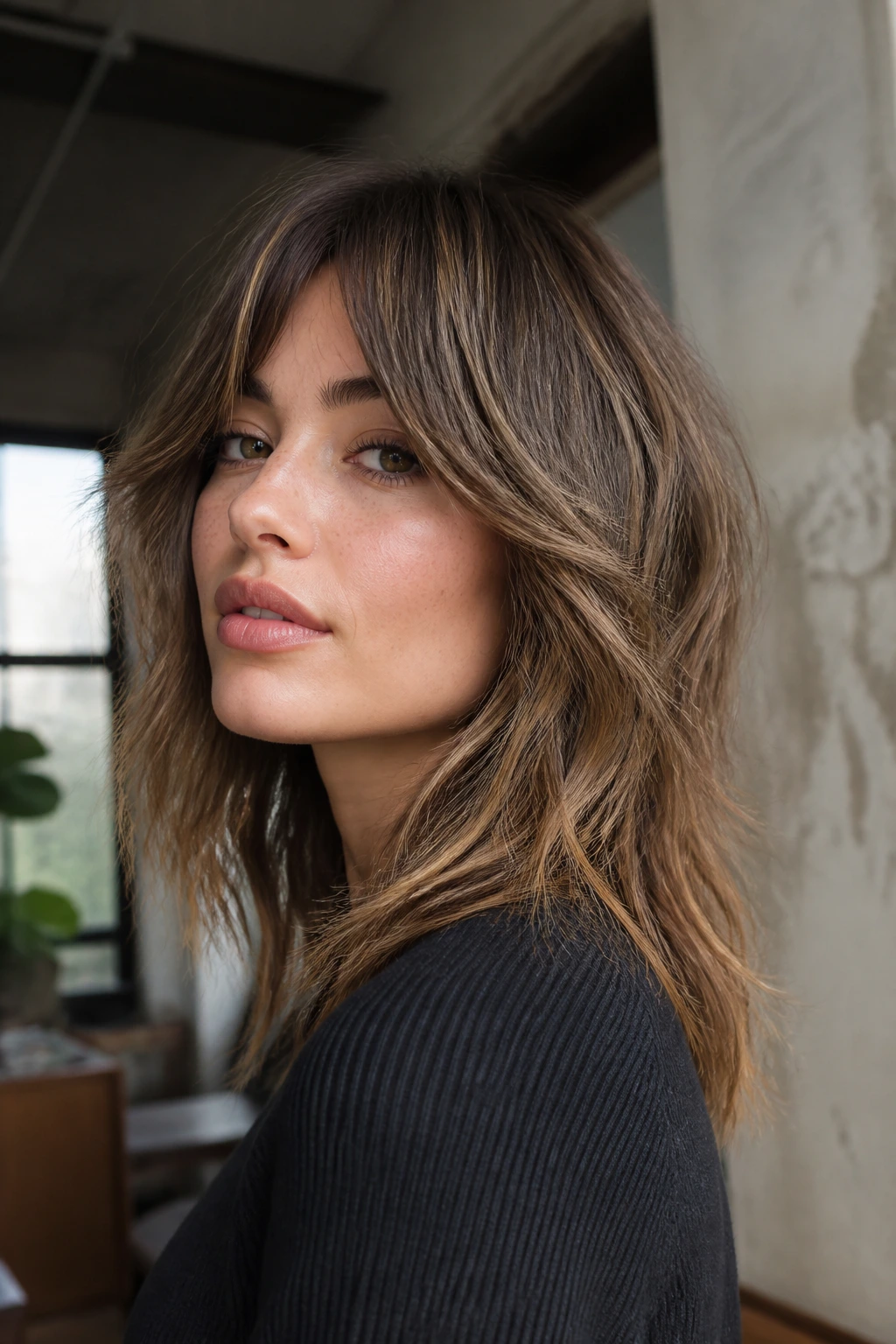
A shag needs color that can keep up with all that texture. Soft mushroom brown at the roots, rooted caramel through the lengths, and piecey ends give the cut enough separation to look intentional. If the color is too neat, the haircut can lose its edge.
This is especially good for cool skin because the mushroom root keeps the face clean while the caramel wakes up the layers. On a shag, you want dimension that looks a little undone. Too polished and the whole thing gets stiff.
22. Cocoa Root Smudge with Caramel Slices
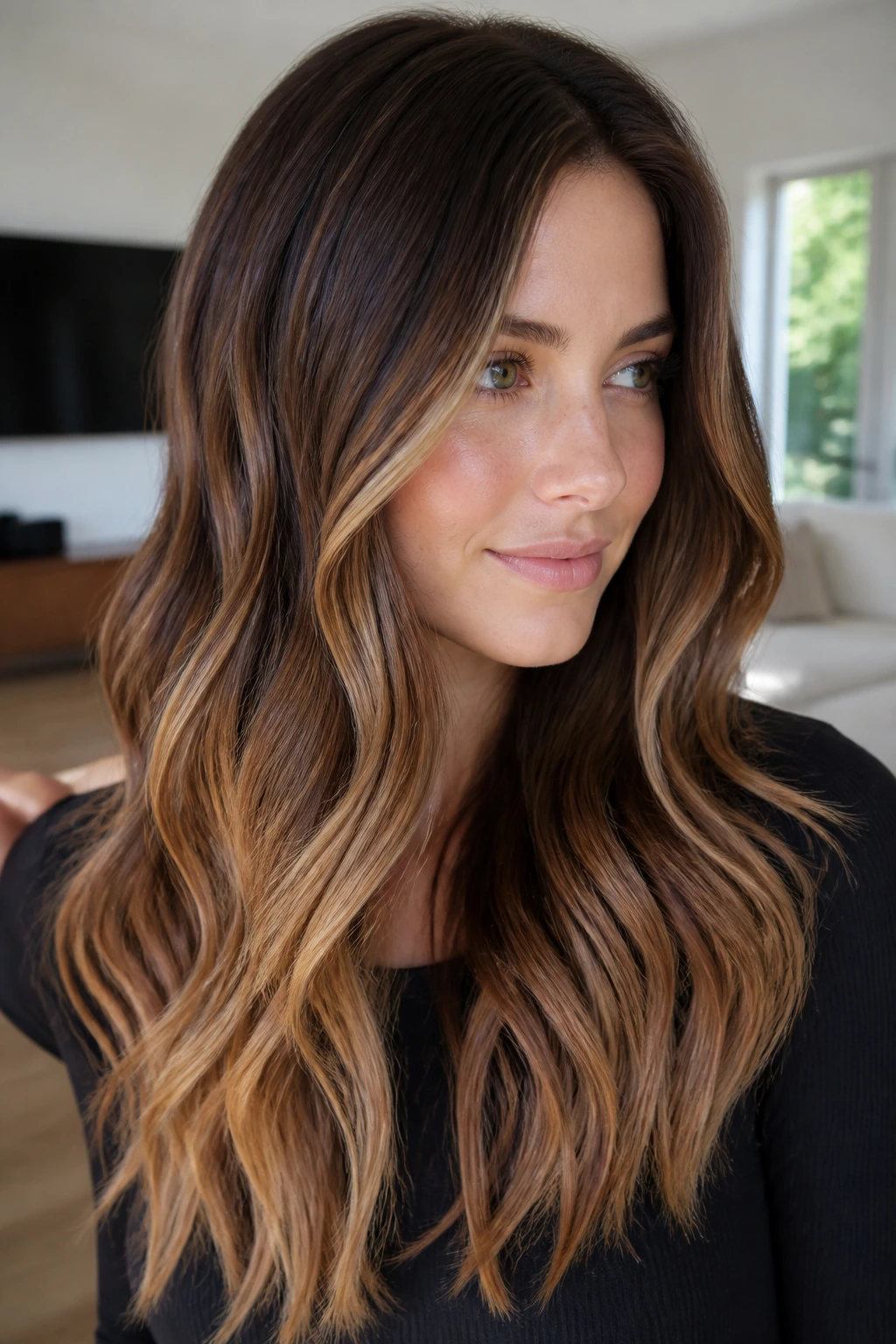
A root smudge is one of the easiest ways to make caramel look expensive. Cocoa at the root keeps the scalp area deep, then caramel slices brighten the mid-lengths and ends without a hard line. The transition is what sells it.
This shade makes sense on medium or long hair where the slices have enough space to travel. It’s also useful if your natural brown is a little flat and you want more shape around the face. Cool skin likes the depth; it gives the complexion a cleaner edge.
23. Iced Mocha Waves with Cool Caramel Tips
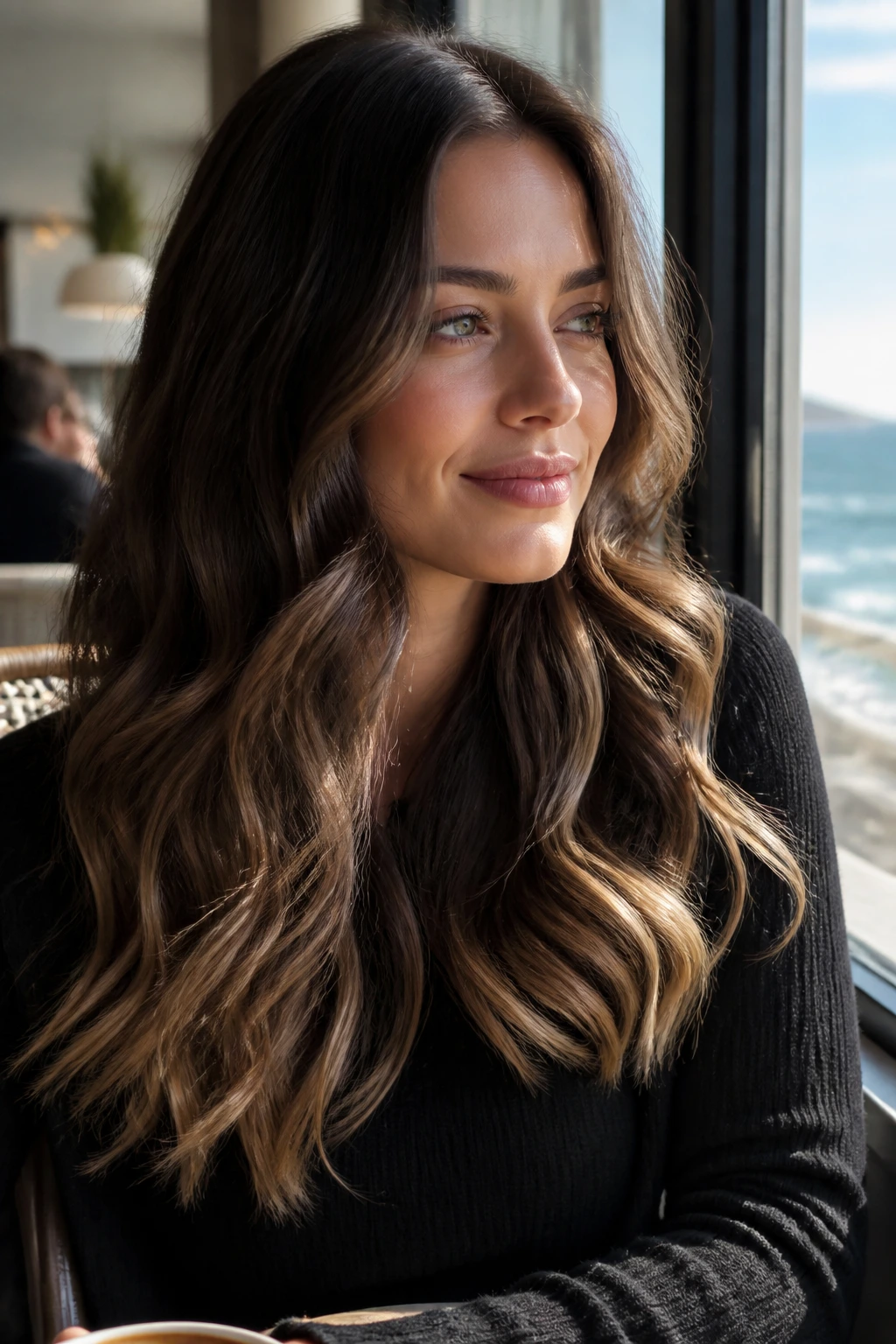
Some people want the lightness pushed all the way down. Iced mocha waves with cool caramel tips do that without turning the head into a blonde experiment. The tips should look lightly lifted, not bleached to death.
This style works when the hair is worn with a loose bend or a wave pattern that makes the ends flick out. The cool caramel at the bottom keeps the face area brown and grounded. That’s useful if your skin is very fair or easily flushed, because the warmth stays away from the front.
24. Smoky Brunette Lob with Caramel Underlights
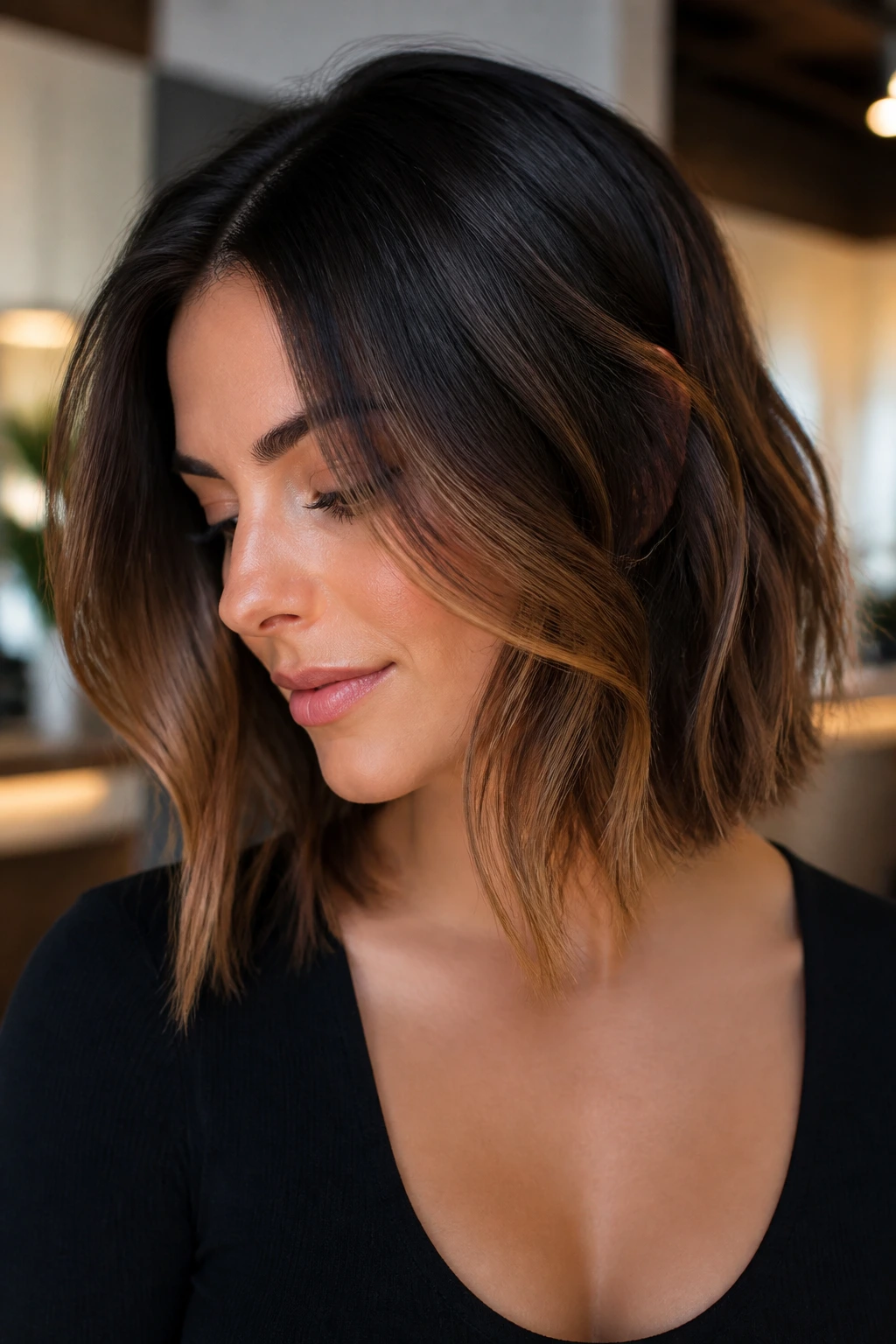
Underlights live beneath the surface layers, which gives a lob a sly little edge. The top remains smoky brunette, and the caramel peeks out only when the hair moves or catches light from below. It’s one of the quietest ways to wear warmth.
The cut helps a lot here. A lob has enough length to hold the hidden color, but not so much that the underlights disappear. If your cool skin likes subtle contrast and you don’t want brightness around the hairline, this is a strong choice.
25. Neutral Brown with Caramel Halo
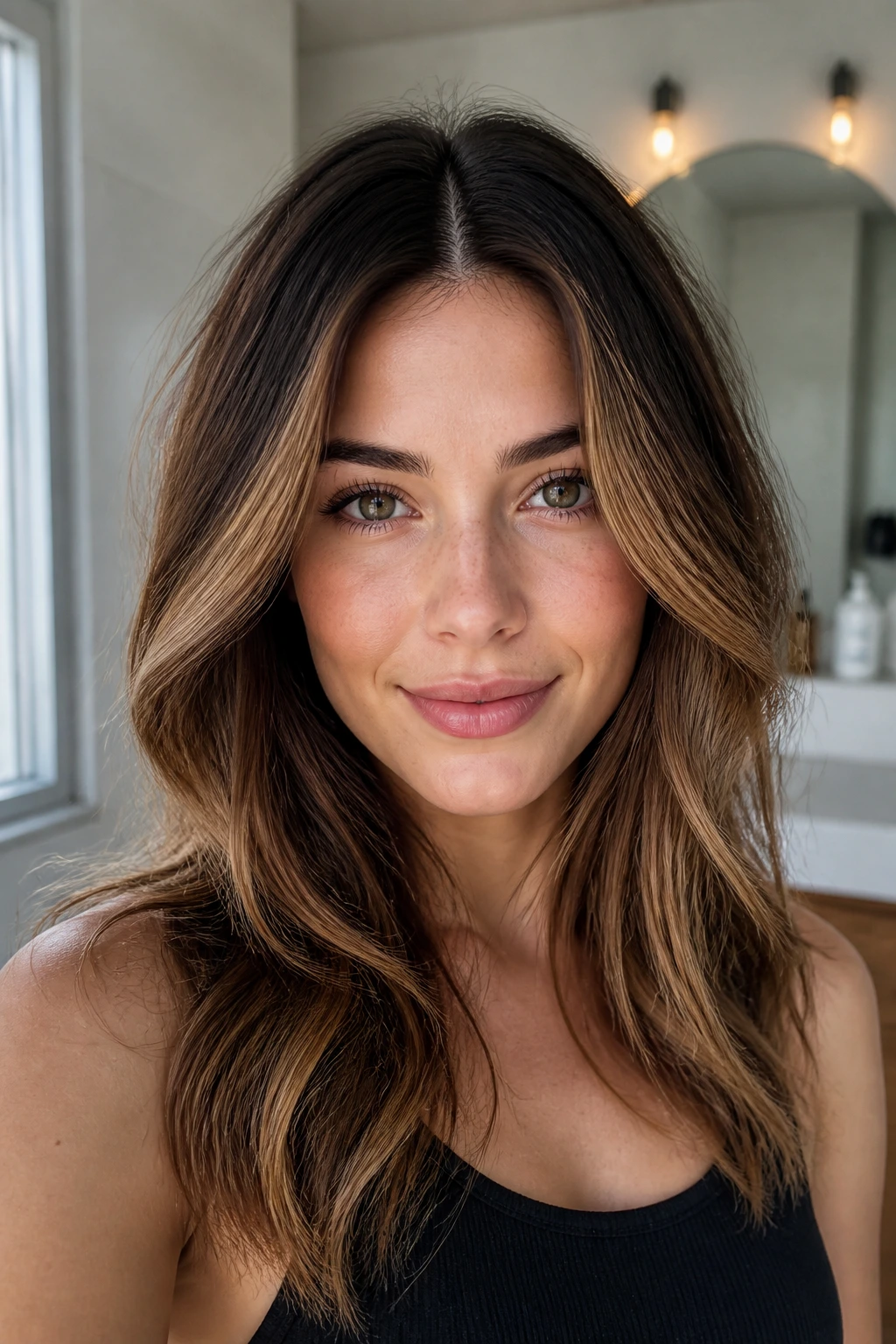
A caramel halo is all about the perimeter. The lightness wraps around the part, temples, and outer edges, leaving the interior brown and grounded. On cool skin, that can be a smart move because the brightness sits where it gives lift without turning the whole head warm.
This is one of the easiest ideas to wear with minimal styling. A center part shows the halo clearly. A side part softens it. Either way, the color stays neat, feminine, and easy to recognize without being loud.
Why Cool Caramel Browns Suit Cool Skin Tones
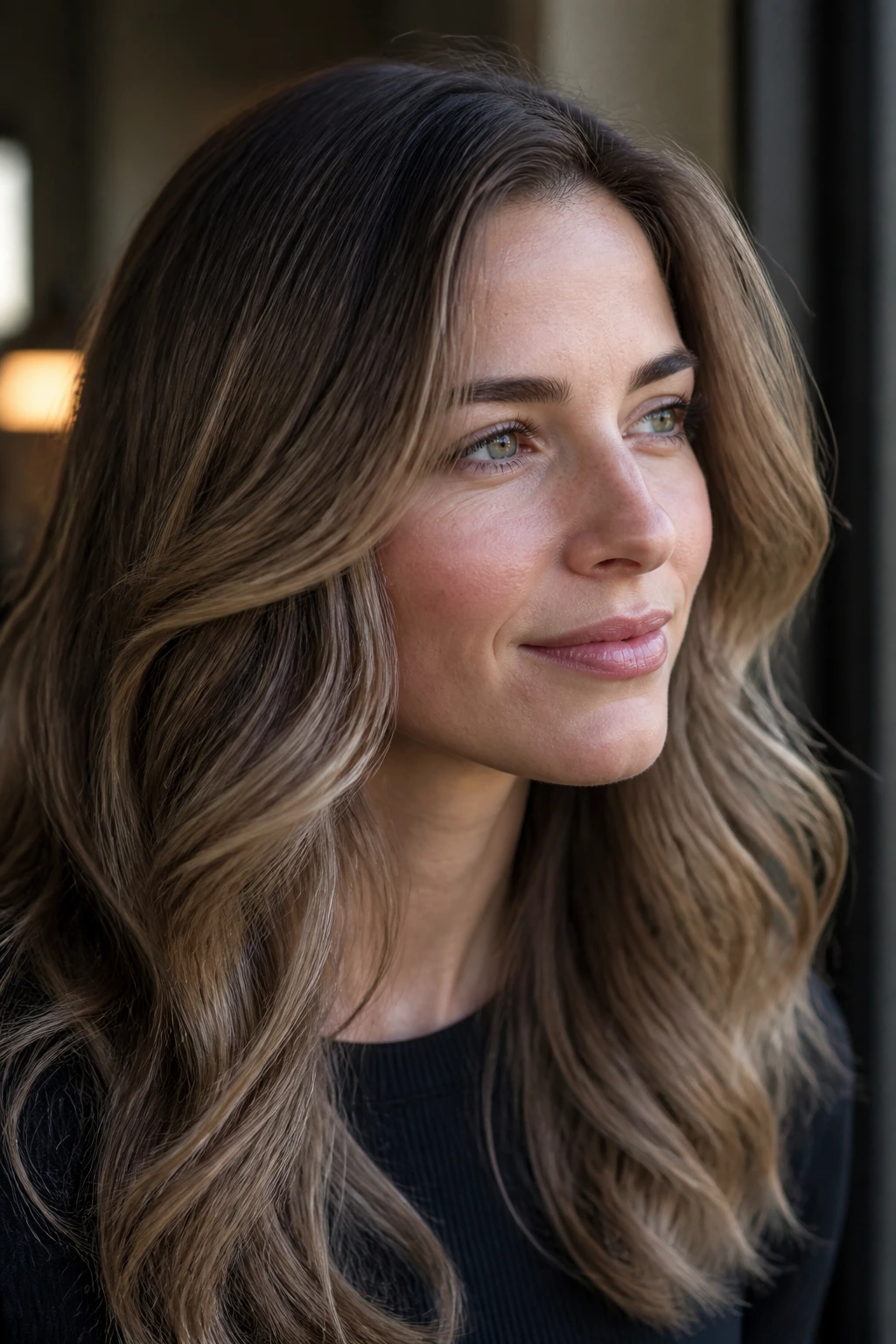
Cool skin tones usually carry pink, rosy, or blue-based undertones, and that changes how brown caramel hair color lands. A caramel with gold or copper in it can tilt the face red, especially around the temples and the front hairline where warmth shows first. A beige, ash, taupe, or mushroom caramel does the opposite. It softens the skin instead of competing with it.
The other piece people miss is depth. Cool skin does not always want the lightest version of a caramel shade. Sometimes a deeper brunette base with smaller caramel ribbons looks better than a lighter head of hair that has gone yellow at the ends. The contrast gives the face shape. The cooler tone keeps the color from going brassy.
Beige, Ash, and Taupe Are the Safe Zone
If your skin turns pink in daylight, start with beige or taupe caramel. Those tones keep the warmth muted enough that the color reads brown first and caramel second. Ash is useful too, especially if your natural base already has a cool cast.
Where Warmth Still Works
Warmth is not banned. It just needs to behave. A little soft beige warmth in the mid-lengths can make the hair look richer, but gold-heavy, orange-leaning caramel near the face is where things go sideways. Keep the brightest warmth lower on the hair, and the whole look stays calmer.
What to Ask for at the Salon
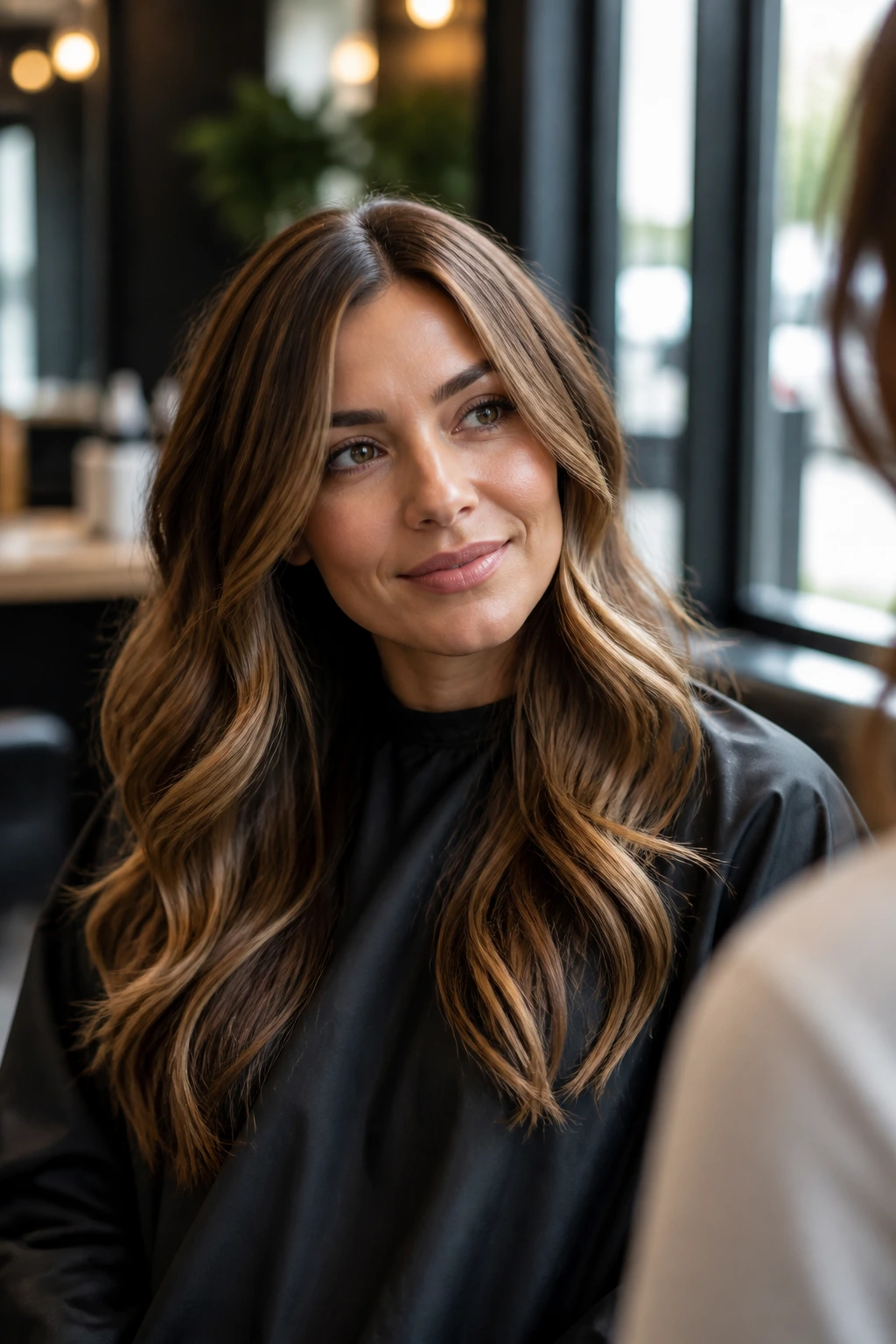
Bring photos, yes, but bring the right photos. One should show the placement you want. Another should show the depth of the brown base. People walk into salons asking for “caramel” and end up with three different colors in one head because no one agreed on the tone.
Use words like beige caramel, ash caramel, mushroom brown, taupe brown, neutral gloss, root smudge, babylights, or soft balayage. If you say honey, copper, bronze, or golden brown, you’re inviting warmth back in through the side door. That may sound picky. It isn’t. It saves corrective toner later.
If your hair is dark, ask whether the look can be built with a demi-permanent gloss and painted pieces rather than full bleaching. If your hair is already light, ask for lowlights or a deeper root so the caramel has a brown base to live against. The service matters as much as the shade name.
Tools and Products That Keep the Color Honest
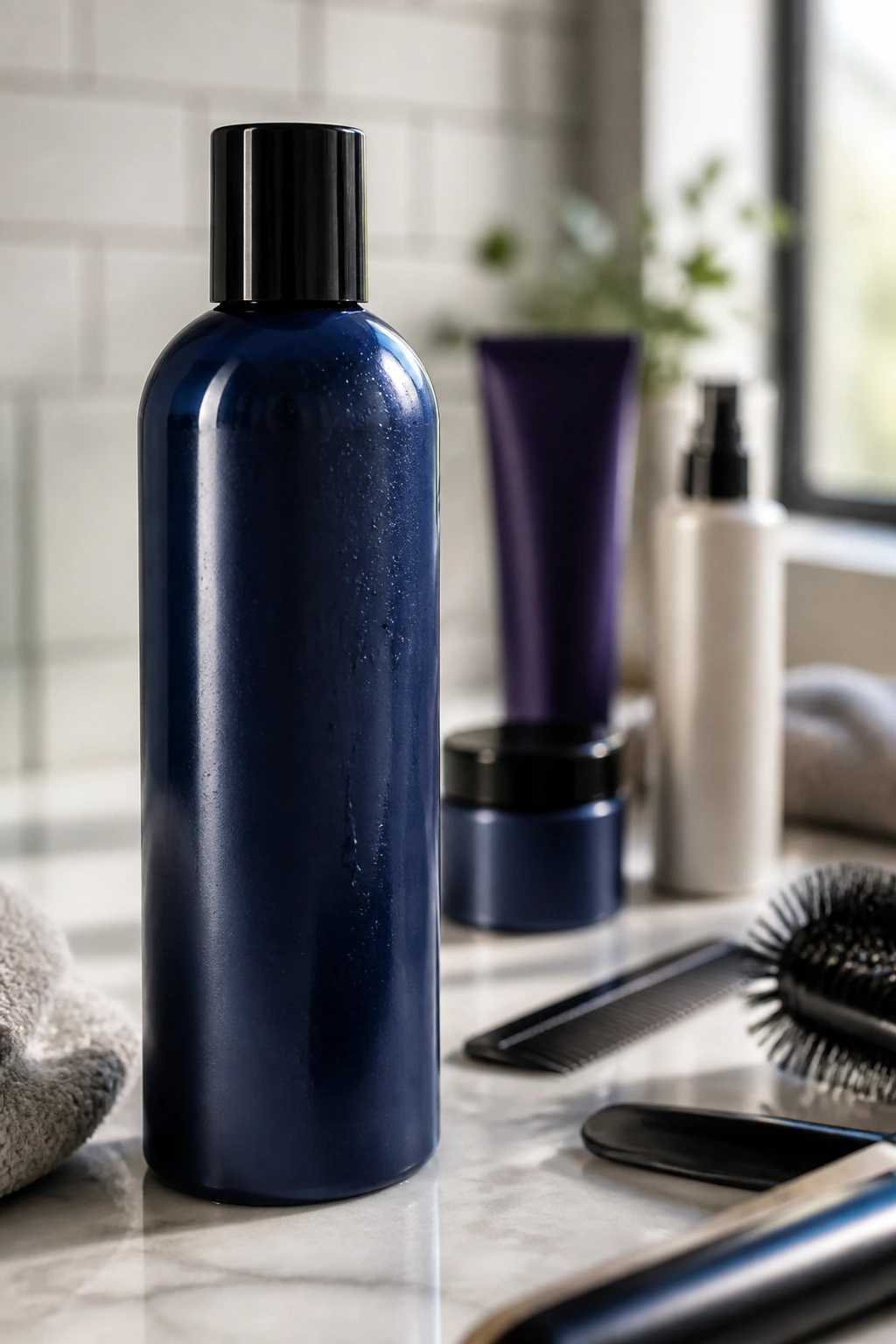
- Color-safe sulfate-free shampoo: Keeps the brunette base from fading too fast and stripping the cool gloss out of the caramel.
- Blue shampoo for brunettes: Use it when the caramel starts turning orange or muddy; blue helps knock back brass in brown hair.
- Purple shampoo: Best for the lightest caramel pieces if they start drifting yellow.
- Deep conditioner or mask: Lightened brown hair can feel dry on the ends, especially after balayage.
- Heat protectant spray: Flat irons and curling wands can burn off tone faster than people expect.
- Microfiber towel or soft cotton T-shirt: Cuts down friction after washing, which helps the cuticle stay smoother.
- Wide-tooth comb: Safer on wet, processed hair than a fine brush.
- Tint brush and bowl: Handy if you plan to use a gloss or toning mask at home.
- Sectioning clips: Useful for evenly applying product and for keeping styled sections separated while blow-drying.
- Shower filter, if your water runs hard: Hard water can push caramel warmer and duller, which nobody needs.
How to Wear and Style the Shade
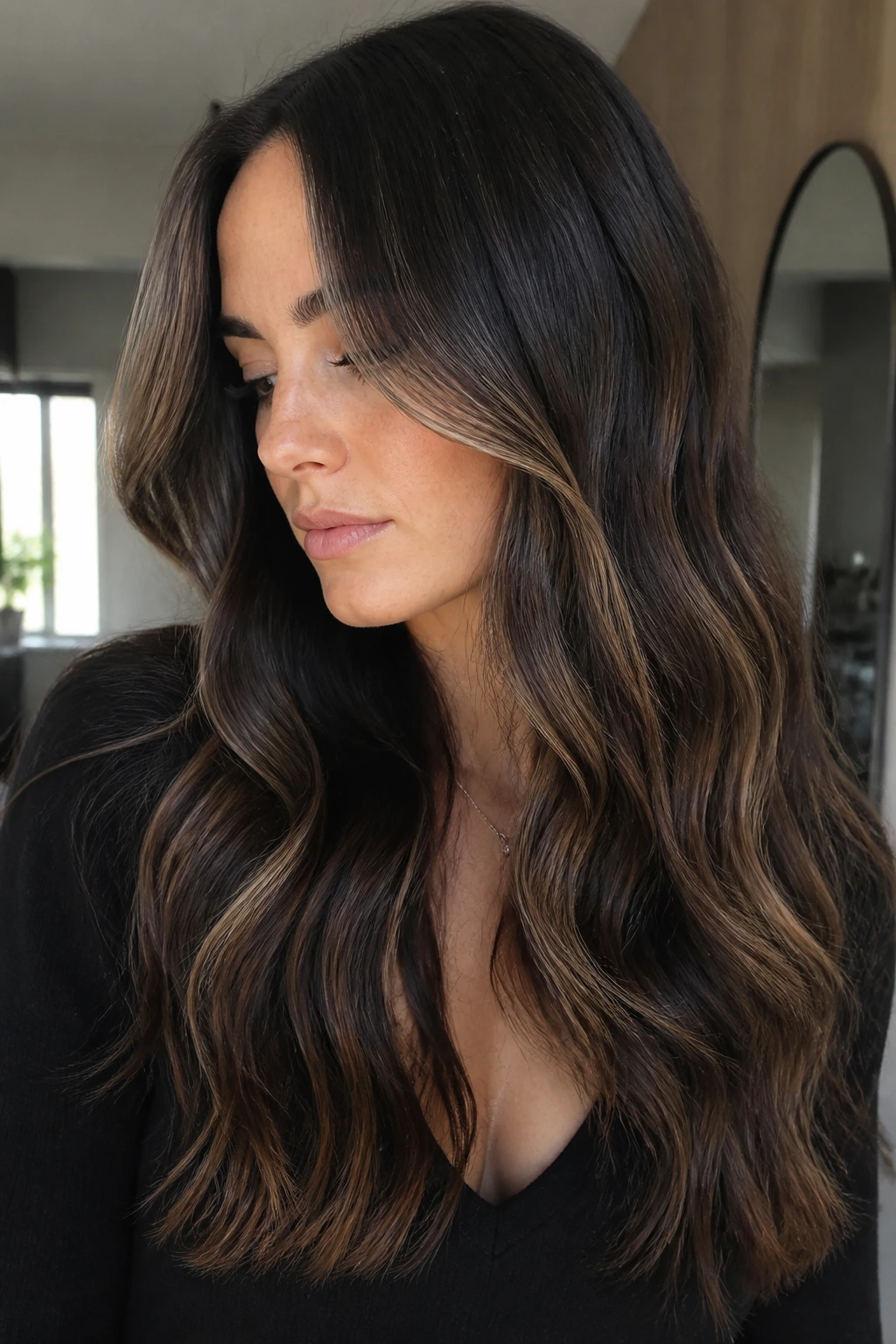
Presentation: Loose bends show off caramel ribbons best. A sleek blowout makes the same color look more polished, while a center part tends to sharpen face-framing pieces.
Wardrobe: Charcoal, navy, slate, cream, and soft rose keep cool caramel looking clean. Heavy mustard, orange, or rust near the face can pull the tone warmer than intended.
Makeup: Cool pink blush, berry lipstick, and taupe or soft brown eyeshadow play nicely with these shades. Orange bronzer can drag the whole look in the wrong direction.
Jewelry: Silver, platinum, and brushed white gold usually look better than strong yellow gold when the caramel is muted and cool.
Texture: Wavy hair shows the most dimension. Straight hair shows the precision. Curly hair shows the movement. The same shade behaves differently on each, and that’s part of the fun.
Personalization Moves That Make It Yours
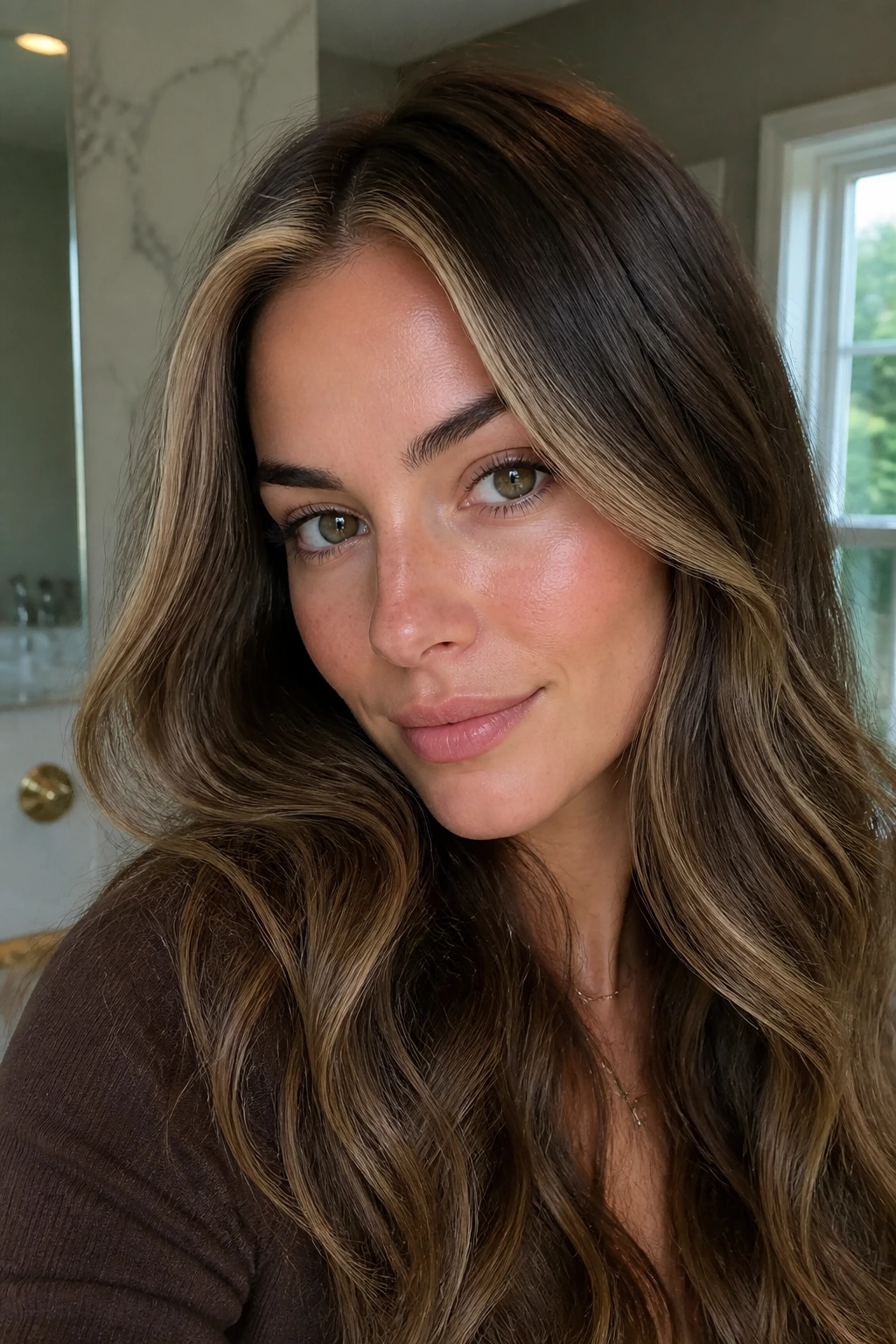
Tone Enhancement: If the caramel keeps drifting yellow, ask for a beige or ash glaze at the bowl sink. One gloss can calm the whole thing down without making it look flat.
Customization: Want more punch? Add a money piece or a few wider face-framing ribbons. Want less upkeep? Keep the highlight pattern thin and rely on a root shadow.
Soft Contrast: For fine hair, micro-babylights do more than chunky ribbons because they create the illusion of density. On thick hair, wider ribbons can stop the color from disappearing inside the texture.
Make-It-Yours: Curly hair usually looks better with highlights painted to follow the curl pattern. Straight cuts can handle crisper placement, especially around the front and ends. Gray blending works best when the caramel stays close to neutral and the base stays brown enough to anchor the silver.
Common Mistakes That Turn Caramel Brass
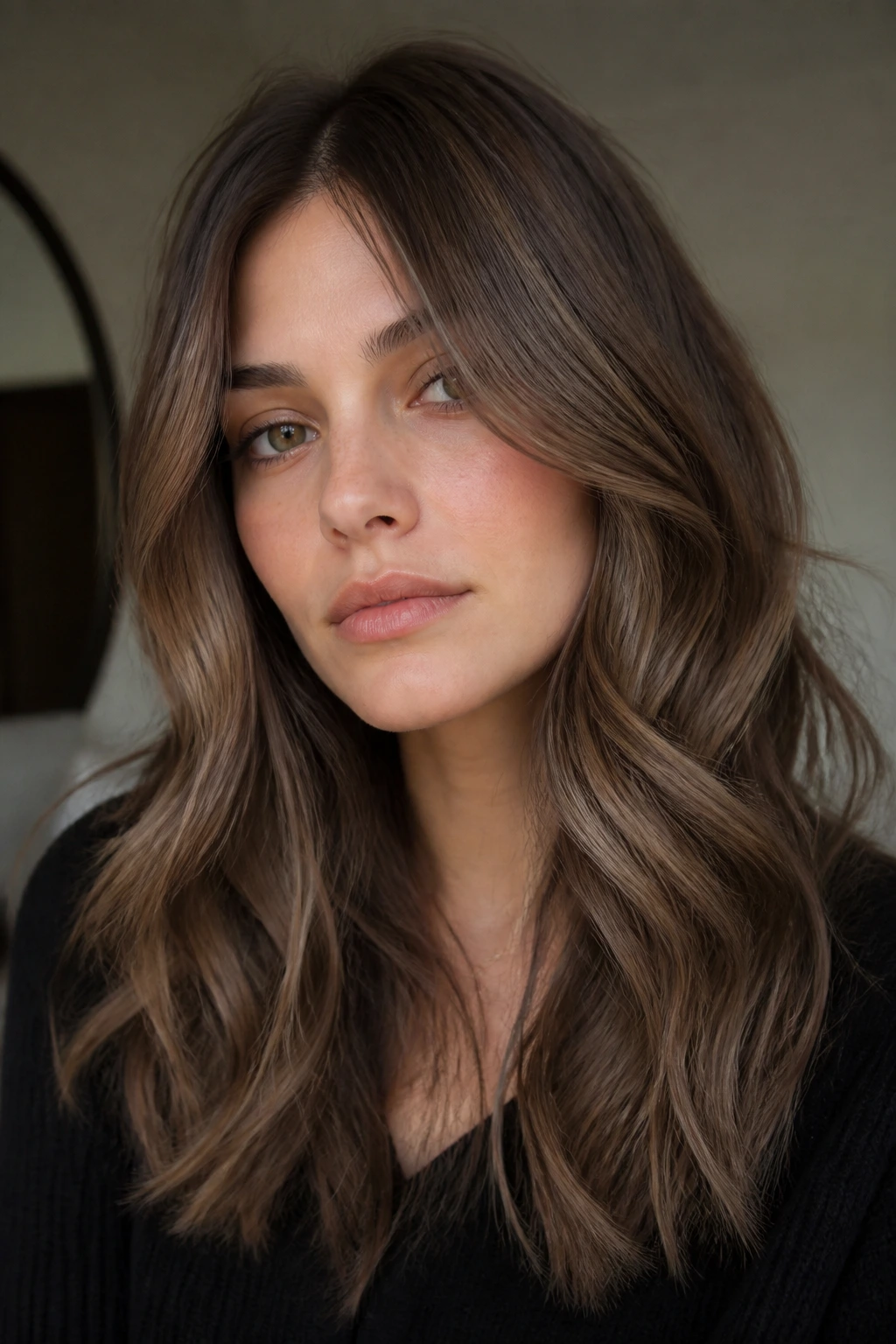
- Choosing gold instead of beige: The hair may look warm in the chair, then orange in daylight. Ask for neutral or ash-beige caramel if your skin runs cool.
- Lifting too far from the base: If your brown hair is a level 4 or 5, jumping to a very light caramel can make the contrast harsh and the ends dry. Stay closer to a two-level lift for a softer result.
- Skipping toner: Lightened brown hair almost always needs a glaze or toner to settle the shade. Without it, the caramel can look raw and yellow.
- Putting brightness at the hairline first: That can make rosy skin look flushed. Keep the strongest warmth a little lower and softer around the temples.
- Ignoring maintenance products: A cool brunette with caramel ribbons needs color-safe shampoo, not a stripping clarifier every other wash.
- Asking for “caramel” without placement notes: Caramel balayage, caramel babylights, caramel money piece, and caramel lowlights are not the same thing. The name alone is too vague.
Variations and Adaptations to Try
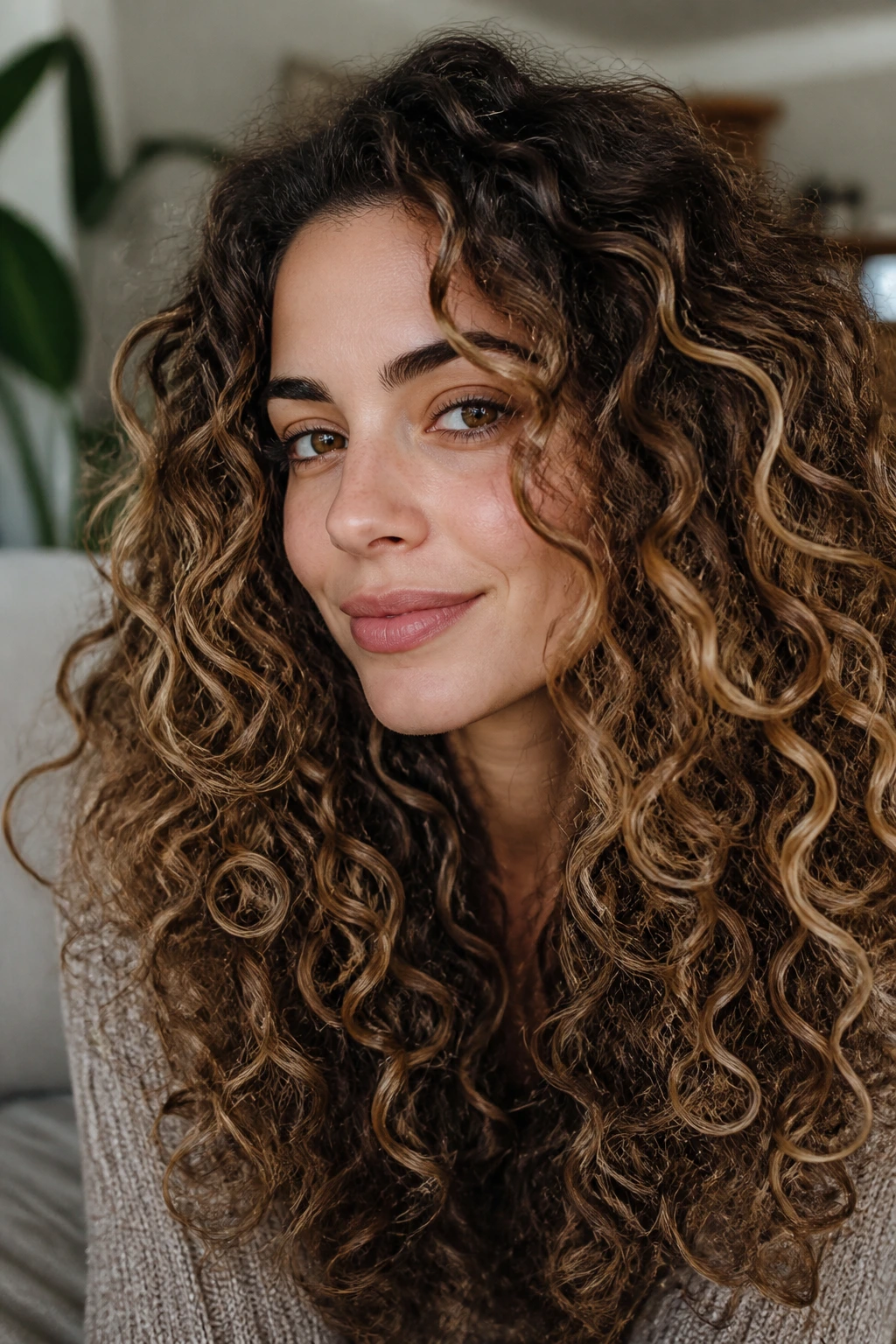
Curly Cloud Caramel: Keep the caramel in rounded ribbons that follow the curl pattern instead of straight lines. The color will move with the hair instead of sitting on top of it like stripes.
Fine-Hair Micro-Glow: Choose babylights and a soft root shadow. Tiny pieces create a fuller look without making the ends look thinner than they are.
Gray-Blend Cool Brunette: Use neutral brown lowlights and muted caramel pieces to blur silver strands instead of covering them hard. This works well when you want a softer grow-out and less visible regrowth.
Low-Maintenance Shadow Melt: Start deeper at the root and keep the caramel mostly on the mid-lengths and ends. It grows out more cleanly and buys you time between appointments.
High-Contrast Frame: Keep the interior brown and push the caramel into a stronger face frame and a few larger ribbons. This suits people who like their hair color to show up immediately.
Gloss-Only Brunette: If you want the least damage, skip bleach and ask for a brown glaze with a cool caramel cast. You’ll get warmth and shine without a major lift.
How to Keep the Tone Cool Between Appointments
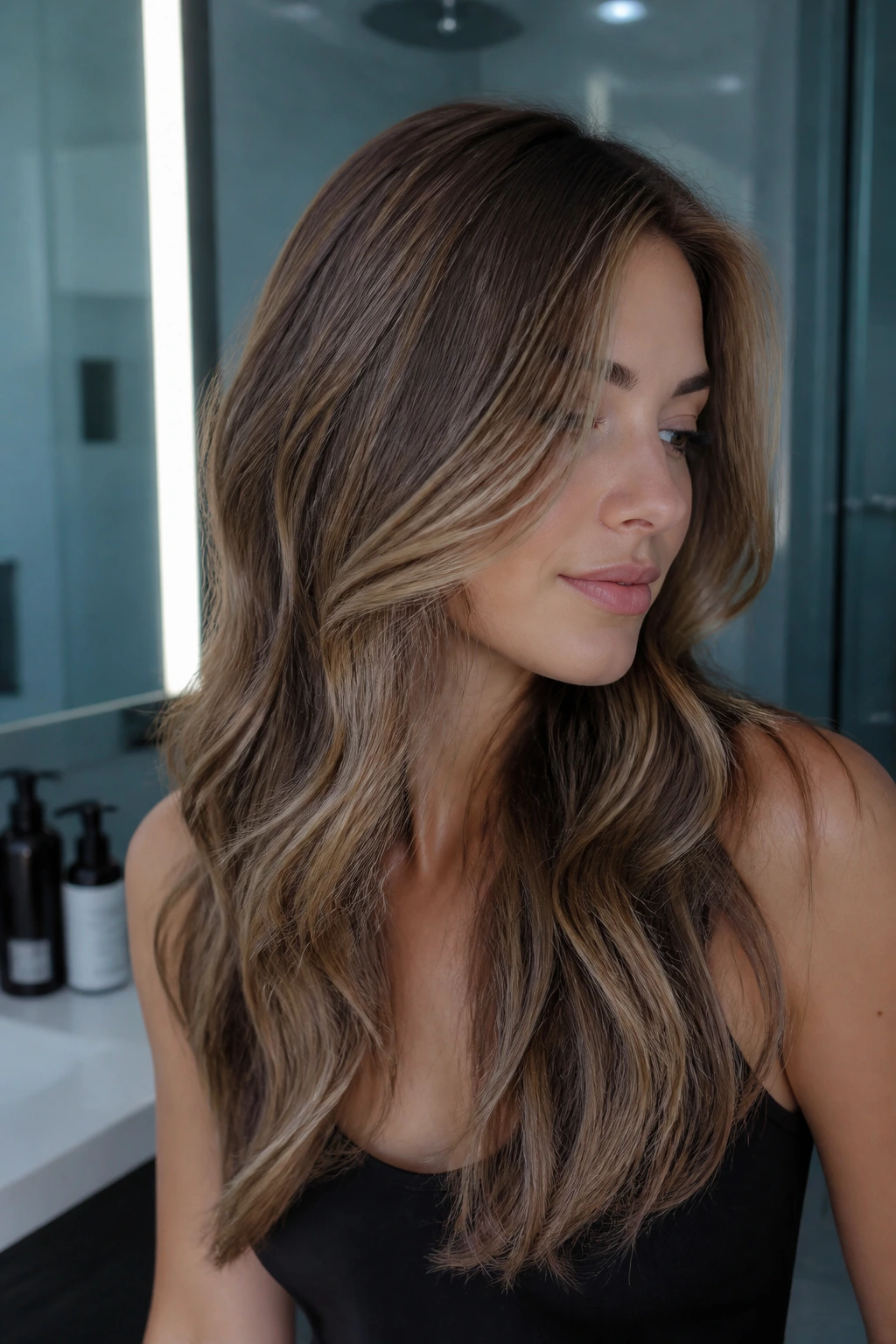
Lightened brown hair can drift warm faster than people expect. Wash with lukewarm water, not hot water, because hot water opens the cuticle and lets color bleed out faster. A sulfate-free shampoo is the baseline; if the caramel starts turning orange, blue shampoo every one or two weeks usually helps pull it back.
Glosses and toners are the real heroes here. Plan on a salon gloss around every 6 to 8 weeks if your hair is heavily lightened, or every 8 to 10 weeks if the caramel is subtle. If you heat-style often, use a protectant every single time. Flat irons and curling wands can scorch tone off the surface and leave the ends looking dry long before they actually are.
Hard water and pool chlorine can also mess with cooler caramel shades. A chelating shampoo once every 3 to 4 weeks helps if your water is rough, and a deep conditioner after swimming keeps the ends from feeling crunchy. If the color starts looking dull instead of warm, that’s often a buildup problem, not a tone problem.
Brown Caramel Hair Color Questions People Ask First
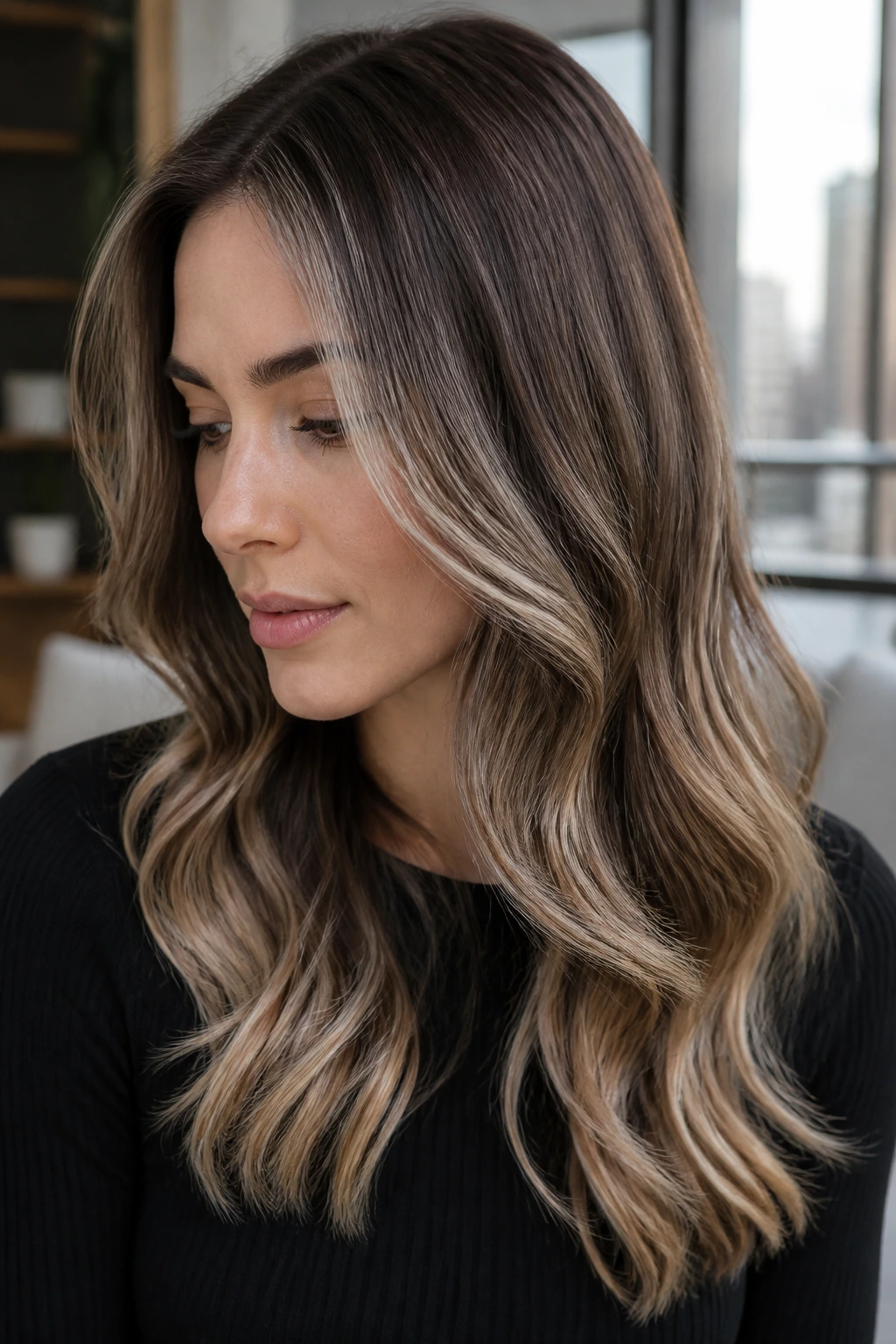
What caramel shades look best on cool skin tones?
Beige caramel, ash caramel, mushroom brown, taupe brown, and neutral mocha shades tend to flatter cool skin best. They keep the warmth soft instead of golden or coppery.
Can brown caramel hair color look orange on cool skin?
Yes, if the caramel leans too gold or copper. That’s usually a tone problem, not a skin problem, and a cooler gloss or toner can help pull it back.
Do I need bleach to get caramel highlights on brown hair?
Not always. Dark hair may need some lift for the caramel to show, but a demi-permanent gloss, subtle balayage, or lowlight-heavy approach can create dimension with less bleaching.
What’s the difference between caramel balayage and caramel highlights?
Balayage is hand-painted and usually softer at the root. Highlights tend to be more structured and often brighter from root to tip. Balayage is easier to grow out; highlights can look sharper.
How often should I tone caramel hair?
Most cool caramel shades benefit from a gloss or toner every 6 to 10 weeks, depending on how much lightening you had and how often you wash. If brass shows up faster, move the appointment up.
Will these shades work on curly hair?
Yes, and often they look better on curls than on straight hair because the movement shows the color shifts. The key is painting the ribbons to follow the curl pattern instead of slicing straight across it.
What if my caramel turns too warm after a few washes?
Reach for blue shampoo first if the warmth reads orange, or ask for a beige-ash gloss if the salon can refresh it. Clarifying too often can make the problem worse by stripping the color faster.
How do I ask for something subtle instead of obvious highlights?
Use words like “micro-babylights,” “soft veil,” “minimal contrast,” or “dimensional brunette.” Then show a photo with a darker base and a small amount of caramel around the face, not a bright all-over blonde effect.
A Cooler Kind of Caramel
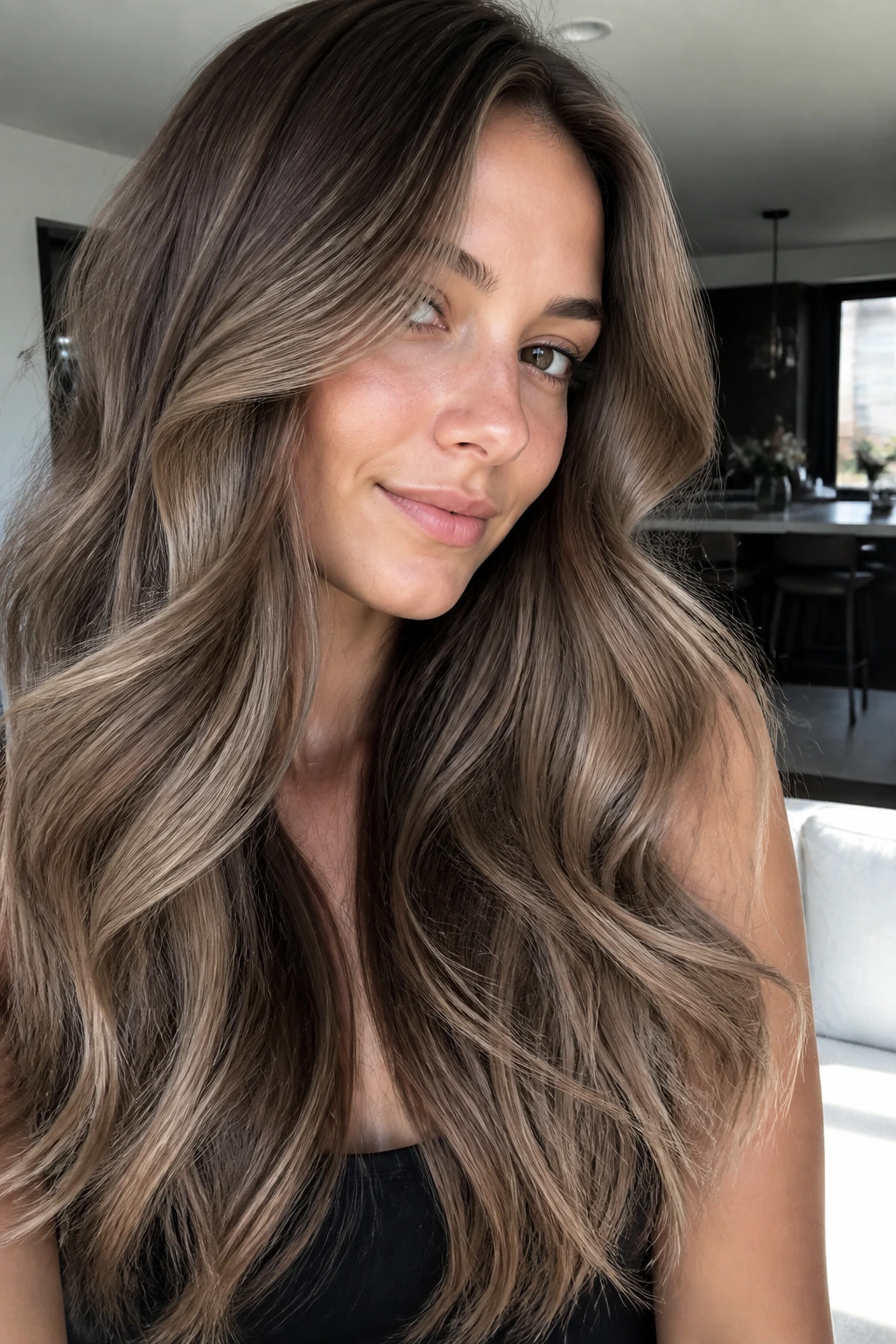
The best brown caramel hair color ideas for cool skin tones do one thing well: they let the brunette stay brunette while the caramel does the brightening. That balance is what keeps the color from turning brassy or loud. The shade should look like it belongs to the hair, not like it was dropped on top of it.
If you remember only one thing, make it this: beige, ash, taupe, and mushroom are your friends. Gold and copper are a gamble. Start with muted warmth, ask for controlled placement, and keep the toner in the conversation.
Bring a good reference photo to the salon. Say what you want the color to do, not just what you want it to be called. That little shift makes a bigger difference than most people expect, and it’s usually the difference between “nice hair” and “that color looks expensive.”