



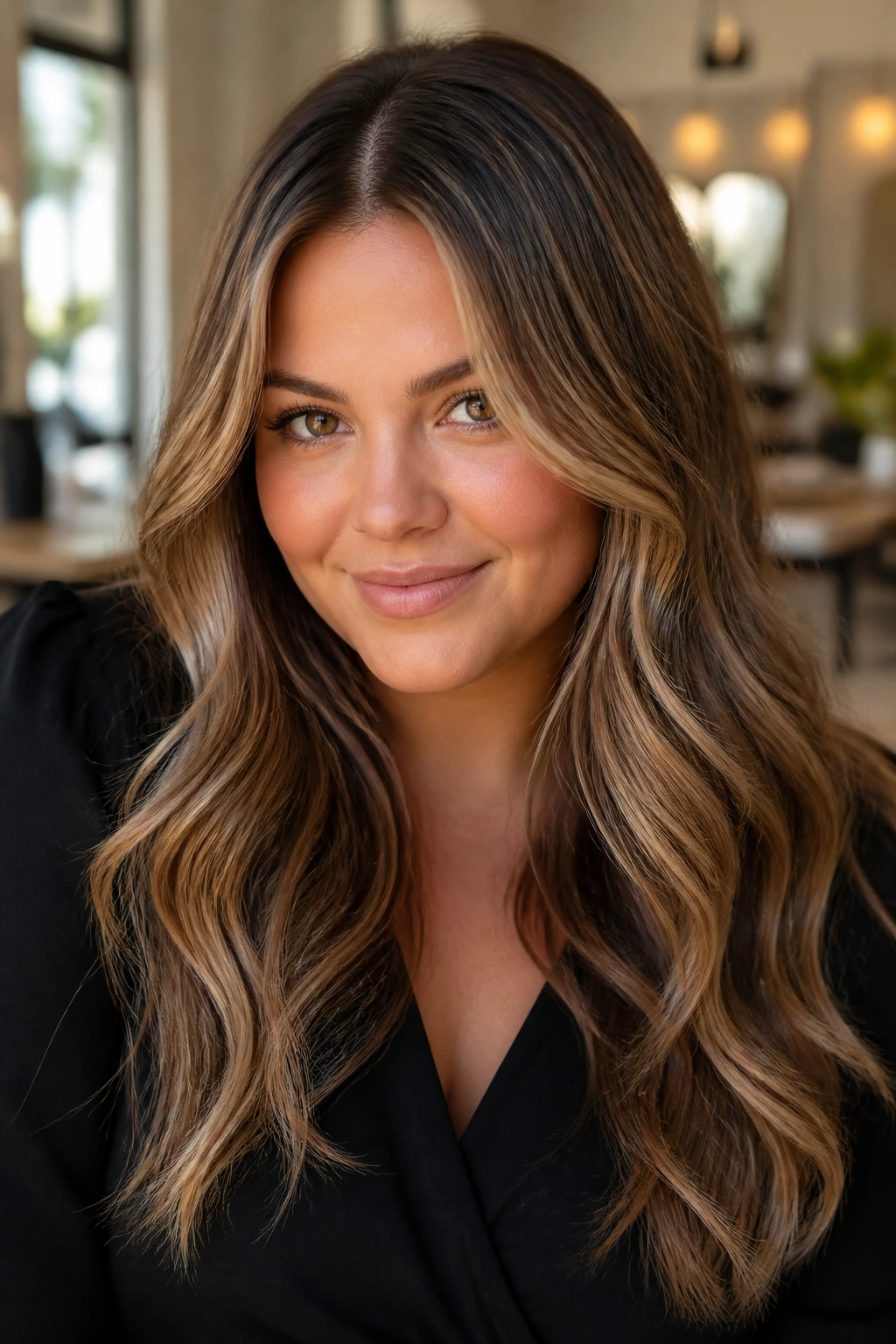
Round faces can handle more length than people give them credit for. The mistake is usually not the face shape; it’s the way the hair lands. A blunt wall of waves that hits right at the cheeks can make everything feel wider than it is, while babylights — those tiny, hand-woven highlights that look like sunlight got tangled in the strands — can quietly change the whole read of the cut. Done well, they pull the eye down, break up bulk, and make long waves look deliberate instead of puffy.
That’s why long wavy hairstyles for round faces with babylights work so well when they’re built with a little restraint. The lightest ribbons don’t need to shout. They just need to sit in the right places: around the part, through the mid-lengths, and near the ends where the hair can stretch the face visually instead of spreading it sideways. A good stylist knows this instinctively; a good curling iron can do the rest.
And yes, the details matter. A part shifted even half an inch, a front wave that bends away from the cheekbone, a brighter ribbon under a top layer instead of across the widest part of the face — those tiny choices change the whole effect. Keep that in mind as you move through these looks, because the best ones aren’t about hiding a round face. They’re about giving it cleaner lines, softer movement, and a little lift where it counts.
Why This Collection Is Different
-
Babylight Placement: These looks lean on fine, mixed-in highlights instead of thick streaks, so the color reads as movement rather than width.
-
Face-Lengthening Shape: The waves, parts, and layers are chosen to draw the eye downward or upward, not straight across the cheeks.
-
Salon-to-Styling Flexibility: Some of these styles need a specific cut, while others work with a curling wand and a smart parting trick.
-
Low-Drama Grow-Out: Babylights soften the line at the root, which makes these styles easier to live with between color appointments.
-
Real-World Wearability: There are polished options, casual options, and a few in-between styles that don’t look overworked at 8 a.m. or 8 p.m.
Why Babylights Pull the Eye Vertically
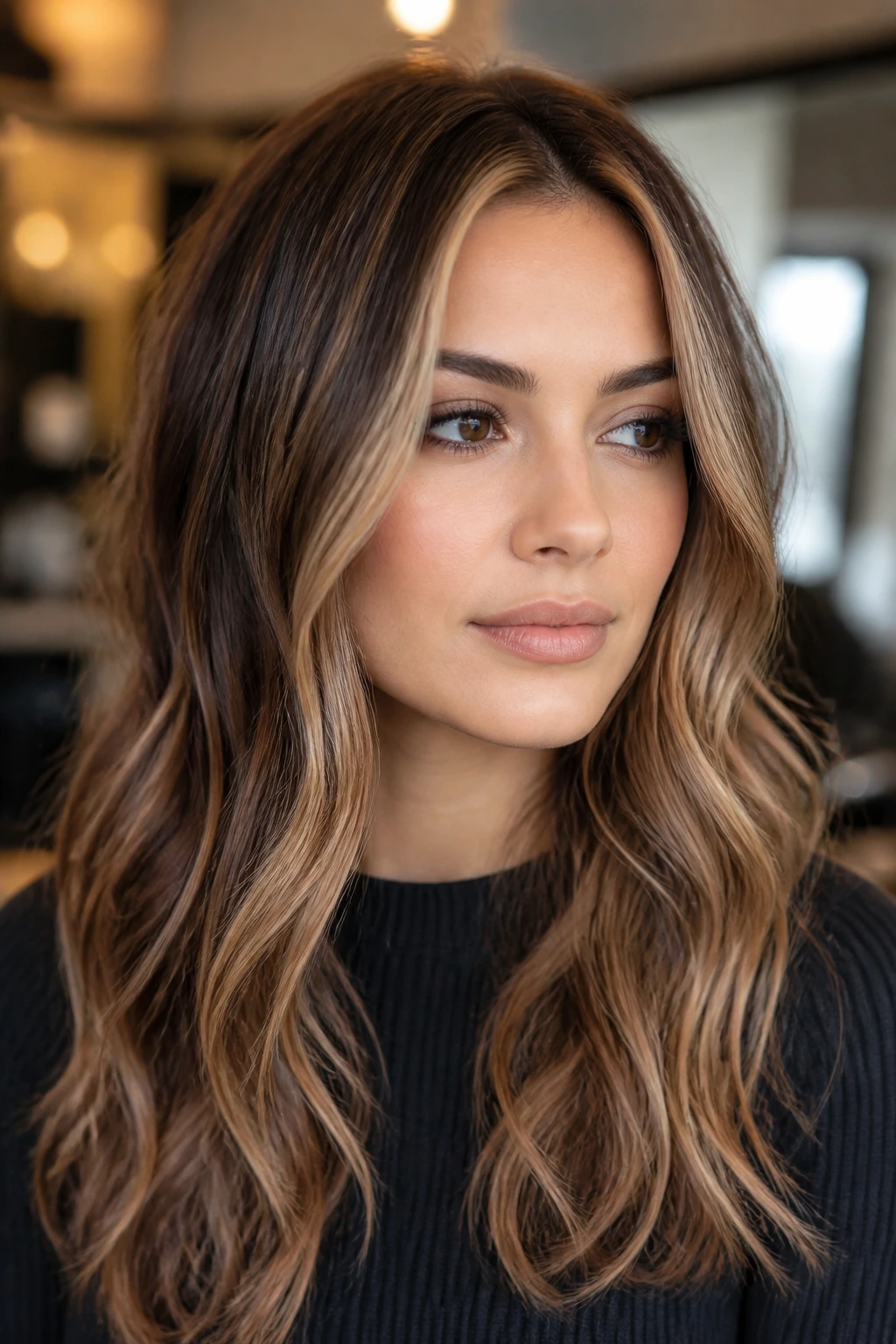
Babylights are tiny for a reason. They’re woven in so fine that your eye reads softness first and color second. On a round face, that matters because thick horizontal chunks can widen the face line in a hurry, especially if the brightest pieces sit right at the cheeks. Fine ribbons do the opposite. They break up the surface of the hair and create slender lines that travel from root to end.
The best placement usually starts near the part, runs through the front panels, and drops a little brighter toward the lower half of the hair. That gives long hair a stretched, elongated feel. If the color is too concentrated around the jaw, the effect flattens. If it lives only on the top layer, the hair can look dusty instead of dimensional. The sweet spot is a soft scatter of light that moves.
Tone matters, too. Warm caramel and honey babylights can soften darker brunettes without looking harsh. Beige, champagne, and mushroom tones keep lighter brunettes from turning brassy. A deep espresso base with a few maple or toffee ribbons is one of my favorite combinations because it adds depth without making the hair look striped. Stripey color is the enemy here. Soft weave, clean melt, done.
The Part, Layers, and Wave Direction That Matter Most
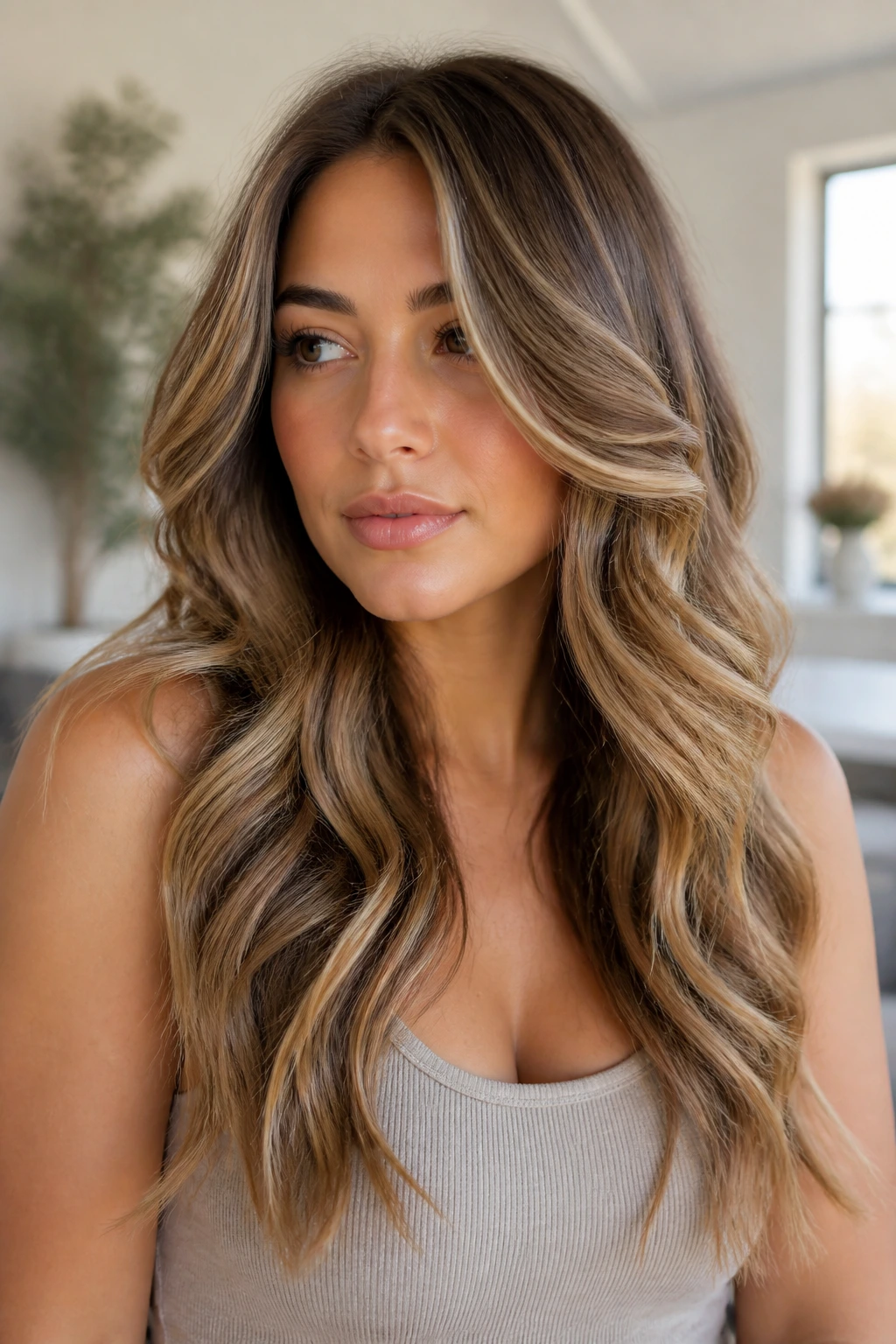
A center part can work on a round face, but only if the rest of the shape earns it. If the roots are flat and the waves bloom right at cheek level, the face reads wider. Shift the part a half-inch off center, add lift at the crown, and suddenly the same length looks longer and more composed. That tiny move changes the geometry more than people expect.
Layers are the next lever. Long layers that start below the chin or around the collarbone give the hair room to move without building a puffed-out outline at the widest part of the face. Shorter face-framing layers can work, but they need to fall diagonally, not straight out. Keep the shortest pieces below the cheekbone if you want the face to read slimmer through the middle.
Wave direction matters more than the type of wand. The front sections should curl away from the face first. After that, alternating directions through the mid-lengths keeps the texture loose and prevents the “one big pageant curl” problem. Finish by brushing or finger-combing only after the hair cools. Warm waves collapse into fluff fast.
What to Ask for at the Salon Before You Style It
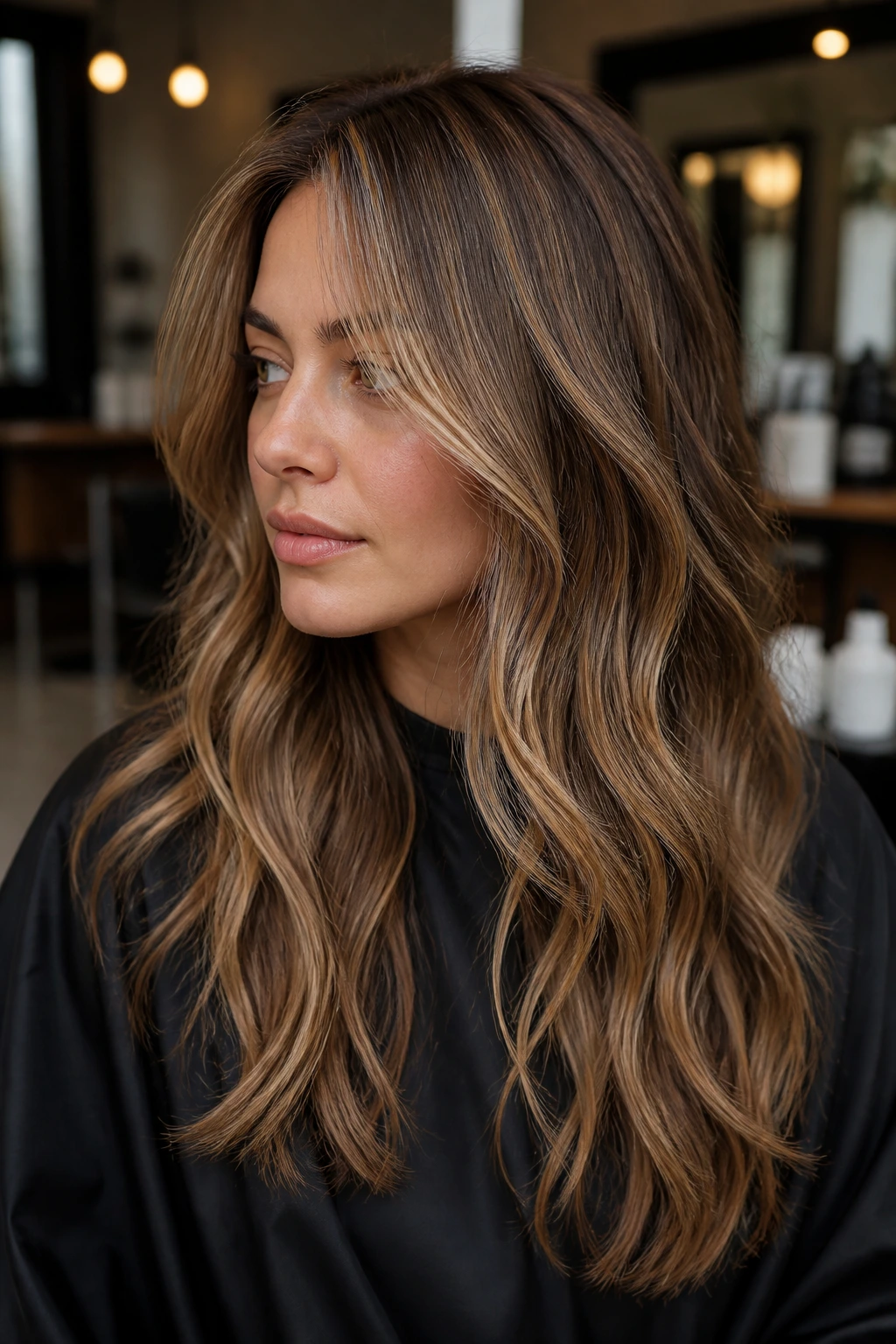
Ask for babylights that are woven through the top layers and front panels, not packed in as one bright band. That one request changes the whole haircut-color relationship. You want lightness near the part, a little brightness around the brow tail, and softer color through the lower lengths so the hair still reads long.
If your hair is dark brown or black, ask for a root shadow and a soft lift through the mids instead of a high-contrast stripe right at the top. If your hair is medium brown, beige, honey, or toasted caramel usually sits more naturally than pale blonde. On lighter brunettes, a neutral gloss keeps the babylights from looking too yellow under indoor light. That’s the sort of thing people skip, then wonder why the color feels loud.
The cut request matters just as much. Say you want long layers, not a blunt edge that sits at the cheek. If you like bangs, curtain bangs that open at the center and taper below the cheekbone are much friendlier to a round face than a heavy fringe that cuts straight across. Bring a photo, sure. Bring a point of view, too.
1. Center-Parted Chestnut Waves with Caramel Babylights
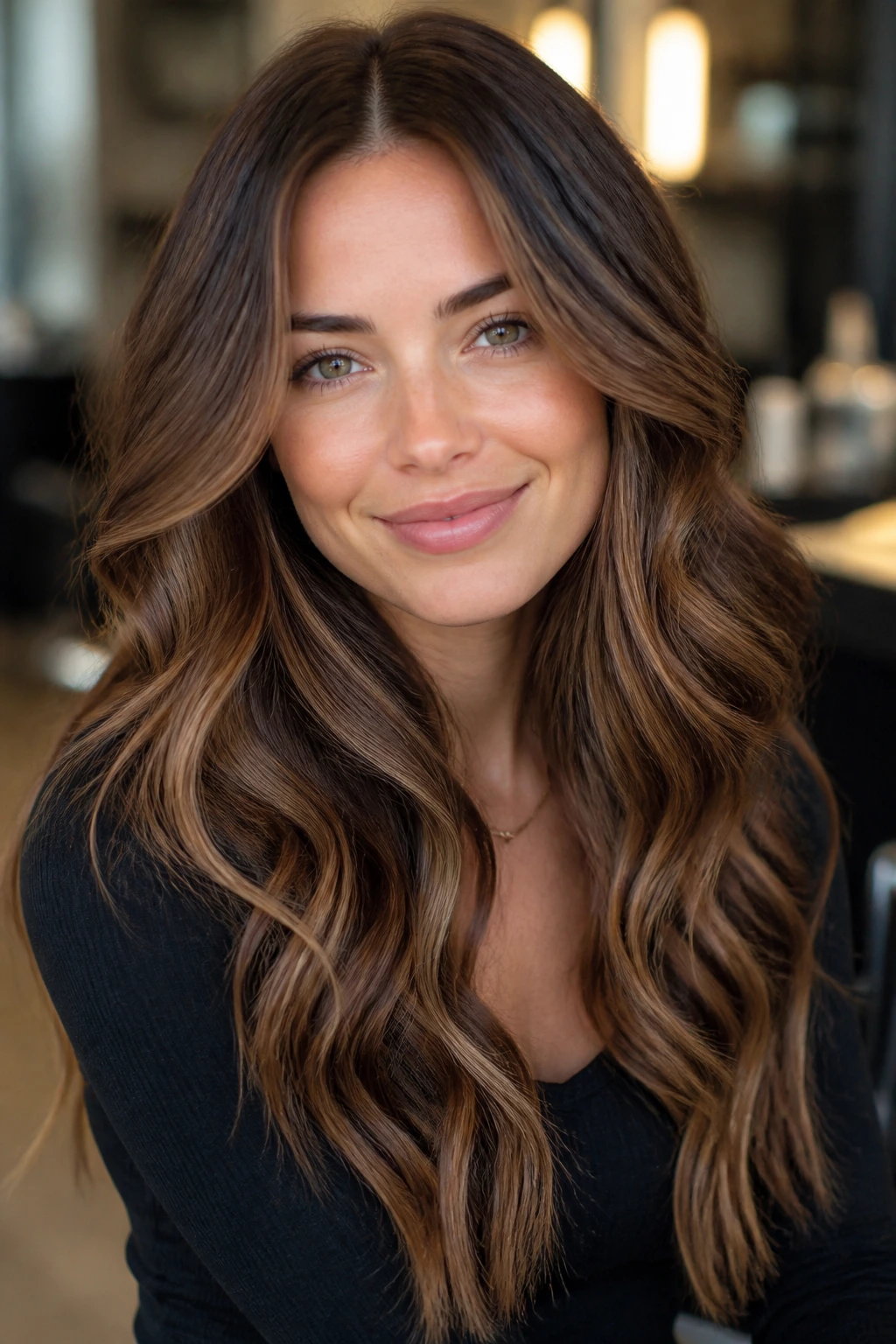
A center part on a round face can look sharp in the best way when the waves stay soft and the color does the shaping. Chestnut brown with caramel babylights gives you depth at the root and a thin line of light that travels down the length, which keeps the hair from feeling heavy around the cheeks. The whole look lands somewhere between polished and easy.
Why It Works for a Round Face
The middle part creates a vertical line straight through the face, and the babylights reinforce that line by catching light from crown to ends. Keep the first wave below the cheekbone. That one rule stops the style from widening the widest part of the face.
A 1.25-inch curling iron gives the waves enough bend without making them bounce too far out from the head. I like this look best when the front pieces are curled away from the face, then gently broken up with fingers so the texture stays smooth, not fluffy.
2. Deep Side-Part Glam Waves with Honey Babylights
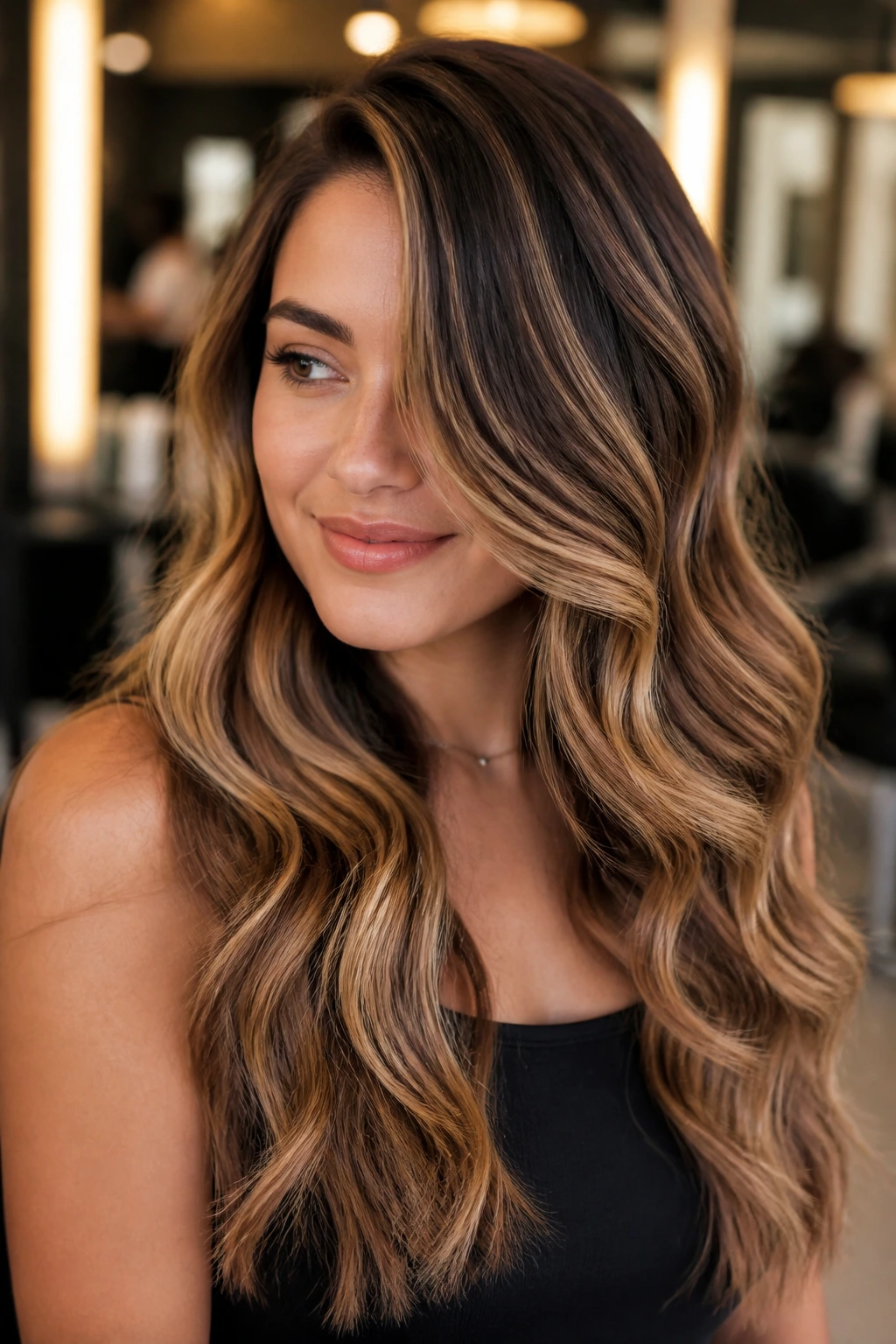
This is the look for the days when you want a little drama without piling on volume in the wrong place. A deep side part shifts the visual weight, and honey babylights keep the color warm around the face instead of stark. The result feels long, soft, and controlled.
The trick is to tuck the fuller side behind the ear only if the crown has enough lift to keep the shape from collapsing. Otherwise, the whole style can slide sideways and make the face look wider. A bit of root spray at the part and a quick blast with a round brush solves that in under five minutes.
3. Curtain Bang Waves with Beige Babylights
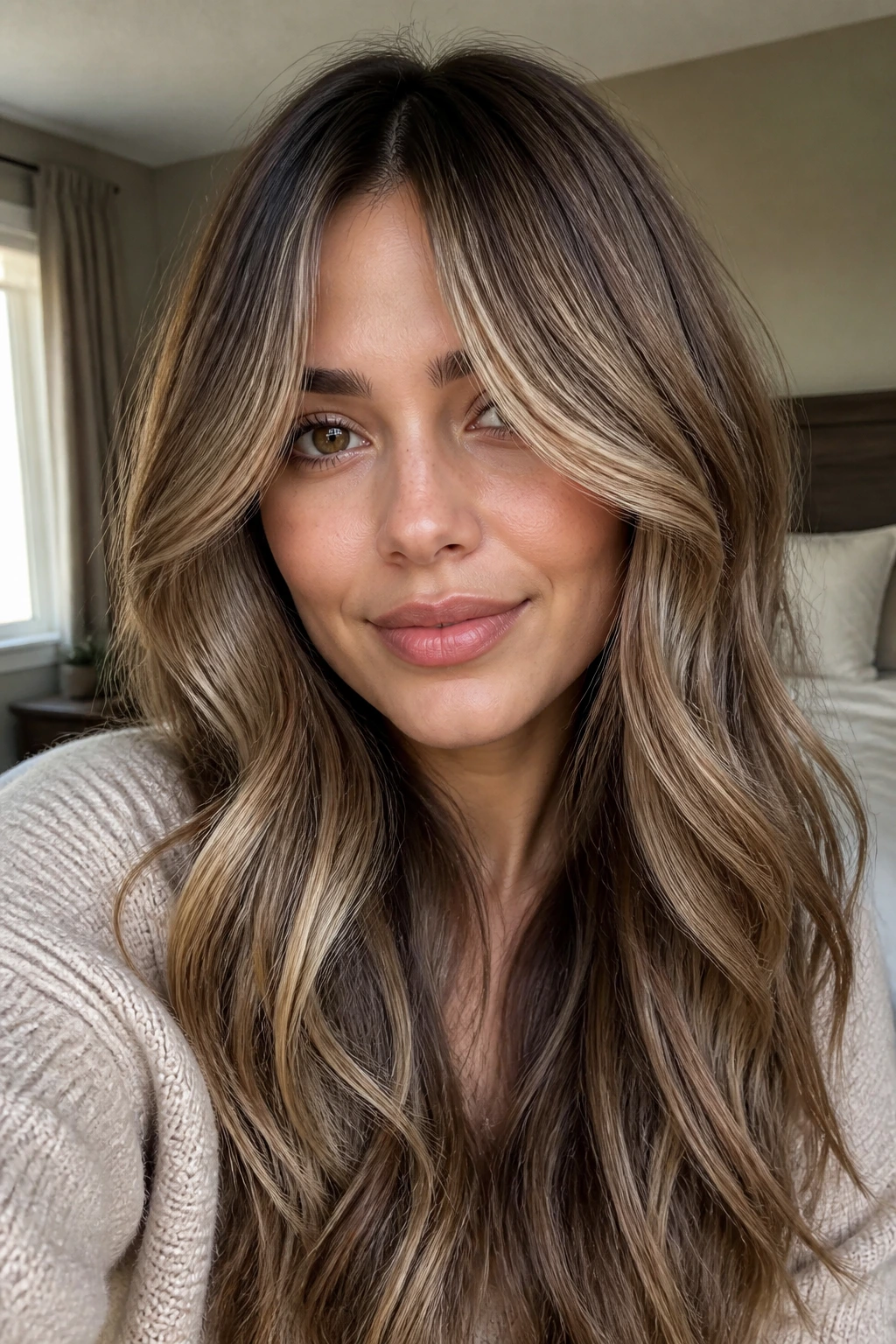
Curtain bangs earn their keep on round faces because they open in the middle and taper out along the cheeks instead of stopping bluntly at the brow. Add beige babylights through the fringe and front layers, and the face gets a soft frame that doesn’t close it in. This is one of those styles that looks casual but is doing a lot of quiet work.
How to Style It
Blow the bangs forward first, then sweep them away from the face with a round brush or large Velcro roller. If you curl them, keep the bend loose. Too much bend and they turn into little hooks at the cheek, which is not the move here.
4. Soft Butterfly Cut Waves with Toffee Babylights
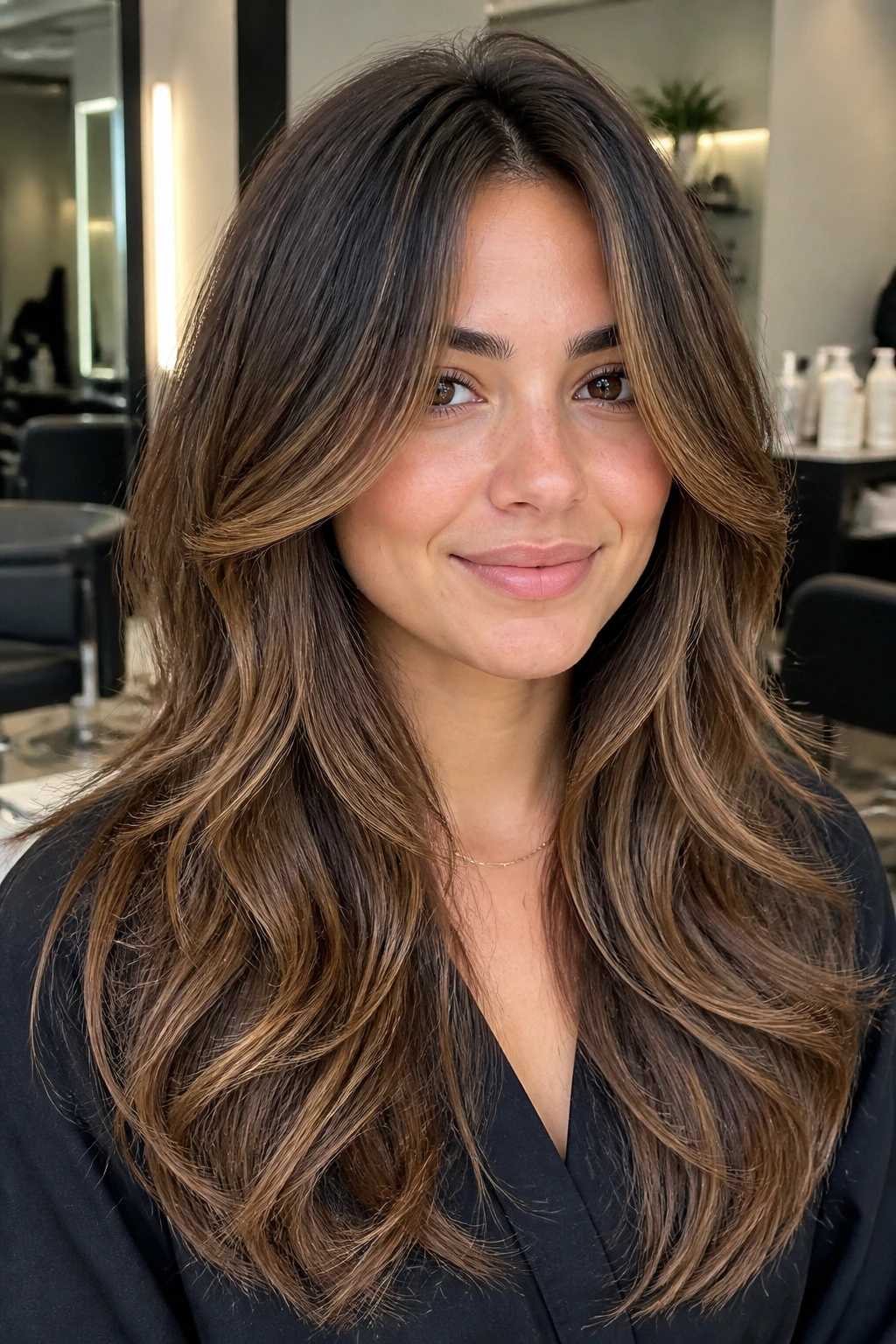
The butterfly cut gives you short face-framing layers up top and long length underneath, which is a smart match for a round face. The shorter layers create lift around the cheekbones, while the long bottom section keeps the eye moving down. Toffee babylights in both zones make the layers read as airier than they really are.
The nicest part is how the cut behaves on day two. The front layers usually fall just enough to keep the shape soft, and the lower waves settle into a loose, stretched curve. If your hair tends to puff outward, this is one of the better options because the internal layering removes bulk without taking away length.
5. Long Shag Waves with Ash-Blonde Babylights
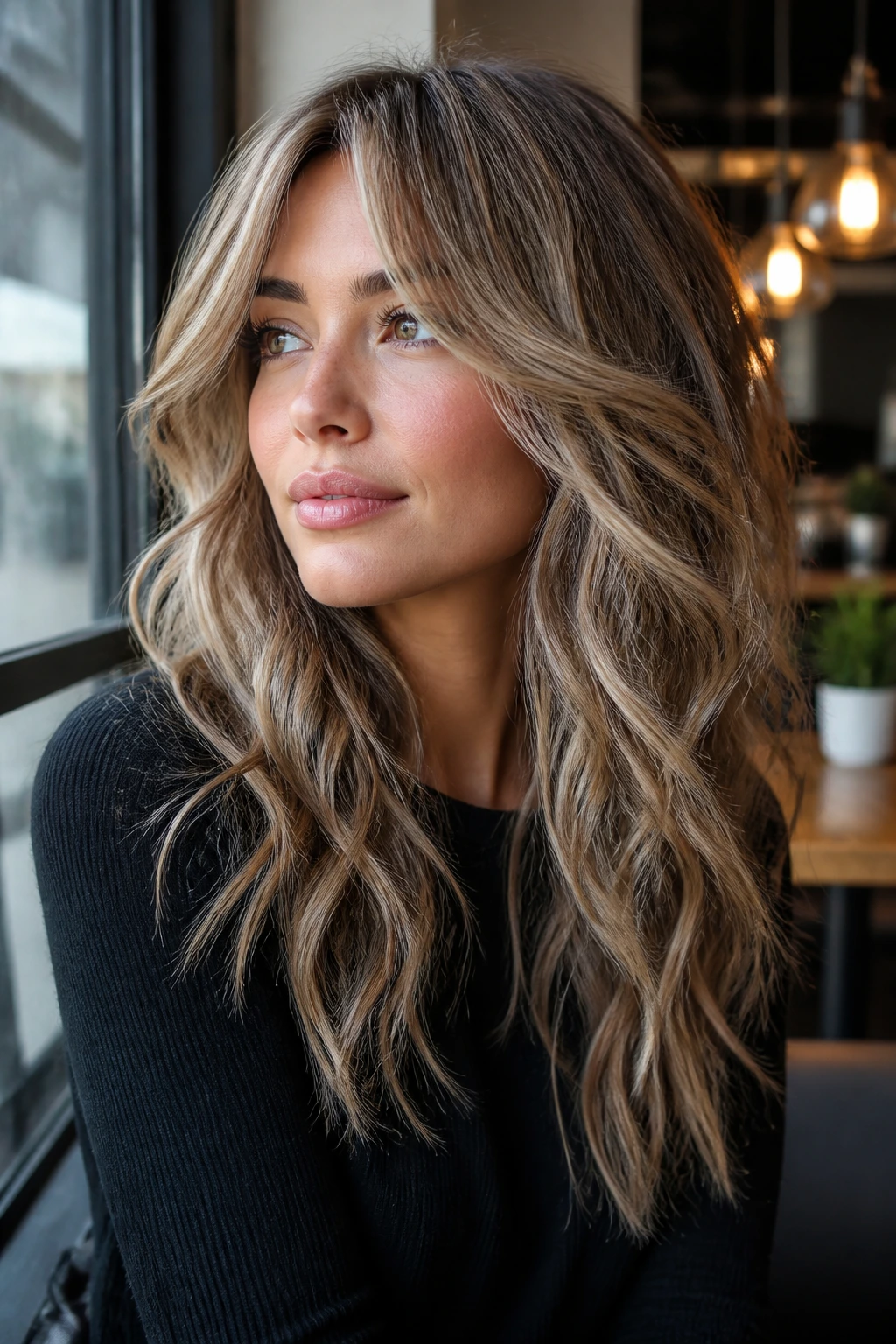
A long shag is not shy. It gives you pieces, movement, and a little edge, which can be a gift if your round face usually gets lost under one heavy shape. Ash-blonde babylights cut through the texture and stop the layers from looking muddy. They also keep the style from turning too warm or too dense.
What I like about this cut is that it works with imperfect styling. The waves do not need to be identical. In fact, they shouldn’t be. A bit of irregularity through the ends keeps the shape modern and helps the face look less circular because nothing sits in one fixed line.
6. Old Hollywood Waves with Champagne Babylights
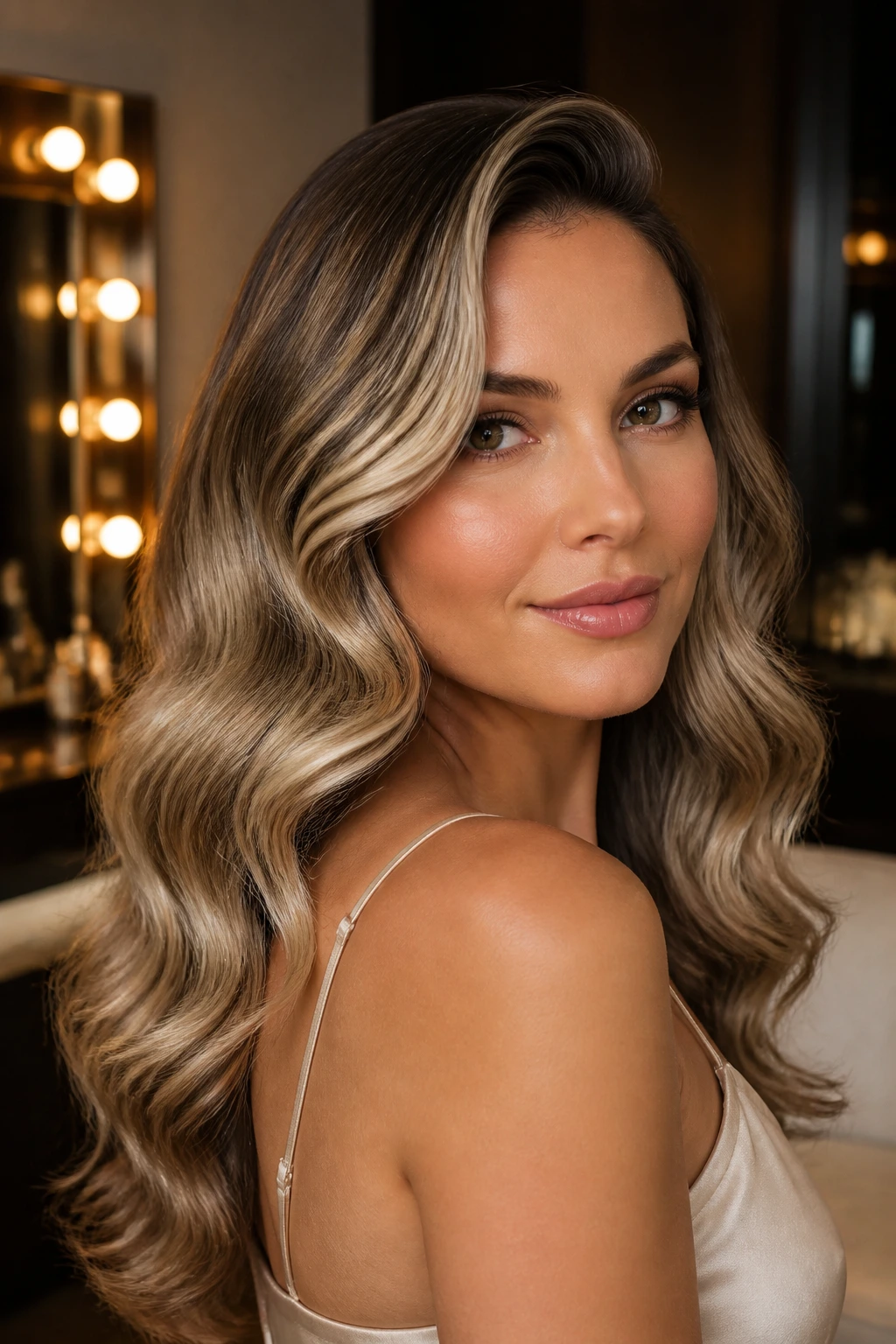
Old Hollywood waves can be wonderful on a round face if the wave ridge stays low and the crown stays high. Champagne babylights give the finish a soft glow without turning it into a bright, flat sheet. The style feels sleek, but the color keeps it from looking severe.
The brush-out matters here. Once the curls cool, brush them into one continuous S-shape so the waves lie against the head rather than blooming outward. That’s the difference between “glam” and “helmet.” Small difference. Huge effect.
7. Beach Waves with Sunlit Ends and Wheat Babylights
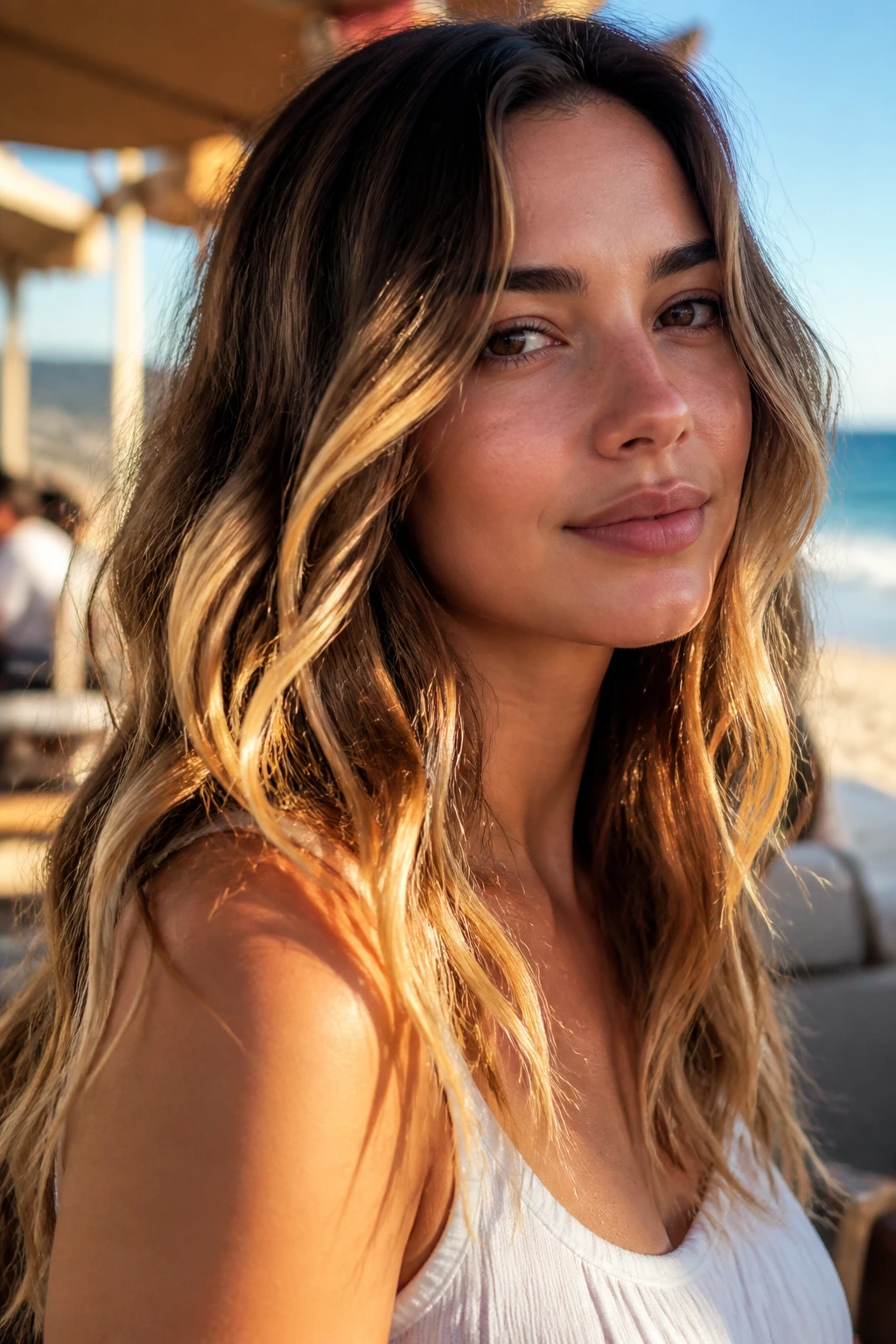
Beach waves get a bad rap when people over-texturize them, but on a round face they can work if the volume stays lower on the hair shaft. Sunlit ends and wheat babylights keep the ends bright without loading the cheeks with color. That gives you movement where you want it and space where you need it.
Keep the top section smoother than the ends. A little bend near the temples is fine, but you do not need big ripples starting at the root. If the roots go too puffy, the face reads fuller. The ends, though, can carry all the personality you need.
8. Half-Up Knot Waves with Copper Babylights
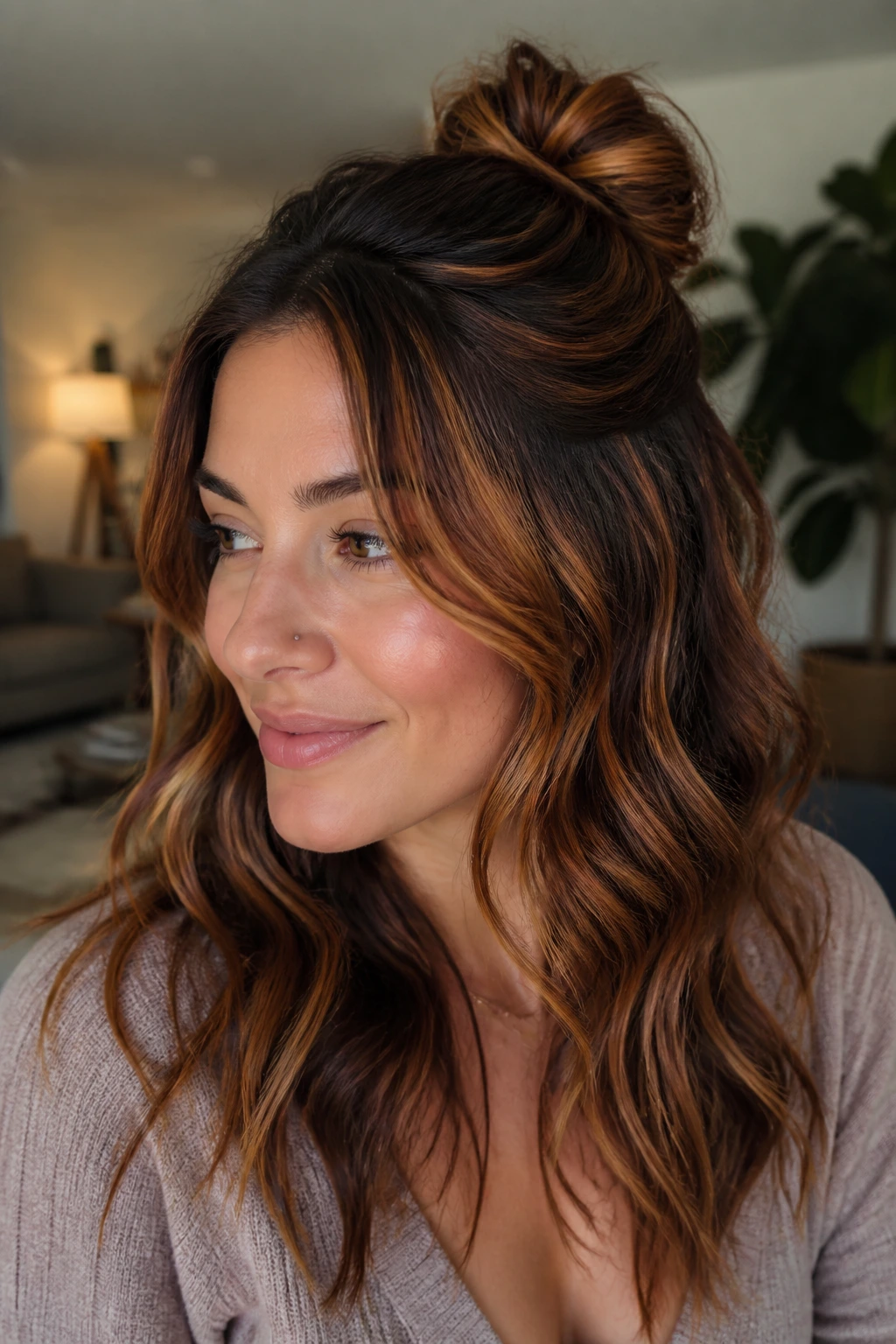
A half-up knot gives you lift at the crown, and that lift is doing a lot of face-lengthening work. Copper babylights add warmth and make the loose lower waves look thicker than they are. This is a good choice when you want the hair off your face but still want softness around the jaw.
Pull the top section up gently, not tight. A tight knot snatches the face back in a way that can emphasize roundness if the sides are flat. Leave a few face-framing pieces out, curl them away from the cheeks, and let them skim the jaw rather than sit on it.
9. Low Ponytail with Loose Waves and Cinnamon Babylights
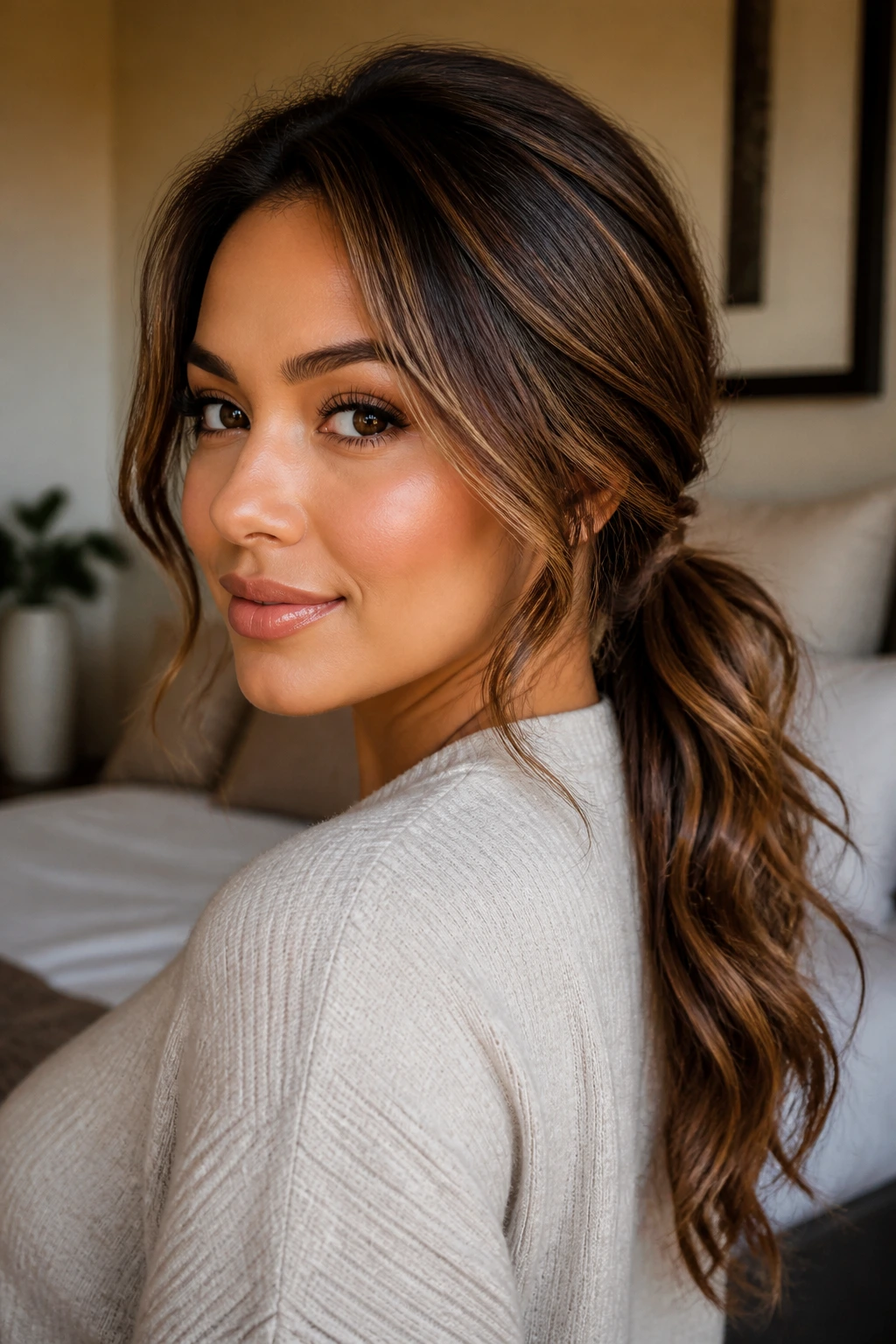
A low ponytail does not sound like a round-face hero until you give it texture and lift. The sleek top line stretches the head visually, and the loose waves in the tail keep it from feeling severe. Cinnamon babylights through the pony make the length visible, which matters more than people think.
This style lands especially well when the pony sits at the nape and the crown has a subtle bump from a brush or root spray. Keep the elastic hidden with a wrapped strand if you want it to feel finished. If the face-framing pieces are too short, though, the style can pop out at the sides. Longer pieces are safer here.
10. Waterfall Braid Waves with Vanilla Babylights
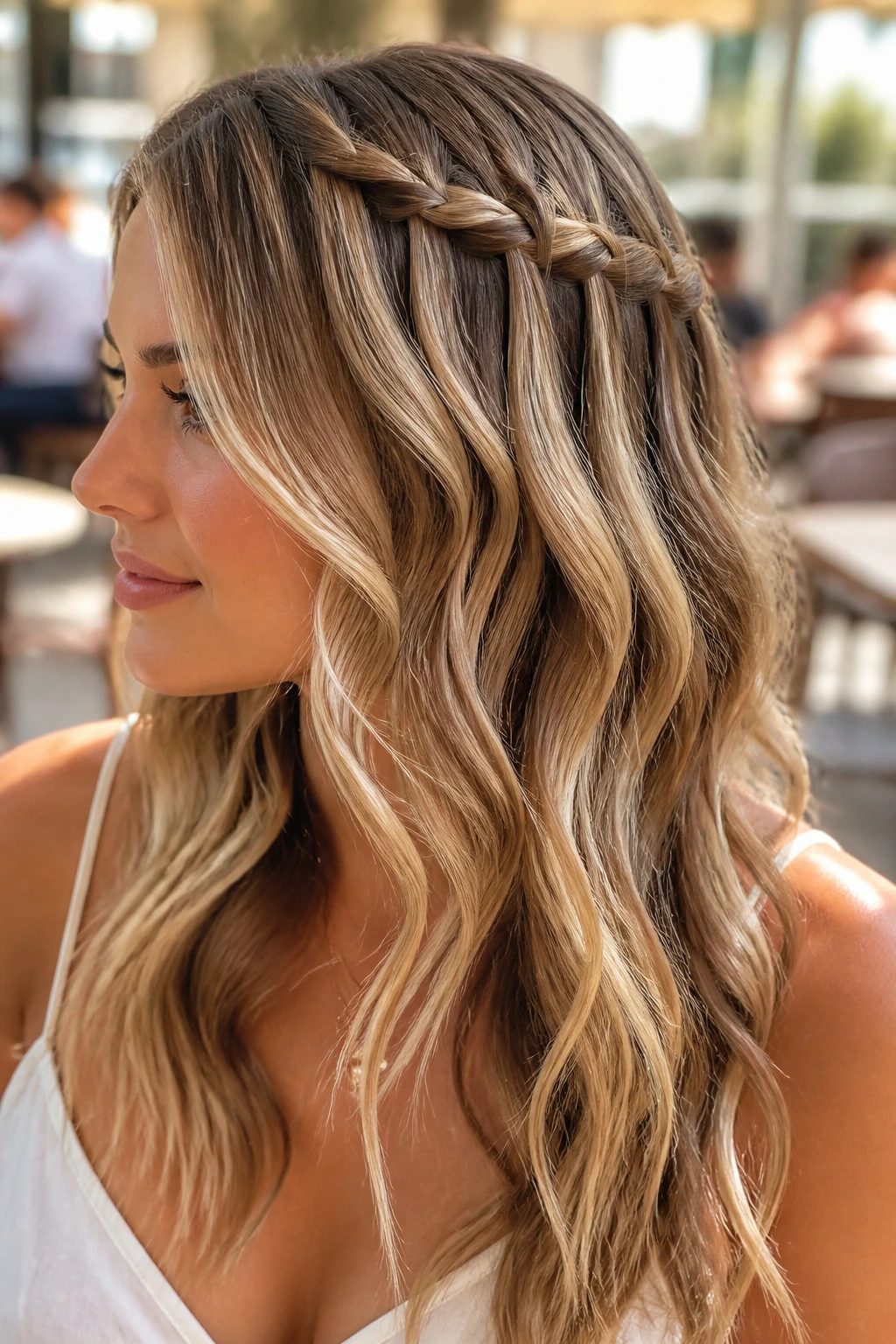
A waterfall braid can be a sneaky good fit for a round face because it creates a diagonal line across the side of the head. That diagonal line breaks up width, while vanilla babylights make the braid pattern easy to see without turning it harsh. The rest of the hair can stay loose and wavy, which keeps the look airy.
The braid should start above the ear and angle back, not sit low and wide. If it droops, it pulls the eye horizontally. Keep the waves under it soft and brushed out just enough to avoid puffiness. This one is pretty, yes, but it also has structure.
11. U-Shaped Layers with Mushroom-Brown Babylights
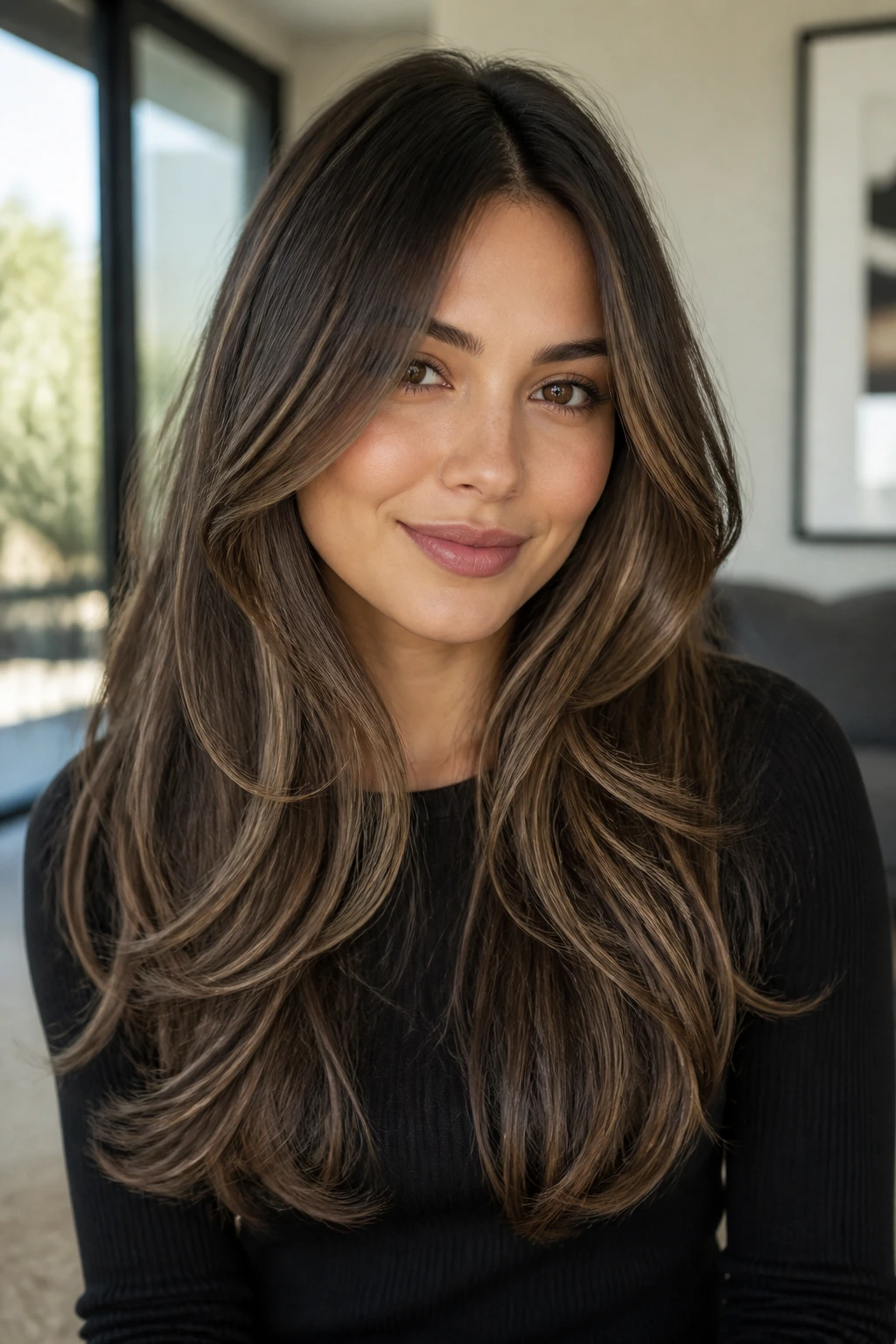
U-shaped layers are one of the easiest ways to keep long hair from looking like a curtain. The rounded hem line lets the sides stay long while the center drops a little lower, which naturally stretches the silhouette. Mushroom-brown babylights add a cool, muted dimension that suits brunettes who don’t want obvious gold.
This is a quiet style, and I mean that in the best way. It does its job without much fuss. The hair moves, the ends curve inward slightly, and the babylights show up as soft ribbons rather than big stripes. If you like long hair but hate when it feels boxy, start here.
12. Side-Swept Glam Waves with Mocha Babylights
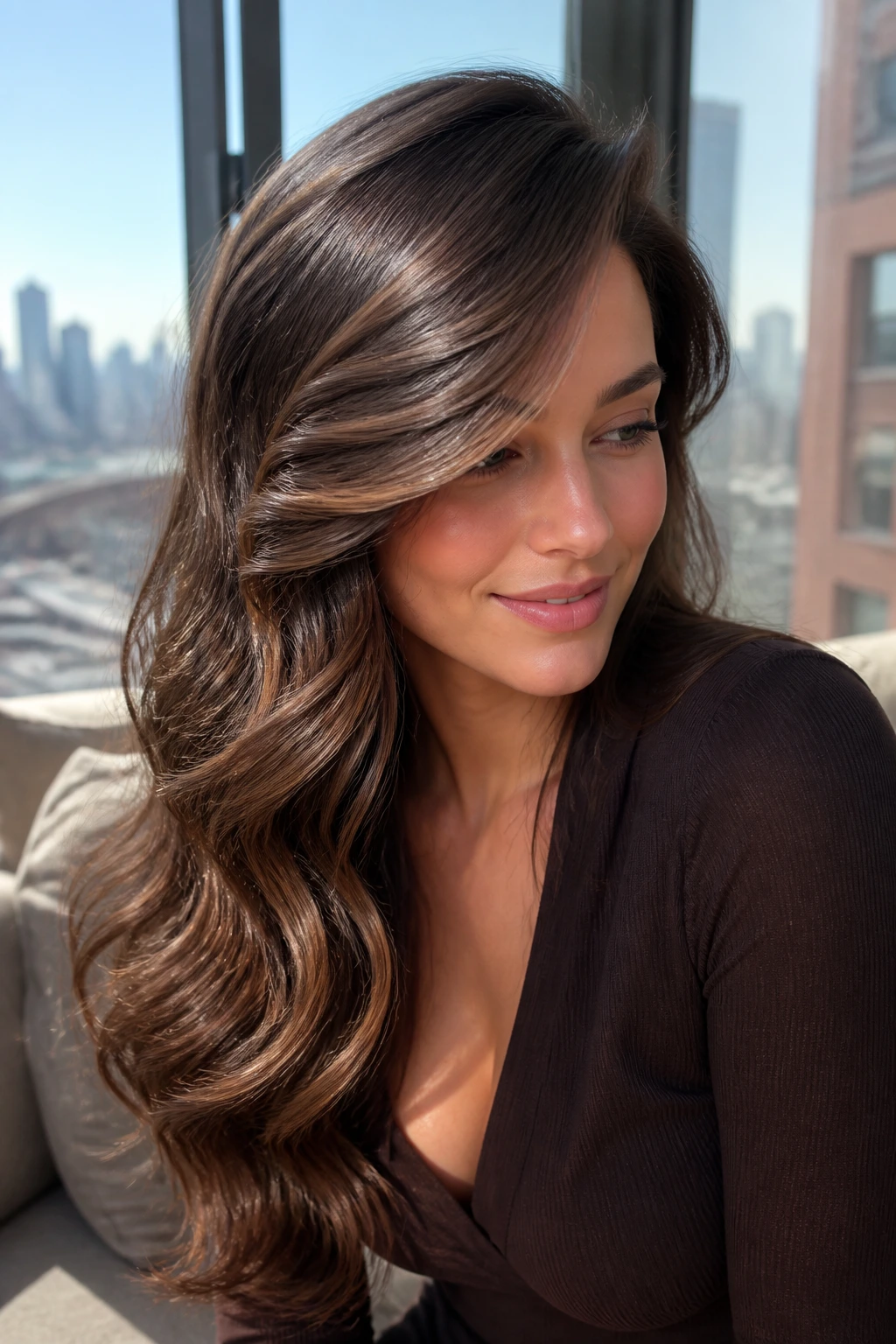
Side-swept waves bring the focus diagonally across the face, which is exactly why they work so well on rounder shapes. Mocha babylights deepen the base and keep the lighter pieces from taking over. The overall effect is expensive-looking without trying too hard, which is a nice way to say the hair looks finished, not fussy.
The front wave should sweep from the part across the forehead and then drop into the length below the cheekbone. If it sits too high, it can shorten the face. If it sits too low, the style loses its lift. There’s a narrow middle ground here, and it’s worth getting right.
13. Boho Crown Braid with Sand Babylights
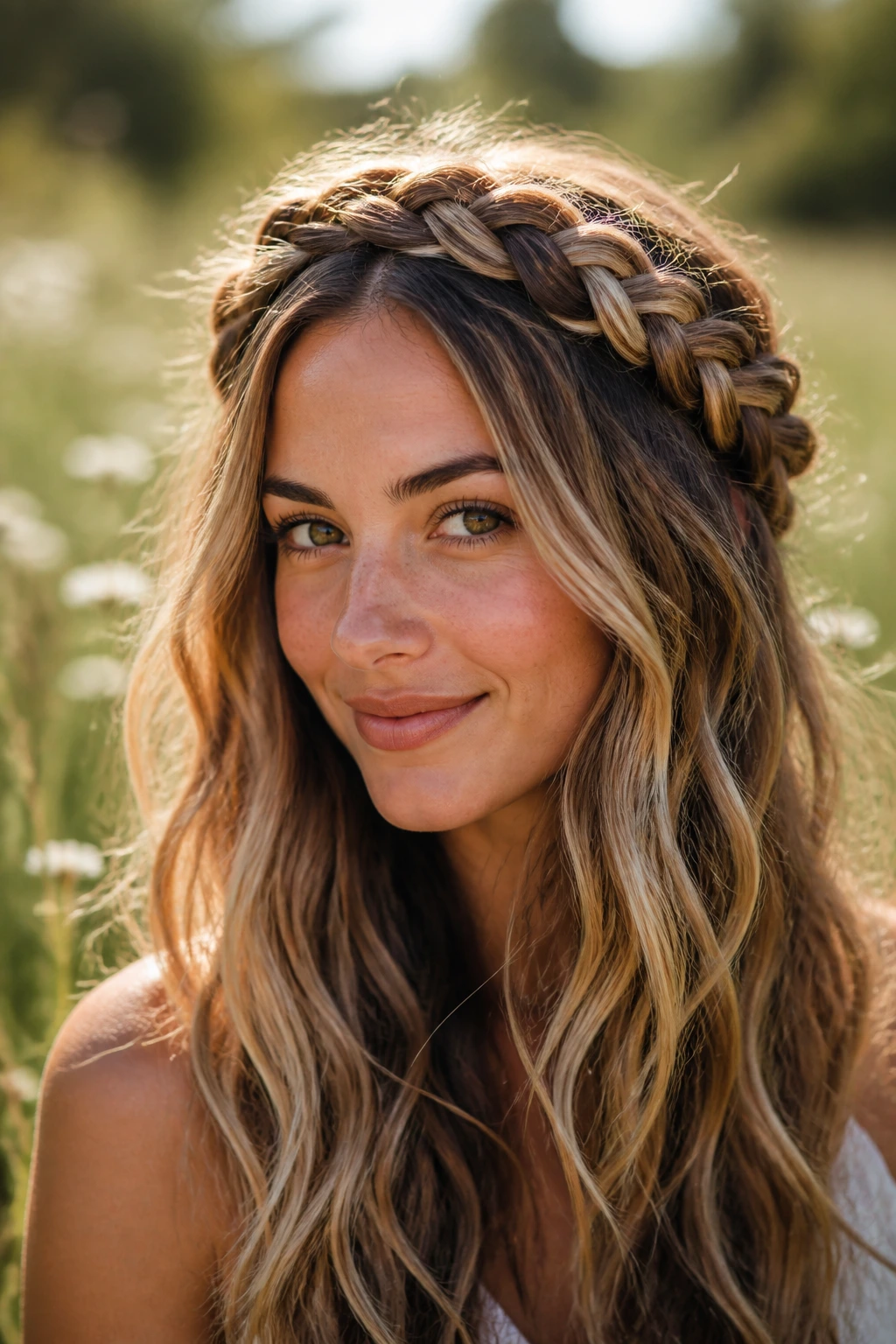
A crown braid adds height and a little visual architecture to the top of the head, both of which help a round face read longer. Sand babylights soften the braid itself and keep the exposed waves from looking too flat. The style feels relaxed, but the shape is doing a lot of work.
Leave the braid loose enough that it doesn’t dig into the temples. That’s the trap. A too-tight braid can make the face seem narrower at the top and wider at the cheeks, which is the wrong balance entirely. The loose waves underneath should stay visible and lightly tousled.
14. Slick Top, Wavy Ends with Pearl Babylights
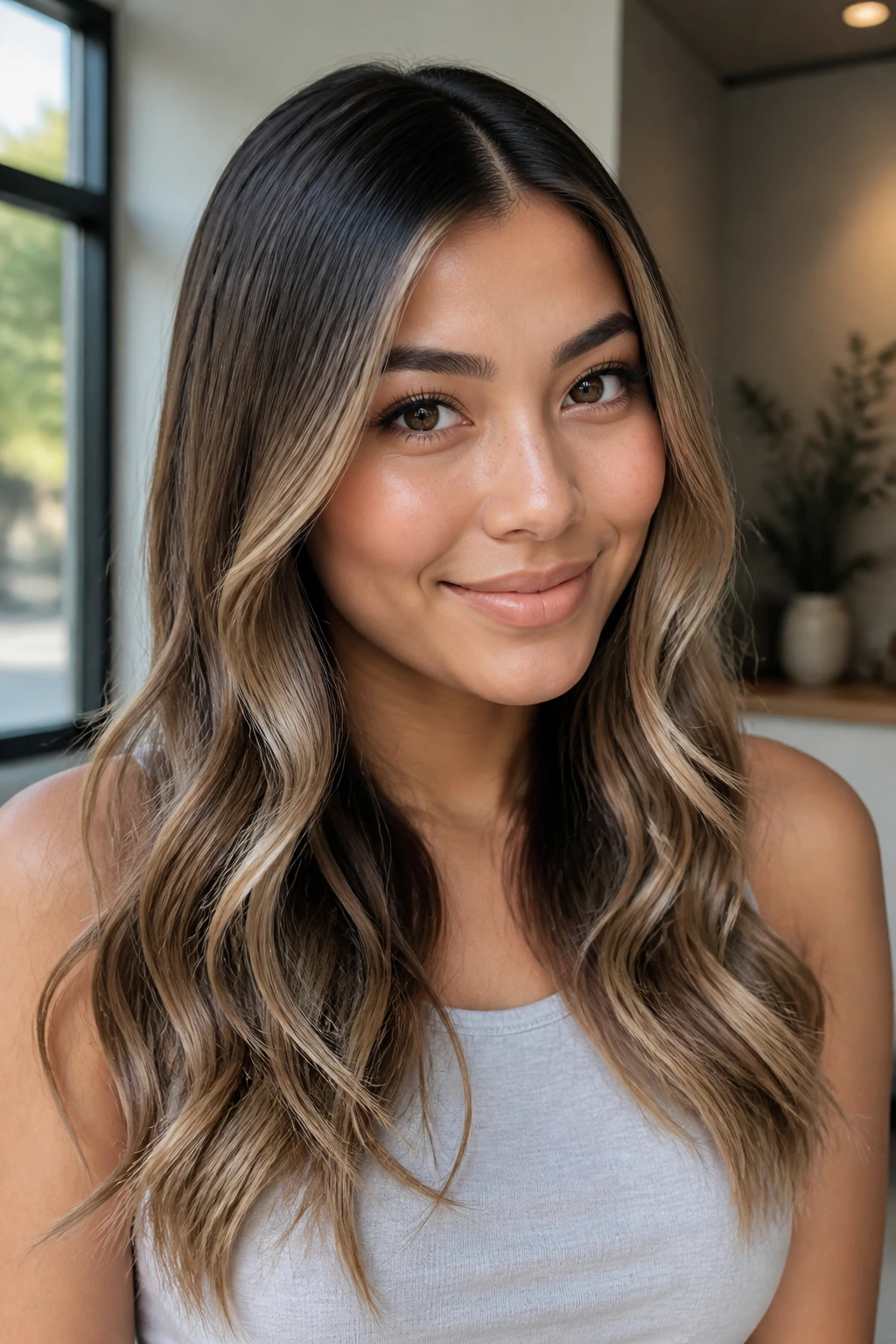
This one is all about contrast. The top stays smooth, almost glassy, and the movement begins lower down through the mid-lengths and ends. Pearl babylights give the surface just enough light to keep the sleek top from looking flat or greasy. On a round face, the smooth crown is doing the elongating.
It’s a strong look, and it works because the shape is disciplined. No fluffy roots. No giant curls near the ears. Just a clean top line, a soft bend below, and a few bright strands that catch light when the hair moves. If you want the face to look less wide without losing softness, this is a smart one.
15. Mermaid Waves with Rose Gold Babylights
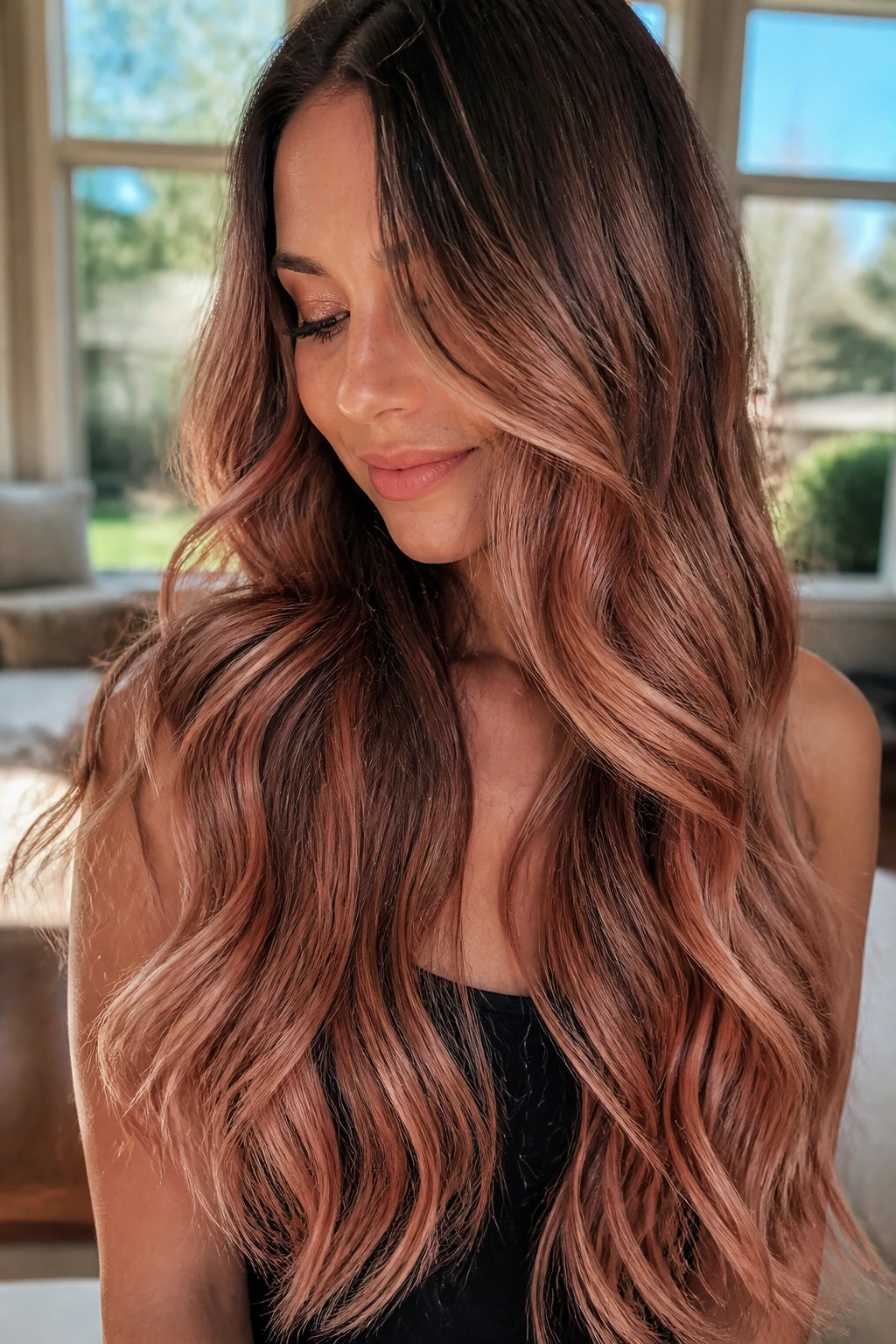
Mermaid waves are best when the S-pattern is loose and the hair is long enough to carry the movement all the way down. Rose gold babylights warm the surface and keep the style from looking too flat under indoor light. The effect is lush, but not bulky if the waves are spaced out properly.
The key is spacing. Too many bends too close together and the sides balloon out. Keep the top smoother and let the wave rhythm relax as it falls. The length will do the rest.
16. Feathered Face-Framing Waves with Beige-Blonde Babylights
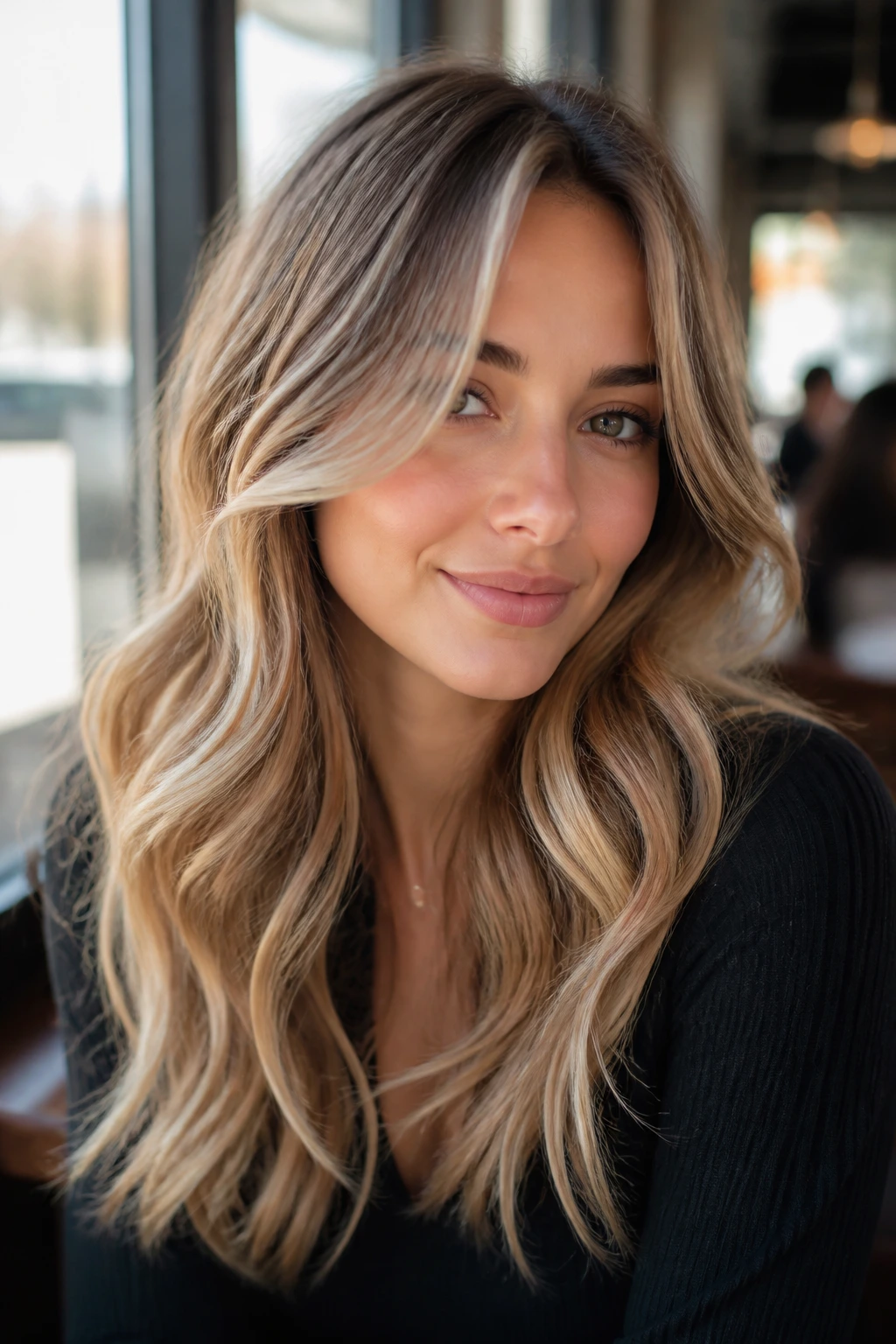
Feathered face-framing layers are one of my favorite answers to a round face because they open the cheeks instead of covering them. Beige-blonde babylights through those front pieces create a soft veil of brightness that doesn’t stop at the widest part of the face. It feels light. It looks lighter, too.
The rest of the hair can stay long and wavy, but the front needs to move backward and downward, not curl inward like a curtain. A round brush at the ends helps. So does a light hand with product. Too much cream and the feathered pieces go soft in the wrong way.
17. Collarbone-to-Waist Gradient Waves with Hazelnut Babylights
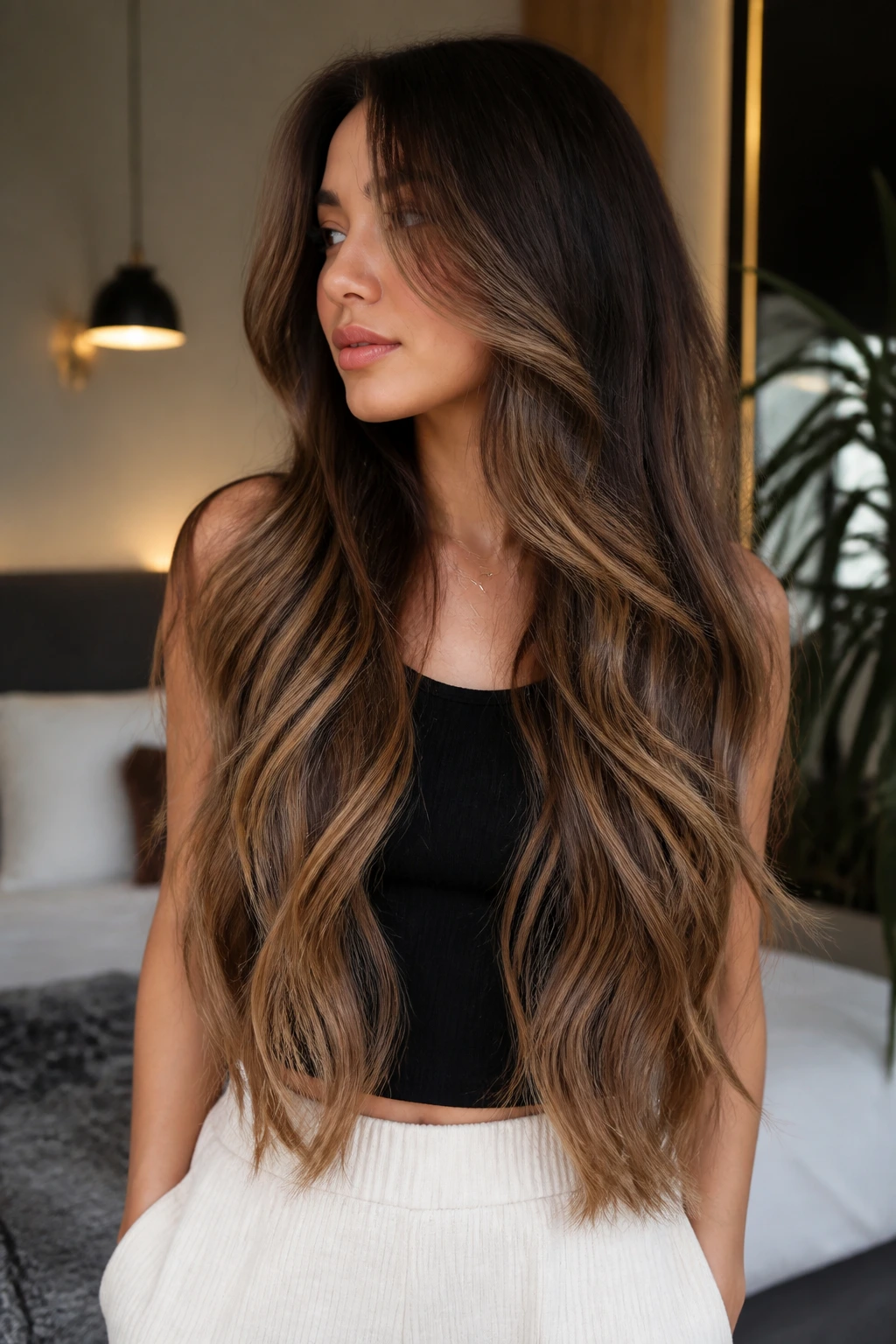
Long gradient waves are all about keeping the eye traveling. The hair moves from a slightly fuller shape near the collarbone into a longer, looser fall at the waist, and hazelnut babylights help mark that transition without sharp lines. It’s a dramatic length, but the gradient keeps it from feeling like one heavy sheet.
This style suits thicker hair especially well because the lengths have enough weight to hold the bend. If your hair is fine, keep the gradient gentle and the wave width large. Small curls can make the lower half look thinner than you want. Big, loose movement is better here.
18. Tousled Wolf-Lite Waves with Smoky Caramel Babylights
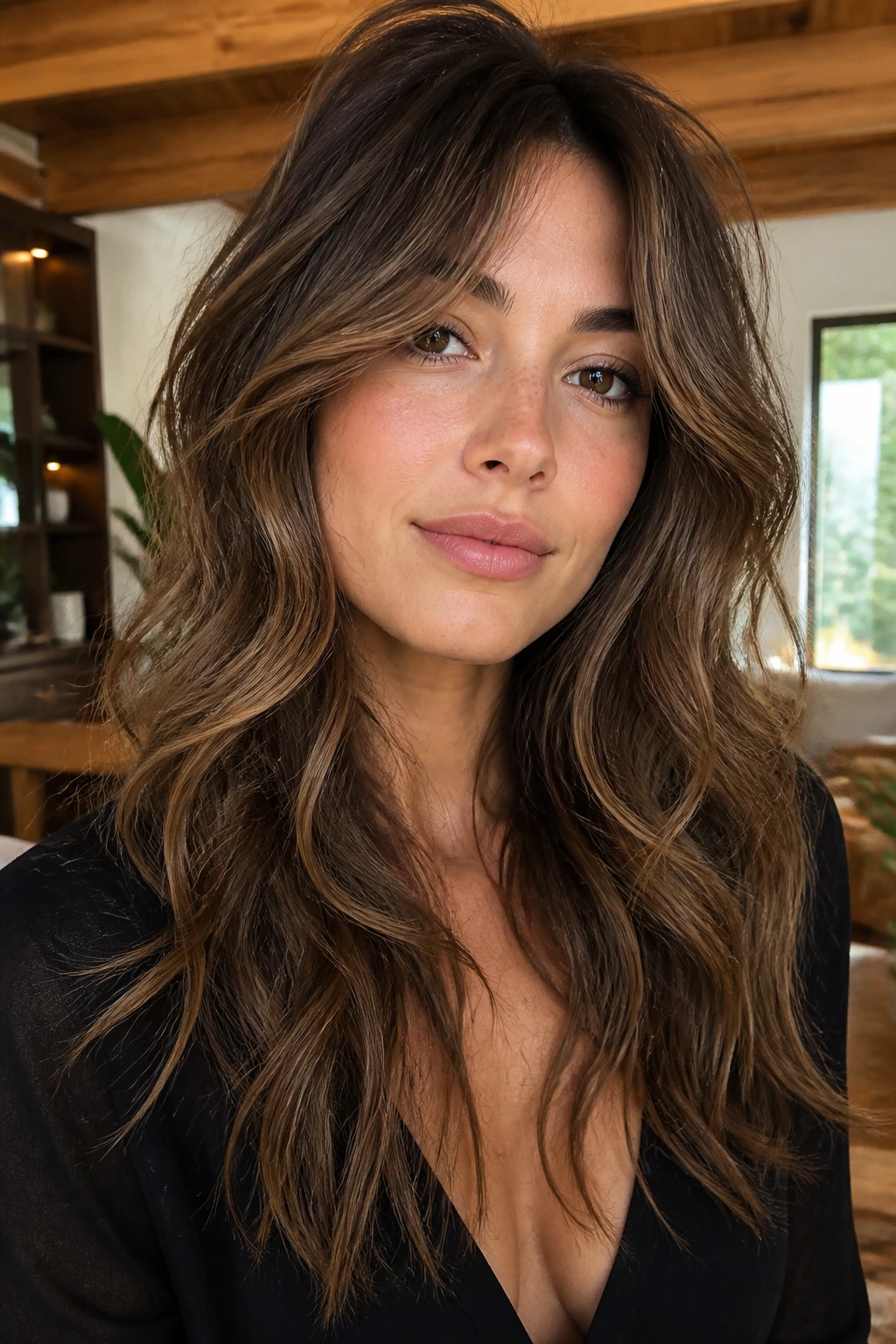
A wolf-lite cut gives you shag energy without going full messy. That means you get lift around the crown, movement through the sides, and longer ends that still read as long hair. Smoky caramel babylights keep the layers distinct and stop the texture from looking fuzzy.
The cut works because it interrupts the roundness in more than one place. There’s shape at the top, shape through the sides, and a longer tail at the bottom. If your face tends to get swallowed by one smooth surface of hair, this adds enough breaks to sharpen the outline a little.
19. Retro Barrel Waves with Butter Babylights
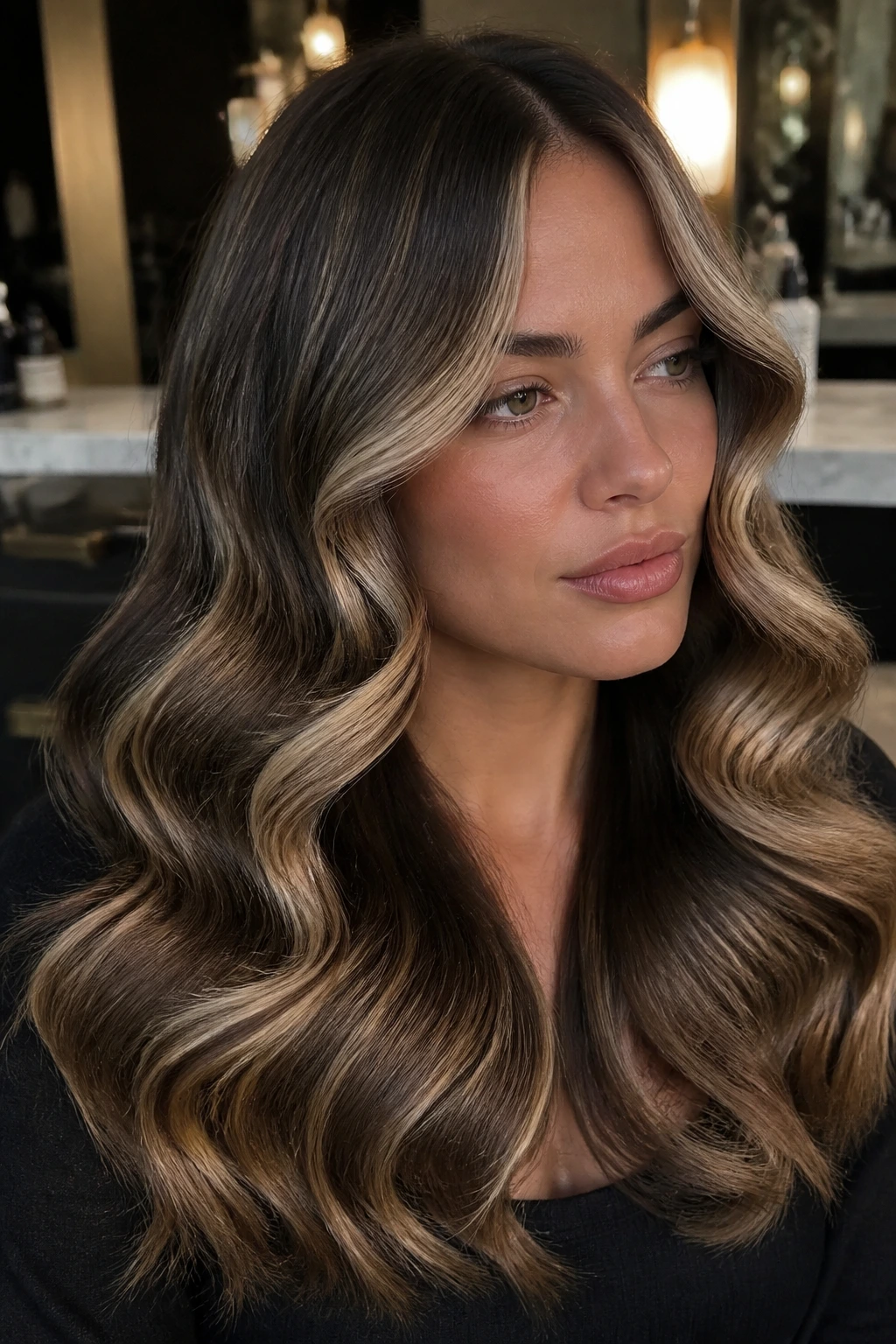
Barrel waves are larger and more sculpted than beach waves, which makes them a good option when you want structure instead of casual texture. Butter babylights brighten the ridges of the wave and keep the style from going too dark against the base. On a round face, the larger pattern can actually help because it doesn’t crowd the cheeks with too much volume.
The trick is to keep the roots smooth and the barrel wave flowing downward. If the wave starts flaring out at the face, it widens the profile. If it drops cleanly, it lengthens it. Same tool, very different outcome.
20. V-Cut Waves with Soft Auburn Babylights
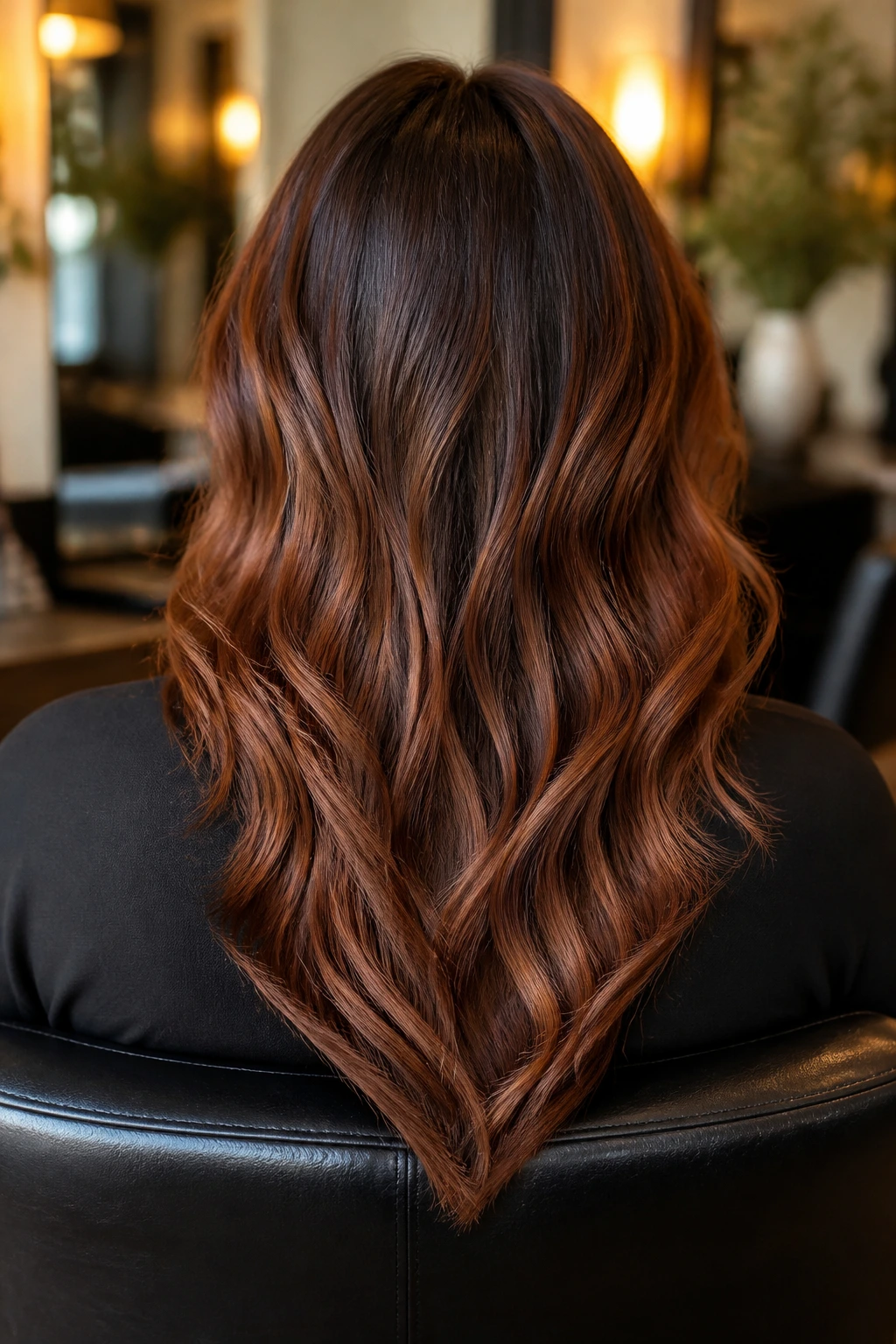
A V-cut creates a pointed shape at the back, which naturally draws the eye down instead of out. Add soft auburn babylights through the waves and the length reads rich and dimensional without becoming too bright around the face. This one has a little edge, but it still feels wearable.
The V shape is especially useful if your hair is dense. It removes some visual mass from the lower half, so the waves can move instead of sitting like one heavy block. That makes the face look less round because the sides don’t push outward as much.
21. Halo Layers with Ice-Brown Babylights
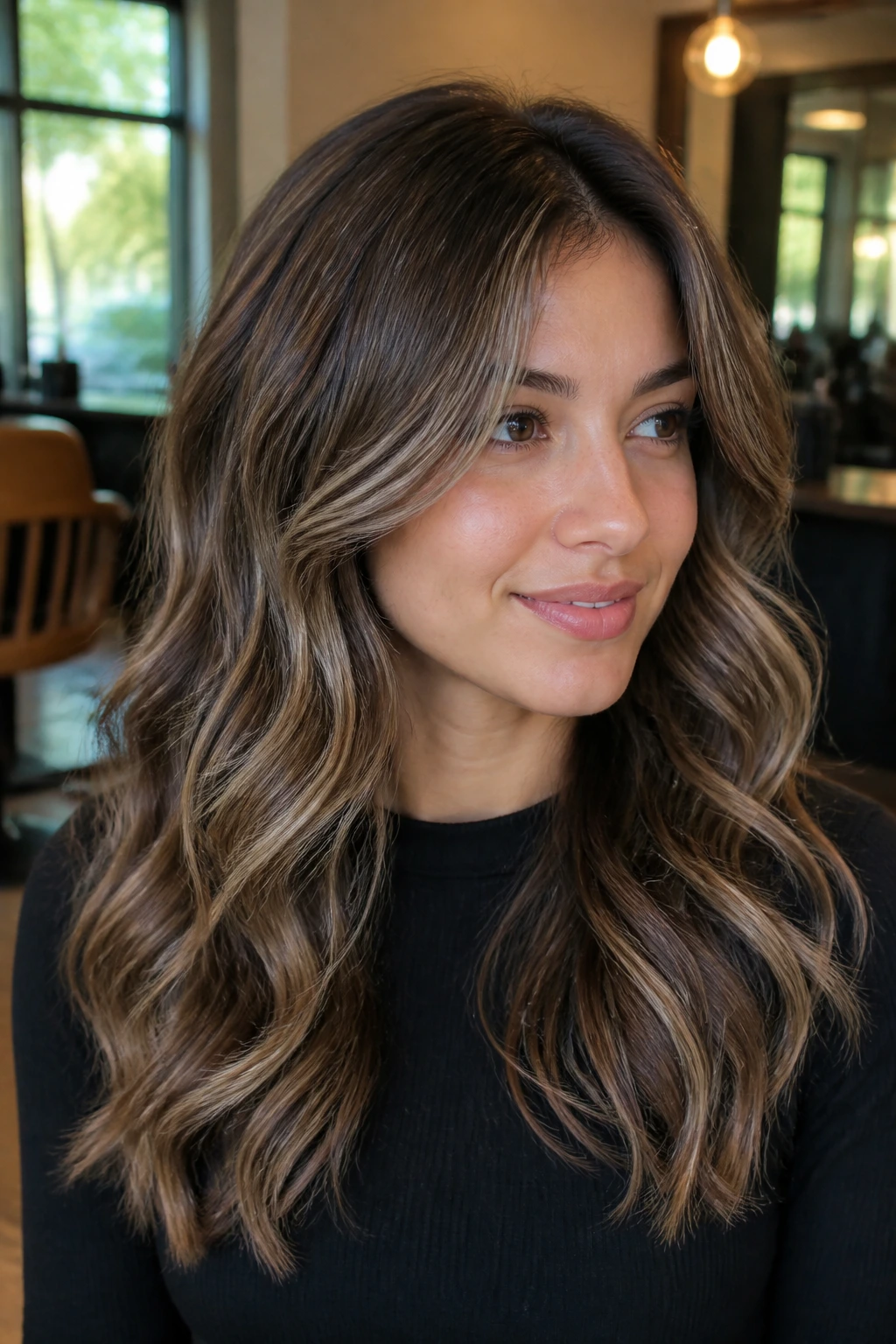
Halo layers lift the top and soften the perimeter, which is a smart combination for round faces that need a little height. Ice-brown babylights keep the whole look cool and clean without creating hard contrast. I like this style on medium brunettes who want dimension but don’t want to lean warm.
The halo effect comes from the way the layers curve around the head while the waves fall below. The top should have enough body to rise a little, not collapse. That upward shape changes the whole proportion of the face. It’s subtle. It also works.
22. Glossy Espresso Waves with Maple Babylights
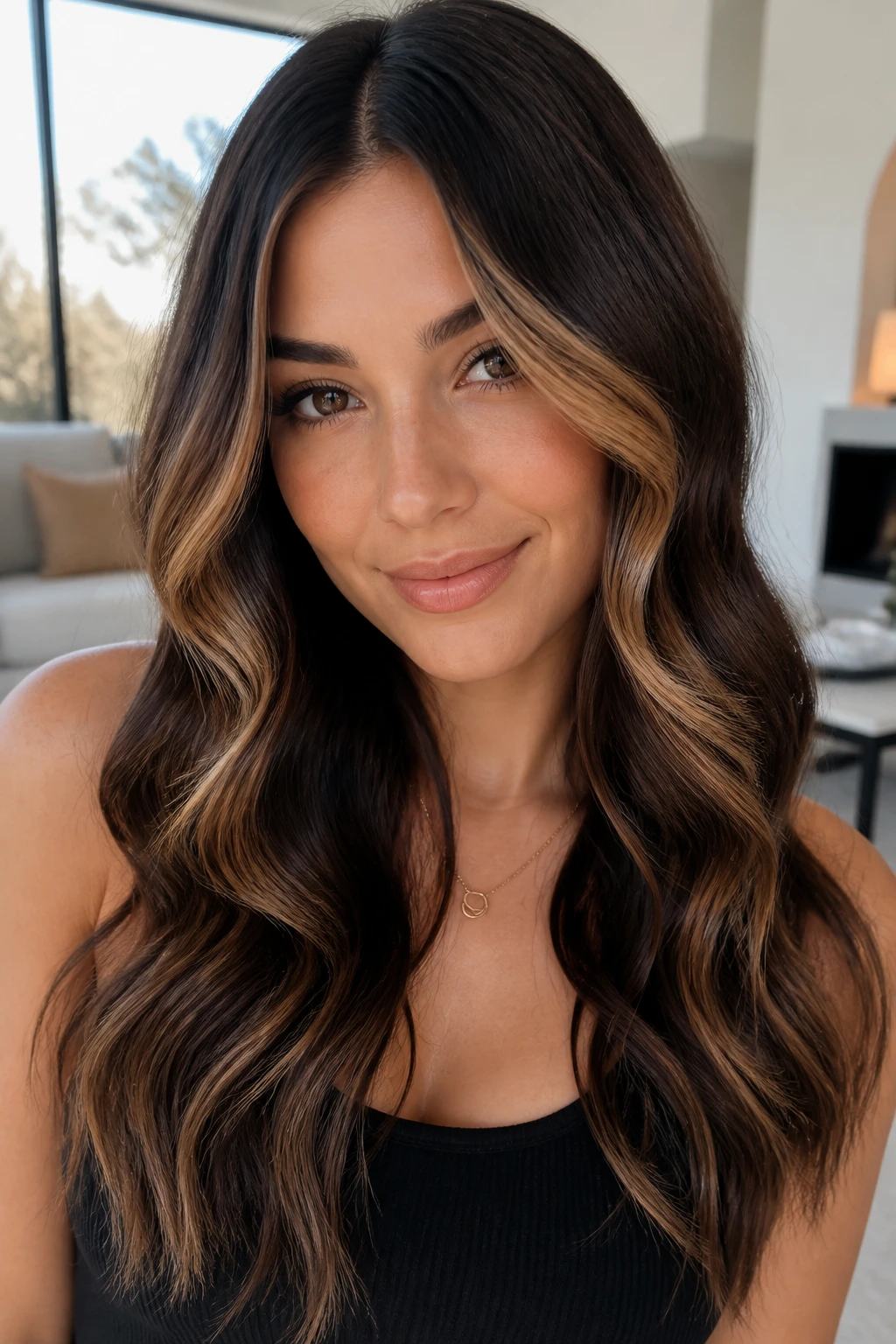
Espresso waves with maple babylights are the no-drama option that still looks finished. The dark base keeps the face from feeling overexposed, while the maple pieces add just enough movement to stop the style from going flat. If you want long waves that look polished in real life, not just in photos, this is a strong place to land.
What makes it flattering is restraint. The babylights sit in thin ribbons through the front and ends, not all over the top in a bright blanket. The waves are loose, the shine is high, and the shape stays long through the cheeks. That combination is hard to beat.
How Fine Color Placement Keeps Long Waves from Spreading Sideways
Babylights do more than add brightness. They change how the hair moves in your eye. Thick color blocks have a way of reading as width, especially when they land beside the cheeks. Fine ribbons break that surface into smaller pieces, and smaller pieces are easier for the eye to read as length. That’s the whole trick.
The other reason this works is timing. Long waves on a round face should usually begin a little lower than people think — often below the cheekbone, sometimes closer to the jaw if the hair is dense. If the wave starts too high, the style opens outward right where you want it to stay narrow. A few thin light pieces near the front panels can do more for shape than a full head of bright highlights.
Color placement near the ends helps, too. It pulls attention down the line of the hair. That doesn’t mean everything should be lighter at the bottom; it means the brightest bits belong where they can extend the silhouette instead of widening the top half. A gloss after coloring keeps those lighter strands soft instead of chalky, which matters more on long hair than people realize.
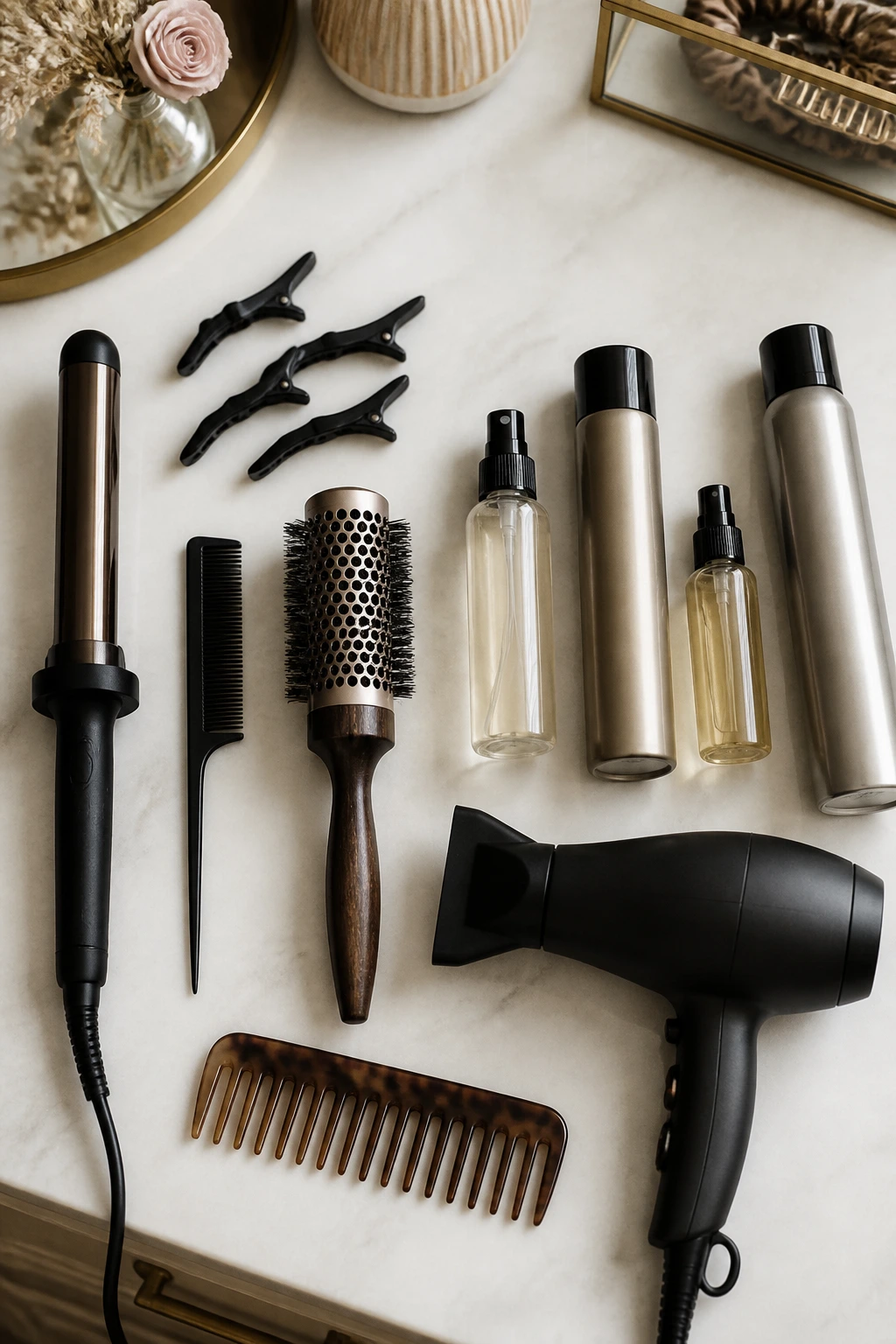
Brushes, Wands, Clips, and Sprays You’ll Actually Reach For
-
1.25-inch curling iron or wand: This size gives long waves without tiny curls that puff out around the face.
-
Tail comb: Use it to part the hair cleanly and section the babylights-friendly front pieces before styling.
-
Sectioning clips: They keep the top layers out of the way while you curl the lower lengths in neat, even passes.
-
Round brush: Handy for lifting the crown and smoothing curtain bangs or face-framing pieces.
-
Heat protectant spray: Mist it from mid-length to ends before any hot tool touches the hair.
-
Flexible-hold hairspray: Better than stiff spray for these looks; it keeps movement without turning the waves crunchy.
-
Light shine serum or mist: Use a pea-sized amount, mostly on the ends, so the babylights reflect light instead of the hair looking dry.
-
Dry shampoo: Useful at the root on day two, especially if the style needs a bit more lift at the crown.
-
Blow-dryer with concentrator nozzle: Not required, but it helps direct the top section smooth before curling.
-
Wide-tooth comb or soft brush: Good for loosening curls without breaking the wave pattern into frizz.
Practical Tips for Shape, Shine, and Longevity
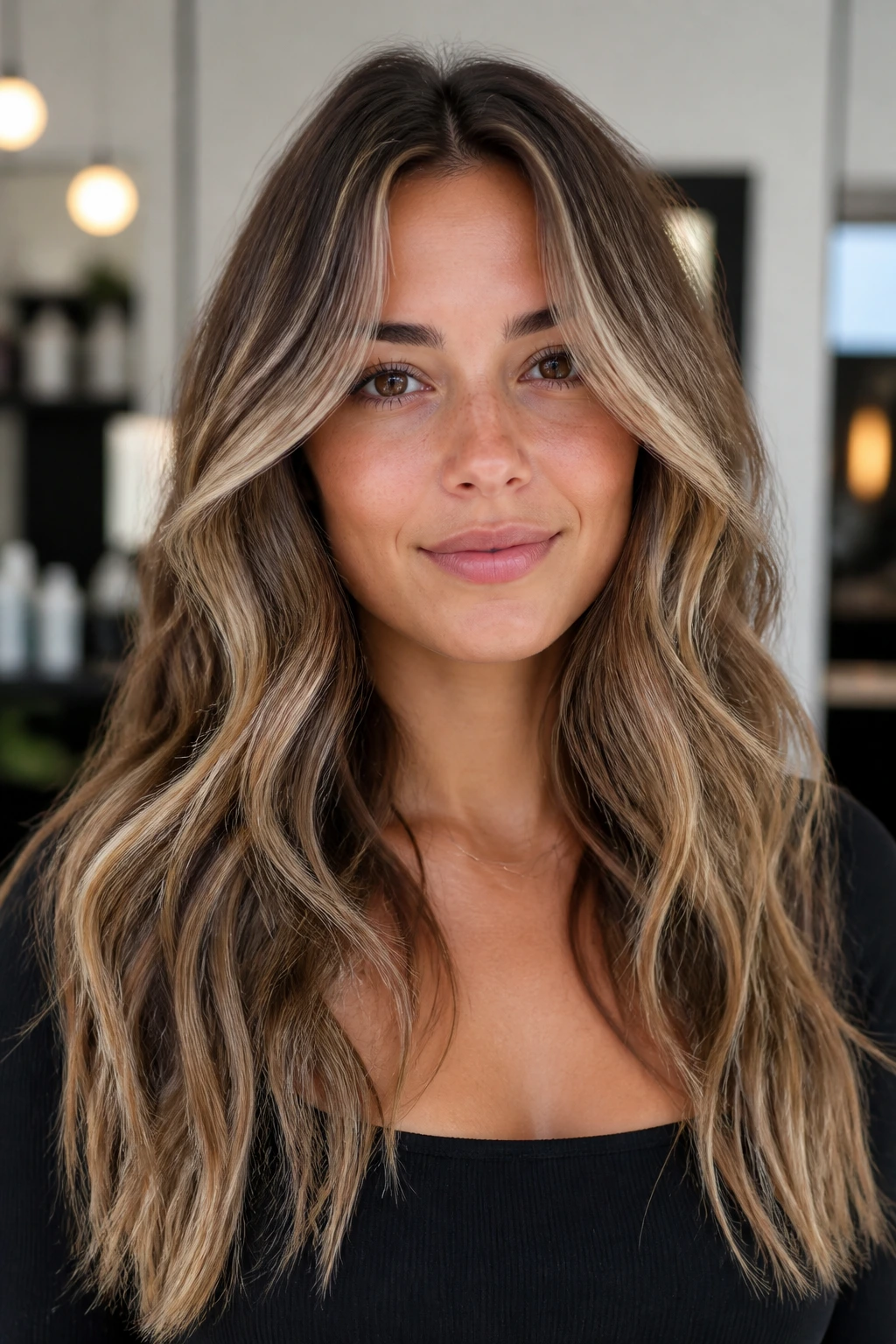
Parting: Start with the part where the hair naturally wants to fall, then shift it just a touch if the face needs more length. Even a small move can change the whole line.
Heat Direction: Curl the front sections away from the face first. If you forget everything else, remember this one. It’s the easiest way to keep the cheeks from feeling boxed in.
Product Load: Use less cream and oil than you think. Too much product makes babylights disappear into the hair instead of sitting on top as soft dimension.
Root Lift: A tiny bit of root spray at the crown does more for a round face than extra curl at the ends. Lift up, not out.
Touch-Up Rule: If the waves have gone flat but the ends still look good, re-curl only the top third and front pieces. You do not need to redo the whole head every time.
Color Care: A blue or purple toning product can help depending on your base, but don’t overdo it. Over-toned babylights can look dull fast, especially on warm brunettes.
Common Mistakes That Make Round Faces Look Wider
The first mistake is starting every wave too high. If the bend opens right beside the cheekbone, the face gets a broader frame than it needs. Push the curl pattern lower and let the crown stay a little smoother. That alone changes the proportion.
Another one: chunky, bright money pieces that sit like stripes on either side of the face. They can look bold in a salon chair and wrong the second the hair settles. Babylights should whisper near the face, not shout. If the brightest front sections are wider than your finger, ask for finer weaving next time.
Flat roots are sneaky. A center part with no crown lift can make even great waves look heavier at the sides, and a deep side part with no support can collapse straight into the cheek area. A little root spray, a quick blast of heat, or a velcro roller at the crown fixes a lot.
Heavy oil at the wrong time is another common miss. Shine is good. Slick, separated waves that cling to the head are not. Keep the gloss on the ends and away from the roots unless your hair is very dry.
Variations and Alternatives to Try
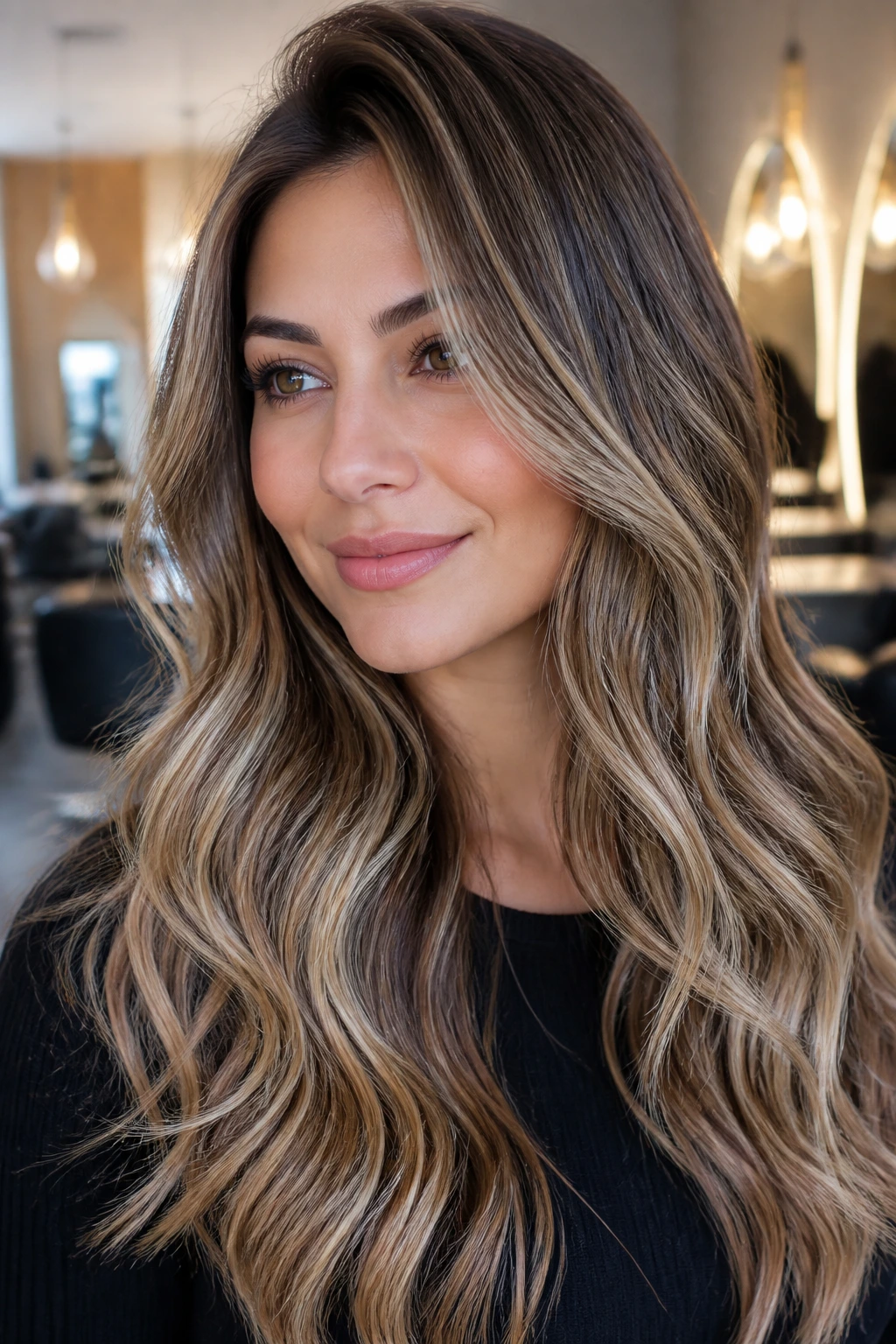
Softer Side-Part Swap: If a full deep part feels too dramatic, shift the part just one inch off center and keep the waves loose. You still get length through the face, but the style feels easier to wear every day.
Cool Beige Refresh: On darker blondes and light brunettes, swap warm caramel tones for beige or mushroom babylights. The cooler finish keeps the color from turning brassy and gives the waves a cleaner edge.
High-Crown Lift Version: Add more volume at the top with root spray and a round brush before curling. This is the move if your face needs more vertical length and your hair tends to fall flat by noon.
Low-Maintenance Root-Shadow Edit: Keep the root a shade deeper and let the babylights start lower through the mids. The grow-out stays softer, and the face-framing effect lasts longer between color appointments.
Curly-Wavy Hybrid: If your natural texture leans more curly than wavy, stretch the roots with a blow-dryer and leave the ends with a softer pattern. The babylights show the curl shape without adding width where the face is widest.
Keeping Babylights Fresh and Waves Soft
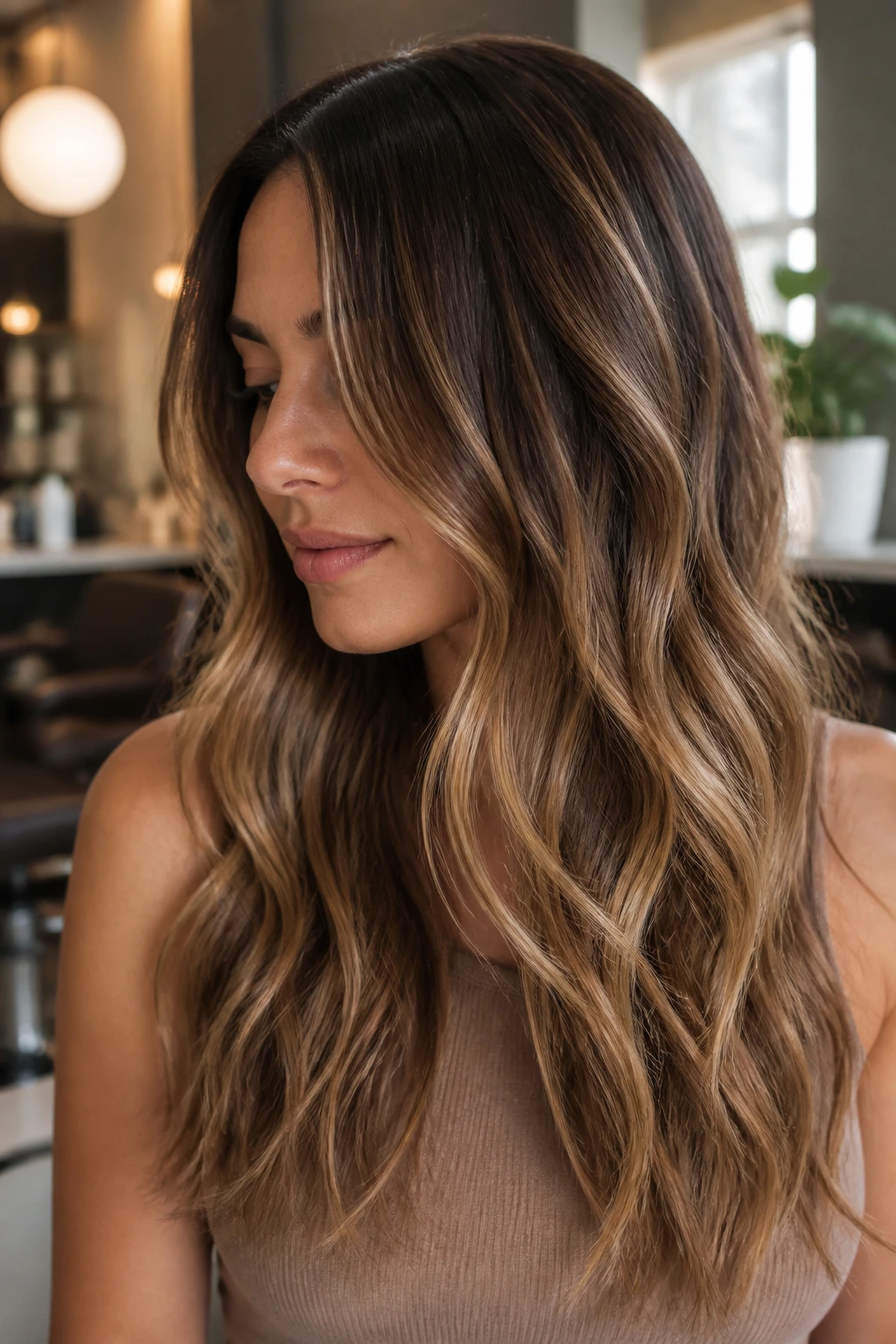
Babylights grow out more gracefully than chunky highlights, which is half the appeal. Most colorists will suggest a gloss or toner refresh every 6 to 8 weeks if the tone starts to warm up or fade. If your base is darker and the babylights are subtle, you may stretch that longer. If the front pieces get brassy fast, don’t wait until the color looks tired. Fix it earlier.
The style itself usually lasts best when you don’t wash it every day. Two to three days between washes is a sweet spot for many people, especially if the crown needs a little natural oil to stay smooth. On day two, dry shampoo at the roots and a quick re-curl of the front panels usually brings the shape back without starting over. Sleep on a silk or satin pillowcase if you can. It cuts down on the rough, frizzy outline that makes babylights look muddy.
If you wear waves often, book a trim every 8 to 12 weeks to keep the ends from thinning out into wisps. Long hair can look impressive right until the bottom third gets scraggly. Then the whole shape feels off, and the babylights lose their clean lines. A sharp hemline makes the color look richer.
Frequently Asked Questions
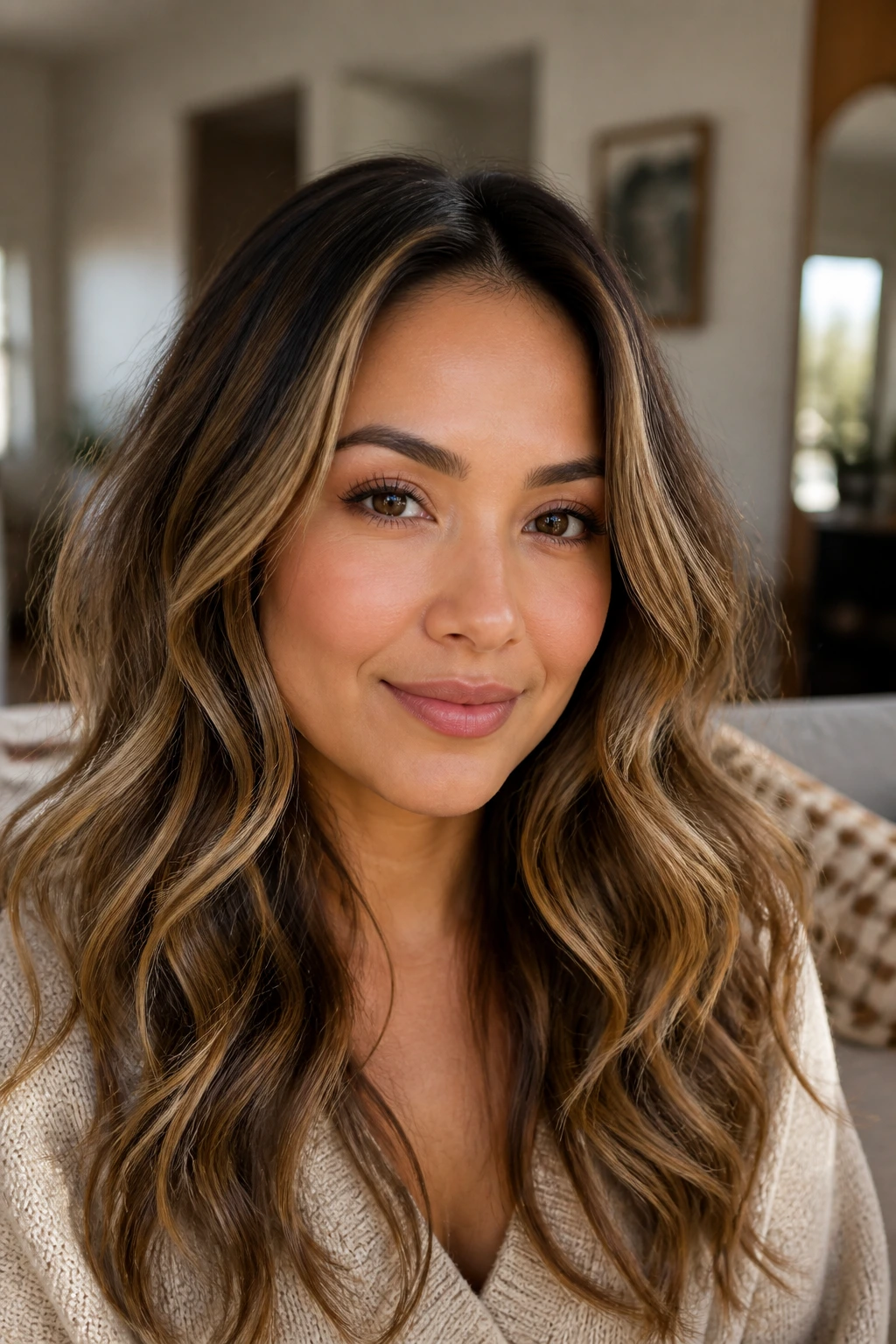
Can a round face wear a center part with babylights?
Yes, if the crown has lift and the waves start lower than the cheekbone. A flat center part with big side volume can widen the face, but a soft middle part with long layers and fine babylights usually looks clean and balanced.
Do babylights need to be warm to flatter a round face?
No. Warm caramel and honey are flattering on many brunettes, but beige, champagne, mushroom, and ash tones can work just as well. The real issue is contrast and placement, not warmth alone.
What wave size looks best on long hair with a round face?
Loose to medium waves usually work better than tight curls. Think 1.25-inch iron bends or soft barrel waves, not small ringlets that puff outward at the sides.
Should the brightest babylights go near the face?
Usually, yes — but in fine ribbons, not thick money pieces. Keep the brightest strands around the part, temples, and upper front layers so they brighten the face without creating a wide frame.
What if my hair is thick and bulky?
Ask for long internal layers or a butterfly-style shape. Thick hair needs weight removal in the right places, or the waves will balloon at the cheeks and sides.
What if my hair is fine and flat?
Use a lighter cut with crown lift, and keep the babylights scattered rather than packed in. Fine hair looks better with soft dimension and a bit of root volume than with too much color density.
Can I get this look if my hair is naturally curly?
Yes. Keep the babylights fine and the layering long enough to respect the curl pattern. You may need to stretch the roots a little and define the lower lengths so the face doesn’t gain width from the curl volume.
How do I keep babylights from looking stripey?
Ask for finer weaving, a softer toner, and a root shadow if your base is dark. Stripey color usually comes from sections that are too wide or contrast that’s too sharp.
The Quiet Shape-Shifter
These styles work because they treat the face, the color, and the wave pattern as one decision. That’s the part people miss. A round face doesn’t need hair that hides it; it needs hair that moves with a little more intention, giving the cheeks room while stretching the eye down through the length.
Babylights are the subtle part of that equation, and honestly, they’re the piece I’d keep if I had to pick just one. They make the waves look expensive without looking loud, which is a nice trick when you want the hair to feel soft but not shapeless. Pick the part, protect the crown, keep the waves low around the cheeks, and the whole look falls into place faster than most people expect.