



Dark brown to grey hairstyles for tan skin work best when the transition is deliberate, not accidental. A rich espresso base keeps the face from looking washed out, while grey shows up as smoke, steel, pewter, or silver in the right places instead of turning the whole head pale and flat. That difference matters more than people think.
On tan skin, the prettiest versions usually keep some warmth at the root or in the lowlights. Full icy grey from scalp to ends can look sharp on paper and a little severe in the mirror, especially if your skin leans golden or olive. A brown-to-grey melt, though, gives you contrast, depth, and a cleaner edge around the face.
The cut changes everything too. A blunt bob makes grey look crisp. Layers make it softer. Waves break up the color so the grey doesn’t sit there like a block of paint. And yes, the exact shade of grey matters — mushroom, graphite, taupe-grey, and pewter usually sit more naturally next to tan skin than blue-white silver.
Why This Brown-to-Grey Shift Works on Tan Skin
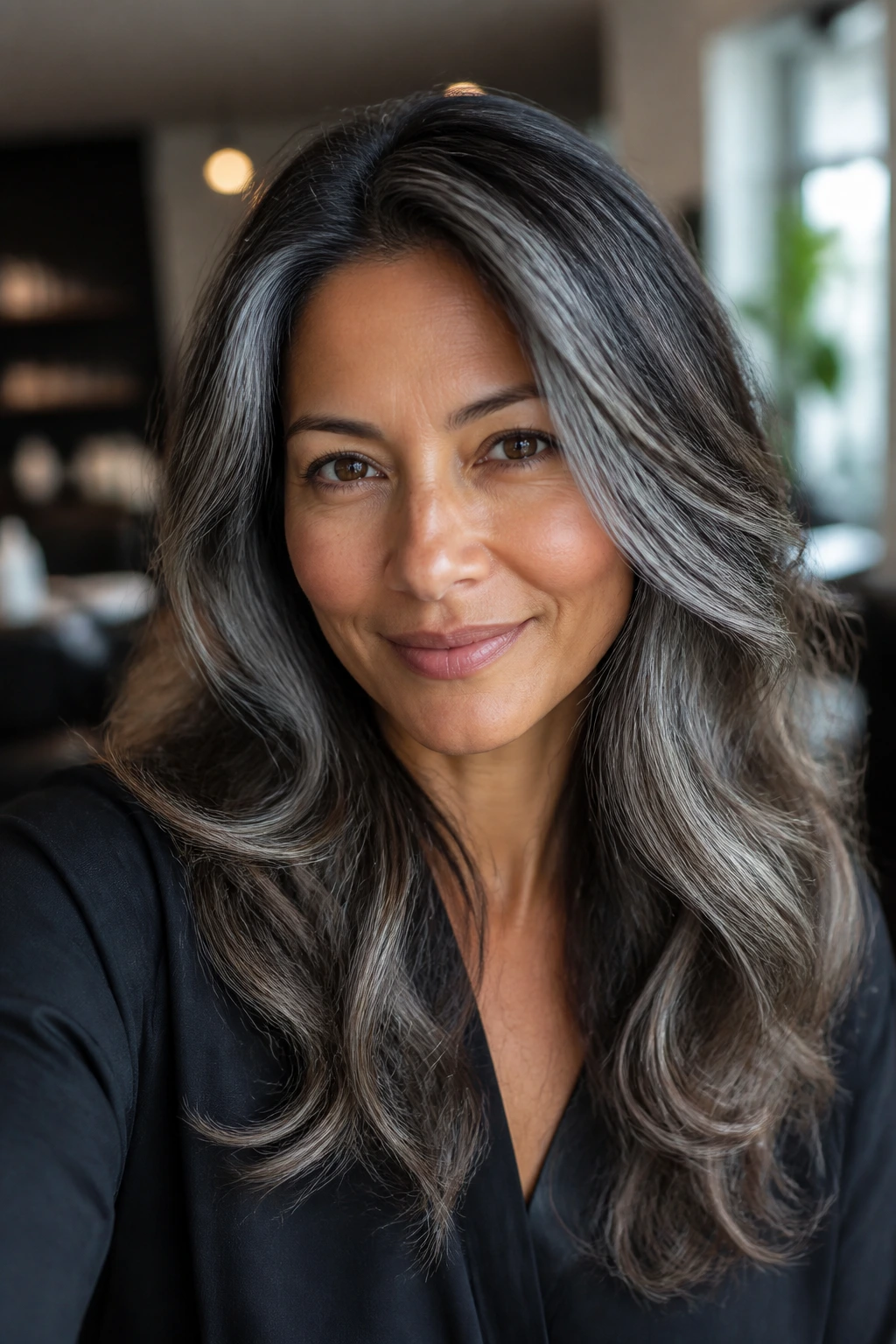
- Dark roots keep the face grounded: A level 4 or 5 brown root gives tan skin a frame, so the grey can sit on top without flattening your features.
- Grey reads softer when it’s smoky: Mushroom, steel, and pewter shades feel less harsh than pure ice and usually look better when your undertone runs warm or olive.
- Placement matters more than volume: Grey ribbons near the face or at the ends can look more polished than flooding every strand with the same cool tone.
- Texture changes the whole mood: Straight hair makes the color line cleaner; curls and waves soften the transition and make the grey look blended instead of streaky.
- The cut can fix a lot: A blunt lob, shag, or layered V-cut gives the color something to “sit on,” which stops the grey from looking like an afterthought.
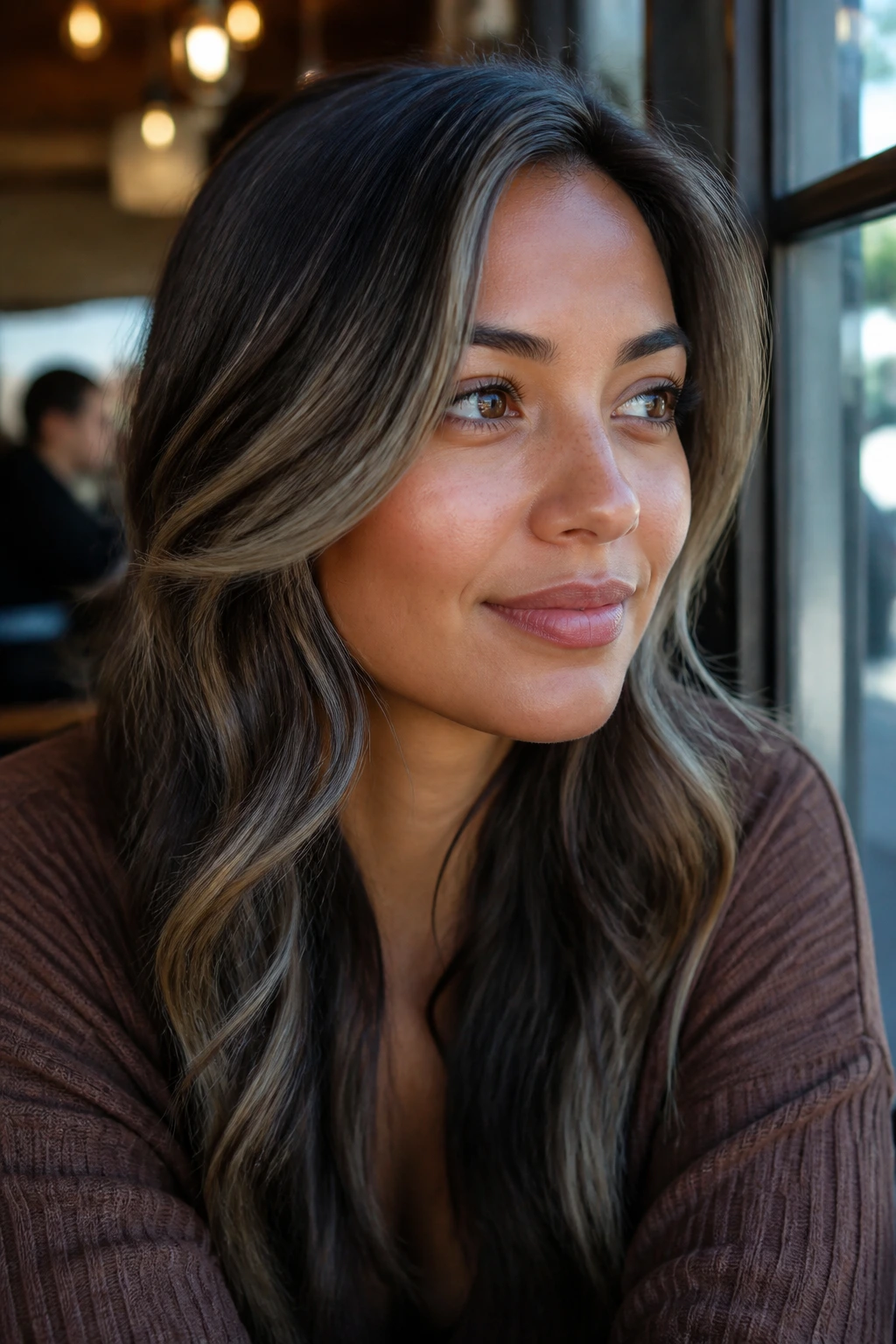
1. Espresso Root With Silver Balayage Waves
A deep espresso root fading into silver balayage waves is the easiest place to start if you want contrast without shock value. The brown keeps the crown rich, while the silver lands in ribbons that move when you do. On tan skin, that little bit of warmth at the top keeps the face from going chalky.
Why It Works
Balayage lets the grey sit where the light actually hits, which is why it looks softer than a blocky foil pattern. The waves break the color into pieces, so the silver reads as sheen instead of stripe. If your hair is medium to long, this is one of the most forgiving ways to wear grey.
- Best base: level 4–5 espresso brown
- Best grey: soft silver or smoke-grey toner
- Best texture: loose waves, not tight curls
- Maintenance: gloss every 4–6 weeks
Pro tip: keep the first 2 inches at the root darker than the rest. That shadow makes tan skin look warmer and gives the grey more lift.
2. Mushroom Grey Lob With a Soft Bend
A mushroom grey lob is cooler and quieter than silver waves, and that’s why it works. The shade sits between taupe and grey, with just enough beige in it to avoid looking icy. On tan skin, especially skin with olive undertones, it reads polished instead of washed out.
What makes this cut special is the bend at the ends. A flat iron curve or a round-brush finish keeps the lob from looking helmet-like, which can happen fast with grey hair. Ask for a root shadow and a soft mushroom toner, then keep the line at the collarbone or just above it.
What to ask for: a level 5 root with level 7–8 mushroom lengths.
What to style with: a 1-inch flat iron and a light shine cream.
Who it suits: anyone who wants grey without the high-drama silver punch.
3. Curly Brown Melt With Pewter Ends
Do you want grey to feel less formal? Put it on curls. Pewter ends on dark brown curls look lived-in in the best way because the coil pattern keeps the color broken up. You get movement first, color second.
This style works especially well when the grey starts below the ear. That keeps the curl pattern full near the face and lets the pewter settle at the bottom where it can catch light. It’s also kinder if your hair is prone to dryness, because the most lifted sections aren’t sitting around your scalp all day.
How to Wear It
- Diffuse on low heat until the curls are 80% dry.
- Scrunch in a light mousse or gel.
- Use a satin bonnet at night if the ends tangle easily.
- Refresh with water and leave-in instead of rewashing.
Best for: dense curls that need color depth, not a harsh overlay.
4. Graphite Ombre on a Sleek Mid-Length Cut
Graphite is the serious one in the grey family. It’s darker than silver, cooler than brown, and a little more dramatic than mushroom. On tan skin, that makes it a smart choice if you want contrast but don’t want the hair to scream for attention.
The sleek cut is what seals the deal. A blunt or barely layered mid-length shape lets the ombre move from dark brown near the crown to graphite at the ends without interruption. Iron it smooth, tuck one side behind the ear, and the whole thing suddenly looks sharper.
Good match: straight or slightly wavy hair.
Color note: ask for a soft melt, not a hard line at the ears.
Salon tip: if your hair pulls orange when lifted, request a blue-violet toner.
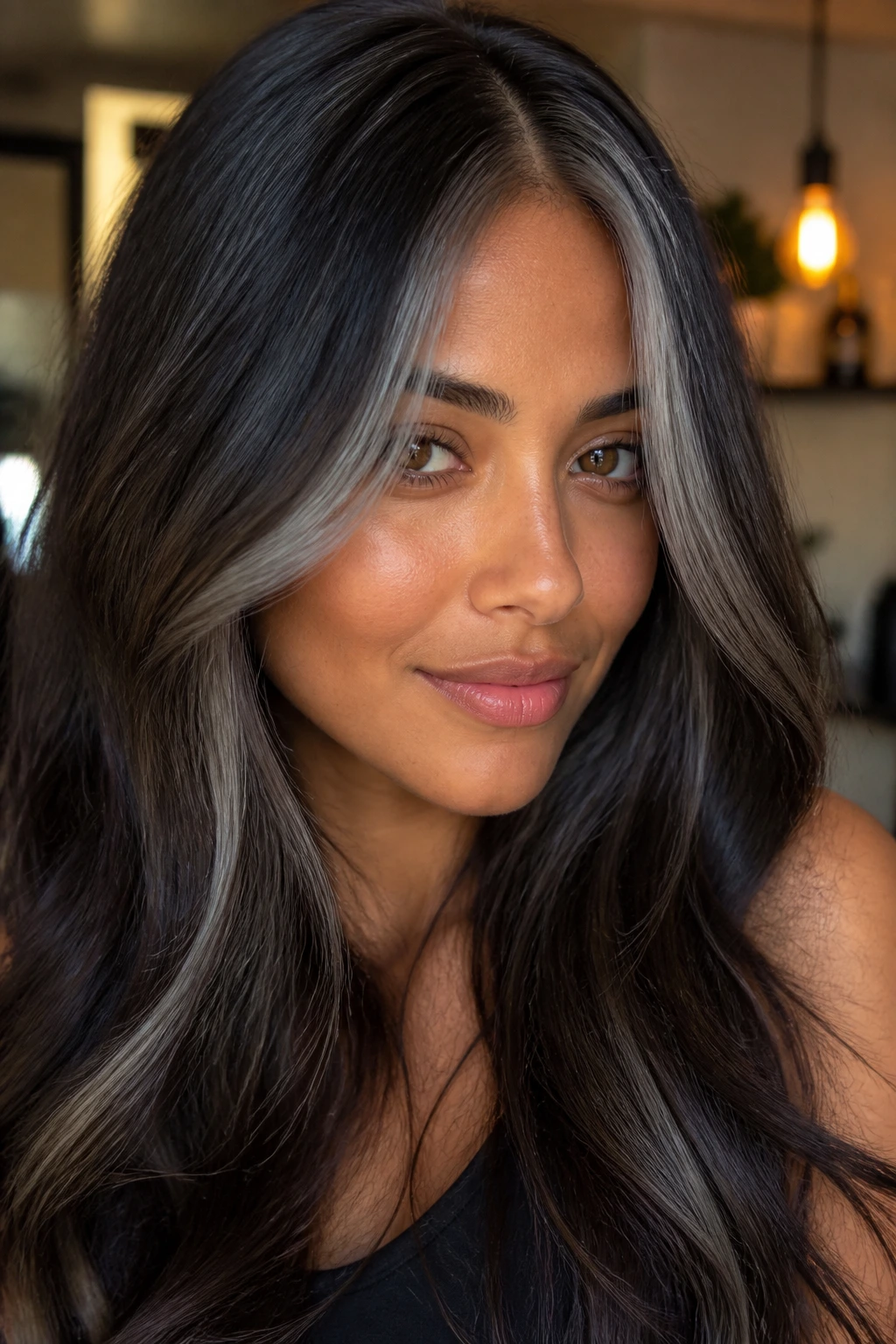
5. Grey Money Piece on Long Dark Layers
If you want a face-brightening option without a full commitment, a grey money piece is the move. Two lighter panels around the face can change the whole mood of long dark brown hair, especially when the rest of the lengths stay deep and glossy.
On tan skin, the trick is not to make the front pieces too white. A soft silver or frosted grey keeps the face open without hardening the features. Long layers help those panels drop into the rest of the hair instead of sitting there like two separate streaks.
Quick Notes
- Keep the money piece one or two shades lighter than the rest.
- Curl away from the face for a softer line.
- Use a sulfate-free shampoo or the grey will fade fast.
- Trim the face-framing layers every 8–10 weeks so the contrast stays tidy.
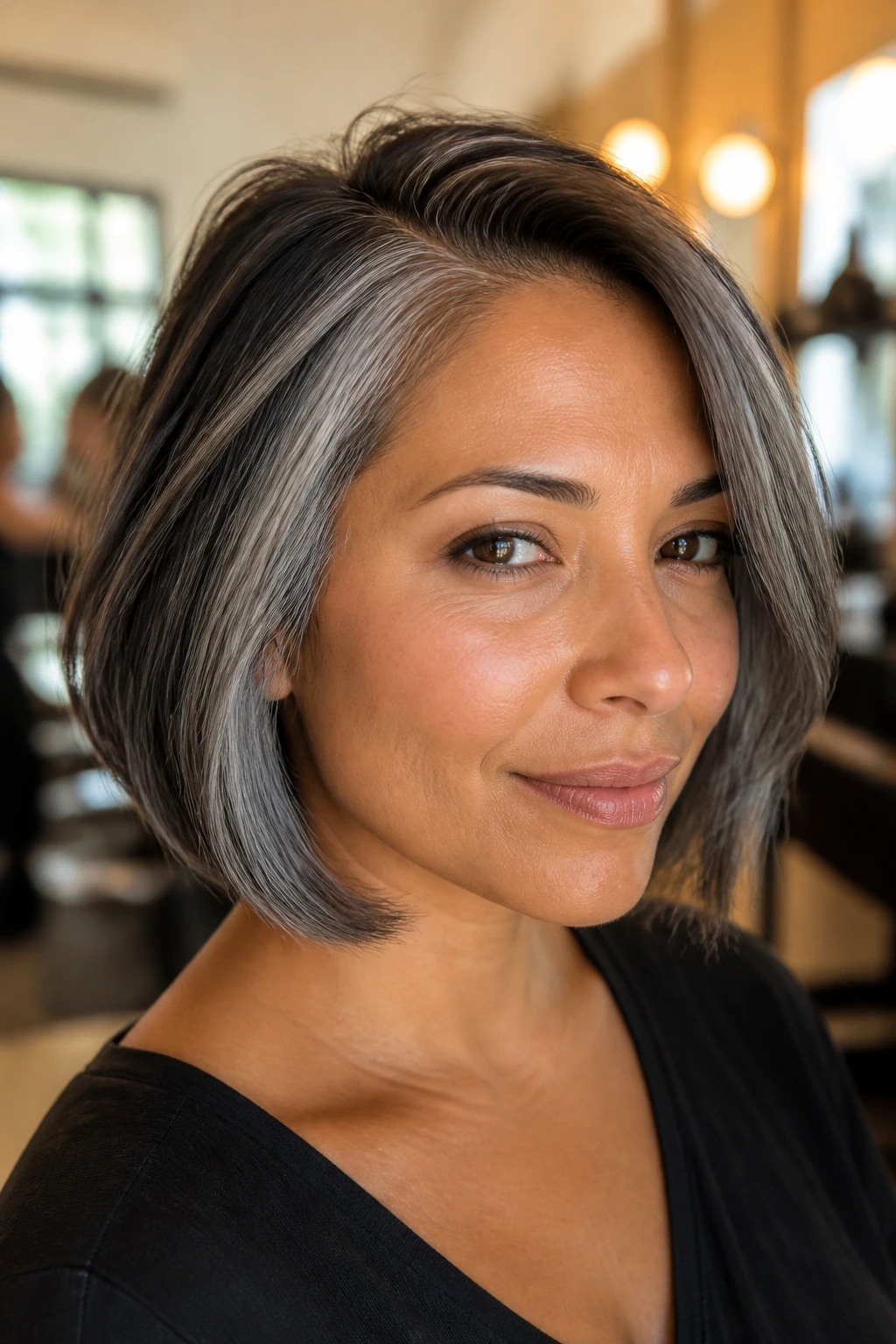
6. Smoky Bob With a Side Part
A smoky bob with a side part has old-school polish, but the grey makes it feel modern. This one is especially good if your tan skin has a warm, sun-touched look, because the side part creates asymmetry and stops the grey from sitting too squarely around the face.
The bob should hit at the jaw or just below it. That length gives the smoky colour enough room to show, but not so much that it starts looking heavy. A deep side part also gives the roots a little lift, which matters when the color is cool.
One thing I like here: a slight bend at the ends, not a tight wave. Too much curl makes the grey read busy. A clean, soft curve keeps the shape neat.
7. Feathered Shag With Ash Grey Sweep
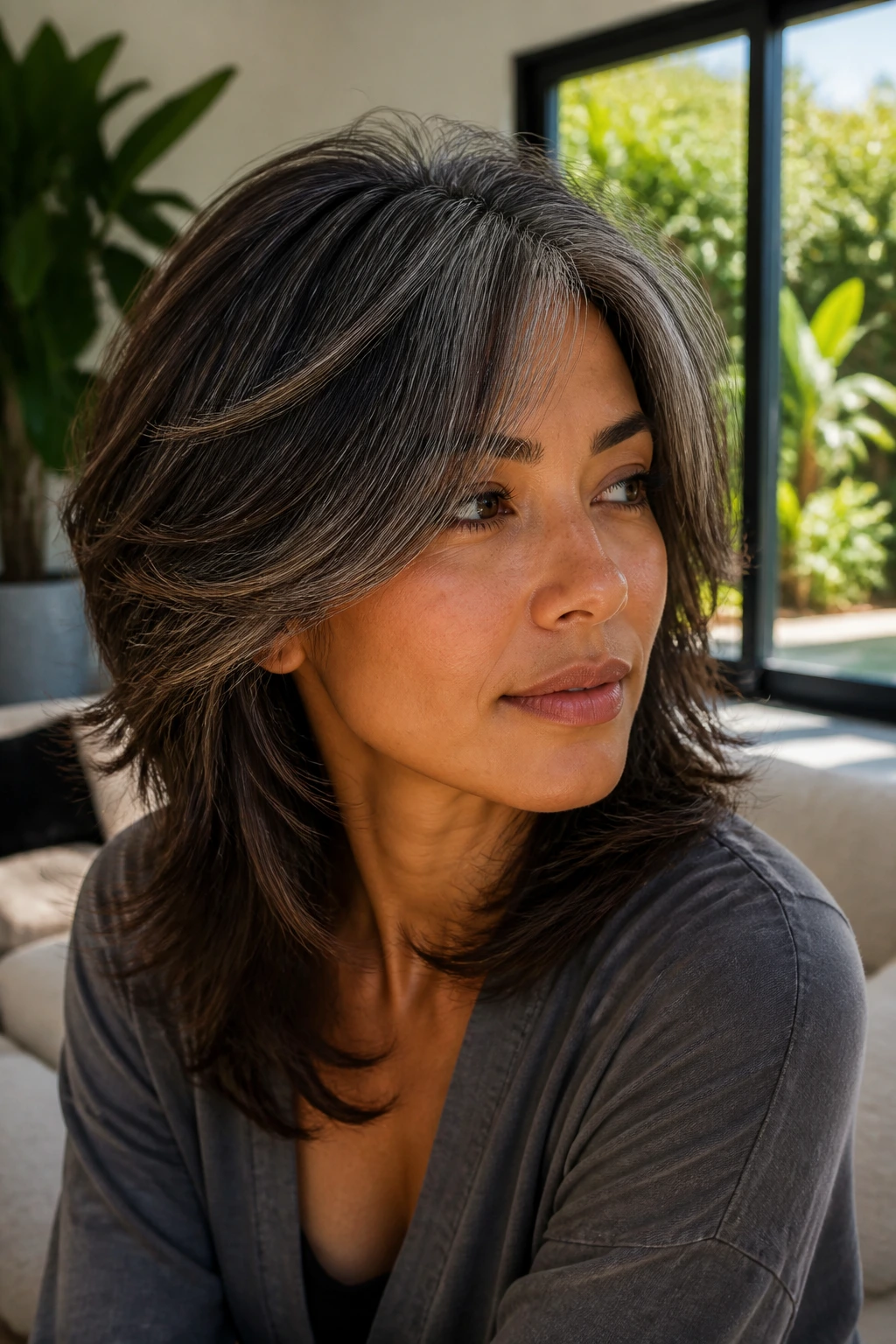
A feathered shag is for people who want movement first and colour second. Ash grey through the layers gives the cut texture, while the dark brown underneath keeps it wearable on tan skin. The overall effect is loose, cool, and a little rebellious without going full punk.
Why It Flatters Tan Skin
The layered fringe softens the forehead, which is where harsh grey can sometimes make warm skin look too contrasted. Feathering also breaks up the colour so it doesn’t sit in a solid strip. If your hair is thick, this cut removes bulk and lets the grey show through in flashes.
Style with: sea salt spray, a diffuser, or a quick round-brush lift at the crown.
Avoid: making the ash too bright. Ash on tan skin should look smoky, not dusty.
Best if: you like hair that looks better a little undone.
8. Curtain Bangs With Steel Ribbon Highlights
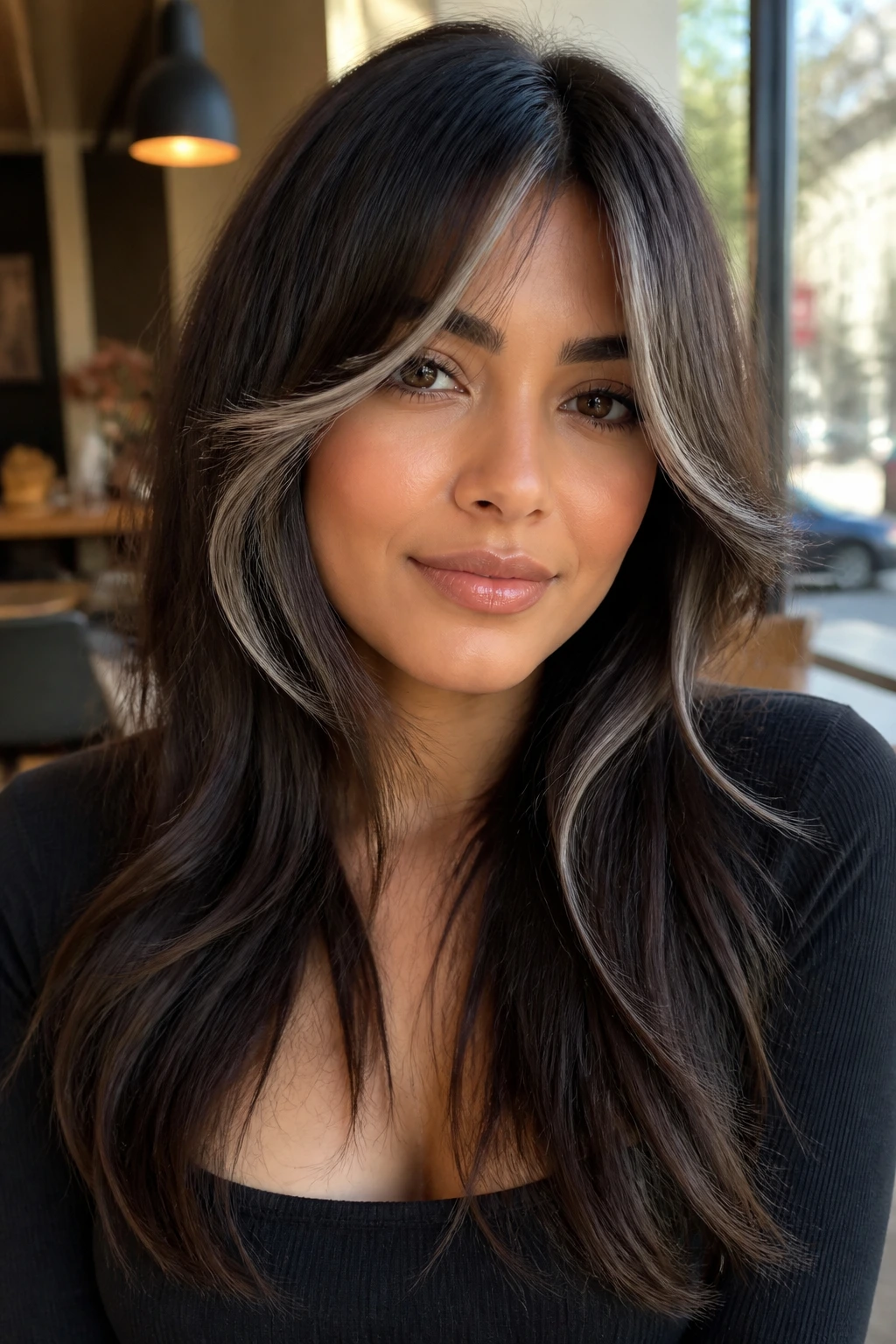
Curtain bangs change the entire balance of a grey look. Steel ribbon highlights running through a dark brown base can look expensive in the right light, and the bangs keep the front from feeling severe. Tan skin benefits from that soft split right down the middle.
The key is placement. Put the steel on the outer curve of the bangs and just a few lengths around the cheekbones. That’s enough to brighten the face without turning the front sections into a pale mask. Keep the rest of the hair darker and slightly warmer.
What to ask for: thin ribbons, not chunky streaks.
What to pair with it: loose blowout, soft face makeup, or a tucked-behind-the-ear finish.
Color note: steel should look metallic, not blue.
9. Dark Brown Pixie With a Silver Crown
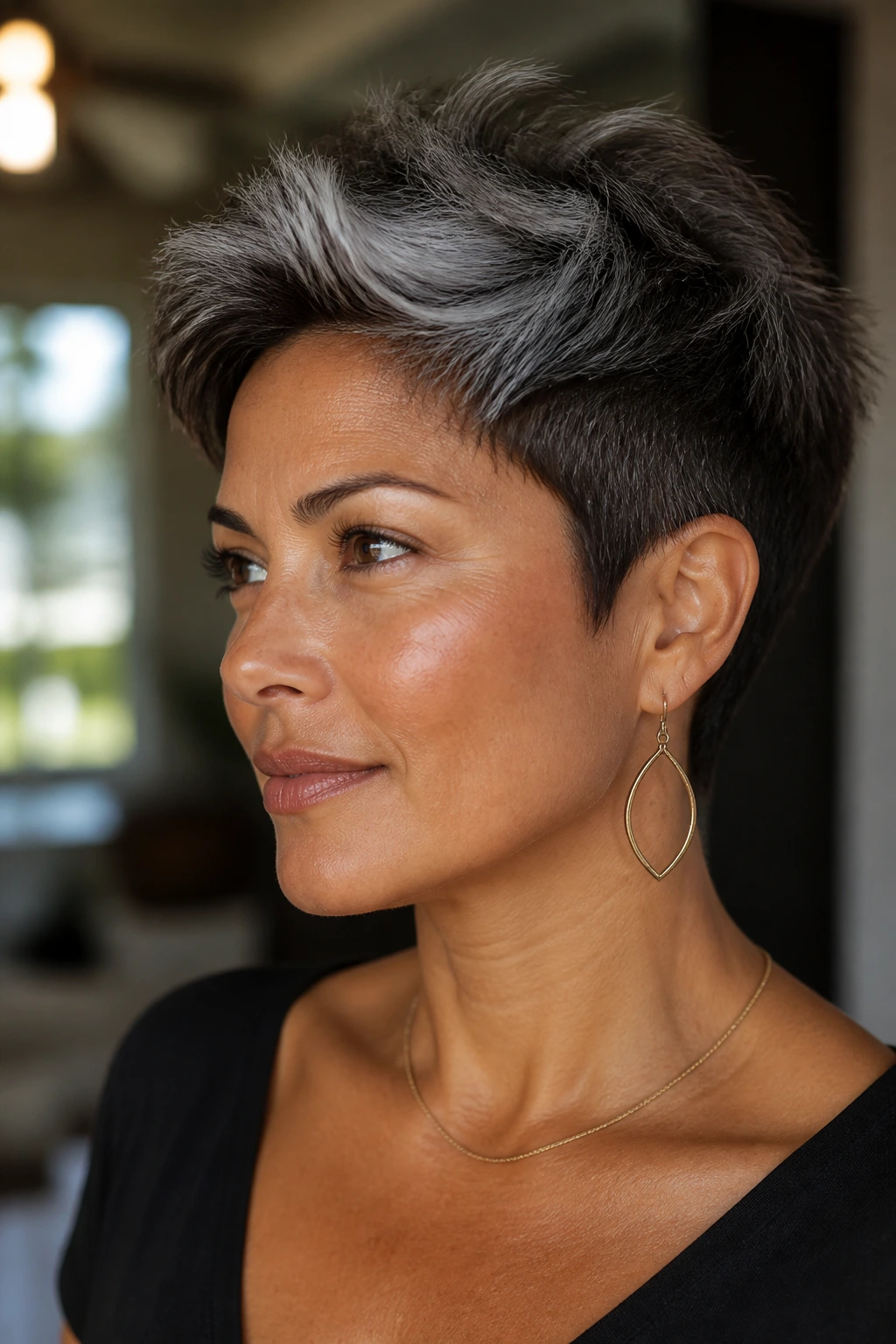
A pixie can handle grey better than people expect, but it needs shape. A dark brown base with a silver crown gives the top movement and keeps the sides grounded. On tan skin, this reads crisp rather than flat because the darkest sections stay near the temples and nape.
This is a strong choice if you like short hair and don’t want constant length maintenance. The crown can be lightened and toned while the sides stay deeper, which means the whole style grows out more cleanly. Add a bit of wax or paste at the top, and the silver takes on texture instead of sitting there in one solid patch.
Best for: coarse, straight, or slightly wavy hair.
Maintenance: every 4–6 weeks if you want the silver bright.
Tip: keep the fringe piece dark if your forehead is already warm-toned; it balances the face.
10. Braided Halo With Brown Base and Grey Ribbons
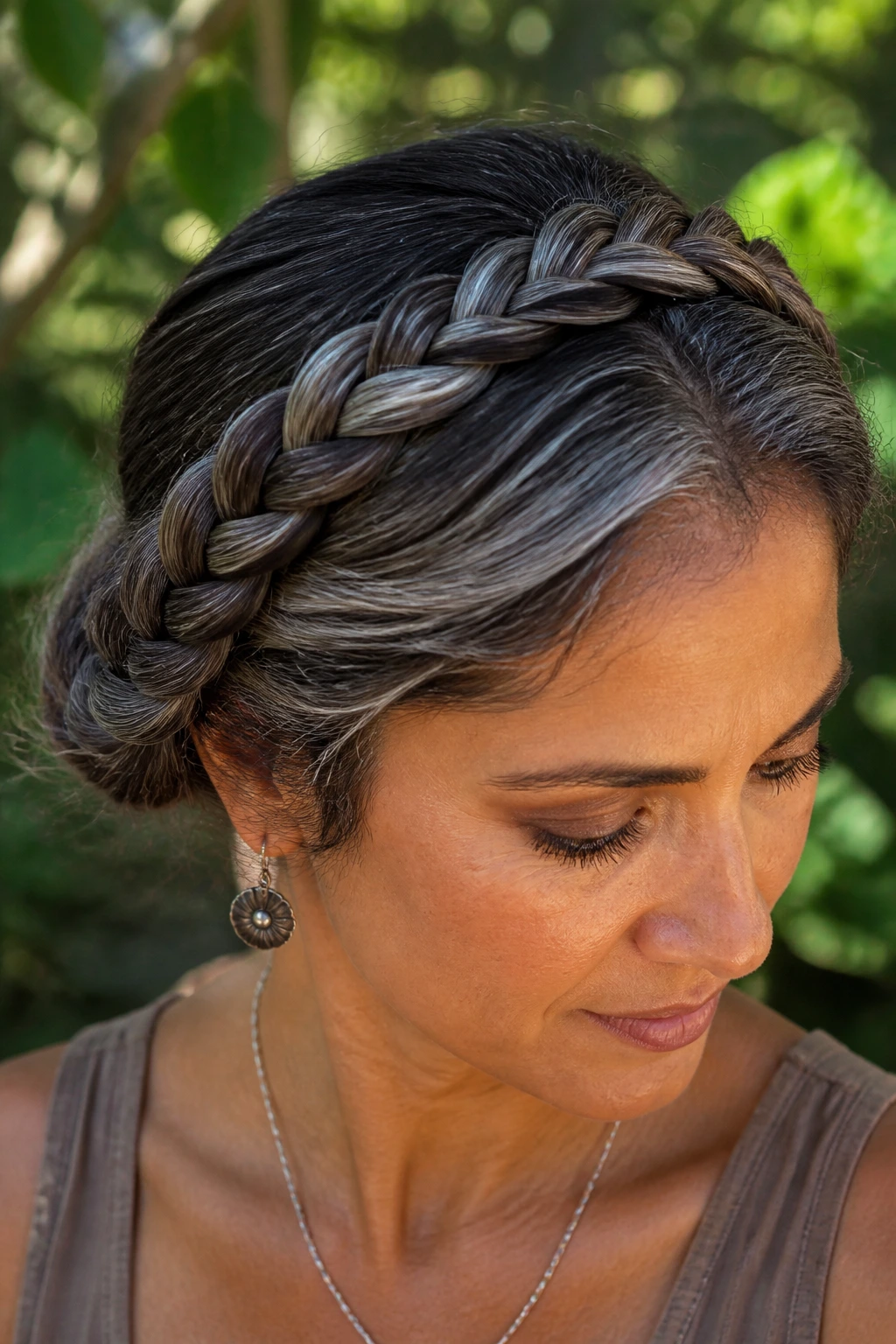
A braided halo lets grey appear in motion, which is exactly why it looks so good on tan skin. The braid folds the colour into itself, so the silver or grey ribbons never feel too blunt. Brown roots at the crown keep the whole thing from drifting too pale.
This style works on medium to long hair and is a smart pick for events or days when you want the colour to look intentional. The braid should be loose enough to show dimension but tidy enough that the grey strands catch the light. If you have layers, pin the shorter pieces inside the braid so the finish stays smooth.
A little shine spray on the outer braid makes the grey read clean, not dry. That’s a small move, but it matters.
11. Blunt Cut With Frosted Dip Ends
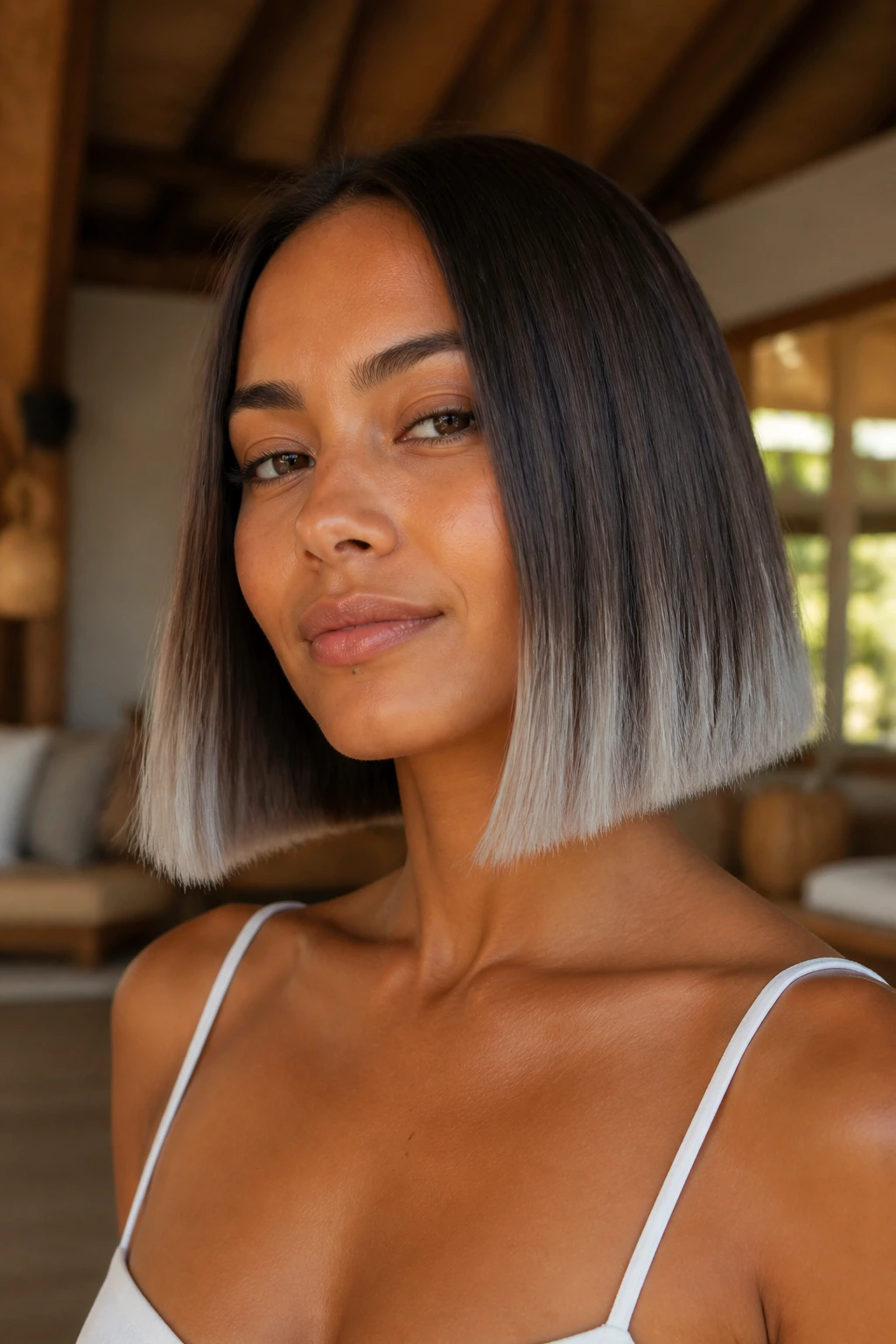
The blunt cut is for people who like precision. Frosted dip ends on a straight, one-length shape make the transition from dark brown to grey feel graphic and clean. On tan skin, the solid brown top keeps the contrast under control.
This works best when the grey starts halfway down the hair shaft or lower. If the line creeps too high, the whole cut can look top-heavy. Keep the ends cool, but not white. Think frosted glass, not neon.
How to style it: flat iron in one pass, then add a serum only to the very ends.
Who should try it: anyone with fine hair who wants the illusion of density.
Small warning: blunt cuts show frizz fast, so smoothing products help.
12. Wavy Wolf Cut With Charcoal Transition
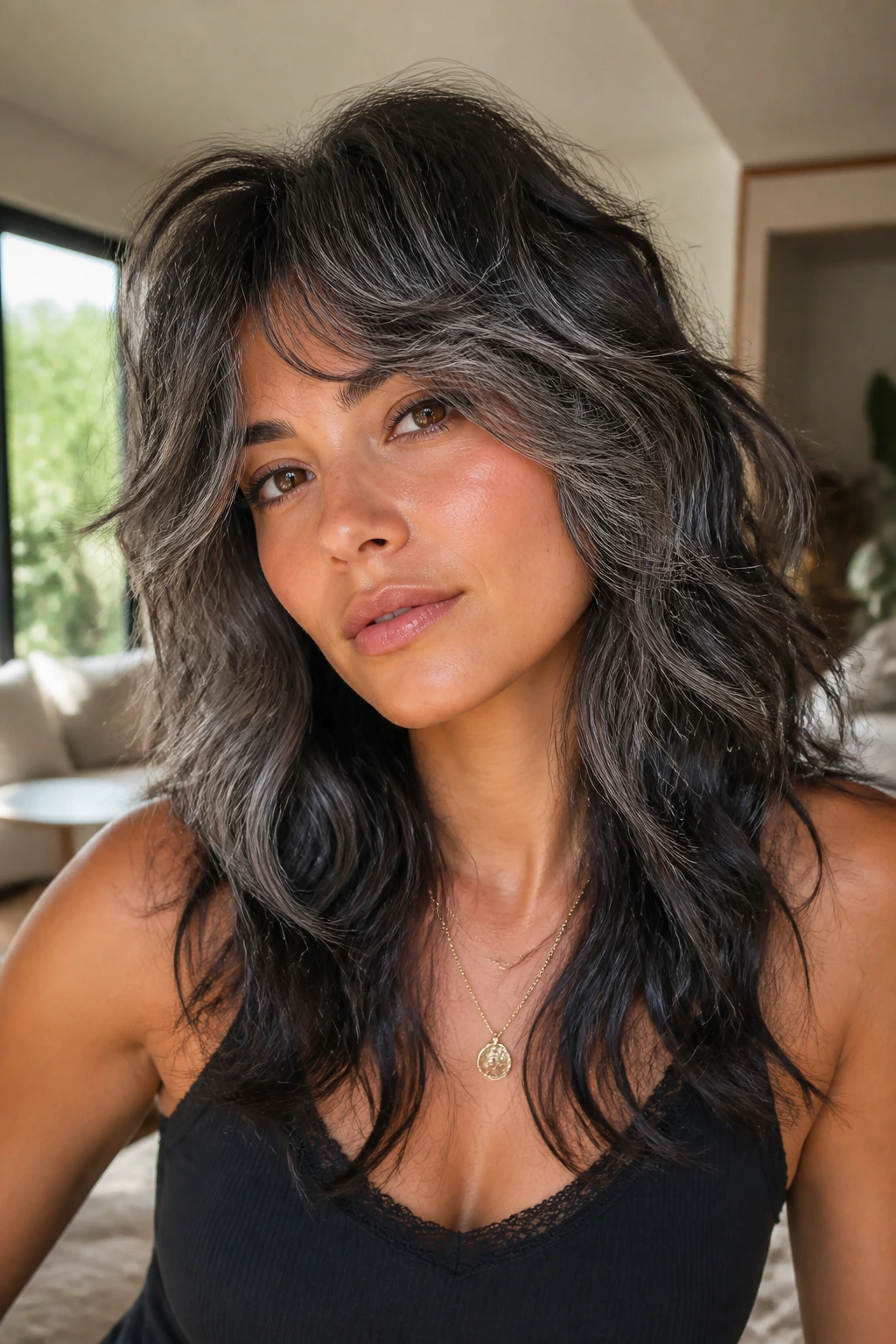
A wolf cut already has attitude. Add a charcoal transition and it turns into something with movement and edge, but still wearable on tan skin. The shorter layers near the crown give lift, while the longer pieces at the bottom carry the darker base into the grey.
This is one of the better options if you like a color that doesn’t look too polished. The texture works with the fade, not against it. Charcoal is a good middle shade here because it bridges dark brown and grey without making the whole thing icy.
What Makes It Different
- The layers make the colour look lived-in.
- The fringe softens the forehead.
- Charcoal reads darker and less chalky than silver.
- Air-drying often looks better than over-styling.
Best if: your hair has natural wave or a little bend.
13. Peekaboo Grey Underlayer on Brunette Hair
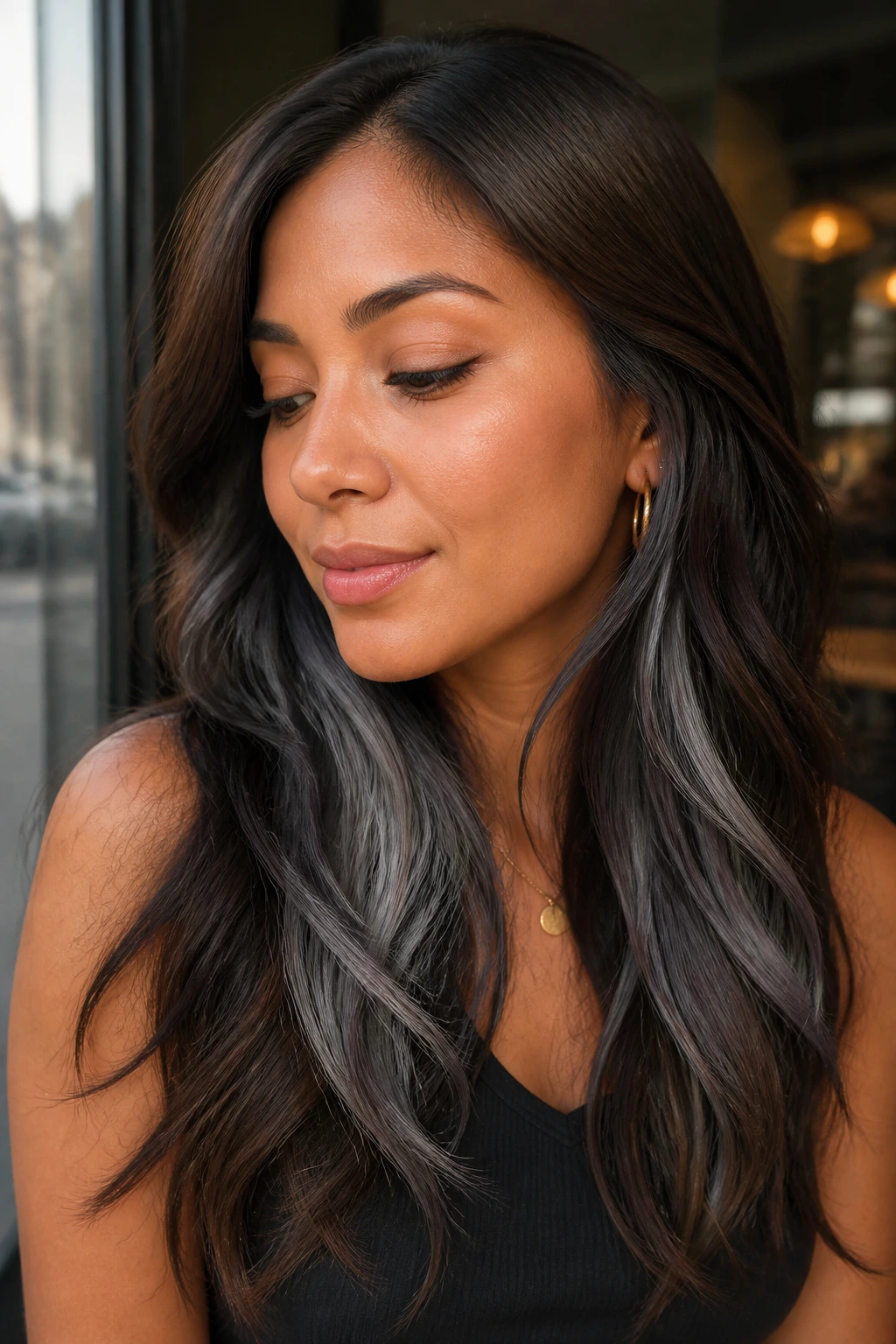
If you want something secretive, this is it. The outer layer stays dark brown, and the grey lives underneath, so the colour only flashes when you move or tuck your hair behind your ear. On tan skin, that keeps the look low-risk while still giving you the cool contrast.
Peekaboo colour is one of the easiest ways to test grey before going all in. It’s also useful if your workplace is conservative or you want the option to hide the grey on less dramatic days. Keep the top layer glossy and healthy, because that darker veil is doing a lot of the visual work.
Styling trick: wear it half-up to show the grey panel.
Maintenance: the hidden sections still need toner, even if no one sees them all the time.
Best for: people who want flexibility.
14. Glossy Straight Layers With Smoke Ribbon Highlights
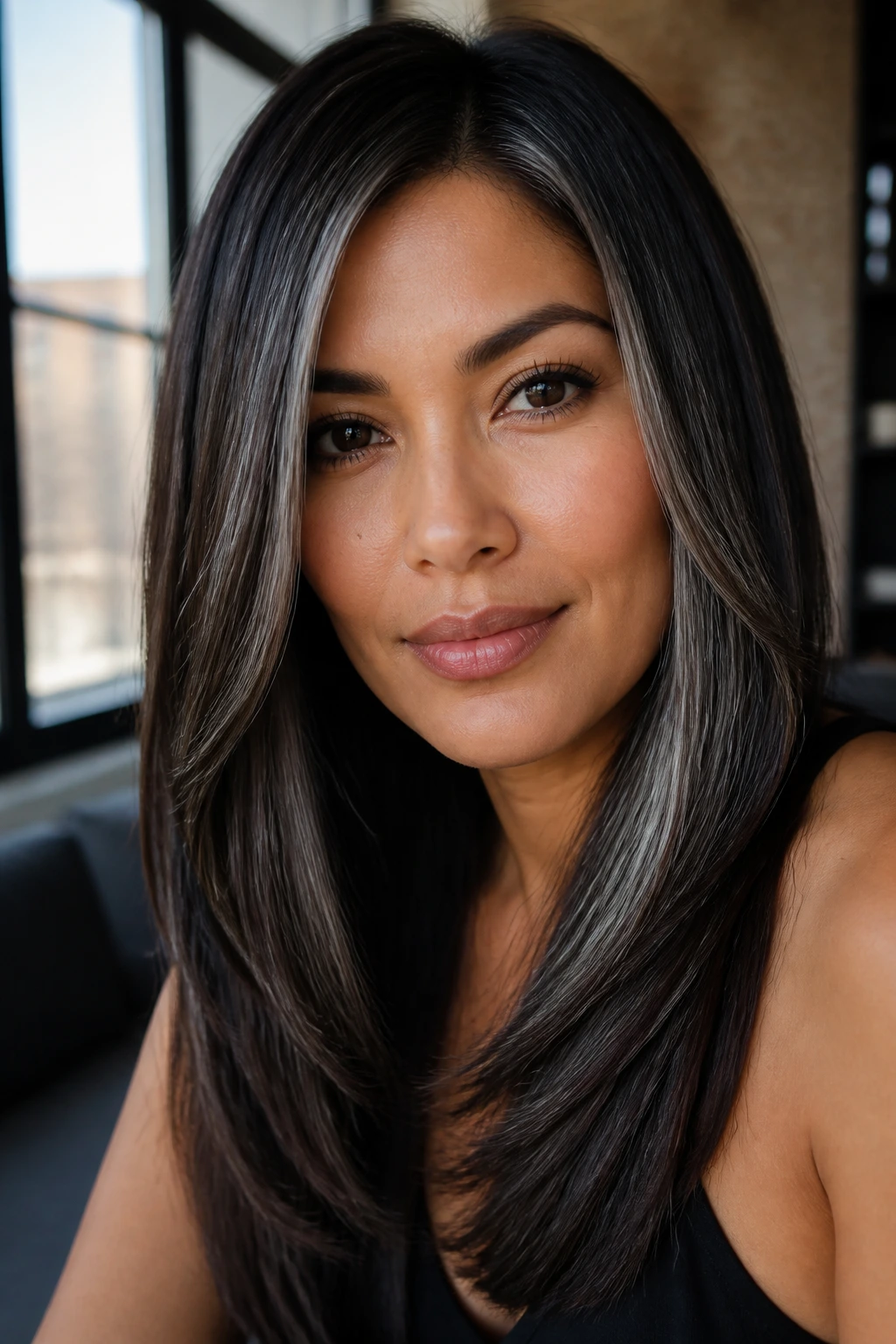
Smoke ribbon highlights are subtle, but they do a lot. They weave grey through dark brown layers in thin, curved pieces, which keeps the colour from feeling stripey. Tan skin tends to like this kind of softness because the face still has warmth, even when the hair goes cool.
Straight layers show the ribbons clearly. A middle part gives the whole style a neat, modern line, while a side part softens it. Either way, keep the finish glossy. Smoke colours can go dull if the cut looks dry.
Use a light oil from mid-lengths down and a flat iron only after the hair is fully dry. Wet heat and cool tones do not play nicely together.
15. Curly Lob With Cool Taupe Dimension
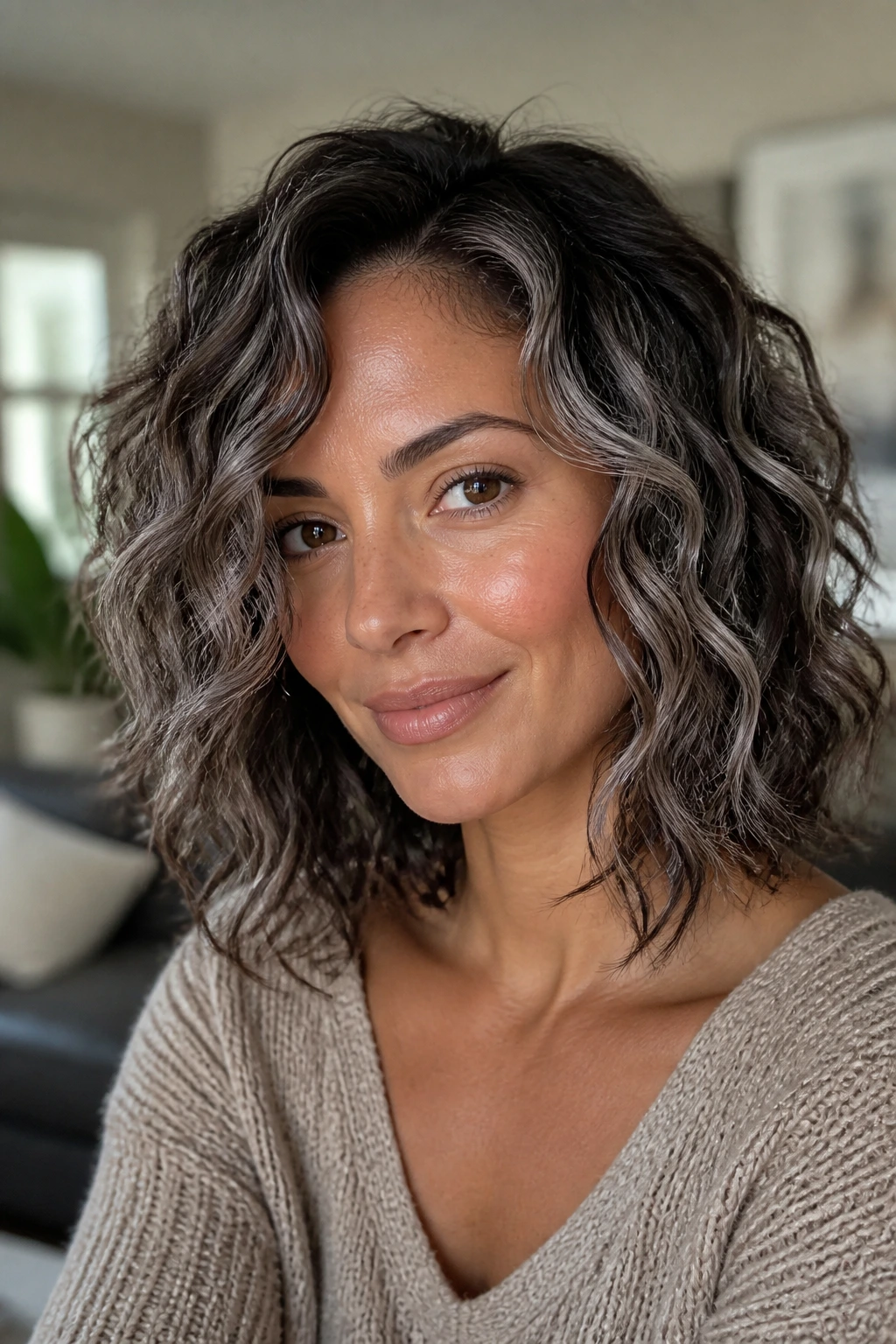
A curly lob with taupe-grey dimension is one of the easiest ways to wear grey on tan skin without going full silver. Taupe has a little brown in it, which makes it easier to wear on warmer undertones. The curls keep the shade soft and broken up.
This cut hits around the shoulders, which gives the curls room to bounce but keeps maintenance in check. Ask for dimension instead of an all-over block of colour. A few lighter panels through the top layer and around the front are usually enough.
Best move: diffuse with a curl cream that doesn’t leave residue.
Don’t do this: drown it in purple shampoo. Taupe can turn flat if you overcorrect.
Good match: loose ringlets, coils, or a big bend.
16. Long V-Cut With Slate Face Framing
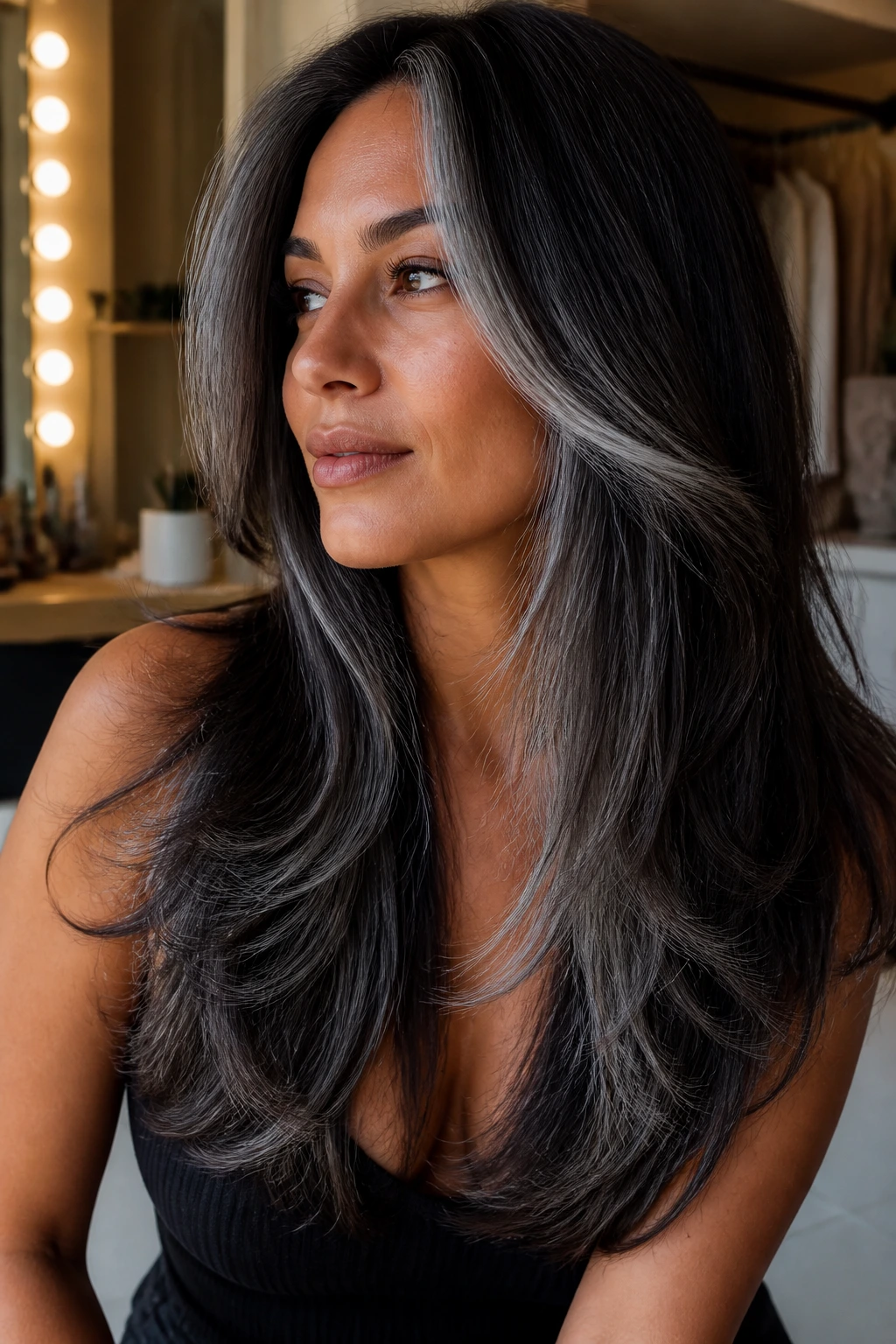
A long V-cut gives grey a place to fall. Slate face-framing pieces create a clean frame around tan skin, while the longer back keeps the overall silhouette soft. The V shape also helps the colour look intentional instead of spread out by accident.
This is a strong choice for thick hair. The longer center section and angled sides make the grey flow instead of sitting in a heavy curtain. If you want the look to feel more expensive, keep the face-framing pieces one step lighter than the rest of the grey.
A few passes with a curling wand through the front layers can change the whole mood. Straight, it feels cool and sleek. Curved, it feels softer and a little romantic.
17. Asymmetrical Bob With Pewter Sweep
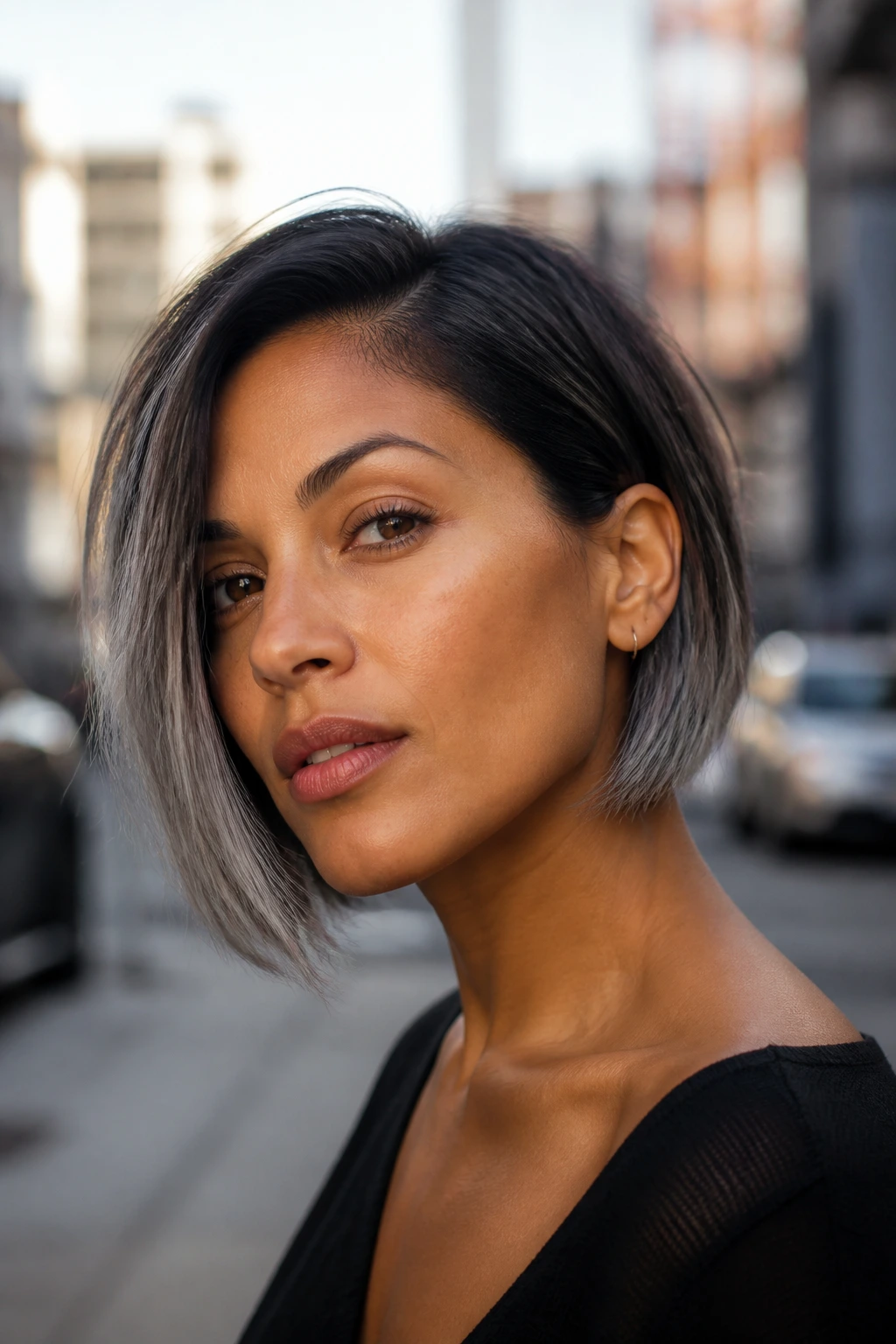
An asymmetrical bob can carry a lot of personality, and pewter is the right grey for it. Pewter is darker and less shiny than silver, so the uneven cut reads deliberate instead of costume-like. On tan skin, that matters. Too much shine too high up can turn warm undertones a little sallow.
The longer side should be brushed forward enough to show the gradient, while the shorter side can stay tucked or slicked behind the ear. That contrast in length keeps the eye moving. If your hair is thick, ask for internal weight removal so the bob doesn’t puff out at the jawline.
Best for: straight, wavy, or blown-out textures.
Shade note: pewter is your friend if you want grey without the glare.
18. Half-Up Knot With Brown-to-Grey Lengths
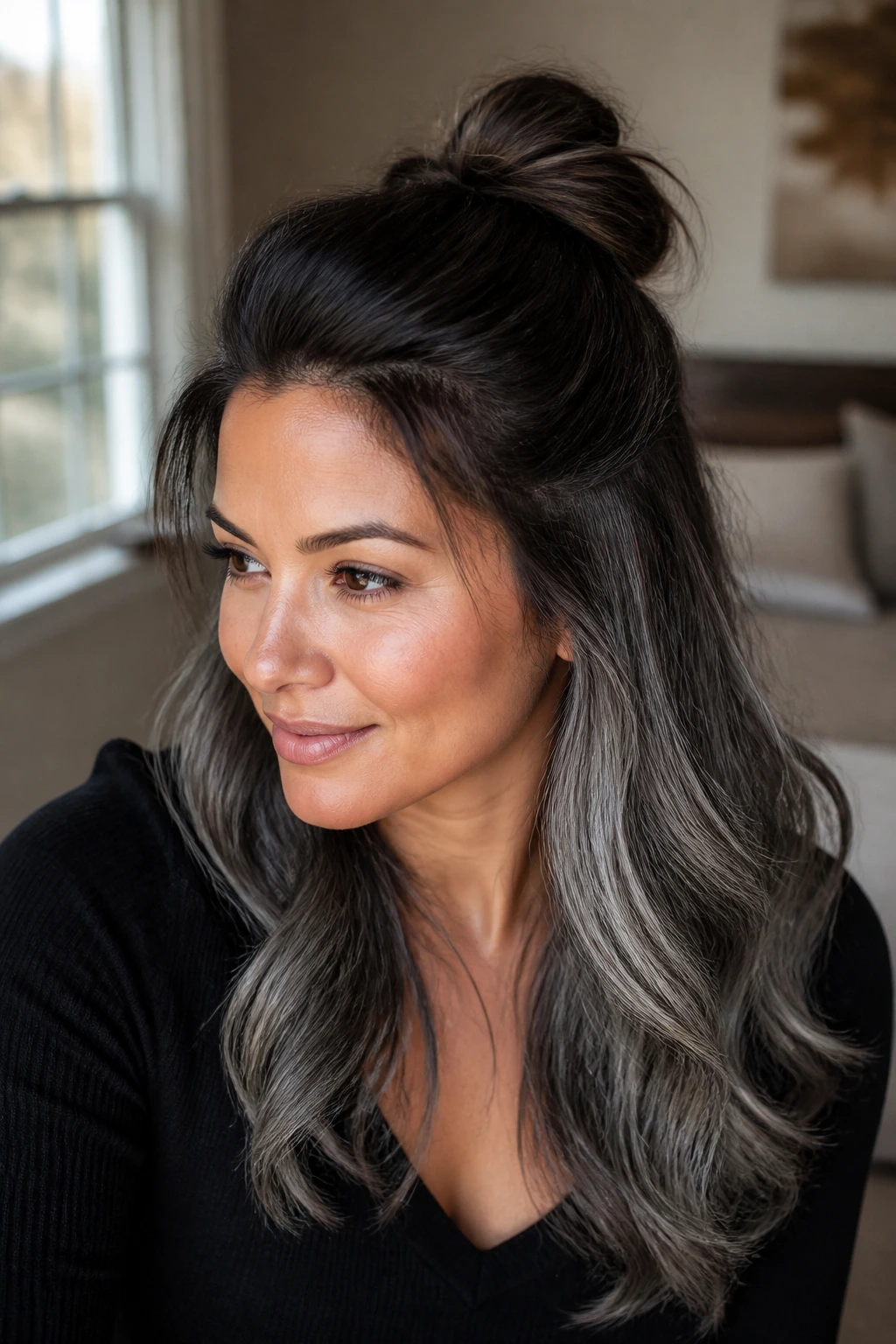
A half-up knot is one of those styles that makes colour look more layered than it actually is. Brown at the crown, grey through the lower lengths, and a small knot on top create separation in a way tan skin can really wear. The face stays open, but the ends still show off the cooler tone.
This style is useful because it works on almost every hair type. If the grey sits mostly in the bottom half, the knot pulls attention upward and keeps the base rich. That’s a nice trick when you want the grey visible without feeling surrounded by it.
Quick Styling Notes
- Leave a few face-framing pieces out.
- Wrap a strand around the knot to hide the elastic.
- Add texture spray to the lengths so the grey doesn’t look too flat.
- Use a small claw clip if your hair slips easily.
19. Soft Coil Set With Silver Halo Highlights
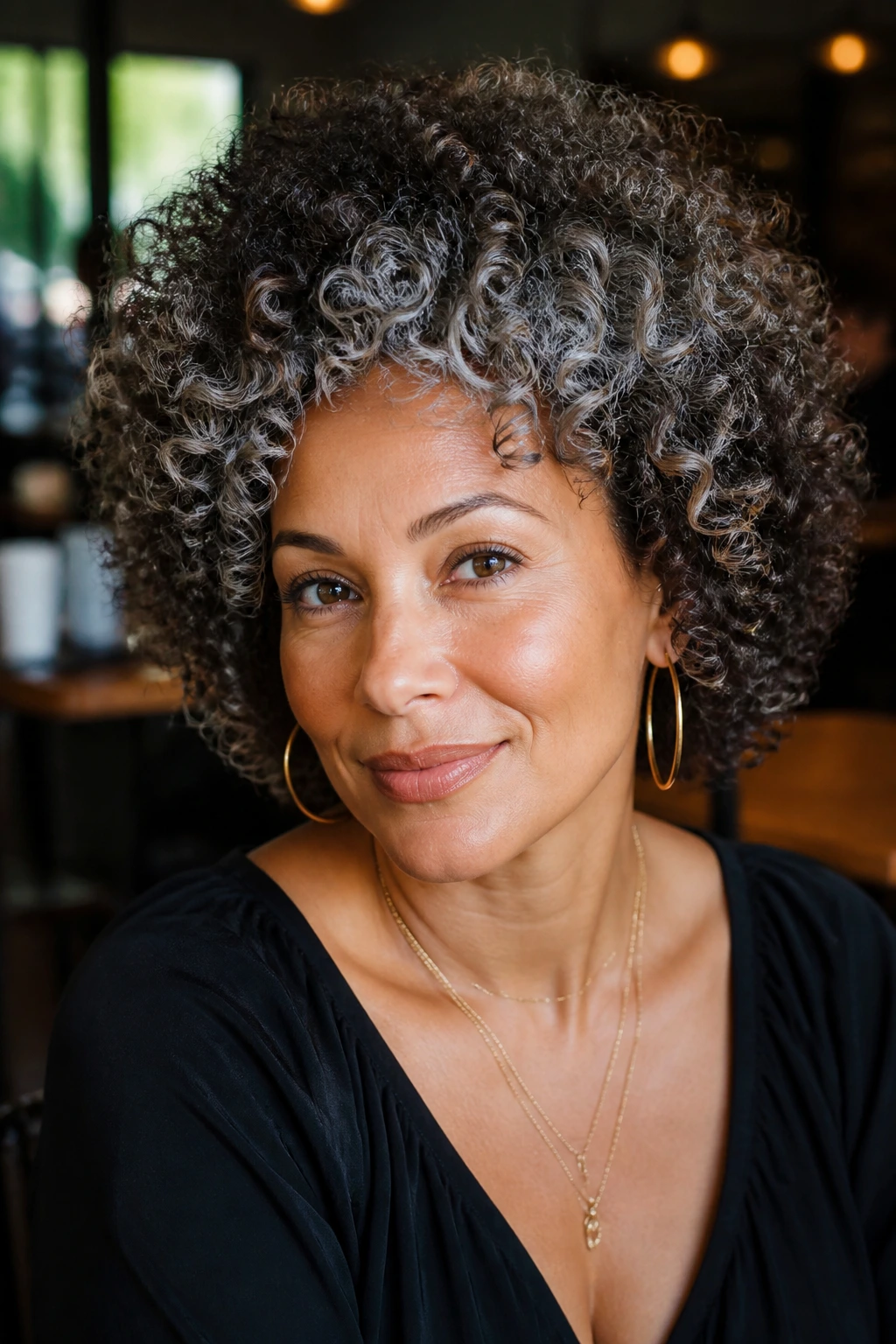
Coils take silver well when the highlights are placed as a halo rather than spread everywhere. That creates a luminous top layer while the darker brown underneath keeps the shape grounded. On tan skin, the result is soft and dimensional, not stark.
The halo should sit around the outer crown and upper front sections. If you put too much bright silver through the whole head, the coil pattern can lose its depth. Keep the toner cool but not pure white, and let the curls do the work.
A coily style like this usually needs moisture more than anything else. Use a leave-in with slip, seal the ends lightly, and refresh with water between wash days. Dry silver curls look tired fast.
20. Micro Braids With Grey Tip Accents
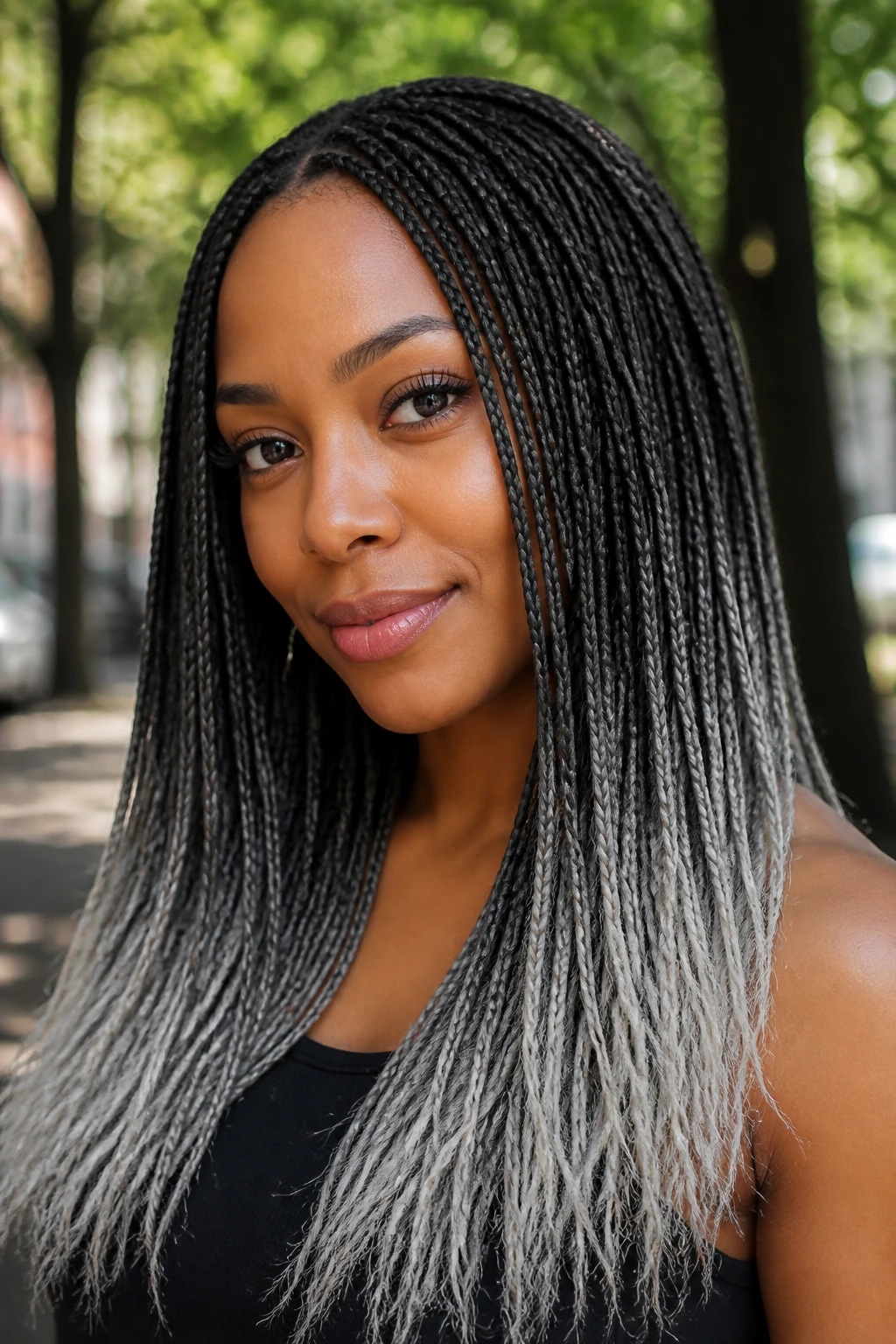
Micro braids are a smart home for grey because the small scale makes even a bold colour feel controlled. Grey tip accents at the ends give the braids movement without taking over the whole head. On tan skin, the dark root area keeps the look rich and balanced.
This is one of the lower-manipulation options on the list. Once the braids are installed, the colour reads through the pattern rather than needing daily styling. That also means the grey can stay visible for a long stretch as long as you keep the scalp clean and the ends sealed.
Best for: anyone who wants structure, low daily styling, and a sharper finish.
Watch for: too much tension at the hairline. If the braids pull, the style stops looking sleek and starts looking tired.
21. Low Ponytail With Diffused Grey Ends
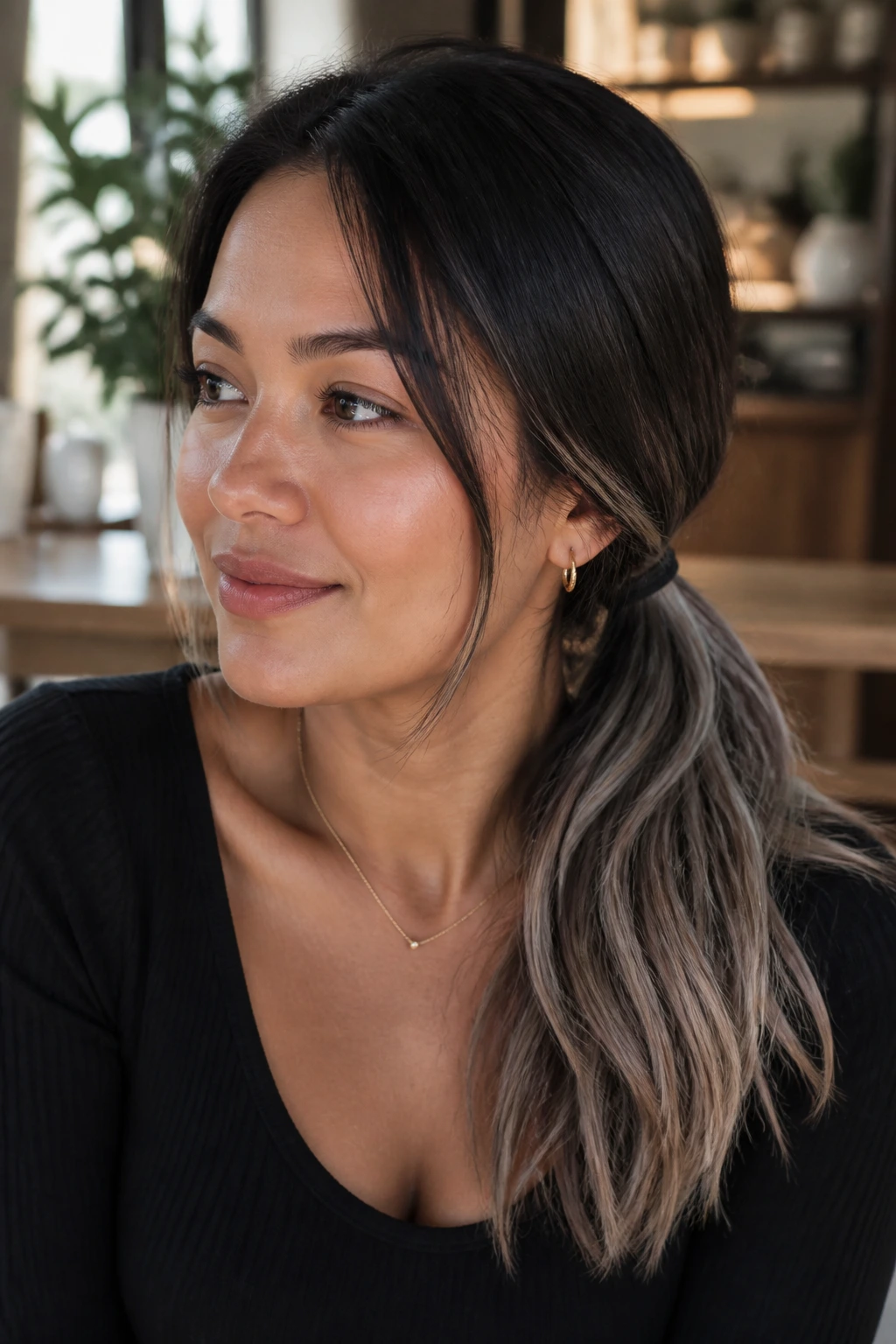
A low ponytail can look plain, but grey ends rescue it. When the colour is diffused — not a hard line — the tail moves like smoke against a dark brown base. On tan skin, the low placement keeps the face open and the neck line clean.
This style works best when the hair has some polish at the crown and softness through the tail. A little smoothing cream at the top, then loose bends at the ends, gives the grey a nice sweep. If the ponytail is too tight, the colour gets pinned down and loses the whole point.
A wrapped section around the elastic makes the finish look more deliberate. Small detail. Big difference.
22. Razor Layer Cut With Storm Grey Mid-Lengths
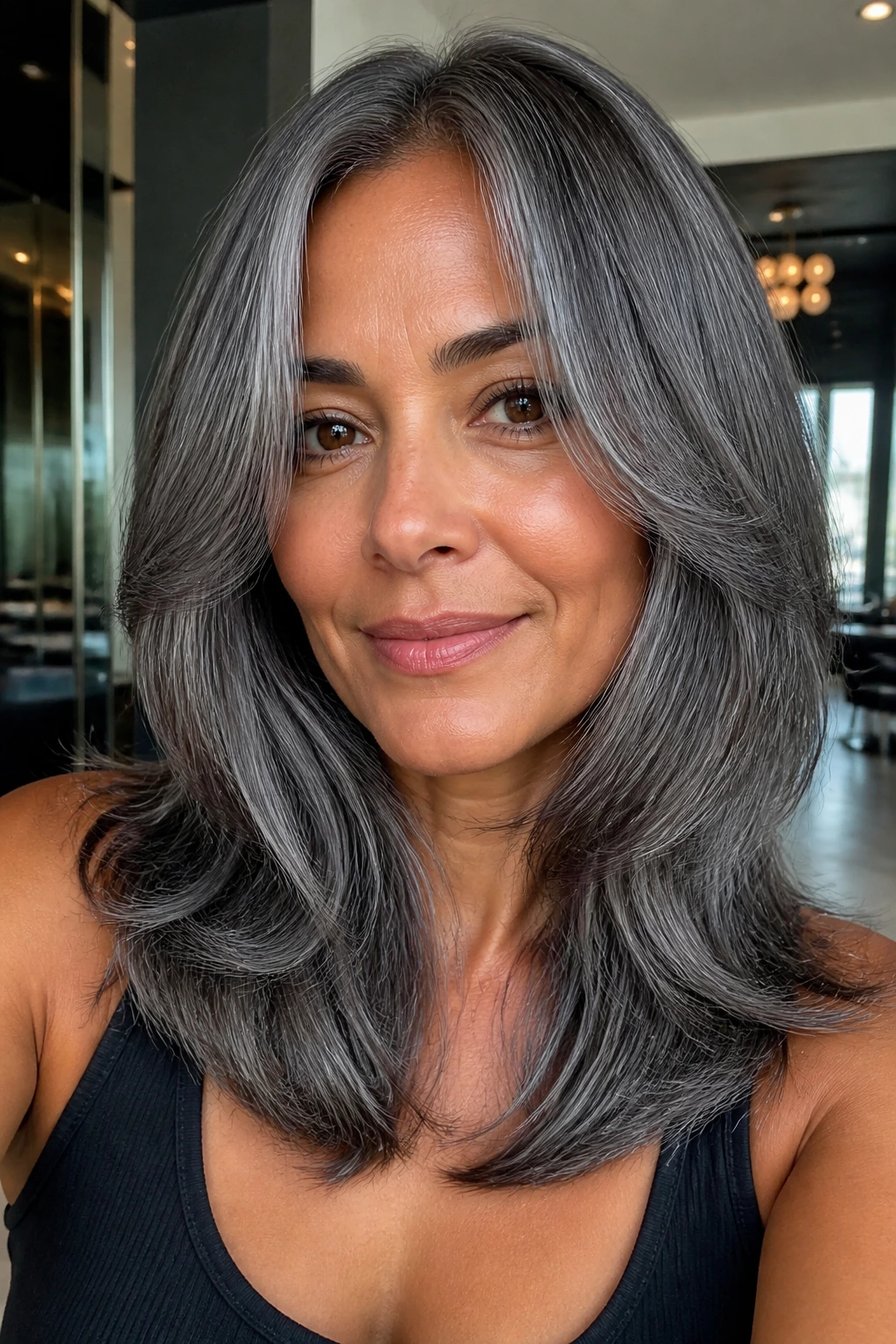
A razor-layer cut gives grey a rougher edge in a good way. Storm grey through the mid-lengths creates movement between the darker top and the cooler bottom, so the colour doesn’t sit in one dense block. Tan skin tends to like that broken-up effect.
The razor finish is especially nice if your hair is thick or heavy. It removes bulk without making the ends look blunt. Storm grey is darker than silver, so it keeps the style grounded and wearable.
Style cue: rough-dry first, then polish only the outer layer.
Best if: you like hair that has shape even when it’s not freshly styled.
Avoid: over-toning into blue-grey. Storm should feel cloudy, not neon cool.
23. Retro Roll Set With Brown Root Shadow and Grey Ribbons
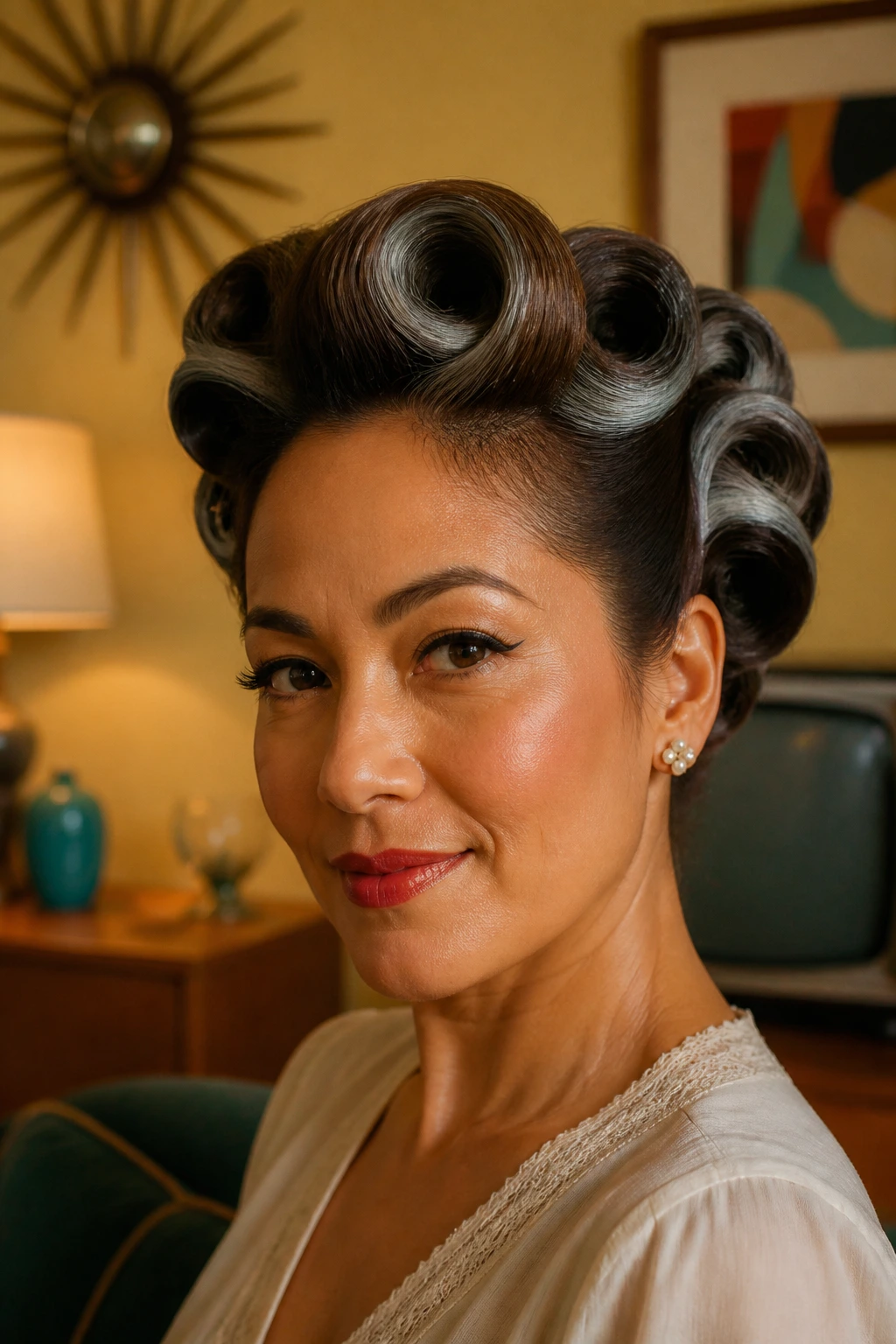
There’s something satisfying about a retro roll set with grey ribbons running through it. The curls give the colour structure, and the brown root shadow keeps the style from looking costume-y. On tan skin, that little bit of warmth near the scalp is what makes it work.
This style is a nice example of how grey can look elegant without being fragile. You can wear the rolls tight for a formal finish or loosen them for a softer wave. The ribbons should be thin enough to catch light, not wide enough to dominate the set.
Why It Works
The roll pattern makes the grey show in arcs instead of stripes, which is easier on warm undertones. It also gives the cut a vintage shape that feels finished even if the colour is very cool.
24. Tapered Cut With Metallic Grey Top
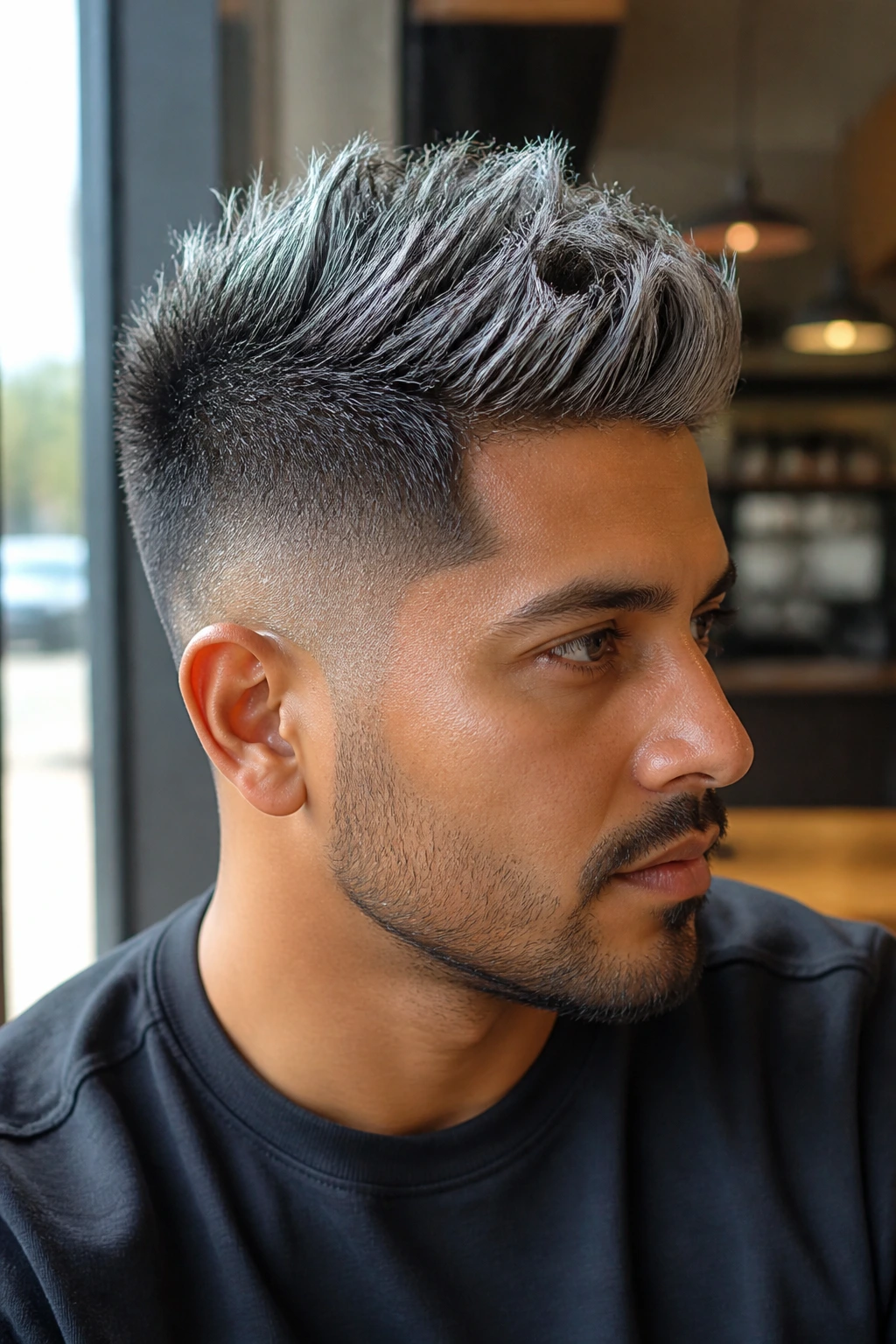
A tapered cut puts the focus right where it should be: on shape. Metallic grey at the top lifts the style, while the shorter sides stay dark brown and clean. On tan skin, that contrast can look striking without being harsh because the silhouette is doing half the work.
This is a good pick if you like short hair but still want some drama. Ask for a smooth taper at the neckline and keep the top long enough to show the grey sheen. Too short and the colour can disappear. Too long and the shape loses the point.
A light pomade or cream is enough here. Heavy products flatten the metallic finish, and this cut needs lift.
25. Tousled Shoulder Cut With Beige-Grey Smoke
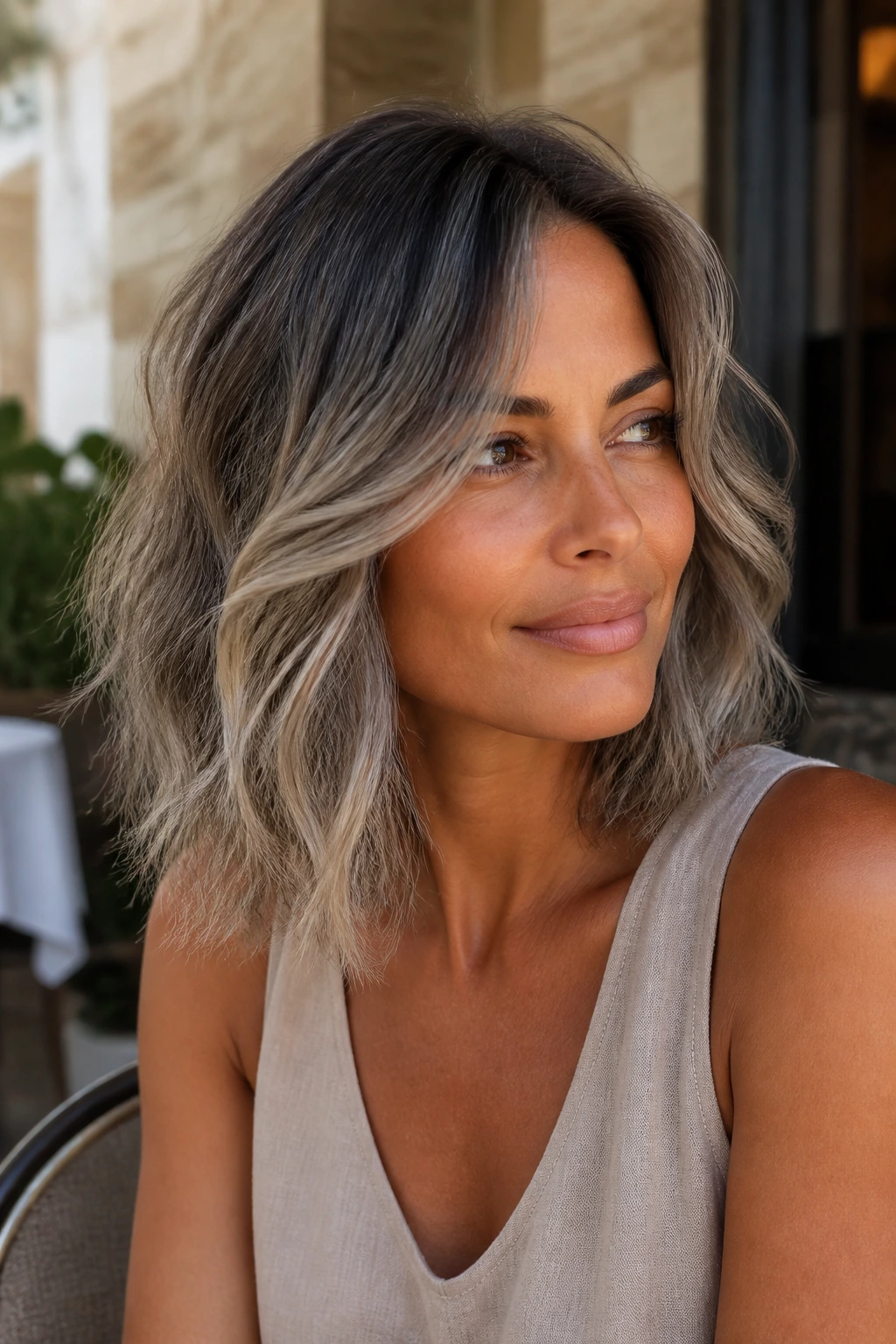
Beige-grey smoke is one of the safest tones for tan skin because it carries a little softness inside the cool shade. Pair it with a tousled shoulder cut and the result feels relaxed, not severe. It’s the sort of colour that looks better the second day, which I like.
The shoulder length lets the cut swing without dragging the colour down. Finger-combed waves work better than rigid curls. If your hair tends to get puffy, ask for layers only around the lower half so the smoke tone stays airy.
Best for: medium-density hair.
Styling note: dry shampoo can add grip, but don’t dust the grey lengths too heavily or they’ll look chalky.
Color note: beige-grey is a quiet win on warm tans.
26. Side-Swept Lob With Icy Grey Face Framing
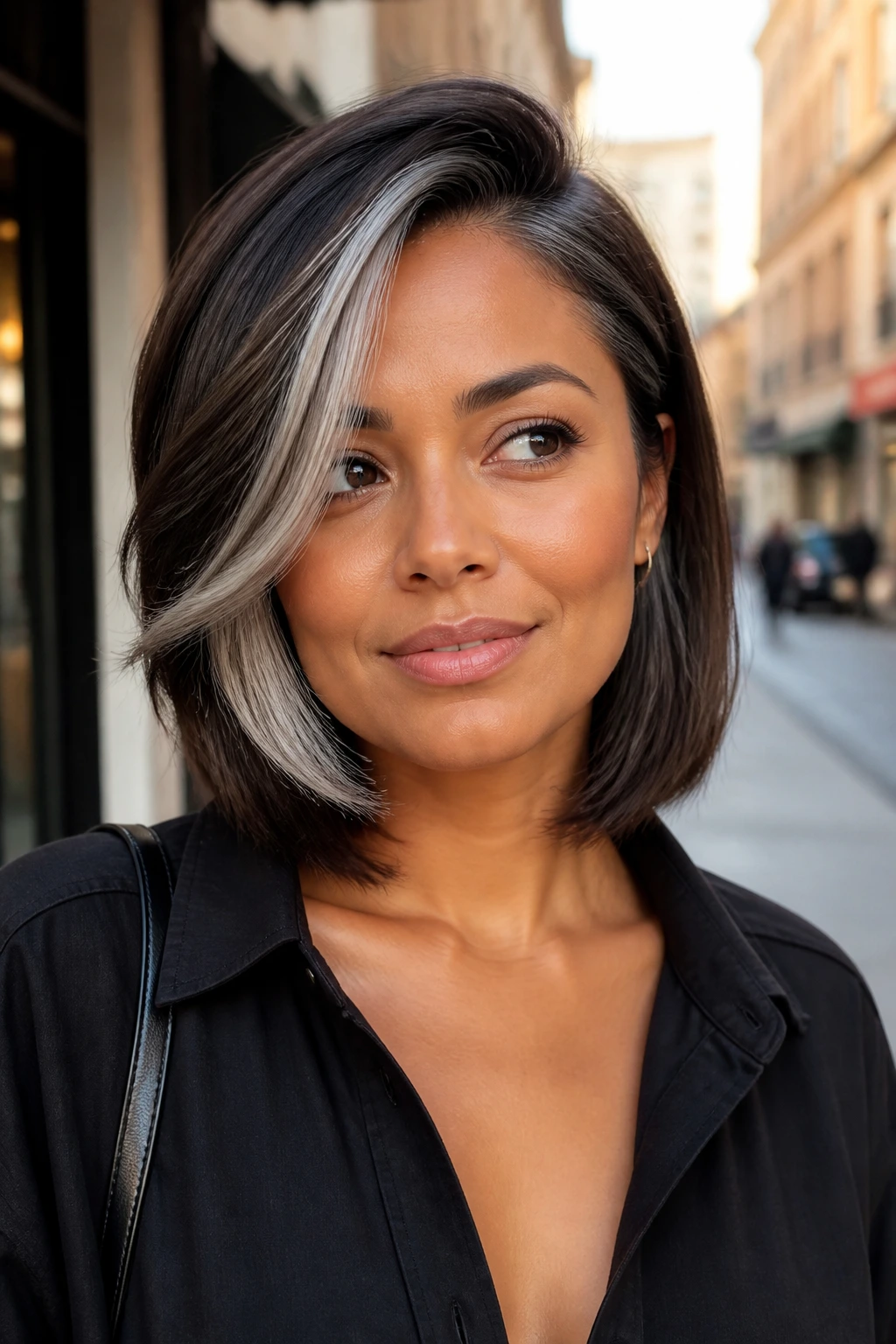
Icy grey doesn’t have to be off-limits on tan skin. The trick is to keep it in the face-framing pieces, not everywhere. A side-swept lob gives the ice a purpose and a direction, which stops it from overwhelming the whole look.
The side part softens the severity, and the lob length keeps the overall shape chic. This is a bolder choice than mushroom or pewter, but it works if the rest of the hair stays dark brown and glossy. I’d reserve this for someone who likes a little edge.
If the front pieces feel too bright, ask the colorist to soften them with a translucent beige gloss. That tiny adjustment can save the entire look.
27. Sleek High Bun With Grey Veil Streaks
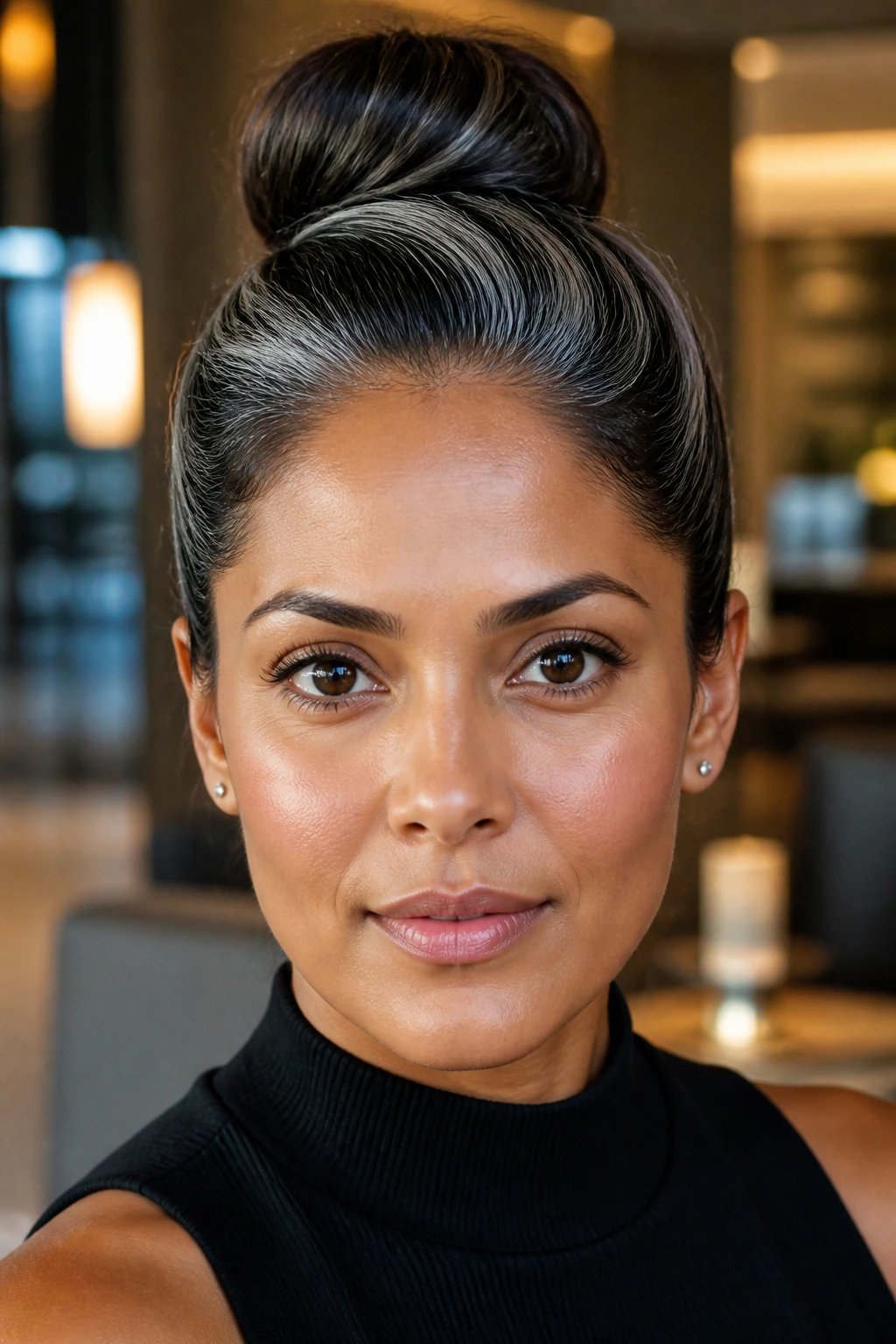
A high bun can look severe if the color is too flat, so grey veil streaks are the fix. They add movement around the bun and let the brown base stay visible at the scalp. On tan skin, the height lifts the face and the grey veil keeps the style from looking too plain.
This is a good option for formal wear or hot days when you want the hair off your neck. Pull the bun tight enough to hold shape, but leave a few streaks visible near the front and crown. The grey should look like a veil, not a stripe.
Fast polish trick: smooth the hairline with a small brush and a drop of gel, then mist the bun with shine spray. The contrast shows up cleanly that way.
28. Long Mermaid Waves With Smoke Dimension
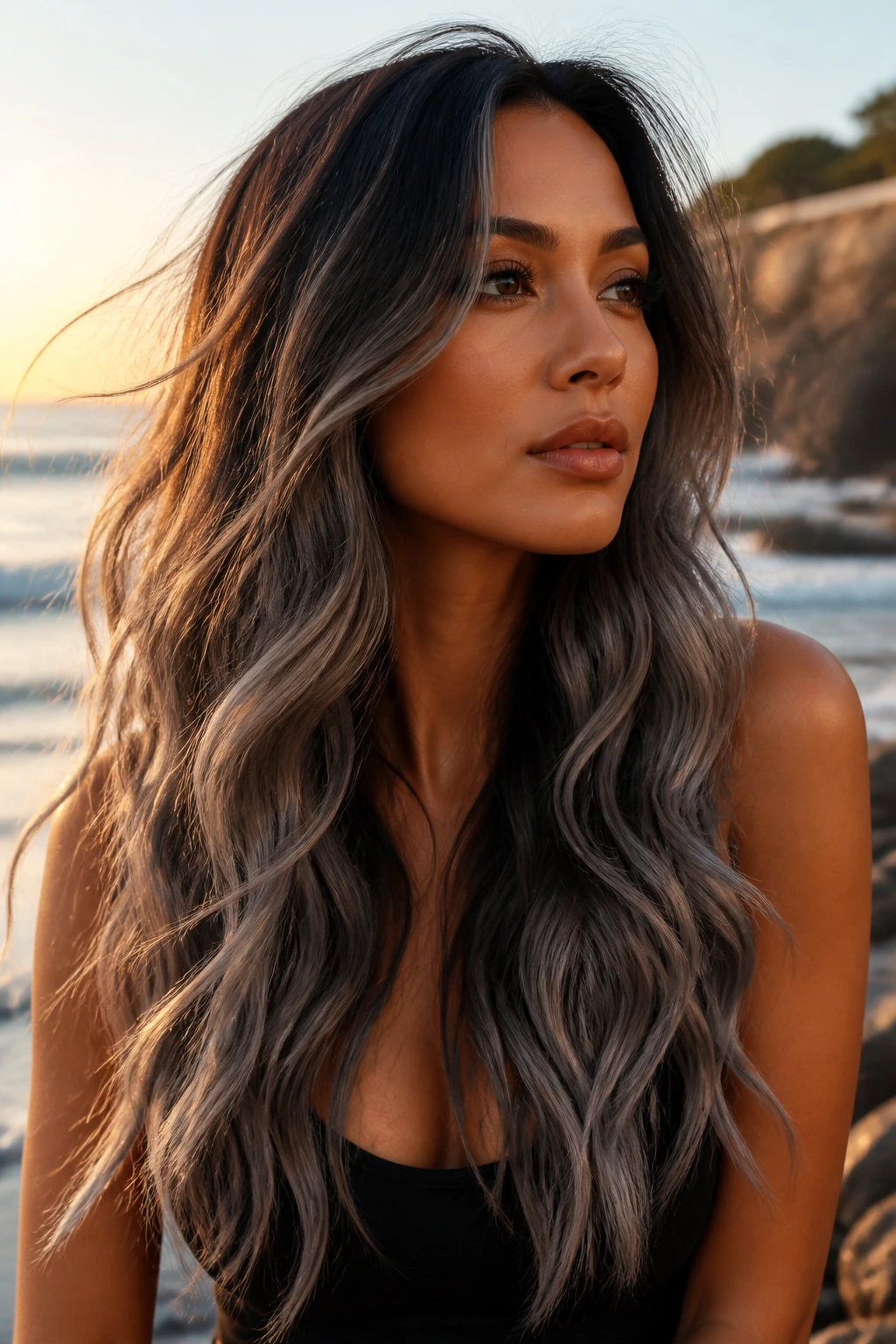
Mermaid waves can look childish if the colour is too sweet. Smoke dimension fixes that. Dark brown through the top and smoky grey woven through the lengths gives the whole style more depth, which tan skin needs when the hair is long and voluminous.
These waves should be loose and oversized. Tight curls break up the smoke too much and make the grey feel busy. A wide-barrel wand or braid-out waves work well here. The colour should look like it moves in layers, not like one shade painted over another.
If you have a lot of hair, this is one of the prettiest ways to show grey without losing richness. The brown and smoke play off each other all the way down the back.
29. Textured Crop With Charcoal Glaze
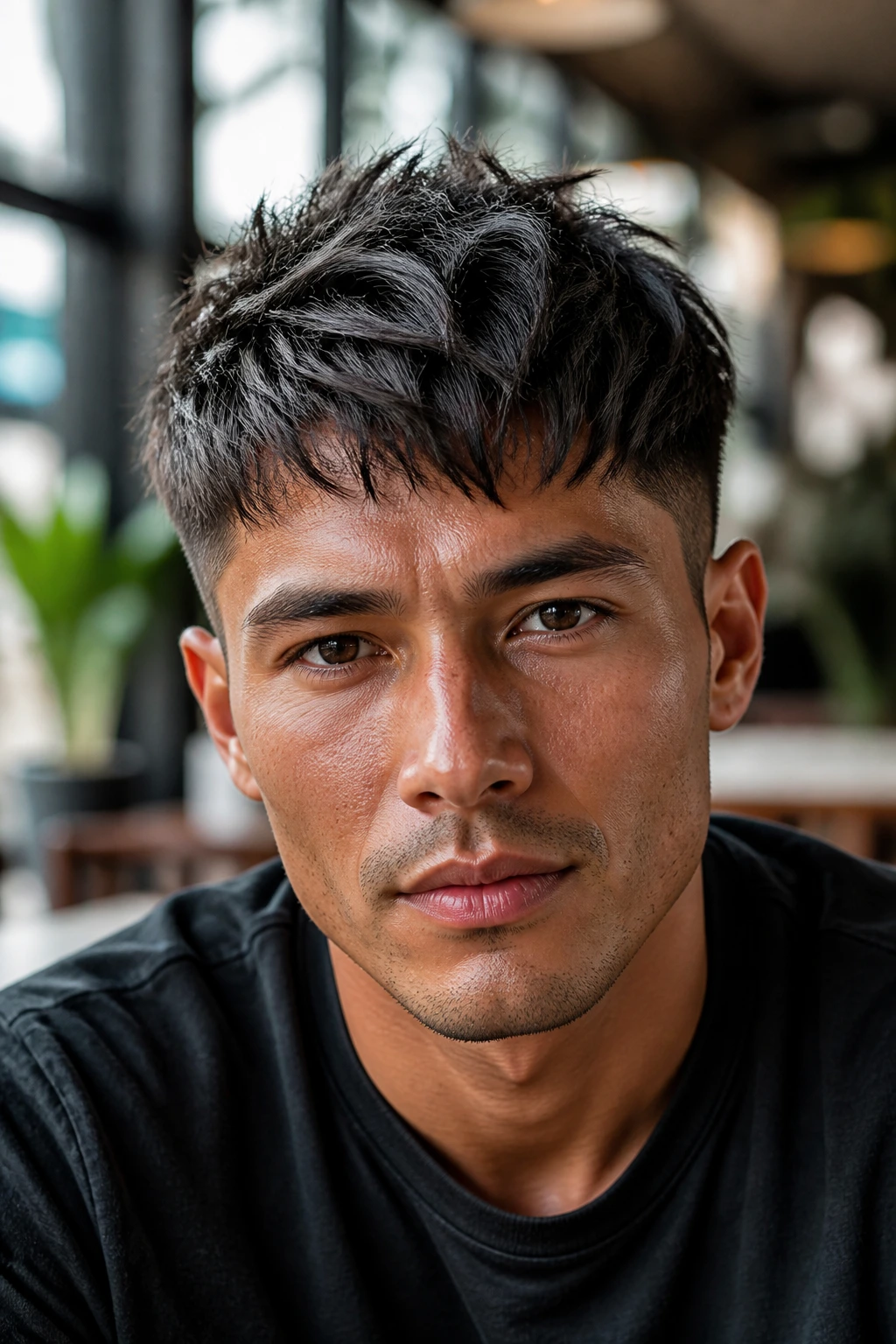
A textured crop with a charcoal glaze is short, sharp, and not the least bit fussy. The glaze darkens the grey just enough to make it wearable on tan skin, while the cropped shape keeps the face visible. It’s one of the cleanest-looking options in the whole list.
The texture on top should be piecey, not spiky. That gives the charcoal some lift without turning it into a hard helmet of colour. If your hair is naturally dense, this cut can remove enough weight to keep the shape crisp.
What to Watch For
- Too much product will mute the grey.
- Too little texture will make the crop look flat.
- A little shine at the crown helps the glaze read metallic instead of dull.
30. Soft Blowout With Brown Base and Silver Veins
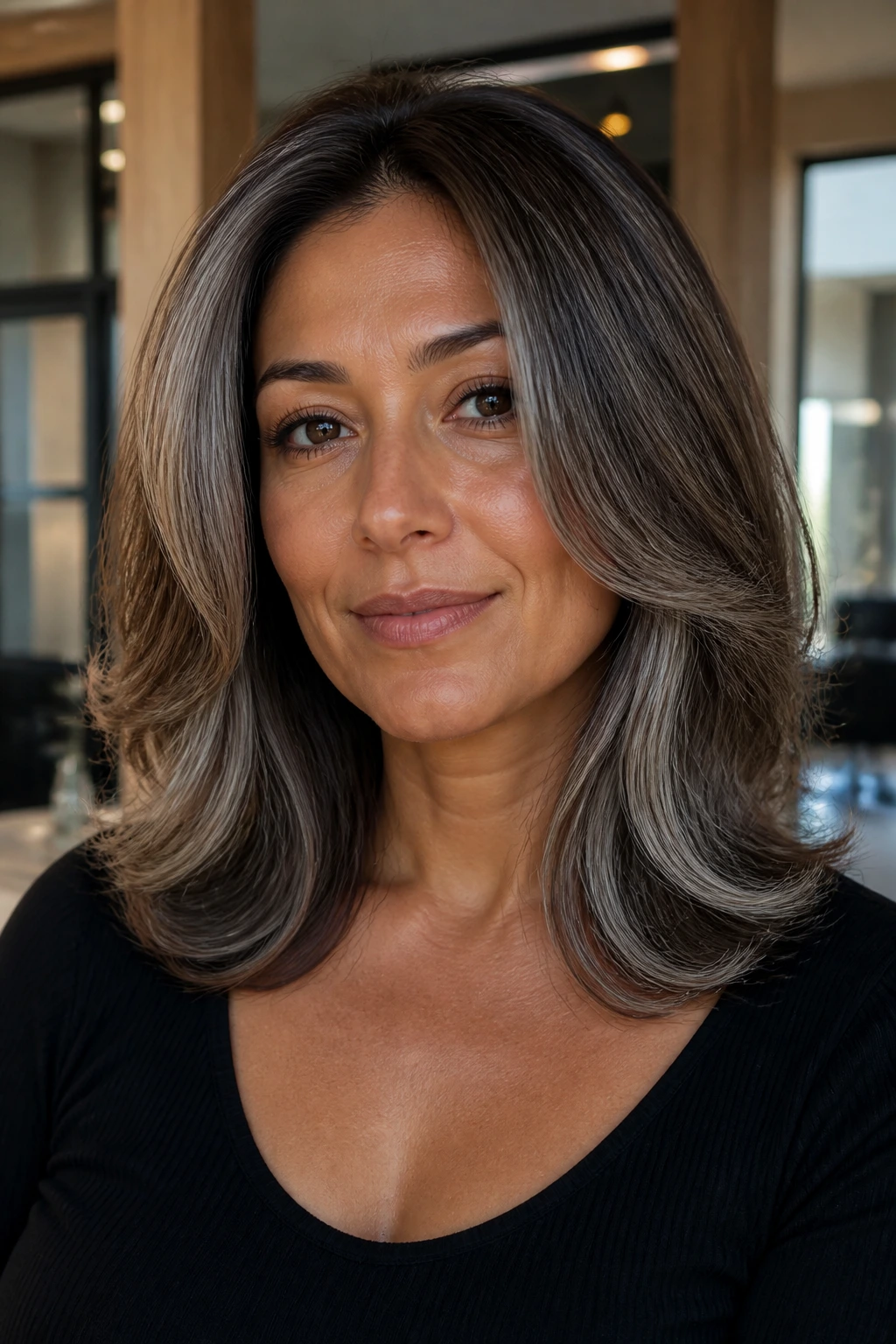
A soft blowout is the most forgiving finish for this whole colour story. Brown at the base, silver veins through the lengths, and a round-brush finish around the face create movement without screaming for attention. On tan skin, that softness matters because it keeps the cool colour from feeling icy.
The silver veins should be thin and spaced. If they’re too chunky, the blowout loses its airy shape. This style works on shoulder-length and longer hair, especially if you want something office-friendly that still has a little edge.
A round brush, a good heat protectant, and a cool-shot finish are enough here. You do not need a mountain of product. In fact, too much makes the silver look heavy, and that’s the one thing this style can’t afford.
Why the Brown-to-Grey Gradient Flatters Tan Skin Better Than Full Silver
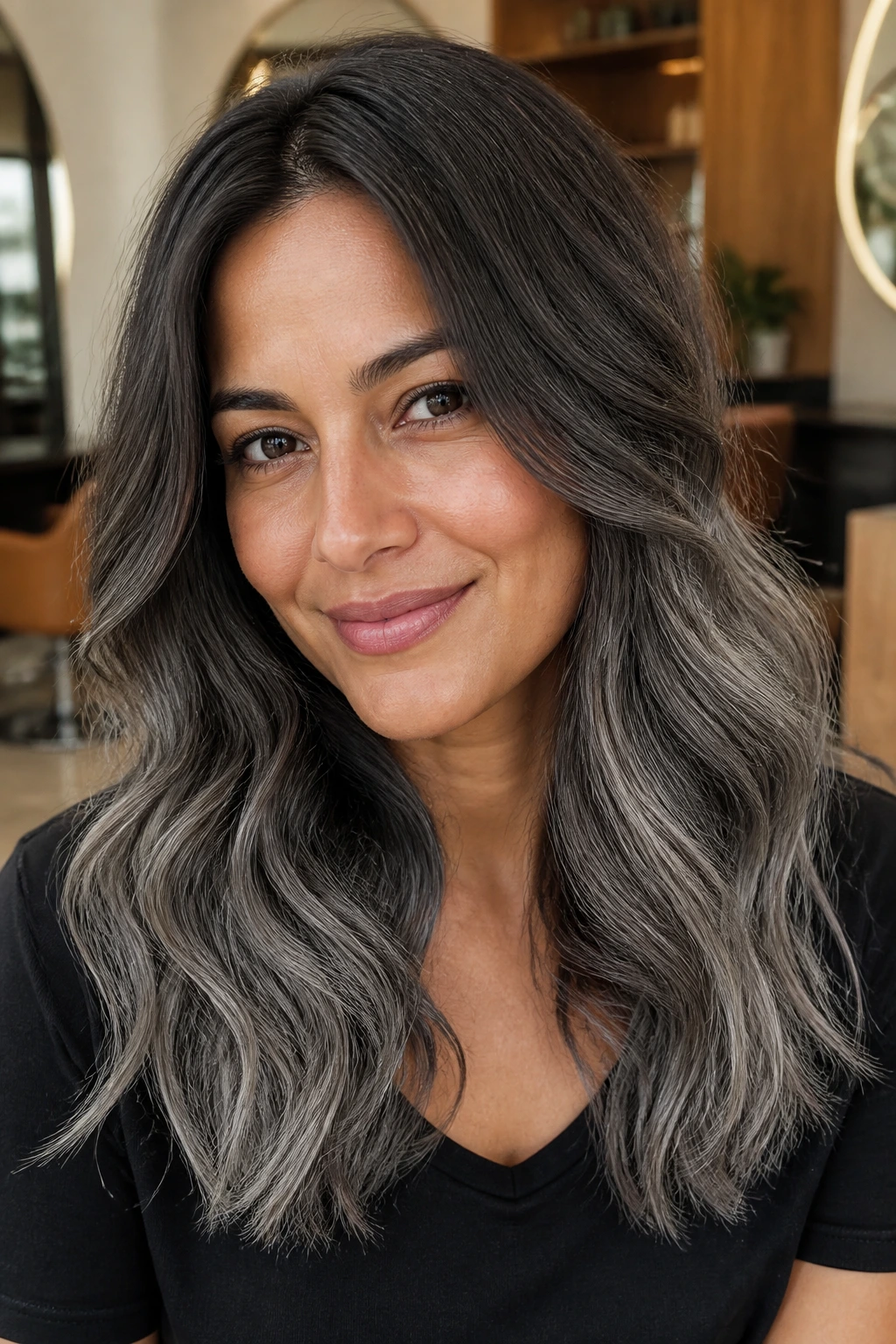
A full silver head of hair can be gorgeous, but it is also unforgiving. Tan skin often carries golden, peach, or olive undertones, and when you put a pure cool silver next to that much warmth, the face can look less sculpted and more muted. A dark brown base solves that problem fast. It gives the eye a place to land before it reaches the grey.
The other advantage is depth. Grey, by nature, can go flat if it sits on the same level from root to tip. A brown root shadow, smoky mid-length, or darker underlayer gives the style shape, which is why the looks above work better than a single flat silver wash. The color becomes part of the cut instead of sitting on top of it.
That’s also why mushroom, pewter, graphite, and taupe-grey show up so often in flattering versions for tan skin. They carry a little softness inside the cool tone. Not chalky. Not blue. Just controlled enough to sit next to warm skin without fighting it.
What to Ask Your Colorist Before You Book
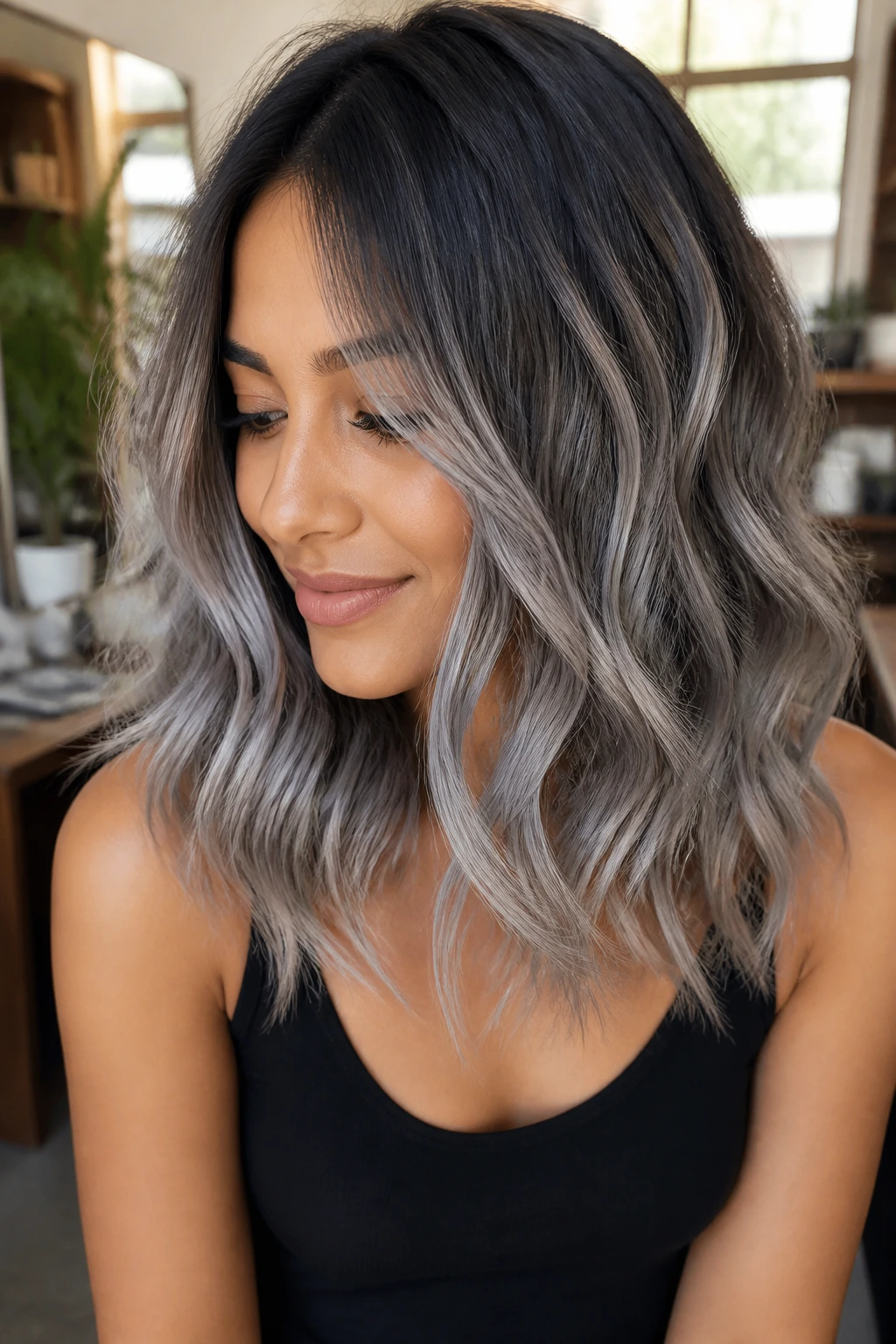
Don’t walk in asking for “brown to grey” and hope everyone means the same thing. Bring 2 or 3 photos, then say whether you want the grey to be obvious from across the room or only visible when the light hits it. That one sentence changes the whole formula.
Ask for the root level first. For many tan-skinned clients, a level 4 or 5 brown root keeps the face warm and the grow-out easier to manage. Then talk about the grey family: silver for brighter contrast, graphite for a deeper mood, mushroom or pewter for softer wear. If your natural hair is very dark, the stylist may need to lift it to a level 8 or 9 before the toner can read grey instead of yellow.
If you want the look to soften your features, mention placement. Face-framing money pieces, grey ribbons, or a smoked ombre all behave differently. And if your hair is already dry or damaged, say that out loud. A good colorist can shift the plan toward balayage, lowlights, or peekaboo panels so you’re not paying for a colour that fries your ends.
Tools, Products, and Color-Care Kit
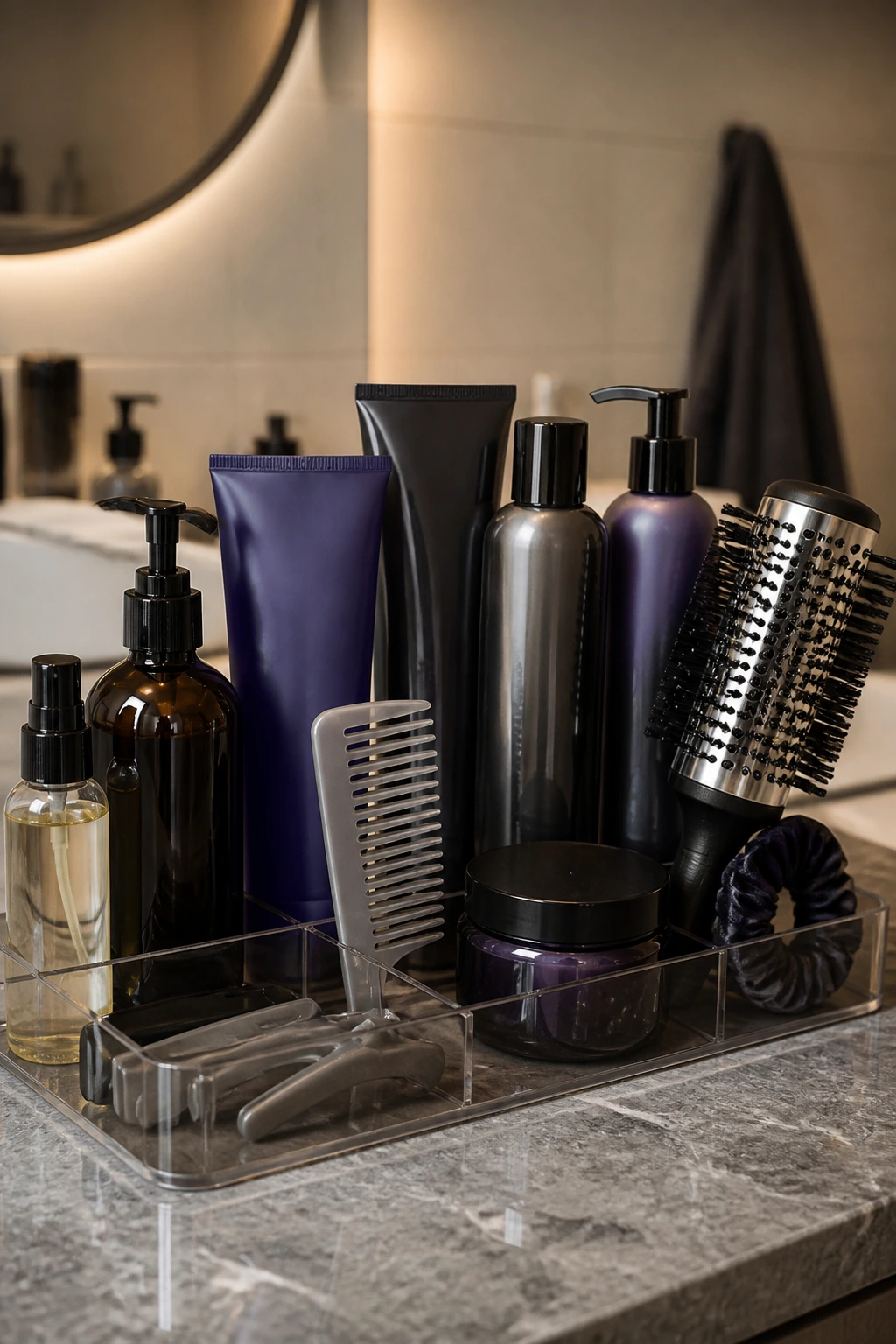
- Sulfate-free shampoo: Helps the grey toner last longer and keeps the brown from stripping too fast.
- Purple or blue-violet shampoo: Use it sparingly to cancel yellow or brassy tones in lighter grey sections.
- Deep conditioner or bond-building mask: Grey hair often means lightened hair, and lightened hair gets thirsty.
- Heat protectant spray: Essential if you blow-dry, curl, or flat iron any of these styles.
- Round brush or 1-inch curling iron: Useful for the waves, bends, and blowouts that soften grey on tan skin.
- Wide-tooth comb: Less breakage, especially on curly and coily looks.
- Sectioning clips: Helps when you’re toner-refreshing or styling the colour in layers.
- Shine serum or light oil: A tiny amount keeps smoke and graphite shades from looking dusty.
- Microfiber towel or cotton T-shirt: Gentler on textured hair and safer for the ends.
- Satin pillowcase or bonnet: Keeps the grey pieces from frizzing and rubbing dull at the ends.
Smart Booking Notes Before You Sit in the Chair
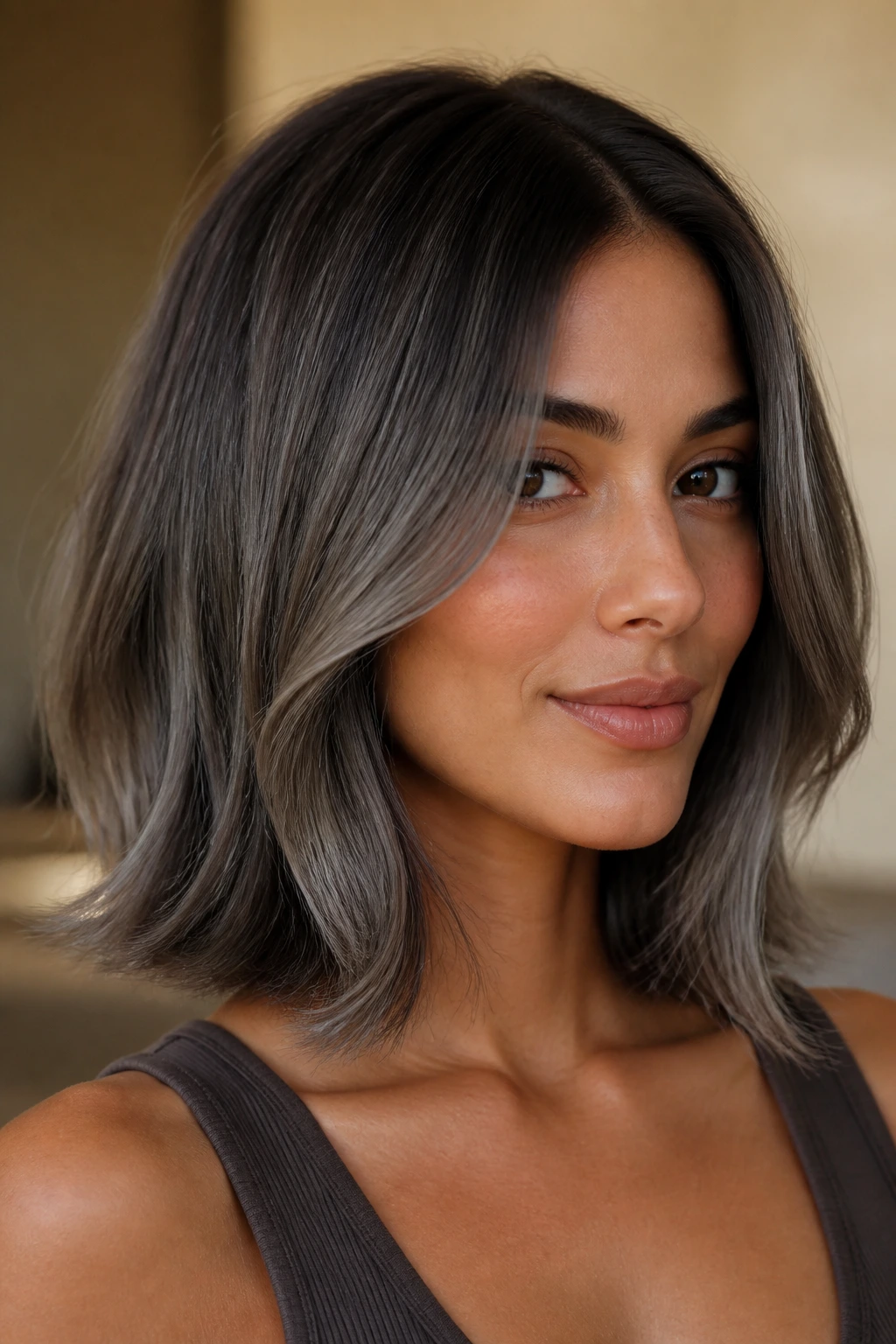
Grey hair color is one of those things that looks simple until you start making decisions. The smartest move is to decide how much contrast you want before the appointment. Do you want the grey to announce itself, or do you want it to show up as movement and sheen? That answer changes the placement, the shade, and even the cut.
Bring photos that show both the front and the back if possible. A lot of people only save front-facing inspiration, then get surprised when the back turns into a heavy block of color. On tan skin, the best versions usually keep some depth around the crown and temples. That dark frame matters.
If you’re going lighter from natural dark brown hair, ask how many sessions it will take to reach the grey you want. Some hair lifts cleanly in one pass; some pulls warm and needs a second visit. There’s no prize for rushing it. Grey that sits on a too-yellow base never looks as clean as the photos.
Practical Ways to Wear These Shades Day to Day
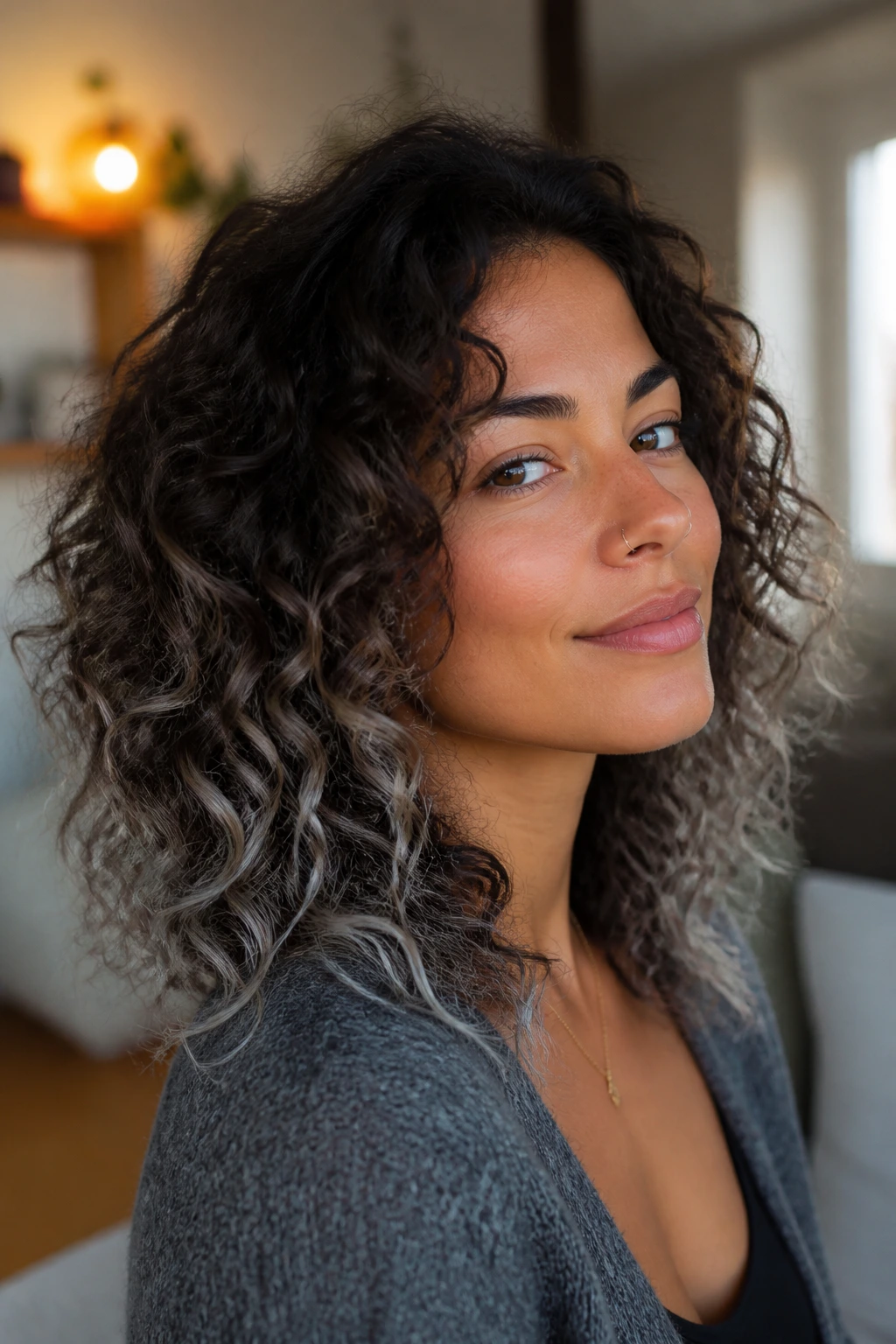
The easiest way to keep dark brown and grey hair looking intentional is to treat the finish like part of the colour. A dirty, matte blowout can make pewter or graphite feel flat. A little gloss — not grease, gloss — makes the grey look expensive. That’s one of those boring steps that pays off every time.
Waves and bends are your friend when you want the grey to look softer on tan skin. Straight hair makes every line sharper, which is fine if that’s the mood, but it also shows every uneven patch of toner. A loose bend through the mid-lengths is often enough to stop the colour from reading too cold.
Makeup and clothes matter too, even if people hate hearing that. Warm blush, terracotta lipstick, olive tops, black tees, cream knits — all of them can support the brown-to-grey mix. A super-pale foundation or a washed-out shirt can make cool grey hair look harsher than it is. The hair did not change. The frame around it did.
Common Mistakes That Make Grey Look Harsh on Tan Skin
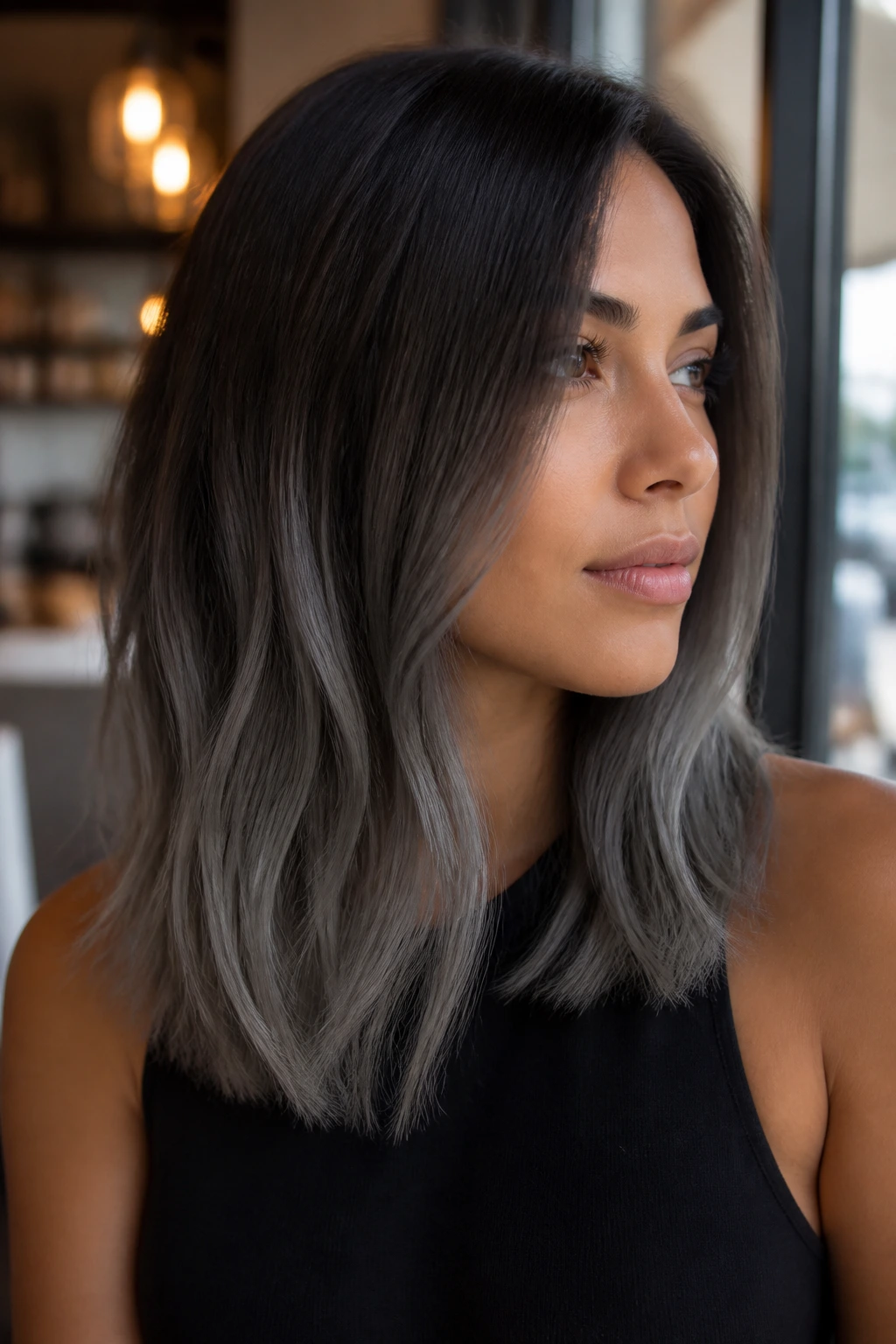
One mistake shows up over and over: going too icy too fast. A bright silver on dark brown can look stunning in a photo and strange in real life if your skin leans warm. The fix is a shadow root, a smoke-grey toner, or a touch of beige in the grey so it doesn’t sit like frost on top of the head.
Another problem is placement. Chunky grey blocks around the face can make tan skin look flatter than it should. Softer money pieces, ribbons, or veil streaks usually work better because they move with the cut. If the colour looks pasted on, the placement was probably too stiff.
Overwashing is another one. Grey toner fades, and every shampoo strip can nudge it toward yellow or muddy beige. Wash 2–3 times a week if you can, and use cooler water. Hot water is rough on both the colour and the cuticle. Simple. Annoying. True.
Skipping maintenance is the last big one. A grey style that was clean six weeks ago can turn dull, brassy, or patchy if you ignore it. Glosses, masks, and trim appointments keep the shape and tone honest.
Variations and Adaptations to Try
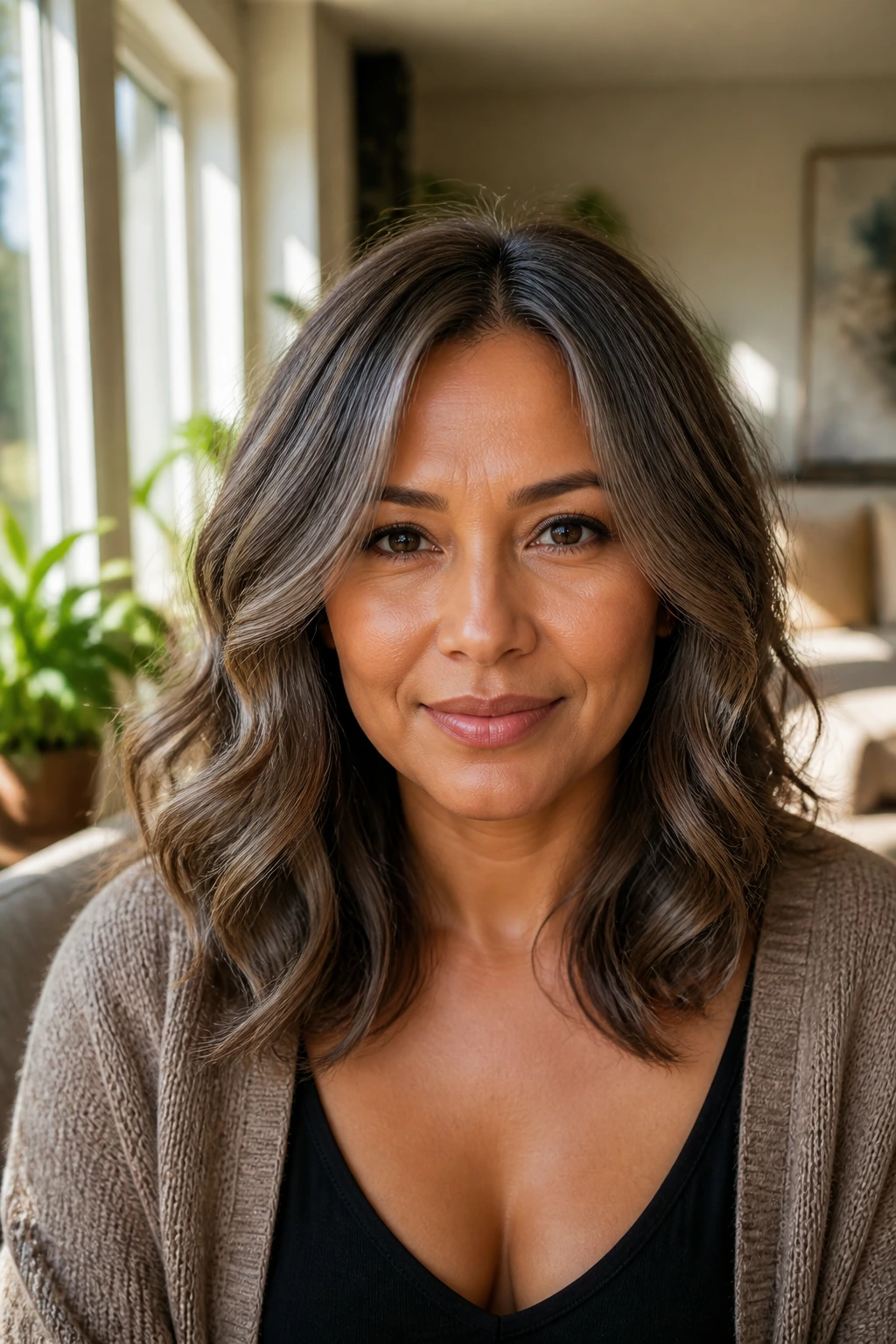
Soft Smoke Version: Keep the grey in the mushroom, taupe, or pewter family and let the brown base do most of the work. This is the easiest version to wear if your skin runs golden or olive, because the colour stays quiet and controlled.
High-Contrast Silver Version: Use bright silver or icy highlights, but keep them in ribbons, face-framing pieces, or ends. This version works best when you want the hair to feel sharper and more modern, and when your makeup or wardrobe leans a little more dramatic.
Curly Dimension Version: Put the grey on curls, coils, or waves instead of straight lengths. The texture breaks up the tone, which makes the cool shade feel softer on tan skin and buys you more visual depth.
Low-Maintenance Peekaboo Version: Hide most of the grey underneath the top layer. You get flashes of colour without a high-maintenance overall lightening job, and the grow-out is much easier to live with.
Short-Cut Version: Swap the long waves or lob for a pixie, crop, or tapered cut. Short hair makes grey read stronger, so keep the root darker and the tone more graphite or pewter if you want balance.
Wash-Day, Toner, and Touch-Up Timing
Grey hair needs a schedule, even when the cut looks casual. Most styles in this family stay happier with 2–3 washes a week instead of daily shampooing. That’s especially true if the grey is bright silver, because frequent washing pulls the tone out faster than people expect.
Use purple shampoo only when you need it. Once every 5–7 washes is enough for most heads, and even that may be too much if the grey is already cool. If the hair starts looking dusty or flat, back off and switch to a moisturizing shampoo for a few washes. Toner is there to refine the shade, not to sit on top forever.
For salon refreshes, a gloss every 4–6 weeks usually keeps the colour clean. Root touch-ups depend on how bold the contrast is, but many dark-brown-to-grey looks need attention around the 6–8 week mark if you want the blend to stay crisp. Heat styling can stretch those appointments a little or make them come sooner, depending on how careful you are with protectant and temperature.
Frequently Asked Questions
Will grey hair wash me out if my skin is tan?
It can, but it doesn’t have to. Keeping a dark brown root shadow, choosing mushroom or pewter over icy white-grey, and adding face-framing pieces usually keeps the skin looking warm and awake.
What grey shade looks best on warm tan undertones?
Mushroom, taupe-grey, pewter, and graphite usually play nicest with warm undertones. They still look cool, but they carry enough softness to avoid that chalky look.
Can I get this look on naturally dark brown hair?
Yes, but true grey usually needs lightening first. Dark brown hair often has red or orange pigment inside it, so the stylist may need to lift it to a pale yellow level before toning it grey.
How do I ask for this at the salon?
Say whether you want a soft melt, a bold contrast, or a hidden grey panel. Then bring photos and ask for the root depth, grey tone, and placement you want — for example, “level 4 root, smoky grey mid-lengths, and silver at the ends.”
How often will I need touch-ups?
Most versions need a gloss every 4–6 weeks and root work around 6–8 weeks, depending on how visible the transition is. Peekaboo styles can stretch longer, while bright silver styles usually need more regular attention.
Does straight hair or curly hair show grey better?
Straight hair shows the line of the colour more clearly, which makes the transition look crisp. Curly and wavy hair soften the tone and break it up, which is often kinder on tan skin if you want a gentler result.
Can I do this without bleach?
Sometimes you can get a smoky brown-grey glaze on pre-lightened or naturally light brown hair, but true grey usually needs bleaching. If your hair is dark, be cautious about any promise that skips lift entirely.
Why does my grey turn yellow so fast?
That’s usually a mix of heat, hard water, and too much shampoo. Use a sulfate-free cleanser, cool water when possible, and a purple shampoo only when the grey starts looking warm.
What makeup pairs well with grey hair on tan skin?
Terracotta blush, soft bronzer, warm nude lips, and defined brows usually keep the face balanced. If the hair is icy, a little warmth in the makeup stops the whole look from feeling flat.
Soft Contrast
The cleanest versions of this color story never treat grey like the whole point. They use it as a highlight, a veil, a ribbon, a finish. The dark brown stays in the frame because tan skin usually looks better when it has some depth beside the cooler tones.
If you want the easiest entry point, start with a smoky balayage, a money piece, or a lob with mushroom ends. Those choices give you the contrast without forcing the whole head into high-maintenance silver. And once you see how the shade moves in daylight, you can always go brighter later.