



Golden strawberry blonde hair color ideas have a narrow lane, and that’s exactly why they’re so satisfying when they land. The shade needs enough gold to glow, enough strawberry to keep it lively, and enough beige or honey to stop it from veering into flat copper. Get that balance right, and the whole head reads like sunlight caught in a good glass bottle — warm, polished, and never dull.
What makes this color family so useful is that it doesn’t force you into one mood. A few versions lean peachy and soft. Others pull deeper into copper, apricot, or amber. Some need a colorist and foils. Some are nothing more than a smart gloss over an existing blonde base. And yes, the wrong version can go orange fast. That’s the catch. Warmth is gorgeous until it stops looking intentional.
The best part is the range. A blunt bob, a shag, waist-length waves, a pixie, curly hair, fine hair, thick hair — each one shifts the shade in a different direction. That means the real trick isn’t “Can I wear golden strawberry blonde?” It’s “Which version belongs on my hair, with my cut, and with the amount of upkeep I’m willing to handle?” The options below answer that in a way that’s much more useful than a mood board full of pretty pictures.
Why These Golden Strawberry Blonde Shades Work So Well
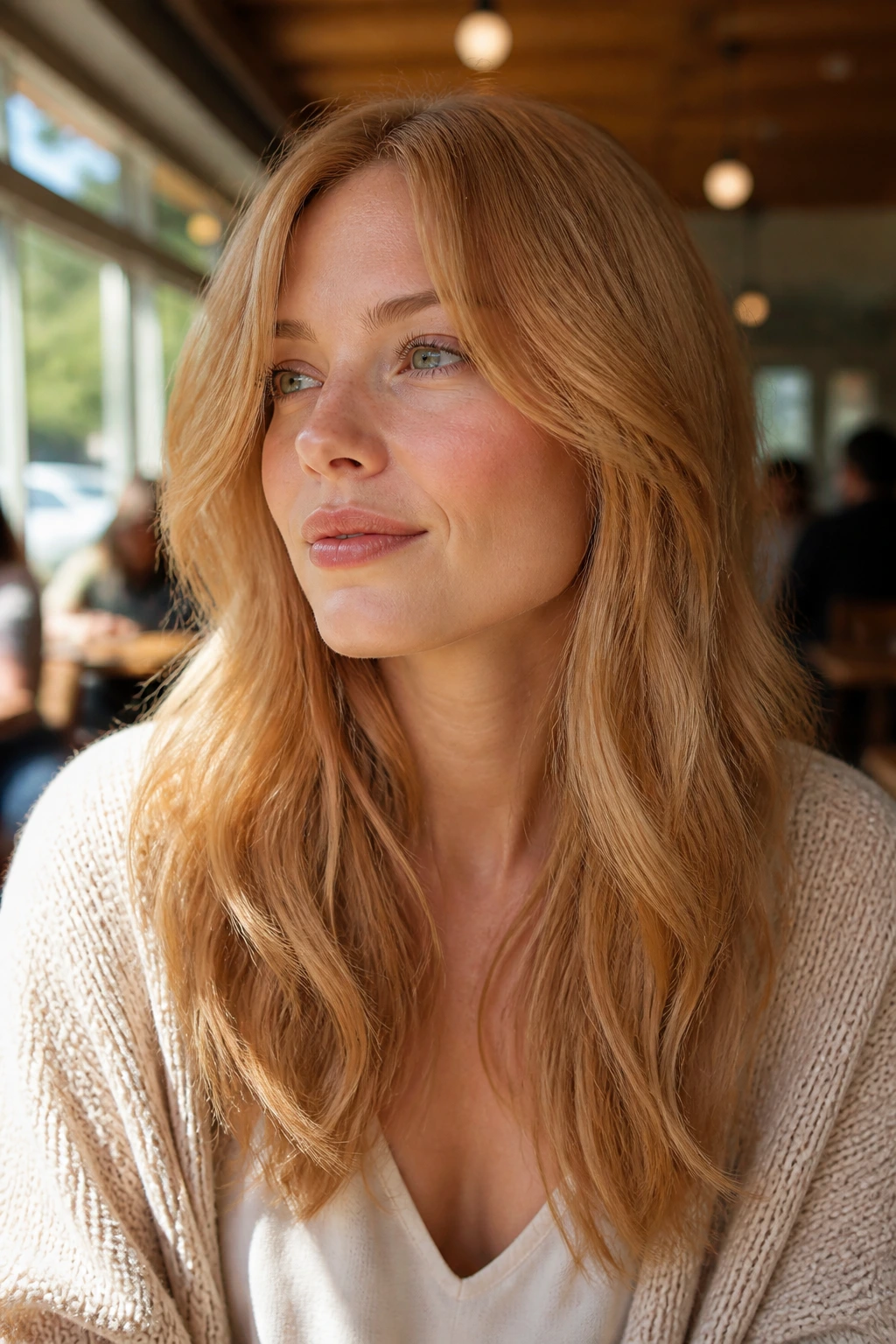
-
Warmth With Control: The strongest versions keep the copper soft and the gold clean, so the color looks rich instead of brassy after a few washes.
-
Easy to Tailor: Some of these shades sit on a level 8 blonde base; others work over light brown hair with balayage or a shadow root, which gives you real flexibility.
-
Face-Framing Wins: A few face-framing pieces near the cheekbones do more for this color family than full-head saturation ever could. Small placement changes matter here.
-
Different Cuts Change the Mood: The same tone reads sleek on a bob, airy on a shag, and almost creamy on long curls. The cut is half the personality.
-
Salon and Gloss Friendly: Some ideas need foils and lifting, while others can be kept alive with a demi-permanent gloss or glaze between visits.
-
Not Just for One Skin Tone: Beige-leaning, peach-leaning, and copper-leaning versions all exist, which makes this shade family easier to adapt than a lot of people expect.
1. Honey-Glazed Strawberry Layers
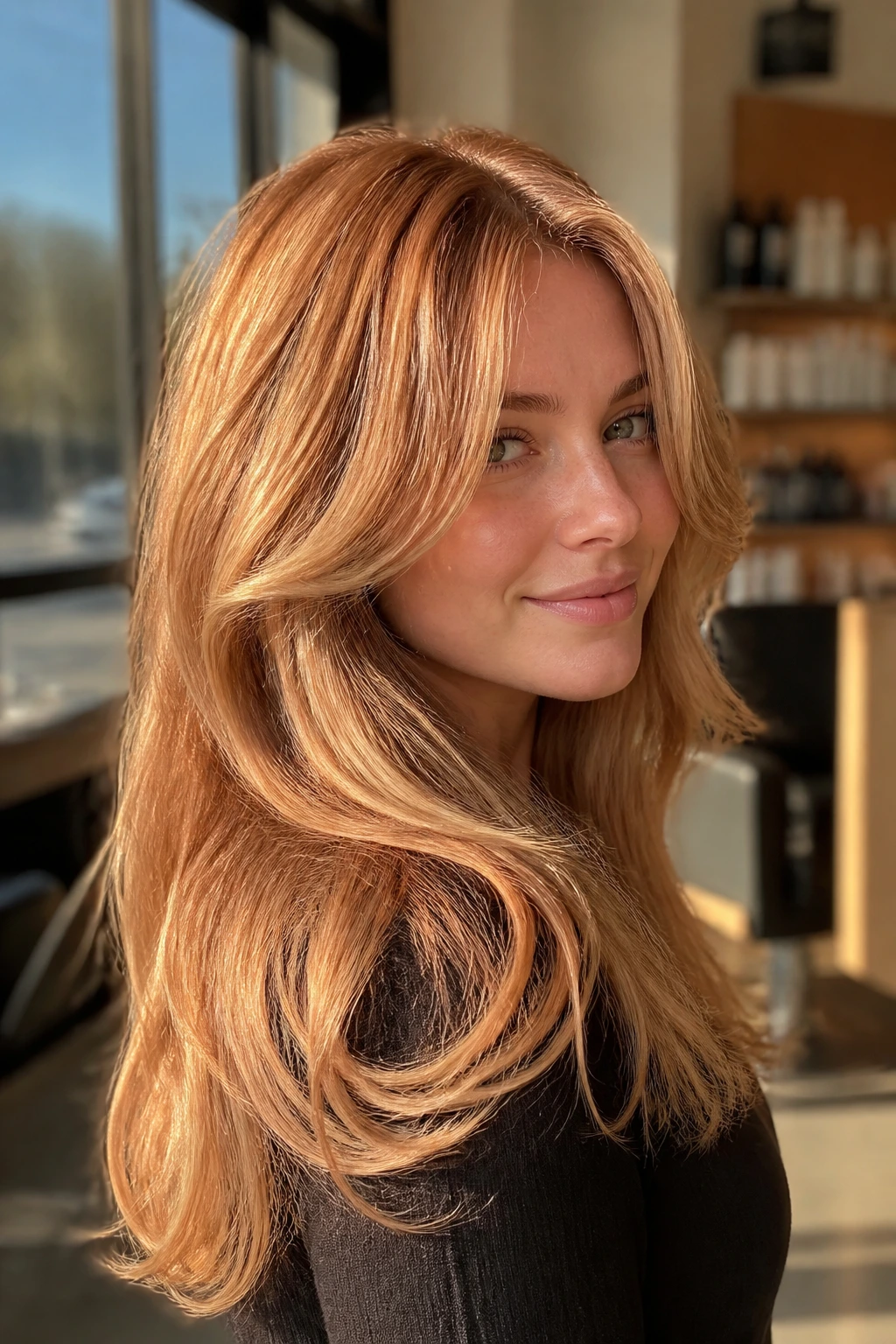
Soft layers make this shade do the work for you. The honey keeps the hair light, the strawberry brings in that faint red warmth, and the layers stop the whole thing from reading flat. On mid-length to long hair, the movement matters almost more than the color formula itself.
Why It Works on Layered Hair
The layers break up the warmth so the finish looks dimensional instead of painted on. A level 8 golden base with a whisper of strawberry gloss usually gives the right amount of shine without tipping into orange.
- Best on: Wavy or blow-dried hair
- Ask for: Soft ribbon highlights with a golden strawberry glaze
- Upkeep: Gloss every 6 to 8 weeks
- Tip: Keep the ends a touch lighter than the mids so the color doesn’t feel heavy
2. Peachy Rose Gold Bob
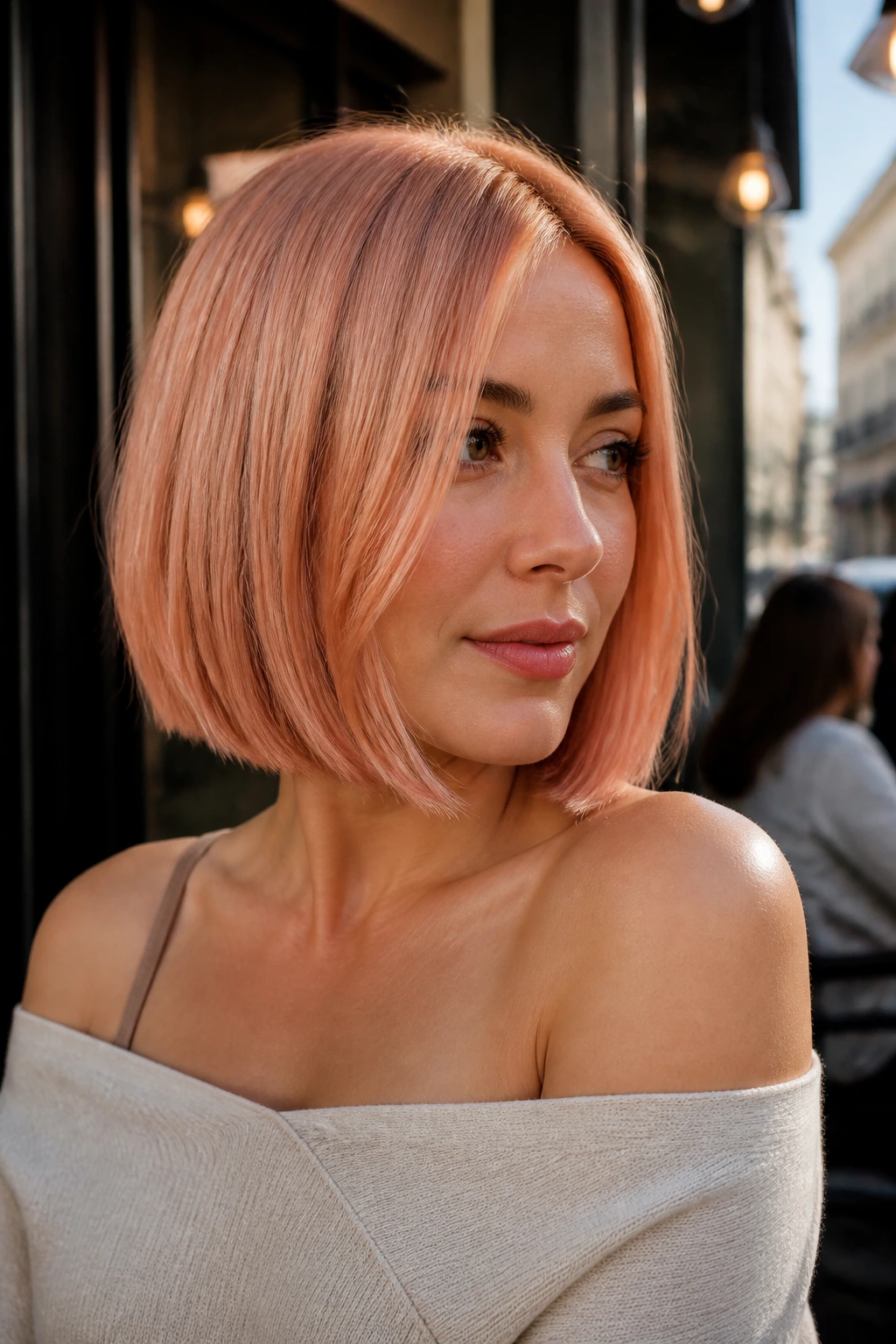
A bob makes warm tones look sharper. There’s no extra length to hide behind, so the peach and rose notes sit front and center, clean and bright. I like this one on blunt cuts because the edge keeps the color from getting sugary.
What Makes It Stand Out
The peach tone keeps it from becoming too pink, and the gold keeps it from drifting toward neon. On straight hair, the finish is almost glassy. On a softly bent bob, it looks a little more relaxed and a lot more expensive-looking.
3. Apricot Bronde Balayage
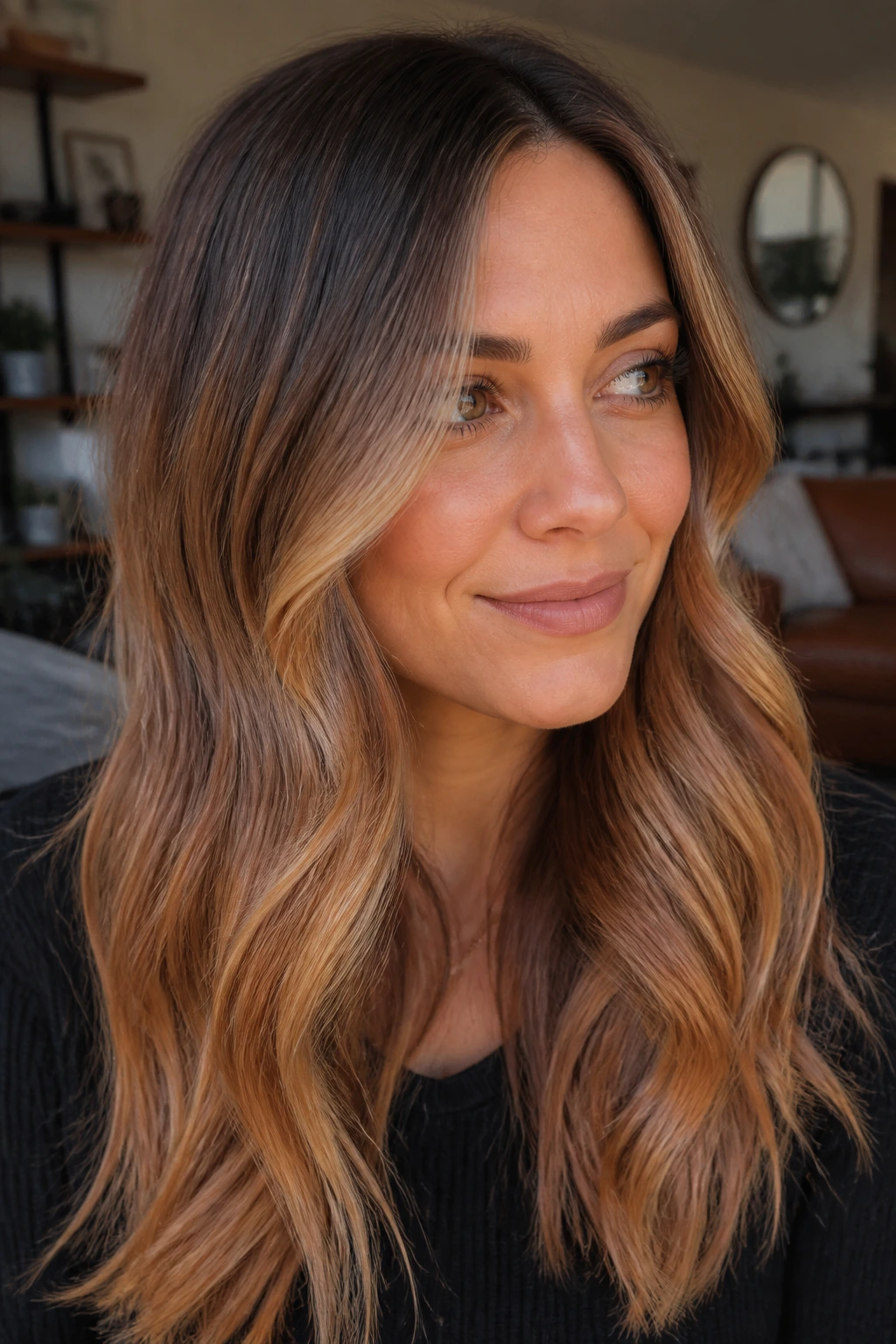
Want warmth without signing up for constant salon visits? This is the move. Apricot bronde keeps a brunette base in play, then adds golden strawberry ribbons through the mids and ends. It grows out in a forgiving way, which is the whole point.
Why This One Stays Low-Key
The darker base gives the copper and gold somewhere to sit. Without that contrast, apricot can blur into a single warm block. With balayage placement, the color catches only where the light hits, and that’s where it looks best.
Best way to wear it
- Loose waves
- A middle part with face-framing pieces
- A gloss refresh instead of full re-coloring
4. Copper Ribbon Curls
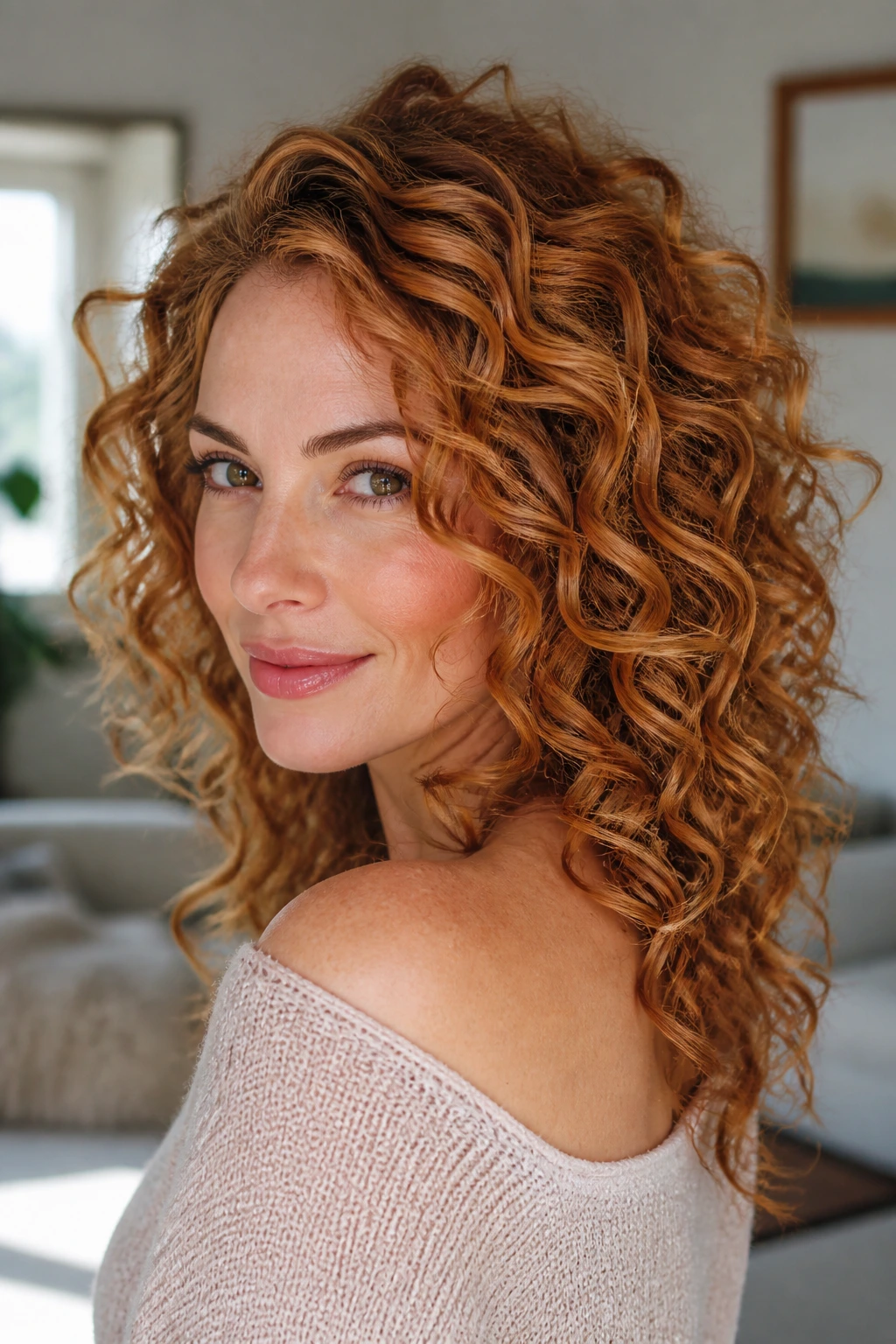
If you have curls, don’t hide them under one flat color. Ribbon placement lets the copper move through each curl pattern so the shade shifts as the hair bends. The result is warmer and more alive than an all-over copper coat.
A colorist should paint the warm pieces in wider ribbons through the outer layers and keep the interior a little deeper. That contrast is what makes the shape pop. Tight curls especially benefit from this, because the coils already build texture; they do not need a busy, overdone formula.
5. Beige Strawberry Money Pieces
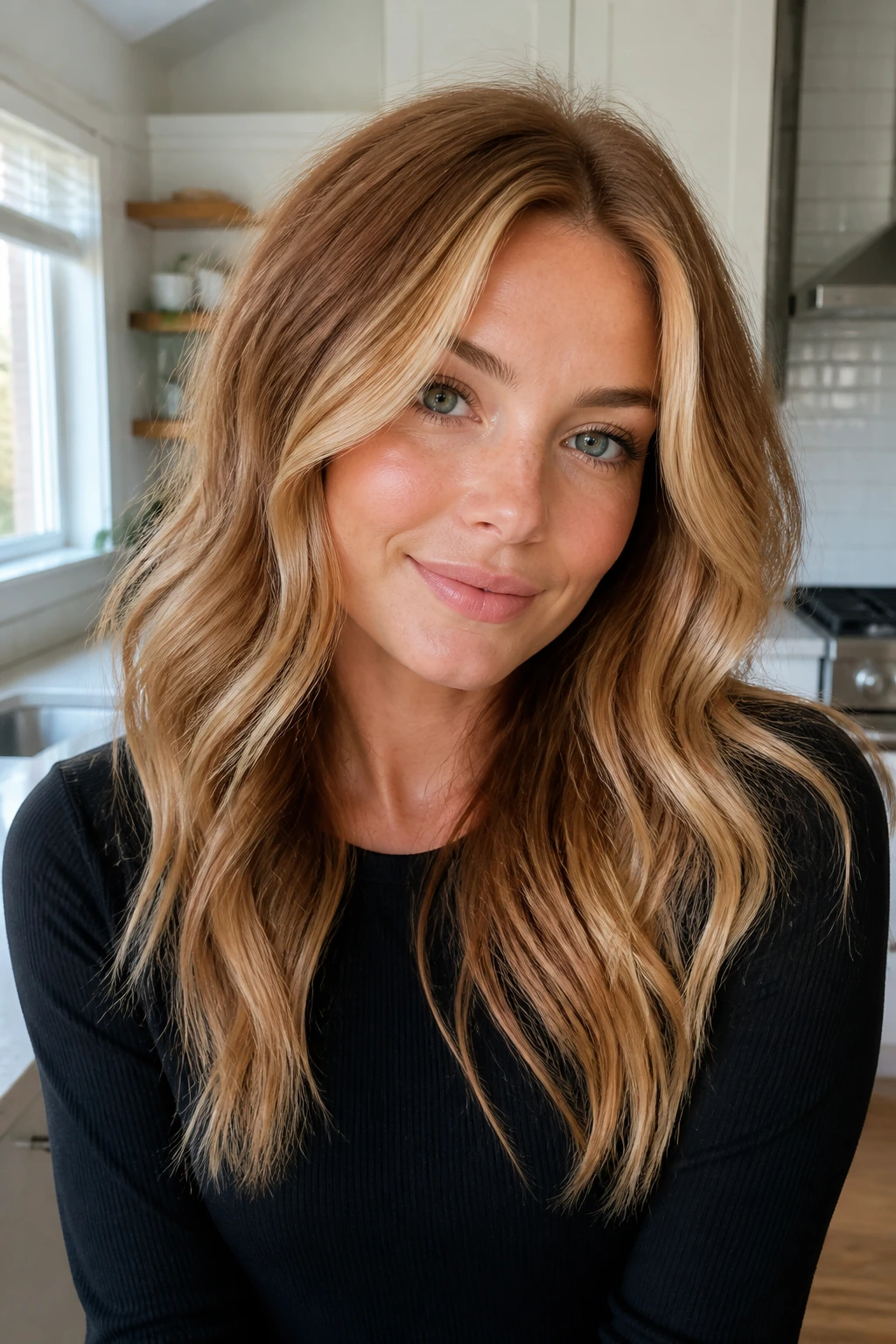
This is the quiet version, and I mean that in the best way. Beige strawberry money pieces brighten the face first, then let the rest of the hair stay softer and more neutral. If you work in a place where full copper feels like too much, this is the smart compromise.
The trick is keeping the front pieces light enough to catch the eye but not so pale that they separate from the rest of the color. Ask for a creamy beige-gold around the temples and a softer strawberry through the lengths. That slight shift gives the face the lift without making the whole head scream for attention.
6. Golden Strawberry Shag
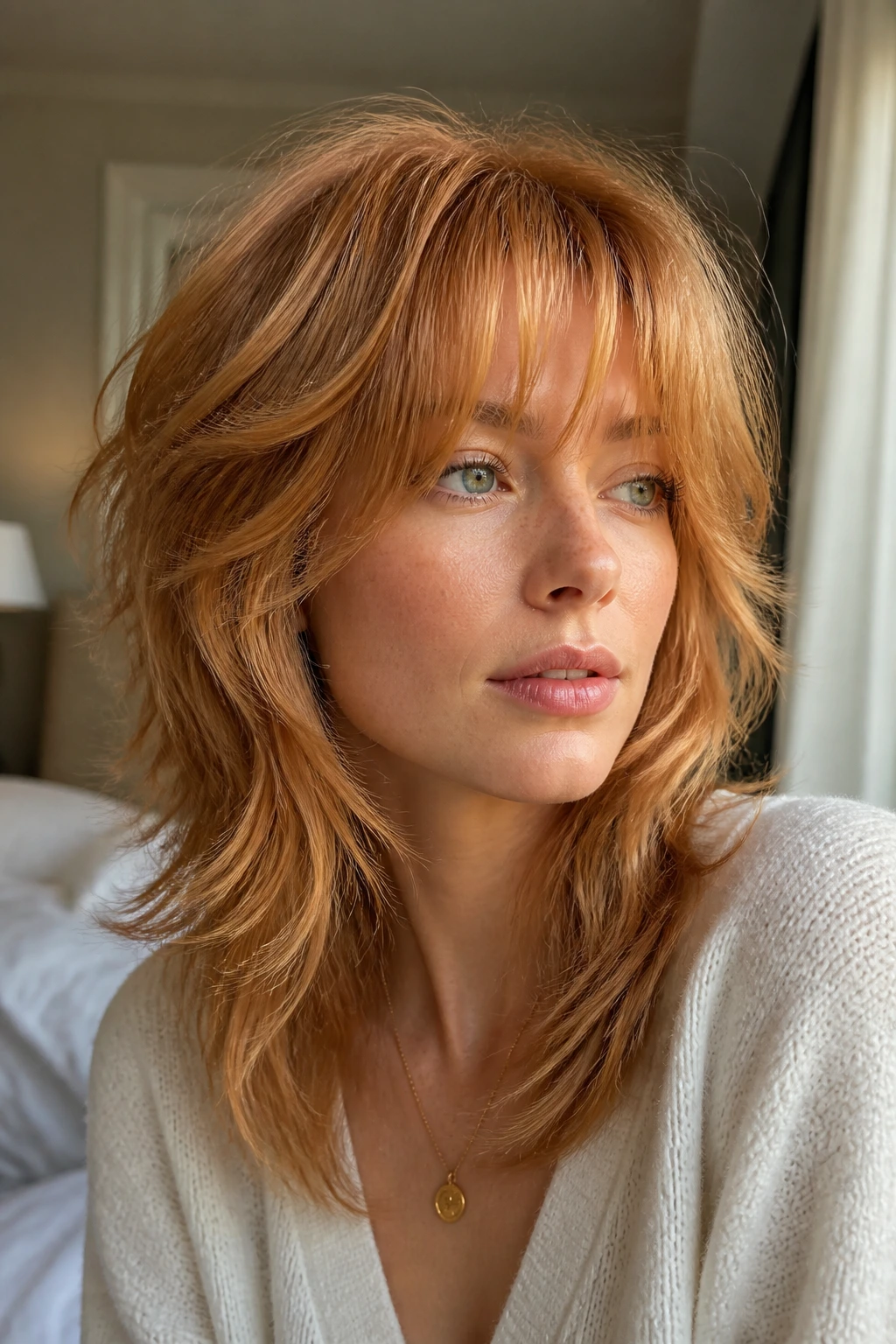
A shag loves warm color because the texture gives the warmth a place to land. Golden strawberry blonde on a shag can look almost feathered when the bangs and layers are cut well. The shape keeps the shade from turning heavy, which is a common problem with deeper strawberry tones.
What to Watch For
If the fringe is too dark, the whole style can lose its sparkle. Keep the crown and face frame lighter by a half level if your natural base is medium blonde or light brown. A matte styling cream and a quick bend with a flat iron help the color show its piece-y edges.
7. Toasted Peach Lob
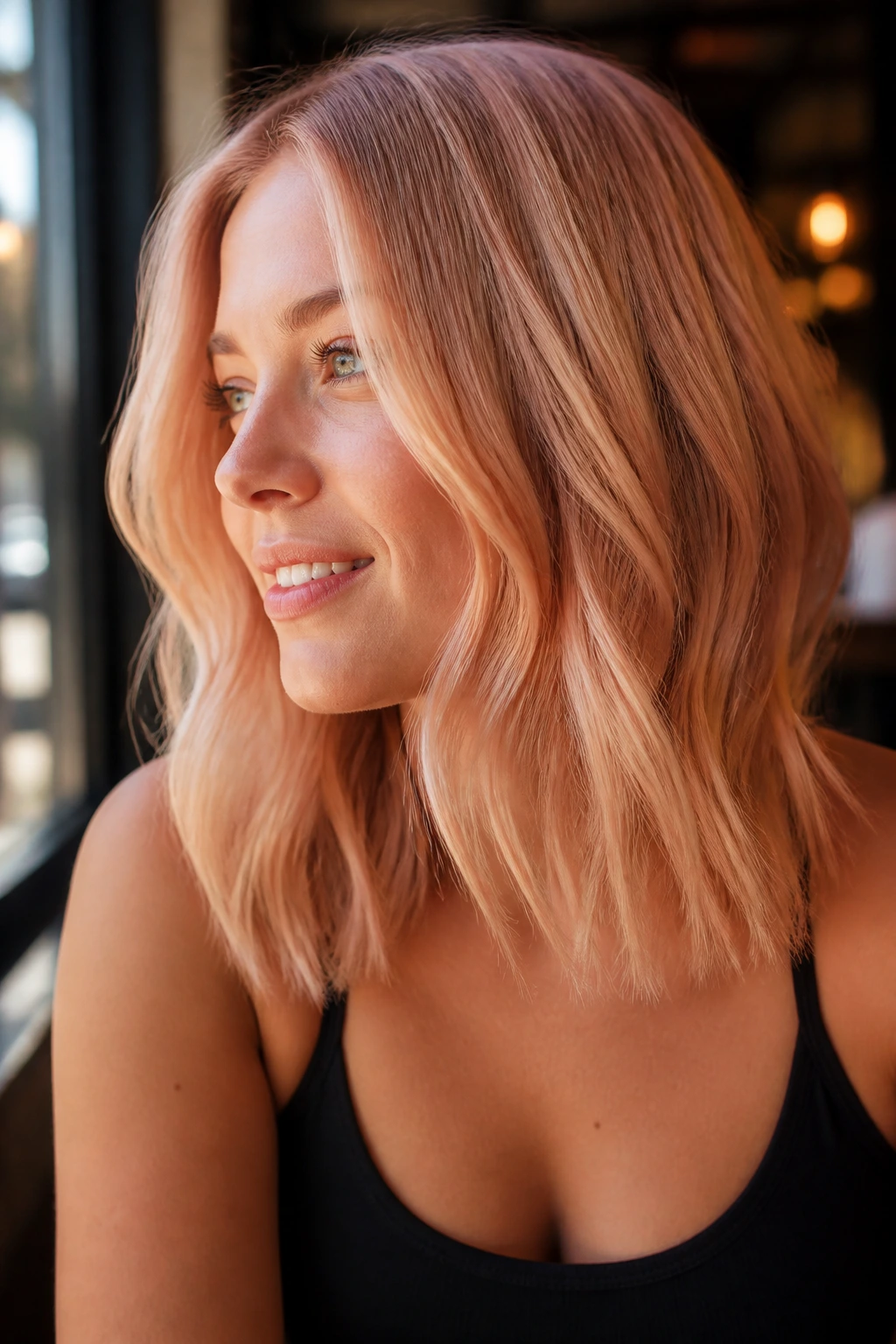
A lob gives peach tones a very clean canvas. It’s long enough to feel soft, short enough to stay neat, and just blunt enough to keep the warmth from looking fuzzy. I like this on hair that wants movement but not extra styling drama.
The toasted part matters. Pure peach can get candy-like fast, while a toasted peach tone pulls in a little beige and honey. That gives the shade a more grounded look, especially if your skin leans warm or neutral.
8. Soft Copper Pixie
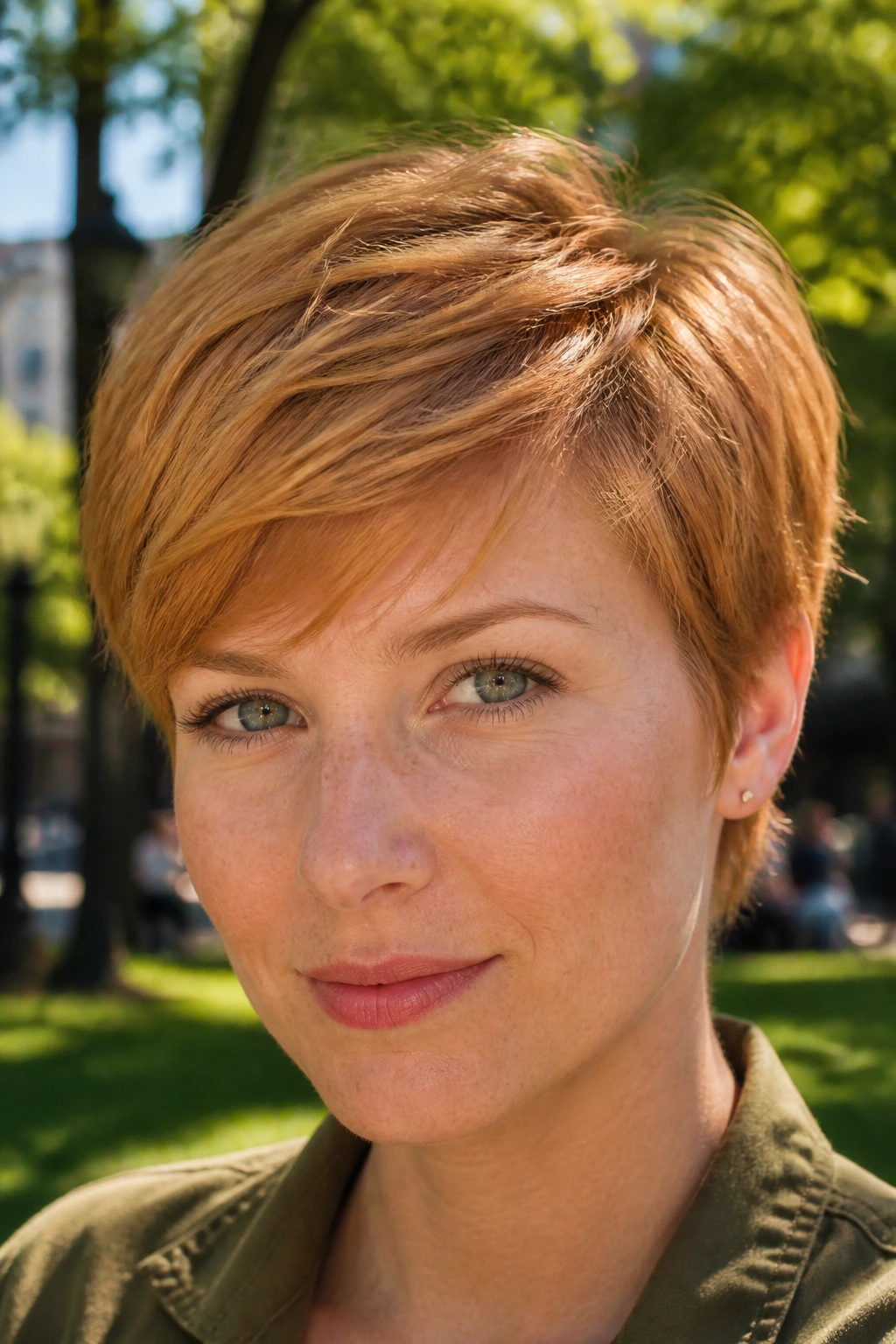
Short hair can carry more color than people think. In a pixie, warm tones land fast because there’s less length for the eye to drift across. That makes soft copper with golden strawberry reflection feel crisp and intentional instead of loud.
This cut asks for maintenance, though. If you keep the sides tight and the top slightly brighter, the color stays lively even as it grows out. I’d keep this one closer to a demi-permanent copper-gold than a heavy permanent red. The finish is cleaner.
9. Caramel Strawberry Waves
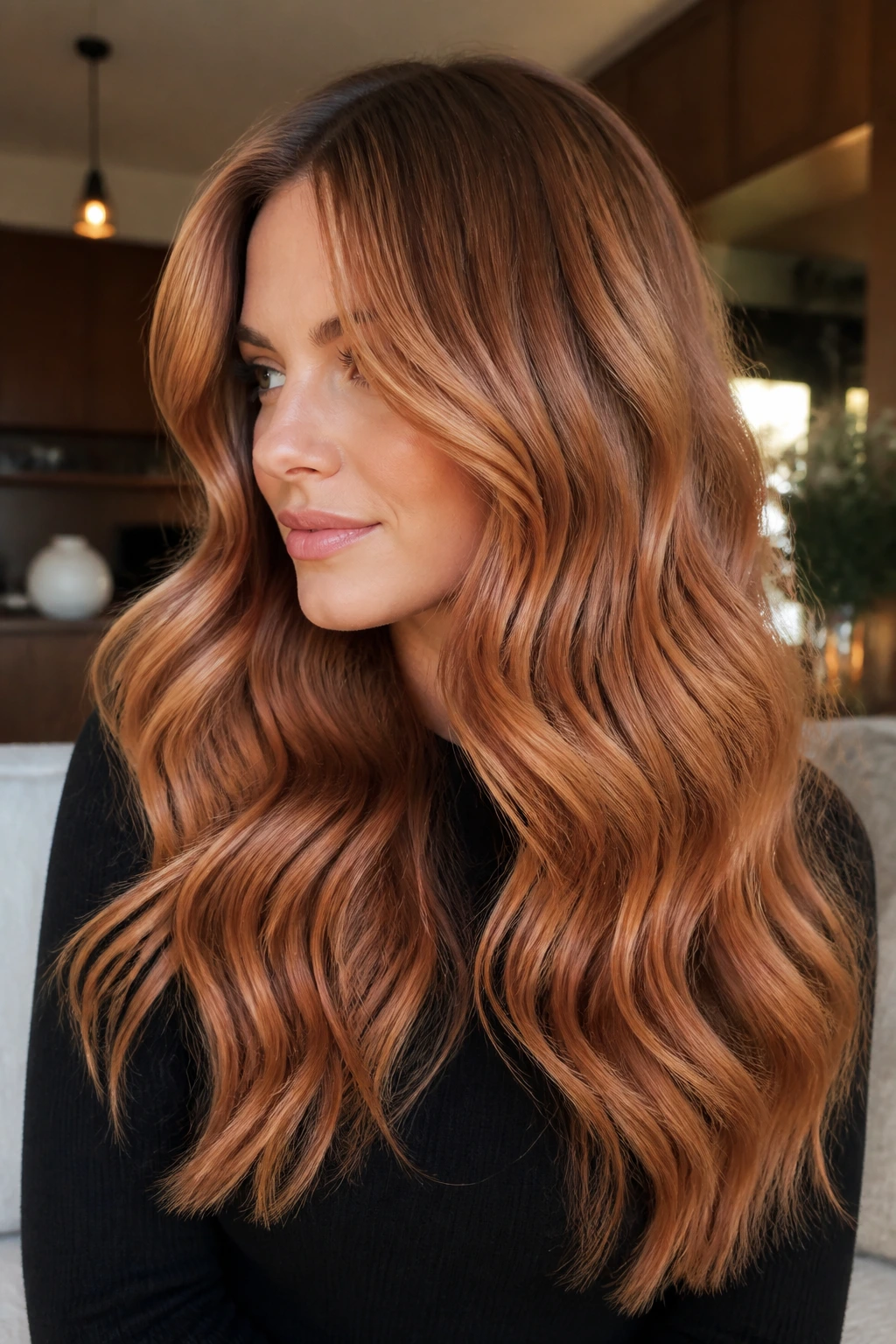
What if you want the color to look expensive in candlelight and daylight? Caramel strawberry waves do that because the caramel mutes the red just enough. It’s a little softer than straight copper, and that softness makes the waves look thicker.
How to Wear It
A large-barrel iron, brushed-out bends, and a gloss with gold reflect are the whole story here. Keep the root area slightly deeper so the ends can glow. If the hair is fine, this is one of the best ways to create the illusion of density without sacrificing shine.
10. Champagne Apricot Melt
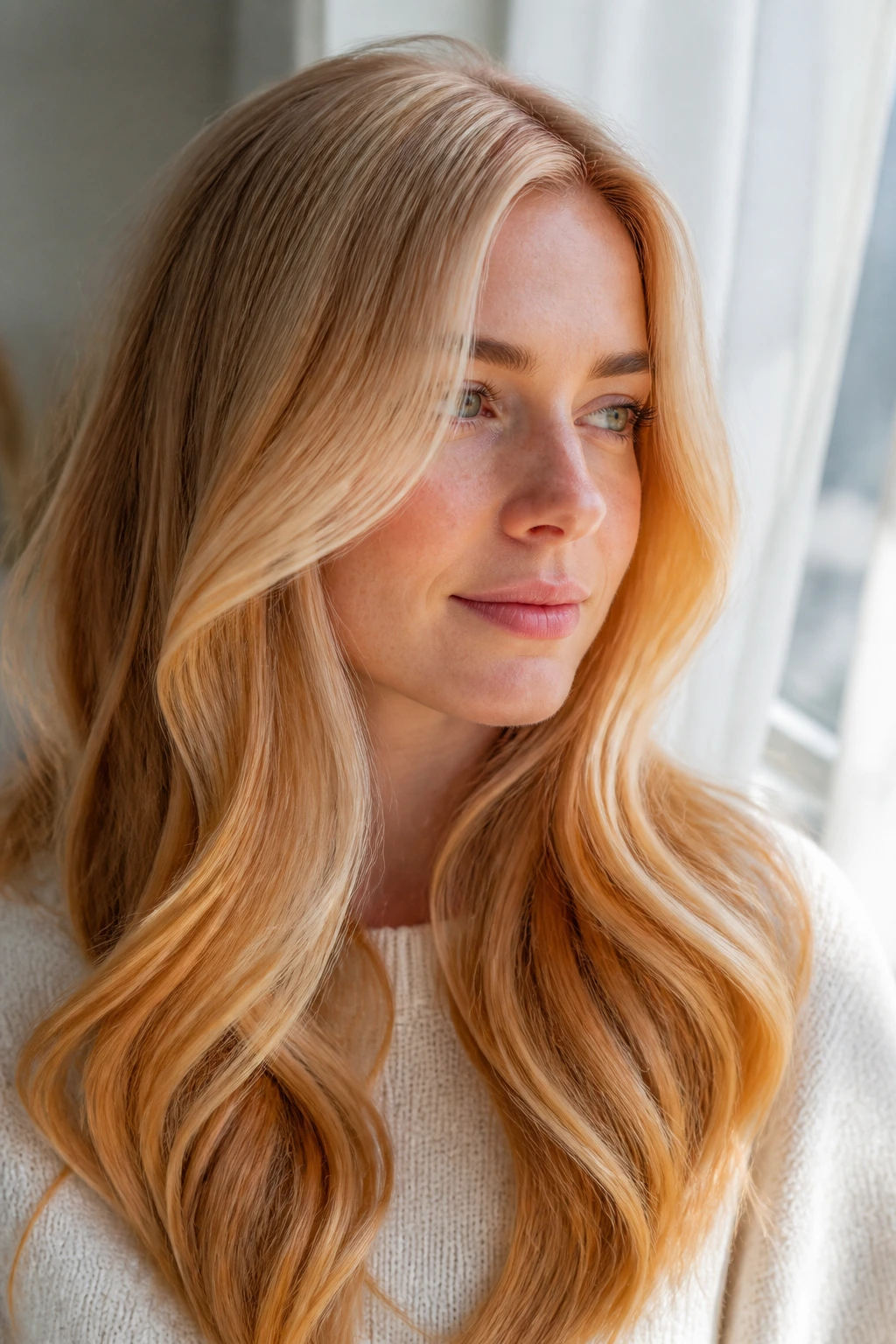
This one reads airy. Champagne at the root, apricot through the mids, and a softer golden strawberry finish near the ends gives you a melt that looks expensive without trying too hard. It’s light, but it still has warmth.
The key is the transition. Hard lines kill the whole idea. A good melt should look like the colors are sliding into one another, not sitting in separate bands. On fine blonde hair, this is one of the prettiest ways to keep warmth without making the hair feel overprocessed.
11. Sunlit Rose Copper Lob
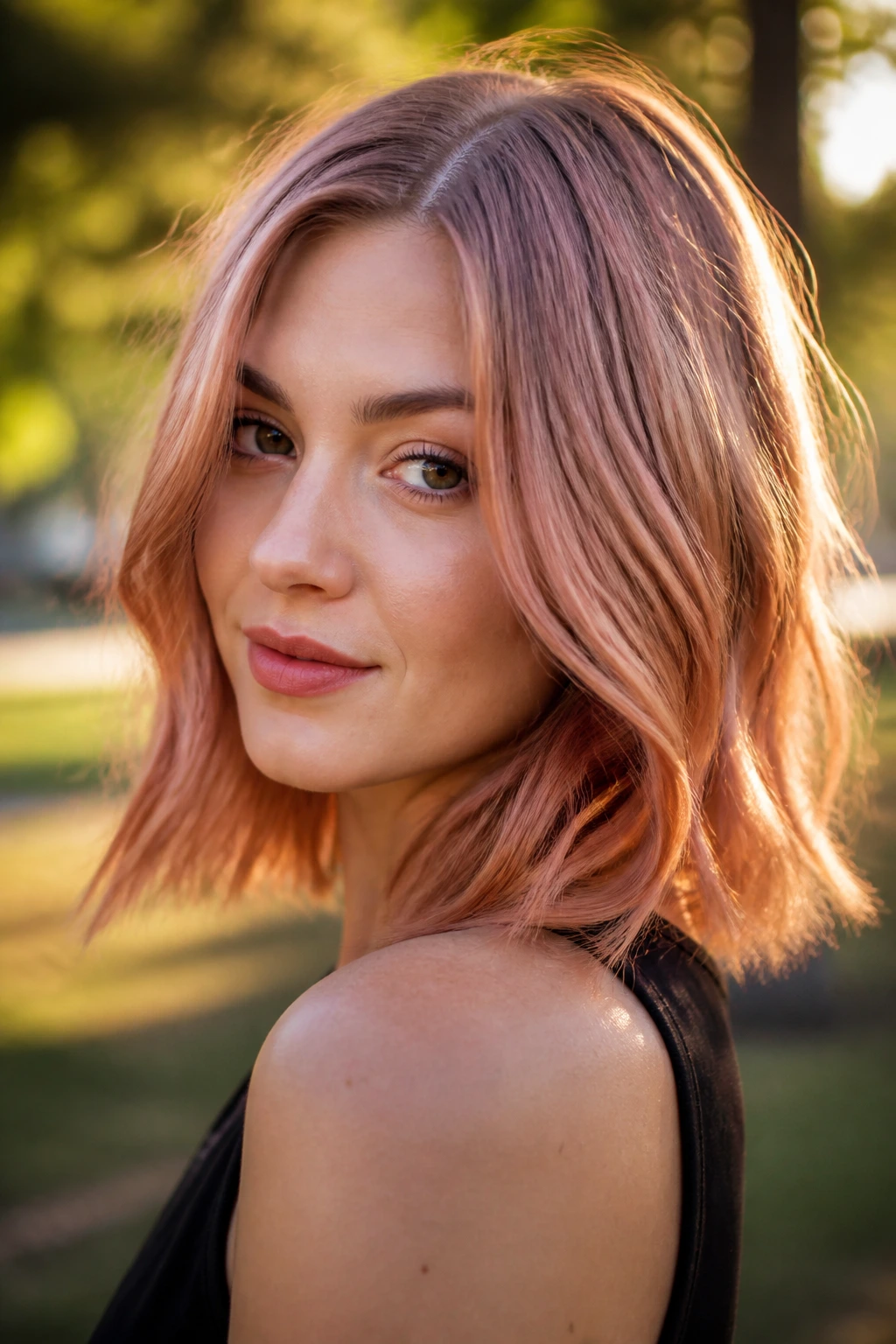
Here’s the difference between rose gold and rose copper: rose copper actually has something to say. The copper adds backbone, while the rose keeps the tone soft enough to wear every day. A lob gives it structure.
This shade works especially well if you want a little personality but still need the color to behave. Ask for a cooler rose note near the top and warmer copper toward the ends. That small shift keeps the whole thing from turning candy pink.
12. Warm Wheat Blonde With Strawberry Ends
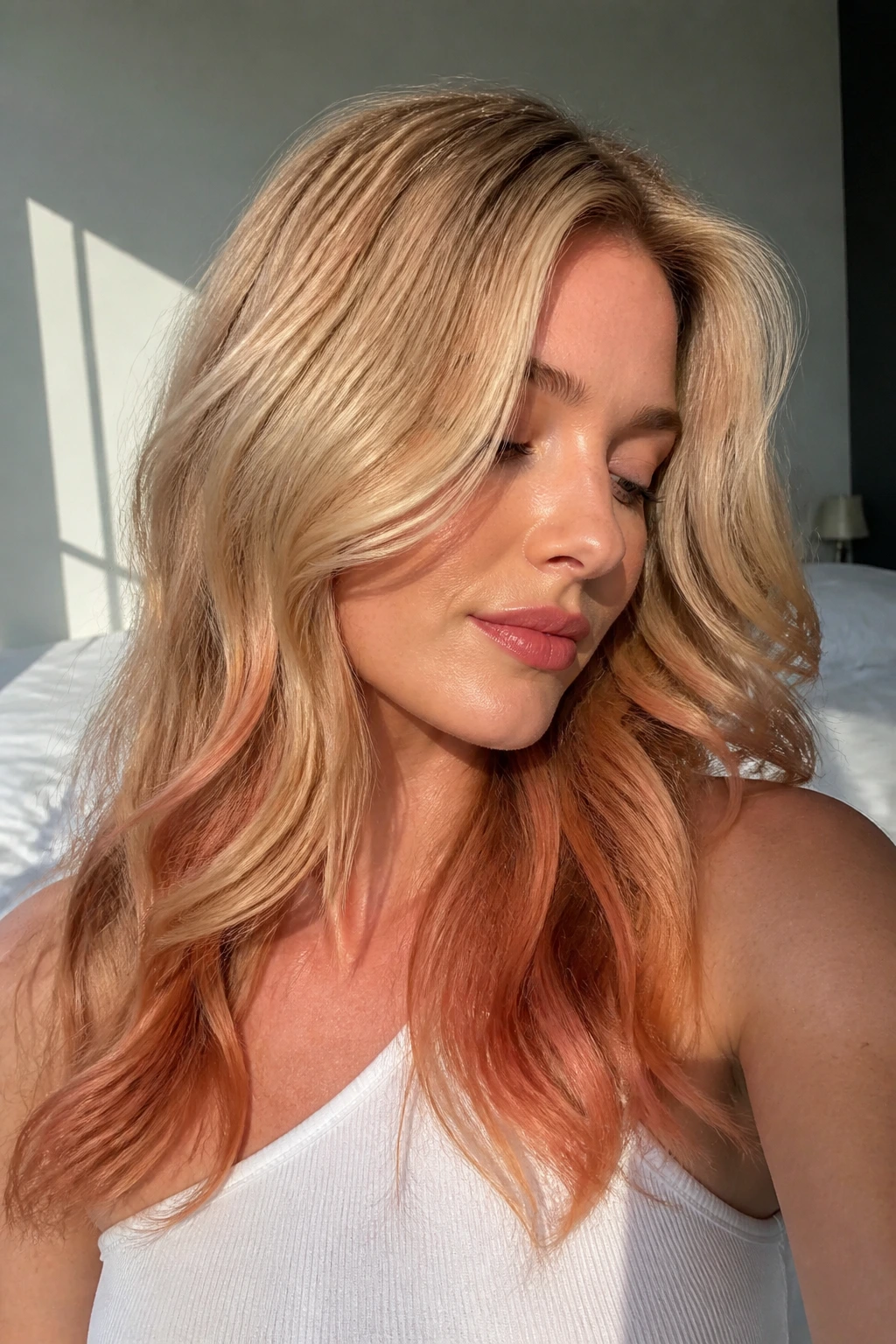
Subtle people, this one’s for you. Warm wheat blonde with strawberry ends keeps the body of the hair light and sun-washed, then tucks the strawberry into the lower lengths where it can peek through as the hair moves. It feels intentional, not loud.
The magic is restraint. If every inch of the hair gets the same warm red-gold, the look can flatten. By saving the strawberry for the bottom third, you get a color that still feels playful when the hair is down and clean when it’s tied back.
13. Cinnamon Gold Curtain Bangs
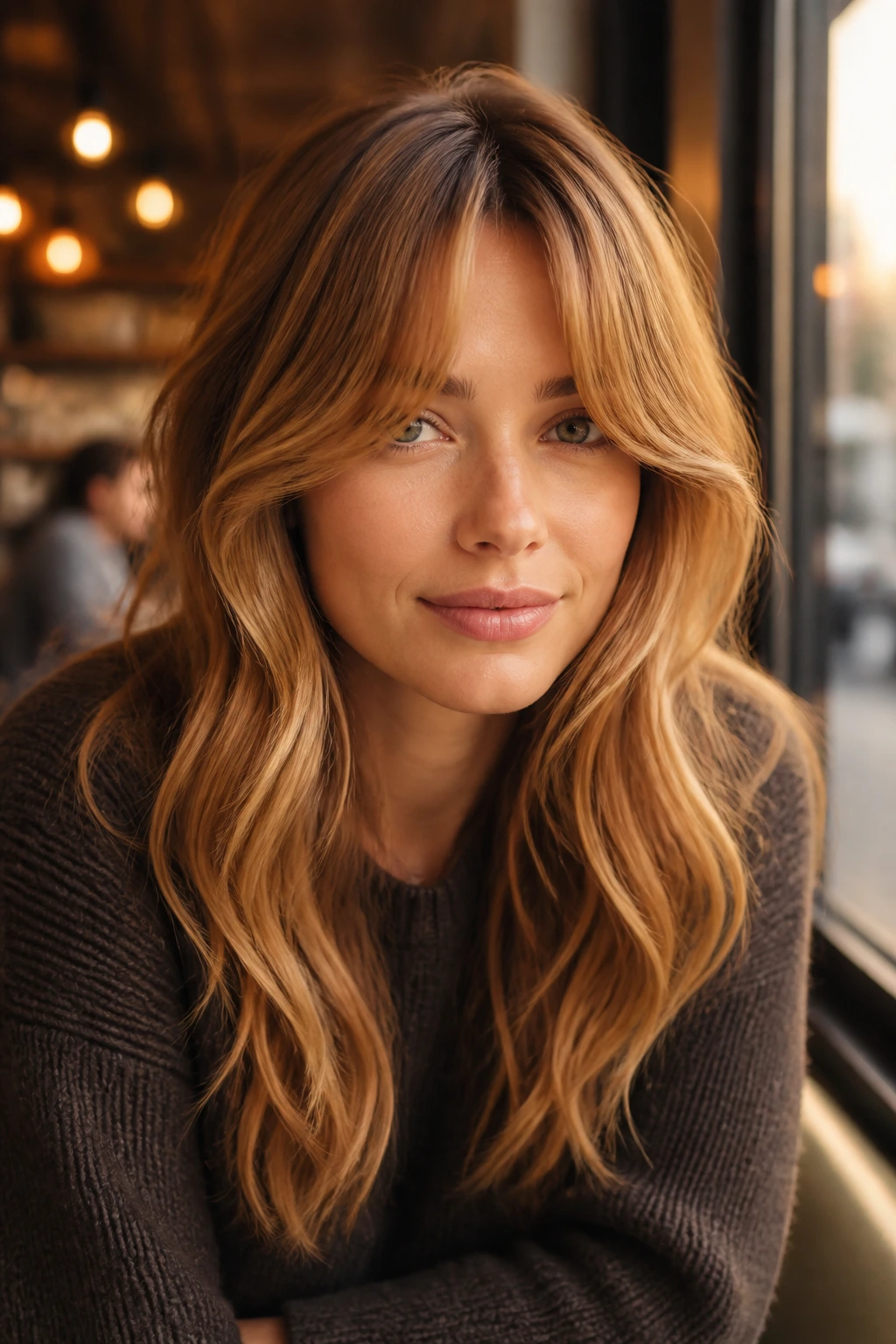
Curtain bangs are a gift to warm color. They sit where people look first, which means even a small shift in tone changes the whole face. Cinnamon gold gives the fringe enough depth to frame the eyes without making the bangs look dark.
Keep the rest of the hair a half-step softer than the fringe if you want dimension. That contrast makes the bangs feel deliberate. If your hair is thick, a texturizing cream will keep the front pieces separated so the color doesn’t disappear into the cut.
14. Rustic Apricot Shag
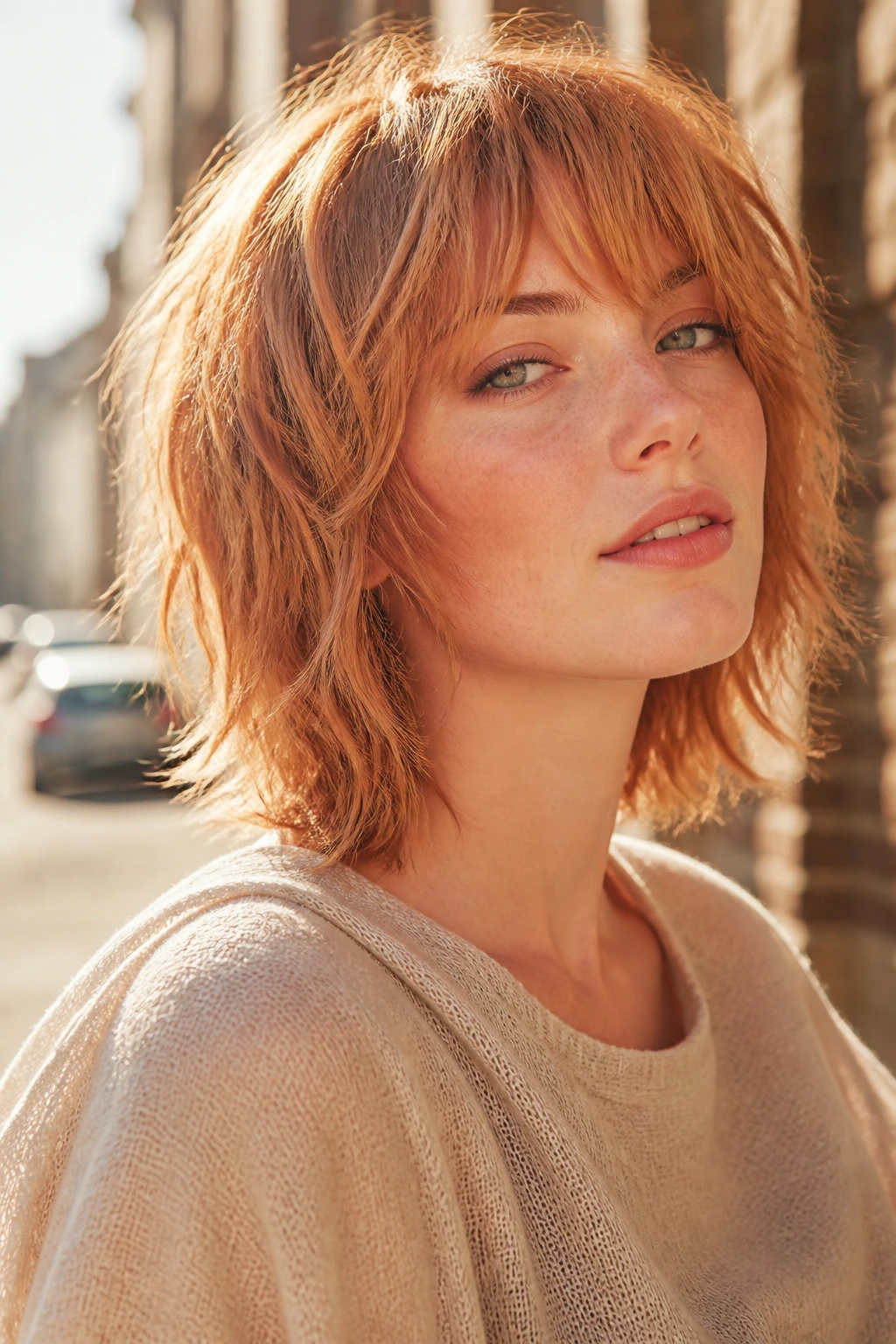
This version has a little grit to it, and that’s why it works. Rustic apricot on a shag looks lived-in rather than polished to death. The layers and choppy ends let the apricot catch in different spots, which keeps the color moving.
A shag can take a warmer shade than a sleek cut because the texture already breaks up the surface. Ask for a soft root shadow and brighter apricot around the crown and face frame. That’s the part that keeps it from looking like one flat warm blanket.
15. Creamy Strawberry Beige
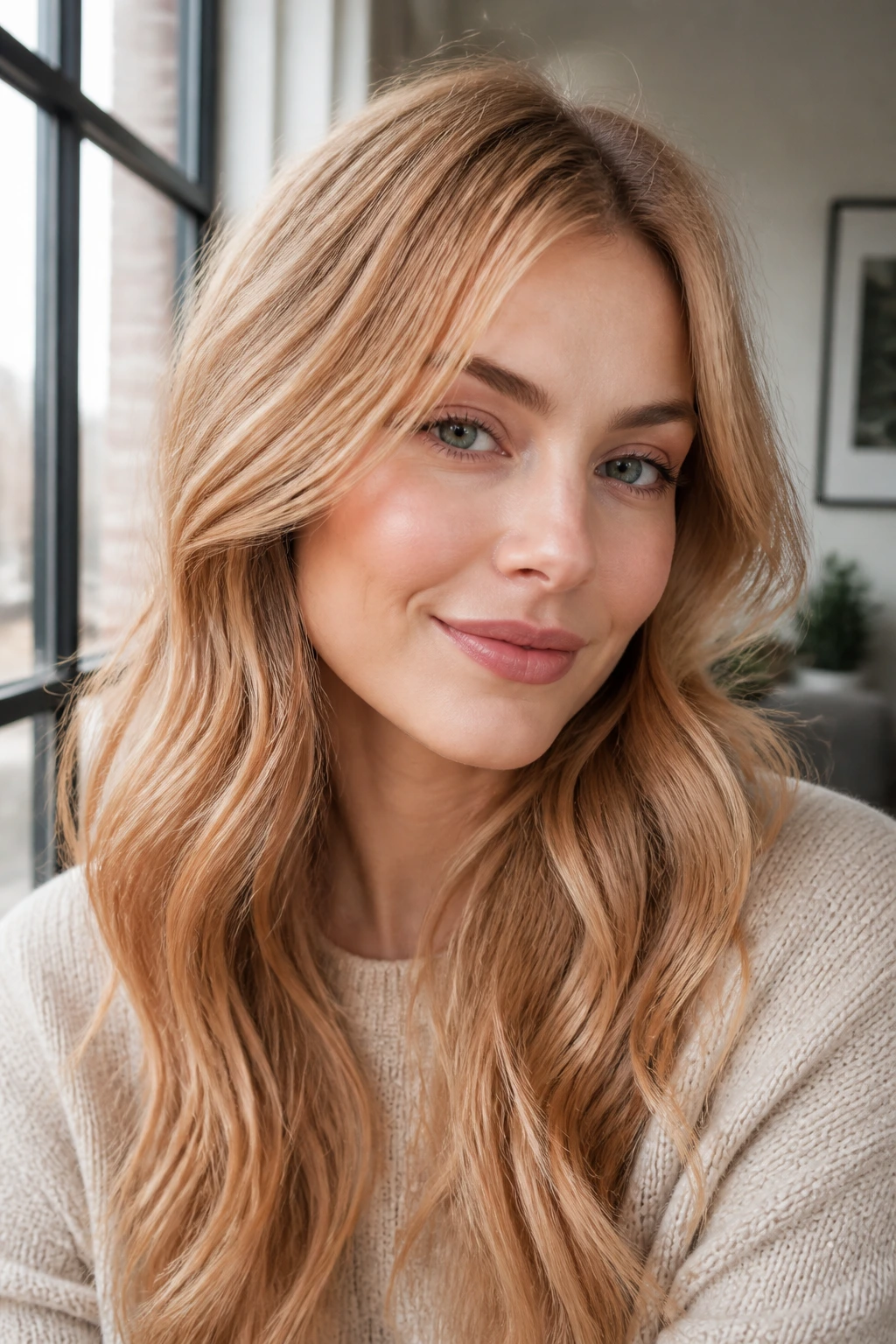
This is the most forgiving version in the bunch. Creamy strawberry beige tones down the copper, turns up the beige, and leaves just enough strawberry to keep the color from going muddy. If you’ve been nervous about red hair, start here.
The beige note matters more than people think. It stops the warmth from looking like dyed red and lets it read as a natural blonde family shade. On cooler skin, this is often the easiest warm blonde to wear because it doesn’t fight the face.
16. Golden Copper Melt for Curly Hair
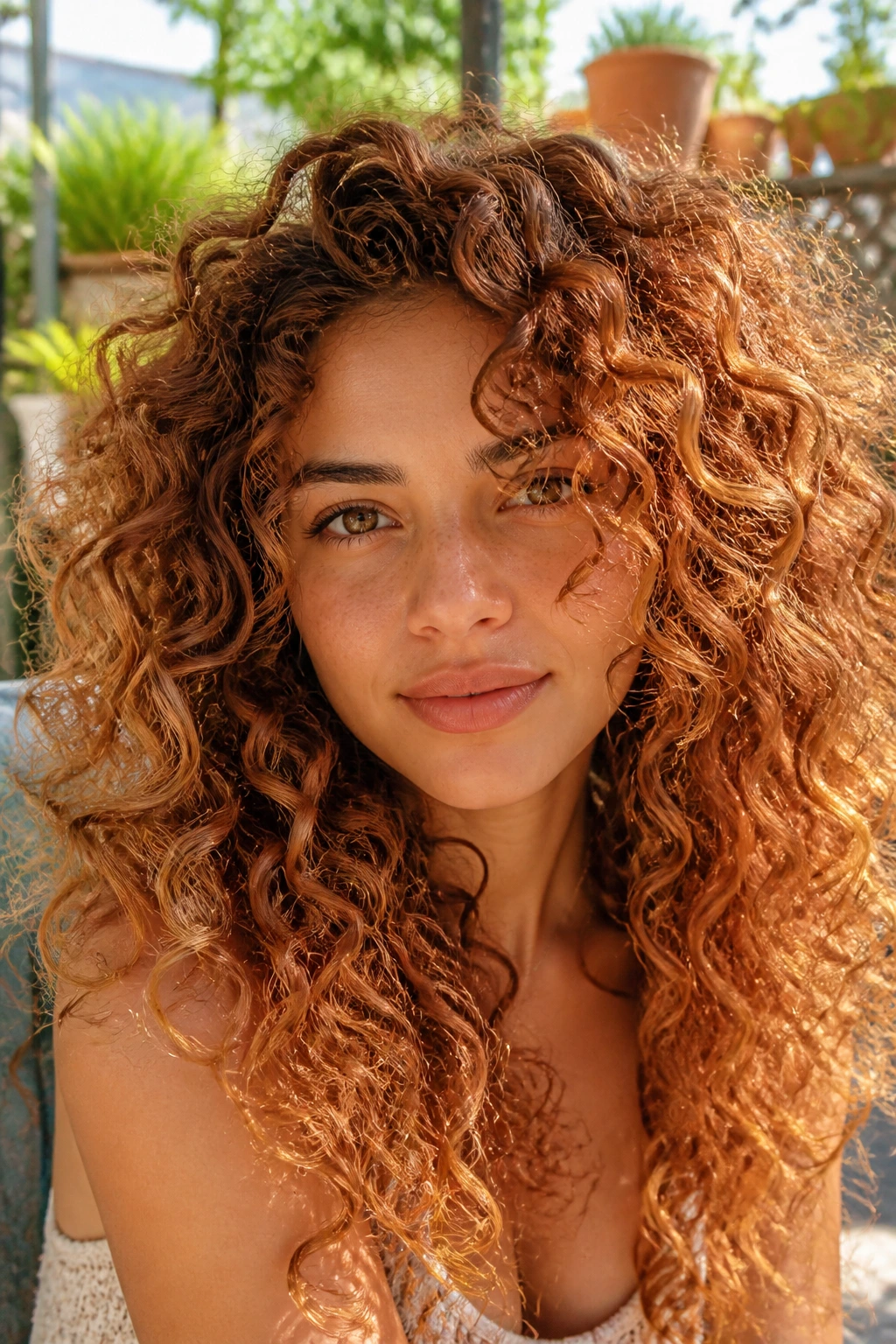
Curly hair needs color that respects the spiral. A melt works better than stripes because the tone shifts as the curl opens and closes. Golden copper through the mids, softer strawberry near the ends, and a deeper root make the curl pattern look stronger.
I’d keep this one multidimensional rather than bright all over. Curls already catch light in little pockets, so the color should follow that rhythm. A curl cream or light gel finishes it best. Heavy oils can make the gold look dull by the second day.
17. Peach Champagne Highlights
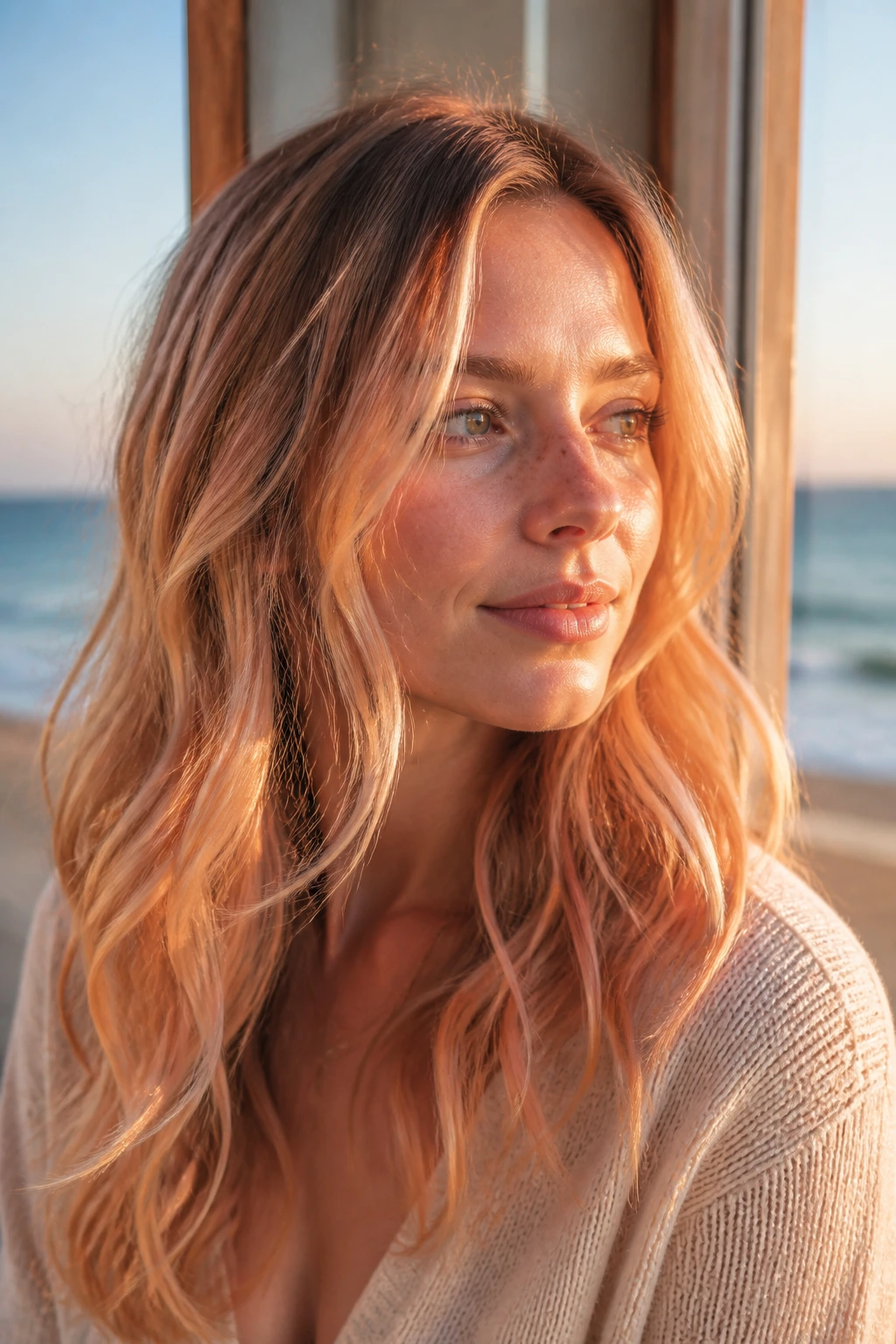
A highlight-heavy version like this is almost delicate. Peach champagne highlights are best when you want the warmth to feel airy, not dense. They sit between blonde and strawberry and give the hair a soft, expensive shimmer.
The placement should be scattered, not stripy. Thin foils around the face and through the top layers usually do the trick. If the base is already light, this can be done as a gloss plus a few accent pieces instead of a full color service.
18. Honey Toast Ombré
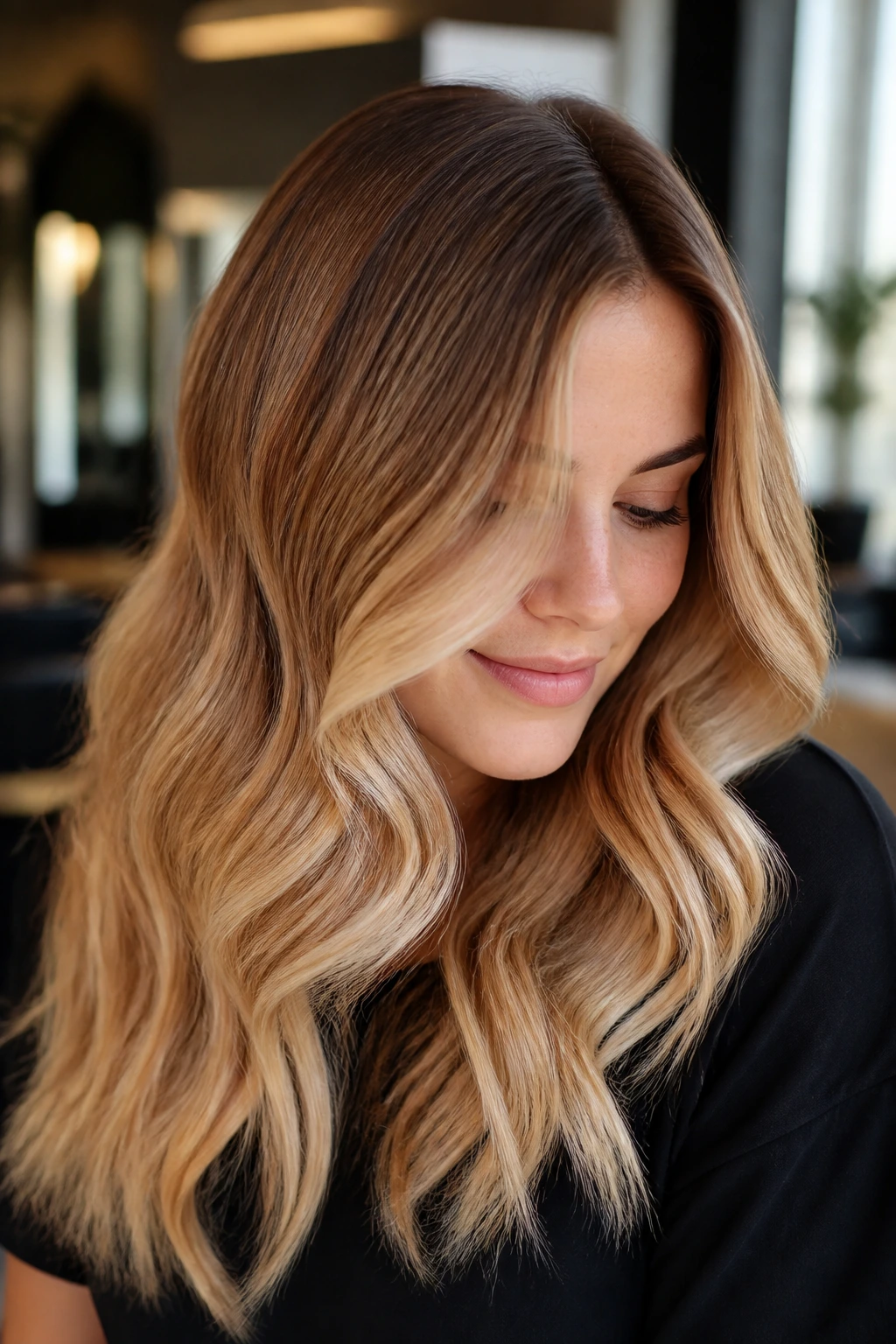
Ombré gets a bad name when the transition is too obvious. Honey toast works because the root stays a little deeper, then the tone gradually lightens into honeyed strawberry ends. It’s a good choice if you like the idea of warmth but hate visible regrowth.
The ends should not be too pale. A toasted finish keeps the gradient from looking disconnected. On medium brown hair, this is one of the more realistic ways to wear golden strawberry blonde without bleaching the entire head to the same level.
19. Strawberry Blonde With Buttery Face Frame
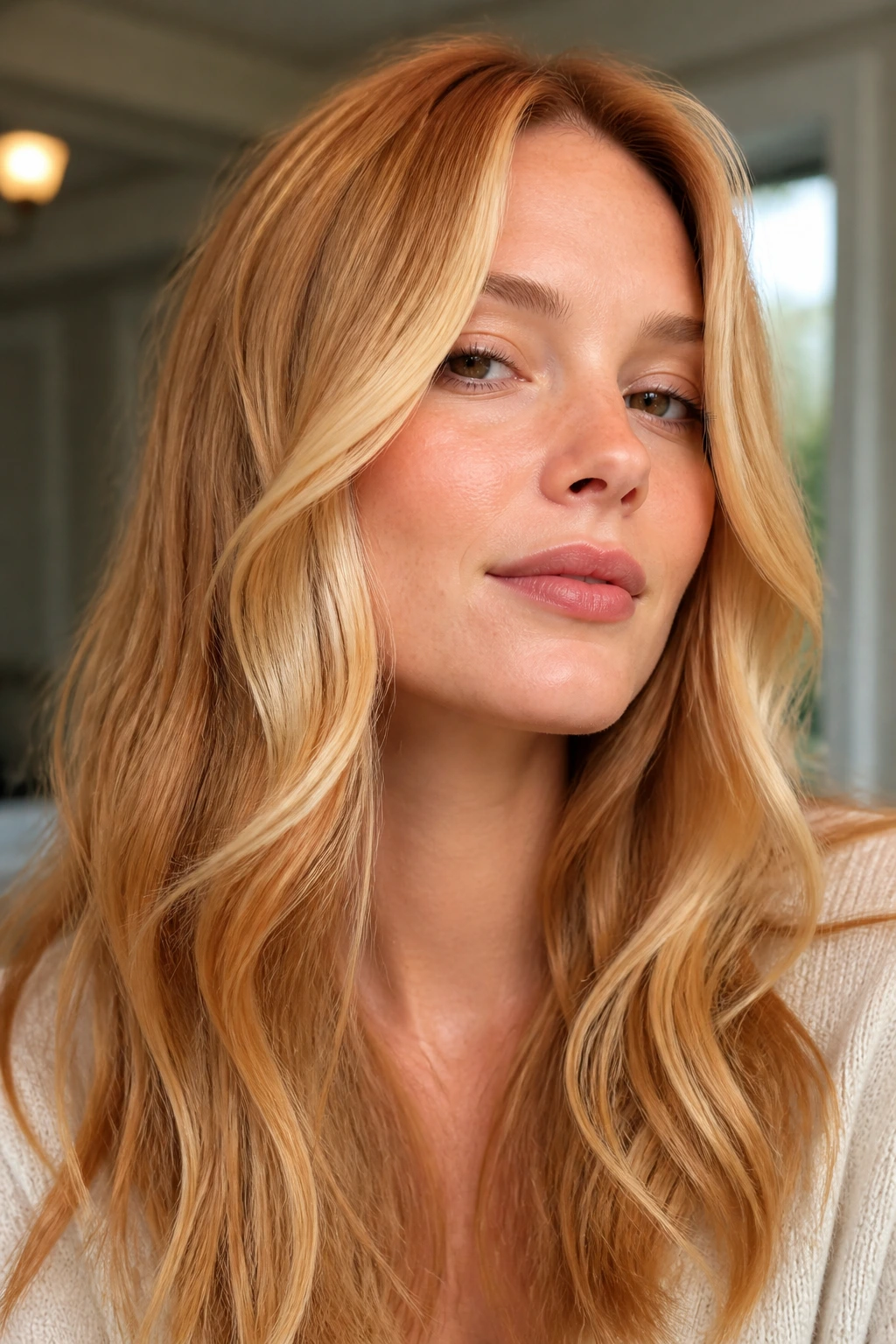
A buttery face frame can change the whole mood of the haircut. The front pieces brighten the cheeks and eyes, while the rest of the hair stays a little softer and warmer. That contrast makes the face frame feel expensive instead of flashy.
Keep the frame pieces a shade or two lighter than the mids. Too much contrast and you get chunky streaks; too little and the lift disappears. This is a strong pick if you like warm hair but want the brightness focused where it matters most.
20. Bronze Apricot Sleek Bob
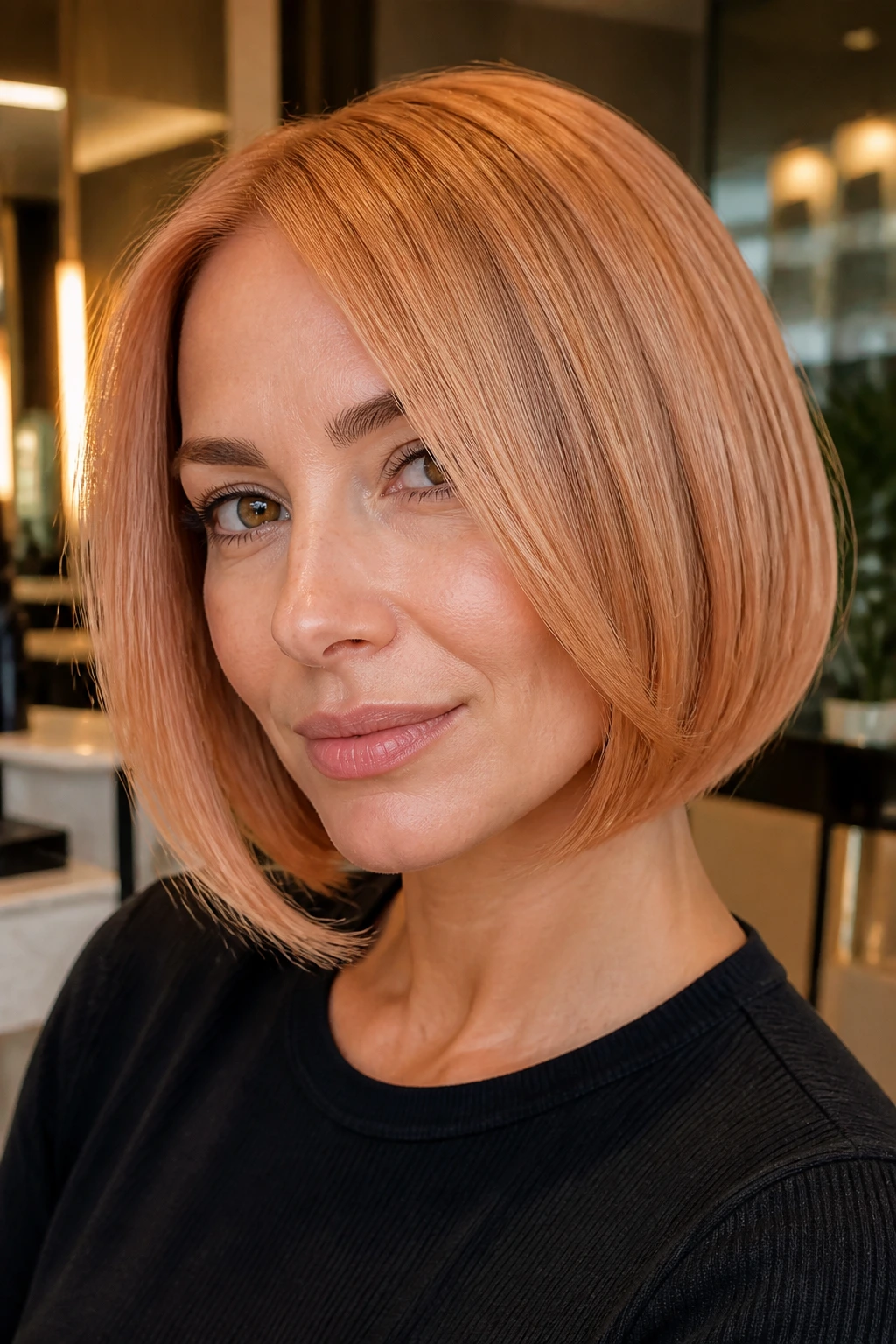
A sleek bob sharpens warm shades in a way long hair can’t always manage. Bronze apricot on a smooth bob looks polished because the cut gives the color edges to land on. The warmth becomes a statement, not a blur.
This one suits people who like straightening their hair or air-drying it flat and tucked behind the ears. Keep the bronze note at the root and the apricot brighter at the surface. That keeps the bob from reading too dark under indoor light.
21. Sun-Kissed Copper Pixie Cut
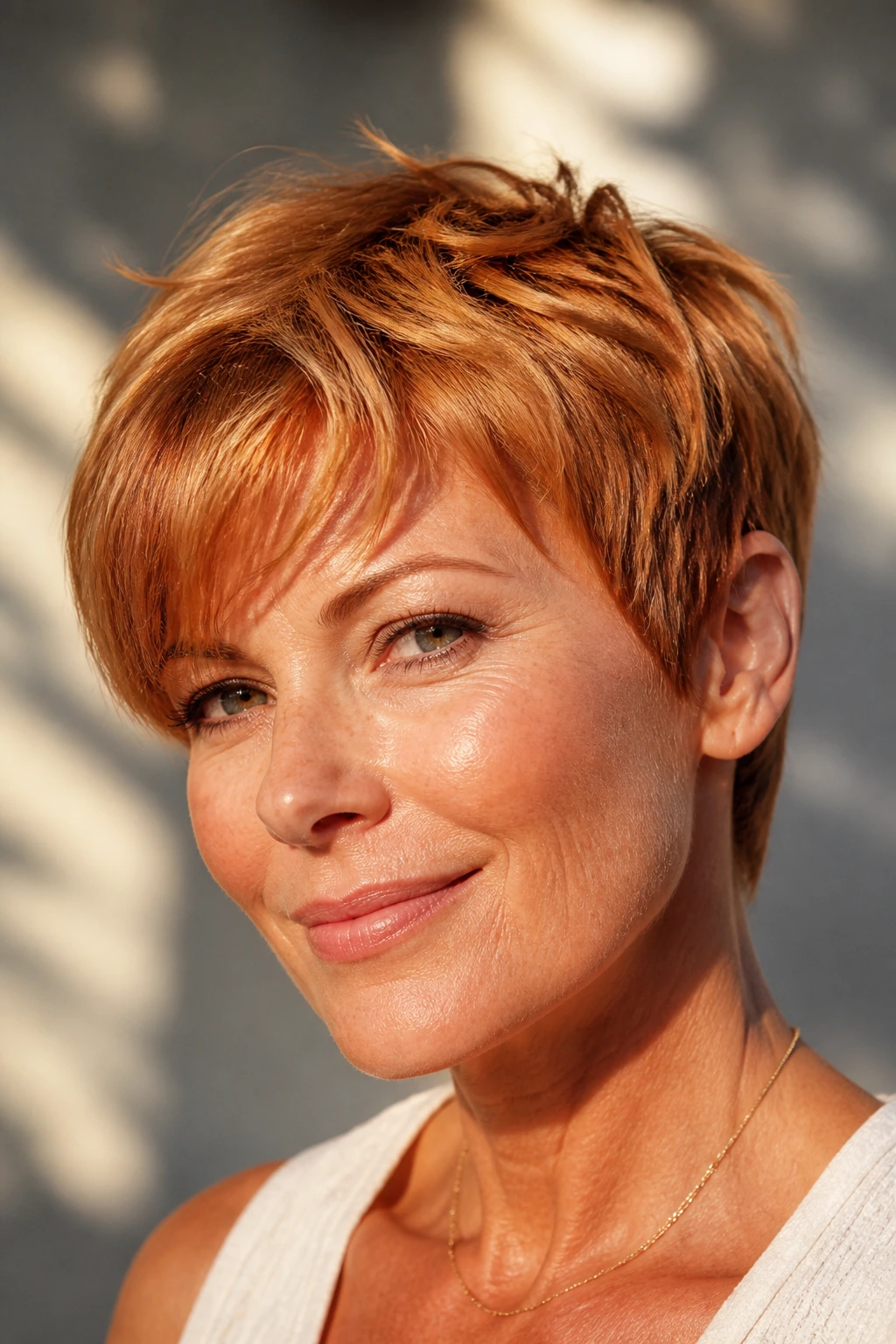
A pixie doesn’t need a huge color story. A few sun-kissed copper pieces on top, a softer strawberry wash through the crown, and the whole cut wakes up. The short shape gives you instant payoff, which is why I like this more than a flat all-over copper on very short hair.
The maintenance is real. Four to six weeks is about the limit before the shape starts losing its clean edge. If you’re okay with that, the payoff is strong: the hair looks bright, neat, and a little cheeky.
22. Maple Gold Midlength
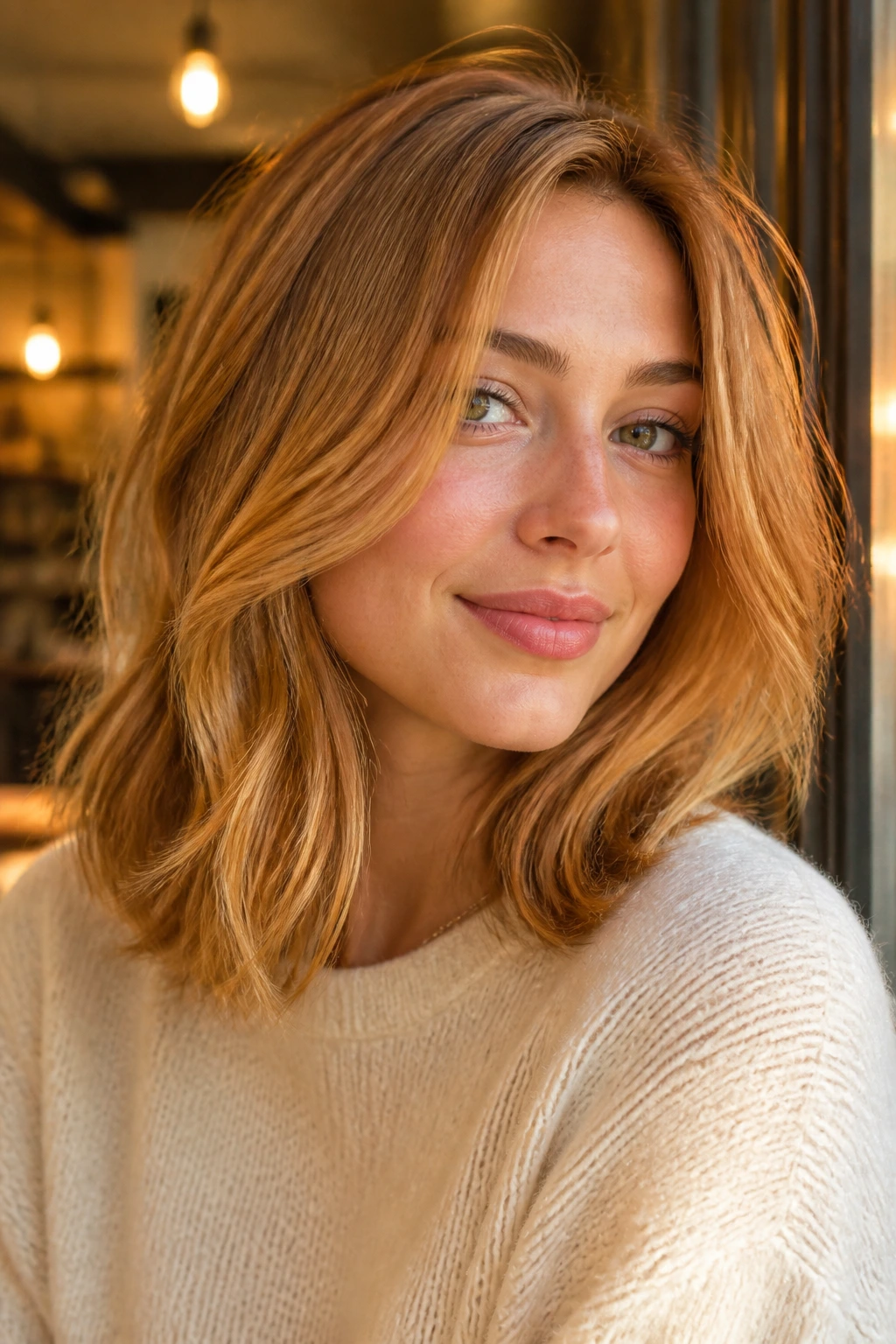
Maple gold sits in that sweet spot between honey and amber. On midlength hair, it feels warm without becoming heavy, and the length gives the shade room to show off. It’s one of the easiest versions to wear if you want something richer than blonde but softer than red.
The best part is how it catches movement. A midlength cut with loose bends lets the maple-gold show as little flashes, not one solid block. If your hair tends to look flat, this shade helps more than a cooler blonde usually does.
23. Toasted Strawberry Balayage
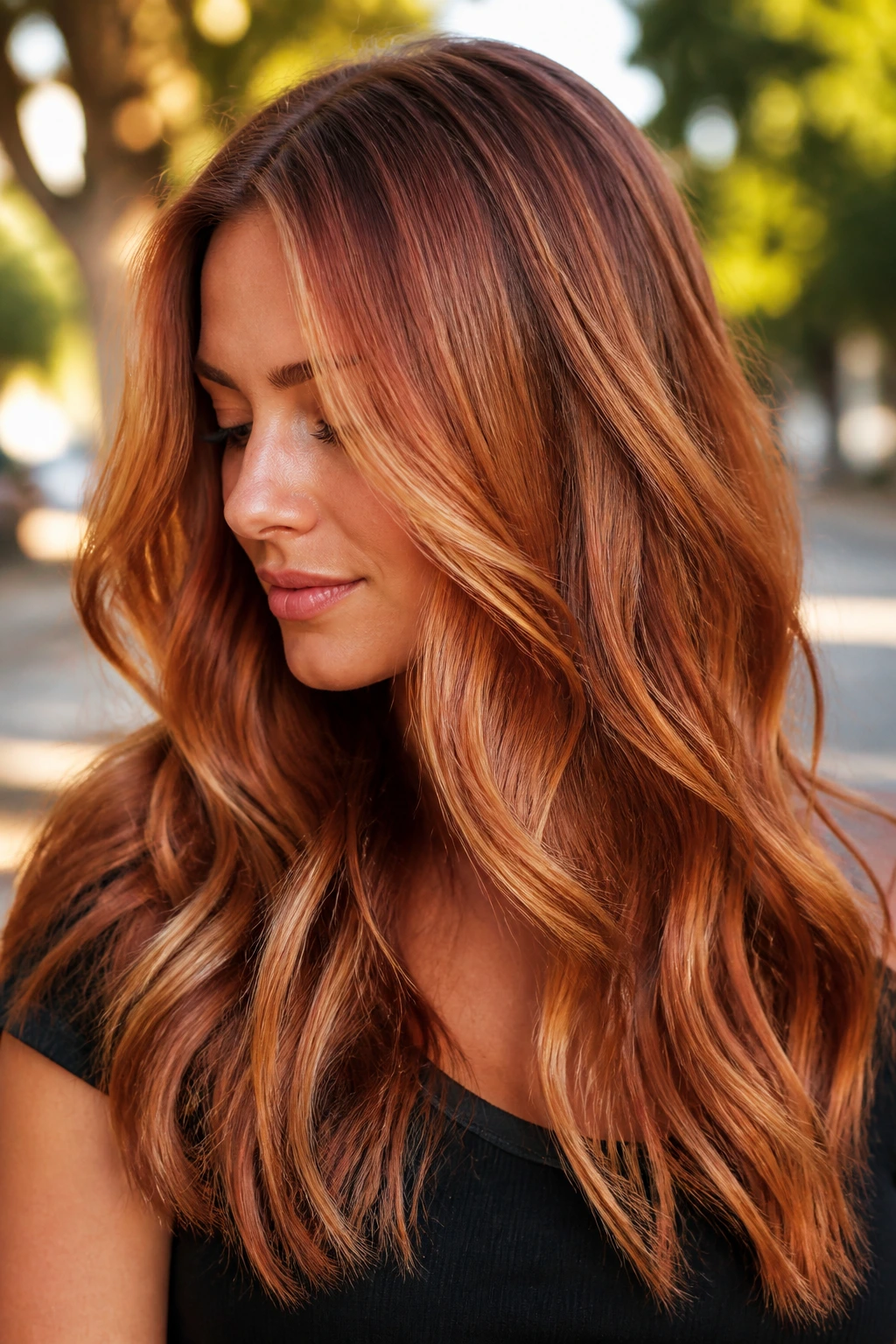
Toasted strawberry is what happens when you keep the red side muted and let the gold do more of the talking. With balayage placement, the result stays dimensional and grown-up. It’s warm, but not syrupy.
Why This Version Works
The toasted finish keeps the color from feeling freshly dyed in a way that can sometimes look too strong. It works well on brunettes who want to move lighter without committing to platinum or a loud copper. If the base is medium brown, ask for painted warmth through the top layers and a softer blonde-beige at the ends.
24. Soft Ember Blonde
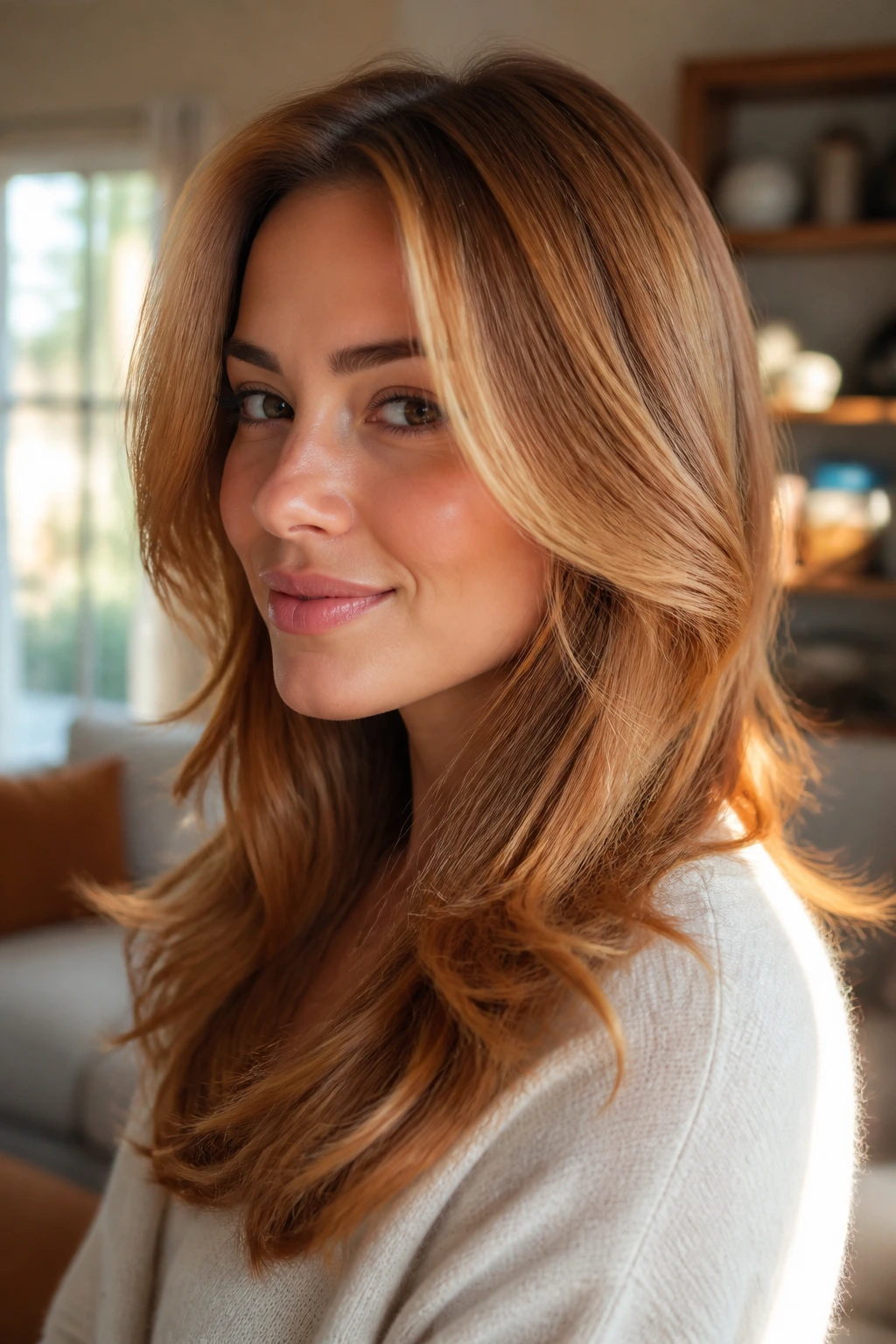
Soft ember blonde has more depth than a pale strawberry shade, and that depth is what makes it interesting. It looks like a blonde that’s been warmed by firelight rather than painted red. On layered hair, the depth gives the cut a bit of shadow.
This is a good pick if you like rich tones but want less obvious copper. The shade feels autumnal without looking seasonal or themed. A glossy finish matters here. Without shine, ember tones can flatten fast.
25. Peach-Tea Blonde
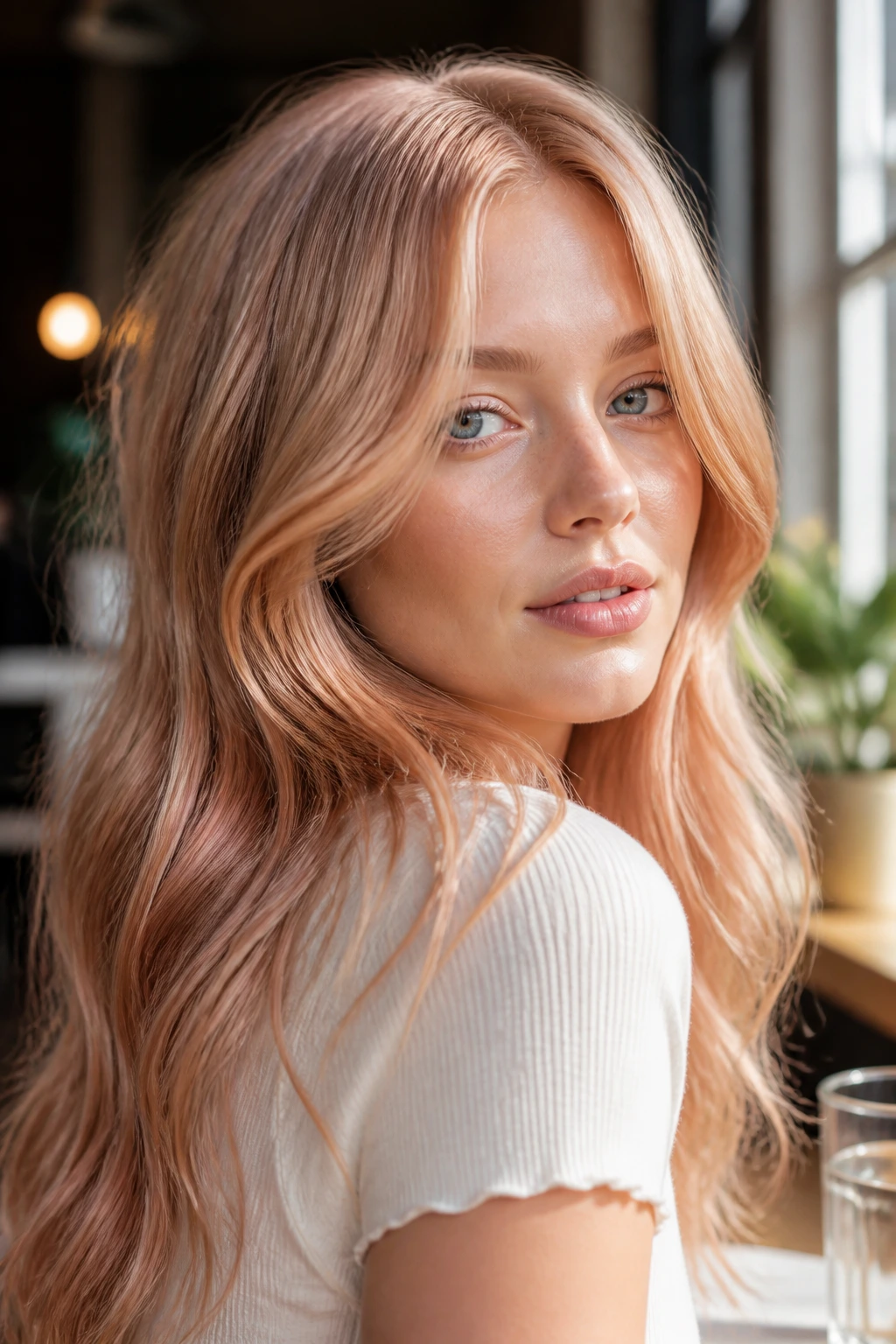
Peach-tea blonde is light, airy, and just strange enough to be memorable. The tea note keeps it beige, the peach keeps it warm, and the blonde base keeps it wearable. It’s the kind of shade that looks quiet in one room and luminous in another.
This works best on lighter bases and hair that isn’t overly porous. If the hair is damaged, peach tones can grab too hard and turn opaque. A soft gloss on healthy blonde hair gives a much cleaner finish.
26. Amber Honey Waves
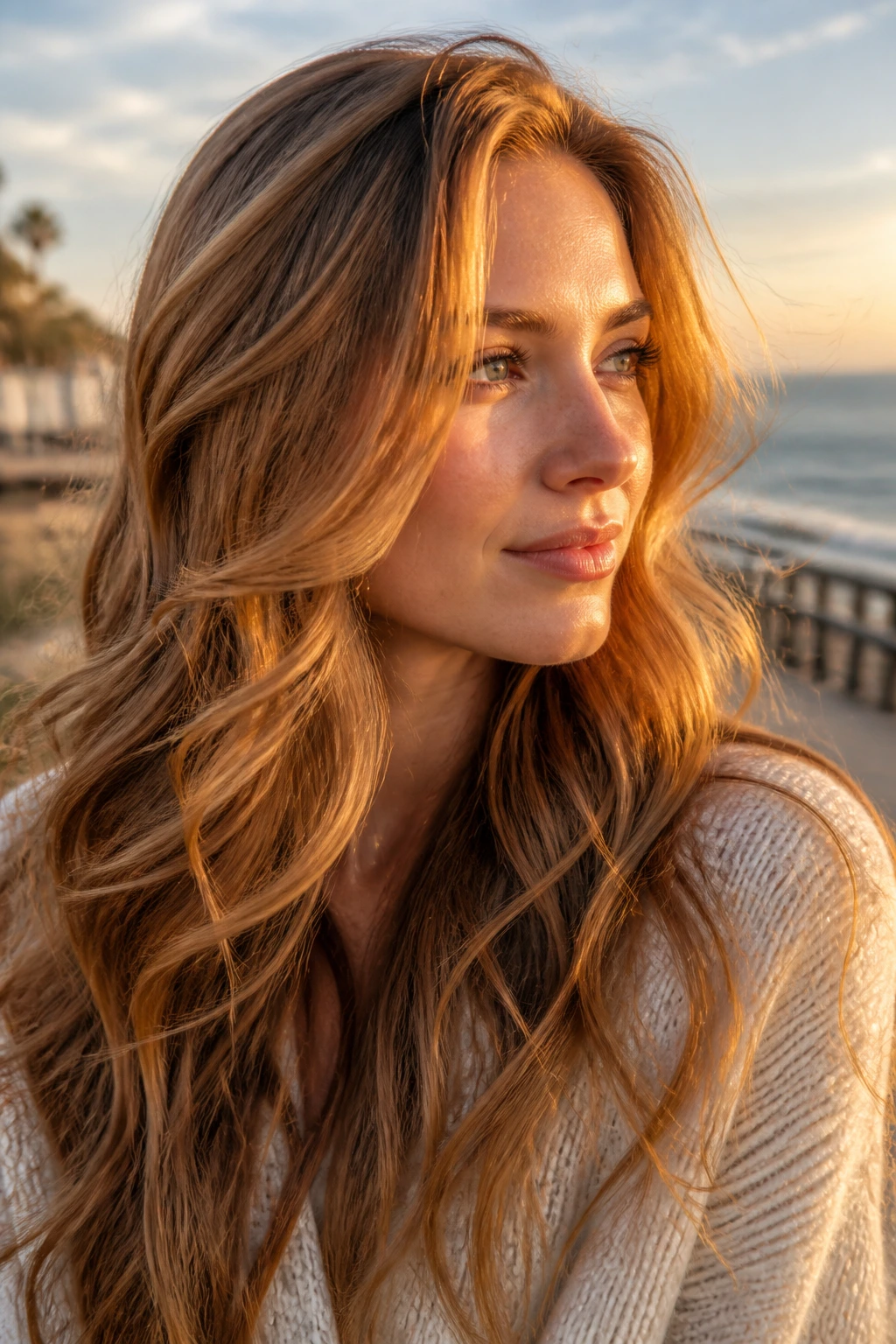
Amber honey waves feel richer than classic golden blonde. Amber adds a deeper glow, honey keeps the shine alive, and the waves break everything up so the color keeps changing as you move. On longer hair, that movement is half the appeal.
The color is especially good when the wave pattern is loose and not too perfect. Clean curls can make amber look formal; a softer bend keeps it relaxed. If you want dimension without visible stripes, this one is an easy yes.
27. Cinnamon Peach Fringe
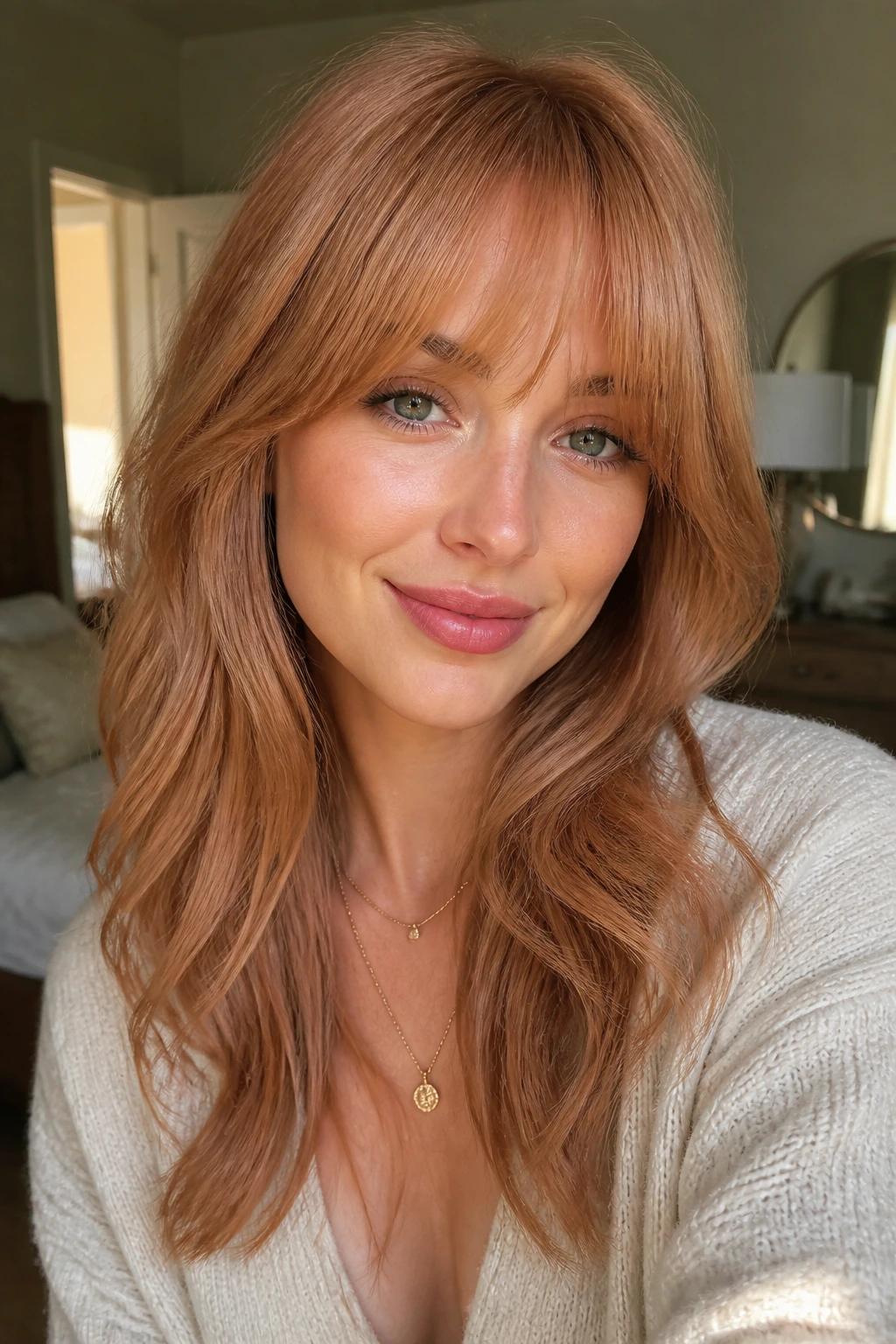
A fringe can carry more color than the rest of the haircut if you let it. Cinnamon peach works because it warms the face and gives the eyes a little frame without needing a full-color overhaul. It’s a good way to test warmer tones before going all in.
Keep the fringe soft, not blunt and dark. A wispy edge lets the peach and cinnamon move instead of sitting like a heavy block across the forehead. That small detail matters more than people think.
28. Champagne Copper Ribbon Lob
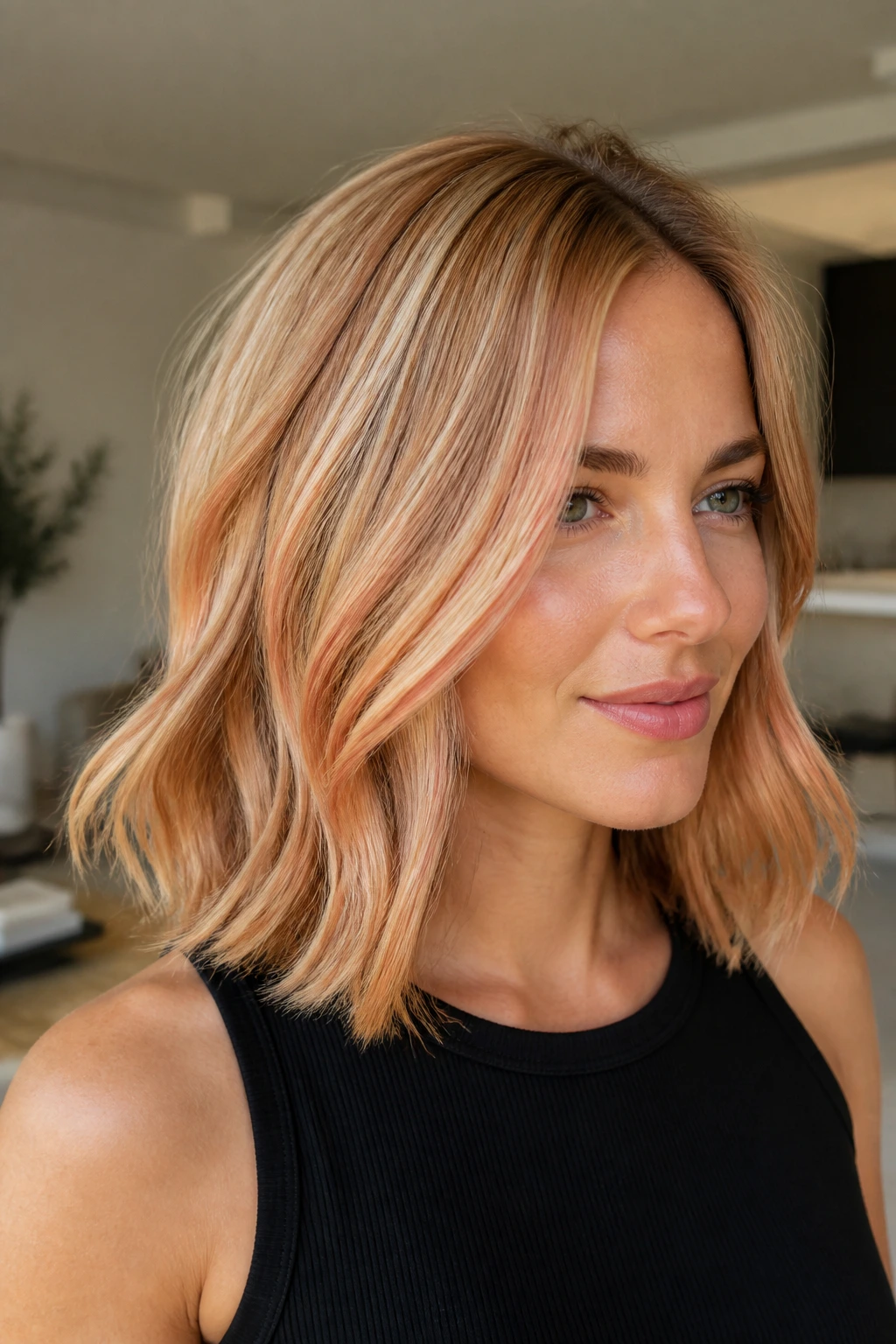
Ribbon placement keeps this from looking heavy. Champagne at the base gives the lob a soft blonde lift, and copper ribbons through the outer layers add just enough strawberry warmth to make it interesting. The shape stays clean. The color stays alive.
This is one of the more flattering versions if you wear a lot of neutrals and want the hair to do a little extra without going dramatic. Ask for the ribbons to be fine near the face and slightly wider through the back. That gives movement from every angle.
29. Golden Strawberry Blonde With Shadow Root
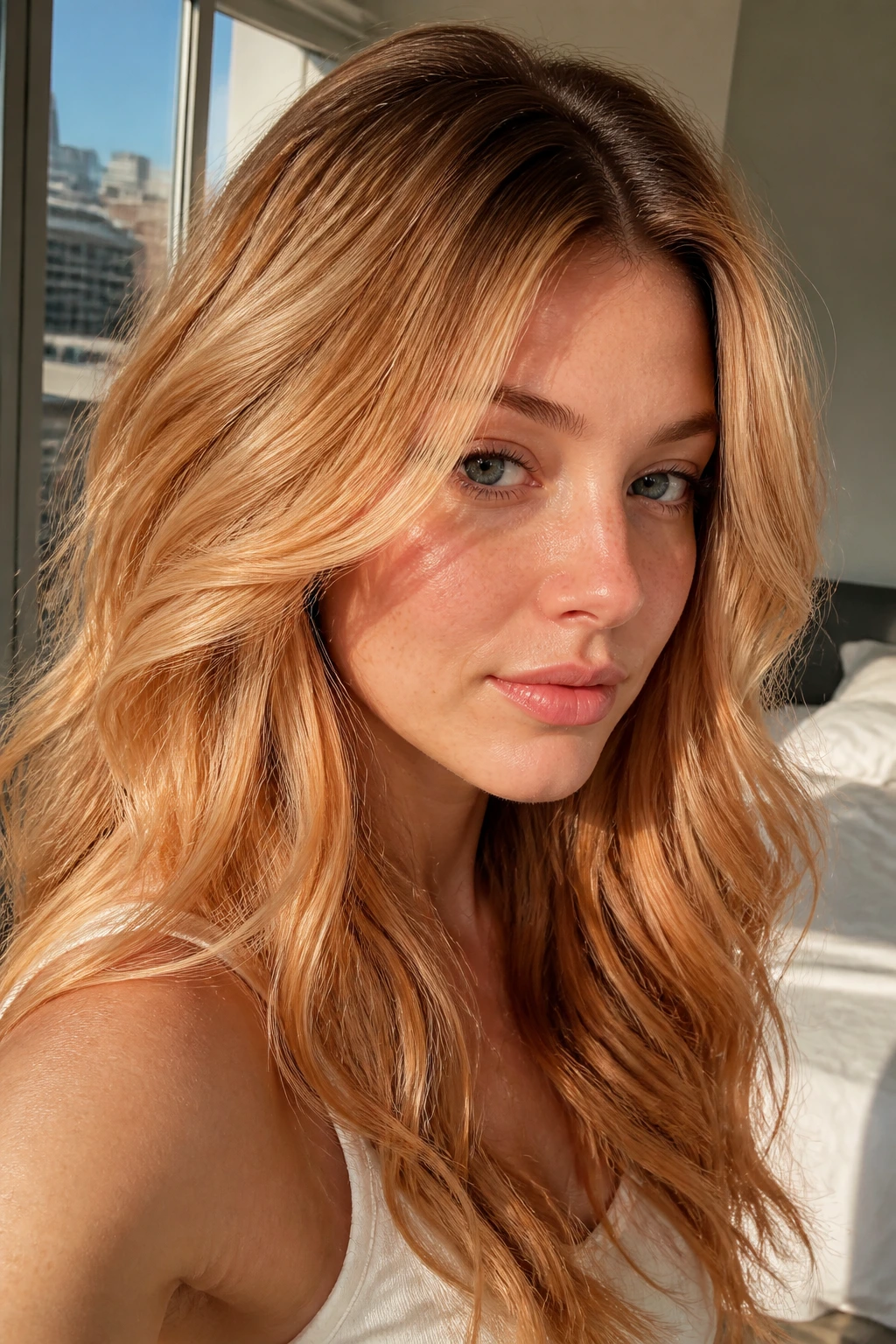
Shadow roots are not just for hiding regrowth. In golden strawberry blonde, a soft root shadow keeps the color from looking helmet-like and gives the warmth a little depth at the scalp. That contrast is useful if your natural color is medium blonde or light brown.
The root should be soft, not stark. Think one to two levels deeper than the mids, not a dark band. That single detail makes the style easier to live with, because the grow-out looks deliberate rather than overdue.
30. Sunset Apricot Gloss
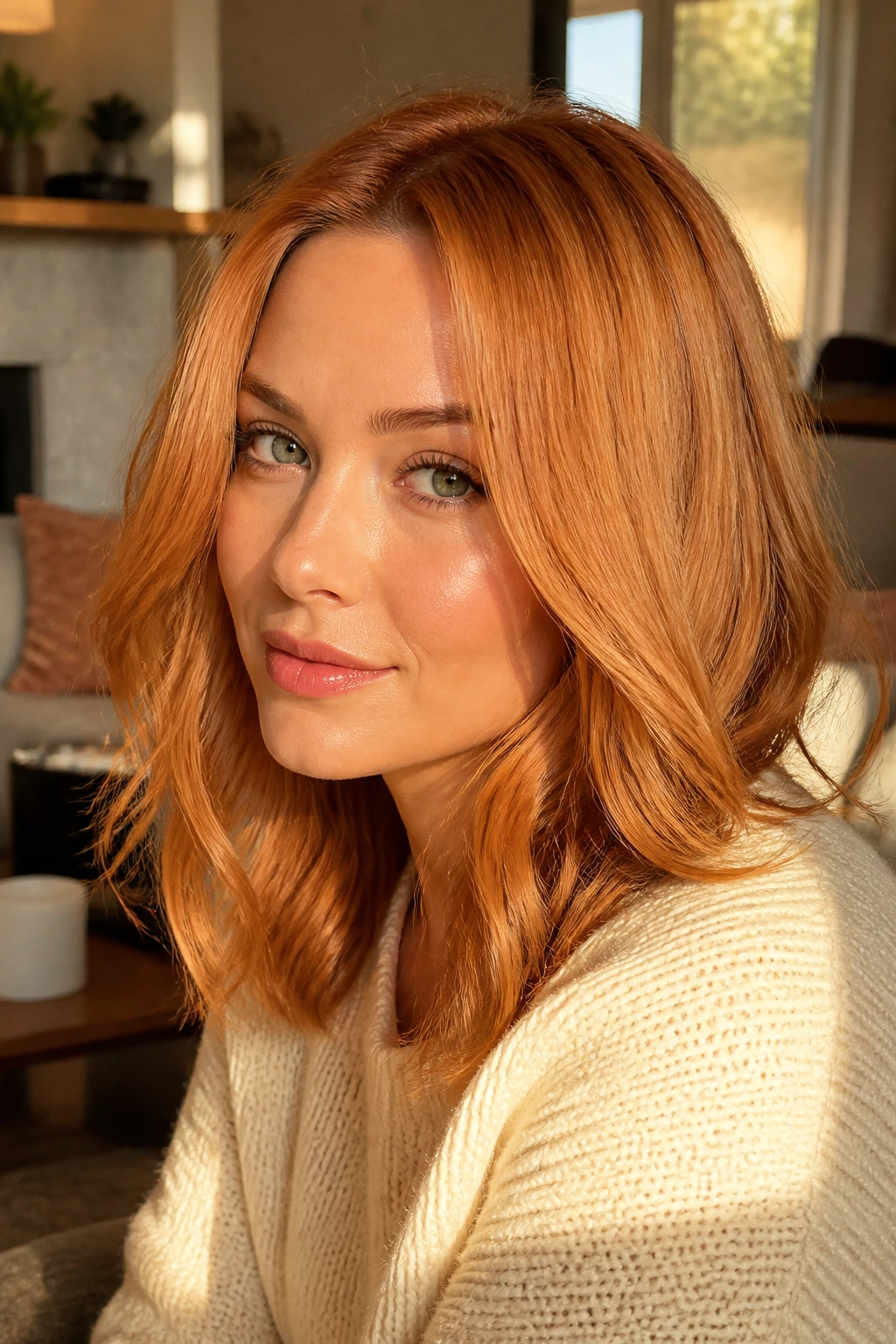
This is the easiest place to end the list because it’s one of the most forgiving shades in the whole family. Sunset apricot gloss can sit over blonde, light brown, or pre-lightened hair and instantly warm it up without a huge commitment. The finish should feel polished, not thick.
If you want a color that can be refreshed with a clear gloss or a tinted glaze, this is the one. It’s lovely on long hair, but it also works on shoulder-length cuts where the ends need a little warmth. In good light, it reads like soft copper-gold. In indoor light, it stays calm.
Why Golden Strawberry Blonde Reads So Soft Instead of Brass
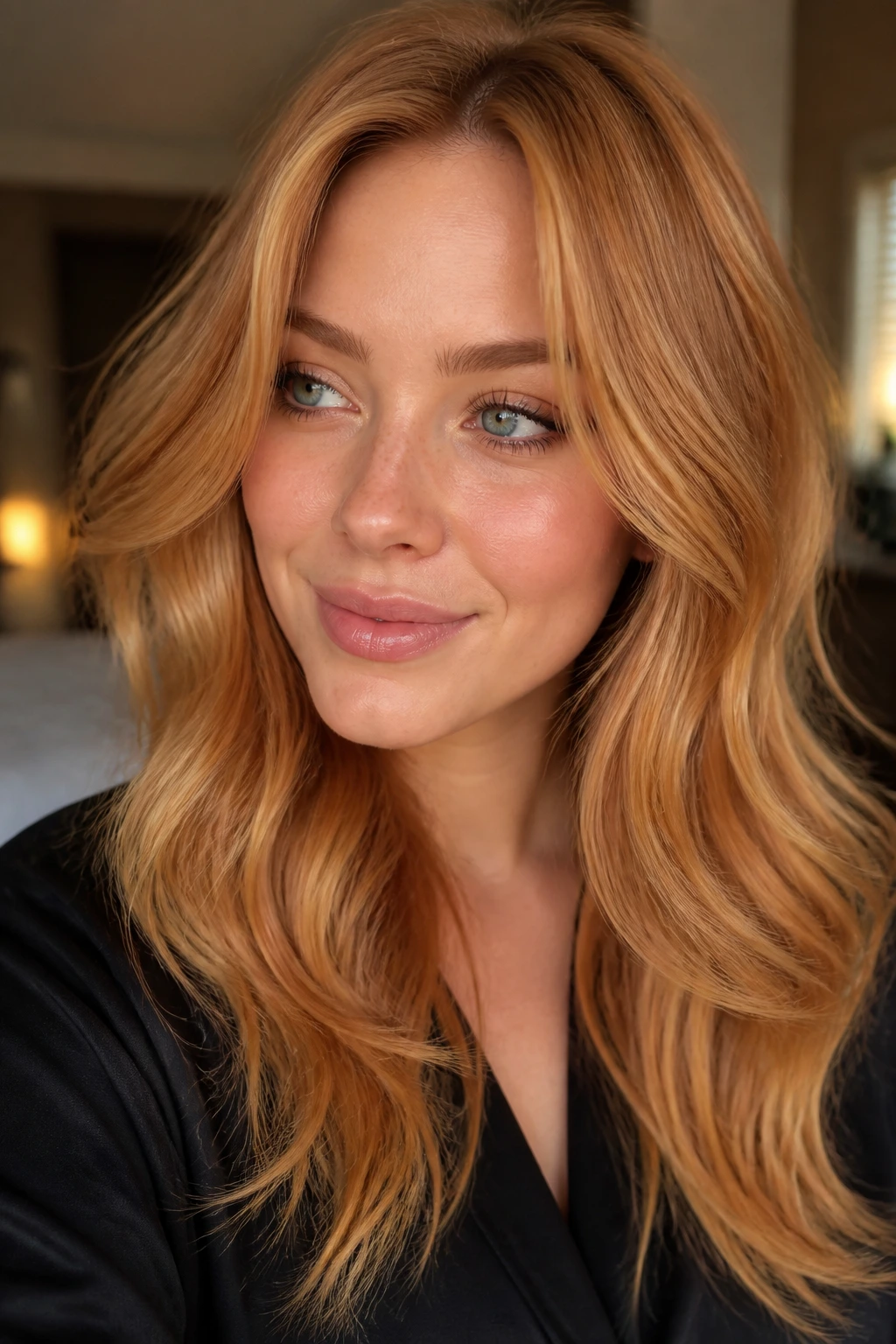
The difference between flattering warmth and brass is usually undertone, not brightness. A good golden strawberry blonde has at least two tones doing the work: one that gives the shine and one that keeps the red from getting too loud. Gold on its own can wander into yellow. Strawberry on its own can wander into copper-red. Put them together with a beige or honey note, and the whole thing gets quieter in the best way.
Base level matters too. Lighter bases, usually around a level 8 or 9 blonde, take peach and champagne beautifully. Medium blonde or light brown hair can wear the shade too, but it usually needs balayage, ribbons, or a shadow root so the result doesn’t look like one solid block of color. That little bit of contrast is what keeps the hair dimensional.
Porosity changes the story. Damaged ends grab warmth fast, which is why the bottom of the hair can turn more orange than the top after a few washes. A colorist who knows this will often keep the ends a shade softer or a touch cooler. That’s not a flaw. It’s control.
Tools and Photos Worth Bringing to the Color Appointment
-
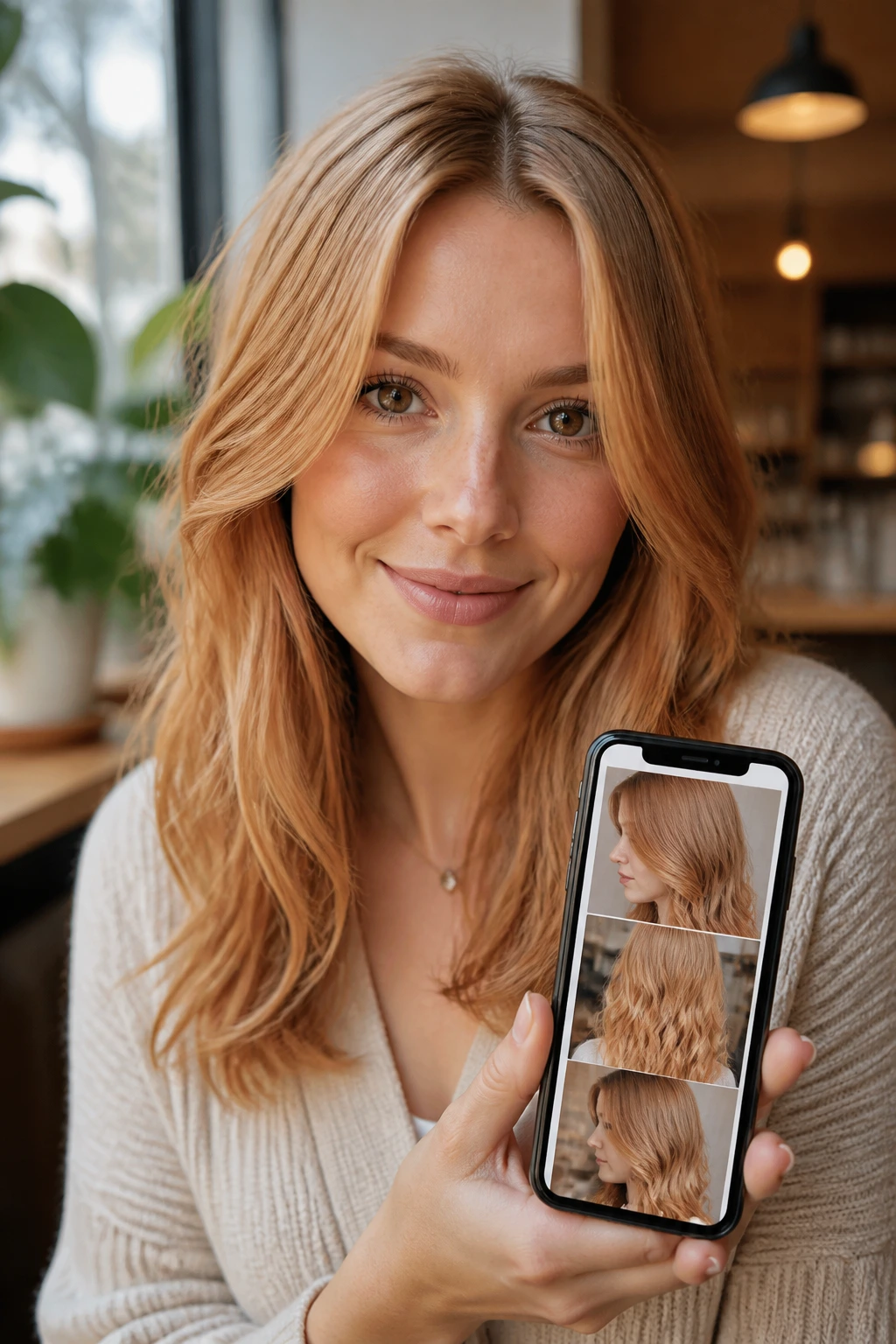
Three reference photos in daylight: Screenshots from different angles help the colorist see whether you want peach, copper, beige, or something in the middle.
-
A photo of your hair in natural light: This shows your true base color, not the version your bathroom bulbs create.
-
Neutral makeup on appointment day: Heavy blush or a warm bronzer can fool your eye about how warm you want the hair to be.
-
A sulfate-free shampoo: This slows fading and keeps the gold from washing out too quickly.
-
A color-safe conditioner or mask: Warm shades show dryness fast; a good conditioner keeps the finish smooth instead of rough.
-
Heat protectant spray: Warm blondes go dull when they’re fried with a curling iron every morning.
-
Wide-tooth comb: Less breakage, less frizz, cleaner separation when you’re styling waves or curls.
-
Tinted root powder or dry shampoo: Handy if you’re stretching time between salon visits and want the root area to stay neat.
Matching the Shade to Your Starting Color
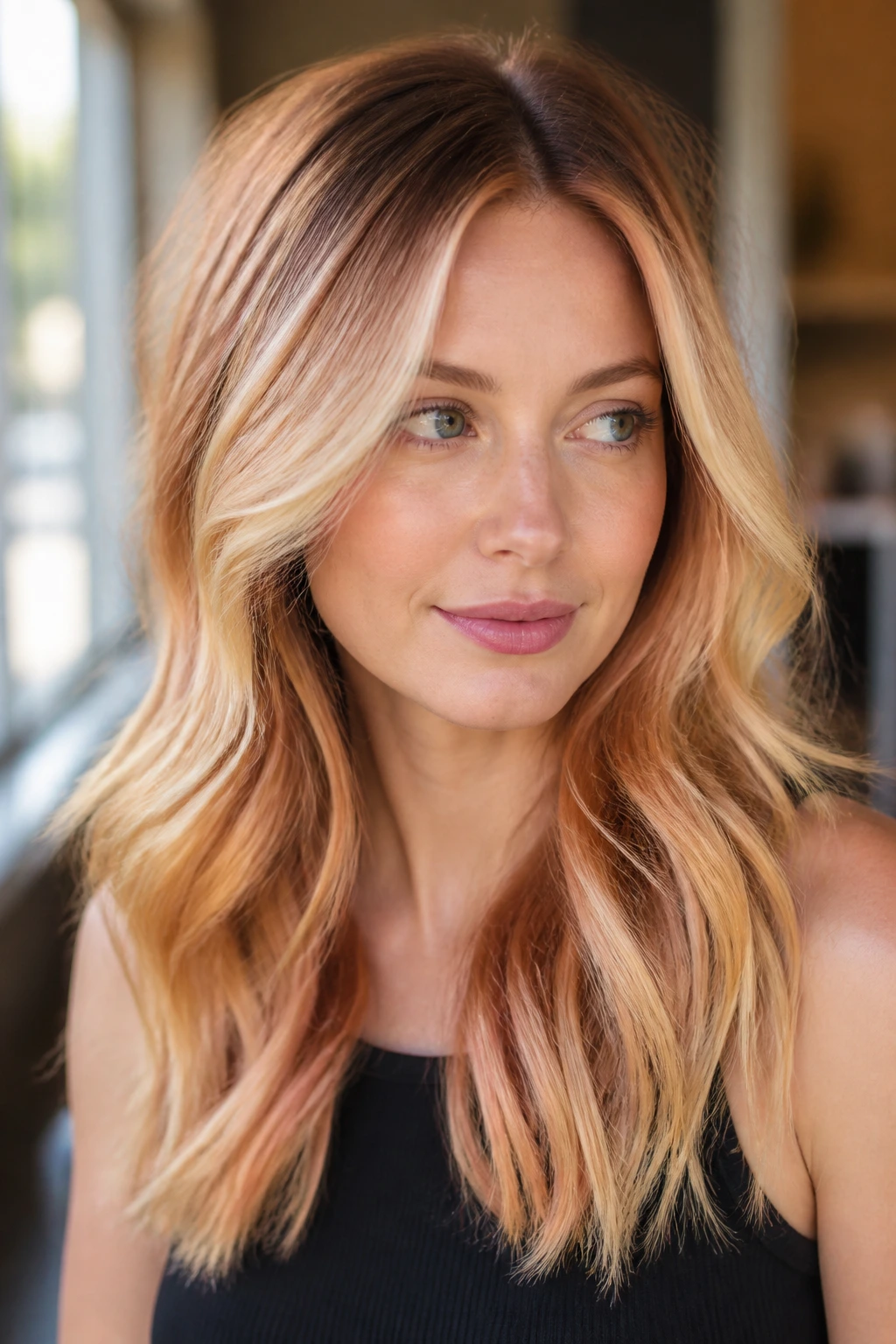
Light blonde hair is the easiest place to start. A gold-strawberry gloss, a few peachy foils, or a soft apricot melt can change the whole mood without heavy lifting. If the hair is already pale, the biggest risk is going too pink or too orange, so the formula should stay airy.
Medium blonde and light brown hair usually need more planning. Balayage, foilyage, or a root-shadow approach gives the warmth a framework so the shade doesn’t look pasted on. On these bases, I’d rather see a layered formula than a single all-over color. It looks more natural and it grows out better.
Red starting points are different again. Natural red hair often needs beige or gold to keep the shade from turning too intense. The nice part is that strawberry tones can blend into natural red more easily than people expect. The hard part is making sure the finish doesn’t get muddy. Clear glosses and soft lowlights usually help.
Grey blending works too, but it needs a gentle hand. A strawberry-blonde glaze over silver strands can look luminous if the formula is sheer enough. Heavy copper on grey hair can be bright in a way that feels harsh, so a softer honey-gold base usually behaves better.
How to Wear the Color So the Warmth Looks Intentional
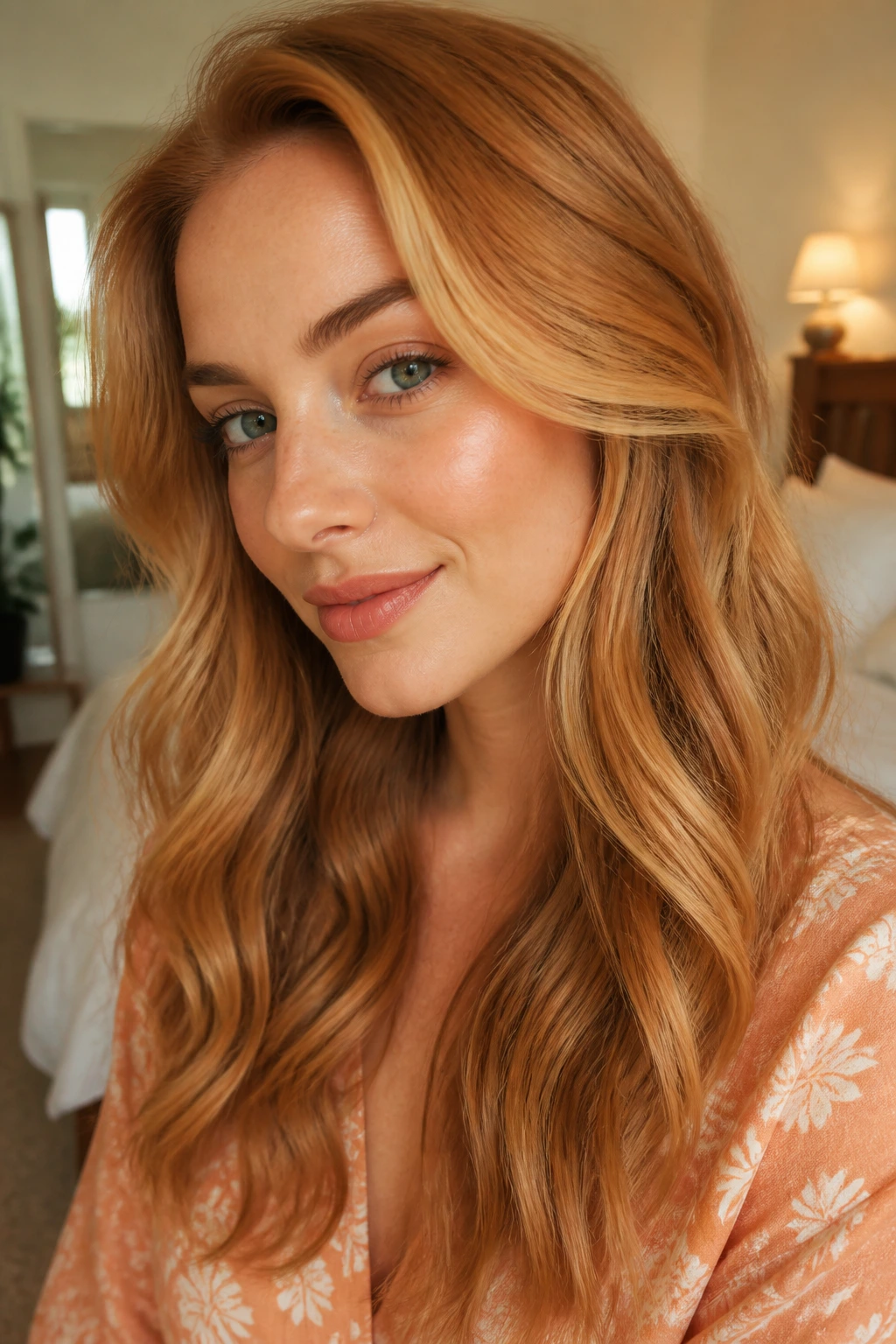
Placement: Face-framing pieces are the fastest way to make the shade work. A few lighter ribbons near the temples and cheekbones can do more than filling every strand with warmth.
Styling: Loose bends, brushed waves, and a soft blowout show the gold and strawberry notes best. Super-straight hair can look chic too, but it will expose uneven tone fast, so the color needs to be cleaner.
Makeup: Peach blush, bronze liner, soft brown mascara, and nude lips usually sit well next to these shades. Very cool makeup can work, but it needs to be deliberate or the hair starts to look off by comparison.
Wardrobe: Cream, camel, olive, warm denim, and soft navy tend to flatter the warmth. Stark white and neon can flatten the color a bit, which is fine if that’s the look you want, but it does change the mood.
Ways to Push the Shade More Honey, Peach, or Copper
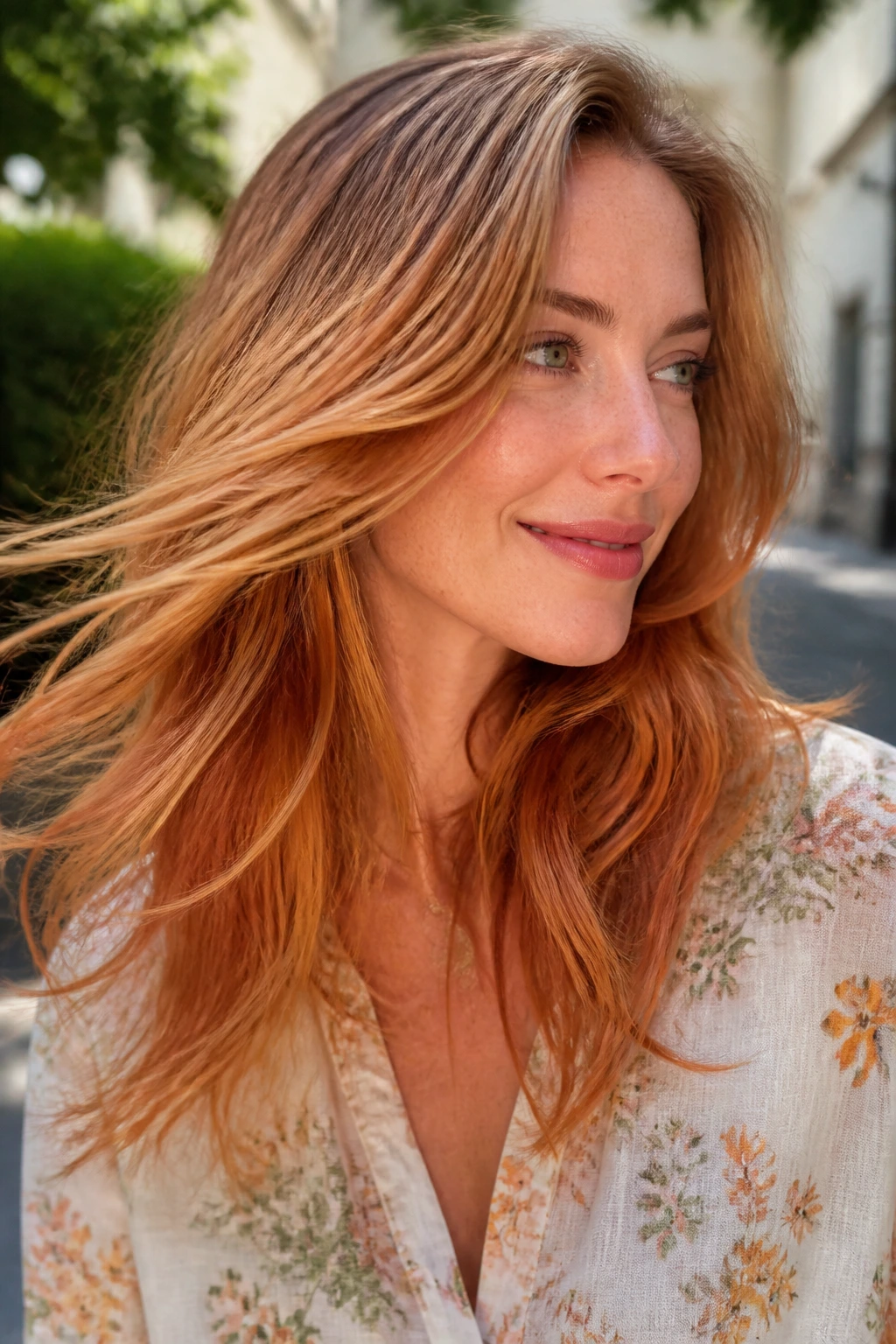
Honey-Heavy: Ask for more beige-gold through the mids and keep the red note soft. This version is best if you want something wearable every day and don’t want the hair to shout from across the room.
Peach-Forward: Add apricot or peach glaze over a light blonde base. The result feels brighter and a little sweeter, which suits shorter cuts and lighter skin tones especially well.
Copper-Forward: Push the strawberry side richer at the ends and underlayers. This works on curly hair and layered cuts because the extra depth shows up when the hair moves.
Soft Beige: Keep the root slightly neutral and the gloss sheer. This is the version I’d hand to someone who likes warmth but hates looking too red in indoor light.
Grey-Blending: Use a translucent formula with golden reflect, not a solid copper dye. The strands blend better, and the grow-out is much less annoying.
Keeping Golden Strawberry Blonde Shiny Between Visits
Washing Rhythm: Two to three washes a week is a good target for most warm blondes. More than that, and the strawberry side can fade out before the gold does, which leaves the color uneven.
Shampoo Choice: Use sulfate-free shampoo most of the time. Purple shampoo has a place, but this shade does not need it often. Use too much and the gold can go dull or grayish.
Heat and Sun: Always use heat protectant before styling. Warm shades lose their gloss faster when they’re hit with high heat or a lot of sun, and both problems show up first on the ends.
Gloss Refreshes: A salon gloss every 6 to 8 weeks keeps the warmth polished. If the color starts looking flat before that, a tinted mask can buy you time without a full appointment.
Root Strategy: If you like the shadow-root version, touch it up every 8 to 10 weeks. If you wear a brighter face frame, those front pieces may need refreshing sooner because they fade faster than the rest.
Common Color Mistakes That Make the Shade Look Off
-
Going too orange on the first try: The shade can turn loud fast if the copper is stronger than the gold. Ask for strawberry with beige or honey in the mix, not just straight red warmth.
-
Using purple shampoo too often: It can dull the gold and leave the hair looking dusty. Once every week or two is plenty for most people, and some shades do better with no purple shampoo at all.
-
Ignoring porosity: Damaged ends grab pigment faster than healthy roots. If the ends are porous, they need a softer formula or they’ll go darker and warmer than the top section.
-
Skipping a gloss: Warm blonde without gloss can look rough after a few washes. A clear or tinted gloss keeps the finish shiny and smooth.
-
Choosing a heavy copper on a blunt cut without dimension: That combo can make the hair feel blocky. A bob or one-length cut usually needs some lighter pieces or a softer root to keep the shape alive.
-
Forgetting your eyebrow and makeup balance: Hair that warm can change the face more than expected. If your brows and blush are still tuned for ash blonde, the whole look can feel disconnected.
Questions People Ask Before They Book the Appointment
Is golden strawberry blonde the same as rose gold?
Not quite. Rose gold leans pinker and cooler, while golden strawberry blonde keeps more honey, apricot, and soft copper in the mix. If you want a warmer, less pink result, say that out loud at the salon.
Can brunettes get this shade without bleaching everything?
Usually, yes, but not as one all-over color. Balayage, foilyage, and face-framing pieces are the safer route because they lift selected sections without forcing the entire head to the same pale level.
What skin tones suit it best?
Warm and neutral undertones usually take to it quickly, but cooler skin can wear the beige and peach versions well too. The trick is adjusting the depth: more beige for cool skin, more copper for warm skin, and softer gold for neutral skin.
Will purple shampoo ruin the color?
Not ruin it, but overuse can mute the gold and leave the hair looking flat. Use it sparingly, and switch to a color-safe moisturizing shampoo the rest of the time.
How do I ask for this at the salon?
Bring photos and name the parts you like: more gold, more peach, more copper, lighter face frame, shadow root, or a soft gloss. “Golden strawberry blonde” is useful, but photos remove the guesswork.
Does it work on curly hair?
Absolutely, and curls can make the shade look even richer. Ribbon highlights, lowlights, or a melt usually work better than chunky stripes because they follow the curl pattern.
What if I hate it after the appointment?
Don’t rush to strip it at home. A clarifying wash, a neutral gloss, or a softer toner adjustment is often enough to calm the warmth. If the color is too bright, a salon glaze can usually fix it much faster than an at-home correction.
How often will I need touch-ups?
Roots and face-frame pieces usually need attention every 6 to 10 weeks, depending on how much contrast you started with. Glosses and toners may need refreshing sooner if your hair is porous or you wash often.
The Shade With More Range Than It Gets Credit For
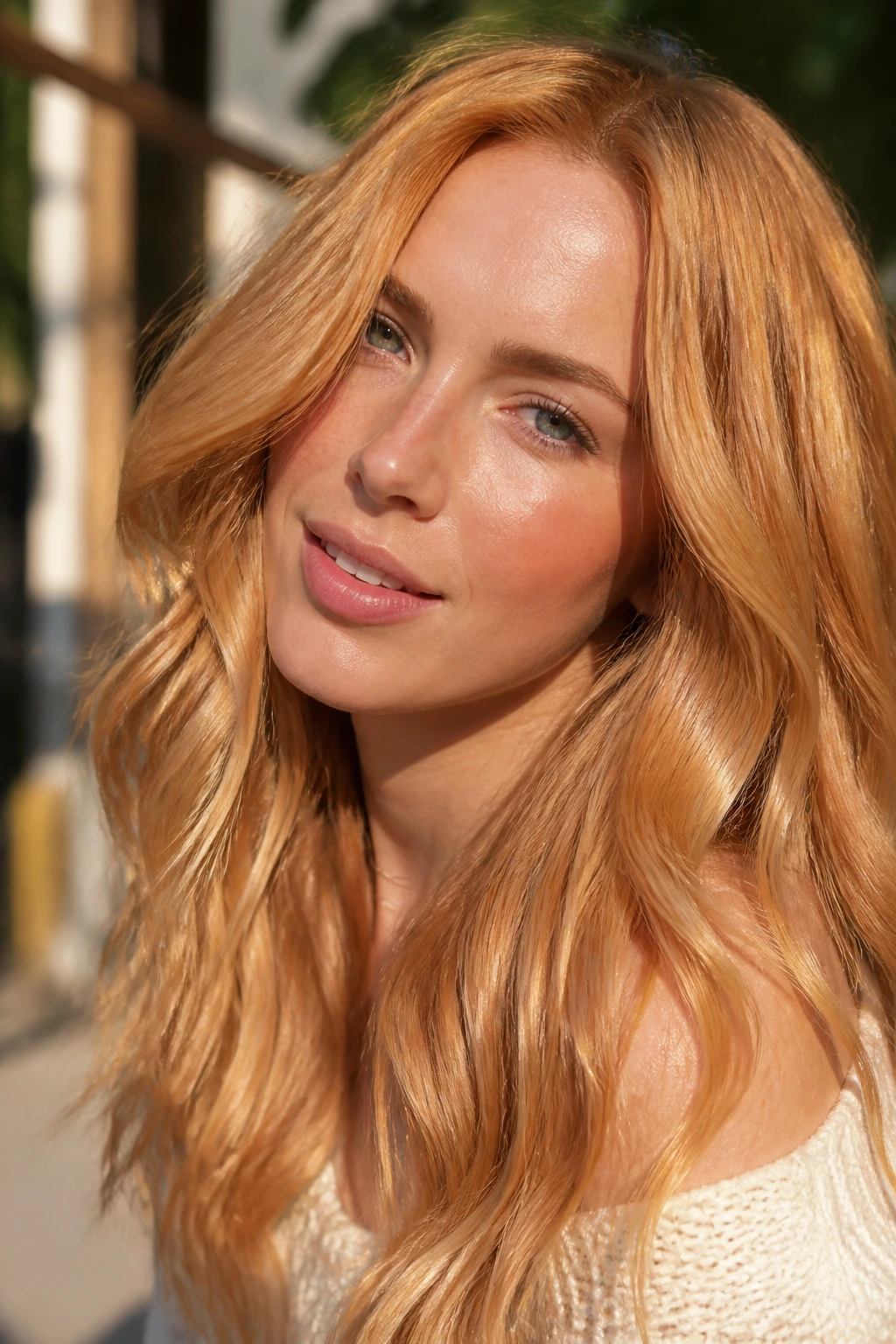
Golden strawberry blonde works because it refuses to sit in one camp. It can be peachy, honeyed, copper-leaning, beige-soft, or bright enough to read like sun on fresh hair, and that range is the whole appeal. The right version doesn’t fight the cut or the face. It settles in and does the quiet work of making everything look more alive.
Pick the shade that fits your starting color, your styling habits, and your tolerance for upkeep. That’s where the good versions live. And once the balance is right, this color has a habit of looking better on the second day than it did in the mirror at the salon.