



Warm caramel brown hair color ideas for tan skin work best when the brown carries gold, honey, or bronze in the right places. Too ashy, and the color sinks into the skin. Too yellow, and it starts arguing with your undertone.
That sweet spot is why caramel is such a useful family rather than a single shade. A level 5 chestnut gloss, a level 6 toffee ribbon, and a soft amber face frame all read differently, yet each can make tan skin look richer and more awake without tipping into orange.
I’ve always liked caramel when it has some depth at the root. Flat all-over lightness can make tan skin look washed out, while a deeper base with warm ribbons gives the color somewhere to breathe. The ideas below move from whisper-soft glosses to bolder copper-brown shifts, so you can pick a version that matches your cut, your texture, and how often you want to sit in the salon chair.
Why Warm Caramel Brown and Tan Skin Work So Well Together
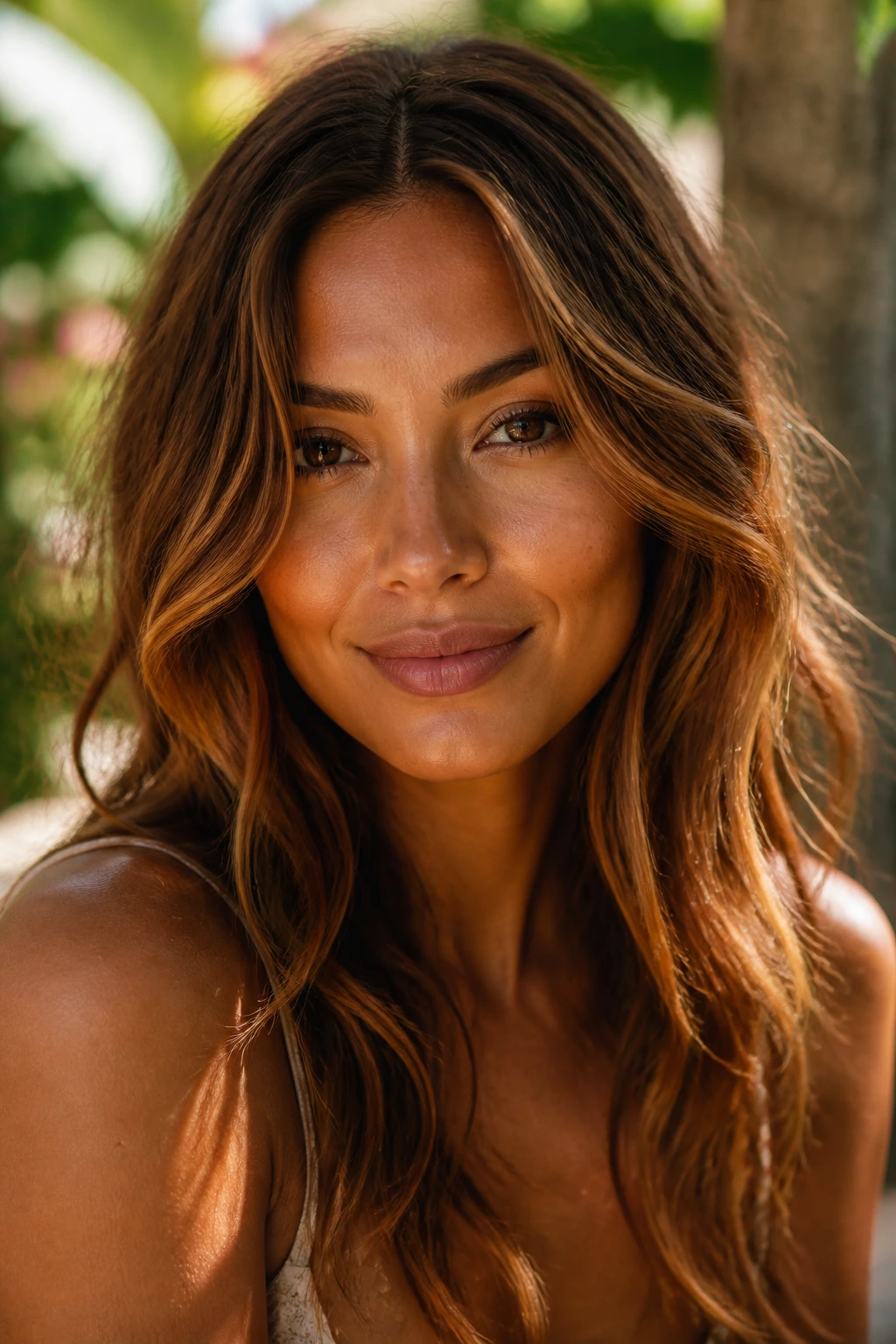
- The warmth matches the complexion: Honey, toffee, bronze, and amber all live in the same warm neighborhood as tan skin, so the color feels connected instead of pasted on.
- Depth keeps the face from going flat: A darker root or lowlight gives the eye something to read against, which matters when your skin already has golden or olive richness.
- Placement changes everything: Face-framing pieces, ends-only color, and ribbon highlights all hit different parts of the face, so you can brighten without flooding the whole head.
- You can steer the tone: The caramel family can lean more honey, more bronze, more cinnamon, or more mocha without leaving brown territory.
- Grow-out can stay soft: Root shadows and balayage melts make the color age better than hard, scalp-to-ends highlights.
How to Read Your Undertone Before Picking a Caramel Shade
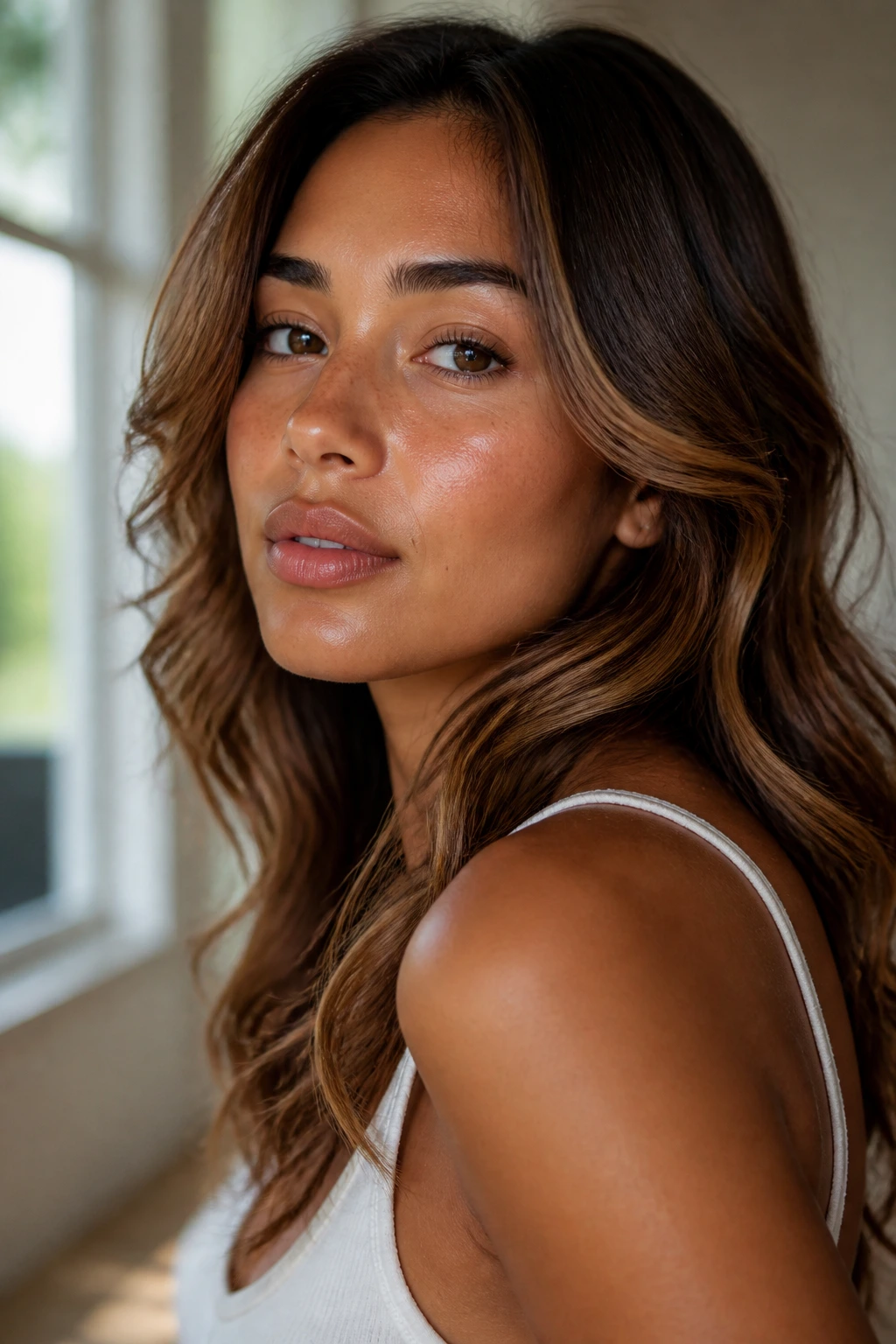
Tan skin is not one thing. It can lean peachy, golden, olive, or neutral, and those shifts change which caramel reads rich and which one reads loud.
Golden or Peachy Tan Skin
If your skin already runs warm, honey caramel, butterscotch, and toasted toffee usually feel natural. They echo the undertone instead of fighting it, which is why they look especially good around the face and on long waves.
Olive-Leaning Tan Skin
Olive skin can go strange fast if the brown gets too yellow. Bronze caramel, mocha dimension, and roasted chestnut tones usually sit better here because they keep the warmth, but pull it a little deeper.
Neutral Tan Skin
Neutral undertones have more room to play. You can go golden, amber, or beige-caramel, but the color usually looks better when there’s a darker root or a lowlight behind it so the warmth has something to sit against.
1. Honey Caramel Balayage on a Chestnut Base
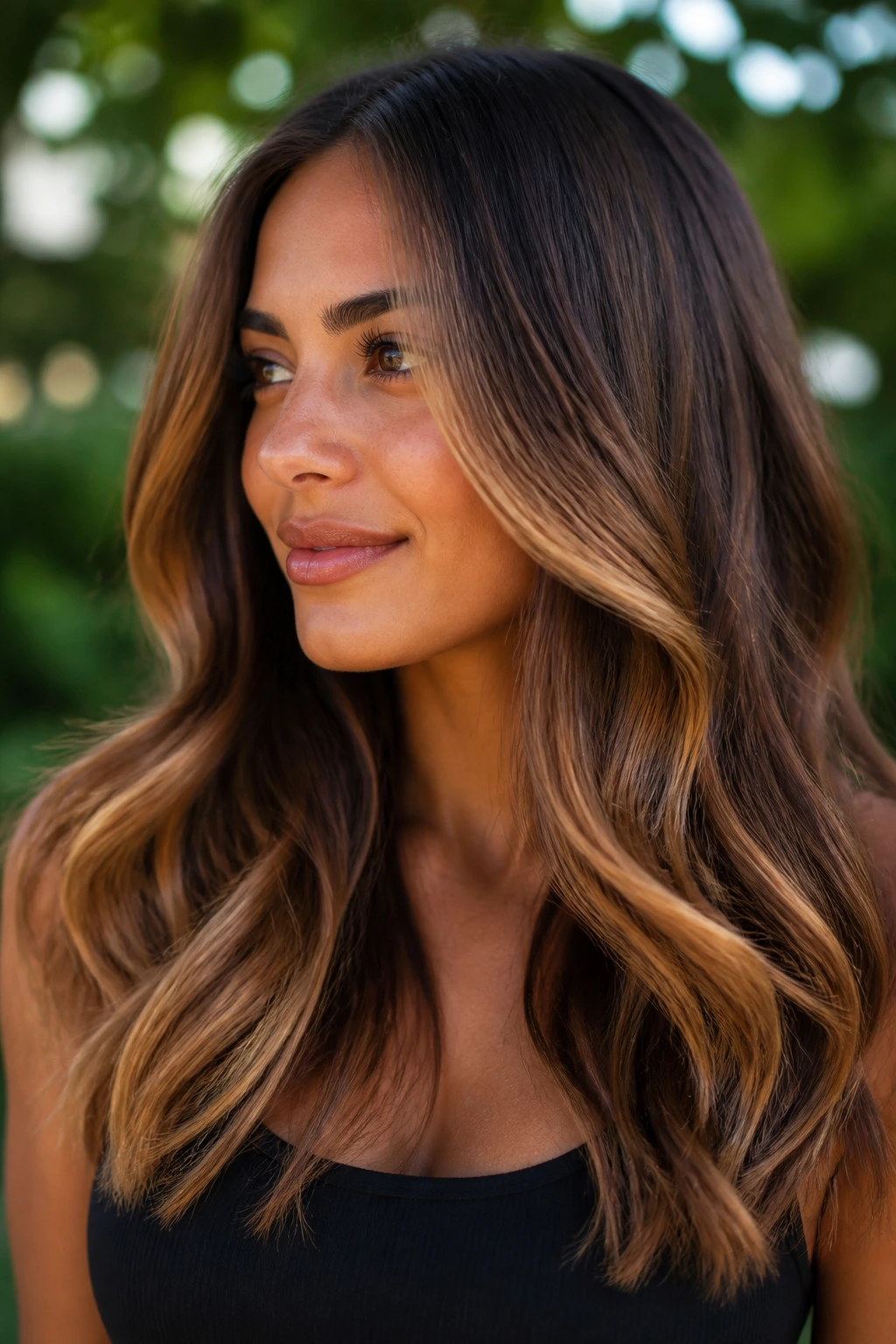
Honey caramel balayage is the safest entry point when tan skin needs warmth without a big color jump. The chestnut base stays visible through the crown, and the caramel is hand-painted from mid-lengths down so the whole head moves instead of sitting in stripes.
Ask for ribbons that sit one to two levels lighter than your natural brown, with the brightest pieces around the face and the lower half of the hair. If the pieces start at the scalp, the look loses that soft sun-peeled feel and gets harder to grow out.
Best for: loose waves, layered cuts, and anyone who wants to stretch salon visits past six weeks.
Touch-up: a gloss every 6 to 8 weeks keeps the honey from flattening.
2. Toasted Toffee Money Piece
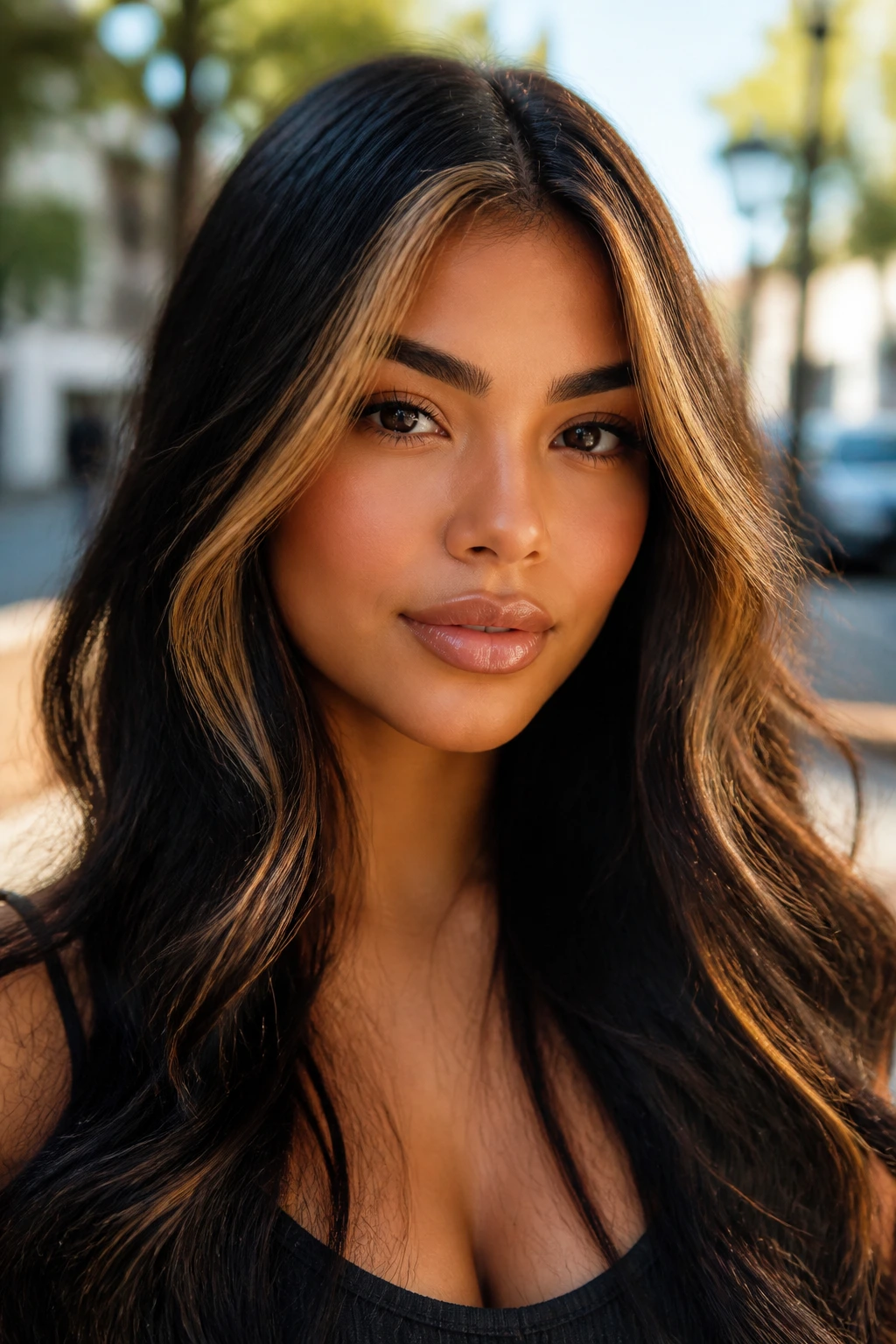
The money piece is the bluntest way to wake up a tan face. A toasted toffee frame at the hairline throws light onto the cheekbones and keeps the rest of the hair deep enough that the contrast looks deliberate, not noisy.
I like this on straight blowouts and curtain bangs, because the front panels show the color even when the rest of the hair is tucked behind your ears. Keep the money piece only one or two shades lighter than the base if you want it wearable; push it much brighter and it starts stealing the whole show.
- Ask for: softer pieces at the temples, not a hard stripe from root to tip.
- Skip it if: you hate upkeep around the face, because this is the part that fades first.
- Bonus move: keep the rest of the hair closer to espresso so the front reads cleaner.
3. Cinnamon Caramel Melt
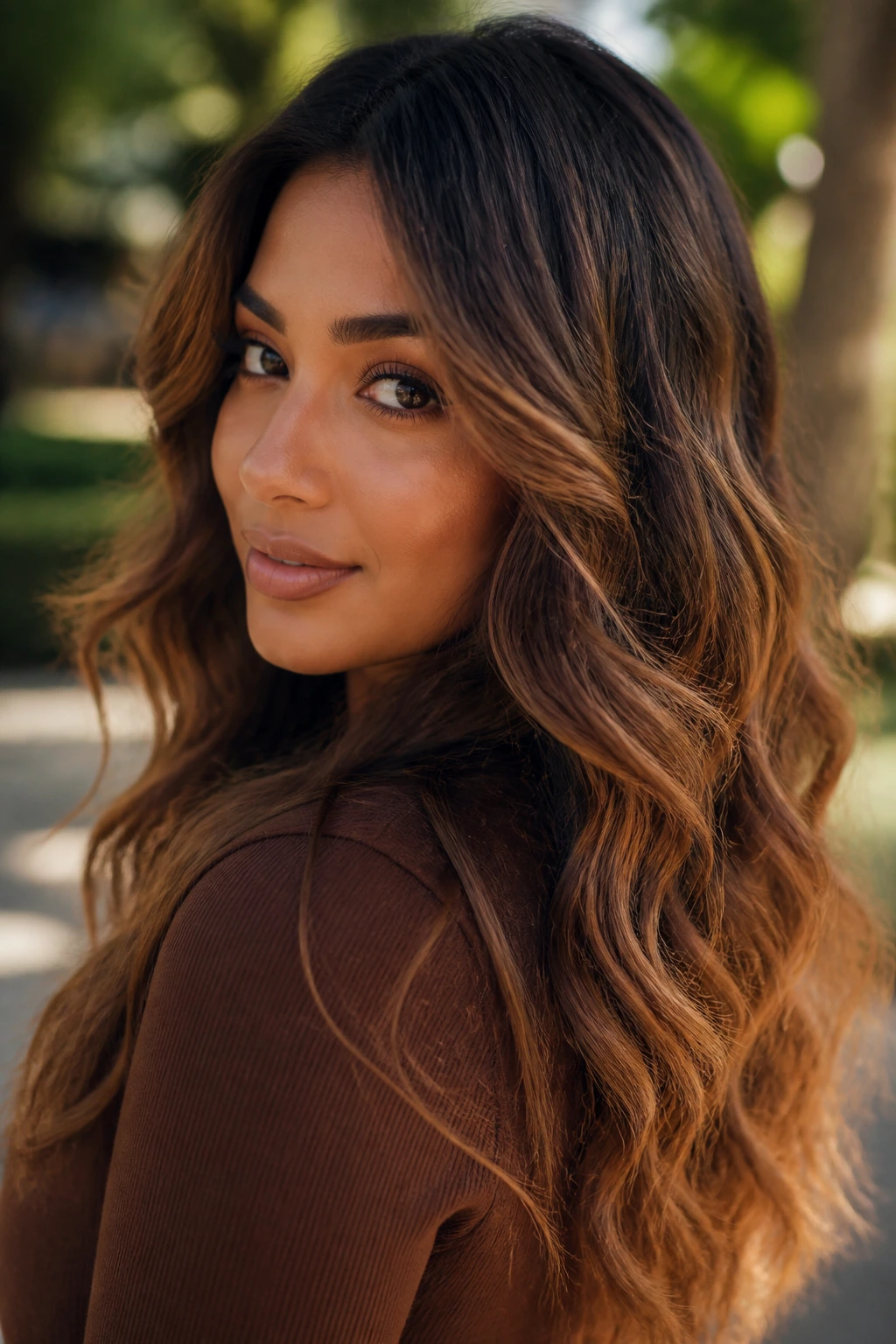
Why does cinnamon caramel look so good on tan skin? Because it brings a faint red-gold warmth into the brown instead of sitting on top of it like a separate color. The result feels richer than honey and less yellow than butterscotch, which is a very useful place to live.
This version works best when the root is a level 5 or 6 brunette and the ends slide a little lighter with a soft, melted transition. On curly hair, the cinnamon note catches the bends; on straight hair, it reads like polished warmth.
It also hides regrowth well, which matters if you’d rather not think about roots every four weeks. That part alone is worth a lot.
4. Golden Bronde Ribbon Highlights
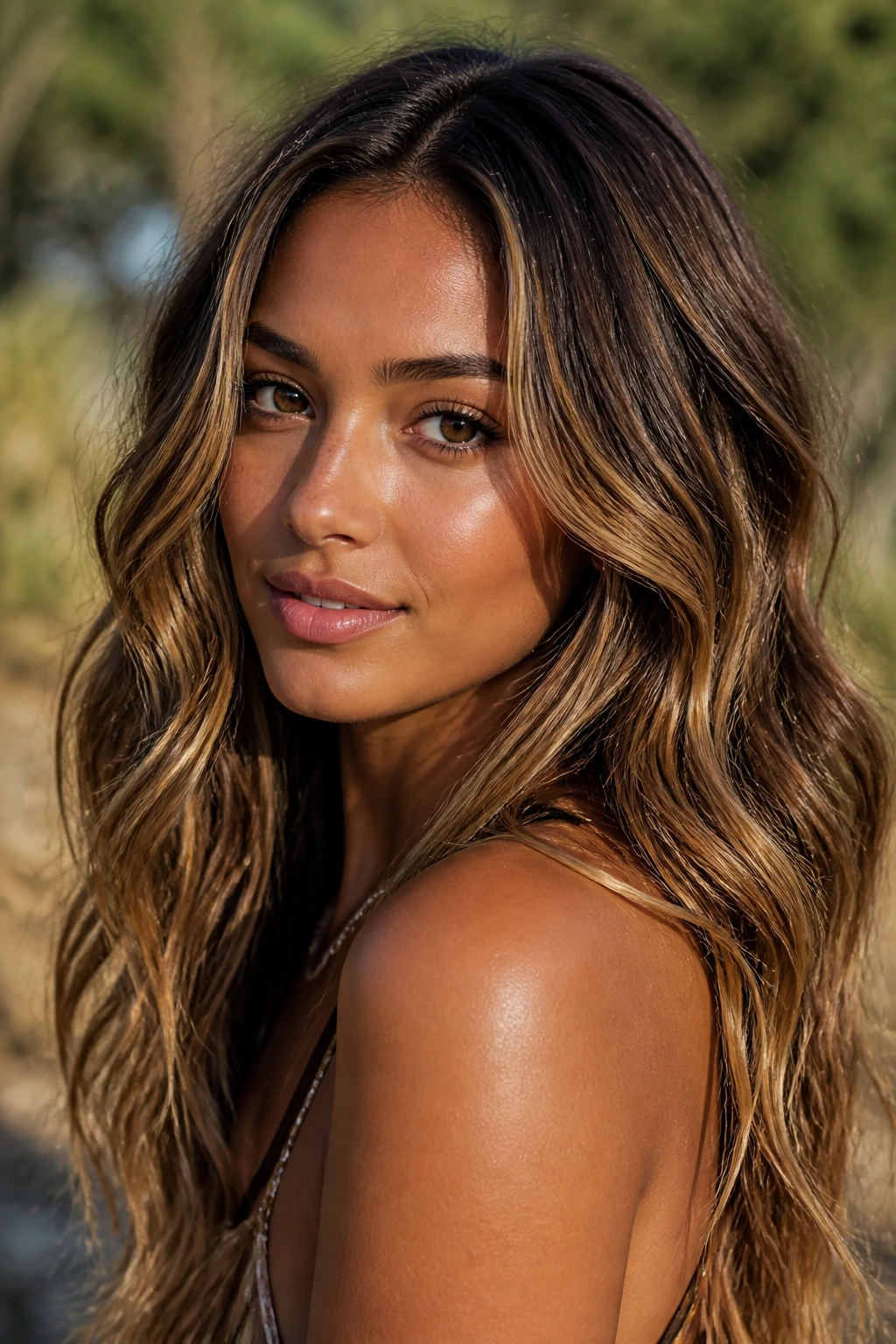
Not every caramel look needs to stay deep. Golden bronde ribbons add enough brightness to lift tan skin, but the brown still does some of the work, so the hair doesn’t end up looking like a separate blonde project.
I’d reach for this on long waves or thick hair that needs visible dimension. The trick is to keep the ribbons thin and irregular—too many even highlights and the color starts looking chunky, which is never the vibe here.
- Placement note: keep some ribbons under the top layer so the color moves when the hair swings.
- Tone note: golden beige beats lemon yellow every time.
- Salon note: ask for a soft root shadow so the grow-out line stays calm.
5. Espresso Brown with Caramel Ends
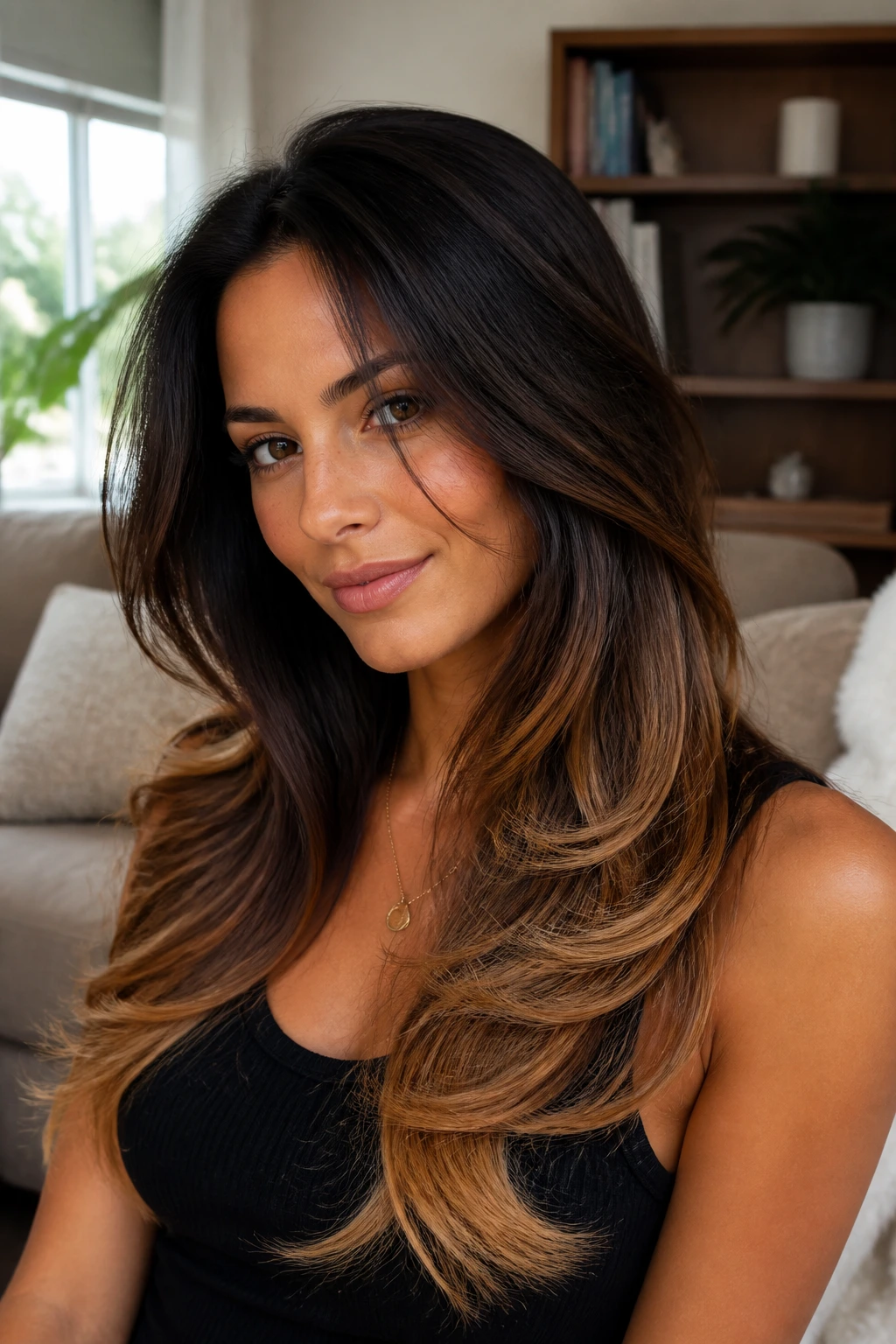
This is for the person who wants warmth but likes dark hair first. The espresso root keeps the contrast grounded, and the caramel lives mostly through the last third of the hair, where it shows off movement without lifting the whole head.
A blunt cut can make this feel graphic. Long layers make it feel softer. I prefer the latter, because the caramel ends look more intentional when they feather a little, instead of stopping in one clean line.
A good version of this look should feel like dark coffee with honey stirred into the bottom, not like a blonde dip-dye. That distinction matters.
6. Chestnut Caramel Gloss
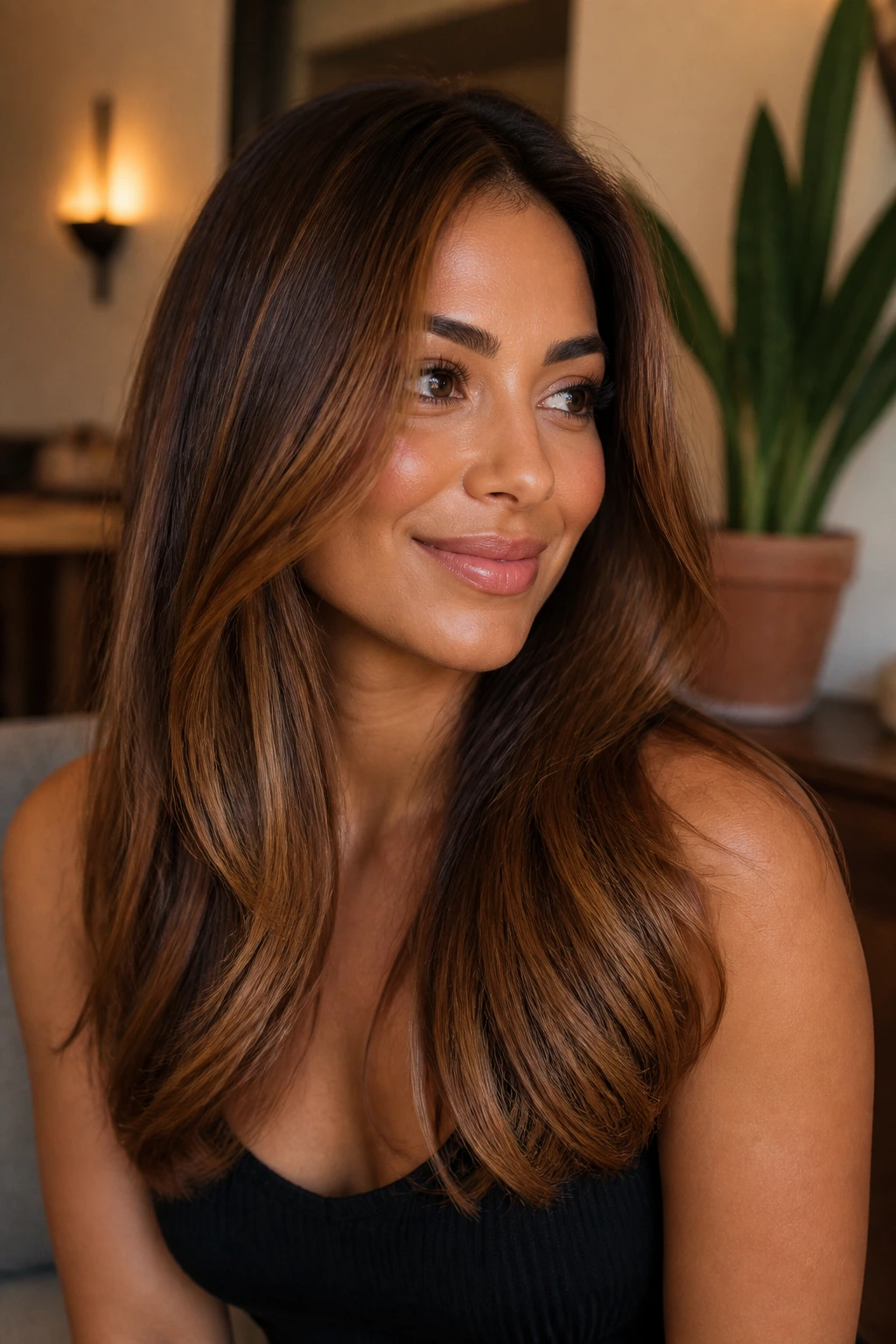
Chestnut caramel gloss doesn’t change the map of your hair; it changes how the light sits on it. A demi-permanent glaze in chestnut-caramel tones can make tan skin look warmer without lifting the cuticle much, which is why I like it for people who want shine more than contrast.
What Makes It Different
Ask for a sheer glaze, not an opaque brown dye. If the gloss looks syrupy in the bowl, that’s too much; a good gloss should tint the hair, not cover it. The result works best on medium-length hair that already has some movement.
It’s also the least dramatic idea in the list, and honestly, that’s its strength. No harsh regrowth. No striping. Just richer brown.
7. Maple Face-Framing Highlights
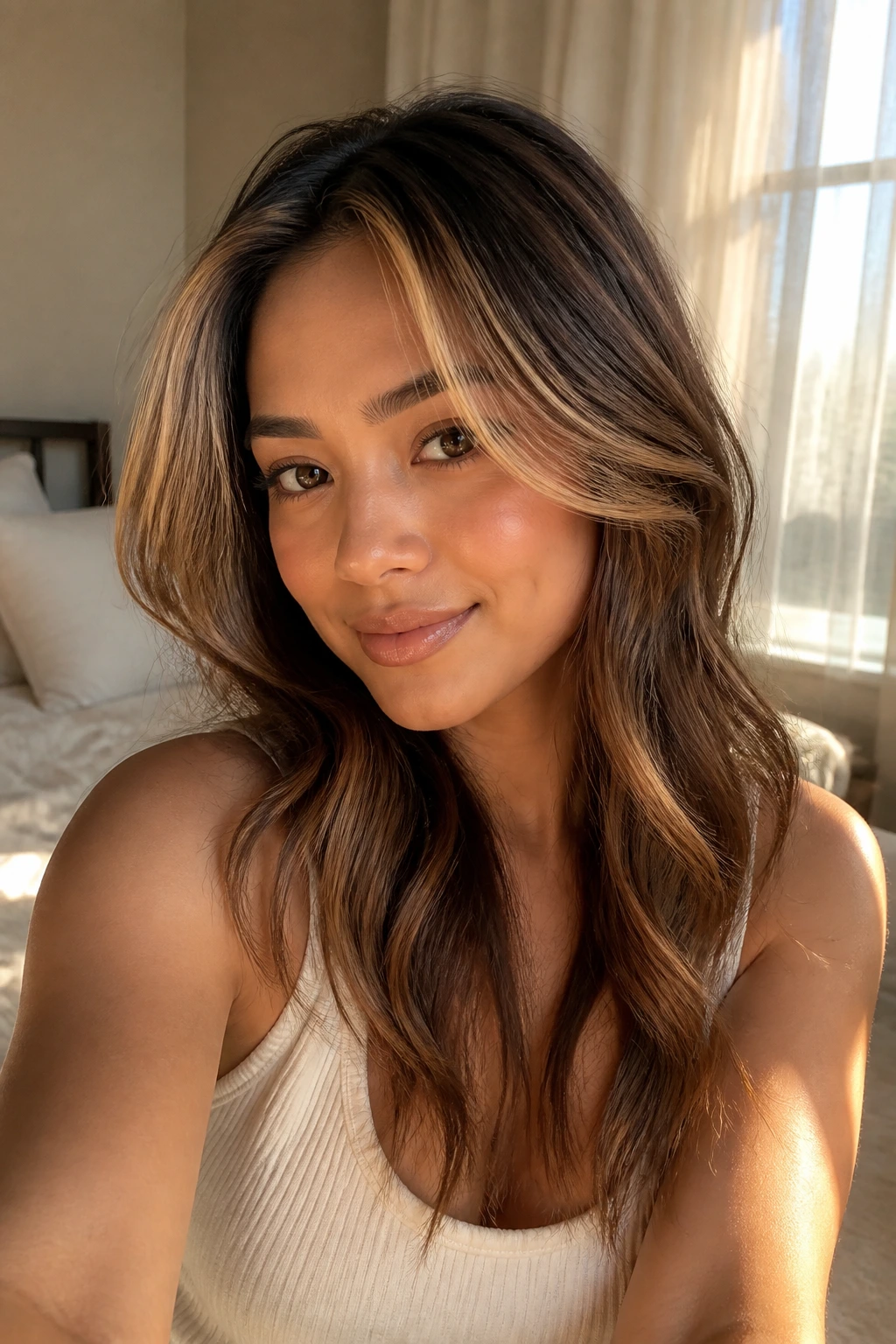
Why do maple highlights keep showing up around tan skin? Because they sit in that warm amber zone that brightens the face without making the hair look stripped.
These pieces should live around the temples, cheekbone, and curtain-bang area, then taper quickly into the rest of the hair. That keeps the warmth near the skin and avoids the helmet effect that comes from lightening too much of the crown.
Best for: layered cuts, curtain bangs, and anyone who likes a bright front with a deeper back.
Watch for: if your hairline is fragile or your front pieces are already fine, keep the highlights soft so they don’t look broken at the ends.
8. Bronze Caramel Layers
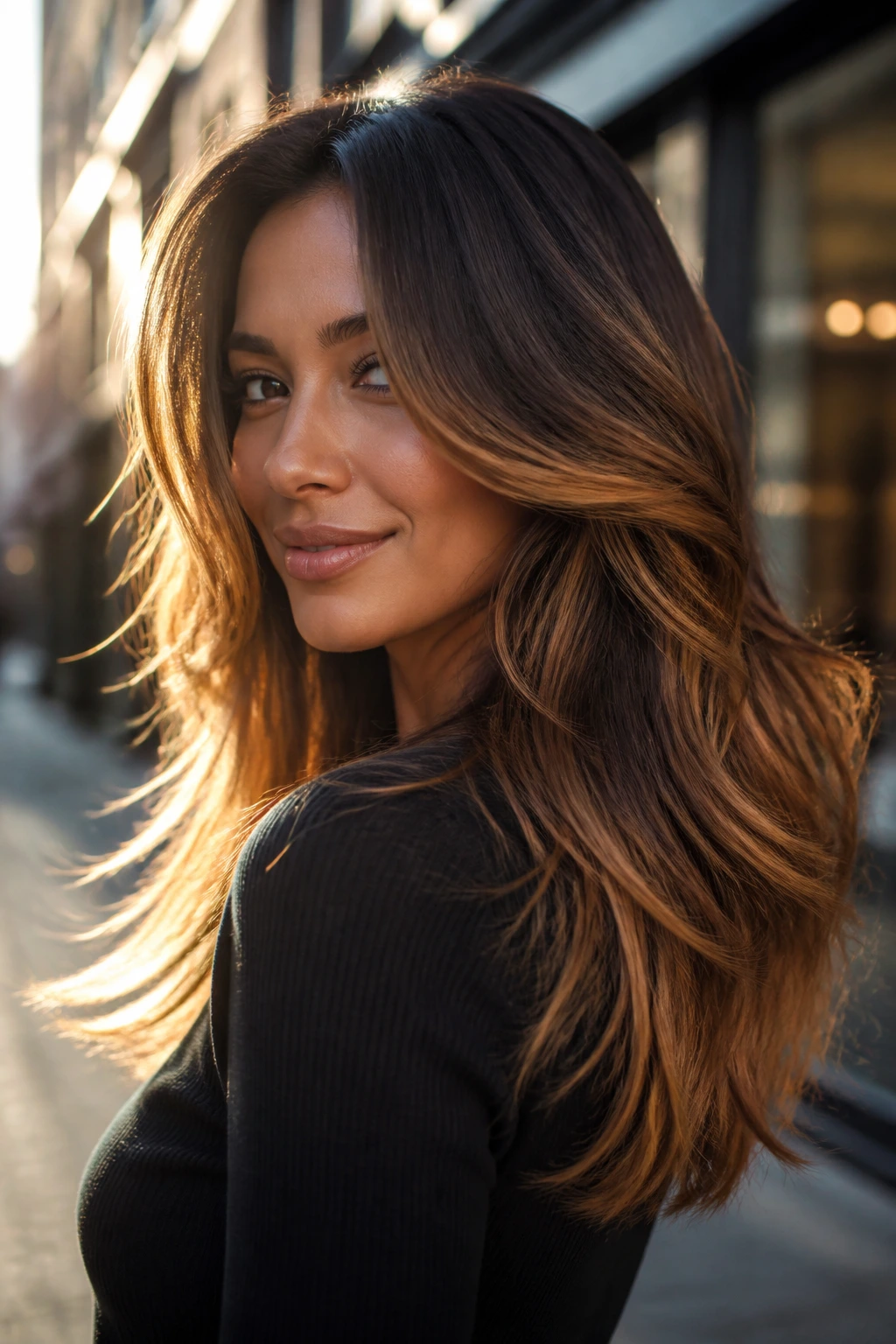
Bronze caramel has a little more depth than honey and a little more shine than plain chestnut. On tan skin, that bronze note can be the thing that keeps the color looking expensive in shade and not just in sunlight.
This idea works especially well on layered cuts because the color changes every time the hair moves. The top layer stays darker, the underlayers flash warmth, and the whole effect looks built into the cut instead of glued on top of it.
It’s a good choice if you’re tired of obvious streaks. Bronze does its best work quietly.
9. Butterscotch Waves
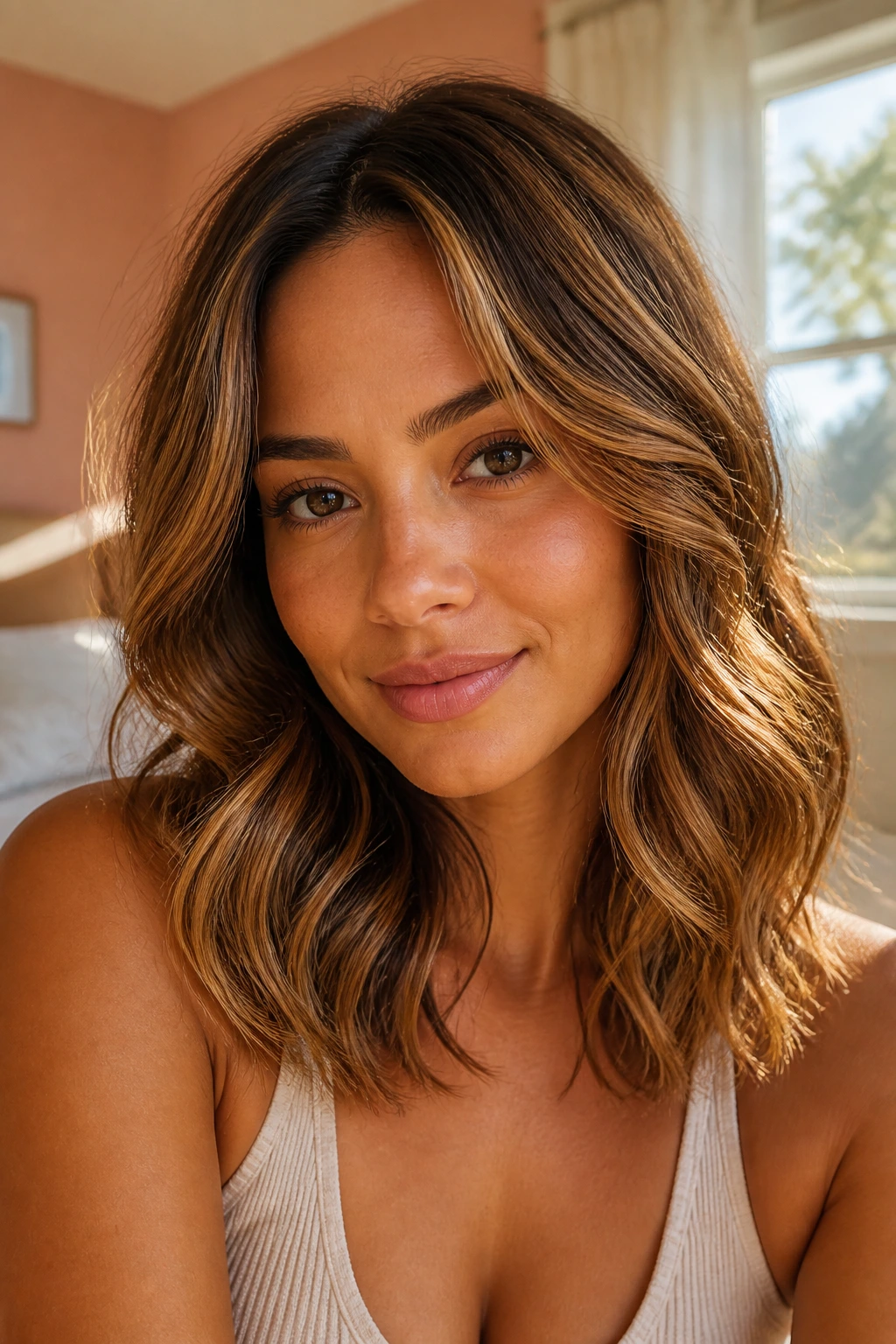
Butterscotch waves are for someone who wants more brightness than bronze but doesn’t want full blonde energy. The color leans golden, so it reads warm against tan skin instead of pale or dusty.
Keep the highlight spacing loose and let the waves do some of the work. On straight hair, butterscotch can look a little flat unless the pieces are very fine. On wavy hair, it has that soft, poured-over look that makes the color feel natural.
- Best cut: collarbone-length layers or longer.
- Best styling: a 1.25-inch curling iron or heatless wave set.
- Color caution: too much purple shampoo will knock the warmth out fast.
10. Peekaboo Caramel Panels
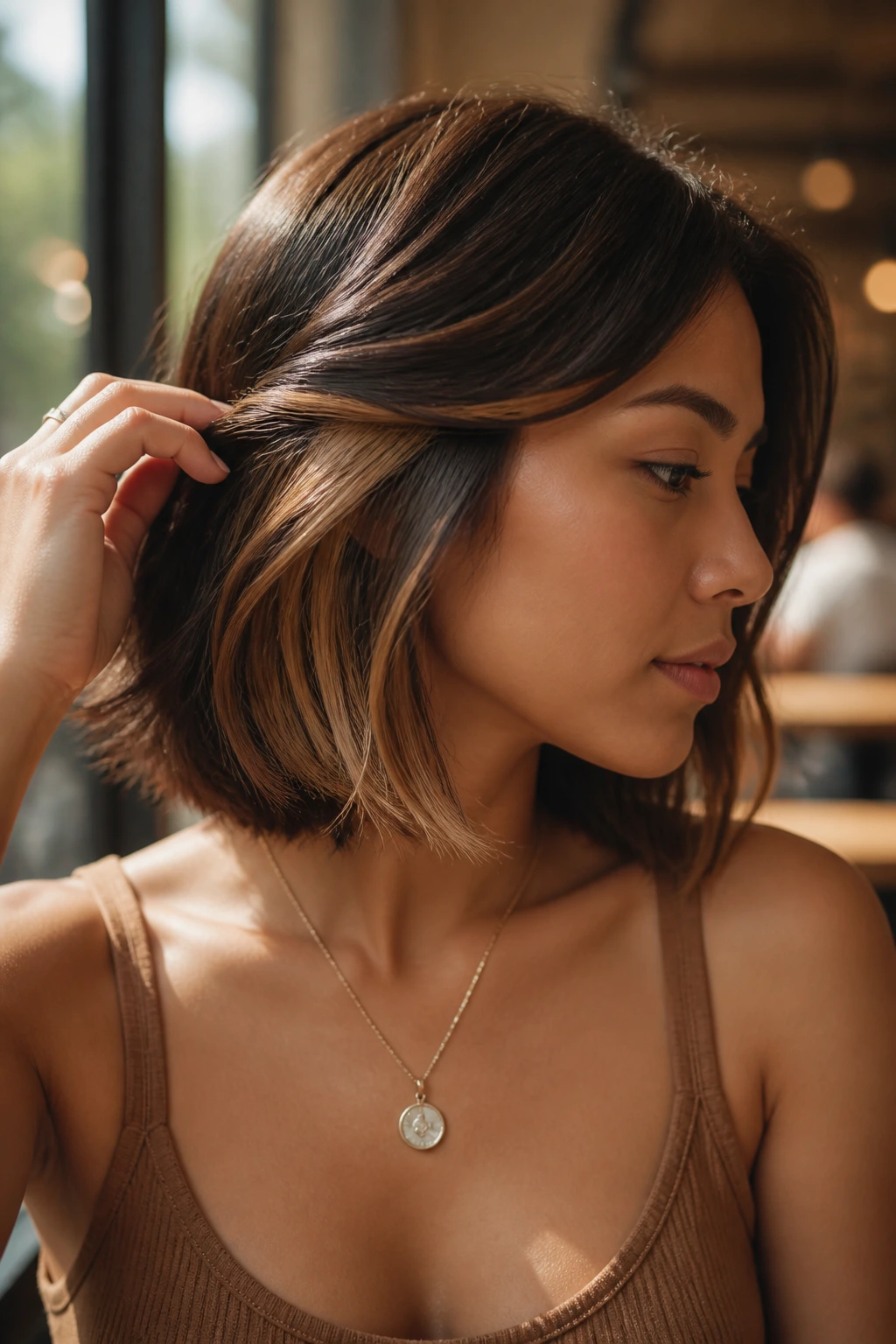
If you want surprise, not spotlight, peekaboo caramel panels are the move. The top layer stays deeper, and the caramel hides underneath until the hair swings, bends, or gets tucked behind one ear.
This is a smart option for jobs with strict dress codes or for anyone who likes a more private color story. It also works well on bobs and lobs, where the underlayer can show without needing a long curtain of hair.
A lot of people ignore hidden panels because they look subtle in photos. In person, they’re a lot more fun.
11. Amber Caramel Bob
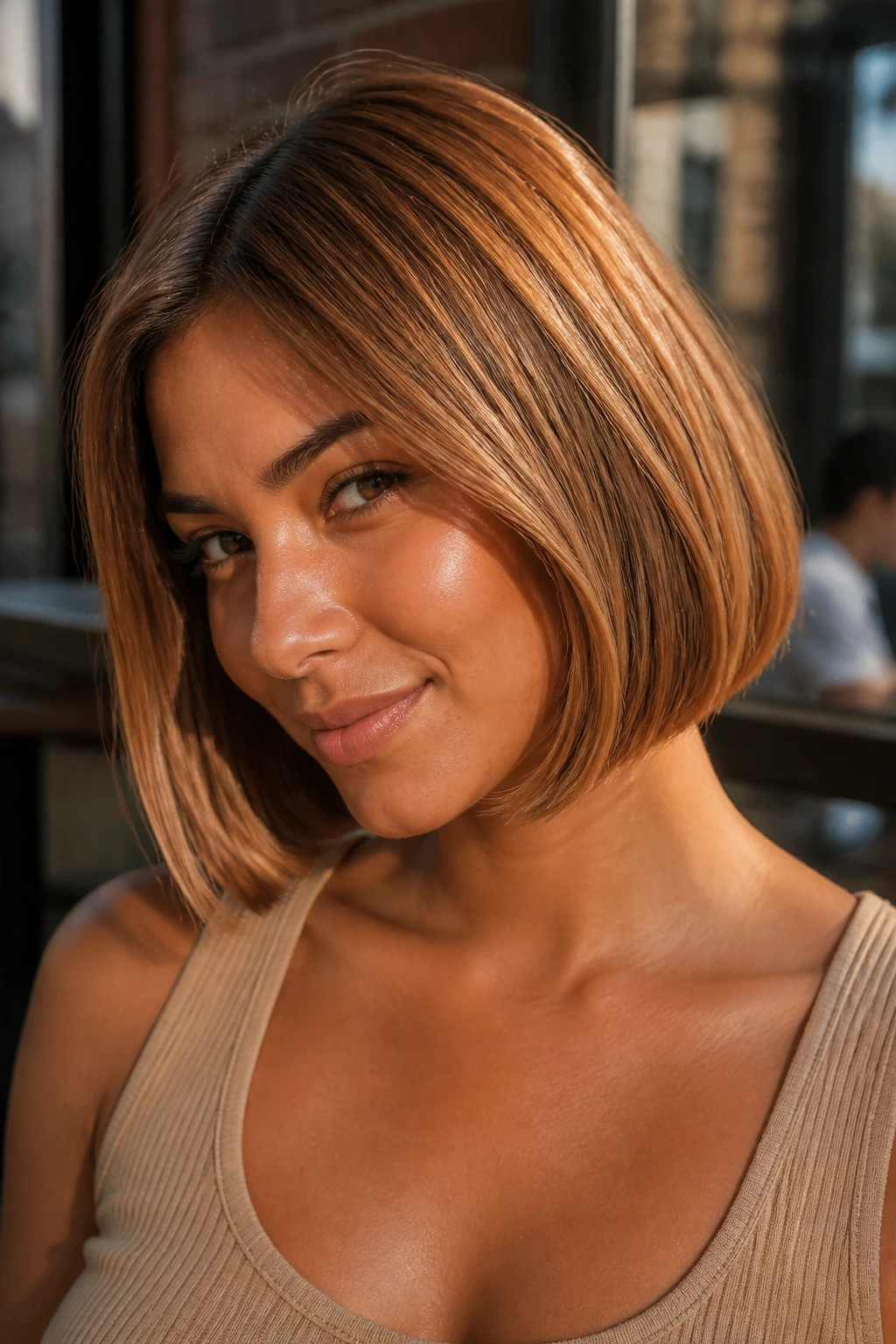
A bob gives caramel nowhere to hide, which is why amber can look so sharp on it. The shorter length keeps the color concentrated, and the warm amber note gives tan skin a clean, bright edge without needing big contrast.
I like this on blunt bobs and slightly rounded crops. If the cut is too shaggy, the amber can feel scattered. If it’s too severe, the warmth softens the line just enough to make the shape easier to wear.
Best For
- Jaw-length or chin-length bobs
- People who want shine more than ribbons
- Hair that benefits from regular trims anyway
12. Rooted Caramel Ombré
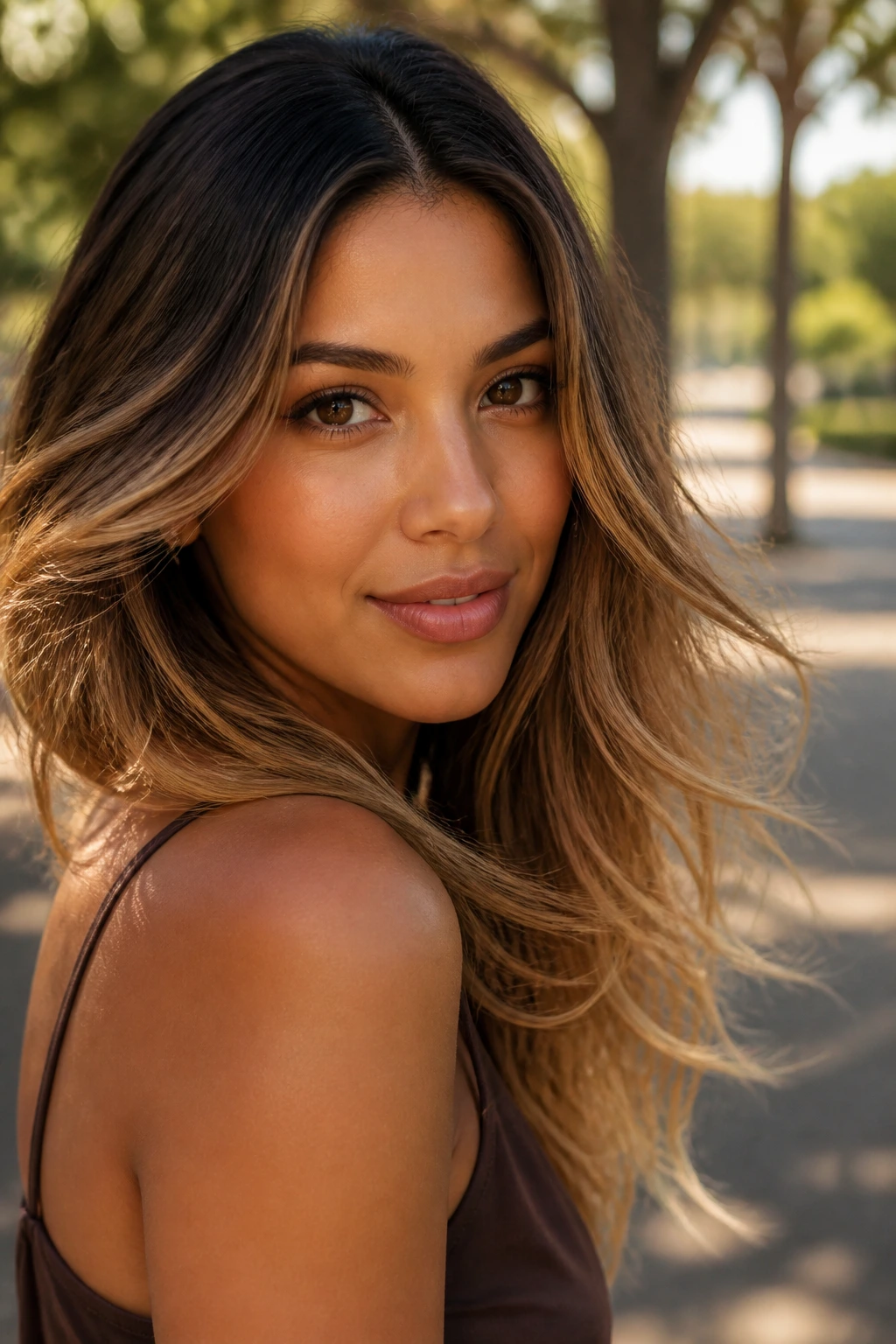
Why does rooted ombré still work so well? Because it lets the root stay honest. Tan skin usually looks better with some depth near the scalp, and then the warmth builds as the hair moves toward the ends.
The transition should start lower than most people think, usually around the mid-lengths. Start too high and the whole thing turns into a dip-dye from a different decade. Start lower, and the hair feels softer, more grown-in, and less fussy.
This one is a favorite if you want to stretch the time between appointments. That’s the whole point.
13. Mocha Latte Dimension
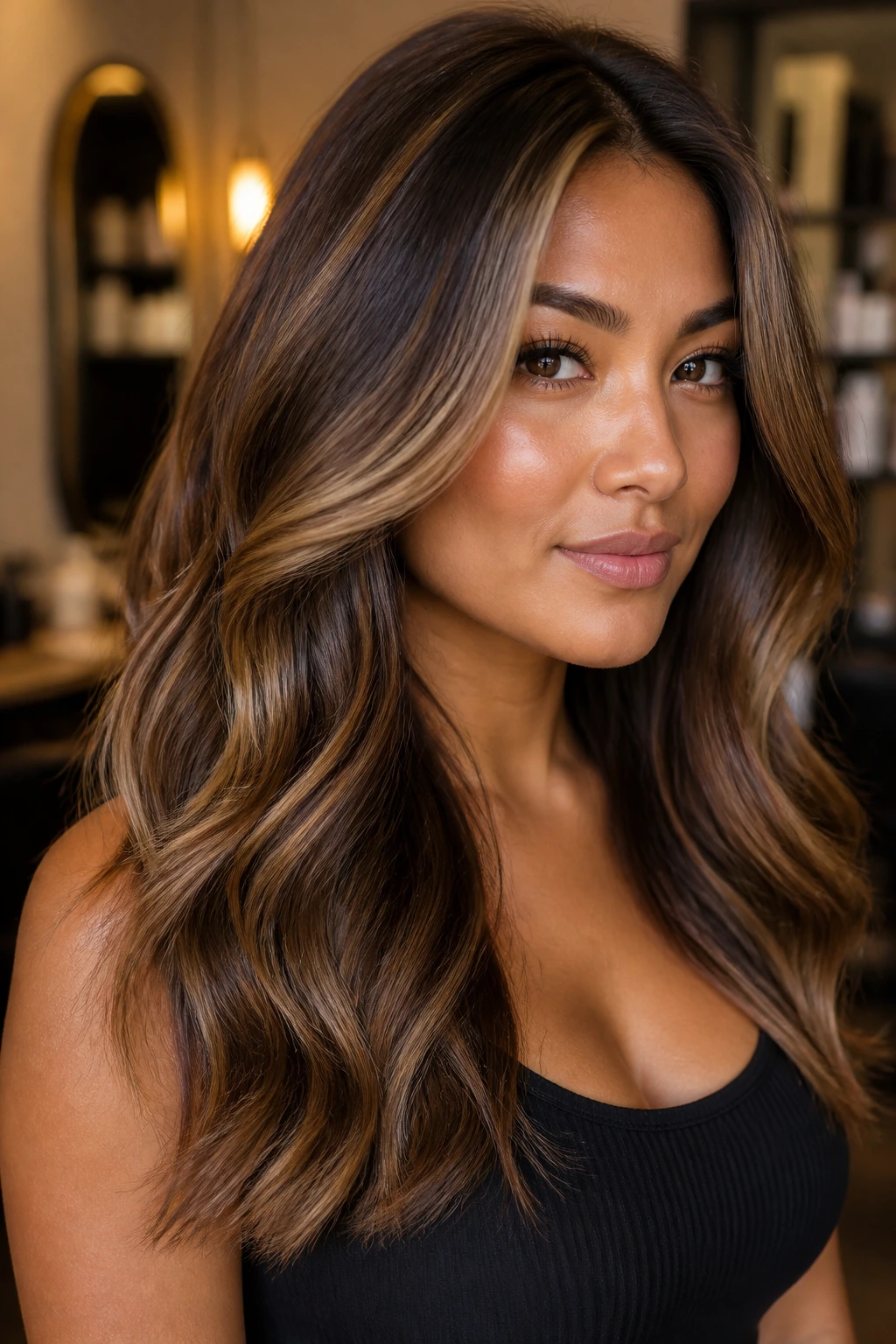
Mocha latte dimension is what happens when caramel shares space with a deeper brown instead of trying to do all the work alone. The mocha lowlights keep the color grounded, while the caramel pieces brighten the surface and give the hair some lift.
This works especially well on tan skin that leans neutral or olive, because the deeper base keeps the warmth from getting too sugary. On thick hair, it helps break up heaviness. On fine hair, it keeps the color from looking overprocessed.
Use this if: you like contrast, but not loud contrast.
Ask for: a mix of warm lights and soft lowlights, not a single bright tone through the whole head.
14. Copper Caramel Shine
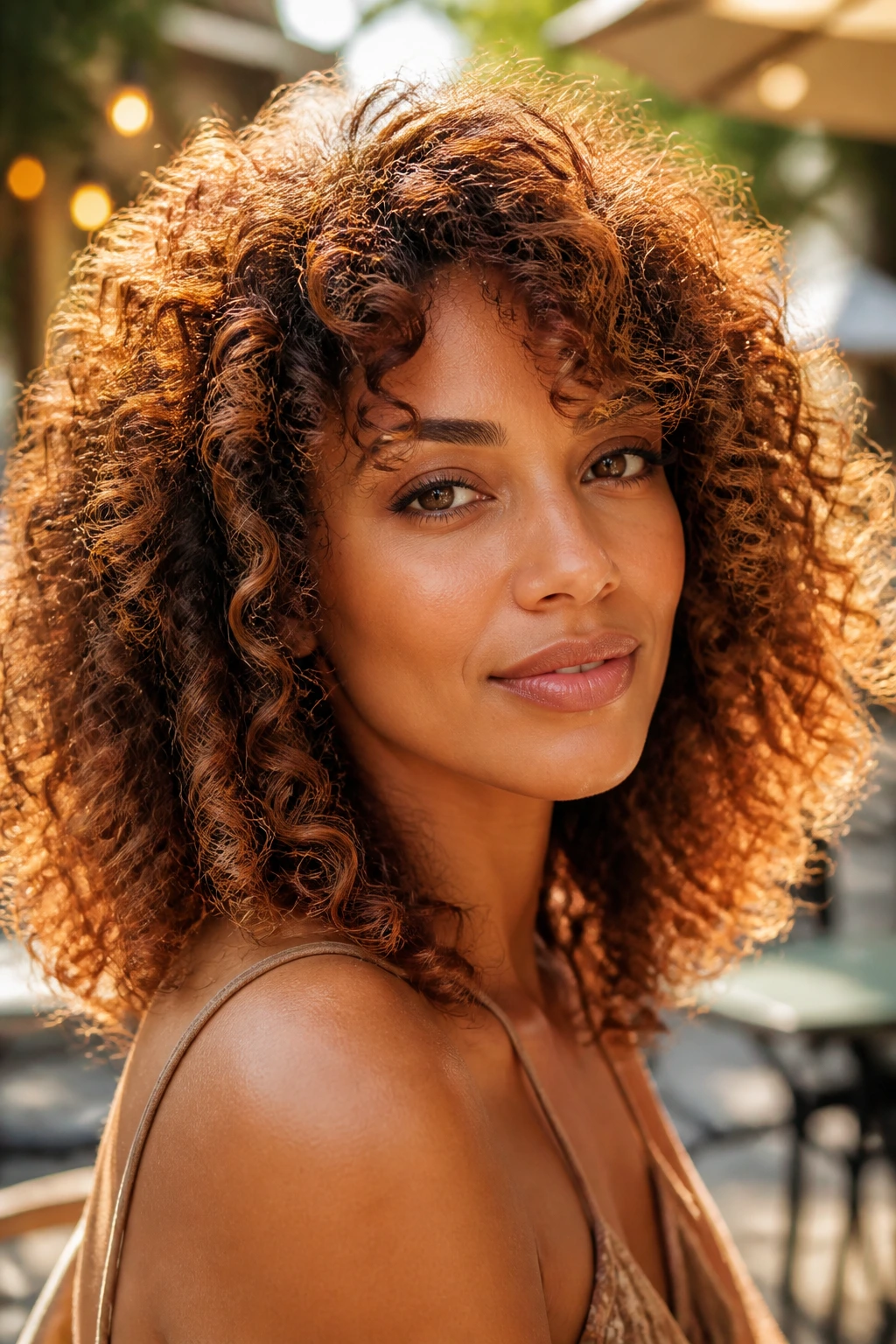
Copper caramel is the warmest version on this list, and it is not shy about it. On tan skin, that little copper note can make the complexion look richer, especially if your undertone already tilts golden.
The trick is restraint. Too much copper and the shade turns into red-brown. Too little and it looks like ordinary brunette with a filter over it. The sweet spot is a warm brown that flashes copper when the light hits the ends or the fringe.
This is a strong pick for textured hair. Curls and waves keep the color from reading too flat. Straight hair can wear it too, but only if the gloss stays clean and the toner doesn’t go overly orange.
15. Almond Caramel Lob
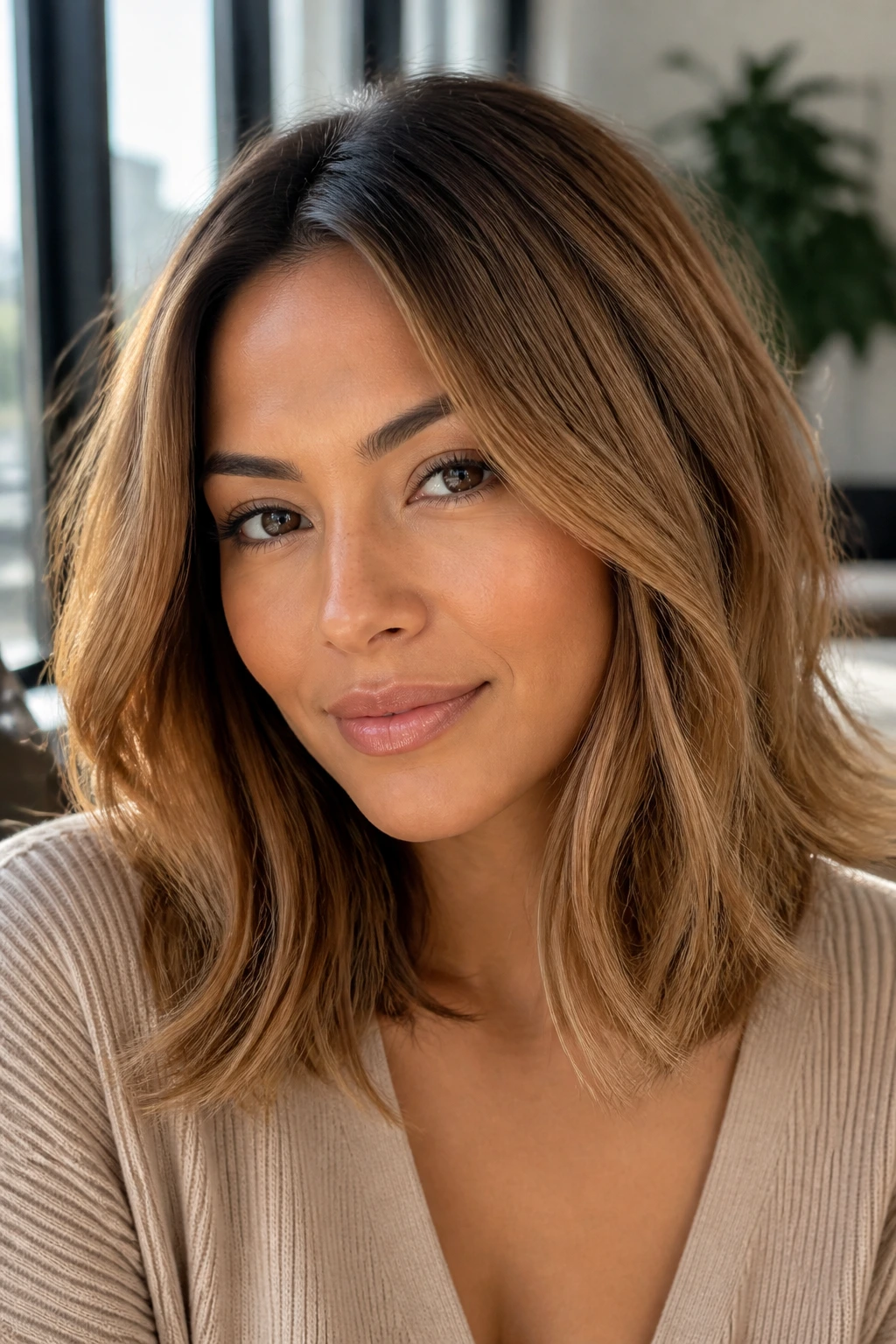
Almond caramel sits between beige and toffee, which is exactly why it works on tan skin that doesn’t want a loud gold note. The color feels smooth, creamy, and controlled, especially on a lob that ends around the collarbone.
Compared with a heavy bronde, almond caramel stays a little more brown. Compared with chestnut gloss, it has more visible light. That middle ground is useful if you want something polished enough for the office but still warm enough to show when your hair moves.
I’d choose this when the cut is simple and the color needs to do the talking. It’s a clean, good-looking answer. Nothing fussy.
16. Sun-Kissed Ribbon Highlights
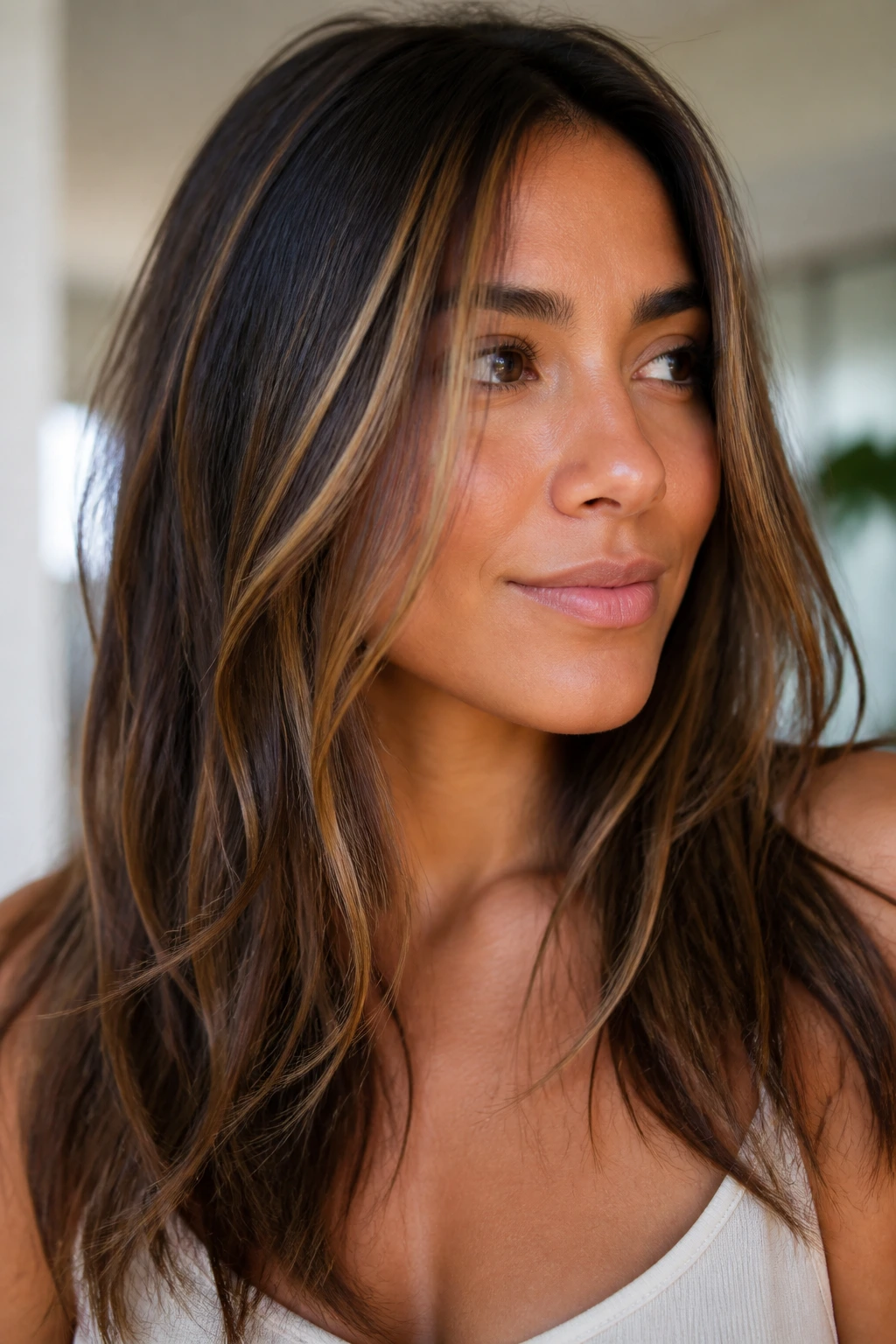
Sun-kissed ribbon highlights are the lightest entry here without leaving the brown family behind. The ribbons should be thin, irregular, and scattered in a way that looks like the hair has spent time in bright windows, not under a foil factory.
This version works well on straight hair, where the ribbons can be seen clearly, and on soft waves, where they break into little flashes as the hair moves. The best ones are placed around the part line and the outer layers, not packed into the middle like a stripe.
One small rule: if the ribbons are all the same width, the look gets stiff. The unevenness is the point.
17. Roasted Caramel Brunette
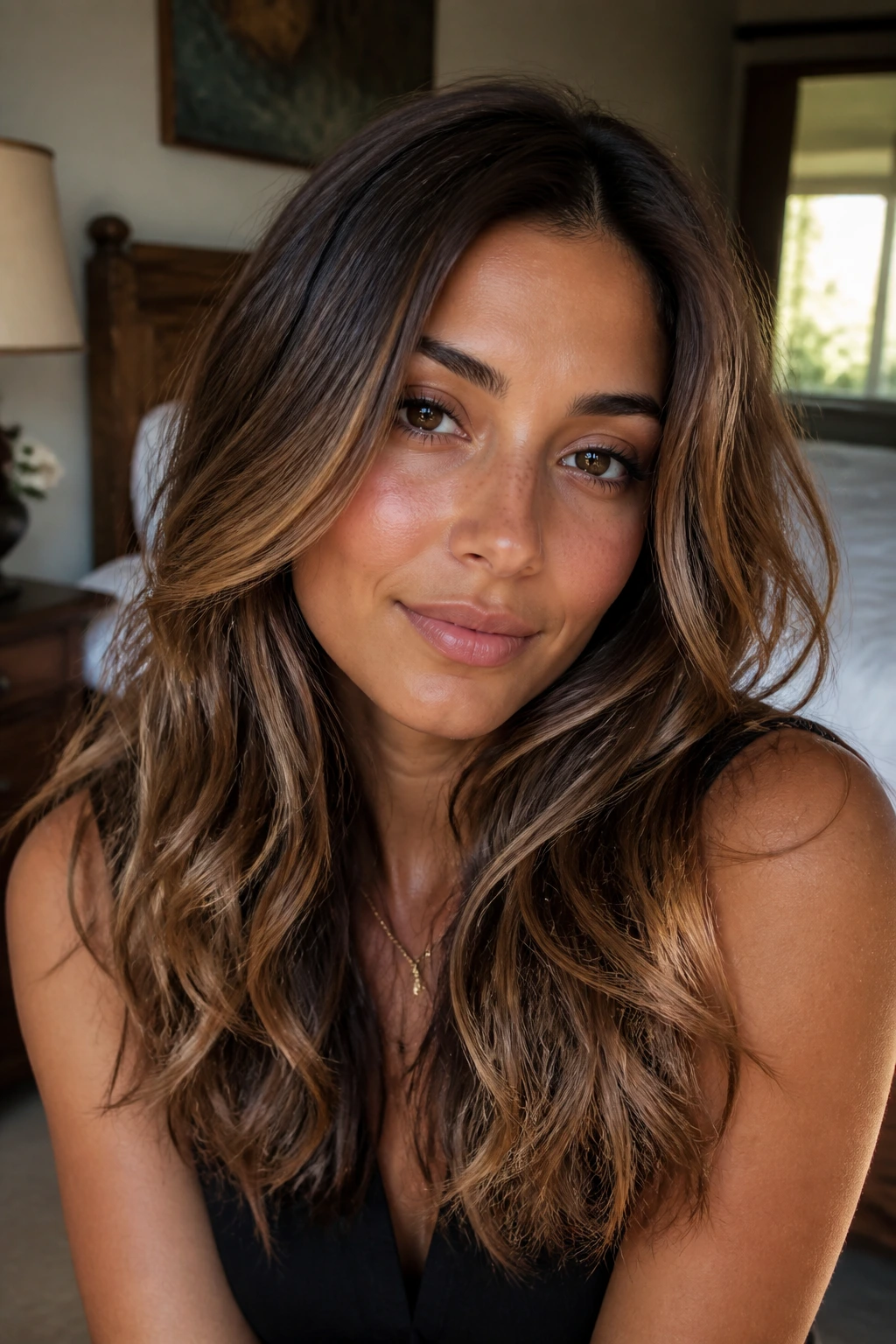
Roasted caramel brunette is the shade I’d pick if I wanted the hair to look richer in shade, not just brighter in sunlight. It keeps the base dark and toasted, then lets the caramel show up in the mid-lengths and ends like warmth built into the strand.
That makes it a solid choice for tan skin that needs depth more than brightness. Olive undertones usually wear this well. So do people who hate obvious highlights but still want something warmer than plain espresso.
It’s also a good color when the cut has movement but not a lot of layers. The shade does enough work on its own.
18. Hazelnut Swirl Curls
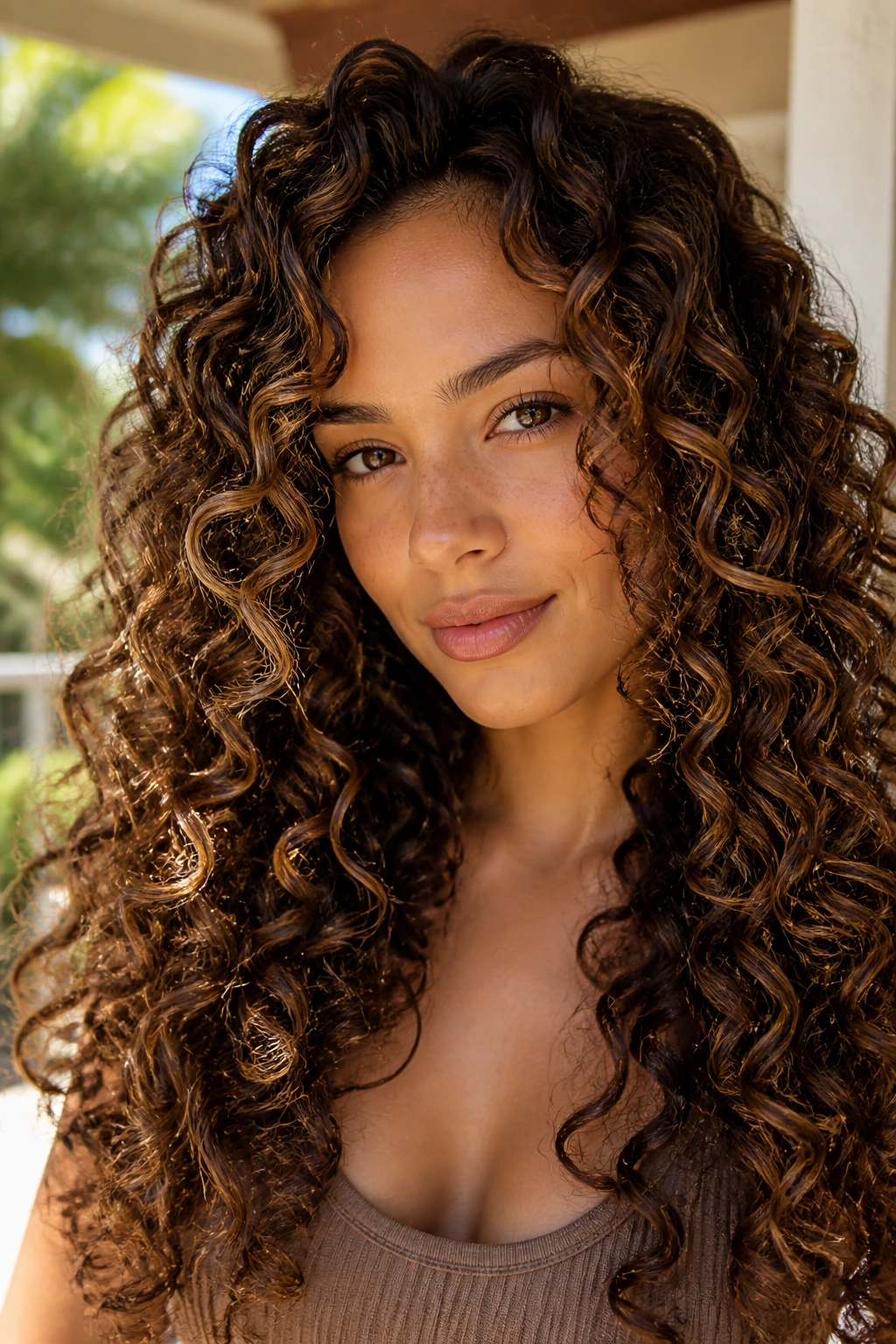
Curly hair needs a different color map, and hazelnut swirl curls are built for that. The caramel should follow the curl pattern, not fight it. Thin ribbons painted on the outer curve of each curl clump create dimension; chunky bands break up the pattern and can make the hair look striped.
What to Ask For
- Caramel placement on the outside of the curl, not the inner bend
- A deeper hazelnut base between the lighter pieces
- A gloss finish so the curls don’t look dry after lifting
This one flatters tan skin because the warmth moves with the texture. Every curl becomes its own little color note.
19. Caramel Contour Highlights
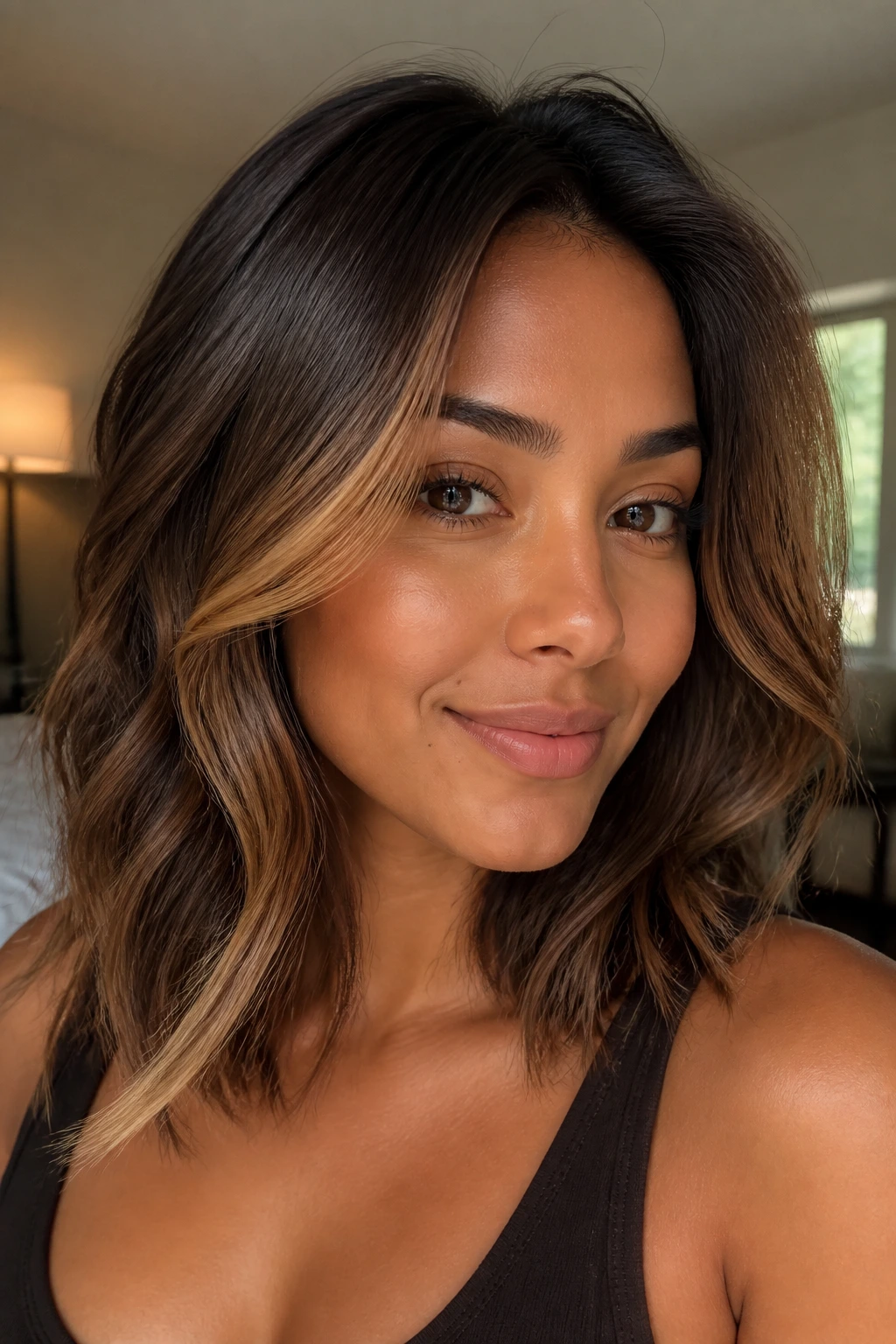
Caramel contour highlights work a bit like makeup contouring. The lighter pieces sit where the face needs brightness—around the cheekbone, temple, and part line—while the rest of the hair stays deeper so the eye sees shape.
That’s why this idea is especially good if your haircut is simple. A blunt lob, long layers, or a shoulder-length cut can all look sharper when the color follows the face. It’s not about more light. It’s about better placed light.
If your tan skin already has a lot of warmth, keep the contour pieces honeyed rather than pale. If your undertone is more olive, bronze-caramel works better than soft yellow caramel.
20. Walnut Brown with Honey Glaze
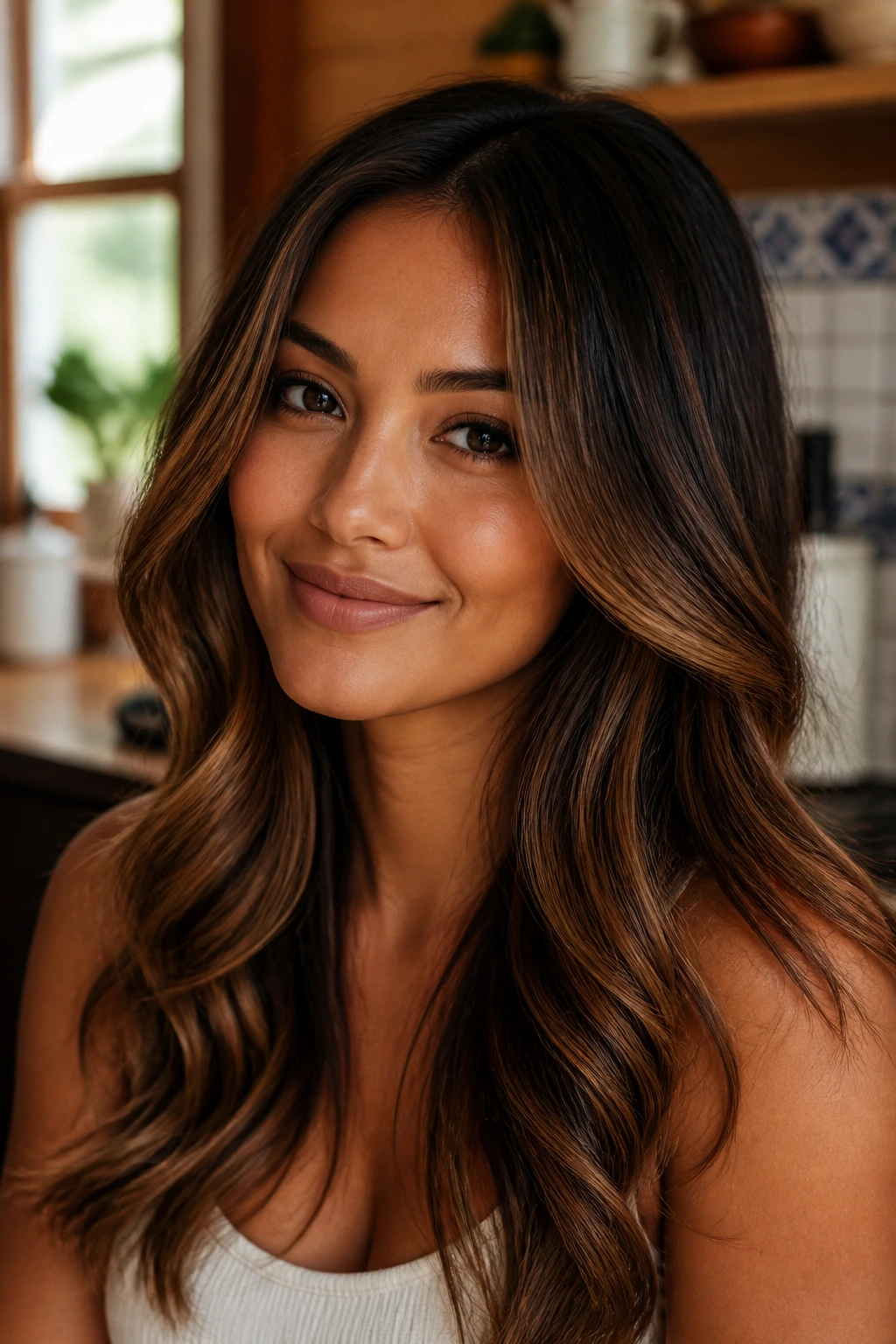
Walnut brown with a honey glaze is quiet in the best way. The base stays deep and cool-leaning enough to anchor the hair, but the honey glaze gives it warmth that shows when the light changes.
This is a good option if you want a brown that still feels polished and not too red, too blonde, or too copper. On tan skin, the glaze keeps the complexion from going flat, especially if you wear simple makeup and like your hair to do some of the visual work.
It’s also friendly to shorter cuts and medium lengths, where high-contrast highlights can look busy. Walnut gives the hair some seriousness. The honey stops it from getting heavy.
21. Warm Chocolate with Cinnamon Lowlights
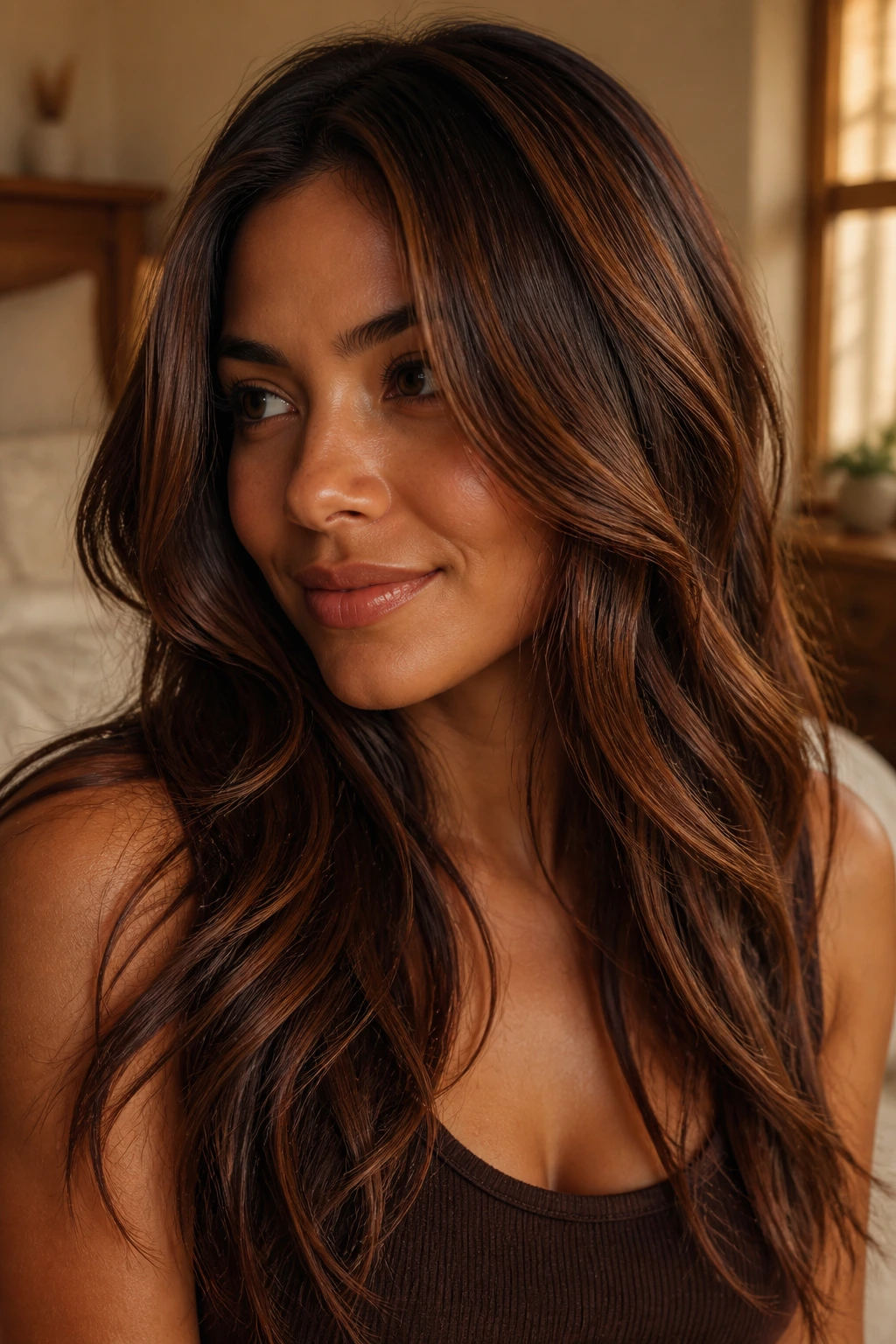
Most caramel lists lean on highlights, but lowlights matter too. Warm chocolate with cinnamon lowlights adds depth inside the brown instead of brightness on top of it, which can be a better move if your tan skin already holds a lot of golden color.
The cinnamon pieces should be a touch warmer than the base, not darker for the sake of being darker. That warmth keeps the hair from going muddy. It also helps thick hair separate into visible sections instead of reading as one large block.
This choice is underrated. People tend to chase light, when sometimes a little shadow is what makes the warmth show up.
22. Caramel Beige Bronde
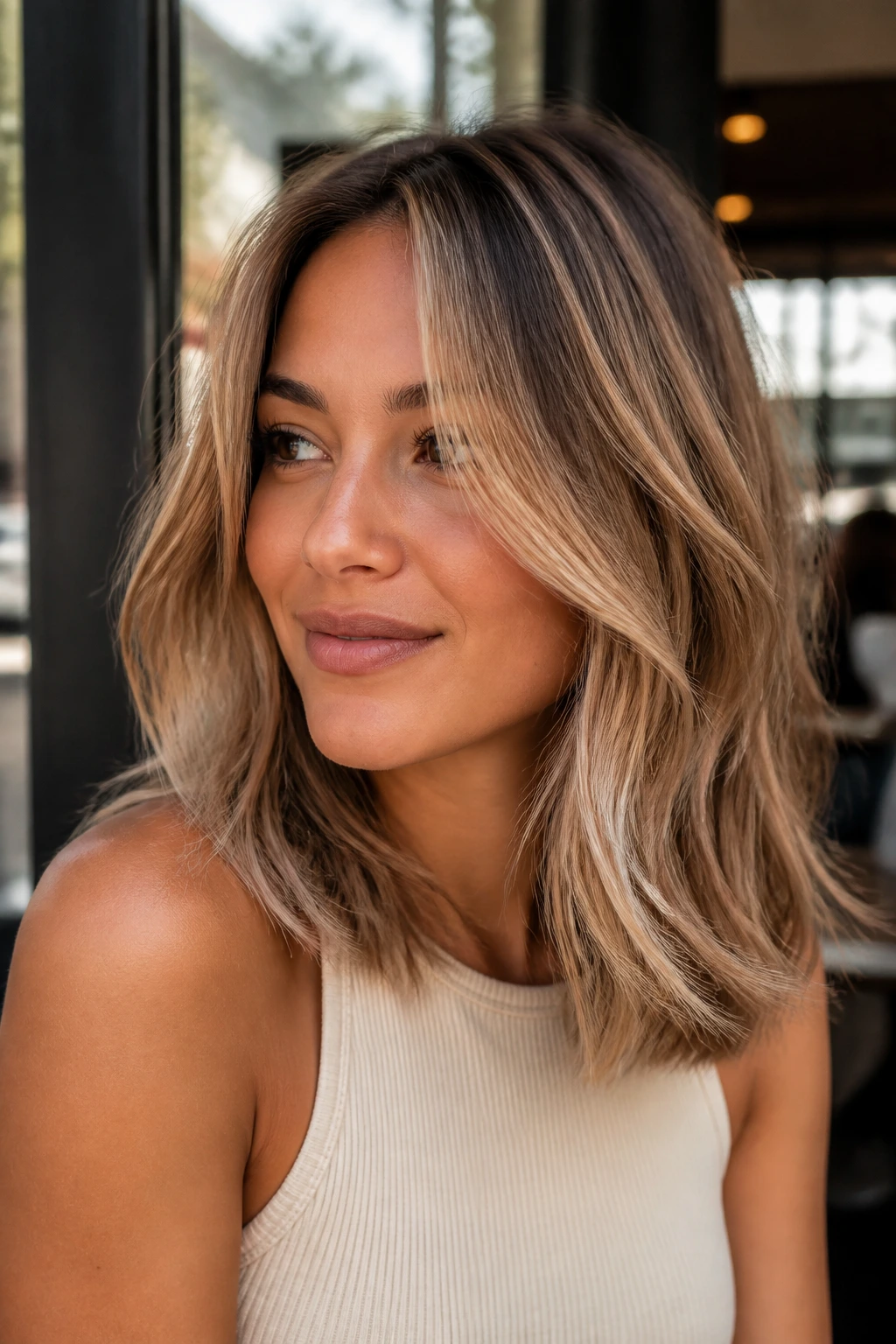
Caramel beige bronde sits right in the middle, and that middle is useful. The beige tempers the sweetness of caramel, while the brown keeps the color from drifting too blonde. On tan skin, that balance can look especially smooth if your undertone is neutral.
I’d reach for this on layered shoulder-length hair or longer cuts that need a soft, blended finish. The shade is not as rich as mocha and not as golden as honey, which means it can feel calm rather than loud.
- Best for: people who want a softer version of caramel.
- Keep in mind: beige can turn dull if you over-tone it.
- Fix: a quick gloss with warm beige or soft gold usually brings it back.
23. Caramel Veil Pixie
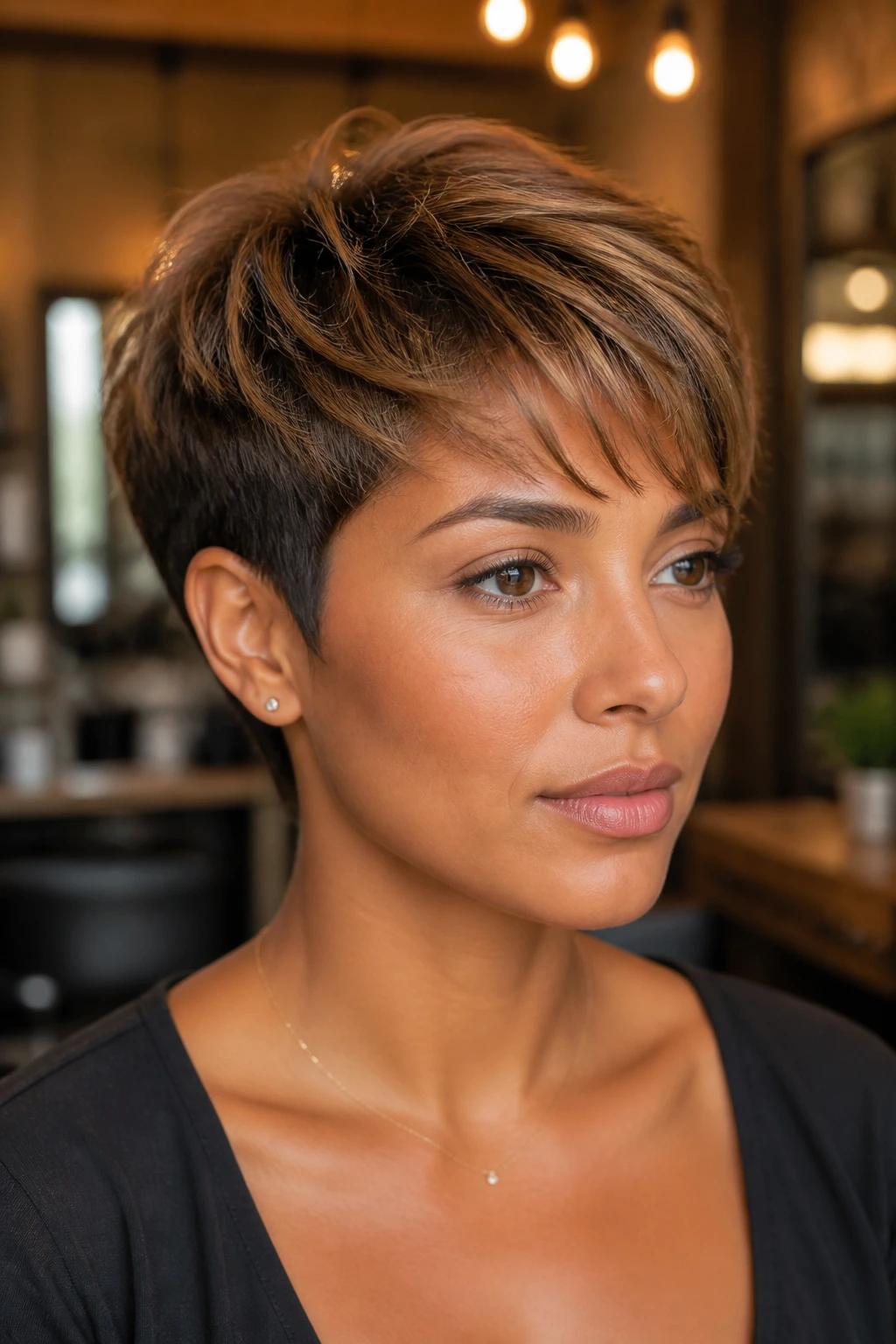
A pixie doesn’t have room for heavy ribbons, so the color has to work like makeup. A caramel veil on the top layers and fringe adds warmth without turning the cut into a patchwork of light and dark.
This is one of my favorite ideas for short hair on tan skin because it’s small, but not boring. The warmth sits where the eye lands first, and the shape of the cut does the rest. Keep the pieces soft and feathered; chunky streaks on a pixie can look loud in a hurry.
Best move: ask for micro-babylights or a sheer glaze rather than chunky highlight placement.
Result: the cut stays crisp, and the color stays wearable.
24. Milk Chocolate with Toffee Streaks
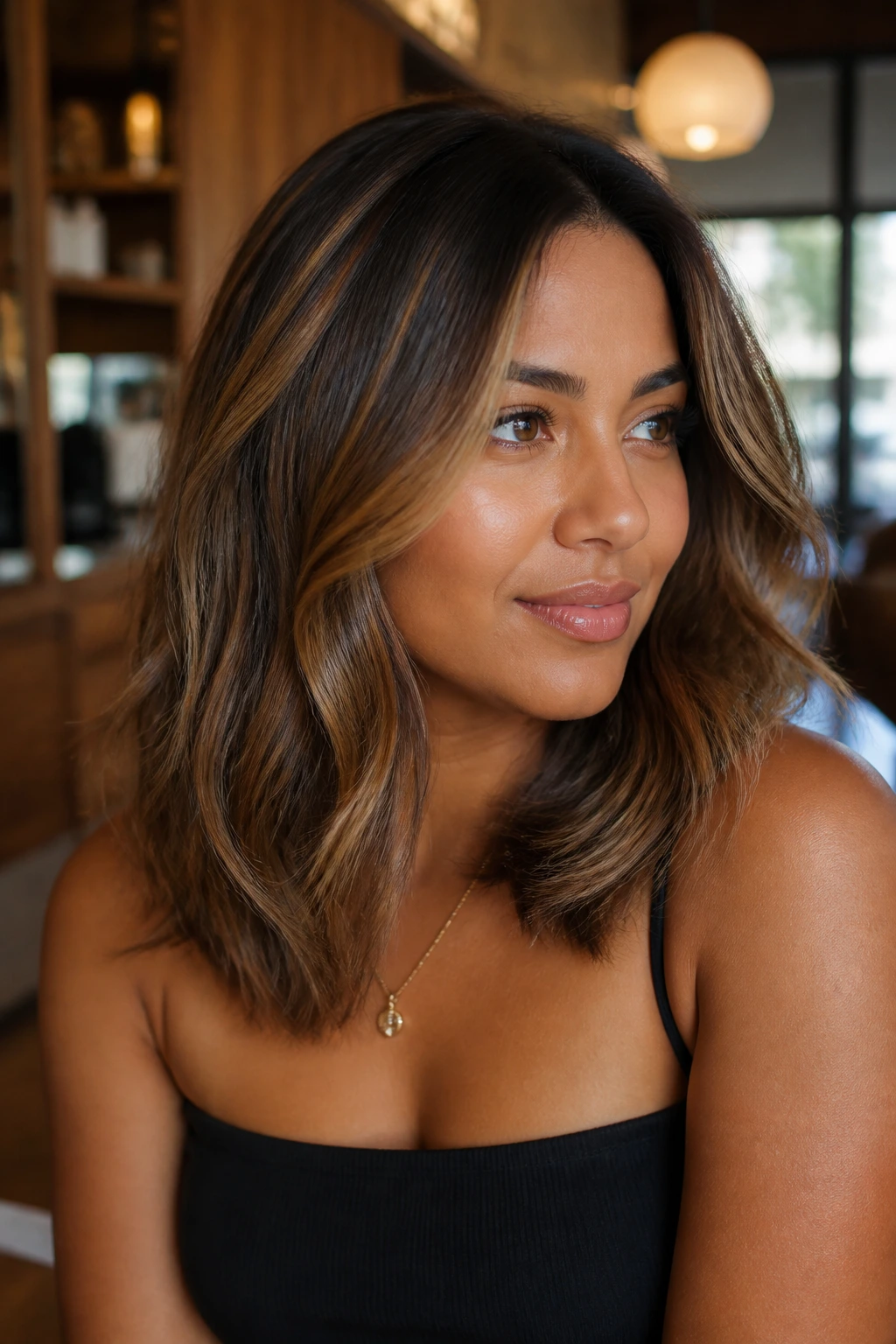
Milk chocolate with toffee streaks is a clean, classic version of caramel brown. The base stays creamy and brown, while the toffee pieces add just enough contrast to keep tan skin from looking one-note.
This one is especially good on shoulder-length cuts and soft layers. The streaks should sit in the outer layers and around the face, not packed into the back under heavy hair where nobody sees them. If the highlights are too thick, the whole thing starts looking chopped instead of blended.
I like this shade because it doesn’t try too hard. It just works.
25. Deep Auburn-Caramel Brown
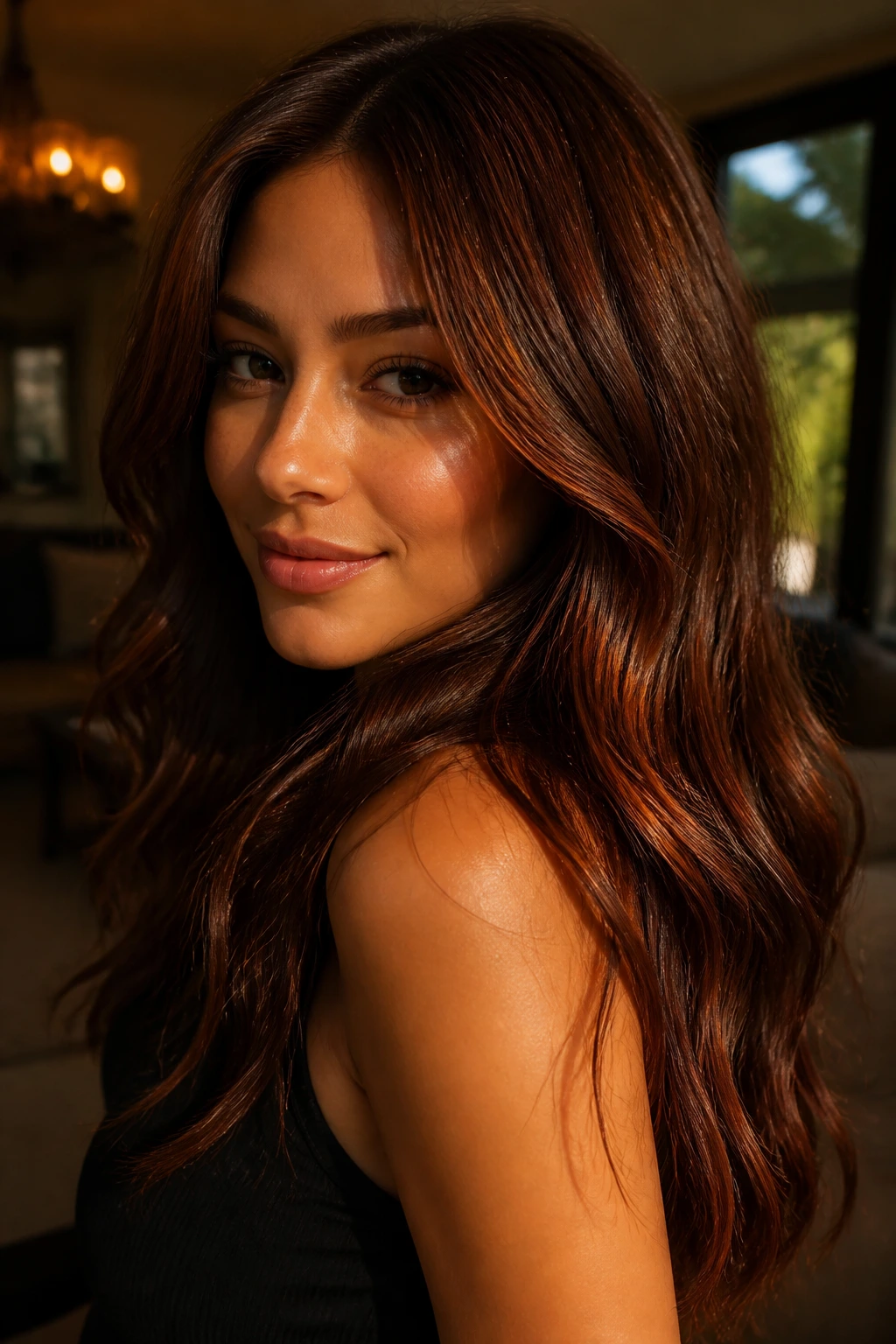
Deep auburn-caramel brown is the richest, warmest ending point on the list. The auburn note nudges the caramel toward red-gold, which can look gorgeous on tan skin with golden or peach undertones.
This is the kind of shade that changes mood depending on the light. Indoors, it reads like a deep warm brown. Outside, the auburn comes forward and gives the hair a little fire. If you want a warmer brown that still feels grown-up, this is the one to bookmark.
It does fade faster than a plain chestnut gloss, so keep that in mind. The payoff is worth it if you like warmth with a little edge.
How Warm Caramel Brown Reads on Different Tan Undertones
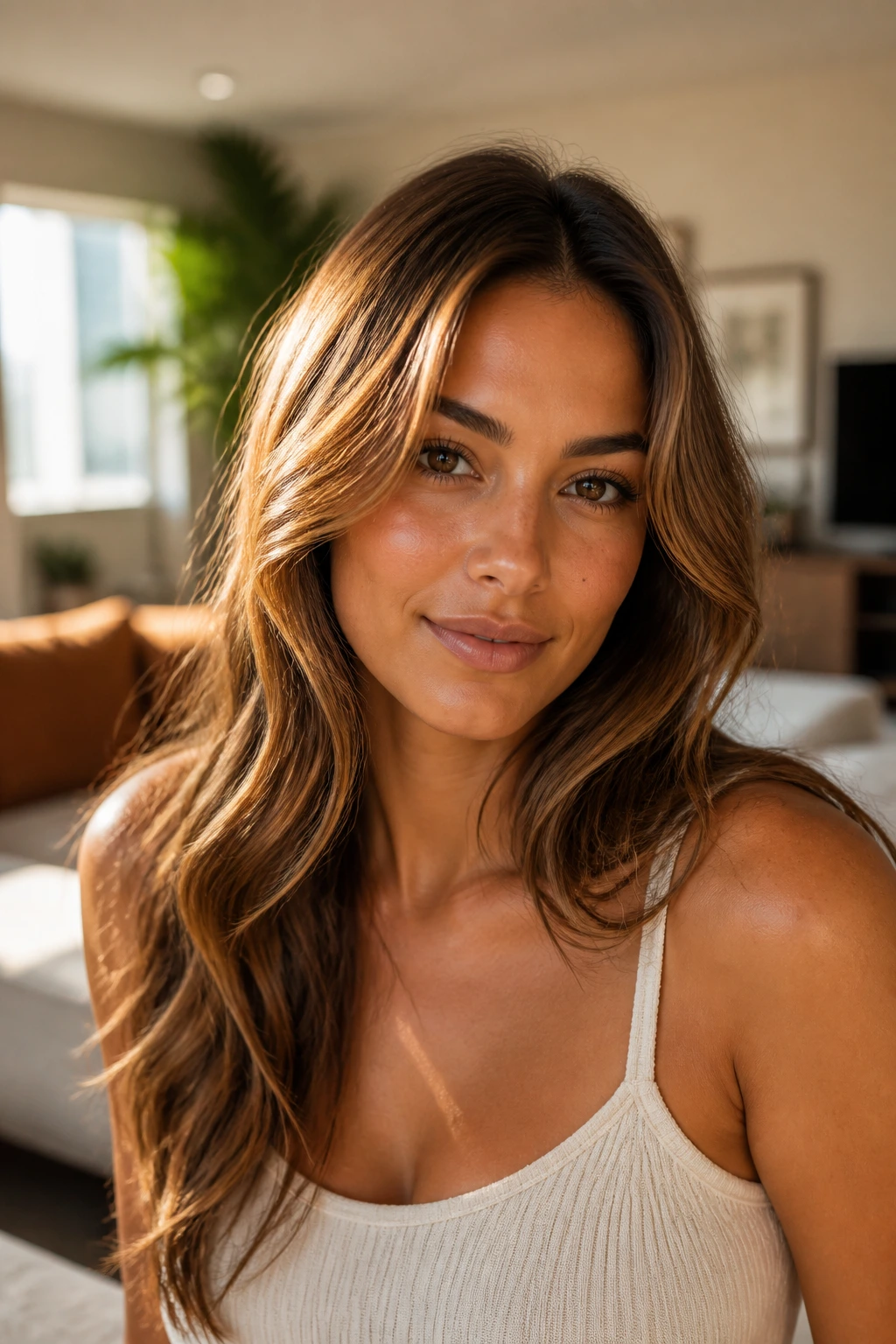
Tan skin can take a lot, but it does not take every caramel the same way. The undertone decides whether the shade feels soft, rich, or a little too loud.
Golden Tan Skin
Golden undertones love honey, butterscotch, amber, and copper-caramel pieces. These shades mirror the warmth already in the skin, so the face looks connected to the hair rather than separated from it.
Olive Tan Skin
Olive skin usually looks better when the caramel stays a little deeper. Bronze, mocha, walnut, and roasted caramel tend to sit more naturally here because they keep the warmth, but avoid the yellow edge that can go weird against olive.
Neutral Tan Skin
Neutral undertones have the most freedom. You can move toward golden or beige-caramel, but the look usually holds together best when there’s depth at the root or a lowlight underneath to keep the warmth from floating away.
What to Tell Your Colorist Before They Mix Anything
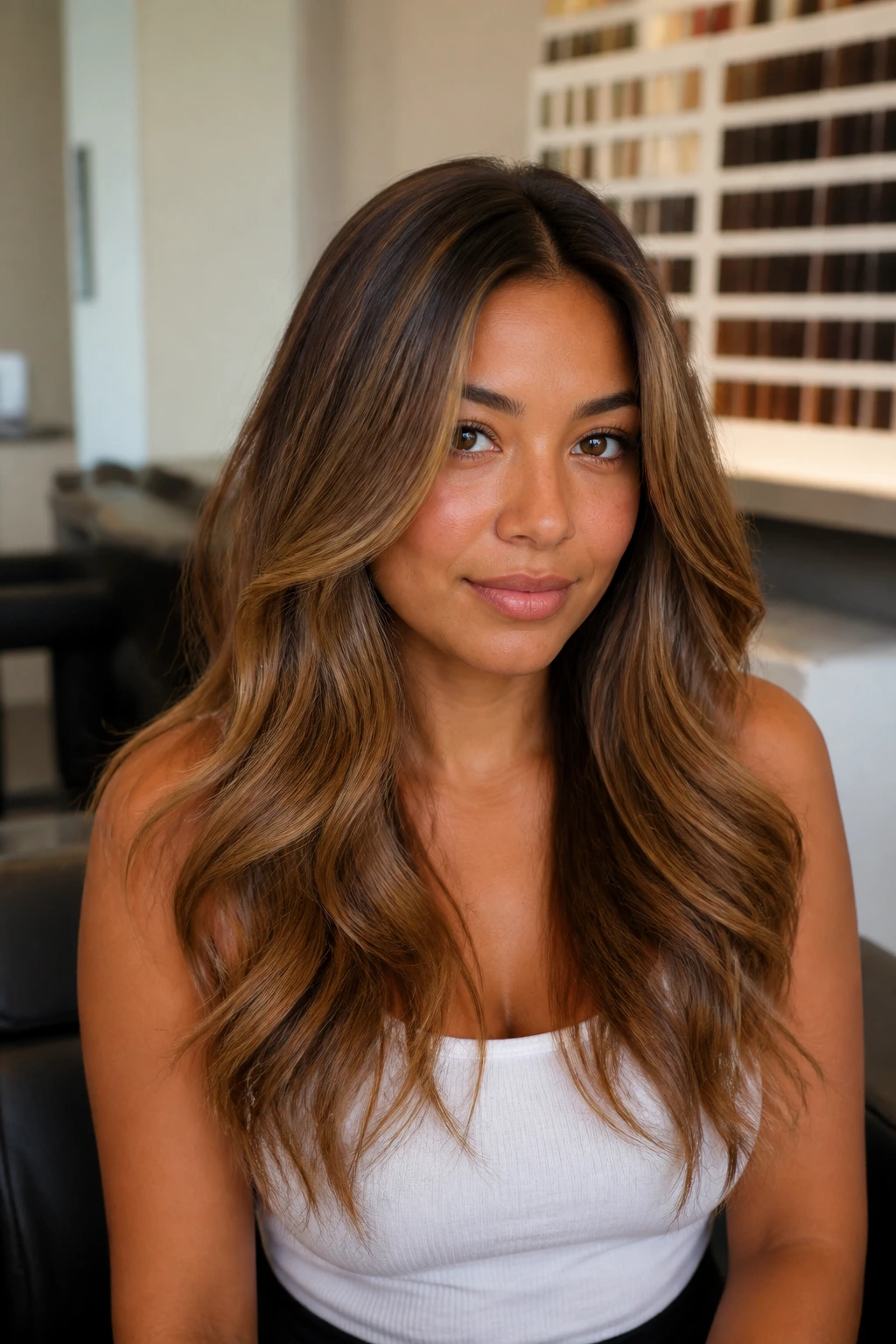
Bring photos. Two or three is enough. One should show the tone you want, one should show the placement, and one should show the maintenance level you can live with. A single reference photo rarely gives all three.
Then say the practical part out loud. Ask for a neutral-warm brown base if you want depth, caramel ribbons one to two levels lighter if you want movement, and a soft root shadow if you want soft grow-out. If you want brightness near the face, say so directly. If you do not want orange or copper, say that too.
A good color conversation is not about vague words like “warm” and “sun-kissed.” Those sound nice and tell the stylist almost nothing. Bring the level of detail that actually matters.
How to Style the Color So the Warmth Shows Up
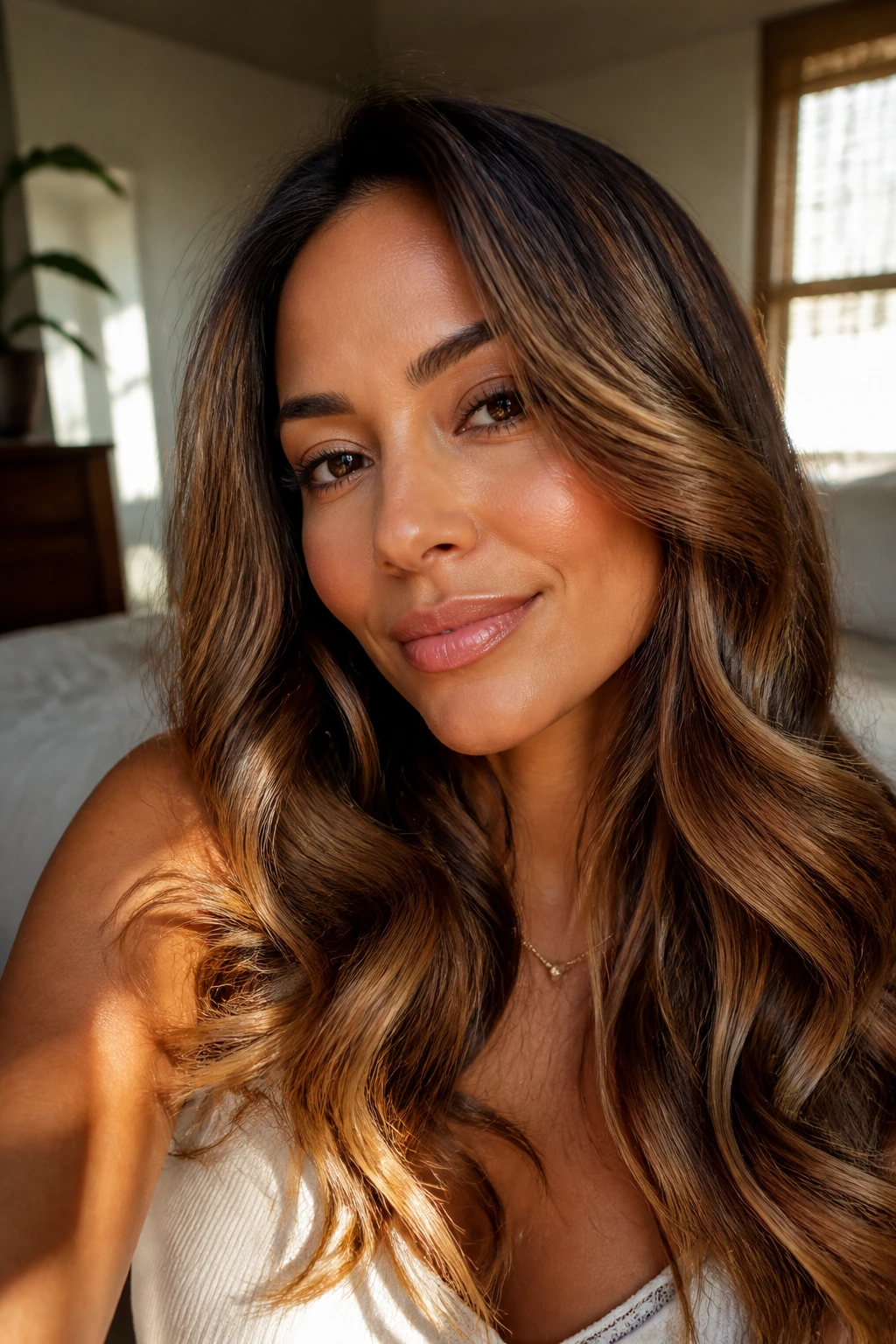
Loose waves: This is the easiest way to show caramel ribbons, balayage, and ombré. A bend in the hair breaks up the color and lets the lighter pieces appear in little flashes rather than one flat block.
Straight blowouts: These make glosses, contour highlights, and money pieces read cleanly. If the hair is smooth and shiny, the brown base shows more depth and the caramel looks controlled instead of busy.
Curls and coils: Place the lightest pieces on the outer curve of the curl clump, not the inner bend. That keeps the color from breaking up the pattern and lets each curl carry its own bit of warmth.
Makeup and jewelry: Peach blush, bronze eyeshadow, terracotta lip colors, and gold jewelry usually sit well next to caramel brown. Cool gray makeup can work, but it often drains the warmth out of the whole look.
Practical Tips for Richer Caramel and Easier Grow-Out
Placement before tone: Decide where the light should go before you obsess over the exact caramel name. A face frame, an end melt, and a full balayage all use the same color family, but they do very different things.
Depth at the root: Leaving 30% to 40% of the hair darker keeps tan skin from going flat. I like this more than all-over lightness, and I’m not shy about saying so.
Gloss between color sessions: A clear or warm-beige gloss every 4 to 6 weeks keeps the caramel from turning dusty. If your hair pulls orange, ask for a gloss that softens, not one that chills everything out.
Protect the ends: Caramel shows damage fast. Heat protectant every time, no skipping. Dry ends turn the warm pieces dull and stringy, which ruins the whole effect.
Common Mistakes That Make Caramel Brown Go Flat
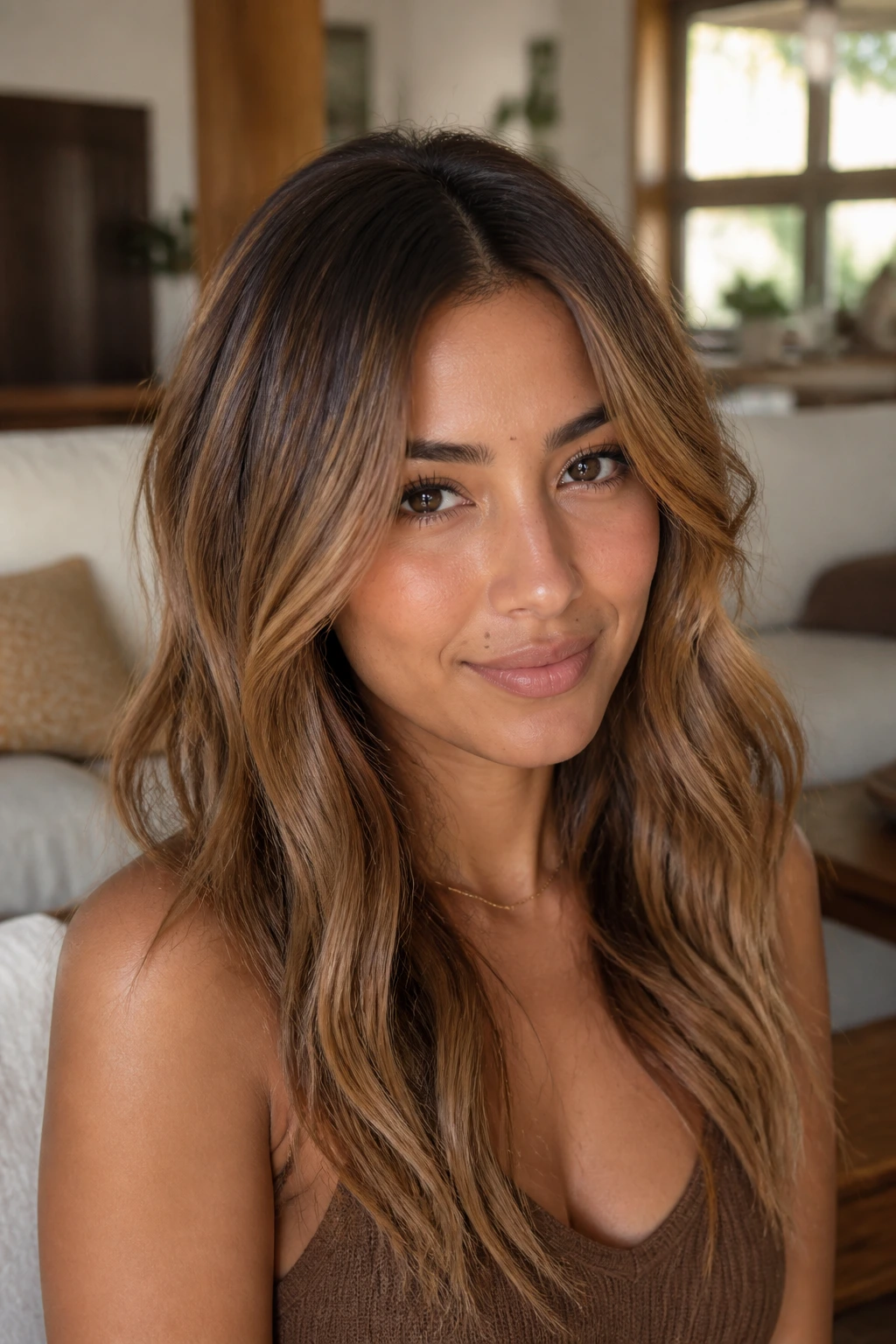
- Going too light at the front: If the money piece jumps three or four levels above the base, tan skin can look washed out instead of brightened. Fix it by keeping the face frame only one to two levels lighter and letting the rest of the hair stay deeper.
- Using ash toner on a warm look: That often turns caramel muddy or gray. If your goal is honey, bronze, or toffee, ask for warm beige or gold-based toning instead.
- Starting highlights at the scalp: The result can look stripey and hard to grow out. A soft root shadow or balayage melt solves that problem quickly.
- Overusing purple shampoo: One too many silver-shampoo washes can mute the warmth and leave caramel looking flat. Use it only when brass truly shows, not as your regular wash.
- Ignoring texture: Chunky highlights that look fine on straight hair can read loud on curls. On curly hair, thinner ribbons and painted placement usually work better.
Variations and Alternatives to Try
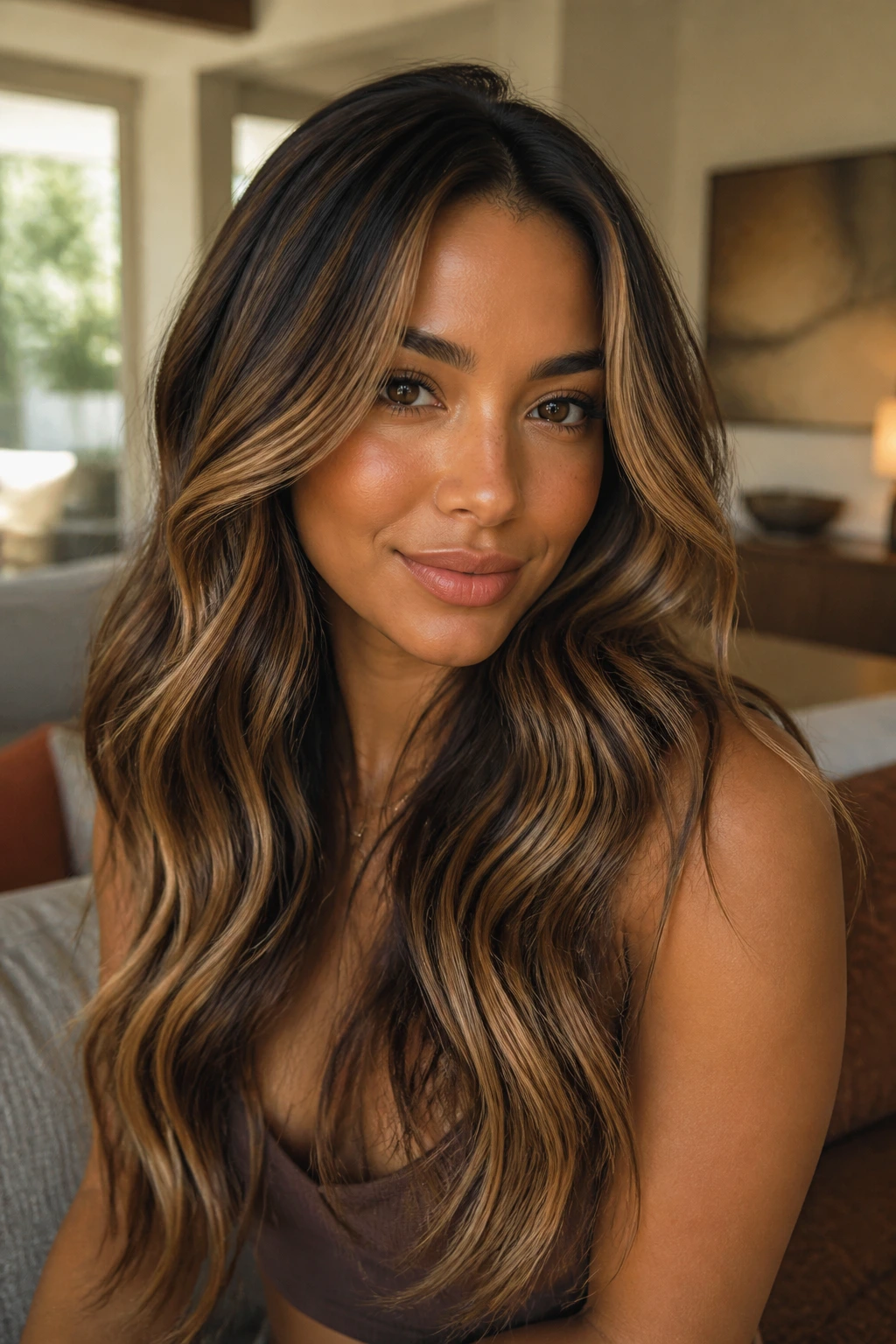
Honey-Heavy Version: Push the caramel toward gold and keep the root a shade deeper. This works especially well on golden tan skin that can take brightness without looking pale.
Mocha-First Version: Keep the base rich and add only a few caramel ribbons around the face and ends. This is the right call if you want low maintenance and a darker overall feel.
Copper-Kissed Version: Add a faint red note to the caramel so the brown reads warmer and deeper. It’s a strong choice for tan skin with peach or golden undertones.
Bronde Balance Version: Split the difference between brown and blonde by keeping the highlights thin and the root soft. This gives you the most visible dimension without committing to a dramatic blonde shift.
Curly Ribbon Version: Paint the caramel to follow curl clumps instead of straight sections. The color shows up better in motion, and the curls keep the look from getting stripey.
Tools, Products, and Resources Worth Having Ready
- Daylight reference photos: Save pictures of the tone and placement you want; indoor salon lighting can hide too much.
- Color-safe shampoo: A sulfate-free formula helps the caramel last longer and keeps the brown from going dull.
- Hydrating conditioner or mask: Warm brown looks rough fast when the ends get dry.
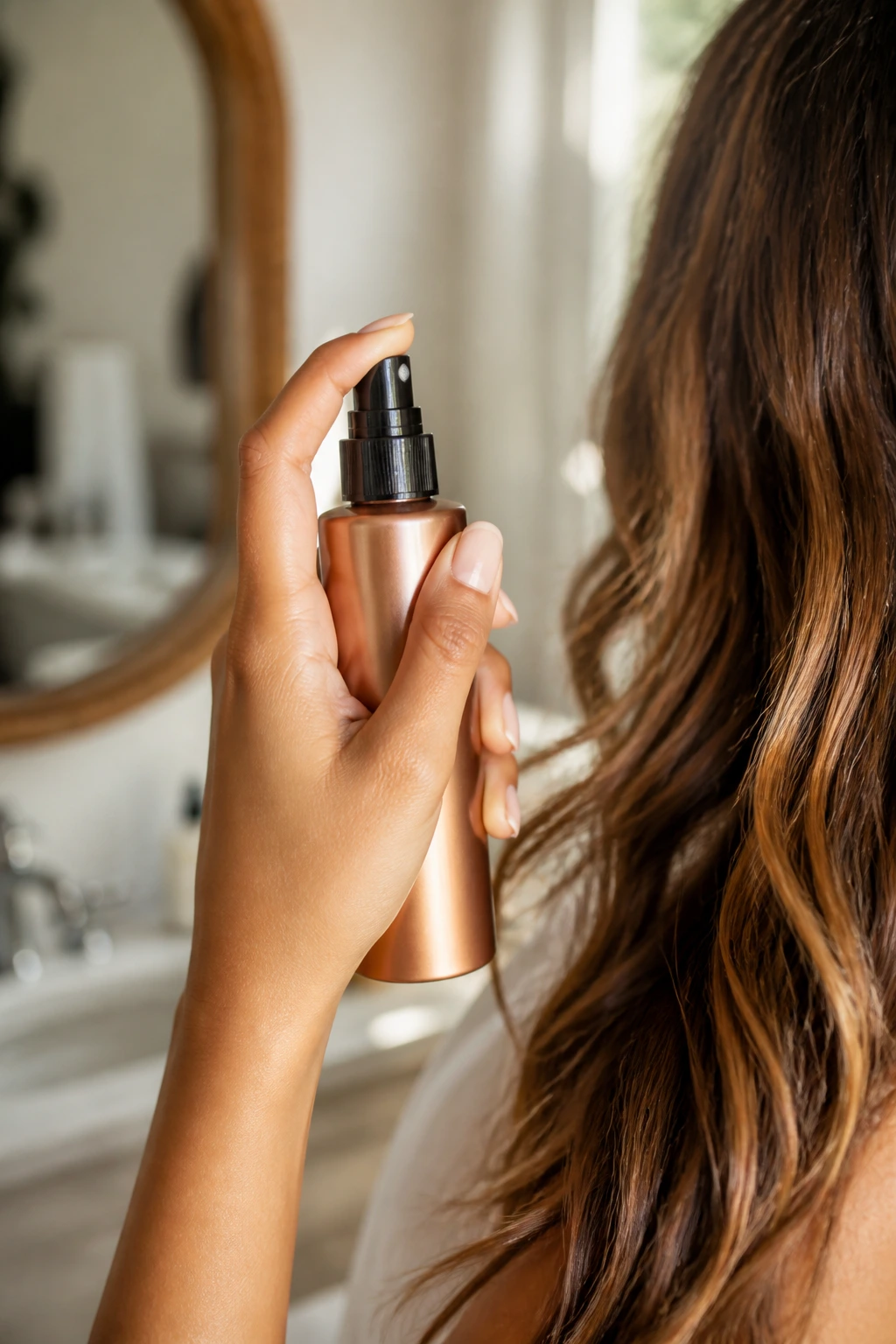
- Heat protectant spray: Use it before every blow-dry, iron pass, or diffuser session.
- Wide-tooth comb: This keeps freshly toned or highlighted hair from snagging.
- Sectioning clips: Helpful if you’re doing a gloss, mask, or at-home root blend.
- Microfiber towel or soft T-shirt: Less friction means less frizz and less fade on the lighter pieces.
- Gloss or color-depositing conditioner: A warm beige or caramel shade can revive tone between appointments.
- Clarifying shampoo: Keep one on hand if hard water or styling products are dulling the color.
- UV spray or hat: Sun can warm caramel into brass faster than people expect.
Maintenance, Refresh, and Recovery Between Visits
If your color was freshly done, wait at least 24 hours before the first shampoo, and 48 hours is better if you can manage it. That gives the cuticle time to settle instead of shedding pigment down the drain.
After that, wash two to three times a week with lukewarm water. Hot water pulls tone out faster, especially from golden and copper caramel. If your water is hard, use a clarifying or chelating shampoo once every 3 to 4 weeks so mineral buildup does not mute the shine.
Glosses usually hold for 4 to 6 weeks. Balayage and rooted melts can stretch longer, often 8 to 12 weeks before they need a real refresh. Root touch-ups depend on the style: face-frame color may need attention sooner, while an ombré can go a lot longer before it looks tired.
Deep-condition once a week, keep hot tools under 350°F when you can, and trim the ends every 8 to 12 weeks. Dry ends make caramel look older than it is. That’s the part most people miss.
Frequently Asked Questions
Which caramel shade is best for tan skin?
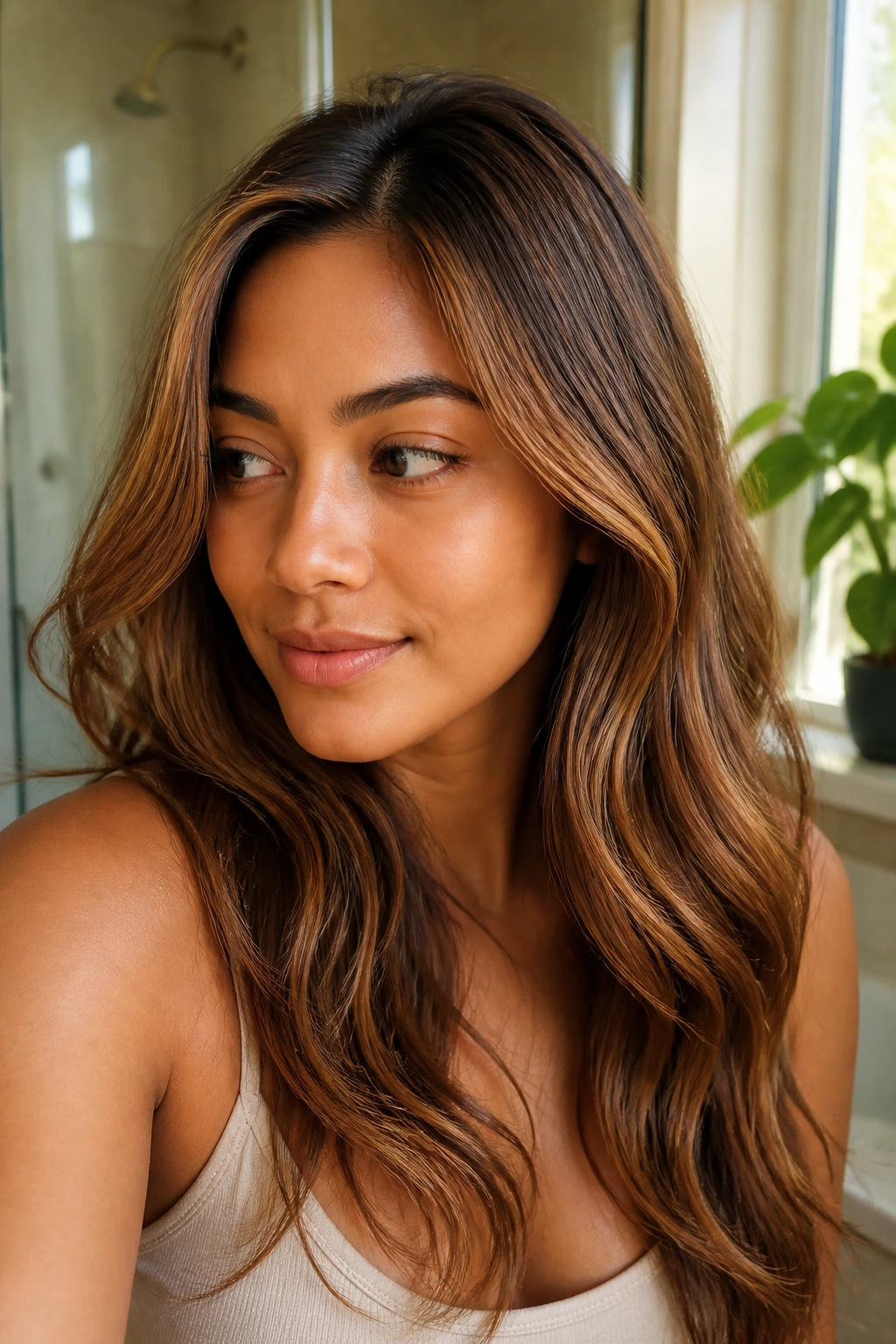
The safest answer is a caramel that matches your undertone. Golden tan skin usually likes honey and toffee, olive tan skin tends to look better in bronze and mocha, and neutral tan skin can wear almost any warm caramel if the root has enough depth.
Can I wear caramel brown if my hair is very dark?
Yes, but the lift may need to happen in stages. If your natural hair is near black, a one-visit jump to light caramel can turn patchy or orange, so many colorists will build the warmth over more than one appointment.
Is balayage better than full color for this look?
If you want lower maintenance, yes, balayage or a rooted melt is usually easier to live with. Full color can look rich, but it will show regrowth faster and needs more frequent refreshes to stay soft.
What if my caramel turns too orange?
That usually means the toner is too warm for what you wanted, or the hair lifted into too much underlying red. A demi gloss with a bit more beige or mocha can pull it back without killing the warmth completely.
Will this work on curly hair?
Absolutely, but placement matters more than ever. Thin ribbons painted on the outside of the curl pattern usually look best; chunky highlight stripes can break up the shape and make curls look busy.
How often will I need touch-ups?
A gloss may need a refresh every 4 to 6 weeks, while balayage can hold for 8 to 12 weeks if the root shadow is soft. Face-framing pieces tend to need a bit more attention because they fade fastest.
Can I get a low-maintenance version of this color?
Yes. Ask for a deeper root, thin caramel ribbons through the mid-lengths and ends, and a soft face frame rather than a bright all-over lift. That combination grows out cleanly and keeps the salon visits calmer.
Do I need to change my makeup once I go caramel?
Not completely, but warmer cheeks and eyes usually help the hair make sense. Bronze shadow, peach blush, and terracotta lip colors tend to sit well next to caramel brown, while very cool makeup can make the hair feel disconnected.
The Shades That Stay Kind to Tan Skin
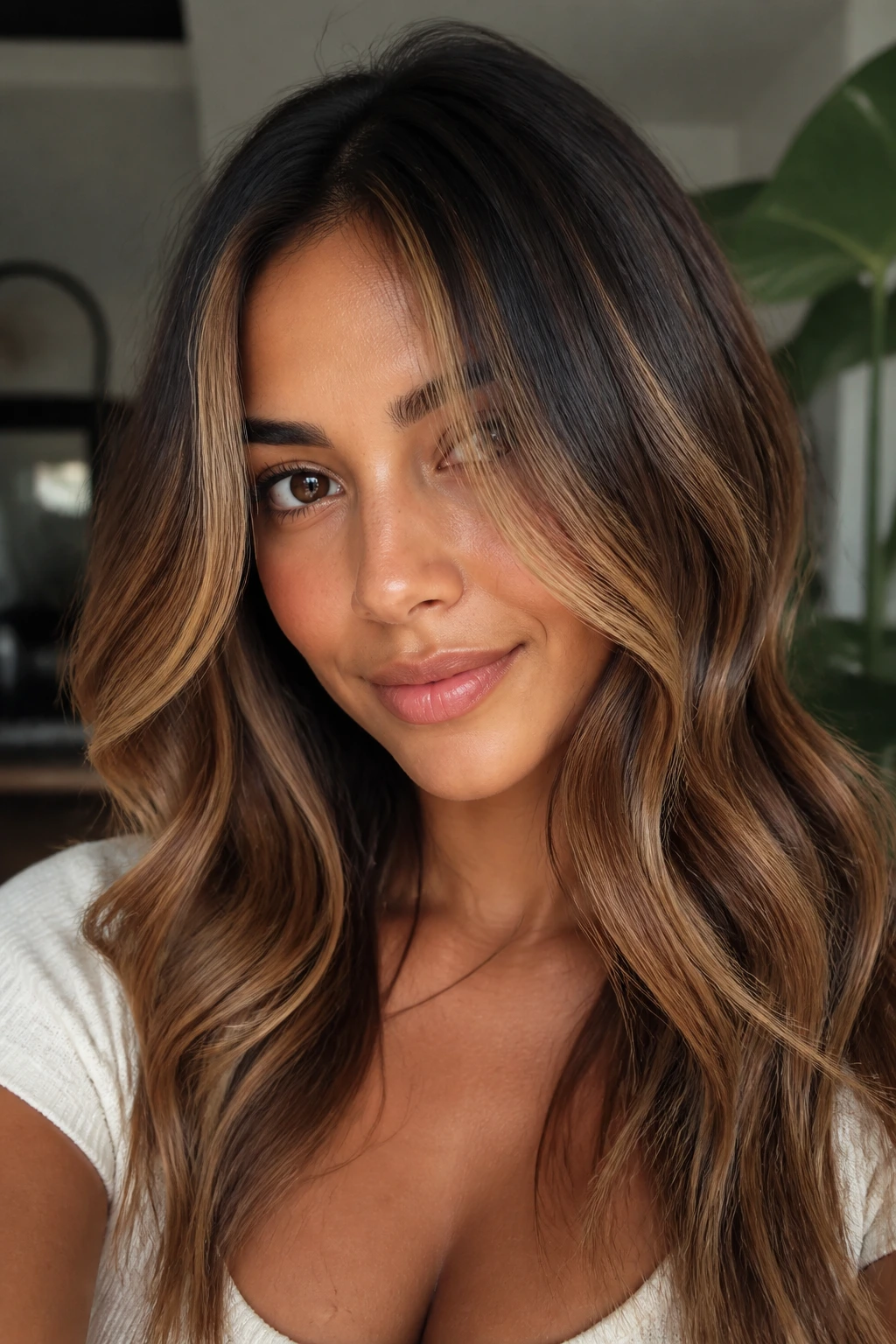
The best caramel brown on tan skin is rarely the lightest one in the room. It’s the one with enough depth to anchor the face, enough warmth to echo the undertone, and enough placement strategy that the color grows out without a fight.
That’s why I keep coming back to rooted balayage, face-framing ribbons, and glossed browns with a little bronze or honey in them. They do more than “add color.” They change how the whole face reads, and they do it without forcing you into constant upkeep.
Bring one photo for tone, one for placement, and one for maintenance level. That small bit of planning usually makes the difference between caramel that looks flat and caramel that looks like it belongs on you.