



Golden hair can look expensive on warm skin—or it can swing yellow, flat, and oddly harsh if the tone fights your undertone. That’s the part most people miss. Blonde hair transformations for warm skin tones are not about going as light as possible; they’re about choosing the kind of light that already exists in your face and sending it back with a little more shine.
Warm skin is not one note. Some faces read peach and cream, some lean golden, some have that deeper bronze cast that comes alive next to honey, caramel, or apricot. A pale ash blonde can look gorgeous in a photo and then go a little strange in daylight, especially if your brows, eyes, and skin all carry warmth. A better blonde keeps a thread of gold, beige, copper, or soft amber in the formula so the color looks connected to you instead of dropped onto you.
That’s why the useful blondes are never just “blonde.” They’re honey butter, caramel balayage, toasted vanilla, peach cream, saffron, hazelnut melt, and a few more that sit somewhere between blonde and warm light brown. The good ones have shape. The better ones grow out cleanly. The best ones make your skin look rested even when you’ve had a short night and one too many coffees.
Why These Warm Blondes Work So Well
-
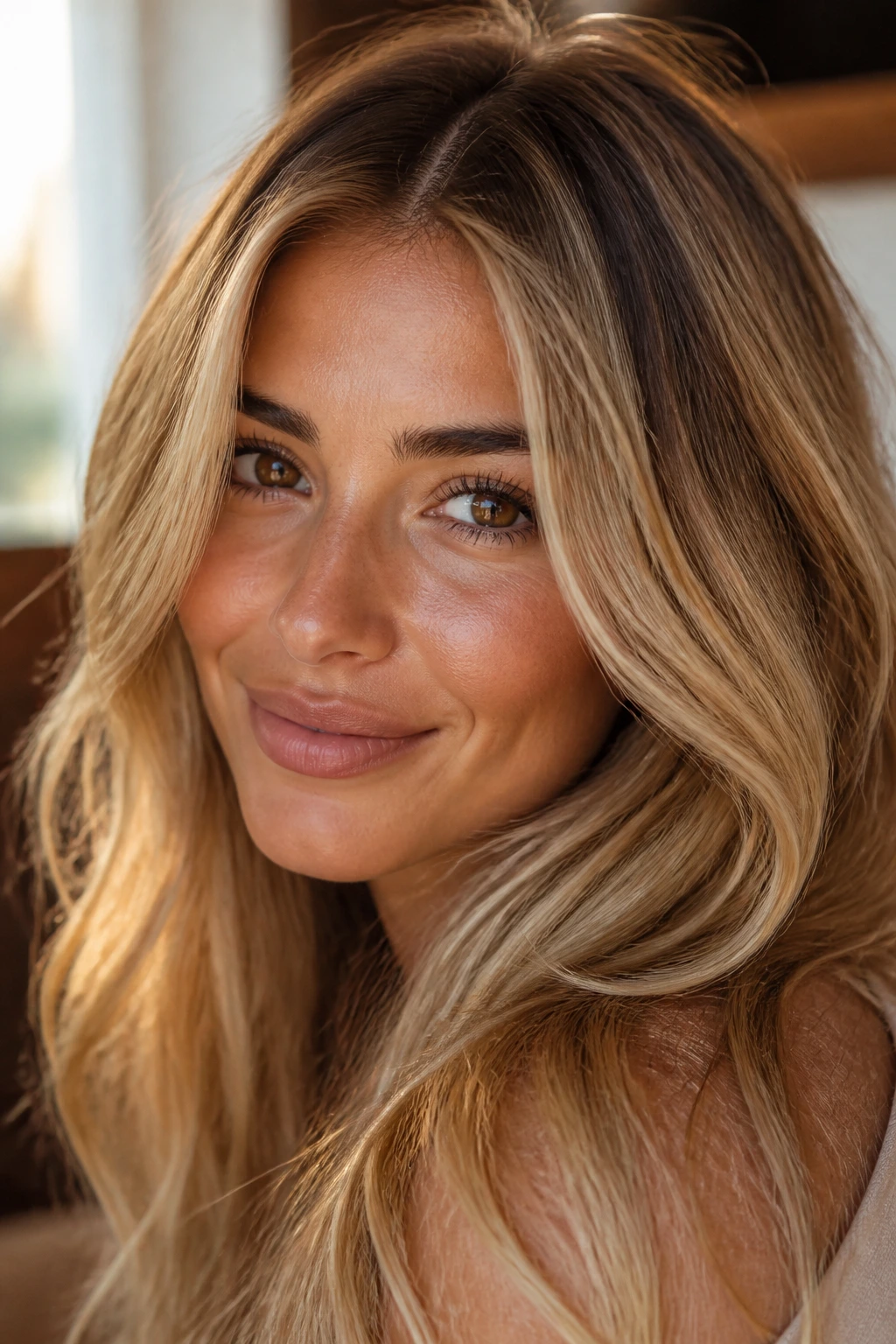
They echo your undertone instead of fighting it: gold, peach, copper, and beige tones line up with warm skin so the color reads natural rather than chalky.
-
They keep the face from going flat: a little depth at the root or around the perimeter gives the eye something to read, which matters more than one flat sheet of lightness.
-
They grow out with less drama: balayage, shadow roots, and ribbons of highlight soften the line between new growth and colored hair, so the style stays wearable longer.
-
They work across different base colors: a level 6 brunette and a level 8 dark blonde can both wear warm blonde, but the placement and gloss change. That flexibility is the whole point.
-
They leave room for shine: warm reflects light in a way ash tones don’t. A glossed honey blonde can look richer than a blonder-but-duller shade that has been stripped too far.
1. Honey Butter Blonde
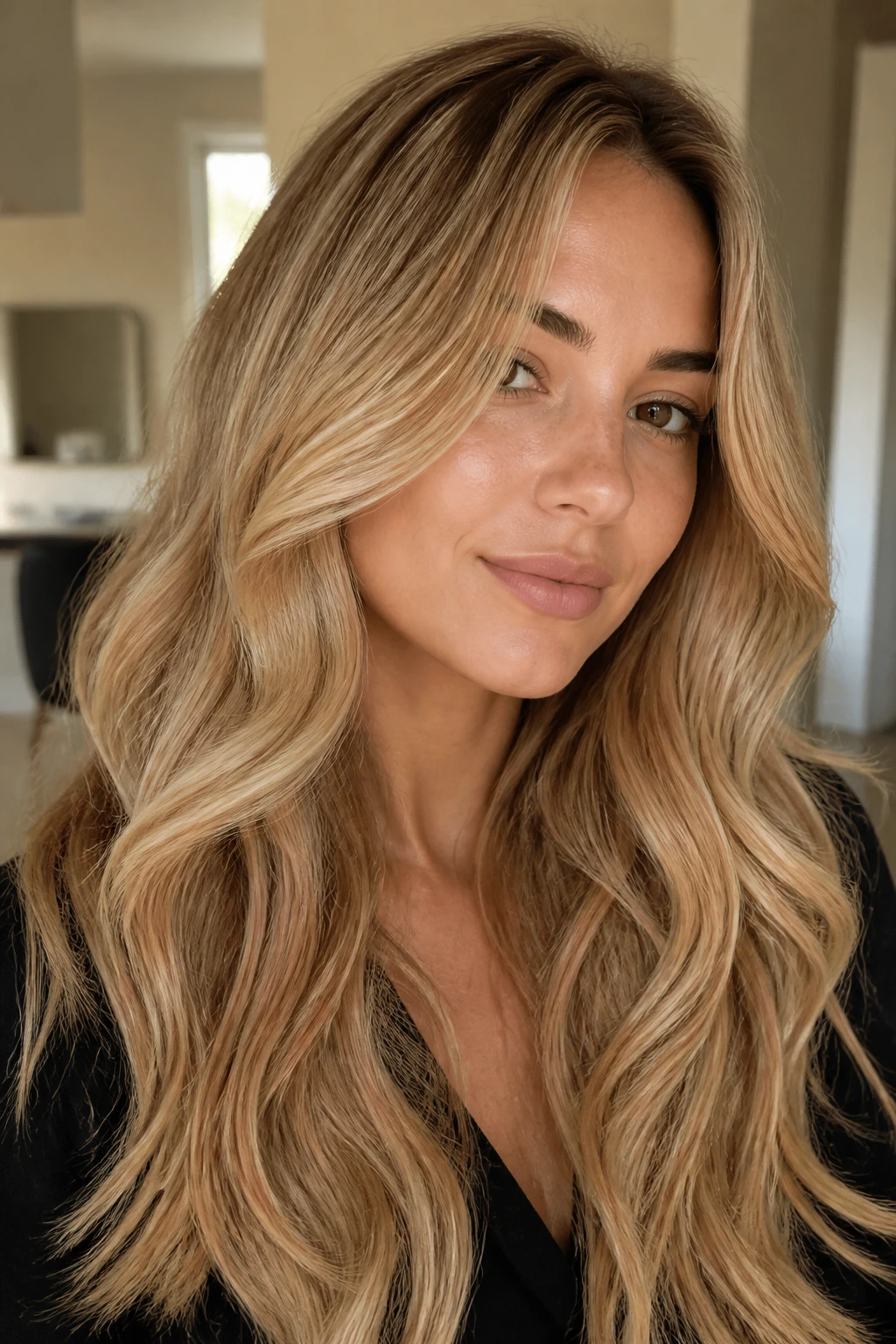
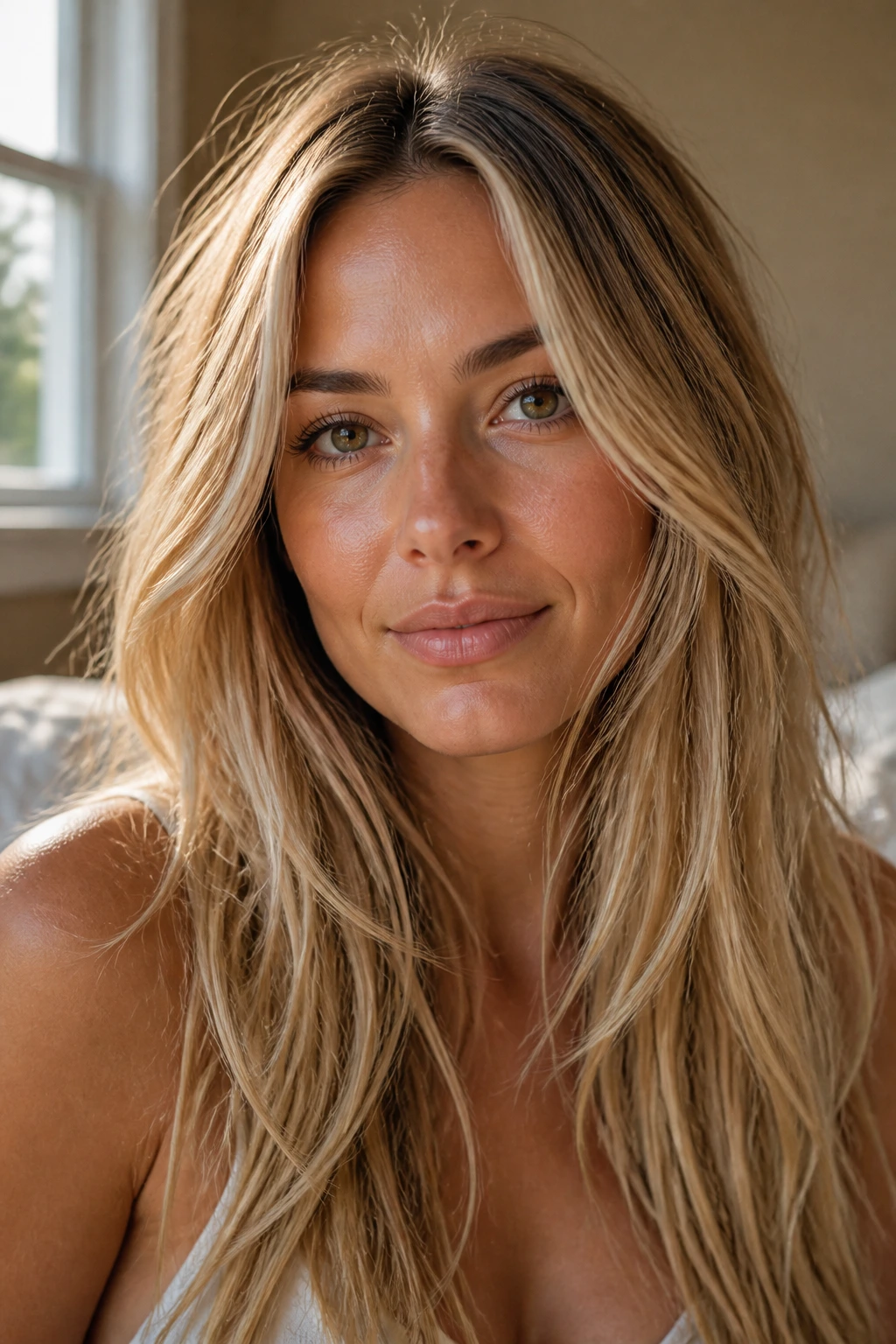
Honey butter blonde is the easiest warm blonde to trust when you want softness first and drama second. It sits in that creamy space between gold and beige, so it brightens warm skin without making the face look pasted against the hair. The finish should look silky, not streaky.
Ask for fine highlights through the top and a deeper root melt at level 6 or 7. A level 8 honey gloss on the mids keeps the whole look cushioned, almost like sunlight through thick glass. The trick is restraint: if the blonde gets too yellow, it starts looking less like honey and more like brass.
Why It Flatters Warm Undertones
The gold in the blonde repeats the warmth already in your complexion, which makes the color feel integrated. A few face-framing pieces at the cheekbone help, but the real win is the creamy, blended root.
If your hair is naturally medium brown, this is one of the least stressful warm blondes to grow out. The line between natural regrowth and color stays soft, and that matters if you don’t want a hard maintenance schedule.
- Ask for micro-foils around the hairline.
- Keep the gloss in the beige-gold family, not pure yellow.
- Use a shine serum on dry ends only.
2. Caramel Balayage
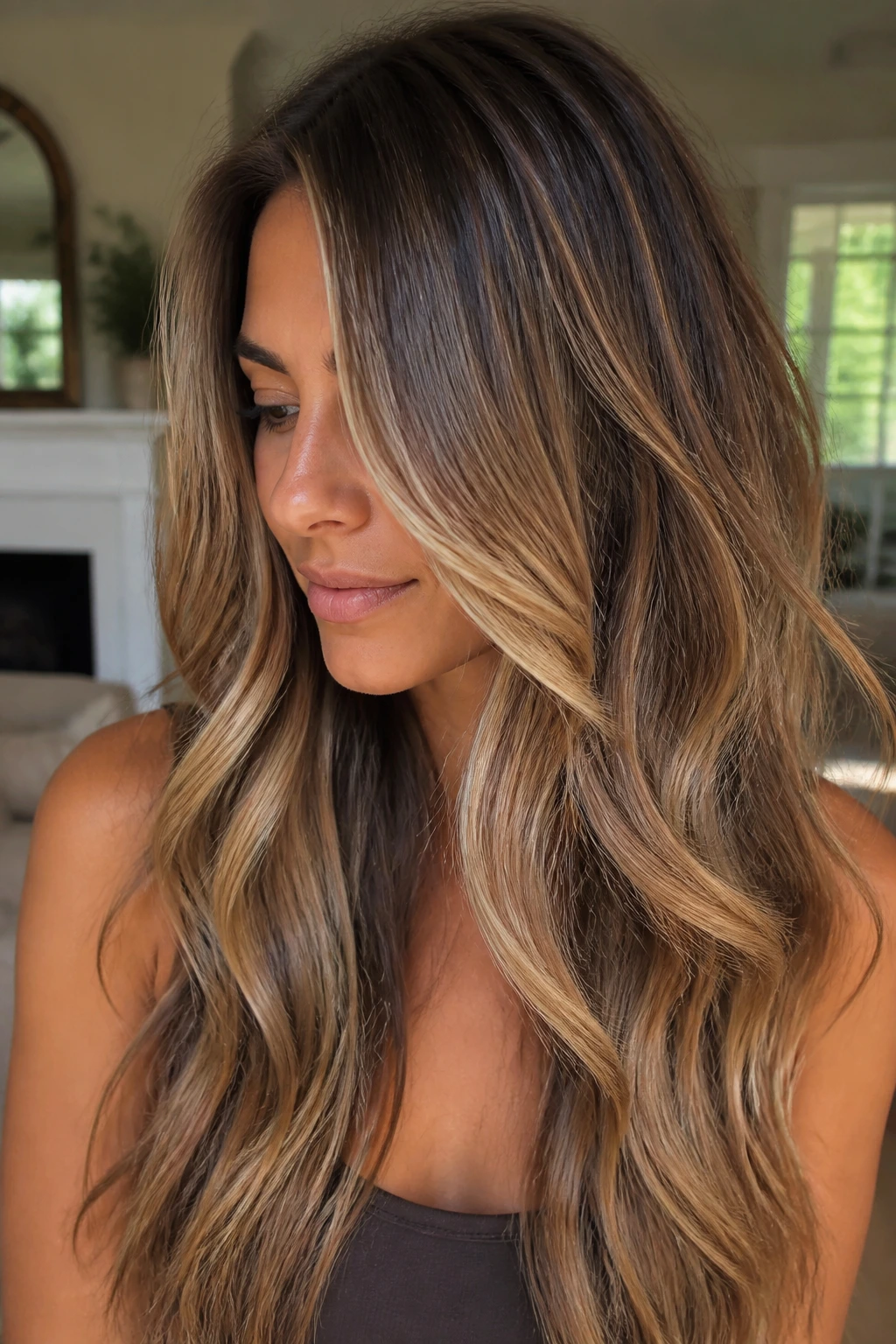
Caramel balayage is the version I reach for when someone wants “blonde” but hates looking overprocessed. The lighter pieces are painted onto the surface and through the mids, while the base stays deep enough to give the hair some shape. It reads warm, expensive, and lived-in.
The best caramel balayage on warm skin has a soft brown base with ribbons of caramel that start below the root. That way the highlights show movement when the hair swings, not a blocky stripe at the scalp. It’s a low-maintenance look by design, not by accident.
This transformation works especially well on thick hair because the painted pieces break up the density. On finer hair, keep the ribbons delicate and space them out a little more so the head doesn’t look over-lightened.
3. Toasted Vanilla Blonde
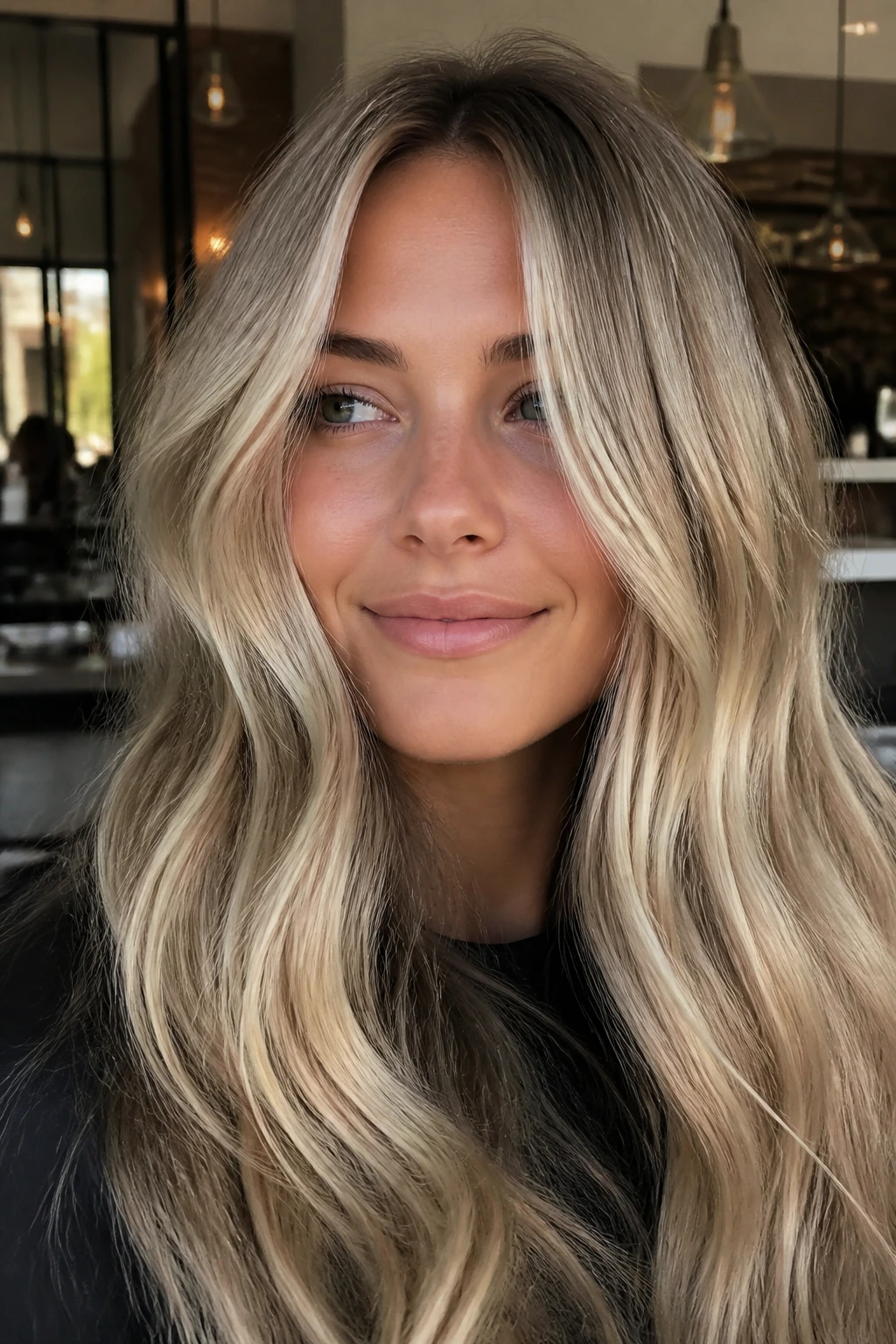
Is vanilla blonde too cool for warm skin? Not if you toast it first. The shade starts with a creamy beige blonde, then picks up a slightly warm gloss that keeps it from turning icy or flat. The result looks polished without feeling hard-edged.
A good version of this shade uses a soft root shadow and a toner that leans beige-gold rather than silver-beige. That tiny shift matters. Warm skin can wear light hair beautifully, but the blonde needs a little warmth of its own or the face can start to look drained.
How to Wear It
This one looks best with a cut that shows movement—long layers, a collarbone bob, or soft curtain bangs. Sleek finishes can look sharp in a good way, but the color really wakes up when a few bends or waves catch the light.
If you like a clean, quiet blonde that still feels warm, this is one of the safest bets in the whole group.
4. Apricot Blonde
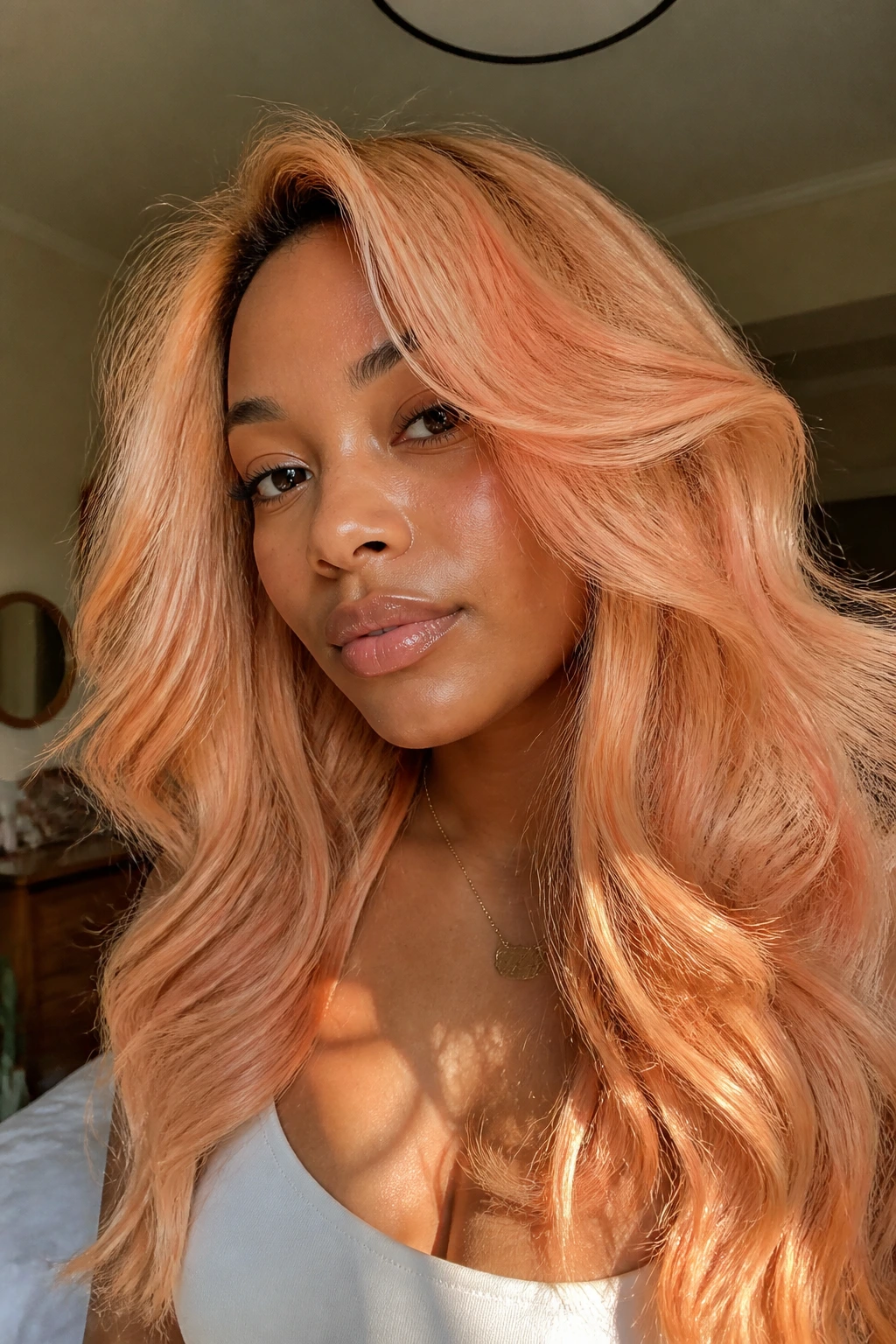
Apricot blonde sits right in that lovely middle ground between peach and gold. It has enough warmth to flatter golden and peachy skin, but enough blonde in the mix to stay light and bright. It’s a little unusual, which is half the charm.
This shade works best when the base is lifted to a pale yellow, then toned with a peach-gold glaze. Too much orange and it turns brassy; too little and it loses the apricot character completely. The right apricot blonde should look like a soft wash of color, not a neon tint.
It’s a good choice if you want something playful without going full copper. On medium skin, the peach notes can make the complexion look fresh; on deeper warm skin, the shade reads brighter and more editorial.
5. Golden Ribbon Highlights
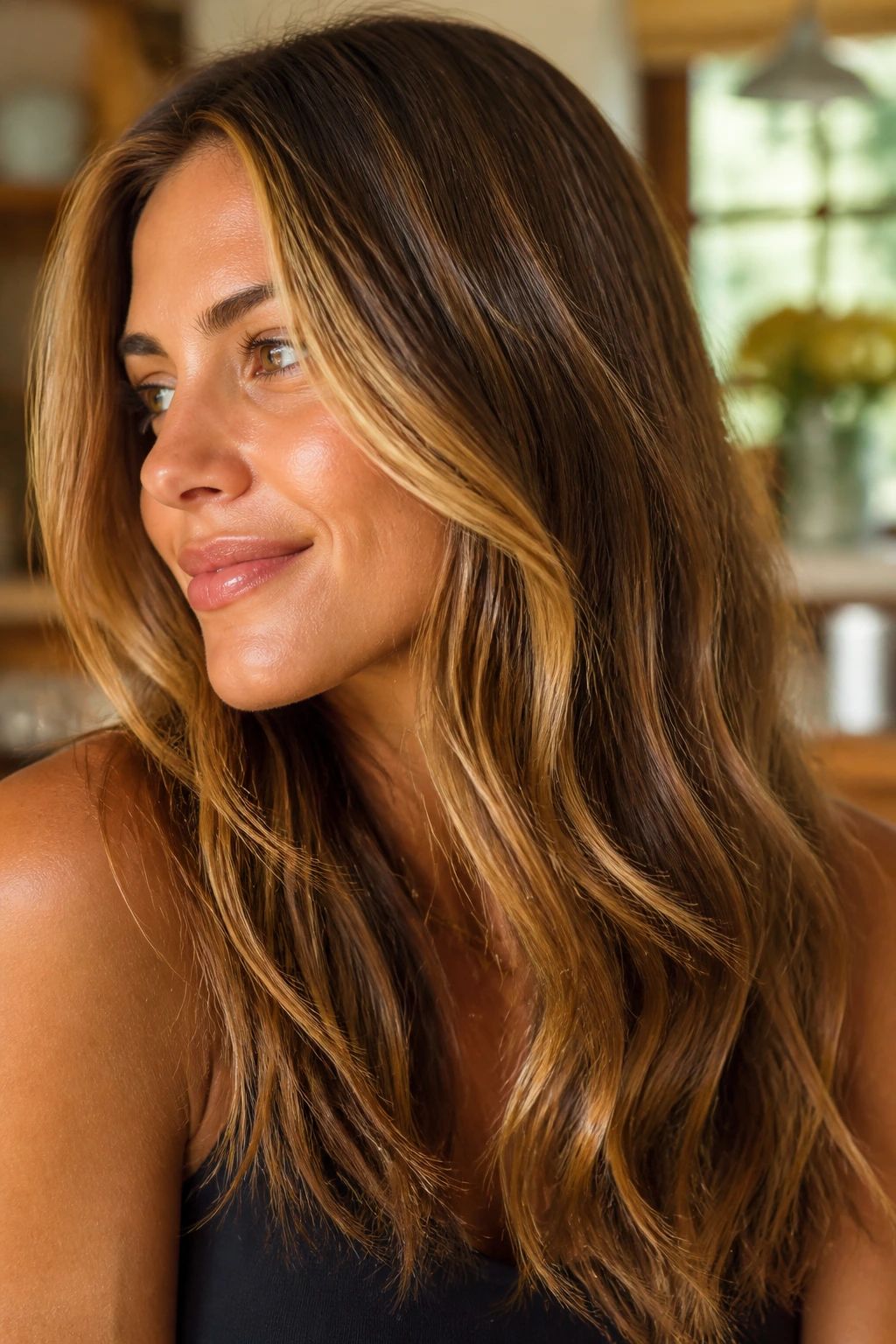
Golden ribbon highlights are for anyone who wants the hair to look lighter in motion, not necessarily lighter all over. Instead of flooding the head with blonde, the colorist places wider, sunlit ribbons through the surface so the strands catch a warmer kind of brightness. The effect is bold enough to notice, but not so loud that the base disappears.
This style is a good match for warm skin because the gold sits right in the color family of the complexion. The base can stay medium brown, dark blonde, or soft chestnut. A few brighter ribbons near the face keep the cheeks from looking washed out.
What to Ask For
Tell the colorist you want visible gold, not ash or pearl. Ask for ribbon-like foils or painted sections with dimension left between them, then finish with a gloss that stays in the golden lane.
The best part? It looks different every time you move your head. That kind of movement matters more than people think.
6. Butterscotch Bronde
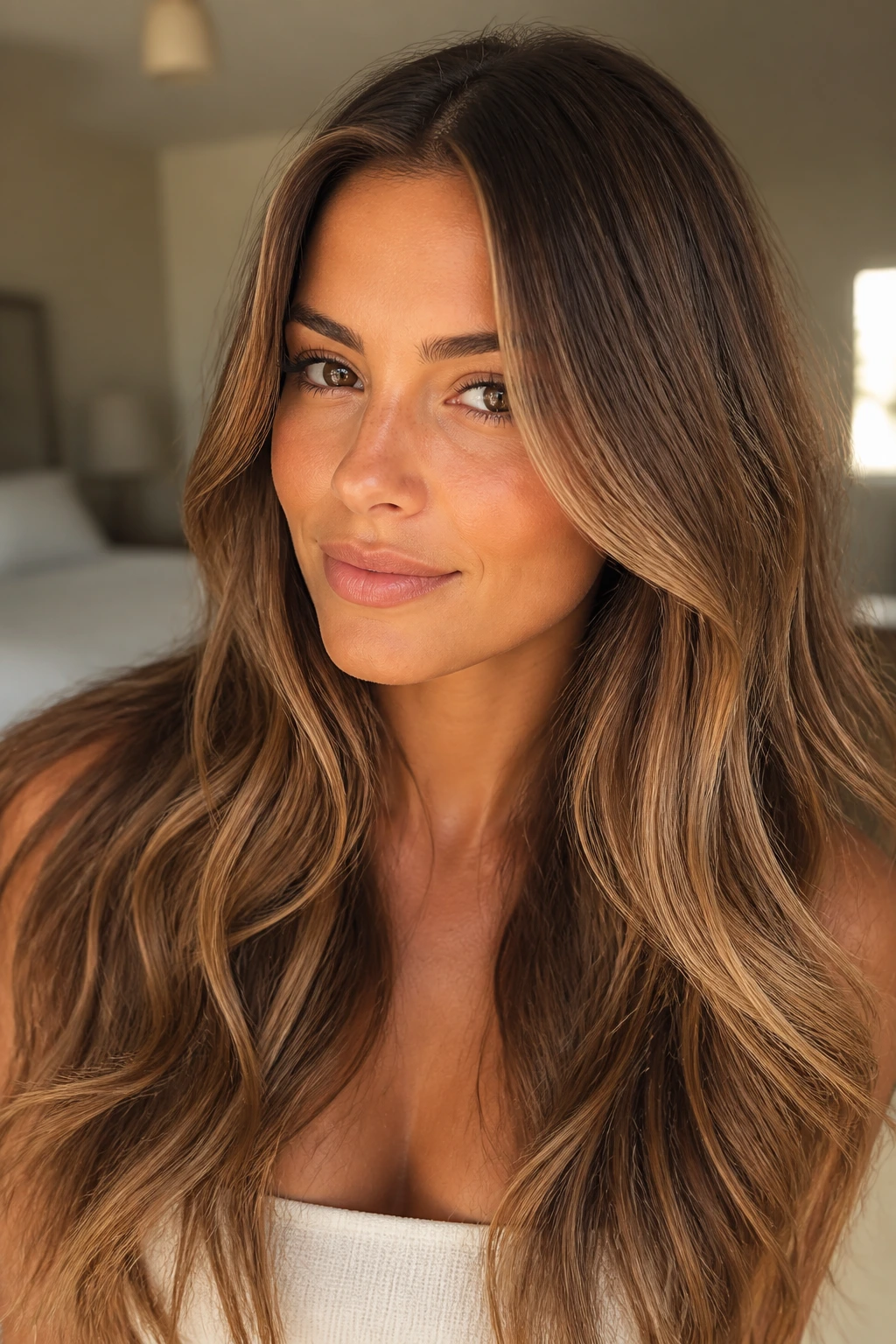
Butterscotch bronde is for the person who doesn’t want to look like they “went blonde.” The brown stays present, which makes the golden pieces feel richer and more believable. It’s one of the easiest transformations for warm skin because the hair never loses its depth.
The formula usually lives between level 6 and 8, with a warm brown base and lighter caramel-beige ends. That balance gives the face color and keeps the overall look grounded. If you like your brows dark and your makeup bronzy, this shade makes that whole palette feel intentional.
It’s also a smart choice for coarse or dense hair. The darker lowlight tone keeps the shape from ballooning into one large pale mass, and the buttery highlights add life without stripping the hair’s weight.
7. Amber Money Piece
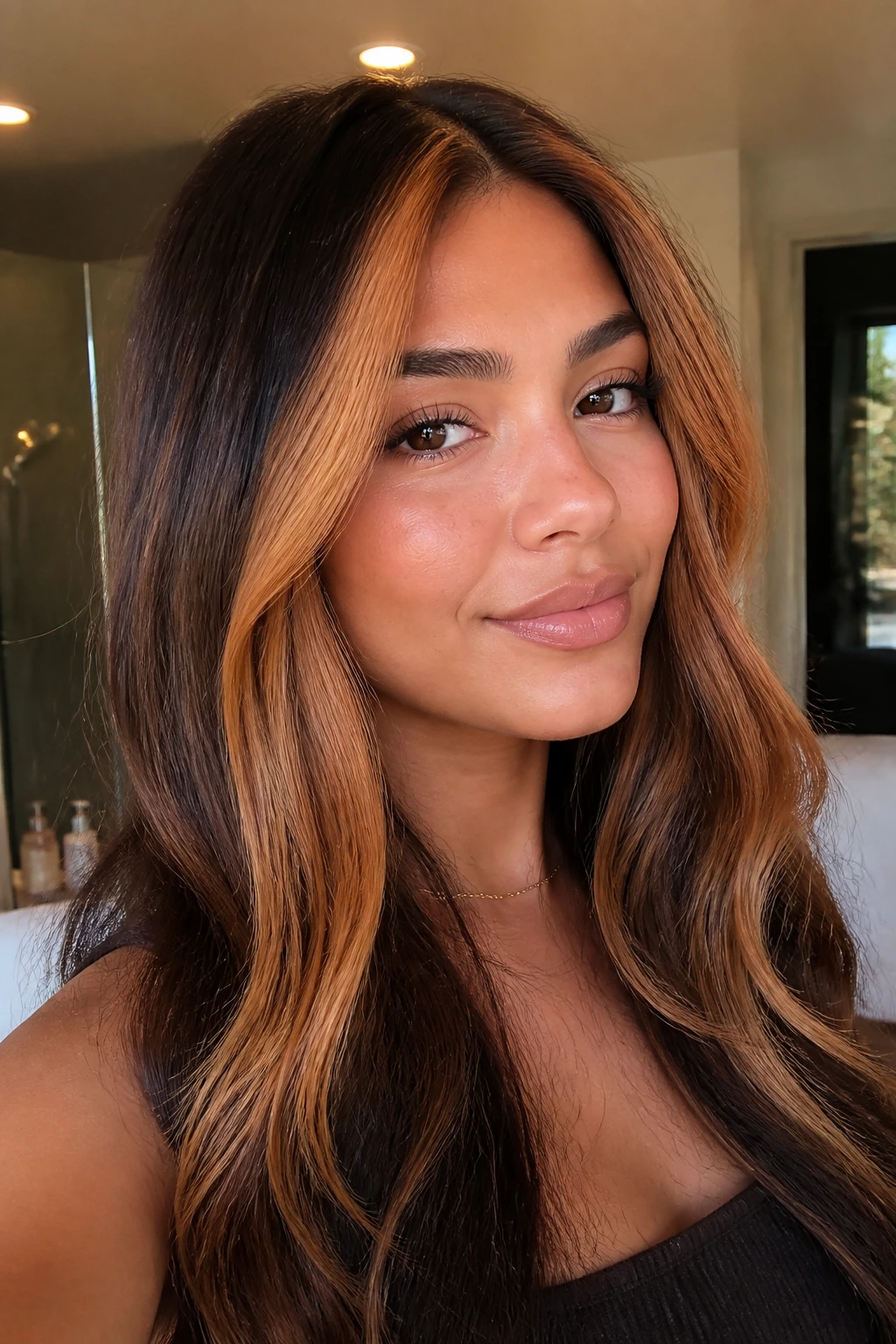
A money piece can go very wrong if the color is too pale or too cool. Amber avoids both problems. The front sections glow with a warm copper-gold tone that frames the face and gives warm skin a brighter edge right where people look first.
This is not subtle, and that’s the fun of it. The rest of the hair can stay dark blonde, brown, or balayaged, while the front panels go lighter and warmer. The contrast makes the face pop without needing an all-over blonde service.
Amber money pieces work especially well if your natural hair has red or gold undertones already. They also behave well on layered cuts because the front brightness breaks up the shape around the cheekbones and jaw.
8. Strawberry Honey Blonde
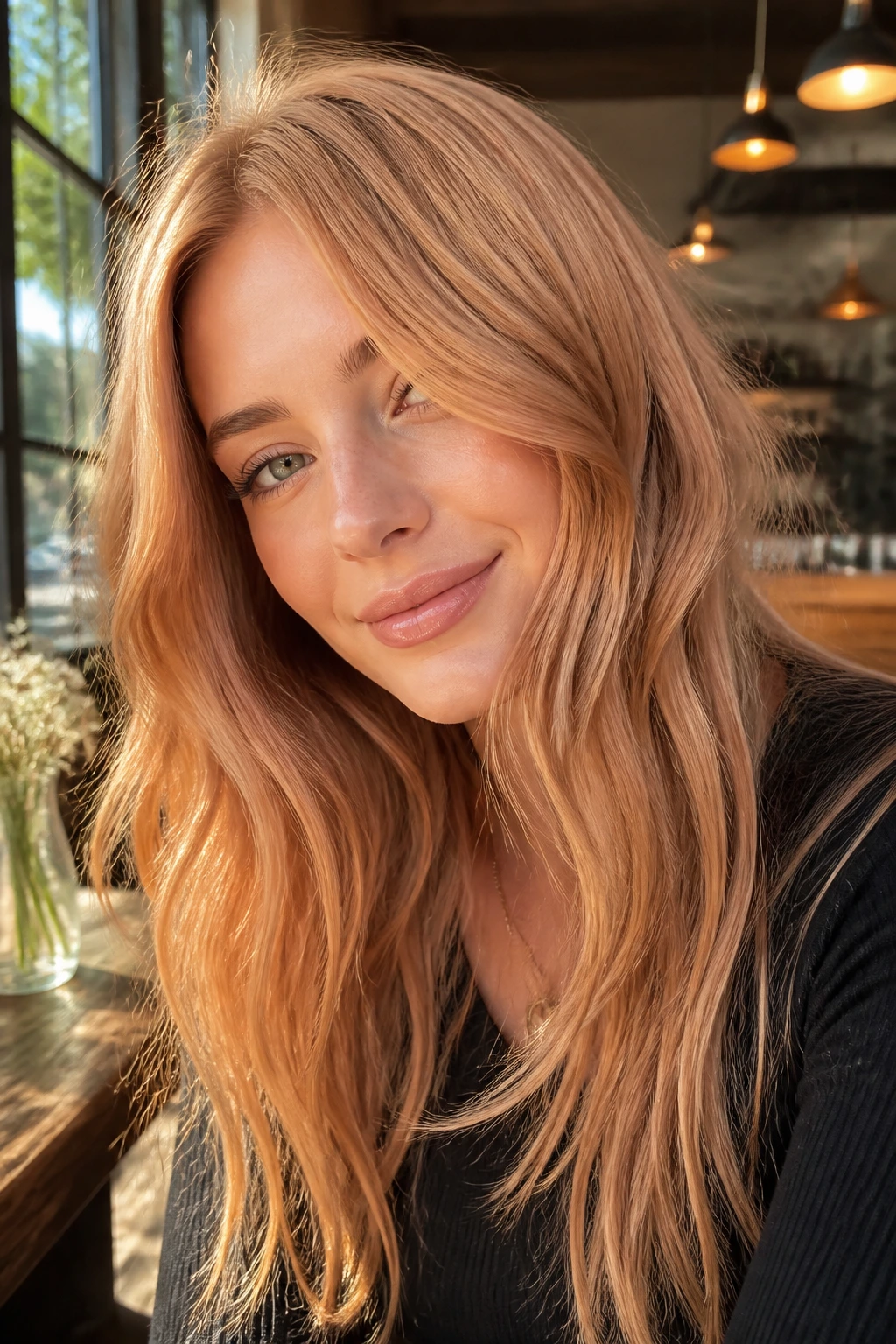
Strawberry honey blonde leans into the soft red-gold side of blonde without tipping into obvious copper. It’s one of the prettiest options for fair warm skin and medium warm skin because the color has both glow and softness. The result can look almost like lit honey with a blush of red.
A good version starts with a warm blonde base and a sheer strawberry glaze over the top. Keep the red component light. Too much pigment and it becomes strawberry copper; too little and you just end up with standard gold. The middle ground is where it shines.
This shade is lovely when you want a little personality but still need the color to feel wearable at work, at dinner, or anywhere else. It has more warmth than honey blonde and more lift than true copper.
9. Cinnamon Swirl Blonde
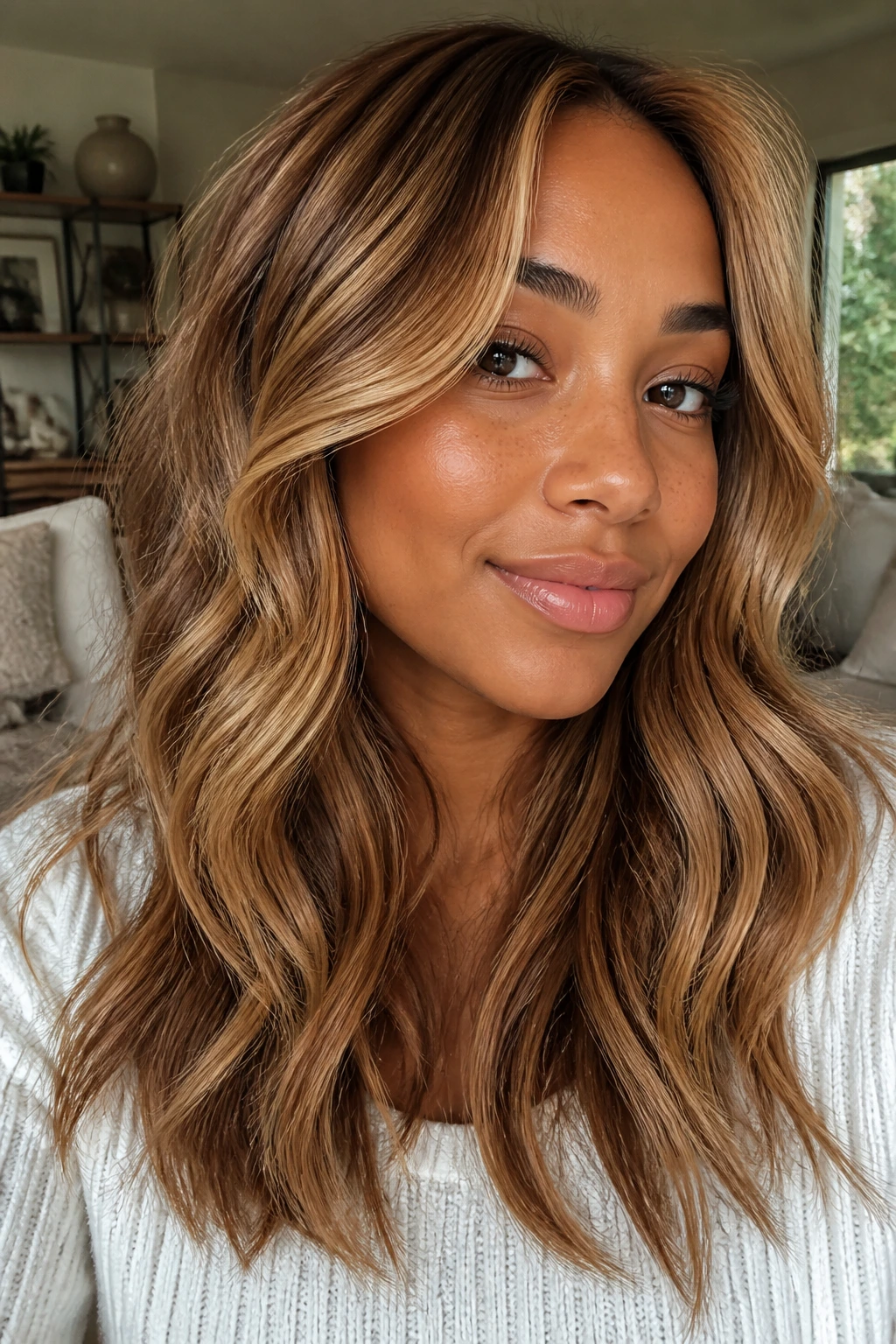
Cinnamon swirl blonde gives the hair more spice than sweetness. The base stays deeper, the highlights stay warm, and the lowlights carry a cinnamon-brown tone that keeps the blonde from reading washed out. It looks especially good on long hair because the color changes as the layers move.
The formula tends to work best on brunettes moving lighter in stages. Rather than chasing a full pale blonde, the colorist places warm blonde pieces through the mids and then folds in cinnamon lowlights to keep the mix rich. That makes the skin look warm, not muddy.
This is one of the smartest choices for busy maintenance schedules. The root line can grow without shouting, and the cinnamon depth keeps the finish from turning too bright too fast.
10. Maple Glaze Blonde
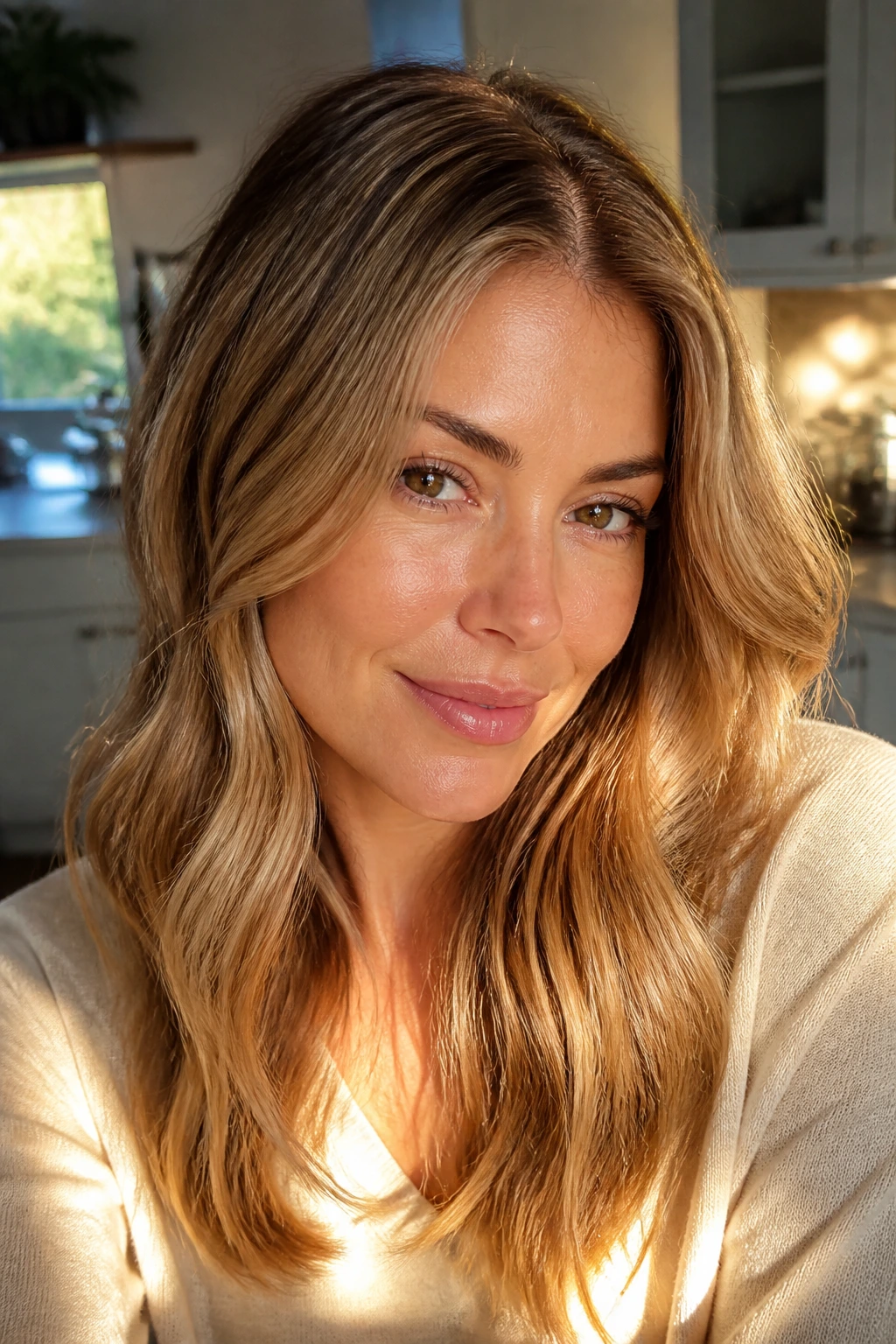
Maple glaze blonde has a polished, syrupy shine that reads expensive without needing to shout about it. The blonde itself is warm and soft, but the glaze gives it a deeper amber finish, almost like sunlight on maple candy. It’s smoother than honey and richer than beige.
This color is strongest when the root is allowed to stay slightly deeper. A shadow root around level 6 or 7 lets the gloss melt into the mids, which keeps the color from looking boxy. Warm skin tends to like this structure because the face gets light around it, not just on top of it.
If your hair tends to lose warmth quickly after coloring, this is a good route. The maple tone survives a little better than pale gold because the pigment has more depth.
11. Sunset Copper Blonde
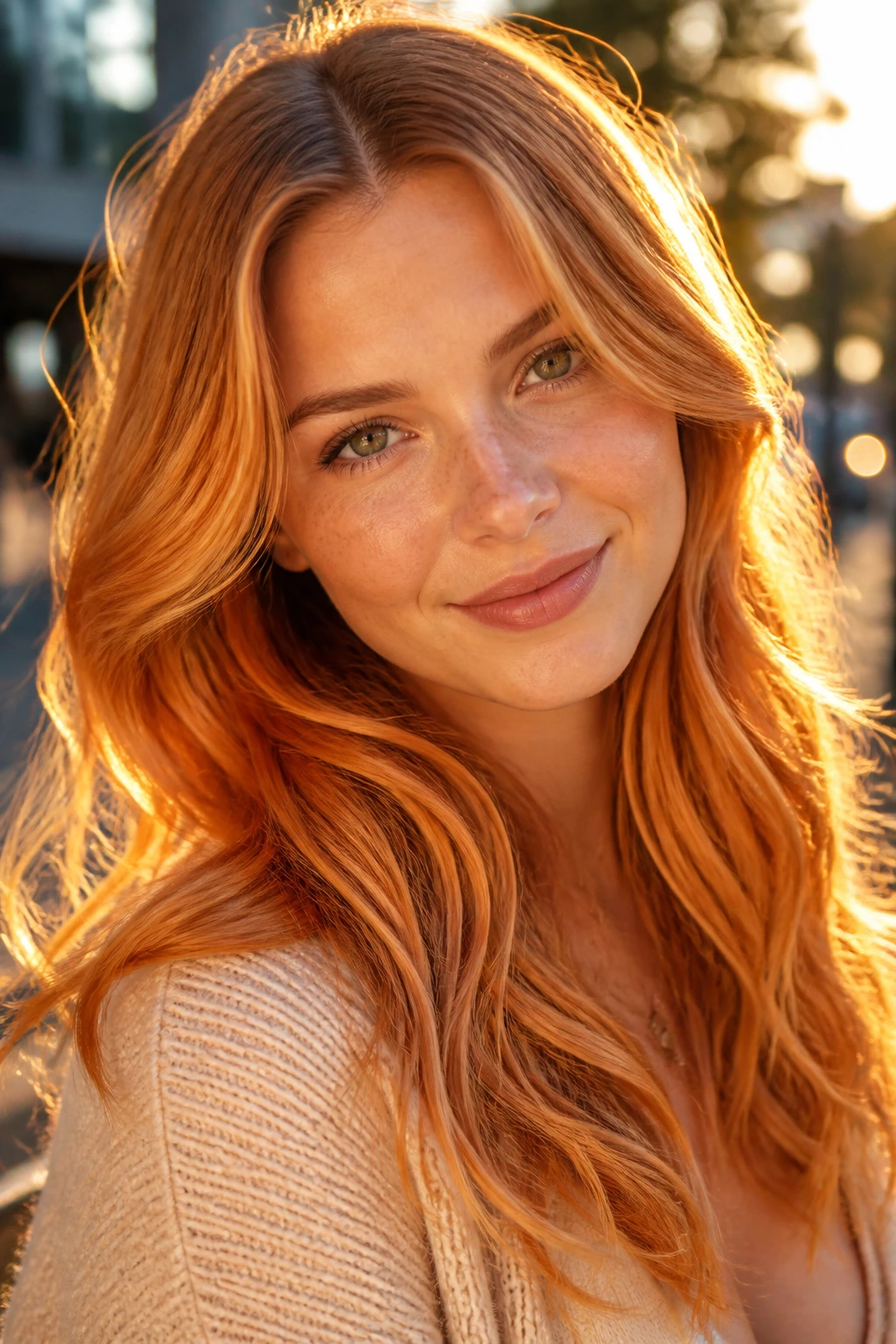
Sunset copper blonde lives on the brighter end of warm blonde, and it suits people who want the hair to make a statement. The color has gold at the base, copper through the middle, and enough blonde lift to keep it from reading as simple red. It feels alive.
This shade looks especially strong on warm skin with deeper eyes or freckles. The orange-gold in the hair echoes the skin’s warmth and can make the whole face look more saturated, which sounds odd but works beautifully in person. That saturation is the point.
A warning, though: this is the kind of color that needs a confident gloss schedule. Copper fades faster than honey. If you love the tone when it’s fresh, plan on keeping a warm color mask nearby.
12. Sandy Honey Blonde
Sandy honey blonde is the quieter cousin of honey butter. It keeps the gold, but softens it with beige so the finish feels airy instead of syrupy. On warm skin, that little bit of beige can be the difference between “glowy” and “too yellow.”
This shade is especially flattering if your skin leans peach or neutral-warm. The color won’t fight redness in the cheeks, and it won’t make a tan look muddy. It simply lightens the frame around the face without stealing attention.
For fine hair, sandy honey is a strong pick because the pale pieces create the feeling of fullness without heavy contrast. Keep the roots soft and the ends slightly brighter, and the whole thing reads like hair that has spent a few honest hours in the sun.
13. Champagne Gold Blonde
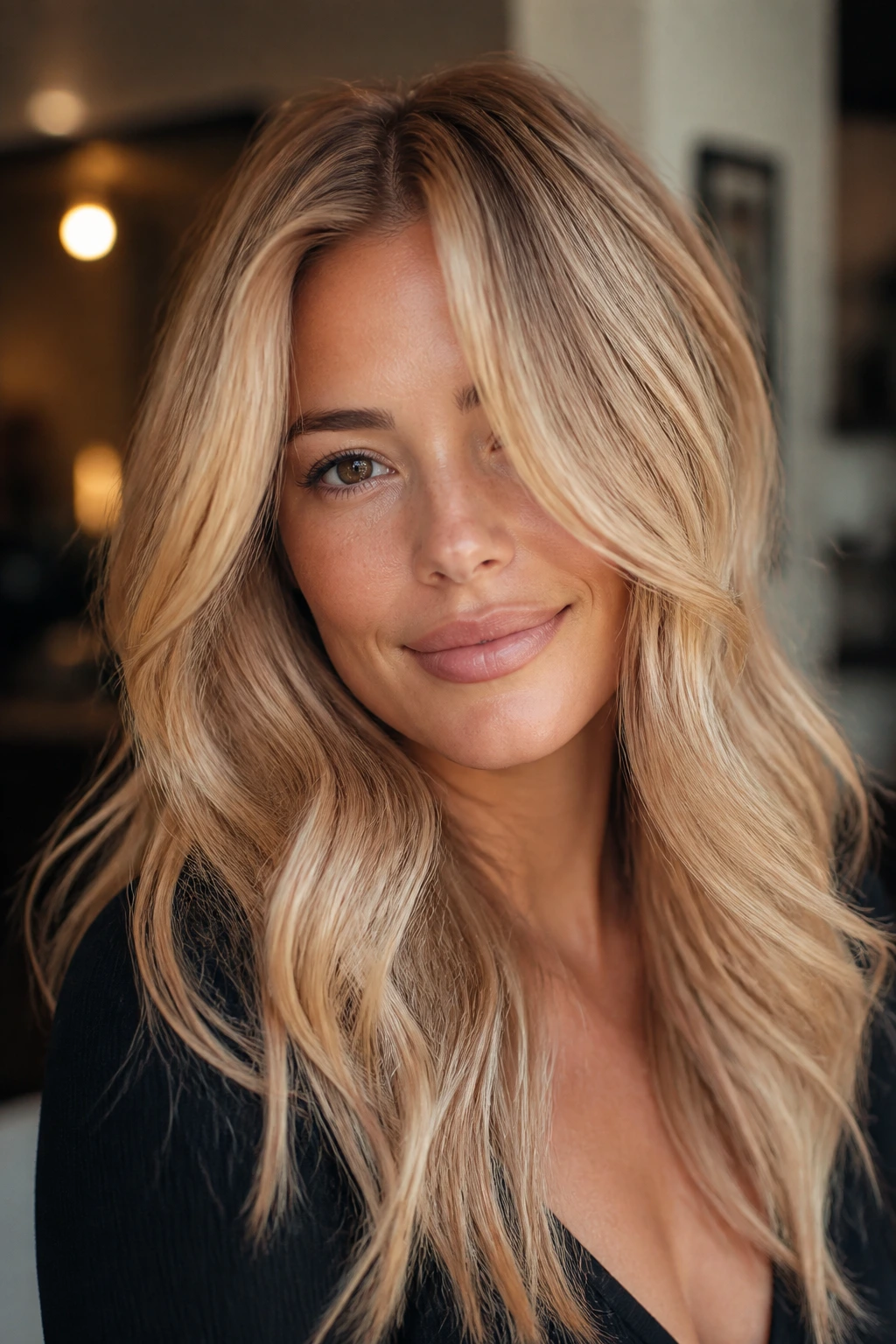
Champagne gold blonde has a little sparkle, but not the cold shimmer people sometimes expect from champagne shades. On warm skin, the trick is to make the champagne feel gilded rather than silvered. Think light gold with a faint peach glow.
This works best when the blonde is lifted cleanly and then toned into a soft gold-beige blend. The tone is refined, not loud. If the hair is too ash-heavy, the champagne effect disappears and the complexion can look dull.
Best For
People who want a lighter look but still need warmth near the face. It’s also one of the better options for event-heavy hair because the finish looks deliberate under indoor lighting and outdoor light alike.
It can be pretty on shorter cuts too. A textured bob with champagne gold pieces around the face has a crispness that longer hair sometimes loses.
14. Peach Cream Blonde
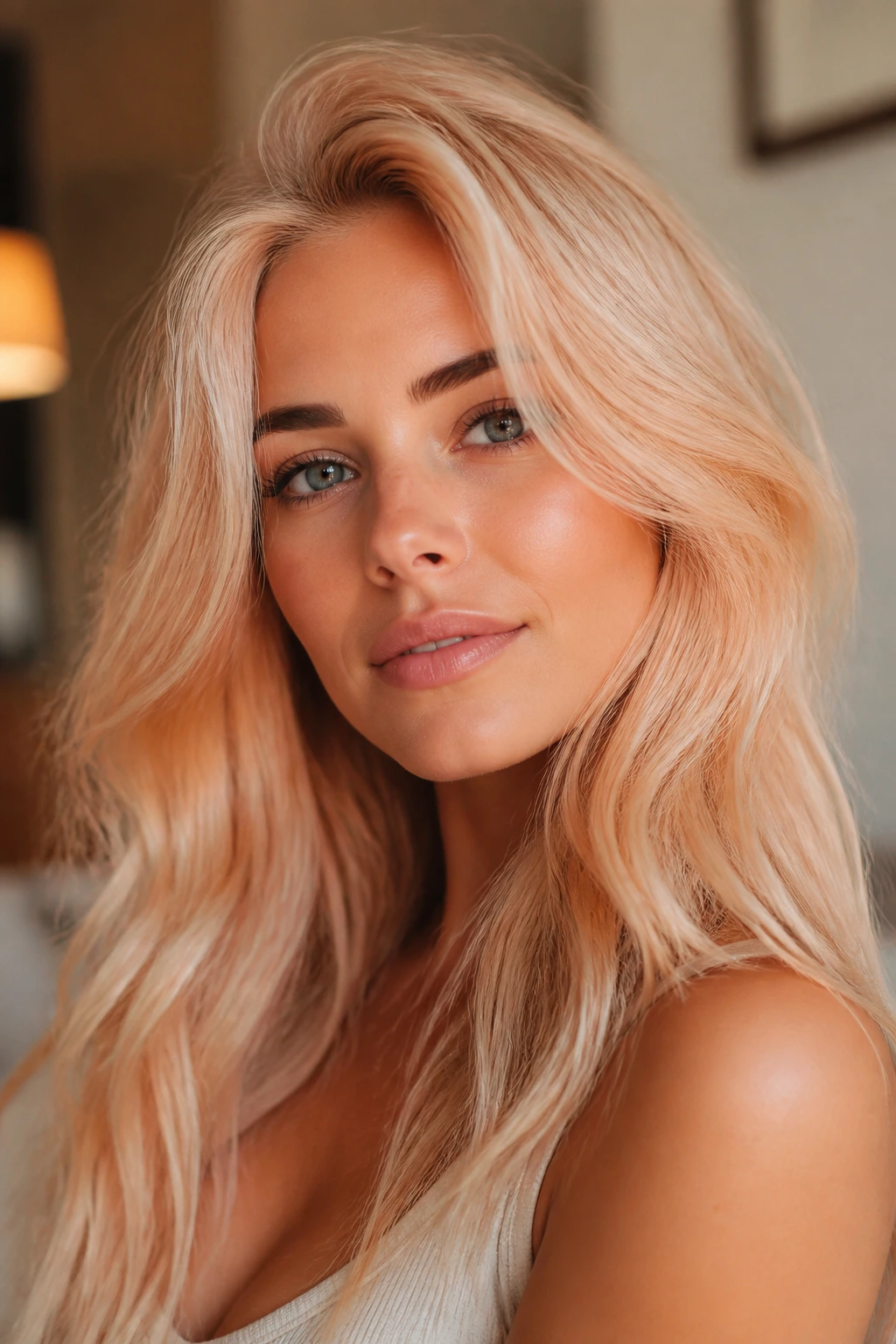
Peach cream blonde is softer than apricot and less red than strawberry honey. The shade feels pastel, but the warmth keeps it from going washed out. It gives warm skin a fresh look, almost like the color has been air-brushed into the hair.
This is one of the more fashion-forward shades in the list, so it’s best if you like people to notice the color first. Ask for a pale blonde base with a peach-toned gloss, then keep the saturation light enough that the peach sits in the hair instead of sitting on top of it.
The nice part is that peach cream doesn’t need to be loud to be visible. In soft light it looks delicate; in sun, it opens up and gets a little more playful.
15. Almond Toffee Blonde
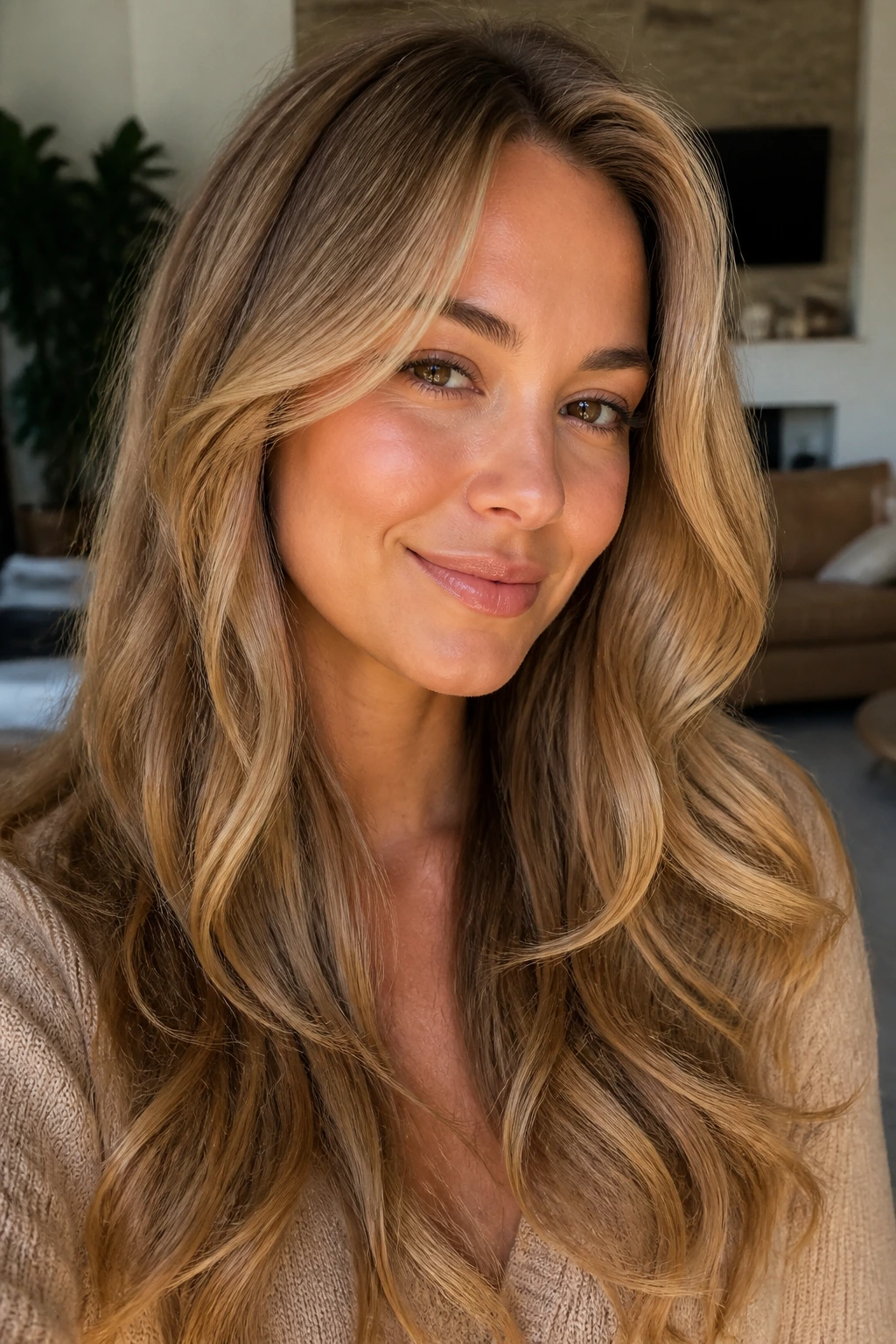
Almond toffee blonde is warmer and darker than most people expect when they hear “blonde,” and that’s why it works. The base stays in the toffee range, while the lighter pieces bring in almond-beige brightness. For warm skin, the depth can be flattering in a way pale blondes aren’t.
This shade makes sense if you want the face to keep some structure. It also holds up well on hair that naturally pulls orange or gold during lightening, because the color family already welcomes that warmth. You’re not fighting it.
If your brow color is deep and you don’t want to bleach them into visual mismatch, almond toffee is a strong choice. The contrast stays gentle.
16. Sunlit Beige Blonde
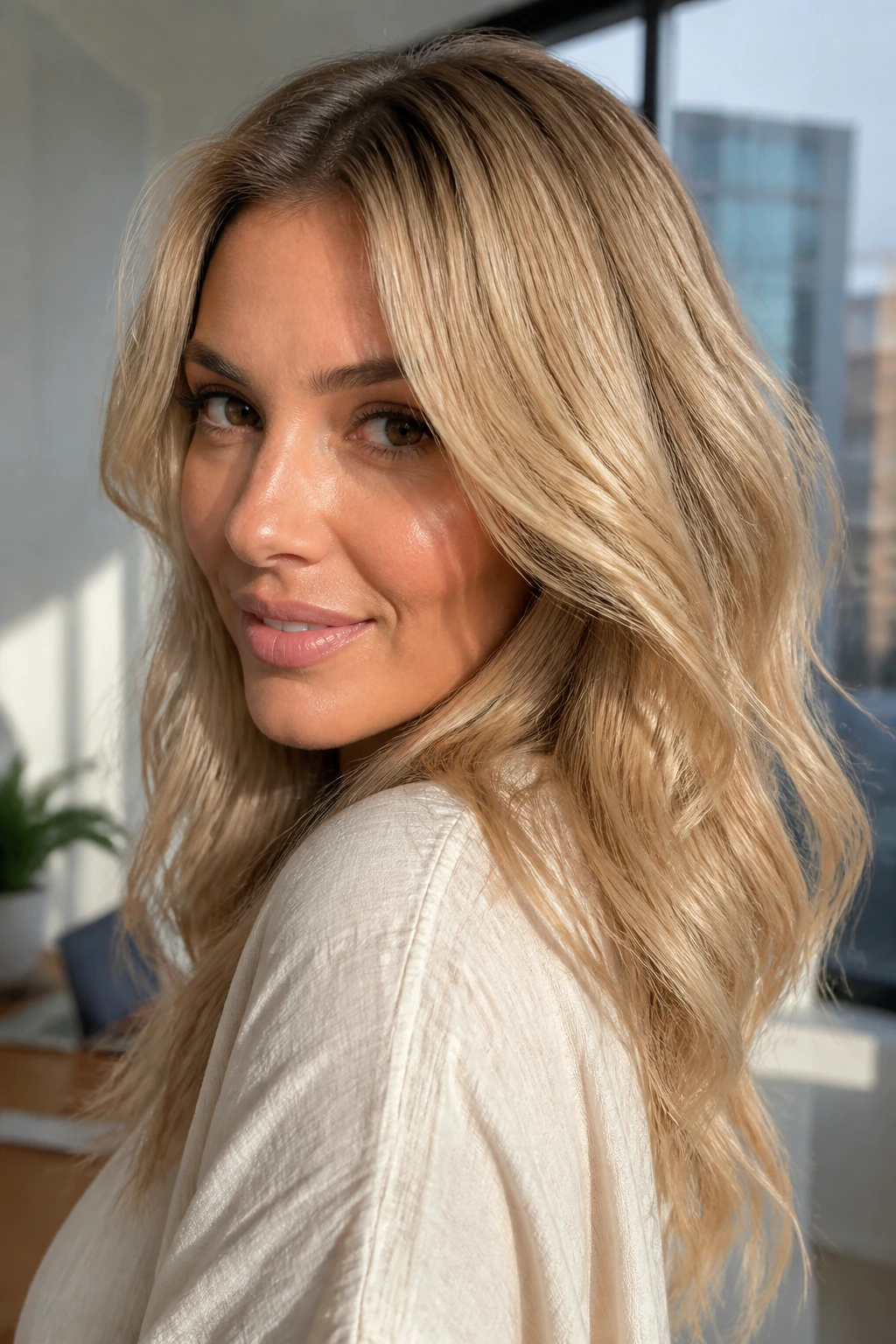
Sunlit beige blonde is the cleanest-looking warm blonde in the group. It does not lean copper, it does not lean yellow, and it doesn’t need extra sparkle to feel finished. The shade is all about soft, even light.
That makes it useful for warm-neutral skin that can tip muddy if the blonde gets too orange. Beige keeps the warmth in check while still respecting the undertone. It’s a good option if you want a blonde that reads polished under office lighting and still soft in daylight.
A beige blonde can look boring if the placement is flat, so ask for dimension in the roots or a few lowlights underneath. A little shadow goes a long way here.
17. Saffron Blonde
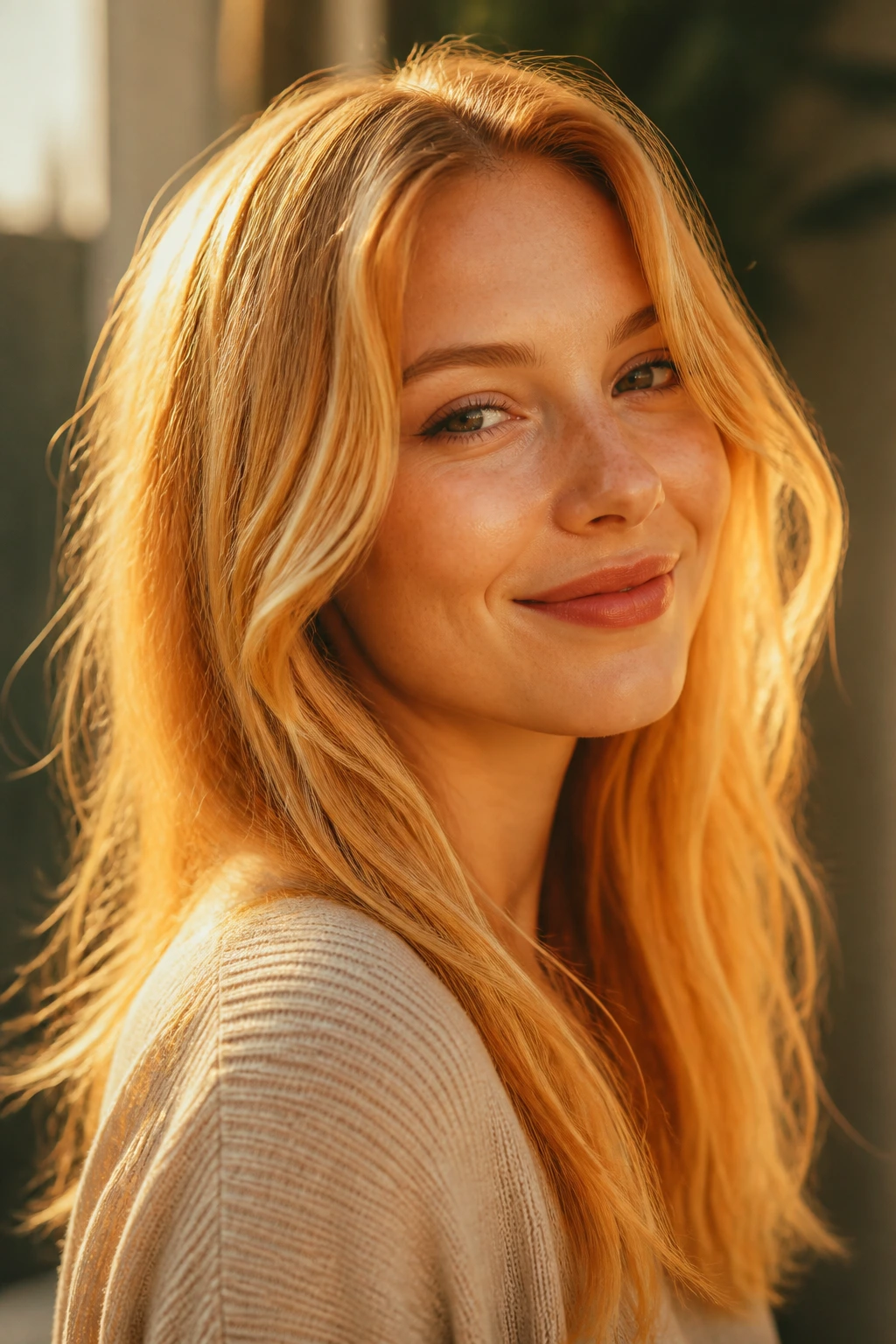
Saffron blonde is the spice shade of the group. It has a golden base with a subtle amber edge, and that slight heat makes it feel fuller and more alive than plain gold. On warm skin, especially medium to deep warm skin, the result can be striking.
The best version does not look orange from the start. It looks like a rich gold that has been warmed one step further. The tone has to be controlled or it slips into brassy territory fast. That’s the line to watch.
If you like warm-toned clothes—rust, camel, terracotta, olive—saffron blonde sits in that same palette and can make the whole look feel put together without trying too hard.
18. Warm Platinum with Gold Root Melt
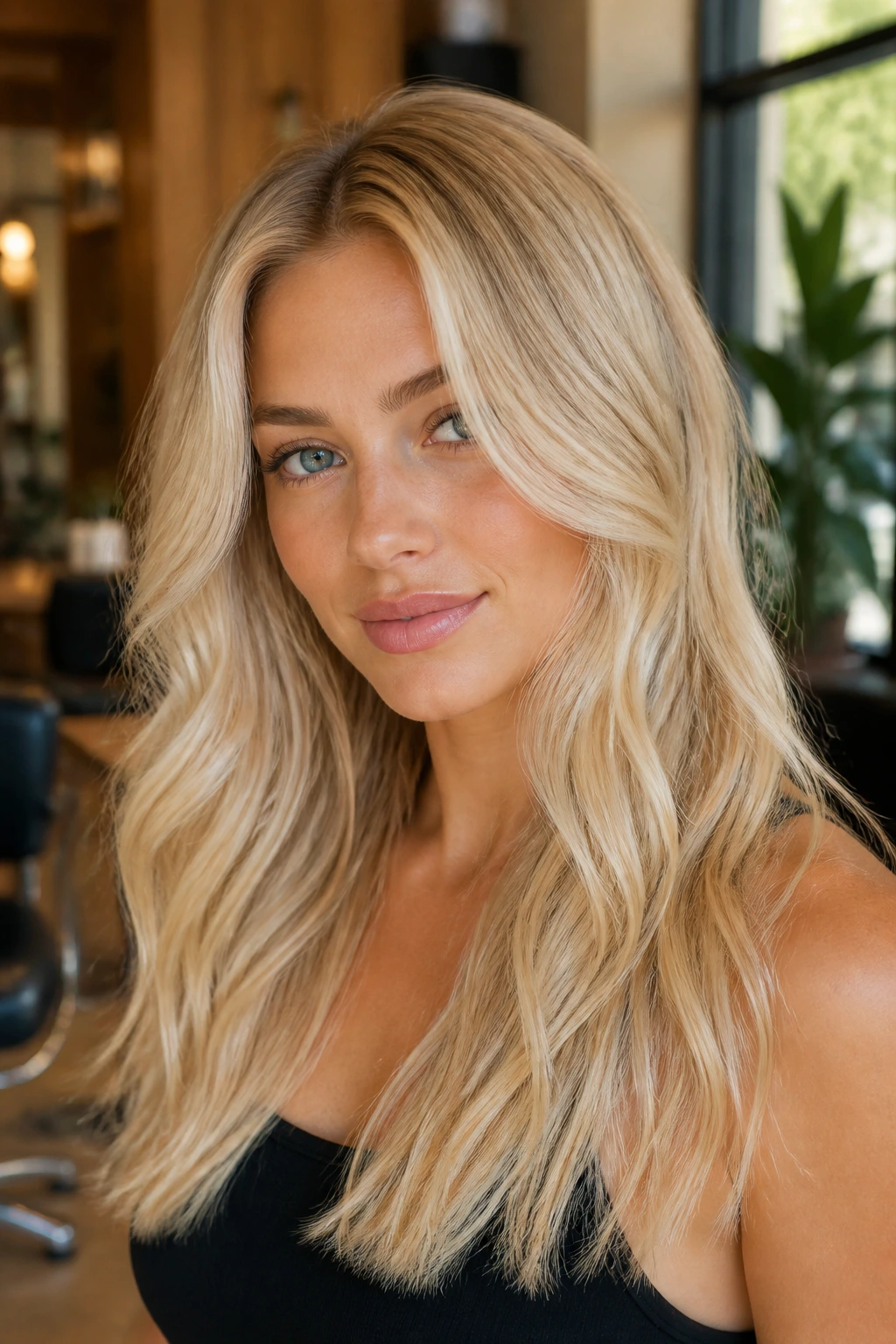
Yes, warm skin can wear very light hair. No, it should not be a flat sheet of icy platinum unless you want a sharp contrast for a reason. Warm platinum with a gold root melt gives you the brightness of light blonde while keeping the base and toner in the warm lane.
This is a high-maintenance look, so it works best for someone who likes frequent gloss appointments and does not mind tonal upkeep. The gold melt near the root keeps the scalp line softer and stops the platinum from looking detached from the rest of the face.
When It’s Worth It
If you want dramatic lightness but still need the color to look like it belongs on warm skin, this is the route. It reads expensive because it has structure, not because it is pale for the sake of being pale.
19. Biscotti Blonde
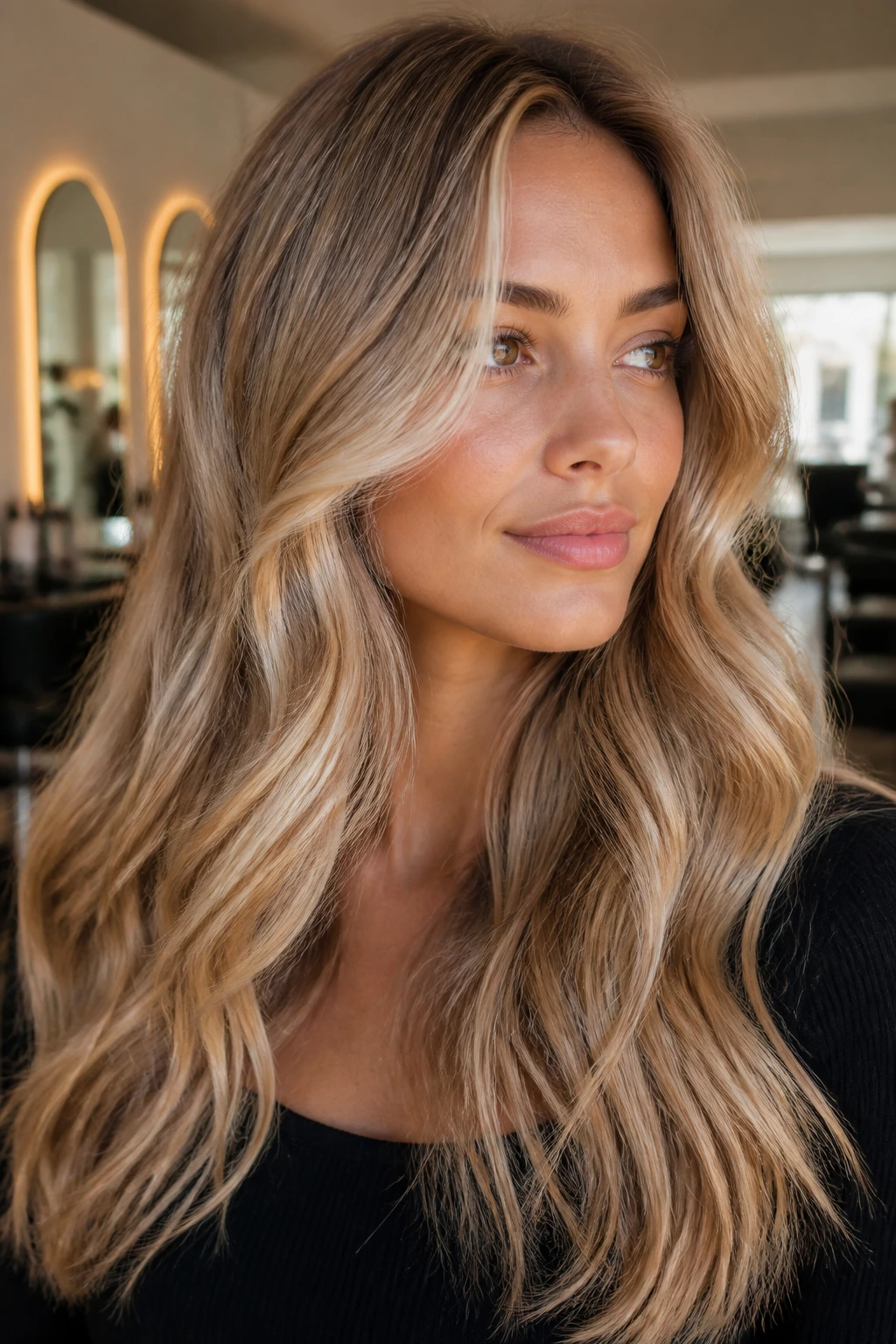
Biscotti blonde has that baked, toasted feel that suits warm skin immediately. The shade mixes beige, caramel, and soft gold in a way that feels layered rather than flat. It’s one of those colors that looks relaxed but still planned.
The advantage here is balance. Biscotti is light enough to brighten the face, but it keeps enough brown-beige depth to avoid the stark effect that can happen with very pale blondes. If your skin is warm and your eyes are medium to deep, the whole look can come together fast.
This shade is especially good if you like neutral makeup. Biscotti does not demand a bold lip or heavy bronzer to make sense.
20. Copper-Kissed Champagne
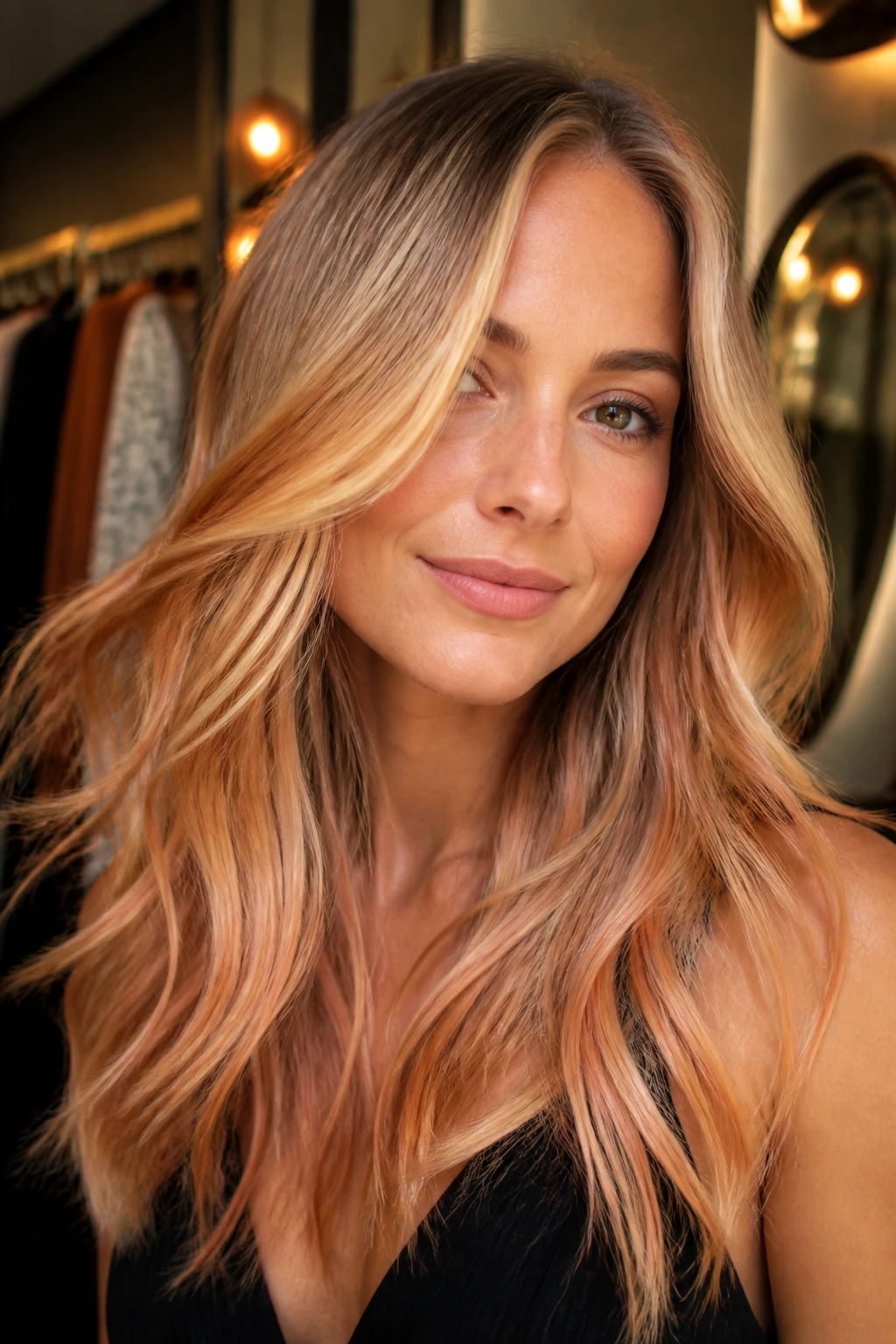
Copper-kissed champagne is a cleaner blonde with a little heat in it. Think champagne gold with a whisper of copper around the mids and ends. It’s a pretty choice if you want lightness but feel like standard gold is too plain.
The copper in the mix gives warm skin a small boost, especially around the cheeks and temples. Keep the copper delicate, though. The shade should still read blonde first, warm second.
This is one of the better options for layered cuts because the warm copper pieces catch on the bends. A flat cut can mute the effect; a little movement lets the color breathe.
21. Peachy Beige Balayage
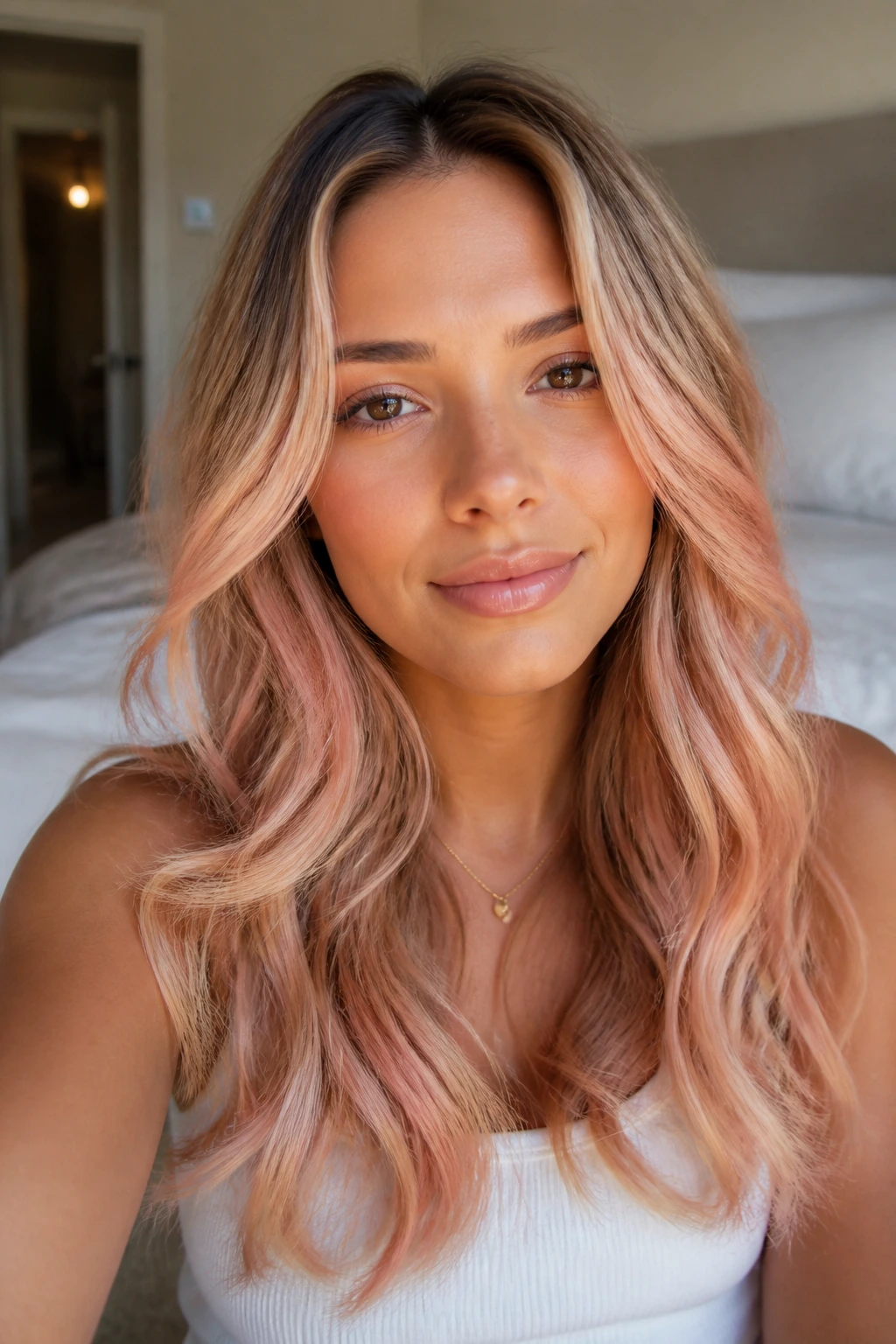
Peachy beige balayage is a softer, more wearable version of peach blonde. The beige keeps the look grounded, and the peach gives the ends enough warmth to feel fresh. It’s a nice middle lane for anyone who wants a color that isn’t strictly gold or strictly pink.
The painted technique matters here. A balayage placement lets the peach show where light naturally hits the hair, which keeps the tone from feeling painted on. Warm skin tends to like that kind of soft placement because the color blooms around the face rather than sitting in one block.
If you wear a lot of cream, tan, rust, or olive clothing, this shade fits in fast. It has a calm, sun-warmed look.
22. Golden Shadow Root Blonde
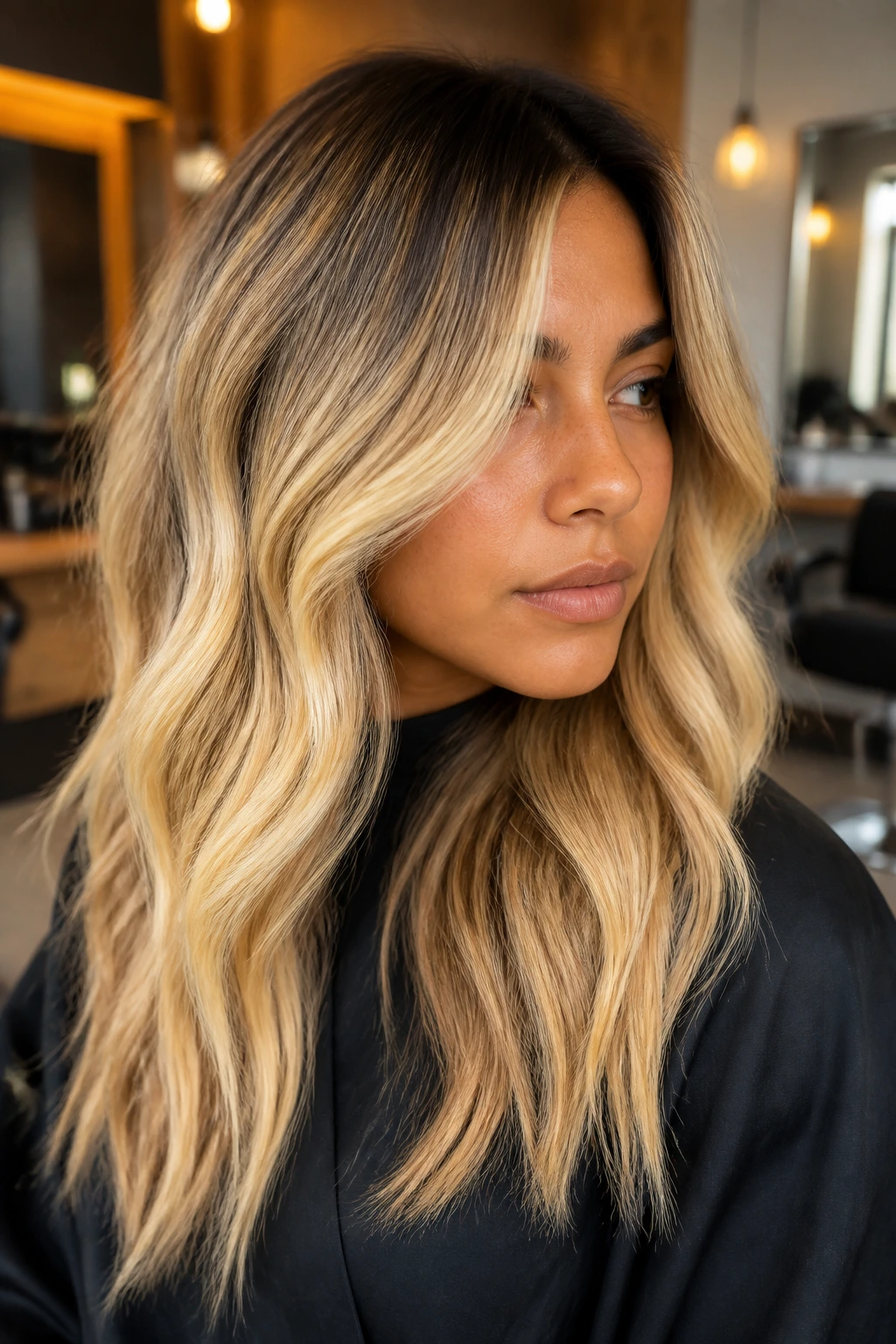
Golden shadow root blonde is for anyone who likes brightness but wants the regrowth to look good on purpose. The root stays deeper and warmer, then melts into golden blonde through the mids and ends. The shape of the color is half the appeal.
This is especially smart on medium to dark warm skin because the shadow root keeps the hair from floating too far away from the face. The gold sits where the light catches it, while the root gives the style a frame.
What Makes It Different
A lot of blondes fall apart because the root is ignored. Here, the root is part of the design. That means fewer harsh lines later and a more believable color story from week one.
23. Mahogany-Infused Blonde
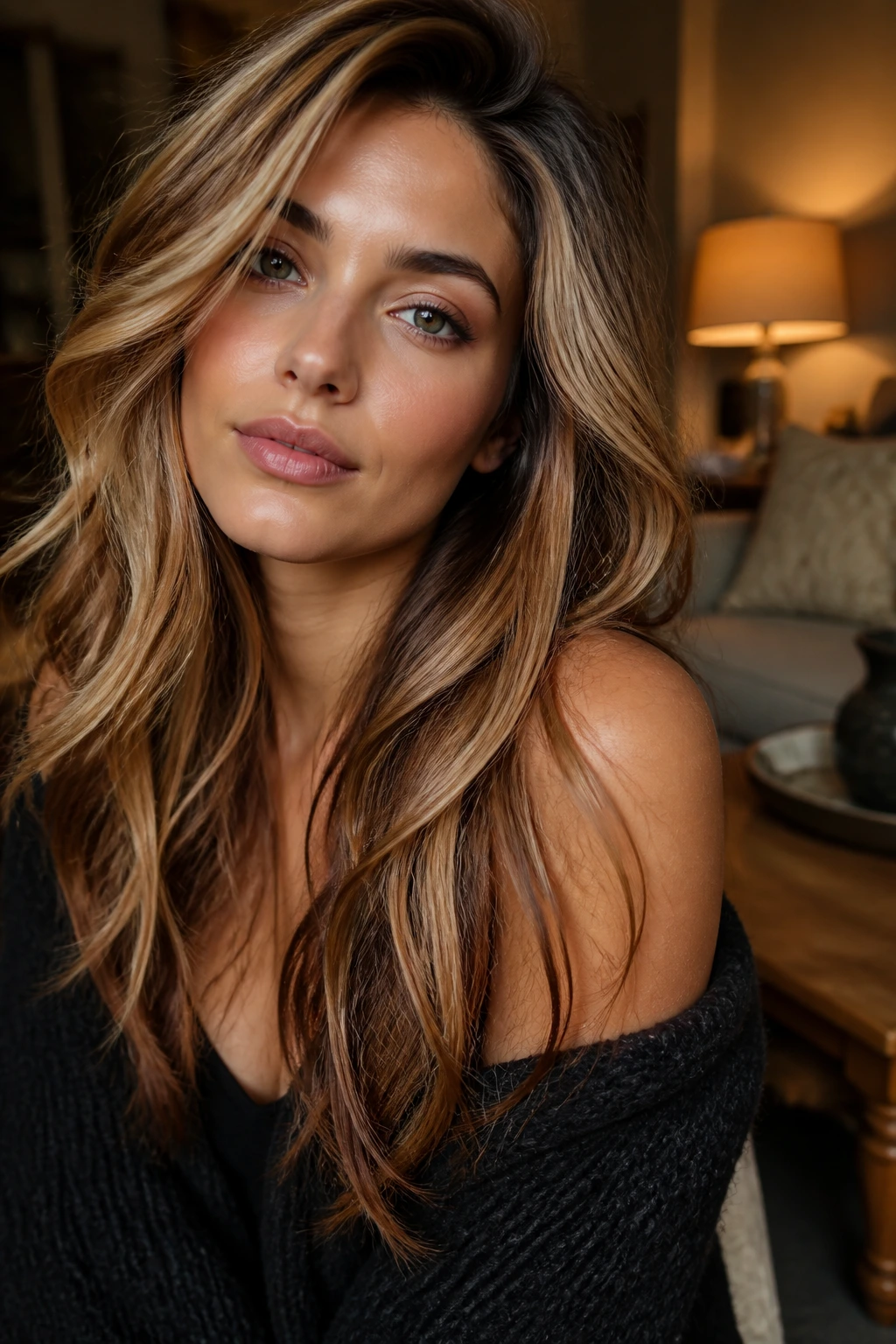
Mahogany-infused blonde sounds darker than it is. The look starts with blonde pieces, then folds in mahogany lowlights to deepen the overall color and pull warmth through the hair. It’s a strong choice if your skin leans bronze or deep golden.
The mahogany tone adds a red-brown richness that keeps the blonde from appearing flat or overly bright. This is not the shade for someone chasing a tiny, airy blonde. It’s for someone who wants depth, warmth, and a little drama in the same head of hair.
I like this one on longer cuts because the lowlights give the ends more weight. Very fine hair can lose the effect if the lowlights are too heavy, so ask for softness around the face.
24. Hazelnut Blonde Melt
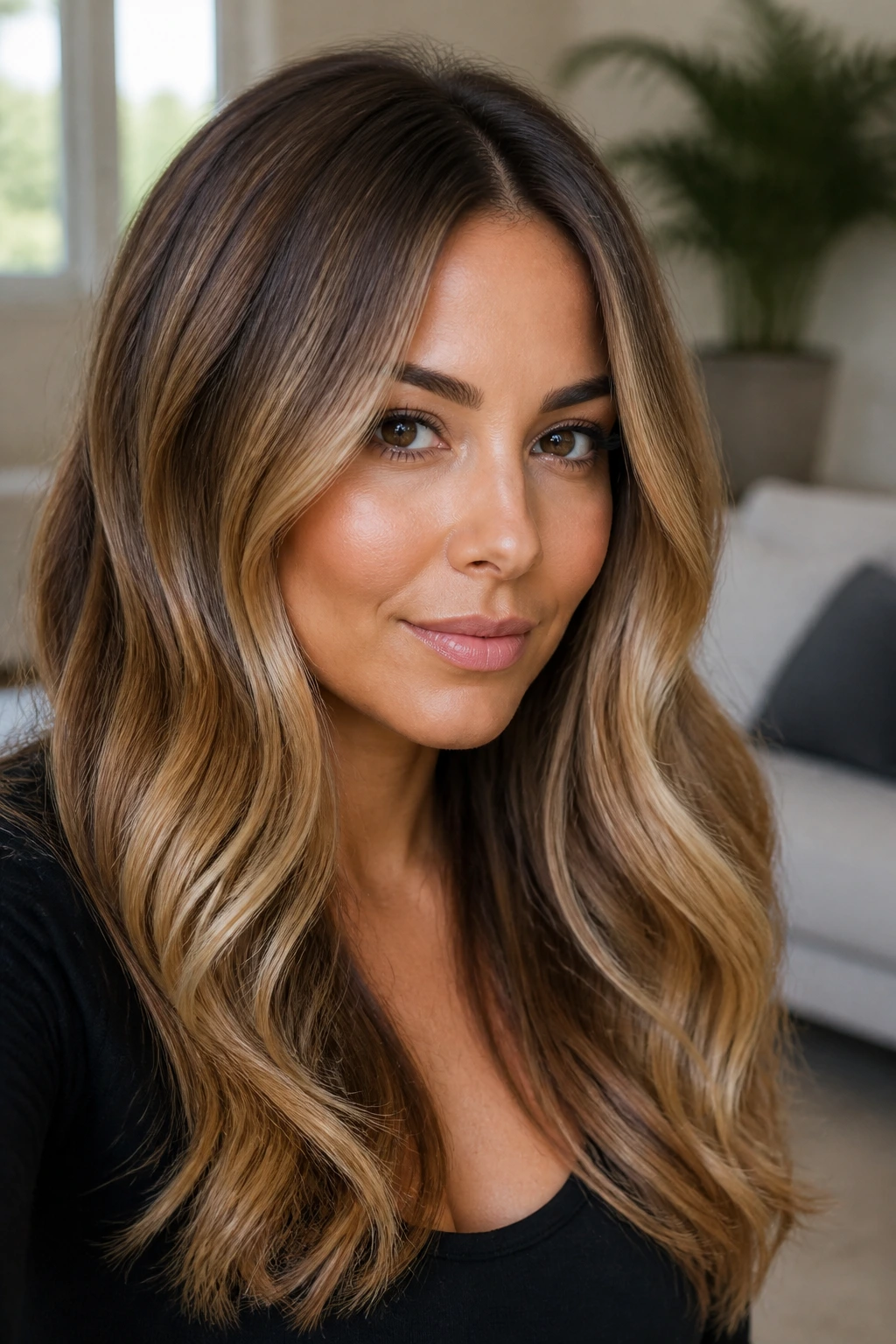
Hazelnut blonde melt moves from a deeper nutty root into honeyed ends with no hard line in between. The color feels smooth and expensive because the transition is the point. Warm skin usually looks good with this kind of gradient since the depth at the root keeps the features grounded.
This is a sensible choice if you like a polished look that doesn’t require constant salon visits. The grow-out is forgiving, and the hazelnut base can be refreshed with a warm gloss rather than a full rehighlight every time.
If your current color already has some warmth in it, hazelnut blonde is a gentle way to go lighter without losing the richness you started with.
25. Vanilla Latte Blonde
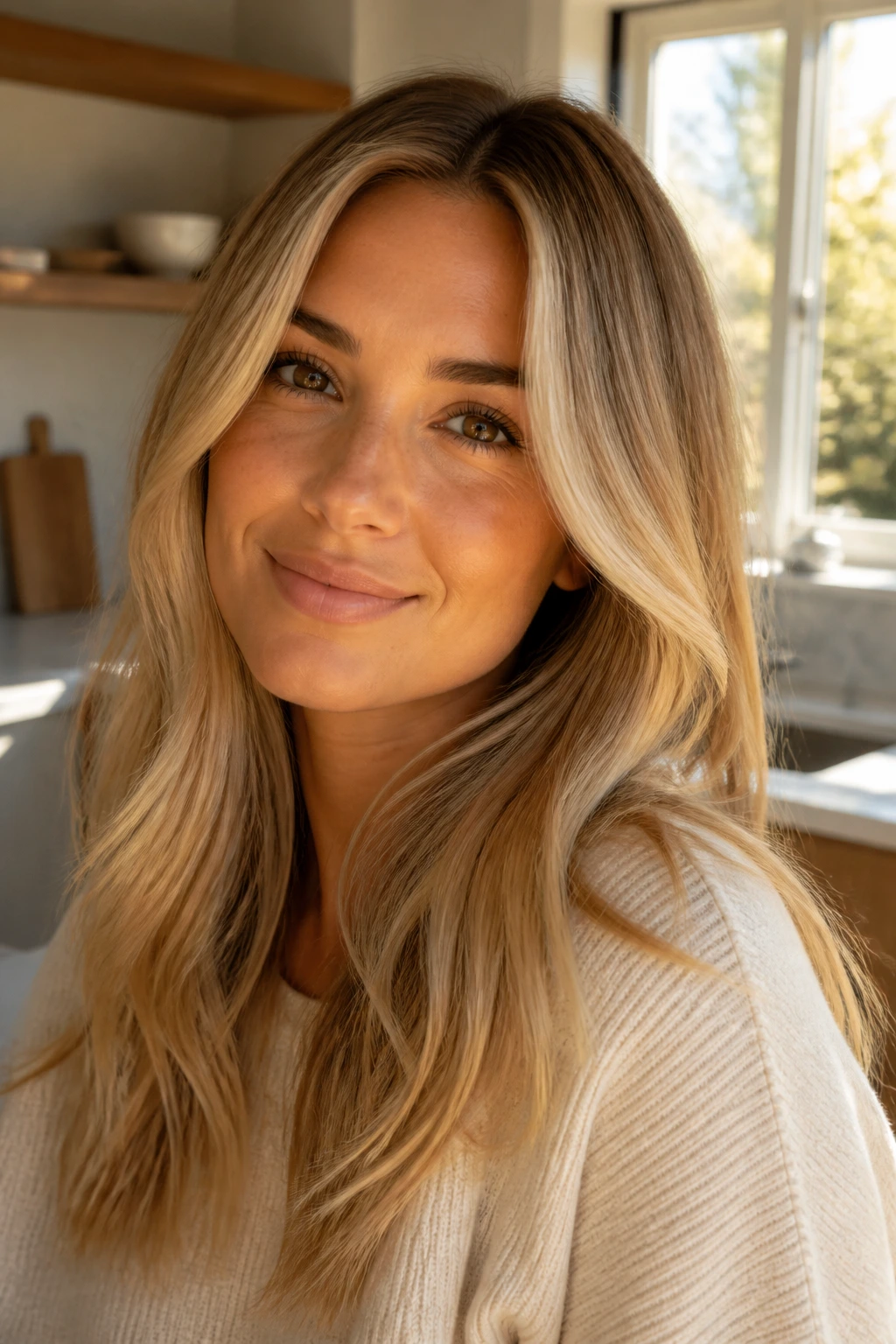
Vanilla latte blonde is creamy, soft, and a little shaded at the root, almost like foam over espresso. The tone is warmer than classic vanilla blonde, but still muted enough to stay sophisticated. It’s a strong fit for warm-neutral skin and soft features.
Ask for a beige-gold base with a root shadow that isn’t too dark. The ends should stay lighter, but the whole thing needs that latte softness or it becomes another flat blonde. The color works because it has temperature shifts, not because it is one shade.
This is the sort of blonde that looks good with a round brush blowout, but it also behaves well in loose waves. The dimension shows up either way.
26. Bronze-to-Blonde Ombré
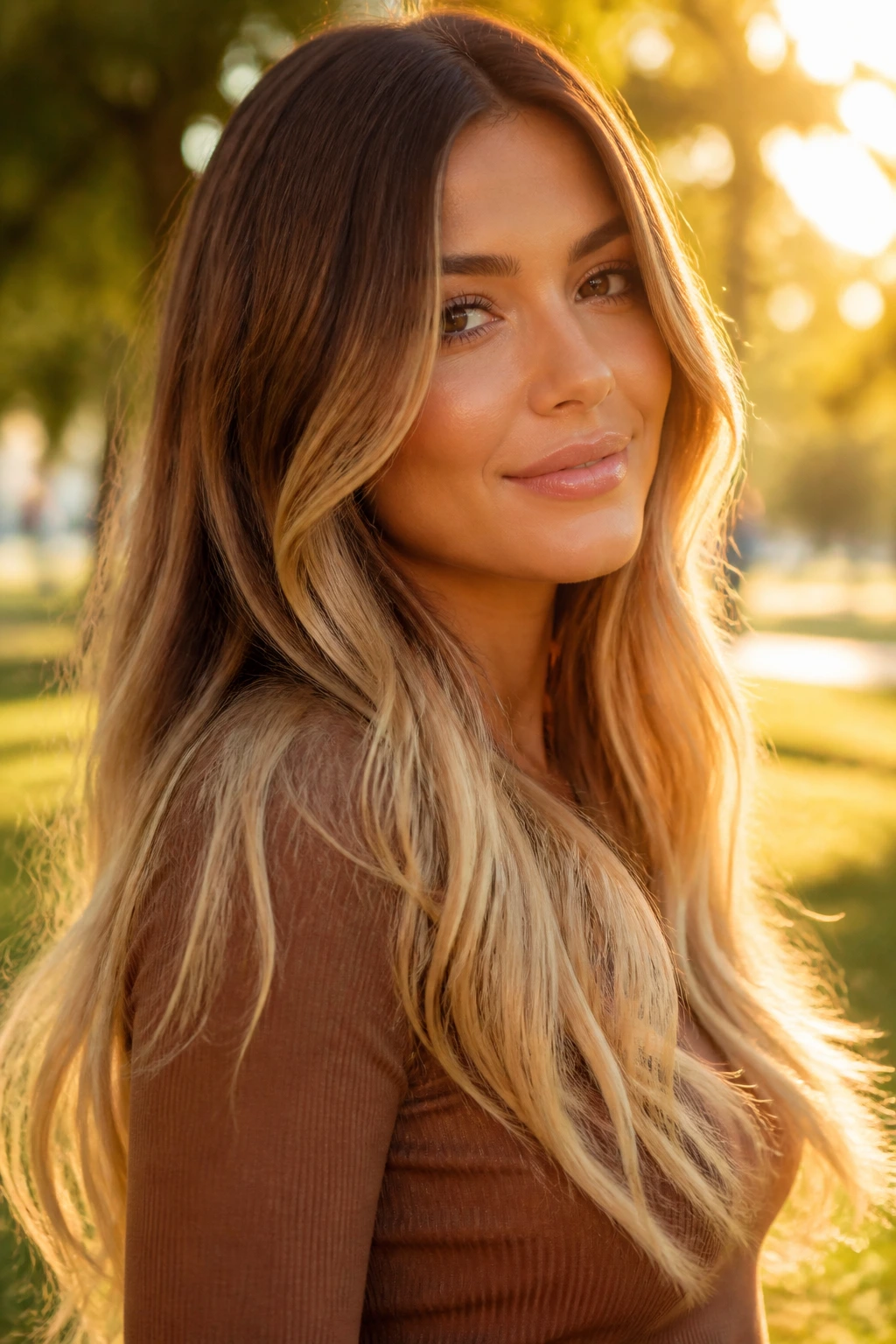
Bronze-to-blonde ombré is the boldest gradient in the list. It starts deep and bronzed near the roots, then lifts into warm blonde through the mids and ends. The fade is dramatic, but the warmth keeps it wearable on bronze, golden, and peachy skin.
This is a useful option if you want a brighter finish without committing to an all-over pale blonde. The darker top keeps the scalp area rich, and the lighter ends pull attention downward in a flattering way.
It’s especially good on long hair, where the ombré has space to show its change. On shorter cuts, the fade can look compressed, so the shape needs a little extra thought.
27. Firelight Blonde
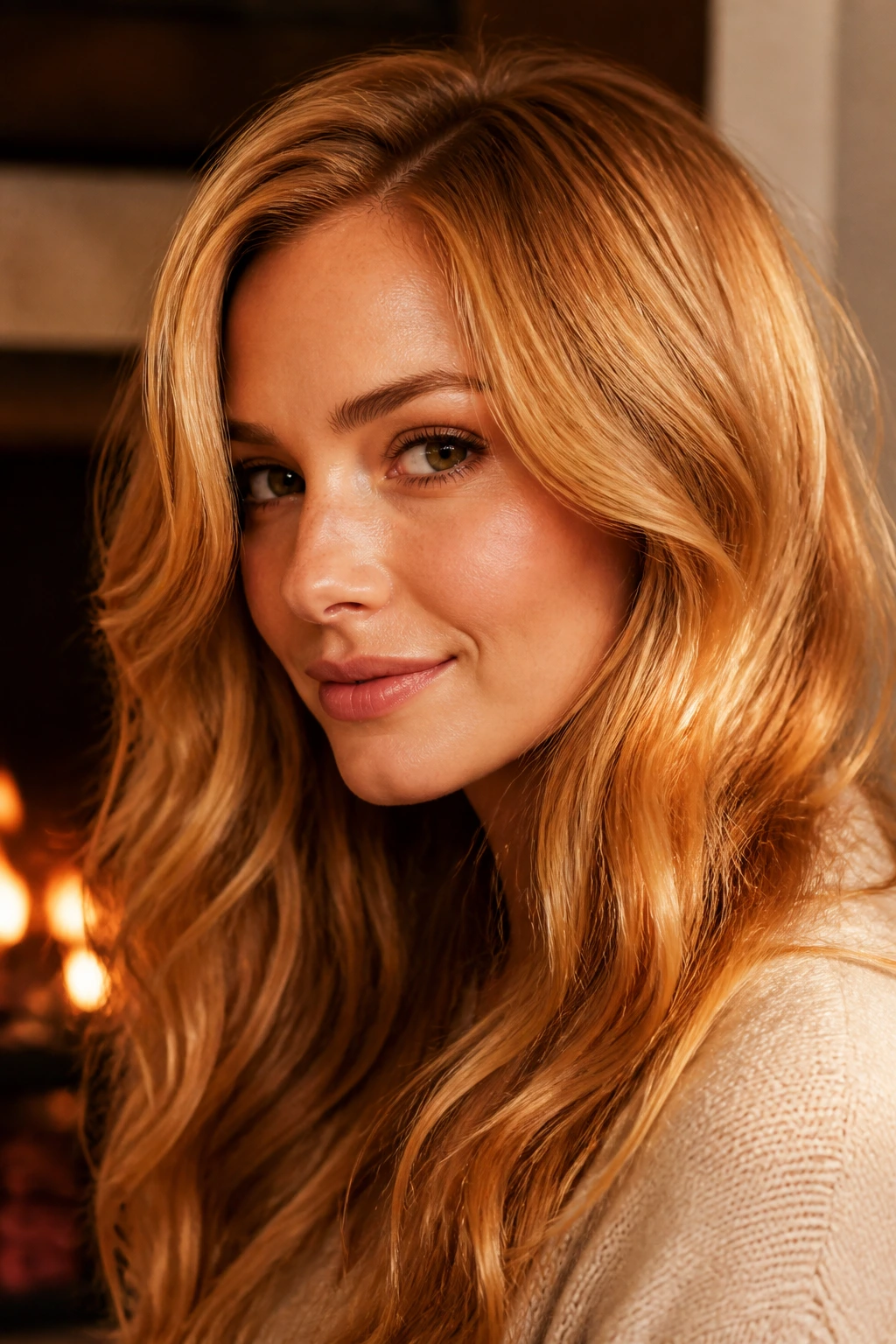
Firelight blonde is the brightest, hottest shade in the group, and it is not shy about it. The color mixes gold, copper, and a little red so the hair looks lit from within. Warm skin can handle this beautifully when the undertones in the face are strong.
This shade needs careful control. The lift has to be even, and the toner can’t be so orange that it looks accidental. A good firelight blonde reads intentional, glossy, and full of motion—not brassy, not cartoonish.
If you like bold lipstick, warm bronzer, and gold jewelry, this shade can carry the whole look. It gives the face energy. Fast.
28. Soft Gold Face-Framing Blonde
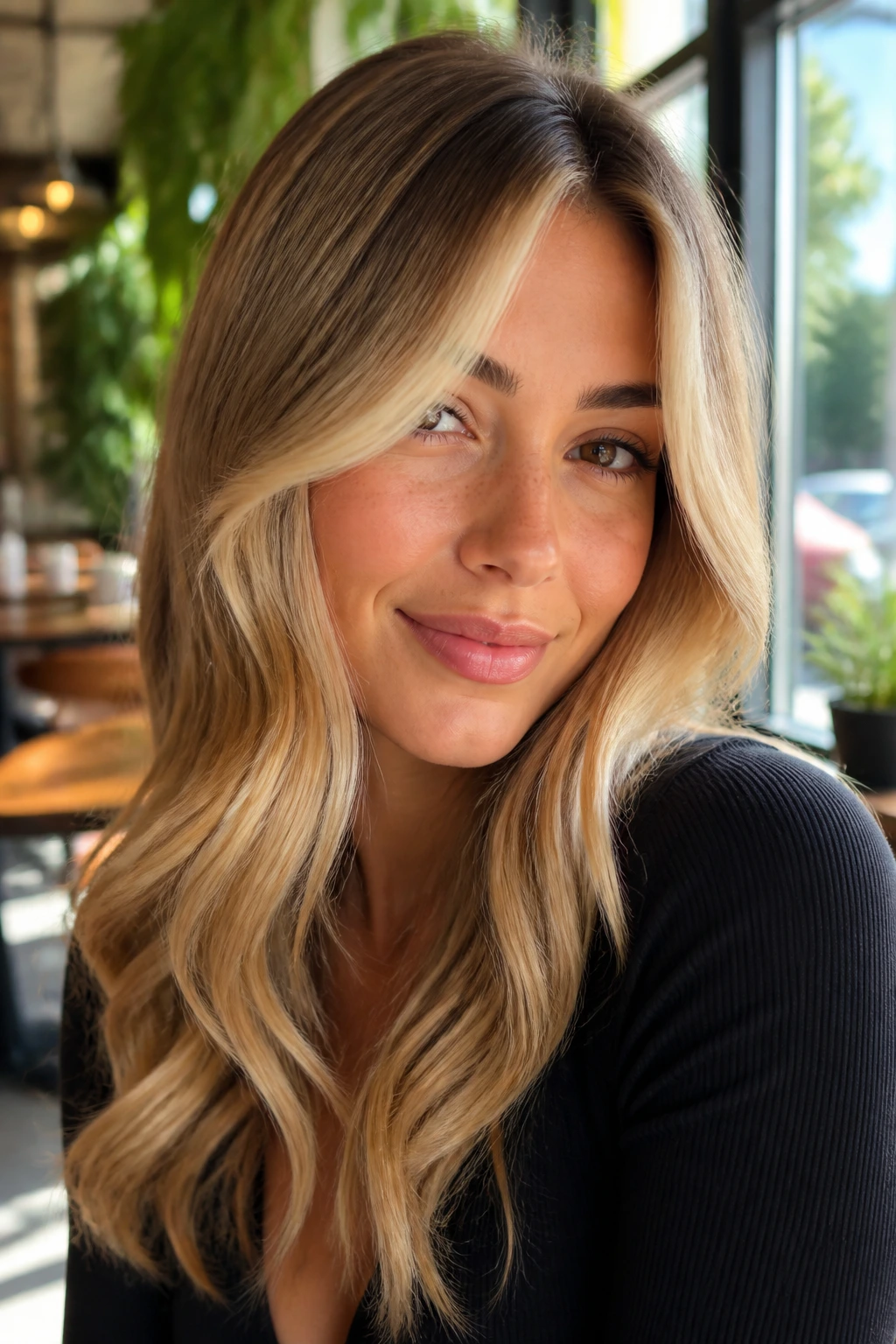
A face-framing blonde does not need to change the whole head to make a difference. Soft gold pieces around the front brighten the cheekbones, lighten the eye area, and give warm skin a small lift without forcing the entire style into full blonde territory. That restraint is the appeal.
This is one of the best options if you want to test warm blonde before taking the full plunge. The change is visible, but the upkeep stays easier than an all-over highlight job. Ask for soft gold pieces, not pale white ones, and keep the brightness concentrated where your hair naturally falls around the face.
One more thing: this can be done with bangs, curtain fringe, or long face-framing layers. The cut matters almost as much as the color.
Why Warm Blonde Needs Depth, Not Just Light
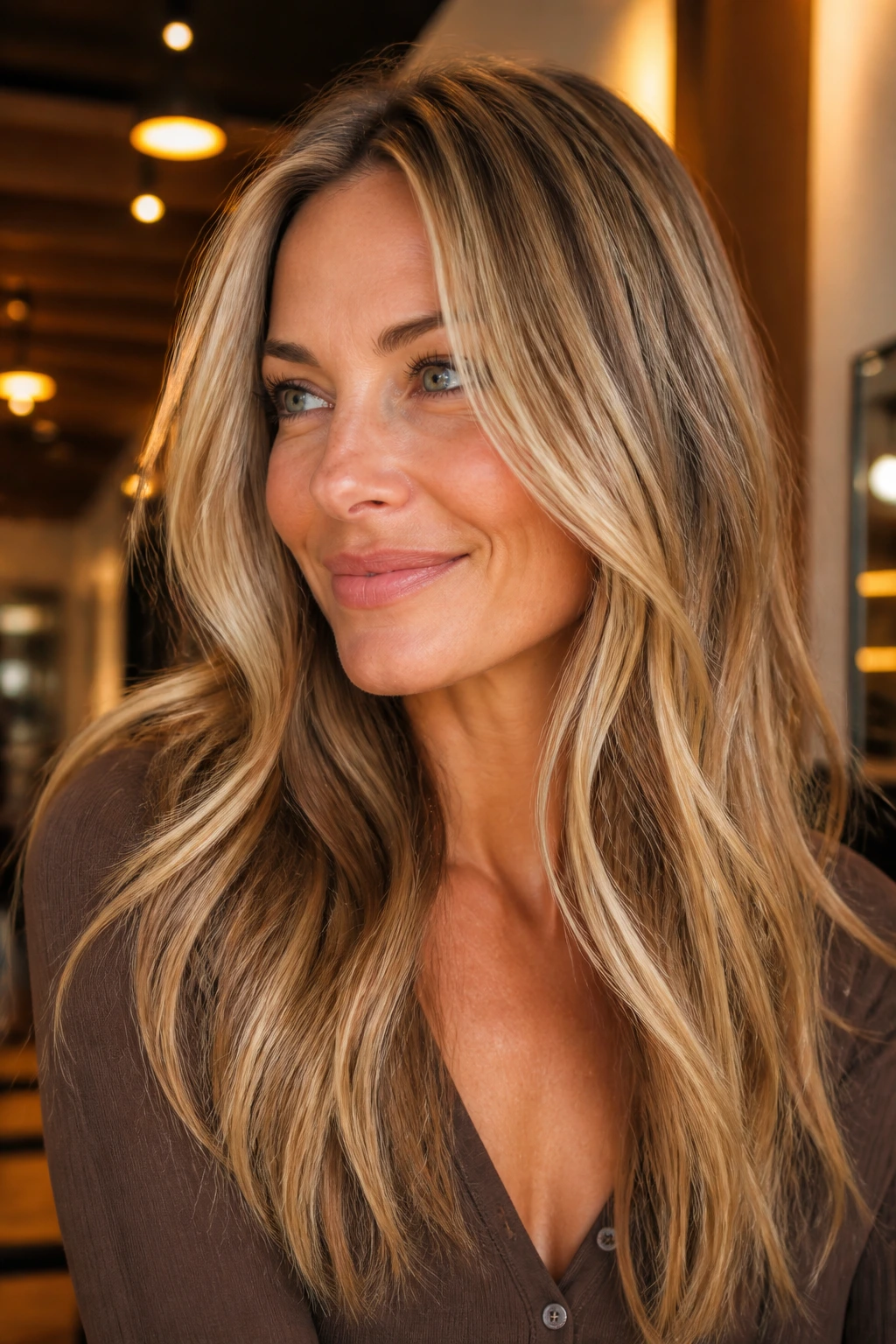
A lot of blonde advice acts like “lighter” is the whole story. It isn’t. On warm skin, a blonde that is too flat or too pale can drain the face, especially when the brows are dark or the eyes already carry warm color. The eye wants contrast, but it wants it in the right places.
Root depth gives the face shape. Lowlights give the hair a sense of movement. Warm gloss gives the lighter pieces a finish that looks intentional rather than stripped. When all three show up together, the color stops looking like a process and starts looking like a style.
That is also why salon charts can be misleading in a bad way. A level 10 blonde is not automatically better than a level 8 honey blonde just because it is lighter. On some warm faces, the level 8 looks richer, healthier, and brighter because the tone has something to hold onto.
Tools and Products That Make Warm Blonde Easier to Live With
-
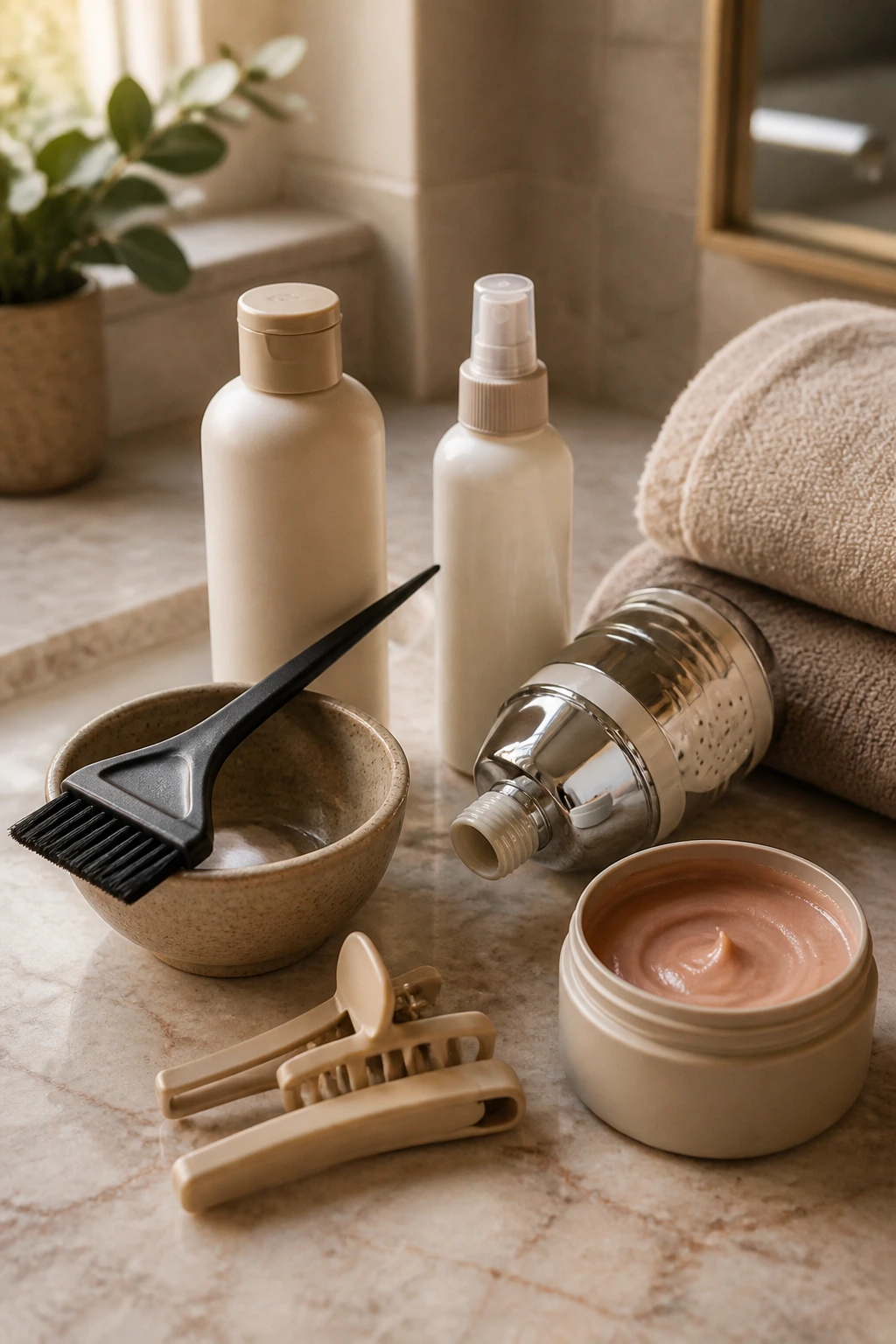
Tint brush and mixing bowl: useful if you gloss at home between appointments or apply a color mask to the mids and ends.
-
Wide-tooth comb: keeps wet blonde hair from snagging, especially if it has been lightened and feels a little stretchy.
-
Color-safe shampoo and conditioner: look for sulfate-free formulas if your hair fades fast or loses warmth after every wash.
-
Heat protectant spray: anything that protects up to common styling ranges is worth using before blow-drying or curling.
-
Shower filter: a smart buy if your water leaves mineral buildup that turns blondes dull or muddy.
-
Microfiber towel or cotton T-shirt: helps reduce roughness on lightened ends.
-
Gloss or color-depositing mask: choose gold, beige, caramel, or soft copper tones if your blonde starts looking too pale.
-
Hair clips and sectioning comb: especially helpful for balayage maintenance, root touch-ups, and clean styling.
Picking the Right Warm Blonde by Skin Depth and Base Color
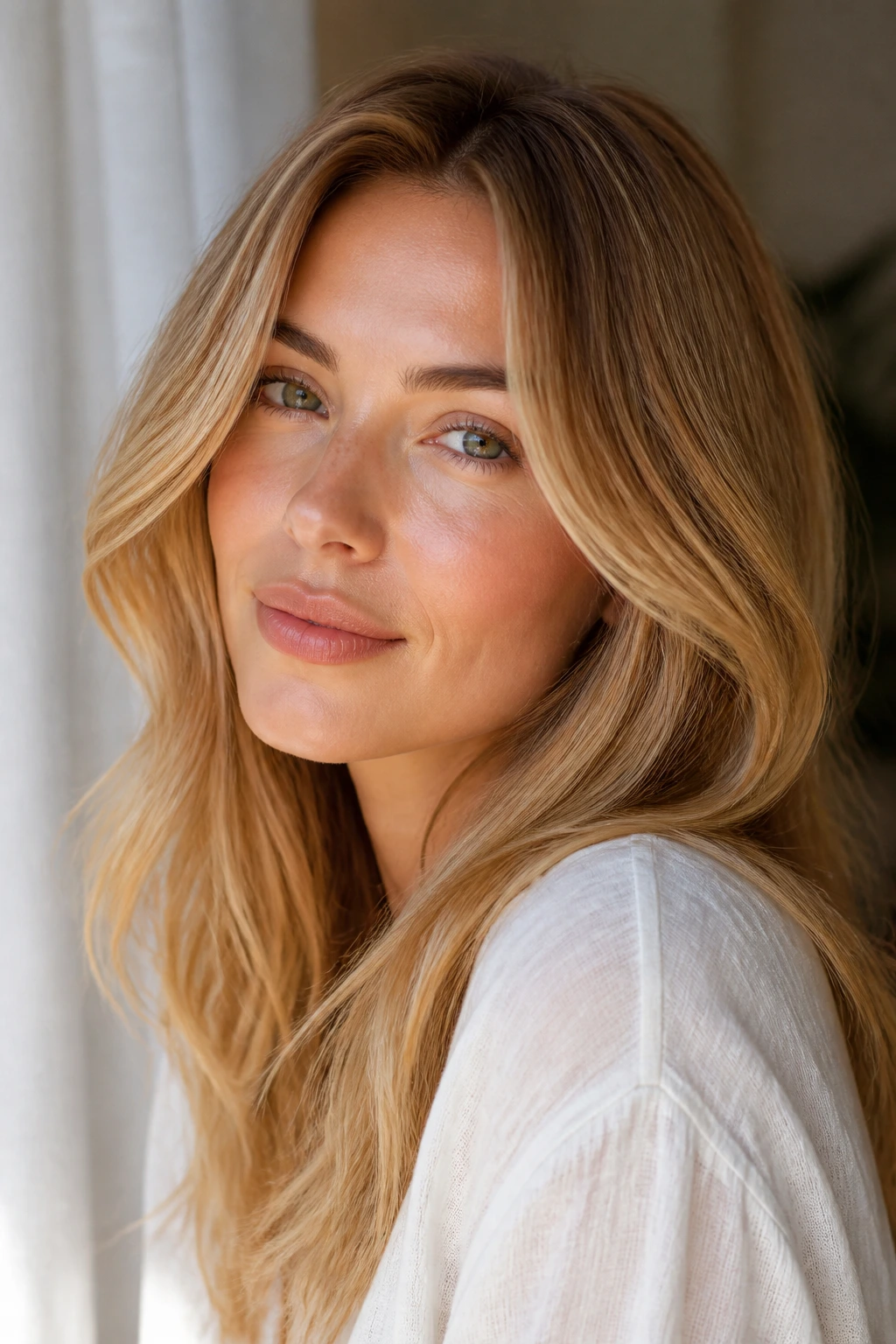
Warm skin is not one flat category, and that’s where good color choices start. A fair golden face usually wants less depth than a deep bronze face. A medium warm face can often wear stronger caramel or copper notes. A warm-neutral face can borrow from beige and honey without drifting too orange.
Fair Warm Skin
Go for honey butter, apricot blonde, peach cream, or champagne gold. These shades brighten without overpowering the complexion. Too much copper can look heavy unless the base is very soft.
Medium Warm Skin
Caramel balayage, maple glaze, butterscotch bronde, and saffron blonde work well here because they hold depth while still reading light. You can usually take a little more contrast near the roots without the face losing softness.
Deep Warm Skin
Try hazelnut melt, mahogany-infused blonde, bronze-to-blonde ombré, or firelight blonde. Deeper skin can wear stronger warmth and more obvious shadow, which keeps the blonde from floating out too far from the face.
Warm-Neutral or Olive-Warm Skin
Reach for toasted vanilla, sandy honey, sunlit beige, and vanilla latte blonde. These shades stay warm but don’t cross into orange. They’re the most forgiving if your undertone shifts in different light.
How to Ask for the Shade Without Getting a Surprise
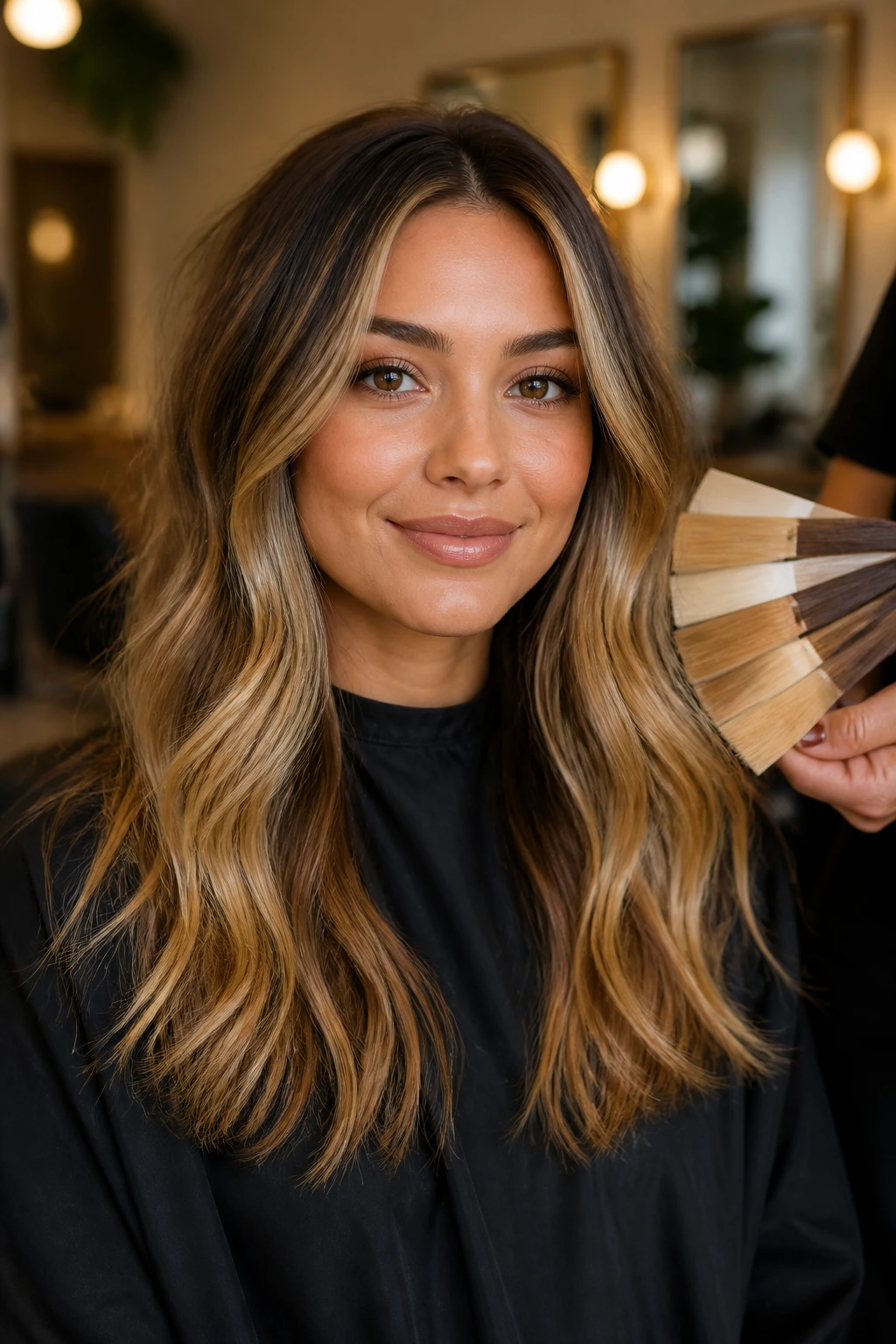
Photos help, but only if they’re the right photos. Bring two or three references that show the same kind of warmth in different lighting. One in daylight. One indoors. If all the examples live under filters, you’re basically asking for a guessing game.
Use salon language if you know it. Say whether you want balayage, babylights, face-framing pieces, a shadow root, lowlights, or a full highlight. Tell the colorist how much grow-out you can tolerate. That single detail changes the entire approach.
And do not skip the maintenance conversation. If you only want to visit every four months, say that. If you’re happy with gloss appointments every six weeks, say that too. A warm blonde can be bright, but it still has to fit your life or it turns into a chore you avoid.
How to Wear Warm Blonde So the Color Works With You
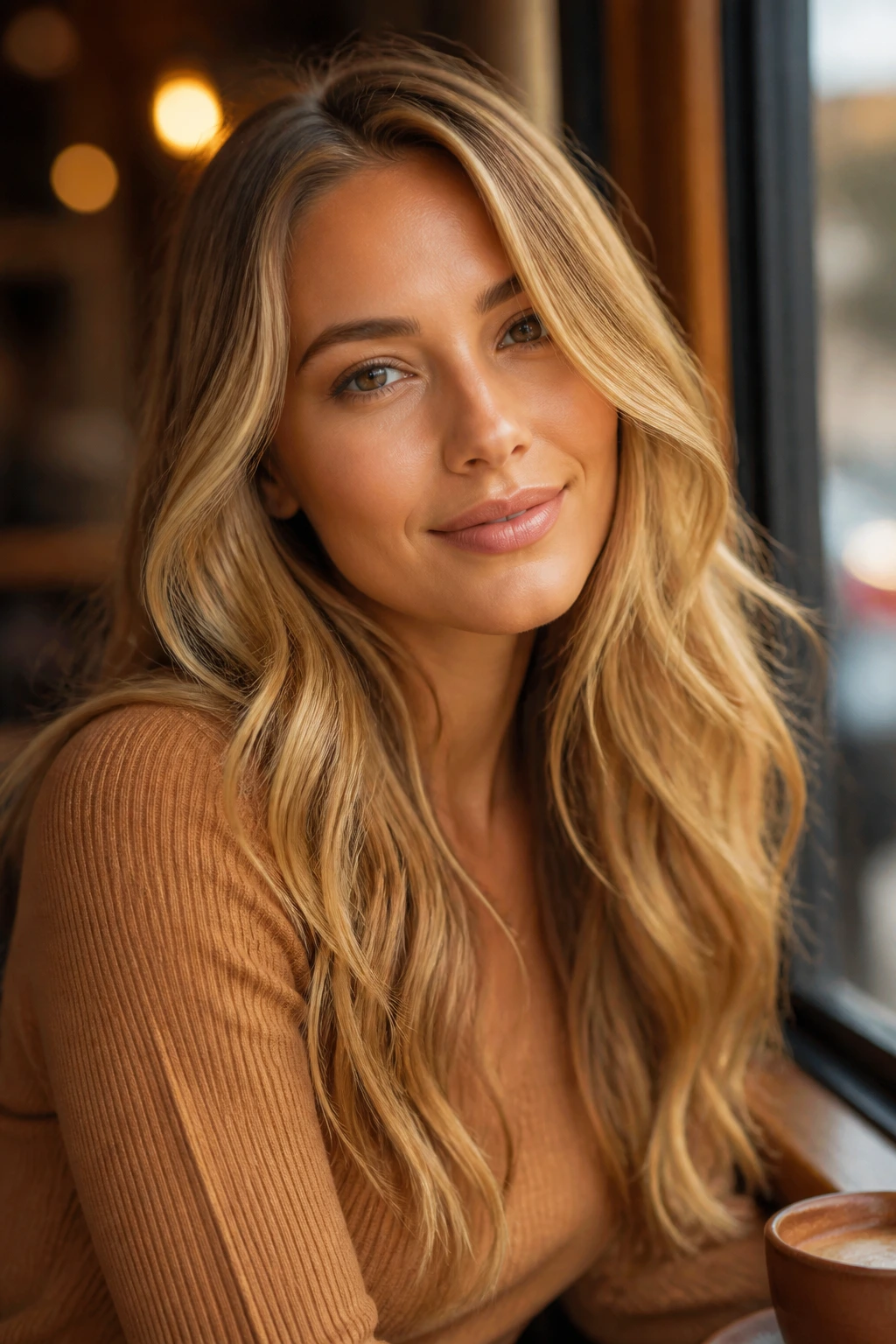
Warm blondes tend to look best when the rest of the look stays in the same temperature family. That doesn’t mean everything has to be brown and gold. It means the color story should feel connected. Cream, camel, rust, olive, terracotta, peach, and deep teal all tend to play nicely with these shades.
Brows matter more than people admit. A warm blonde often looks strongest when the brows stay one shade deeper than the hair, especially if the blonde sits around the face. If the brows get too pale, the whole face can lose definition. Keep a little edge there.
Texture changes the way the color reads. Loose waves show ribbons, curls show dimension, and a sleek blowout makes gloss look rich. If you like a blunt cut, choose a blonde with root depth or lowlights so the shape doesn’t go too stark.
Practical Tips for Making Warm Blonde Last
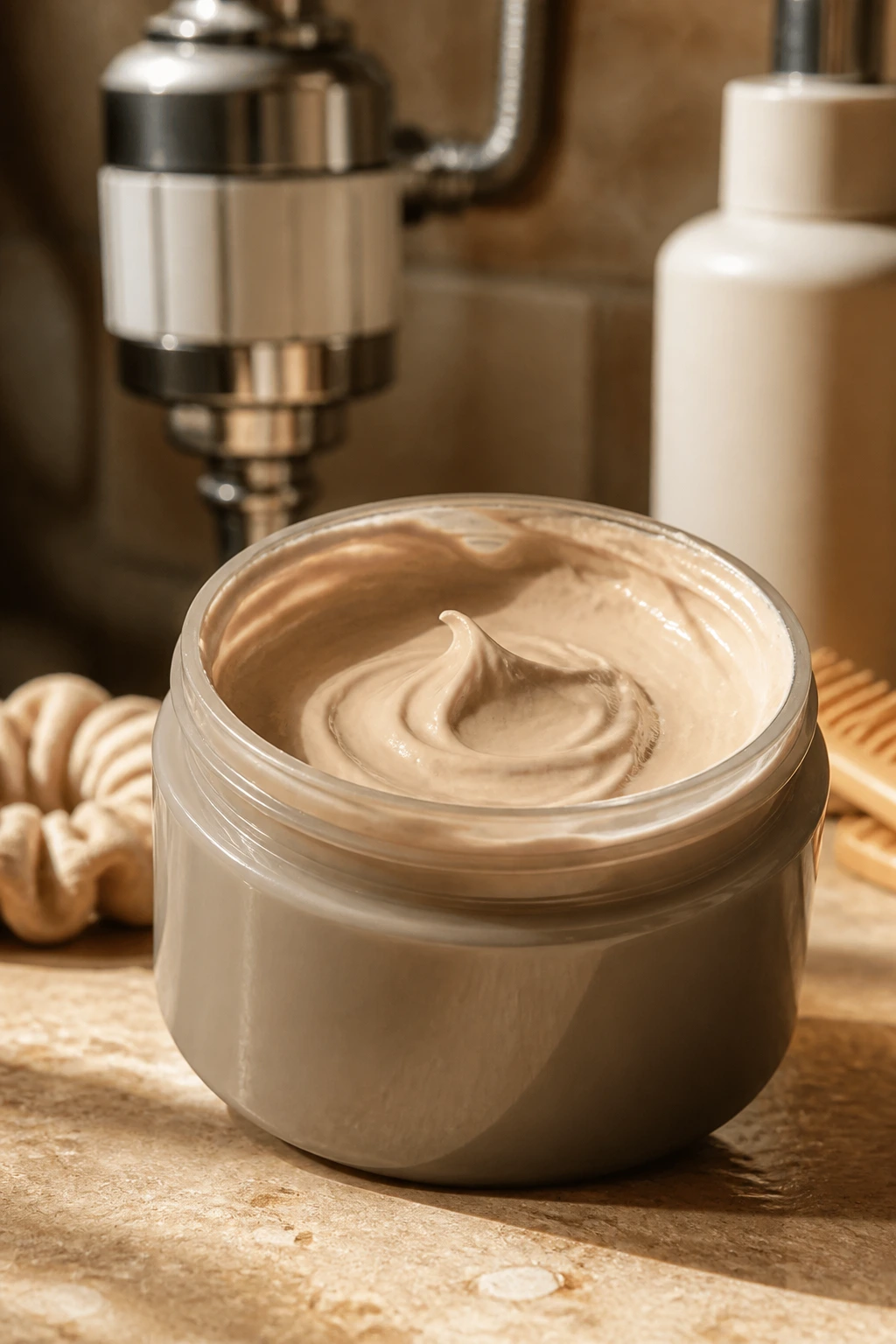
Gloss on a schedule: for brighter warm blondes, refresh the tone every 4-6 weeks. If the shade is deeper and rootier, 6-8 weeks is often enough.
Wash less often: two or three washes a week is easier on warm pigment than daily shampooing. Use lukewarm water; hot water strips tone faster than most people expect.
Heat protection is not optional: blonde ends hate direct heat. Use protectant before blow-drying, curling, or straightening, and keep iron temperatures lower if your hair is fine or porous.
Clarify carefully: every 3-4 weeks, use a gentle clarifying shampoo if buildup makes the blonde look dull. Follow with a rich conditioner or mask so the hair doesn’t feel rough.
Treat hard water like a real problem: mineral-heavy water can turn warm blonde muddy or dingy. A shower filter helps more than people expect, especially on porous hair.
Common Mistakes That Push Warm Blonde Off Course
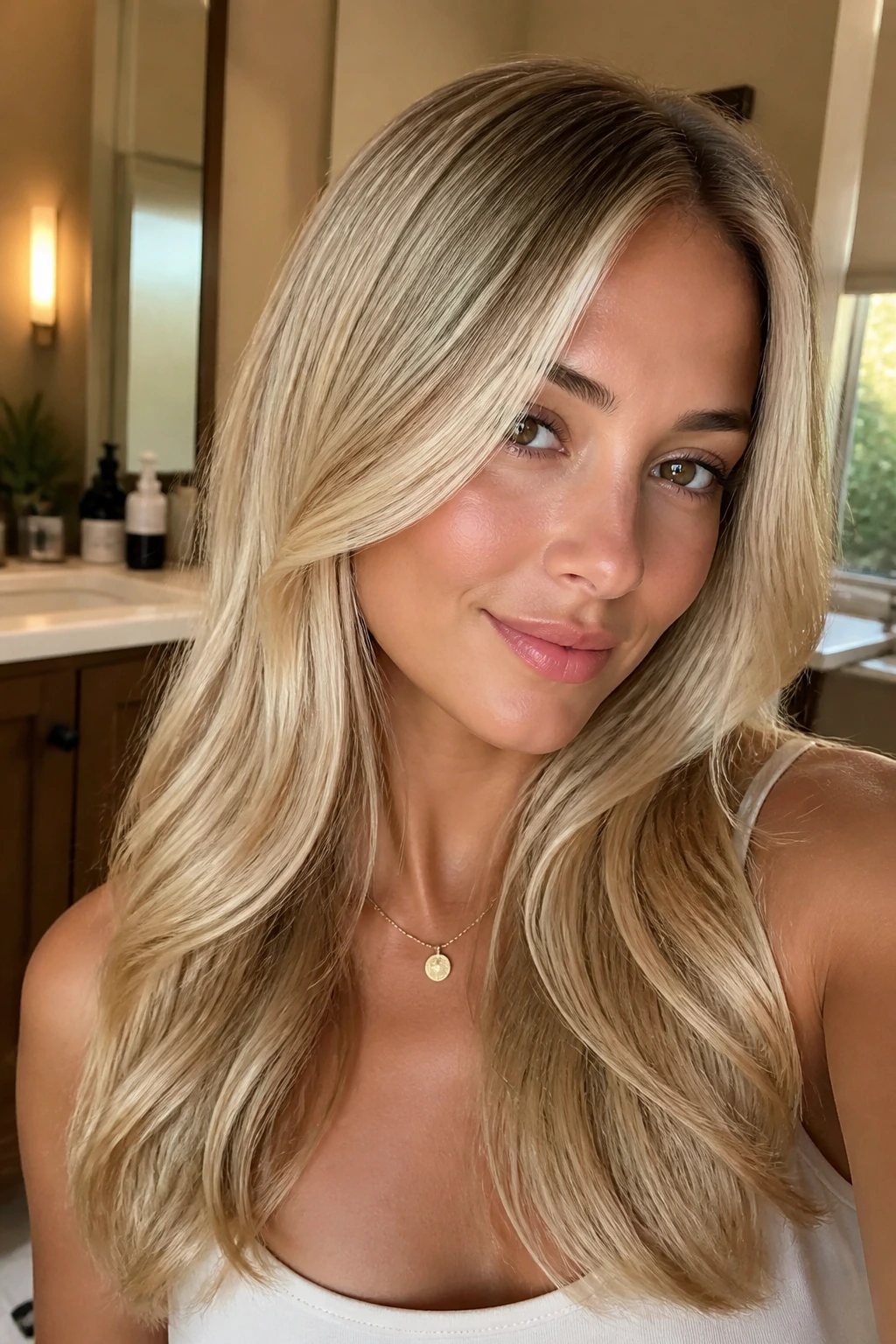
Going too ash-heavy: the blonde may look clean in the bowl and dead on the face. The symptom is a flat, gray-ish finish that drains warmth from the skin. The fix is a beige, gold, or honey toner instead of a cool one.
Lifting all the way to the top with no shadow: full brightness from root to end can erase shape. The hair starts to look wide and the face loses framing. Keep a root melt or lowlight in the formula.
Using purple shampoo like it’s a daily cleanser: purple is meant to fight yellow, not preserve warmth. If your blonde is honey, peach, or gold, too much purple can dull the exact tone you wanted. Use it sparingly, only when the blonde drifts too yellow.
Ignoring porosity: porous hair grabs toner fast and drops it fast. The result is patchy warmth, muddy ends, or a color that looks different every week. Porous hair usually needs gentler processing and more conditioning between visits.
Choosing one photo and stopping there: a single screenshot tells almost nothing. Show your colorist the root depth, the midtone, and the finish you actually want. Otherwise you may get brightness you didn’t ask for.
Variations and Alternate Routes
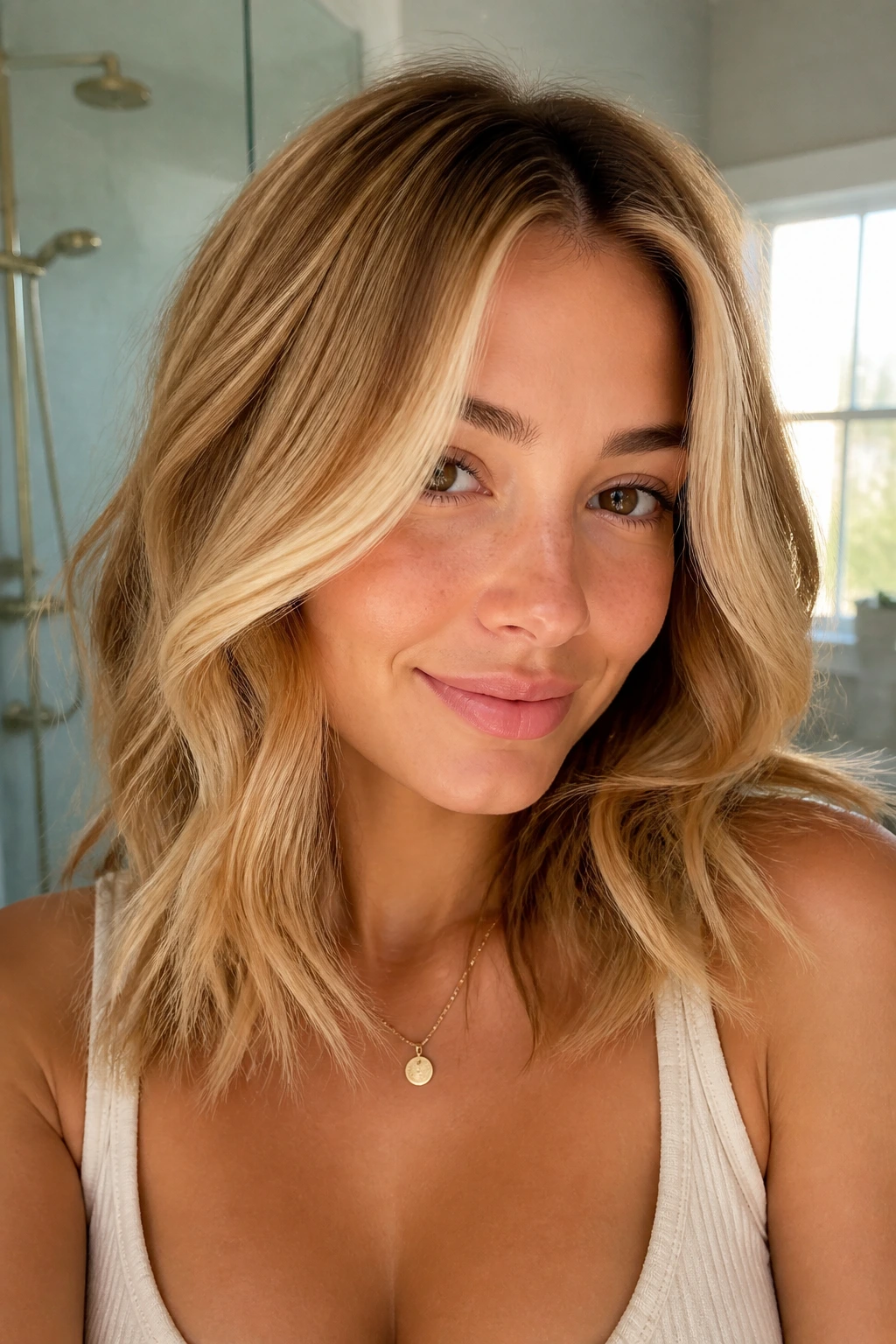
Soft Honey Refresh: keep the honey butter base, but add brighter face-framing pieces and a slightly deeper root. This suits people who want visible lightness without changing the whole head.
Copper Lean: start with caramel balayage and push the gloss toward amber or soft copper. Good for warm skin that wants more color energy without crossing into full red.
Beige Balayage: keep the placement but move the tone toward sandy honey or toasted vanilla. This is the version for warm-neutral faces that want less gold and more softness.
Rooty Bronze Blonde: let the top stay hazelnut or bronze, then brighten only the mids and ends. It’s the most forgiving option if you want less upkeep and more depth.
High-Glow Face Frame: leave the interior of the hair darker, then concentrate golden or apricot blonde around the front. This gives the face a quick lift and keeps the rest of the hair calm.
Make-Ahead, Maintenance, and Between-Visit Care
Warm blonde is not a set-it-and-forget-it color. The tone needs small resets to stay creamy instead of turning flat or too yellow. For bright blondes, a gloss every 4-6 weeks usually keeps the warmth clean. For deeper dimensional blondes, the salon visit can stretch longer because the shadow root and lowlights carry more of the look.
Root touch-ups depend on the technique. Foiled blondes often need attention around 6-8 weeks if the contrast is strong. Balayage and shadow-root looks can stretch closer to 10-12 weeks before they start to feel tired. If your hair is curly, porous, or lifts fast, check in sooner; those textures usually show fade earlier.
At home, use color-safe shampoo, a rich conditioner, and a weekly mask. If the blonde starts to lose shine, a lightweight glossing treatment or depositing mask in gold, beige, or caramel can bring it back without another full service. Keep heat down where you can. The ends of lightened hair have a short memory.
Frequently Asked Questions
Can warm skin wear platinum blonde?
Yes, but it usually looks better with a gold root melt, beige lowlight, or warm makeup to keep the face from going washed out. Flat icy platinum is the hardest version to wear on warm undertones.
What shade is safest if I’m not sure about my undertone?
Sandy honey blonde or toasted vanilla blonde usually give the most room to breathe. They stay warm without pushing too far into yellow, orange, or red.
Is caramel balayage good on dark brown hair?
Very much so. Caramel highlights keep the base visible, which helps warm skin look framed rather than blanketed in light color. It also avoids the harsh regrowth line that full blonde can create.
How often should warm blonde be toned?
Most warm blondes benefit from a gloss every 4-8 weeks, depending on how light and porous the hair is. If the shade starts drifting too yellow or dull, tone sooner.
Will purple shampoo ruin a honey blonde?
It can, if you use it too often. Purple shampoo is useful when the blonde gets too yellow, but a warm blonde that is already golden only needs it occasionally, and often not at all.
What if my blonde turns orange instead of gold?
That usually means the lift stopped too early or the toner is too weak for the base. Ask for a more controlled lift and a glaze that moves the tone toward beige-gold rather than copper-orange.
Do warm blondes work on short hair?
Yes, and short hair can look sharper because the color placement is easier to see. Golden money pieces, ribbon highlights, and beige shadow roots all show up nicely on bobs and lobs.
Should my brows match my warm blonde exactly?
No. A little depth in the brows keeps the face from disappearing. One shade deeper than the hair is usually enough, especially with lighter warm blondes.
The Shade That Sits Best
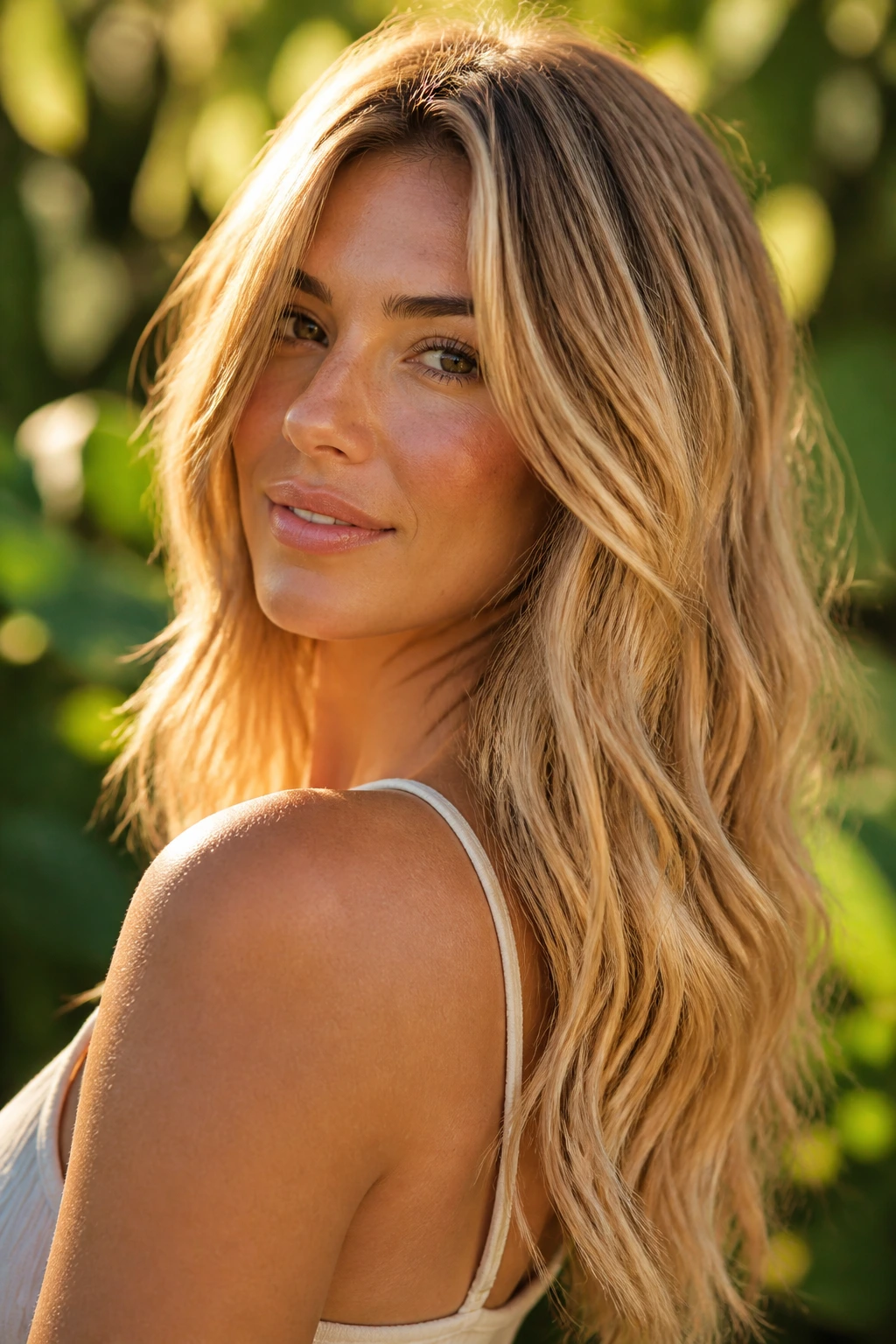
The strongest warm blonde is rarely the lightest one. It’s the one that keeps your face intact while adding enough gold, beige, peach, or copper to make the skin look alive. That’s the difference between a color that flatters and a color that just sits there.
If the choices feel wide open, start with the safest lane for your depth: honey butter, caramel balayage, sandy beige, or a rooted golden blonde. Those shades give you room to move brighter later if you want more contrast. And if you already know you like warmth, lean into it. Hair color looks best when it has a point of view.