



Warm skin and the wrong blonde can look oddly flat together. The right whole head blonde hairstyle for warm skin tones does the opposite: it pulls the gold, peach, or olive in your complexion forward and makes the hair look expensive instead of bleached out. That difference is not small. It is the whole point.
The trick is tone, not intensity. Honey, butter, beige, caramel, wheat, apricot, and warm champagne all live in that sweet spot where blonde still looks blonde, but it has enough warmth to sit naturally against skin that already carries warmth. Go too icy and the face can look a little tired. Go too orange and the hair starts shouting. The good versions sit in between, with enough warmth to flatter and enough softness to avoid brass.
That’s why these whole head blonde hairstyles for warm skin tones are more useful than a pile of random blonde inspiration. Some are blunt and polished. Some are soft and airy. Some lean short and sharp, others long and sunlit. The common thread is that they all understand one basic truth: warm blonde works best when the cut and the color are in conversation, not fighting for attention.
Why These 25 Blonde Looks Work on Warm Skin Tones
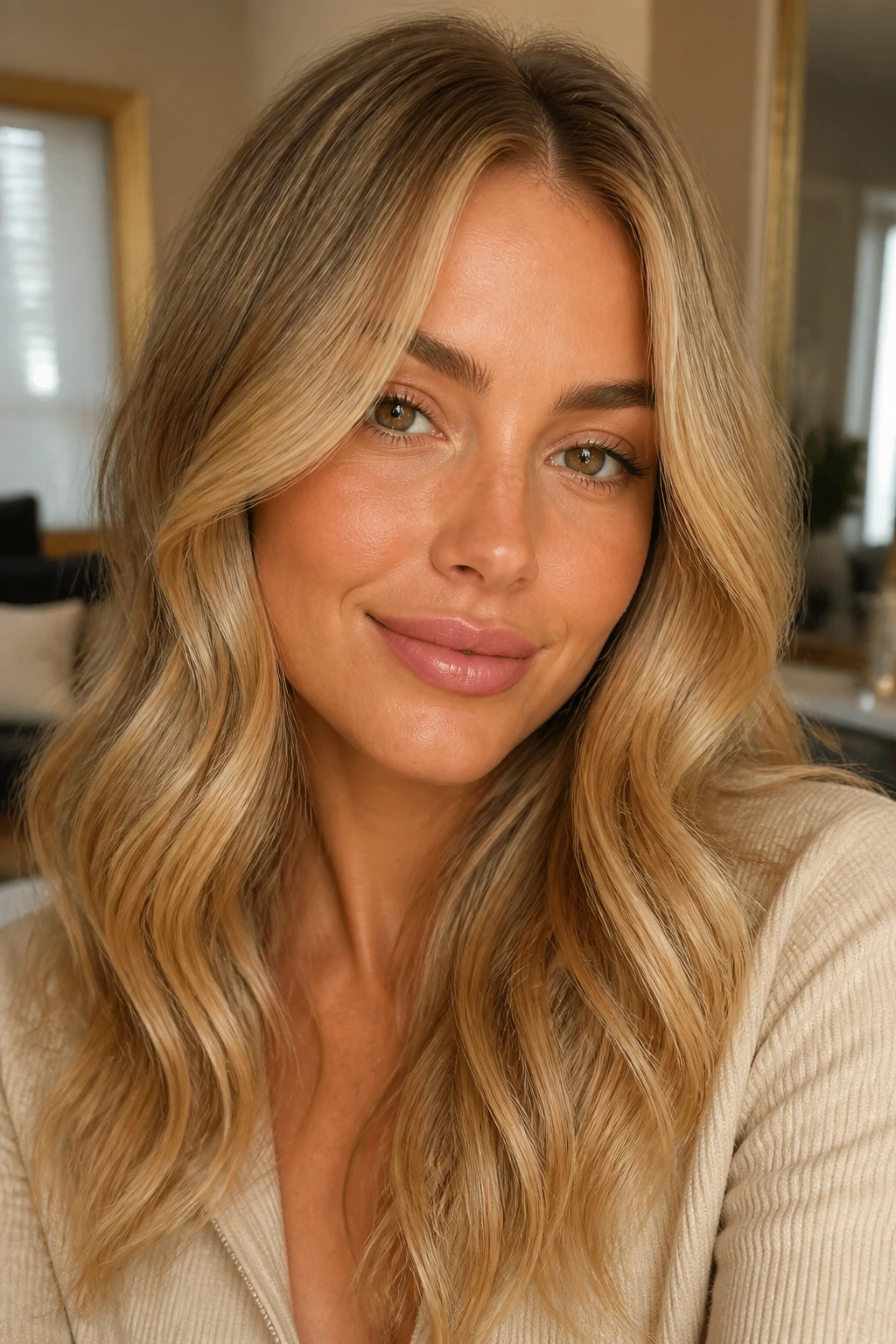
- Gold-on-gold harmony: Honey, butter, caramel, and beige blonde echo the warmth already in the skin, so the face reads brighter instead of paler.
- Not every warm blonde has to be soft: A blunt bob, sharp bixie, or sleek straight cut can carry warm blonde beautifully when the tone stays creamy and controlled.
- Depth keeps the color believable: A soft root shadow or beige lowlight keeps full blonde from looking like a helmet, especially on finer hair.
- Texture changes the mood: The same blonde can look beachy on waves, polished on a lob, and rich on curls, which is why haircut choice matters so much.
- Warm blonde wears better between appointments: When the shade is tuned to your undertone, regrowth tends to look intentional instead of harsh.
- You can go lighter without going colder: Warm skin does not need dark hair to look balanced. It just needs a blonde with some butter, gold, or beige in the mix.
1. Honey Blonde Blunt Lob
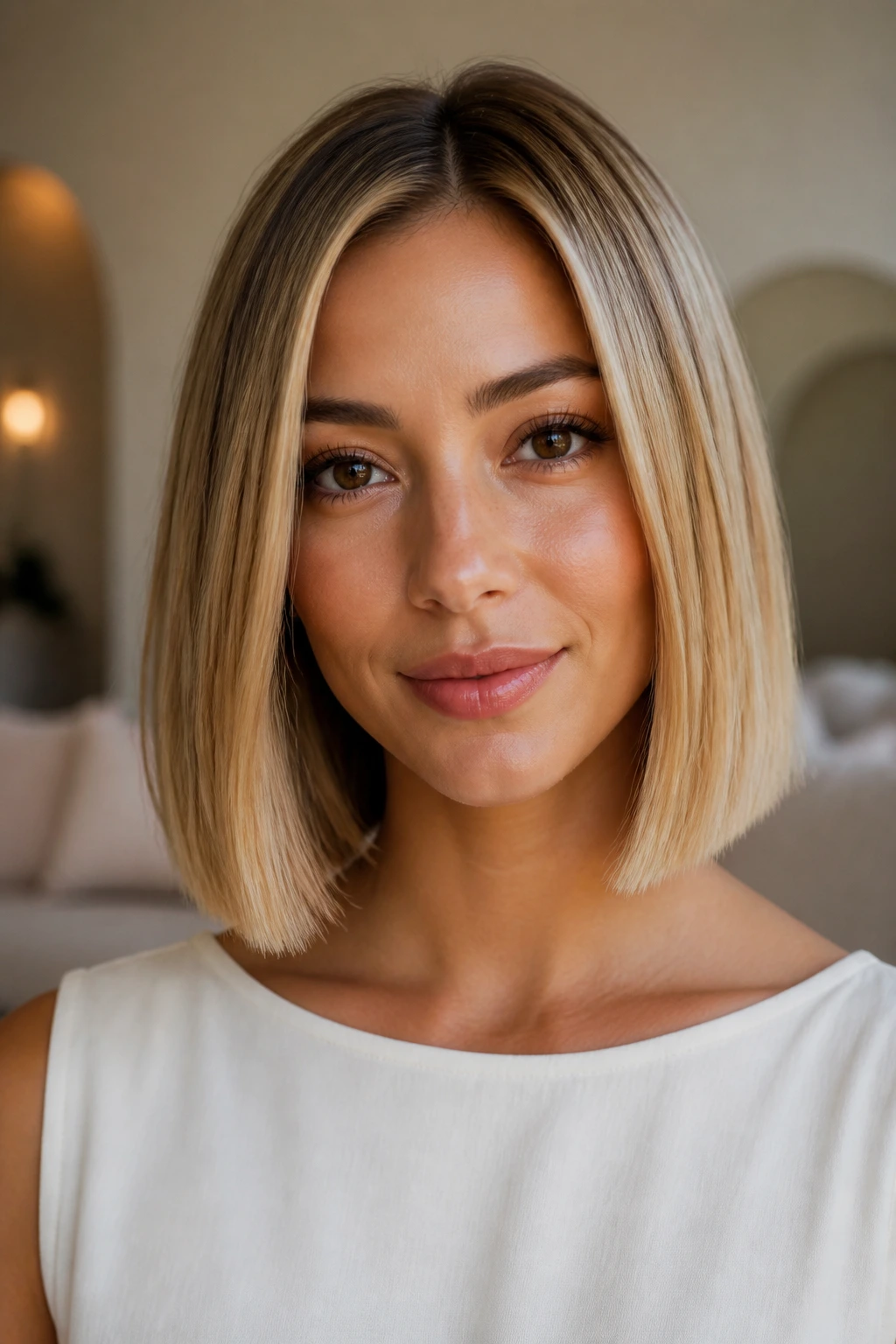
A blunt lob in honey blonde is one of those cuts that looks tidy without feeling stiff. The line at the collarbone gives the color a clean surface to sit on, and that matters because honey tones can look muddy if the cut is too choppy. Here, the ends stay sharp, the shine stays obvious, and the warmth lands right where you want it—around the face.
This is a strong choice if your skin leans golden or peach. The blonde should sit around level 8 or 9, with a soft root melt that’s only one shade deeper than the mids. That tiny bit of depth keeps the style from reading flat. Airy bends with a flat iron or a round brush are enough. Don’t overwork it. The blunt line does the heavy lifting.
2. Buttercream Butterfly Layers
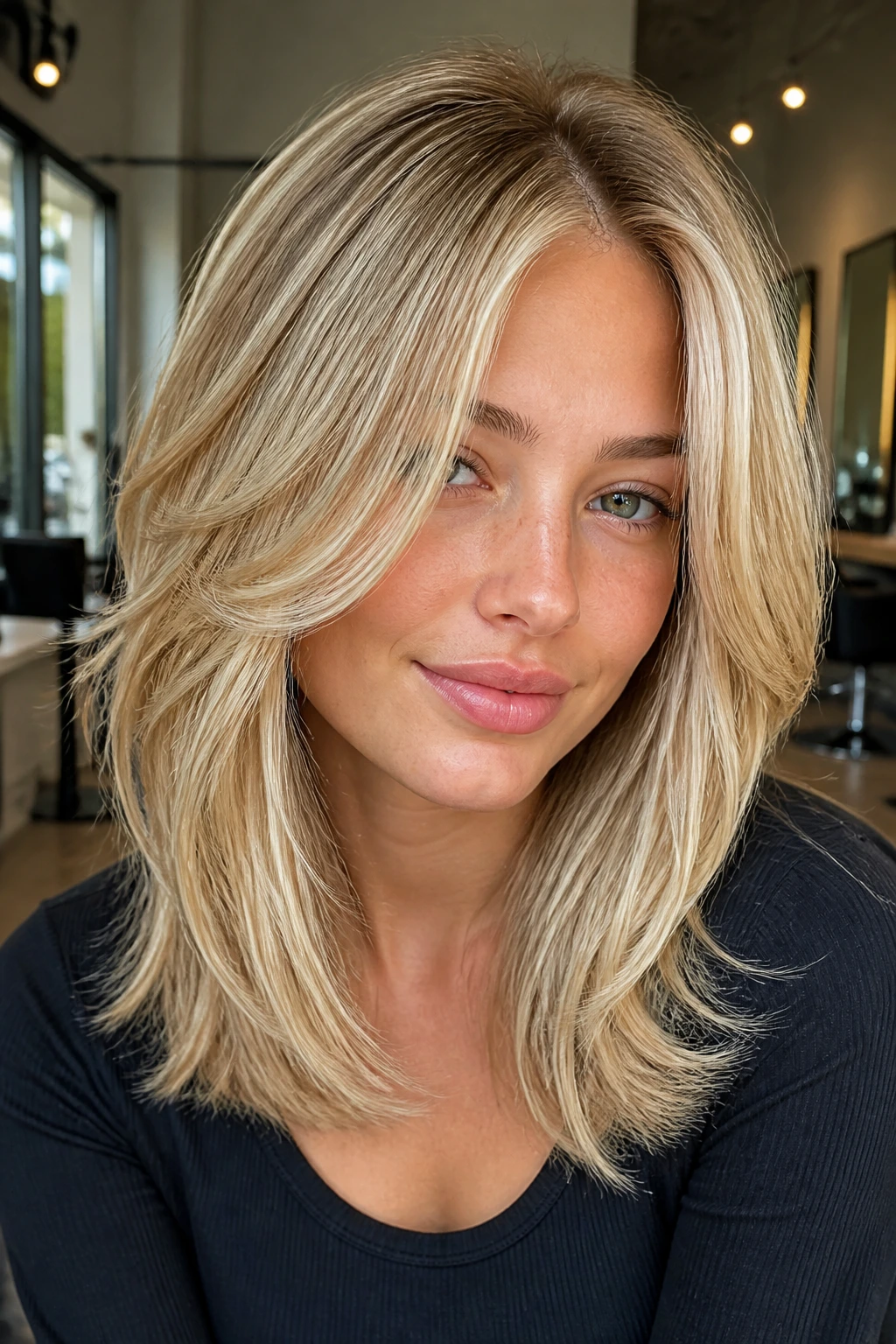
Why do warm skin tones look so good with butterfly layers? Because all those long, face-framing pieces catch light in a way that makes buttery blonde feel plush instead of thin. The haircut has movement at the cheekbones, around the jaw, and through the ends, which means the blonde can shift from soft to glamorous without changing color.
This style works best when the blonde is creamy rather than icy. Ask for warm beige highlights blended through an all-over blonde base, not a stripy contrast. The shortest face frame should start around the chin or mouth, then fall away in long layers. If your hair is thick, this cut removes bulk without making the blonde look see-through.
3. Golden Beach Waves on a Long Cut
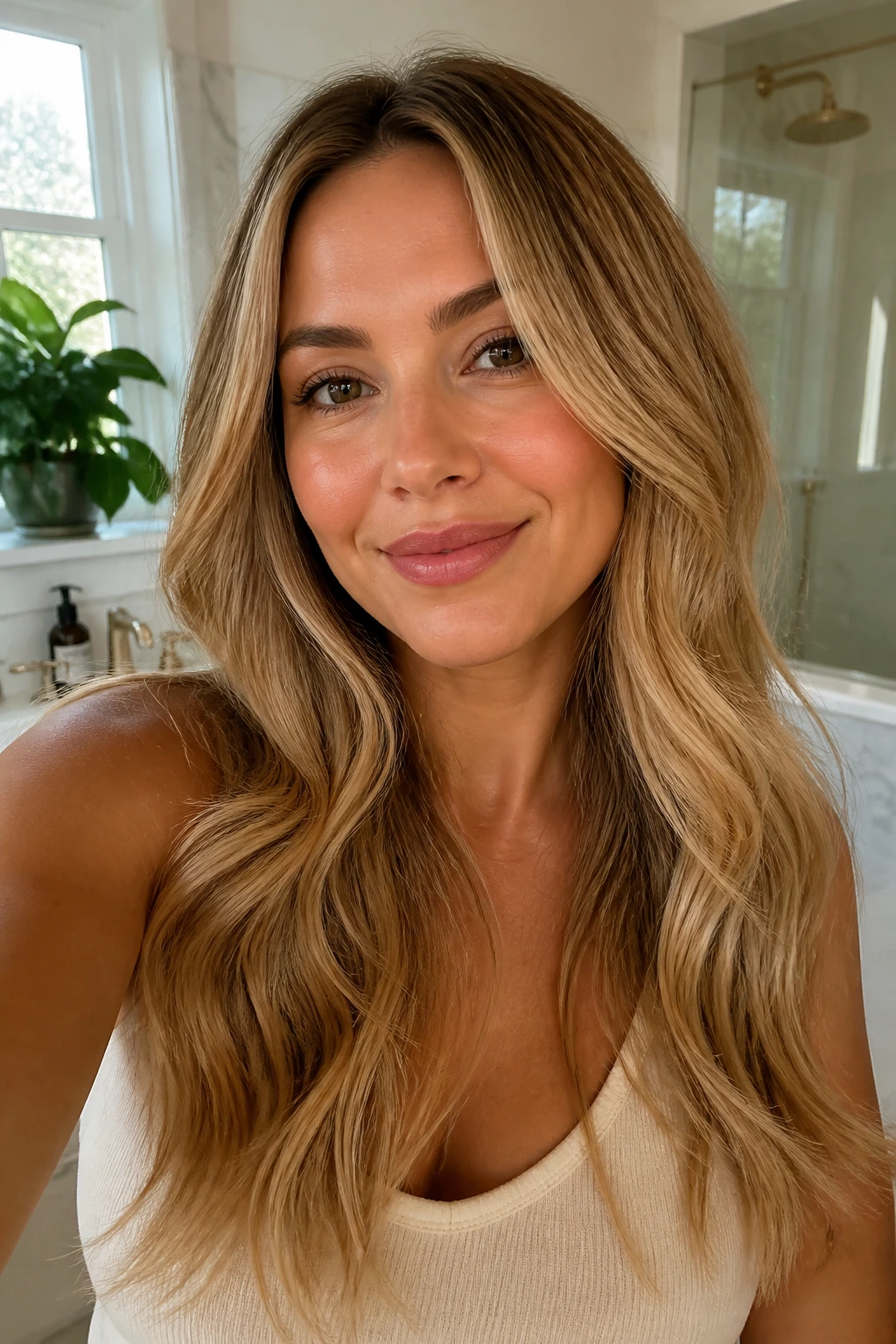
Golden beach waves are not about looking messy. They’re about using a loose bend to show off the warmth inside the color. On warm skin, a golden blonde long cut reads sunlit rather than washed out, especially when the waves are wide and soft instead of crimped-looking. Think 1.5-inch iron bends, brushed out once, then left alone.
This look likes length because the waves need room to open up. If the hair is cut too short, the color can look overly bright in one spot and dull in another. Keep the ends full. A tiny bit of serum on the lower third of the hair helps the gold reflect without turning greasy. One more thing: if you wear a side part, the whole style feels richer immediately.
4. Caramel-Soft Curls at Shoulder Length
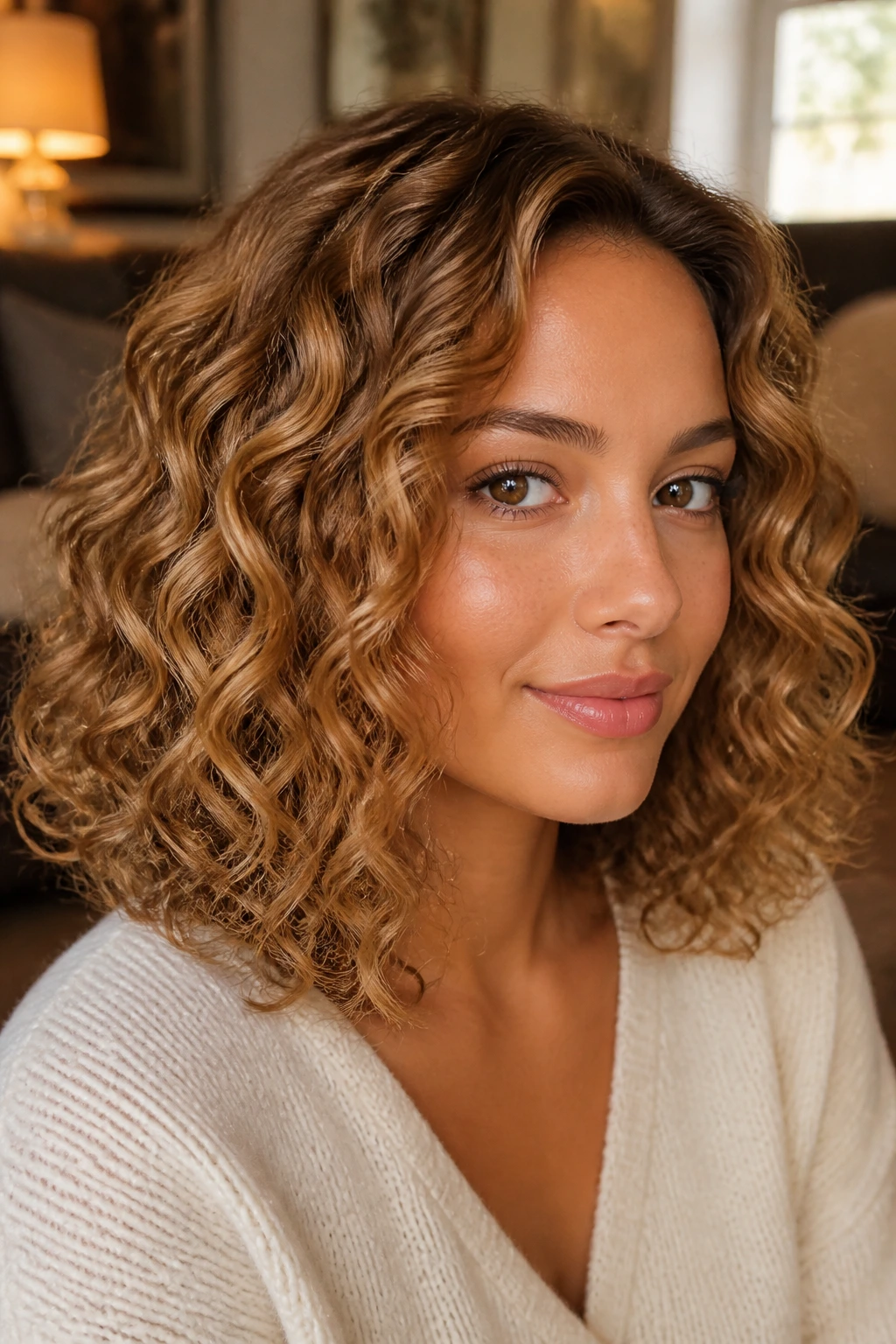
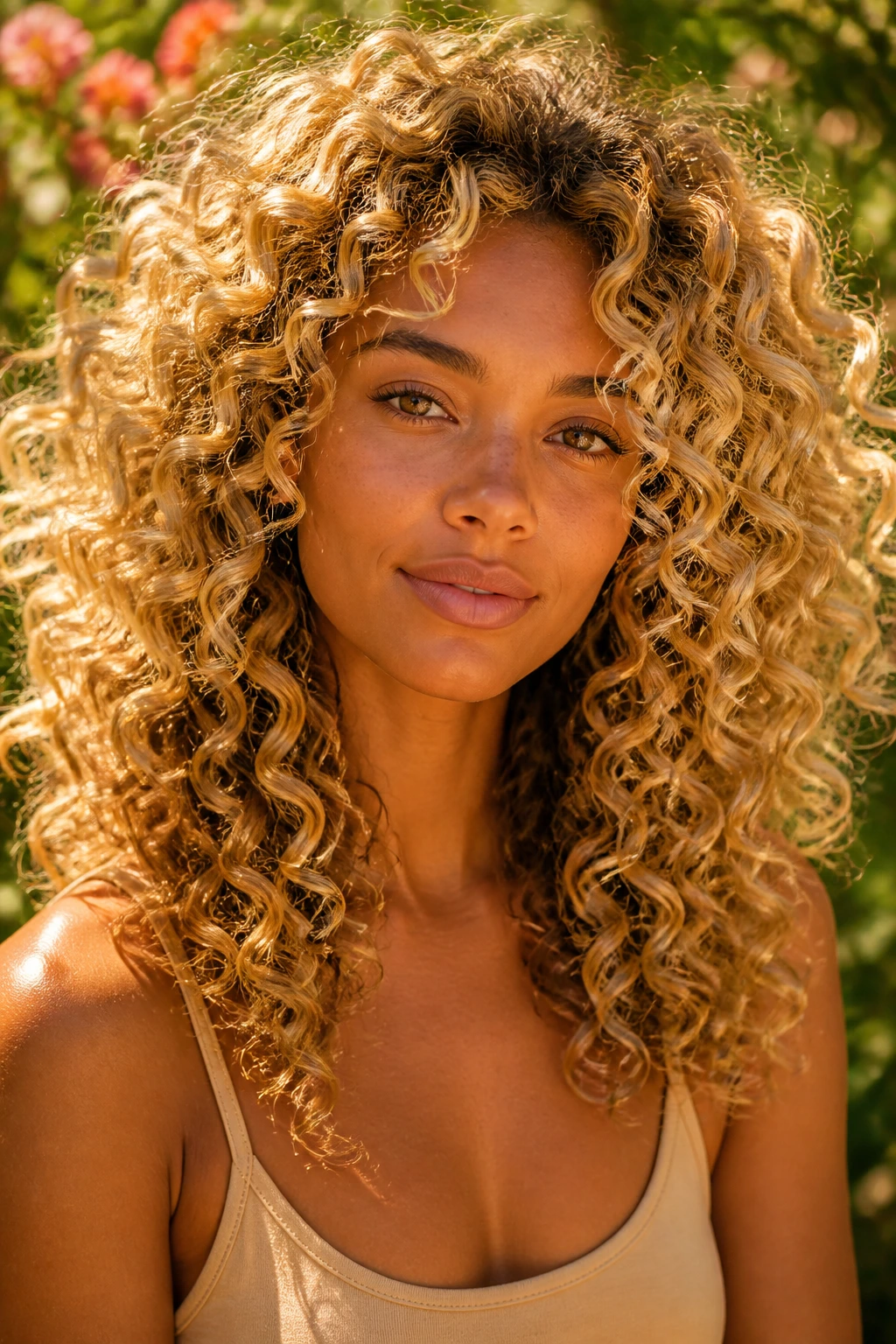
Shoulder-length curls in a caramel blonde are one of my favorite ways to do warm blonde on textured hair. The curls give the color depth, and the caramel tone gives the curls shape. You do not need an ultra-light blonde here. In fact, a slightly deeper level 7 or 8 often looks better because the curl pattern shows more clearly.
This is a good cut if you want something easy to fluff with your fingers and go. Diffuse until the curls are about 90 percent dry, then stop touching them. The warmth should live all through the coil, not just on the top layer. If the ends are too pale, the style can look dry even when the hair is healthy.
5. Beige Blonde Pixie with Tapered Sides
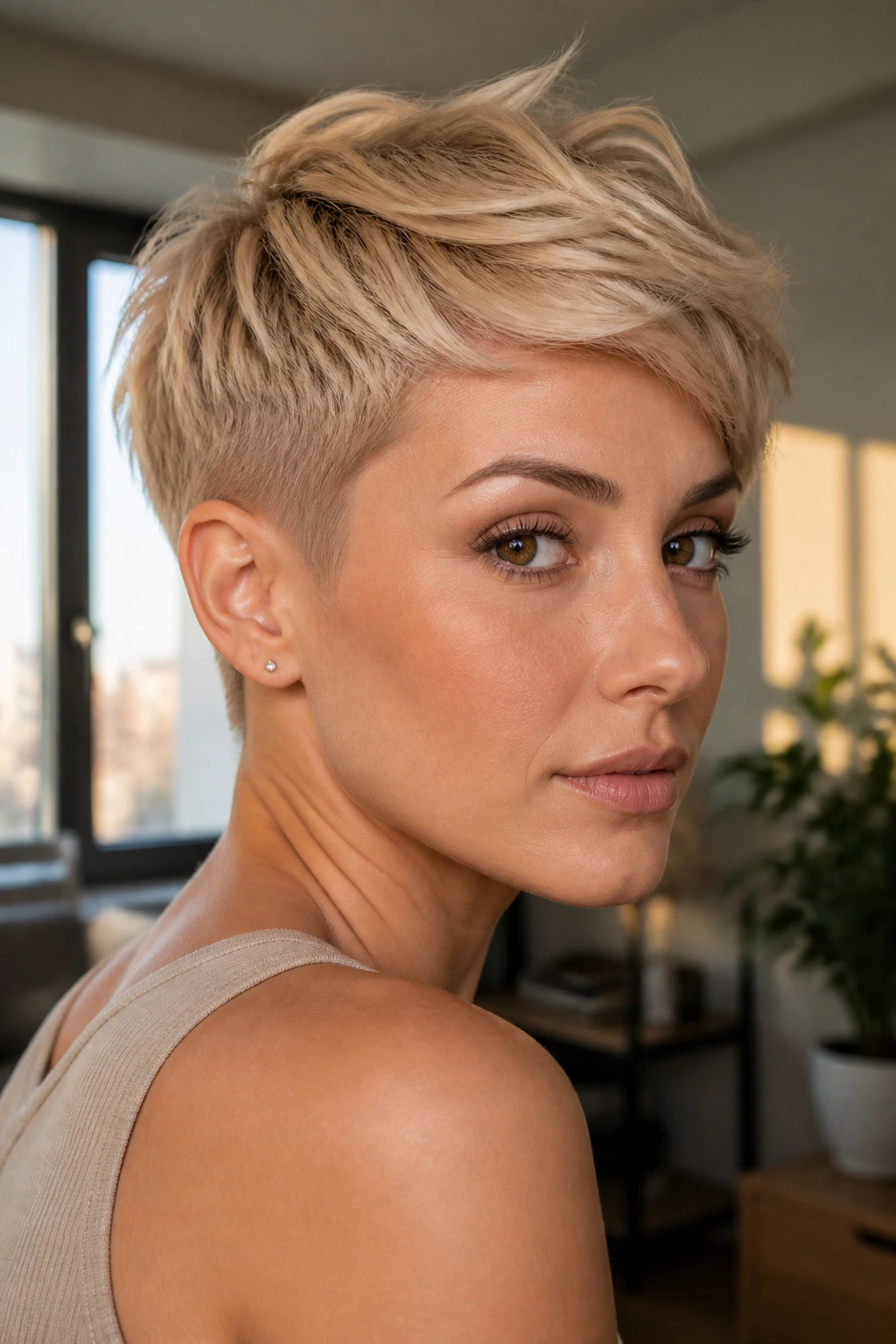
A pixie in beige blonde can be surprisingly soft on warm skin. The tapered sides keep the haircut tidy, while the longer top gives the color room to look creamy rather than harsh. Short blonde hair shows every tonal choice, so this is not the place for an icy toner or a chalky finish. Beige is the move.
This cut works especially well if you like low bulk around the ears and neck. Ask for enough length on top to sweep forward or to one side; that little bit of movement keeps the style from reading too severe. A matte paste is fine, but don’t bury the color under too much product. Short blonde needs light, not weight.
6. Toasted Vanilla Curtain Bangs
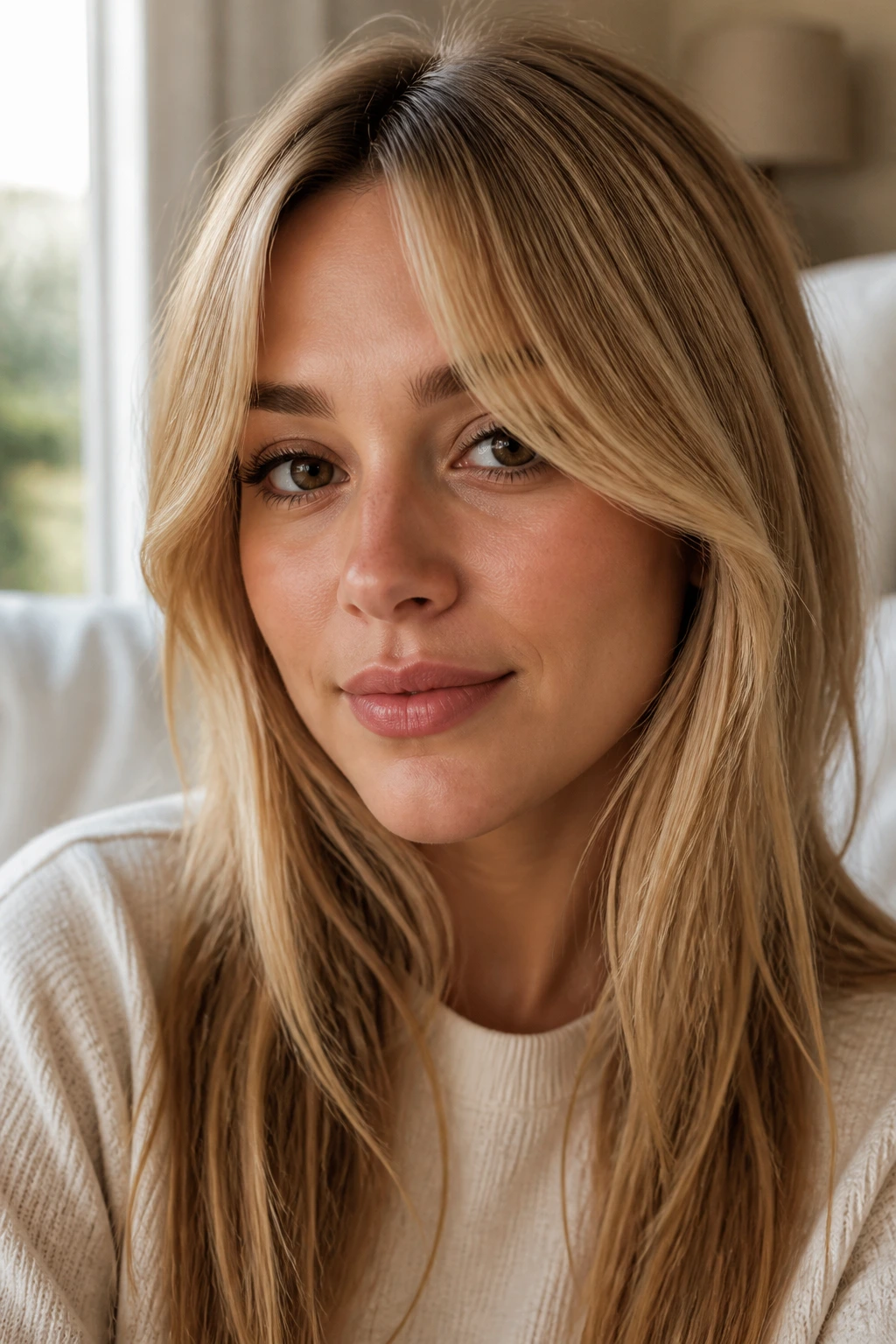
Curtain bangs with toasted vanilla blonde do something a little sneaky: they soften the face while keeping the rest of the hair long and light. On warm skin, that toasted vanilla tone has just enough gold to look lush, not brassy. The bangs should part cleanly in the middle and bend away from the cheeks, not sit in a hard curtain.
This look is especially good if your forehead feels like the part you always want to balance. The bangs pull the eye inward, which lets the color frame the skin without shouting. Use a round brush or a velcro roller at the roots when drying. If the bangs dry flat, the whole style loses its lift fast.
7. Butterscotch Bob with Tucked Ends
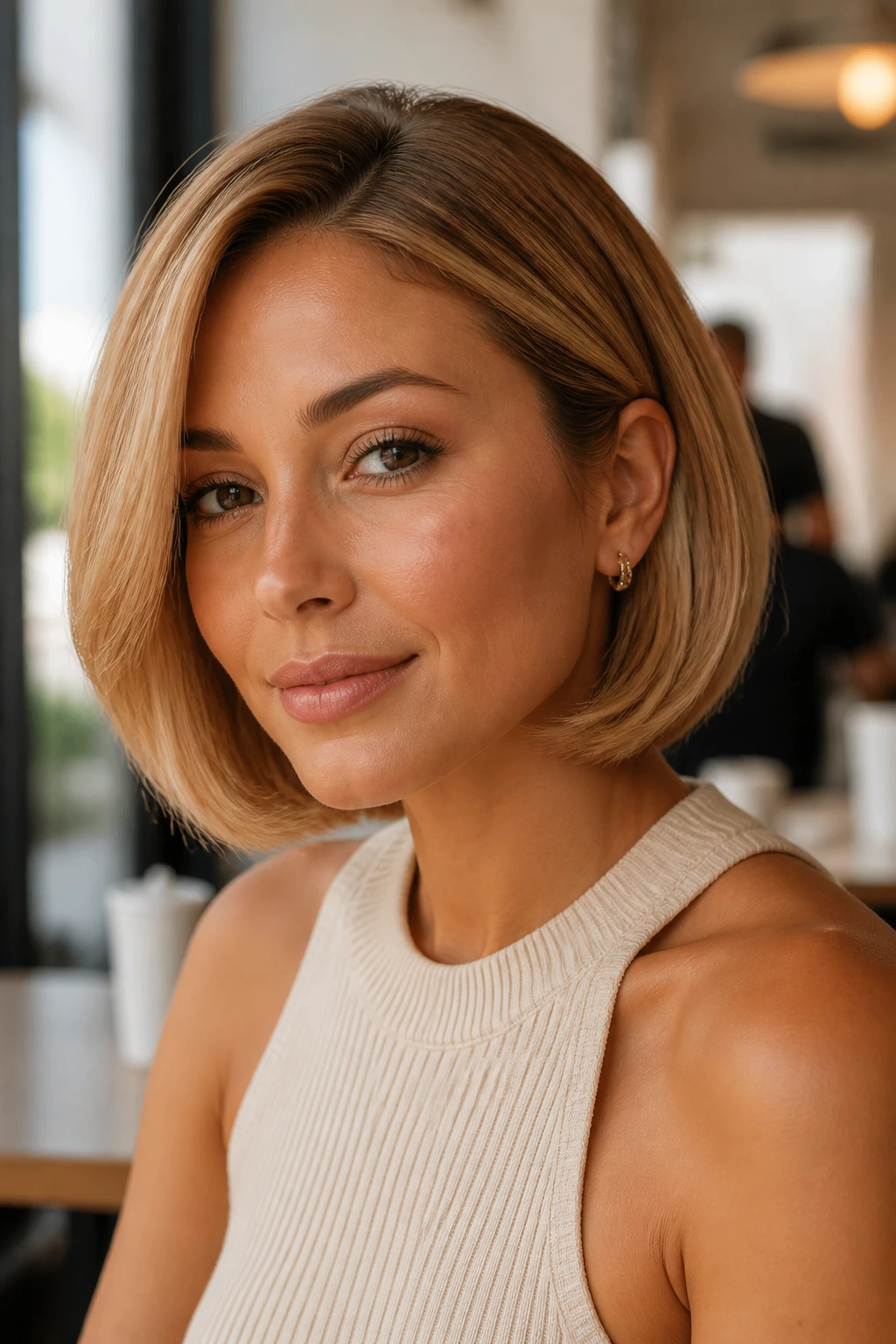
There’s something clean and charming about a butterscotch bob with tucked ends. The bob gives structure, and the tucked-under finish gives the blonde a little bounce at the jawline. On warm skin tones, butterscotch has enough amber in it to keep the look soft and friendly, which is why it feels less severe than a platinum bob.
This is a smart option if you like hair that sits in place. You can blow it out with a round brush, tuck one side behind the ear, and be done. Gold hoops or simple studs work well here because the cut already frames the face. If the bob is too long, it loses that neat little curve at the ends.
8. Warm Champagne Sleek Midlength Cut
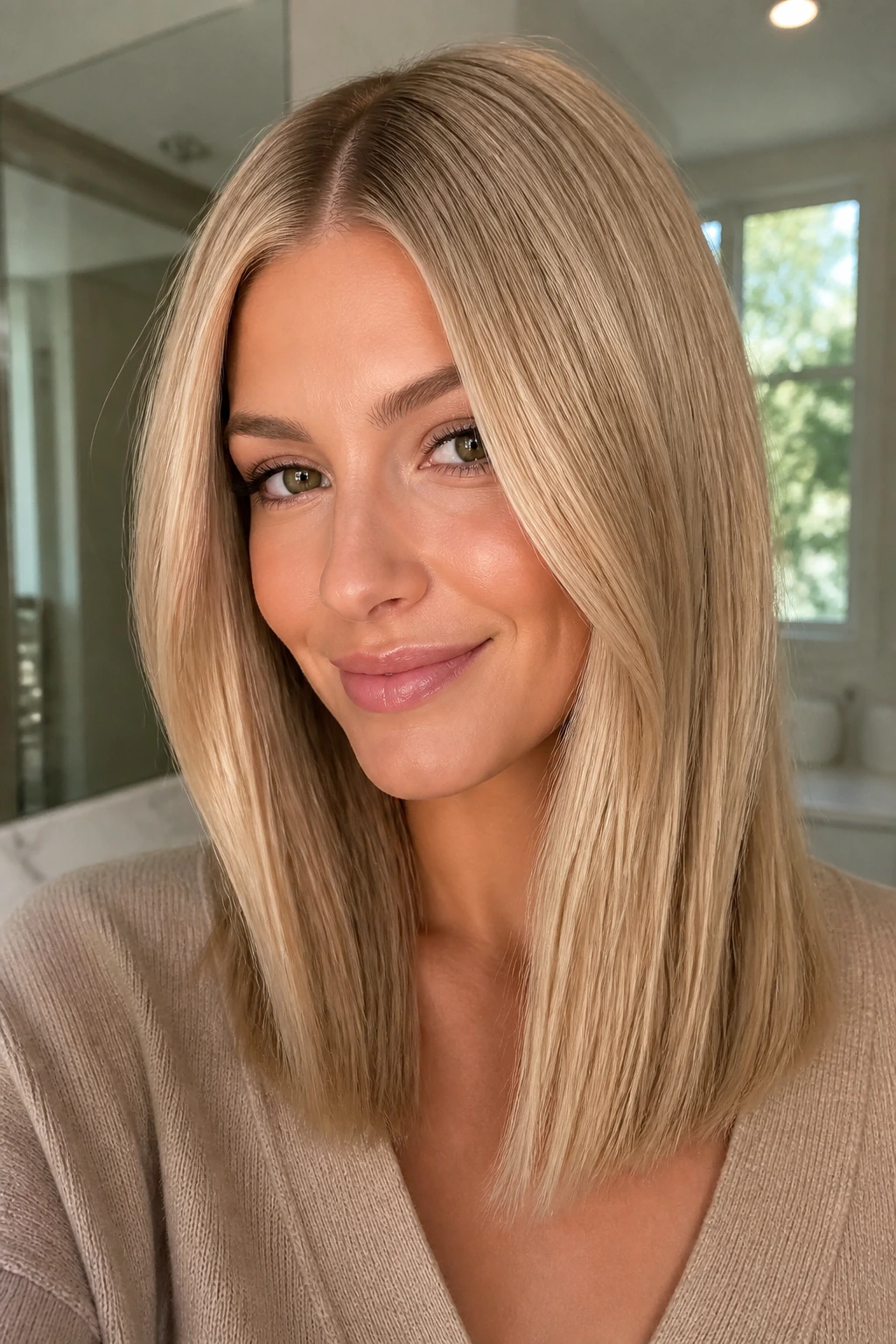
Can champagne blonde still count as warm? Absolutely, if it leans beige-gold instead of pearl-white. A sleek midlength cut gives that tone a polished surface, and warm skin benefits from the reflection. The hair ends up looking glossy, not frosted. That’s the difference between “blonde” and “blonde with good sense.”
This cut is best on straight or lightly wavy hair that can hold a smooth line. Ask for a gloss rather than a heavy toner if your hair already lifts warm. You want the surface shine, not a chalky finish. A center part sharpens the whole shape, while a soft side part warms it up a little more.
9. Sandy Honey Shag
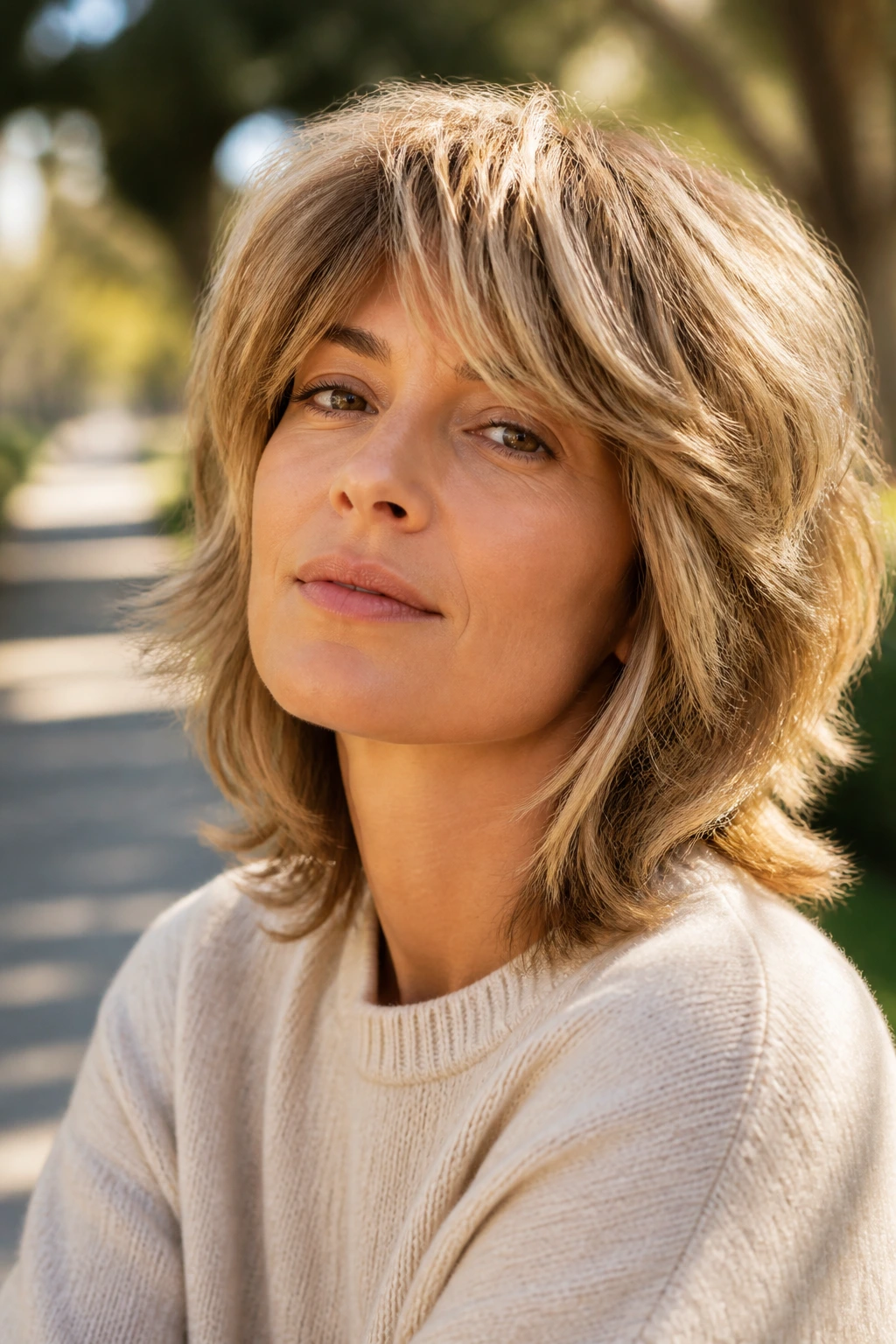
A shag in sandy honey blonde is for people who want movement without losing softness. The layers make the hair look airy, and the sandy-honey blend keeps the blonde from turning flat at the crown. Warm skin tones tend to like this cut because the texture creates shadows, and those shadows keep the blonde believable.
This style looks best when the ends are broken up but not wispy. Too many feathered pieces and the blonde can start to look scattered. Keep a little weight through the perimeter so the color still feels full. A bit of mousse at the roots and a dry texturizer through the mids is enough.
10. Creamy Blonde Defined Curls
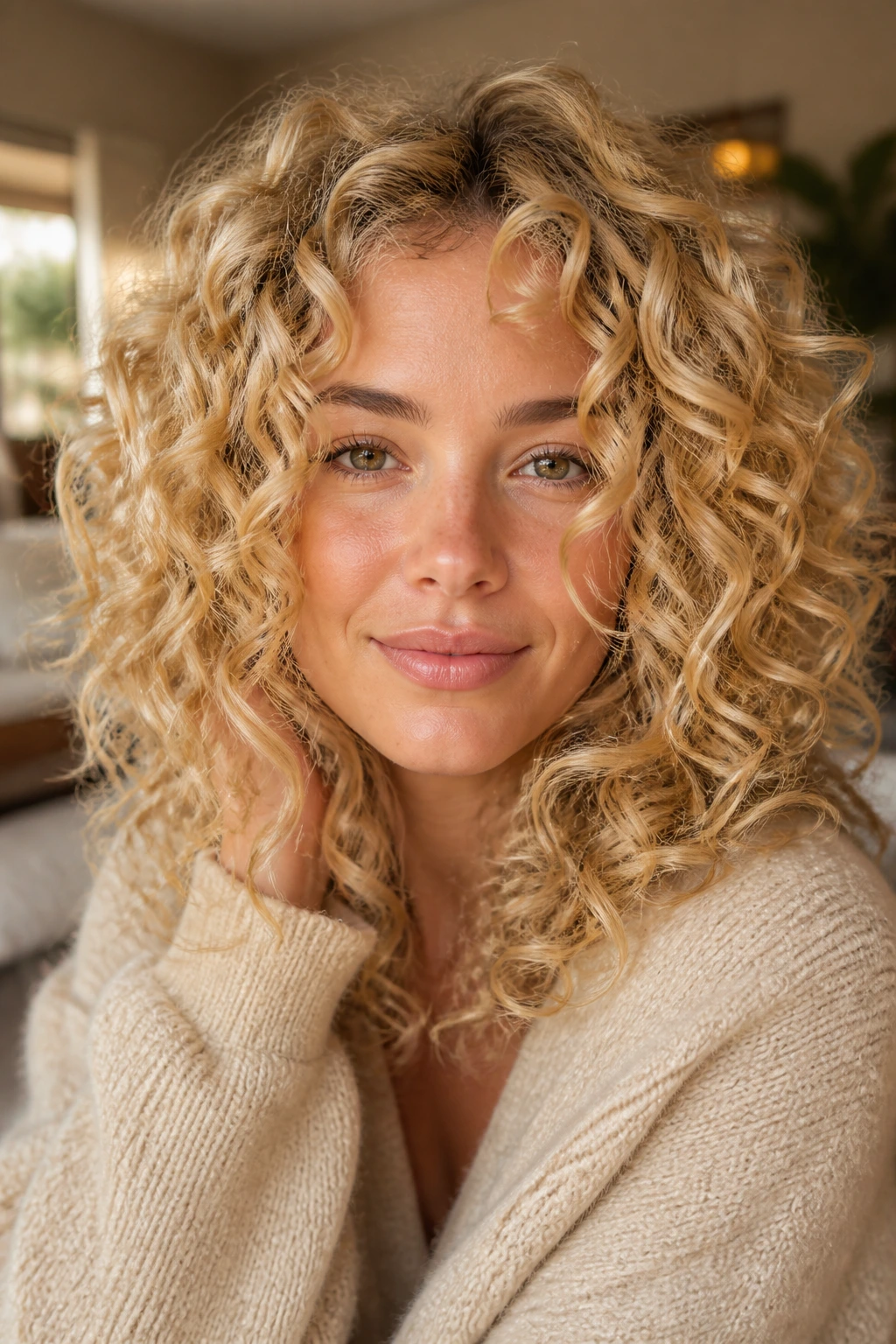
Defined curls in creamy blonde can look almost velvety when the tone is right. The color should stay buttery, not icy, so the spiral pattern still feels soft. On warm skin, that creamier finish stops the curl shape from looking dry at the ends, which is a common problem when blondes get too pale.
This is the kind of style that rewards patience with styling. Diffuse on low heat, then stop before the hair gets puffy. Break the cast with a few drops of lightweight oil, but keep it off the roots. If you’re color-lightening curls, ask for brightness around the outer layer and a touch more depth underneath. The contrast makes the curls pop.
11. Wheat Blonde Blowout Layers
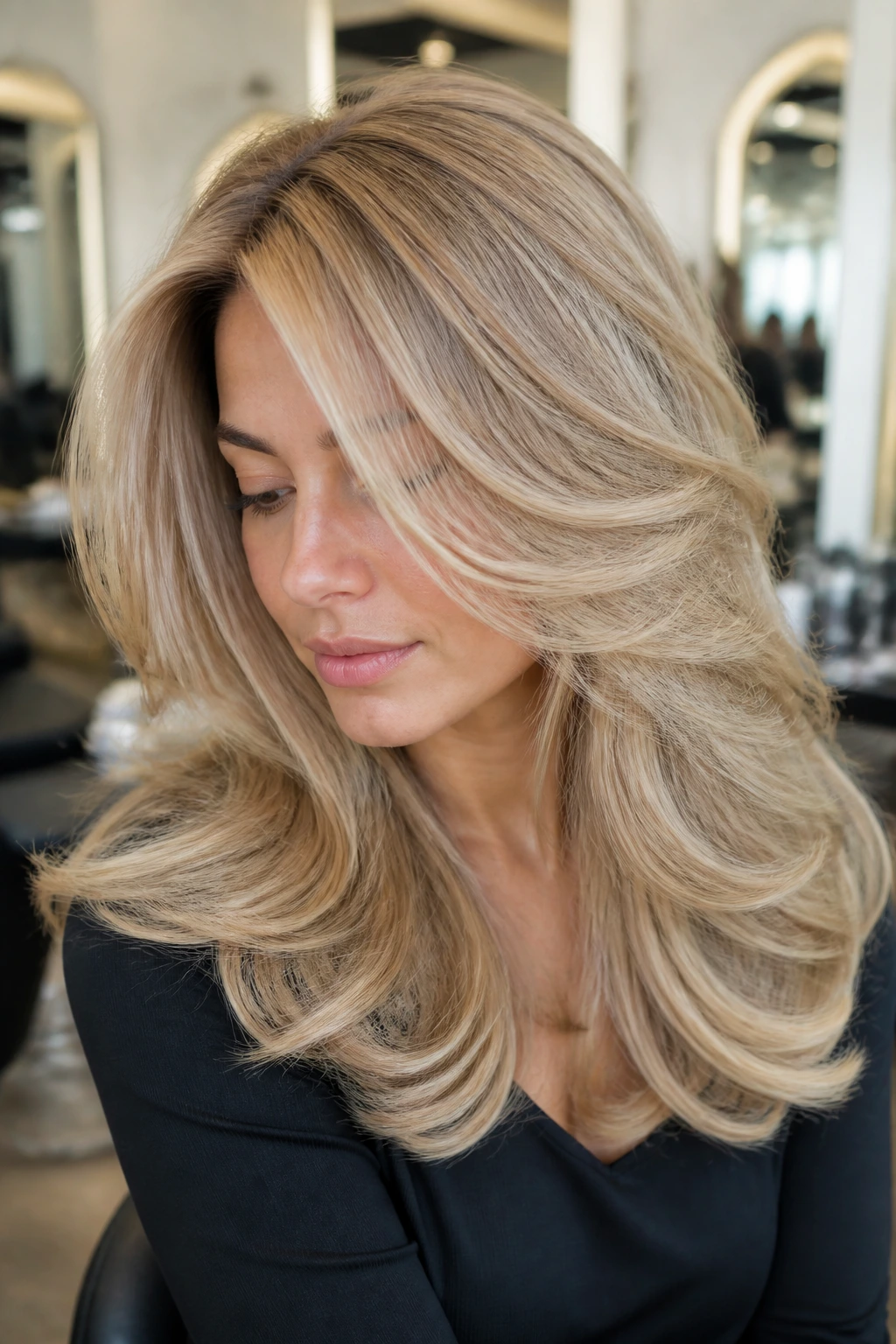
Wheat blonde blowout layers have a smooth, slightly luxe feel that suits warm skin with a golden or olive cast. The color sits between beige and gold, which keeps the style from going too yellow. The layers are there for movement, but the real story is the blowout—big, round, brushed-through volume.
If you’ve got medium to thick hair, this is one of the most forgiving blonde styles in the bunch. The blowout hides small regrowth lines, and the soft bends in the layers reflect light well. Use a round brush and a nozzle attachment, then let the hair cool before touching it. Warm blonde loves a calm finish.
12. Maple Blonde French Bob
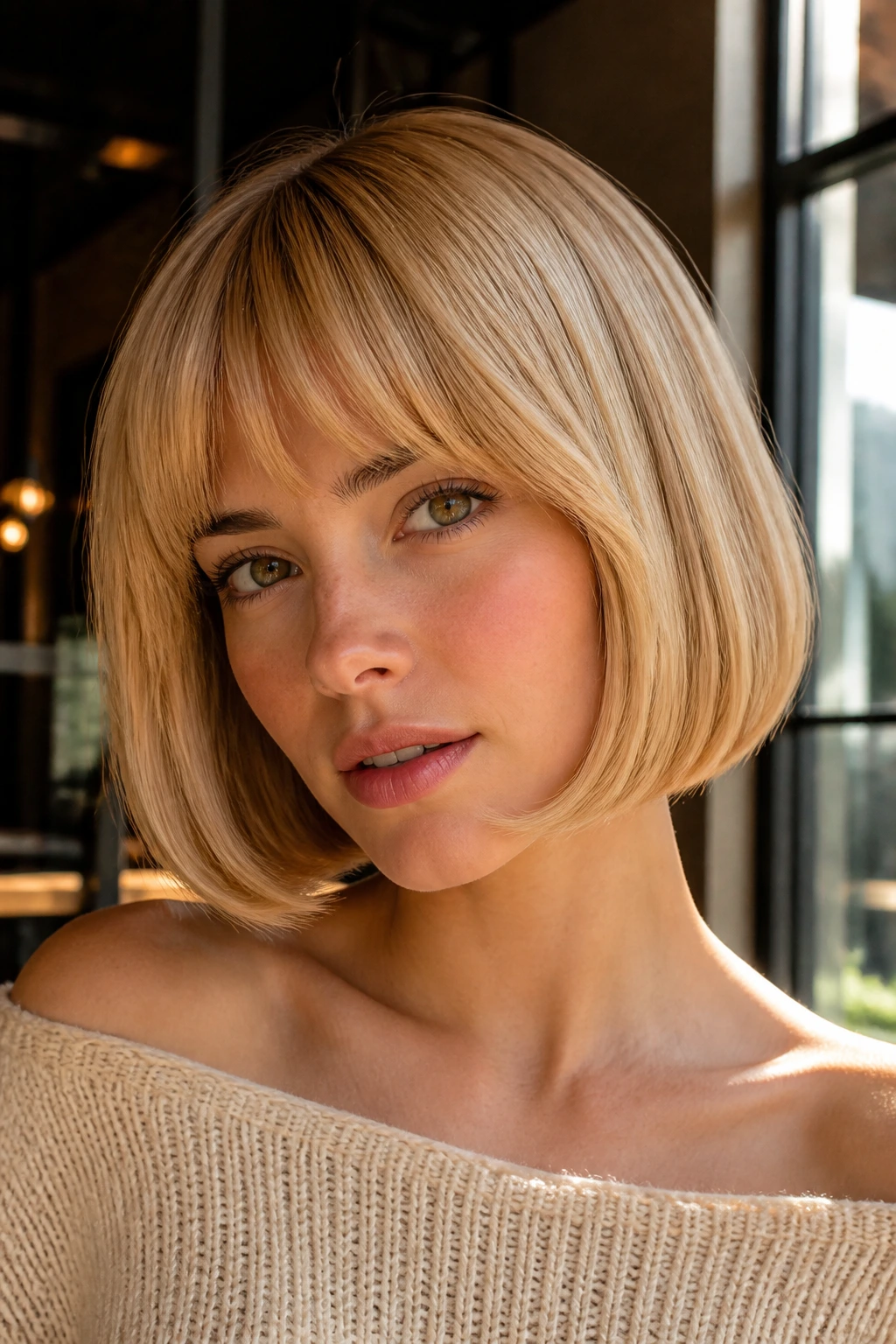
A French bob in maple blonde has a crisp, urban edge without feeling cold. Maple brings a richer warmth than beige, so it sits beautifully on skin that needs a little glow. The cut itself usually lands around the cheekbones or jaw, which makes the color feel intentional rather than accidental.
This one is best when the ends are blunt and the fringe is either soft or slightly parted. The whole shape should feel compact. If the bob gets too fluffy, it stops looking French and starts looking vague, which is not the same thing at all. A little bend at the ends is enough. Keep the finish shiny.
13. Sunlit Blonde High Ponytail
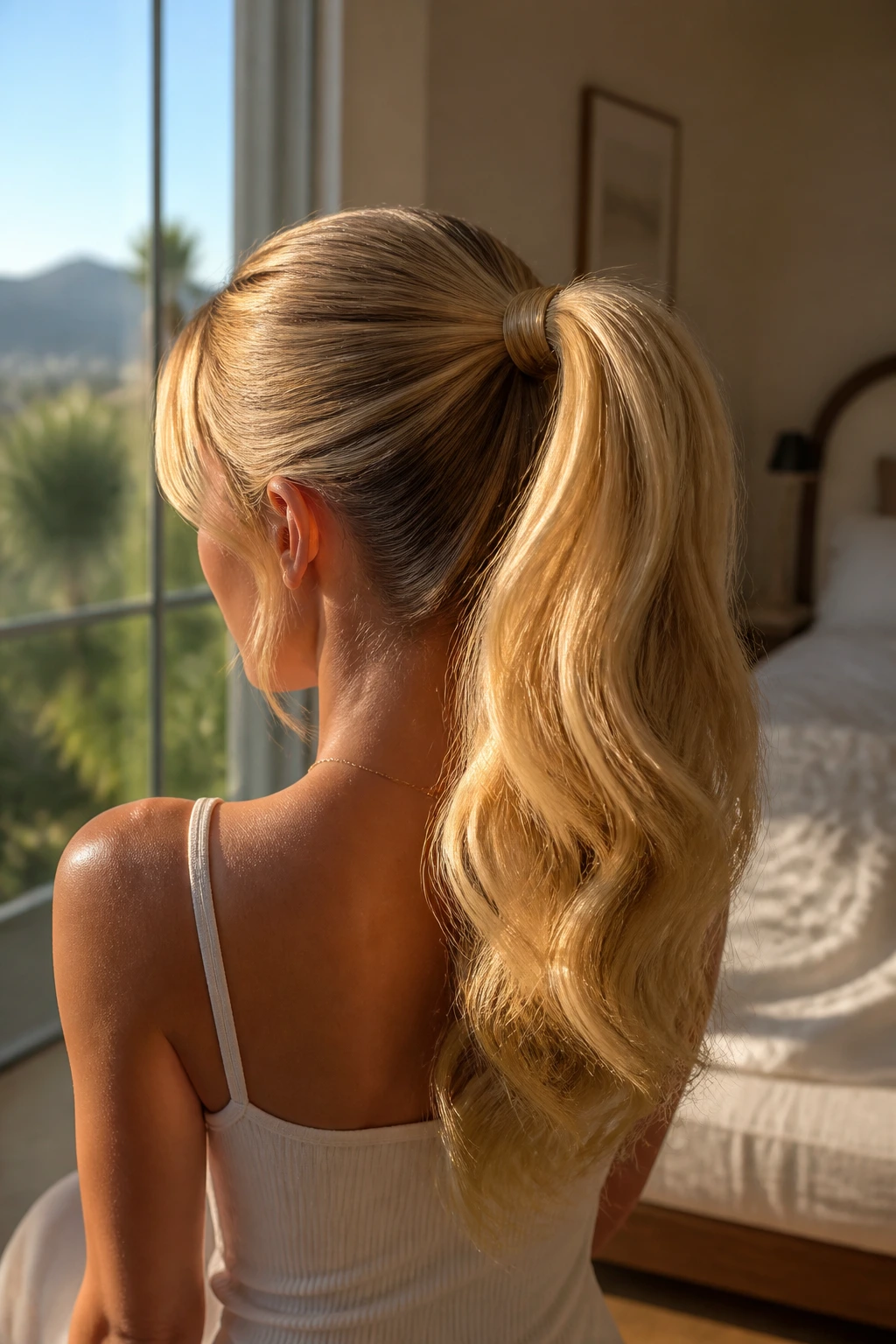
A high ponytail in sunlit blonde is one of the easiest ways to show off a full-head color job. The lifted shape gives the blonde a clean sweep from the hairline to the tail, and warm skin tones benefit from that brightness near the face. The color should be bright through the lengths, but not so pale that the ponytail looks dusty.
This style is best when the base is smooth and the tail has a little wave or curve. Wrap a small section of hair around the elastic if you want it to look finished, not gym-only. I like this look because it proves full blonde does not need to be loose to feel soft. It can be tied up and still look rich.
14. Apricot Blonde Braided Crown
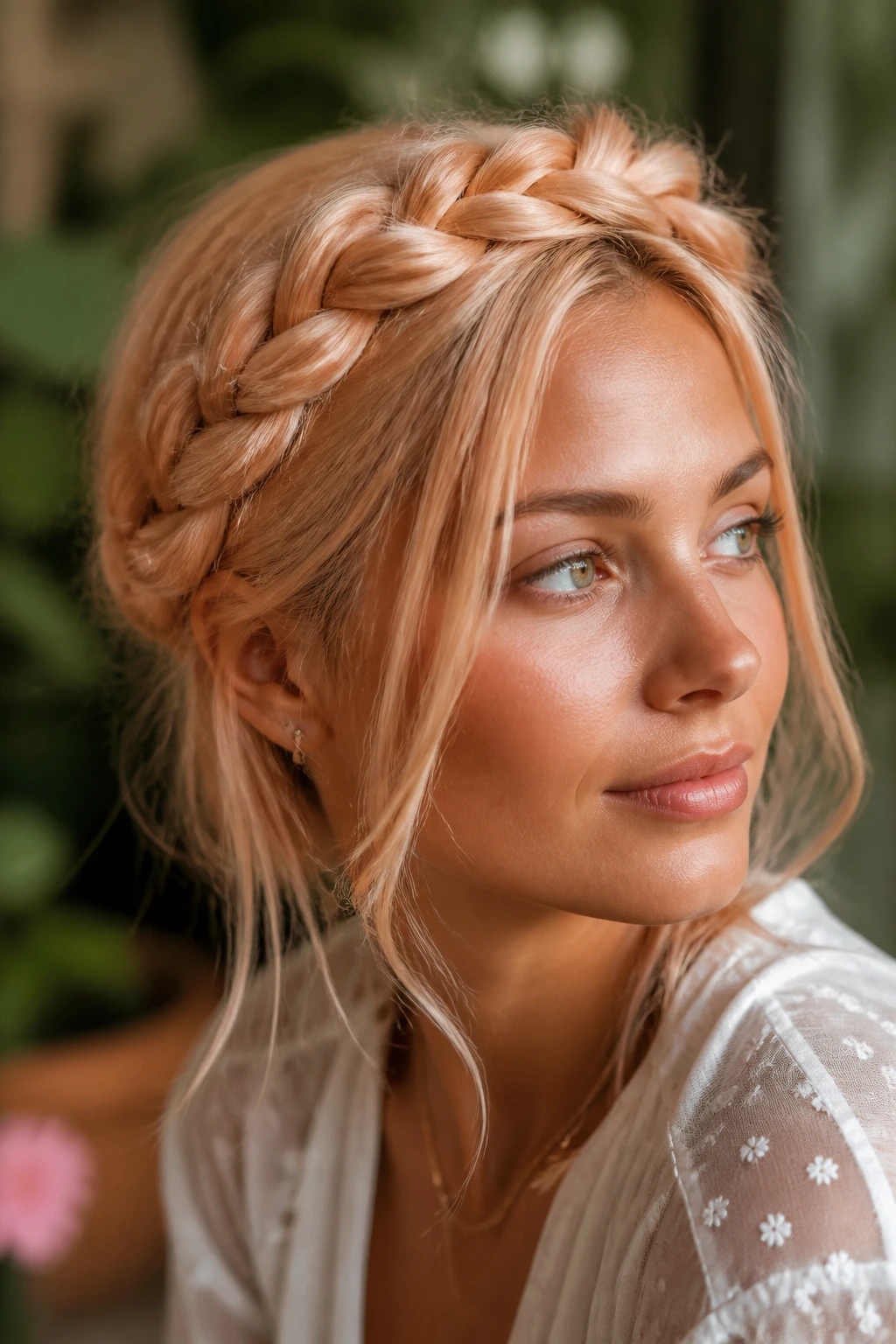
An apricot blonde braided crown sounds romantic for a reason. The peach-gold tone brings warmth to the temples and forehead, and the braided shape keeps the look from feeling too sweet. On warm skin, apricot blonde can be a gorgeous choice because it echoes blush and terracotta in the face.
This style works best when the braid is not too tight. A slightly looser crown leaves texture around the hairline, which keeps the whole thing from looking severe. If your hair is layered, pin the shorter pieces with bobby pins before braiding. A little shine spray on the finished braid gives the color a soft glow.
15. Golden Beige Glass-Straight Cut
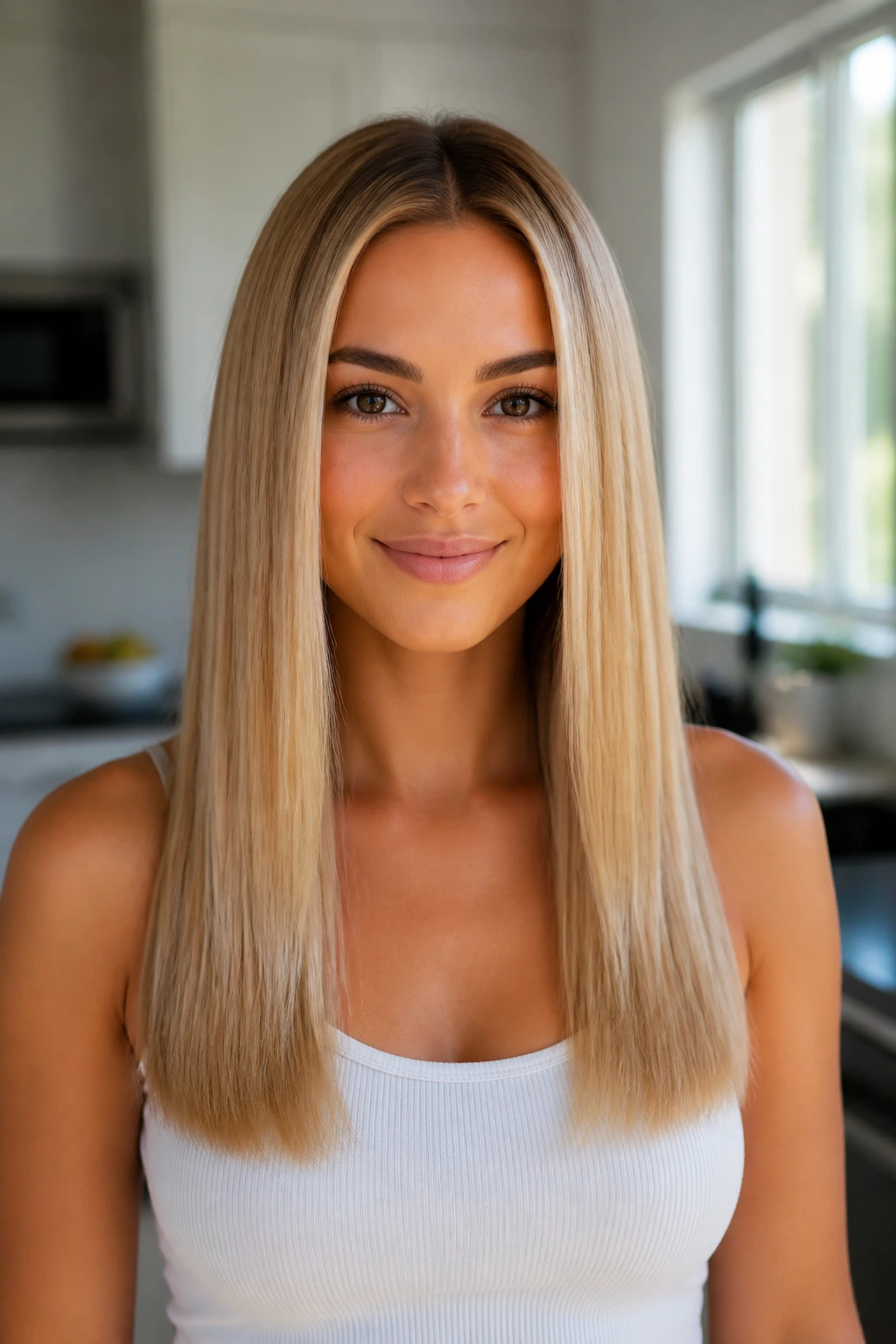
If you like hair that looks smooth enough to reflect a window, this is the one. A glass-straight cut in golden beige blonde lets warm skin tones do what they do best: hold light without looking washed out. The shade is crucial here. Golden beige keeps the straight finish from going stark.
This style lives or dies on a clean trim. Split ends ruin the effect fast, because straight blonde shows every fray. Use a heat protectant before flat-ironing, and keep the temperature sensible—usually 300°F to 350°F is enough unless your hair is coarse. One pass should do most of the work. More passes tend to fry blonde ends into that dry, squeaky texture nobody wants.
16. Cream Soda Blonde Wolf Cut
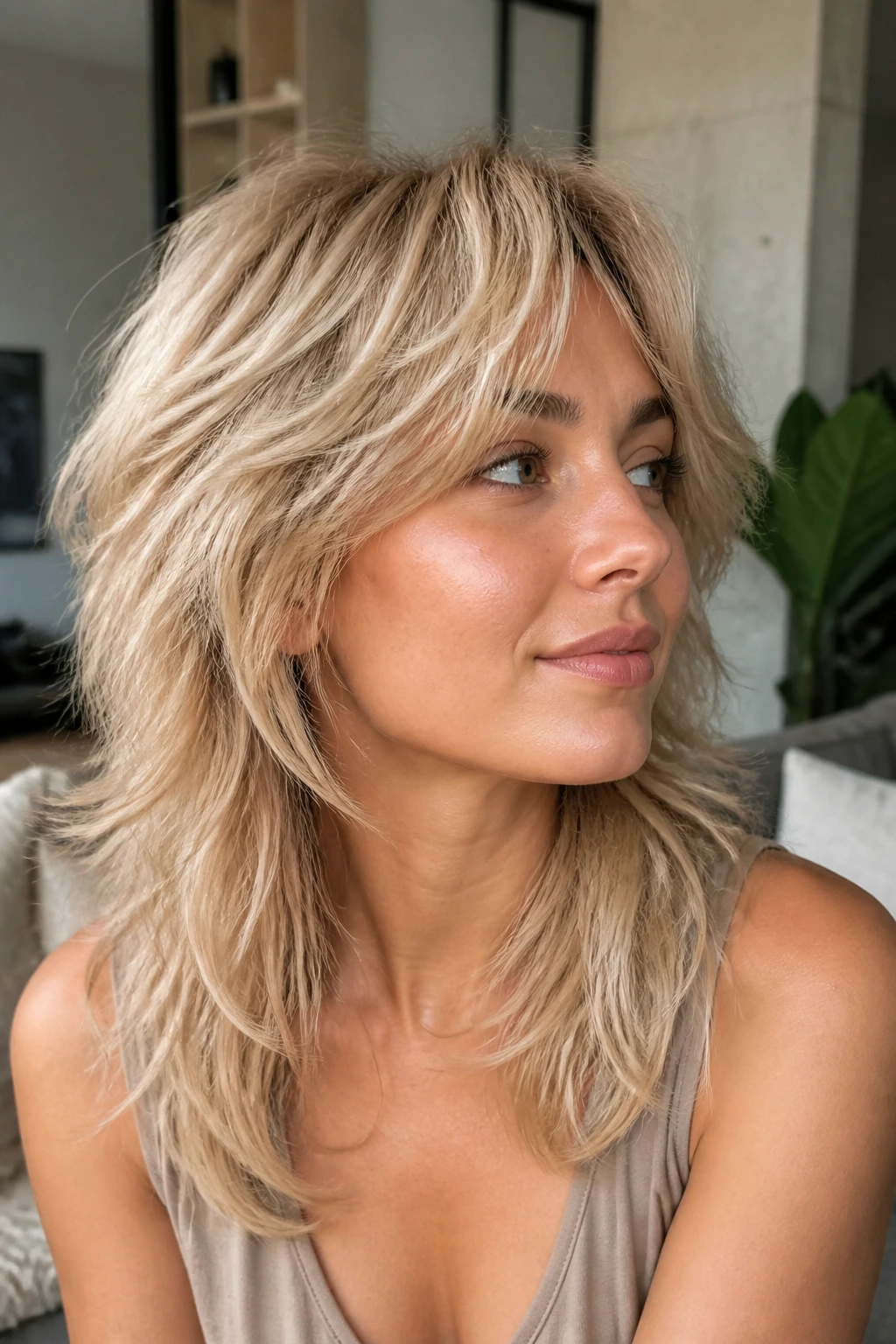
A wolf cut in cream soda blonde is a little rougher around the edges, and that’s the point. The layered shape gives the crown height and the ends movement, while the cream-soda tone keeps the overall look warm and wearable. On warm skin, the blonde needs that soft vanilla-beige base or the shaggy layers can start to feel harsh.
This cut works well if you like texture and don’t mind a bit of attitude. It can be air-dried with curl cream, or rough-dried with a diffuser if the hair bends naturally. The color should stay even enough that the layers read as shape, not damage. That’s the line to hold.
17. Amber Blonde Midi with Face-Framing Pieces
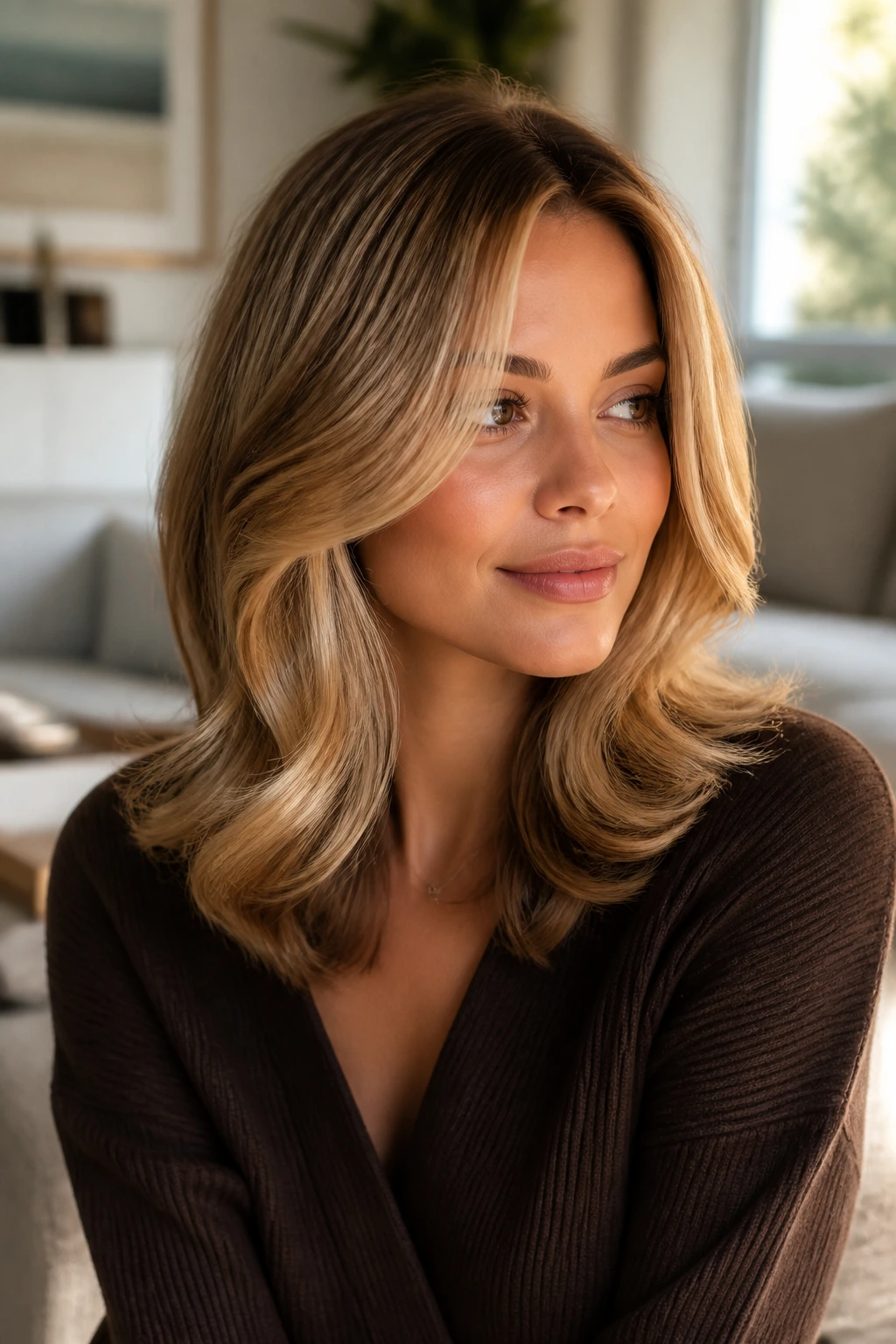
Amber blonde has a richer feel than pale blonde, and that makes it a smart mid-length choice for warm skin. The amber tone has a golden depth that looks especially good around the eyes and cheekbones. Face-framing pieces help because they brighten the front without turning the whole head into one flat sheet of light.
This is a good style if you want dimension but don’t want obvious streaks. Keep the base warm, then let the framing pieces sit one level lighter. The result is softer than chunky highlights and less high-maintenance than an all-over platinum. A loose curl or curved blowout finishes the look without stealing the spotlight from the color.
18. Pearled Honey Side-Part Waves
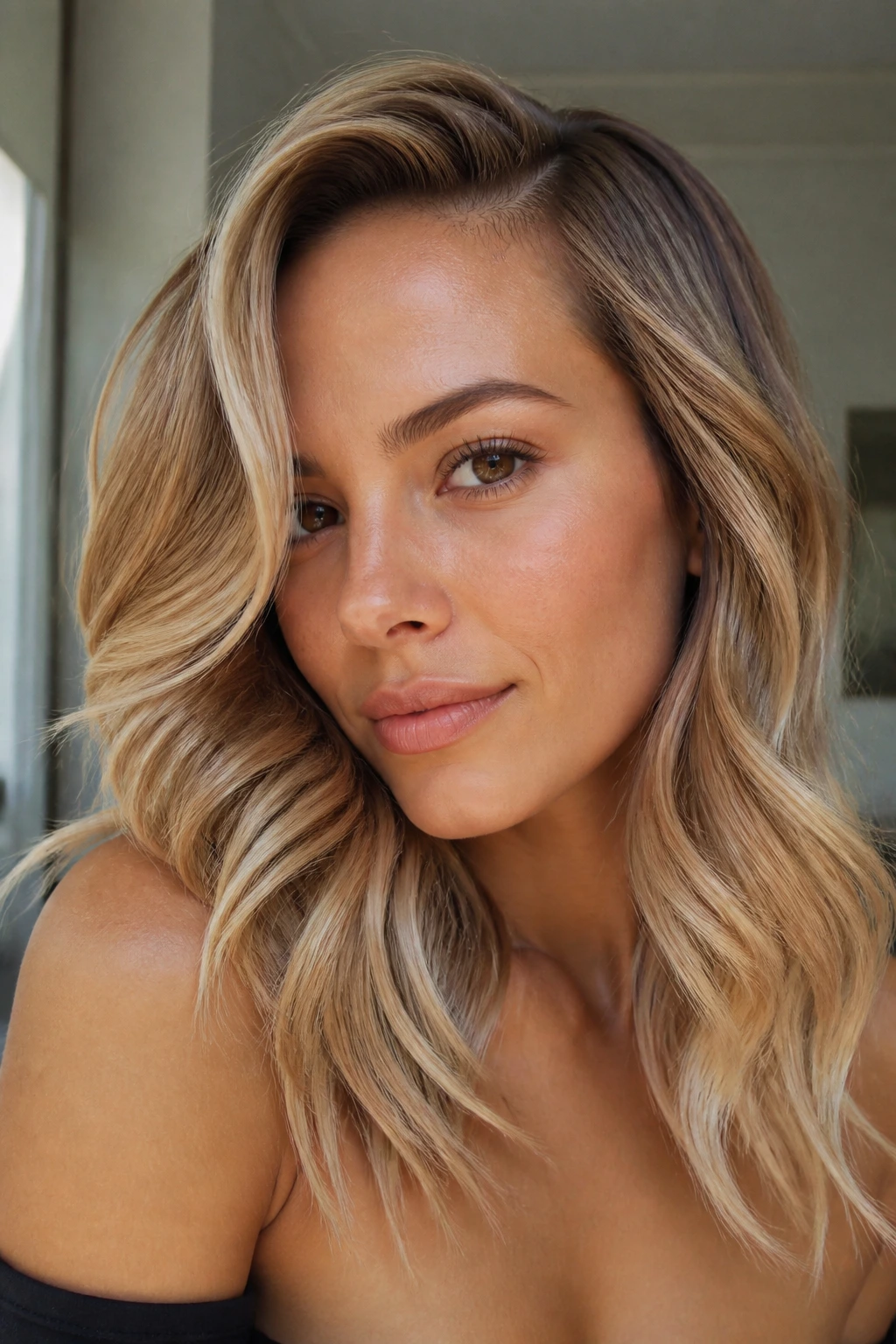
Pearled honey sounds delicate, and the side part gives it a little drama. On warm skin tones, this style works because the honey base keeps the face alive while the pearly finish softens the brightness. It is not icy. It just has enough beige to keep the blonde from looking too saturated.
This is a lovely choice for medium or long hair when you want movement but not mess. Side-part waves tend to fall in a way that frames the cheekbones, which is useful if your face reads round or square. Brush the waves out lightly so they don’t turn into curl pieces. You want softness, not separate rings.
19. Toasted Coconut Blonde Layered Shag
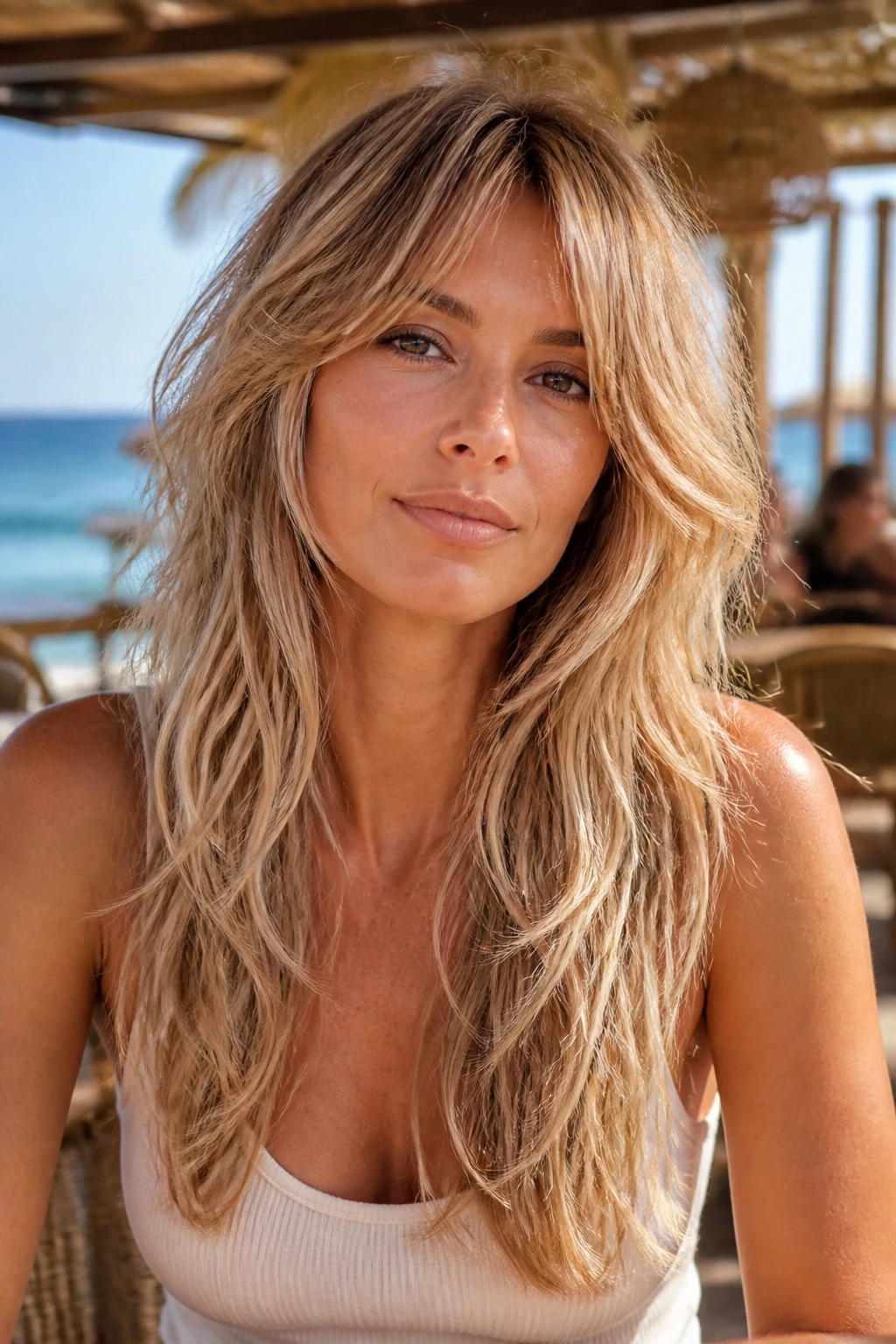
Toasted coconut blonde is one of those shades that sounds beachy but actually works best when it has a little depth. The toasted part keeps the blonde from floating away from warm skin, and the coconut piece gives it that creamy lightness around the top layer. A layered shag makes the whole thing feel easy and a bit cool, without going cold.
This is a strong choice for thick hair that needs movement. The shag removes bulk and lets the tone breathe. Keep the layers long enough that the ends still look full; too much chopping can make a warm blonde feel thin. If you like styling with your hands instead of tools, this one is friendly.
20. Vanilla Cream Side-Part Blowout
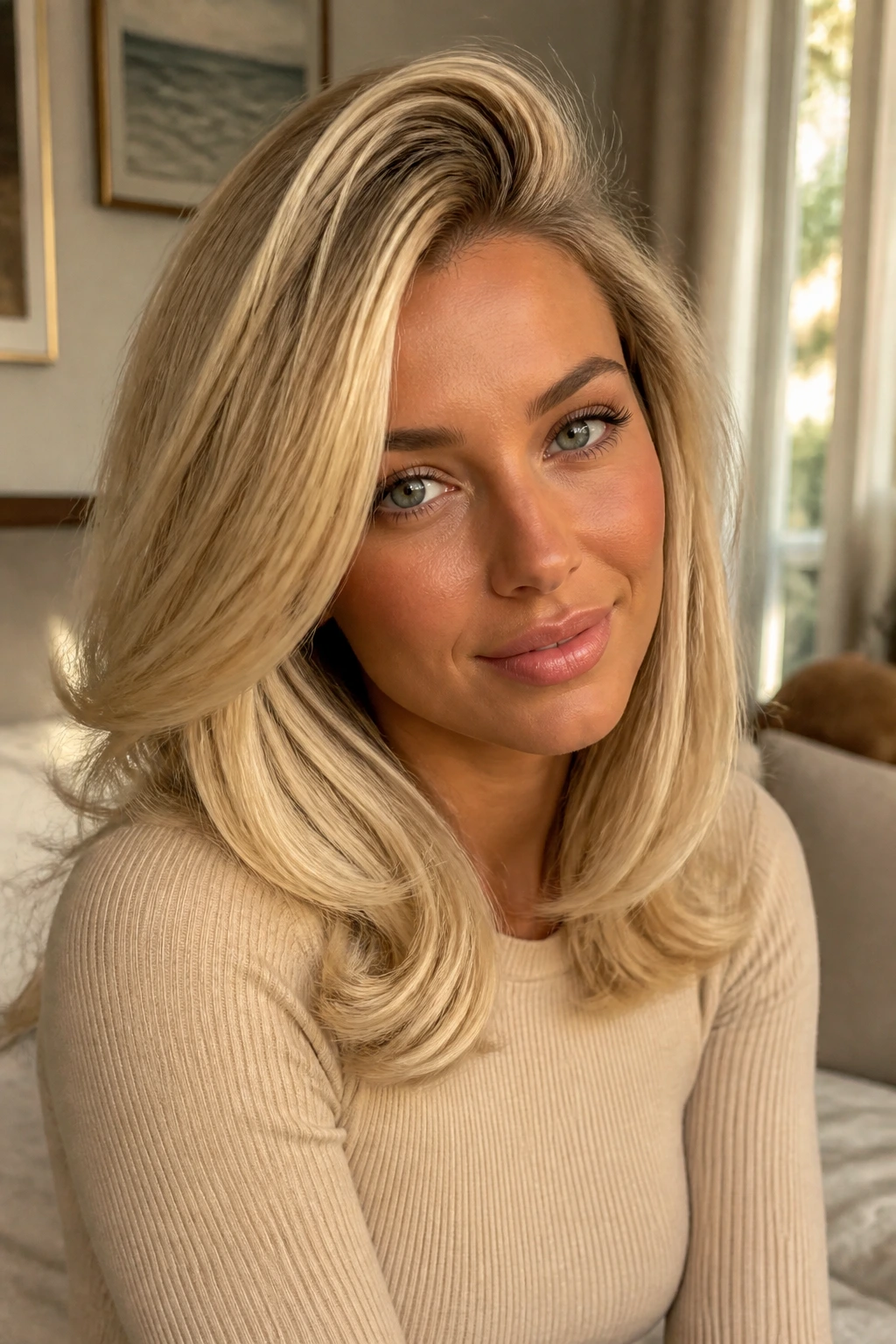
A side-part blowout in vanilla cream blonde has a clean, glossy finish that works especially well when your features need a little softening. The side part gives the style a curved line, and the vanilla cream tone keeps the hair looking plush. On warm skin, this is the kind of blonde that feels polished without looking severe.
The best version has volume at the roots and bend through the mids, not barrel curls. Use a round brush, lift the roots, and let the ends flip just a touch. If you wear makeup, a warm peach blush and soft brown liner play nicely here. The hair is already doing the bright work.
21. Golden Peach Blonde Soft Mullet
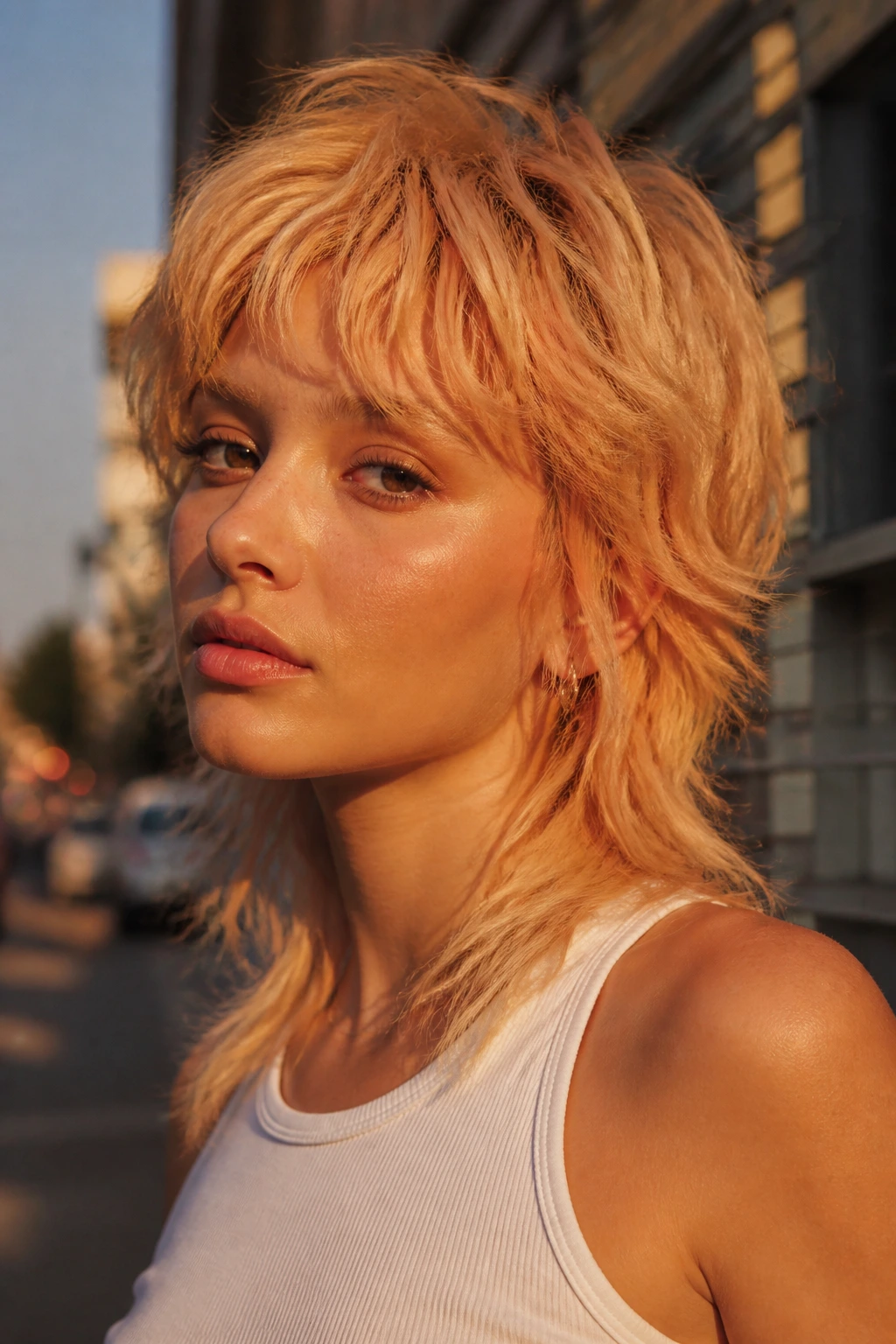
A soft mullet in golden peach blonde is for someone who wants a little edge but not a full-size attitude problem. The golden-peach tone keeps the cut approachable, and the layered shape gives the hair movement around the face and neck. On warm skin, peachy gold can be surprisingly flattering because it echoes the warmth in the complexion instead of sitting on top of it.
This style is best when the top layers are airy and the back stays a little longer. You want shape, not a costume. A dab of texturizing cream at the crown and a bit of bend through the front pieces are enough. If the color is too pale, the cut can look harder than it should. Keep it warm.
22. Sandy Beige Twisted Updo
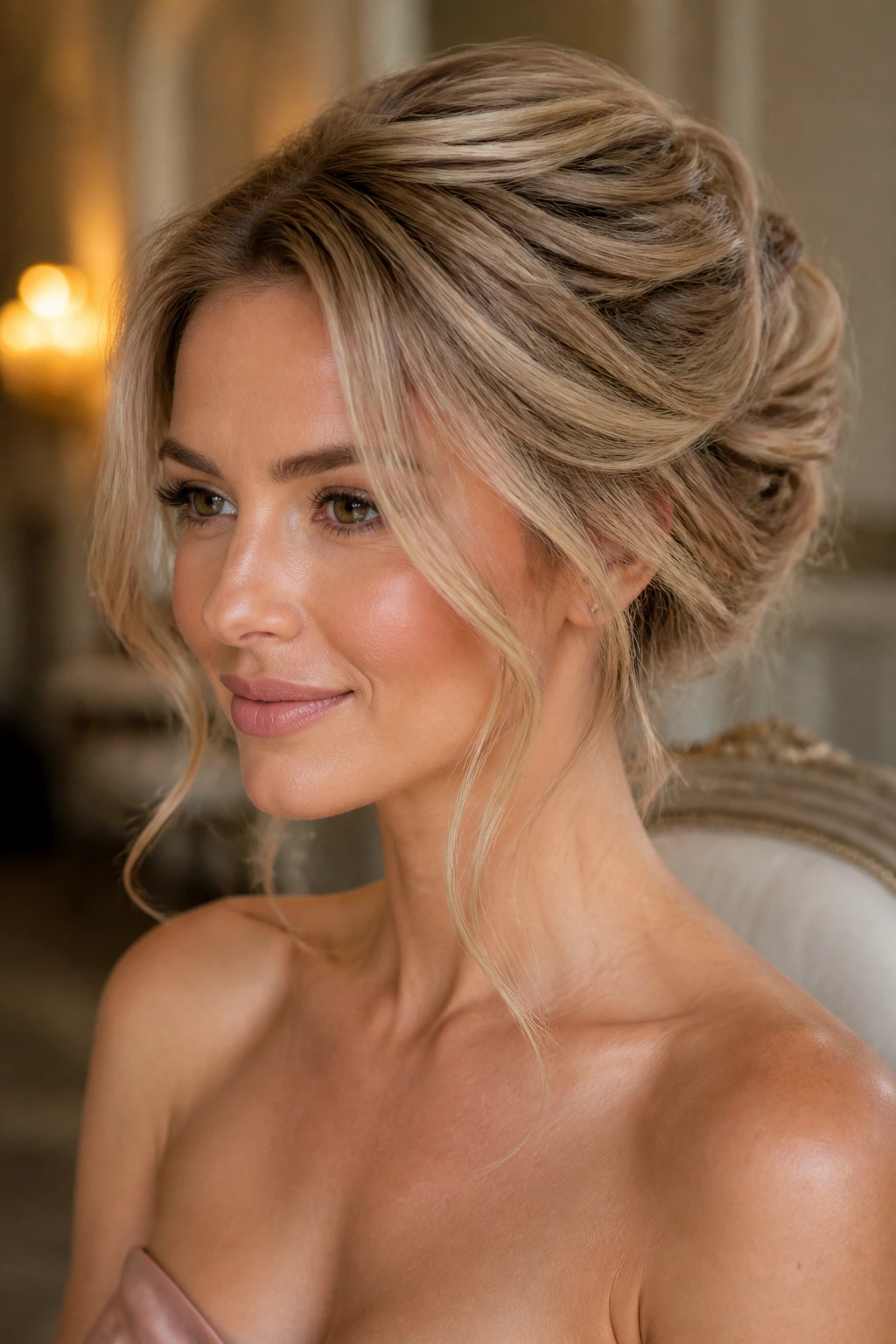
A twisted updo in sandy beige blonde is the kind of style that quietly proves a blonde can be formal without being fussy. The sandy beige tone keeps the updo from looking over-processed, and the twists show the different layers of blonde as they wrap and pin. Warm skin especially benefits from the soft, low-contrast look around the face.
This works for events, dinners, or any day when you want the hair off the neck. Leave a few face-framing pieces out if you like a softer outline. A light mist of flexible spray is enough; if the hold is too hard, the blonde loses its movement and starts to look helmet-like. That’s not the vibe.
23. Butter Blonde Long Curls with Soft Ends
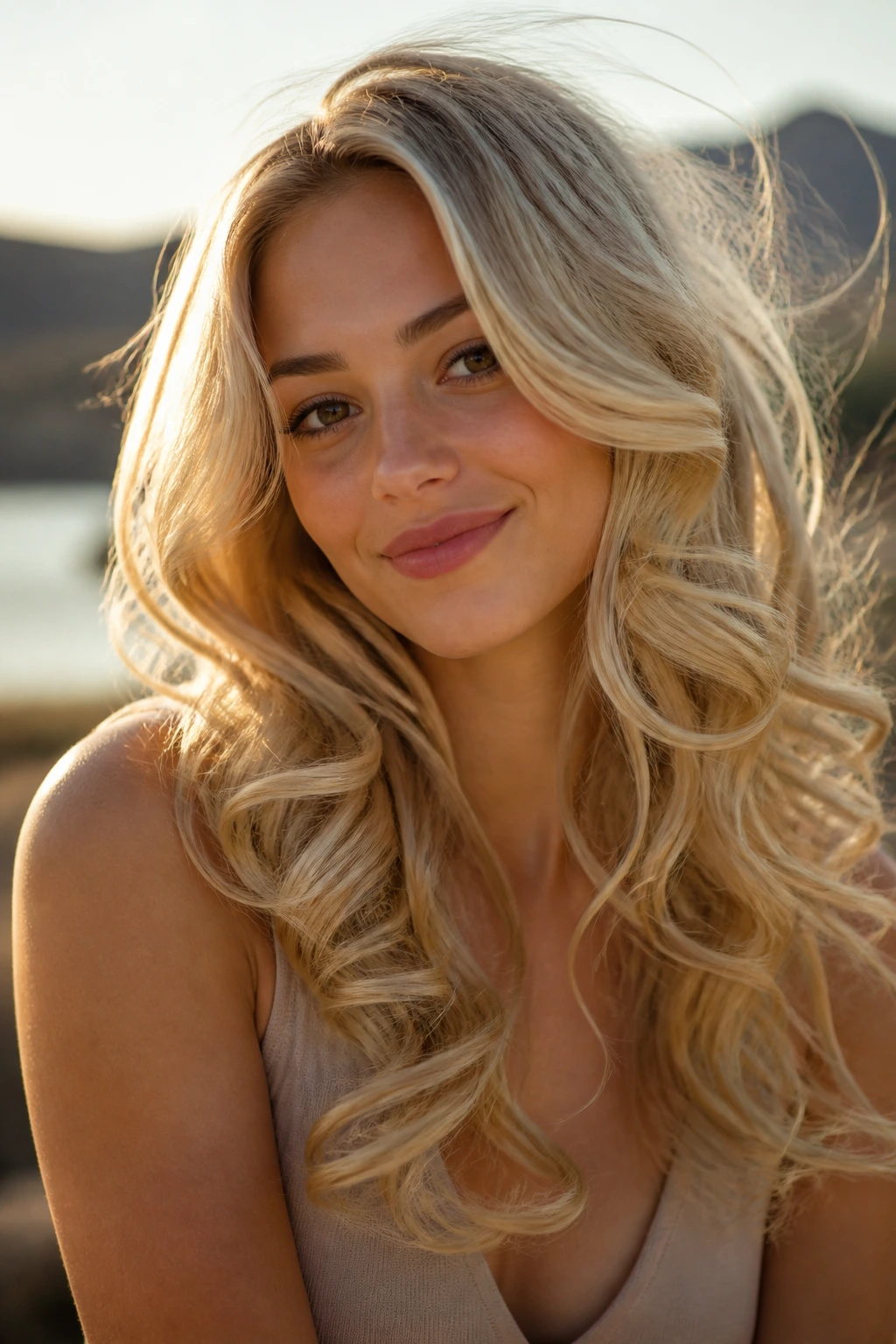
Butter blonde long curls are one of the safest bets in this whole list, and I mean that in the best way. The buttery tone flatters warm skin immediately, and the long curl pattern gives the hair enough body to show off the shade from root to ends. Soft ends keep it from looking like pageant hair, which is a trap with long blonde curls.
This style works especially well if your hair is thick or naturally wavy. Curl away from the face in alternating sections, then brush lightly once the hair cools. The curls should land in broad, soft loops rather than tight spirals. A tiny bit of shine cream at the ends gives the blonde a smoother finish.
24. Honeyed Collarbone Flip
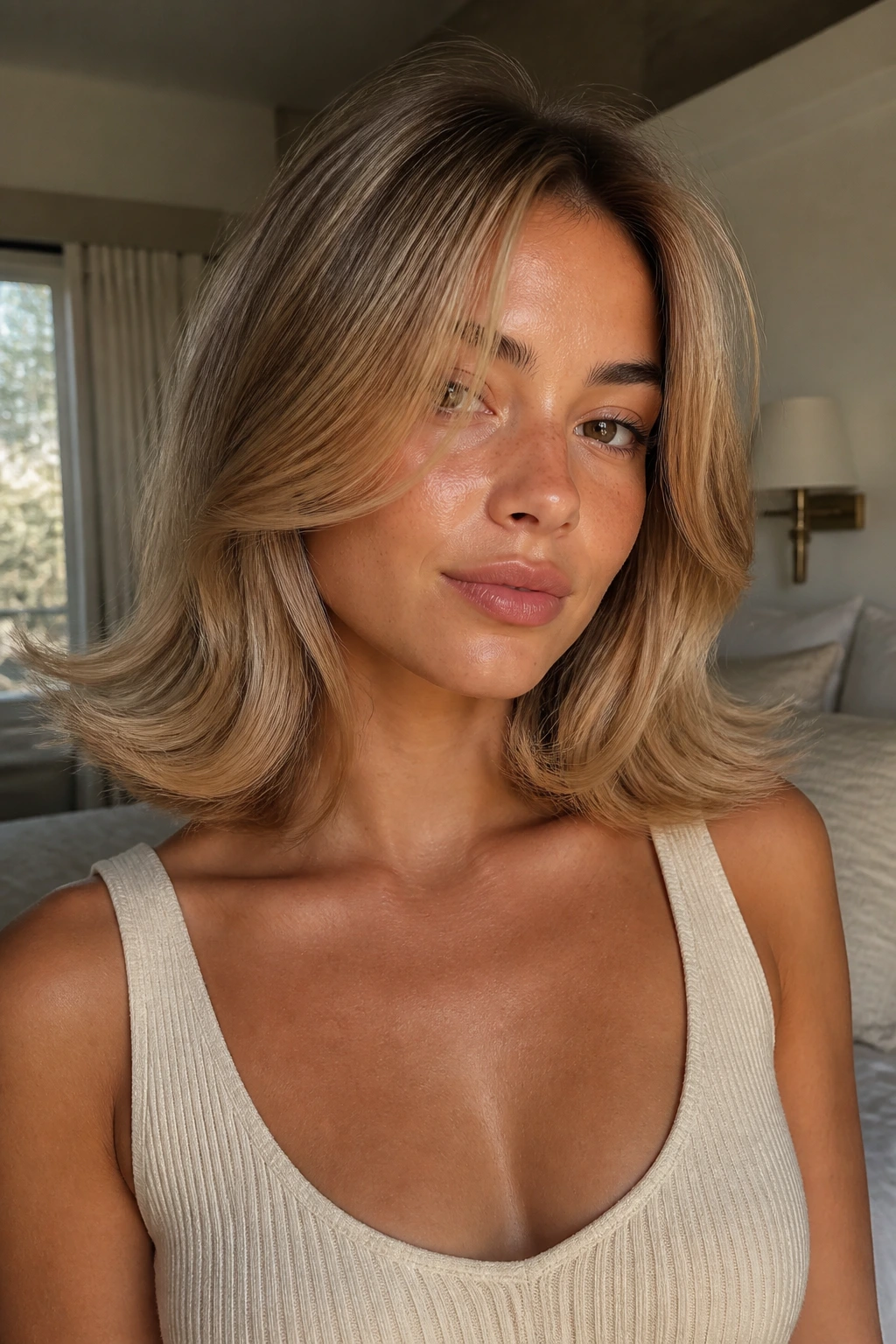
A collarbone-length flip in honeyed blonde has a little retro energy and a lot of wearability. The flip at the ends keeps the style lively, while the honey tone keeps warm skin from looking washed out. The length is practical too. It’s short enough to feel easy, long enough to move.
This cut looks best with a smooth blow-dry and a round brush at the last few inches. You want the ends to turn out just enough to show the shape. It pairs nicely with a side part, though a center part works if you want the face to look more open. The whole style feels neat, but not stiff. That balance matters.
25. Warm Platinum Bixie with Root Shadow
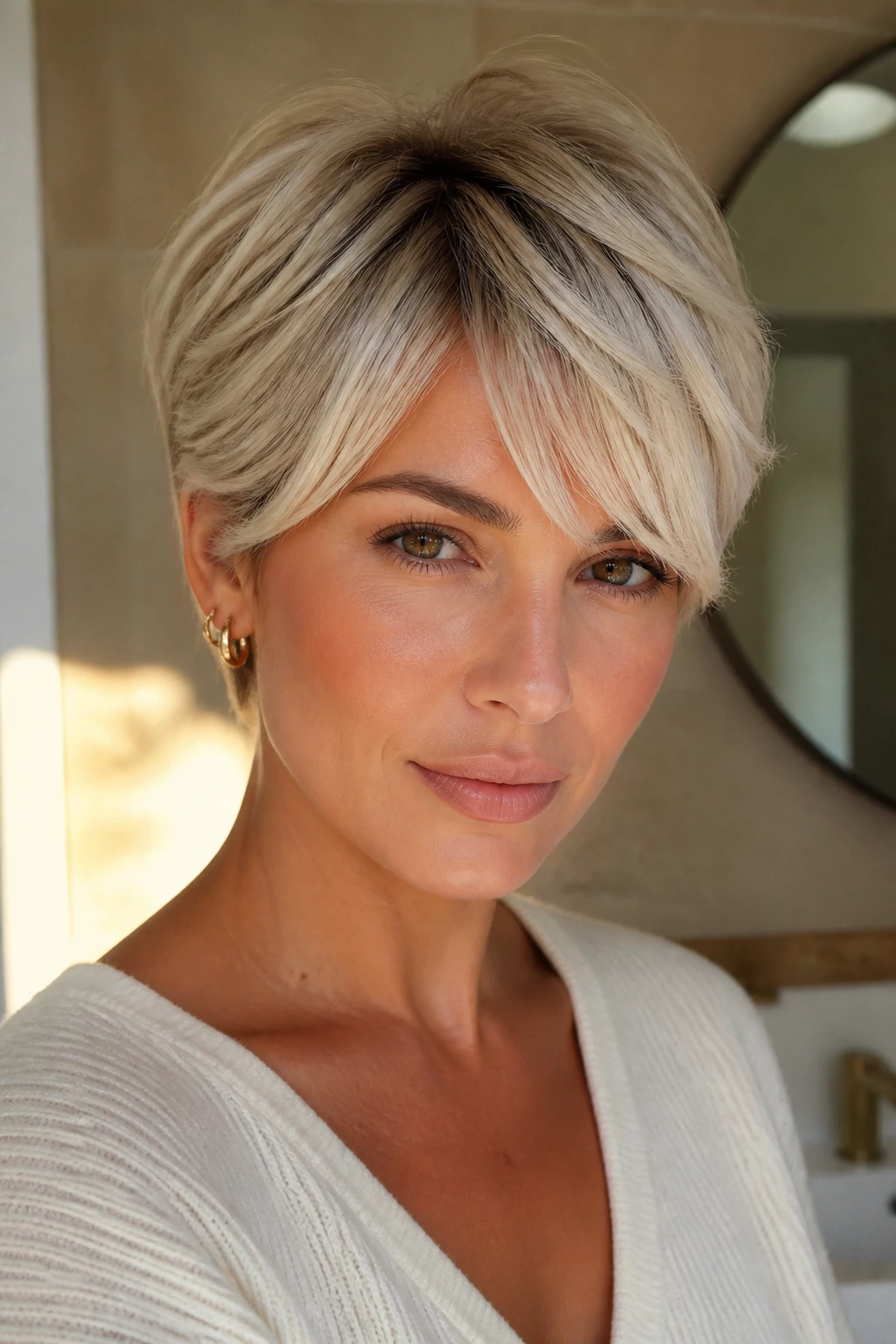
A bixie in warm platinum is the boldest blonde here, and it works because the warmth keeps the short cut from turning severe. The root shadow softens the transition at the scalp, while the buttery platinum on top gives the style lift. On warm skin tones, this kind of blonde needs a little beige in it or it starts looking cold fast.
This is a cut for someone who likes sharp shape and easy styling. Finger-dry it, lift the top with a little mousse, and keep the ends piecey instead of over-sculpted. The color should look like cream, not ice. If you want the shortest version of blonde that still flatters warmth, this is the one I’d point to first.
Why Whole-Head Blonde Feels Richer on Warm Skin
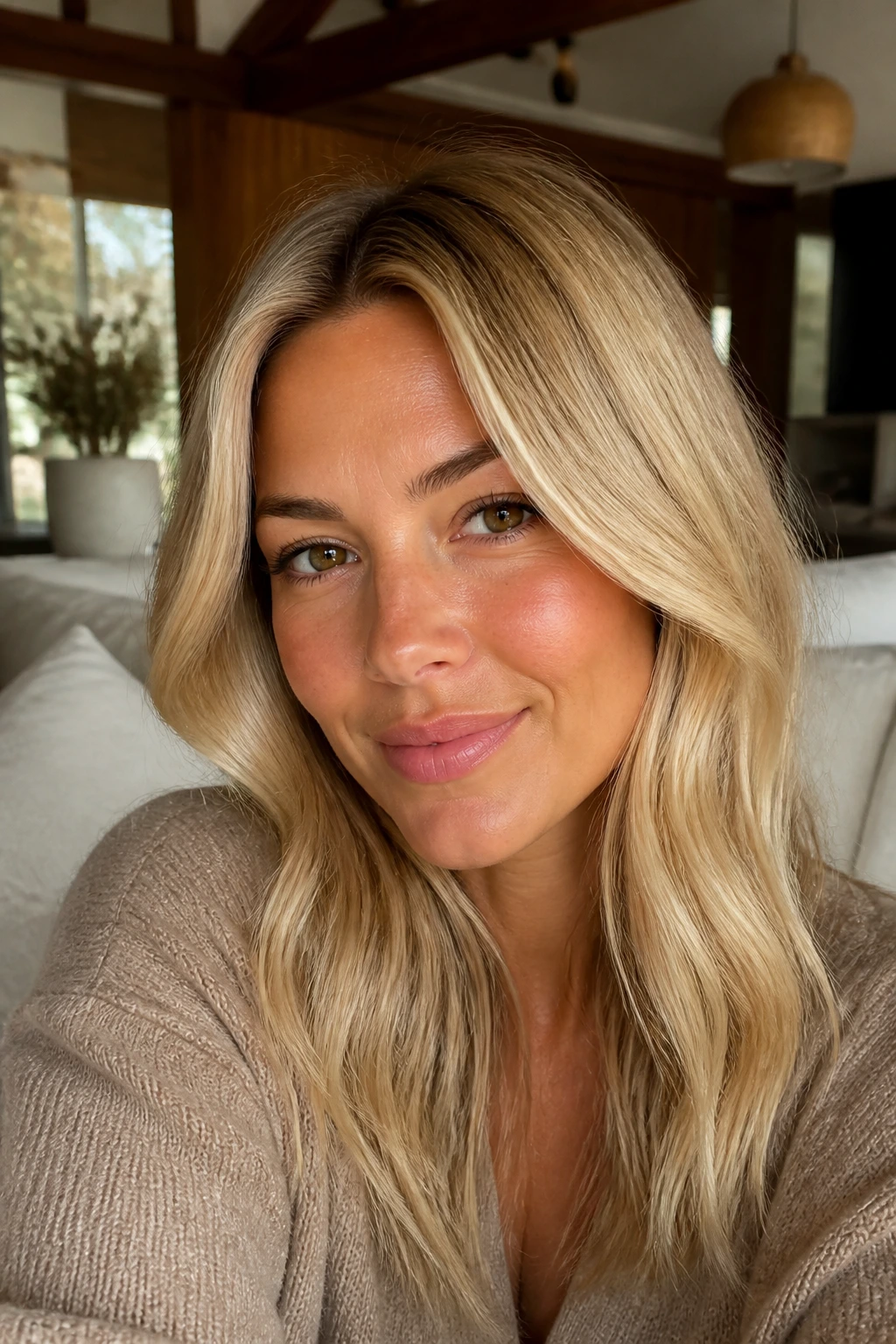
Whole-head blonde has a different energy than a few scattered highlights. With full coverage, the color reads as one intentional surface, and that matters when warm skin is involved. You get a cleaner visual line from roots to ends, so the blonde can echo the warmth in the complexion instead of fighting it one strand at a time.
That does not mean highlights are off the table. It means whole-head blonde gives you more control over tone. A warm base can be tuned toward honey, butter, beige, apricot, or golden champagne depending on how much glow you want. A cool base can be brutal on warm skin because it pulls gray into the face. Full blonde lets you dial that down or up.
The other reason it works so well is regrowth. A soft root shadow, even if it is only one shade deeper, makes the blonde look more natural as it grows out. You do not get that hard line that can happen with a brighter highlight pattern. The result feels calmer. More finished. Less like the hair is trying too hard.
How to Choose the Right Warm Blonde Shade for Your Undertone
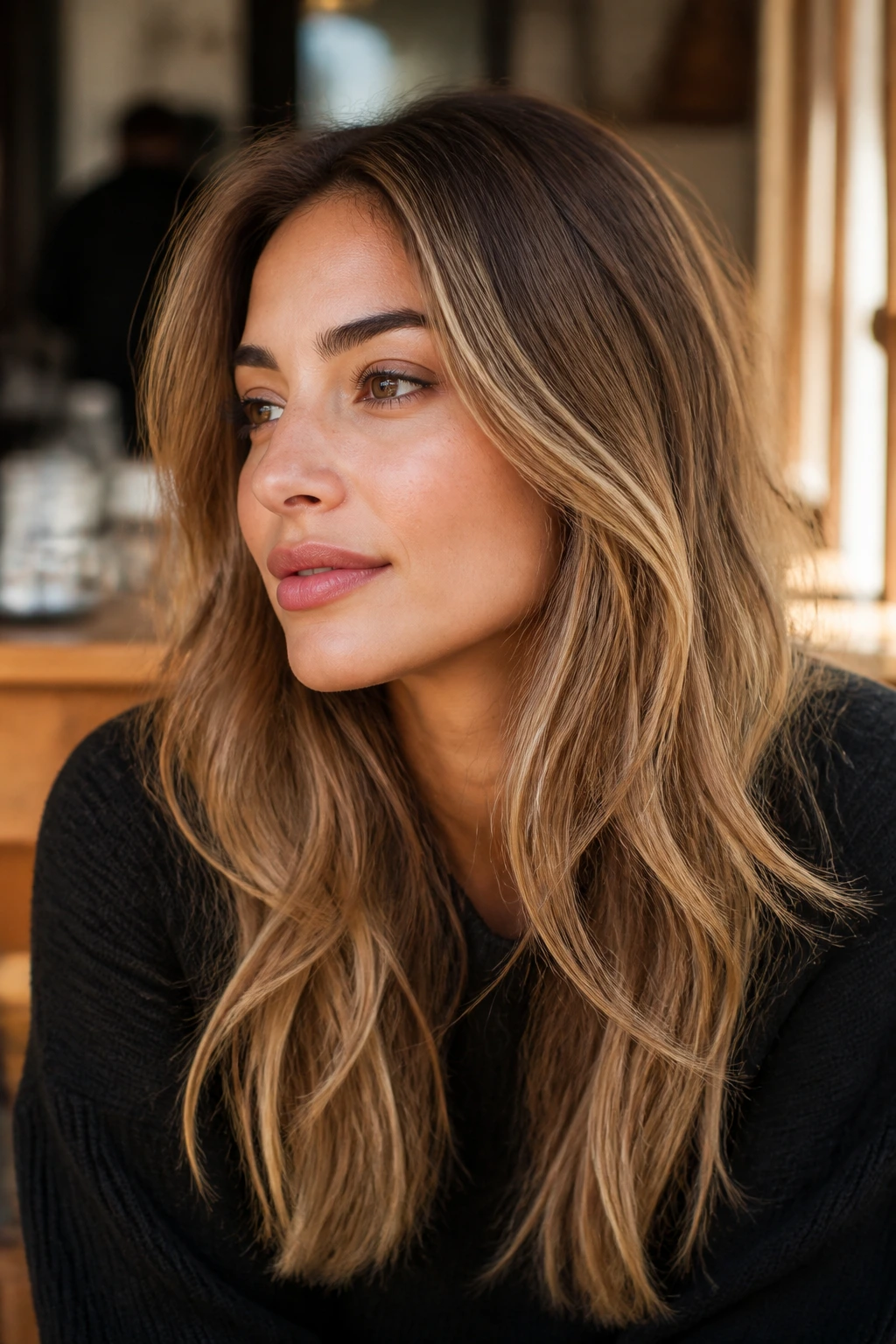
Warm skin tones are not one thing, and that’s where people get tripped up. Golden skin usually likes honey, butter, or rich beige. Peachy skin can handle apricot, cream, and warm champagne. Olive warmth often needs beige with a little depth at the root so the blonde does not look too yellow.
If your skin leans golden or peach
Go for lighter butter, honey, or vanilla shades. These tones reflect light back into the face instead of sitting on top of it. If your eyes are light—hazel, amber, green—you can go a touch brighter around the face and keep the lower lengths a bit deeper.
If your skin leans olive
Beige, wheat, and golden champagne tend to behave better than anything too yellow. Olive skin can look a little sallow if the blonde is too pale and too warm at the same time. A soft root shadow and a cooler-beige gloss keep the tone clean.
If you like high contrast
You can still wear full blonde. Dark brows, warm blonde lengths, and a neat haircut can look sharp in the best way. The trick is to keep the blonde creamy rather than stark. If the color looks too white, the contrast gets harsh fast.
If you like low contrast
Keep the root close to your natural color and let the mids and ends brighten gradually. That gives warm skin a soft glow and helps the blonde grow out without looking obvious. The maintenance is easier too. That’s not a small perk.
Tools That Keep Blonde Hair Looking Smooth
- Color-safe shampoo: A sulfate-free formula helps preserve the tone, especially if your blonde leans buttery or beige.
- Purple shampoo: Use it sparingly, usually every 2 to 4 washes, and only if brass starts creeping in.
- Heat protectant spray: Blonde hair shows heat damage fast, so this is not optional if you use irons or a blow-dryer.
- 1.25-inch curling iron or wand: Big enough for soft waves, small enough to give movement without tight ringlets.
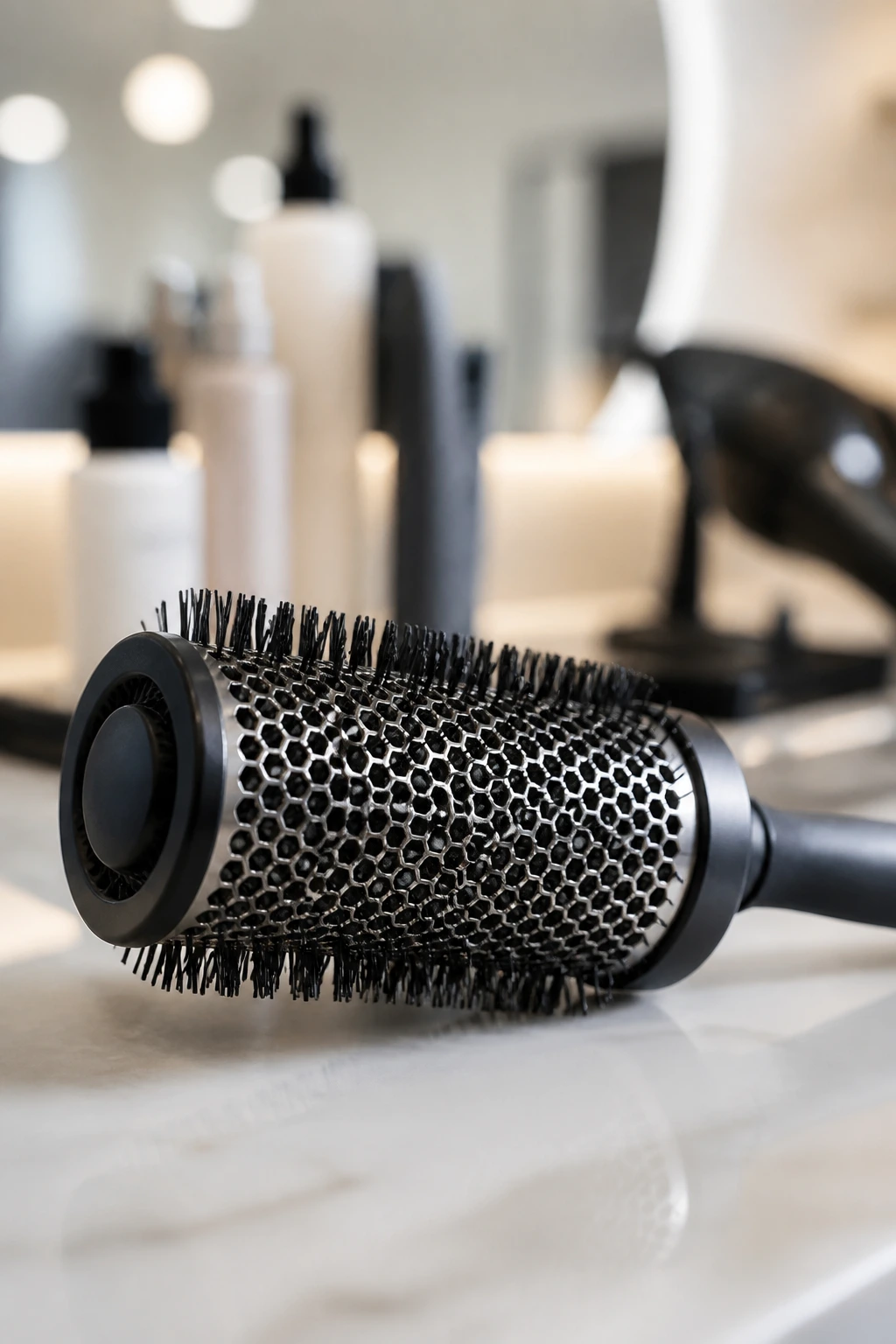
- Blow-dryer with concentrator nozzle: This keeps the cuticle smoother and helps the color look shinier.
- Round brush: The best friend of lobs, bobs, bangs, and any blowout style on this list.
- Wide-tooth comb: Good for curls, wet detangling, and keeping breakage down.
- Sectioning clips: Helpful when you want even heat, even waves, or a neat gloss application at home.
- Satin pillowcase: Not glamorous, but it cuts down on friction and frizz overnight.
How to Wear These Looks Without Letting the Color Run the Show
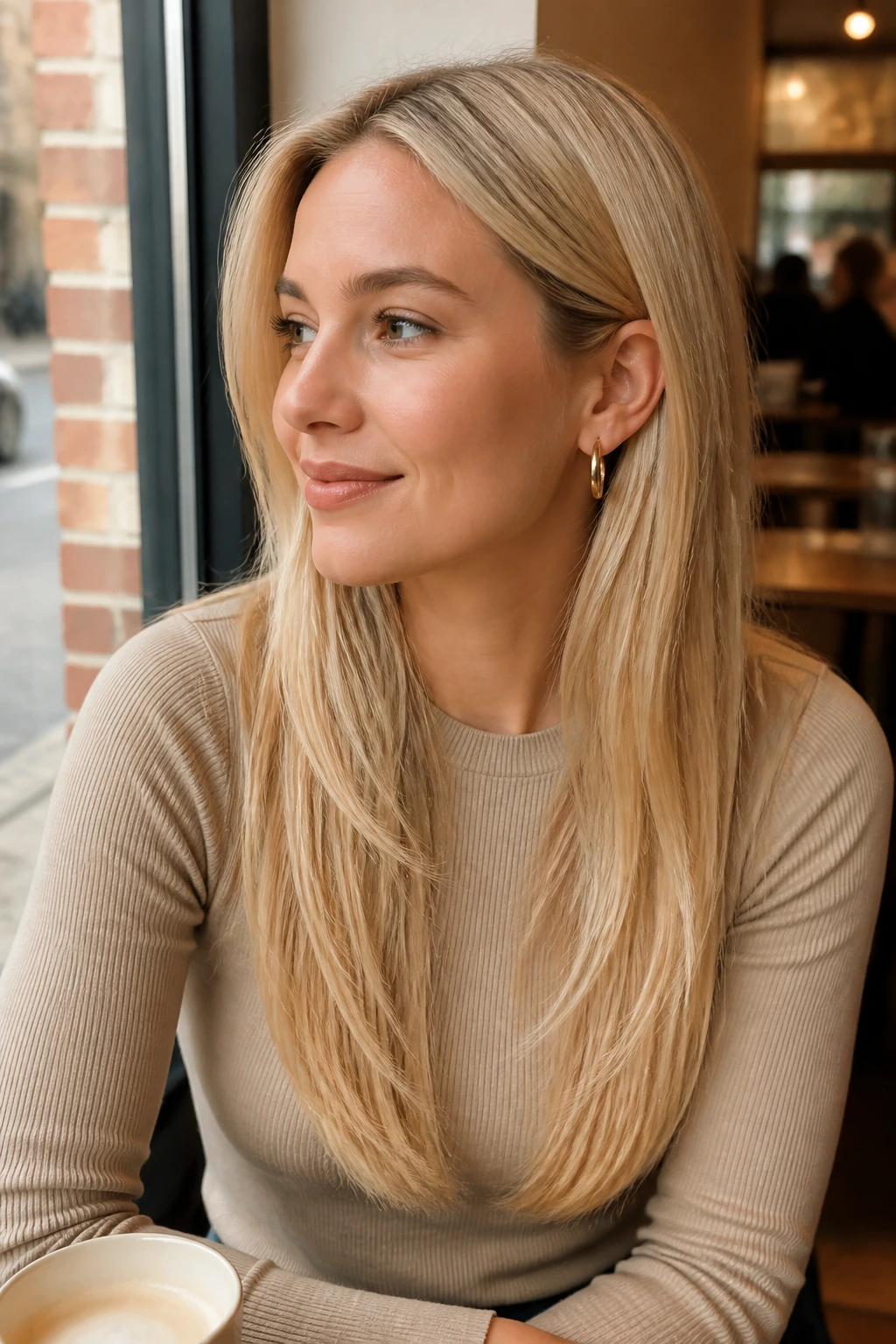
Parting: A center part makes warm blonde look cleaner and longer, which is useful on lobs, blowouts, and sleek cuts. A side part softens stronger jawlines and gives waves a little more curve around the face.
Texture: Smooth styles show shine best, but waves and curls show dimension better. If your blonde has a few warmer and lighter zones, texture helps them blend instead of sitting there like separate stripes.
Accessories: Gold hoops, cream headbands, tortoiseshell clips, and warm-toned pins all sit nicely with honey and beige blonde. Black accessories can work, but they create more contrast, so the hair needs to be polished.
Makeup and clothing: Warm blonde usually looks best with peach blush, bronze, terracotta, ivory, camel, olive, or espresso. That does not mean you can’t wear cool colors. It just means the warm ones make the hair look intentional instead of accidental.
Occasion: Sleek cuts read sharper for work or formal settings. Waves, braids, and layered shags feel looser and more casual. Same color. Different message.
Extra Tricks for Richer Color and Better Shape
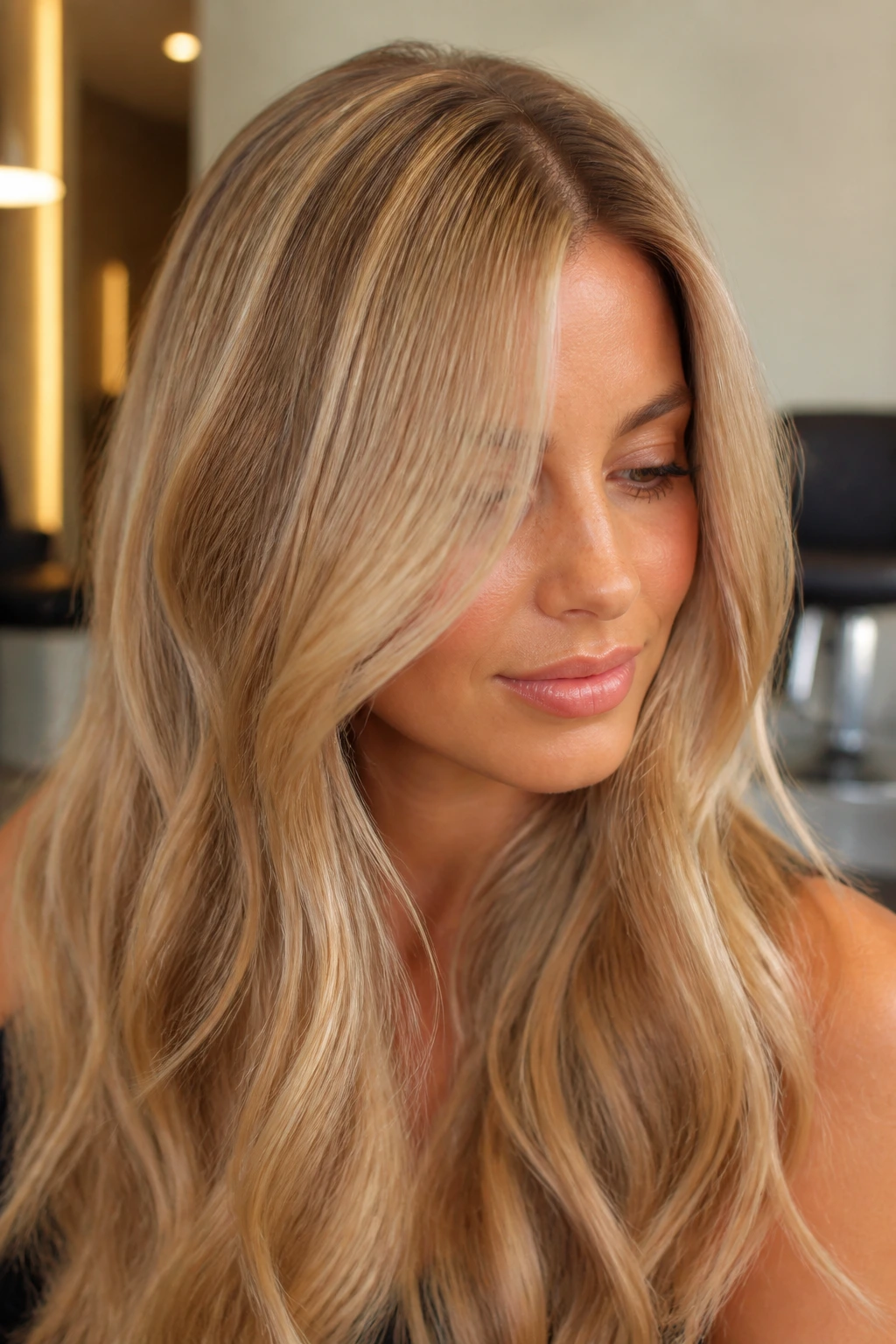
Gloss Boost: A clear, beige, or honey gloss every 6 to 8 weeks keeps the blonde from turning dull. If the shade starts leaning yellow, ask for a softer toner rather than a harsh violet fix.
Dimension Control: If your blonde feels flat, add a few beige lowlights near the nape or under the crown. That little bit of depth makes the brighter pieces look cleaner and less processed.
Heat Control: Fine blonde hair usually behaves best around 300°F to 325°F. Coarser hair can go a little higher, but if you keep turning the dial up because “it’s blonde,” you’re asking for dry ends.
Finish Move: Use a pea-sized amount of serum or cream on the mids and ends only. The roots should stay airy. Greasy roots flatten blonde fast.
Make-It-Yours: If you want lower upkeep, keep the root one to two shades deeper than the lightest pieces. If you want more brightness, ask for stronger face framing and lighter ends, but keep the warmth in the formula. That’s the difference between glowing and glaring.
Common Mistakes That Flatten Warm Blonde
- Going too icy: The symptom is a face that looks slightly gray or tired next to the hair. The fix is a beige, honey, or buttery gloss that softens the tone back down.
- Making the roots as light as the ends: That can look bright for five minutes, then flat and fake. A soft root shadow adds depth and makes regrowth less obvious.
- Using purple shampoo like it’s regular shampoo: Too much turns warm blonde dull, chalky, or smoky. Use it only when brass shows up, and follow with a moisturizing mask.
- Ignoring the haircut: If the cut has no shape, the blonde can look broad and lifeless. Even a beautiful tone needs clean ends, a line, or movement to make sense.
- Overheating the hair: Blonde hair shows heat damage fast—rough texture, pale ends, and broken shine are the first signs. Use heat protectant every time and keep the iron moving.
- Forgetting the brows: Very pale blonde with very dark brows can work, but only when the color and cut are controlled. If the contrast feels too harsh, bring the blonde slightly deeper or soften the root.
Variations and Adaptations for Different Hair Textures
The Low-Maintenance Root Melt: Keep the roots one to two shades deeper than the mids and ends, then ask for honey or beige through the lengths. This works well if you do not want obvious regrowth every few weeks. It also softens warm skin in a natural way.
The Curly Halo Blonde: Brighten the outer layer of curls and leave a little more depth underneath. The curl pattern will do the blending for you, and the warm tone keeps the shape from going dry. Best for anyone who wants blonde without sacrificing curl definition.
The Short and Sharp Bixie: Take the warm platinum bixie idea and keep the top a touch softer, with a buttery gloss instead of a hard white tone. This adaptation suits fine hair and busy mornings. Finger styling is enough.
The Big Blowout Blonde: Keep the cut in layers and the color in the honey, wheat, or vanilla family. Then blow it out with a round brush so the movement is the main event. This is the easiest route if you like volume more than texture.
The Occasion-Ready Updo Blonde: Use sandy beige, apricot, or golden blonde and keep a few face-framing pieces loose. Buns, twists, and crowns look cleaner when the blonde has a warm, even finish. Good for weddings, dinners, or any day you want the hair off your neck.
Care, Refresh, and Maintenance Between Salon Visits
Warm blonde looks best when the tone stays soft, not when you keep shocking it back to life with harsh products. Wash 2 to 3 times a week if your hair allows it. If you shampoo more often, the color fades faster and the ends feel drier. Use a sulfate-free shampoo and follow with a conditioner that gives slip without coating the hair like wax.
Purple shampoo can help, but it is a tool, not a lifestyle. Once every 2 to 4 washes is plenty for most warm blondes. If your hair starts feeling flat or dusty, back off immediately and switch to a moisture mask for 10 to 15 minutes instead. Blonde that feels rough is usually asking for hydration, not more toning.
A salon gloss every 6 to 8 weeks keeps the warmth under control. If you’re wearing a full-head blonde that lifts very light, plan on a refresh closer to the shorter end of that range. A root touch-up or lightening appointment may sit around 8 to 12 weeks depending on how fast your hair grows and how noticeable you want the regrowth to be.
Heat protection matters every single time. Before blow-drying, curling, or flat-ironing, spray from mid-length to ends and let it dry for a moment before touching the tool to the hair. Night care helps too: a satin pillowcase, loose braid, or low silk scrunchie cuts down on friction, which keeps the blonde shiny longer.
If your blonde has gone flat, dry shampoo at the roots can help, but don’t spray half the can on the mids. That only makes the hair look dusty. Keep the root fresh, the ends soft, and the tone warm. That combination lasts.
Frequently Asked Questions
Which blonde shades suit warm skin tones best?
Honey, butter, beige, caramel, wheat, apricot, and warm champagne are the safest bets. The exact winner depends on how deep your skin tone is and whether your undertone leans golden, peach, or olive.
Can warm skin tones wear platinum blonde?
Yes, but it usually works better when the platinum is softened with beige or butter, plus a bit of root shadow. Pure icy platinum can make warm skin look harsher than it should. The warm version reads much better.
Is a whole-head blonde color harder to maintain than highlights?
In some ways, yes. Full blonde can show regrowth more clearly, and the tone needs glossing to stay creamy. The upside is that the look often feels richer and more even than a scattered highlight pattern.
How do I keep warm blonde from turning brassy?
Use a color-safe shampoo, avoid overheating the hair, and book gloss refreshes before the tone drifts too far. If brass starts showing, reach for purple shampoo sparingly, not daily. Overcorrecting is how warm blonde gets dull.
What haircut works best if my hair is fine?
A blunt lob, French bob, or sleek midlength cut usually gives fine hair the cleanest shape. Too many wispy layers can make warm blonde look thin at the ends. A blunt edge keeps the color looking denser.
Will dark eyebrows look strange with blonde hair?
Not if the blonde has enough depth at the root and the haircut is balanced. Dark brows can give warm blonde a nice frame. The trouble starts when the blonde is too pale, too icy, and too close to the scalp.
How often should I tone or gloss warm blonde?
Most warm blondes do well with a gloss every 6 to 8 weeks. If the hair lifts very light or gets exposed to a lot of sun and heat, you may need it a little sooner. Ask for a beige or honey gloss, not a harsh silver one.
Can curly hair wear full blonde without looking dry?
Yes, but the color needs depth somewhere in the curl pattern. Brighten the outer layer more than the interior and keep the finish creamy. Defined curls look better when the tone has some softness around the edges.
What if my blonde makes my skin look tired?
That usually means the blonde is too cool, too pale, or too flat. Add warmth with a gloss, keep a little depth at the root, and choose a cut with more shape around the face. Small changes there can change the whole effect.
The Soft-Gold Payoff
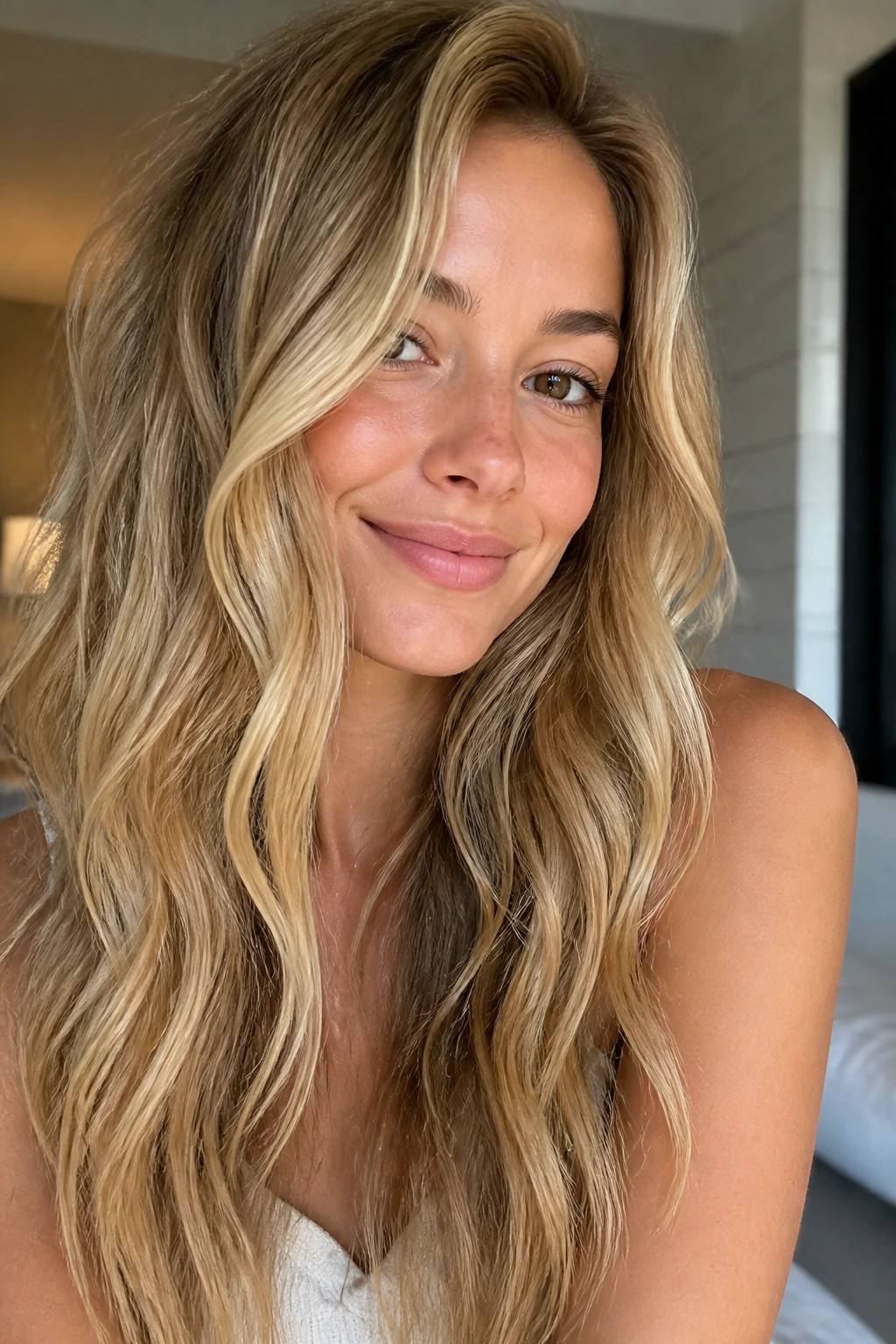
The best warm blonde does not shout. It glows. That’s the part people miss when they chase the palest shade in the room and wonder why their face looks harsher instead of brighter. With the right cut, the right depth, and the right temperature in the color, blonde can feel natural on warm skin rather than pasted on top of it.
If you’re choosing between shades, bring the conversation back to warmth, not just lightness. Honey, butter, beige, apricot, wheat, and golden champagne all behave differently, and that difference is exactly what lets the style work on real faces, not just salon swatches. A good colorist will understand that. A good reference photo will, too.
Bring the kind of blonde that makes your skin look rested, not the kind that forces your features to compete. That’s the sweet spot, and it’s a very good place to stay.