



Square faces are not a styling problem. They’re a shape problem, which is much easier to solve. The best hairstyles for brown hair and square faces do one smart thing: they keep the jawline from taking over the whole picture. A clean line at the chin can look severe on a square face; a bend at the cheekbone, a sweep across the forehead, or a soft edge around the neck changes the mood fast.
Brown hair brings its own quirks. Solid brunette can go flat in a hard cut, especially when the ends are blunt and the top is slicked down too close to the scalp. Give it a chestnut gloss, a few caramel ribbons, or just a haircut with some movement, and the whole thing starts reading richer. Deeper. Less boxy. More alive.
That’s the thread running through every style below. None of them try to erase the face. They just loosen the corners. Some are long and airy, some sit right at the jaw but dodge the harshness with parting and texture, and a few rely on styling tricks rather than a major chop. That’s the useful part: you do not need to hide behind curtain bangs forever unless you want to.
Why These Shapes Work on Brown Hair and Square Faces
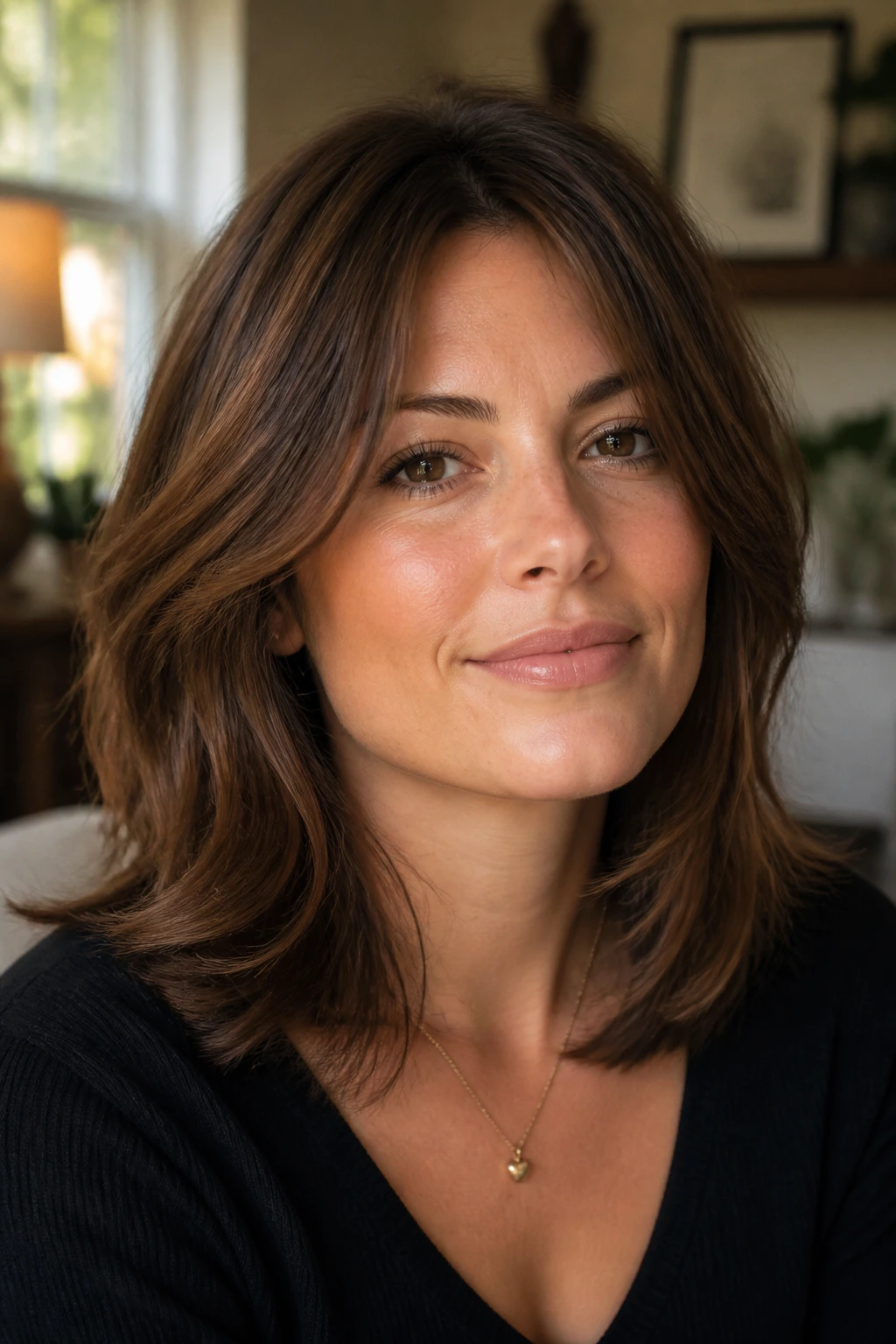
- Soft edges beat hard stops: A square jaw looks sharper when the haircut ends at exactly the same place on both sides, so the best cuts break that line with layers, bends, or an off-center part.
- Brown hair needs motion to show depth: Espresso, mocha, and chestnut shades can read as one flat block if the cut is too blunt; a little texture or gloss keeps the color from swallowing the shape.
- The cheekbone is the sweet spot: Styles that open near the cheekbone and then taper past the jaw tend to look friendlier on a square face than cuts that flare wide at the sides.
- Volume belongs at the crown, not the jaw: A small lift on top gives the face length; width right at chin level does the opposite and makes the lower half look heavier.
- Not every style has to be long: A pixie, bob, or ponytail can work beautifully here if the silhouette is soft and the parting does some of the heavy lifting.
What a Square Face Asks a Hairstyle to Do
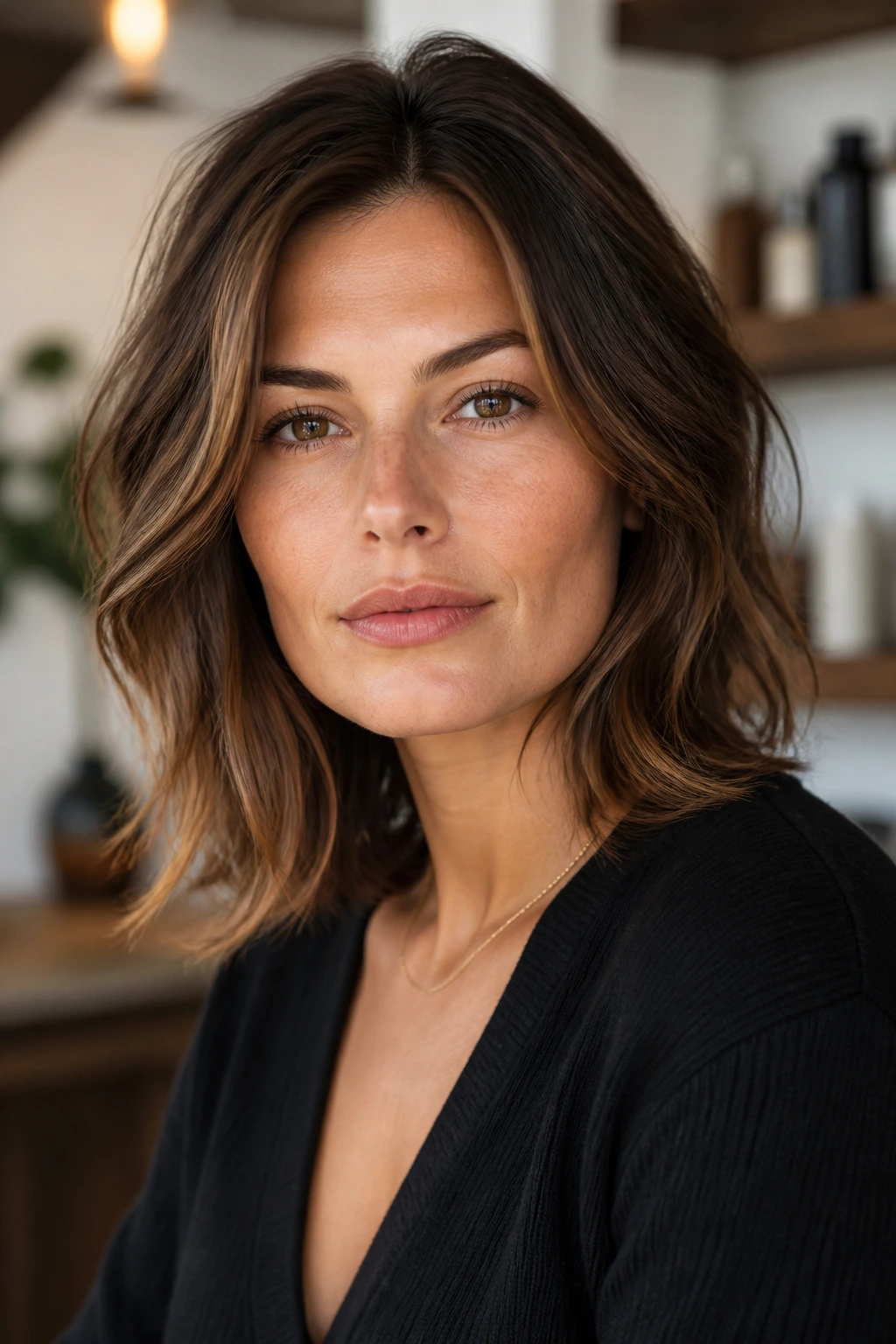
A square face usually has a broad forehead, strong cheekbones, and a jaw that feels nearly as wide as the top of the face. That balance is attractive on its own. The trick is deciding whether the hairstyle should echo that structure or soften it.
I lean hard toward softening. Not hiding. Softening. You want lines that move—curves around the temples, lift near the crown, pieces that fall a little forward around the cheeks. Straight down-the-sides shapes can look stiff, and blunt ends at jaw level are the hair equivalent of a stop sign.
Brown hair changes the game because it shows shape in a quieter way than bright blonde or red. That means a cut has to earn its keep. If the layers are thoughtful, chestnut hair looks glossy and rich; if the cut is lazy, the whole thing can read as one heavy block. That’s why so many of the styles below lean on parting, face-framing, and texture instead of just length.
1. Long Layers with Curtain Bangs
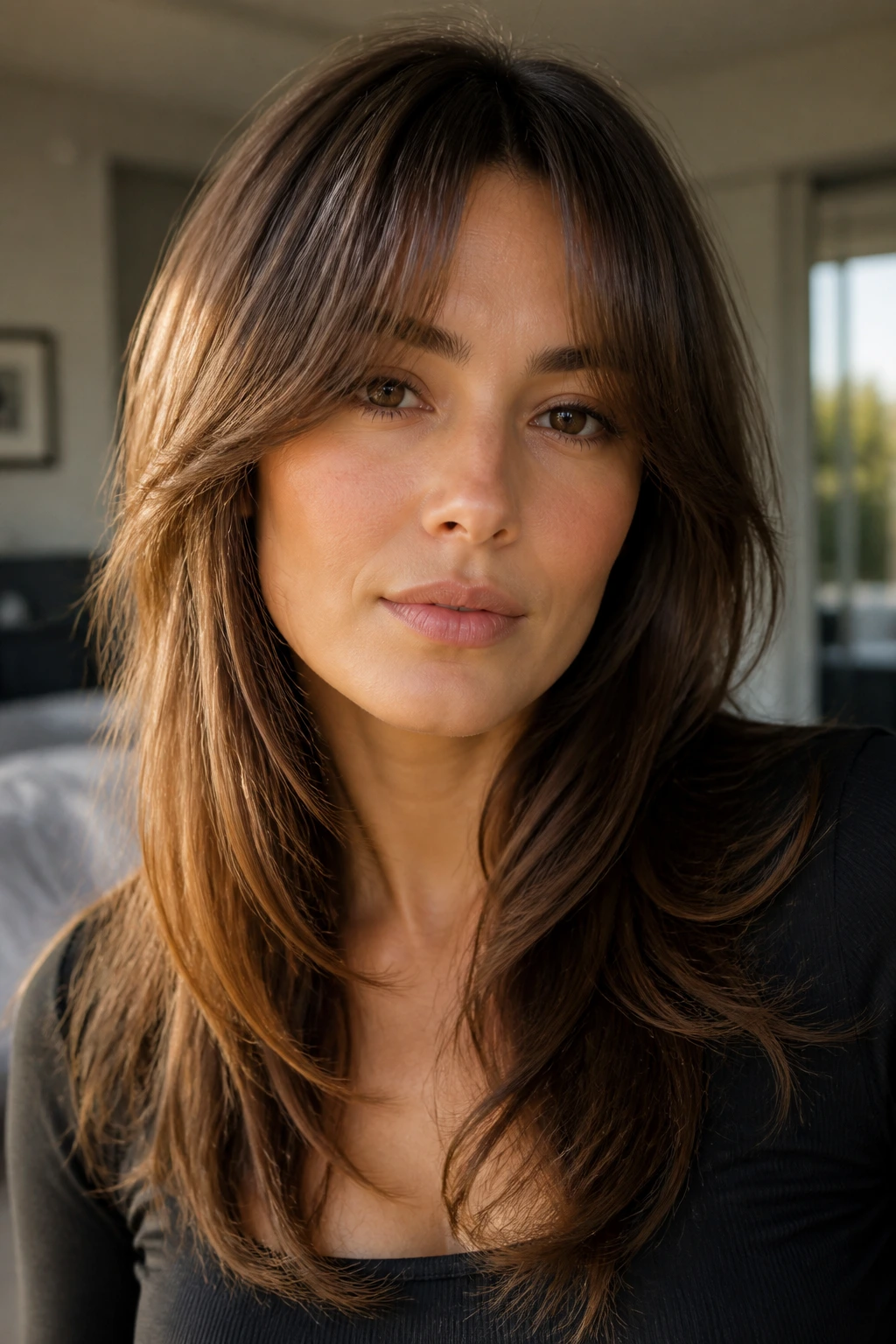
Long layers with curtain bangs do a lot of heavy lifting without looking fussy. The bangs part in the middle or just off center, fall around the cheekbones, and keep the eye moving instead of parking it on the jaw. On brown hair, especially shades with a little warmth, those front pieces pick up light first. That matters more than people think.
What to ask for
Ask your stylist to start the shortest curtain pieces around cheekbone height, not right at the chin. Keep the layers long enough that the ends don’t thin out too much at the bottom. If your hair is thick, a bit of internal removal helps the shape sit instead of puffing out.
Why it works
The face frame opens the middle of the face and the layers keep the lower half from looking blocky. The bangs also give you styling options: air-dried and piecey for casual days, brushed back with a round brush for something cleaner. If your brown hair has caramel or walnut ribbons, this cut shows them off in motion instead of in a hard stripe.
Best move: blow-dry the bangs away from the face for 10 seconds, then roll them back with your fingers so they fall softly, not helmet-straight.
2. Side-Parted Wavy Lob
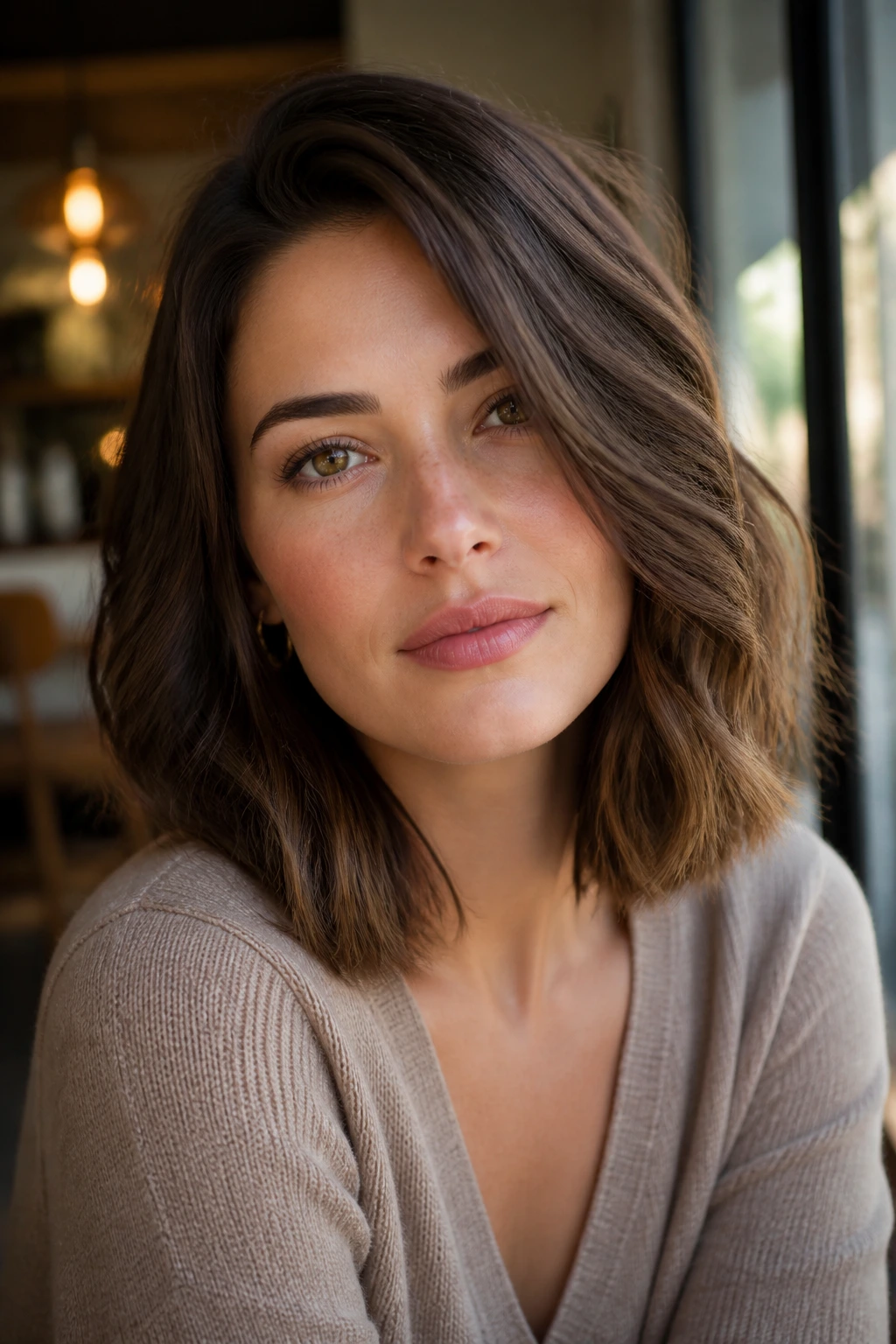
A side-parted lob sits right in that sweet spot between polished and easy. It skims the collarbone, which is useful because that length avoids the jawline trap. The side part breaks up symmetry, and on a square face that tiny shift makes the whole haircut feel less rigid.
Brown hair looks especially good in this cut when the waves are loose rather than tight. Think one or two bends through the mid-lengths, not a barrel-curled pageant finish. The shape wants movement, not volume for volume’s sake.
If you have naturally straight hair, wrap random 1.25-inch sections around a curling iron and leave the last inch out. That keeps the ends from looking overworked. If your hair is already wavy, a light mousse and a diffused dry is usually enough. The cut does the talking once it has a little bend.
3. Butterfly Cut with Face-Framing Wings
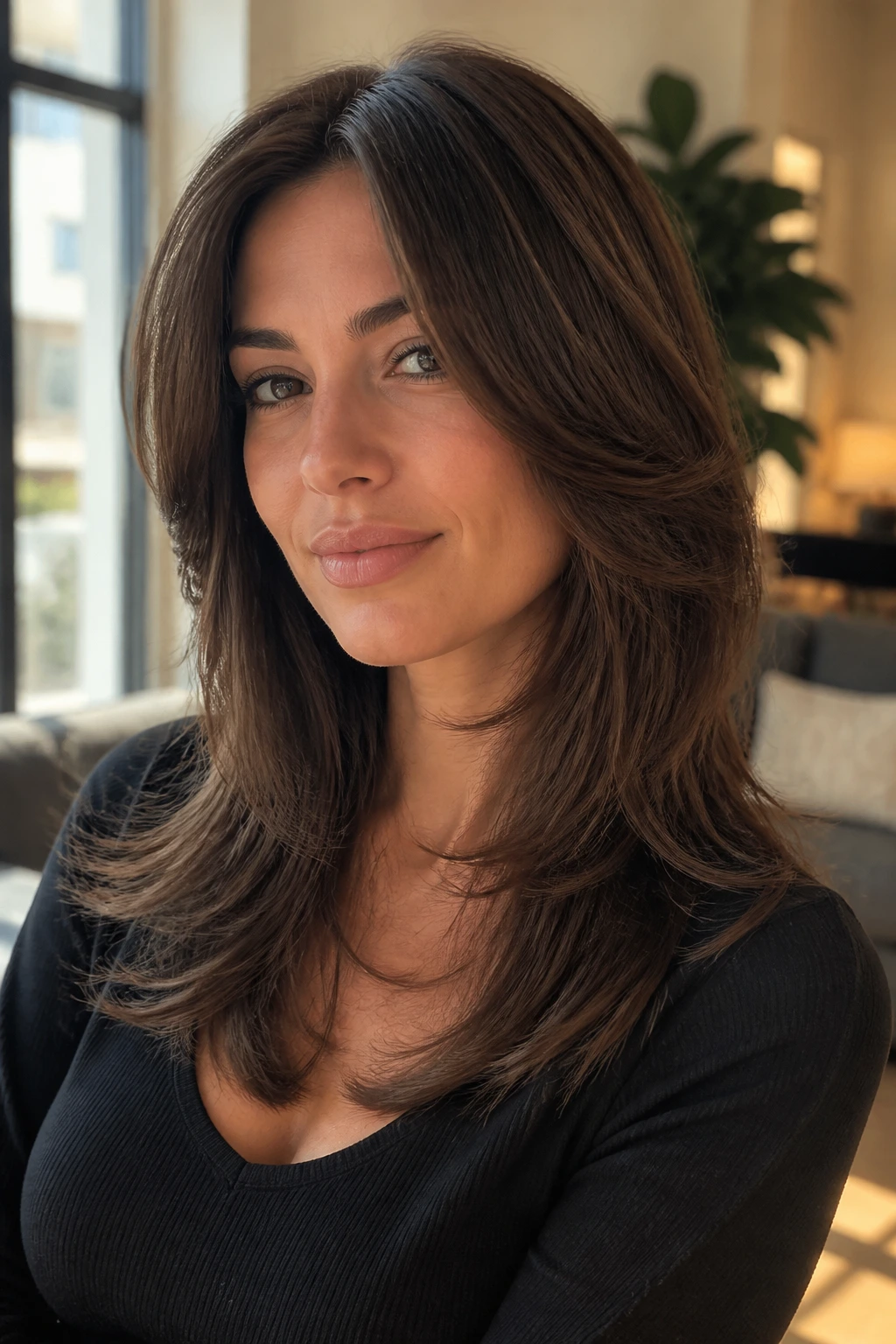
The butterfly cut is one of those styles that looks dramatic on the hanger and surprisingly wearable in real life. The top layers act like shorter pieces floating over longer lengths, so the face gets softness without losing the feeling of long hair. On square faces, that front lift is gold.
The face-framing wings matter here. They should start near the cheekbone and sweep down past the jaw rather than stopping right on it. That keeps the lower face from feeling boxed in. If the hair is medium brown or chocolate brown, the layer break is easier to see than on darker hair, which gives the whole style extra movement.
Best for thicker brown hair
Thicker hair handles the butterfly cut well because the internal layers remove bulk without sacrificing the silhouette. Ask for enough texturizing to keep the crown from collapsing, but not so much that the ends look wispy.
Good detail to remember: the best butterfly cuts on square faces feel lifted around the cheeks and lighter through the ends. If the layers start too low, the haircut loses its whole point.
4. Collarbone Cut with Soft Ends
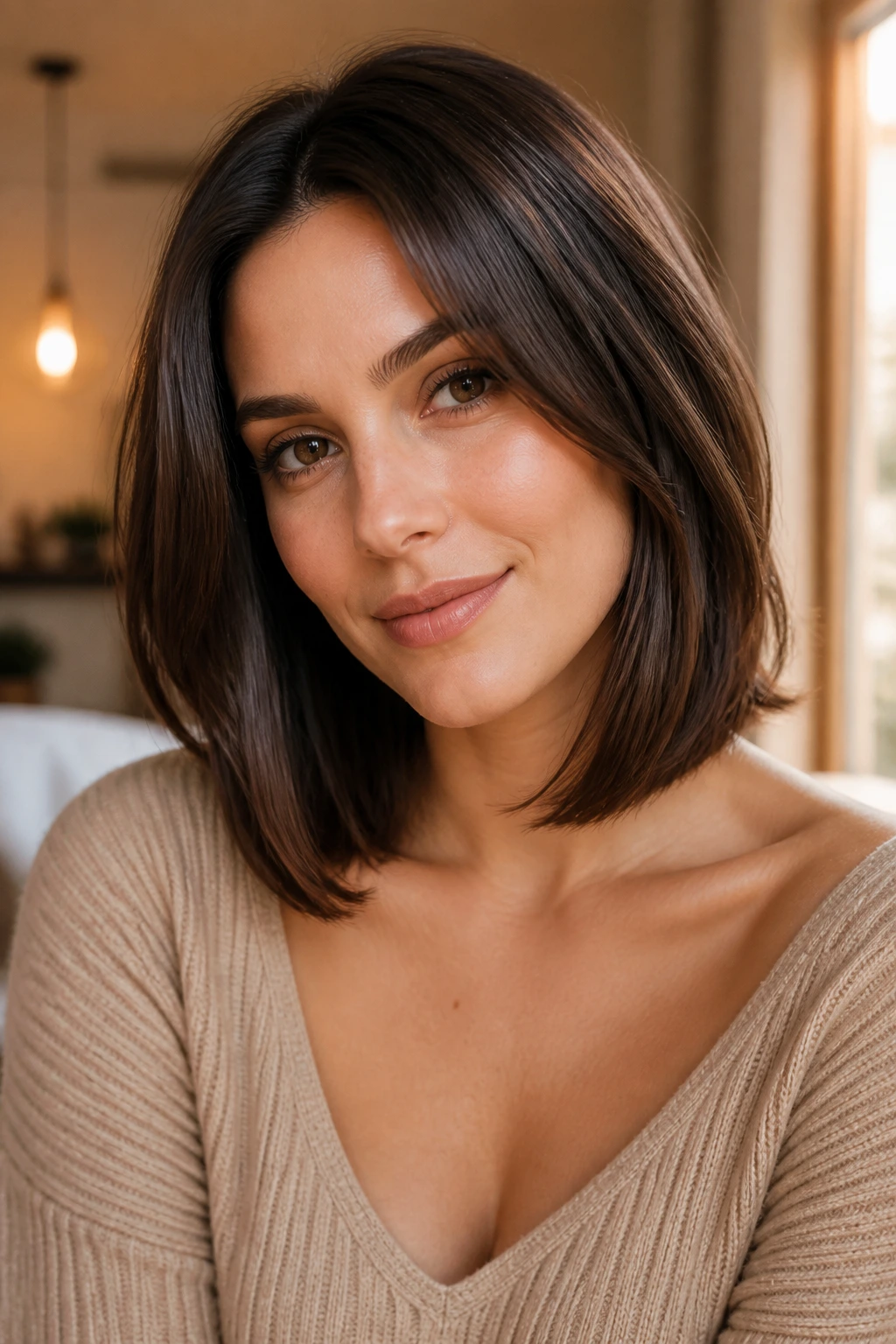
A collarbone cut is the quiet one in the room, and I mean that as a compliment. It lands below the jaw, above the chest, and gives square faces a clean line without the harshness of a blunt bob. The key is in the ends: they need a bit of curve, not a straight chop.
On brunette hair, this cut works especially well when the color has subtle tone changes. A mocha gloss or a few fine lowlights make the shape read more clearly. Without that, the cut can go a little flat, especially if the hair is naturally fine.
Keep the styling modest. A soft bend at the last third of the hair is enough. If you curl the whole length, the shape gets too round and starts competing with the face. Better to keep the body in the mids and let the ends brush inward just a little.
5. Textured Shag with Piecey Fringe
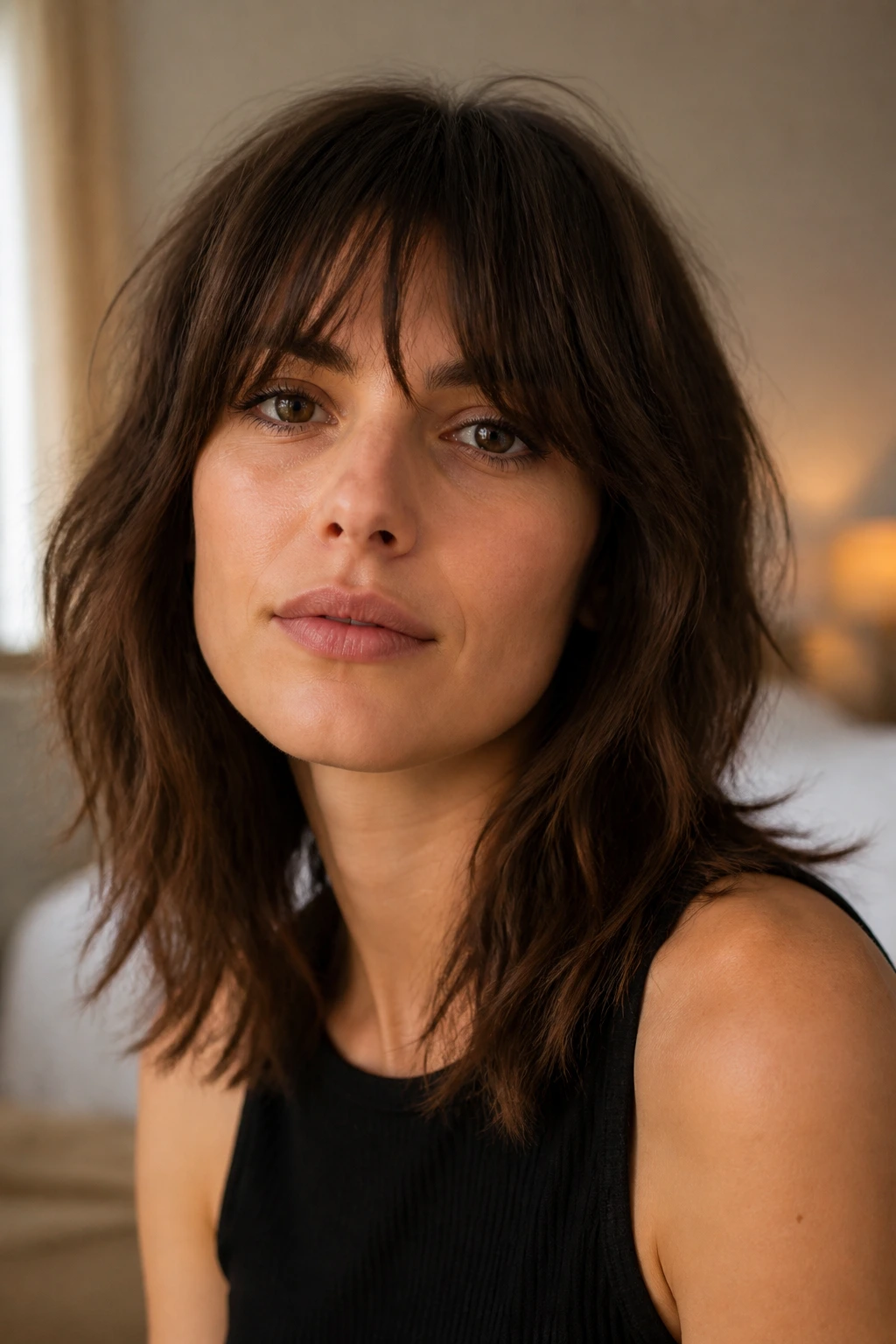
A shag is a blunt instrument in the right hands. On a square face, it works because it breaks up straight lines everywhere. The fringe, the layers, the feathered ends—nothing sits still long enough to make the jaw look boxy.
Brown hair is a good canvas for this because the chopped layers catch light in different places. If the hair is a chestnut or cinnamon brown, the cut looks almost striped in a flattering way when you move. Dark espresso shades can do it too; they just need a bit more product to separate the pieces.
How to wear it
Keep the fringe airy, not dense. A heavy, straight-across bang can fight the square jaw unless the rest of the cut is very soft. I like this style on wavy or slightly coarse hair because the natural texture helps the shape hold.
Watch this: the shag should feel broken up, not overthinned. If the ends look stringy when dry, the cut got too enthusiastic with the razoring.
6. Deep Side-Part Blowout
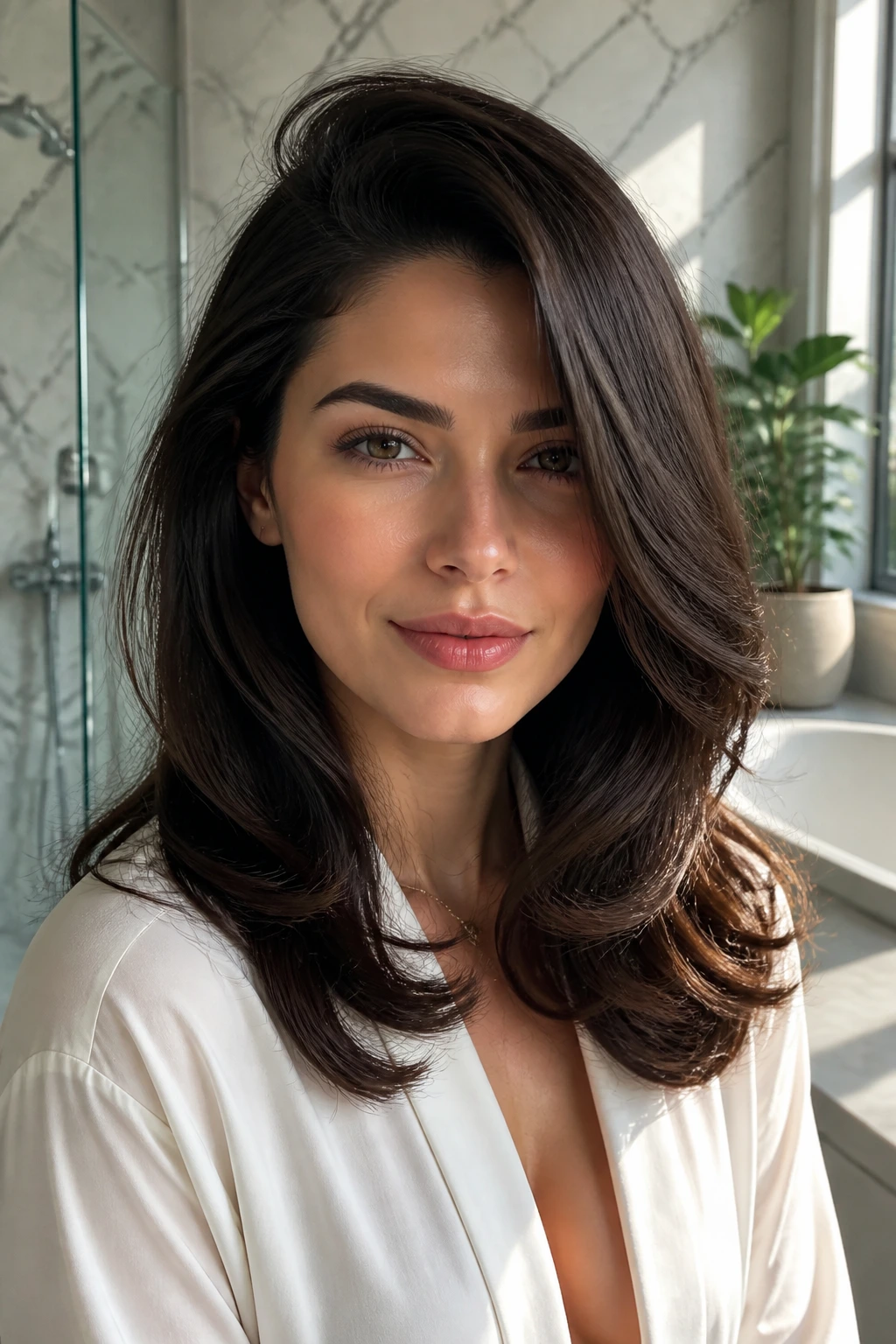
The deep side-part blowout is old-school in the best way. It gives height at the crown, drapes across the forehead, and keeps the cheek line from looking too square. On a square face, that asymmetry is doing more work than any complicated haircut could.
The blowout also makes brown hair look expensive without needing a dramatic color change. A smooth espresso blowout with just a little bend at the ends has a polished, glossy finish that flat iron hair often lacks. It’s the kind of style that looks especially good when the hair is freshly glossed or very well conditioned.
Use a round brush on medium heat and lift the roots up and away from the scalp. Then wrap the front sections back and over the brush so they fall with a soft sweep. If the ends flip too hard, they start looking dated. The goal is movement, not a pageant curl.
7. Face-Framing Layers on Long Brown Hair
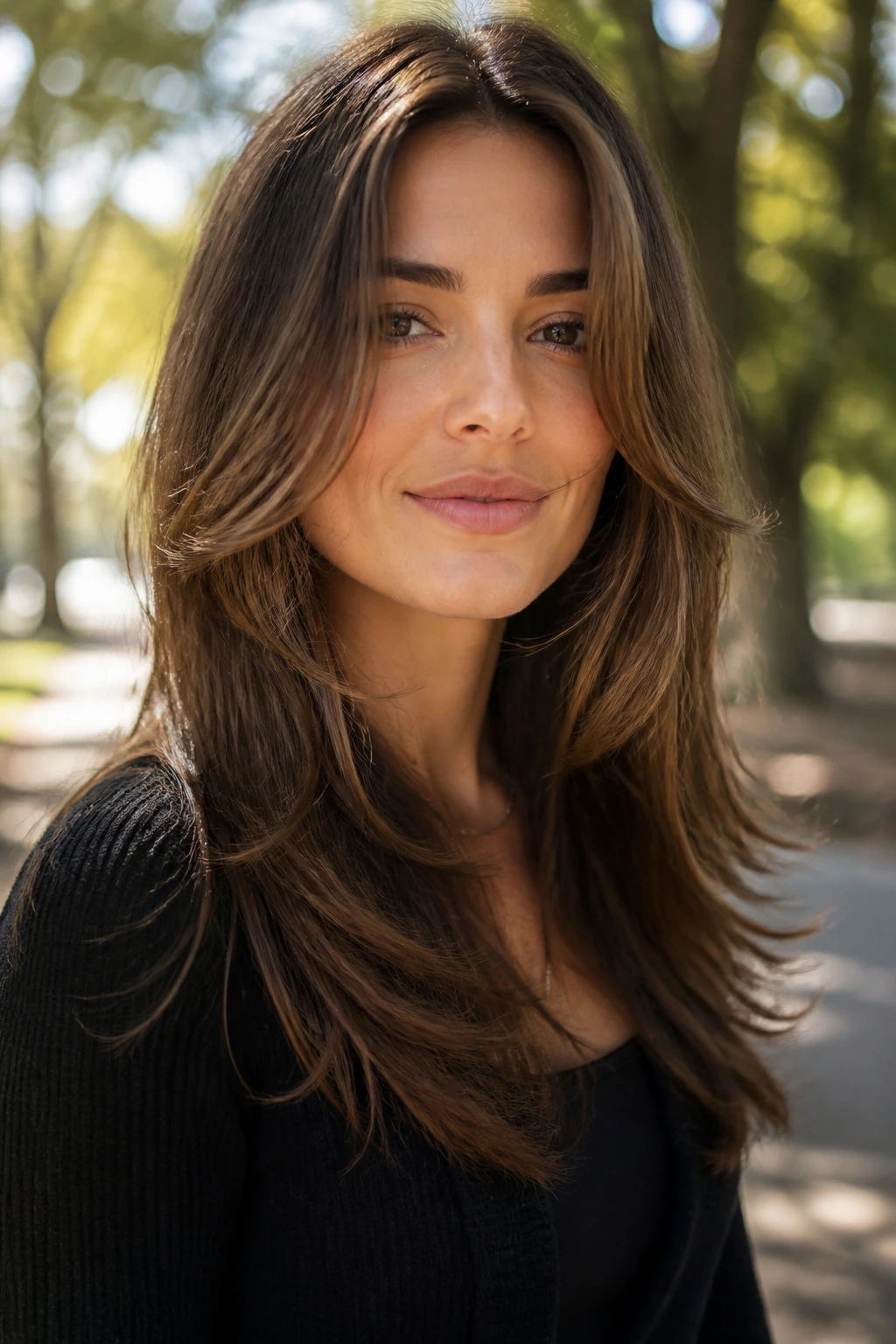
Long brown hair can look heavy fast if nothing interrupts the line. Face-framing layers fix that without asking you to give up length, which is why I keep coming back to them for square faces. They let the hair fall past the jaw while still pulling attention toward the eyes and cheekbones.
The most useful version keeps the shortest pieces around the mouth to cheekbone range, then lets them taper into longer lengths. That creates a diagonal path down the face instead of a box around it. If your hair is thick, this is where a stylist’s hand matters; too much bulk around the cheeks and the whole effect falls apart.
If you wear a middle part, these layers keep it from feeling severe. If you wear a side part, they soften the sweep even more. Either way, you get a shape that looks deliberate rather than accidental.
8. Tousled Midi Cut with Flipped Ends
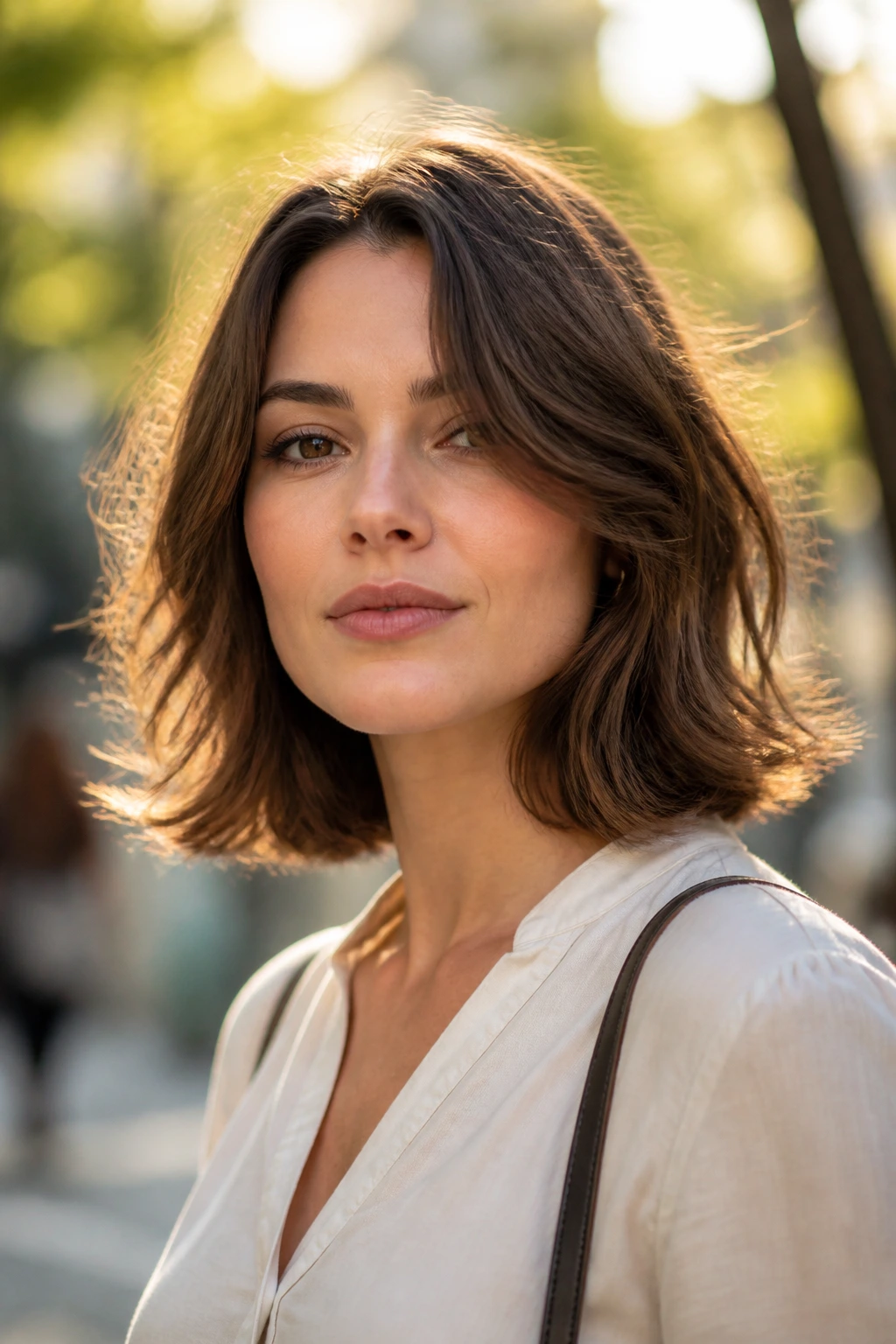
A midi cut—somewhere between the jaw and the shoulders—can be tricky on square faces, because the wrong version lands right on the angles. The tousled version solves that by keeping the perimeter loose and the ends a little flipped, almost as if the hair changed its mind halfway down.
Brown hair loves this cut because the texture shows. A medium brunette with honey or toffee accents looks especially good when the ends are broken up instead of blunt. If your hair is straight, use a flat iron to make small bends rather than full curls. If it’s wavy, a bit of salt spray and finger-drying may be enough.
The real win here is that the style looks casual without looking unfinished. That line matters. Too polished and it stiffens the face; too messy and it loses the shape.
9. Off-Center Blunt Bob
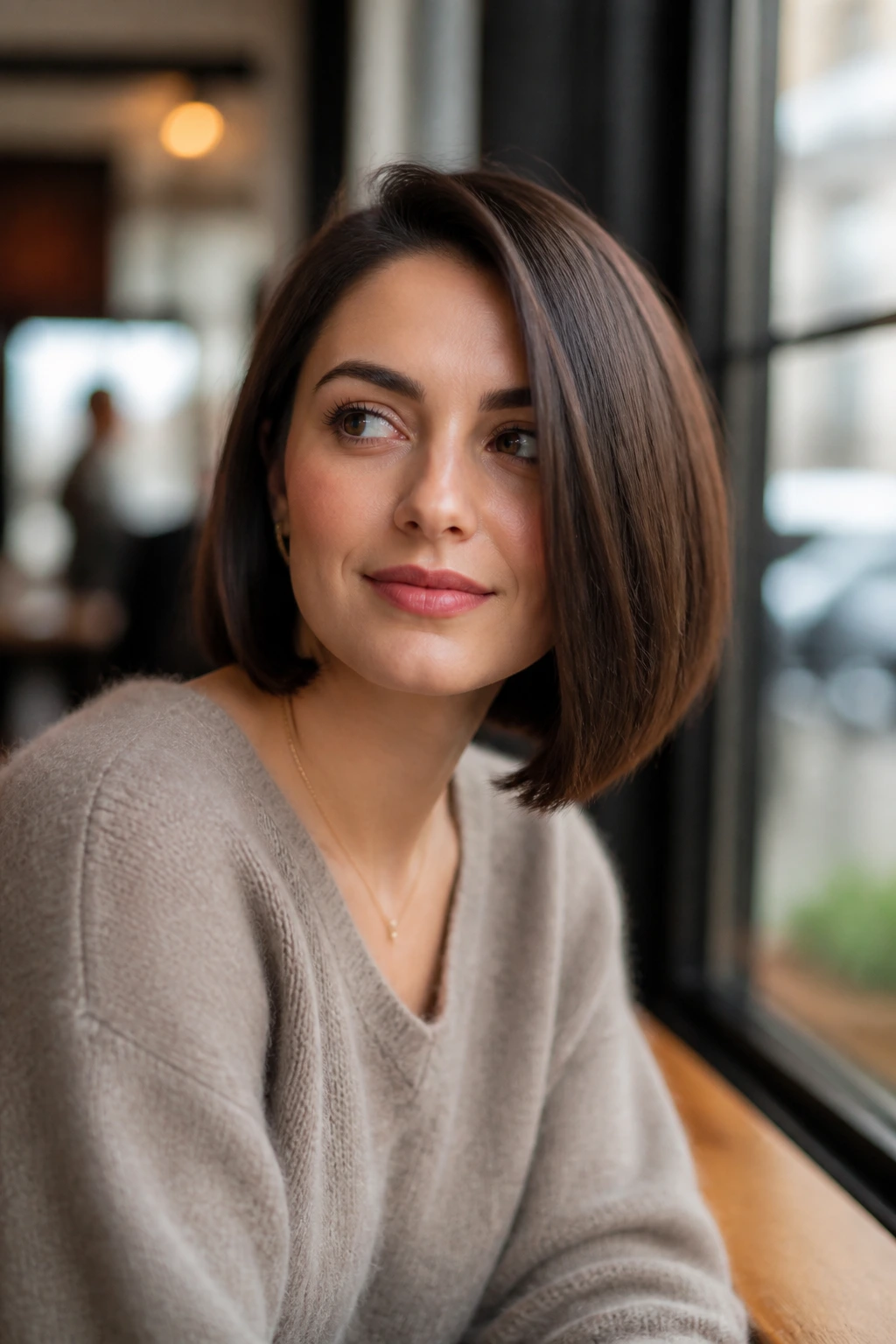
Yes, a blunt bob can work on a square face. The trick is refusing to let it sit perfectly symmetrical and dead-straight. An off-center part and a slight bend under the ends change the whole mood. Without that, the cut can feel too architectural.
Brown hair makes this bob feel richer than many blond versions because the clean line shows the density of the color. If you have deep brown hair, the shape can look very chic. If the tone is lighter chestnut, the perimeter shows up a little more, which helps the line read from across the room.
Why this one is touchy
The length should miss the jaw by a little, or sit just below it. Right at the jaw is the danger zone. A subtle inward curve at the ends keeps the silhouette from flaring out. This is not the bob for someone who wants a lot of softness around the face; it’s for someone who wants a crisp cut with just enough give to flatter the angle.
10. Tucked Italian Bob
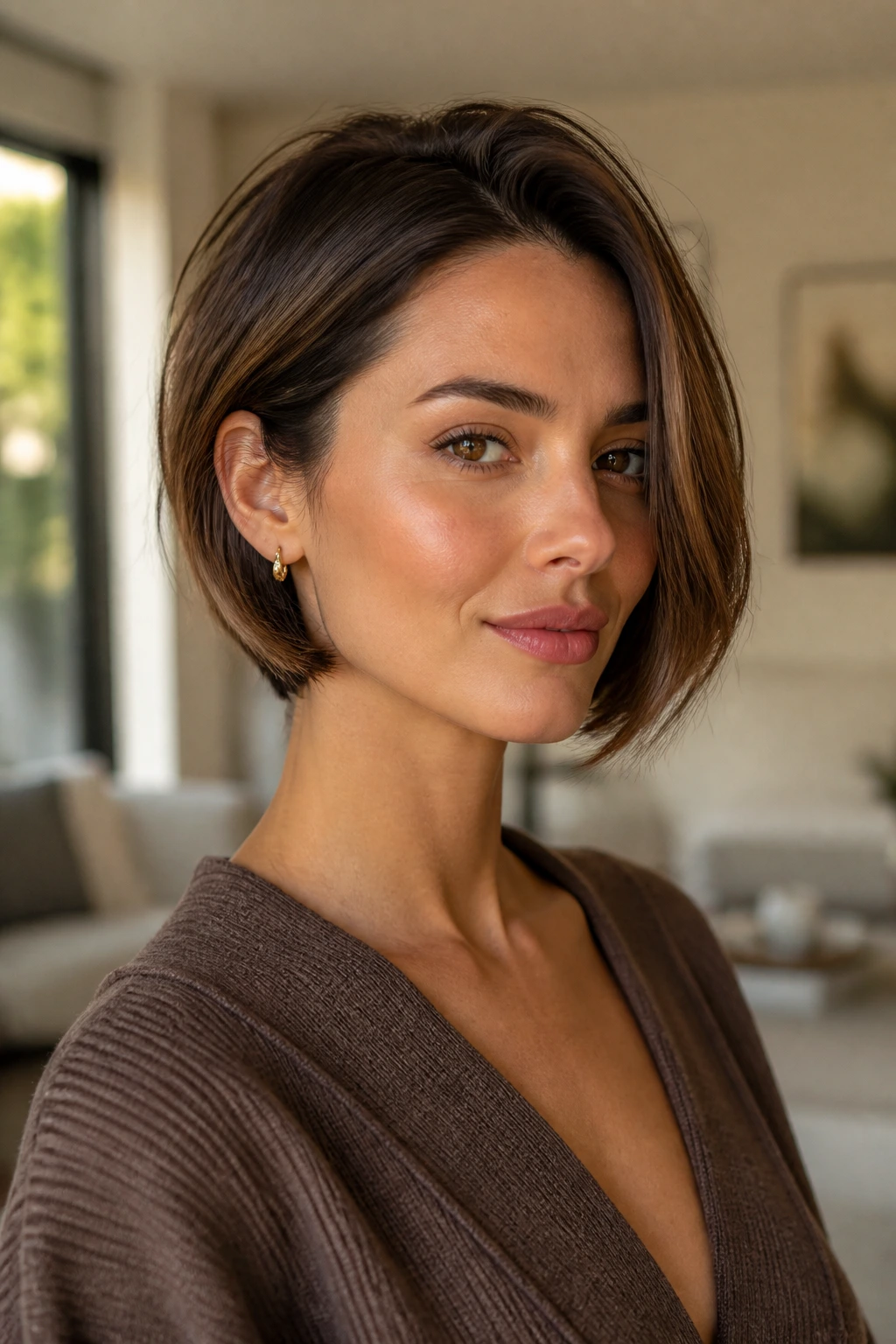
The Italian bob has that plush, expensive feel people keep trying to copy with too much styling cream. What makes it flattering on a square face is the way it’s worn—slightly rounded, a touch voluminous, often tucked behind one ear so the face doesn’t feel boxed in on both sides.
On brown hair, especially rich mocha or walnut shades, this cut looks dense and shiny in a way that suits the clean line. The tuck behind the ear opens one side of the face and makes the jaw look less square by contrast. That small asymmetry matters.
I’d keep the ends soft and the crown lifted. If the bob is too blunt and too close to the head, it starts looking severe. A little bend through the mids keeps it human. That’s the word I keep coming back to with this haircut: human.
11. Layered Pixie with Side-Swept Top
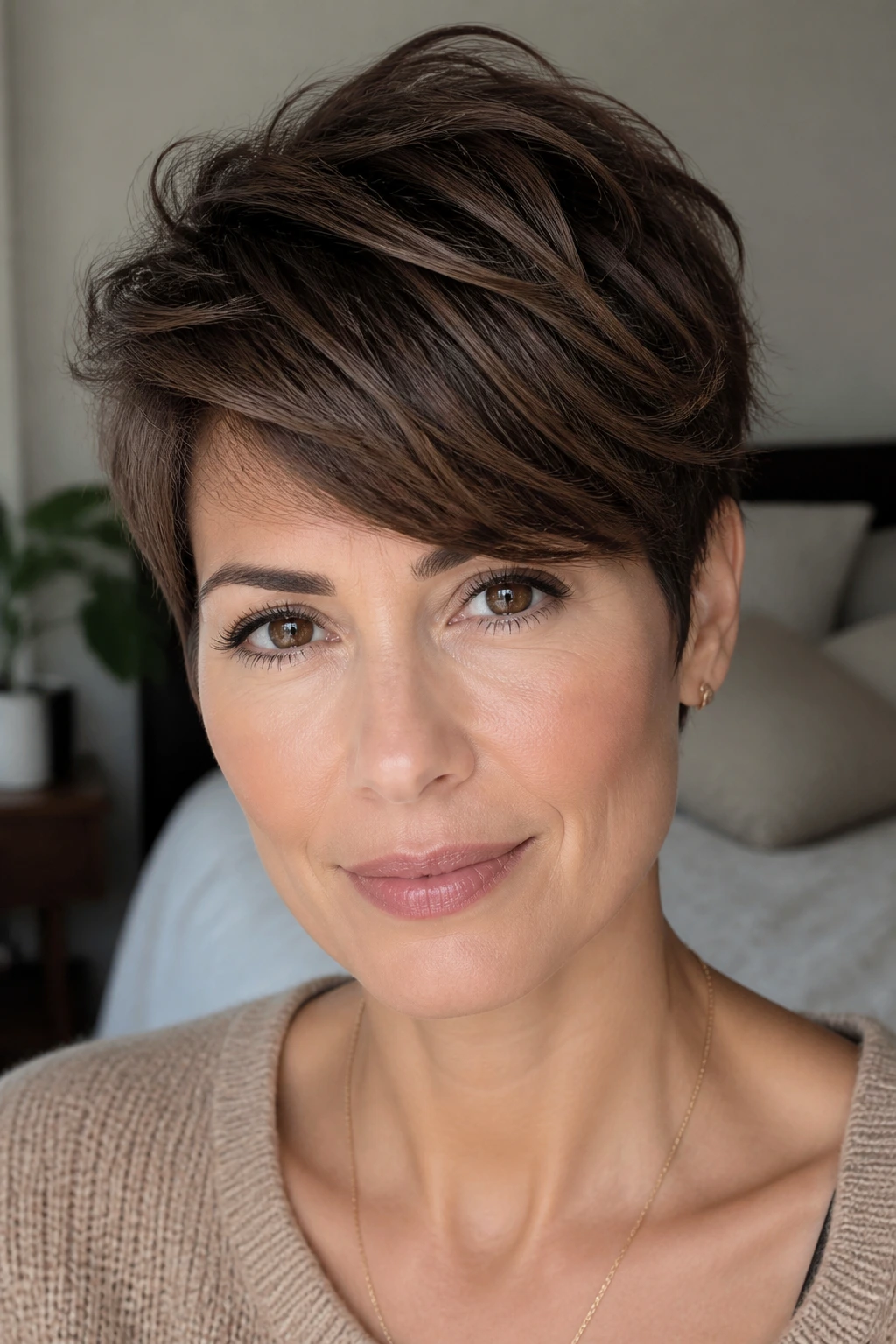
Short hair can be very kind to a square face if the top has movement. A layered pixie with a side-swept top keeps the sides neat while letting the upper portion create length and lift. That lift is what stops the face from reading wider than it is.
Brown hair gives this cut more texture than people expect. Even a plain medium brown pixie picks up shadow and shine on the shorter layers, so you don’t need much color drama. If the hair is dark, a satin finish cream on the top pieces keeps the shape visible. If it’s lighter, the layers show more naturally.
Styling note
Sweep the longest pieces diagonally across the forehead and leave a little mess near the crown. Too much smoothness makes the cut feel helmet-like, and helmet hair is not helping anybody. A fingertip of pomade is enough.
12. Bixie with a Soft Nape
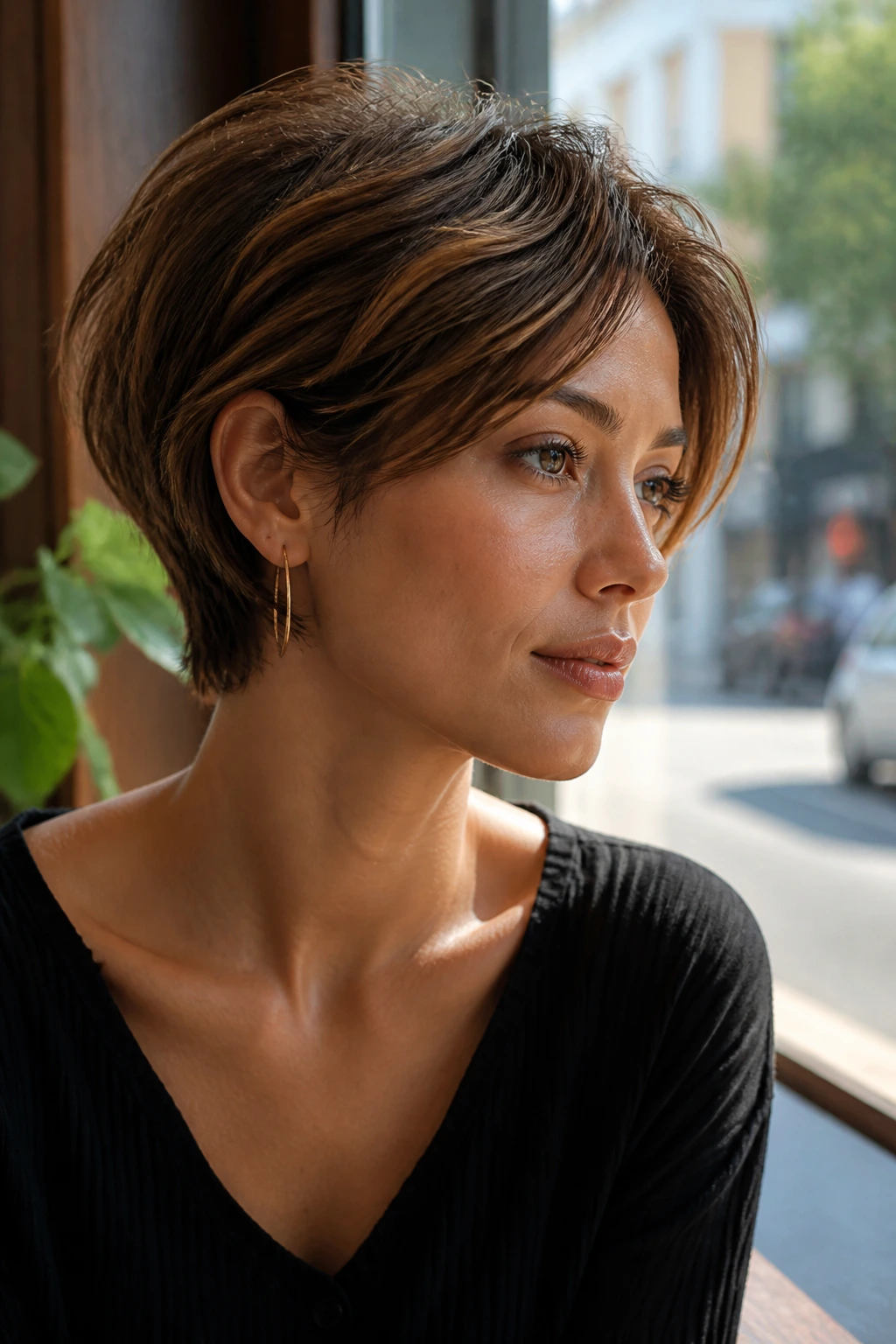
The bixie lives between a pixie and a bob, which is exactly why it works here. It keeps some length around the ears and nape, softens the outline, and avoids the hard line that a super-short crop can create on a square face. It’s playful without becoming fussy.
This style loves brown hair because the mixed lengths show up well in darker tones. If the hair has subtle warm highlights, even better—the top pieces separate from the sides just enough to make the shape read clearly. The nape should stay light, not bulky.
Ask for a bit of length around the cheekbones if you want extra softness. The front can be swept, tucked, or pushed forward depending on the day. That flexibility is the point. A bixie that can only be worn one way is too stiff for this face shape.
13. Low Ponytail with Crown Lift
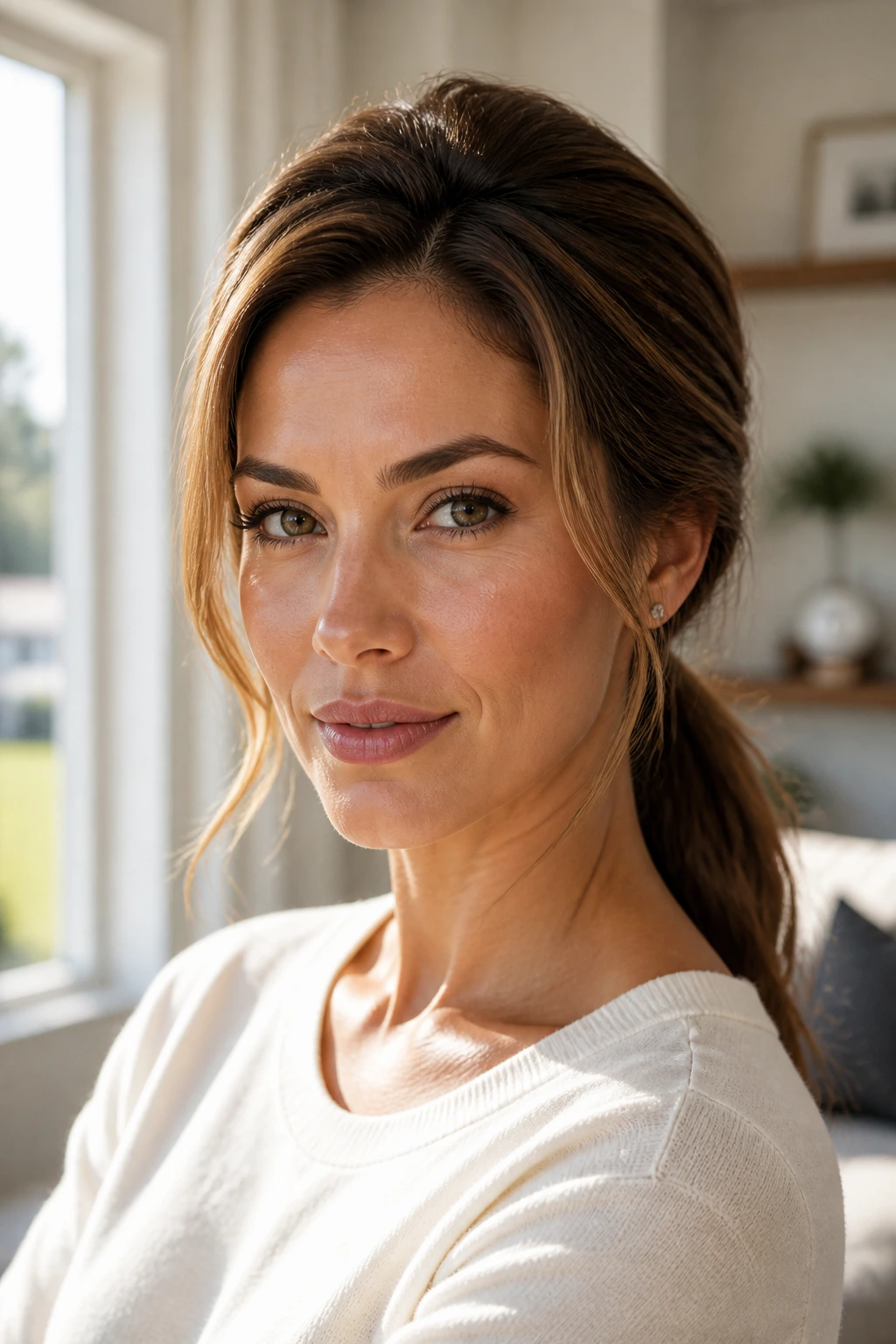
A low ponytail sounds plain, and that’s exactly why the details matter. On a square face, a low ponytail works when the crown has some height and the front has soft pieces left out. Pull it too tight and it turns the face into a rectangle. Leave a little lift and it suddenly feels polished.
Brown hair in a low ponytail looks especially good when the length shows a healthy shine. A chestnut or cocoa ponytail with a smooth crown and a few loose tendrils near the temples can look cleaner than an overworked updo. If the ponytail sits directly at the nape, that’s fine. What matters is keeping the top from flattening.
A small trick: backcomb the crown gently, then smooth only the top layer. You want structure, not a teased mess. The result should feel soft around the face and sleek through the tail.
14. Half-Up Twist with Loose Strands
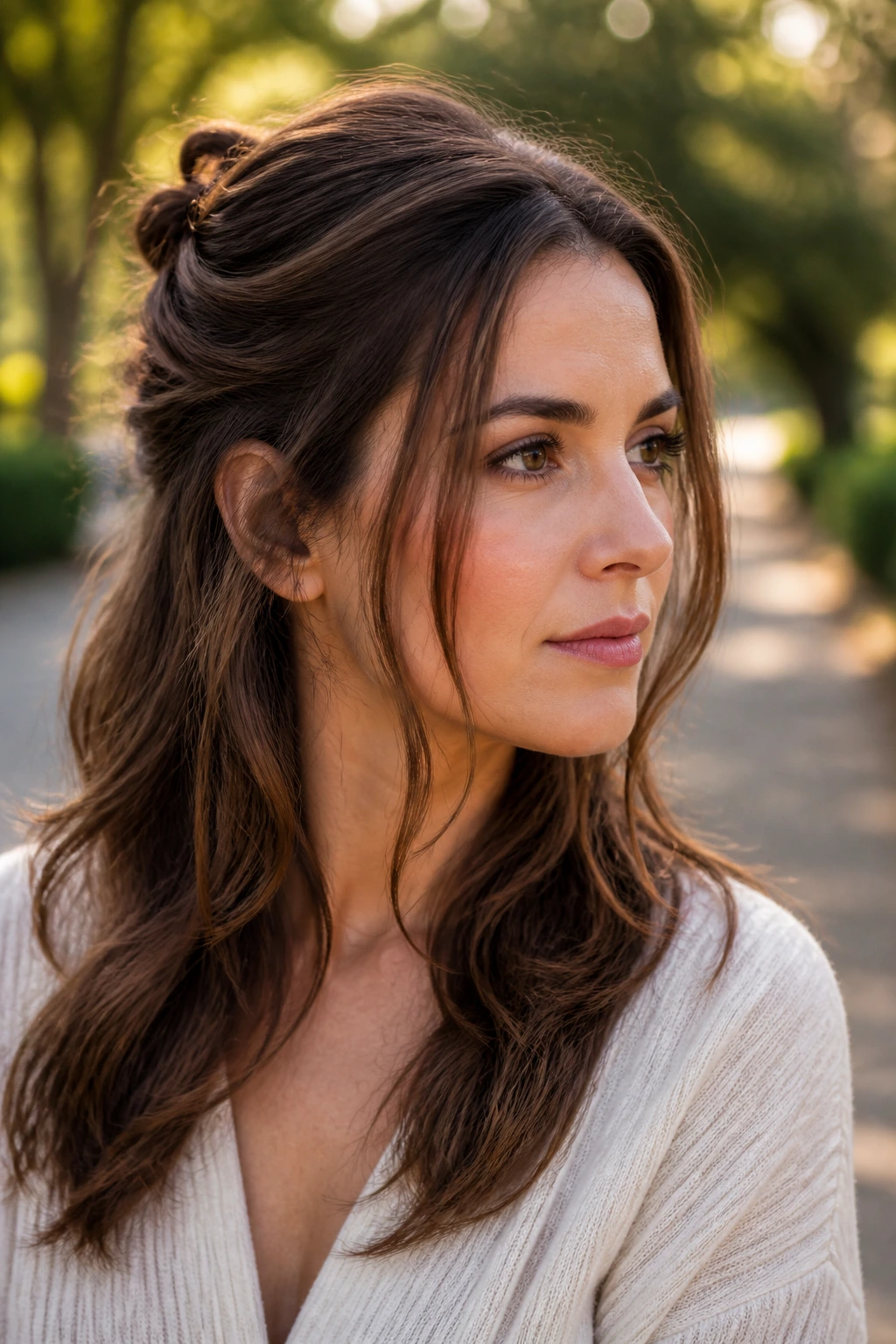
The half-up twist is one of those styles that gets dismissed as basic until you see it on the right face shape. On a square face, it works because it adds lift at the crown while letting the sides hang and soften the jaw. That balance is the whole game.
Brown hair gives the twist a nice contrast between the pinned section and the loose lengths. If you’ve got balayage, the twist shows the color change near the back and keeps the front pieces free to move. The loose strands around the face should be deliberate, not accidental. Leave them where the cheekbone starts and let them skim downward.
If your hair is medium to thick, this is an easy way to fake shape on a day when you don’t want to blow it out. A little texture spray at the roots helps the twist stay up. A small claw clip can hold the twist if pins keep sliding out.
15. Low Bun with Wispy Pieces
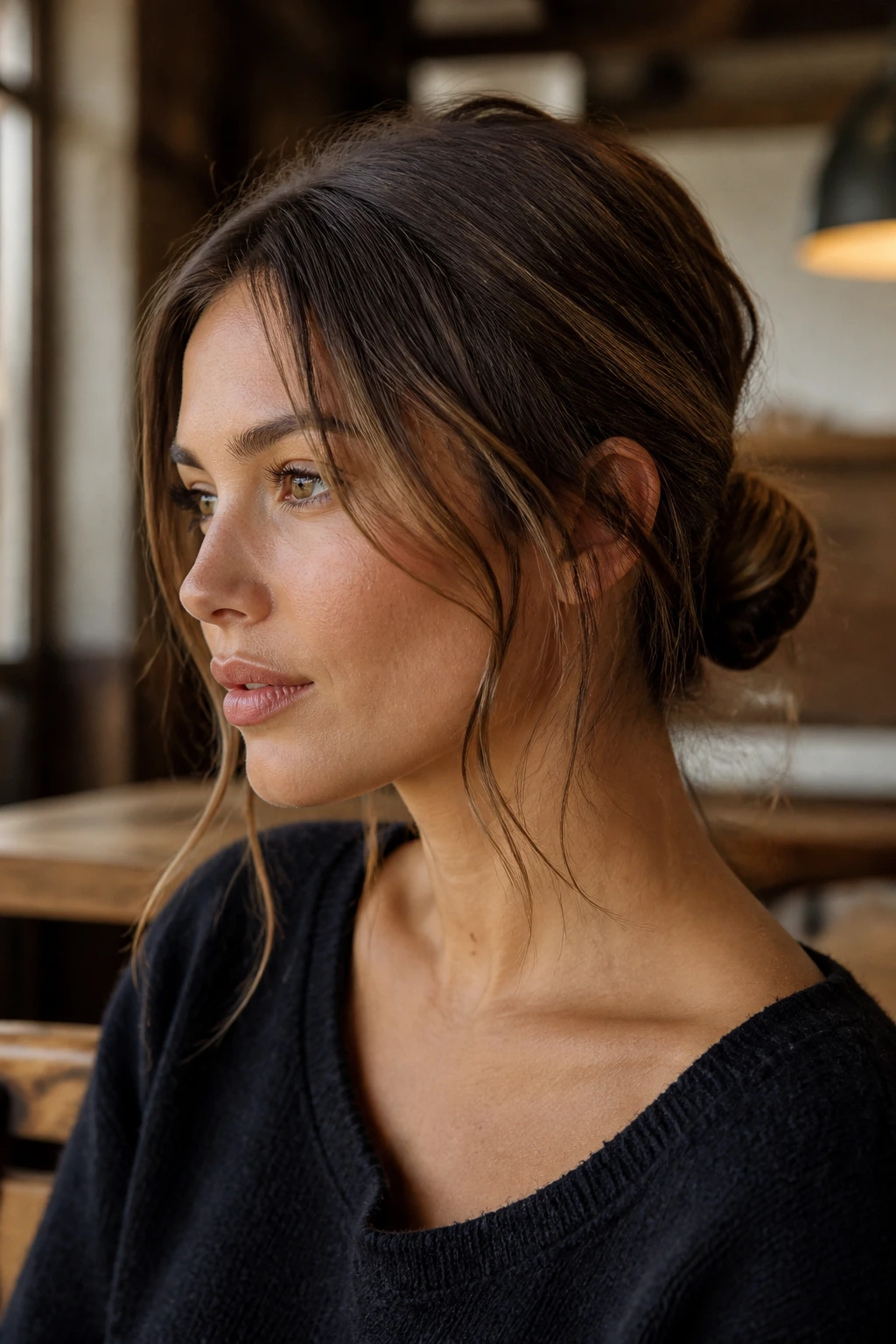
A low bun can look severe fast, which is why the wispy pieces matter so much. On a square face, the bun should sit low and relaxed, with a few softened pieces floating around the temples and ears. That keeps the style from turning into a hard circle stuck to the back of the head.
Brown hair looks good in this style because the bun shows shape and sheen at once. A glossy chocolate bun with a few loose chestnut pieces around the face reads softer than an exact, tight knot. If your hair is thick, twist it loosely before pinning. If it’s fine, build the bun with a small padding fold so it doesn’t disappear.
This is one of those styles that can go from errands to dinner with almost no extra effort. A little hair oil on the tail, not the roots, makes the finish look intentional. A few escaped strands are not a mistake here. They’re the point.
16. Shoulder-Length Curls with Diffused Volume
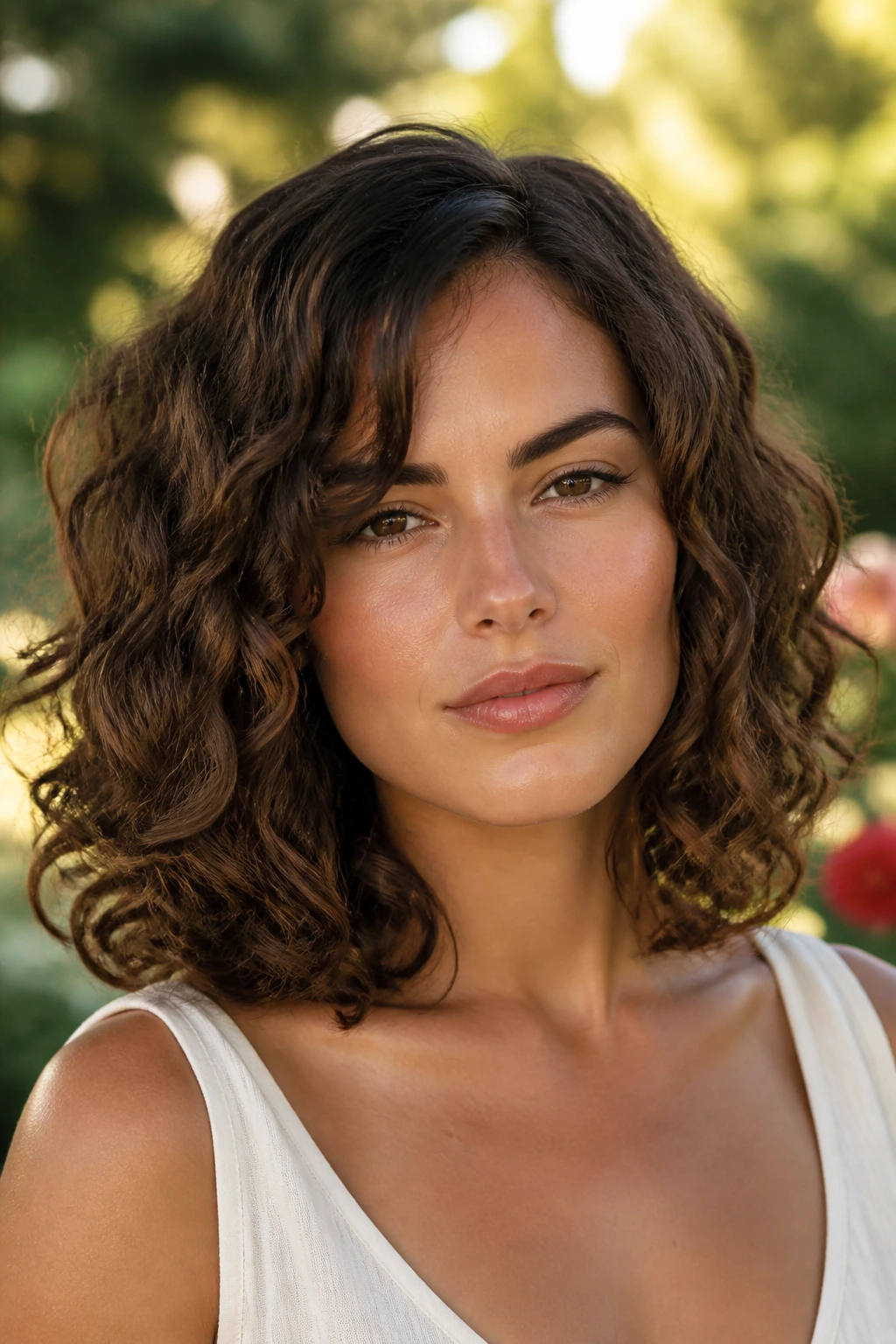
Shoulder-length curls are one of the most forgiving shapes for a square face because the curl pattern itself softens edges. The shoulder length keeps the cut from sitting on the jaw, and the diffused volume creates roundness without a hard outline. If your brown hair is naturally curly or wavy, this is where it gets to behave like itself.
The important part is keeping the top lifted but not puffed out. Too much width at the temples can widen the face. A diffuser on low heat, plus a curl cream that doesn’t turn crunchy, usually does the trick. If the curls are looser, a light gel cast scrunched out after drying gives better definition.
A brown curly shape is easiest to read when the color has some movement, even if that movement is subtle. Warm lowlights, sun-kissed ends, or just a healthy glossy finish keep the shape from going dull. Flat curls are hard on square faces. Spirited curls are better.
17. Beach Waves with Caramel Balayage
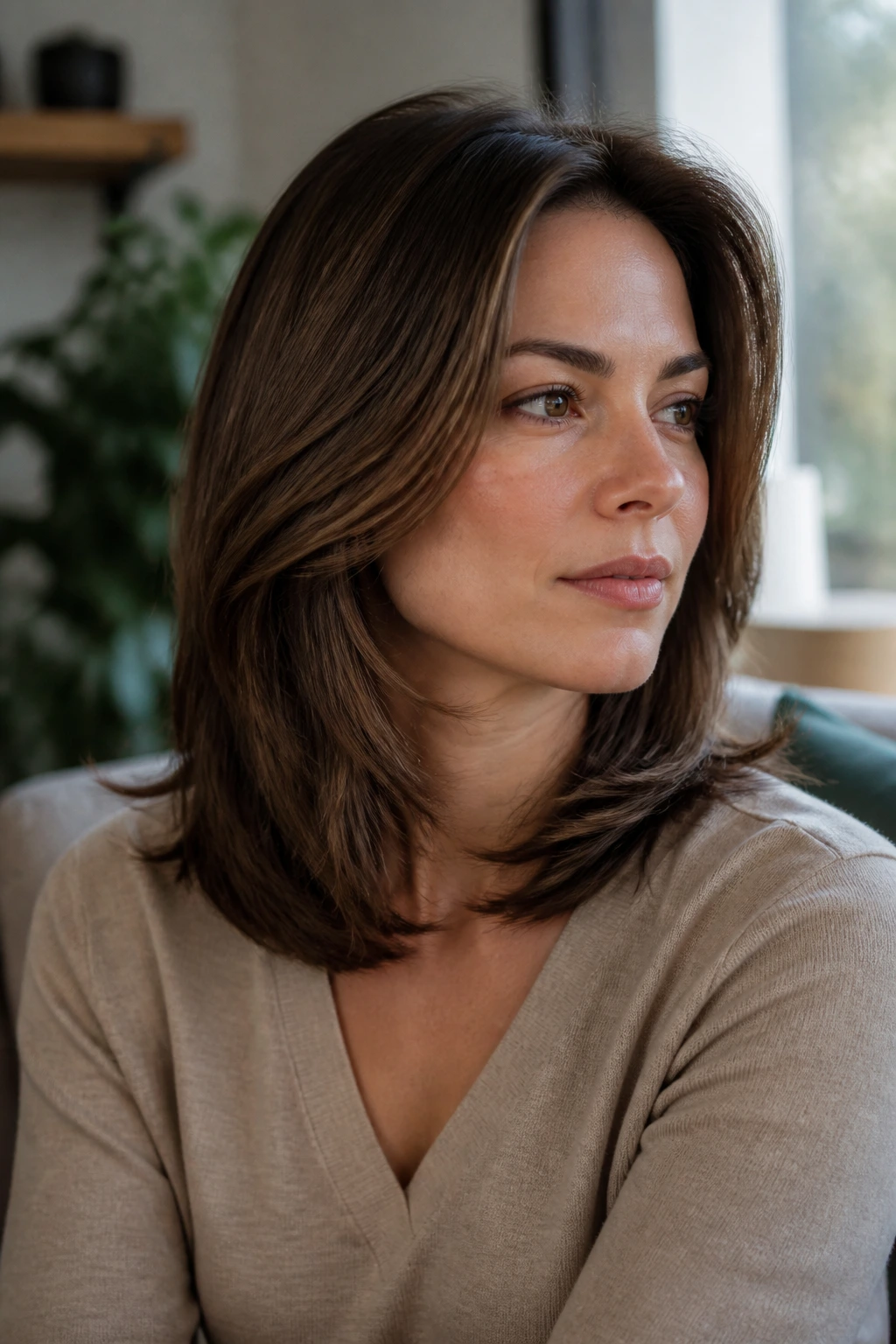
Beach waves are not about pretending you just came from the ocean. They’re about broken movement, and brown hair takes to that beautifully when the balayage is placed with care. Caramel ribbons around the face and through the mids can make a square face look softer because the eye follows the lighter pieces instead of locking onto the jaw.
The waves should stay loose. If they’re too tight, the style reads busy. If they’re too flat, you lose the whole point. I like this look best when the curl pattern is alternating—some sections wrapped away from the face, some toward it, and all of it brushed out once it cools.
What to avoid
Do not place the brightest highlights right at the jawline if you can help it. That can pull attention to the widest part of the face. Keep the lighter pieces a little higher and let them taper down. It’s a small placement choice, but it changes everything.
18. Sleek Center Part with Curved Ends
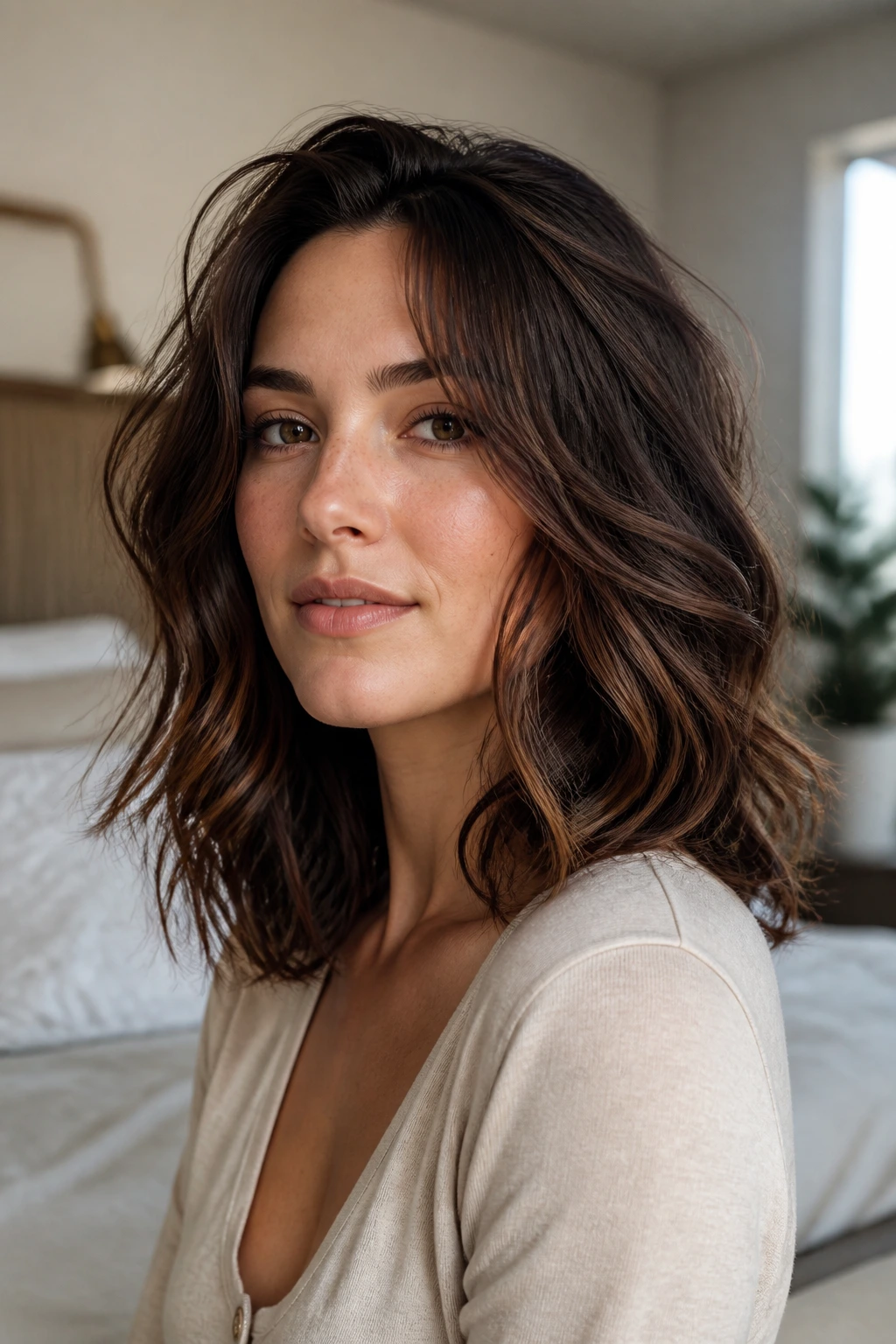
A center part on a square face can work, but only when the rest of the cut refuses to be rigid. Sleek roots, curved ends, and a little softness through the front pieces keep the middle part from looking severe. The shape should feel intentional, not severe.
Brown hair handles this style well because the shine shows up so clearly across a smooth surface. The key is not to flatten the hair so much that it loses life. Use a smoothing cream lightly, then curve the ends inward with a round brush or flat iron. You want a clean line with a tiny bit of bend.
This look suits people who like polished hair and do not want much fuss in the morning. It also works beautifully on darker brunettes because the deep color makes the curve at the ends more visible. If your hair is very fine, keep the part a touch off-center to avoid exposing too much scalp at the crown.
19. Braided Crown with Face-Framing Ribbons
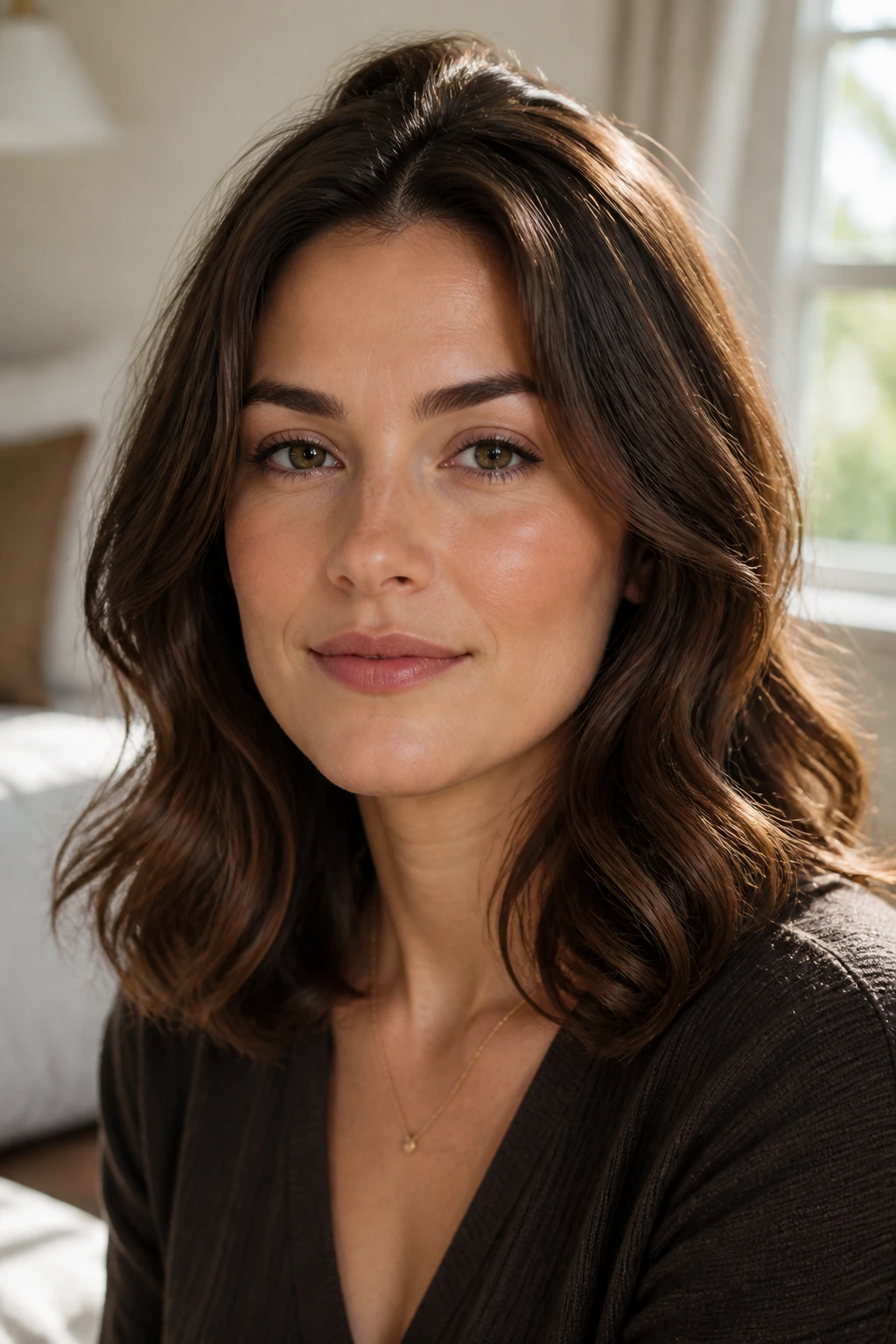
Braids can sometimes make a square face look too structured. The fix is easy: keep the braid soft and leave face-framing ribbons out. A braided crown or halo with loose pieces around the temples breaks the hard outer line and keeps the look from feeling tight.
Brown hair is especially good in braids because the woven sections show depth. A mix of chocolate, copper, or caramel tones can make each strand pop just enough to read in photos and in person. If the hair is all one tone, a little shine spray before braiding helps the pattern stand out.
A braid like this is ideal when you want the hair back but not scraped flat. Leave the braid a little puffier than you think you should. Tight braids on square faces can look severe. Soft braids look smarter.
20. Claw-Clip Twist with Volume
The claw-clip twist has become a kind of shorthand for “I wanted my hair up, but not in a boring way.” On a square face, the twist works when the roots stay lifted and the front pieces stay loose. The clip itself should sit high enough to create shape, not low enough to crush the crown.
Brown hair looks very good in this style because the twist creates a clean fold of color. A medium brunette with subtle highlights shows texture in the twist, while a deeper brown gives you a glossy, minimal finish. Either way, the trick is volume at the top and softness around the sides.
I like this look for second-day hair. A bit of dry shampoo at the roots and a few face-framing tendrils are often enough. If the clip is pulling too hard on the sides, use two smaller clips instead of one giant one. Less strain, better shape.
21. Curtain-Bang Ponytail
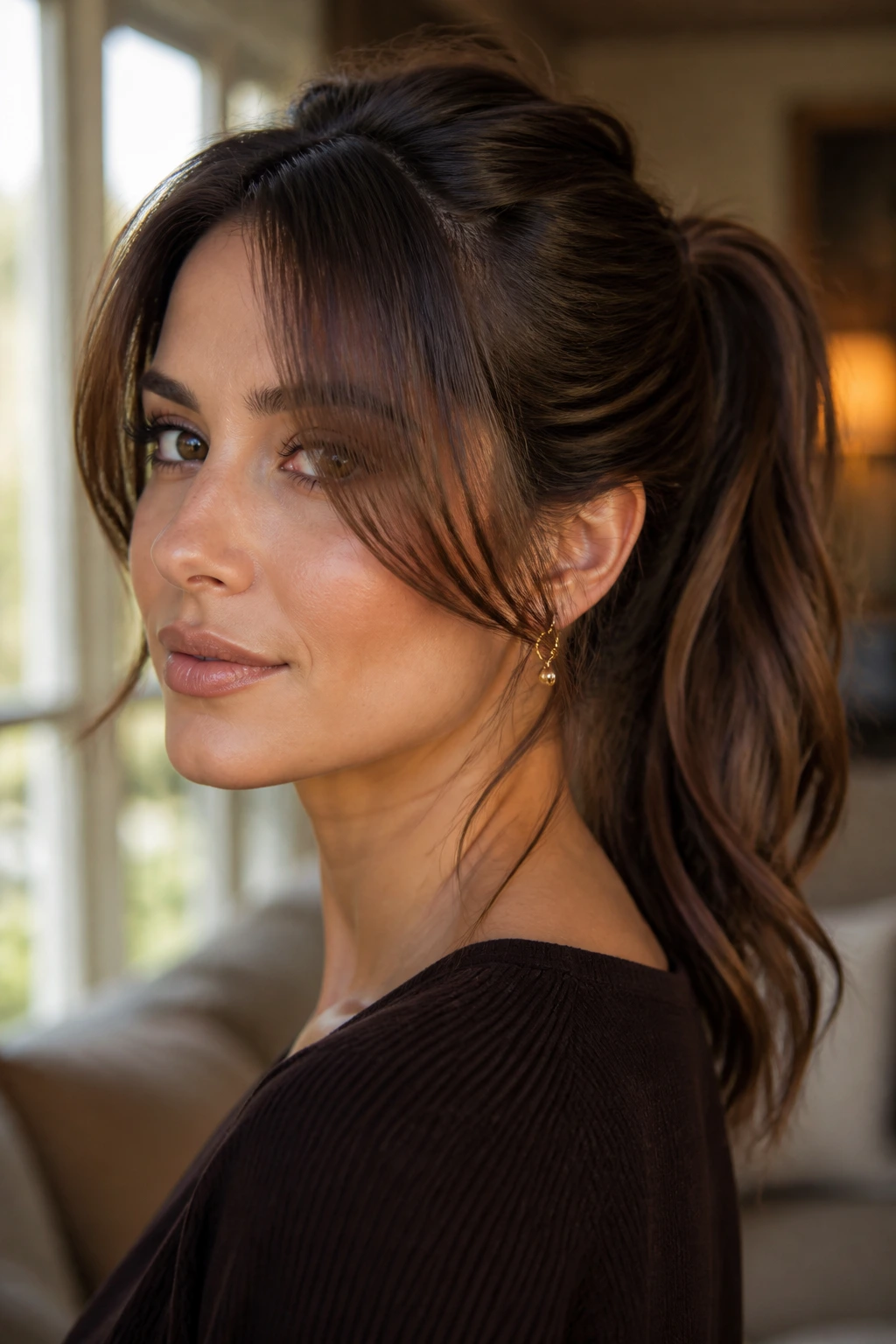
This one is a favorite because it solves a common problem: how to wear hair up without showing every angle of the jaw. Curtain bangs around a ponytail soften the front while the ponytail itself keeps the back clean. It’s one of the easiest ways to make a square face look a little longer.
Brown hair works here because the ponytail shows off gloss, and the bangs keep the front light. The ponytail can sit low for a calmer look or mid-height for a more lifted shape. Just keep the front pieces loose enough to move when you turn your head. If they stick to the face like static, the style loses its charm.
A curled-under tail can look polished, but a lightly waved one is usually kinder to this face shape. The bangs should not be cut too short. They need enough length to skim the cheekbones and stay soft.
22. Rounded Afro with Soft Side Shape
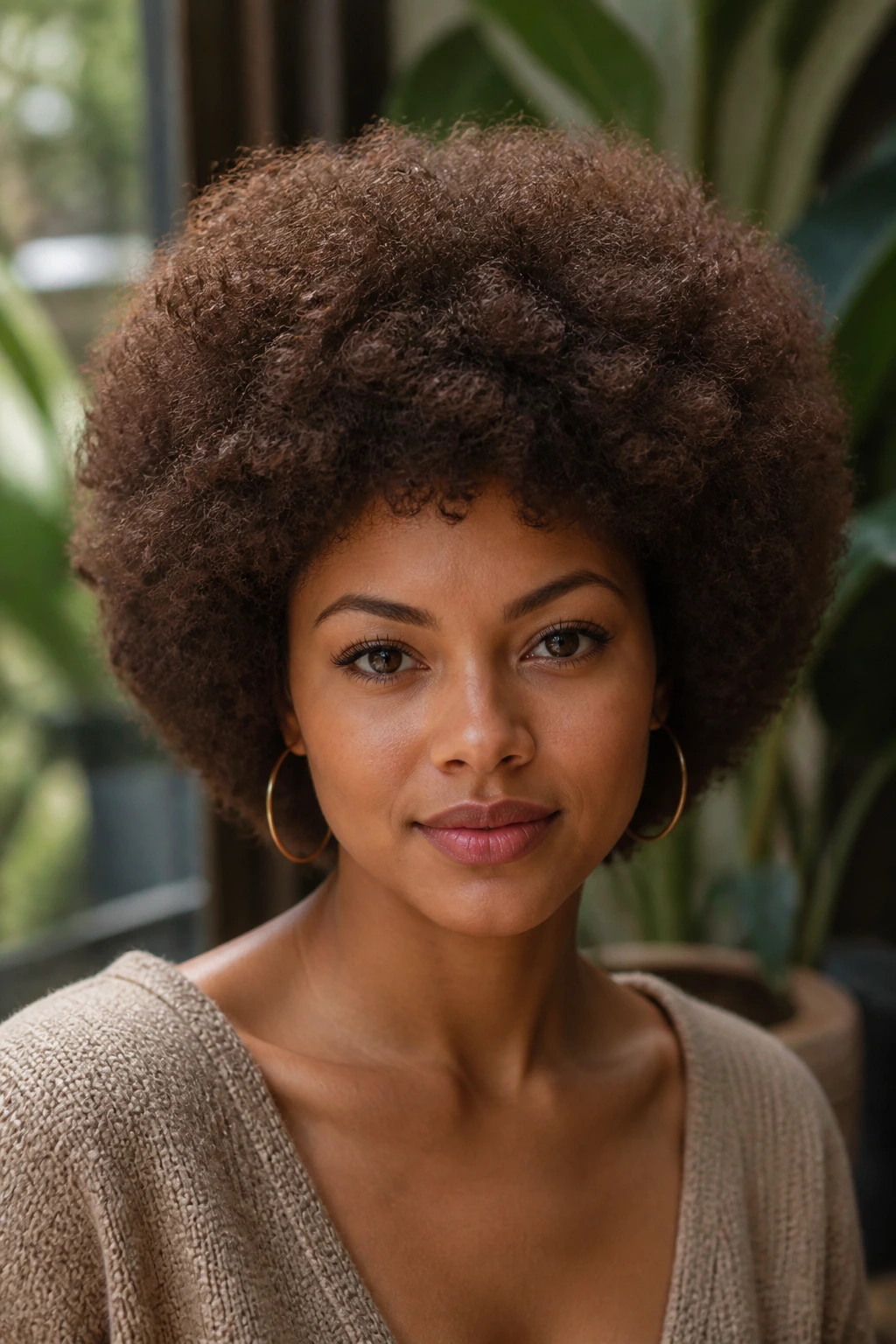
Natural texture can do a lot of this work on its own. A rounded afro with soft side shaping keeps the silhouette balanced without turning it boxy, which is exactly what a square face needs. The rounded top adds height, and the softer sides prevent the jaw from echoing the shape too strongly.
Brown hair in textured styles often has more depth than people notice at first glance. Different curl patterns catch light at different points, so even an all-over brown reads as dimensional when the shape is balanced. A little moisture cream and a pick at the roots can keep the crown full without flaring the sides too wide.
Shape matters here
Ask for side shaping that narrows very slightly near the jaw instead of flaring out at the bottom. That one detail keeps the style from turning into a cube. Cubes are not the goal. Shape is.
23. Curly Shag at the Shoulders
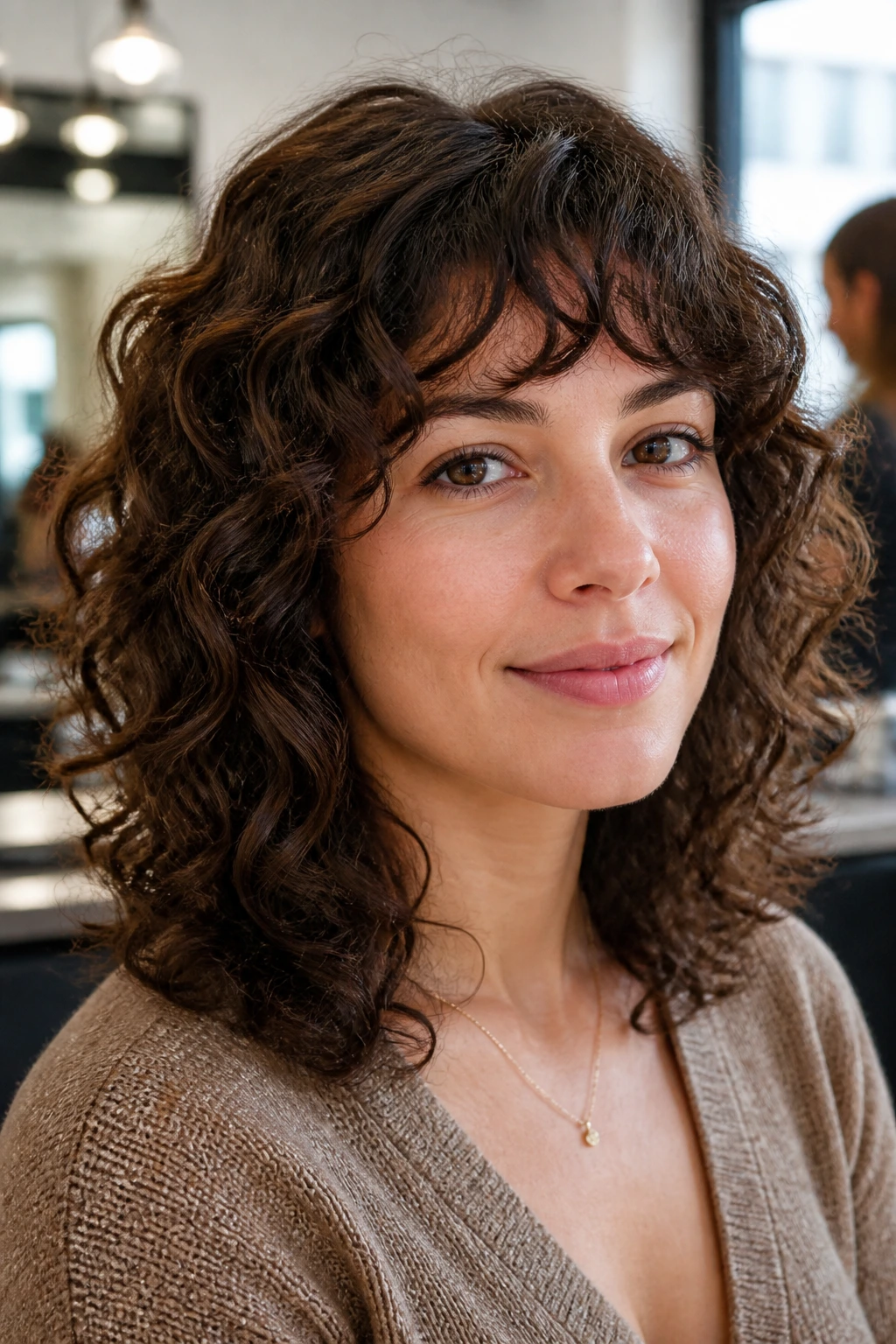
A curly shag is one of the few cuts that can bring attitude and softness at the same time. The layers help curls stack without bunching at the jaw, and the shoulder length keeps the line from landing too high on the face. On square faces, that means movement without width.
Brown curls look especially good in a shag because the layers create shadow and shine. If the color has subtle warm tones, the curls become easier to read. If the brown is darker, the shape still works, but it benefits from a little curl cream and a diffuser so the curls separate instead of clumping.
This is a low-precision cut in the best sense. It doesn’t need every curl to land in the same place. In fact, it looks better when the pieces fall a little differently. That irregularity is what softens the face.
24. Soft Asymmetrical Lob
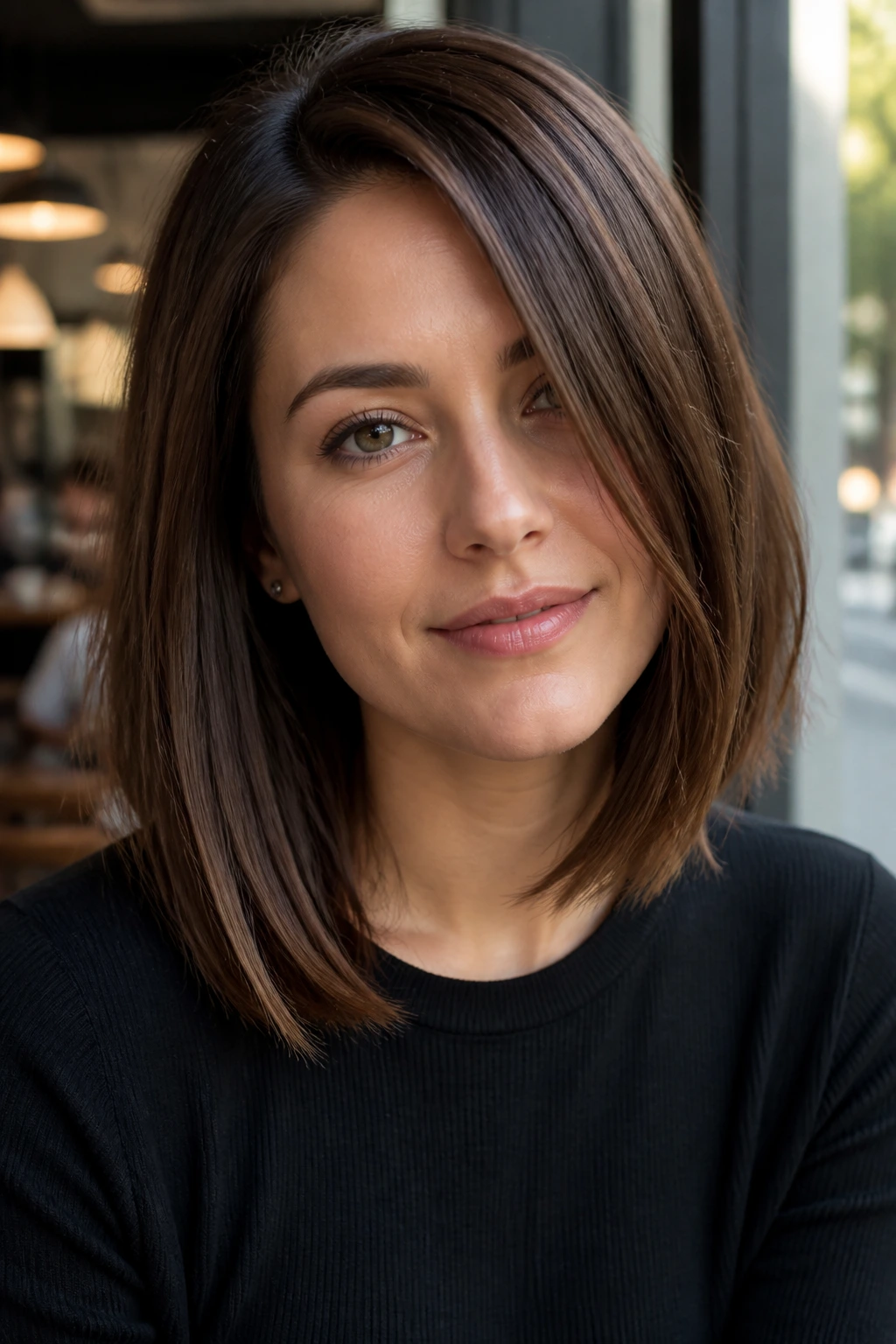
An asymmetrical lob can be a smart choice when you want something modern without going too edgy. One side sits just a touch longer than the other, which draws the eye diagonally across the face. On a square face, that diagonal line is flattering because it interrupts the straightness of the jaw.
Brown hair gives this cut a clean, sleek look, especially if the tone has a little gloss. The asymmetry should be subtle. A dramatic angle can start to feel costume-like fast. A mild difference in length, paired with a side part or soft wave, is enough.
I like this style on straight or slightly wavy hair because the shape stays visible. If your hair is very curly, the asymmetry can disappear unless the cut is tailored carefully. The best version looks like it came from precision, not drama.
25. Glossy Blowout with Airy Ends
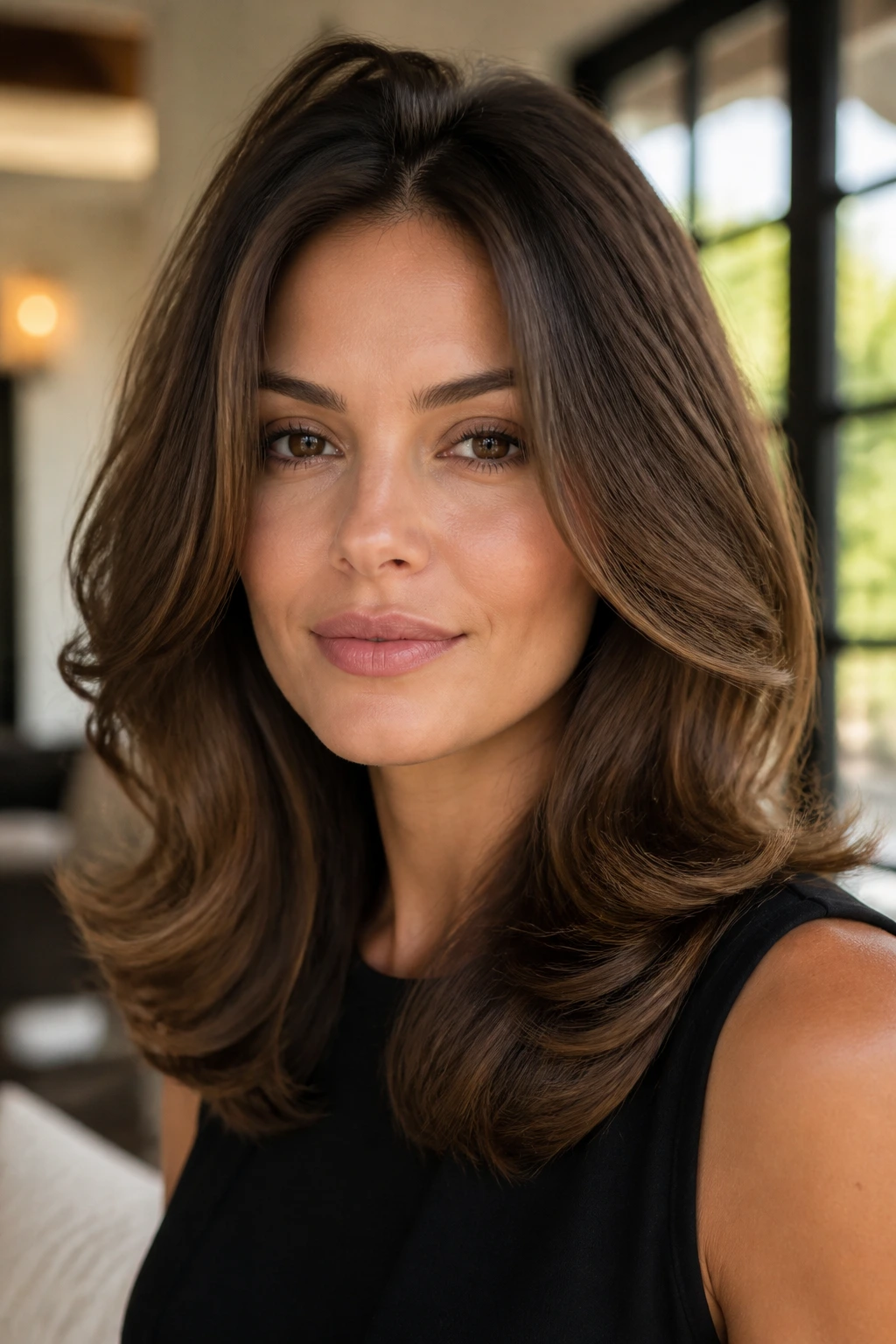
A glossy blowout is one of those styles that makes brown hair look like it has more depth than it really does. The rounded volume at the crown lengthens a square face, and the airy ends keep the lower half from feeling boxed in. The whole thing feels lighter than a straight blow-dry, even though it often takes the same amount of effort.
The ends are the part people get wrong. They should not be stiff or flipped into a hard curve. A little lift, a little bend, and a soft taper are enough. If your hair is medium to dark brown, a clear gloss or demi-permanent glaze beforehand makes the surface shine in a way flat irons rarely match.
This is the style I’d choose when you want the face to look softer but still polished. It works for dinner, work, weddings, and those random days when your hair decides to cooperate. Which, to be fair, is rare enough to celebrate.
Why Soft Corners Beat Hard Lines Here
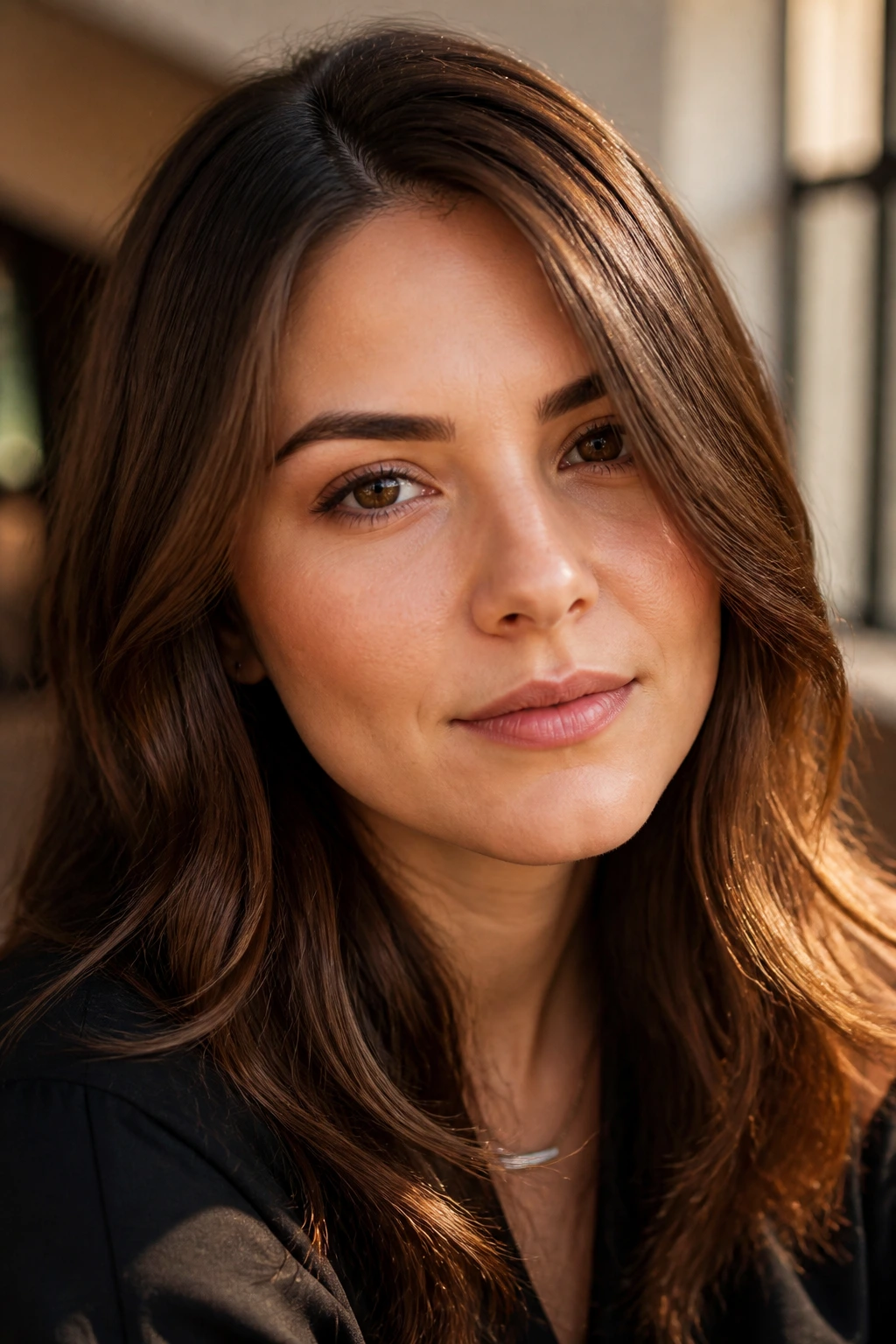
Square faces do not need to be hidden. They need relief. A haircut that keeps ending at the jaw, especially when the sides are wide and the crown is flat, makes the face look boxier than it really is. Soft corners change the rhythm. So do parts that aren’t dead center every single time.
Brown hair adds a second layer to the decision. Darker brunette shades can look dense and elegant, but they can also look heavy if the shape is blunt and the styling is too smooth. Caramel ribbons, warm lowlights, and a bit of movement make the cut easier for the eye to read. The face gets the credit. The hair does the work.
I like styles that create a diagonal line somewhere—through the bangs, through the part, through the ends, through the updo. Diagonal lines are kinder on square faces than hard horizontal ones. That’s the whole trick, really. Not a secret. Just shape.
Essential Tools for Styling These Looks
- Round brush, 1.5 to 2 inches: Best for blowouts, curtain bangs, and curved ends that soften a square jaw.
- 1.25-inch curling iron or wand: Good for loose waves, beach bends, and the broken texture that makes brunette hair look less flat.
- Flat iron with rounded edges: Useful for bending the ends under or creating a sleek center part without sharp creases.
- Diffuser attachment: A must if your brown hair is curly or wavy and you want lift without frizz.
- Tail comb: Helps with precise parts, crown lift, and clean sections for braids or ponytails.
- Duckbill clips: Handy for pinning the top while you set waves or clip the front pieces out of the way.
- Dry shampoo: Keeps volume at the crown and stops fine brown hair from looking greasy by day two.
- Light mousse or root spray: Gives the top some memory so styles do not fall flat in an hour.
- Heat protectant: Non-negotiable if you’re using a blow-dryer, iron, or hot brush.
- Silk pillowcase or bonnet: Keeps waves, bangs, and smooth blowouts from getting crushed overnight.
What to Ask for in the Chair and What to Buy at Home
The haircut conversation matters more than the styling product conversation, though both count. When you’re asking for a shape that works on a square face, say where you want the movement to begin. Cheekbone? Mouth? Collarbone? That one detail tells the stylist whether to start layers high, low, or barely at all. If you only say “soften it,” you may get a vague shape that does nothing for the jaw.
For brown hair, ask about gloss or subtle dimension if the color looks flat in one light. You do not need bright streaks to make the cut work. Fine caramel threads, cinnamon lowlights, or a clear gloss can change how the haircut reads. A good brunette looks layered even when the cut is simple.
At home, keep the product list lean. A lightweight mousse for the roots, a heat protectant, a smoothing cream for the mids and ends, and a dry texture spray will cover most of these styles. Heavy oils belong only on the tips or on very coarse hair. Put them near the roots and the whole silhouette collapses. Nobody wants that.
How to Wear These Styles on Ordinary Days and Dressier Nights
Presentation: Let the shape of the cut sit where it wants to sit. A lob should skim the collarbone, a pixie should keep some lift on top, and a ponytail should never lie so flat that the crown disappears. With square faces, the outline matters as much as the texture.
Accessories: Soft headbands, slim clips, silk scarves, and medium-sized hoops all work well because they echo the clean lines without making the face feel boxed in. Big, stiff accessories can fight the haircut. A narrow barrette near one temple is often enough.
Outfit balance: High necklines pair nicely with shoulder-length styles and ponytails, while open necklines let a lob or layered cut breathe. If the hair is big and textured, a simple collar or scoop neckline usually feels calmer than a busy top.
Occasion: The same haircut can go casual or polished with one switch. Brush curtain bangs out for daytime. Smooth the crown and add shine for evening. That flexibility is one reason these styles are worth the trouble.
Extra Tricks That Make Brown Hair Read Richer
Gloss Boost: A clear gloss or demi-permanent glaze every 6 to 8 weeks keeps brown hair from looking dusty. It’s the fastest way to make layers and bends read more clearly, especially under indoor light.
Texture Boost: When the hair looks too solid, bend just the mid-lengths and leave the ends a little straighter. That split between smooth and textured gives brunette shades a more expensive finish than a fully curled look.
Customization: If your square face feels especially strong through the jaw, put the shortest face-framing pieces a little higher, around cheekbone height. If your forehead feels wider than the jaw, keep the front longer and softer so the silhouette stays balanced.
Make-It-Yours: Fine hair usually likes mousse and lighter layers. Thick hair often needs bulk removed from inside the shape. Curly hair wants dry-cut shaping so the final line follows the curl pattern instead of fighting it.
Keeping the Shape Fresh Between Washes and Trims
Haircuts for square faces tend to look best when they keep their movement. Flat, sleepy hair pushes the face back into a box. The fix is part product, part sleep habit, part timing. I’m a fan of treating the hairstyle like something you maintain, not something you set once and forget.
For longer layered cuts, a trim every 8 to 12 weeks keeps the ends from getting stringy and heavy. Bobs and pixies need more frequent cleanups, usually every 4 to 6 weeks, because the shape shows growth faster. If your hair is color-treated brown, a gloss or toner refresh every 6 to 8 weeks keeps the tone from going muddy.
Overnight care matters too. A silk pillowcase helps, but so does a loose braid, a soft scrunchie, or wrapping the front pieces away from the face if you have bangs. On day two, a little dry shampoo at the roots and a 30-second blast of cool air can wake the shape up. If the ends got bent weirdly, rewrap them around a brush or a curling iron for 5 to 10 seconds each, not a full restyle. That’s enough.
Variations for Different Textures and Lifestyles
The Fine-Hair Lifted Version: Use fewer layers, not more, and keep the crown full with mousse and root spray. Fine brunette hair can look wispy fast, so the cut should create the illusion of density rather than remove too much weight.
The Thick-Hair Debulked Version: Ask for internal layering and controlled face-framing pieces. Thick brown hair holds shape well, but it can balloon around the jaw if the bottom edge is too heavy.
The Curly-Texture Version: Let the curls set the length, then shape around them while dry or damp, depending on your curl pattern. The goal is a softer outline, not a straightened version of the style.
The Low-Heat Version: Choose cuts that work with air-drying, then use a braid, twist, or diffuse only at the roots. This fits people who want movement without daily heat.
The Office-Polished Version: Keep the ends smoother, the part cleaner, and the fringe softer. A straightened lob or a glossy blowout looks finished without becoming stiff.
The Weekend-Ruffle Version: Add texture spray and finger-shake the layers apart. This is the relaxed option for people who like a little mess in the shape, not on purpose.
Common Mistakes That Make a Square Face Look Boxy
- Cutting the front right at the jaw: That puts a hard horizontal line where the face is already widest. Ask for pieces that hit above or below the jaw instead.
- Keeping both sides too full: Width at the temples and jaw can make the face read wider. The fix is a softer taper or a side part that breaks the symmetry.
- Flattening the crown: No lift on top makes the face look short. A little root volume gives the illusion of length without trying too hard.
- Using heavy oil near the scalp: Brown hair goes limp fast when overloaded. Keep rich serums on the ends only.
- Choosing bangs that are too short and blunt: Tiny straight bangs can harden the face. Curtain bangs or side-swept fringe usually work better.
- Ignoring color dimension: A one-tone brunette bob can look dense and solid. Even subtle lowlights or a gloss help the cut show up.
Questions People Ask Before They Cut
Do curtain bangs suit square faces?
Yes, when they’re long enough to sweep past the cheekbones. Short, stiff curtain bangs can turn into a hard line, but softer ones break up the forehead and guide attention toward the eyes.
Can a square face wear a blunt bob?
It can, but the bob needs help. An off-center part, a slight curve under the ends, or a bit of texture keeps it from looking like a box.
Should square faces avoid middle parts?
Not always. A center part works if the cut has softness around the face and some lift at the crown. Straight, flat hair with a middle part is where trouble starts.
What if my brown hair is very fine?
Choose shapes that keep some weight at the bottom and use root lift instead of endless layering. Fine brown hair shows scalp and flat roots quickly, so mousse and a light blow-dry matter.
What if my hair is thick and puffy?
Ask for internal debulking and softer perimeter lines. Thick brown hair can handle shape, but it needs room to move or it will sit wide around the jaw.
Do short hairstyles work on square faces?
Absolutely. Pixies and bixies can look excellent as long as the top has height and the sides don’t end in a hard box.
What brown shades look best with these cuts?
Chestnut, mocha, cocoa, and deep espresso all work. The key is dimension, not brightness. A gloss or subtle lowlights often does more than a dramatic color change.
How often should I trim these styles?
Long layers can go 8 to 12 weeks. Bobs and pixies usually need attention every 4 to 6 weeks if you want the shape to stay clean.
A Softer Outline
The best thing about square faces is that they give you structure to work with. There’s a strong line there already. The hairstyle just decides whether to echo it, soften it, or fight it. I prefer softening. Every time.
Brown hair makes the result richer when the cut is thoughtful. Even a simple lob looks better when the ends bend, the crown lifts, and the color has a little depth. That’s the difference between hair that sits there and hair that shapes the face.
Bring a few reference photos, yes, but also bring an idea of where you want the movement to live. Around the eyes? At the cheeks? Below the jaw? That answer is usually more useful than a vague “soft but not too soft.” Pick the shape, then let the brown do the rest.