



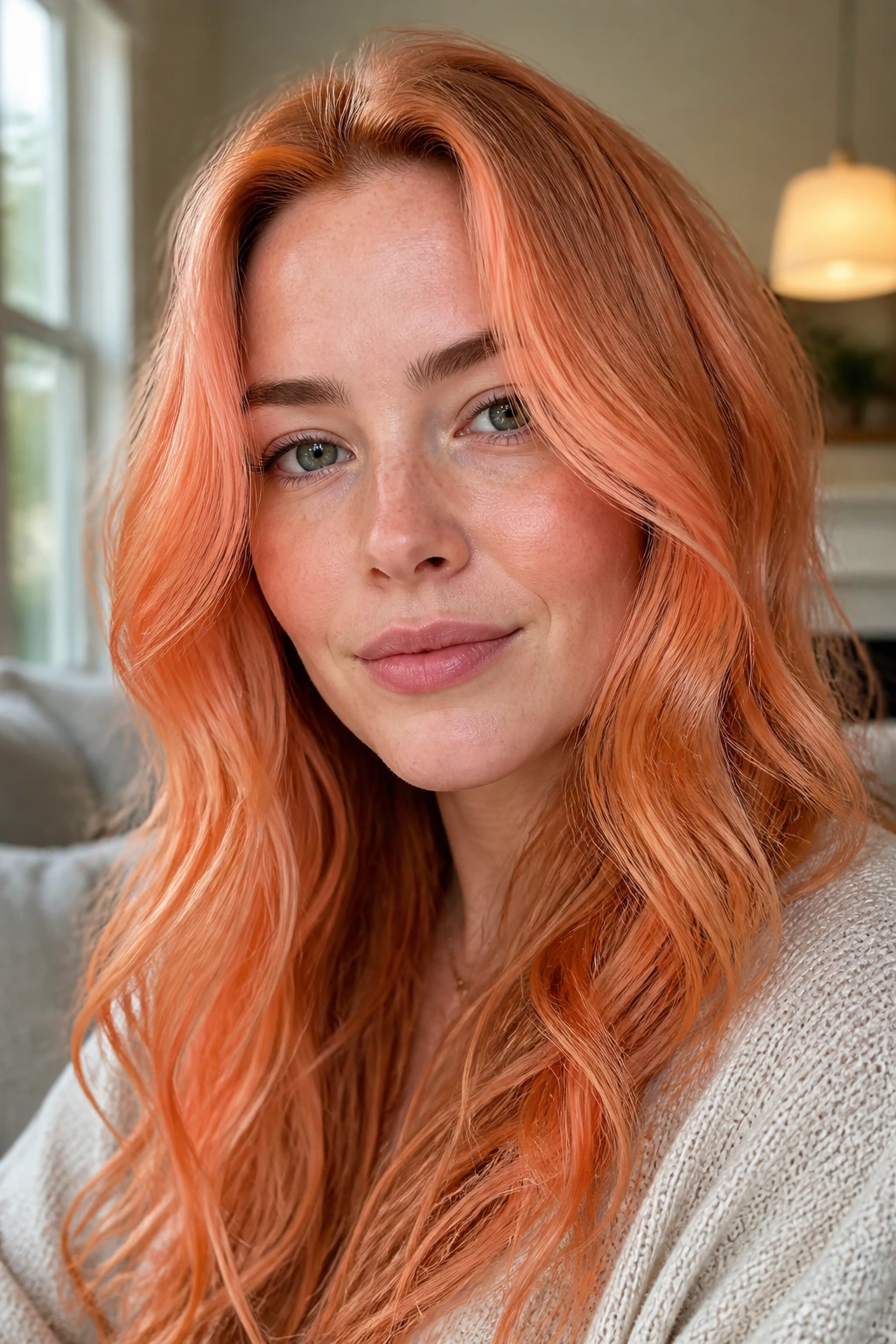
Papaya hair color can look like a ripe peach peeled open in sunlight, or like a flat orange wig from a costume bin. The difference is rarely the idea itself. It’s the tone control. On cool skin tones, that matters even more, because the wrong orange sits on the face like a warning light, while the right papaya leans pink, peach, and softly coral in a way that makes skin look clearer and eyes look sharper.
That’s the part people miss. Cool undertones don’t need to avoid warmth; they need warmth with a leash on it. A papaya shade that’s been softened with rose, beige, smoke, or a sheer gloss can be gorgeous on porcelain skin, rosy skin, and any complexion that tends to fight against yellow-heavy blondes or brassy copper. Silver earrings help. Blue-based makeup helps. So does a color formula that knows when to stop.
The best papaya ideas aren’t all one note. Some sit in the peach family. Some lean coral. Some are barely orange at all and live in that washed apricot zone that only reveals itself when the hair moves. That range is exactly why papaya hair color ideas for cool skin tones can work so well; you can choose a whisper or a statement and still keep the face looking balanced.
Why These Papaya Shades Work on Cool Undertones
-
Pink-leaning warmth: The best papaya formulas carry enough rose or coral to keep the orange from turning hard against cool skin.
-
Soft contrast: A root shadow, dimmer base, or beige glaze lets the brighter pieces feel intentional instead of loud.
-
Shape matters as much as shade: Face-framing lights, ribbons, and melts read gentler on cool complexions than a flat block of copper.
-
Silver-friendly finish: These ideas sit nicely beside cool makeup, ash brows, black eyeliner, and clean white or gray clothing.
-
Better grow-out: Balayage, glosses, and ribbon highlights fade with a softer edge than all-over vivid color.
-
Easy to tune: The same papaya family can go icy, dusty, coral, or peachy, which gives your colorist room to adjust for your skin without losing the mood.
1. Icy Papaya Peach Bob
A bob is one of the smartest places to put papaya because the cut already feels polished. Add a peachy papaya gloss over a level 9 blonde base, and the whole shape starts to move like satin ribbon instead of flat orange. The icy part matters here; it keeps the color from leaning too red or too gold, which is usually where cool skin starts to look a little tired.
Why it flatters cool skin
The trick is the balance between warmth and restraint. A chin-length bob shows the color near the face, so the formula should be peach first, orange second, and copper only in trace amounts. If your complexion runs very fair or pink, ask for a slightly smoky root so the ends don’t look too bright near the jawline.
Quick cues to ask for
- Keep the base at level 8 or 9.
- Use a semi-permanent gloss rather than a heavy permanent copper.
- Ask for a soft beige or pearl finish.
- Style with a slight bend, not poker-straight.
Best move: let one side tuck behind the ear. The color looks richer when the cheek and hair are sharing the frame.
2. Rose-Kissed Papaya Money Piece
A money piece can do more for cool skin than a full head of orange ever will. That bright strip near the hairline gives you papaya energy without flooding the whole face with heat. Keep it rose-kissed, not tangerine, and it starts to read like a soft peach flash instead of a neon stripe.
The placement is what makes this one smart. Ask for a 1 to 1.5-inch frame around the face, lifted lighter than the rest of the hair, then toned with a peach-rose glaze. On cool undertones, that little hit of color brings warmth to the cheeks without fighting the natural pink in the skin.
This works especially well if you already wear a neutral brunette, ash blonde, or mushroom base and want something playful that still looks grown-up. It’s also one of the easiest papaya looks to maintain, because the color lives mainly at the front and can be refreshed with a quick gloss.
3. Smoky Papaya Balayage
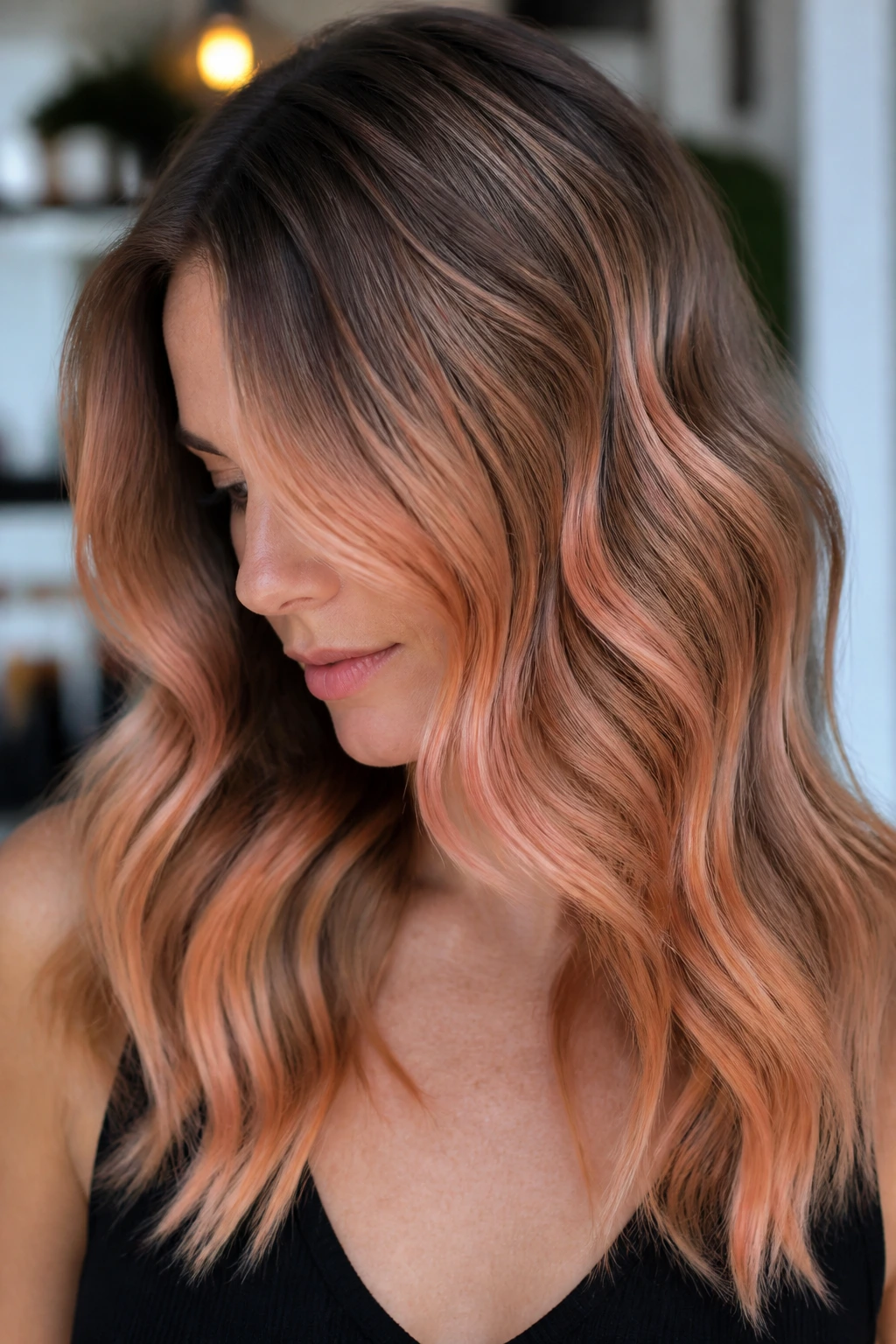
Why does smoky papaya look so much better on cool skin than bright copper? Because the smoke takes the edge off the orange. Balayage already gives you softness through placement, and when the papaya is mixed with beige, taupe, or a muted peach toner, the result feels expensive in the old-fashioned sense: quiet, blended, and not trying too hard.
The best version keeps the darker pieces a shade or two deeper than the lightest ribbons. That contrast is what makes the peach pop without screaming. If your base is brown, ask for hand-painted ribbons around the crown and ends, then ask the colorist to leave a cool shadow through the root and midlengths.
How to wear it
- Let the wave pattern be loose and undone.
- Use a gloss every 4 to 6 weeks.
- Keep the ends slightly brighter than the top for movement.
- Pair with berry blush or a cool pink lip if you want the hair to look cleaner.
4. Papaya-Glazed Lob with a Shadow Root
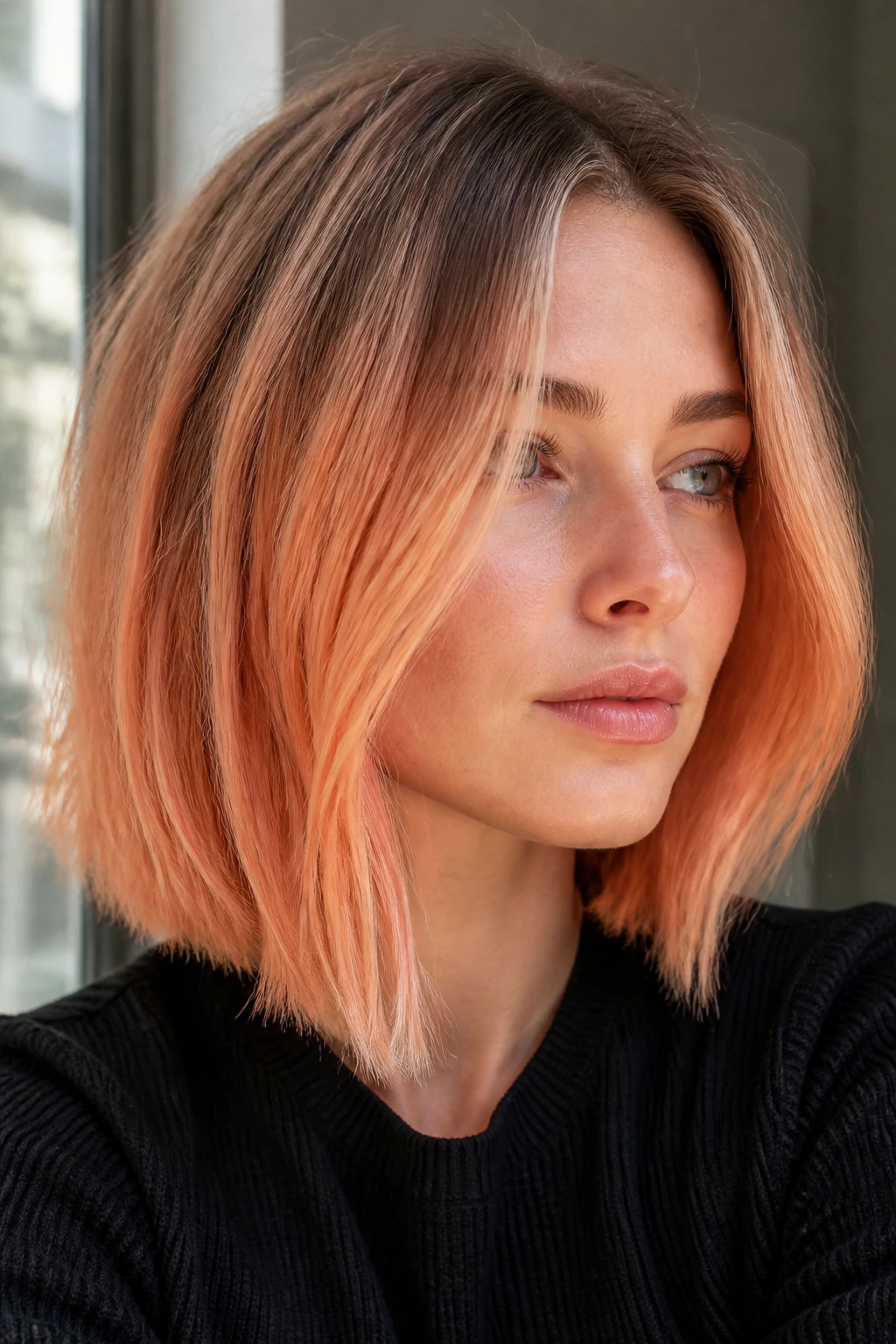
A lob gives papaya enough room to breathe. It’s long enough to show dimension, short enough that the color feels fresh even when the ends start softening. The shadow root is the piece that keeps cool skin from getting overwhelmed; it gives the face a cool frame and lets the peachy lengths glow underneath instead of sitting on top.
This cut is especially good if your hair naturally pulls warm. The deeper root can be neutral, ash brown, or a smudged taupe, then the mids and ends can move into papaya apricot. You get warmth, but the face stays grounded. Straight styling makes the color look sleeker; a soft wave makes the ends look more coral.
If you’ve ever loved orange in theory but hated how it looked in the mirror, this is the version to try first.
5. Frosted Papaya Pixie
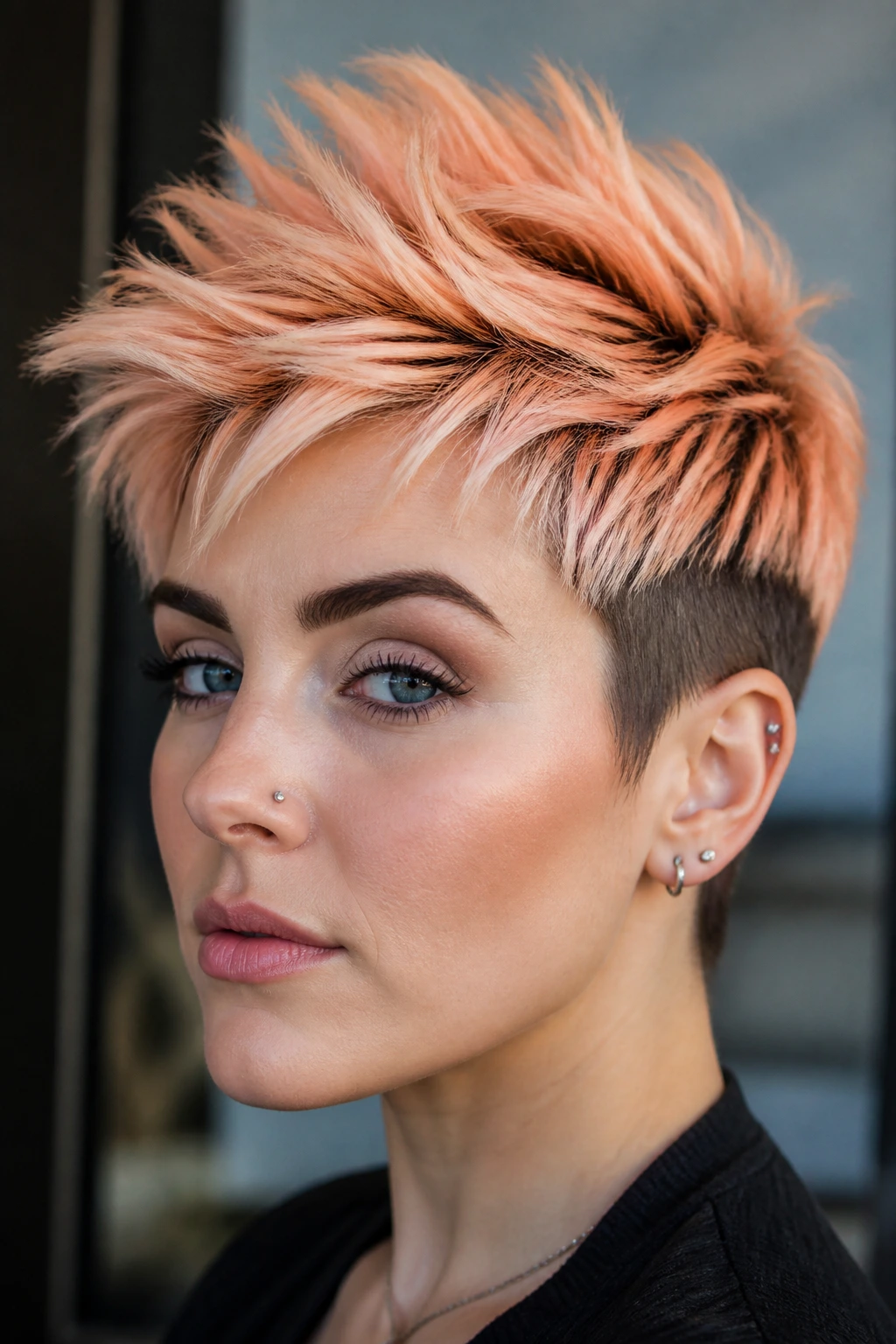
Short hair can take papaya farther than people expect. A pixie with frosted papaya tips feels sharp, modern, and a little cheeky, especially when the sides stay deeper and the top carries the color. The frost is the key detail here; it keeps the papaya from getting sticky or too candy-sweet.
Because a pixie sits so close to the face, it needs tone control more than length does. Ask for a peach-coral veil over a cool blonde or light brown base, then keep the crown slightly lighter than the temples. That tiny shift makes the cut look dimensional instead of helmet-like.
This is a good choice for cool skin that handles contrast well. Strong brows, a neat edge, and a crisp lip color make the whole look feel intentional. Soft peach on the top, cool shadow underneath. Simple. Strong.
6. Peach Sorbet Waves
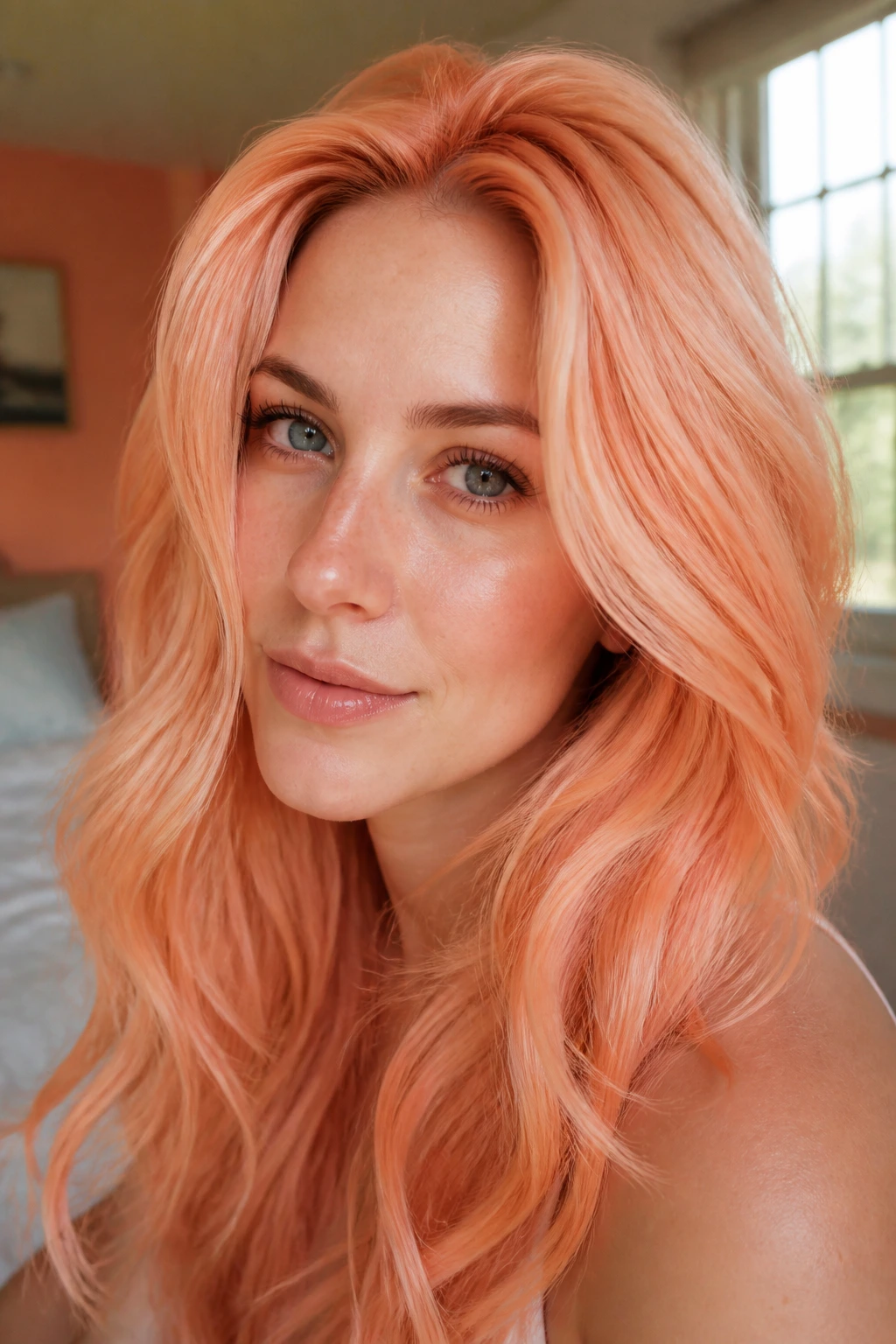
Peach sorbet is papaya’s gentlest mood. It leans creamier than orange and sits somewhere between pastel coral and pale apricot, which makes it unusually friendly to cool complexions. The wave pattern matters too; those bends catch light and break up the color so it never feels one-dimensional.
This is the shade for someone who wants papaya without the full punch. Ask for a very light blonde base, then glaze with peach and a touch of blush pink. On cool skin, that mix reads fresh instead of brassy because the pink notes echo the skin’s undertone instead of fighting it.
Wear it with a soft center part or loose Hollywood waves. Both keep the color moving. And if your hair is fine, this version is flattering because the lighter glaze won’t weigh the strands down visually.
7. Orchid-Tinted Papaya Ends
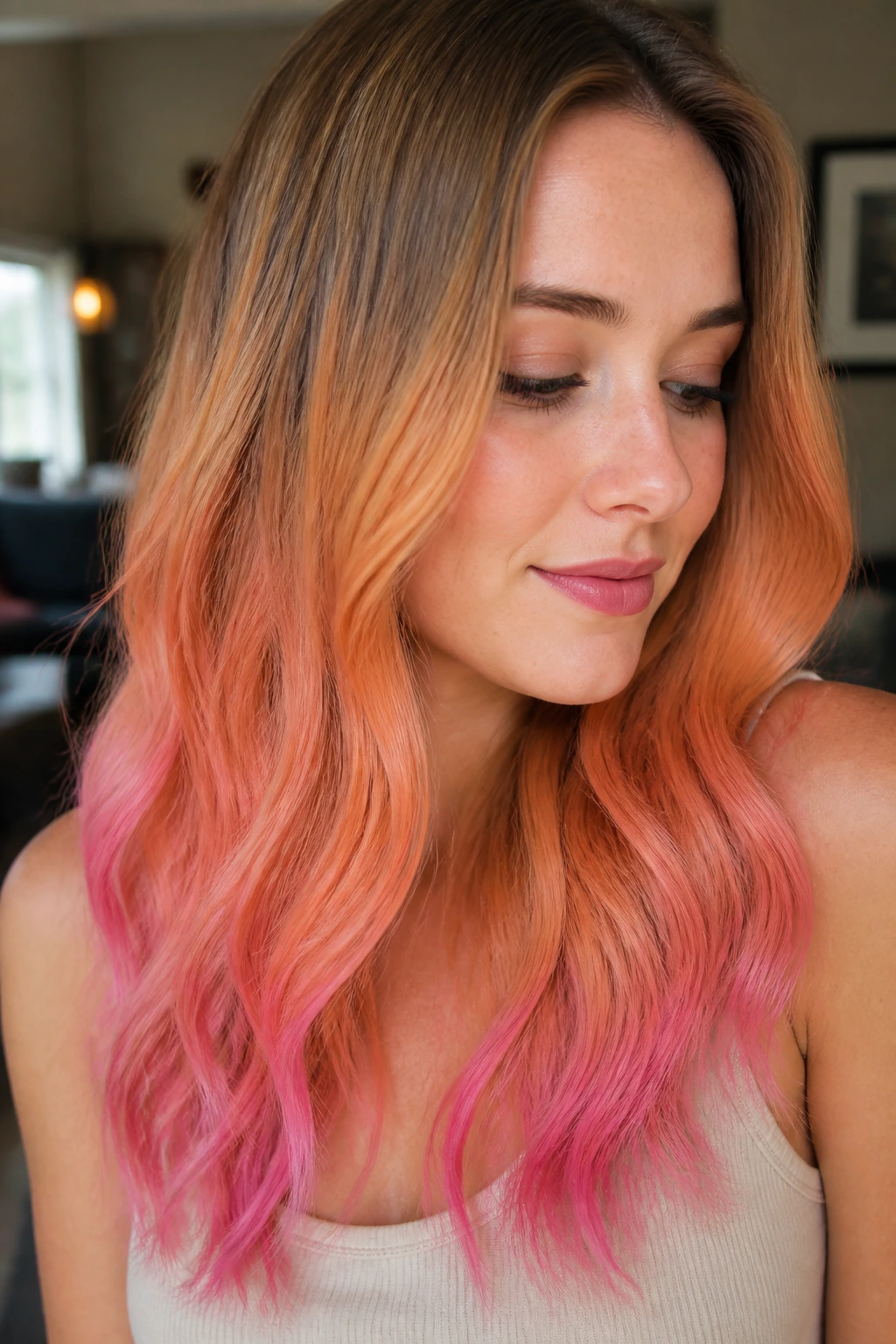
Orchid on the ends is a smart move when you want papaya to feel a little less sun-baked. The tiny violet-pink shift cools the orange and gives the hair that almost-lit-from-within look that plays nicely with pink or blue undertones in the skin. It’s not an obvious purple statement. It’s more like the color has been filtered through a flower petal.
Use this on long layers or a blunt cut with movement at the bottom. Keep the roots neutral, then melt the mids into papaya and let the last two inches go orchid-peach. That tip color softens as it fades, which is handy, because the grow-out stays prettier when the ends are slightly tinted rather than flat.
8. Copper-Papaya Ribbon Lights
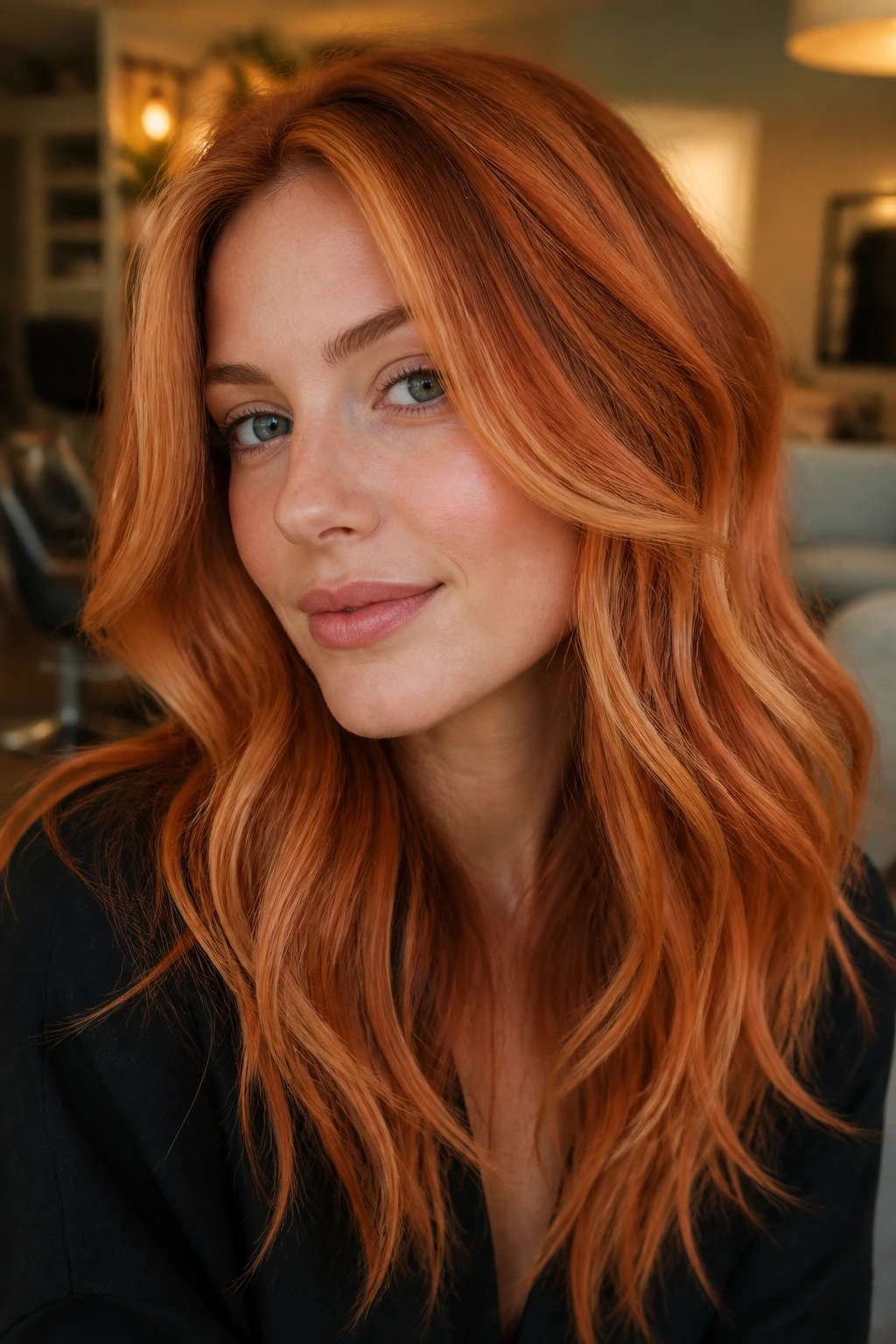
A full copper head can feel too hot on cool skin. Ribbon lights solve that problem. You keep the copper in thin, painted threads instead of spreading it everywhere, and the papaya sits between those ribbons like peach jam between slices of toasted bread. It’s more dimensional, less shouty.
The placement should be irregular. Think thin pieces around the face, thicker swaths in the back, and a few bright strokes near the crown so the color doesn’t look striped. On cool skin, the negative space matters just as much as the warmth. It gives the face breathing room.
This style works best on medium to long hair where the ribbons can twist and fold. It has movement built in, which is why it feels more flattering than a flat copper block.
9. Apricot Mist Curls
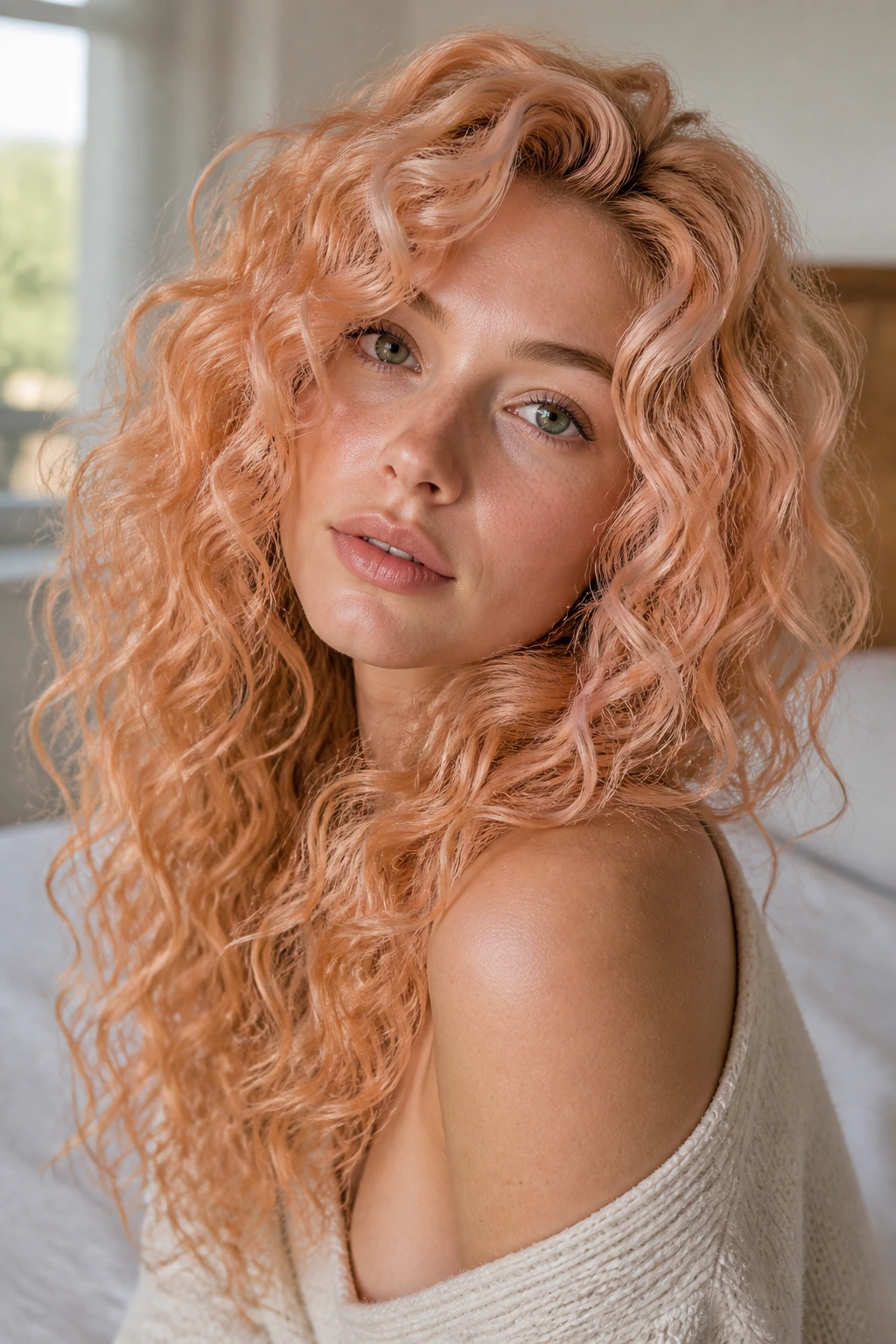
Curls love apricot because the texture breaks up the brightness. What would look orange and blunt on straight hair turns into layers of peach, cream, and warm blush once it hits spiral pattern. The “mist” part keeps the finish airy, not dense.
For cool skin, this is one of the easiest papaya approaches to wear. Ask for a soft apricot glaze with a slight beige undertone, then keep the darkest pieces close to your natural base. That contrast gives the curls depth without making the color look heavy. If you diffuse your hair, use low heat; high heat can make the warm tones look harsher than they are.
10. Papaya Champagne Bob
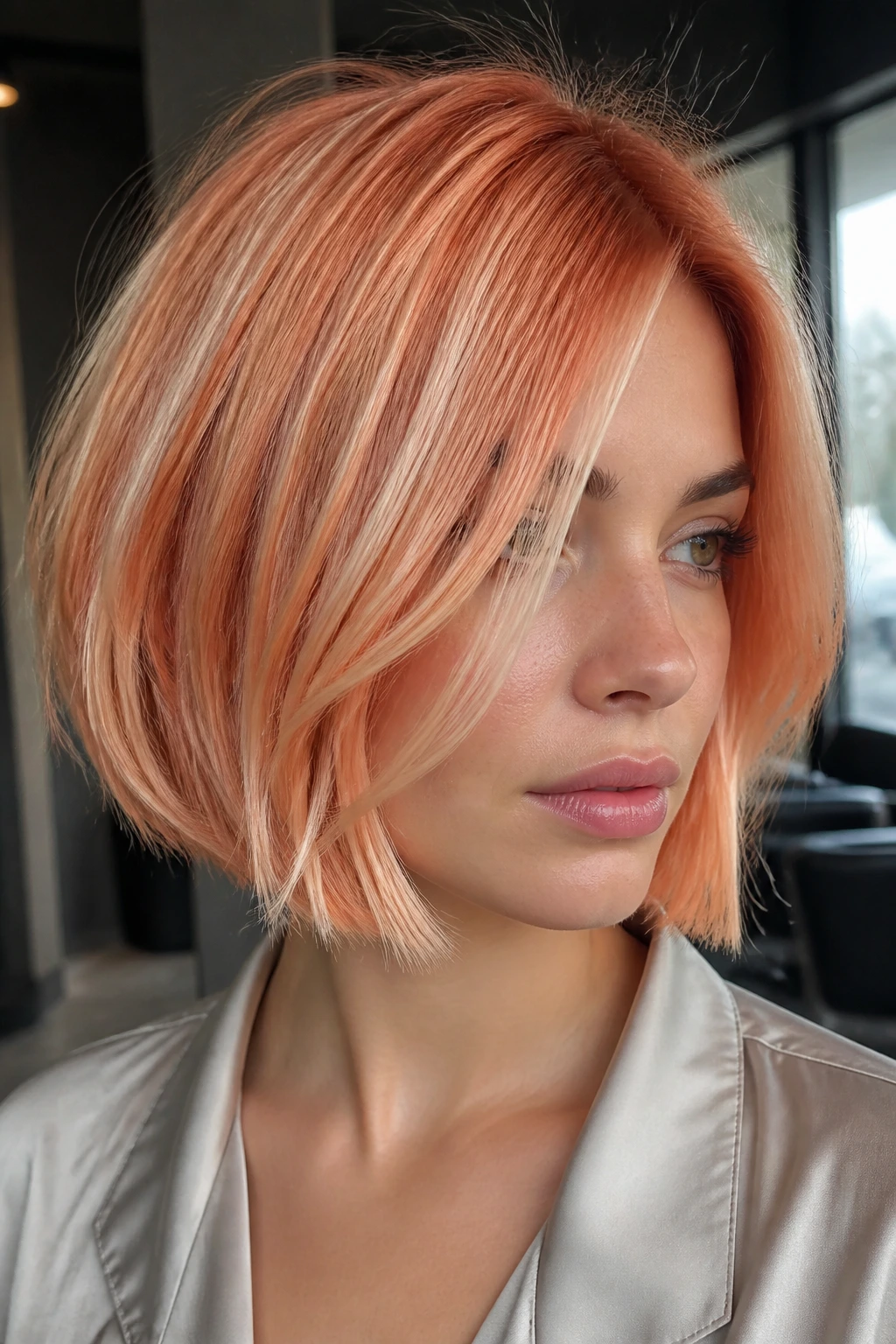
A champagne bob takes the fruit-salad edge off papaya and gives it a lighter, cooler sparkle. The champagne tone is what makes it feel refined on cool skin; it brings in a little pale gold and pearl, then lets the peach sit underneath instead of taking over. The result is not beige. It’s brighter than that.
This is a good fit if your wardrobe leans black, white, gray, denim, or soft navy. The color doesn’t fight those clothes. It sits beside them. Ask for a bob that’s sliced or softly layered so the ends don’t look blunt and heavy.
For styling, a flat iron bend at the midlengths or a smooth round-brush finish makes the champagne reflections show up. If you want it a little more playful, tuck one side and let the other sit loose.
11. Muted Papaya Shag
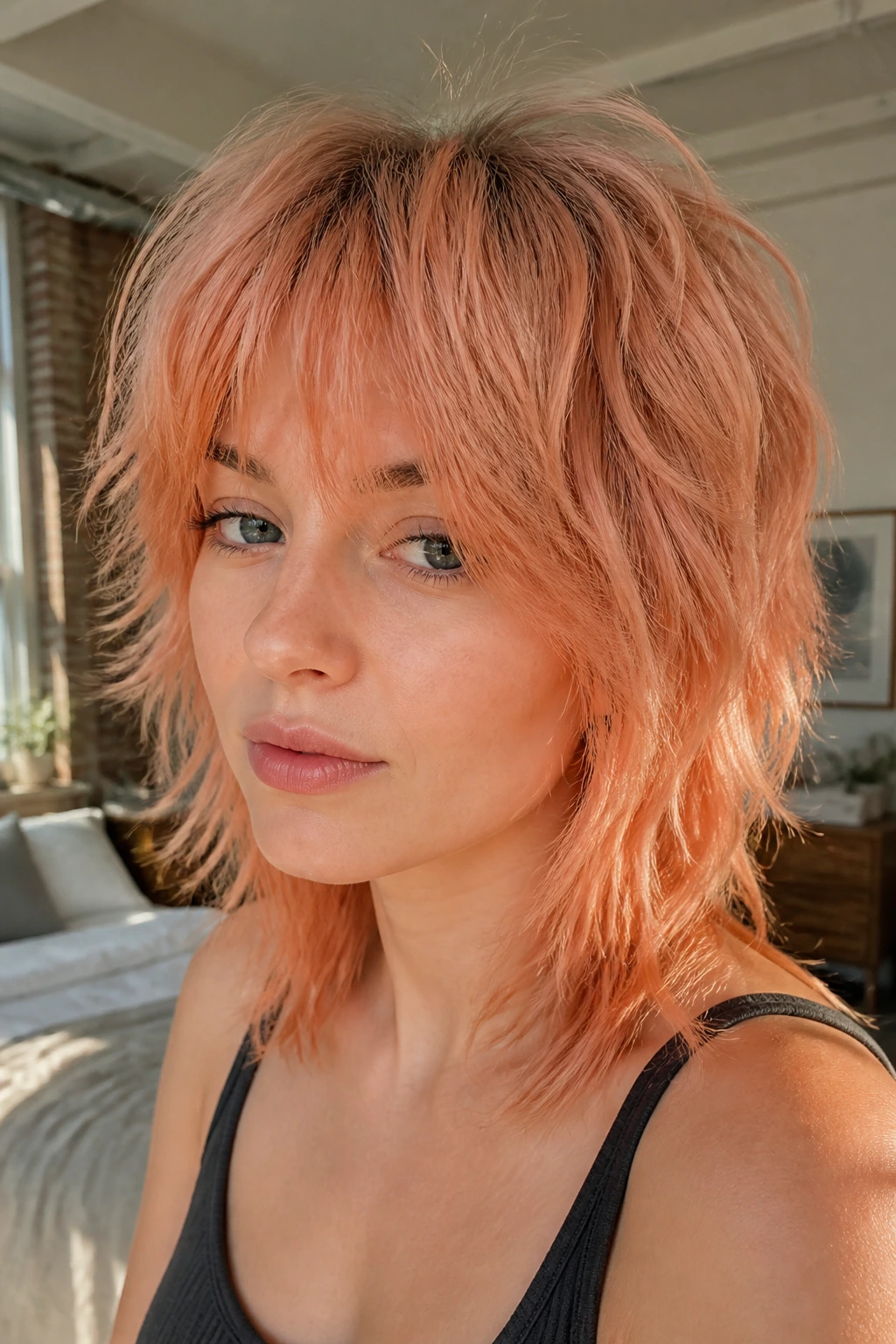
A shag gives papaya a messy edge that cool skin can actually wear well, because the texture keeps the color from becoming too precious. Muted papaya in this cut should look like apricot dusted with smoke, not orange paint. That smoky finish is what keeps it on the right side of wearable.
Ask your colorist for a rooty base with peachy pieces through the top layers and a softer, faded papaya on the ends. The layers should catch the color in different places, so the style looks better when it’s slightly undone. That’s half the charm. The other half is that shag layers make it easier to grow the color out without an obvious line.
12. Cool Coral Face Frame
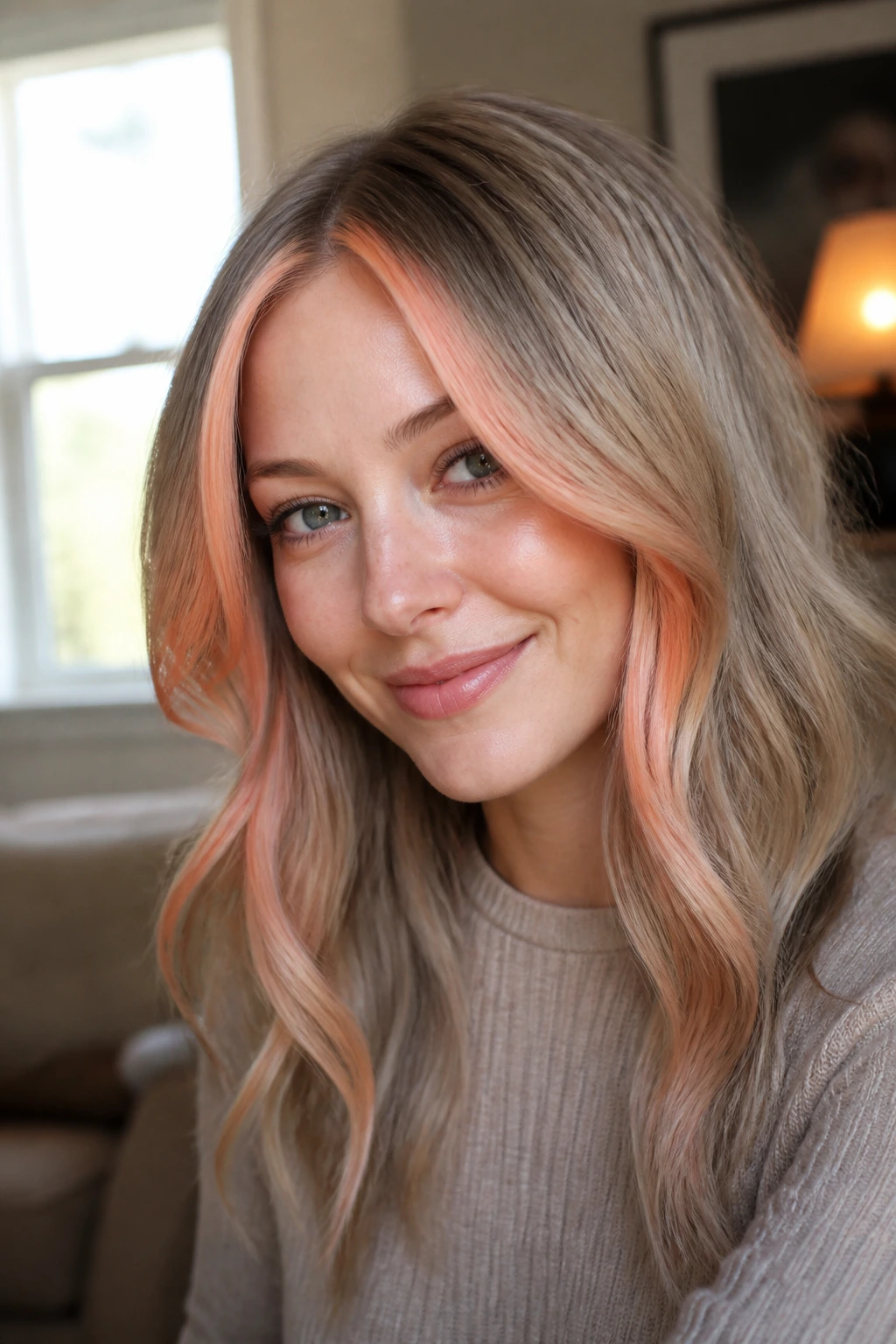
A coral face frame is the kind of papaya idea that gives you instant brightness without committing to a full transformation. It’s warmer than pink, cooler than bright orange, and surprisingly kind to cool undertones because coral has enough red in it to keep the skin from looking washed out.
Keep the frame narrow if your features are delicate, wider if you want drama. The rest of the hair can stay ash blonde, neutral brown, or soft beige. That contrast lets the coral do the talking. On straight hair, the frame reads graphic. On waves, it turns softer and almost watercolor-like.
If you want a low-risk entry point into papaya, this is one of the easiest starts. The color lives where the eye lands first.
13. Papaya Beige Blush
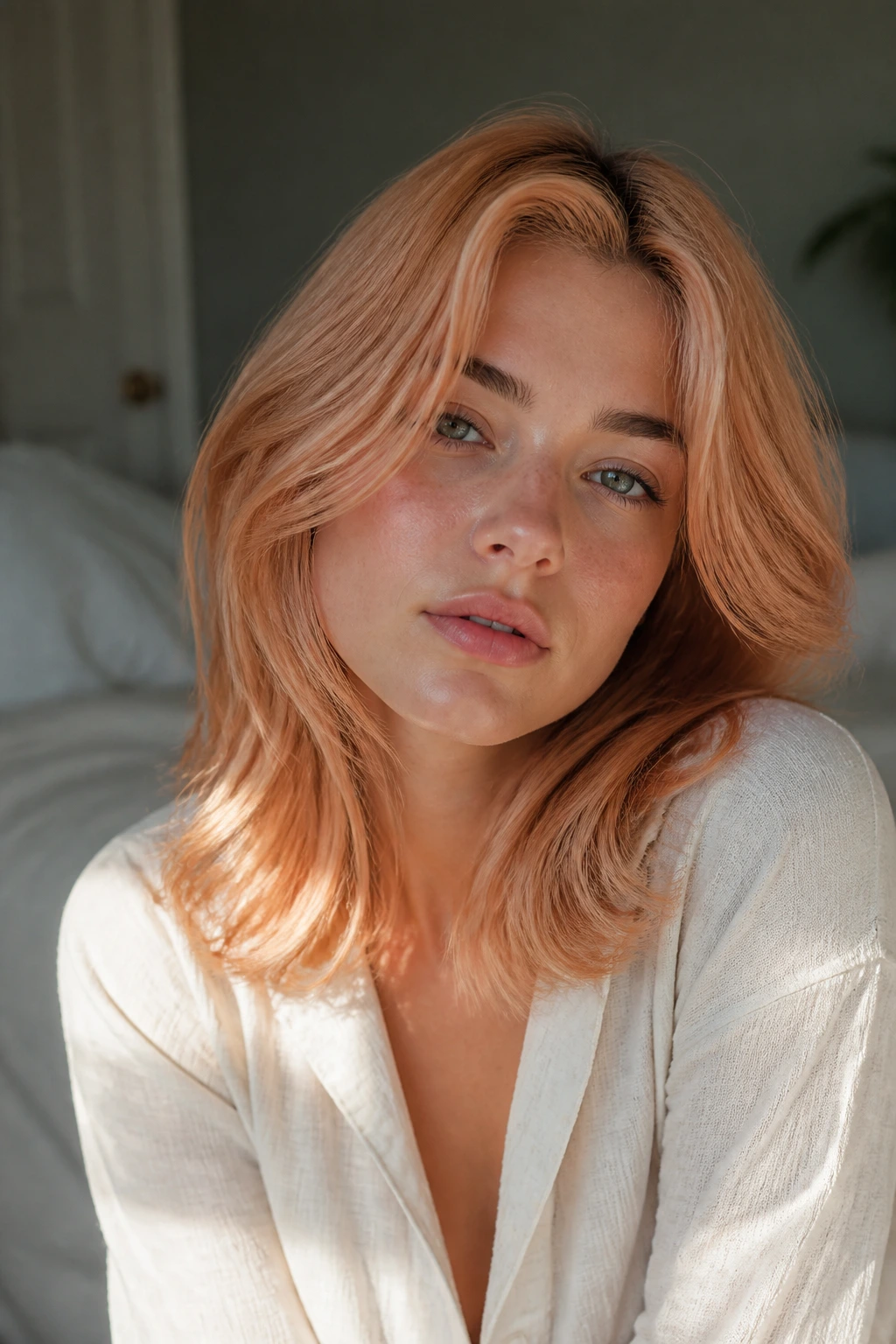
Beige blush is papaya for people who normally say they don’t wear orange. It’s a muted version, built from peach, beige, and a soft blush undertone that takes the edge off the fruitiness. On cool skin, this shade works because it stays close to neutral territory while still giving you warmth.
This is especially nice on medium-length hair with a bit of layering. The beige keeps the overall look soft; the blush gives it life. If your hair tends to fade too yellow, ask the colorist to include a cool gloss finish after the papaya deposit. That step matters more than people think.
I like this one on people who wear minimal makeup. It does the brightening work for you.
14. Dark Brunette Papaya Ombré
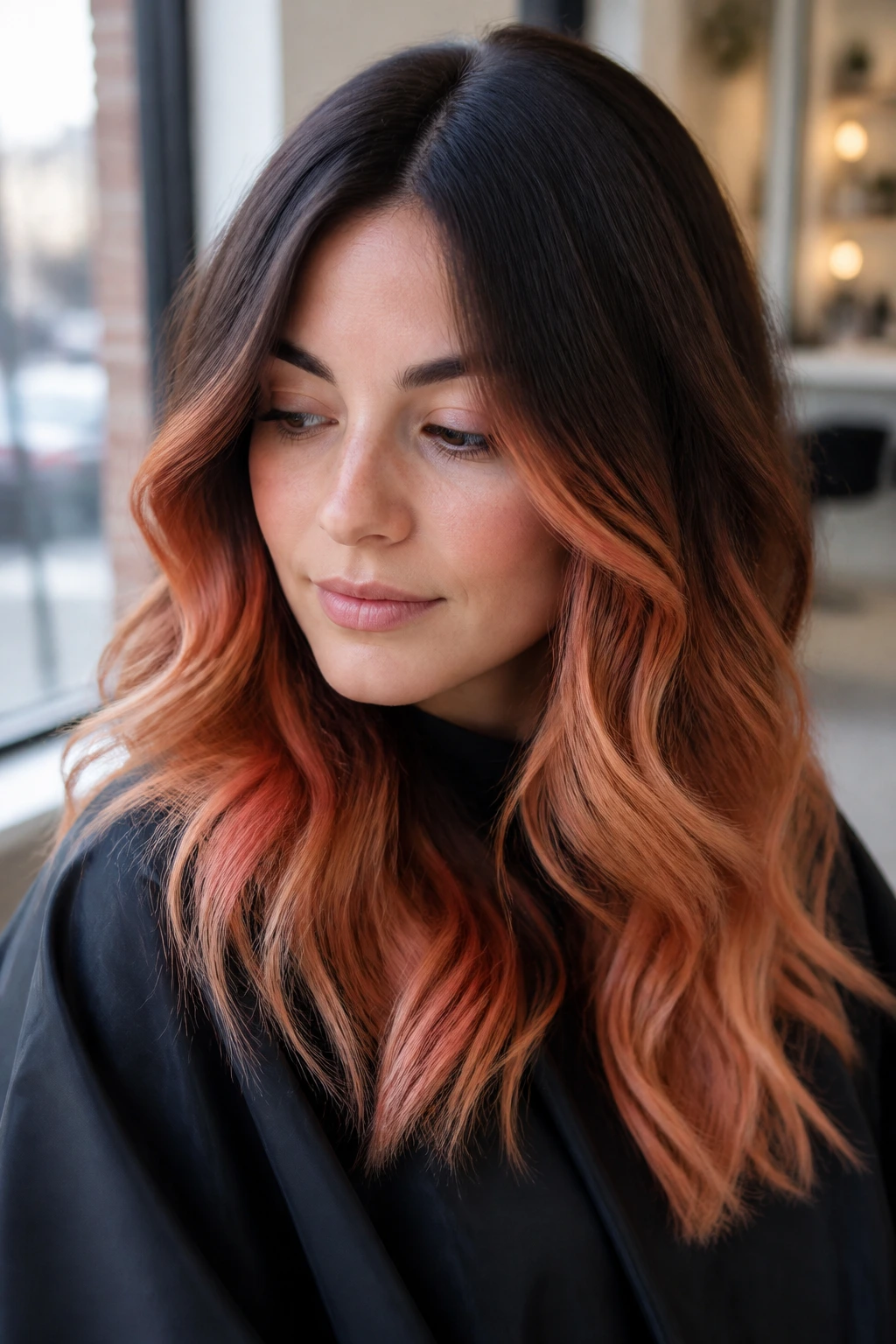
A brunette ombré can get muddy fast, so the papaya needs to be deliberate. Start with a deeper brown root, then move into a softened papaya melt at the mids and a peach-apricot finish at the ends. The darkness at the top gives cool skin the contrast it needs; the papaya on the bottom keeps the hair from feeling flat.
This is a better option than all-over papaya if you want a little mystery. The color reveals itself when you move, which is far more flattering than a loud block of orange against cool skin. The key is not letting the transition turn muddy. Ask for a clean lift before the gloss goes on, and keep the orange in the lighter ends only.
15. Pearlized Papaya Gloss
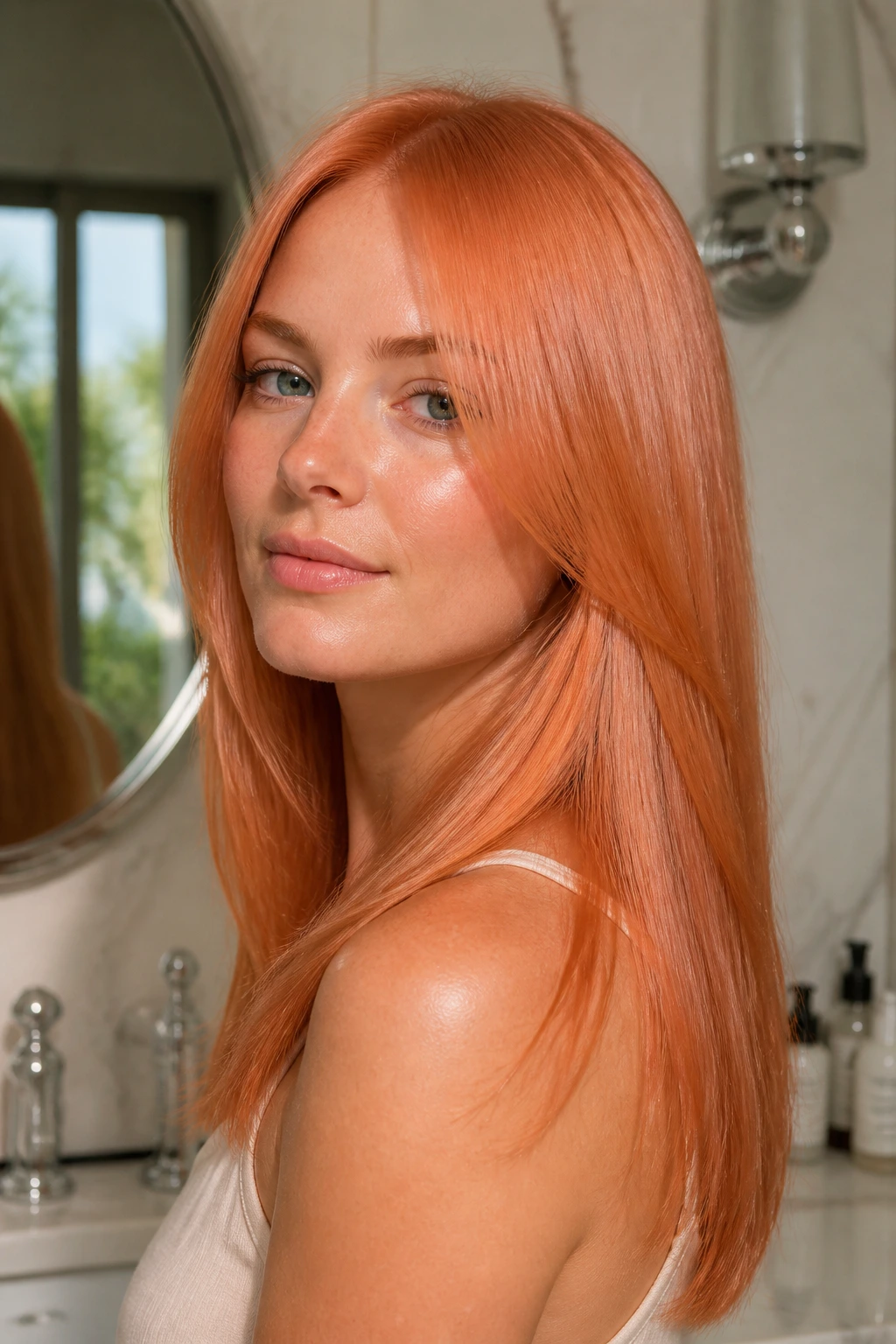
A pearl gloss is the quietest way to wear papaya. It doesn’t look loud in a mirror, and that’s the point. Pearl softens the orange and adds a slick, cool reflection that keeps the hair from tipping too warm. On cool skin, that shine can be the difference between “soft peach” and “pumpkin.”
This works on almost any base that’s already light enough to take a sheer tone. The result is especially pretty on straight bobs, long layers, and glassy blowouts. It reads expensive because it behaves like a filter, not a hard color block.
If you like color that people notice only after a second look, this is your lane. The pearly finish is the whole trick.
16. Papaya-Lilac Split Tone
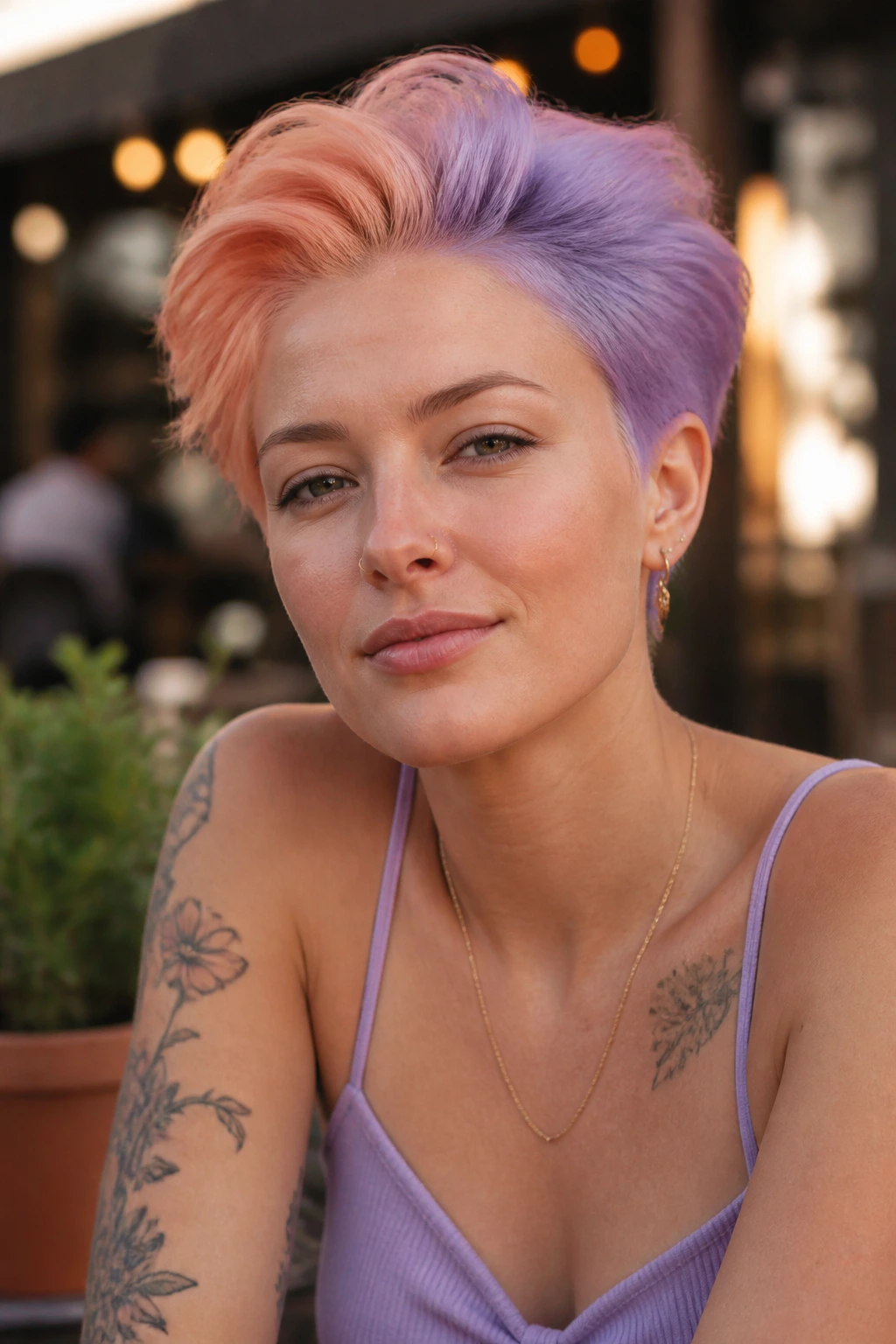
A split tone is for the person who wants papaya but also likes a little weirdness in the best sense. One side can hold the peach-papaya family, while the other side leans lilac or smoky lavender. On cool skin, that contrast is sharp in a good way, because the cool violet keeps the warm side from taking over the face.
This works best on shorter cuts, tucked styles, or long hair with a clean middle part. The contrast needs a strong shape to hold it together. If you’re worried about the lilac dominating, keep it muted and dusty rather than candy-bright. The point is tension, not costume.
It’s editorial, but not impossible. That’s the sweet spot.
17. Strawberry Papaya Waves
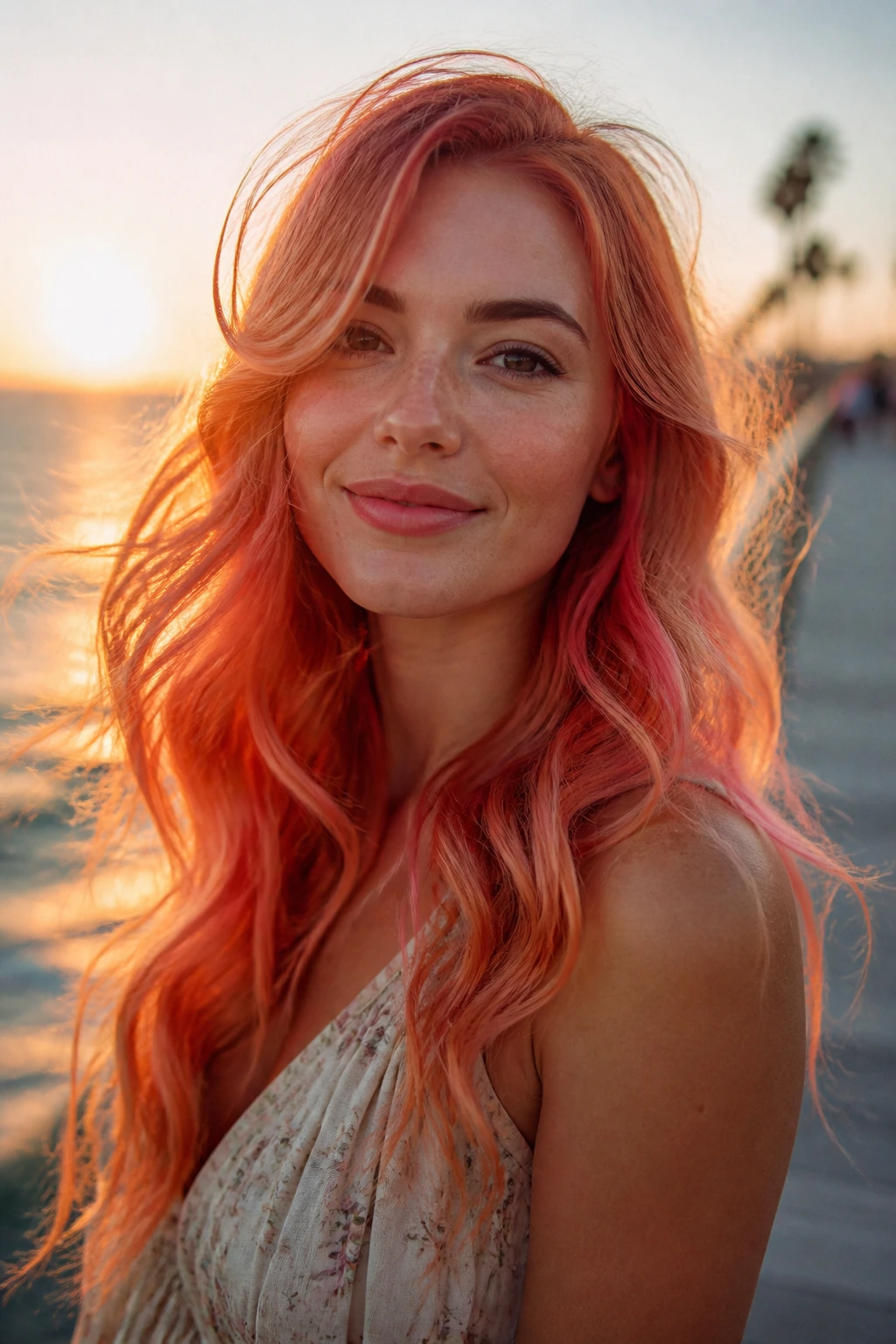
Strawberry papaya is what happens when peach, coral, and a little berry red sit in the same room and decide to cooperate. It’s warmer than rose gold, but cooler than plain copper, which makes it a neat match for pink-leaning or fair cool skin. The waves break it up so the color feels dimensional instead of flat.
This shade is especially nice if your hair has a naturally soft texture or loose bend. The color wants motion. Ask for a translucent red-coral glaze over a light blonde base, and keep the darker pieces just deep enough to avoid the marshmallow effect. If the formula skews too yellow, the whole thing can drift into apricot candy territory. Keep it berry-leaning.
18. Tangerine-Rose Sleek Bob
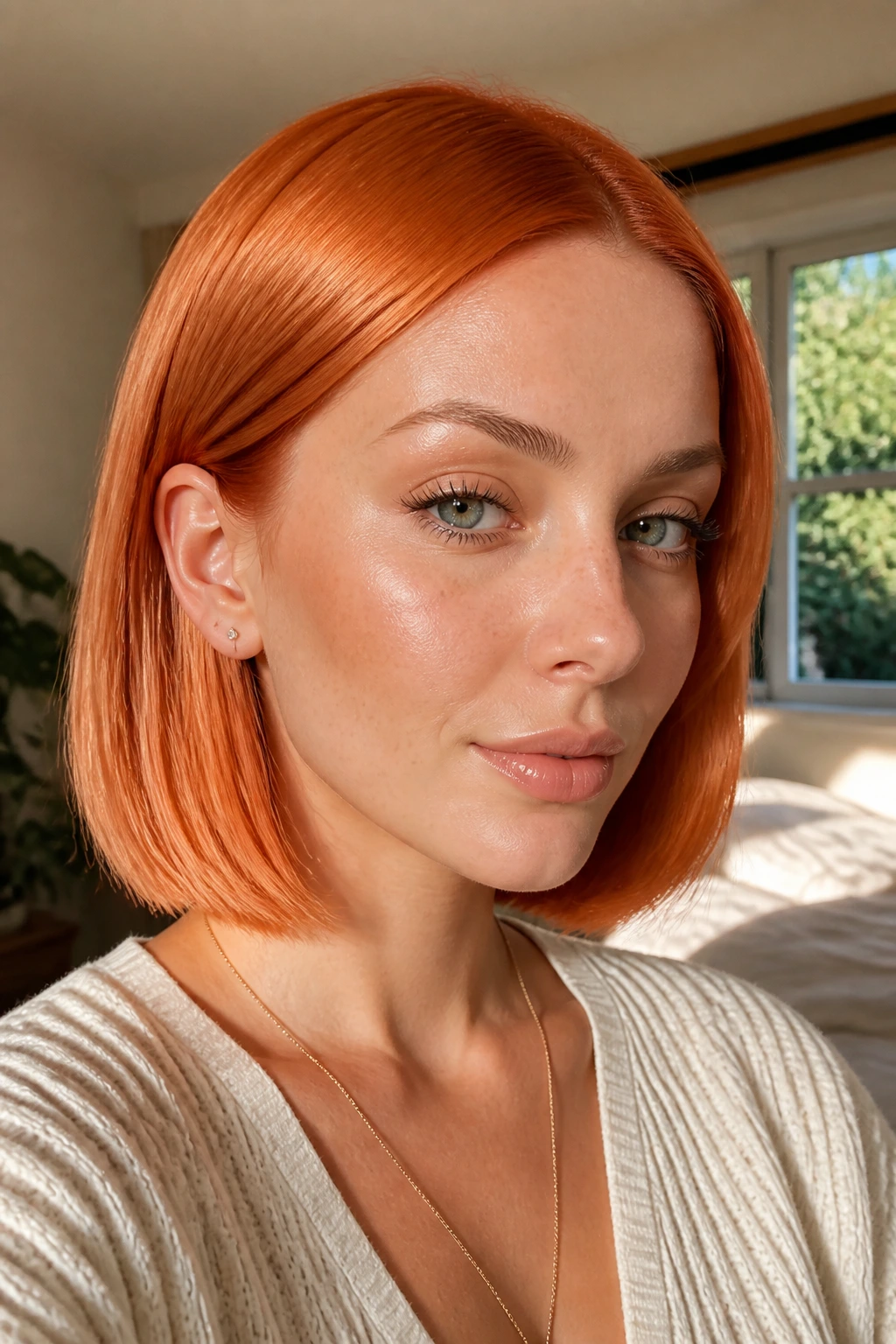
A sleek bob can handle a little more brightness because the shape is so crisp. Tangerine-rose is papaya with a sharper edge — still peachy, still wearable, but with a stronger orange-red note. On cool skin, the rose piece keeps it from feeling too hot. That’s the only reason this one works.
The finish should be smooth. Straight styling, tucked ends, and a glossy serum help the color look intentional. If the hair has frizz or rough texture, the orange reads louder. That’s the tradeoff. This is for someone who likes contrast and doesn’t mind a little attention.
It pairs well with cool-toned makeup: berry lip, charcoal liner, soft pink blush. Keep the face balanced and the bob will do the rest.
19. Papaya Peekaboo Panels
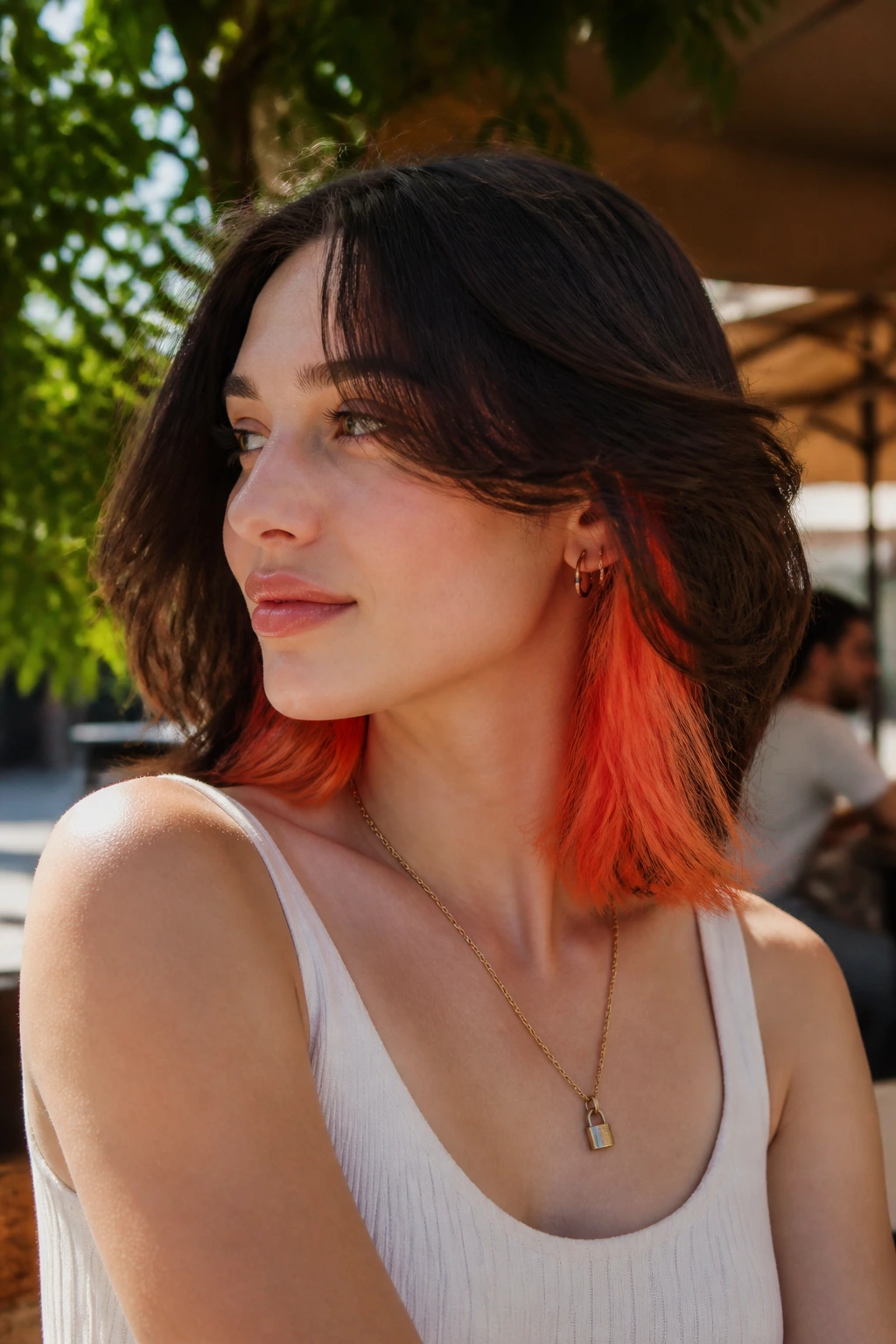
Peekaboo panels are for people who want fun without painting the whole head. Hidden papaya sections under the top layer give you flashes of peach when you move or lift the hair. On cool skin, that hidden placement is flattering because the warmth shows in small doses instead of sitting against the face all day.
Ask for panels beneath the top crown layer, usually around the nape and sides. They can be brighter than the rest of the hair because the top layer mutes them. This is a clever option for office settings, too. The color can disappear when the hair is worn down and show up when it’s half-up or tucked behind the ear.
20. Dusty Papaya Crop
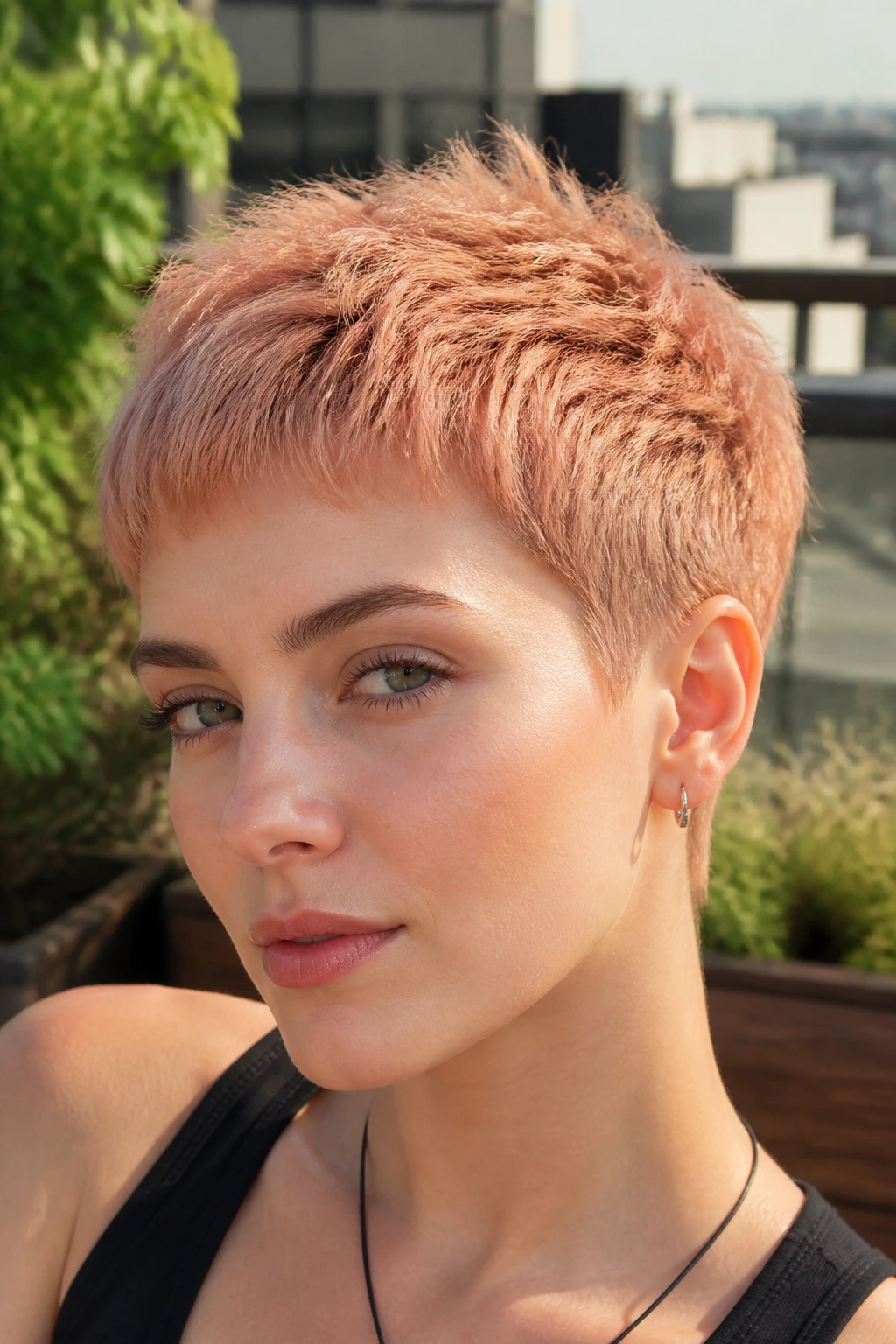
Dusty papaya is one of my favorite versions for cool skin because it refuses to turn sugary. The dustiness comes from beige, ash, or a muted rose filter that mutes the orange without draining it dry. On a crop cut, that softness looks chic, not sleepy.
Keep the top a little brighter and the sides slightly deeper for shape. Short hair can go flat fast, and this color needs movement even when the cut is tight. A bit of matte paste or light wax can help define the ends so the color reads in small, sharp pieces.
If bright papaya feels too extroverted, this is the quieter cousin worth trying first.
21. Peachy Mushroom Papaya
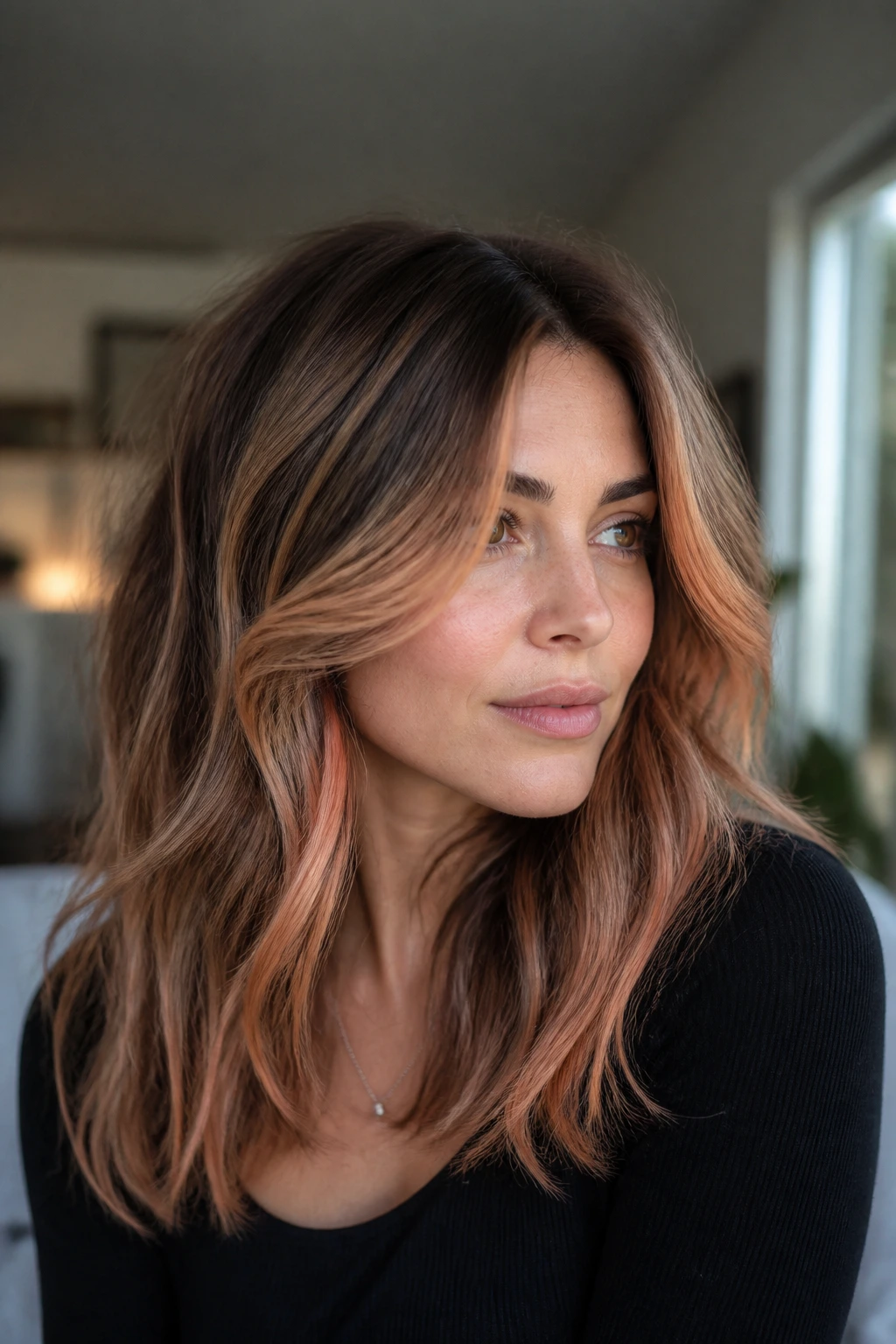
What happens when mushroom brown meets papaya? You get one of the smartest cool-skin shades in the whole bunch. The mushroom tone cools the base, while the peach runs through the ends or face frame like a soft glow. It’s the color version of a neutral outfit with one warm scarf thrown over it.
This is especially good for brunettes who don’t want to go light all the way. The mushroom keeps the look grounded. The papaya adds just enough color to keep it from getting flat or muddy. Ask for cool beige lowlights and peach highlights so the contrast stays smooth. That mix keeps the color wearable for longer between appointments.
22. Papaya Pixel Highlights
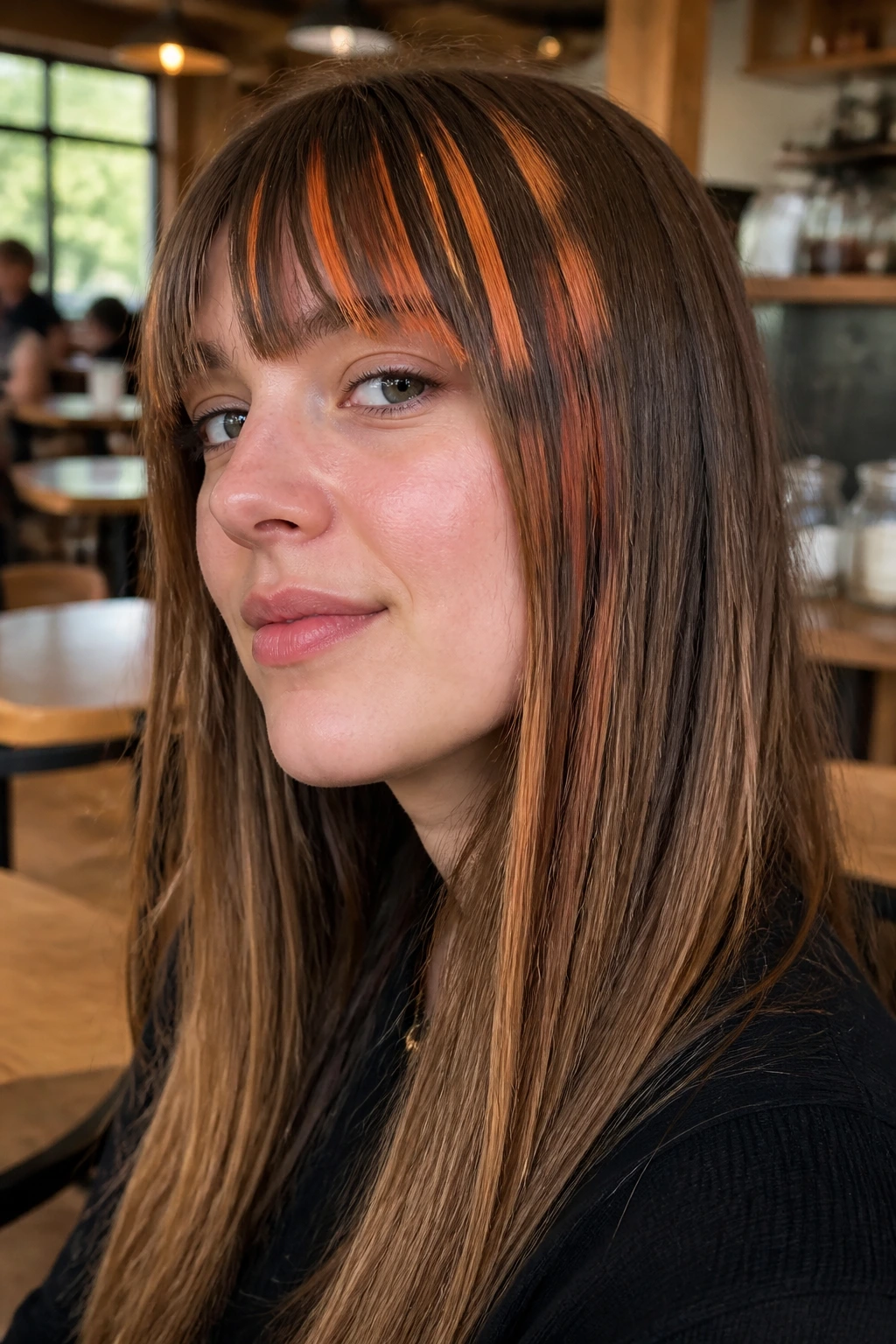
Pixel highlights sound playful because they are. Instead of sweeping ribbons, you get tiny blocks of papaya placed with precision through the top layers or fringe. On cool skin, the small scale keeps the warm color from overwhelming the face. It becomes texture rather than domination.
This technique works best on straight or slightly wavy hair where the geometry can show. It also helps fine hair look fuller, because tiny color breaks make the surface feel denser. Keep the shade on the peach side and avoid too much pure orange or the pixels will read harsh instead of clever.
It’s a good choice if you like detail. A little nerdy. In a good way.
23. Apricot-Ice Melt
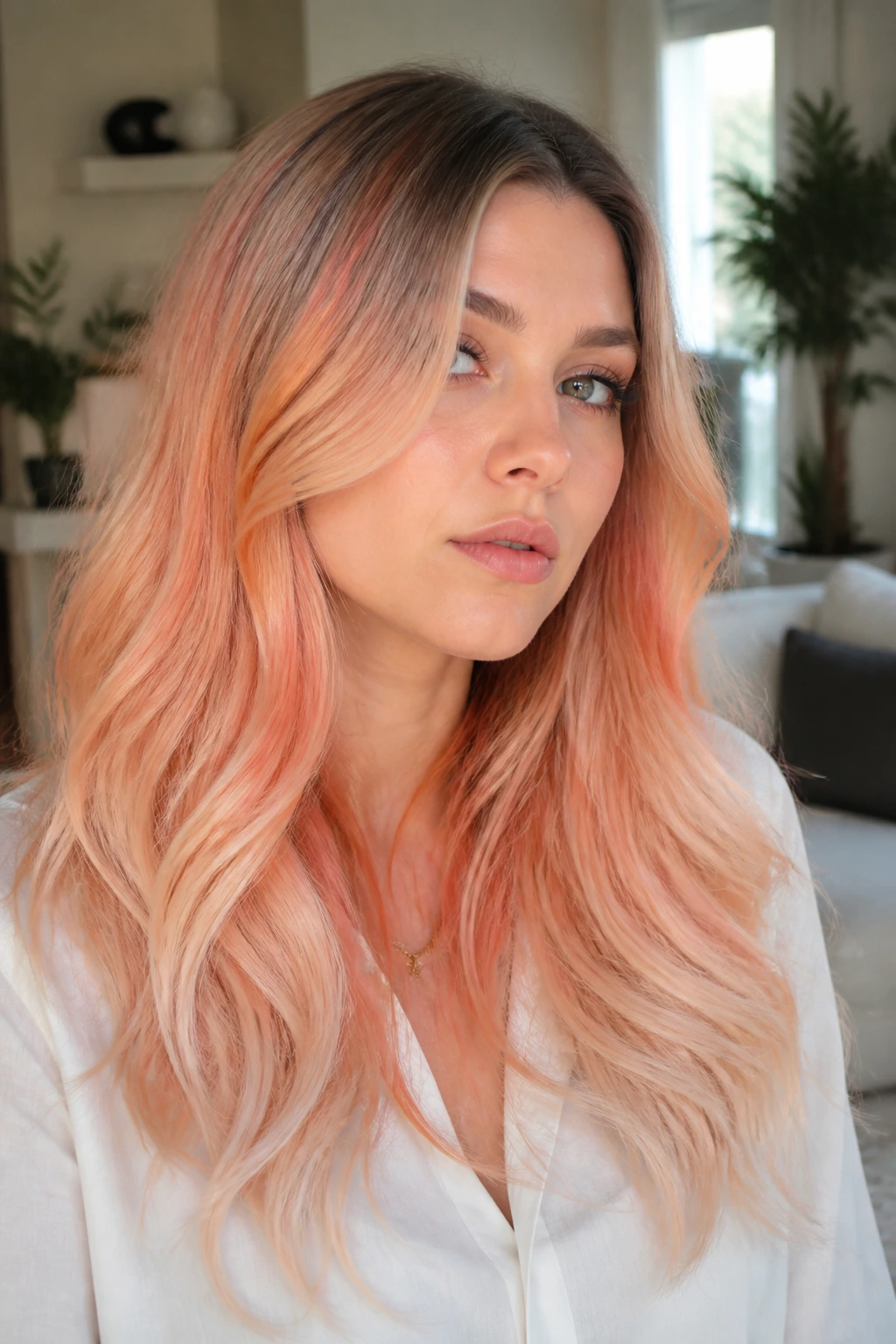
An apricot-ice melt is what I’d hand to someone who wants papaya but gets nervous halfway through the appointment. The roots stay cool or neutral, the mids soften into apricot, and the ends pick up a pale icy peach that keeps the whole thing airy. Cool skin loves the top-to-bottom shift because it prevents one warm tone from sitting too close to the face.
The melt should be gradual. If the transition is too sharp, the hair can look striped. Ask for hand-blended sections and a finish gloss that keeps the ends more pearl than orange. On long hair, this can look almost silvery at the top and peachier at the bottom, which is a nice way to stretch into color without making it hard on your complexion.
24. Rosy Papaya Curls
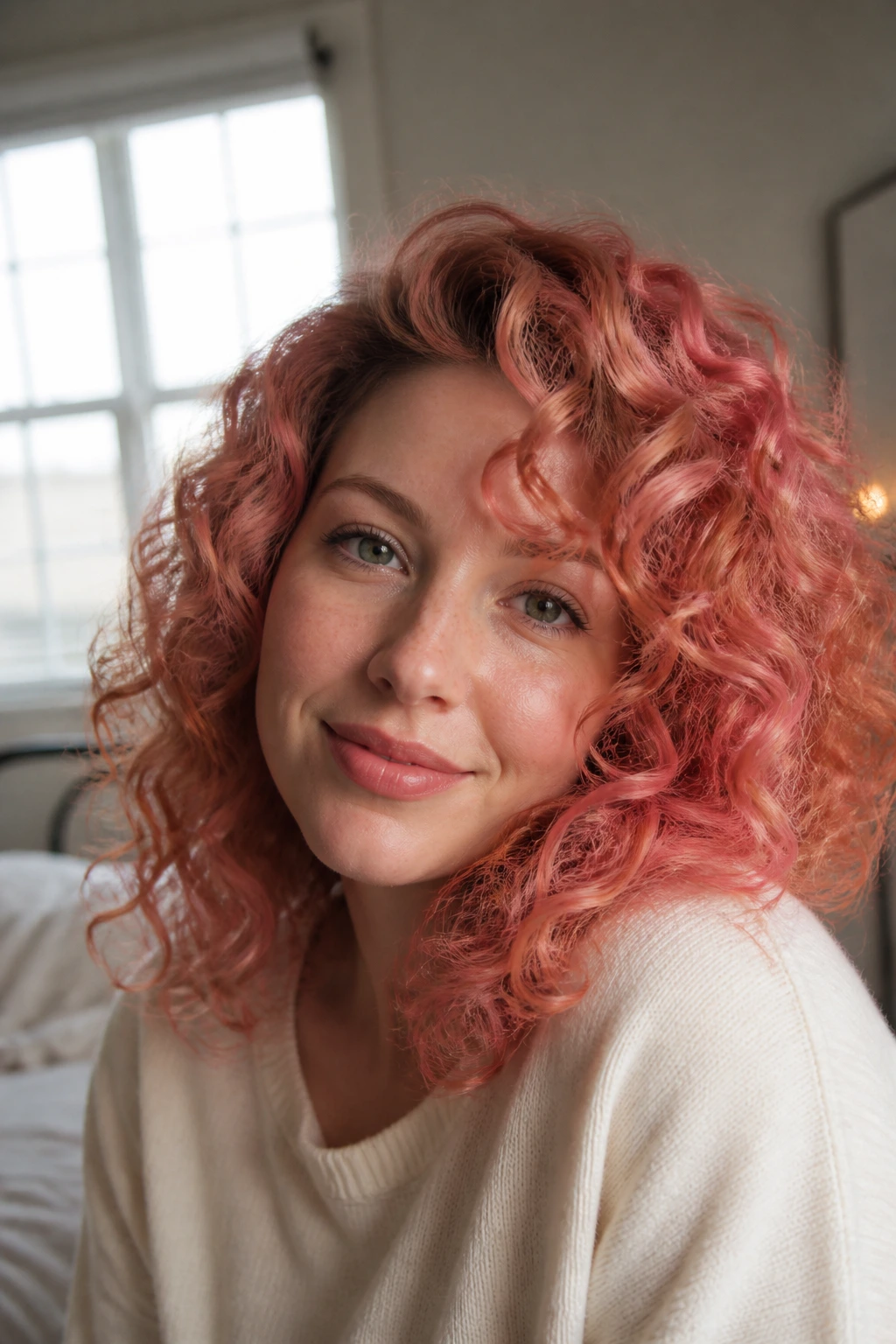
Curls make rosy papaya feel soft instead of sweet. The curl pattern picks up the rose and coral bits, then scatters them so the color looks layered from root to end. On cool skin, that rosy note is useful because it keeps the warmth from flattening the face.
This shade shines on dense curls, loose spirals, and coily textures that can hold pigment. Ask for a deposit that stays lighter on the outside curve of the curl and a touch deeper underneath. That little contrast gives the shape depth. If the color is too solid, the curl pattern gets lost. If it’s broken up right, it looks almost velvety.
25. Papaya Chrome Ends
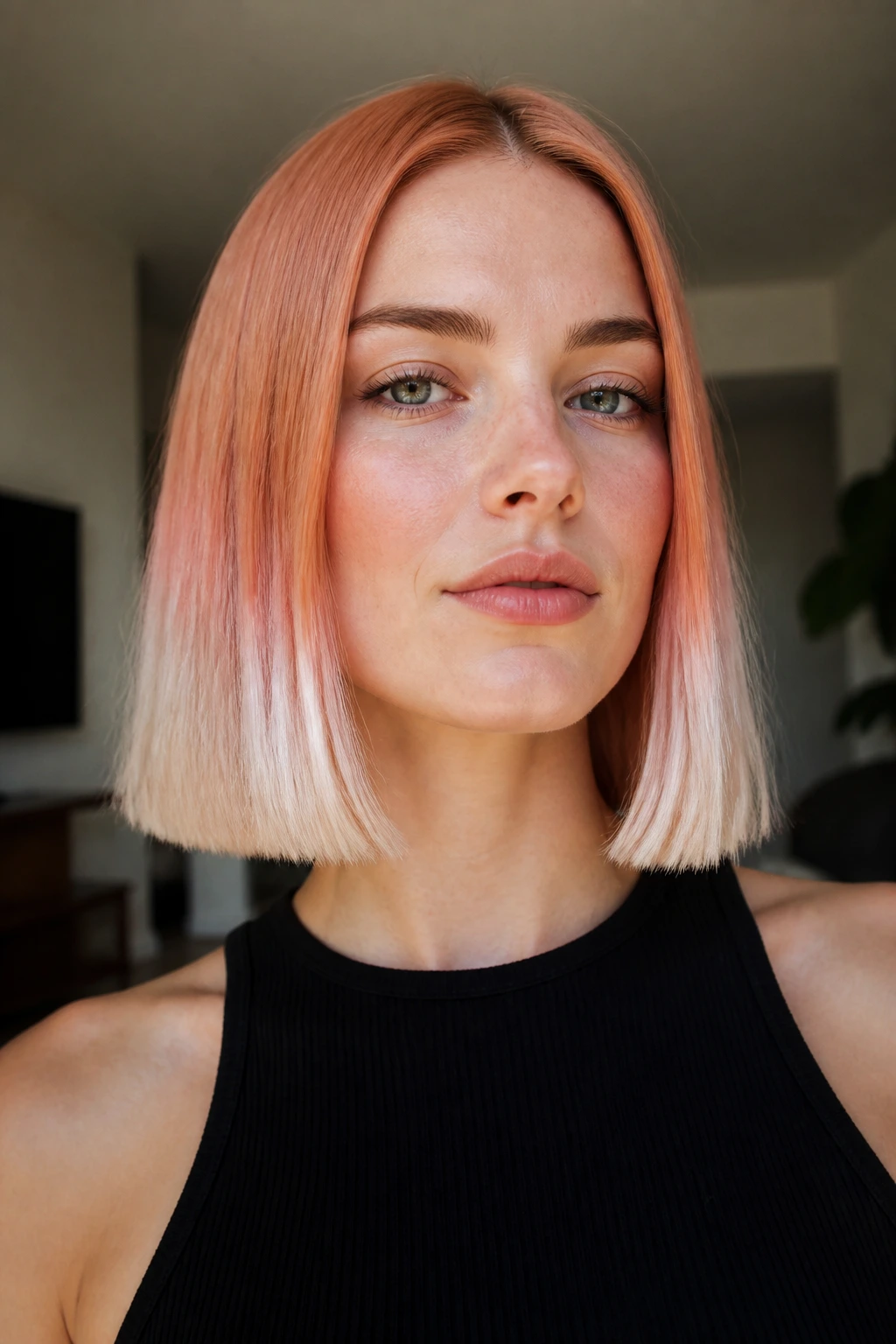
Chrome ends are for the bolder crowd. The papaya sits at the bottom, but the finish has a reflective, metallic sheen that makes the whole look feel sharper and cooler. That chrome sheen matters on cool skin because it keeps the warmth from reading too matte or heavy.
This works especially well on blunt cuts, long straight hair, or glassy blowouts. The edges should look clean. If the hair is shaggy, the chrome effect can disappear. Ask for a soft papaya base with a gloss that leans pearl and a touch of beige. The color should catch light without turning yellow.
It’s a strong look. Not loud, though. Sharp is the better word.
26. Desert Rose Papaya
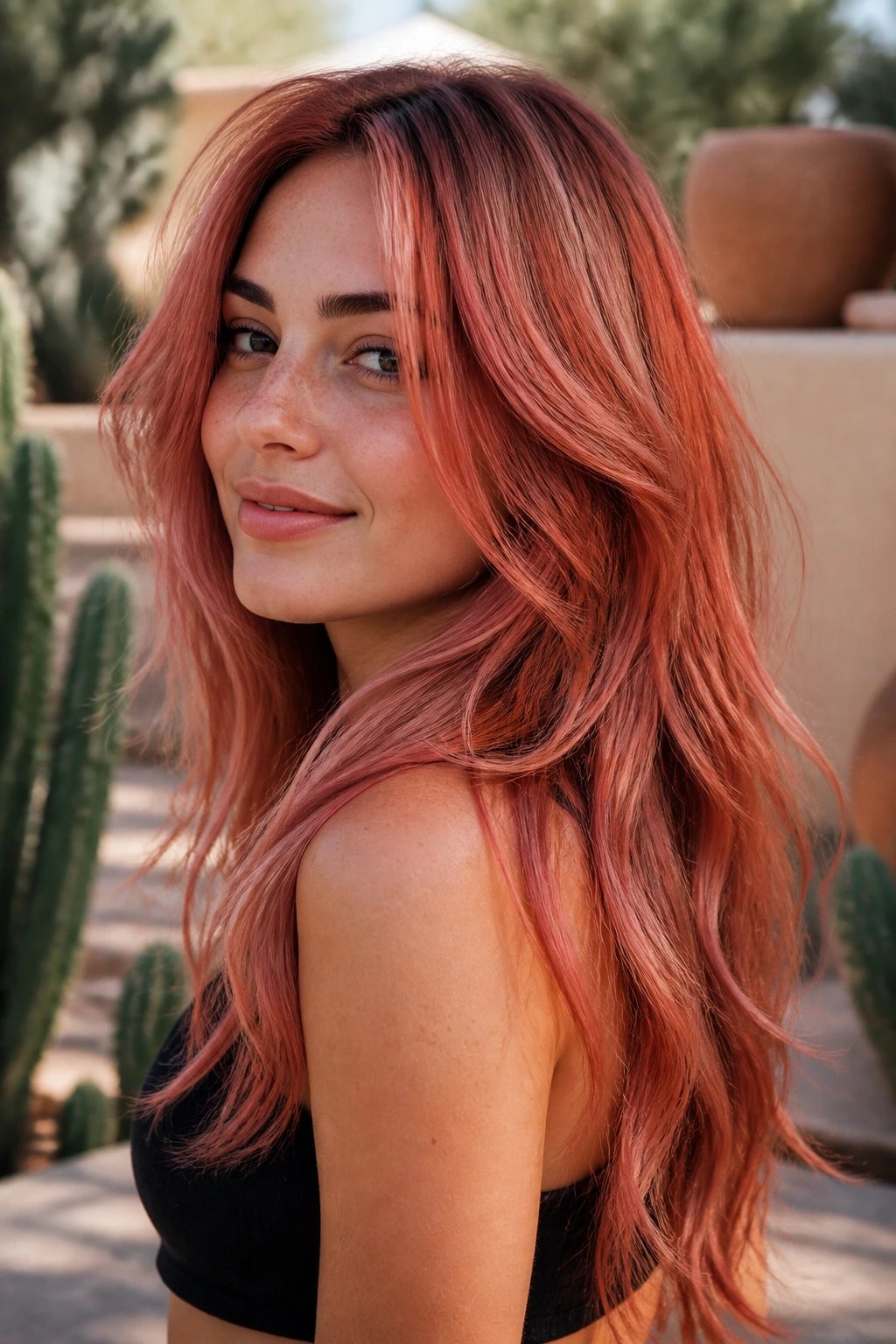
Desert rose is papaya’s earthier cousin. It swaps some of the orange for dusky rose and a hint of mauve, which makes it especially good for cool skin that still wants warmth. The shade feels sun-faded in a controlled way, like fabric left out just long enough to soften.
This is a pretty choice for medium to long hair with layers. The movement helps the mauve and peach notes separate a little, so the shade doesn’t look flat. If you want something wearable with minimal upkeep, this is one of the easiest papaya directions to live with because the fade stays pretty. It doesn’t race toward brassiness the way brighter orange can.
27. Papaya Root Stretch
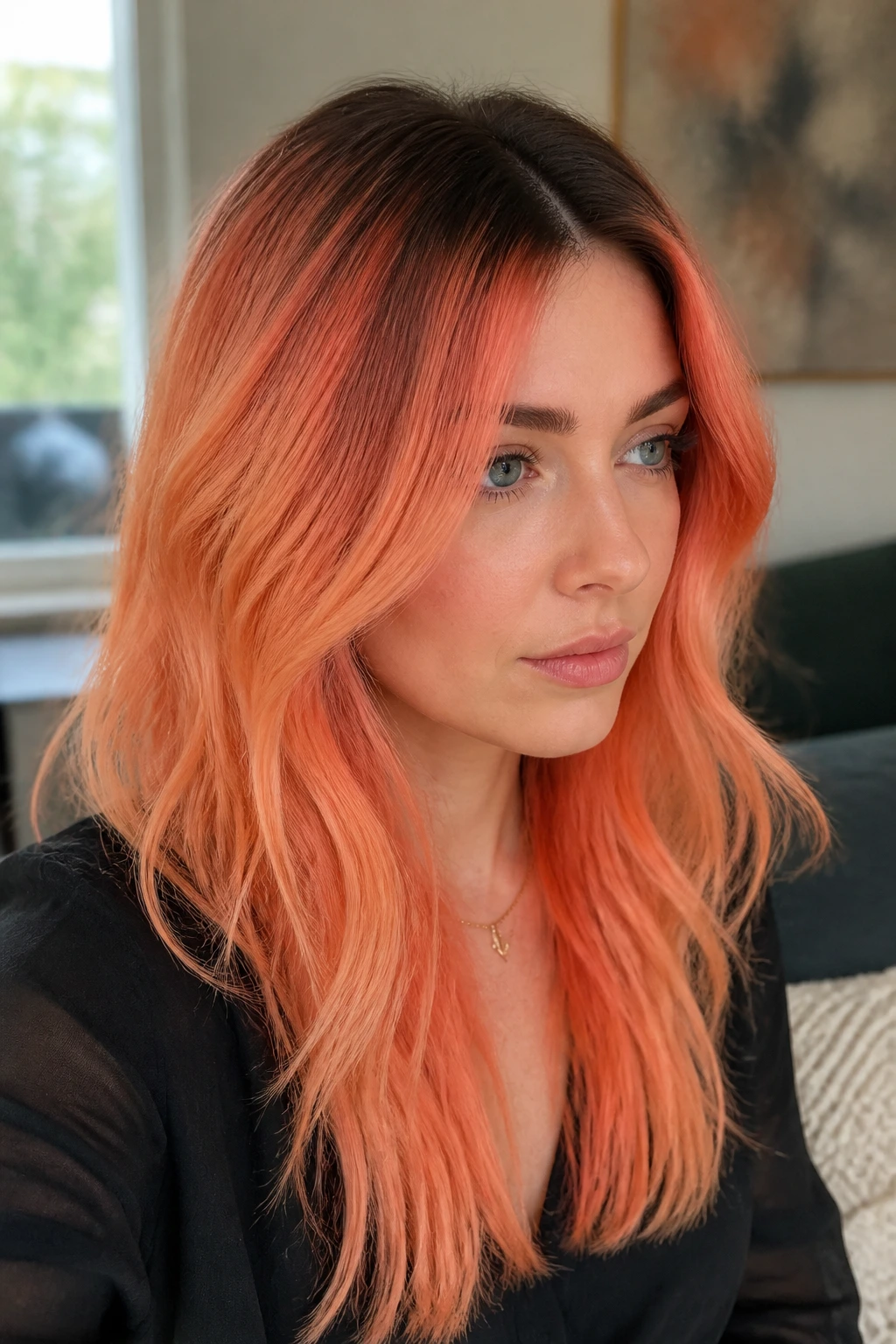
A root stretch is practical, and I like practical hair color. It lets you keep the papaya bright through the mids and ends while stretching a neutral root down a little farther than usual. On cool skin, that darker root keeps the face looking calm, which is useful if the papaya itself has a lot of punch.
Ask for the root to blur 1 to 2 inches into the length, depending on how much contrast you want. The trick is making the root soft, not obvious. That way, the color grows out with a gentle gradient instead of a hard line. This works on straight styles, but it’s especially nice on waves because the shadow can hide and reveal itself as the hair moves.
28. Soft Coral Curtain Bangs
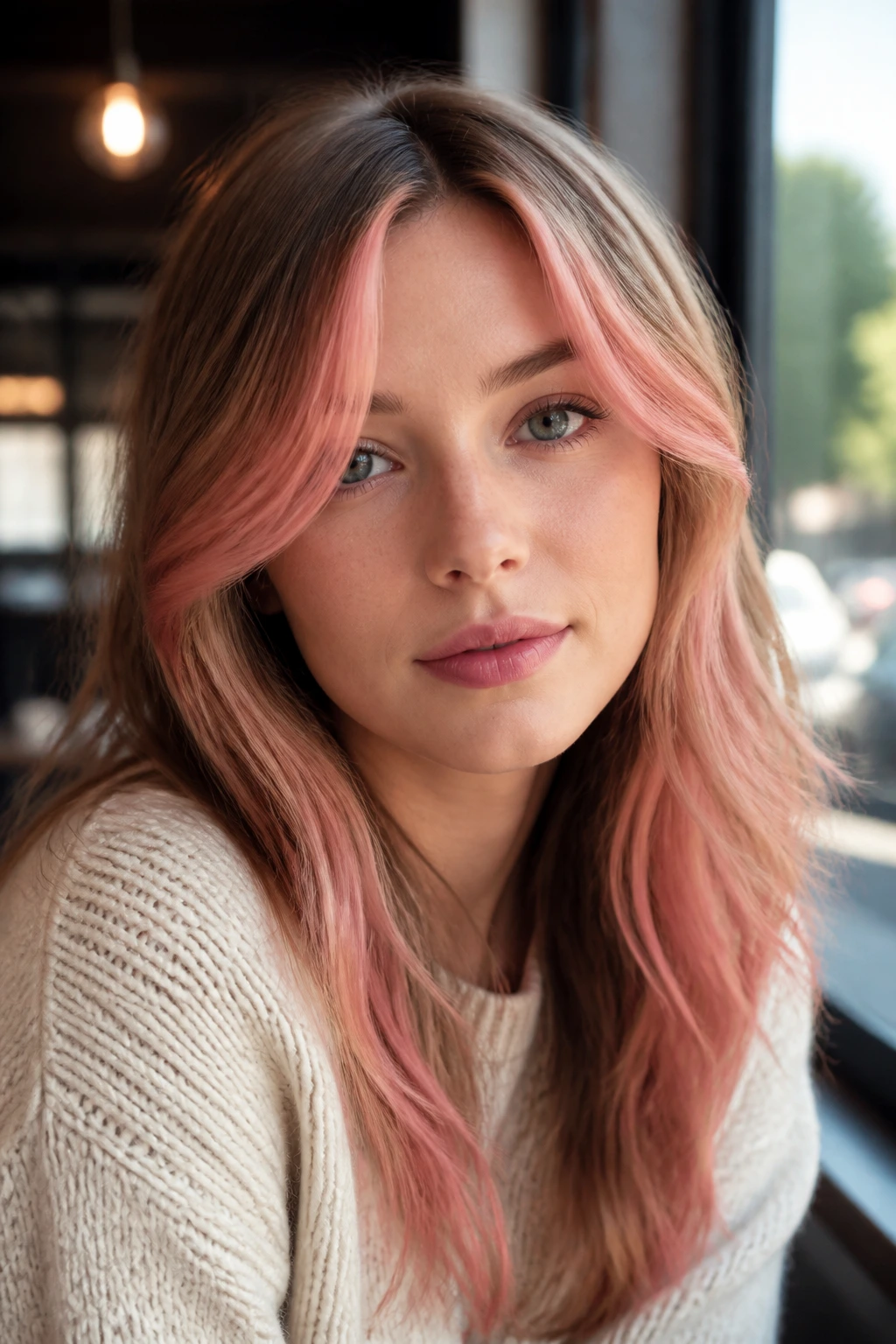
Curtain bangs are an ideal place for a little papaya because they sit right beside the eyes and cheekbones. Keep them soft coral rather than full orange, and the effect on cool skin is flattering instead of loud. You get warmth in a narrow frame, which is easier to wear than all-over brightness.
The rest of the hair can stay more neutral. That contrast makes the bangs feel intentional. If the bangs are too bright, they’ll take over the face. If they’re too dull, the whole point disappears. The sweet spot is a coral-peach that shows when the bangs split in the middle and fall slightly open over the brow.
29. Papaya Creamsicle Curls
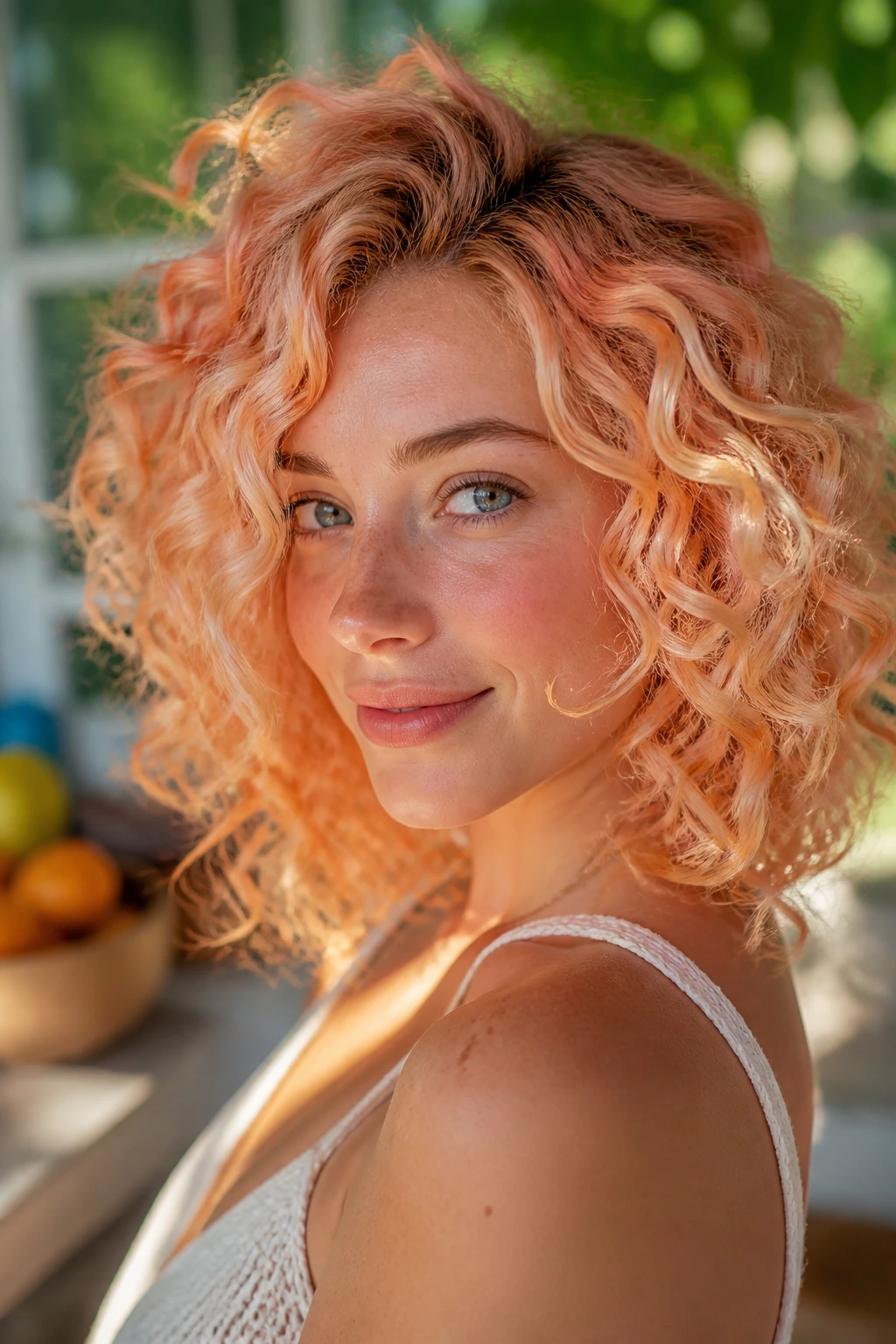
Creamsicle papaya sounds playful because it is, but the color can be surprisingly elegant when the orange is diluted with cream and blush. Curls make it work by breaking the tone into smaller pieces. On cool skin, the creamy part matters almost more than the papaya; it softens the warmth and keeps the face from turning ruddy.
Ask for a lightened base with a peach glaze and a touch of vanilla-beige at the brightest points. The finish should be soft, not acidic. If you want to go bolder, ask for brighter ends and a more neutral root. If you want it subtler, keep the whole thing muted and let the curls supply the movement.
30. Smoke-Toned Papaya Lob
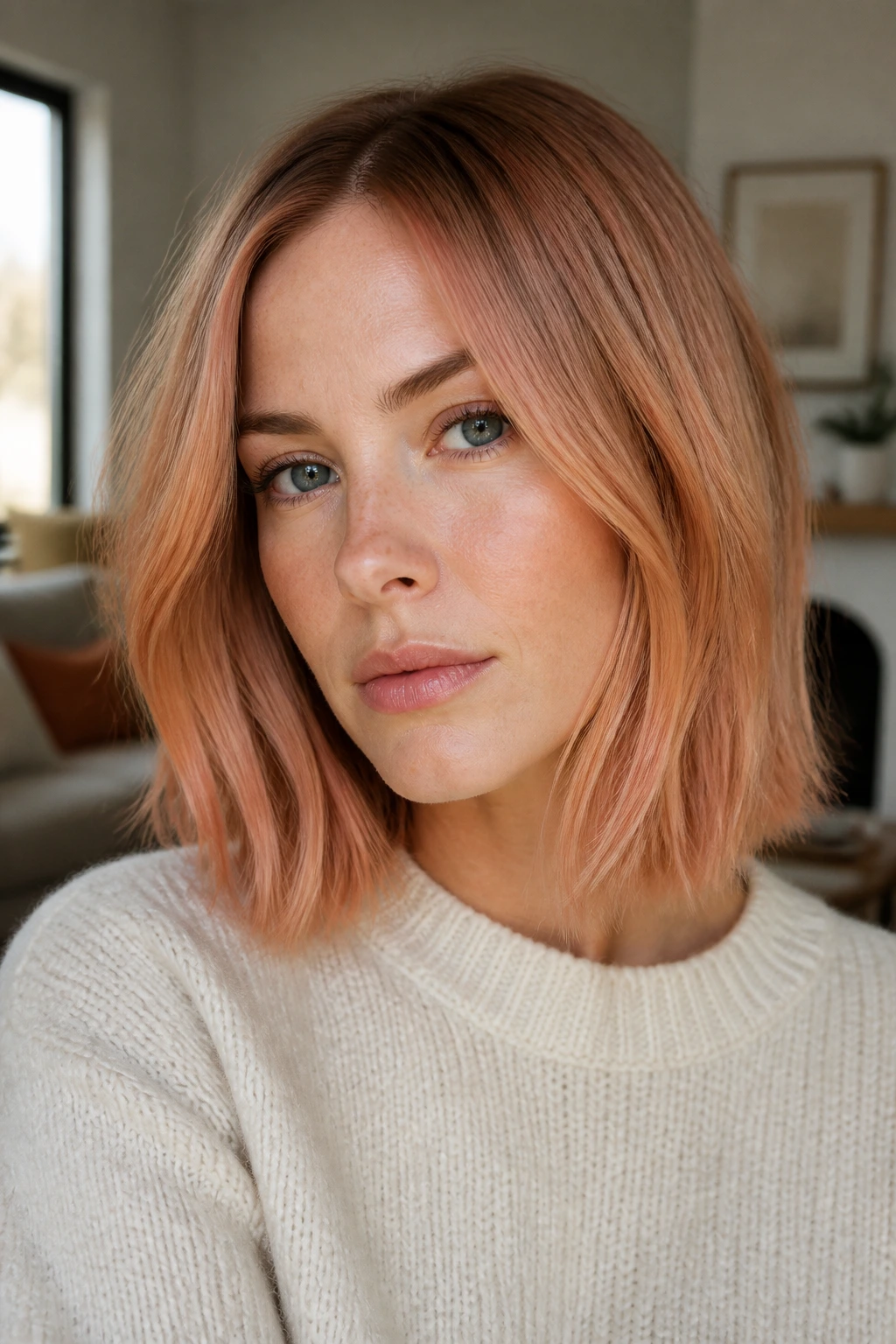
Smoke-toned papaya is one of the most wearable options for cool complexions because it filters the orange through a cooler lens. The result sits somewhere between apricot and dusty coral. On a lob, that shade looks tidy and modern without feeling severe.
This is especially good if your skin can handle warmth in the hair but hates yellow. Smoke is the buffer. It softens the reflections and keeps the ends from looking too bright under indoor light. Ask for a cool beige glaze over a papaya base and keep the pieces around the face a touch dimmer than the ends. That way the eyes stay first in line, not the hair.
31. Papaya Cherry Blossom Blend
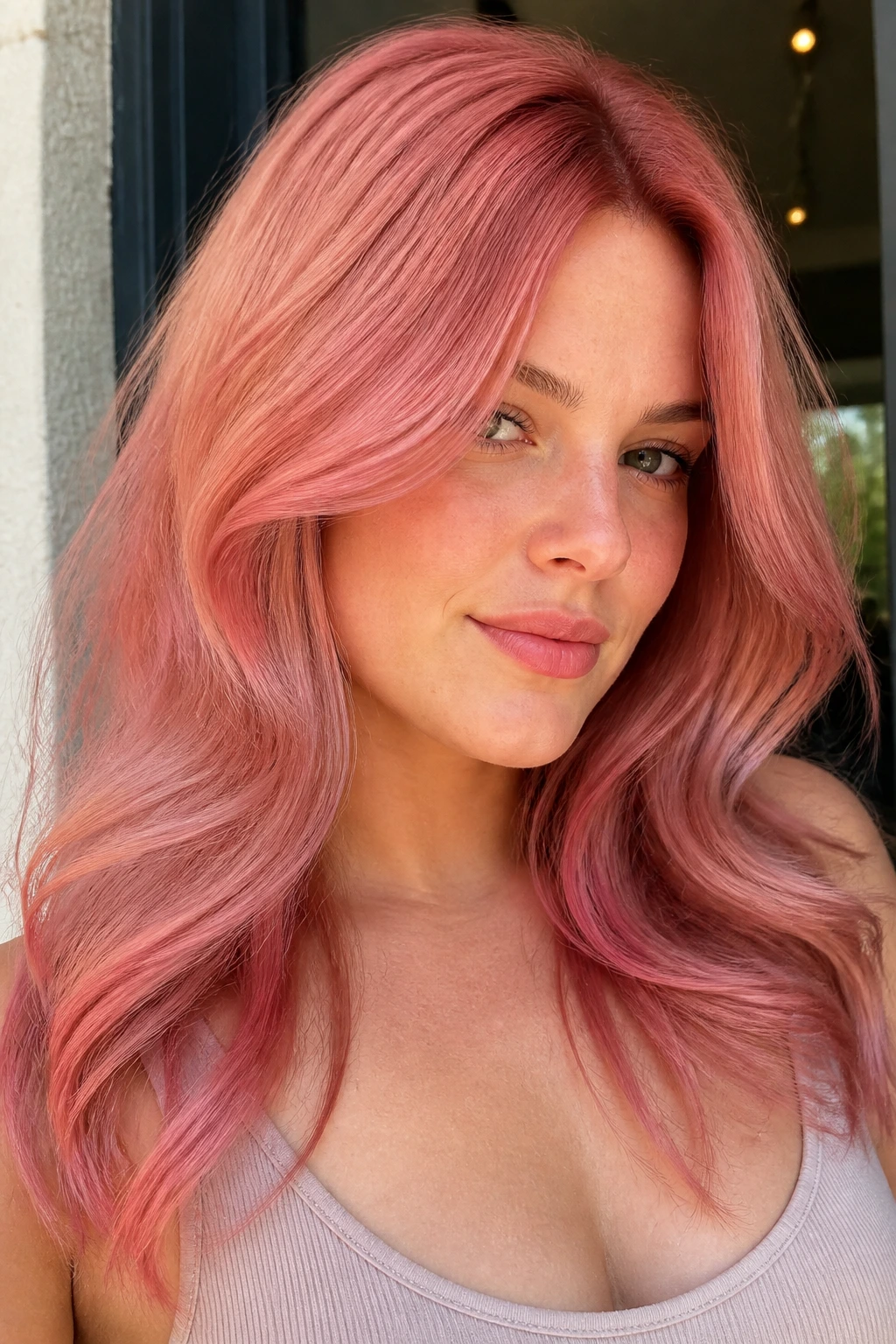
Cherry blossom papaya is more floral than fruity. It leans pink-peach with a tiny cherry tint, which is a lovely route for cool skin because the pink undertone keeps the shade friendly. It looks soft in daylight and more vivid when styled with waves or a round brush.
This shade likes layered cuts. The pink and peach bands can settle into the layers without looking like streaks. Ask for a peach base with rose and a hint of red-violet glaze. That red-violet note is subtle, but it keeps the color from turning too orange. If you like blush tones in your clothes and makeup, this hair color will slot right in.
32. Cool Peach Balayage
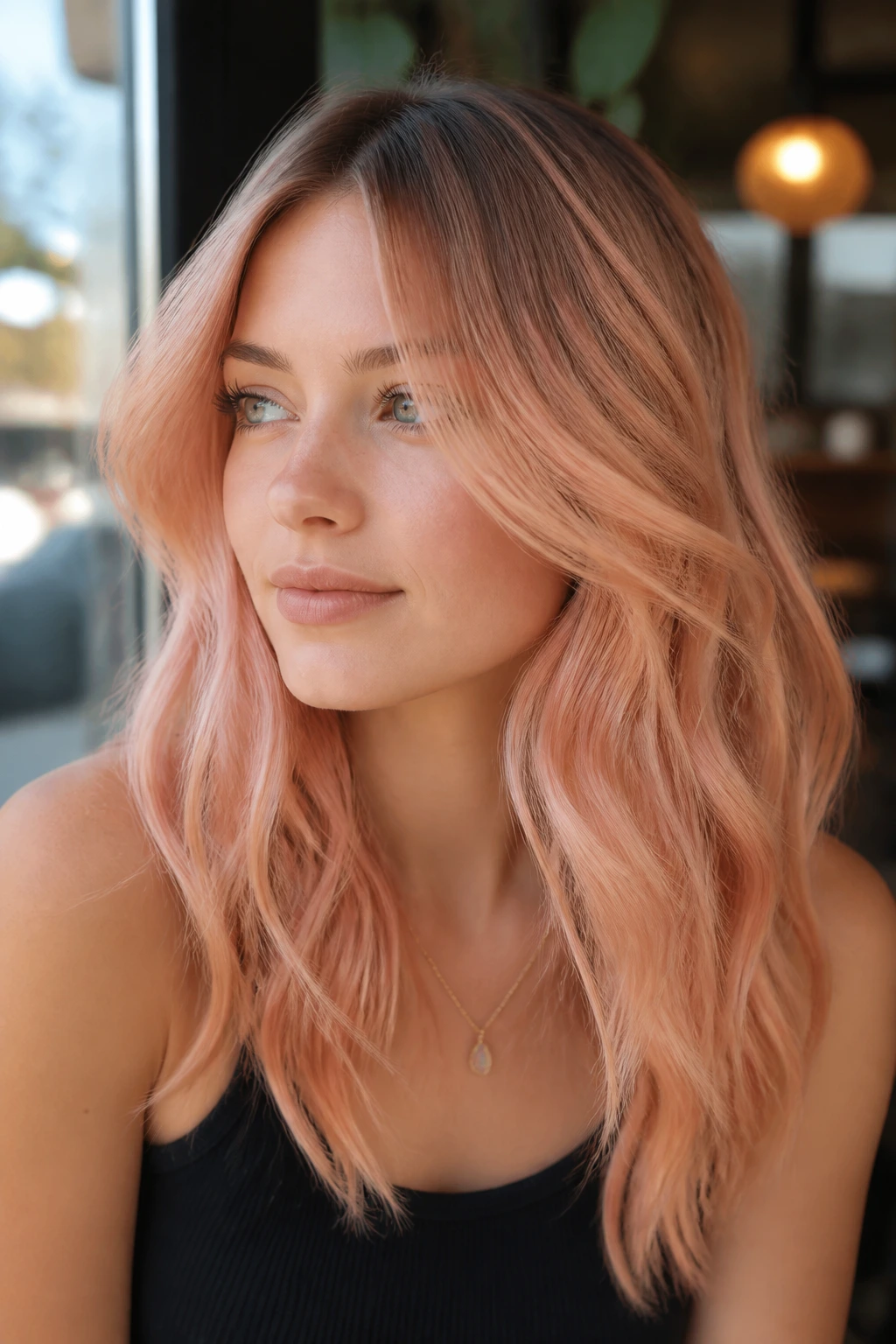
A cool peach balayage is exactly what it sounds like: peach, but filtered through a cooler hand. Think more blush-apricot than orange. On cool skin, that distinction is massive. The color lights up the face without creating the muddy contrast that a pure warm peach sometimes does.
The painted pieces should be airy and spaced out. Too much color and the look stops breathing. Too little and it reads as barely there. If your hair is naturally dark, ask for lifted pieces around the crown and through the ends so the peach can register. This is one of the best choices if you want papaya to feel wearable at work and still interesting on a night out.
33. Electric Papaya Undercut
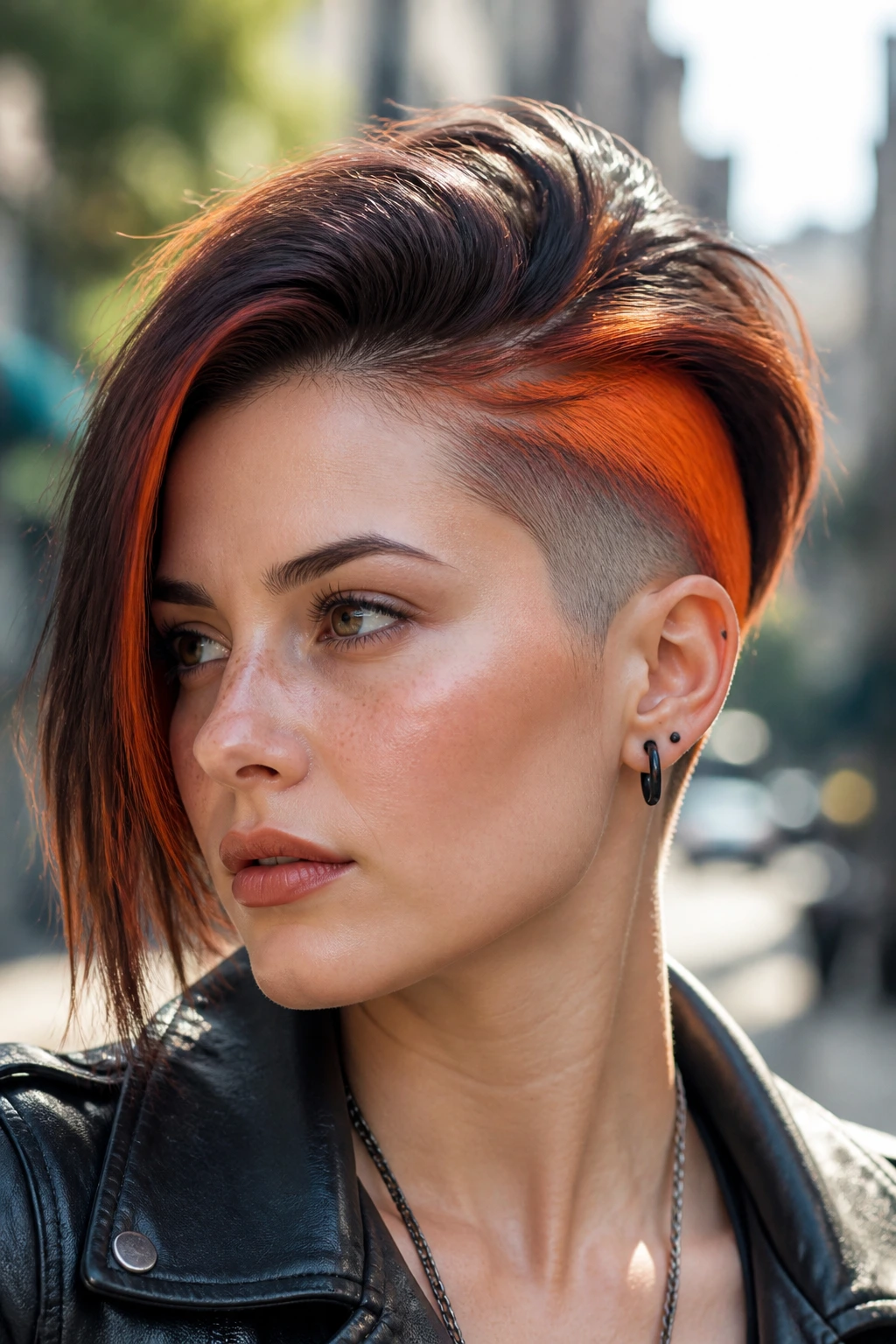
An undercut lets papaya be loud in a controlled way. The bright color sits below the top layers, so you can hide it when you want and show it when you don’t. On cool skin, this works because the color is separated from the face most of the time. It becomes a surprise, not a constant glare.
This version can handle a brighter orange note than the softer looks above. You can even add coral or hot peach underneath a darker top layer. The contrast is the whole point. If your style leans edgy, this is a satisfying way to wear papaya without needing the entire head to commit to it.
34. Dimensional Papaya Ringlets
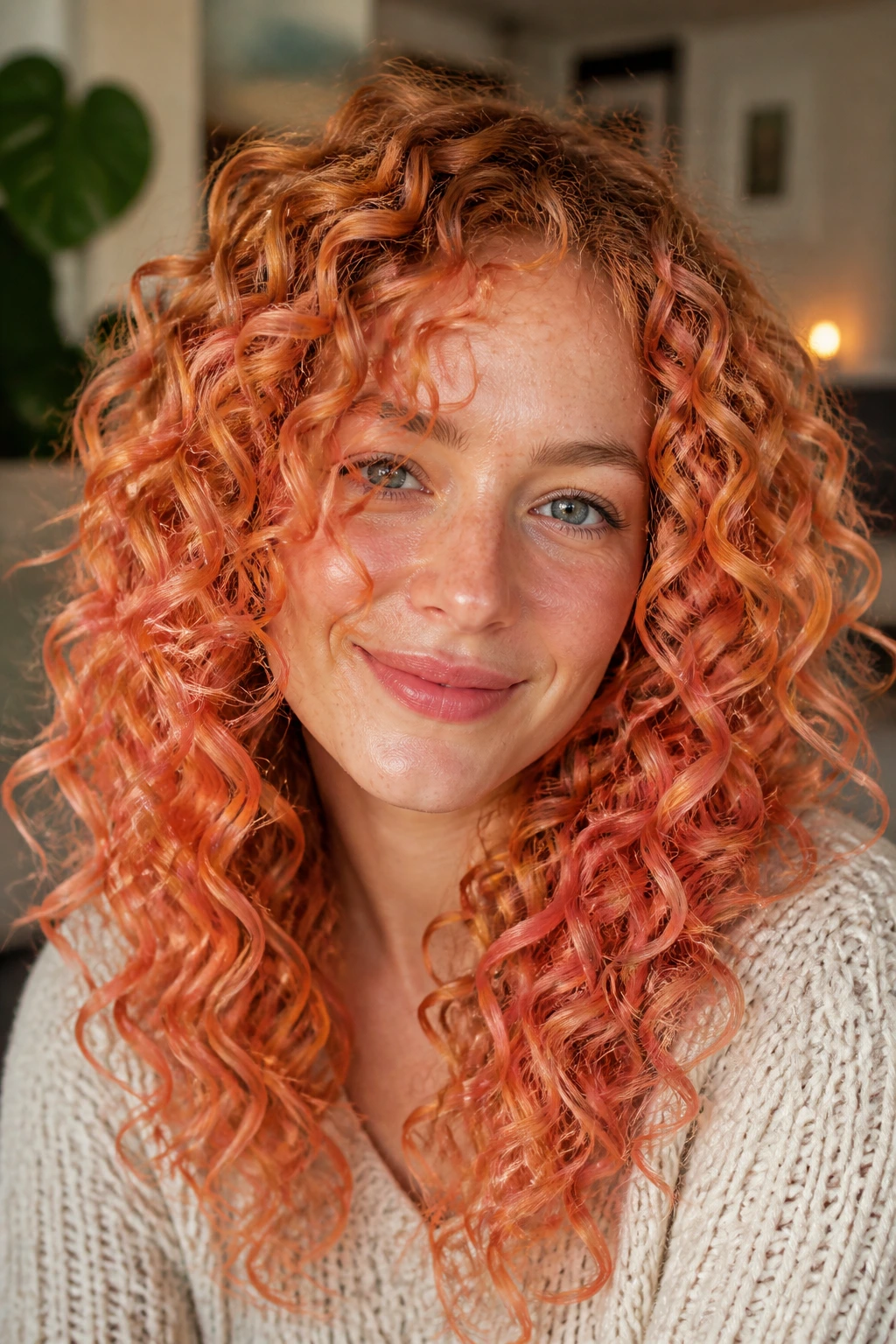
Ringlets need depth. Flat color makes them look like one big rope. Dimensional papaya solves that by layering peach, coral, and a slightly darker apricot shade so each curl picks up a different reflection. On cool skin, the dimension is what makes the warmth feel flattering instead of heavy.
Ask for fine-painted pieces rather than wide panels. The smaller the sections, the more natural the curls look. If your hair is dense, this prevents the shade from reading like one block. If it’s fine, it gives the illusion of more volume. A curl cream with a soft hold helps the ringlets keep their shape without dulling the gloss.
35. Soft Papaya Curtain Layers
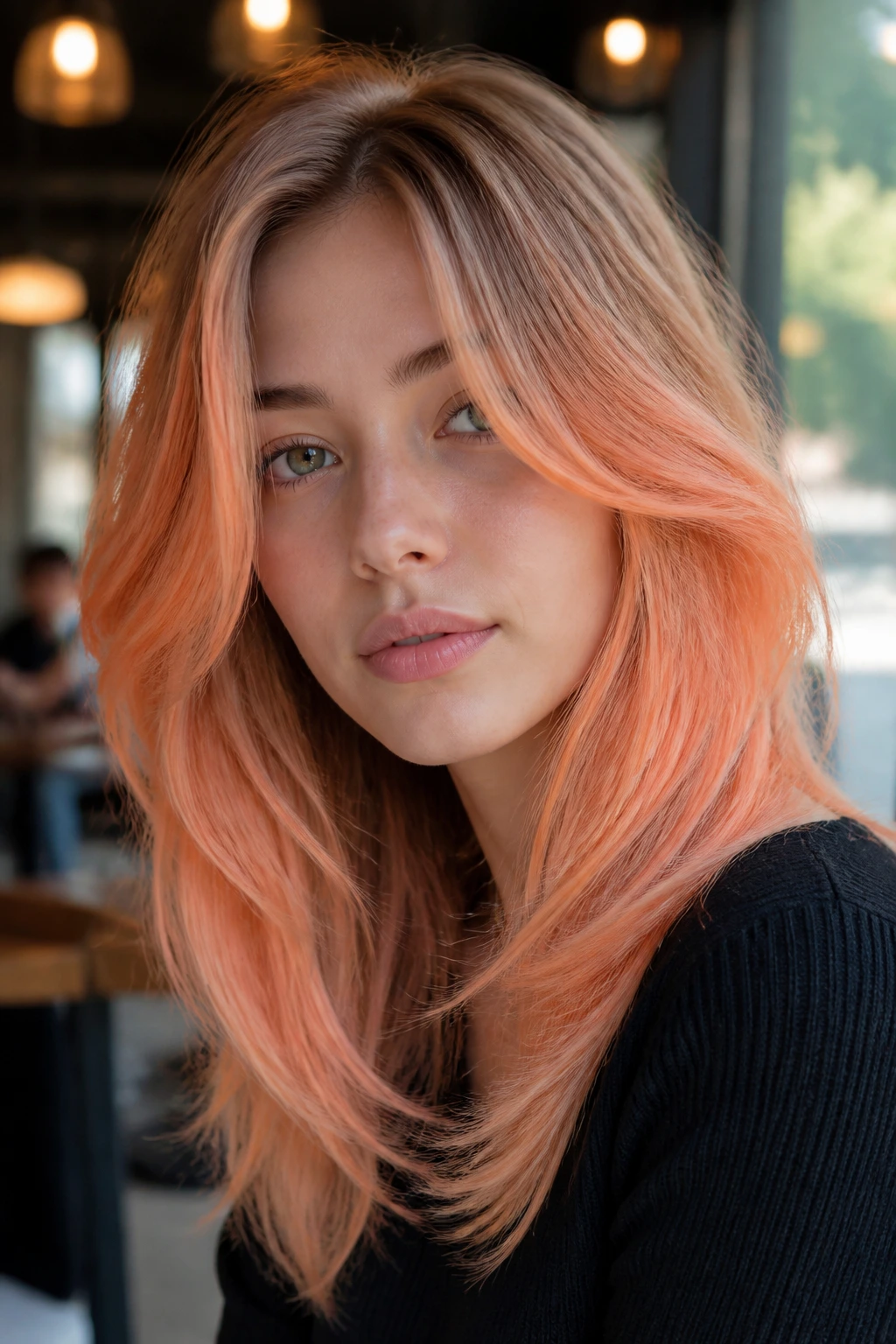
Soft papaya curtain layers may be the easiest all-around idea here because the cut itself does a lot of the work. The layers frame the face, and the papaya sits in soft peach and coral bands that move as the hair falls open in the middle. Cool skin likes this because the color isn’t trapped in one flat sheet across the cheeks.
Ask for a neutral root, peachy mids, and slightly brighter ends. The layers should be enough to show the color shift when you turn your head, but not so choppy that the look gets busy. This is a polished version of papaya, the one I’d suggest to someone who wants the shade to feel friendly rather than daring.
How Papaya Stays Cool Instead of Turningly Coppery
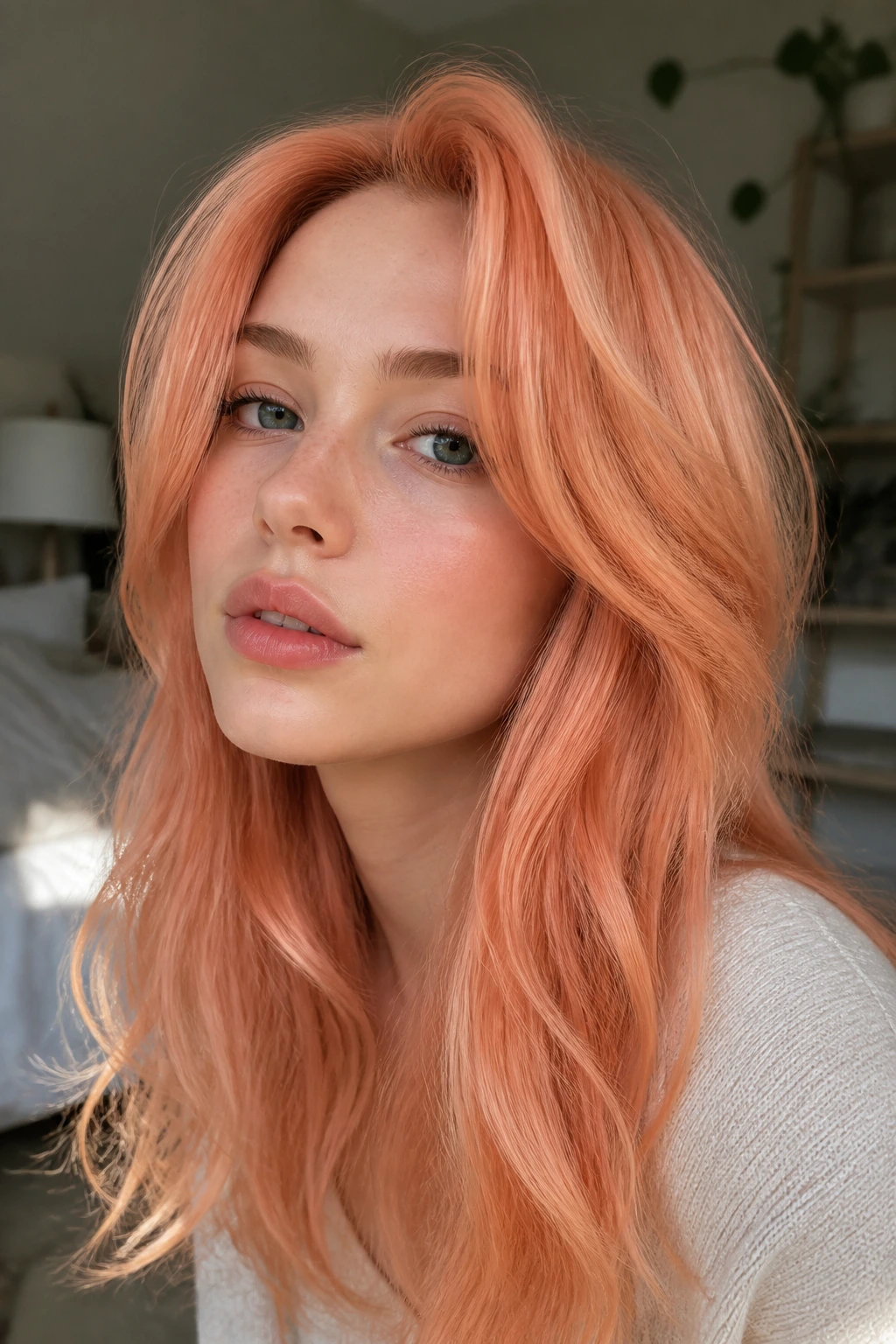
Papaya hair color gets tricky when the orange pigment starts to dominate. That usually happens when the formula is too yellow, the base wasn’t lifted cleanly enough, or the hair was toned too warm after lightening. On cool skin, the fix is almost always the same: soften the warmth before it settles into the cuticle.
A colorist will often reach for beige, rose, pearl, or smoke to keep papaya in the peach lane. That isn’t fluff. It changes what the eye sees first. A cooler gloss can mute the copper edge, and a root shadow can make the face frame feel more deliberate. If your hair pulls brass quickly, this is where gloss appointments start to matter more than full color sessions.
Heat and water matter too. High heat styling and hard water can drag the shade warmer over time. A shower filter, low-heat blow-drying, and a color-safe cleanser help the papaya stay soft instead of screaming orange. Small things. They add up fast.
Essential Tools for Keeping Papaya Hair Looking Intentional
-
Color-safe sulfate-free shampoo: Cleans without stripping the peach and coral tones out too fast.
-
Color-depositing conditioner or mask: Useful for refreshing faded papaya between salon visits.
-
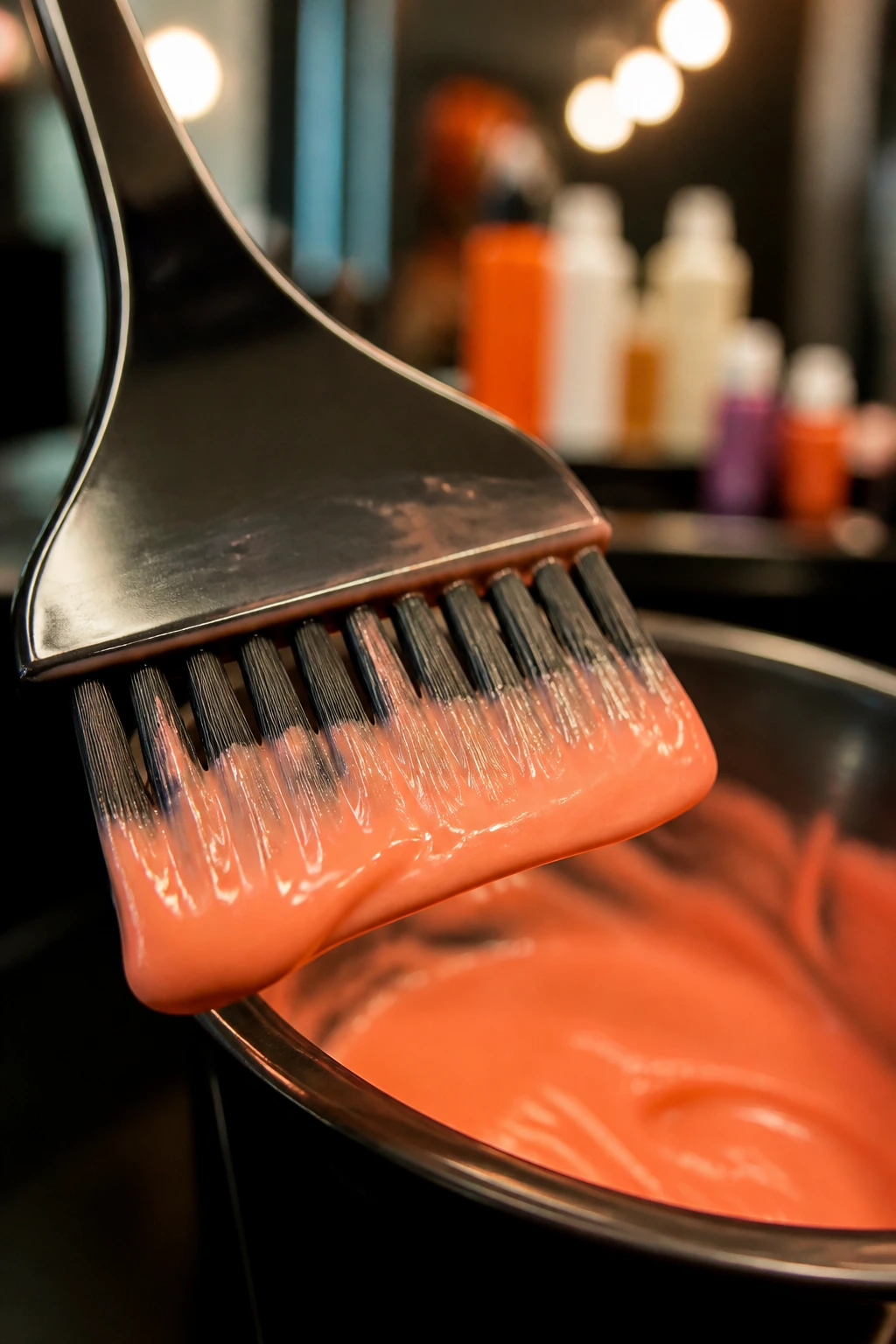
Tint bowl and color brush: Helpful if you’re doing a semi-permanent gloss or root-smudge at home.
-
Nitrile gloves: Better than flimsy food gloves; papaya pigment stains fast.
-
Wide-tooth comb: Keeps waves and curls from getting frizzy while you distribute product.
-
Microfiber towel or cotton T-shirt: Reduces roughness and helps the gloss stay smoother.
-
Heat protectant: Non-negotiable if you style with irons or a round brush.
-
Shower filter: Optional, but useful if your water leaves minerals that push the shade brassy.
-
Tinted gloss cap or processing cap: Good for even color deposit when you’re refreshing tone at home.
-
Hair clips: They sound basic, but sectioning is what keeps a papaya glaze from going patchy.
Smart Shopping and Formula Notes
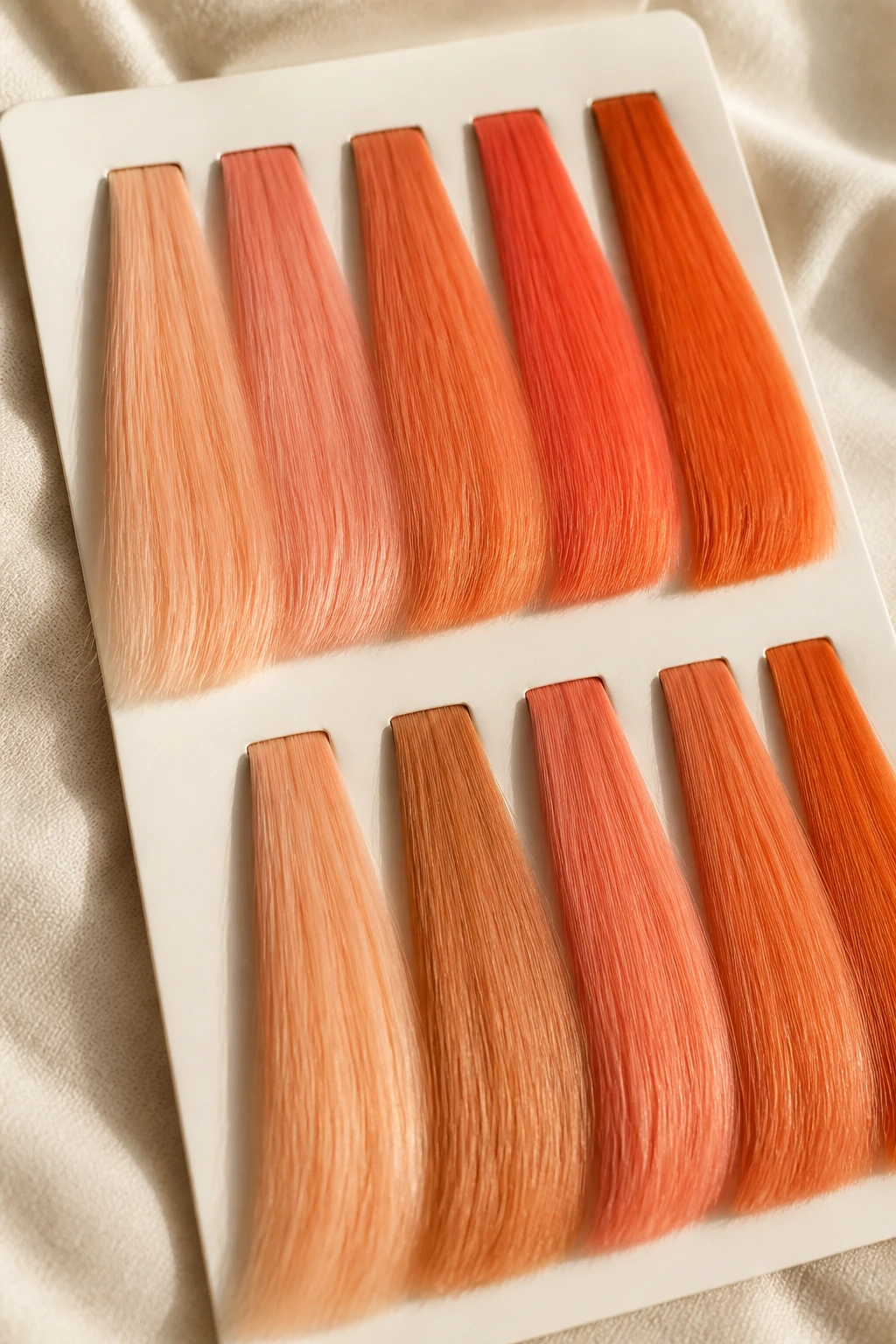
If you’re buying color for papaya at home, don’t grab the brightest orange on the shelf and hope for the best. Look for formulas described as peach, coral, apricot, rose gold, or blush copper rather than straight tangerine. Those words usually mean the pigment has a softer balance. Straight orange can be fine on deep skin or for vivid editorial looks, but on cool skin it often turns blunt fast.
Demi-permanent and semi-permanent formulas are the friendliest starting points. They deposit tone without the commitment of permanent copper, which matters if you’re experimenting. If your hair is dark, remember that color alone won’t create papaya. You’ll need clean lift first, usually to a level 8, 9, or 10 depending on how translucent you want the result. Poor lift gives papaya a muddy base. Good lift lets it look like a color choice instead of a cover-up.
Watch the finish, too. A rose-beige gloss can save a shade that looks too hot under bathroom lighting. If your hair tends to go yellow, a tiny amount of violet in the toner can help, but don’t overdo it or the papaya turns dusty. That’s a real line to walk. Orange and purple do not always play nicely unless someone is steering.
How to Wear Papaya Hair Without Losing the Cool Balance
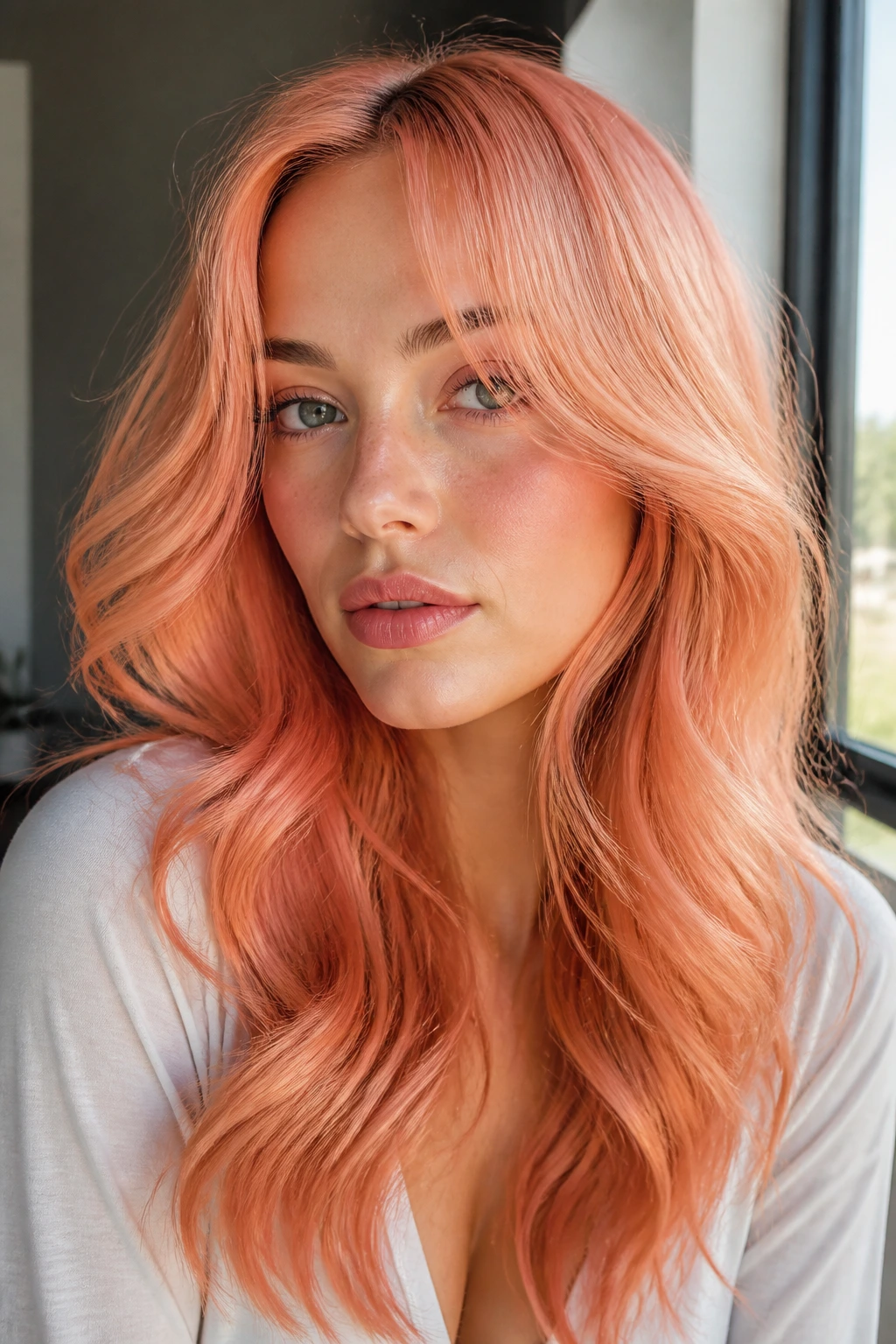
Presentation: Soft waves, curved ends, and face-framing layers show papaya at its best because they break the color into small reflective pieces. A flat ironed curtain of hair can look harsher unless the gloss is very soft.
Companion Colors: Cool makeup helps the shade make sense. Berry blush, mauve lipstick, charcoal liner, silver jewelry, black sweaters, and crisp white tees all sit well next to papaya when the tone is peachy rather than pumpkin.
Parting and Shape: A center part gives the color symmetry, while a deep side part can make the face frame feel more dramatic. If your skin is very fair and cool, a shadow root or darker brow shape helps keep the hair from taking over.
Balance: The brighter the papaya, the cleaner the rest of the look should be. That doesn’t mean plain. It means the face needs a little cool contrast so the hair looks like a choice, not an accident.
Additional Ways to Make Papaya Feel Richer
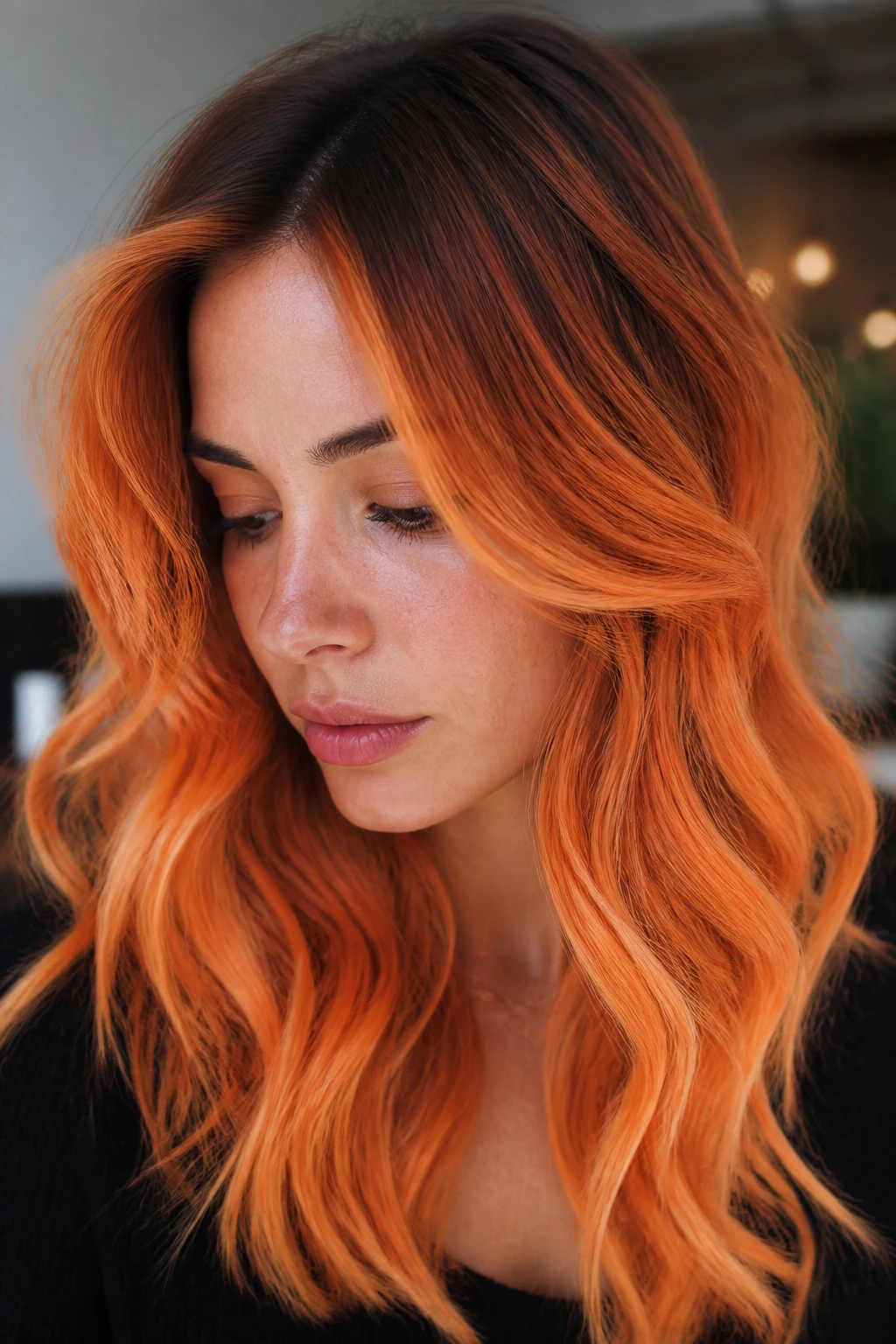
Tone Enhancement: Ask for a glaze with rose, beige, or pearl in the final 5 to 10 minutes of processing. That small step can pull the color back from orange and into soft coral territory.
Customization: Curly hair usually wants slightly deeper roots and brighter ends, while straight hair can carry a cleaner, more uniform peach sheen. Fine hair often looks fuller with ribbon placement; thick hair usually benefits from more blended panels.
Serving Suggestions: Hair accessories matter more than people admit. Silver clips, black headbands, pearl pins, and matte claw clips all help the color feel grounded. Even a plain white tee can make papaya look sharper than a busy patterned top.
Make-It-Yours: If you love drama, increase the coral. If you want something quieter, add beige and smoke. If your closet is full of cool neutrals, stay on the peach side instead of the orange side.
Common Mistakes That Make Papaya Hair Look Too Hot
-
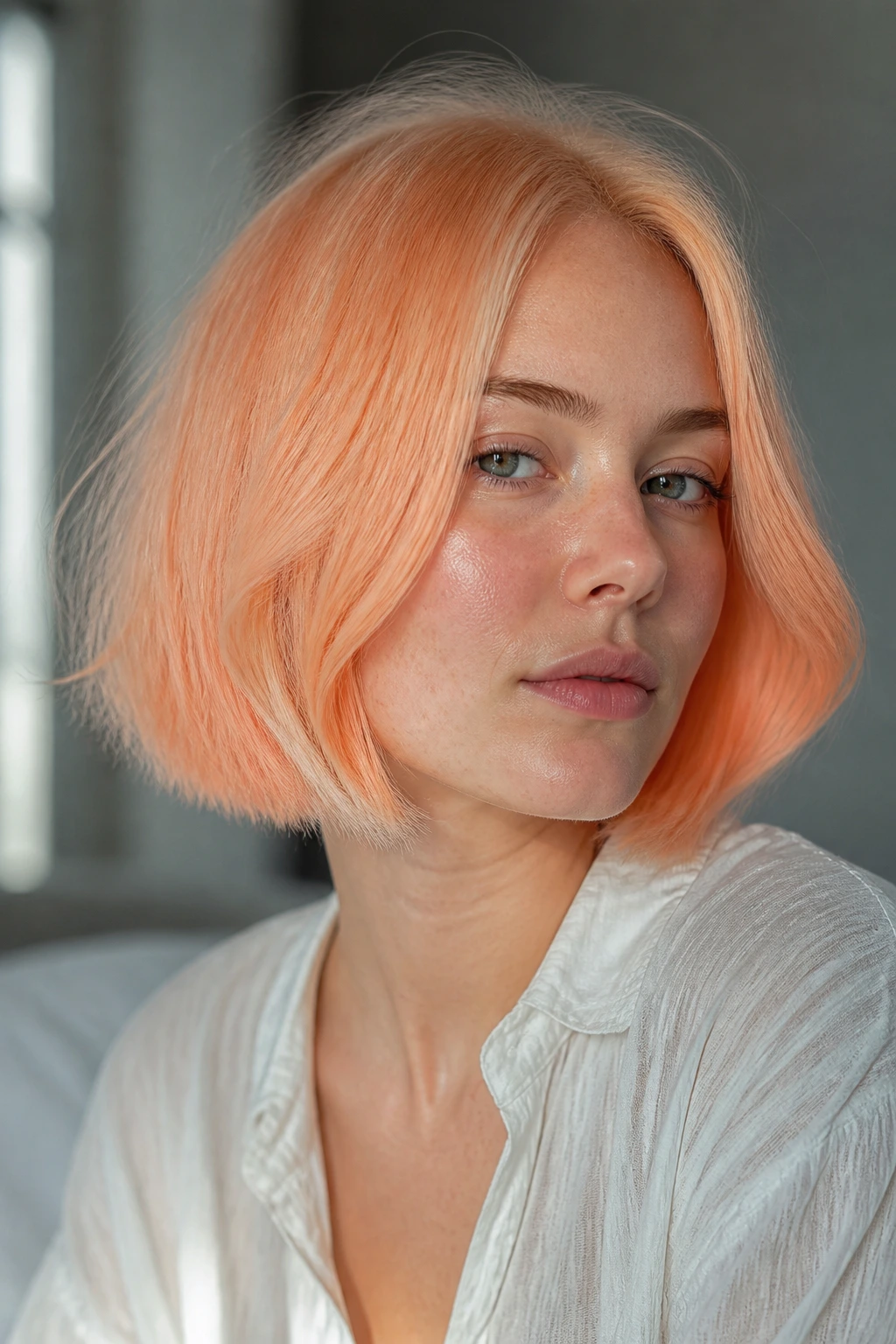
Choosing pure orange instead of peach-orange: The hair can start looking pumpkin-like under indoor light. Ask for papaya, apricot, or coral instead of true copper.
-
Skipping the root shadow on cool skin: A bright color starting right at the scalp can make the face look washed out. A neutral or smoky root softens that contrast.
-
Using purple shampoo too often: It can mute the warmth so much that the shade turns dull and gray. Use it sparingly, only when the hair starts drifting yellow.
-
Ignoring porosity: High-porosity hair grabs pigment fast and can go darker or hotter than expected. A quick strand test saves a lot of regret.
-
Styling with too much heat: Repeated high heat can push papaya warmer and fade the gloss faster. Lower settings and a heat protectant keep the tone cleaner.
Variations and Adaptations to Try
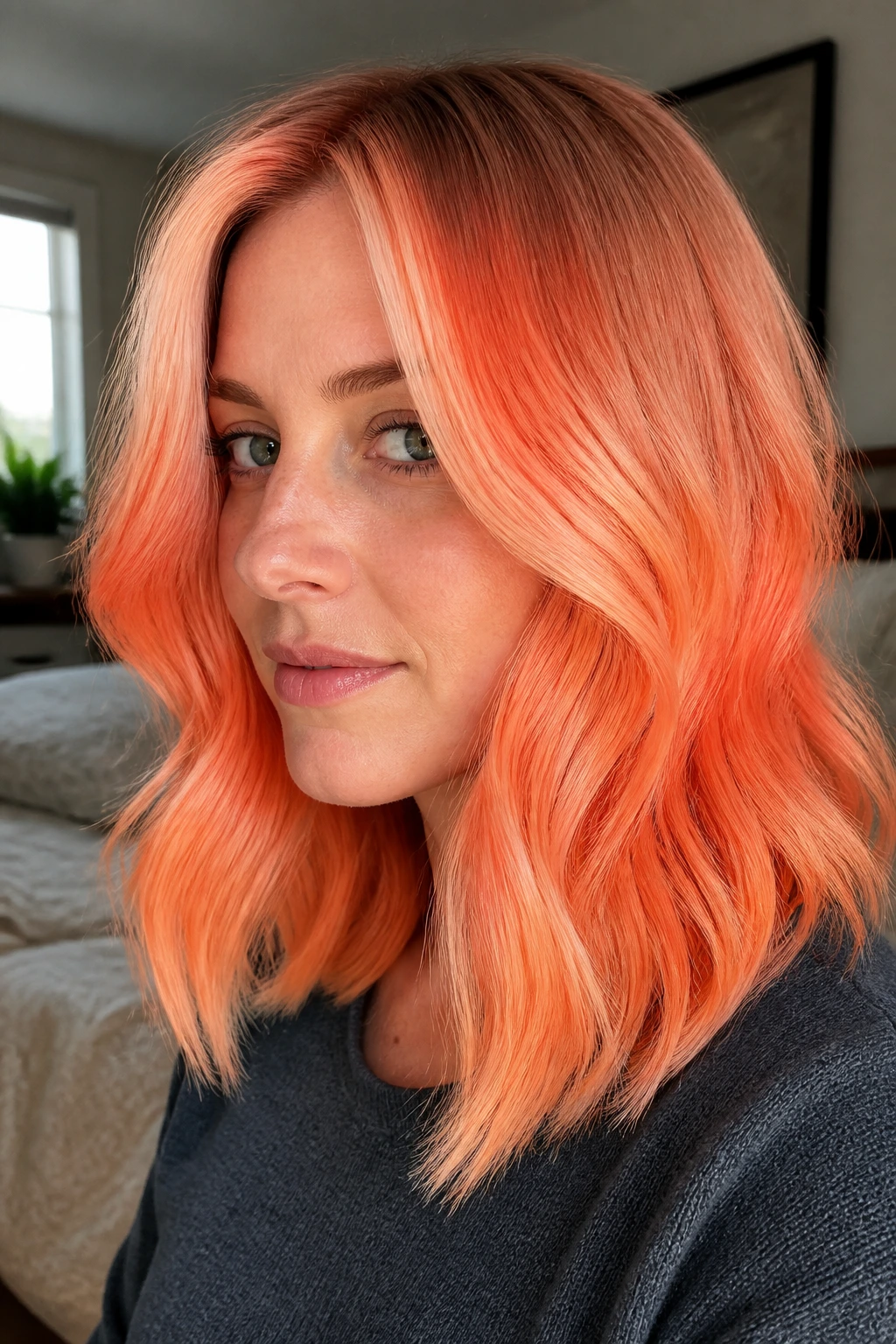
Gloss-Only Papaya: Best if you already have light blonde hair and want a sheer peach layer rather than a full color change. It fades gently and keeps the maintenance light.
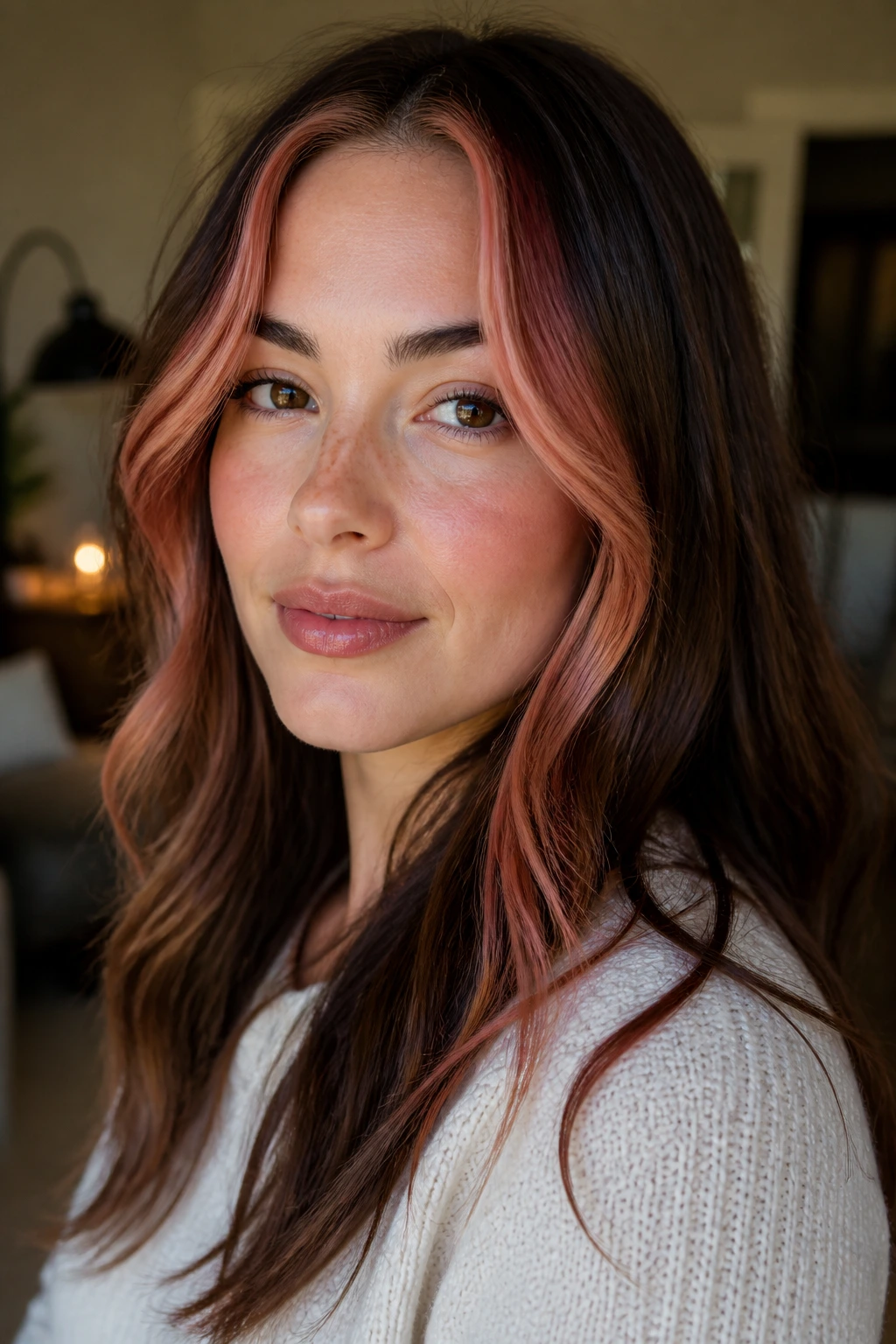
Brunette-Friendly Papaya Veil: Ideal for dark hair that only wants a hint of warmth. The papaya sits in ribbons or on the ends, leaving most of the base cool and deep.
Curly Ribbon Papaya: Perfect for textured hair because the curl pattern breaks up the warmth naturally. Use thin painted pieces so the color doesn’t overwhelm the shape.
Smoky Editorial Papaya: Great if you like a cooler, moodier finish. Add beige, taupe, or pearl to keep the orange undertone restrained.
High-Brightness Papaya: For people who want more pop than subtlety. Keep the skin balance with a neutral root and a cool makeup palette so the hair doesn’t overpower the face.
How to Keep the Shade Fresh Between Salon Visits
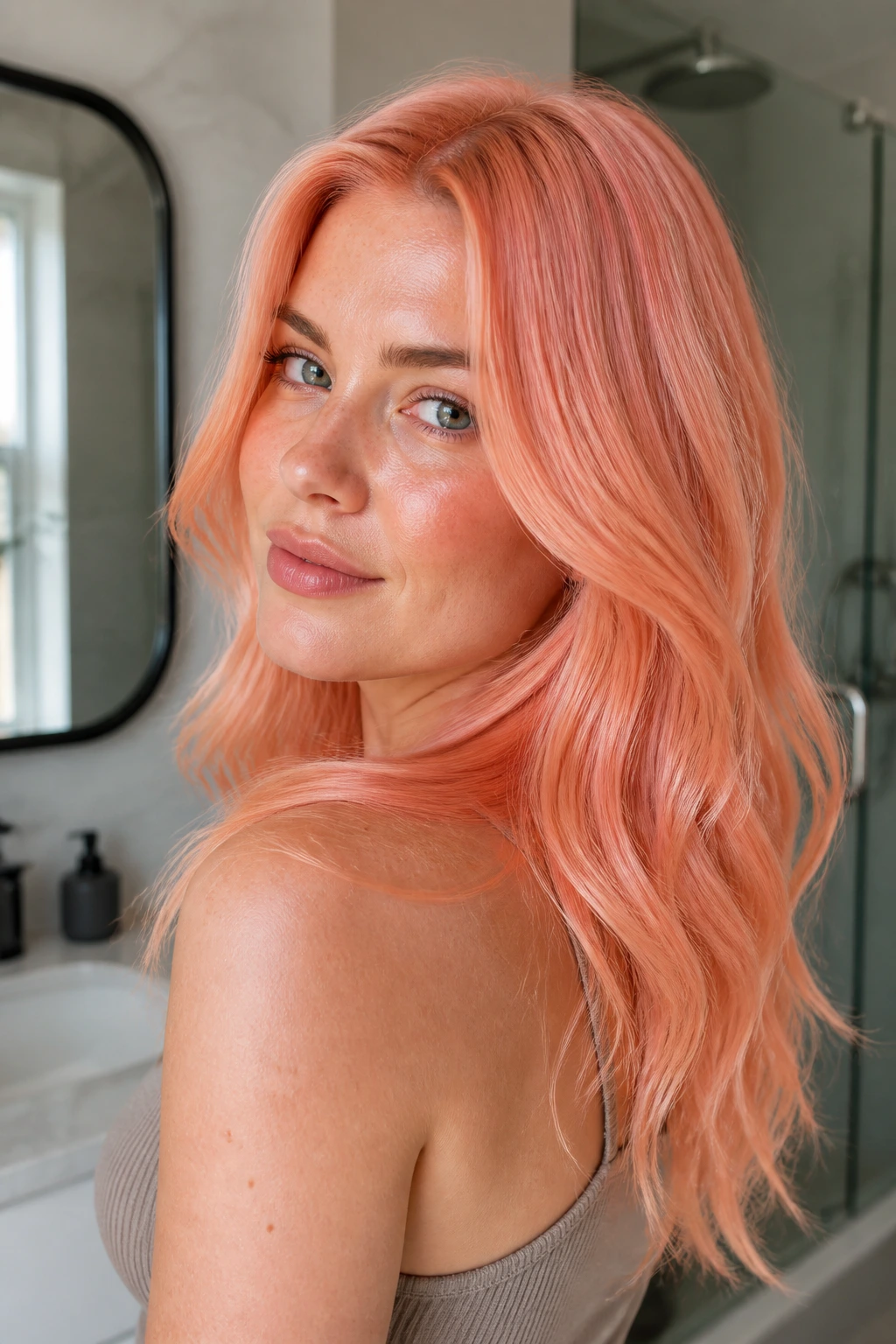
Papaya fades faster than darker dyes because the peach and coral pigments are lighter and more translucent. That isn’t a flaw. It’s just the nature of the color. Most people do well with a refresh every 4 to 8 weeks, depending on how bright they wear it and how often they wash.
A cool-water rinse helps. So does washing two or three times a week instead of every day, if your scalp allows it. Use a color-safe shampoo, then follow with a conditioner that is either pigmented or at least very smoothing. If your ends start looking yellow instead of peach, that’s the moment for a gloss, not a full recolor.
Hot tools should be used with restraint. A flat iron at high heat can flatten the shine and make the color fade unevenly. If you must use heat, protect the hair first and keep the temperature as low as your texture allows. Low heat. More passes only when necessary. That’s usually the safer route.
Frequently Asked Questions
Will papaya hair color work on very fair cool skin?
Yes, but the shade should lean peach, rose, or apricot rather than bright orange. Very fair cool skin usually looks best when the papaya has a soft root shadow or a beige glaze to stop the color from sitting too close to the face.
Can I wear papaya hair color if my hair is dark brown?
You can, but you’ll need lift first if you want the color to show as papaya instead of muddy red. On dark brown hair, the safest route is usually balayage, ombré, or peekaboo panels so you can keep some depth at the root.
How do I stop papaya from turning coppery?
Use a cooler gloss with beige, rose, or pearl in it, and avoid too much heat and hard water. If the shade starts getting orange-heavy, a salon gloss is usually better than layering more shampoo or conditioner at home.
Does papaya fade fast?
It usually fades faster than brown or deep red because the pigments are lighter and softer. Washing less often, using color-safe products, and booking gloss refreshes helps the color stay peachy instead of dull.
What makeup looks best with papaya hair and cool undertones?
Berry blush, mauve lipstick, cool taupe eyeshadow, and soft black liner tend to work well. Blue-based pinks and muted plums usually keep the whole look balanced better than warm coral makeup on warm skin.
Is papaya better as a full color or as highlights?
Highlights or face-framing pieces are easier if you’re nervous, and they’re often more flattering on cool skin because the warmth is controlled. Full color works when the shade is softened enough with smoke, beige, or rose and the base isn’t too yellow.
What if my papaya shade looks too bright after the appointment?
Give it a wash or two and let the tone settle before panicking. If it still feels too hot, ask for a cooler gloss rather than trying to fix it with strong purple shampoo, which can flatten the color too much.
Can curly hair handle papaya without looking frizzy?
Absolutely. Curly and coily hair often makes papaya look richer because the texture breaks the color into smaller pieces. A good curl cream and careful sectioning during color application keep the tone from reading patchy.
The Shade That Knows When to Pull Back
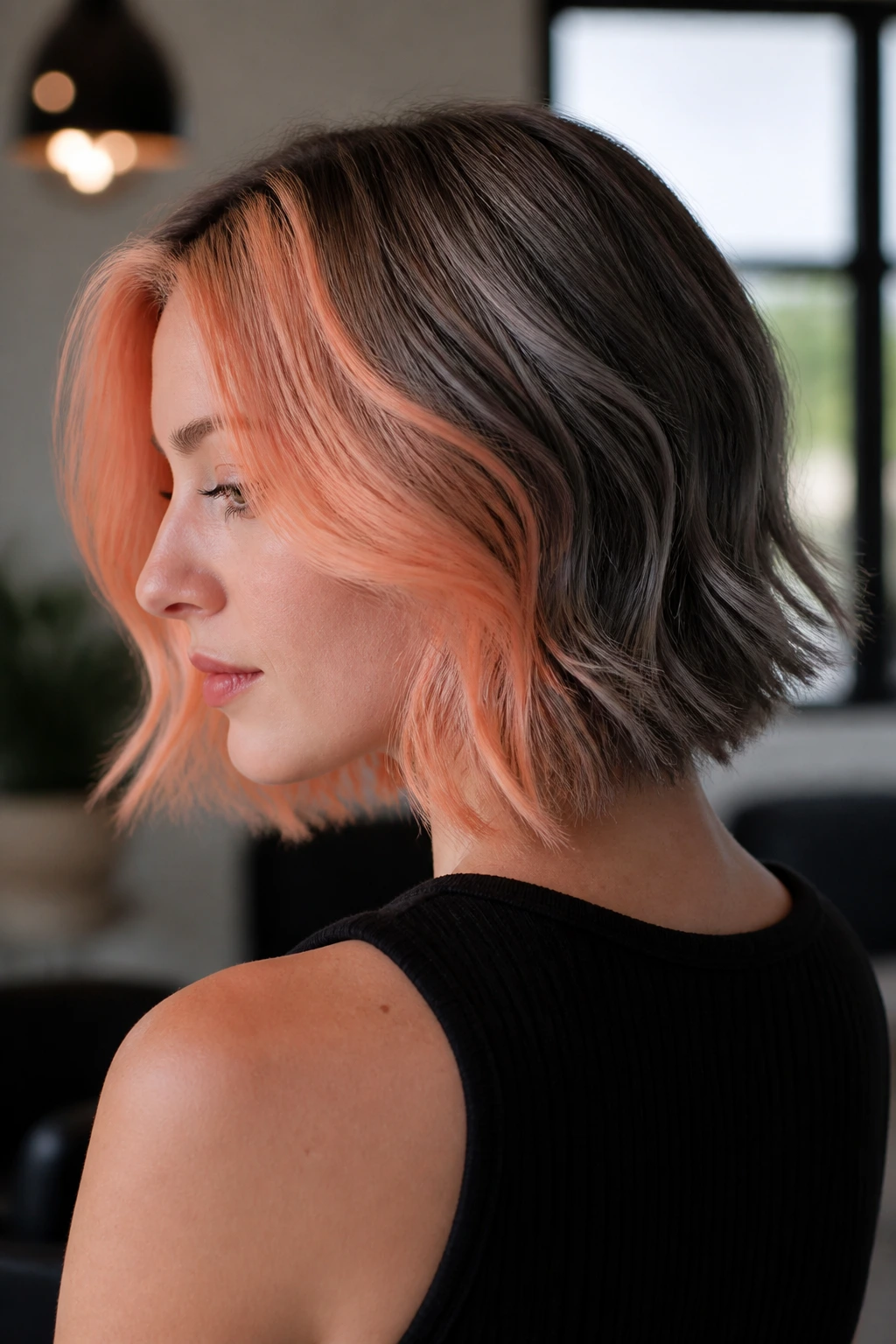
Papaya hair color is at its best when it behaves. That sounds odd, maybe, but it’s true. The prettiest versions for cool skin tones are the ones that keep a little peach in the front, a little smoke in the back, and enough shine to make the color feel alive without turning the face orange.
That’s why there are so many ways to wear it. A bob can go sleek and champagne. A shag can go dusty and broken up. Curls can carry rosy papaya without feeling heavy. The shape, the finish, and the placement do just as much work as the pigment itself.
If you’re heading to a color appointment, bring shade references that show both the tone and the placement you want. That one detail saves a lot of miscommunication. Papaya should flatter cool skin, not fight it, and when the balance is right, it does exactly that.