



Dark hair and gray growth can look brutally obvious when the cut is wrong. The line sits there at the part, the temples flash white, and every grow-out week feels longer than it ought to. Get the shape right, though, and the same contrast reads like a deliberate stripe, a soft halo, or a silver ribbon that looks considered instead of accidental.
That part gets missed a lot. Gray strands are often drier, a little wirier, and more willing to stick out if the haircut is too blunt or too heavily thinned. Dark hair around them can either trap the contrast in a hard block or break it up with movement and length changes. The haircut does most of the emotional work; color only gets the blame.
These gray hairstyles for dark hair lean into that fact. Some keep length and use layers to blur the line. Others go short and clean, which is my favorite move when someone is tired of watching root growth every morning. The good versions do not hide the change — they shape it, and that’s a much better deal.
Why These Gray Transition Cuts Work So Well on Dark Hair
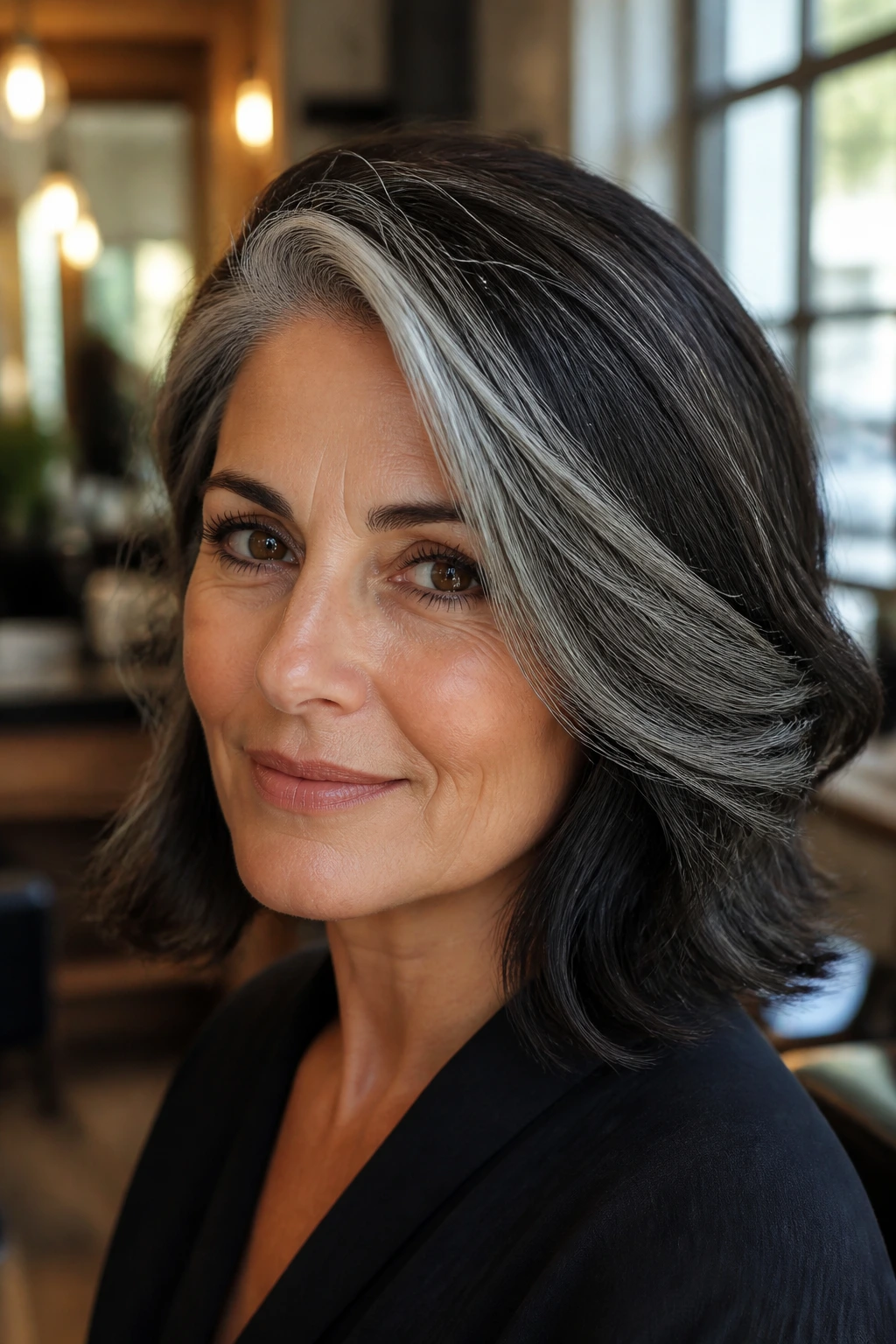
-
They interrupt the hard line: Dark roots growing into gray can draw a straight visual stripe, and cuts with layers, bends, or side parts break that stripe up before it takes over the whole look.
-
They make coarse silver strands behave: Gray hair often feels rougher and puffier than pigmented hair, so shapes with a controlled perimeter and a little internal movement keep the top from exploding outward.
-
They cut down on salon panic: Shorter bobs, pixies, and shaped lobs make the grow-out look planned for longer, which buys you time between trims without that obvious “I meant to book sooner” vibe.
-
They let the silver act like a design feature: A strong perimeter, a face frame, or a clean crop turns gray streaks into highlights you didn’t have to pay for.
-
They fit different styling moods: You can wear these cuts sleek, air-dried, diffused, tucked behind the ears, or blown out — and the gray still reads on purpose.
1. Shoulder-Skimming Lob With a Soft Center Part
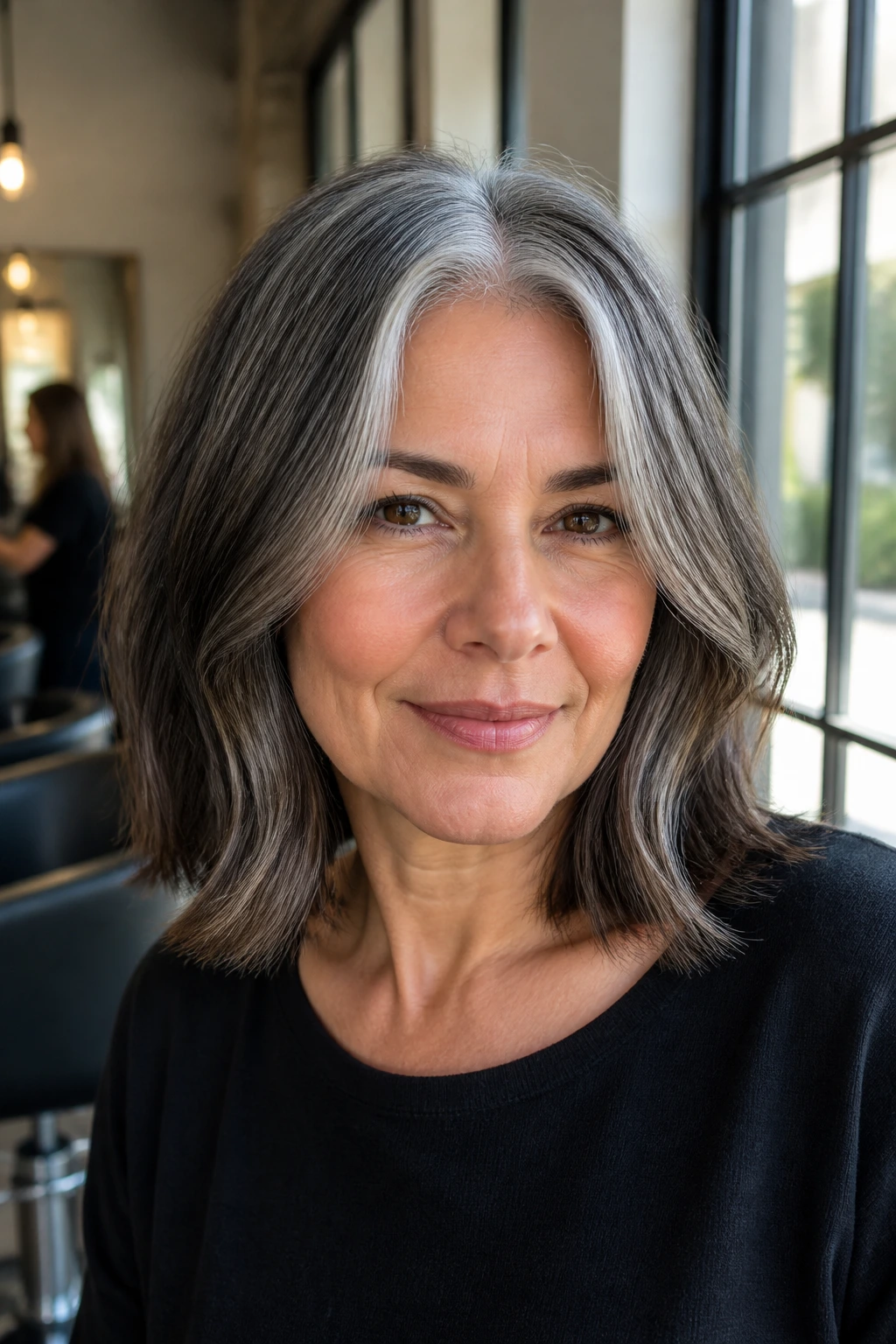
A shoulder-skimming lob is one of the safest bets when dark hair starts going gray in uneven patches. The length lands just below the collarbone, which gives the silver strands room to fall in clean vertical lines instead of sitting in a heavy curtain that exposes every inch of regrowth.
Why It Works
Ask for soft internal layers and a perimeter that stays full at the ends. That keeps the shape from collapsing when the hair dries, and it stops coarse gray strands from sticking out at the crown like little antennae.
- Best on: straight to slightly wavy hair that needs movement without too much volume.
- Maintenance: a trim every 8 to 10 weeks keeps the ends from looking tired.
- Styling cue: a large round brush or a quick air-dry with smoothing cream gives the cut a bend, not a curl.
My one hard rule: keep the ends light, not wispy. The line should feel deliberate.
2. Chin-Length Blunt Bob With a Clean Edge
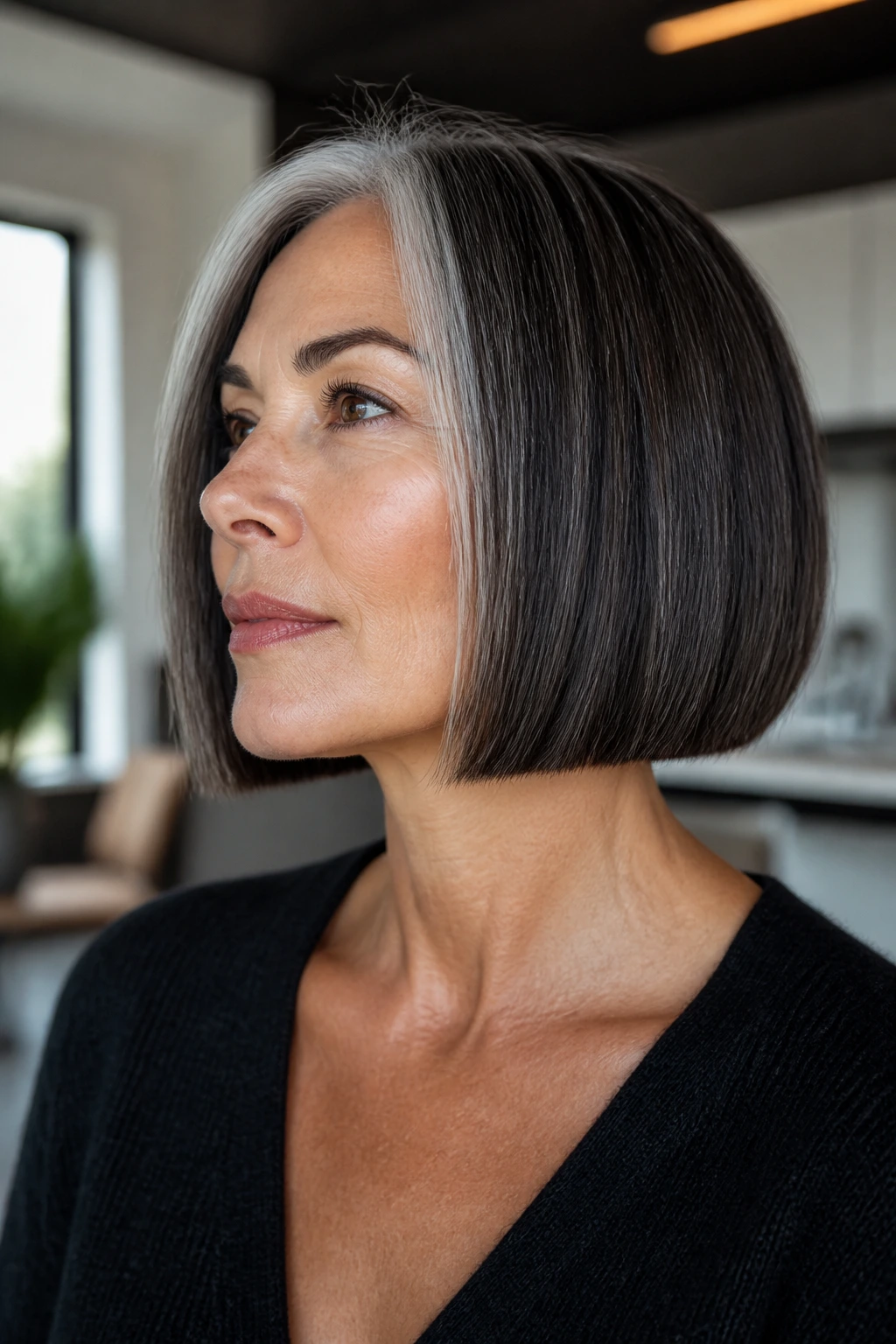
If your gray is patchy and you want the grow-out to stop looking like a problem, a blunt bob is blunt for a reason. The clean line at the chin makes the contrast between dark lengths and silver strands look graphic, not messy.
This cut works especially well when the hair is fine to medium. The blunt perimeter gives the illusion of more density, and the chin length keeps the shape close to the face so the eye sees the haircut first and the regrowth second. If your stylist wants to razor the ends into submission, push back. A tiny bevel is fine. Feathering the whole edge is not.
It also looks sharp with a side part if your temple grays are more dramatic than the crown. One side tuck behind the ear. Done. That little asymmetry keeps the style from feeling too severe.
3. Feathered Side-Part Layers That Break Up the Grow-Out Line
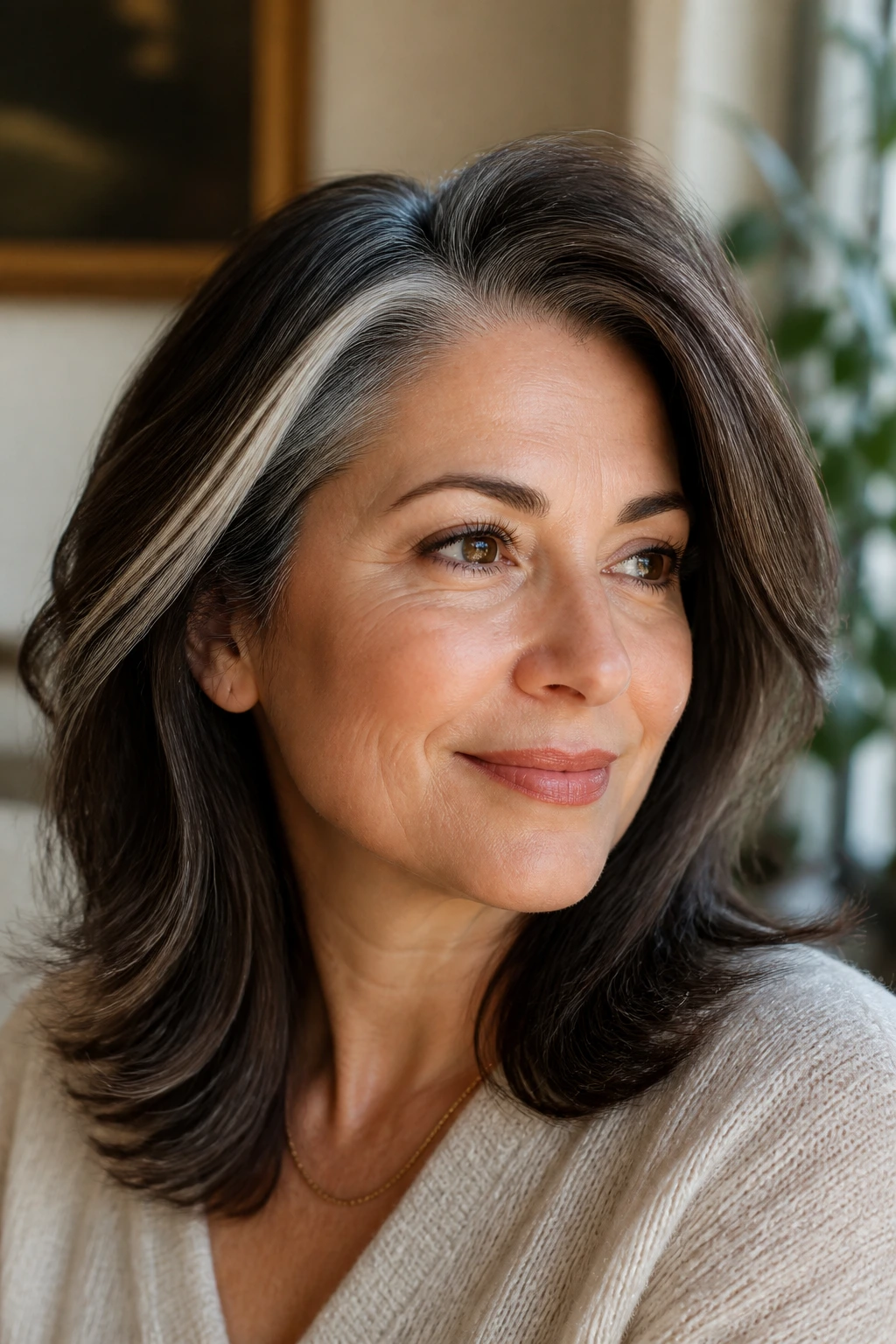
Want the gray line to stop announcing itself every time you look in a mirror? A feathered side part does a lot of quiet work. The diagonal movement pulls the eye across the face instead of straight to the root line, and the layers soften any hard contrast between dark ends and silver growth.
How to Style It
Use a light mousse at the roots and blow-dry the front away from the face with a medium round brush. That lift matters. Flat hair makes the dark-to-gray transition look wider than it really is, while a little root height makes everything blend faster.
This cut is especially kind to thick hair and temple gray. The side part leaves one side heavier, so the silver pieces don’t all sit in the same visual lane.
A quick mist of flexible spray at the end is enough. You want swing, not helmet hair.
4. Soft Pixie With Crown Lift
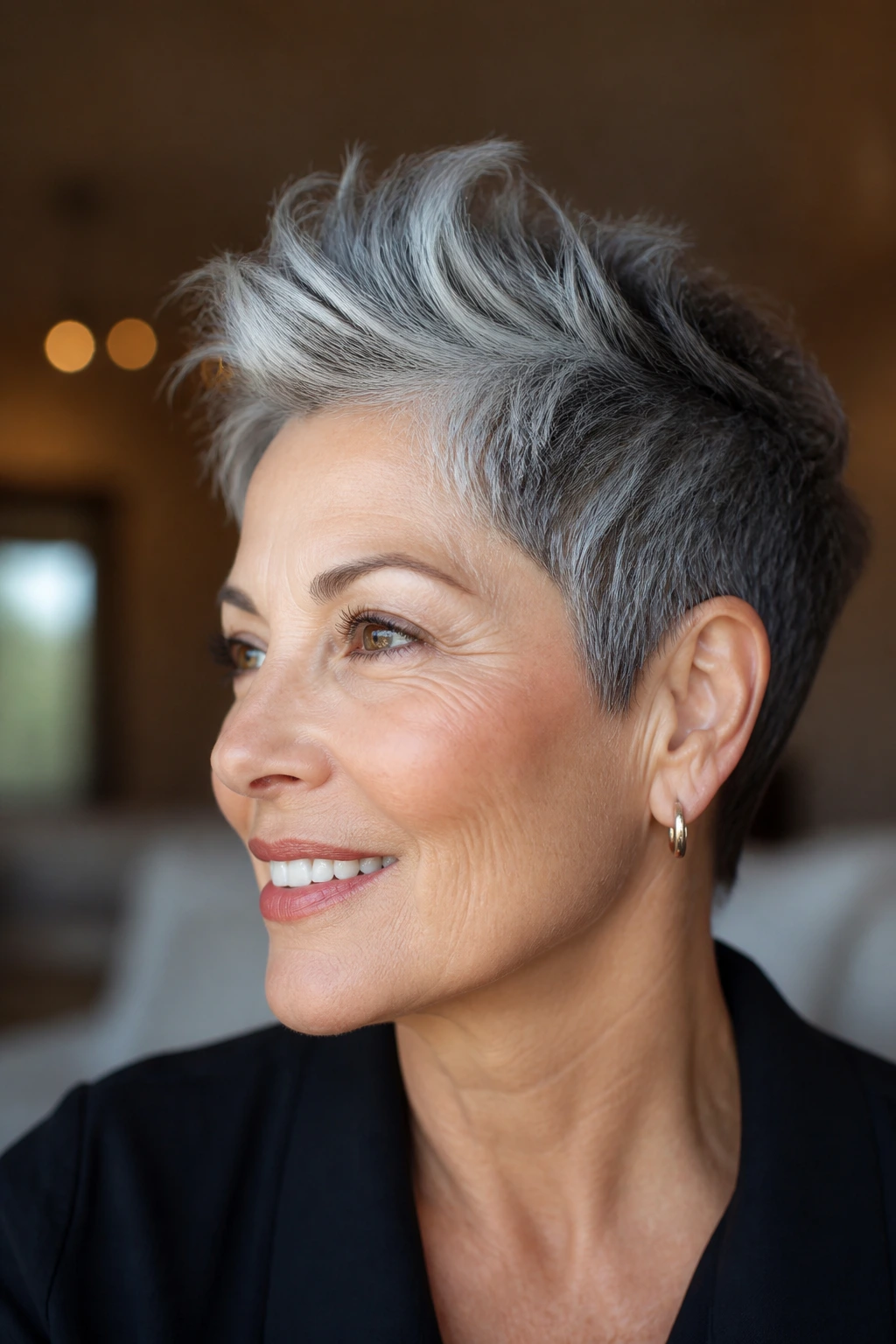
A soft pixie is the cut I recommend when the gray around the temples is getting louder than the rest of the head. Short hair removes the long regrowth line entirely, and the crown lift gives the silver a place to catch light instead of collapsing into the scalp.
The trick is keeping the top a little longer than the sides — usually 2 to 3 inches — so the cut still has shape when it dries. If the crown is flat, the gray reads like a missing patch. If the crown is lifted, it reads like a highlight zone. Small difference. Big payoff.
This one works beautifully with glasses because it keeps the face open without crowding the frames. It also behaves well on coarse gray hair, which often likes a short outline more than a long one.
5. Curly Shag With Face-Framing Fringe

Gray curls have a funny habit: they can look both softer and more unruly at the same time. That’s why a curly shag works. It gives the curl pattern room to breathe while breaking the silhouette into layers that stop the silver from forming one giant fuzzy halo.
A dry cut helps here. Wet curls hide too much, and gray curl springs up differently once it dries. Keep the face frame a touch longer than you think you need — around cheekbone length — so the silver at the front has a place to land instead of bouncing straight out.
Use a diffuser on low heat and stop fussing with the ringlets once they’re defined. The shag only looks good when it still has a little disorder in it.
6. Collarbone Cut With Invisible Layers
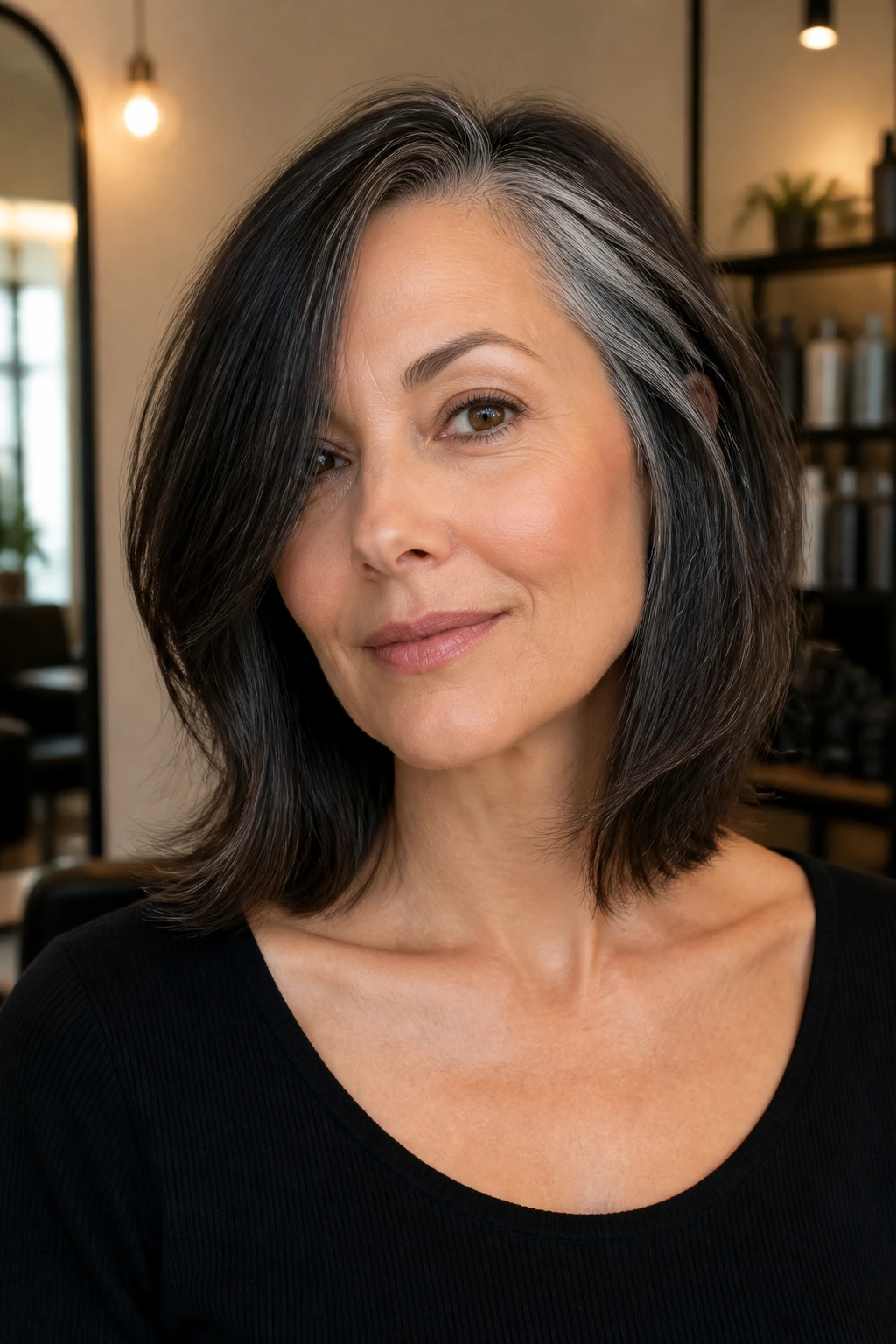
Unlike a heavy shag, this cut keeps the outside line calm and hides the movement inside the shape. That makes it useful if you want your gray growth to look like part of the texture, not the headline.
Invisible layers remove bulk where the hair needs to move, but they leave the perimeter full. On dark hair, that balance matters because too many chopped-up ends make silver look frayed. A collarbone cut keeps the length flattering without dragging the whole look down.
It’s also the kind of cut that plays well with air-drying or a fast blowout. If you want one hairstyle that can swing between polished and undone without a full restyle, this is a solid place to live.
7. Wavy Midi Cut That Air-Dries Into Bend
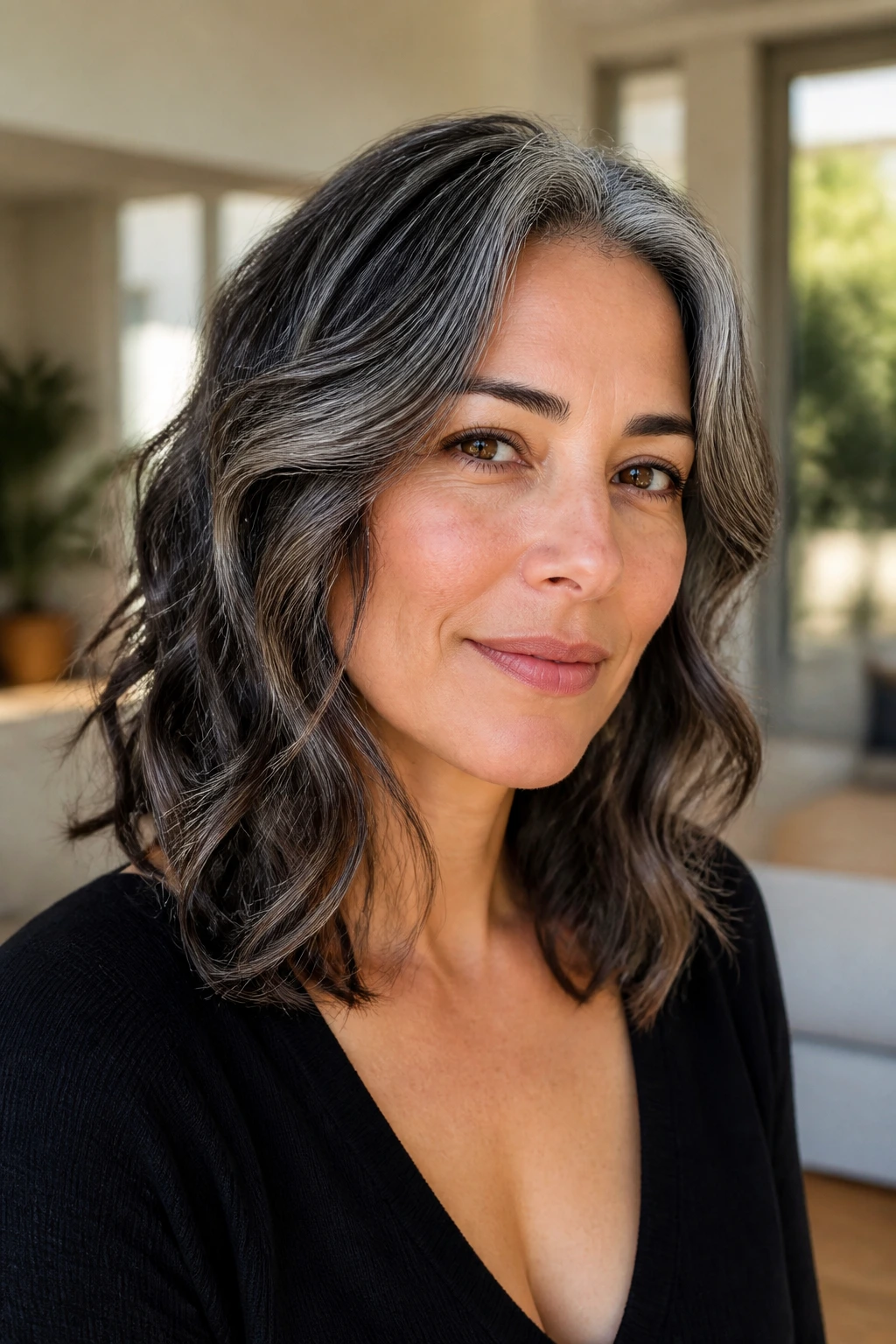
If your hair already has a slight wave, don’t fight it. A midi cut that hits between the collarbone and upper chest lets that bend show up without swallowing the silver pieces in too much length.
The real trick is leaving enough weight at the bottom so the waves don’t puff out. Gray hair can get dry and springy, and if the ends are too light, they’ll scatter. A little cream on damp hair, then a gentle scrunch, gives the wave shape while keeping the dark-and-gray mix readable.
This one feels easy in the best way. Not lazy. Easy. The cut does half the work, which is the whole point.
8. Tapered Crop With a Side-Swept Fringe
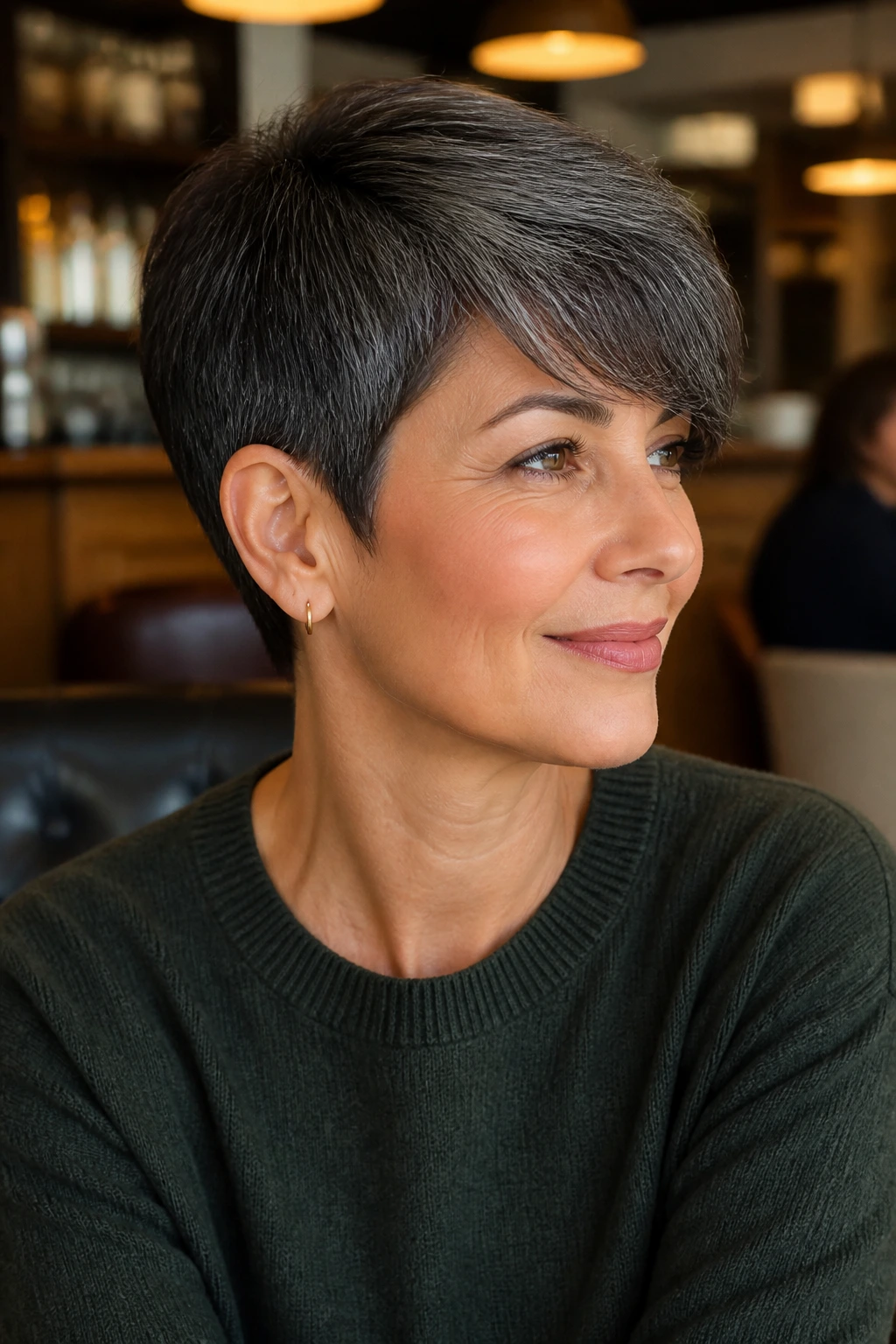
A tapered crop is for the person who wants the grow-out line to disappear into the haircut instead of being managed every day. The sides stay neat around the ears and neck, while the fringe sweeps across the forehead to blur the most obvious gray at the temples.
What to Watch For
- Keep the top long enough to move, or the cut will look too short and boxy.
- Ask for a softer nape taper if you want the style to grow out cleanly.
- Use a lightweight paste only on the top; too much product flattens the fringe fast.
This is a strong choice if you do not want to blow-dry for 20 minutes before breakfast. It’s quick, tidy, and more forgiving than a sharp crop when the silver starts to spread.
9. Silver-Streak Layered Cut
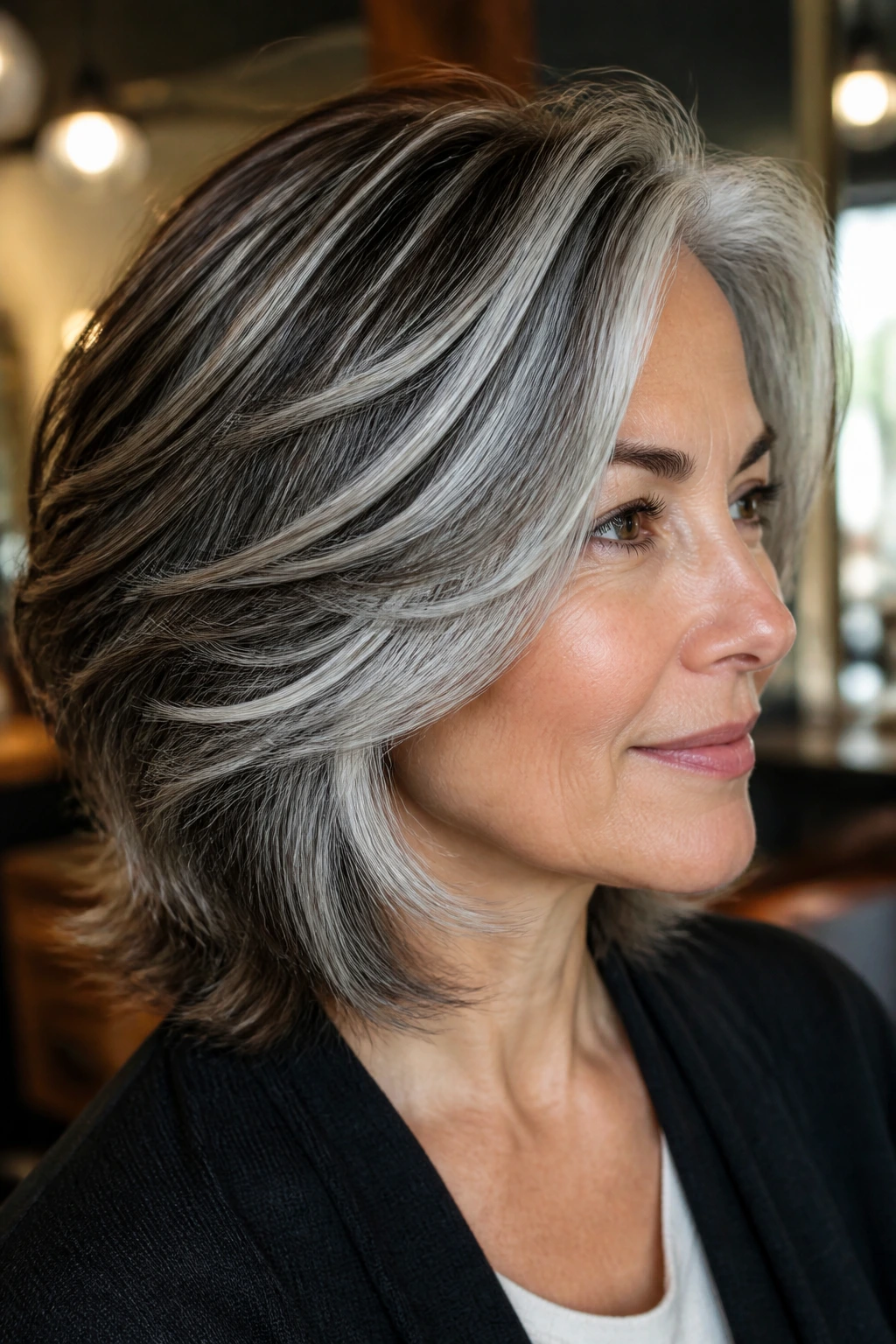
Some people want to hide the streaks. I think that’s a waste, especially when dark hair has those bright silver slices running through it like brush marks. This cut is built to make those streaks look deliberate.
The layers should follow the natural silver placement, not chop straight through it. If the streaks are mostly around the front, let the front move. If they sit through the crown, keep the top a little piecey and the perimeter smoother. That way the silver reads as a ribbon, not a mistake.
This style looks best when the texture is visible. A little bend, a little separation, no shellacked finish. The whole point is to make the contrast feel edited.
10. Sleek One-Length Lob
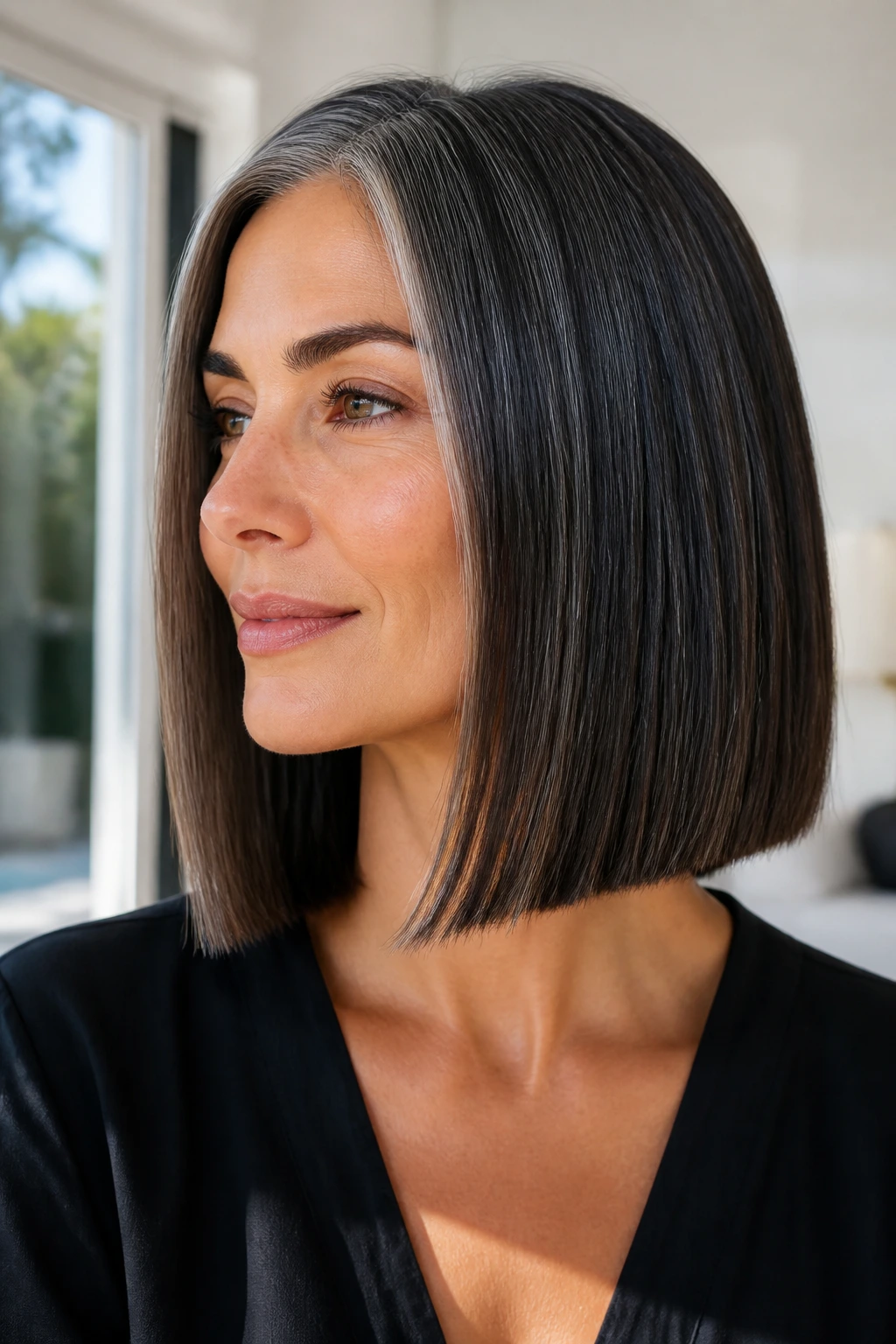
A one-length lob is the answer when you want gray hair on dark hair to look crisp instead of airy. The straight line keeps the eye on the shape, and the silver threads show up as clean flashes instead of scattered frizz.
This cut depends on shine. A smoothing cream before blow-drying and one pass of a flat iron on the ends is usually enough. Don’t overdo the iron — you’re not trying to iron the personality out of it. You’re just tightening the line.
It works especially well on thick straight hair because the weight keeps the ends from kicking out. If your hair is fine, ask for a tiny bit of bevel so it doesn’t hang like a board.
11. Tousled French Bob
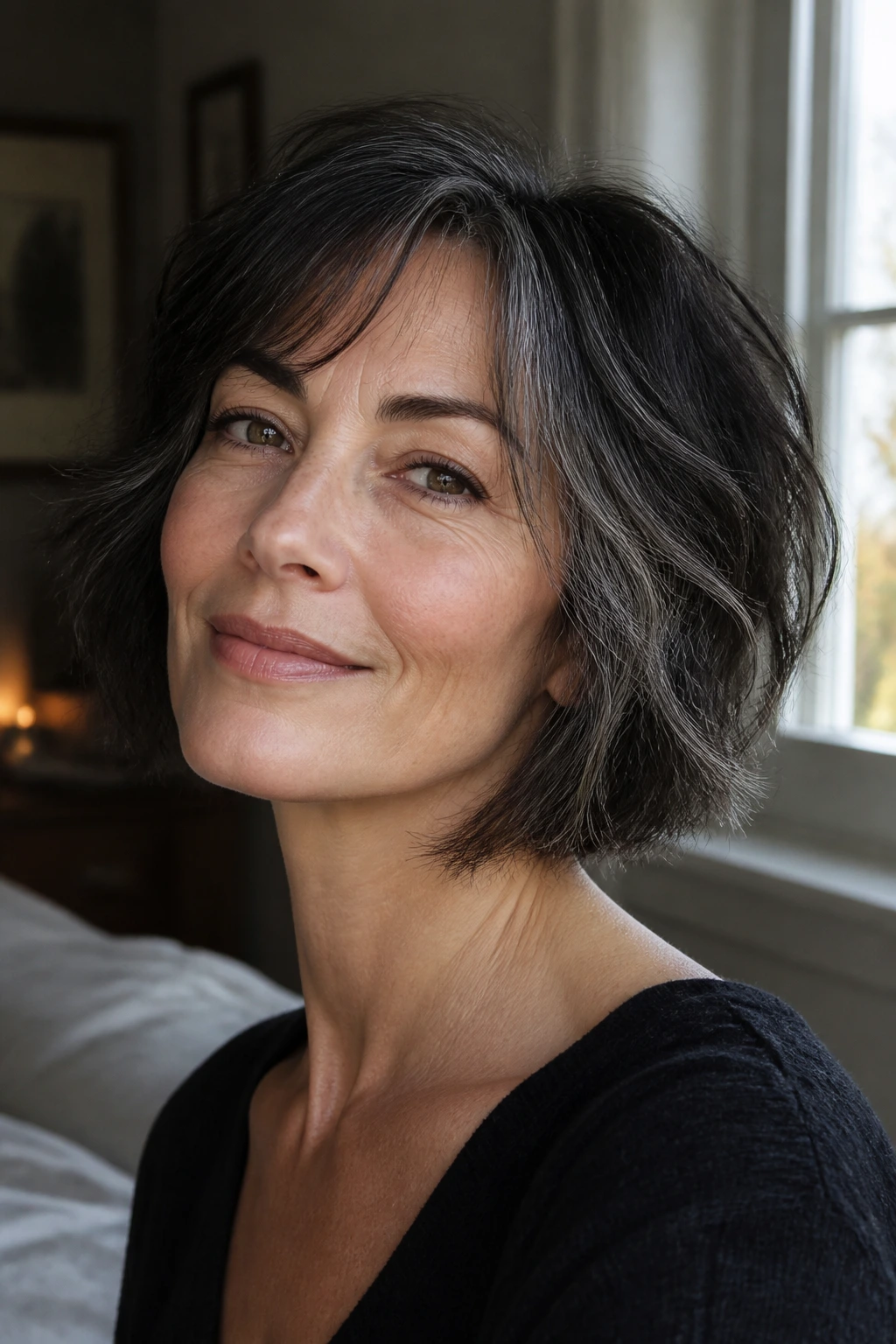
A French bob gives gray strands a slightly cheeky frame. The length usually sits around the jaw, which means the face gets all the attention and the dark-to-silver mix reads like texture, not regrowth panic.
The best version is a little undone. Think soft bend, not beach wave. If the hair is too curled, the shape gets too fluffy and the gray loses definition. If it is too flat, the cut can feel severe. Somewhere in the middle is where this lives.
A small fringe can be a good addition here, especially if the front grays are more noticeable than the rest. Keep it soft, not blunt, unless you like being stared at by your own bangs. That sounds dramatic. It is also true.
12. Mushroom Bob With Micro-Bangs
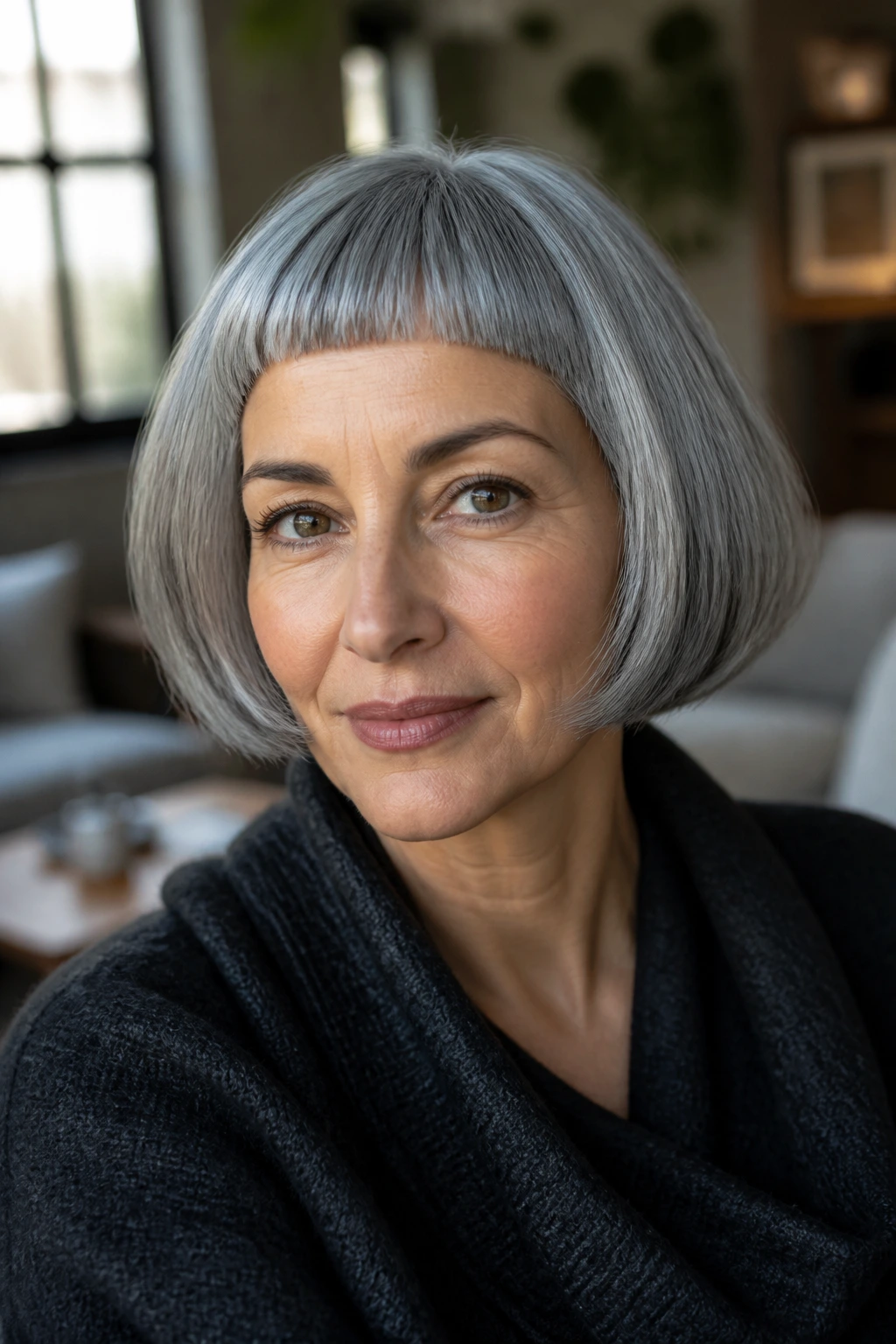
This is not a shy haircut. The rounded mushroom shape and tiny bangs turn gray growth into part of the geometry, which is exactly why it works on some dark-haired heads so well. The silver doesn’t need to hide; it gets folded into the shape.
The micro-bang version is strongest on straight, dense hair with a bit of attitude. You need precision here. Too much softness and the silhouette collapses; too much bluntness and it becomes costume-y. The line over the forehead should stay crisp, while the sides curve softly around the cheekbones.
I like this look on people who are tired of “trying to blend in.” It doesn’t blend. It frames.
13. Long Layers With Curtain Bangs
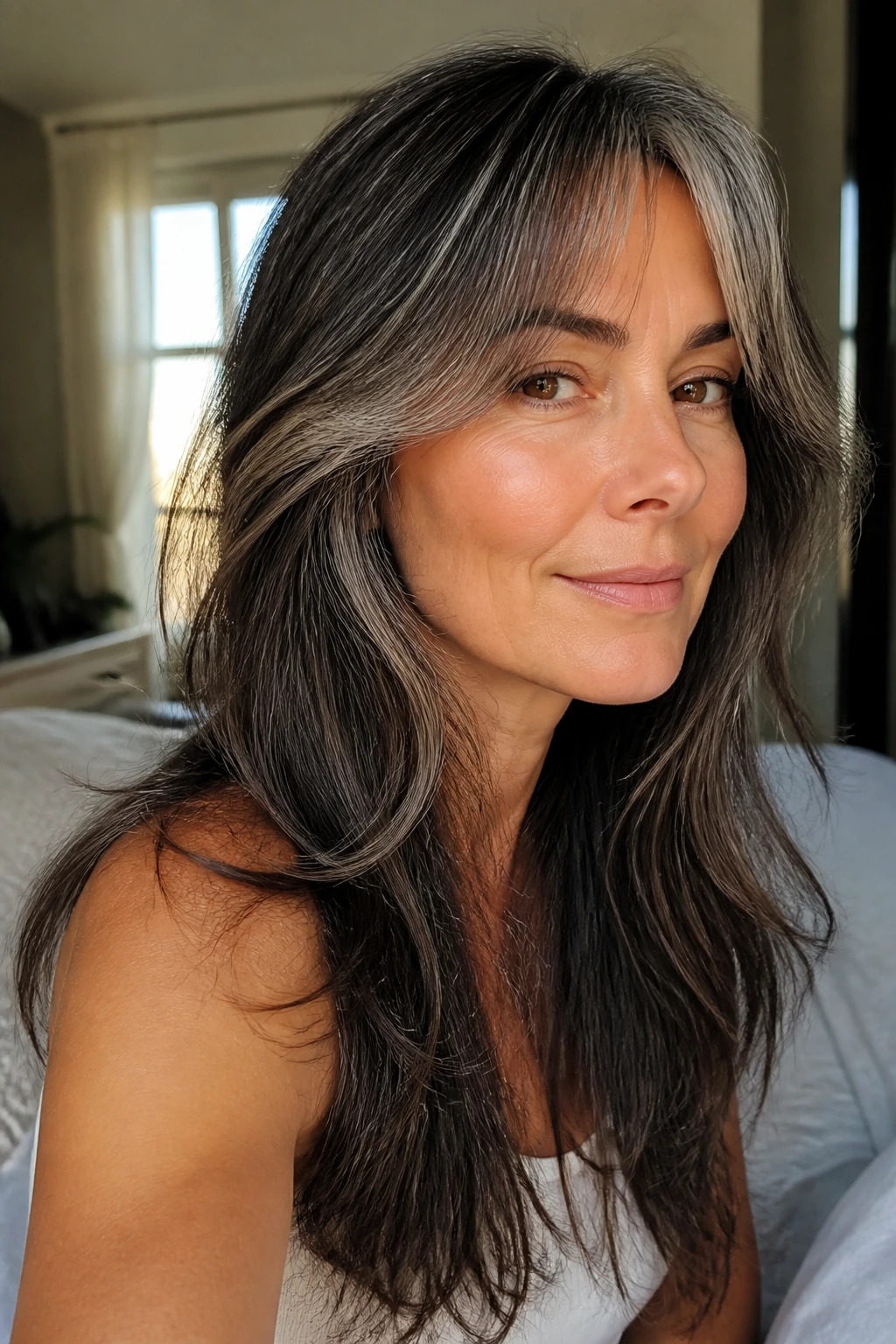
Still want length? Good. You do not have to chop everything off to make gray hair on dark hair look intentional. Long layers with curtain bangs keep the front open and let the silver pieces move instead of sitting in one long, dark sheet.
Ask Your Stylist For
- Curtain bangs that start around the cheekbone, not the eyelashes.
- Long internal layers that remove weight from the mid-lengths.
- A soft face frame that keeps the transition around the hairline from looking blunt.
This cut is especially useful if your gray is concentrated near the temples or front hairline. The parted fringe blurs that line just enough that you notice your eyes first. That is the point.
14. Textured Pixie-Bob
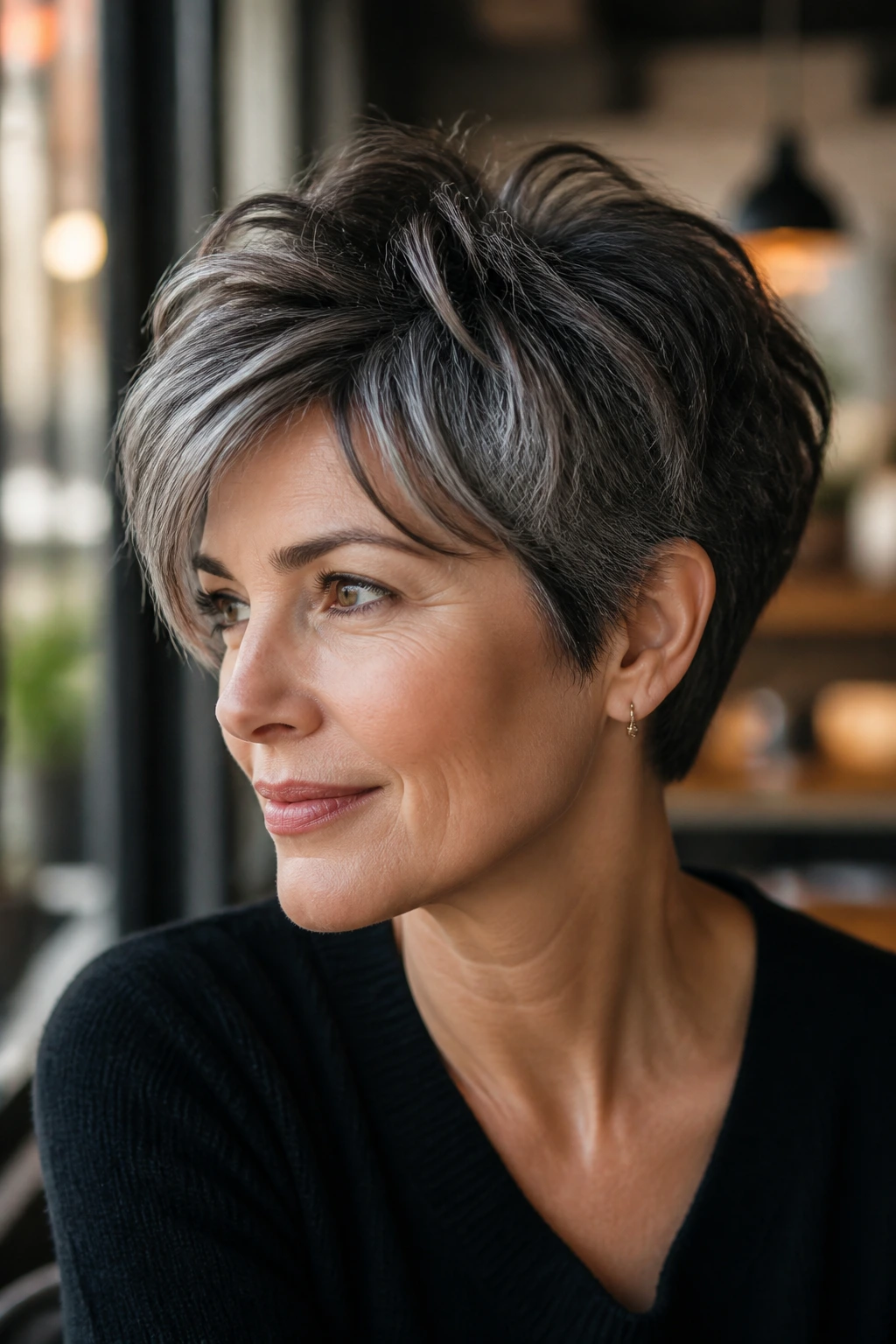
A pixie-bob sits in the middle ground between cropped and classic bob, and that middle ground is useful when your gray is coming in fast but you are not ready to go very short. The back stays compact, the top has enough length to lift, and the silver reads as texture.
The cut works best when the stylist pieces the top rather than stacking the back too heavily. Too much stacking can make gray hair puff outward at the crown. A softer shape keeps the silhouette tidy while still giving you enough length to tuck behind the ear or sweep to one side.
This is one of my favorite transition cuts for people who want a haircut that still feels like hair, not a helmet.
15. A-Line Bob That Tapers Toward the Face
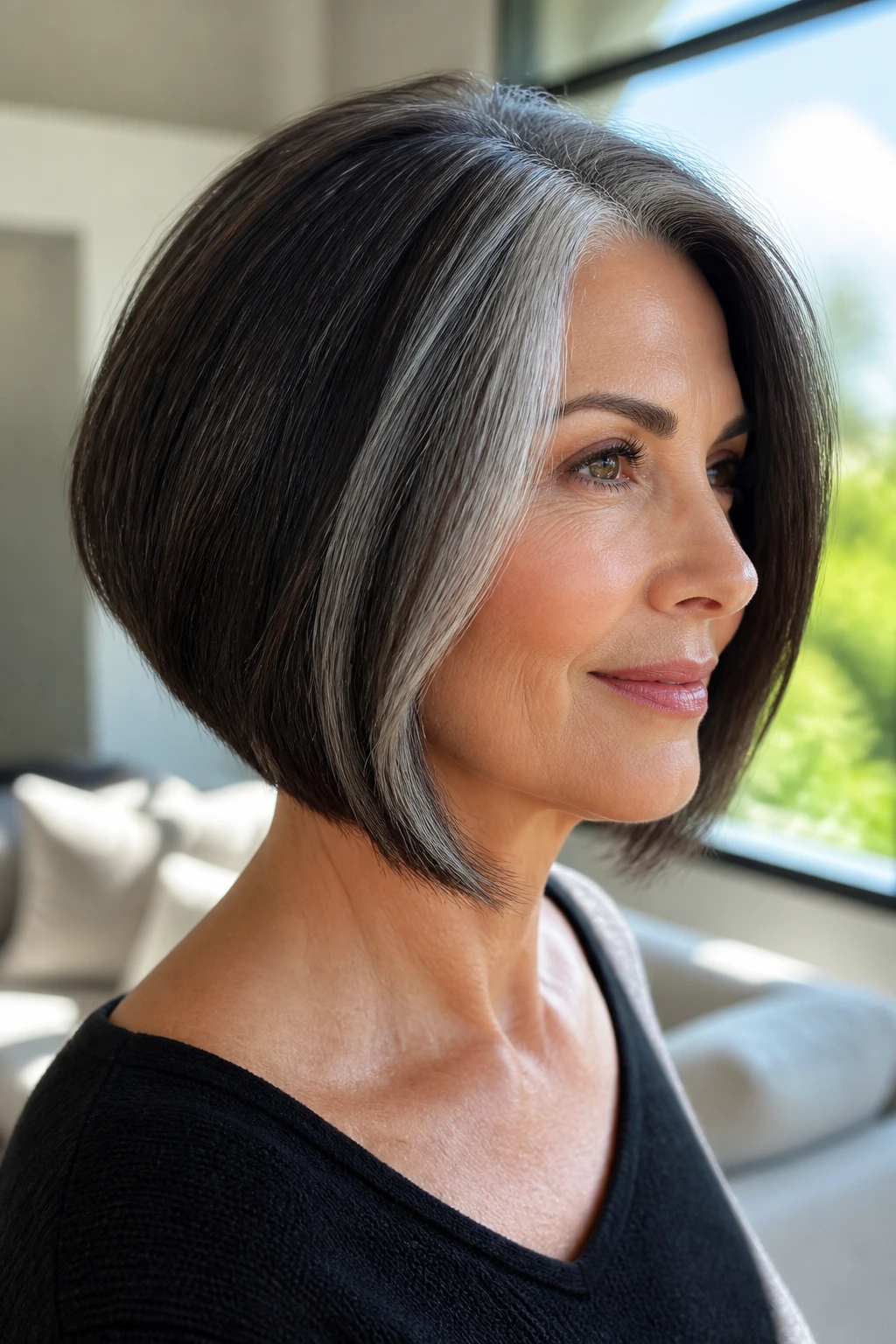
An A-line bob gives you a little drama without making the cut hard to wear. The back sits shorter, the front hangs longer, and that angle draws the eye downward, which softens the contrast of gray at the root.
That front length also frames the jaw in a nice way when the silver is concentrated around the temples. You get a gentle visual taper instead of a hard horizontal line. If your hair is thick, the angle helps remove bulk. If it is fine, keep the angle subtle so the front doesn’t look stringy.
Blow it under slightly at the ends and the whole thing feels cleaner. It’s a small detail, but small details are what keep gray transitions from looking accidental.
16. Shoulder-Length Shag With Controlled Volume
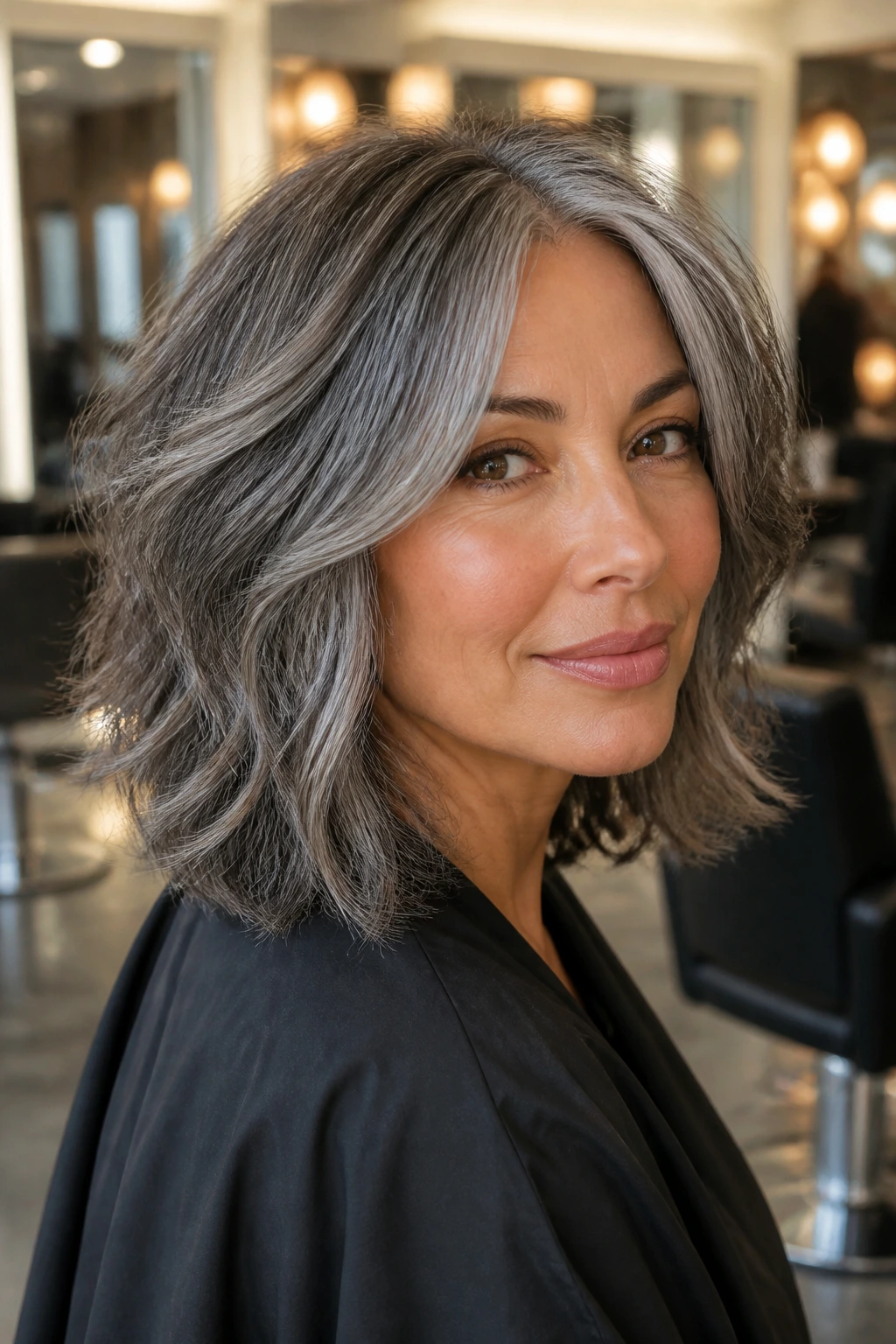
A shoulder-length shag is for hair that needs shape more than it needs restraint. Gray strands can stick out and create a soft halo around the head, and a shag gives that halo a structure instead of letting it sprawl.
The key is controlled volume. You want lift at the crown and movement around the face, but not a pile of disconnected ends. Ask for layers that start below the cheekbone so the upper section stays strong. That keeps the gray from breaking the silhouette in half.
It’s a good cut for humid weather, for wavy texture, and for anyone who hates spending forever with a round brush. Some hair just wants to move. This cut lets it.
17. Rounded Afro With Defined Edges
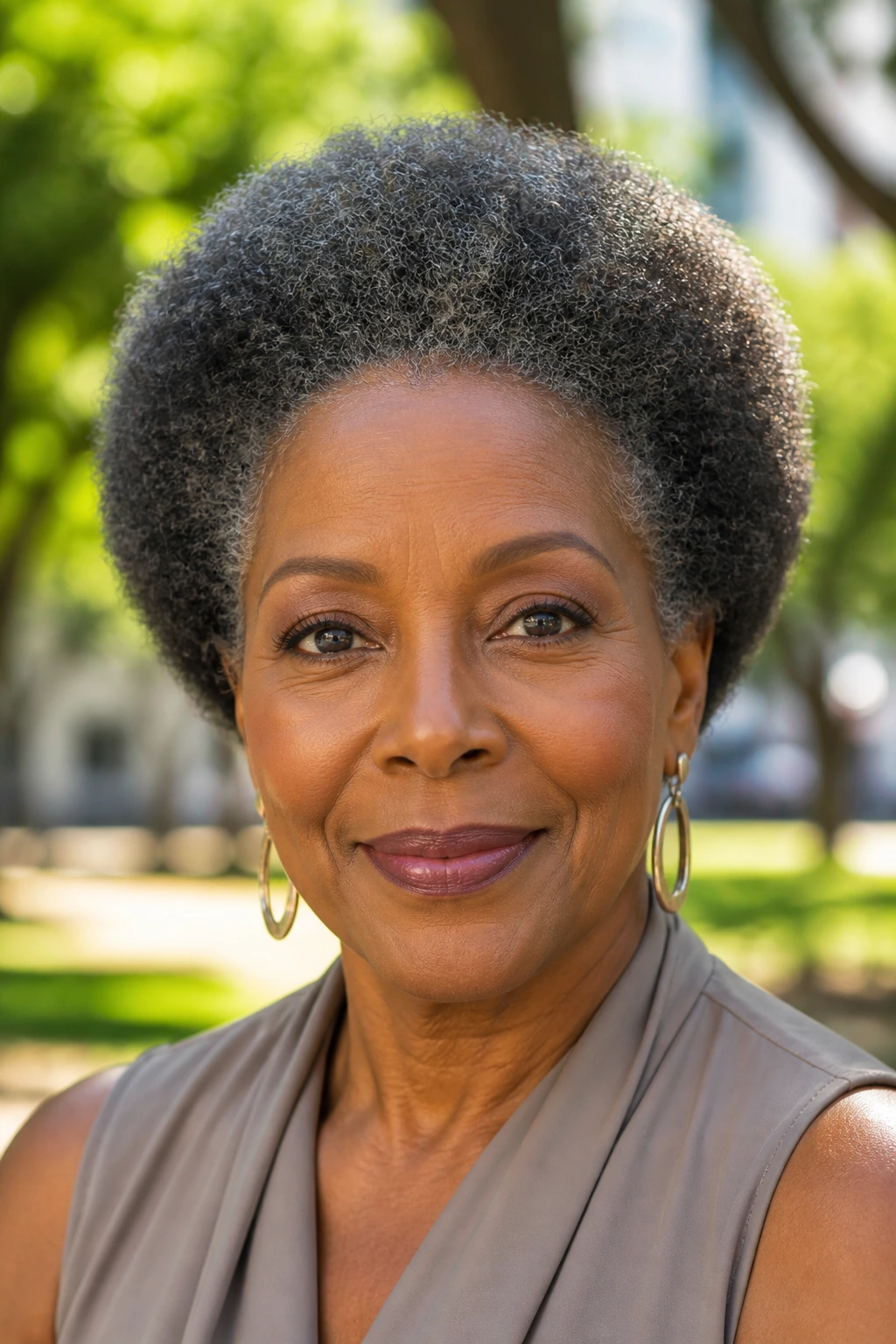
Shape beats color here. A rounded afro creates a clean silhouette that lets silver threads and dark strands mix into a halo instead of a cloud, and that shape matters even more once the hair starts getting drier and a little more porous.
Defined edges around the hairline keep the look polished. The top can stay plush and full, but the perimeter should be intentional. A pick at the roots, a moisturizing cream, and a diffuser on low heat are usually enough to keep the texture lifted without making it crunchy.
This cut is gorgeous when the silver is distributed through the whole head. It makes the gray look like part of the texture story, not a separate event.
18. Natural Coil Shape With Tapered Sides
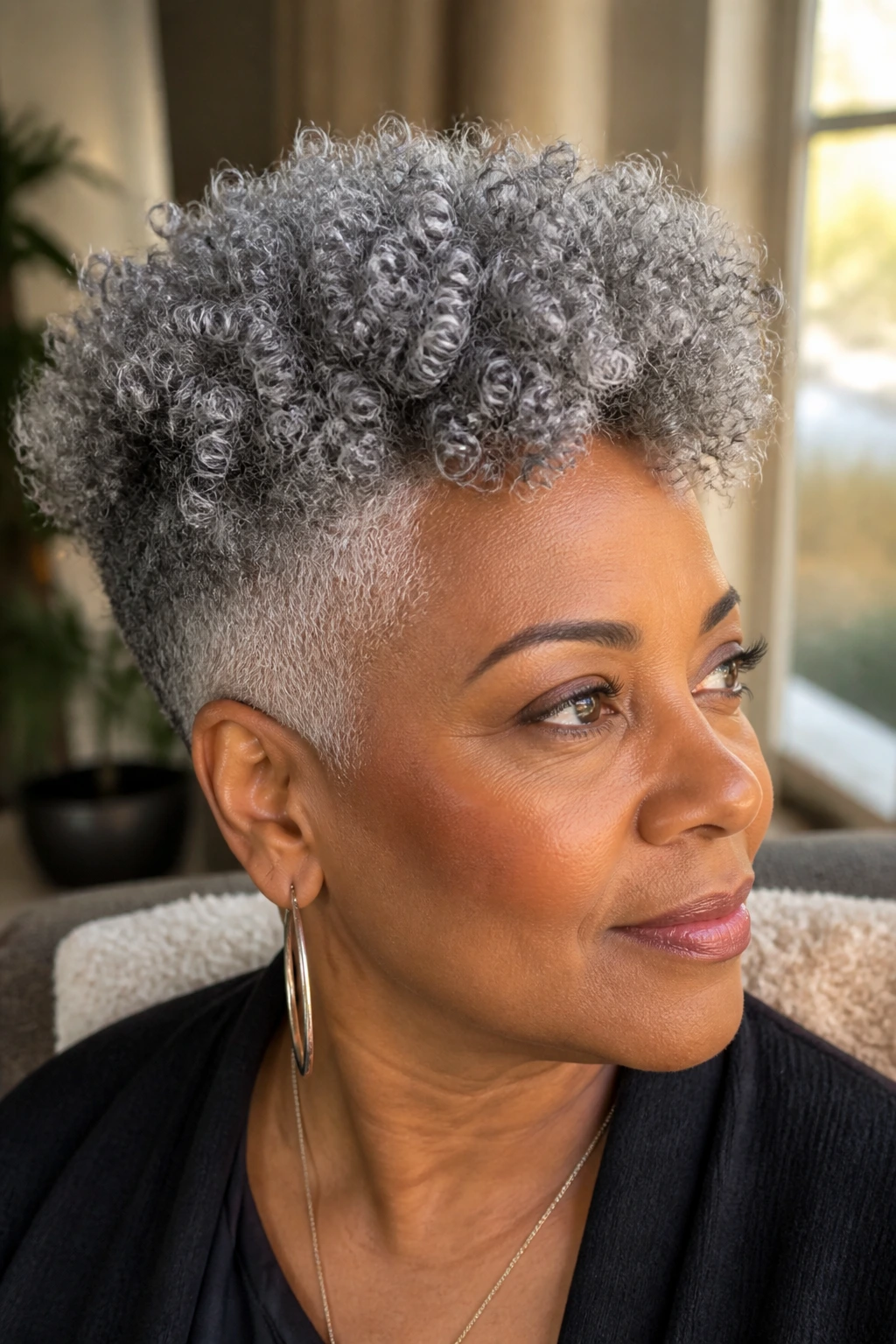
When coils start turning silver, the sides can get bulky fast. Tapered sides solve that without stripping away the shape. They make the top feel full and the head shape more visible, which gives the gray halo a cleaner outline.
The important thing is to ask for a taper, not a harsh fade, unless you want the contrast to feel sharp. A softer taper grows out with less drama and gives you more room to play with twist-outs, wash-and-gos, or a stretched finish.
Gray coil patterns can look especially bright under natural light. That brightness is a gift. Let the haircut hold it up.
19. Gray-Balayage Lob
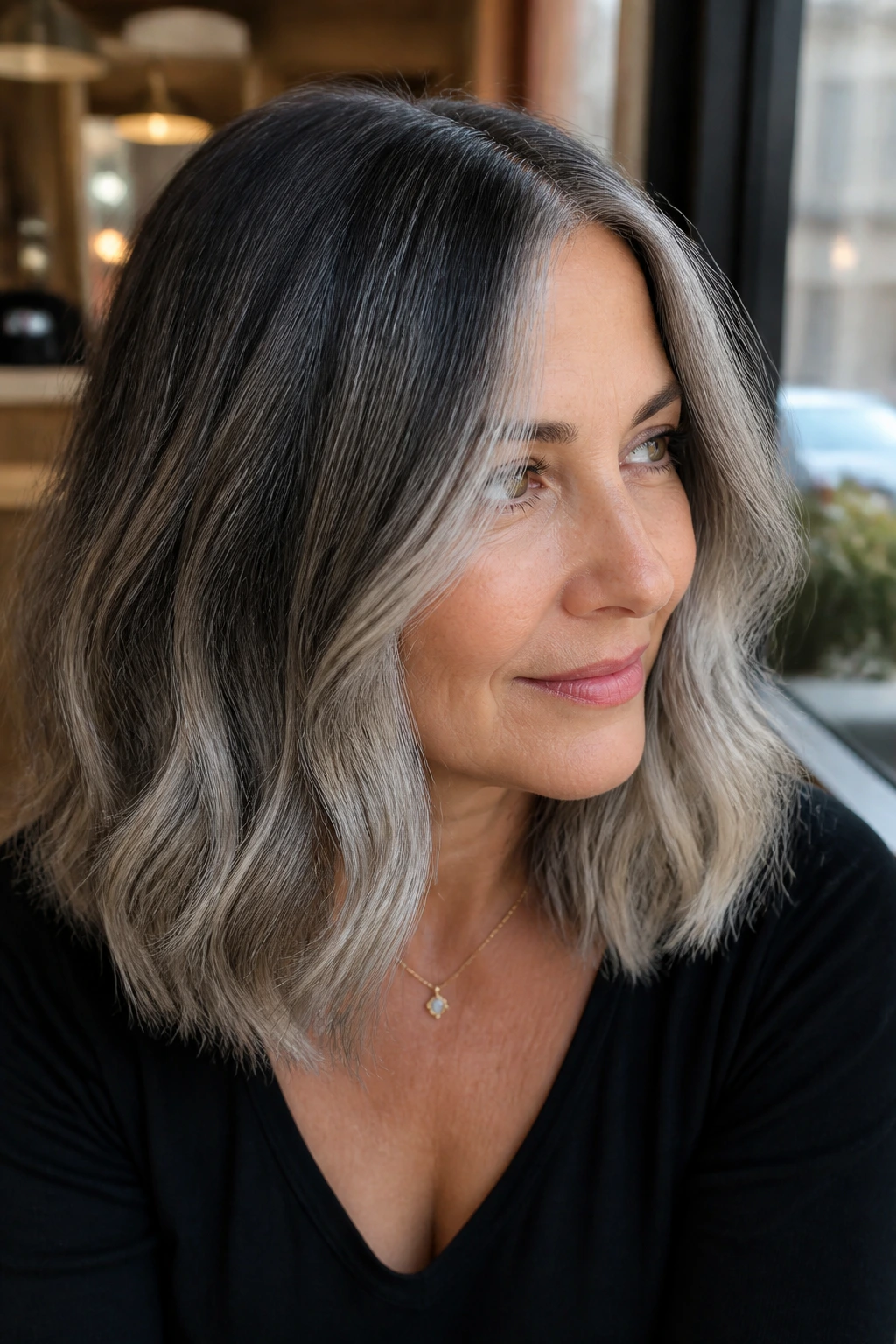
This one sits a little closer to color, but the haircut still does the heavy lifting. A lob gives the balayage room to move, and the length keeps the dark base from reading like one solid slab.
A soft root shadow or low-contrast balayage can help if you are not ready to go fully silver overnight. The lob shape keeps that blend from looking busy. It lands in that useful middle space where the gray feels introduced, not exposed.
This style is best if you are still coloring a bit and want the transition to happen gradually. Ask for face-framing brightness and a perimeter that stays clean. Anything too choppy can make the blend look striped.
20. Side-Swept Medium Cut
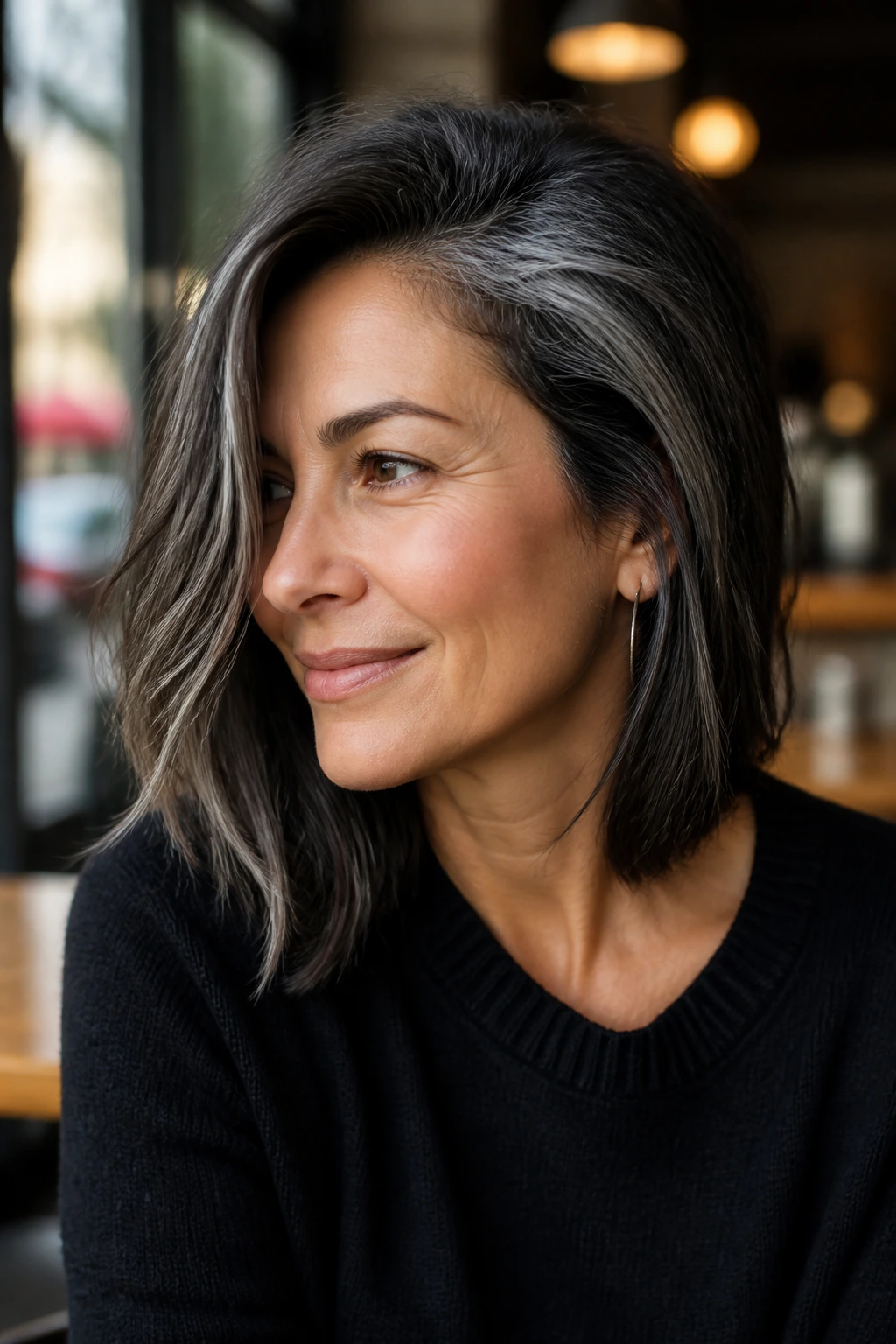
If you want the least dramatic grow-out, this is it. The side-swept part hides some of the temple gray, and the medium length keeps the whole shape loose enough that the contrast does not feel boxed in.
It’s also a kind haircut for people who wear glasses or like earrings, because the front pieces can be tucked and adjusted without fighting the frame. The cut does not need much product. A root-lift spray and a medium brush are enough for most days.
The beauty here is in the diagonal line. Straight-down hair exposes more of the regrowth. A sweep softens the whole picture.
21. Razored Wolf Cut

Can gray hair look edgy without looking like you got bored in the salon chair? Yes, if the density can carry it. The wolf cut uses choppy layers around the crown and longer ends below, which makes the silver read as movement instead of patchiness.
What to Watch For
- Fine hair can get stringy if the razoring is too aggressive.
- Thick wavy hair usually handles the shape much better.
- Texturizing spray beats heavy cream here; too much moisture flattens the cut fast.
This one is for people who want a rougher edge. It has attitude. It also needs a stylist who understands how to remove weight without taking away the whole shape.
22. Polished Blowout Layers
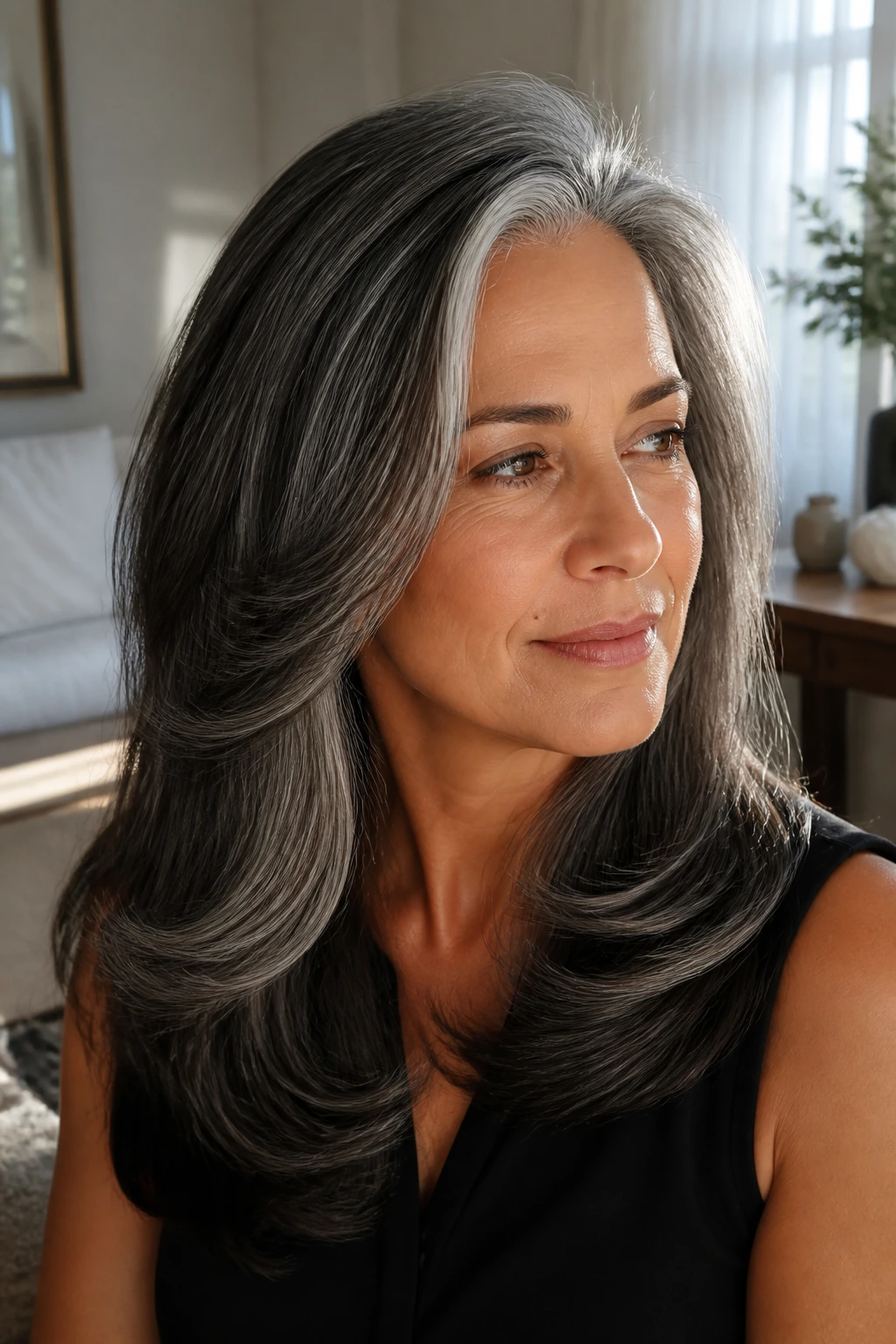
Some gray transitions need softness. Others need polish. Blowout layers give dark hair and silver strands a smooth, reflective finish that makes the contrast feel deliberate instead of fuzzy.
The hair should wrap around a round brush enough to get a bend, but not enough to curl into old-school pageant hair. The ends need just a bit of bevel. The crown needs lift. And the dryer nozzle should point the cuticle downward so the silver catches light without looking rough.
This is a good choice for medium-long hair when you still want movement but also want the finish to look clean in low ponytails or clipped-back styles.
23. Salt-and-Pepper Pixie
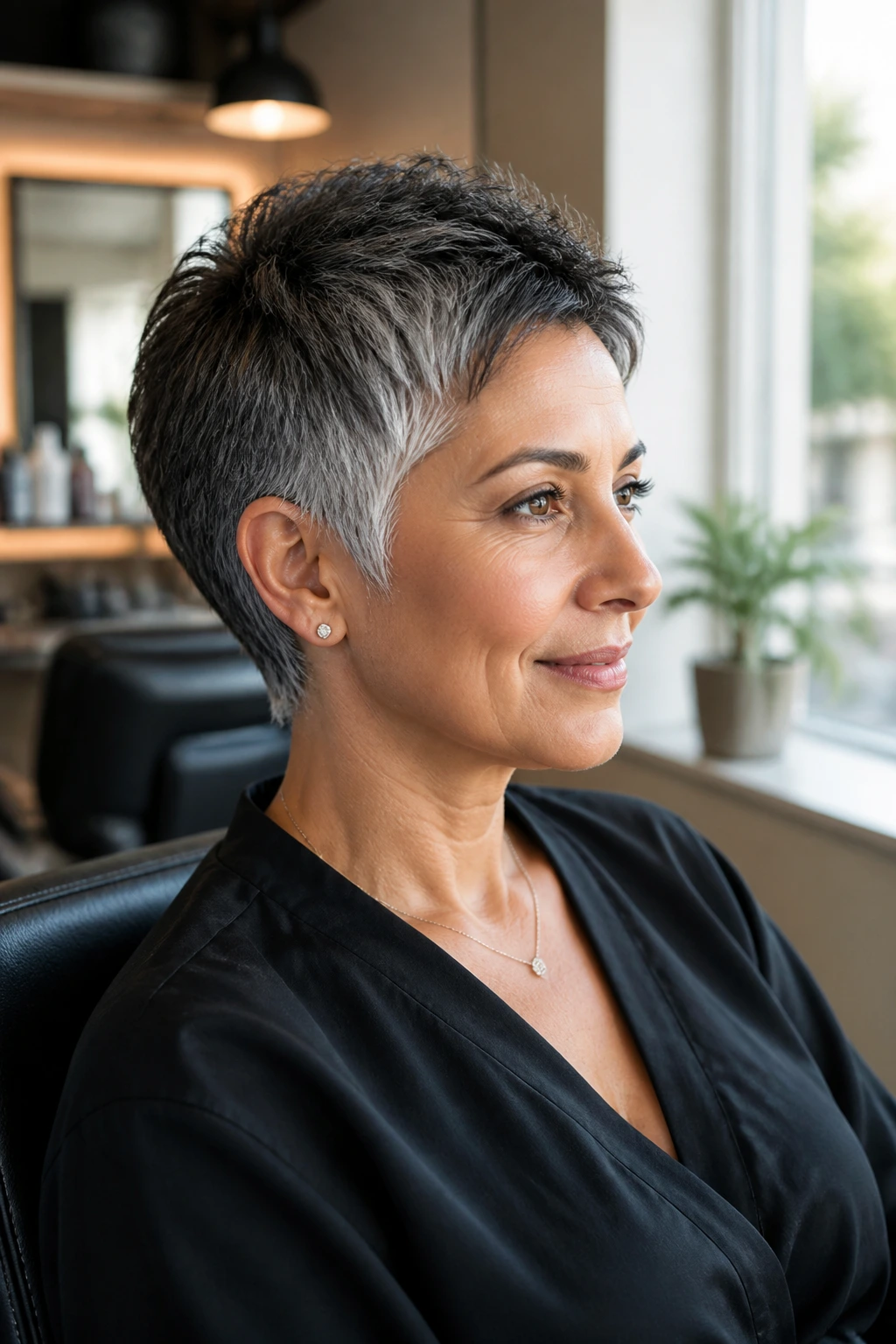
A salt-and-pepper pixie is direct. No hiding. No pretending the gray is a surprise. The short length makes the contrast of silver and dark look crisp around the temples and neckline, where the eye naturally lands first.
Clean lines matter here. Keep the nape neat, the top a little longer, and the sides not too heavy. If the top is too short, the cut can feel flat. If the sides are too bulky, the gray can puff outward and look wider than it should.
This is one of the lowest-maintenance shapes in the group, but it asks for frequent trims. The payoff is that the gray looks sharp almost by default.
24. Soft Undercut Pixie
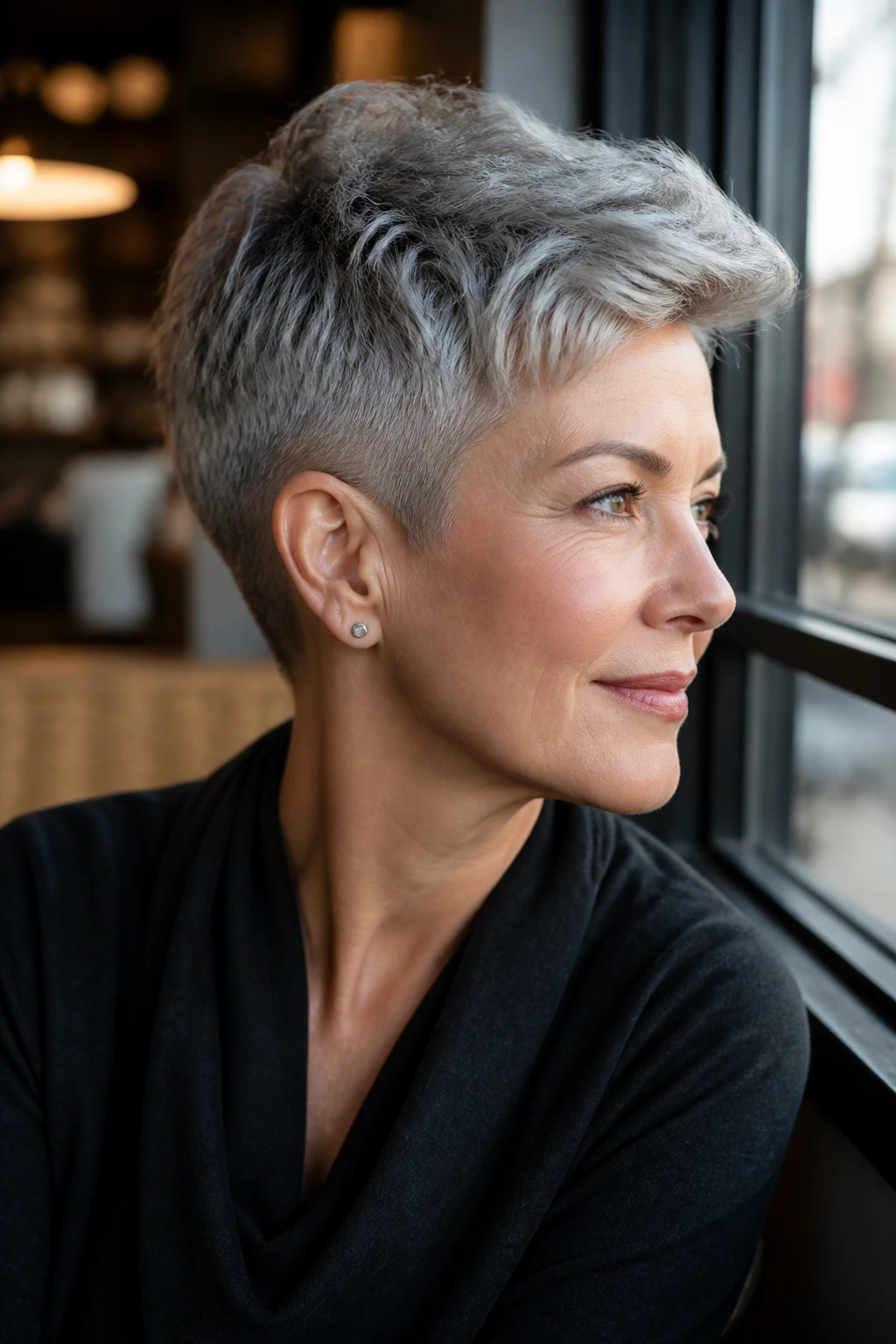
Unlike a classic pixie, a soft undercut removes bulk below the top layer, which helps coarse gray hair lie down instead of floating away from the head. That matters more than people think. Gray can get fluffy in the wrong places, and a hidden undercut fixes that without making the cut look extreme.
The trick is keeping the top airy and the sides neat. You want enough length on top to sweep, shake, or finger-comb into place, while the nape stays tidy. If your hair is thick or your mornings are rushed, this shape earns its keep fast.
It also grows out better than you’d expect. A good undercut disappears into the shape instead of fighting it.
25. Mid-Length C-Shaped Layers
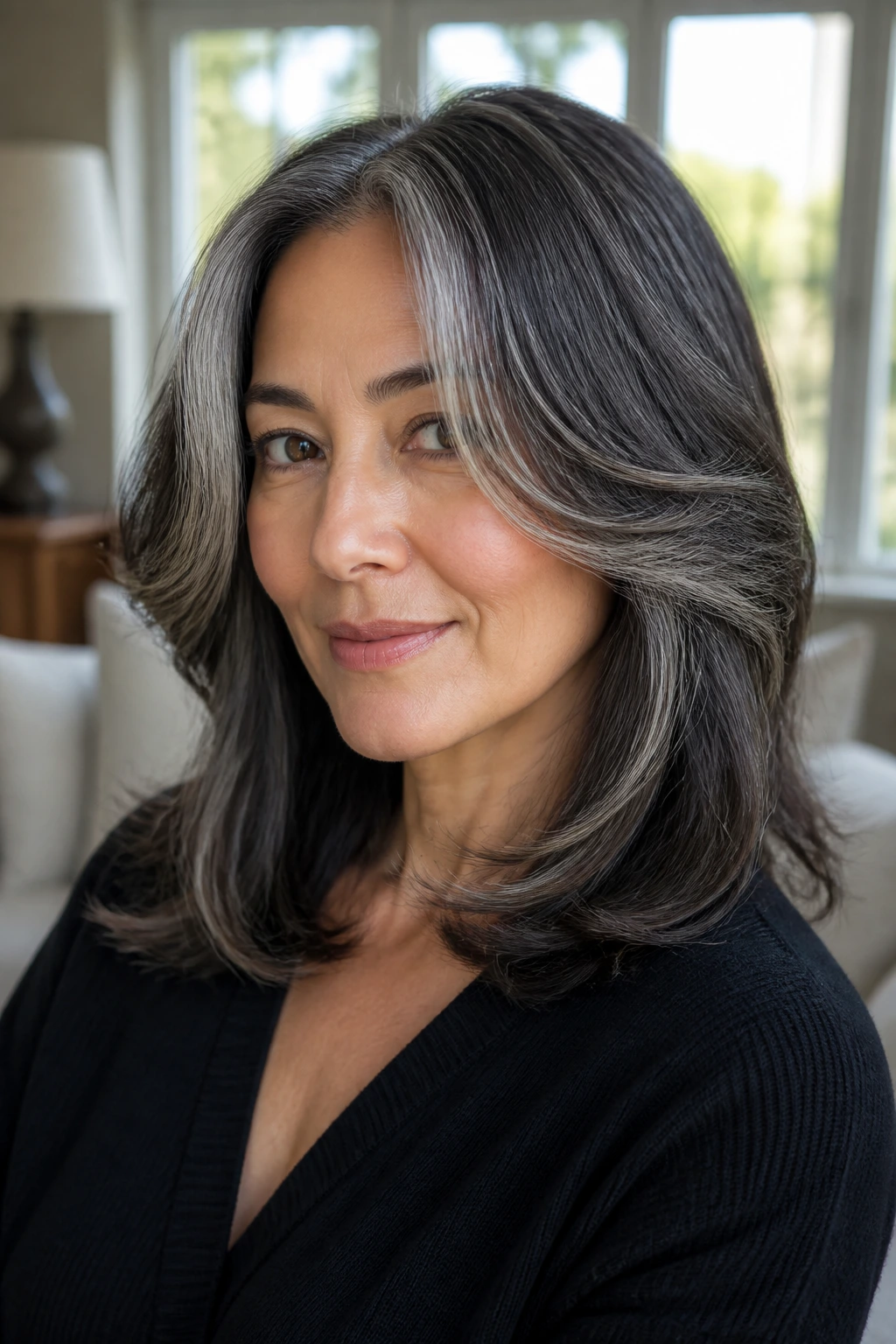
Want movement without a shag? C-shaped layers are the answer. They curve inward around the face and outward at the ends, which gives gray growth a soft line to follow instead of a blunt one to fight.
These layers work well on straight and slightly wavy hair, especially when you still want enough length for clips or low buns. The face frame should start lower than a curtain bang, around cheekbone height, so it opens the face without slicing the front too hard.
A round brush helps the shape show up, but the cut should still look good when it air-dries. If it only works after a full blowout, it is too fussy for a gray transition cut.
26. Tousled Shoulder Cut With Air-Dried Texture
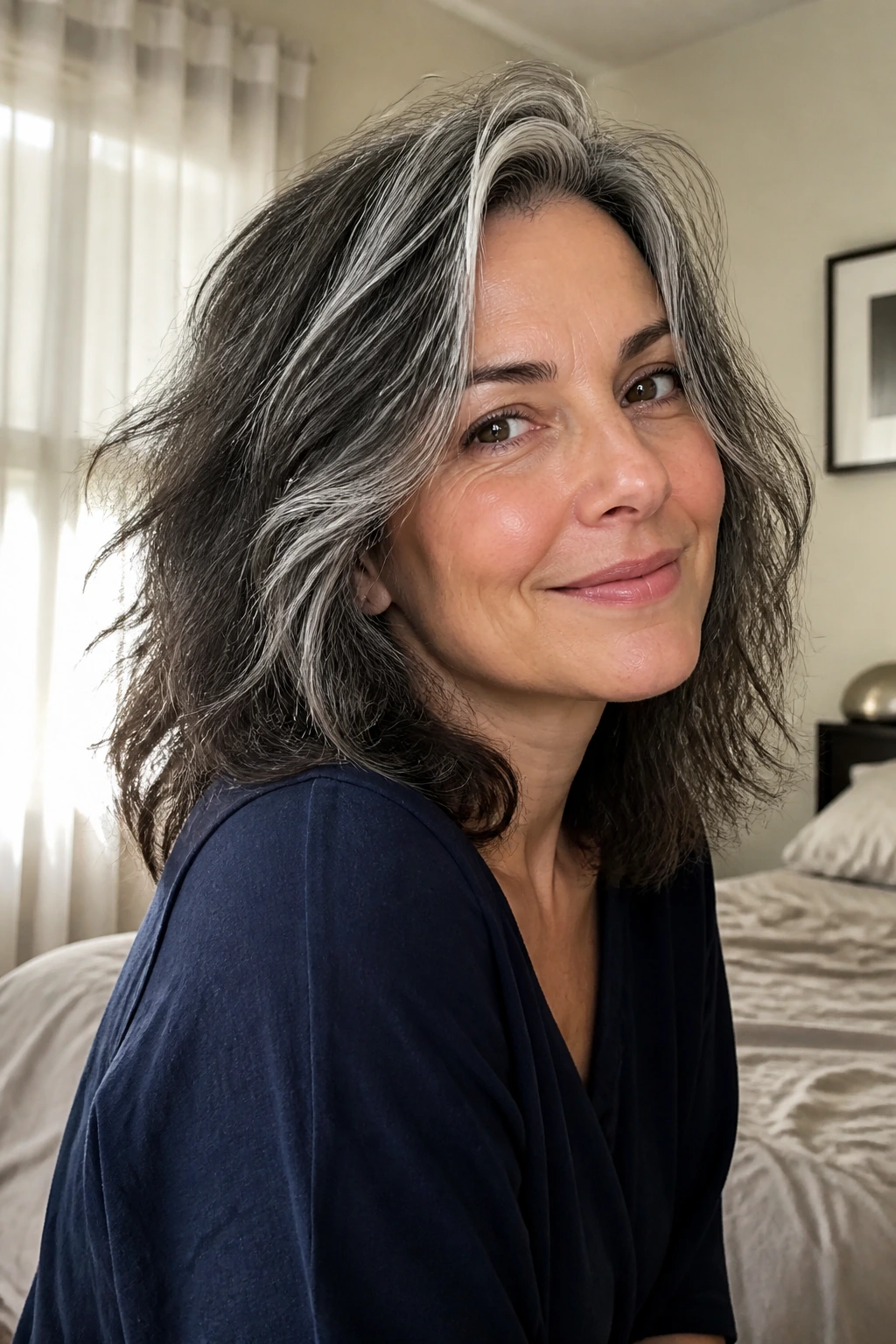
Some cuts look better after you stop trying to perfect them. This is one of those. The shoulder length gives the silver pieces room to bend, and the lightly tousled finish keeps the dark-and-gray mix from forming one flat surface.
A little mousse, a little leave-in, and a rough scrunch with your hands is often enough. Don’t drown it in sea salt spray — gray hair can already feel dry, and you do not need to make it rougher. The goal is soft texture, not sandpaper.
This cut is a good friend to people who wash, go, and leave. That matters.
27. Glam Side-Part Waves
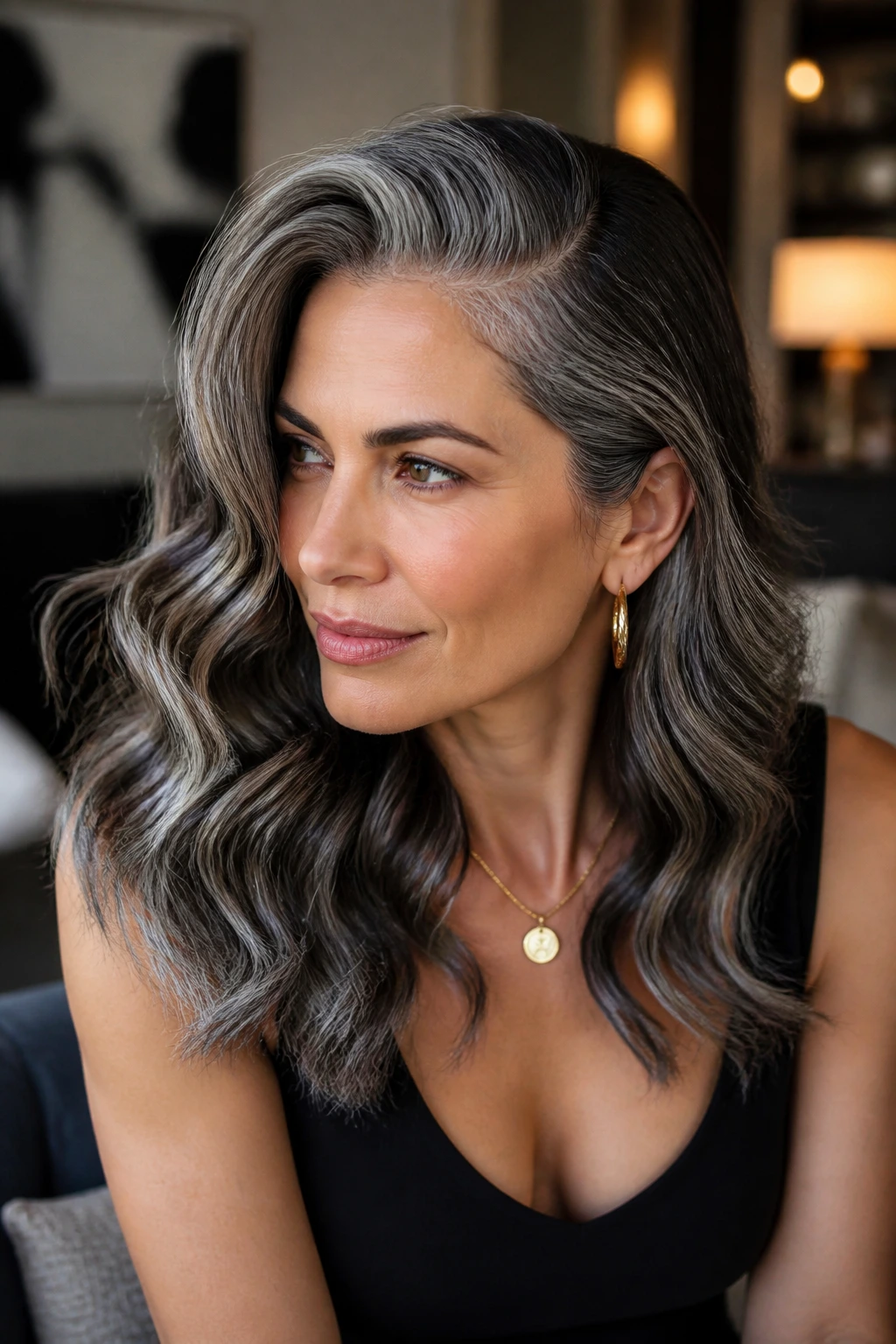
A side part still has plenty of power. On dark hair with silver coming through, a deep side-part wave makes the gray look reflective instead of stubborn. The alternating bends create flashes of contrast that are easier on the eye than a flat, straight part.
This cut works best on medium to longer lengths that can hold a wave. A 1.25-inch curling iron or large rollers will do the job, but brush the wave out a little so it doesn’t feel too set. The finish should look polished, not stiff.
It’s a good choice when you want the gray transition to feel dressed up. Not hidden. Dressed.
28. Tucked-Behind-the-Ears Crop
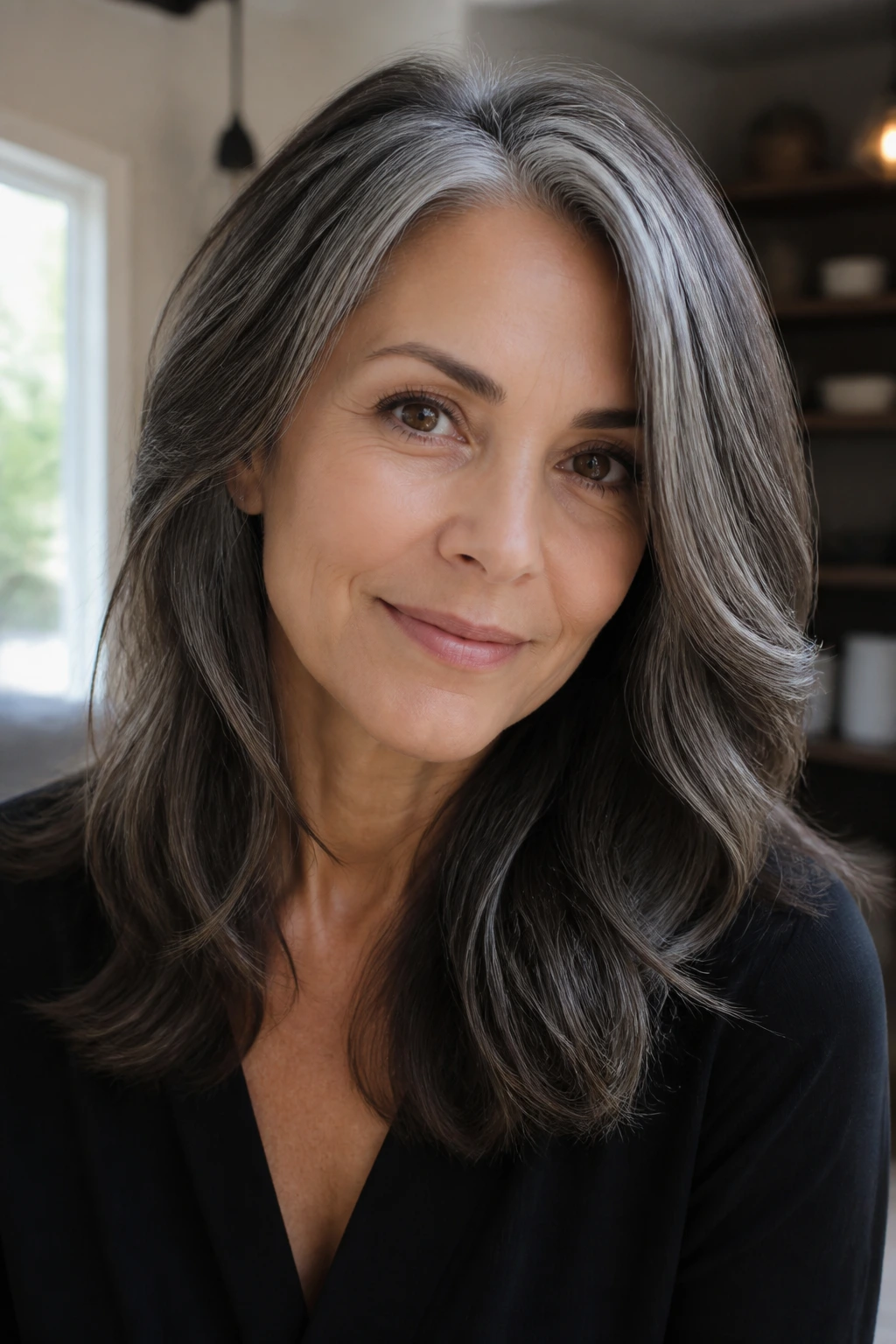
This crop keeps the neckline clean and lets the temples do the talking. Tucking the sides behind the ears exposes the silver near the face, which can look crisp and surprisingly elegant on dark hair.
It’s a smart choice if you wear earrings or glasses, because the open sides create room around the face. The top should have enough length to move, but not so much that the tuck disappears. A small amount of smoothing balm at the sideburns keeps the style neat without making it greasy.
There’s something honest about this cut. It doesn’t hide the transition. It frames it.
29. Silver Halo Coil Cut
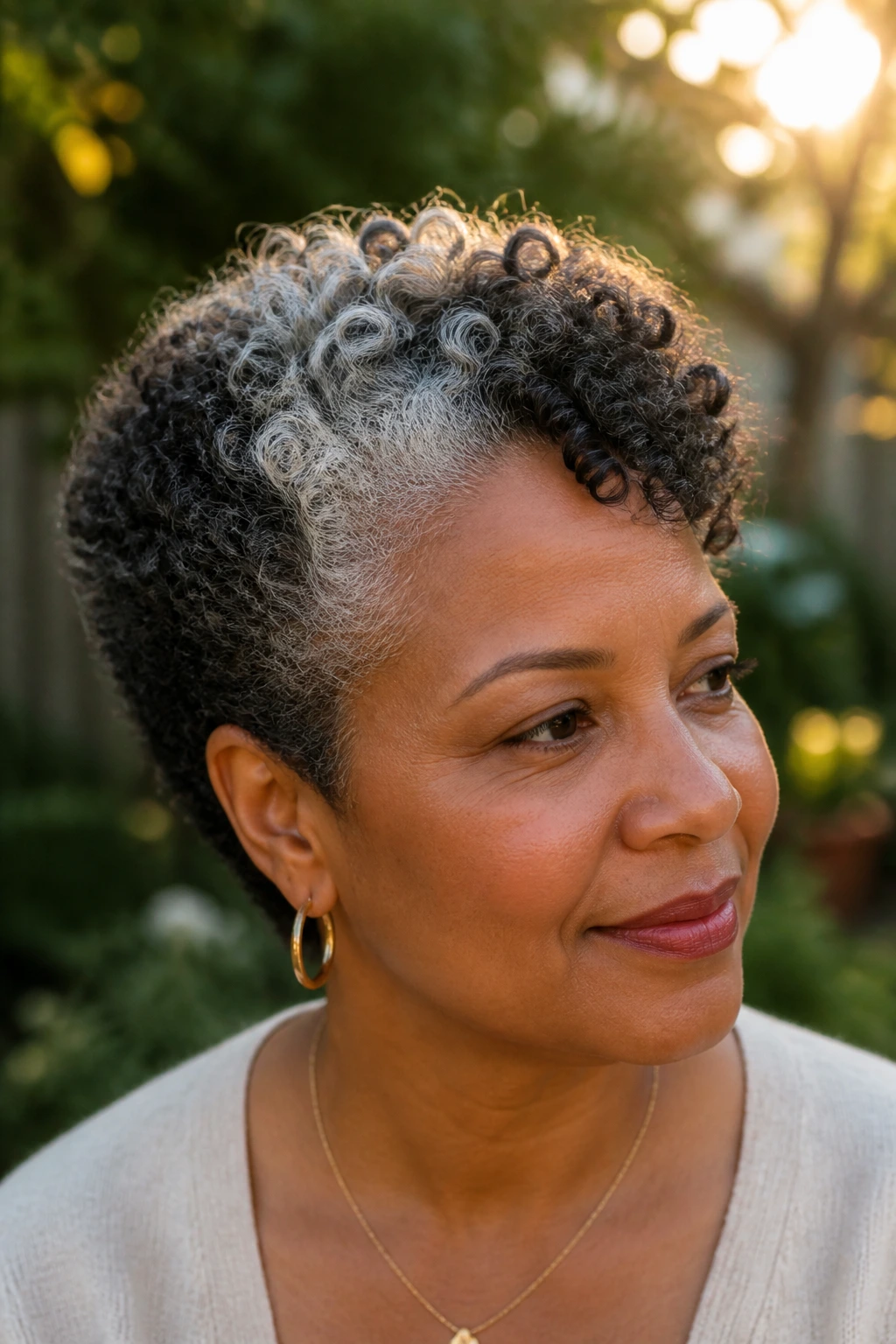
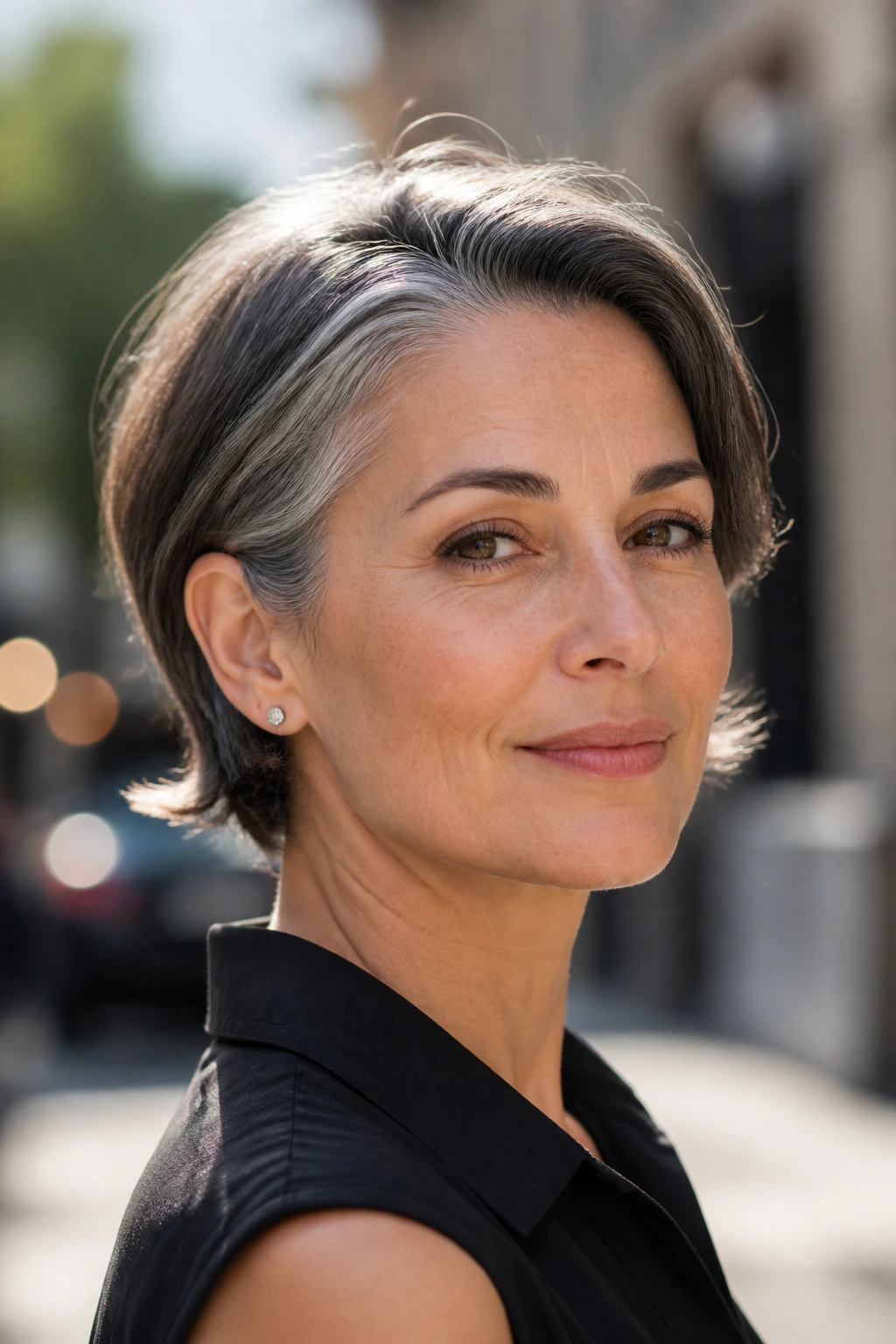
A silver halo is what happens when coils turn bright around the crown and the haircut gives that brightness a shape. The round outline keeps the eye on the full head shape instead of breaking the coils into separate sections.
The perimeter should stay clean while the crown keeps its natural lift. If the cut is too flat at the sides, the halo loses its balance. If it is too over-layered, the coils can splinter and the gray reads as frizz. A dry cut by someone who understands shrinkage is worth the time.
Moisture matters here, but so does restraint. Too much product weighs the halo down.
30. Long and Loose With Rooty Dimension
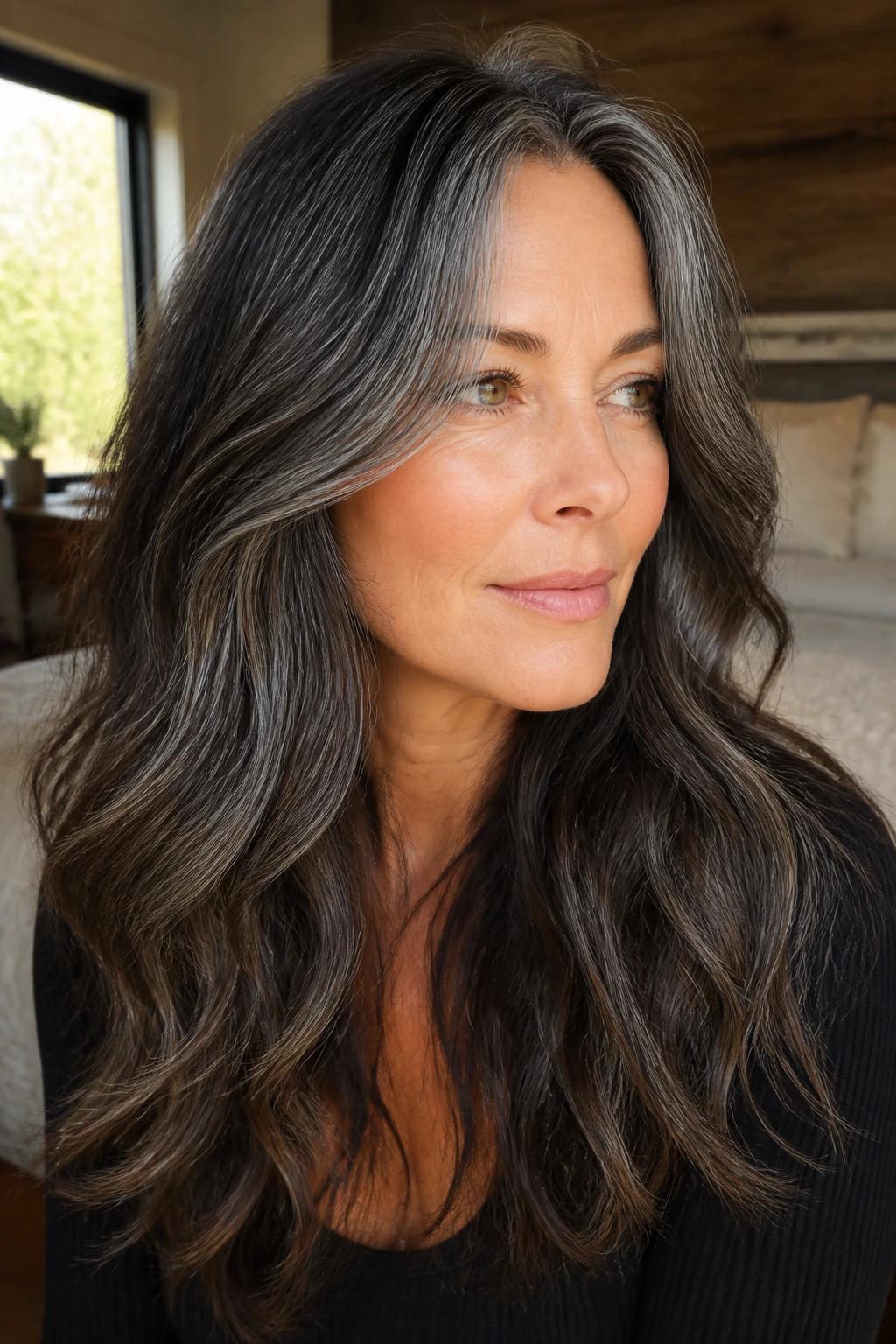
If you are not ready to part with length, keep it — but keep it shaped. Long layers and a bit of rooty dimension stop dark hair and gray from turning into one heavy block, and the difference between the shades becomes a feature instead of a line you stare at in the mirror.
This style works best when the front pieces are slightly shorter than the back, which lets the face stay open and the ends move. A large-barrel wave or a soft bend through the mid-lengths keeps the silver pieces visible. Flat, heavy long hair tends to drag gray hair down visually, and nobody needs that.
The rule here is simple: if you keep the length, keep the shape.
Why These Cuts Make Gray Look Intentional on Dark Hair
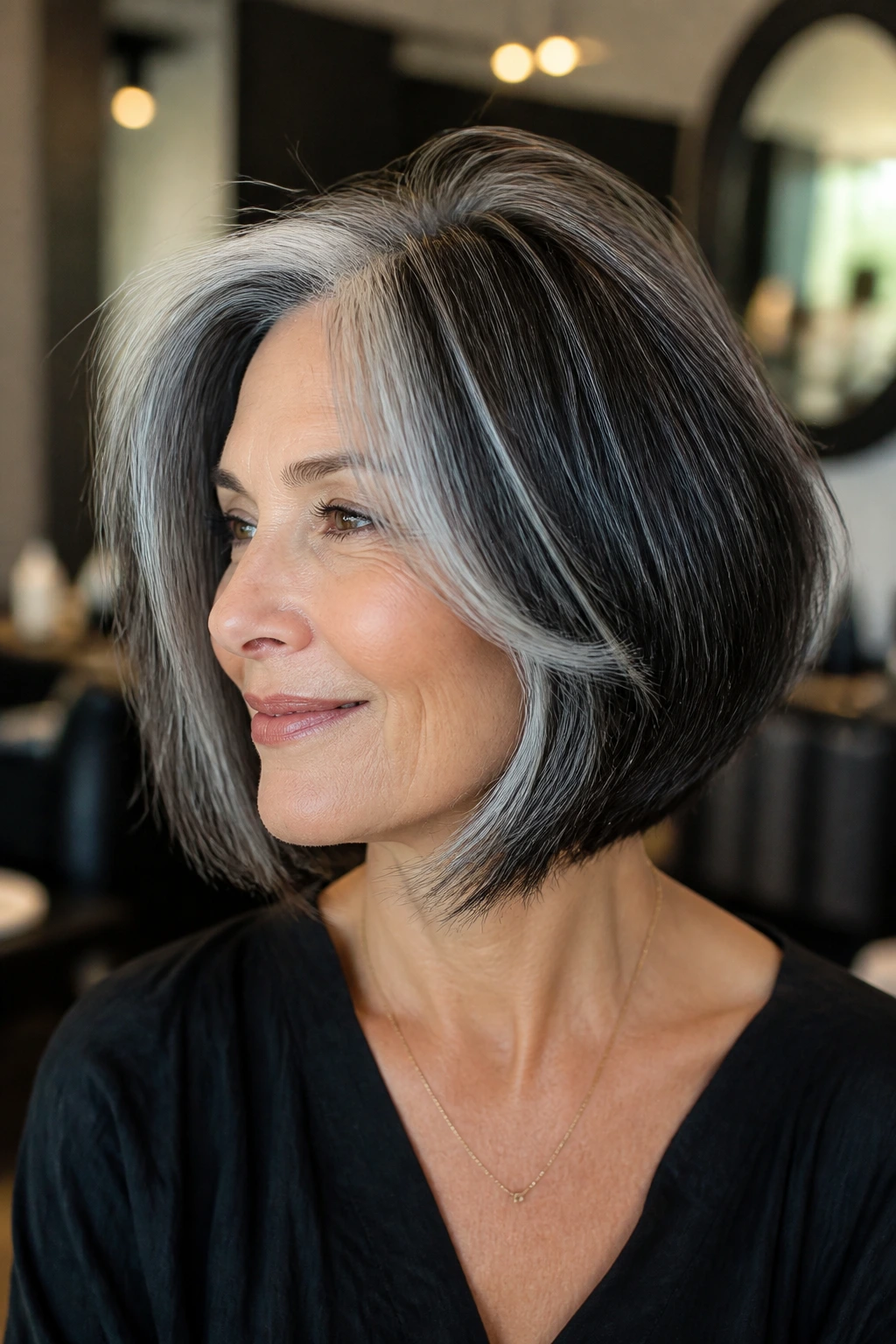
Gray on dark hair has a blunt honesty to it. That’s the problem and the opportunity. If the haircut is too uniform, the contrast sits there like a visible mistake. If the haircut has a real shape, the contrast becomes design — a streak, a halo, a frame, a line that looks planned.
A good transition cut also works with the texture changes that gray brings. Silver strands often feel drier and sit differently from the rest of the hair, so they need a perimeter that can contain them. Blunt bobs keep the shape clean. Pixies remove the weight that makes gray puff out. Shags and layered lobs break up the line so your eye sees movement first.
I’d argue that dark hair going gray looks best when the haircut is doing one of two things: either making the silver obvious on purpose, or softening it just enough that the grow-out fades into the overall shape. The boring middle zone — long, heavy, and untouched — is where gray tends to look most accidental.
The Tools That Make Dark Hair and Silver Strands Behave
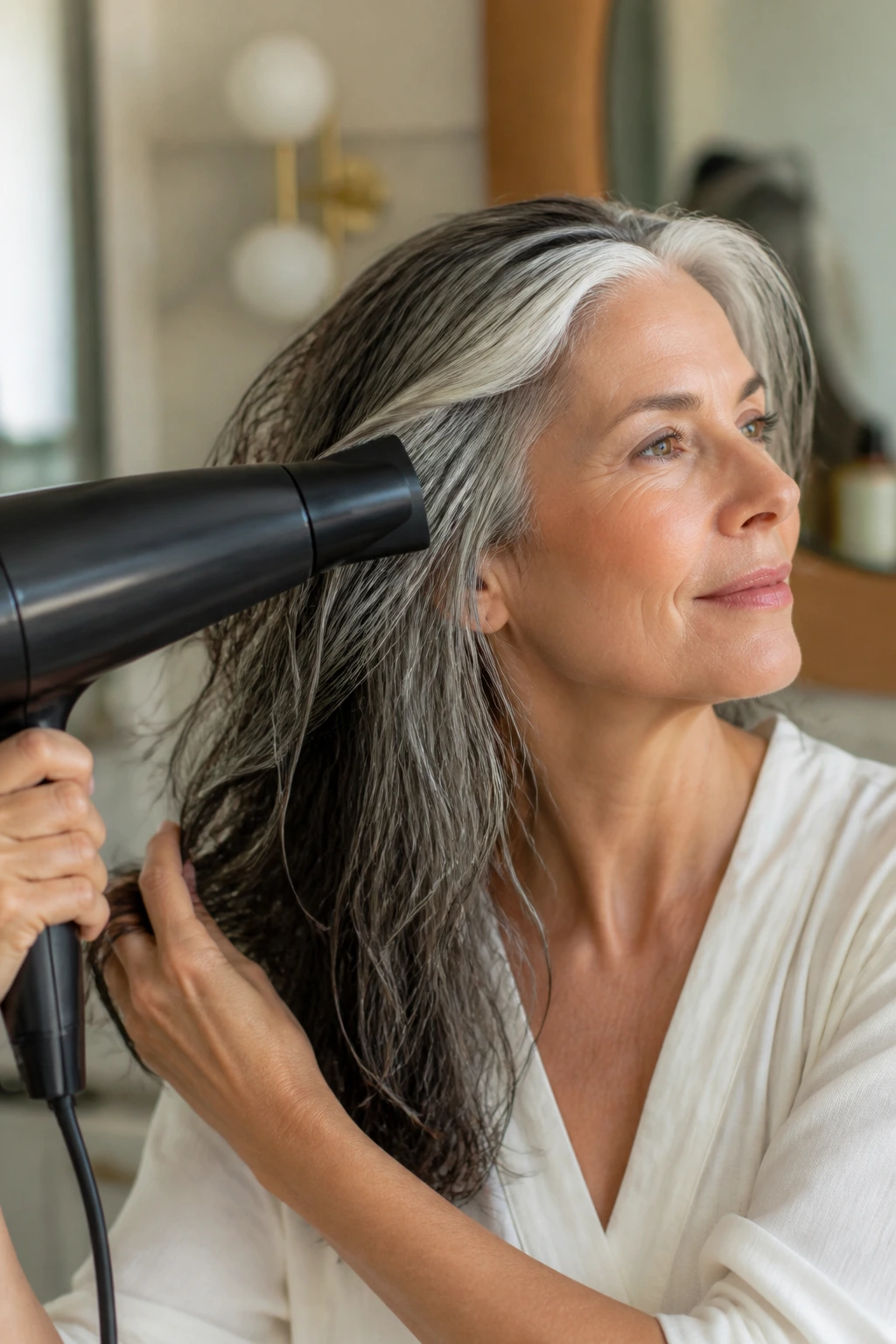
- Blow dryer with a nozzle: directs airflow so the cuticle lies flatter and the silver strands don’t frizz outward.
- Round brush, medium and large: useful for bobs, lobs, and curtain bangs when you want a bend rather than a curl.
- Diffuser: the one tool curly and coily gray hair actually needs for shape without roughing up the surface.
- Fine-tooth comb and wide-tooth comb: the fine comb helps with parts and clean edges; the wide-tooth comb protects waves and curls.
- Light mousse or root-lift spray: gives crown support without the heaviness that makes gray hair collapse by noon.
- Flexible-hold hairspray: keeps movement in place without turning the style into a helmet.
- Lightweight smoothing cream or serum: one pea-sized amount on the ends is usually enough; too much will flatten silver strands fast.
- Tail comb or clip set: useful when sectioning for a blowout, side part, or tidy crop styling.
- Heat protectant spray: non-negotiable if you use irons or hot brushes at all.
- Dry shampoo: handy for roots, but use it sparingly on gray because too much residue can make silver look chalky.
Picking the Right Cut for Your Texture, Face, and Styling Habit
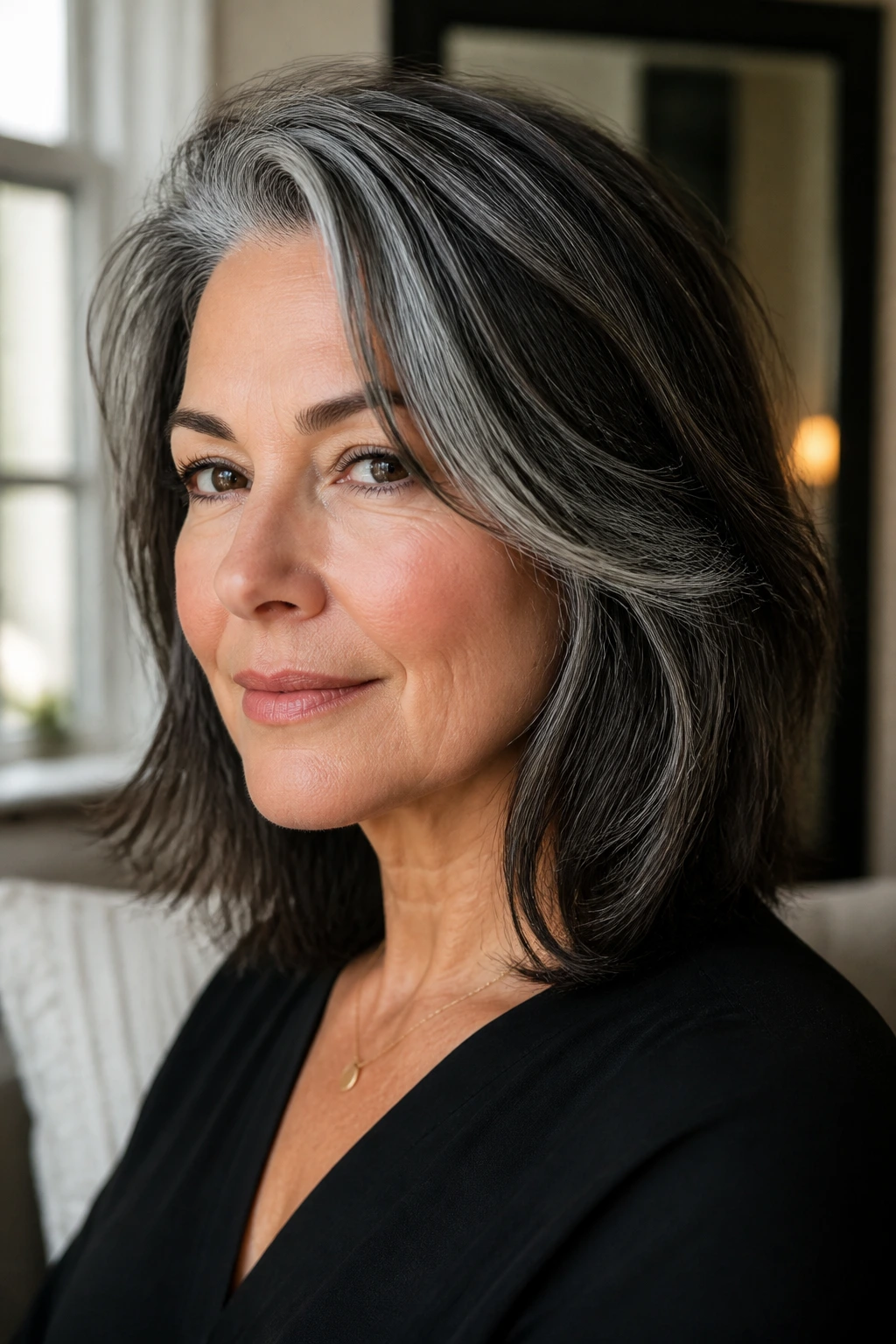
The best gray transition cut is the one you’ll actually keep up with. That sounds obvious, but it’s where people slip. A gorgeous shag that needs twenty minutes of styling every morning is useless if you prefer to air-dry and go. A razor-sharp bob looks fantastic until your hair starts bending in a different direction by lunch.
Texture matters first. Straight hair usually shows the contrast most sharply, so blunt lines, sleek lobs, and side parts can be your friend. Wavy hair likes collarbone cuts, shoulder shags, and medium layers because the bend naturally breaks up the regrowth line. Curly and coily hair need shape more than anything else — a good silhouette keeps the silver from frizzing into a cloud.
Face shape matters too, but not in the rigid, old-school way people still talk about it. What matters is where the length lands. A chin-length bob sharpens a jawline. A lob softens a longer face. Curtain bangs or side-swept fringe can calm a wide forehead or a loud temple line. That’s the useful part. The rest is noise.
How to Wear These Hairstyles With Glasses, Earrings, and Collars

Face Shape: Pick the point where the hair opens the face. A bob can sharpen a rounder face by stopping at the jaw, while longer layers can soften a stronger jawline by moving the attention downward. Gray around the temples gets easier to live with when the front shape has a clear job.
Texture Match: Straight hair usually looks strongest in blunt bobs, polished lobs, and clean crops. Wavy hair prefers shags, curtain bangs, and shoulder-length cuts that can bend without fighting the fiber. Coily and curly hair want a shape that respects shrinkage; the haircut should support the natural pattern, not force it into a fake silhouette.
Style Mood: If you like polished clothes, go for one-length lines, glossy blowouts, and soft side parts. If you dress more casually, tousled crops, shaggy lobs, and air-dried texture will fit better. The haircut should not fight the rest of your look. That mismatch is what makes gray look accidental.
Maintenance Rhythm: Short cuts need trims faster, usually every 4 to 6 weeks. Bobs can stretch to 6 to 8. Longer layered cuts can go 8 to 12 if the ends still hold their shape. Gray hair does not forgive split ends for long, so stretching a cut too far can make the whole style look sad.
Accessory Pairing: Glasses like tidy sides and a little lift at the crown. Earrings like tucked crops and shorter bobs. High collars and scarves usually sit best with a cleaner neckline so the whole head doesn’t feel crowded.
Extra Styling Moves and Finishers That Brighten Gray Without Coloring It
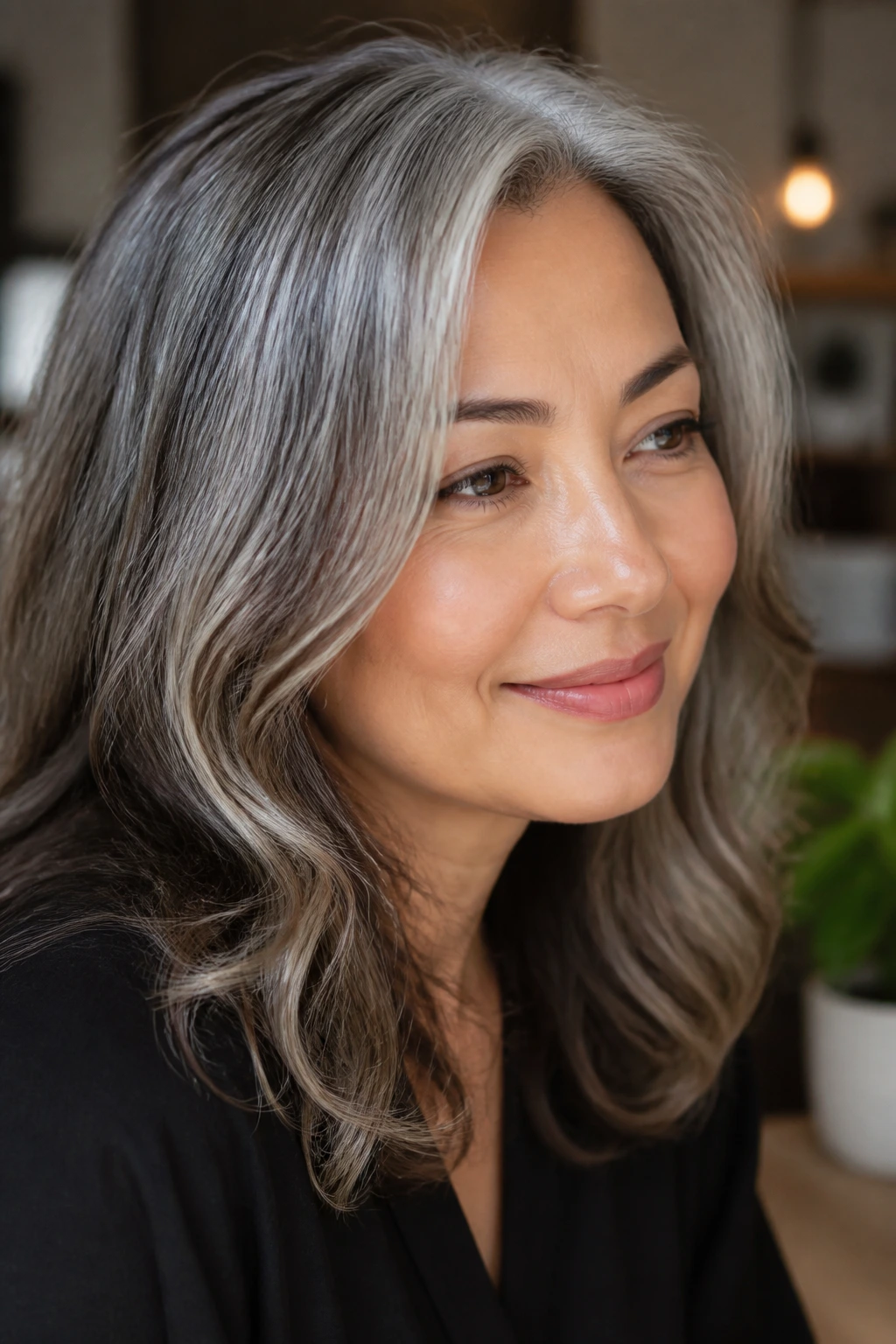
Shine Boost: A tiny amount of serum on the mid-lengths and ends makes gray strands reflect light without looking greasy. Put it on your palms first and keep it away from the roots. Gray hair and heavy oil are not friends.
Root Lift: Blow-dry the crown in the opposite direction of your part for the first few minutes, then switch back. That little trick stops dark roots from lying flat and making the gray line look wider than it is.
Texture Save: If the ends are dry, mix a pea-sized bit of leave-in conditioner with a few drops of water in your hands before smoothing it through. That softens the finish without coating the hair in product.
Part Shift: Move your part an inch to the other side every few days. It changes where the gray shows up, and that simple shift can make the grow-out feel less fixed and less obvious.
Make-It-Yours: If you love bangs, go curtain or side-swept before you go blunt. If you love length, keep it but add movement through the midsection. If you hate styling, choose the shape that dries decently on its own. That last one matters more than most people admit.
Common Mistakes That Make the Grow-Out Look Messy
-
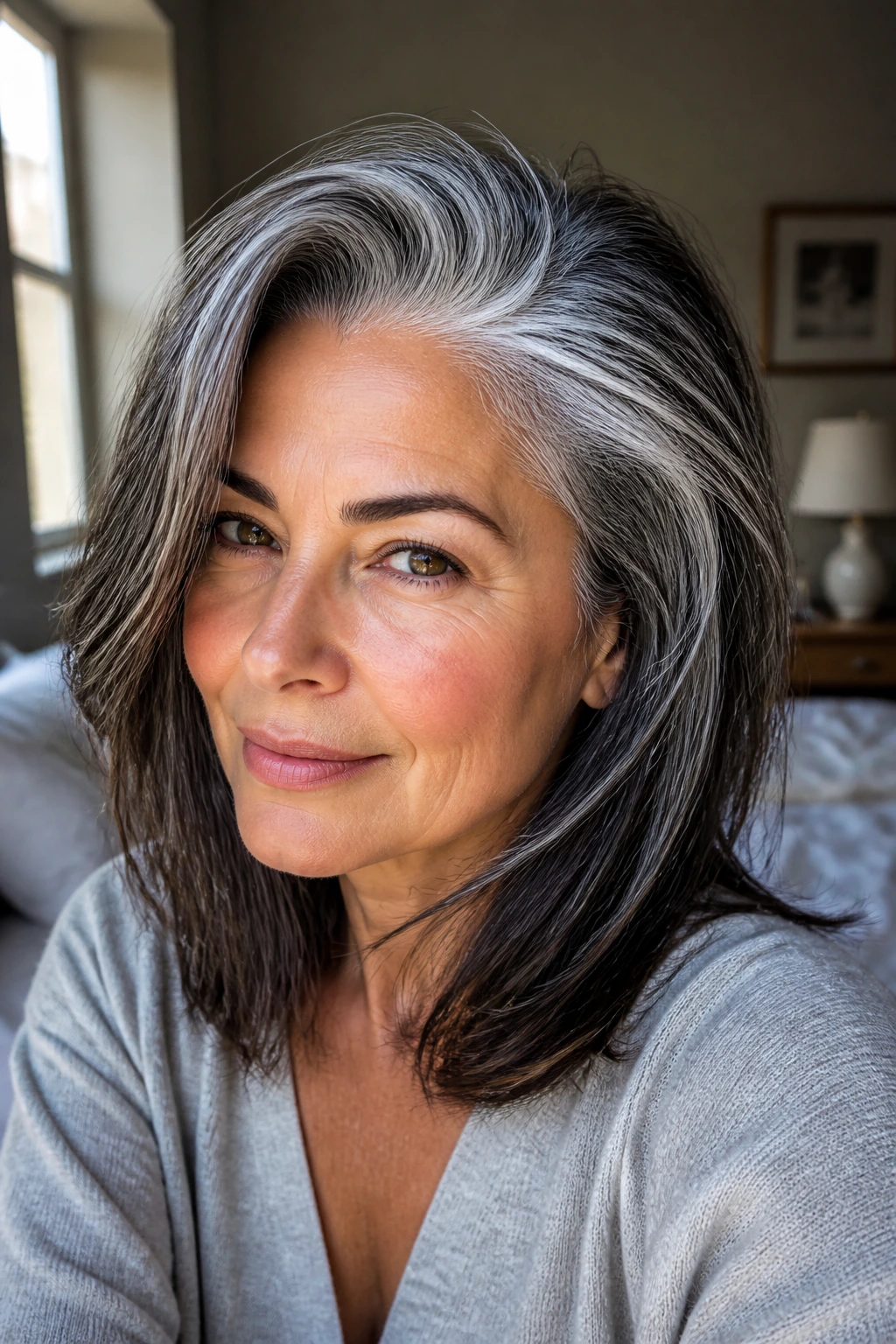
Keeping too much weight at the ends: Heavy, one-length hair can turn gray into a flat, obvious band. The fix is a better shape — a blunt edge, a soft layer, or a longer front — so the contrast has somewhere to go.
-
Over-thinning coarse gray hair: A lot of people ask for thinning because gray hair feels big. The result is usually frizz and fuzzy ends. Ask for weight removal only where the bulk sits, not a general shred through the whole head.
-
Using too much purple shampoo: Gray hair can pick up a dull cast if purple products are overused. If your silver starts looking dusty or mauve, back off and wash with a regular gentle shampoo for a week or two.
-
Choosing bangs that hit the wrong spot: Bangs can be a lifesaver or a headache. If they end right at the part line and your hair has a cowlick, they will split and expose more grow-out than you wanted. A side-swept or curtain fringe is usually safer.
-
Ignoring moisture: Gray strands dry out faster, and dry hair frizzes, which makes the contrast look messier. A weekly mask and a leave-in on the ends make a bigger difference than most styling tricks.
-
Waiting too long between trims: Split ends and grown-out layers make the gray look dull, especially on dark hair. A clean trim keeps the shape looking deliberate.
Variations and Adaptations to Try
The Soft Blend: Keep the same cut but ask for longer layers, a side part, and a gentler finish. This softens the transition line if you want the gray to feel quieter, especially around the front hairline.
The High-Contrast Statement: Choose a blunt bob, a pixie, or a sleek one-length lob and let the silver stand out. This version is for people who want the gray to read as a feature, not a fade.
The Curl-First Version: On curly and coily hair, use a dry cut or curl-by-curl shaping, then diffuse instead of brushing out the pattern. The gray will look brighter when the silhouette stays true to the curl shape.
The Low-Heat Routine: If your hair is fragile, choose a cut that air-dries well — shoulder shags, tousled mids, and soft lobs. Use less hot tool work and more leave-in cream so the ends stay smooth.
The Long-Hair Keep-Your-Length Plan: Keep the length, but add face-framing pieces and long internal layers. That stops gray from forming one huge sheet and gives you more ways to tuck, twist, or half-up the style.
The Event-Ready Finish: Take any of these cuts and finish them with a side part, a brush-out wave, or a polished blowout. Gray on dark hair catches light fast when the surface is smooth, and that makes even a simple cut feel more dressed up.
Care, Trims, and Product Rhythm for Gray Transition Hair
Gray transition hair likes a rhythm. Not a complicated one. Just a steady one. If you keep chasing random products and skipping trims, the shape starts to wander, and wandering hair is where the grow-out looks roughest.
Short cuts need the most frequent maintenance. Pixies and undercut crops usually want a trim every 4 to 6 weeks to keep the edges neat and the crown balanced. Bobs and lobs can usually stretch to 6 to 10 weeks if the ends still hold their line. Long layers can go a little longer, but only if the face frame stays clean and the ends are not splitting apart.
Washing cadence matters too. If your scalp gets oily fast, wash when it feels heavy at the roots. If your hair is dry, try stretching washes and using a light leave-in between them. Purple shampoo only when the silver needs it — maybe every 1 to 2 weeks, not every wash. A weekly mask on the mid-lengths and ends helps gray hair stay soft without flattening it.
Heat protection is not optional if you blow-dry or iron your hair. Gray strands show damage faster than pigmented ones. They go dull first, then frizzy, then oddly brittle. No one wants that chain reaction.
Questions People Ask Before They Sit in the Chair
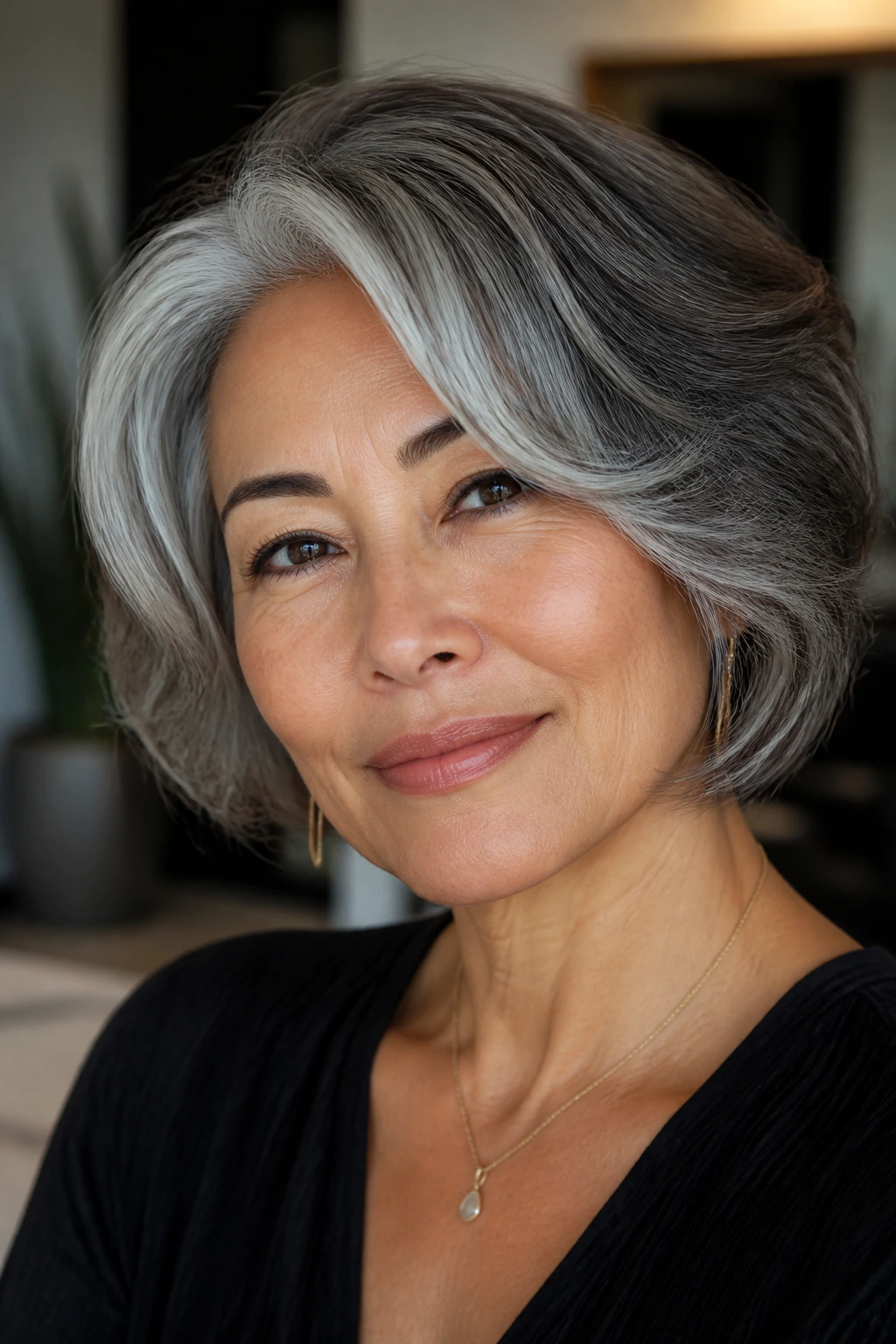
Which haircut hides gray roots best on dark hair?
A side-swept medium cut, a curtain-bang lob, or a textured pixie-bob usually softens the line best. The diagonal movement interrupts the regrowth stripe, so the eye reads the shape before it reads the root.
Do I have to go short to go gray gracefully?
No. Short cuts make the transition easier to manage, but long layers, lobs, and shoulder-length shags can work just as well if they have enough movement. The key is shape, not size.
Will layers make gray hair frizzier?
Too many choppy layers can, yes. Softer internal layers or face-framing pieces are safer because they remove bulk without scattering the ends all over the place.
Should I keep coloring while I transition?
You can, but a soft gloss, low-contrast balayage, or root shadow usually looks cleaner than hard permanent color lines. The goal is to reduce the stripe effect, not create a new one.
Why does my gray hair feel so coarse?
Gray strands often lose some of the softness that pigment-rich hair had, and they can feel drier and more resistant to lying flat. Moisture, smoothing cream, and a cut that controls the outline help more than brute-force styling.
Can curly or coily gray hair be worn short?
Absolutely, as long as the cut respects shrinkage and shape. A rounded afro, tapered crop, or coil-friendly pixie can make the gray look bright and intentional instead of puffy.
How often should I trim while growing out gray?
Most people do well with trims every 6 to 8 weeks during the transition, but shorter cuts need faster upkeep. If the shape starts losing its edges or the ends look see-through, it’s time.
What if the grow-out line looks too harsh between appointments?
Shift your part, add a root-lift spray, or wear the hair tucked behind one ear so the line isn’t centered. Small styling changes can soften the contrast enough to get you to the next trim.
Let the Silver Have a Shape
Gray hair on dark hair does not need to be hidden to be flattering. It needs a haircut that understands contrast, a shape that keeps the silver from looking stranded, and enough texture control that the whole thing feels designed. That’s the real difference between “growing out color” and “wearing gray well.”
If there’s one thing worth remembering, it’s this: the haircut is the frame. When the frame is right, silver strands stop looking like an interruption and start looking like the best detail in the room.