



Strawberry red hair color ideas for olive skin work best when the red has a little restraint. Too orange, and the whole thing starts shouting. Too pink, and the color can sit apart from the skin instead of blending into it. The sweet spot is usually somewhere between copper, rose, apricot, and auburn — with enough depth to keep the shade grounded.
Olive skin has its own mood. Sometimes it leans green-gray and muted. Sometimes it has a gold cast that shows up strongest in daylight. Either way, the reds that flatter it most are rarely the brightest ones on the board. They usually have a brown base, a beige veil, or a soft copper glow that makes the skin look clearer and the hair look richer.
I keep coming back to strawberry reds that behave like a glaze instead of a costume. A shadow root, a glossy finish, and some darker ribboning near the base can change everything. The 25 looks below move from barely-there strawberry blonde to deeper copper-red territory, so you can match the shade to your undertone, your haircut, and how much upkeep you actually want to deal with.
Why These Shades Work So Well on Olive Skin
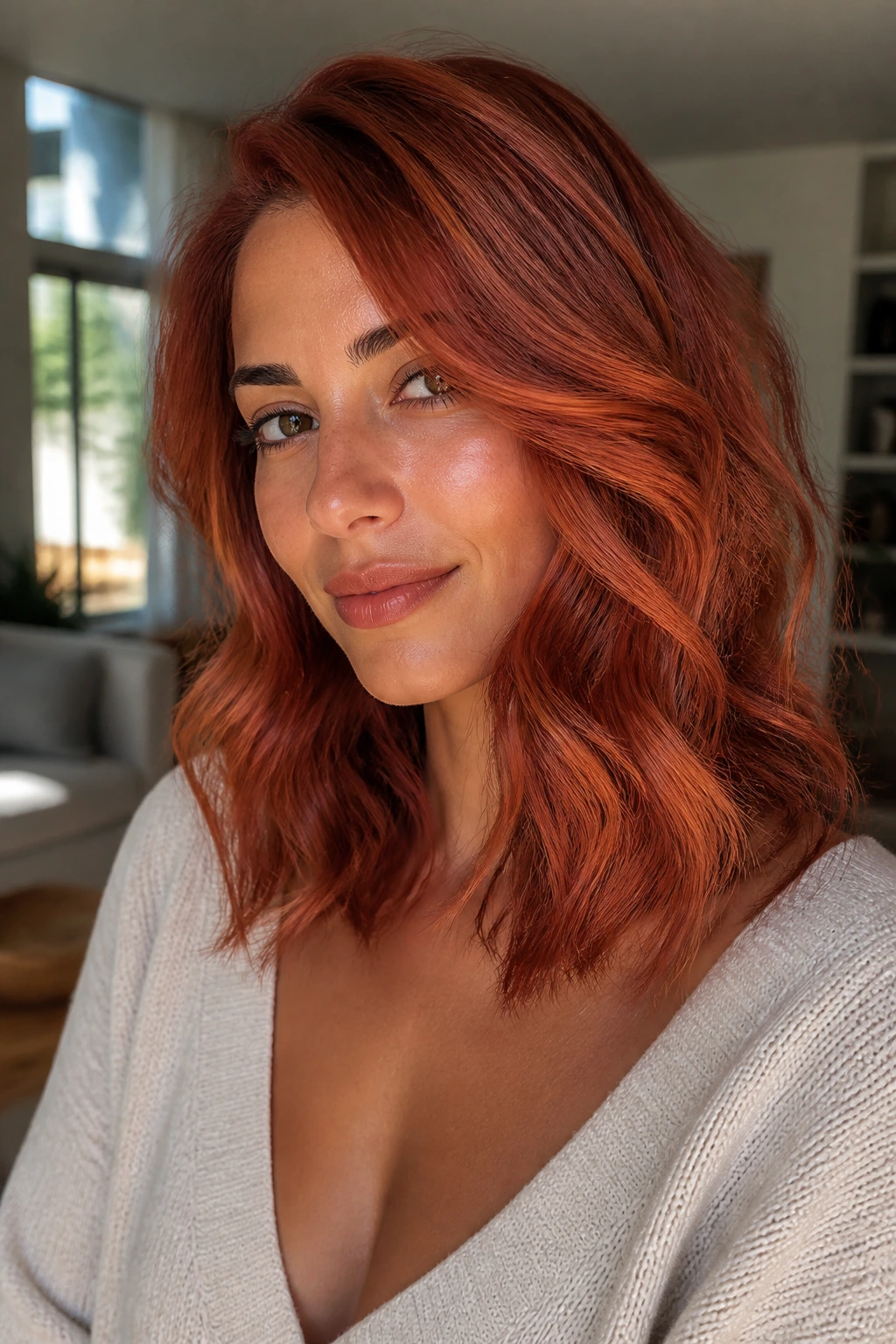
-
Copper depth keeps the color from going neon. Olive skin often has a muted, green-gold cast, and a red with a little brown in it tends to sit more naturally against that undertone.
-
Rose notes soften strong orange. A touch of rose copper or dusty pink keeps strawberry red from tipping into pumpkin territory, which is the fastest way to make olive skin look tired.
-
A darker root makes the whole look cleaner. A one- or two-level root shadow gives the color a place to start, and that little bit of darkness helps the lighter ends glow instead of floating.
-
Beige ends brighten without turning brassy. Beige and champagne reflections usually flatter olive skin better than bright yellow blonde, which can fight with the undertone.
-
Gloss matters more than people think. Strawberry red looks expensive when it shines. Once the shine goes flat, the same color can read dry and overly warm.
The reason this palette works is simple: it gives olive skin room to breathe. You’re not trying to fight the undertone. You’re steering around it. That’s a much better strategy, and it usually looks better in real life than the loudest swatch on the wall.
How to Read Your Olive Undertone Before You Book
Look at your skin in daylight, not under bathroom bulbs. Bathroom lighting lies. It makes reds too red, yellows too yellow, and olive skin can look greener or duller than it really is. A white T-shirt or a plain white towel near your face can help you see whether your skin leans warm, neutral, or cooler olive.
Warm Olive
Warm olive skin usually has a gold, peach, or sun-warmed cast. Copper strawberry, ginger strawberry, apricot, and honey red shades usually look lively here because they echo the warmth already in the skin. If brassiness is your usual enemy, stay away from overly yellow blondes and lean into copper with a brown base.
Neutral Olive
Neutral olive skin can take more range, which is lucky. Rose copper, strawberry auburn, and beige strawberry blonde tend to work because they sit in the middle lane — warm enough to glow, soft enough not to look harsh. If your skin seems to change with the lighting, a dimmer, more dimensional red is usually safer than a flat all-over copper.
Cooler Olive
Cooler olive skin often reads green-gray, sometimes with a little pink at the cheeks. In that case, a red with rose, cherry-strawberry, or smoked ginger notes usually looks better than a very orange shade. You want warmth, yes, but not the kind that turns the face ruddy in indoor light.
1. Soft Copper Strawberry with Shadow Root
Soft Copper Strawberry with Shadow Root is the color I’d point to first if you want a red that feels wearable, not theatrical. The copper sits just warm enough to wake up olive skin, while the root shadow keeps the whole thing from flashing too bright at the scalp.
Why It Flatters Olive Skin
- Best on a level 6 to 7 brunette or dark blonde base.
- Ask for a root melt one or two levels deeper than the mids.
- Keep the ends around a level 7 copper-strawberry gloss.
- Refresh the gloss every 6 to 8 weeks so the copper stays clear.
That little bit of darkness at the root is doing real work here. It gives the red a frame, and olive skin usually looks cleaner when the color has that kind of structure. If you like dimension more than brightness, this one is hard to beat.
Tip: If your skin leans muted olive, skip the bright orange version and ask for a copper base with a beige glaze on the ends.
2. Peachy Strawberry Blonde with Beige Ends
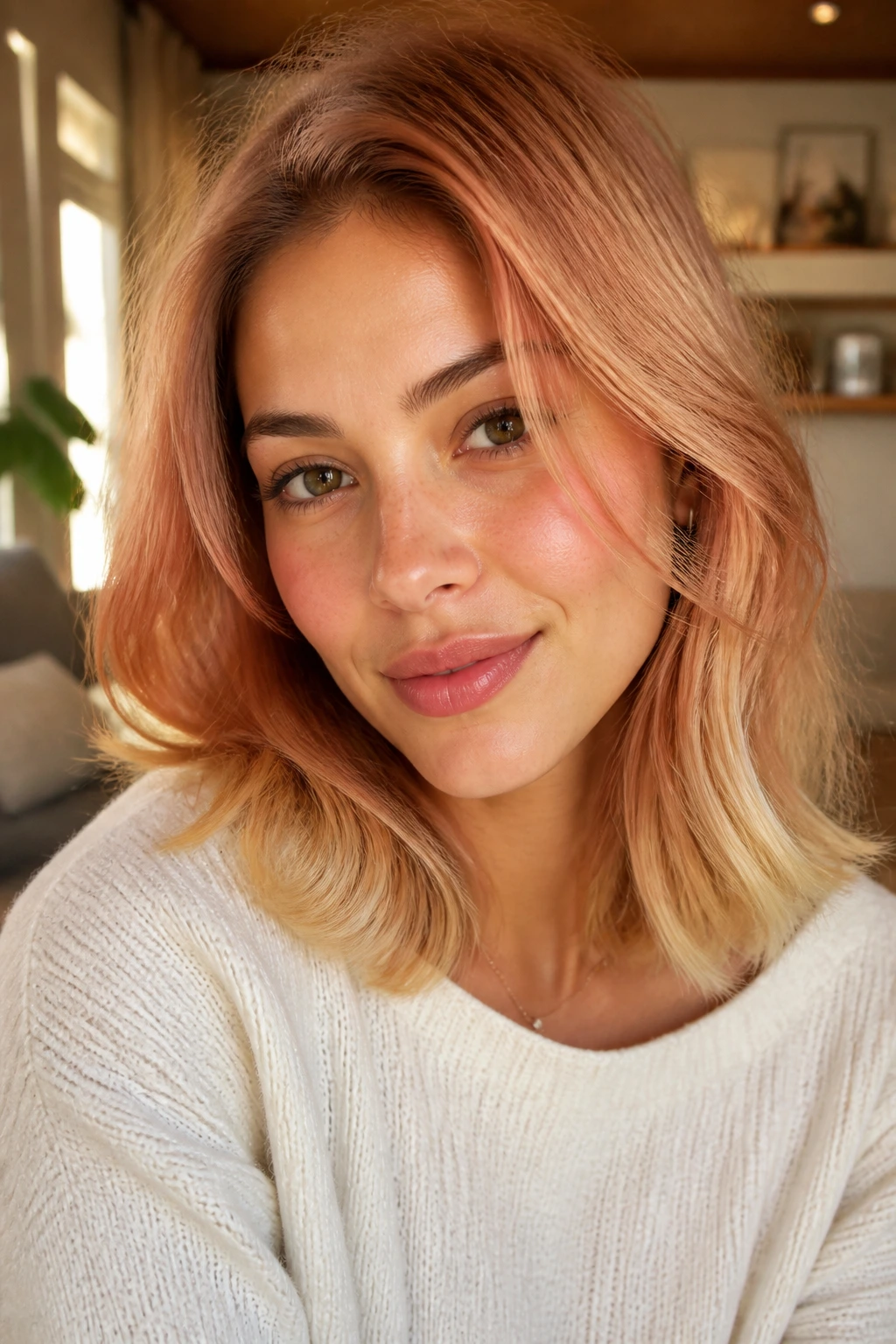
Peachy Strawberry Blonde with Beige Ends is the safest way to wear strawberry red if your olive skin is light and a little muted. It lives between blonde and copper, which keeps the color airy instead of heavy. The beige ends stop the peach from turning yellow, and that matters more than people think.
This shade works best when the blonde is still warm enough to hold the strawberry note. If you push it too pale, the color can disappear against olive skin. If you keep it in that level 8 to 9 range with a creamy finish, it reads soft, sunny, and expensive without feeling precious.
Wear it with a blunt bob, loose waves, or a shoulder-length cut with a bit of bend. Straight hair can make the beige show more, which is not always a bad thing, but a little movement brings the peach and strawberry together in a way that feels alive.
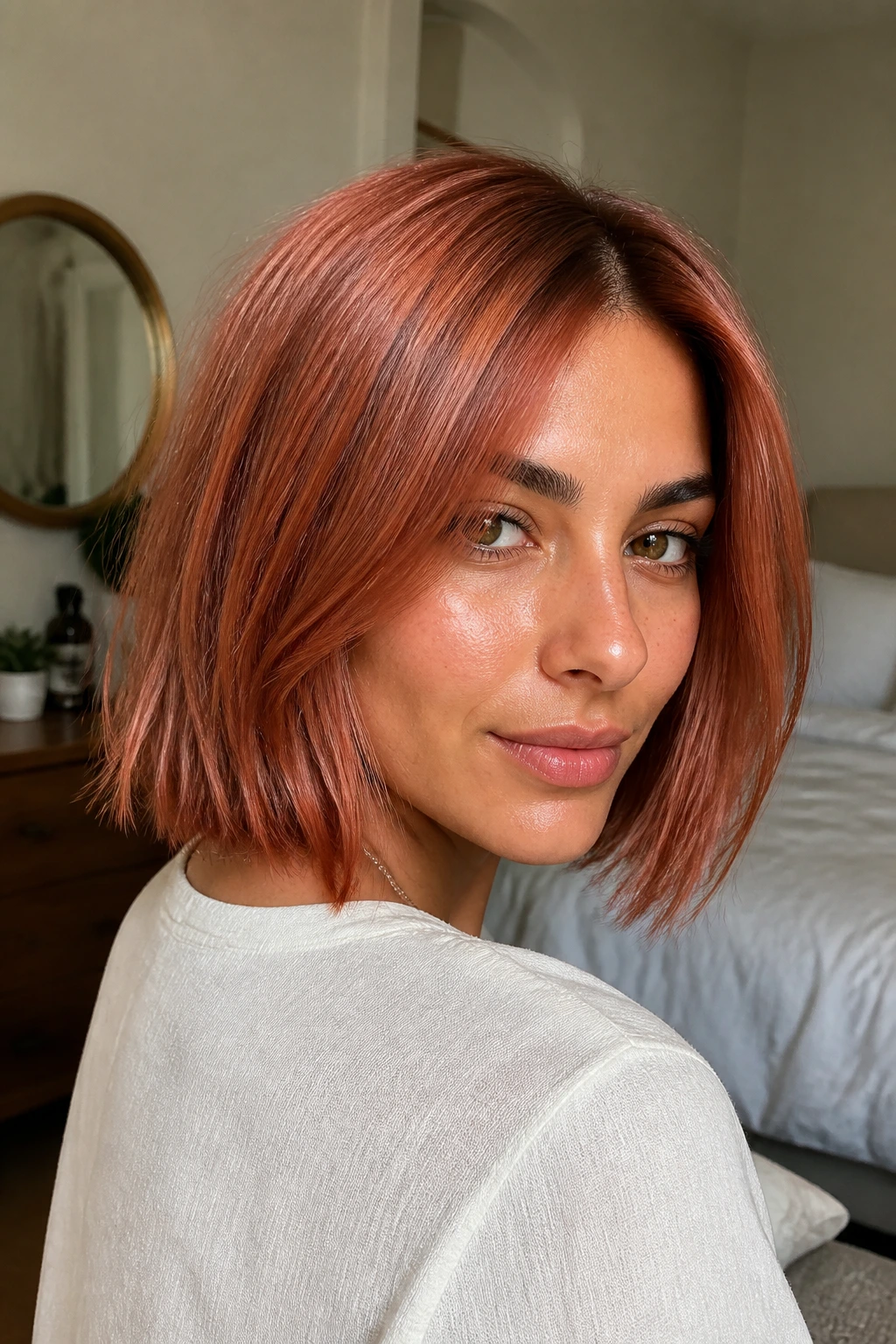
3. Rose Copper Lob with Gloss Finish
Why does a rose-copper lob work so well on neutral olive skin? Because it gives you warmth without forcing the red to be orange-heavy. The rose note cools the copper just enough, and a lob keeps the color modern without needing a lot of styling effort.
How to Style It
A chin-length or collarbone-length lob is ideal here because the color reflects well on flat surfaces and soft bends. Ask for a rose copper glaze over a level 7 base, then keep the finish glossy rather than matte. A matte red can look dry fast, and olive skin does not need more dullness.
The best part is the movement. When the lob swings, the rose and copper catch in different places, so the color never looks one-note. If you like a haircut that can air-dry and still look deliberate, this is a strong pick.
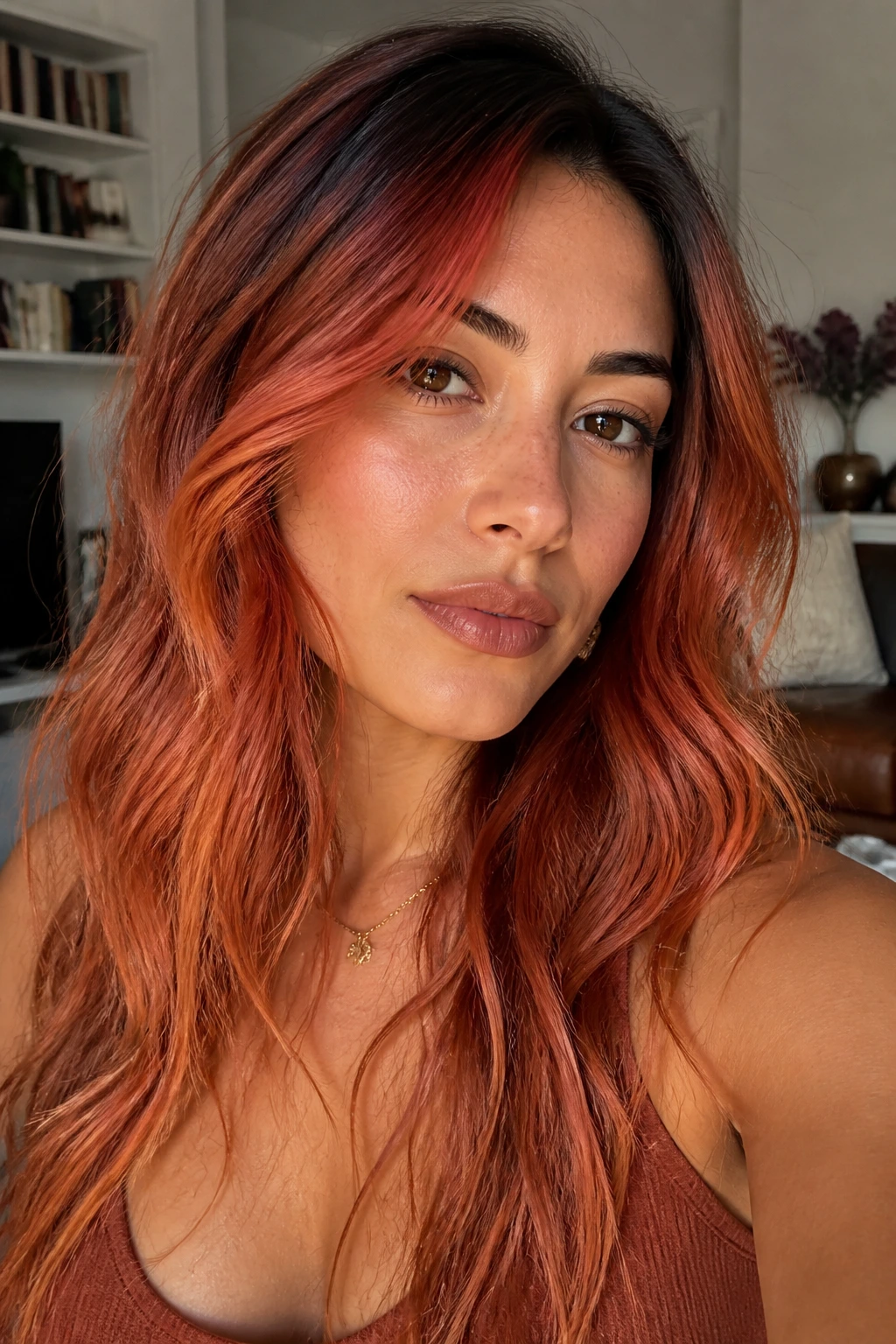
4. Ginger Strawberry Waves with Dark Roots
Picture this: dark roots, loose waves, and a ginger-strawberry length that looks warmer every time the light shifts. That contrast is the reason this shade works. The base gives the red somewhere to land, and the waves keep the color from reading flat across olive skin.
This one is a smart choice if you want red that feels a little bolder. On warm olive skin, the ginger can be vivid without looking angry. On neutral olive skin, the dark root keeps the orange in check. The style also grows out well, which matters if you do not want to race back to the salon every four weeks.
Ask for a root shadow that stays close to your natural color, then let the ginger strawberry build through the mid-lengths and ends. The goal is glow, not density.
5. Cinnamon Strawberry Balayage
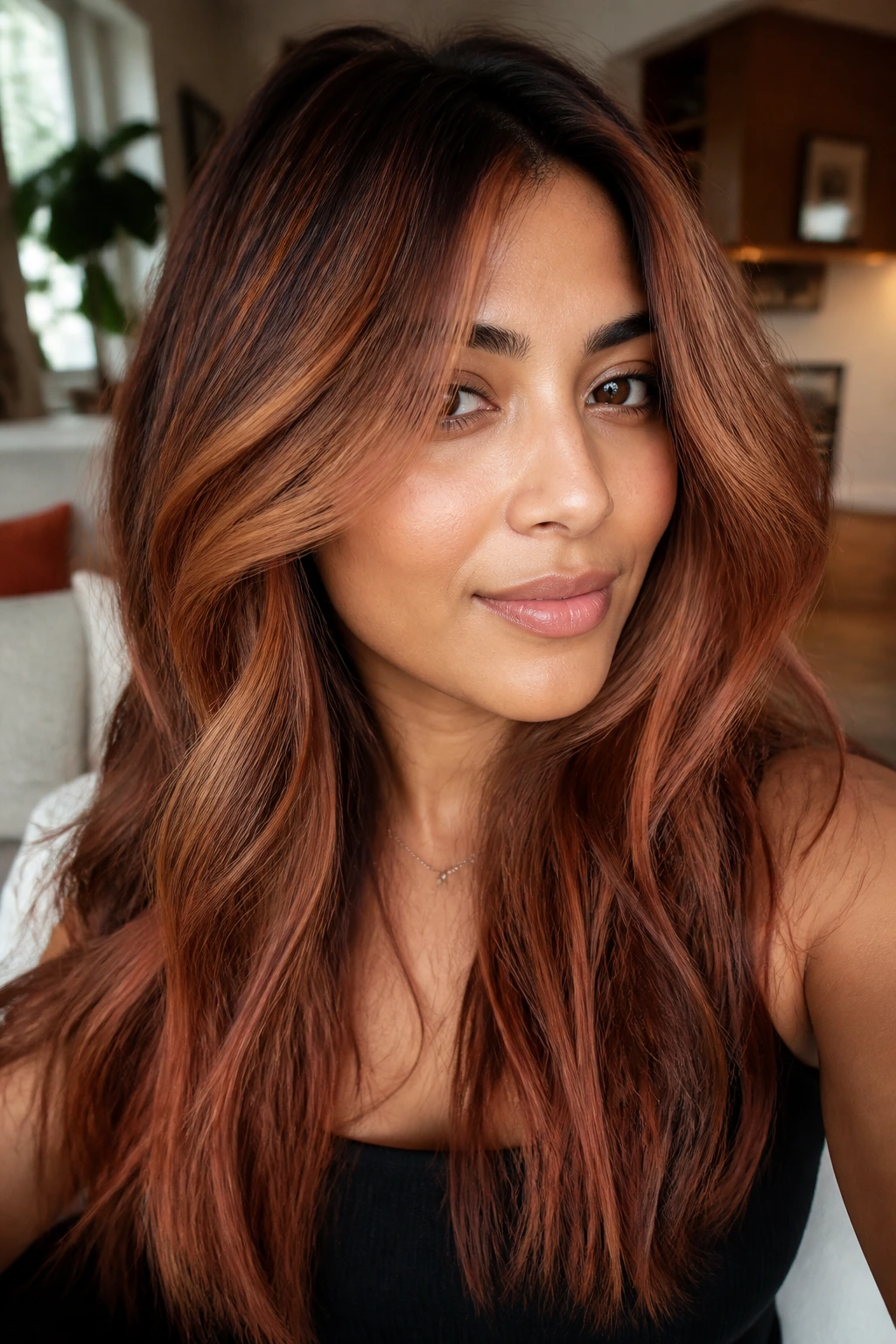
Cinnamon strawberry balayage is the shade for someone who wants red motion, not a full red block. Painted ribbons of cinnamon and soft copper make the hair look layered even before you style it. On olive skin, that broken-up placement usually looks cleaner than an all-over bright red.
The beauty of this color is the restraint. A brunette base with cinnamon strawberry pieces around the face and through the top layers gives you warmth where it counts. It also keeps the ends from becoming over-lightened, which is where a lot of red shades go wrong.
Wear it if you like low-maintenance color with a little depth. It looks especially good on long layers, shags, and curls that need definition. A quick wave with a 1-inch iron is enough to show the ribbons.
6. Apricot Strawberry Crop
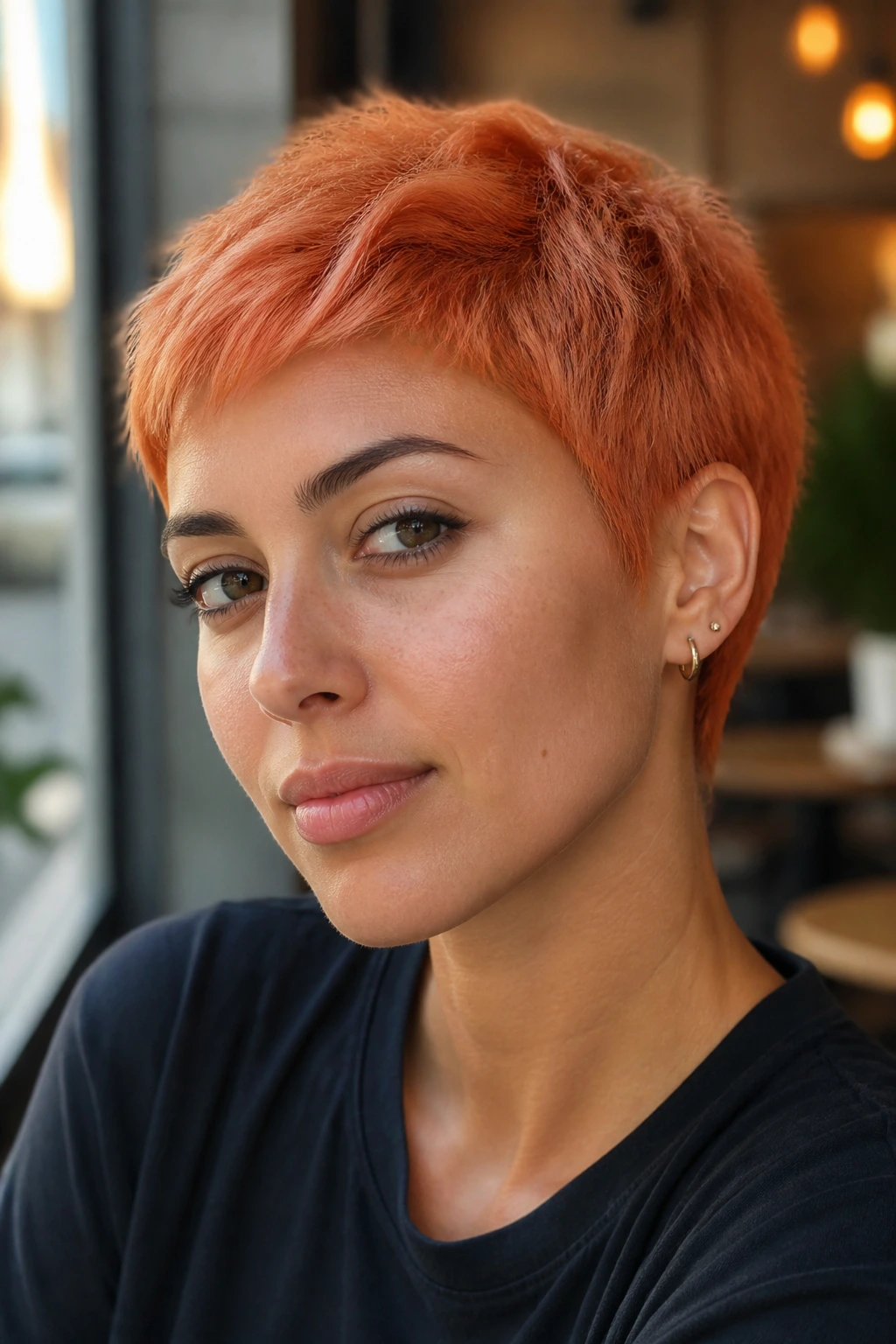
Unlike peachy blonde shades, an apricot strawberry crop keeps more orange in the mix — and that matters if your olive skin runs warm. The crop cut gives the color a crisp shape, so the shade does not have to do all the work by itself.
This one suits short hair with a bit of texture. A pixie, a cropped bob, or a tight layered cut lets the apricot read bright at the edges and softer near the scalp. The result is playful, not sugary.
If you like a color that looks intentional from the first glance, this is a strong choice. Keep the finish soft and slightly glossy; too much shine can push apricot into brass, and nobody wants that.
7. Strawberry Auburn with Chestnut Lowlights
Strawberry auburn with chestnut lowlights is where red gets a little more serious. The chestnut pieces ground the strawberry, and that gives olive skin a richer frame. If brighter copper shades make your face feel too flushed, this is the version that usually settles better.
The lowlights matter more than the strawberry here. They create depth around the face and through the back, which makes the red look layered instead of painted on. On medium to deep olive skin, that contrast can be especially flattering because it respects the natural darkness in the complexion.
I like this on shoulder-length cuts and longer hair with movement. It has enough complexity to stay interesting even when you pull it into a clip or a low ponytail.
8. Golden Strawberry Pixie
A golden strawberry pixie is small hair with a big effect. The gold keeps the red bright, the strawberry keeps it from going yellow, and the cropped length puts every tone on display. On olive skin, that close-to-the-face placement can be excellent if you want warmth without a lot of hair covering your features.
The key is not to go too light. Keep the gold soft and the strawberry clear, somewhere around a level 8 with a gentle copper glaze. A pixie that’s too pale starts to look frosty next to olive skin, which is the opposite of what you want.
This cut also lets the color do interesting things around the ears and nape. A little darker at the roots and a touch brighter on the top layers can make the shape look sharper with almost no styling.
9. Coral Copper Money Piece
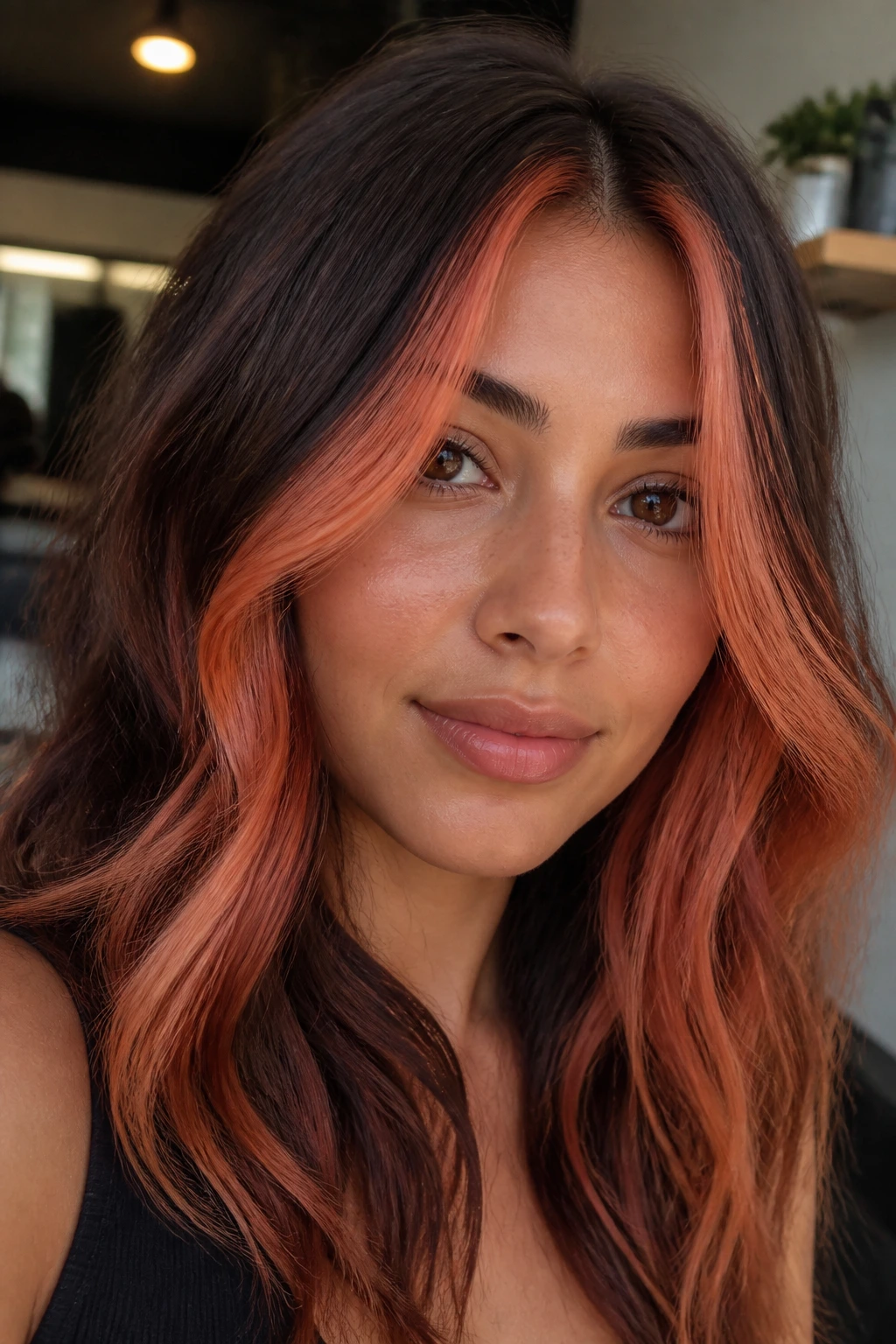
A coral copper money piece is the fast answer when you want strawberry red but not a full-head commitment. The face-framing pieces bring the color where it matters most, and olive skin often looks brighter the moment those front sections lighten up.
What Makes It Different
The base can stay brunette, dark blonde, or muted copper, while the front pieces carry the coral. That keeps upkeep easier and gives you room to test the tone before going all-in. If your skin leans neutral olive, this is a nice middle step. If it leans warmer, coral copper can be a little more playful.
Ask for the money piece to be one to two levels lighter than the rest of the hair, not five. Too much contrast can look striped. A gentler lift feels more expensive and ages better as it grows.
10. Champagne Strawberry Melt
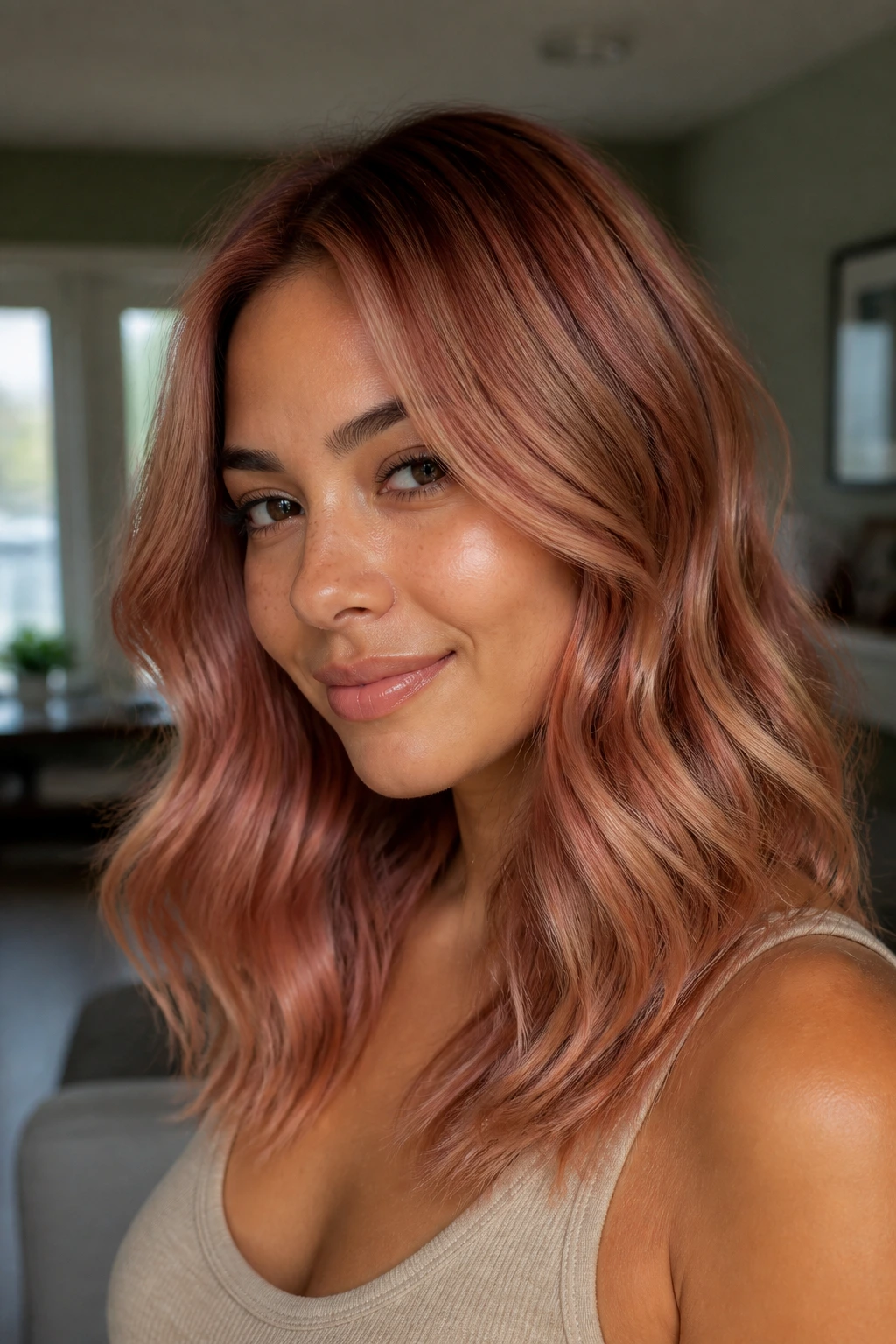
Champagne strawberry melt is for the person who wants the idea of red more than the headline-grabbing version of it. The champagne softens the copper, and the melt keeps the transition smooth from root to end. On olive skin, that softness can look cleaner than a high-contrast red.
The shade is especially good if you’re nervous about orange. It gives you warmth, but the beige-cream finish keeps the color from getting loud. Think of it as strawberry red with the volume turned down one notch.
This look works well on medium-length cuts, soft waves, and layered blowouts. It’s polished without feeling stiff, and it tends to hold up nicely when the color starts fading because the base is already forgiving.
11. Deep Copper Strawberry Curls
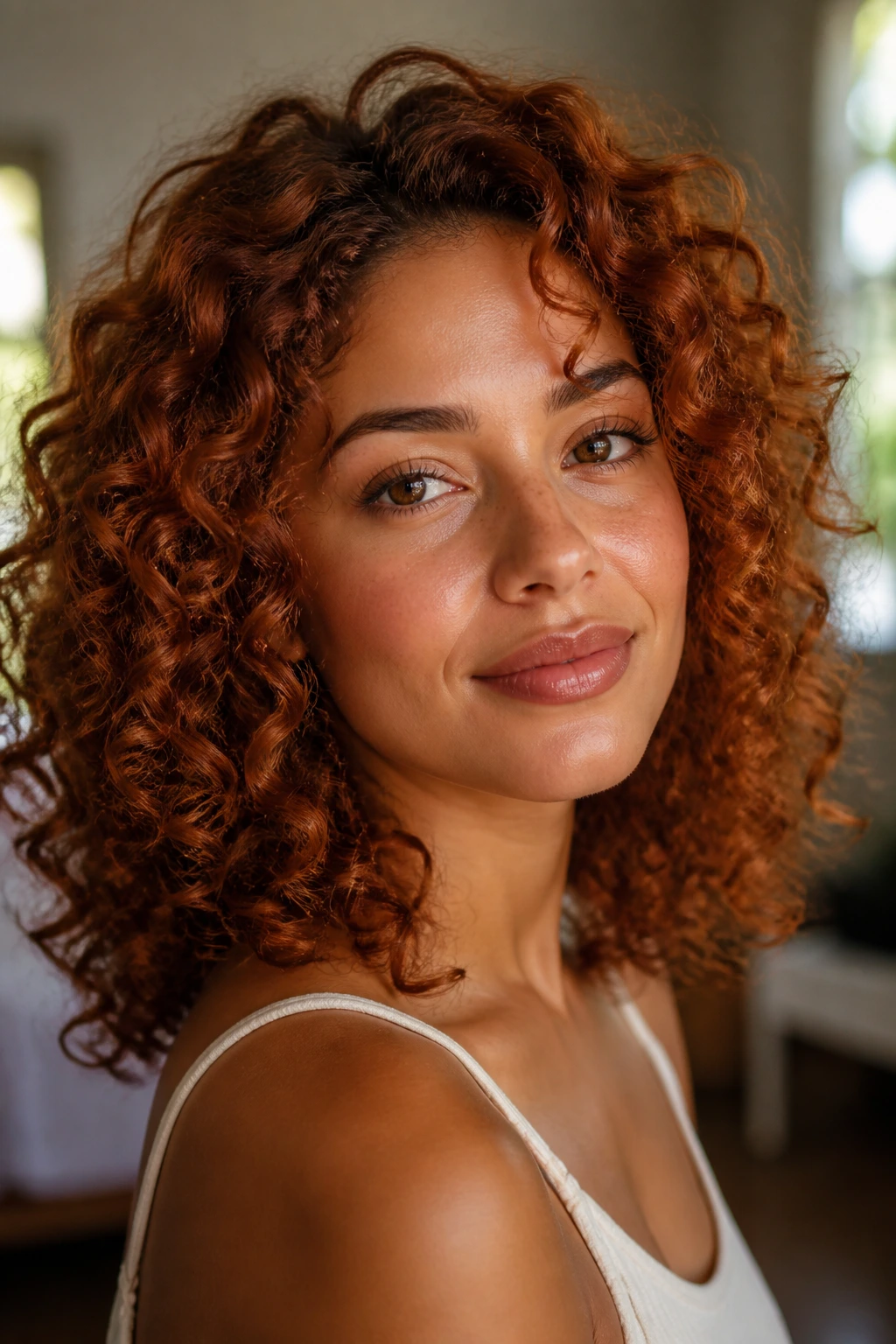
Deep copper strawberry curls look richer than lighter reds because the curl pattern does half the work. Every bend catches the copper differently, so the hair reads dimensional even when the color formula is simple. On olive skin, that depth keeps the red from looking like a flat layer laid over the face.
If your curls are dense or coarse, this shade is especially satisfying. The deeper copper gives the shape more body, and strawberry notes near the surface keep it from feeling too brown. It’s one of those colors that looks even better on day two, when the curl pattern has settled.
Keep the finish hydrated. Curls with red tones show dryness fast, and dry curls make copper turn dusty. A leave-in and a light curl cream usually do more here than extra dye ever will.
12. Rusted Rose Shag
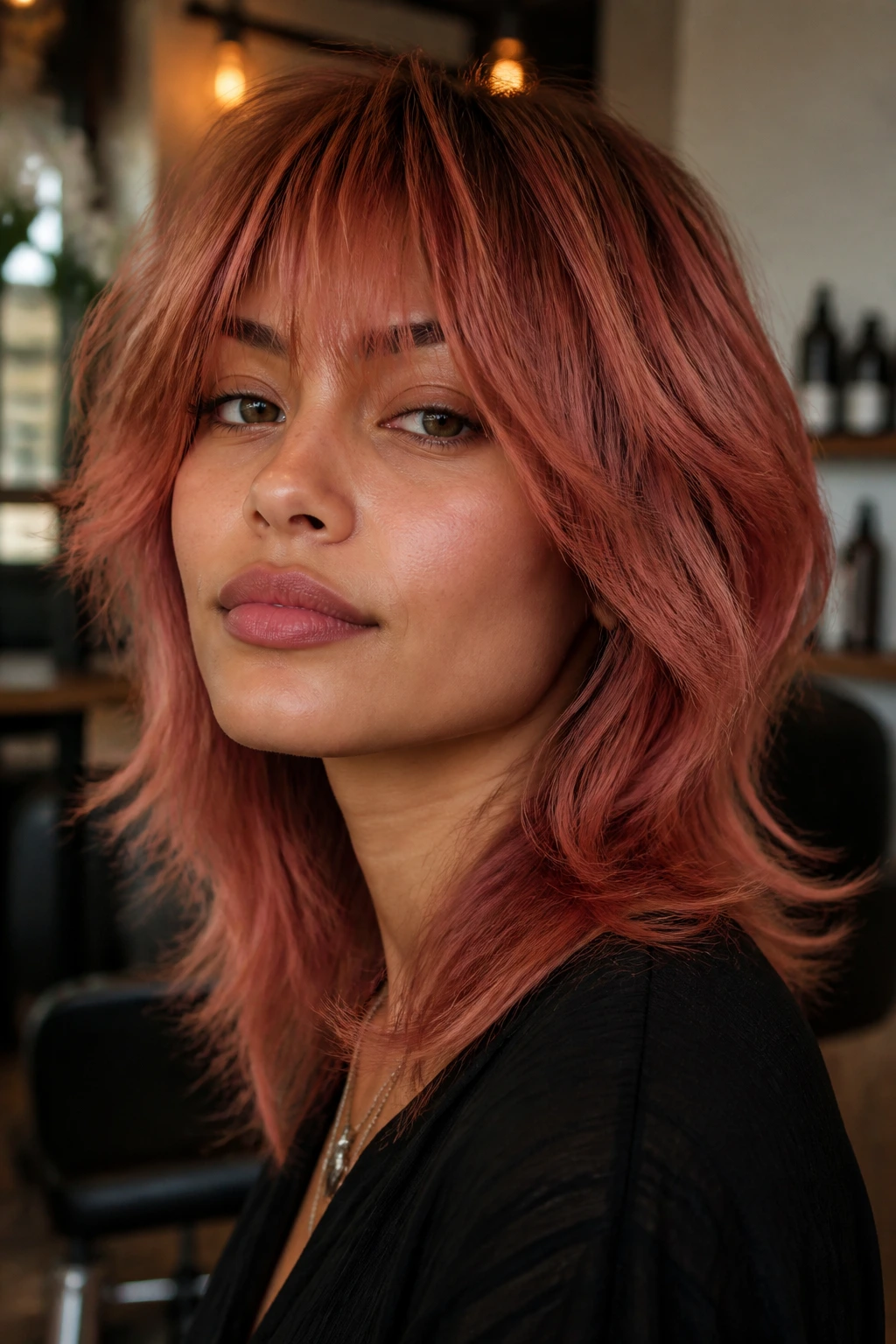
Rusted rose is a little smoky, a little pink, and a little copper all at once. That makes it a strong match for olive skin that doesn’t love full orange. On a shag, the uneven layers keep the color moving, which is half the point.
Best Cut Pairing
A shag gives rusted rose room to show off in the bangs, crown, and ends without needing a perfect smooth finish. Air-dried texture works. So does a rough blow-dry with a round brush just at the front.
This shade looks best when the base is not too light. Keep some depth underneath the rose, or the whole thing can go chalky. A level 6 to 7 foundation with rose-copper ends usually feels balanced.
13. Honey Strawberry Layers
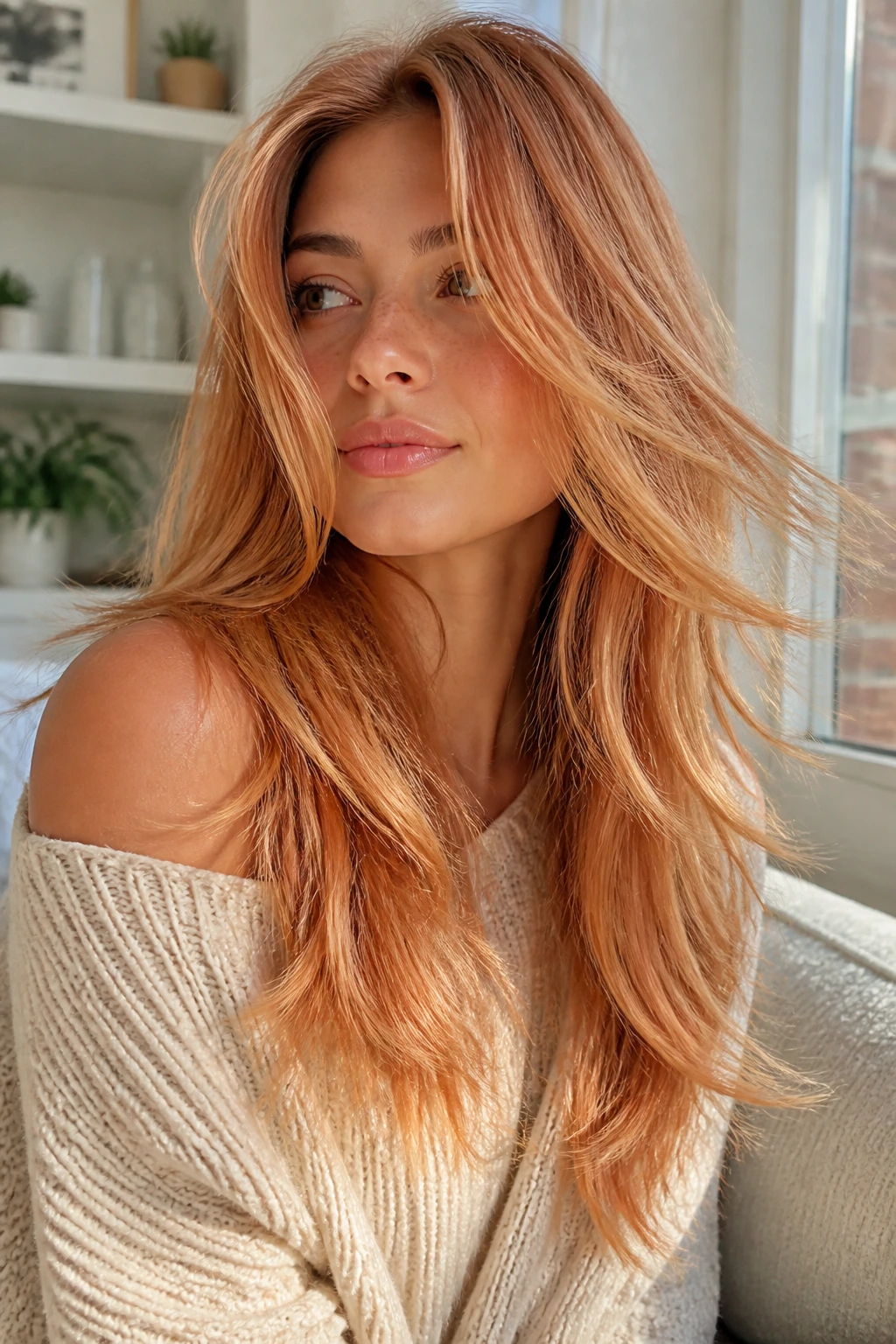
Honey strawberry layers sit between copper and blonde in a way that flatters olive skin more often than people expect. The honey adds glow, the strawberry adds warmth, and the layers spread that color so it catches in motion. On layered cuts, the effect is almost woven.
This is a good choice if you want a softer take on red. It does not announce itself across the room, but it still reads as intentional. That matters if you work in lighting that can flatten brighter reds.
The cut matters here. Long layers, face-framing pieces, or soft curtain layers let the honey and strawberry shift as you move. A one-length cut can still work, but it won’t show the same range.
14. Sunset Strawberry Face-Frame
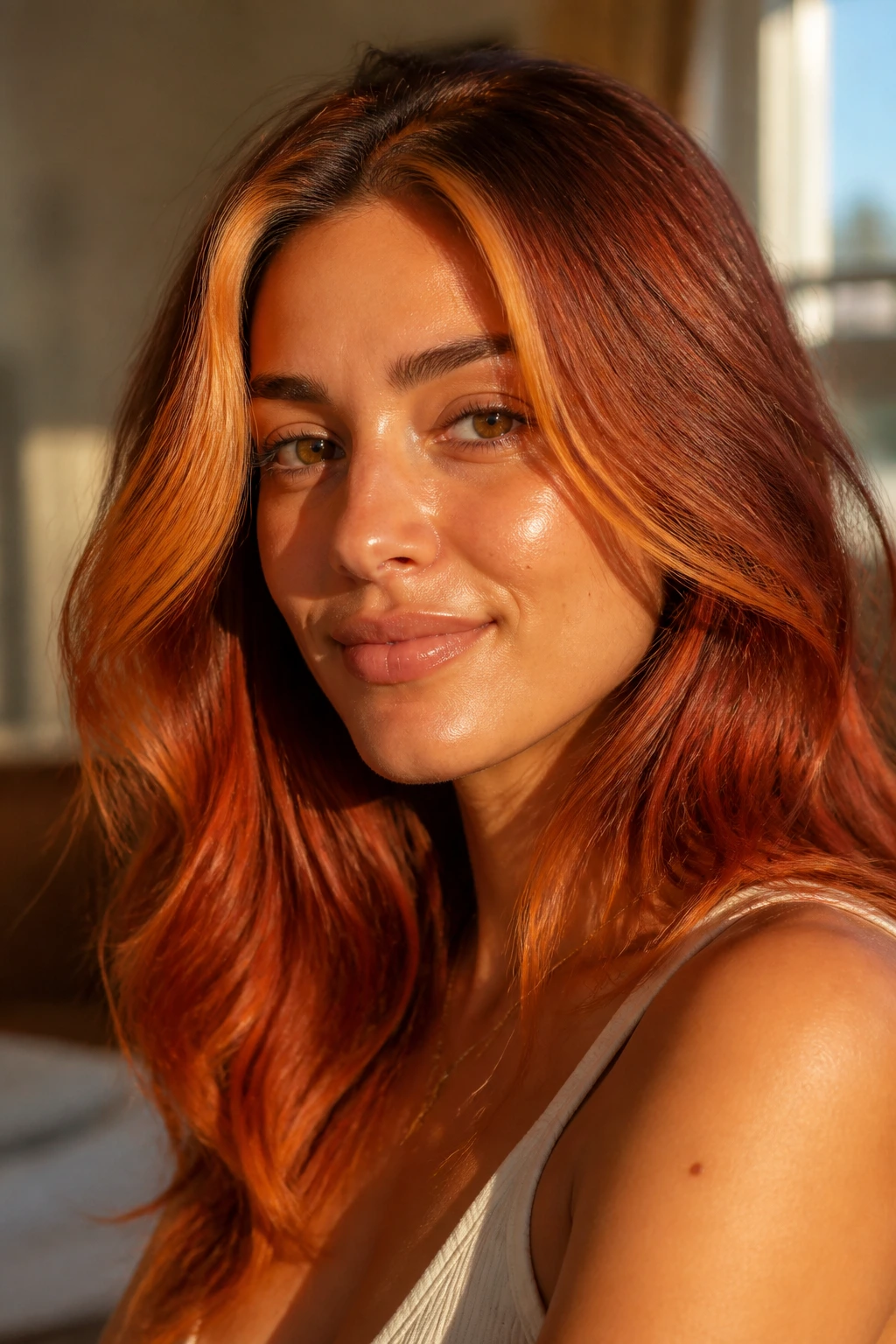
Sunset strawberry face-frame is exactly what it sounds like: brighter pieces around the face, deeper warmth everywhere else. On olive skin, that front brightness can wake up the whole complexion without needing an all-over lightening job.
The best version keeps the face frame golden-copper, then fades into a deeper strawberry through the sides and back. That way the contrast feels natural, not chopped up. If you wear your hair down a lot, this is one of the easiest ways to get impact without repainting the whole head.
I like it on long bobs, layered mid-length cuts, and curls that need a little structure around the front. The face frame can also help if your eyebrows or eyes are dark and you want the hair to connect with them.
15. Merlot Copper Strawberry
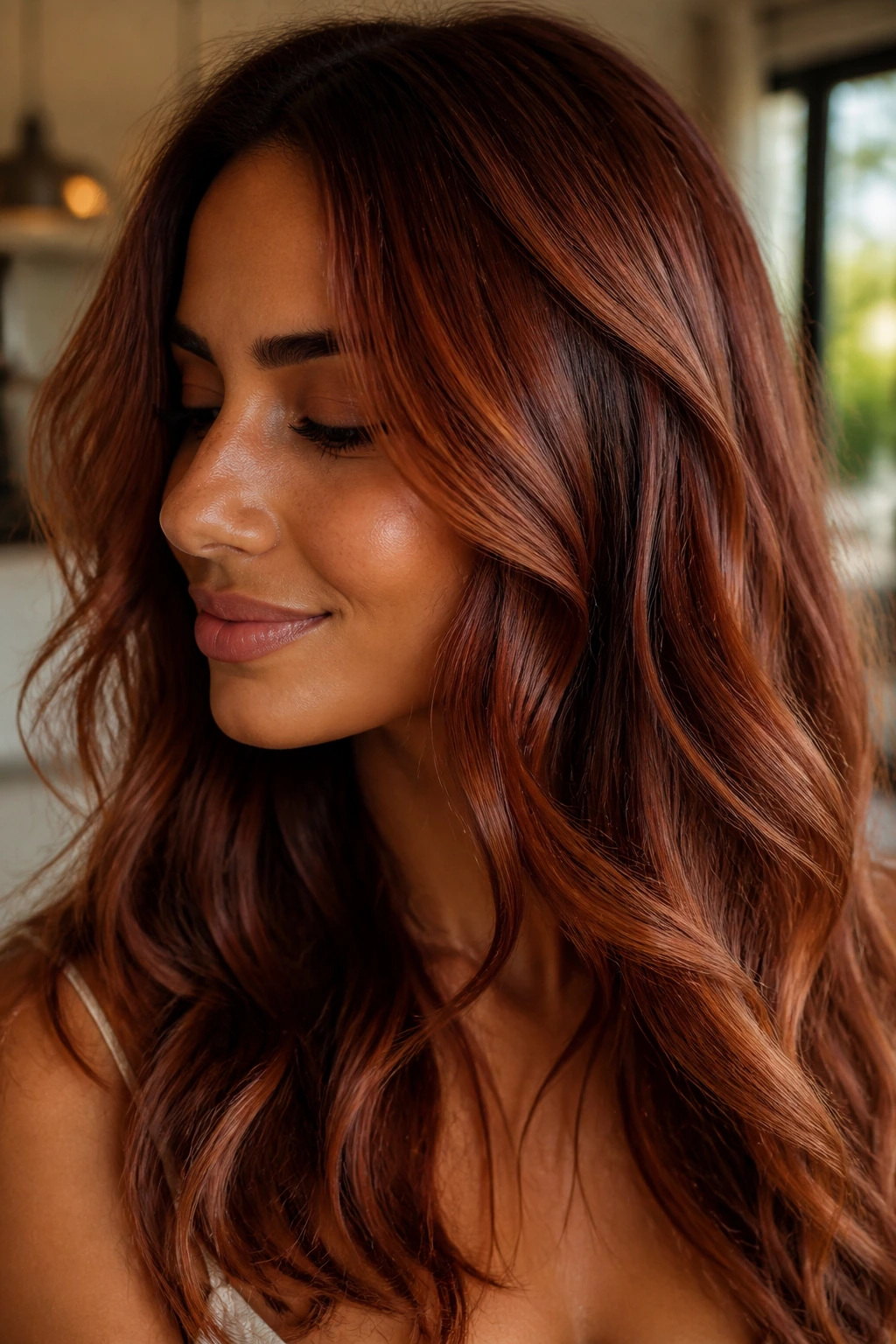
Merlot copper strawberry is the richer, darker cousin in the group. It has enough red to count, but the merlot depth keeps it from getting too bright for deeper olive skin. If lighter strawberry shades wash you out, this one tends to sit more comfortably.
The trick is balance. You want the copper to show in the shine, not dominate the whole formula. That’s why this shade works well with lowlights and glossing — the red peeks through instead of yelling.
This is also a good choice if you like makeup with depth: brick lipstick, brown liner, and warm blush all sit nicely beside it. The hair and skin feel connected, which is the whole game here.
16. Strawberry Brunette Melt
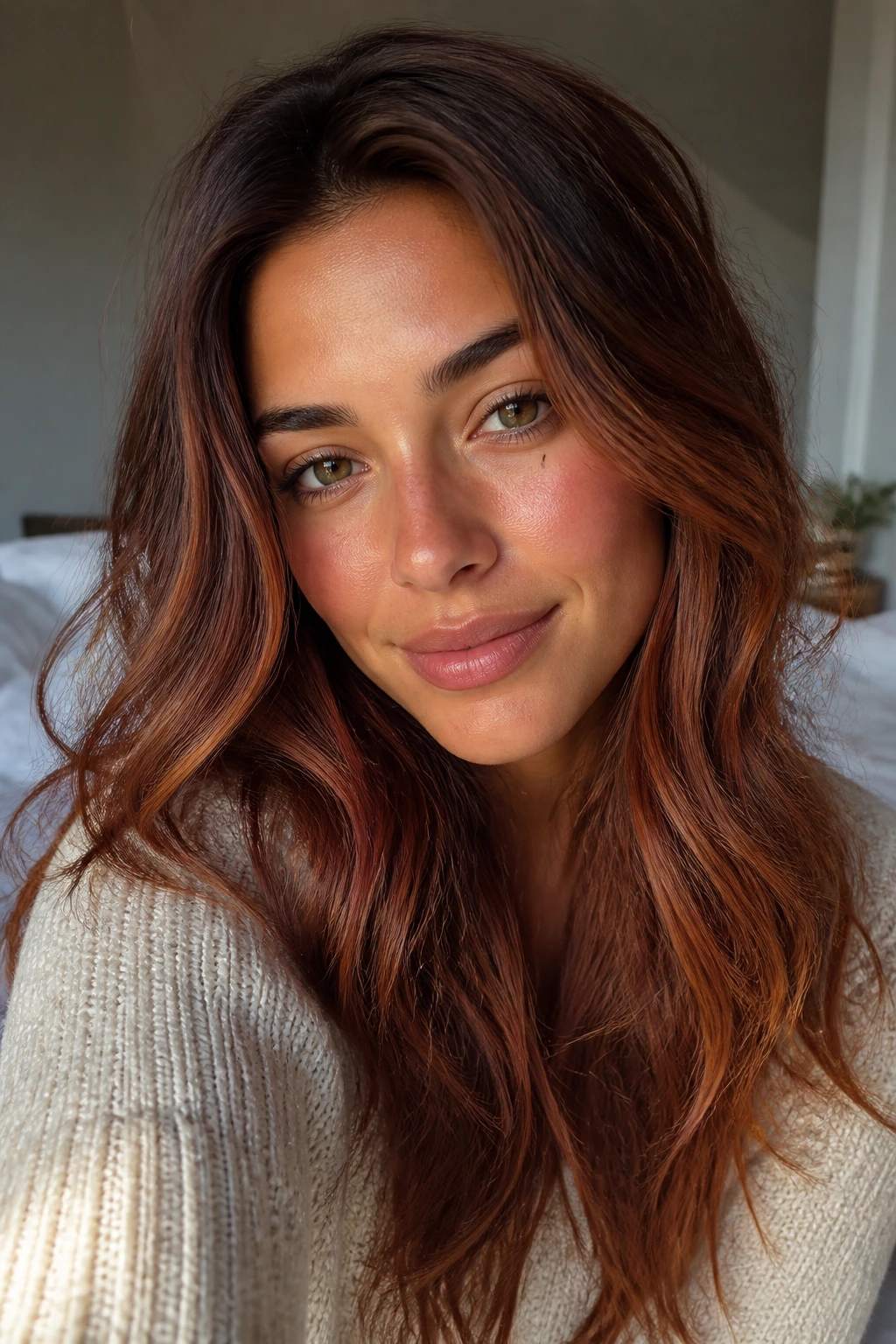
Strawberry brunette melt is the shade for anyone who wants red but refuses to give up depth. The brunette base keeps the hair grounded, and the strawberry warms the mids and ends just enough to show up against olive skin. It’s subtle in a way that still reads as a color change.
Why It’s Less High-Maintenance Than It Sounds
Because the base stays brunette, the grow-out is softer. You’re not fighting a hard line every few weeks. The strawberry can also be refreshed with a glaze instead of a full retouch, which is easier on hair and budget.
This is one of the best options for first-time red clients. You can always brighten it later. Starting with depth gives you room to learn how the color behaves on your skin and in your daily light.
17. Apricot Rose Ribbon Highlights
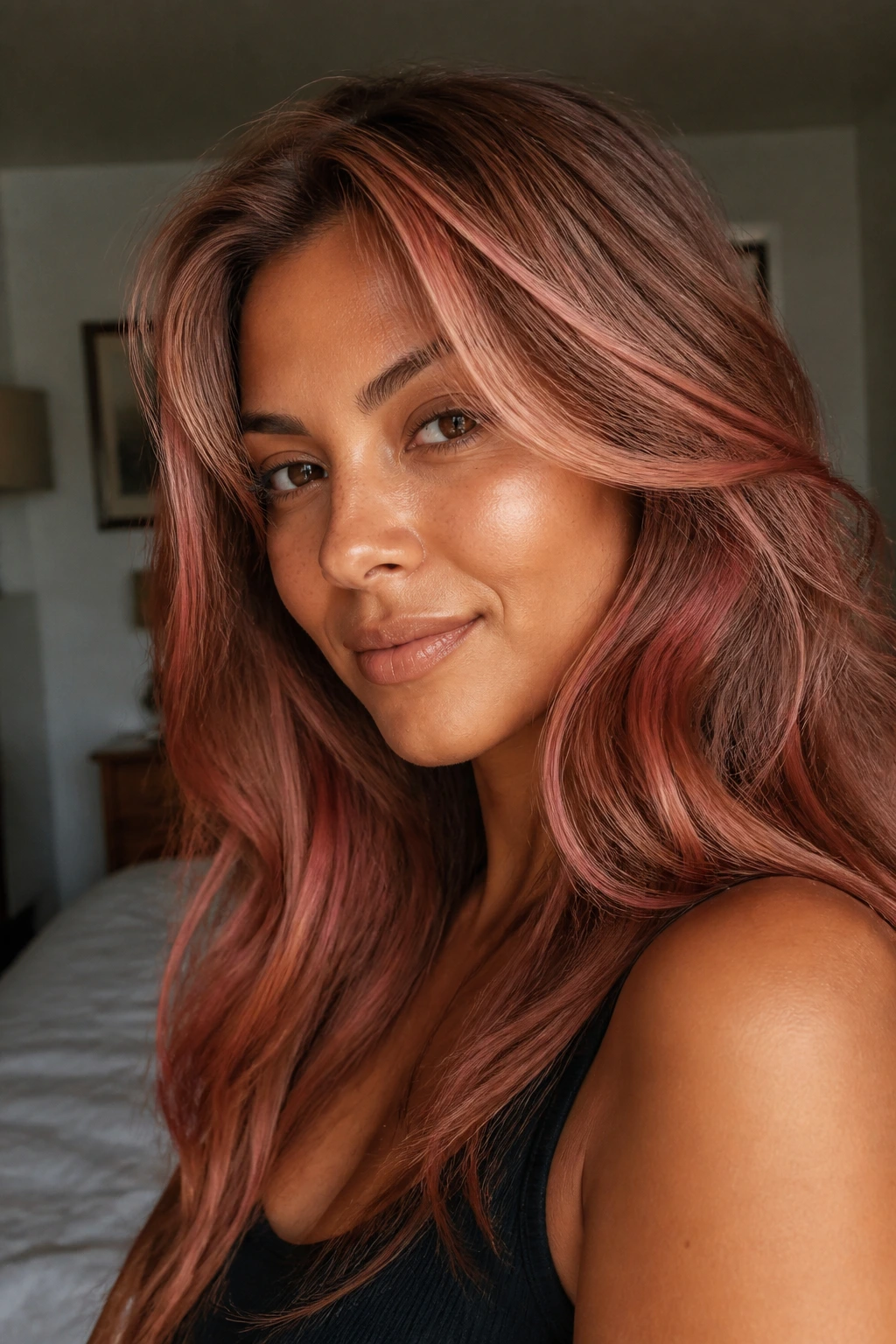
Apricot rose ribbon highlights are a good answer if you want strawberry red in motion, not in a solid block. The ribbons can be painted through the top layers, around the crown, and through the front pieces, so the color breaks up beautifully on olive skin.
The apricot brings warmth. The rose keeps it from getting too orange. Together, they make the hair look textured even when it’s smooth, which is a neat trick on straight or fine hair.
This version is especially good if you spend time wearing your hair half-up or clipped back. The highlights still show from the sides and front, so the color doesn’t disappear when the hair leaves your shoulders.
18. Smoked Ginger Bob
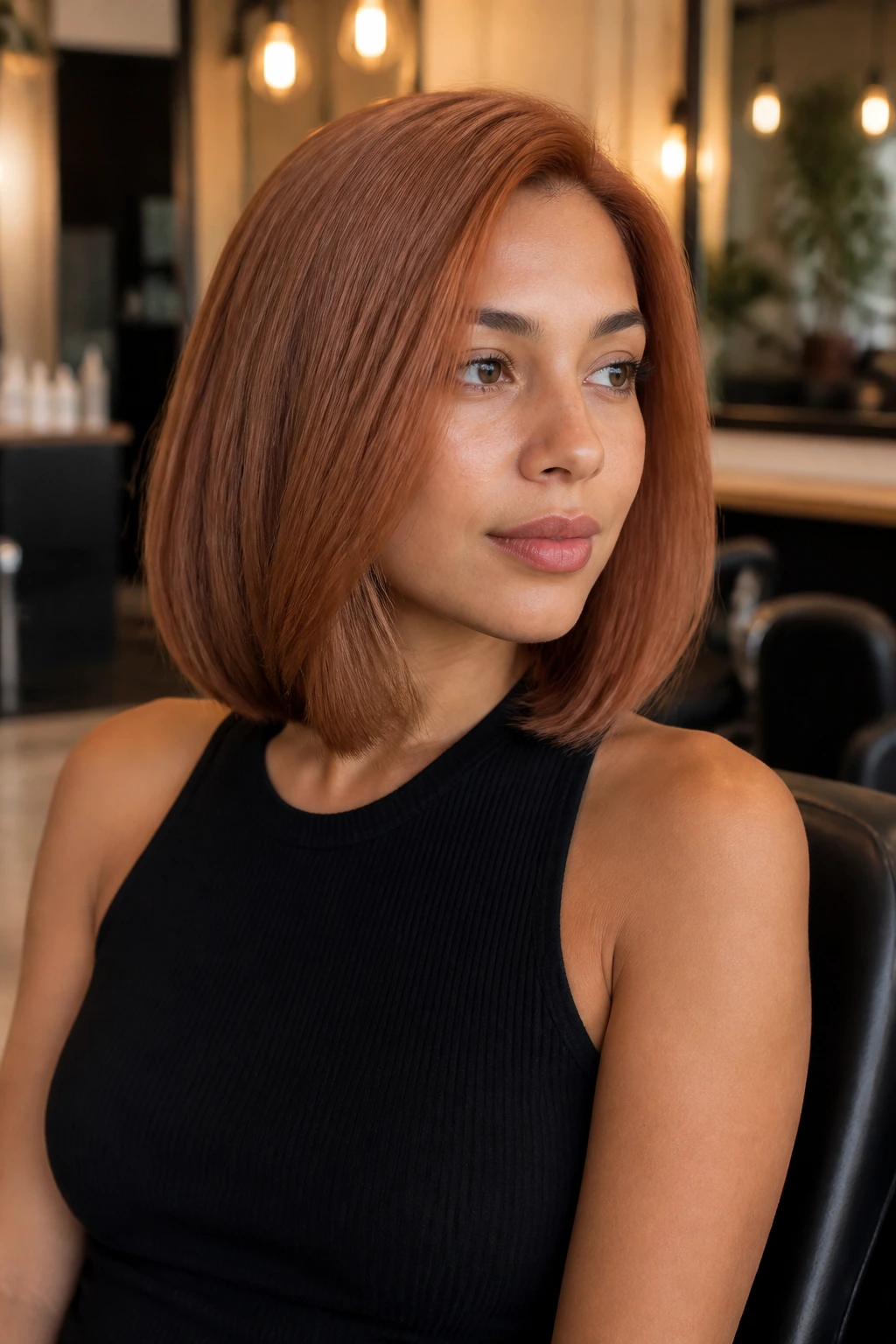
Smoked ginger is for people who like copper but not the shiny, loud version of copper. The smoke — meaning a slightly muted, beige-brown undertone — makes it easier on olive skin, especially if your complexion leans neutral or cool-olive. On a bob, the shape keeps it sharp.
The bob helps the shade look polished. Every line is cleaner, and the muted ginger tone doesn’t have to compete with too much hair length. If your current color feels too bright, this is a good way to pull it back without going dark.
A straight bob shows off the finish best, but a slight bend at the ends works too. Keep it sleek enough that the smoked tone still looks intentional.
19. Warm Copper Ombré
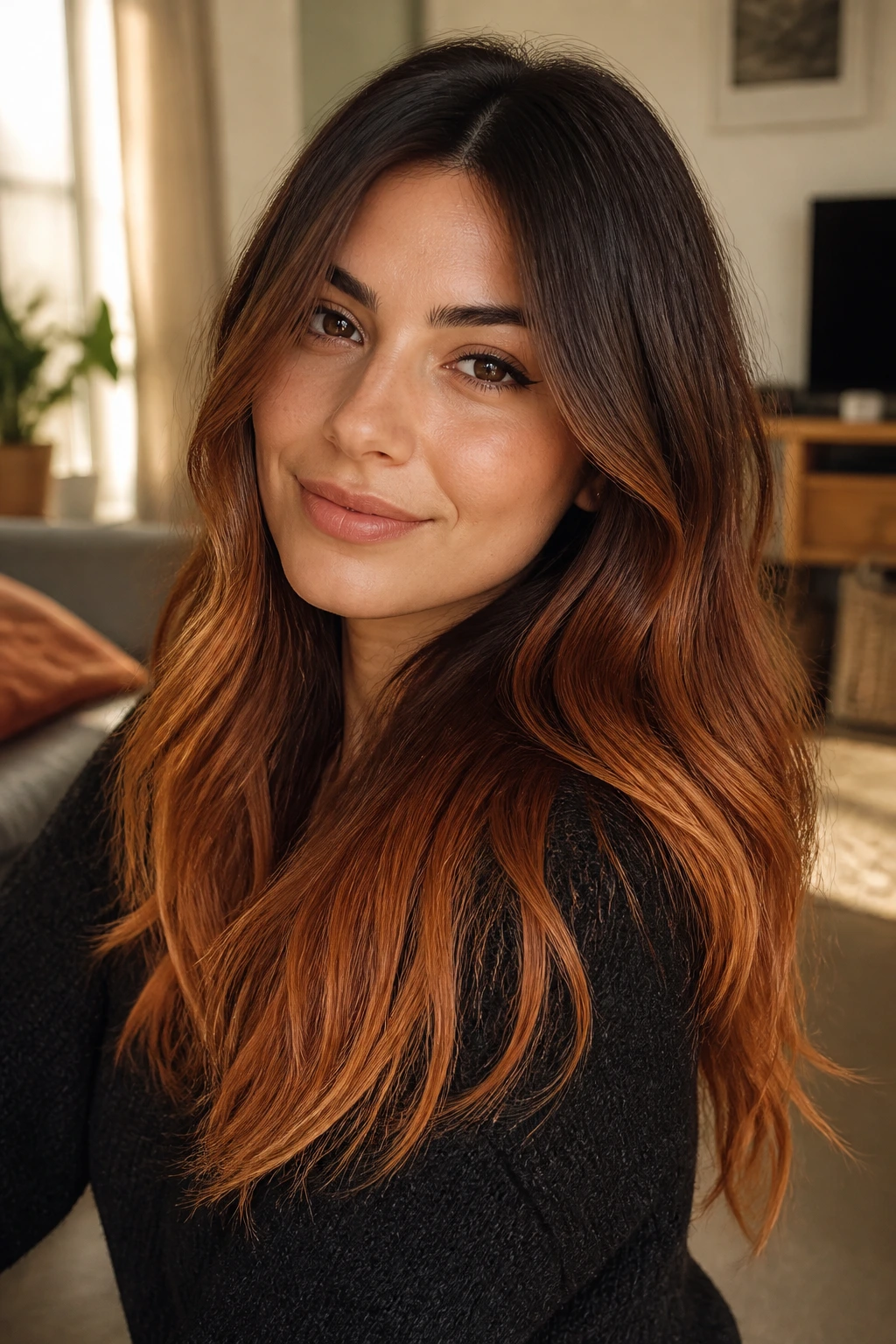
Warm copper ombré gives you the red payoff without changing the roots too much. That makes it useful if your olive skin looks best with a little natural depth near the scalp. The gradual shift from brunette or dark blonde into copper ends looks softer than a hard line.
This approach works particularly well on long hair. The longer the canvas, the more room you have to let the copper warm up toward the ends. It also means the color stays wearable when tied back, because the copper still shows through the length.
If you’re nervous about full red, this is one of the safest on-ramp choices. You get enough warmth to matter, but not so much that every regrowth appointment turns into a big event.
20. Peach Jam Curls
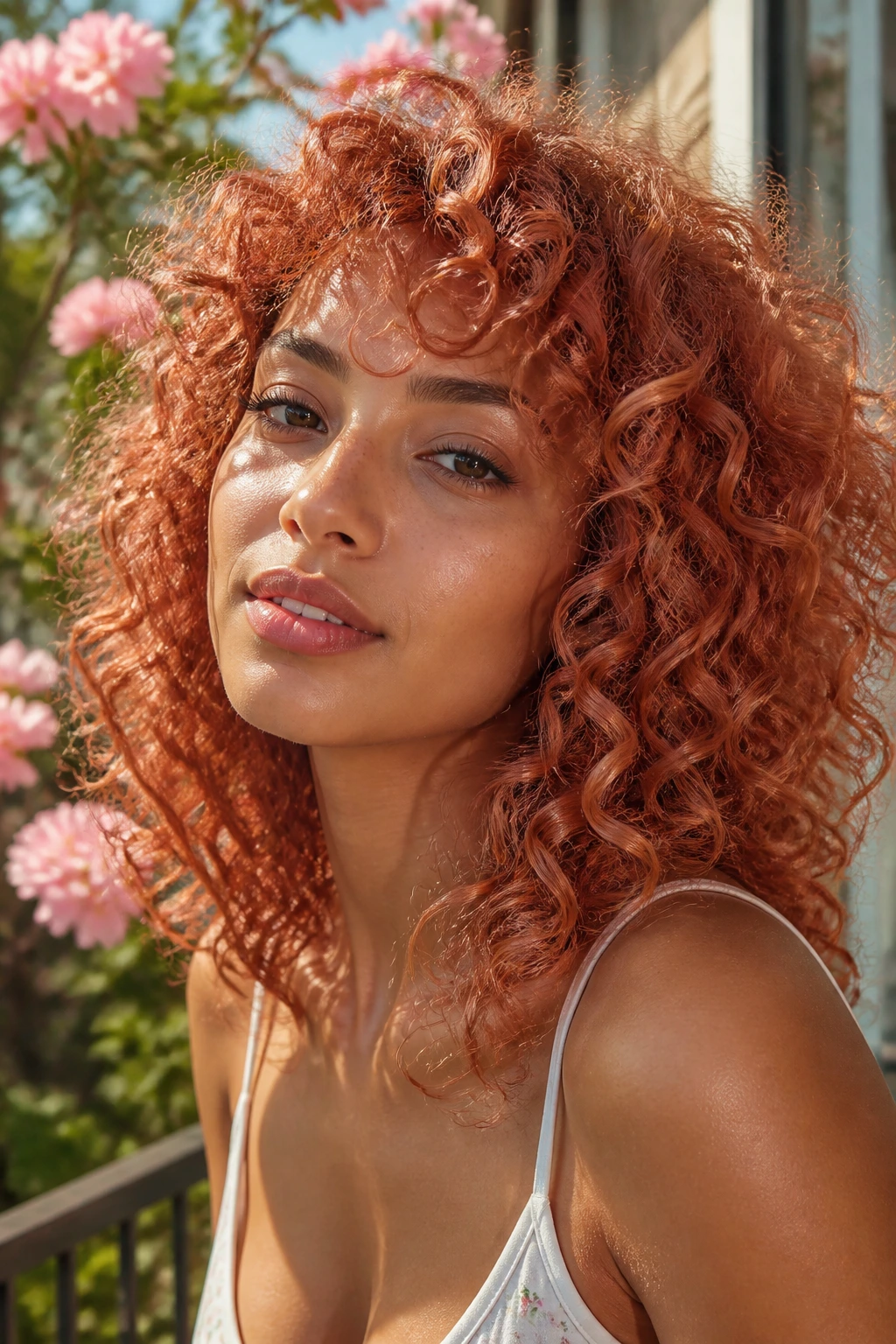
Peach jam curls are softer than apricot and brighter than strawberry blonde. That middle space is where olive skin often looks freshest, especially if the skin has a muted or slightly golden cast. The curls help too, because the bend keeps the peach from going flat.
This shade looks best when the formula has a tiny bit of rose in it. Otherwise, peach can slide too orange on some olive complexions. A warm glaze with some beige balance tends to keep the color sweet instead of sugary.
Use this if you want red that reads friendly rather than dramatic. It has a soft, touchable finish that works especially well on medium-length curls and layered cuts.
21. Vintage Auburn Strawberry
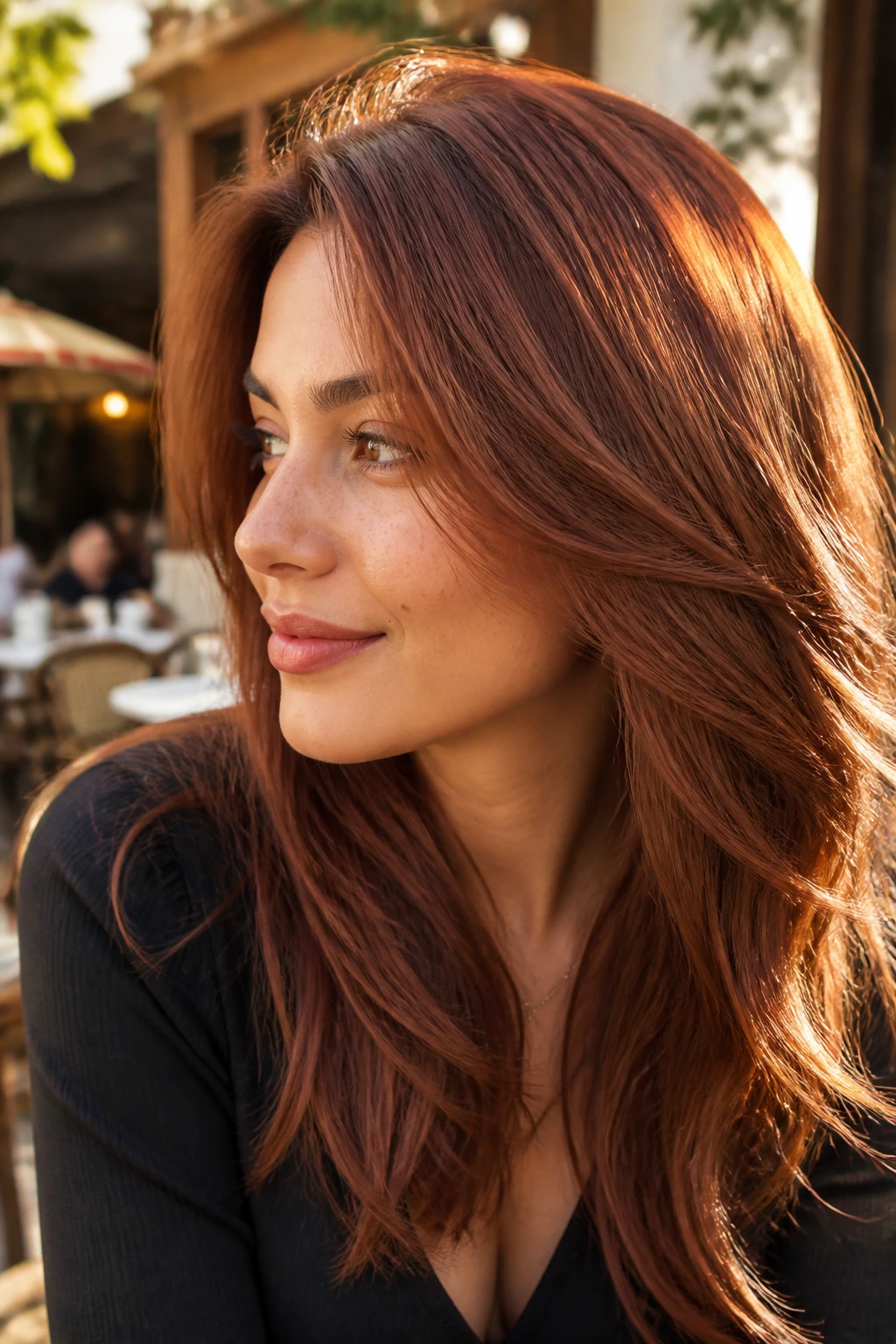
Vintage auburn strawberry has a classic feel because it isn’t chasing brightness. The auburn base carries the color, while the strawberry sheen shows up in sunlight and along the longer layers. On olive skin, that kind of depth usually looks expensive without trying too hard.
What to Watch For
If the auburn gets too dark, the strawberry disappears. If the strawberry gets too light, the auburn turns muddy. The sweet spot is somewhere in the middle, with enough warmth that the hair still reads red in indoor light.
This is a good pick if you like a more polished, old-school finish. Think smooth blowouts, soft bends, and side parts that let the color sit in broad strokes.
22. Spiced Marmalade Red
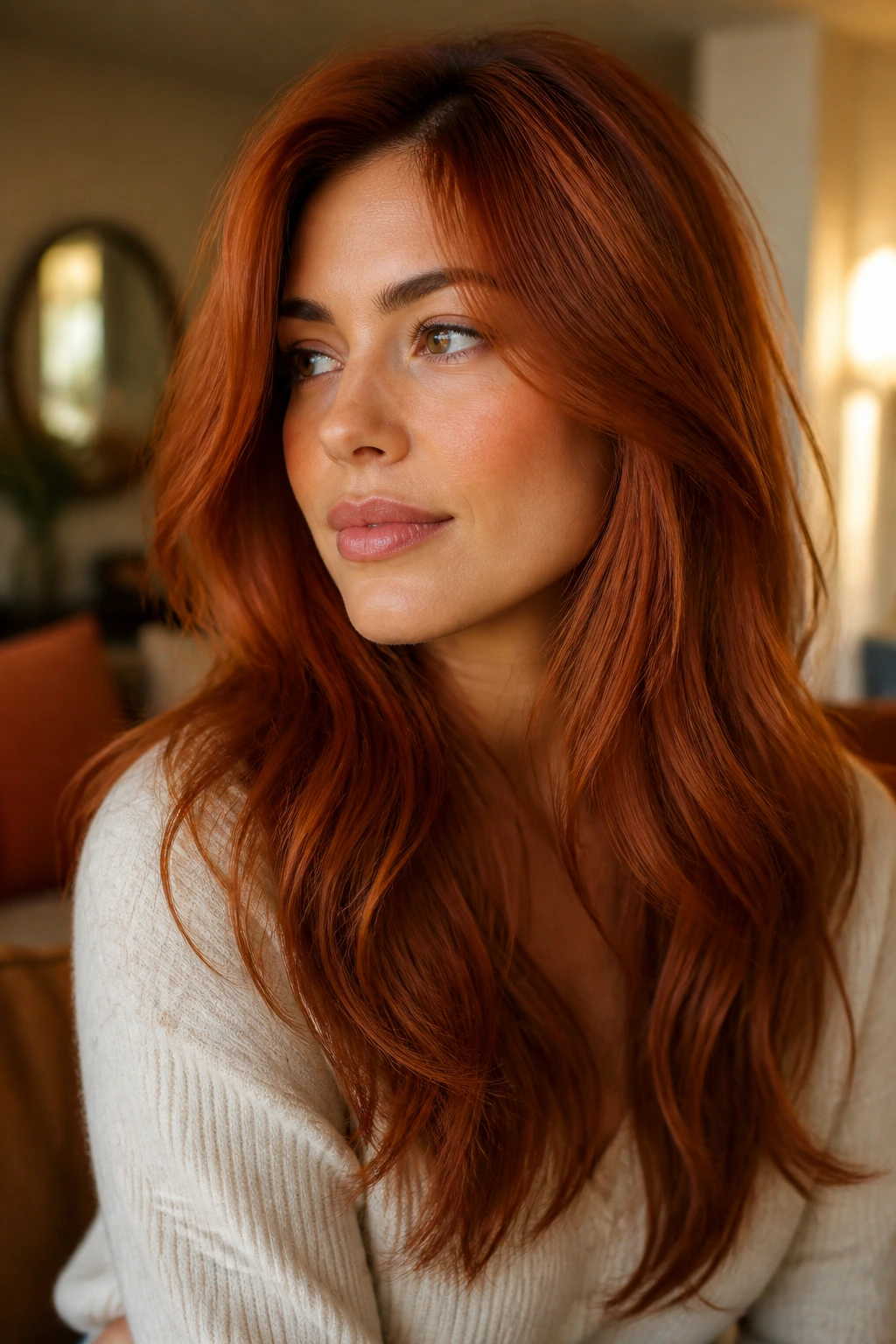
Spiced marmalade red is brighter than auburn, but it still has enough brown and orange depth to stay friendly on olive skin. It’s a bolder choice, and that is the point. If you’ve been living in soft copper for years and want more personality, this shade gives it to you.
The spice comes from the undertone mix. A little orange, a little copper, a little red-brown — enough to look juicy, not synthetic. On medium olive skin, it can be especially lively because the warmth echoes the skin without turning it flat.
I’d choose this on textured hair or layered cuts, where the color can move. A static one-length cut can make it read louder than intended.
23. Copper Rose Curtain Bangs
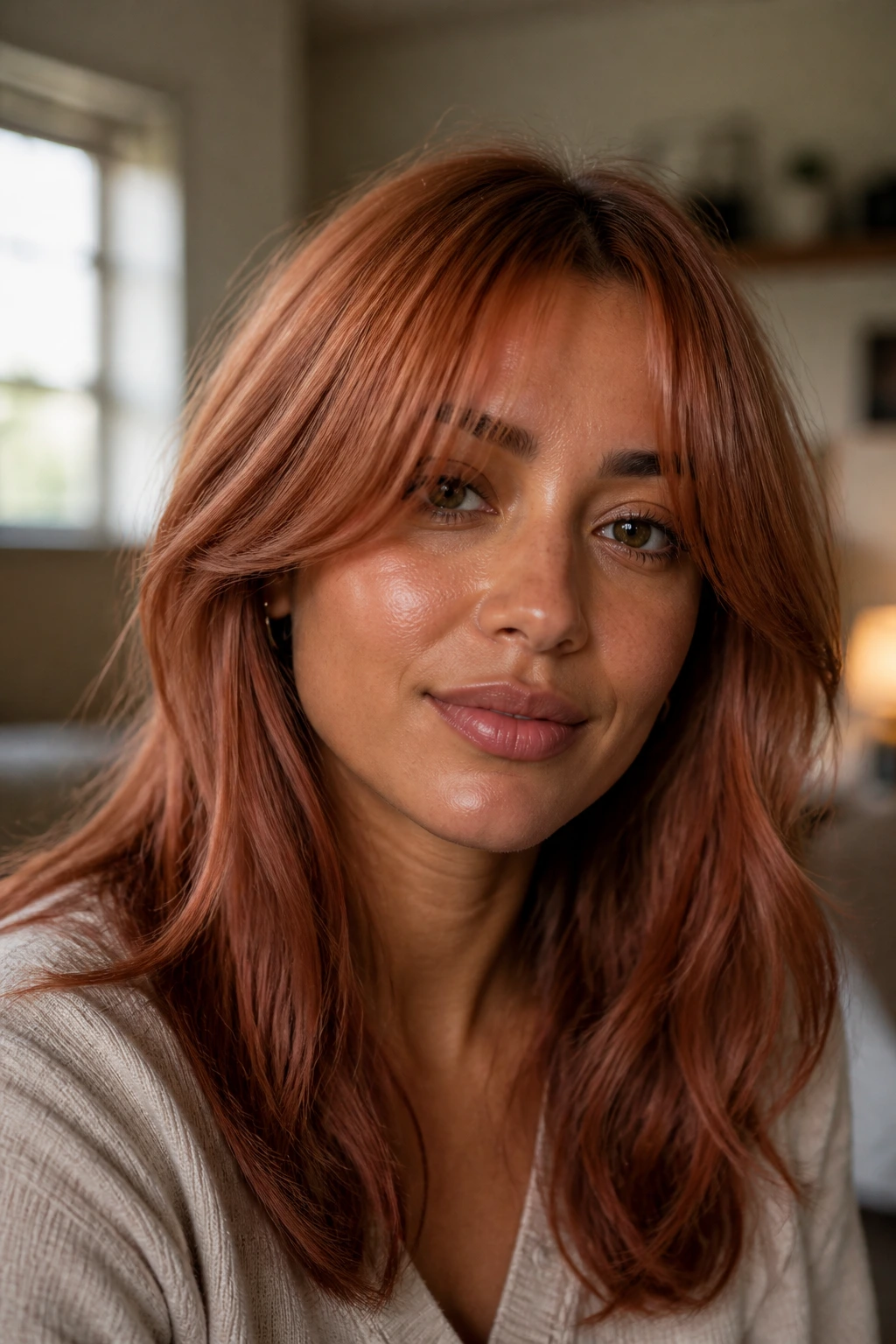
Copper rose curtain bangs are a smart way to test strawberry red around the face without changing the whole head. The bangs catch the light first, which means the color has a chance to do its work right where olive skin needs it most.
The copper keeps the shade warm. The rose keeps it softer. On olive skin, that combination is often cleaner than pure orange or pure pink, which is why curtain bangs are such a handy place to play with red.
This look is especially good if you already wear layered hair and want a small but visible shift. You can keep the lengths more neutral and let the bangs carry the personality.
24. Berry-Strawberry Gloss
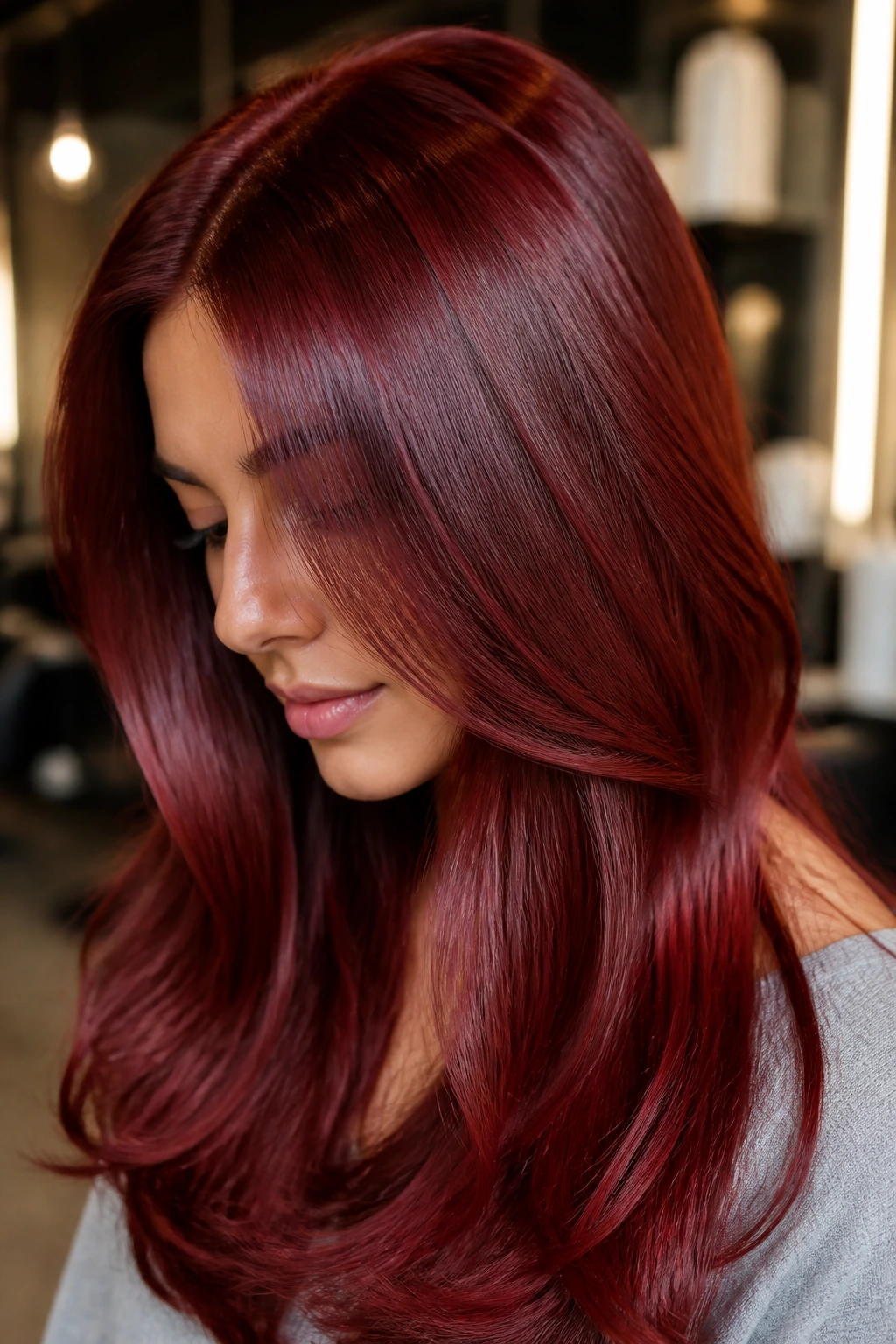
Berry-strawberry gloss is the low-commitment version of strawberry red. It’s not a full color correction. It’s a tint, a shine refresh, a little warmth over what you already have. On olive skin, that can be enough to wake up the complexion without a dramatic change.
Low-Commitment Angle
Ask for a gloss or demi-permanent glaze that sits close to your natural base. The berry note deepens the strawberry, so the result looks polished instead of washed out. This is a good route if you’re testing red for the first time or if your hair is already porous and needs less stress.
It also fades more gracefully than a hard permanent red. That’s a gift when you’re not sure how much warmth you want in the long run.
25. Beige-Lift Strawberry Red
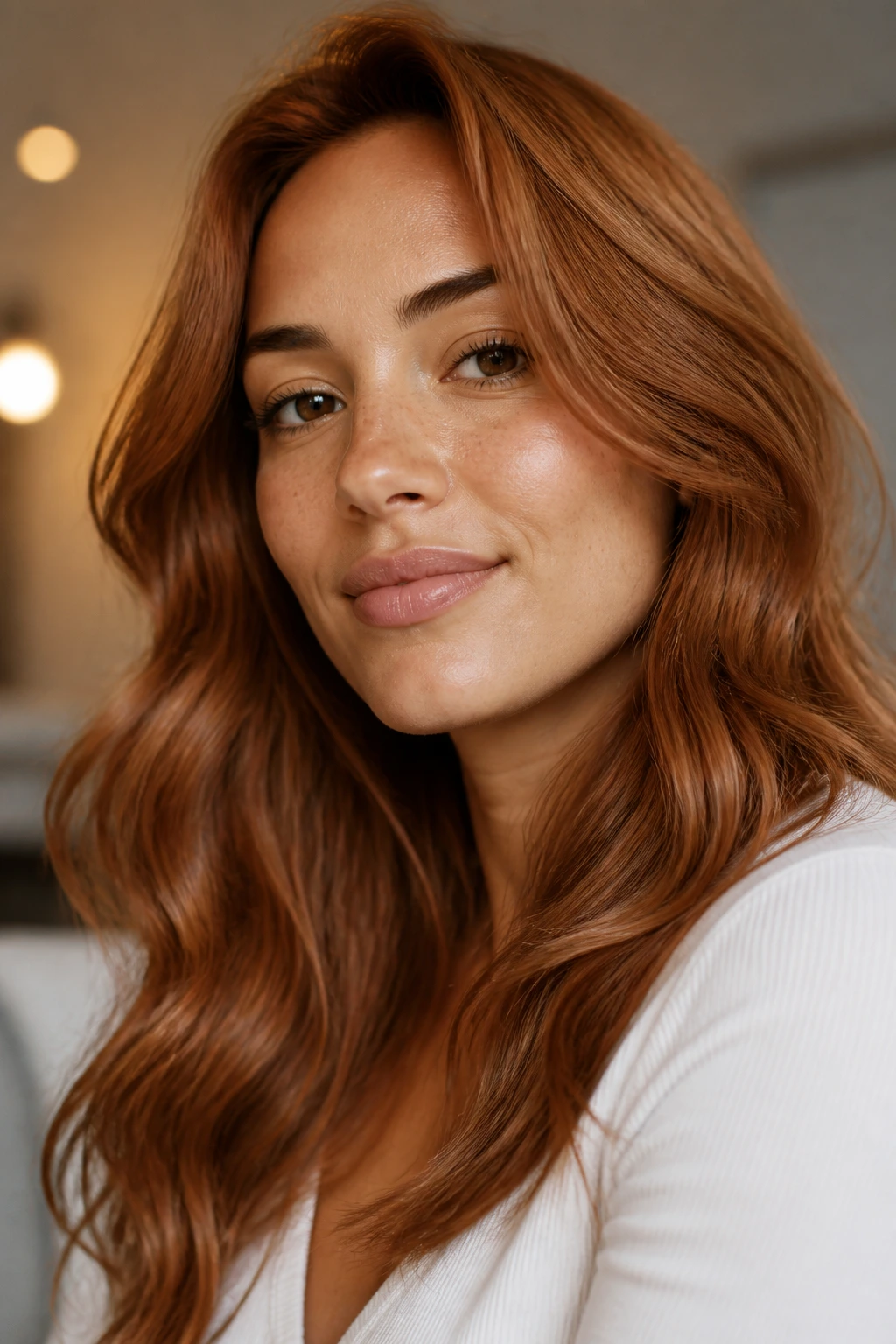
Beige-lift strawberry red is the quietest shade in the bunch, and that’s exactly why it works. It lifts just enough to show strawberry warmth, but the beige tone keeps it from turning orange or too pink. On olive skin, especially neutral olive, that balance can be excellent.
Think of this as a refined starter red. It gives you warmth around the face and some glow through the lengths, but it doesn’t force the issue. If you want something that can slip into a work setting or a low-key wardrobe without fighting your clothes, this is a safe, smart choice.
A soft wave or blowout will show the beige lift best. Straight hair can flatten it a little, which is not a disaster, just less expressive.
What to Tell Your Colorist at the Salon
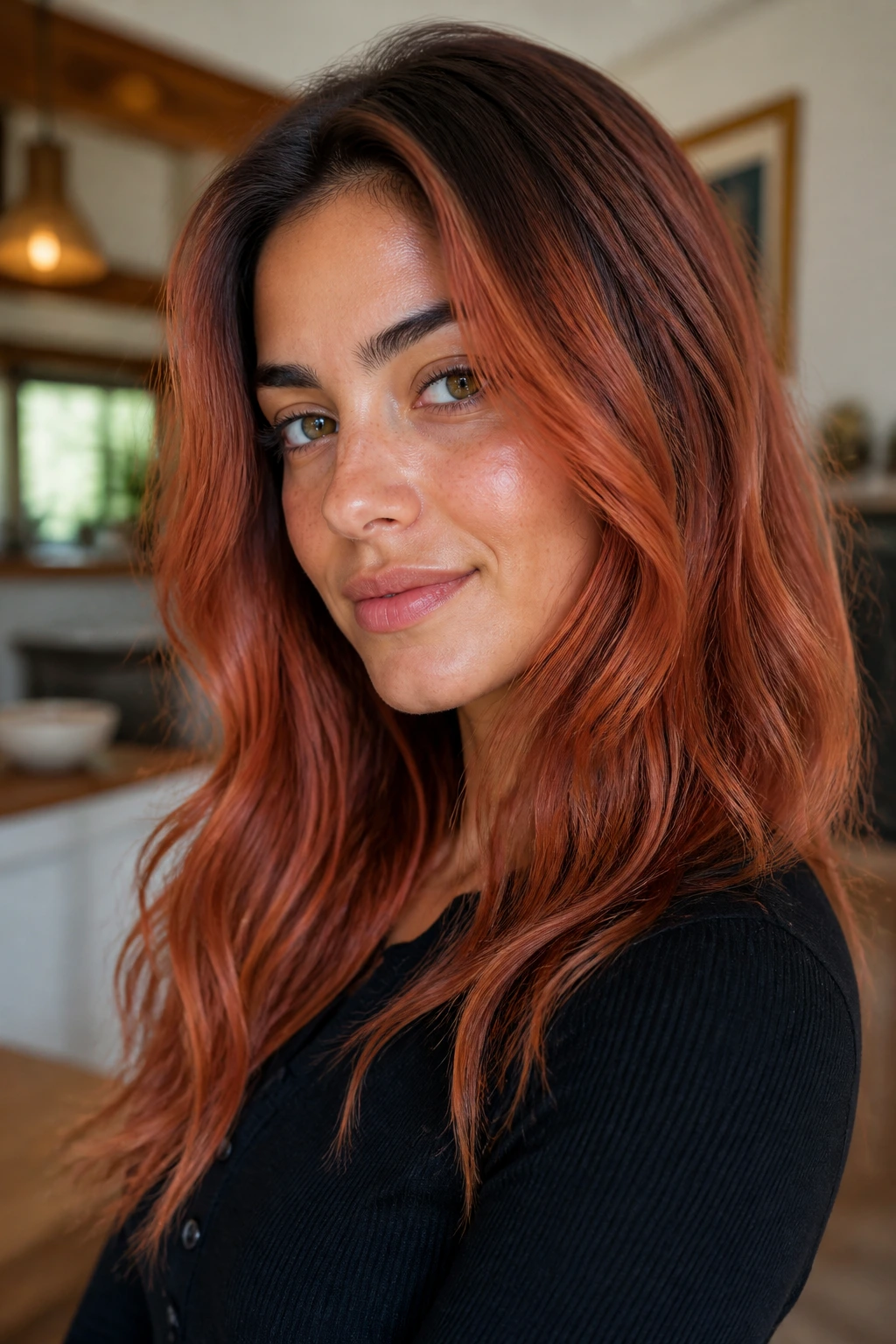
Bring photos, yes, but bring the right kind of photos. One picture should show the depth you want. Another should show the placement. A third should show the finish — glossy, matte, rooted, bright, or soft. A single screenshot of a red that looks good on someone with a totally different base color is how people end up disappointed in the chair.
Say the level out loud if you can. “Level 7 copper strawberry with a shadow root” is more useful than “something reddish.” If you want softer grow-out, say so. If you hate orange, say that twice. If your hair has already been lightened, tell the colorist how long it’s been since the last bleach or gloss. Porosity changes everything.
The other thing worth mentioning is your routine. If you wash daily, wear hot tools every day, or spend a lot of time in sun and pool water, a bright red is going to fade faster. A good colorist can adjust the formula toward a richer auburn or a darker strawberry brunette so the color lasts longer between visits.
Essential Tools and Products for Keeping the Tone Fresh
-
Sulfate-free color shampoo — Regular shampoo can strip copper and strawberry pigment faster than you’d expect.
-
Color-depositing conditioner in copper, rose gold, or warm red — A once-a-week wash-in tint helps refresh faded ends without another salon appointment.
-
Heat protectant spray — Hot tools can cook strawberry tones into a dull orange cast, so this is not optional if you blow-dry or curl often.
-
Microfiber towel or soft cotton T-shirt — Rough terry cloth raises the cuticle and roughens the shine, which makes red look tired faster.
-
Wide-tooth comb — Especially useful on damp hair so you don’t yank pigment out of fragile, freshly colored lengths.
-
Gloss or glaze appointment — Sometimes a clear or tinted gloss is all you need to bring the copper back into focus.
-
Sectioning clips — Handy if you’re doing at-home color-depositing treatment or a root touch-up between salon visits.
-
Silk or satin pillowcase — Not a magic trick, just less friction overnight, which helps the ends stay smooth and shiny.
How to Keep Strawberry Red From Fading Too Fast
Red pigment is clingy and slippery at the same time. It wants to fade. That’s the annoyance. The fix is routine, not panic.
For the first 48 to 72 hours after coloring, avoid shampoo if you can. Let the cuticle settle. After that, wash two to three times a week instead of every day if your scalp allows it. Use cool or lukewarm water, not hot water, because heat opens the cuticle and lets the red wash out faster.
A color-depositing conditioner once a week is one of the best habits you can build. Keep it on for the minutes the bottle recommends — usually 3 to 10 — then rinse well. If your hair is porous, start shorter. Porous hair grabs pigment fast, and you do not want streaky copper ends.
Dry shampoo helps if your roots get oily between washes. So does a gentle blow-dry at the root instead of rough towel rubbing. And if you swim, rinse your hair before the pool, not after. Wet hair absorbs less chlorinated water. Small thing. Big difference.
Additional Tips and Shade Boosters
Gloss First, Dye Second: If your strawberry red is still in the right family but feels flat, a clear or tinted gloss can bring back shine faster than another permanent color job. That’s especially true for copper and rose-copper shades, which depend on light reflection.
Texture Changes the Read: Waves, curls, and even a rough blow-dry make red look more dimensional. Straight hair can still look good, but it shows every tone shift in a more blunt way. If you want the red to look softer, add movement.
Root Depth Saves the Color: A root that’s one shade deeper than the mids usually keeps the whole look grounded on olive skin. It also helps the color grow out in a less dramatic line.
Make the Finish Match the Shade: Smoky strawberry reds tend to look better with a softer blowout or lived-in waves. Brighter apricot and coral shades can handle more polish. The styling choice changes the whole mood.
Common Mistakes That Make Strawberry Red Look Off
The first mistake is going too orange. Orange can be gorgeous on olive skin when it’s softened with copper or brown, but bright orange-red on its own can turn loud fast. If the result looks like it’s sitting on top of your skin instead of blending with it, the fix is usually more depth, not more brightness.
The second mistake is going too pale too quickly. Strawberry blonde sounds gentle, but if the base is lifted too far, the color can turn washed out or yellow against olive undertones. Keep enough depth in the root and mid-lengths that the red has somewhere to live.
Third: treating purple shampoo like it belongs in every red routine. It doesn’t. Purple is made to knock back yellow in blonde hair, and too much of it can dull copper or strawberry into a muddy, ashier finish. Use color-safe shampoo instead, and only reach for a toning product that’s meant for red shades.
Another common problem is copying the picture without matching the base color. A look that starts on a level 9 blonde is going to behave very differently on a level 5 brunette. Same photo. Different chemistry. Bring photos that resemble your starting point, not just your dream finish.
Variations and Adaptations to Try
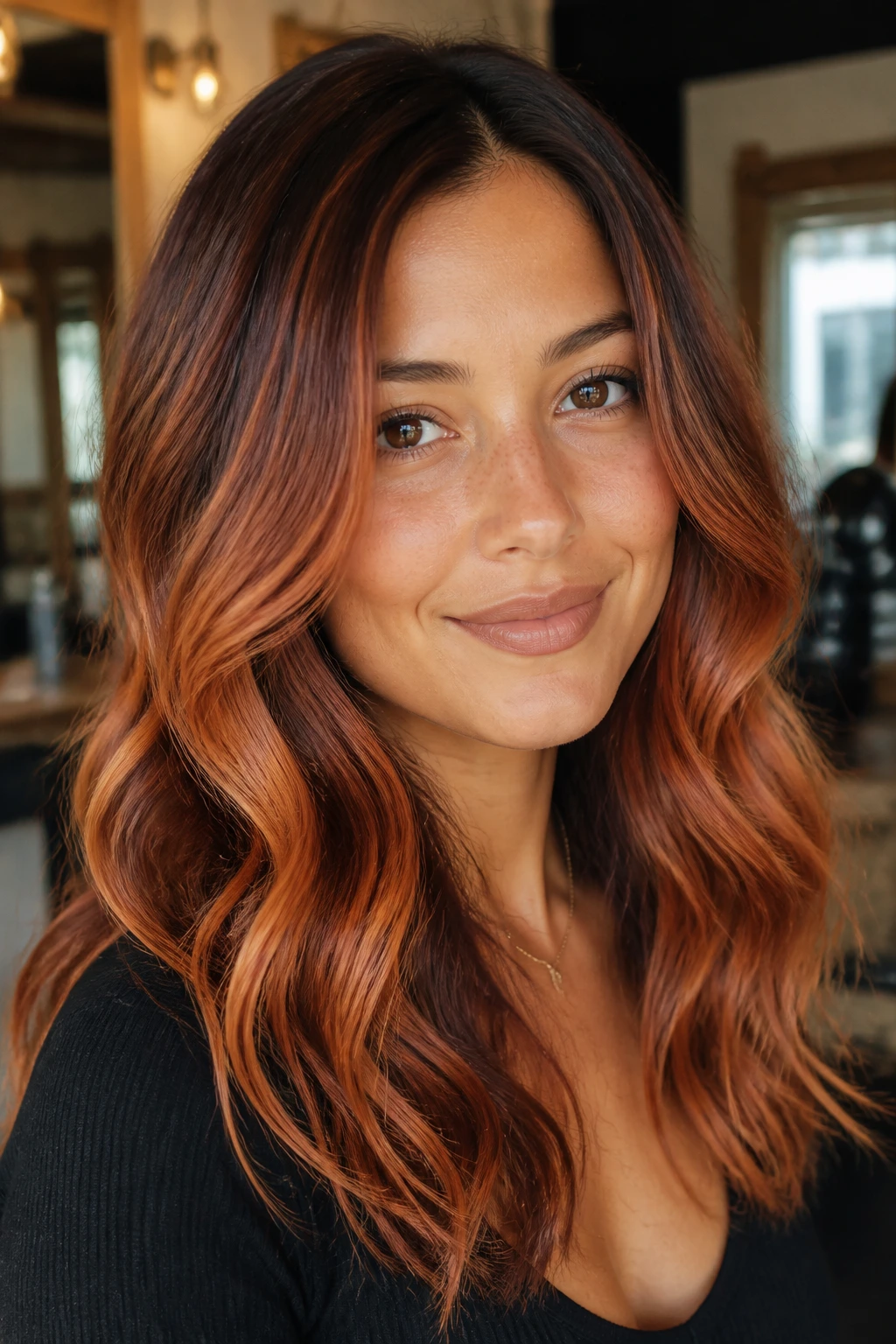
Shadow-Root Strawberry: Keep the root one or two levels deeper than the mids, then brighten the ends with a copper or strawberry glaze. This is the easiest version to grow out, and it usually flatters olive skin because the depth stops the color from floating.
Gloss-Only Strawberry Tint: If your hair is already near the right color, ask for a demi-permanent gloss instead of a full dye job. It adds a red veil without committing you to a high-maintenance line of regrowth.
Curly Copper Ribbons: On curls, place copper-red ribbons through the outer pattern and leave some deeper pieces underneath. The curl shape makes the color look layered even if the formula is simple.
Beige Strawberry Balayage: This one softens the red with beige and champagne notes. It suits cooler or more muted olive skin because the beige keeps the copper from leaning too orange.
Bold Auburn Punch: If you like more depth, nudge the shade into auburn with chestnut or merlot undertones. The result is richer, darker, and easier to wear if bright strawberry tones feel too light on your face.
Frequently Asked Questions
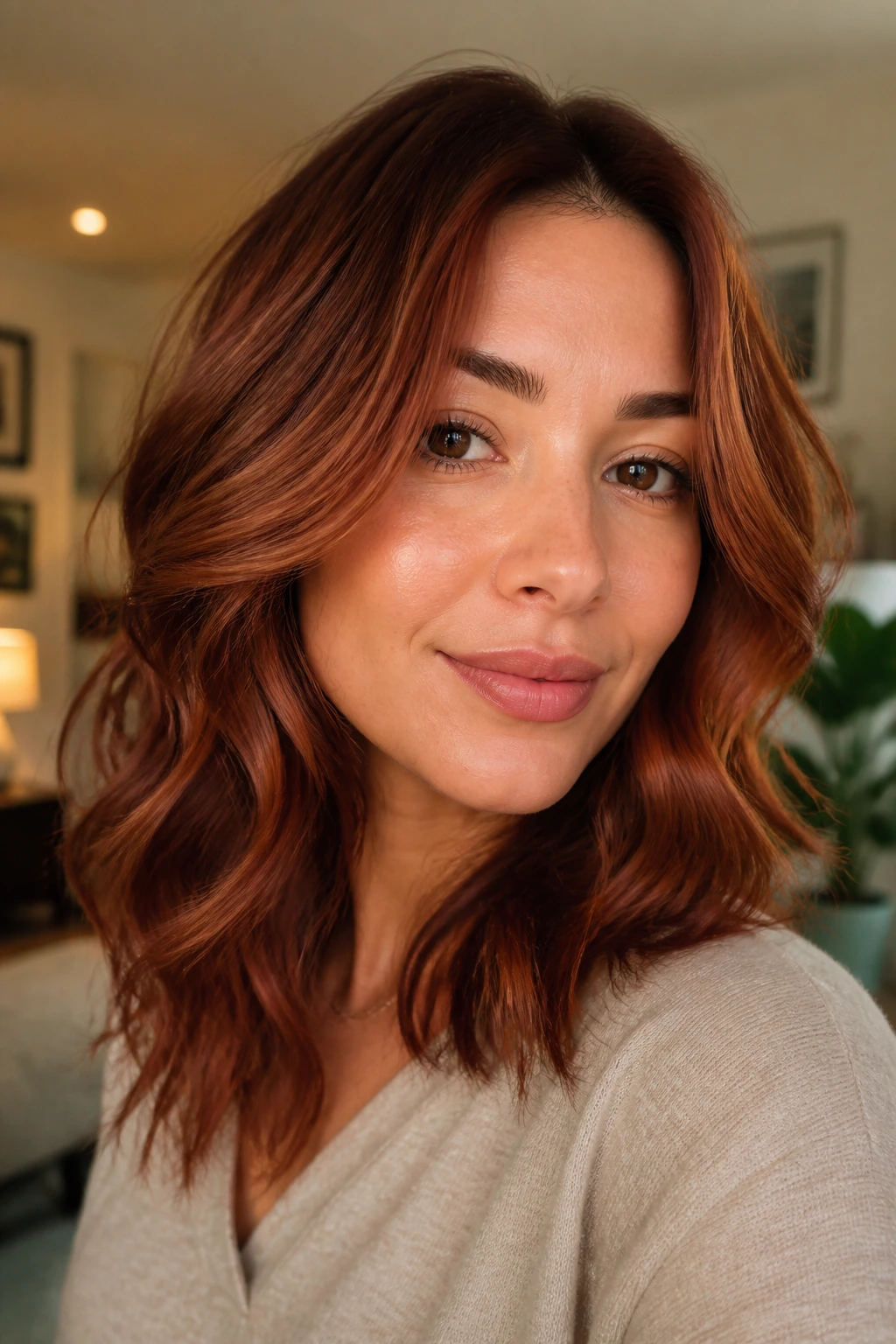
Which strawberry red shade looks best on neutral olive skin?
Rose copper, champagne strawberry, and strawberry auburn usually sit nicely on neutral olive skin because they balance warmth and softness. If you’re unsure, start with a gloss or a root-shadow version instead of a flat bright red.
Will strawberry red make olive skin look orange or sallow?
It can, if the shade is too bright, too pale, or too orange without depth. The safest fix is a color with copper plus brown, or copper plus rose, so the red has some control.
Can I get this look without bleaching my hair?
Yes, if your natural hair is already light brown or dark blonde and you’re choosing a deeper strawberry or auburn-red tone. Dark brunette hair usually needs at least some lift if you want the strawberry to show clearly.
How often does strawberry red need refreshing?
Glosses and semi-permanent reds usually need a refresh every 4 to 6 weeks, sometimes sooner if you wash often or use hot tools a lot. Darker strawberry auburn shades tend to hold longer than pale strawberry blondes.
What if my hair keeps turning peach instead of red?
That usually means the red pigment is fading and the remaining warmth is showing through. Add a color-depositing conditioner with copper or rose-red tones, and avoid overusing clarifying shampoo.
Is strawberry brunette a good first red for olive skin?
Yes. It keeps enough brown in the formula that the color feels manageable, which is helpful if you’re nervous about looking too bright. It also grows out in a cleaner way than a lighter strawberry blonde.
Do curls make strawberry red easier or harder to wear?
Easier, honestly. Curls show dimension well, so the color can look richer with less precision. The only catch is moisture — dry curls can make any red look flat, so conditioning matters more.
A Shade That Works With Olive Skin
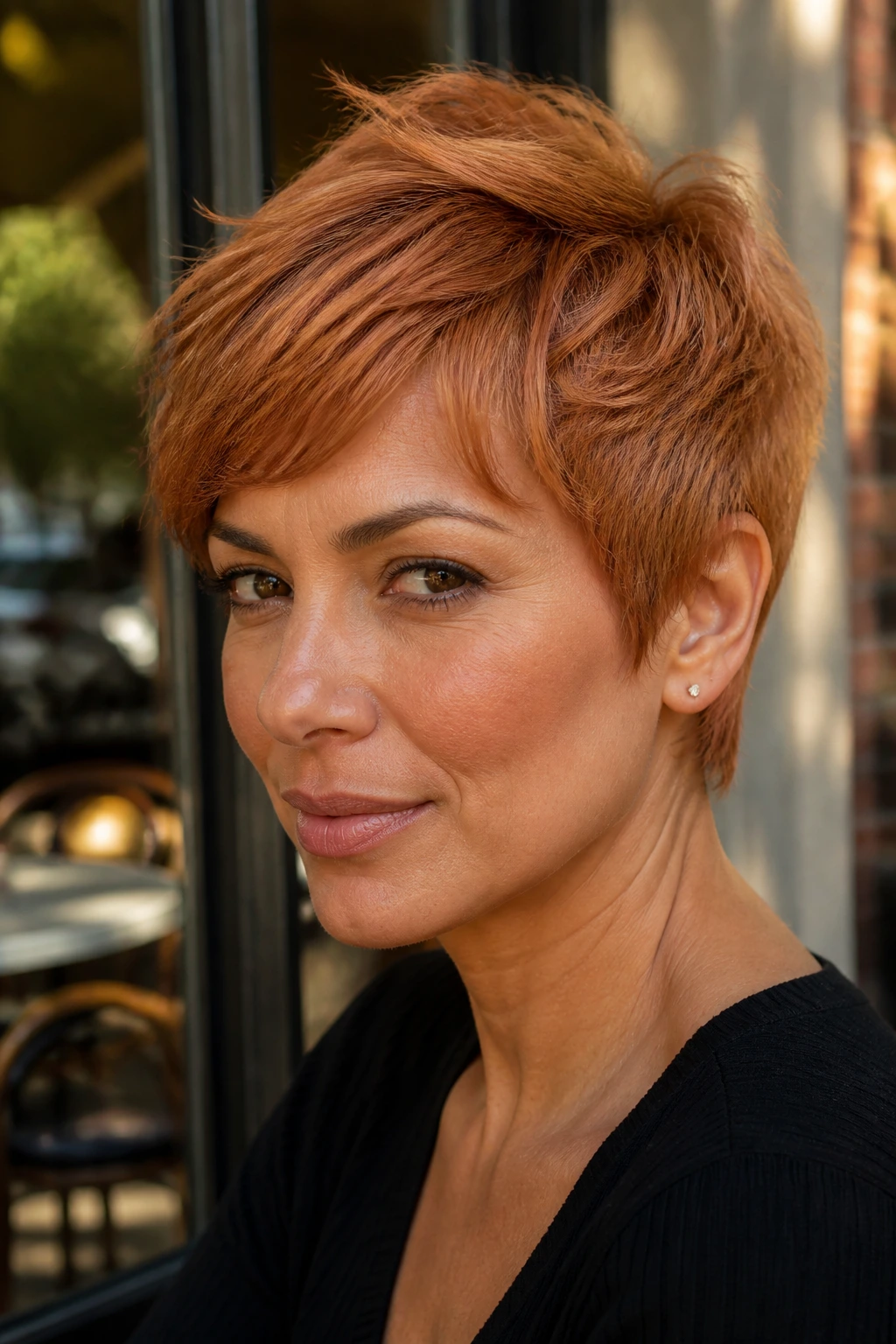
The nicest strawberry reds on olive skin do one thing well: they make the complexion look awake without fighting it. That can mean a glossy copper bob, a soft peach blonde, a deeper auburn melt, or a barely-there strawberry gloss. The common thread is depth, not drama.
If you keep the base grounded, the red gets a better chance to shine. That’s the part people miss when they chase the brightest swatch on the board. A smart strawberry red knows where to stop, and that restraint is exactly what makes it flattering.
Bring a few photos, choose the depth first, and ask for the finish second. The rest gets much easier from there.