



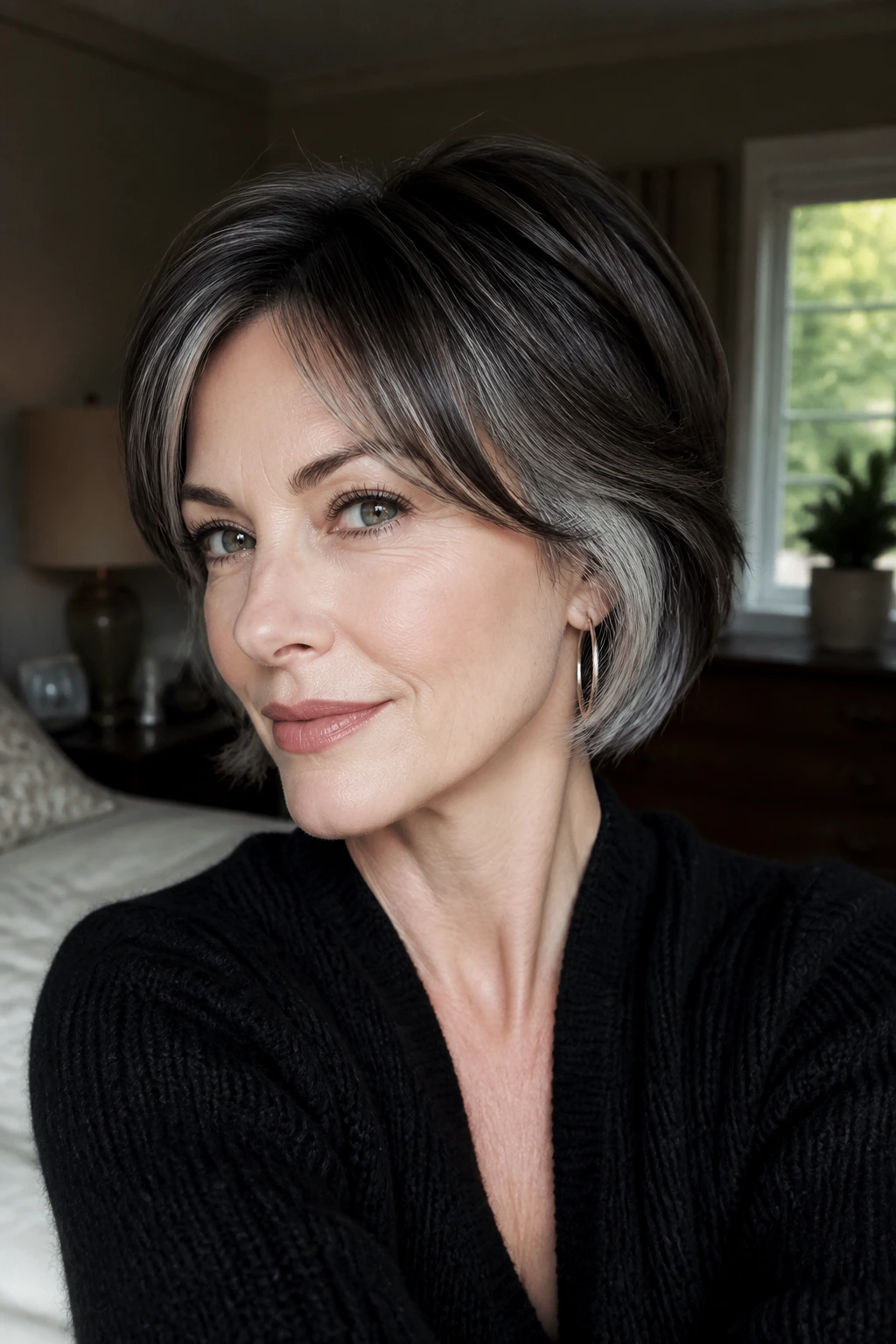
Grey hair does not have to look like surrender. On fair skin, the right dark hairstyle can make silver strands look crisp, deliberate, and expensive in the best sense of the word — not flashy, not fussy, just clean and sure of itself. The trick is choosing depth that gives your face shape, not against it, and letting the grey sit where it can do some work.
I’ve always thought the mistake most people make is reaching for the darkest dye in the box. On porcelain or lightly freckled skin, a flat black can turn harsh fast. It can flatten the face, emphasize redness around the nose, and make the grow-out line look more like a problem than a transition. A smoky espresso, blue-black, mushroom brown, or graphite tone usually does the job with less drama.
That’s the real appeal of going gracefully grey with dark hairstyles for fair skin: you’re not trying to erase the silver. You’re building around it. A good cut, a smart root shadow, and a little softness around the hairline can make the whole thing look intentional from day one. That balance is where these 25 looks earn their keep.
Why These Grey-Blending Looks Work So Well on Fair Skin
-
They keep the face from washing out: Deep espresso, charcoal, and graphite add enough contrast to keep fair skin from looking pale next to the hair.
-
They make silver look polished, not accidental: A shadow root or face-framing highlight turns grey regrowth into part of the style, not a line you keep checking in the mirror.
-
They cut down on harsh grow-out: Shorter bobs, pixies, and layered cuts hide the transition better than a long, one-length sheet of dark color.
-
They work with real texture: Grey strands can be wirier than pigmented hair. Feathered layers, shags, and bixies keep them from puffing up in the wrong places.
-
They give you options on maintenance: Some of these looks need a gloss every 6 to 8 weeks. Others can stretch longer if your color is blended instead of block-dyed.
-
They let your brows and eyes stay visible: The right dark shade sharpens the whole face without forcing you into heavy makeup just to keep up.
What Fair Skin Needs From a Dark Grey Blend
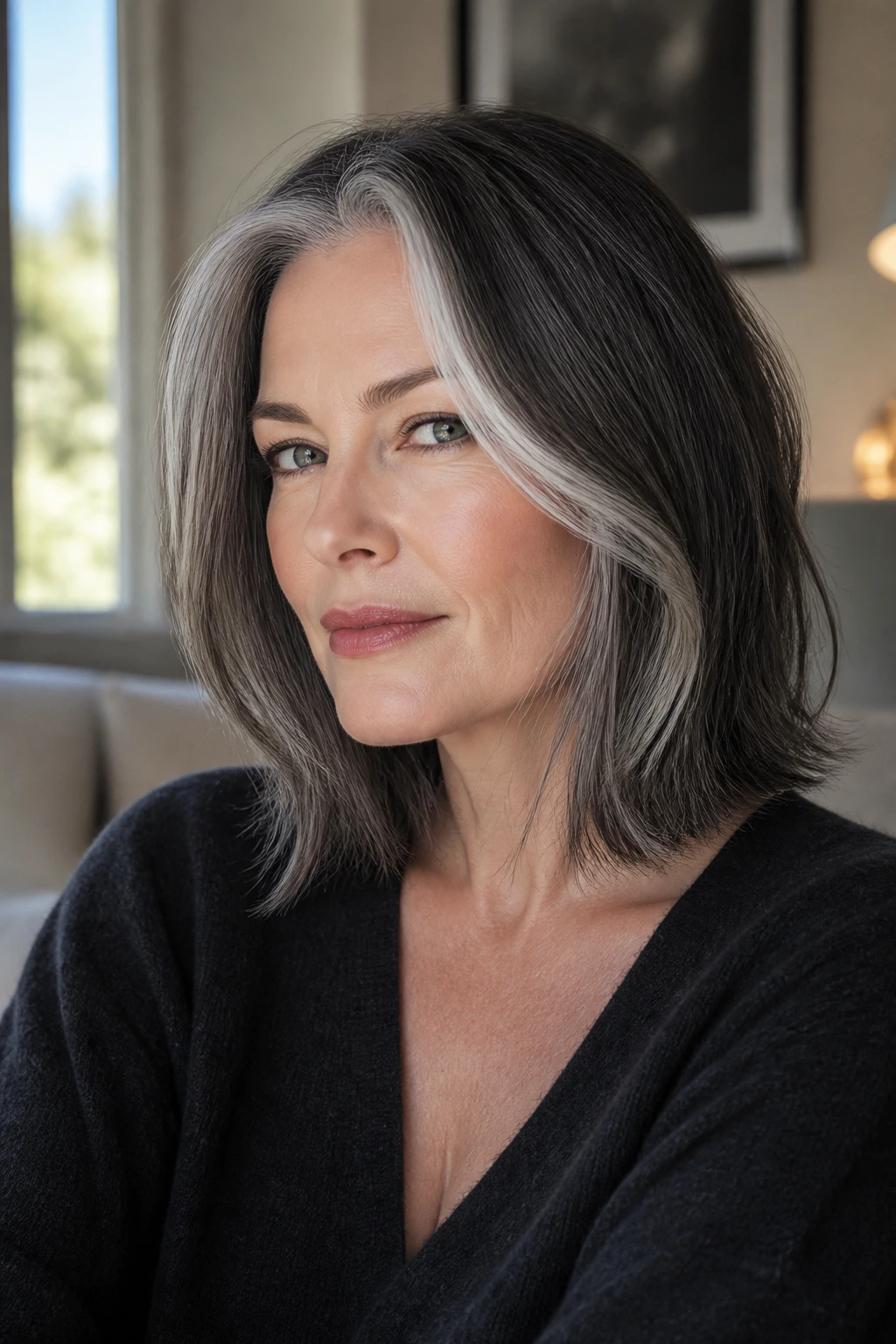
Fair skin can be rosy, peachy, neutral, or cool, and those differences matter more than most salon conversations admit. A dark shade that flatters cool porcelain skin might drag peachier skin a little yellow. A warm chocolate that looks soft on beige skin can read muddy if the face has a lot of pink in it. The hair itself is only half the story.
Cool, Neutral, and Rosy Undertones
Cool and neutral fair skin usually plays nicely with ash brunette, blue-black, slate, and graphite. Those tones keep the complexion from looking red around the cheeks or nose. If your skin leans rosy, a deep color with a blue or violet base often looks cleaner than a warm brown that tries too hard to be sunny.
Why Too Much Warmth Can Fight Grey
Warm brunette shades can be beautiful, but when they go too coppery or golden, they tend to clash with silver regrowth. Grey hair already has a muted, cool cast. Put a chunky golden brown next to it and the whole thing can look split in two. I prefer warmth in small doses here — a chestnut whisper, not a caramel flood.
The Brow-and-Blush Reality
Dark grey-blending hair changes the face faster than people expect. Brows that were fine with honey brown hair may need a softer pencil or powder once the hair gets deeper. A muted rose blush can also keep fair skin from going flat against the darker frame. Small adjustments. Big difference.
1. Smoky Espresso Bob with a Silver Nape
A chin-length bob in smoky espresso has a nice, blunt honesty to it. The dark top gives fair skin a clean edge, while a little silver left visible at the nape turns the grow-out into part of the design instead of the thing you’re hiding. It’s one of those cuts that looks sharper when you tuck one side behind the ear.
Why it flatters fair skin
The espresso depth makes the jawline read a little stronger, which is useful on softer faces. Keep the roots slightly darker than the mid-lengths, and ask for a gloss that leans cool rather than warm. If your hair is fine, the blunt perimeter helps it look denser. If it’s thick, the bob keeps the bulk from swallowing your face.
Quick details:
- Best on straight or lightly wavy hair
- Works well with silver at the neck or temple line
- Needs a trim about every 6 to 8 weeks
- Looks clean with a middle part or a soft off-center part
Small tip: ask for the underside to stay a shade lighter than the top layer. That little shift keeps the cut from feeling boxy.
2. Ash Brunette Lob with Pearl Face-Framing Pieces
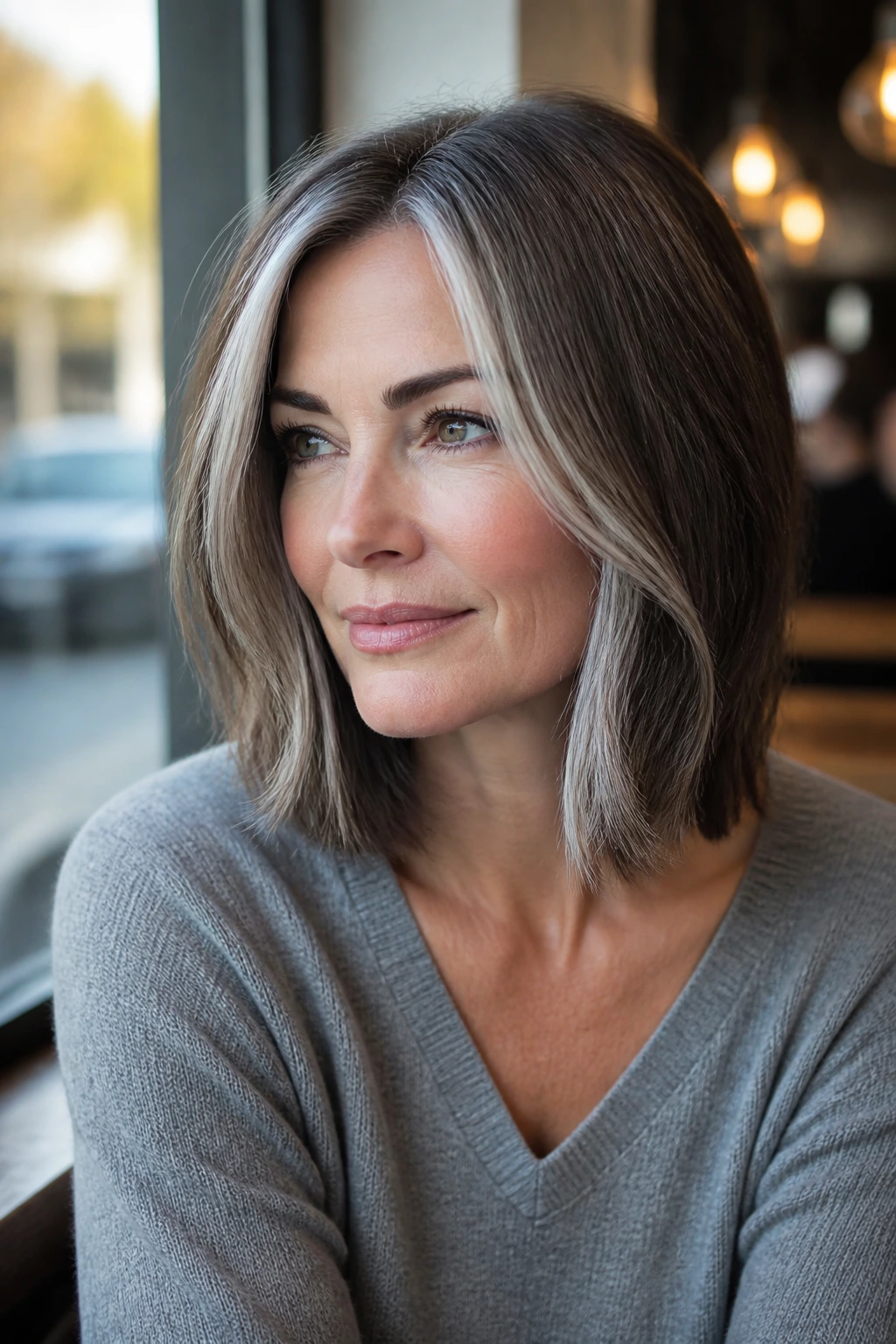
This is the safest entry point if you want grey blending without a hard jump. The lob gives you length, the ash brunette keeps the color cool, and the pearl face-framing pieces lift fair skin without bleaching the whole head to death. It’s tidy. It’s wearable. It doesn’t shout.
The nice thing about this look is that it softens the face even when your grey starts coming through at the part. You can wear it sleek or with a bend through the ends, and it still reads polished. On fair skin, the paler front pieces act like a soft filter, which means you don’t need to keep the rest of the hair too light.
If you’re nervous about looking washed out, this is the compromise I’d start with. It gives you contrast, but not the severe kind.
3. Soft Salt-and-Pepper Pixie Crop
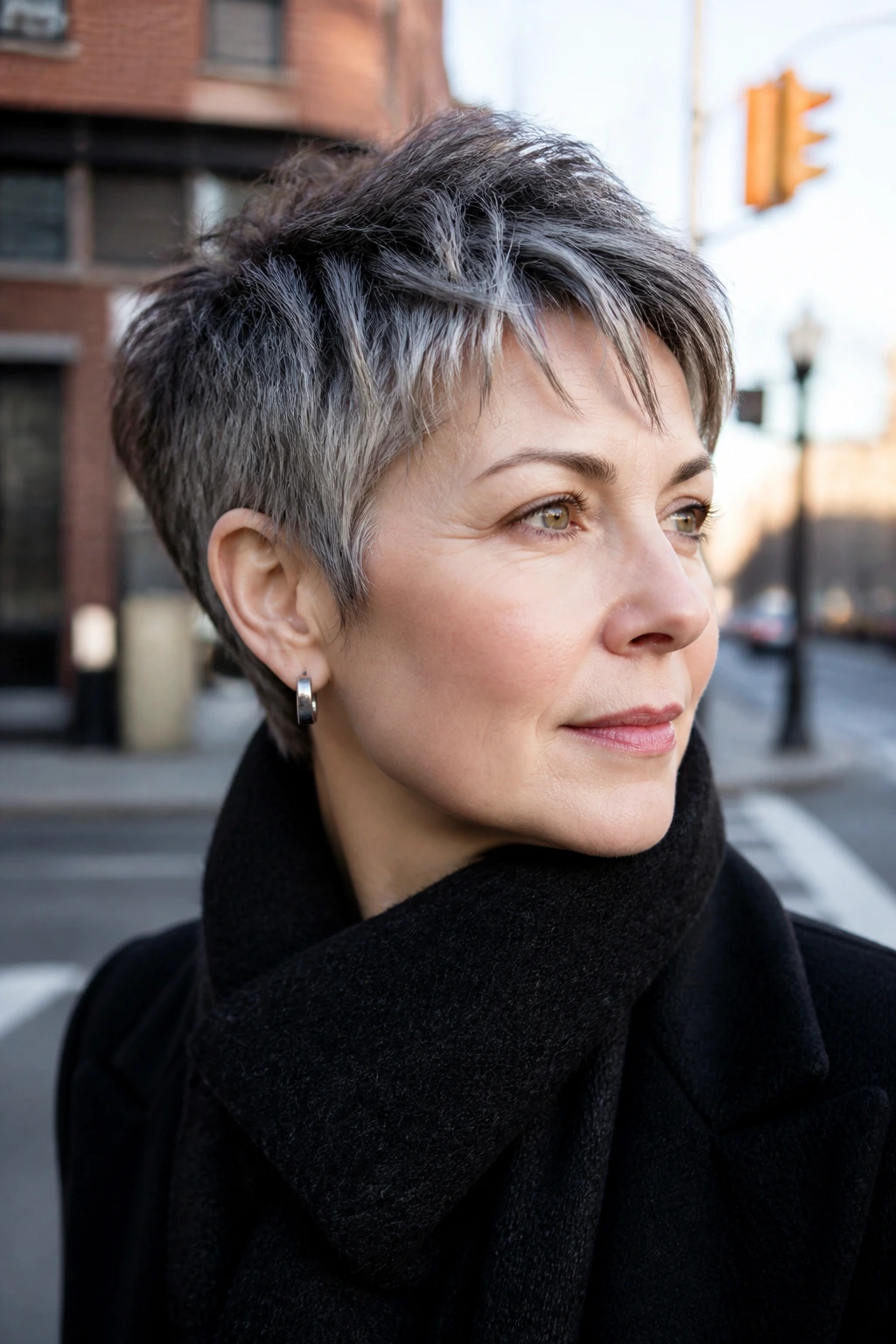
Why does a pixie look so good when grey starts creeping in? Because the short length stops the transition from dragging on forever. You see the silver. You see the dark. You see the cut. Everything has a job.
What makes it work
A soft salt-and-pepper pixie keeps the sides close and the top slightly longer, which lets the natural silver sit beside the darker base instead of fighting it. That contrast can look especially crisp on fair skin, where a bit of shadow around the temples gives the face more shape. Keep the fringe piecey, not heavy. Heavy fringes read helmet-like fast.
- Best if your hair is coarse or has a wiry grey texture
- Taper the nape so the grow-out stays neat
- Use a matte paste or light cream, not a sticky gel
- Schedule trims every 4 to 6 weeks if you want the shape to stay sharp
Tiny opinion: if your hairline is getting silver fast, a pixie often looks more intentional than a long style trying to pretend nothing’s happening.
4. Charcoal Shag with Feathered Fringe
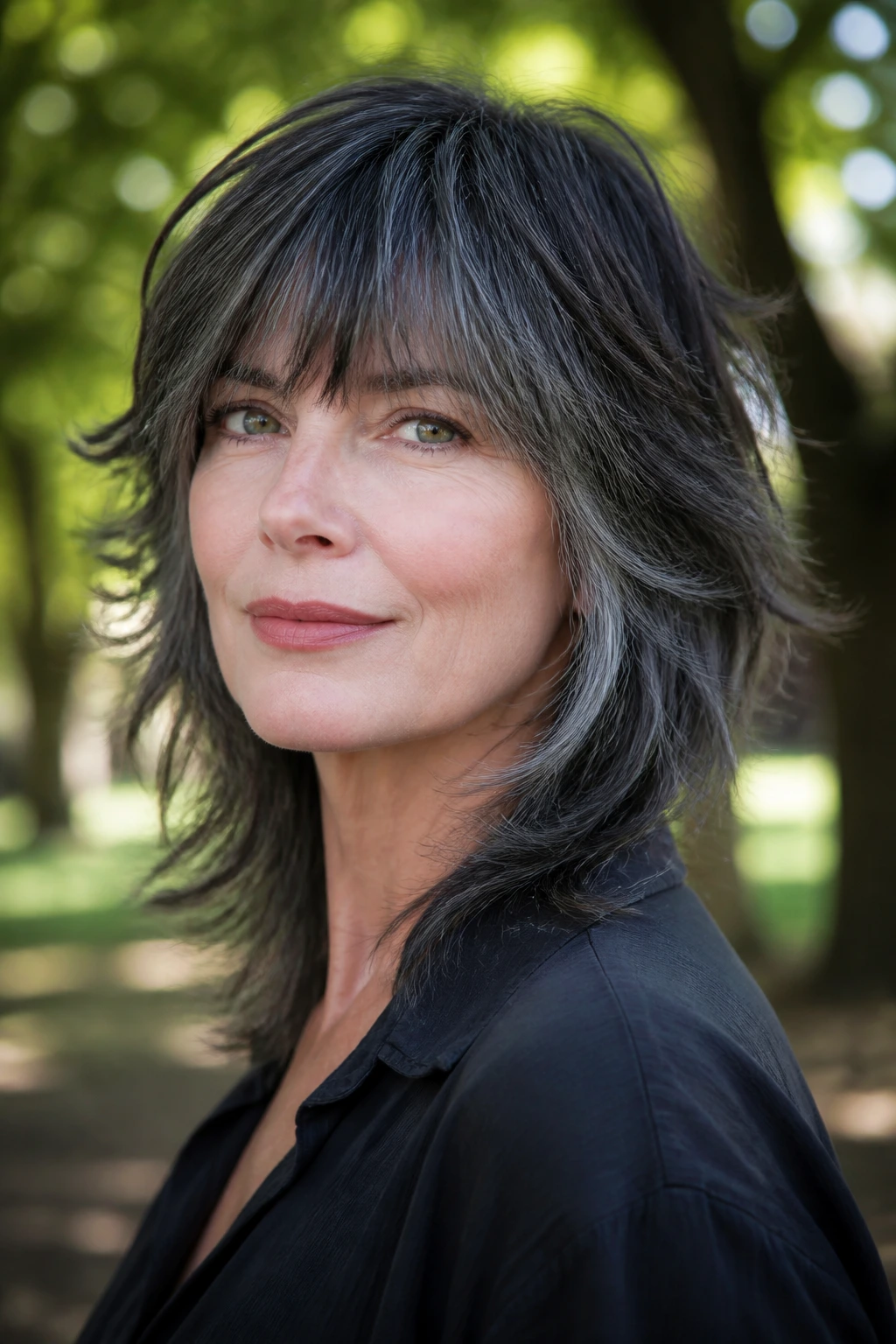
If your hair wants to move, let it. A charcoal shag gives grey strands a place to live without making them look frayed. The feathered fringe softens the forehead, which is useful on fair skin that gets a little washed out when all the weight sits below the jaw.
This cut works because the layers break up density. Grey hair often has more grit and lift than pigmented hair, and a shag uses that instead of fighting it. The charcoal base keeps the whole look grounded. I like this especially on wavy hair, where a little air through the layers stops the cut from going puffy at the sides.
Leave the ends slightly jagged. Not shredded. Just not too neat. That bit of softness matters.
5. Deep Chestnut Waves with a Grey Halo
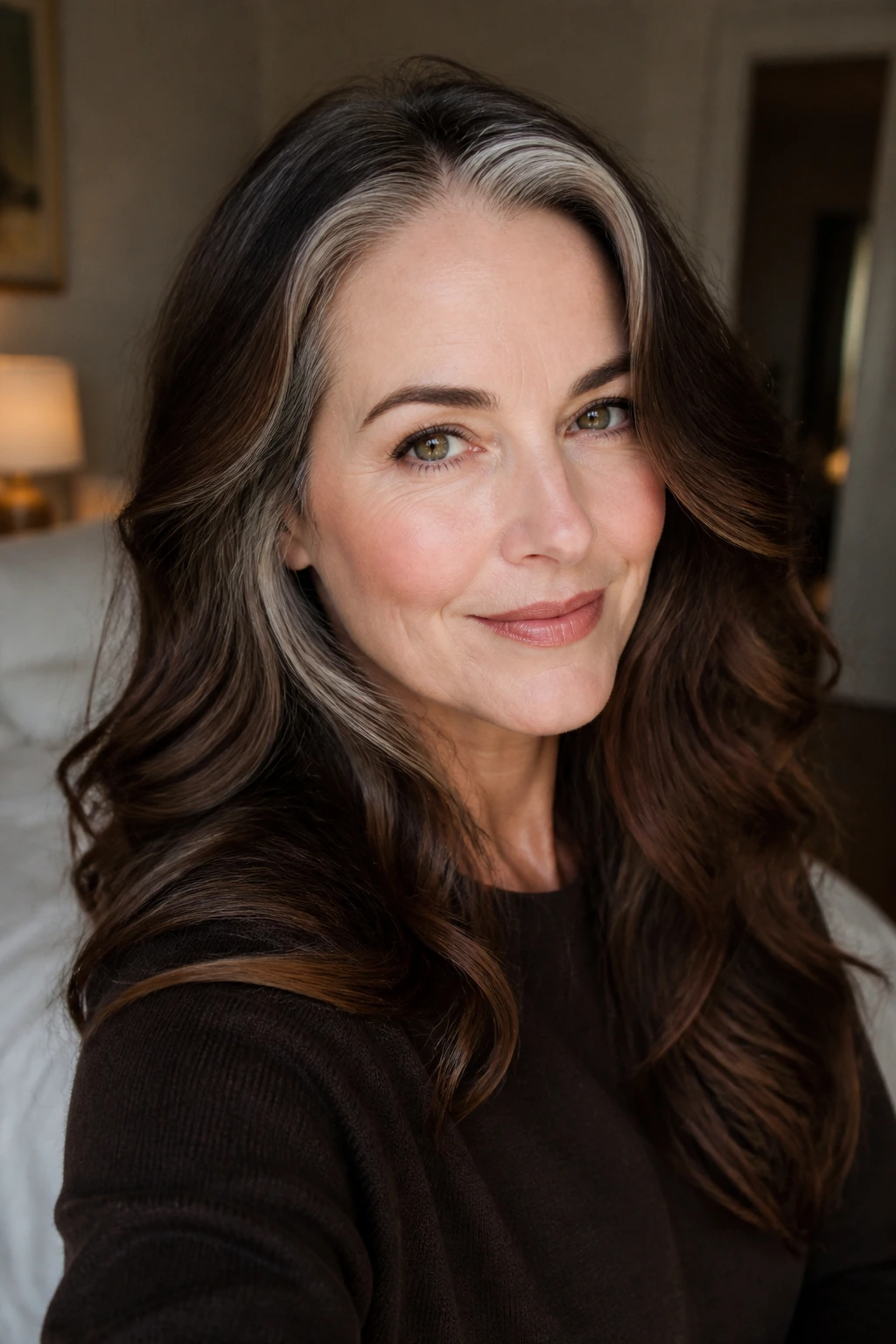
Deep chestnut is the shade I reach for when someone wants warmth but does not want brass. On fair skin, it gives enough depth to frame the face, and the grey halo around the hairline turns the whole look into something deliberate rather than dyed-over. The effect is subtle at a glance and richer up close.
Keep the waves loose and the shine controlled. Chestnut can go flat if it’s over-polished, so a light bend through the mid-lengths usually looks better than tight curling. If your grey sits mainly at the temples, this style lets those lighter pieces act like a soft outline.
It’s also one of the easiest transitions for people who are not ready to go fully cool. The color feels familiar, but the grey still gets to stay visible.
6. Blue-Black Blunt Bob
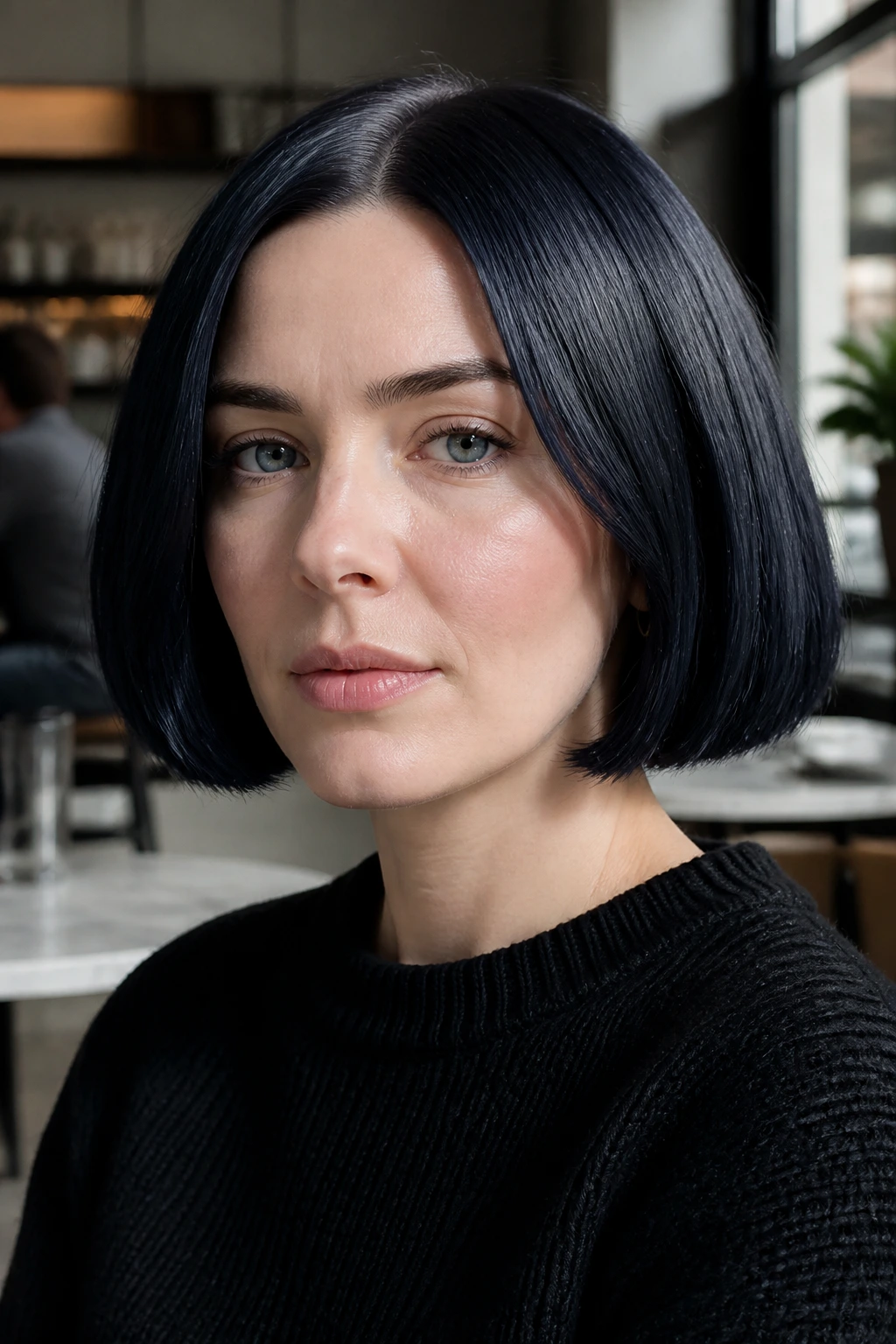
Blue-black is not the same thing as jet black, and that matters a lot on fair skin. Jet black can look like a marker line. Blue-black keeps the edge, but the blue reflect softens the result just enough to sit well against pale skin and silver regrowth. It’s sharper, not harsher.
This is the look for someone who likes clean lines and doesn’t mind a little drama. The blunt bob gives the color structure, and the cool undertone keeps the hair from turning flat under indoor light. If your skin is very pink, ask the colorist to keep the finish soft and reflective, not inky.
Wear it with a center part if you want severity. Wear it with a tucked side if you want the cut to feel lighter. Either way, the silhouette does the heavy lifting.
7. Mushroom Brown Midi Cut with Root Shadow

Mushroom brown lives in that neutral middle ground that flatters a lot of fair skin types. It has enough ash to calm redness and enough brown to stop the face from disappearing into the hair. Add a root shadow and the grow-out line gets blurred before it can boss you around.
How it wears
The midi length gives you movement without the maintenance of very long hair. It’s especially good if your silver comes in unevenly — some at the temples, some at the crown, a little in the back where you can’t quite keep up. A root shadow one or two levels deeper than the mid-lengths keeps the blend believable. Too much contrast here looks stripey. Too little looks flat.
- Good for medium-density hair
- Needs a gloss to keep the ash from going dull
- Looks best with soft bends, not corkscrew curls
- A side part can bring more lift if the face is narrow
8. Dark Cocoa Curtain Bangs
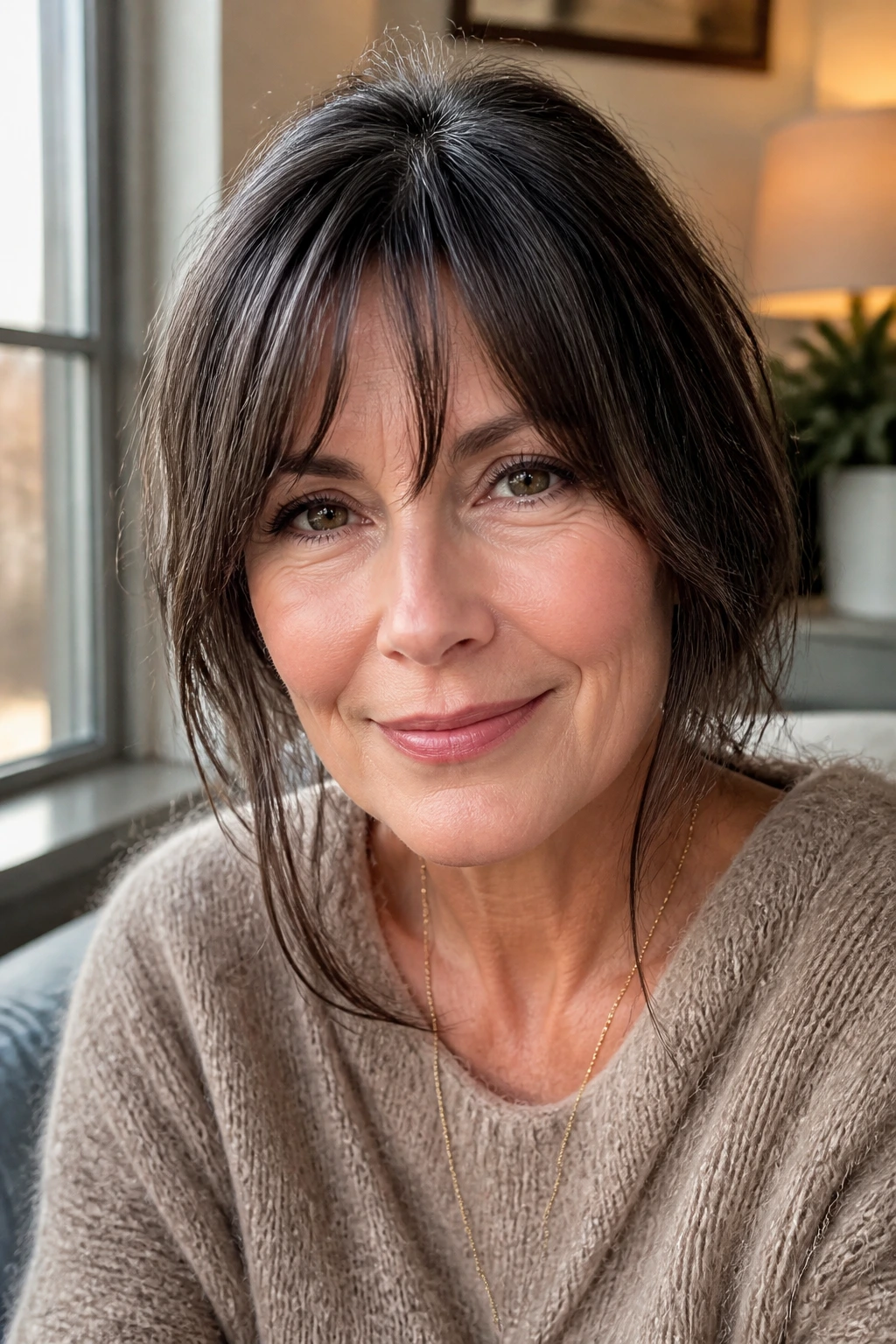
Curtain bangs are useful because they give grey a place to disappear and reappear on purpose. On fair skin, dark cocoa around the eyes creates a gentle frame, and the split fringe opens the face instead of closing it in. That matters more than people think.
The darker cocoa base stays flattering if you keep the tone cool enough to avoid orange. Let the bangs skim the cheekbones and taper at the temples. That soft edge works with silver strands coming through the front, which often show first and can otherwise look abrupt.
This one does need trimming. Fringe grows fast and gets annoying fast. If you’re not willing to keep up with that, pick a longer cut instead.
9. Pewter Balayage on Long Layers
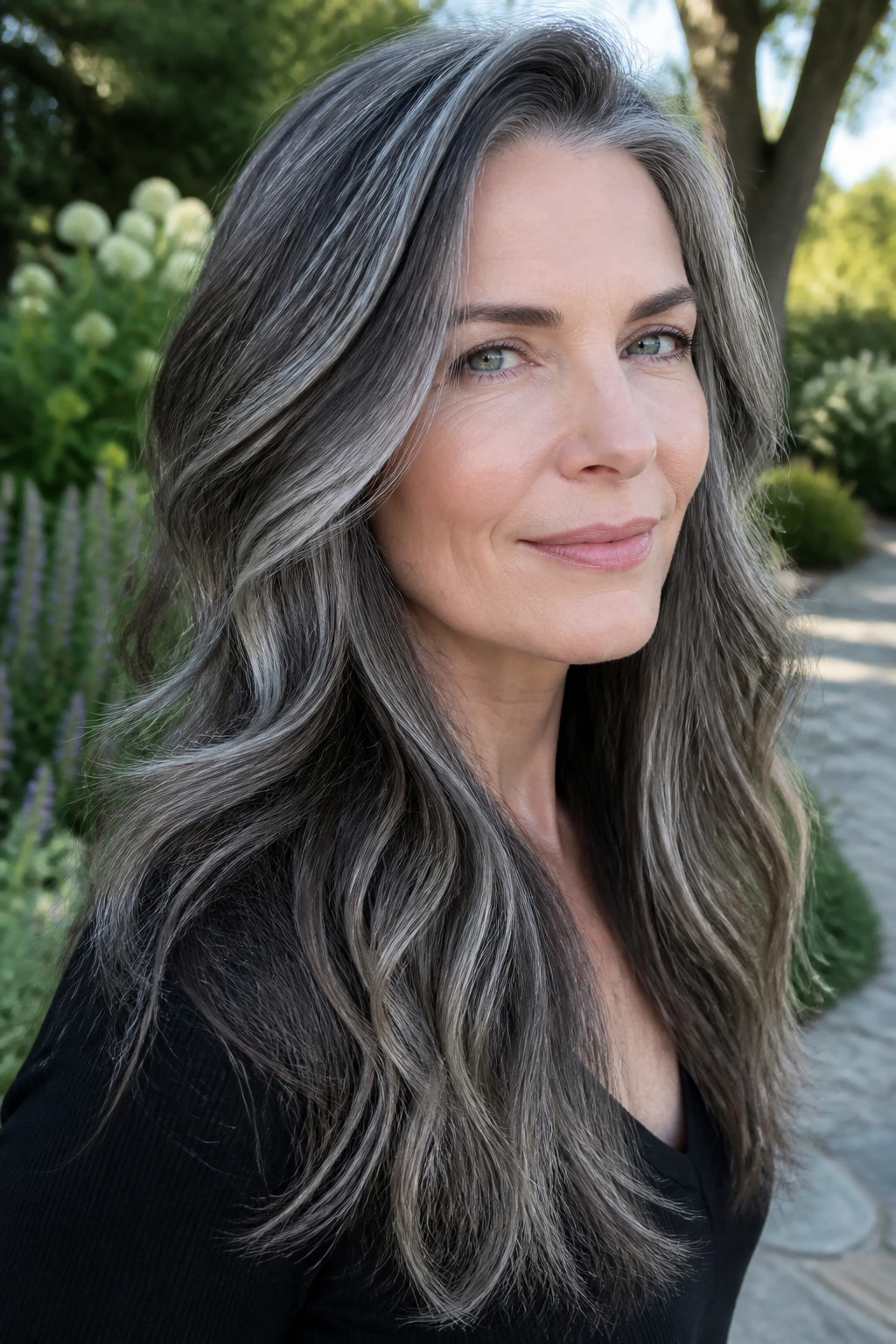
Pewter balayage is for someone who wants the grey to look expensive, not apologetic. Painted through long layers, the pewter pieces catch light without turning the whole head pale. On fair skin, those cooler ribbons can sharpen blue or green eyes in a way that feels almost unfair.
Why it works
Long layers stop the balayage from sitting in one thick stripe. The pewter can start near the cheekbones and fade down through the lengths, which keeps the grow-out soft. Ask for the light pieces to stay narrow. Wide panels look trendy for five minutes and patchy after that.
A style like this needs moisture. Grey and lightened hair can feel rough at the ends, and long lengths show that immediately. I’d use a leave-in cream on damp hair and a light oil only on the last inch or two.
10. Raven Pixie with Bright Temple Streaks
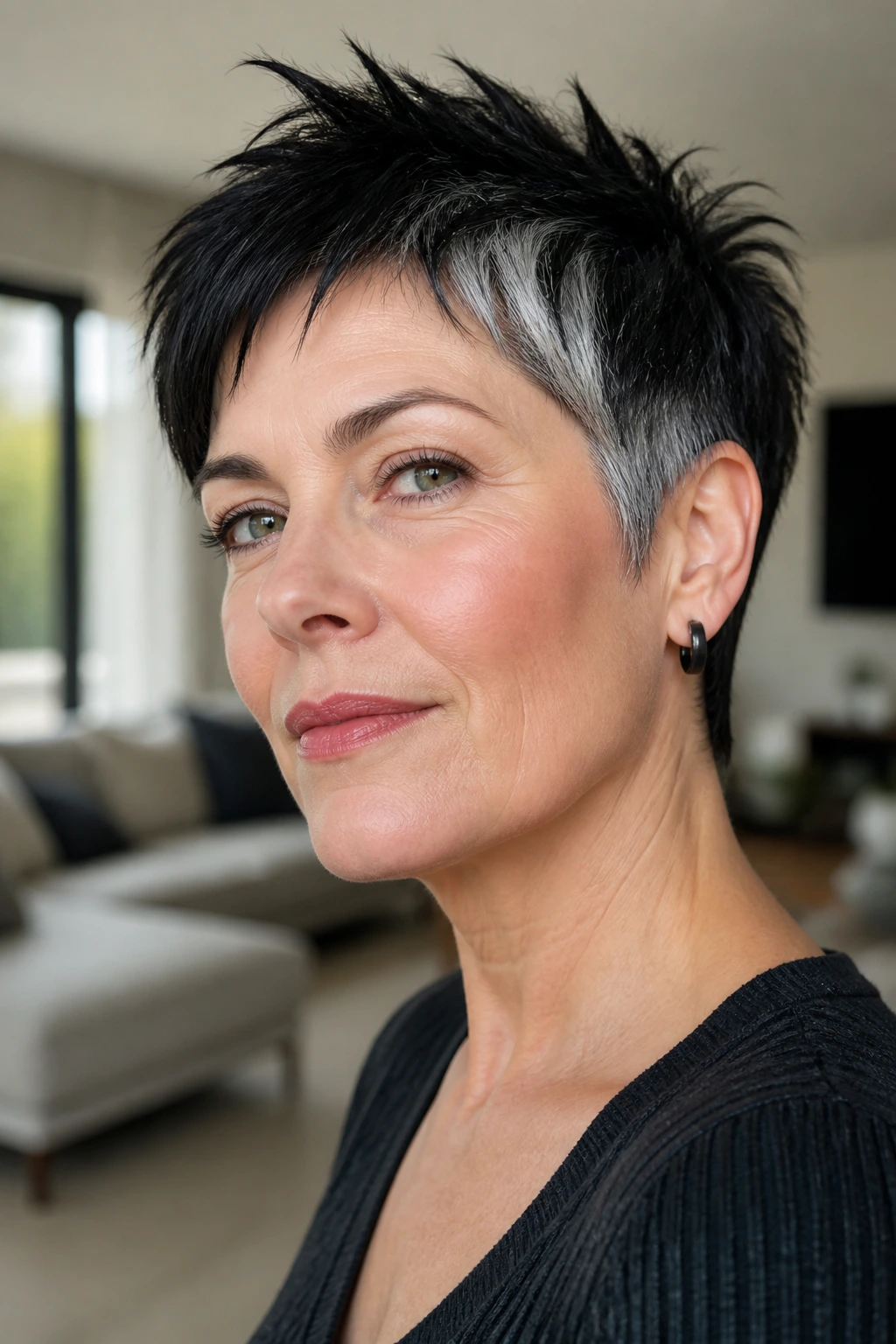
A raven pixie is not shy. But the bright temple streaks stop it from feeling severe. That streak of grey or silver around the temples can be the whole point on fair skin, because it frames the face like a highlight without asking for much length.
This cut is especially good if your silver is coming in unevenly at the front. Instead of hiding it, you carve it out. Keep the top piecey and the sides tucked close. That contrast between dark and bright gives the style movement, even when the hair is short.
It’s one of the easiest cuts to live with if you hate spending time styling. A little paste, a little finger work, done.
11. Graphite Layered Bob
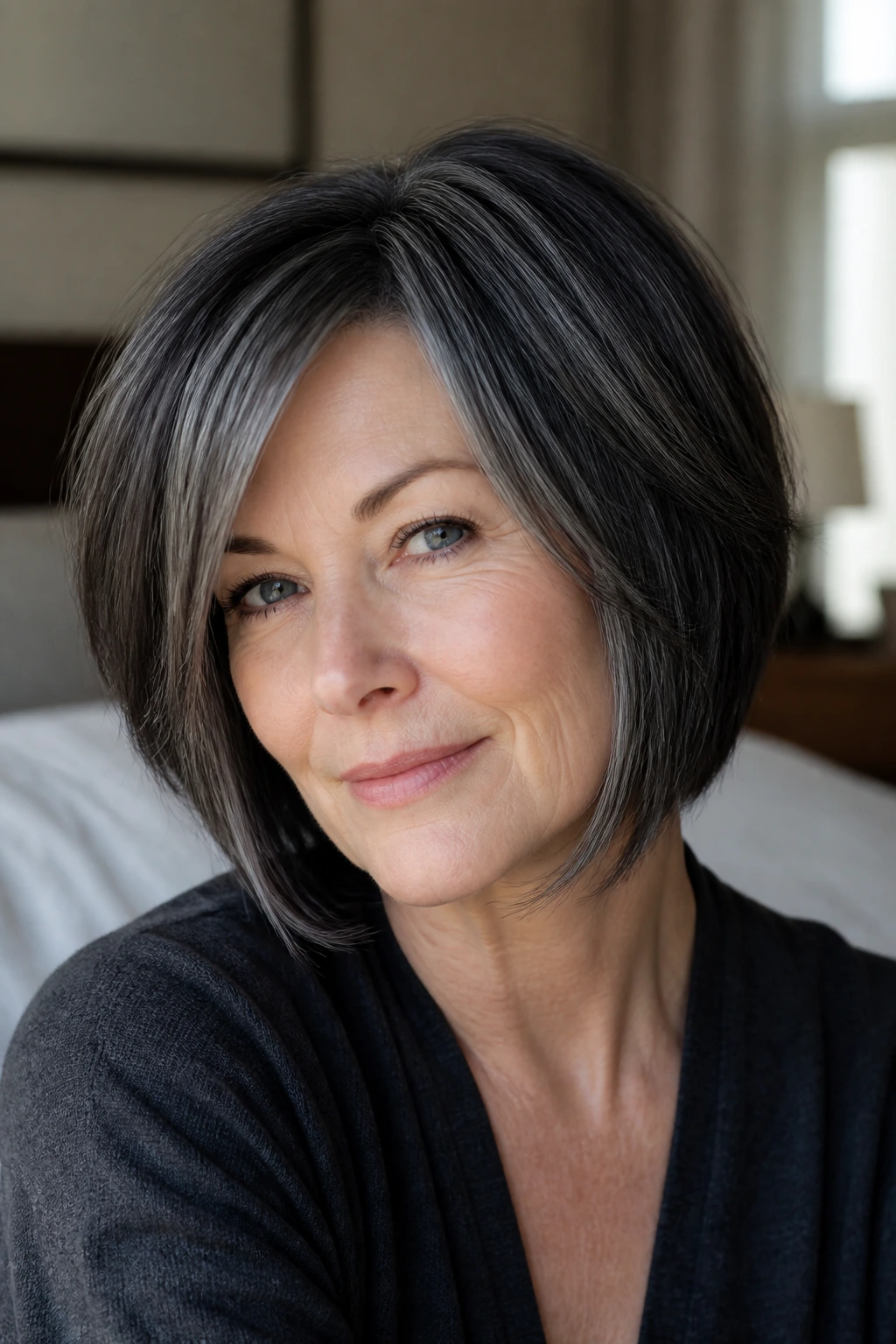
Graphite has a blue-grey cast that works well when fair skin needs depth but not warmth. A layered bob keeps it from looking like a block of color, which is the main danger with any dark shade on a pale face. The layers let silver peek through at different heights, so the cut looks lived-in rather than dyed flat.
I like this on straight hair because graphite can read sleek without going severe. On wavy hair, the layers stop the ends from flipping into a triangle. Either way, the visual is clean, and clean beats clever here.
If your hair tends to lose shine, this is one of the better shades to gloss. The graphite reflection looks much better when it’s got a little light catching it.
12. Espresso Shag with Silver Ribbons
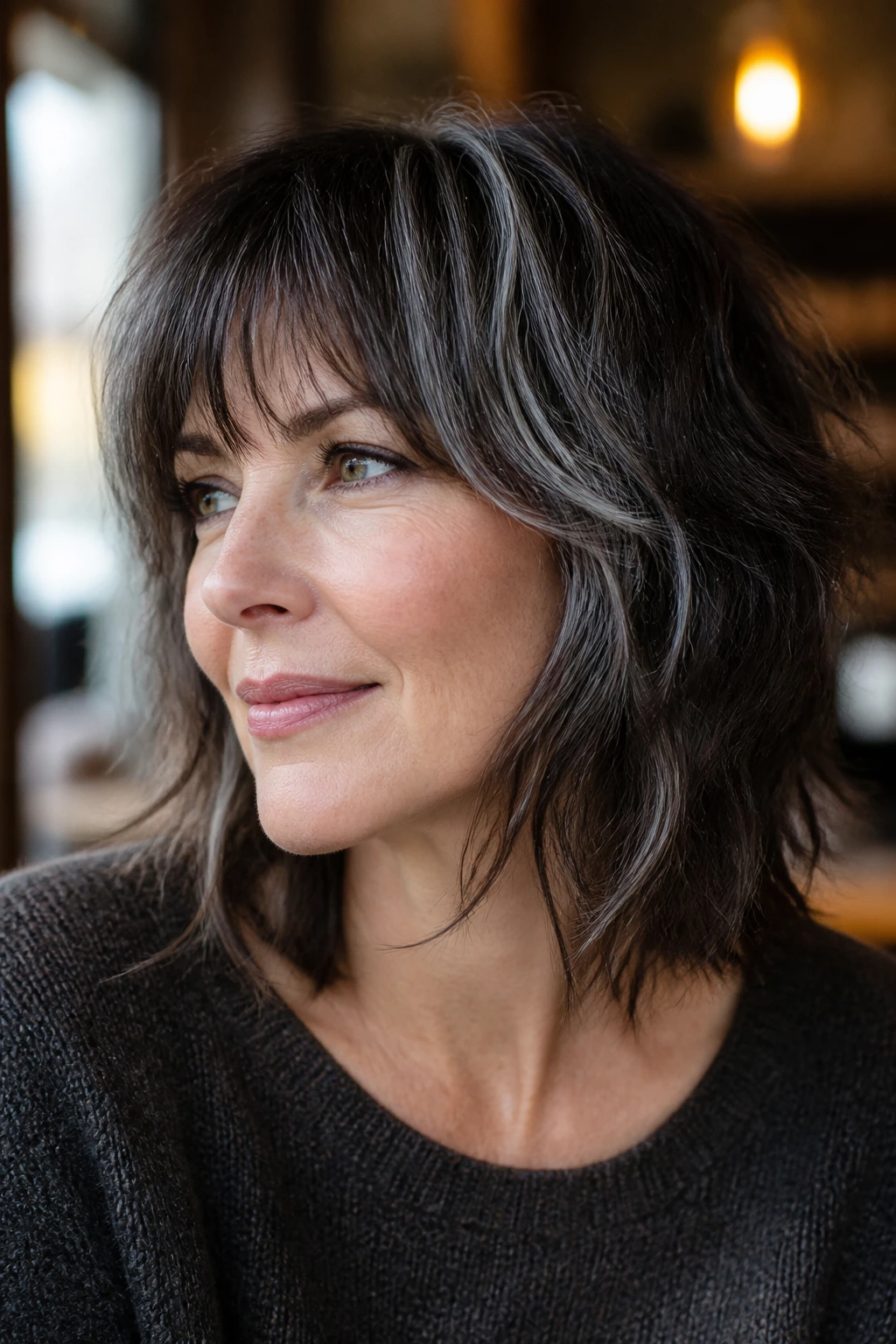
Unlike a uniform dark dye job, an espresso shag keeps the silver ribbons visible where they do the most good — around the face, through the fringe, and across the top layers. That means the grey feels like part of the texture, not an interruption in it. On fair skin, the espresso base keeps the look anchored.
This is a good cut if your hair has wave, curl, or a bit of stubborn lift at the crown. The shag shape uses that lift instead of flattening it down. Ask for the ribbons to stay narrow and irregular. Perfectly even highlights look cosmetic. Irregular ones look real.
If you air-dry, scrunch a little cream in and leave the ends alone. The messiness suits the cut.
13. Cool Aubergine Lob
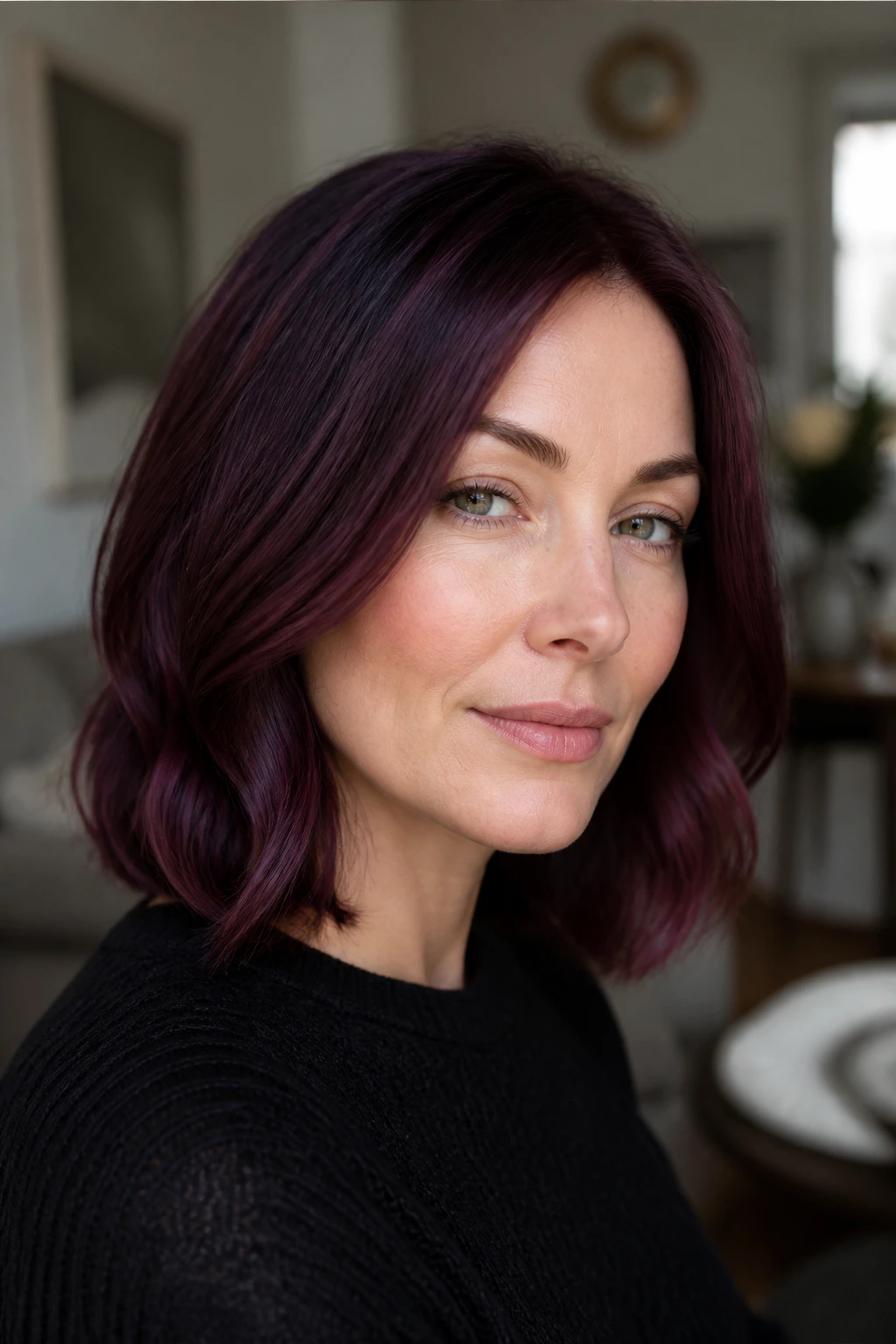
A cool aubergine lob is for fair skin that can handle a little color without drifting into warmth. The plum note is subtle, not loud, and it does a nice job of making grey strands look intentional against the darker base. It’s especially good if your eyes are green or blue and you want the whole face to feel a touch richer.
The trick is keeping the aubergine cool. If it shifts red, the contrast with silver gets muddy fast. A demi-permanent gloss often works better than a permanent color for this look because you can refresh the tone without piling on too much pigment.
Wear it with loose waves or a smooth blowout. Both work. The point is the color, not the styling gymnastics.
14. Mink-Brown Butterfly Cut
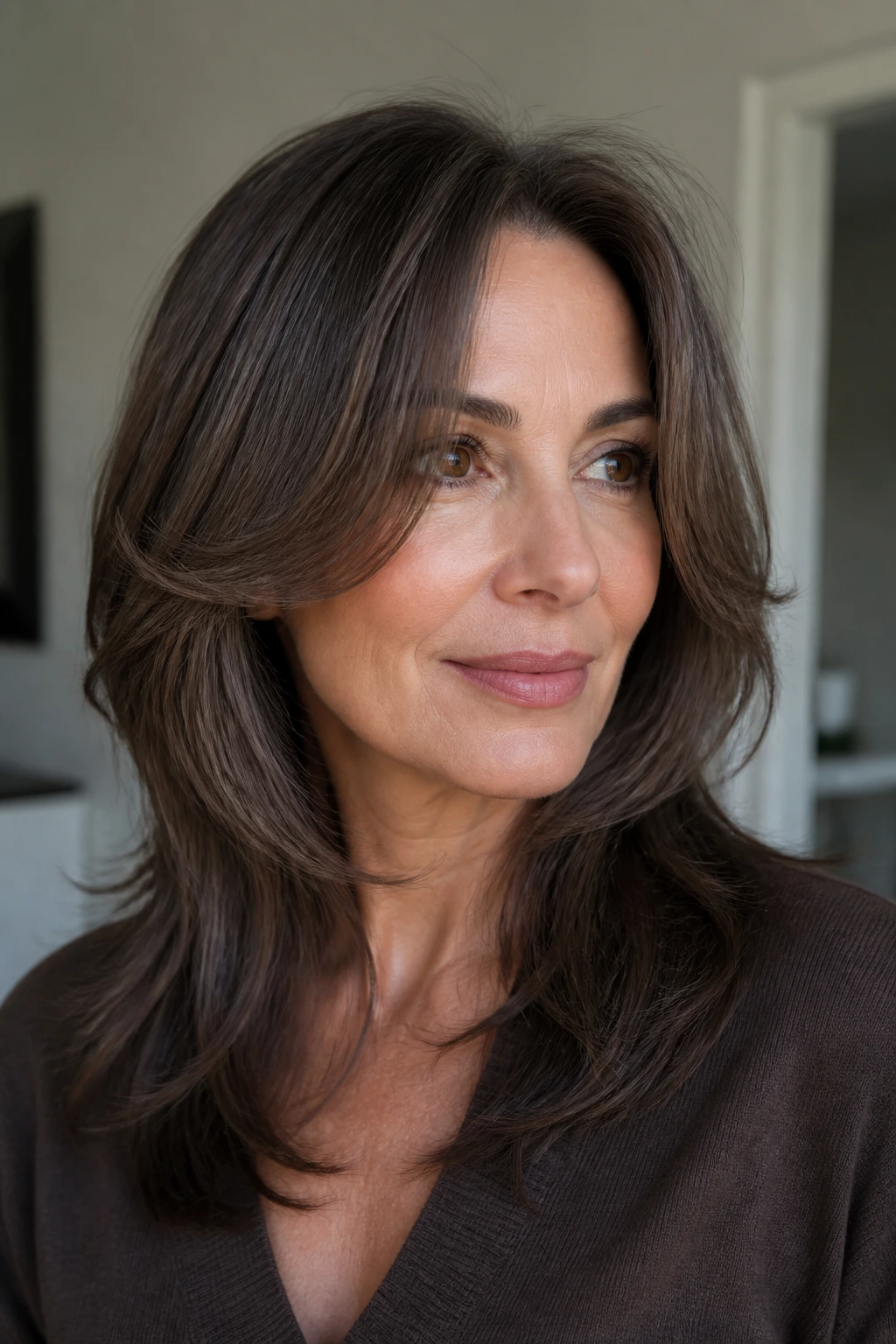
The butterfly cut loves movement, and mink-brown gives it a grounded, smoky base that flatters fair skin without stealing the whole show. The face-framing layers fall softer around the cheekbones, which makes the transition from dark to grey feel spread out, not abrupt.
This is a solid choice if your hair is medium to long and you do not want to lose length. The shorter front layers bring lightness near the face, while the longer back still gives you a curtain of dark color. That mix is useful when grey is just starting to show at the temples or crown.
Keep the finish soft and airy. A heavy, over-flat blowout kills the point of the cut. A little bend near the front is enough.
15. Slate Ombré Waves
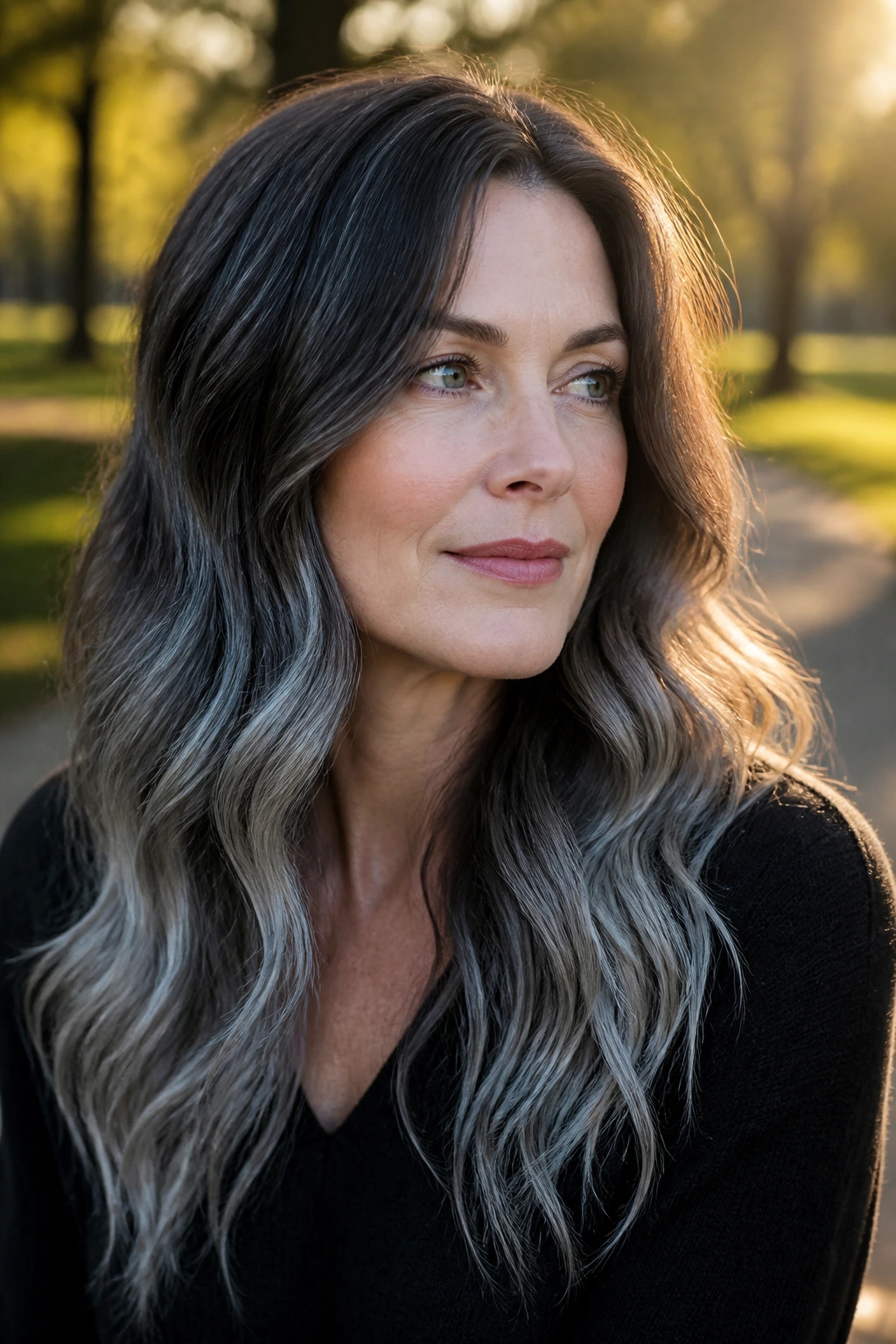
Why do slate ombré waves look so calm on fair skin? Because the color change happens gradually. The roots stay dark, the mids shift into a softer slate, and the ends pick up a steelier grey tone. That slow fade is kinder to the eye than a hard root line.
How to use the effect
The wave pattern does half the work. Loose S-waves let the ombré catch light in pieces, which makes the grey look dimensional rather than dusty. If your hair is long, this is a smart choice because the ombré keeps the weight from feeling like one dark curtain.
- Best if you want a low-maintenance transition
- Keep the ends hydrated with a richer mask
- Ask for the darkest color at the root only
- Let the lightest slate sit below the cheekbones for lift
16. Soft Black Bixie
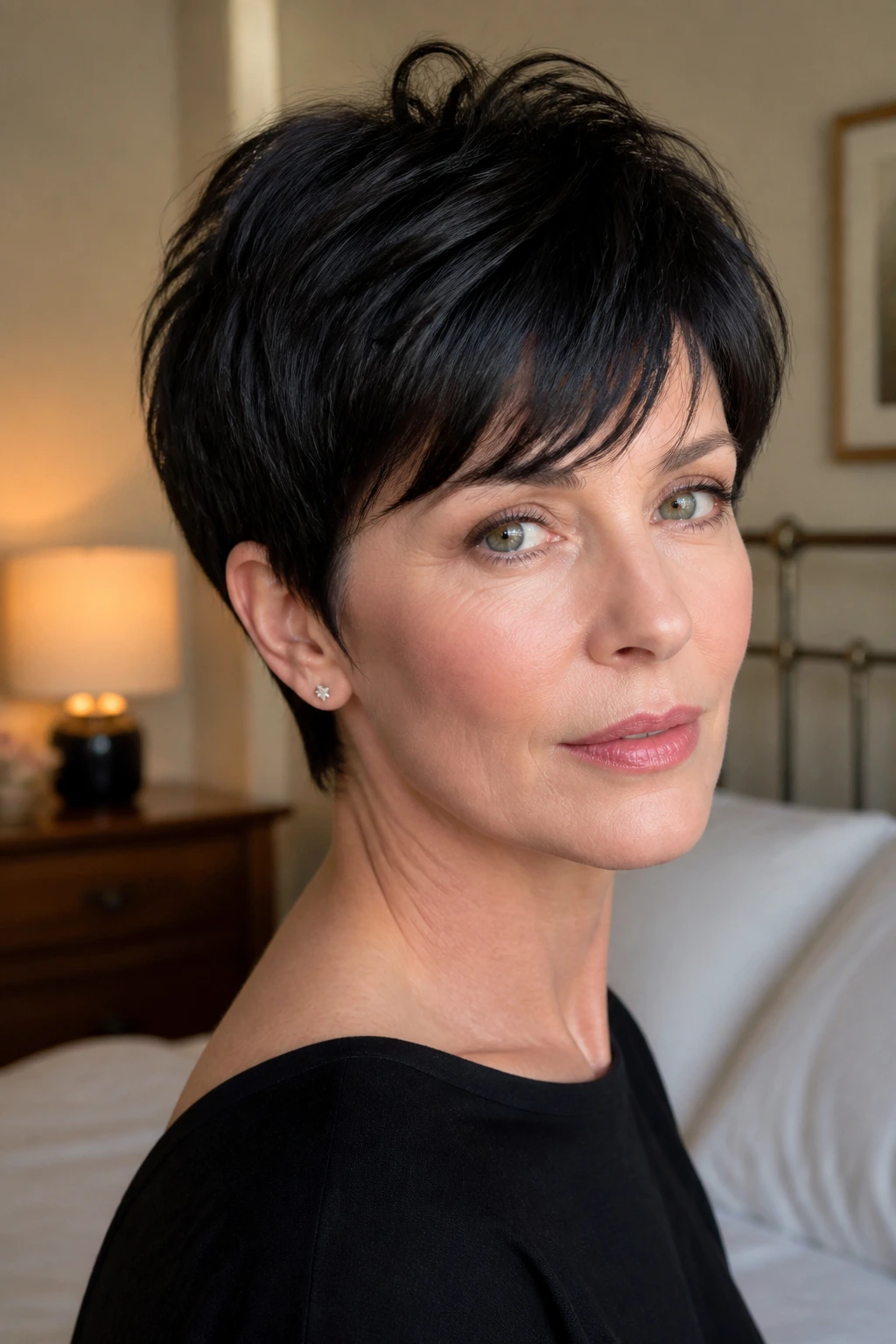
A bixie — that bob-pixie hybrid — gives you shape without the fuss of a full bob. In soft black, it reads sleek on fair skin but does not hit as hard as a flat, shiny black. The softness matters. A lot.
This cut works because the crown stays a little fuller and the nape stays close. That balance keeps grey regrowth from bulking up in the wrong places. It’s one of my favorites for people with fine hair who still want the head to look filled in.
Keep the finish airy. The bixie can turn helmet-like if you over-style it. A bit of separation through the top is enough.
17. Mahogany Base with a Grey Face Frame
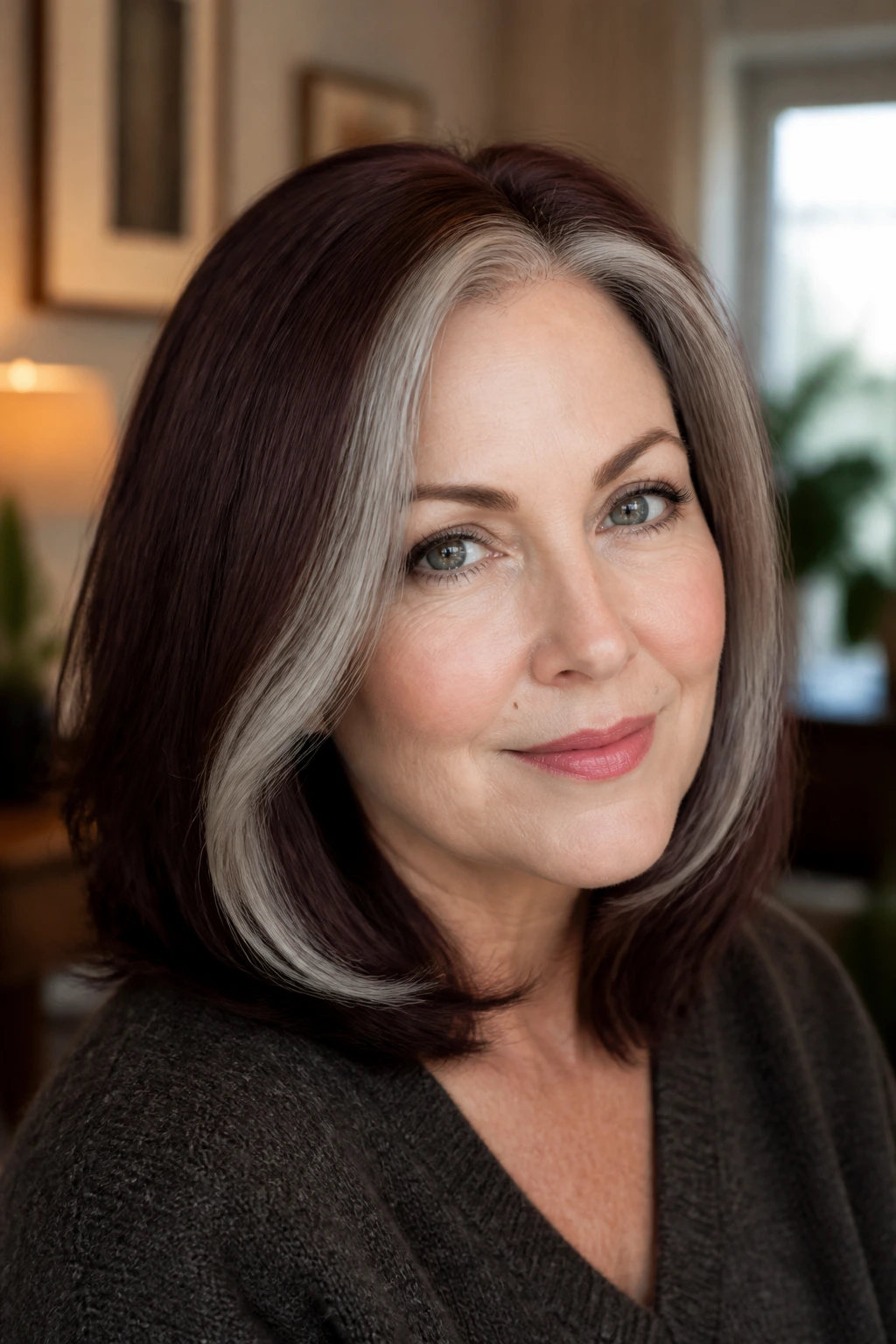
Mahogany can be tricky on fair skin, but when it stays deep and cool, it brings a nice rose-brown warmth to the face. Add a grey face frame and the whole thing changes character. The silver pieces around the front keep the mahogany from looking too red and give the eyes a cleaner border.
This look is best when the mahogany is more wine than copper. Ask for violet undertones if your colorist is mixing the shade, because that keeps the red under control. It’s a strong choice for someone who wants a little richness without losing the grey entirely.
The face frame can be narrow. It does not need to be chunky. In fact, narrow tends to age better.
18. Smoky Mocha French Bob
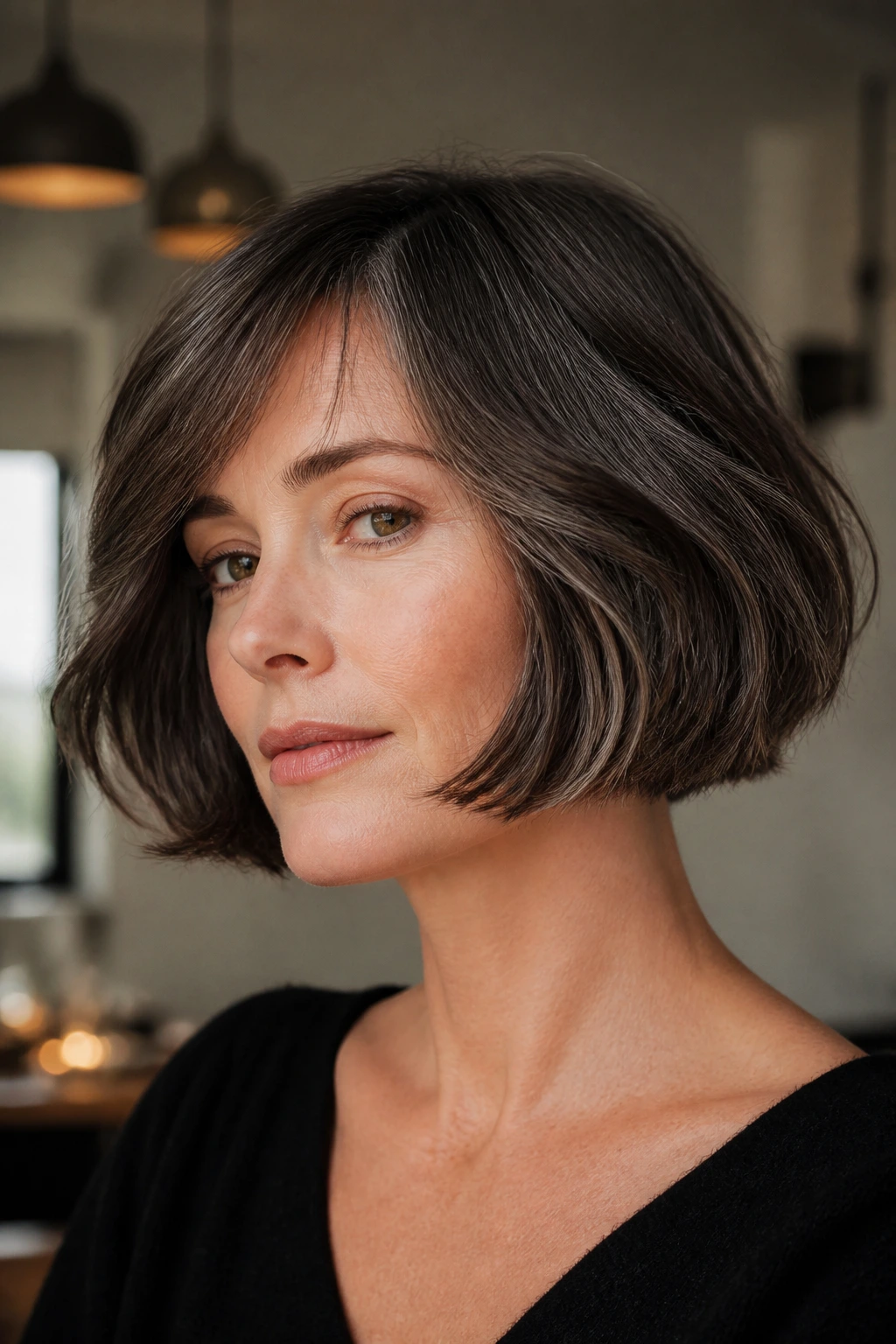
The French bob already has attitude, so the color needs to be disciplined. Smoky mocha keeps the cut from looking too severe on fair skin, and the jaw-length line gives the face a little lift. With grey coming in, this shape can look almost tailored.
I like the smoky mocha version because it sits between warm and cool. That middle ground is useful if your skin changes tone depending on the light. Indoor light, outdoor light, winter light, makeup, no makeup — the shade can handle it better than a pure ash or pure chestnut.
Keep the ends blunt. French bob shapes lose their bite when they’re thinned too much. A crisp line is the whole point.
19. Tapered Pixie with Pearl Sheen
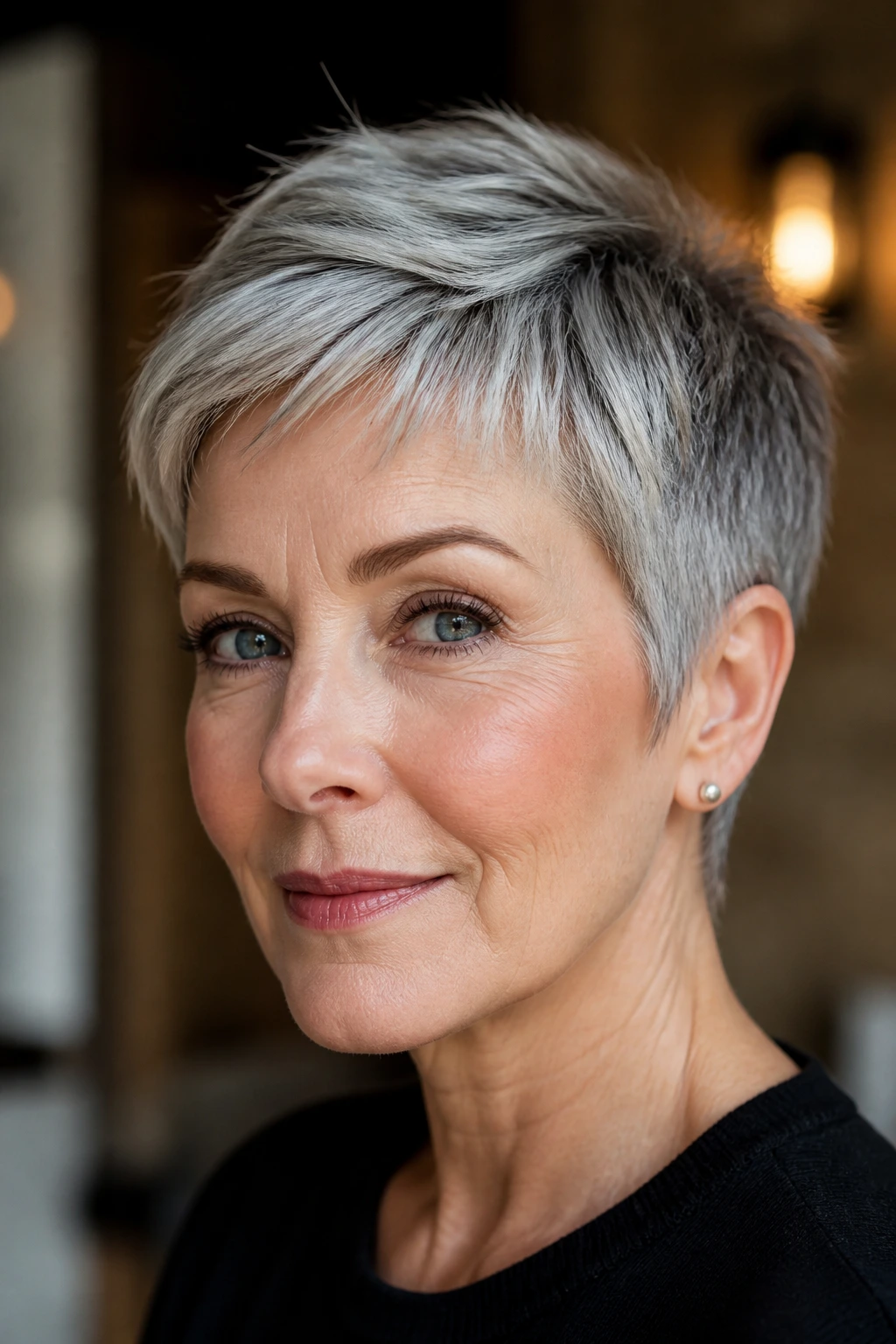
This one is about light reflection as much as color. A tapered pixie with a pearl sheen on top can make fair skin look brighter without bleaching anything to a pale blur. The nape stays neat, the crown stays soft, and the silver threads on top catch light instead of looking stripped.
What to ask for
Tell your colorist you want the top a touch brighter, not lighter all over. That distinction matters. You want reflection, not chalkiness.
- Taper the sides close to the head
- Keep the top long enough to move
- Use a clear gloss or pearl toner for shine
- Trim every 4 to 5 weeks if you like the shape tidy
My take: this is one of the cleanest looks in the whole list. It does not beg for attention, which is exactly why it works.
20. Sleek Low Knot with a Silver Money Piece
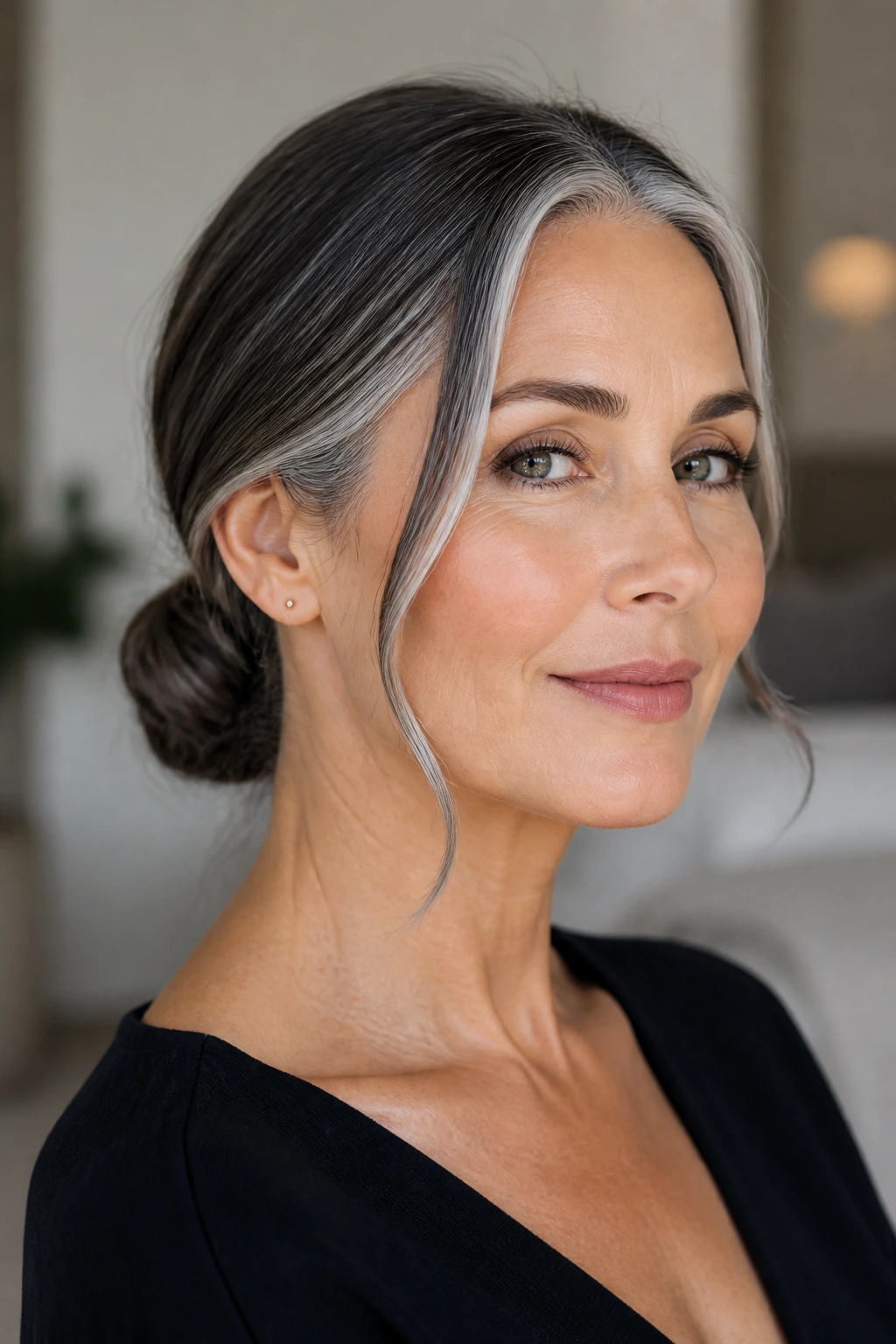
A low knot sounds plain until you add a silver money piece and a deep dark base. Then it becomes one of the easiest ways to wear grey on fair skin without making it the only thing people see. The pulled-back shape shows off the face, and the front streak gives the whole style a deliberate line.
This is the choice for busy days, formal events, or any moment when you want the hair off your neck but still want the silver to show. Keep the knot low and a little loose. Too tight and the face can feel stern fast.
A shine cream on the lengths helps. The silver piece needs contrast to read well, and greasy roots will ruin that in about ten seconds.
21. Walnut Layers with Pewter Ends
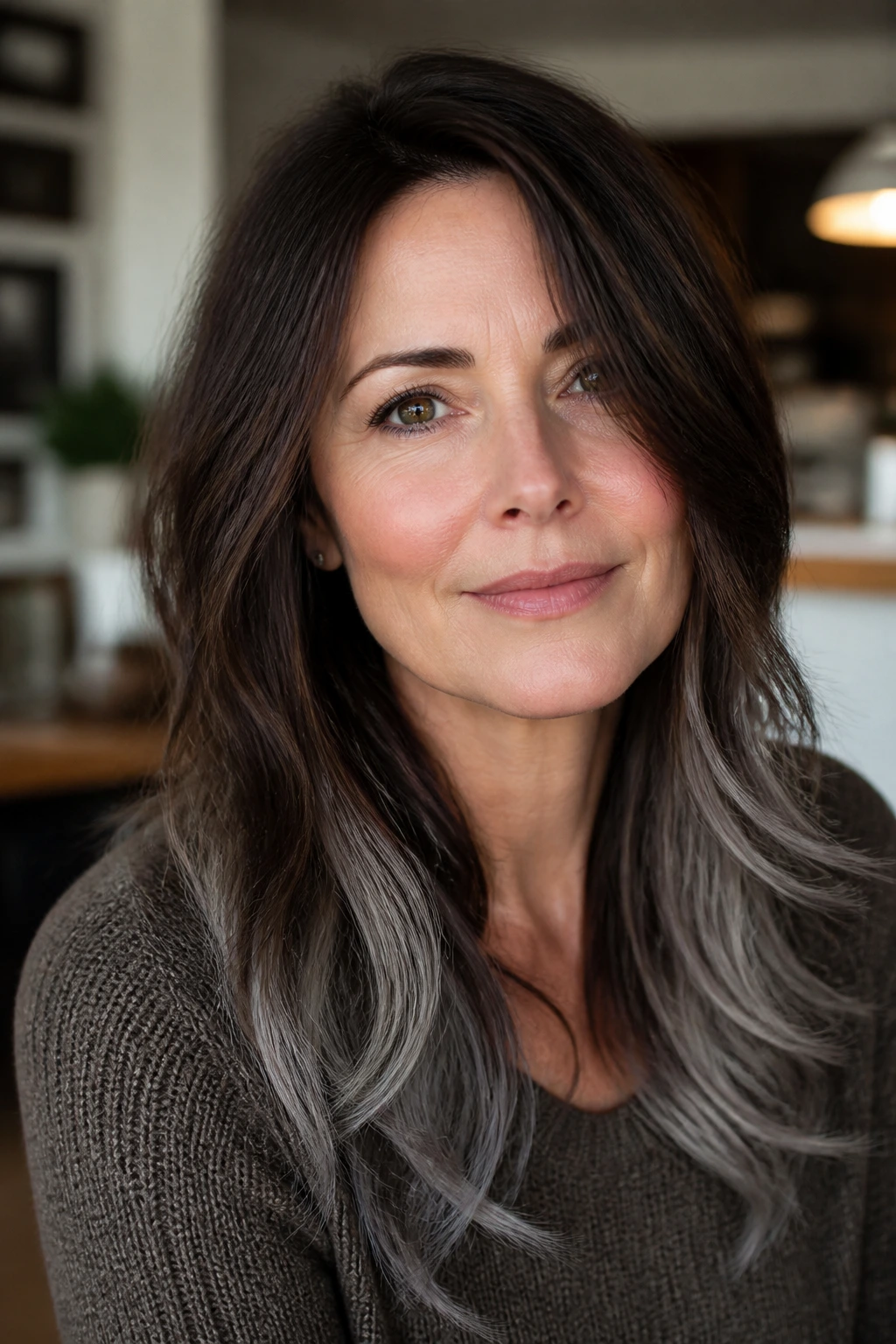
Walnut brown is underrated. It has enough depth for fair skin, but it is less severe than black or blue-black. When the ends fade into pewter, the grey transition starts to look like design rather than decay, which is a much better story for the hair to tell.
Why this one holds up
Layering matters here because the pewter ends need room to move. A one-length cut can make the color shift look blunt. Layers spread it out and keep the length from feeling heavy. This works especially well on medium-thick hair that tends to collect weight at the bottom.
A little wave through the ends keeps the pewter visible. Straight hair can handle it too, but it should still have some bend. Flat ends make the color look like it stopped halfway.
22. Ash Espresso Pony-Length Cut
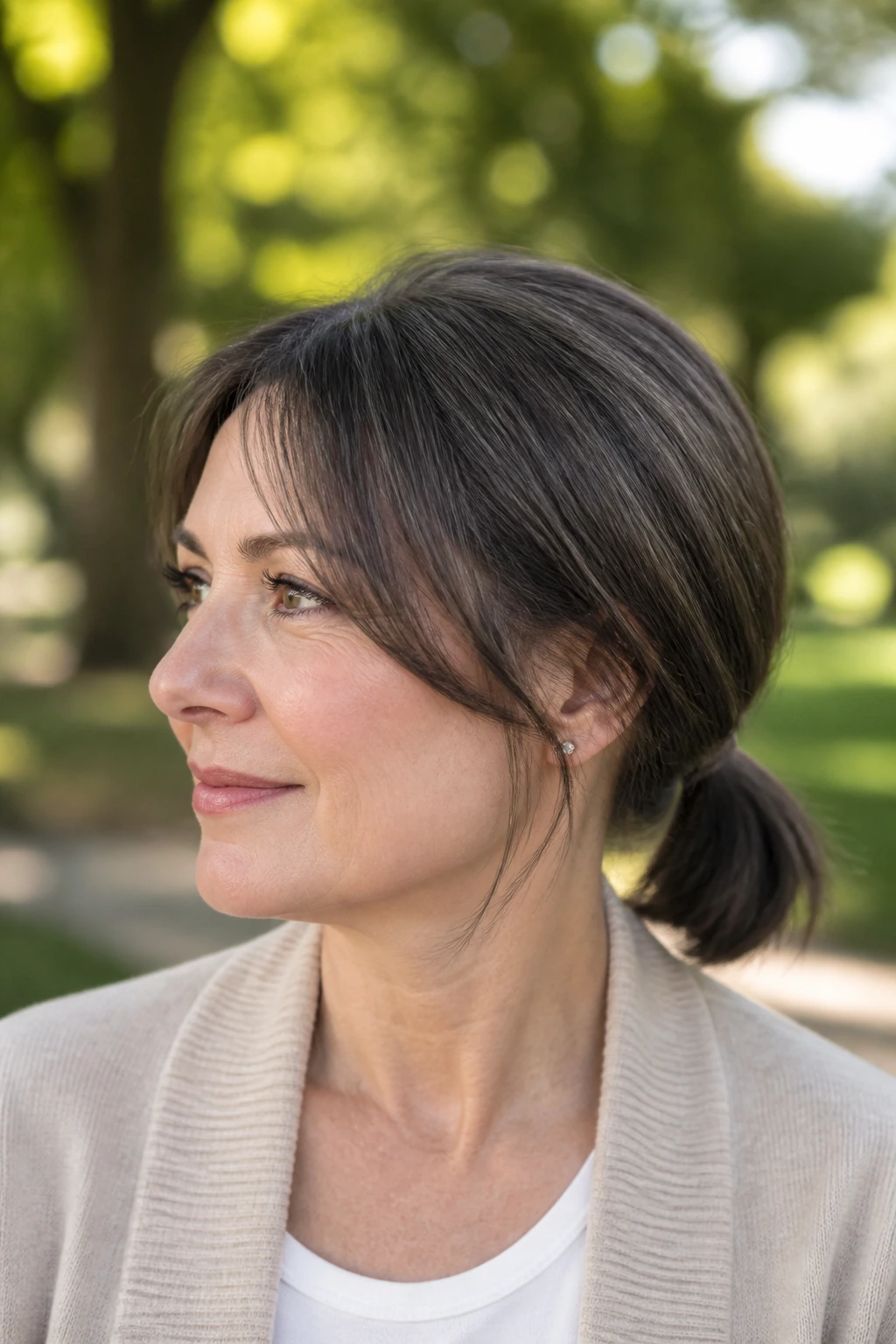
If you wear your hair back a lot, the cut matters more than the polish. An ash espresso pony-length cut keeps the length useful, but the ash tone stops it from reading flat against fair skin. Silver strands around the crown or temples show up cleanly here, especially when the hair is tied low.
How to wear it
A low pony or soft clip twist lets the grey at the hairline feel intentional. Keep the elastic low and the top smoothed but not shellacked. A little movement around the face helps. Too much slickness makes every silver strand stand up like it’s trying to escape.
- Best for people who need fast styling
- Works with medium to thick hair
- Needs a trim to keep the ends from looking stringy
- A silk scrunchie helps reduce breakage on silver strands
23. Cocoa Mullet with Grey Fringe
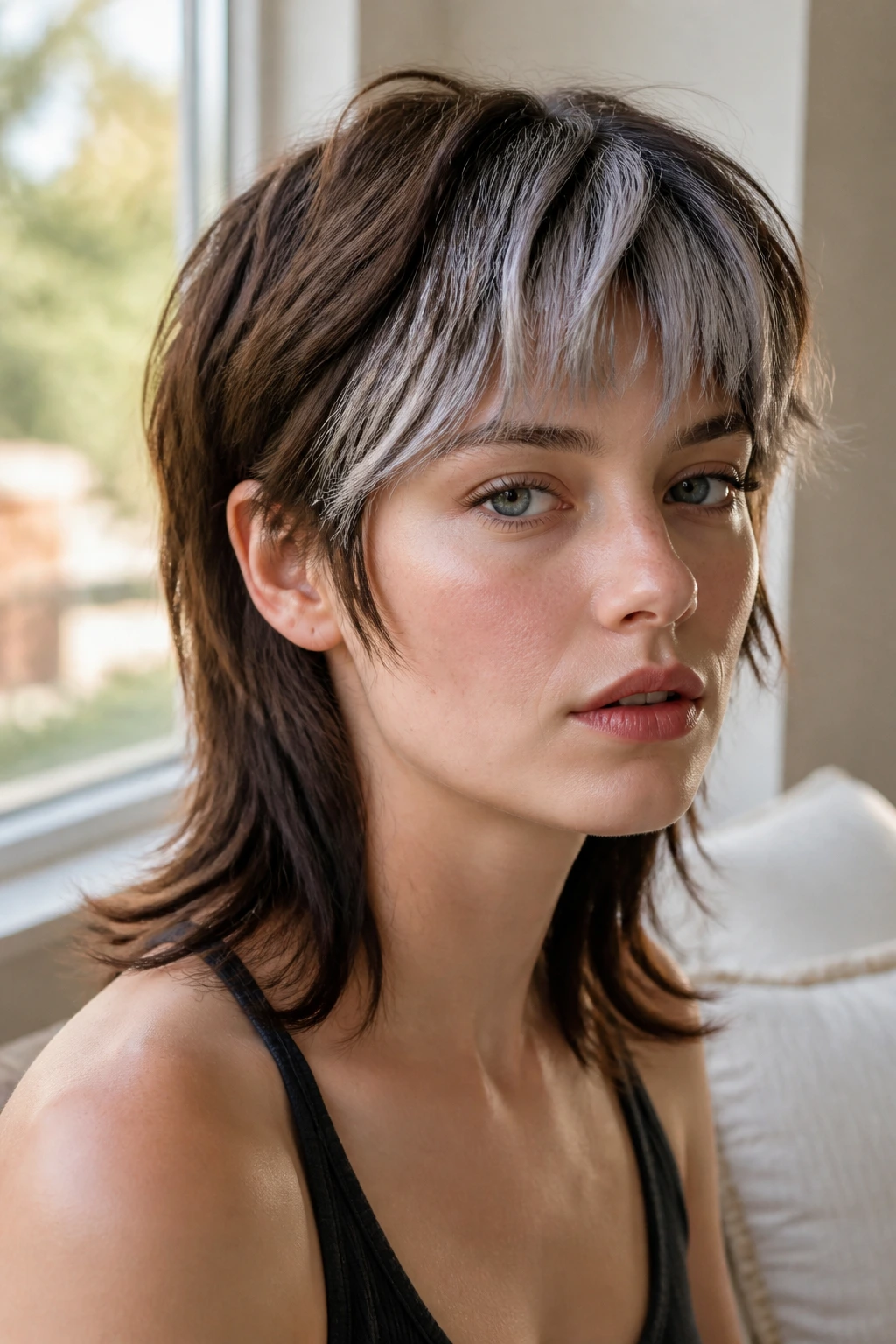
A mullet is not for everyone, and that’s fine. On fair skin, though, a cocoa mullet with a grey fringe can look surprisingly modern because the shape makes the face feel open while the darker base keeps the style grounded. The fringe gives the grey somewhere to live right at the front.
What I like here is the contrast. The back can stay softer and a little longer, while the front keeps the silver visible. If your hair has natural wave or curl, the shape works with the texture instead of asking it to behave. That matters more than people admit.
Use a light styling cream and stop there. A mullet gets fussy fast when you overwork it.
24. Raven-to-Steel Collarbone Lob
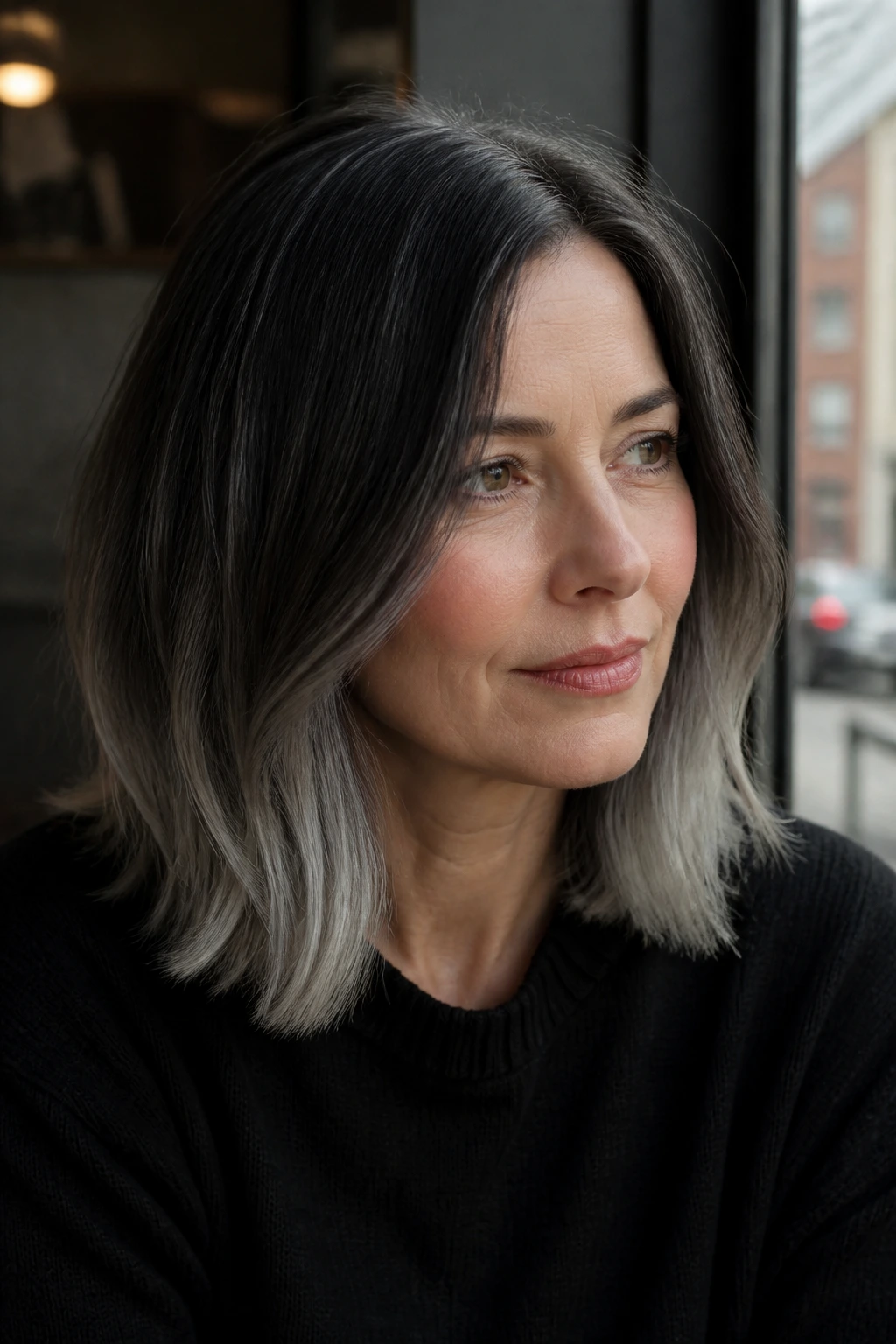
Unlike a flat single-process black lob, a raven-to-steel version gives the hair a place to move. The dark top frames fair skin with force, then the steel ends break the heaviness and keep the style from looking like one solid block. It’s dramatic, but it’s controlled drama.
This is best if you want a visible transition and are not afraid of contrast. The collarbone length helps because it keeps the cut long enough to show the color shift, but short enough that the grow-out line does not sprawl. Ask for the steel to stay cool, not beige. Beige can dull the whole thing.
A heat protectant matters here. Any lightened end needs help staying smooth.
25. Misty Brunette Length with Temple Streaks
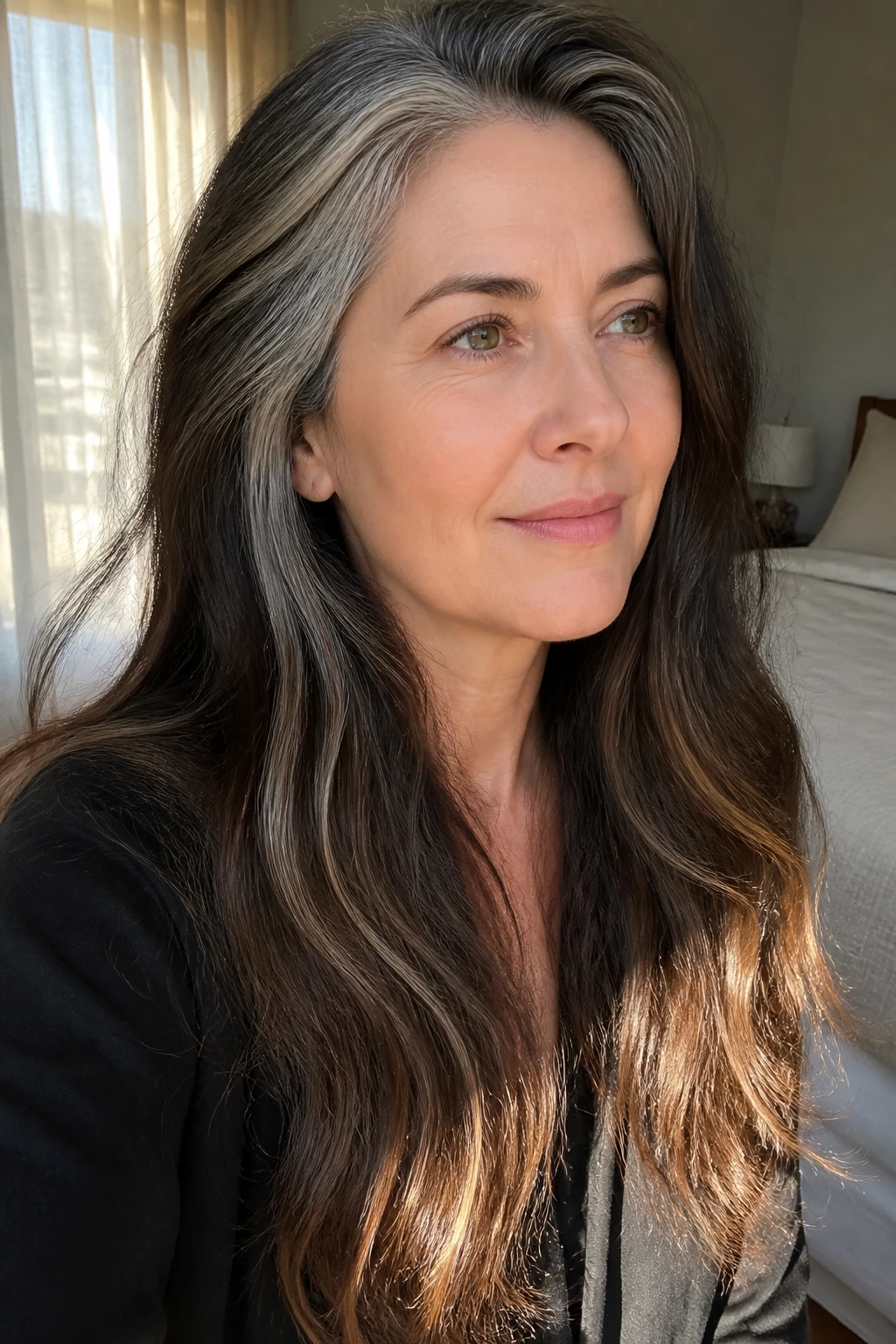
If you refuse to cut your hair shorter, this is the route I’d take. Misty brunette keeps the base soft and cool, and the temple streaks let the silver show where it naturally arrives first. On fair skin, that keeps the face framed without turning the lengths into one endless dark sheet.
The key is restraint. Long hair can get heavy and draggy when the color is too dense. Let the streaks sit near the front and through the top layers, and keep the ends a touch lighter so the whole length still moves. That little bit of break in the color is what stops the style from feeling matronly.
It’s a good option if you want to keep your length but still look like you planned the grey from the start.
How to Brief Your Colorist for a Grey Blend That Fits Your Skin
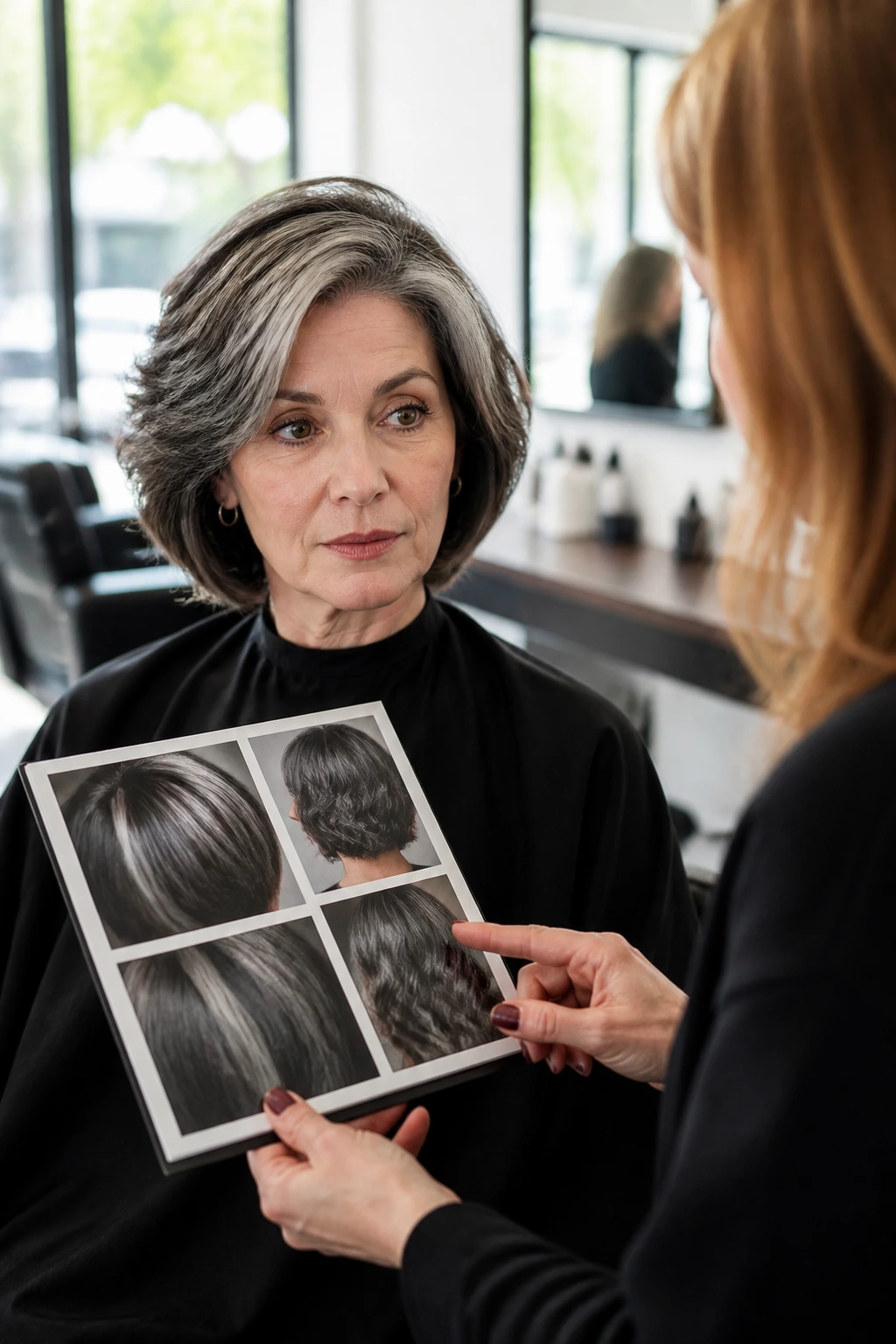
Bringing photos helps, but only if the photos show hair in plain daylight. Bathroom light lies. Salon mirror light lies too. Stand near a window when you pick references, and choose images that show the root area, the temple line, and the ends. Those three spots tell the real story.
Say what your grey does now. Is it thick and bright at the front? Soft and scattered? Coming in at the crown first? A colorist can build a cleaner blend if they know where the silver is strongest. If you keep using the phrase “cover it all,” you may get a harder result than you want. If you say “blend the regrowth so it softens over 6 to 8 weeks,” the conversation gets much better.
Also mention how much upkeep you’ll tolerate. A cool brunette gloss every month is not the same job as a low-maintenance shadow root that can stretch longer. I’d rather have an honest plan than a pretty color that annoys you two weeks later.
Essential Tools and Products for Grey-Blending Dark Hair
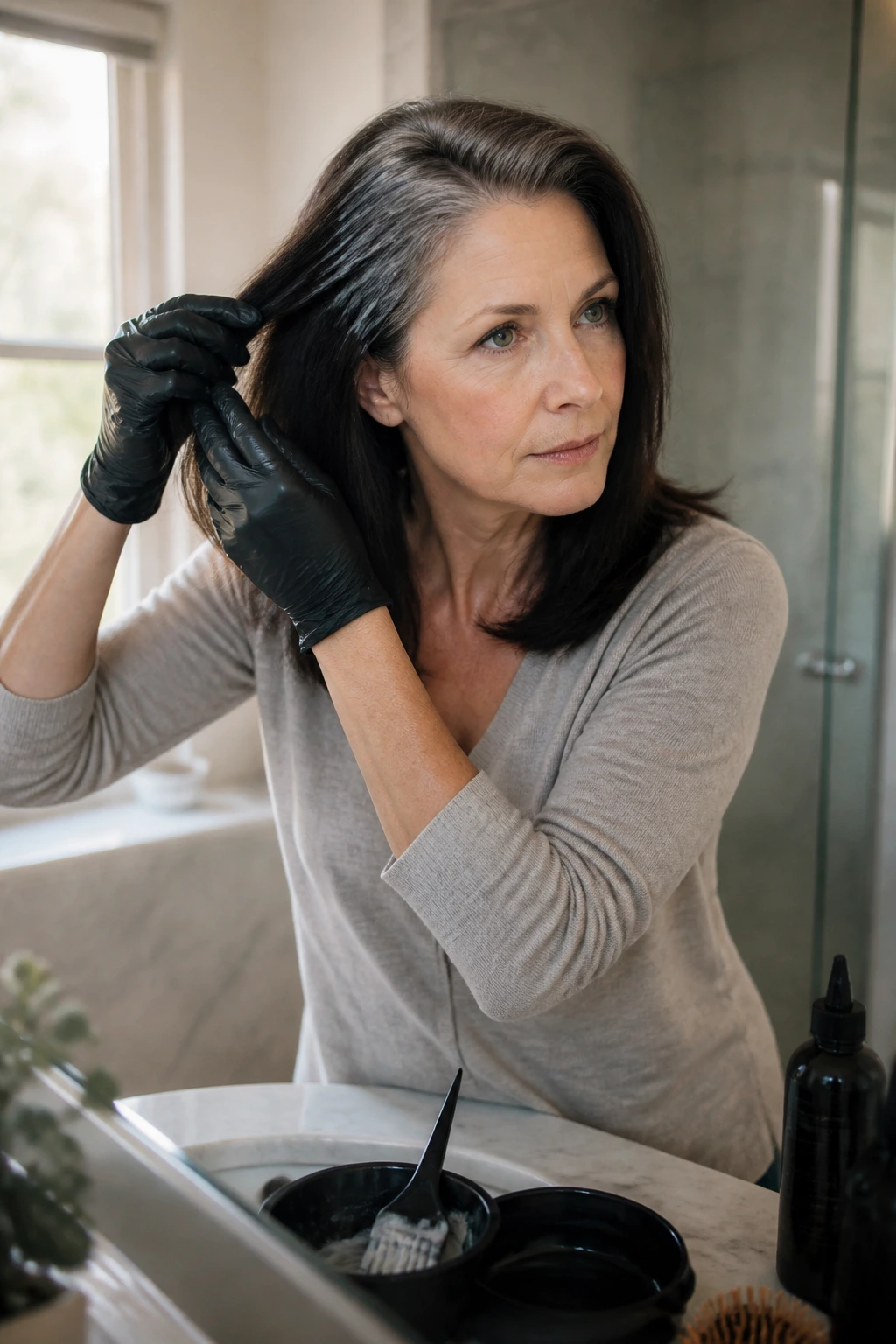
-
Color-safe shampoo: Keeps dark brunette shades from fading to flat brown after a few washes.
-
Purple shampoo or silver mask: Use sparingly to knock down yellow on grey strands; too much can dull shine.
-
Demi-permanent gloss: Useful for refreshing tone without redoing the entire head.
-
Heat protectant spray: Grey and lightened pieces get rough faster, especially around the face.
-
Round brush or paddle brush: Helps shape bobs, lobs, and blunt cuts without making them too puffy.
-
Sectioning clips: Handy for at-home styling and for separating temple pieces when you dry your hair.
-
Fine-tooth comb: Good for smoothing roots and directing a sharp part.
-
Wide-tooth comb: Better on wet hair, especially if your grey strands are coarse or tangle easily.
-
Microfiber towel or old T-shirt: Reduces roughing up the cuticle on fragile silver strands.
-
Light serum or shine cream: A small amount through the ends keeps dark hair from looking dry and grey ends from looking frayed.
-
Root concealer spray or powder: Optional, but useful if you need a quick bridge between salon visits.
How to Keep the Shade Fresh Between Visits
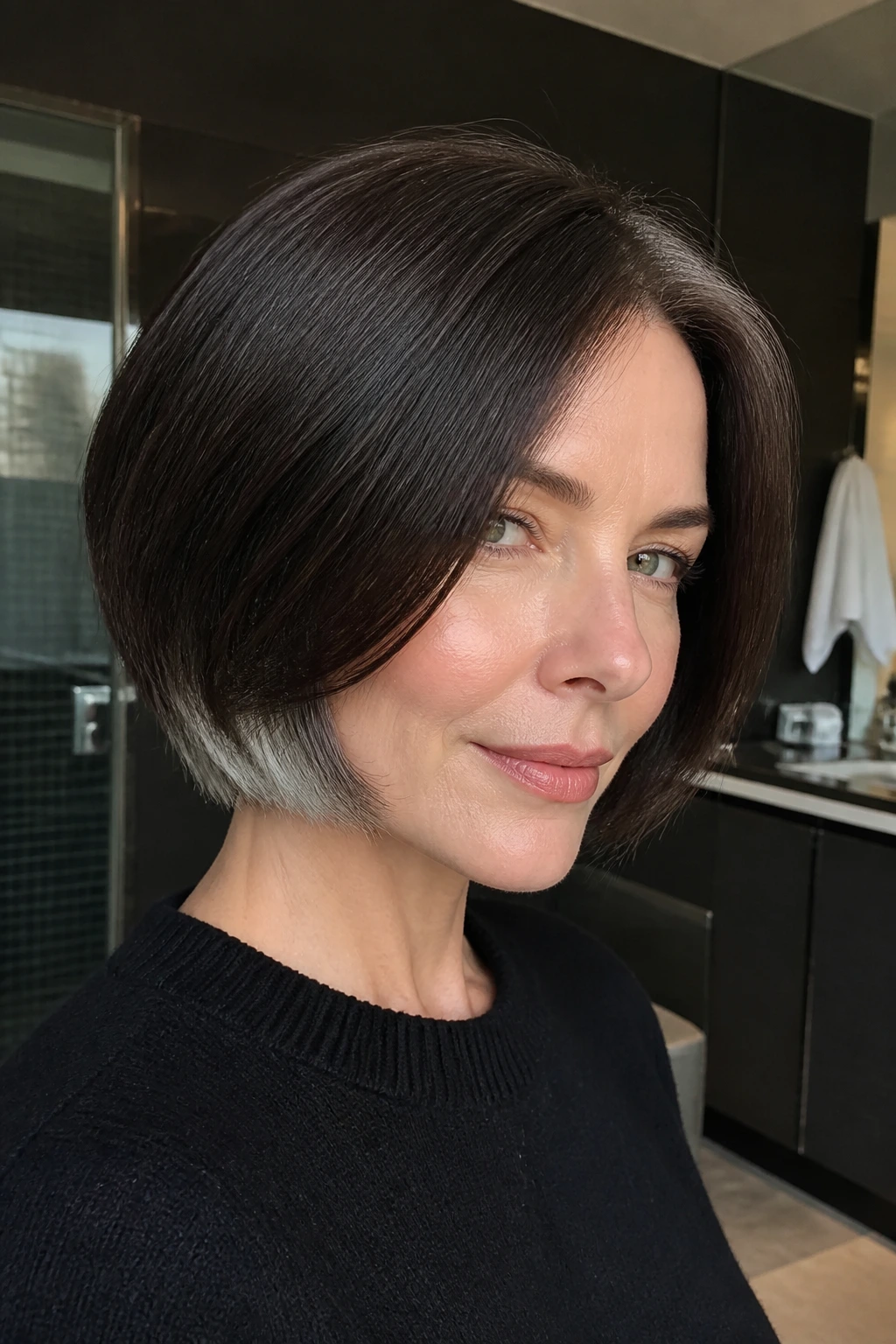
Grey-blending color tends to fade in two places first: the face frame and the ends. That is normal. Wash with lukewarm water, not hot water, because hot water strips pigment faster and roughs up the silver pieces. If your hair feels squeaky after shampoo, you’ve probably gone too far.
Purple shampoo is not a daily thing. Once a week is enough for most people, and some hair needs even less. Overuse can give grey hair a dry, matte cast that looks older than the actual cut. A silver mask once every 10 to 14 days can do the same job with a softer finish.
Glossing every 4 to 8 weeks makes a big difference on dark brunettes and blue-black shades. If your hair is porous, it may soak up toner quickly and then spit it out just as fast, which is why the color can look uneven after a few washes. Hydrating masks help, but they do not replace toner. Different jobs.
How to Style the Finish Without Fighting the Grey
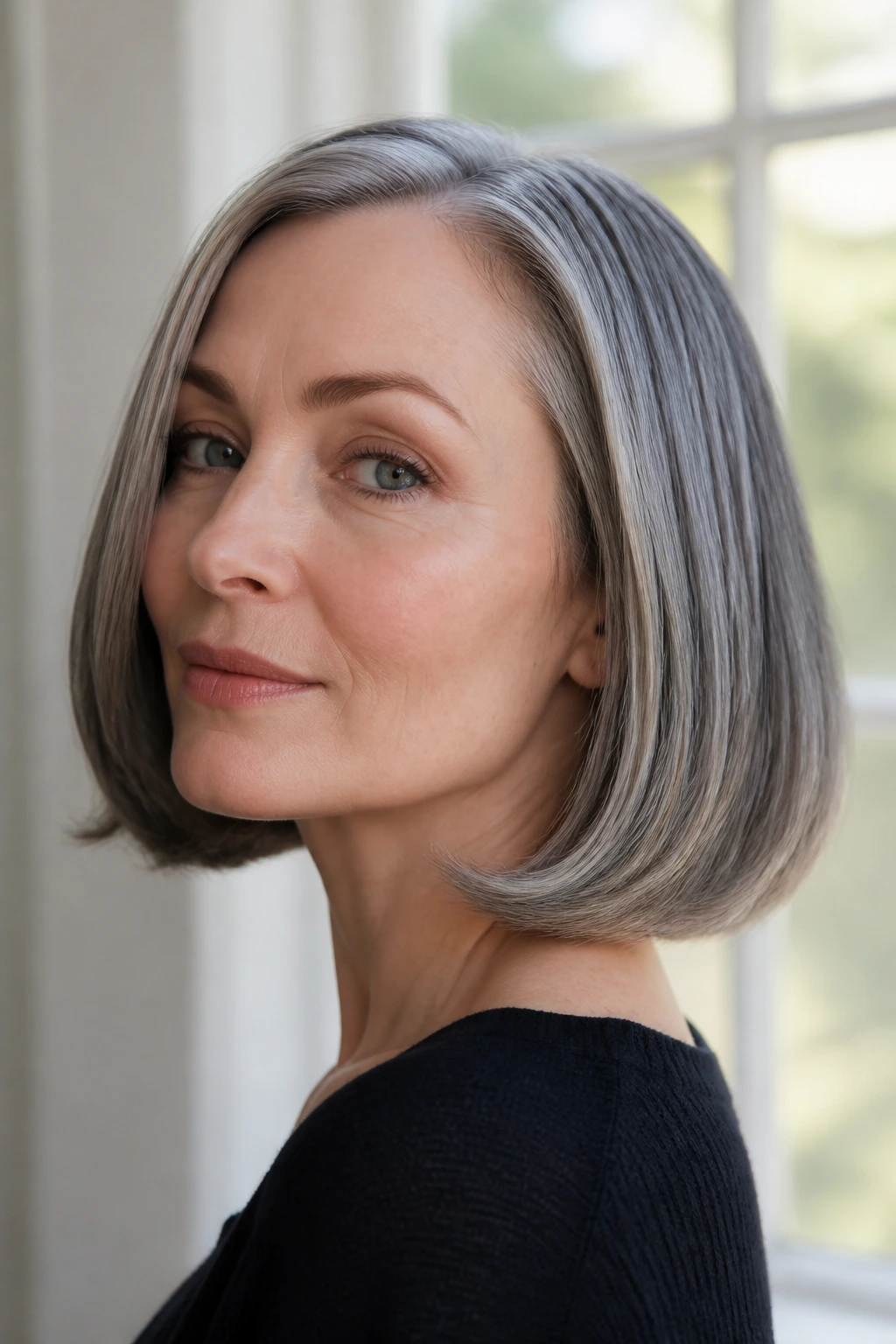
Sleek: If your cut is a bob, lob, or French bob, blow-dry with a nozzle and a flat brush so the lines stay clean. A little bend at the ends keeps the hair from looking severe.
Textured: For shags, bixies, and pixies, use a pea-sized amount of cream or paste and work it through dry hair from the back forward. Grey texture often looks better when it is separated a little instead of coated.
Soft lift: A root-lift spray at the crown can help dark styles on fair skin keep shape without heavy teasing. Teasing makes grey flyaways worse. I’d skip it unless you really need it.
Face-framing polish: Use the iron or brush on the first two inches around the face, then leave the rest looser. That contrast gives the style shape without making it look overdone.
Additional Tips and Color Boosters
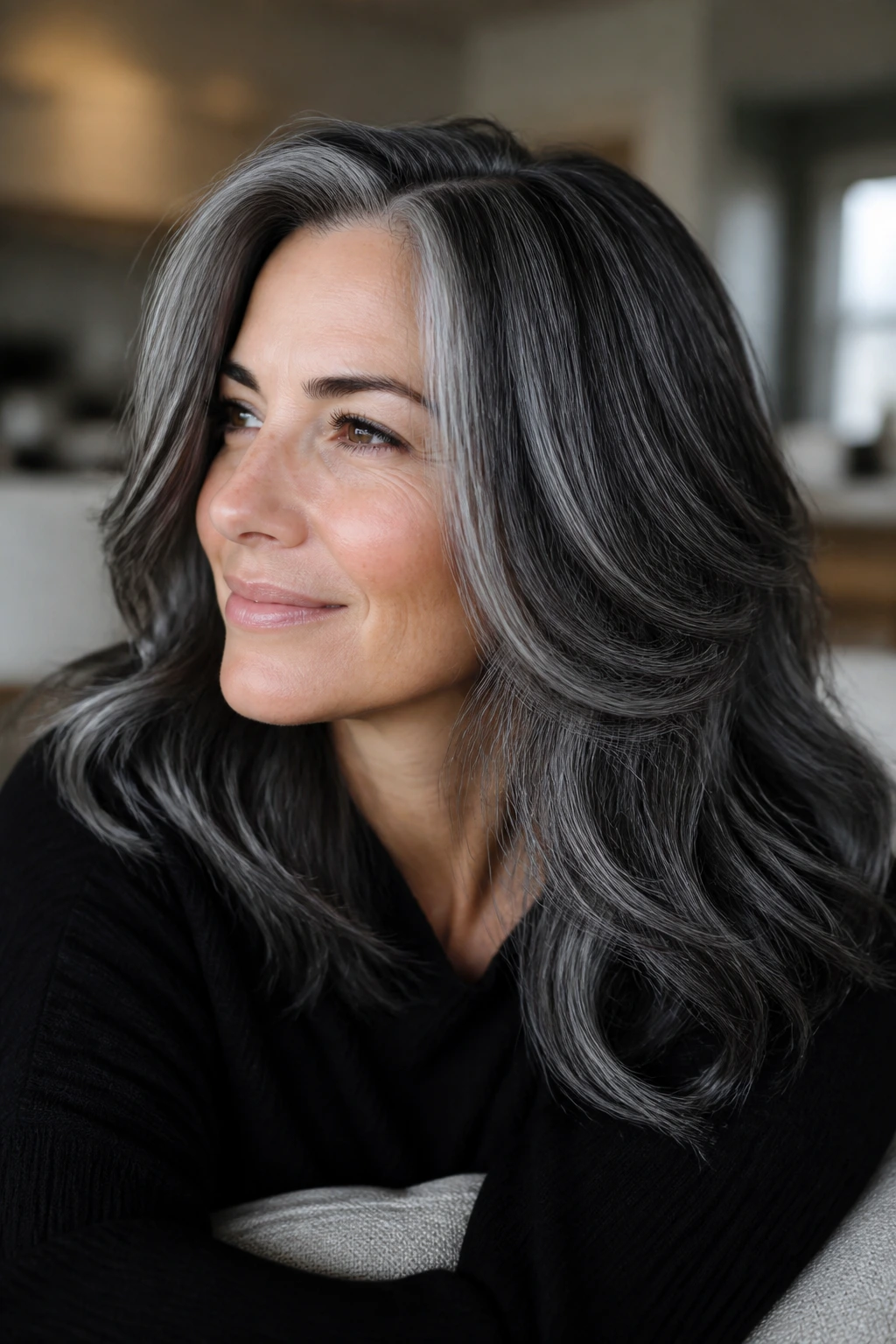
Depth at the root: Ask for a root shadow one shade deeper than your mid-lengths. It makes the grey look intentional and buys you extra time before the grow-out line starts shouting.
Softness at the hairline: Keep the front pieces slightly lighter or more reflective than the rest of the cut. On fair skin, that stops the face from disappearing into dark hair.
Shine without brass: A clear gloss or blue-based glaze gives dark shades a cleaner finish than heavy warm toners. If your hair pulls orange, ask for a cooler toner instead of adding more brown.
Make-it-yours: If you’re very fair and pink, lean blue-black, graphite, or ash espresso. If your skin is fair but peachy, mushroom brown, chestnut, or walnut may look kinder. If you want contrast, go darker at the base and keep the silver around the temples or fringe.
Texture boost: A few bends with a 1-inch iron make grey ribbons show up more clearly. Pin-straight hair can hide the dimension that makes these looks work.
Common Mistakes to Avoid
-
Going too black, too flat: A harsh black dye can make fair skin look red or washed out. The fix is a softer dark tone — espresso, blue-black, graphite, or walnut — plus a little root shadow.
-
Over-toning the grey: If the silver starts looking dull, smoky, or faintly lavender, the toner is too heavy or too frequent. Back off the purple shampoo, use a clear gloss, and give the hair a few washes to recover.
-
Ignoring the cut: Grey hair can be wirier, and a long one-length cut shows that quickly. Add layers, a bob line, a fringe, or a pixie shape so the texture has somewhere to go.
-
Keeping the brows too dark: Very dark brows next to softened grey hair can make the face feel harsh. Lighter brow powder or a softer pencil often makes the whole look easier on the eye.
-
Letting the ends dry out: Silver and lightened pieces fray first at the bottom. Use a leave-in cream or light oil on the last inch or two, not from root to scalp.
-
Chasing perfect coverage: The more you try to hide every grey strand, the more obvious the grow-out tends to become. Blending looks cleaner than fighting.
Variations and Adaptations to Try
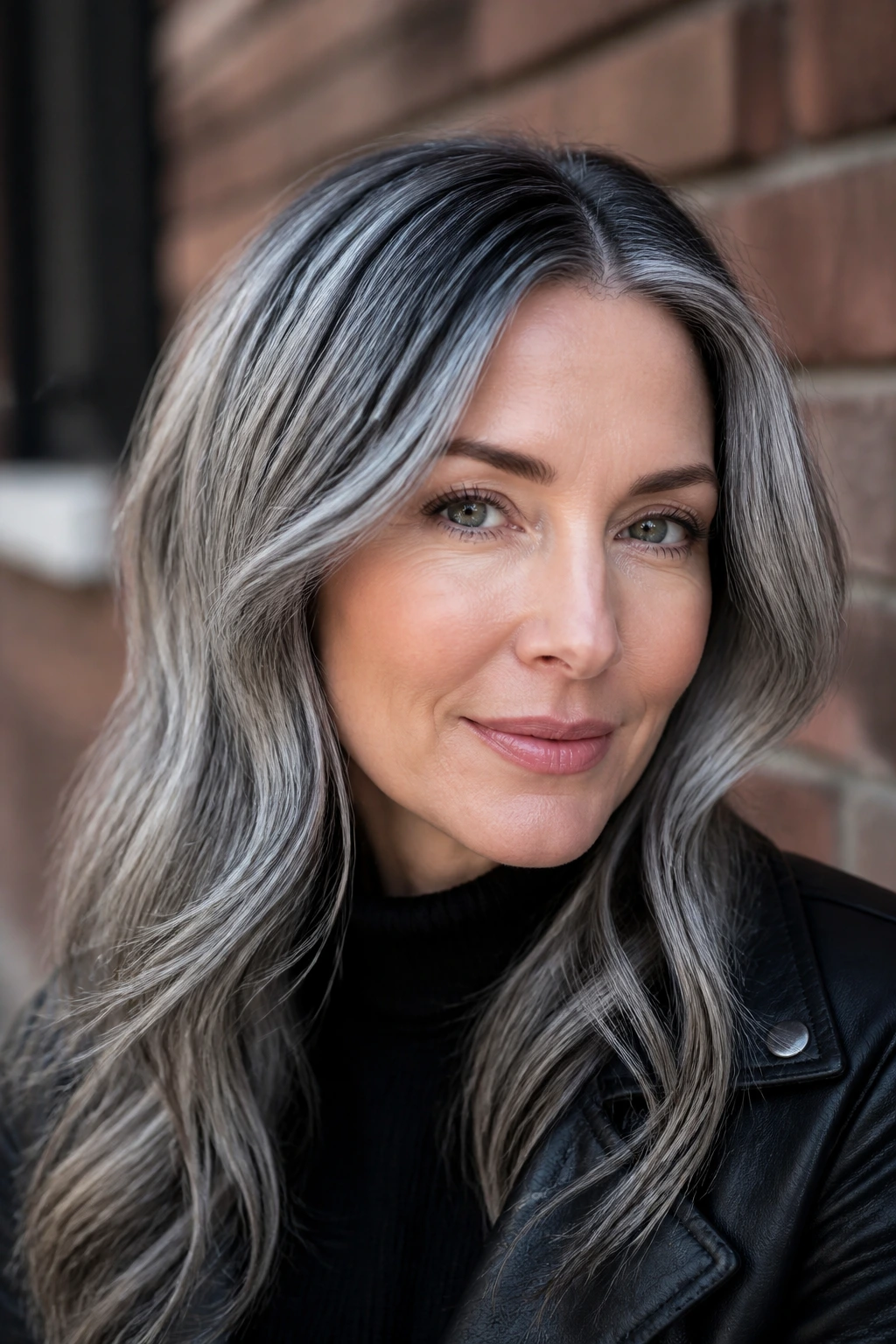
Ultra-Cool Smoke: Push the whole palette toward ash, graphite, and blue-black if your skin runs pink or cool. This variation gives the face a crisp frame and keeps silver from looking yellow.
Mushroom Neutral: If your fair skin is neutral or a little peachy, mushroom brown with narrow grey ribbons usually sits well. The neutral base avoids the blue cast that can make some complexions look tired.
Brunette-to-Silver Ribboning: This is the softer balayage route. Keep the dark base at the root and thread silver through the mid-lengths and ends so the transition feels gradual instead of obvious.
Short and Sharp: If maintenance is the problem, move the whole idea into a pixie, bixie, or cropped bob. Shorter cuts show the grey with less fuss and need less color work to look deliberate.
Long and Lived-In: For people who want to keep length, lean on root shadow, temple streaks, and subtle ombré. The key is not making the dark all one tone from root to ends.
Warm-Rose Bridge: If cool shades make your skin look too pale, use chestnut, mahogany, or smoky mocha as the base. Keep the tone muted so it does not turn coppery beside the grey.
Frequently Asked Questions
Can fair skin wear jet black with grey hair?
Yes, but it is the hardest version to pull off. If your skin is very pale or pink, a softer black — blue-black, espresso-black, or graphite-black — usually looks less severe and gives the silver more room to breathe.
What’s the easiest low-maintenance option in this list?
A soft salt-and-pepper pixie or a shadow-rooted bob tends to be the easiest. Both let the grey grow in without a glaring line, and shorter hair is faster to wash, dry, and trim.
Do I need bleach to blend grey into dark hair?
Not always. If you want subtle blending, glosses, lowlights, root shadows, and demi-permanent color can do a lot. Bleach becomes useful when you want visible silver ribbons, pearly face-framing pieces, or a stronger ombré effect.
How often should I touch up the roots?
That depends on the cut and how much contrast you want. Many people can stretch a shadow root or gloss for 4 to 8 weeks, while sharper styles like blunt bobs or clean pixies may need touch-ups sooner to keep the line neat.
Why does my grey hair feel coarse?
Grey strands often have a different texture because they produce less natural oil and can be a bit more wiry. Moisture helps, but shape matters too — layered cuts, trims, and the right styling cream make the hair behave better than trying to smooth it into submission.
How do I stop grey from turning yellow?
Use purple shampoo sparingly, not every wash, and keep heat under control. A yellow cast usually comes from product buildup, hard water, too much sun, or overdone toning.
Can I grow out dyed dark hair into grey without a hard line?
Yes, and a shadow root or grey-blending lowlight plan is the cleanest way to do it. The idea is to soften the contrast step by step instead of waiting for a blunt regrowth stripe to show up all at once.
Should my brows match my grey-blending hair exactly?
No. Exact matching tends to look stamped on. Softer brows, usually one step lighter than very dark hair, keep the face from feeling boxed in.
The Grey Grow-Out That Feels Intentional
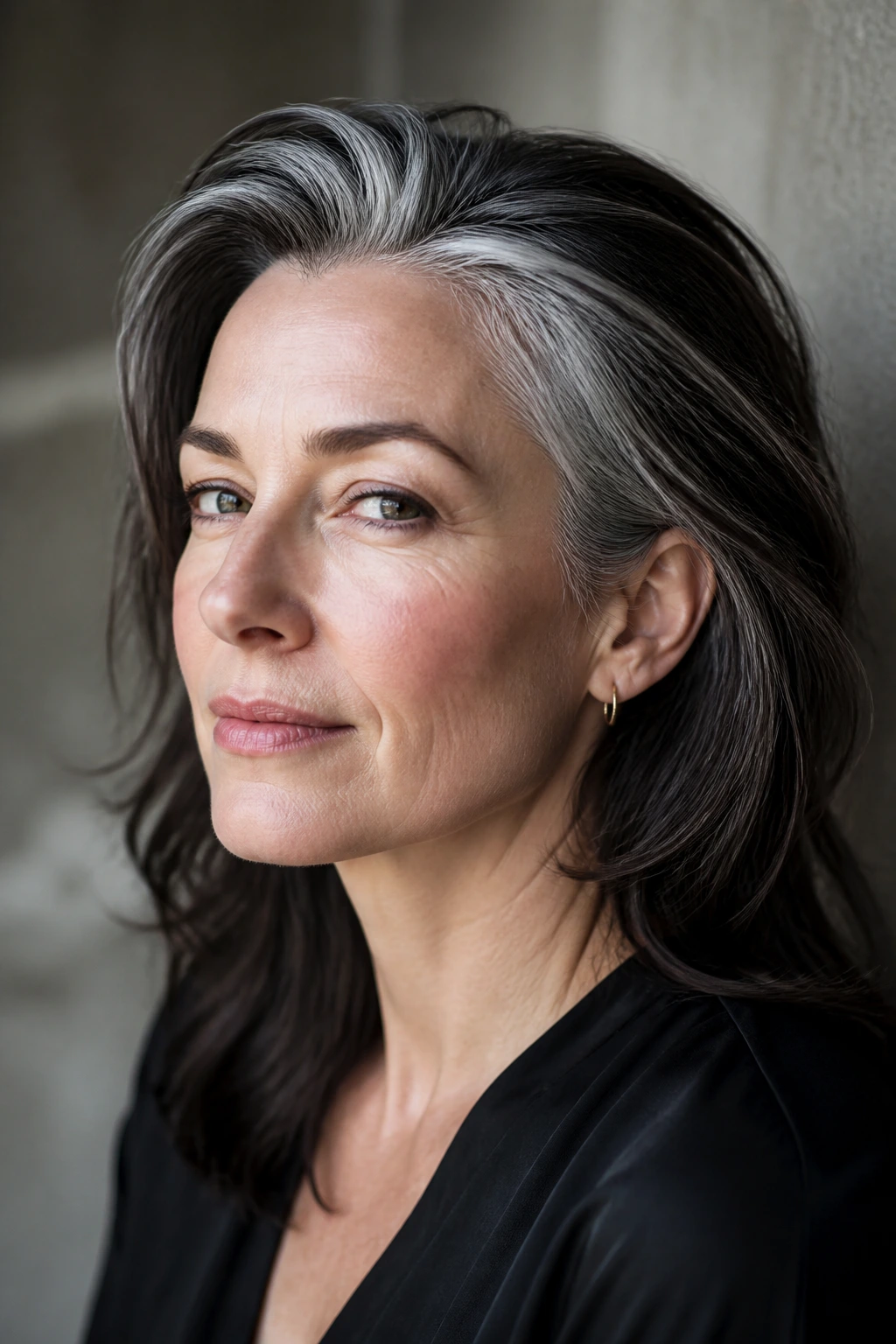
Grey hair on fair skin can look refined, but only if the cut and color are doing their part. A dark base with some cool air in it, a little light near the face, and a shape that moves — that’s the formula that keeps the whole thing from feeling stiff. The silver becomes texture, not a mistake.
I like these looks because they respect the hair you already have. They do not force every strand into the same story. And that, honestly, is what makes the transition look good from the back of the room and up close in bathroom light, which is where the truth always shows up.
If your grey is already arriving, let it take the better seat. Shape around it. Work with the contrast. The best-looking grow-out is the one that looks planned before anyone asks.