



Pale blonde hairstyles for warm skin tones live or die on tone, not brightness. Get the shade wrong and the hair starts fighting the face; get it right and the whole look turns soft, expensive, and easy to wear in daylight.
The trick is that pale does not have to mean icy. On warm undertones, the prettiest blondes usually sit in that beige-butter-champagne lane: light enough to read blonde from across the room, but with enough gold or cream in the formula that the skin still looks alive. Strip all the warmth out and you can get that flat, chalky effect that makes people reach for more blush than they planned.
I’ve always liked blonde hair that looks like it belongs on a person, not in a toner chart. A pale blonde bob with a root shadow, a layered cut with ribbon highlights, a pixie that keeps a little golden depth at the base — those are the looks that feel polished without turning stiff. And when warm skin is part of the equation, the right cut matters just as much as the color, because texture changes how that pale blonde catches the light.
Why These Looks Work on Warm Skin
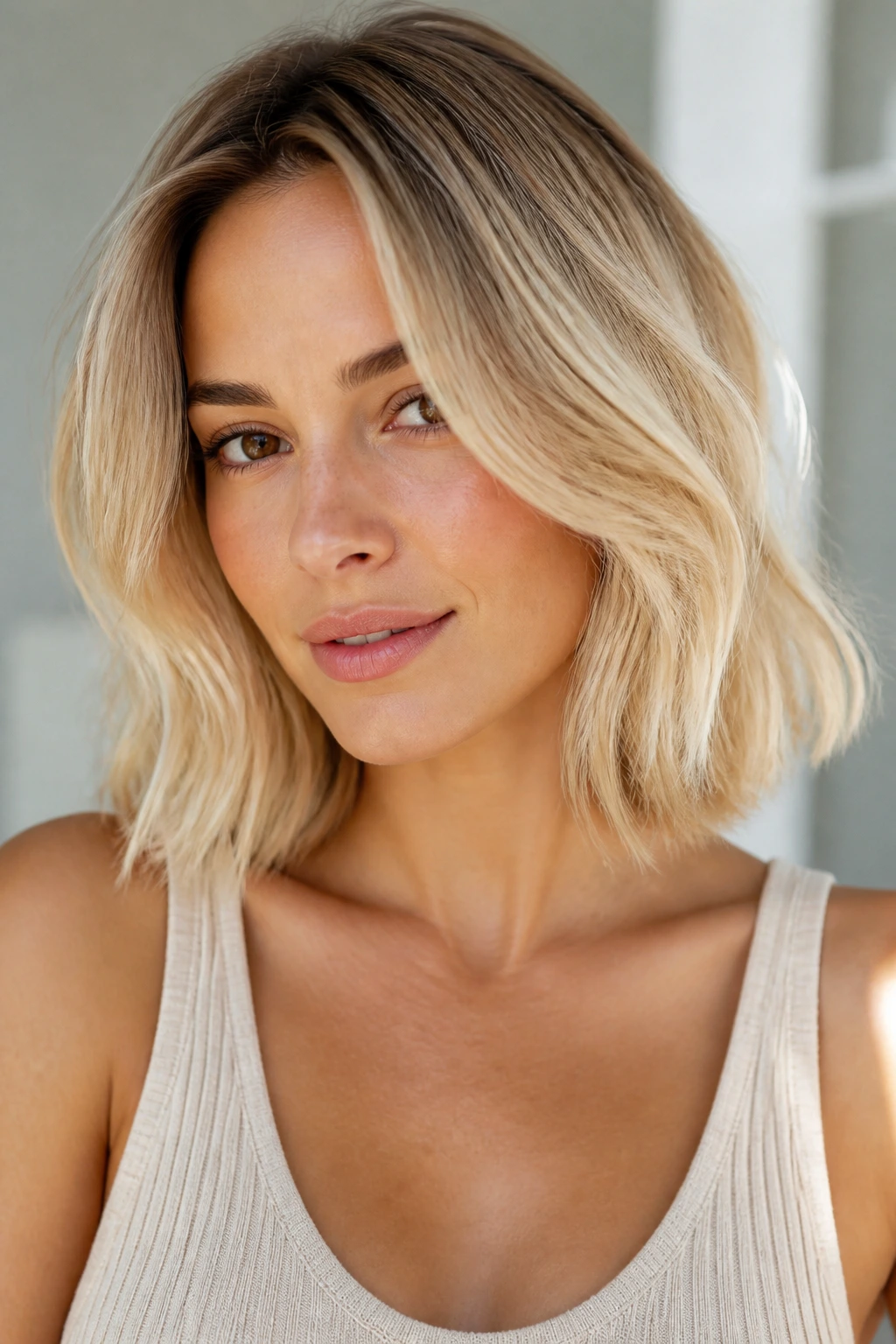
- Beige beats blue-white: Pale blonde shades with beige, honey, or buttery notes stop warm skin from looking sallow or over-scrubbed.
- Depth near the root matters: A soft shadow root gives pale blonde room to breathe, and it keeps the whole style from looking like a helmet.
- Texture keeps the color believable: Waves, bends, layers, and face-framing pieces break up a light blonde so it doesn’t read flat.
- Warm skin loves contrast, not shock: The prettiest versions leave a little dimension at the crown or through the mids so the blonde feels tailored, not harsh.
- Every length can wear it: Pixies, bobs, lobs, and long layers all work here; the cut just has to support the tone instead of fighting it.
1. Buttercream Collarbone Lob
A collarbone lob in buttercream blonde is one of those cuts that looks better after a few hours of wear, which is my favorite kind of blonde. The ends skim the shoulders, the color sits in that pale, creamy range, and the whole thing has enough movement to keep warm skin looking fresh instead of washed out.
The reason it works is simple: the length gives you room for softness, and the color can stay pale without going chalky because the lob doesn’t rely on one flat sheet of hair. Ask for a level 9 blonde with a beige-gold glaze and a very soft shadow at the root. That tiny bit of depth near the scalp makes the pale pieces around the face look brighter.
Styling note
Blow-dry with a round brush, then bend the ends once with a 1.25-inch curling iron. You want the lob to curve, not curl. That slight shape keeps the buttercream tone from looking stark.
2. Champagne Bob with Soft Ends
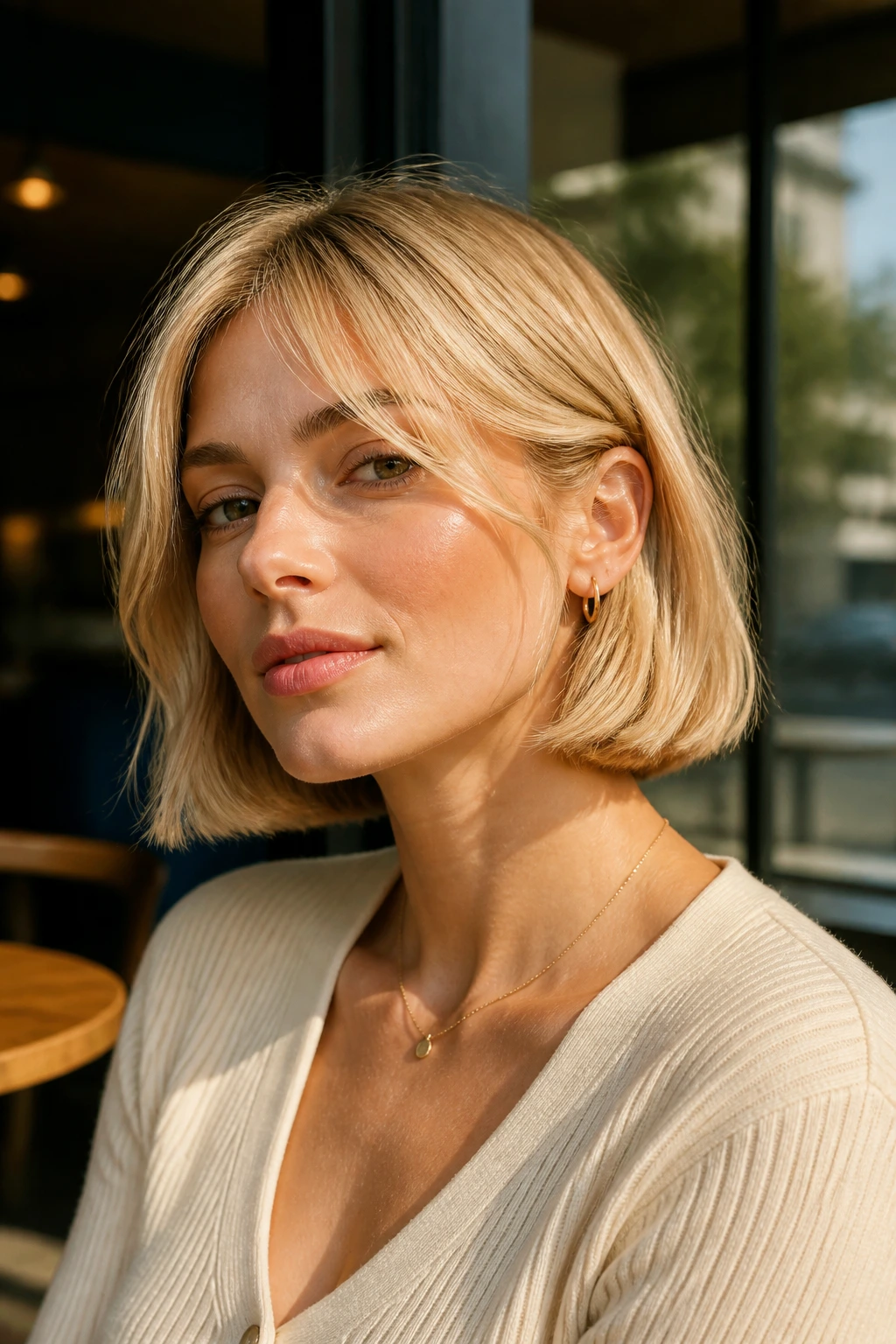
A chin-length champagne bob is sharp in outline but soft where it counts. The pale blonde tone has enough cream in it to flatter warm undertones, and the slightly tucked-in ends give the face a cleaner frame.
This cut works especially well if your hair is fine or medium, because the shorter length keeps the blonde looking full. Ask for a blunt bob with point-cut ends so the edge doesn’t feel too severe. A little internal texture is enough. You do not want the ends cut like a ruler.
The color should sit between beige and pale gold, not silver. When that bob swings, the warm reflection around the jawline keeps the whole look easy instead of brittle.
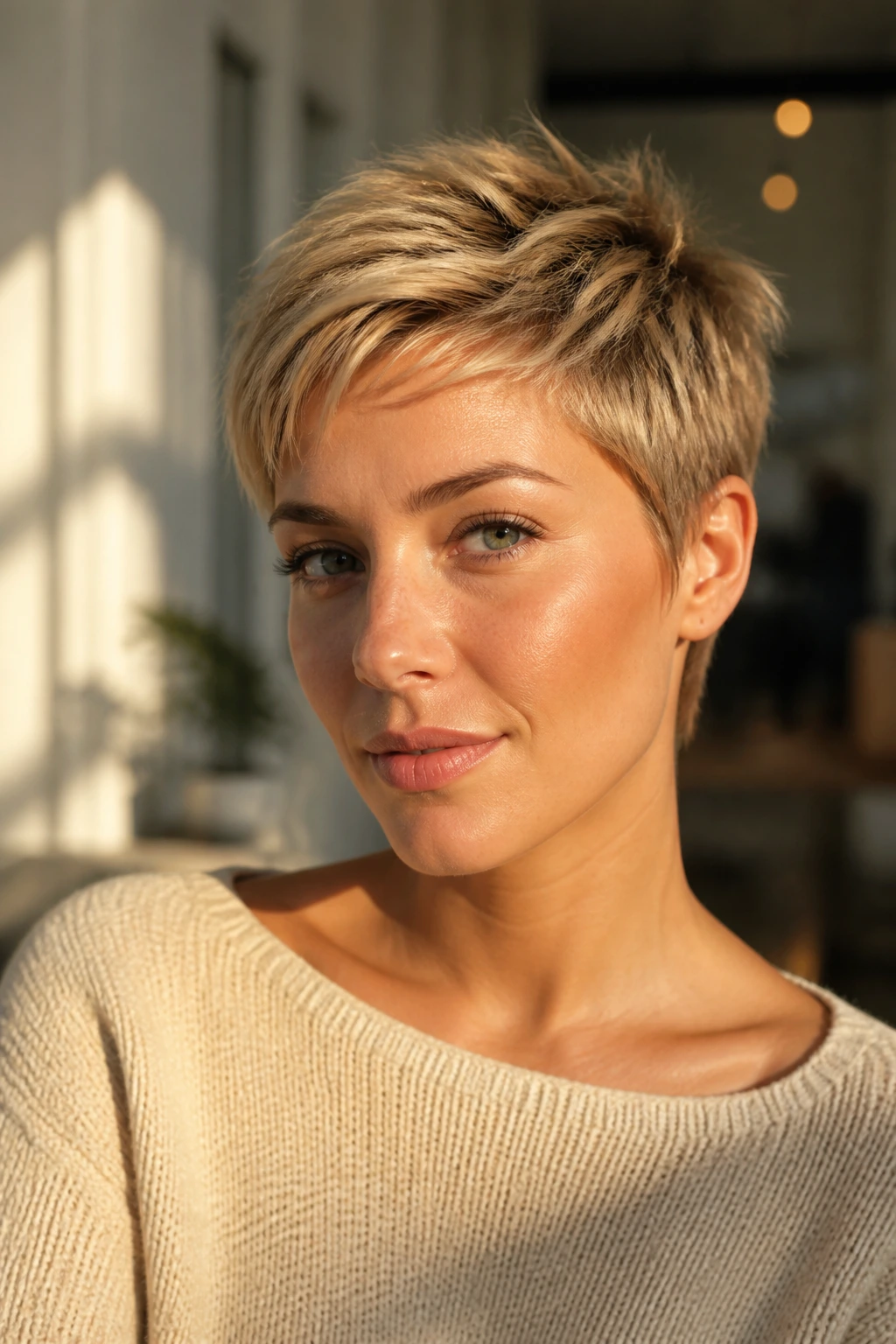
3. Honey-Kissed Pixie Crop
A pale blonde pixie with honey at the root is tiny on effort and big on payoff. The cut shows off cheekbones fast, and warm skin tends to like the contrast of short hair better than people expect — especially when the blonde stays creamy rather than frosty.
What makes it flattering
The top should be left long enough to fluff forward or sweep to one side. That little bit of height keeps the pale blonde from flattening into the head. If the hair is too short everywhere, the color can look like a cap; if the top has lift, the shade reads airy.
Use a matte paste at the crown and a light serum only on the ends. Too much shine makes a pixie look wet, and wet is not the goal here. A soft, touched piecey finish is.
4. Creamy Face-Framing Layers
If you want blonde around your face without committing to a full all-over pale lift, face-framing layers are the smart move. They let the brightest pieces sit where warm skin usually benefits most: cheekbones, temples, and just below the jaw.
The rest of the hair can stay a shade deeper, which is the part I love. It gives the blonde shape. Ask for money-piece highlights that start a touch off the root and blend into a pale beige blonde through the mids. If your hair is darker underneath, even better — that contrast makes the front pieces look brighter than they really are.
Wear these layers with a blowout or loose bends. Straight hair can work too, but the movement around the face is what makes this style feel intentional instead of like unfinished highlighting.
5. Beige Balayage Shag
A shag cut gives pale blonde some grit, and I mean that as a compliment. Beige balayage painted through a shag catches in the shorter layers, the face-framing fringe, and the broken-up texture at the crown. On warm skin, that scattered light looks flattering because it never gets too flat or too cool.
The key is placement. Keep the brightest blonde on the top layers and around the front, then let the underlayers sit a little deeper. That contrast gives the cut a lived-in edge without making the color muddy. A beige toner with a soft golden veil is usually the sweet spot.
How to wear it
Air-dry with a curl cream, then mist with texture spray and scrunch the ends. A shag should look a little undone. If every strand is polished, you lose the personality that makes the cut work.
6. Buttery Curtain Bangs and Long Layers
Curtain bangs are a smart companion to pale blonde because they break up the forehead and pull light toward the eyes. On warm skin, buttery tones keep the bangs from looking stark against the face, which is important — bangs sit where people look first.
The long layers should start below the chin so the ends don’t feel stringy. Ask for a buttery blonde glaze at the front and a softer beige through the back lengths. That keeps the brighter pieces concentrated where they matter most. If all the blonde is equally light everywhere, the shape disappears a little.
This one likes a bendy blowout. Wrap the bangs away from the face with a round brush, then let them settle into that open curtain shape. It’s polished, but not stiff. That matters more than people think.
7. Vanilla Blunt Bob
A blunt bob in vanilla blonde is clean, modern, and a little bossy in the best way. The straight line of the cut gives the pale tone a strong frame, which prevents warm skin from getting visually swallowed by too much lightness.
Here’s the trick: keep the vanilla blonde pale, but not flat. A soft root shadow and a creamy gloss through the mids stop the bob from looking like one bright block. If your hair is naturally coarse, this cut looks especially good because the density supports the line.
Wear it sleek with a side part for a sharper feel, or tuck one side behind the ear and let the other side sit a touch fuller. The blunt edge does the heavy lifting. The rest is just polish.
8. Rooted Champagne Waves
Champagne blonde with a rooted base is one of the easiest pale looks to wear on warm skin. The root keeps the color grounded, and the waves break the blonde into little ribbons instead of one harsh sheet.
I like this on shoulder-length hair because the movement has room to breathe. Ask for foilyage with a soft root melt rather than a high-contrast ombré. The goal is a gradual fade from deeper root to pale champagne ends. Too much contrast can feel chunky; too little and the dimension disappears.
A 1-inch iron gives the nicest bend here. Leave the ends straight if you want a more lived-in finish. Leave them curled if you want a dressier look. Either way, the rooted depth is what keeps it flattering.
9. Golden French Bob
The French bob has attitude, and a pale golden version makes that attitude warmer and easier to wear. Hitting around the cheek or jaw, it brings the blonde close to the face, where warm undertones get the most benefit from the color.
The color should lean golden-beige rather than pearl. That small shift matters. With warm skin, a golden French bob looks sunlit; a too-cool version can make the complexion look flat in comparison.
Add a slight bend with a blow-dry brush or a round brush at the ends. Not waves. Just a little curve inward or outward. The bob should feel chic, not fussy.
10. Pale Wheat Long Layers
Long layers in pale wheat blonde are for people who want blonde that moves when they do. The shade sits in a soft beige-gold family, and the layers stop the hair from looking heavy under all that lightness.
This is a good choice if you like wearing your hair down often, because the cut can hold shape even after a day of movement. Ask for subtle brightness through the front and mids, with less saturation under the top layers. That keeps the color from looking overprocessed and helps the hair reflect light in sections instead of all at once.
A paddle brush blowout can make this look sleek. Or keep it slightly waved. Both work. What matters is that the layers land with a little separation so the pale blonde feels airy rather than blank.
11. Buttermilk Blowout with a Side Part
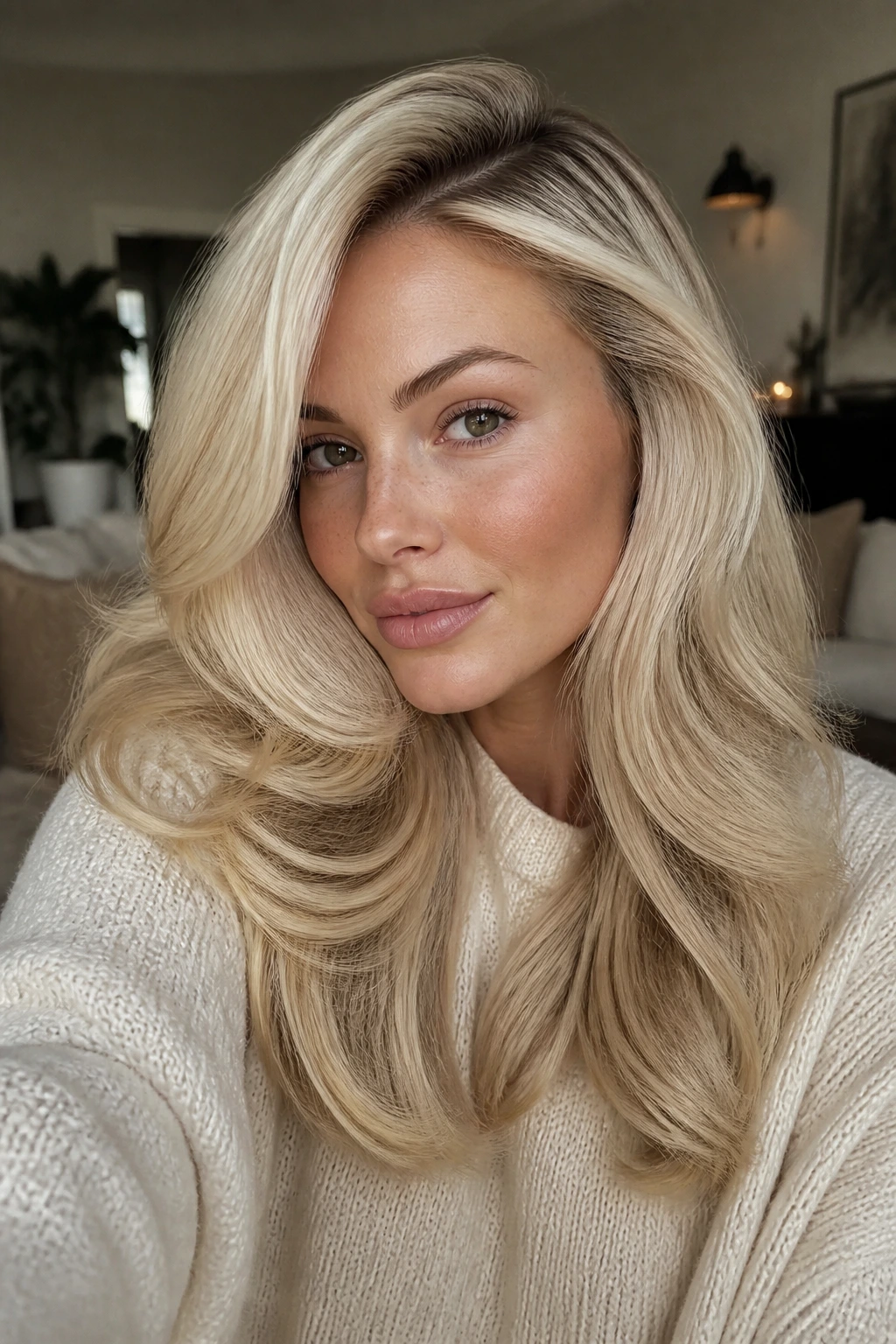
A side part changes everything here. It gives pale blonde a sweep of drama, and the buttermilk tone keeps the whole style soft enough for warm skin. Straight down the middle can look neat, but a side part gives the face more shape and makes the blonde feel richer.
This style works best on medium to long hair with a bit of density. Ask for rounded layers that support a glossy blowout. If the cut is too choppy, the smooth finish collapses. If it’s too heavy, the color can hide in the mass of hair.
Use a smoothing cream before blow-drying, then flip the front sections away from the face. That little lift at the root gives the buttermilk shade a proper stage.
12. Sandy Butterfly Cut
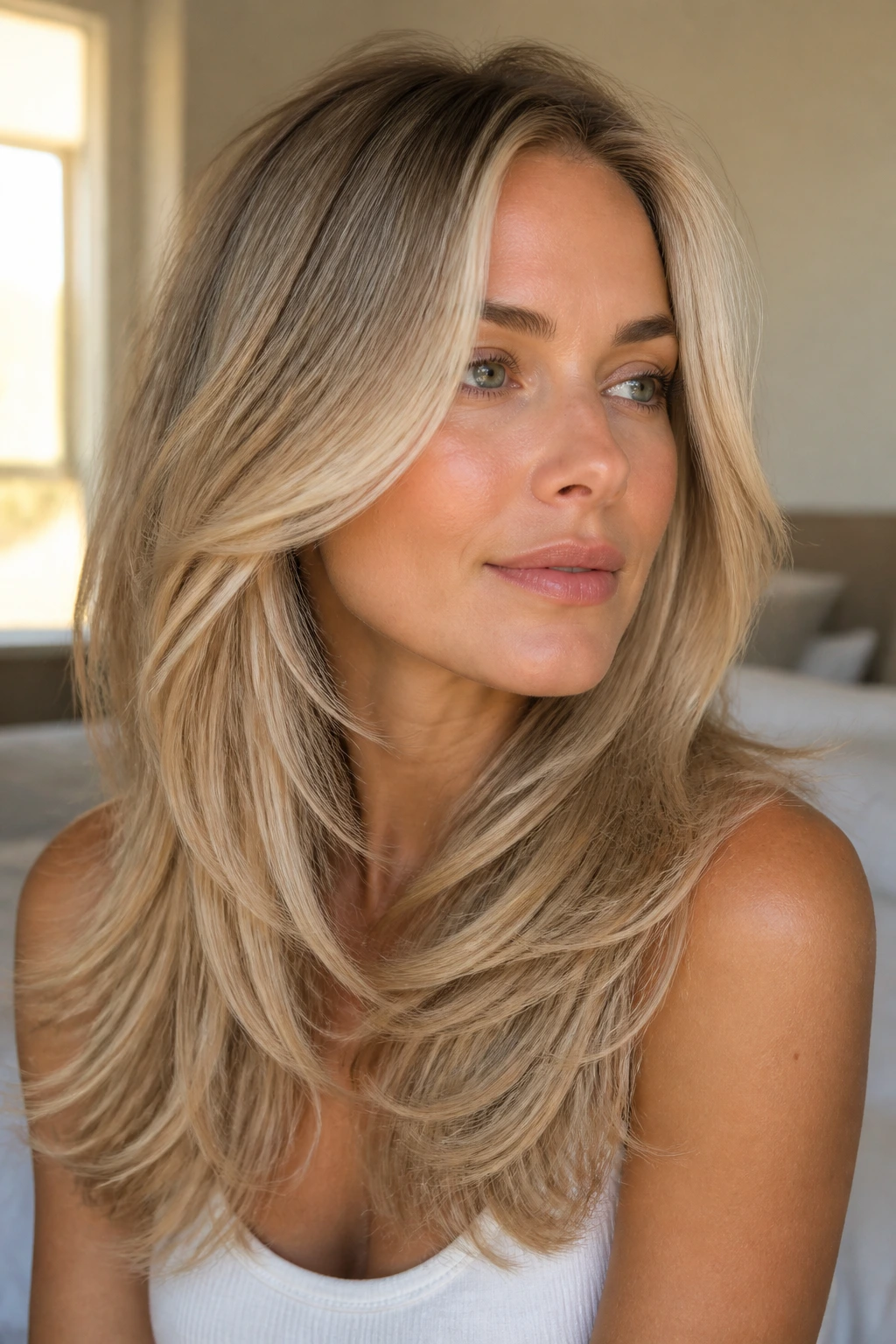
The butterfly cut gives you long hair with shorter face-framing pieces, which is a very good setup for pale blonde on warm skin. The top layers can carry a brighter blonde, while the lengths keep a sandy base that prevents the color from going flat.
What I like most is the movement. When the layers separate, the blonde looks expensive in the simple sense: like the color has air around it. Ask for bright pieces around the cheekbones and a softer beige through the back lengths. The contrast is the whole point.
Best styling move
Blow out the top layers with a large round brush and leave the ends soft. If you curl everything, the cut loses its butterfly shape. A little lift at the crown and a little bend through the face-framing sections is plenty.
13. Lived-In Wolf Cut
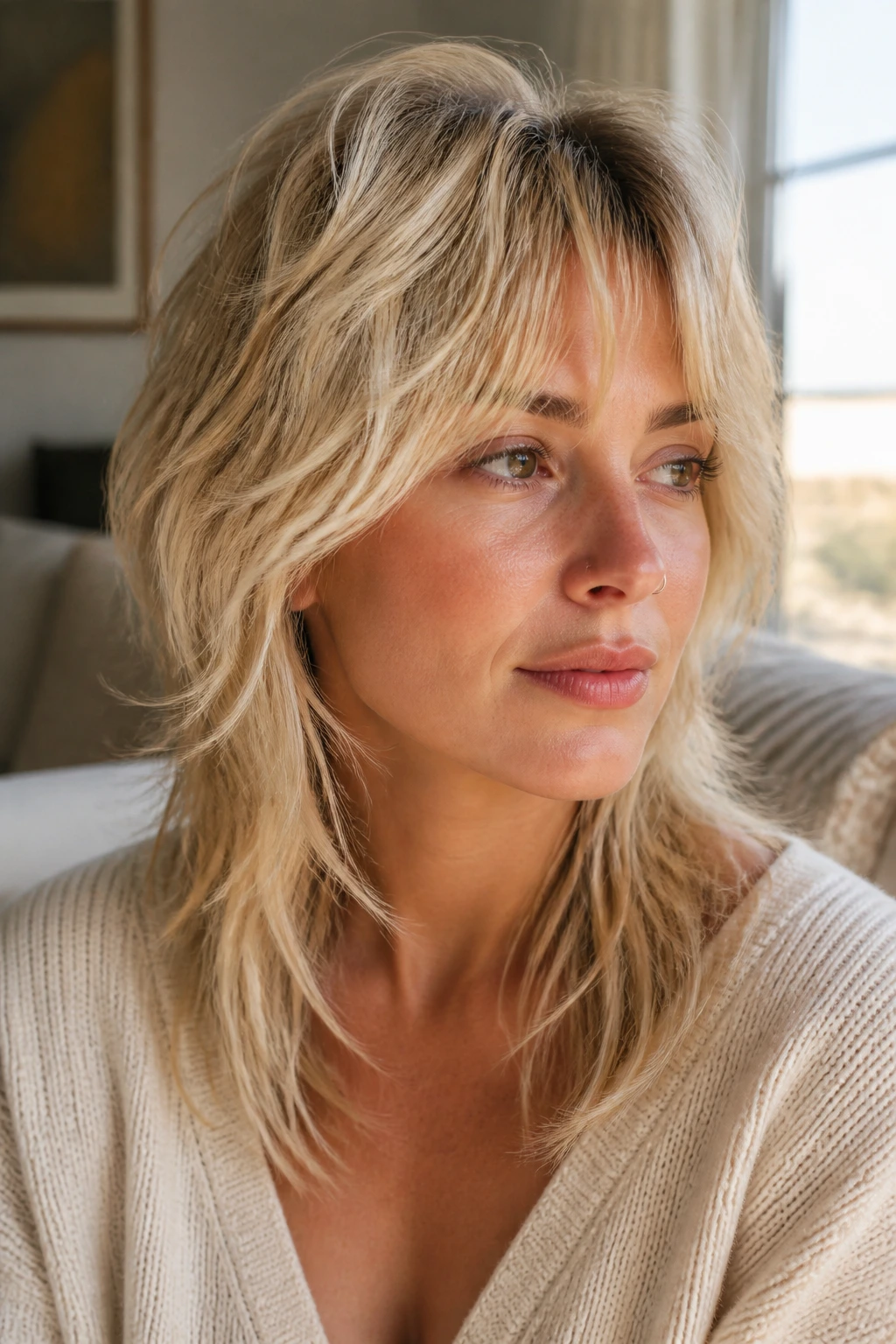
A wolf cut with pale blonde color should never feel too precious. That’s the appeal. The shape has texture, the layers are rougher around the edges, and the blonde can be pale because the cut supplies the grit.
On warm skin, a warm beige toner with lighter ribbons through the top layers keeps the wolf cut from reading edgy in a cold way. The brighter pieces should sit where the shaggy layers would naturally catch light — around the fringe, cheek, and crown.
This is a wash-and-go cut for people who don’t want perfect hair. Scrunch in mousse, diffuse until about 80 percent dry, then let the rest air-dry. If the hair gets too polished, the wolf cut loses its bite.
14. Cream Soda Curls
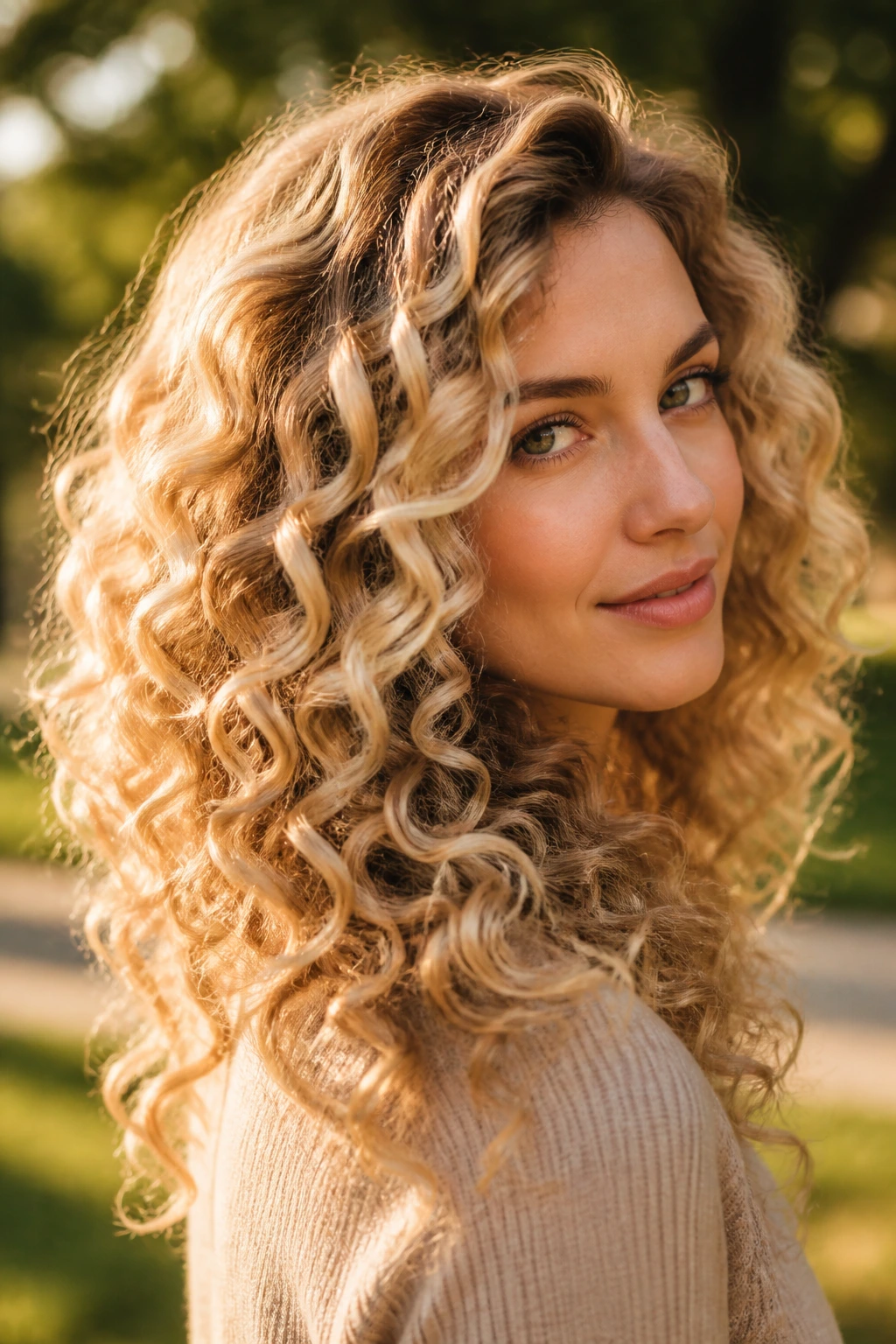
Cream soda blonde is a nice name for a pale blonde that still tastes warm, visually speaking. Put it on soft curls and the result feels bouncy instead of bleached. Warm skin tends to look especially good with curls because the shape creates its own shadow and light pattern.
If your hair is naturally curly or coily, this can be a gorgeous direction. The pale blonde should be painted in ribbons, not packed in from root to tip. Keep some depth at the base and through the underside so the curls keep their shape. A single-tone pale blonde on tight curls can go chalky fast.
Use a curl-defining cream and a diffuser, or finger-coil a few front pieces if the hair needs structure. The color should look creamy when the curls separate — not white.
15. Sleek Midlength Glass Hair
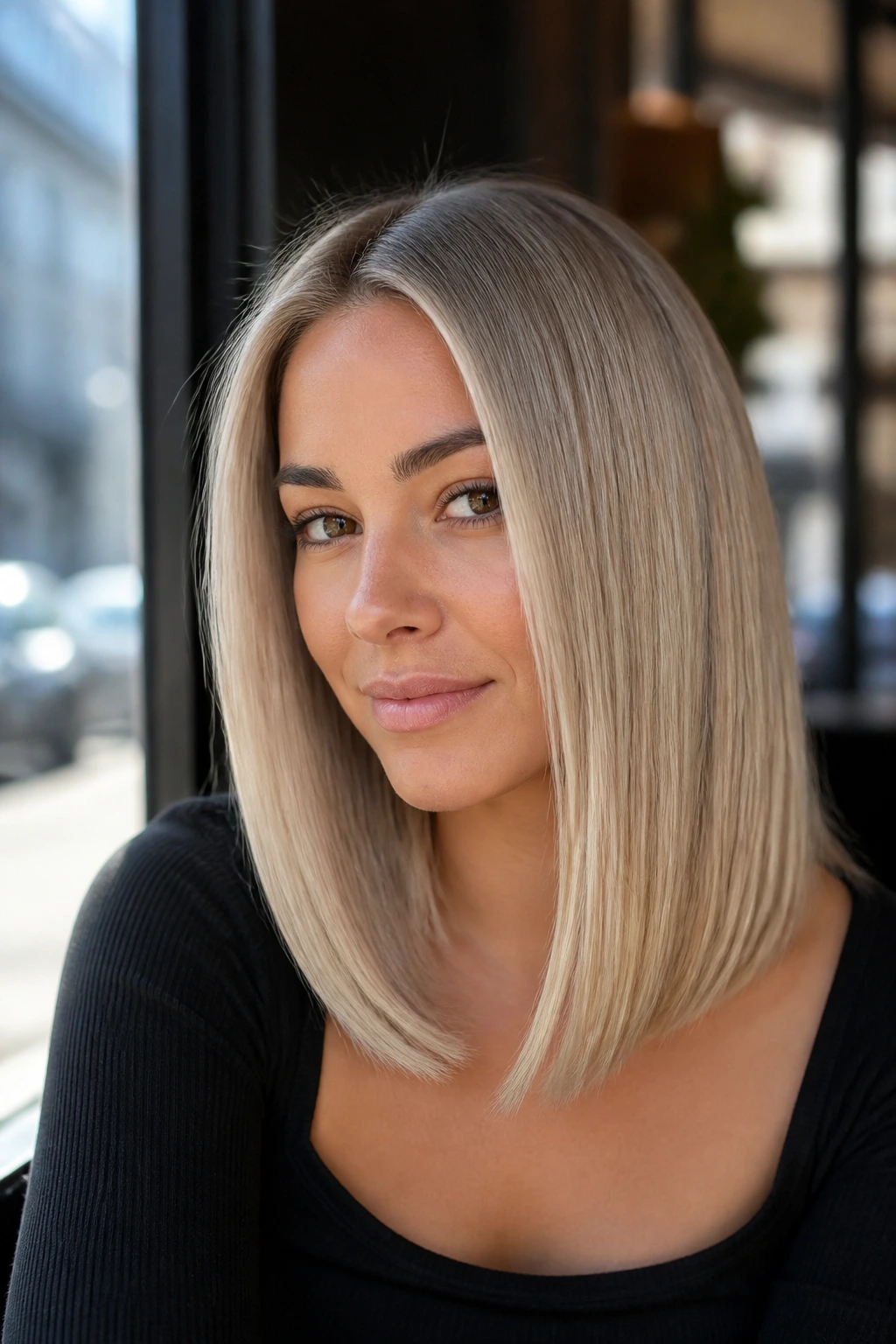
Glass hair and pale blonde can be a risky pair, which is exactly why the tone matters. On warm skin, a midlength cut with beige-champagne gloss looks sleek without looking severe. The shine becomes the statement, not the brightness.
This style works best when the color has a soft root and a clean finish from midshaft to ends. If the blonde is lifted too white, every flyaway shows. If it stays creamy, the straight style feels expensive rather than brittle. That little distinction is the whole game.
A flat iron pass over small sections gets the smoothest result. Finish with a pea-sized serum only on the ends. Too much product will make the shape collapse, and this look needs that crisp line.
16. Braided Crown with Pale Blonde Ribbons
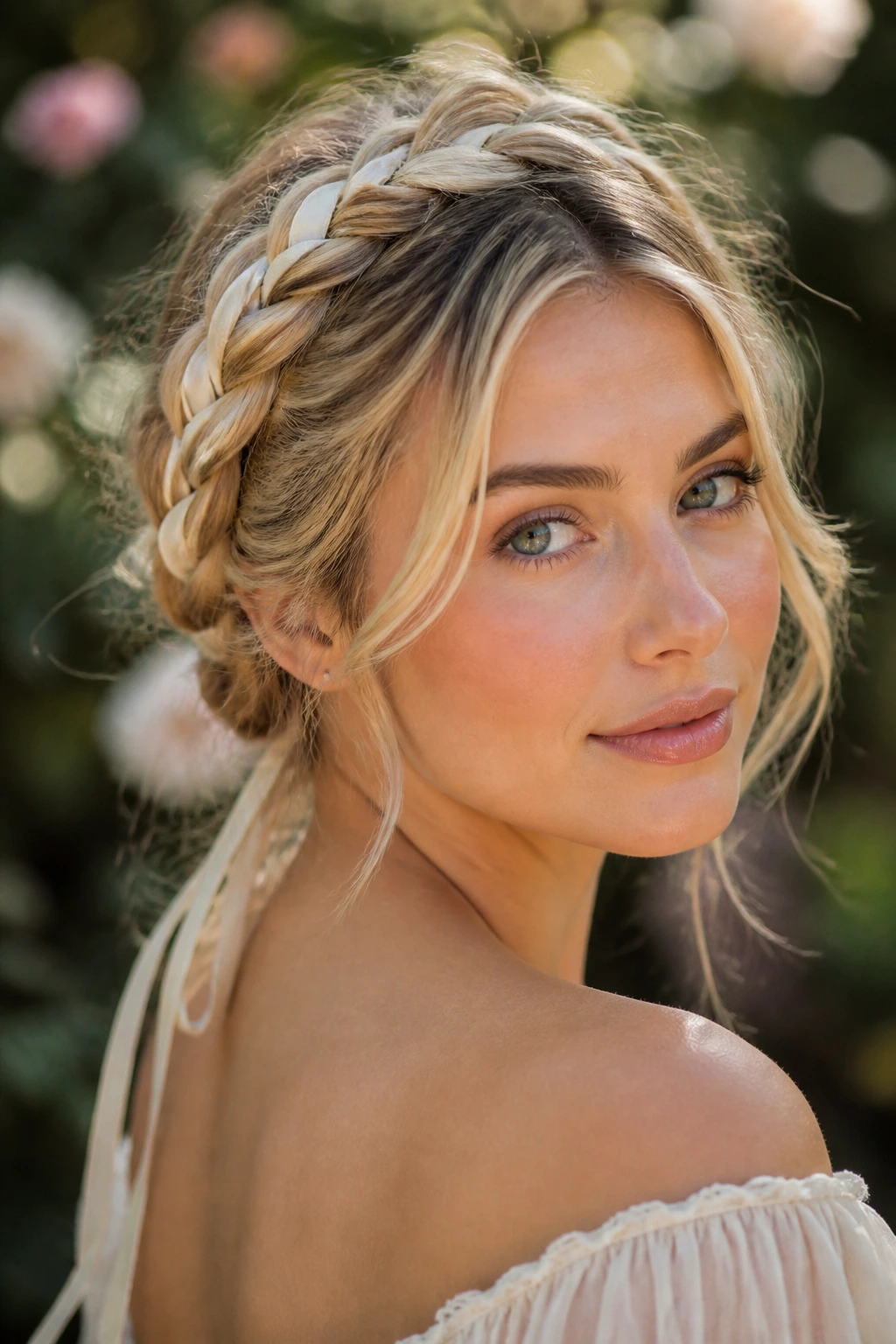
Braids are underrated on pale blonde hair, especially for warm skin tones. A braided crown lets the lighter pieces weave in and out of the braid, which creates a natural highlight effect without needing more color.
This style is best when the blonde has dimension. Pure all-over pale blonde can make the braid disappear into itself; a little root depth and some lighter ribbons fix that instantly. I’d ask for babylights around the hairline and along the surface layers so the braid reads clearly when pinned.
The crown can be loose and romantic or tighter and more polished. Either way, leave a few face-framing strands out. Warm skin looks good when the blonde sits near the cheeks, not just stacked on the head.
17. Milk Tea Ponytail
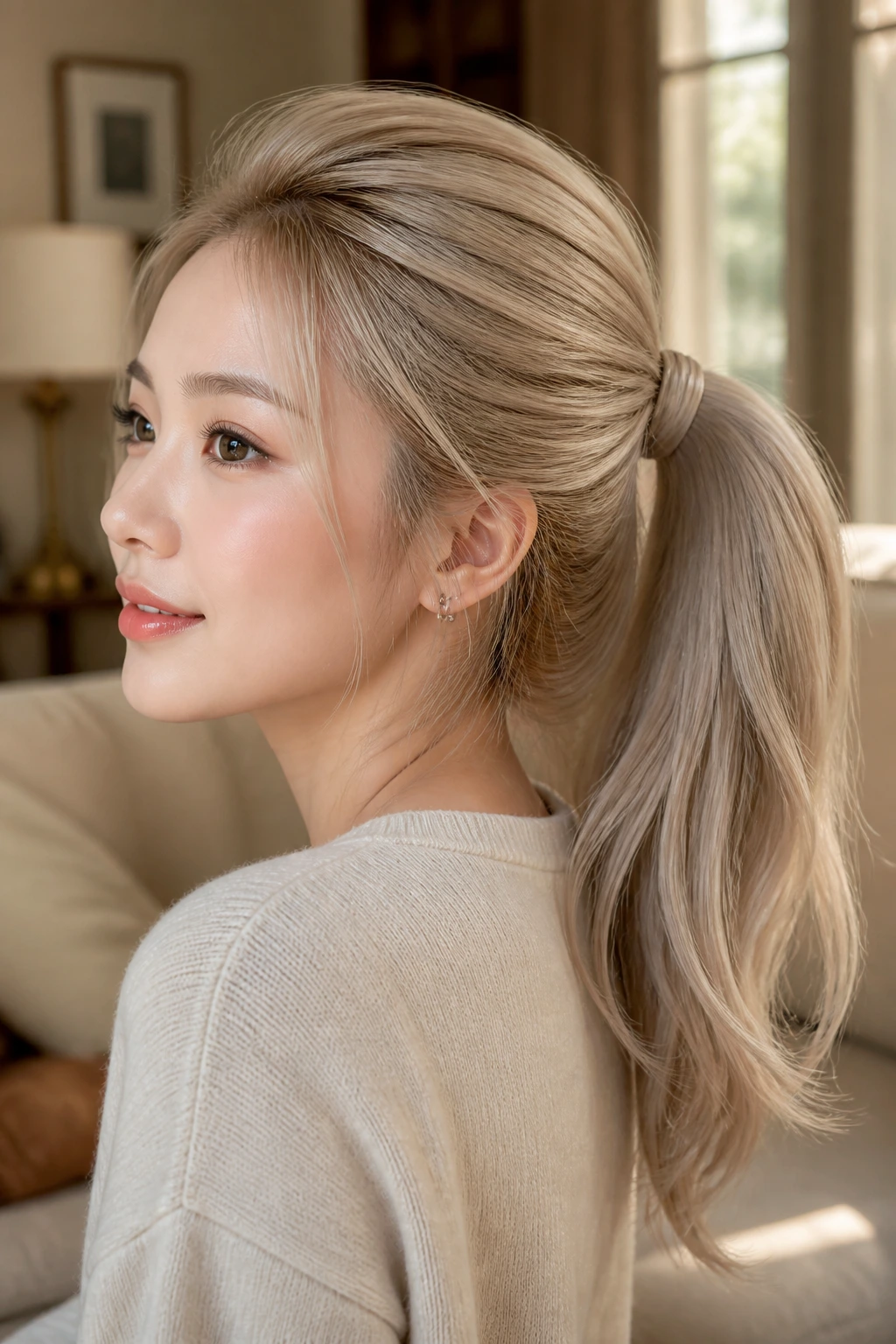
A milk tea ponytail sounds casual, but it can be one of the nicest ways to wear pale blonde. The base stays soft and creamy, the ponytail shows off length, and the hairline gets enough lightness to wake up warm skin.
This works especially well with a low ponytail or a high ponytail wrapped with a small section of hair around the elastic. If you have highlights, the gathered hair will show the color in stripes and bands. That’s not a flaw. It gives the ponytail dimension.
Spray a bit of texture spray at the crown for lift, then smooth the rest with a boar-bristle brush. If the hair is too slick, the pale blonde can look flat. The milk-tea effect comes from softness, not shine overload.
18. Ribbon-Highlighted Long Cut
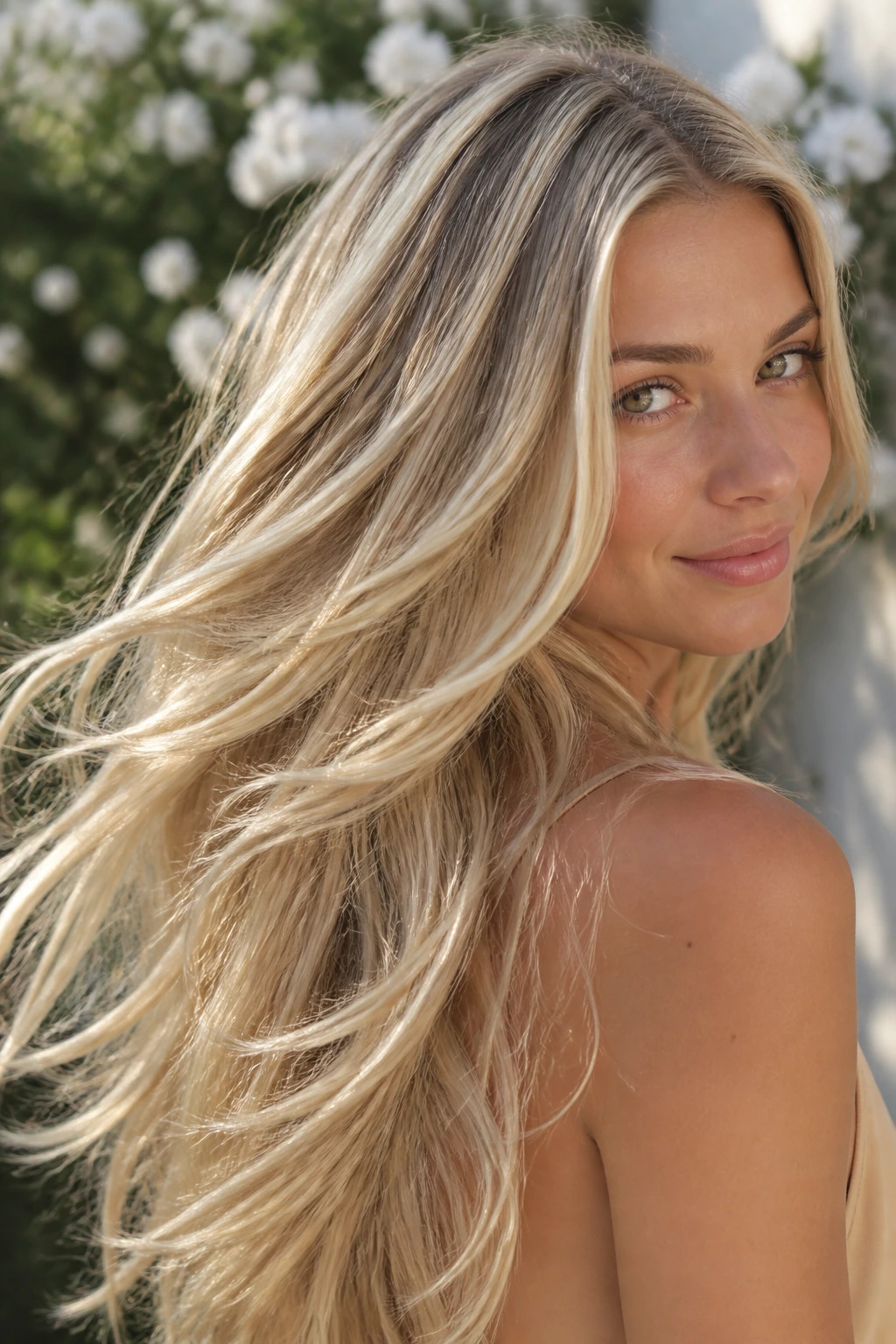
Ribbon highlights are exactly what they sound like: thin, painted pieces that move through the hair instead of sitting on top of it. On a long cut, pale blonde ribbons keep warm skin looking bright because the color shifts with every turn of the head.
I like this when the client wants blonde that looks expensive but not overly processed. Ask for fine highlights with a beige toner and a deeper base through the underside. That lets the ribbons pop without turning the whole head pale. The long length helps, too. It gives the highlights somewhere to disappear and reappear.
Wear this straight, waved, or in a loose braid. The point is movement. Still hair makes ribbon highlights look fine; moving hair makes them look rich.
19. Biscuit Blonde Textured Crop
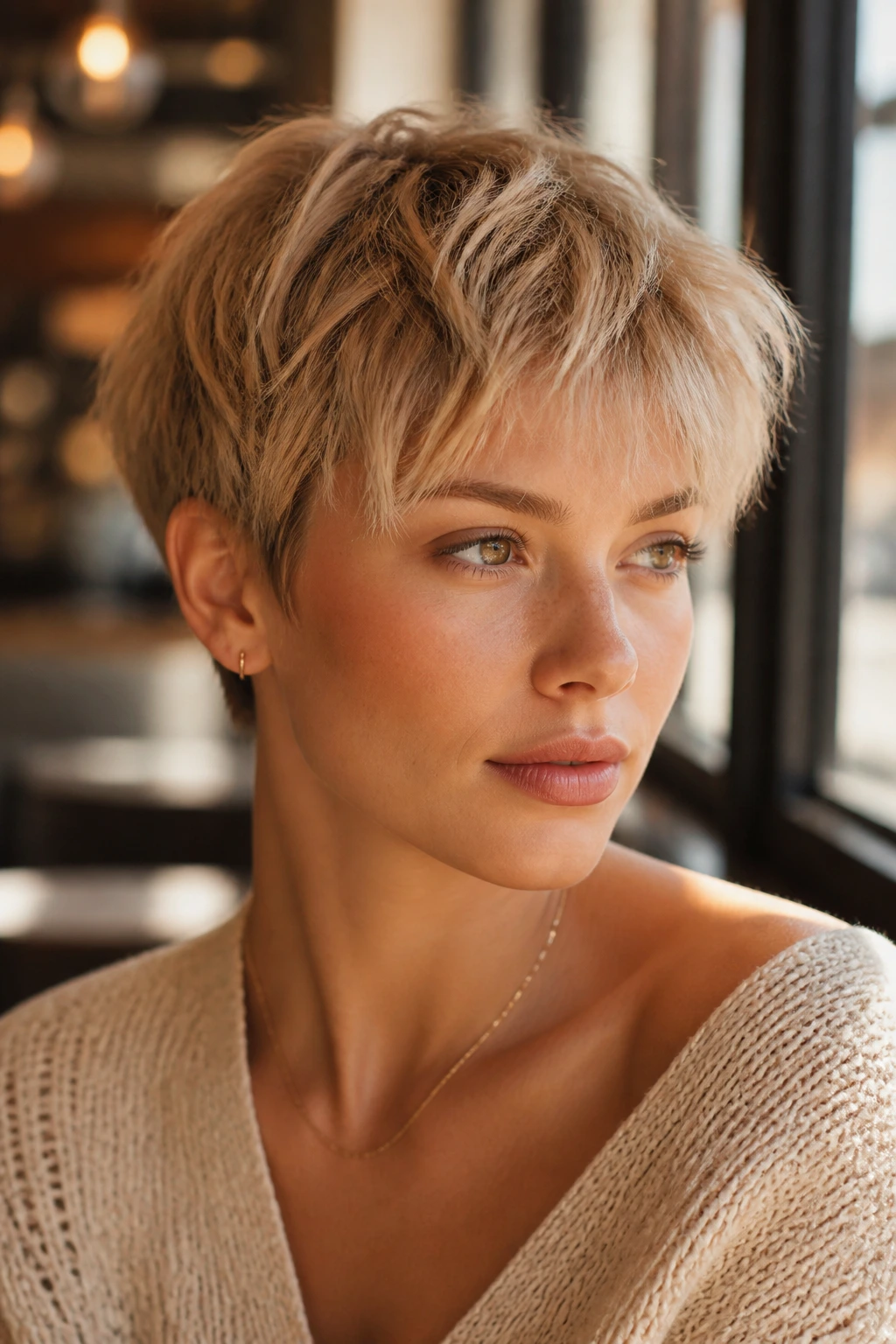
A biscuit blonde crop sits between beige and pale gold, which is exactly where warm undertones tend to look happiest. The crop itself should be textured and a little broken around the edges so the blonde doesn’t feel too uniform.
This is a good one for short hair with strong features. A textured crop lets the pale color frame the eyes and cheekbones without stealing all the attention. Ask for soft piecey layers at the top and tapered sides. If the haircut is too neat, the blonde can look helmet-like. A little mess is a good thing here.
Use a wax or paste to pinch out a few ends. Not many. Just enough to keep the shape airy and lived-in.
20. Hollywood Waves with Beige Gloss
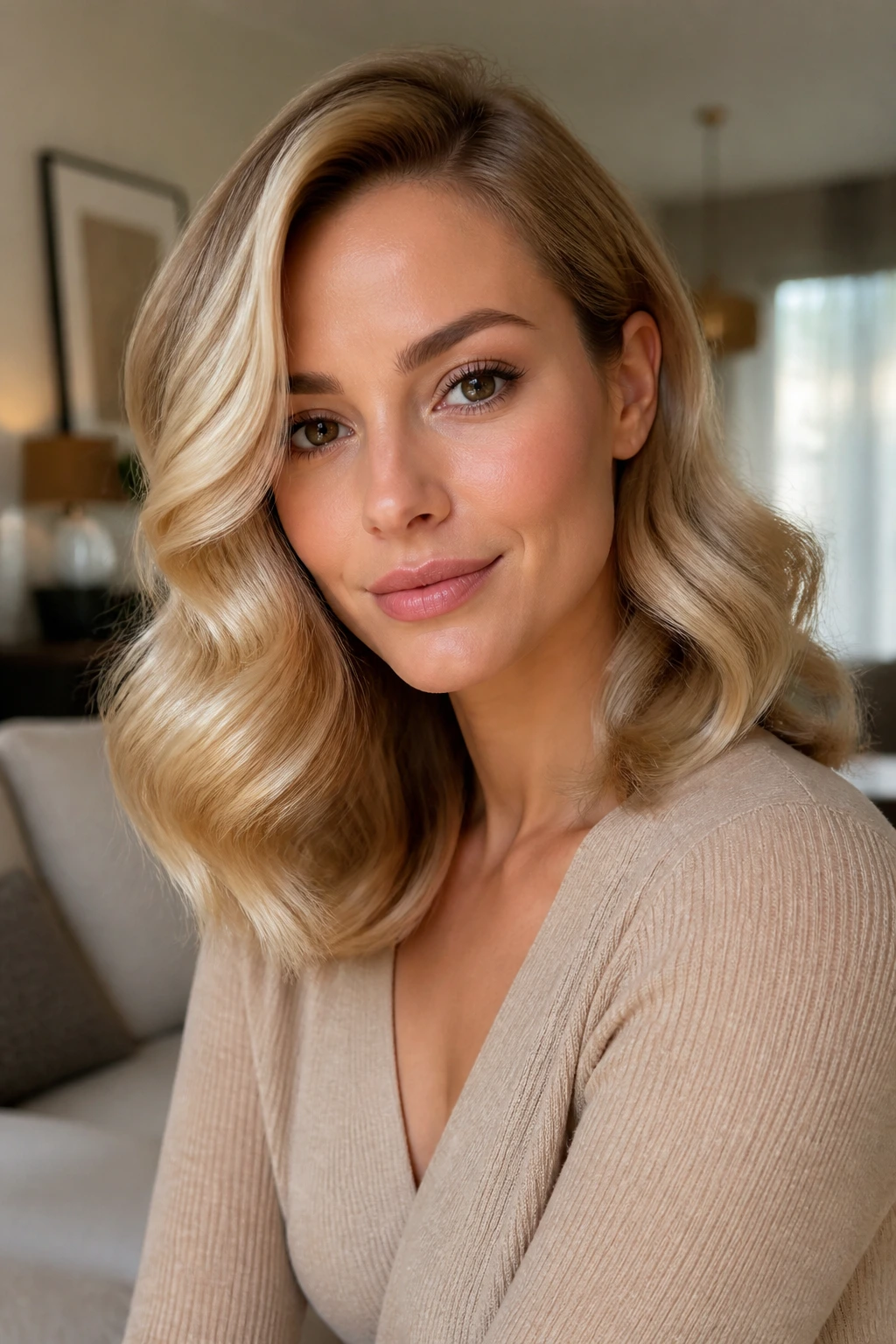
Hollywood waves are the polished cousin in this group. On warm skin, beige gloss keeps the waves soft enough that they don’t tip into costume territory. The shine and the shape do the talking.
This style likes shoulder-length or longer hair, ideally with a layered base so the waves stack cleanly. Ask for a neutral-beige blonde with a faint golden glaze at the ends. That little warmth keeps the style from looking too icy once it’s curled and brushed out.
Set the waves with a 1.25-inch iron, clip them while cooling, then brush them out into one continuous bend. If the waves are too tight, the blonde looks busy. If they’re too loose, the shape disappears. The sweet spot is right in the middle.
21. Shaggy Pixie with Soft Root Shadow
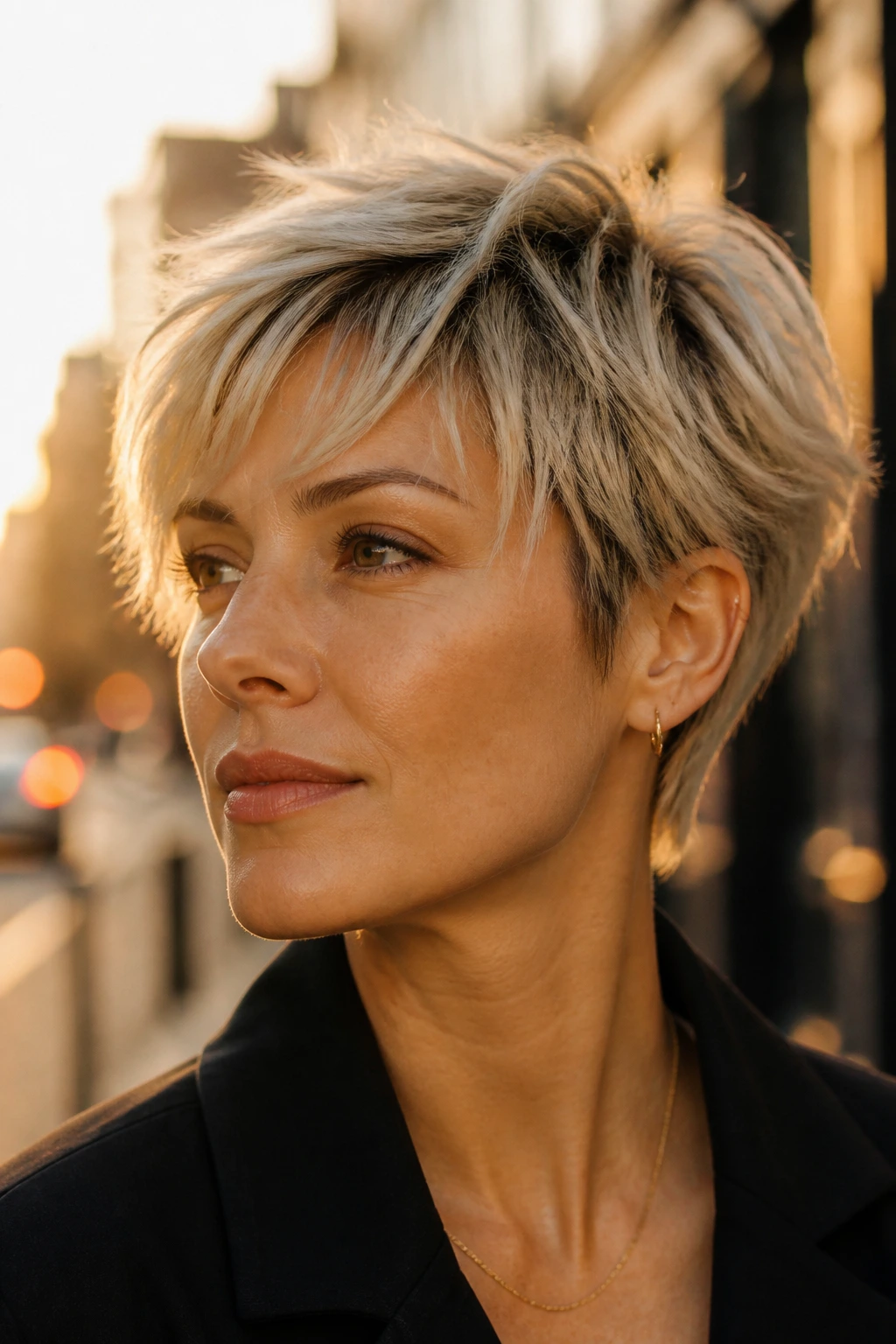
Short hair and pale blonde can be a very good match, especially when the cut is shaggy. The soft root shadow keeps the pixie from turning stark, and the pale ends around the fringe and top add brightness where warm skin wants it most.
This cut is all about movement in small spaces. A little height at the crown, a few longer pieces over the forehead, and a feathered side burn area make the blonde feel modern. Ask for a root one shade deeper than the midlengths so the transition stays soft. If the root is too dark, the look gets chunky. Too light, and the cut loses shape.
A tiny dab of styling cream is enough. The pieces should fall where they want, not stand at attention.
22. Candlelight Updo with Face-Framing Pieces
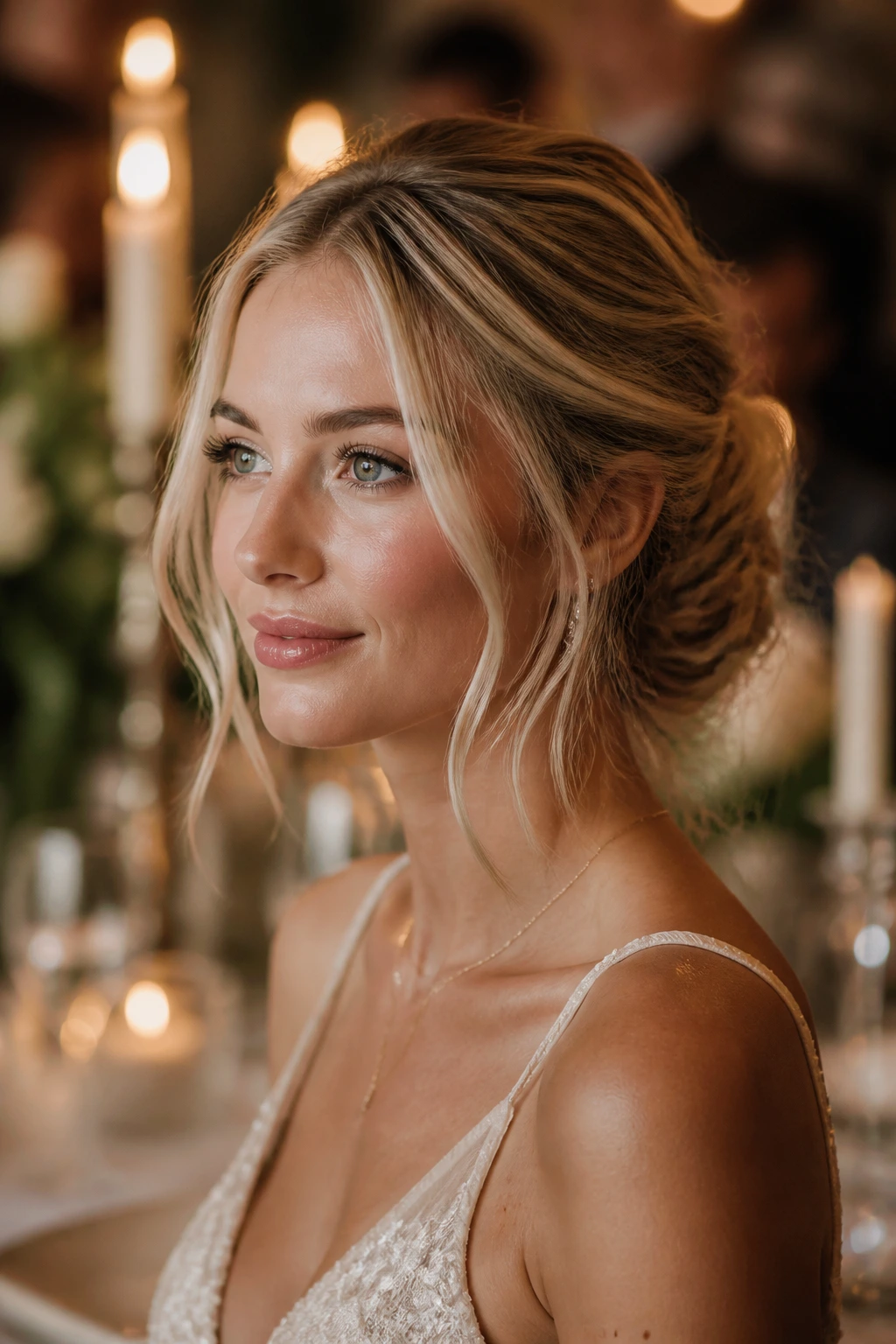
A candlelight updo is the kind of style that proves pale blonde can look warm and soft even when the hair is pinned up. The face-framing pieces matter here. They catch the light and keep the complexion from disappearing into the updo.
This style works well for weddings, dinners, or any time the hair needs to stay put but still look relaxed. Keep the bun or twist low and slightly undone, then release a couple of blonde pieces around the temples and jaw. The pale color gives the style a glow that darker hair doesn’t quite mimic.
I’d keep the crown softly lifted, not shellacked. A rigid updo can make blonde look too formal. A little bend and a few flyaways make it feel human.
23. Buttered Bixie
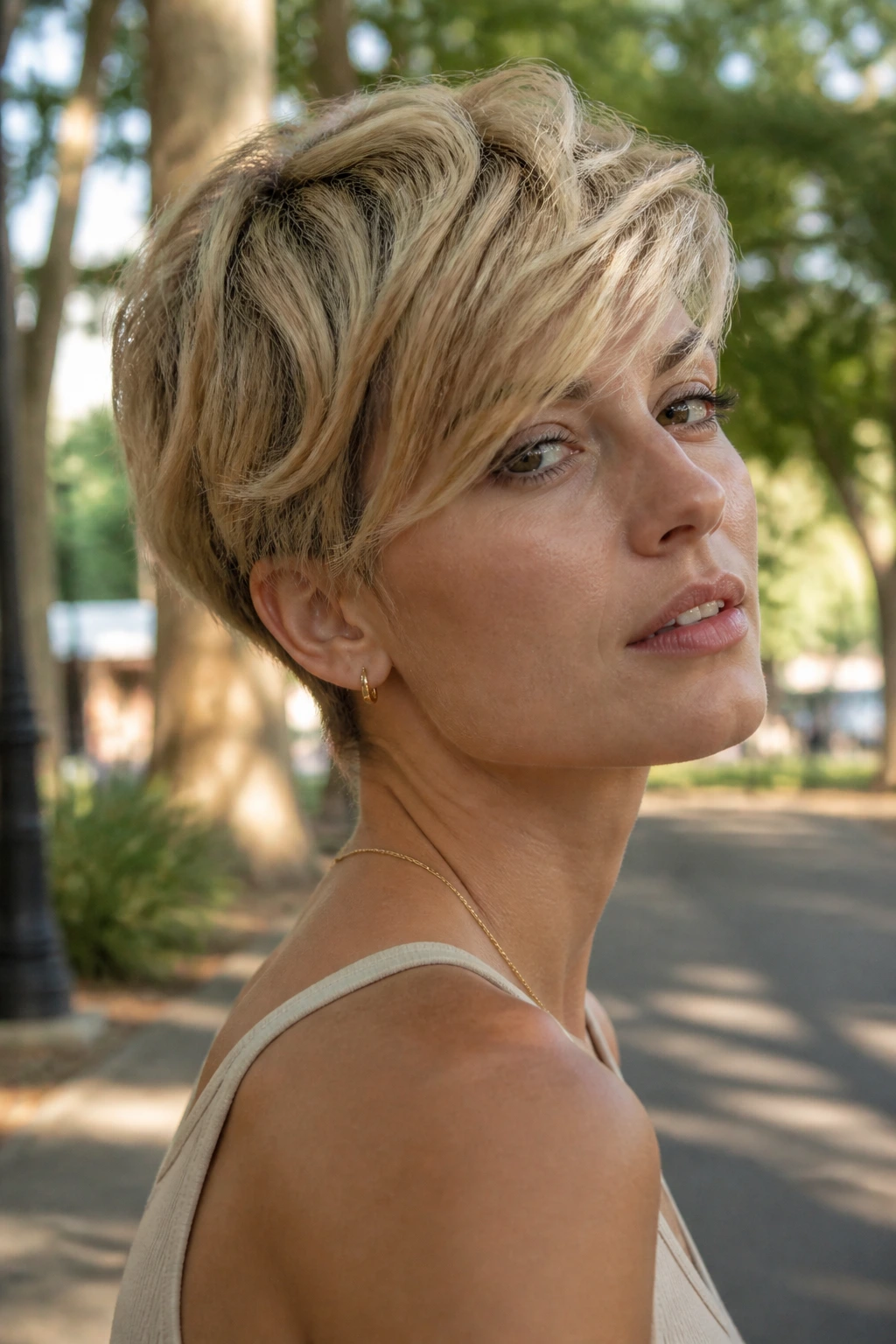
A bixie — that in-between cut that lives halfway between a bob and a pixie — is tailor-made for pale blonde with warmth in it. The shorter back keeps the shape neat, while the longer top layers let the pale blonde move.
This is one of my favorite cuts for warm skin because it has edge without severity. Ask for buttery blonde through the top and a slightly deeper beige at the nape. That contrast keeps the shape readable. If the whole cut is one flat shade, it can look boxy.
Style it with your fingers and a small round brush only on the top sections. The sides should stay a touch soft. That’s what keeps the bixie from looking overdesigned.
24. Mermaid Layers with Vanilla Ends
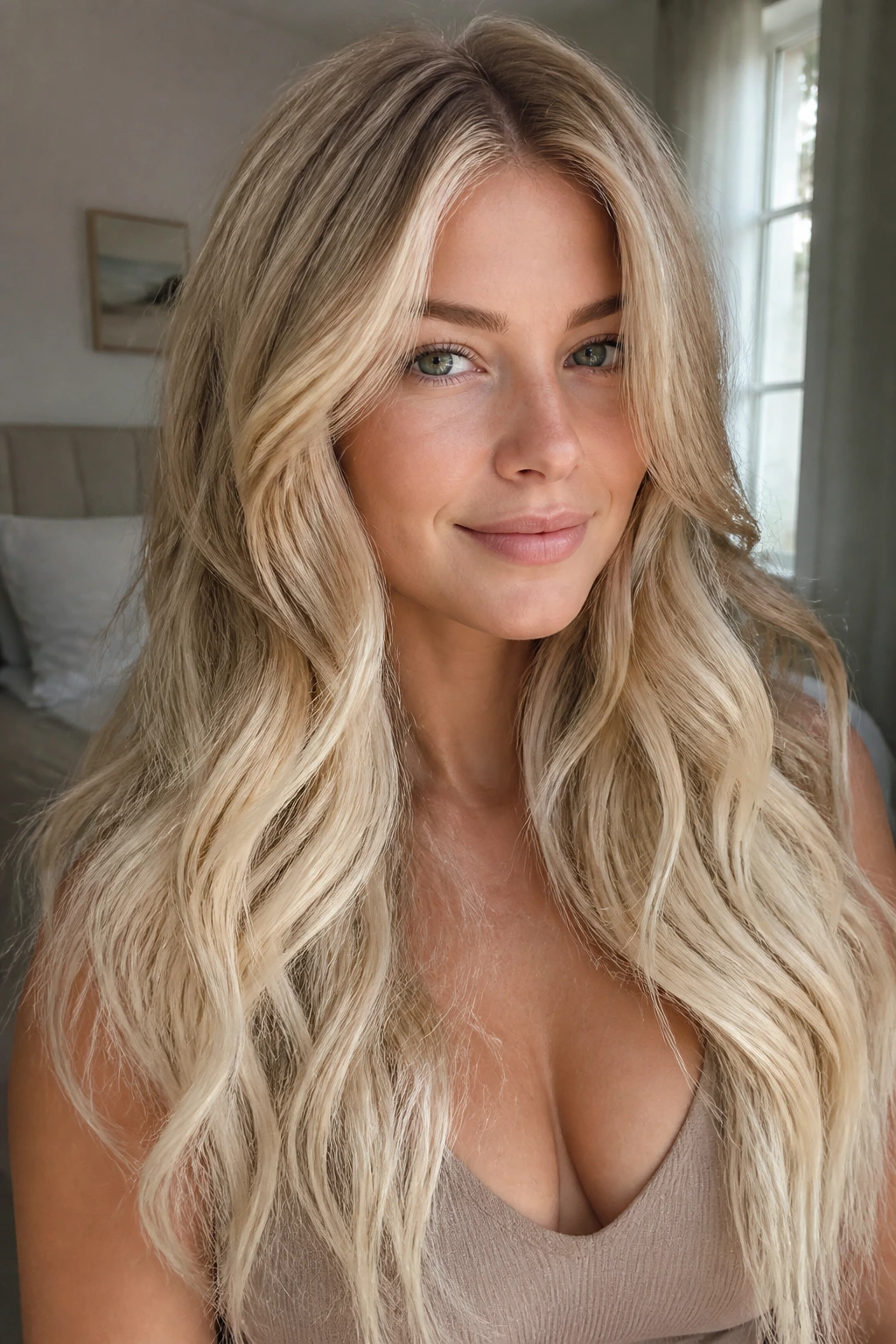
Long mermaid layers need dimension, or they can go stringy fast. Pale vanilla ends paired with a slightly warmer base keep the hair looking full, especially on warm skin tones that benefit from a gentle gradient.
The best version starts brighter through the midlengths and fades toward a creamier end. That lets the hair look light without turning the entire head the same pale shade. Ask for long internal layers with face-framing brightness and vanilla ends. Internal layers matter more than people think; they stop the long hair from hanging like a sheet.
Loose waves make the blonde shimmer in bands. Straight hair can work too, but the movement is where this cut earns its name.
25. Peach-Glow Low Bun
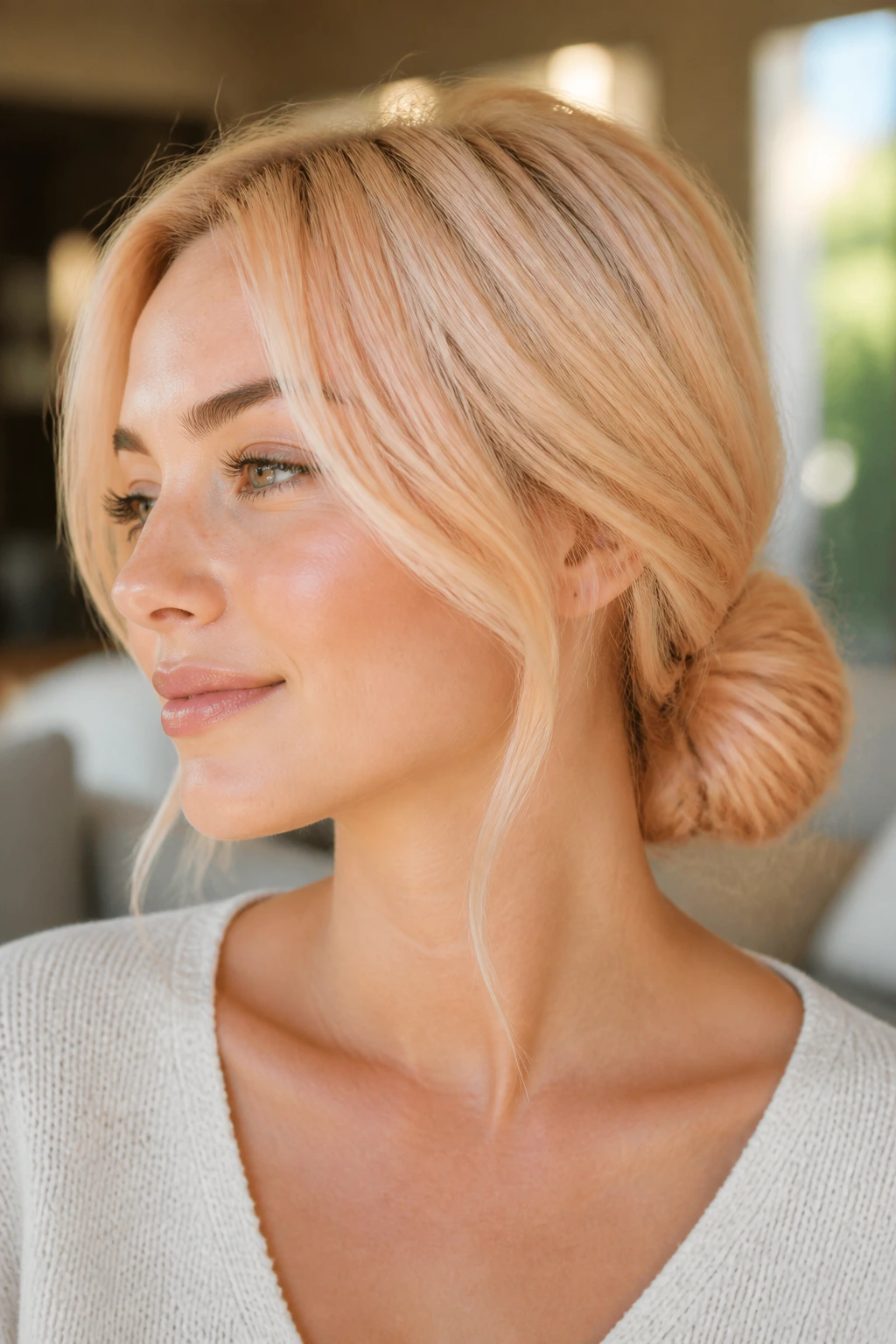
A low bun with a peach-glow blonde base is quiet in the best way. The color is pale, but the warmth keeps the face from looking drained, and the bun itself gives the shade a clean frame.
This is the style I’d pick when the haircut needs to disappear and the color needs to do all the work. A softly swept side part, a few bent pieces around the ears, and a loose twist at the nape make the blonde feel deliberate. Ask for a pale blonde gloss with a faint peach-beige warmth if your skin leans golden or peachy. That tiny tint matters more than people expect.
Keep the bun low and soft. A tight knot can make pale blonde feel severe. A relaxed bun with texture feels kinder.
Why a Slightly Warm Blonde Wins on Warm Skin
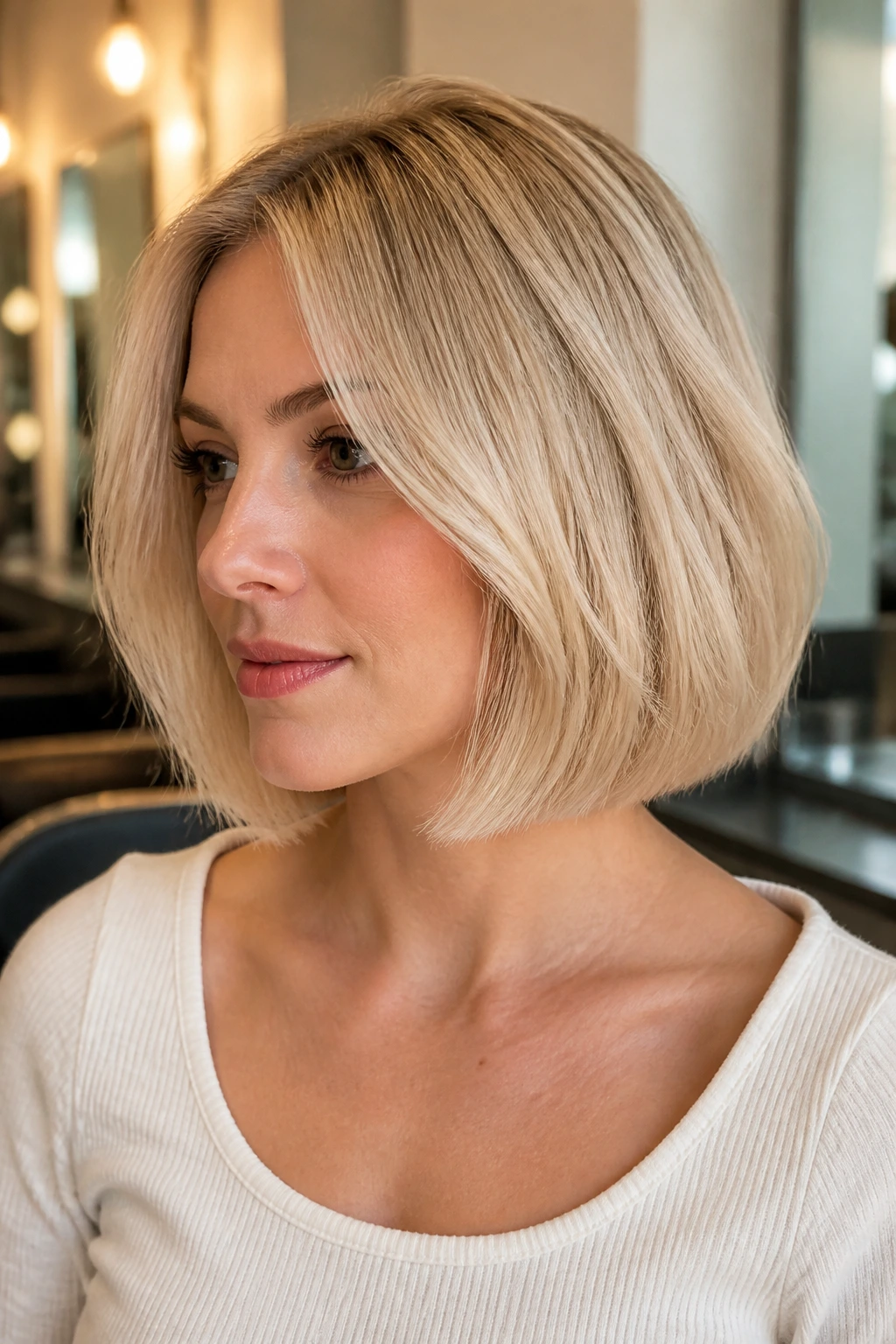
The biggest mistake people make with pale blonde is treating it like a single shade. It isn’t. On warm skin, the difference between a flattering blonde and a draining one often comes down to whether the formula has a trace of beige, gold, or cream in it. That tiny bit of warmth acts like a filter in real life. It softens the edges around the face.
I also think warm undertones do better with dimension than with flat brightness. A root shadow, lowlights, or darker underlayers keep the hair from shouting. The pale pieces still show up. They just look smarter. And frankly, smarter is more interesting than white-blonde overload.
Tools and Products That Make These Looks Work
You don’t need a cluttered bathroom shelf. You need a few good things that solve real problems.
- Color-safe shampoo: Keeps pale blonde from fading into dull straw after a few washes.
- Conditioner for lightened hair: Pale blonde hair needs slip, or the ends puff up and look dry.
- Heat protectant spray: Use it before blow-drying, curling, or flat-ironing; lightened hair burns faster than virgin hair.
- Purple or blue shampoo: Keep this in rotation, but use it sparingly so the blonde stays warm rather than gray.
- Round brush: Helpful for bobs, blowouts, curtain bangs, and anything that needs bend at the ends.
- 1-inch and 1.25-inch curling irons: The smaller barrel gives loose texture; the larger barrel gives polished waves.
- Wide-tooth comb or detangling brush: Better than yanking through pale blonde tangles when hair is wet.
- Light serum or oil: A pea-sized amount on the ends keeps the blonde glossy without looking greasy.
- Sectioning clips: Worth using even at home when you’re styling layered cuts or curling the hair in stages.
Smart Shopping and Shade-Selection Tips
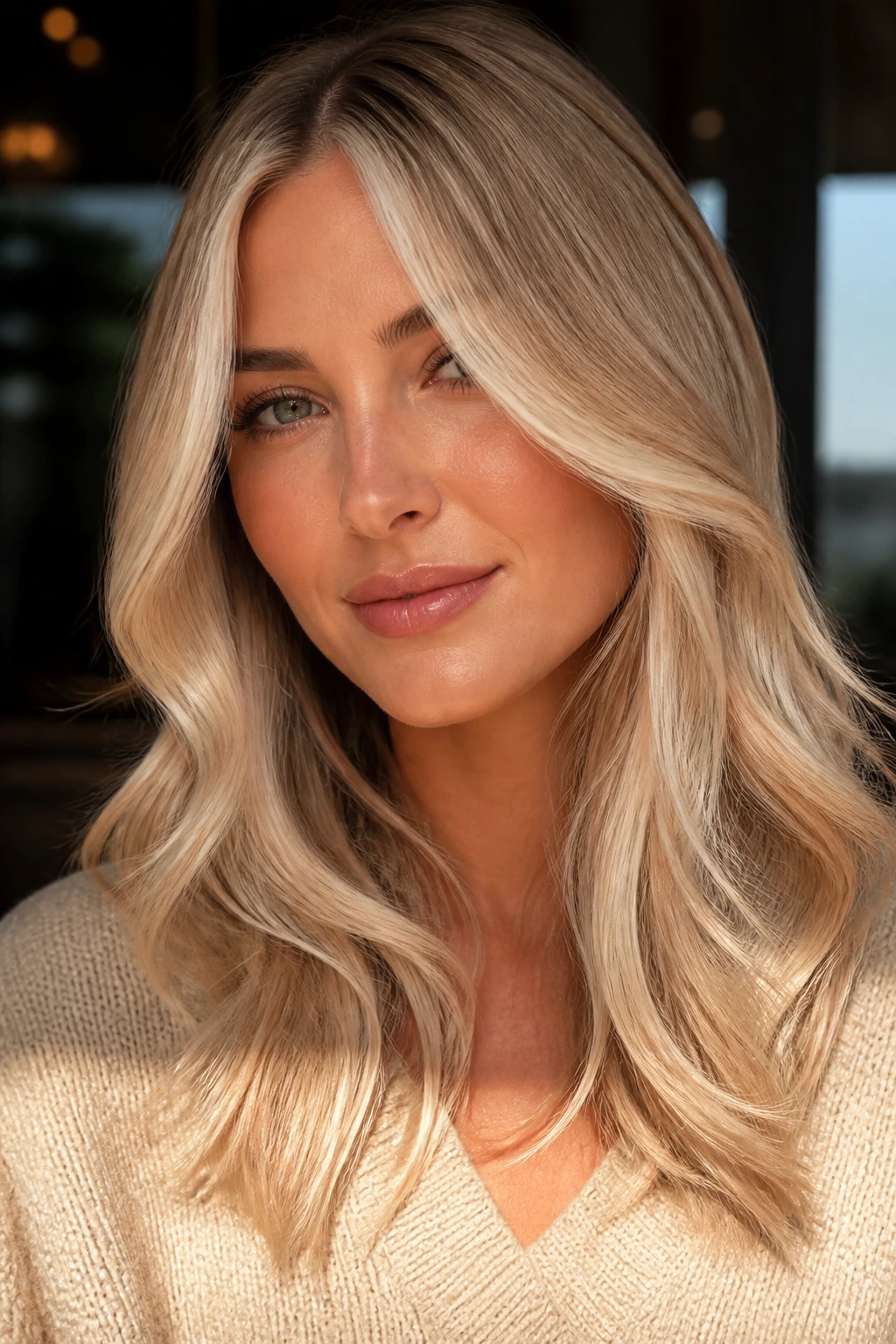
If you’re asking for pale blonde, bring more than one reference photo. Bring photos of the tone you want and photos of the shape you want. Those are not the same thing, and stylists care about both. One image of a blunt bob and another of a buttery balayage can save a lot of confusion in the chair.
For warm skin, I’d start by asking for a level 8.5 to 10 blonde with beige, gold, or champagne reflection, depending on how pale you want it. Beige is the safest lane if your undertone is golden or peachy. Champagne is lovely when you want a slightly brighter, softer shine. Pure ash can work in small doses, but I would not make it the main event unless your skin has enough contrast to carry it.
If your natural hair is dark, ask about a root shadow or lived-in placement. That keeps the grow-out softer and prevents the whole head from looking over-bleached. If your hair is already light, a gloss may do more for you than another round of lifting. Sometimes the smartest blonde move is not more bleach; it’s better tone control.
And one practical note: indoor lighting lies. A blonde that looks creamy in the salon chair can turn flatter under bathroom LEDs. Ask how the color reads in daylight. That’s the version you live with.
How to Wear These Looks Without Losing the Color
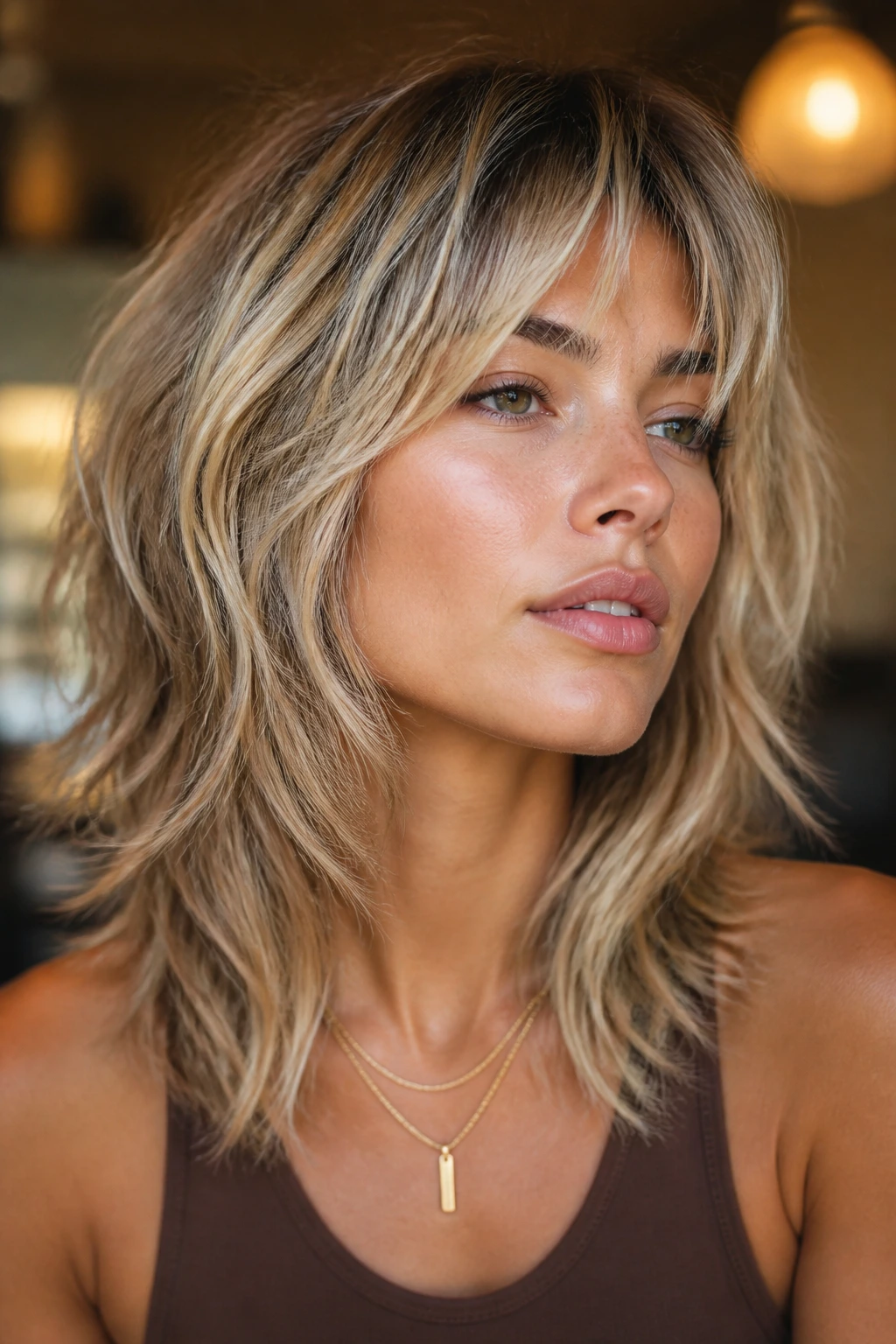
Finish: Glossy works on bobs, lobs, and sleek midlength cuts. Matte or textured finishes suit shags, pixies, and bixies better because they keep the pale blonde from looking too hard-edged.
Pair With Makeup: Warm peach blush, soft bronze, and neutral brows usually play nicest with pale blonde on warm skin. You do not need heavy makeup. You need balance. A little warmth on the face stops the hair from doing all the work.
Proportion: Short cuts like pixies, French bobs, and bixies look best when the crown has some lift or texture. Longer cuts need face-framing brightness or layers so the pale blonde doesn’t turn into a long, flat curtain.
Best Atmosphere: Soft daylight, clean skin, and simple clothing colors like ivory, camel, olive, rust, and warm navy keep these blondes looking right. Harsh cool-white lighting and icy clothing can make the tone feel off, even when the hair itself is perfect.
Additional Tips and Style Boosters
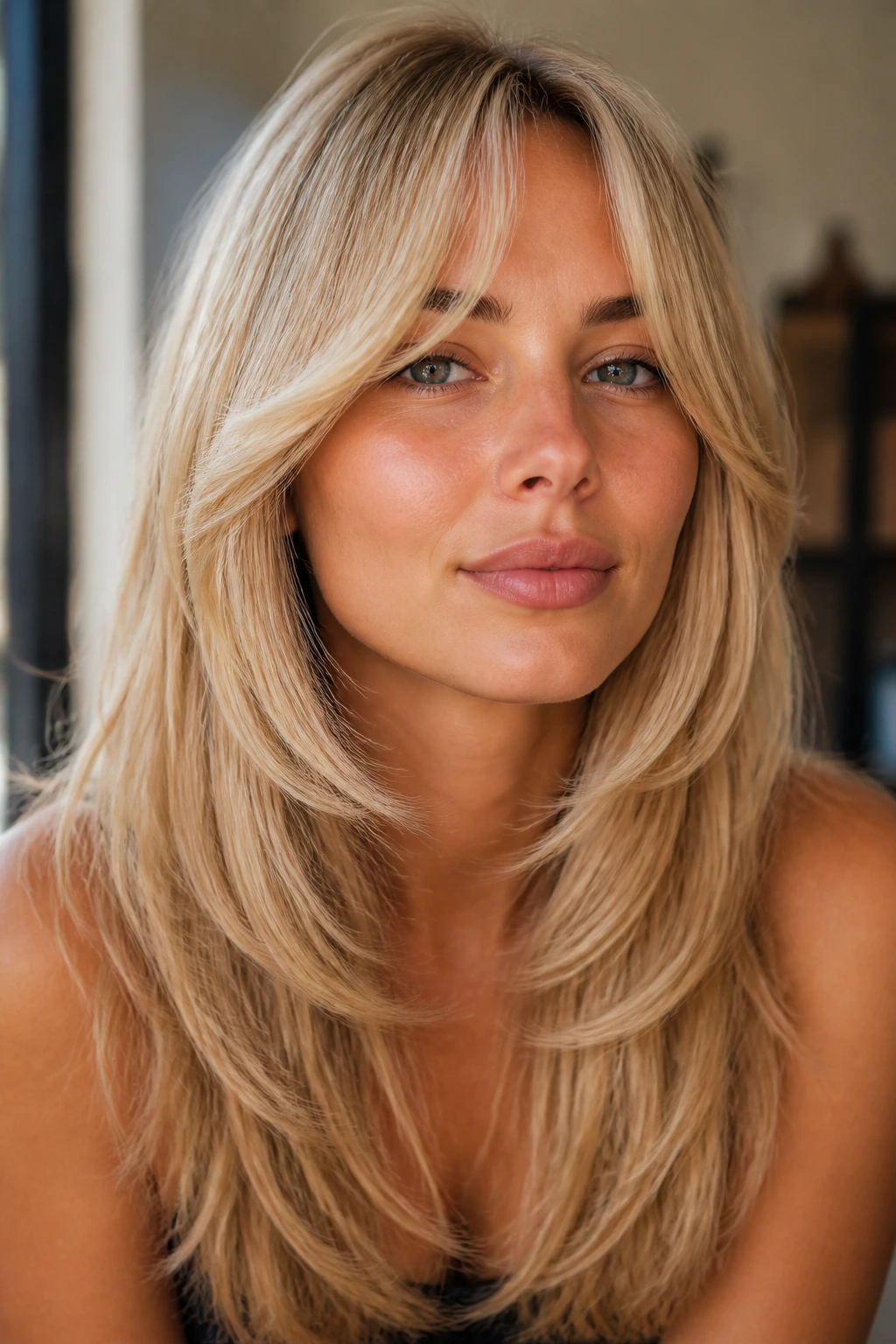
Tone Enhancement: If your blonde starts looking too yellow, use a purple shampoo once every 7 to 10 washes, not every time you shampoo. Overdoing it can push pale blonde into a dusty, cool cast that fights warm skin.
Texture Boost: For waves and shags, curl only the midlengths and leave the ends straighter. That small trick keeps the blonde looking modern instead of prom-shaped.
Face-Framing Trick: Brighten the front pieces a touch more than the back. Just a little. The brightness near the face is what wakes up warm undertones; the back can stay softer and slightly deeper.
Low-Maintenance Hack: A root shadow one shade deeper than the rest of the blonde buys you time between salon visits and keeps the grow-out from looking striped.
Make-It-Yours: If your features are soft, go creamier and more blended. If your features are sharper, add a few brighter ribbons or a stronger side part for contrast.
Maintenance, Touch-Ups, and When to Refresh
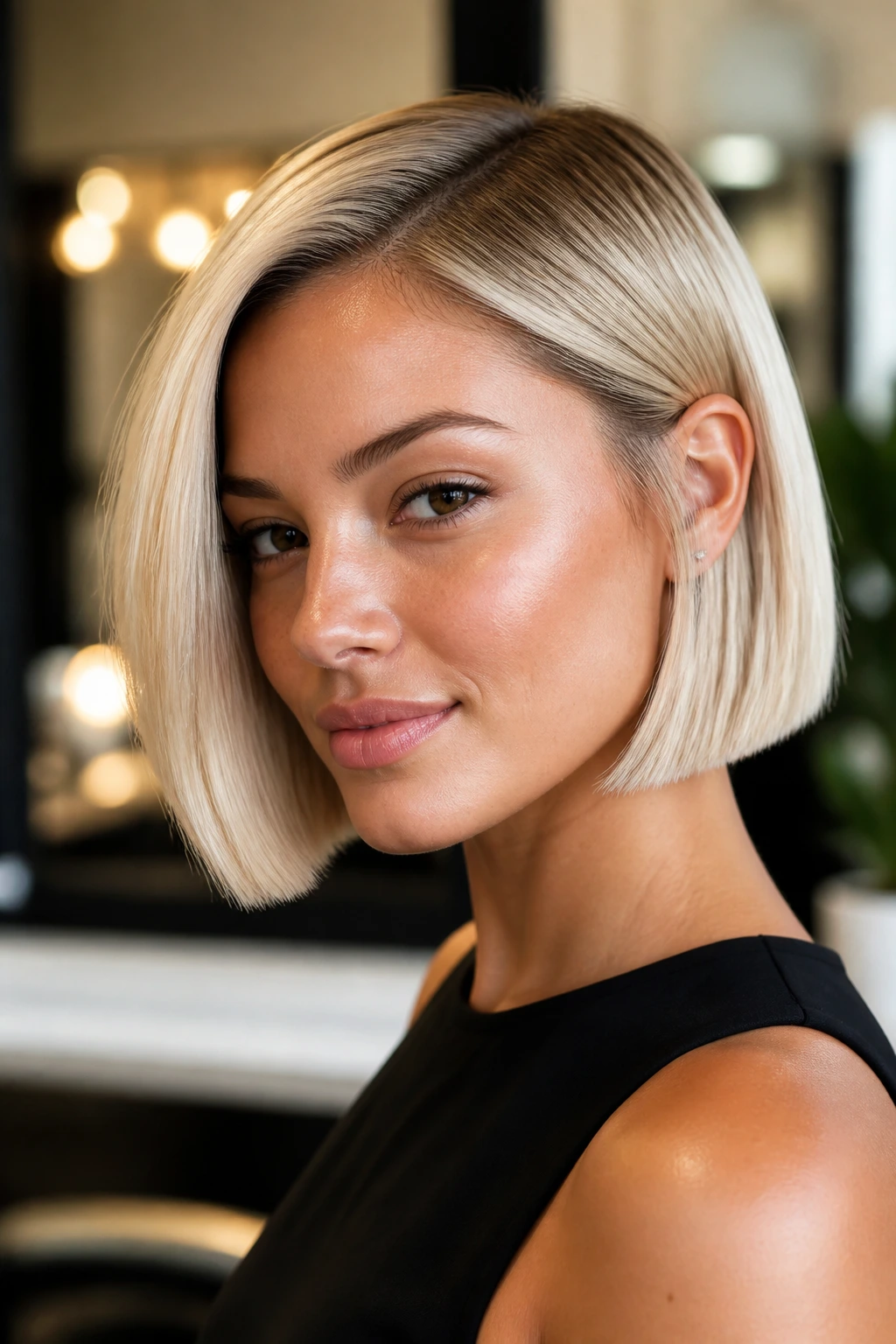
Pale blonde does not like to be ignored for too long. The root line will show sooner on darker natural hair, and the tone will shift as the weeks pass. For most of these looks, a gloss or toner refresh every 4 to 8 weeks keeps the color from drifting brassy or flat. Shorter styles with a lot of root exposure usually need the more frequent end of that range.
Wash lightly. That means color-safe shampoo, conditioner focused on the midlengths and ends, and cool or lukewarm water if you can stand it. Hot water strips tone fast. It also makes dry ends puff out, which is a terrible trade for blonde hair that already does a lot of visual work.
If you heat-style often, touch your ends with serum every time and use heat protectant every time. Not some of the time. Every time. Lightened hair fries faster than people want to admit, and once the ends get rough, the blonde starts to look dull even when the tone is fine.
For curls, shags, and textured crops, dry shampoo can stretch the style one or two more days before the next wash. For sleek bobs and glass hair, a quick root mist and a flat-iron touch-up usually beat a full rewash.
Variations and Adaptations to Try
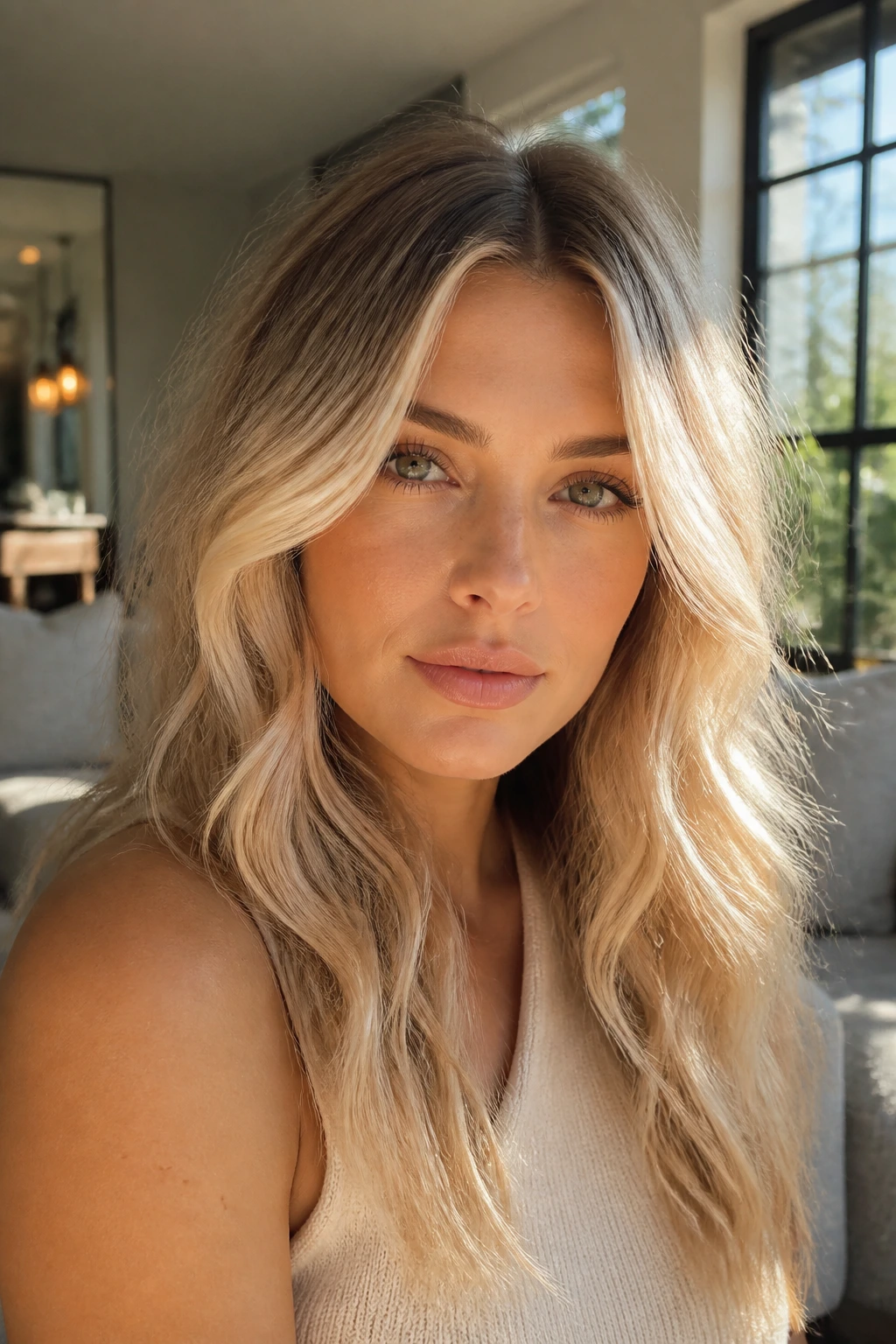
Golden Beige Melt: This version leans warmer from root to end, with a soft beige-gold glaze that flatters peachy or golden skin especially well. It’s the easiest adjustment if straight pale blonde feels too cold in your mirror.
Cooler Champagne Accent: Keep the overall blonde warm, but add a slightly brighter champagne ribbon around the face and crown. That creates lift without tipping the whole look icy.
Curly Cream Blonde: On natural curls, keep the lift in ribbons and avoid over-lightening the underside. The result is lighter, softer, and far easier to live with than an all-over pale blonde.
Soft Root Shadow: Ask for a one- to two-level shadow at the base, then let the pale blonde begin around the temples and mids. This is the low-maintenance route, and it makes grow-out much less fussy.
Short Blonde Reset: If long hair feels heavy, move the same warm pale blonde into a pixie, bixie, or French bob. Shorter cuts make the color look fresher and can completely change how the shade reads on warm skin.
Common Mistakes to Avoid
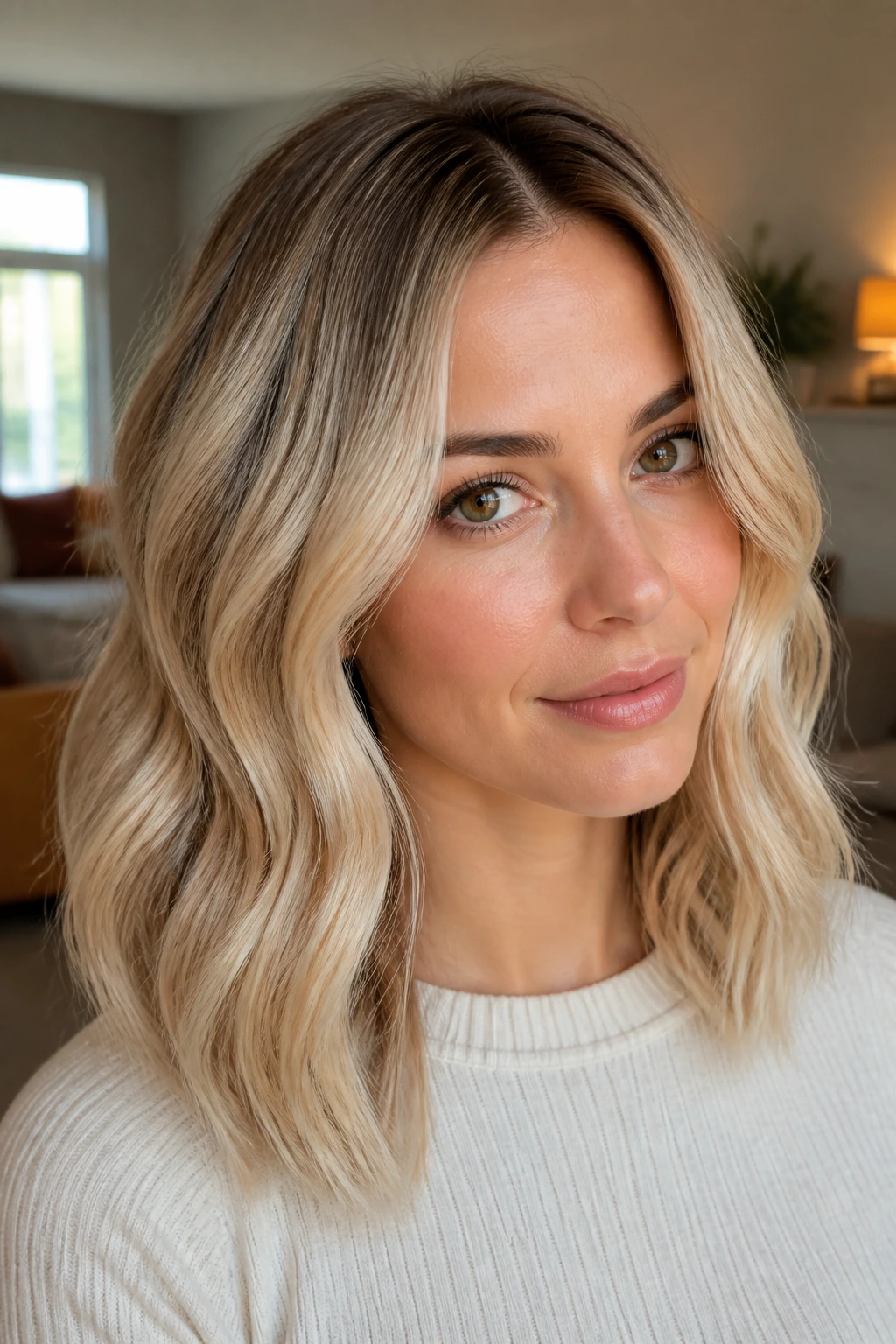
- Choosing a toner that’s too ashy: Pale ash can make warm skin look tired or flat. If the blonde starts drifting gray, ask for a beige or gold gloss next time.
- Taking the lightness all the way to the root: That can make the hair look striped or helmet-like, especially on short cuts. A soft shadow root gives the style depth and makes the pale pieces stand out more.
- Overusing purple shampoo: A little keeps brass in check; too much drains warmth from the hair and leaves it dull. Use it like a treatment, not a daily cleanser.
- Skipping the haircut that supports the color: A flat one-length cut can make pale blonde look static. Layers, texture, or a little bend in the ends give the shade somewhere to go.
- Ignoring brows and blush: Warm skin with pale blonde usually needs a touch of color in the face. Without it, the hair can overwhelm the features instead of framing them.
Frequently Asked Questions
Can warm skin tones wear platinum blonde?
Yes, but the platinum usually needs a little beige or gold mixed in somewhere, even if the ends are bright. Pure icy platinum can work on some people with strong contrast, but it often looks harsher on warm undertones than a creamy pale blonde does.
What blonde shade is most flattering for warm undertones?
Beige blonde, butter blonde, champagne blonde, and honeyed pale blonde are the safest bets. They keep the face looking alive and tend to blend better with golden, peachy, or olive skin.
Do I need highlights, or can I go all-over pale blonde?
All-over blonde can work, but highlights, balayage, or a root shadow usually give better dimension and less grow-out stress. If you want the lightest possible look, ask for brightness where the face needs it most and keep some depth underneath.
How do I keep pale blonde from turning brassy?
Use color-safe shampoo, limit heat, and refresh the tone with a gloss or toner when the shade starts to warm up in a bad way. A purple shampoo once every week or two is enough for most people; more than that can make warm blonde look dull.
What if my hair is naturally dark brown?
You’ll probably need more than one lightening session if you want a very pale result, and that’s normal. Ask for a rooted, lived-in version if you want something easier to maintain, because taking dark hair to pale blonde all at once can be rough on the ends.
Which haircut works best with pale blonde on warm skin?
Bobs, lobs, curtain-bang layers, pixies, and soft shags all work well because they give the color shape. A good cut keeps the blonde from looking like one big bright surface.
Does pale blonde look better straight or wavy?
Both can work. Waves and bends usually flatter warm skin a little more because they break up the light and make the color feel softer, while straight styles need a better gloss and a cleaner cut to avoid looking flat.
What makeup colors go best with these blondes?
Peach blush, warm nude lips, soft bronze, and brown mascara are easy wins. You do not need heavy contour. A little warmth on the face keeps the hair from taking over.
Soft Blonde, Better Fit
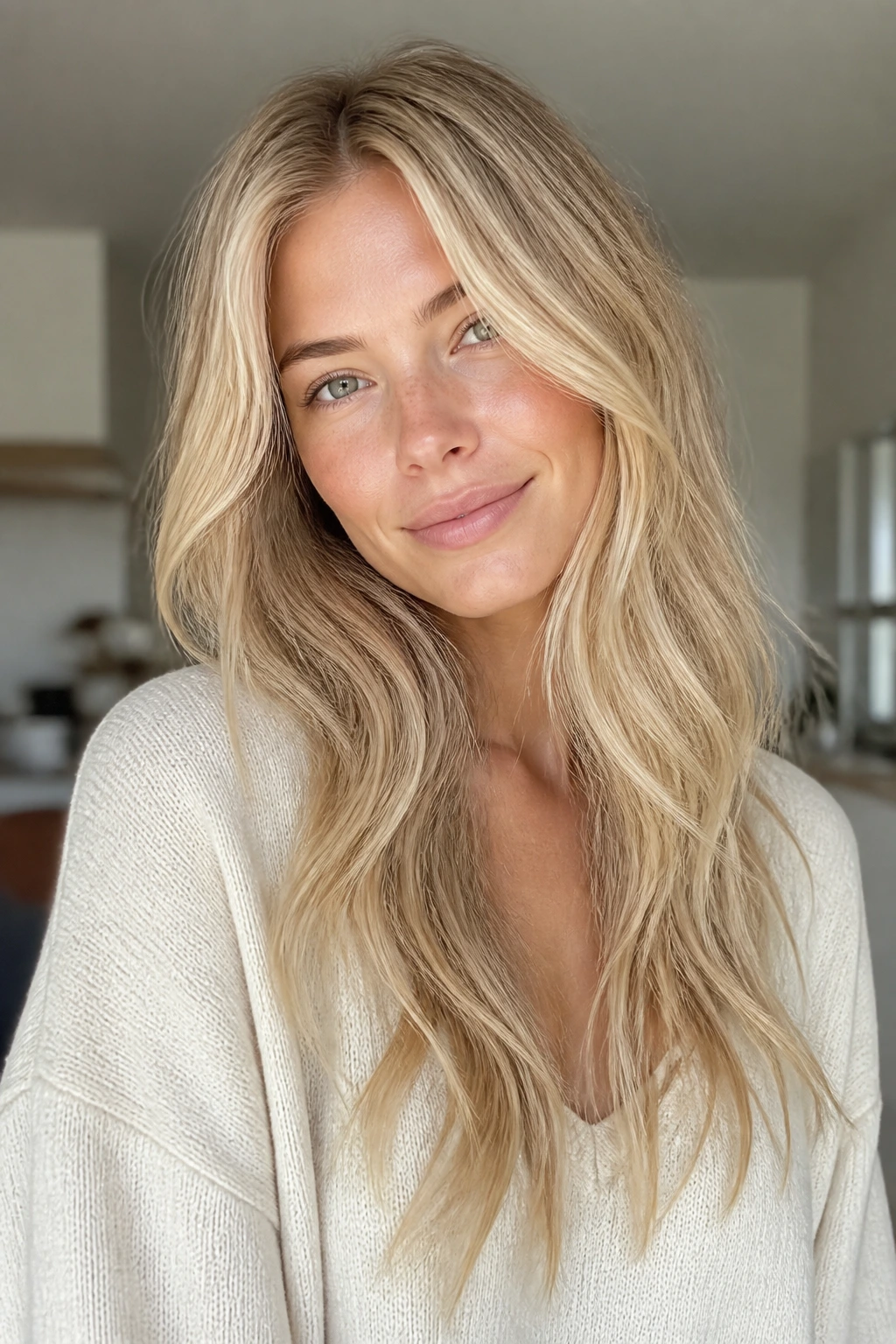
Pale blonde can be a beautiful color choice on warm skin, but only when the tone has a little warmth left in it. Beige, butter, champagne, and cream are the shades that keep the face looking bright instead of drained, and the right cut gives that color somewhere to move.
The smartest looks in this bunch are the ones that don’t force the blonde to do all the work. A root shadow, some texture, a few bright face-framing pieces — that’s the good stuff. It’s what makes pale blonde feel wearable, not precious.
Choose the version that matches how much upkeep you’ll actually tolerate, then let the cut and tone do their job. The sweet spot is usually softer than people expect, and that’s exactly why it works.