



Short hair can go flat fast when the air turns heavy, and one flat color makes every bend and part look harder than it should. The best cute summer hairstyles for short hair with lowlights solve that in a quietly clever way: they add shadow where the cut needs it, so a bob or pixie still looks shaped when the weather is doing its worst.
Lowlights are not just “darker pieces.” On a short cut, they act like ink in a sketch. A few deeper ribbons near the crown, around the ears, or under the top layer make the whole shape look fuller, sharper, and more expensive-looking without turning the hair into one dark block. That matters more on short hair than on long hair, because there’s less length for movement to hide behind. Every inch counts.
And that’s the part people often miss. A short cut doesn’t need more hair to feel finished; it needs contrast in the right places. So when the temperature climbs, the styles that work best are the ones that let those lowlights peek through instead of burying them under too much product or a heavy, overworked finish. The shape should still breathe.
Why You’ll Love This Collection
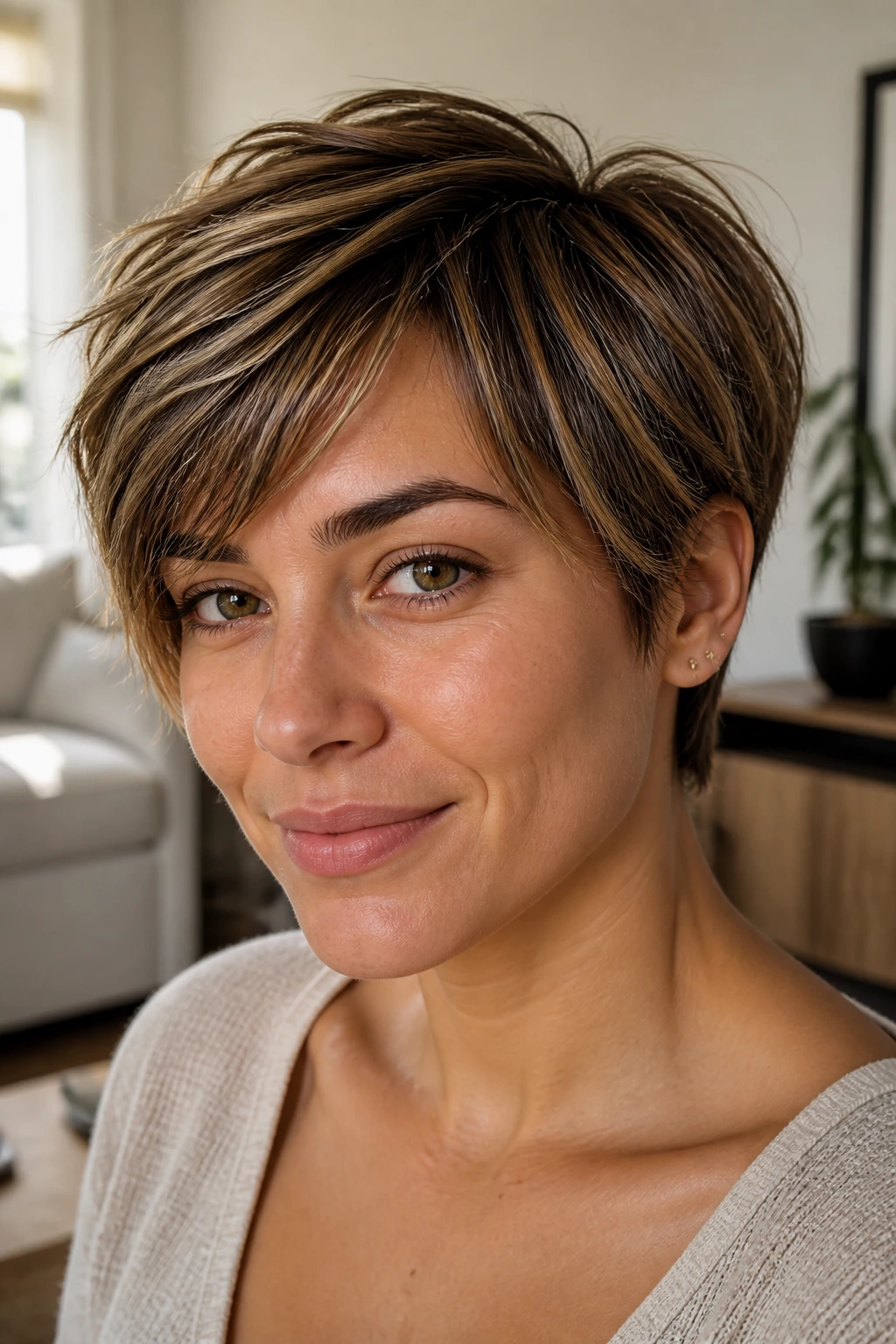
-
Depth Without Bulk: Lowlights make short hair look thicker through the ends and crown, which is exactly where a bob or pixie can go visually soft in bright light.
-
Fast Styling: Most of these looks take 5 to 15 minutes, and several only need fingers, a comb, and one styling product.
-
Heat-Friendly by Design: A lot of the styles keep hair off the neck, tuck pieces away from the face, or use movement instead of heavy structure.
-
Works With Real Hair: Straight, wavy, curly, and coily textures all show lowlights differently, which means the color earns its keep instead of sitting there like decoration.
-
Accessory-Ready: Clips, pins, scarves, headbands, and sunglasses all play nicely with short hair when the cut has depth under it.
-
Grow-Out Looks Softer: Lowlights usually fade and grow out more quietly than a harsh all-over color, so the style keeps looking deliberate even between salon visits.
The sweet spot is contrast, not drama. Once the lowlight placement is right, even a very simple style starts looking thought-through.
1. Tousled French Bob
A tousled French bob is the first style I’d hand to anyone with chin-length hair and a little natural bend. It has that easy, slightly undone look that still feels polished, and lowlights are what keep it from turning into a beige blur in bright sun. Ask for the darker ribbons to sit under the top layer and around the back of the head; that way, the movement shows when the hair swings.
Why It Works
The French bob is short enough for the shape to read immediately, which means the color does a lot of the visual heavy lifting. When the lowlights are one shade deeper than the base, the cut looks denser at the edges and softer through the middle. That matters on fine hair, where the ends can look wispy by midafternoon.
A 1-inch curling wand or iron is enough here. Leave the last half-inch of the ends out so the bend stays soft instead of becoming a ringlet. Then break the wave with dry hands and a mist of texture spray.
- Ask for lowlights placed beneath the crown and around the jawline.
- Keep the waves loose and uneven; perfect curls fight the shape.
- Finish with a pea-size amount of styling cream at the ends, not the roots.
Tiny tip: If the bob starts to look too “done,” tuck one side behind the ear and let the lowlights show through the lower layer.
2. Side-Swept Pixie
A side-swept pixie is the cleanest way to make short hair look intentional when you do not want to fuss with it all day. The long fringe gives you a little drama, and the lowlights add a shadow line through the top so the cut doesn’t collapse into one flat tone. I like this style when the fringe is a touch longer than the sides; that little imbalance gives it life.
The trick is placement. Put the darker strands at the temple, the crown, and the nape so the short layers read in slices instead of a single block. When you sweep the fringe over, the lowlights underneath make the top look fuller and the side look sharper.
Work a fingertip of matte paste through dry hair, then push the fringe across your forehead at a diagonal. That’s enough. No need to overthink it.
A side-swept pixie also wears well with earrings, which sounds like a small detail until you try it. Suddenly the whole look has a point of view.
3. Sleek Ear-Tucked Bob
Why does an ear-tucked bob look so chic with lowlights? Because it gives the color a chance to do what it does best: hide in the shadows and then show up when the hair moves. One side tucked behind the ear, one side left loose, and the darker ribbons underneath create a little depth that plain single-process color can’t fake.
This works especially well on straight or barely waved hair. Blow-dry with a nozzle attachment, follow with a flat iron only if your ends need it, and keep the finish smooth rather than glossy-heavy. The lowlights should sit in fine, thin sections below the top veil so the tucked side looks richer instead of stripey.
A light serum at the ends helps, but only a drop or two. Too much product will weigh the whole cut down and make it cling to the cheek.
The part I love most is the low-effort payoff. You can tuck one side, add a small hoop earring, and the whole haircut suddenly feels styled. That’s a nice result for five minutes of work.
4. Textured Bixie with Piecey Ends
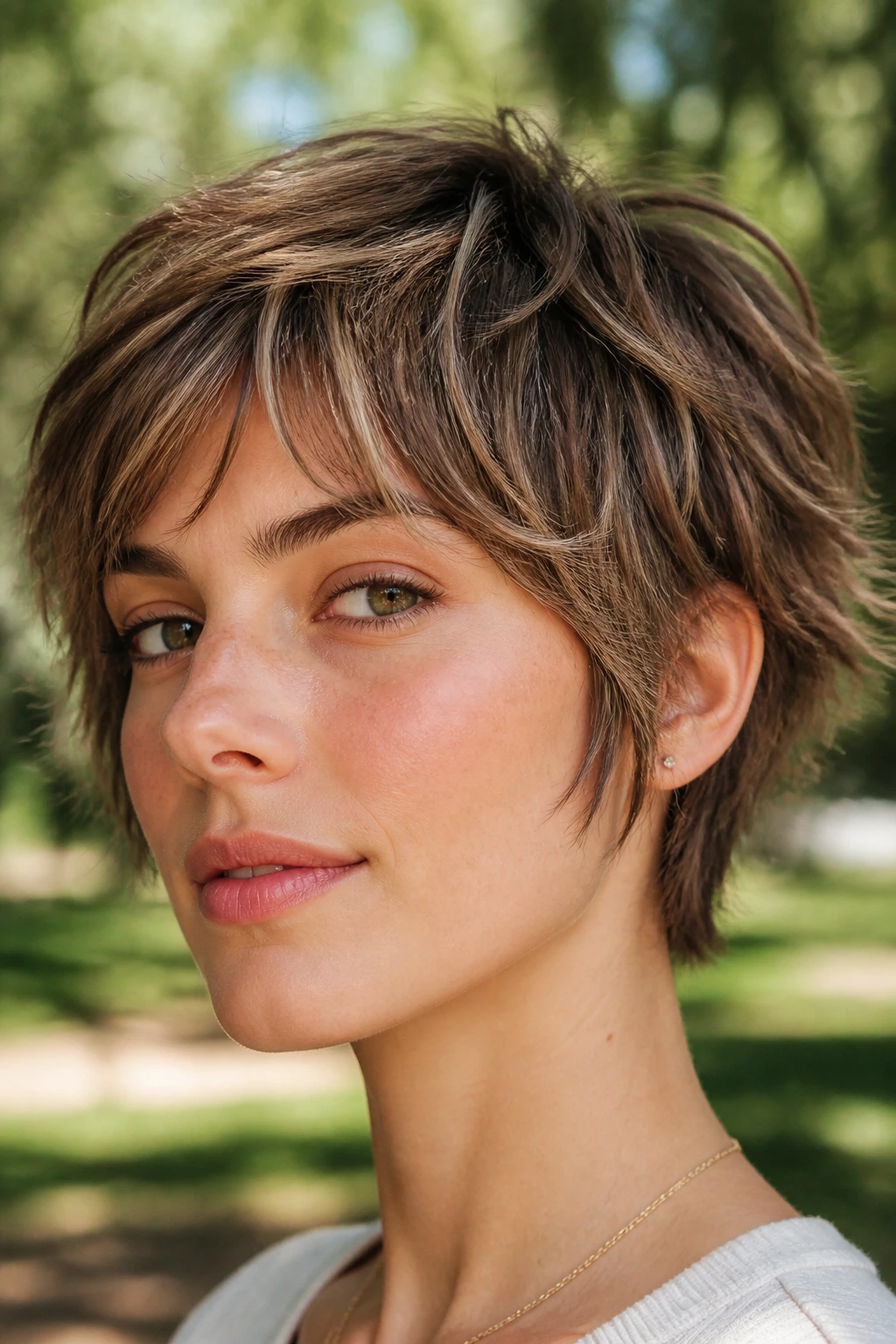
A bixie lives in that sweet spot between a bob and a pixie, which is why it loves lowlights so much. The choppy layers give the color places to land, and the darker strands sharpen every flicked end instead of washing them out. If your hair tends to puff up at the sides, this cut helps bring the shape back under control.
What Makes It Stand Out
The lowlights should be woven through the interior layers, not just the top surface. That creates a little shadow under the pieces that stick out, which makes the whole cut look fuller. On summer days, that shadow is what keeps the style from turning fuzzy in hard light.
Use a mousse on damp hair, scrunch lightly, and either air-dry or diffuse on low. When it’s dry, pinch a small amount of wax between your fingers and separate the ends. That’s all the shaping this cut needs.
- Best on hair that has a bit of natural bend.
- Works nicely with side parts and soft face-framing pieces.
- Looks especially good when the lowlights are cool brown, mushroom brown, or smoky caramel.
My opinion: A bixie with lowlights looks better slightly messy than perfectly arranged. The little imperfections are what make the shape interesting.
5. Half-Up Mini Knot
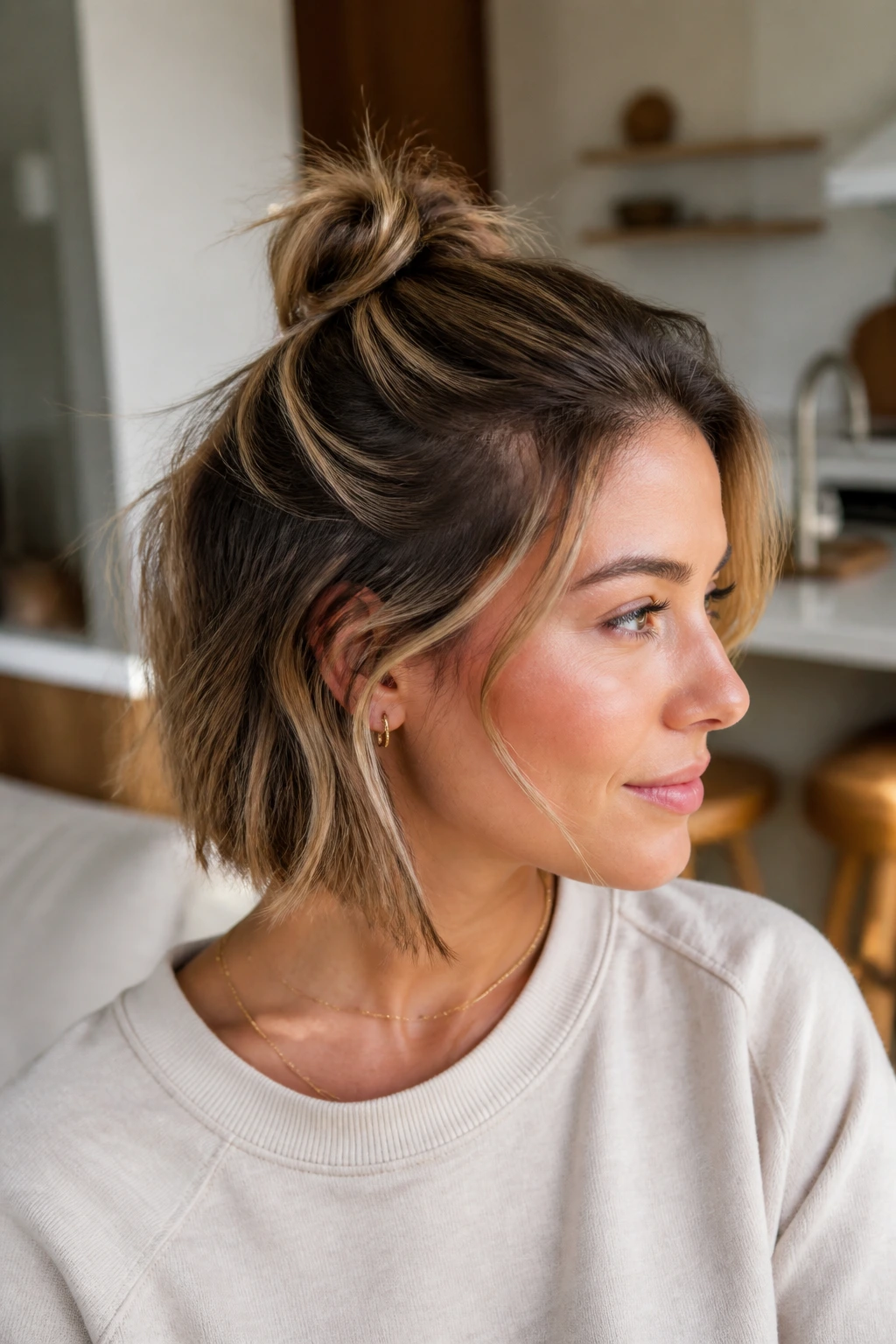
If your bob is long enough to gather the top section, a half-up mini knot is one of the easiest summer fixes going. It keeps hair off the forehead, shows off the lowlights underneath, and gives the cut a playful feel without making it childish. The knot should sit small and a little loose, almost like you didn’t fuss over it—because you probably shouldn’t.
Start by taking the hair from temple to temple and securing it with a tiny elastic. Twist once or twice, then pin or coil into a mini knot. Leave the bottom section soft and separated so the darker pieces beneath can show through when the wind moves the hair.
This style works best when the lowlights are concentrated on the lower half of the cut. That way the top section lifts cleanly and the bottom section still has weight. On very fine hair, a dusting of texture powder at the crown gives the knot a little grip.
It’s a good style for day-two hair, too. Slightly lived-in hair makes the knot hold better and keeps the lowlights from looking overly tidy.
6. Flipped-Out 90s Bob
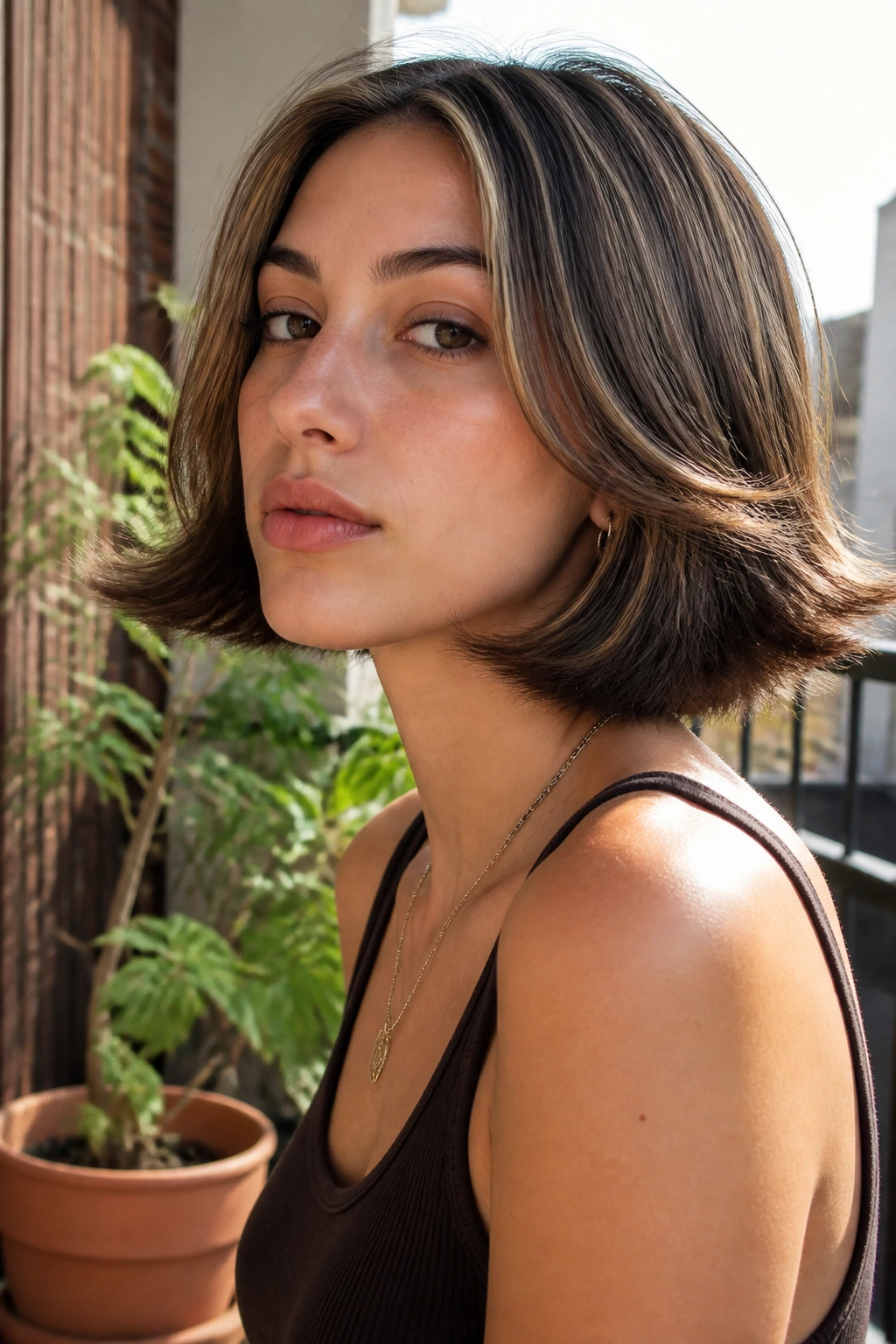
A flipped-out bob has attitude, and lowlights make the ends look deliberate instead of puffy. The shape is all about outward movement at the bottom edge, which means the darker strands along the ends act like contouring for the haircut. You see the flip first, then the shadow under it.
Use a flat iron or round brush to turn the ends outward in small sections. Don’t overheat the hair into a stiff bend; the movement should look airy, not shellacked. If your bob is blunt, this style softens the edge without losing the line.
The lowlights should run through the underlayer and around the perimeter. That placement gives the illusion of more depth at the ends, which matters when the cut is sitting right at the jaw. A blunt bob with no shadow can look a bit wide in direct light. This version doesn’t.
This one is also weirdly good with bold lipstick. The hair flips, the color shadows, and the face gets the main stage.
7. Curly Crop with Defined Ringlets
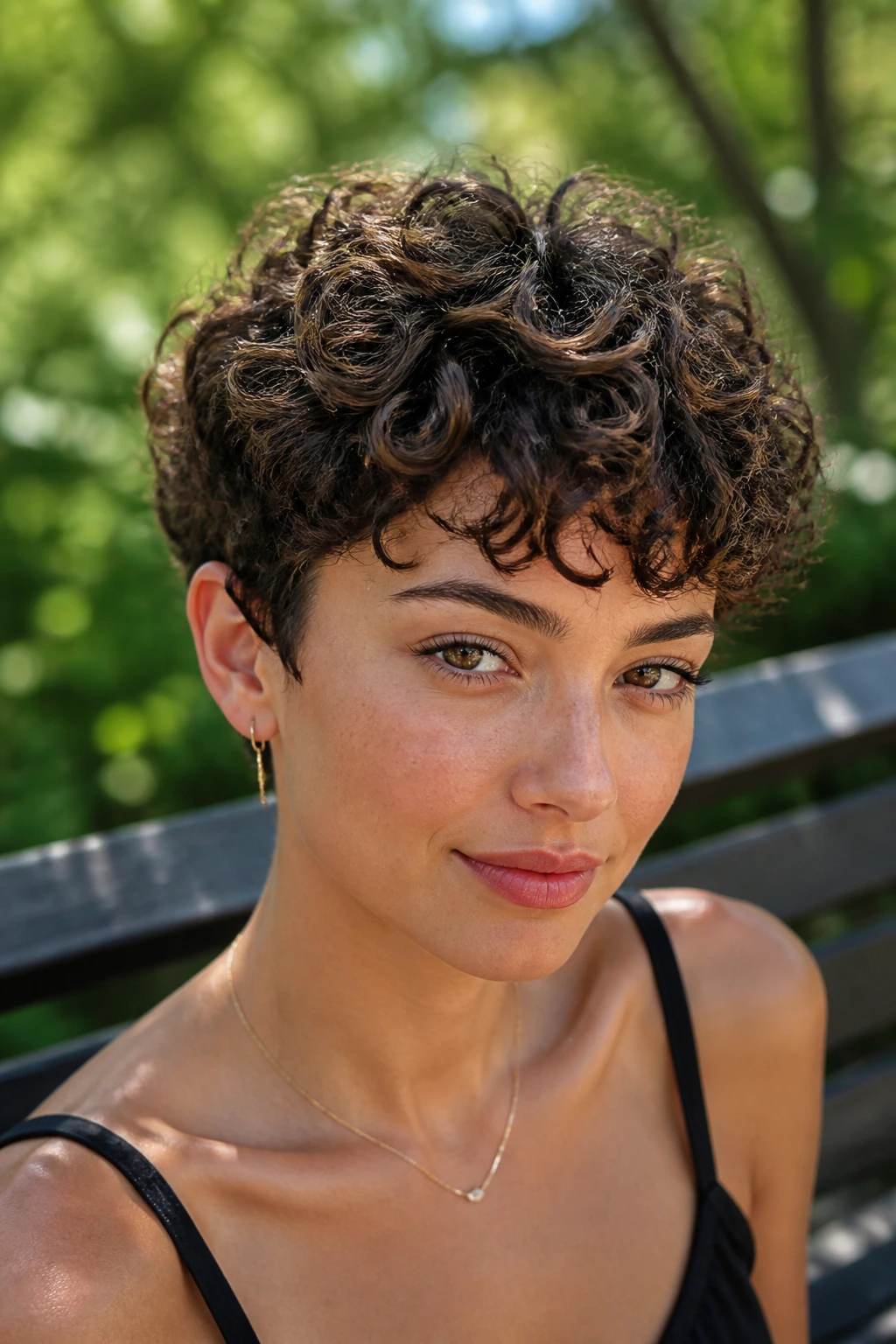
Curly short hair and lowlights are a smart pair because the darker strands separate the curls instead of flattening them into one fuzzy halo. If the curls are healthy and springy, the lowlights sit between the ringlets like little seams of shade. That makes the whole crop look more intentional, especially when the sun is bright enough to expose every frizz halo.
A diffuser helps, but finger-coiling a few front curls can make the shape sharper if you want a cleaner outline. Use a curl cream that gives slip without too much butter; heavy creams can collapse short curls and steal the bounce. Once the hair is dry, break the cast with a drop of oil on your palms.
How to Style It
- Keep the lowlights thin and woven, not chunked.
- Let the front curls be slightly longer so the color frames the face.
- Refresh with water and a light curl mist instead of re-wetting the whole head.
The better the curl definition, the more those lowlights look like part of the haircut instead of part of the dye job. That’s the whole point.
8. Wet-Look Pixie Sweep
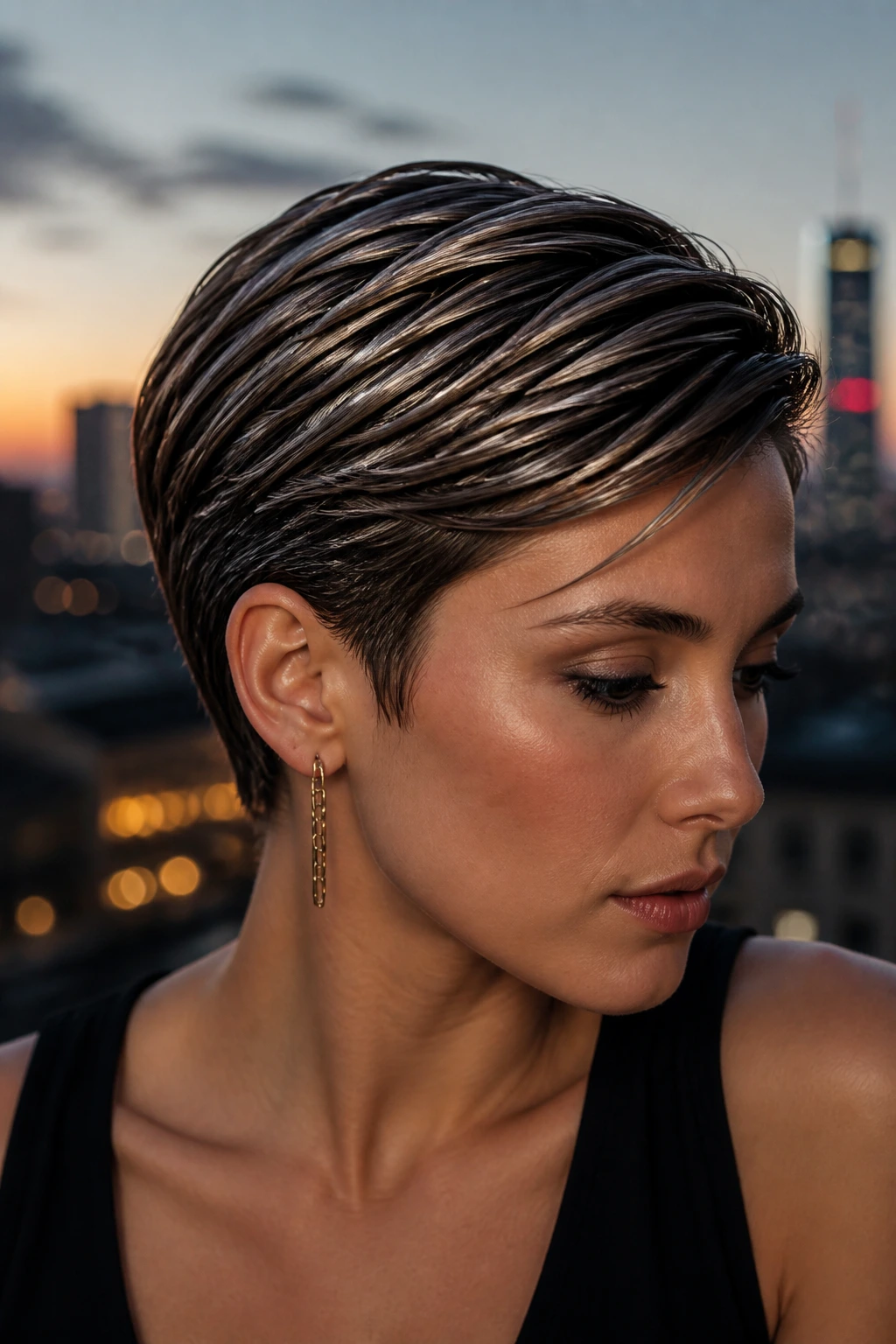
A wet-look pixie can go from edgy to greasy in about thirty seconds, so the product choice matters. The good version has a clean shine, visible direction, and lowlights that show through like dark satin bands under the surface. The wrong version just looks overloaded. No one wants that.
Comb a strong-hold gel through damp hair, then shape the top in the direction you want the sweep to fall. A little shine cream on the surface helps the color read richer, especially around the crown and front. The short sides should stay tight and neat so the texture on top has somewhere to land.
I like this style for evenings more than daytime because it handles humidity without puffing out. The darker strands under the top layer catch the light in a way that looks deliberate, not glossy in a cheap way. The trick is using less gel than you think and letting the hair dry undisturbed.
If you have a pixie that feels too soft for special occasions, this is a good fix. It changes the mood fast.
9. Deep Side-Part Lob
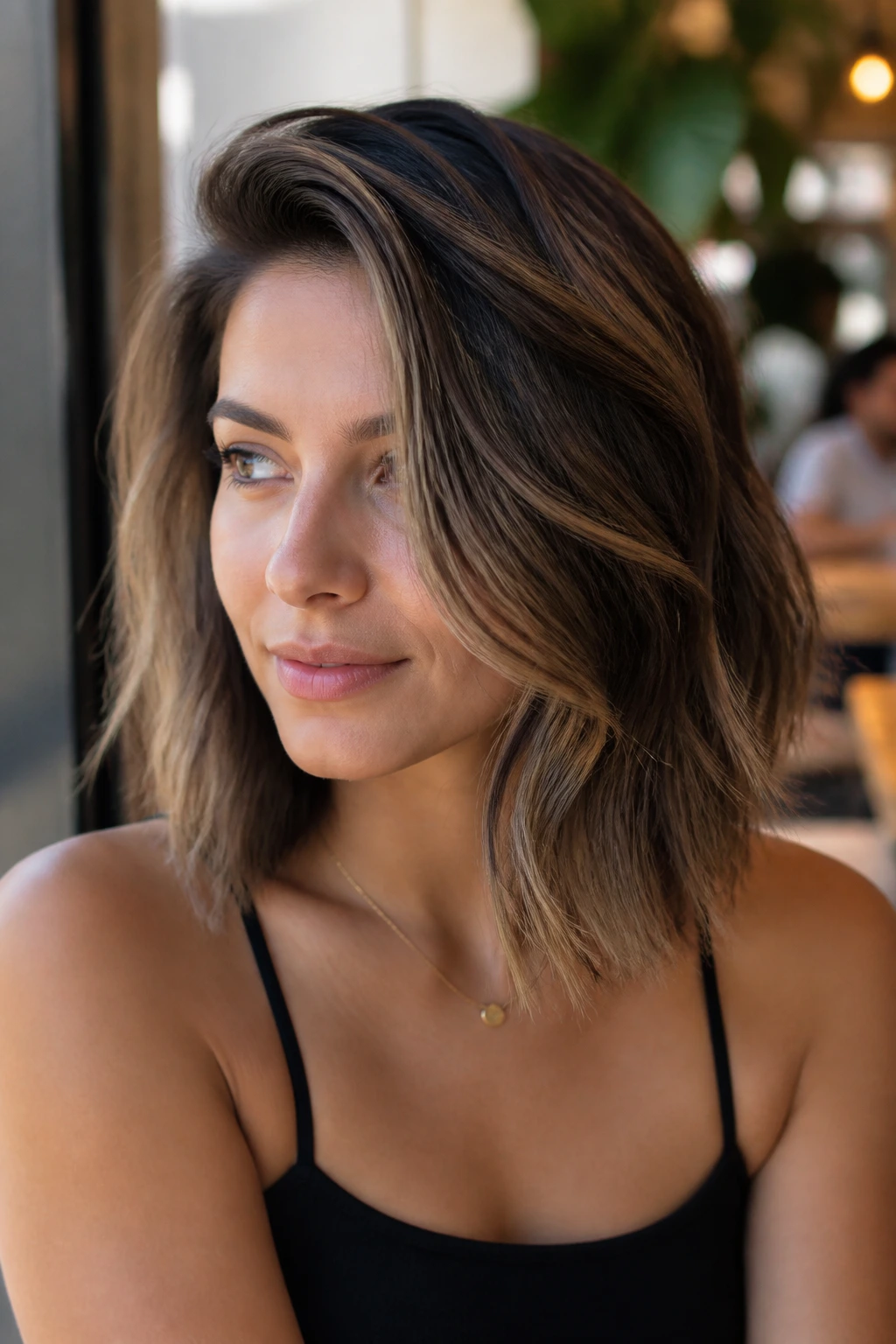
A deep side part can rescue a lob that’s starting to feel too straight or too safe. Push the hair far to one side, and suddenly the lowlights under the part show up as a dark sweep instead of an afterthought. On short hair, that contrast makes the cut look longer and leaner without actually adding length.
Loose waves work better than tight curls here. You want the hair to bend around the face and then fall cleanly over the shoulder or jaw. The lowlights should be placed near the root area under the part and through the lower lengths, so the shape has depth from top to bottom.
This is one of those styles that looks expensive even when it’s not trying hard. Maybe that’s why I keep coming back to it. A side part, a few clean waves, and one darker panel underneath can do more than an hour of fiddling.
If your short hair is growing out and sitting in that awkward phase between bob and shoulder length, this style gives it a little authority.
10. Mini Braids at the Hairline
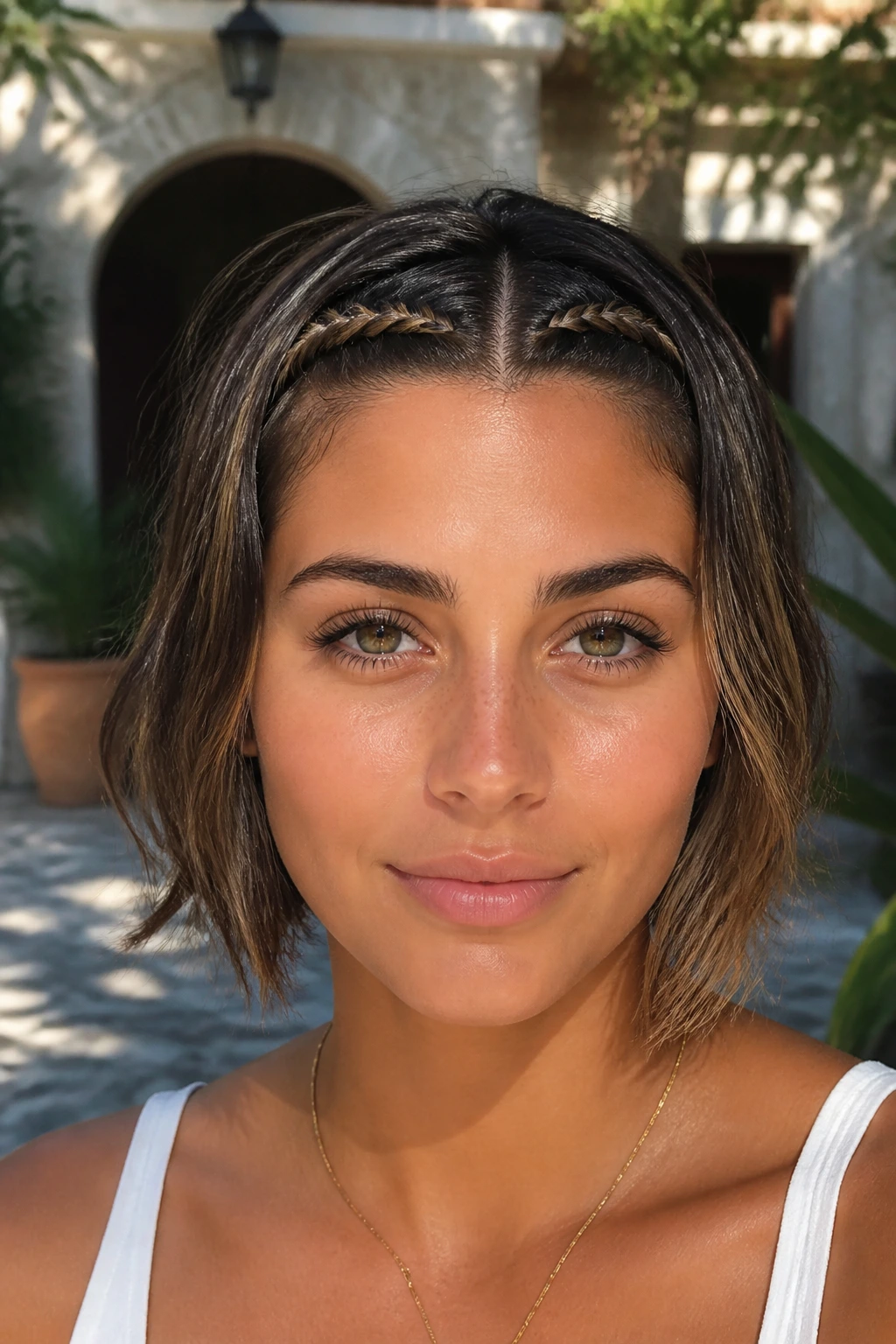
A pair of tiny braids near the hairline is the quickest way to make short hair feel summery without shoving the whole cut into an updo. The braids add detail right where the eye lands, and lowlights make the woven pieces look richer because every crossover catches a darker thread. You do not need long hair for this. You just need enough to braid the front sections back an inch or two.
Why It Feels Fresh
The braids lift sweat-prone pieces away from the face and leave the rest of the hair loose. That means the cut still moves, which keeps it from feeling overworked. When the lowlights sit near the temples or beneath the crown, the braids draw those shades forward in little flashes.
A dab of styling cream on the braid sections helps them stay smooth. Finish the ends with the smallest elastic you can find, and hide the band under a loose coil or a pin if the style needs to look a bit neater.
- Best on straight, wavy, or lightly curly hair.
- Works with bobs, bixies, and grown-out pixies.
- Looks especially good with sunglasses because the braids frame the face without crowding it.
There’s a reason this style keeps showing up. It does a lot with a little.
11. Twisted Half-Up with a Clip
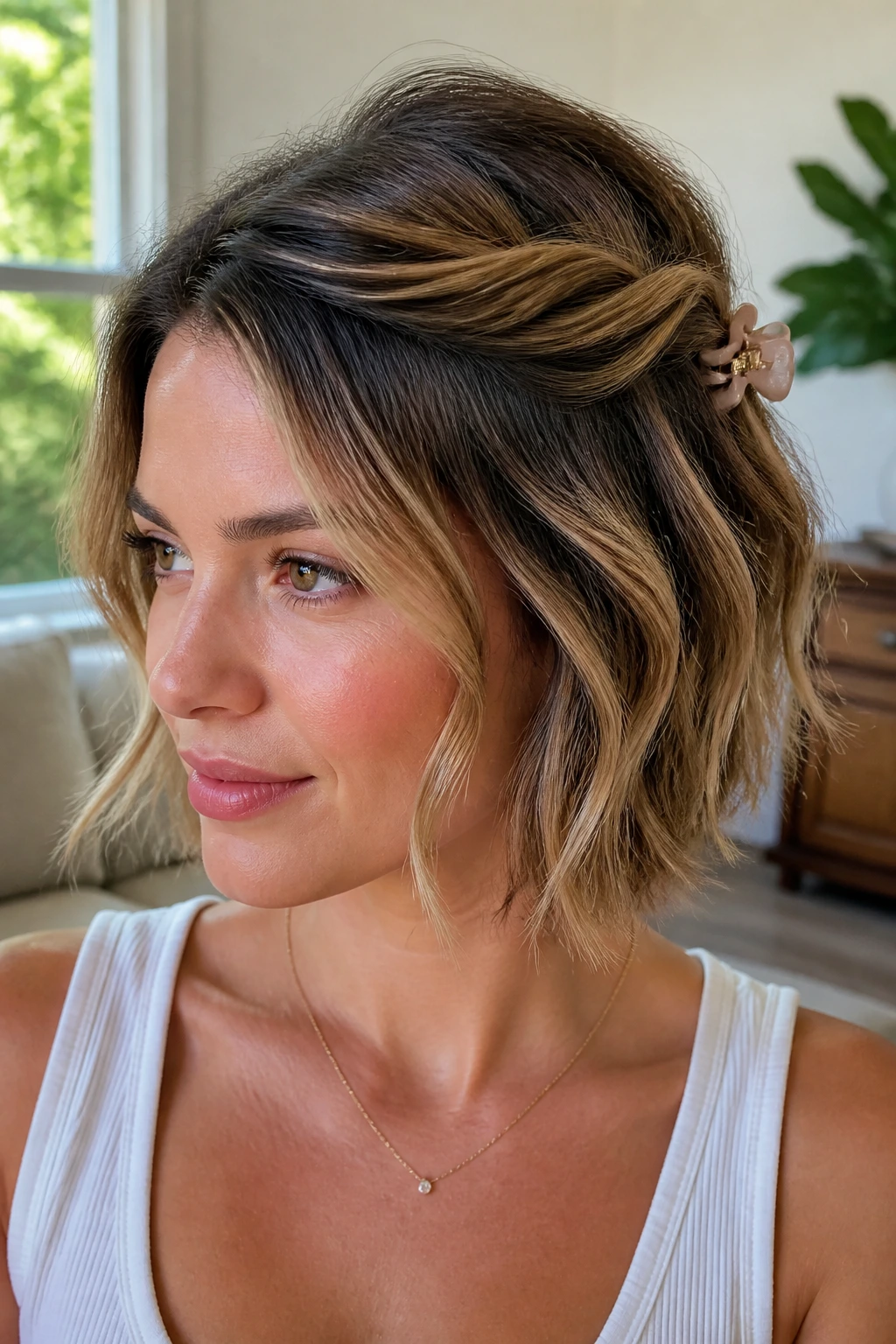
The twisted half-up is the quiet cousin of the mini knot. It feels softer, less perky, and a little more grown-up. Take the front sections, twist each one back, and pin them together with a small clip or barrette. The lowlights stay visible underneath, which is the part that saves this style from looking plain.
It’s especially useful on hair that’s past the exact-bob stage but not long enough for a proper ponytail. The twist pulls the top away from the face, and the darker pieces underneath make the lower half look thicker. If your hair is fine, that’s a useful trick. If it’s thick, the twist keeps the bulk under control.
I prefer clips with a small curve, not giant decorative ones that sit awkwardly on short hair. The clip should disappear into the style, not dominate it. Let a few shorter pieces fall around the temples; those soft edges make the whole look feel less stiff.
Second-day hair helps here, too. A little texture gives the twist grip, and the lowlights show more clearly when the hair isn’t freshly polished.
12. Headband Tuck Bob
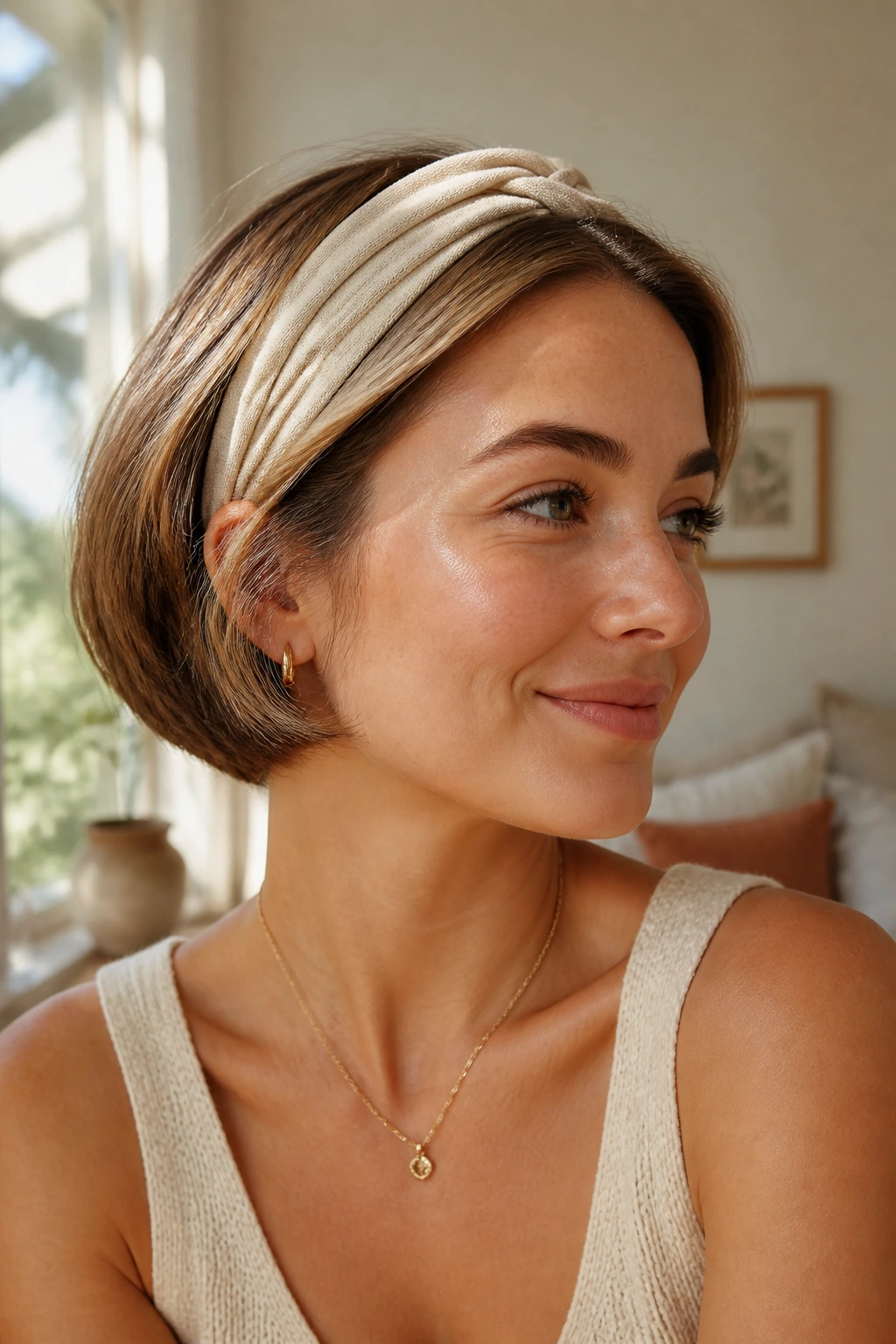
Why does a headband tuck bob work so well with lowlights? Because the headband creates a clean frame, and the tucked hair underneath gets a chance to show off the darker tones at the nape and sides. The result is tidy without looking severe. Very useful when the day is hot and you are not in the mood to wrestle your own hair.
Pick a soft headband with enough give to hold the front without squeezing the crown flat. Tuck the lengths under or behind the band in loose folds, not tight rolls, so the cut still has some softness around the jaw. The lowlights peek through the tucked sections and keep the whole style from looking like a helmet.
How to Wear It
- Choose a fabric band for casual days and a sleeker band for dressier ones.
- Leave a few wisps loose at the temples so the style doesn’t feel too rigid.
- Use a small amount of texture spray before tucking if your hair is silky and slippery.
This one is practical, yes, but it also has a nice old-school charm. The color does the polishing for you.
13. Claw-Clip Twist for a Grown-Out Bob
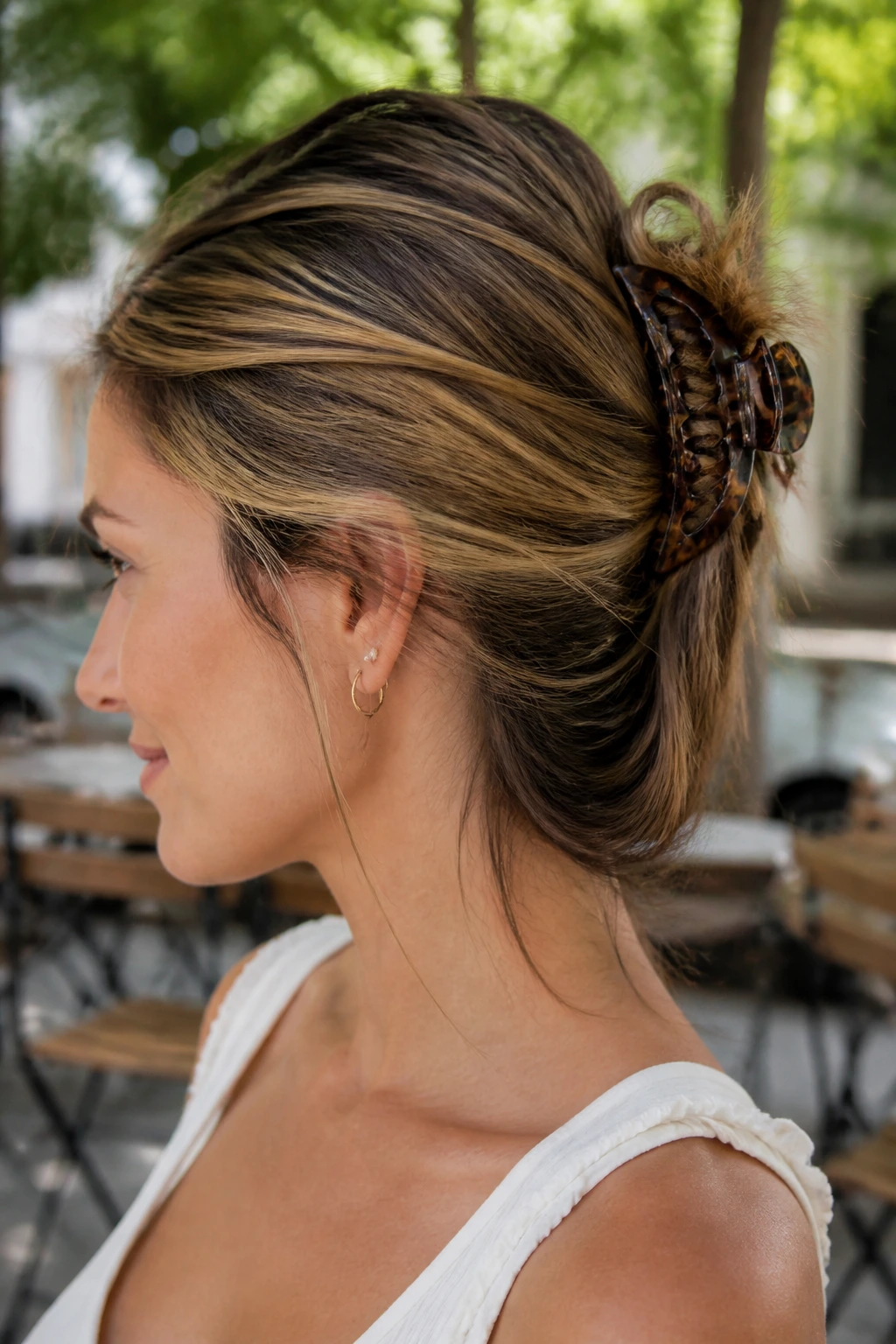
A claw-clip twist is one of those styles that looks easier than it is, which is part of the charm. Gather the hair at the back, twist it upward, and clip it so the ends spill out a little instead of tucking everything in. The lowlights along the lower lengths make those loose ends look intentional rather than unfinished.
This style suits a bob that’s slipping into lob territory, or a lob that’s too short for a classic bun. It keeps the neck clear and still leaves some movement around the face. I like it most when the crown is left slightly lifted rather than pressed flat. That bit of volume keeps the shape youthful.
If your hair is very fine, spray a little dry texture spray at the roots before twisting. If it’s thick, secure the twist with two pins before adding the claw clip so the style doesn’t sag after an hour.
The visual payoff is better than it sounds. The clip shows the haircut’s texture, and the lowlights keep the twisted section from looking like one solid block.
14. Asymmetrical Pixie Sweep
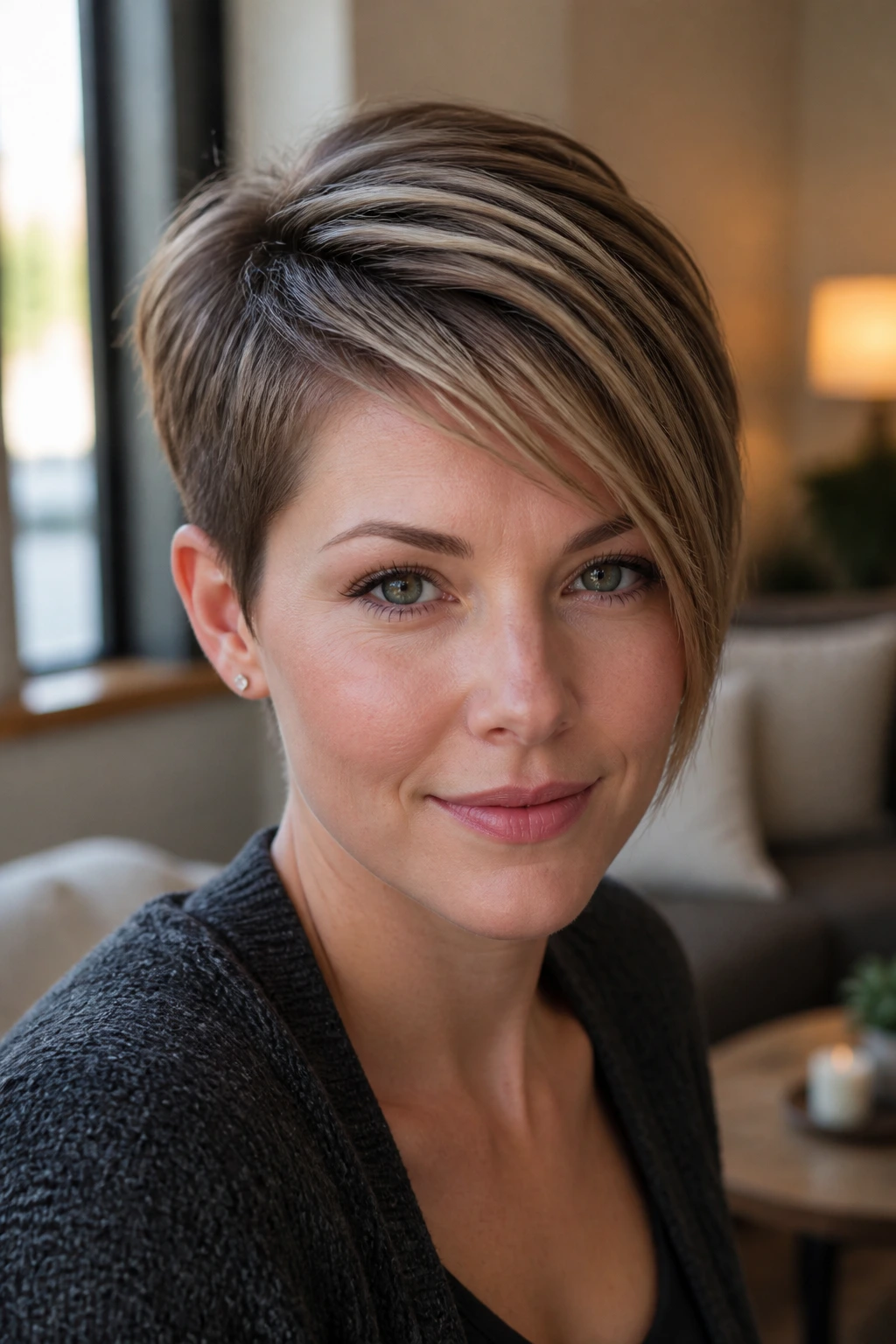
An asymmetrical pixie sweep is for anyone who wants the haircut to have some edge without needing much styling time. The whole idea is to push the longer side forward and let the shorter side sit cleaner against the head. Lowlights on the longer side create a darker sweep that makes the asymmetry obvious in the best way.
This cut works because the eye notices direction before it notices length. A little wax or paste through the top gives the fringe and crown enough separation to show the color. The shorter side should stay neat and close, while the longer side gets a little bend or lift.
If you wear glasses, this style is especially good. The sweep and the frames can share space without competing. If you don’t, the longer fringe gives the face a more angled line.
Don’t overdo the product. Too much paste flattens the crown and kills the shape. A small amount is enough. The lowlights will do the rest.
15. Micro Ponytail with Face-Framing Ends
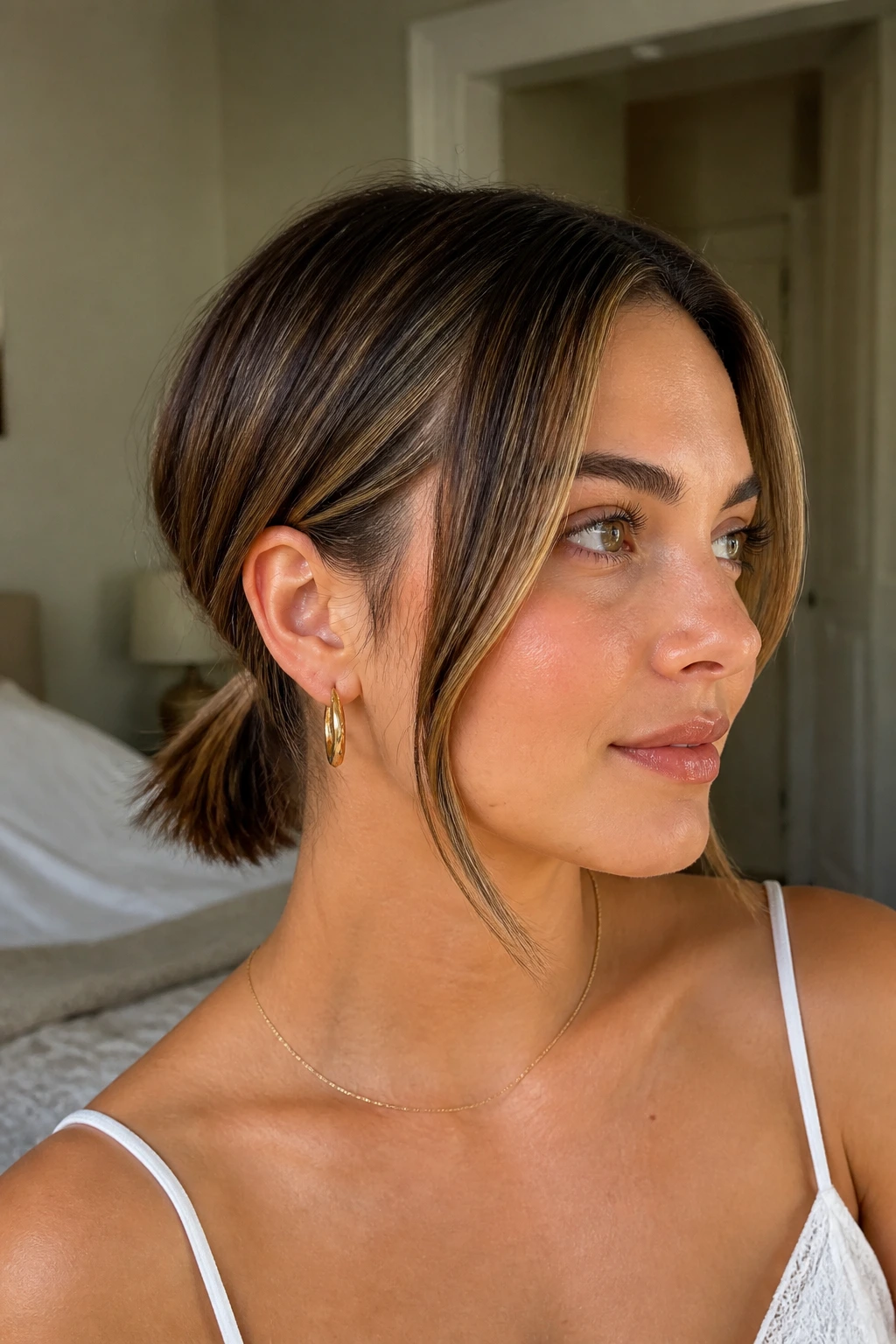
A micro ponytail is the style I reach for when a bob is long enough to gather but not long enough to behave. Secure the nape hair into a tiny pony, leave the front pieces out, and let the lowlights around the face do the framing. That little contrast at the front and back makes the style look deliberate instead of improvised.
This works especially well if your hair sits at collarbone length or just above it. The pony should be small and low, not high and bouncy. A tiny elastic is enough. Wrap a strand around the band if you want it cleaner, but don’t obsess over it.
Quick Details That Matter
- Keep the face-framing pieces slightly waved, not pin-straight.
- Place lowlights near the hairline and through the ponytail so the tie doesn’t expose a flat color block.
- Use a firm yet flexible hold spray if the ends tend to slip out.
One thing I like here: the style gives short hair a clear shape on hot days without pretending it’s longer than it is. That honesty helps.
16. Faux Hawk Pixie
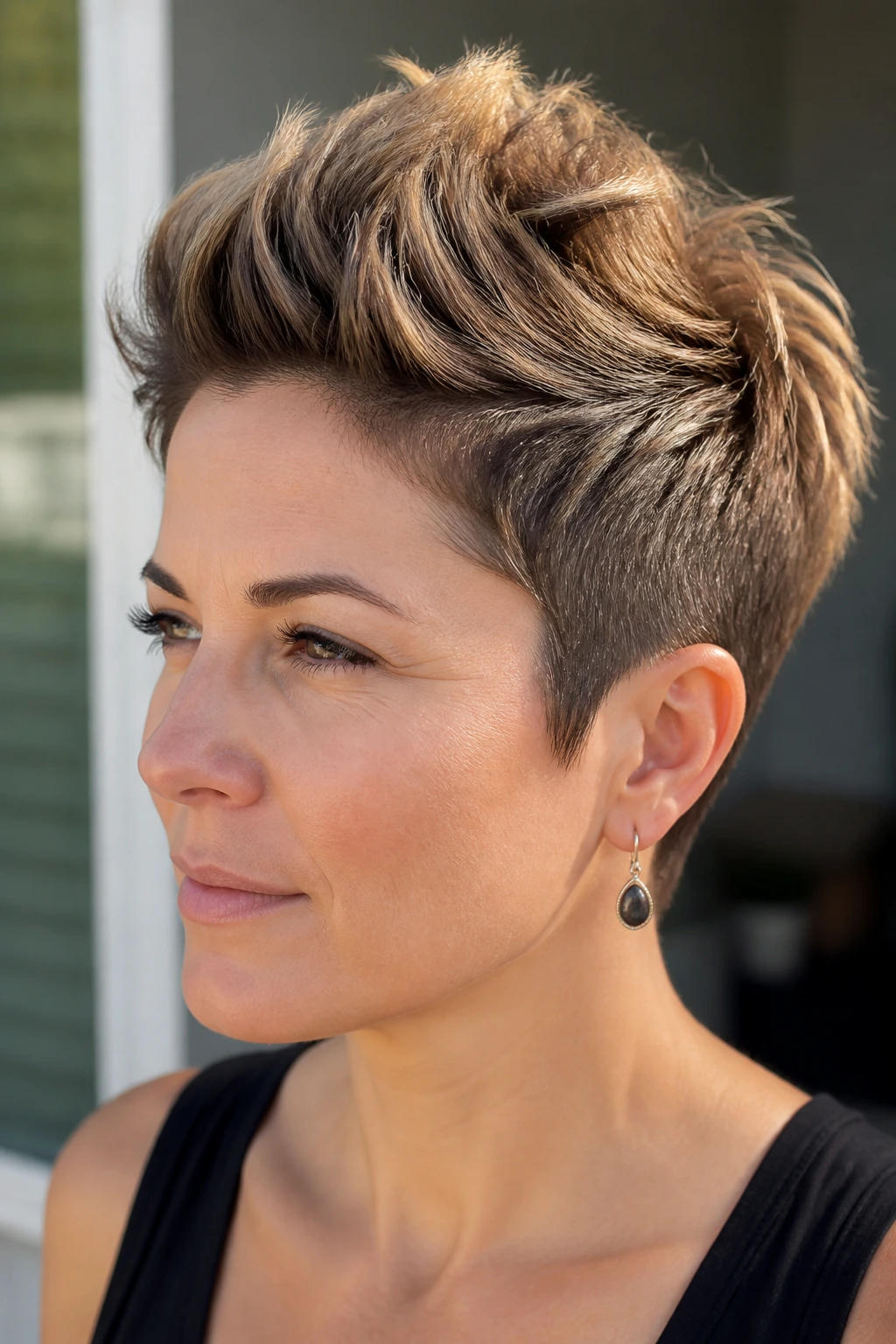
The faux hawk pixie has a little swagger, and lowlights sharpen that center ridge nicely. Push the sides close to the head, lift the middle section, and let the darker strands in the crown and top lengths create a narrow band of depth. The shape looks stronger because the eye follows the shadow up the middle.
This style is especially useful when short hair starts to lose its edge after a few days of wear. A bit of volumizing foam at the roots, followed by blow-drying upward with your fingers, gives the center enough lift. Then pinch the top sections with a wax or paste so they stay separated.
If your hair is curly or coily, the faux hawk can be even more interesting because the lowlights sit inside the texture instead of on top of it. The shape turns into a real feature, not a gimmick. That’s the difference between a style that works and one that just looks like a mood board.
I’d wear this one when the rest of the outfit is simple. Let the hair be the point.
17. Scarf-Wrapped Short Bob
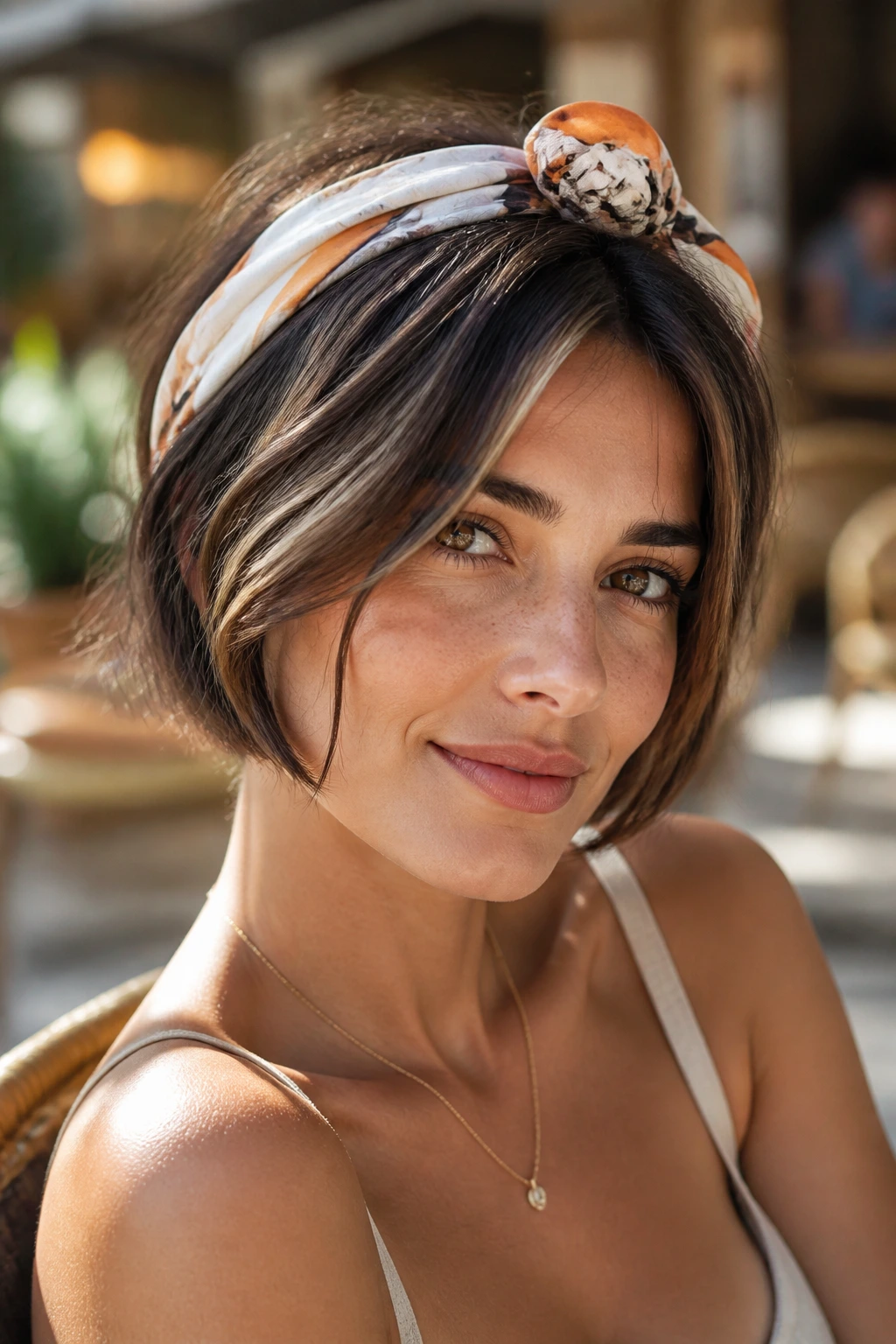
A scarf-wrapped bob is the easiest way to make short hair feel intentional on the hottest days. Tie a silk or cotton scarf around the crown, tuck it at the nape, and leave the bob loose underneath. The lowlights show through the ends and around the sides, which keeps the style from becoming a plain block of color under the fabric.
What to Watch For
The scarf should support the hair, not squash it. If you flatten the crown too much, the bob loses shape and the lowlights disappear into the length. Leave a little lift at the top so the hair still has room to move.
This style works beautifully when you want to stretch a wash day or avoid heat styling. It also hides a slightly uneven grow-out, which is a practical bonus nobody seems to admit out loud. A patterned scarf can pull the color forward, but a solid color often lets the lowlights show more clearly.
- Use a silk scarf if you want less frizz.
- Use a cotton scarf if you want more grip.
- Let a few side pieces fall free so the look doesn’t feel too wrapped-up.
If you want a short-hair style that looks planned in less than a minute, this one earns its place.
18. Airy Layered Crop with Pin-Back Sides
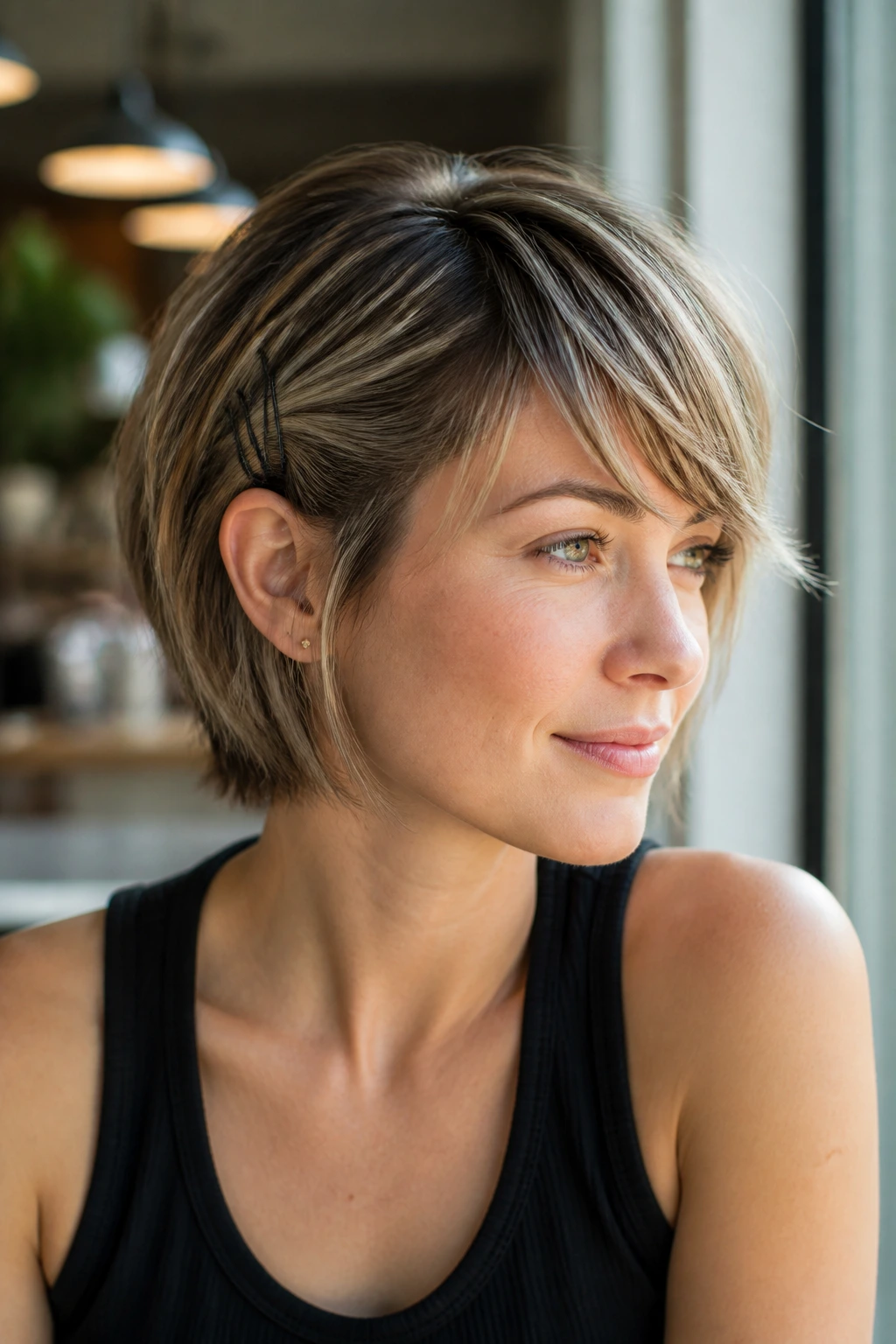
An airy layered crop with pin-back sides is the style that makes lowlights look almost architectural. The pins hold the sides away from the face, and the layers on top create little windows where the darker strands can show through. It feels light, neat, and a little playful without tipping into fussy.
The cut itself matters here. You want enough interior layering for movement, but not so much that the shape gets fuzzy. A little root lift at the crown and a few bent pieces around the front are enough. Pin one or both sides back with simple bobby pins, then rough up the top with fingertips so the style doesn’t look over-groomed.
This is the one I’d choose for a day that starts casual and ends somewhere with a decent mirror. It wears well for hours. The lowlights keep the crop from looking washed out, and the pins add just enough detail to make the haircut feel finished.
Small style. Big payoff.
Why Lowlights Make Short Hair Look Denser in Summer Light
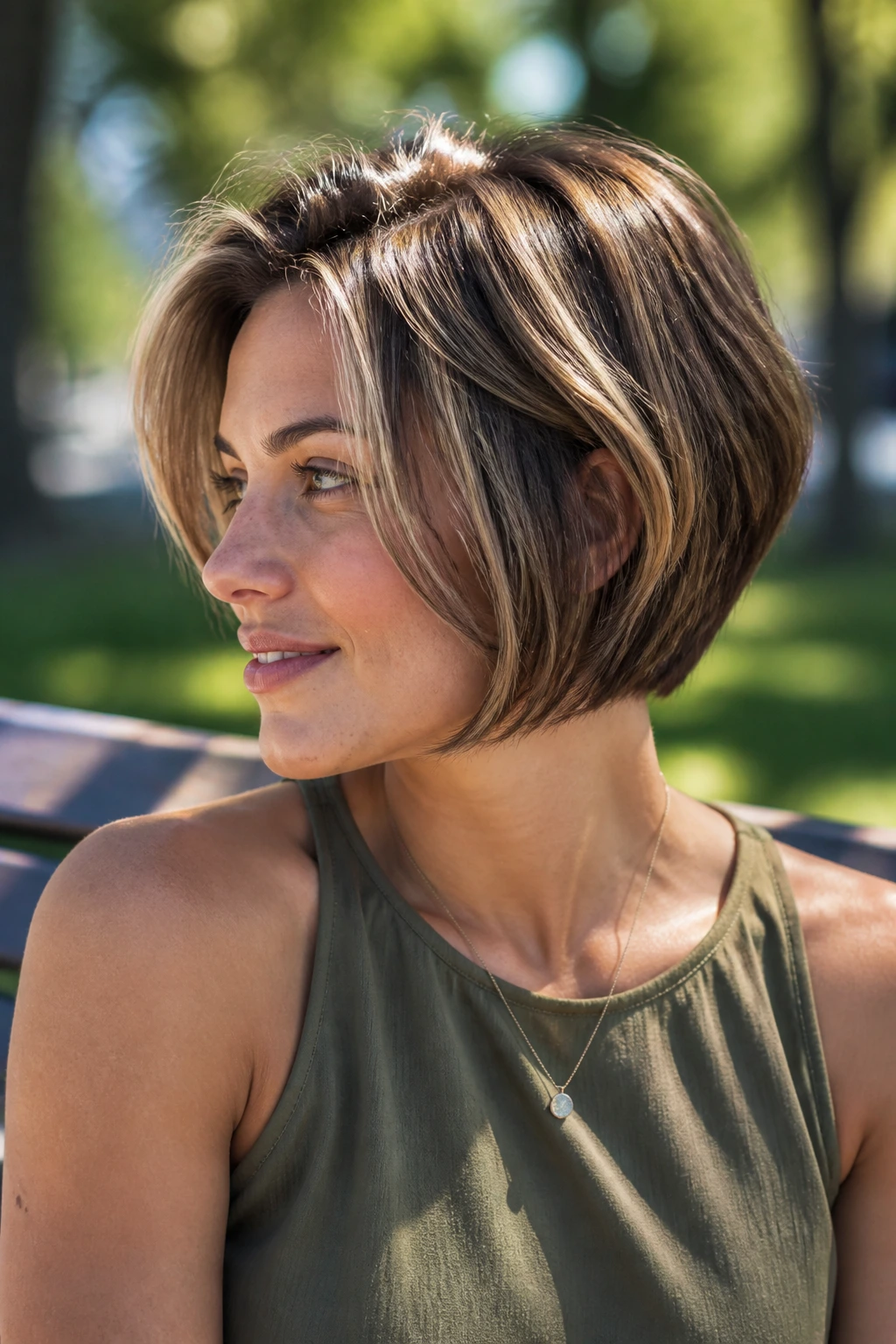
Short hair is honest about color placement. There isn’t much length to hide a bad foil pattern, and there isn’t enough weight for the cut to mask a flat tone. That is why lowlights matter so much on a bob, bixie, or pixie: they create the illusion of depth inside the haircut, not just on top of it.
The smartest placement is usually one to two shades deeper than the base color. Any darker than that, and the contrast can read as stripey, especially on fine hair or on cuts with blunt ends. The goal is shadow, not obvious blocks. A good lowlight should look like the hair naturally has more depth under the surface.
Where the darker strands should live
Put them where the eye follows movement: under the crown, around the temples, behind the ears, and through the lower half of the cut. Those are the places short hair can go visually soft in direct sun. When the darker strands sit there, the haircut keeps its shape even when the day gets bright and unforgiving.
Why sunlight changes everything
Summer light can bleach the surface of hair fast, and short cuts show that change immediately. Lowlights stop the ends from looking too pale or too thin, which is especially useful if your hair is already highlighted. One small correction in tone can change the whole read of the cut.
Essential Tools for These Looks
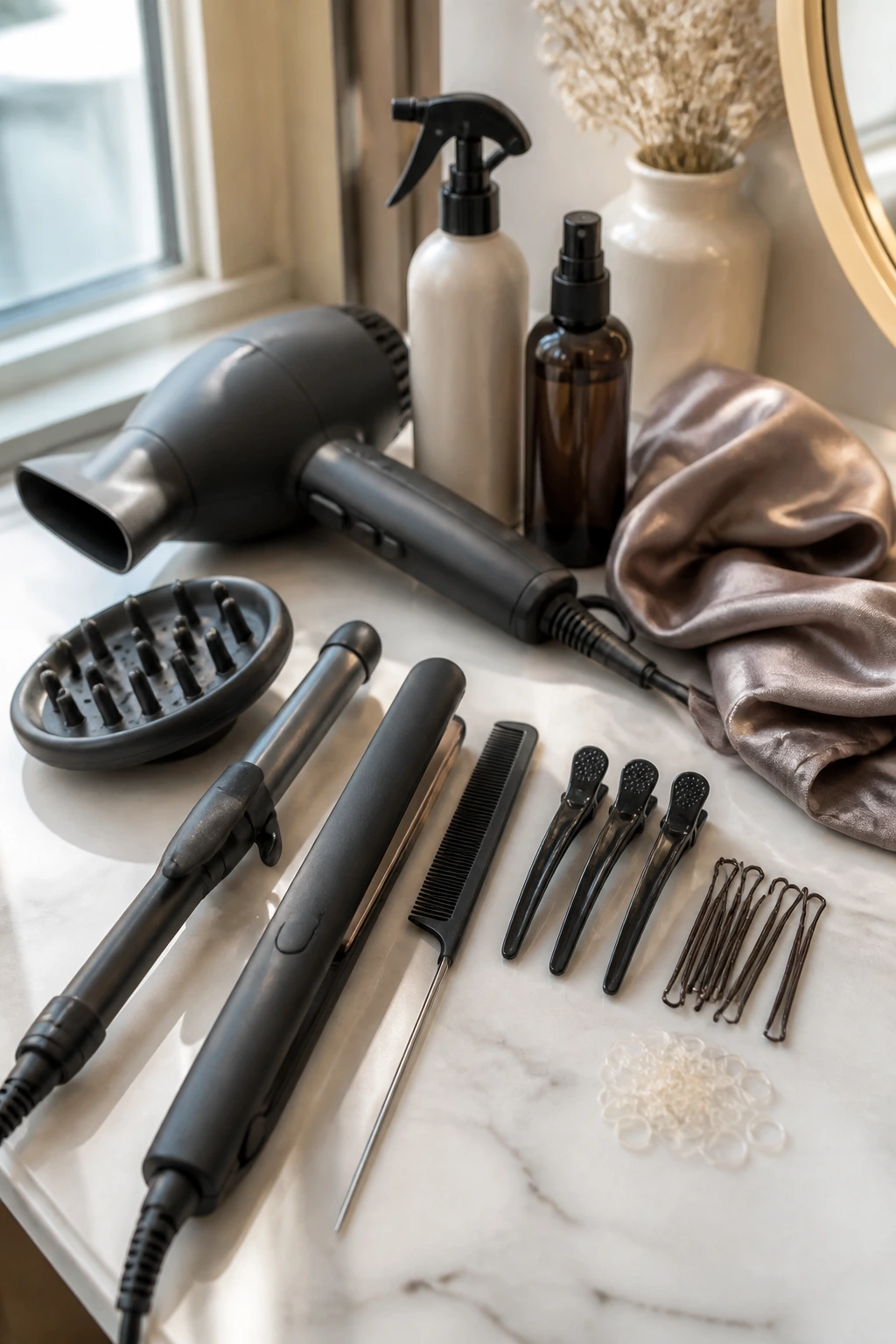
- Blow dryer with nozzle: Gives you control at the roots and helps short layers sit where you want them.
- Diffuser: Worth having if your hair is wavy or curly; it keeps the curl pattern from getting frizzed out.
- 1-inch curling iron or wand: The safest all-purpose size for short bobs and pixies that need a bend, not a barrel curl.
- Flat iron: Good for flips, polished ends, and that tucked-behind-the-ear look.
- Tail comb: Useful for sharp parts, clean sections, and tiny braids.
- Duckbill clips: Keep sections out of the way while you style, especially on short layered cuts.
- Bobby pins: Pick ones close to your hair color so they vanish into twists and pin-backs.
- Micro elastics: Better than bulky bands for mini knots and tiny ponytails.
- Texture spray: Gives short hair grip without making it crunchy.
- Lightweight mousse: Helps wave and curl patterns hold in humid air.
- Heat protectant: Non-negotiable if you use hot tools. Short hair burns just as fast as long hair.
- Satin scarf or pillowcase: Helps preserve shape overnight and reduces frizz around the lowlighted sections.
You do not need every tool on that list for every style. But if you keep the core five or six within reach, the styles get much easier.
Choosing the Right Lowlight Shade and Product Match
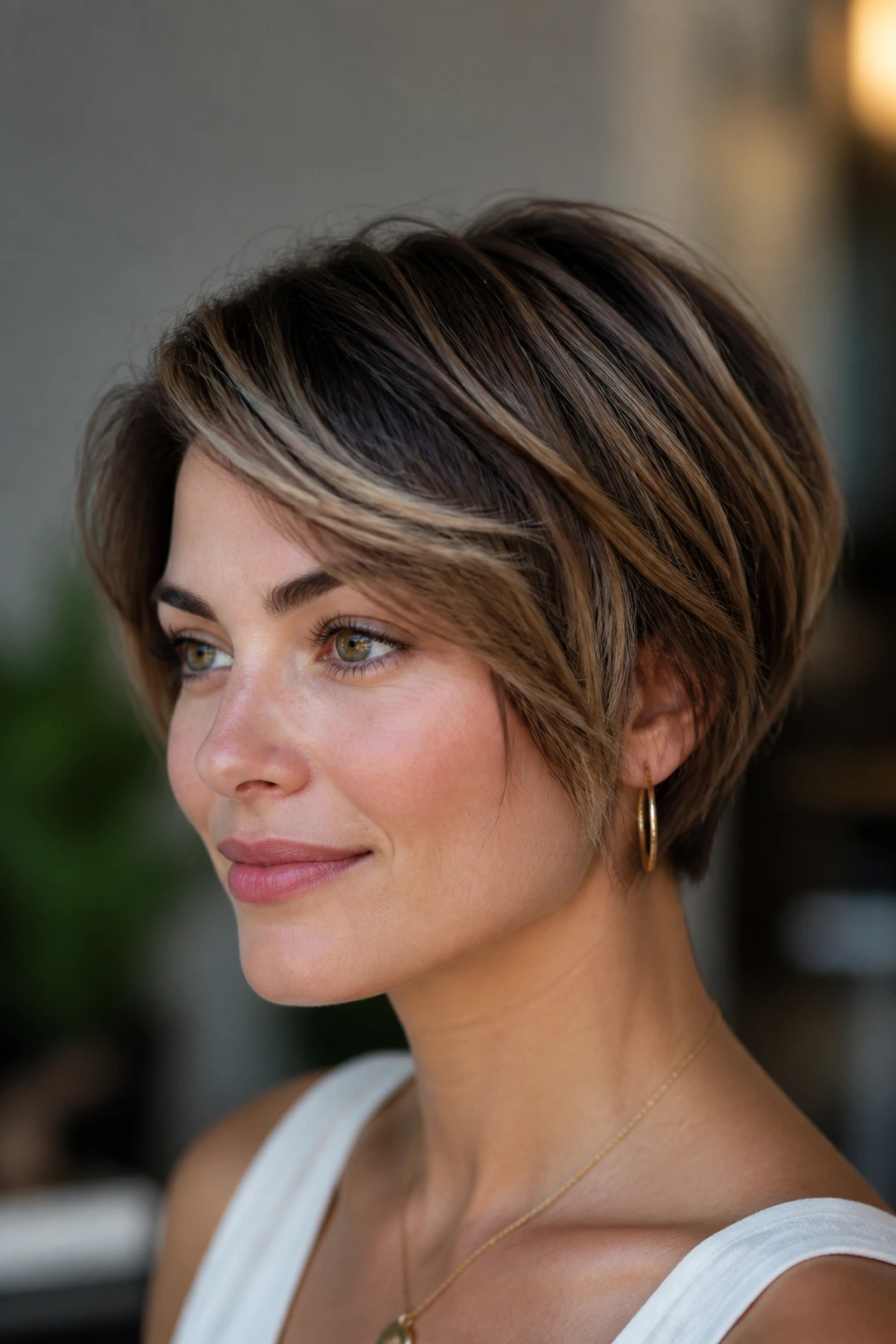
The best lowlight shade is the one that looks like a deeper version of your natural tone, not a separate color story. On short hair, that distinction matters. If the contrast is too hard, the style reads as choppy in a bad way. If it’s too soft, the lowlights disappear completely and you lose the depth they were supposed to create.
For blondes
Go for mushroom blonde, beige brown, ash caramel, or a muted taupe-toned lowlight. Warm golds can work, but they should be used carefully if your hair already goes brassy in the sun. One level darker is often enough. Two levels darker can work on thicker hair, but not much beyond that unless you want visible contrast.
For brunettes
Chestnut, cocoa, espresso, and cool mocha shades are the safest bets. If you have a blunt bob, ask for thin ribbons around the perimeter so the ends do not look heavy. If your cut is layered, a few darker strands underneath the top section help the texture pop.
For redheads
This is where people get lazy and go too dark. Cinnamon, auburn shadow, and soft mahogany usually work better than deep brown. Red hair already carries warmth; the lowlights should deepen it, not erase it.
For product choice
Short summer hair usually does better with lightweight products. Texture spray, mousse, and a little flexible paste beat heavy creams most of the time. If your hair is fine, choose products that dry matte or satin, not greasy. If it’s coarse or curly, you can lean a little richer, but only a little.
How to Wear These Styles With Hats, Sunglasses, and Hot Weather
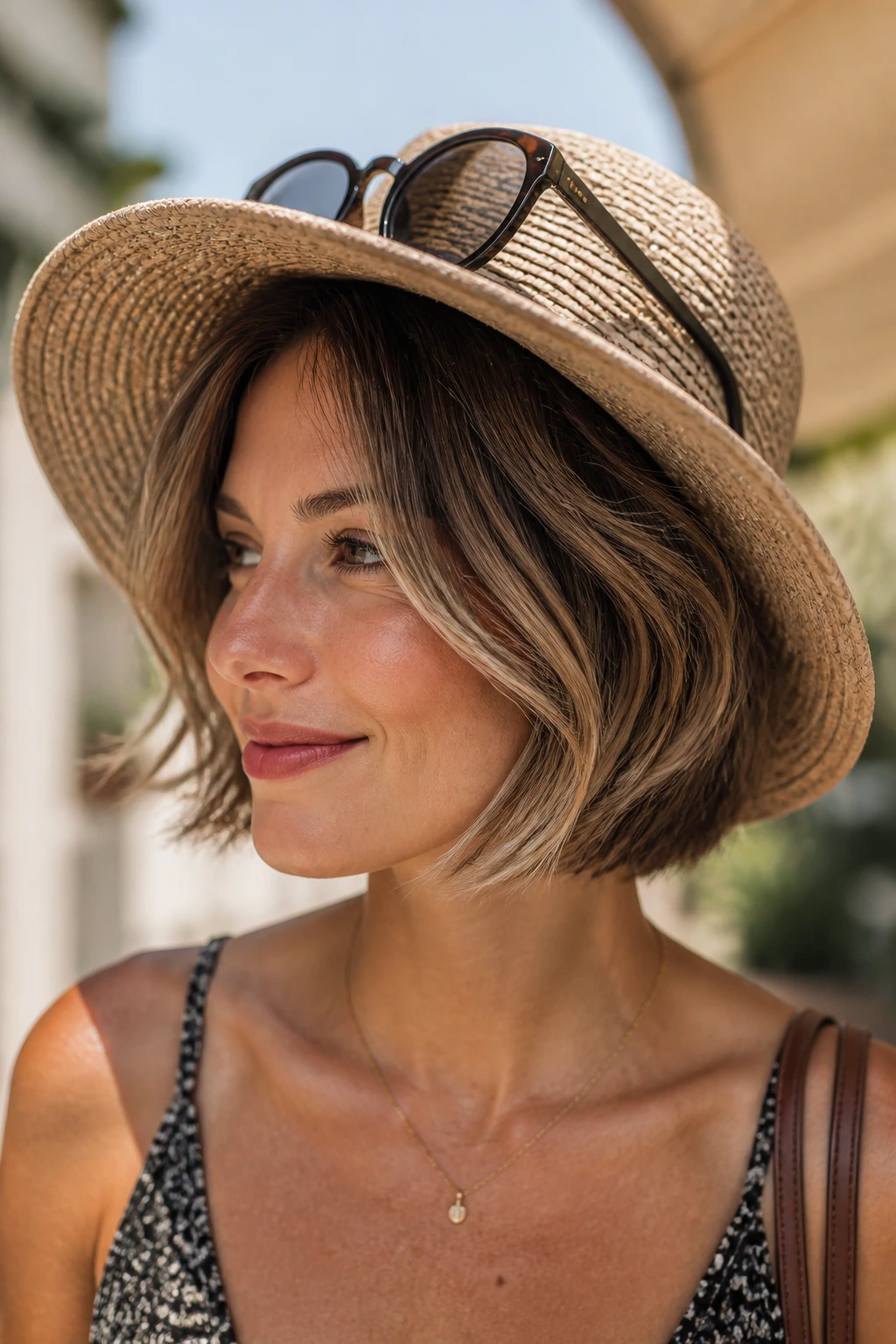
Short hair has a nice advantage in summer: it can live under accessories without getting destroyed by them. A bob under a straw hat still shows shape. A pixie under sunglasses still looks styled. Lowlights make that easier because they create enough contrast to hold up even when pieces are tucked away.
Finish: Keep the top smooth or slightly textured, depending on the style, and let the lowlights do the visual work underneath. A style that is too glossy everywhere can lose shape when a hat presses it down.
Accessories: Small hoops, slim headbands, silk scarves, and matte clips usually look better than oversized pieces on short hair. They don’t fight the cut, and they let the lowlight pattern stay visible.
Wear It With: Breezy shirts, sleeveless dresses, structured tees, or anything with a visible neckline tend to show off these cuts best because the hair and the clothing line up cleanly around the face and shoulders.
Heat Strategy: If humidity is high, choose styles that stay close to the head or use controlled texture. Leave the volumized blowout for drier air, unless you enjoy revisiting your hair every two hours.
Additional Tips and Texture Boosters
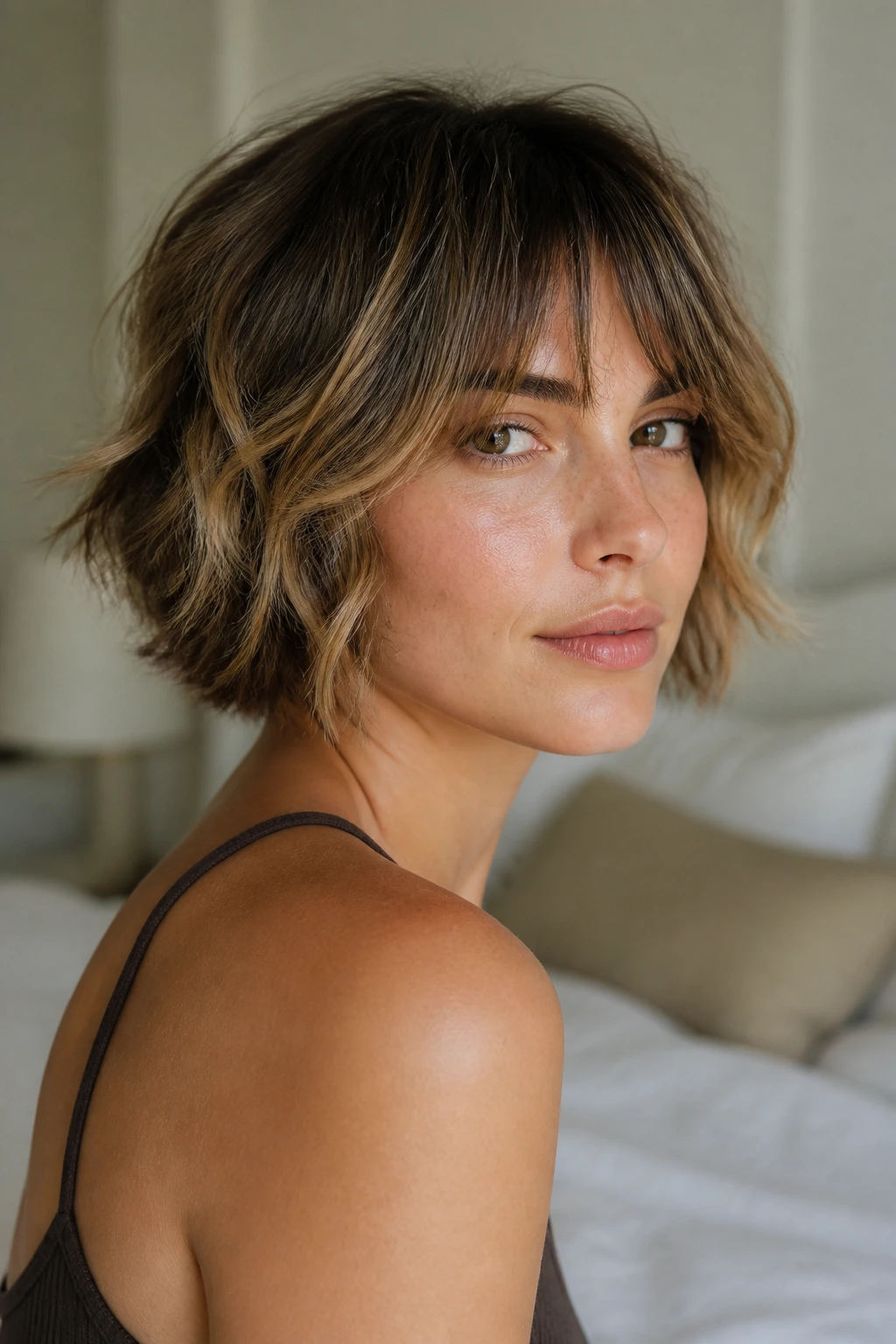
Texture Enhancement: Spray texture product at the roots and the nape, not just the surface. That small move keeps short layers from sticking flat against the scalp.
Color Boost: If your lowlights are starting to look too subtle, a gloss or toning glaze can bring the depth back without a full color appointment. On short hair, a little refresh goes a long way.
Clip Placement: Put clips, pins, and bars slightly off-center. Centered accessories can make short hair feel stiff; a slight shift keeps the shape alive.
Part Change: Change your part before you think you need to. A new part exposes different lowlight panels and keeps the cut from settling into one tired shape.
Finish With Fingers: Combining short hair into place too much can make it look overworked. Fingers give you better control over separation, and separation is what lets lowlights show.
Color Match to the Cut: If your haircut is blunt, softer lowlights usually look better. If the cut is choppy, you can handle a little more contrast. The color should follow the cut’s energy, not fight it.
Common Mistakes to Avoid
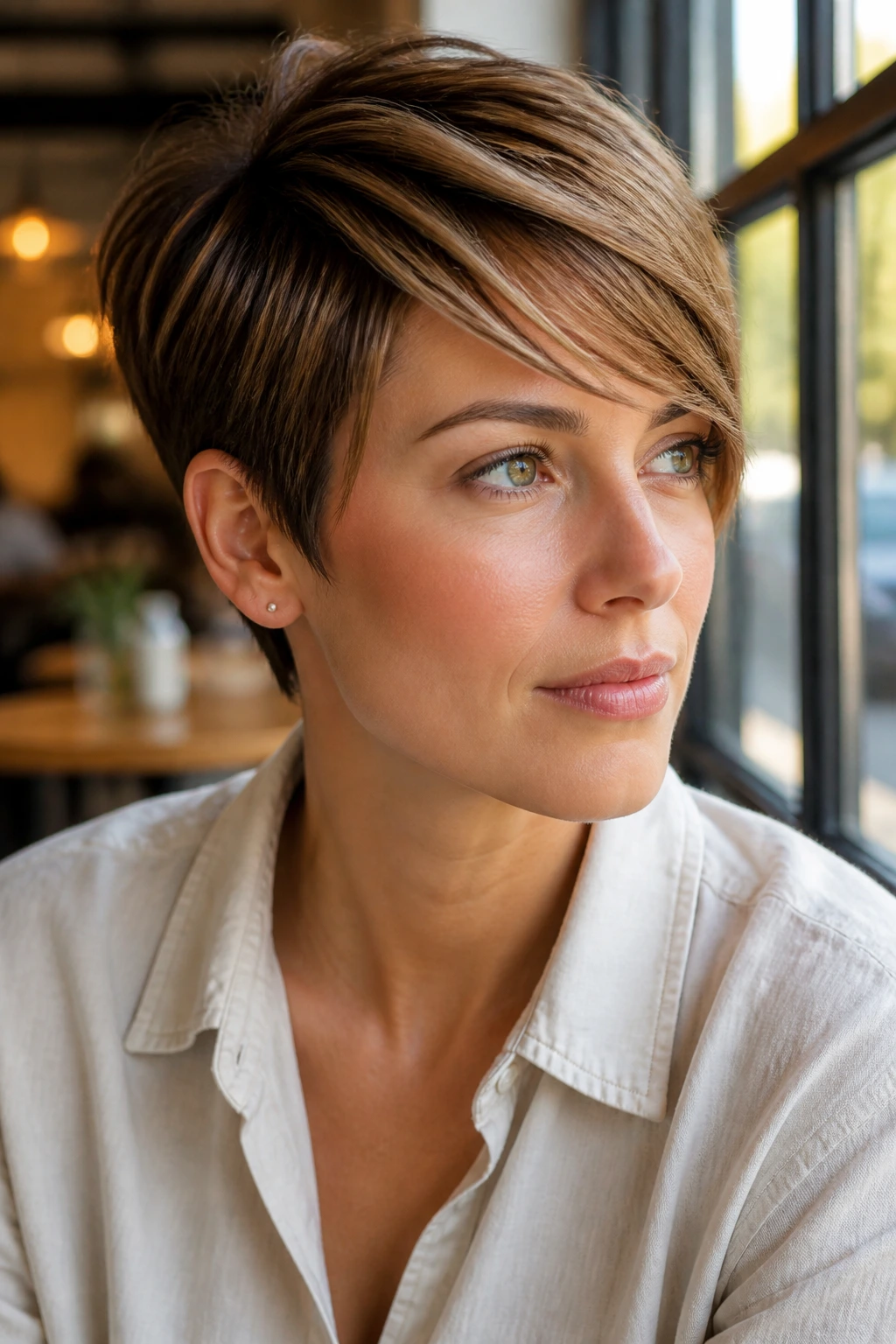
The first mistake is making the lowlights too dark. On short hair, that can look like random stripes instead of depth, especially in direct light. The fix is simple: ask for shades that sit just one to two levels deeper than your base, and make the pieces thin enough to blend when the hair moves.
Another common problem is using too much product. Heavy cream, oil, or pomade can weigh short hair down and make the lowlights vanish under a greasy surface. If the style starts looking oily by midday, cut the product amount in half and move it to the ends or the crown only.
People also try to force long-hair styles onto cuts that are too short for them. A full ponytail or oversized bun on a bob usually ends in pins slipping and pieces falling out. Tiny knots, twists, braids, and clips are the better answer.
Then there’s the part problem. Wearing the same part every day makes the cut settle and can hide the lowlights in the same spots all the time. Switching the part by half an inch or flipping the direction gives the color new life and helps the style hold its shape.
Finally, don’t skip heat protection if you use irons or dryers. Short hair doesn’t have extra length to spare when the ends start looking fried and the color gets dull. Once the texture turns rough, the lowlights stop looking dimensional and start looking dusty.
Variations and Adaptations to Try
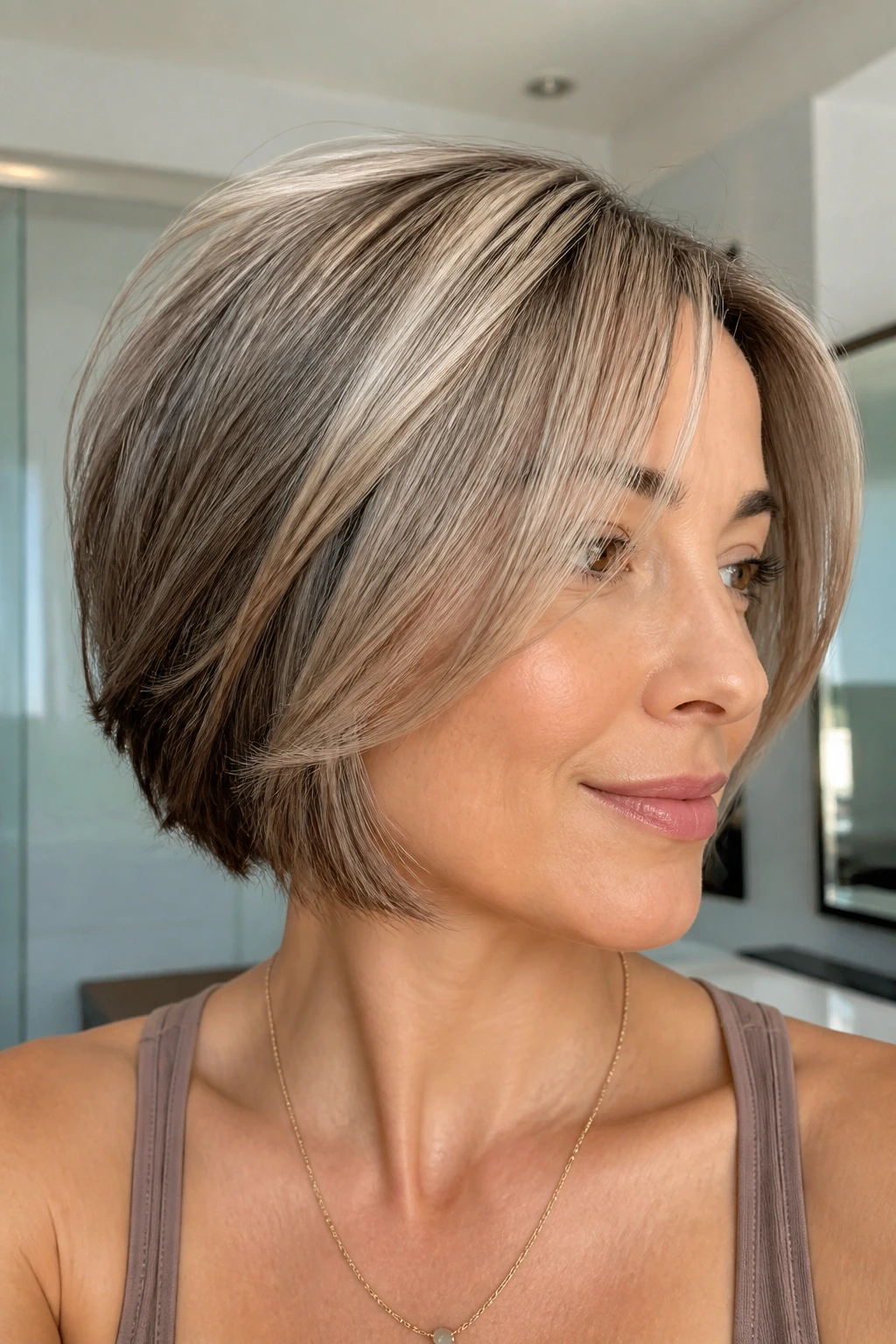
Fine-Hair Featherlight Version: Use thinner lowlights and lighter styling products, then build the shape with root lift and a soft bend. This keeps the cut from looking heavy, which is the main risk with fine hair.
Curly Definition Version: Lean into curl cream, diffuser drying, and finger-coiled front pieces. The lowlights should sit between the curls, not on top of them, so the ringlets keep their shape.
Brunette Shadow Version: Choose cocoa, chestnut, or espresso lowlights and keep the placement low around the nape and sides. This version is especially good for bobs that need more visual weight through the ends.
Blonde Smoke Version: Add smoky beige or mushroom-toned lowlights instead of warmer caramel. The color stays cool and clean, which helps if your blonde tends to go gold in strong sun.
Low-Maintenance Grow-Out Version: Ask for soft, blended lowlights placed underneath the visible top layer. This is the version that keeps working after a few weeks because the grow-out line stays quiet.
Redhead Cinnamon Version: Use cinnamon and auburn shadows rather than a hard brown contrast. That keeps the warmth intact and gives the hair a richer, almost coppery depth.
Keeping the Color Fresh Between Washes
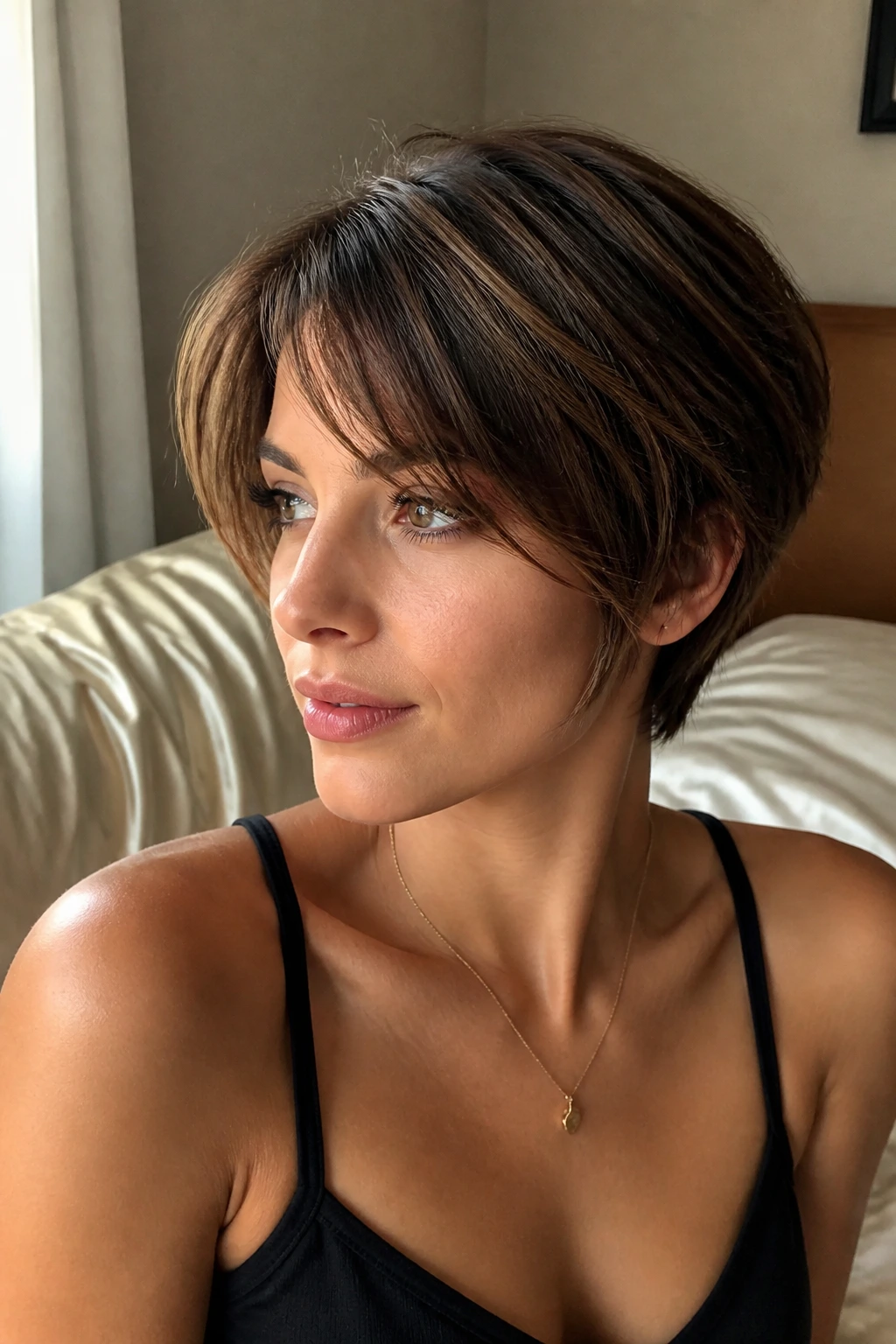
Short hair usually needs less washing than people think, mainly because over-washing crushes both the shape and the color. Two to four days between washes is a solid range for most short cuts, depending on scalp oil and product buildup. If your roots get shiny fast, dry shampoo at the crown can buy you another day without making the hair chalky.
At night, a satin pillowcase or scarf helps the lowlighted sections stay smooth. That matters more than it sounds, because frizz on short hair can make the darker strands look patchy. If the style is a bob or bixie, you can also pin the longer side behind the head loosely so the shape doesn’t bend weirdly overnight.
Refreshing the style
For day-two hair, mist lightly with water, add a pea-size amount of mousse or curl cream, and reshape with fingers. A blow dryer on low for thirty seconds can bring a pixie or bob back to life fast. On day three, texture spray and a few deliberate bends usually work better than starting over.
Color care
Use a color-safe shampoo and keep clarifying shampoo for buildup removal every 10 to 14 days if your hair gets coated with dry shampoo or styling paste. Lowlights fade more gracefully than bright highlights, but they still lose crispness if the hair is stripped too often. A gloss or toner refresh every 6 to 10 weeks keeps the depth visible.
Frequently Asked Questions
Do lowlights work on pixie cuts, or are they better on bobs?
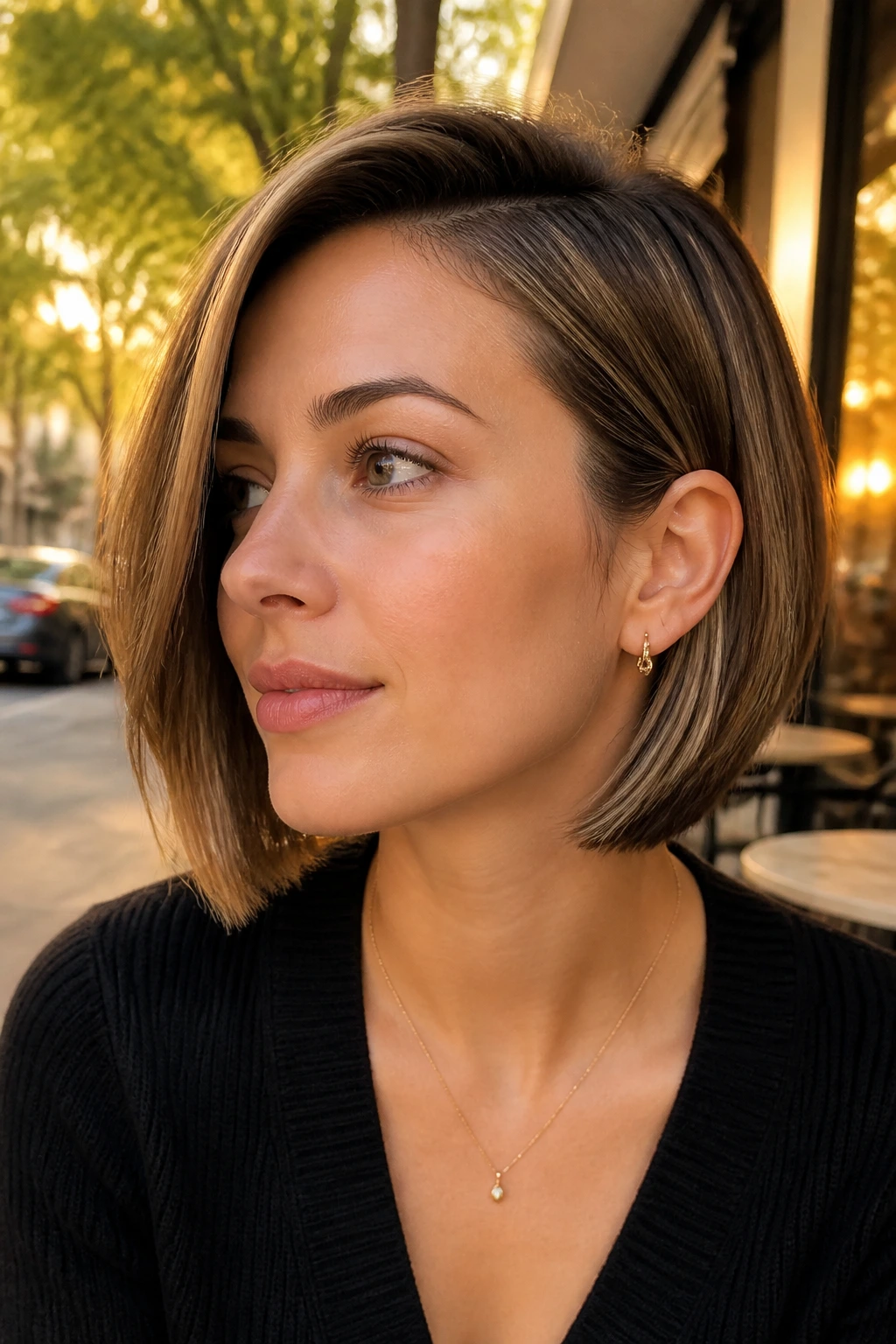
They work on both, but the placement changes. On a pixie, thin lowlights around the crown, temple, and nape make the shape look fuller; on a bob, you can spread them a little more through the lower lengths so the ends look denser.
How dark should lowlights be on short hair?
Usually one to two shades deeper than your base is enough. Short hair shows contrast fast, and going too dark can make the color look streaky rather than dimensional.
Can I do these styles on day-two hair?
Yes, and some of them work better that way. A mini knot, twisted half-up, claw-clip twist, or tousled bob usually holds better once the hair has a bit of texture and the roots are not freshly slippery.
What if my hair is fine and goes flat by noon?
Keep the lowlights thin and use lighter products: mousse, texture spray, a touch of dry shampoo, and a small amount of paste only at the ends. Heavy cream will flatten the cut and hide the color.
Will lowlights make short hair look thicker?
They can, if the placement is smart. Darker strands under the surface create the look of shadow between layers, which makes the ends and crown read as fuller.
Can I wear a scarf or headband without ruining the shape?
Yes, but use softer fabrics and avoid squeezing the crown flat. A silk scarf or flexible headband keeps the style tidy while still letting the lowlights show through underneath.
What if my hair is curly or coily rather than straight?
Then lowlights can be even more useful, because they separate the texture and keep the shape from turning into a single mass. The key is to keep the color thin and the styling products light enough to preserve spring.
How do I keep bangs or face-framing pieces from sticking in humidity?
Dry them fully at the roots, then use a small amount of flexible hold spray or mousse. If the hair still collapses, a quick pass with a flat iron on the front pieces usually fixes it faster than piling on more product.
The Shape That Stays Interesting
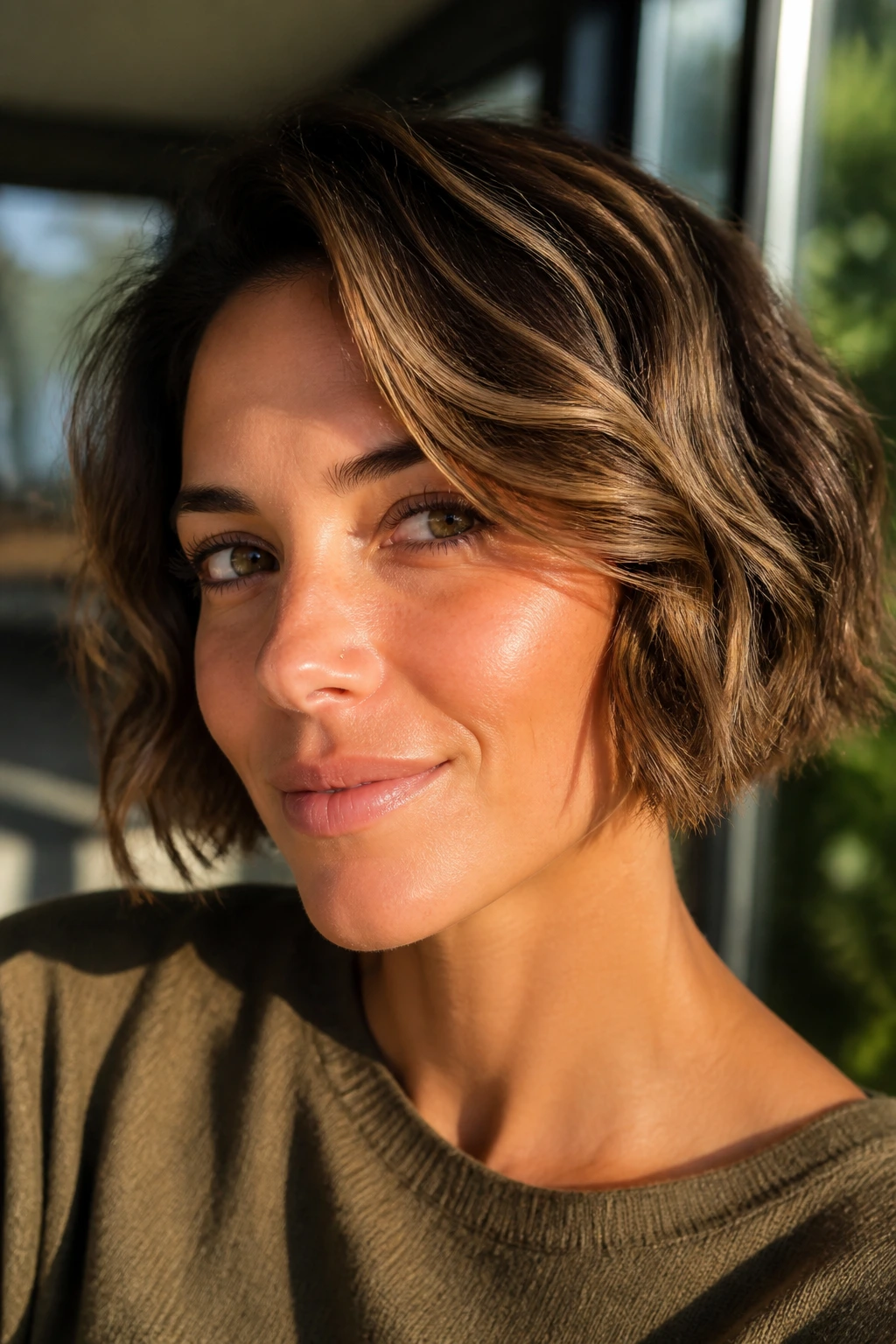
Short hair does not need extra length to feel finished. It needs depth, and lowlights are the simplest way to build that depth without dragging the whole look down. A good summer cut should move, hold its line, and survive bright light without going blank at the ends.
The nicest thing about these styles is that they are not trying to do too much. A smart part, a small twist, a clipped side, or a soft wave is enough when the color already has shadow in it. That’s the quiet advantage of lowlights on short hair: they make simple styles look chosen.
Pick one shape, keep the product light, and let the darker ribbons do their work. The hair will look more alive for it.