



Caramel can go sideways fast on cool skin. One swipe too orange and the face starts looking pinker; too many thick ribbons on finer hair and the whole head can read sparse, not dimensional. The sweet spot is narrower than most salon mood boards suggest, and that’s exactly why the right caramel highlights are worth the trouble.
The shades that work best here are rarely the loud, pumpkin-bright versions people think of first. Beige caramel, smoked toffee, mushroom-brown caramel, and soft biscuit tones sit closer to the cooler end of the warm spectrum, which keeps them from fighting blue, pink, or red undertones in the skin. On thin hair, the placement matters just as much as the color itself. Fine slices, a shallow root shadow, and a few well-placed lowlights do more for fullness than a dozen chunky foils ever will.
So the game is not “go lighter.” It’s “go smarter.” A little warmth at the right depth, in the right spots, can make fine hair look fuller and cooler complexions look calmer around the cheeks and jaw. That’s the lane these ideas live in, and the details matter.
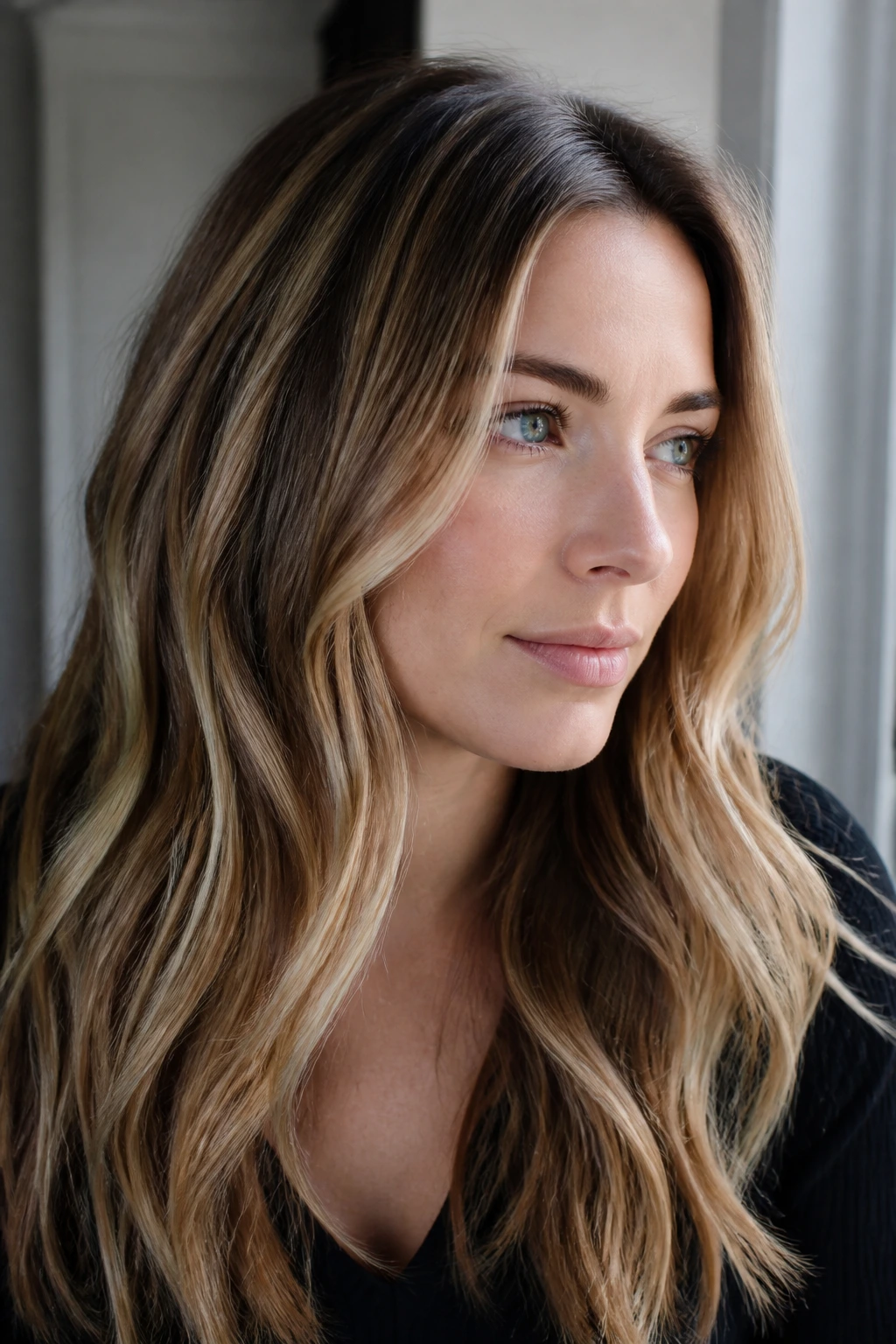
Why These Caramel Looks Work Better Than Flat Warm Highlights
-
Cool-skin friendly: The best caramel choices here lean beige, toffee, or smoky brown instead of orange-gold, which keeps the color from pulling too red against cool undertones.
-
Thin-hair friendly: Fine weaves and ribbon placements create the look of density because they leave enough darker hair behind for contrast.
-
Low-drama grow-out: Root shadows and balayage keep the regrowth line soft, so you’re not stuck with a hard stripe after a few weeks.
-
Face-lifting effect: Brightness around the temples, cheekbones, and part line can make the face look more awake without bleaching the whole head.
-
Flexible maintenance: Some of these looks need a gloss refresh every 4 to 6 weeks; others can stretch much longer if your base color stays intact.
1. Beige-Caramel Babylights That Melt Into Cool Brown
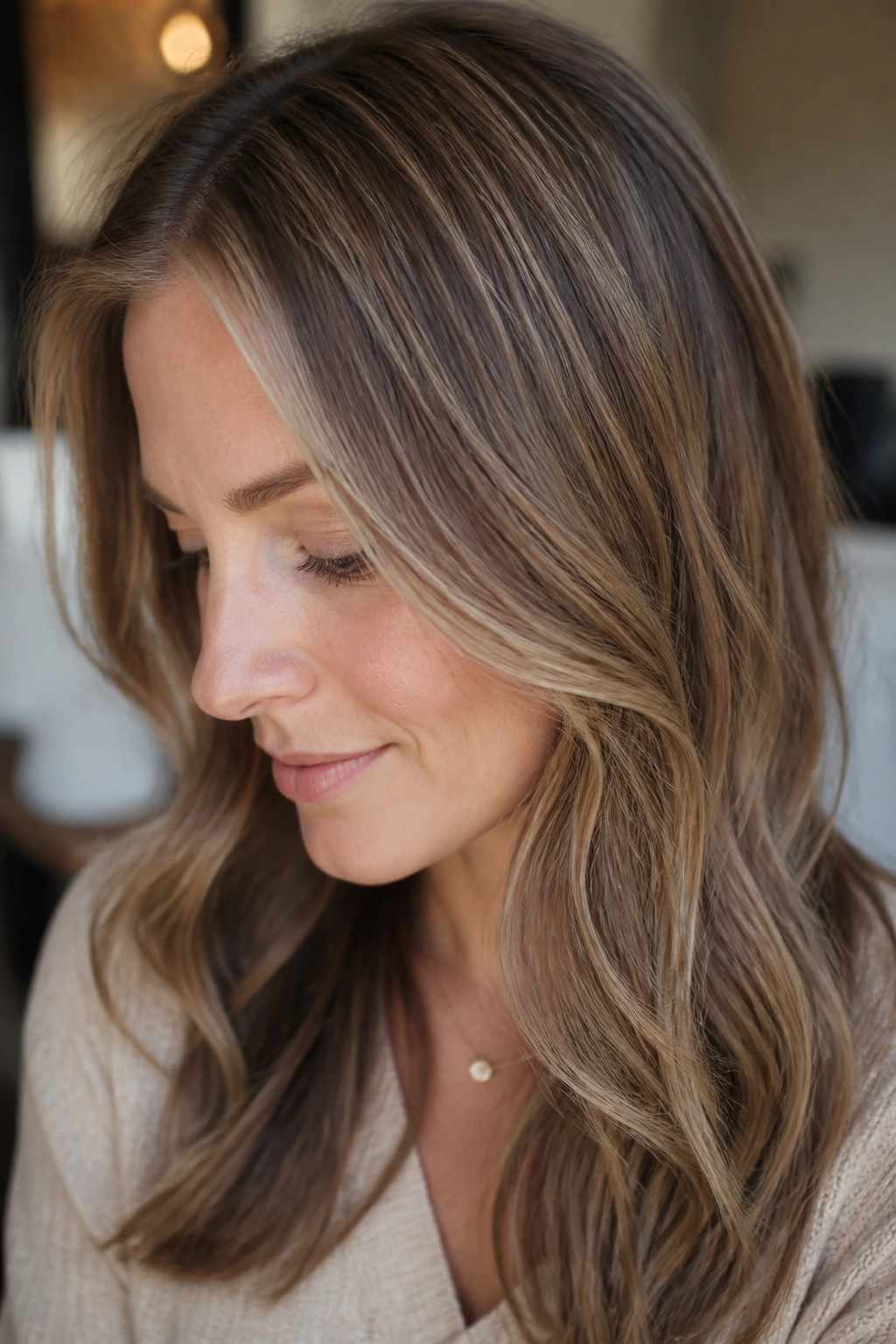
Babylights are the shyest version of highlights, and that’s exactly why they’re so useful on thin hair. The pieces are woven so fine—think 1/16 to 1/8 inch—that they blur into the base instead of shouting from the mirror. On cool skin, beige caramel keeps the warmth soft, not brassy, so the finish reads like a gentle light shift rather than a color service.
Why it works on cool skin
Babylights scatter brightness across the top layer without exposing much scalp. That matters when your hair is fine, because a heavy foil pattern can make the part line look wider than it is. Beige caramel also sits in that useful middle zone: warm enough to add life, muted enough to stay away from copper.
- Ask for micro-weaves around the hairline and crown.
- Keep the lightest pieces one shade brighter than the mids, not three.
- Finish with a beige demi gloss, not a gold toner.
Pro tip: If your skin flushes easily, keep the front pieces a touch cooler than the lengths. That tiny shift keeps the face from looking red next to the hair.
2. Rooted Caramel Balayage That Preserves Density
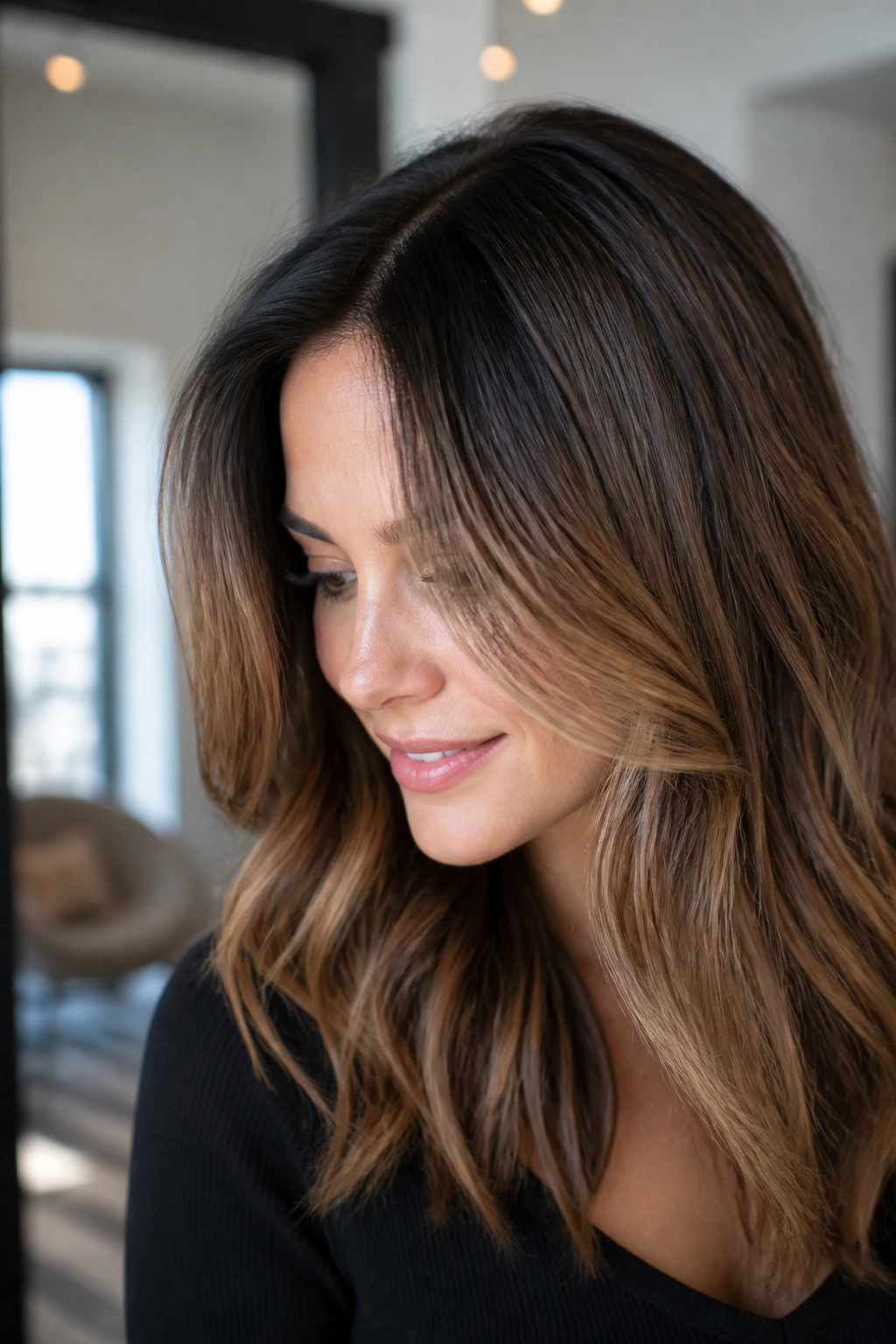
Rooted balayage is the move I reach for when someone wants dimension but hates the look of a bleached scalp. The darker root stays in place, usually for the first 1 to 1.5 inches, and the caramel is painted through the midlengths and ends where the hair can afford more lightness. On thin hair, that dark root is not a problem; it’s the illusion of thickness.
The color also grows out in a soft way, which matters more than people think. Fine hair often looks better with a little shadow at the top because a fully lightened root can make the strands look separated. Rooted caramel keeps the top line compact and lets the lighter pieces sit where movement shows them best.
Ask your stylist for a low-contrast blend. If the caramel is too pale, the depth disappears and the haircut loses shape. Keep the ends warm but not yellow, and let the root stay one to two levels deeper than the lightest pieces.
3. Cool-Toffee Money Piece With a Soft Edge
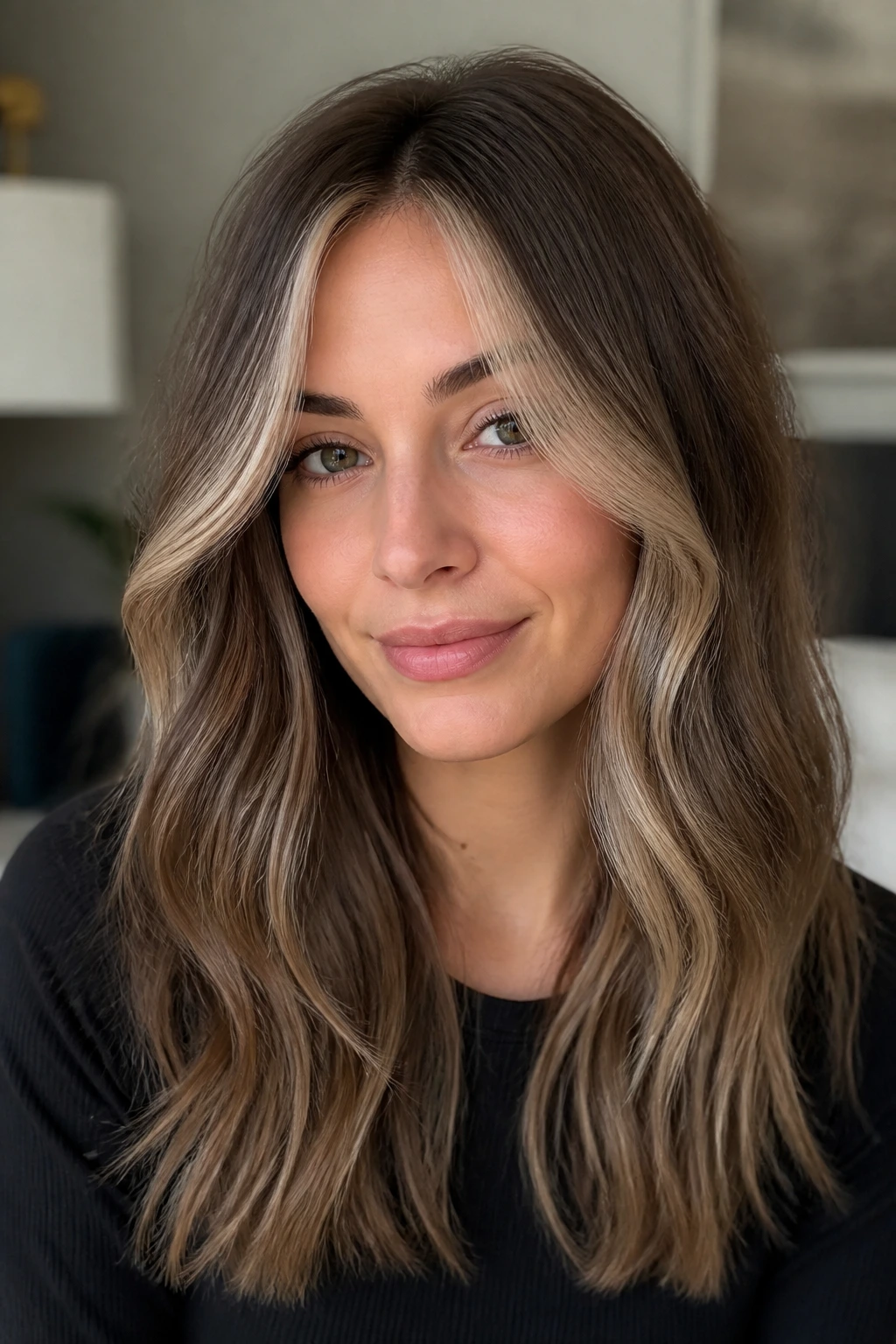
Why does a money piece work so well on finer hair? Because it gives you brightness where people look first without forcing the whole head to carry the weight of a full highlight pattern. A toffee-toned face frame, done in a soft caramel rather than a sunny blonde, can make cool skin look less flushed and more even.
How to ask for it
Tell your colorist you want the front pieces to be brighter, but not thick or stripey. Two to four foils on each side is often enough, especially if the rest of the hair is already fine and a little see-through. The front should be one or two shades lighter than your base, not five.
Where it pays off
This look is especially good if you wear your hair behind your ears, part it near the center, or have curtain bangs. The money piece catches the light as you move, which gives the impression of fuller density around the face.
A sharp platinum strip would be too loud here. Toffee caramel is calmer, and on cool skin that calmness matters.
4. Mushroom Brown With Caramel Veils
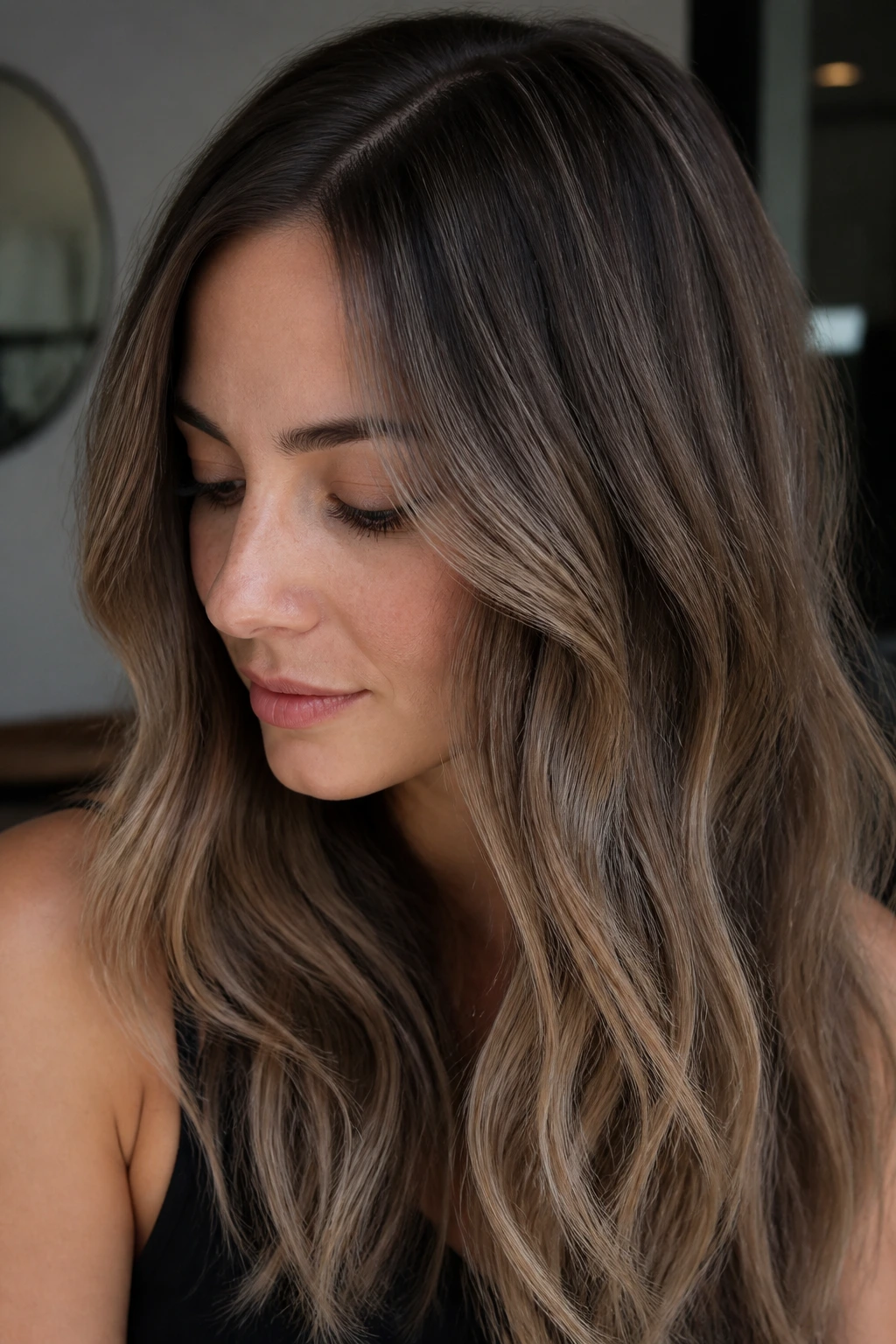
If your natural color already leans cool, this is one of the easiest ways to add warmth without upsetting the balance. Mushroom brown gives the base a smoky, taupe-like cast, and the caramel is threaded through in thin veils rather than obvious stripes. The result looks dimensional from a few feet away, but it still reads restrained up close.
This is a good choice when thin hair needs more depth at the roots. The smoky base helps the strands stay visually connected, and the caramel veils break up the monotony so the hair doesn’t look like one flat sheet. I especially like this on shoulder-length cuts, where the movement happens in the midlengths and the color can travel with it.
Ask for lowlights in a neutral-cool brown and highlights in a beige caramel. If either one gets too warm, the whole look can drift reddish. The trick is not to make the hair lighter everywhere; it’s to make the lighter pieces look intentional.
5. Caramel Ribbon Highlights on a Lob
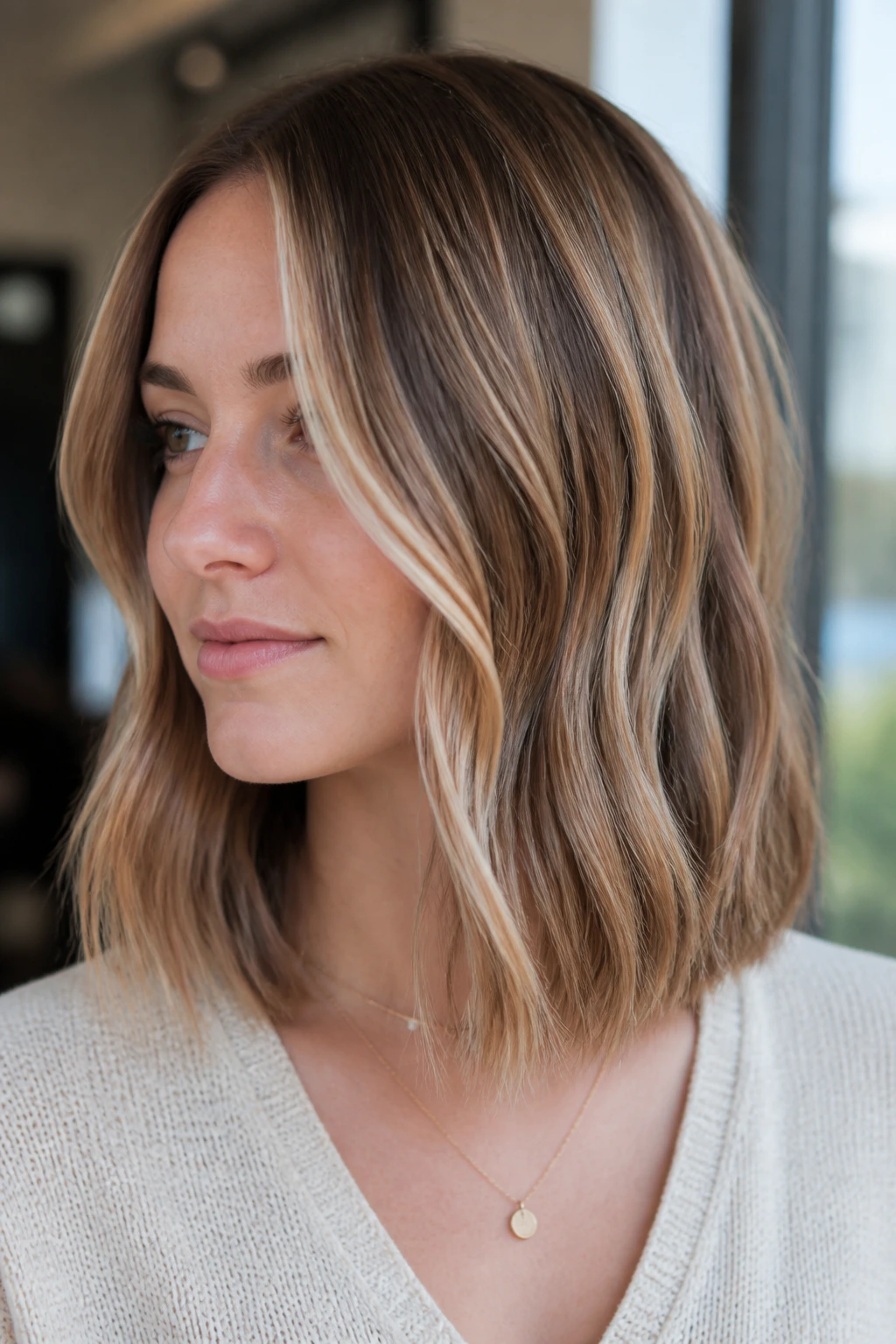
A lob gives you just enough length for ribbon highlights to show their shape. The caramel is painted in wider, soft panels—usually about 1/2 to 3/4 inch across—so the light catches when the hair turns, but the base color still does plenty of visual work. On thin hair, that balance is gold. Too many ribbons and the cut loses body. Too few and the color disappears.
I like this look when the hair has a blunt-ish perimeter with some movement through the interior. The ribbons can start a little below the roots and sweep through the midlengths, which keeps the crown from going see-through. A deep side part makes it even better, because the highlights show a little more shape instead of blending into the scalp.
This is not the place for coppery caramel. Ask for neutral or beige warmth, especially if your skin has pink undertones. On a lob, the wrong shade can look like a filter gone wrong. The right one looks expensive in the old-fashioned sense: calm, polished, and slightly dimensional.
6. Face-Framing Caramel Contour That Softens the Jawline
Unlike a full-head highlight, face-framing caramel contour puts the brightness where cool skin usually needs it most: around the temples, cheekbones, and the line from the cheek to the collarbone. That means less stress on fine hair and a more targeted lift around the face. It’s a smart move if you don’t want to bleach every section just to get some life near the front.
The color should start near the brow area and fall softly past the cheekbone. If the lightest pieces stop too high, the face can look top-heavy. If they go too wide, they can overpower the skin and make the rest of the hair look flat by comparison.
This style is especially useful if your haircut has curtain bangs or layers that frame the jaw. The caramel pieces sit right where the cut moves, so you get a visible shift without needing a lot of color. That’s the whole point with thin hair: less processing, more visual payoff.
7. Ash-Caramel Ombré That Keeps the Roots Calm
Why does ombré still matter when the goal is softness? Because a dark-to-light fade can make fine hair look longer and thicker at the same time, if the transition is blurred properly. The ash-caramel version is the one I trust on cool skin, because it keeps the warmth muted at the ends instead of turning orange at the root.
The root stays deeper, the midlengths blend through a soft brown, and the ends land in a caramel that has a smoke-gray note to it. That smoke note is what saves the look. Without it, the fade can turn golden in a way that feels too sunny next to cool complexions.
This is a good option if you wear your hair down often and want the color to show in motion. The lower half of the hair catches light first, so that’s where the caramel can do the most work. You do need a gloss refresh to keep the ash piece from going muddy, though. Skip that, and the ends start looking tired.
8. Micro-Highlights at the Crown for Fake Volume
Here’s the trick most people miss: the crown does not need to be blasted blonde to look fuller. It needs tiny pockets of brightness that interrupt the shadow just enough to make the top layer look lifted. Micro-highlights at the crown do that without opening up the scalp line.
What makes it different
- The weaves are thin and close together, but not packed edge to edge.
- The lightest pieces stay on the outer canopy instead of going all the way underneath.
- A slightly deeper root shadow keeps the color from exposing every strand.
This works especially well if your hair lies flat at the top by midday. A few caramel micro-highlights at the crown create texture where there used to be only one flat color. The eye reads that as body, even when the actual strand count hasn’t changed.
Ask for the caramel to stay soft, not shiny yellow. The crown is the first place where warm brass shows, and on cool skin that brass can look harsher than it does on other tones. Muted caramel, fine weaving, and a little shadow at the root. That combination does the heavy lifting.
9. Peekaboo Caramel Underlayers That Move Without Shouting
Peekaboo color is underrated for fine hair because it keeps the top layer intact. The caramel sits underneath, near the nape and lower sides, so it shows when the hair swings or gets tucked behind the ear. If you want color that feels a little secretive, this is the cleanest version.
The payoff is especially good on cool skin. Since the warmth isn’t sitting right next to the face all the time, you can go a touch richer with the caramel without worrying that it will dominate your undertone. The top layer stays darker, which keeps the head looking full.
I like this on bobs, long bobs, and shoulder-length cuts with some movement. It’s also a smart choice if you’re cautious about lightening fine hair too much. You get the fun part of caramel without turning the whole surface into a maintenance project.
10. Dark-Brown Foilyage With Soft Caramel Ends
Foilyage sits between foil highlights and hand-painted balayage, and on dark brown hair it can be the most useful compromise. The foils help the hair lift enough to hold a caramel tone, while the painted ends keep the transition soft instead of stripey. That matters when the base is dark and the hair is fine, because harsh contrast can make the strands look thinner than they are.
This version works best when the caramel starts a little lower than you think. Midlengths and ends do the visual work, not the roots. The darker upper section holds the shape of the haircut, and the lighter lower section gives you movement without a patchy scalp line.
Ask for a beige-toffee finish rather than a golden one. On cool skin, the wrong toner can push the whole look into orange-red territory. A neutral-beige gloss keeps the ends readable but not loud.
11. Smoked Caramel Gloss Over Existing Blonde
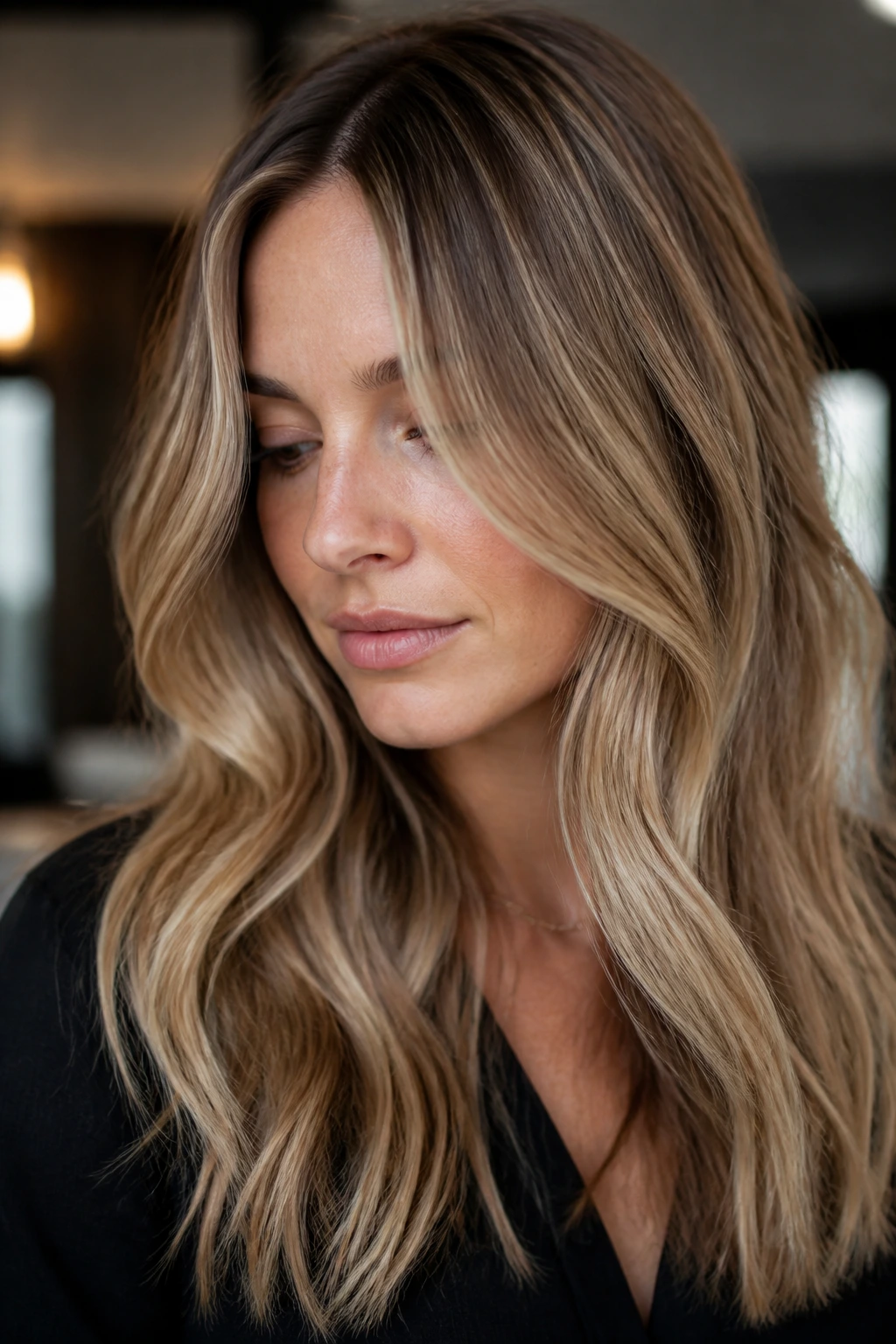
If your hair is already light, adding caramel does not have to mean repainting the whole head. A smoked caramel gloss can tone old blonde pieces into something softer and better suited to cool skin. The shine drops a little, the warmth turns more brown than gold, and the hair looks less bleached and more finished.
This is one of my favorite fixes for fine hair that got too bright in a previous appointment. Blonde on thin hair can start to feel airy in a bad way, especially if the light pieces are spread too evenly. A caramel gloss adds back some depth without making the hair darker in a heavy, muddy way.
It also buys you time. Glosses usually need more frequent refreshes than permanent color, but they are gentler, and the fade-out is less dramatic. That’s a trade I’ll take on fine hair every time.
12. Espresso Lowlights With Caramel Threads
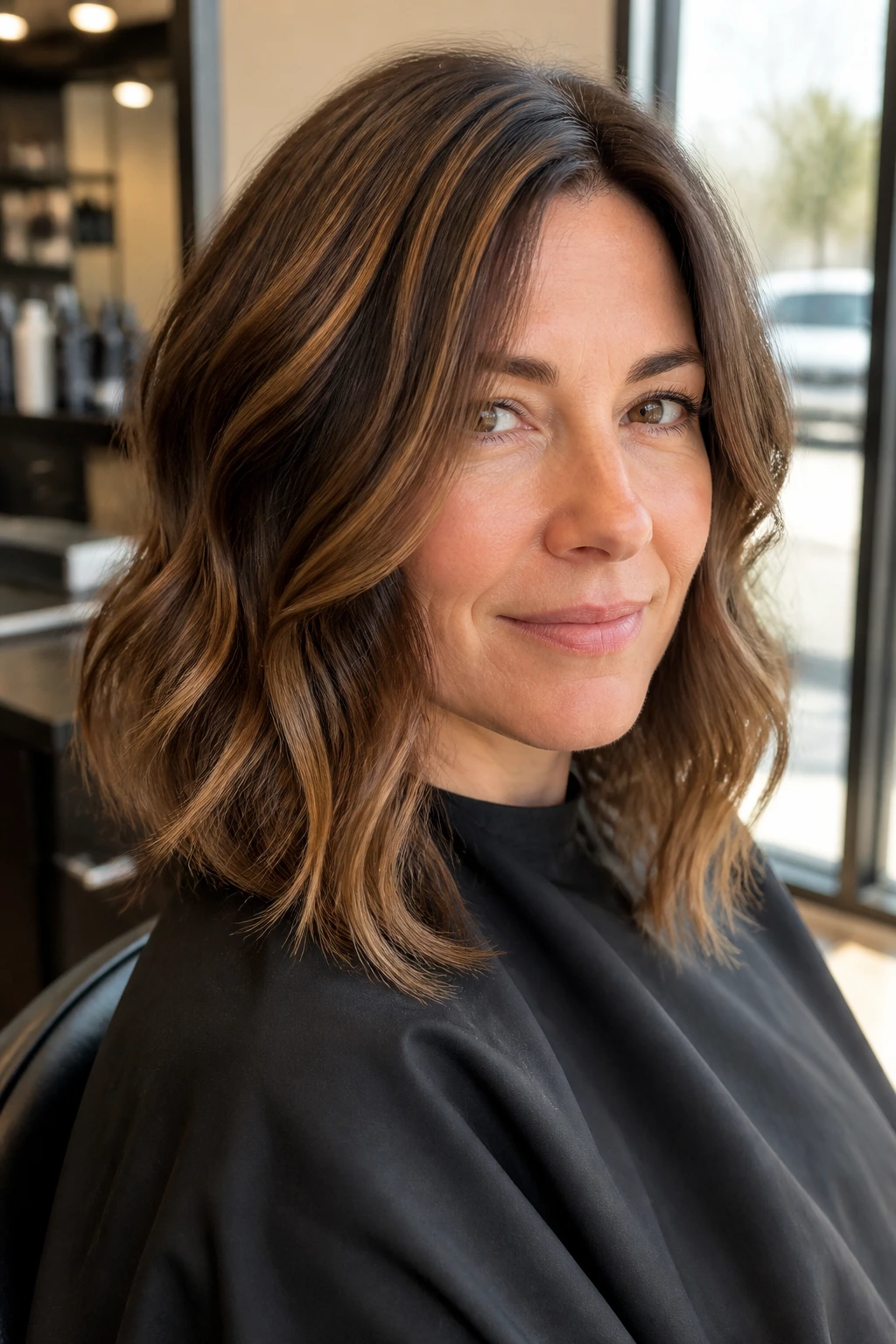
Most people ask for highlights and forget that lowlights are the thing that keeps fine hair from looking overprocessed. Espresso lowlights—just one shade deeper than the natural base, not pitch black—create little pockets of depth. Then a few caramel threads on top give the movement some light.
That mix works beautifully on cool skin because it balances warm and cool tones instead of forcing one note. The espresso pieces hold the shape of the cut, while the caramel catches the eye only where it should. You get contrast, but not the kind that announces itself from across the room.
I’d use this when the hair is naturally light brown or medium brunette and needs more body at the ends. A full head of caramel can look thin if the base disappears. Lowlights fix that. They make the lighter pieces look more intentional and, honestly, more expensive.
13. Halo Caramel Highlights Around Curtain Bangs
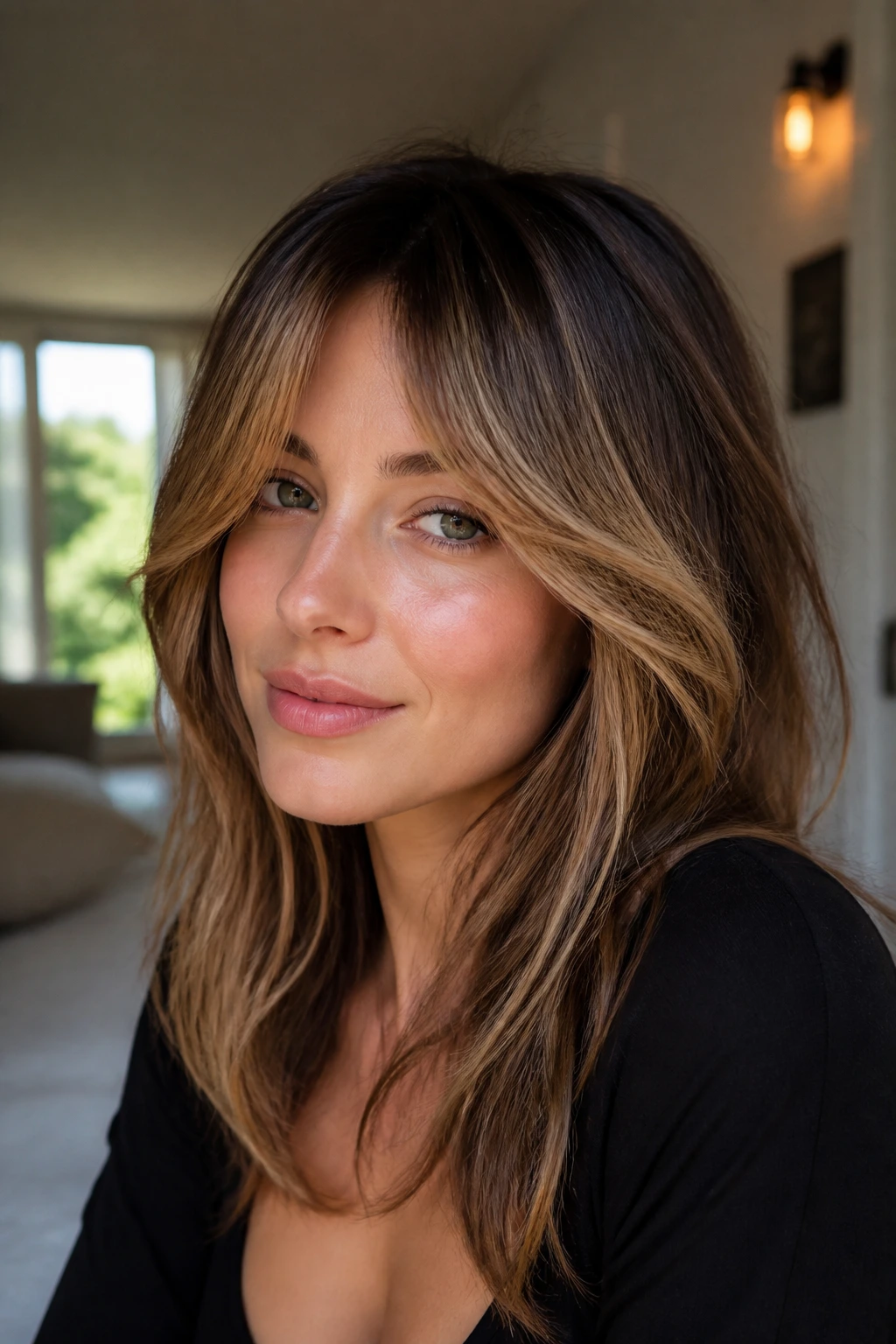
Curtain bangs are already doing a lot of visual work, so the color around them should be soft and controlled. A halo of caramel highlights around the bang area and temple zone gives the fringe shape and keeps the cool skin from looking drained. The idea is not to make the bangs blonde. It’s to put a quiet glow where the eye lands first.
The halo should stay a shade or two lighter than the rest of the face frame. That keeps the color from turning into a bright block. On thin hair, the surrounding pieces should stay slightly deeper so the bangs don’t float away from the rest of the cut.
This look is especially good if you wear a middle part. The caramel can fan out on both sides and make the face look framed rather than exposed. If the bangs are fine and wispy, the highlights should be even finer. Chunky pieces fight the softness of the cut.
14. Melted Caramel Ends That Keep the Top Dark
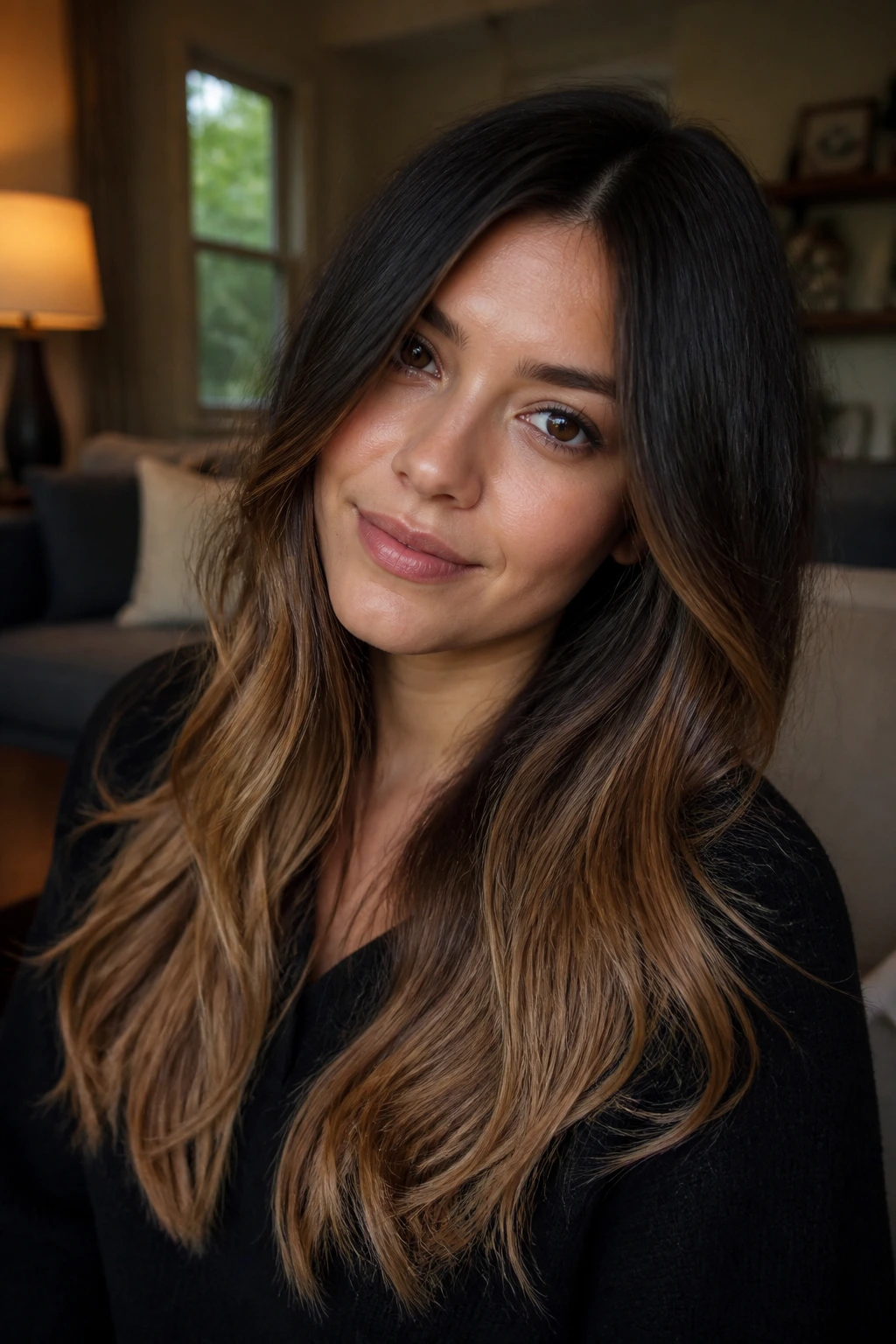
A lot of thin hair looks better when the brightest color lives near the ends. The top stays darker, which keeps the scalp area compact, and the caramel melts through the bottom four to six inches where the movement is. That downward shift makes the hair feel longer and thicker at the same time.
On cool skin, the ends should lean toward beige caramel rather than copper. The warmth becomes part of the movement instead of taking over the face. If the ends are too gold, the whole style can look mismatched against a cooler complexion.
This is a very good option for longer hair that tends to look stringy at the bottom. The gradient gives the eye more to track, which is one of those small visual tricks that makes a bigger difference than people expect. And yes, the ends still need trims. Melted color does not rescue split ends. Nothing does.
15. Sliced Caramel Highlights for a Deep Side Part
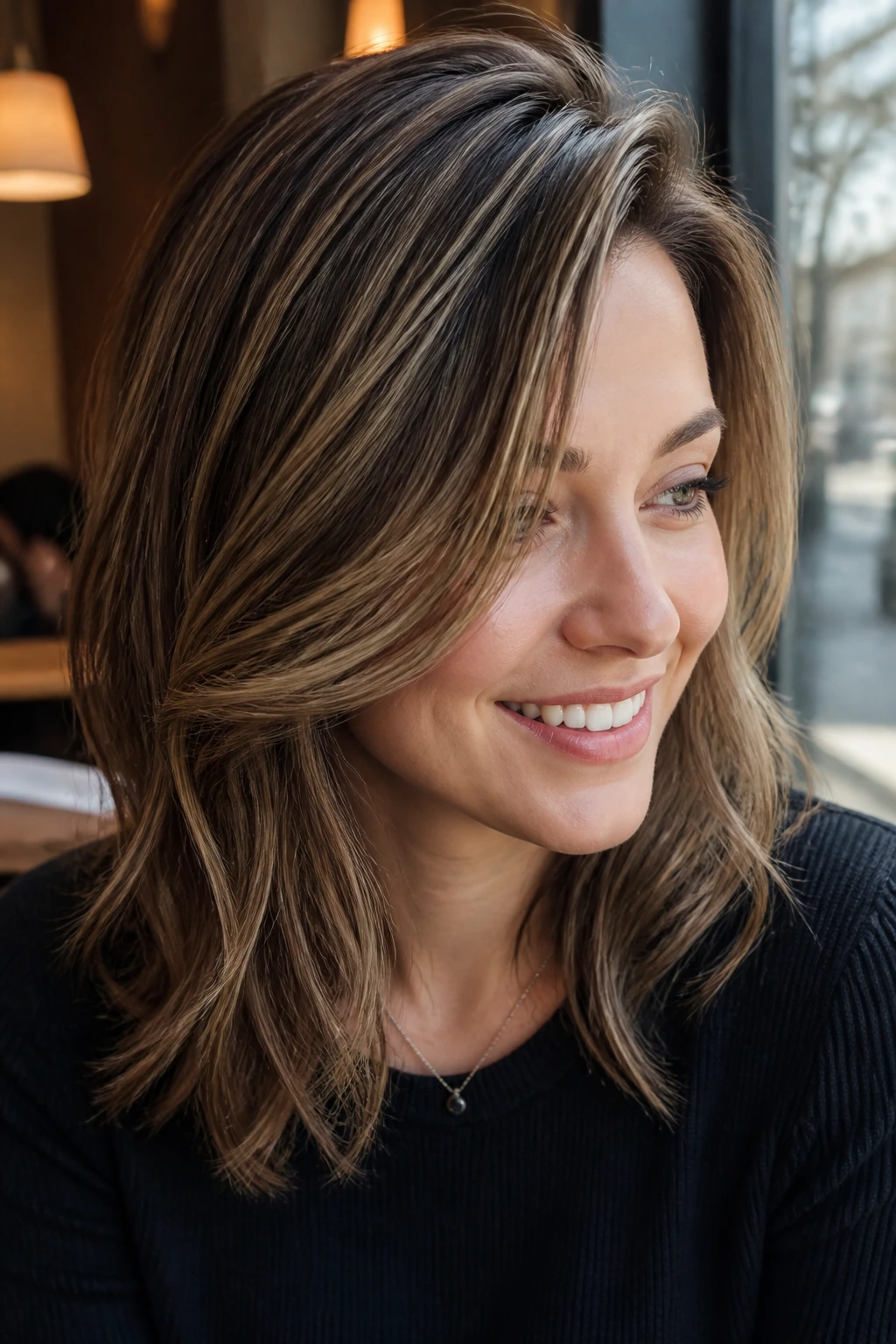
Why do sliced highlights look fuller than woven ones in some hair? Because slices show a cleaner panel of color, which can read as thicker when the hair is very fine. On a deep side part, those caramel slices become even more visible, especially if the part shifts a little during the day.
This is a bolder look than babylights, but it still stays wearable if the caramel is kept neutral. The key is spacing. A few well-placed slices on the heavier side of the part can balance the cut without overloading the whole head. Thin hair does not need uniform brightness. It needs smart interruption.
I prefer this when the haircut has some layers and can move enough to reveal the color at different angles. If the haircut is very blunt and heavy, the slices can look harsher. In that case, a softer ribbon or balayage may be kinder.
16. Cinnamon-Caramel That Skips the Orange
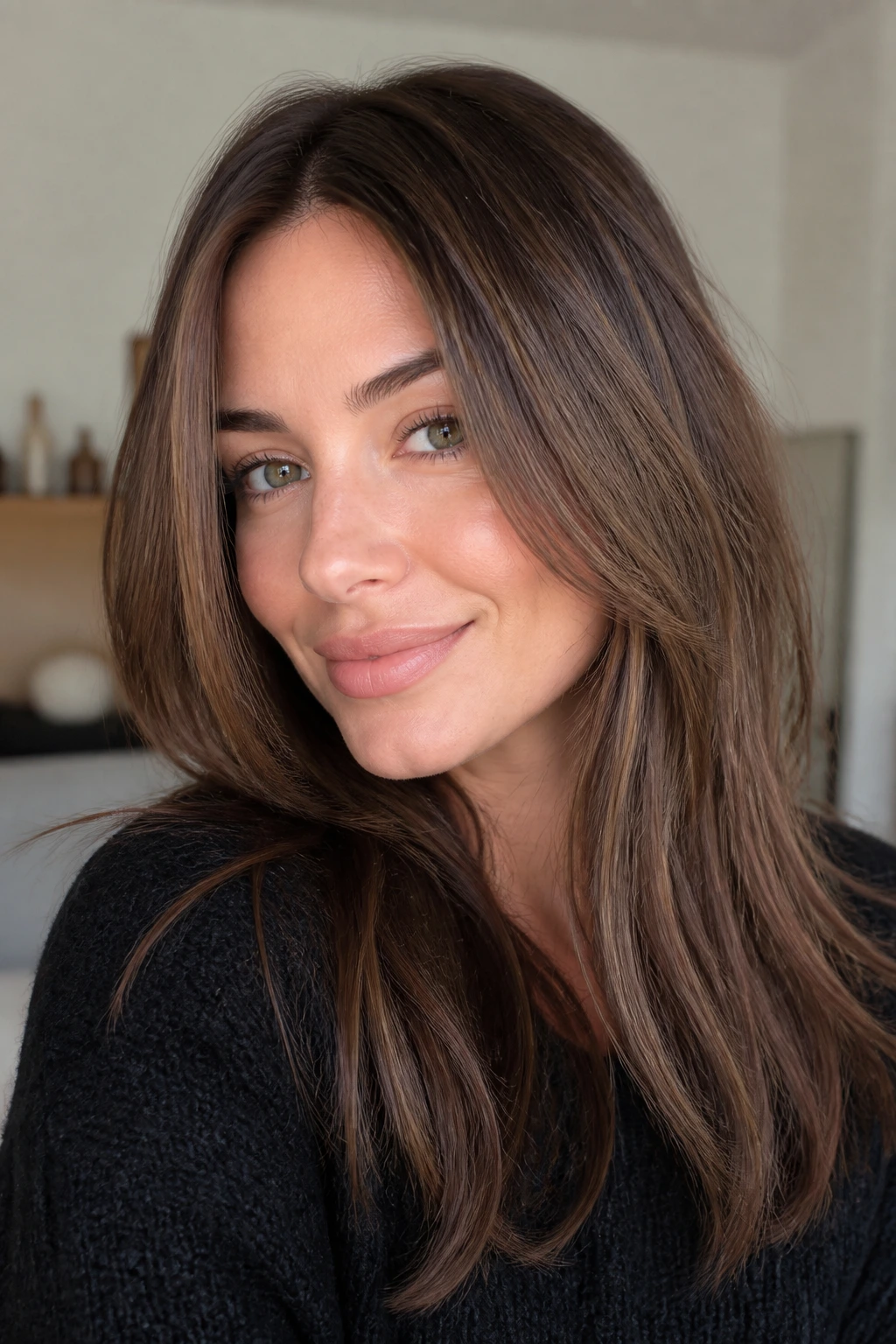
Cinnamon caramel sounds warm, but the version that works on cool skin is not pumpkin, not copper, and not anything that glows like a traffic cone under bathroom light. It’s a brown-based caramel with a muted spice note, almost like the shade was mixed with a drop of ash. On thin hair, that brown base keeps the strands from reading wispy.
This is a good compromise for someone who wants warmth but not blonde. The caramel sits a little deeper, so it brings life to the hair without demanding a huge contrast. That helps if your natural color is medium brown and your skin leans pink or neutral-cool.
Keep the highlights sparse and let the tone do the work. A full head of cinnamon caramel can get noisy. A few well-placed pieces around the face and through the mids is usually enough.
17. Cloud-Balayage Caramel on Long Layers
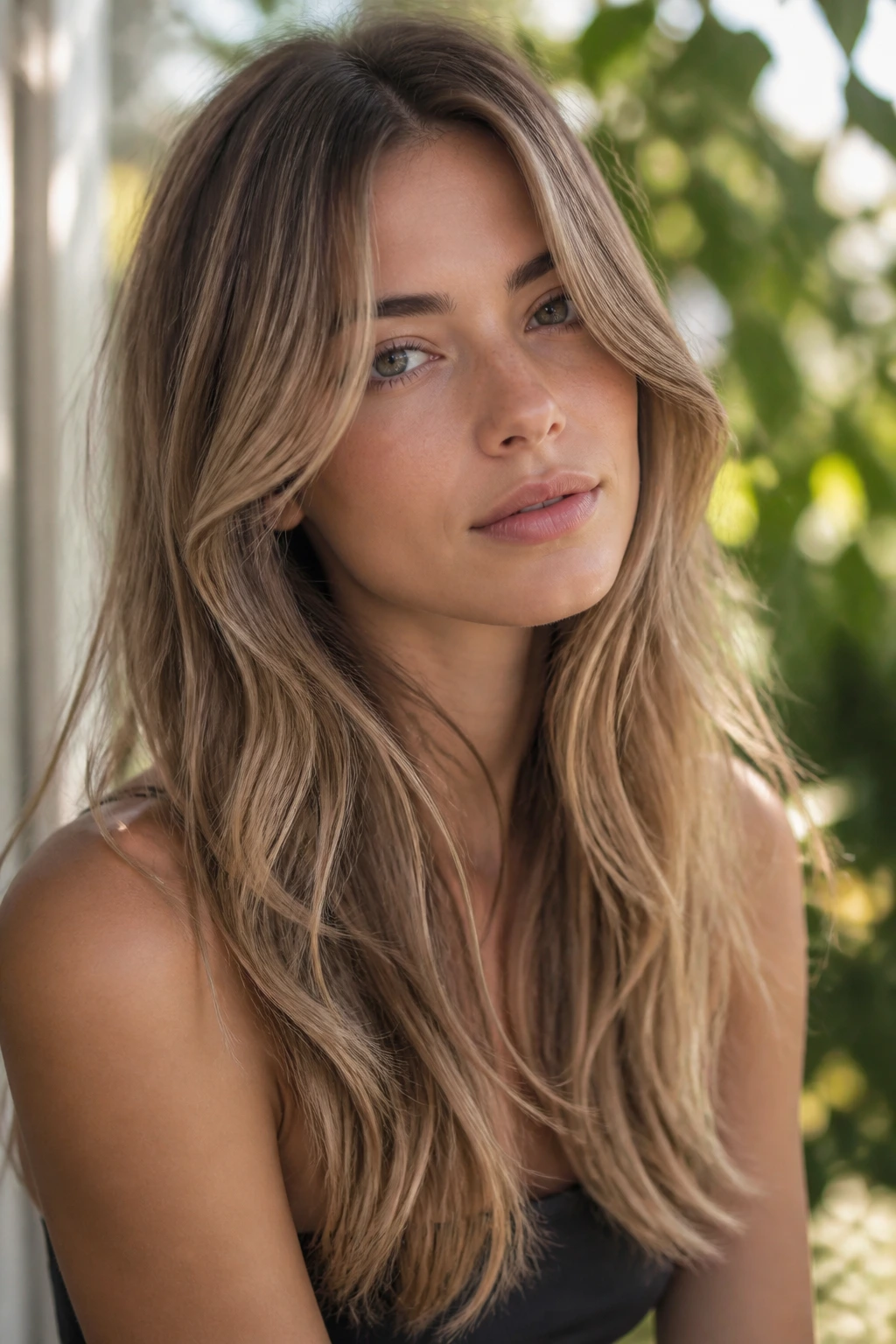
Cloud balayage is a softer, more diffused take on hand-painted color, and it suits thin hair because there are no hard boundaries for the eye to trip over. The caramel is feathered through the layers so it looks suspended in the hair rather than stamped on top of it. On long layers, that diffused effect can make the cut look fuller from root to tip.
Cool skin needs this kind of softness. The color should never be a hard gold block on the ends. Instead, think of a veil of warm beige with a little smoke in it. That gives the hair glow without turning the complexion pinker.
If your hair gets flat easily, ask for the brightest pieces to stay on the outer surface and around the bends in the haircut. The light catches those spots first, which makes the layers read as more substantial. It’s a quiet trick. A useful one.
18. Cool-Beige Caramel on a Bob or Pixie
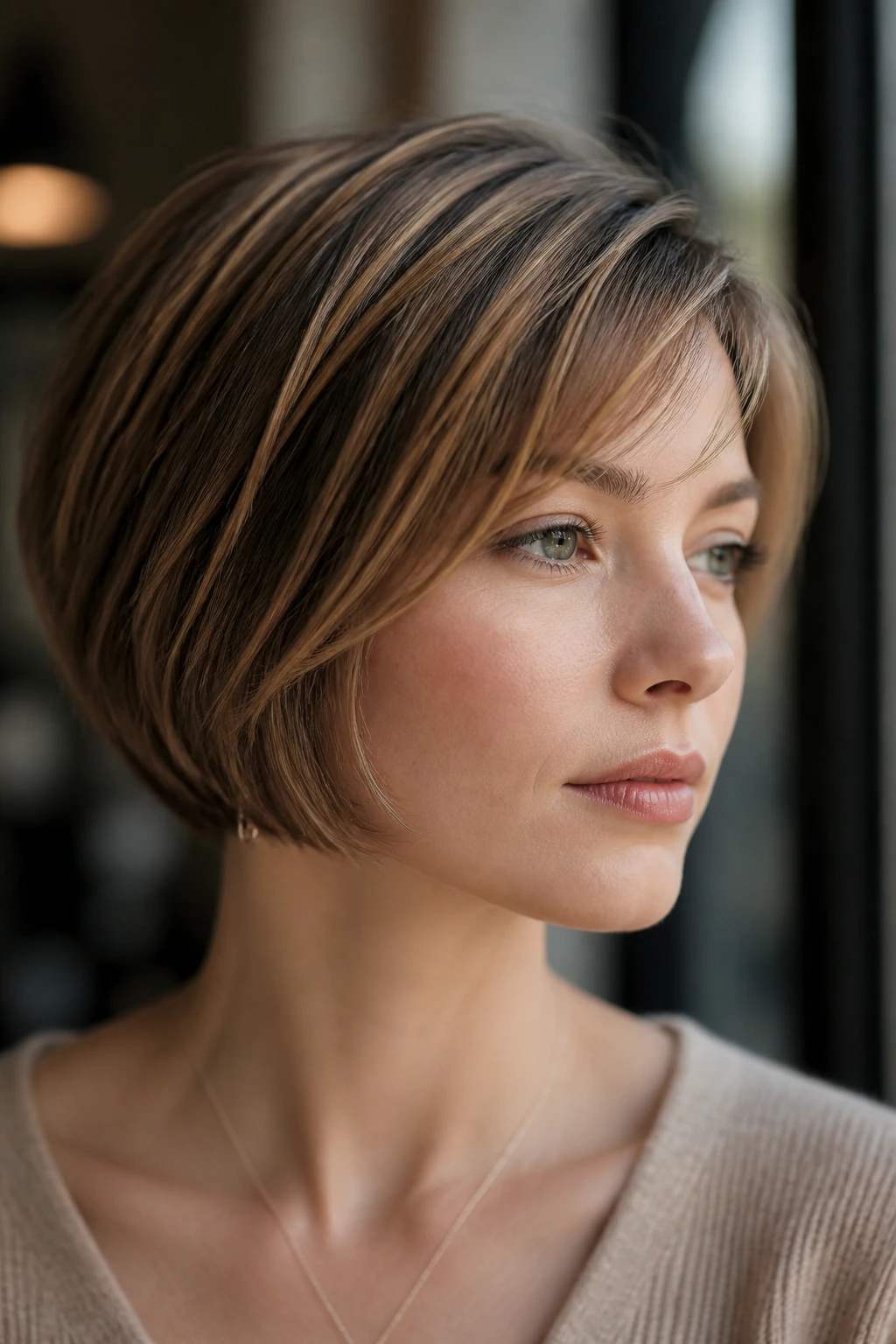
Short hair changes the rules. With a bob or pixie, you don’t have length to hide anything, so the caramel has to be cleaner and more precise. Cool-beige pieces around the top, crown, and temples can add lift without making the cut look busy.
This is where I like very controlled placement. A few highlights at the fringe, a few near the part, and a little softness through the top section can do more than blanket-lightening the whole head. Fine hair in a short cut often looks better when the color creates texture instead of volume through contrast alone.
A beige caramel is the safe bet here. Too much gold can make a short cut look harsh, especially against cool skin. A cooler beige keeps the lines crisp and the finish tidy.
Why Placement Matters More Than Brightness on Cool Skin and Thin Hair
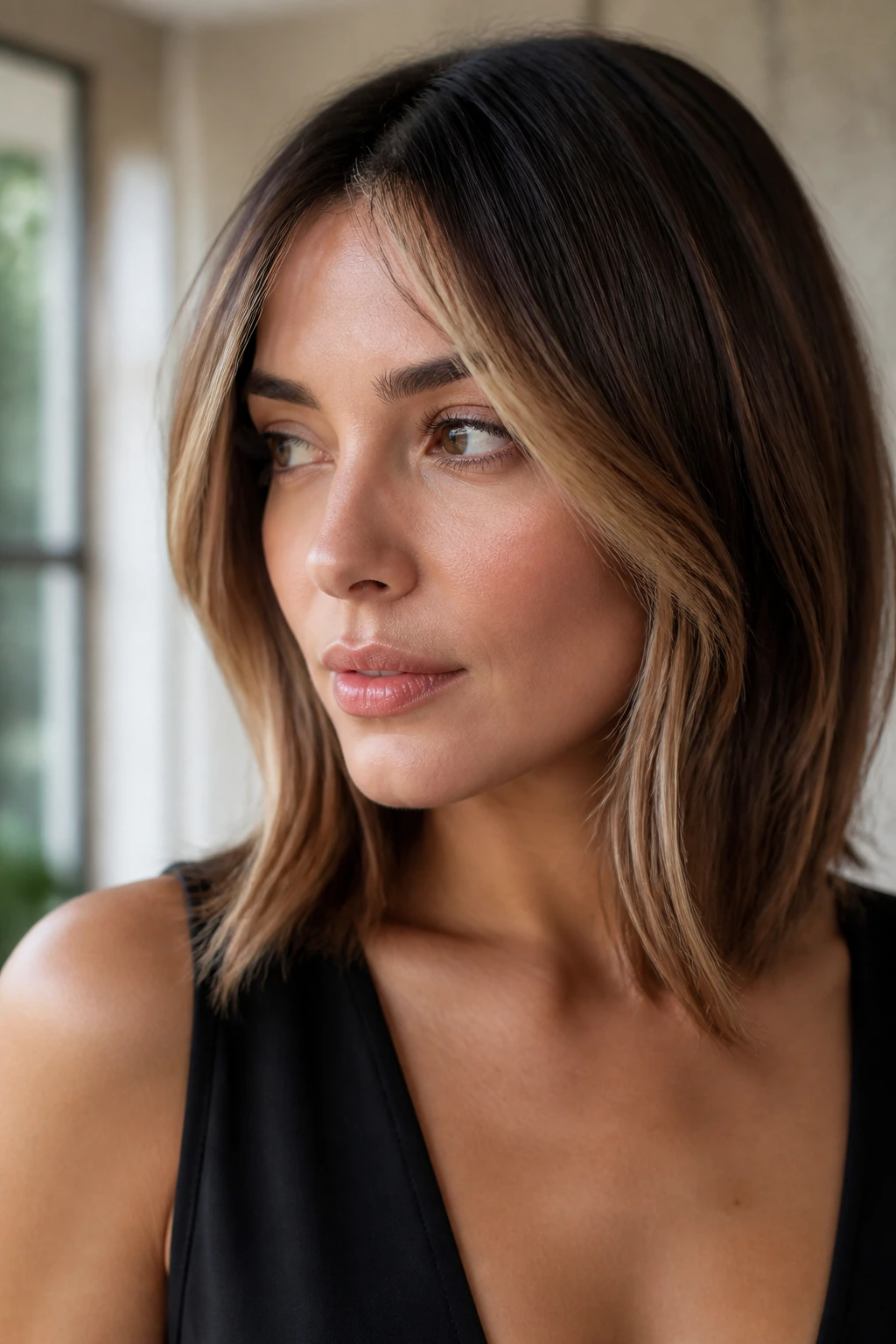
Cool skin can wear warmth, but it usually prefers warmth that has been softened down a notch. That’s where beige caramel, mushroom caramel, and smoked toffee come in. They bring light to the face without turning the complexion ruddy, which is a real risk when the color gets too orange or too gold. Hair color is never just hair color; it sits next to the skin and changes what people see first.
Thin hair changes the equation again. A high-contrast highlight pattern can look airy in a bad way because there isn’t much strand density to absorb all that light. The scalp shows through sooner, and the head can start to look separated into pieces instead of held together as one shape. Strategic placement solves that. Finer weaves, soft ribbons, and a deeper root keep the eye moving across the whole head instead of stopping at one bright stripe.
The level system matters here too. Most caramel looks that flatter cool skin sit around a level 6 to 8 range, depending on the base color and how much contrast you want. Go much lighter, and you start drifting into blonde territory; go much warmer, and you invite copper. The sweet spot is a caramel that looks like it belongs next to cool undertones, not one that announces itself as warm from across the room.
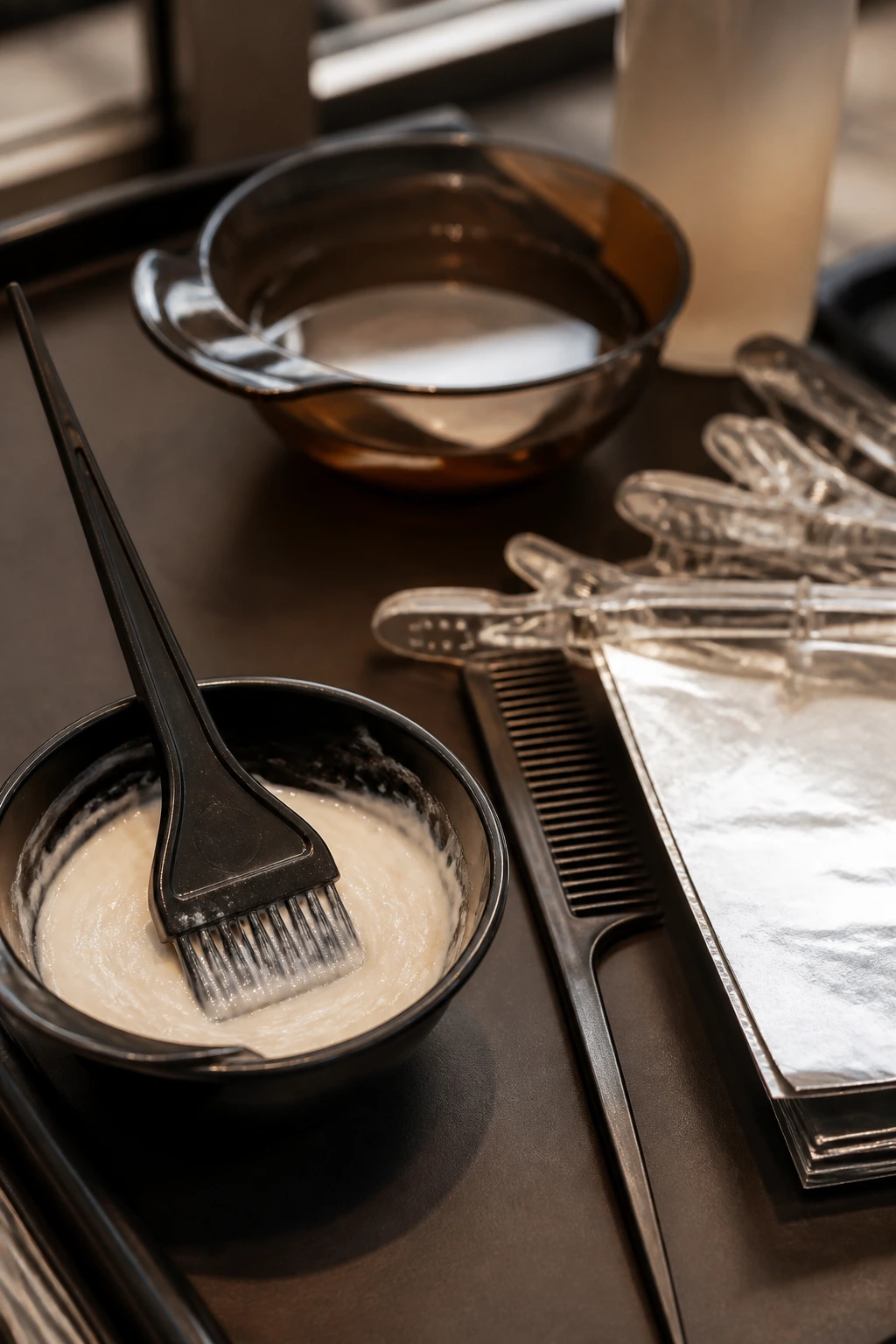
Essential Tools for Getting the Look
-
Tail comb: Useful for fine sectioning; the slimmer the weave, the less stripy the result on thin hair.
-
Color brush and bowl: Needed for glosses, toners, or painting caramel through the mids and ends with control.
-
Foils: Still the cleanest way to lift fine slices, especially around the hairline and crown.
-
Balayage board or paddle: Helps keep painted lightener smooth and even on longer layers.
-
Sectioning clips: Fine hair slips fast, and secure clips keep the top layers out of the way while the color sets.
-
Demi-permanent gloss: This is what keeps caramel beige instead of brassy after the lift.
-
Color-safe shampoo and conditioner: Sulfate-free formulas help the caramel hold its tone longer between salon visits.
-
Heat protectant spray: Fine hair burns easily, and the color fades faster when it’s cooked with a flat iron or curling wand.
-
Wide-tooth comb: Better than a brush on wet, highlighted hair; it keeps the strands from stretching and snapping.
-
Silk or satin pillowcase: Not a styling tool, but it cuts down on roughness and helps the ends stay smoother.
How to Read a Caramel Swatch Book Without Ending Up Orange
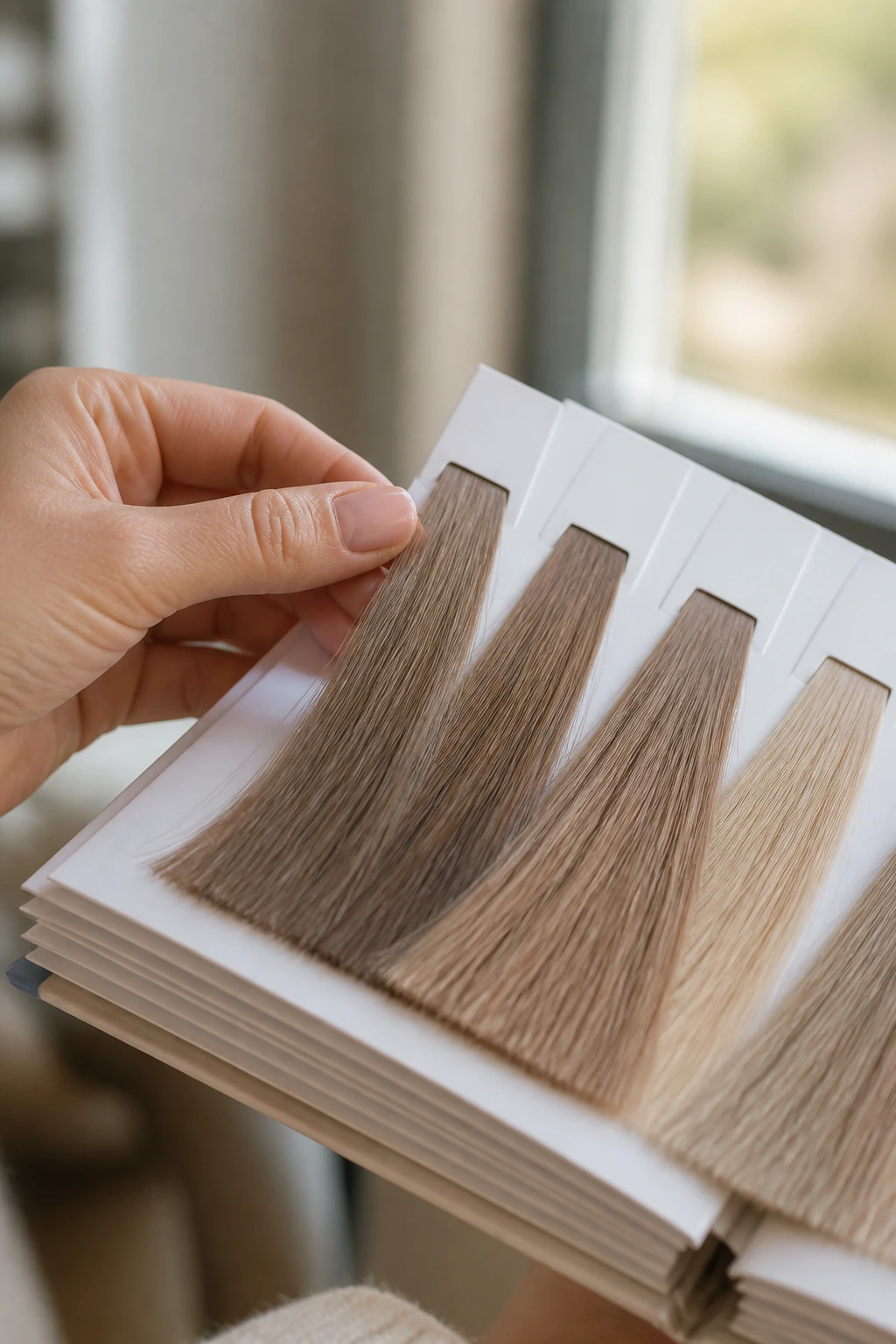
The labels matter more than people think. If a swatch says beige, biscuit, toffee, mushroom, smoke, or latte, you’re usually in safer territory for cool skin than anything tagged copper, bronze, amber, or auburn. Those warmer names can still work in tiny amounts, but they need a steadier hand and a cooler base color to keep them from taking over.
Bring daylight photos, not just bathroom selfies. Natural light shows whether the caramel is actually soft or whether it starts leaning orange under bright bulbs. If possible, compare the swatch against your neck rather than your face. That sounds fussy, but it helps a lot, because the face itself can look warmer or cooler depending on makeup, flushing, or even the weather.
For thin hair, ask your stylist to look at the whole pattern, not just the shade. A gorgeous caramel swatch can still fail if it’s painted too thickly. The best wording is plain: “I want the warmth to stay soft, and I don’t want a stripey result at the root.” That one sentence usually tells a good colorist everything they need to know.
How to Style the Color So the Dimension Shows
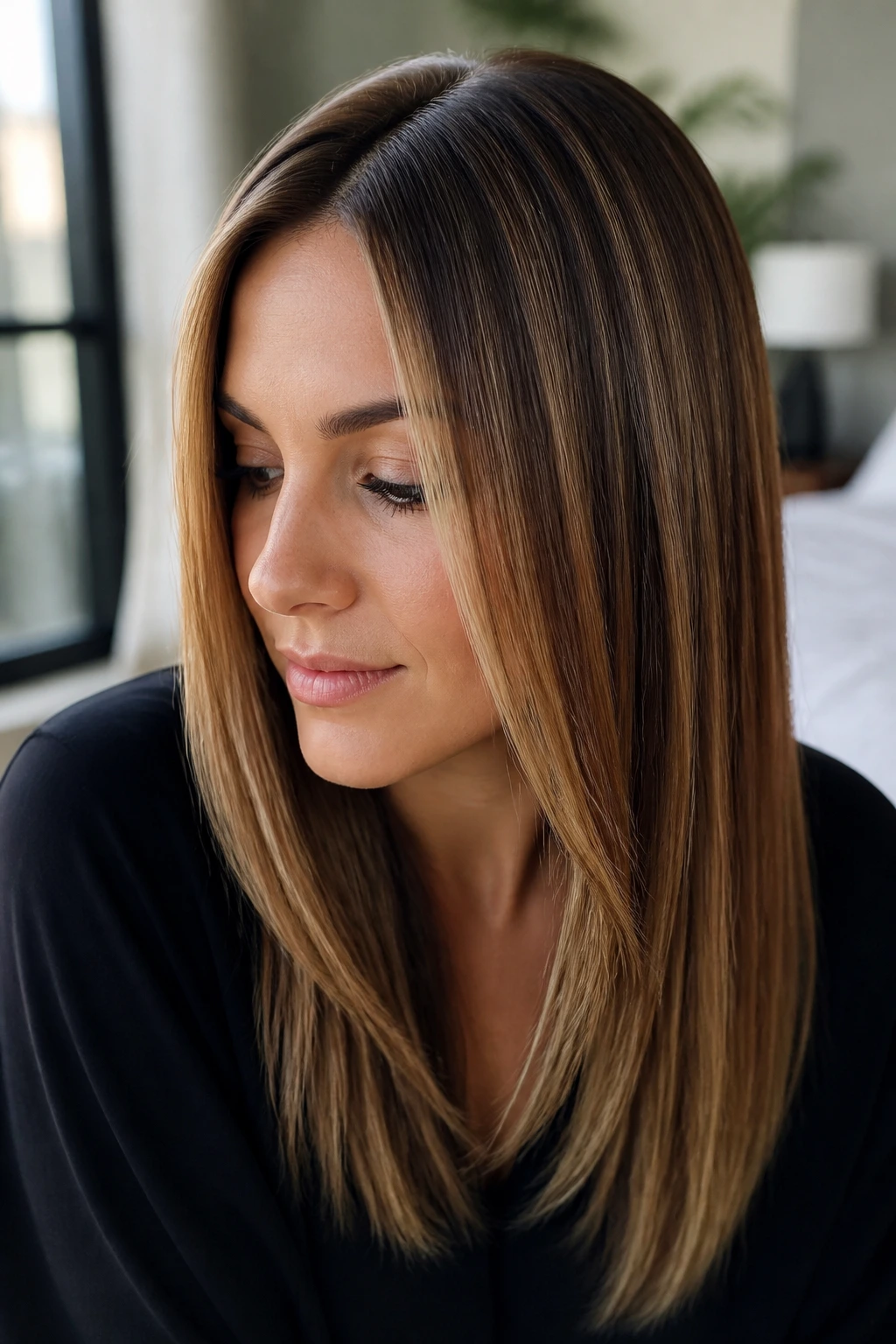
Straight and Sleek: A blunt blowout or flat-ironed finish makes fine caramel ribbons look crisp, especially when the part sits slightly off center. Keep the iron at a lower setting and use a light serum on the ends only, or the hair can collapse into one shiny sheet.
Loose Waves: A 1-inch curling iron or flat iron bend is the easiest way to show the contrast in caramel highlights. Wrap the hair away from the face, leave the last inch out, then brush the waves apart with your fingers. Tight curls can shrink the visible color.
Best Cuts: Lobs, soft layers, curtain bangs, and narrow face frames all help the color read better. A very heavily layered cut can make thin hair look choppy, so the highlight pattern should follow the cut instead of fighting it.
Finish With: A root-lift mousse at the crown, a heat protectant before styling, and a lightweight glossing spray on the midlengths. Skip heavy oils near the roots. They flatten fine hair in about ten minutes flat.
Small Tweaks That Change the Whole Result
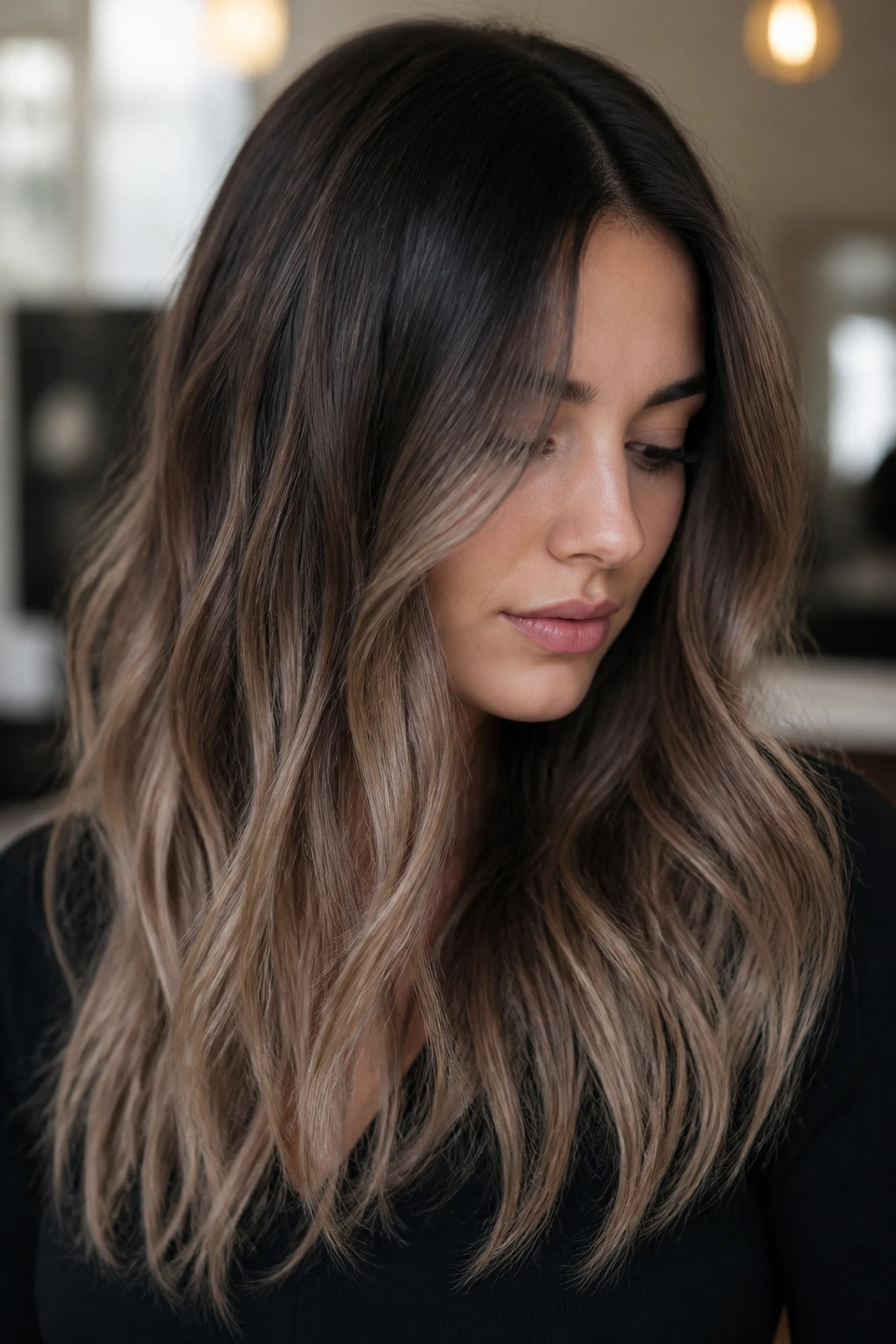
Tone Control: Ask for a beige or neutral gloss every 4 to 6 weeks if your hair tends to go orange in strong light. That small refresh keeps the caramel from turning into copper by accident.
Dimension: Adding 2 or 3 lowlights one shade deeper than your base can make the highlights look richer. On thin hair, depth is not the enemy. It’s the thing that stops the color from looking washed out.
Face Brightening: Keep the lightest pieces around the temples and cheekbones, but let the nape stay a touch deeper. That keeps the face lively without turning the whole head into one bright surface.
Make-It-Yours: If you want softer contrast, ask for a gloss-only refresh over your existing highlight pattern. If you want more definition, add a few thin foils around the part and the money piece, then leave the rest alone. That’s usually enough.
Keeping the Caramel Fresh Without Turning It Ashy
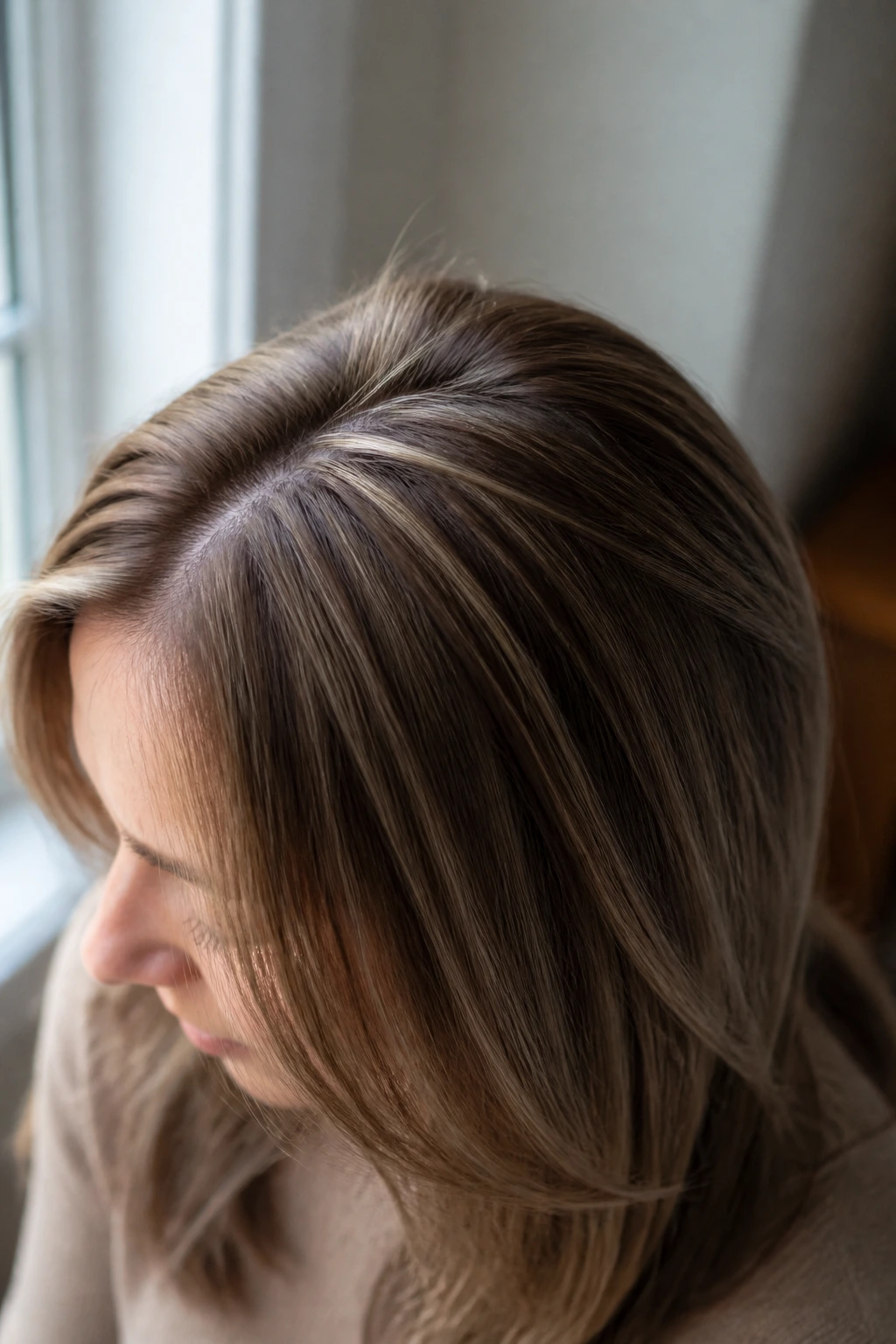
Caramel on cool skin needs upkeep, but not the kind that eats your life. A gloss refresh every 4 to 6 weeks keeps the warmth beige and the shine clean. Partial highlights or a few face-frame foils can stretch to 8 to 12 weeks if your base color is still doing most of the work. Full lightening sessions should be spaced out more carefully on thin hair, because the strand strength is limited and the cuticle can get tired fast.
At home, a color-safe shampoo matters more than a fancy mask. Wash every 2 to 3 days if you can, or as needed for your scalp, and keep the water lukewarm rather than hot. Hot water strips tone faster and leaves highlighted hair rough at the ends. If your caramel starts to go brassy, use a blue shampoo on brunette lengths or a very mild purple shampoo on lighter caramel pieces, but do not leave it on forever. One to three minutes is usually enough for fine hair.
Heat is the other thing that sneaks up on people. Fine highlighted hair looks softer when blow-dried on medium heat and finished with a cool shot. Flat irons should stay on the lower end of the range your tool allows; you don’t need a screaming-hot pass to smooth thin strands. A silk pillowcase and a loose clip at night help too, especially if the ends tend to tangle.
The Mistakes That Make Caramel Look Flat or Brassy
-
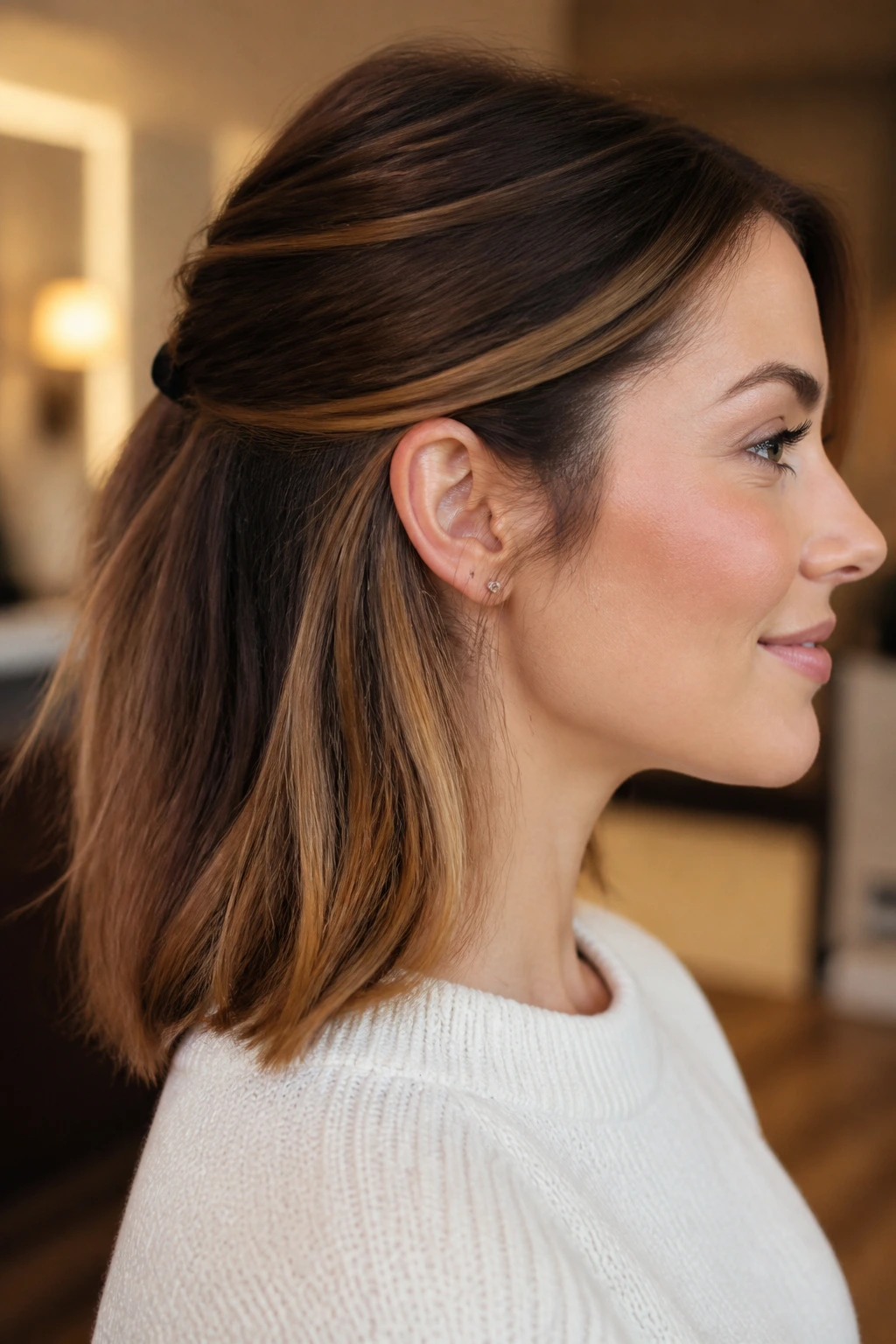
Going too orange: The symptom is easy to spot—the highlights glow more amber than beige, and the skin looks pinker beside them. The fix is a cooler gloss or toner with beige, ash, or neutral brown in the mix.
-
Using chunky foils everywhere: When thick highlights run from root to tip, thin hair starts to show gaps between them. Ask for finer weaving, and keep the brightest pieces for the front and outer canopy.
-
Lightening the roots too much: A bright scalp line can make the crown look sparse. Leave a shadow root or root melt so the top section stays visually dense.
-
Overdoing ash toner: Too much ash can make caramel muddy or green-brown. If the color looks dull instead of soft, the toner went too far and needs a warmer balance.
-
Skipping trims: Highlighted ends show damage fast. A clean dusting every 8 to 10 weeks keeps the caramel from sinking into frizz.
Variations and Adaptations to Try
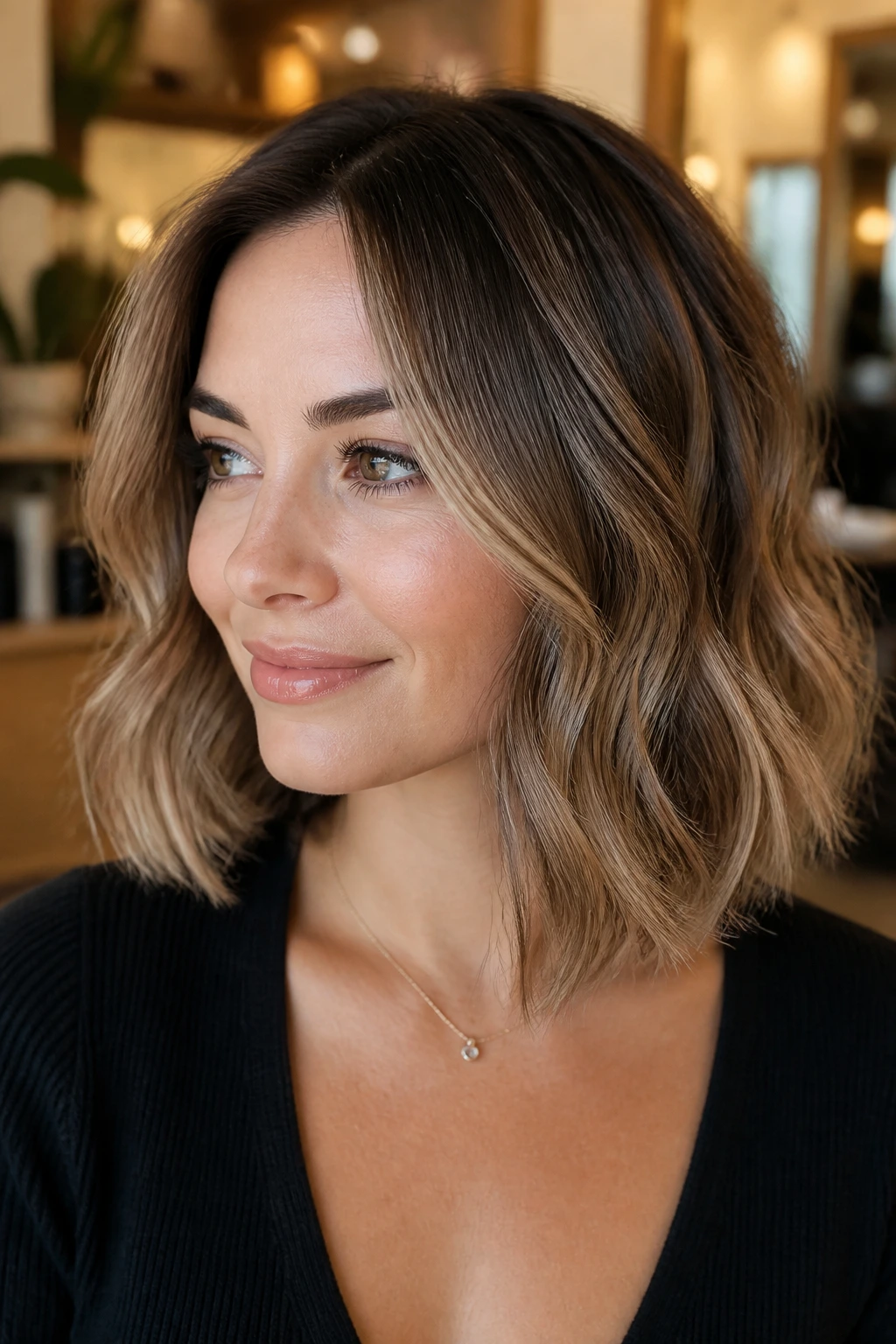
Mushroom Caramel Melt: This version starts with a smoky brunette base and fades into a muted caramel that never gets loud. It’s a smart pick if your skin leans cool and your hair already has a lot of natural movement, because the color looks calm instead of high-contrast.
Toffee Money Piece: If you want the face to pop, keep the front pieces a touch lighter and a little warmer than the rest of the hair. The key is restraint; one or two foils on each side can be enough when the base is fine and the haircut already has shape.
Espresso Lowlight Mix: Swap some of the caramel for deeper brown lowlights if the hair is reading too airy. This is especially useful after a summer blonde phase or any time the strands need the illusion of more mass.
Beige Bronde Wash: Ask for a soft blend between brunette and blonde, with beige caramel sitting in the middle. It works when you want a lighter finish but don’t want to drift into yellow blonde territory that can fight cool undertones.
Short-Cut Caramel Lift: On pixies and bobs, keep the highlights clustered around the fringe, crown, and side part. The smaller surface area means every placement matters more, so the color should look intentional rather than scattered.
Questions People Ask Before Booking the Appointment
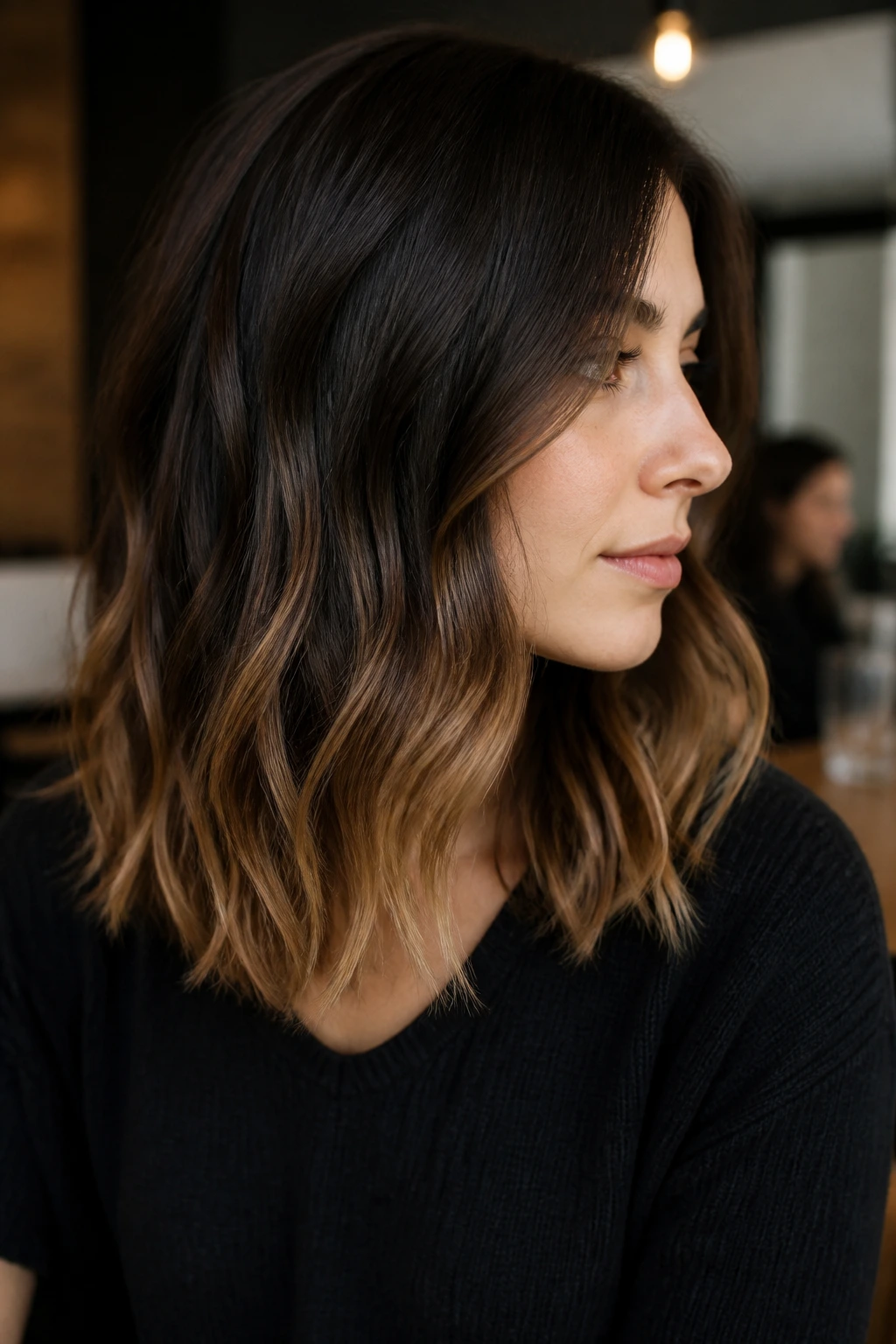
Will caramel highlights work if my skin turns pink easily?
Yes, but the caramel needs to be beige or smoky rather than orange-gold. The more your skin flushes, the more you want a toned-down warmth that sits quietly next to the face.
Do caramel highlights make thin hair look thinner?
They can if the foil placement is chunky or the roots are lifted too much. Finer weaving, low contrast, and a shadow root usually do the opposite and make the hair look fuller.
Is balayage better than foils for fine hair?
Balayage gives you a softer fade, while foils give you more lift and control. For thin hair, I usually like a mix of both, because the foils handle the brightness and the painted pieces soften the finish.
Can I ask for caramel if my hair is very dark brown?
Absolutely, but expect a slower lift and a deeper caramel result at first. Dark brown hair usually looks better with rich beige or toffee tones than with pale blonde caramel, especially on cool skin.
What if the highlights turn too warm after a few washes?
That’s common, and it usually means the toner has faded. A beige gloss, blue shampoo for brunette depth, or a salon toner refresh will pull the color back down.
How often should fine hair get refreshed?
Glosses often need a touch-up every 4 to 6 weeks, while partial highlights can stretch to 8 to 12 weeks. If the ends feel dry before that, add conditioning and heat protection before you chase more color.
Should I avoid highlights if I already have a lot of layers?
Not necessarily. Layers can show off caramel beautifully, but the placement should be softer and more strategic so the hair doesn’t look choppy. A few ribbons and a careful face frame usually beat heavy all-over lightening.
Can gray strands blend with caramel highlights?
Yes, and this is one of the better uses of caramel on cool skin. The warmth softens the contrast between gray and dark brown, especially when the caramel stays beige instead of orange.
A Softer Kind of Warmth
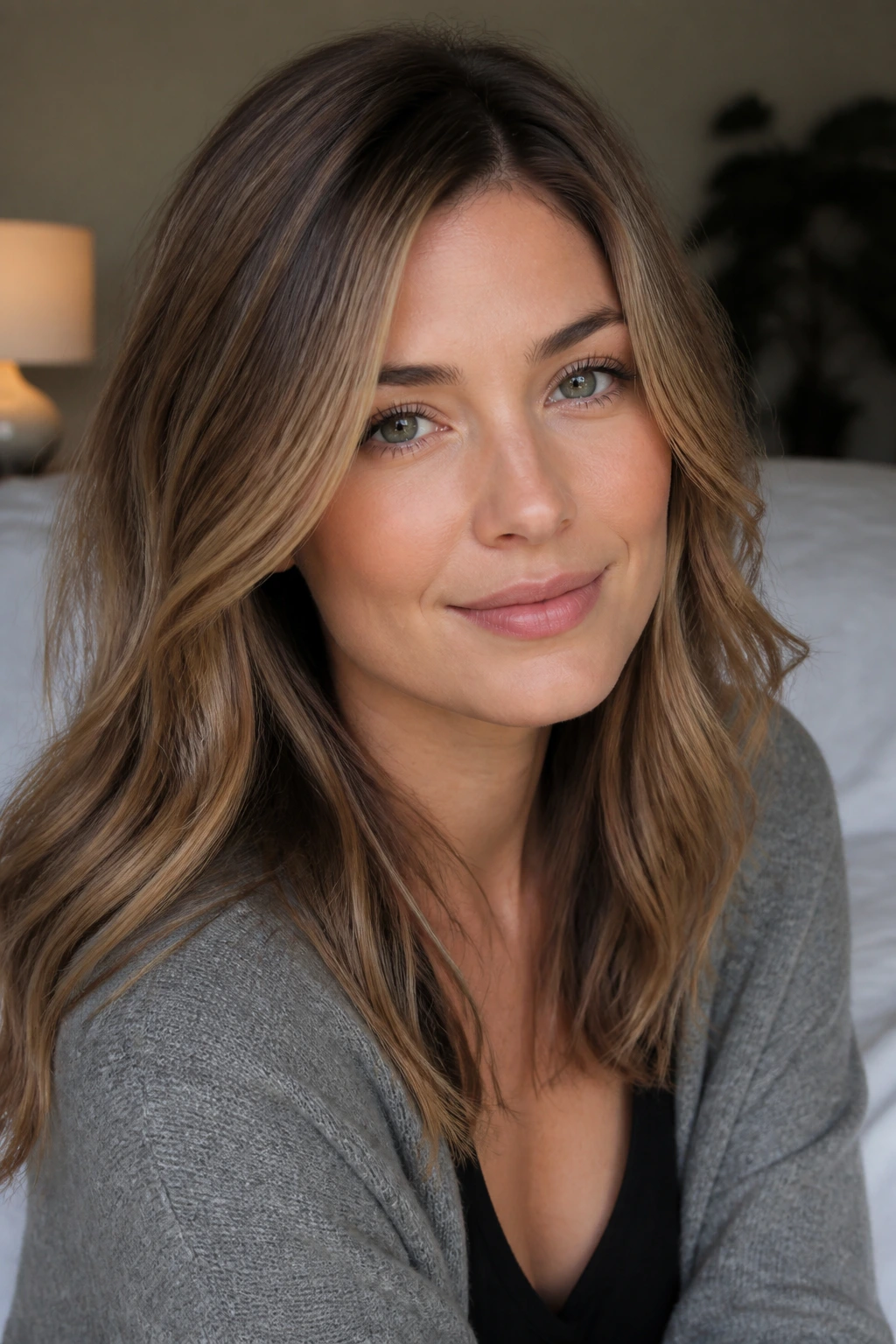
Caramel highlights don’t have to shout to be worth booking. On cool skin, the best versions are the ones that sit a little smoky, a little beige, and a little restrained, because that’s what lets the complexion stay calm while the hair gains movement. On thin hair, the placement does half the work. Sometimes more. A few fine ribbons, a shaded root, and one smart gloss can change the whole read of the haircut.
If you’re bringing photos to a salon, bring the ones that show tone in daylight, not the overexposed ones that make everything look lighter than it is. Then point at the parts you want to keep soft: the crown, the root, the line around the face. That conversation gets you much closer to caramel that flatters rather than caramel that competes, and the difference is bigger than people expect.