



Flat blonde on brunette hair can look stripy fast. The minute every light piece sits on top of the dark base with no shadow in between, the whole thing starts to read more like a zebra stripe than a style. Lowlights fix that. They tuck darker pieces back into the mix, so the blonde has something to bounce against, and the hair suddenly looks richer, softer, and more expensive-looking without trying too hard.
That’s why blonde hairstyles for brunettes with lowlights have such a good track record. The color does half the styling for you. A honey ribbon in a wavy lob looks sun-touched instead of bleached. A cool beige balayage on a long layered cut keeps depth at the roots and movement through the ends. Even a blunt bob gets more life when a few deeper strands sit underneath the lighter surface pieces.
The trick is not going lighter everywhere. It’s knowing where the blonde should sit, where the lowlights should hide, and which cut will show all that dimension instead of smearing it together. Some styles want face-framing brightness. Others need softer contrast and a little root shadow. A few look best when the light pieces are almost sneaky, appearing only when the hair swings.
Why These Looks Stand Out
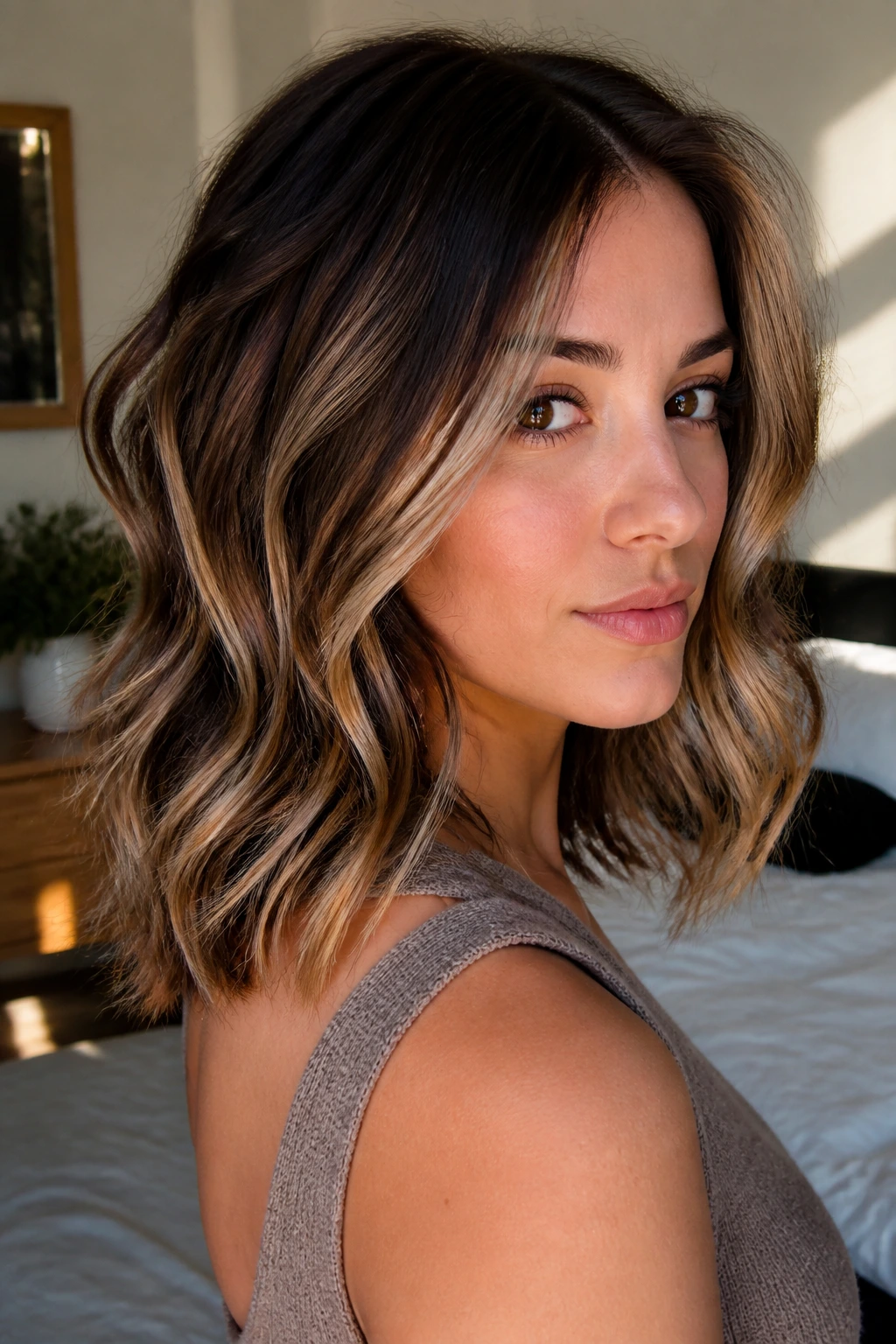
- The contrast is doing real work: Lowlights keep blonde from floating on top of brunette hair like one flat sheet of color.
- There’s a version for every length: These styles work on pixies, bobs, lobs, and long layers without forcing the same finish on everyone.
- The grow-out is softer: Rooted color, balayage, and diffused lowlights make the line between salon visits much less harsh.
- Texture changes everything: Straight hair shows ribbon placement, while waves and curls break the color into softer pieces.
- You can tune the vibe fast: Swap honey, beige, ash, or champagne blonde and the same cut takes on a different mood.
- Most of these styles are easy to wear daily: A little bend, a blowout, or a twist at the crown is enough to make the color pop.
Why Blonde Looks Better When Brunette Hair Keeps Its Shadow
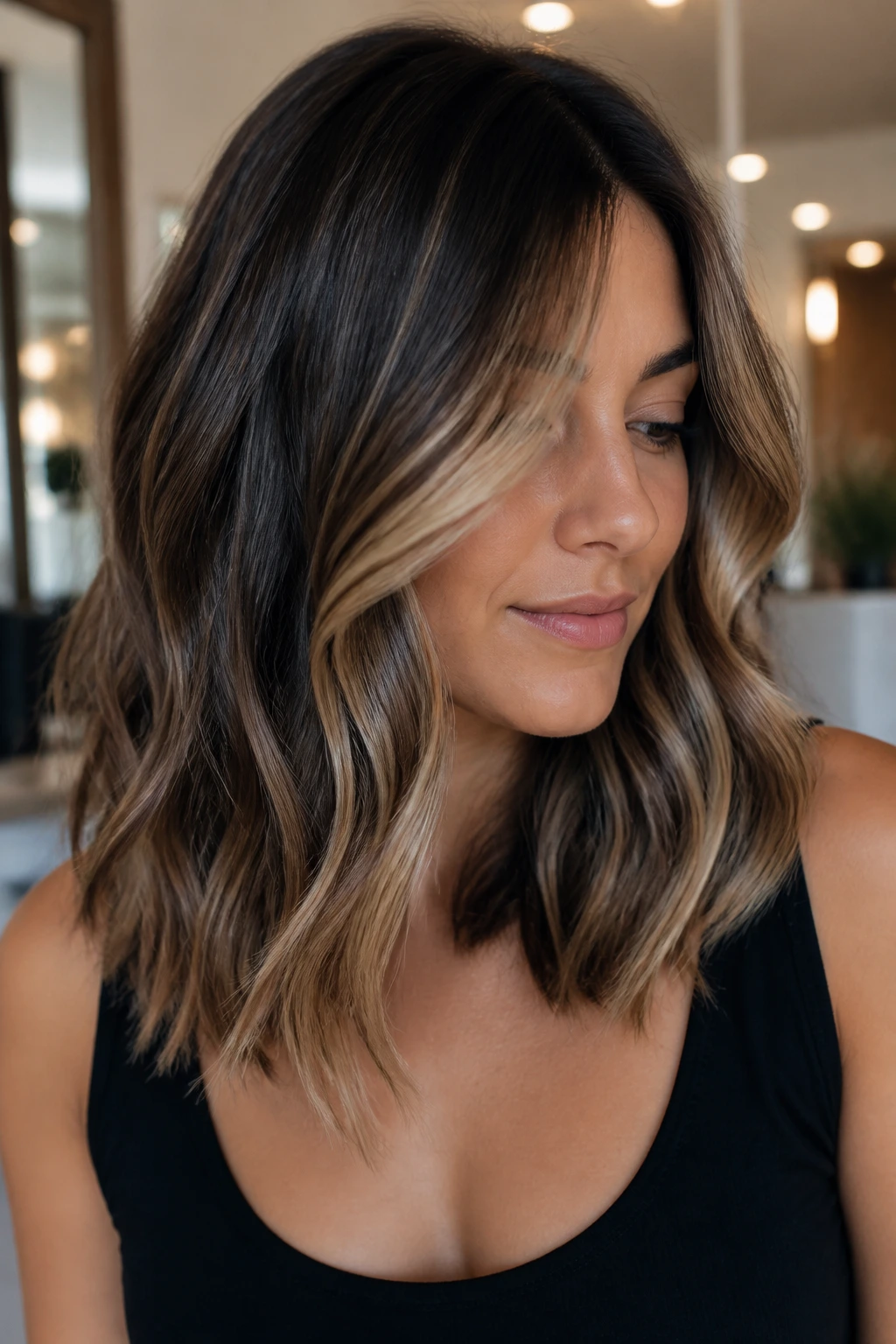
Brunette hair gives blonde something to lean on. Without that depth underneath, the lighter pieces can look chalky or hard-edged, especially if the tone skews too yellow or too cool. Lowlights restore balance. They create a darker lane for the eye to follow, so the blonde reads as bright rather than harsh.
There’s also a practical side people forget. A full head of blonde on dark hair can be high-maintenance and obvious as it grows out. Lowlights soften the regrowth line, which is a blessing if you do not live for monthly color appointments. The look holds up better in real life, not just in a fresh salon mirror.
What the Eye Sees First
If the face-framing pieces are placed well, people notice lift around the eyes and cheekbones before they notice the technical color work. That is the whole point. The best brunette-to-blonde styles do not scream “I got highlights.” They make the hair move.
Why Cut and Color Have to Talk to Each Other
A shag can eat a chunky highlight if the layers are too busy. A blunt lob can make the same highlight look sharp and graphic. That is why these styles are not just color ideas. They are cut-plus-color ideas, and that difference matters more than most people think.
1. Soft Beach Waves with Honey Ribbons
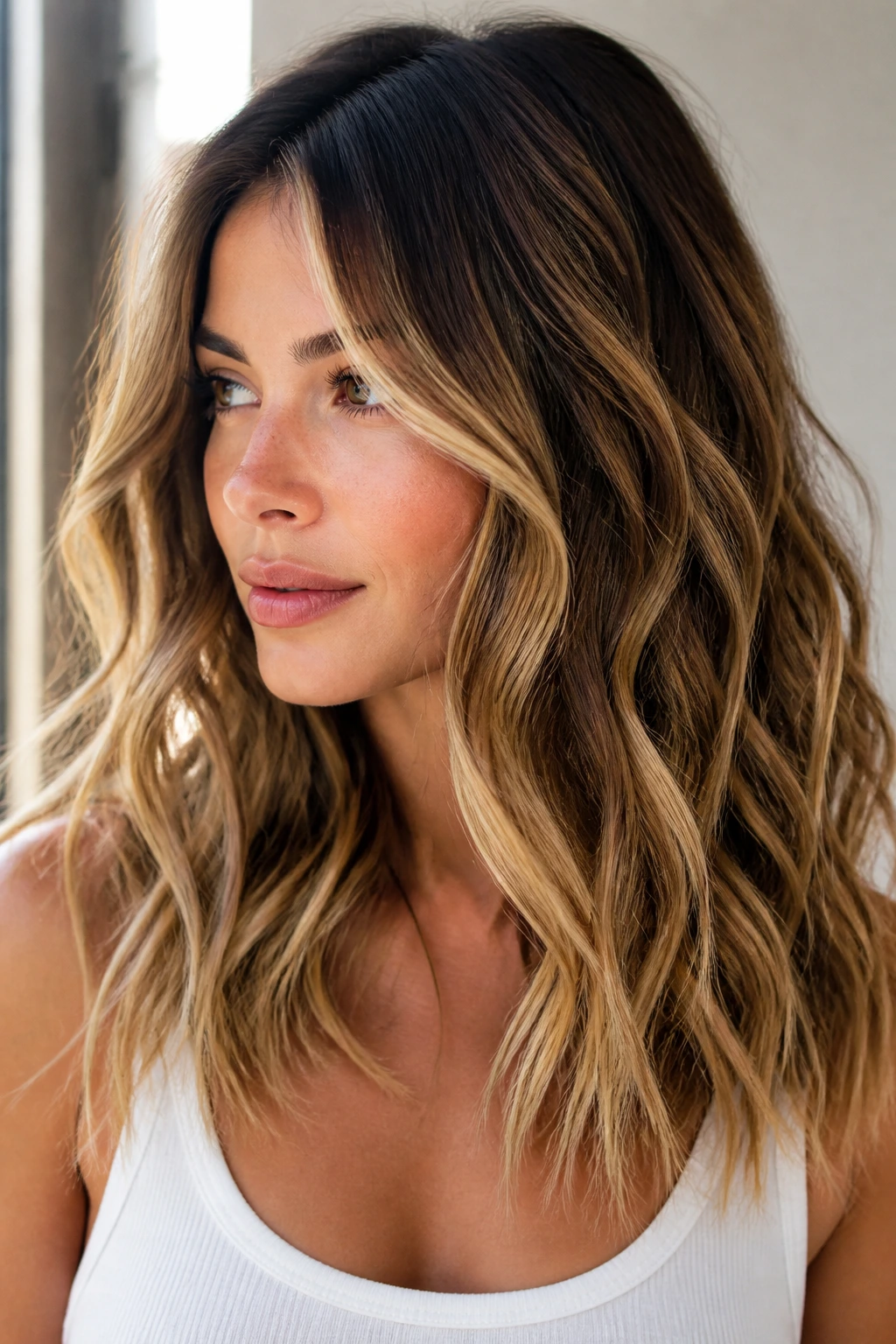
Beach waves are the safest place to start if you want blonde to look easy on brunette hair. The bend breaks up the color so the honey pieces and lowlights alternate naturally, almost like sun hitting hair that has already lived a little. It’s casual, but not boring.
Ask for ribbons of honey blonde placed through the mid-lengths and ends, then keep the darker lowlights closer to the underlayers and crown. A 1.25-inch curling iron, wrapped away from the face, gives you that loose S-shape without turning the ends into springs. Finish with a light mist of texture spray, not a crunchy one.
The reason this works so well is simple: movement does the blending. Straight pieces can expose every line, while waves smear the blonde and brunette tones together in a better way. If you hate when blonde looks painted on, this is the first style I’d point you toward.
2. Sleek Mid-Length Blowout
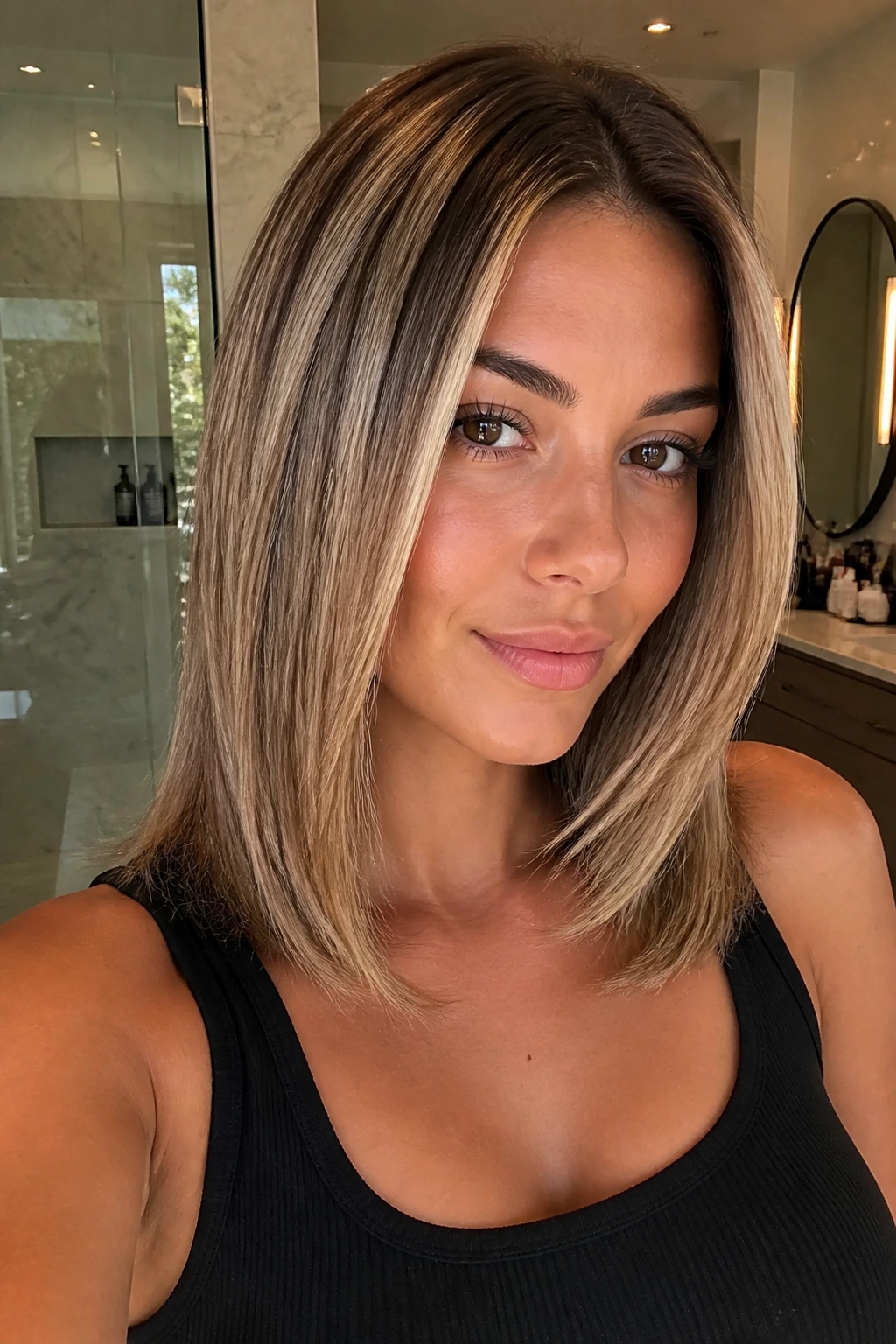
This is the polished option that still keeps dimension visible. A mid-length blowout with lowlights running under the top layer gives you shine, swing, and a cleaner outline around the face. The blonde sits on top in ribbons, but the darker strands underneath stop it from looking flat.
A round brush and a concentrator nozzle matter here more than most people want to admit. Blow the roots up and away from the scalp first, then bend the ends under just slightly. The lowlights show best when the hair has that smooth, reflective finish, because the different tones catch light at different angles.
Use this if you like a neat shape but do not want your brunette base erased. It looks especially good on shoulder-skimming cuts where the hair still has enough length to move, but not so much that the color disappears into a curtain.
- Best for: Straight to slightly wavy hair
- Styling note: Blow-dry with a smoothing cream and a medium round brush
- Color ask: Beige blonde through the surface, deeper lowlights under the crown
3. Curtain Bangs with Dimensional Layers
Why do curtain bangs work so well with brunette-and-blonde dimension? Because they put the brightest pieces exactly where the face needs them. The parted fringe opens a little window of blonde around the eyes, while the lowlights stop the whole front section from turning too pale or washed out.
The rest of the cut should stay airy. Long layers around the cheekbones and collarbones keep the style from feeling heavy, and the darker strands between the lighter ones give the bangs more shape. On brunettes, curtain bangs can look almost too soft if the color is one-note; lowlights sharpen the outline in a good way.
If your hair falls flat at the front, this is one of the smartest options on the list. You get movement without losing polish. And if you wear your hair up half the time, the fringe and face-framing pieces still do the talking.
Styling note
Blow the bangs forward first, then sweep them apart with a round brush. That tiny detour keeps the blonde pieces from sticking straight down and looking disconnected from the rest of the cut.
4. Blunt Lob with Root Shadow
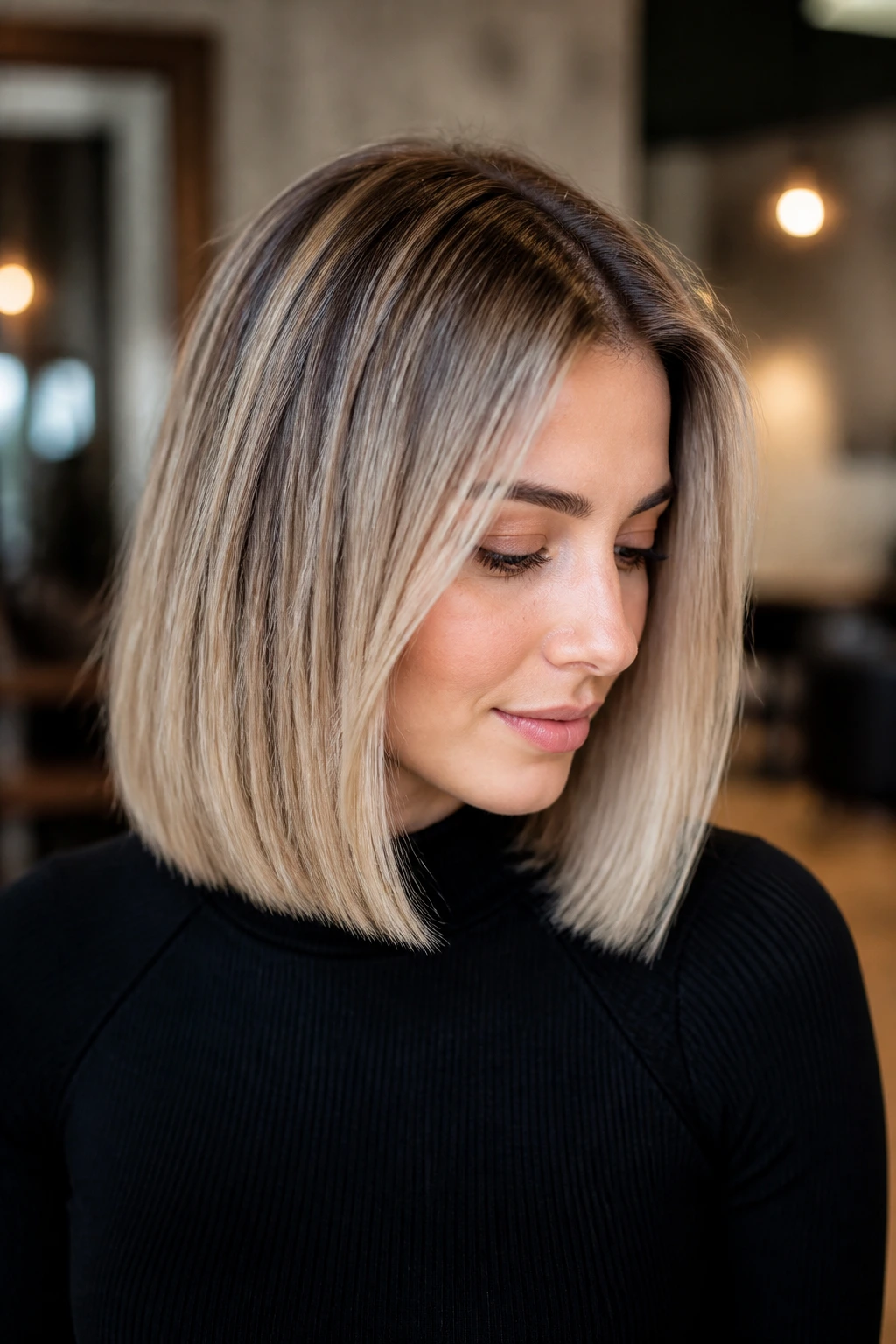
A blunt lob is a little bossy, and I mean that in a good way. The strong line at the bottom makes the blonde ribbons and lowlights look deliberate instead of scattered. Add a root shadow and the cut suddenly has depth at the scalp instead of a hard band of lightness.
This is a good choice if you want something sharp but not severe. The blonde can sit mostly in the mid-lengths and around the face, while the lowlights stay just deep enough to keep the ends from floating. On brunettes, that root shadow is the thing that stops the style from looking freshly lifted and then slightly panicky two weeks later.
Wear it pin-straight for a crisp finish, or add one bend at the ends if you want the color to break up a little more. Either way, the blunt edge gives the style structure. It’s the haircut doing the heavy lifting, which is a nice thing when the color already has a lot going on.
5. Long Layers with Champagne Balayage
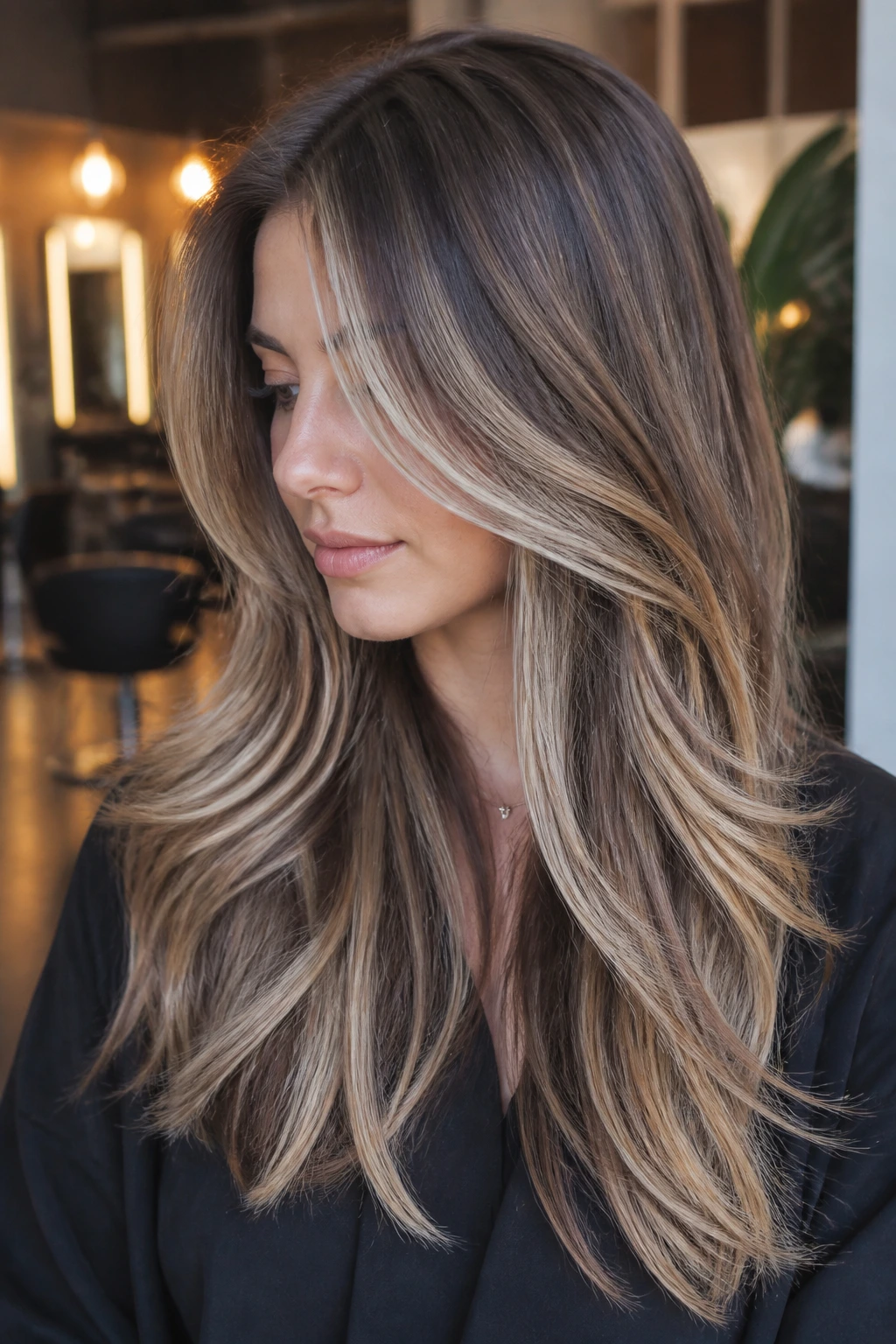
Champagne blonde on brunette hair can go sour fast if the placement is off. Lowlights solve that by anchoring the lighter sections and keeping the balayage from turning into a pale wash. Long layers are the perfect partner because they let the color trail down the hair shaft instead of sitting in one thick block.
This look thrives on soft transitions. The roots stay deeper, the mid-lengths carry the brightest pieces, and the ends taper into a mix of blonde and brunette that looks lived-in rather than aggressively highlighted. I like this best on hair that already has some natural movement, because the layers catch the lighter pieces and keep them from disappearing.
It’s also a smart choice if you like your hair down most of the time. The longer the length, the more important it is to keep contrast. Otherwise the blonde can get lost in the sheer amount of hair. Champagne balayage with lowlights keeps the whole thing readable.
6. Textured Shag with Caramel Lowlights
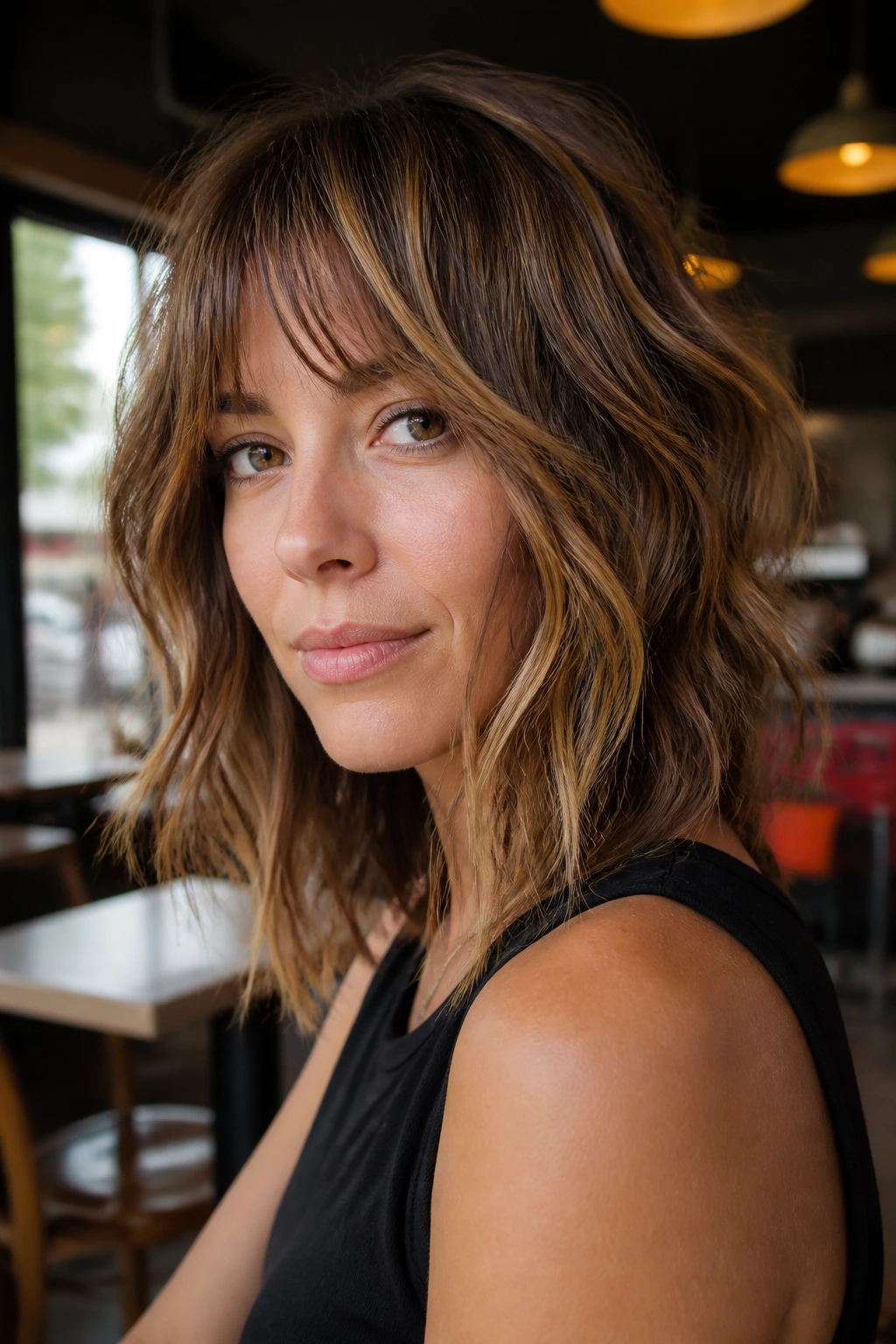
The shag loves contrast. If you’ve got a brunette base and want blonde to look a little cooler and more modern, a textured shag with caramel lowlights gives you that chipped, piecey feel without making the color loud. The layers do the rough work; the color just follows along.
This cut works because the ends are intentionally irregular. The blonde pieces land on different lengths, so the eye never gets one solid band to stare at. Caramel lowlights soften the blonde and stop the style from turning brassy around the perimeter, which is where many shag cuts start to go a little wild.
Use a matte paste or lightweight cream to pinch the ends after drying. You want separation, not stiffness. If your hair is naturally wavy or a little frizzy, this is one of those rare styles that actually looks better when it is not overly controlled.
- Best for: Wavy or textured hair
- Good match: Shoulder-length to longer shags
- Pro move: Add a few brighter pieces around the fringe, not everywhere
7. Loose Curls with a Bright Money Piece
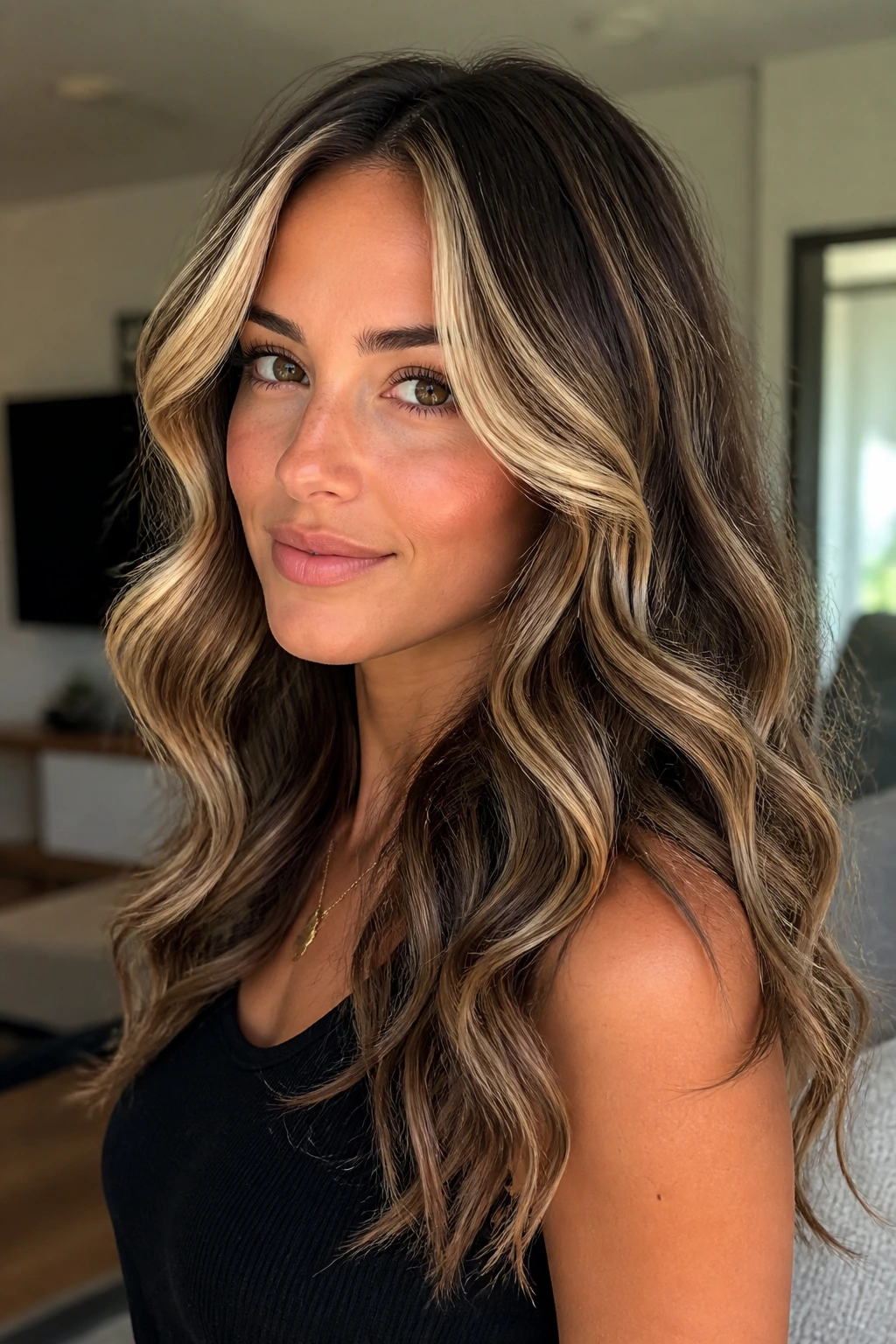
A bright money piece can rescue a darker brunette base in seconds. Put it in front of loose curls and the whole style wakes up. The key is restraint: the front streaks should be blonde enough to frame the face, but the lowlights through the back and underneath need to stay visible so the color does not turn flat.
Loose curls make that contrast look intentional. The lighter front pieces catch the first curl, then the darker tones underneath sit back a little and give the style shape. If you use a wand, leave the last inch of the ends out. That keeps the finish softer and gives the color a little room to breathe.
This is the kind of style that looks good from across a room and even better when you lean in. The lowlights keep it grounded. Without them, the money piece can feel disconnected. With them, it feels like part of the haircut.
8. Butterfly Cut with Beige Blonde Ends
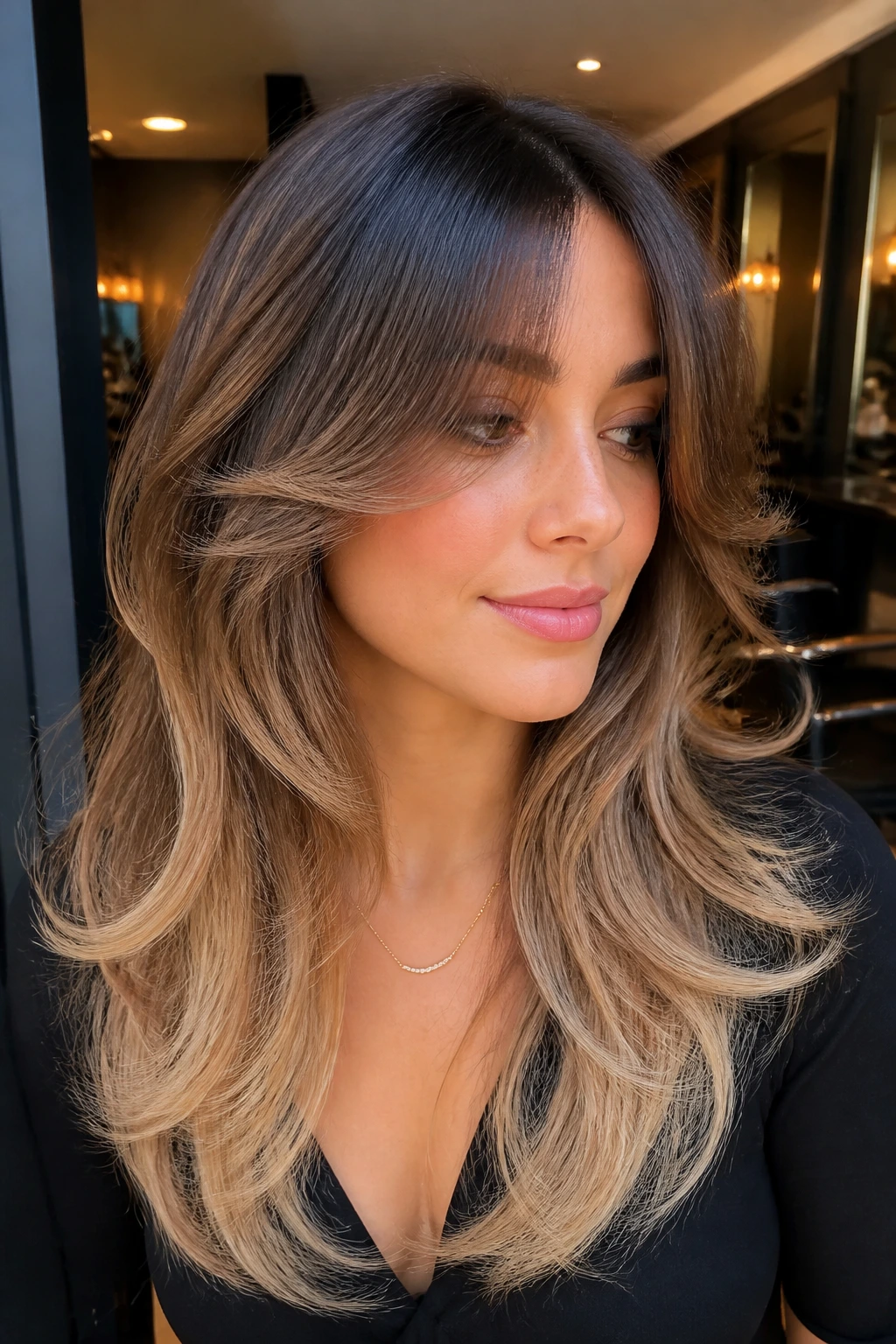
The butterfly cut is a layered cut built for movement, which is exactly why it works with beige blonde on brunettes. The shorter face-framing layers bring the lightness up high, while the longer underlayers let the lowlights stay visible in the body of the hair. It’s airy without looking thin.
Beige blonde is the right tone here if you want something soft rather than yellow or icy. It sits in the middle, which makes it easier to blend with a brunette base. The lowlights should be slightly deeper than the base, not nearly black. Too much darkness and the hair starts to look striped.
What makes this cut flattering is the way it opens around the face. If you like volume at the crown and swing at the ends, this one gives you both. It also photographs in a way that makes the dimensional color look more expensive than it probably was to maintain.
How to style it
Blow out the shorter layers away from the face, then use a large brush or rollers on the long pieces. The difference in lift is what makes the color pattern stand out.
9. Angled Bob with Wispy Front Pieces
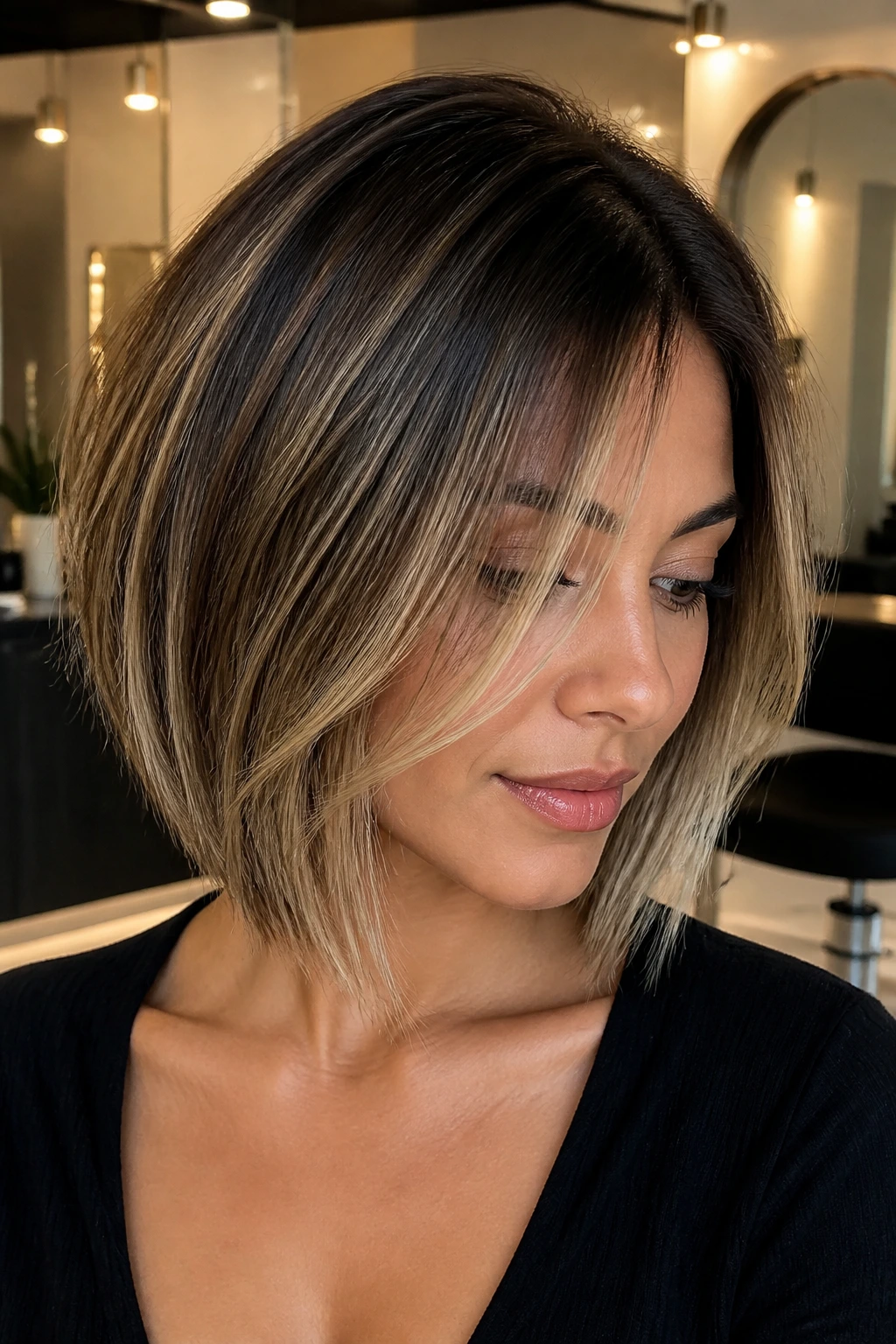
An angled bob gives you a clean line in the back and more softness around the face, which is perfect when you want blonde and lowlights to feel graphic instead of blended away. The shorter back keeps the color concentrated. The longer front pieces carry the blonde where people actually see it.
Wispy front pieces matter more than people think. They stop the face from being boxed in by a solid wall of color. On brunettes, that little bit of softness around the cheekbone keeps the style from feeling too severe, especially if the blonde is cool-toned.
This is a great cut for anyone who likes a shape that looks purposeful even on lazy styling days. A flat iron bend at the ends or a quick round-brush blowout is enough. The color does the rest. Sharp, but not harsh.
10. Half-Up Twist on Wavy Lengths
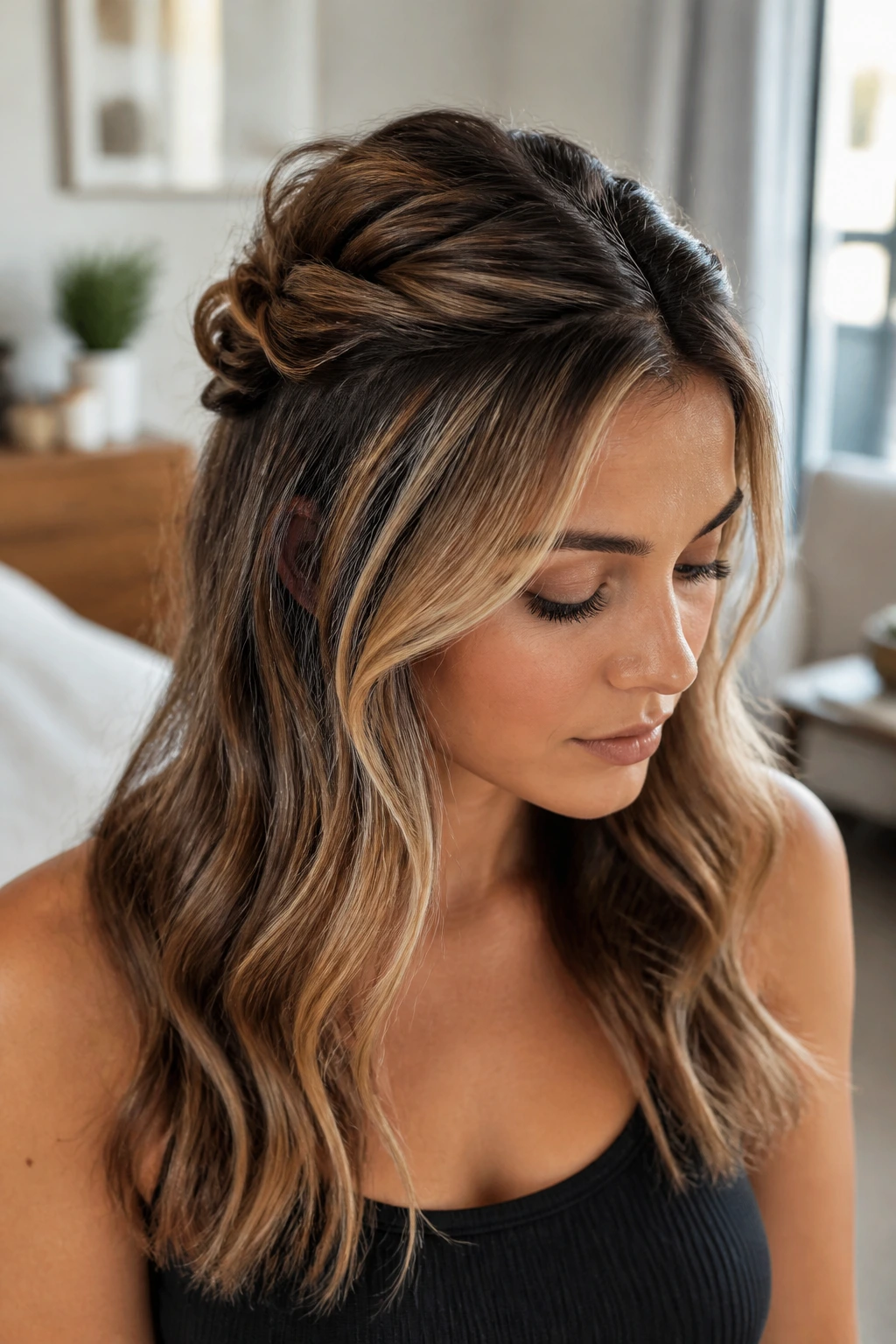
Half-up styles are underrated on brunette-blonde hair because they let the lower layers keep showing off the lowlights. A simple twist or knot at the crown pulls the top back and leaves the waves underneath to do the color work. It’s a nice split of structure and softness.
This style is especially good when the color placement is concentrated around the mid-lengths and ends. The twist lifts the brighter pieces into view near the face, while the darker lowlights stay visible in the loose hair below. It feels a little polished, a little undone. That mix is the whole point.
Use this when you want the blonde to read as dimensional, not all over. It takes five minutes, maybe less if your hair already has a bend in it. A couple of pins, a twist, and a spray of flexible hold is usually enough.
- Tip: Leave a few face-framing strands out so the blonde has a soft entry point
- Best for: Medium to long hair
- Finish: Textured spray, not stiff hairspray
11. Braided Crown with Dimensional Blonde
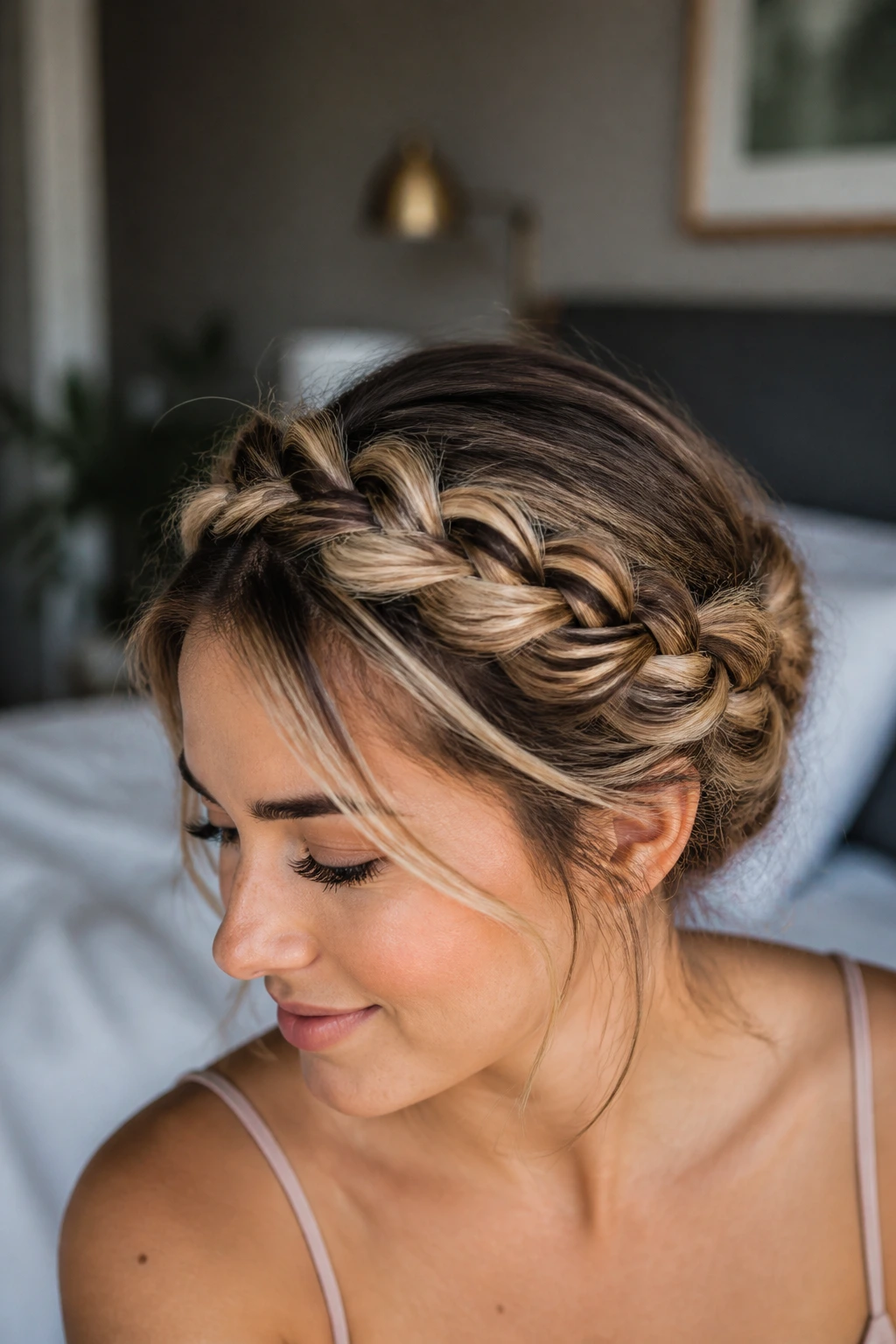
Braids can either erase color or show it off, and the difference comes down to thickness and contrast. A braided crown with brunette lowlights and blonde accents is all about the pattern. The braid pulls light and dark pieces together so the twists look deliberate rather than busy.
The reason this one works is that the braid exposes both sides of the color story. The blonde catches along the outer edges, while the lowlights peek through in the folds. If your hair has been feeling a little plain, a braid adds structure without needing heat.
Keep the braid loose. Tight braids can squeeze all the movement out of the style and make the color look less dimensional. A softer weave allows the lighter and darker tones to break apart a little, which is where the good texture lives.
12. Tousled Pixie with Feathered Top
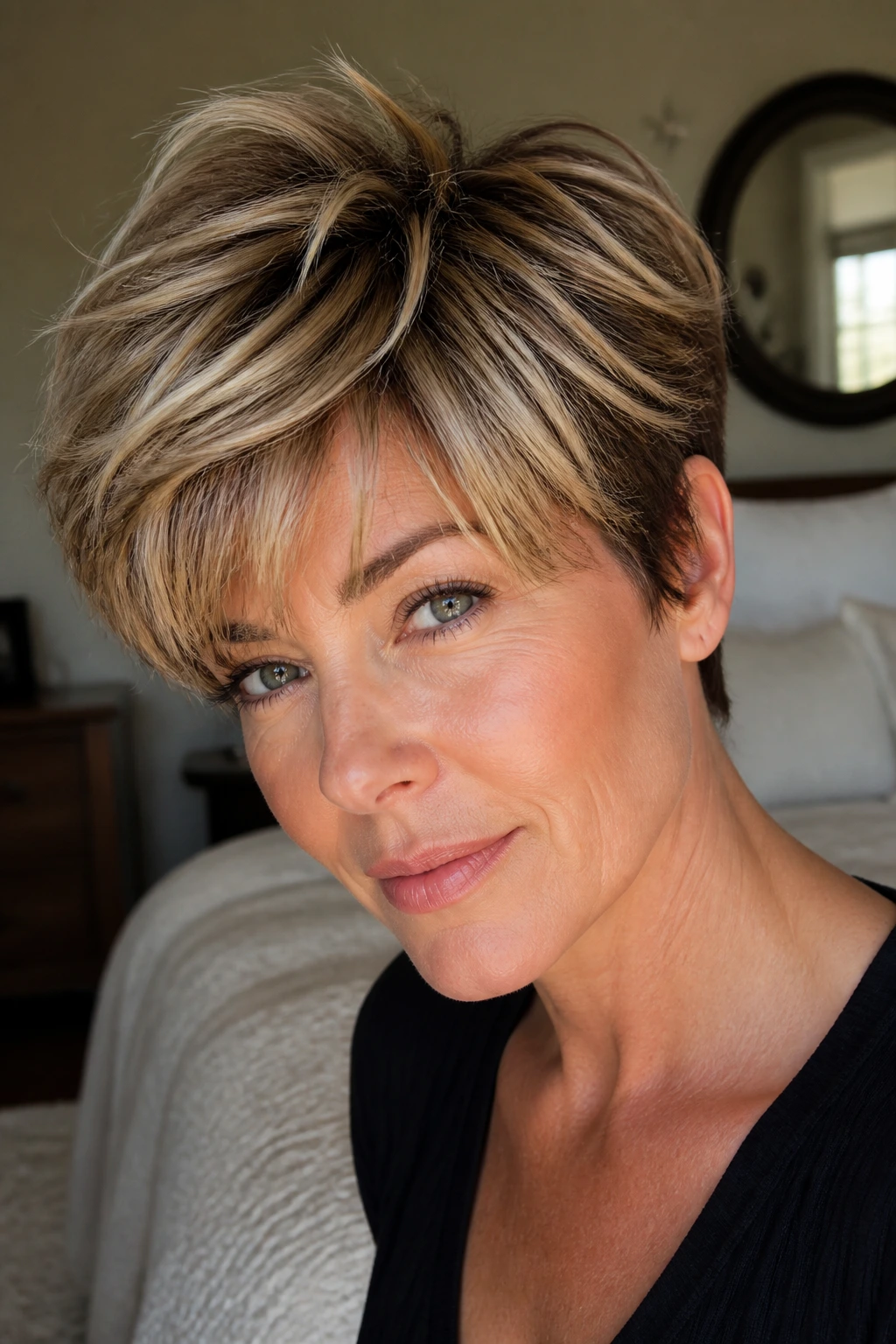
Short hair does not need to sacrifice dimension. A tousled pixie with feathered top layers can show off blonde pieces on brunettes in a way that feels sharp and almost cheeky. The lowlights at the nape and sides keep the cut from looking bleached-out or helmet-like.
This is one of those cuts where the placement matters more than the amount. A few lighter pieces on the crown and fringe give lift, while deeper strands underneath keep the shape grounded. Feathering at the top helps the blonde read as movement, not blocks of color.
Use a paste or cream with a matte finish if you want separation. If you prefer a cleaner look, a little shine cream on the top layer is enough. Either way, this cut depends on texture. Flat pixies lose their charm fast.
Styling cue
Push the front slightly forward, not straight up. That tiny tilt makes the blonde pieces fall in a more natural pattern and keeps the style from looking too done.
13. Face-Framing Money Piece on a Shoulder-Length Cut
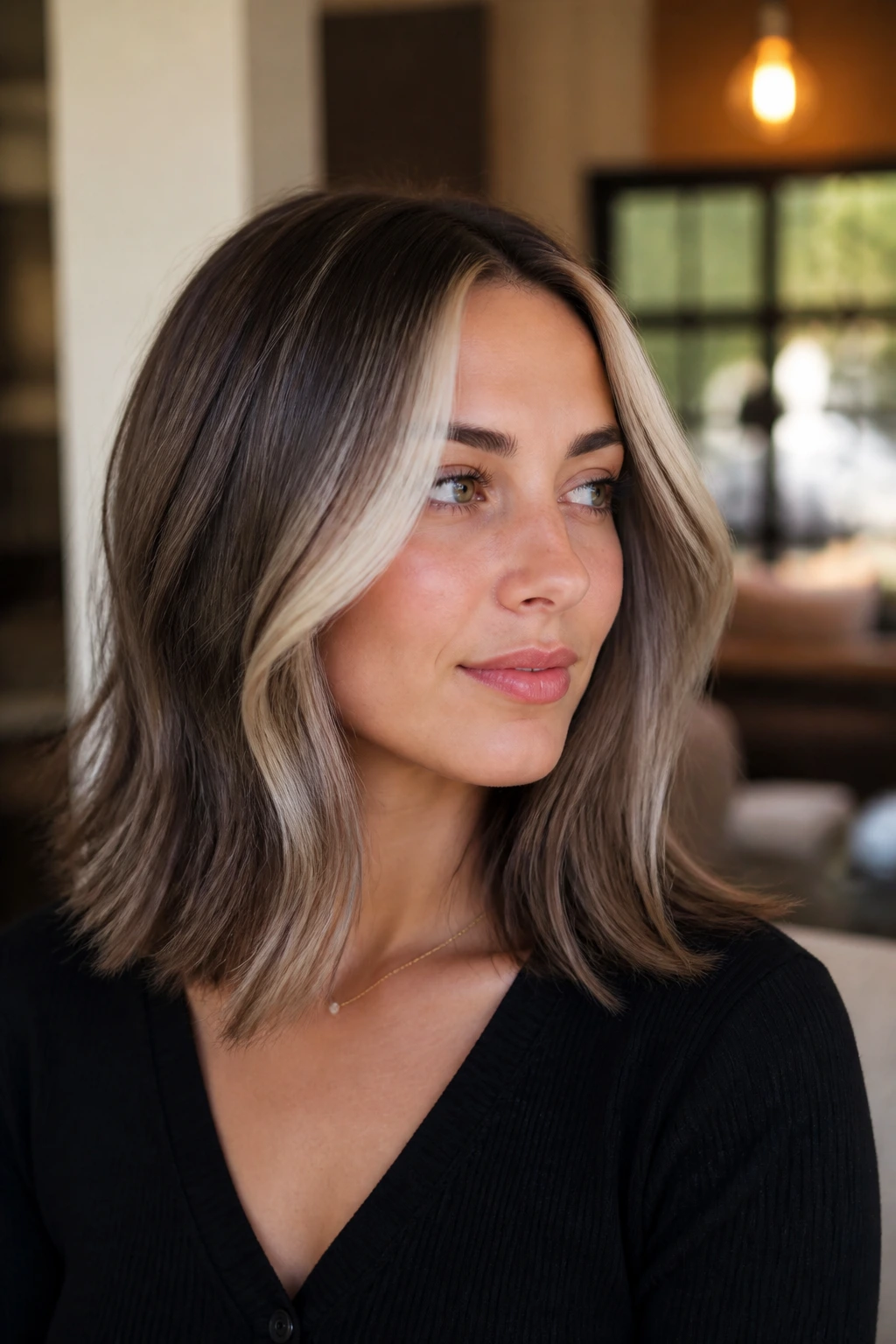
Want brightness without committing to a full overhaul? This is the move. A shoulder-length cut with a bold face-framing money piece gives you instant lift, and the lowlights through the rest of the hair keep the blonde from stealing the whole show. It’s strategic, not noisy.
The color contrast near the front should be the strongest part of the look. That means the money piece can be one or two levels lighter than the rest, while the lowlights stay tucked through the back and underlayers. The result is a style that looks brighter at the face and richer everywhere else.
I like this on shoulder-length cuts because the length is long enough to show dimension, but short enough that the front pieces do a lot of visual work. If you wear glasses, this style is especially good. The blonde frames the face without burying your features.
Ask for this
Request a brighter front section, diffused lowlights underneath, and a soft gloss over the rest so the blonde pieces do not turn brassy after a few washes.
14. Glossy Straight Hair with Hidden Lowlights
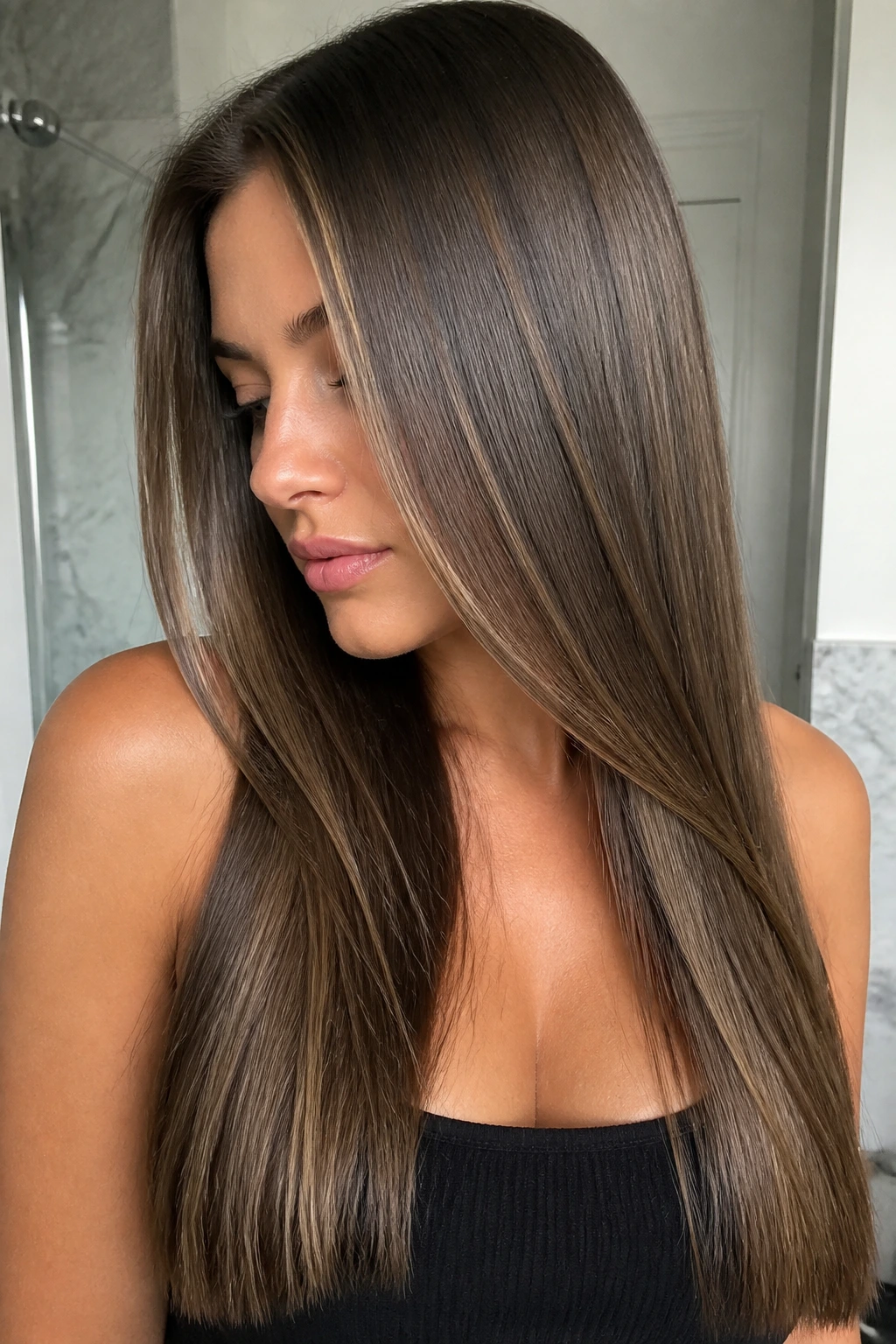
Straight hair can be a little unforgiving, which is why hidden lowlights matter so much. On a glossy straight style, they create depth underneath the surface so the blonde looks reflective instead of flat. You only catch the darker strands when the hair moves, and that little surprise is what keeps the style interesting.
The best version of this is smooth and almost liquid-looking. A flat iron can help, but the real trick is a good blow-dry first. If the hair is blown out evenly, the lowlights sit in a more natural rhythm rather than looking chunked in. Keep the ends clean and slightly beveled.
This is one of my favorite options for people who like polished hair but hate when color looks loud. The style is quiet until it moves. Then you see the brunette depth, the blonde surface, and the whole thing makes sense.
15. Voluminous Mid-Length Curls
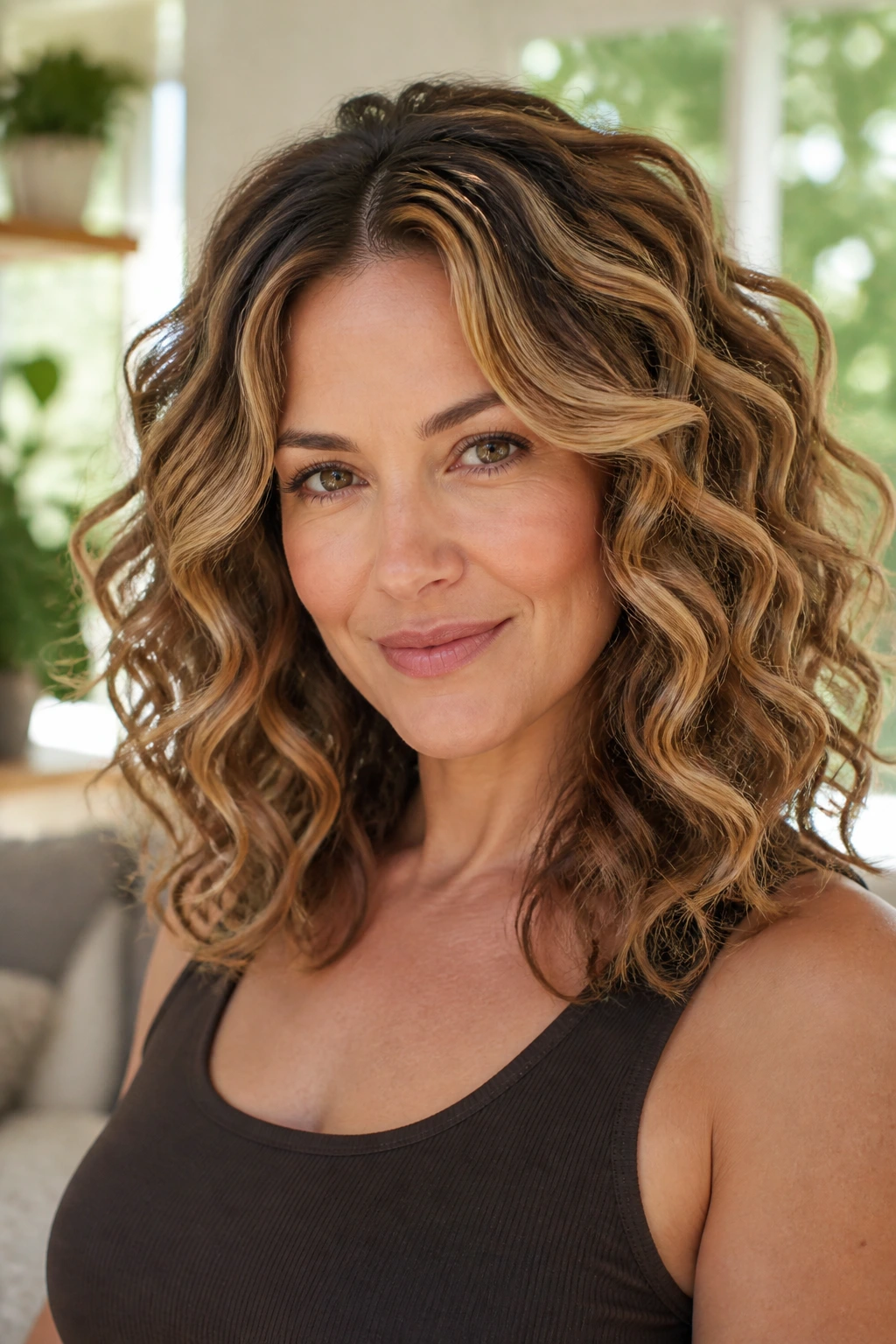
Big curls on a mid-length cut can make blonde on brunette hair look plush instead of sharp. That’s a good thing. The curls open up the layers of color and let the lowlights hide in the curve of each bend, which gives the whole head more body.
This style works best when the blonde is distributed in broad sections rather than tiny stripes. You want enough contrast to read from a distance, but not so much that the curl pattern gets chopped up. A large barrel iron or hot rollers can help keep the curl round and full.
Add a little root lift at the crown and leave the curls soft at the ends. That keeps the style from feeling dated or overworked. The lowlights are doing the grounding, so the rest can stay lush.
16. Deep Side Part with Glam Waves
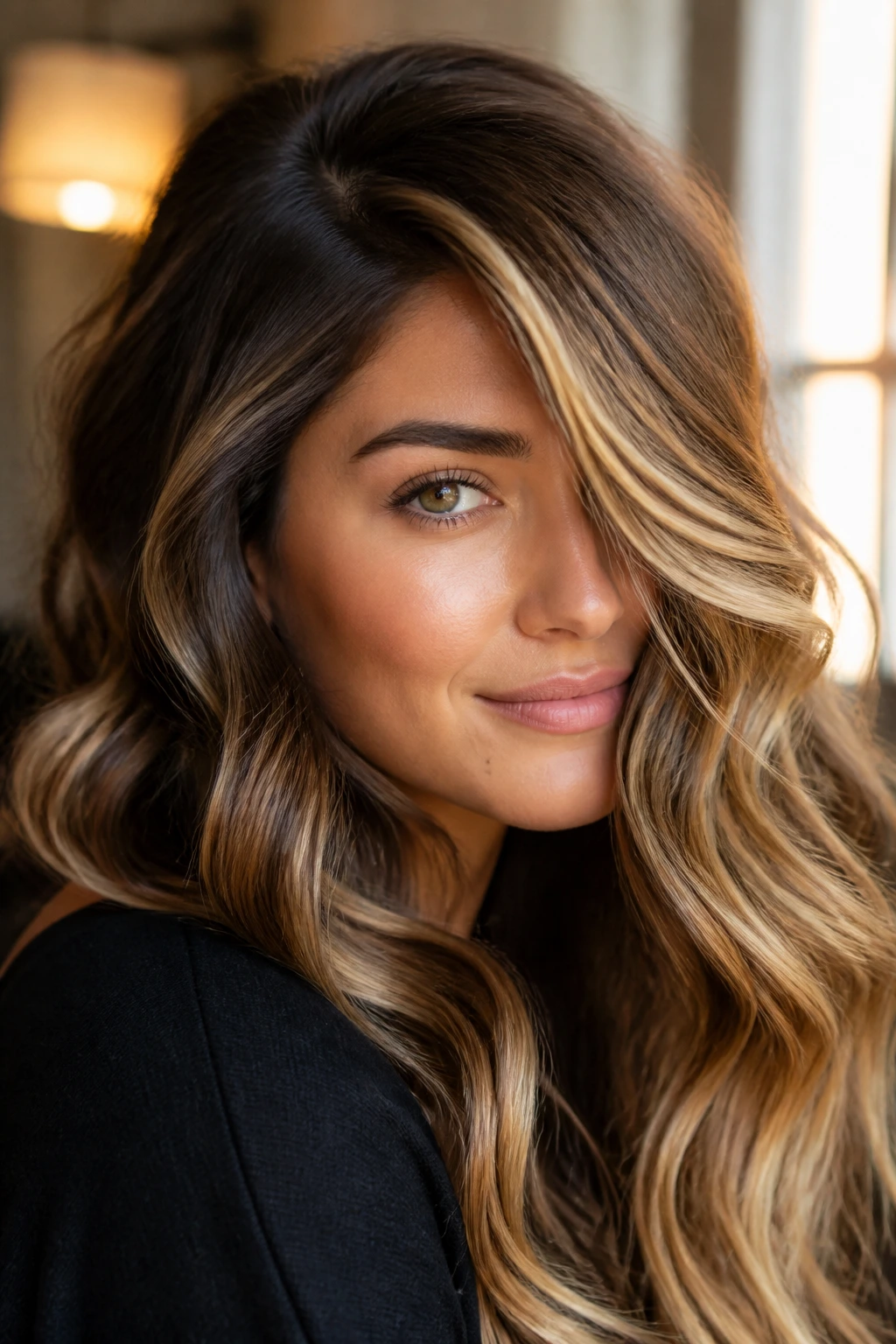
A deep side part changes the whole personality of brunette-blonde hair. It shifts the volume, creates a heavier sweep on one side, and lets the brightest pieces fall in a more dramatic pattern across the face. With lowlights underneath, the waves have a much richer shadow line.
This style is especially good when you want the color to feel evening-ready without adding a ton of extra work. The part gives you built-in lift at the front. The waves carry the blonde, and the darker strands underneath stop the look from going pale under indoor light.
If you’ve got medium or long hair, this is an easy way to make old highlights feel new again. Sometimes the cut and parting do more than a color refresh. That’s the sneaky part people overlook.
17. French Bob with Soft Blonde Pieces
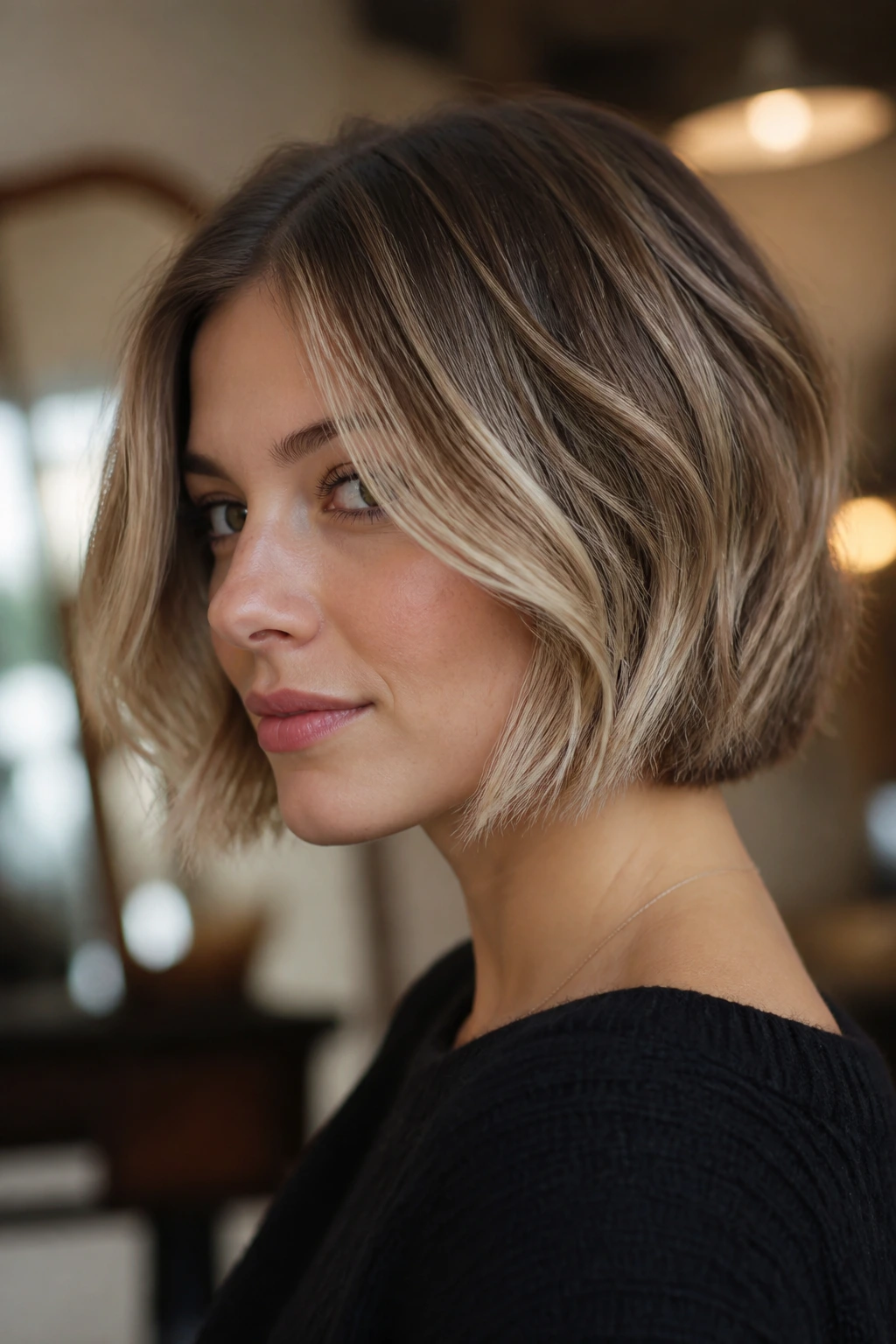
The French bob has very little patience for sloppy color, which is why soft blonde pieces and muted lowlights are such a good match. The cut is short, crisp, and a little cheeky. Add too much contrast and it looks choppy; add the right blend and it looks chic in that easy, lived-in way people chase.
Keep the blonde concentrated around the face and the top layer. The lowlights should sit mostly underneath and through the interior so the edge of the bob stays clean. A little bend at the ends helps the color catch light without losing the shape.
This is a cut for someone who likes lines. It doesn’t need much else. A side tuck behind one ear and a smooth finish can make the blonde read like a deliberate accent instead of a color job that got too excited.
Best for
Fine to medium hair, especially if you want more visual thickness at the perimeter.
18. Low Chignon with Face-Framing Strands
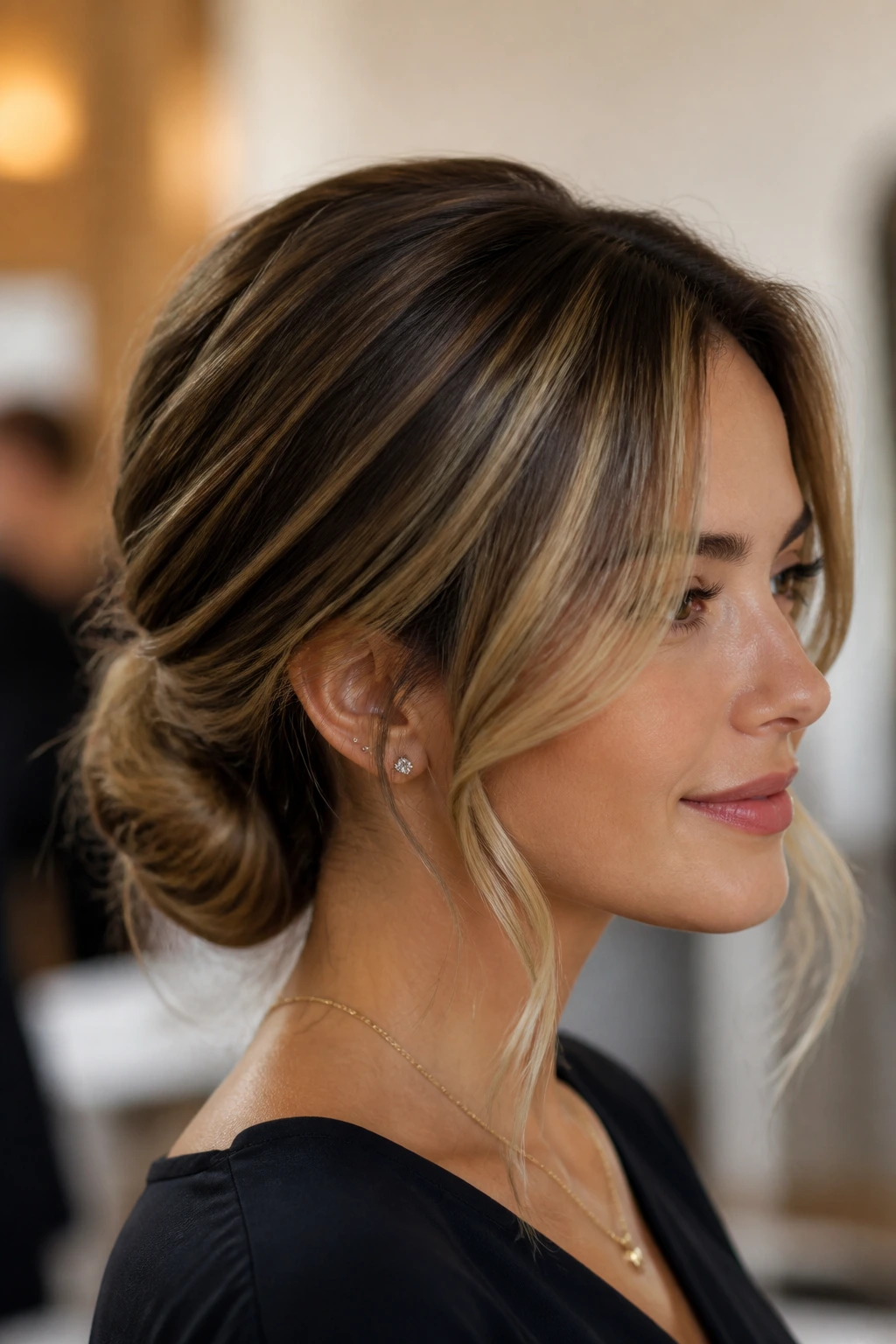
A low chignon is formal enough for an event but soft enough to keep the color interesting. Brunette hair with blonde lowlights and a few brighter front pieces looks especially good when it’s twisted low at the nape. The bun gathers the color into a tighter shape, so every light strand stands out more.
Leave a couple of face-framing strands out. That is where the blonde earns its keep. Without those pieces, the style can look too neat and the dimension disappears into the bun. With them, the lowlights around the twist and the blonde around the face work together instead of fighting for attention.
This is a practical style when you need polish without stiffness. Secure the bun low and keep the finish slightly soft. A perfectly shellacked chignon can make dimensional color disappear. A little looseness lets the shades breathe.
19. Layered Collarbone Cut
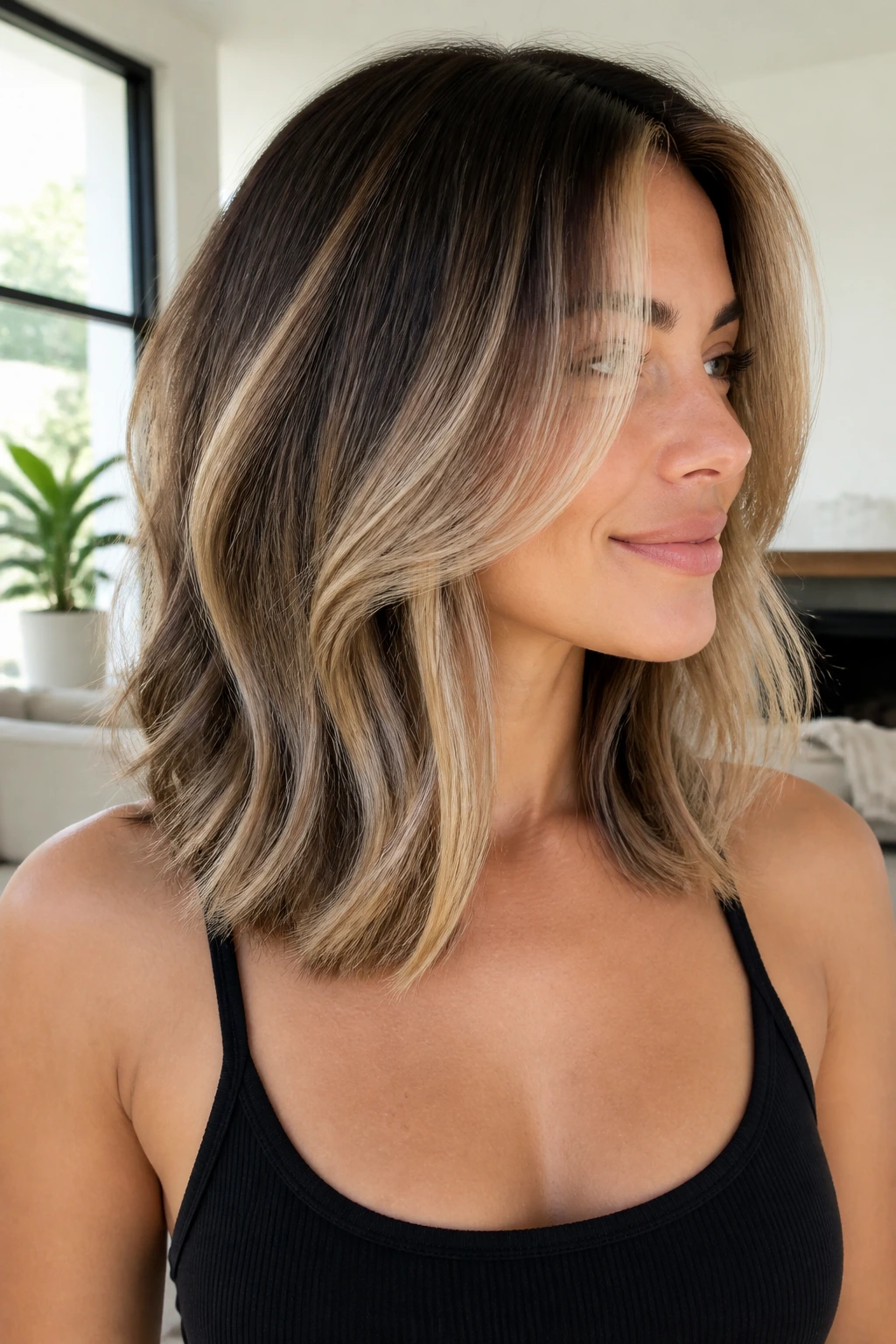
The collarbone cut is a workhorse. It is long enough to swing, short enough to style fast, and layered enough to show off both blonde and lowlights without overcomplicating things. The color sits through the layers like stripes in a really good moving target.
What makes it fresh is the balance. The collarbone length lets the blonde pieces frame the face, while the lowlights tucked under the layers keep the style from going too bright. It’s especially flattering if you want something lighter around the front but still grounded at the back.
This cut can go sleek, wavy, or slightly flipped at the ends. That flexibility is a big reason I keep coming back to it. Some styles need a lot of work to look intentional. This one usually does not.
20. Grown-Out Balayage with Soft Waves
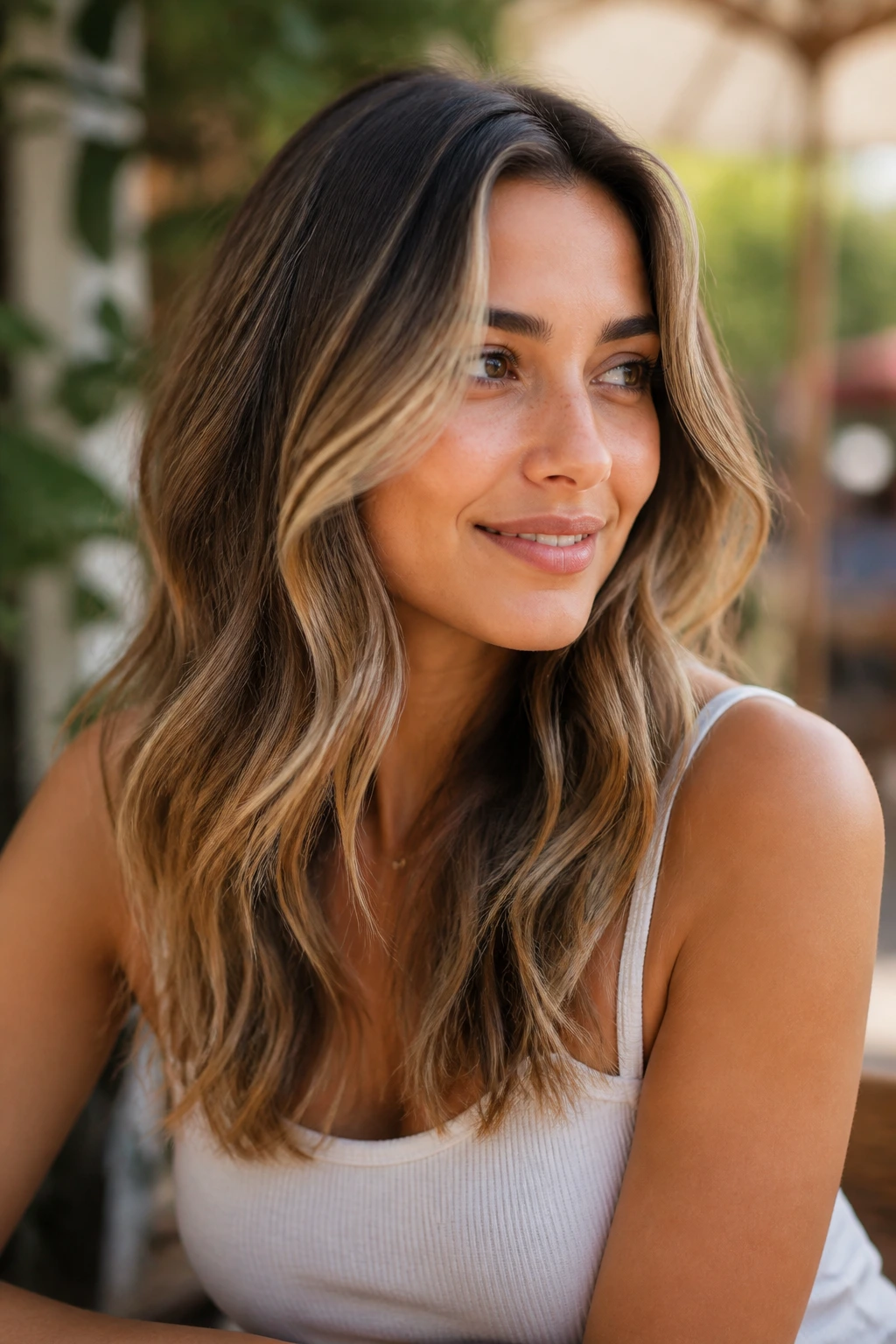
This is the low-maintenance sweetheart of the bunch. Grown-out balayage on brunette hair with lowlights looks better when it isn’t brand-new. The soft waves make the transition even smoother, so the blonde blends into the brunette base instead of sitting on top of it like a fresh stripe.
The charm here is in the imperfection. The roots are shadowed, the lighter pieces live mostly where the sun would hit, and the lowlights knit everything together. That means the style survives a little grow-out without looking neglected. It just looks a bit more relaxed.
If you don’t want your hair to shout “maintenance,” this is your move. It can be dressed up with a gloss or left as-is between appointments. The cut and color are friendly to real life, which is more useful than people admit.
21. Curtain Bang Lob
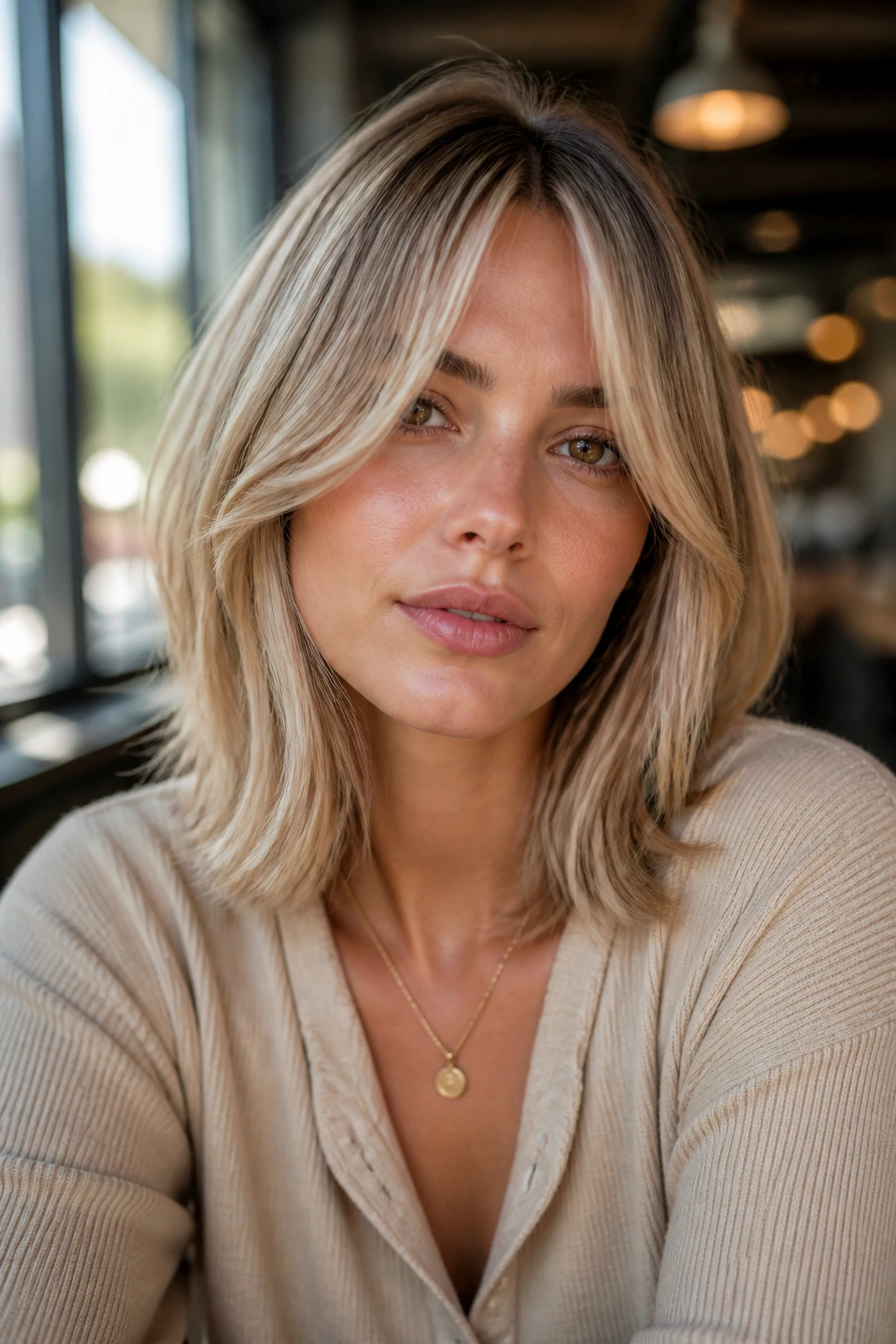
Curtain bangs and a lob make a very persuasive pair. The length gives the blonde and lowlights room to move, while the bangs pull the eye straight to the face. On brunettes, that means the brightness lands where it matters most.
A curtain bang lob works best when the bangs are soft enough to blend, not so thick that they become a wall. The blonde pieces through the fringe can be a touch brighter than the rest, and the lowlights should stay visible through the sides and back so the shape doesn’t feel washed out. That contrast is what keeps the cut modern.
If you like the idea of bangs but don’t want to commit to a heavy fringe, this is the safest entry point. The style can be pushed off the face, tucked behind the ear, or worn loose. It gives you more options than a severe bang ever will.
Styling note
Blow the bangs away from the face, then guide them inward with your hands. That soft bend is what makes the color look blended instead of chopped.
22. Bubble Ponytail with Blonde Ribbons
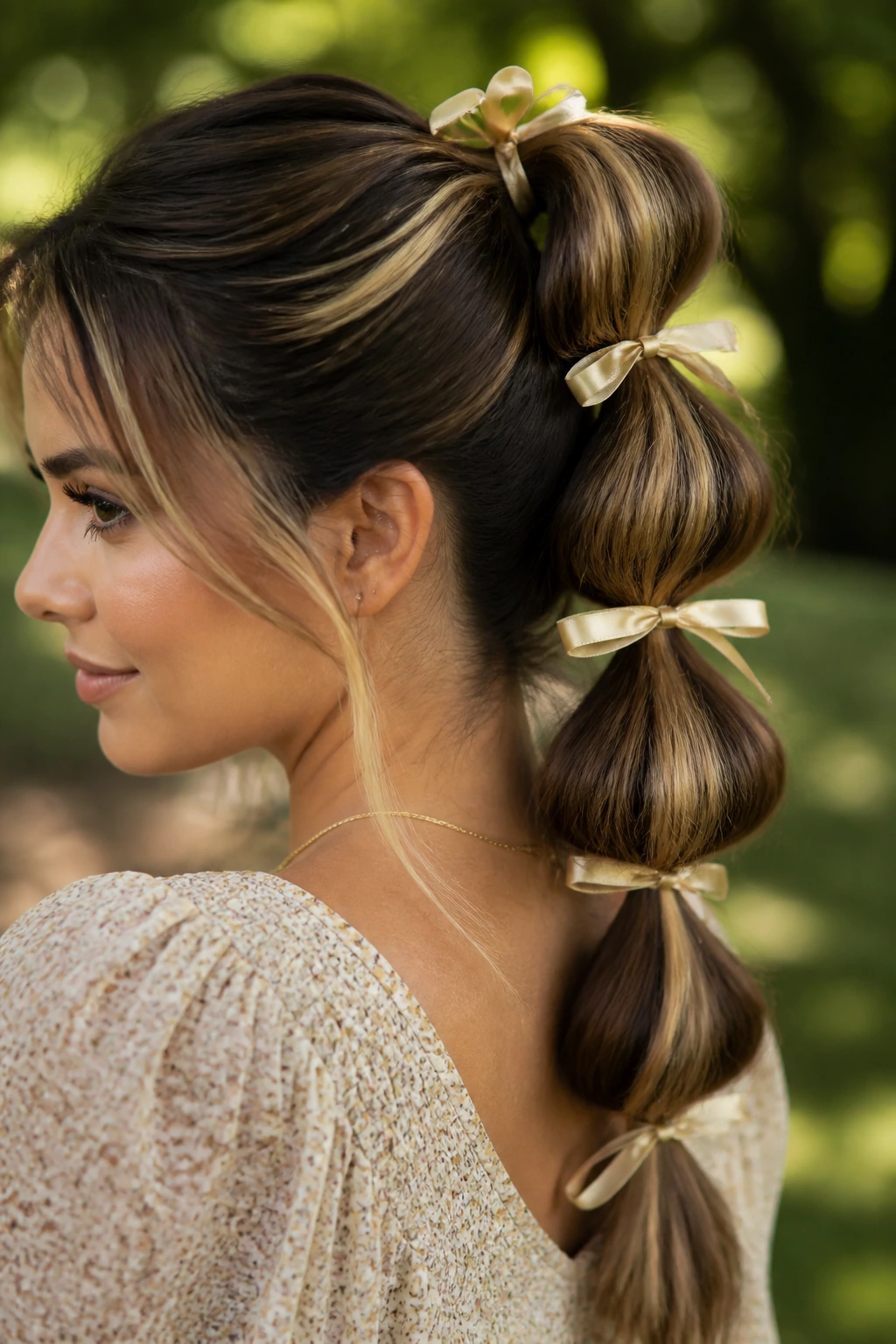
A bubble ponytail sounds playful because it is. It also happens to be one of the easiest ways to show off brunette hair with lowlights and blonde ribbons, since each bubble breaks the color into little sections. The shape does the work.
The darker strands between the elastics keep the blonde from looking too busy. That is the hidden advantage here. You get the lighter pieces visible at each bubble, but the lowlights stay in the mix and give the style a kind of built-in contour.
Use clear elastics or ones that match your hair color, then gently pull at each section to create volume. It looks best when the bubbles are slightly uneven. Too perfect, and the style loses its charm.
23. Side-Swept Hollywood Waves
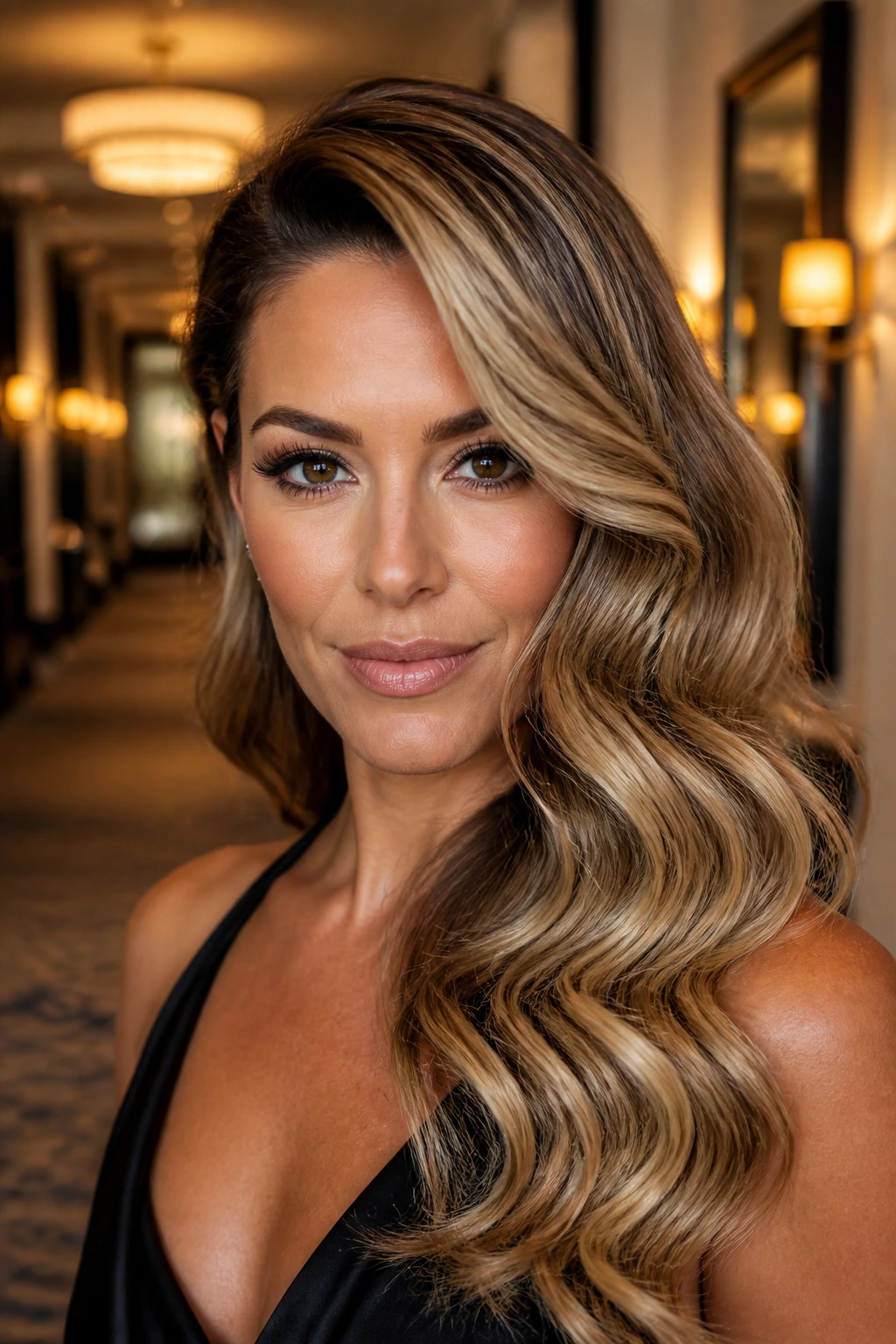
Hollywood waves on brunette-blonde hair are all about sheen and shape. A deep side sweep gives the blonde a more dramatic route across the head, while the lowlights underneath keep the wave pattern from becoming one giant pale sheet. It feels old-school in the good sense.
The important thing is to keep the wave pattern smooth and consistent. That lets the color changes show up as ribbons instead of random pieces. If the hair is too fuzzy, the style loses the sleek contrast that makes it work. A shine spray at the end helps, but only a light one.
This is a red-carpet style without needing a red carpet. It’s the kind of look that makes blonde and brunette tones look intentional and expensive together, which is really the point of the lowlights in the first place.
24. Textured Midi Cut with Piecey Ends
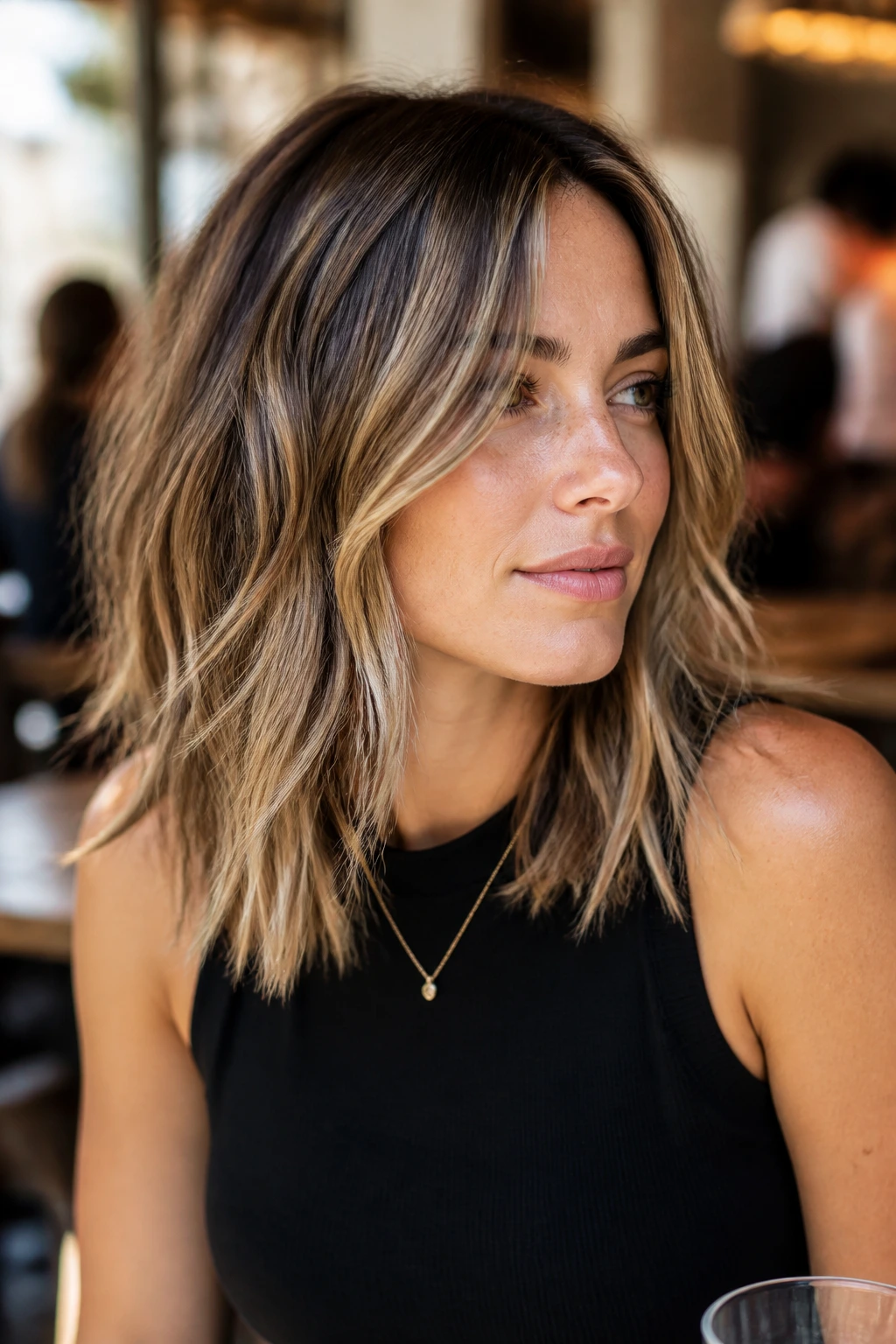
A midi cut with piecey ends is one of those styles that looks modern because it refuses to be too neat. On brunette hair with blonde highlights and lowlights, the pieces separate just enough to show the color pattern without making it obvious. The result is wearable, not precious.
The mid-length keeps the shape from dragging, and the piecey ends stop the lighter color from bunching together. This is a solid choice if you want the blonde to feel edited rather than heavily placed. It also grows out politely, which I appreciate more than I should have to.
Use a dry texture spray and pinch out a few ends after curling. Don’t overdo it. The style works because the light and dark pieces are allowed to sit beside each other instead of getting smothered by product.
25. Feathered Long Cut with Beige Blonde
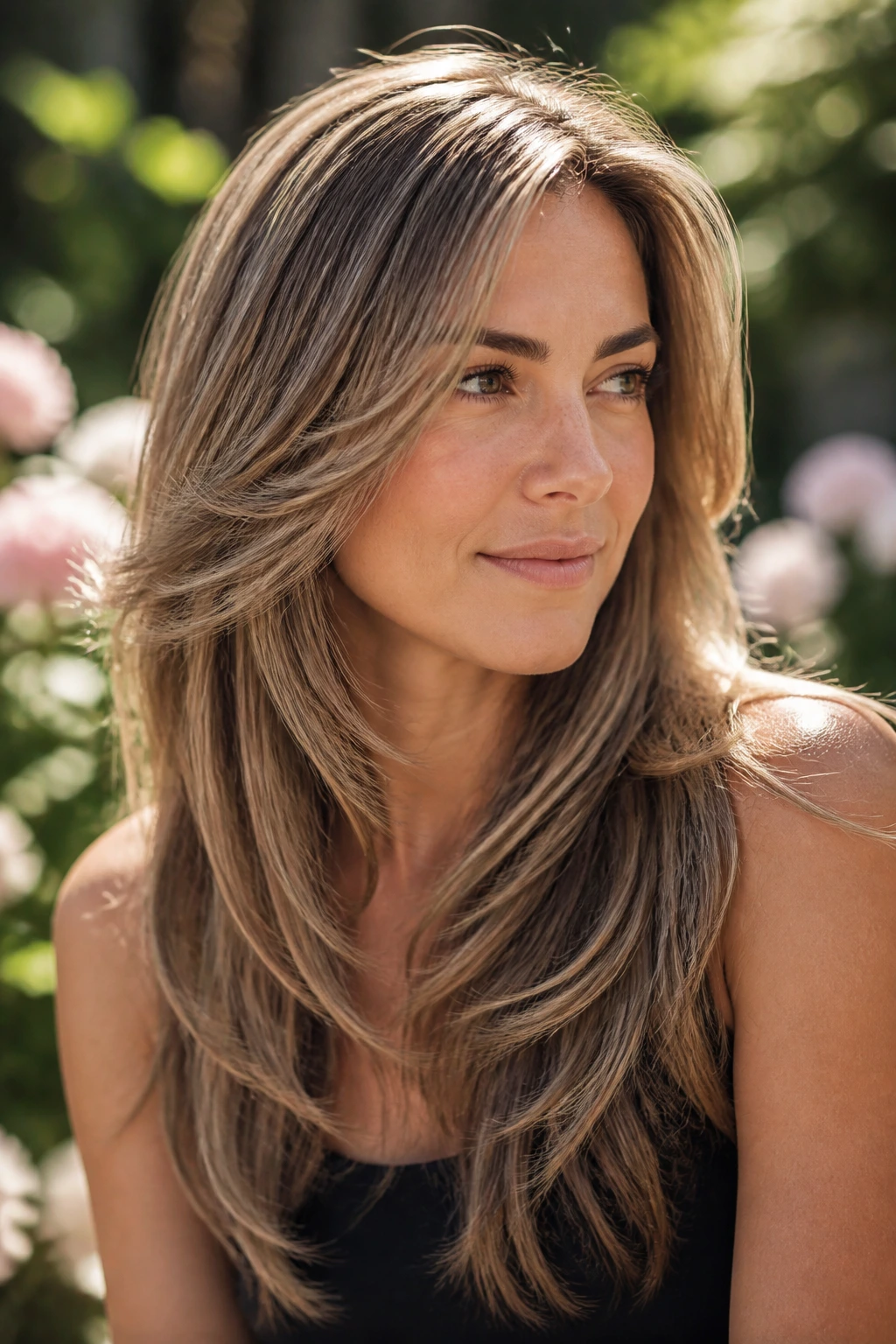
Feathered layers are made for people who want length but not weight. Add beige blonde and brunette lowlights, and the whole thing gets that airy, sunlit feel without losing depth. The feathering keeps the ends from looking blunt in a heavy way.
This style is smart if your hair has a naturally smooth texture. The feathered layers show off movement even when the hair is mostly straight, and the blonde pieces catch along the edges of each layer. Beige is especially good here because it softens the contrast between the light and dark tones.
If you’ve ever had long hair that looked like a curtain no matter what you did, feathering solves a lot of that. It gives the cut breathing room. And yes, the lowlights matter here because they keep the lightness from swallowing the shape.
26. Wolf Cut with Smoked Lowlights
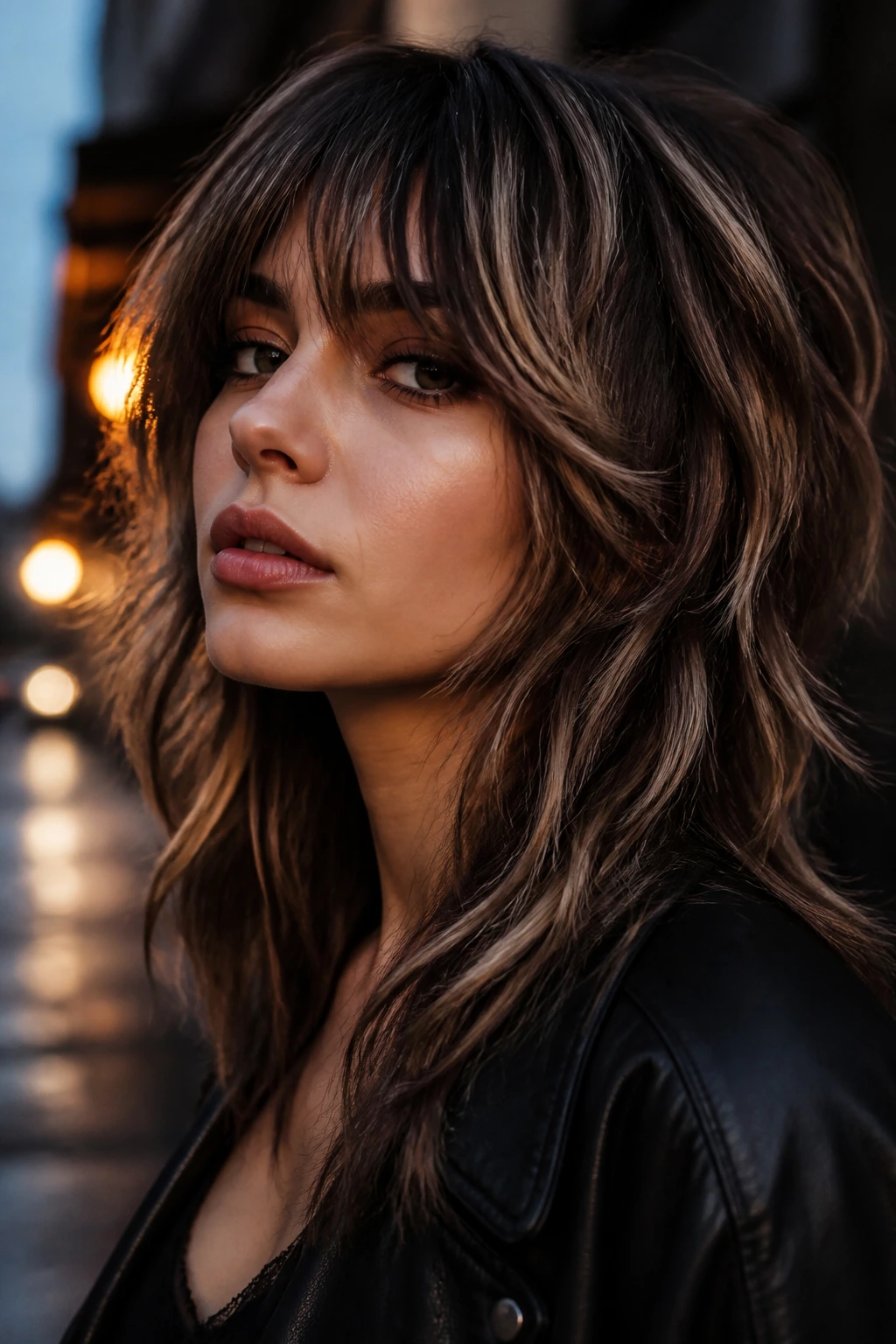
The wolf cut has a certain attitude, and smoked lowlights fit that mood better than bright, clean blonde ever would. The layers are choppy and a little wild, so the color needs shadow to match. Too much pale blonde and the cut can look like it is trying too hard.
A smoky brunette base under beige or ash blonde pieces keeps the whole thing gritty in a good way. The lowlights are what make the lighter pieces pop between the layers. If the hair is wavy, even better. The cut already creates movement, and the color just follows that energy.
Use a little mousse at the roots and a texture spray through the ends. That keeps the top from collapsing and the layers from blending into one fuzzy shape. This is not a sleek haircut. It is supposed to have bite.
What to ask for
Ask for softened, disconnected layers, lightness around the face and crown, and lowlights that stay visible through the interior of the cut. That’s the difference between edgy and messy.
27. Slicked-Back Bun with Bright Front Streaks
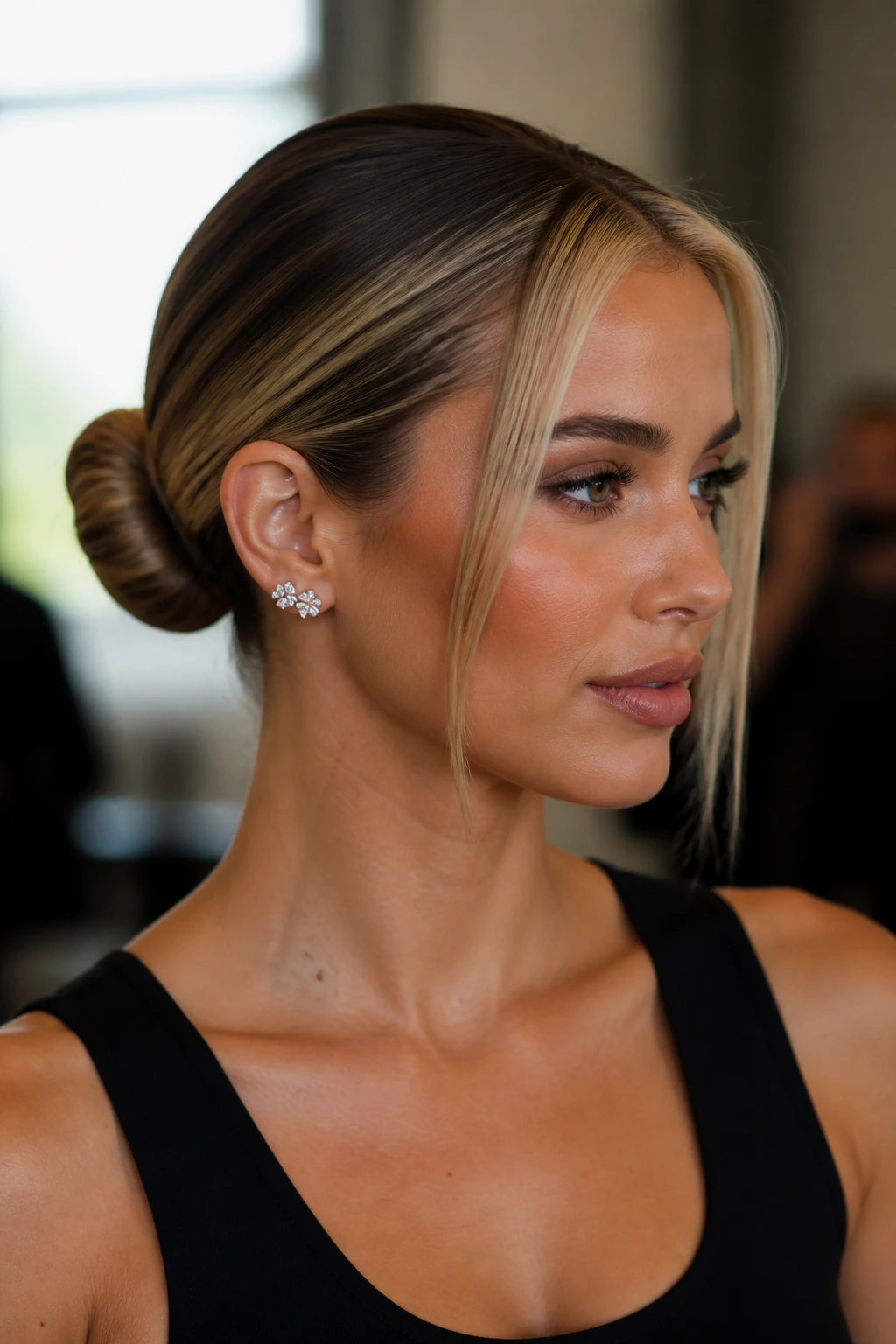
A slicked-back bun can make a blonde money piece look almost graphic against brunette hair with lowlights. The hair off the face removes distraction, so the front streaks become the main event. Meanwhile, the lowlights in the bun and underneath keep the style from reading flat.
This is one of the more dramatic looks on the list, but it works because the styling is simple. Brush the hair back with gel or a strong cream, secure the bun low or mid-height, and leave the front streaks smooth instead of frizzy. The contrast between the slicked sides and the bright front pieces does most of the talking.
I like this style when you want a sharp finish for an event or dinner. It doesn’t need big volume to feel intentional. It needs clean lines, a neat bun, and color placement that knows where to stand.
28. Soft Crimped Texture
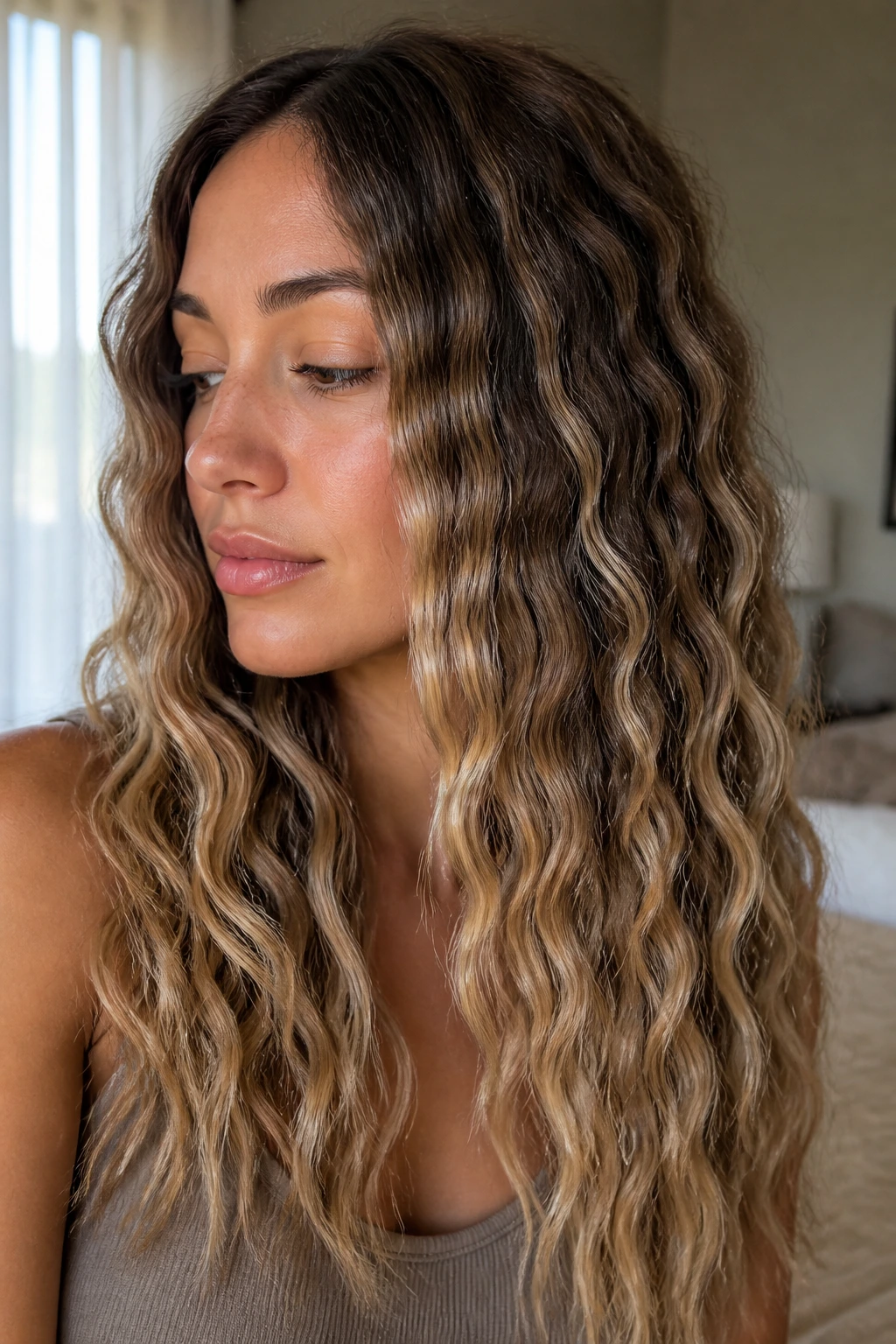
Crimping is back in a quieter way, and on brunette hair with blonde lowlights it can look unexpectedly good. The tiny wave pattern breaks the light into little flashes instead of broad bands, which makes the dimension feel almost shimmery. It is not subtle, but it is fun.
The trick is to keep the crimp soft, not puffy. Use the iron on medium heat and avoid the roots if you want the style to stay modern. The lowlights keep the blonde from flattening into a single bright plane, and the crimp gives both tones a place to separate and breathe.
This works best on medium to long hair. Shorter cuts can turn too bulky. If you want something with a little retro edge, this is a good one to try once, just to see how the color behaves when the texture changes.
- Good pairing: Beige or honey blonde with soft brown lowlights
- Finish: Dry texture spray, not shine serum
- Watch out for: Over-crimping the roots
29. Polished Shoulder-Length Flip
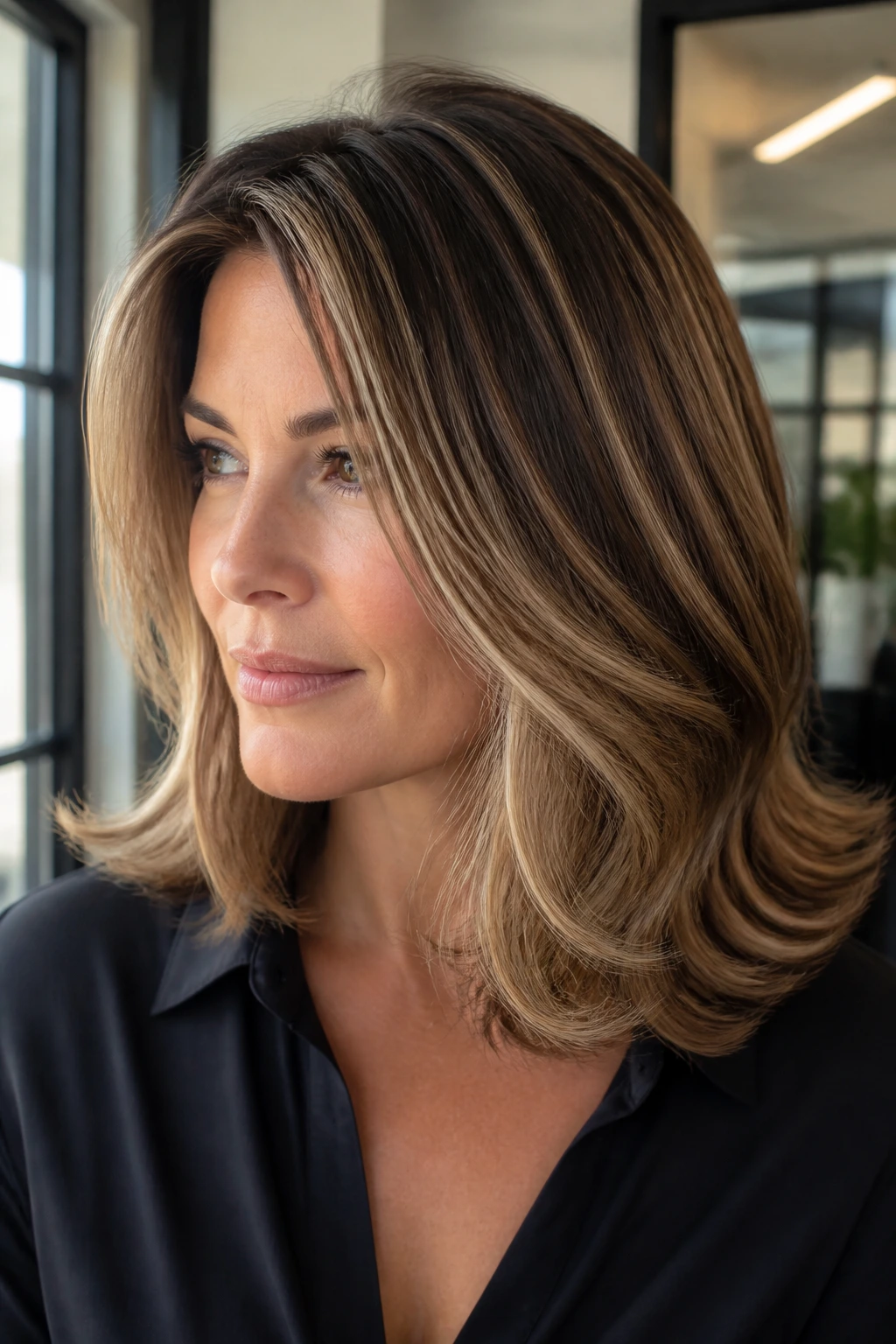
A shoulder-length flip has a retro streak, and that is exactly why it works. The outward bend at the ends gives the blonde pieces a little flick of movement, while the lowlights underneath keep the shape from looking too clean or too uniform. It’s neat, but not stiff.
This style is especially flattering on brunettes who want a brighter finish without going all the way to beach waves or curls. The flip shows off the lighter ends, and the deeper strands at the base of the hair create a shadow line that makes the color feel layered. It is an easy one to wear with a blazer, a tee, or both.
Set the ends with a flat iron or round brush, then separate them slightly with your fingers. Don’t flatten the whole style with too much product. The flip needs air around it.
30. Loose Rope Braid with Dimension
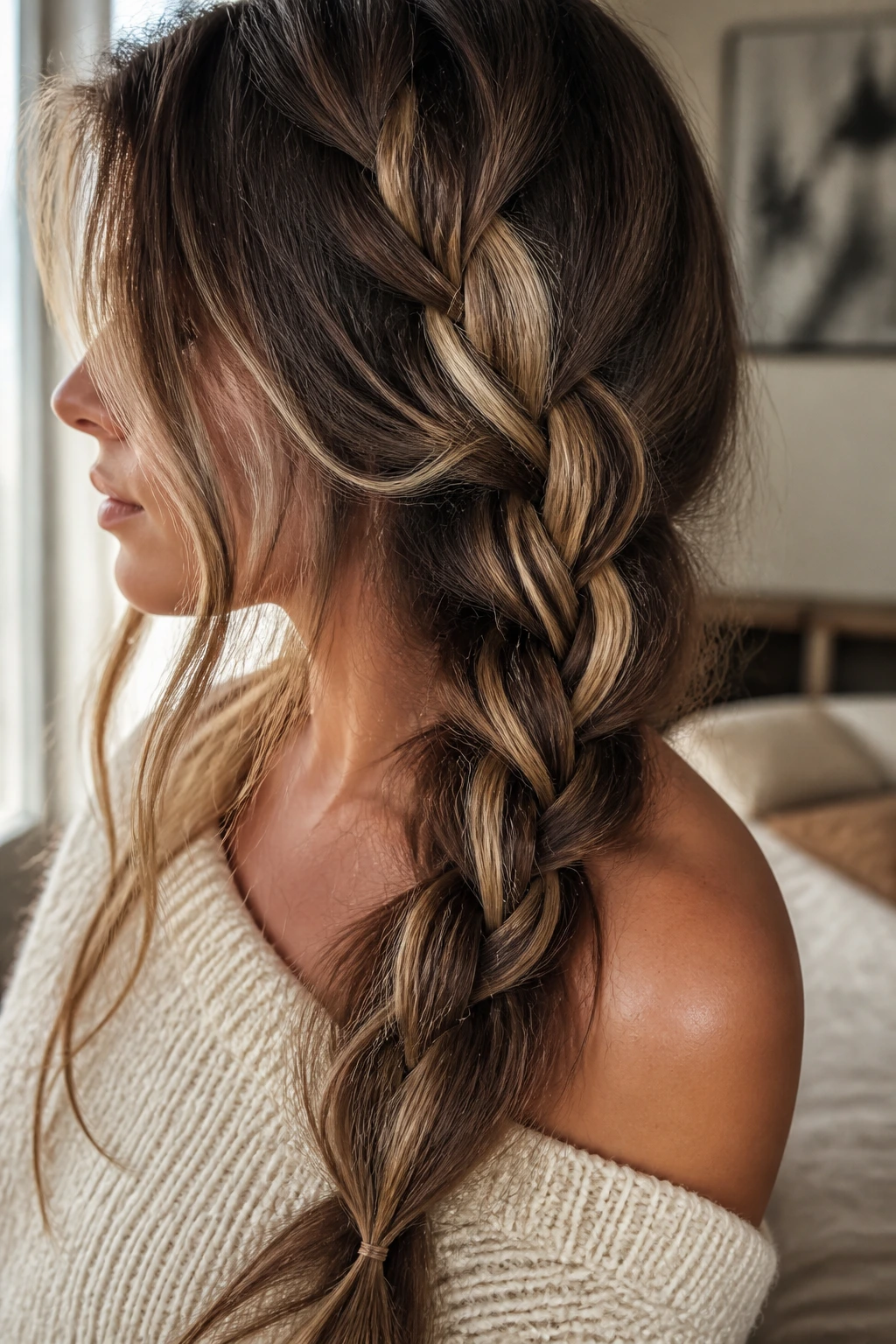
A loose rope braid is a nice final reminder that texture does not have to be complicated to work. The twist pattern pulls the blonde and lowlights into a spiral, which gives brunette hair a softer, more dimensional finish than a tight braid ever could. It is the kind of style that looks prettier the less you fuss with it.
Keep the braid loose and slightly undone so the color sections can peek through. If the blonde lives mostly on the outer surface of the hair, the braid will show it off. If the lowlights sit deeper, they will create the little shadow lines that make the braid look fuller.
This is a good everyday option when you want your hair out of the way but still want the color to be visible. It’s casual, sure. But it still reads intentional, which is the whole game with brunette-blonde dimension.
How These Styles Look Best on Different Hair Textures
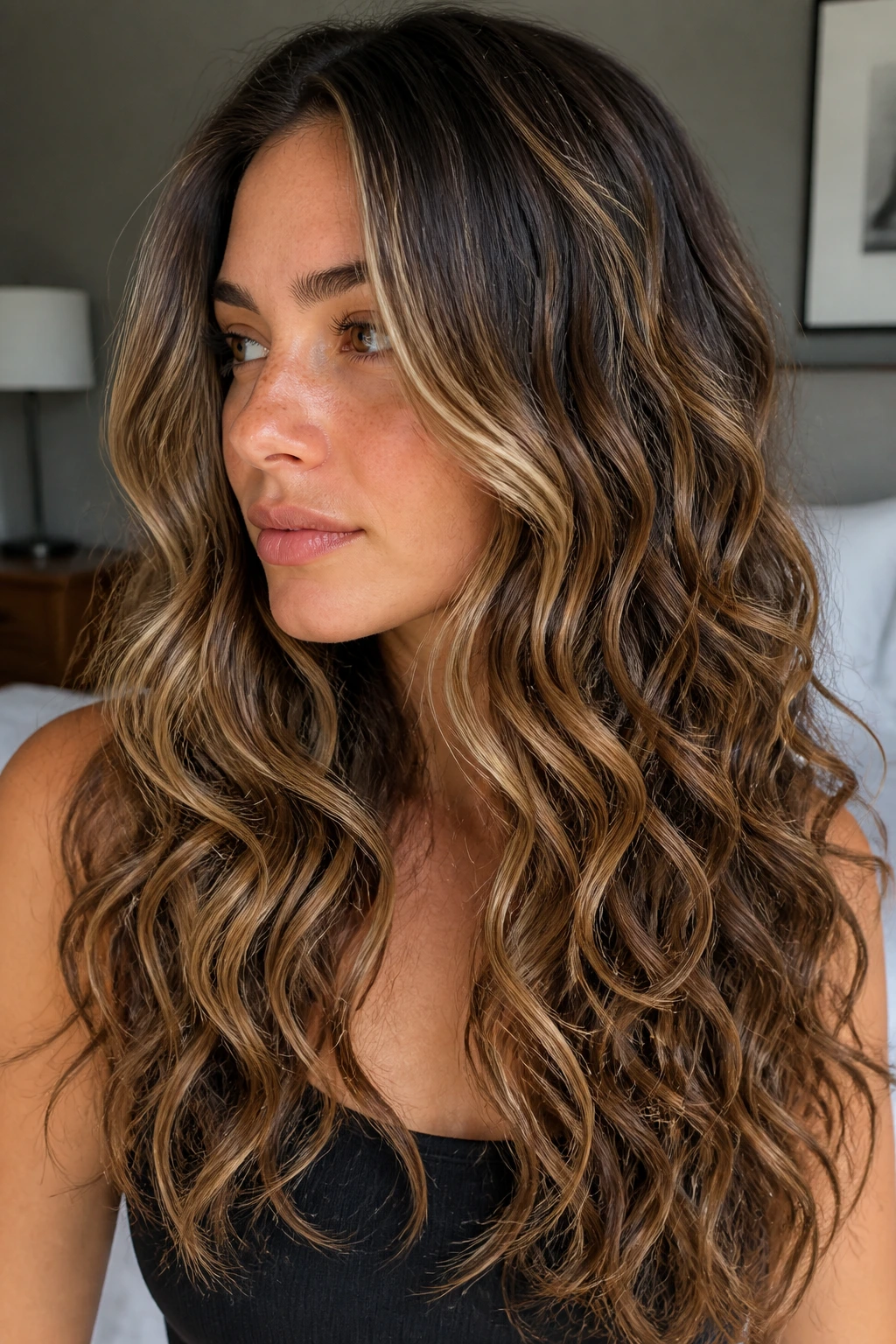
Fine hair usually needs a little more lift at the roots and a little less heavy color contrast. If the blonde is too broad, fine strands can look see-through. A lob, curtain bangs, or a sleek blowout works well because the shape itself adds body before the color even starts doing its part.
Thick hair can handle chunkier ribbons, more obvious lowlights, and larger waves. You’ve got more surface area to play with, so the color doesn’t need to be delicate everywhere. A shag, butterfly cut, or layered long style can keep the blonde from getting swallowed by sheer density.
Wavy and curly hair are where lowlights quietly earn their keep. They define the pattern without making every curl compete for attention. A loose curl look, textured shag, or long layered cut lets the blonde and brunette tones break apart in a way that feels natural, not forced.
Styling Tools That Make These Looks Easier
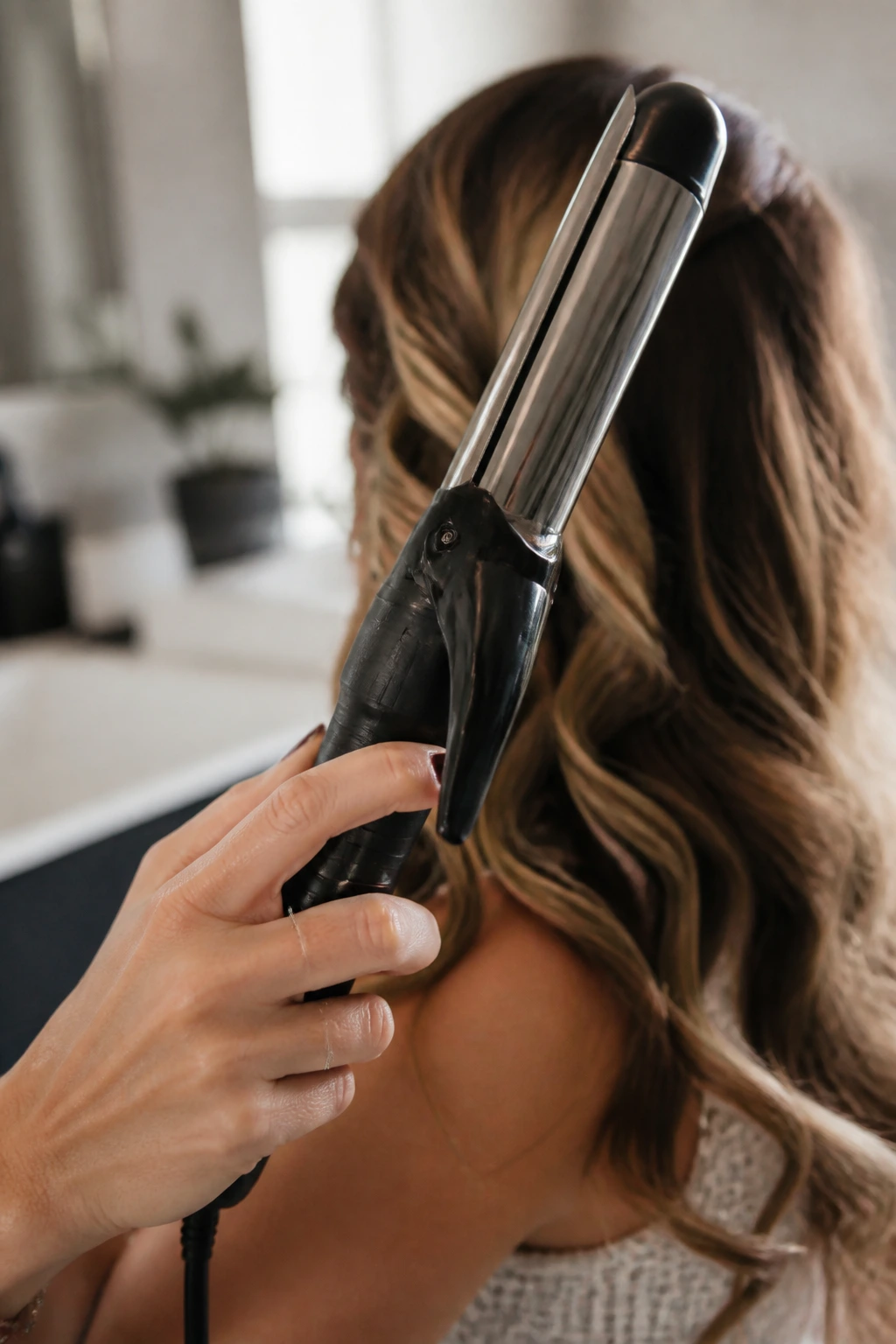
- 1.25-inch curling iron or wand: Best for soft waves, loose curls, and piecey ends that show off ribboned color.
- Round brush: Useful for blowouts, curtain bangs, and flips at the ends.
- Blow-dryer with concentrator nozzle: Helps you smooth the cuticle so the blonde reads shiny instead of fuzzy.
- Flat iron: Handy for blunt lobs, sleek buns, and polished straight styles with a little bend.
- Sectioning clips: Keep face-framing pieces and crown sections out of the way while you style.
- Heat protectant spray: Non-negotiable if you use hot tools more than once a week.
- Texturizing spray: Better than heavy hairspray for beach waves, shags, and loose braids.
- Lightweight shine serum: Adds finish without smothering the dimension.
- Purple shampoo: Use sparingly on cooler blondes so brass does not creep in.
- Wide-tooth comb: Useful for curls and waves when you do not want to pull the pattern apart.
Smart Color and Product Choices for Blonde and Lowlights
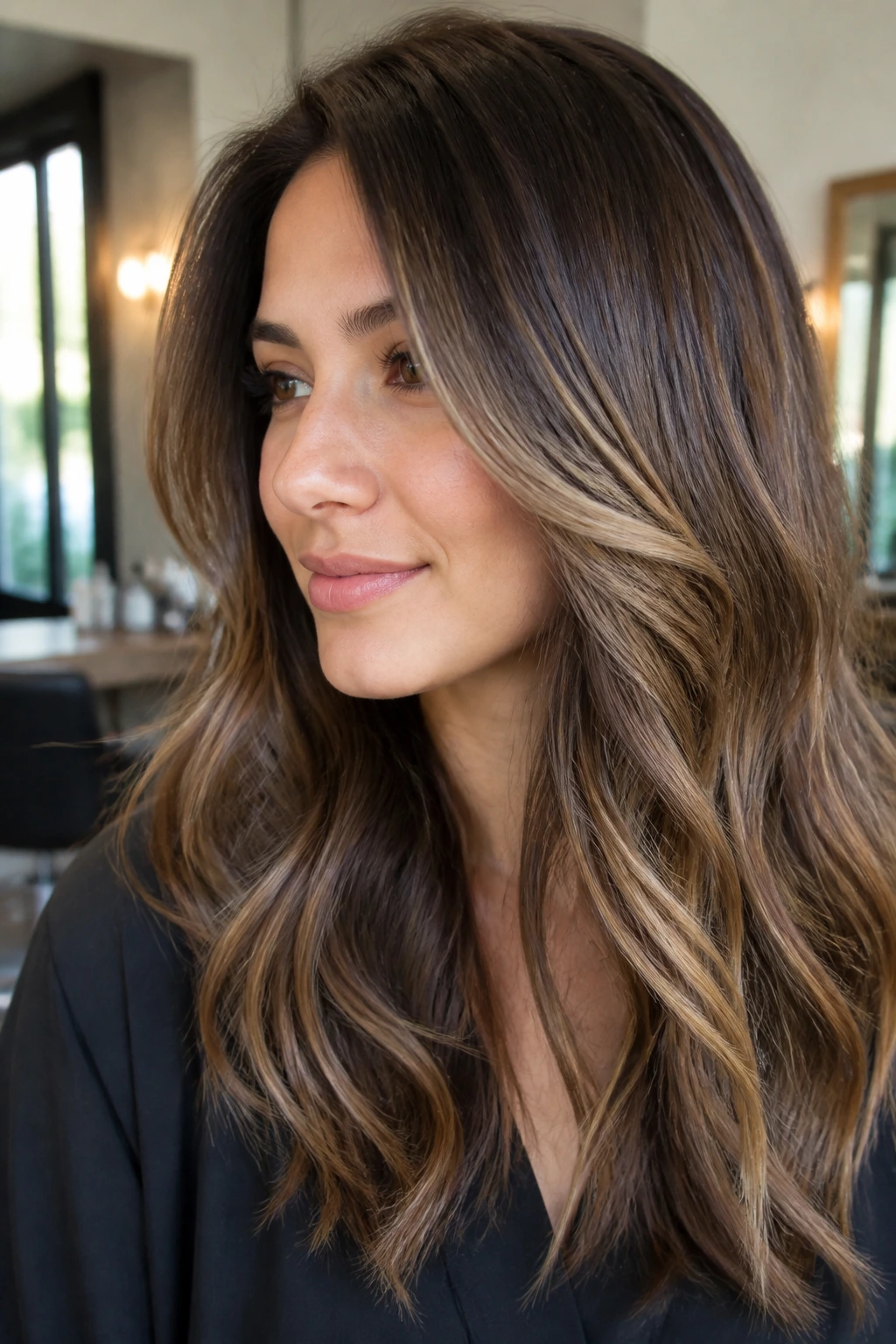
The best brunette-blonde hair usually has a soft ladder of color, not a hard jump. Ask for lowlights that sit one to two shades deeper than your natural base, then choose blonde pieces that match your skin tone and the cut’s shape. Honey and beige tend to be easier to wear than icy tones, especially if your brunette base is warm.
Foils give more precise brightness. Balayage gives a softer sweep. Teasylights and root smudging help the color grow out without a blunt line. If your hair has been lightened before, a gloss or toner can clean up brass without dragging the whole look into one flat tone. That matters more than people realize. Tone controls mood.
Product-wise, keep it light. Heavy oils and thick masks can make blonde look greasy and lowlights look muddy. A color-safe shampoo, a hydrating conditioner, and a once-a-week deep treatment are usually enough. If your blonde skews warm, use purple shampoo carefully. If it skews cool, use it even more carefully.
Practical Moves That Keep the Color Alive
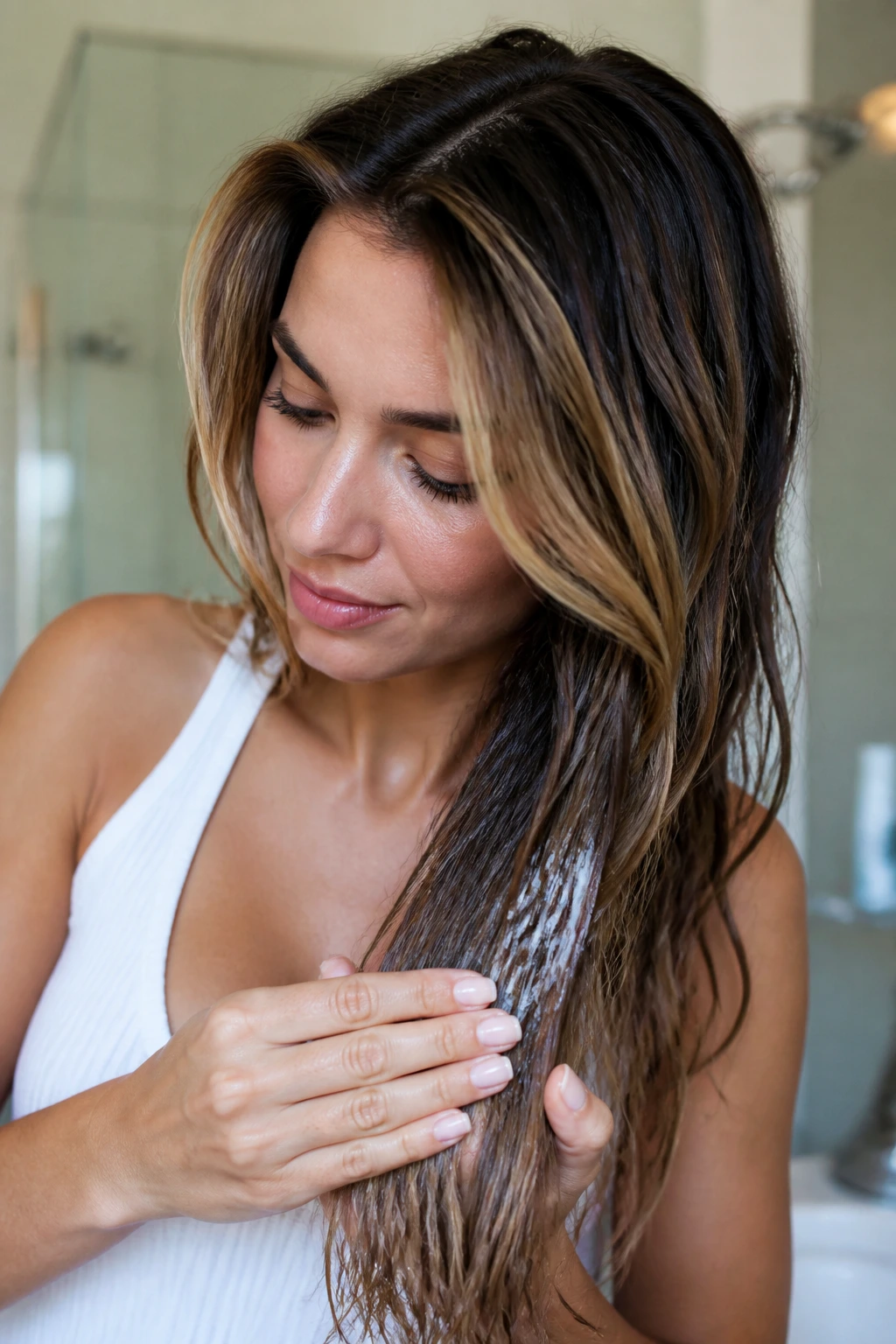
Texture first: The best dimension shows up when the hair has movement, so do not flatten everything with too much serum or too much heat.
Tone control: If the blonde starts drifting yellow, a light toner or a brief purple shampoo session can pull it back. Do not overcorrect, or the beige tones can go dull.
Face framing: Brightness around the face is usually more noticeable than brightness through the back, which is why front pieces matter so much on brunettes.
Root lift: A little lift at the crown makes the lowlights and highlights separate better. Flat roots can swallow the whole effect.
Make it yours: Add curtain bangs, a deeper side part, or a tucked-behind-the-ear moment to change how the blonde falls around the face.
Common Mistakes That Make Brunette-Blonde Hair Look Muddy
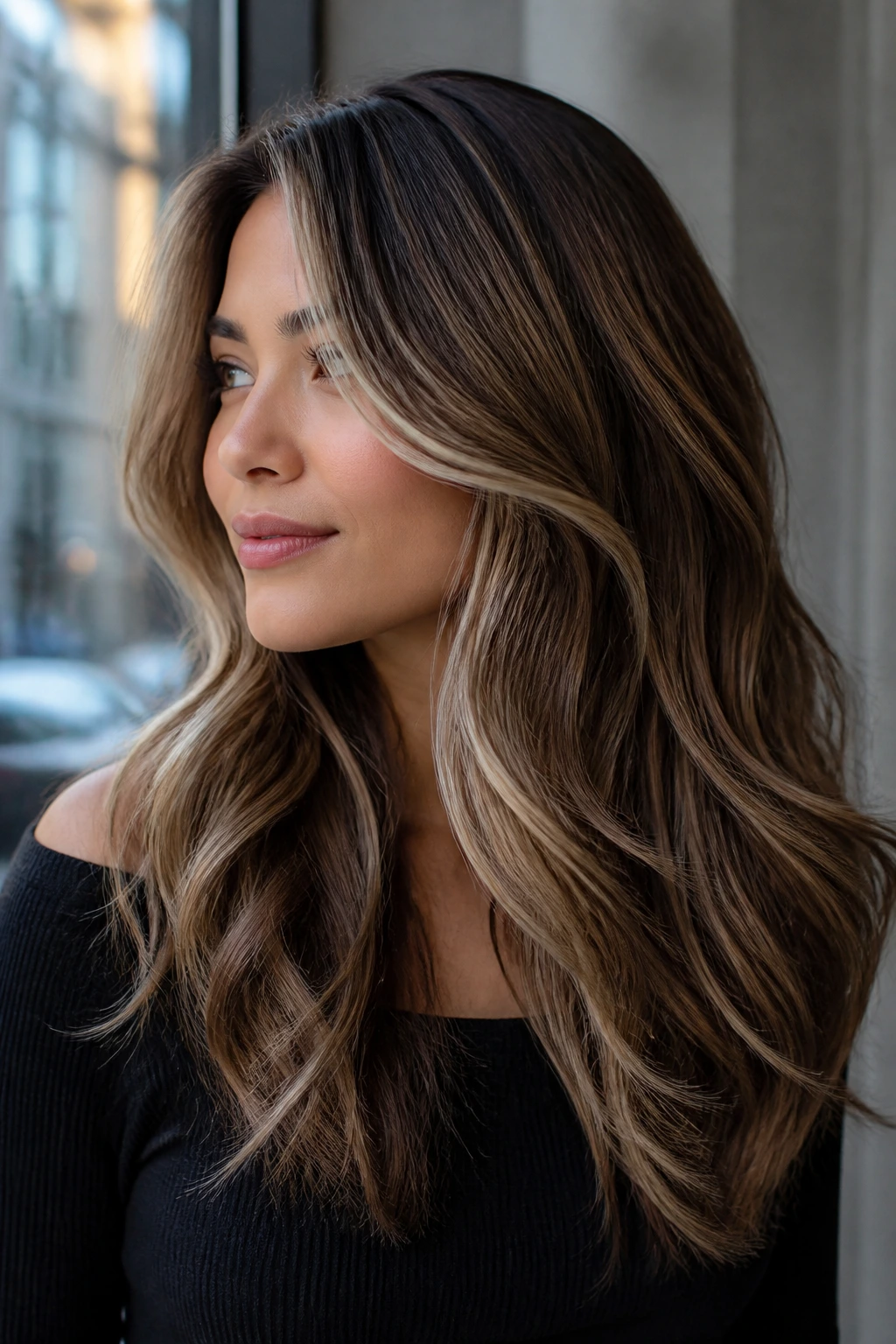
The biggest mistake is choosing lowlights that are too dark. When the contrast jumps too hard, the style stops looking dimensional and starts looking striped. The fix is boring but true: stay only a shade or two deeper than the brunette base unless you are deliberately going for a high-contrast look.
Another problem is using too much purple shampoo. One overzealous wash can make beige blonde look gray and lifeless, and it can flatten the warmth that makes brunette-blonde hair feel soft. Use it only when the tone starts to shift, not on autopilot every wash day.
Flat styling causes more trouble than people think. Straight hair that has been over-smoothed can make the color sit in obvious bands. If you want dimension to show, give the hair some bend, volume, or a side part.
A third error is putting all the brightness in one place. If the front is blonde and the back is dark with no middle ground, the look can feel disconnected. Spread the lighter pieces enough that they travel through the cut, then use lowlights to stitch the sections together.
Color and Style Variations to Try
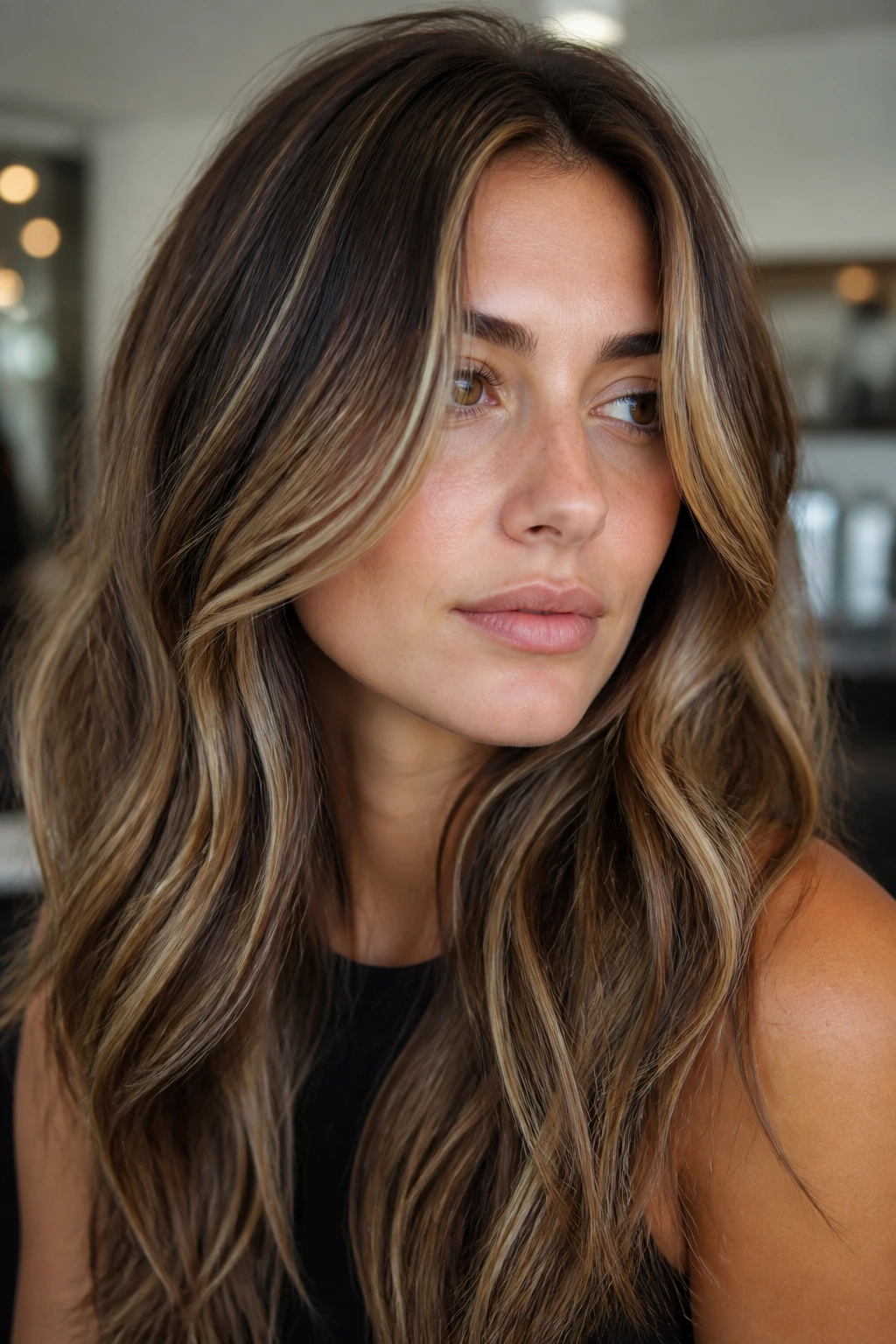
Honeyed Bronde: Keep the blonde warm and buttery, and let the lowlights stay chocolatey rather than black. This is the easiest version for someone who wants softness without losing brunette depth.
Cool Ash Dimension: Choose beige-to-ash blonde pieces with smoky lowlights for a cleaner, cooler finish. It works best if your skin tone and wardrobe lean cool, or if you want the whole look to feel less sun-kissed and more polished.
Chunky Contrast Pieces: If you like a little 90s energy, try wider blonde sections at the front and around the top layers. The lowlights keep the style from becoming costume-y, which is the difference between playful and dated.
Rooted Low-Maintenance Melt: Blend the roots into the mid-lengths with a soft shadow, then keep the blonde more pronounced on the ends. This version grows out gracefully and is easier to wear if you hate obvious regrowth lines.
Soft Champagne Finish: A champagne tone sits between beige and gold, which makes it flattering on a lot of brunette bases. It is gentle enough to feel expensive without screaming for attention.
How to Keep the Color and Shape Working Between Salon Visits
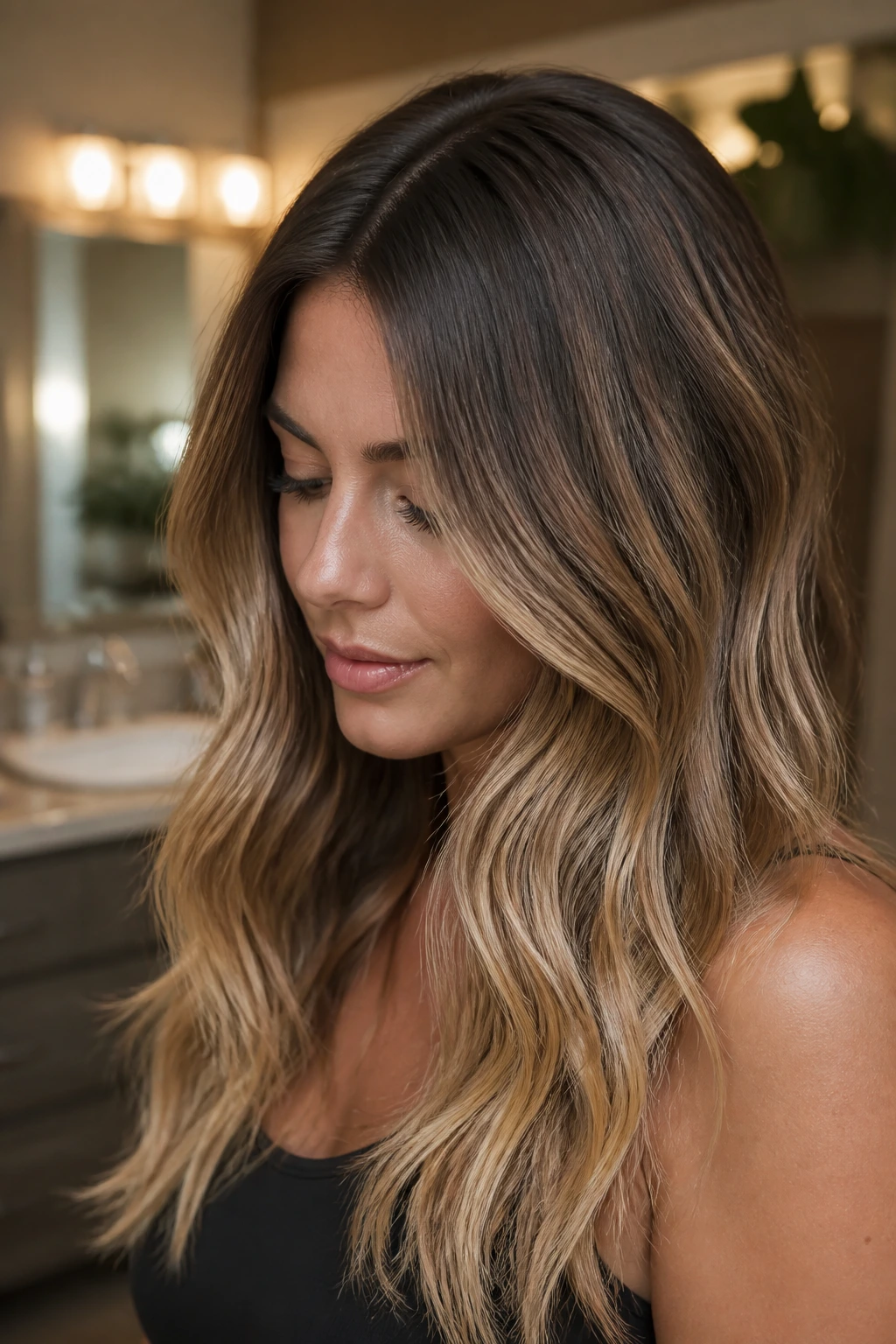
Hair that has both blonde and lowlights needs a little maintenance, but not a ridiculous amount. A good rhythm is color-safe shampoo 2 to 3 times a week, deep conditioning once a week, and heat styling only when you actually need the shape. If you wash more often, use cooler water and lean on a lightweight leave-in so the blonde does not dry out and the lowlights do not go dull.
Most glosses and toners need refreshing every 6 to 8 weeks if your hair pulls warm, though some brunettes can stretch longer. Trims every 8 to 10 weeks keep the ends from fraying and stop the lighter pieces from looking ragged. If your root shadow is part of the look, that can usually stretch farther than a full highlight appointment. Which is a relief, honestly.
At home, dry shampoo can keep the crown from collapsing, but do not build it up for days on end. That white cast makes blonde look dusty and lowlights look flat. Brush it out fully before adding more.
Frequently Asked Questions
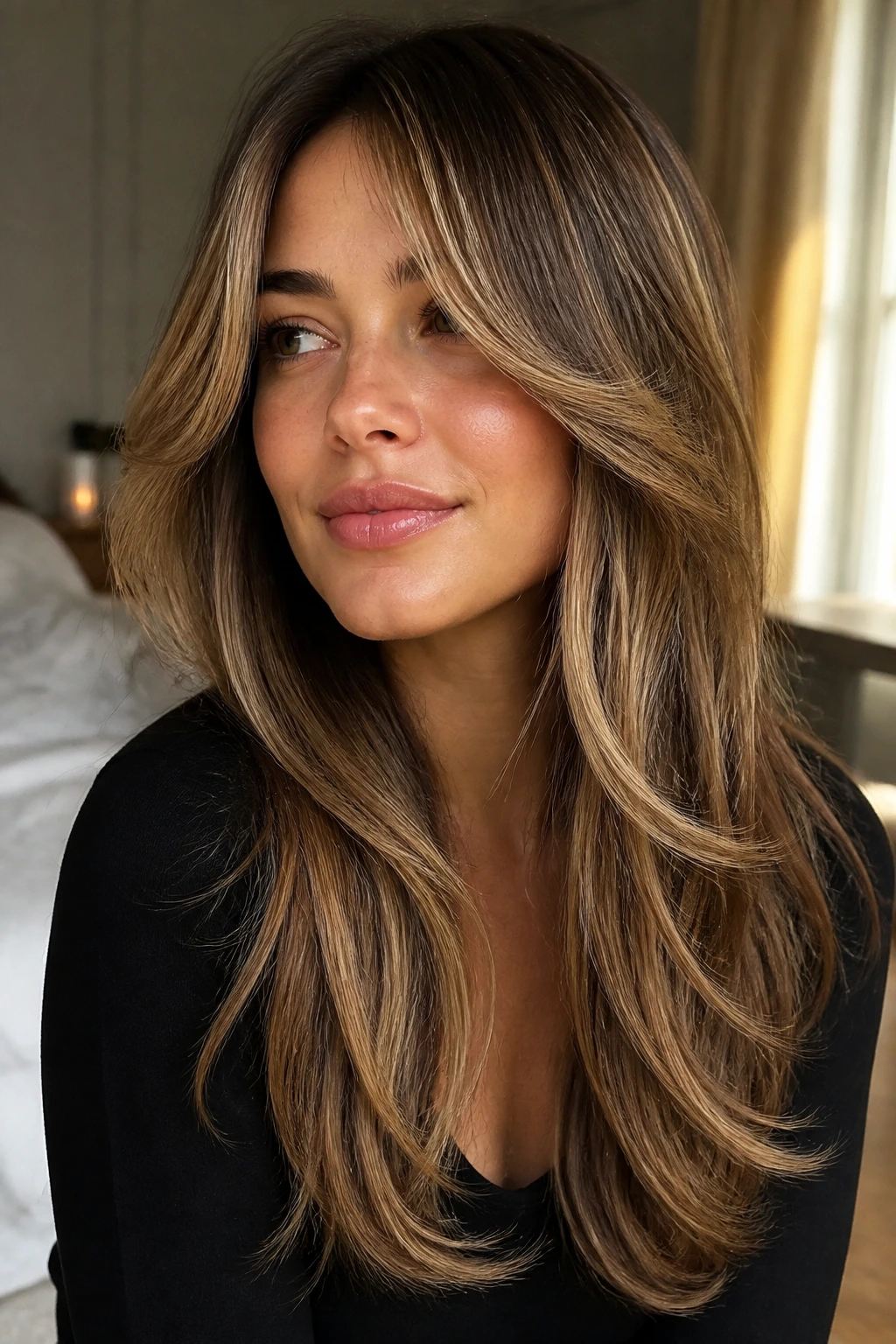
Will blonde hairstyles with lowlights work on dark brown hair?
Yes, but the placement matters more. Darker brunettes usually look best with a root shadow, a few brighter face-framing pieces, and lowlights that are only slightly deeper than the base so the whole thing stays blended instead of striped.
What blonde tone looks best with brunette lowlights?
Honey, beige, and champagne are the easiest to wear because they soften the contrast and sit naturally against brown hair. Ash blonde can work too, but it needs a good toner and a colorist who knows how to keep it from turning flat.
How often should I refresh the color?
A gloss or toner every 6 to 8 weeks is common if you want the blonde to stay clean. Full highlight or balayage touch-ups can stretch longer, especially if your root area is intentionally shadowed.
Can fine hair handle this much dimension?
Absolutely, but keep the pieces delicate. Fine hair usually looks better with babylights, a soft money piece, or a blunt cut that gives the illusion of thickness without stuffing too much color into the strands.
What if my blonde keeps turning brassy?
Use a color-safe shampoo, limit heat, and try a purple shampoo only once a week or less. If the brass keeps coming back fast, the toner may be fading, which is a sign you need a salon gloss rather than more at-home pigment.
Do lowlights make hair look thinner?
Not when they’re placed well. In fact, they usually make hair look fuller because the darker pieces create shadow and depth. The problem comes when the lowlights are too heavy or too dark, which can drag the whole style down.
Is balayage better than foils for this look?
Balayage gives you a softer, more grown-out finish. Foils give more brightness and precision. If you want low-maintenance and blended, balayage usually wins; if you want stronger contrast and clearer face-framing pieces, foils may be the better call.
Can I wear these styles straight, or do they need waves?
Straight styles can look gorgeous, especially on lobs, bobs, and sleek blowouts. Waves just make the dimension easier to see. If you like straight hair, focus on placement and shine so the blonde and lowlights still read clearly.
The Shape and Shadow That Make Blonde Work
Brunette hair does not need to be buried under blonde to look fresh. It needs shape. It needs a little shadow. And it needs blonde pieces placed where the haircut can actually show them off instead of hiding everything in one solid curtain.
That is the real charm of these looks. They are not about chasing the lightest possible blonde. They are about making blonde look smarter on a brunette base, with lowlights holding the whole thing together so the style still looks like hair, not a color chart. Pick the cut that fits your texture, keep the tone close to your natural depth, and let the contrast do what it does best: make the hair move.