



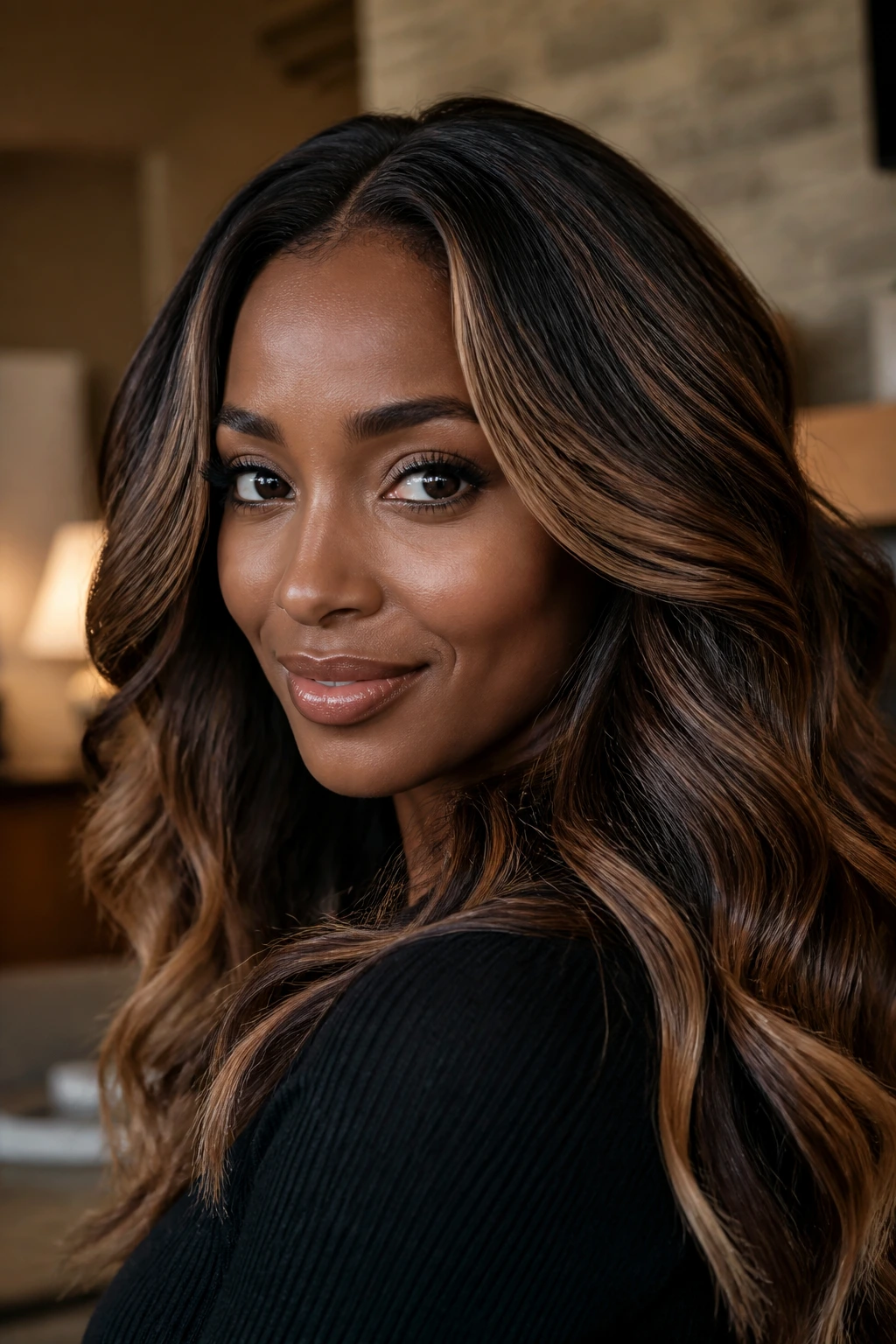
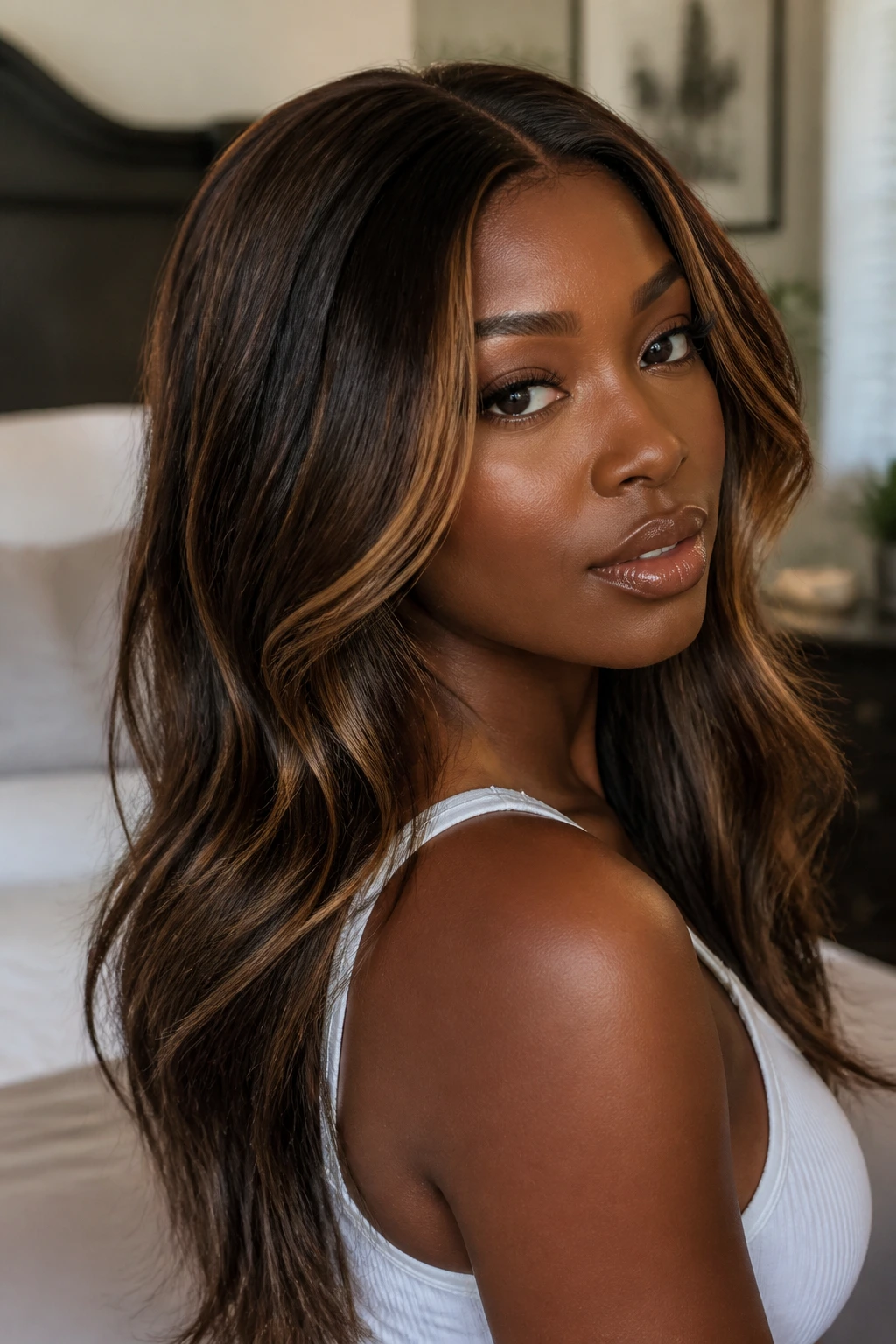
Spring brunette highlights on deep skin tones work best when they feel like a shift in light, not a blast of bleach. That’s the whole game. The right brunette highlight should still leave you with depth at the root, richness through the midlengths, and just enough brightness to make the hair move when you turn your head.
Go too pale and the color starts to float on top of the skin. Go too orange and the whole look can turn brassy by the second shampoo. The sweet spot sits in warm caramel, toasted honey, bronze, chestnut, maple, copper-brown, and mocha territory — tones that read fresh in spring but still respect the depth in your complexion.
I’ve always liked brunette highlights on deep skin better when they look deliberate, not sprayed on. A few well-placed ribbons around the face can do more than a full head of brighter pieces. And on curls, coils, and textured blowouts, the placement matters as much as the tone; highlights need to catch bends and curves, not just straight lines down the hair shaft.
Why This Collection Feels Different
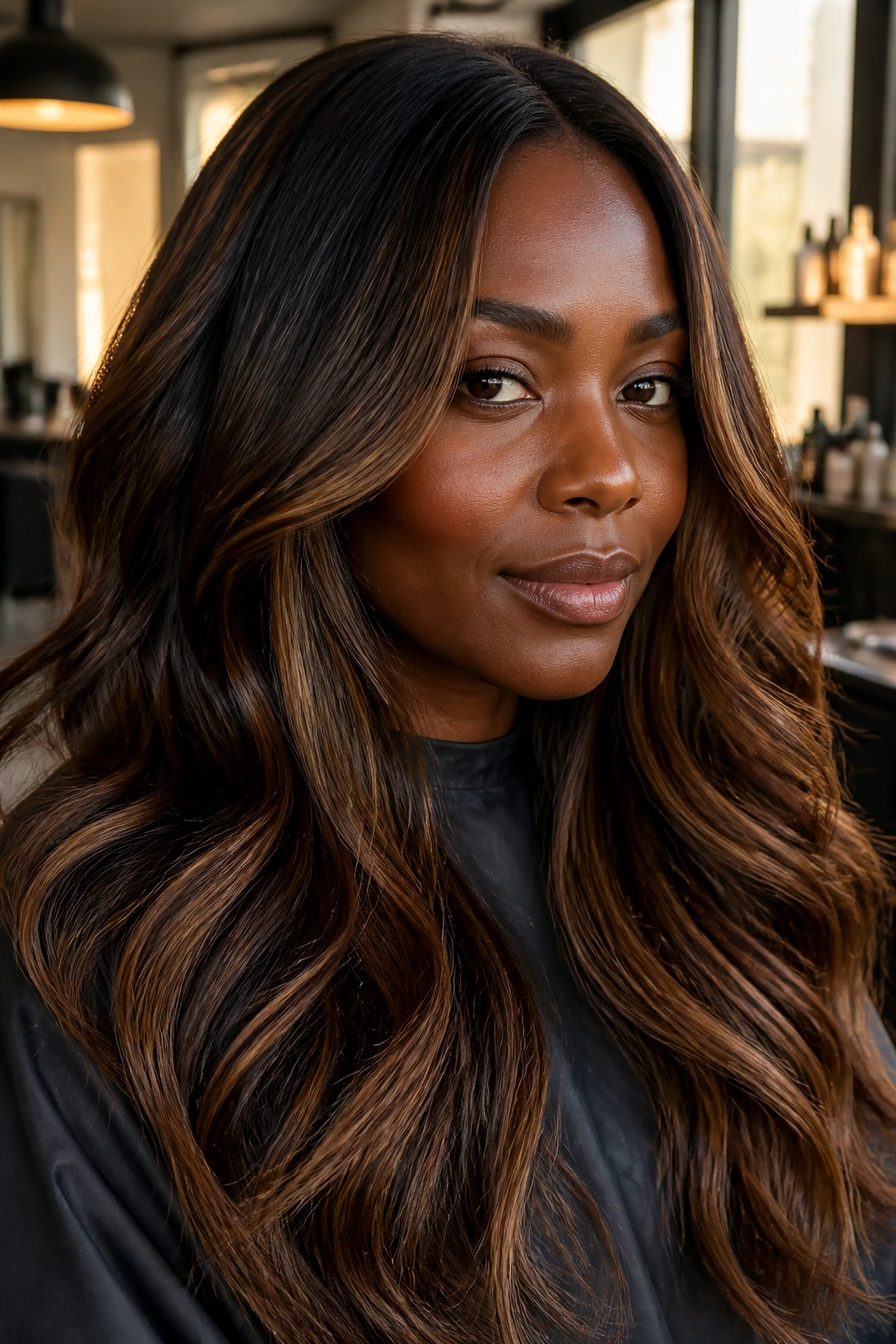
- Built for depth first: Every idea here keeps enough brunette in the hair so your skin stays the star, not a pale streaky color job fighting it.
- Spring-friendly without going blond: The tones lean warm, glossy, and sunlit, which gives you that seasonal lift without drifting into high-maintenance territory.
- Works across textures: You’ll see options that make sense on straight hair, curls, coils, braids, silk presses, and layered cuts.
- Not all-over brightness: Some of the strongest looks here are face-framing, halo-based, or lowlight-heavy, because depth and contrast are often what make deep skin glow.
- Salon-ready, not fantasy-only: These are the kinds of brunette highlight ideas a colorist can actually map onto a real head of hair with foils, balayage, gloss, or a root smudge.
- Low-drama options included: If you hate visible grow-out, a few of these will live happily in that sweet spot where the color softens instead of shouting.
1. Soft Caramel Ribbon Highlights
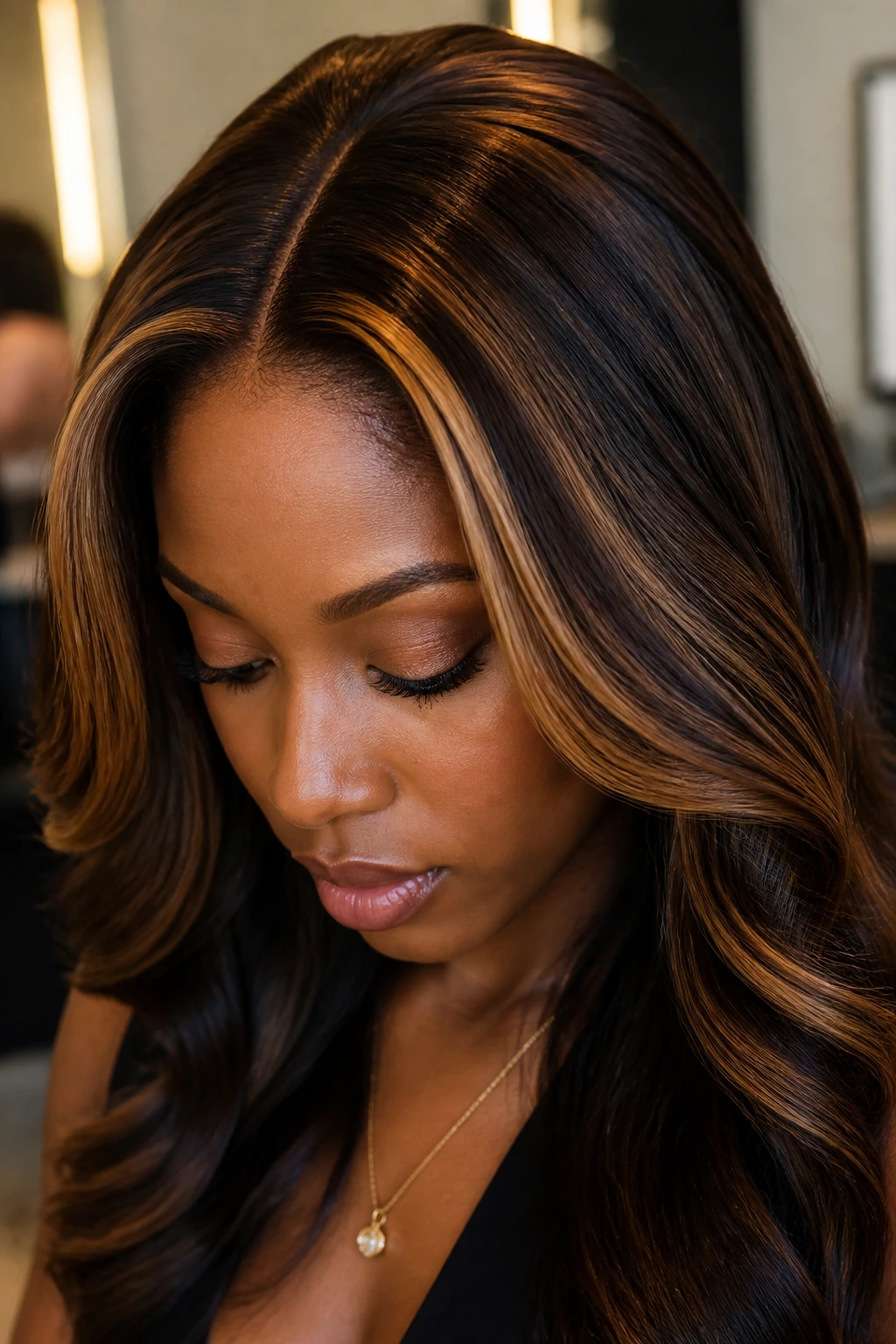
Soft caramel ribbons are the brunettes’ answer to spring sunlight. They sit in that warm, buttery middle ground — lighter than chestnut, darker than honey — so they warm deep skin without flattening it. The best version looks like narrow brushstrokes running through the top layer, not chunky stripes parked on the surface.
Why It Flatters Deep Skin
Ask for ribbons that sit around a level 6 or 7 caramel, especially if your natural base is a deep brown or soft black. That keeps the contrast polished instead of glaring. The color should look toasted, almost like the top of dulce de leche after a few minutes under heat.
This style is especially good if you wear your hair in loose curls or a blowout with movement. The curves catch the caramel in little flashes, which is where the whole thing wakes up. Straight hair can wear it too, but the placement needs to be feathered, not blunt.
What to Tell Your Colorist
Say you want thin, soft ribbons concentrated around the front hairline, crown, and upper mids. If they reach for a toner, a beige-gold gloss keeps the caramel from turning too yellow. One sentence matters here: do not let the highlight pieces get too wide. Wide caramel chunks can read old-school in a hurry.
2. Honey Mocha Balayage
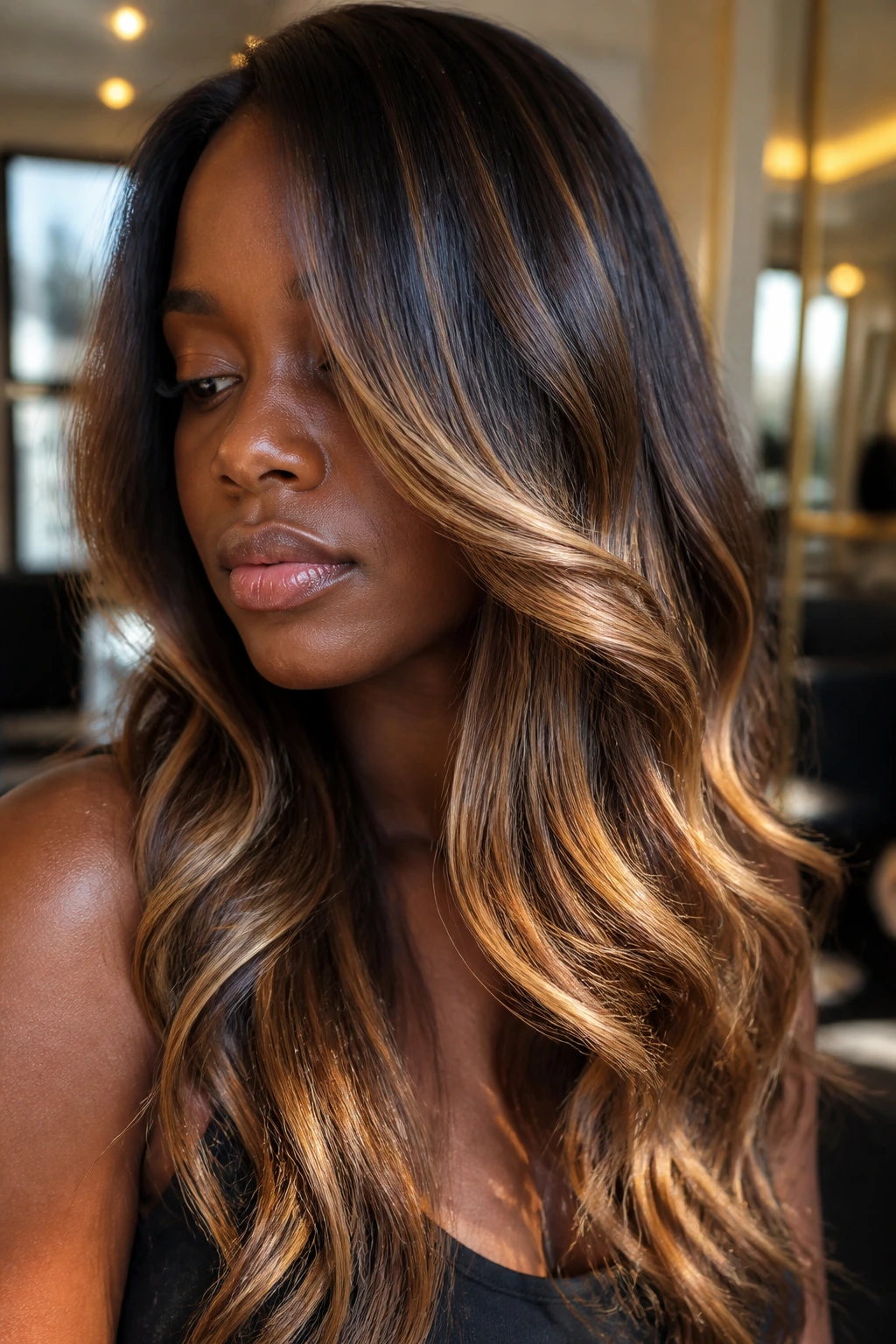
Honey mocha balayage has more sweep than stripe, which is why it works so well on deep skin. The honey softens the brunette base, but the mocha keeps the whole look anchored. You end up with hair that feels sunny, not sugary.
Balayage is the right tool if you want a grow-out that doesn’t scream for attention every four weeks. The painted placement lets the color dissolve through the midlengths and ends, so the shade looks lived in from day one. On wavy hair, it’s especially good because the bends break up the color and make the honey look intentional.
A little caution: honey tones on deep skin need warmth, but not the bright yellow edge that sometimes shows up after a hard lift. A gold-beige gloss solves a lot of that. If the hair has red undertones already, keep the honey muted and let the mocha base do more of the work.
3. Chestnut Face-Framing Pieces
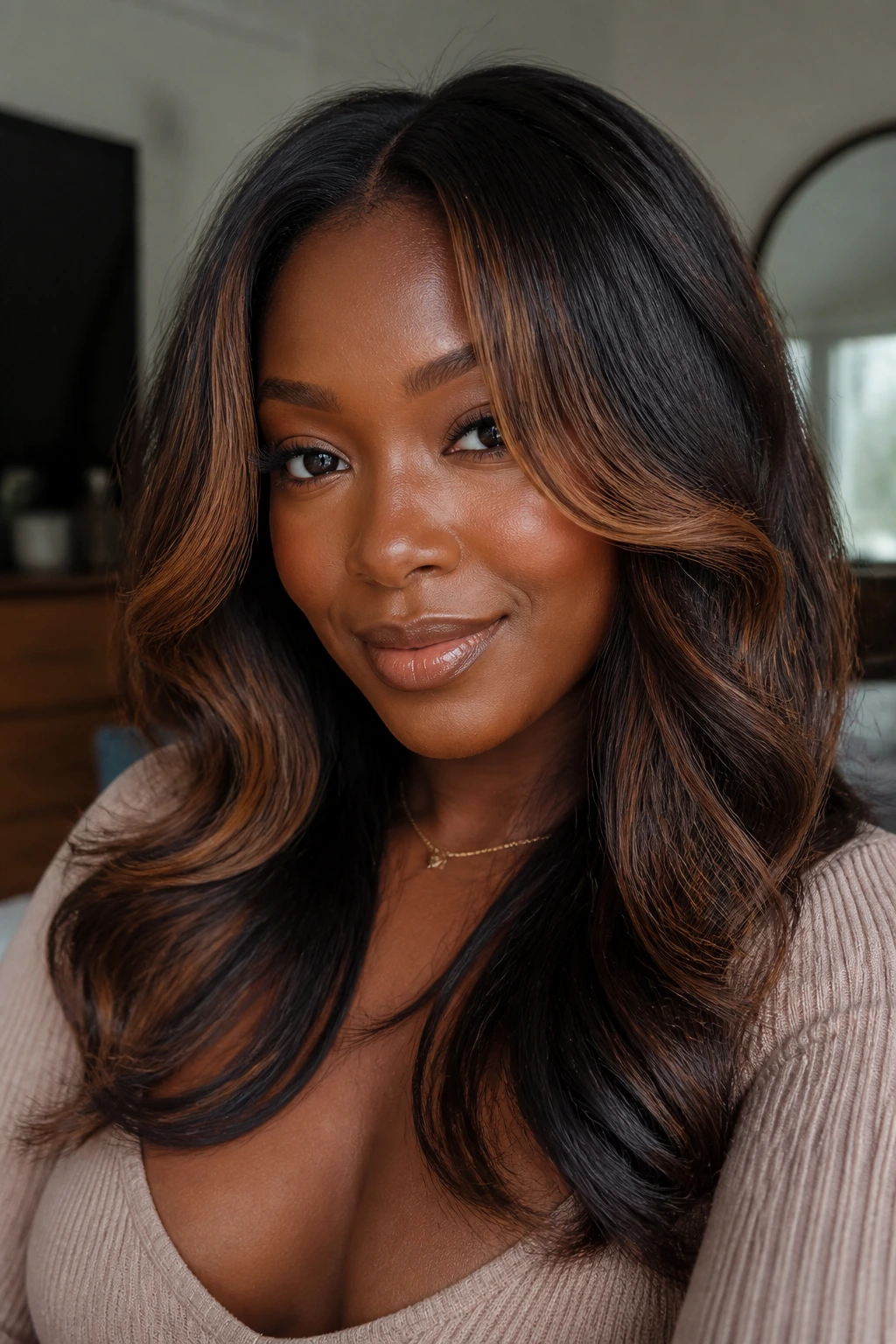
Chestnut around the face is one of those moves that looks small on the color map and huge in real life. It lifts the eyes, softens the jawline, and gives deep skin a warm frame without changing the mood of the whole head. That’s the appeal. It’s not loud.
Where the Color Should Sit
The best chestnut face-framing pieces start just below the cheekbone and melt toward the ends. If the lightest part sits right at the hairline, the style can look harsh; if it starts too low, you lose the brightening effect. You want the color to skim the outline of the face, almost like a soft shadow turned warm.
This is a smart choice if you’re nervous about committing to a bigger color change. It gives you a fresh spring update while leaving most of your natural brunette untouched. In a ponytail, those front pieces still do their job.
4. Cinnamon Brunette Melt
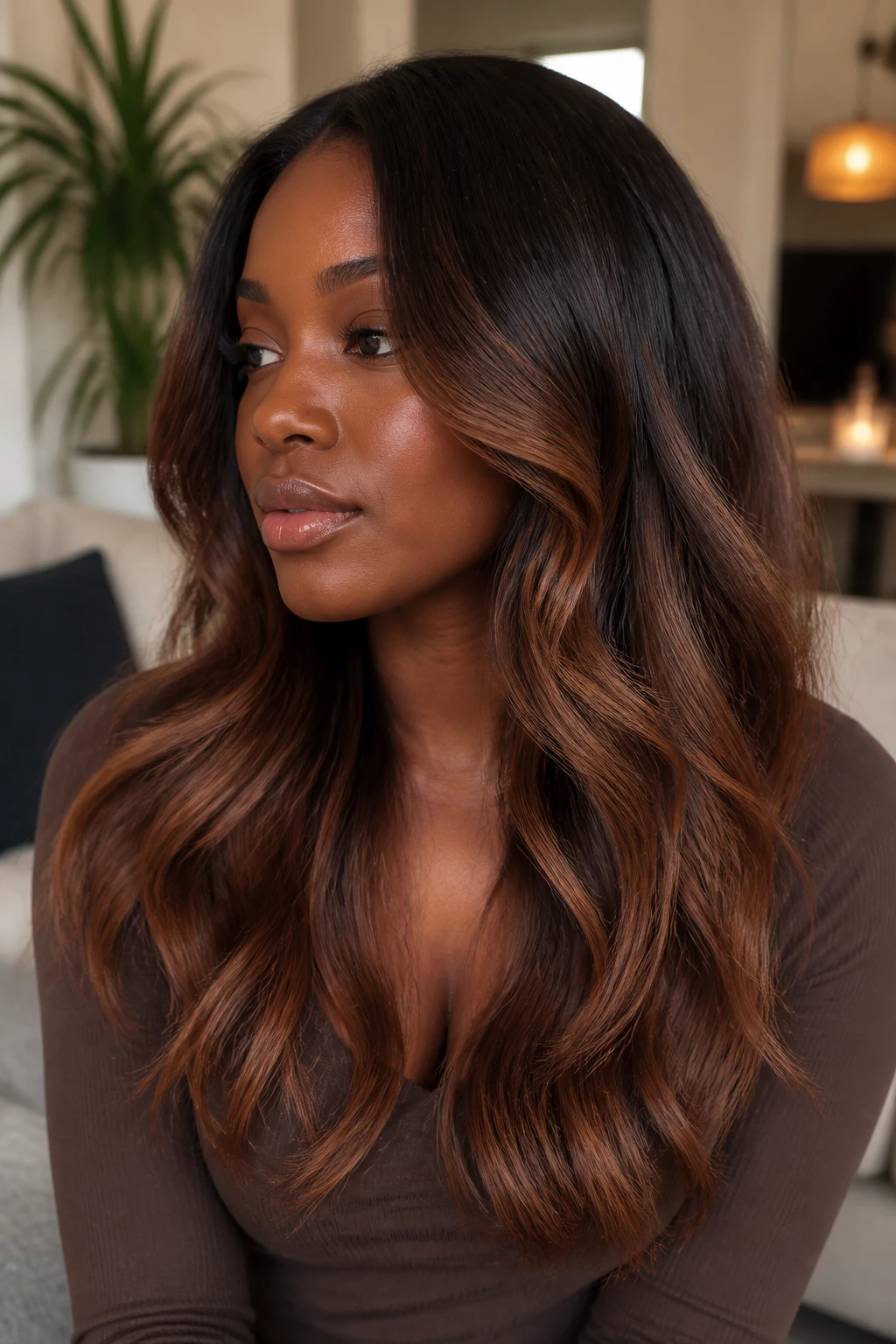
Cinnamon brunette works because it has spice, not just sweetness. The shade lands between red-brown and warm brown, which gives deep skin a lively glow without turning the hair orange. A melt, not a stripe, is the key here.
The roots should stay near your natural brunette level, then the cinnamon should build through the mids and soften into the ends. That gradient matters. If the warm tone is dumped evenly from root to tip, the style loses depth and starts to feel flat in natural light.
This look is especially pretty on layered cuts, because the different lengths let the cinnamon catch in uneven flashes. It also plays well with side parts. A side part lets the warmer pieces fall in a way that feels a little more dramatic, which is sometimes the whole point of spring hair.
5. Bronze Money Piece
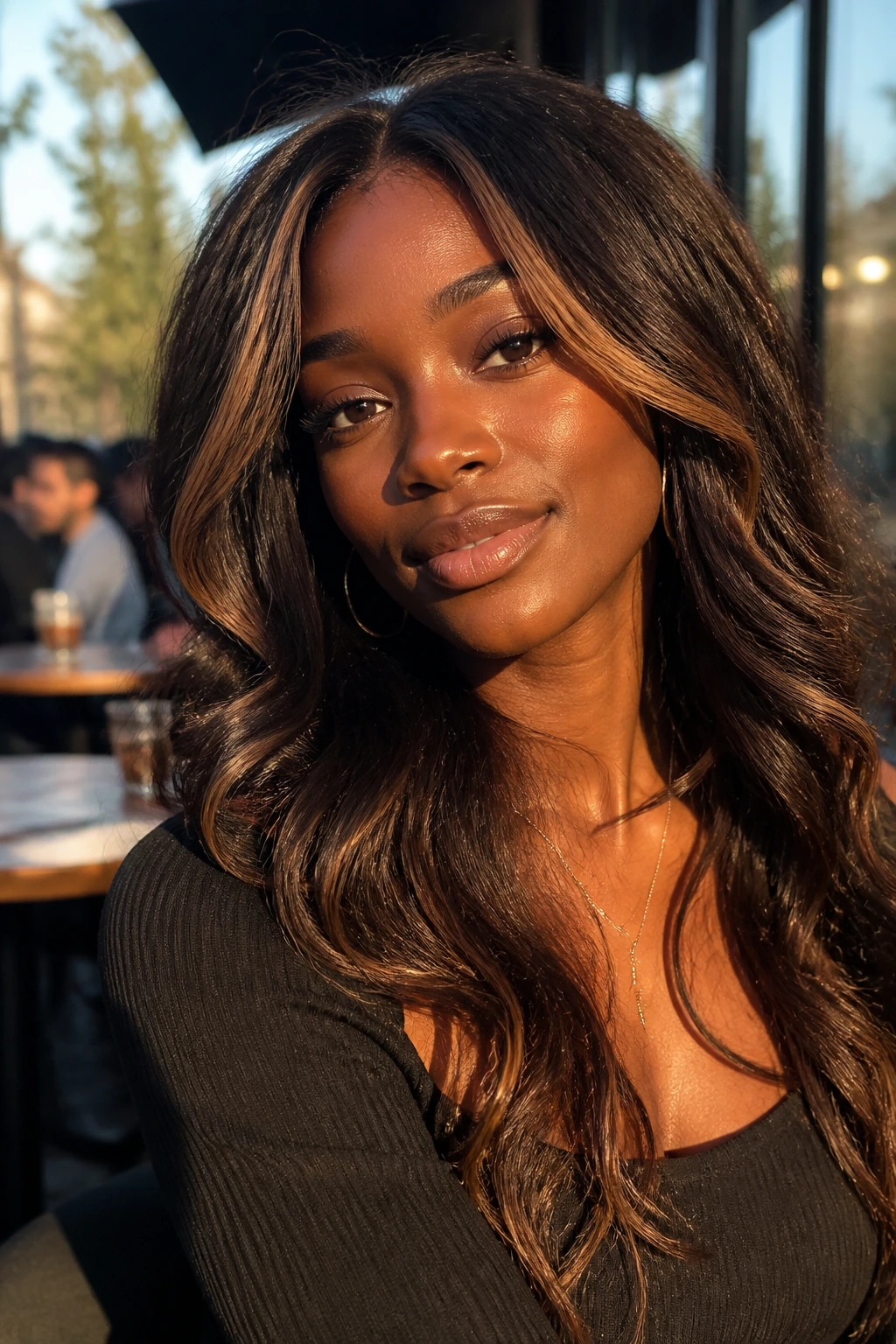
A bronze money piece is for the person who wants one deliberate bright hit and doesn’t want to babysit the rest of the head. Bronze is a better call than pale gold on deep skin; it brings light near the face without looking washed out. It should read metallic-warm, not shiny-yellow.
The trick is placement. Keep the panel wide enough to notice, but not so wide that it swallows the front of the haircut. On curls, a bronze money piece can frame the face in the most flattering way because the texture breaks up the color and keeps it from feeling like a billboard.
If you wear sleek buns, blowouts, or half-up styles, this one punches above its weight. You’ll see the bronze whether the hair is down or pulled back. That’s why it’s such a useful spring update — it changes the face first.
6. Almond Toffee Babylights
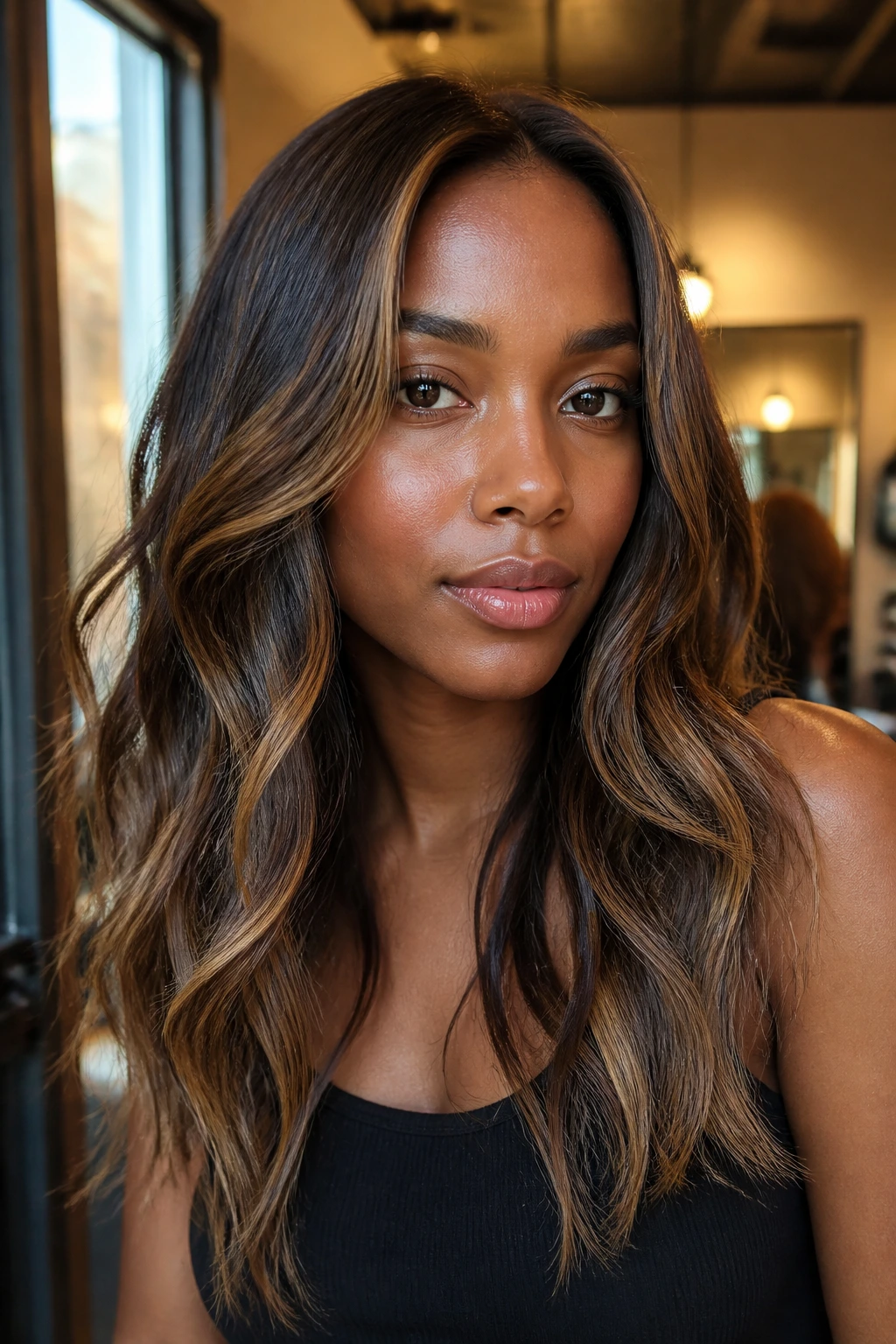
Babylights are for the person who likes to lean in close before the color reveals itself. Almond toffee babylights are ultra-fine, almost whisper-thin highlights woven through the brunette base. They don’t announce themselves. They shimmer.
This is one of the best choices for deep skin if you want brightness without obvious contrast. The strands stay delicate, which means the hair keeps its depth and shine. The result is especially good on denser hair textures, where a few lighter threads can disappear into the whole and still make the style look expensive.
Best on: layered curls, smooth blowouts, shoulder-length cuts, and hair that already has dimension.
Ask for: a soft almond-toffee tone with tiny weaves and a gloss finish, not a chunky foil pattern.
7. Copper-Kissed Ends
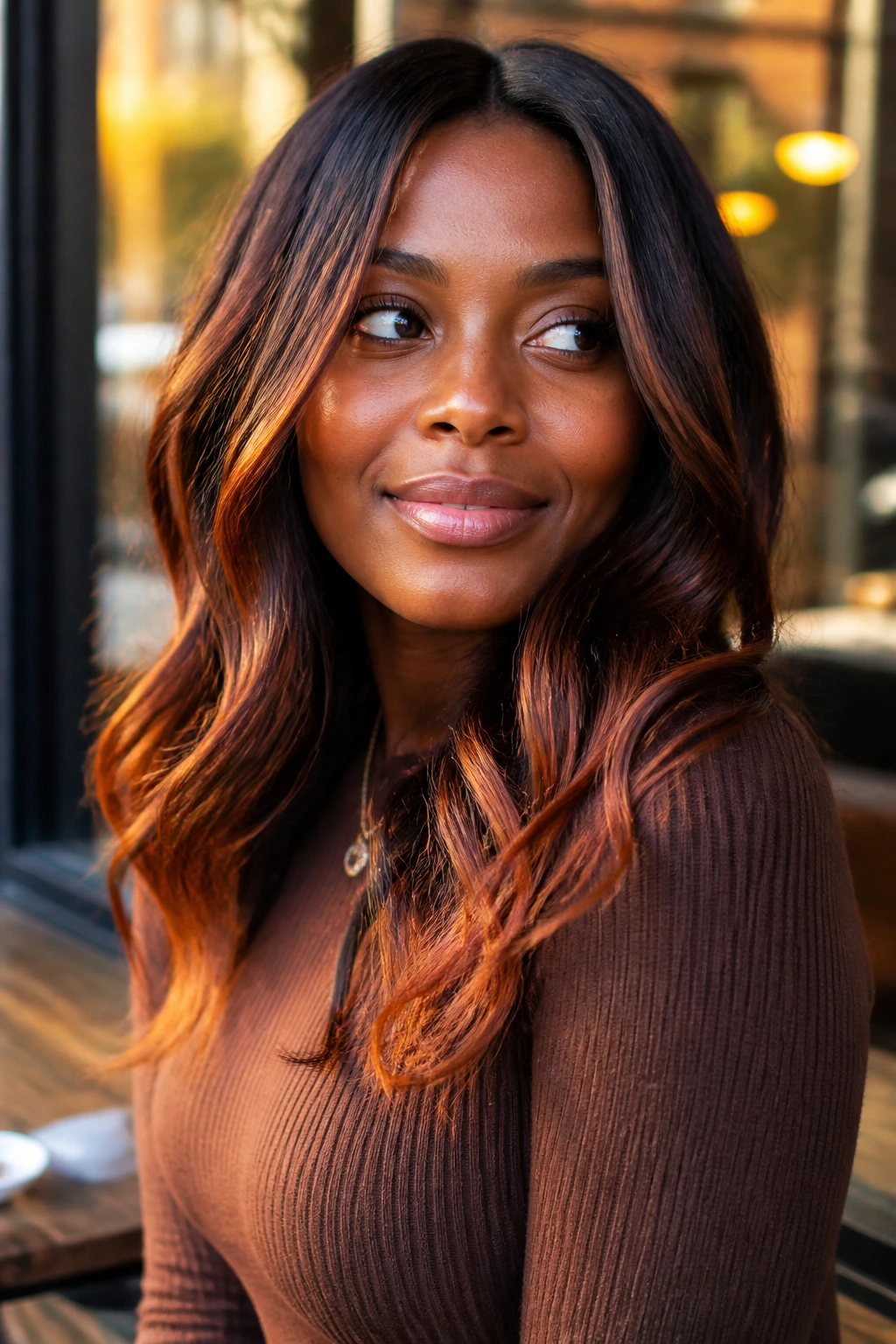
Copper at the ends gives brunette hair a little heat at the finish line. It’s not a full red transformation. It’s a warm brush of color where the hair moves, which makes it feel lively in spring daylight.
This works beautifully on long layers because the lighter ends show when the hair swings. On textured hair, the copper can peek through the bends and coils without taking over the roots. That balance matters on deep skin; you want the warmth to glow from within the shape, not sit on top of it.
If your base is dark and your ends have been lifted before, copper is often easier to maintain than pale blonde pieces. It also fades in a more forgiving way. When the tone softens, it tends to land back in auburn-brown territory instead of turning sickly.
8. Mahogany Veil Highlights
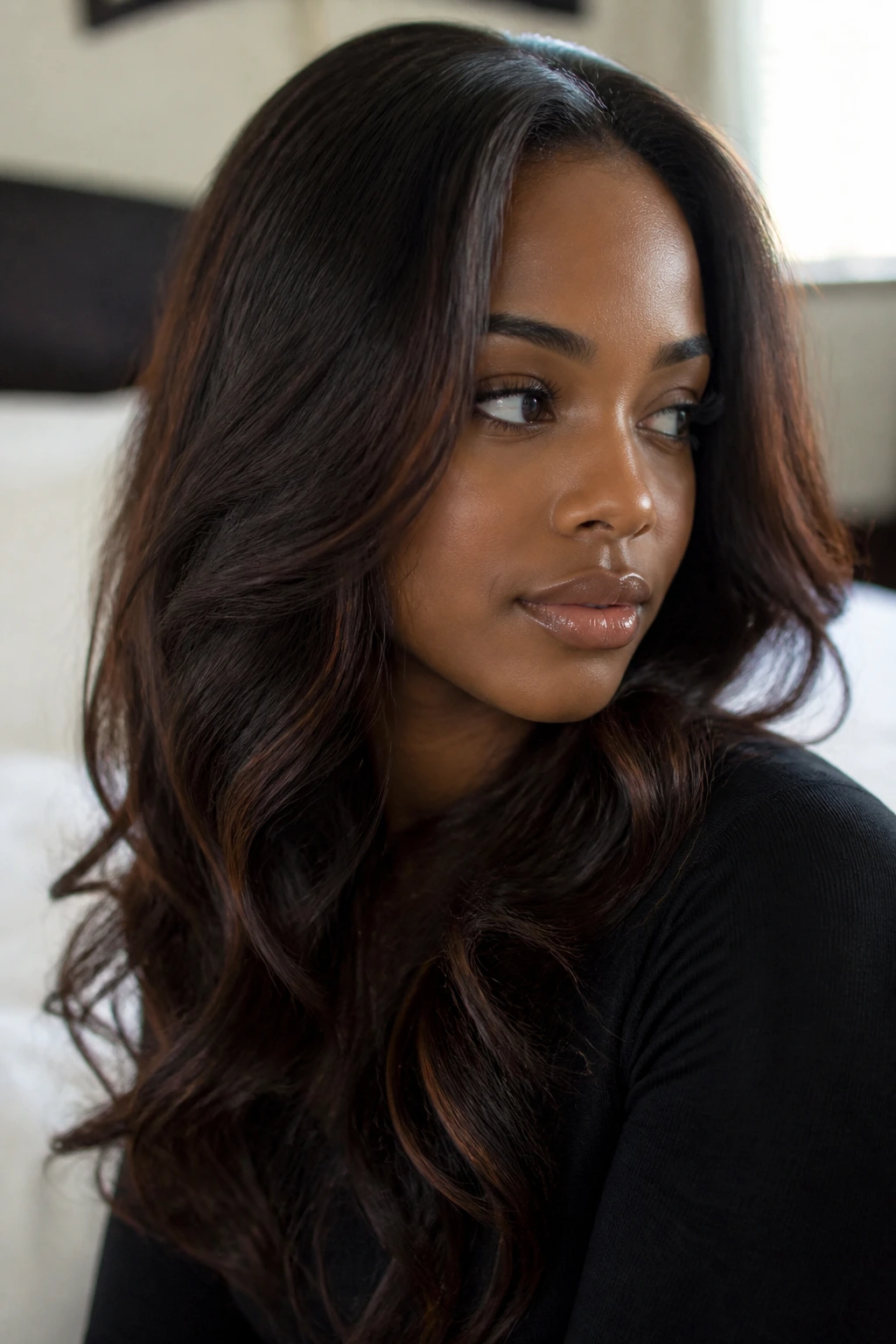
Mahogany is for the person who wants richness with a little red smoke in it. The color stays dark, which is a blessing on deep skin if you want depth intact, but the red-brown undertone gives the hair a polished spring lift. Think gloss first, light second.
A veil of mahogany works better than random pieces. The color should move through the hair in a soft sheet, especially around the top layer and sides. That gives you the feeling of dimension without splitting the hair into obvious lanes of color.
Mahogany is one of my favorite choices for neutral and cool deep undertones because it adds warmth without going straight into copper. It’s quietly dramatic. And honestly, that’s often the smarter move.
9. Espresso and Teak Lowlights
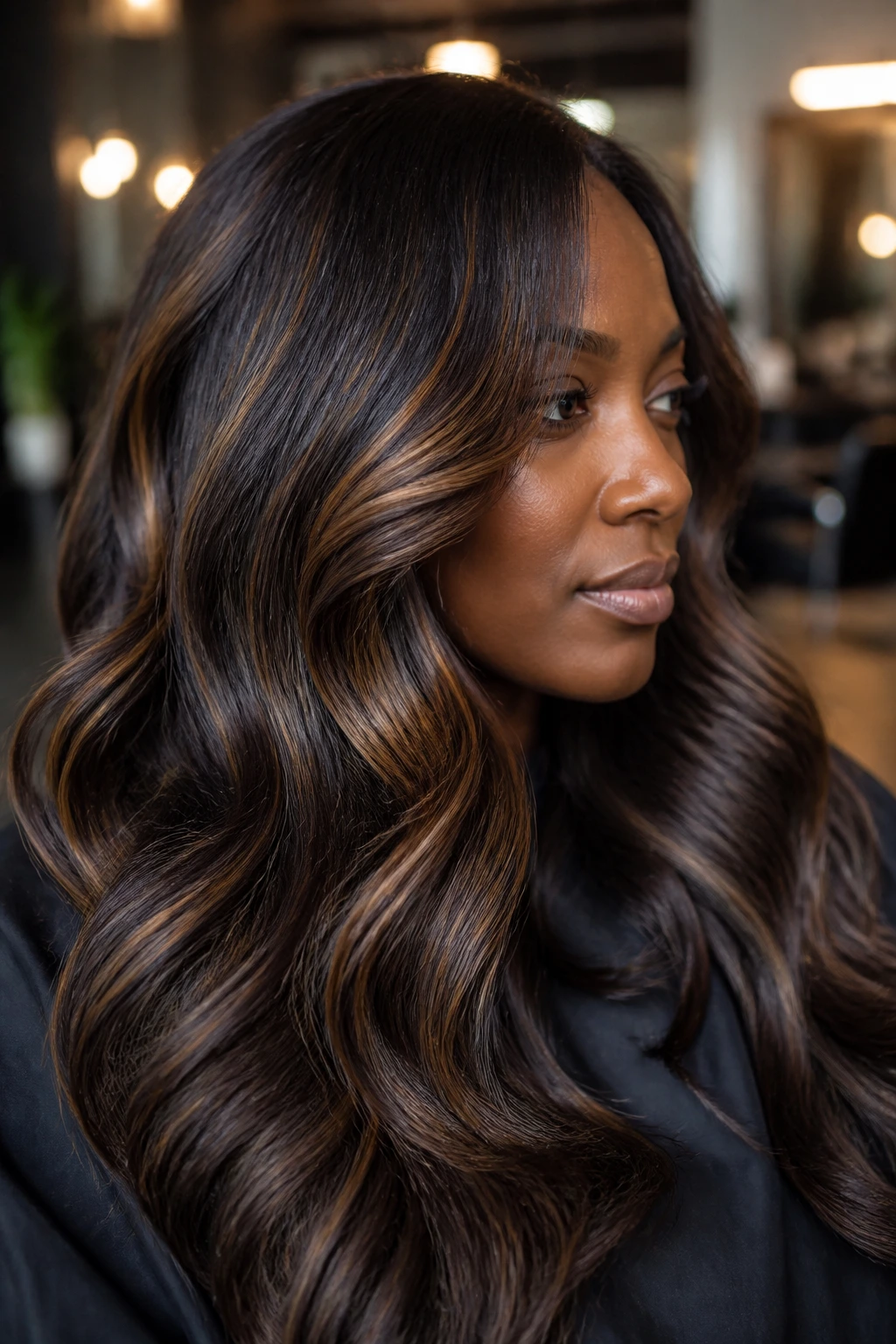
Not every brunette update needs lighter pieces. Sometimes the smartest move is adding lowlights, especially if the hair has too much faded gold hanging around from earlier color. Espresso and teak deepen the brunette base and make the lighter strands look cleaner by contrast.
Why Lowlights Matter Here
Deep skin tones often look richer when the hair keeps shadow in the mix. Lowlights create that shadow on purpose. Espresso is the anchor; teak adds a warm, woody note that stops the hair from looking flat-black.
This is a good reset if your highlights are growing out and starting to look patchy. Add lowlights, gloss the mids, and the whole head looks more even. It’s not flashy, but it saves a color job that might otherwise need a full redo.
10. Auburn-Glow Brunette
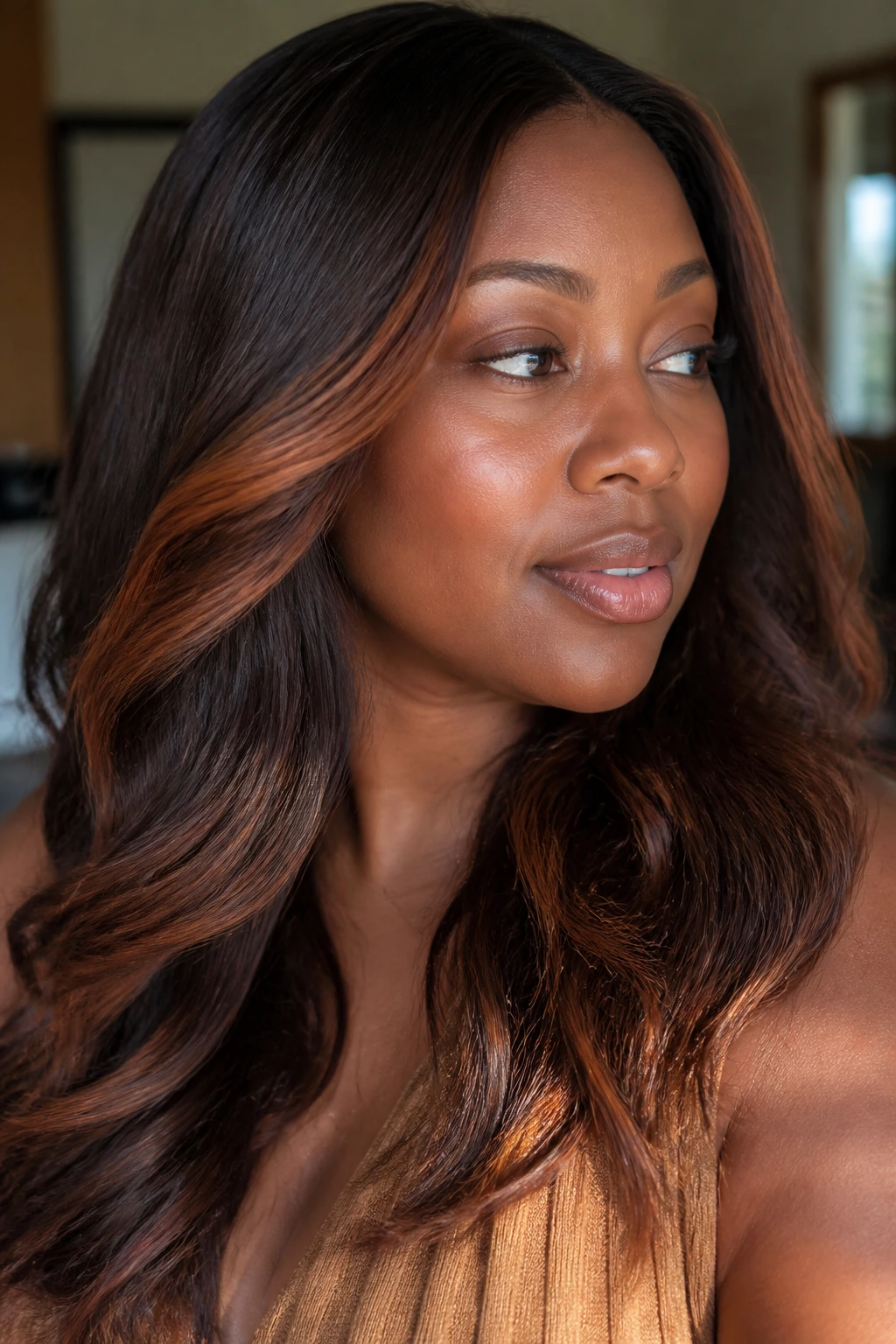
Auburn glow is the color for someone who wants a little fire but refuses to give up brunette depth. The auburn should sit under the brown, not dominate it. On deep skin, that brown base keeps the red from turning loud.
The best auburn highlight placement is usually around the front and outer layers, where the color can catch movement. If the whole head is done in auburn ribbons, the effect can drift too red under certain light. A targeted approach is cleaner.
This one looks especially strong against gold jewelry and warm makeup tones. If you like terracotta blush, bronze shadow, or a brown lip, auburn brunette hair gives the whole look a nice echo.
11. Maple Glaze Ribbons
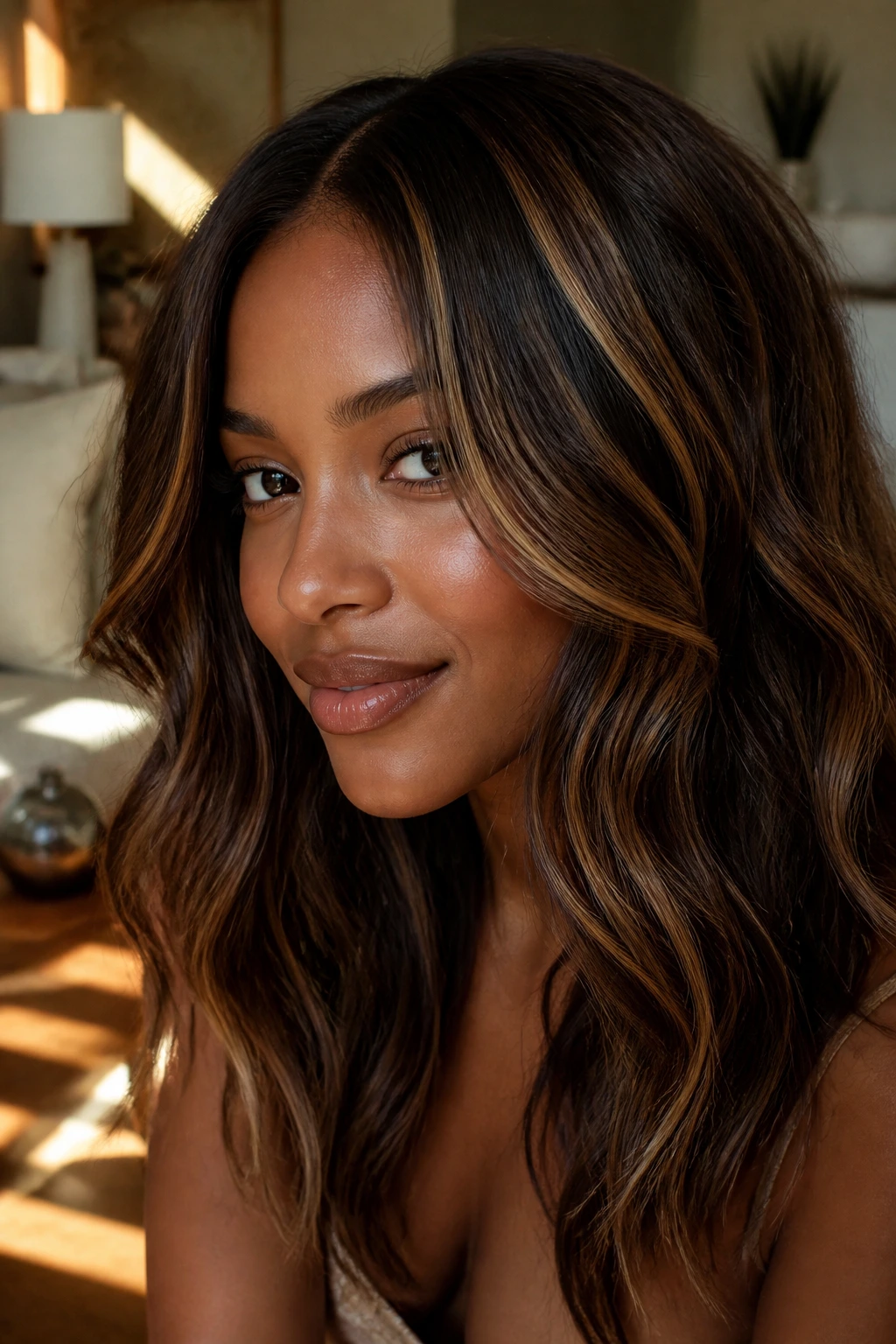
Maple glaze is warmer than chestnut and softer than copper. That’s its lane. It gives deep skin a sweet, syrupy lift that still reads brunette, which is the point if you want change without losing the mood of dark hair.
The ribbons should be thin enough to break up the base, but visible enough to catch light around the face and crown. If they’re too faint, the color reads muddy; if they’re too bright, the maple can start leaning orange. A glossy glaze after the highlight service keeps the tone in the good zone.
A few waves help this shade more than a stiff straight finish. The moving hair catches those maple threads and makes them look deeper and more dimensional.
12. Smoky Bronze Layers
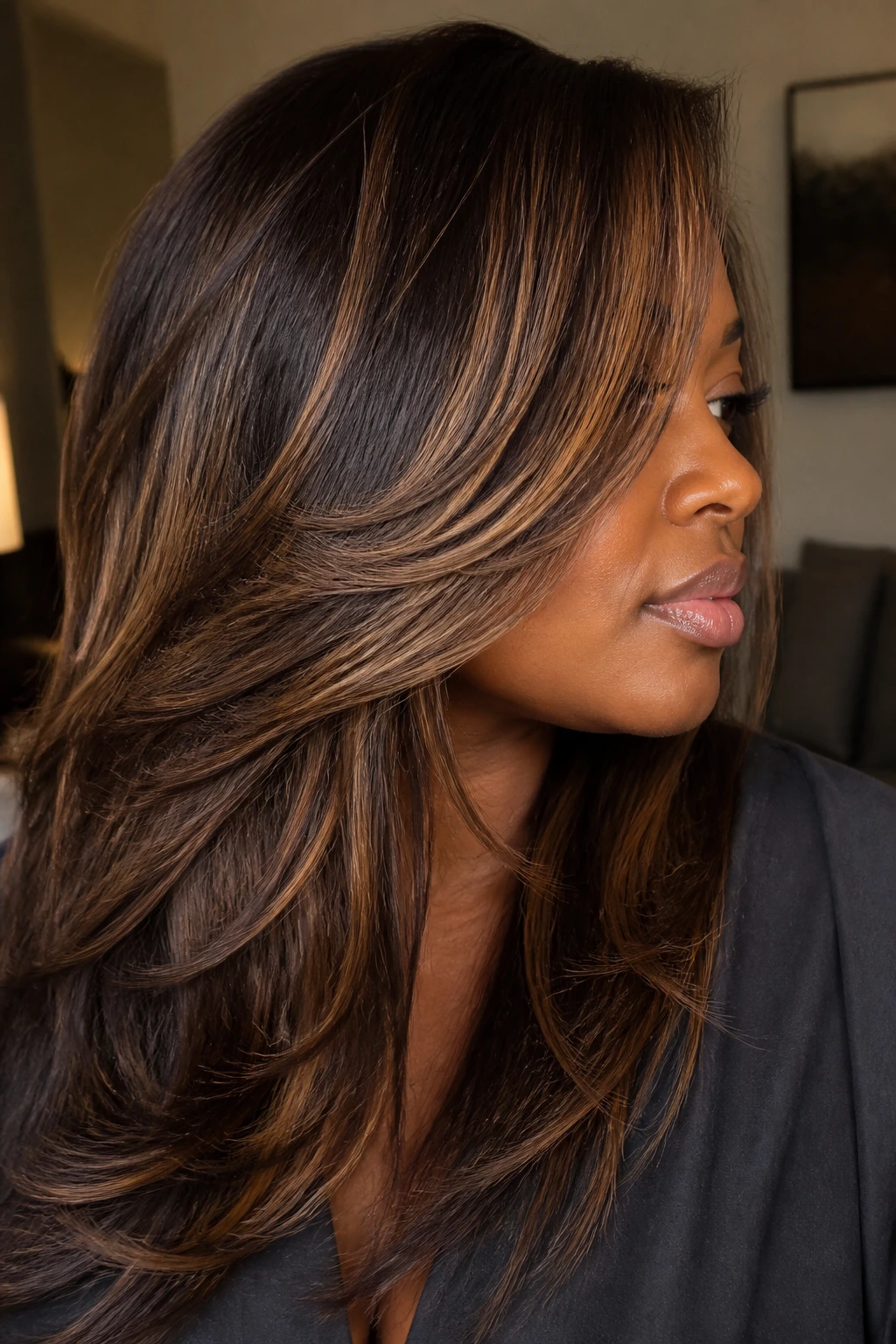
Smoky bronze is where warm and cool stop arguing and start cooperating. The bronze gives you light, while the smoky undertone keeps it from flashing too gold. On deep skin, that balance is gold. Literally and visually.
This is a smart pick if your wardrobe leans silver, charcoal, black, or jewel tones. The cooler edge of the bronze keeps the hair from competing with those colors. It also works on natural curls because the smoke-like cast lets the highlights sit inside the texture instead of outlining it.
If you want this to stay refined, ask for a demi-permanent gloss after the lift. The gloss mutes the brass and gives the whole head a smooth finish. No crunchy shine. Just a soft metallic read.
13. Golden Cocoa Contour
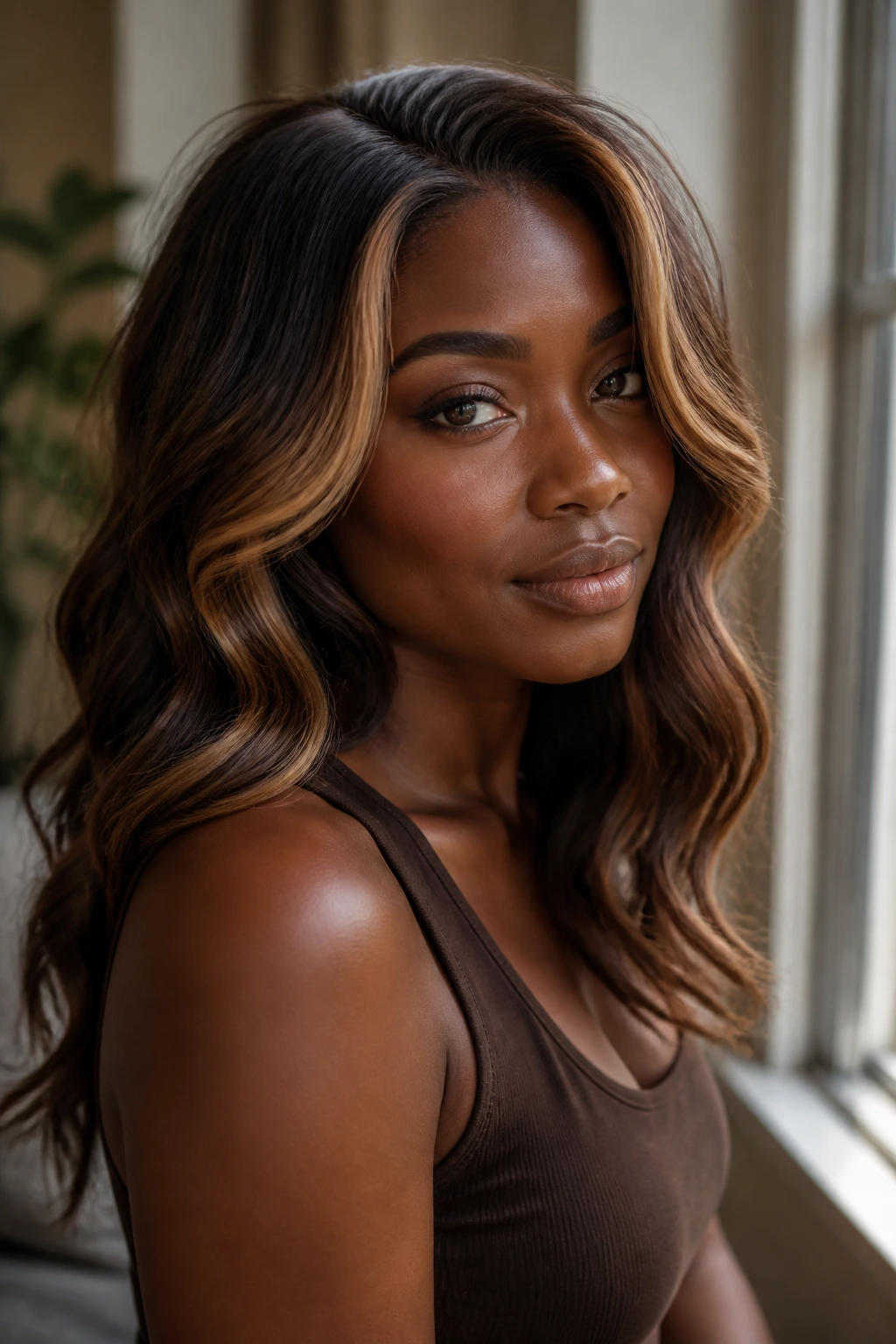
This one borrows a trick from makeup. The brighter pieces go where contour would normally soften the face: around the cheekbone line, the temples, the hairline, and sometimes just beneath the crown. That placement makes deep skin pop without bleaching the whole head to pieces.
What Makes It Different
Golden cocoa is not pale gold. It’s more of a warm, toasted gold that still looks grounded by brown. On a deep complexion, that keeps the highlight from floating. It becomes part of the architecture of the haircut.
Use this if you wear middle parts, curls with volume, or blowouts with movement around the face. The highlight pattern does a lot of the visual work, so the cut should have some shape. A one-length blunt cut can wear it, but it’ll read more graphic than soft.
14. Walnut Gloss Highlights
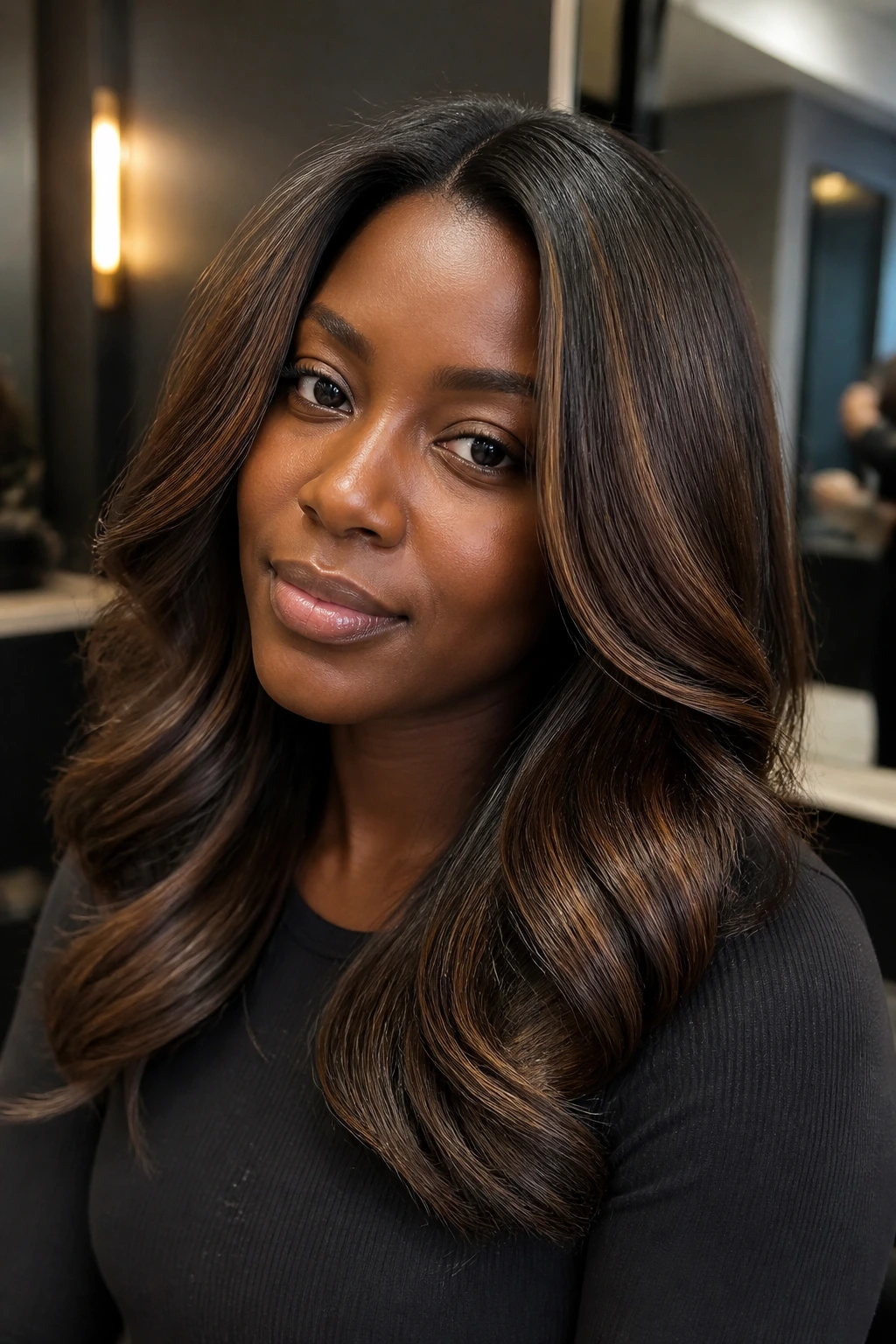
Walnut gloss highlights are for the person who wants the least amount of drama possible while still looking freshly colored. Think subtle tonal lift, not obvious lightness. The effect is mostly shine, with just enough variation in brown tones to keep the hair from sitting in one flat block.
This is one of the few color ideas here that can work beautifully on a very conservative dress code. It stays brunette. It just has more life. Deep skin tones tend to wear this kind of tone well because the color doesn’t outrun the complexion.
If your hair is coarse or resistant, this is also a sensible choice because you’re not chasing a huge lift. A walnut gloss can make the hair look polished and expensive without over-processing it.
15. Butterscotch Peekaboo Panels
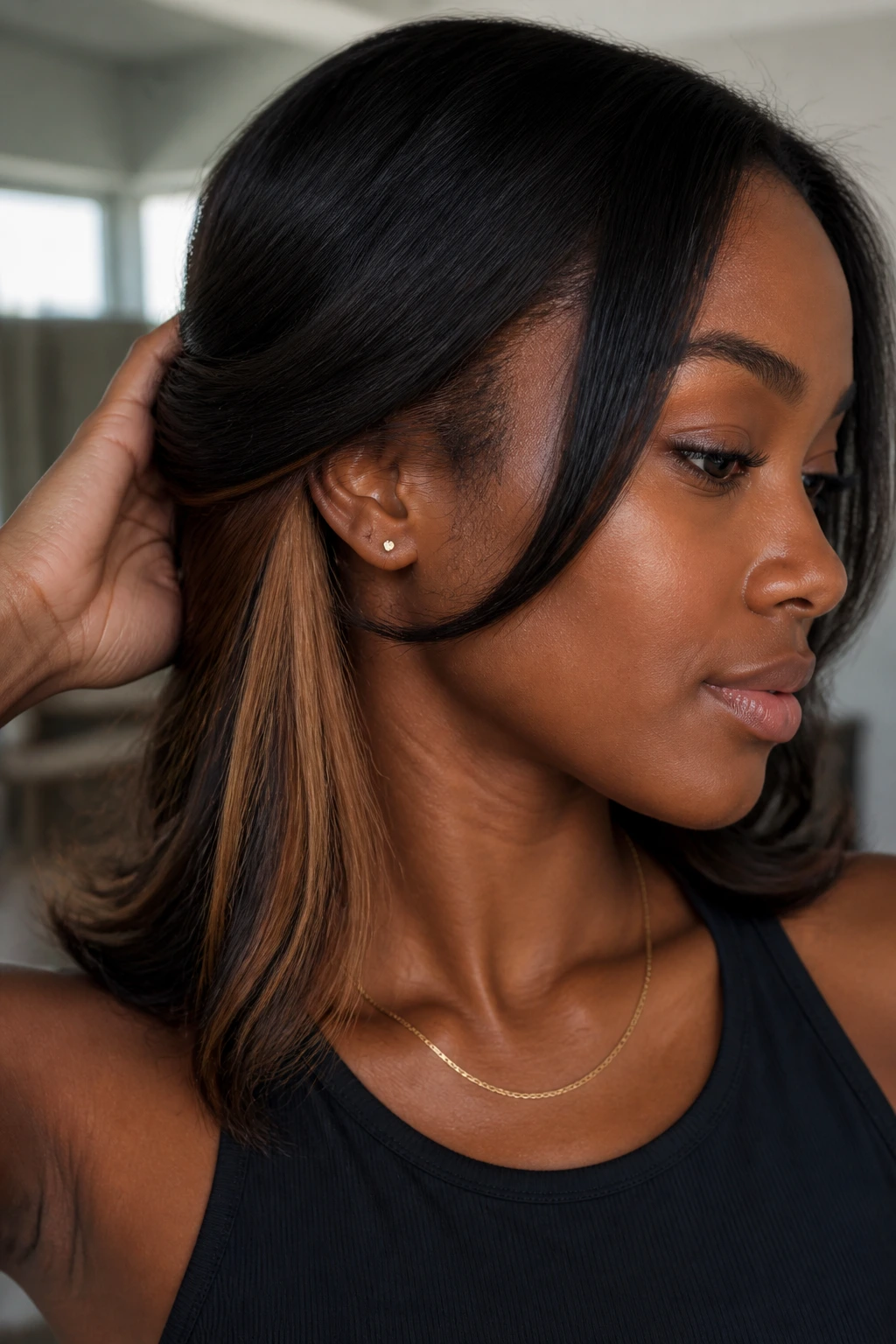
Peekaboo color is fun because it hides until the hair moves. Butterscotch panels sit under the top layer, usually near the nape, sides, or interior sections, so the color appears when you wear braids, twists, buns, or half-up styles. It’s a small surprise.
On deep skin, butterscotch should stay buttery and brown-based. Too pale and it loses the point. The hidden placement helps here, because even a brighter panel won’t take over the whole look. You get a flash of warmth, not a full head of spotlight.
This is a smart option if you like versatility. One week it looks understated. The next week, a high ponytail shows the whole thing off. That kind of color shift is useful, not fussy.
16. Warm Bronde on Coils
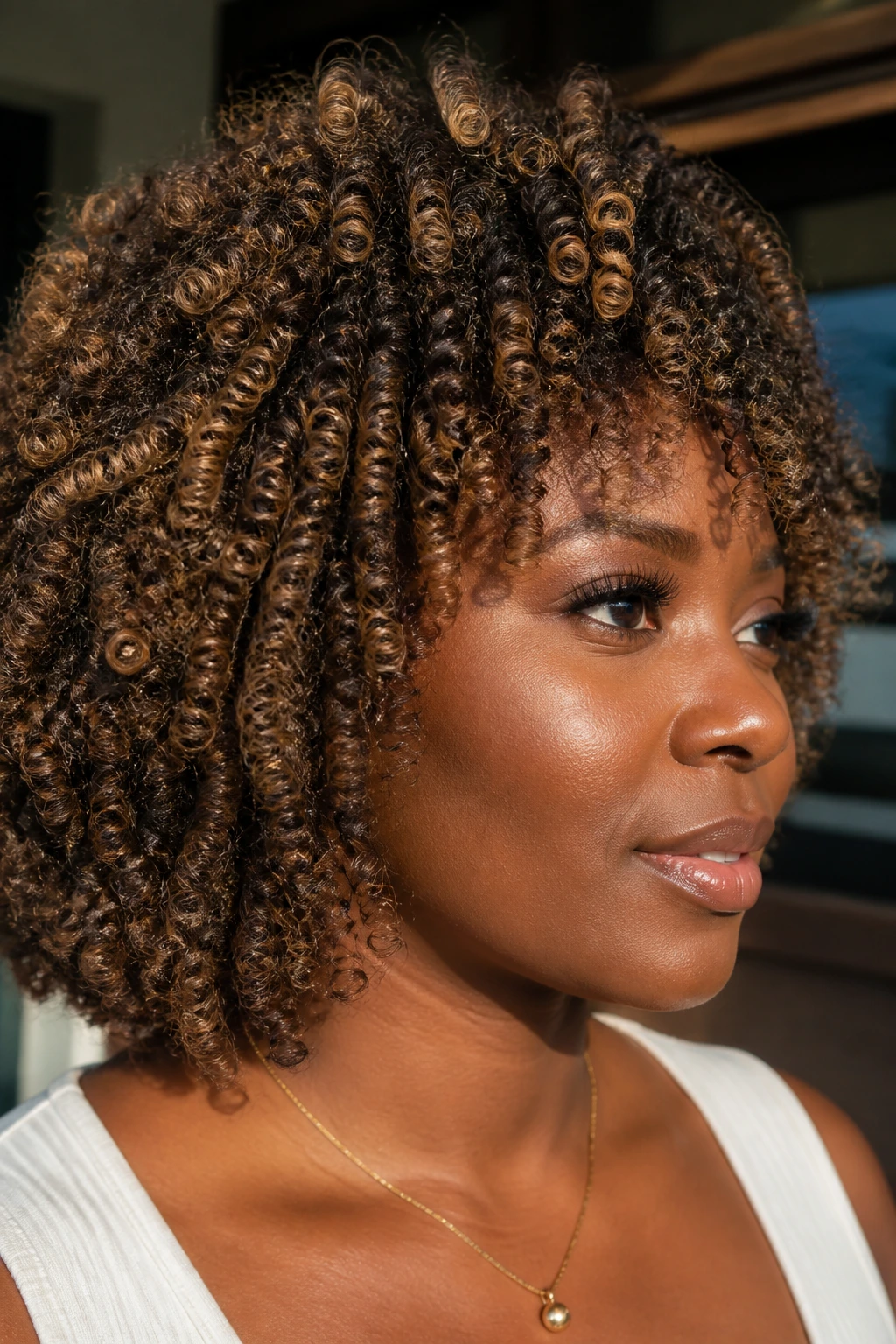
Bronde can go wrong on deep skin when it turns dusty or too beige. Warm bronde avoids that trap by keeping the color in toasted brown, honey, and soft gold territory. On coils, the warmth breaks up beautifully because the texture creates natural shadow.
Texture Is the Secret
Coils need placement that respects shrinkage and curl pattern. That means hand-painted sections, not rigid striped foils from roots to ends. The color should live where the coil opens and closes, catching light on the bends.
This look can be stunning when the coils are defined and moisturized. Dry, frizzy texture eats the brightness. If you want warm bronde to show, the curls need slip and shape. That’s not a flaw in the color; it’s just how the light works on textured hair.
17. Amber Halo Highlights
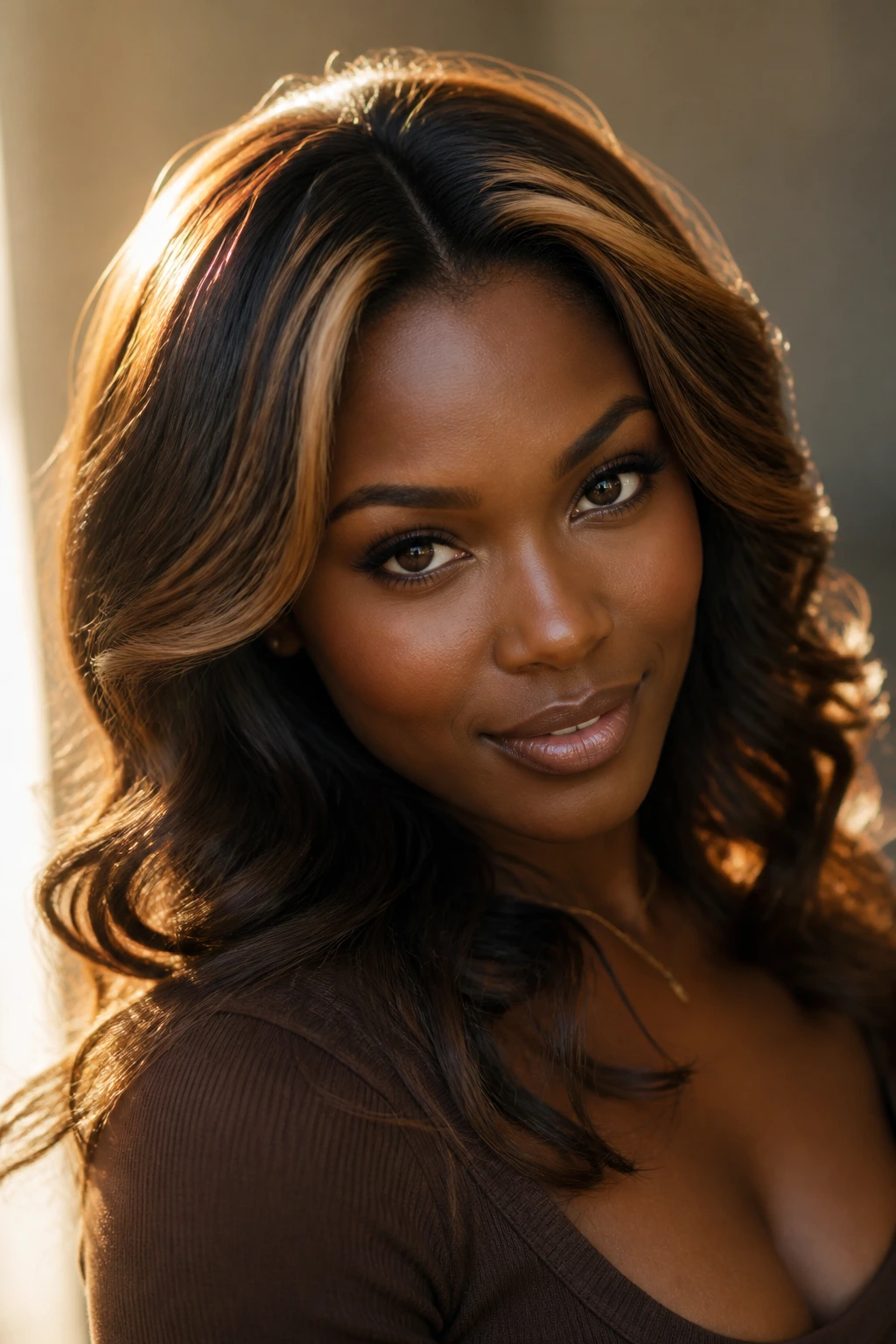
Amber halo highlights form a bright ring around the perimeter and crown, which gives deep skin a warm glow right where people notice it first. The halo effect is cleaner than scattering brightness everywhere. It creates a shape.
Amber should lean toward brown-gold, not orange candy. Around the crown, that warmth can look almost lit from behind, especially on curly or voluminous hair. It’s one of the more spring-forward options here, but it still stays inside brunette territory.
If you like wearing your hair up, this is an excellent choice. A halo doesn’t disappear in a bun or ponytail. It frames the hairline and top of the head even when the rest is pulled back.
18. Mocha-to-Caramel Melt
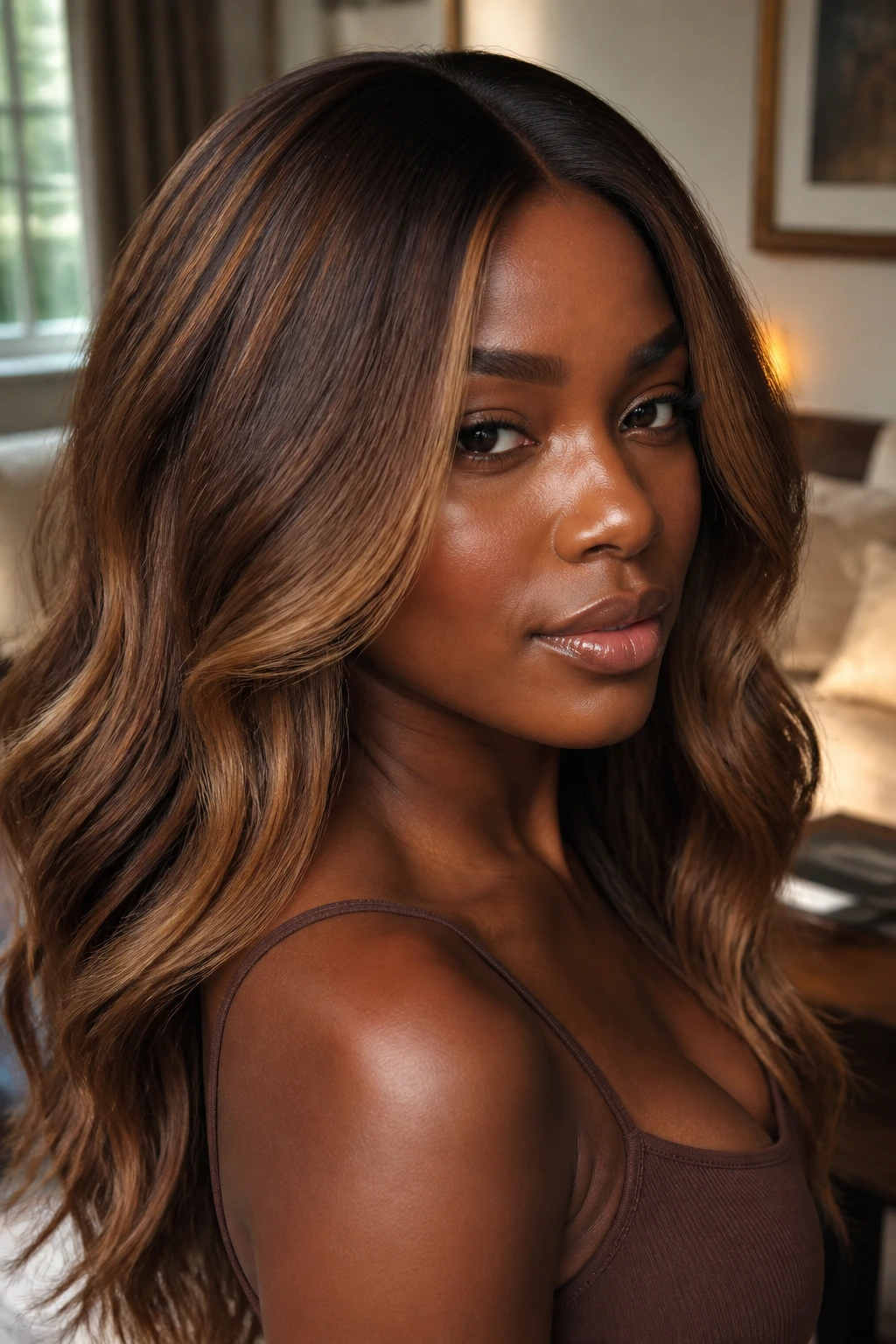
This is the classic lived-in color move: dark mocha at the root, slowly opening into caramel through the mids and ends. It’s popular for a reason. The transition is soft, which means the grow-out looks good rather than obvious.
Deep skin tones usually wear this best when the caramel is still warm and grounded. If the lift goes too light, the gradient can feel disconnected. Keep the root shadow a little deeper than you think you need. That extra depth gives the lighter pieces somewhere to land.
A melt like this works on straight, wavy, and curled hair because the color story is built into the gradient itself. It doesn’t need a lot of styling to make sense.
19. Chestnut Copper Sweep
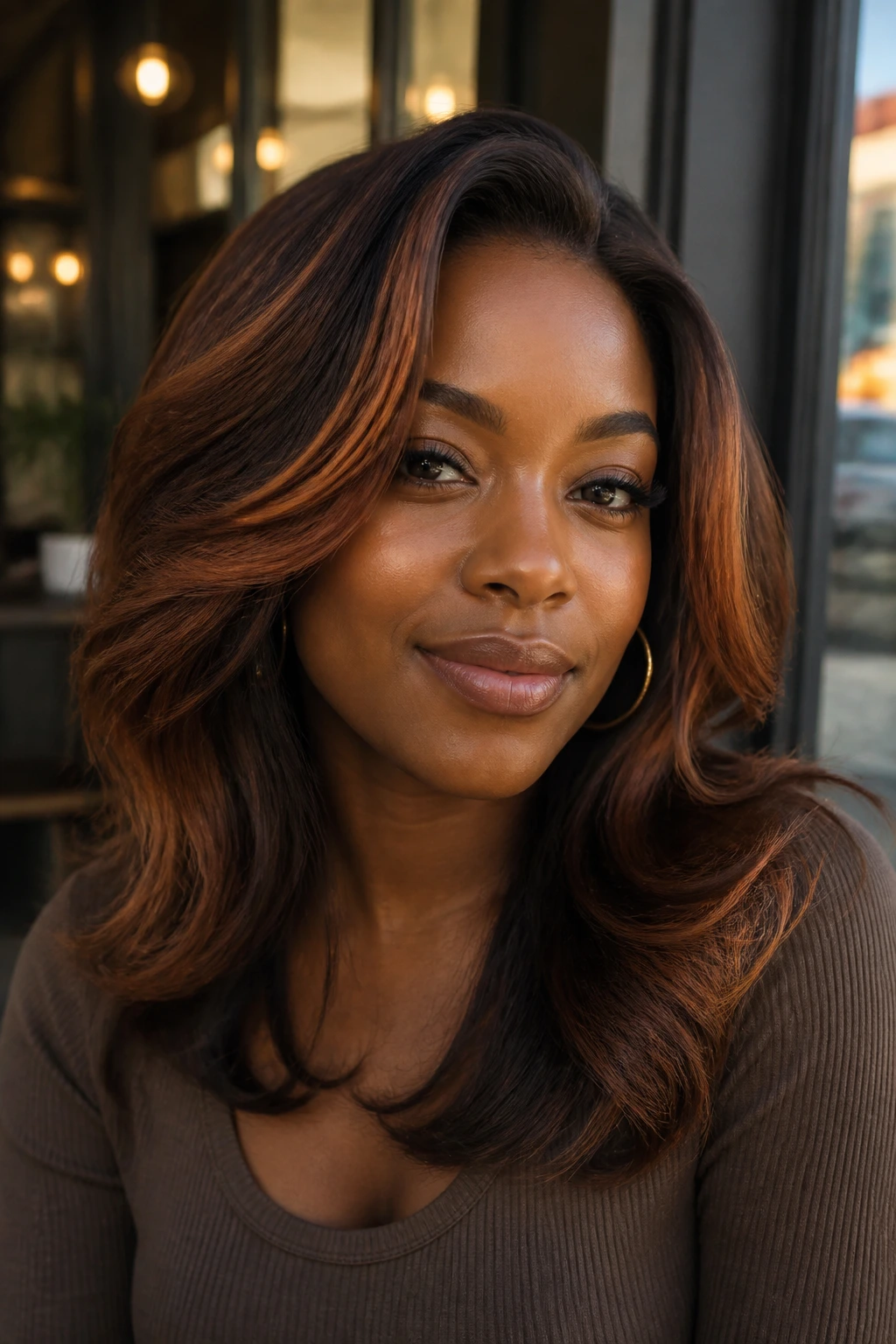
Chestnut copper is for someone who wants warmth with edge. The chestnut keeps the base brown and wearable; the copper sweep adds that springy heat that catches on layers and movement. It’s a little more vivid than caramel, but not as intense as red.
The sweep should be placed where the hair naturally lifts — around the sides, outer ends, and top layers. On deep skin, that placement helps the copper look intentional instead of abrupt. You want the color to feel like part of the fabric of the hair.
If you like a side part or face-framing curls, this style has a lot to offer. The copper flashes when the hair shifts, which gives the whole cut a lively, almost sunstruck feeling.
20. Sunlit Toffee Waves
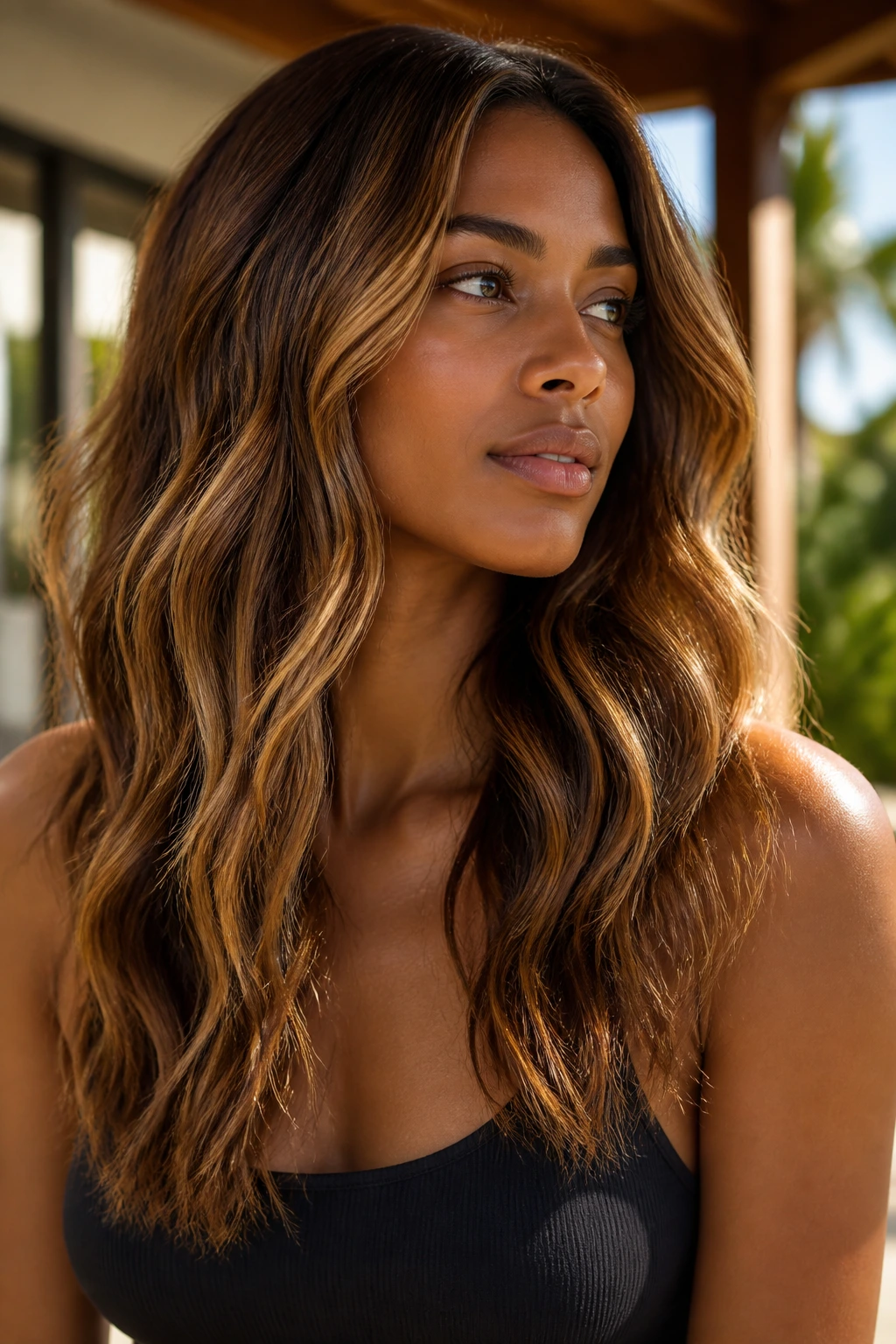
Toffee is one of the safest warm brunette families for deep skin because it stays brown enough to anchor the complexion. The word “sunlit” fits here because the light should sit on the waves, not blaze across the whole head. You want a soft gleam.
This style is strongest on loose waves and layered cuts. The bends in the hair let the toffee pieces show and disappear, which keeps the whole thing from feeling overworked. A wave pattern also softens any slight variation in the lift, which is handy if your hair doesn’t lift evenly.
It’s a pleasant color for people who want hair that looks good in both daylight and indoor light. Some highlights only work outdoors. Toffee has a better range.
21. Sable and Caramel Ribboning
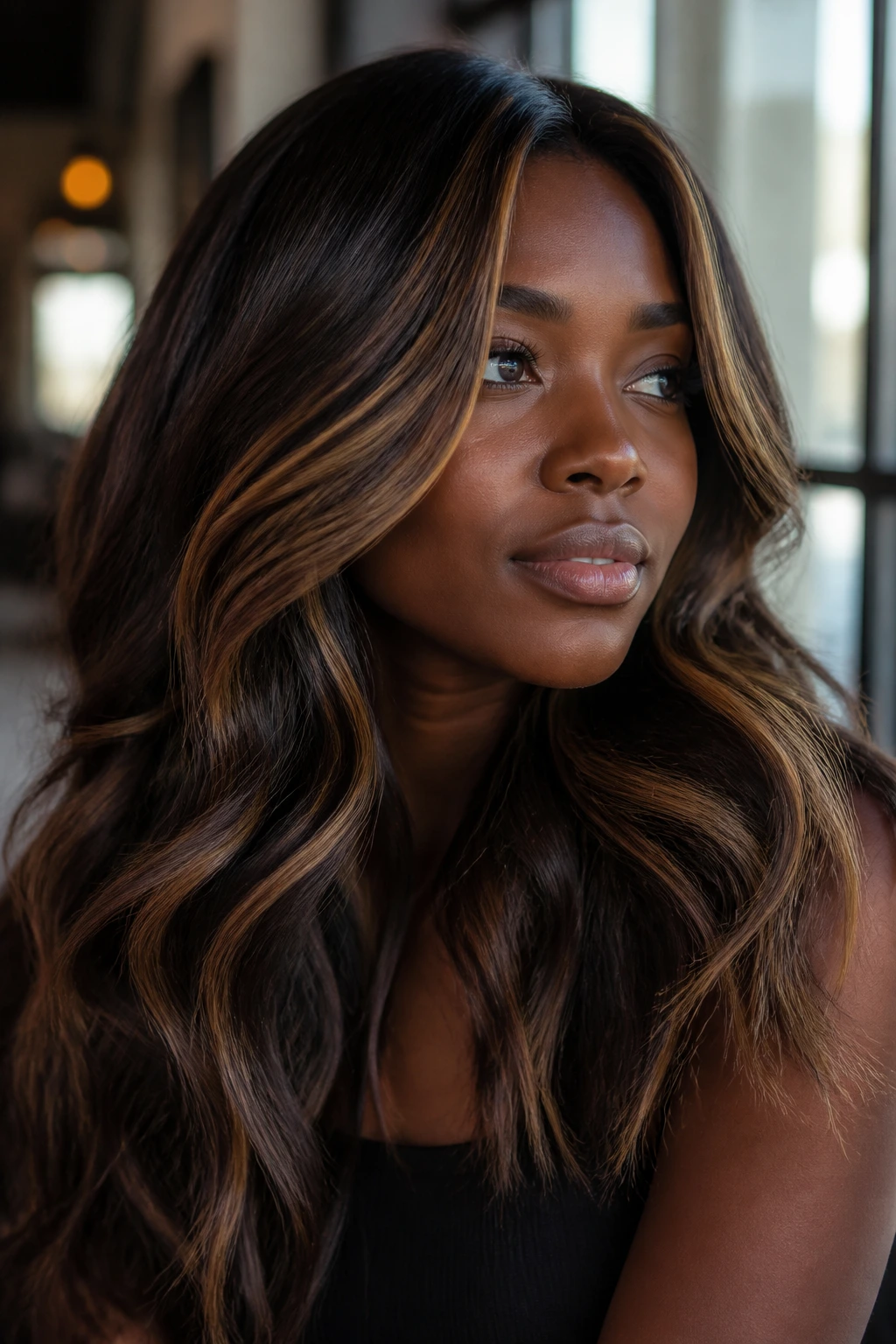
Sable and caramel is the high-contrast version of brunette highlighting for deep skin. The sable base stays dark and glossy, while the caramel ribbons cut through it in clean, warm lines. Done well, it looks deliberate and rich. Done badly, it looks stripey. So placement matters.
Where This Look Belongs
This works best when the ribbons are concentrated through the top, front, and outer layers rather than buried all over the hair. You want the contrast to read in motion. The dark base should still be visible between the brighter pieces.
If you love a defined style — sharp blowouts, sculpted curls, or a polished silk press — this is a strong choice. It gives the hair real dimension and lets the brunette depth carry the color story.
22. Apricot Brown Accent Lights
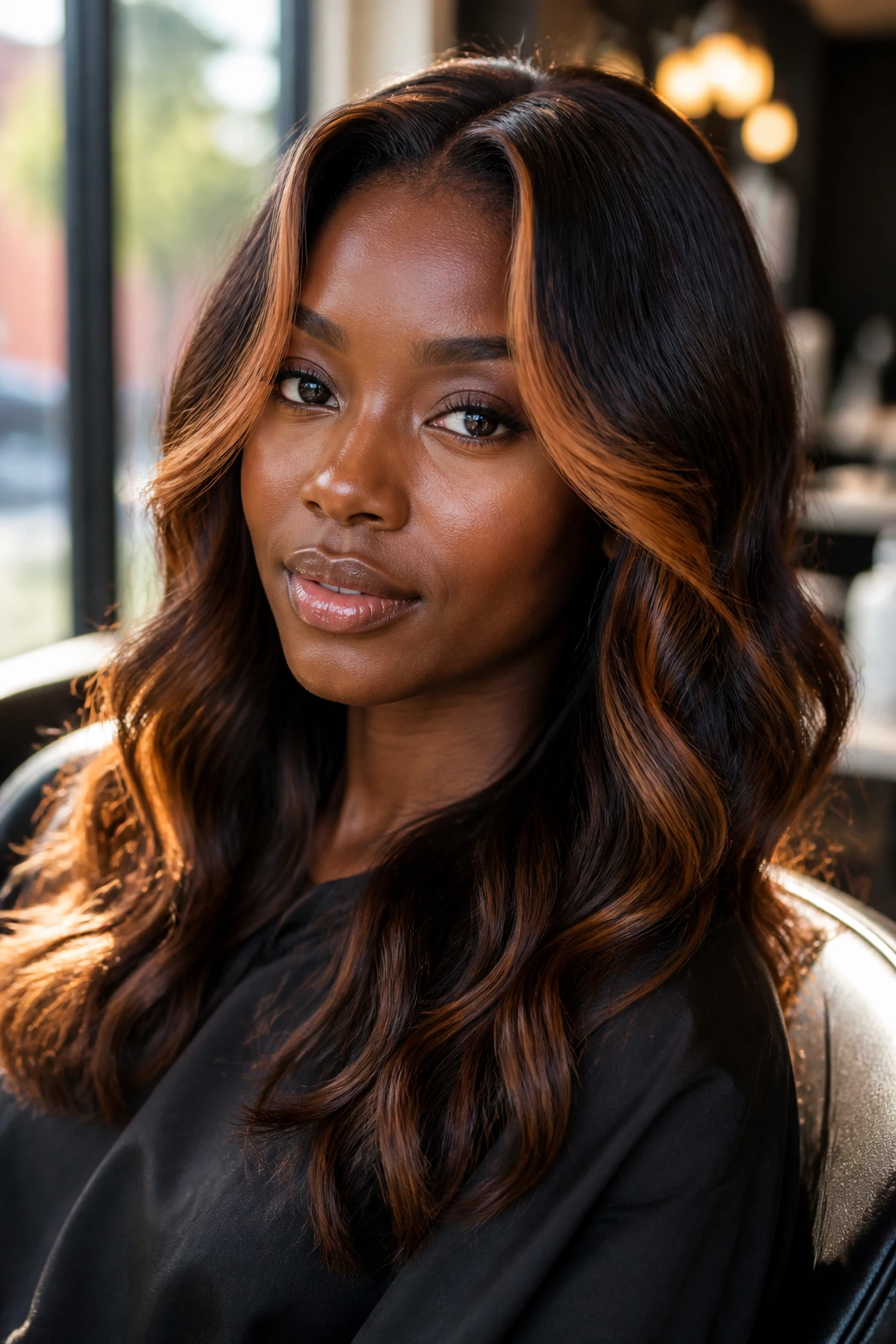
Apricot brown sits in a tricky but lovely zone. It has a soft orange glow, but because it’s mixed with brown, it doesn’t veer into loud copper. On deep skin, that muted apricot can look fresh and warm at the same time.
Accent lights are the key. Keep the apricot concentrated around the fringe, ends, or face frame, then let the rest of the brunette stay grounded. Too much apricot and the color starts to dominate; too little and you miss the point.
This is one of the more playful spring options. It brings color, but it doesn’t shout. If you’re tired of gold and caramel, apricot brown gives you a warmer, slightly more unexpected lane.
23. Hazelnut Veil Balayage
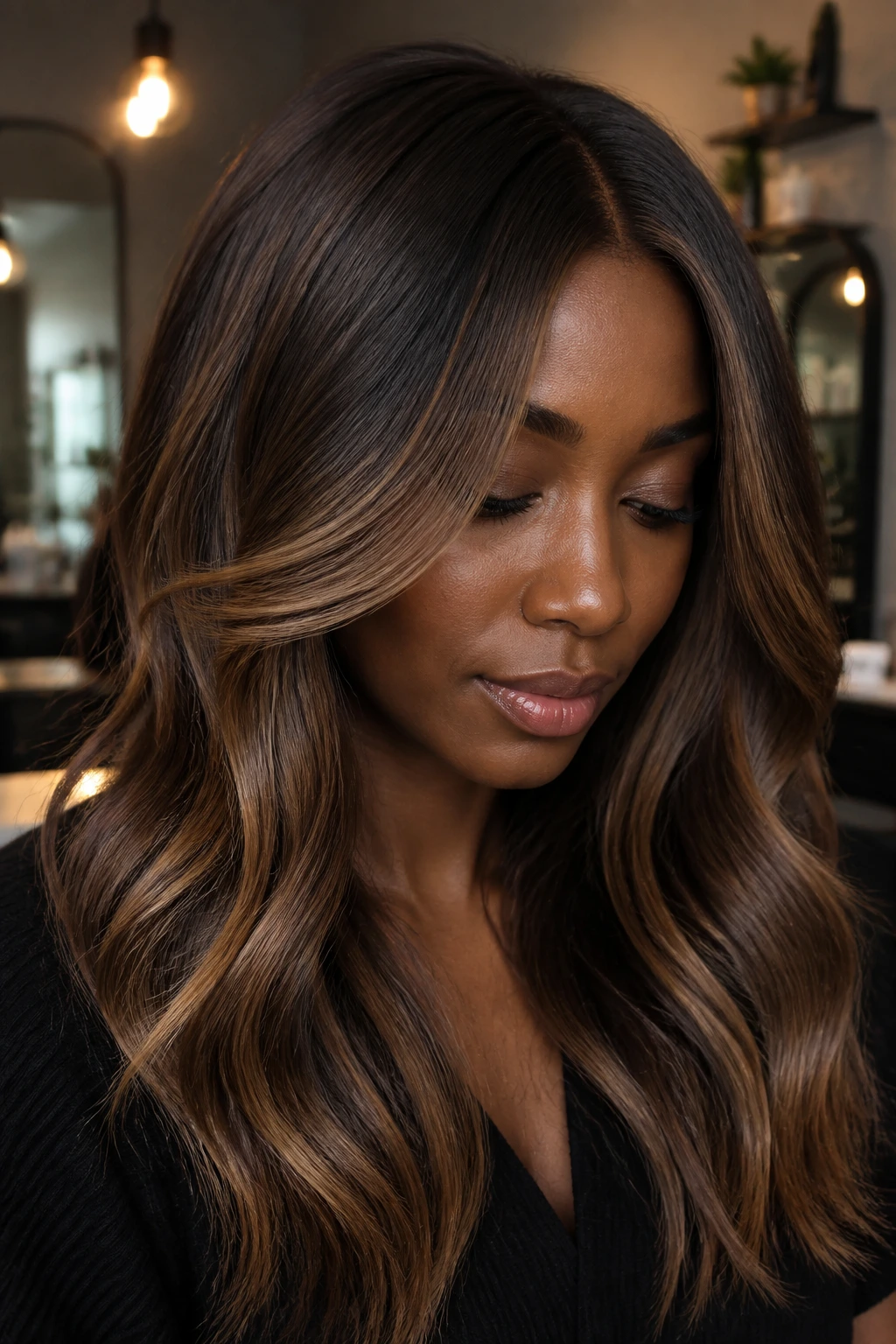
Hazelnut balayage is the quiet cousin in the group. It’s neutral-warm, soft around the edges, and easy to live with. For deep skin tones, that neutrality matters because it keeps the color from pulling too yellow or too red.
The veil placement helps the tone feel blended rather than painted on. Think of it as soft dimension through the mids and ends, with lighter hazelnut catching only where the cut needs movement. It’s a smart option for long hair that can look heavy without dimension.
If you wear lots of earthy makeup, hazelnut is a natural match. Browns, olives, terracotta, and gold all sit well with it. No drama required.
24. Rich Umber with Soft Poplights
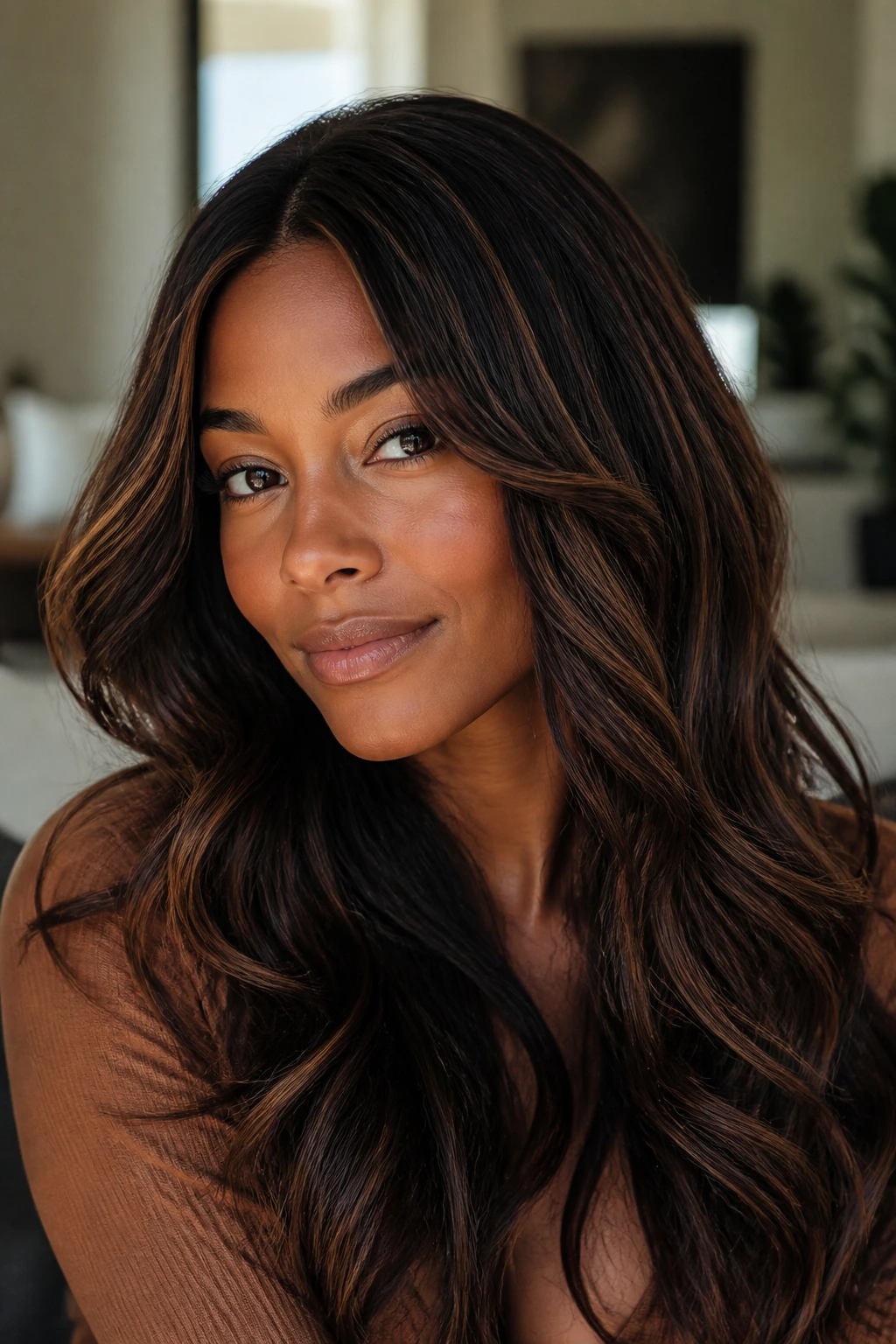
Rich umber is the answer when you want visible color but refuse to lose depth. The poplights are tiny, selective light strands that break up the dark base without turning the head into a highlight map. It’s subtle, but not shy.
This style works well if your hair is thick or dense and tends to swallow dimension. A few strategically placed poplights around the crown and face can stop the color from looking like one solid helmet. That’s the real use here.
Keep the lighter pieces warm, not pale. On deep skin, the umber needs enough presence to hold the whole look together. The poplights are accents, not the headline.
25. Deep Mocha Spring Refresh
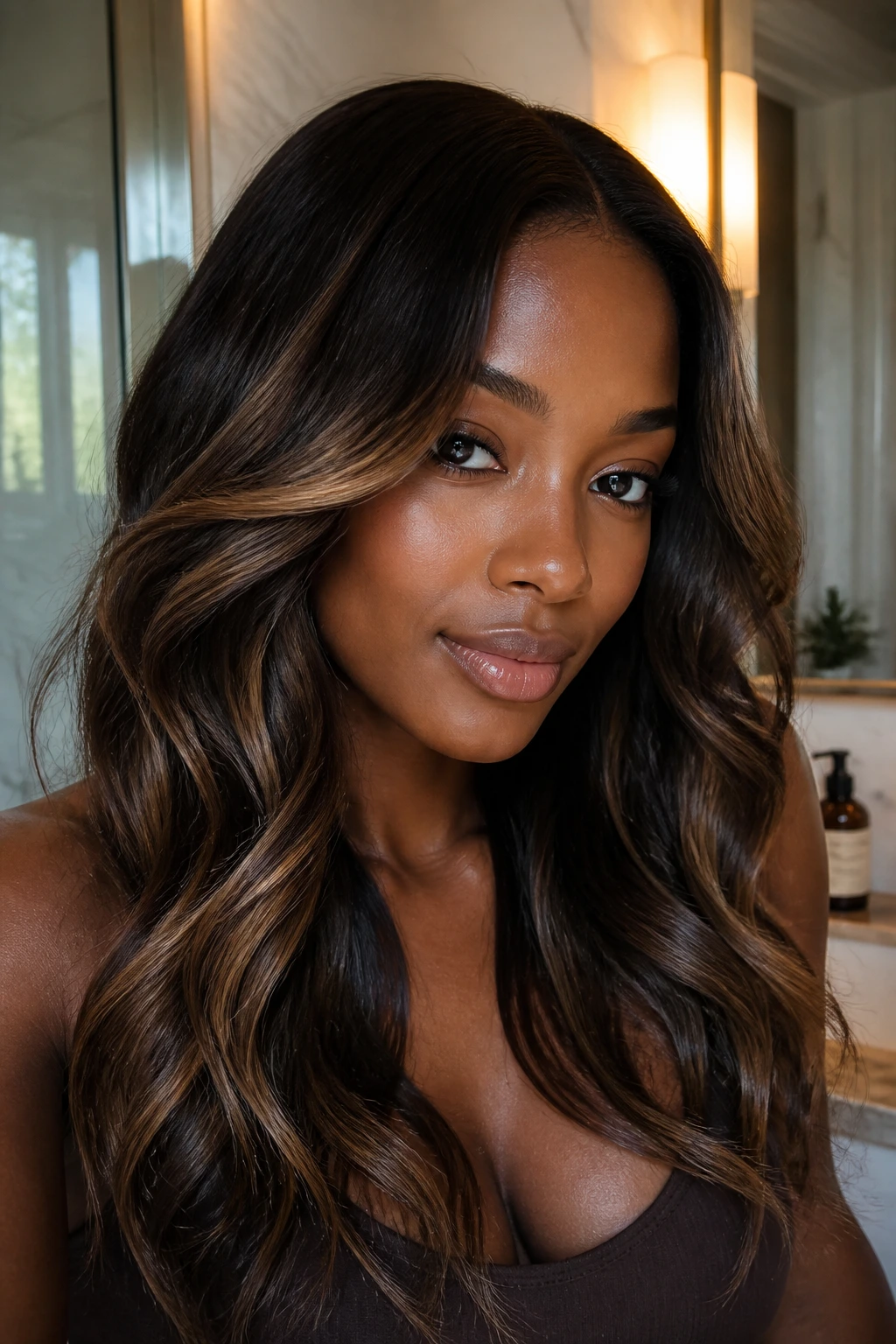
This is the low-key ending of the list, and maybe the most wearable one. A deep mocha refresh doesn’t chase a big color change; it refines what’s already there. Add a soft face frame, a root gloss, a few hand-painted lights at the ends, and the whole brunette comes back to life.
When Less Wins
If your hair is already healthy and you don’t want to spend the season negotiating with toner, this is the move. The color stays close to your natural depth, which makes it flattering on nearly every deep undertone. Warm, neutral, cool — the mocha base handles them all if the finish is glossy.
Sometimes the smartest spring update is not a louder color. It’s cleaner brown, more shine, and a little brightness where the face needs it.
Why Brunette Highlights on Deep Skin Feel Fresh Instead of Flat
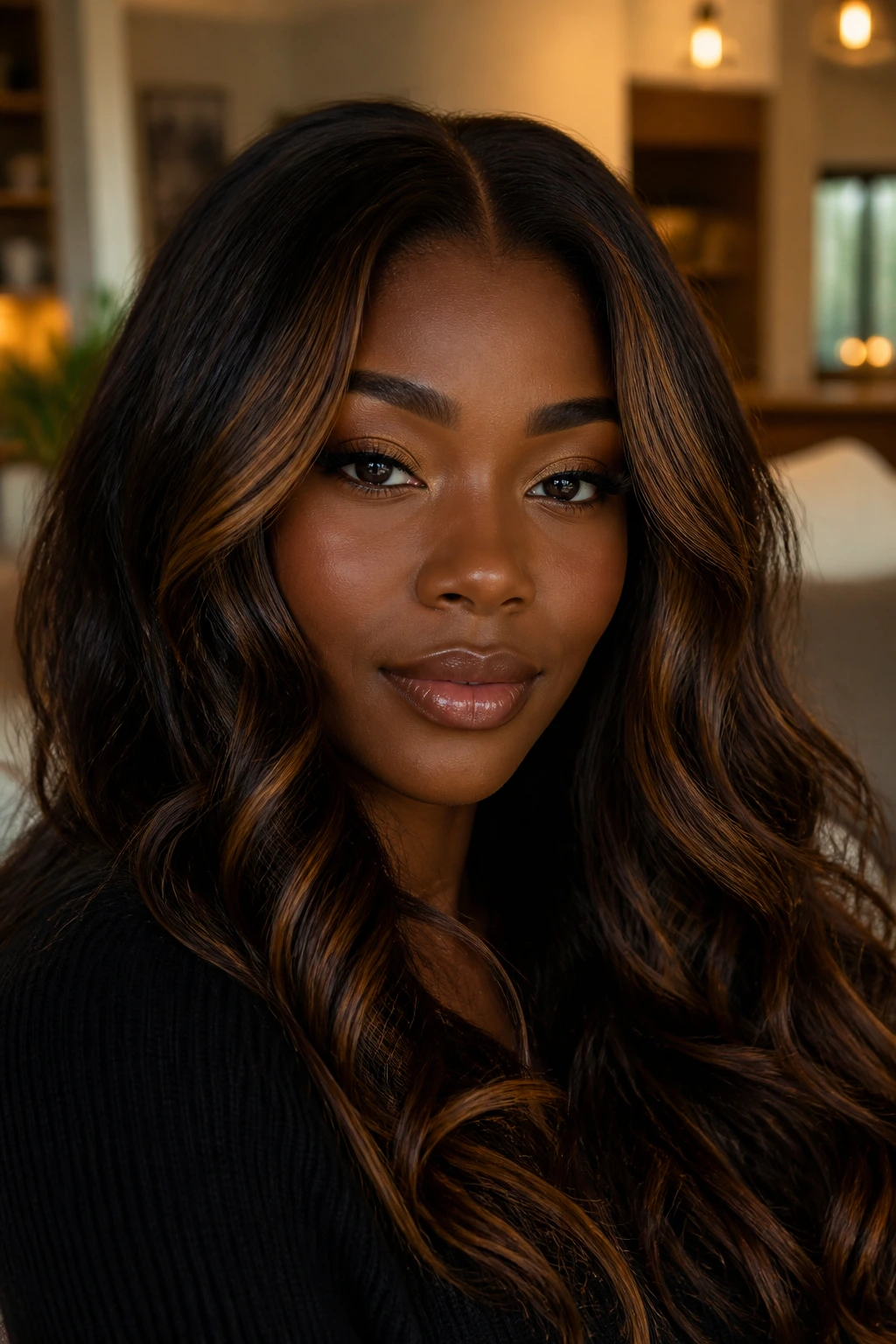
Deep skin and brunette hair make sense together, but the pairing only sings when the tones are chosen with a little care. The biggest mistake is chasing brightness for its own sake. On melanin-rich skin, that can erase the richness that makes brunette color feel expensive in the first place.
Warmth helps, but it has to be the right warmth. Caramel, honey, bronze, maple, copper-brown, and chestnut all work because they stay in conversation with the skin’s natural depth. Pale beige blonde often breaks that conversation. It can be pretty on the right person, sure, but it’s not the lane most deep complexions love.
Placement changes everything too. A money piece, a halo, a contouring front frame, or a soft balayage can create more visual movement than an all-over lighter job. The hair looks dimensional because the darker pieces remain visible. That contrast is what gives the color its shape.
And gloss matters more than people think. A brunette highlight job without a good gloss can look fuzzy or brassy fast. A semi-permanent or demi-permanent glaze keeps the highlights soft, shiny, and blended into the base instead of sitting on top like separate parts.
The Tools That Keep Brunette Highlights Honest
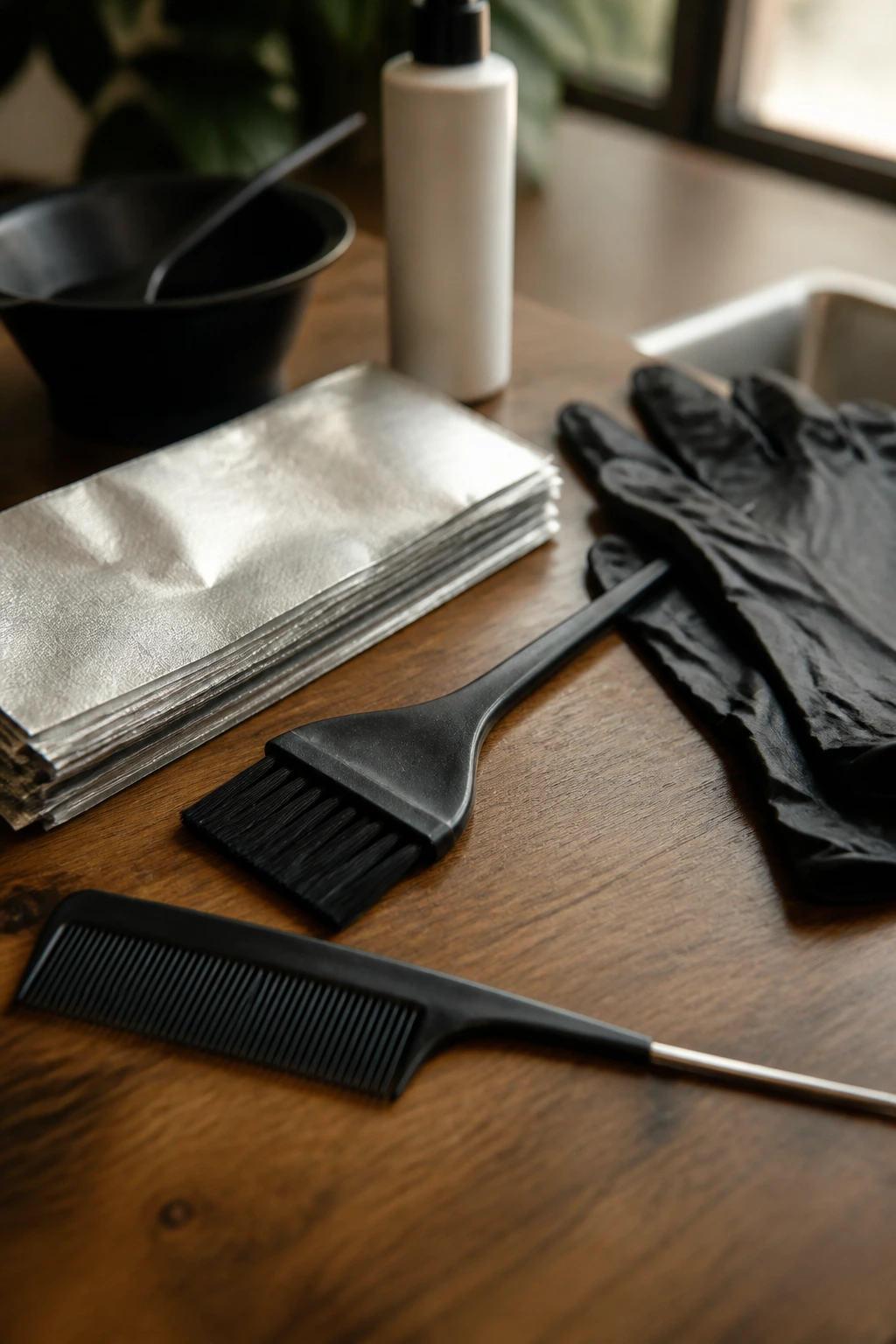
You do not need a wild pile of products to make brunette highlights work. You do need the right tools. Bad foils, a dull comb, or the wrong shampoo can mess with tone faster than people expect.
- Rat-tail comb: Needed for precise partings, weaves, and clean sectioning around the face.
- Color brushes: A small balayage brush gives softer placement than slapping color on with a wide brush.
- Foils or meche sheets: Useful when you want stronger lift or cleaner contrast on selective pieces.
- Mixing bowl and tint brush: Keep your formulas even and prevent patchy application.
- Gloves: Non-negotiable if you’re handling color or toner.
- Croc clips: They make sectioning much less messy, especially on thick or curly hair.
- Bond builder: Helpful when lightening deeper brunette hair, which often needs more care to stay strong.
- Color-safe shampoo and conditioner: These keep the brunette tone from stripping too fast.
- Heat protectant: If you style with a blow-dryer, flat iron, or curling iron, this is not optional.
- Silk or satin bonnet/scarf: Great for preserving shine and keeping the lighter pieces from roughing up overnight.
How to Choose the Right Tone Before You Book
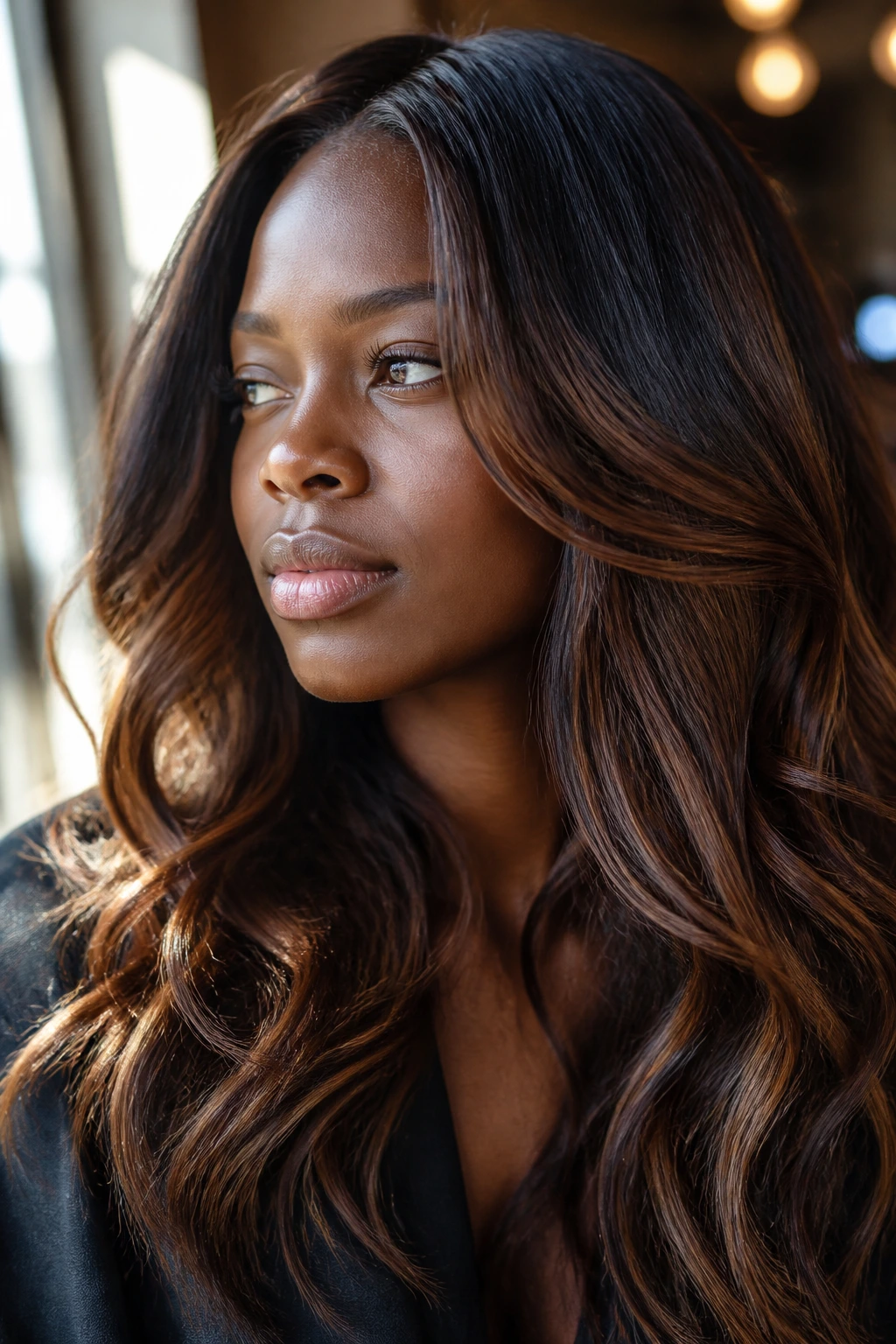
The easiest way to make brunette highlights on deep skin look good is to start by naming your undertone. Warm, neutral, and cool deep skin tones can all wear brunette highlights, but they don’t all want the same brown. Warm skin usually loves caramel, honey, bronze, chestnut, and copper-brown. Neutral skin can handle almost all of those, plus a touch of mahogany or walnut. Cool deep skin often looks especially polished in smoky bronze, hazelnut, or mahogany-based highlights.
Bring photos that show the color in daylight and indoor light. That second part matters. A highlight that looks creamy in a salon mirror can look too pale under office lighting or too orange by a window. Show your colorist what you mean by warm, not just bright.
The other thing to think about is starting level. If your natural hair is very dark, jumping straight to a level 9 or 10 blonde-adjacent highlight is where things get risky. A level 6 or 7 caramel, bronze, or toffee piece usually gives more payoff with less drama. It also tends to grow out better.
If your hair is textured, ask how the color will sit in curls or coils, not just in one straightened photo. A color that looks balanced on blown-out hair can disappear inside a curl pattern, or the opposite can happen — the lift can look too aggressive once the curls spring back. That conversation saves regret.
How to Wear These Shades Without Letting the Color Wear You
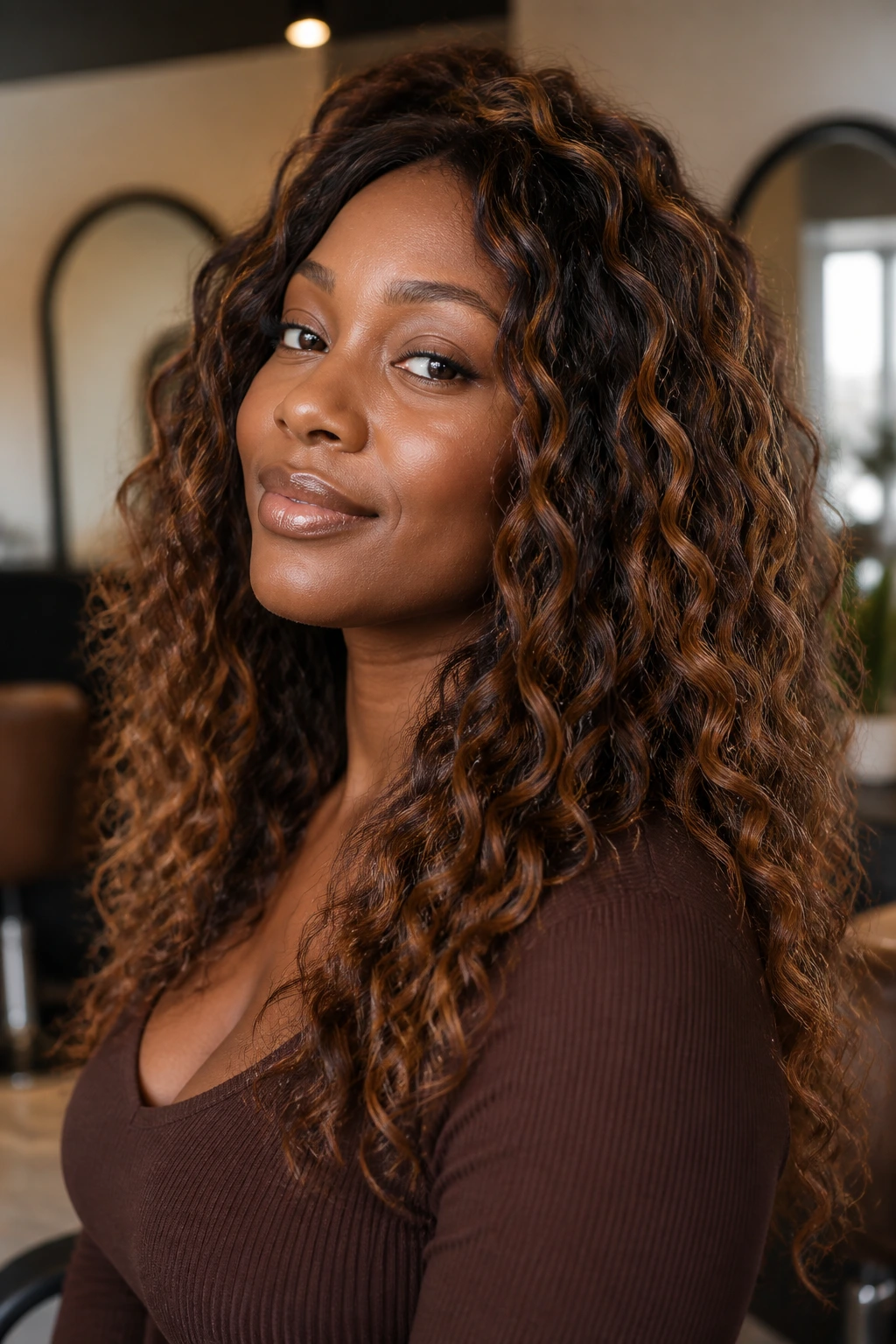
Presentation: Loose curls make caramel, toffee, bronze, and honey move in little flashes. A silk press makes money pieces, contour highlights, and ribboning look sharper. Braids, twists, and buns show off peekaboo panels and halo placement, so think about how you actually style your hair before you choose the highlight map.
Accompaniments: Deep skin with warm brunette highlights tends to look strong with terracotta blush, gold earrings, bronze shadow, chocolate lipstick, and earthy clothing colors. If your highlights lean smoky or mahogany, silver jewelry and plum-toned makeup can be a nice counterweight. The hair should feel like it belongs to the whole face, not like a separate project.
Portions: If you like low drama, ask for 10-15% visible lightness with most of the dimension tucked in the top layer. If you want the color to show up from across the room, move closer to 25-30% highlight coverage and add a stronger money piece or halo. More isn’t always better. It’s often just more maintenance.
Beverage Pairing: If you’re heading to a salon appointment or brunch after, a chilled iced coffee, ginger tea, or sparkling water is a sensible companion because it keeps the mood light and the color inspiration warm. That sounds tiny, but tiny details are half the fun.
Extra Shine Tricks That Make Brunette Highlights Pop
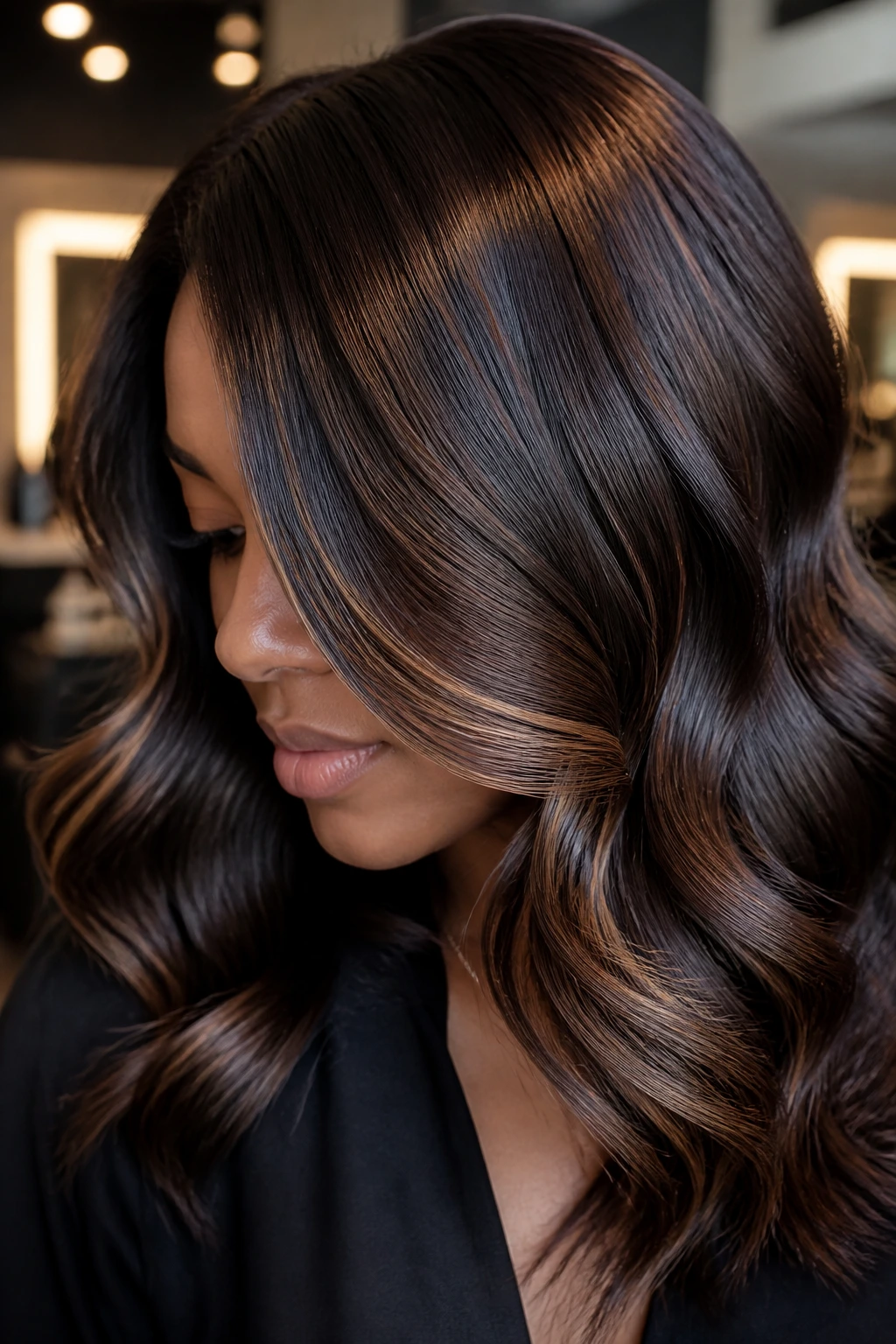
Glossing: A clear or tinted gloss is the fastest way to make brunette highlights look more expensive. Ask for caramel, bronze, mocha, or beige-toned gloss after lifting so the lighter strands soften instead of squeaking out brass.
Customization: If the highlights feel too busy, add a shadow root or a few deeper lowlights. If they feel too quiet, brighten only the hairline and crown. The smartest brunette color jobs usually have one clear idea, not four.
Serving Suggestions: Style the color in a way that shows the placement. A deep side part reveals a money piece. Soft bends show ribboning. Tucked-behind-the-ear hair lets face-framing pieces do their job. Don’t hide the part of the color you paid for.
Make-It-Yours: Warm undertones can lean caramel, honey, apricot brown, or copper. Neutral undertones can split the difference with toffee and bronze. Cool undertones usually look sharper with smoky bronze, hazelnut, or mahogany. Texture changes the finish too — coils and curls often need less brightness than straight styles because the light already breaks up the shape.
Keeping the Tone, Softness, and Shine Between Visits
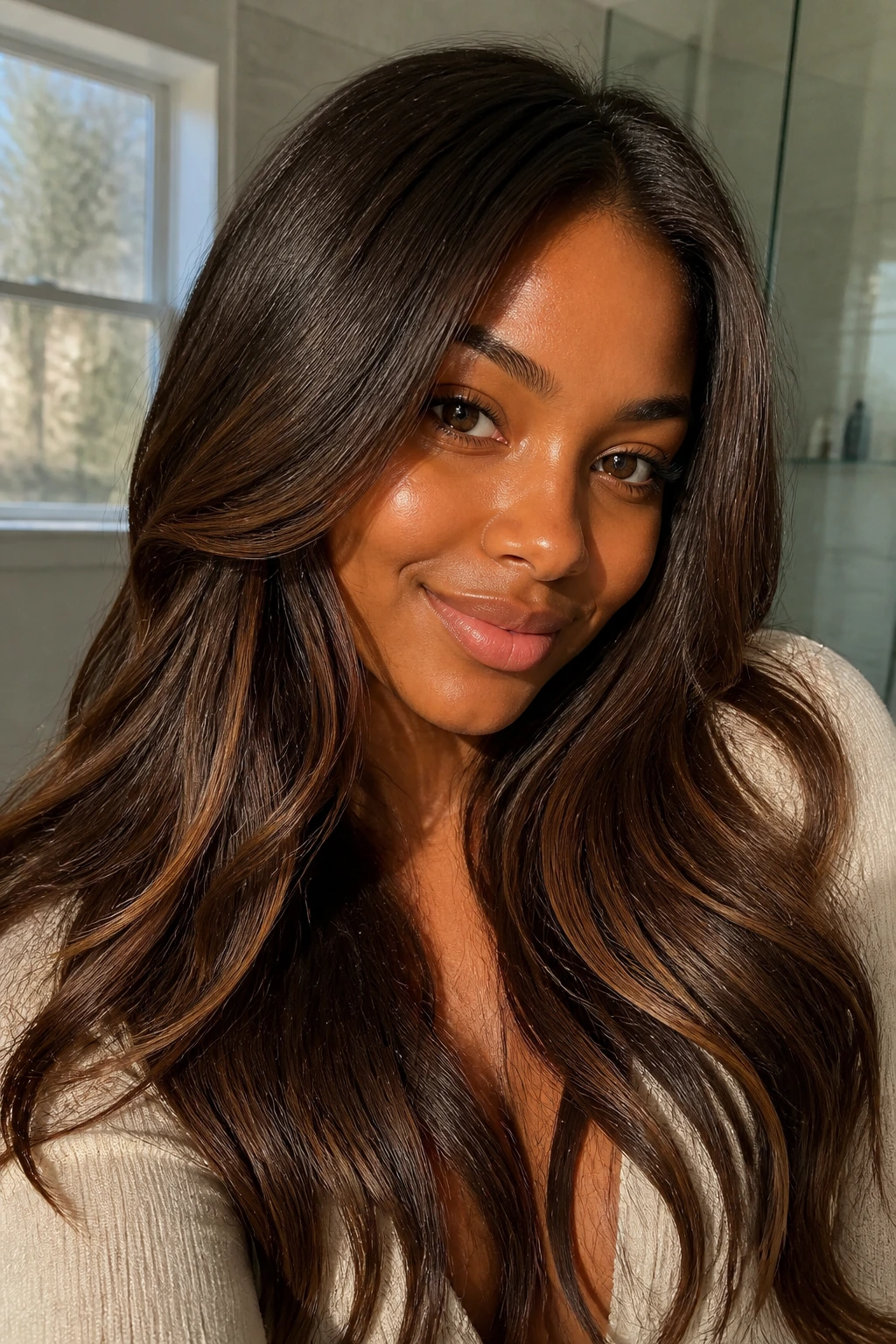
Brunette highlights do not need constant salon traffic, but they do need a rhythm. Wash too often and the gloss goes dull. Skip conditioning and the lighter pieces get rough fast, especially at the ends where the hair is already the oldest and most fragile.
A color-safe shampoo two or three times a week is enough for most people. If your hair is very dry or textured, even less washing can help. Focus shampoo on the scalp and let the rinse clean the mids and ends. That keeps the highlight from fading through unnecessary friction.
Use a deep conditioner or mask weekly if the hair has been lightened more than a shade or two. Once the hair starts feeling squeaky, rough, or tangled at the nape, it’s asking for moisture. Heat protectant should go on every time you blow-dry or curl — every time. Not occasionally. Every time.
For salon timing, balayage and softer ribbon highlights usually grow out well for 10-14 weeks before they need a refresh, while more precise foils or money pieces may want a touch-up sooner, around 6-10 weeks. A gloss refresh in between can stretch the life of the color without full re-lightening. That’s the move if your hair gets brassy faster than you’d like.
Variations Worth Trying If You Want More Warmth, More Contrast, or Less Maintenance
Warm Honey Drip: Push the palette toward honey, caramel, and toffee if you want the hair to feel sunnier. This is the friendliest direction for spring, especially on deep warm undertones. Keep the roots deep so the glow stays grounded.
Bronze Smoke Reset: If your skin leans cool or neutral, ask for smoky bronze and hazelnut instead of gold-forward tones. The color reads softer and more refined, especially on straight styles or sharper cuts. It’s less syrupy, more polished.
Curly Halo Glow: Concentrate the lightness around the outer crown and face on curls or coils. The halo shape works with shrinkage and volume, which means the highlight still shows after the hair dries. It’s a smarter choice than spreading color evenly everywhere.
Peekaboo Brunette Pop: Hide your brightest pieces underneath the top layer so they show only when the hair moves or gets tied up. This keeps the look playful without forcing you into constant upkeep. It’s also a good answer if your workplace leans conservative.
Soft Contrast Brunette: If you want a low-maintenance look, stay within one or two levels of lift and lean heavily on gloss. The result is less obvious from a distance but very pretty up close. It’s the color equivalent of a good linen shirt.
High-Contrast Ribbon Lights: For a bolder feel, use thicker ribbons in caramel, bronze, or chestnut against a deep mocha base. The contrast is intentional and fashion-forward, but it needs a strong toner and a clean section map or it turns stripey fast.
Common Mistakes That Flatten Deep Skin Tones
-
Going too light, too fast: Pale beige or blonde-adjacent highlights can wash out deep skin and make the hair lose its richness. The fix is to stay in caramel, bronze, chestnut, honey-brown, or warm maple territory unless a colorist has mapped a carefully balanced lift.
-
Ignoring undertone: A color that looks gorgeous on one deep complexion can look wrong on another if the undertone doesn’t match. Warm skin usually wants warmth in the hair; cool skin often looks cleaner with smoky bronze or mahogany. Matching the tone to the undertone keeps the face from fighting the hair.
-
Spreading brightness everywhere: Too much lightness all over can erase contrast. Highlights need dark space between them or they stop looking dimensional. Concentrate the light where the hair moves — front, crown, outer layers, or ends.
-
Skipping gloss: Lift without a gloss often looks raw, brassy, or overly yellow after a few washes. A toner or gloss doesn’t just change color; it softens the finish and makes brunette highlights look blended into the base.
-
Forgetting texture: Curls and coils reshape color when the hair dries. A highlight map that looks balanced on wet straight hair can turn patchy once the texture returns. Always ask how the color will live on your natural pattern.
-
Overusing hot tools: Lightened brunette hair is more fragile at the ends. Flat irons at high heat can burn the shine out of the highlighted pieces quickly. Use heat protectant and keep the temperature as low as your style allows.
Questions People Ask Before They Lighten Brunette Hair
What highlight color looks best on deep skin tones?
Caramel, honey-brown, bronze, chestnut, toffee, and copper-brown usually work best because they keep warmth and depth together. The exact winner depends on undertone, but the safest rule is to stay brunette-first rather than chasing pale blonde pieces.
Do brunette highlights need bleach?
Usually, yes, if you want visible brightness on very dark hair. The lift can be gentle or strong depending on the starting level and the final tone, but a lightening step is common. A colorist can sometimes create dimension with lowlights, gloss, or a subtle tint instead of a full bleach process.
How often do brunette highlights need touch-ups?
Soft balayage can look good for 10-14 weeks, while foil highlights, face-framing pieces, or brighter money pieces may need a refresh closer to 6-10 weeks. Glosses and toners can be squeezed in between if the color starts pulling too warm.
Will highlights damage curly or coily hair?
They can if the lift is too aggressive or the aftercare is lazy. Texture already needs more moisture, so bond repair, deep conditioning, and gentle heat matter a lot. A softer lift placed strategically usually causes less trouble than a high-contrast all-over job.
What if my highlights turn orange?
That usually means the lift stopped in a warm zone and needs a toner or gloss to pull it back. Orange isn’t always a disaster; sometimes it just needs to be refined into copper, caramel, or bronze instead of fighting it. Bring a clear photo and talk through the finish with your colorist.
Can I get this look without highlighting all of my hair?
Absolutely. Face-framing pieces, money pieces, halo placement, peekaboo panels, and a few caramel ribbons can change the whole look without a full-head lift. That’s often the cleanest way to start.
Are cool brunette highlights a bad idea on deep skin?
Not at all. Smoky bronze, mahogany, and hazelnut can look very sharp on deep skin, especially if your undertone is neutral or cool. The mistake is going too ashy or too beige; a cool brown still needs some depth and shine.
Do highlights work on protective styles or extensions?
Yes, but the approach changes. Peekaboo placement, highlighted extensions, or color on the exposed ends can work better than treating the whole head like loose natural hair. Ask for a plan that respects the style’s structure.
A Softer Brunette That Still Has Edge
The best spring brunette highlights for deep skin tones do not try to outrun the complexion. They work with it. That’s why caramel ribbons, bronze money pieces, honey mocha balayage, chestnut frames, and smoky glosses keep coming back — they respect depth while still giving the hair movement and light.
If you want the safest starting point, choose one of the mid-tone options: caramel ribboning, toffee balayage, bronze face-framing, or a mocha-to-caramel melt. If you want more attitude, lean into copper, auburn, or high-contrast sable and caramel. The color should feel like a better version of your brunette, not a costume.
And when in doubt, keep a little darkness in the hair. That’s where deep skin gets its best shine.