



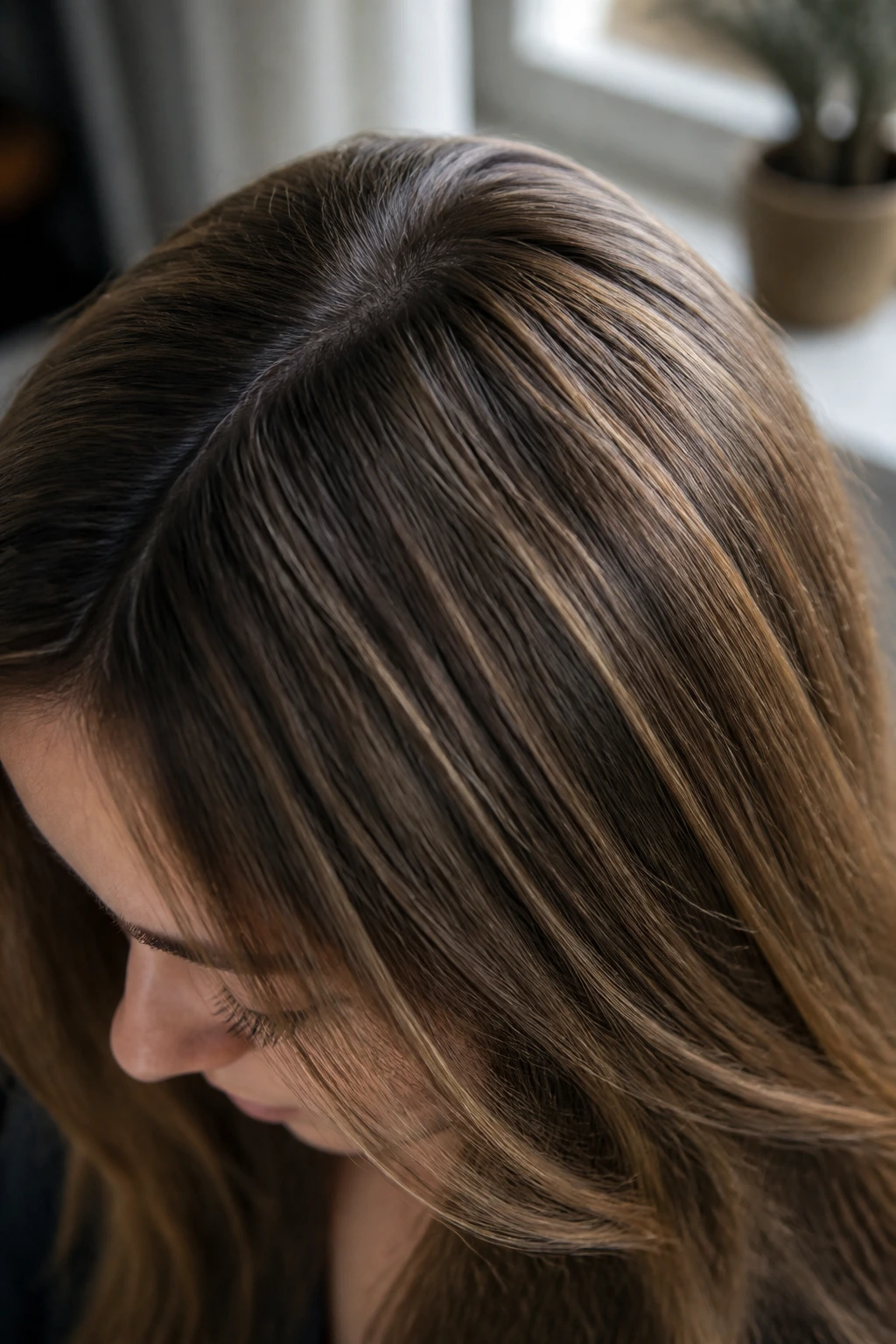
Caramel partial highlights for pale skin can go one of two ways: soft and expensive-looking, or loud enough to make the complexion look tired. The difference usually isn’t the shade name on the salon menu. It’s the placement, the undertone, and whether the caramel leans beige, honey, toffee, or straight into brass.
The best versions do a quiet little trick. They warm up very light skin without flooding the whole head with gold, and they leave enough of the natural base showing that the color still has shape. That matters a lot more than people think. A pale face next to flat, all-over warmth can look washed out fast; a few well-placed ribbons around the hairline and crown can make the same skin look fresh and awake.
I like caramel best when it has some restraint. Not ash. Not orange. Not that overcooked copper-brown that turns every wave into a traffic cone. The sweet spot sits somewhere between toasted sugar and milk chocolate, with the brightest pieces living where the light actually hits. These 25 ideas move through that sweet spot from barely-there face framing to richer brunette dimension, and the placement changes as much as the tone does.
Why These Caramel Looks Work on Pale Skin
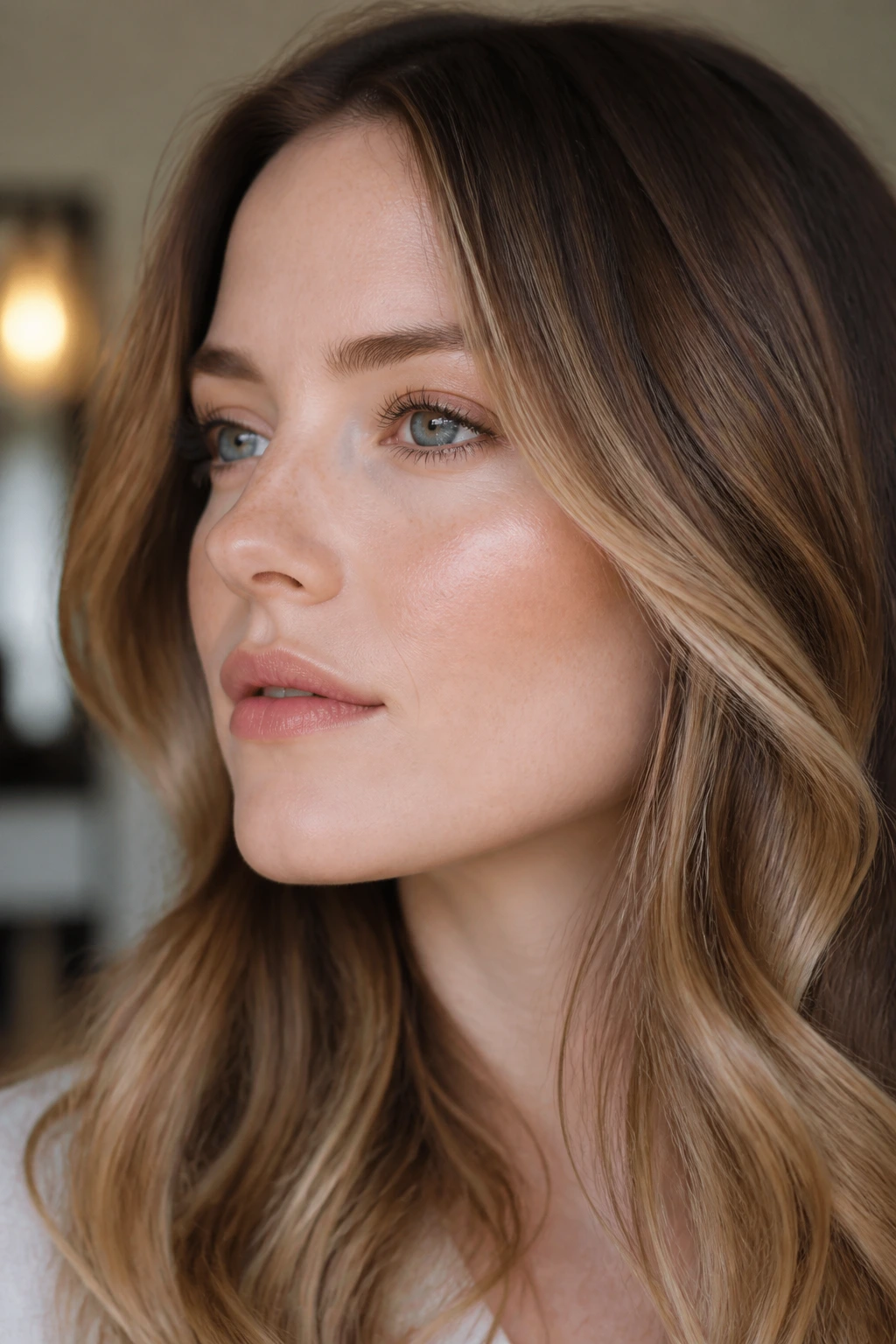
-
They brighten without bleaching out the face: The lighter pieces sit in specific spots, so the skin gets a lift without the whole head turning blonde and thin-looking.
-
They keep the base in play: Leaving part of the natural color untouched gives pale skin something to sit against, which keeps the result from looking flat or overly warm.
-
They let you control the warmth: Beige caramel, honey caramel, and chestnut caramel all read differently on light skin, and that small shift matters a lot.
-
They grow out better than full highlights: Because the color is partial, the root line softens instead of shouting at you three weeks later.
-
They work on more than one hair texture: Fine hair, thick hair, curls, and straight cuts all take caramel differently, which means placement can do the heavy lifting.
1. Soft Caramel Money Pieces at the Cheekbones
A pair of soft caramel money pieces can do more for pale skin than a full head of highlights ever will. The color sits right where your face needs a little warmth—around the cheekbones and temples—so it reads as brightness instead of brass. I like this look when the caramel leans beige-gold, not orange-gold.
Why it flatters pale skin
The trick is restraint. Ask for two narrow, face-framing pieces lifted just enough to sit one to two levels lighter than your base, then toned into a creamy caramel. When the pieces start near the cheekbone instead of the root, they catch light without making your whole hairline look striped.
A good version also softens features. Pale skin often benefits from a little contrast near the face, but chunky streaks can look harsh fast. This placement keeps the contrast close and controlled.
2. Thin Babylights Through the Crown
Thin babylights are the answer when you want caramel, but you do not want obvious highlights. The result is soft and broken up, almost like sunlight got stuck in the top layer of the hair. On pale skin, that kind of diffused warmth looks cleaner than big swaths of gold.
The real advantage here is texture. Babylights through the crown break up a solid brunette base without turning the whole head light, so your complexion still has depth next to it. I’d call this the safest caramel choice if you’re nervous about warmth.
The best way to ask for it is simple: fine foils, soft lift, beige-caramel toner, and no chunky contrast at the part. That last part matters. A wide, bright stripe at the part tends to shout. Tiny slices whisper.
3. Beige-Caramel Balayage on a Dark Blonde Base
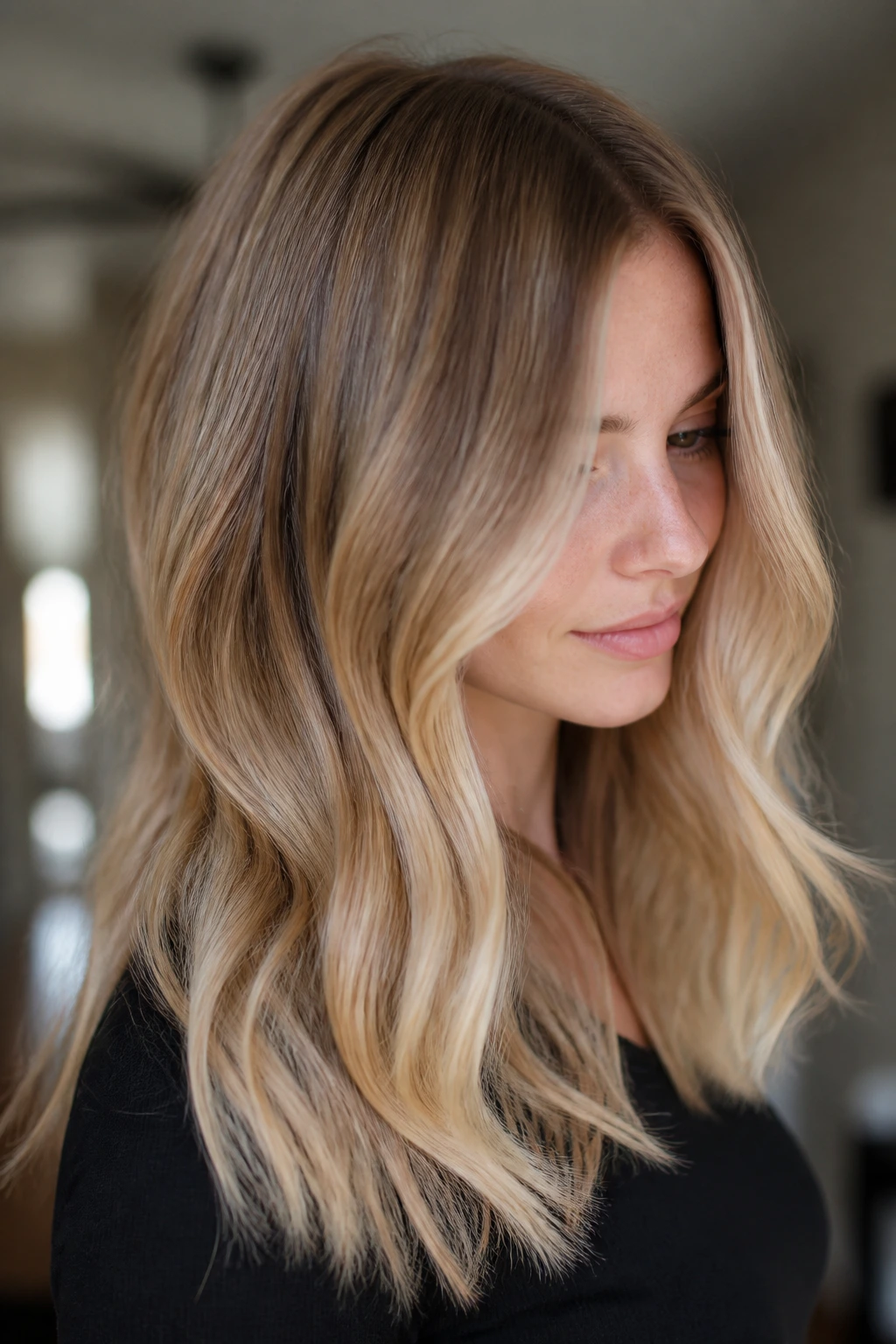
Why does beige-caramel balayage look so good on a dark blonde base? Because the color shift is small enough to stay believable. You get warmth, but not the fake-sunburst effect that can make pale skin look pinker than it is.
What to ask for
Ask for a hand-painted caramel that stays closer to beige and toasted almond than golden butter. The goal is a soft sweep from mid-length to end, with the brightest pieces kept one inch away from the root. That distance leaves the scalp area calm, which helps a fair face look less stark.
This is a good choice if your natural hair already sits in the dark blonde range. You don’t need a dramatic lift. You need contrast with manners.
4. Toasted Caramel on a Chin-Length Bob
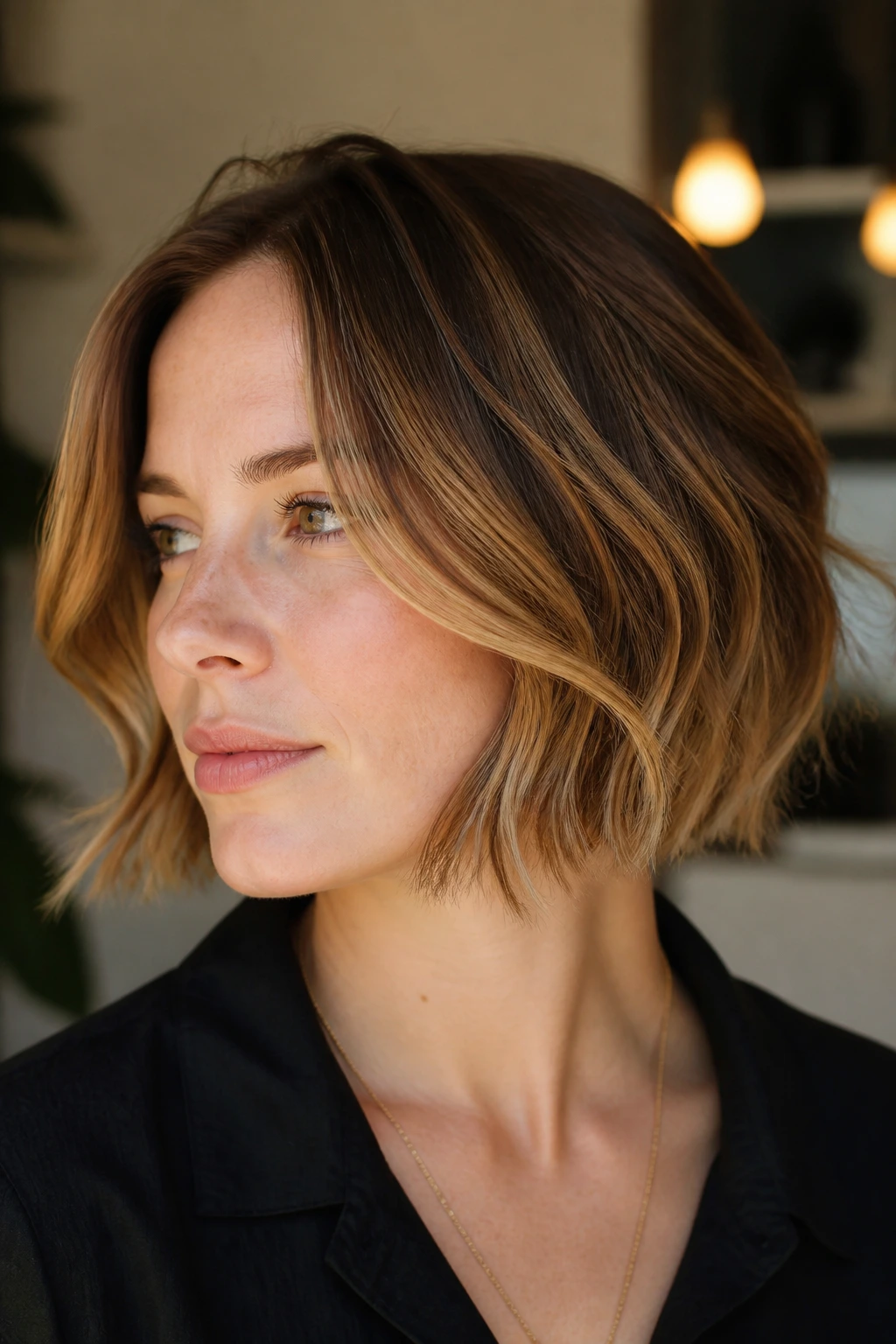
A chin-length bob with toasted caramel pieces has a sharp, clean look that works surprisingly well on pale skin. The cut already puts the ends right near the face, so a few warm ribbons at the front can make the whole style look fuller and more deliberate.
I like this on straight or slightly waved bobs because the ends show the color best. If the caramel is concentrated underneath the top layer and a little heavier around the front bend, the cut gets a sense of movement without needing a ton of lightness.
The main caution: don’t go too yellow. On a bob, every inch matters. A toffee-beige tone will look polished; a loud honey stripe can make the cut feel dated fast.
5. Golden-Caramel Peekaboo Panels
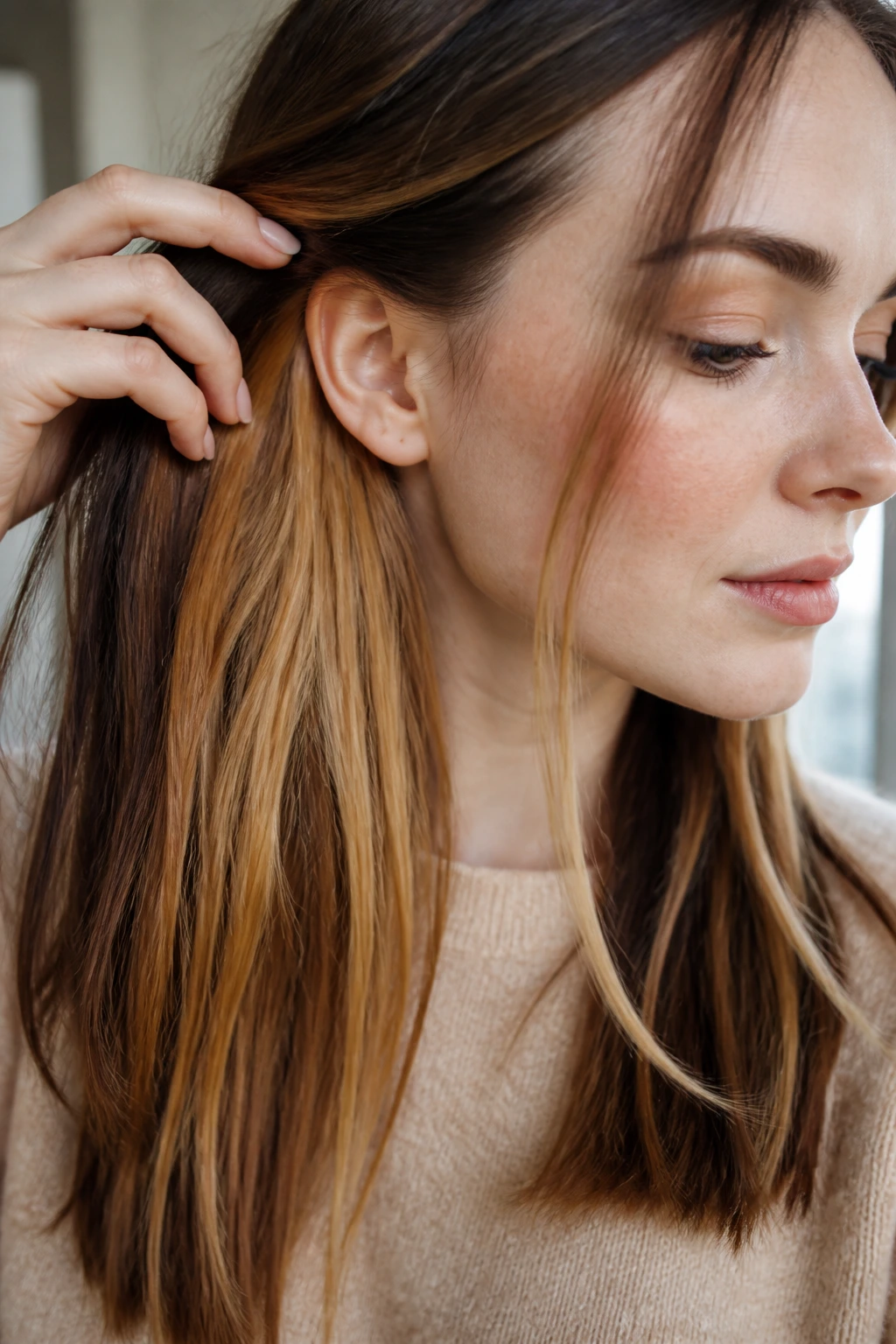
Peekaboo panels are for the person who wants warmth but doesn’t want to see it all day long. The caramel lives underneath the top layer, so it flashes when the hair swings or gets tucked behind the ear. On pale skin, that hidden warmth keeps the complexion from getting overwhelmed.
This works especially well if your base color is cool or medium brown. The top layer stays steady, and the golden-caramel underlayer gives you movement without making the whole head look lighter. It’s a nice move if you wear your hair half-up often, because the color suddenly shows up in the exact spots that frame the face.
6. Rooted Caramel on Long Layers
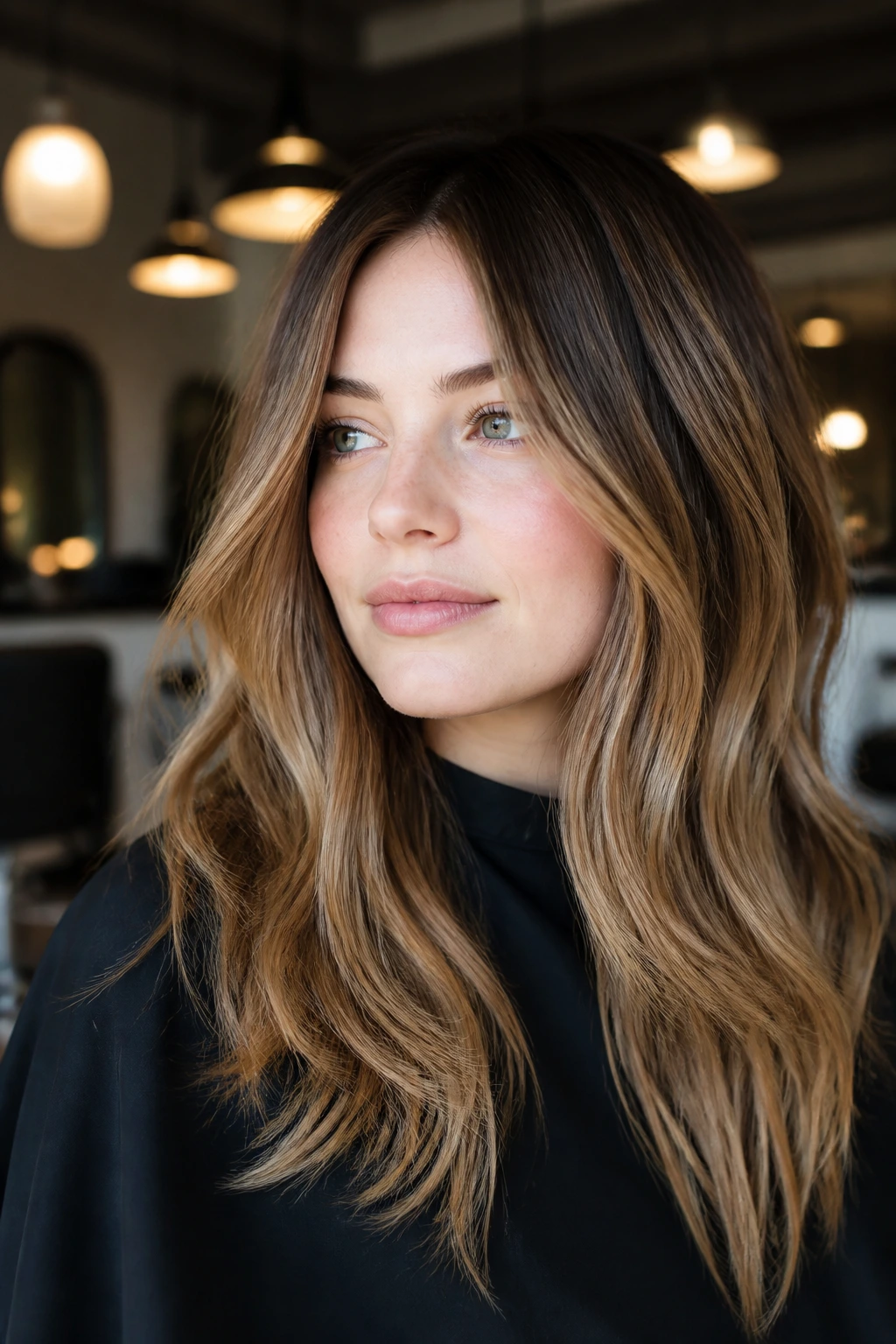
Long layers and rooted caramel get along because the cut has space for the color to breathe. The darker root keeps the top looking rich, while the caramel starts lower and spreads through the movement of the layers. On pale skin, that deep root keeps the face from looking over-bright.
This is one of my favorite ways to wear caramel if you dislike constant salon maintenance. The root shadow makes regrowth look intentional, not neglected, and it keeps the warmth from floating too high on the head. Ask for a soft blend from root to mid-length, then a slightly brighter finish around the front.
The best part? It looks especially good when the hair is tossed into loose bends. The layers do the work. The color follows.
7. Chestnut-Caramel Around the Part
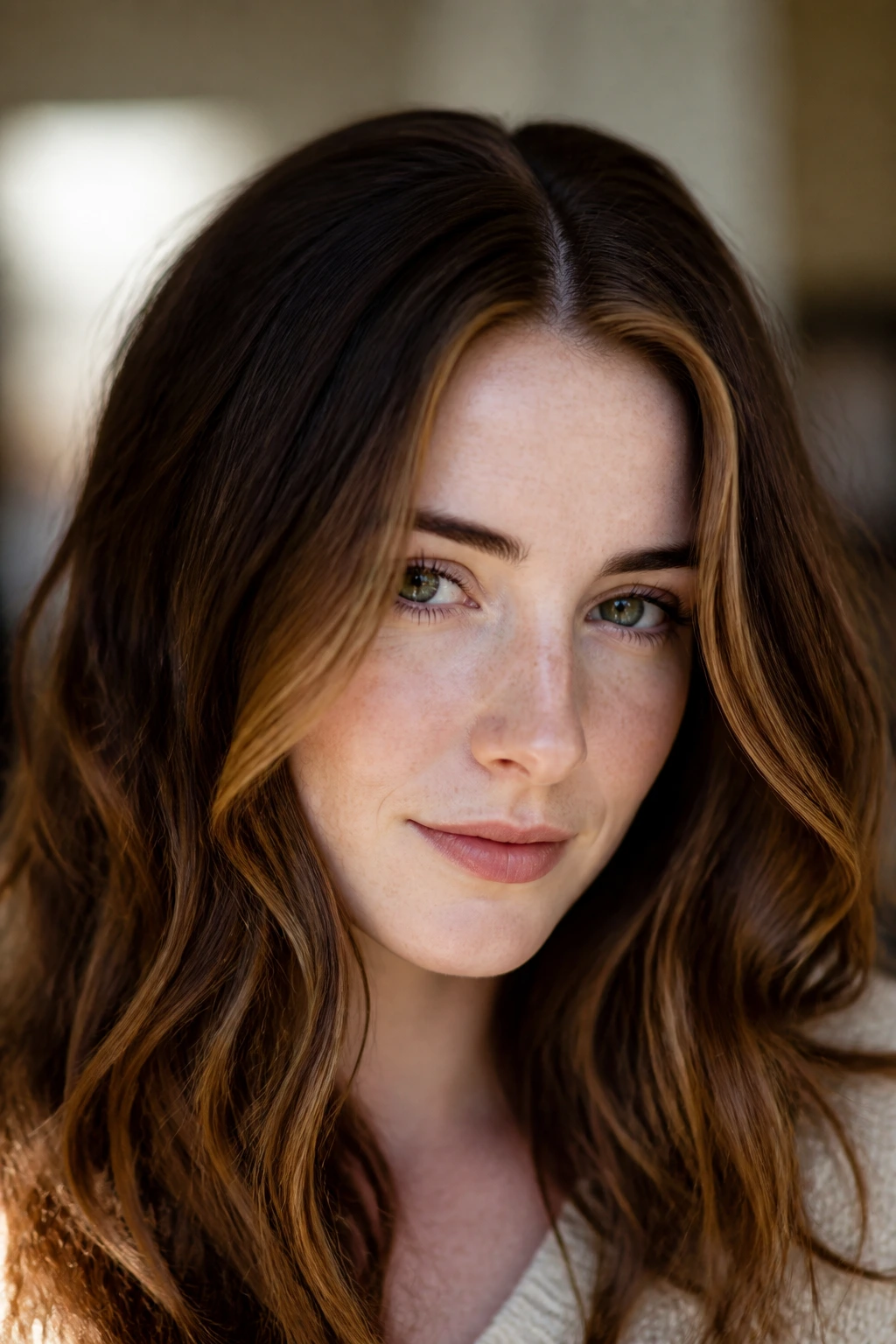
If you part your hair in the same place every day, this is the caramel move worth paying attention to. Chestnut-caramel around the part gives pale skin a richer frame without pushing the whole head into golden territory. The tone is deeper, almost like warm brown with a sugar glaze on top.
I prefer this on middle parts and deep side parts, because the visible scalp line makes the color placement look intentional. Thin pieces on either side of the part are enough. Too many, and you lose the quiet, almost tailored effect.
This one feels especially good if you wear minimal makeup. The hair itself does the brightening.
8. Melted Caramel Curtain Highlights
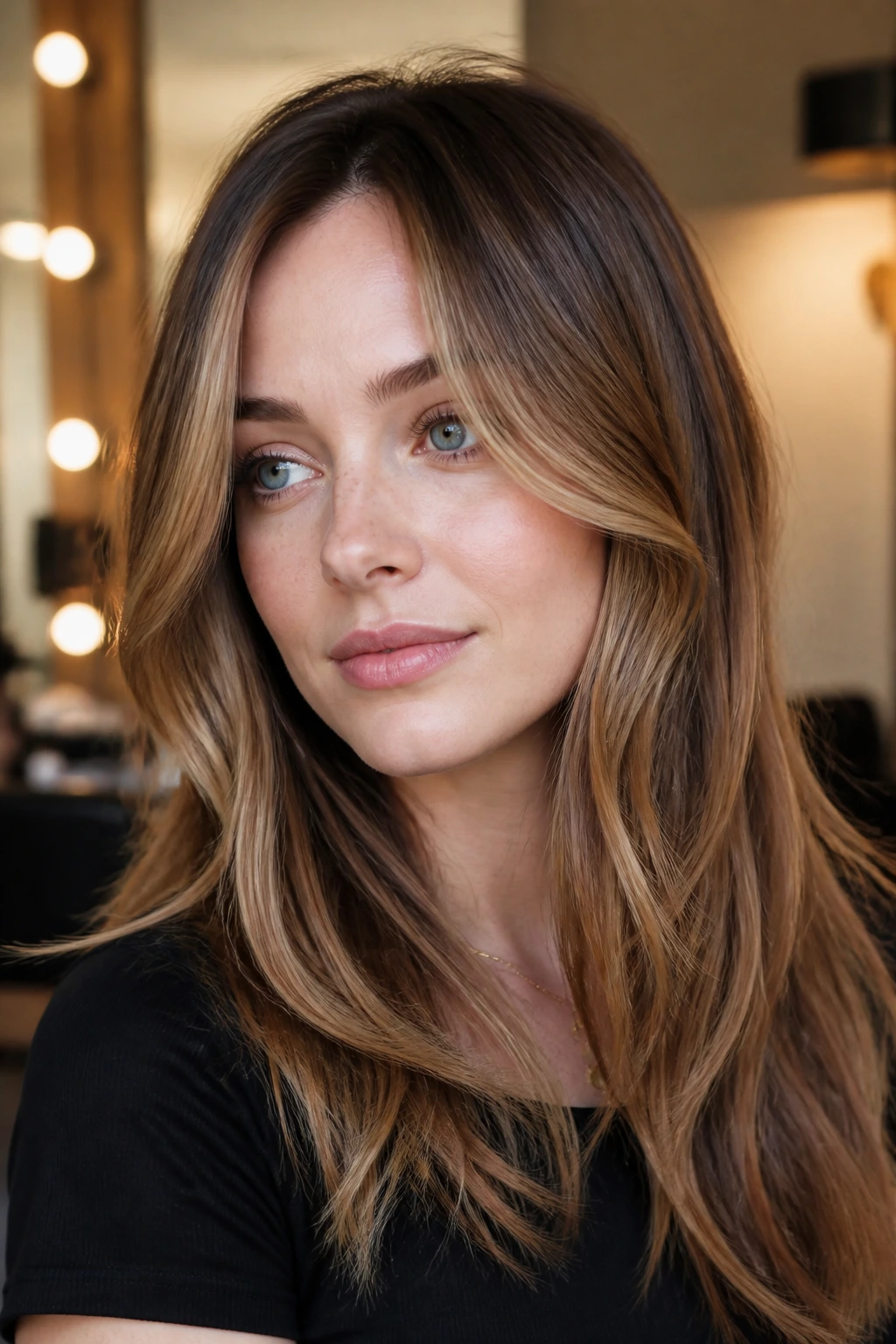
Curtain highlights are one of those things that sound trendy and then turn out to be practical, which is rare enough to be worth mentioning. When the caramel sweeps from the cheekbone down through the front layers, pale skin gets a soft glow right where it matters most.
The reason this works is simple: curtain pieces move. They open and close with the face, so the brightness never sits in one fixed place. That movement helps the skin look less flat, especially if your complexion runs cool or slightly pink.
Ask for the front pieces to be lighter than the rest by a small step, not a giant jump. You want a melt, not a stripe.
9. Cinnamon-Caramel Ribbons for Warm Undertones
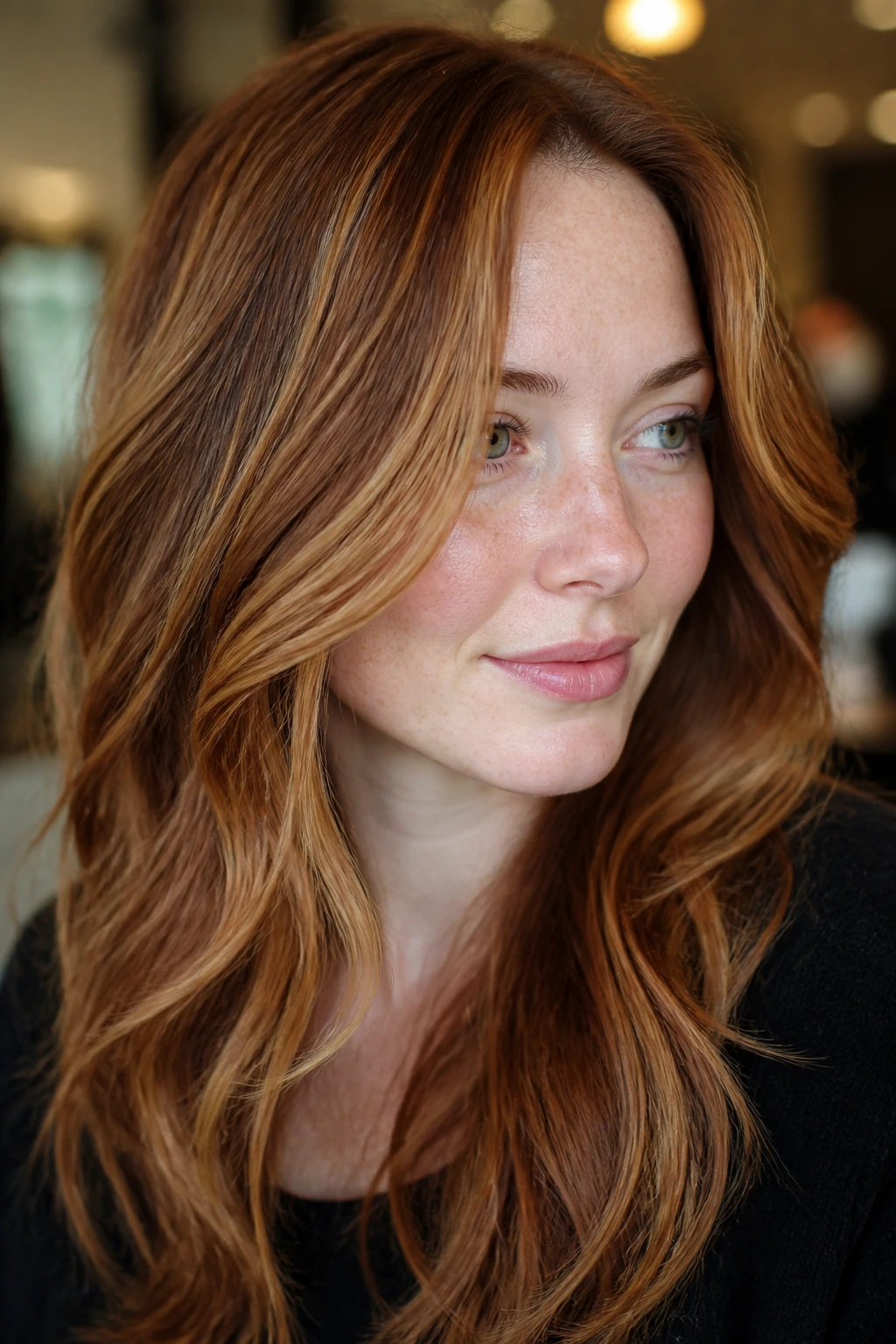
Cinnamon-caramel can be beautiful on pale skin with peach, gold, or freckled undertones. The trick is not to let it drift too red. Keep it in the baked-sugar range, with just enough warmth to feel cozy rather than coppery.
Best if you want a little extra warmth
This look adds personality fast. A few cinnamon ribbons through the front and along the top layer can wake up a light complexion that tends to disappear next to cool brunette shades. It’s a stronger choice, though, so I’d keep the ribbons fine and the toner soft.
If your skin already has a rosy cast, ask your colorist to cool the formula slightly with beige or neutral toner. That small adjustment keeps the caramel from fighting your face.
10. Honey-Caramel Streaks at the Ends
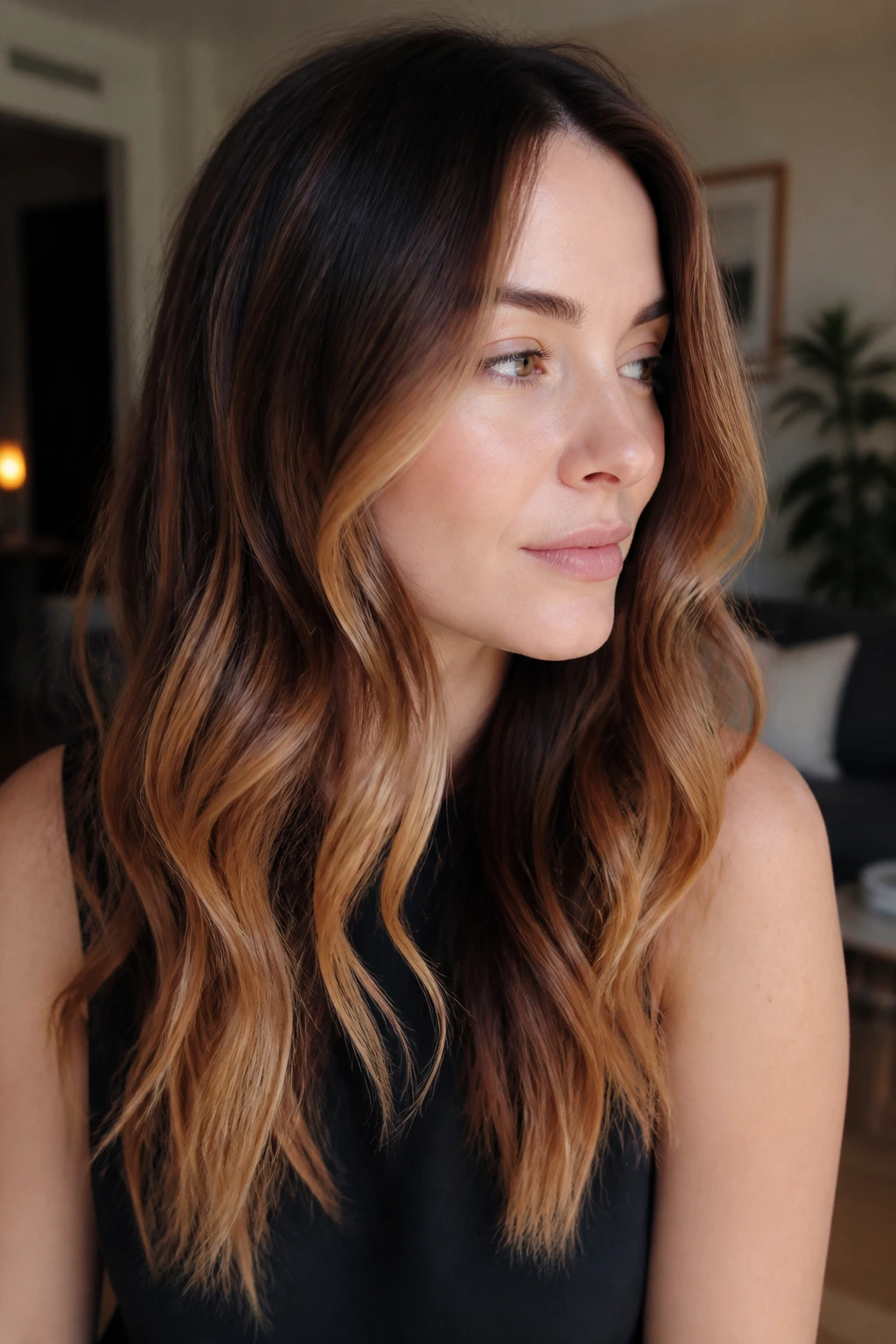
There’s something nice about letting the ends carry the warmth. Honey-caramel streaks at the bottom of the hair keep the top calm and give the length a sunlit finish. On pale skin, that lower placement can feel less aggressive than face-framing brightness.
This one works best on medium to long cuts. Waves show it beautifully, especially when the ends are bent instead of curled into perfect spirals. The honey tone should stay creamy, not yellow. Yellow is where the whole thing starts to look obvious.
If you hate root maintenance, this is a good route. The color lives where hair naturally lightens first anyway.
11. Caramel Highlights with a Soft Shadow Root
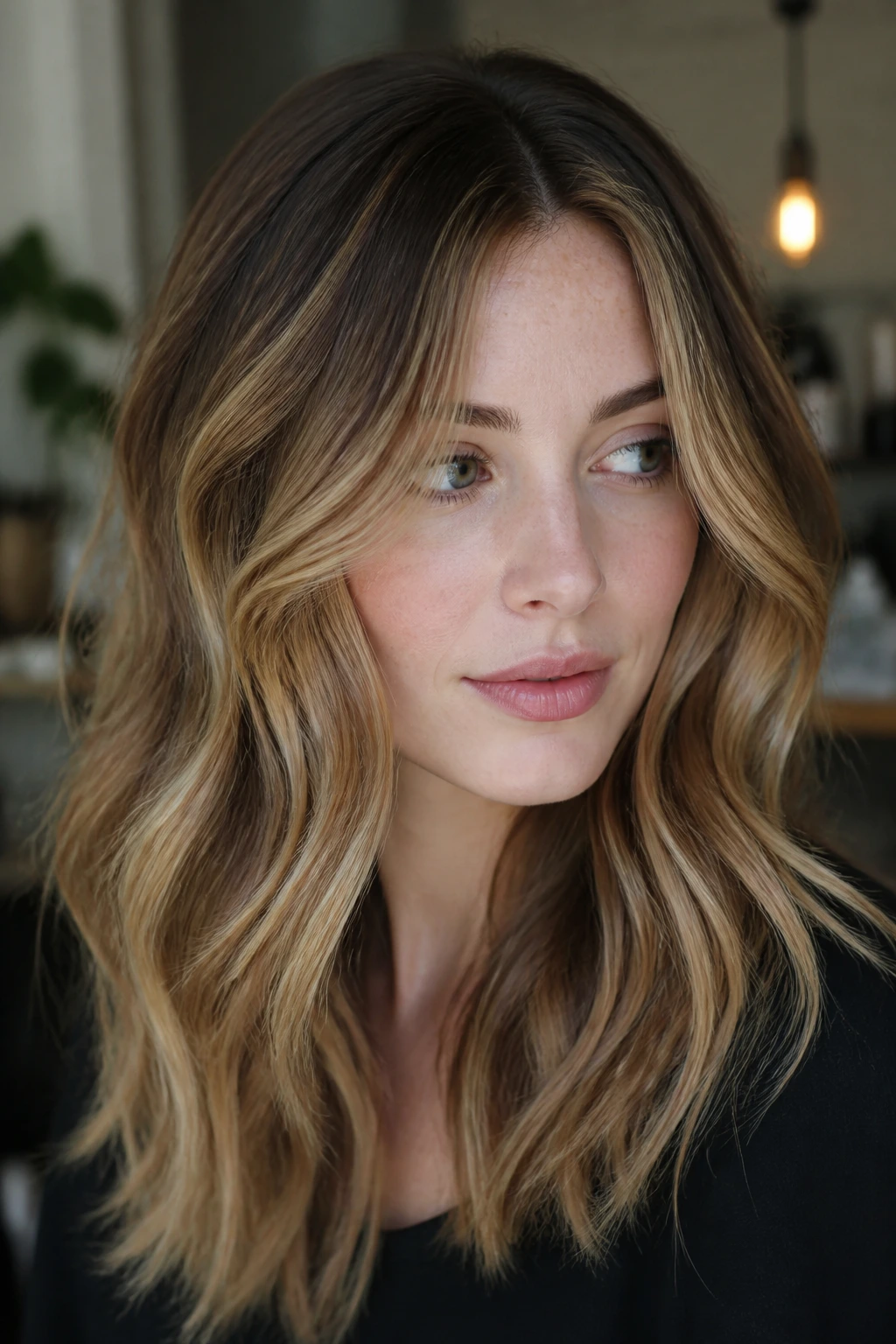
A soft shadow root is the easiest way to keep caramel from looking too clean. That slight depth at the scalp gives the lighter pieces somewhere to land, which matters on pale skin because too much brightness near the root can make the face seem washed out.
This style has a little more polish than plain highlights. The root color helps the caramel melt down instead of sitting on top like a separate layer. I like it when the root is only one step darker than the natural base—not an obvious grow-out band, just a soft blur.
If your hair is fine, this technique can also make it look thicker. The darker root creates a visual lift. Handy trick.
12. Face-Framing Caramel on a Pixie-Bob
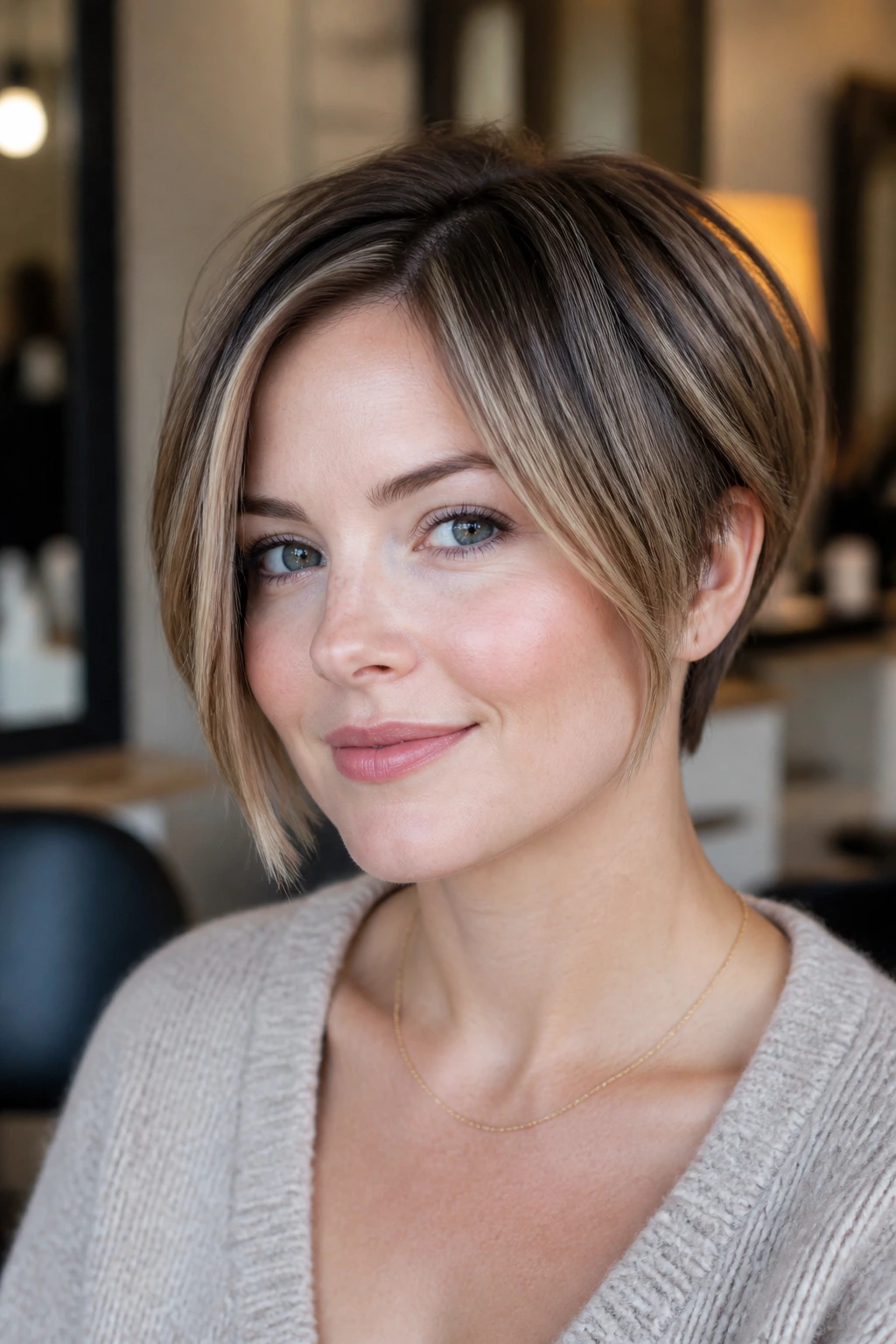
A pixie-bob doesn’t have the length for long balayage ribbons, so placement has to be sharper. Face-framing caramel pieces around the front edges and temple area can make the cut feel less severe and more lived-in on pale skin.
The color should sit in small, deliberate panels. When the haircut is short, every highlight shows. That means the caramel needs to be soft enough to blend, but light enough to catch the eye. A beige-toffee tone tends to work better than a strong gold on this cut.
I’d pick this if you like structure and movement in the same haircut. It’s tidy, but it still has a little swing.
13. Smoky Caramel on Cool Complexions
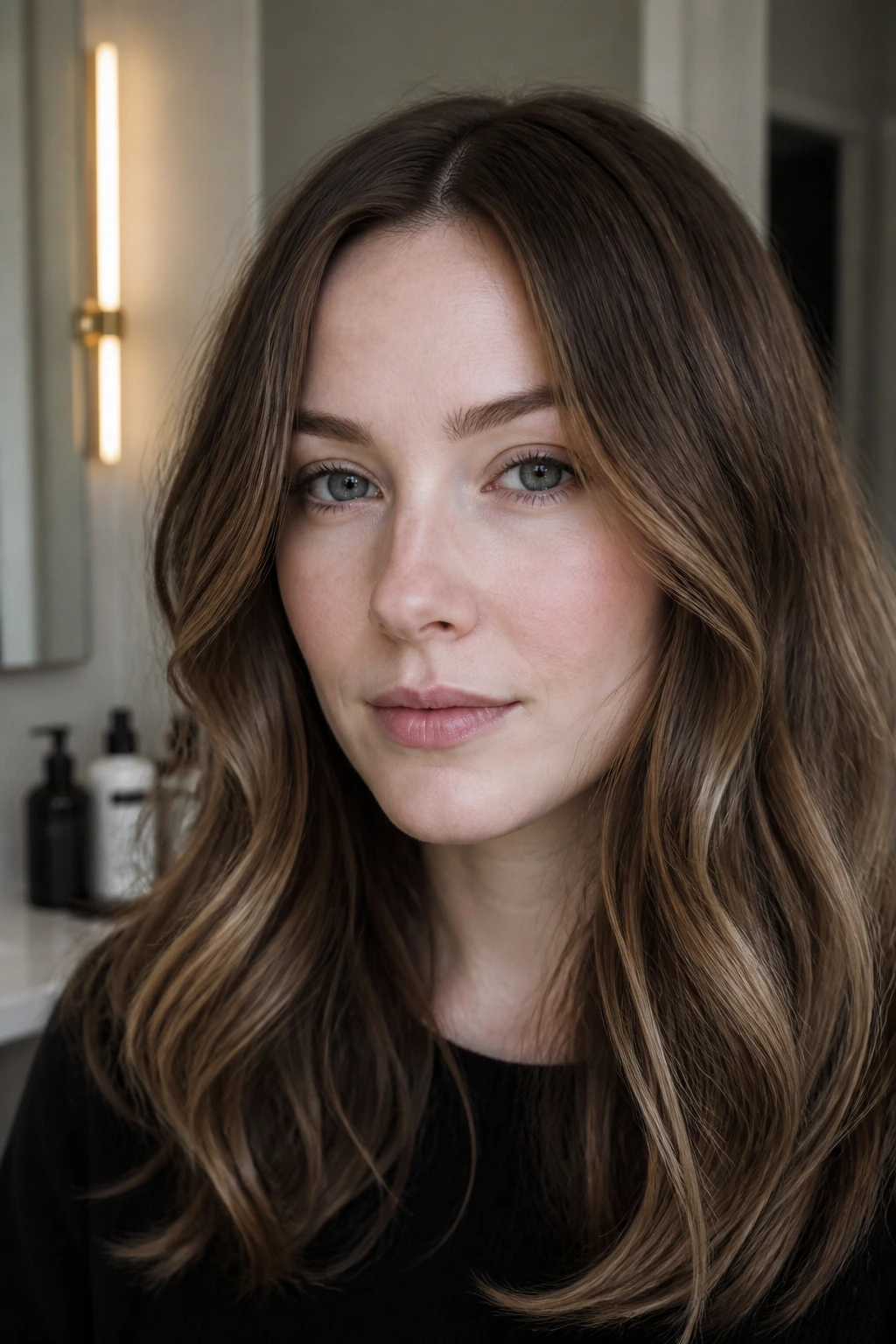
Smoky caramel is the answer when you want warmth without losing the cooler edge that pale skin sometimes needs. The tone sits lower and browner, with just a trace of gold instead of a full golden shine. It’s a smart choice for skin that reddens easily.
The look works because the color doesn’t fight the complexion. Instead of making the face look ruddy, it gives it contrast and a little depth. Ask for a neutral-beige glaze or a muted toffee toner, not anything with an obvious copper cast.
This is one of the few caramel looks I’d call genuinely low-risk for very fair skin. Quiet. Soft. Clean.
14. Almond-Caramel on Curly Hair
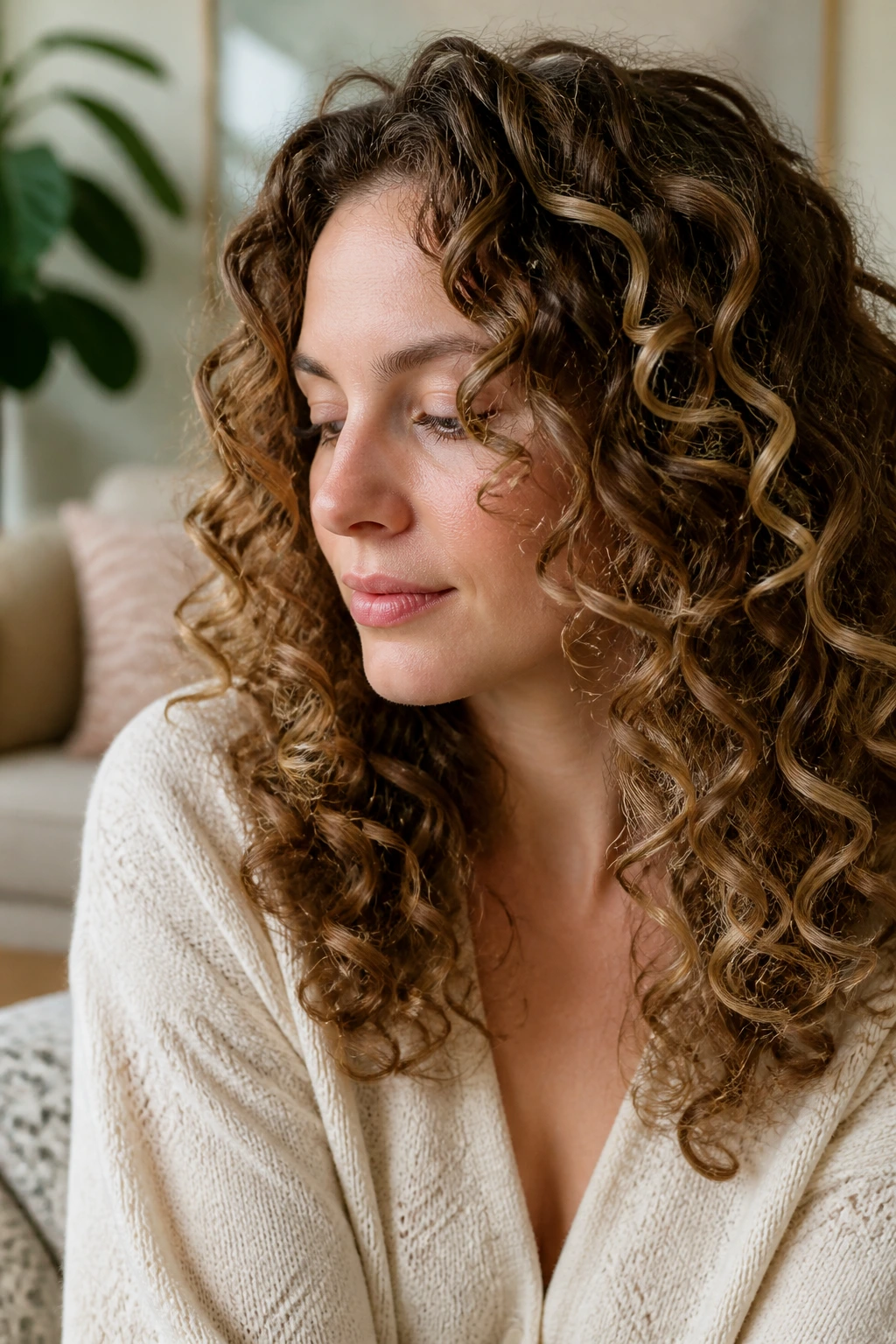
Curly hair handles caramel differently from straight hair, and that matters here. Almond-caramel painted onto curl groups gives shape without turning the pattern fuzzy. On pale skin, the rounded warmth plays nicely with the curves of the hair and keeps the look from going flat.
What I like about this version is the way the highlights sit inside the curl, not just on the surface. That depth makes the color look richer. Ask for broader painted ribbons rather than tiny streaks, because curls hide fine detail fast.
The best almond-caramel shades stay more nutty than golden. If the lightest pieces look like soft milk chocolate with a caramel sheen, you’re in the right zone.
15. Sliced Caramel Highlights on Shoulder-Length Waves
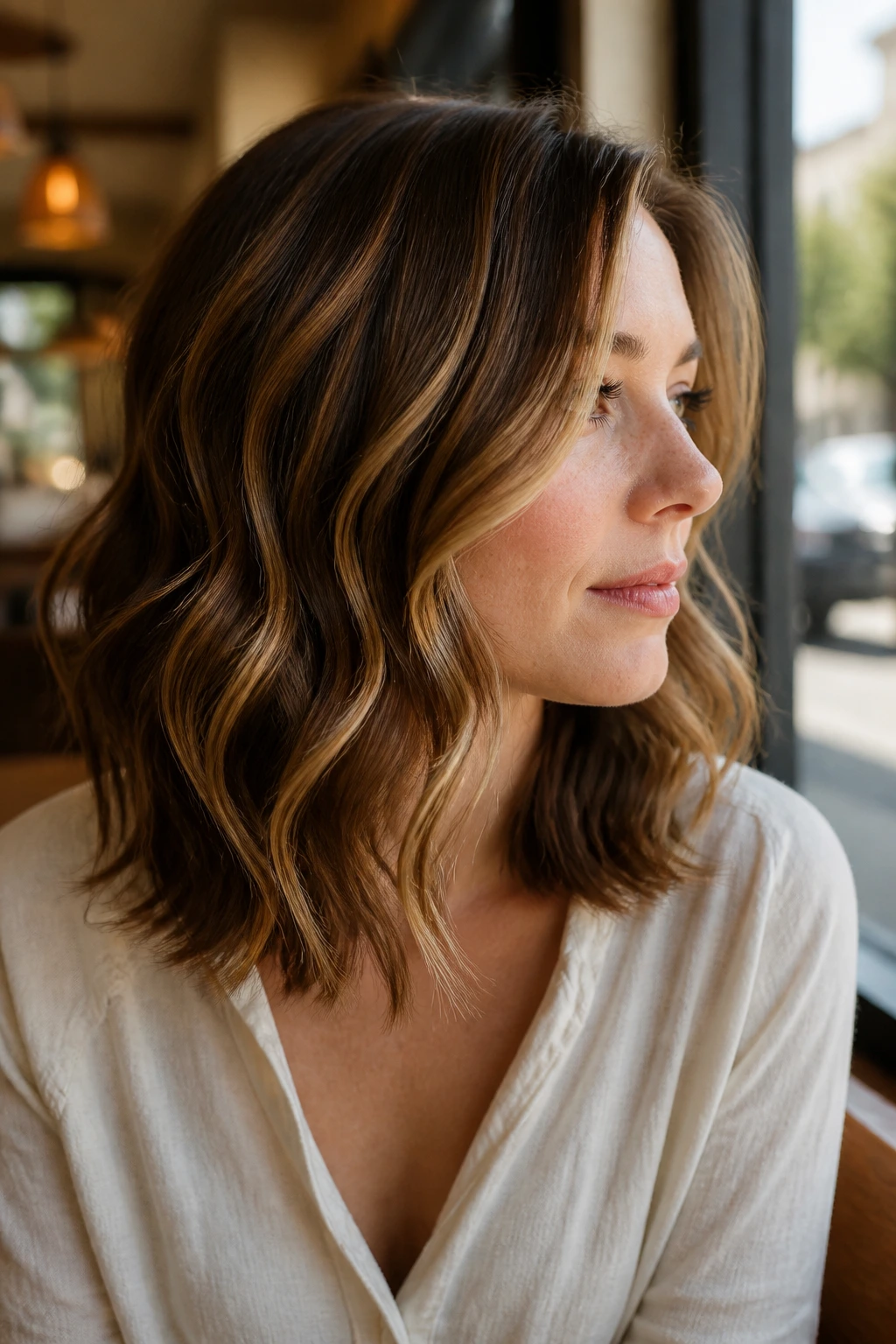
Shoulder-length waves are basically made for sliced highlights. The pieces are wider than babylights, cleaner than balayage, and easier to see when the hair bends around the shoulders. On pale skin, that medium amount of contrast feels balanced instead of loud.
What makes this version stand out
The slices should sit mostly through the mid-length and outer layer, with a few lighter pieces near the front. That gives the wave pattern shape. If every section is too bright, the eye gets tired. If the slices are placed with some breathing room, the caramel reads as glossy depth.
I’d ask for a warm beige-caramel that has a slight brown base. It keeps the shoulder-length cut from looking washed out.
16. Caramel and Beige Lowlights Mix
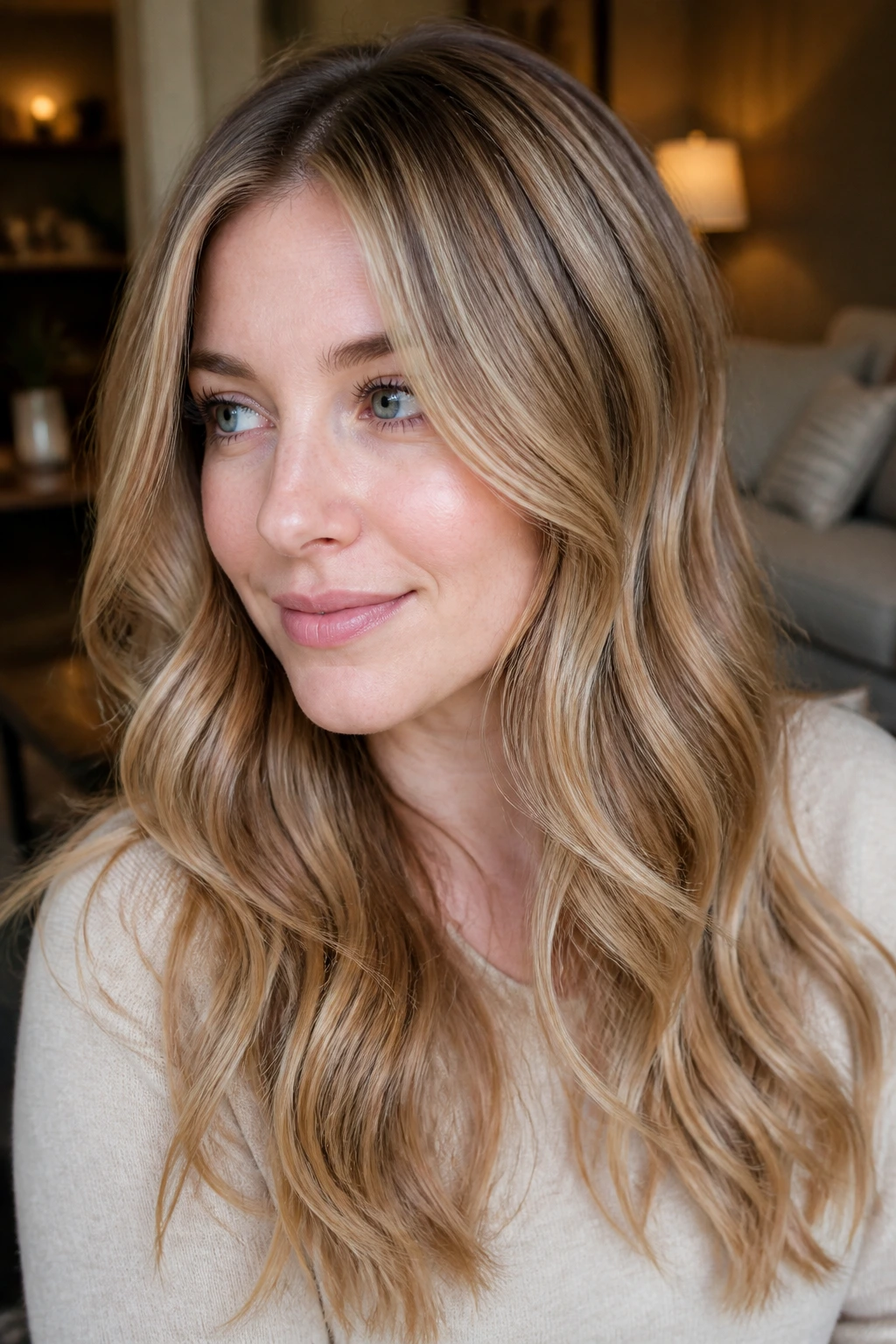
Sometimes the smartest way to wear caramel is to stop pretending everything needs to be lighter. Mixing caramel highlights with beige lowlights gives pale skin a more dimensional frame, especially if your base is already on the light side. The darker pieces add weight back into the hair.
This is useful when highlights alone start to look thin or stripey. The lowlights pull the eye inward and stop the caramel from floating too high. That matters around fair skin, which can lose contrast quickly if the hair is all shine and no depth.
It’s a good ask if you want richness, not brightness. There’s a difference. A big one.
17. Soft Toffee Framing for Fine Hair
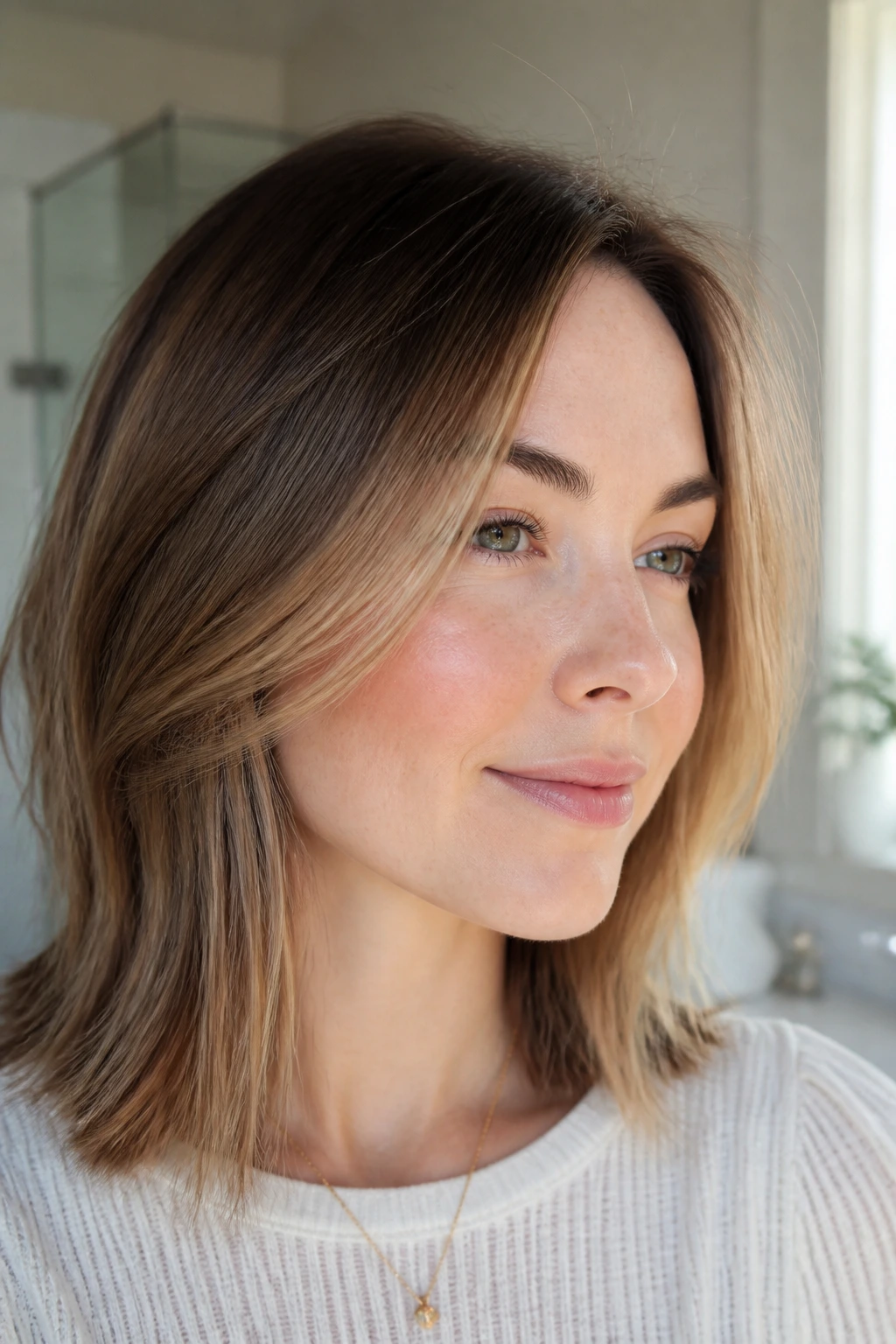
Fine hair needs a gentler approach. Too much contrast can make the strands look sparse, even when the color is pretty. Soft toffee framing keeps the highlight work close to the face and uses a little more width than babylights, which helps the hair feel fuller.
The toffee tone should stay creamy and muted. Bright gold can make fine hair look patchy if the strands are thin. A soft toffee caramel, especially near the temples and cheekbone line, gives pale skin a warm frame without exposing every single section.
This is one of those looks that benefits from a slight blowout. The color shows up better when the hair has a little bend. Flat ironing can make it disappear.
18. Caramel Gloss Panels on Straight Hair
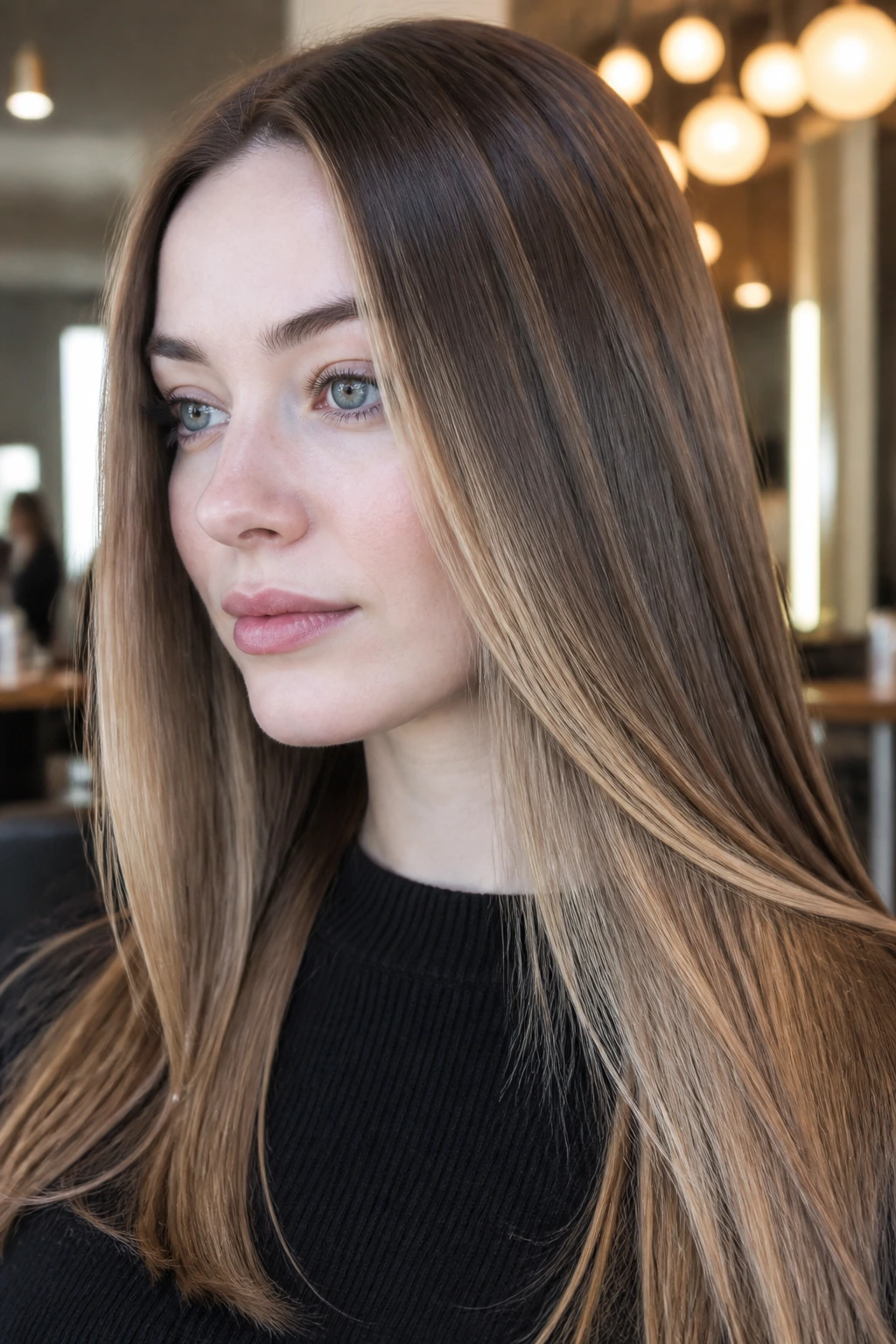
Straight hair can be tricky because there isn’t much texture to catch the light. Caramel gloss panels solve that by giving selected pieces a reflective finish instead of a loud stripe. On pale skin, the result feels clean and deliberate.
I like this on sleek lobs and long, straight cuts. The panels should run through the front and a few sections under the top layer, then get finished with a gloss that keeps the tone creamy. If the caramel is too warm, the whole cut can read flat. If it’s too cool, you lose the glow.
The best part is movement at the ends. Even one or two turned-under pieces will show the color better than a full sheet of flat hair.
19. Maple-Caramel for Neutral Undertones
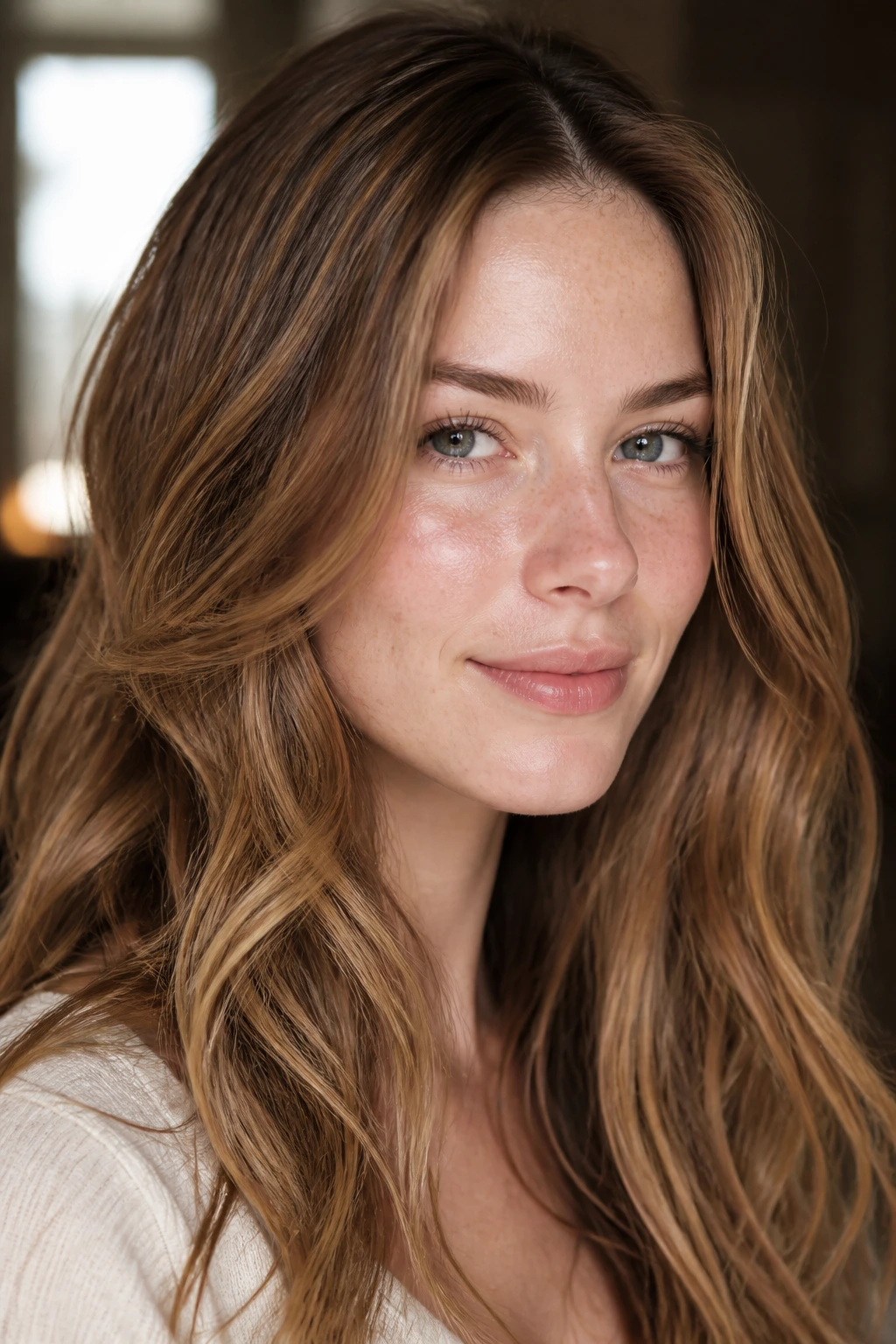
Maple-caramel sits in that middle space I keep coming back to: warm enough to brighten, brown enough to stay believable. Pale skin with neutral undertones can wear this shade without it pulling too golden or too ashy. That middle ground is useful.
The tone feels a little syrupy, a little toasted, and not at all harsh. It works well on natural brunettes who want some lightness without becoming blonde-adjacent. Ask for maple rather than honey if your skin leans cool-neutral; honey can tip too yellow in certain light.
This one is easy to live with. The grow-out is soft, the shine is good, and it doesn’t demand much makeup to make sense.
20. Partial Caramel Foils Under the Top Layer
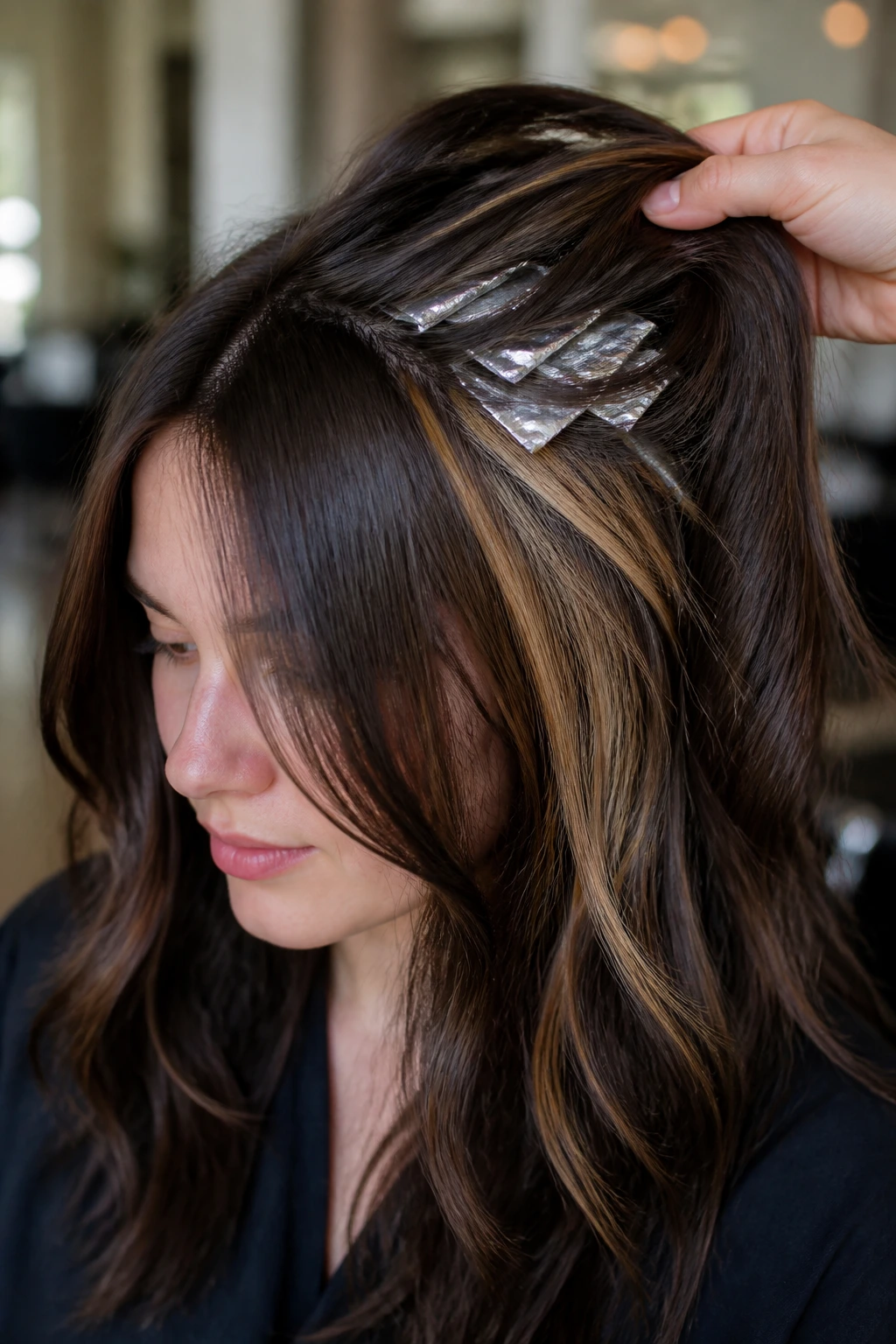
Foils hidden under the top layer are the quiet sibling of peekaboo panels. The difference is placement: these pieces live under the surface, so the color mostly shows when you move or tie the hair back. On pale skin, that subtle warmth keeps the face from being overpowered.
This is a nice choice if you like keeping your hair mostly dark but want a warmer finish in the ends. A few well-placed foils under the crown and through the mid-lengths can make the hair look fuller without advertising the work. It’s especially pretty in half-up styles.
I’d choose this when you want dimension more than you want a highlight moment. Small shift. Big payoff.
21. Strawberry-Caramel Blend for Rosy Undertones
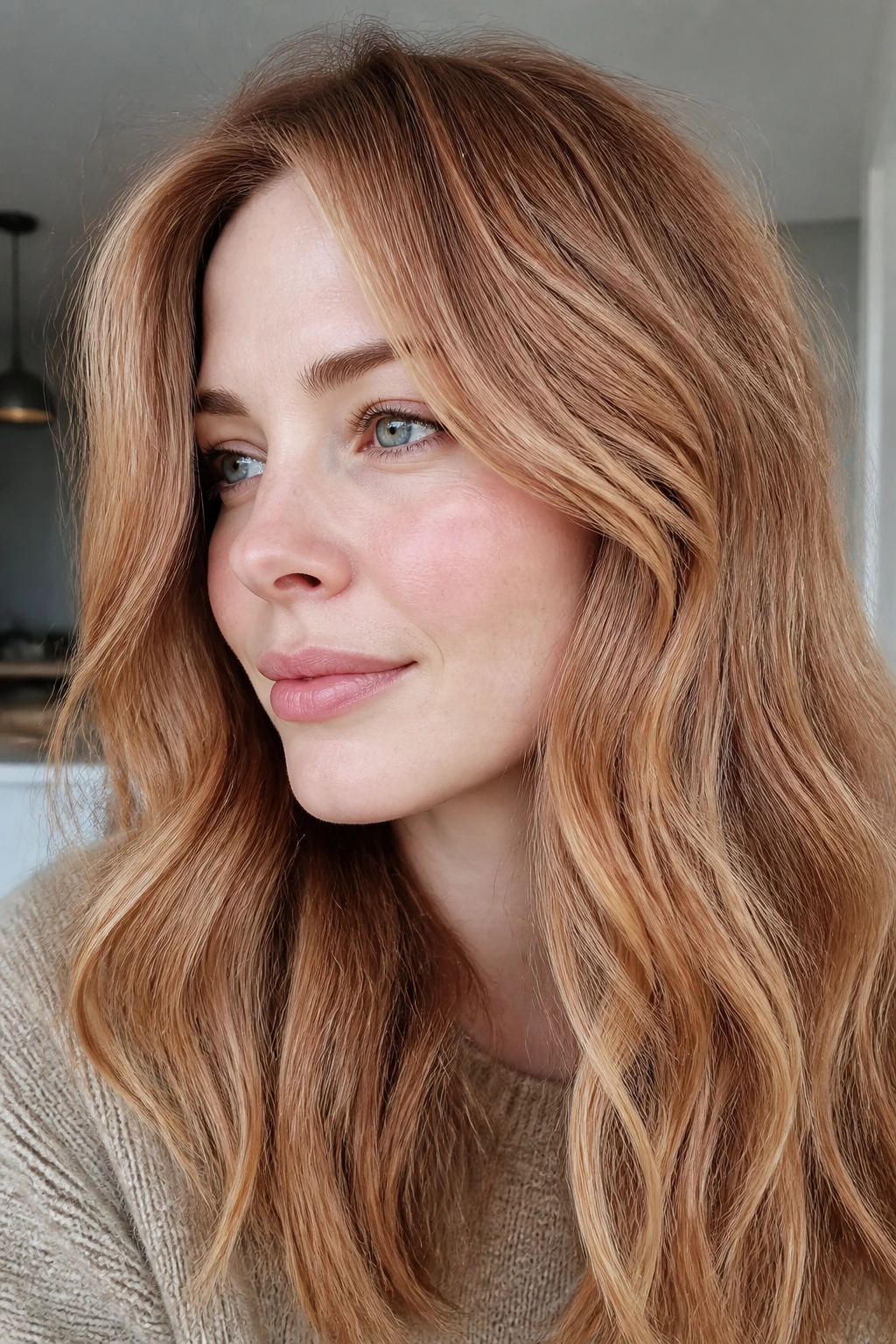
A strawberry-caramel blend sounds unusual, but on the right pale skin it can be lovely. The trick is keeping the red very soft—more peach-beige than actual strawberry blonde. You want warmth with a blush, not an outright red cast.
This version works best when the complexion already has pink in it and the hair needs something that won’t look harsh against that softness. A neutral beige base with caramel panels and a whisper of rosy tone can keep the face from looking ruddy. Too much, though, and the whole thing turns into copper territory.
If you’re freckled or naturally flushed, this is one to consider carefully. It can look expensive in the right hands. Sloppy, it can look accidental.
22. Caramel Contour Highlights for Round Faces
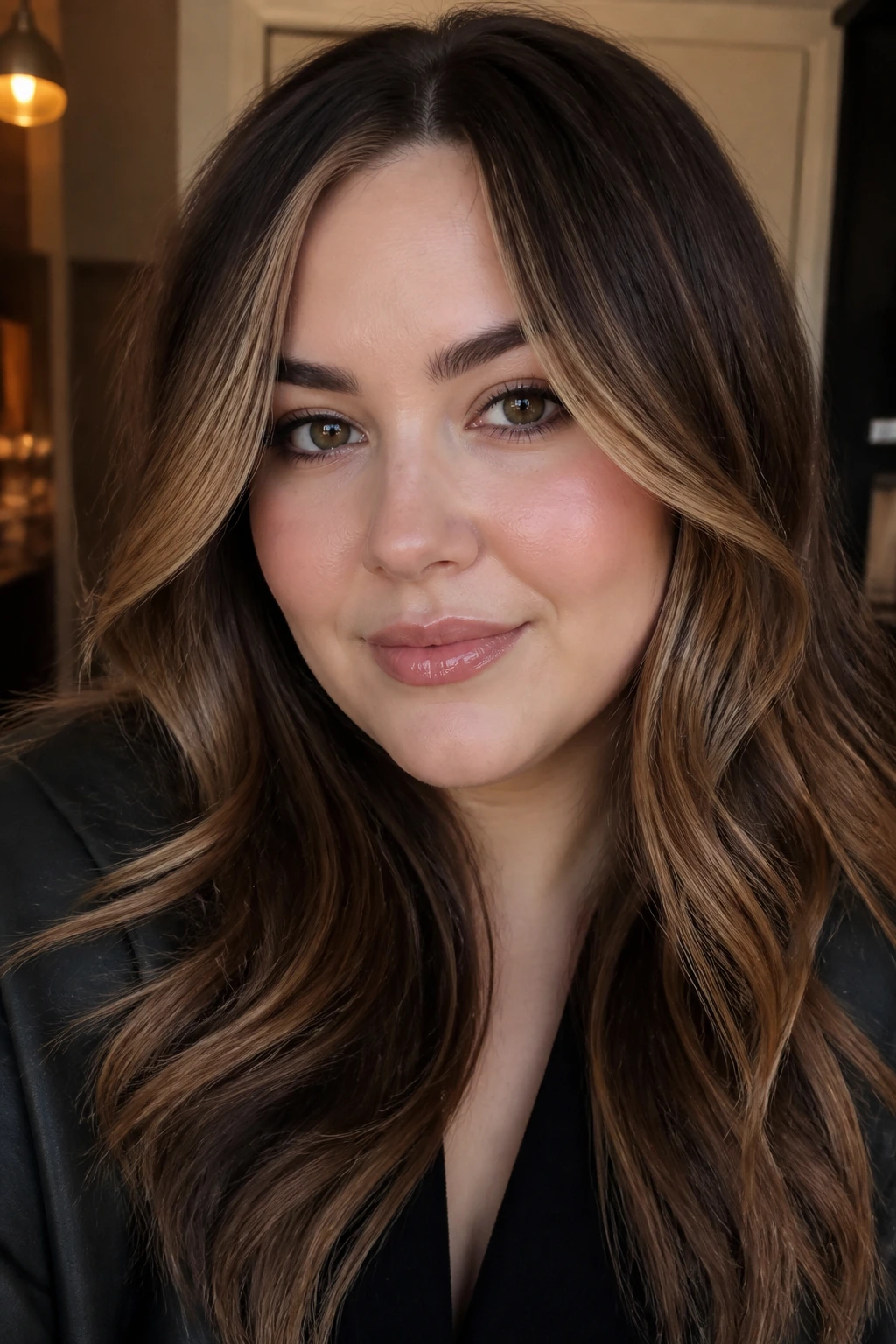
Placement can shape the face as much as makeup can. Caramel contour highlights use brighter pieces around the temples, cheek area, and lower layers to create a longer, softer look on rounder faces. Pale skin benefits because the color frames the face without making it wider.
The key is not to put all the brightest pieces right at the widest part of the cheeks. That’s the mistake. Instead, keep the strongest caramel a little higher and lower, where it can draw the eye vertically. The center part or side part then finishes the effect.
This is one of the most useful partial highlight techniques if you care about balance more than drama. It’s subtle, but you can see the difference in a mirror immediately.
23. Sanded Caramel with a Mushroom Base
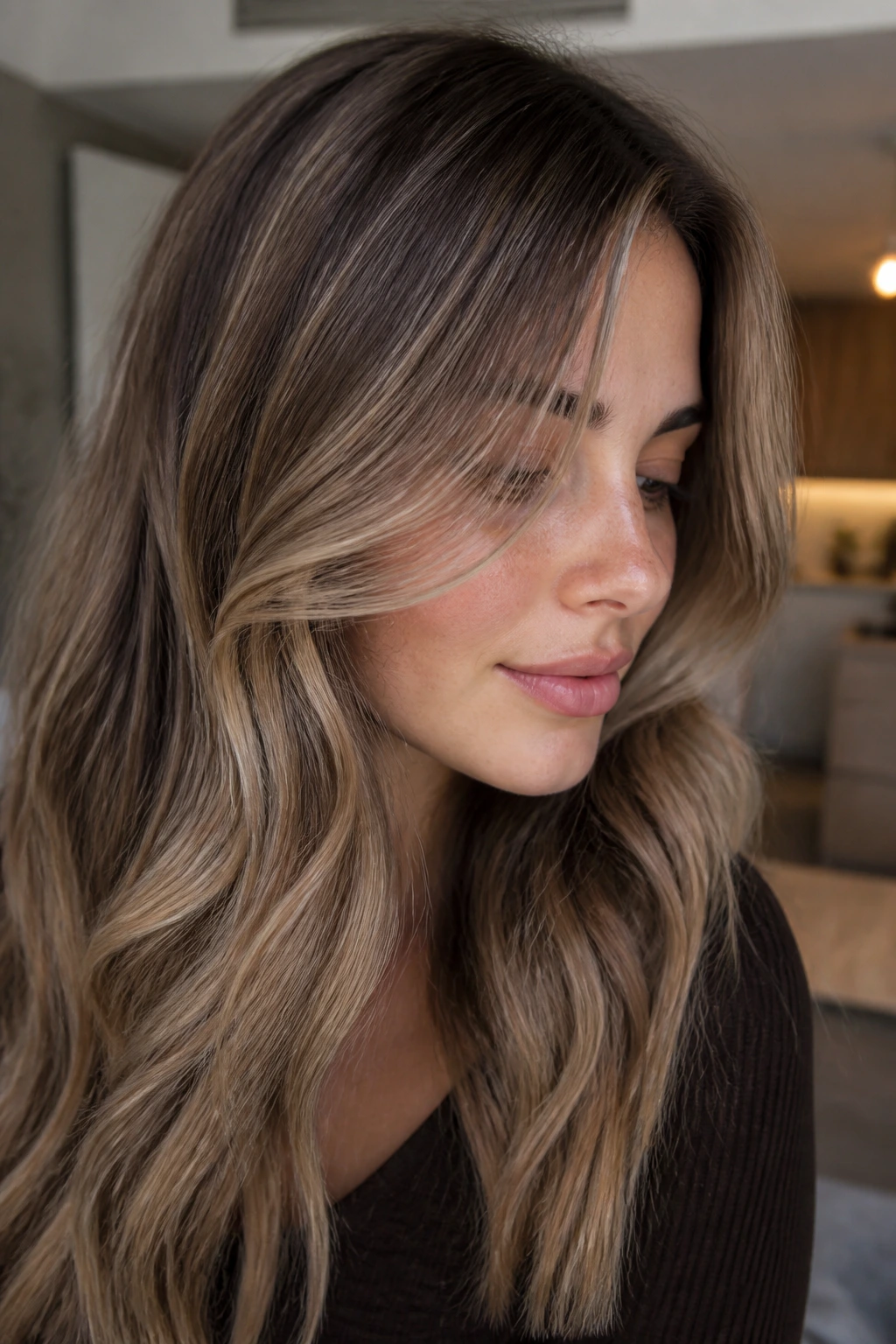
Sanded caramel is for people who like warmth but do not want it to feel sunny. The mushroom base keeps the hair grounded, while the caramel sits on top in a soft, dusty layer. On pale skin, that cooler brown backdrop can be a relief.
This is a smart option if your complexion tends to burn, flush, or react to strong gold. The caramel still shows, but it’s softened by the muted base. I’d ask for very light caramel ribbons with a neutral or slightly smoky toner so the warmth doesn’t drift too orange.
It’s a more modern-looking caramel, less candy, more polished suede. Quietly stylish. Not loud.
24. Expensive Brunette Caramel Pieces
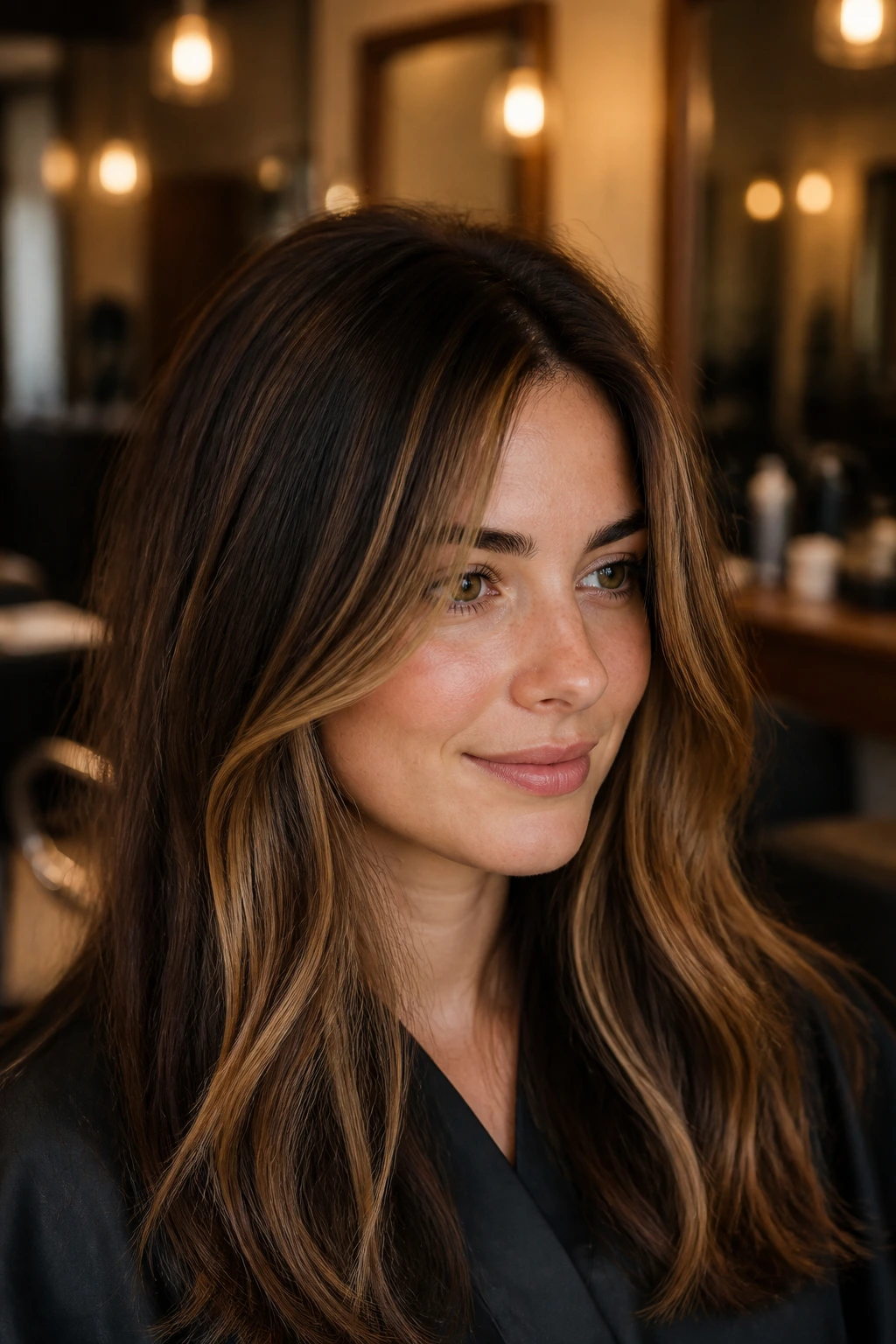
This is the one I’d recommend to people who want the hair to look rich first and highlighted second. Thin caramel pieces woven through a brunette base give pale skin contrast without making the head look blonde. The result usually feels more wearable than a bigger highlight pattern.
What makes it work is the restraint. The caramel should be just visible enough to catch light around the face and through the top layer, then disappear back into the brunette depth. That contrast keeps the skin from looking ghostly, which can happen when the hair gets too light all over.
If you love a polished, tailored finish, this is a strong bet. It’s one of the least fussy caramel looks on the list.
25. Soft Caramel Ends for Easy Grow-Out
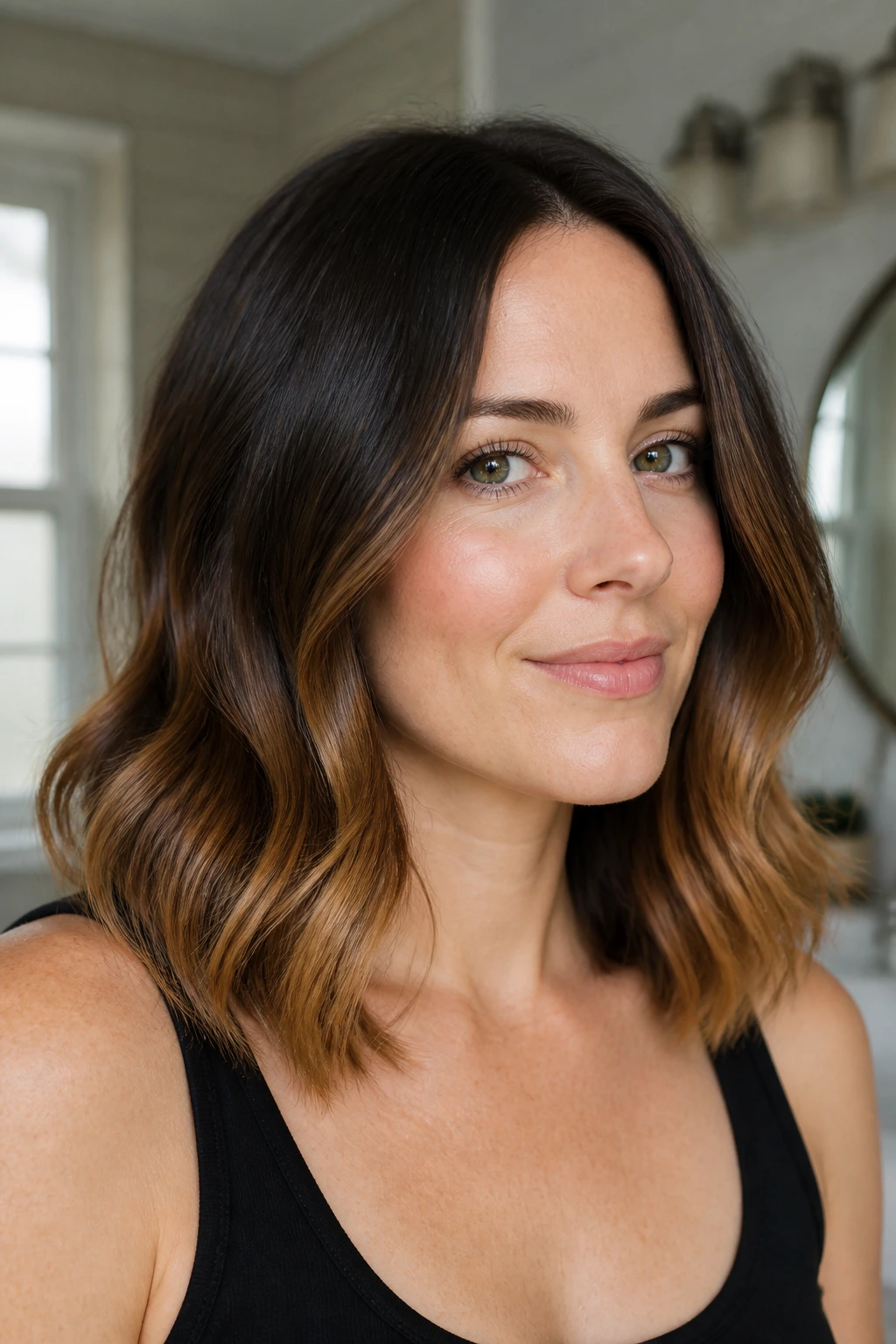
Soft caramel ends are the easiest way to dip into this color family without committing to a full head of work. The warmth stays low, mainly through the ends and lower mid-lengths, so pale skin gets a gentle glow without a heavy root contrast. I like this on people who wear their hair in waves or loose ponytails.
The finish should be subtle enough that it looks like a natural lightening at the bottom, not a dip-dye effect. The caramel tone matters here more than ever. Too bright and it feels obvious; too muted and you miss the point. A soft toasted caramel or beige-toffee is usually right.
This is the low-maintenance one. The grow-out is kind, and the upkeep doesn’t bully your calendar.
Why Partial Highlights Beat Full Warmth on Pale Skin
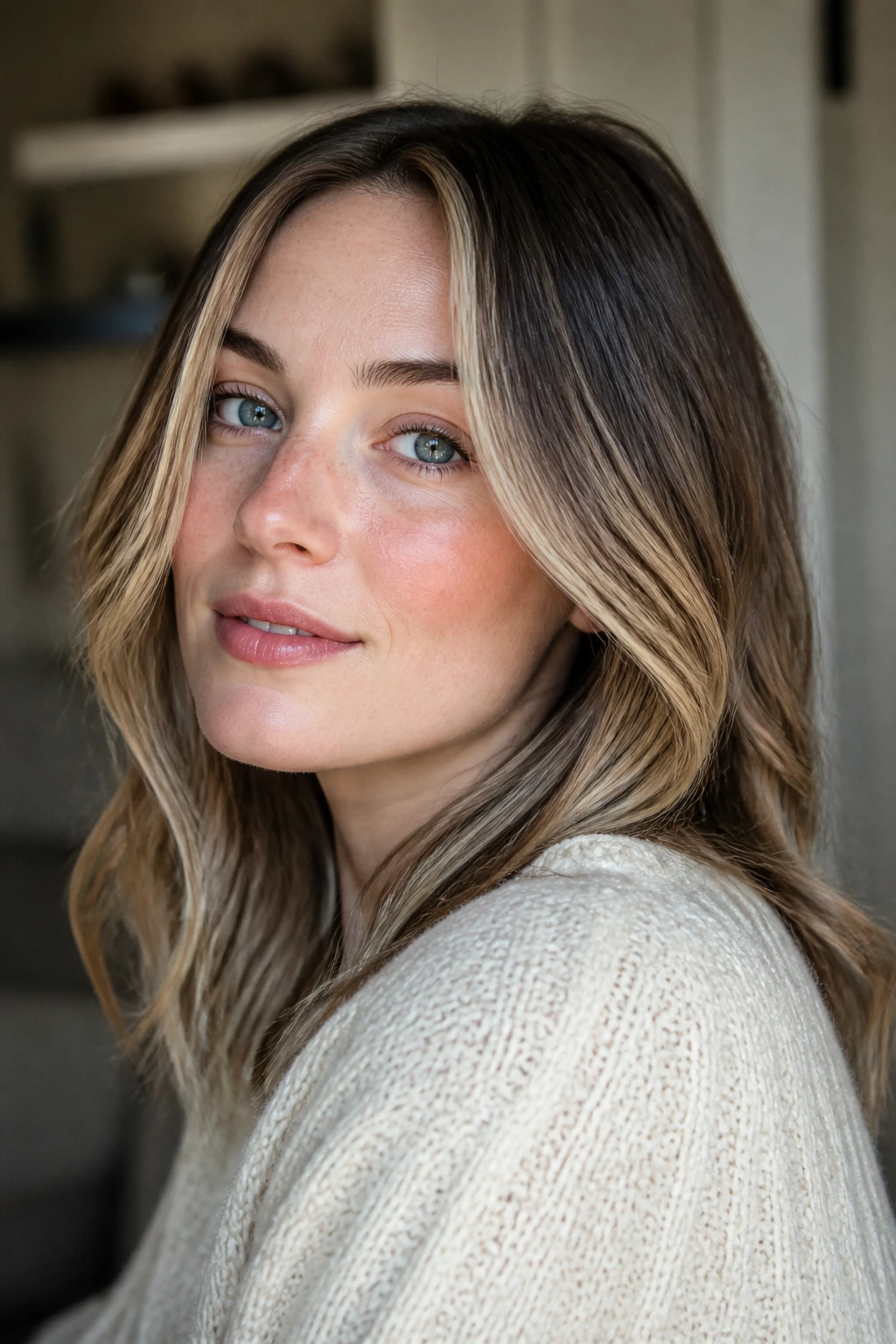
Full-head caramel can be pretty, but it’s also unforgiving. On pale skin, too much warmth near the root can make the face look pink, sallow, or flat depending on the lighting. Partial highlights avoid that problem by putting the brightness where it has a job to do: around the face, through the crown, or on the top layer where the light actually lands.
That smaller footprint also keeps the hair looking thicker. A full blonding map can sometimes leave very fair skin looking disconnected from the hair, especially if the shade gets too golden. Partial placement preserves your base color, and the base is doing more work than people give it credit for. It gives the caramel something to sit against.
There’s also a maintenance angle that I like a lot. Partial highlights grow out cleaner, need less toner rescue, and are easier to tweak if the first formula leans too yellow. You can nudge the tone on a smaller section of hair instead of correcting the whole head. Handy. Less stressful too.
The Tools a Colorist Will Reach For
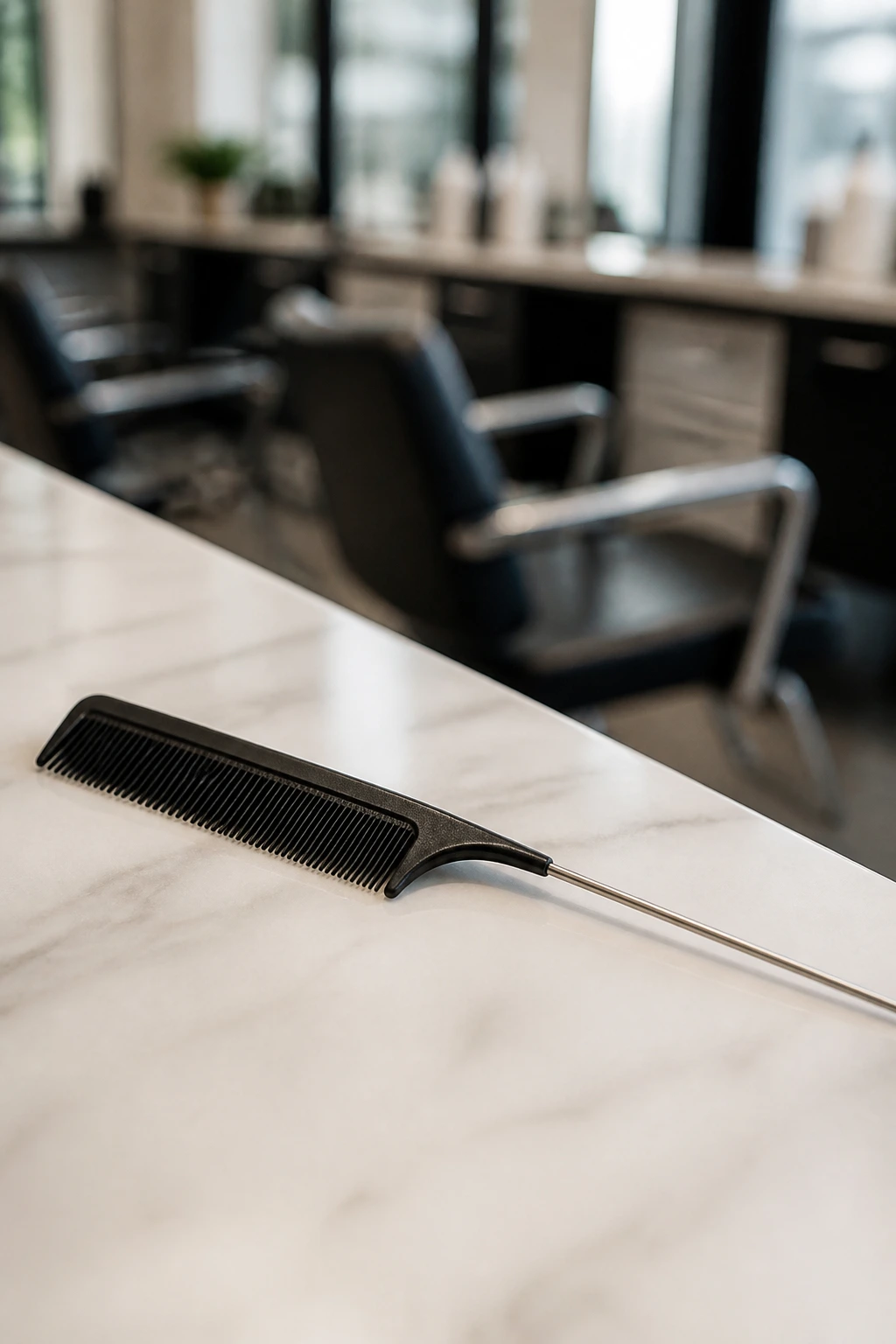
A good caramel result starts with the right tools, not luck. If you’re going to a salon, the main job is bringing clear reference photos and knowing how much brightness you can tolerate around your face. If you’re maintaining the color at home, the right care products matter more than fancy masks with huge claims.
- Tail comb: Helps section precise face-framing pieces and thin babylights without bulky parts.
- Sectioning clips: Keep the top layer out of the way so partial placement stays clean.
- Foils or balayage board: Used to control lift and keep caramel pieces from bleeding into the base.
- Color brush and bowl: Useful if glossing or toning at home, since sloppy application makes caramel look patchy.
- Color-safe shampoo: Keeps the tone from fading too fast and turning dull.
- Sulfate-free conditioner: Helps preserve softness, which matters because caramel shows dryness fast.
- Heat protectant: Non-negotiable if you blow-dry or curl your hair often.
- Blue or purple shampoo, used sparingly: Only for brass control when the caramel starts skewing too yellow or orange.
- Wide-tooth comb: Better than rough brushing when the hair is wet and more fragile.
- Reference photos in daylight and indoor light: The same caramel can look different under both, and that tells your colorist what you actually want.
How to Pick the Right Caramel Shade for Pale Skin
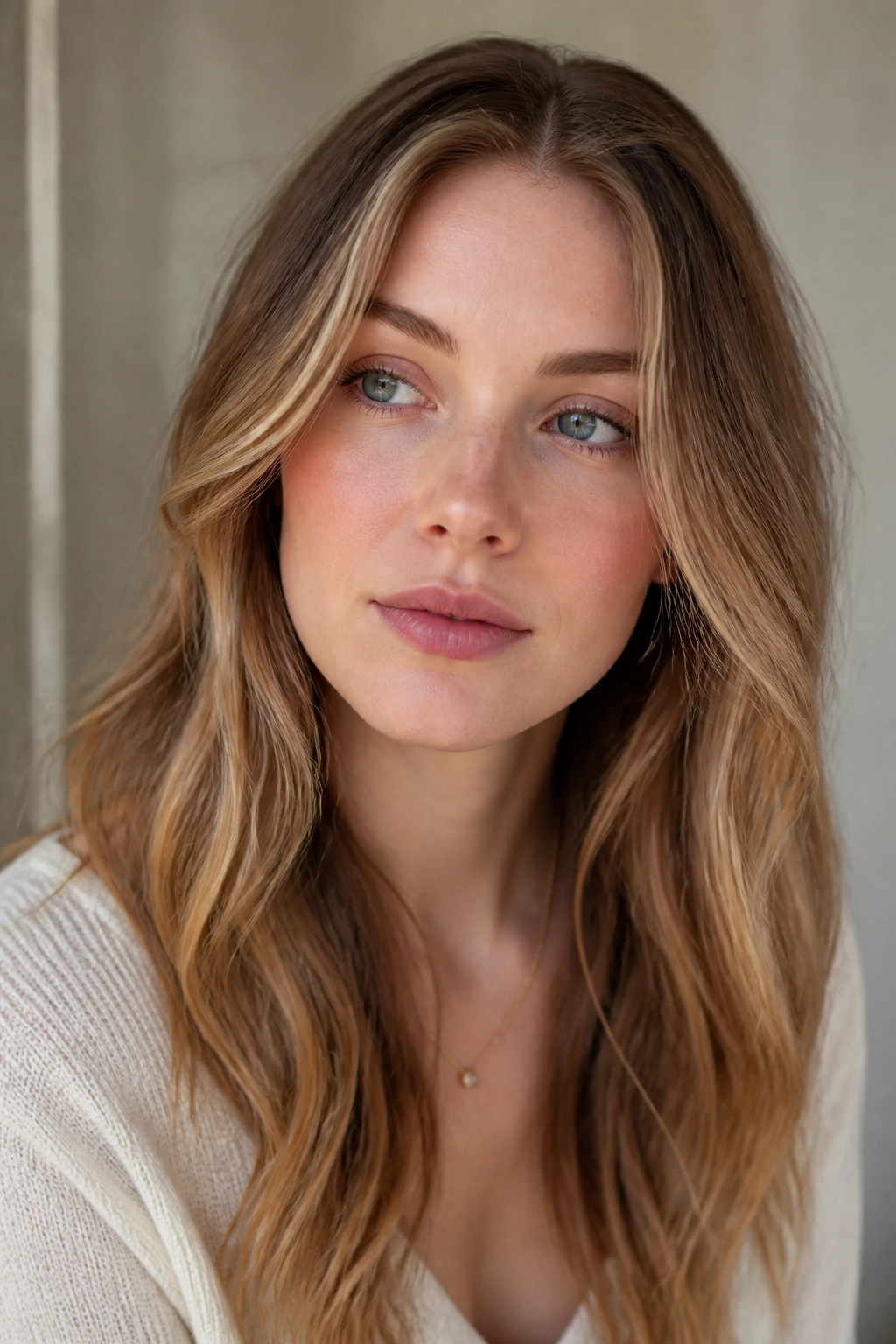
The shade choice matters more than people want it to. Pale skin doesn’t just need “warmth.” It needs the right kind of warmth. Beige caramel, honey caramel, maple, and chestnut all land differently, and the wrong one can make the complexion look red or muddy instead of bright.
Cool or pink undertones
If your skin flushes easily or leans pink, stay closer to beige caramel, smoky toffee, or mushroom-leaning caramel. These shades add warmth without a yellow cast. Ask for neutral toner, and avoid copper-heavy formulas unless you want the color to shout.
Neutral undertones
Neutral skin can handle the widest range. Maple, honey-beige, and soft chestnut caramel all work here, as long as the highlights are partial and not plastered across the whole head. You have more room to play, which is nice. Use it.
Warm or peach undertones
If your skin already carries peach, gold, or freckled warmth, a richer honey caramel or golden toffee can look natural. I’d still keep the finish creamy rather than shiny-yellow. The right caramel should feel like light through tea, not a neon stripe.
One other detail matters: your natural base. If you’re starting at a dark blonde or light brown, you may only need a gloss and a few foils. If you’re starting darker, the lift has to be cleaner so the caramel doesn’t read murky at the end.
How to Wear the Color So It Shows Up in Real Life
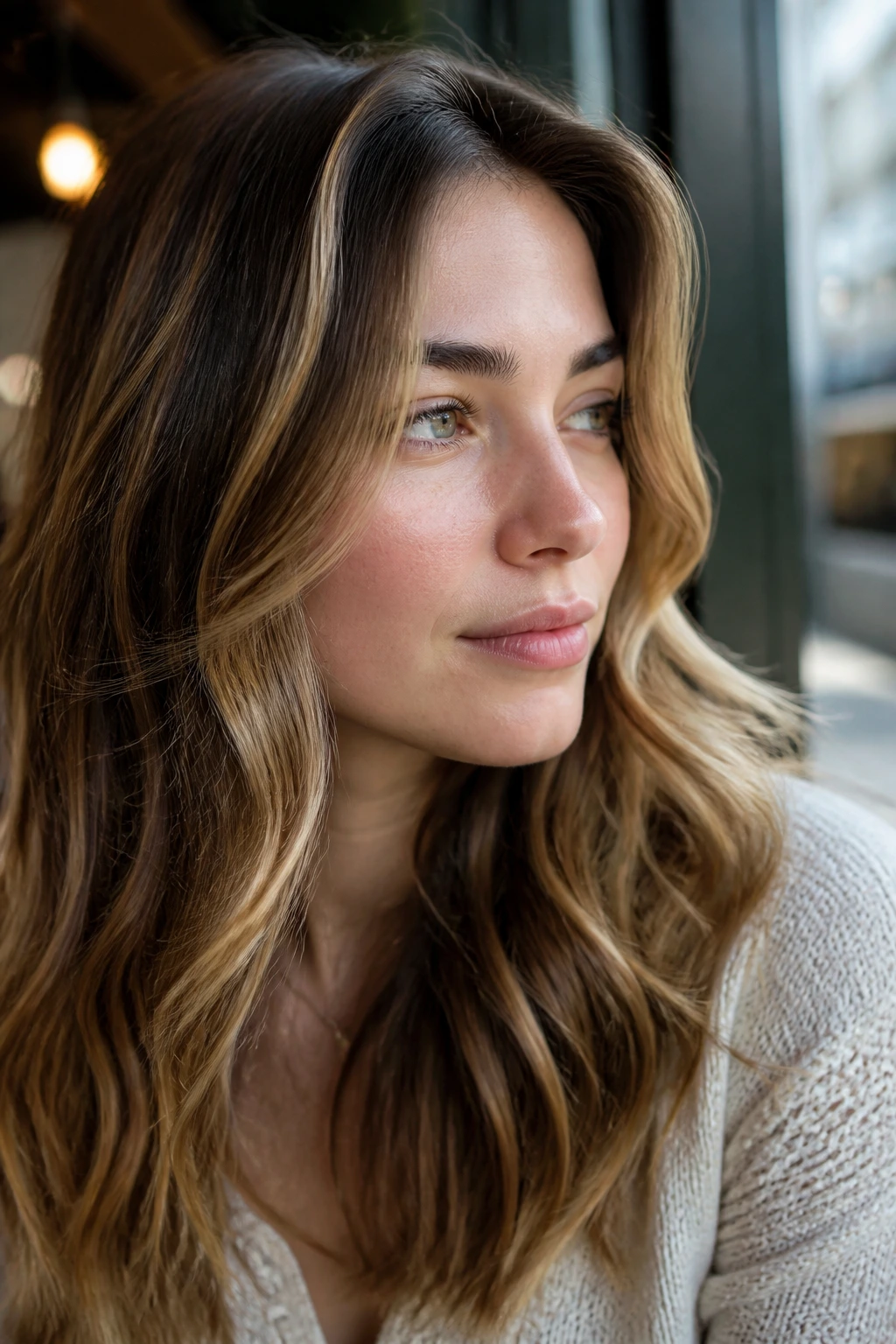
Caramel highlights can disappear if the styling hides them. A poker-straight curtain of hair won’t always show the dimension the way a soft bend will, especially on pale skin where contrast is doing a lot of work. That’s why the styling choice matters almost as much as the placement.
Loose waves are the obvious winner. They break the color into little bands and make the caramel catch in different places instead of one heavy strip. A round brush blowout works too, especially on shoulder-length cuts and bobs, because it turns the front pieces inward and lets the cheekbone framing do its job.
If you wear your hair up, leave a few front pieces out. That’s the easiest way to show off partial highlights without trying too hard. One more thing: cream, camel, charcoal, olive, and soft black clothing tend to make caramel look richer against pale skin. Loud neon never helps. Not here.
Extra Ways to Make the Caramel Read Richer
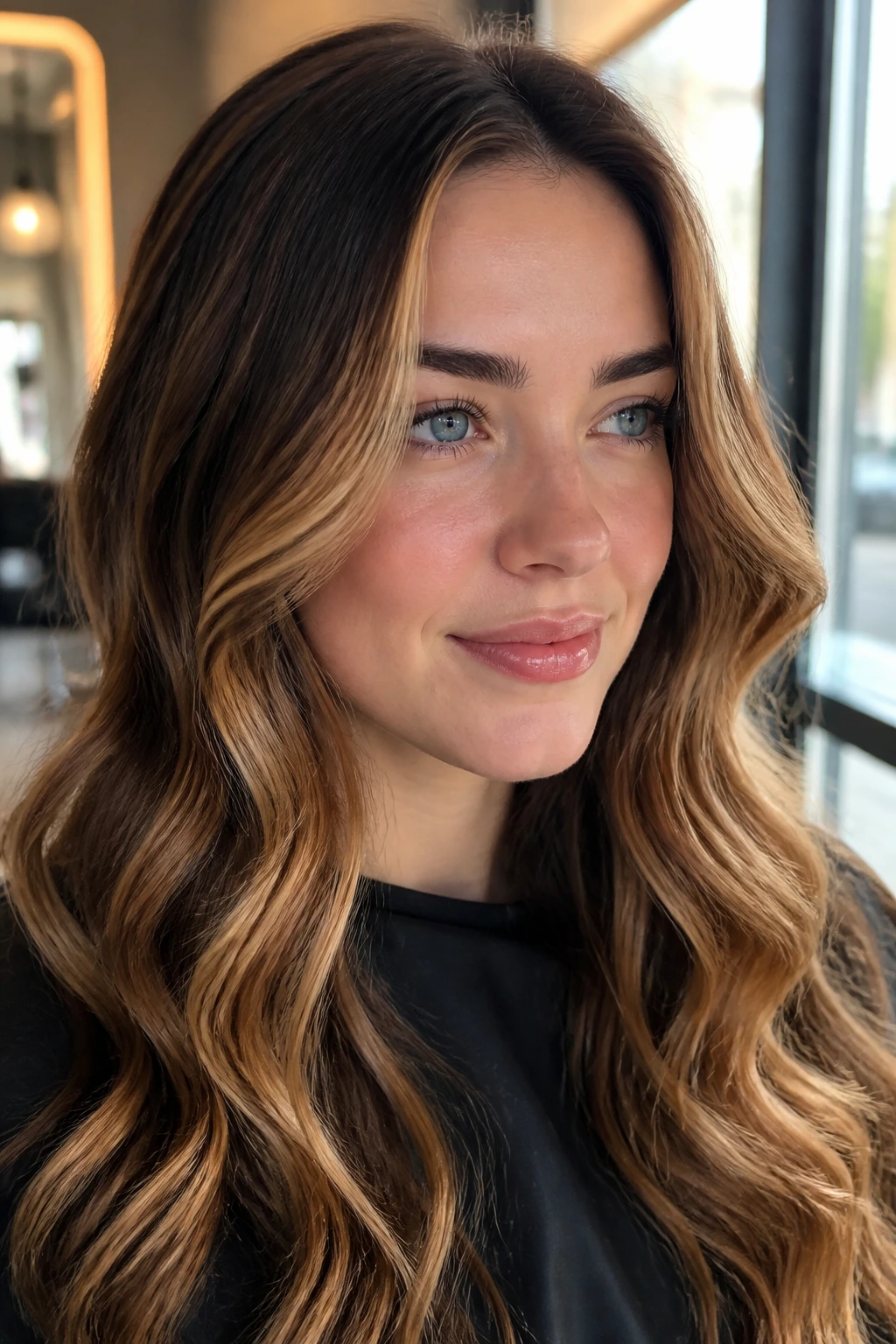
-
Tone Boost: A sheer gloss every 4 to 8 weeks keeps caramel from drifting yellow or dull, and it adds that soft reflective finish people mistake for “healthy hair.”
-
Placement Trick: Ask for the brightest pieces near the hairline, cheekbones, and top layer, then keep the underlayer one shade deeper. That one move gives the color shape.
-
Style Boost: A 1-inch or 1.25-inch iron, used loosely, shows caramel ribbons better than a tight curl. The bend should feel relaxed, not polished into a corkscrew.
-
Money-Saver: A root shadow stretches appointments because the darker base disguises grow-out. If you hate visiting the salon every few weeks, this is the move to keep.
-
Make-It-Yours: Fine hair benefits from thinner foils. Thick or curly hair can carry wider painted pieces without looking busy. Same shade family, different scale.
Keeping Partial Highlights Fresh Between Appointments
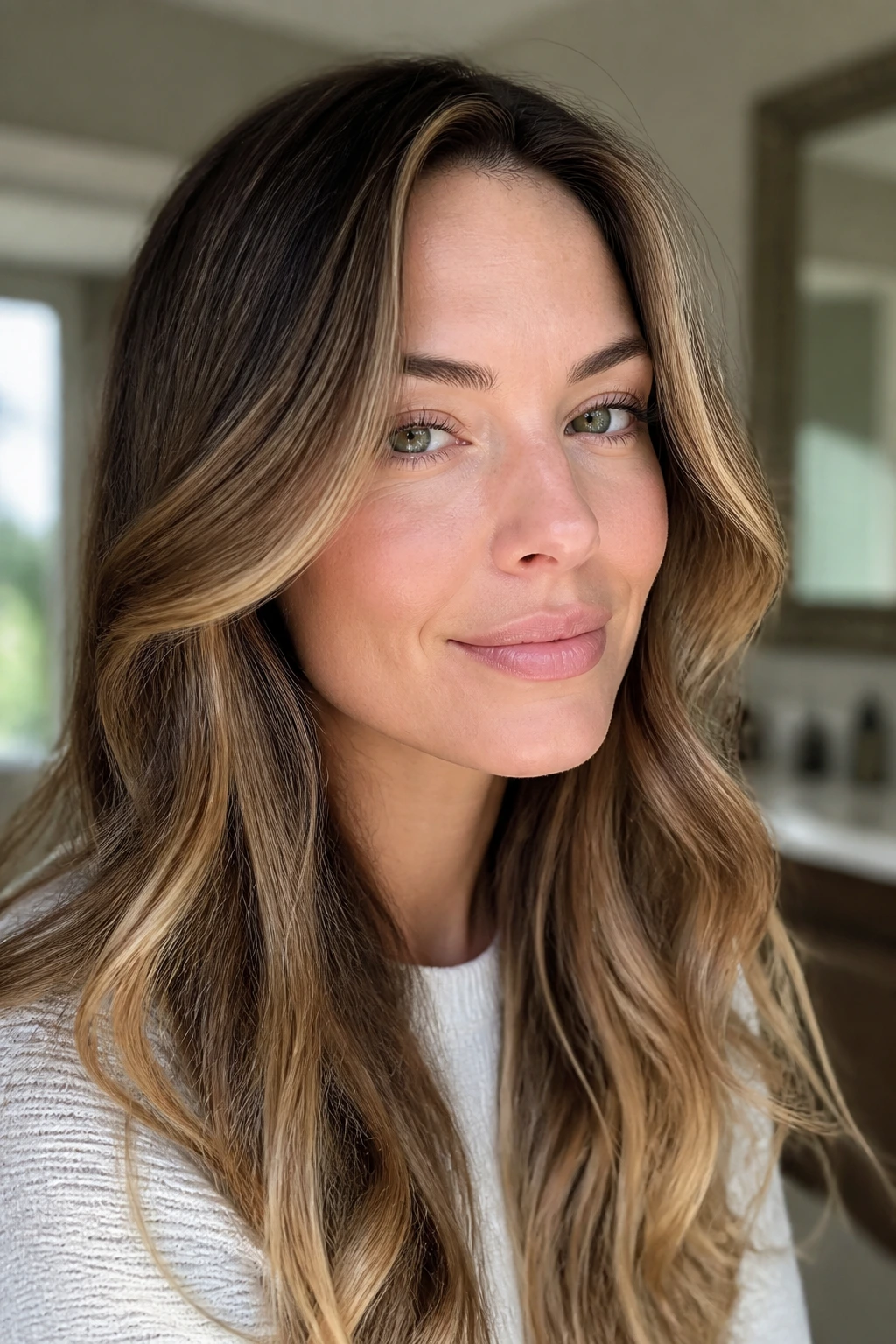
Caramel fades in a sneaky way. At first it just looks softer. Then one day the warmth shifts a little too yellow, and the hair loses that creamy finish you paid for. The fix is routine, not panic.
Use a color-safe, sulfate-free shampoo and wash with lukewarm water. Hot water strips tone faster than people like to admit. If your caramel is brunette-based and starts turning brassy, a blue shampoo once a week can calm the orange cast. If the lighter pieces skew yellow, use purple shampoo less often and only on the lightest sections. Overusing either one can make the hair look dusty or flat.
Glosses help too. A salon gloss every 4 to 8 weeks keeps the caramel soft, especially if your hair is porous or you heat-style often. For regrowth, most partial highlight looks can go 8 to 12 weeks before they start to look obvious. Some can stretch longer if the shadow root is strong.
Heat is another quiet thief. If you blow-dry or curl the hair regularly, use a heat protectant every time. I mean every time. Caramel shows dryness faster than darker shades, and dry hair makes even a good color look rough.
Variations and Adaptations to Try
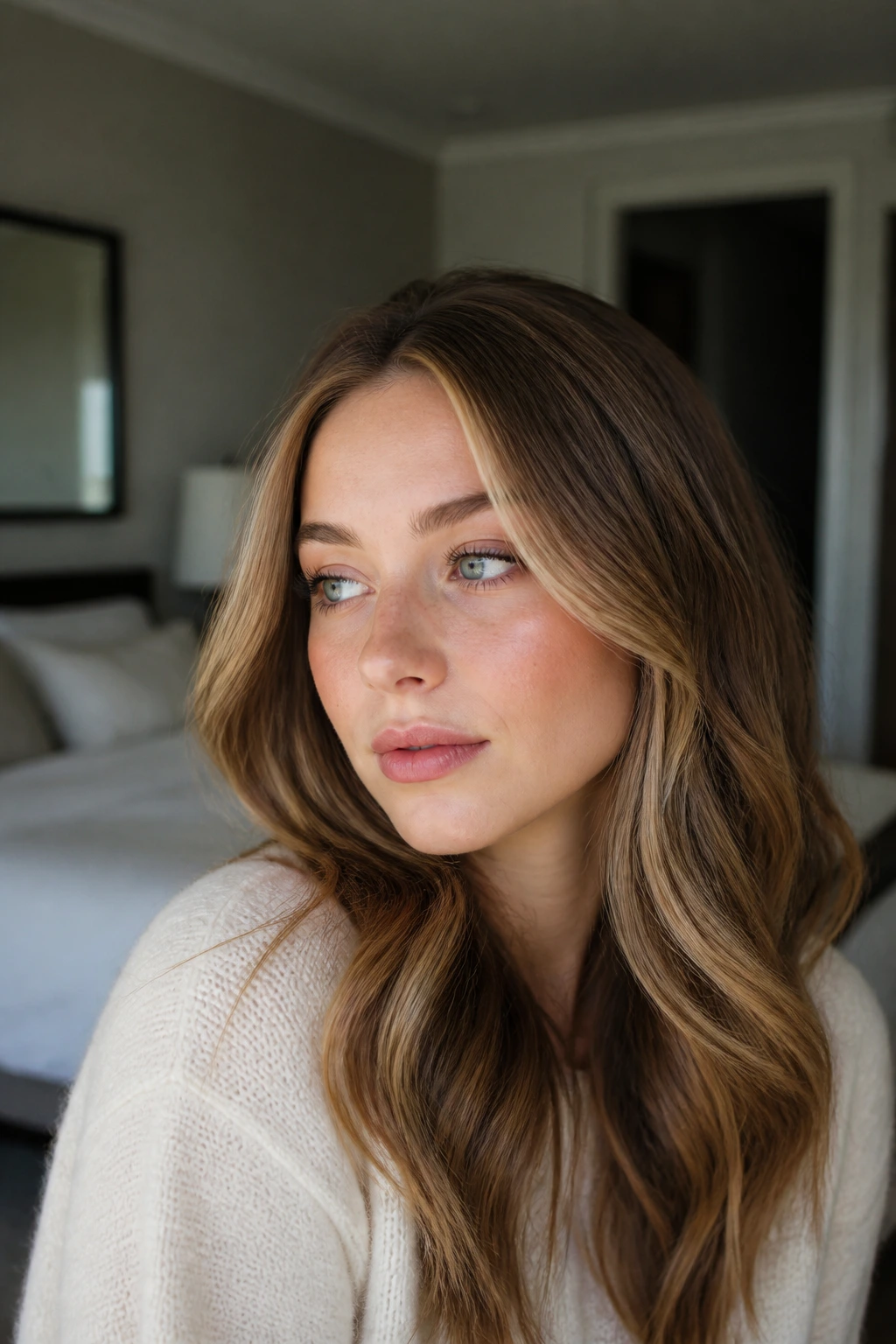
Cashmere Caramel
This version leans beige and soft, almost like caramel with the edges filed down. It’s one of the best matches for pale skin with pink undertones because it brightens without adding a gold glare. Ask for fine face-framing ribbons and a neutral gloss.
Toasted Root Melt
A darker root melts into warm mid-lengths and lighter ends. The look is especially good if you want dimension but hate obvious highlights. On pale skin, the root keeps the face from getting washed out, while the toasted ends add movement.
Curly Caramel Swirl
Curly hair needs broader ribbons that follow the curl pattern, not thin stripes that break apart. A swirl of caramel around the front and crown can make pale skin look warmer without flattening the curl shape. The paint should follow the curl group, not fight it.
Smoky Toffee Brunette
This is the cooler cousin of classic caramel. The tone sits browner and quieter, which helps very fair skin stay balanced. It’s a strong choice if you don’t want a golden finish or if your skin already has a rosy cast.
Honey Fringe Brightening
A few brighter honey pieces around the fringe and temple area can wake up the whole face. Keep the rest of the highlight work subtle so the front doesn’t overpower everything else. This is the most obvious version here, so I’d keep the rest of the head calm.
Common Mistakes That Turn Caramel Orange or Stripey
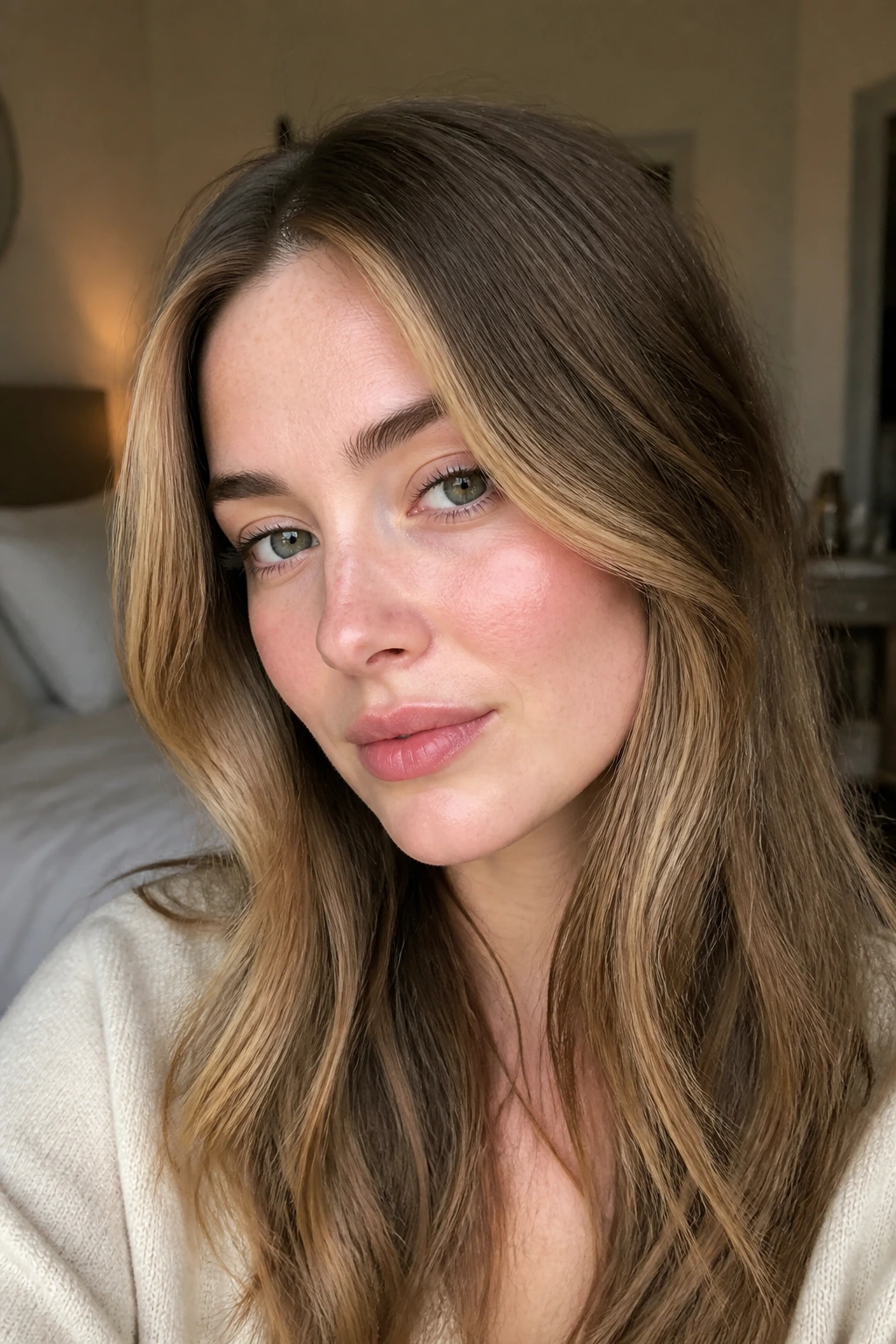
The first mistake is going too golden. On pale skin, a yellow-heavy caramel can look brassy before it looks rich, especially under indoor light. The fix is a beige or neutral toner, not more lightness.
Another problem is chunky placement. Big stripes near the part or across the front make the color read disconnected from the haircut. Fine hair gets hit hardest here. Thin foils, soft blending, and a better part line usually solve it.
Skipping the shadow root can also backfire. Without a little depth at the scalp, the highlights sit on top like separate pieces, and the face loses contrast. That’s why rooted caramel usually looks calmer than fully lifted caramel.
Finally, don’t overdo purple shampoo. People reach for it when the color looks warm, but too much makes caramel dull and chalky. Use it only when the highlights skew yellow, and rinse it out as soon as the tone looks right again.
Frequently Asked Questions
Will caramel highlights wash out pale skin?
Not if the tone is chosen well and the placement stays partial. Beige, smoky, and toffee-based caramel usually add warmth without making the face look flat. The problem starts when the color is too yellow or sits too close to the root.
Should I choose partial or full highlights for pale skin?
Partial highlights are usually the safer bet if you want warmth without a big color shift. They brighten the face and top layer while leaving enough depth behind them. Full highlights can work, but they need more careful tone control.
Can I wear caramel highlights if my skin is very fair and pink?
Yes, but the caramel should lean beige or smoky rather than gold. Pink undertones and yellow-heavy highlights can fight each other. A neutral glaze after the lift usually helps the final result sit better.
How often do caramel partial highlights need maintenance?
Most partial highlight looks can last 8 to 12 weeks before the grow-out becomes obvious. A gloss every 4 to 8 weeks keeps the tone clean, especially if your hair fades fast or you use heat often.
What if the caramel turns orange?
That usually means the formula was too warm, the toner faded, or the hair lifted unevenly. Blue shampoo can help brunettes, but a salon gloss is the real fix if the orange cast is strong. The next appointment should lean more beige or neutral.
Do caramel highlights work on curly hair?
They do, but the placement has to follow the curl pattern. Curly hair looks best with broader painted pieces around the front and crown, not tiny streaks that disappear into the texture. The highlights should move with the curl, not sit on top of it.
Can I ask for lowlights too?
Absolutely. In fact, a few beige or chestnut lowlights can make caramel partial highlights look richer on pale skin. They restore depth and keep the hair from reading too light around the face.
What shade should I avoid if I have cool undertones?
Bright copper-caramel and very yellow honey tones are the main troublemakers. They can make the skin look red or tired, especially in daylight. Ask for beige, smoky, or muted toffee instead.
Soft Warmth, Not Loud Color
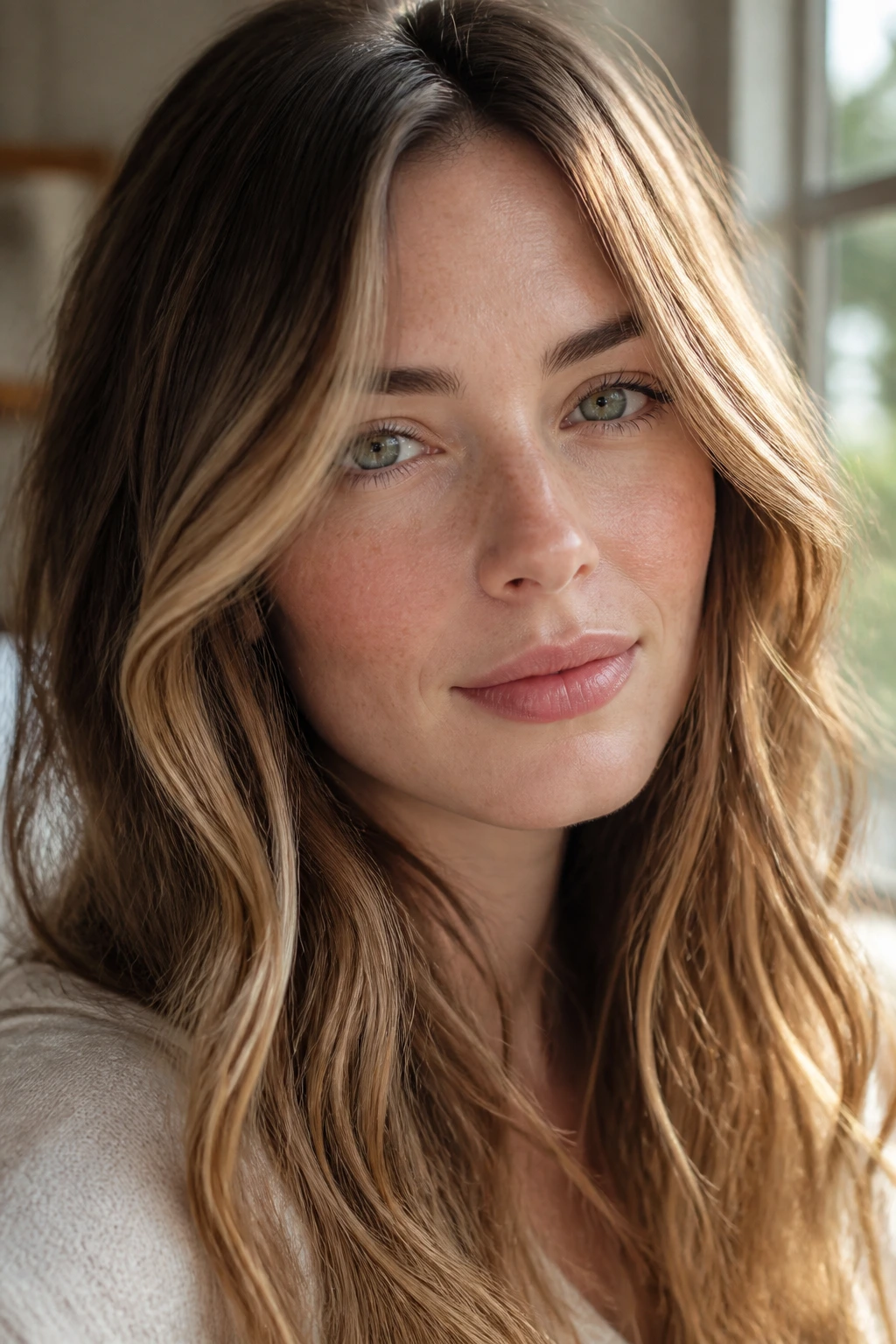
The nicest caramel partial highlights for pale skin usually aren’t the brightest ones. They’re the ones that know where to sit. Around the face. Through the crown. On the pieces that move when you turn your head. That placement is doing more work than the color name ever could.
If you remember one thing, make it this: partial warmth beats all-over warmth when your skin is very light. It gives you glow without the flatness, depth without the stripe effect, and enough grow-out grace that the color still looks good after the salon visit stops being fresh.
Pick the caramel that fits your undertone, keep the brightest pieces near the face, and don’t let the toner drift too yellow. That’s the whole game, really.