



Fine wavy hairstyles for women over 60 with lowlights work because they play with shadow instead of fighting for volume. Fine hair often looks better when it has a little darkness tucked underneath, a little bend around the face, and a cut that lets the wave move instead of hanging in a limp curtain. That’s the whole trick. Not more hair, not more product. Better shape.
I’ve always liked lowlights on fine waves because they do something highlights can’t always manage: they make the hair read as denser from a few feet away. A soft chestnut, mushroom brown, or smoky beige-brown woven through silver or light brown hair gives the surface somewhere to land. The eye sees contrast, and contrast reads as fullness. On the right cut, even a small amount of darkness under the top layer can change the whole mood of the hair.
The cuts below lean into that idea. Some are short and crisp. Some brush the shoulders and keep a little swing. A few are shaggy, a few are tidy, and a few live in that nice middle ground where the hair looks polished but not stiff. The common thread is simple: they all give fine waves a shape that holds up in daylight, not just under salon lights.
Why This Collection Works So Well With Lowlights
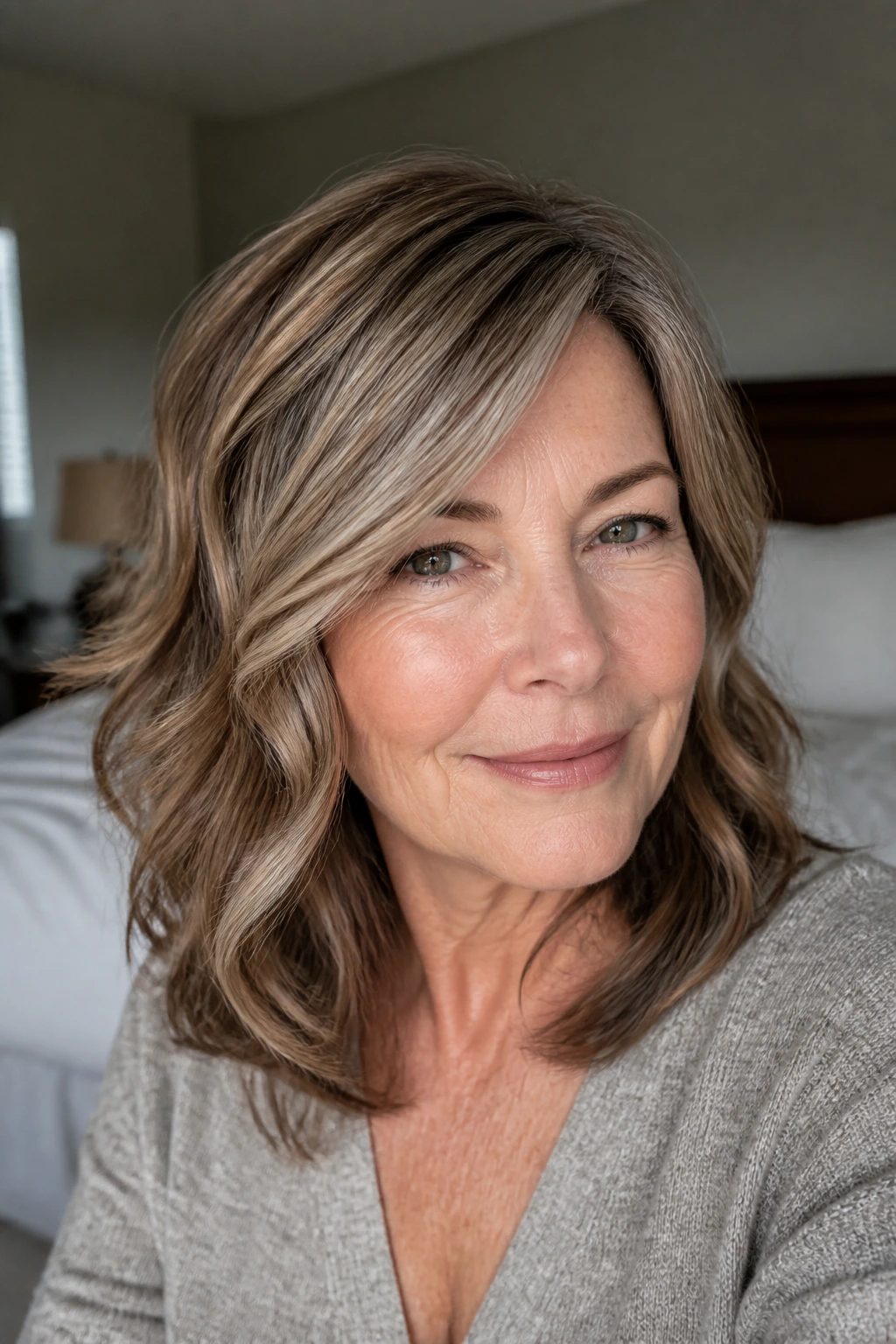
Depth at the roots: A few shades of darkness placed under the top layer stop fine waves from looking see-through, especially when the hair is parted on the side or clipped back.
Movement without bulk: These cuts keep weight where you need it and remove it where fine hair tends to collapse, so the wave still has room to bend.
Color that doesn’t fight gray: Soft lowlights in chestnut, taupe, and mushroom tones blend with silver instead of boxing it in, which keeps regrowth from looking harsh.
Better shape in bright light: Fine hair can go a little transparent near the ends. Lowlights create shadows there, and that makes the outline look fuller and cleaner.
Less dependence on hot tools: When the cut is right, a quick bend with a 1-inch iron or a diffuser pass is usually enough. You do not need a salon blowout every morning.
Styles that age well: Short, medium, and shoulder-length options all live here, so you can pick a shape that suits your face, glasses, and styling patience without losing softness.
1. Collarbone Lob with Mocha Lowlights
The collarbone lob is the haircut I reach for when fine waves need a little structure but not too much scalp show. It sits right at that useful spot where the ends still move, the neck stays open, and the hair doesn’t drag itself flat by lunchtime. With mocha lowlights tucked through the lower half, the whole cut looks thicker than it is.
Why It Works
The collarbone length gives fine waves enough weight to lie neatly, but not so much that they lose their bend. That matters. Hair this delicate often goes limp when it gets too long, and a lob keeps the shape honest.
The mocha lowlights should sit mostly under the crown and through the sides, not striped through the top. That placement gives the wave a darker base to sit on, which is exactly what makes the hair look fuller when it moves.
Key Styling Notes
- Ask for ends that skim the collarbone, not the chest.
- Keep the layers long and soft.
- Use a 1-inch curling iron on only the mid-lengths.
- Finish with a light spray, not a cream that clumps the waves.
Best For
This one flatters anyone who wants polish without the fuss of a shorter crop. It also works well with glasses because the front pieces can be tucked back without looking abrupt.
2. Chin-Length French Bob with Soft Waves
A chin-length French bob has a little attitude, but it doesn’t need to shout. The line sits near the jaw, which is a smart place for fine waves because the cut can hold a clean outline while the lowlights stop the shape from going pale and wispy. I like this one best when the lowlights are a shade or two deeper than the natural base, not dramatically darker.
Why It Works
This bob gives the ends enough bluntness to look solid, which is gold for fine hair. The wave lives in the middle of the shape, so you get softness without losing the edge of the haircut.
How to Style It
- Blow-dry with a small round brush until the roots are dry.
- Bend just the mid-lengths with a curling iron, alternating direction.
- Finger-comb the wave apart.
- Mist a tiny bit of texturizing spray near the ends.
The result should feel airy, not fluffy. If it looks helmet-like, the layer work is too heavy or the wave pattern is too uniform.
3. Side-Swept Layered Bob
If your hair parts itself in a stubborn little ridge, a side-swept layered bob can work with that instead of against it. The off-center part gives the crown a lift it would not get on its own, and the lowlights help the shape look fuller through the back and sides.
The beauty of this cut is that it never needs to be symmetrical to look finished. In fact, the slight imbalance is the point. Fine wavy hair often looks better when one side has a little more movement than the other.
What Makes It Useful
- The side part creates instant height.
- Layering keeps the wave from bunching at the bottom.
- Darker strands under the top layer make the silhouette feel denser.
- It looks tidy even when air-dried.
This is a good cut if you want something that can go from errands to dinner without a full restyle. Tuck one side behind the ear and let the other fall forward. Easy.
4. Feathered Shag with Brow-Skimming Fringe
A feathered shag on fine wavy hair can go wrong if the layers are too choppy, so the softer version is the one I trust. You want movement, not frizz. The brow-skimming fringe brings the eye up, while the lowlights keep the whole cut from turning airy in a bad way.
Why It Works
The shag shape builds volume in places that usually go flat: the crown, the cheekbones, and the side panels. Fine wavy hair loves that kind of lift, as long as the ends are feathered and not shredded to bits.
What to Ask For
Ask for long, blended layers that start below the cheekbone. The fringe should be thin enough to split softly, because a thick bang on fine hair can look like a shelf. Lowlights should be painted in the underlayers, especially around the back of the head.
A little mousse at the roots and a diffuser at low heat can do more here than a heavy blowout ever will.
5. Wavy Pixie Bob with Lifted Crown
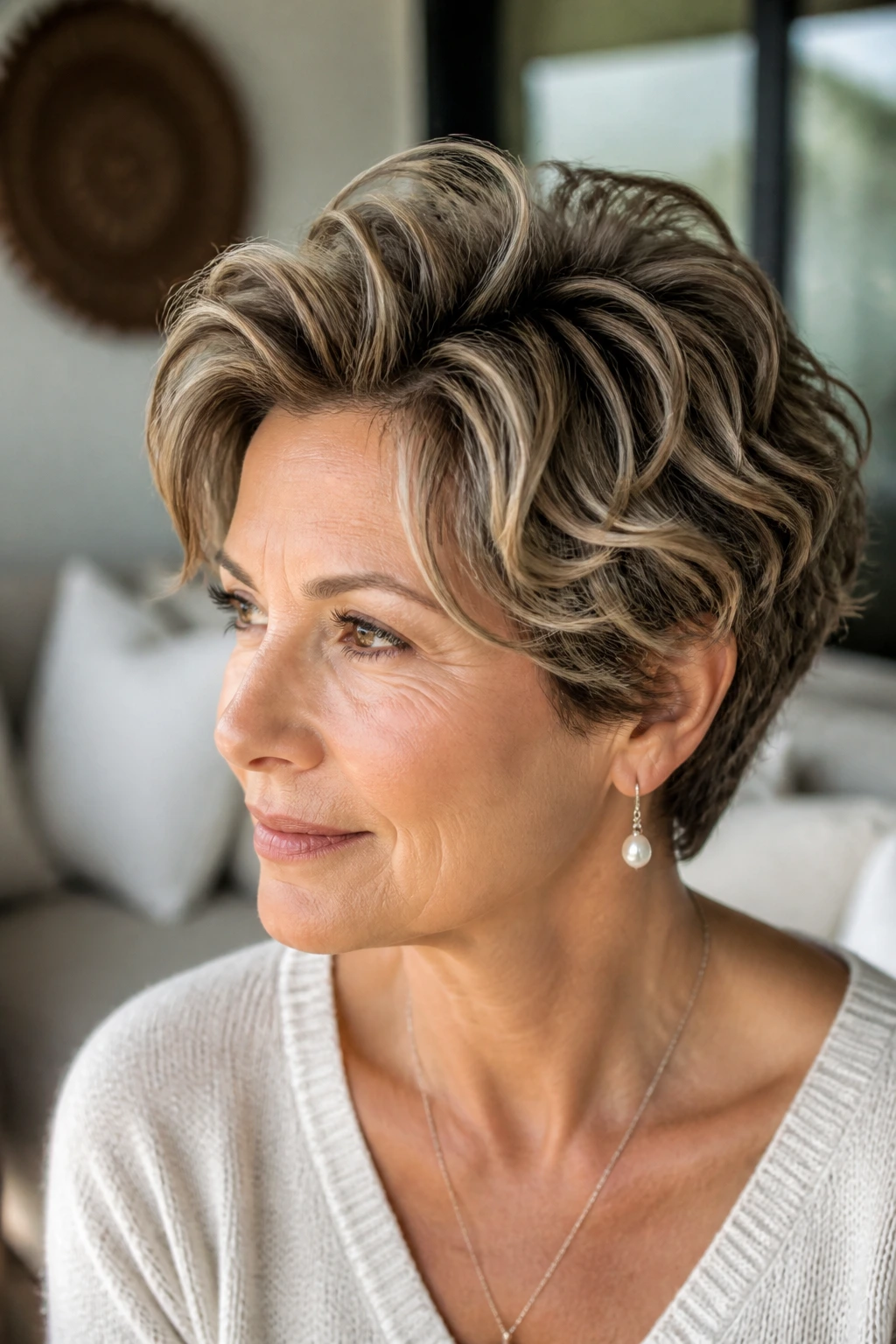
This is the cut for someone who wants short hair but doesn’t want to lose the softness of a wave. A pixie bob keeps the nape neat, leaves enough length on top to bend, and gives lowlights a chance to show through the crown instead of disappearing.
It’s a sharp little shape. Not severe. Just awake.
Why It Works
The lifted crown prevents the “flat cap” effect that can happen with fine hair once it gets short. The longer top pieces give you a spot to create texture with a finger twist or a quick pass of a small iron. Lowlights deepen the top layer just enough that the cut doesn’t look airy and pale.
Styling Cue
Use a pea-sized amount of volumizing mousse at the roots, then rough-dry with your fingers. Once the hair is dry, bend only the top section. If you curl every strand, the style starts to look too set, and that’s not the mood here.
6. Curved A-Line Lob
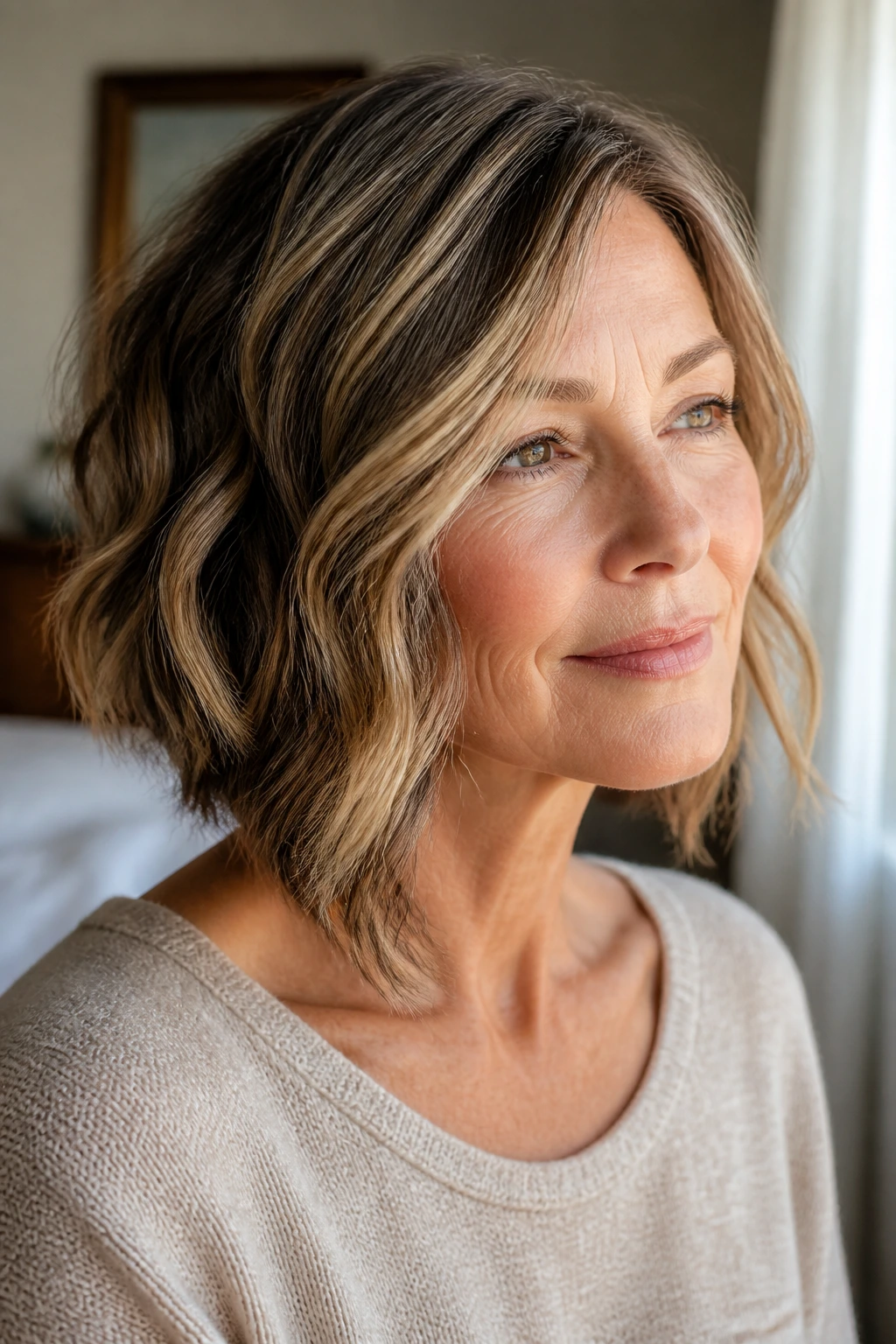
The curved A-line lob is one of those shapes that looks more expensive than it really is. Shorter in the back, a touch longer in front, it creates a natural line that fine waves can follow without losing movement. The front pieces skim the jaw and collarbone, which helps soften the face without swallowing it.
That length difference matters more than people think. Fine hair needs a little geometry.
Why It Works
The longer front angles draw the eye down, while the shorter back keeps the style light enough to lift at the root. Lowlights under the crown and through the back give the cut shadow, so the clean line at the front doesn’t look too skinny.
Small Details That Matter
- Keep the A-line mild, not dramatic.
- Ask for soft ends, not razor-thin ones.
- Use a medium-barrel brush to bend the front away from the face.
- Skip glossy serums that make the shape collapse.
This cut looks best with a side part and a little bend at the ends. Straight, it can feel severe. Curved, it feels alive.
7. Shoulder-Length Cut with Curtain Bangs
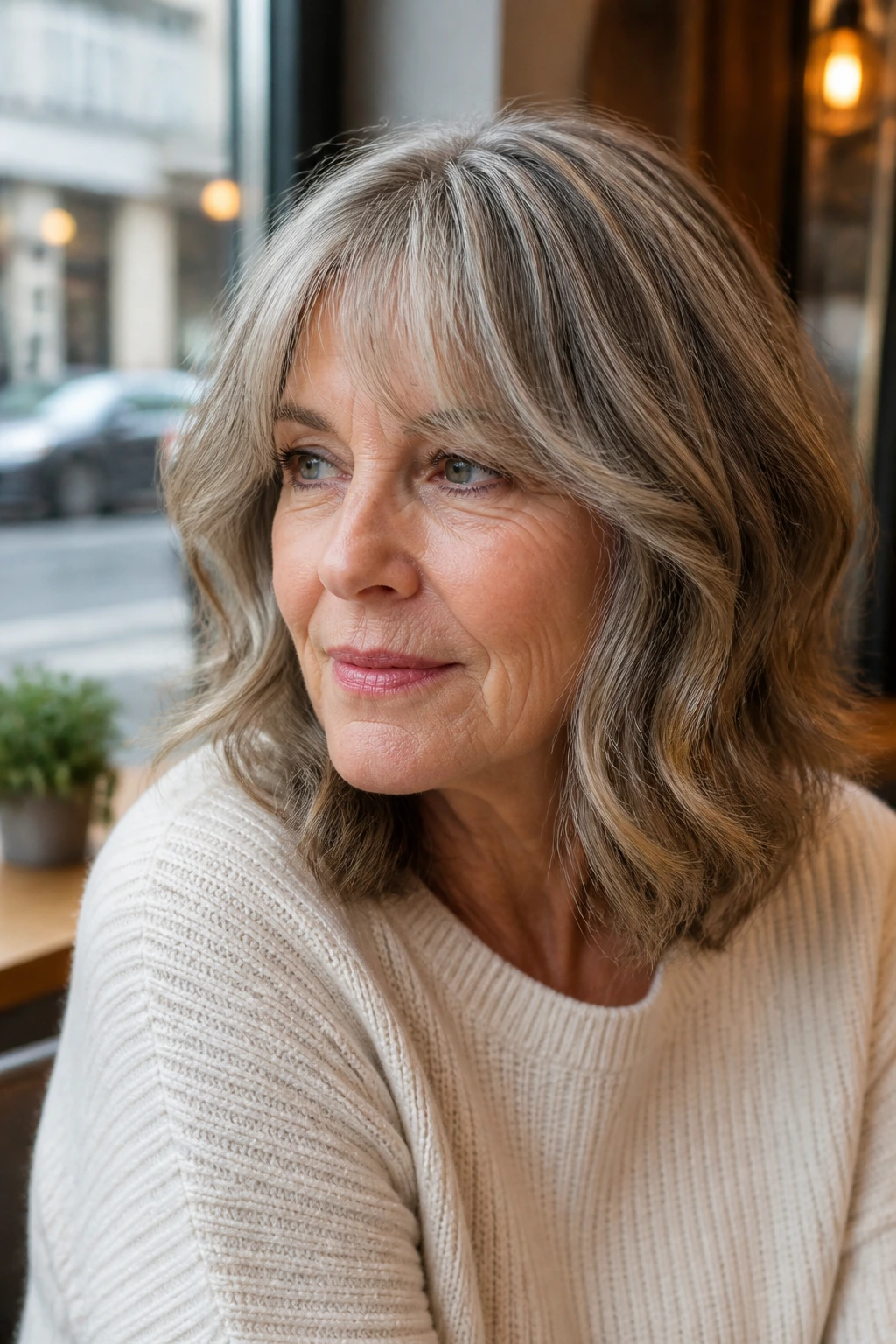
Shoulder-length hair with curtain bangs is a good answer when you want movement around the face without giving up length. On fine waves, the curtain fringe needs to be wispy and blended, not dense. The lowlights can run from the temples through the mid-lengths, which gives the whole cut some depth without darkening the front too much.
Why It Works
Curtain bangs break up a long face and help the hair feel lighter near the eyes and cheekbones. They also let the rest of the wave stay loose, which is helpful if your ends tend to puff out when they get too much heat.
I like this one because it can be worn with a center part, a slight off-center part, or tucked to one side. That flexibility matters on fine hair, because changing the part is often the fastest way to lift the roots.
Stylist Note
Ask for the bang area to be left longer than you think. Fine wavy fringe shrinks once it dries.
8. Rounded Bob with Hidden Depth
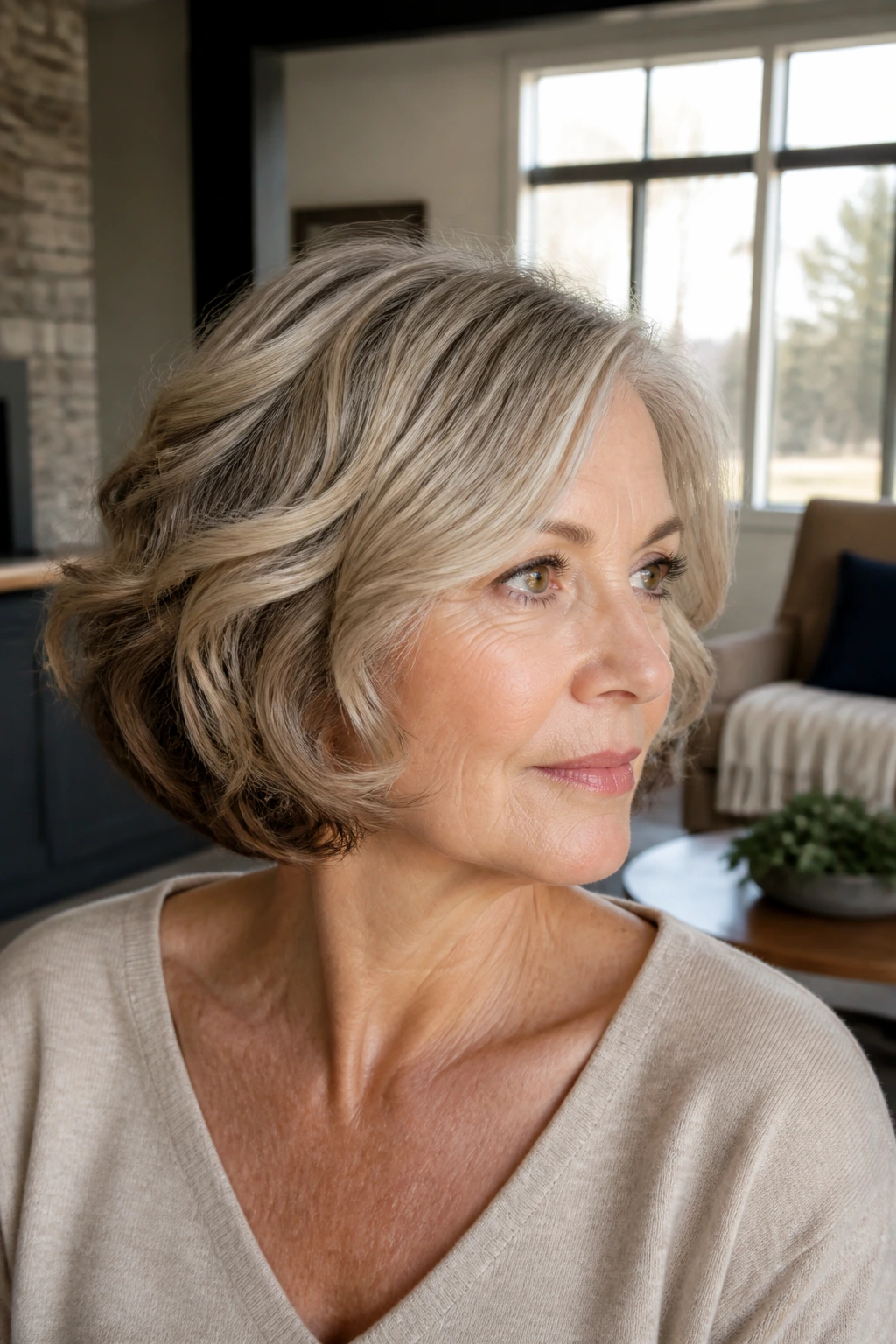
A rounded bob sounds tidy, and it is, but it can still feel soft if the interior is cut with restraint. This version keeps fullness near the crown and cheek area, then tapers just enough at the nape to avoid the helmet look. The lowlights stay tucked under the top layer, so the bob reads as thick without showing off every foil.
Why It Works
The rounded outline supports fine waves because the shape echoes the hair’s natural bend. If the cut is too square, the ends can look thin. If it’s too layered, the volume disappears. This one sits in the middle and behaves better than either extreme.
Best Used With
- A small round brush at the roots
- A side part or soft off-center part
- Light misting spray, applied from underneath
- A 6- to 8-week trim cycle
This is a quietly strong haircut. It doesn’t need to be flashy. It just needs to be cut with a steady hand.
9. Tousled Midi Cut with Long Layers
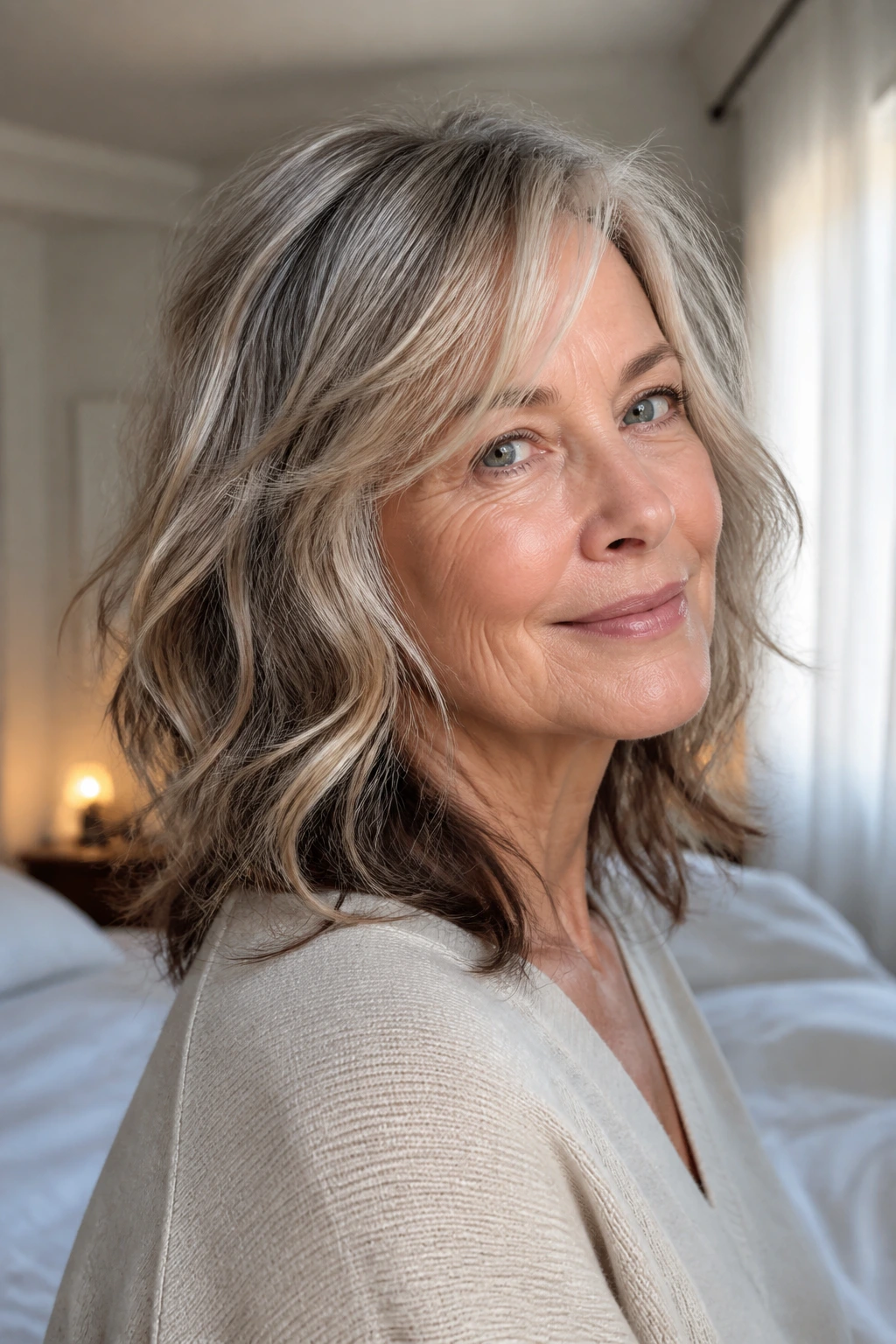
The midi cut is for anyone who wants more swing than a bob but less maintenance than long hair. On fine wavy hair, the danger is weight. Too much length and the wave drops; too many layers and the ends go floaty. Long layers solve part of that problem, and lowlights solve the rest by giving the body somewhere to sit.
What Makes It Different
Instead of trying to create volume all over, this cut lets the wave appear in sections. That’s more flattering on fine hair, frankly, because it avoids the puffed-out triangle that can happen when every inch is overworked.
A few mocha or taupe lowlights through the underside keep the length from looking pale and stringy. They are especially useful if your hair is a blend of gray and light brown, where the transition can otherwise look washed out.
Best Finish
Air-dry halfway, then use a diffuser only at the crown. Let the ends finish on their own. They look better that way.
10. Tucked-Behind-Ear Bob
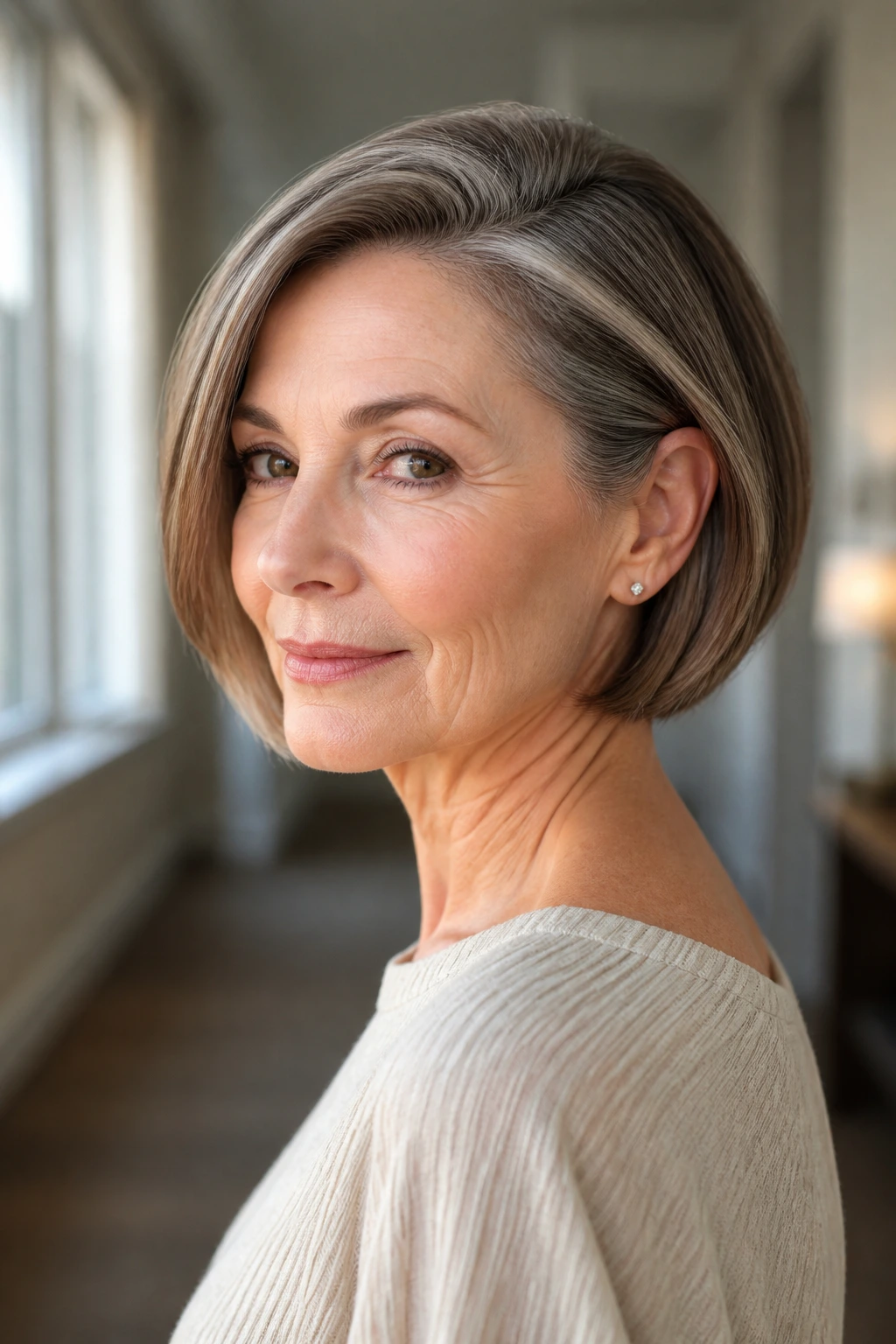
There’s something nice about a bob that knows how to behave around an ear. This cut is short enough to stay neat, long enough to tuck, and easy to dress up with one earring showing and the other side smoothed back. Fine waves benefit from the tucked shape because it keeps the sides from puffing outward.
Why It Works
The tucked-behind-ear move exposes the cheekbone and gives the illusion of a narrower profile, which can be helpful when the hair is fine but the face has softened over time. The lowlights, placed near the temples and nape, stop the exposed side from reading flat in bright light.
A Small Salon Detail
Tell your stylist you want enough length in front to tuck without the ends kicking out. That’s the difference between polished and fussy.
This is also one of the easiest cuts to refresh on day two. A damp brush, a little root lift spray, and five minutes is usually enough.
11. Shattered Lob with Piecey Ends
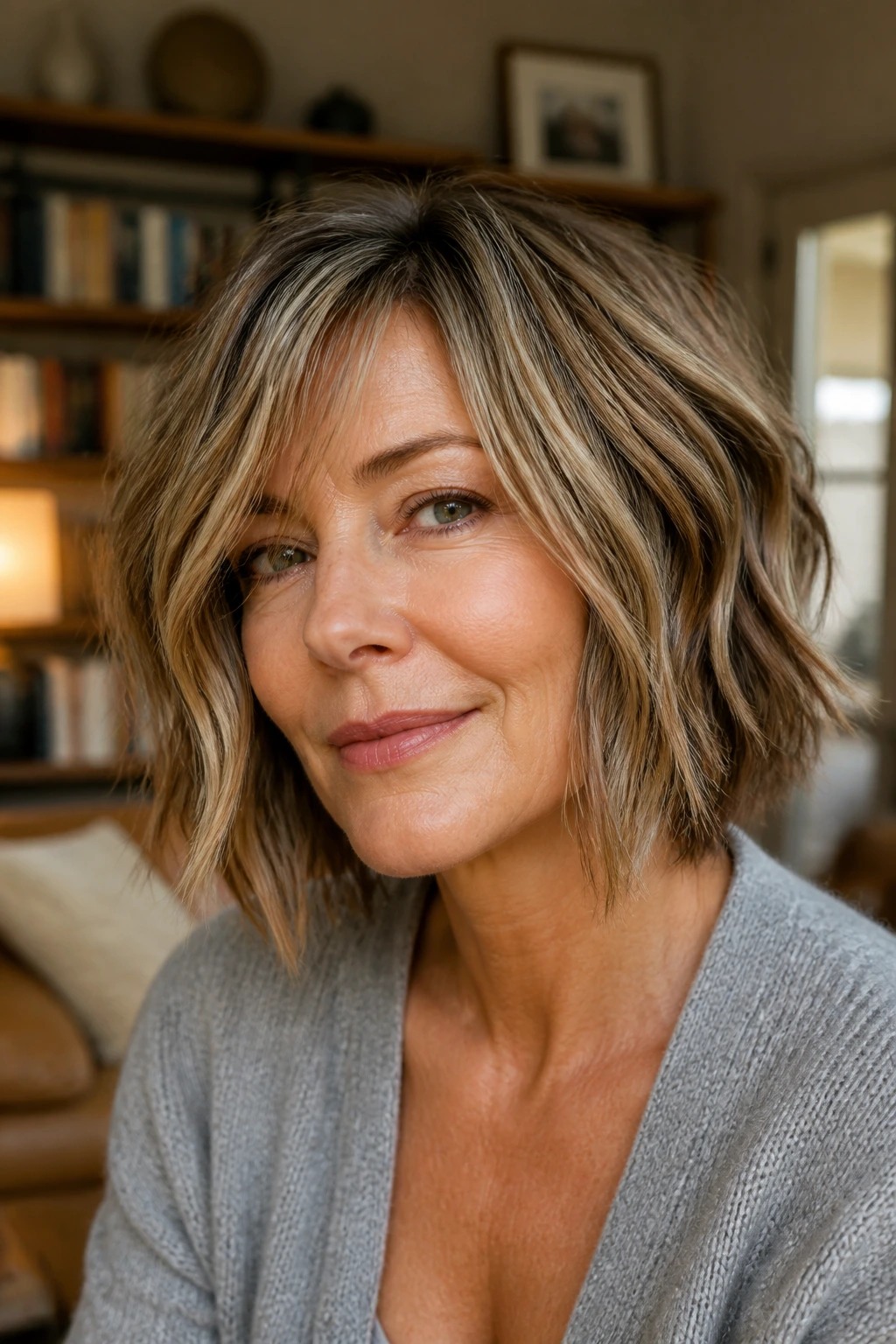
A shattered lob is a little rougher around the edges than the collarbone version, and that’s the appeal. The ends are broken up just enough to keep the hair from looking one-note. For fine waves, piecey ends can be a gift, as long as they are not thinned too far. The lowlights sharpen the separations between pieces so the style doesn’t blur into one soft mass.
Why It Works
This cut thrives on texture. The lowlights catch between the wave clumps and make each piece stand out a little more. That gives fine hair a stronger outline without needing extra product.
How to Wear It
A 1-inch wand is the safest tool here. Wrap only the last half of each section, then shake it out with your fingers. Leave the roots alone. That little bit of slack at the scalp is what keeps the lob from looking overly styled.
If your hair is prone to frizz, a drop of cream on the very ends is enough. More than that and you lose the piecey effect.
12. Bixie with Longer Top
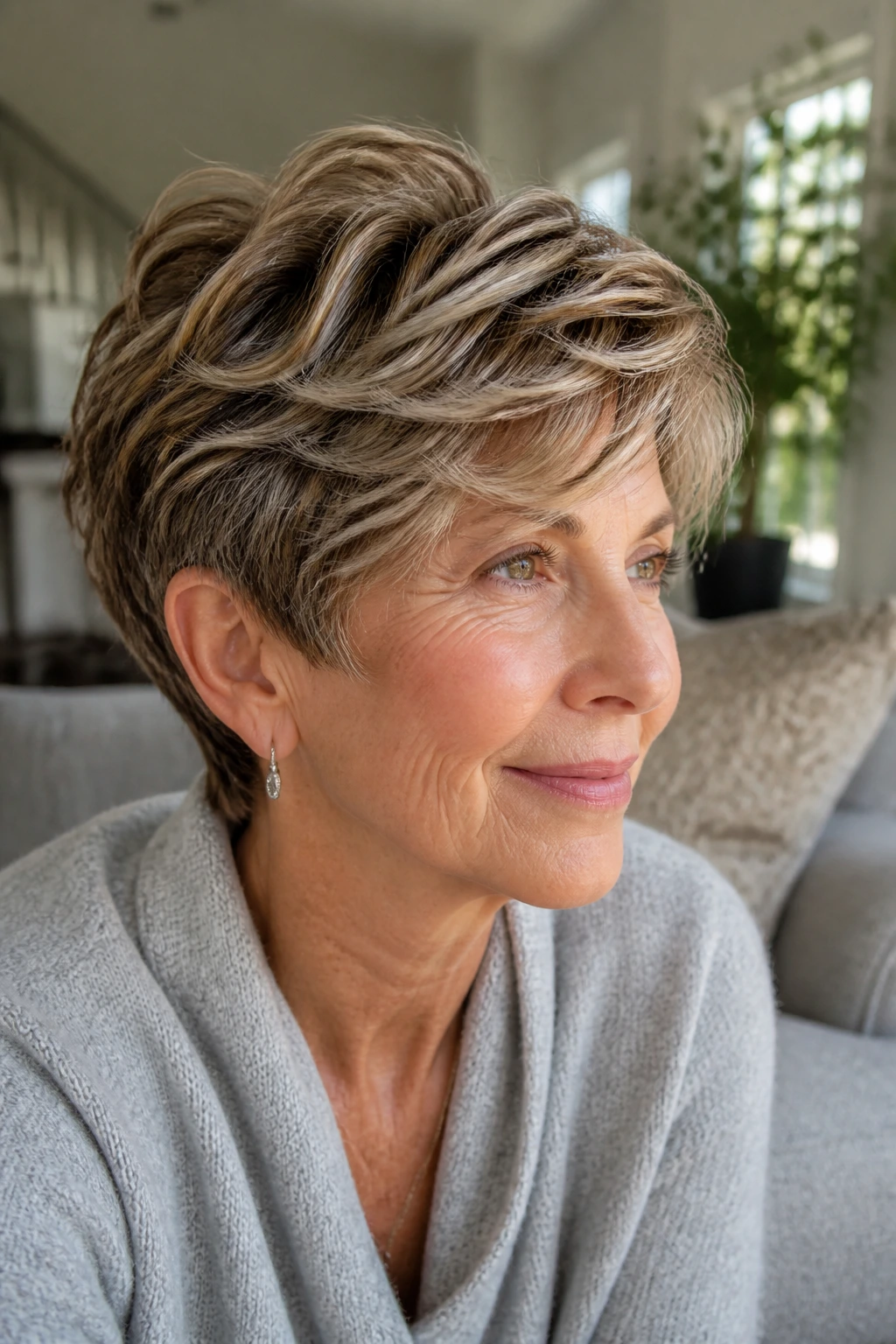
The bixie sits between a bob and a pixie, and it suits fine wavy hair because the shorter sides keep the outline clean while the longer top gives you styling room. It’s one of the easiest ways to get lift without teasing the crown into submission. Lowlights can be concentrated on the top and back layers so the cut looks deeper, not heavier.
Why It Works
A longer top means you can flip the direction of the wave on different days. That matters if your hair likes to separate or fall in the same tired line every morning. The shape stays fresh because the top has room to move.
Good for You If
- You want short hair but not a severe crop
- Your waves are looser at the nape than at the crown
- You wear glasses and need hair that clears the frame
- You’d rather style a few sections than a whole head
This cut looks best when the sides are snug and the top has a little lift. Too much length everywhere and it loses the point.
13. Inverted Bob with Soft Ends
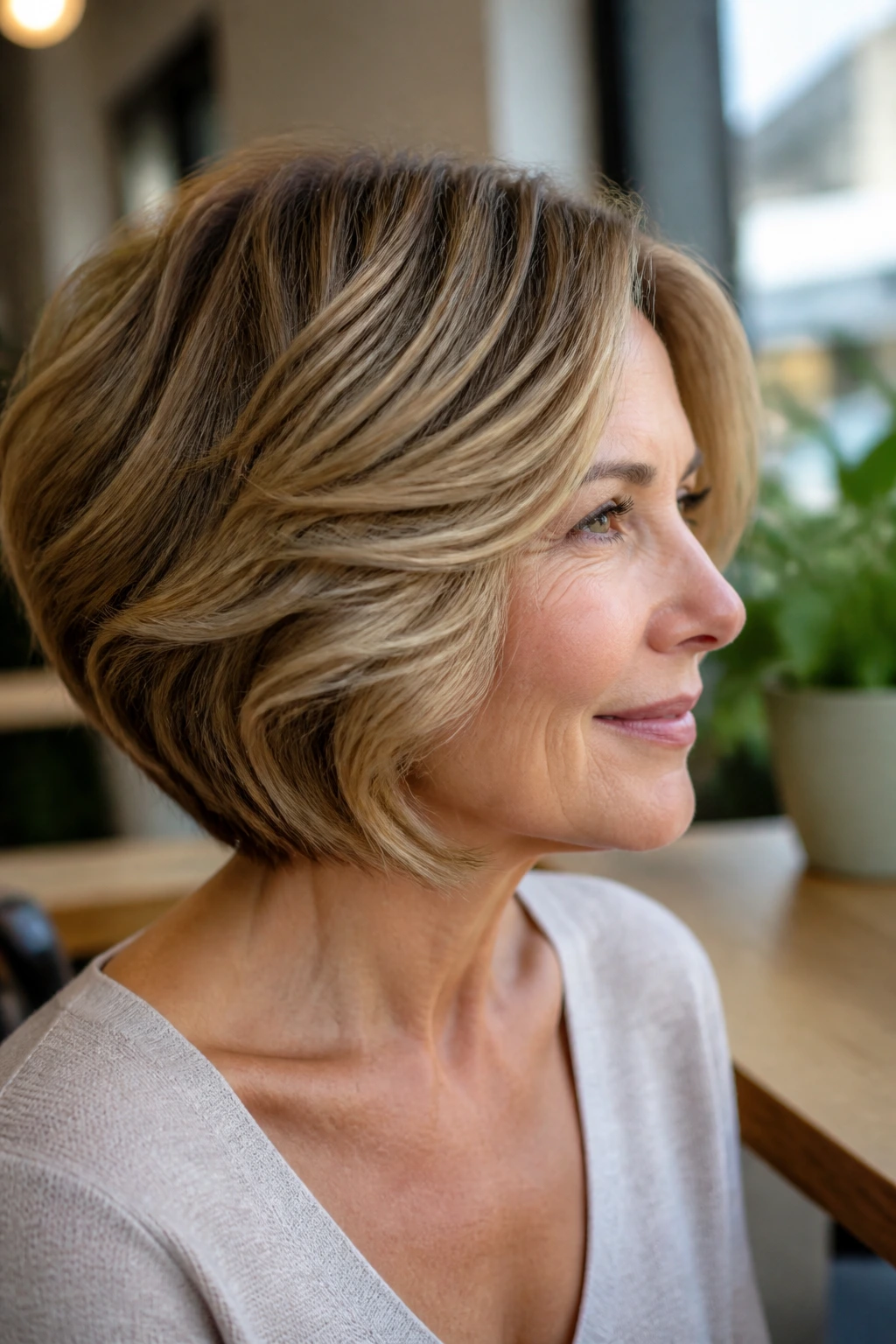
An inverted bob gives the back a little lift and the front a little sweep, which is exactly the sort of angle fine hair can use. The soft ends matter more than the geometry. Sharp ends on delicate hair can look thin fast. Softening the perimeter keeps the cut from feeling choppy, and lowlights underneath deepen the shape.
Why It Works
The shorter back adds body where fine hair often collapses, while the longer front pieces frame the face without dragging the style down. The lowlights help connect the back and front visually, so the bob doesn’t look like two separate haircuts.
Styling Tip
Blow-dry the back first with a small round brush, then bend the front pieces away from the face. That order matters because if the back stays damp, the front loses its lift while you fuss with it.
This is a neat, practical haircut. It has a little edge, but not enough to feel harsh.
14. Long Wavy Layers with Subtle Face Frame
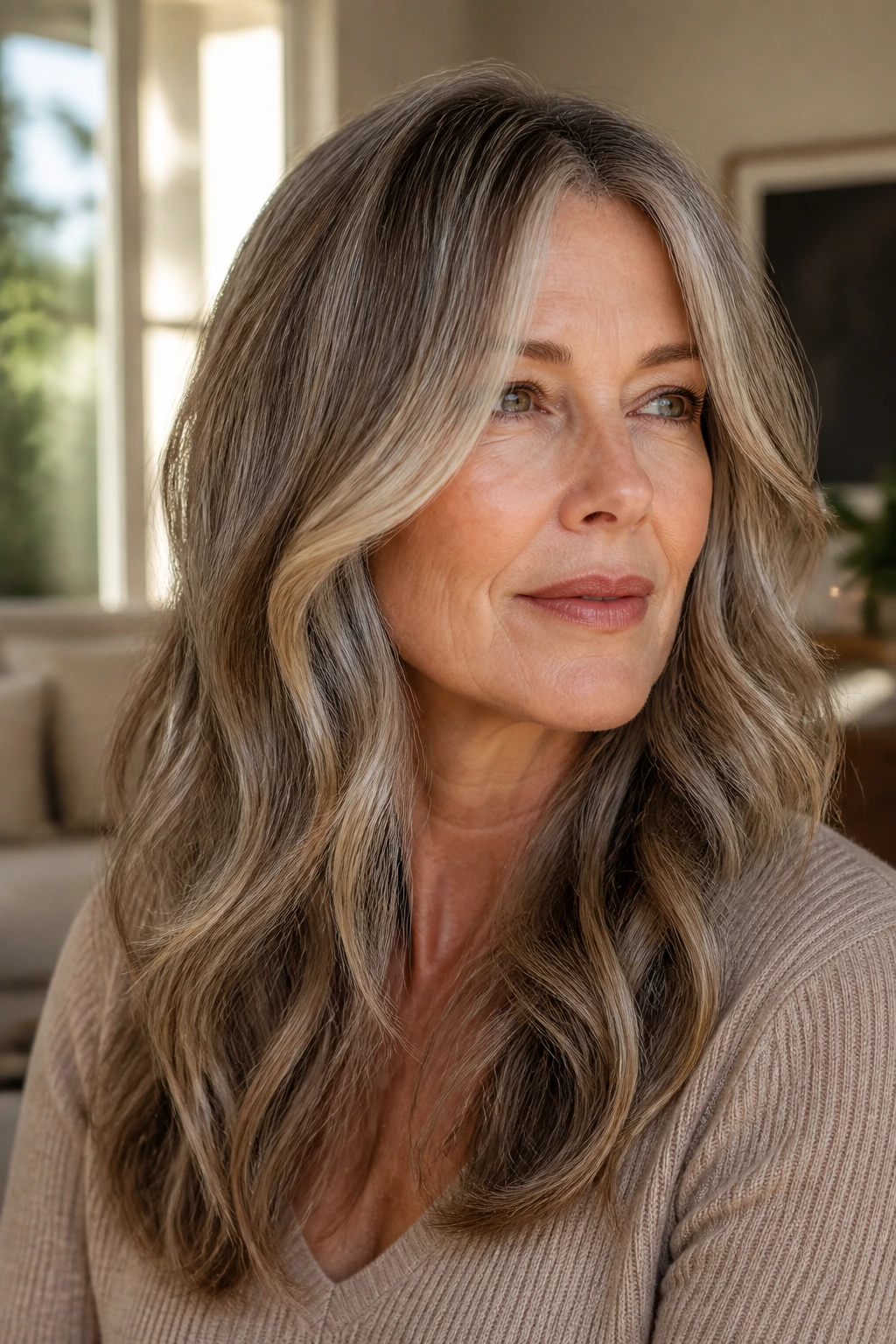
Not everyone wants to go shorter. Fair enough. Long layers can still work on fine wavy hair over 60 if the layers are placed with restraint and the lowlights are used to add depth through the mid-lengths and underneath. The face frame should be subtle, starting around the cheekbone or just below the jaw, not chopped high up where it can look stringy.
Why It Works
The longer length keeps the wave from springing up too much, while the layers stop the ends from feeling like one heavy block. Lowlights prevent long fine hair from reading thin in the sunlight, especially when it’s pulled over one shoulder.
Best Approach
Use a large-barrel iron only if you need to re-bend the front pieces. The rest can be left alone. If you curl the whole head, long fine waves often lose their easy feel and start looking overdone.
This is the cut for someone who likes softness and does not mind a little movement around the shoulders.
15. Airy Crop with Side Part
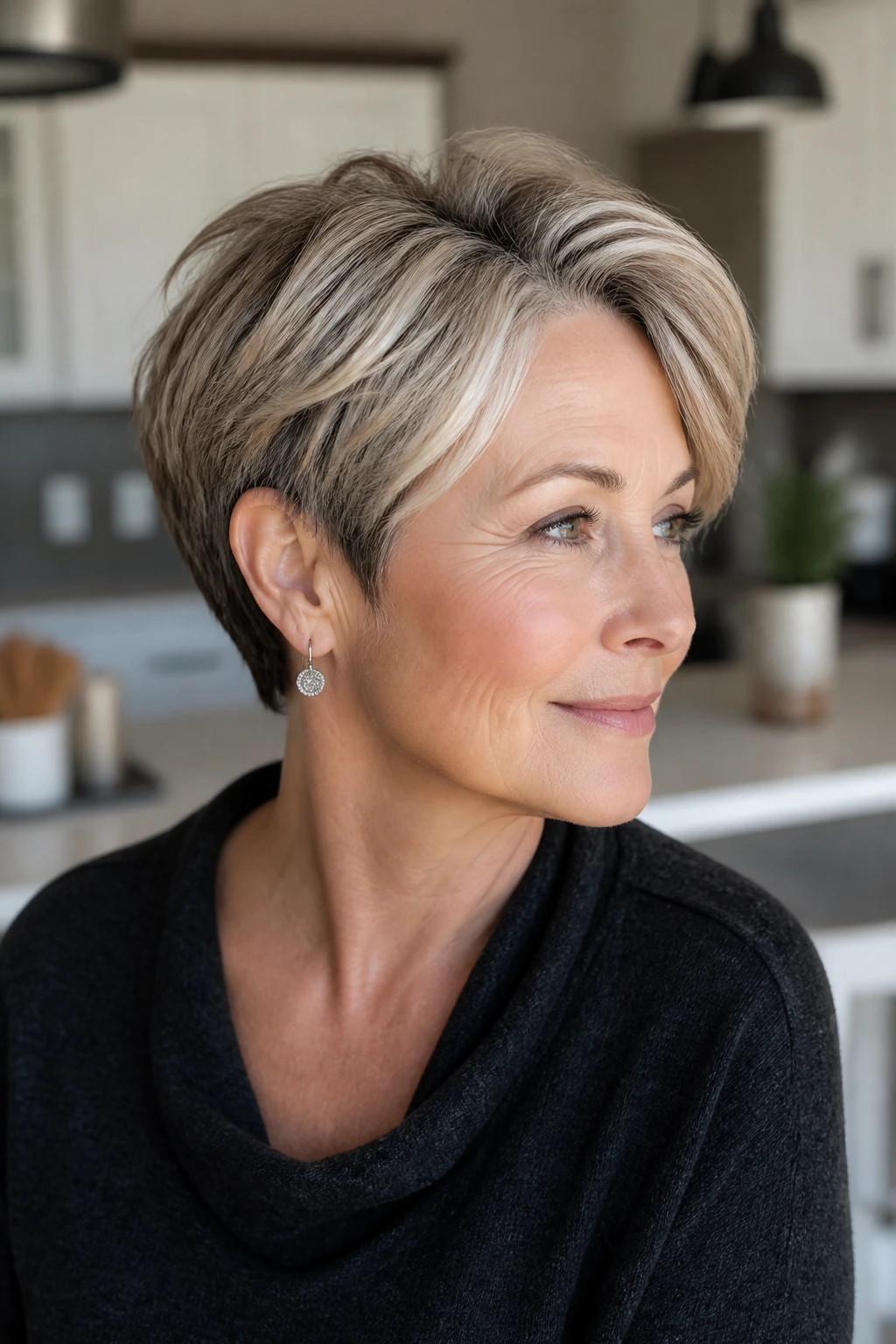
A short airy crop can be a mercy on hair that’s gotten finer and wants less heat, less tugging, and less time in front of the mirror. The side part gives it direction. The lowlights keep the top from looking too pale, which is a common problem with very short silver-fine hair.
Why It Works
Fine waves at a short length can either look chic or look like they’ve been flattened by a hat. The side part and airy texture prevent that. Lowlights add a second tone so the scalp doesn’t dominate the look.
Haircut Detail
Ask for soft tapering around the ears and nape. Leave enough length on top to push forward, sweep back, or tuck to one side. Without that room, the crop can feel fixed in one position, and that gets old fast.
A tiny dab of paste between the fingertips is enough. More than that and the crop loses its lift.
16. Clavicle Cut with Bent Ends
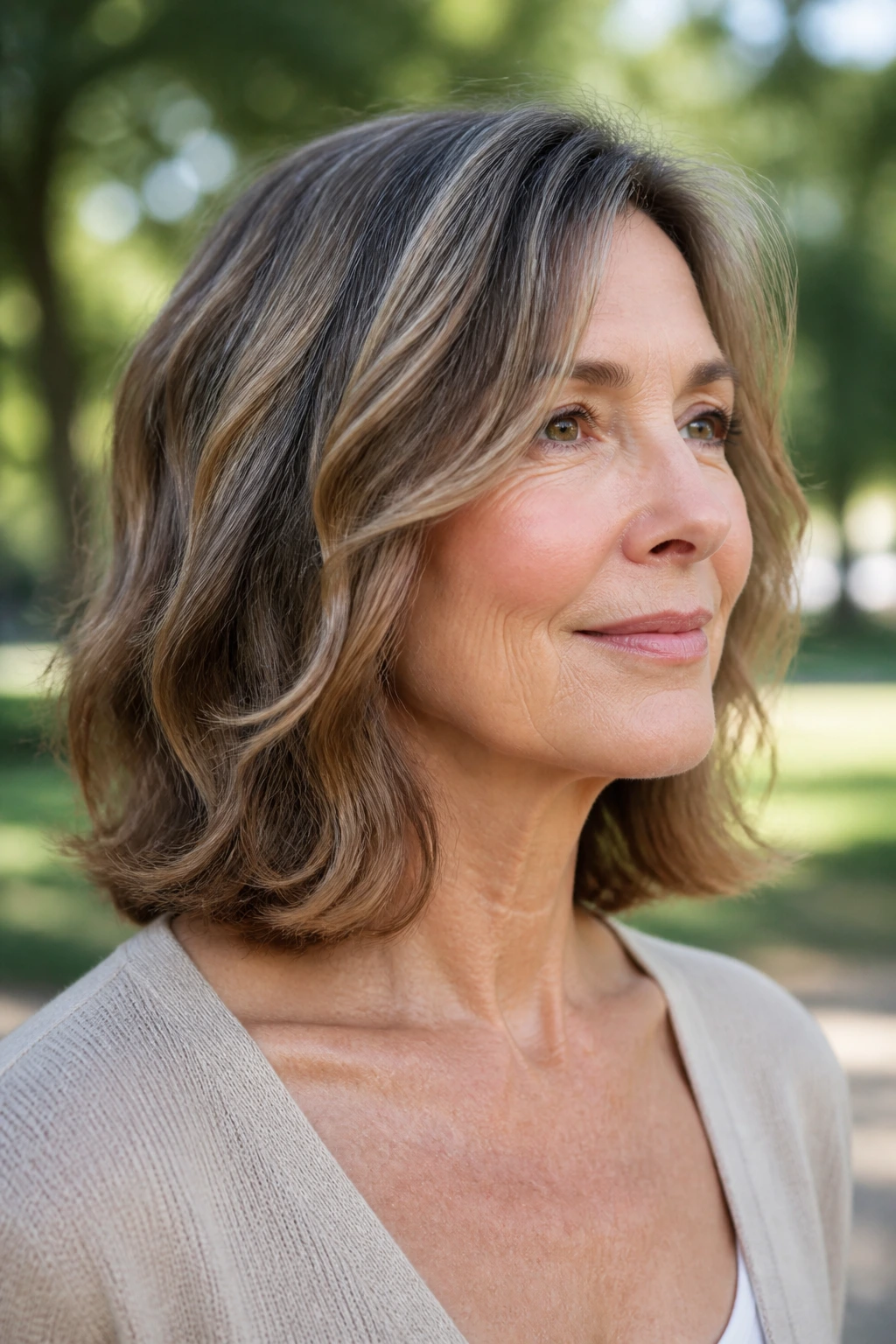
The clavicle cut is a quiet workhorse. It sits just above or at the collarbone, which gives fine waves a little more swing than a bob and less drag than long hair. Bent ends make it feel intentional, while lowlights threaded through the mid-lengths keep the outline from fading into the skin.
Why It Works
This length gives you enough hair to create a wave, but not so much that the pattern collapses under its own weight. Bent ends are especially helpful if your hair naturally flips outward at the bottom; once they’re shaped on purpose, the whole cut looks more controlled.
A Nice Way to Wear It
Center part for polish. Side part for volume. Either one works.
That flexibility makes this cut a smart choice if you don’t want to revisit the salon every time your mood shifts. It behaves.
17. Wolfish Wavy Cut
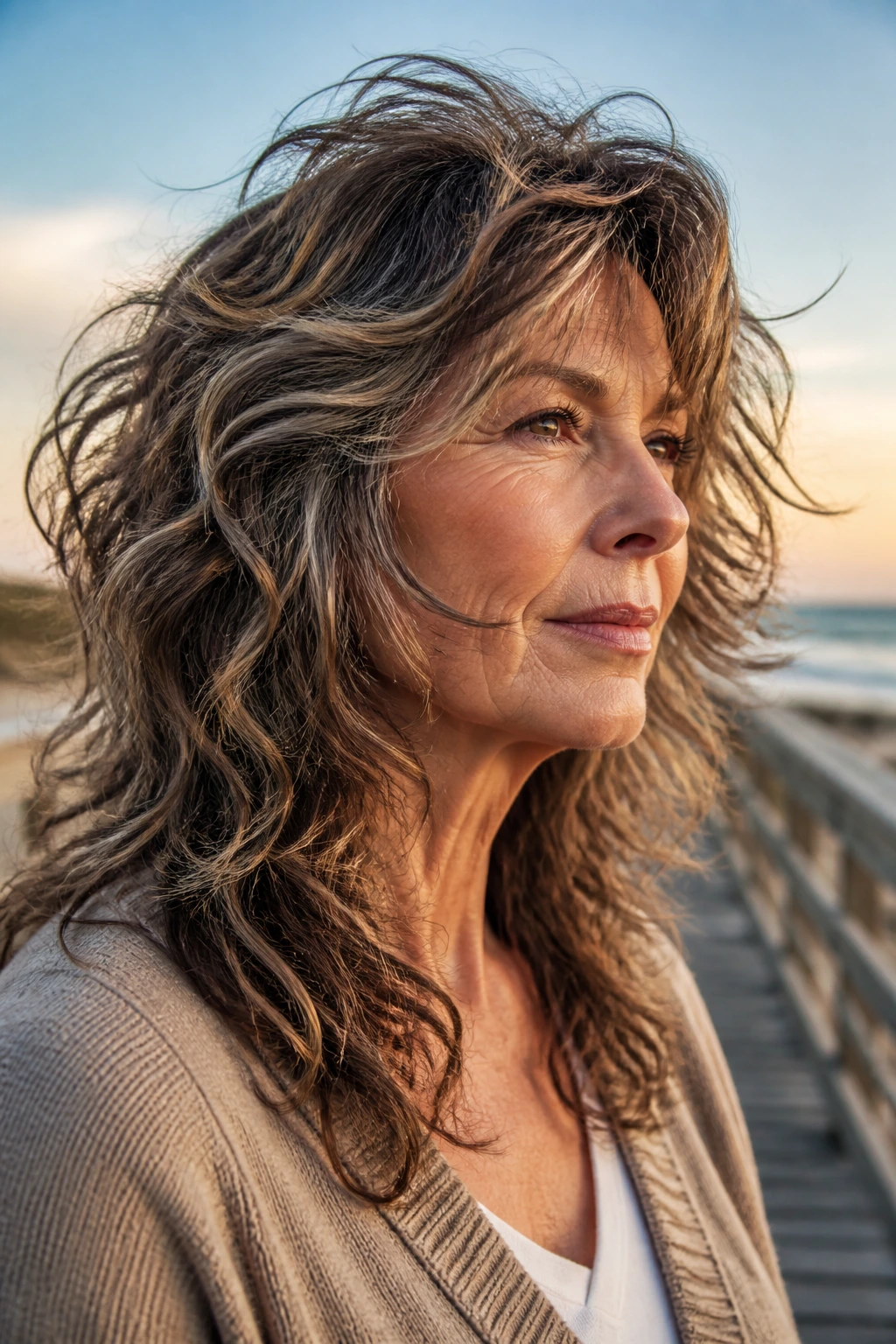
A softer wolf cut can be surprisingly good on fine wavy hair, if the layers are kept long and the crown isn’t cut into a puff. The trick is to borrow the movement, not the chaos. Lowlights help because they break up the layers and make each section look a little thicker.
Why It Works
The wolf-ish shape adds texture around the face and crown, which are the spots that tend to look bare on fine hair. But too much texture is a trap. If the layers are short and aggressive, the ends start to look frayed. Long, blended layers keep the cut wearable.
Who It Suits
This one works best for someone who wants a bit of edge and does not mind a messier finish. If you prefer crisp lines, skip it. If you like hair that looks good after a short walk in the wind, keep reading.
A sea-salt spray can help, but only lightly. Too much and the hair feels crunchy.
18. Blunt-Looking Lob with Internal Layers
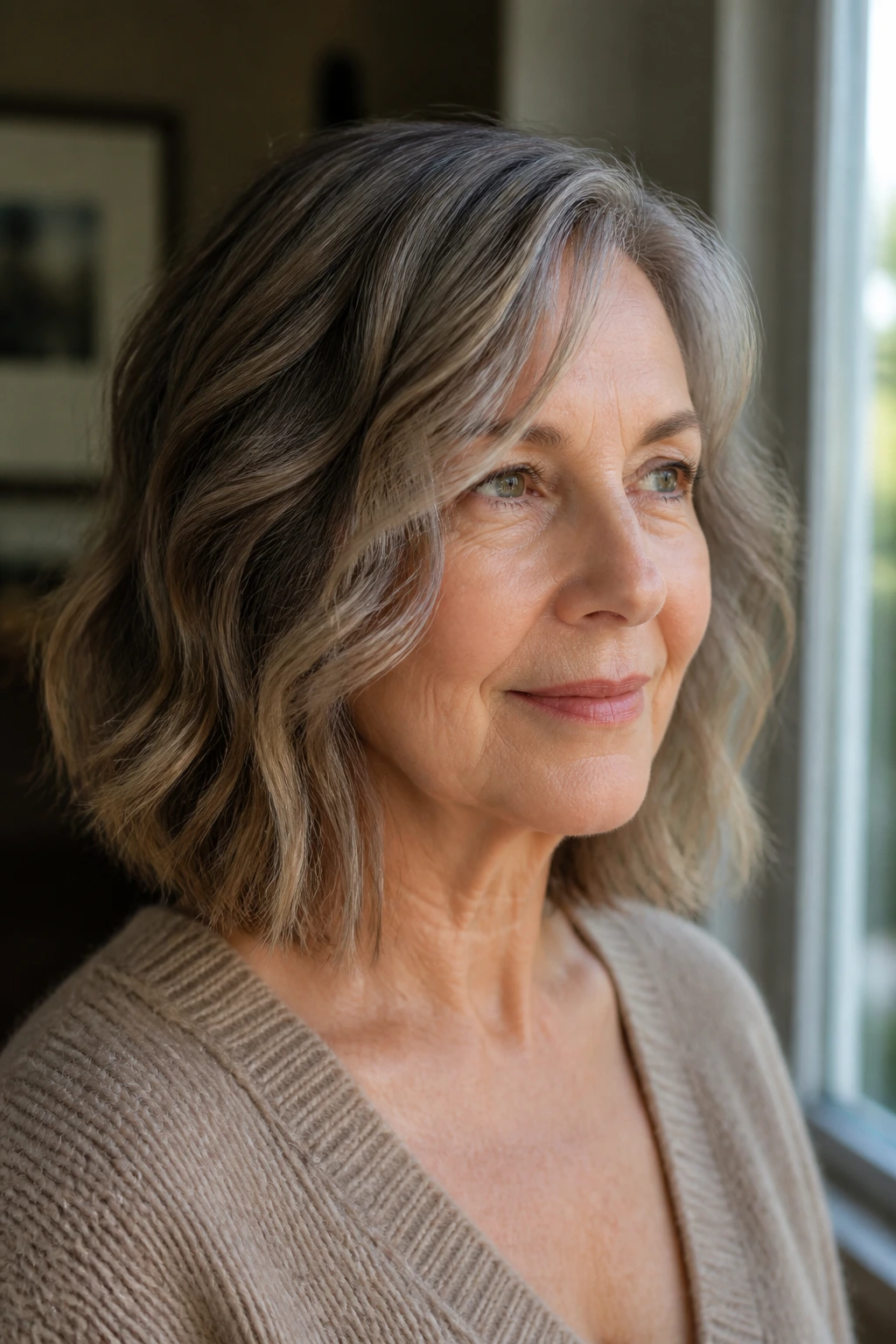
A blunt-looking lob sounds contradictory when the hair is fine and wavy, but that’s the clever part. The perimeter looks solid, while the interior layers remove just enough bulk to let the wave bend. Lowlights are useful here because they make the clean edge appear thicker from the side.
Why It Works
You get the sense of weight at the bottom without actually carrying too much of it. Fine hair often needs that illusion. The interior layers do the hidden work, and the blunt-looking line finishes the job.
This is one of the best options for someone who wants the hair to look fuller in a low ponytail or clipped half-up. The shape holds together.
Styling Cue
Dry the roots with lift, then smooth only the outer layer with a brush. Leave the underlayer a bit more textured. That contrast is what keeps the cut from going flat.
19. Wispy Fringe Bob
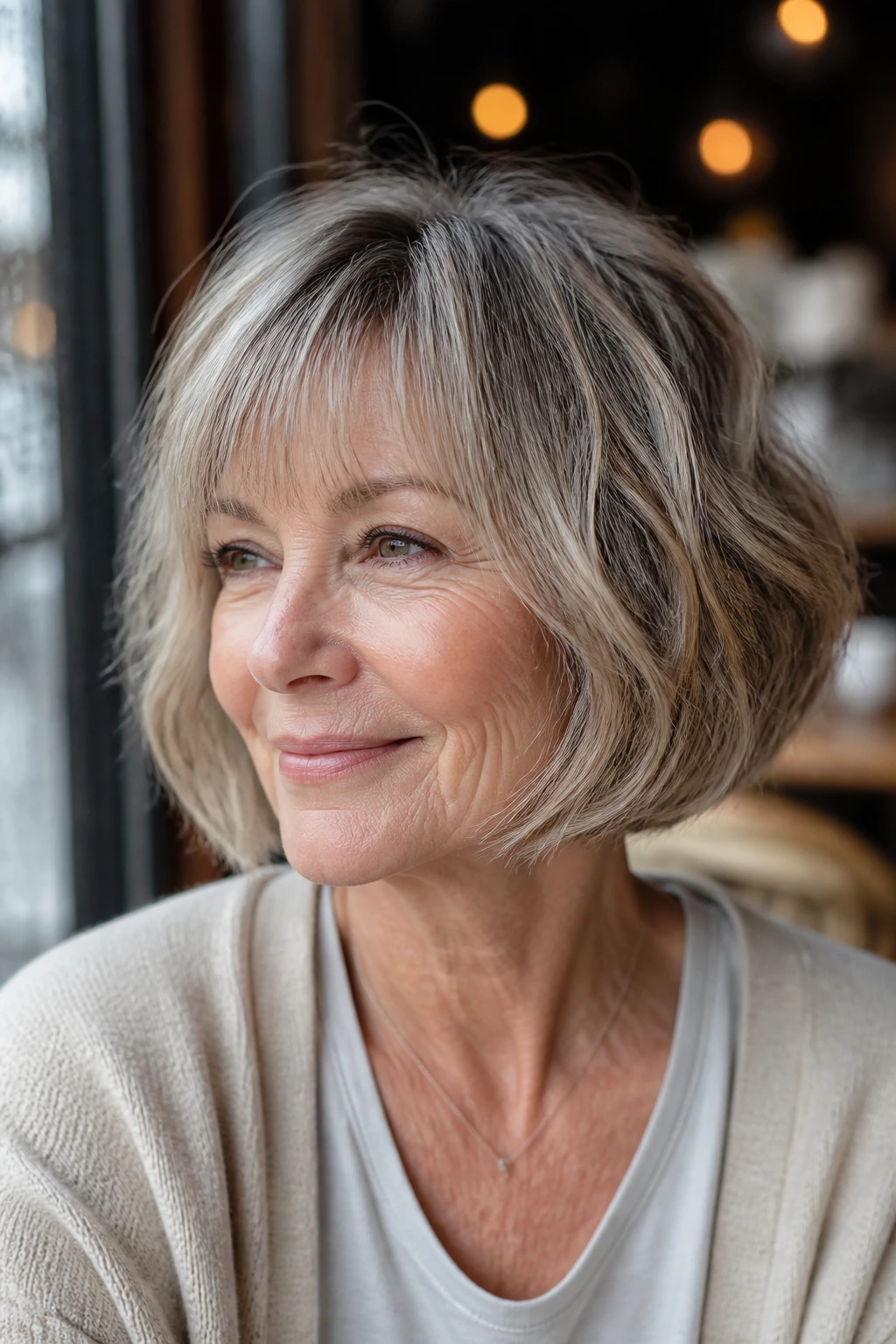
A wispy fringe bob can be lovely on fine wavy hair because the fringe softens the forehead without taking over the face. The rest of the bob can stay compact, which helps the outline stay strong. Lowlights behind the fringe keep the front from looking too pale, especially when the bangs are separated a little.
Why It Works
A heavy fringe on fine hair is a headache. A wispy one is a relief. It moves, it parts a little when you want it to, and it won’t steal all the volume from the crown.
Practical Note
The fringe should be cut dry or nearly dry, because fine wavy bangs spring up more than most people expect. If they’re cut wet and blunt, they can land too short.
This cut is friendly with air-drying, which is part of the appeal. Not every style needs a round brush and a lecture.
20. Soft Cascade with Honey Lowlights
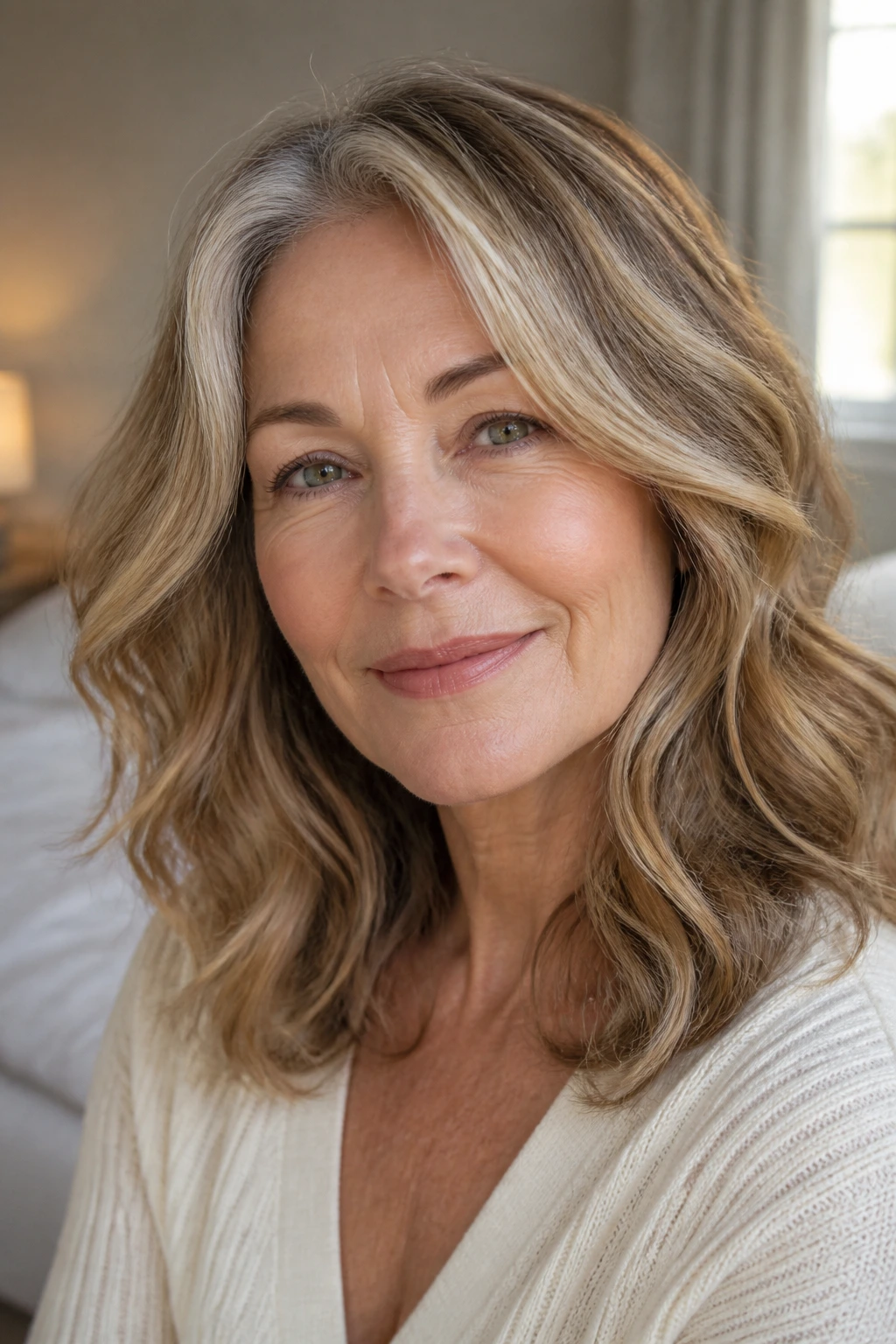
This is the cut for someone who likes a little softness around the shoulders and doesn’t want the hair to look chopped into pieces. The layers fall in a gentle cascade, and honey lowlights weave through the waves so the whole head reads as warmer and fuller. It’s especially good when silver strands have started coming in at different rates and need a calmer blend.
Why It Works
The cascading layers keep the ends from looking blunt and sparse. Fine waves need that taper, or they start to look like one long sheet. The honey lowlights add warmth without turning brassy, which is a real problem with badly chosen dark tones.
Why I Like It
Because it still feels like hair. Not a haircut. There’s a difference.
This style works beautifully when you want softness more than sharp shape. It also grows out gently, which is nice if you don’t live in a salon chair.
21. Sleek-Rooted Wavy Lob
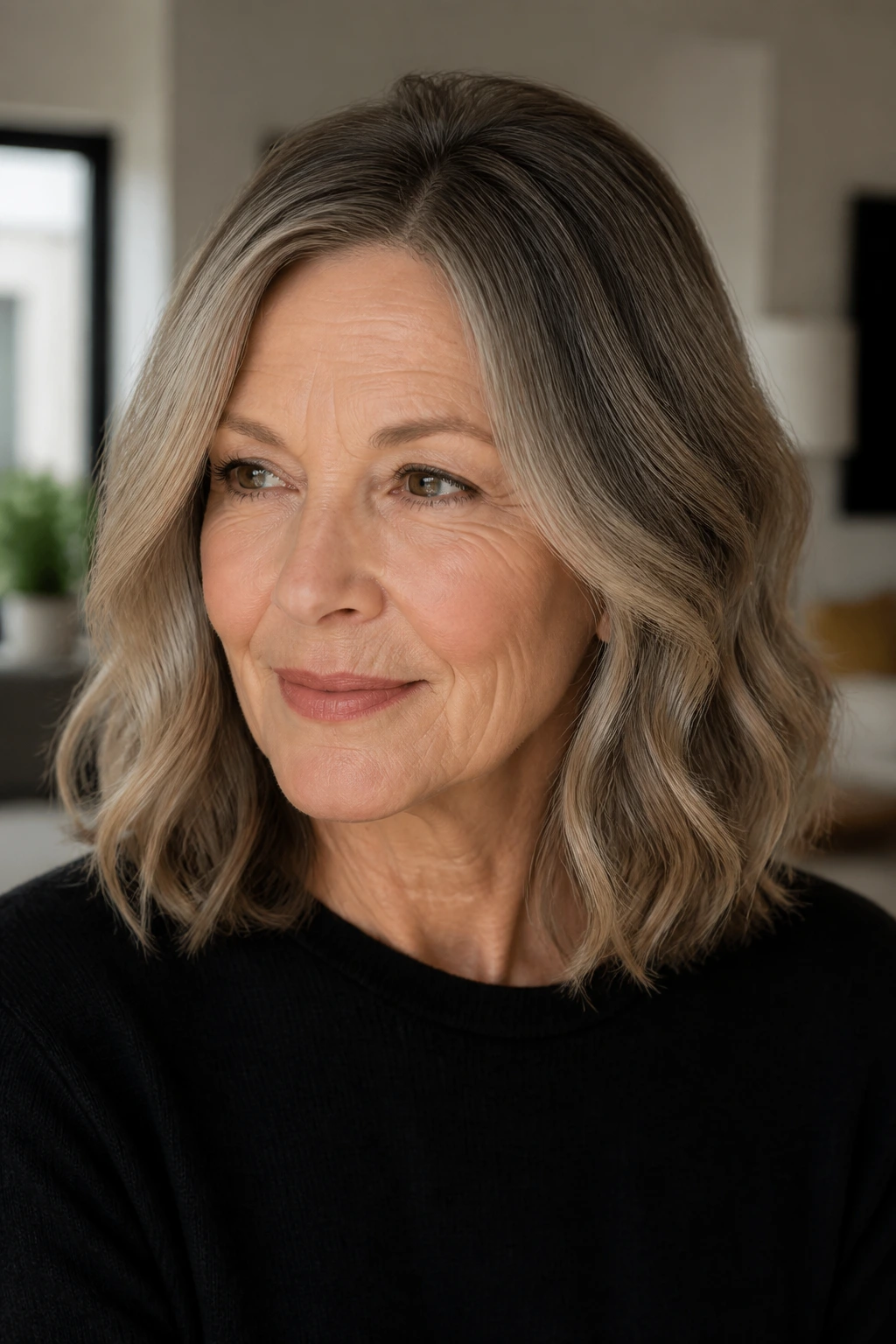
Here’s the thing: not every wavy style has to look wildly tousled. A sleek-rooted lob keeps the crown smoother and lets the wave start lower down, near the ears and cheekbones. On fine hair, that can be a smart move. It gives the top a little calm and makes the lower movement read more clearly.
Why It Works
The smoother root area makes the hair look neater and denser near the scalp, which is where fine hair can look sparse. Lowlights help reinforce that effect by darkening the base a touch.
Best For
- People who hate big volume at the crown
- Hair that frizzes when blown too high
- A professional look that still bends at the ends
- Days when you want control, not fluff
A flat brush and a very light smoothing spray are enough. Skip thick oils. They’ll undo the whole point.
22. Textured Crop with Ear-Grazing Sides
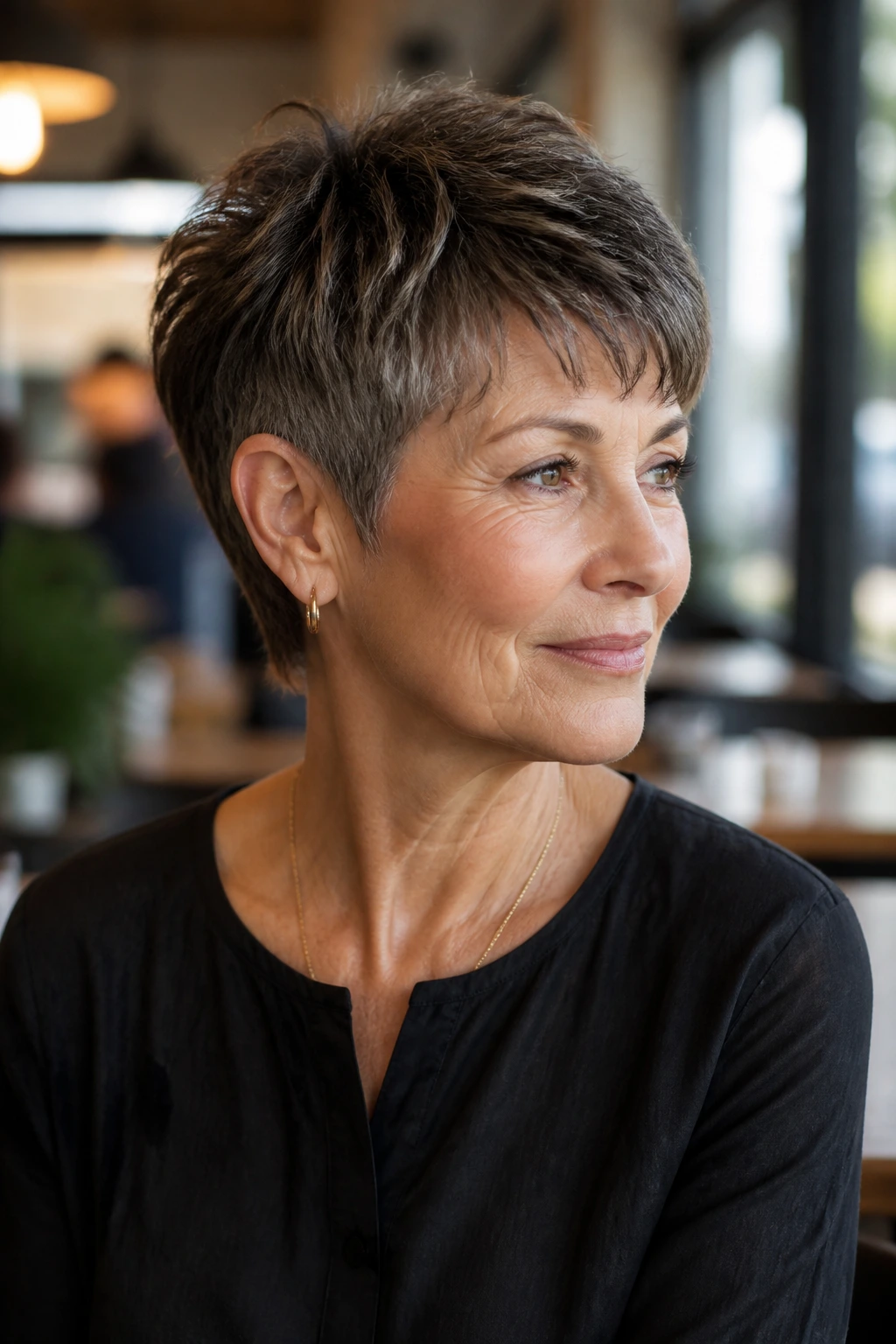
This crop keeps the sides light and close to the head, then leaves enough length on top to create a little wave and lift. The ear-grazing shape opens the face, and the lowlights add depth through the crown so the hair doesn’t appear too airy. It’s clean without being severe.
Why It Works
The sides stay controlled, which is useful if your hair tends to expand around the ears. The top can be pushed forward, swept to the side, or lightly finger-styled depending on mood. That small amount of flexibility makes short hair feel less rigid.
Good Detail to Ask For
Ask for texture in the top only, not all over. On fine hair, too much texturizing everywhere creates see-through ends fast.
This one wears best with a matte finish. Shine products make the shorter pieces separate in odd ways.
23. Angled Bob with Side Bangs
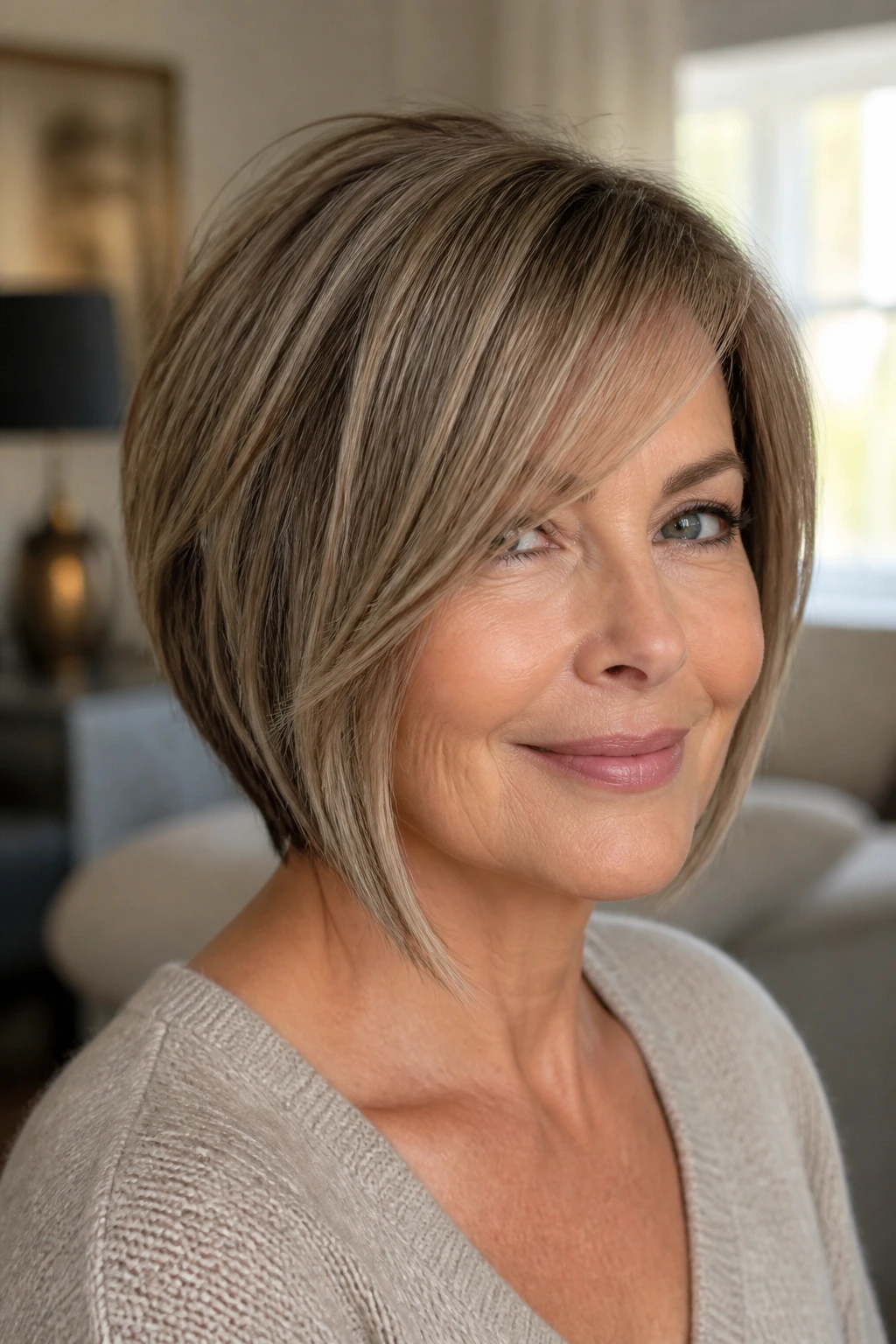
An angled bob with side bangs gives fine waves a clear shape and a soft entrance. The longer front pieces narrow the face visually, while the side bang breaks up the forehead without creating a heavy curtain. Lowlights near the nape and underneath keep the longer front from stealing the entire show.
Why It Works
The angle gives you movement, and the side bang gives you a soft frame. Fine hair needs both if it’s going to look intentional instead of accidental.
Styling Tip
Dry the bang area first with a small brush, directing it away from the face. If the fringe dries the wrong way, the whole cut can feel off, and that first five minutes really does matter.
This is a good option when you want structure with a little softness around the eyes.
24. Layered Shoulder Cut with Bright Face Frame
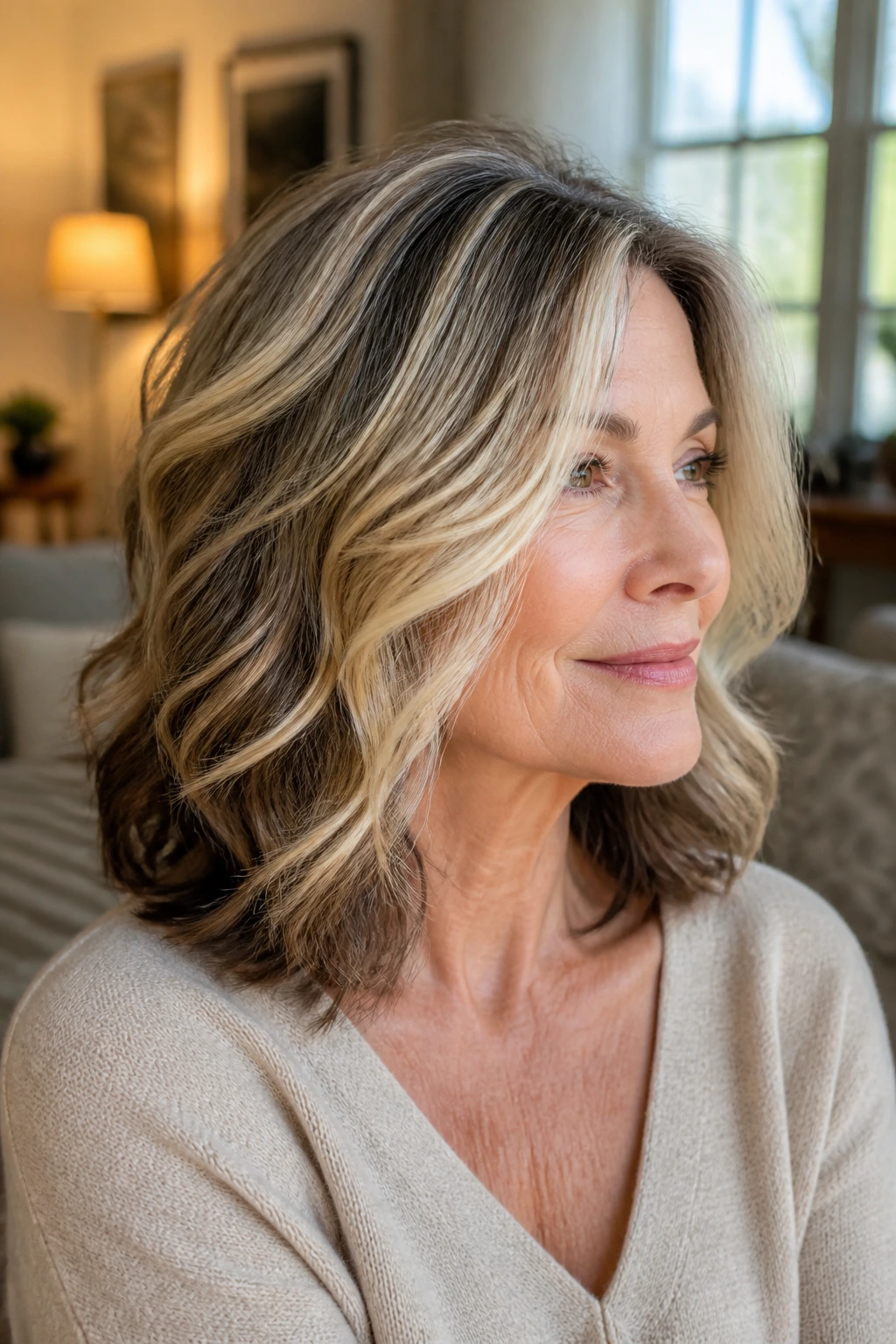
A layered shoulder cut is a useful compromise when you want some length but not a lot of weight. The face frame can be kept a shade lighter, while the lower layers carry the lowlights that make the bulk of the hair look richer. Fine waves benefit from this setup because the lighter front opens the face and the darker underneath gives the illusion of density.
Why It Works
Shoulder length gives the wave enough room to show itself. The layers stop the bottom from feeling like a curtain. And the contrast between the brighter face frame and darker underlayers keeps the style from flattening out when it’s tucked behind the ears.
Nice Styling Habit
Bend the front pieces inward or away from the face, depending on which side you part on. That tiny bit of direction makes the haircut look planned.
This is one of the easier styles to live with if you want medium length and don’t want a daily battle.
25. Soft Silver Waves with Deep Brunette Lowlights
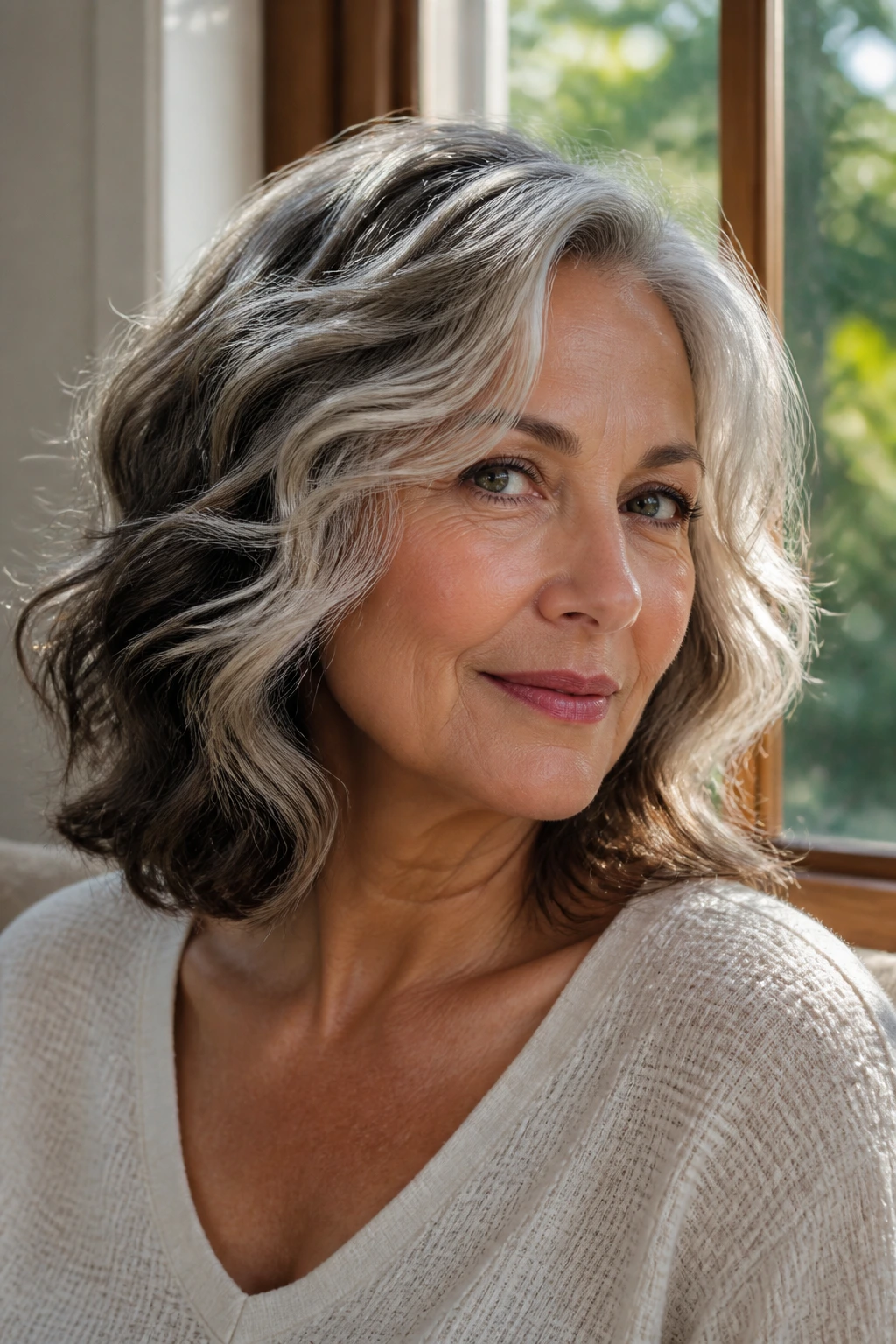
Soft silver waves with deep brunette lowlights can look striking in the best way, especially when the lowlights are woven discreetly through the underside and around the crown. The silver gets to stay bright, but the deeper brown gives it a frame. Fine waves need that frame. Without it, the hair can look washed out in strong light.
Why It Works
The contrast between silver and brunette is doing real work here. It creates visual depth, which is exactly what fine hair needs as density softens over time. The cut itself should stay layered enough to let the wave move, but not so shredded that the ends disappear.
My Favorite Part
This style does not try to hide silver. It lets the silver lead and uses the lowlights like punctuation. That’s the smartest way to wear it.
Ask for the brunette tones to stay cool or neutral if your silver reads icy. Warm dark brown can look too heavy against bright gray.
Why Fine Waves and Lowlights Make Each Other Look Better
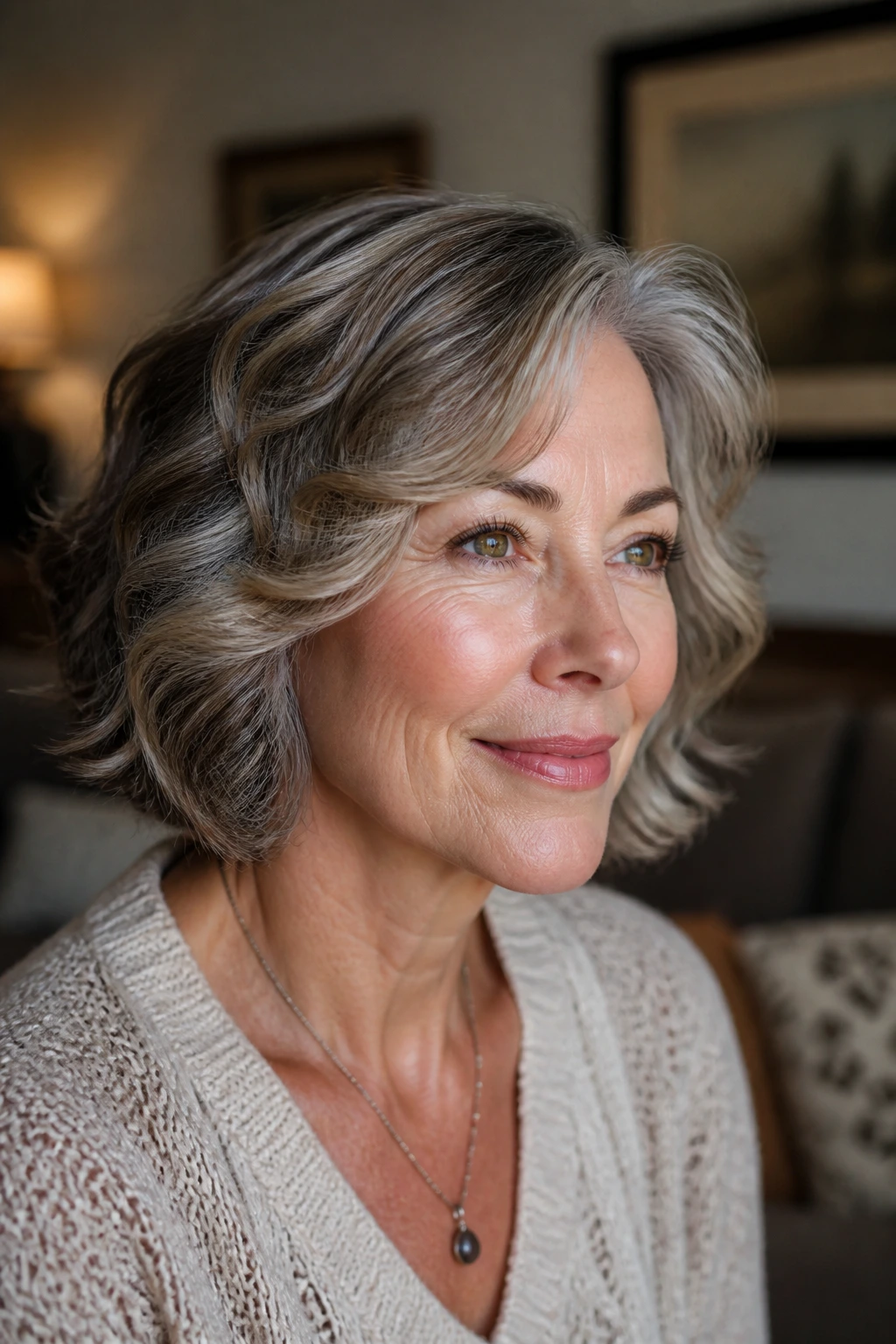
Fine wavy hair has a funny habit of looking thicker in motion and thinner in still photos. Lowlights help with that split-second problem because they create visible shadow between the wave ridges. That shadow is what the eye reads as fullness.
Placement matters more than people think. If the lowlights are painted too broadly or too dark at the crown, the hair can look muddy instead of dense. I prefer them tucked into the underside, around the nape, and in a few slices through the mid-lengths near the face. That keeps the top bright enough to avoid a heavy block while still giving the cut some depth where it’s usually missing.
The best lowlights for fine waves are usually one to two levels deeper than the base color, not five. A level 5 chestnut, level 6 mushroom brown, or a soft neutral brunette often does the job. Anything much darker can create stripes, especially if the hair is very light or very silver.
And there’s a practical bonus people don’t talk about enough: lowlights make grow-out easier. The darker pieces blur the line between color and natural root, so the style keeps its shape longer between salon visits. That’s a nice thing when you’d rather spend your time doing something else.
Essential Tools for These Hairstyles
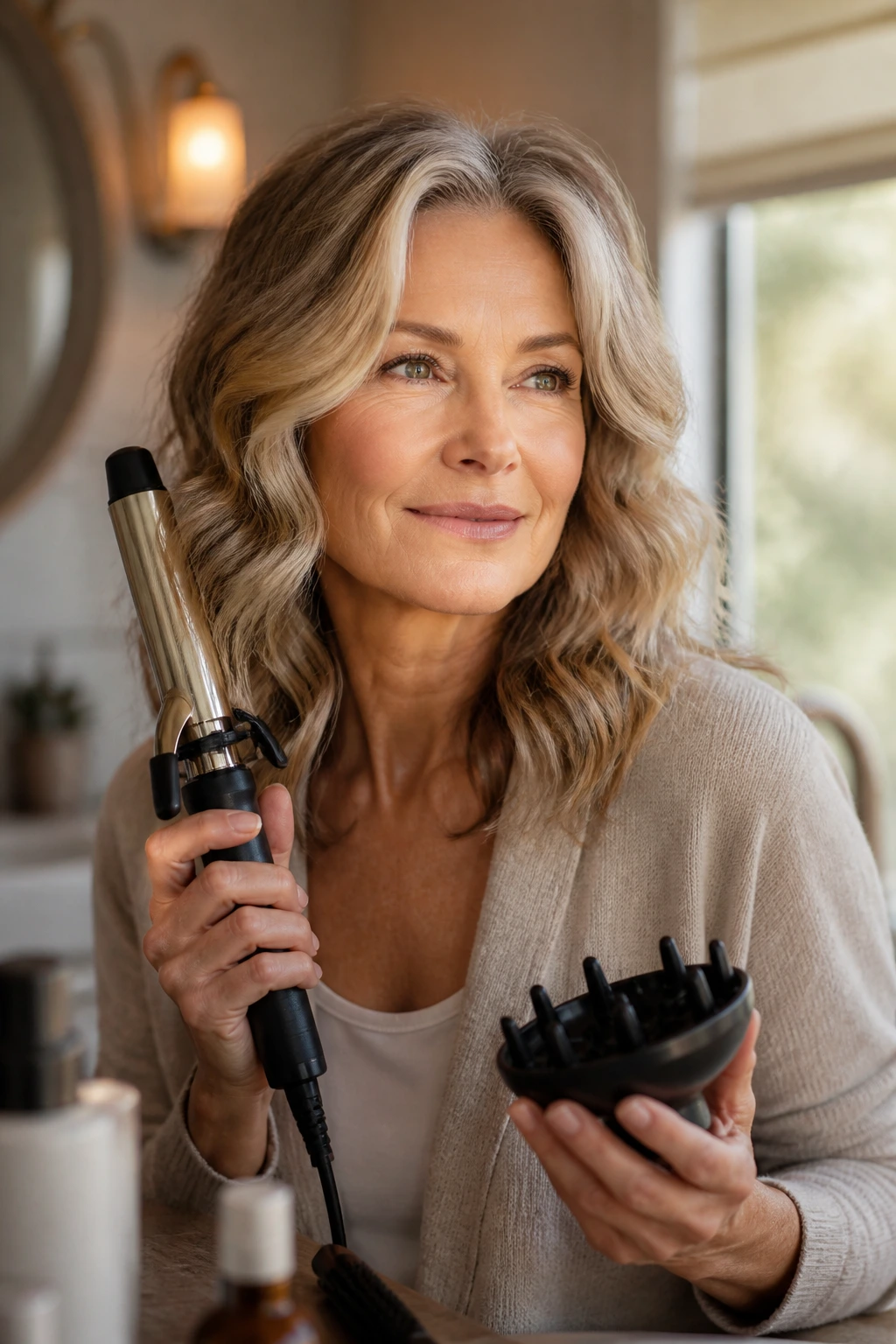
- 1-inch curling iron or wand: Best for loose bends and piecey movement on fine waves; a smaller barrel usually gives more control than a big one.
- Blow dryer with diffuser: Useful for preserving the wave pattern without blasting the hair into frizz.
- Small round brush: Helps build lift at the roots and smooth the front pieces.
- Tail comb: Handy for clean side parts, crown lift, and controlled sectioning.
- Duckbill clips: Great for setting the top layer out of the way while you work the underlayers.
- Volumizing mousse: A light mousse at the roots gives fine hair a little grip without turning it stiff.
- Heat protectant spray: Non-negotiable if you use hot tools; fine hair shows heat damage fast.
- Light texturizing spray: Best used at arm’s length and mostly on the ends, where it can separate waves without weighing them down.
- Color-safe shampoo and conditioner: Keeps lowlights from fading too fast and protects the tone from going dull.
- Dry shampoo: Useful on day two or three for keeping the crown from going limp.
- Satin pillowcase or bonnet: Helps waves hold overnight and keeps the cuticle calmer than a cotton pillowcase does.
How to Ask for the Right Lowlights and Shape
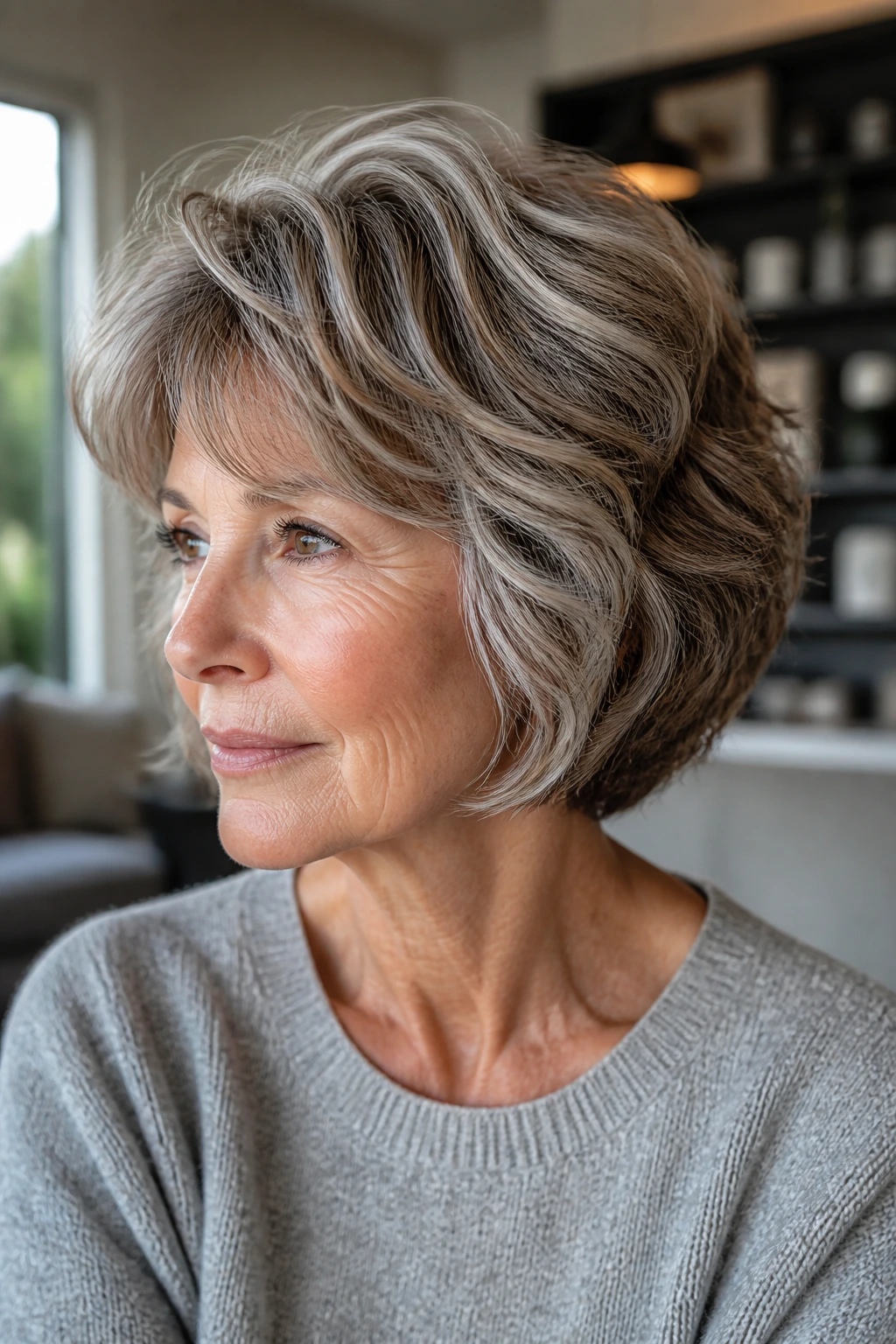
The most useful salon conversation is a plain one. Tell your stylist you want the hair to look fuller, not darker for the sake of darkness. That’s a different request. Fine wavy hair over 60 usually needs lowlights that live in the underlayers and around the crown, with only a few placed where the wave bends around the face.
I’d be specific about the shade range. Ask for lowlights one or two levels deeper than your natural root or your current base color. If your hair is silver, ask for cool brunette, ash brown, or mushroom tones rather than rich red brown. Red can warm the silver too much and make the contrast look loud in the wrong way.
Cutting matters just as much. If the stylist reaches for a razor and starts thinning fine ends into air, I’d slow the conversation down. Fine hair needs movement, yes, but it also needs body at the perimeter. Long layers, soft internal shaping, and a blunt-leaning outline are usually safer than aggressive texturizing.
Bring photos, but bring the right ones. Choose examples that show the side view and the back, not just the front. Fine wavy hair changes a lot from angle to angle, and that back view is where you find out if the shape is actually holding together.
How to Style These Cuts on an Ordinary Morning
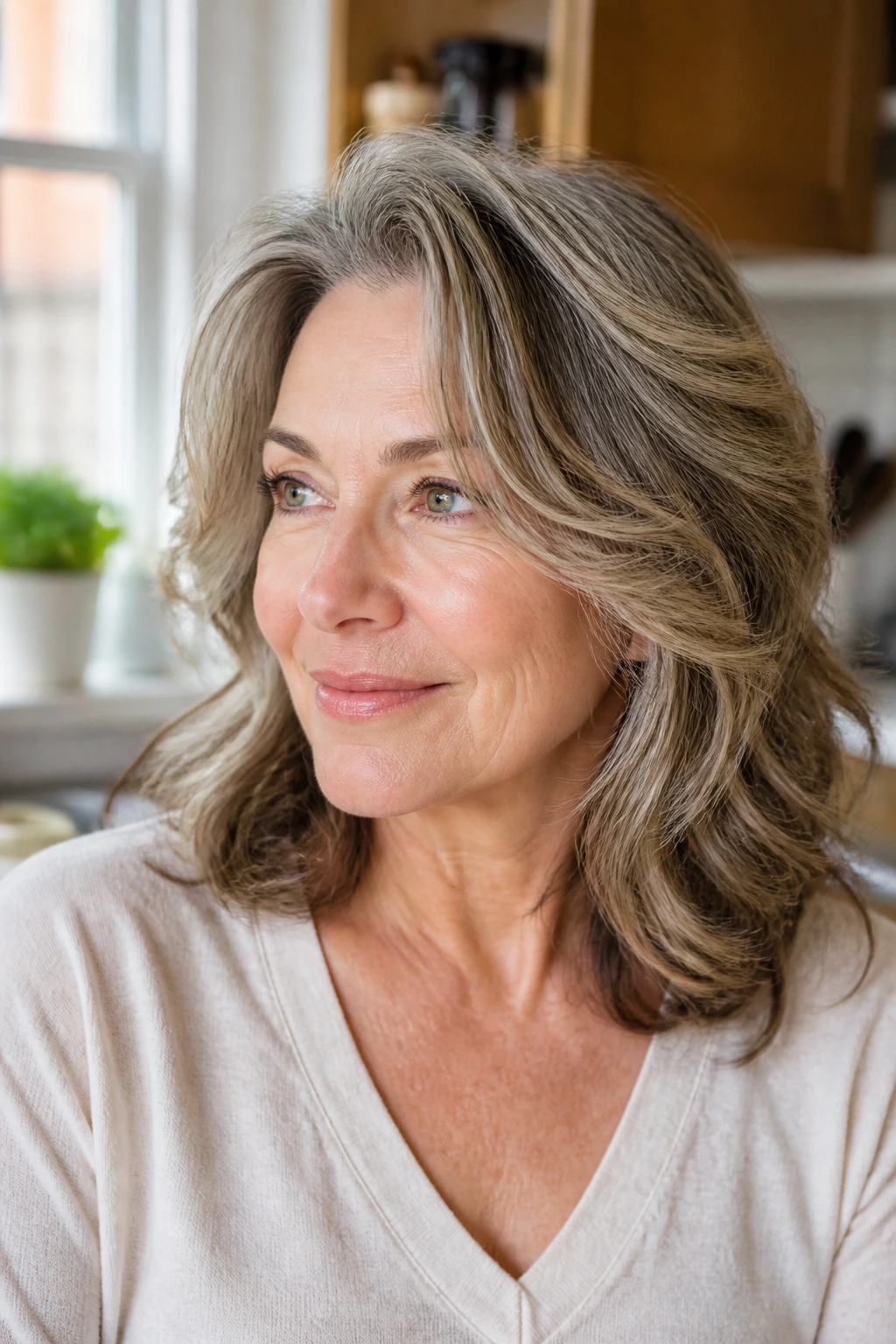
Presentation: Aim for lift at the crown, movement through the mid-lengths, and ends that bend rather than hang straight. If the style looks too neat, it can feel stiff; if it looks too loose, the fine texture disappears.
Accessories: Small hoops, slim glasses, and simple clips suit these cuts better than bulky headbands. A clip at one temple or behind one ear often gives the hair a cleaner line.
Scale: The shorter the cut, the lighter the product needs to be. A pixie bob can handle only a touch of mousse; a shoulder cut may need a little more root spray, but not much. Heavy product kills fine waves fast.
Finish: Matte or soft-satin finishes usually look better than glossy ones on fine hair. Too much shine can make the strands separate and show the scalp in bright light.
There’s no need to style every section to the same degree. I’d rather see one well-shaped front piece and a natural wave at the back than a perfectly curled helmet. The hair should move when you turn your head. That’s the whole point.
Extra Tips for More Lift and Better Texture
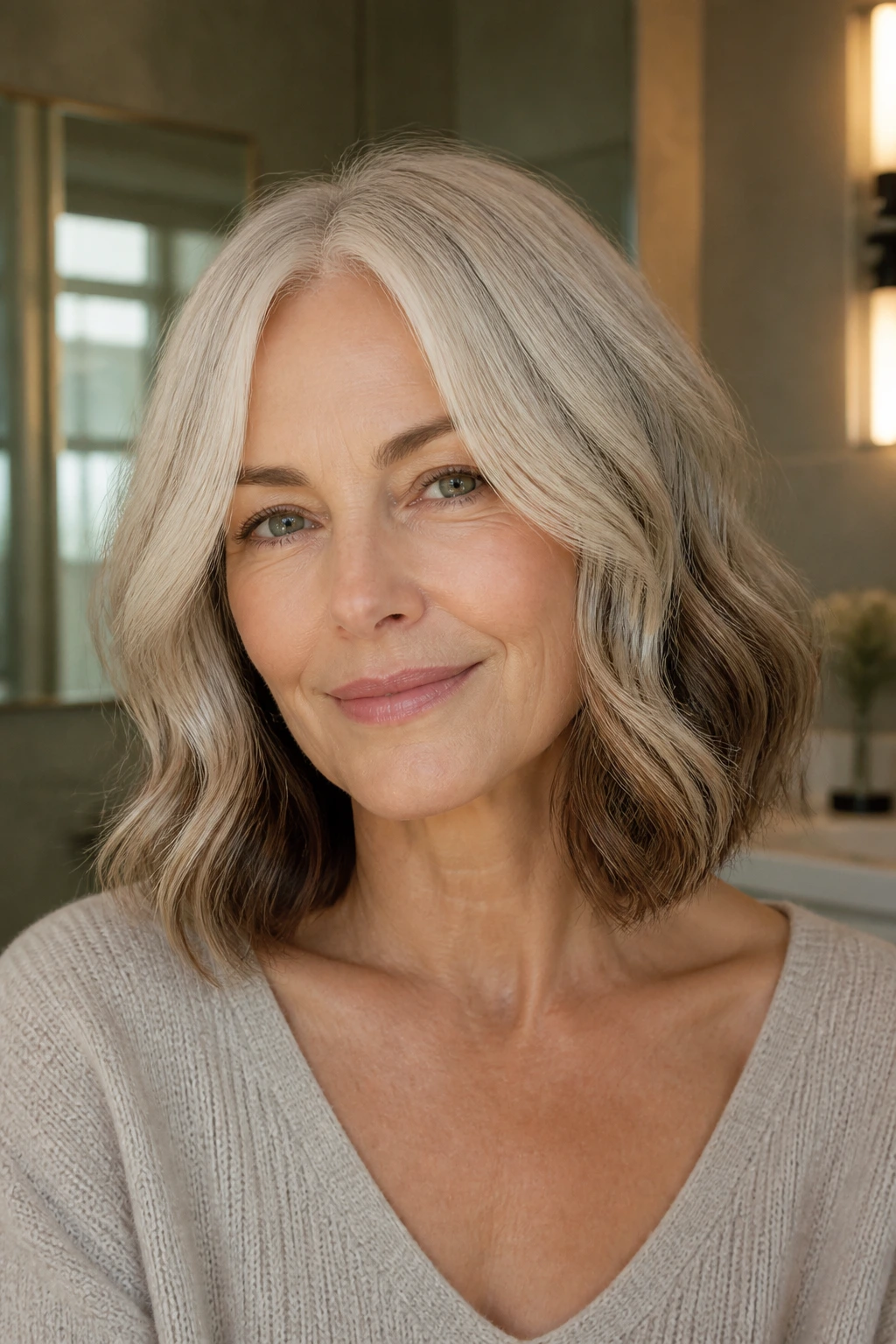
Root Lift: Mist root lift spray only at the crown and just behind the hairline, then blow-dry upward with a round brush or your fingers. Spraying the ends does nothing useful here.
Wave Pattern: Alternate the direction of the curl when you touch up waves with a hot tool. If every bend goes the same way, the hair can look set instead of soft.
Color Contrast: If your silver is bright, ask your colorist to keep the lowlights cool and translucent. A hard, dark line can look flat; a softer weave looks richer.
Finish: Use texturizing spray sparingly, then scrunch the hair once and leave it alone. Overhandling is how fine waves get frizzy and tired.
Quick Fix: If the top goes flat by midday, flip your part, mist the roots with water, and re-dry for 60 seconds. That small reset often works better than adding more product.
Keeping the Shape and Color Fresh Between Salon Visits
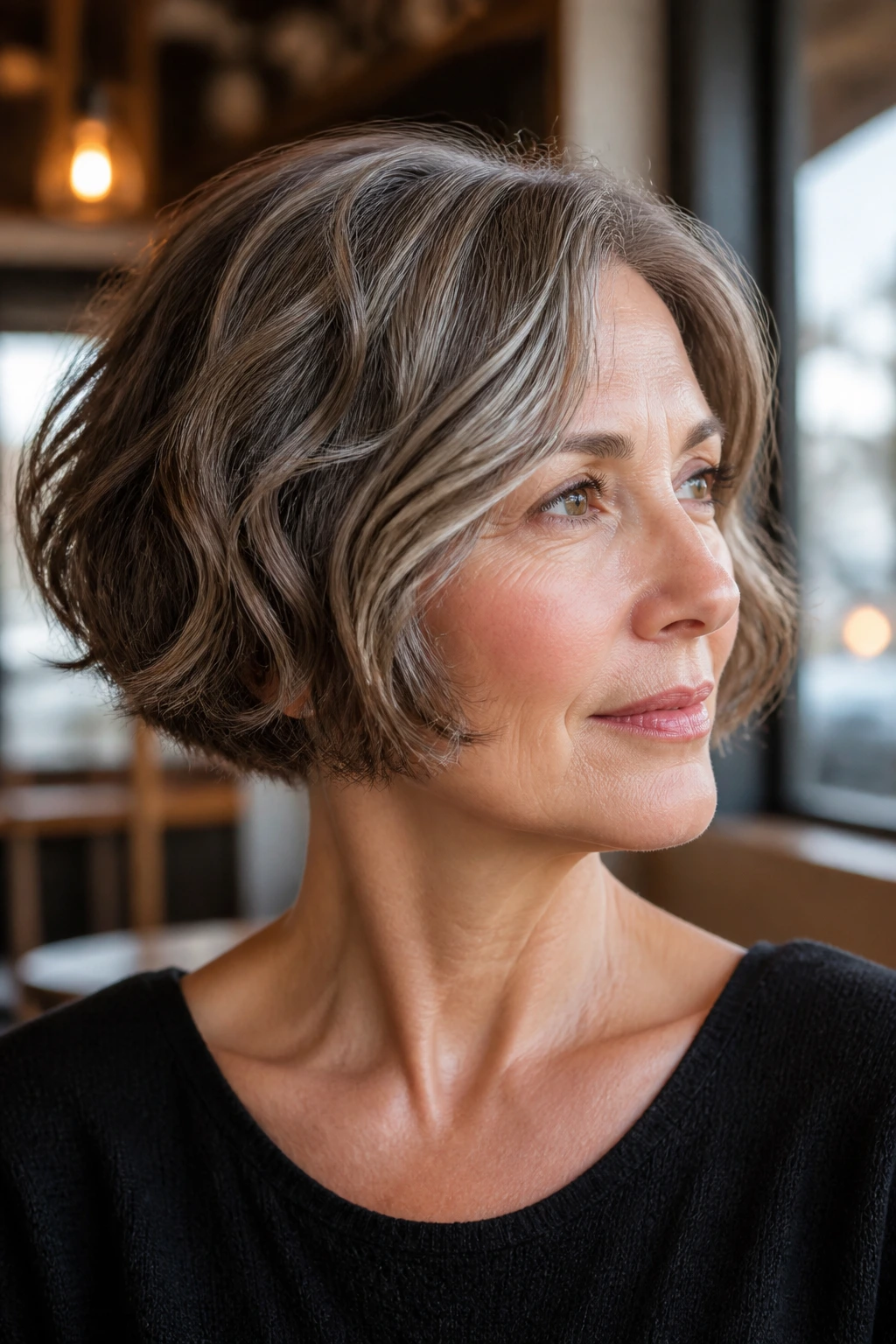
Fine wavy hair usually behaves best when it isn’t washed every day. Two to three washes a week is enough for many people, especially if you’re using mousse or light styling spray. On non-wash days, dry shampoo at the roots can keep the crown from collapsing. Spray it 6 to 8 inches away, let it sit for a minute, then brush it through.
For overnight care, the simplest fix is still one of the best: sleep on a satin pillowcase. If your hair is shoulder length or shorter, a loose pin curl at the crown or a soft clip at the part can help preserve the wave pattern. Long styles usually do well with a loose top section tied high and gently, never stretched tight.
Color needs its own rhythm. Lowlights tend to look freshest for about 6 to 8 weeks before the contrast starts to soften. Some people like that fade; others want to refresh the tone sooner. If your base is gray or silver, a gloss or toner between appointments can keep the lowlights from turning muddy. That matters more than people expect. Murky color can make fine hair look tired even when the cut is still good.
Heat styling should stay light. If you use a curling iron often, lower heat is kinder than blasting the hair at the highest setting. Fine strands do not forgive repeated high heat. A quick bend at a moderate temperature usually lasts just as long and looks better the next day.
Variations and Adaptations to Try
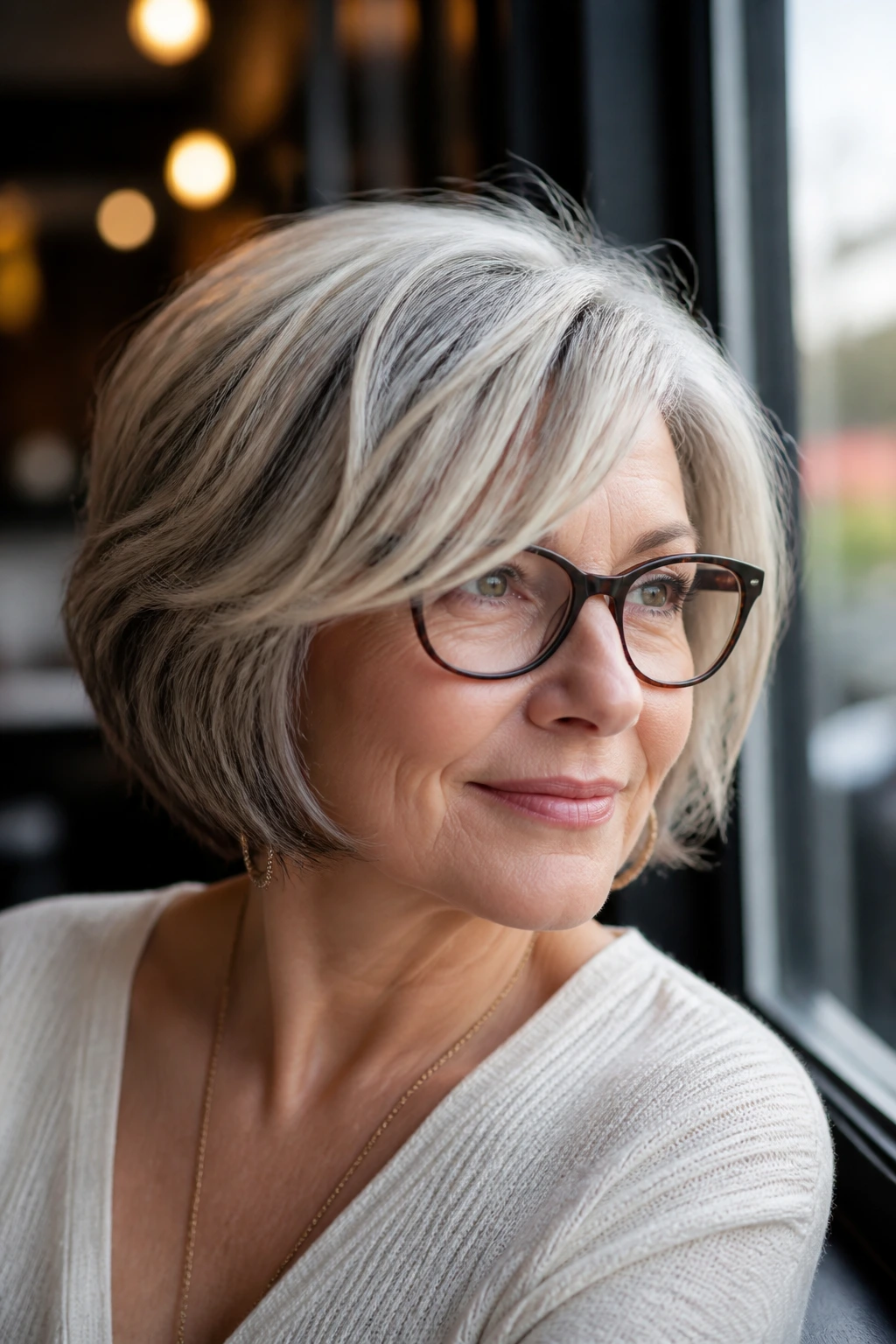
The Glasses-Friendly Version: Choose a side-swept bob, a bixie, or a collarbone lob with face-framing pieces that stop just above the frame. Hair that lands right on the glasses arms gets annoying fast, and nobody needs that.
The Silver-Forward Version: Keep the silver dominant and use lowlights only in the underside and back. This gives the color depth without turning the whole head brown. It’s a cleaner look if you want the silver to stay visible.
The Low-Maintenance Version: Ask for a cut that can air-dry into shape, like a layered lob or soft rounded bob. Then keep the lowlights soft and scattered so the grow-out doesn’t look choppy.
The Lift-At-the-Crown Version: Go for a side part, a pixie bob, or an inverted bob with shorter back layers. That extra height at the top is where fine hair tends to need help most.
The Softer Face-Frame Version: Choose curtain bangs, wispy fringe, or long layers around the cheekbone. These pieces soften the face without requiring a blunt fringe that can separate awkwardly.
The Cool-Toned Version: If your hair pulls brass, ask for mushroom, ash, or taupe lowlights. Those shades sit quietly beside silver and light brown hair instead of shouting over it.
Common Mistakes That Flatten Fine Wavy Hair
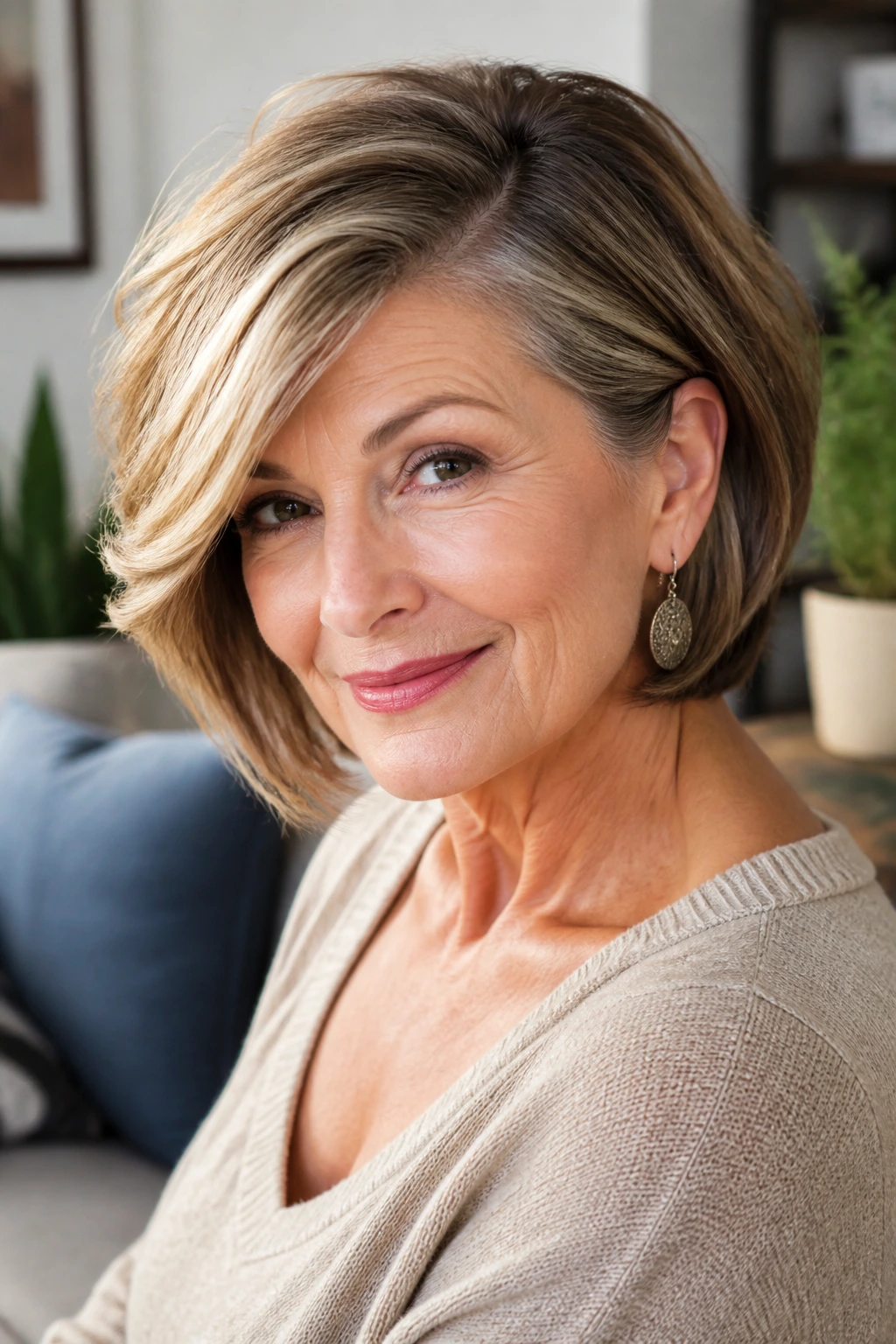
The biggest mistake is going too dark with the lowlights. A stripey espresso streak can look heavy and harsh on fine hair, especially if the base is pale gray, silver, or light brown. The fix is simple: keep the tone only a shade or two deeper and ask for soft placement under the top layer.
Another common problem is over-thinning the ends. Fine hair does not need to be shredded to “remove bulk.” It already lacks bulk. If the bottom starts to look see-through or stringy, the cut went too far. Ask for blunt-leaning ends with long, blended layers instead.
Heavy creams and oils are another trap. They make the hair feel nice for about ten minutes and then drag the wave down. Use a pea-sized amount at most, and keep it off the roots unless the hair is extremely dry. Better yet, start with mousse and finish with a light spray.
Skipping the part change is a quiet mistake that steals volume. If your hair always falls the same way, it compresses itself into the same groove. Change the part by half an inch, or flip it entirely for a day. That small shift can wake the whole style up.
Finally, a lot of people heat-style every wave in the same direction. That gives a stiff, uniform finish, and fine hair does not need more stiffness. Alternate directions, leave the ends a little loose, and stop before the style starts looking manufactured.
Frequently Asked Questions
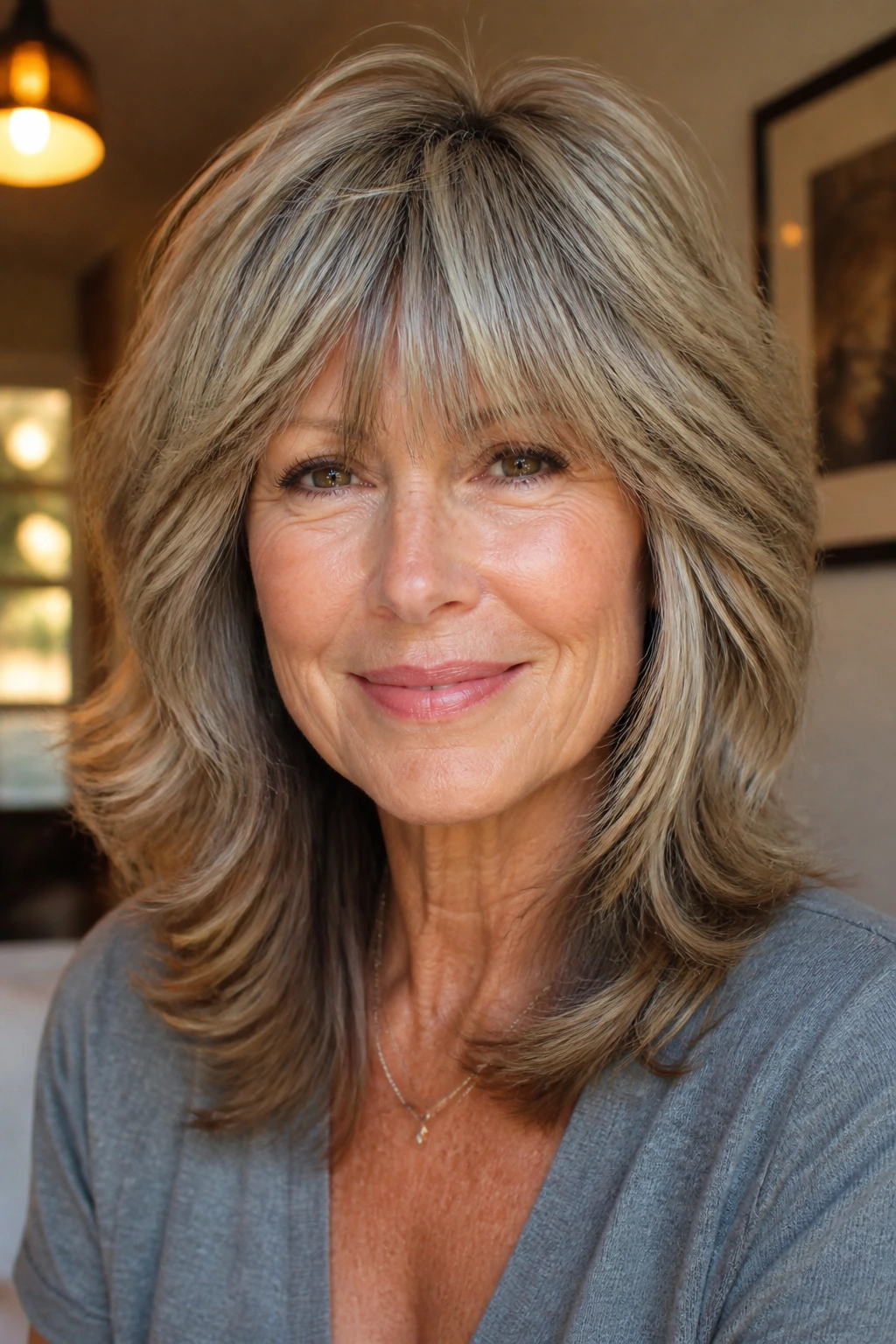
Are lowlights better than highlights for fine wavy hair over 60?
Often, yes. Lowlights add shadow and make the hair appear denser, while highlights can sometimes make fine strands look too separated or pale. The best result is usually a mix, but with the darker pieces doing most of the visual lifting.
What haircut makes fine wavy hair look thicker without too much styling?
A collarbone lob, rounded bob, or blunt-looking lob with internal layers usually does the job well. These shapes keep enough weight at the perimeter to stop the ends from turning wispy while still giving the wave room to move.
Should fine wavy hair have layers?
Yes, but not too many and not too short. Long, soft layers keep the wave from collapsing into a heavy block, while aggressive layering can make the ends look thin fast. The sweet spot is usually internal shaping with a solid outer line.
Will lowlights make silver hair look dull?
They can, if they’re too dark or too broad. The trick is using cooler, softer brunette tones and keeping most of the darkness underneath the top layer. That gives the hair depth without hiding the silver.
How often should these cuts be trimmed?
Short bobs and pixie bobs usually need a trim every 6 to 8 weeks to keep the shape crisp. Shoulder-length cuts can stretch to 8 or 10 weeks, depending on how quickly your ends lose their outline.
Can I wear bangs with fine wavy hair?
Absolutely, but keep them light. Wispy fringe or curtain bangs are easier to live with than a thick straight bang, because fine wavy hair shrinks and separates as it dries.
What if my waves get frizzy instead of defined?
Use less product, not more, and keep heat lower. A diffuser on low heat, a small amount of mousse, and a satin pillowcase usually help more than a pile of creams. Also, stop touching the hair once it’s dry; that’s where a lot of the frizz starts.
Do these styles work with naturally gray or white hair?
Yes, and some of them look especially good on gray or white hair because the lowlights create contrast without hiding the natural color. The key is choosing a shade that feels soft and believable beside the silver, not a dark tone that fights it.
The Styles That Keep the Wave Alive
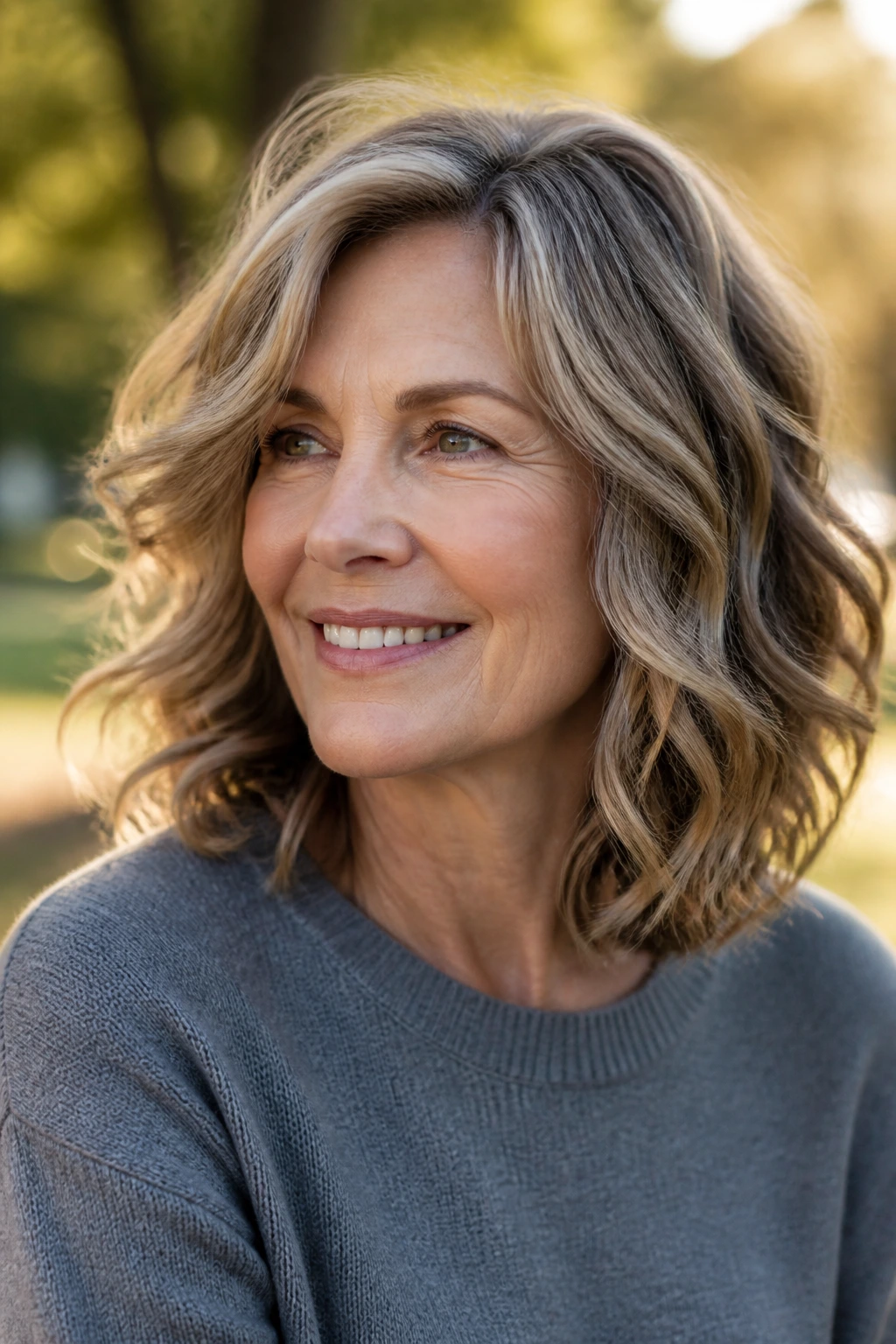
Fine wavy hair over 60 does not need to be bullied into volume. It needs a shape that respects the wave, a little shadow from the right lowlights, and a cut that doesn’t vanish the minute you step outside. That’s the real pattern running through these styles. They all make room for movement without asking the hair to be something it isn’t.
Pick the length you can live with, not the length that looks best in a still photo. Keep the lowlights soft and thoughtful. And if you’re on the fence, start with the cut that gives you the easiest morning—you can always add more polish later, but the hair has to behave before it can impress anyone.