



Tan skin changes the whole equation. Honey around the cheekbone reads glossy instead of loud, beige near the temple can soften the face in one sweep, and a copper ribbon at the front can look warm and alive instead of flat. The trick is that framing highlights for tan skin work best when they follow the haircut, not fight it. Face-framing layers do half the styling for you; they catch light every time you tuck hair behind your ear, flip a curtain bang out of the way, or turn your head in daylight.
The front of the hair is also the most unforgiving place to improvise. A piece that looks soft in the bowl can turn stripy once it meets a real hairline, especially if the foil is too wide or the toner leans too yellow, too gray, or too red. On layered hair, that front panel needs to move. It should bend with the cut and still look like hair, not a painted stripe. That is the line I keep coming back to.
The good versions here do one of three things: they warm tan skin with caramel, honey, amber, or copper; they cool it down with beige, mushroom, or taupe when the undertone calls for it; or they build a sharper contrast that makes the layers pop without turning the whole head blonde. A good face frame still looks good when the hair is clipped up, blown straight, or left in loose waves. That is the test.
Why These Front-Loaded Highlights Work on Tan Skin
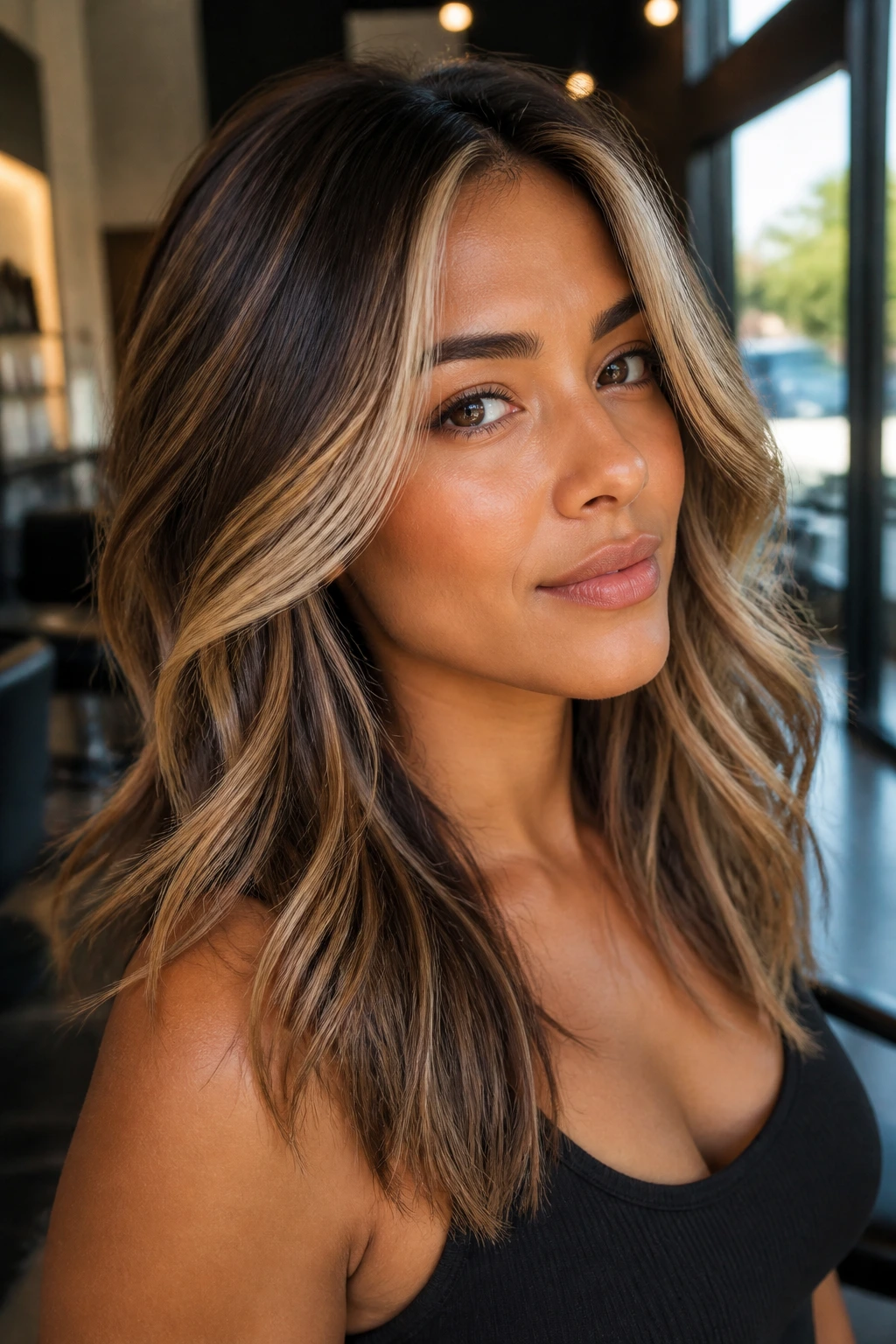
- The front pieces carry the brightness: A well-placed money piece catches the cheekbone, temple, and jawline before the rest of the color even registers.
- Tan skin can handle depth: Rich caramel, bronze, and copper do not disappear against tan skin the way they can on cooler, paler complexions.
- Layering softens the line: Face-framing layers break up the color so the highlight bends, flips, and falls in pieces instead of forming a hard stripe.
- You can control the drama: A two-level lift gives a soft glow; a level 9 front panel gives a bigger contrast without bleaching the whole head.
- Grow-out stays easier: Leaving depth in the root and back sections means the front can fade gracefully instead of screaming for a touch-up.
- Undertone matters more than trend: Warm tan skin often likes honey and copper, neutral tan skin can wear beige and champagne, and olive tan skin usually looks cleanest in taupe, mushroom, or soft bronde.
1. Honey Money Piece Halo
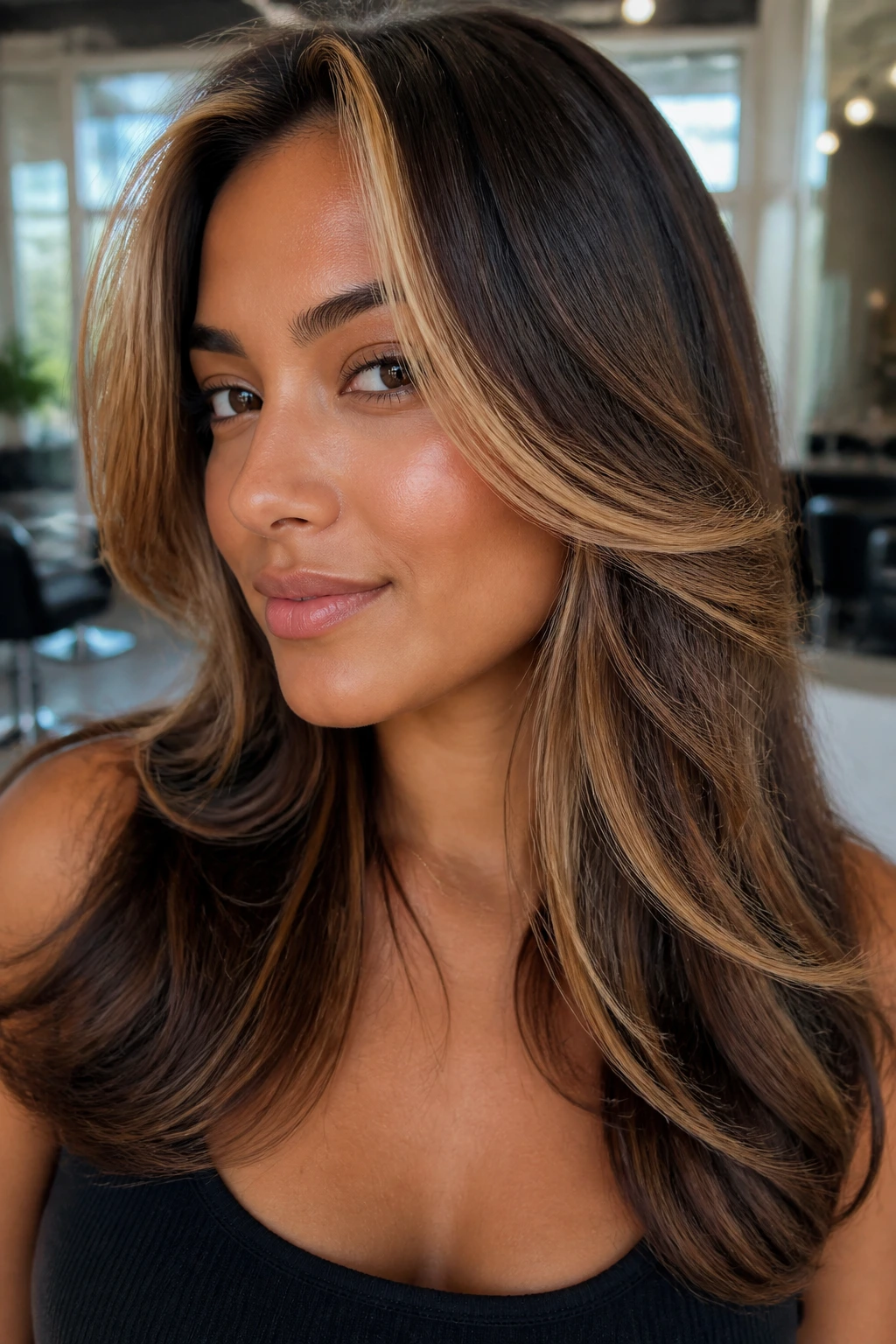
Honey around the face is the safe bet that rarely feels boring when it is placed well. On tan skin, it reads warm and glossy, especially when the front layers are long enough to bend around the cheek rather than sit stiffly beside it. I like this look best when the highlight starts a half inch back from the hairline and feathers into the first layer.
Why It Works
Honey sits in that sweet spot between blonde and brown. It brightens without going pale, which matters if your tan has warm or golden undertones. Ask for a lift to about level 8 with a honey-beige toner so the color stays soft, not orange.
Quick Notes
- Best on layered curtain cuts
- Works with blowouts and loose waves
- Touch up every 8 to 10 weeks
2. Caramel Curtain Lights
What if you want brightness but do not want your front pieces to announce themselves from across the room? Caramel curtain lights are the answer. They look especially good when the front layers are long and swingy, because the color appears in motion instead of sitting like a stripe.
The trick is in the paint. Keep the brightest caramel on the outer curve of the face-framing layer, then let it melt into a softer brown-beige through the ends. On tan skin, that gives you warmth without the flat yellow cast that cheaper blonding sometimes leaves behind.
3. Beige Babylight Front Panels
Tiny beige babylights are the move when you want the front to look lighter, not louder. The pieces are so fine they almost disappear into the hair until the light hits them, which is why they look clean on tan skin with neutral undertones.
Best For
- Fine to medium hair that gets weighed down by chunky foils
- Center parts that need a little lift near the eyes
- Readers who want a soft grow-out rather than an obvious appointment line
Keep the front weave narrow, around 1/8 inch, and tone it with a beige gloss instead of a stark ash formula. Too much ash can make tan skin look dull. Too much gold can tip beige into brass.
4. Cinnamon Glow Framing
Cinnamon is one of those shades that looks richer in real life than in a color bowl photo. It has enough copper to wake up tan skin, but enough brown in it to keep the front from looking red-heavy. If your skin tans warm in the sun and your natural hair sits at a level 4 or 5, this is a smart middle ground.
I like cinnamon framing on curls and stretched waves because the texture breaks up the warmth. A smooth blowout can show every ounce of tone, which is pretty. Curls soften it. Either way, keep the brightest part on the front bend, not all the way up at the root.
5. Champagne Ribbon Highlights
Champagne ribbons can be beautiful on tan skin with a neutral lean, but they need discipline. Too much pale gold and the front turns brassy; too much ash and the hair starts to look flat. The best champagne pieces sit one step lighter than beige and carry a faint pearl finish.
Use them in thin ribbons along the first face-framing layer, then leave deeper color behind them. That small contrast makes the face look brighter without turning the whole top section into a slab of blonde. On a sleek blowout, the effect is crisp. On waves, it softens into shimmer.
6. Toffee Contour Layers
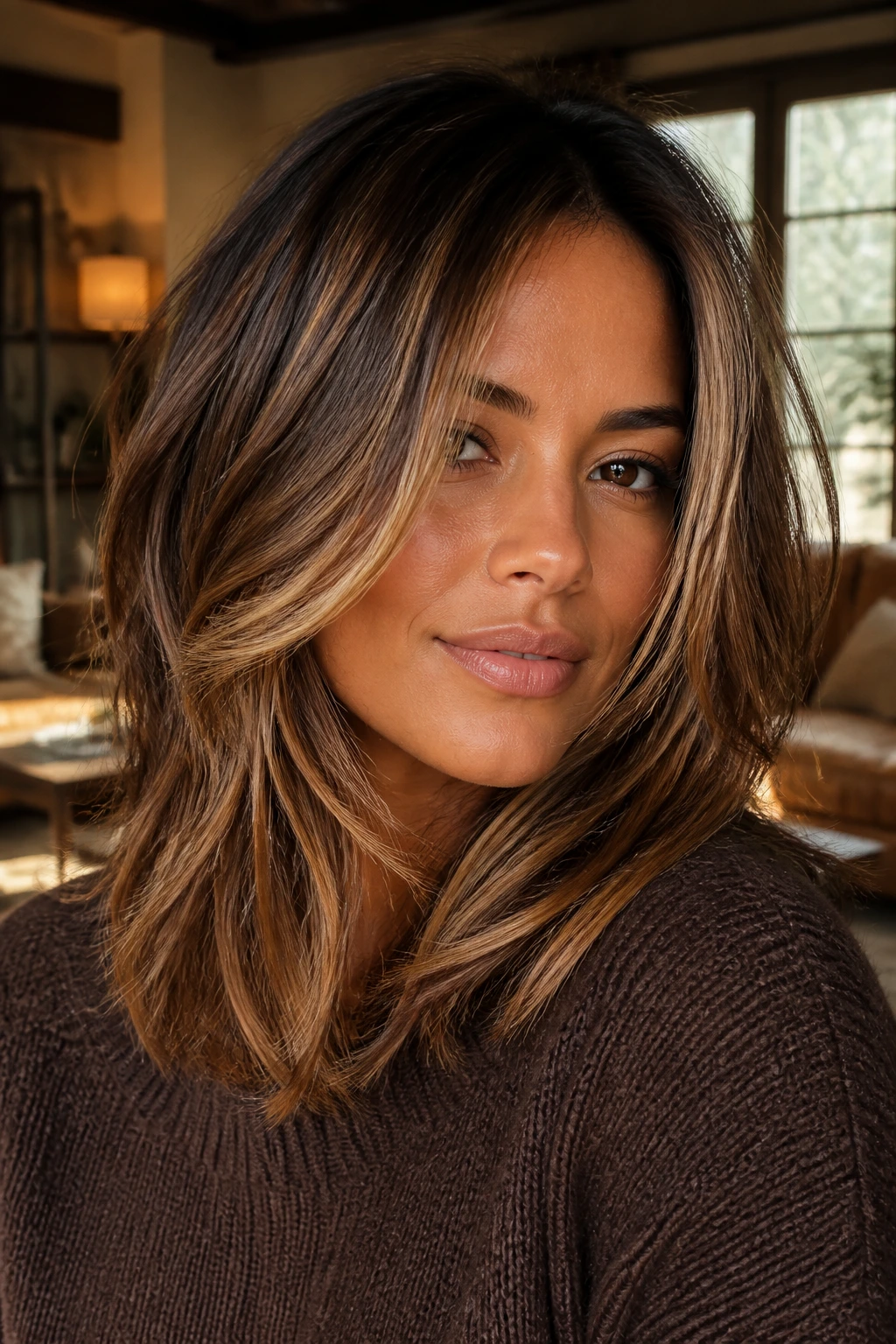
Toffee contour lights are for the person who wants the color to follow the haircut like a pencil line under cheekbones. The highlight sits just inside the face frame, then drops through the layers in a way that exaggerates movement. Shoulder-length cuts are especially good for this because the pieces swing exactly where the eye lands.
This is one of my favorite choices for tan skin when the base is medium brown. You get enough contrast to see the work, but not enough to turn the front into a hard blonde panel. Ask for a root shadow one or two levels deeper than the lightest ends so the contour feels intentional rather than overprocessed.
7. Copper Frame Pieces
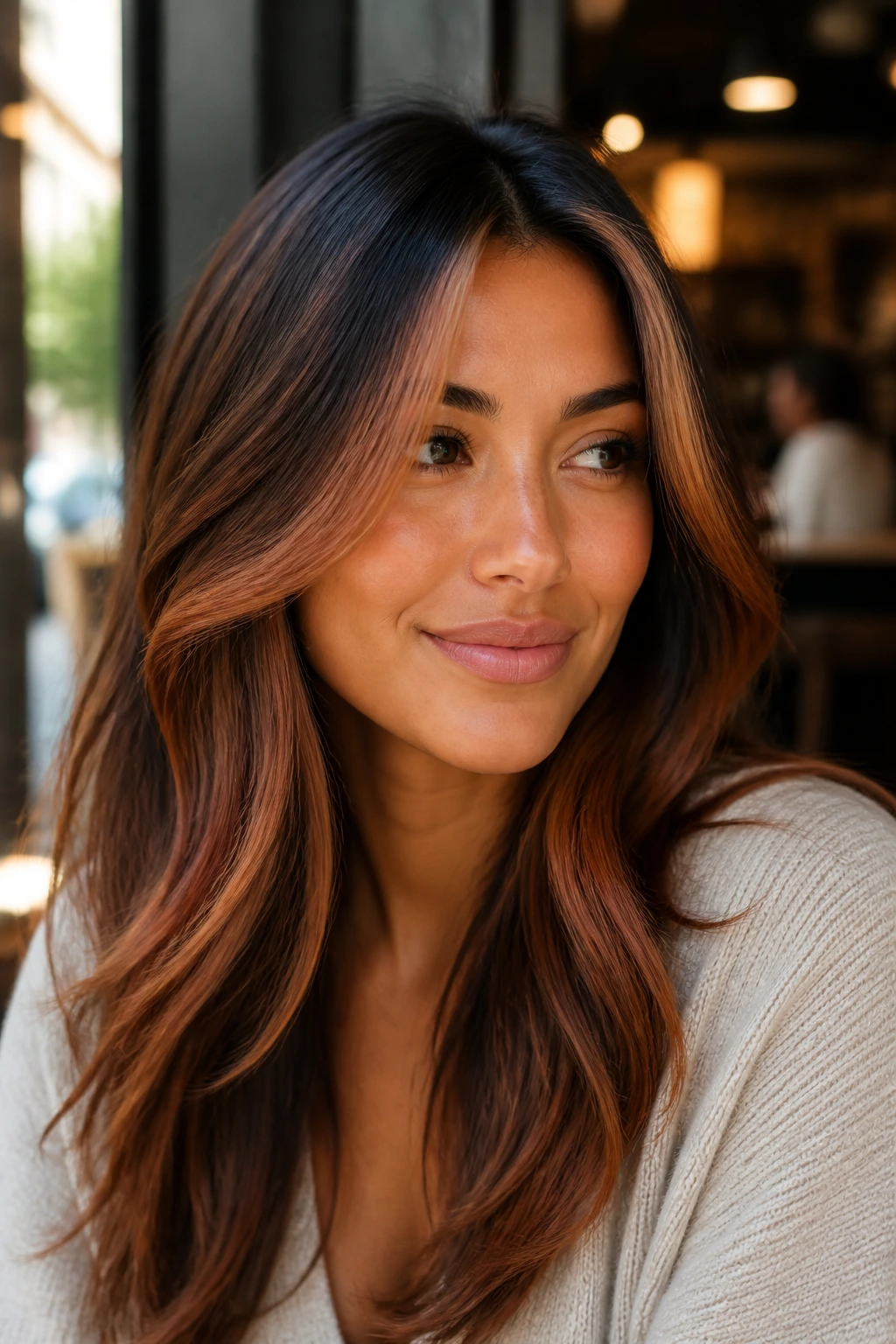
Copper is the loudest warm option here, and that is not a bad thing. On tan skin, especially skin with golden or freckled undertones, it can make the face look flushed in a good way—alive, not red. The front pieces should stay narrow enough to bend with the layer. Copper goes sour fast when the panel gets too wide.
The Part That Matters
If you want copper to behave, ask for a level 7 copper-gold tone with a soft beige base underneath. That keeps the front from reading traffic-cone bright. The best copper frame pieces usually sit just outside the part line and extend through the longest front layer so the color appears when the hair moves.
8. Rose-Gold Front Veil
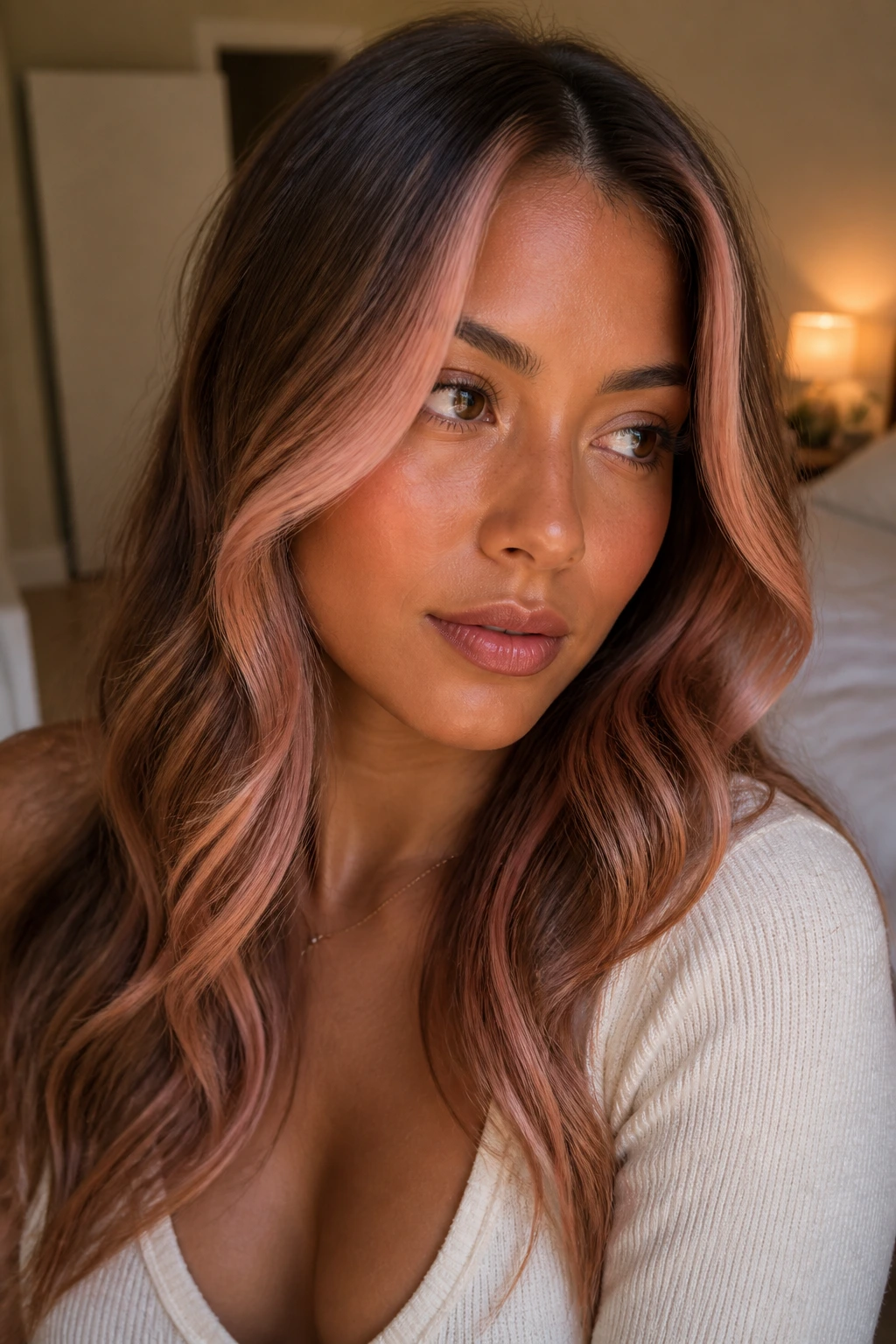
Rose gold works when tan skin has a neutral or slightly rosy cast and you want something softer than copper but more playful than beige. It is a fussy shade in the wrong hands. In the right hands, it looks like a thin warm filter across the front of the hair.
Keep the rose tone delicate. Think peach-beige with a blush finish, not pink hair. On loose waves, that front veil catches a pink-gold glint. On straight hair, it can go a little jewel-like, which I like more than the flatness some people get from over-toned blondes.
9. Chestnut and Amber Dimension
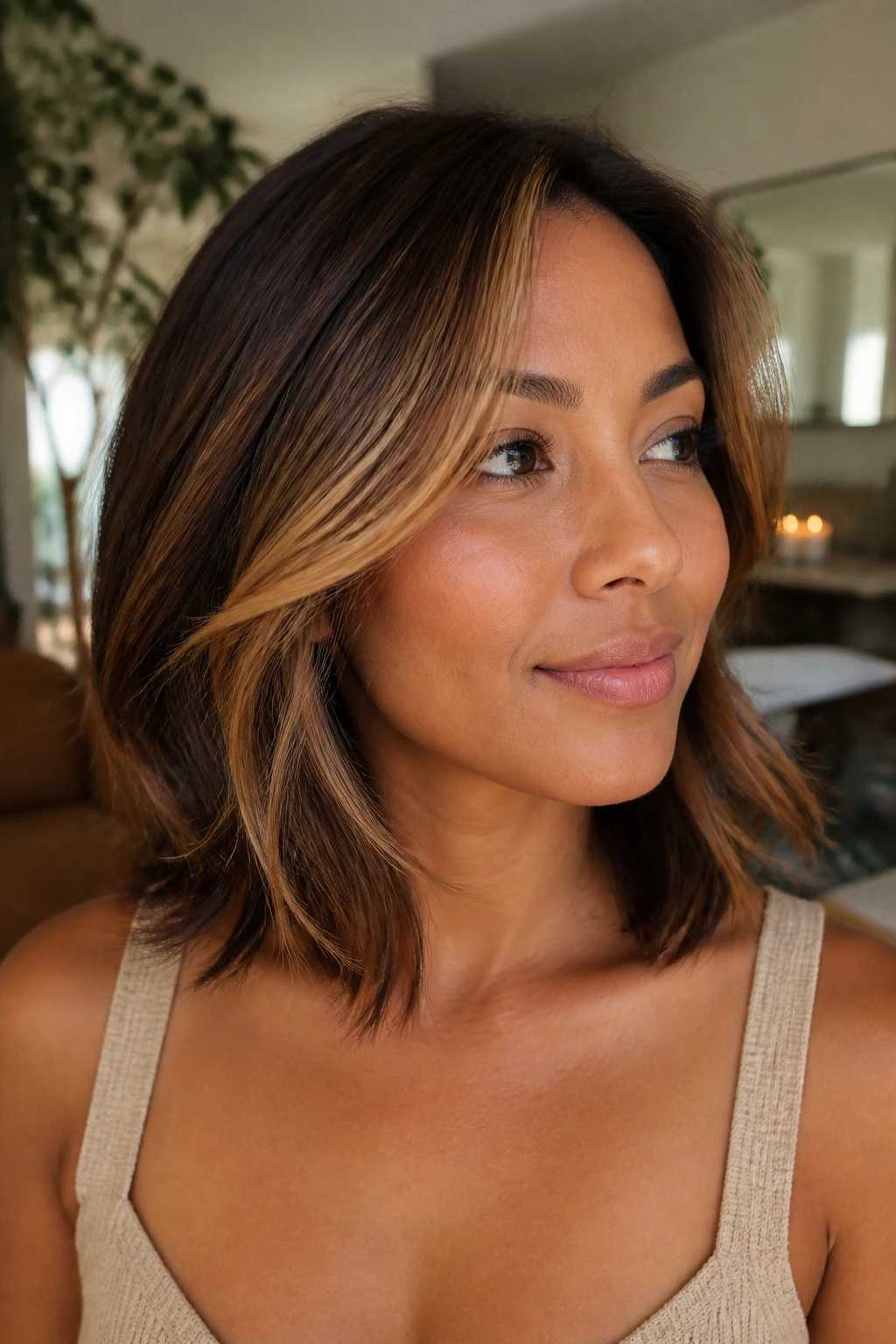
Chestnut and amber together give the front a layered, expensive-looking depth without using that overworked blonde frame everyone asks for. The chestnut keeps the base grounded. The amber sits where the layer falls around the face and lifts the whole thing.
This is a smart pick if your hair is naturally dark brown and you do not want a harsh jump in contrast. Ask for a few amber ribbons around the temple, then let chestnut lowlights sit underneath. The face frame should brighten the face, not erase the hair’s depth.
10. Bronde Face-Frame Strands
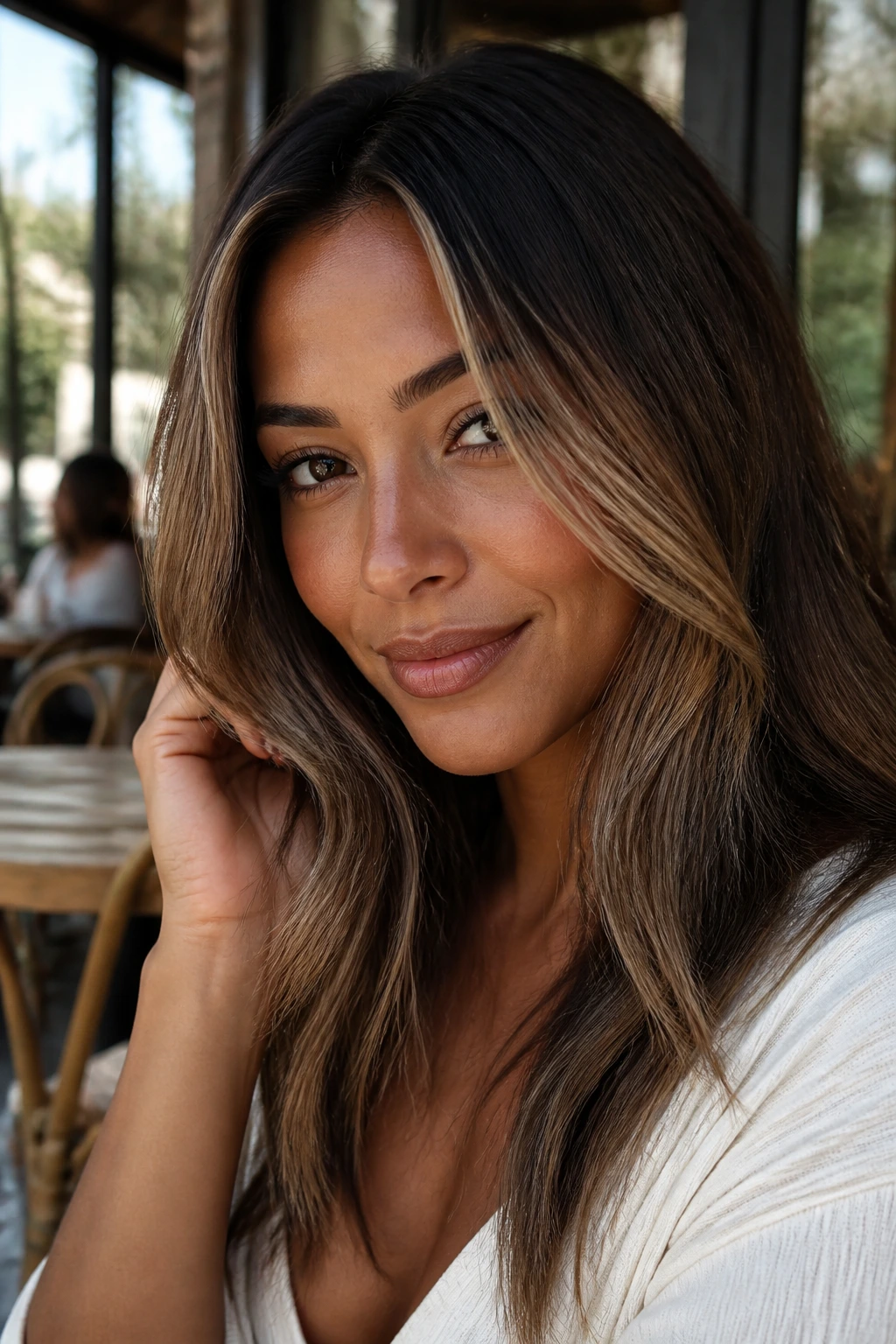
Bronde is one of those words that gets abused, but the idea is useful: brown and blonde meeting in the middle, with no dramatic cliff between them. On tan skin, bronde face-frame strands work because they keep the front dimensional. You get brightness, but you do not lose the richness that makes tan skin look good with hair.
I like this on collarbone cuts and long bobs. The front strands can sit around level 7 or 8, with a beige-brown gloss that keeps them calm. If the base is already medium brown, bronde often grows out better than a brighter money piece because the contrast never gets too sharp.
11. Sandy Beige Sun-Fade
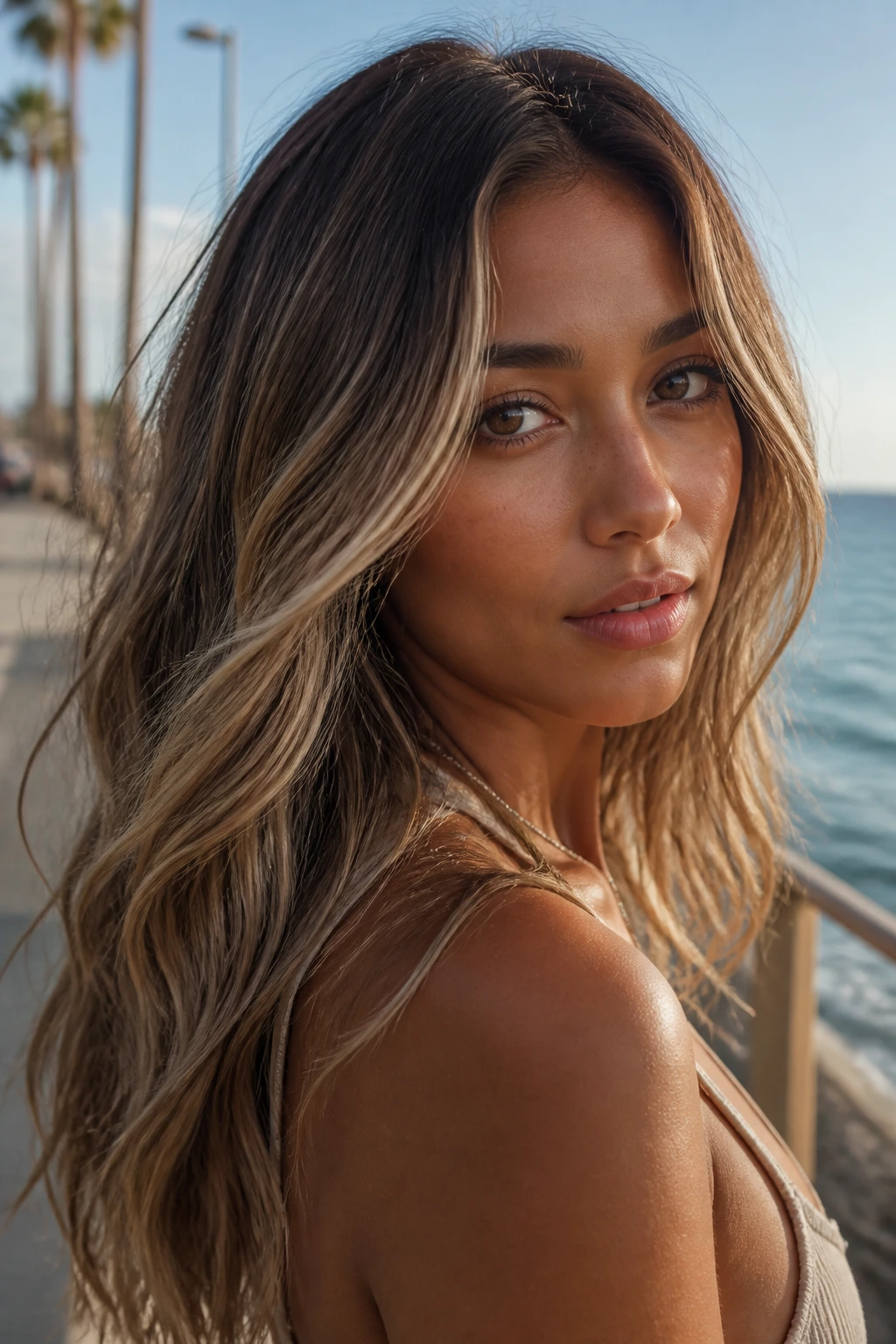
Sandy beige is for tan skin that leans olive or neutral and hates anything too golden. The color has a cooler, dustier feel, which keeps it from tipping orange on warm days or under strong indoor light. It still brightens the face. It just does it more quietly.
What to Ask For
- Thin face-framing babylights, not broad panels
- A beige-gloss finish with a hint of taupe
- Depth left at the root so the front does not flatten out
If you wear your hair in waves, this can look almost sun-faded rather than highlighted. That is the charm. It looks like the front spent time in daylight, not bleach.
12. Butterscotch Swirl Highlights
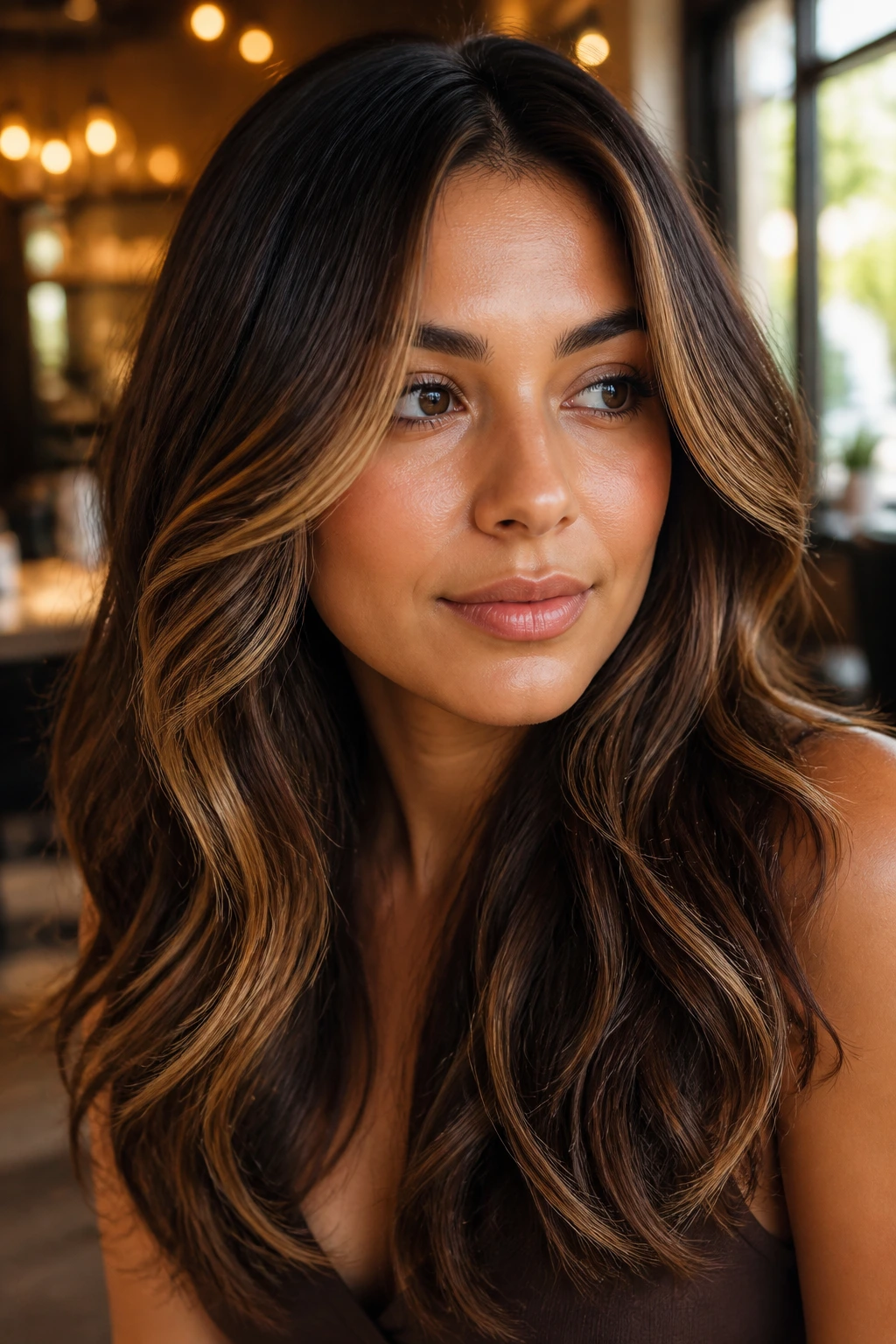
Butterscotch is warmer and richer than honey, which makes it a good choice for thicker wavy hair that can swallow soft highlights. The swirl effect happens when the lighter strands are painted in curved bands through the first two front layers. It gives the eye a path to follow.
I would not use this on hair that is already extremely light. The tone is meant to sit over a brunette base. Tan skin with golden undertones tends to love it because the warmth feels cohesive instead of pasted on.
13. Espresso Shadow with Light Fronts
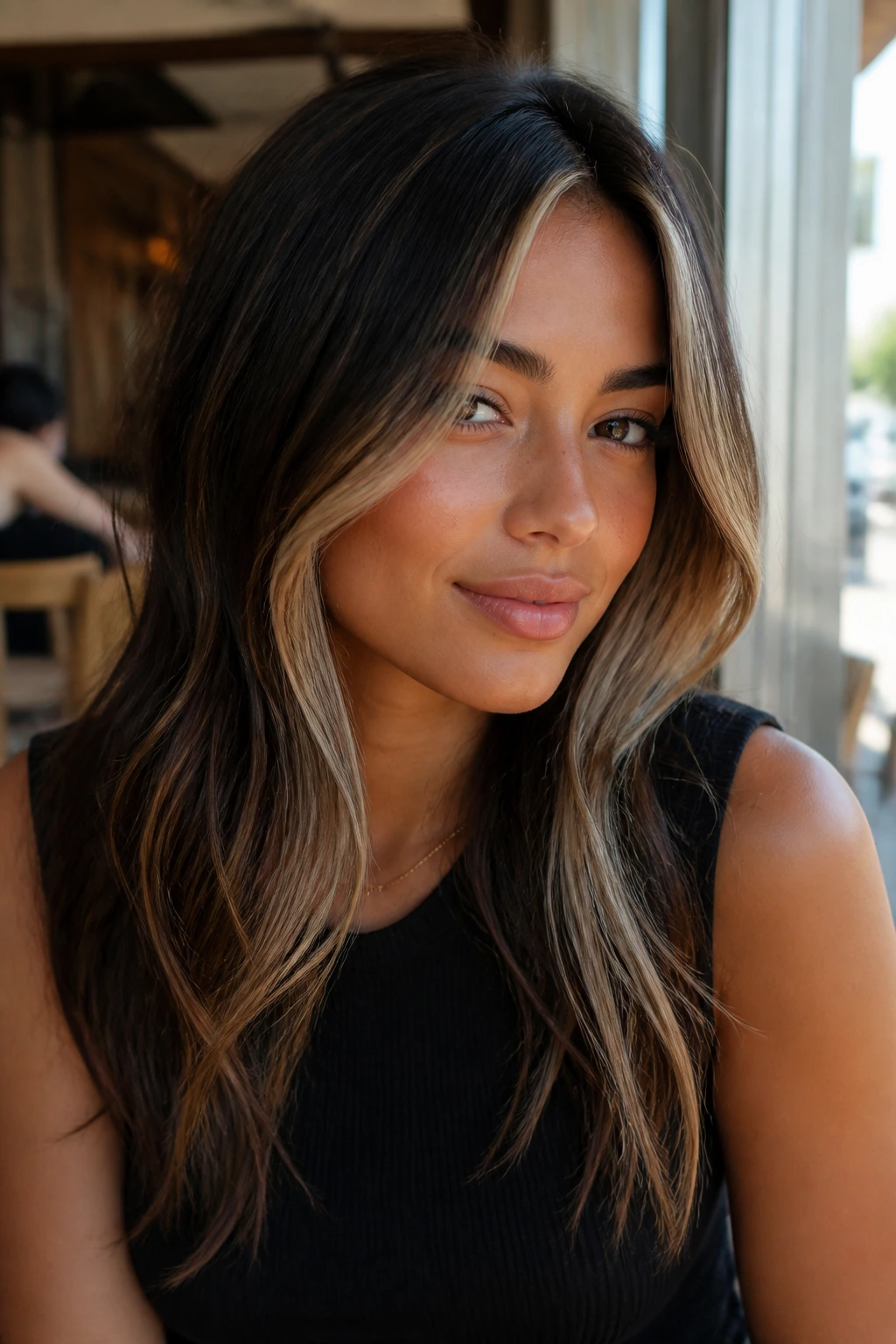
Do you want the front to pop hard against the rest of the hair? Then start with espresso at the root and keep the back and crown deep. A lighter face frame on top of that darkness can look very sharp, especially on tan skin that can carry contrast without washing out.
Why the Shadow Matters
If you remove too much depth near the part, the whole style goes flat. The espresso root shadow keeps the eye anchored so the lighter front pieces feel like a deliberate frame. It is especially good on rounder face shapes, because the strong vertical contrast can lengthen the face a touch.
14. Golden Apricot Accent Pieces
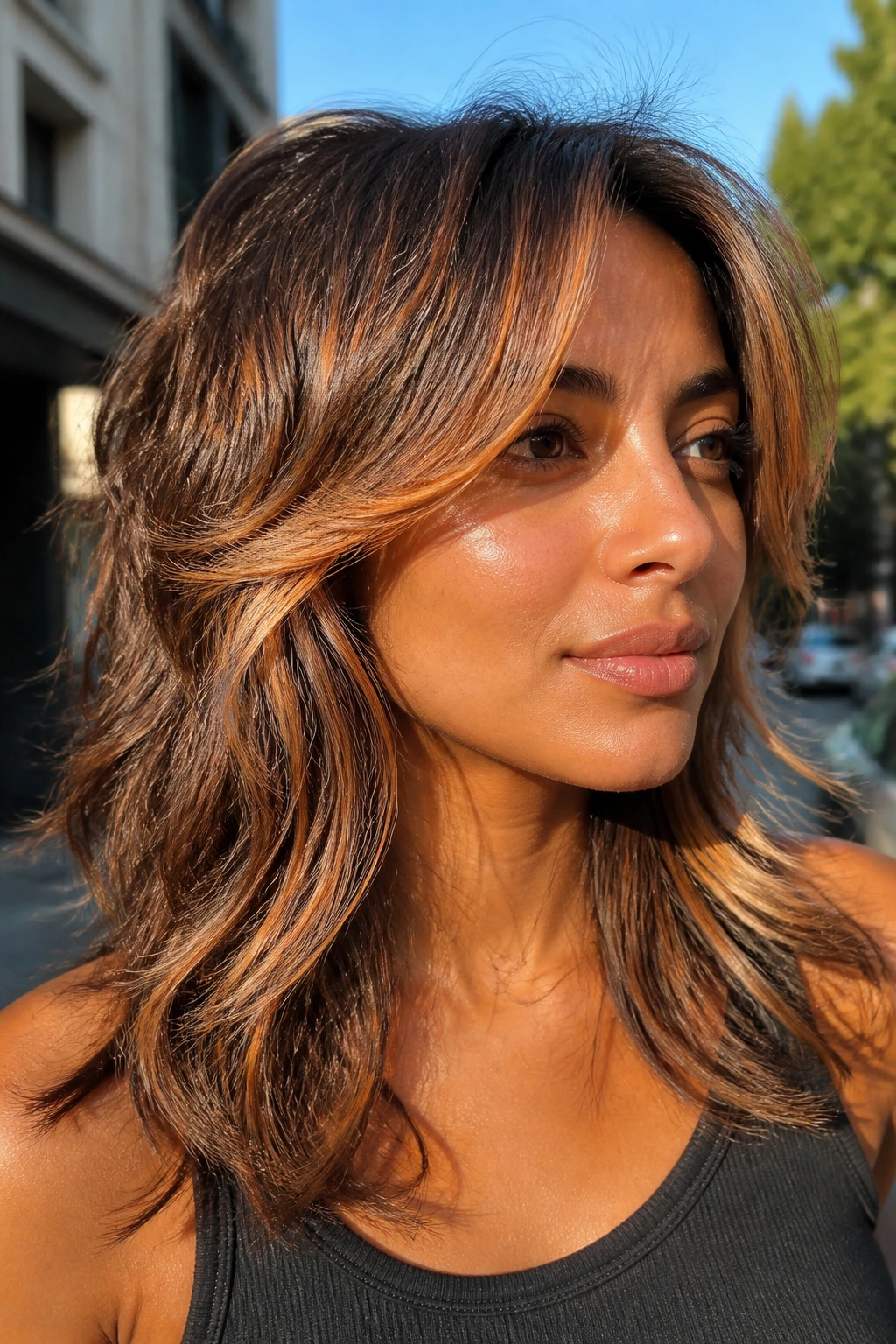
Golden apricot is warmer than beige and less red than copper, which gives it a friendly glow on tan skin. I like it on shaggy layers, where the front pieces can break apart a little and catch the light in chunks. Straight, sleek hair shows every detail of the tone. That can be too much if the highlights are wide.
A few apricot accent pieces around the temple and cheekbone are enough. The rest of the hair can stay deeper and glossy. If you already wear warm makeup shades—terracotta blush, peach lip tint, bronze shadow—this hair color feels like it belongs in the same family.
15. Mushroom Brown Cool Framing
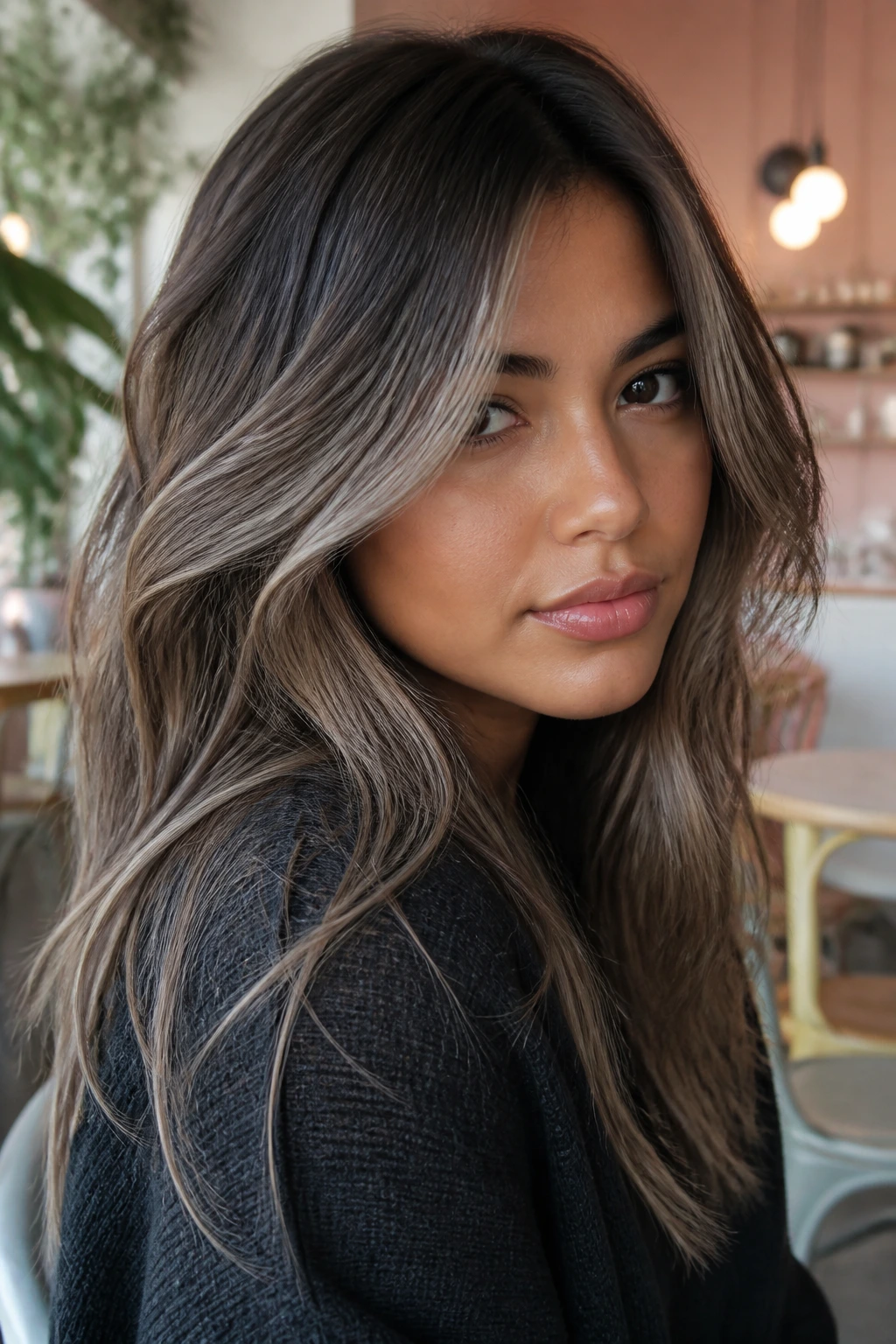
Mushroom brown is the quiet achiever here. It is cool, taupe-leaning, and a little smoky, which sounds odd until you see it on tan skin with olive or neutral undertones. Then it makes perfect sense. The front looks polished and clean, not yellow, not red, not muddy.
I reach for this when someone wants the lightness but not the warmth. The front pieces should stay soft, with a root that is only one shade deeper so the contrast does not get chalky. On layered hair, mushroom brown gives a very believable shadow-to-light shift, especially if you like a middle part.
16. Auburn Edge Lights
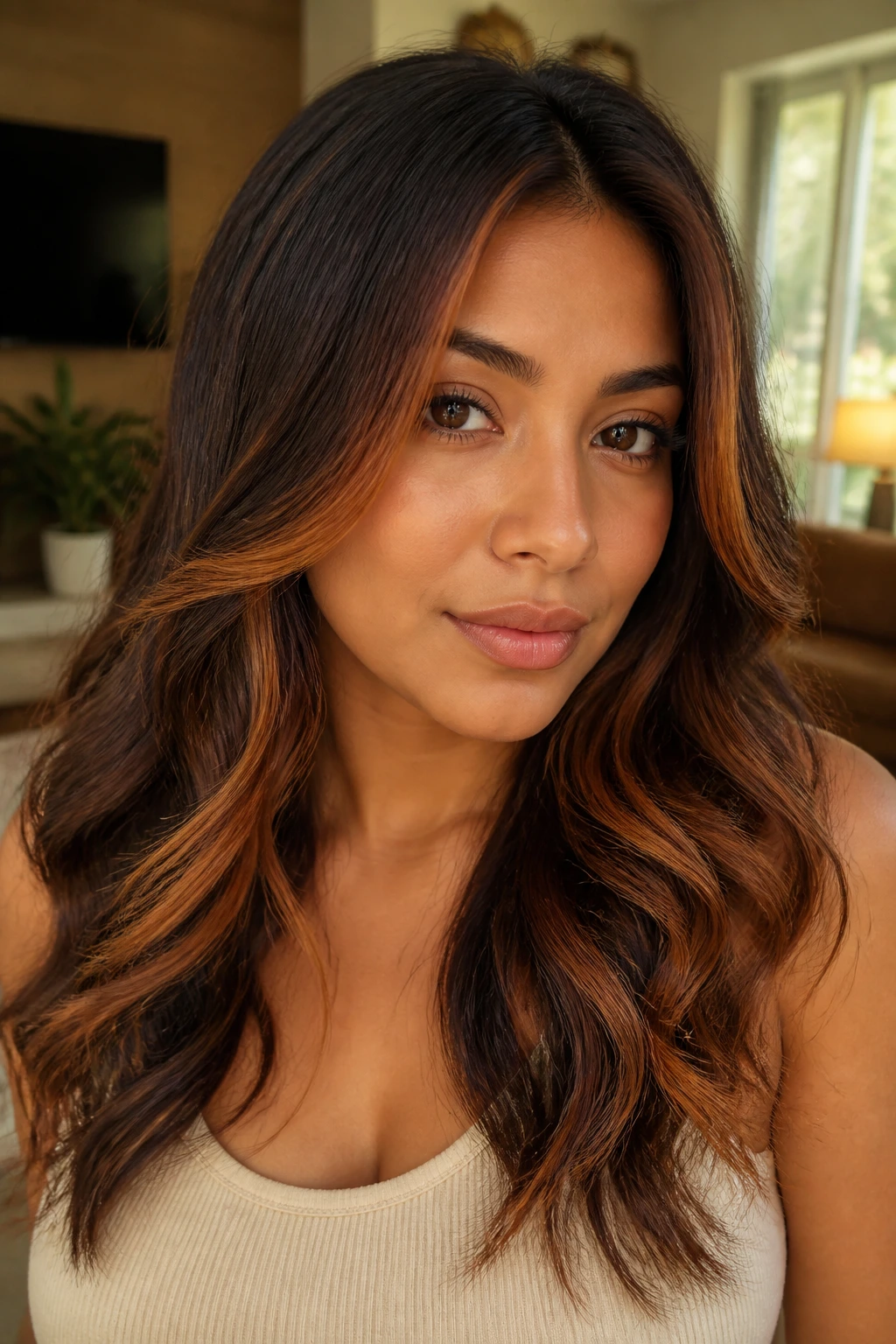
Auburn edge lights sit somewhere between copper and brown, and that middle ground is where a lot of tan skin looks best. The front pieces feel warmer than standard brunette highlights, but they do not shout “redhead.” They just make the hair look richer.
This is a good one if your wardrobe leans earthy: olive, rust, cream, black, denim. The highlight can fade into a warmer brown over time and still look good, which is nice because auburn shades do not always stay crisp forever. A soft curl away from the face makes the color read faster.
17. Vanilla Cream Money Piece
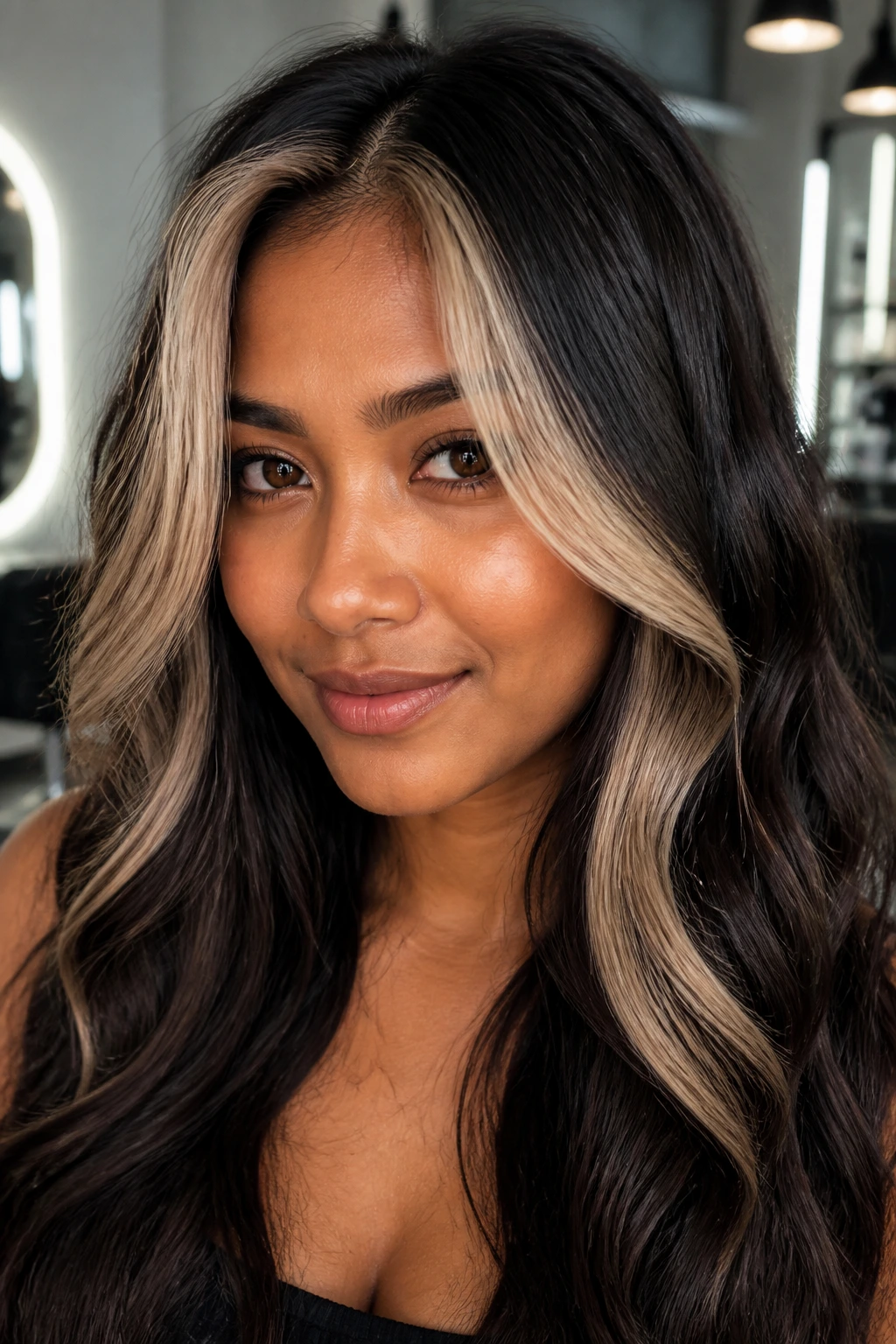
Vanilla cream is the brightest option in the bunch, and it only works if you respect the haircut. On tan skin, it can look striking when the complexion is warm or neutral and the toner leaves a hint of beige behind the lift. If the cream goes too icy, the front loses its softness.
Best When
- The base is deep brown and you want strong contrast
- The face-framing layers are long enough to break up a bright panel
- You are okay touching up toner more often than you would with caramel
Ask for a level 9 to 10 lift with a beige-violet toner, not a flat white. That little bit of warmth keeps the hair from looking brittle.
18. Amber Ribbon Pieces
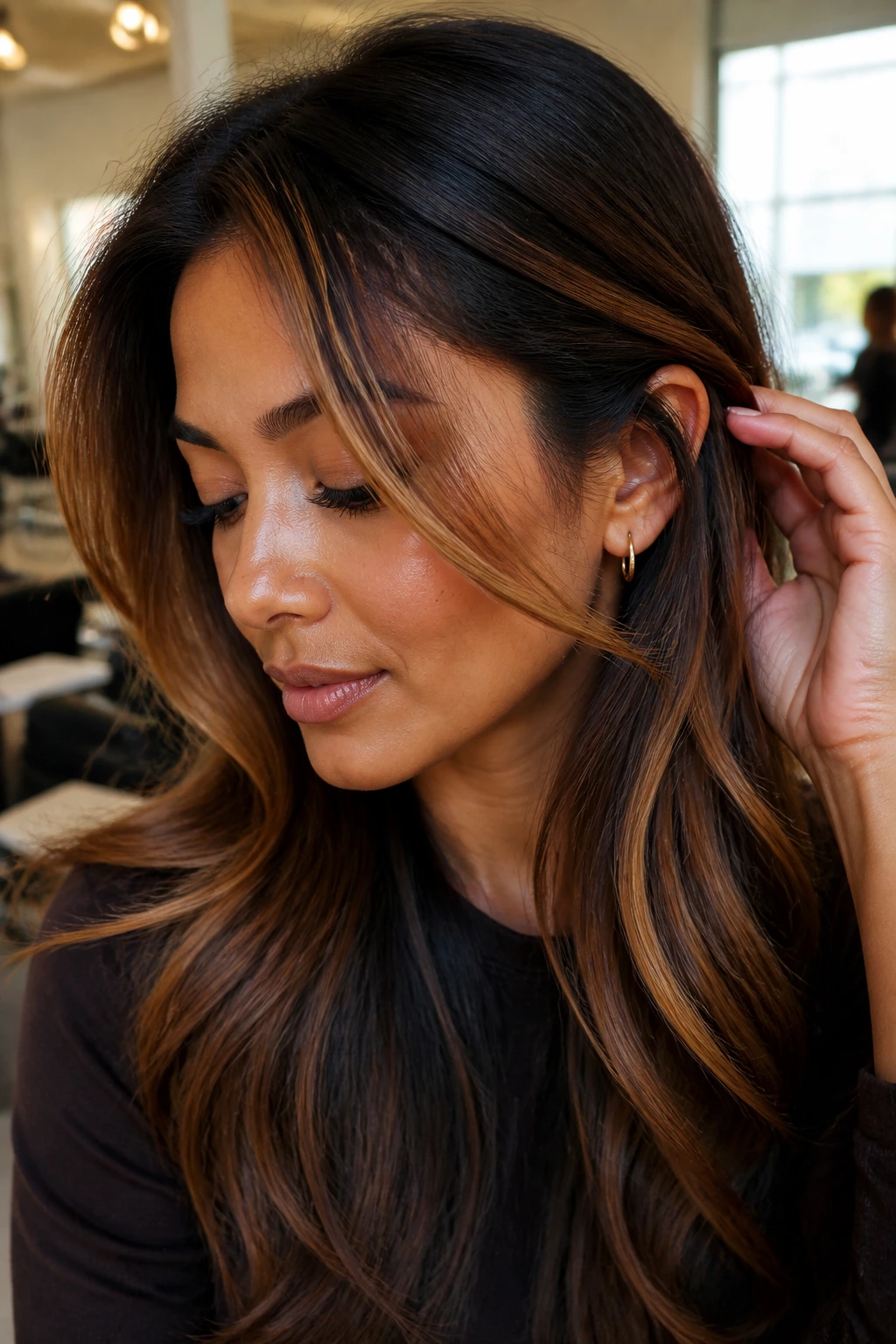
Amber ribbons are thicker than babylights and more visible than micro-foils, which makes them a strong choice for dense hair. Tiny highlights can disappear into thick strands. Amber does not. It sits on the surface of the front layer and shows up even when the hair is half tucked behind the ear.
I like this on long layers that need motion. The ribbons should be placed with space between them so the front doesn’t turn stripey. Tan skin usually reads amber as warm and healthy, especially when the base remains deep brown.
19. Soft Ombré Front Frame
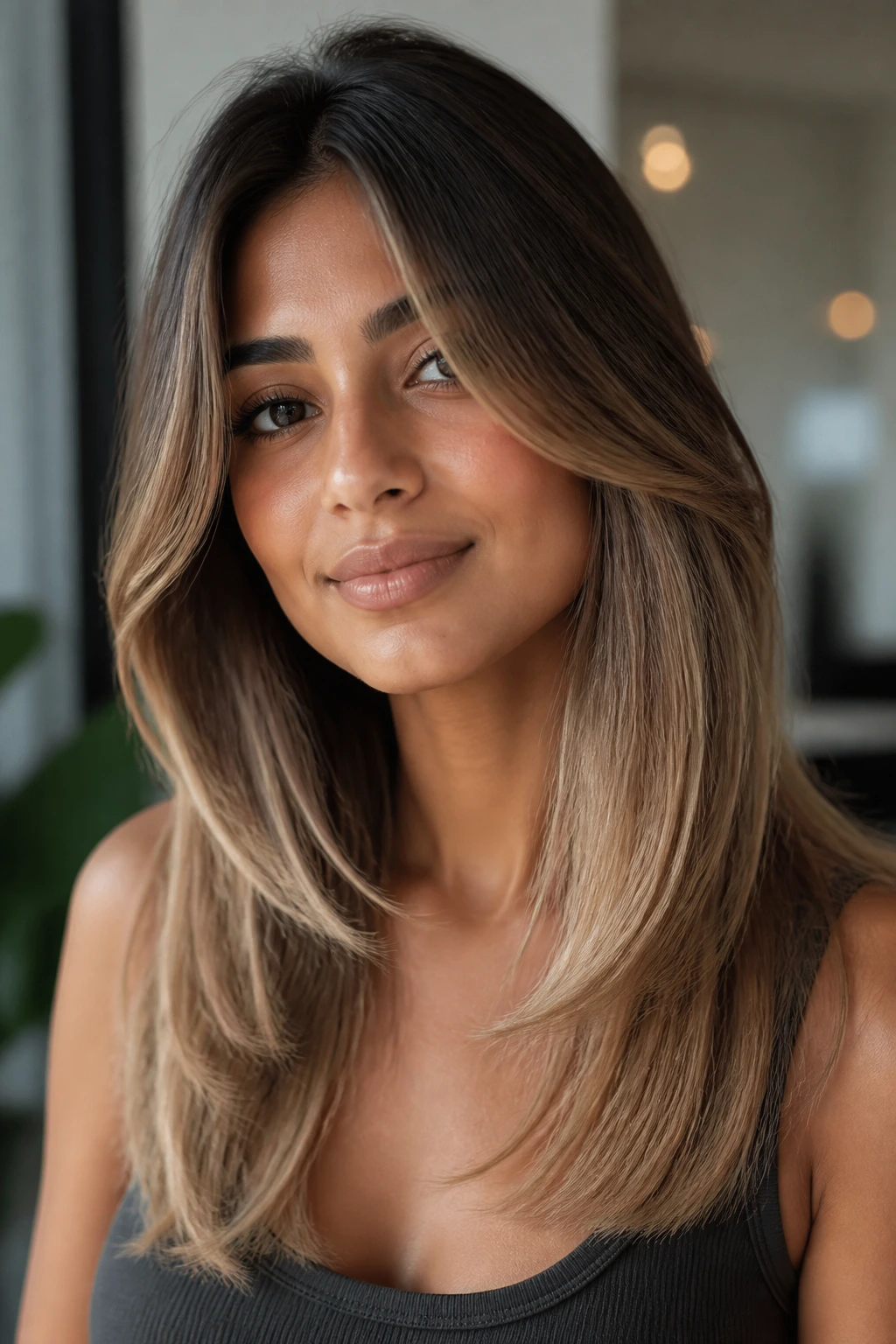
Soft ombré in the front sounds subtle because it is subtle. The color begins a shade or two deeper near the root, then lightens as the front layers fall toward the collarbone. It is a nice way to keep the frame bright without committing to a hard money piece.
This is the one to choose if you hate obvious regrowth lines. The hairline can stay a bit darker, which keeps the grow-out easy. Tan skin with medium warmth often looks especially good with this because the gradual shift mimics natural sun fading.
20. Toasted Almond Balayage
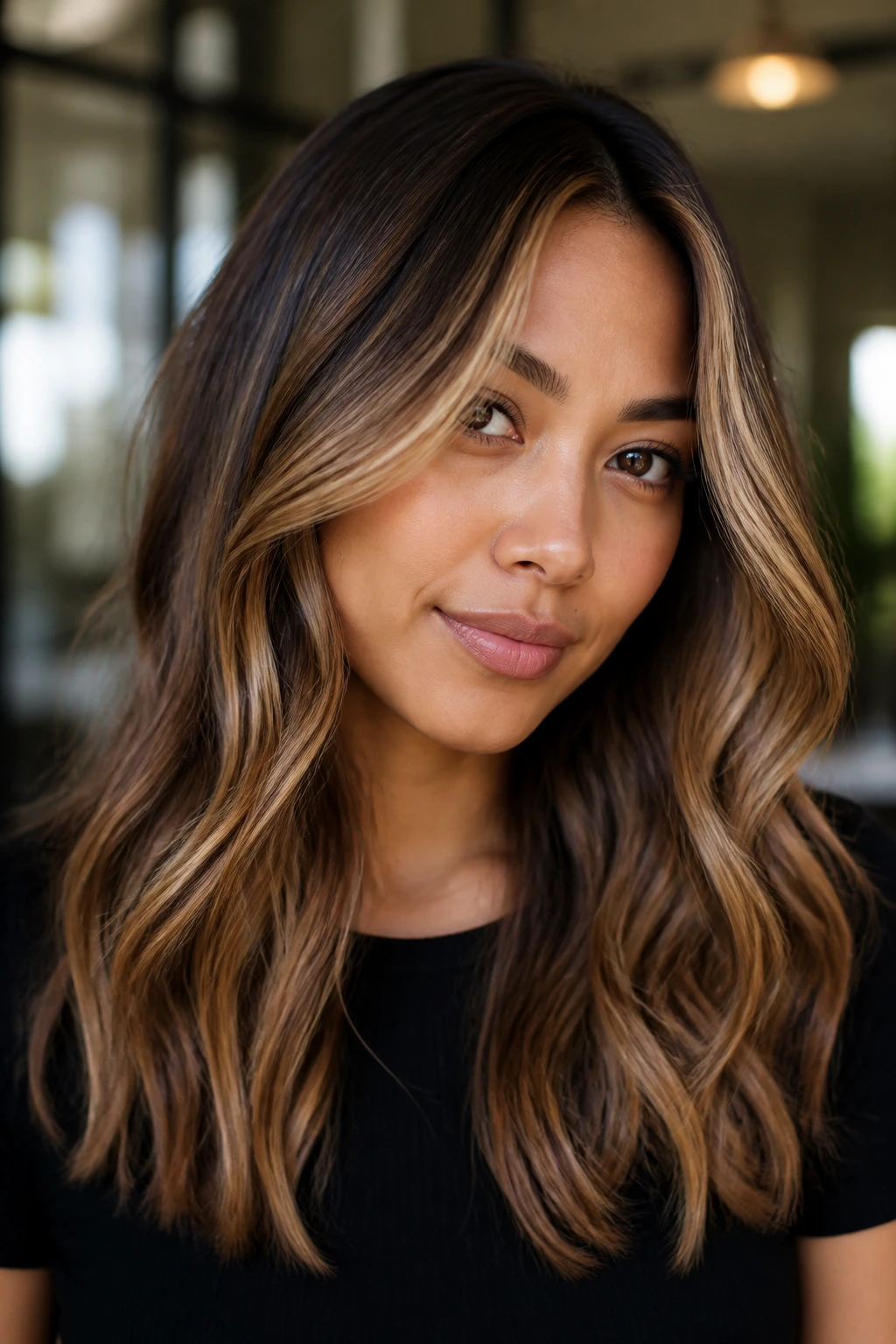
Toasted almond sits in the cozy middle: warmer than ash, softer than honey, less sweet than caramel. It is a good bridge shade for tan skin because it gives light without making the front too yellow or too red. On midlength cuts, the front layers pick it up and the rest of the hair can stay darker for balance.
I like toasted almond when someone wants to brighten their hair but keep the vibe grounded. A root smudge, a few face-framing ribbons, and a softly blended end section are enough. No need to make the whole head pale just to get a little lift around the face.
21. Micro-Foil Face Framing
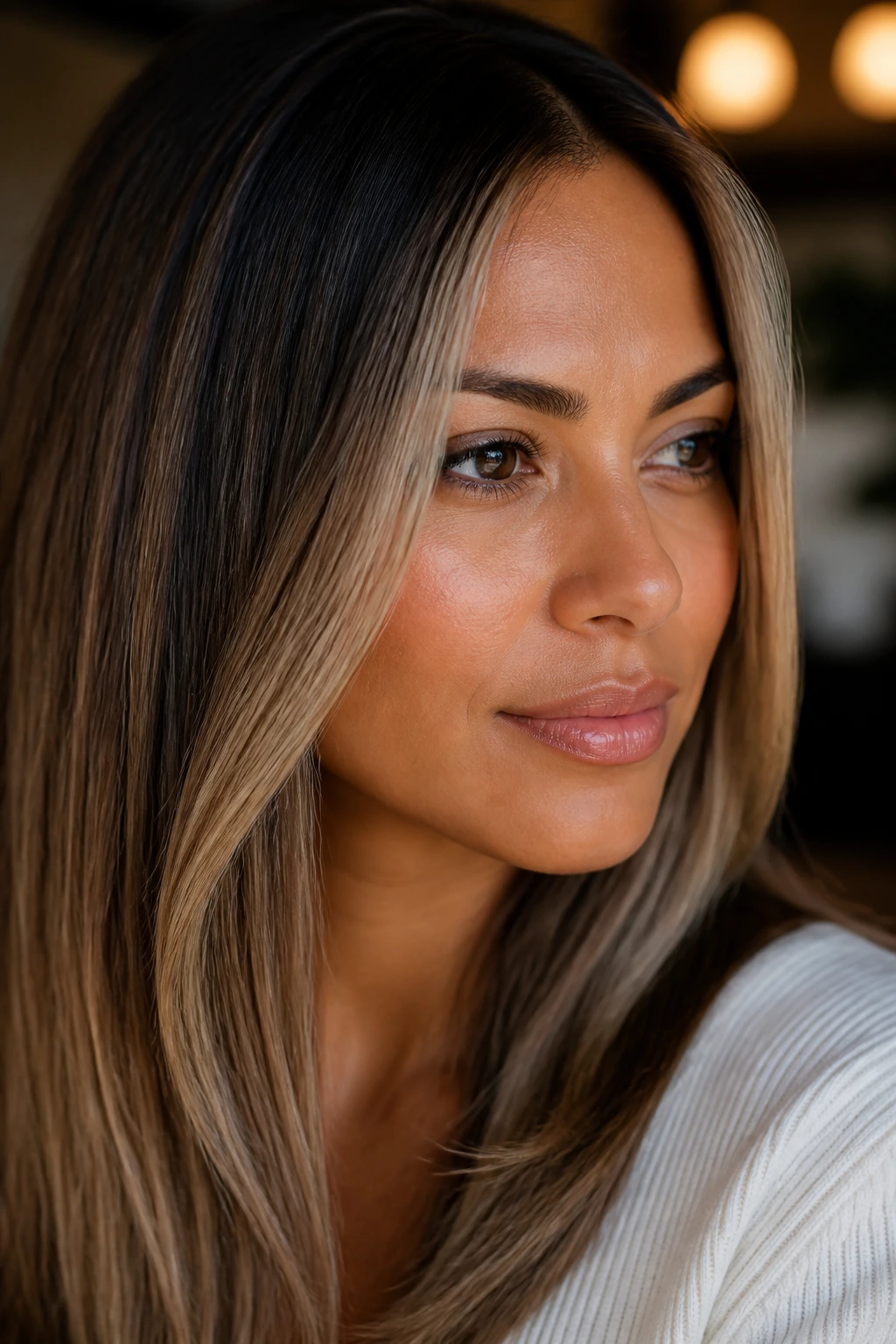
Micro-foils are the subtle person’s highlight. The strands are so fine they give a shimmer effect instead of a chunky stripe, which is perfect if your hair is fine or you work in a setting where flashy color feels like too much. Tan skin can take this kind of delicate brightness well because the warmth of the complexion keeps the hair from vanishing.
How It Reads
- Brightens the eyes and temples, not just the ends
- Looks softer on straight hair than thick ribbons do
- Makes layered cuts appear denser because the light catches at different points
It is the least dramatic option here, and that is the point. A front frame does not have to be loud to do its job.
22. Honeyed Caramel Lob Lights
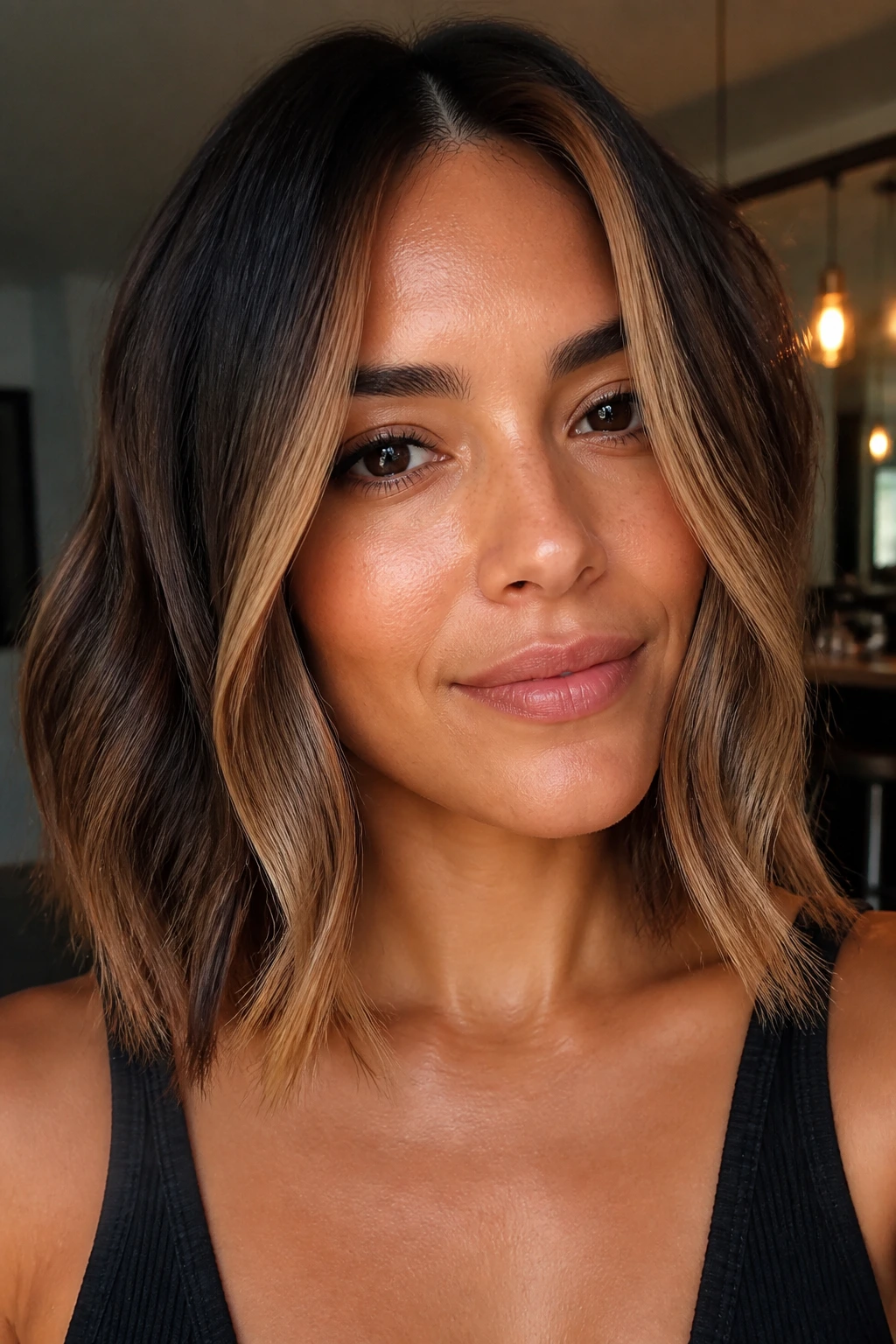
A lob gives face-framing highlights room to breathe. The front pieces stop right where the jaw and collarbone want attention, so honeyed caramel can do a lot with a little. On tan skin, the mix of honey and caramel reads warm, glossy, and easy to live with.
I especially like this look with a center part and soft bends at the ends. The color lands on the first layer, then repeats in smaller pieces through the midlengths so the cut does not look top-heavy. It is polished, but not fussy. That matters.
23. Deep Walnut Contrast
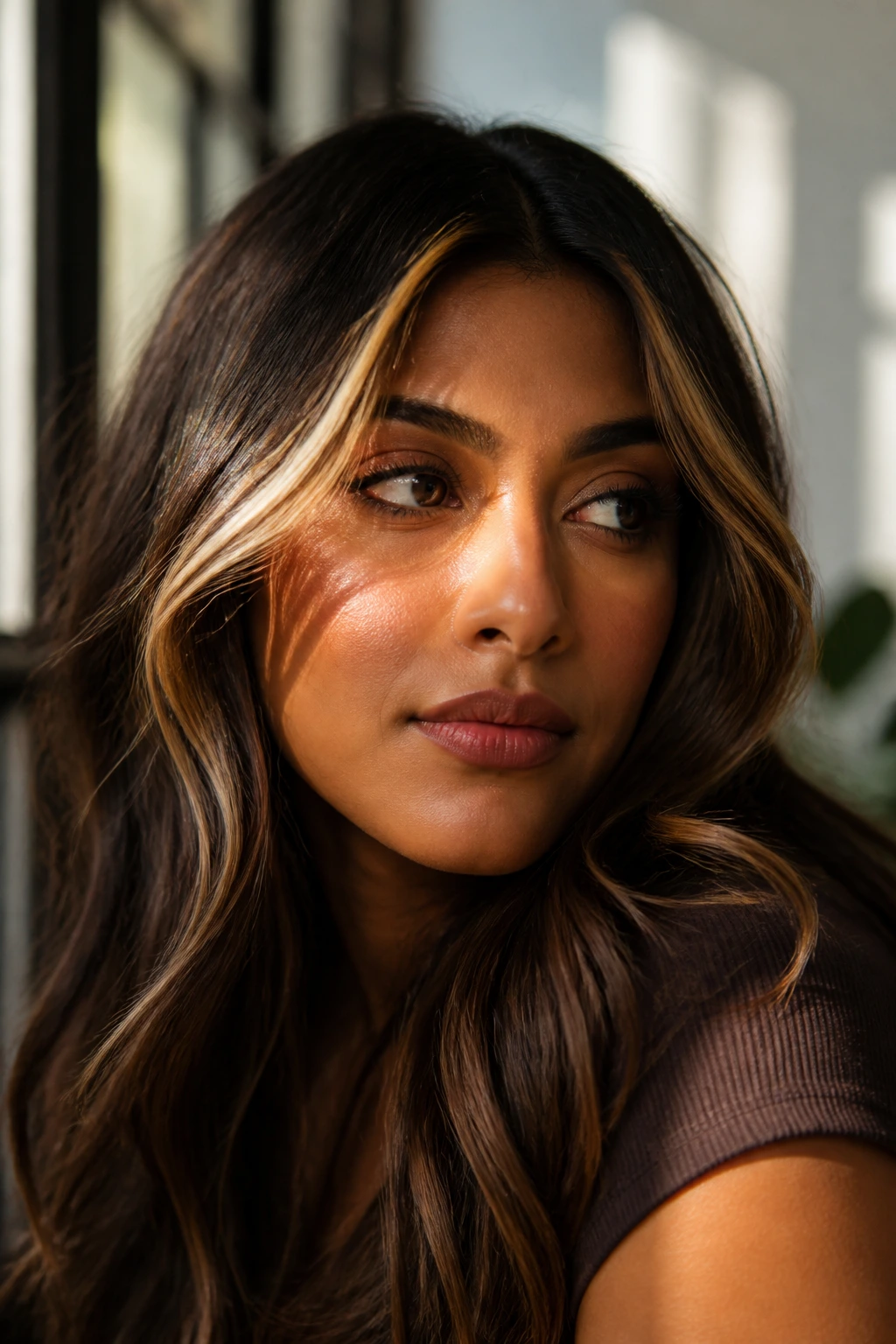
Deep walnut contrast is for the person who likes the front to be seen. The base stays rich and dark, and the lighter pieces up front stand out harder because of it. On tan skin, that contrast can be striking rather than harsh, as long as the front pieces are toned into a beige or caramel family instead of a flat blonde.
If you wear strong brows or darker eyeliner, this can look balanced fast. If you prefer a softer look, keep the bright pieces thinner and let walnut dominate the rest of the head. Otherwise the front starts running the show.
24. Peach-Champagne Blend
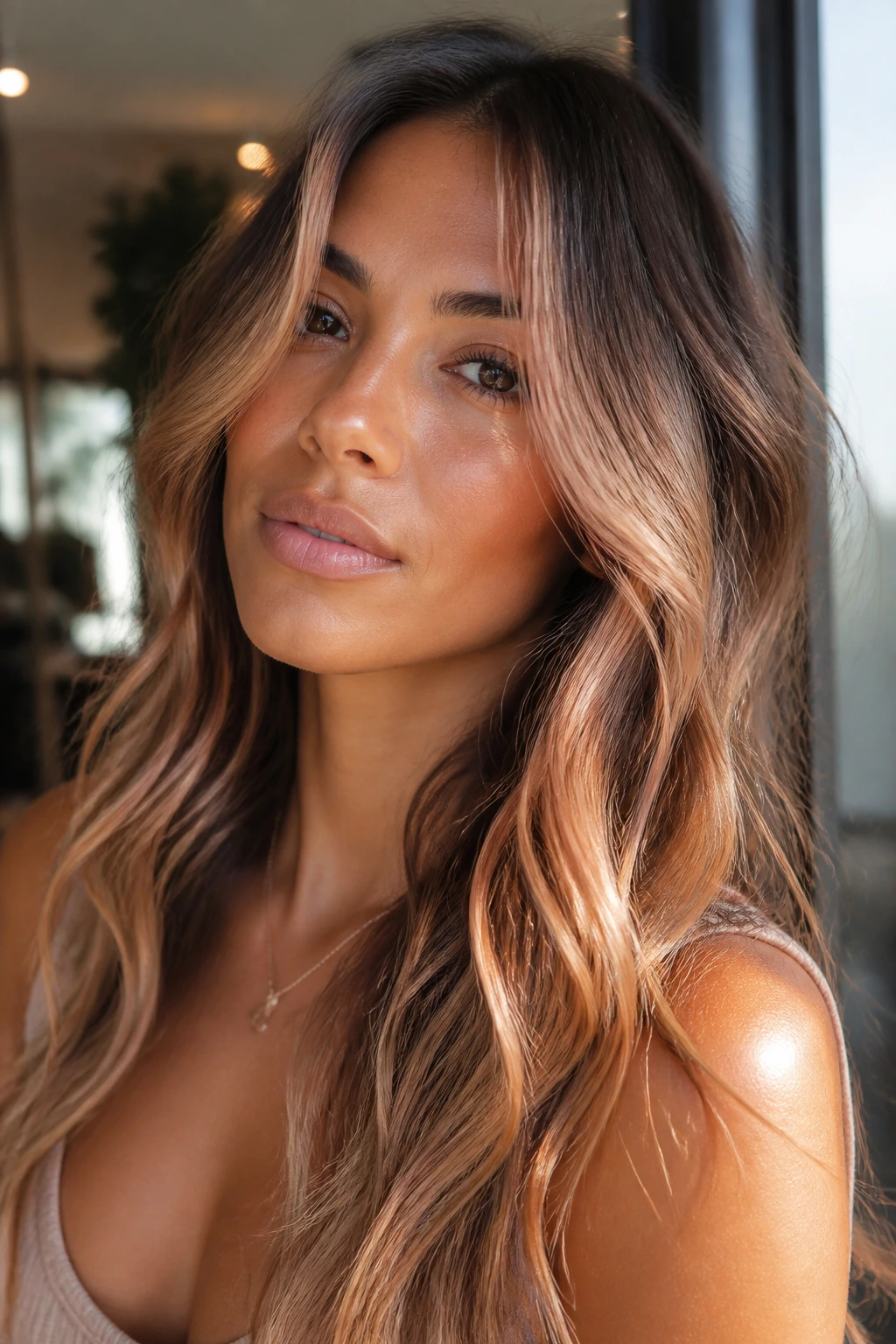
Peach-champagne is softer than copper and brighter than beige, which makes it a nice in-between for tan skin with a warm blush to it. The front gets a gentle glow, almost like a warmed-up champagne glass, and the face frame feels feminine without drifting into pink overload.
I like this on layered blowouts and slightly undone waves. The peach note gives warmth, while the champagne keeps it lifted. If you want a color that feels fresh but not juvenile, this is a strong candidate. It does need glossing, though. Peach tones fade faster than brown-based highlights.
25. Chunky Contrast Panels
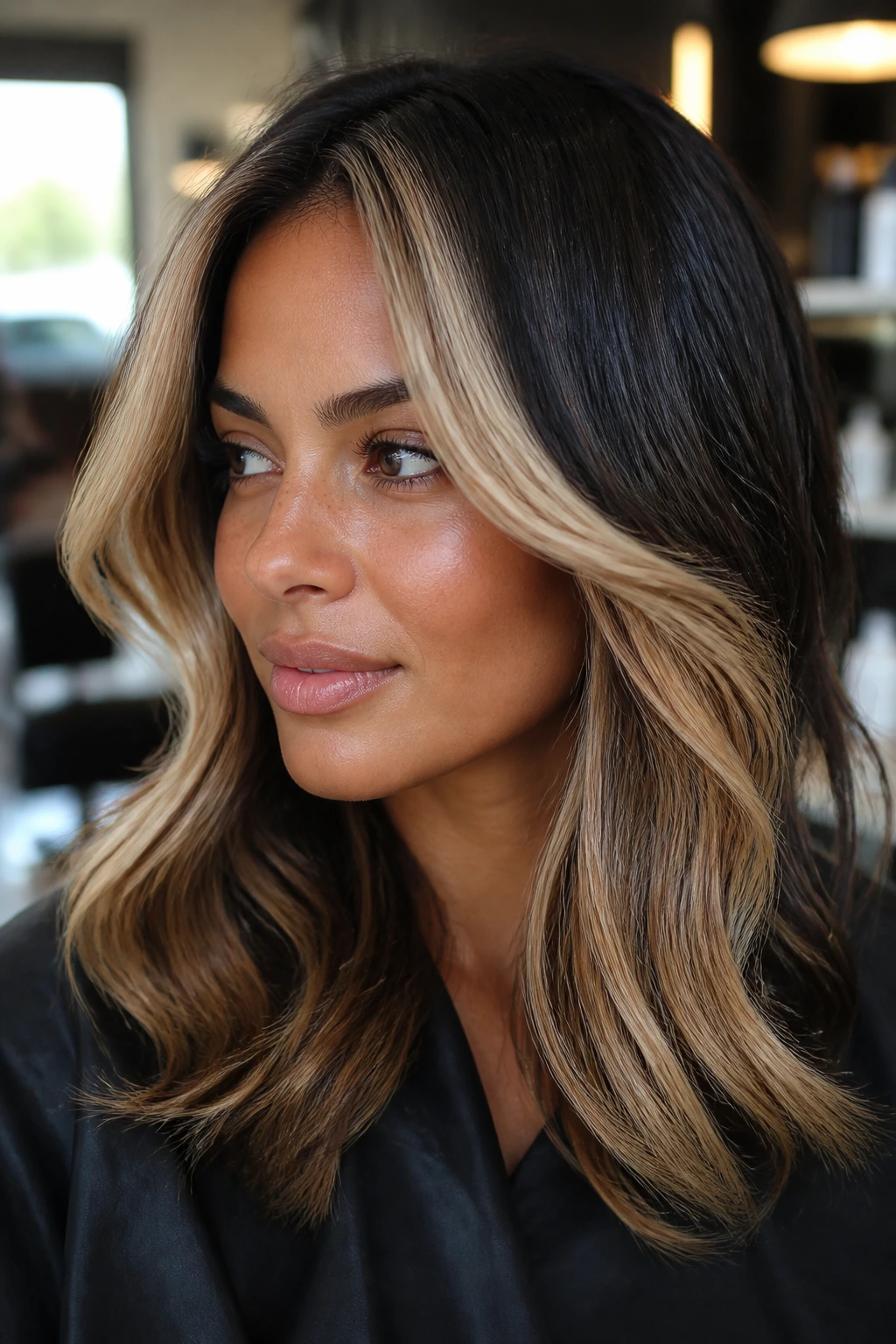
If you want the front to announce itself, chunky contrast panels are the loudest option in the set. They work best when the haircut has real movement—layers, curtain bangs, a shaggy bend—because the wider pieces need something to break them up. On tan skin, the look can be bold without looking detached, especially if the lighter panel is toned creamy rather than icy.
The key is restraint in the wrong places. Keep the chunky brightness at the front, not all through the crown. Otherwise the style turns blocky fast. I like this when someone wants a real fashion feel and is fine with more maintenance.
How Face-Framing Layers Change the Light
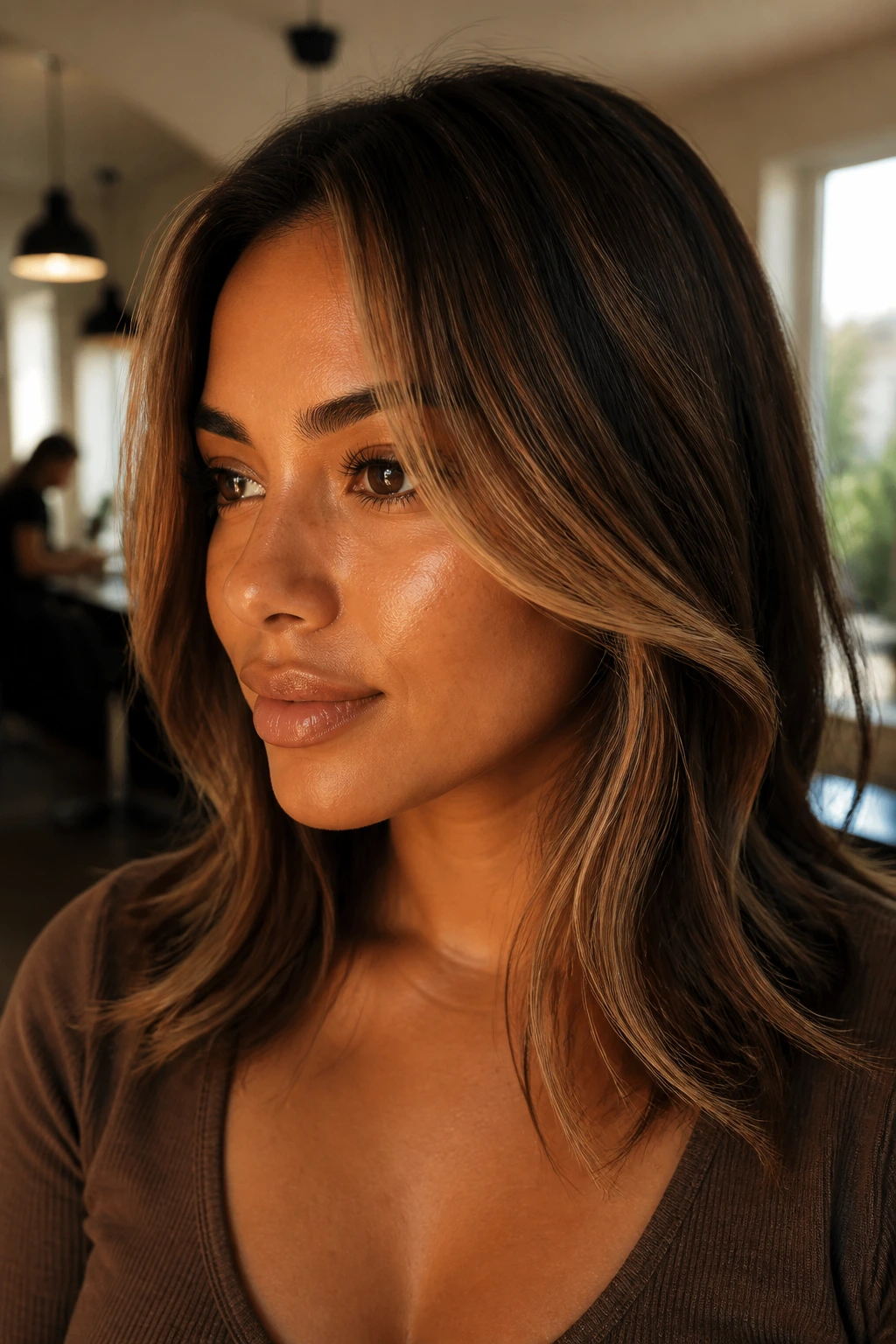
Face-framing layers are not just a haircut detail. They are the part of the cut that decides how the highlight moves. A blunt front panel sits there. A layered front panel bends, flips, and catches light every time you breathe, which is why the same caramel foil can look flat on one head and gorgeous on another.
The front hairline also lifts faster than the rest of the head, so placement matters. A colorist who respects that will keep the brightest pieces slightly off the scalp, use narrower weaves near the temple, and let the highlight follow the bend of the layer rather than the exact line of the part. That keeps the color soft even when the hair is pulled forward. It also keeps the finish from looking like a stripe pasted on top of darker hair.
I care about that detail because it changes the whole result. If the front pieces are too wide, the eye stops at the color. If they are shaped to the layer, the eye reads the whole haircut.
Choosing Undertones That Sit Cleanly on Tan Skin
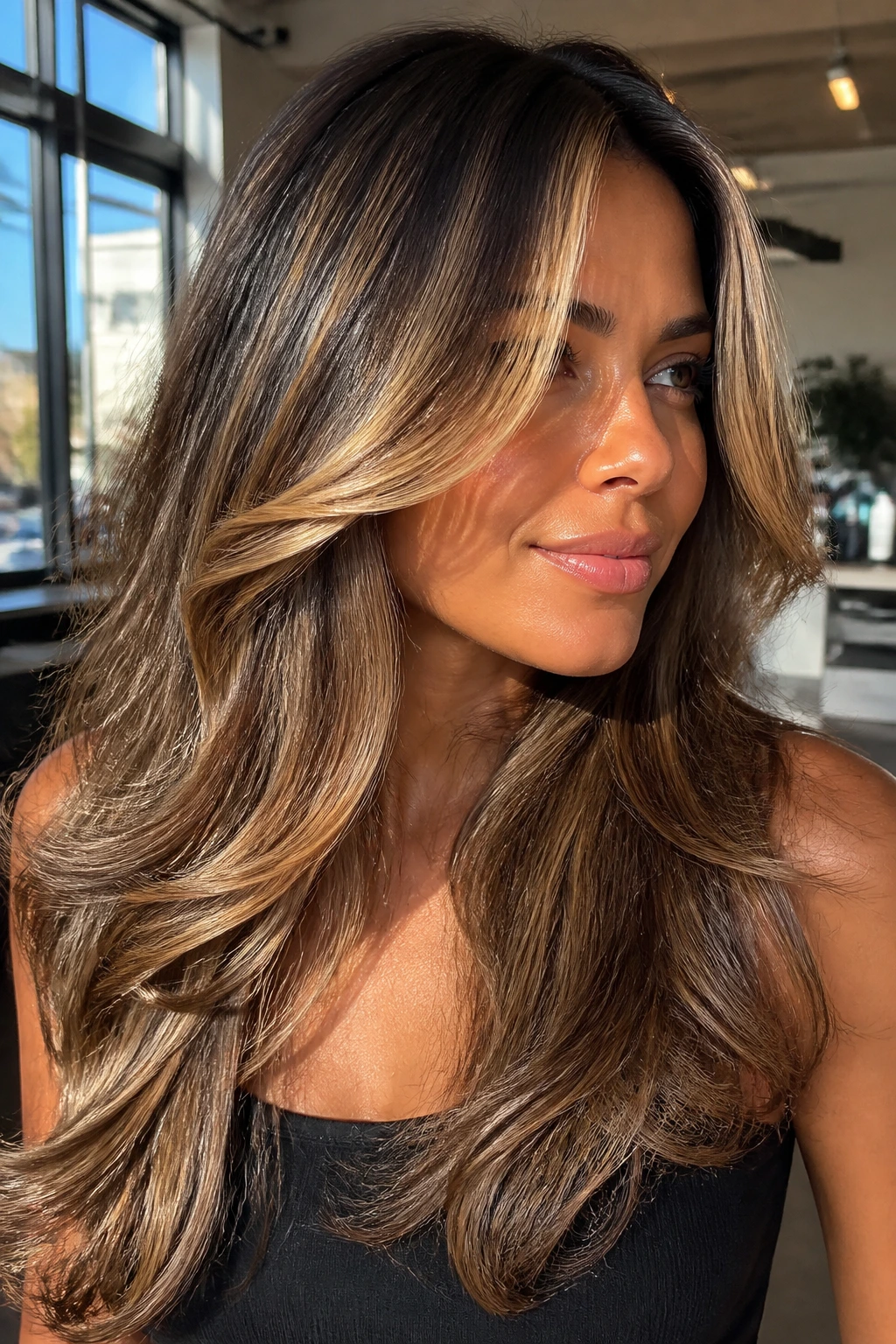
Tan skin is not one thing, and the shade choice changes fast depending on whether the undertone leans warm, neutral, or olive. Warm tan skin usually likes honey, caramel, copper, amber, and apricot because those shades echo the skin instead of arguing with it. Neutral tan skin has more room to move. Beige, champagne, bronde, and even soft vanilla can look very clean there.
Olive tan skin is the one that gets misread the most. Too much orange can look loud; too much ash can go muddy. That is why mushroom brown, sandy beige, taupe-bronde, and muted caramel often work so well. They keep the front bright without making the skin look sallow.
If you are standing in a salon and do not know where you land, look at the neck rather than the cheeks. The neck usually tells the truth faster. Warm, neutral, or olive. Pick the front pieces from there, not from the inspiration photo alone.
The Tools a Colorist Reaches For First
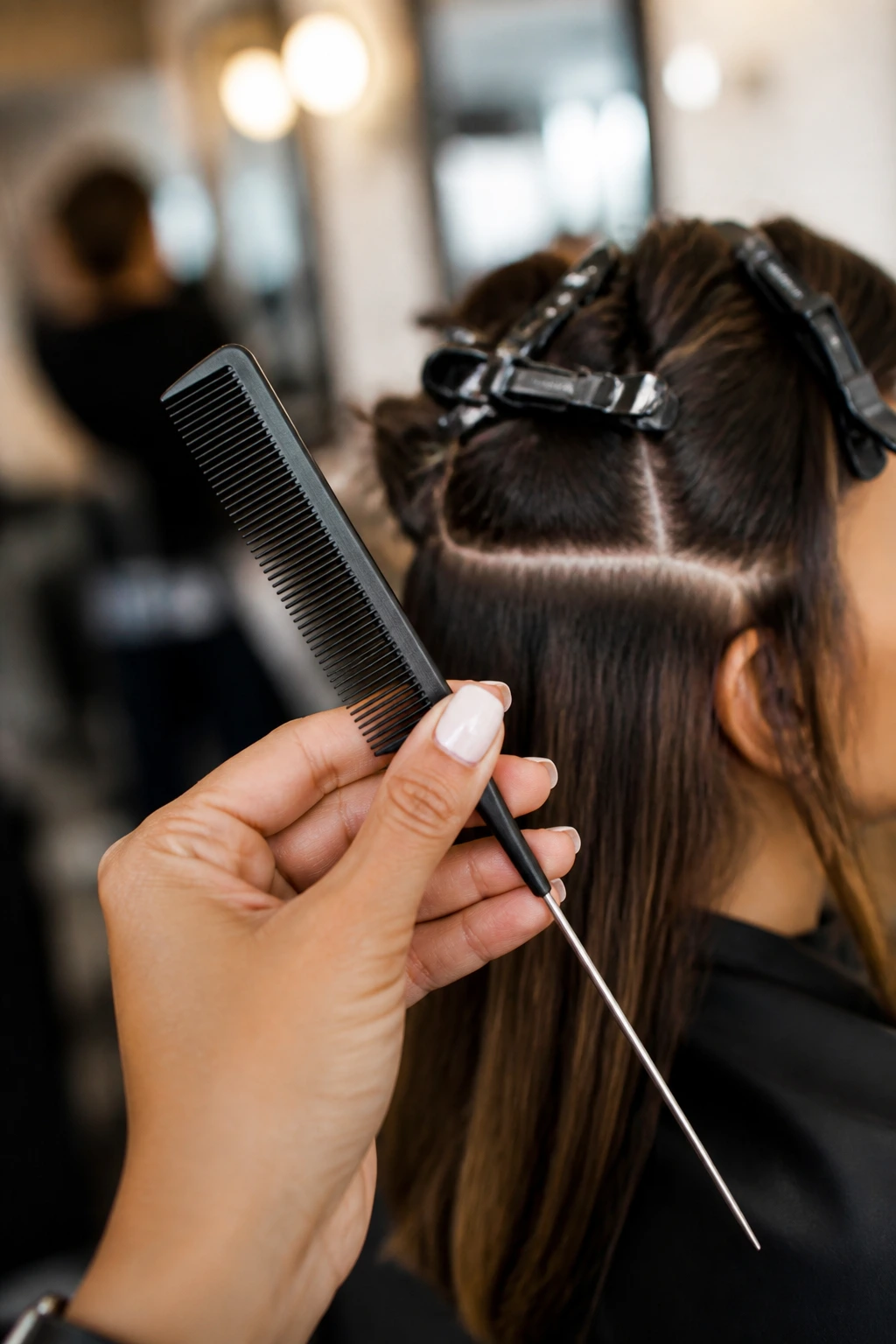
A good face frame starts with clean sectioning. That means a tail comb, sectioning clips, and a clear plan for where the brightest strands should sit. The placement around the temple and money piece matters more than people think. A sloppy section line will show in the finished color.
- Tail comb: for clean part lines and narrow weaves around the face.
- Sectioning clips: keep the front and crown separate so the lightener does not creep.
- Foils or balayage board: foils give sharper lift; a board gives softer painted edges.
- Tint brush and bowl: for controlled saturation at the front panel.
- Lightener and developer: choose strength based on base color and hair health; do not rush the lift.
- Demi-permanent toner or gloss: keeps honey beige, champagne, copper, or mushroom from going brassy or flat.
- Gloves and color cape: boring, yes, but nobody wants lightener on a sleeve.
- Color-safe shampoo and mask: for the first week after coloring and for the long haul.
If you are doing this at home, I would be blunt: front pieces are the wrong place to guess. A salon consultation costs less than fixing a bright stripe that went yellow at the hairline.
How to Style the Front Pieces So They Read From Across the Room
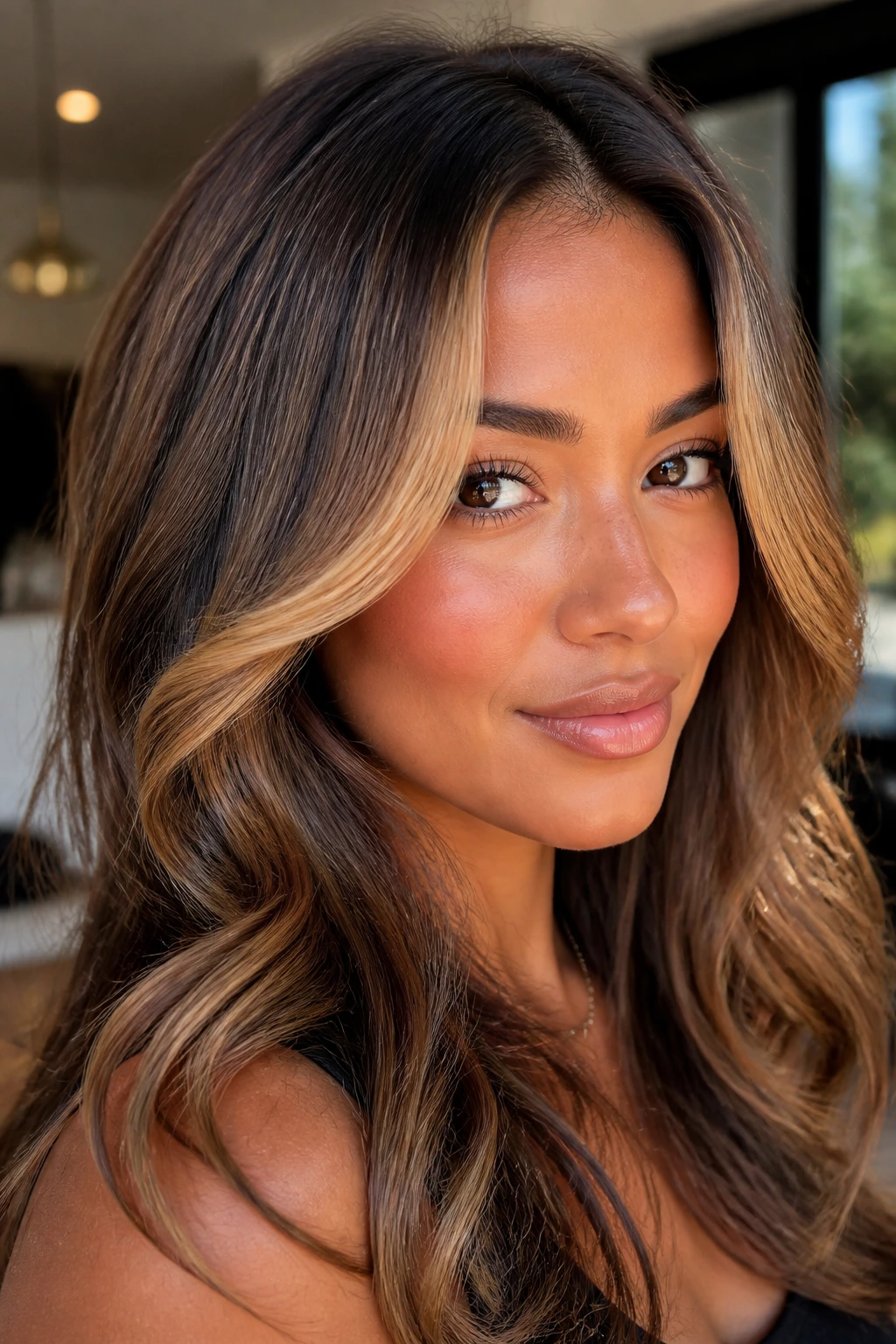
The color only shows if you style it in a way that lets the layers move. Straight hair makes beige, champagne, and mushroom look sleek, but it can also flatten the contrast if the front pieces are too fine. A round brush blowout is your friend here. Aim the front sections away from the face, then bend the ends inward just enough for the highlight to catch the cheekbone.
Waves are the easiest setting for honey, caramel, amber, and copper. A 1 to 1.25-inch iron gives the front pieces enough bend to break up the color line. Curl away from the face on the first two layers, then leave the ends a little straighter so the light hits the whole strand, not just one spot.
Curly hair is its own game. Paint the front highlight where the curl falls when it is dry, not only where it stretches when wet. Otherwise the brightest piece lands in the wrong place and disappears. For updos, leave one front layer out. That is usually the piece that makes the whole color feel intentional.
Keeping the Color Fresh Without Overdoing Touch-Ups
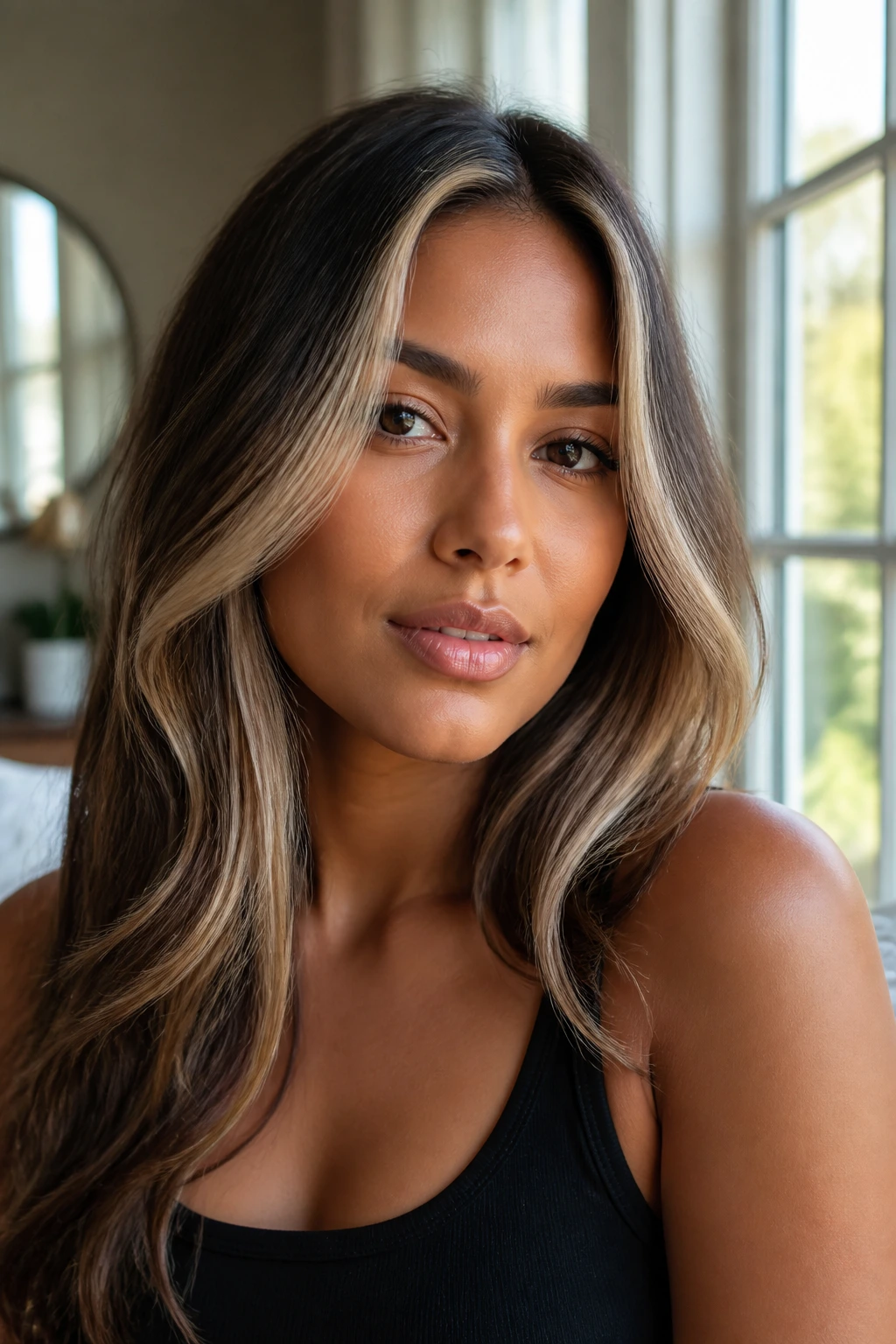
Front highlights age fastest because they sit near the face, the part line, and the hot tools. A soft honey or caramel piece usually wants a gloss every 6 to 8 weeks if you want the tone to stay fresh. A brighter vanilla or champagne frame may need toner sooner if your water is hard or your shampoo is too harsh.
Use a color-safe shampoo most washes and reserve clarifying shampoo for once every 3 to 4 weeks, unless your hair picks up product like a magnet. If the front starts going yellow, a purple shampoo once every 7 to 10 days can help. If the brunette base turns orange, a blue shampoo every week or two may be the better fix. Do not use both at full force at the same time. That is how you get dull, weird-looking hair.
Heat protectant matters here more than people want to admit. If the front pieces are the most processed part of the head, they are the first to dry out with a blow-dryer, wand, or flat iron. A weekly mask, a satin pillowcase, and a lower heat setting keep the shine where you want it.
Mistakes That Make the Money Piece Look Harsh
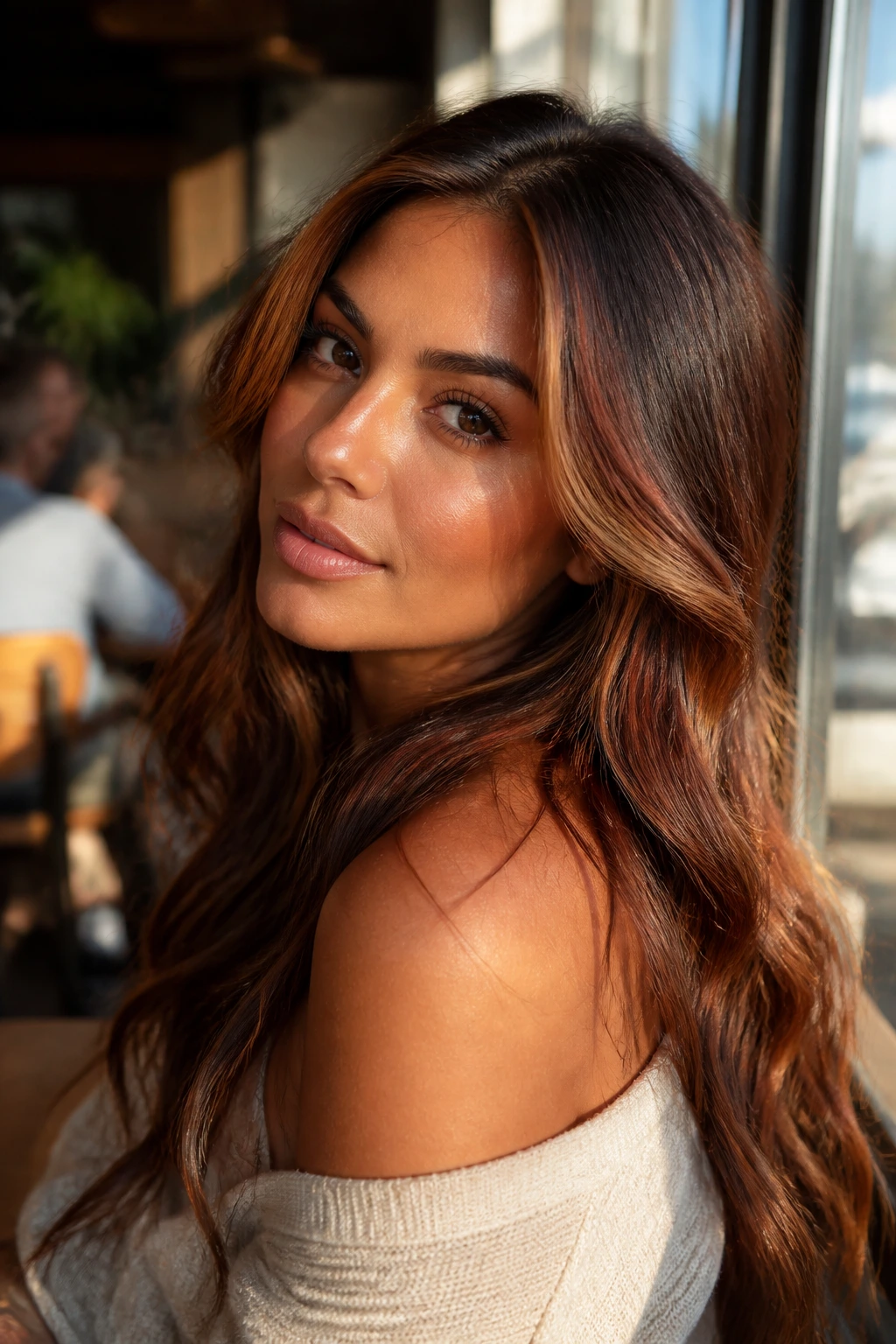
The most common mistake is making the front too wide. A broad, bright panel at the hairline can look stripey the second you tuck your hair behind your ear. Keep the brightest section narrow and feather the edges into the layer so the color follows the cut.
A second mistake is picking the wrong tone for the undertone. Too much gold on olive tan skin can go brassy. Too much ash on warm tan skin can make the face look tired. The fix is not complicated: choose the shade family first, then the brightness level.
Skipping the root shadow is another one. A front piece with no depth behind it can look harsh after a few weeks, even if it looked fresh on day one. The deeper root gives the eye a place to rest.
And please do not over-tone. A front frame that looks perfectly beige in the chair can go flat once it dries. Leave a little warmth unless you are deliberately going cool.
Variations Worth Trying If You Want More Softness or More Drama
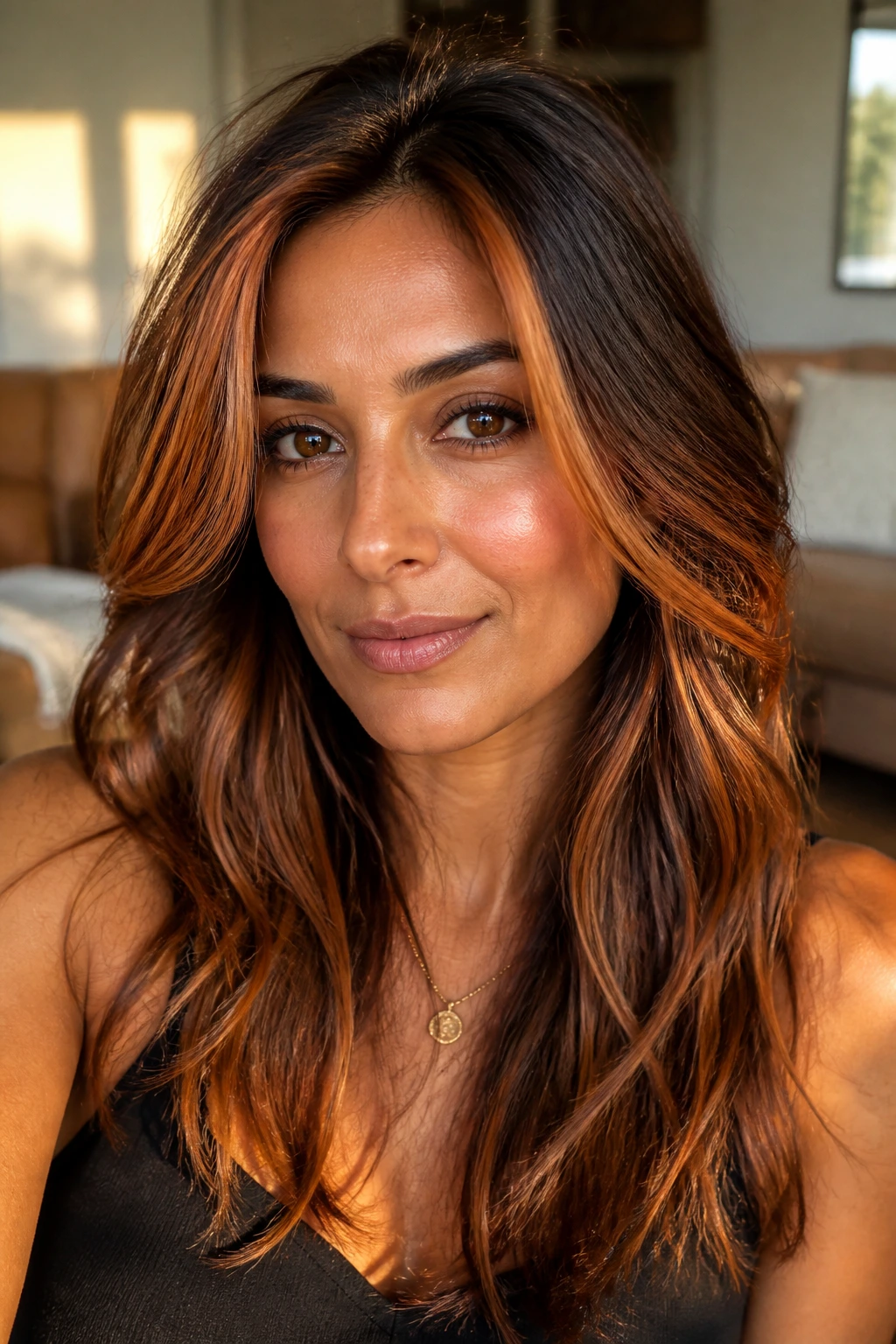
Barely-There Halo: Use micro-babylights instead of a money piece. This is the best route if you want the front lighter but do not want anyone to clock the technique from six feet away.
Bright-Front Contrast: Keep the back rich and make the front two levels lighter. It gives the hair a sharper shape and works well when the layers are feathered or curtain-cut.
Warm Copper Drift: Blend copper, amber, and a touch of brown at the front. Choose this if tan skin has warm undertones and you want the color to feel sunny rather than blonde.
Cool Taupe Frame: Use mushroom, beige, and soft bronde around the face. This is the better option for neutral or olive tan skin when gold keeps turning too orange.
Texture-Specific Placement: On curls, paint where the curl falls. On straight hair, place the brightness just outside the part and through the longest layer. The same shade can look completely different once texture enters the picture.
Questions People Ask Before They Book the Appointment
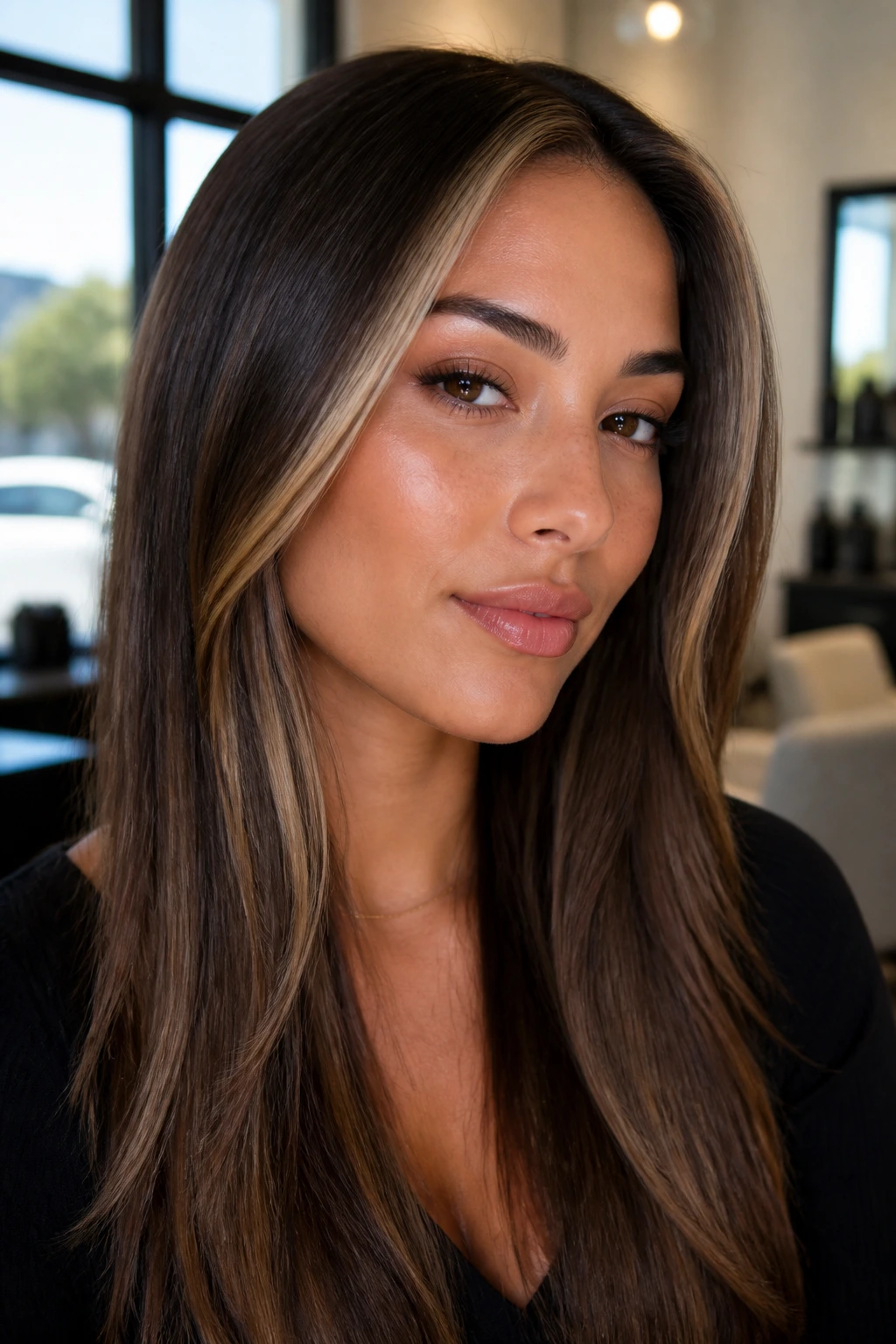
Which highlight shade is most flattering on tan skin?
Honey, caramel, beige, and soft copper are the easiest places to start. If your undertone leans olive, mushroom brown and taupe-bronde can look cleaner than warmer golds.
How wide should the money piece be?
Usually narrower than people expect. A front panel around 1/2 inch to 1 inch wide is enough for most layered cuts. Wider than that, and it starts acting like a stripe instead of a frame.
Can dark brown hair pull this off without going blonde?
Yes. Keep the lift to a caramel, amber, or bronde level and leave the root shadow in place. You do not need platinum to get face-framing brightness.
What if my front pieces turn orange?
That usually means the toner is too warm or the lift stopped too soon. A beige or blue-based gloss can help, but if the hair was under-lifted, the fix may need a salon reset.
Do curly and coily textures need different placement?
They do. The highlight should follow the shape of the curl pattern and land where the curl naturally sits when it is dry. Otherwise the color disappears into the bend.
How often do I need touch-ups?
A soft frame usually wants refreshing every 8 to 12 weeks. Brighter, creamier pieces can want toner sooner, especially if you wash often or use hot tools a lot.
Can I keep the back dark and only brighten the front?
Absolutely. That is one of the smartest ways to wear this look. It keeps the cut dimensional and gives you contrast without a full-head blonde commitment.
What if my hair is fine and the front looks thin after highlighting?
Use micro-foils or babylights instead of thick ribbons. Fine hair looks fuller when the light is broken into smaller pieces rather than one big bright section.
A Frame That Grows Out Softly
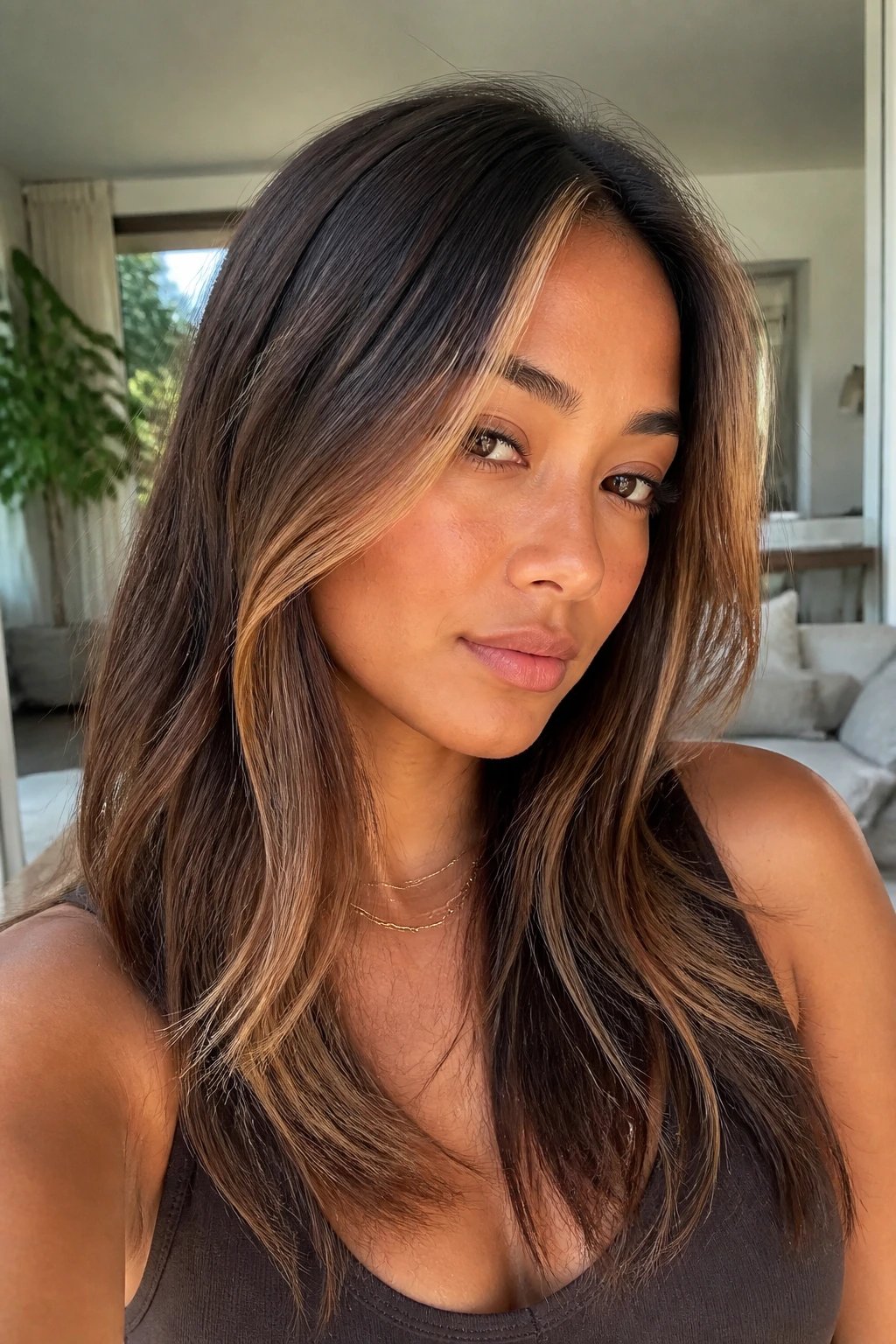
The best framing highlights on tan skin do not scream for attention. They sit where the haircut already wants movement, they match the undertone instead of fighting it, and they leave enough depth that the style still feels like your hair a month later. That is the whole trick, really. Soft can still have contrast. Warm can still be clean. Bright can still look lived-in.
If you are choosing between a dozen inspiration photos, keep coming back to the same question: does the front piece still look good when the hair is tucked back, waved, or blown straight? If the answer is yes, you are looking at the right kind of color.