



Brunette hair has a funny habit: the second you lighten it, every wrong blonde tone shows up like a bad filter. Too yellow and fair neutral skin can look flat. Too icy and the face loses warmth fast. The sweet spot lives in that middle zone — beige, champagne, mushroom, pearl, soft ash, muted gold — the shades that look expensive because they don’t shout.
That’s why the best blonde hairstyles for brunettes with fair neutral skin are usually not one-color, all-over blondes. They’re placements. A bright ribbon near the cheekbone. A root shadow that keeps the face from getting washed out. A soft bend through the ends so the blonde reads as part of the haircut, not a separate event.
Some of these looks stay low-maintenance for months. Some need a gloss, a toner, and a little discipline with purple shampoo. All of them depend on tone more than hype. Blonde is not one thing. On brunette hair, especially, the difference between flattering and frustrating can be two inches of placement and one small shift from gold to beige.
Why These Blonde Looks Work on Fair Neutral Skin
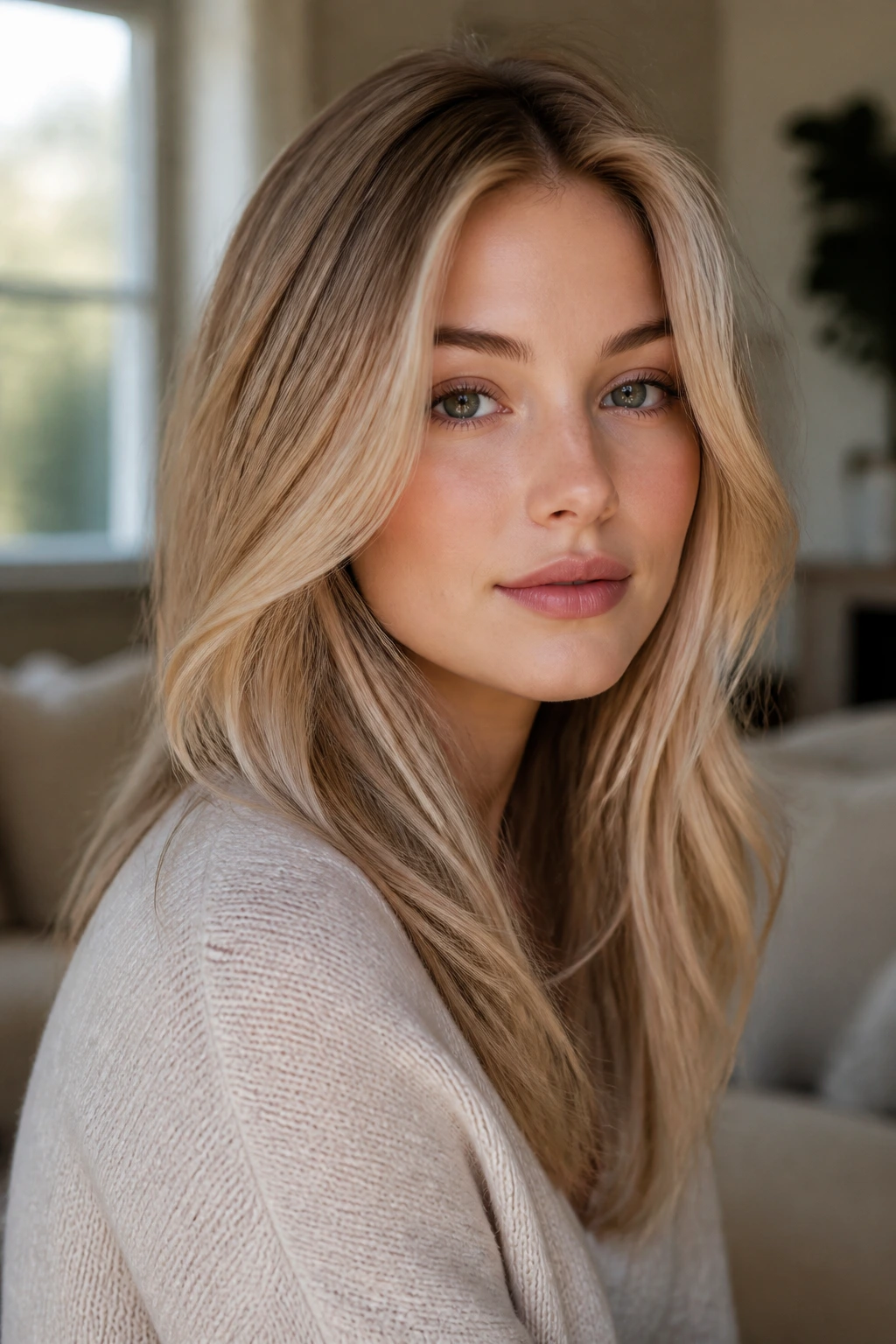
- Beige sits in the middle: Beige blonde is the safest lane for neutral undertones because it doesn’t push the skin pink or make it look drained.
- Root depth keeps the face grounded: Leaving the root a shade or two deeper stops the blonde from floating above the face like a helmet.
- Soft contrast beats hard contrast: Brunette hair needs contrast, but too much of it around the face can turn harsh fast. Gentle ribbons look smoother.
- Champagne and pearl add brightness without brass: These shades reflect light in a cleaner way than yellow-gold blonde, which matters on fair skin.
- Placement changes everything: Money pieces, balayage, and face-framing layers give the lightness a shape, so the blonde moves with the haircut instead of sitting on top of it.
- Grow-out matters as much as first-day color: The best looks still make sense six to ten weeks later, when your root starts showing and you are not rushing back to the salon.
1. Beige Balayage with Soft Waves
Beige balayage is the workhorse here. On a brunette base, the lighter pieces should sit around the mid-lengths and ends, with the brightest bits grazing the cheekbones and collarbone. The result is soft, not stripey, and that matters a lot on fair neutral skin because the color needs to sit with your face, not compete with it.
What Makes It Work
Ask for a root shadow that stays close to your natural brunette level, then hand-painted beige pieces through the top layer. The wave pattern matters as much as the color — a loose 1.25-inch iron bend makes the blonde look blended instead of blocky.
Best for: medium to thick hair that can hold a bend.
Styling note: mist with a light texturizing spray only at the ends; too much near the root kills the movement.
2. Creamy Money Piece on a Deep Brunette Base
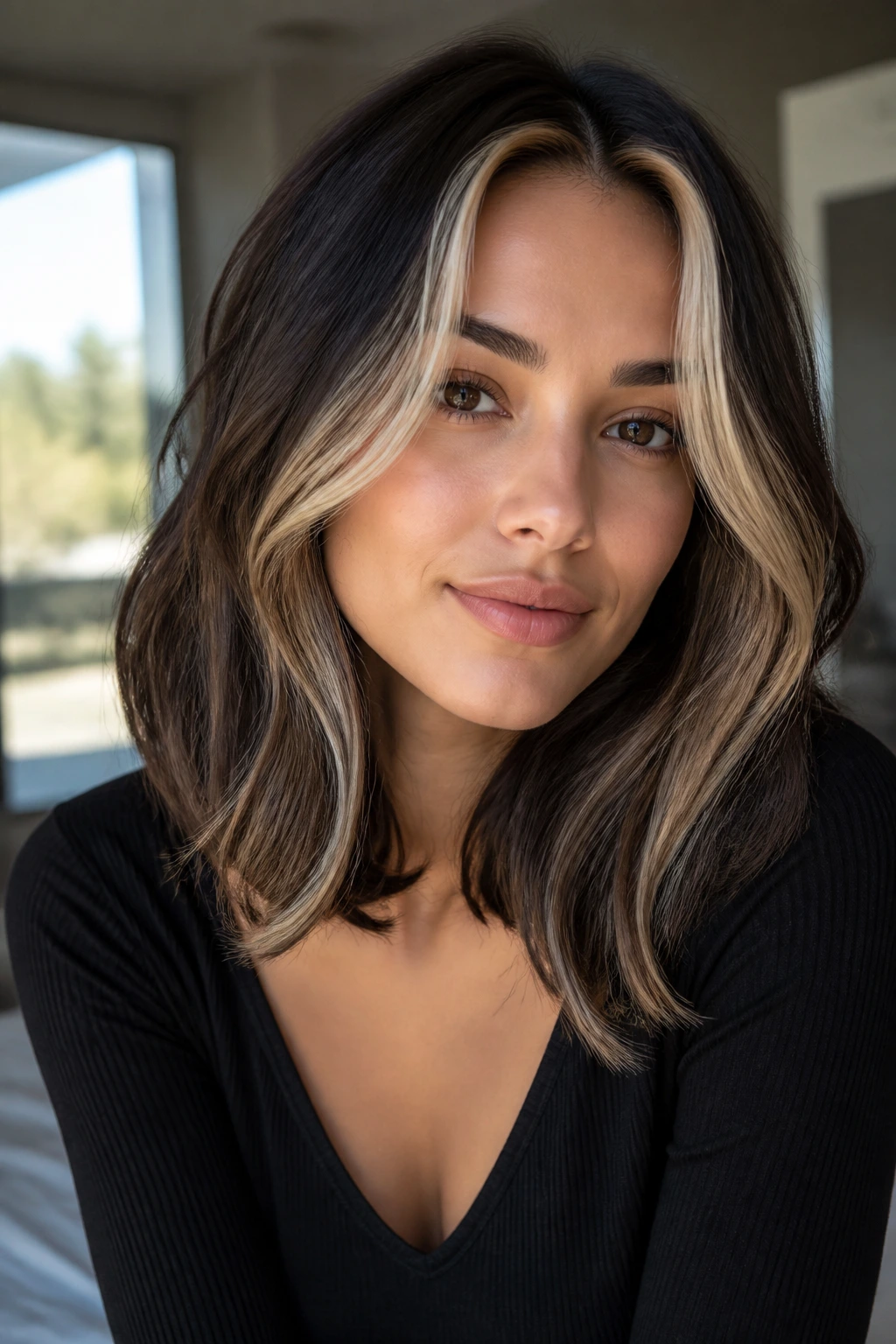
A bright money piece changes the whole mood of a brunette cut. The trick is not to make it white-blonde. Keep it creamy, almost vanilla, so fair neutral skin gets lift without the harsh contrast that can make the cheeks look red or tired.
Ask for This If You Want Impact
This look lives or dies on placement. The lightest sections should start just off the hairline and feather back into the front layers, not sit as two heavy panels. On shoulder-length hair, that front brightness makes the cut look sharper without needing more blonde everywhere else.
Best when you want:
- A quick visual change without full-head lightening
- A style that still looks good with a ponytail
- A front frame that wakes up the face in photos
Use a smoothing cream on the front pieces. Flyaways make the bright panels look patchy.
3. Mushroom Blonde Lob
Mushroom blonde is one of those shades that sounds odd until you see it on brunette hair. It’s cool-beige, a little smoky, and built for a shoulder-grazing lob where the color can shift as the hair moves. On fair neutral skin, the soft gray-beige cast keeps the face from looking washed out.
The cut should stay clean through the ends. Too many layers and the whole thing turns airy in a bad way. Keep the shape blunt or slightly beveled, then add soft bends with a flat iron if you want motion. That cooler blonde reads polished even when the styling is loose.
If your natural brunette runs warm, this is the shade that reins it in. Not icy. Not yellow. Just controlled.
4. Champagne Curtain Layers
Champagne blonde has sparkle, but it needs restraint. On fair neutral skin, the pale gold-beige balance keeps the color bright without tipping into brassy territory. Curtain layers make it easier to wear because the lighter pieces fall away from the center of the face in a soft sweep.
What to tell your colorist
Bring up a brunette-to-champagne blend, not a full platinum lift. Ask for the lightest ribbons to start below the eyes so the face stays framed rather than flooded with color. If your hair is fine, keep the layers long and soft; short choppy layers can make champagne blonde look frayed.
A round brush blowout suits this one best. The ends should curve, not flip. That little bend is what keeps the look from feeling too formal.
5. Ash-Rooted Sombre
This is the low-drama version of blonde on brunette hair, and I mean that in the best way. The root stays dark, the mids stay soft, and the ends melt into ash-beige blonde without any obvious line. Fair neutral skin tends to like this because the cooler root-to-end transition keeps the face from going too warm or too washed out.
A sombre is a good choice if you hate the grow-out line that comes with highlights. It softens over time instead of looking dated after a few washes. The color should still show dimension in daylight; if it looks like one flat taupe sheet indoors, the blonde is too muted.
6. Vanilla Blonde Pixie
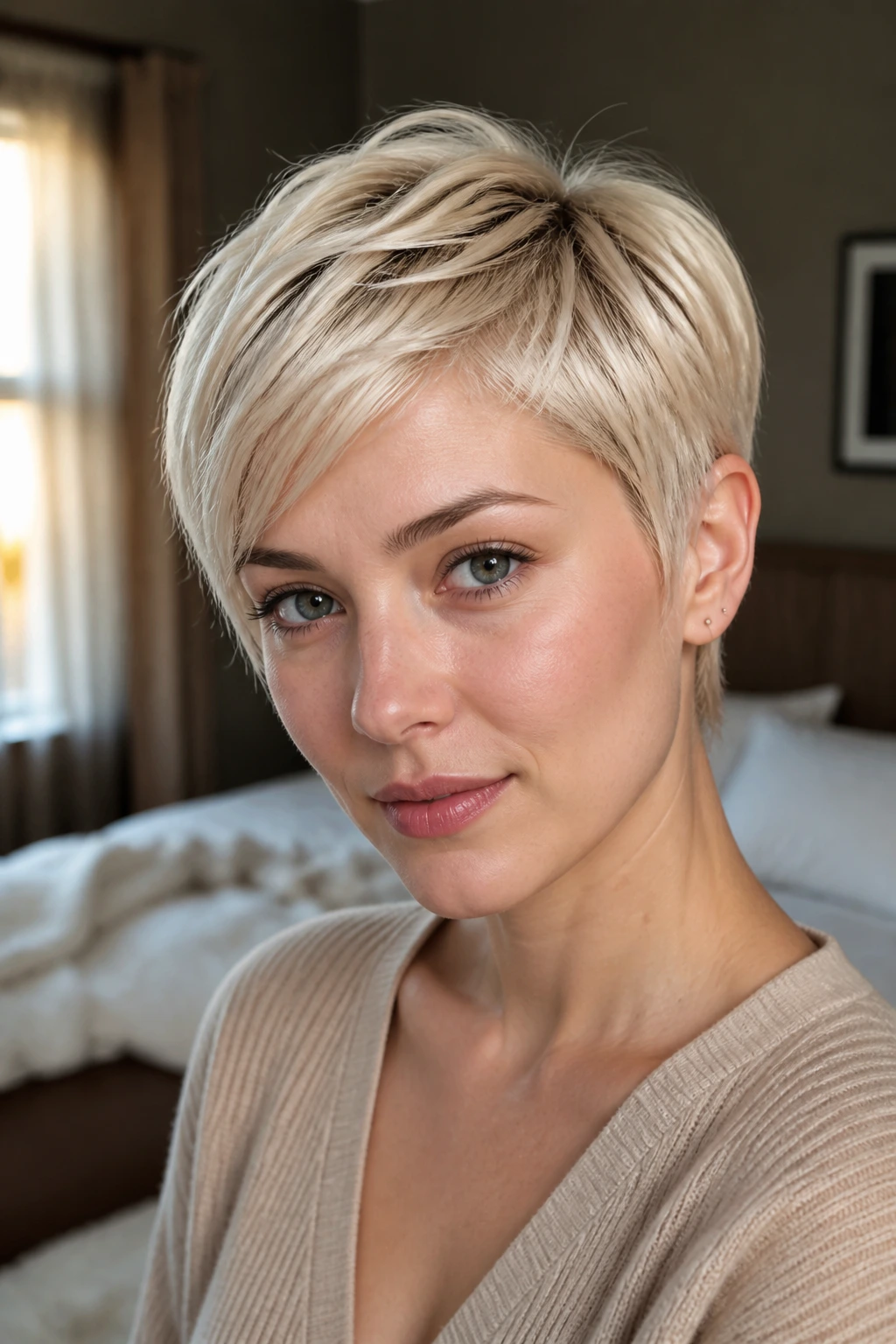
Short hair can wear blonde better than people think. A pixie cut in vanilla blonde keeps the silhouette clean, and the creamy tone suits fair neutral skin because it brightens the face without a sharp yellow cast. On brunettes, the lift at the top and crown makes the cut look deliberate, not faded.
How to style it
Use a pea-size amount of matte paste or light cream wax. Work it through the crown with your fingertips, then push the front pieces slightly to one side. You want a little separation, not helmet hair.
Good for:
- Fine hair that needs lift
- Hair that grows fast and needs regular reshaping
- Anyone who wants the color to do most of the talking
7. Buttery Face-Framing Curls
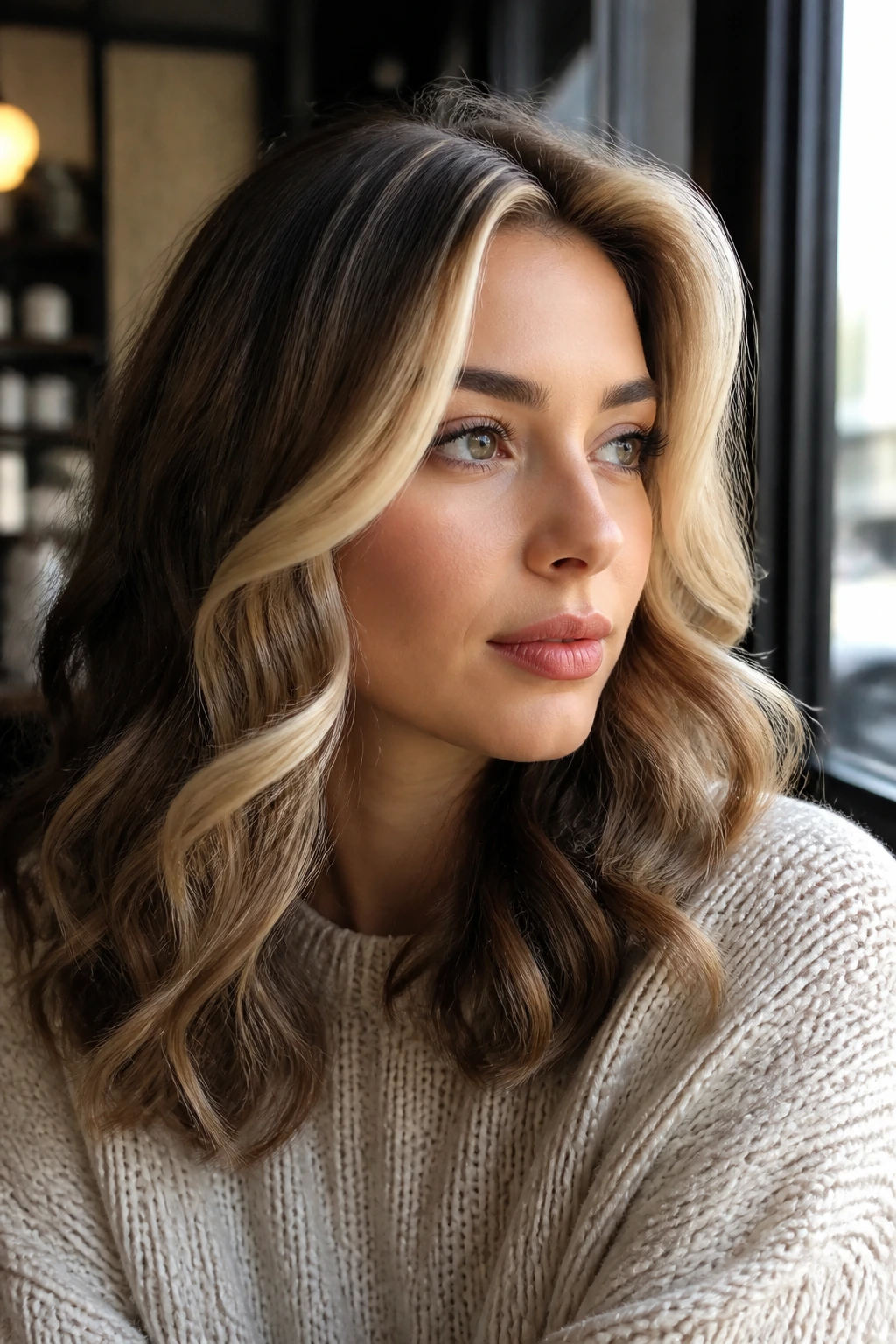
Buttery blonde can work on fair neutral skin if you keep it soft and controlled, not orange. Around curls, the lighter pieces should follow the outer curve of the hair so the color looks intentional when the ringlets bounce. Brunettes with curl pattern usually get the best result from painted face-framing pieces and a few lighter bits through the top layer.
The curls should be shaped with a diffuser or a curl cream and finger coil. Don’t blast them into frizz and then expect the blonde to save the day. It won’t. The color and texture need each other.
This look is especially good when you want more warmth near the face but still need the overall blonde to stay neutral.
8. Ribbon Highlights on a Long Shag
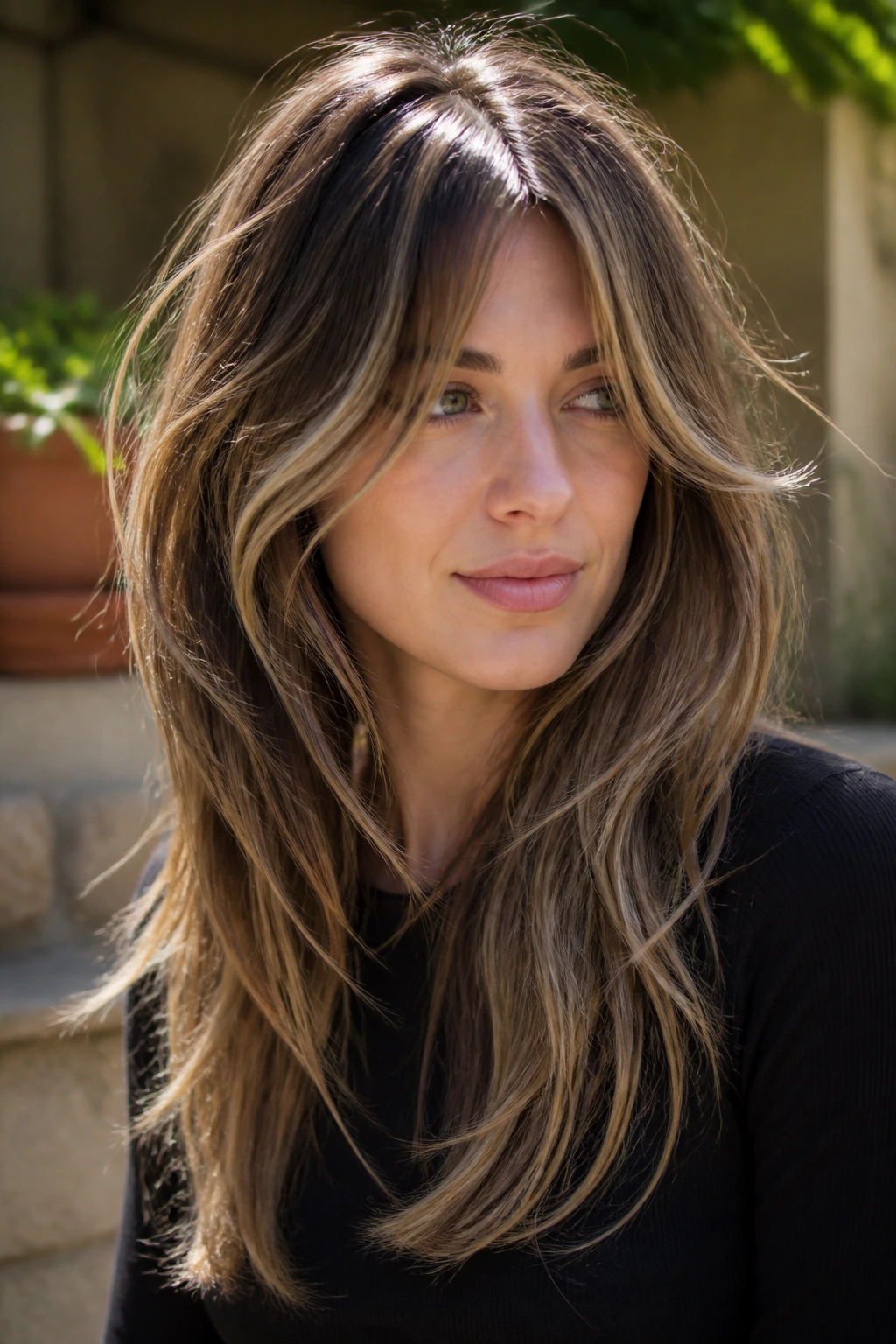
Ribbon highlights work because they move through the layers instead of sitting on top. On a long shag, the blonde pieces can appear and disappear as the hair swings, which gives brunette hair a lot of depth without a heavy dye job. Fair neutral skin benefits from that kind of soft motion — it reads bright, but not flat.
The shape matters
Keep the shag airy around the cheekbones and collarbone. If the layers are too short, the blonde can look choppy. Ask for ribbons that vary in width; tiny baby lights only can go a little muddy on darker brunettes.
A shag like this likes a loose blow-dry or air-dry with a diffuser. Clean partings make it feel stiff. Slight mess is the point.
9. Beige Blonde Blunt Bob
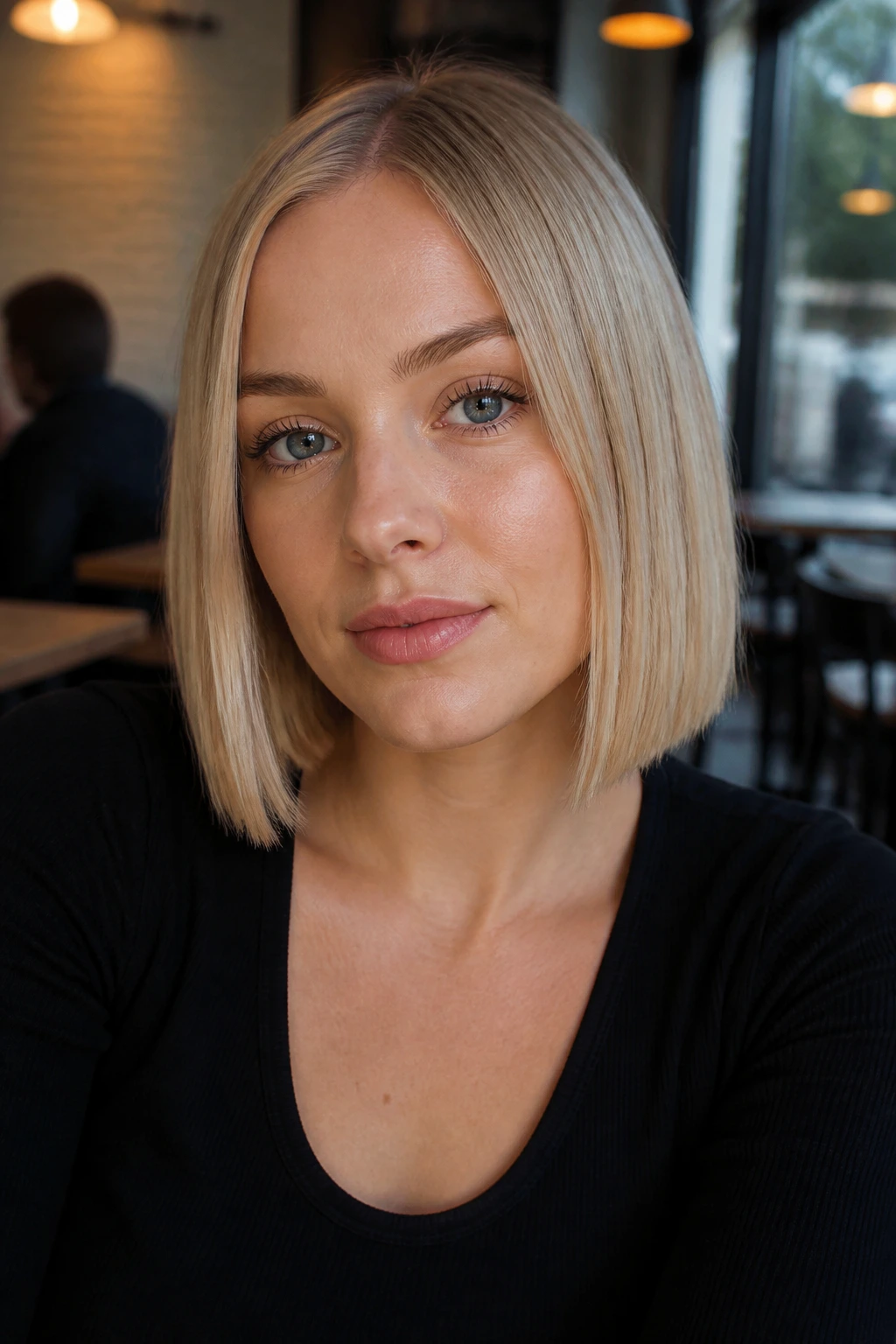
A blunt bob can go very wrong if the blonde is too yellow or too pale. Beige blonde is the fix. It keeps the line of the cut crisp while the neutral tone softens the face, which is especially useful if your skin is fair and sits between pink and olive.
The bob should hit somewhere between the jaw and the chin. That length gives the blonde enough surface area to show, but not so much that the cut starts to look broad. A flat brush blowout or a straight finish works best.
No heavy layering here. The shape is the feature.
10. Bronde Butterfly Layers
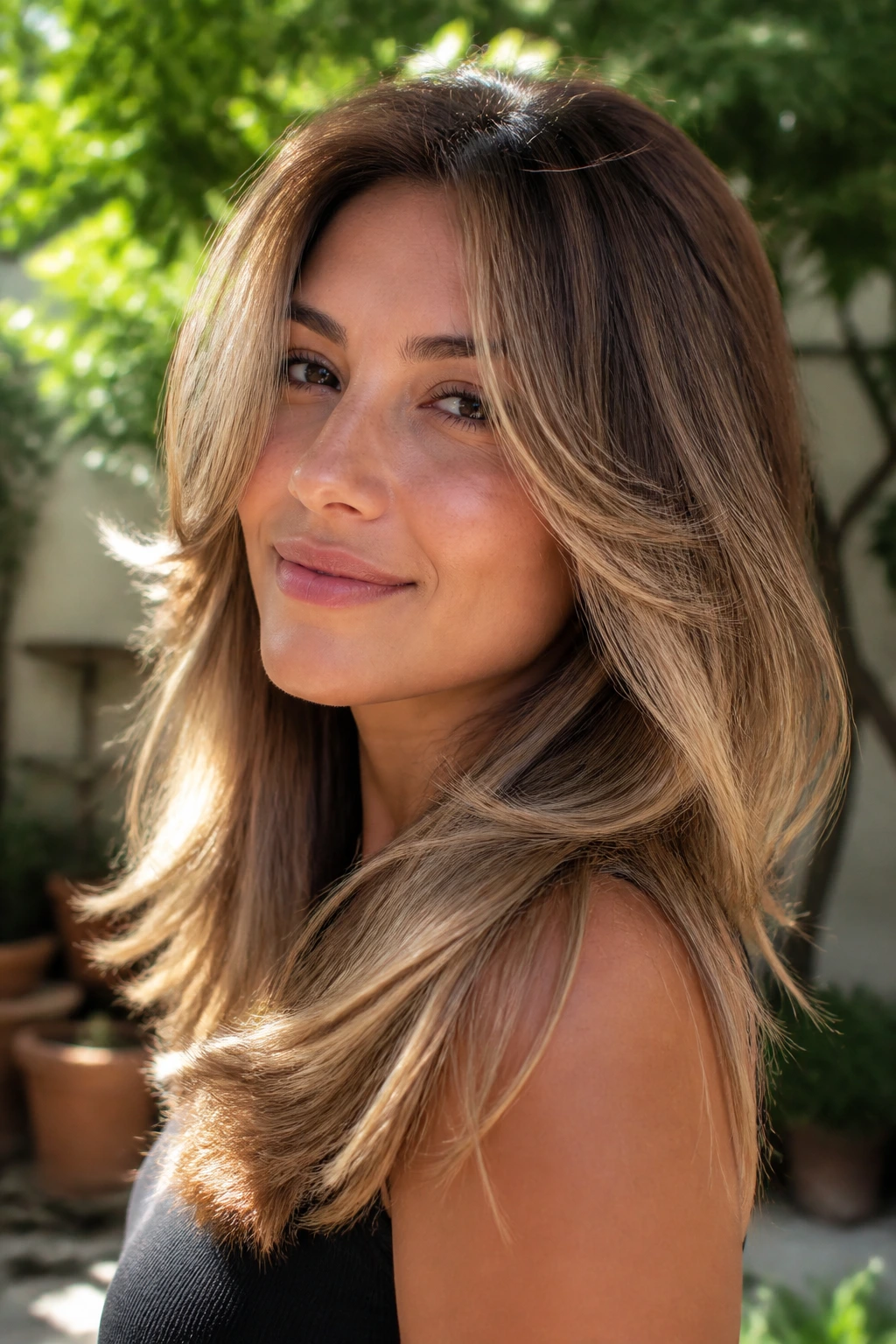
Bronde is the easy bridge for brunettes who want to flirt with blonde without jumping off the edge. On fair neutral skin, the in-between tone avoids the washed-out look that can happen when brunette hair is lifted too far too fast. Butterfly layers let the brighter pieces flick away from the face and move through the ends.
Why it lands so well
The top stays deeper. The mid-lengths get beige-lighter. The ends go a shade or two brighter. That gradation gives the illusion of more blonde than you actually have, which is a good trick when you want softness with some payoff.
Use a large round brush if you blow-dry. The layers should float, not stick out.
11. Smoky Beige Melt
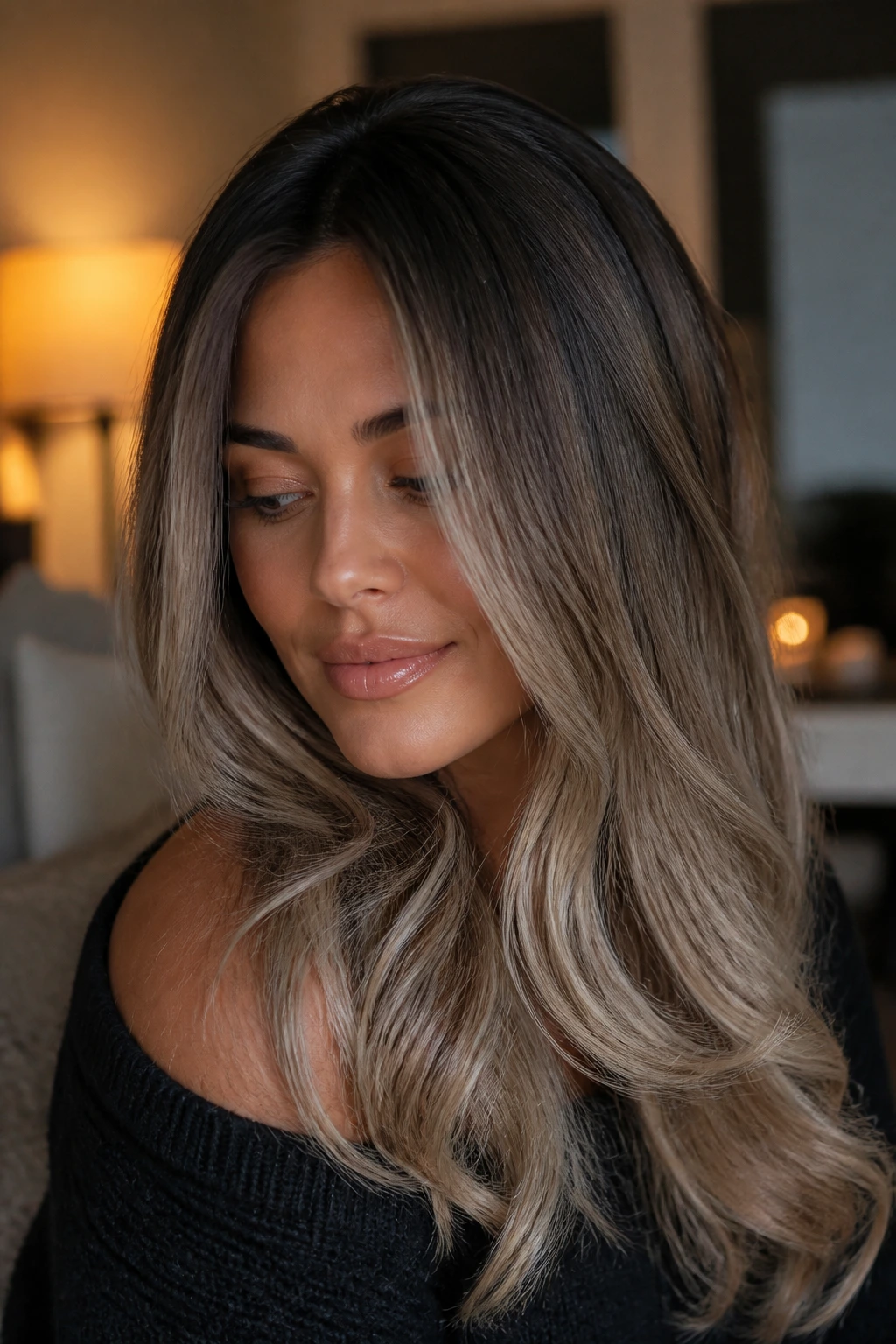
Smoky beige is one of my favorite shades for brunette hair because it keeps the blonde honest. There’s no syrupy gold, no chalk-white flash. Just a cool-neutral melt that can make fair neutral skin look clearer, especially if your undertone leans slightly rosy.
This one works best when the lightest pieces are concentrated from the mid-lengths down. The root should stay dark enough to give the whole color depth. If the lift starts too high, the smoky tone loses its point and the face can look pale in a bad way.
A soft bend through the ends helps the smoky pieces show their dimension. Straight hair can make the shade read flatter than it is.
12. Sandy Blonde Power Ponytail
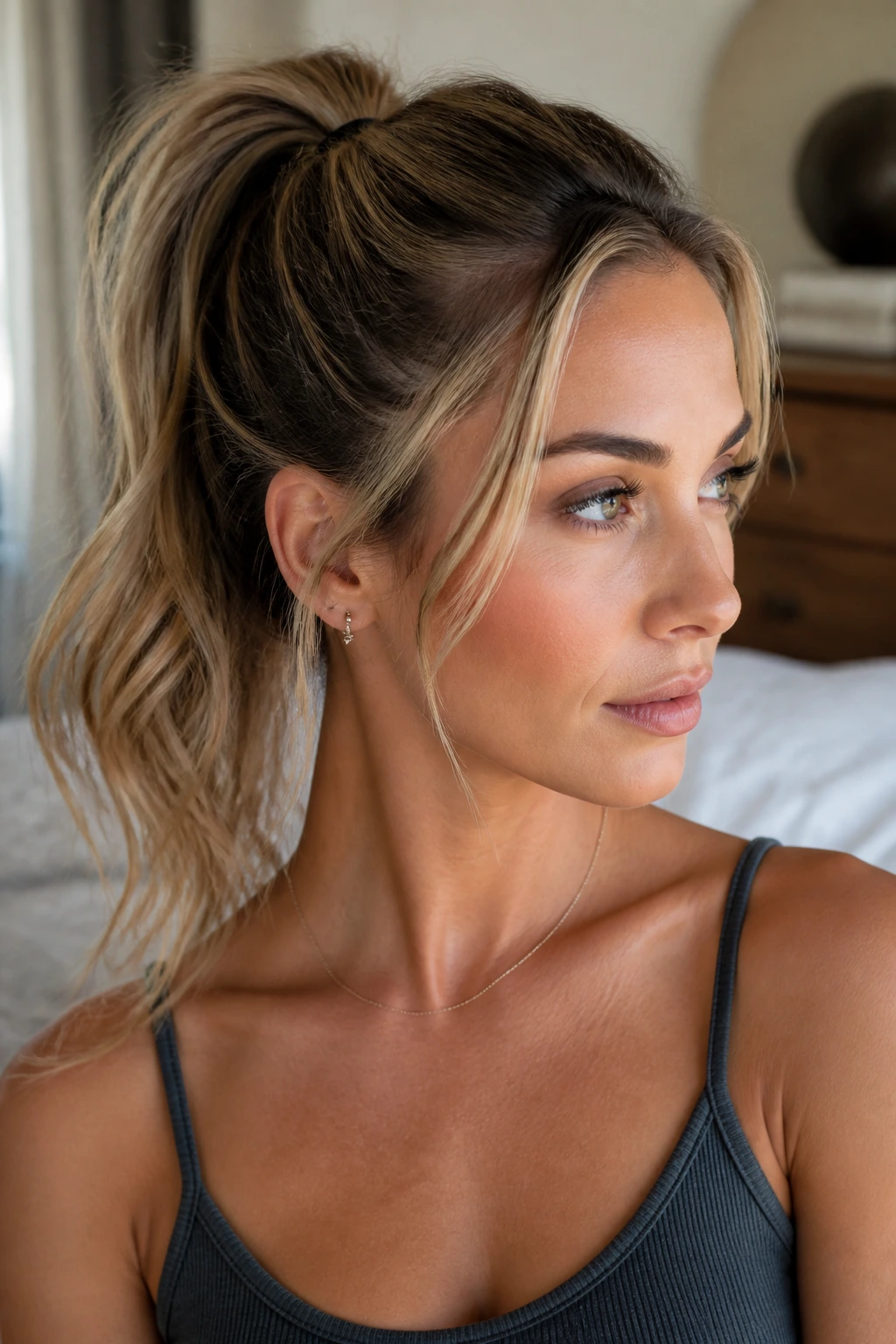
A ponytail can be a hairstyle, a color showcase, and a little bit of armor all at once. Sandy blonde pieces around a brunette base keep the pulled-back style from disappearing into one color block. On fair neutral skin, that soft sand tone brightens the face without shouting.
The key is face framing. Leave a few lighter strands around the temples and sides so the ponytail doesn’t feel severe. If you like a slick finish, keep the crown smooth and let the lengths carry the texture.
How to wear it
- Smooth the top with a light gel or cream
- Wrap a small strand around the elastic
- Let the tail have a loose wave through the ends
It’s a clean look. Not fussy.
13. Pearl Blonde Sleek Mid-Length
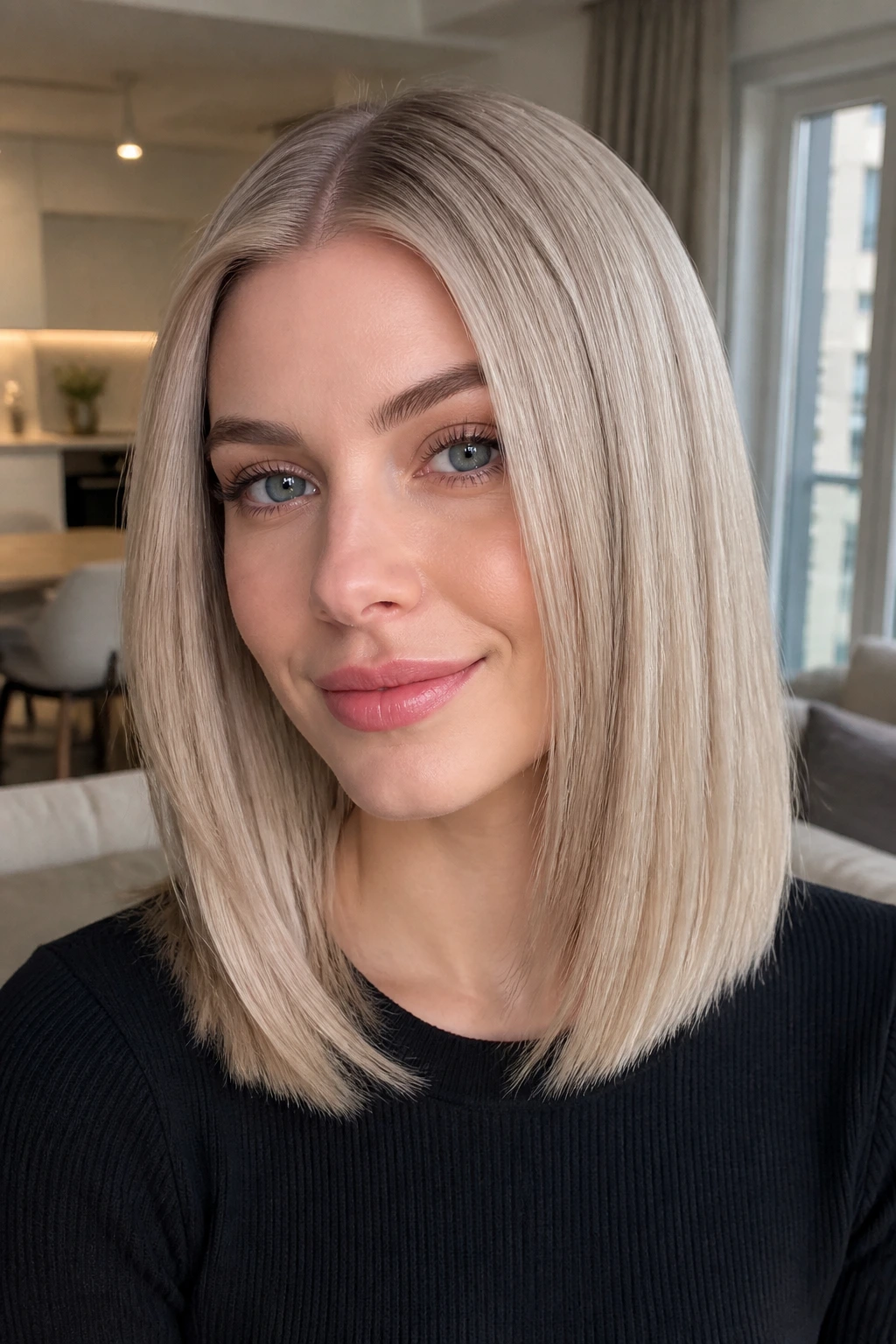
Pearl blonde is cooler than champagne and cleaner than ash. On a sleek mid-length cut, it gives brunette hair a polished edge that flatters fair neutral skin without stealing the show from your face. The shine matters here; pearl blonde looks best when the hair reflects light instead of sitting matte and flat.
Ask for a gloss after the lightening service. Without it, pearl can drift toward dull gray, which is not the same thing. Keep the cut around the collarbone so the ends still move.
A center part makes this feel modern. A deep side part gives it a little more drama. Either way, the finish should look smooth and glassy.
14. Honeyed Balayage with Bottleneck Bangs
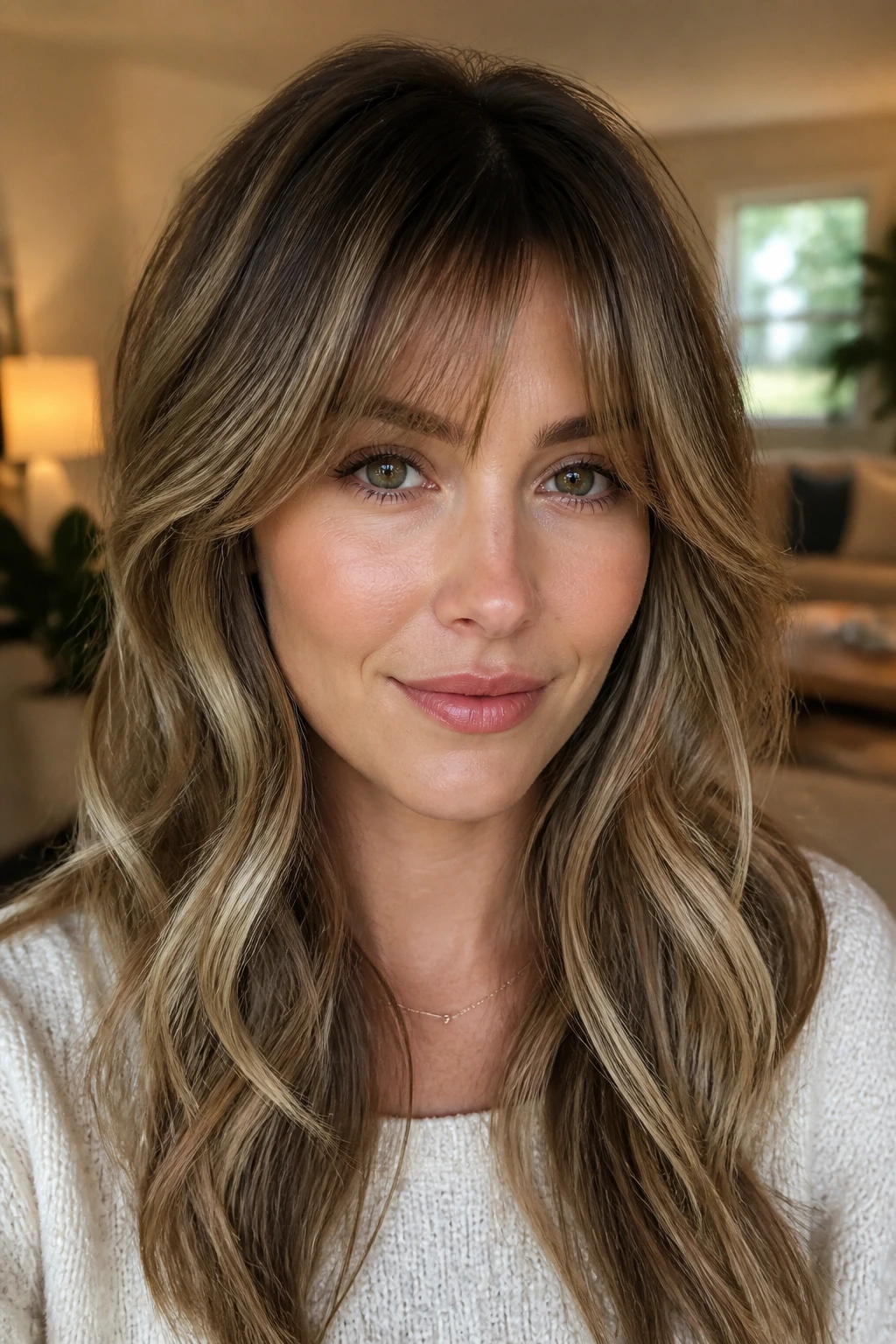
Honeyed blonde can work for fair neutral skin if the honey stays muted and the brunette base remains visible. Bottleneck bangs soften the forehead and give the brighter pieces a place to live without forcing them all over the head. That combination is what keeps the style from turning heavy.
The bangs should land around the lashes and separate in the middle. If they’re cut too blunt, the blonde at the front can feel harsh. The rest of the balayage should drift through the lengths, especially around the cheekbone and jaw.
This is a good option if you want a little warmth in the color and a little softness in the cut. It’s flattering in a very practical way.
15. Icy Beige Gloss with Loose Bend
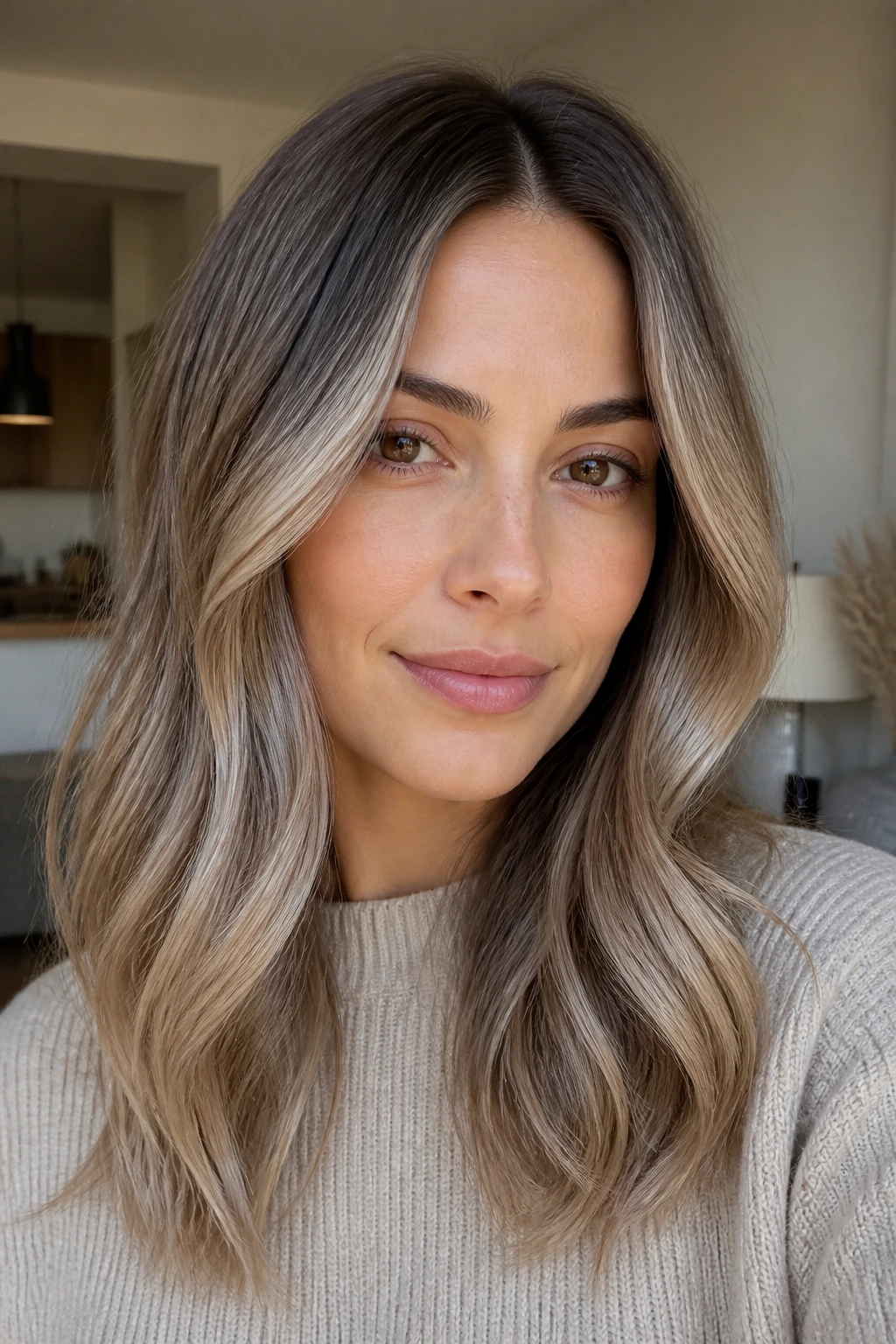
Icy beige is for brunettes who want coolness, but not a white-blonde shock. The trick is the beige underneath the ice. On fair neutral skin, that balance keeps the face from going flat, while the loose bend through the hair stops the color from looking stiff.
What to ask for
- A lifted brunette base with beige-toned toner, not silver toner alone
- Slightly deeper root smudge for depth
- Soft face-framing pieces that hit just below the cheekbone
This look needs a good heat protectant. Cool blondes show damage faster than people expect, especially on brunette hair that has been lifted in stages. Keep the ends healthy, or the whole thing starts to look thin.
16. Almond Blonde French Bob
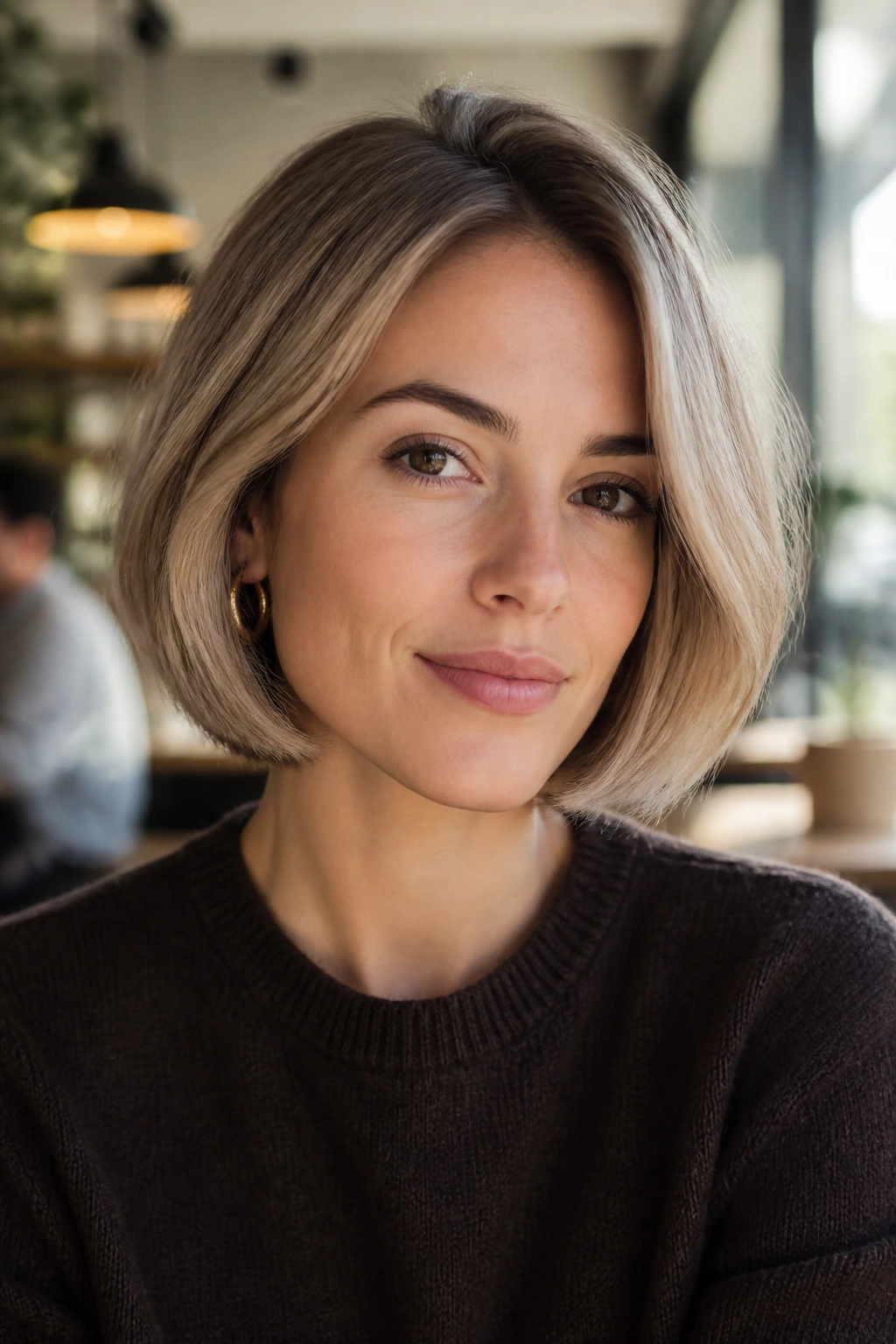
The French bob gets interesting when the blonde is almond-beige instead of bright yellow. The shorter cut makes your face the center of attention, and the neutral blonde keeps that focus flattering on fair skin. It’s tidy, but not severe.
The ends should sit near the jawline and curve in slightly. That inward bend keeps the blonde from widening the face. If your hair is naturally straight, a quick blow-dry with a small round brush is enough.
This style is one of those quiet, good-looking cuts that doesn’t need a lot of decorating. The shape and tone do the work.
17. Soft Gilded Waves
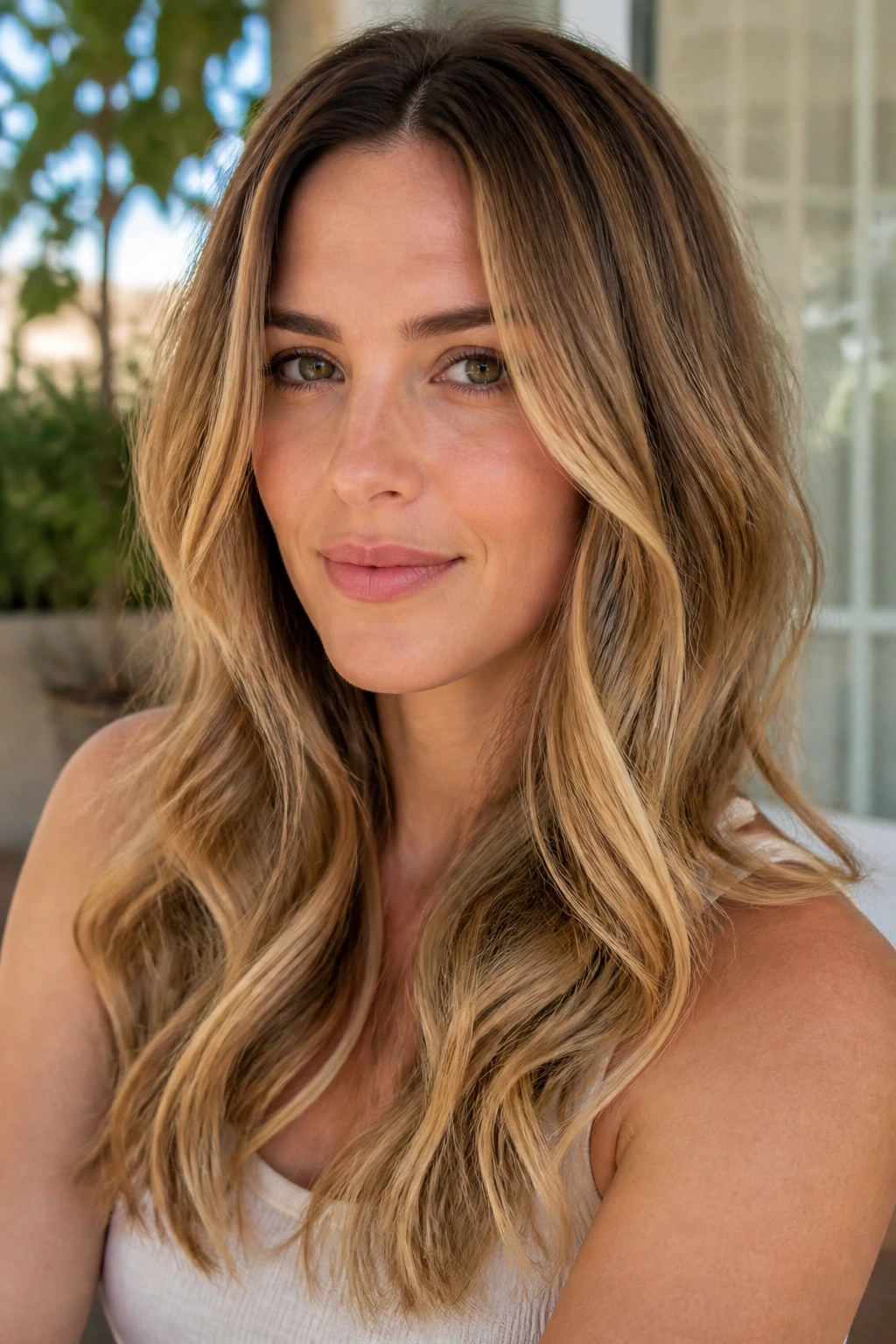
Gilded blonde is warmer, but it still needs to stay soft for fair neutral skin. Think muted gold, not orange. On brunette hair, the warmth can make the hair look thicker and more sunlit, especially if the waves are broad and easy instead of tight and polished.
A layered cut helps here. Without movement, the gilded tone can read too solid. The waves should start mid-shaft and relax toward the ends. That keeps the lighter pieces scattered through the shape.
This is a good option when cooler blondes make your face look a little gray. Not every neutral skin tone wants ash. Some need a touch of warmth to wake up.
18. Rooted Cream Blonde Waves
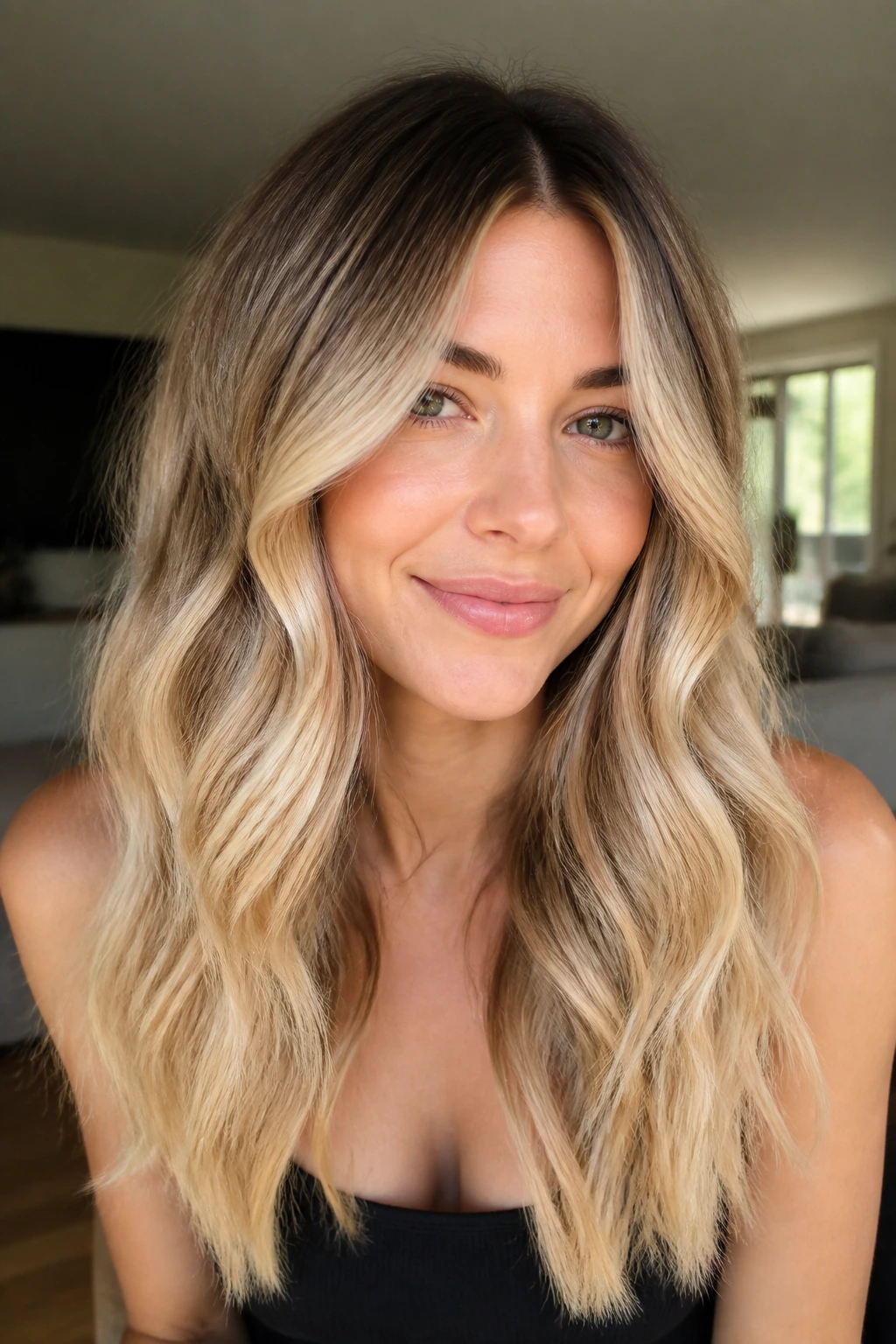
Rooted cream blonde is one of the easier blondes to live with on brunette hair. The darker root keeps the maintenance sane, and the creamy mids and ends stay flattering on fair neutral skin because the shade lands in the middle ground — not too yellow, not too flat.
Best for busy schedules
The grow-out is softer than a full highlight job, and the color keeps moving even when your roots show. Ask for a root shadow at least one level deeper than your mids. That extra depth stops the face from getting swallowed by lightness.
Loose waves are the safest finish. They show the blend from root to end. Straight hair can make the line look more obvious.
19. Smoky Ash Blonde Lob
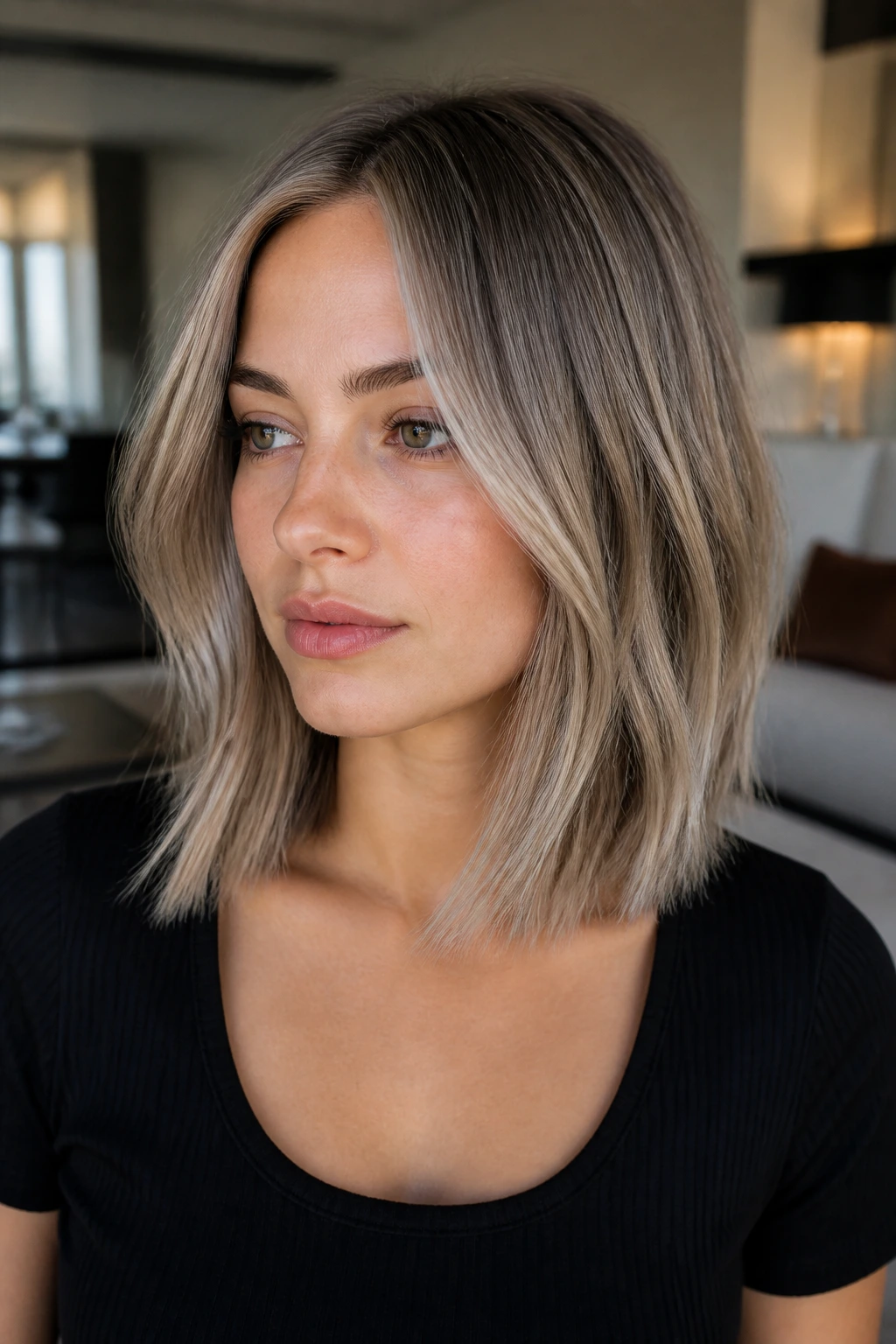
Ash blonde gets a bad reputation because people often overdo it and end up with flat, dusty hair. Smoky ash blonde avoids that. On a lob, the cool tone and the clean shape can look expensive in the most practical sense — the hair reads controlled, not overprocessed, and fair neutral skin gets a crisp frame.
The important part is texture. A lob cut with a little bevel at the ends gives the color movement. The blonde should not start right at the scalp unless you want a much higher-maintenance look.
If your brunette base has red undertones, this is the shade that calms them down. A violet shampoo once in a while is enough. Overuse it, and you’ll lose the softness.
20. Beige-to-Bronde Melt with Curtain Fringe
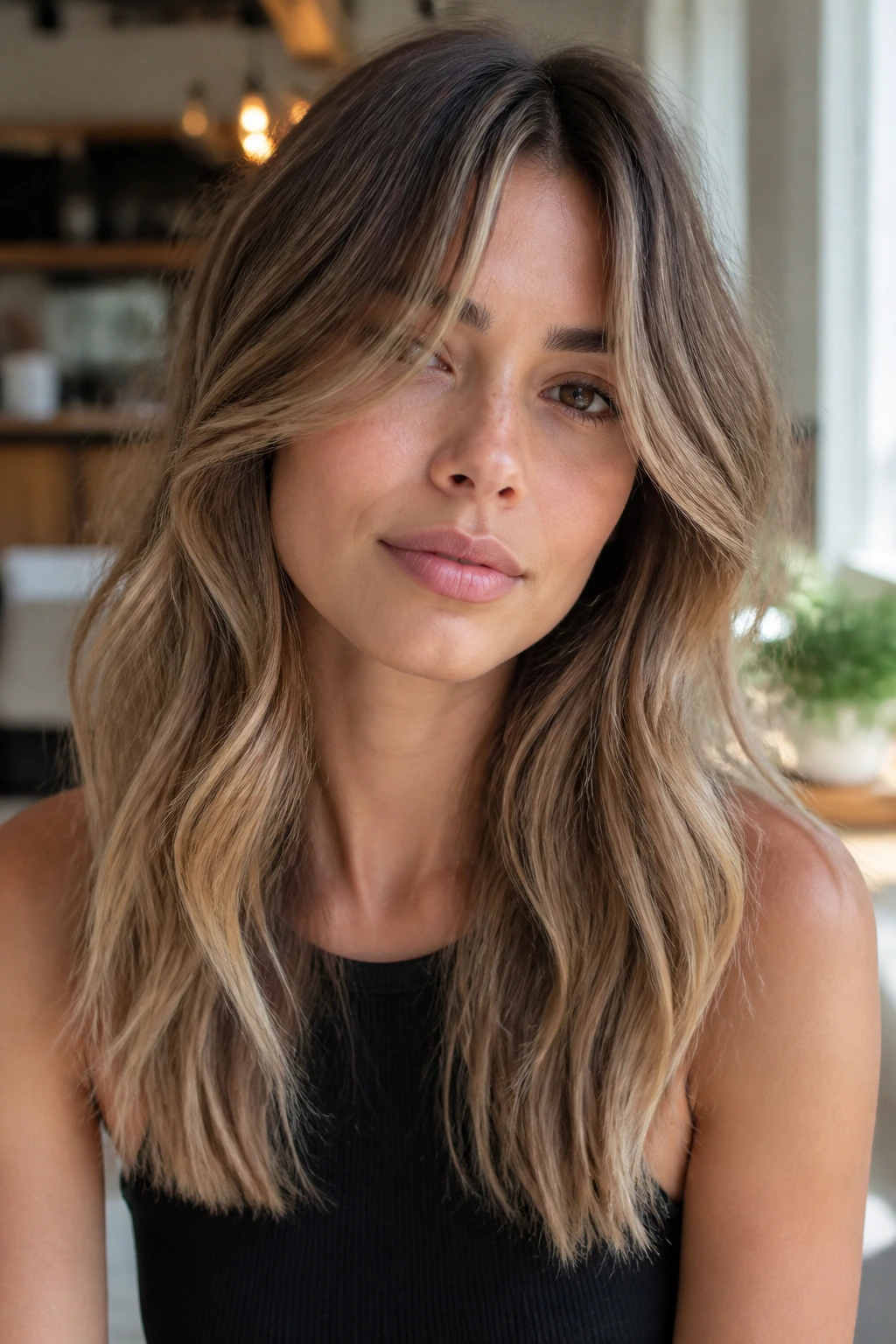
This one is basically a master class in keeping blonde wearable. The root stays brown, the mids melt into beige, and the ends sit somewhere in bronde territory. Curtain fringe makes the front feel lighter without forcing the whole head to go bright, which suits fair neutral skin beautifully.
The fringe should open at the center and curve away from the cheekbones. That shape lets the lighter pieces frame the face without boxing it in. Ask your colorist to keep the face frame a touch brighter than the crown.
A round brush and a little bend through the fringe are enough. The point is softness, not a big blowout every day.
21. Champagne Pixie with Tapered Neck
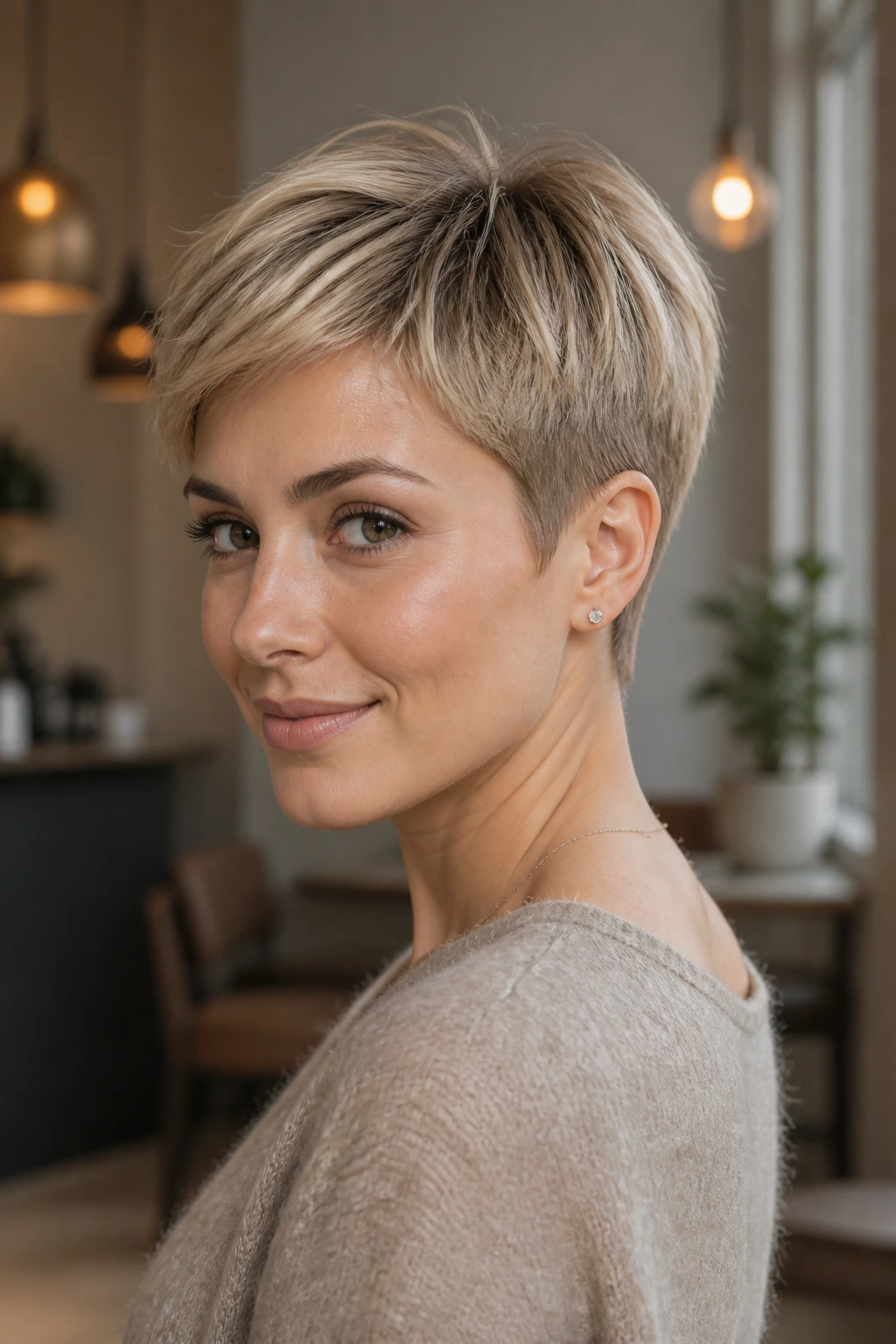
A pixie with a tapered neck can look very chic in champagne blonde, and I mean chic in the literal sense: neat shape, clean edges, lightness where it matters. Fair neutral skin gets a subtle glow from the champagne tone without needing a lot of length to show off.
How it reads
The shorter sides make the face more open. The slightly longer top catches the light. Keep the color creamy, not yellow, because short cuts reveal tone changes fast.
A matte cream on the top and a little smoothing paste at the sides is enough. Don’t over-style it. Short blonde hair often looks best when a few pieces move.
22. Sandstone Money Piece on Long Layers
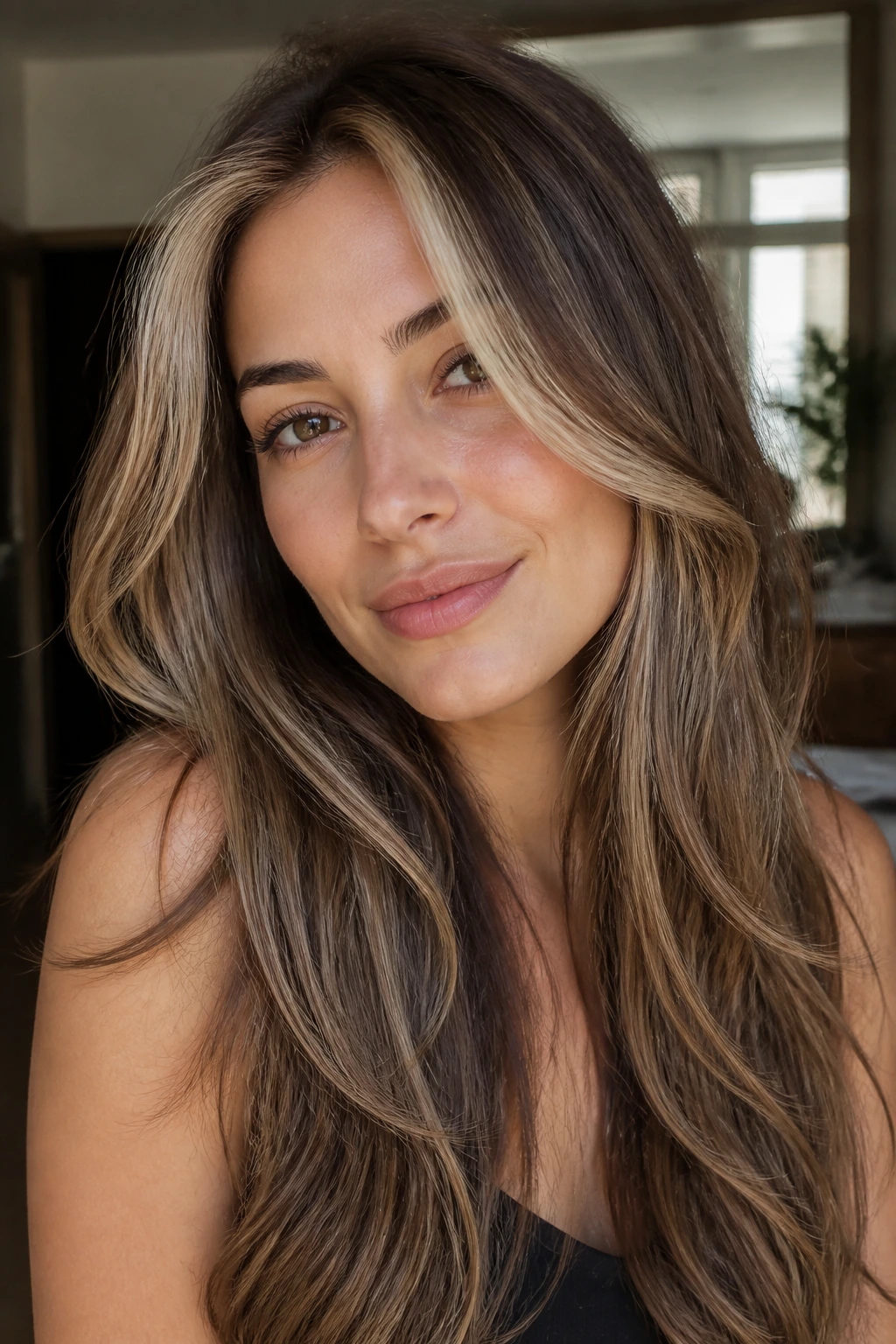
Sandstone blonde lives between beige and soft gold, which makes it a strong choice for brunettes who want brightness but not brass. On long layers, a sandstone money piece pulls the eye up and around the face without requiring full-head blonde saturation. Fair neutral skin usually likes that controlled brightness.
Keep the front pieces a little lighter than the rest of the hair. Not much — just enough to make the eyes and cheekbones pop. The rest of the color should stay diffused through the lengths.
Long layers handle this shade well because the movement keeps it from looking like one flat panel. Air-dry waves or a wide iron bend both work.
23. Satin Blonde Half-Up Twist
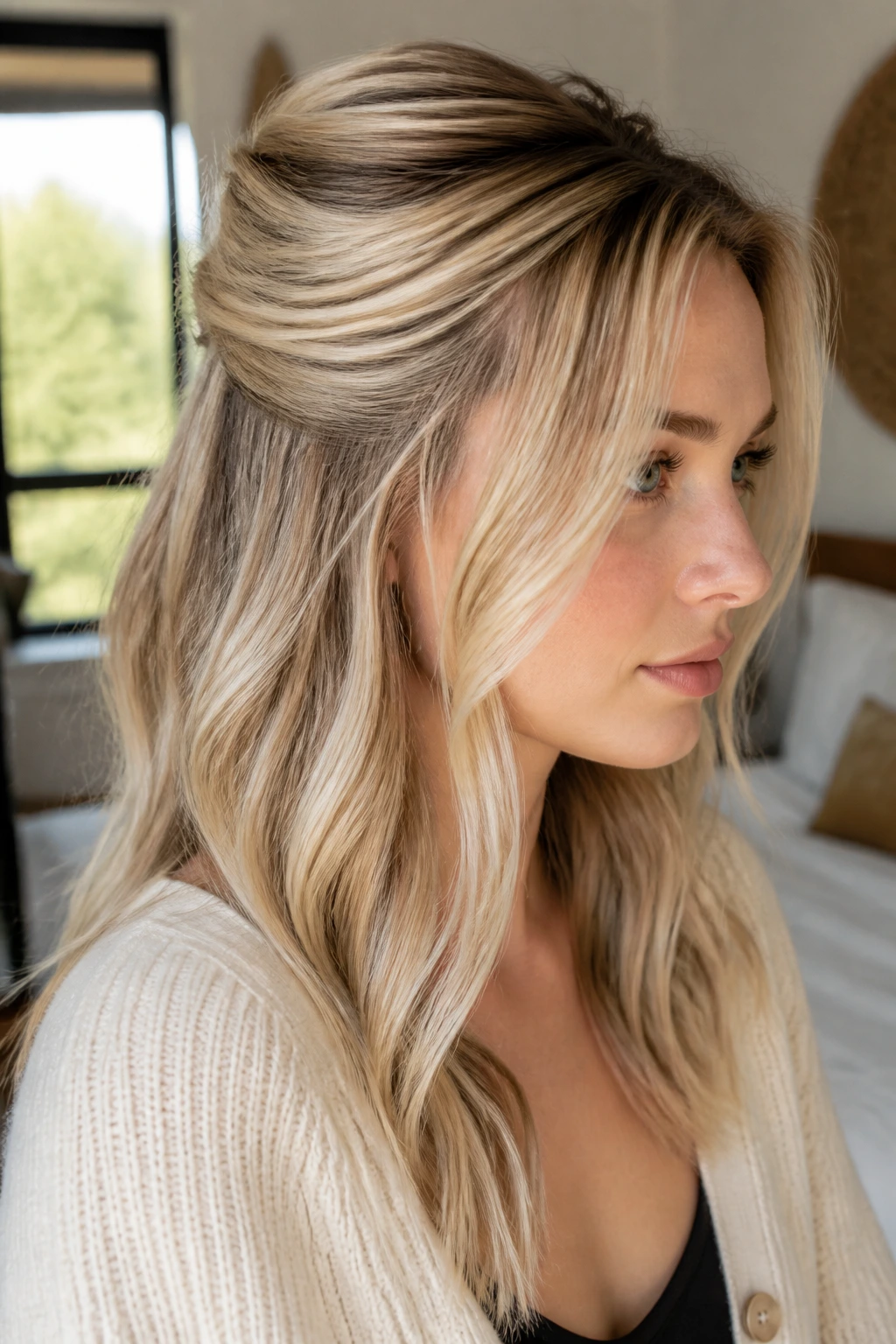
A half-up twist gives blonde pieces a stage. Satin blonde, with its smooth beige finish, works especially well on brunette hair that has already been lightened a level or two. Fair neutral skin benefits from the soft reflection near the crown and temples.
This style is useful when you want the blonde visible but don’t want to wear hair all the way down. Pull back the top section loosely, twist once or twice, and pin it with something hidden. Leave a few front pieces out so the face doesn’t get boxed in.
It’s a good date-night or office look, but it also works when your hair is in that awkward between-wash state. The satin tone hides a lot of roughness.
24. Muted Golden Balayage with C-Bend
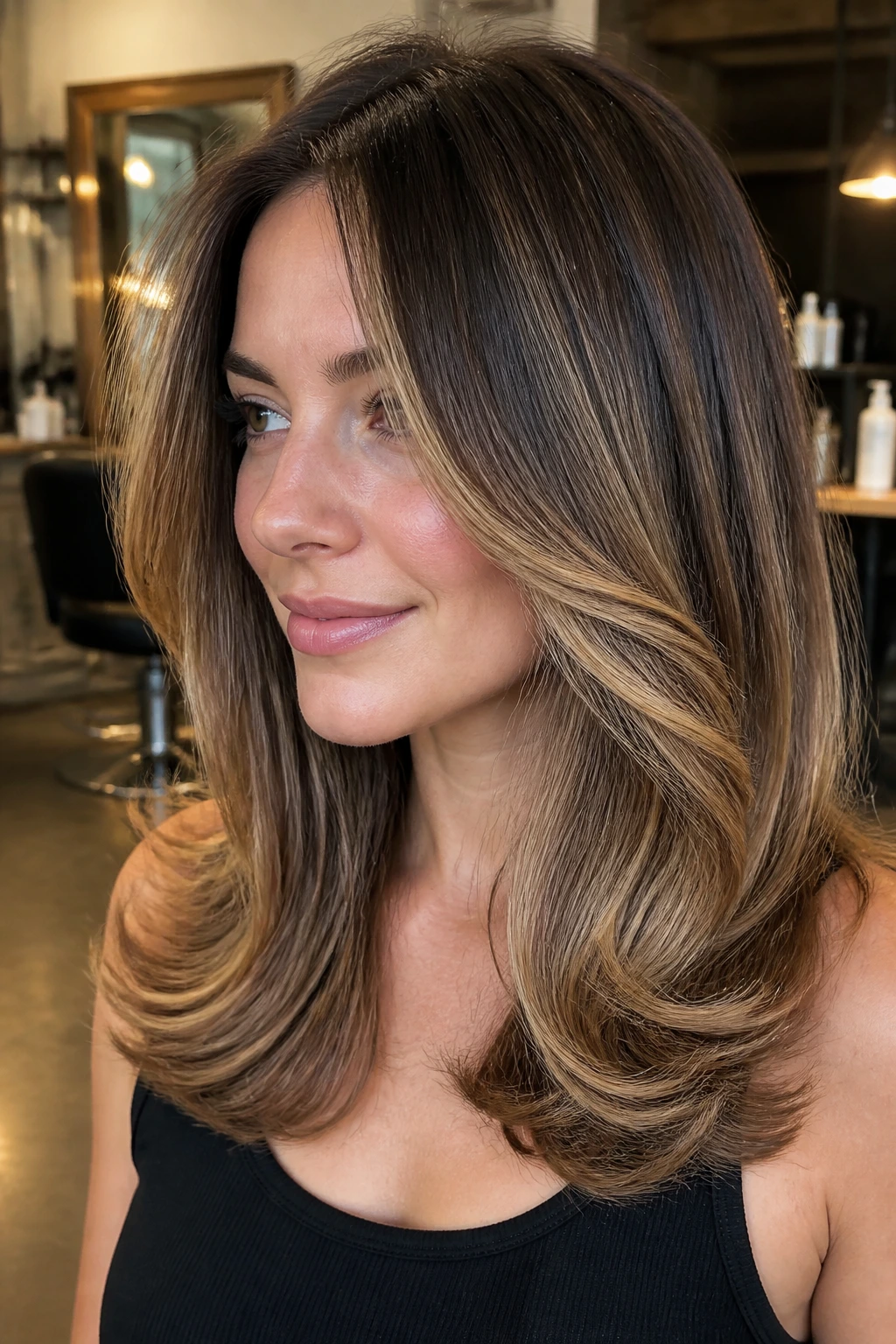
Muted golden balayage is for the brunette who wants warmth but refuses brass. The gold should stay dusty and soft, not loud. On fair neutral skin, that muted warmth can make the complexion look a little more alive, especially if your undertone leans neutral-warm.
A C-bend finish suits this color well. The bend should curve the hair inward and outward in soft sections, almost like the hair was pressed, not curled. That shape shows off the color ribbons without making the style too beachy.
If you like warmer makeup tones, this blonde can make your whole face feel more cohesive. If you wear cooler makeup, keep the gold more beige than honey.
25. Cool Creamy Collarbone Cut
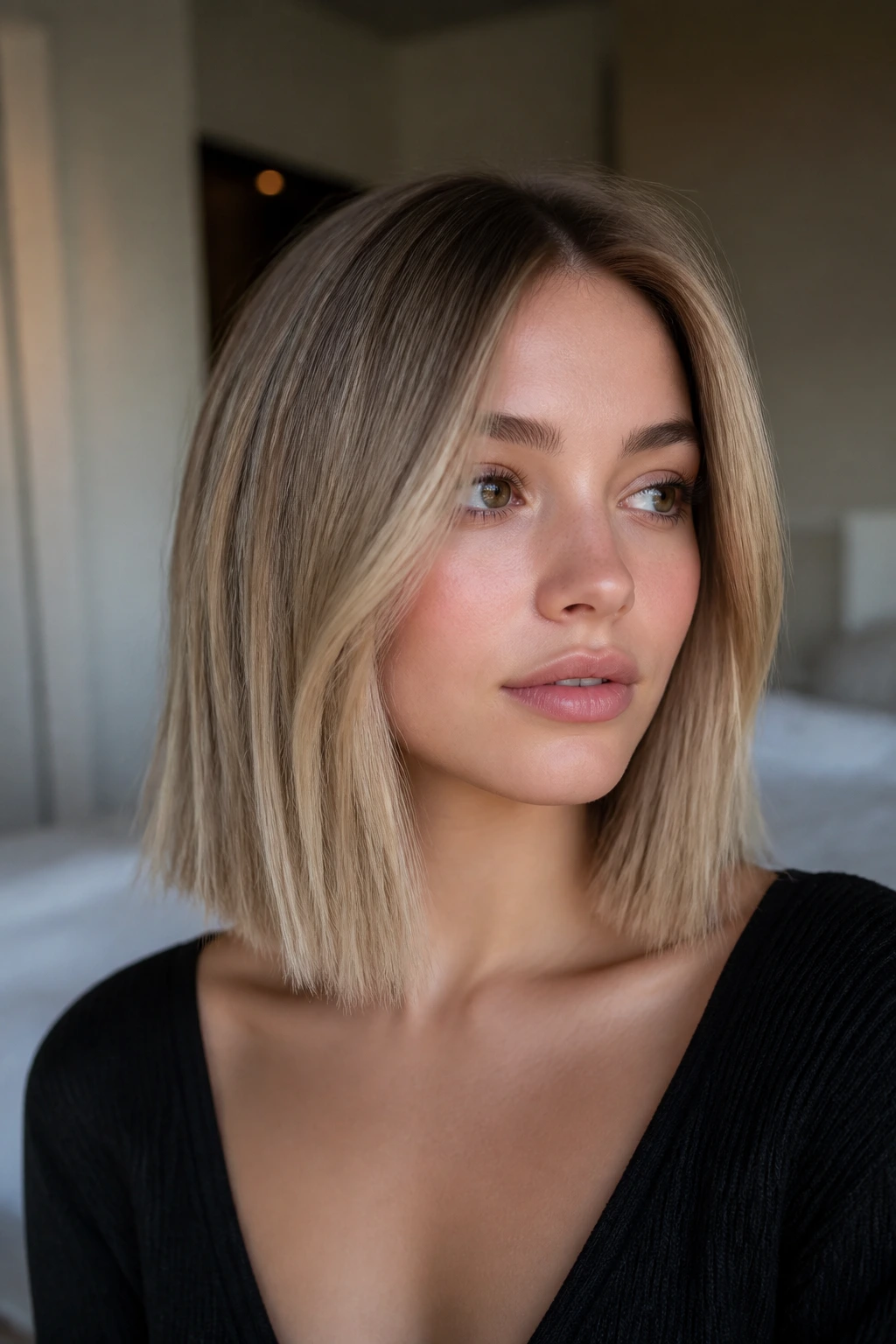
A collarbone cut is one of the easiest places to wear blonde on brunette hair. It gives the color enough length to show movement, but it doesn’t drag the face down the way very long hair sometimes can. Cool creamy blonde sits nicely on fair neutral skin because it brightens without going icy.
The cut should be blunt enough to keep the ends full. Too many layers and the cream tone can look thin. A smooth blowout or a soft bend through the ends is the cleanest finish.
This is the look I’d pick for someone who wants blonde they can tuck behind the ears, pin up, or wear with a center part. Simple. Useful. Good-looking.
26. Frosted Ends on a Warm Brunette Base
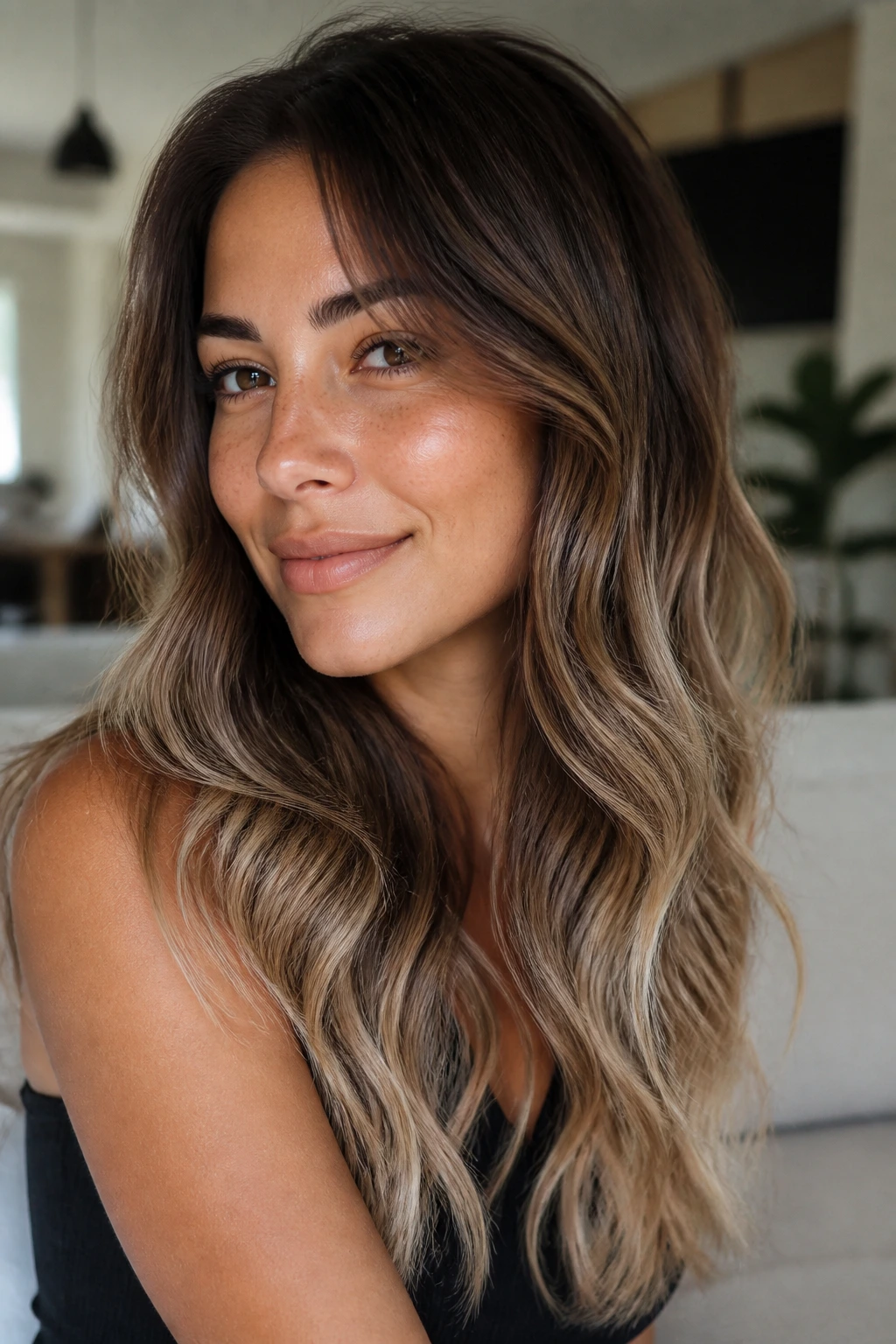
Frosted ends are for people who want to change the silhouette of their hair more than the whole head. The brunette base stays warm and grounded while the ends lift into a pale beige-frosted blonde. On fair neutral skin, that contrast can be striking without overwhelming the face.
The cut should have enough movement for the light ends to show. A heavy one-length shape can make the frost sit like a hard line. Layers or a soft U-shape help the color blend upward in a more natural way.
This is one of the easier ways to test blonde on brunette hair without committing to every strand. If you hate it, the grow-out is easier to redirect into something darker.
27. Neutral Pearl Spiral Layers
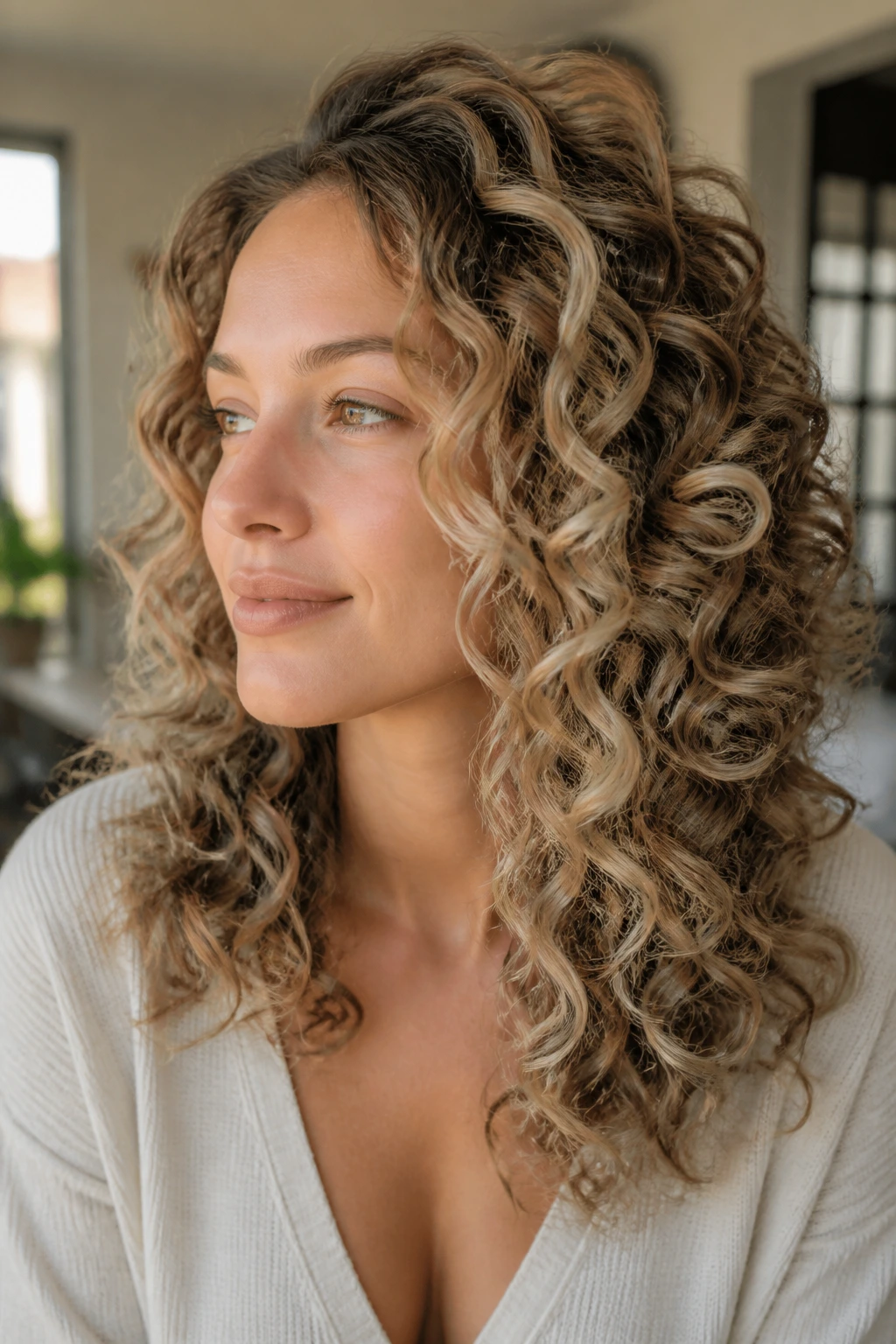
Curly hair and pearl blonde make sense together when the tone stays neutral. Spirals pick up light in little pockets, so the pearl finish can sit on top of the curl pattern instead of flattening it. Fair neutral skin gets a bright, clean frame without needing a super-high contrast dye job.
Use curl cream, not heavy butter. The blonde needs definition, and too much product turns the curls dull. Place the lightest pieces where the curls open around the face and along the top layer.
This is a good reminder that blonde on curly brunette hair does not need to be streaky to read clearly. Placement does the heavy lifting.
28. Soft Butterscotch Layers
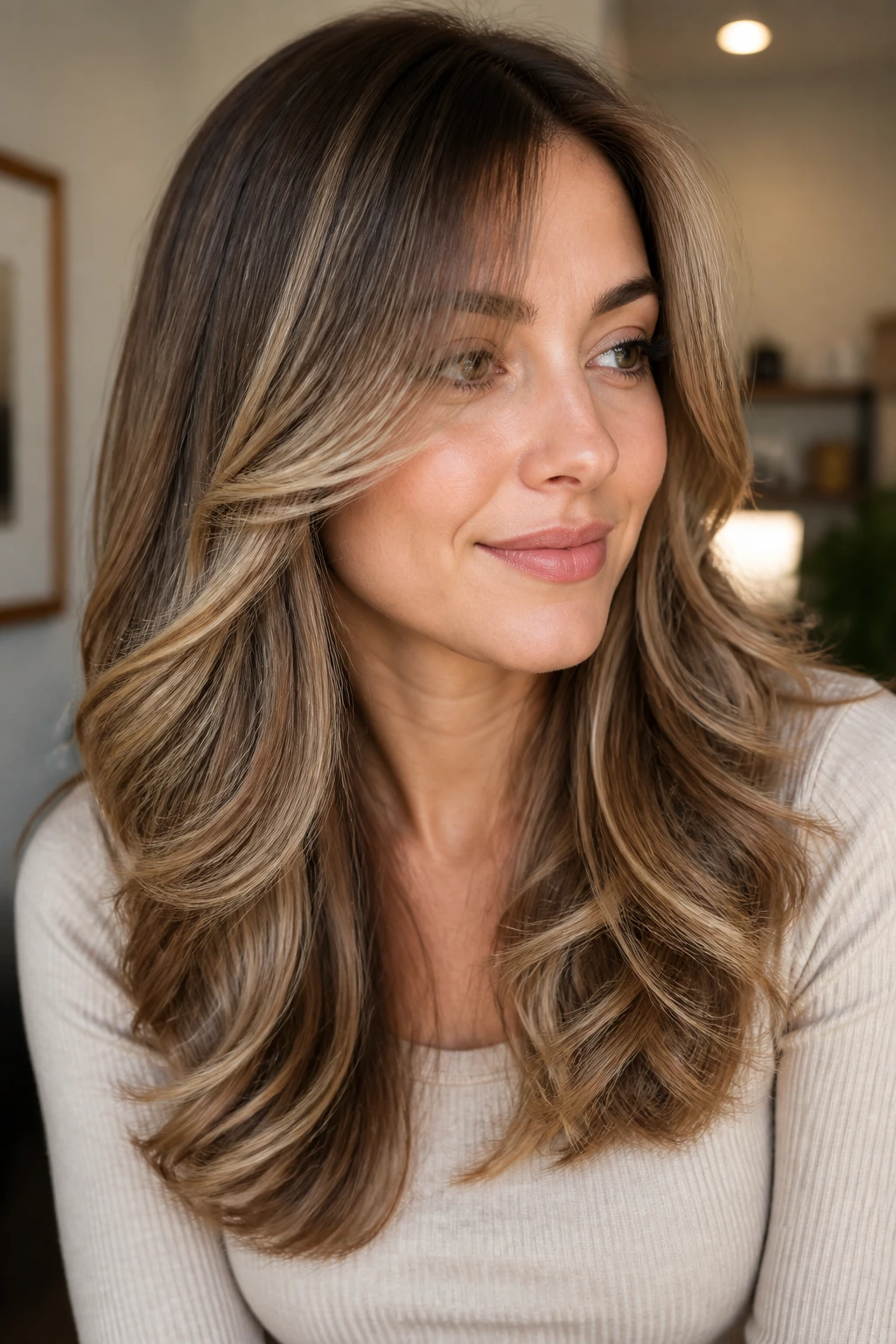
Butterscotch sounds warm, and it is, but the version that flatters fair neutral skin has to stay soft. On brunette hair, that means a creamy gold-beige with enough brown left behind to keep the overall effect grounded. The layers help the color move, which stops the warmth from looking heavy.
This is a smart pick if cool blondes make your complexion look a little pale. It also works well when you wear warmer makeup, because the hair and face don’t argue with each other. Keep the lightest pieces below the eye line and through the ends.
A loose blowout gives this style its best shape. The layers should lift, not feather out into nothing.
29. Quartz Blonde Lob with Face Framing
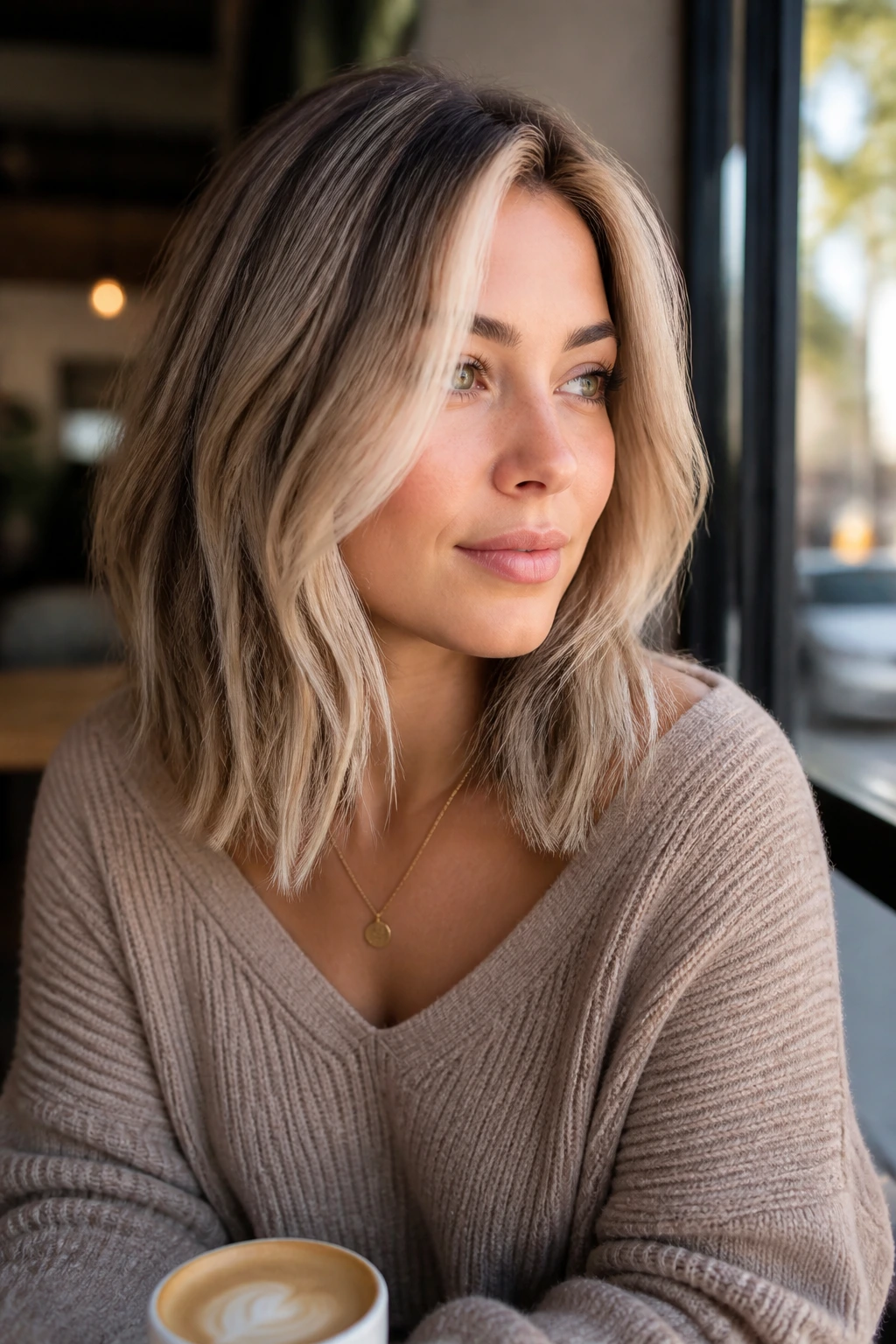
Quartz blonde sits in that pretty middle between pearl and beige. On a lob, the tone feels fresh without being stark, and the face-framing pieces give brunette hair enough contrast to feel changed. Fair neutral skin usually takes well to quartz because the shade has enough softness to avoid a chalky finish.
Ask for the front pieces to be the brightest part, but keep the rest of the hair a shade darker. That keeps the color map believable. A lob length helps because the blonde ends can swing and show off the tone shift.
If you like clean lines and soft color, this one is a strong pick. It’s not loud. It doesn’t need to be.
30. Beige Blonde Long Layers with Airy Ends
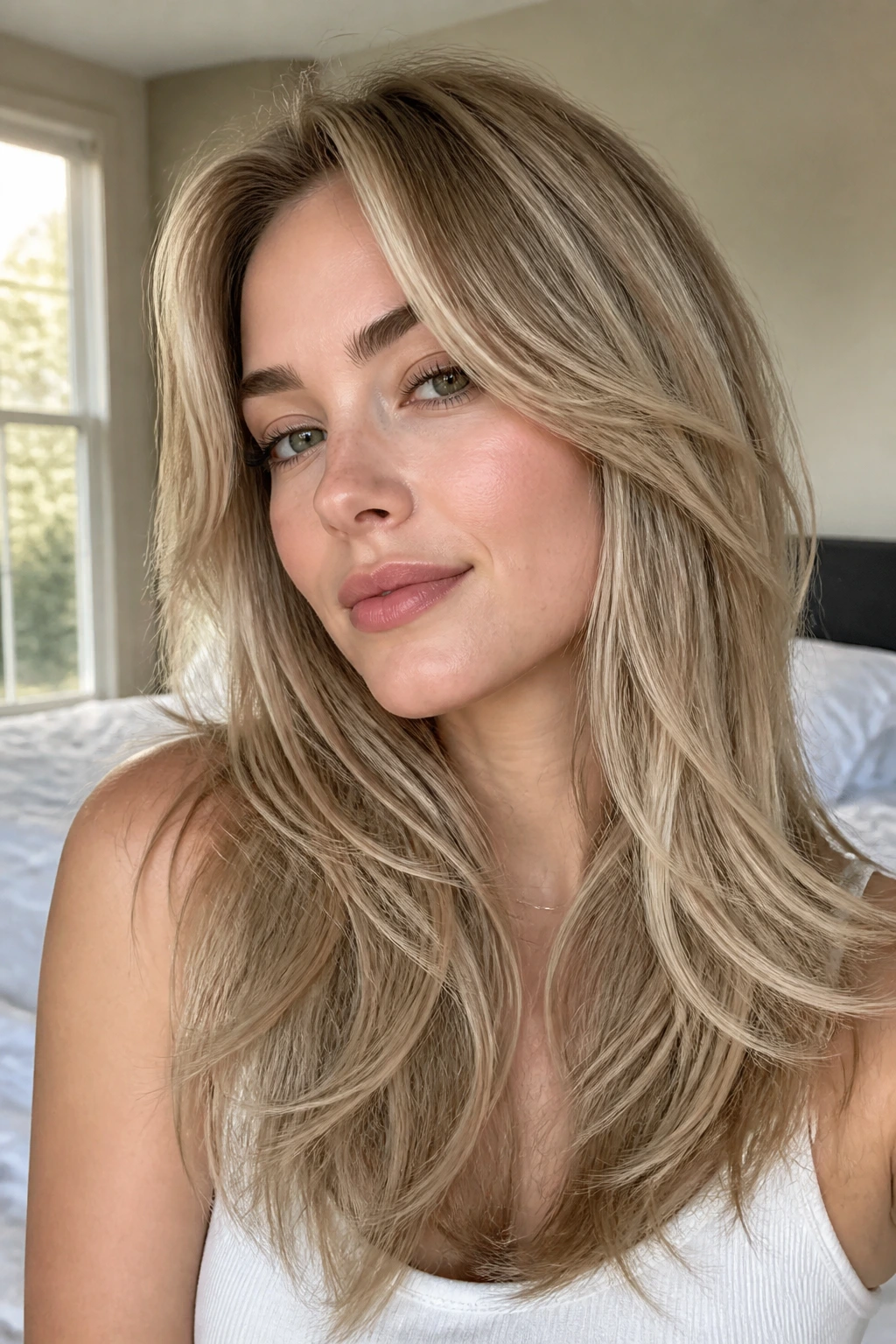
Long layers are the classic answer for brunettes who want blonde without giving up movement. Beige blonde keeps the tone calm, which is exactly why it flatters fair neutral skin so well. The airy ends let the color fade out softly, instead of ending in a hard, obvious line.
Why it lasts
The root stays deeper. The mids carry most of the brightness. The ends are light enough to read blonde, but soft enough to grow out without panic. That balance makes the style easier to keep up than all-over light blonde.
A soft wave or a loose twist through the lengths shows the dimension best. If your hair is very straight, a little bend at the ends keeps the whole thing from feeling flat.
Choosing the Right Shade for Fair Neutral Skin
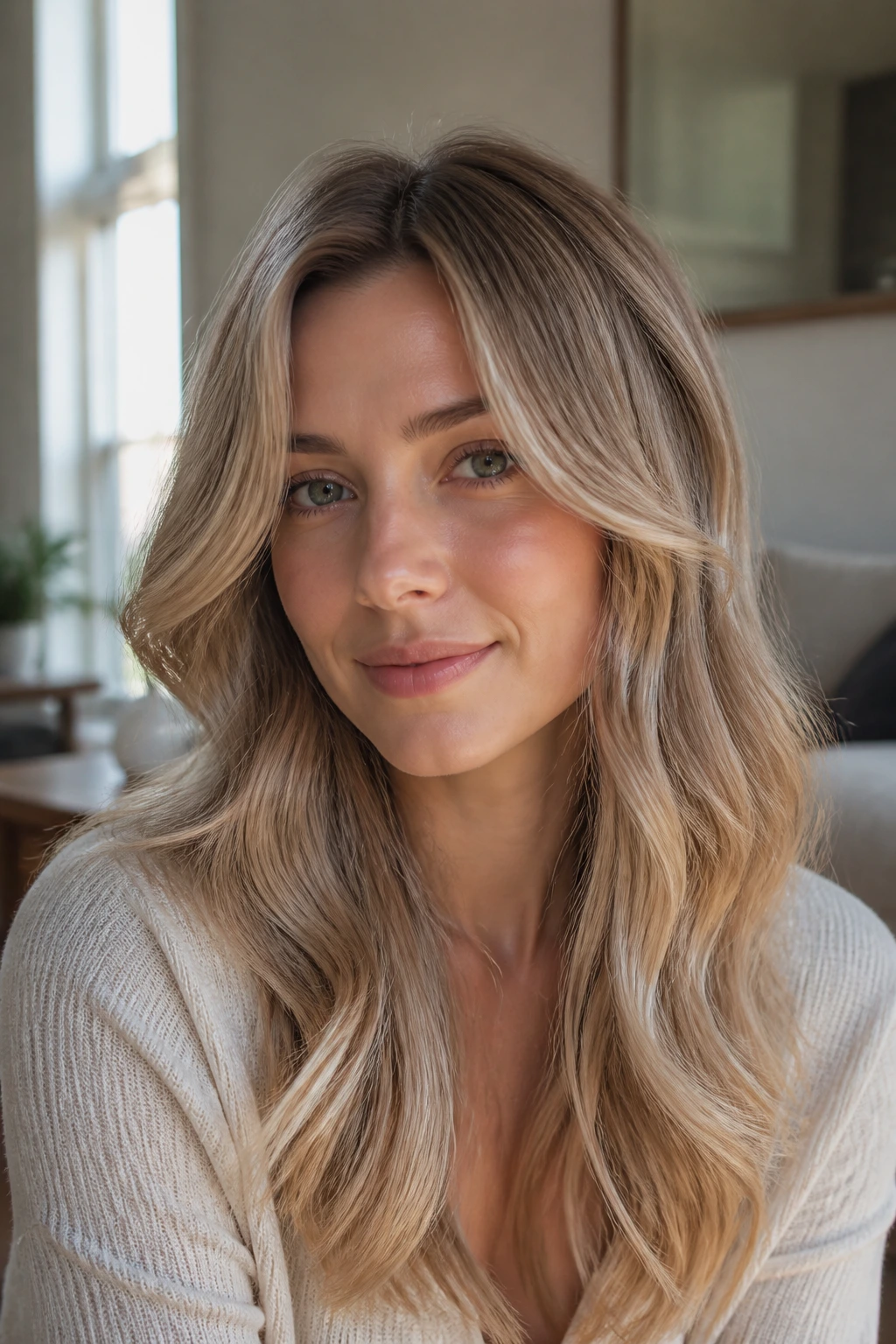
Fair neutral skin is forgiving in a specific way. It can wear warm or cool blonde, but only if the tone stays controlled. Beige, champagne, pearl, mushroom, sandy, and smoky ash all live close enough to the middle that they flatter instead of fighting your undertone. Once you wander too far into banana yellow or blue-white platinum, the face starts doing all the wrong work.
The easiest way to shop the shade is to think in temperature, not just color names. Beige means you want softness and balance. Champagne leans a touch warm but still reflects cleanly. Pearl and ash lean cool, though they should stay soft enough that your skin does not look gray beside them. If you have a brunette base with red or orange undertones, a smoky or rooted version usually behaves better than a very pale, all-over lift.
The Tools That Keep Brunette-to-Blonde Hair Looking Intentional
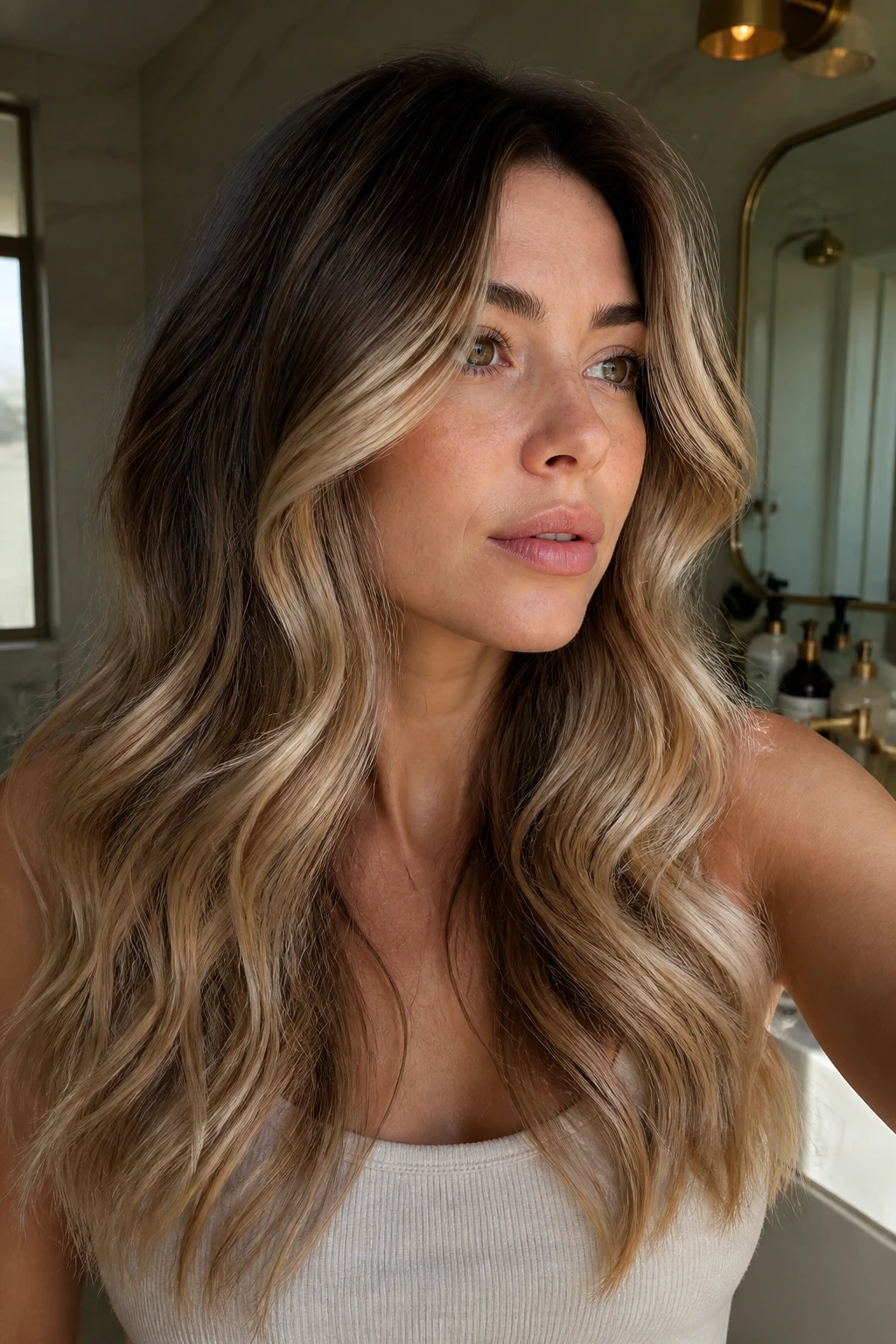
- 1.25-inch curling iron or wand: Best for soft bends, loose waves, and those face-framing pieces that keep blonde from looking stiff.
- Flat iron with rounded edges: Useful for lobs, shags, and curtain fringe when you want a smooth bend instead of a curl.
- Heat protectant spray: Blonde hair shows heat damage fast, especially after lightening.
- Purple or blue shampoo: Purple helps yellow tones; blue helps orange brass on darker brunettes.
- Color-safe hydrating shampoo and conditioner: Lightened hair dries out faster than virgin brunette hair.
- Microfiber towel or old T-shirt: Less friction, less frizz, less breakage.
- Wide-tooth comb: Better than yanking a brush through damp blonde hair.
- Gloss or toner mask: Handy for keeping beige, pearl, or champagne tones from drifting muddy.
- Root clip or duckbill clips: Very useful when you want clean sectioning for blowouts and waves.
How to Ask for the Look at the Salon
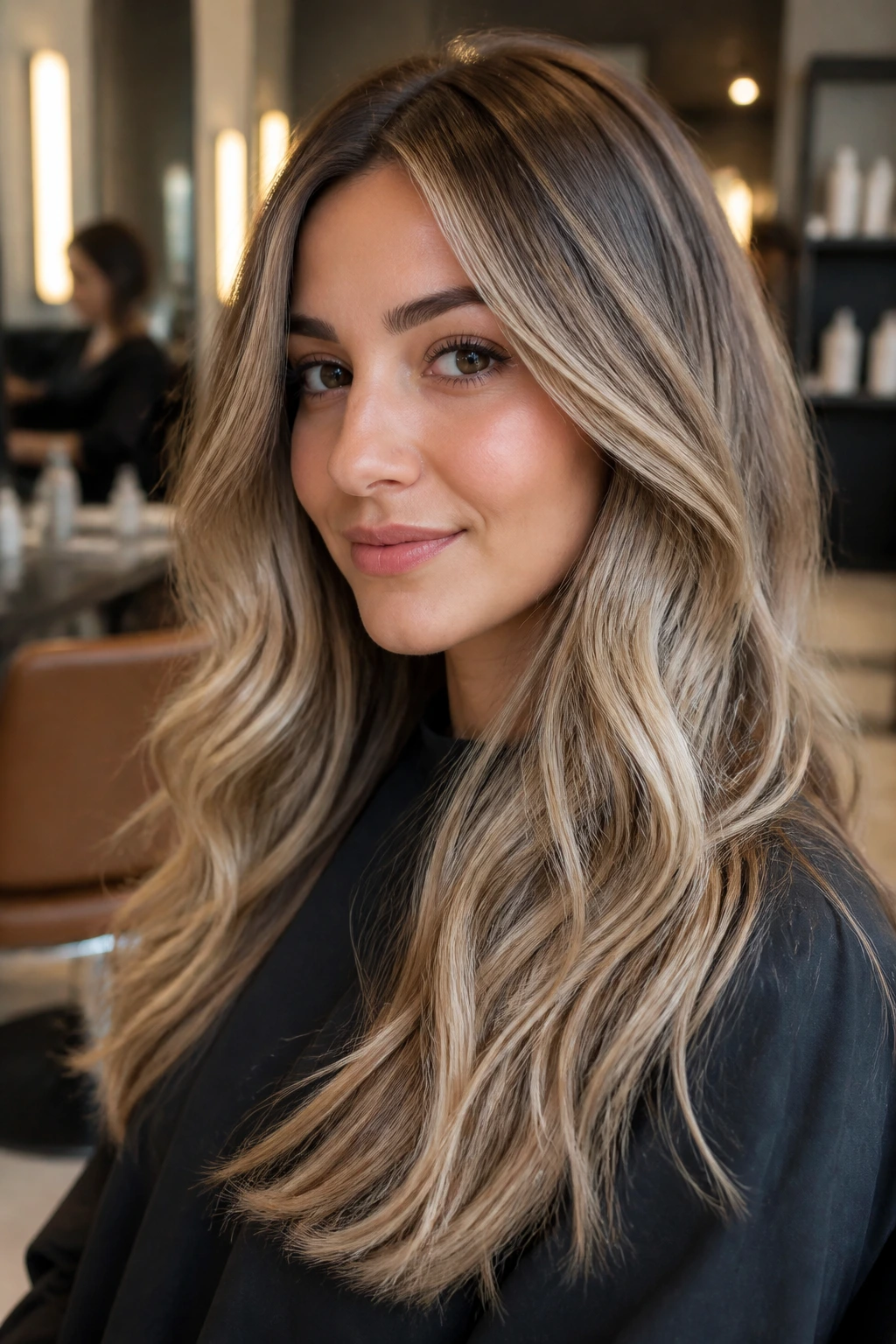
Bring photos, yes, but don’t just point and say “this blonde.” Say where you want the brightness to sit. Around the face? Mostly through the ends? A little lighter at the crown? Those details matter more than the picture on your phone, because brunette-to-blonde color changes a lot depending on starting level.
A good script sounds more like this: “I want a beige or champagne blonde on my brunette base, with a softer root and light pieces around the face, not an all-over bright blonde.” That tells the stylist about tone, placement, and maintenance in one sentence. If you want low upkeep, say it. If you hate yellow, say that too. If you want to keep your brows and makeup simple, the stylist should know that before the foils go in.
Ways to Style These Looks at Home
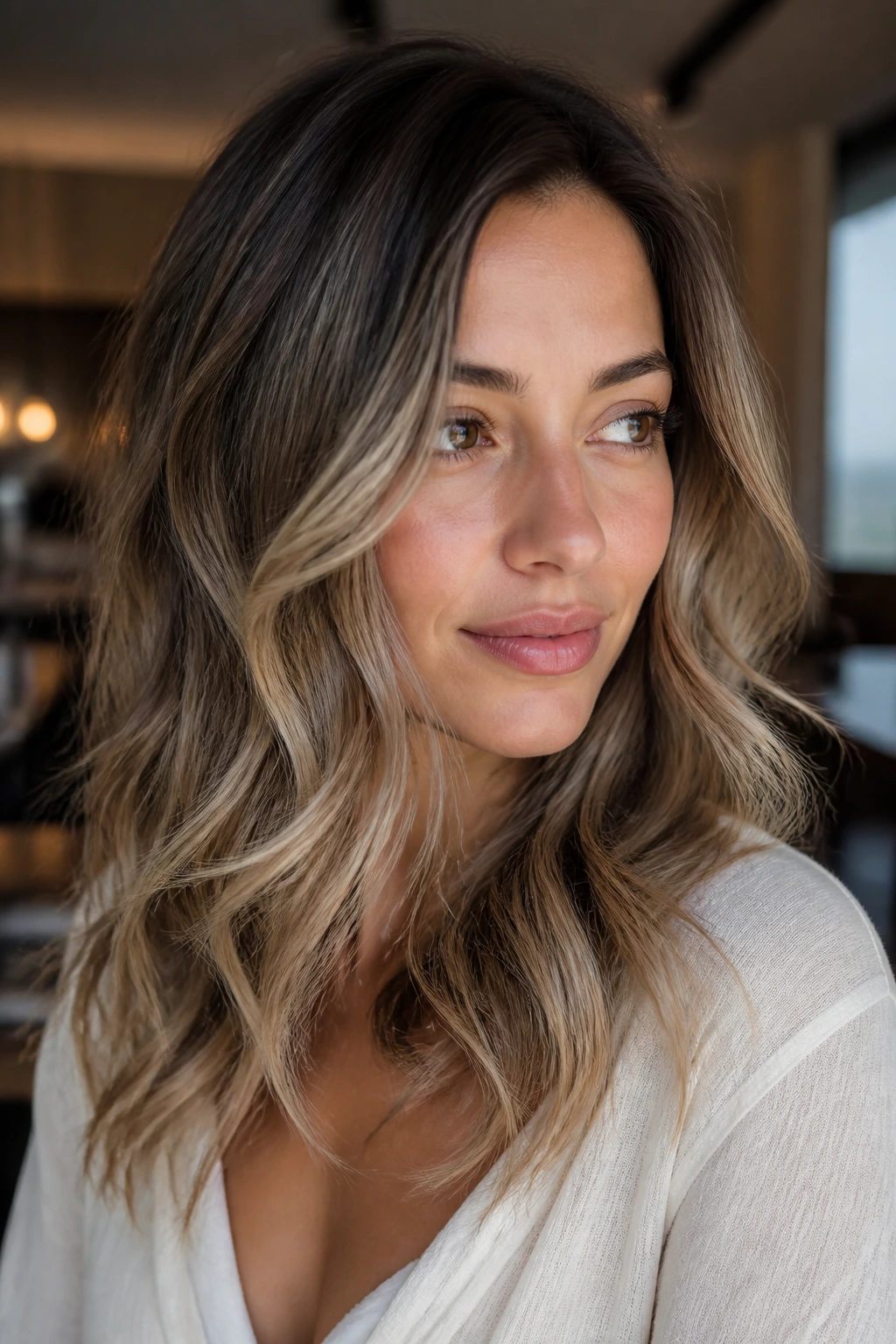
Soft Waves
A loose wave is the easiest way to show off balayage, money pieces, and beige blends. Curl away from the face, leave the last inch out, and brush through once the hair cools.
Sleek and Straight
Use a heat protectant, a smoothing serum, and one pass with a flat iron. This works best for pearl, quartz, mushroom, and beige-blonde lobs because the clean lines make the tone look expensive.
Curly and Diffused
For curls, place the lighter pieces around the canopy and face frame. Scrunch with a light cream, diffuse on low heat, and stop touching it once the cast sets.
Half-Up or Pinned Back
These styles are underrated because they show off the front pieces without forcing you to style every strand. Great for money pieces, curtain layers, and soft champagne tones.
Fine Hair
Keep the lightness more concentrated near the surface and avoid too many thin, wispy layers. Fine blonde hair can look stringy fast if the cut is overdone.
Thick Hair
Interior layering helps blonde pieces move. Otherwise the color can hide under the bulk and the whole look feels heavier than it should.
Maintenance, Toning, and Grow-Out Between Salon Visits
Lightened brunette hair needs a schedule, not wishful thinking. Most beige, champagne, and pearl blondes hold their tone for about 4 to 6 weeks before they start drifting warmer or duller, especially if you wash often or use hot tools. Purple shampoo once every 1 to 2 washes is usually enough for yellow tones; if you overuse it, the hair can go flat and dusty. Blue shampoo is better if your brunette base still throws orange.
Root touch-ups depend on the placement. A rooted balayage or sombre can often stretch to 8 to 12 weeks, while a money piece or very bright face frame may need freshening sooner. Glosses and toner refreshes are the quiet fix that most people skip. They keep beige from turning tired and champagne from turning gold in the wrong way.
Dry shampoo helps, but don’t use it like wallpaper paste. It builds up fast on blonde hair and can make toner slide off unevenly.
Additional Tips and Shade Boosters
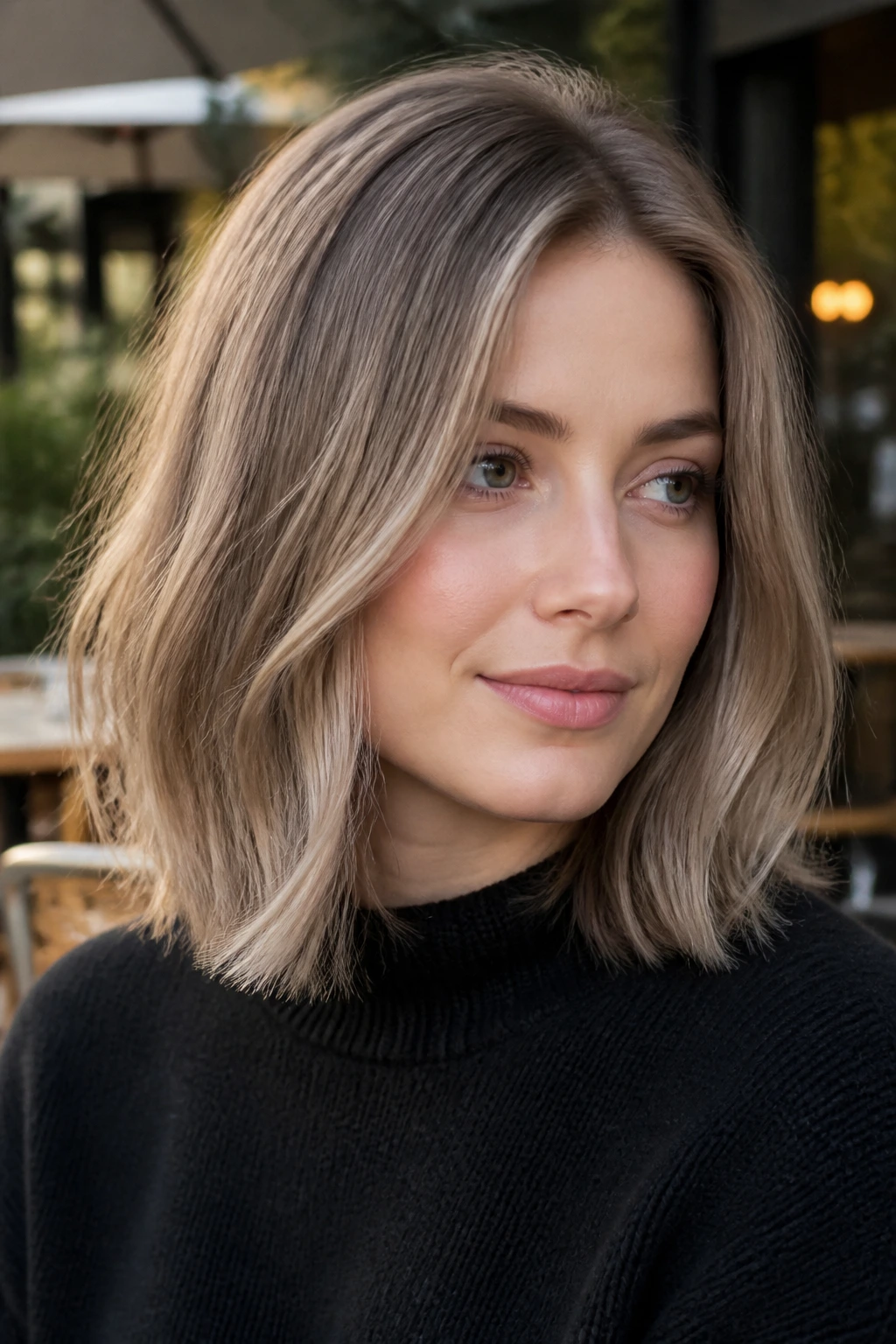
Flavor Enhancement: A clear or beige gloss after lightening adds shine without changing the tone too aggressively. It’s the fastest way to make brunette-to-blonde color look deliberate.
Customization: If your face looks better with a bit more warmth, ask for soft beige-gold ribbons around the front only. If your skin reddens easily, keep the face frame cooler and let the ends carry the warmth.
Serving Suggestions: Tuck one side behind the ear, leave a few lighter front pieces out, and let the rest move freely. That small bit of asymmetry keeps the style from feeling dated.
Make-It-Yours: For curly hair, concentrate brightness on the outer curl layer. For fine hair, use baby lights and a blunt perimeter. For thick hair, ask for internal layers so the blonde can actually show.
Common Mistakes to Avoid
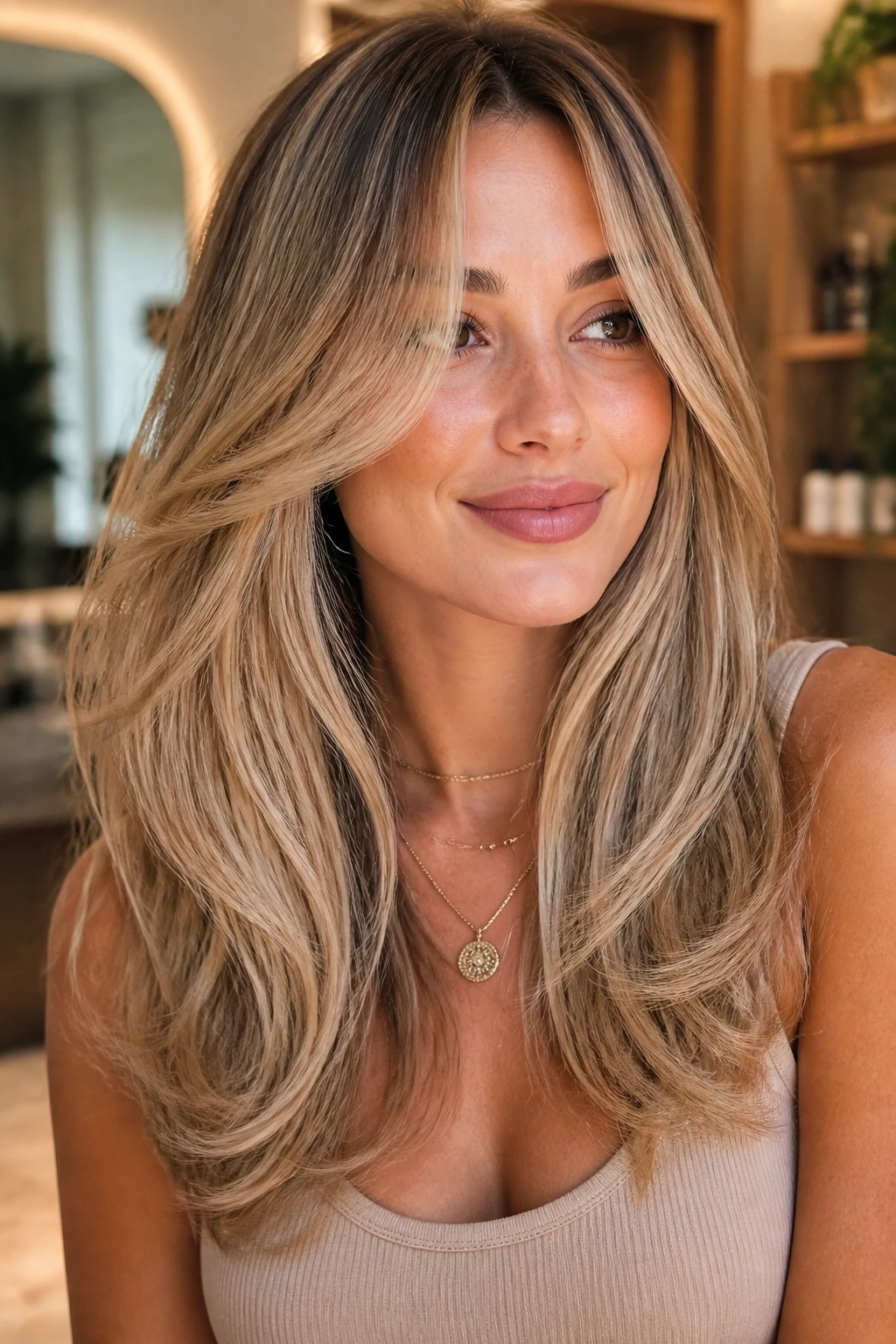
- Going too yellow too soon: If the blonde looks banana-like in daylight, the toner was too warm or wore off too fast. Ask for beige or pearl instead of gold.
- Lifting every piece the same amount: Flat, all-over lightness can make brunette hair lose depth and make fair skin look bare. Leave some shadow at the root and through the underlayers.
- Over-toning with purple shampoo: If the blonde turns gray, dull, or blotchy, you’ve gone too hard. Cut back and use a hydrating mask once a week.
- Ignoring the haircut: Blonde needs shape. Without layers, bends, or a blunt edge, the color can sit there without purpose.
- Trying to go from dark brunette to platinum in one sitting: That’s how hair gets weak, stretchy, and hard to style. A staged lift usually looks better and behaves better.
- Forgetting brow balance: Very pale blonde against dark brows can look disconnected on fair neutral skin. A root shadow or beige tone often softens that line.
Variations and Adaptations to Try
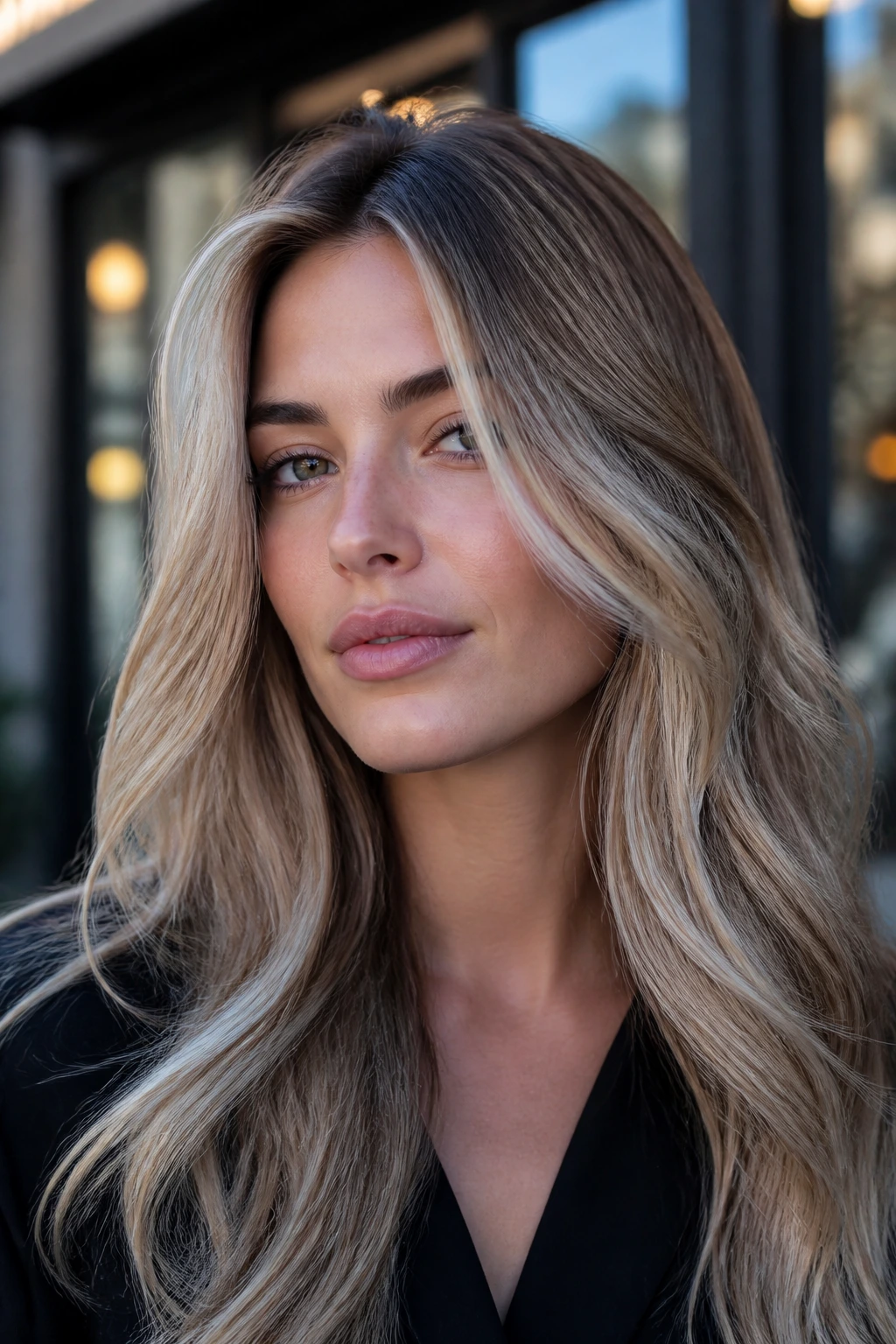
Cooler Pearl Shift: Swap beige and champagne pieces for pearl, mushroom, or soft ash if your skin leans pink or you wear silver jewelry more often. The look stays soft, just cooler.
Warmer Cream Lift: Add a muted gold-beige gloss if neutral skin looks flat in cooler shades. Keep the warmth soft so it doesn’t turn brassy.
Low-Maintenance Root Shadow: Keep the first 1 to 2 inches near the scalp deeper than the mids and ends. This is the easiest adaptation if you don’t want constant salon visits.
Curly-Hair Placement: Put the brightest pieces around the outer curl pattern and face frame, not deep inside the bulk. You’ll see more dimension with less lightening.
Fine-Hair Version: Use baby lights and avoid heavy layering. A blunt bob, lob, or collarbone cut keeps the blonde from looking see-through.
Thick-Hair Version: Ask for internal layers and slightly wider balayage ribbons. Tiny highlights can get lost in dense hair, and that wastes the lightening work.
Questions People Ask at the Salon
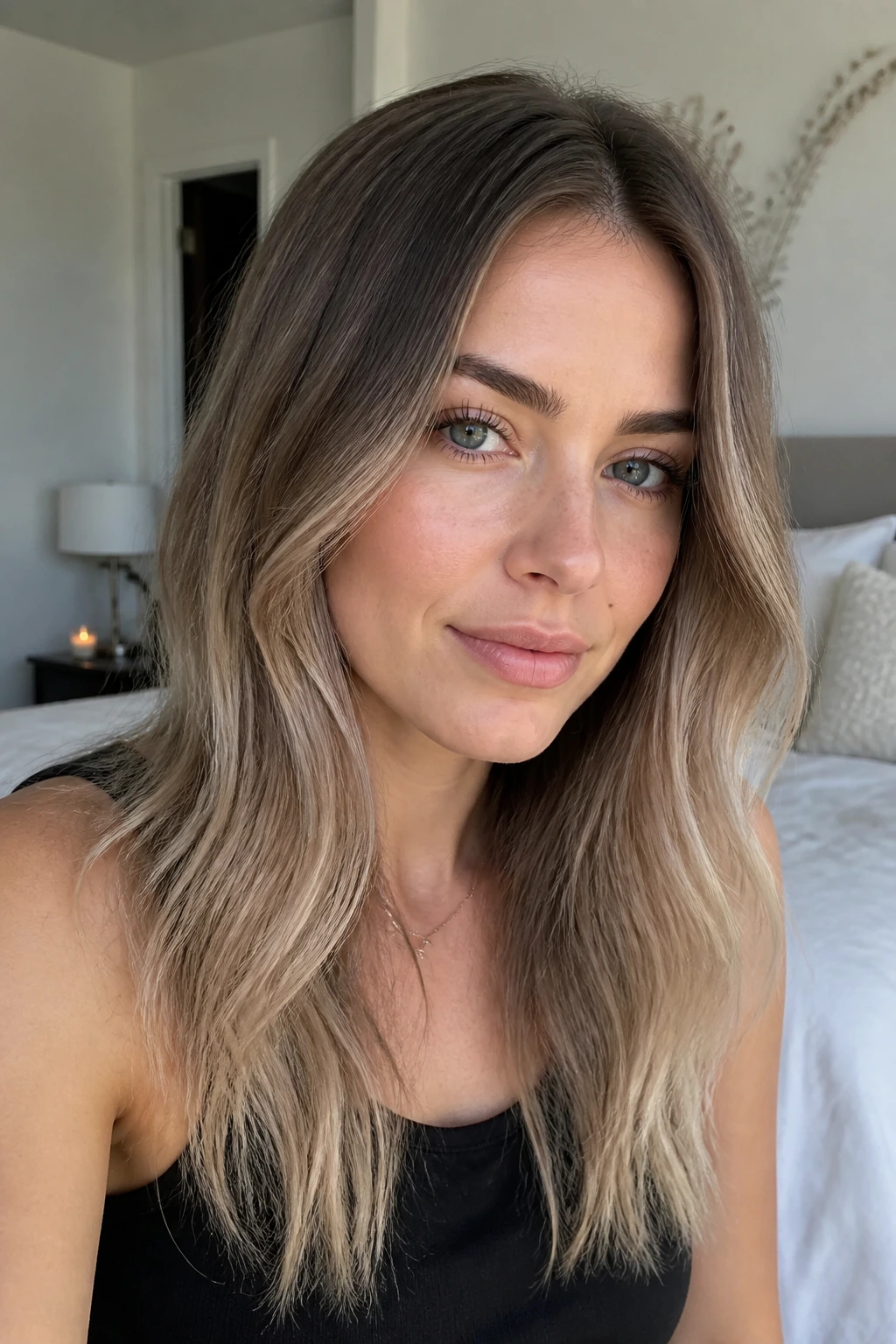
Is beige blonde better than ash blonde for fair neutral skin?
Usually, yes, if you want the safest middle ground. Beige keeps the face bright without going icy. Ash works too, but it needs a softer finish so the skin doesn’t look flat beside it.
Can a very dark brunette go blonde without wrecking the hair?
Yes, but not in one jump if the goal is a clean result. Darker bases often need staged lifting, and a rooted balayage or money piece is kinder than pushing every strand to pale blonde at once.
Do these looks work on curly hair?
They do, and curly hair often shows dimension better than straight hair. The trick is placement: keep the lightest pieces where the curl opens and moves, not buried inside the bulk.
How often do I need toner?
Most brunettes with beige or champagne blonde need a refresh every 4 to 8 weeks, depending on washing, water quality, and heat styling. If your hair turns yellow sooner, a gloss may be better than another harsh toner.
What if my blonde turns brassy fast?
Use a blue shampoo if the brass leans orange and a purple shampoo if it leans yellow. If the color keeps shifting, the base may be too warm and needs a salon gloss, not more at-home washing.
Should the roots stay darker?
Usually, yes. A little depth at the root makes the blonde flatter the face and gives you an easier grow-out. It also keeps fair neutral skin from looking washed out.
Can I ask for this without highlights?
Absolutely. A balayage, root melt, gloss, or color-melt technique can give you the same effect with fewer hard lines. The haircut and styling matter more than people think.
What’s the biggest mistake people make with blonde on brunettes?
They chase brightness before tone. A pale blonde that’s too yellow or too ashy will still look off. Beige, pearl, champagne, and mushroom usually win because they keep the whole face in balance.
Picking the Blonde That Sits Right on Your Face
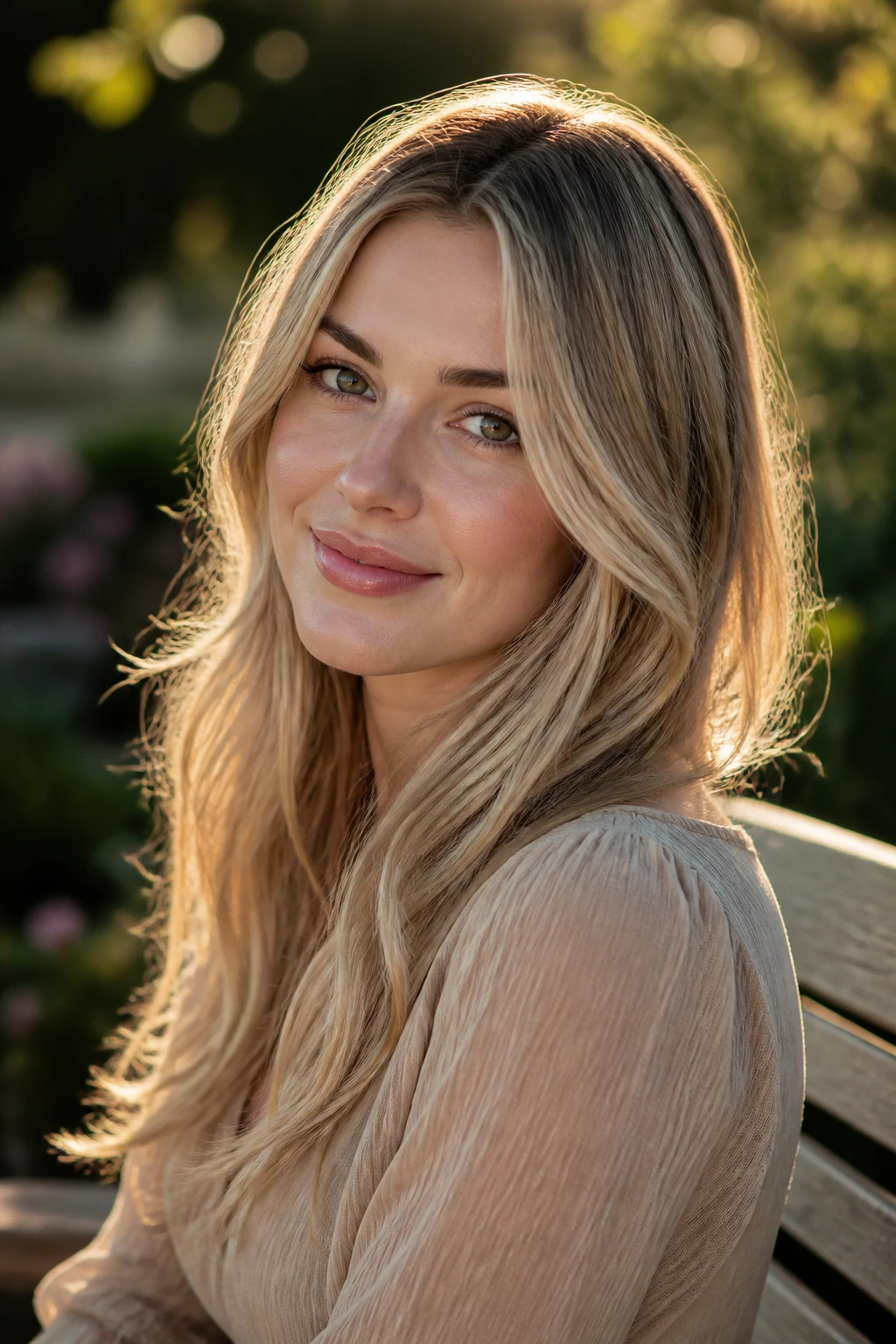
The best blonde on brunette hair doesn’t announce itself from across the room. It settles in. It moves with the cut, looks calm in daylight, and still flatters when the root starts to show. That’s the real test.
Fair neutral skin has room to play, but the shade still has to be chosen with a little care. Beige, champagne, pearl, mushroom, sandy, and smoky tones keep the color from fighting your face. Once you get the balance right, the whole look feels easy in the best way — and that’s the part most people are actually after, even if they ask for “blonde” at first.