



Neutral light blonde on dark hair is one of those color jobs that looks calm from across the room and complicated up close. The second the tone drifts too yellow or too silver, the whole thing reads off, and you can see why people who love brunette bases are picky about blonde.
The sweet spot sits between beige, sand, pearl, and mushroom. Those tones lift a dark base without making it look striped, and they’re forgiving when the roots grow a little longer than planned. On deep brown hair, that root shadow is not a flaw — it’s the reason the blonde looks expensive instead of pasted on.
Neutral light blonde hairstyles for dark hair work because they keep contrast where it helps, right around the face and through the bends of the hair, while leaving enough depth underneath for the style to move. A good version can look soft in daylight, a touch cooler indoors, and still hold its shape after a long day and a rough brush-through. That’s the game.
The styles below lean on that balance in different ways: some are all about face-framing ribbons, some need a blunt cut to keep the light pieces crisp, and some are low-key enough that only the ends really brighten. Once you see how the placement changes the whole mood, the options stop looking like a pile of blonde names and start feeling usable.
Why These Neutral Blondes Work So Well on Dark Bases
- They brighten without bleaching the whole head: A few well-placed light pieces around the face can change the whole read of dark hair, which is a lot easier to live with than all-over platinum.
- The grow-out is kinder: A soft root or balayage blend means the new growth line shows up as depth, not a hard stripe at the part.
- The tone stays in the beige family: Beige, mushroom, sand, and pearl keep the blonde from swinging orange on one wash and grey on the next.
- They work on almost every cut: Waves, bobs, shags, ponytails, braids, and cropped styles all handle neutral light blonde in a different but flattering way.
- You can go subtle or bright: The same color family can sit quietly in ribbons or show up loudly in front sections, depending on how much contrast you want.
1. Beige Balayage Waves
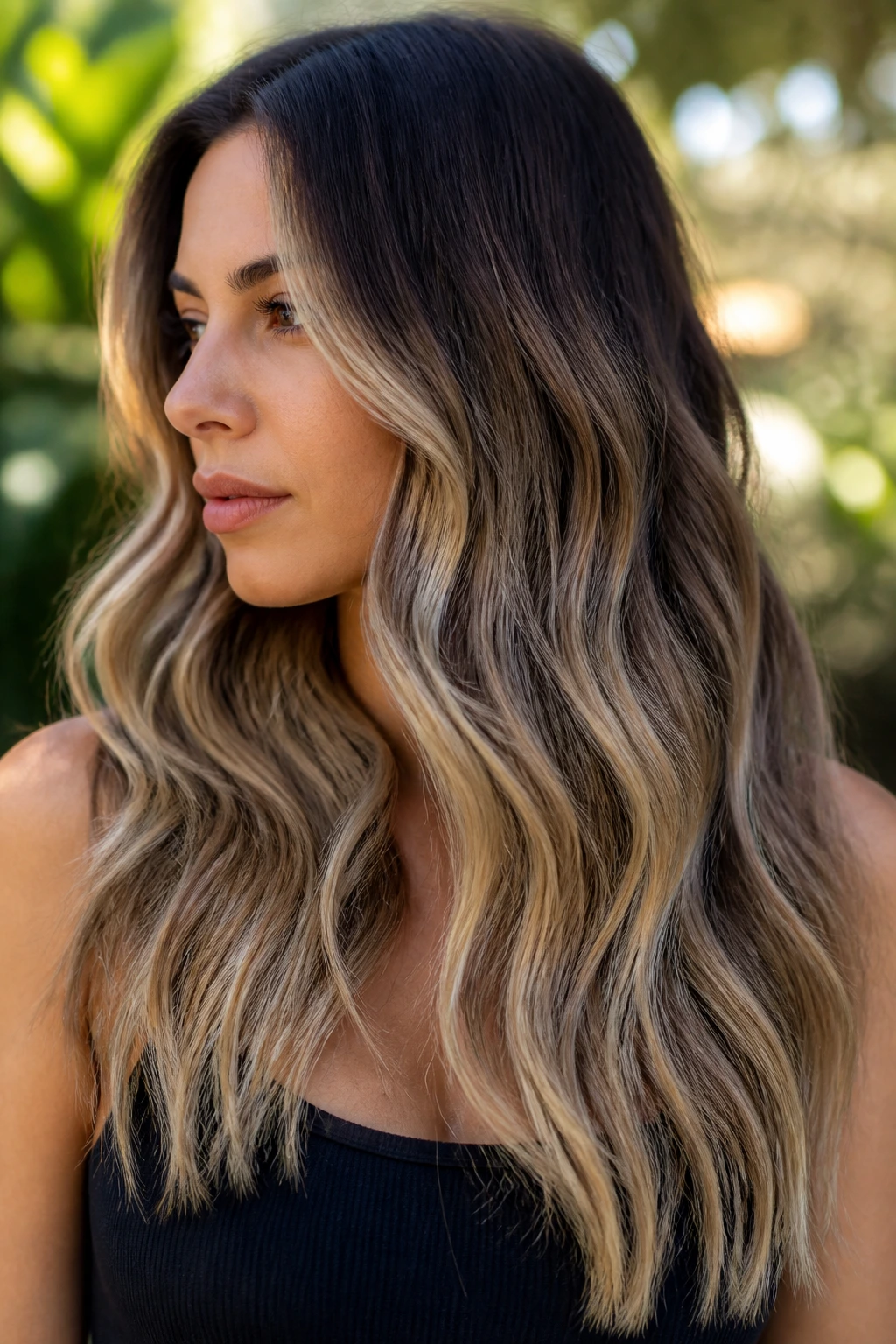
Beige balayage on long waves is the easy entry point if your hair is naturally dark and you want the blonde to feel soft instead of obvious. The light pieces drift from mid-lengths to ends, so the darker root stays put and the blonde doesn’t look like a hard cap sitting on top of brunette hair.
Why It Works on Dark Hair
Fine hand-painted ribbons let the color melt through the wave pattern instead of landing in one flat band. That matters on deeper bases, because the movement breaks up the contrast and keeps the blonde from shouting every time you turn your head.
- Best on: shoulder-length hair and longer, especially if you already wear soft bends or loose curls.
- Ask for: a beige toner over fine balayage pieces, with a slightly deeper root for grow-out.
- Style it with: a 1.25-inch curling wand and alternating curl directions so the blonde sits in broken ribbons.
- Keep it clean with: a gloss every 6 to 8 weeks if your hair pulls warm.
Pro tip: leave the very ends a touch lighter than the mids. It makes the wave pattern look fuller without needing more bleach.
2. Rooted Champagne Money Piece
A rooted champagne money piece is the move when you want the front of your hair to do the talking. The money piece brightens the face fast, while the darker root keeps the whole thing from looking like it escaped from a bottle blonde rabbit hole.
The payoff is immediate. You part your hair, pull it behind one ear, or throw it into a low ponytail, and the light pieces still do their job. Champagne sits in a useful middle lane here — lighter than beige, softer than icy blonde, and far less fussy than pure pearl.
Use this if you like to wear your hair up half the week. The front ribbons stay visible even when the rest of the style is tucked away, which means you get the look without needing every inch of hair to be blonde. That is the part people underestimate.
3. Mushroom Blonde Lob
Why does a mushroom blonde lob feel so polished on dark hair? Because the cut gives the color a clean border, and the tone itself stays in that taupe-beige zone that makes brunettes look expensive rather than overprocessed.
A lob that hits the collarbone keeps the blonde pieces near the face and away from the bottom-heavy look that can happen with long, one-length hair. When the ends are blunt and the color is slightly smoky, the whole style reads deliberate. No fluff. No yellow streaks.
How to Wear It
If you flatten it with a brush, the mushroom tone looks sleek and graphic. If you bend just the last inch under with a flat iron, the lighter ends look fuller and the darker root stays visible, which is exactly what keeps dark hair from losing its shape.
4. Creamy Ombré with Curtain Bangs
I keep seeing this combination for a reason: dark roots, creamy mids, and curtain bangs can make a brunette feel lighter without forcing the entire head into maintenance-heavy blonde. The bang area softens the forehead, and the ombré keeps the color change gradual enough that it still looks like your hair, just better lit.
A Few Things That Make It Work
- The bangs should start slightly darker at the root and open up toward the cheekbones.
- The blonde belongs mostly below the eyes, where it can frame without taking over.
- Creamy tones need a beige or pearl gloss, not a high-voltage silver toner.
- The cut looks best with a loose blowout; pin-straight hair makes the gradient feel sharper.
Curtain bangs are the secret here. They bridge the dark base and the light ends so the whole style doesn’t feel split in two.
5. Sand Blonde Face-Framing Layers
Sand blonde face-framing layers are the kind of haircut-color pairing that seems subtle until you stand in front of a mirror and realize your face looks brighter in five different spots. The light pieces start around the cheekbones and taper down through the front layers, so the blonde has a job instead of just sitting there.
The tone matters. Sand reads softer than ash and less buttery than classic blonde, which is useful on dark hair because the contrast can already be strong. You want the front pieces to lift the eyes, not frame them with a harsh line.
This style is especially good if your hair naturally falls forward around your jaw. The layered pieces pull the light toward the center of the face, and the darker underlayers keep the cut from going wispy. It’s a small trick. It changes the whole mood.
6. Ash-Beige Babylights
Why bother with babylights when chunky highlights look louder? Because on dark hair, ultra-fine pieces can look richer, and richer usually wins. Ash-beige babylights give you that soft, threaded brightness that feels woven into the hair instead of planted on top of it.
The technique works because the light pieces are thin enough to blend into the base, but not so pale that they lose warmth in indoor light. If the brunette underlayer is deep, the babylights create a soft shimmer rather than a stripe. That is the difference between “blonde” and “blonde on dark hair.”
Use them if you like your hair to move. Braids, twists, loose ponytails, and waves all show off the tiny contrast lines, and the look stays pretty even when the hair is not freshly styled. It’s one of the least dramatic ways to go lighter without sacrificing dimension.
7. Dimensional Bronde Blowout
A dimensional bronde blowout gives you the clean sweep of blonde around the face and the safety net of brunette underneath. It is not a shy look. It is also not a full commitment to blonde in the way icy color jobs usually are.
What Makes It Look Fuller
- The lighter pieces sit on top of a darker base, which creates the illusion of thicker hair.
- The blowout lifts the roots and shows off the lighter ribbons instead of hiding them in curls.
- Beige-gold toner keeps the lighter sections from looking dull in flat indoor light.
- A large round brush creates the polished bend that makes the color placement visible.
A straight, flat finish can work, but I prefer this one with movement. The bend through the ends makes the bronde read soft and expensive, not heavy.
8. Pearl Blonde Blunt Bob
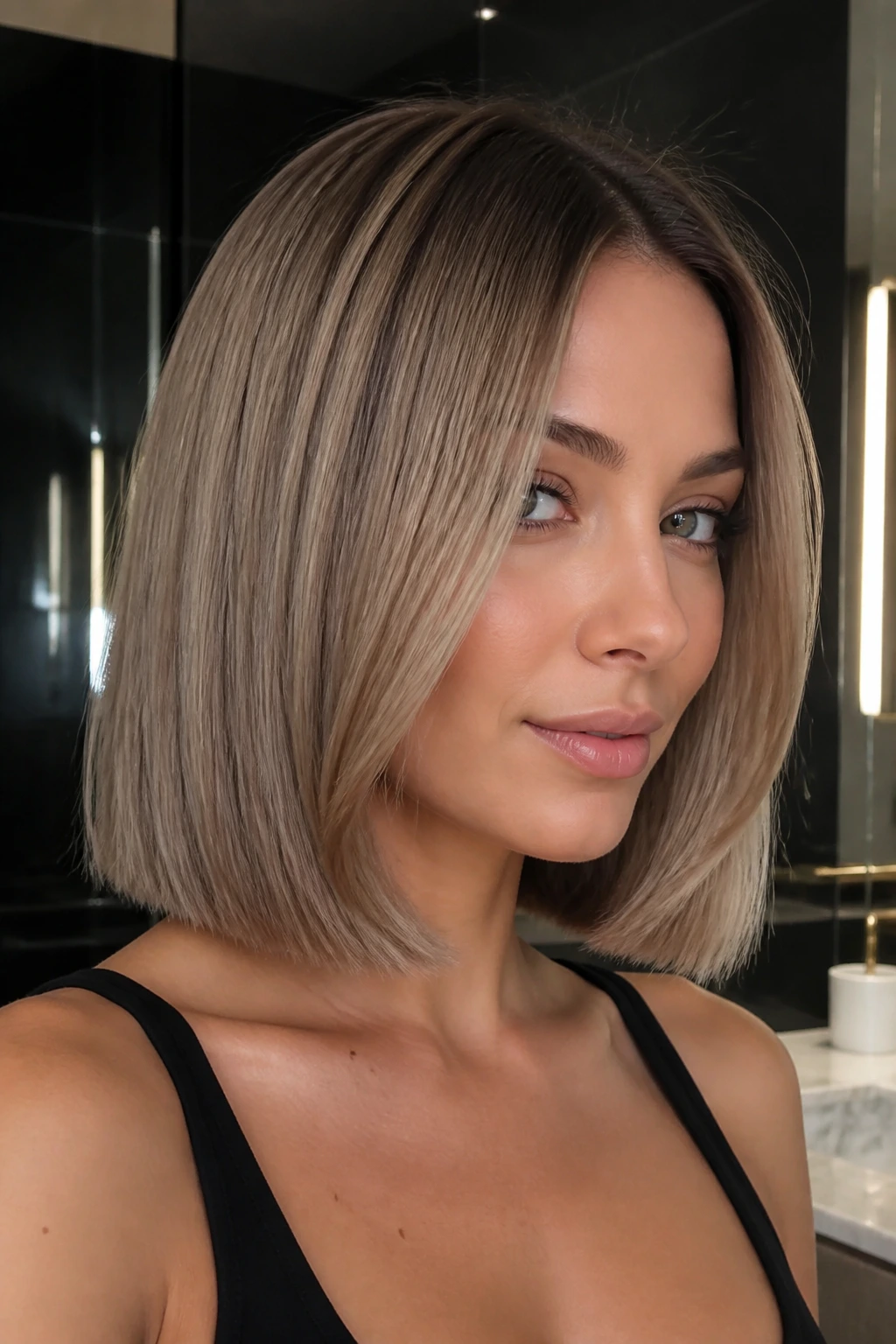
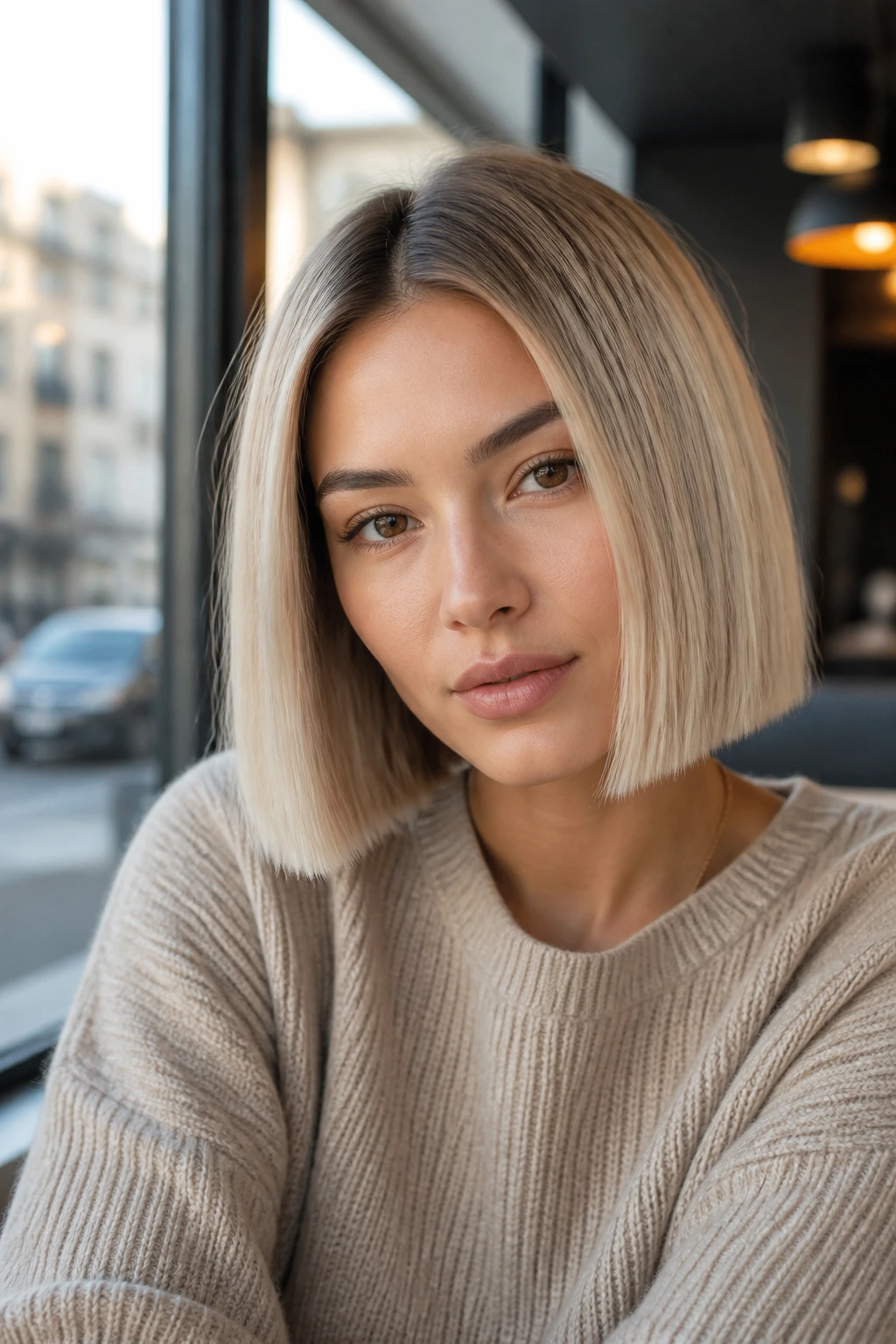
A blunt bob can absolutely carry neutral blonde on dark hair, and in some ways it does it better than a layered cut. The sharp edge gives the color a clean boundary, so the pearl tone looks intentional instead of floating around.
The key is keeping the root shadow soft and the ends bright enough to contrast. If you go too pale everywhere, the bob starts to feel disconnected from the base. If you keep the pearl glaze slightly beige, the result stays sleek and wearable.
This is the style I would hand to someone who wants blonde that looks crisp, not beachy. Tuck one side behind the ear, add a bit of serum to the ends, and the whole thing turns into a very strong line with a soft glow inside it.
9. Smoky Vanilla Shag
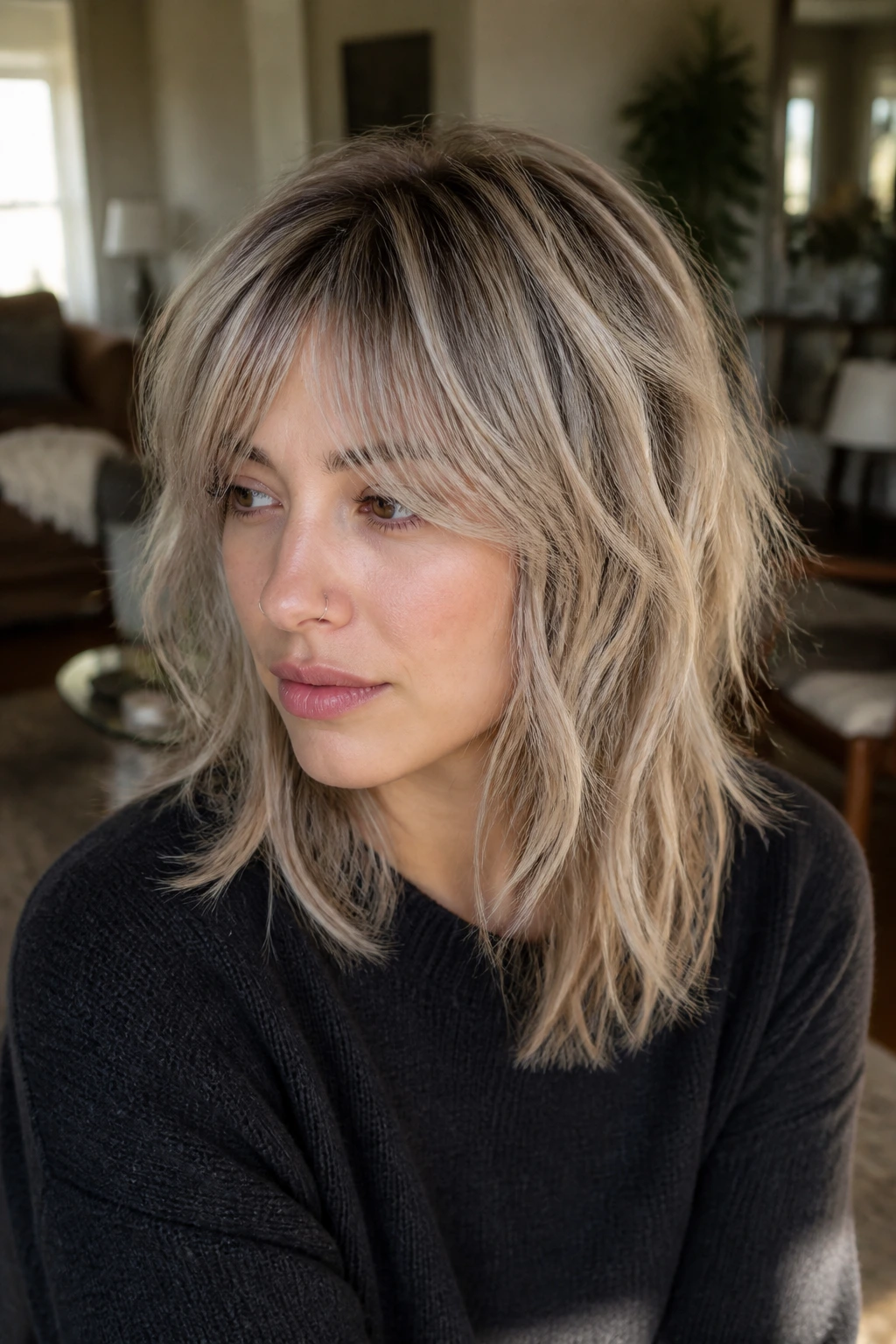
Why does a shag make neutral blonde feel easier? Because the layers break up the color into pieces, and pieces are kinder than one long sheet of light hair. Smoky vanilla works especially well here, since the tone has enough beige to stay soft and enough coolness to keep dark roots from looking orange.
The shag shape does the heavy lifting. Shorter layers around the crown create movement, while the blonde sits in the bends instead of broadcasting itself in one flat block. On naturally dark hair, that means less visual weight and less fear of the style going brassy.
How to Style It
Use a diffuser or a rough dry if your hair is wavy. If it’s straighter, mist in texture spray and bend a few random pieces with a curling iron — not all of them, or the shag loses its edge.
10. Ribbon Highlights in Loose Curls
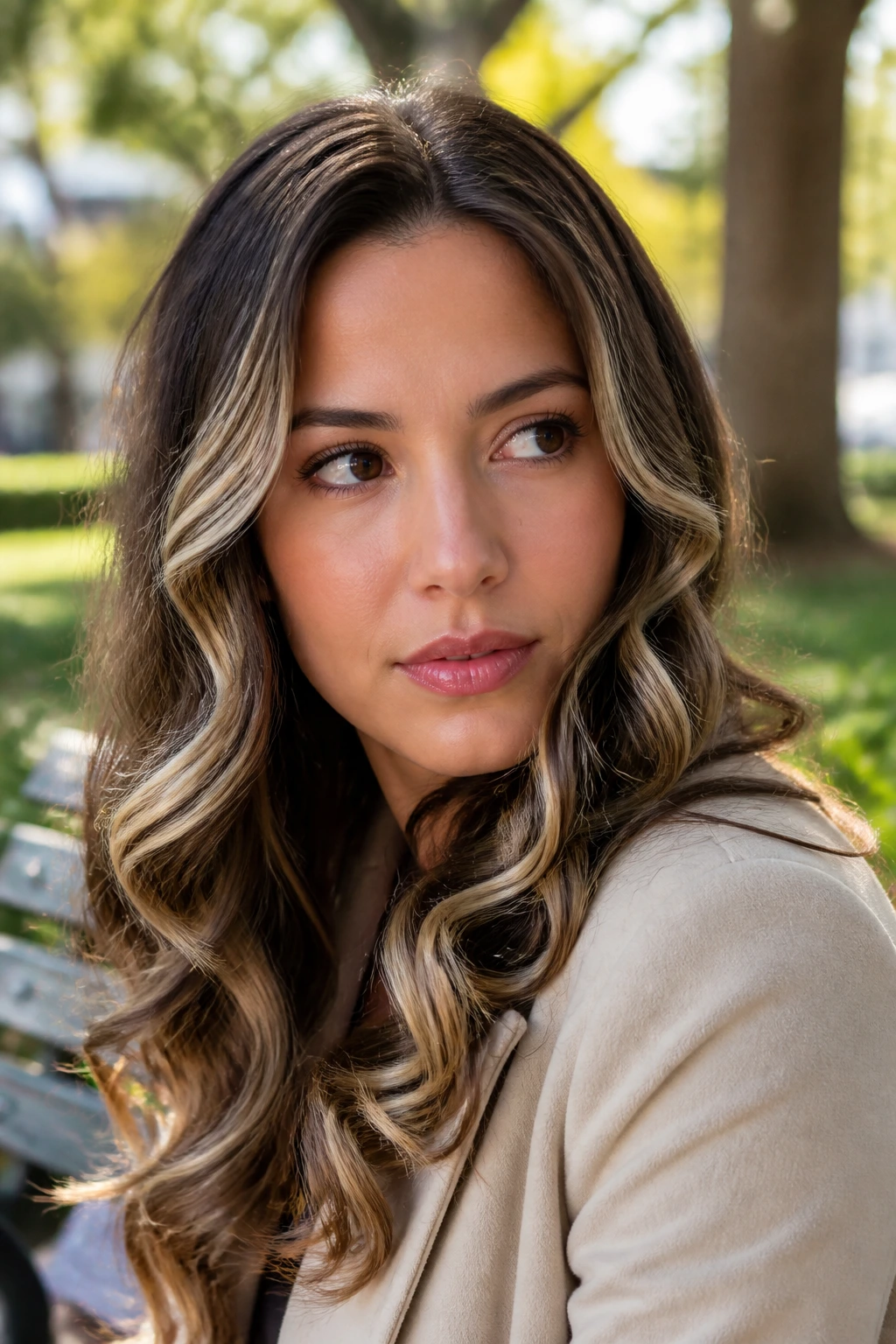
Imagine dark hair curled into wide, soft loops, then threaded with blonde ribbons that show up only when the hair moves. That is the charm here. Ribbon highlights are less about being seen head-on and more about catching light from the side.
They work because the light pieces are placed in longer strokes through the mid-lengths and ends, not in little spots all over the place. That gives the curl pattern something to reveal. Too many foils and you lose the ribbon effect; too few and the blonde disappears into the dark base.
- The best placement starts below the crown and around the face.
- Keep the toner beige or sandy, not too silver.
- Use a wide-barrel curling iron for bigger, softer loops.
- Brush them out lightly so the ribbons separate.
This is one of those looks that gets better after ten minutes of wear.
11. Frosted Crop with a Deep Side Part
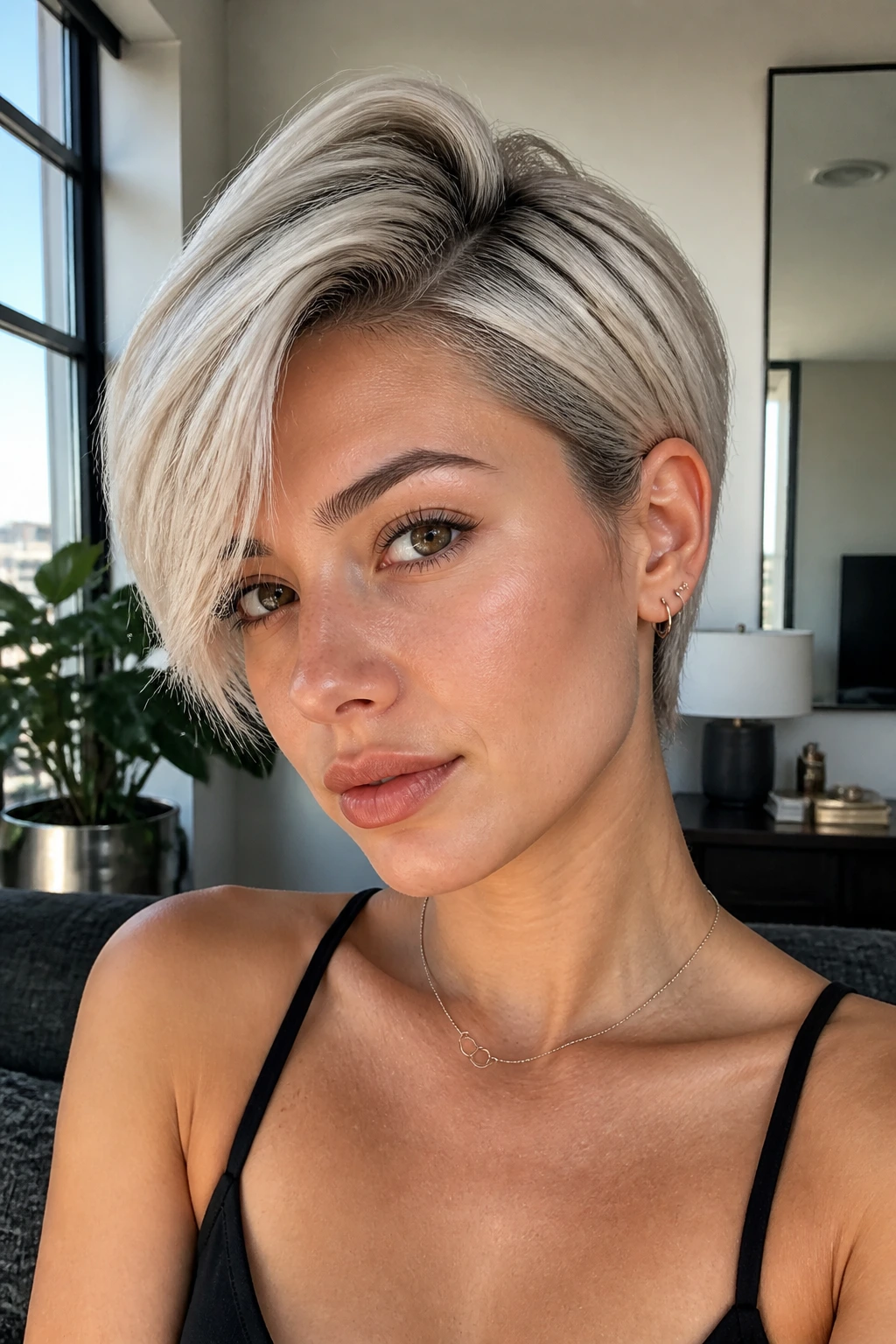
A cropped cut with a deep side part is one of the sharpest ways to wear neutral light blonde on a dark base. The shorter length makes the color placement feel deliberate, and the side part gives you a strong sweep that lets one side go a little lighter without losing structure.
The frosted tone should be soft, not chalky. On a crop, chalky blonde can make the hair look dry even when it isn’t. A pearl-beige gloss keeps the whole thing looking intentional and a little glossy around the crown, where short hair tends to show every texture shift.
This is a good choice if you like a shape that does not need much styling time. A paste or cream through the top, a quick side sweep with fingers, and you’re done.
12. Lived-In Beige Curls
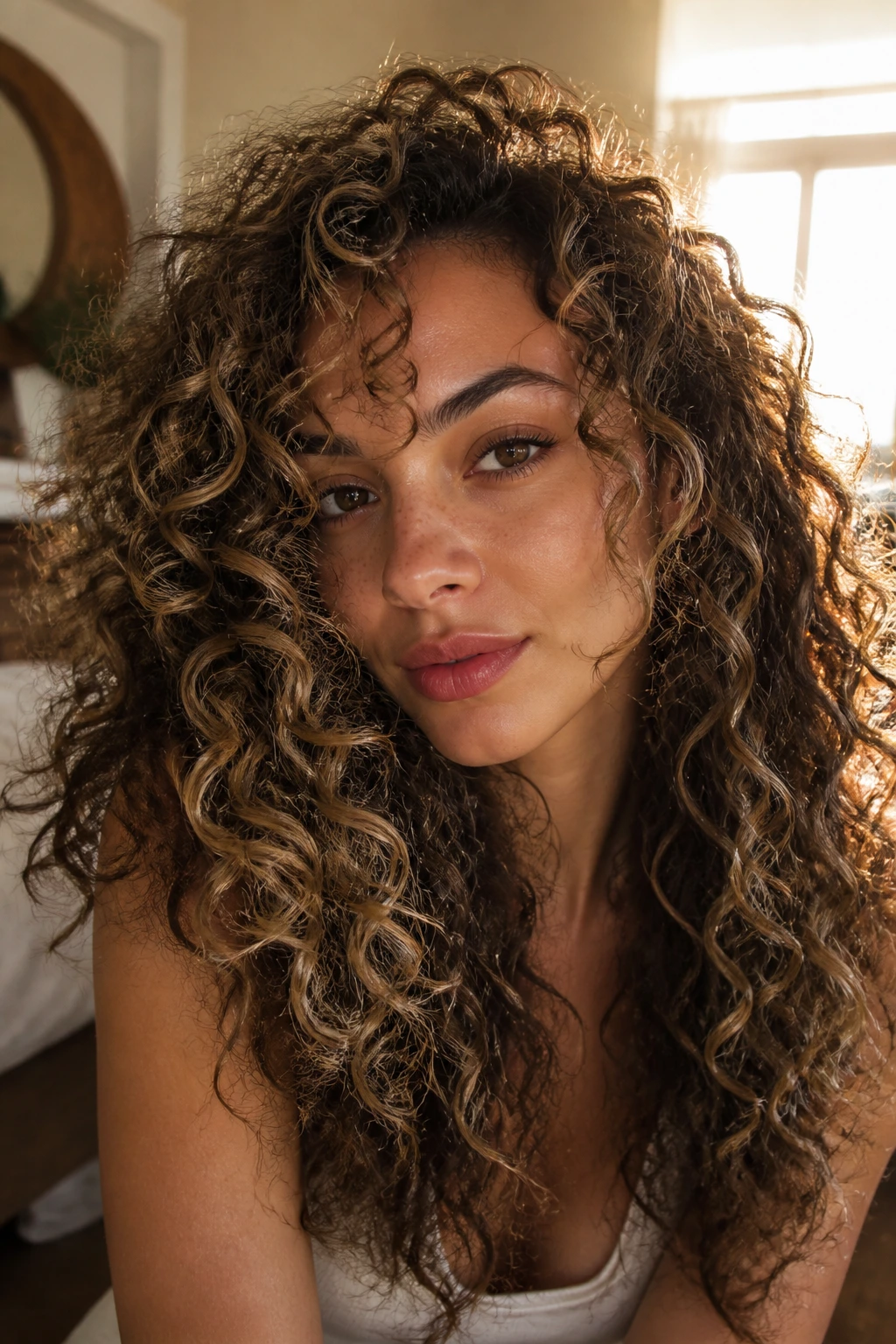
Lived-in beige curls are what happen when you stop trying to make every curl identical. Dark hair keeps its depth, beige blonde warms the curl pattern just enough, and the overall result feels softer than a uniform blonde halo.
The trick is leaving darker strands between the light pieces. Curls need shadows or they go flat in a hurry. Beige highlights threaded through the front and outer layers give the shape a lifted look while the underside stays darker, which keeps the curls from turning into one big bright puff.
This style is especially kind to people with thick curls. The contrast helps the curl pattern stand out, and the color grows out with less fuss because the darker base is part of the design. That’s not an accident. It’s what makes the style hold up.
13. Butterfly Cut with Neutral Blonde Ends
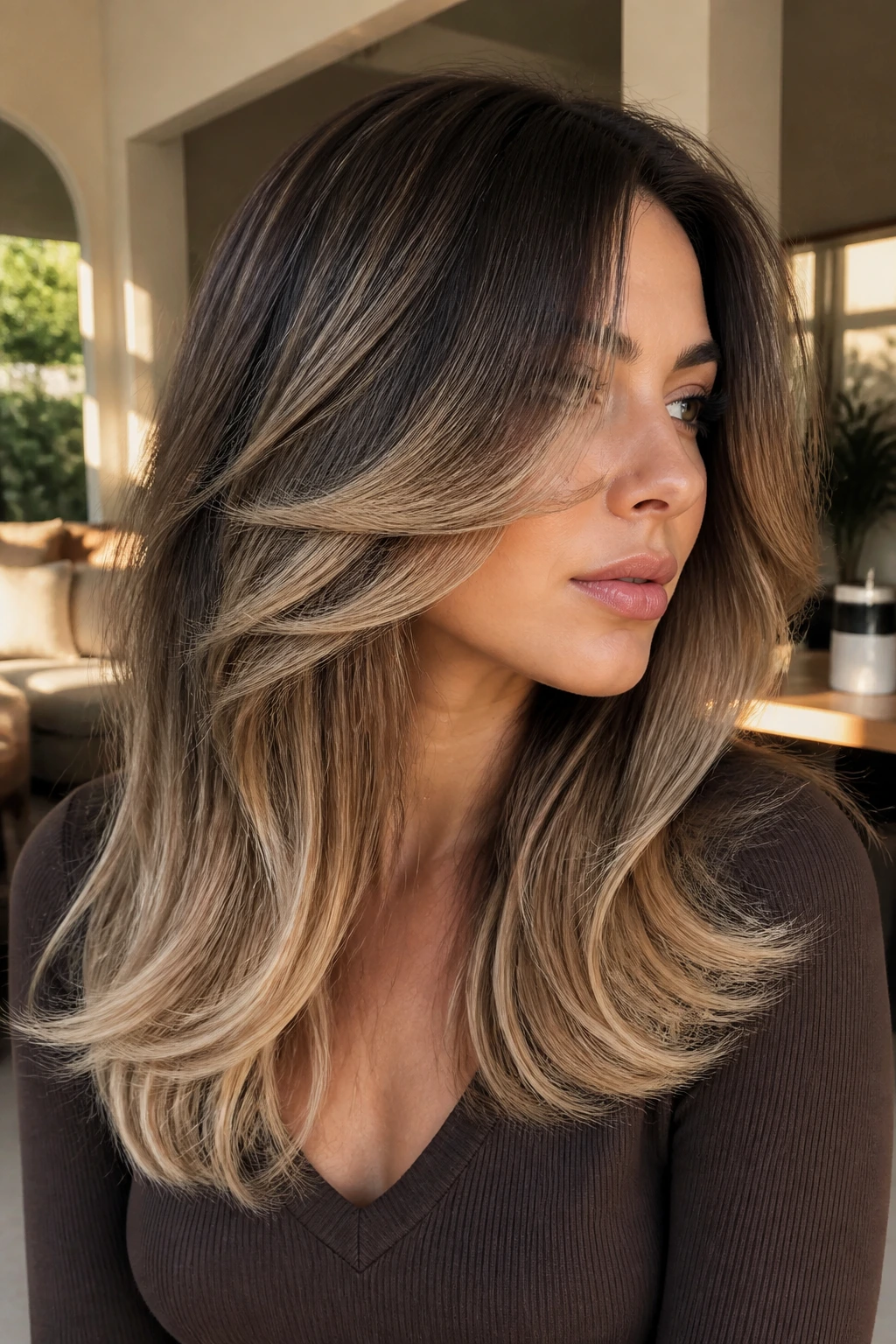
The butterfly cut does something useful on dark hair: it keeps the top layers full and airy while letting the blonde collect at the ends and around the face. That means the light pieces show when the hair moves, but the roots still have enough depth to feel grounded.
Why It Flatters Dark Bases
- The shorter top layers create lift without stripping out the darker base.
- Blonde ends read brighter because the cut gives them movement.
- Neutral beige tones keep the ends from looking dry or over-bleached.
- The face-framing sections make the haircut look softer even when styled straight.
If you like a dramatic blowout, this cut gives you more shape than long layers alone. If you prefer air-dried hair, the blonde ends still peek through when the layers separate.
Best move: keep the lightest pieces below the cheekbone so the cut holds its airy shape, not a fried halo.
14. Sandy Bob with Tucked Ends
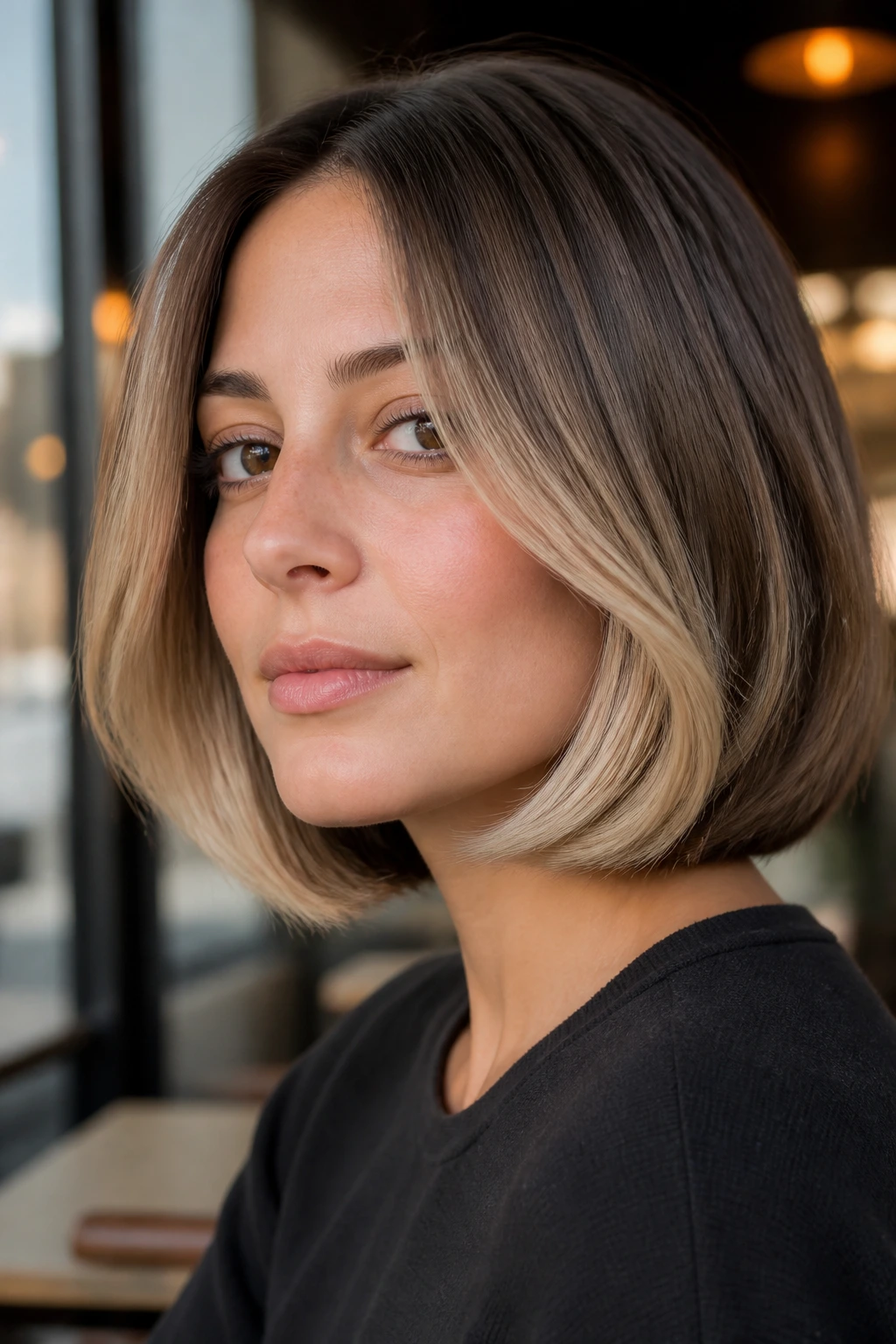
A sandy bob with tucked ends is the sort of haircut that looks neat without feeling stiff. The blonde is soft enough to blur the edge, but the bob shape keeps the style from falling apart visually when the hair is shorter.
That tucked-under finish matters. It gives the bob a little curve, which lets the sandy tone sit against the jaw instead of hanging flat. On dark hair, that contrast is clean and flattering because the ends look lighter without needing a giant amount of foiled blonde.
Wear this one when you want something that can go from office to dinner without a full restyle. A bit of smoothing cream, a round brush, and the ends tucked under just enough to show the neck. Simple. Effective.
15. Pearl-Straight Mid-Length Cut
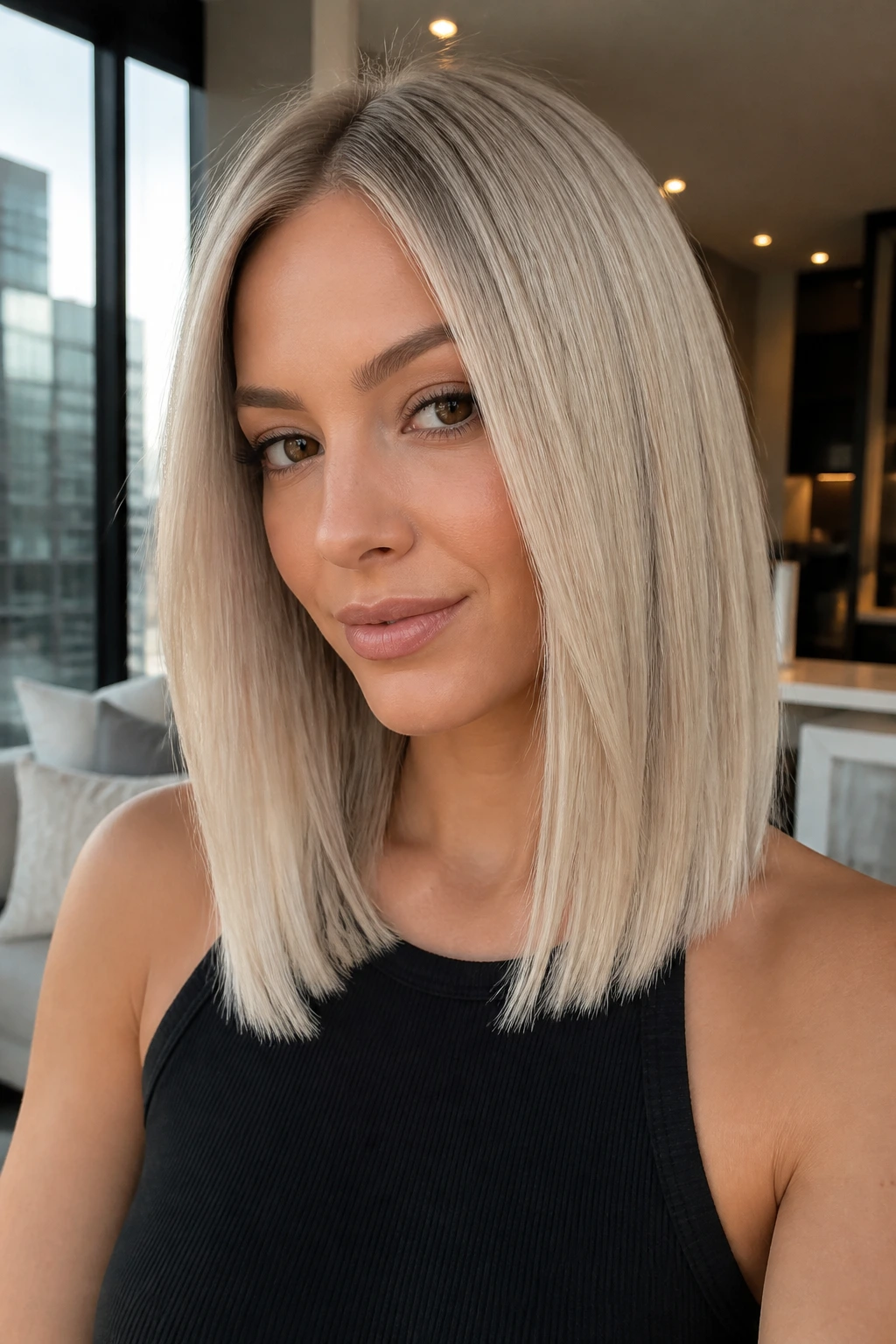
Why does pearl blonde look so crisp when the hair is straight? Because the straight texture gives the color a clean surface, and pearl tones need a clean surface to avoid looking muddy. On a mid-length cut, the blonde sits right in the line of sight, which means the neutral tone has room to breathe.
The important part is keeping the root soft. A hard root line makes straight styles look stripy, especially on dark hair. A blurred root and cool-pearl gloss through the mids let the color move from brunette to blonde without a jarring break.
How to Wear It
If you wear it straight, tuck the front pieces behind the ears and let the blonde bands frame the jaw. If you want more movement, curve just the ends inward with a flat iron. That little bend keeps the cut from feeling too severe.
16. Shadow-Root Long Layers
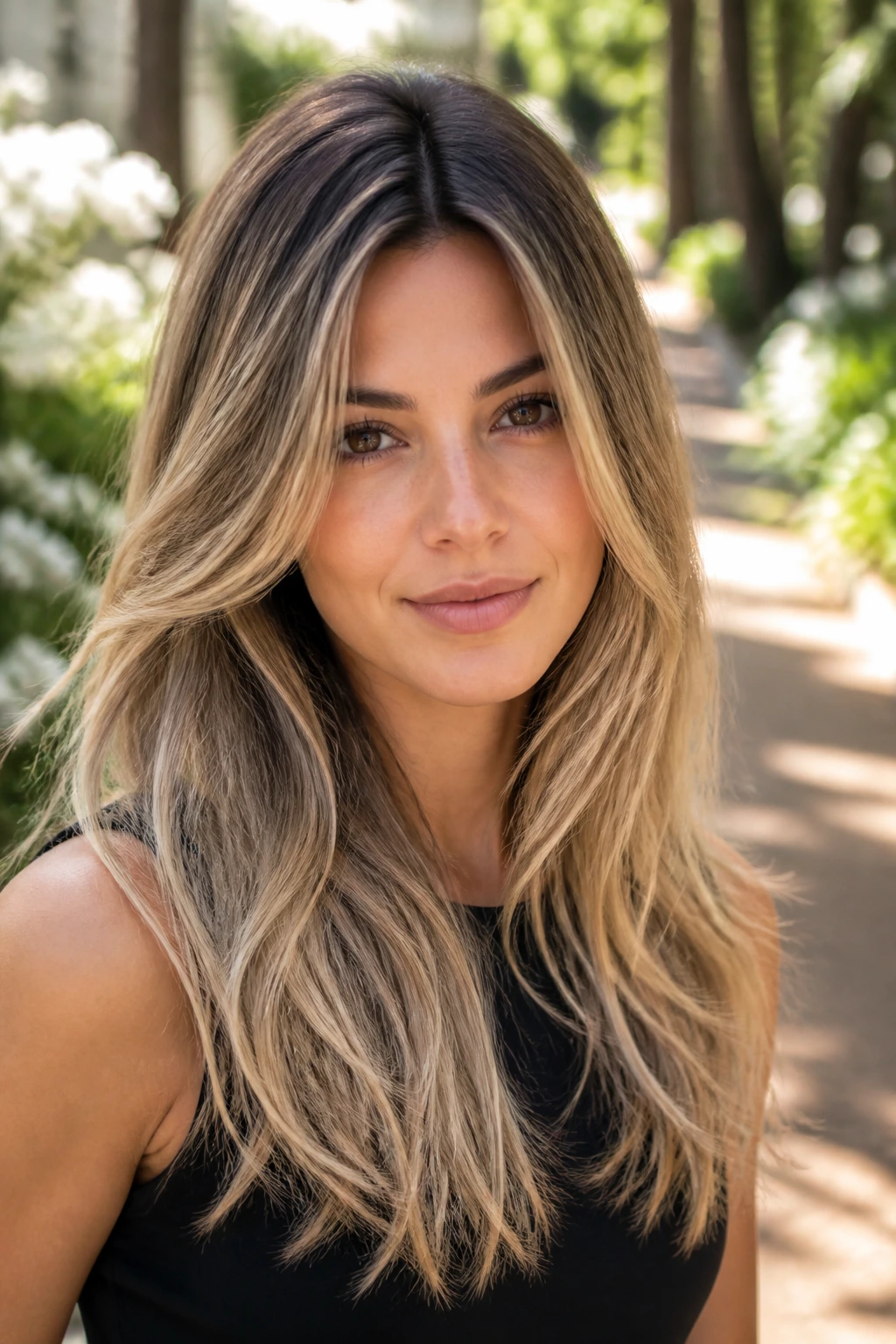
A shadow-root long layer cut is one of the easiest ways to go blonde on a dark base without signing up for constant upkeep. The root stays deeper, the light pieces live through the mids and ends, and the layers stop the color from looking like one heavy sheet.
I like this on hair that already has a lot of length because the color can travel down the layers instead of sitting in one place. The darker root gives the eye a starting point, and the beige-blonde pieces pull it down the length of the hair. The effect is soft, but not weak.
- Keep the root one to two shades deeper than the mids.
- Ask for long, blended layers rather than one blunt line.
- Use a gloss every 6 to 8 weeks to keep the beige clean.
- Curl the face frame away from the face for a softer sweep.
The grow-out is half the appeal here.
17. Creamy Half-Up Twist
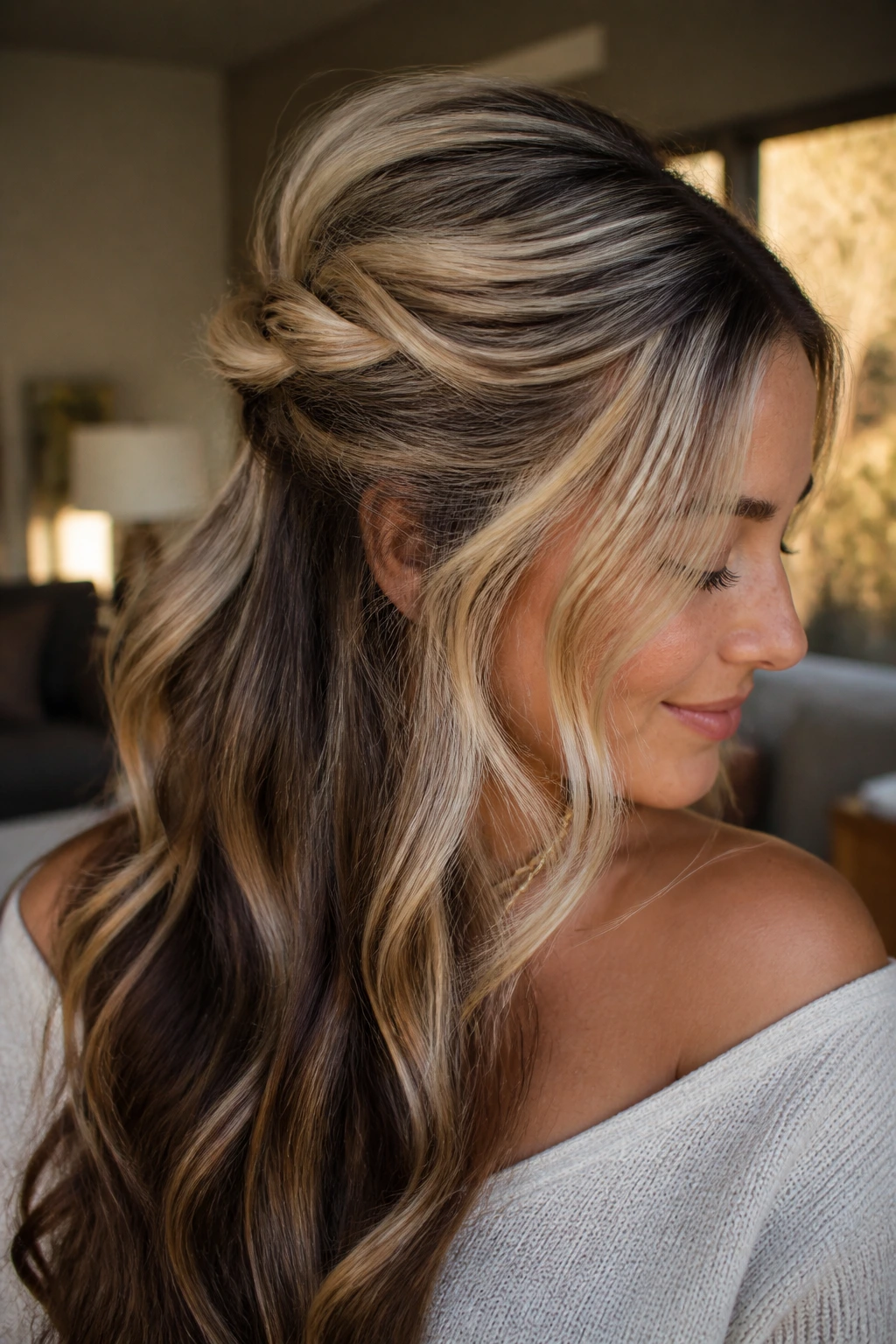
A half-up twist is one of those styles that gets better when the color has a little contrast in it. Dark hair at the crown, creamy blonde through the top layers, and a twist that lifts the lighter pieces into view — it all works because the style creates its own little stage.
The twist doesn’t need to be fancy. A loose pull from the temples back to the crown is enough. What matters is that the blonde is visible where the eye lands first. When the lower length falls free, the dark base keeps the style from feeling too sweet or overly polished.
This is one of my favorite low-effort ways to wear neutral blonde if the color is already in place. The twist shows off the dimension, and the rest of the hair can keep its movement. No overthinking required.
18. Champagne Braided Crown
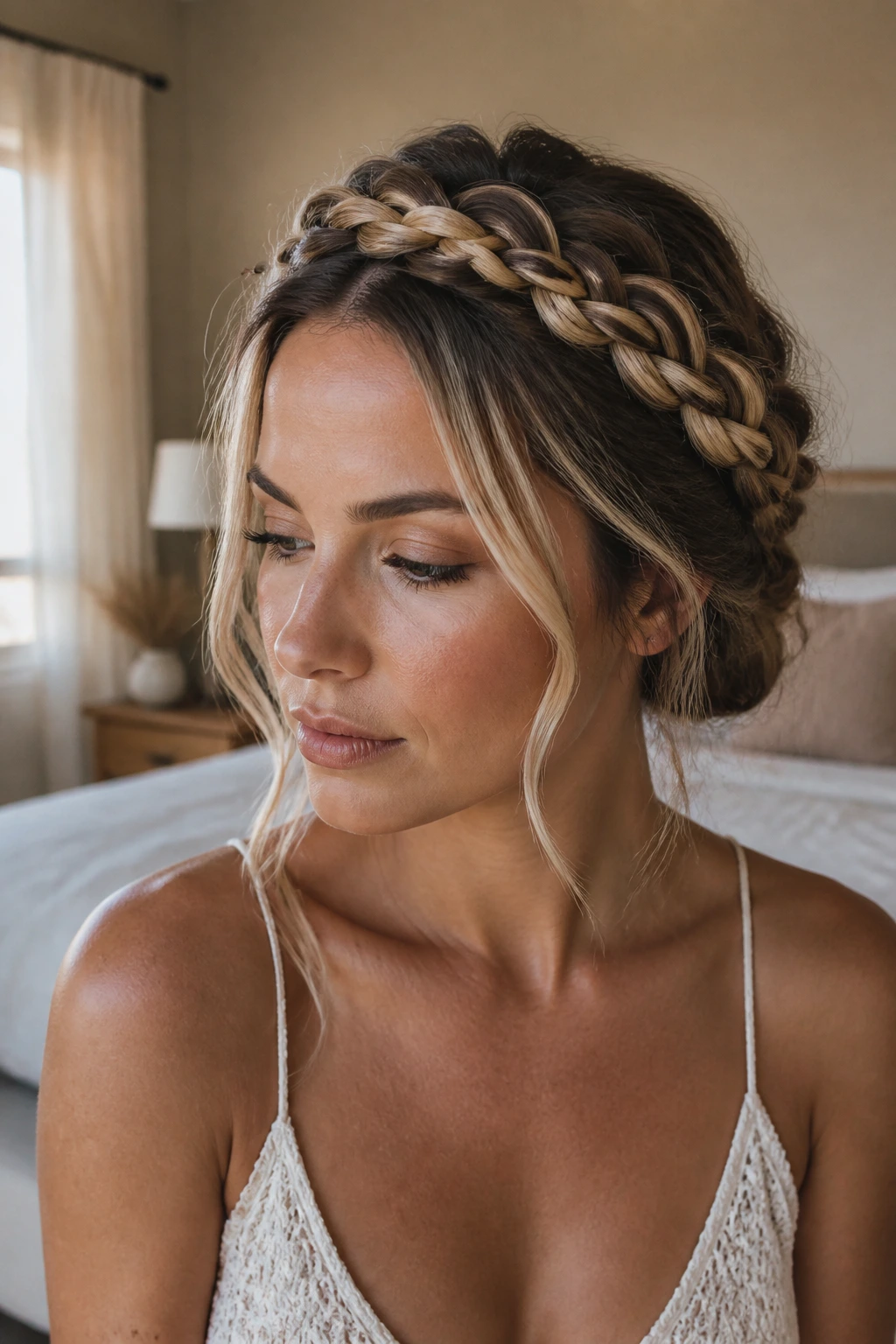
A braided crown turns neutral blonde into something almost architectural. Dark hair anchors the braid, while the champagne pieces weave in and out so the pattern has depth instead of disappearing into one color.
The braid works because braids love contrast. Light strands pop against darker ones, and champagne keeps the light pieces soft enough that they do not look harsh under tension. If your hair is layered, a few shorter blonde pieces escaping around the hairline make the whole thing feel less severe.
This style is better than people think for special events because it shows off the color without needing heat. If you’ve spent the time lightening dark hair, it’s nice to have one style that puts the pattern on display and keeps the ends tucked away.
19. Vanilla Ribbon Ponytail
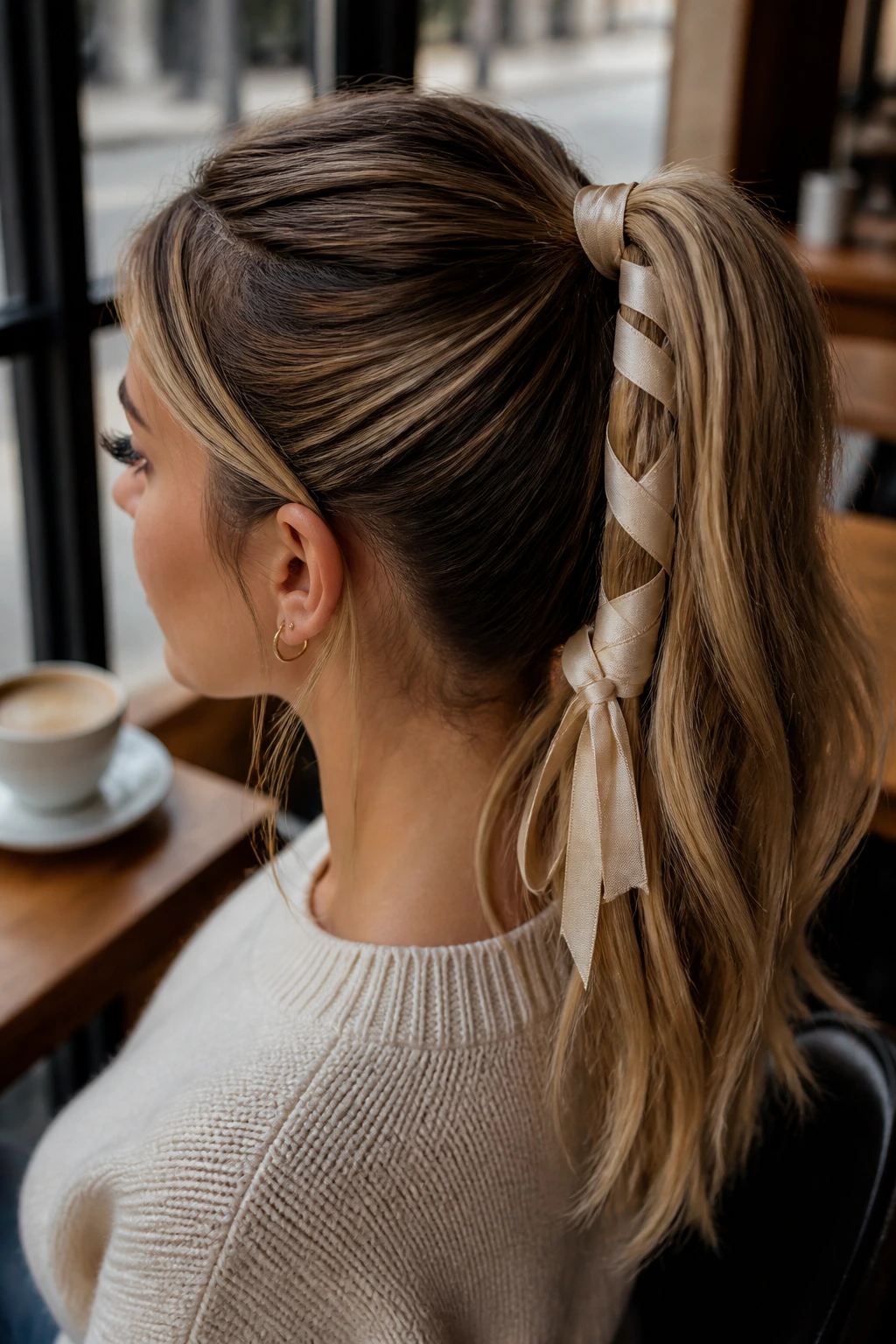
A ponytail can look plain, or it can look very specific. With neutral light blonde ribboning through dark hair, it lands in the second camp. The contrast stays visible in the tail, and the darker root makes the lifted pieces near the hairline look sharper.
Why It Looks Better Than a Flat Pony
- The high-contrast ribbon effect keeps the ponytail from disappearing against your back.
- A beige vanilla tone avoids the yellow cast that can show up in strong daylight.
- Teasing the crown just a little keeps the base from going flat.
- Wrapping a strand around the elastic hides the tie and gives the whole thing polish.
Use this when you want the color to show but you do not want to commit to curls. A ponytail with movement lets the blonde travel, which is half the fun.
20. Beige-Blonde Lob with Invisible Layers
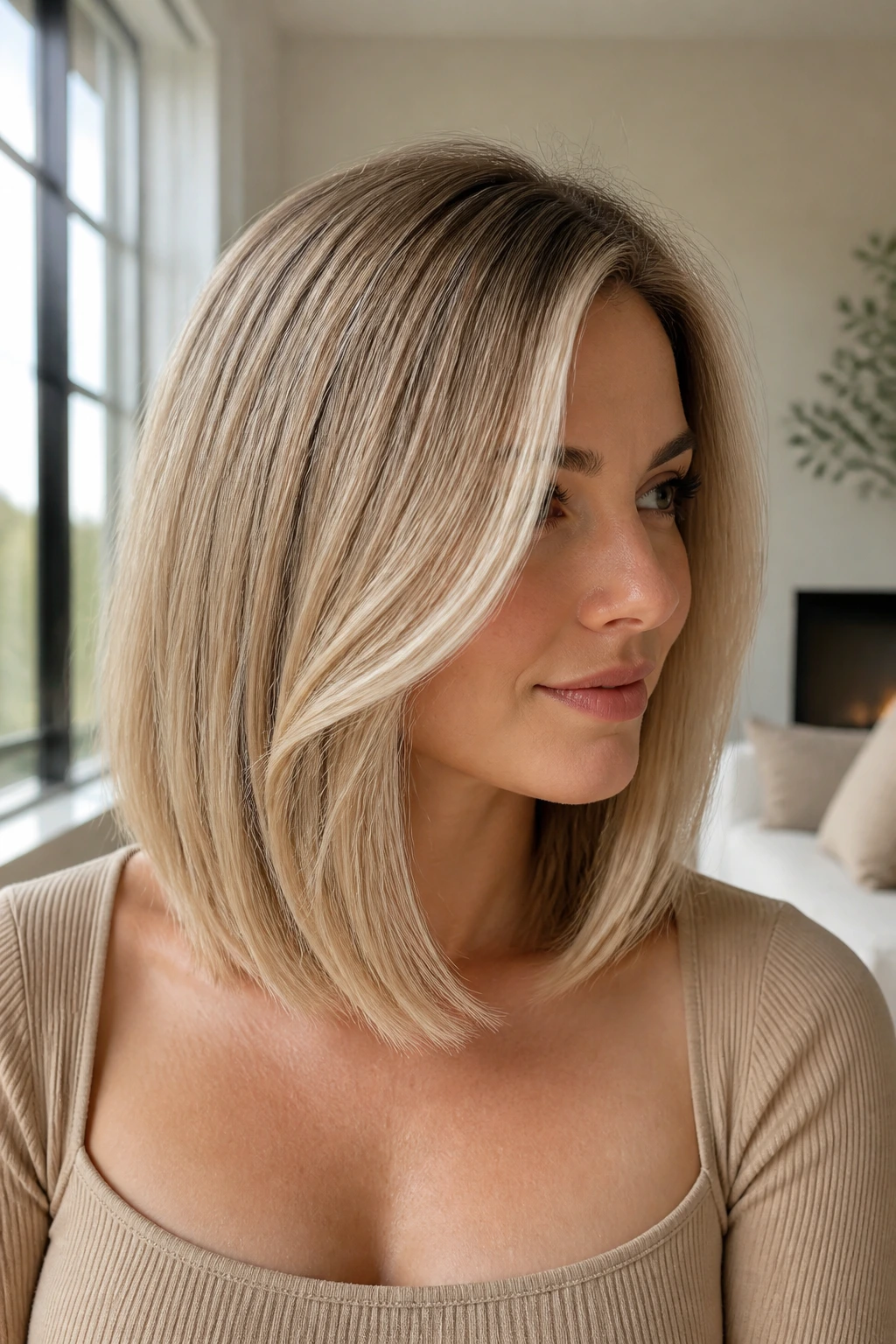
A beige-blonde lob with invisible layers is one of my favorite answers to thick dark hair that needs lightness without obvious choppiness. The layers are there, but you do not see them in a dramatic, spiky way. You feel them when the hair moves.
That matters because beige blonde can get lost if the cut is too blunt and heavy, but it can also feel frayed if the layers are too visible. Invisible layers split the difference. The lob stays full at the outline, and the neutral light blonde pieces move through the interior like thin threads.
This is the sort of cut I’d choose if I wanted the blonde to look expensive in a low-key way. It reads smoother than a shag, softer than a bob, and easier to grow out than a stacked cut.
21. Cool Sand Wolf Cut
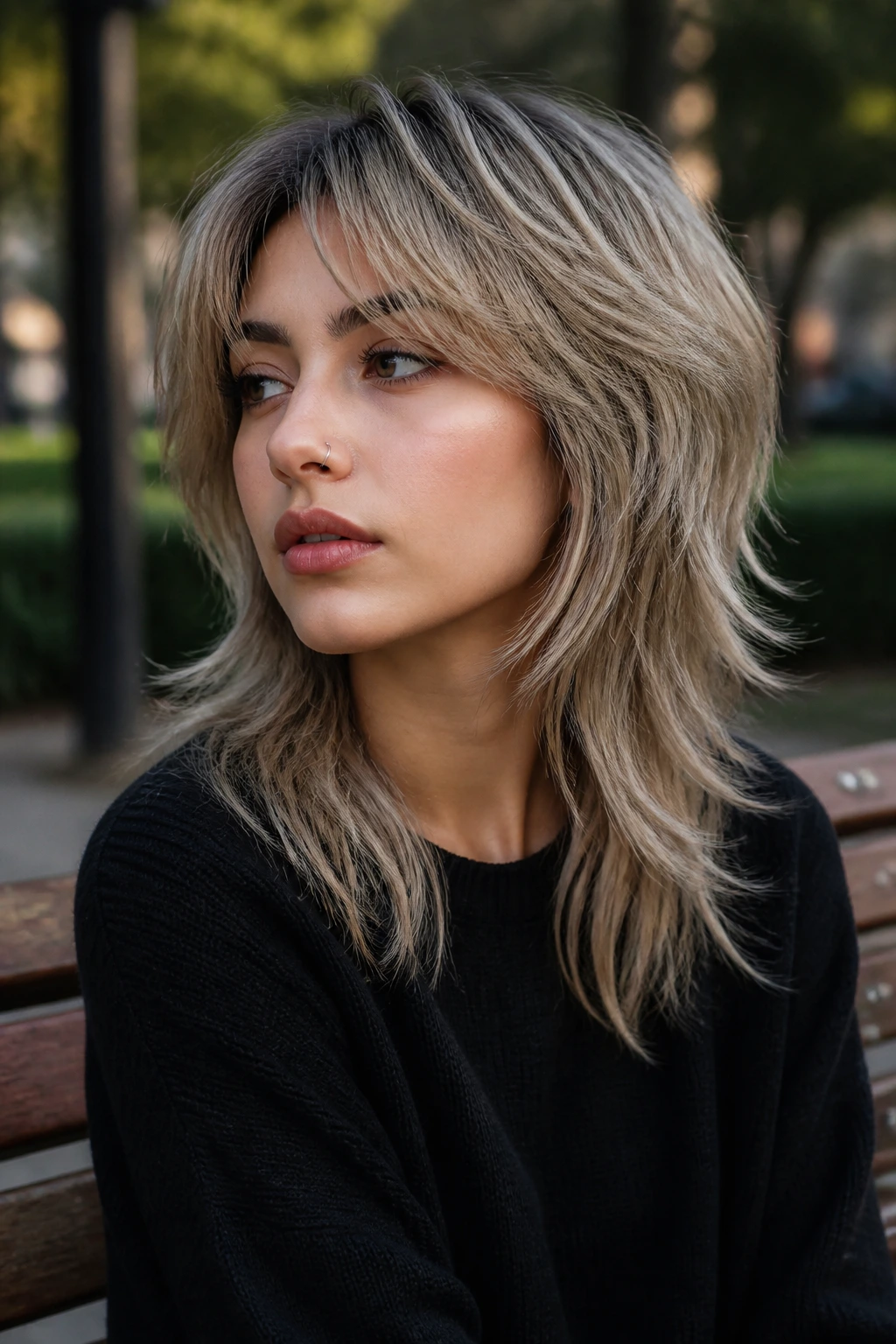
Why does a wolf cut work so well with cool sand blonde? Because the shape already has uneven energy, and the color can either fight that or lean into it. Cool sand leans in. The layers stay piecey, the crown gets lift, and the blonde lands in streaks that feel lived-in instead of overfinished.
The trick is not to make the light pieces too uniform. A wolf cut wants contrast at the top, around the face, and through the ends. If everything is equally blonde, the shape loses its attitude. If the sand tone stays slightly smoky, the cut keeps its edge.
How to Style It
Rough-dry the roots, then scrunch in a little texture cream at the mid-lengths. A few bends with a curling iron around the face frame are enough. Do not overwork it or the layers start to blur.
22. Neutral Honey-Beige Waves
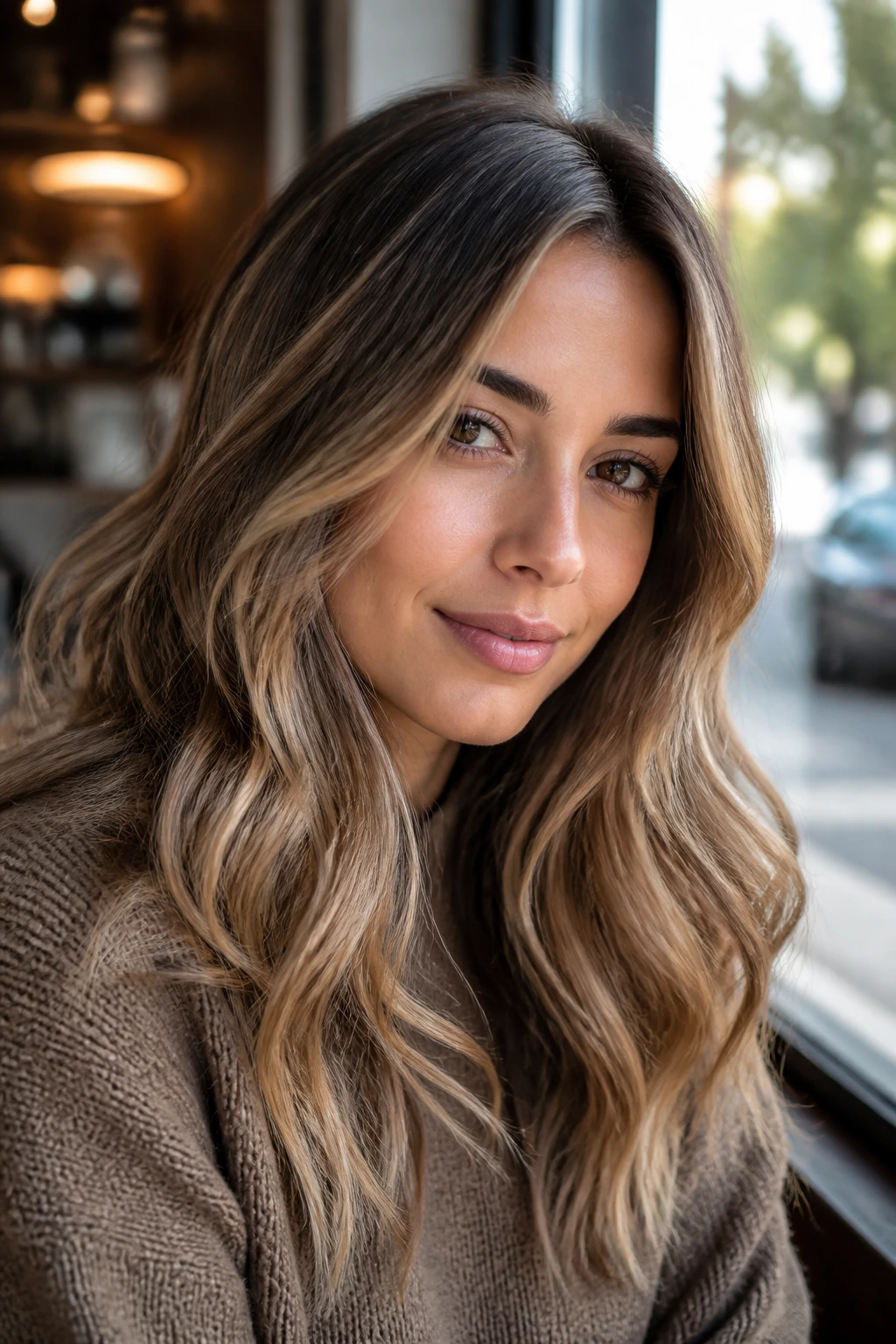
This is the version for someone who wants a touch of warmth without falling into copper or gold. Neutral honey-beige waves sit right on the edge of warm and cool, which keeps the color flattering on dark hair and a little easier to wear in dim light.
The style feels especially nice when the waves are broad and relaxed. The color has enough variation to show up in motion, and the honey-beige tone keeps the face frame from reading flat. If you have brown eyes, it tends to bring out more contrast than a cooler ash would.
- Keep the blonde beige-forward, not orange.
- Ask for finer pieces near the front and broader ones through the back.
- Use a soft wave, not a tight curl.
- Finish with a lightweight oil on the ends only.
That last point matters. Too much oil and the lighter pieces collapse.
23. Mushroom Blonde Updo
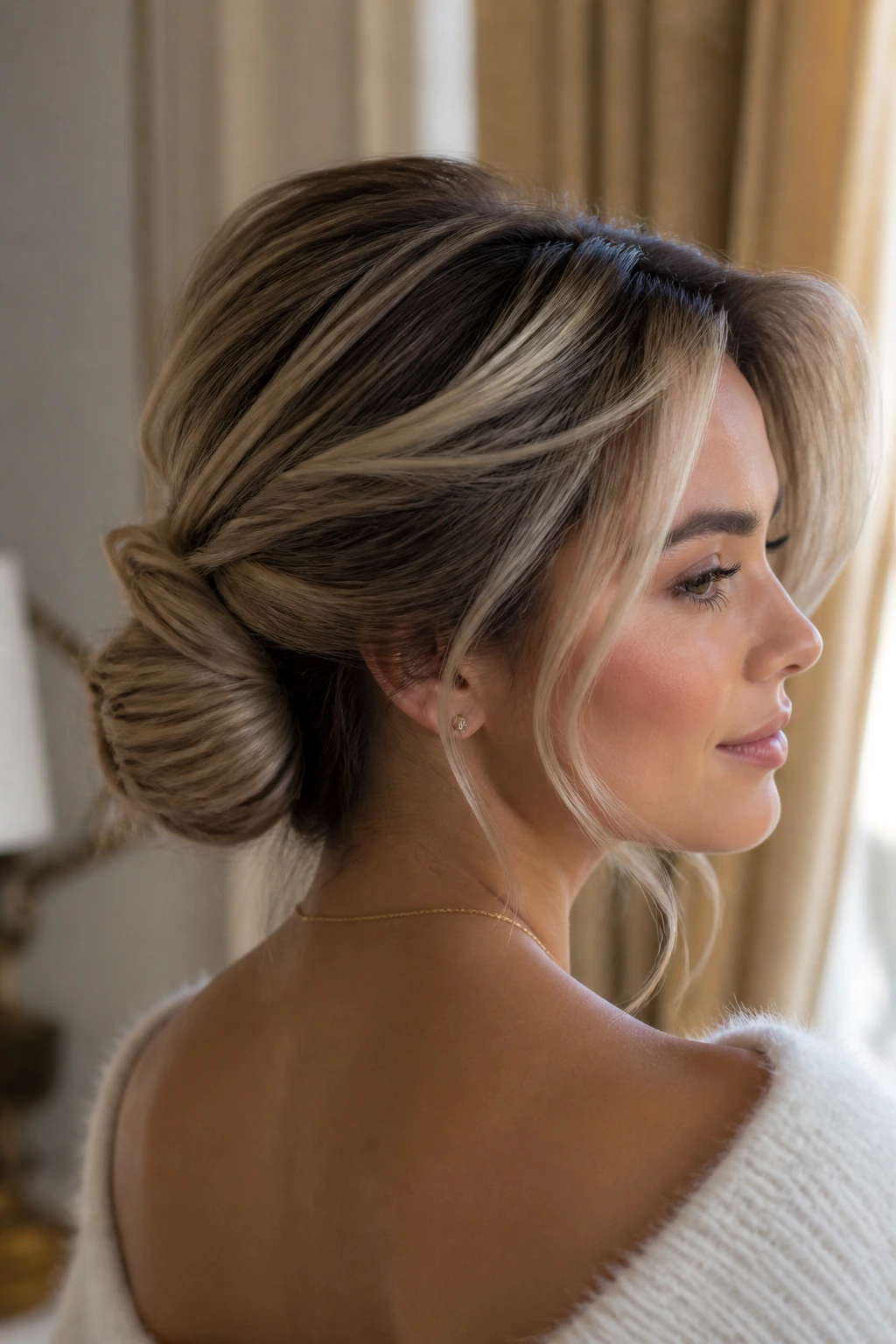
A mushroom blonde updo is one of those styles that proves updos do not have to hide color. Dark roots at the nape, soft beige-blonde through the lengths, and a low knot or twist can show off the color in little flashes instead of one big hit.
The mushroom tone makes the updo look calm. Too bright, and the style starts competing with itself. Too grey, and it can look flat. Mushroom is the middle ground that lets the braid, bun, or twist take center stage while the blonde quietly catches the eye.
I like this for people who wear their hair up a lot and still want the color to matter. You get the softness around the face, the depth at the crown, and enough dimension in the twisted pieces that the style doesn’t vanish from the side view.
24. Soft Pearl Streaks on Black Hair
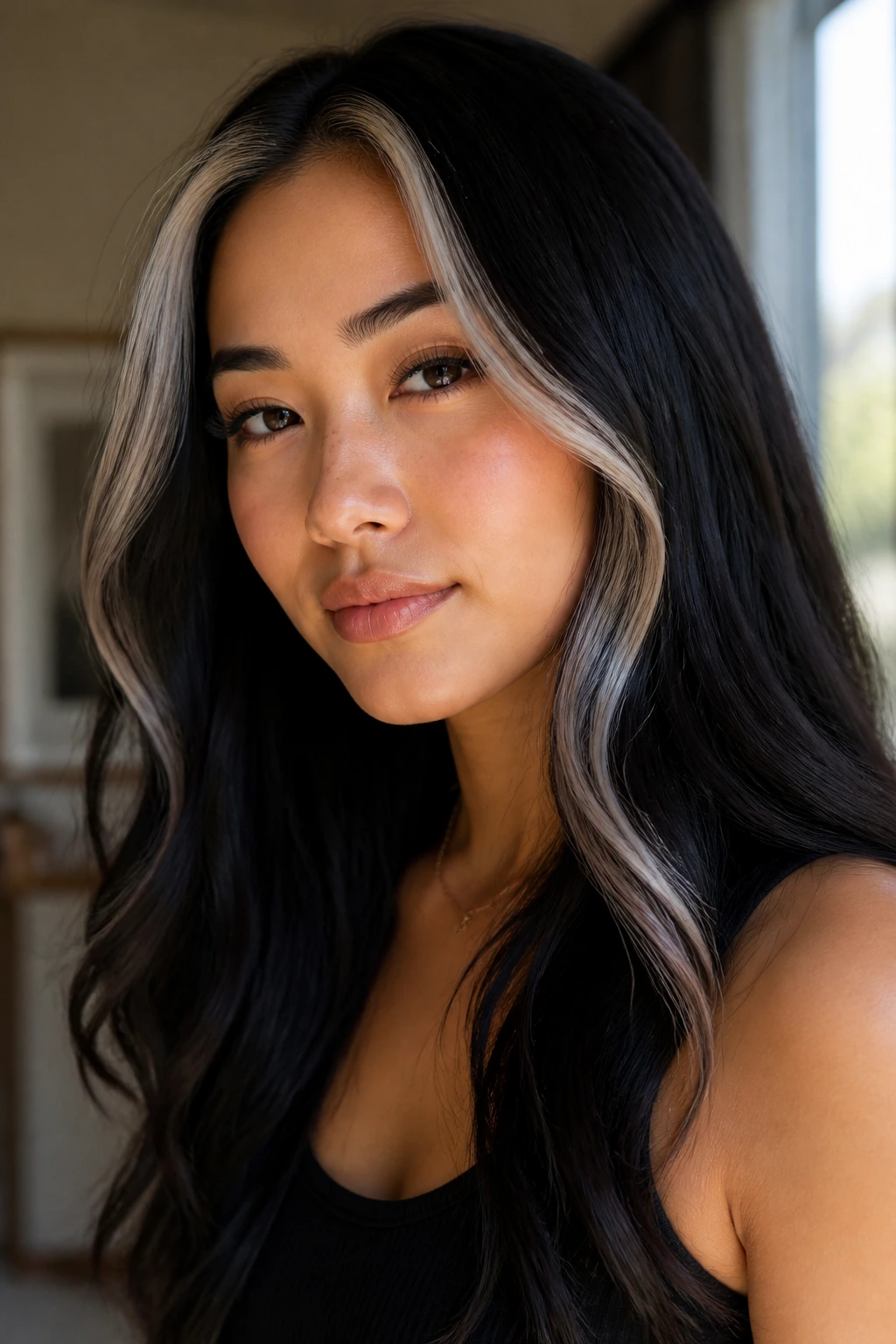
Pearl streaks on black hair are not subtle, but they can still be neutral if the placement is disciplined. That is the whole trick. A few well-chosen streaks near the front and around the face can create a bright frame without turning the whole head into a high-maintenance blonde project.
The pearl tone works because it reflects light cleanly, while the black base keeps the contrast sharp. If you scatter too many streaks, the style loses that sharpness and starts to read busy. Keep the streaks intentional, and the result feels sleek rather than loud.
This is a good option for someone who wants their blonde to announce itself. It is less about blend and more about design. If the cut is straight or slightly layered, the streaks look crisp enough to stand on their own.
25. Beige Melt with Side Bangs
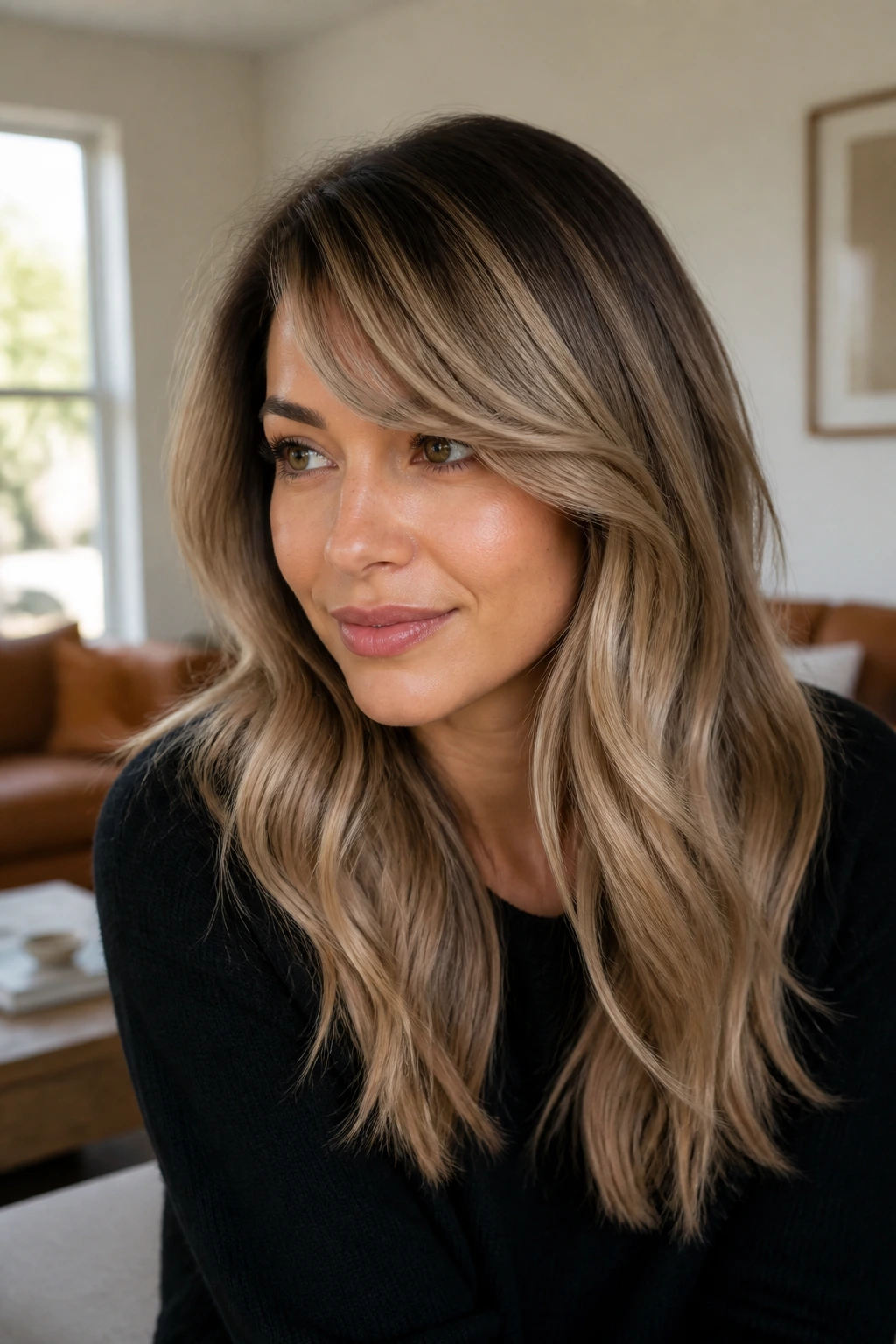
A beige melt with side bangs gives you a softer, more romantic version of light blonde on dark hair. The melt keeps the roots darker, the beige mids stop the transition from feeling abrupt, and the side bang sweeps the brightest part of the color across the face.
What Makes It Work
- Side bangs create movement without forcing you into curtain bangs.
- A beige melt keeps the blonde from shifting too cool or too gold.
- The darker root gives the cut a built-in shadow, which helps the style grow out gracefully.
- The side sweep makes the front pieces look fuller, especially on finer hair.
If your face shape likes softness around one eye and cheekbone, this is a clean way to get it. The result feels polished, but not stiff.
26. Curly Beige Bob
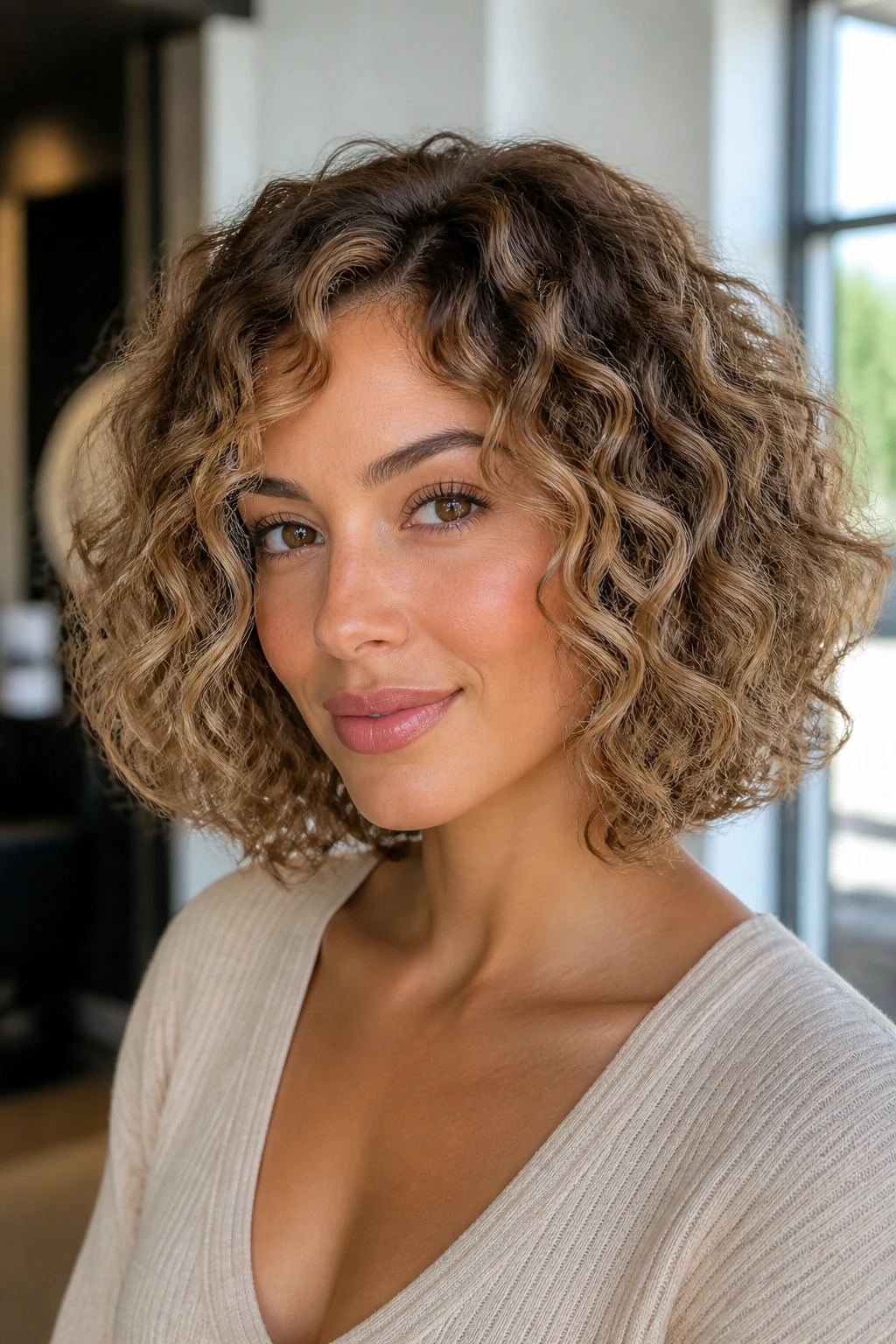
A curly beige bob is proof that shorter hair can still show dimension. The beige pieces sit inside the curl pattern, while the darker base keeps the shape from puffing out visually. That combination is useful if your curls are dense and you do not want them to look wider just because the hair got lighter.
The bob length matters here. Chin to collarbone gives the curls enough room to spring without the color disappearing into a big halo. Beige works better than icy blonde on curls because it keeps the ends looking soft, not dry.
This is a strong option if you want a cut that feels neat but not severe. With a curl cream and a diffuser, the blonde reveals itself in little flashes as the curls separate.
27. Softly Rooted Side-Swept Waves
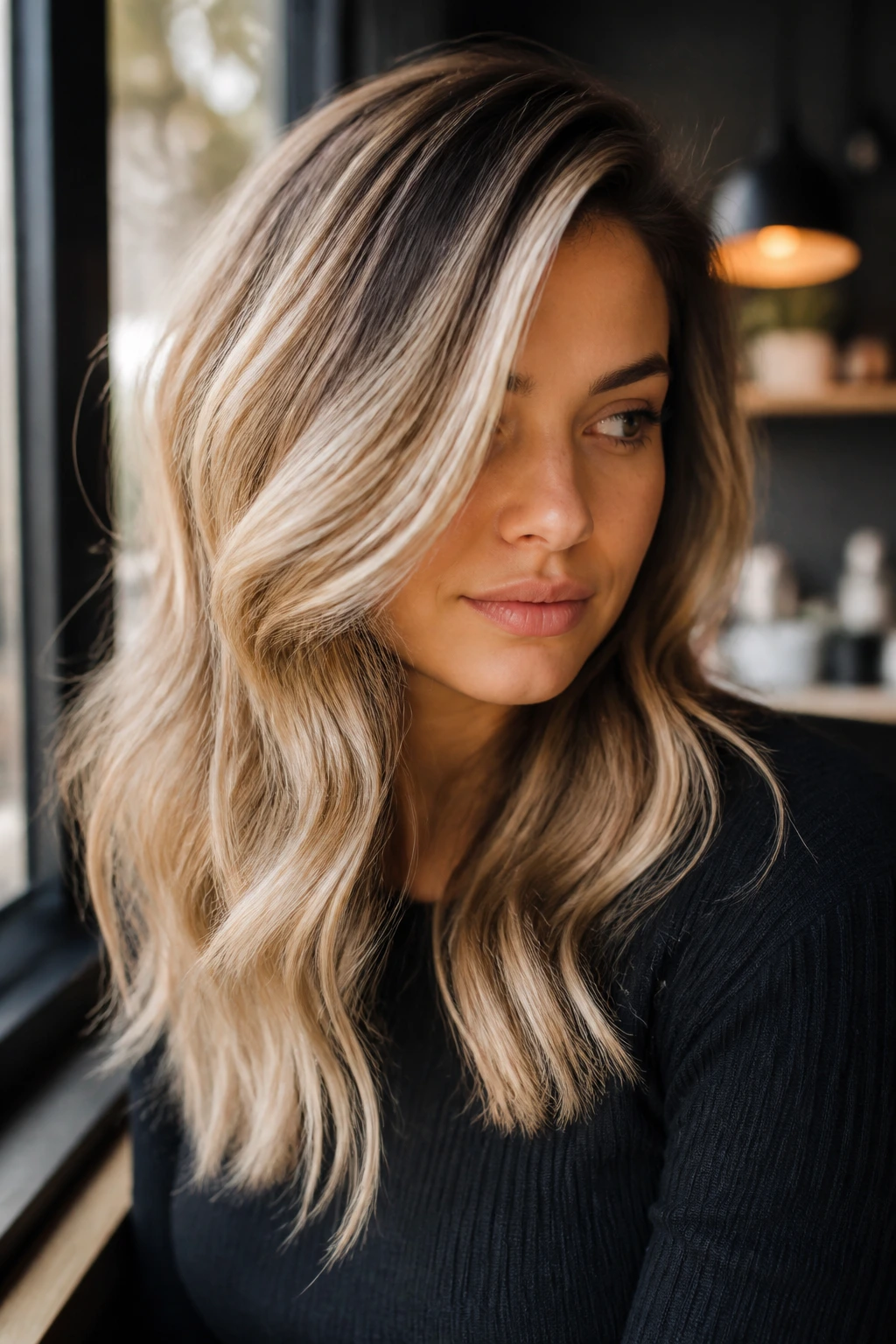
Can side-swept waves make neutral blonde look richer on dark hair? Yes, because the sweep changes how the light lands. The roots stay soft, the blonde pieces travel across the face, and the whole style gets a little drama without needing more color.
The side part matters more than people admit. It lets one side sit deeper and the other side show more of the blonde, which creates the feeling of movement even when the hair is still. On dark hair, that asymmetry keeps the look from going too symmetrical and flat.
How to Wear It
Use a medium barrel curling iron, then brush the waves out so the finish stays soft. Pin the heavier side behind one ear if you want the contrast to feel more visible. It’s an easy way to make the color work harder for you.
28. Smoky Beige Top Knot
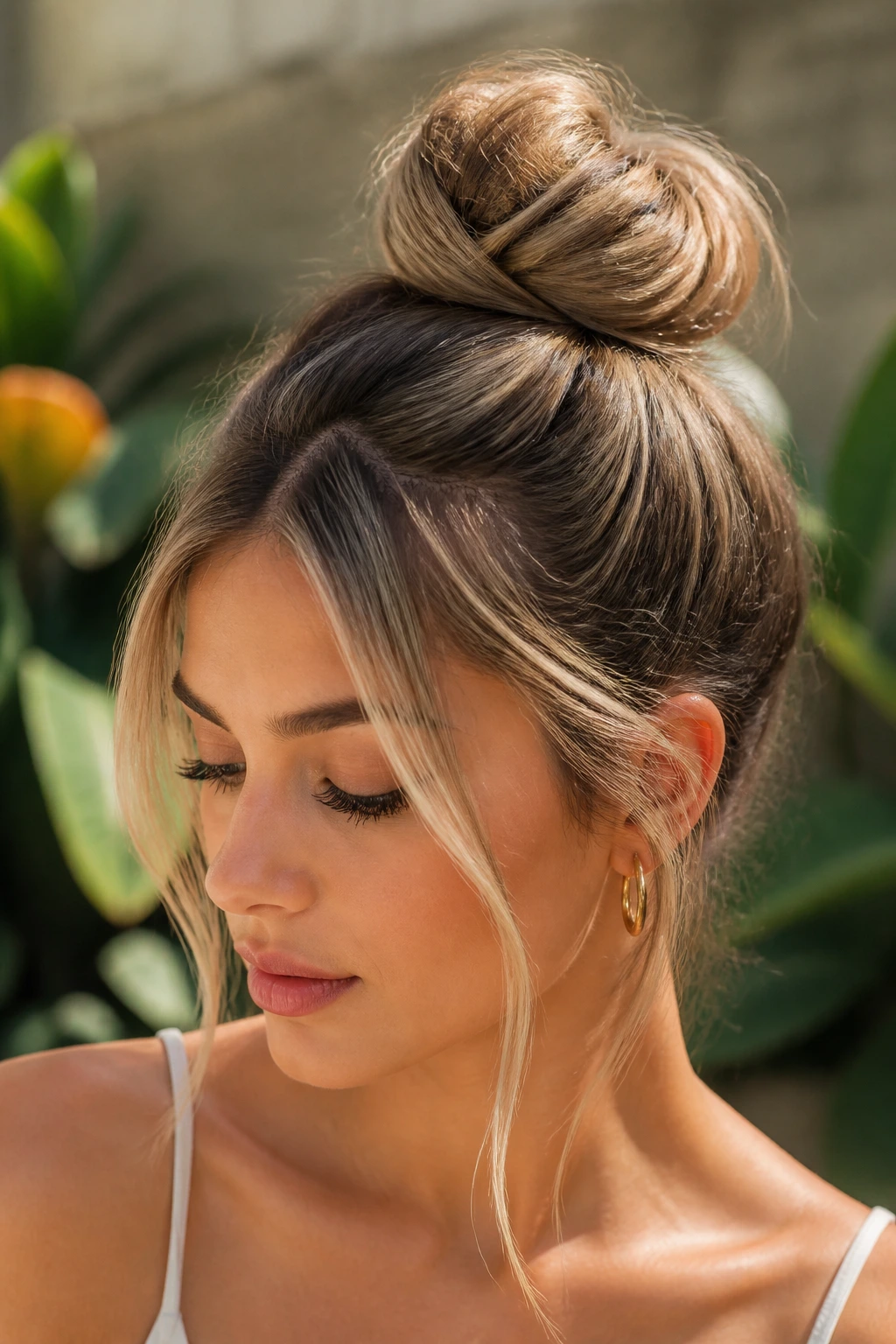
A smoky beige top knot is the “I need my hair off my neck, but I still want the color to matter” answer. The knot keeps the ends tucked, the smoky blonde pieces show through the twist, and the dark base at the nape gives the style a grounded look.
This style is especially good when the hair has already been lightened and you want to show off the tonal range instead of the length. A few lighter pieces around the front hairline keep the knot from looking too severe, and the darker root in the bun gives the whole thing depth.
- Leave a few face-framing pieces out if you want the blonde to show more.
- Keep the knot loose enough that the lighter strands are visible in the twist.
- Use a matte texturizer if the hair slips.
- Finish with a light mist of shine spray on the outer layer only.
It’s practical, but it does not look accidental. That is the nice part.
Why Beige and Sand Read Softer on Dark Hair
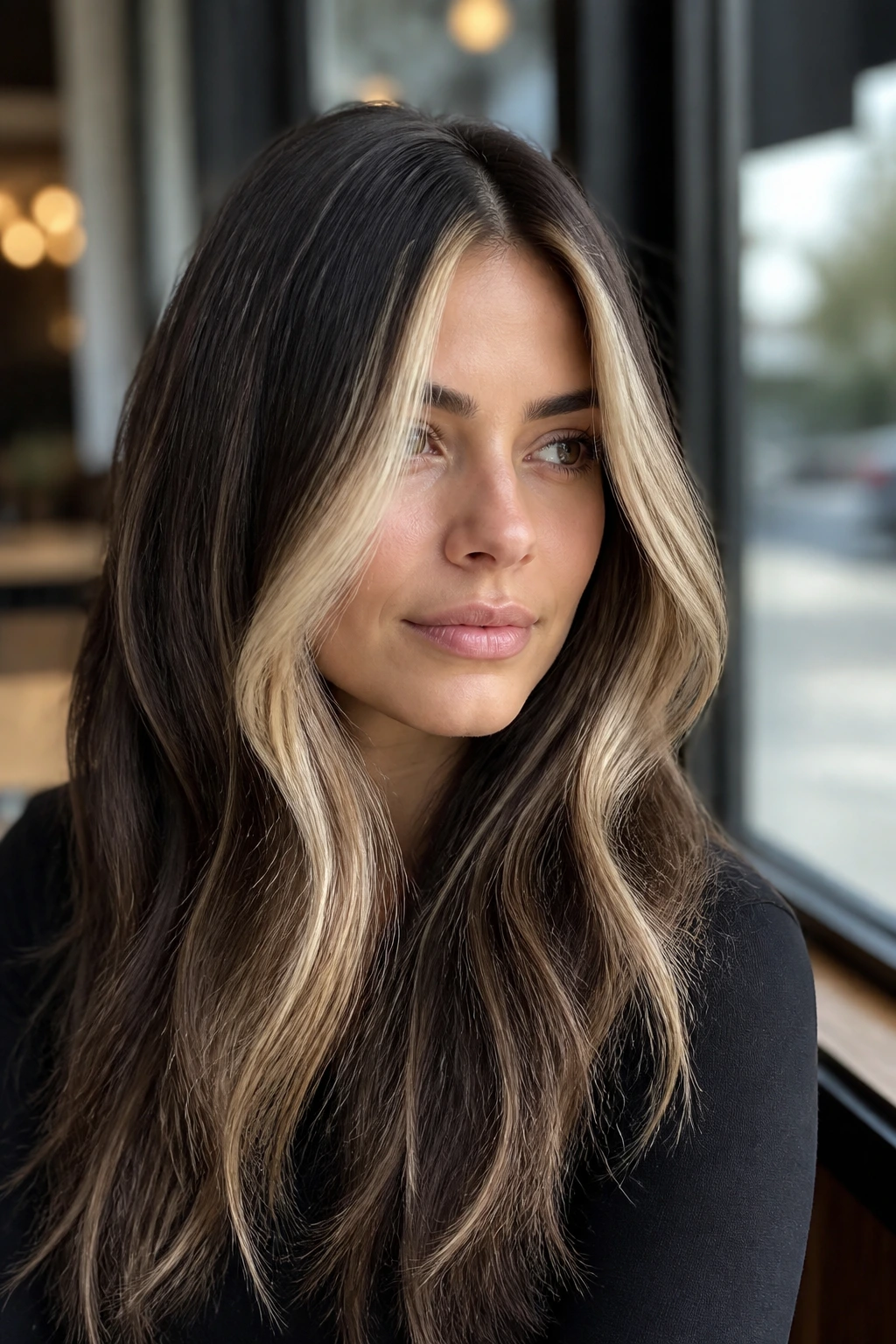
Dark hair gives blonde a frame, and that frame can either make the blonde glow or make it look harsh. Beige, sand, pearl, and mushroom tones sit in a useful middle lane because they keep a touch of warmth and a touch of coolness. Too much ash, and the blonde can go dull. Too much gold, and it starts to look brassy the second the sun hits it.
The other reason these tones work is contrast control. Dark hair usually needs some depth left behind at the root or underneath the lighter pieces; otherwise the whole head can start to look flat and brittle. A root shadow, a soft gloss, or a balayage ribbon lets the blonde stay bright without looking disconnected from the base.
That is why the most flattering versions of this color family are rarely the palest ones. They are the ones with a little smoke in the mids, a little beige at the ends, and enough darkness around the crown to make the light pieces feel intentional. It’s not shy. It’s balanced.
Tools That Keep Neutral Blonde Honest
- Color-safe shampoo: A gentle, sulfate-free shampoo keeps the toner from draining out too fast and helps the blonde stay soft rather than squeaky.
- Purple shampoo: Use it sparingly on the lightest pieces if they start drifting yellow; too much and the ends can go chalky or dull.
- Blue shampoo: Better for dark bases with blonde pieces that pull orange or copper around the mids.
- Bond-repair mask: Helpful if you’ve lightened dark hair more than once; it keeps the ends from feeling rough and hollow.
- Heat protectant spray: Non-negotiable if you blow-dry, flat iron, or curl. Light blonde shows heat damage fast.
- 1.25-inch curling wand or iron: The safest size for soft waves, ribbon curls, and blended movement.
- Round brush: Useful for blowouts that make beige and pearl tones look smoother.
- Sectioning clips: Makes foiling, twisting, and styling much easier, especially on thick hair.
- Microfiber towel: Rough cotton can puff up the cuticle and make blonde pieces look frizzy.
- Wide-tooth comb: Better than a fine brush on curls or on hair that’s still damp.
How to Pick the Right Beige, Pearl, or Mushroom Tone
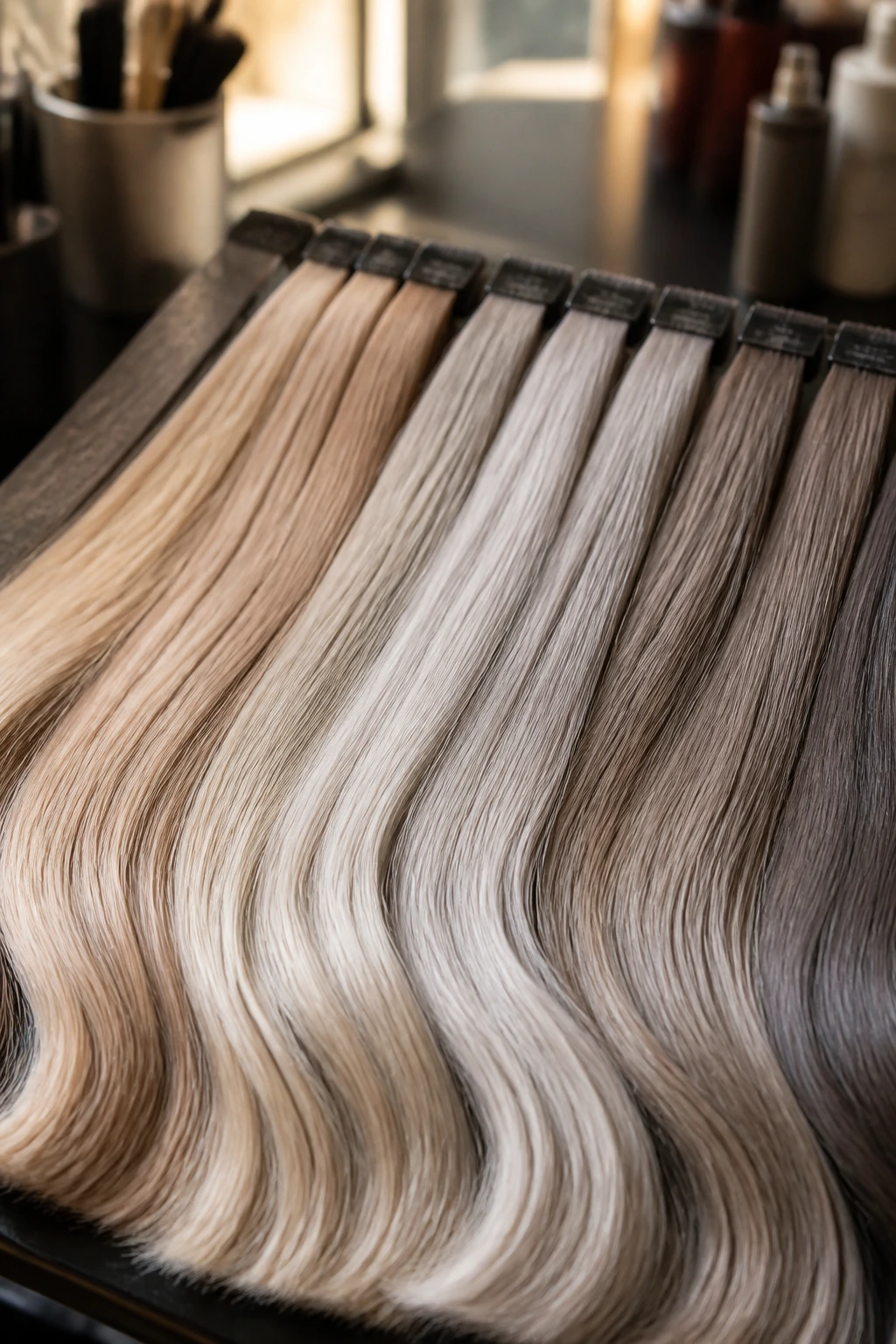
If your base is a deep brunette, the fastest route to a flattering blonde is usually beige or mushroom, not icy silver. Beige keeps the light pieces warm enough to feel human, while mushroom adds a smoky cast that makes dark hair look intentional rather than overlightened. Pearl works too, but I like it most on hair that’s already lifted cleanly to a pale yellow, because pearl needs a clean canvas.
For softer chestnut bases, sand and neutral honey-beige tend to look bright without fighting the natural warmth underneath. On deeper espresso hair, a root smudge with cool beige mids often reads better than going straight into a cool ash toner. The reason is simple: too much ash on a dark base can look dusty in low light, and dusty is not the same as chic.
If you’re sitting in a chair with swatches in front of you, ask for a tone that stays beige in daylight and doesn’t swing orange after one shampoo. That sounds modest, but it saves people from a lot of regret. The color only has to be pretty from the front. It also has to make sense on day three.
How to Wear These Looks Without Losing the Shape
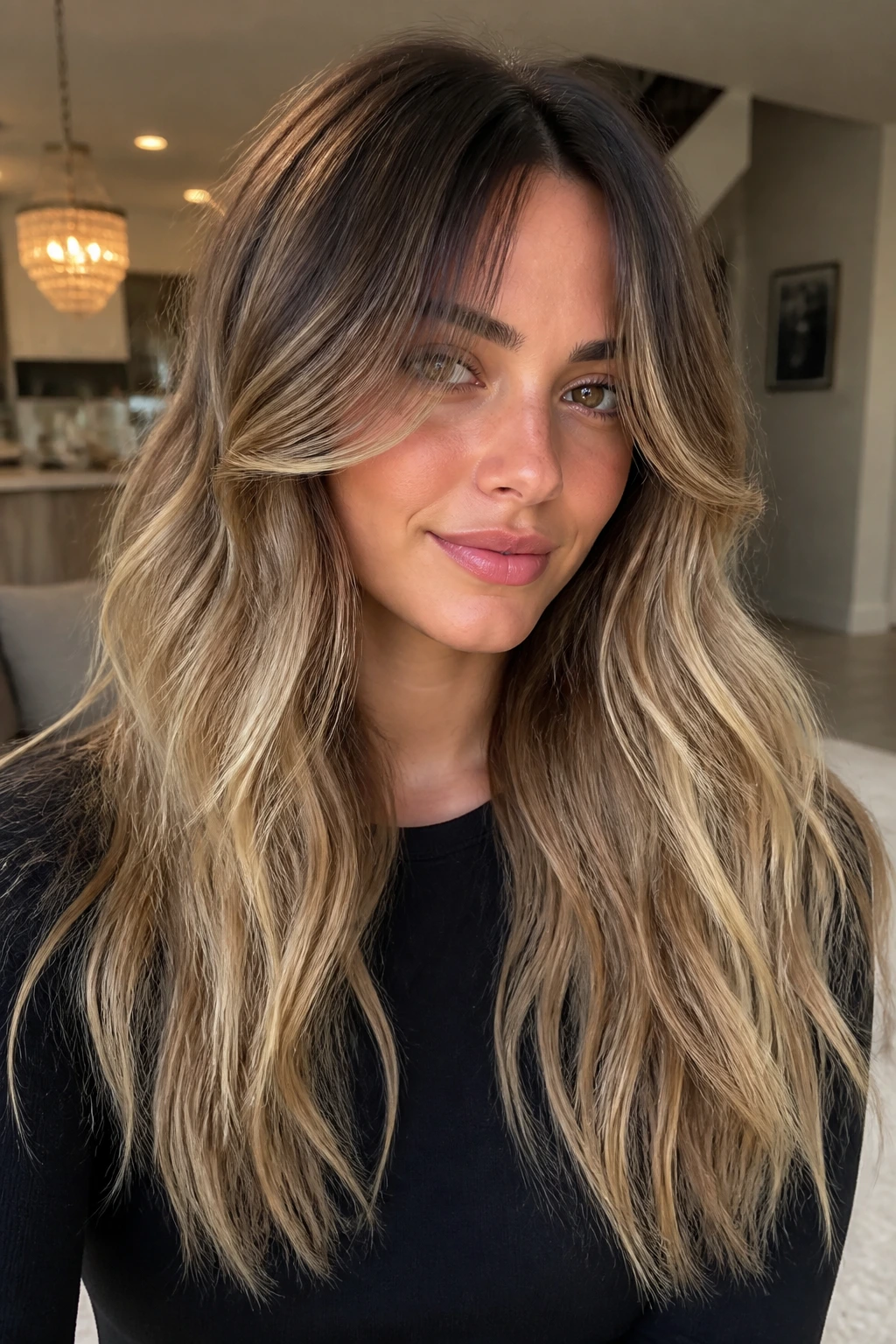
Finish: Loose waves make the blonde read softer and more dimensional, while a sleek blowout sharpens the contrast and shows off the lighter pieces. On short cuts, a tucked-under bend or side part helps the blonde sit in the shape instead of drifting away from it.
Parting: A center part puts the money piece and front ribbons on display. A side part softens a strong jawline, gives the crown a little lift, and can make dark roots look richer instead of heavier.
Accessories: Simple hoop earrings, slim headbands, claw clips, and silk scrunchies work best because they do not fight the color. Big printed clips can crowd the face frame, especially if the blonde is already concentrated around the front.
Outfit Pairings: Black, cream, denim, charcoal, and deep green tend to make neutral blonde look cleaner. Heavy mustard, neon, or muddy brown can fight the softness of the beige tones and make the hair look warmer than it is.
Styling Mood: If the color placement is subtle, lean into texture. If the front pieces are bright, keep the rest smoother so the blonde has something to contrast against. The haircut and the styling need to be in the same conversation.
Extra Tips for Shine, Shape, and Tone
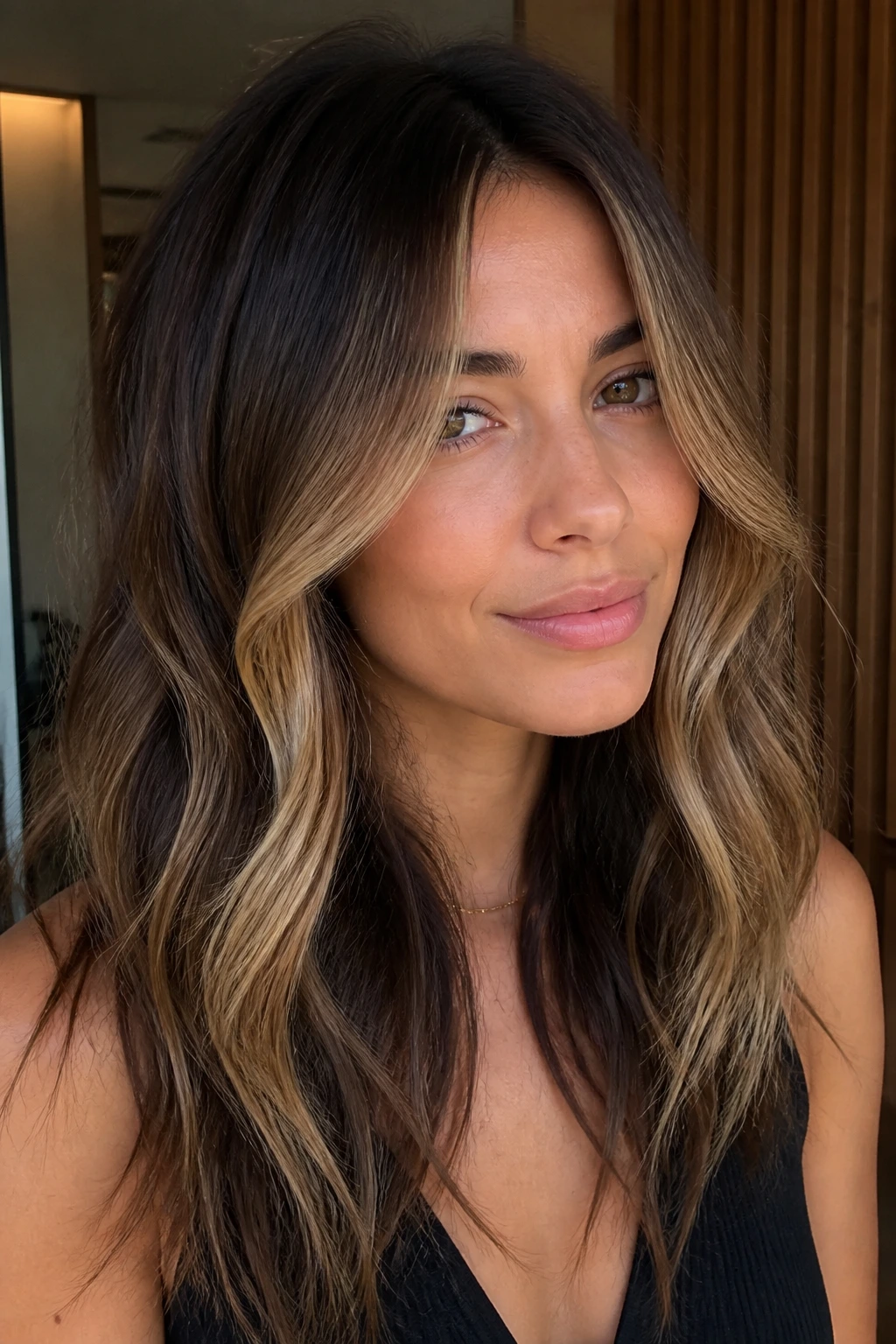
Glow Boost: A clear gloss or beige glaze every 4 to 8 weeks keeps the blonde from going flat. It also gives the hair that slightly reflective finish that makes neutral tones look more expensive in real life than in photos.
Shape Trick: If your hair is heavy, ask for longer layers around the face so the light pieces have room to move. Blonde hidden inside a dense, one-length cut tends to disappear under its own weight.
Tone Saver: If the ends start turning yellow, use purple shampoo only on the lightest sections and leave it on for 2 to 5 minutes. Don’t coat the whole head every wash unless you want the color to look muted.
Low-Maintenance Move: Keep the root one shade deeper than the mids. That tiny shadow buys you time between salon visits and keeps the grow-out from drawing a hard line across the part.
Make-It-Yours: Fine hair looks better with fewer, brighter ribbons. Thick hair usually needs more pieces, or the blonde gets swallowed by the base. Curly hair often looks best with blonde placed on the outer layer of the curl pattern so the dimension stays visible.
Common Mistakes That Make Brunette-to-Blonde Hair Brass
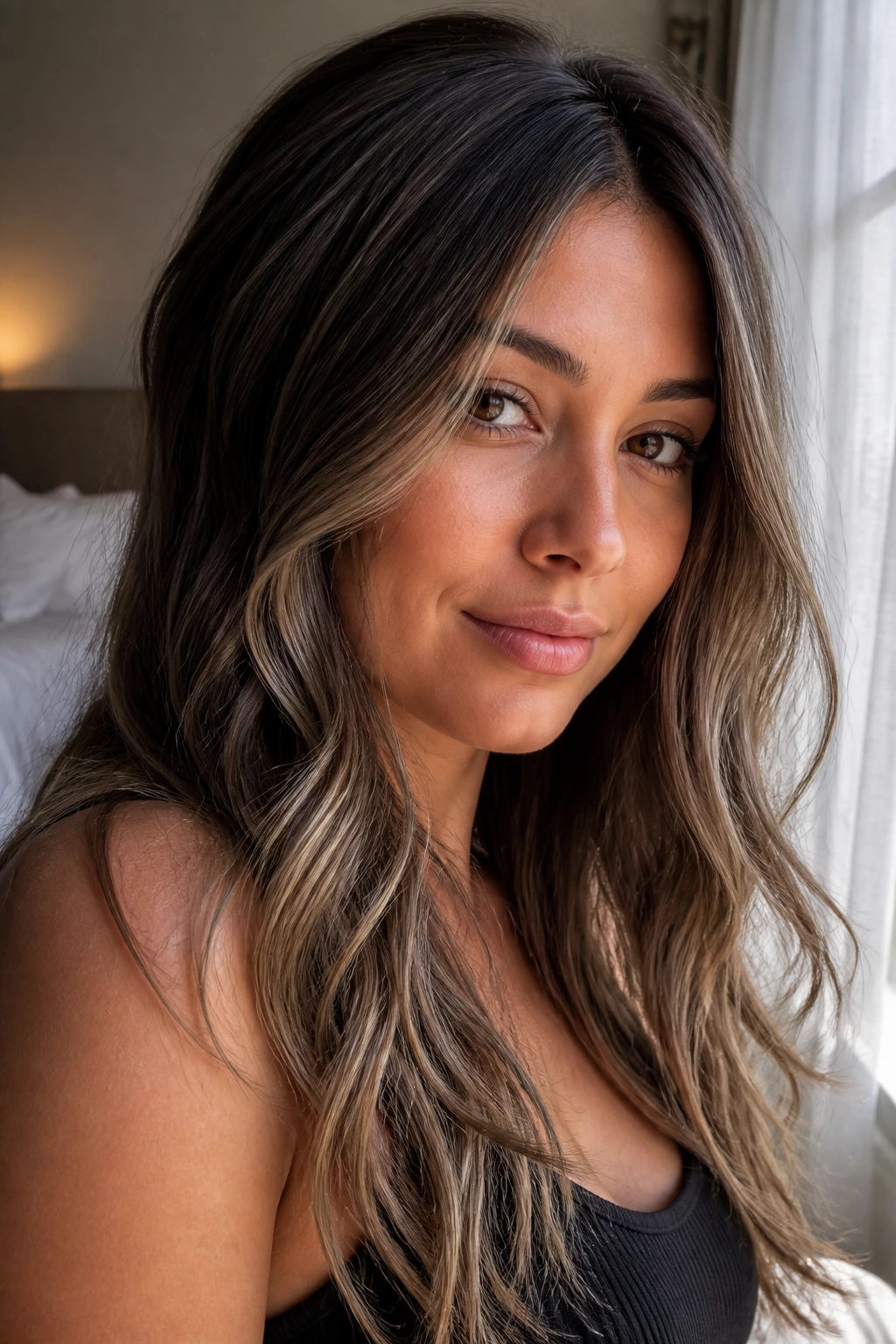
Lifting too far, too fast: Dark hair pushed to pale blonde in one go often looks patchy and dry. The fix is staged lightening or a more controlled placement like balayage and babylights, which let the hair keep some strength and shape.
Choosing toner that is too ash: Ash can cancel warmth, but too much of it makes the ends look smoky or flat, especially in dim indoor light. Beige or pearl usually gives a cleaner, more wearable result on dark bases.
Overusing purple shampoo: A little goes a long way. If you use it every wash, the blonde can turn dull, greyish, or muddy at the ends, which is the opposite of what most people want.
Ignoring the haircut: A bad cut can bury the color. If the blonde sits in a blunt, heavy line with no movement, it loses the softness that makes neutral light blonde work on dark hair in the first place.
Skipping root shadow: Without a soft root, the grow-out gets harsh fast. A smudged root or darker base keeps the blonde looking intentional for longer.
Blow-drying without protection: Heat damage shows up fast on light pieces. The hair can go fuzzy, the ends can look stale, and the tone usually fades unevenly.
Variations and Adaptations to Try
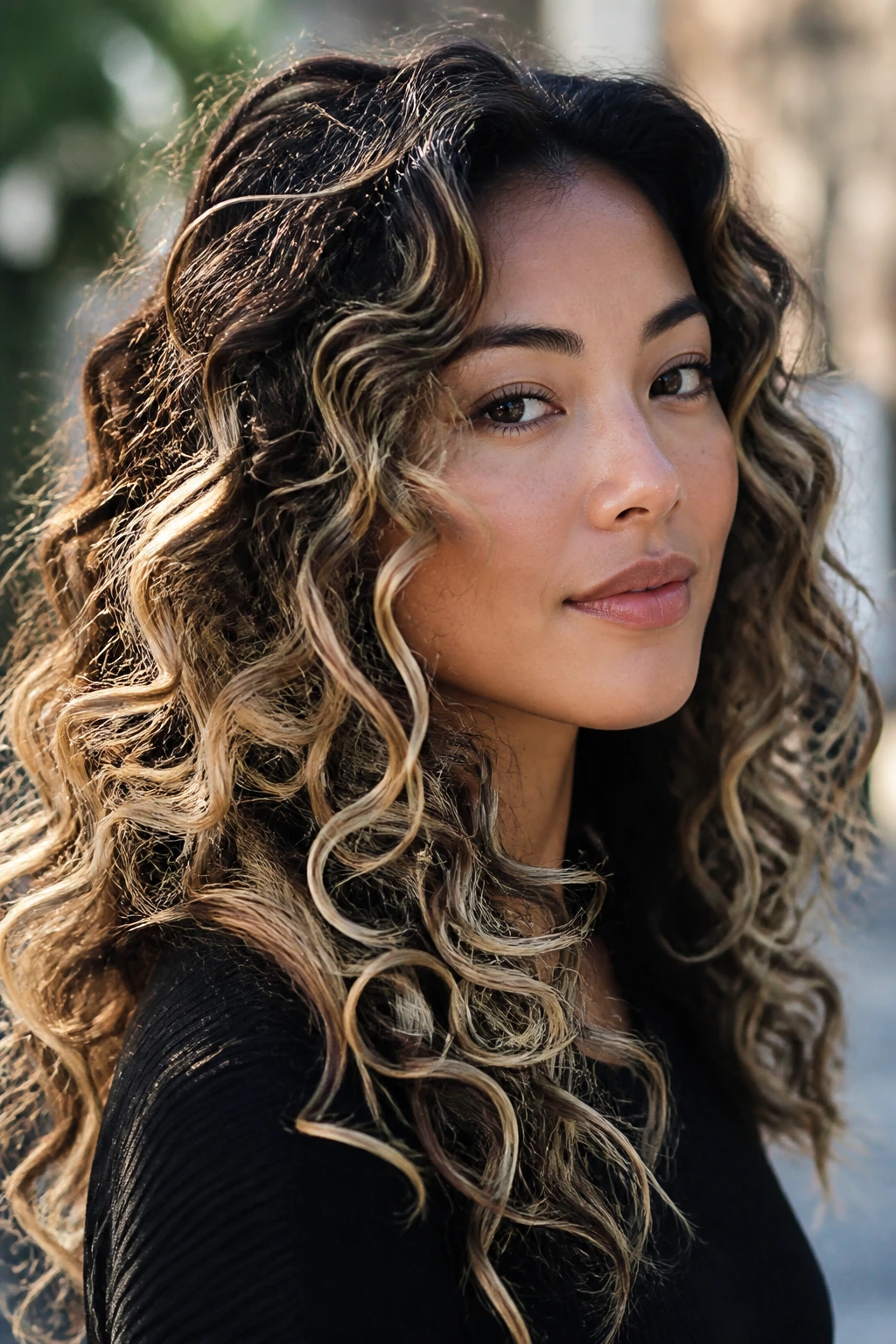
Soft Beige Minimalism: Keep the light pieces concentrated around the face and the very ends. This works when you want a brunette-first look with a gentle lift instead of a full blonde shift.
Smoky Mushroom Melt: Blend darker roots into taupe-beige mids and lighter ends for a cooler, more editorial finish. It suits people who like depth and dislike anything that skews gold.
Pearl-Glazed Bright Front: If the rest of your hair is subtle, make the money piece and curtain sections brighter and pearl-toned. The face gets the spotlight, and the grow-out stays manageable.
Curly Dimension Version: Place the lightest pieces on the curl pattern’s outer layer and leave darker lowlights underneath. That keeps curls springy and prevents the color from swallowing the shape.
Short-Cut Lift: On bobs and pixies, use brighter beige or champagne near the hairline and keep the back darker. Short hair needs crisp placement, not an even blanket of blonde.
Care, Refresh, and Re-Toning Schedule
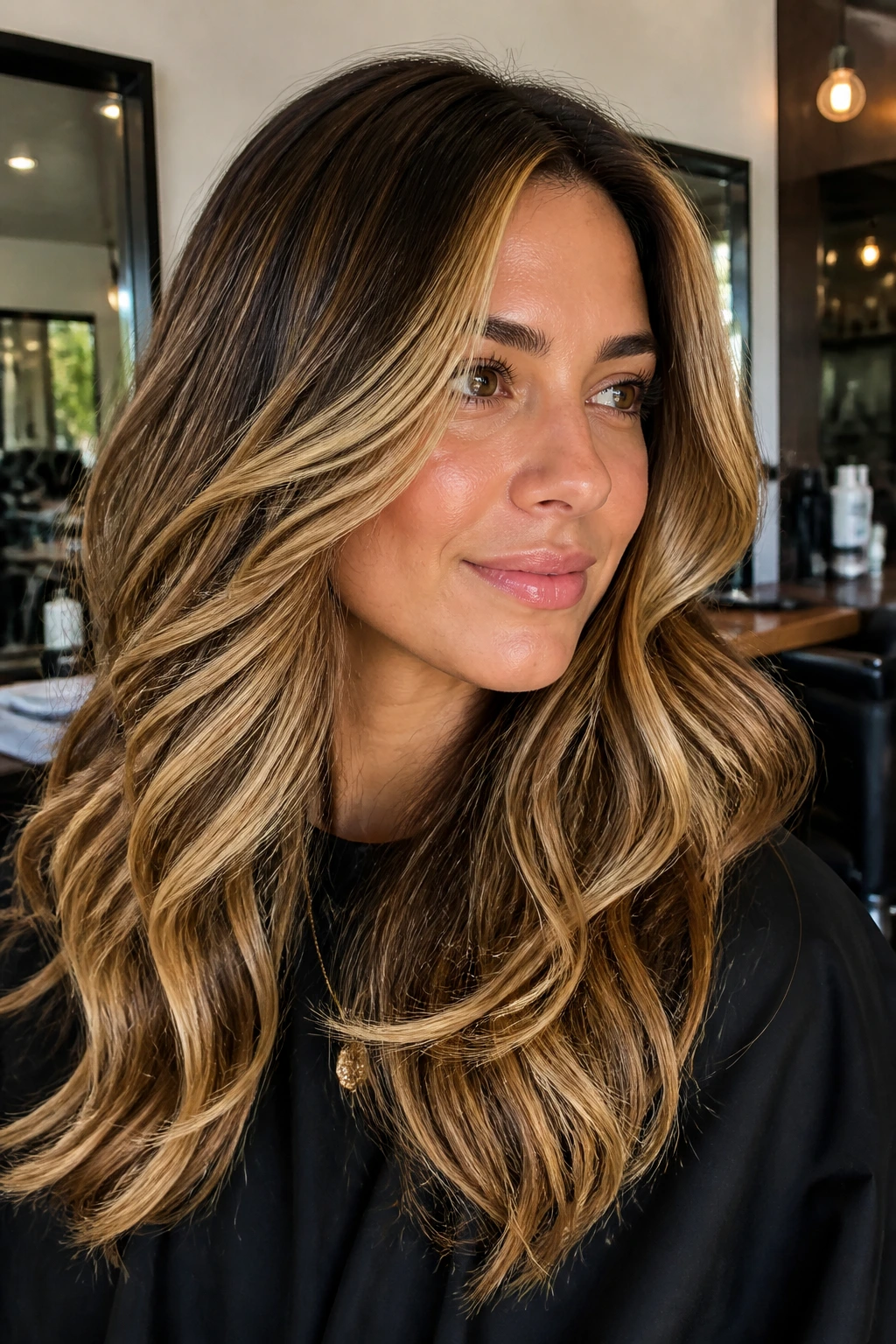
Neutral blonde on dark hair stays nicest when the upkeep is regular but not obsessive. Wash two or three times a week if you can, and keep the water lukewarm rather than hot; steaming hot showers pull color out faster and rough up the lightened ends. A sulfate-free shampoo is the safer daily choice, while purple or blue shampoo should be used as a correction tool, not a lifestyle.
If your blonde pieces are pale, a purple shampoo every 1 to 2 weeks is usually enough. If the dark base starts pushing orange around the mids, reach for blue shampoo instead, but only on the sections that need it. A gloss or toner refresh every 4 to 8 weeks keeps beige, pearl, and mushroom shades from fading into something flat or yellowish.
The lighter the lift, the more the ends need help. A weekly bond-repair mask or moisturizing treatment can keep the hair from feeling rough at the collarbone and brittle at the ends. If you live with hard water, a clarifying or chelating wash about once a month can stop mineral buildup from making the blonde look cloudy.
Trim the ends every 8 to 12 weeks if the cut matters to the style. Split, see-through ends make neutral blonde look older than it is.
Questions People Ask Before Going Neutral Blonde
Can dark hair go neutral light blonde in one appointment?
Sometimes, but not usually without damage or a very hot appointment. Dark hair that starts at a deep brown base often looks better when the blonde is built in stages, especially if you want beige or pearl instead of a flat orange-gold lift.
Is mushroom blonde the same as beige blonde?
They live in the same family, but mushroom blonde is cooler and a little smokier. Beige blonde carries a touch more warmth, which can make it feel softer on darker bases.
Will neutral blonde look good on curly hair?
Yes, but placement matters more on curls than on straight hair. Light pieces should follow the curl pattern and sit where the hair moves outward, or the color can disappear in the curl mass.
Do I need a shadow root?
For most dark-haired clients, a soft root shadow makes the color easier to wear and easier to grow out. It also stops the blonde from looking pasted onto the base, which is a common problem with first-time blonding.
What if my hair turns orange after lightening?
That usually means the hair was lifted enough to expose warm pigment but not enough to land where the toner wanted it. A blue shampoo can help at home, but a salon gloss or another round of careful lightening is what actually fixes the tone.
Can I get this look without bleach?
If your hair is already a lighter brunette or dark blonde, sometimes you can. On very dark brown or black hair, though, neutral light blonde usually needs lightening of some kind, even if it’s done in small sections.
Which is lower maintenance: babylights or balayage?
Balayage usually buys you a softer grow-out because the placement is more blended. Babylights can look finer and prettier, but they often need toning a little more often because the pieces are so light.
How often should I tone it?
Most people end up refreshing the tone every 4 to 8 weeks, depending on how porous the hair is and how often they wash. If the blonde is going beige-yellow after a few weeks, that is a sign the gloss needs a reset.
The Grow-Out That Works
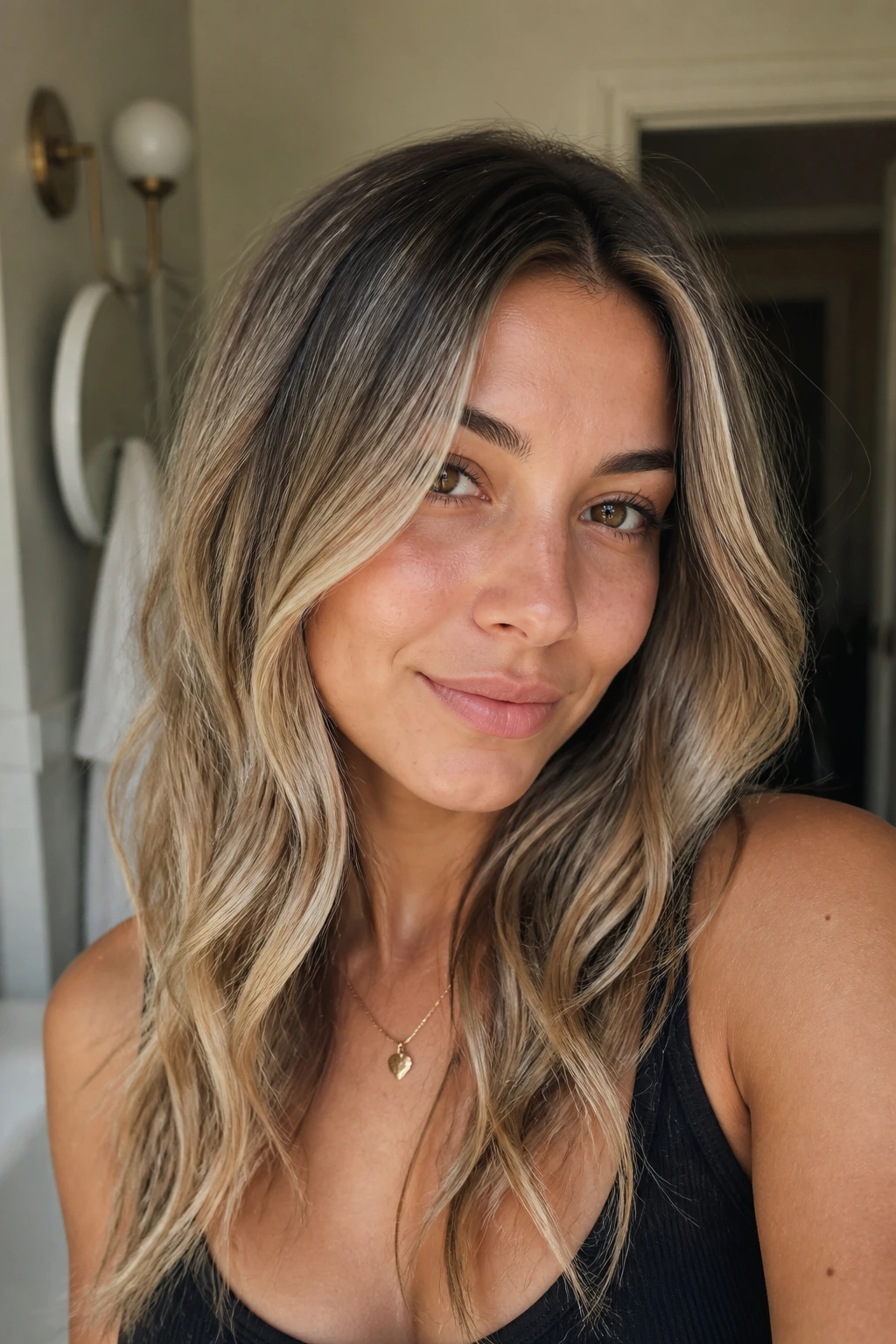
The prettiest neutral blondes on dark hair are the ones that leave some darkness in the root, some softness in the toner, and enough shape in the cut to keep the blonde from floating away from the face. That balance is why these looks hold up in real life, not just in a salon mirror.
If you’re choosing between brighter and softer, I’d still start with softer. You can always lighten a little more next time. Calming down a blonde that’s already too pale is slower, pricier, and far less fun to sit through.