



A deep brunette can look expensive on grown hair—if you give it a little dimension. The best dark hair color ideas for women over 40 are not those flat, inky box-dye jobs that swallow the light and make every flyaway shout for attention. They’re shades with a little movement in them, a little sheen on the surface, and enough depth at the root to make gray regrowth feel less bossy.
That matters more than people admit. Once the hairline starts showing more silver, the ends get a little drier, and the skin around the face loses some of the contrast it used to have, a dark shade can either sharpen everything in a good way or turn severe in a hurry. I’ve seen the same brunette go from sharp to harsh with one bad toner. I’ve also seen the same level of darkness look soft, glossy, and quietly luxurious when the undertone and placement were chosen with care.
So this is not a plea to go lighter. It’s the opposite. Dark hair can look richer, calmer, and more modern on women over 40 than on almost anyone else—if the color is chosen with a little restraint and a little nerve. The details are where the magic lives, and the first few shades set the tone.
Why This Collection Works on Real Hair
-
Less Harsh Than One-Note Black: A level 3 to 5 brunette with ribbons, lowlights, or a gloss finish keeps the face from looking boxed in around the hairline.
-
Gray Blending That Grows Out Better: Dark shades with dimension hide first gray regrowth more cleanly than a single solid color, especially at the temples and part line.
-
Shine Does a Lot of the Work: On dark hair, the surface reflection matters as much as the pigment. A glossy brunette often looks healthier than a darker, flatter version that’s been overprocessed.
-
Texture Changes Are Easier to Hide: If your ends are drier or your wave pattern has changed a little, a multi-tone dark color softens those shifts instead of highlighting them.
-
Every Undertone Has a Match: Cool mushroom, warm chestnut, neutral cocoa, and red-leaning mahogany all give you room to work with skin tone instead of fighting it.
1. Espresso Brunette with Soft Chestnut Ribbons
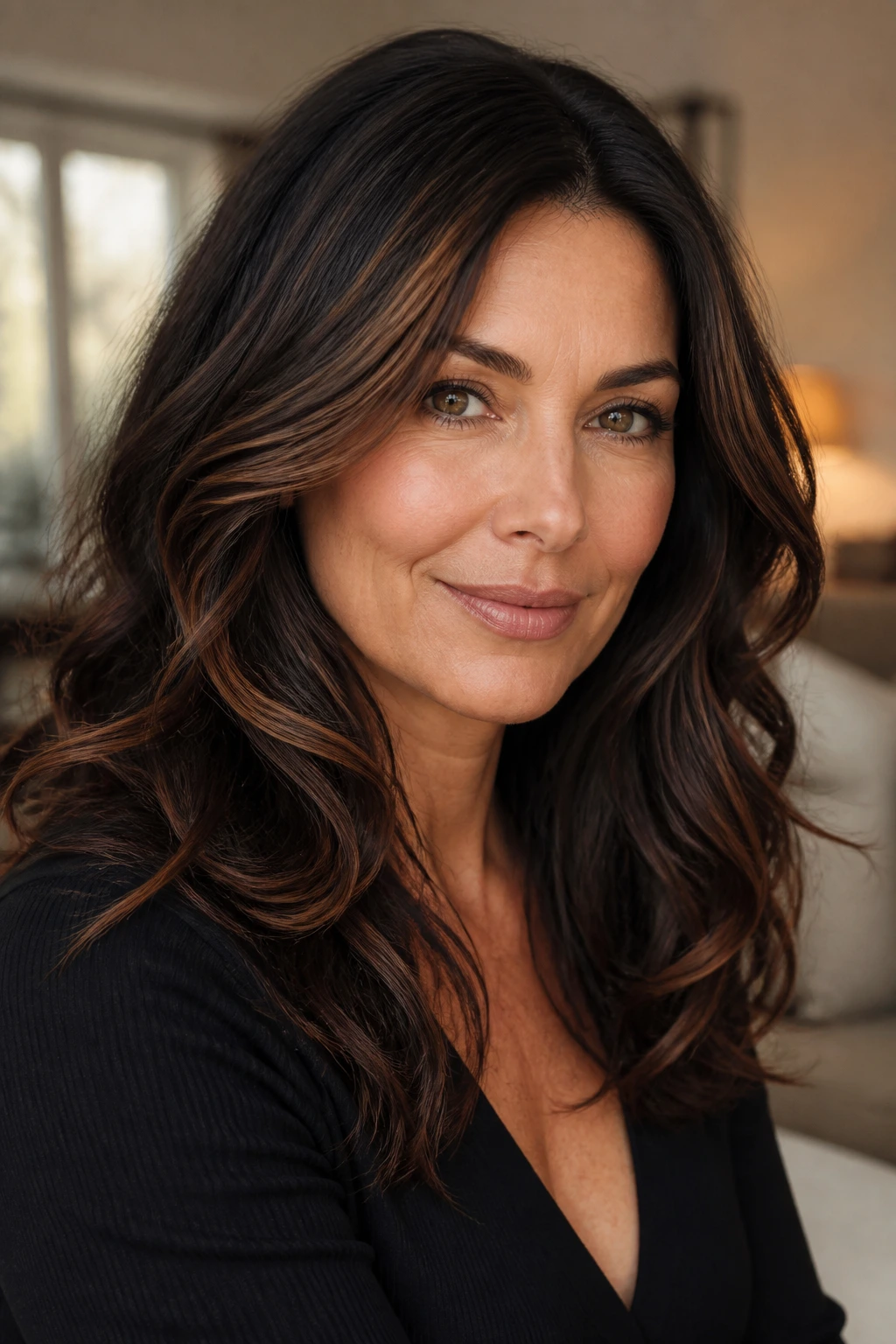
Espresso brunette is the safest dark shade to start with if you want depth without the hard edge of black. The chestnut ribbons keep the color from reading as one solid block, and that matters around the face, where even a few softer strands can change the whole mood.
Ask for a level 4 espresso base with fine chestnut weaves through the top layers and around the part. That tiny bit of warmth is especially nice if your skin leans neutral or golden, because it keeps the hair from going muddy when the light is low. It also gives gray regrowth a softer place to land.
Best for: medium-density hair, layered cuts, and anyone who wants dark color without the “painted on” feel.
Skip if: you hate any warmth at all. Chestnut is subtle, but it still has a brown-gold pulse.
2. Blue-Black Bob with Glassy Shine
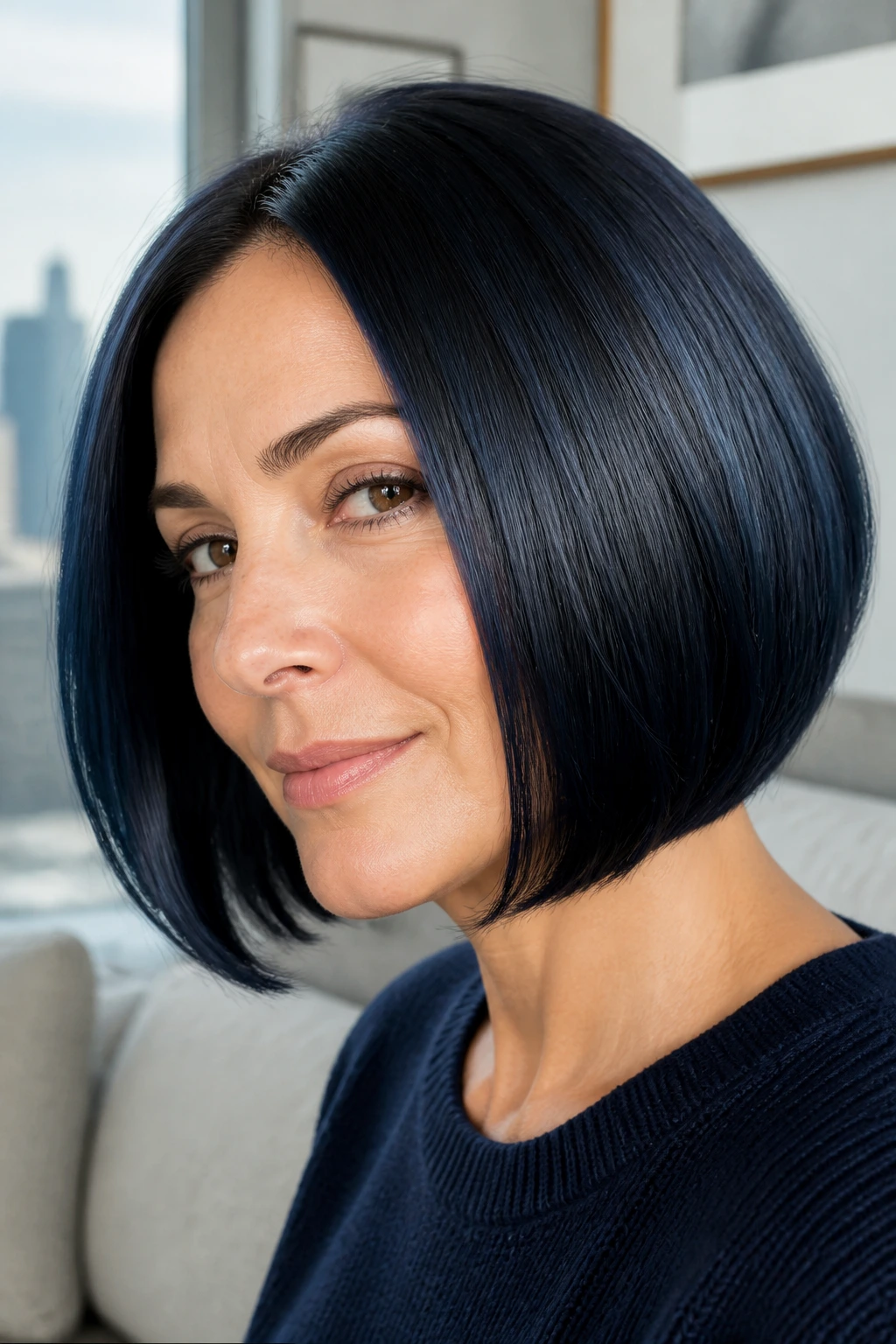
Can black hair look soft instead of severe? Yes, but only if it has shine and a clean shape. A blue-black bob works because the cut does half the styling for you, and the cool undertone keeps the shade from turning flat and dead-looking.
This one loves sleek edges. A chin-length or collarbone bob with a bit of bevel at the ends makes the blue reflect in motion, which is much better than a long, tired curtain of black. It’s a strong look, not a casual one, and that’s the point.
Use a shine serum sparingly—one pea-sized amount on damp hair, then another tiny touch on dry ends if needed. Too much product makes blue-black look greasy fast. Too little, and it can read rough.
3. Chocolate Cherry Brown
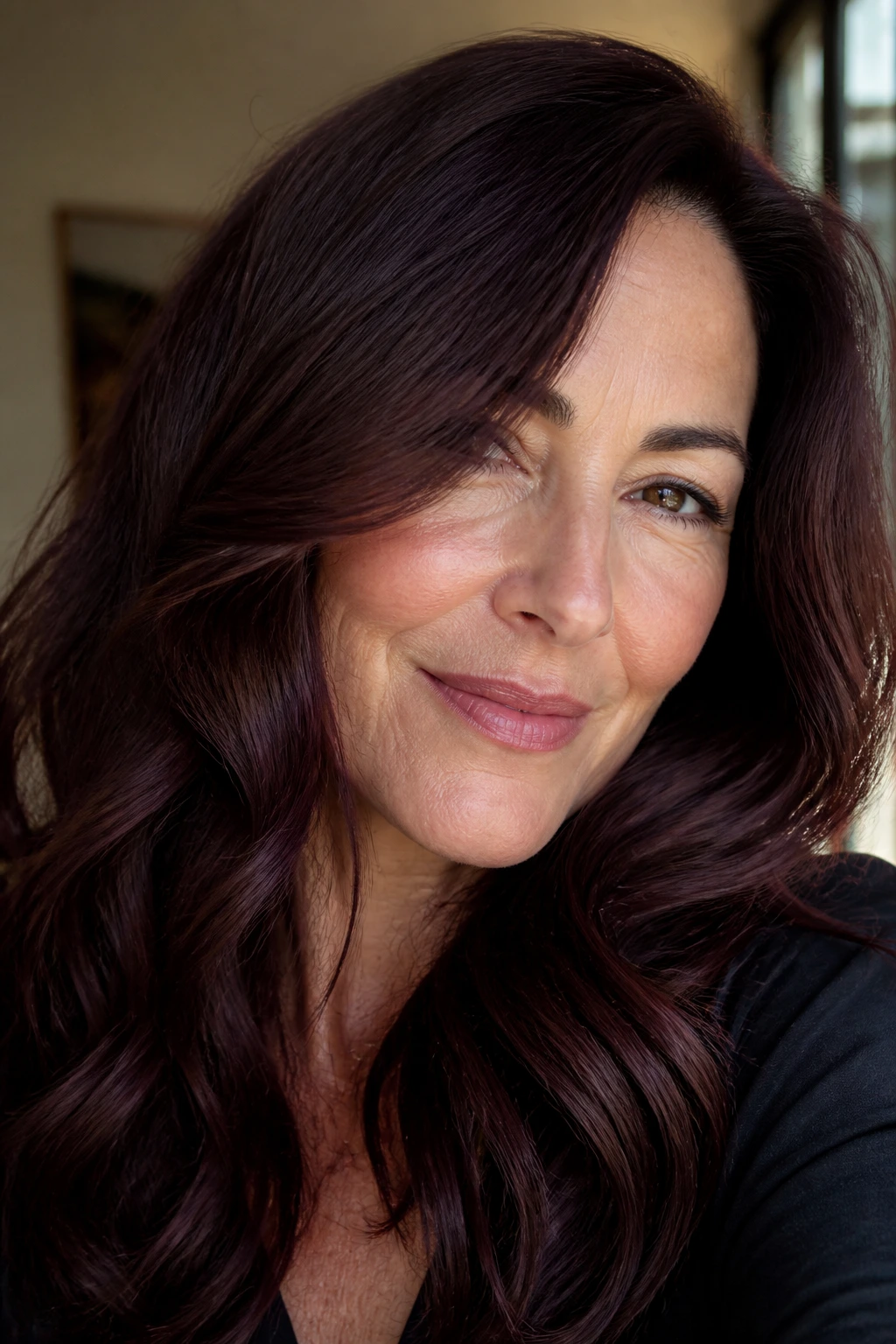
Chocolate cherry sits in that sweet spot where the hair looks rich indoors and gives off a red-violet edge near windows or under warm light. It’s not a loud red. It’s the sort of color that makes people notice your hair without being able to name exactly why.
What makes it work on grown hair is the depth. The brown base keeps it believable, and the cherry note stops it from looking dull. On wavy or curly hair, the movement catches the red tones better than straight hair does, so the color feels more alive when it’s cut in layers.
Why it flatters
- The red-violet undertone warms up olive and beige skin.
- It plays nicely with brown or hazel eyes.
- A demi-permanent gloss can keep the shine up without locking you into a heavy, permanent commitment.
If you do a lot of heat styling, this one needs a color-safe leave-in and less hot-tool abuse than you think. Red tones fade first. Every time.
4. Mushroom Brunette with Smoky Lowlights
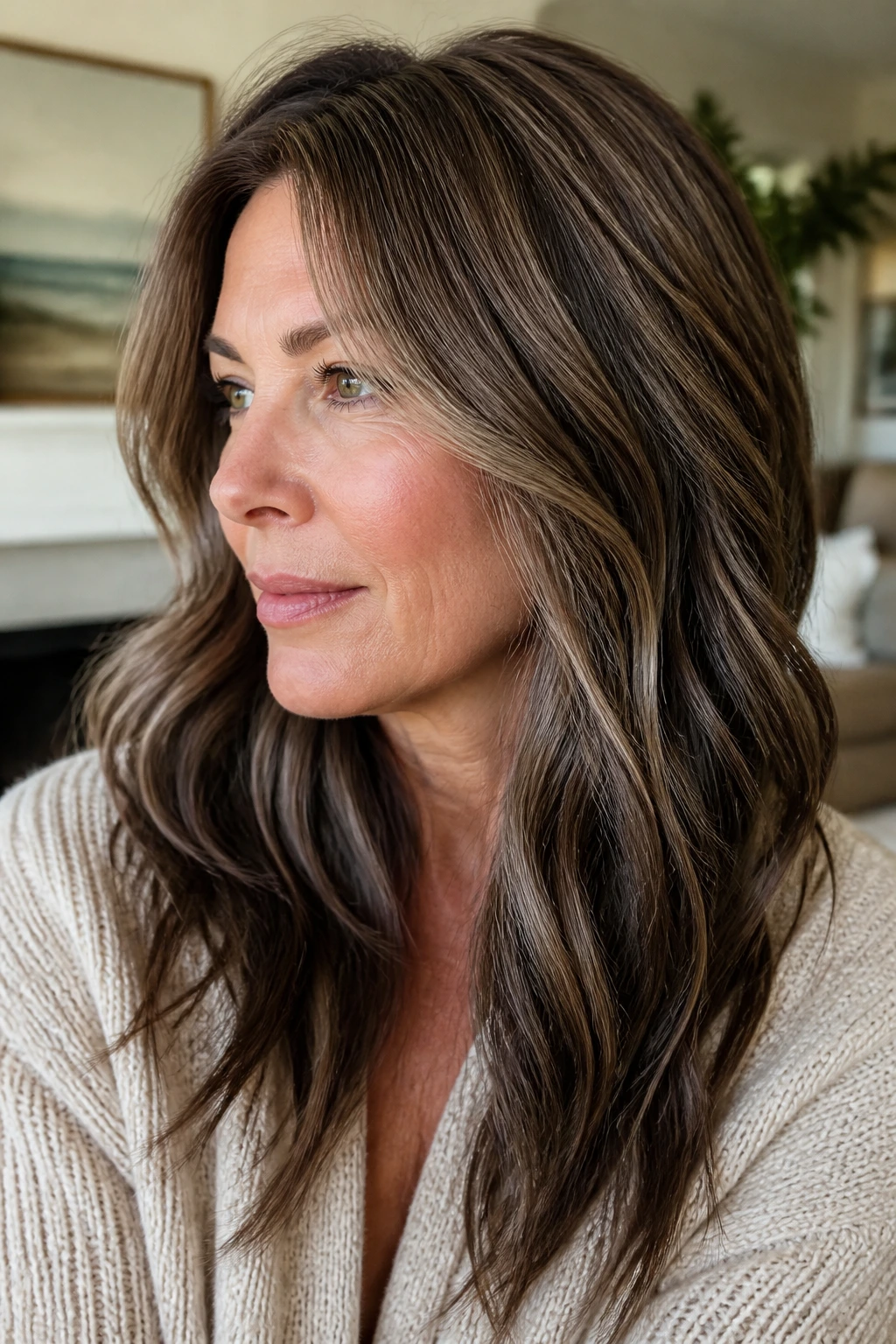
Mushroom brunette is for the woman who wants her dark hair to look expensive, not sugary. It’s cool, a little taupe, a little smoky, and it works especially well if your natural brown has started pulling orange in the sun or through previous color.
The trick is to keep it dimensional. Mushroom on its own can get a little flat if the hair is thick and straight, so smoky lowlights through the mid-lengths give it that soft, foggy depth. The result is less “done” and more “considered.”
This shade is good when you want a cooler face frame without going full ash, which can look a bit dusty on some skin tones. If your complexion runs cool or you wear silver jewelry more than gold, mushroom brunette is a strong bet. It’s also a smart choice for women who do not want to babysit color every four weeks.
5. Soft Black with Walnut Lowlights
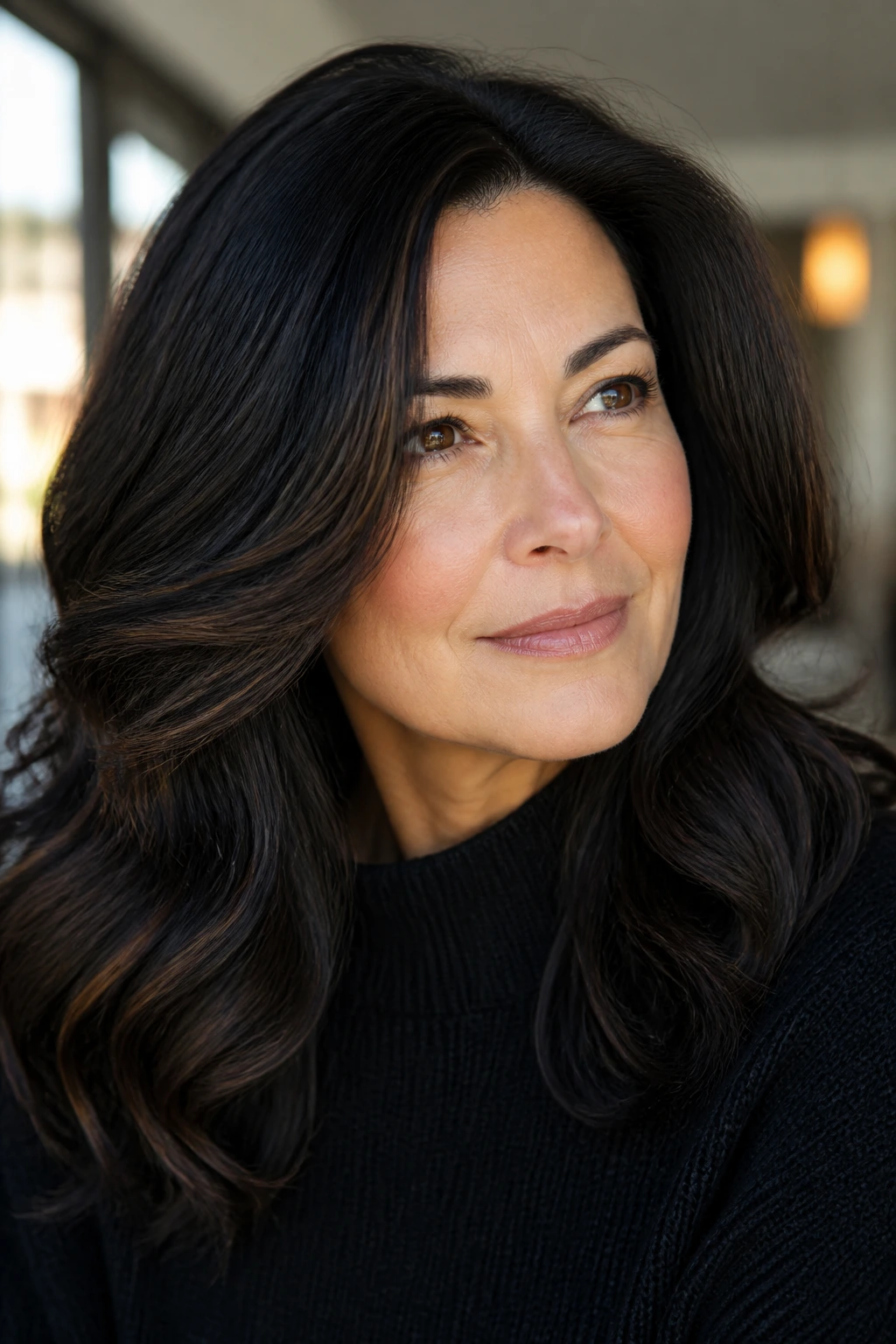
Soft black is what people mean when they say they want black hair, but not the kind that makes the face look stern under kitchen lighting. The walnut lowlights keep the base from becoming a hard helmet, and the difference shows up most when the hair moves.
I like this shade on thicker hair. The density of the cut gives the color something to sit on, and the lowlights keep the ends from disappearing into one heavy mass. On curls, it’s even better, because the texture naturally breaks up the darkness.
Ask for: a soft black base, not a blue-black, with walnut lowlights placed through the crown and around the temples.
Avoid: all-over jet black if your hair is fine or very porous. It can make the texture look rough, and there’s no gloss in the world that will fully hide that.
6. Deep Mahogany Layers
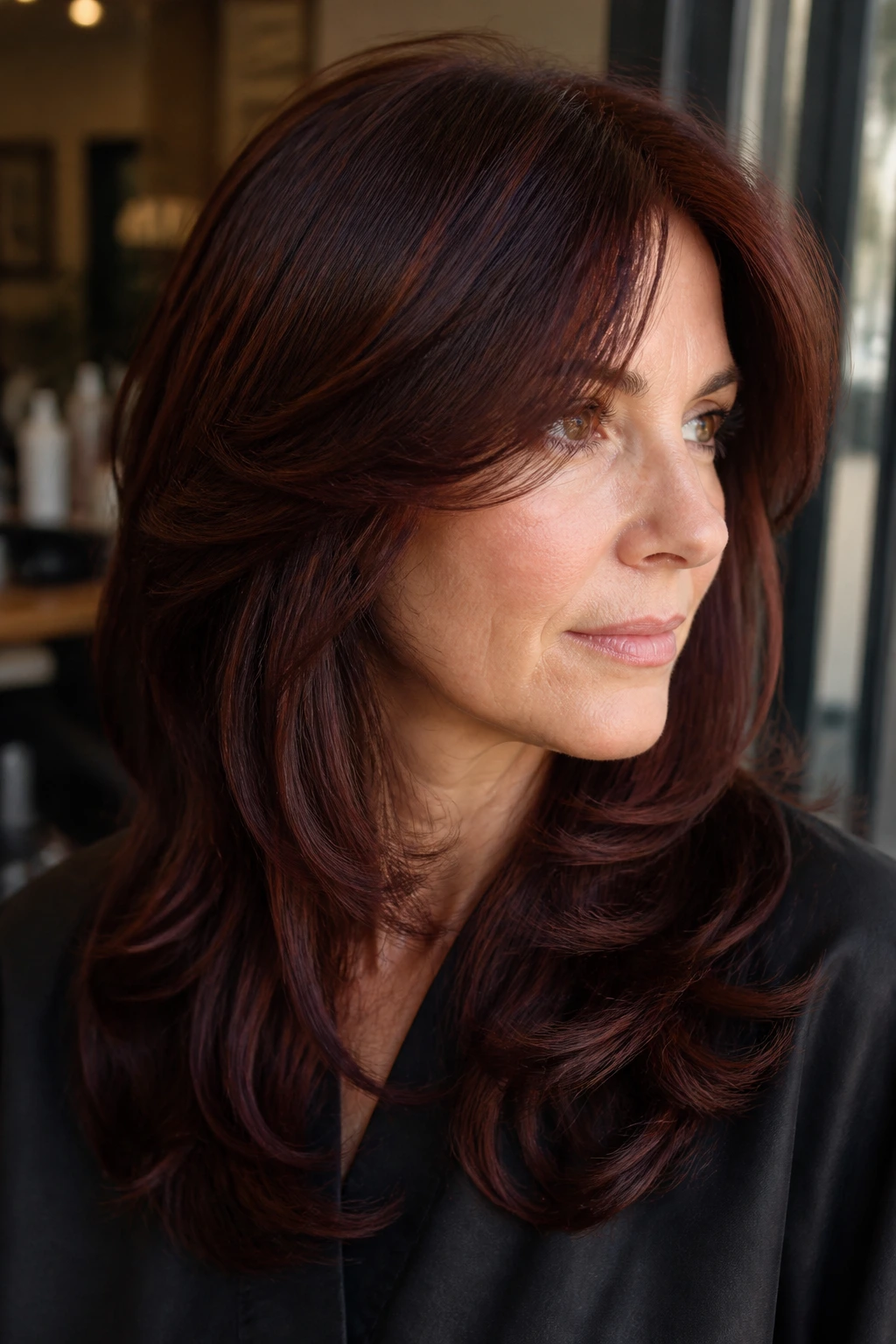
Deep mahogany is one of those shades that looks much softer in person than it sounds on paper. The red-brown undertone gives the hair a velvet feel, especially when it’s cut into layers that can catch the light at different angles.
It is a good pick if you’ve been told to avoid red because “it’s too much.” Mahogany isn’t loud. It has warmth, but not the brassiness that can make a color feel cheap after a few washes. On layered hair, the color almost does the movement for you.
This shade flatters warm and neutral skin beautifully, especially if your brows are already a medium brown. It can also make fine hair look fuller because the red-brown depth creates a little more visual thickness. If your ends are dry, though, keep the conditioning mask in heavy rotation. Mahogany will show damage faster than a plain brunette.
7. Dark Mocha Melt with Root Shadow
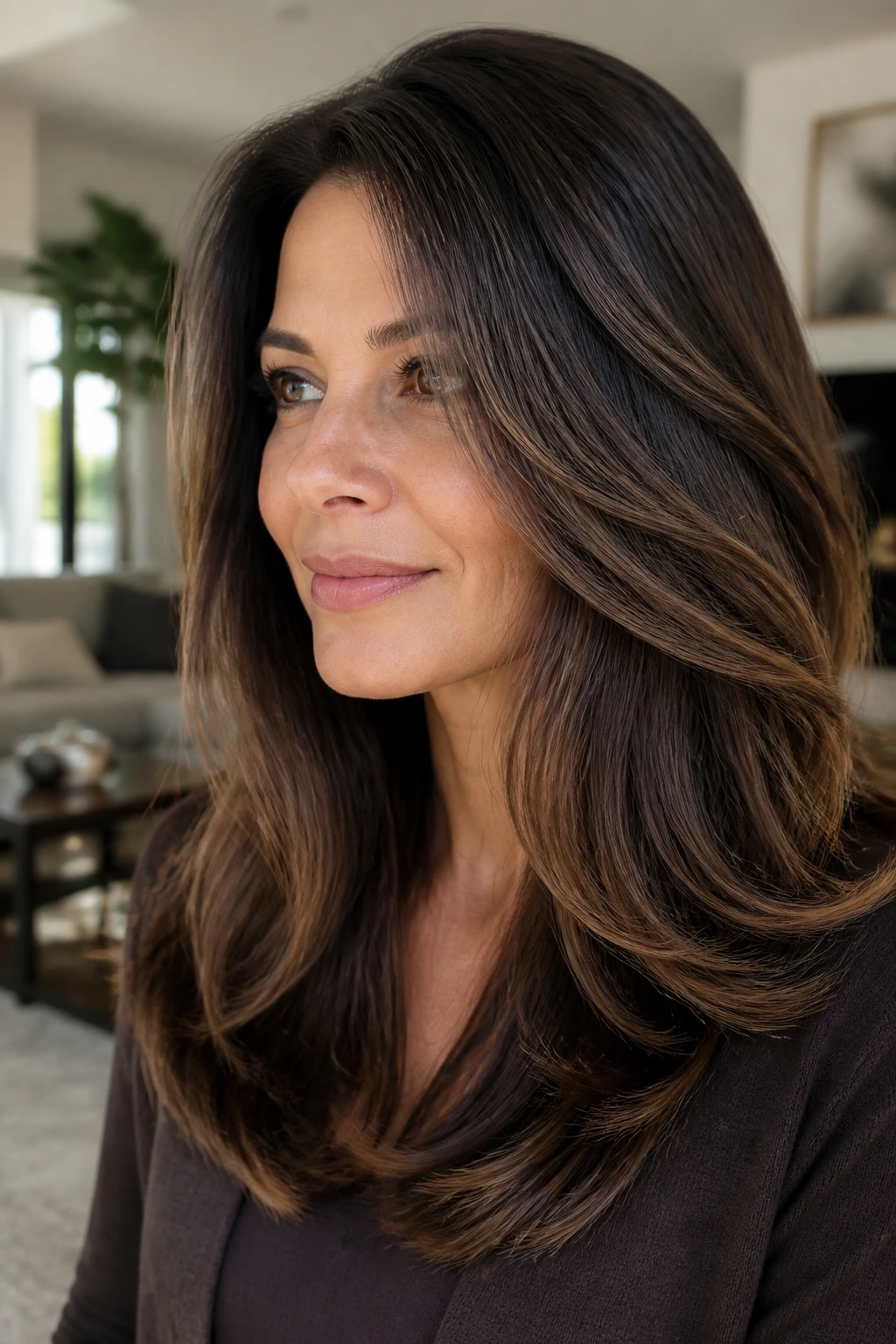
A mocha melt is the one to pick when you want the grow-out to be kind to you. The root shadow stays a touch deeper, the mid-lengths soften into mocha, and the whole thing blends instead of marching in obvious bands.
That’s useful if you’re covering gray but don’t want to see a sharp line every few weeks. The shadow root buys you time, and the mocha tone keeps the middle of the hair from looking muddy. It also works on almost any length, from a layered lob to longer hair that needs a little visual clean-up.
What makes the melt work
- Keep the root only one to two levels deeper than the rest.
- Blend with a brush or comb so there’s no obvious stripe.
- Finish with a clear glaze if the ends look thirsty.
If you’re the kind of person who likes color that behaves itself, this is an easy favorite. It doesn’t scream for attention. It just sits there looking polished.
8. Smoky Brunette Balayage
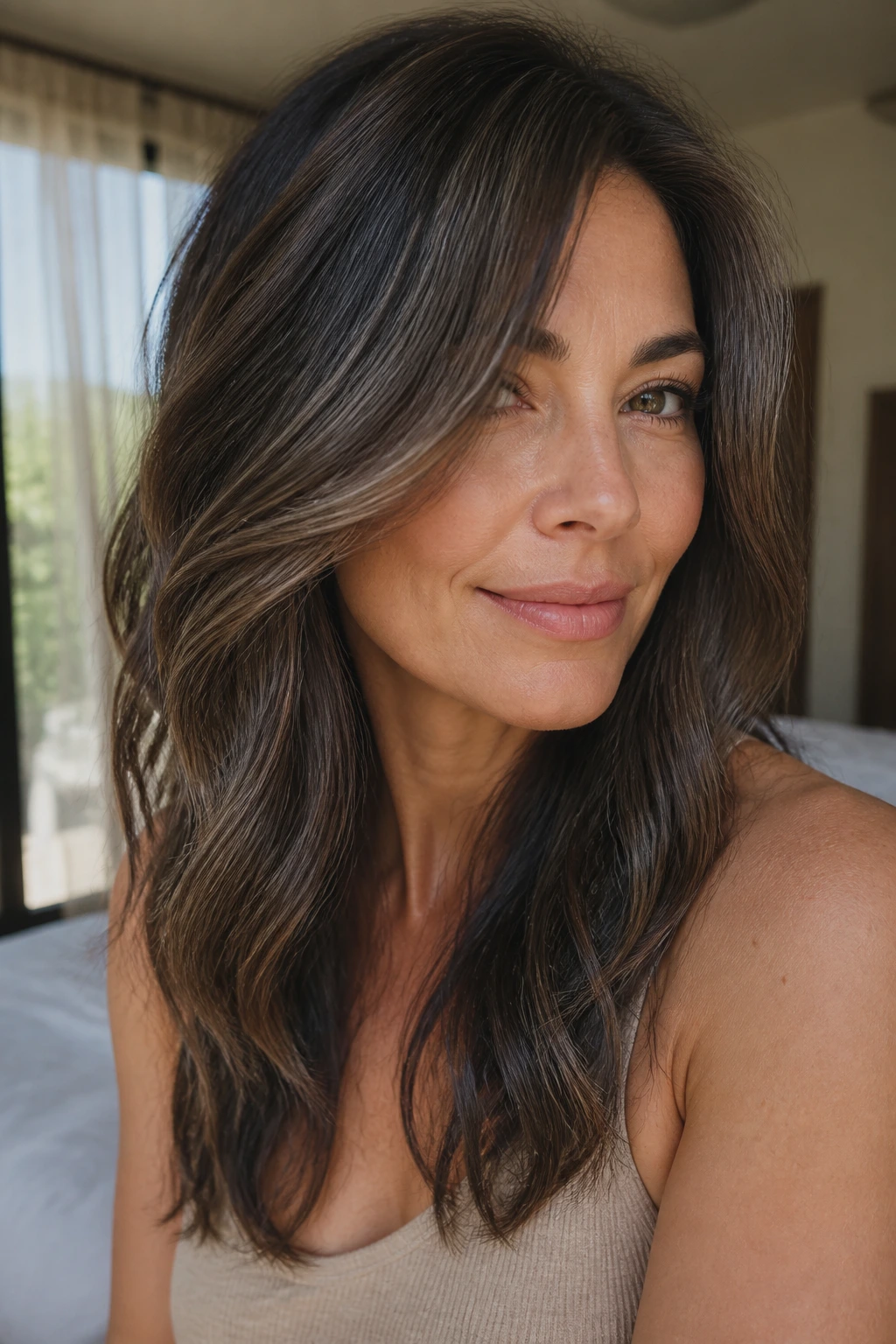
Smoky brunette balayage is for anyone who wants dimension without the obvious highlight striping that used to dominate darker hair. The lighter pieces are kept smoky, not blonde, so they melt into the base instead of sitting on top of it like decoration.
Unlike chunky highlights, this approach keeps the grow-out softer. That matters when you do not want to be back in the salon every six weeks just to fix a line at the root. It also looks especially good on wavy hair, because the bends in the hair show the transition between tones.
The best version uses cool brown ribbons through the top third and around the face, with the deeper base left alone underneath. That keeps the hair looking full from the outside but still dimensional when you tuck it behind the ear. If your natural color is dark brown, this is one of the least fussy ways to update it.
9. Rich Cocoa with Cinnamon Face Frame
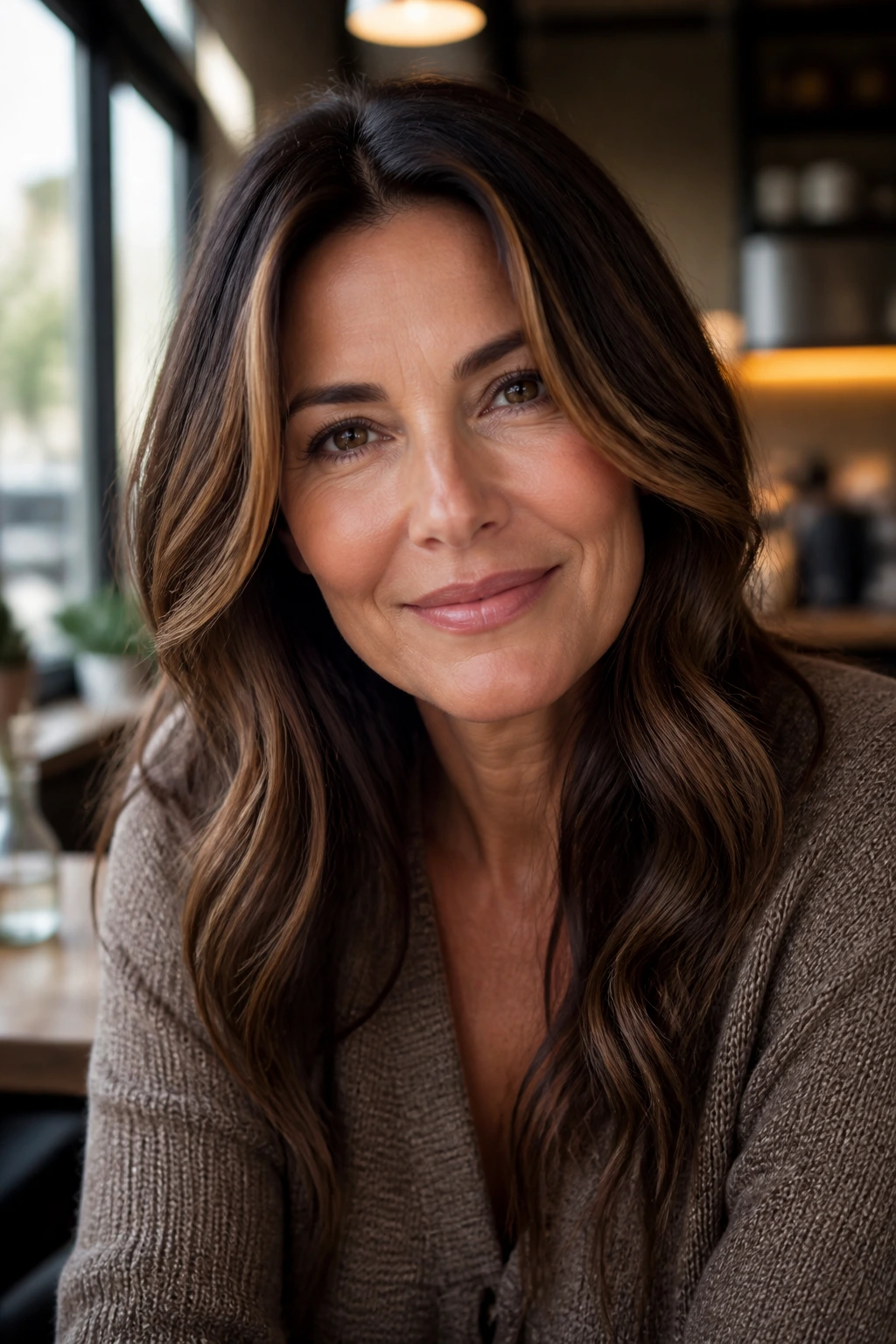
Rich cocoa is a very friendly dark brown, and the cinnamon face frame keeps it from sinking into the skin. That little bit of warmth around the face can make tired coloring look awake again without forcing the whole head into a warm shade.
This works especially well if your skin has peach or golden undertones. A cinnamon ribbon near the cheekbone area adds just enough brightness to outline the face, especially on layered cuts, shags, and softer bobs. It is subtle, but you can feel the difference when you look in a mirror.
If you wear minimal makeup, this shade can do a surprising amount of work for you. It adds warmth near the eyes and cheeks without needing a strong lipstick or heavy brow filling. I’d keep the face frame fine, though. Too much cinnamon and the shade starts to look like a color correction, not a choice.
10. Dark Aubergine Gloss
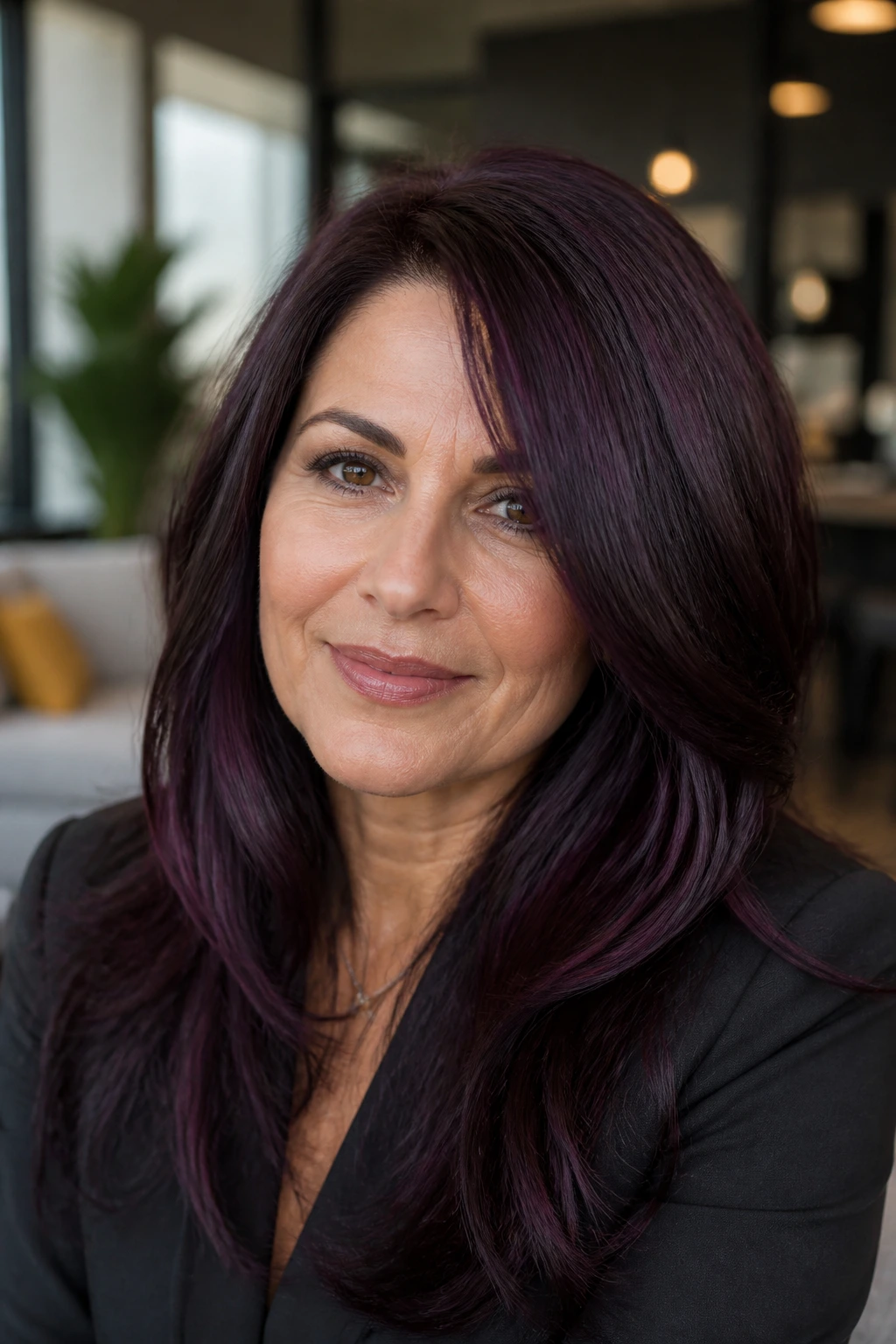
Dark aubergine is one of the prettiest ways to add personality to dark hair without going neon or obvious. It reads as deep brown in low light, then flashes a plum sheen when the light hits it at the right angle.
That makes it a nice option if you want something moody but still wearable at work or at family dinners where everyone has opinions. The gloss can be done over a brown base or layered through the lengths, and it works best when the finish is smooth and reflective. Dryness will kill the effect fast.
Aubergine also has a forgiving quality on fair-to-medium skin because the violet note cools down redness around the cheeks. It can be stunning on dark eyes. On porous hair, though, a lot of purple pigment can grab too strongly, so strand testing matters. A little gloss goes a long way here.
11. Ash Brunette with Cool Ends
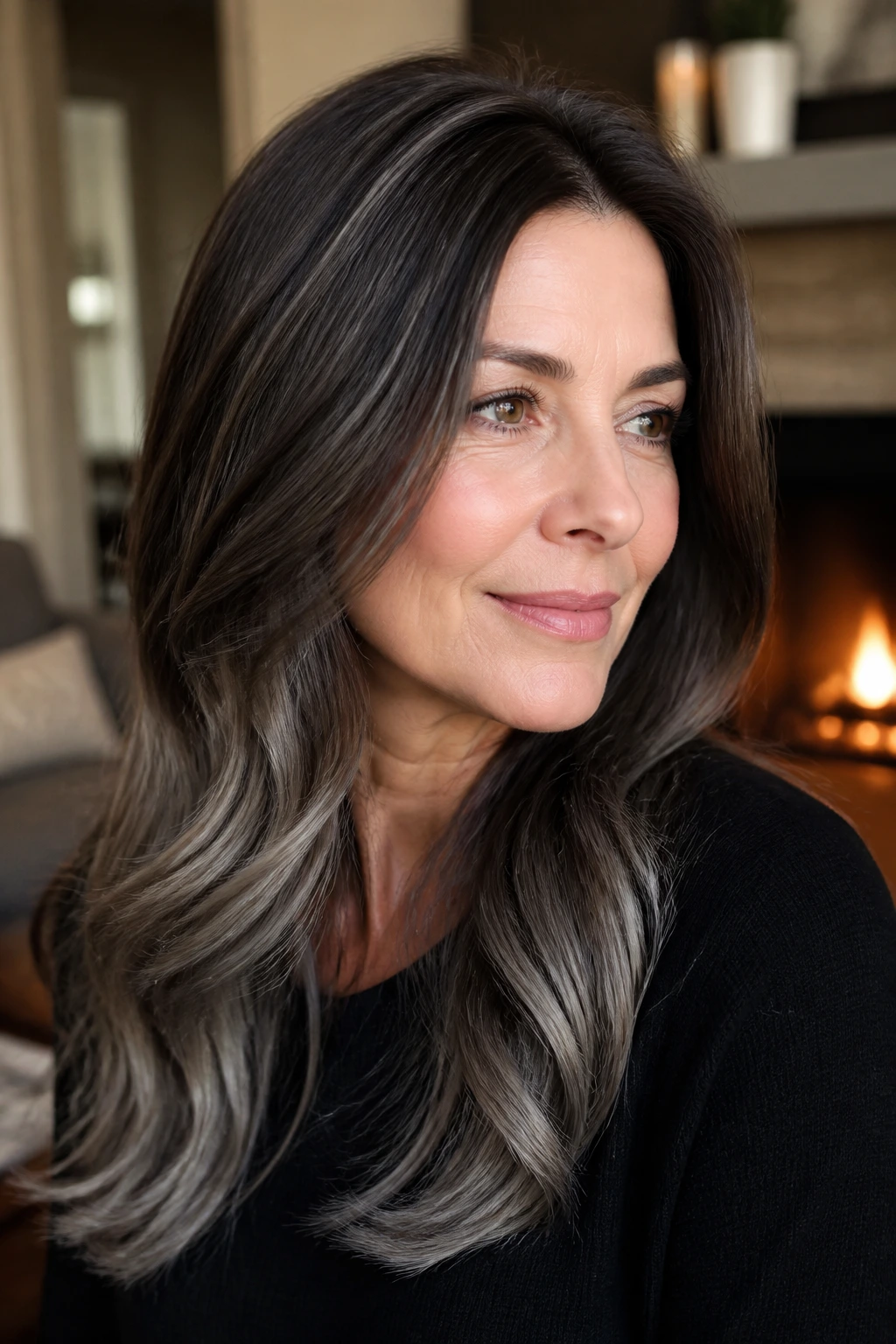
Ash brunette gets a bad reputation because people confuse cool with dull. That’s lazy thinking. On a layered cut, ash ends can make the hair look more expensive than a warmer shade that has gone brassy by week three.
This one is especially useful if your hair pulls orange every time it sees sunlight or a box dye. The cool ends keep the warmth under control and make the whole head feel cleaner. If you have silver strands starting to come in, ash brunette can blend them into the rest instead of fighting them.
What to watch for
- Too much ash can drain color from the face.
- Very dry ends can look dusty if the toner is overdone.
- A gloss every 6 to 8 weeks helps the cool tone stay refined.
I like ash brunette on shags, long layers, and bobs with movement. It needs motion. Without it, the shade can look a little stiff.
12. Licorice Brown with Violet Undertone
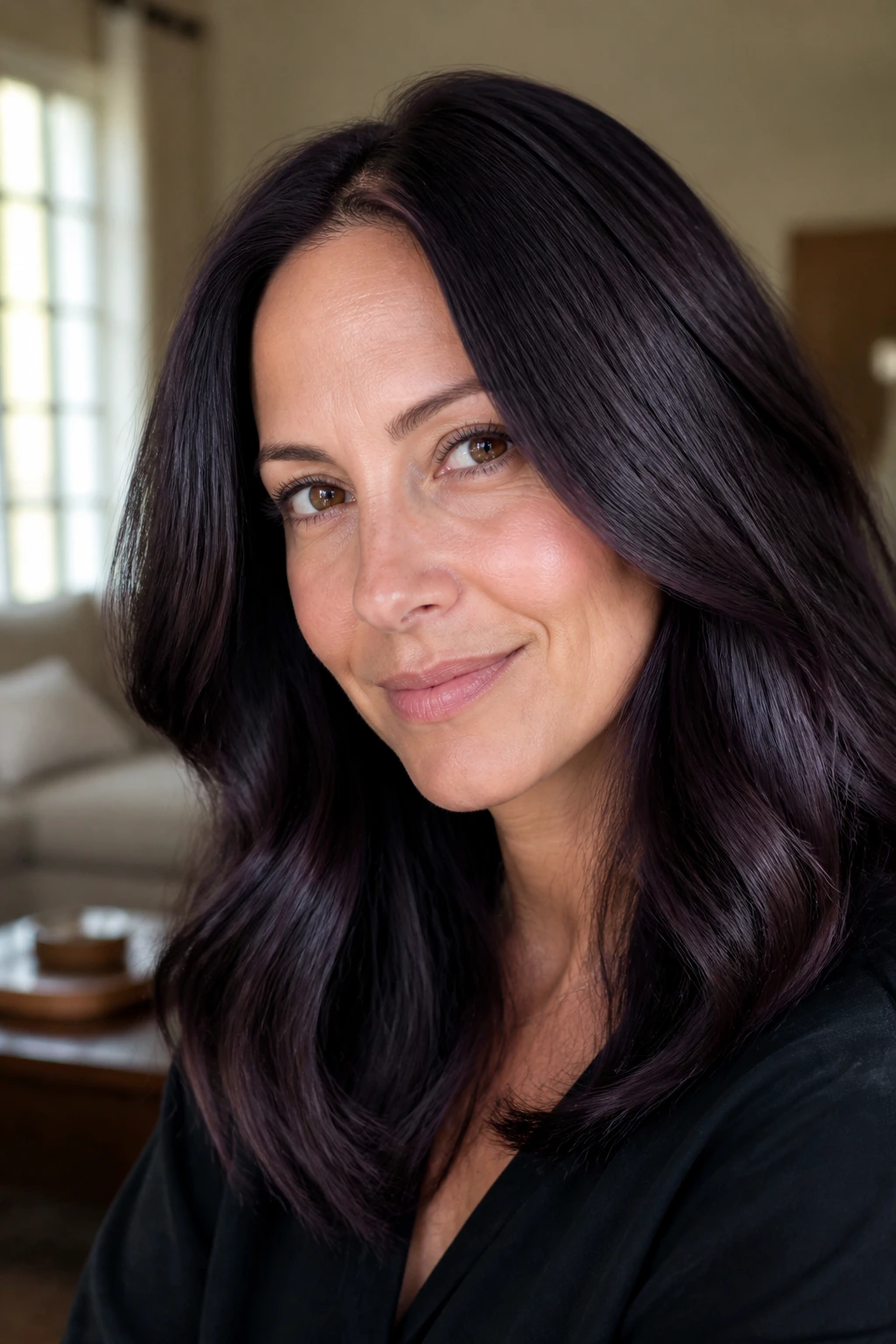
Licorice brown sits one step softer than true black, and the violet undertone keeps it from looking flat under indoor lights. It’s a moody shade, but not a severe one, and that distinction matters.
If you like cool lipstick, silver jewelry, or dark framed glasses, this shade has real presence. It can make green and hazel eyes look sharper without needing any highlight tricks. The violet note is subtle enough that most people will read it as a deep brunette with extra polish.
The best way to wear it is with shine. A matte finish ruins the whole point. Keep the ends trimmed, keep the cut neat, and use a lightweight smoothing cream so the hair reflects light instead of swallowing it. On a blunt cut, licorice brown looks crisp. On very long, dry hair, it can feel a little heavy.
13. Black Coffee Hair with Warm Sand Lowlights
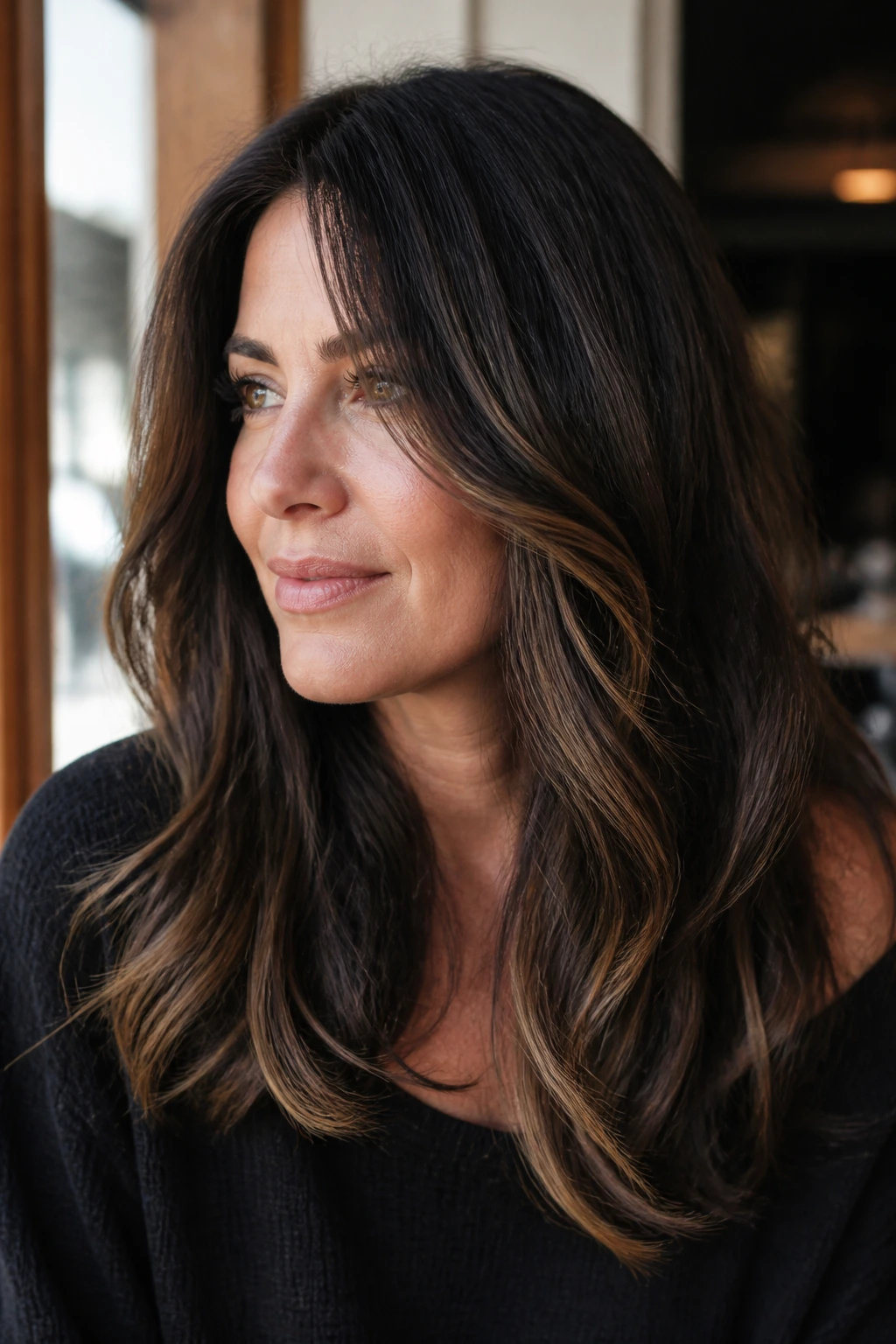
Black coffee hair is rich and serious, but the warm sand lowlights stop it from turning into one giant dark block. The effect is quiet. You see it mostly when the hair moves or when the sunlight brushes across the top layer.
It’s a smart shade if you want the richness of dark hair without the stiffness of true black. The sand lowlights are not blonde. They’re just warm enough to break up the darkness and bring a little softness around the face. That makes this look especially good on brown eyes and medium skin tones.
A center part can make black coffee feel dramatic, while a side part softens it. That’s handy because the same color can change personality without another salon appointment. If your hair is thick, this shade has a lovely weight to it. If your hair is fine, keep the lowlights subtle so the color doesn’t start to look patchy.
14. Dark Auburn Glow
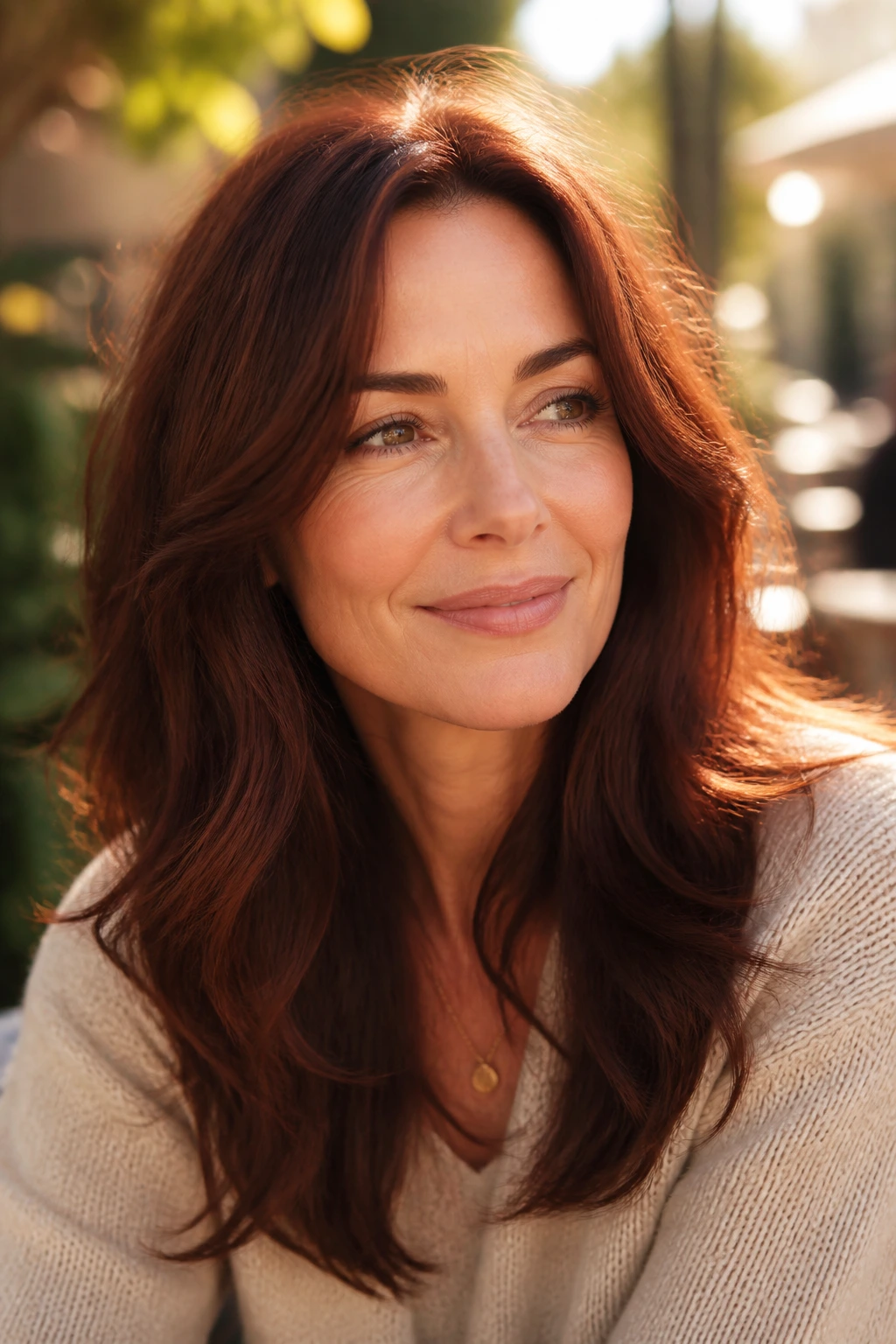
Dark auburn is for anyone who wants warmth without bright copper. The glow comes from the red-brown base, not from obvious red streaks, which makes the shade feel easier to live with over time.
It’s especially flattering if your skin has freckles, golden tones, or a bit of natural pink in it. The auburn undertone wakes up the complexion and keeps dark hair from looking too severe. On layered cuts, the red-brown catches the light in a way that looks almost velvety.
The catch is upkeep. Auburn fades faster than neutral brown, and hot water plus harsh shampoo will pull the warmth out in a hurry. Use cooler rinses, a color-safe cleanser, and a gloss when the red starts looking tired. If you want warmth but hate obvious red, keep the auburn deep and close to brown.
15. Chestnut Smoke
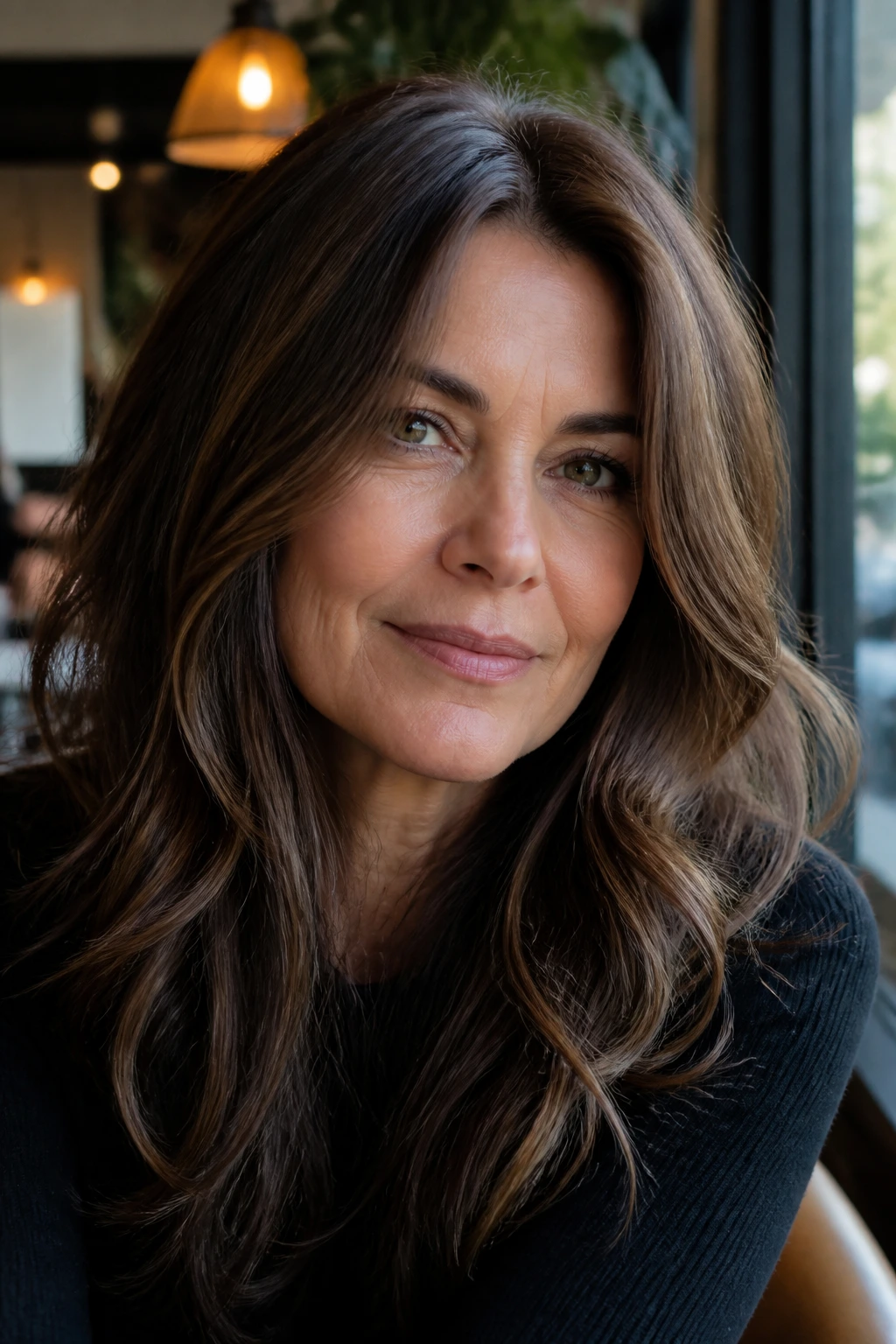
Chestnut smoke is a brunette with a cool veil over it. You still get the brown warmth underneath, but the smoky top note keeps the color from going orange or too sweet.
That makes it a nice middle ground for people who like chestnut but not the copper that can sneak in with it. It works on curls, waves, and straight hair, though I think it looks best on a layered blowout where the ends have a little bend. The smoke gives the hair a softer outline.
This is one of those shades that feels gentle around the face. It doesn’t shout. It just smooths the transition from hairline to skin, which is often what people are actually asking for when they say they want something more flattering. The color also ages well between salon visits because the smoky overlay fades more softly than a warm brown alone.
16. Velvet Brunette Pixie
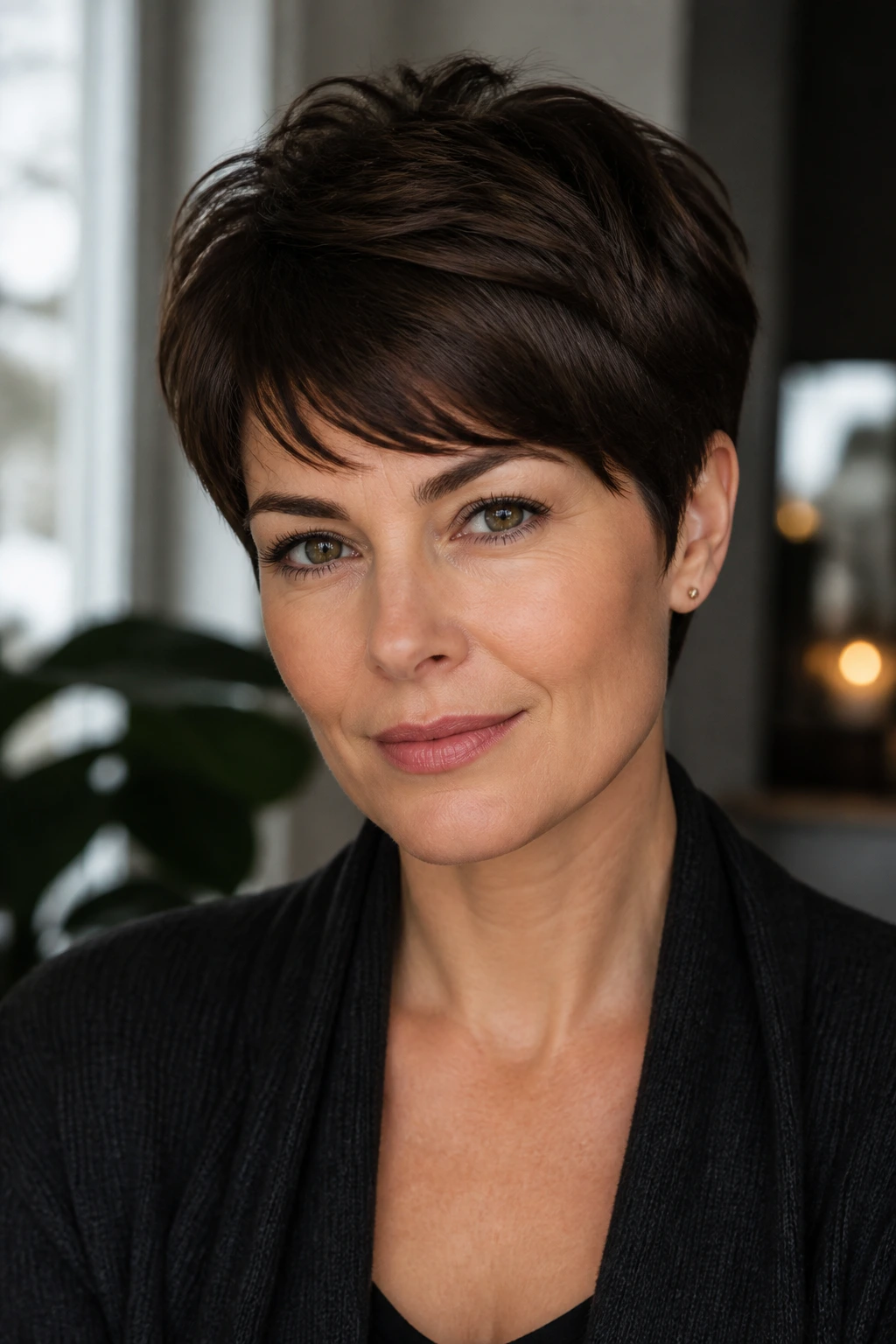
A pixie cut can carry a darker shade better than people think. Velvet brunette gives the cut depth, and because the hair is short, the color reads plush instead of heavy.
This is a strong move for finer hair. Dark saturation at a short length creates the impression of more density, and the piecey texture of a pixie keeps the shade from looking flat. A little styling paste at the crown and around the fringe is enough to show the layers.
I like this shade when the haircut is sharp but not severe. Too much darkness on a round, all-one-length pixie can feel helmet-like. Add tiny bits of texture and it wakes up immediately. If you wear glasses, velvet brunette can be especially good because it frames the eyes cleanly without fighting the frames.
17. Midnight Brown Lob
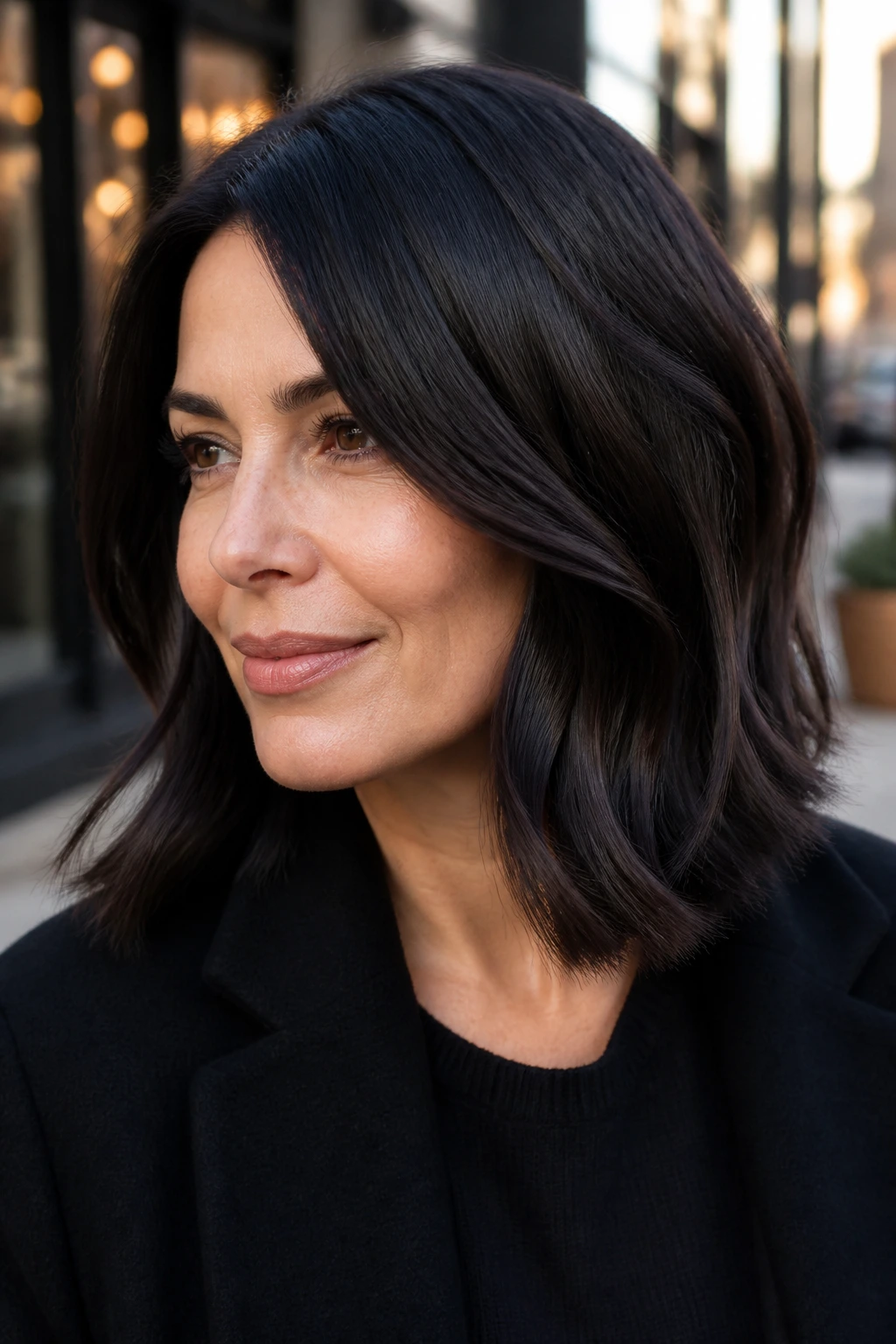
Midnight brown is not black, and that’s why it works so well on a lob. It sits in that deep, inky brown zone that feels polished but not harsh, which is exactly where a collarbone cut wants to live.
The lob gives the shade room to move. Straightened, it looks sleek and deliberate. Waved, it shows a deeper-to-lighter shift along the bends, which keeps the color from looking like one solid sheet. If your hair has a little natural body, this style basically does the work for you.
Best for: anyone who wants a low-key dark color that still feels modern.
Tip: ask for a level 3 brown with a soft gloss rather than a true black base. The difference is small on paper and big in the mirror.
18. Praline Brunette with Lived-In Dimension
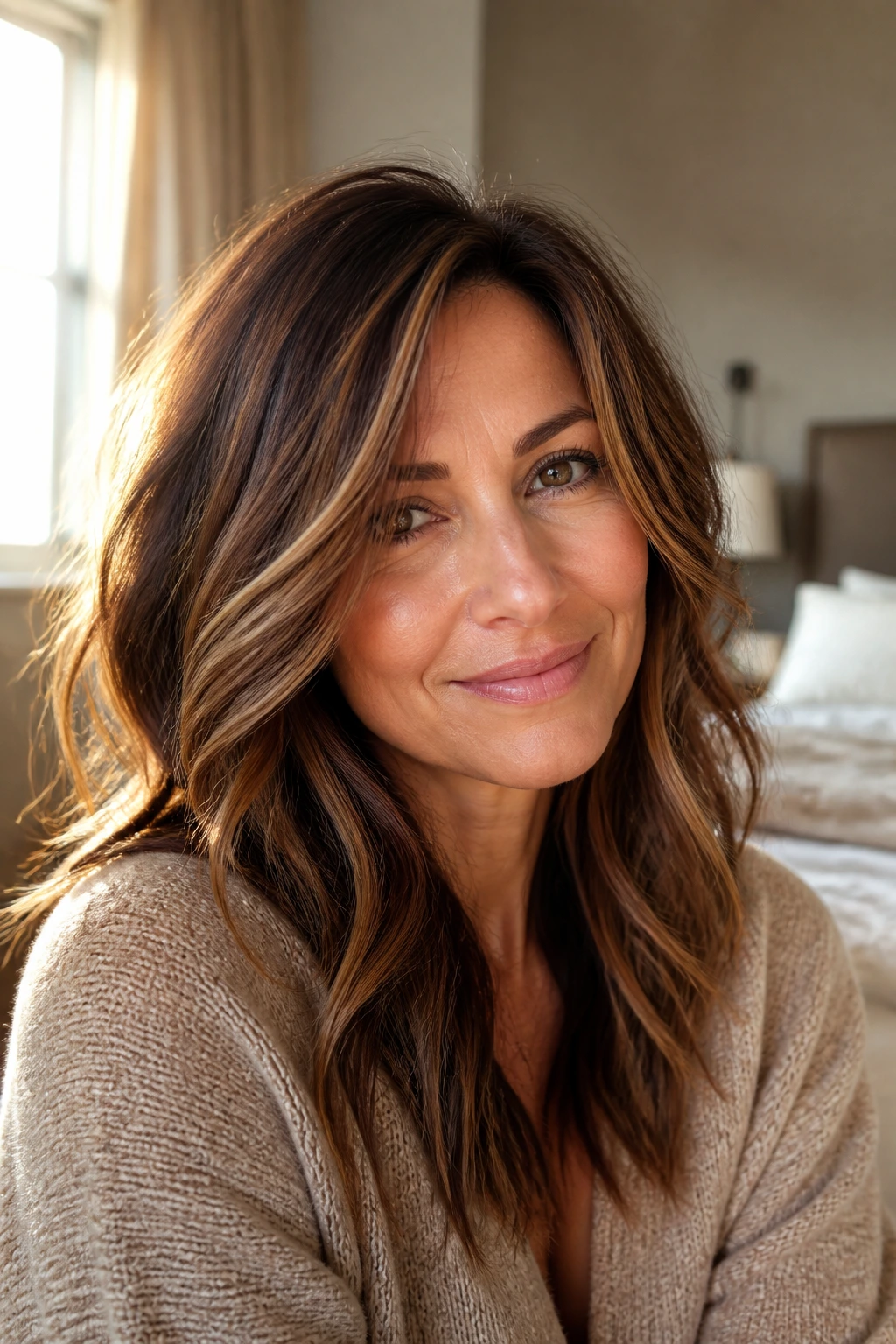
Why do praline brunettes look so easy on grown-out cuts? Because the shade has enough warmth to soften gray, but enough dimension to stop the whole head from reading as one color. That lived-in feel is the point.
This shade uses a brown base with lighter, nutty pieces threaded through the top layers. Those pieces don’t have to be dramatic. In fact, the nicest version is the one that makes people think the hair just reflects light well. It’s a good fit for women who want dimension without crossing into blonde territory.
Praline is also kind to waves and curls because the color shifts show up along the bends. On very straight hair, keep the ribbons fine so they don’t look stripey. The grow-out is easy to live with, which matters if you dislike regular salon maintenance more than you dislike a touch of warmth.
19. Espresso to Taupe Shadow Melt
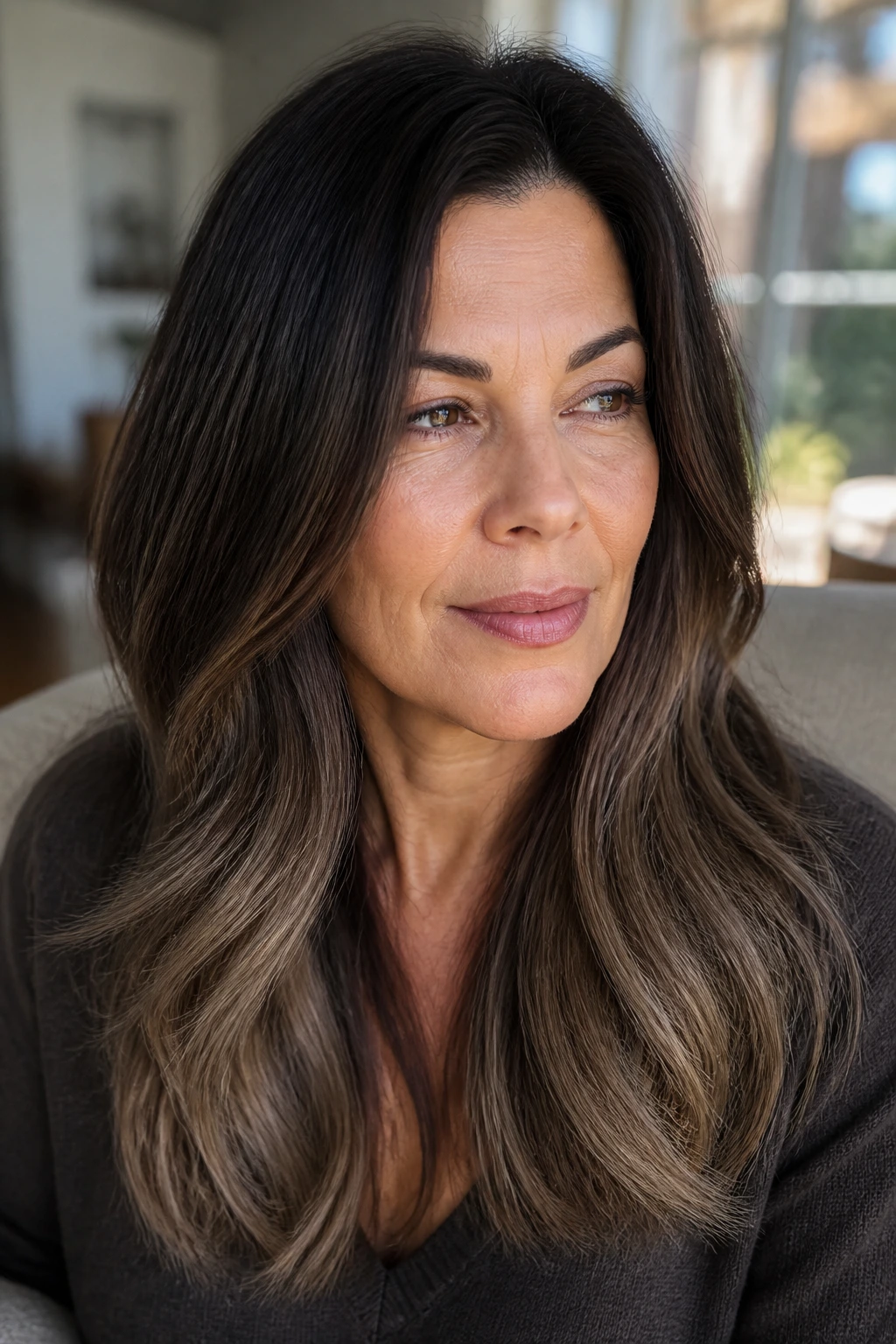
A good shadow melt should look like the color grew there, not like someone painted a stripe over the top. Espresso to taupe does that beautifully. The roots stay rich and deep, then soften into a cooler taupe through the mids and ends.
That transition is useful for gray blending and for anyone who wants depth without endless root touch-ups. It’s also one of the most forgiving ways to wear dark hair if your ends are lighter from old color or sun. The taupe breaks the severity of the espresso and gives the whole style a little air.
I’d call this one a quiet favorite. It doesn’t have the drama of blue-black or the warmth of auburn, but it wears better than both if you live with your hair instead of treating it like a photo shoot. On a long bob or layered mid-length cut, it looks especially smooth.
20. Cherry Cola Brown
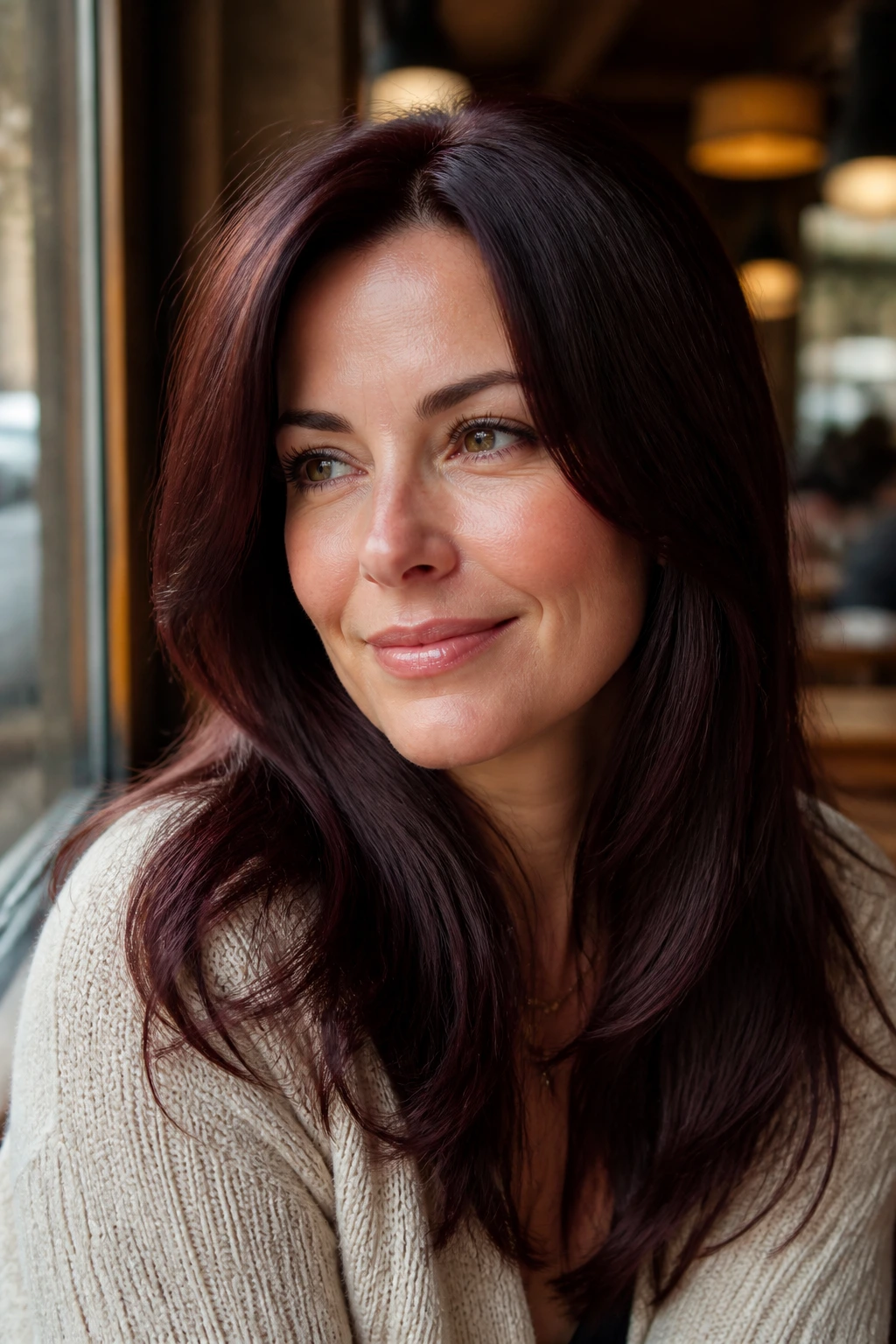
Cherry cola brown is darker and moodier than chocolate cherry, with a brown base that keeps the red from taking over. It has that fizzy depth people notice in motion, not a loud red look that announces itself from across a room.
This shade is good if you want a little edge without committing to bright color. It pairs well with thicker hair, because the deeper base can handle the richness without going muddy. Under daylight, the red note appears in the mids and ends; indoors, it reads mostly brown.
The key is restraint. Too much red and cherry cola starts to look like a correction rather than a style choice. Keep the gloss deep, the cut clean, and the finish shiny. A color-safe mask with a little protein now and then helps the red stay crisp instead of dulling into brown sludge.
21. Deep Walnut with Silver-Friendly Blending
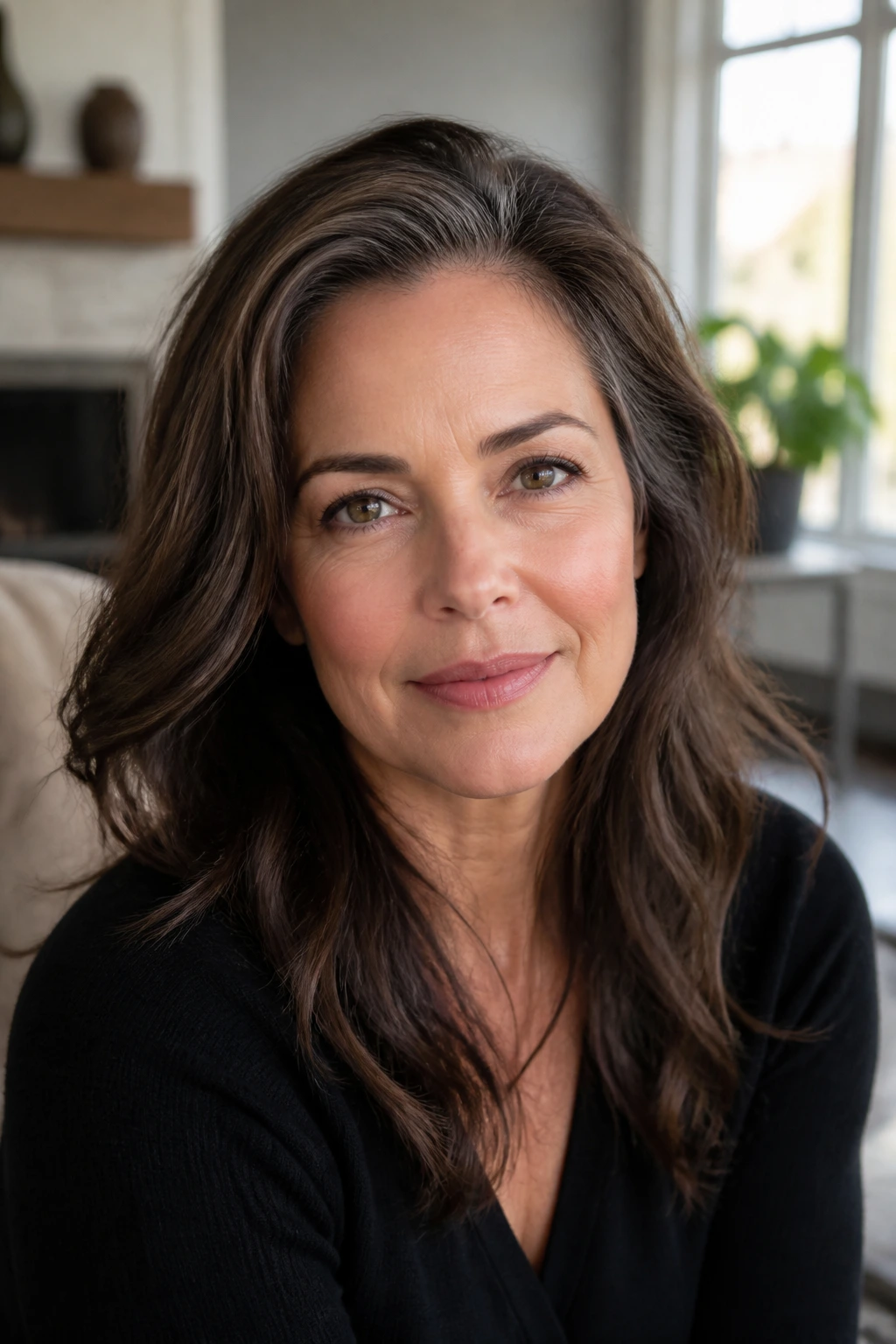
Deep walnut is one of the best shades for blending silver without pretending gray doesn’t exist. The brown is dark enough to feel intentional, but soft enough to let those silver strands look like part of the design instead of a problem to be hidden.
That’s especially useful at the temples and along the part line, where regrowth usually shows first. The walnut tone gives the hair a natural-looking depth, and it works well if you’re transitioning away from fully opaque dye. You can keep the overall shade rich while letting scattered silver do its thing.
Good if you want: a graceful grow-out, not a hard root line.
Better still if: your haircut has movement around the face, because the blending looks softer when the hair is not hanging straight and still.
22. Burgundy Brown
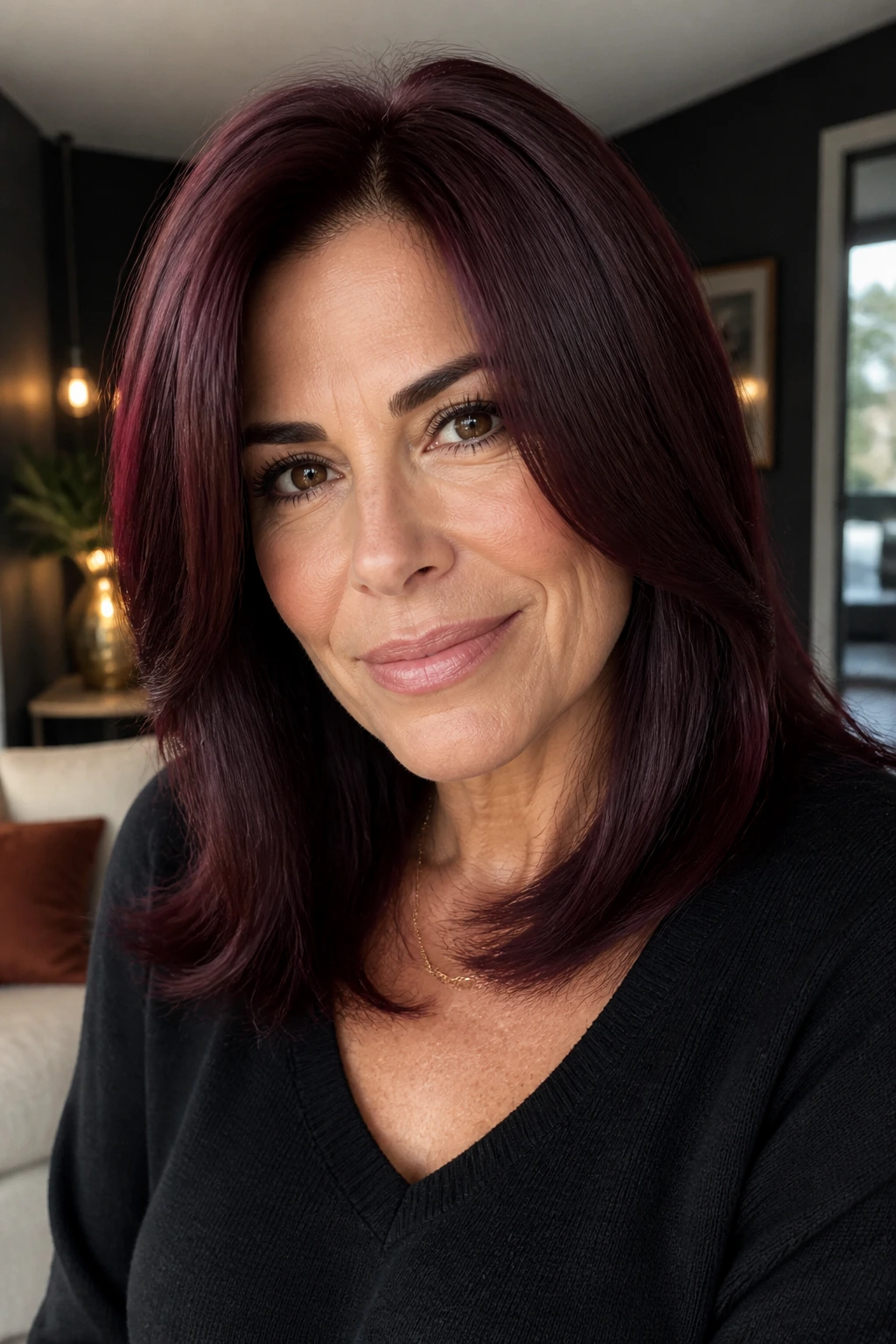
Burgundy brown sits between wine and chocolate, which is why it flatters so many skin tones. It has enough red to feel intentional, but the brown keeps it grounded and wearable.
This shade is especially good if your wardrobe leans black, navy, charcoal, or deep green. Burgundy brown gives those colors something to bounce off without fighting them. On medium-deep skin, it can look rich and polished; on fair skin, it can read a little more dramatic, which some people love and some people absolutely do not.
The best version has a glossed finish and a clean trim. Burgundy shows rough ends fast. If you are prone to dryness, plan on a weekly mask and less flat ironing than usual. The shade lasts well if you protect it, but the red family always asks for a little extra care.
23. Soft Jet Black with Dimensional Gloss
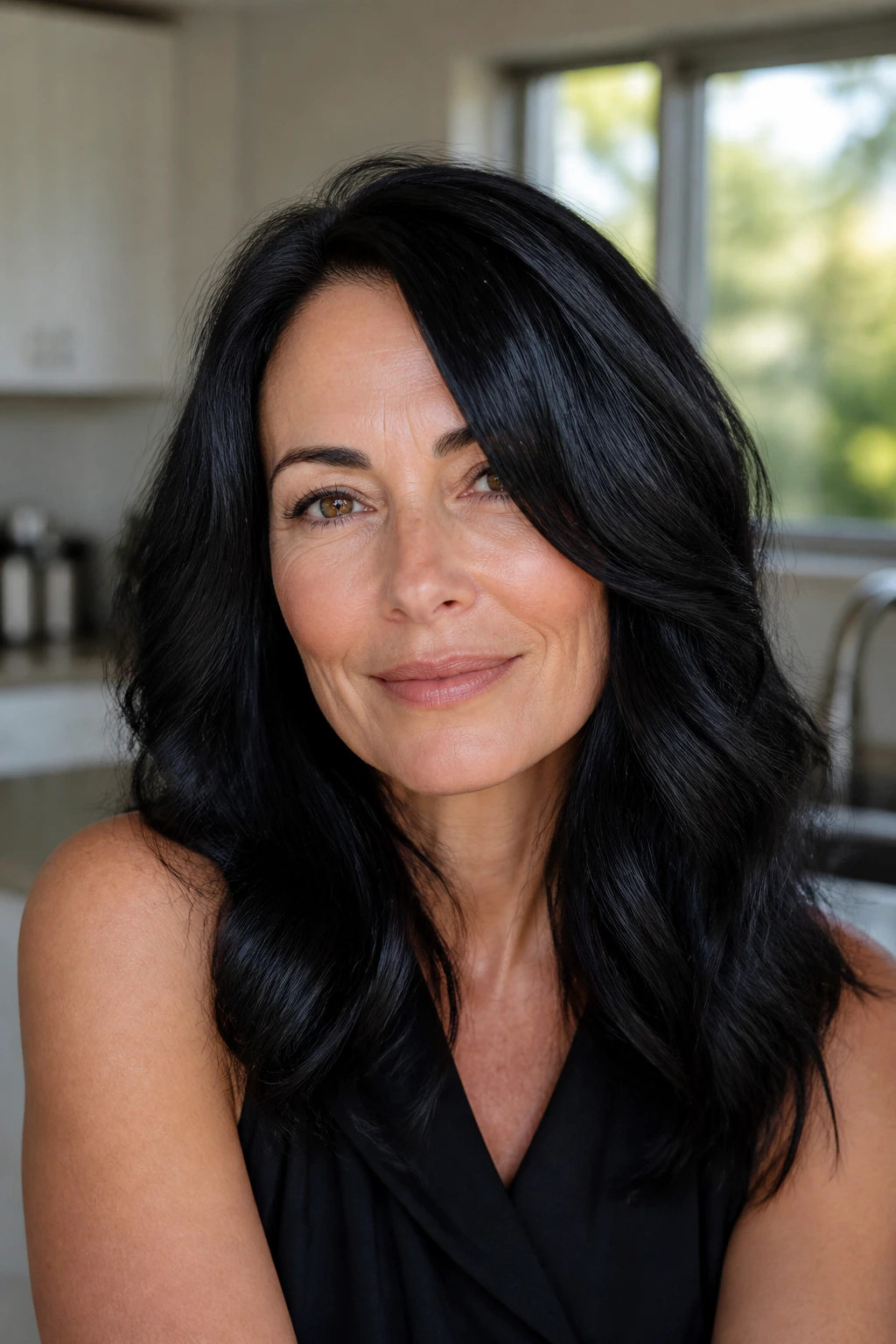
Jet black gets blamed for being harsh, but flat jet black is the real culprit. A soft jet black with a dimensional gloss can look sleek, polished, and surprisingly forgiving when the finish is reflective instead of matte.
This works best on thick hair, strong brows, or cuts with clean lines. Think blunt bob, long layers with polished ends, or a glossy shoulder-length cut. The gloss should be the star. If the hair looks dry, the shade gets harder immediately.
A brown-black glaze can soften the base just enough to keep the face from disappearing into the color. That’s a trick worth using if you like darkness but want some warmth at the hairline. One caution: do not pile on heavy oil. Black hair needs light reflection, not greasy shine.
24. Dark Hazel Brown
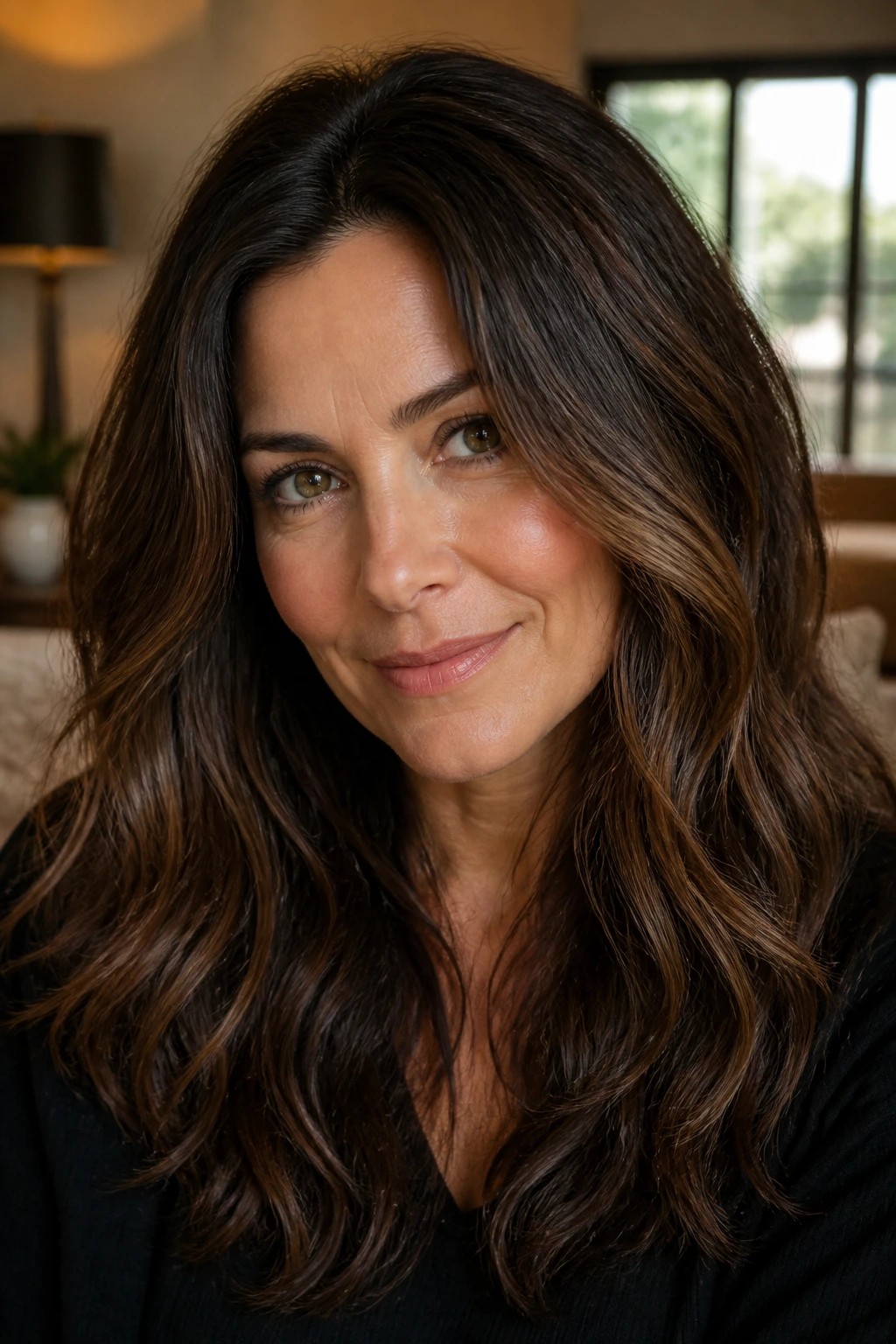
Dark hazel brown has a green-gold whisper in it that makes the shade feel alive without becoming obvious color. It’s a flattering choice if your skin has olive, golden, or neutral undertones and you want a brunette that doesn’t just sit there.
The hazel note is subtle. You see it more when the hair moves or when it’s styled with soft waves. That’s what gives the shade its depth. On straight hair, the color still works, but the undertone reads quieter.
I like hazel brown for women who want dark hair that still feels easy. It doesn’t have the edge of black and doesn’t go as warm as chestnut. It sits in the middle and does its job without fuss. If your brows are lighter than your hair, though, you may want to fill them a shade or two deeper so the whole look feels balanced.
25. Tawny Brunette with Bronze Threads
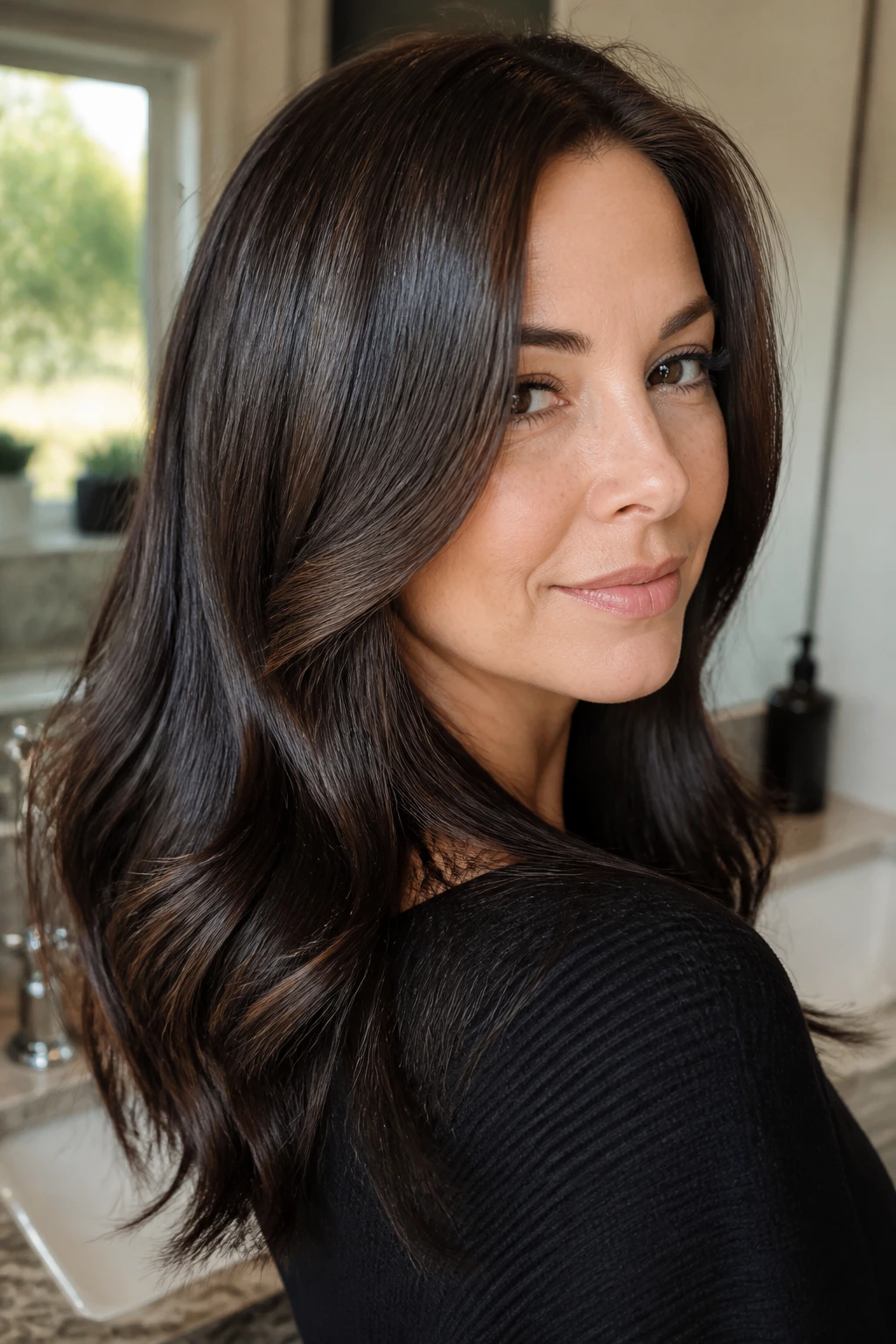
Tawny brunette has enough warmth to keep the hair from feeling cold, and the bronze threads add just enough movement to make it interesting. It’s a good fix when ash shades have gone too gray or too dull on your skin.
This one works best if you want the hair to look sun-kissed without looking highlighted. The bronze should be sparse and intentional, mostly through the top layers and around the face. That keeps the overall tone dark and rich, not busy.
On curls, tawny brunette is especially nice because the bronze threads catch the bends naturally. On straighter hair, a loose wave or round-brush blowout shows the contrast better. It’s a warm brunette, but not a copper one. There’s a difference, and it matters.
26. Merlot Brunette
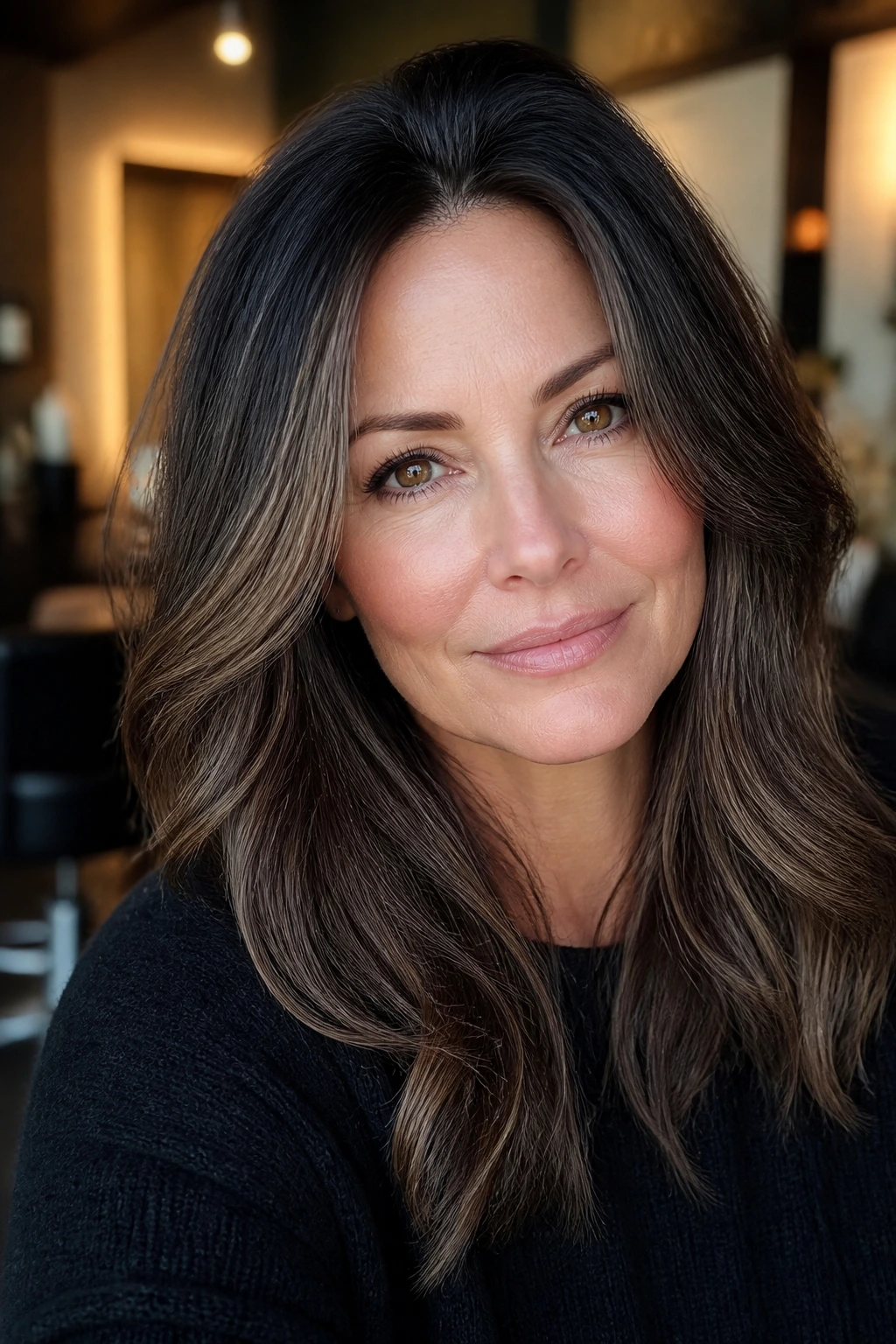
Merlot brunette is deeper than burgundy and cooler than auburn, which makes it a very balanced red-brown for anyone who wants mood without brightness. It feels luxe in a way some red shades don’t, mostly because the wine tone stays tucked under the brown.
This shade flatters medium to deep skin beautifully, and it can make dark eyes look even darker. It also suits shoulder-length cuts where the color has enough room to move but doesn’t stretch out so far that the red tones disappear. The finish needs to be glossy. A dry merlot brunette is not the same thing at all.
If you want the shade to stay rich, wash less often and use cooler water. Heat pulls burgundy shades down faster than people expect. A tinted conditioner in the same family can help between appointments, but keep it subtle or the hair starts to look painted.
27. Smoky Plum Brown
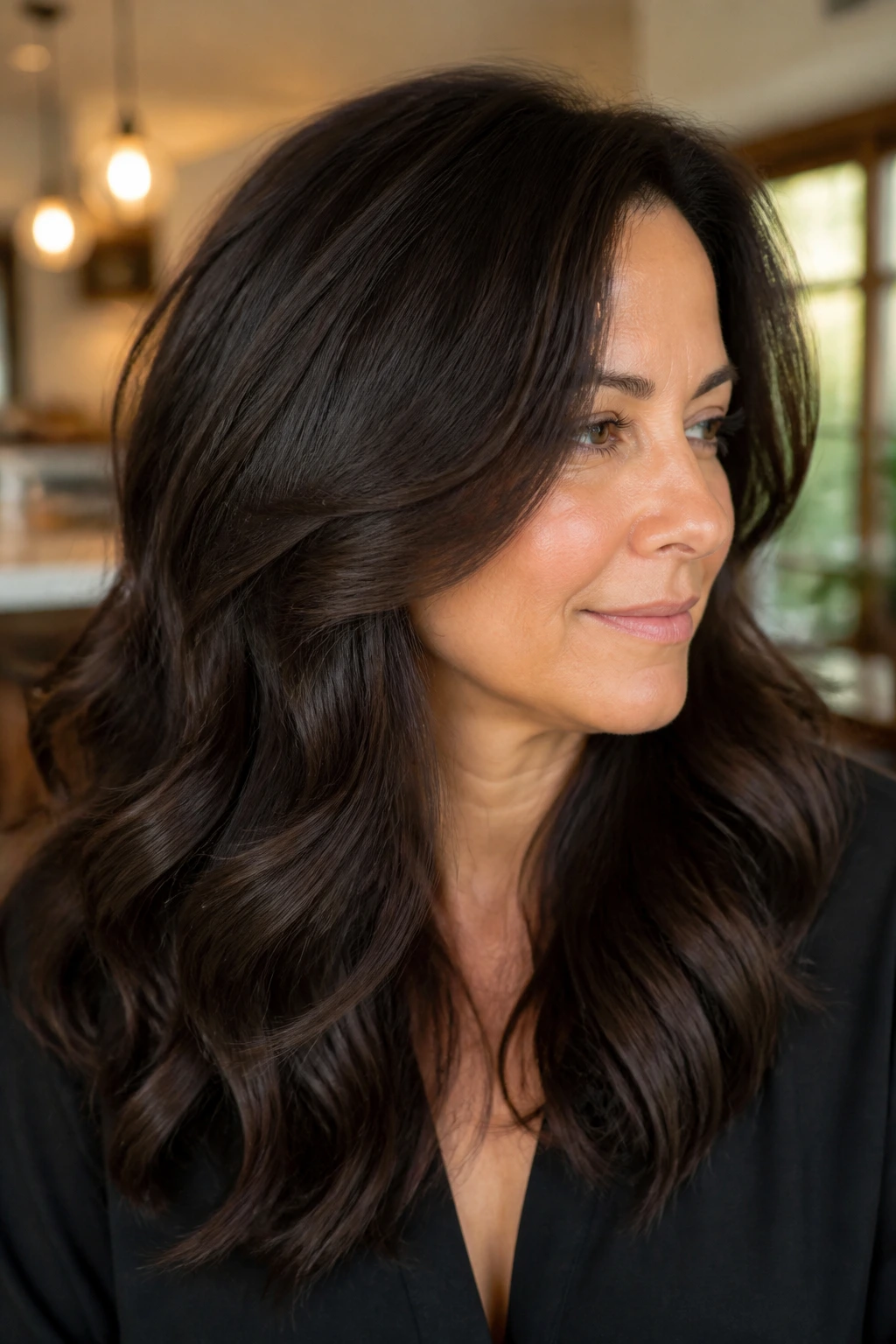
Smoky plum brown is for the woman who wants a little secret in her color. In daylight, it looks like a deep brunette with a cool undertone. In softer light, the plum wakes up and gives the hair a quiet shift.
That little reveal is what makes the shade feel modern. It is not loud. It’s more like a whisper that only shows up when the light hits right. I think it looks especially good on blunt bobs and collarbone cuts because the clean shape gives the plum more impact.
A smoky plum brown also plays well with cool makeup—berry lipstick, taupe shadow, polished brows. If your hair is porous, though, this is another shade that can grab too much pigment, so a strand test helps. The goal is a brown with a secret, not purple ends.
28. Cool Chocolate with Beige Ribbons
Cool chocolate is one of the most flattering dark shades when you want softness around the face without giving up richness. The beige ribbons keep it from feeling too heavy, and the cool brown base stops the warmth from drifting into red.
This is a smart pick if you wear makeup and want the hair to act like a backdrop rather than the main event. Beige ribbons add enough lift around the face to show off eyes and cheekbones, but they stay within brunette territory. That matters if you want dimension without the upkeep of more obvious highlights.
A few reasons it works
- The cooler base balances redness in the skin.
- Beige ribbons are softer than blonde and easier to grow out.
- The shade looks especially clean on layered cuts and soft waves.
If your hair has a lot of natural gray, this can blend beautifully, but the ribbons need to be fine. Chunky pieces will break the illusion fast.
29. Raven Black with Brown Glaze
Raven black sounds severe, and it can be if you leave it as a flat, one-process color. A brown glaze changes everything. It keeps the shade from looking ink-dense and gives the surface a softer, more wearable finish.
I like this best on very thick hair or long hair with a lot of body, where the depth can actually be an asset. The brown glaze works like a filter. It keeps the black rich but not cartoonish, which is the line you want to walk if you’re over 40 and don’t want the color to do all the talking.
This shade needs careful maintenance. Black shows every dry end and every rough cuticle. If you go this deep, trim the ends regularly and keep the shine products light. Heavy cream can make the hair look dull against such a dark base.
30. Maple Espresso with Toffee Ribbons
Maple espresso is the warm version of a dark brunette that still behaves like a dark brunette. The toffee ribbons are light enough to break up the base, but not so light that the color wanders into caramel territory.
That balance is exactly why it works so well on hair that needs softness. The maple tone gives warmth near the face, and the espresso anchor keeps the overall shade grounded. On loose waves, the ribbons show up just enough to make the hair look thick and layered.
This is the one I’d point to for someone who wants dark hair but fears looking washed out. It has warmth without brass, depth without heaviness, and enough movement to stay interesting between salon visits. It’s the kind of brunette that looks deliberate even when you barely styled it.
Why Dimension Matters More Than Darkness
Flat darkness is the fastest way to make good hair color look harsh. That’s the part people miss when they ask for “just dark brown” and then wonder why the result feels heavy around the face. The eye wants contrast, even in brunette shades. Without it, everything reads as one block.
A little dimension changes the whole equation. Fine ribbons, lowlights, gloss, and a softer root let dark color catch light the way fabric does when it’s cut well. You can see this most clearly on textured hair. A one-tone brunette tends to erase the bends; a multi-tone brunette traces them.
Hair over 40 often has more than one texture happening at once. The crown may be flatter, the ends may be drier, and the gray around the temples may be coarser than the rest. Dimension helps those differences blur together instead of calling attention to them. That’s why the best dark shades rarely look like one color for very long.
A cut matters too. Even the prettiest dark brown can slump if the cut is blunt in the wrong place or if the finish is too matte. Shape, shine, and undertone all matter. Darkness is only the starting point.
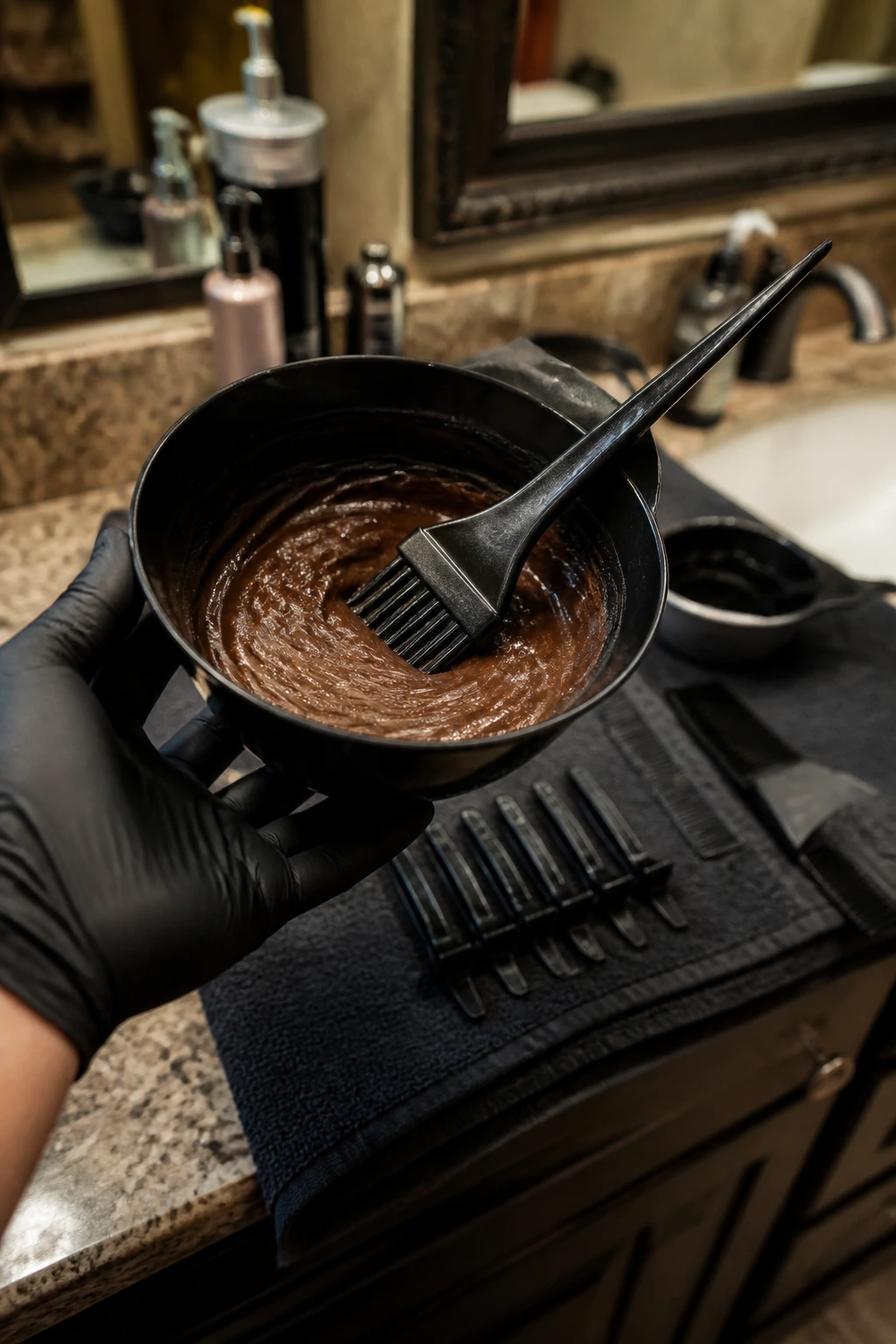
Essential Tools for Coloring and Styling Dark Hair at Home
-
Tint bowl and color brush: Gives you cleaner, more even application than squeezing dye straight from the bottle.
-
Rat-tail comb: Helpful for creating straight sections and lifting tiny slices of hair around the hairline and part.
-
Nitrile gloves: Better grip than thin plastic gloves, and they hold up when you’re working product through thicker hair.
-
Sectioning clips: Keep the top layers out of the way so you can reach the crown and nape without smearing color everywhere.
-
Old dark towel or color cape: Dark dye stains fast, and a cheap towel saves your good ones.
-
Timer: Do not guess. Dark colors can turn muddy if they sit too long, especially on porous ends.
-
Color-safe shampoo and conditioner: These slow down fade and keep the cuticle smoother, which matters a lot on dark shades.
-
Clarifying shampoo: Use before coloring if there’s styling buildup or dry shampoo residue on the roots.
-
Heat protectant: Helps keep dark hair glossy if you blow-dry or flat iron it.
-
Gloss or glaze kit: A clear or tinted gloss can rescue a brunette that looks a little flat between appointments.
Smart Shade Selection for Dark Hair Color Ideas for Women Over 40
Cool, warm, and neutral undertones
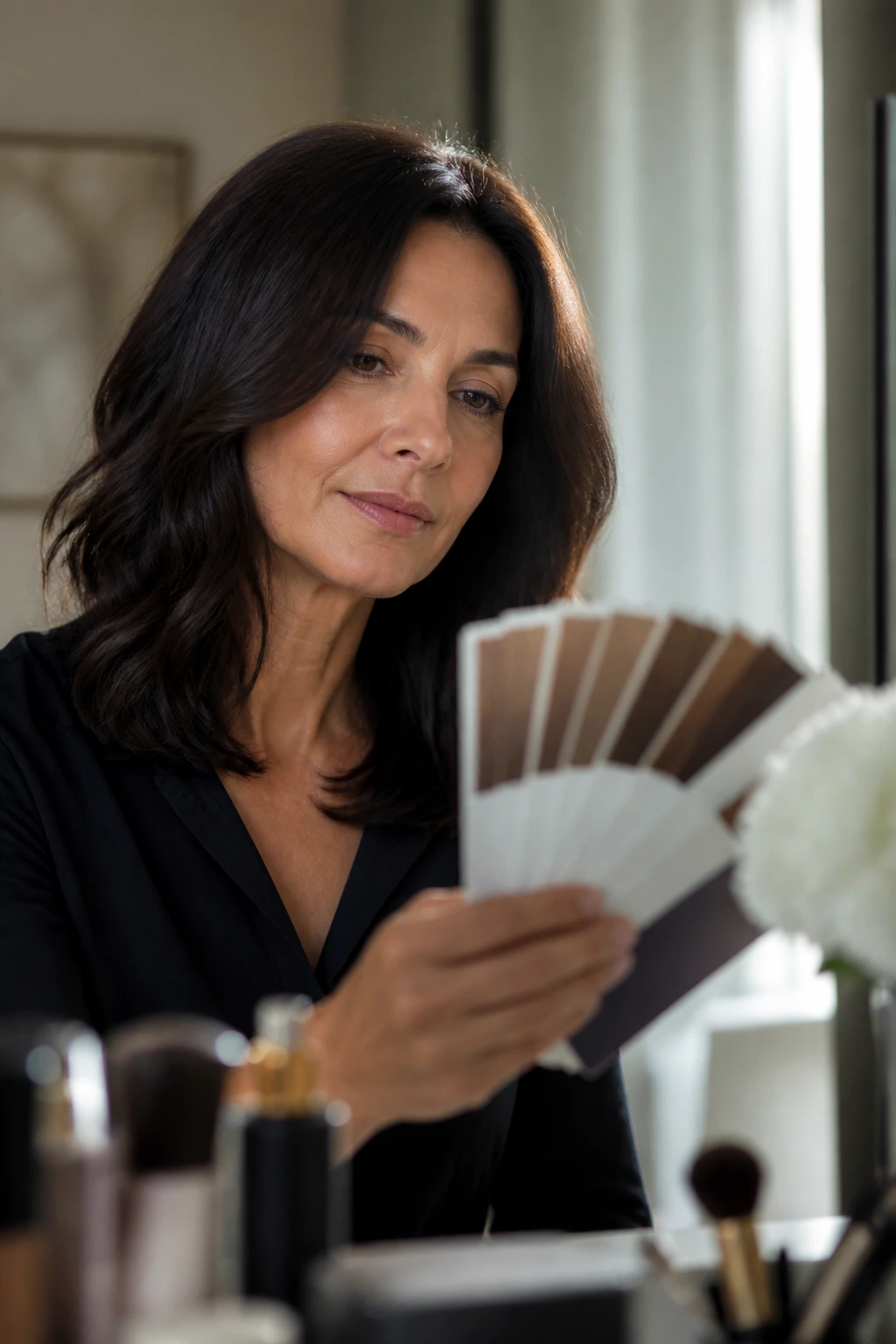
The easiest way to choose among dark hair color ideas for women over 40 is to look at undertone before you look at trend names. Cool skin usually likes mushroom, ash brunette, blue-black, plum, and violet-brown. Warm skin is happier with chestnut, mahogany, auburn, walnut, and bronze. Neutral skin can wear almost anything, which is both a gift and a trap, because it’s easy to pick a shade that looks nice in the bowl but goes dull once the hair dries.
Level matters more than the name on the box
A level 3 or 4 brunette gives you richness without the hard edge of a true black. Level 2 and below can be gorgeous, but they ask more from your cut, shine, and makeup. If you’re not sure, start one level lighter than your first instinct. Dark hair always looks deeper once it’s dry.
Gray coverage needs a different plan
Temple gray and part-line gray often resist color more than people expect. Permanent color usually covers it better than demi-permanent, but demi can be smarter if you want softness and less obvious grow-out. If you have scattered gray, lowlights and shadow roots often look better than trying to erase every silver strand.
How to Wear Dark Hair Color Ideas for Women Over 40 Without Harsh Contrast
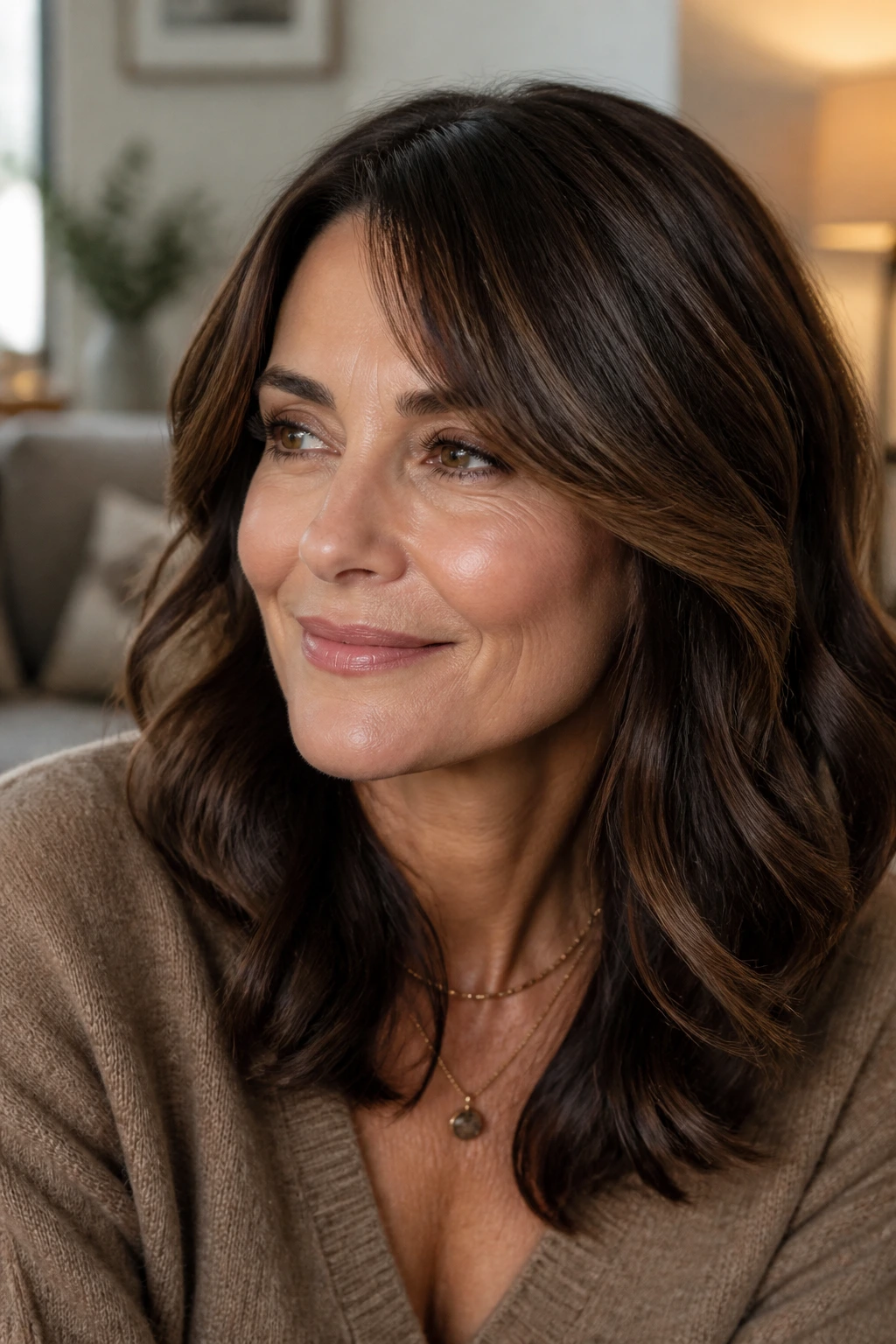
Placement: Keep the deepest color near the nape and underlayers if you want lift around the face, or bring richness right up to the hairline if you want a stronger look. Small changes there make a big visual difference.
Styling: Soft waves, a round-brush blowout, or a curved bob show the movement in brunette dimension better than poker-straight hair. Dark color needs reflection, and the bend in the hair gives it that.
Wardrobe Pairing: Cream, camel, olive, navy, berry, charcoal, and black all work well against dark hair. The fabric finish matters too; matte knits can make the color feel softer, while satin and silk make it look shinier.
Makeup Balance: If your hair goes much darker, brows may need a little more shape and warmth. A brown-black pencil, a cream blush, and a lip with some pigment keep the face from disappearing into the shade.
Extra Shine, Gray Blending, and Root-Softening Tricks
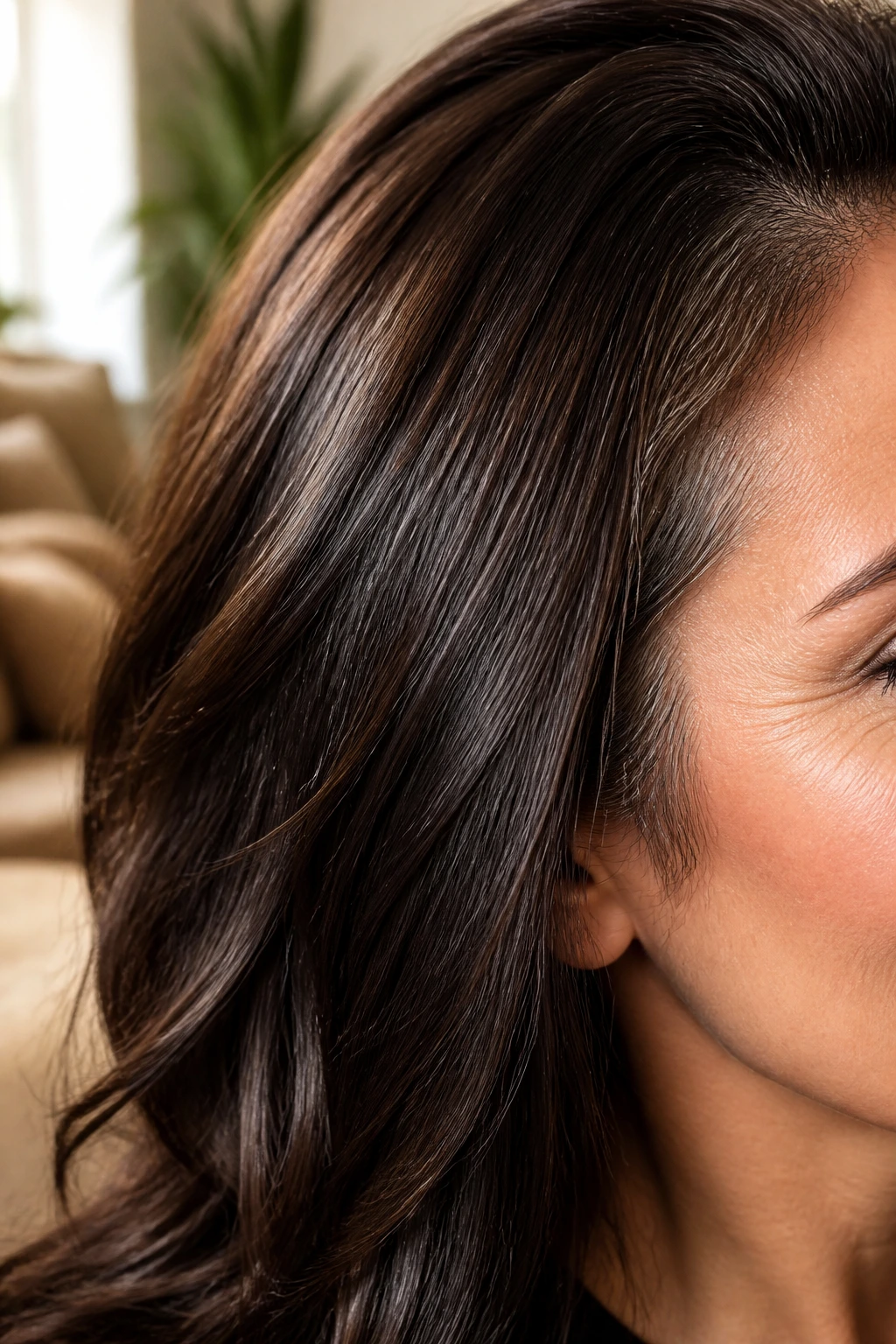
Gloss Finish: A clear or tinted gloss every 4 to 8 weeks keeps dark hair from looking rough, especially if you heat style or live in hard water. It also smooths the cuticle, which helps the color reflect instead of swallow light.
Gray Blending: Put the first lowlights where the eye lands fastest—temples, part line, and front layers. That is where silver shows first, and that is where the softness matters most.
Root Softening: A shadow root one level lighter than the deepest ends buys you grow-out time and makes the color feel more expensive. The transition should be blurred, not stripey.
Make-It-Yours: Warm it up with chestnut or mahogany if your skin needs life. Cool it down with mushroom or ash if the shade starts to pull orange. Keep the ribbons fine if you want subtlety; make them chunkier only if you want a more obvious salon look.
Keeping Dark Color Fresh Between Visits
Fresh dark color needs a short quiet period before it meets shampoo. Wait 48 hours after coloring before the first wash if you can. That gives the cuticle time to settle and helps the pigment hold better.
After that, use lukewarm water and a color-safe shampoo 2 to 3 times a week. Hot water strips dark tones quickly, and it shows up first as dullness at the mids and brass at the ends. If your hair gets oily fast, shampoo the scalp and let the suds rinse through the lengths instead of scrubbing the ends.
Permanent gray coverage usually needs a root touch-up every 4 to 6 weeks if you want a clean line. Balayage and lived-in brunettes can stretch to 8 to 12 weeks before they start asking for attention. Demi-permanent glosses usually hang on for about 6 to 12 shampoos, depending on porosity and how often you heat style.
If you mix at-home color, don’t try to save the leftovers once it’s been combined. Oxidation starts immediately. Unmixed color can sit sealed on the shelf until its printed date, but mixed dye is a one-and-done situation.
Variations and Adaptations to Try
Gray-Blending Brunette: Keep the base dark, then use fine lowlights and a soft shadow root instead of trying to cover every silver strand. It’s the best choice if you want less obvious regrowth and fewer harsh lines at the temples.
Cool-Silk Brunette: Push the tone toward mushroom, ash, or violet-brown if your hair tends to turn orange or your skin looks better in cool colors. This version works well on straight or softly waved hair because the cool depth shows movement without warmth.
Warm Glow Brunette: Build the shade around chestnut, walnut, mahogany, or cinnamon if your complexion needs life. The warmth should stay deep, not copper-bright, so the look remains dark and wearable.
Low-Maintenance Shadow Root: Keep the root a half-step deeper than the mids and ends, then blur the transition. This is the easiest route if you hate seeing a hard grow-out line every time you look in the mirror.
Sensitive-Scalp Friendly Routine: Choose ammonia-free or gentler formulas when possible, and always do a patch test 48 hours before permanent dye. If your scalp stings with darker color, ask for a gloss or demi option instead of jumping straight into a strong permanent process.
Common Mistakes That Make Dark Hair Look Flat
-
Choosing a shade that’s too dark, too fast: A level 1 or 2 can look heavy around the face if the cut and shine are not there to support it. Start at level 3 or 4 and go deeper later if you still want more drama.
-
Ignoring undertone: A cool ash brunette on warm skin can look dry or gray, while a warm chestnut on very cool skin can go orange. Match the shade family to the face, not the photo on the box.
-
Skipping shine care: Dark hair shows roughness faster than light hair. If the cuticle is dry, the color looks dull even when the pigment is rich.
-
Piling on one heavy color all over: Solid color without ribbons or lowlights can make thick hair look like one large shape. Dimension keeps the silhouette soft.
-
Overwashing with hot water: This pulls dark pigment out faster and leaves the mids looking tired. Lukewarm water and a color-safe cleanser fix more than most people realize.
Frequently Asked Questions
What dark hair color is most flattering for women over 40?
The most flattering shade is usually the one that respects your undertone and your gray pattern. For many people, that means a level 3 to 5 brunette with dimension—espresso, chocolate, chestnut, or mushroom—rather than a hard, one-note black.
Is jet black too harsh after 40?
Not always, but flat jet black can be unforgiving if the hair is dry, very fine, or cut without movement. If you like the depth, soften it with a brown glaze or a few lowlights so the color reflects light instead of absorbing it.
How do I cover gray without looking like I colored every strand?
Ask for gray blending, not just full coverage. Fine lowlights, a shadow root, and a demi-permanent gloss often soften regrowth better than one heavy permanent color from root to tip.
What if my dark brown turns red in the sun?
That usually means the undertone is warmer than you wanted, or the hair is porous and holding onto warmth. Ask for a cooler brunette next time—mushroom, ash, or cocoa—and keep a blue-toned shampoo in rotation if brass keeps sneaking through.
Can I go from blonde to a dark brunette at home?
You can, but it’s risky if your hair is porous or heavily lightened. Dark dye can grab unevenly on blonde hair, so a strand test is non-negotiable, and many people get a cleaner result if a colorist fills the hair first.
How often should dark hair be glossed?
Every 4 to 8 weeks is a useful range for most brunettes, depending on heat styling and wash frequency. If the hair starts looking dull before the roots show, a clear gloss or tinted glaze can bring back the sheen fast.
Will dark hair make fine hair look thinner?
It can if the color is flat and the cut has no movement. Fine hair often looks fuller in a rich brunette with subtle ribbons, a soft blowout, or a blunt edge that gives the shape more presence.
What’s the safest way to test a new dark shade?
Do a strand test in the back first, especially if your hair is highlighted, previously boxed, or highly porous. That one step saves you from muddy ends, greenish ash, or pigment that goes far darker than the swatch card promised.
A Dark Shade That Still Feels Soft
Dark hair does not have to mean heavy hair. When the undertone makes sense, the finish is glossy, and the placement follows the cut, the whole look feels more polished than severe.
That’s the real thread running through these dark hair color ideas for women over 40: not age erasure, not trend chasing, just a smarter way to use depth. The best brunette is the one that makes your hair look like it belongs on your head, in your light, with your gray pattern and your texture. Pick the shade that gives you that little lift when you pass a mirror.