



Silver wigs for a natural look and heart-shaped faces can be stunning when the cut, the root, and the shine level all pull in the same direction. Get those three things wrong, and the wig starts announcing itself before you’ve even left the mirror. Get them right, and the whole look settles in fast: the forehead feels softer, the chin looks a little fuller, and the silver reads like hair, not a costume.
Heart-shaped faces have a very specific geometry. The forehead and upper cheeks tend to carry the width, while the jawline narrows toward a smaller chin. That means the best wig choices don’t crowd the temples or stack height at the crown. They bring movement lower, bend around the jaw, and keep the part from sitting dead center unless there’s enough fringe or layering to break it up.
Silver is its own beast. Flat, icy fiber can look sharp in a bad way, especially under indoor lights. A rooted silver, a smoky gray, or a salt-and-pepper blend usually behaves better because it gives the eye something to read as depth. And when the cut is softened with face-framing pieces, the whole style stops looking pasted on.
Why These Silver Looks Work So Well on Heart-Shaped Faces

Face balance: The strongest silver wig choices for a heart-shaped face add softness below the cheekbones, not more width at the temples, so the face feels steadier from top to bottom.
Natural finish: A dark root, a matte fiber, or a gentle lowlight keeps silver from looking like shiny plastic under daylight bulbs.
Parting flexibility: Side parts, off-center parts, and broken curtain bangs tend to work better than a severe middle part when the forehead is already the widest point.
Better proportions: Chin-length bobs, collarbone lobs, and shoulder-skimming layers usually land in the sweet spot because they add shape near the jaw without boxing it in.
Low-fuss styling: The best pieces here do not need a full salon blowout. A small bend at the ends, a light finger-comb, and a little root lift are often enough.
Shine control: Silver fiber can go from cool to costume in a flash if the density is too high or the finish is too glossy, so a softer texture almost always wins.
1. Rooted Ash-Silver Lace Bob
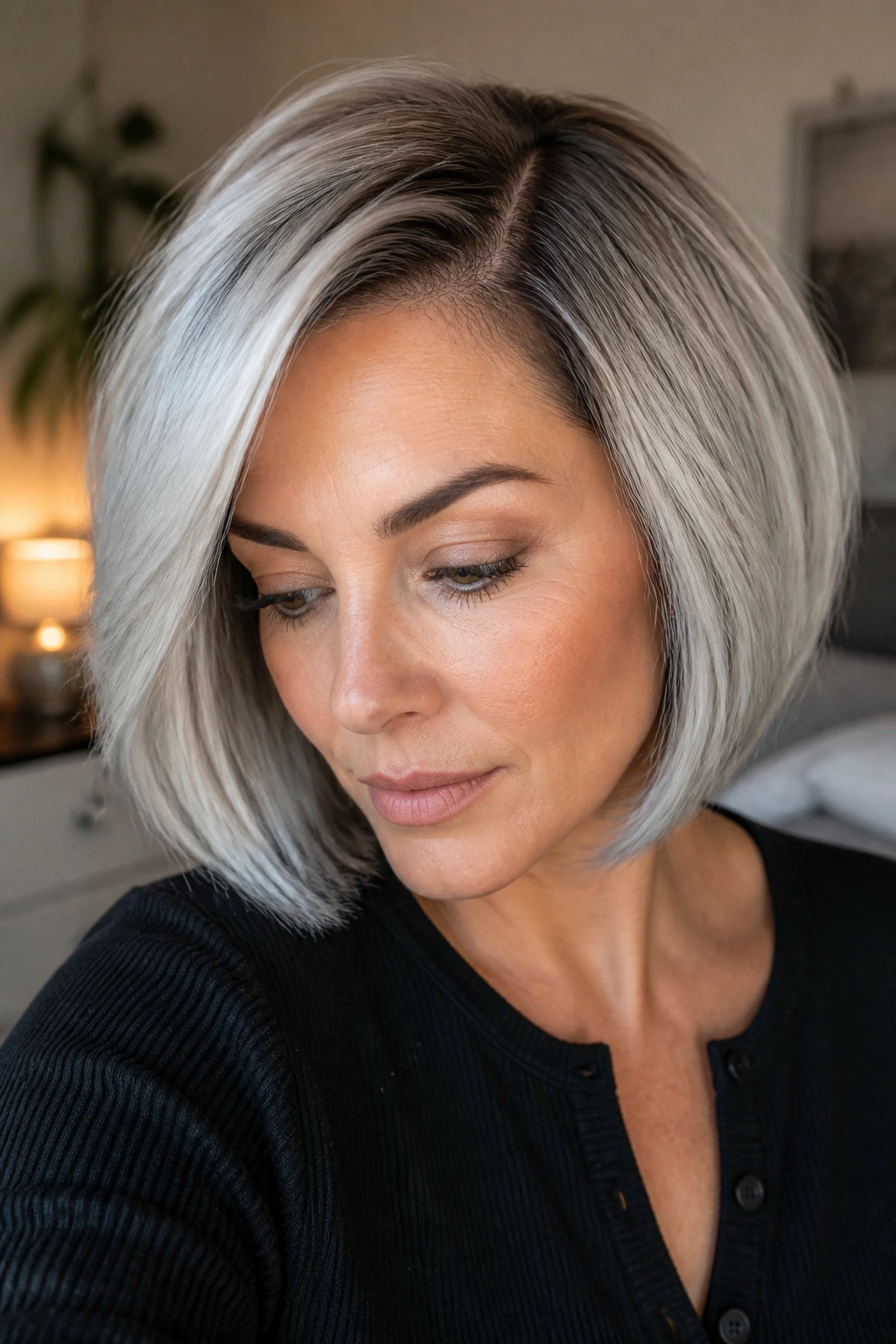
A chin-grazing bob in ash silver is one of those styles that looks expensive without trying too hard. The root shadow keeps the color from floating, and the slight bend under the ends gives the cut a shape that feels deliberate instead of stiff. On a heart-shaped face, that matters. A lot.
Why It Sits Well on a Heart-Shaped Face
The bob lands right where the face needs help: below the cheekbones, above the shoulders, and away from the widest part of the forehead. That little bit of inward curve near the jaw softens the taper toward the chin, which is the whole game with this face shape.
A side part is the cleaner move here. Center parts can work, but they need more face-framing or a softer fringe to keep the top half from feeling too exposed. A lace front with pre-plucked hairline edges makes the style read more like a real haircut and less like a fixed shell.
- Best length: 10 to 12 inches from crown to hem.
- Best density: 110% to 120% so the bob moves instead of puffing out.
- Best finish: matte or lightly satin, not glossy.
- Best part: deep side or soft off-center.
Tiny but important tip: Ask for the ends to curve slightly under the jaw, not hug it tightly. A hard curl-in can make the lower face look pinched.
2. Feathered Silver Lob with Curtain Bangs
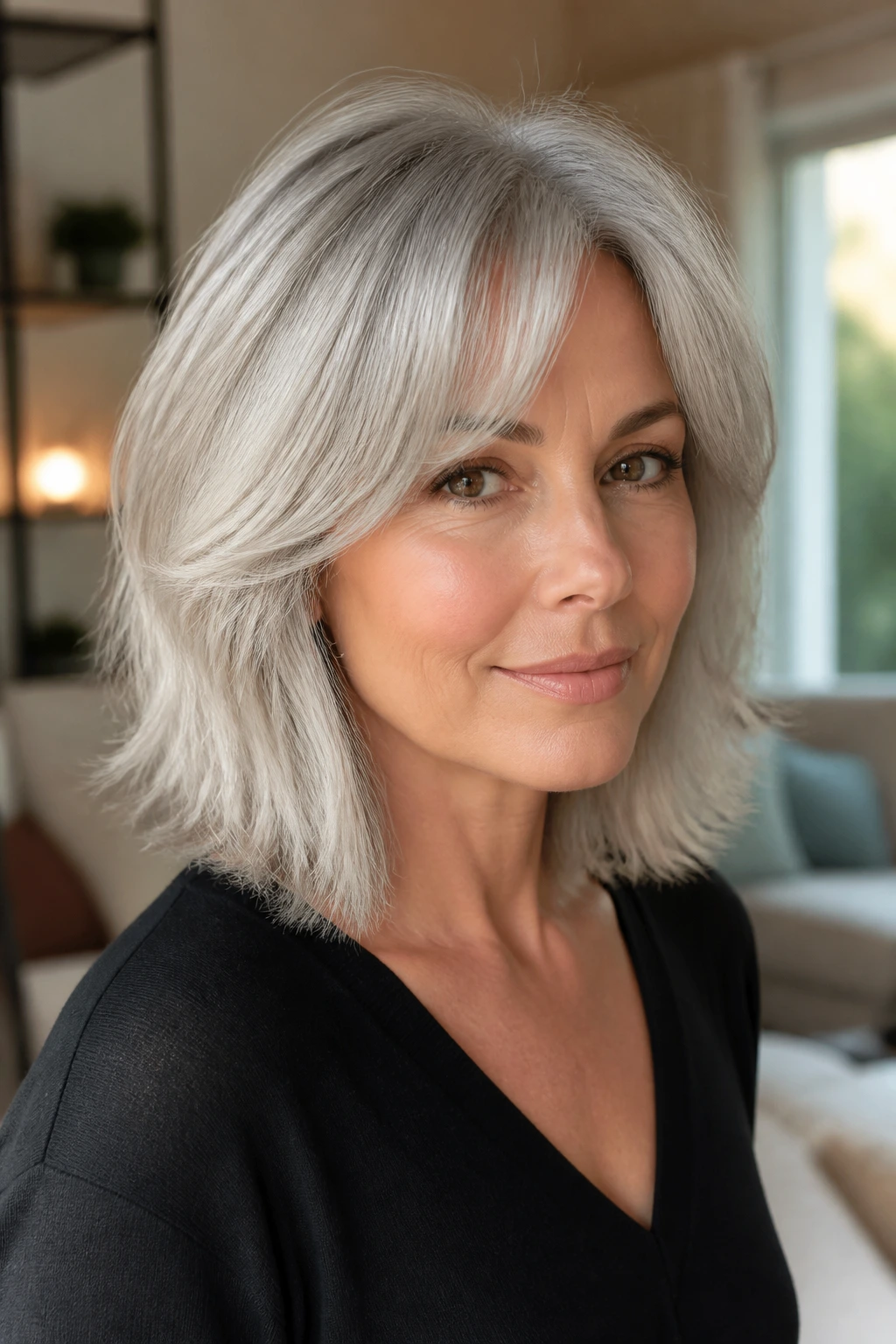
A feathered lob with curtain bangs does a lot of quiet work. The layers skim the collarbone, the bangs split the forehead into softer sections, and the whole shape moves away from the temples instead of crowding them.
Why This Cut Keeps the Face Open
Curtain bangs are useful on heart-shaped faces because they break up the forehead width without building a heavy wall across it. They also draw the eye downward in a soft V, which helps the face feel longer and less top-heavy. That is a better trick than piling on crown volume, which only makes the upper half louder.
The lob itself should hit between the collarbone and the top of the chest. Shorter than that and you start losing the gentle drop that helps the face balance. Longer than that and the shape can slide flat unless the layers are well cut.
Wear this one with a loose bend, not a tight wave. The best version looks like it was brushed out after a blowout and then left alone.
3. Long Silver Shag with Wispy Fringe

Why do shag cuts keep showing up for silver hair? Because they solve two problems at once: they remove bulk at the top and put movement where the face needs it. A heart-shaped face usually looks better when the wig doesn’t stand tall at the crown, and a shag keeps the silhouette broken up in all the right places.
The Fringe Does More Than It Looks Like It Does
The wispy fringe shortens the forehead visually without boxing the face in. That’s the part people miss. Thick bangs can swallow a heart-shaped face and make the cheekbones disappear, but a soft fringe lets some skin show through and keeps the style airy.
How to Wear It
A long shag works best when the layers start around the cheekbones and continue down past the jaw. That leaves enough hair to graze the lower face while still keeping the texture piecey. If the fiber is heat-friendly, a quick pass with a large barrel iron at low heat can give the ends a loose kick; if it isn’t, finger twisting after a light mist of wig-safe spray is enough.
How to style it: scrunch the ends, shake the crown loose with your fingers, and avoid brushing the fringe flat against the forehead. That little bit of irregularity is what keeps it from looking too finished.
4. Shoulder-Length Soft Wave with Shadow Root
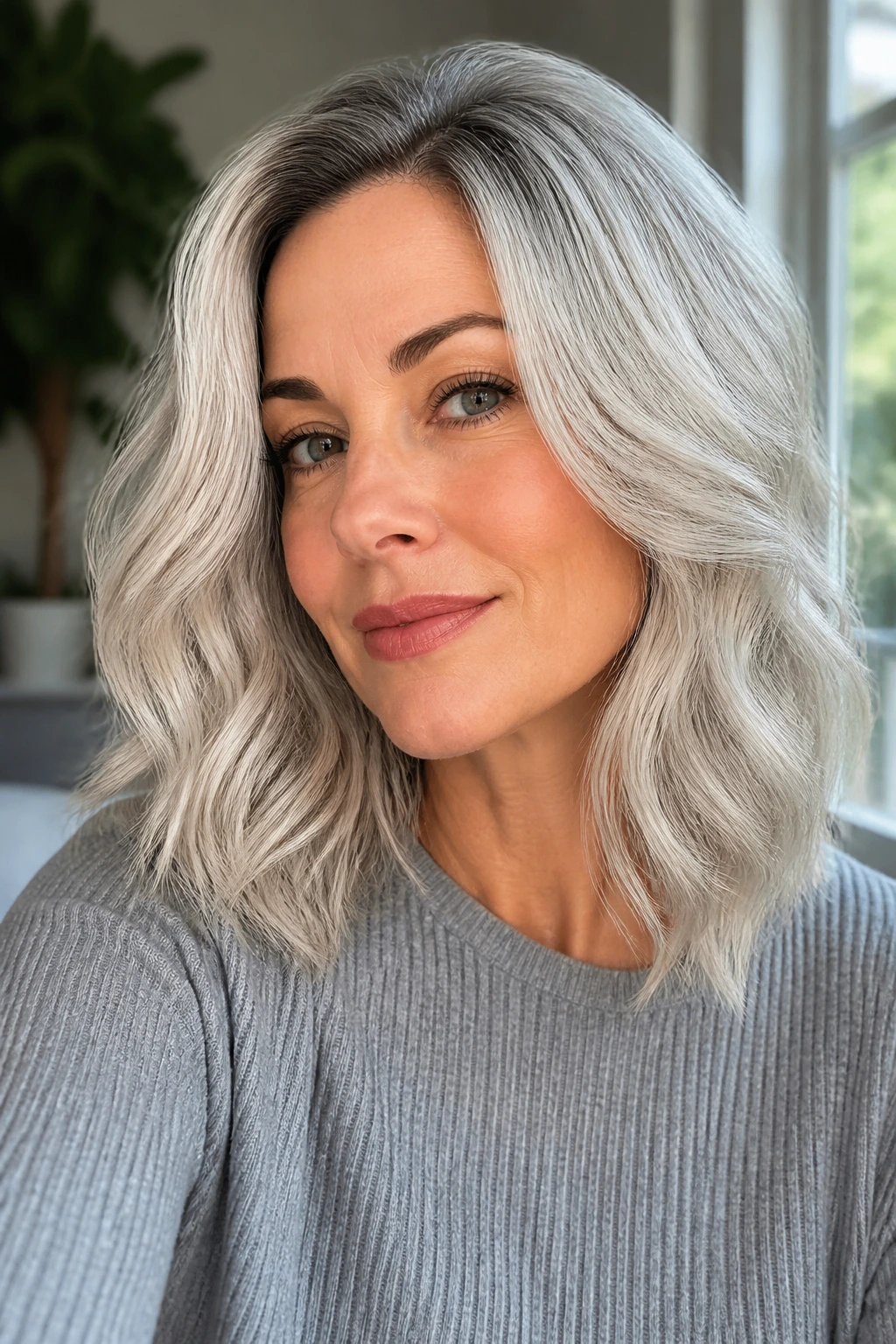
If you want silver hair that behaves politely in daylight, this is the one I’d point to first. Shoulder-length waves with a shadow root are easy on the eyes, easy on the face, and easy to keep from turning into a bright silver block.
The shadow root matters more than most people think. It gives the eye a place to start, and that grounded top keeps the silver lengths from looking like they were dipped in metallic paint. On a heart-shaped face, that darker base also trims some of the visual width around the forehead.
The waves should be soft and broad, not barrel-tight. A loose S-wave creates depth without making the wig look overstyled. If the ends sit a little below the shoulders, even better. That extra length draws the eye lower and softens the taper toward the chin.
- Good for everyday wear.
- Good for people who want movement without a big hair routine.
- Good for balancing a narrow jawline.
- Good with side parts or broken center parts.
The cleanest version has just enough lift at the roots to avoid flatness, then falls in a relaxed curve around the collarbone. That’s the kind of shape that looks believable in motion, which matters more than what it does on a hanger.
5. Sleek Monofilament Side-Part Bob
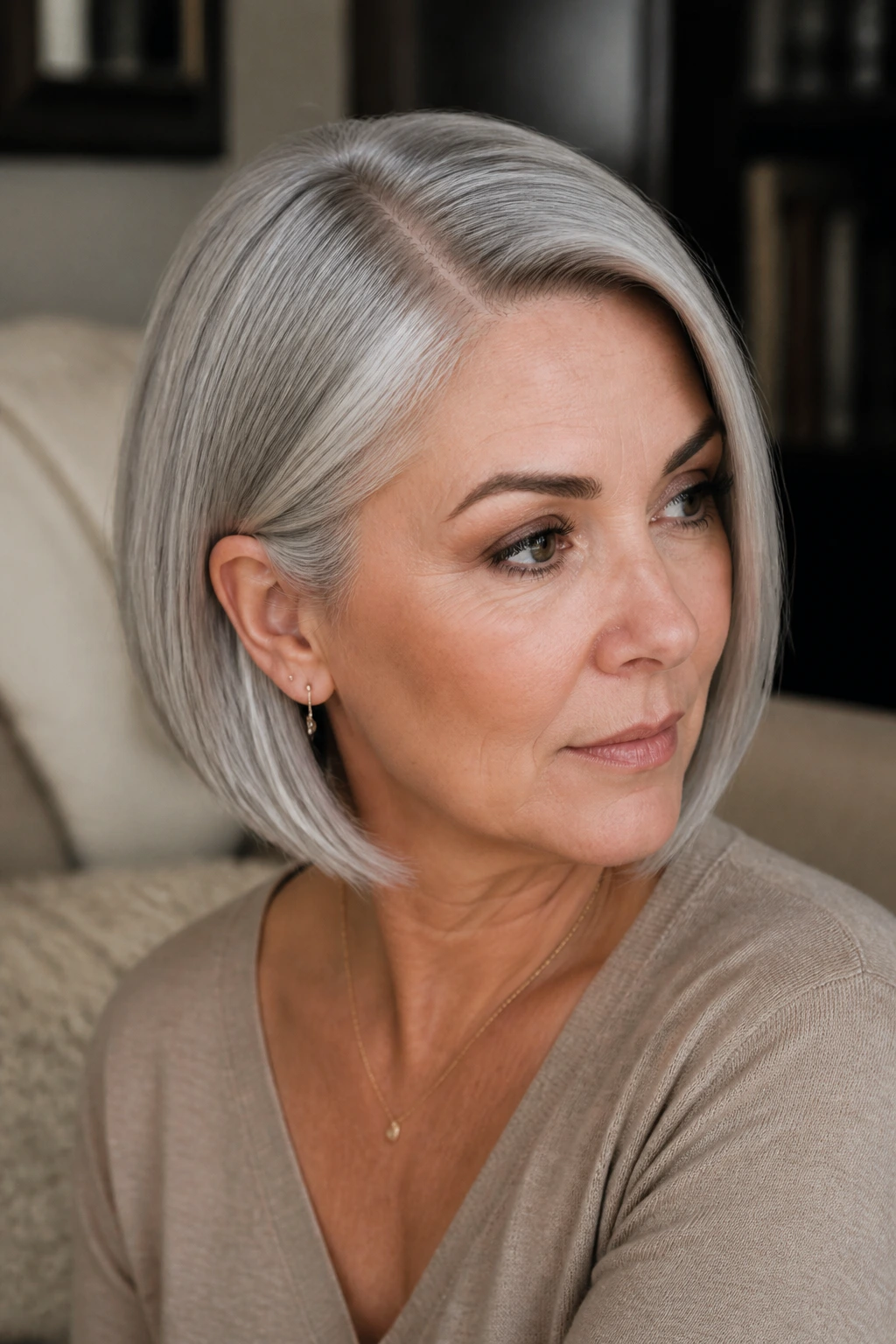
A sleek side-part bob can look brutally modern or quietly real, and the difference usually comes down to the cap. A monofilament top gives you that scalp-like parting area that looks less stamped on, especially in silver, where every fake bit shows faster than it should.
The side part keeps the focus away from the center of the forehead. That is useful on a heart-shaped face because the upper half already carries visual width. Letting the part fall a little off center gives the face a better line without asking the wig to do too much.
This cut works best when the ends are not razor-sharp. I prefer a tiny bevel at the hem, just enough to take the edge off. If the bob is too flat and too straight, it starts to look like a panel of hair instead of a haircut. A small inward bend near the jaw solves that without making it old-fashioned.
The nice thing about this style is how little it needs after you put it on. Tuck one side behind the ear, leave the other slightly loose, and let the silver do its job. Clean. Sharp. Still believable.
6. Silver Layered Pixie with Tapered Sides
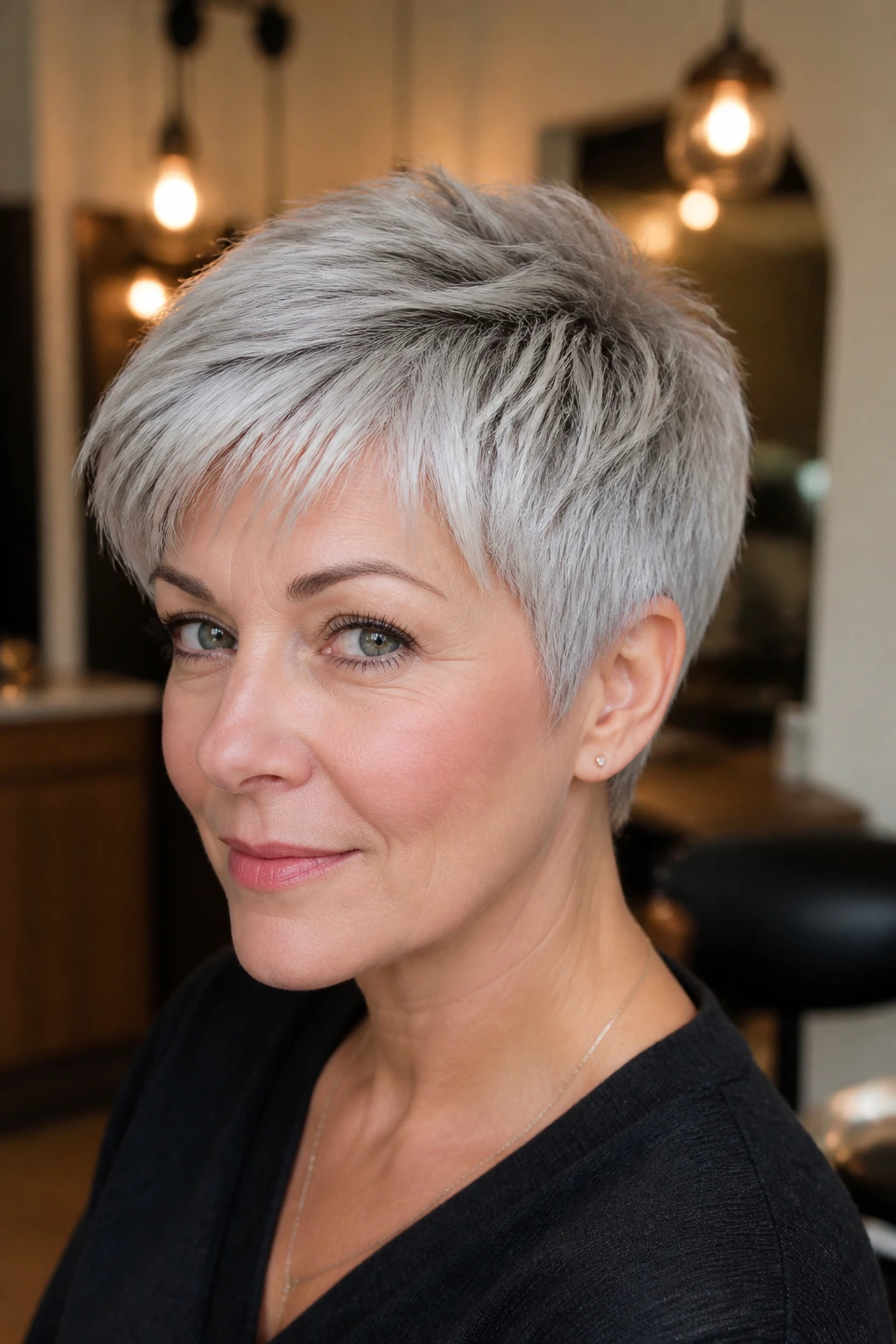
A layered silver pixie is the quickest way to make the face look brighter without building extra width at the temples. The key is restraint. Keep the sides snug, the top soft, and the fringe broken up rather than spiked.
Unlike a dramatic pixie that shoots straight up, this version stays close to the head and avoids adding height where a heart-shaped face already reads wide. The taper at the sides narrows the profile a little, which gives the chin more room to breathe. That’s a small detail, but it changes the whole shape.
This cut is best for someone who likes the feel of light hair and doesn’t want to wrestle with long lengths every morning. A few fingers of piecey texture on top, a short nape, and a wispy front section are usually enough. If you wear glasses, even better. The clean sides sit nicely around the frames and don’t crowd the temples.
Ask for roughly 2 to 3 inches on top, then shorter layers that tuck in behind the ears. Too much height turns the pixie into a little silver puff. Keep it neat, not skyward.
7. Face-Framing Silver Blowout Layers
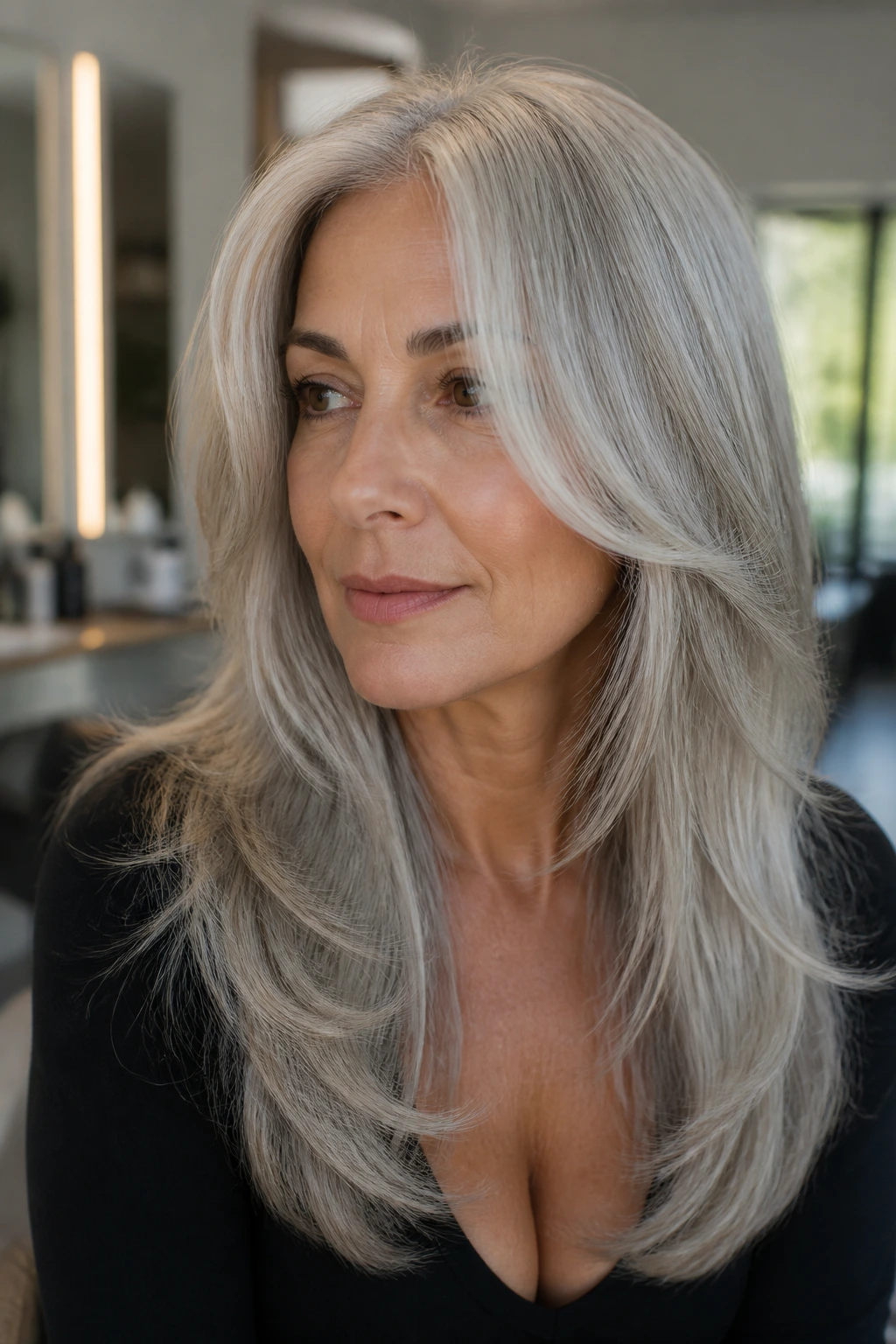
There’s a specific kind of silver wig that looks like it walked out of a good salon blow-dry and then forgot to leave. This is it. The layers are long enough to move, the finish is soft, and the front pieces curve away from the face just enough to make the cheekbones look intentional.
Why the Blowout Shape Works
A heart-shaped face needs a little visual weight lower down, and these layers give it exactly that. The volume lands around the jaw and shoulders, not at the top, so the face stays balanced. A smooth bend near the ends also keeps the silver from reading harsh or flat.
Quick Shape Notes
- Start the shortest face-framing layer around the cheekbone.
- Keep the longest layer somewhere between the collarbone and upper chest.
- Use a round brush or large rollers if the fiber allows it.
- Avoid teasing the crown too much; a little lift is enough.
The best part of this style is the way the front pieces soften a strong forehead line. A middle part can work here, but I like a slight shift to one side so the whole thing feels more relaxed. It’s a polished look, yes, but not a frozen one. That matters.
8. Mushroom Gray Mid-Length Curls

Mushroom gray is one of the easiest silver tones to wear because it has that smoky, lived-in quality that pure icy silver sometimes lacks. Add mid-length curls, and the whole wig starts to look fuller without looking big.
The curls matter because they break up shine. Straight silver can reflect light in a very blunt way, and that sharp reflection is often what makes people think “wig” first. Loose curls soften that edge. The eye reads movement instead of surface glare.
This style works especially well if the curls start below the cheekbone and widen slightly near the shoulders. That gives the lower half of the face a bit more visual presence, which is exactly where a heart-shaped face often benefits. Keep the top smooth, though. Too much lift at the crown and the balance goes wrong fast.
I like this one with a dark mushroom root and soft lowlights underneath. It makes the gray feel layered, not printed. If you want a style that looks believable in bright daylight, this is one of the safer bets.
9. Icy Platinum Straight Lob
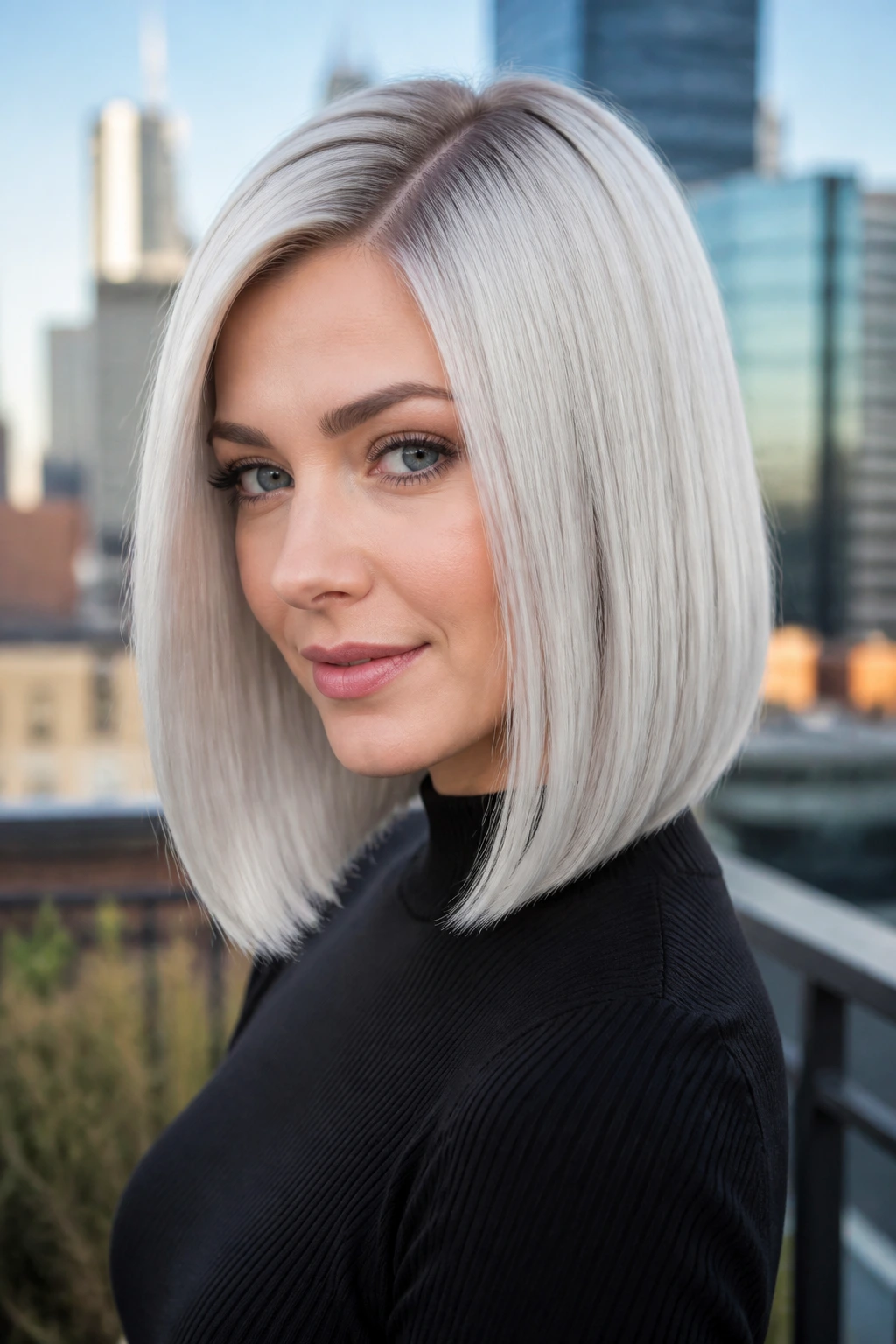
People worry that a straight platinum lob will look too sharp on a heart-shaped face. Sometimes it does. But only when the root is blank, the part is too strict, and the ends stop like they were cut with a ruler.
What Makes It Work
The fix is a soft root shadow and a slightly beveled hem. That’s it. Keep the lob around 12 to 13 inches, let it graze the shoulders or sit just above them, and the shape stays clean without looking stiff. The straight line gives structure, while the silver shade brings the drama.
How to Wear It
A side part is usually kinder than a hard center line. If you do wear it in the middle, leave a little face-framing hair loose around the temples so the forehead doesn’t dominate the picture. A monofilament part helps too, because the scalp effect makes a straight style look less synthetic.
This is the wig I’d choose when I want silver hair to feel crisp rather than fluffy. There’s a place for fluffy. This is not that place. Keep the ends smooth, the shine controlled, and the root slightly deeper than the mid-lengths.
10. Salt-and-Pepper Pageboy

A salt-and-pepper pageboy has a kind of plainspoken charm. It isn’t trying to look younger, older, bolder, or softer. It just looks like hair that has lived a little.
That’s part of why it suits a heart-shaped face so well. The rounded pageboy shape curves gently around the jaw without crowding the chin. The salt-and-pepper blend also makes the style feel more believable, because it mimics the uneven depth real hair gets when silver and darker strands live together.
Keep the length around the jawline or just below it, and don’t sharpen the ends too much. The curve should feel smooth, almost tucked, never helmet-like. A slight side part keeps the forehead from looking too open.
- Best for people who like a neat, structured shape.
- Best for low-maintenance styling.
- Best when the fiber has a soft matte finish.
- Best with a root that’s at least one shade darker than the silver body.
This style works because it doesn’t pretend hair becomes silver in one flat sweep. The dimmer strands do the real work.
11. Soft Silver Spiral Wig
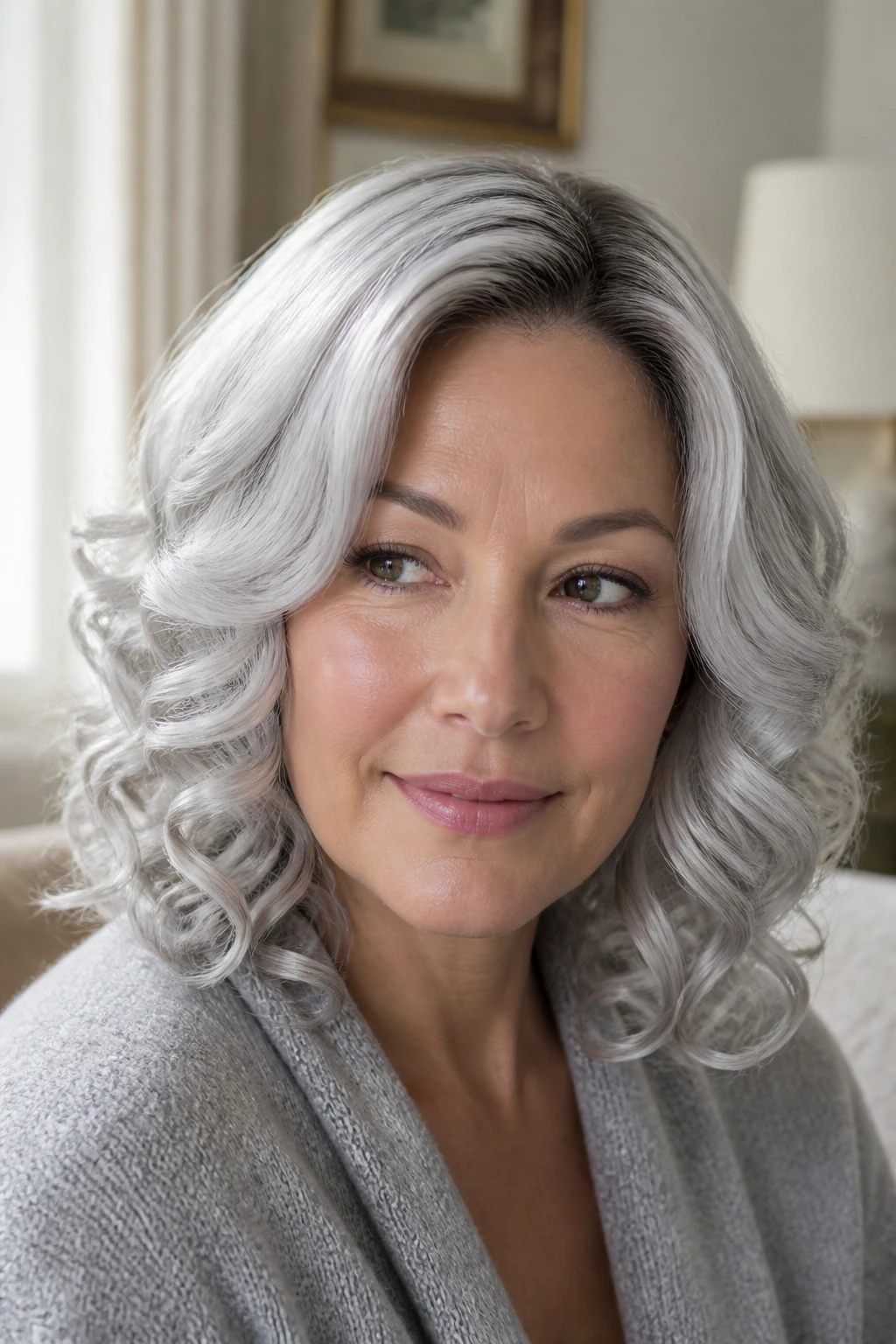
Tight spirals can be a lot. Soft spirals, though, are another story. They give silver depth, movement, and a little bounce around the lower face without piling bulk at the temples.
The trick is to keep the curl pattern loose enough that each spiral has room to separate. If the curls are too small or too uniform, the wig starts to look busy. A heart-shaped face usually does better with broader curls that fall a little lower, especially if the narrowest part of the face is at the chin.
A side part or broken off-center part helps a lot here. It keeps the top from feeling symmetrical in a way that can emphasize the forehead width. I also like a soft root shadow on this style, because silver curls can reflect so much light that they lose shape without one.
This is a good choice if you want something more playful than a straight lob but not as dramatic as a huge textured wig. It has enough movement to feel alive. It does not need to shout.
12. Silver Wolf Cut with Tapered Ends
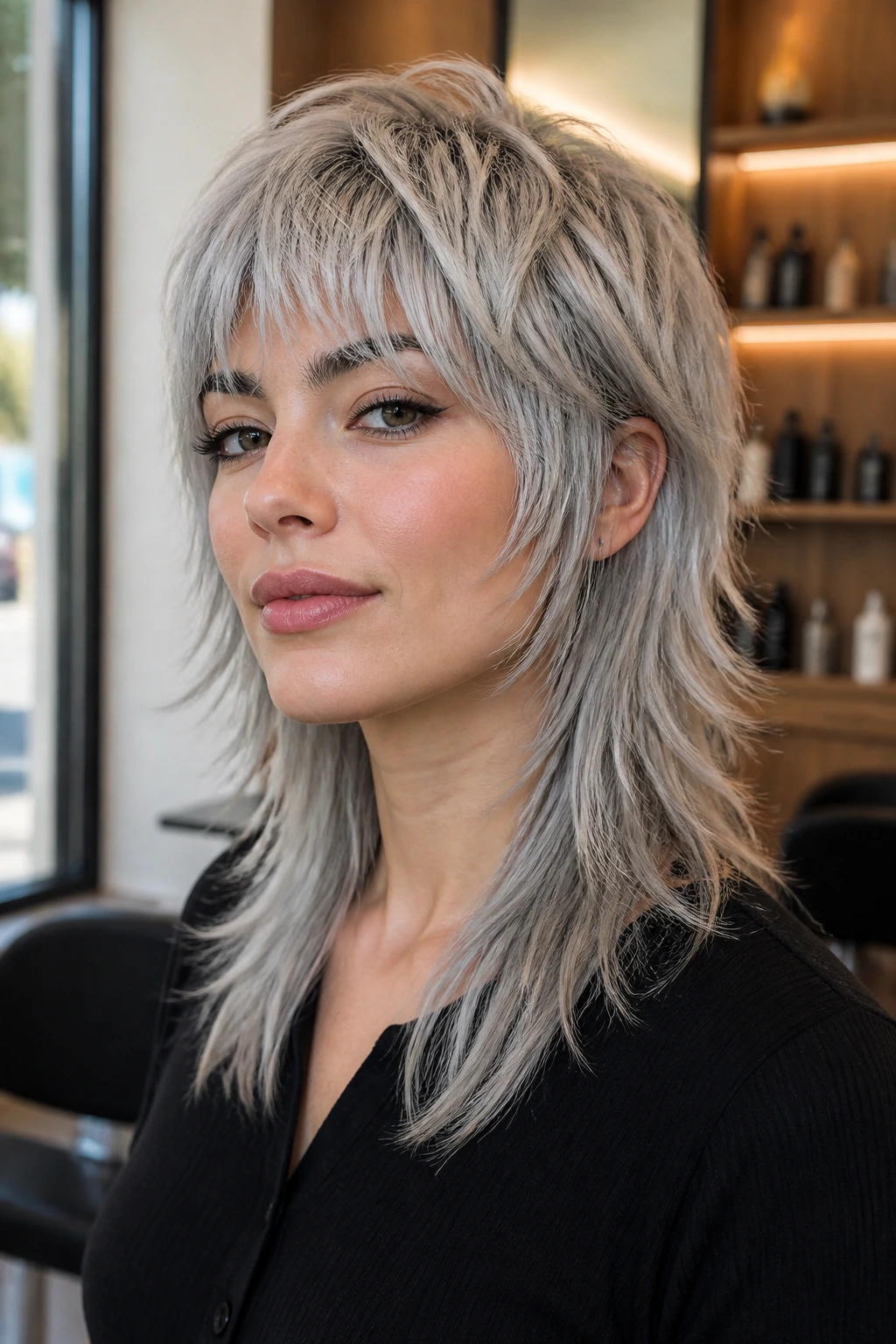
A wolf cut sounds loud, but the right version is actually one of the smartest silver styles for a heart-shaped face. The difference between a wolf cut and a shag here is mostly in the layering pattern: the wolf cut keeps more length through the back, then breaks the front into sharper face-framing pieces.
Unlike a fluffy shag that lifts all over, this one can keep the crown softer and let the texture sit lower. That matters. The heart-shaped face usually needs less weight at the top and more interruption near the cheeks and jaw. The tapered ends do that job well.
This cut looks best when the bangs stay broken and not too thick. Curtain-bang territory works. Heavy forehead coverage does not. A silver wolf cut also benefits from a root that isn’t fully white. Some depth at the base keeps the layers visible and stops the whole thing from reading as one bright sheet.
If you like a style that feels a little cooler and less polished, this is the one to reach for. It has edge, but not so much edge that it overwhelms the face.
13. Pearly Gray Blunt Cut with Underlayers
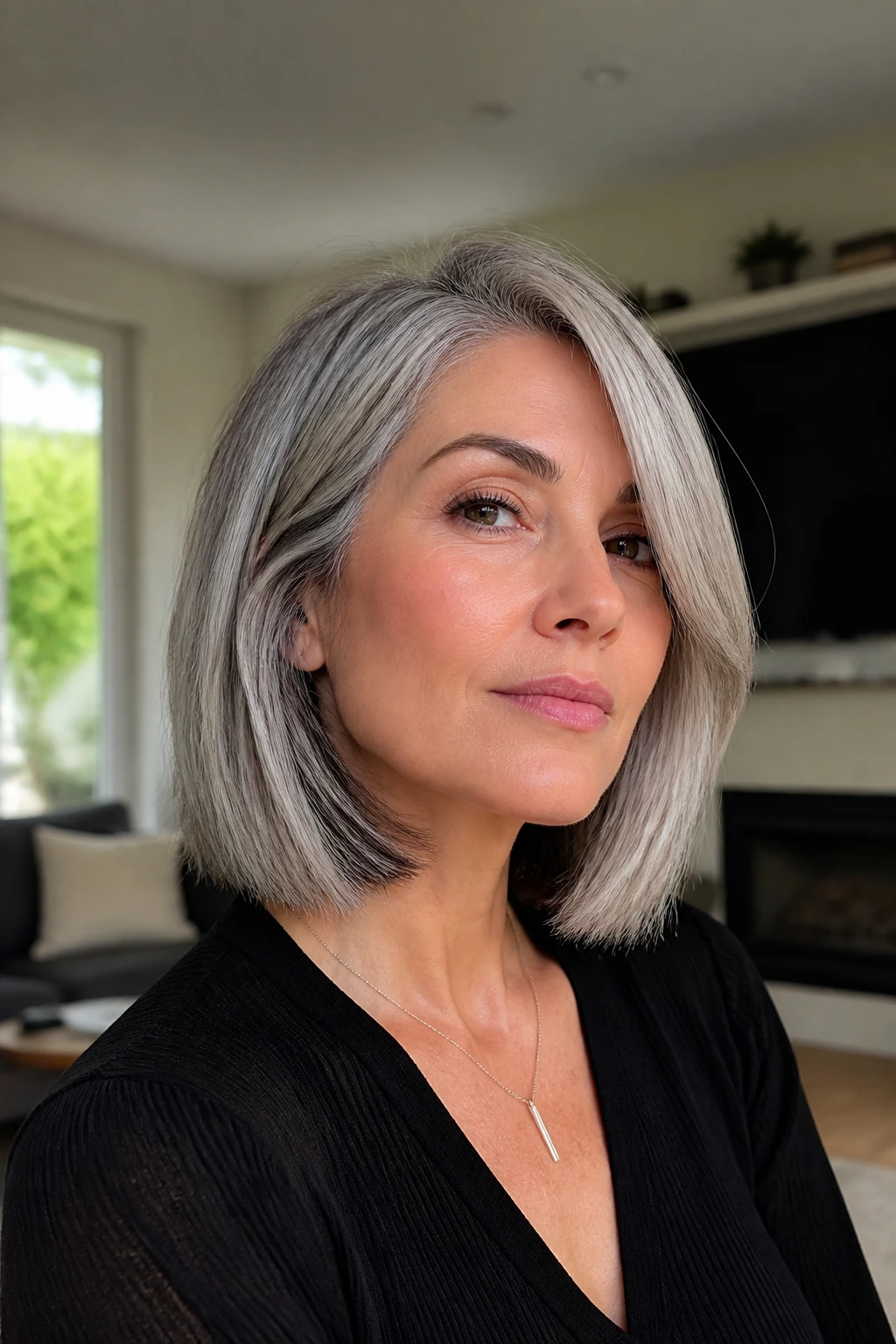
A blunt silver cut can absolutely work on a heart-shaped face, but only if the blunt line sits in the right place. Right at the jaw? Too harsh. At the collarbone with soft underlayers? Much better.
Why the Underlayers Matter
Those hidden layers stop the cut from turning boxy. They let the top surface stay smooth while the underside moves when you walk or turn your head. That tiny bit of motion keeps the style from feeling too rigid, which is especially useful in pearly gray, a shade that can look flat if it’s cut too flat.
Shape Notes
- Length: collarbone to upper chest.
- Part: soft side or slight off-center.
- Density: moderate, not thick.
- Finish: satin, with a little root depth.
This is a good choice if you want the clean look of a blunt cut but still need the face to soften around the chin. The underlayers handle that balance. They’re the quiet part of the haircut, and honestly, they’re doing the heavy lifting.
14. Cool Taupe-Silver Shoulder Flip
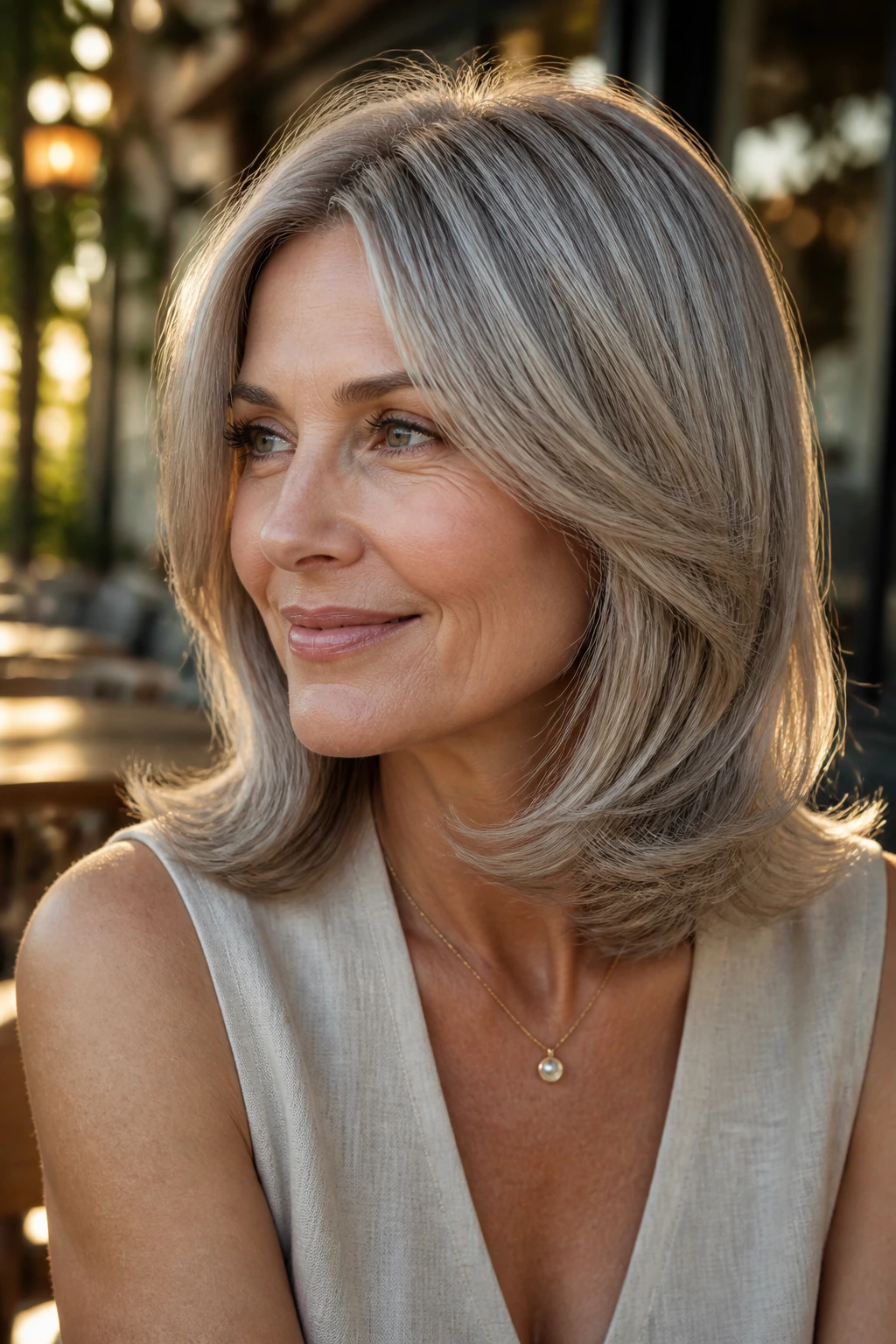
This is one of the easiest silver styles to wear because the shoulder flip does half the work for you. The ends turn under just enough to catch the shoulder and create a natural break line below the face. That break is useful on a heart-shaped face, since it moves attention away from the narrow chin and gives the lower half a little more shape.
The taupe in the silver matters too. Pure icy gray can look bright and sharp, while taupe-silver has a softer, earthier feel. It blends better with skin that has warmth in it, and it doesn’t flash quite as hard under indoor light.
This style works especially well around 14 to 16 inches. Shorter and the flip feels too abrupt; longer and it starts to lose that clean shoulder line. A little face-framing layering near the front helps the cut melt into the face instead of hanging beside it.
If you want silver hair that feels easy, not editorial, this is a strong place to land. It behaves.
15. Dimensional Smoke-Silver Layers with Bangs

Why does this style keep showing up in good wig rooms? Because it solves the two biggest problems at once: the bangs soften the forehead, and the smoky layers keep silver from looking flat.
What Makes It So Easy to Wear
A heart-shaped face usually looks best when the forehead is softened without being buried. These bangs do that job well. Keep them wispy or curtain-like, not heavy. The layers should start around the cheekbone and fall through the chest, which gives the whole shape a longer line and a calmer top half.
The dimension is doing real work here. Smoke-gray lowlights, a cool silver body, and a slightly darker root create depth that reads as natural hair movement. That’s the reason this style often looks better than brighter, flatter silver. The eye sees more than one tone, so it stops looking at the wig as a single surface.
If you only want to buy one silver piece and you’re nervous about the color looking artificial, this is probably the safest bet in the whole set. It has enough softness to flatter a heart-shaped face and enough depth to feel like it belongs in real light.
Why Silver Wigs Look Better When the Shade Has a Root
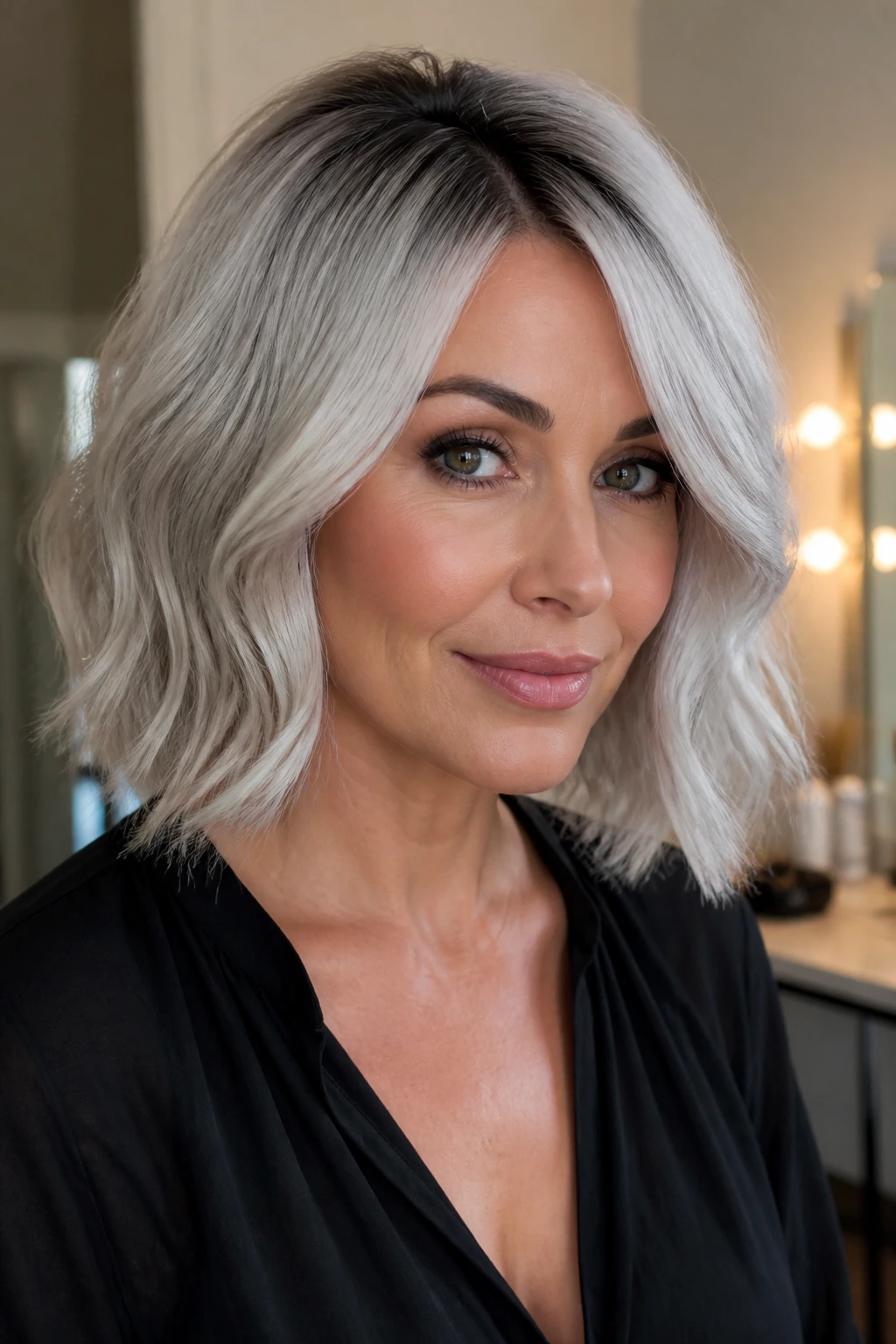
Flat silver is the fastest way to make a wig look like a wig. A root shadow fixes that by giving the eye a place to land before the lighter strands start. Even a half-inch of deeper gray, ash brown, or smoke at the top can make a huge difference.
Heart-shaped faces benefit from that depth because the top of the face already carries visual weight. A rooted silver keeps that area from looking inflated. It also helps the wig blend better near the hairline, where the cap and lace can otherwise give themselves away. The lighter the silver, the more important this gets.
Texture matters too. A soft bend, loose curl, or feathered layer makes the silver feel lived-in. Straight, glossy, high-density fiber can go rigid in a hurry. I’d rather see a slightly imperfect bend and a believable part than a glossy sheet with no movement. The first one reads as hair. The second one reads as a display sample.
Essential Tools for Wearing and Styling Silver Wigs
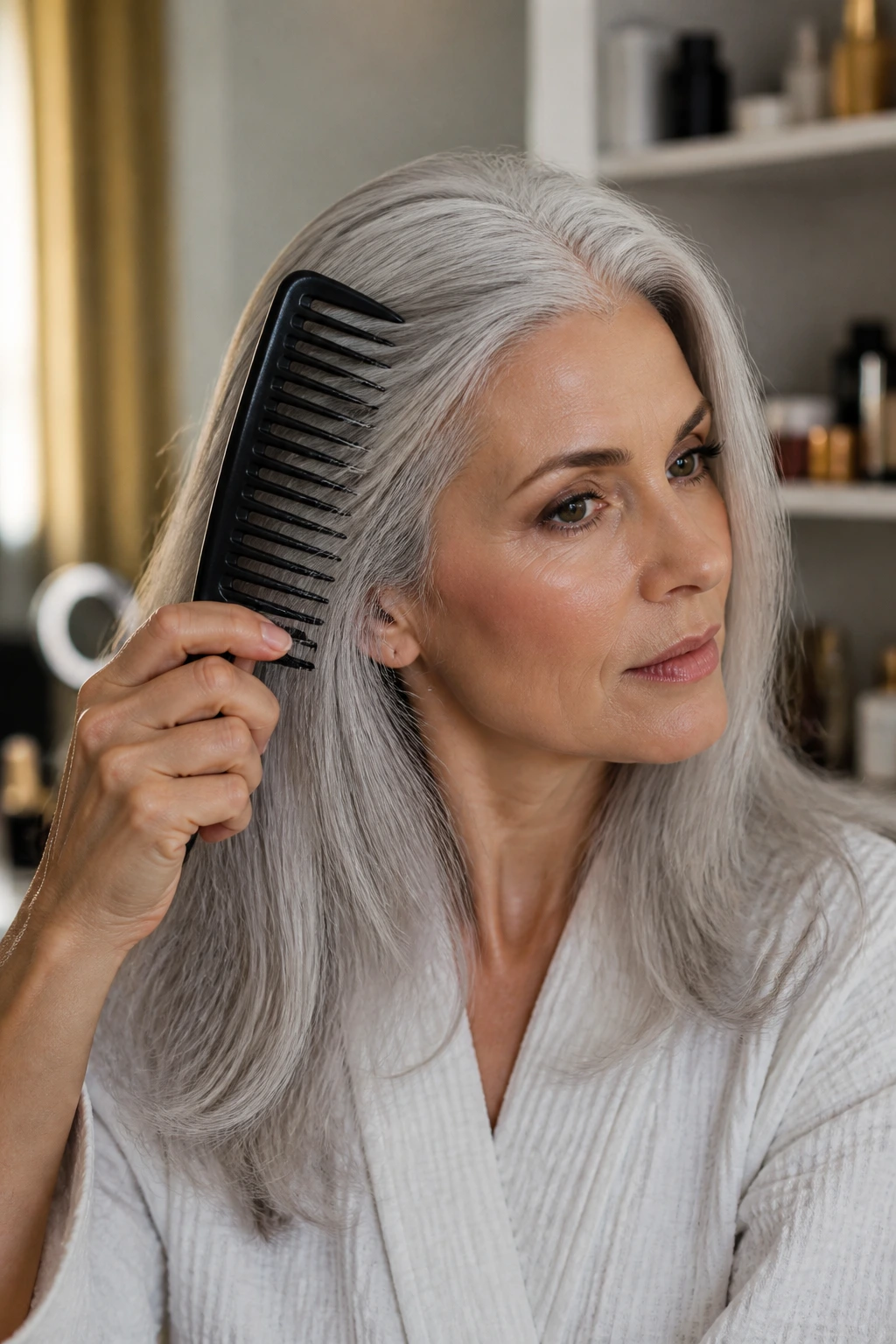
- Wig stand: Lets the fiber keep its shape between wears and helps the cap air out fully.
- Wide-tooth comb: Safer than a small brush for silver fibers, especially on curls and waves.
- Wig brush: Use one made for wigs if the piece is straight or lightly layered.
- Wig grip: Keeps the cap from sliding and reduces the urge to overtighten the straps.
- Lace tint spray or powder: Useful when the lace is lighter than your skin tone.
- Heat-friendly styling tool: Only if the fiber can take it; keep temperatures low and test a hidden strand first.
- Rat-tail comb: Good for adjusting parts and lifting a little hair at the root.
- Small clips: Handy for sectioning bangs or face-framing pieces.
- Non-aerosol wig-safe spray: Helps reset a bend without soaking the fibers.
- Satin bag or box: Better than tossing the wig into a drawer where the fibers can snag.
Smart Shopping for Shade, Fiber, and Cap Construction
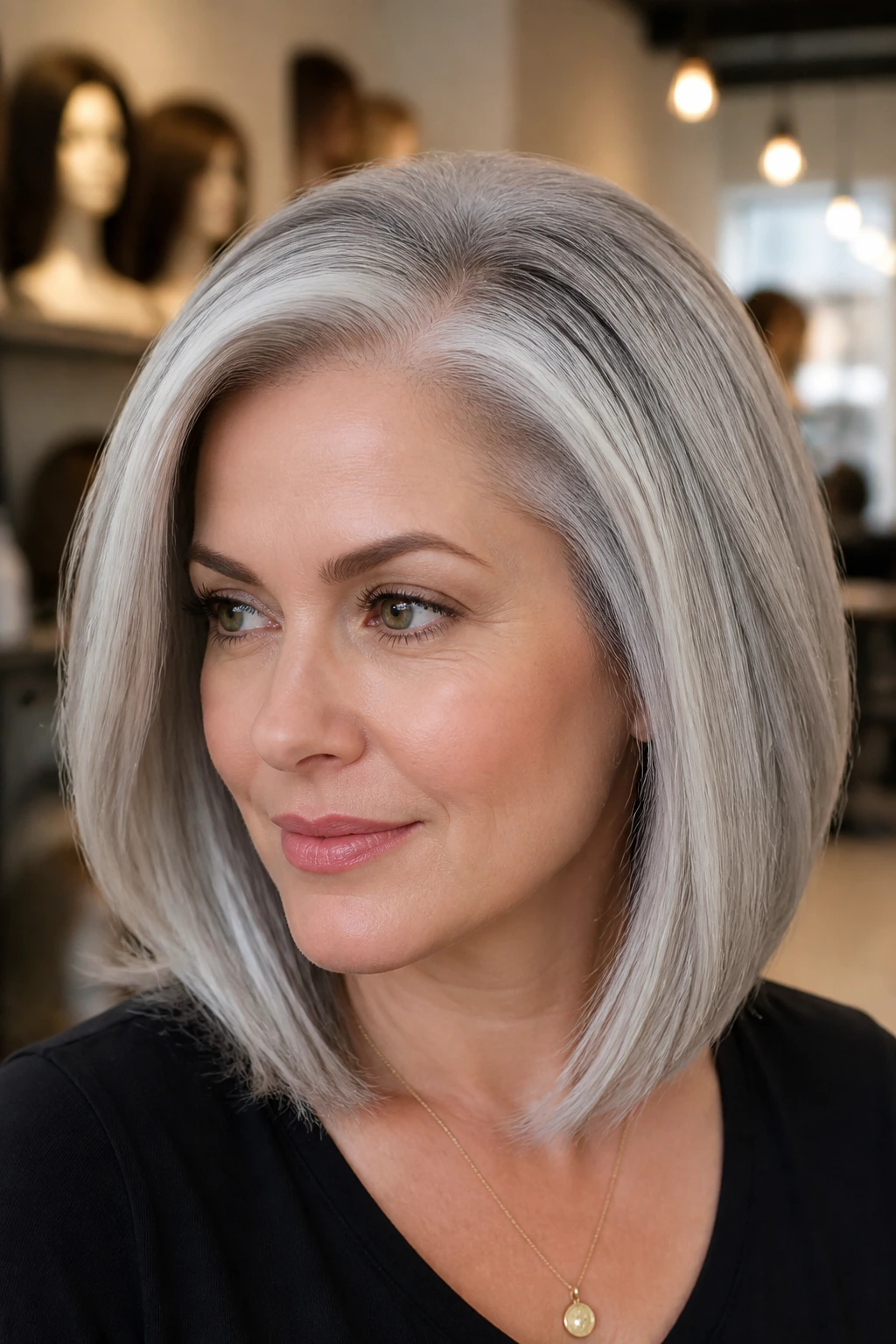
A silver wig that looks natural usually starts with the right fiber choice. Heat-friendly synthetic gives you more styling room, but it can frizz if you push it too hard. Regular synthetic holds shape well and often keeps that salon-fresh finish longer, though it tends to be less forgiving if you want to restyle the ends. Human hair is the most flexible, but silver human-hair wigs can get expensive fast, and the color will need more upkeep.
Density matters more than people think. For a natural look on a heart-shaped face, moderate density often wins: enough hair to move, not so much that the wig sits like a helmet. I usually prefer something in the 110% to 130% range, depending on the cut. A short bob can sit lower. A long layered style may need a touch more body.
Cap construction is another place where small choices change the whole result. Lace fronts help the hairline look real. Monofilament tops make the part read like scalp. A hand-tied or partial hand-tied cap can move more like natural hair, though it may cost more. If you wear your hair off your face, pay attention to temple area fit and ear tabs, because that is where many wigs start to look awkward first.
Shade is not just “silver.” Ash silver, smoky gray, mushroom gray, pearl, platinum, and salt-and-pepper blends all behave differently. A heart-shaped face usually looks best with a little depth at the root and some softness in the lower lengths. Pure chrome silver can be striking, but it asks for a very good cut. No mercy there.
How to Wear These Silver Wigs So They Read as Real Hair

Hairline: Keep the lace front close to your own hairline, and press it flat before you style the rest. A lifted front edge is one of the quickest giveaways, especially with pale silver fiber.
Parting: A slight off-center part is kinder to a heart-shaped face than a rigid center line in most cases. If you love the middle part, soften it with bangs or loose front pieces.
Texture: Use enough texture to break up shine, but not so much that the wig looks fuzzy. A soft bend, brushed-out wave, or loose curl usually lands in the right place.
Outfit balance: Cooler silver hair looks sharp next to black, charcoal, navy, white, and soft mauve. If the wig is icy platinum, a simple neckline often beats a busy collar.
Face framing: Let a few front pieces sit around the cheekbone and jaw. That gives the narrow lower face a little visual weight and keeps the forehead from dominating the look.
Extra Styling Touches That Make Silver Read Soft, Not Stiff
Root Smudge: A little root depth is one of the cheapest-looking changes in the best way. Even if the wig starts bright silver, a deeper top section makes the style settle down.
Face-Framing Pieces: Pulling a few strands forward near the temples can calm a wide forehead fast. I like these pieces slightly longer on heart-shaped faces, so they skim rather than clip.
Dry Finish: Too much shine can make silver fiber look artificial. A small dusting of wig-safe powder at the roots, or a light mist of dry shampoo on a test strand, can cut the glare.
Part Lift: If the top sits flat, lift the root at the part with a rat-tail comb and let it cool in place. A little lift goes a long way; too much and the wig gets puffy.
Soft Edges: If the cut feels too crisp, bend the ends just enough to break the line. Silver hair looks more believable when the edges are a touch irregular.
Common Mistakes That Make a Silver Wig Look Off
Too much height at the crown: This is the classic heart-face problem. If the wig stacks volume on top, the forehead looks even broader. Keep crown lift subtle and let the movement sit lower.
A blunt part with no softness: A dead-straight center part on flat silver can feel severe. Add bangs, a side part, or a bit of root shadow so the line doesn’t slice the face in half.
Overly shiny fiber: When silver reflects every light in the room, it stops looking like hair. Choose matte or satin finishes when you can, and back off the shine spray.
Wrong length at the jaw: A cut that stops right on the narrowest part of the chin can make the face look pinched. Either go a little shorter and clean, or a little longer and softer.
Density that is too thick: Heavy hair can swamp the face and make the wig look bulky, especially in longer silver styles. Moderate density usually gives a better result.
Ignoring the root color: A pure silver top with no depth can look pasted on. Root shadow, lowlights, or salt-and-pepper blending fix that fast.
Variations and Adaptations to Try

Smoke-Root Everyday Version: Take any of the silver styles above and deepen the root by one or two shades. It instantly makes the wig easier to wear in daylight and gives the face more structure.
Soft Platinum Weekend Version: If you want a brighter look, keep the cut soft and the part loose. A platinum wig can work on a heart-shaped face when there’s enough movement around the jaw.
Salt-and-Pepper Natural Blend: Add darker lowlights through the lower lengths. This is the best choice if you want silver hair that feels grounded instead of shiny.
Lavender-Ice Accent Tone: A whisper of lilac in the silver can soften a cool complexion and keep the wig from reading flat. Keep it subtle; too much pastel starts to look themed.
Low-Density Beginner Fit: If you’re new to wigs, choose a lighter density and a shorter cut first. It feels less heavy on the head and is easier to place along the hairline.
Heat-Friendly Curl Set: For styles that allow heat, set the ends with a large barrel iron at low temperature. A small bend is usually enough; you do not need ringlets unless the cut is built for them.
Storing, Washing, and Keeping the Fiber Smooth
Silver wigs need a little more care than people expect, mostly because the shade shows dust, product buildup, and frizz more easily than darker hair. After each wear, give the wig a gentle shake and detangle only the spots that need it. Do not drag a brush from root to tip if the fiber has curls or layers. Work from the ends up.
For synthetic pieces, washing every 8 to 12 wears is a sensible rhythm if you wear it regularly and use light product. If you wear it in hot weather, closer to the shorter end of that range makes more sense. Human-hair silver wigs can usually go a bit longer between washes, but they also need conditioner and careful drying so the tone stays clean and the strands do not dry out.
Always air-dry on a wig stand. Never wring the hair, and never store it damp. That’s where the musty smell and kinked ends start. If you want the silver to stay bright, keep it out of direct sun when it’s not being worn, because prolonged light can dull some fibers and fade tonal depth. A satin bag, the original box, or a clean stand in a cool room all work better than a drawer crammed with scarves and clips.
If the wig has lace, check the front after each wear for adhesive residue or makeup transfer. Clean the lace carefully, or the buildup will make the hairline look cloudy the next time you put it on. Small habit. Big difference.
Questions People Ask Before Buying Silver Wigs
Which silver wig styles flatter a heart-shaped face the most?
Lobs, soft bobs, curtain-bang cuts, and shoulder-length layers usually do the best job because they add shape below the cheekbones. If the wig is very long, it needs face-framing pieces or a root shadow to keep the top from looking too wide.
Is a middle part bad for a heart-shaped face?
Not automatically. A middle part works when the wig has bangs, broken front layers, or enough softness around the temples to keep the forehead from feeling too broad. Without that, a slight side part is usually easier.
How can I stop silver fiber from looking fake?
Pick a rooted shade, keep the density moderate, and choose a cut with movement. Flat, bright silver with a blunt hem is the fastest path to a wig that looks synthetic under indoor light.
Are synthetic or human-hair silver wigs better?
Synthetic is easier to live with and usually keeps its shape longer, while human hair gives you more styling freedom. If you want simple daily wear, synthetic often makes more sense. If you want to restyle often, human hair is the better lane.
What bangs work best on heart-shaped faces?
Curtain bangs and wispy fringe are the safest bets. Heavy, straight-across bangs can overwhelm the face unless they’re softened at the edges and paired with a lighter cut below.
How much volume should the crown have?
Less than you think. A little lift helps the wig sit naturally, but too much height makes the forehead look wider and pushes the balance off. Keep the lift low and let the movement happen around the jaw and shoulders.
Can silver wigs look good with glasses?
Absolutely. Shorter bobs, pixies, and tucked side-part styles tend to sit well with frames. The main thing is keeping the temples from getting too thick, because that’s where the wig and the glasses can start competing.
What if the wig looks too shiny in daylight?
Back off the shine products first, then check the density and texture. A rooted shade, a matte finish, and a little dry styling at the ends usually fix the problem faster than adding more product.
A Shade That Settles In Instead of Shouting
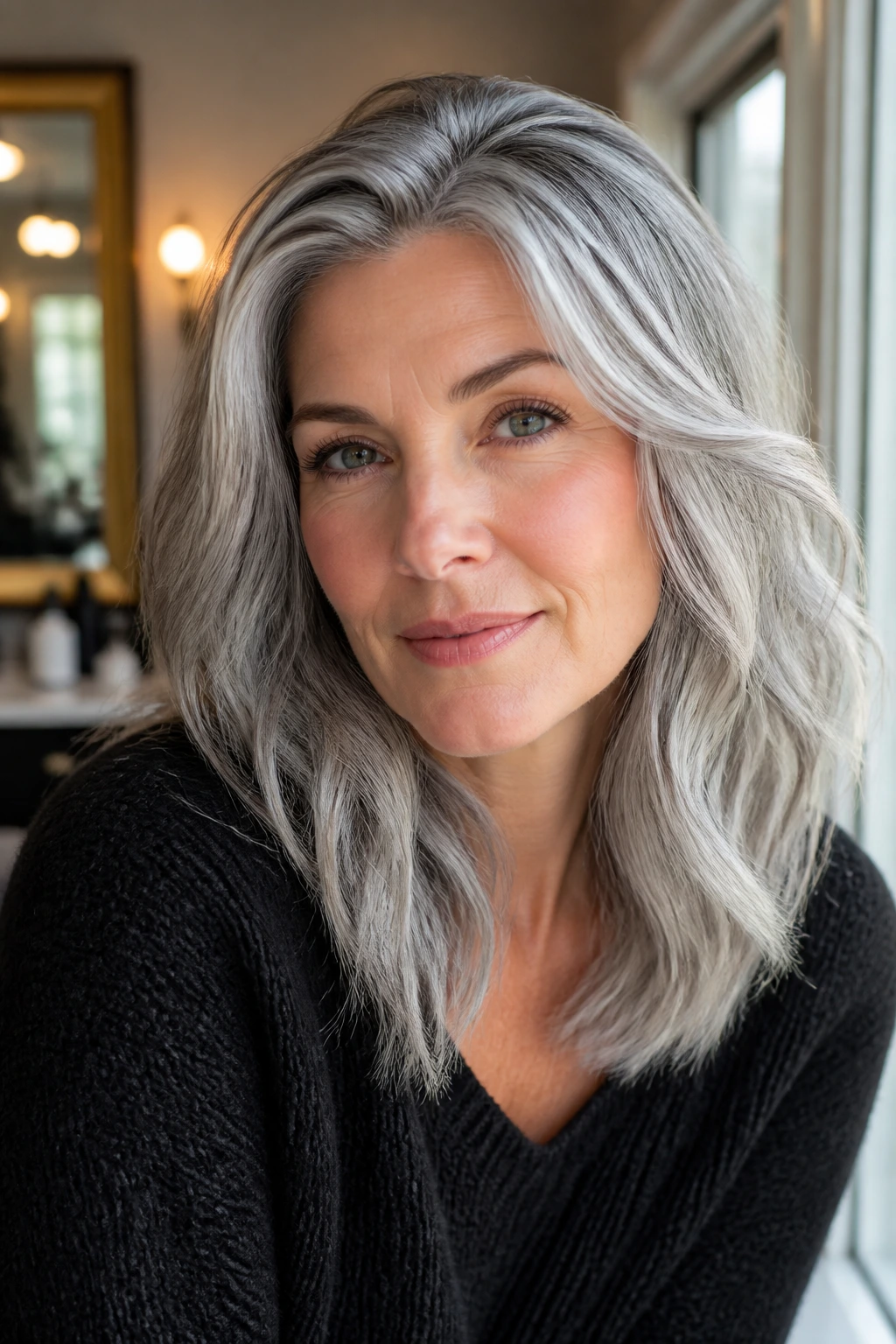
The best silver wigs for heart-shaped faces do not fight the face; they soften the parts that need softening and leave the strongest lines alone. That usually means a little depth at the root, a cut that moves below the cheekbones, and enough texture to keep the silver from turning into a bright, flat block.
That’s the sweet spot. Not louder. Better placed.
If you keep one thing in mind while shopping, let it be this: look for silver that bends around the face instead of sitting on top of it. The right wig should feel like it belongs in motion, in daylight, and in a real mirror, which is where the whole thing either comes together or doesn’t.