



Dark hair and blonde pieces can look flat if the placement is lazy. They can also look stunning when the contrast is handled with a bit of restraint, a bit of brightness, and the right amount of shadow left at the root. In colder weather, that balance matters even more. Heavy coats, muted light, dry indoor air — all of it can make one-dimensional color look dull and a little tired.
That’s why blonde hairstyles for dark hair keep showing up in winter wardrobes and salon chairs. A few pale money pieces near the face. A smoky balayage through waves. A beige blonde bob that still has depth at the root. The best versions don’t scream for attention. They catch it quietly, then hold it there.
And here’s the part people often miss: on dark hair, blonde is never only about the blonde. It’s about the cut underneath it, the tone of the lightened sections, and how much of your natural color is left to do the heavy lifting. Get that mix right and the style looks polished from every angle. Get it wrong and it can turn stripey fast.
Why These Blonde Looks Work on Dark Hair in Cold Weather
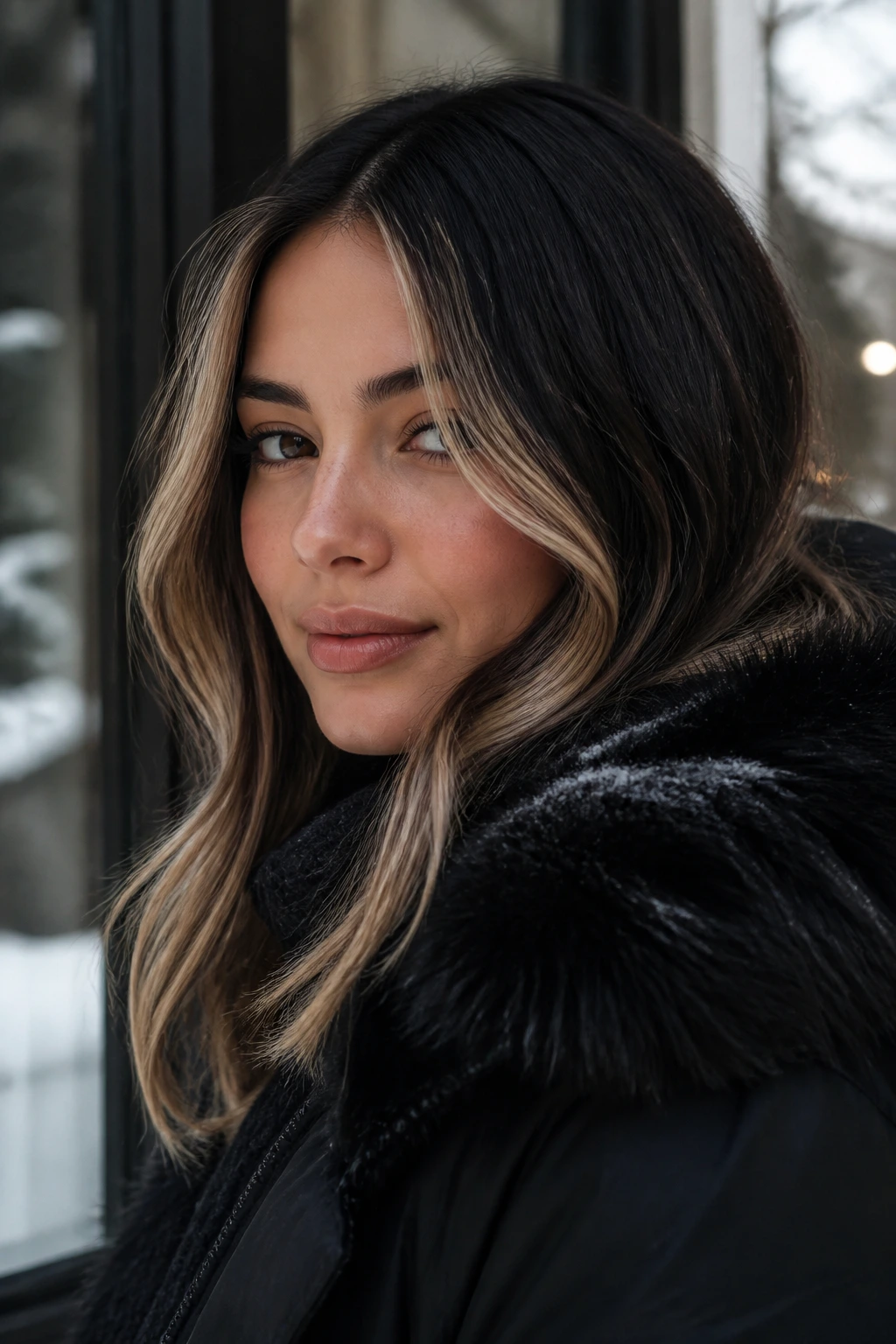
-
Low-maintenance grow-out: Dark roots make balayage, money pieces, and rooted blondes grow out in a softer line, so you can stretch salon visits without the style collapsing into a harsh band.
-
Face-brightening contrast: A few lighter strands around the cheekbones and jawline catch the eye first, which matters when winter clothing flattens everything else.
-
Texture finally shows up: Waves, curls, and layers all look more alive when light hits multiple tones instead of one flat brown sheet.
-
Less full-head damage: Strategic placement gives you the blonde effect without bleaching every inch of hair. That’s kinder to length, ends, and your patience.
-
Better under indoor light: Beige, champagne, ash, and honey tones hold up under warm bulbs better than a blunt, over-lifted blonde that turns hollow or brassy in a hallway mirror.
-
Works with hats and scarves: Styles with darker roots, brighter front pieces, or hidden panels still read clearly when your coat collar and hat are doing the most.
1. Face-Framing Platinum Money Pieces
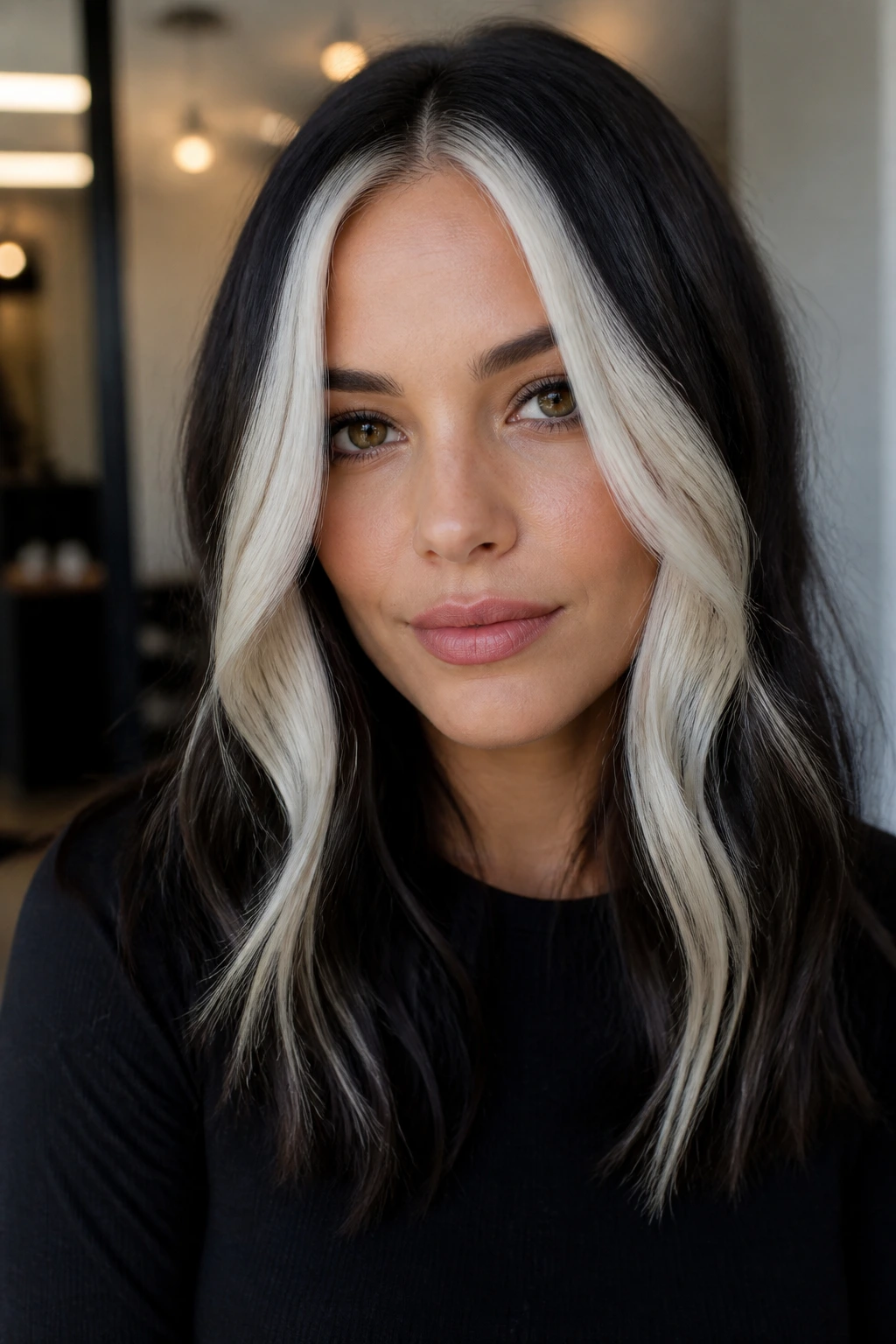
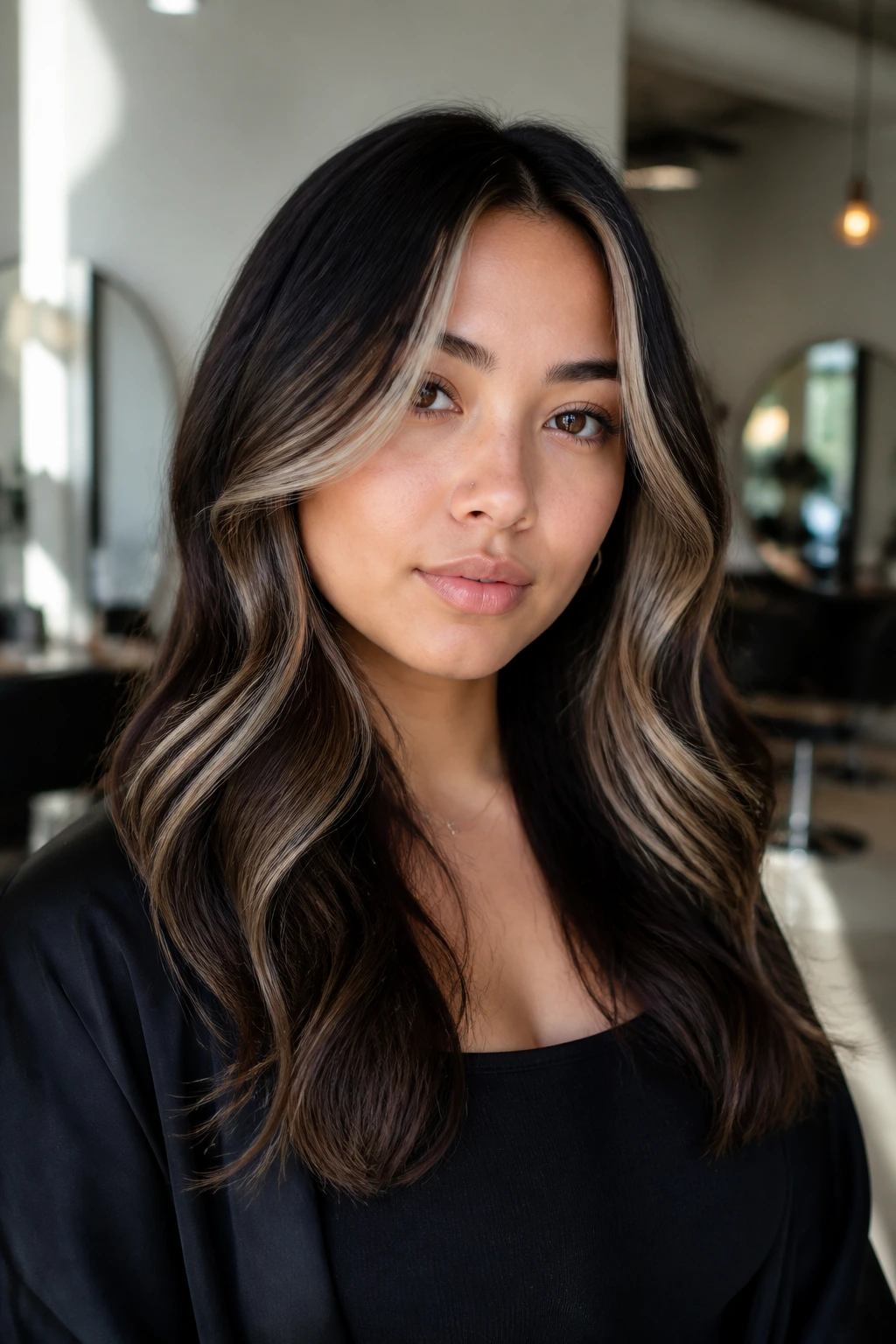
Two bright front panels can change dark hair fast. On a deep brunette or espresso base, platinum money pieces sit like a spotlight around the face, and that’s the whole point. The rest of the hair stays darker, so the blonde looks sharper and cleaner than an all-over lift.
This style works best when you want a punch of brightness without bleaching the whole head. Ask for the pieces to start just behind the hairline and blend into the first few inches near the cheekbones. If the blonde is lifted to a pale yellow before toning, the final result will look crisp instead of orange under indoor light.
A middle part makes the contrast feel modern. A side part softens it. Either way, the front pieces should be thick enough to show when you tuck hair behind your ears. Thin streaks disappear.
2. Honey Balayage on a Dark Chocolate Lob
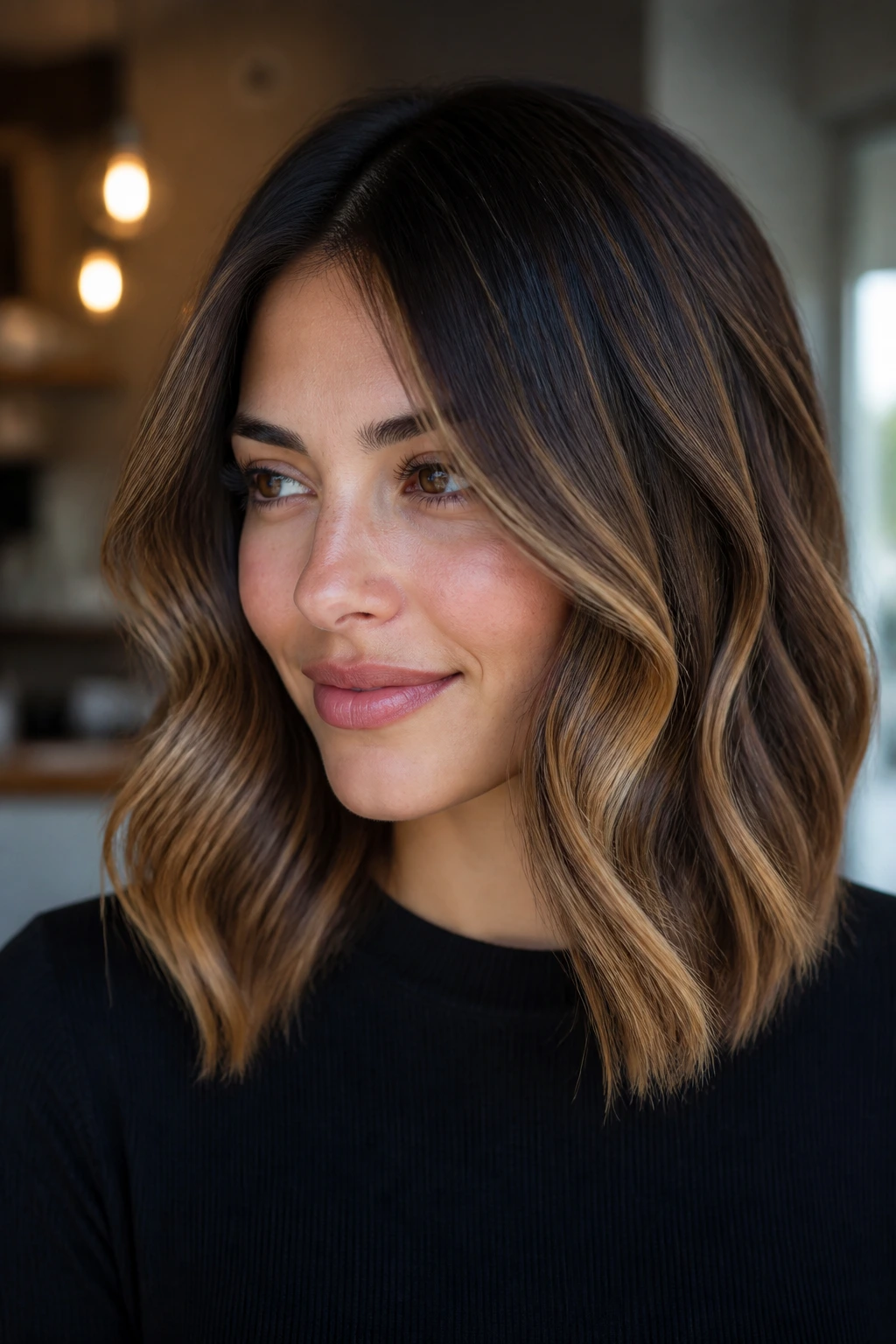
Honey balayage is one of those looks that keeps making sense because it behaves well on dark hair. The lighter ribbons sit through the mid-lengths and ends, while the root stays rich and dark. That gives the cut some movement without making the grow-out line shout at people from across the room.
A lob is a smart home for this color. The blunt-ish shape holds the contrast, and the shoulder length lets the honey catch on the curve of the hair. If you wear your hair with a loose bend — not a tight curl, not bone-straight — the color shows in flashes instead of one heavy block.
The tone matters here. Go too yellow and it can look warm in a way that fights winter skin. Honey with a little beige in it reads softer. It feels more polished, less syrupy.
3. Ash-Blonde Curtain Bangs on Long Layers
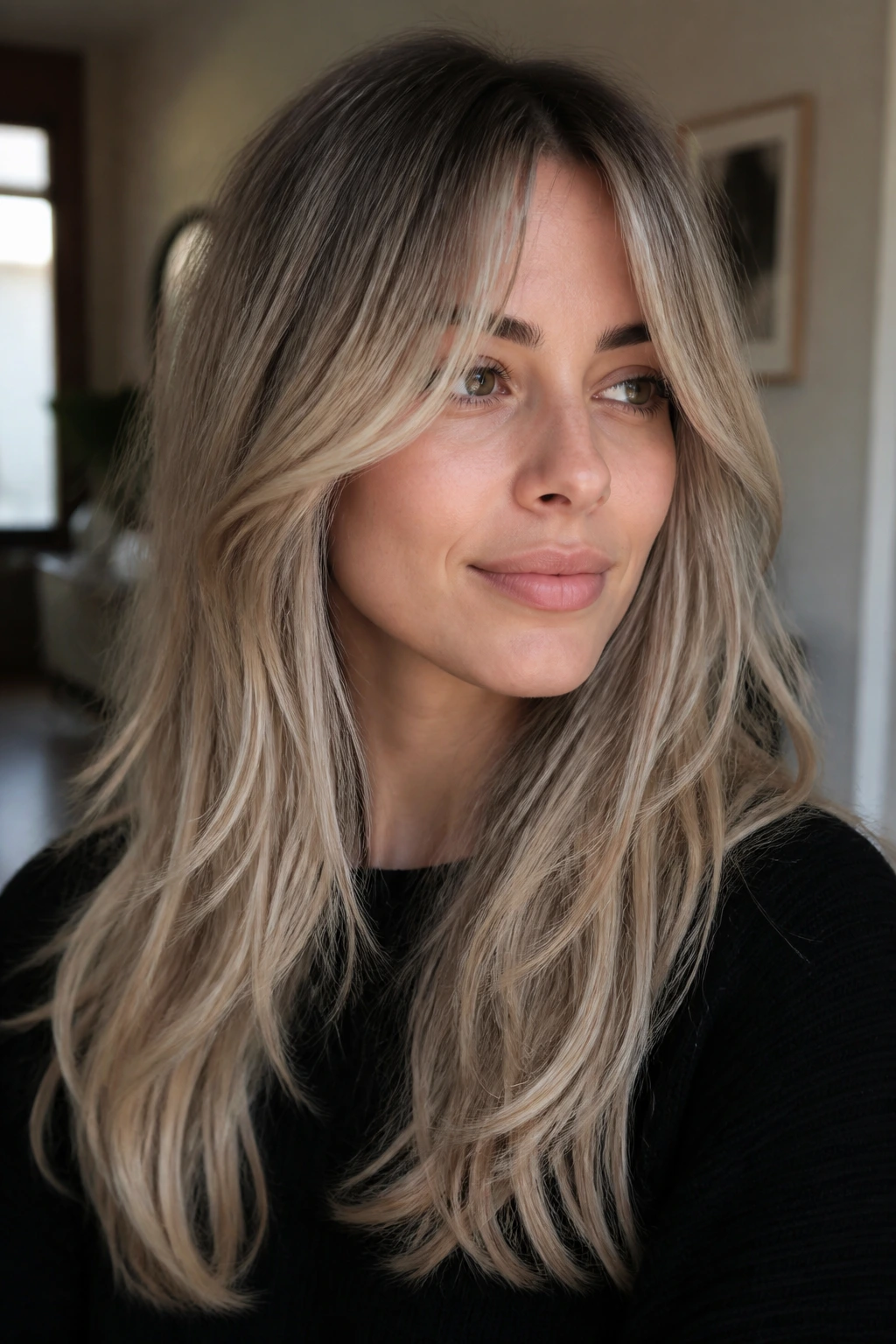
Why do curtain bangs keep showing up with dark-to-blonde color? Because the shape gives the blonde a job. The lighter pieces sweep away from the center, fold into the rest of the cut, and create a frame that looks intentional even when your hair is just air-dried and a little bent at the ends.
Ash blonde is the move if your dark base tends to pull orange or red during lightening. The cooler tone reins that in. On long layers, it keeps the front from looking heavy, which is useful if your winter hair care routine includes a lot of dry shampoo and a lot of lazy buns.
What to Ask For
- A soft curtain bang that opens at the cheekbones
- Ash or smoky blonde through the front layers
- A slightly darker root so the grow-out doesn’t cut across the forehead
If your hair is thick, this color-cut combo removes some visual weight without removing actual length. That’s a nice trick.
4. Rooted Champagne Waves
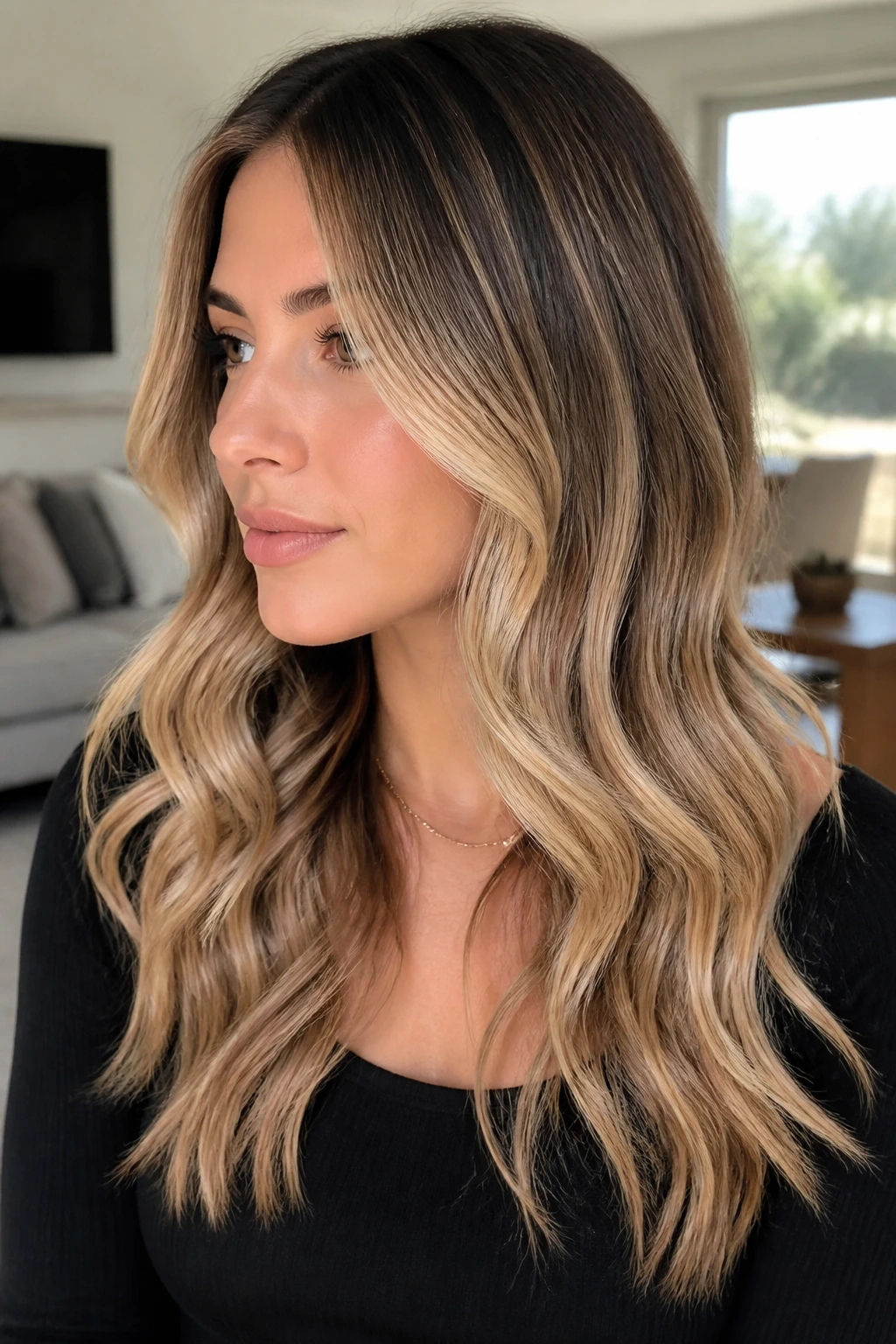
Champagne blonde is one of the few light shades that can still look warm and airy without turning yellow. On dark hair, it needs a rooted base. Without that shadow, the color can read too stark and lose the softness that makes it so wearable.
The waves matter almost as much as the tone. Loose, brushed-out bends give champagne pieces room to move. Tight curls can make the color look busier than it is. A medium barrel iron, wrapped away from the face, usually gives the most useful shape here.
This is a good pick if you like brightness but don’t want high contrast at the scalp. The darker root makes the whole style feel grounded. The blonde floats on top of it instead of fighting for attention.
5. Icy Peekaboo Panels in a Sleek Bob
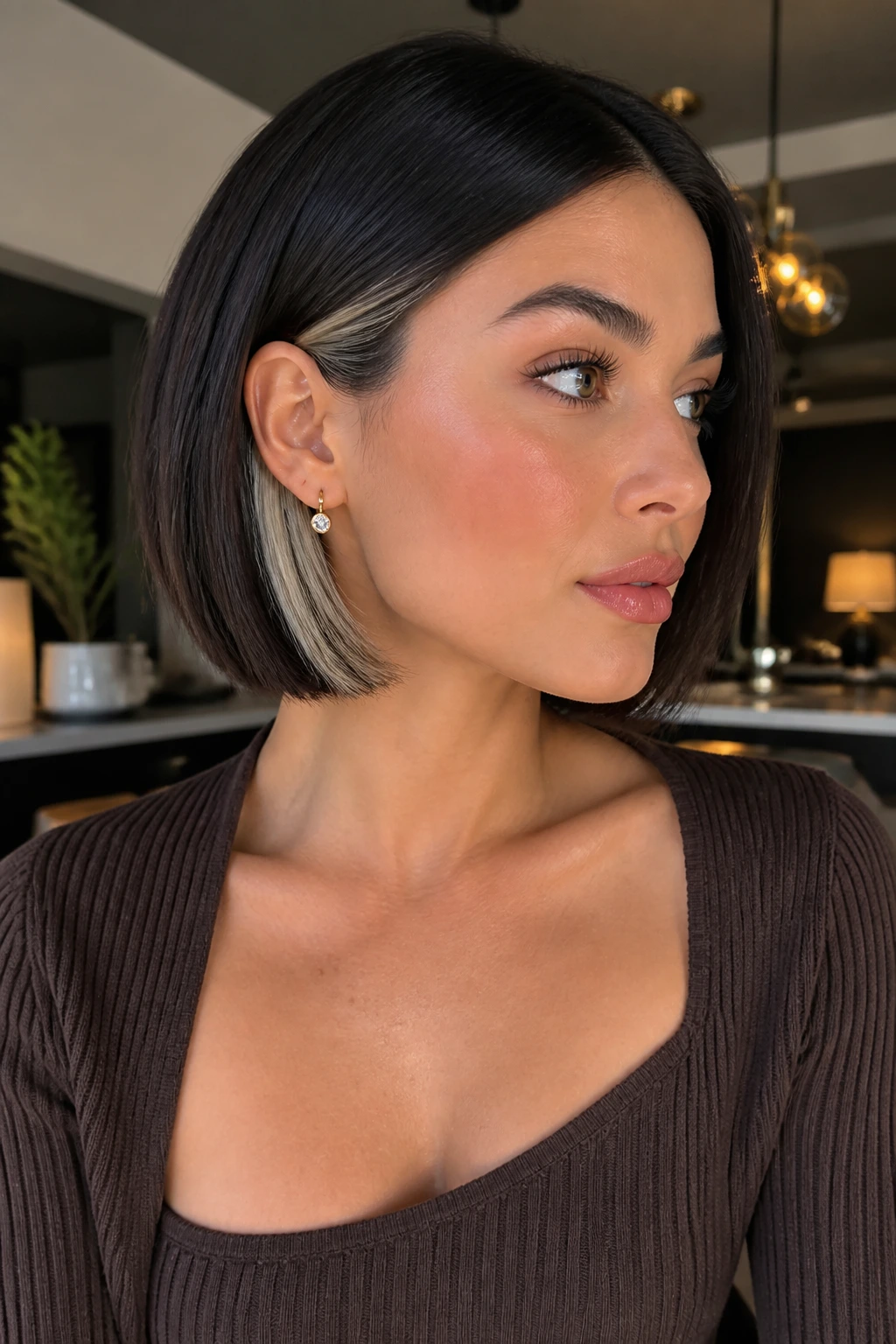
Underneath a clean bob, hidden blonde panels can feel a little sly in the best way. You don’t see them every second. They show when the hair swings, when one side gets tucked behind the ear, or when the bob gets a little bend at the ends.
This is especially sharp on dark hair because the contrast stays contained. The top layer keeps the look grounded, which matters if your workplace or personal style leans polished. You get the surprise of light blonde without walking around with a full head of brightness.
A flat iron finish makes the peekaboo effect cleaner. Keep the panels smooth and the ends tucked inward just a touch. The whole point is contrast, not mess.
6. Caramel Ribbons on a Curly Shag
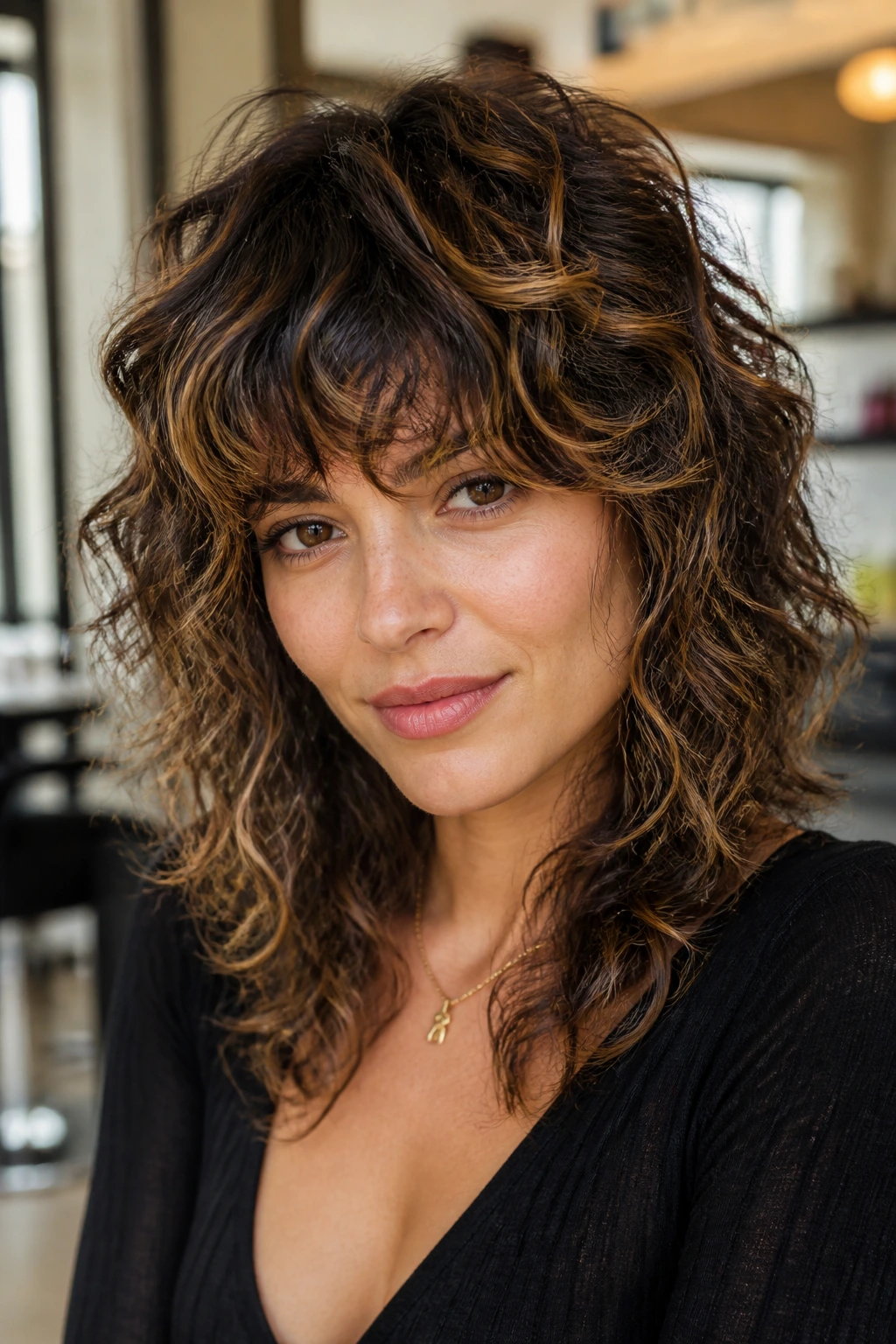
Curly hair and blonde placement can be awkward if the highlights are scattered like confetti. Caramel ribbons are better. They sit where the curls already want to bunch and curve, which means the color shows naturally instead of breaking the shape.
A shag gives those ribbons somewhere to live. Shorter layers around the crown keep the silhouette airy, while the longer curls underneath hold the darker depth. That mix makes the blonde feel woven into the haircut, not pasted on top.
Why it works on curls
- The lighter strands catch on raised curl ridges.
- Darker roots keep the pattern from looking busy.
- Caramel warms the complexion without going brassy.
If your curl pattern is loose, ask for wider ribbons. Tighter curls usually need more fine placement, or the blonde can start to look scattered once the hair springs up.
7. Mushroom Blonde on a Soft Wolf Cut
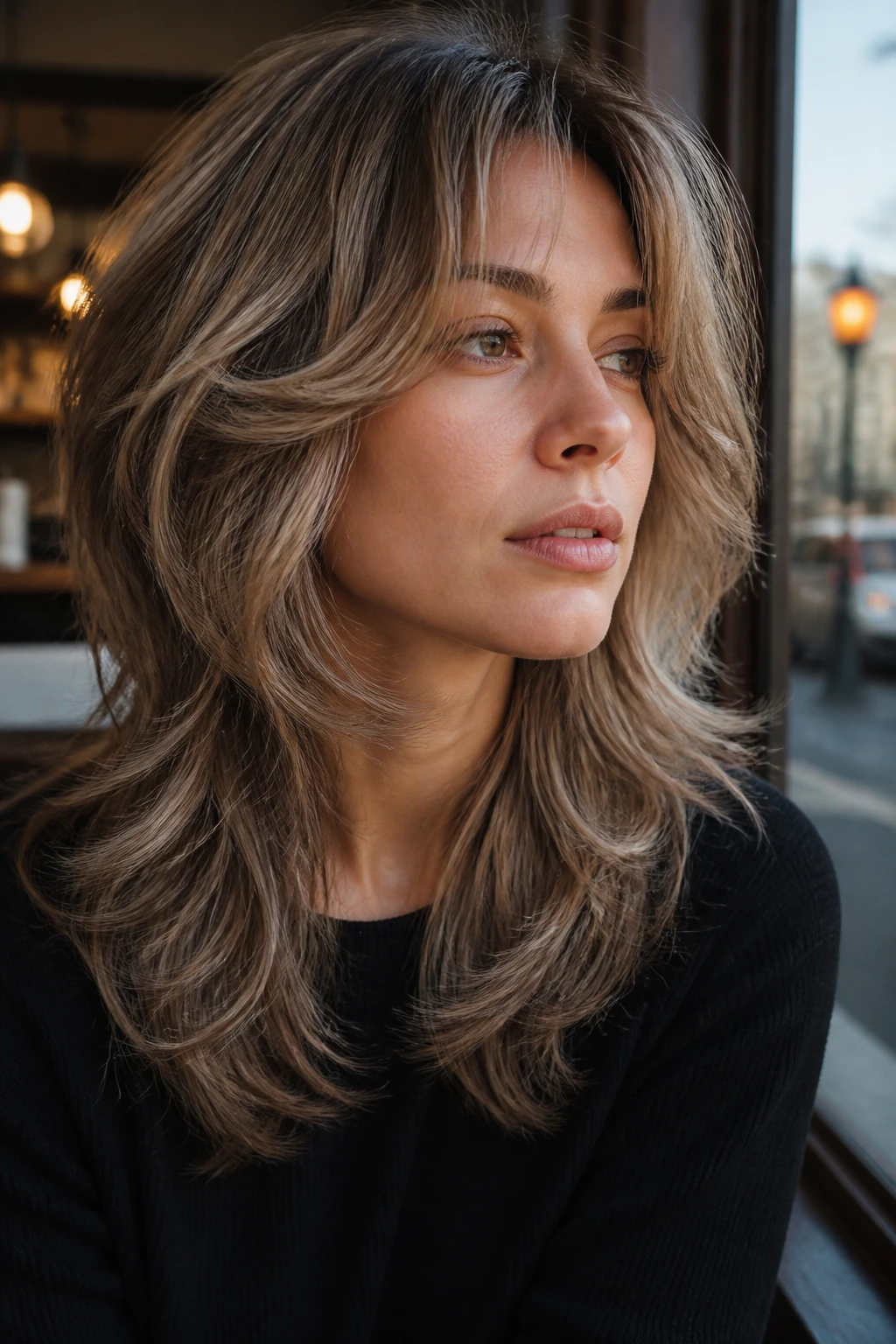
Mushroom blonde has a muted, earthy quality that suits dark hair better than people expect. It sits between beige, taupe, and ash, which sounds dull on paper and looks expensive in real life. On a wolf cut, that muted tone makes the layered shape feel modern instead of loud.
The cut does a lot of the talking here. The shorter crown layers and feathered ends let the blonde land in different places as the hair moves. That movement matters because mushroom blonde is subtle. It needs shape to show.
This is a good winter color if you’re tired of warm golds and you want something cooler without going silver. It pairs well with dark brows, strong eyeliner, and messy texture. The whole look reads a little lived-in. Not sloppy. Just lived-in.
8. Beige Blonde Ends on a Blunt Collarbone Cut
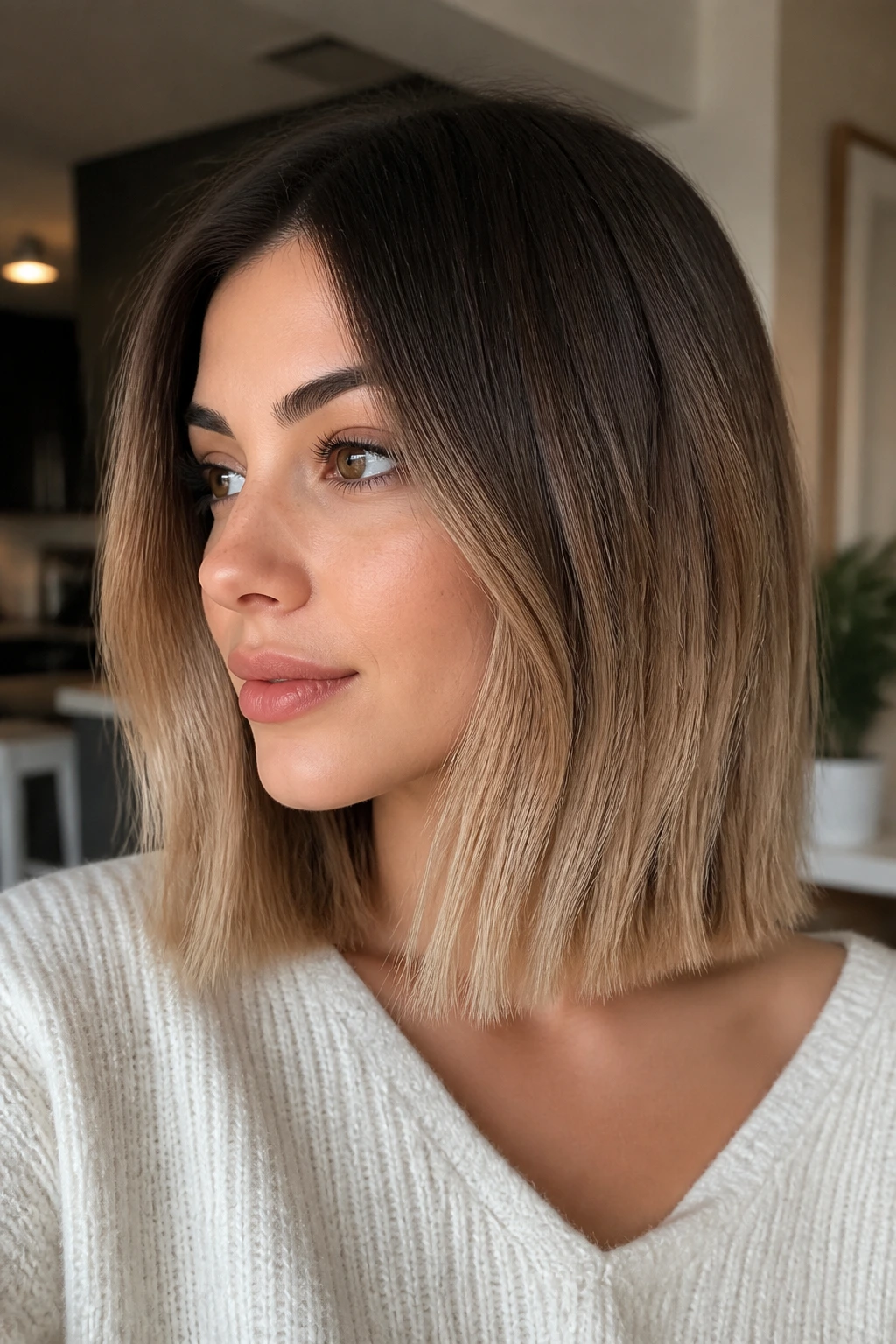
A blunt collarbone cut gives you a hard line at the bottom, and beige blonde ends soften that line without killing it. The darker roots stay in place, the mid-lengths hold depth, and the lighter ends give the cut a bit of swing.
This works best when the blonde begins a few inches above the hemline and then concentrates toward the tips. If the lightening starts too high, the shape can turn fuzzy. If it starts too low, you lose the effect when the hair is tucked into a coat or scarf.
Beige is the key word here. It keeps the ends from looking icy or yellow. The result is cleaner than a warm honey dip, but not as severe as a pale platinum finish.
9. Golden Babylights on a Pixie
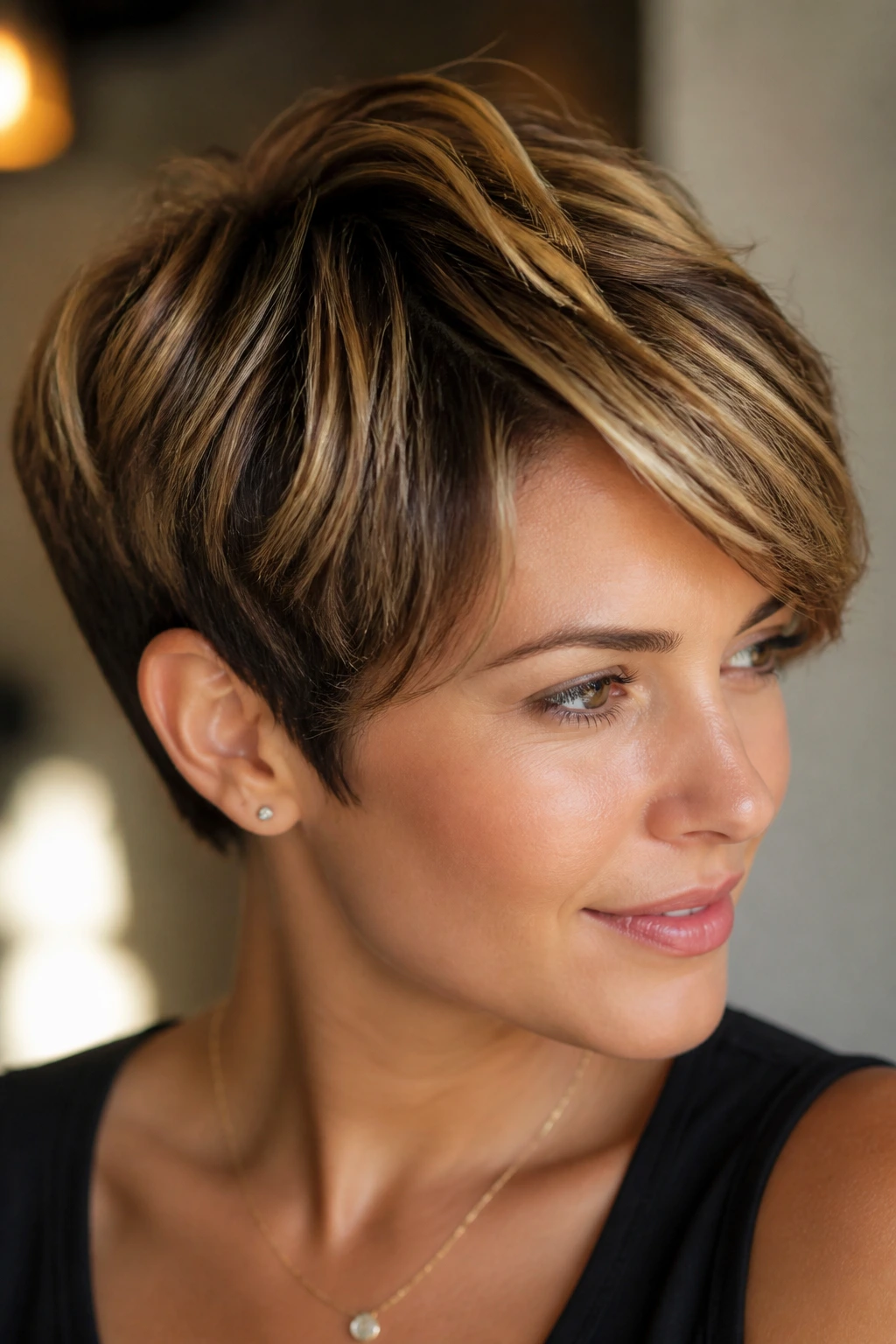
Short hair doesn’t need heavy blonde placement to feel interesting. Tiny babylights through a pixie can soften the shape, brighten the crown, and make the cut look a little less severe around the ears and neckline.
This is the sort of color that rewards movement. A side-swept fringe, a tousled top, or a finger-styled finish will show the gold in flashes. If the pixie is flat-ironed stiff, the highlights lose some of their charm. Let the hair breathe a little.
Babylights are also one of the kinder choices for dark hair because they don’t require the same dense saturation as a full highlight set. You still need proper lift, though. Tiny pieces can turn orange fast if the lightening stops too early.
10. Sandy Blonde Blowout Layers
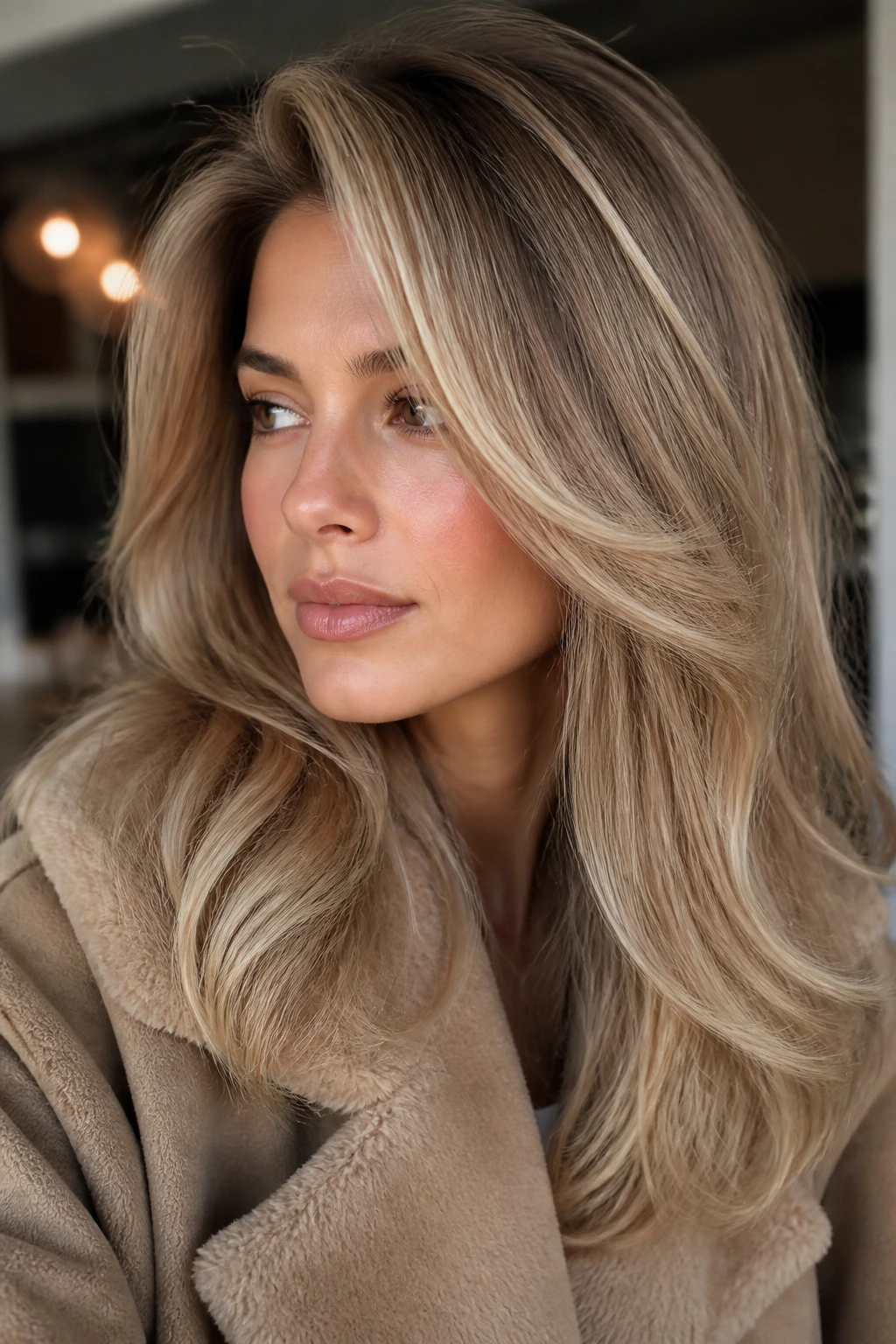
A blowout with sandy blonde layers has that soft, brushed finish that looks especially good when the weather is dry and the coat collars are tall. The blonde isn’t icy. It isn’t orange. It sits right in the middle, which is why it works on dark hair so often.
The cut should have enough movement to show the tonal shift. Long face layers, some internal layering through the mid-lengths, and a bit of bend at the ends all help. If the hair is all one length and heavy, the color can sink instead of float.
This is the style for someone who likes polish without stiffness. You get volume at the crown, smoother ends, and just enough blonde to keep the hair from disappearing into a dark coat.
11. Creamy Face Framing on a Center-Part Lob
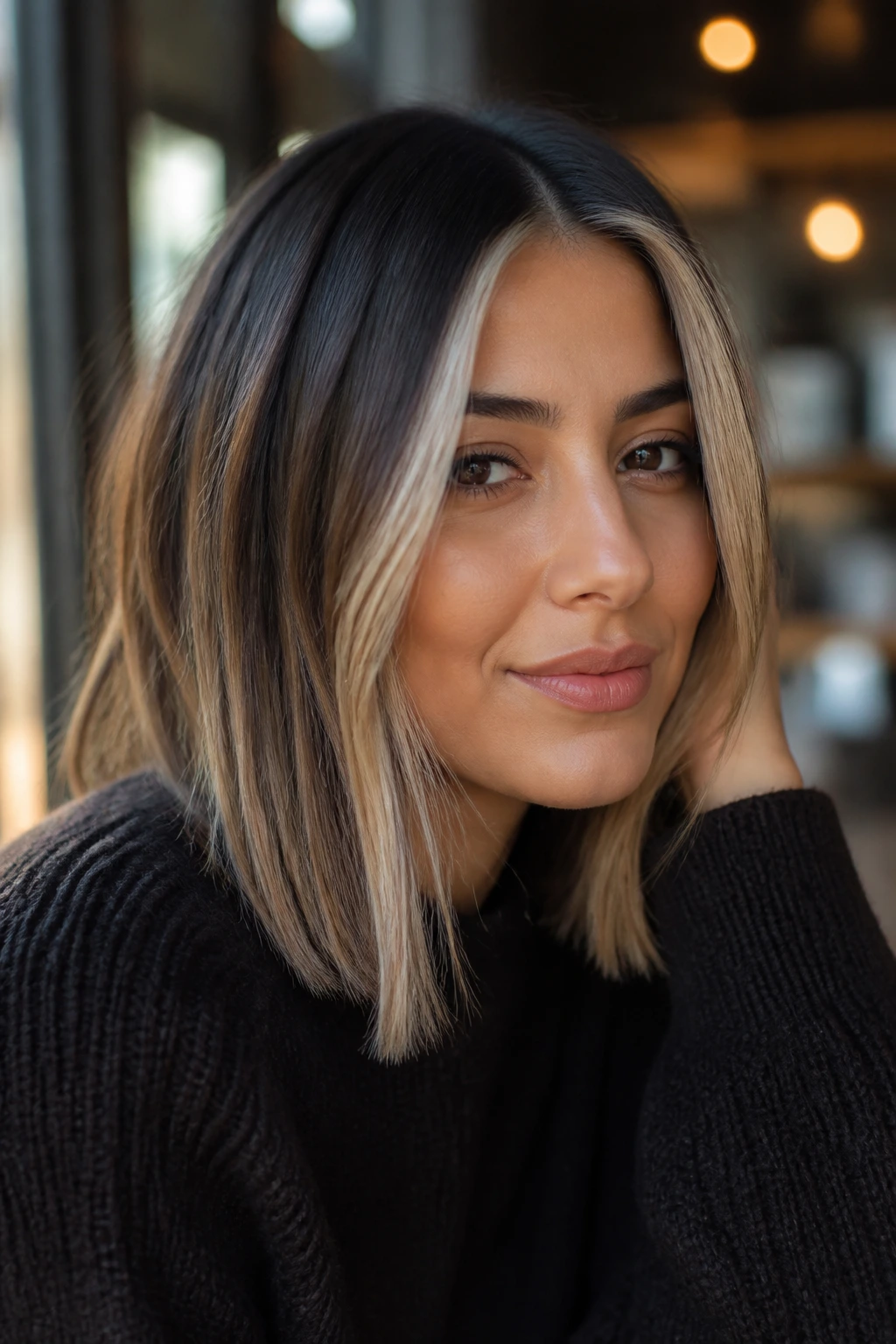
A center part can look severe if the color is too dark all around. Creamy face-framing highlights fix that fast. They soften the middle part, brighten the forehead and cheekbones, and give a lob a cleaner outline.
The cream tone is what makes this version feel winter-friendly. It’s lighter than honey but not harshly cool. On dark hair, it lands in a sweet spot where the contrast is obvious but not jarring. The face frame should be a touch thicker near the front and then fade back into the lob.
This is one of the easiest blonde hairstyles for dark hair to live with if you prefer low drama. The grow-out stays gentle, and the rest of the cut can stay glossy and dark.
12. Frosted Tips on a French Bob
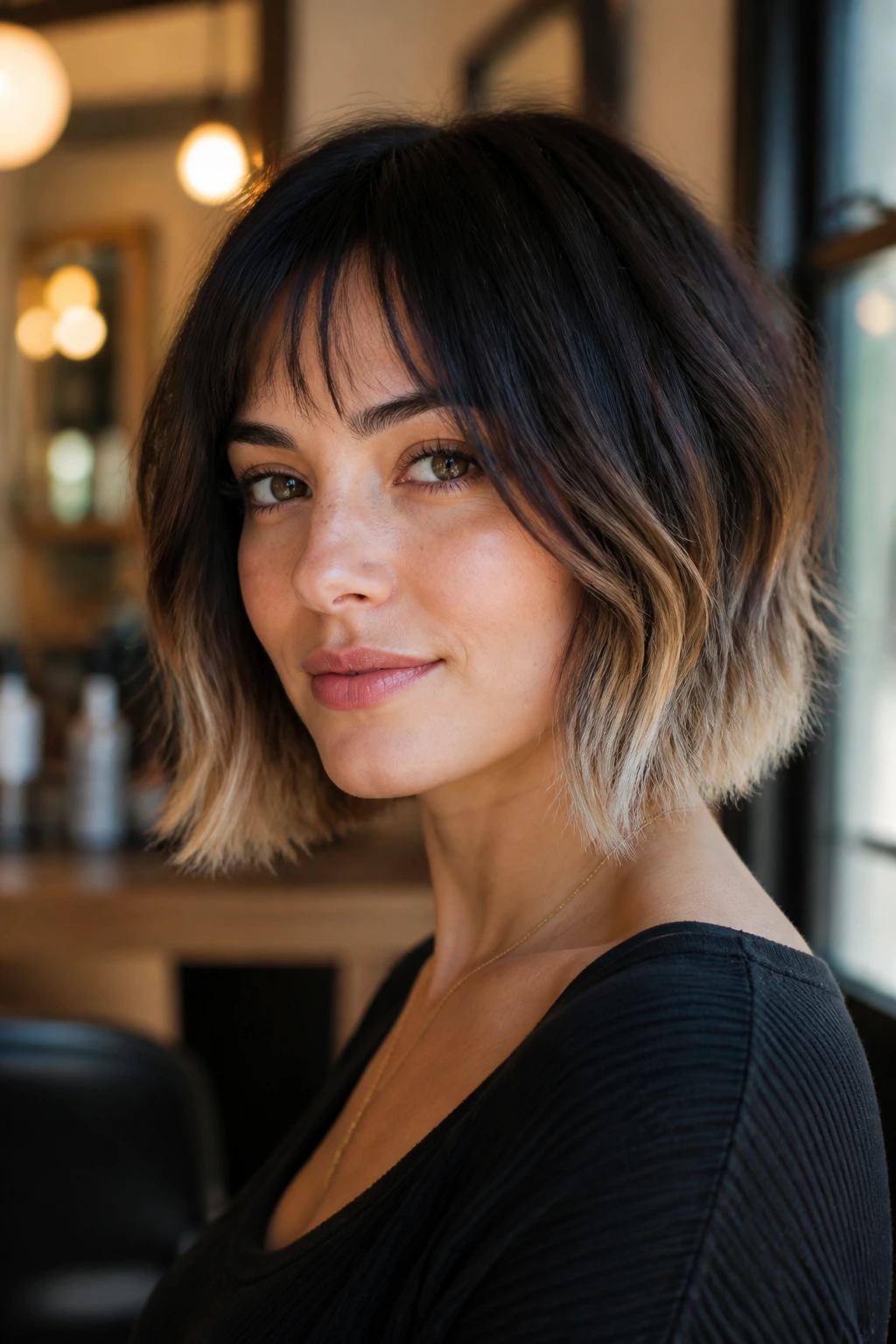
A French bob with frosted tips has a nice little bite to it. The shape is compact, the ends are blunt, and the lighter tips sharpen the edge. It’s a good choice if you want blonde contrast but don’t want to sacrifice the dark root.
The blonde should stay concentrated at the ends and around the perimeter. If it creeps too far up the head, the bob can lose its shape and start looking busy. Keep the color focused. Clean lines work better here than a busy blend.
A bit of bend at the ends helps the frosted effect. Straight, tucked-under ends look neat but can make the blonde disappear. A slightly undone finish gives the style more character.
13. Toffee Balayage on Long U-Shaped Hair
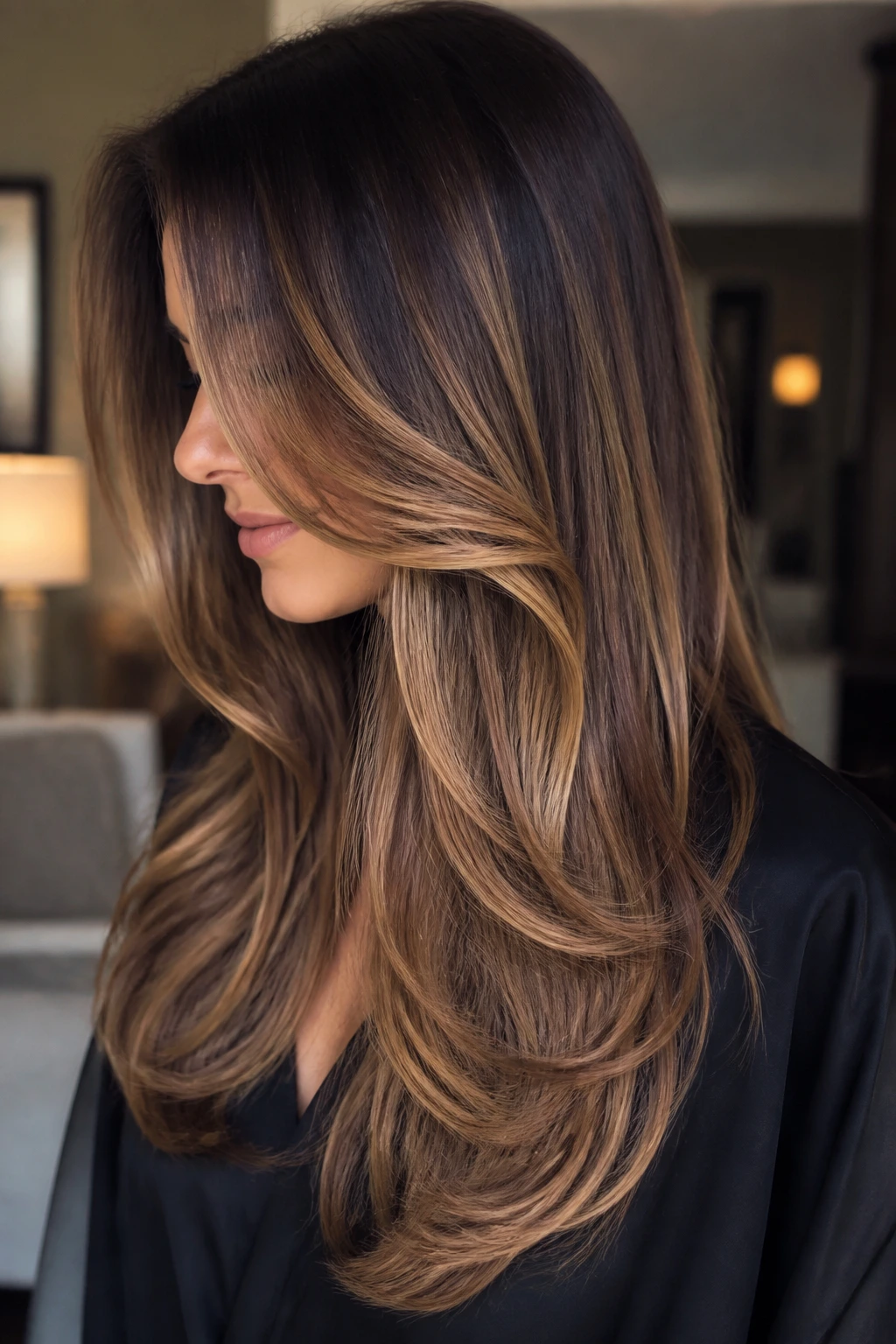
Long hair can swallow color if the placement is too timid. Toffee balayage solves that by running warm ribbons through the U-shaped layers, so the eye keeps catching light as the hair falls.
The U-shape matters. It gives the ends a gentle curve and keeps the blonde concentrated where the hair is most visible. Toffee is a safe, flattering tone for dark bases because it warms the face without going orange. It also plays well with dark roots, which is a nice bonus when you’re not chasing the salon every few weeks.
This style has a soft, expensive feel without being flashy. If you like long hair but hate how heavy it can look in winter, this is a sensible answer.
14. Platinum Ribbon Highlights in a Braided Style
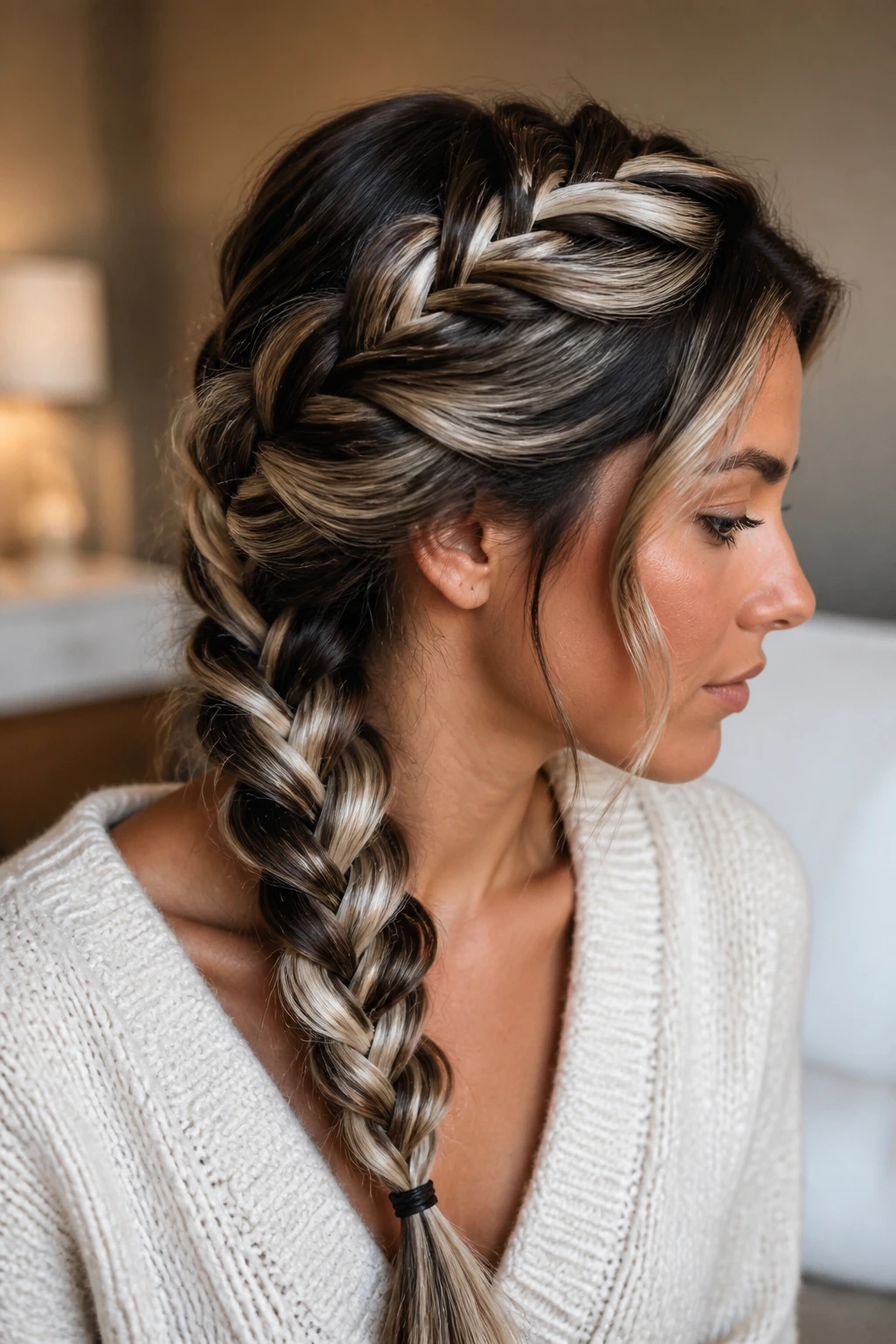
Braids reveal color differently than loose hair, and that’s why platinum ribbons can be so good on dark hair. The lighter strands weave in and out, so you get movement, contrast, and a little visual drama without needing a full bright finish.
This works best on longer hair with enough thickness to hold the braid shape. The platinum should be placed where the braid will fold over itself — along the crown, through the outer sections, and near the face if you want the contrast to show sooner. Fine, random highlights won’t read as clearly once the plait is in place.
A braid also protects the color a bit on rough days. Wind, scarves, and static can make loose lengths look fuzzy. A braid keeps the blonde pattern tidy.
15. Soft Toasted Blonde Waves
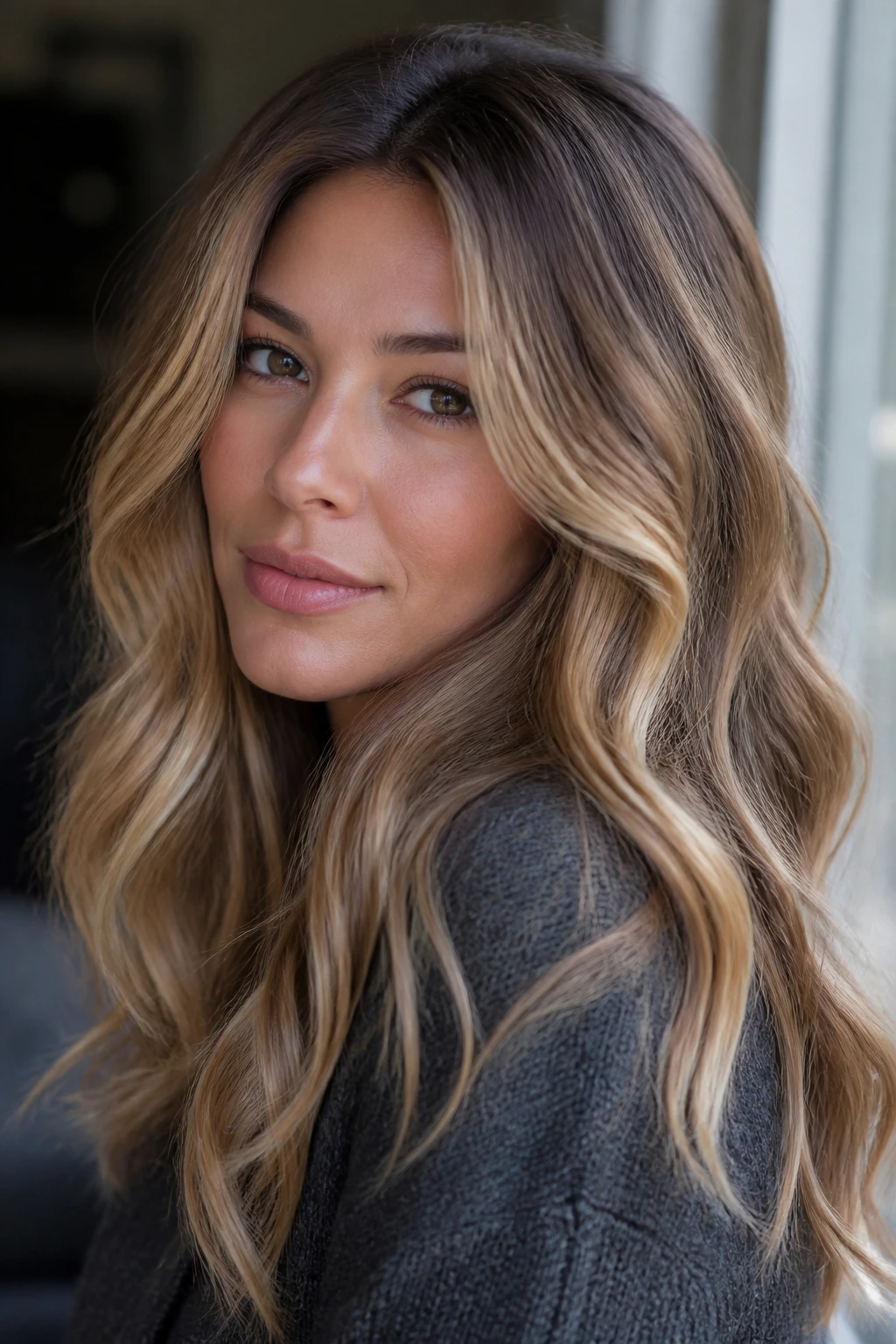
Toasted blonde sits warmer than ash, cooler than caramel, and that middle lane is useful on dark hair. It avoids the flatness of a yellow blonde and the harshness of a pale icy lift. On waves, it looks layered even before you step outside.
This is a strong choice if your natural base is dark brown rather than near-black. The contrast is visible, but not severe. The waves should be broad and brushed out so the different tones can blend across the bend of the hair. Tight curls or pin-straight styling can make the dimension look narrower than it is.
Some people want blonde that announces itself immediately. Others want the kind you notice two seconds later. Toasted blonde is for the second group.
16. Hidden Blonde Panels in Straight Hair
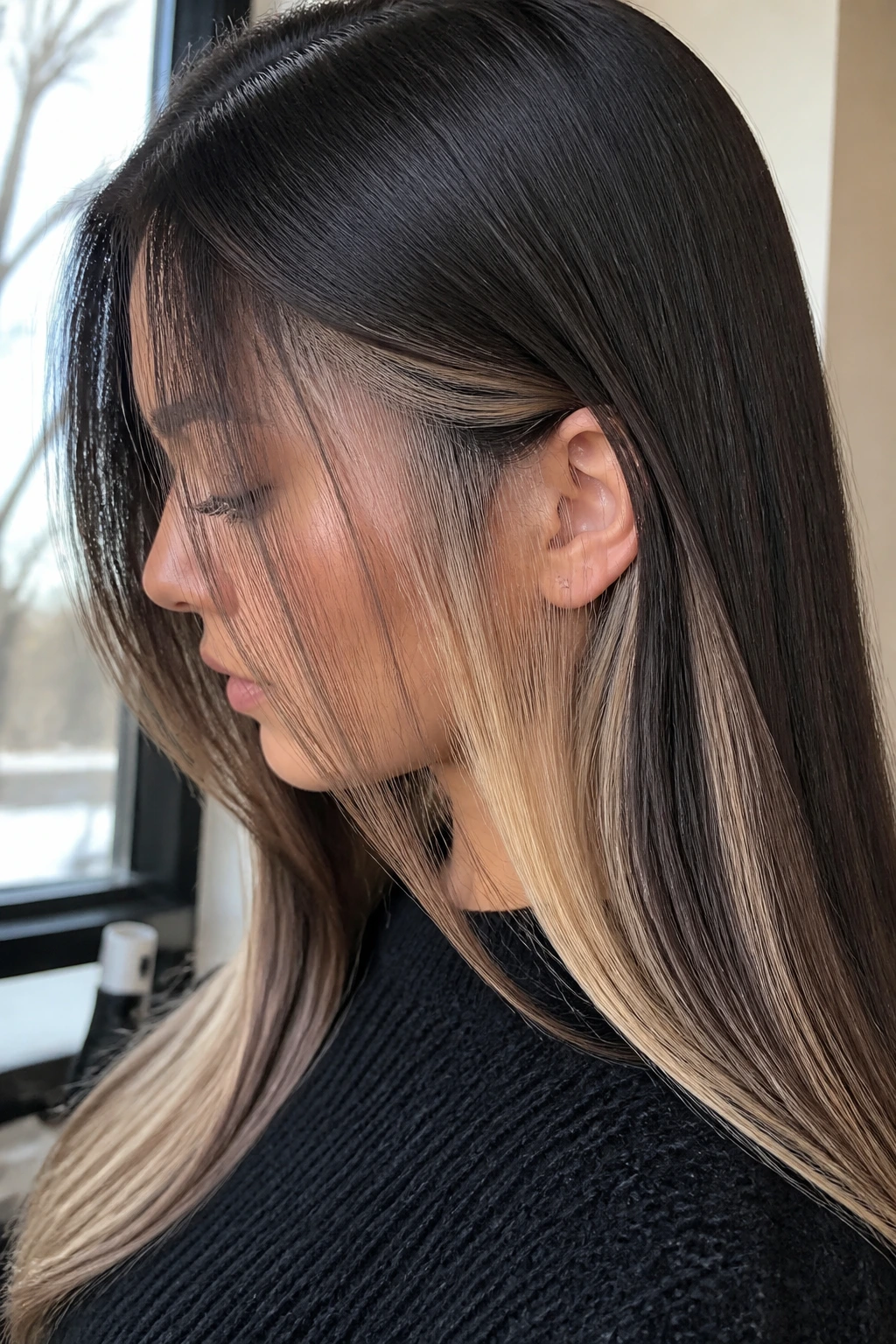
Straight hair can be unforgiving. Every line shows. That’s why hidden blonde panels work so well here. They sit underneath the top layer, then peek through when the hair shifts, creating a flash of brightness that doesn’t need constant styling.
The panels should be wide enough to matter and placed with the haircut in mind. If your hair is shoulder length or longer, panels near the nape and lower sides can create a nice sweep of light when you tuck the top section behind your ears. Keep the finish glossy. Straight hair looks best when the color has shine to back it up.
This is a good choice if you want blonde impact but need the top layer to stay dark for work, grow-out, or personal taste. It’s also one of the easiest styles to live with on a daily basis.
17. Wheat Blonde Pieces in a Modern Mullet
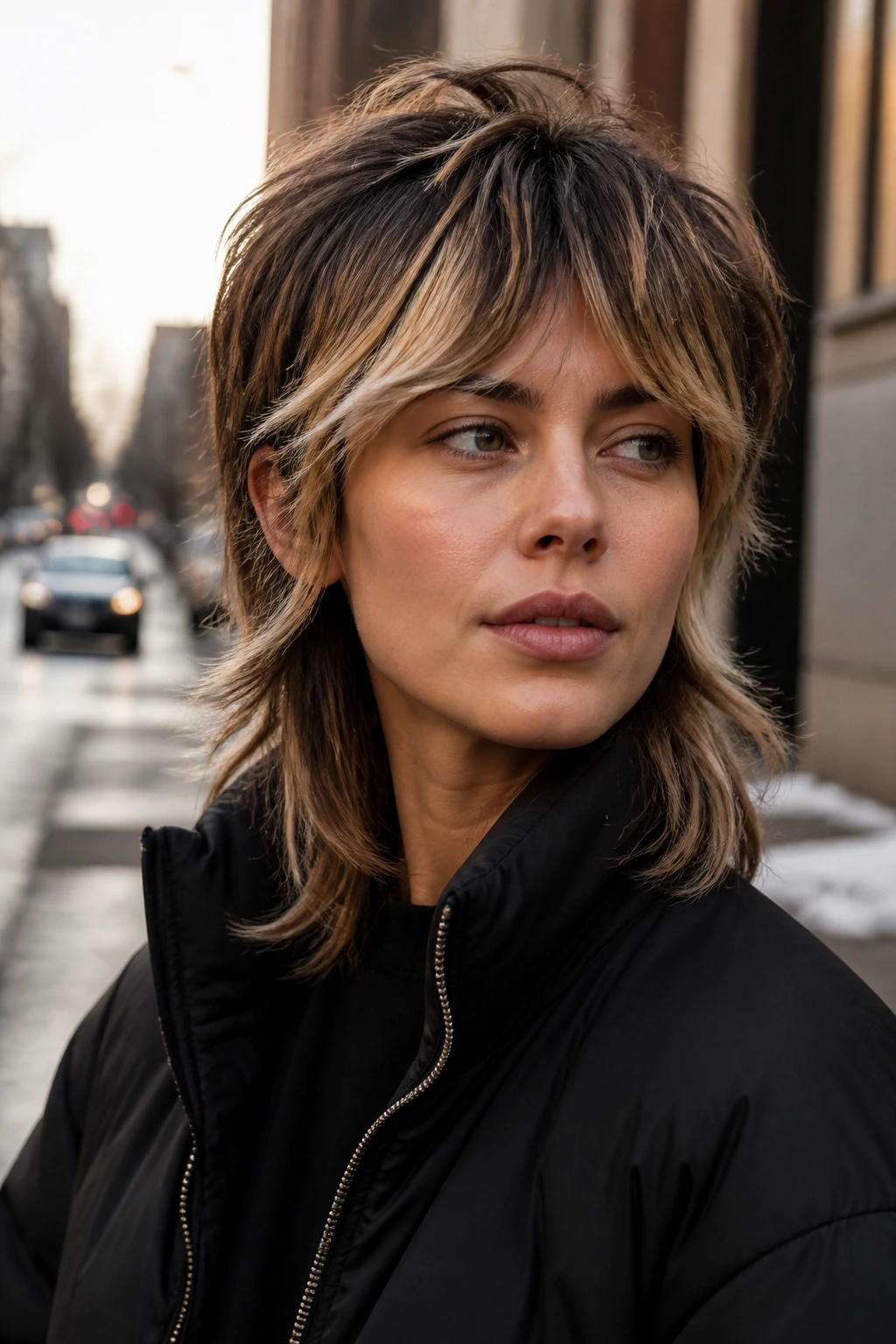
A modern mullet needs some contrast to keep it from reading like a haircut from a storage box. Wheat blonde pieces do that job well. They bring light to the top, sides, and a bit through the shaggy lengths, which keeps the shape from collapsing into one dark mass.
The color should feel dusty and soft, not yellow. Wheat sits in that pale beige zone that works with textured hair and sharper layering. On this cut, the blonde is part of the attitude. It doesn’t soften the shape so much as give it more edge.
If you’re nervous about a full blonde change, start with the front and crown. That gives enough light to read the shape without committing the entire head to bleach.
18. Champagne Curls on a Deep Side Part
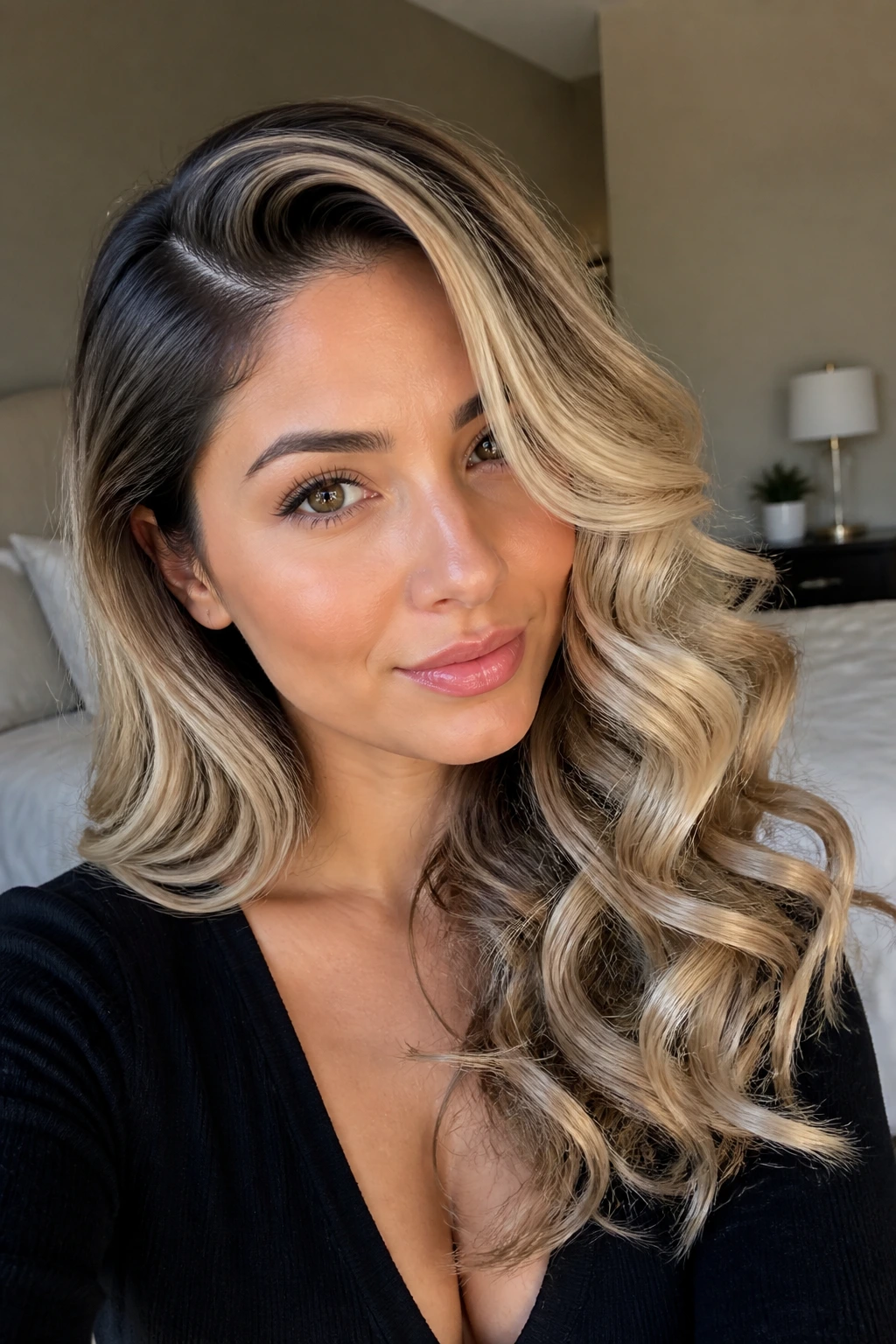
A deep side part does something useful on dark hair: it gives the blonde one side to lean on. Champagne curls work with that asymmetry. The brighter pieces sit where the eye naturally lands, and the result feels elegant without trying too hard.
The curls should be loose, not tight. Think brushable bends or big-set ringlets that soften as they cool. Champagne blonde needs room to glow. If the curl pattern is too small, the light can scatter and look busy.
This is one of those styles that looks especially good when the hair has a little gloss serum on the ends. Not too much. Just enough to keep the blonde from drying out and going chalky in cold weather.
19. Butter Blonde on Shoulder-Length Layers
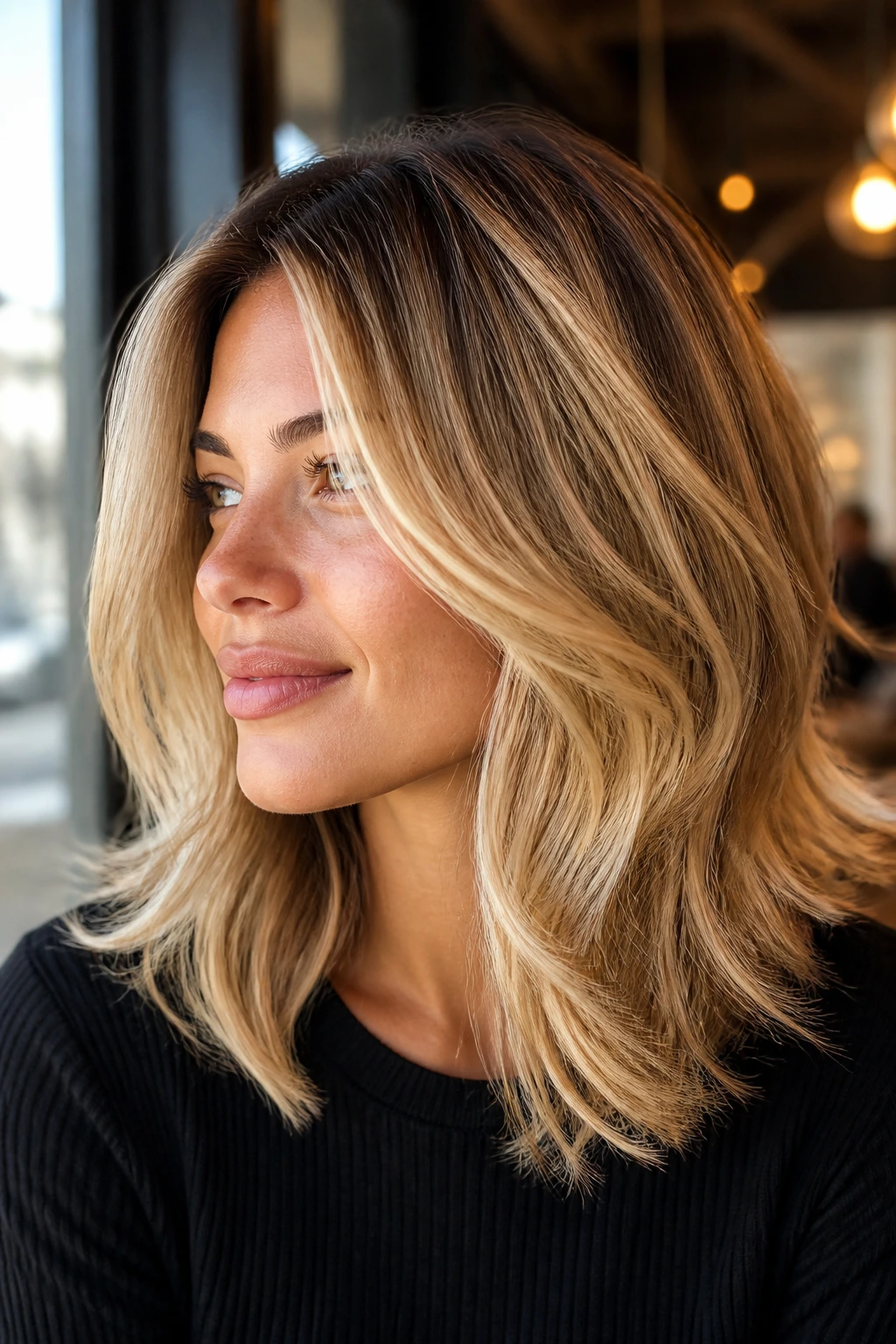
Butter blonde is warmer and rounder than beige, and on dark hair it can make shoulder-length layers feel softer right away. The color lightens the shape without stripping away the depth that keeps the cut from looking thin.
Shoulder-length layers are a practical canvas because they move when you walk, bend, or tie your hair back. Butter blonde catches on those changes. The ends flash lighter, the mid-lengths stay dimensional, and the root keeps everything anchored.
If your skin tends to look washed out in cold months, a buttery blonde can be kinder than a pale ash. It doesn’t need to be bright enough to blind anybody. It just needs enough warmth to keep the face from sinking into the background.
20. Silver-Beige Highlights on Dark Coils
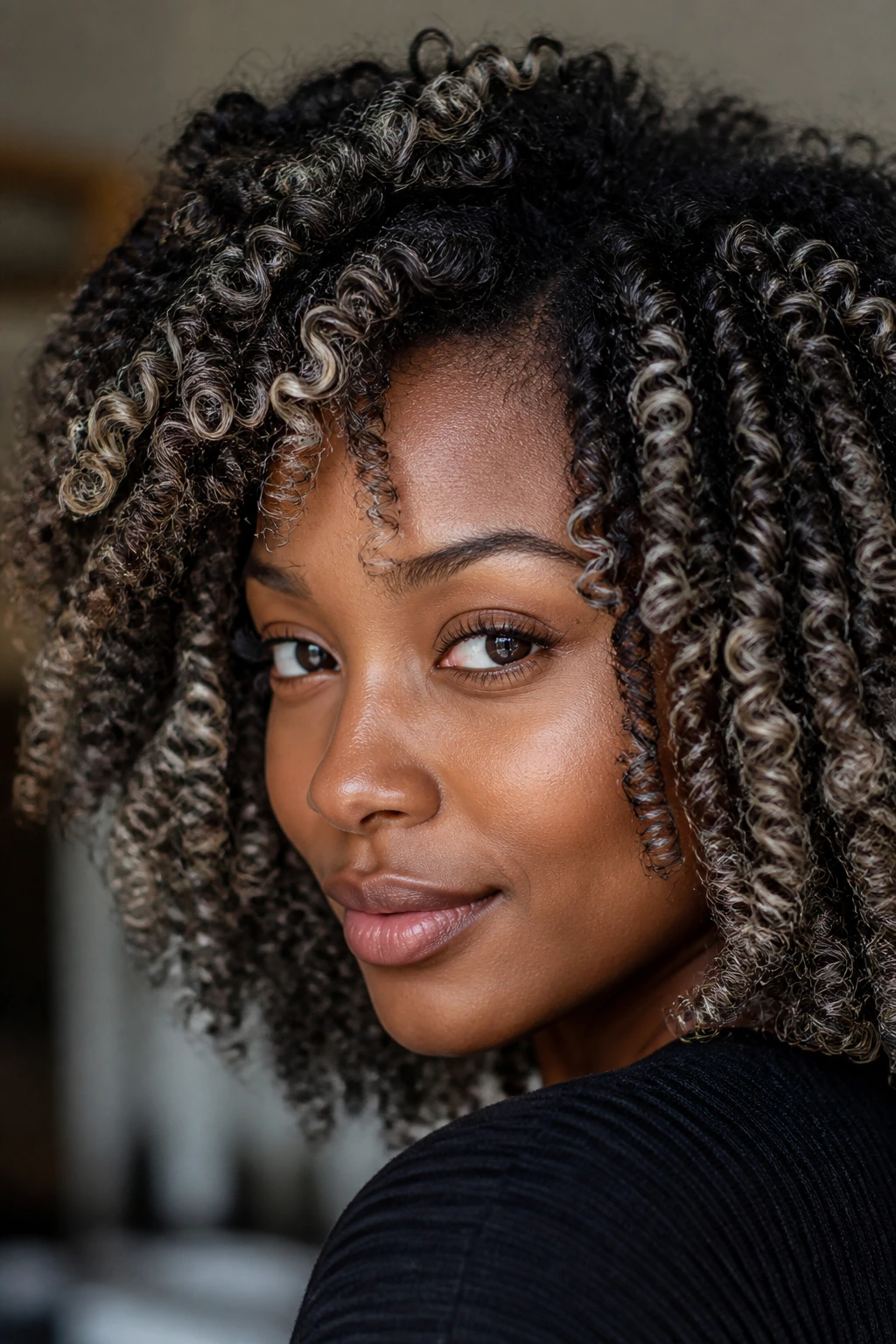
On coils, blonde needs to respect the shape first and the color second. Silver-beige highlights do that well. They lift enough to stand out, but they don’t flatten the curl pattern by trying to turn every coil into the same shade.
Placement is everything here. Keep the lightest pieces where the curl clumps and shines — near the outside of the shape, around the front, and through sections that show the most movement. If all the lightening happens underneath, you lose the effect. If it’s placed too uniformly, the hair can start to look patchy as it shrinks.
This is a beautiful choice for people who wear natural texture and want contrast without sacrificing the coil pattern. The right silver-beige tone looks cool, not gray, and that distinction matters.
21. Vanilla Money Pieces on a High Ponytail
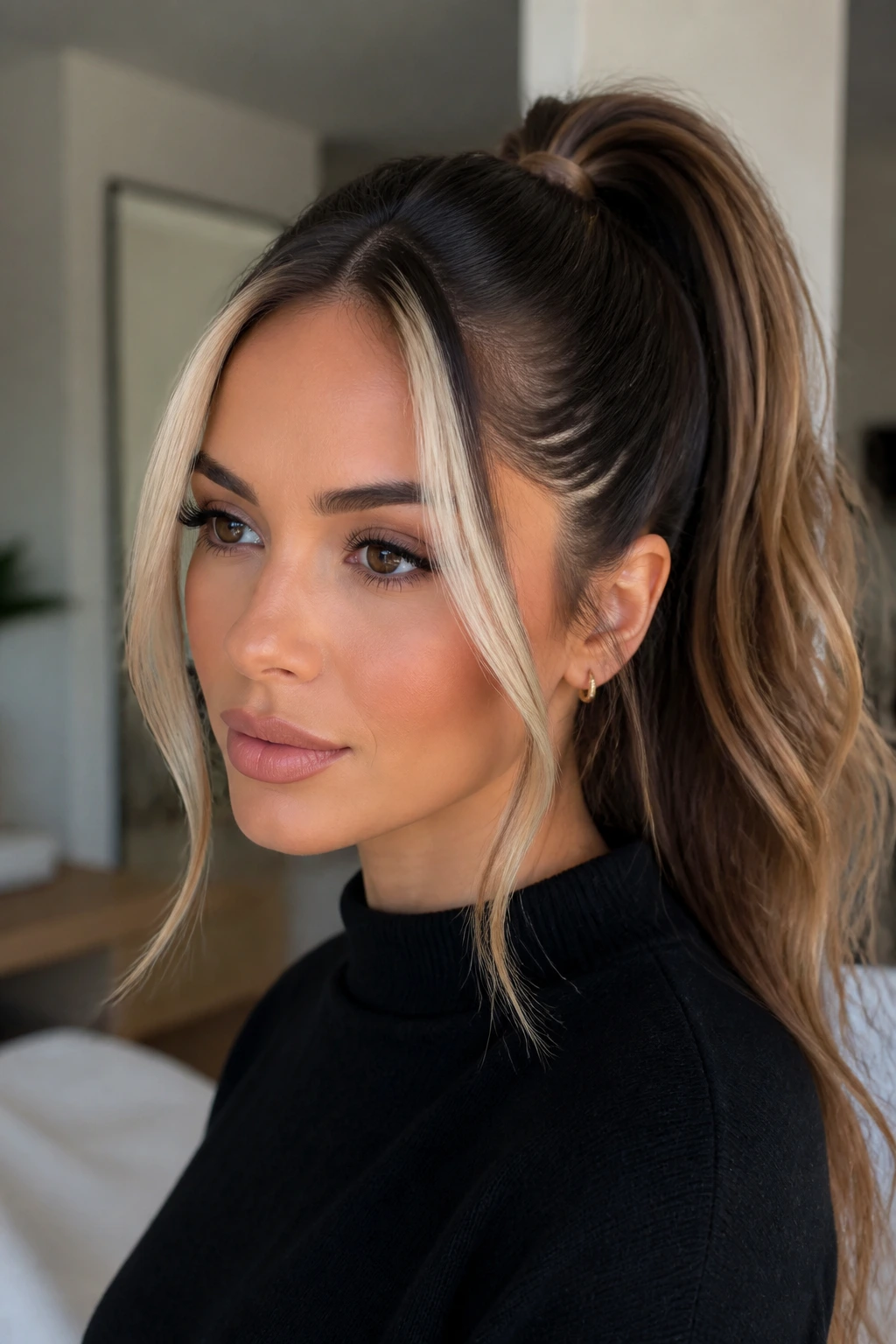
A high ponytail can be plain, or it can be sneaky. Vanilla money pieces make it the second thing. The bright front sections pull the eye up, and once the ponytail is lifted, the lightened strands frame the face in a clean, neat arc.
This style is useful because it shows off blonde even on days when the rest of the hair is tied back. If you work out, commute, or live in a world of clips and elastics, that matters. The ponytail itself can stay dark and smooth, while the front pieces give all the brightness.
Keep the vanilla tone creamy, not white. Vanilla should look soft against a dark base. If it’s too icy, the front can feel disconnected from the rest of the hair.
22. Smoky Ash Balayage on a Mid-Length Shag
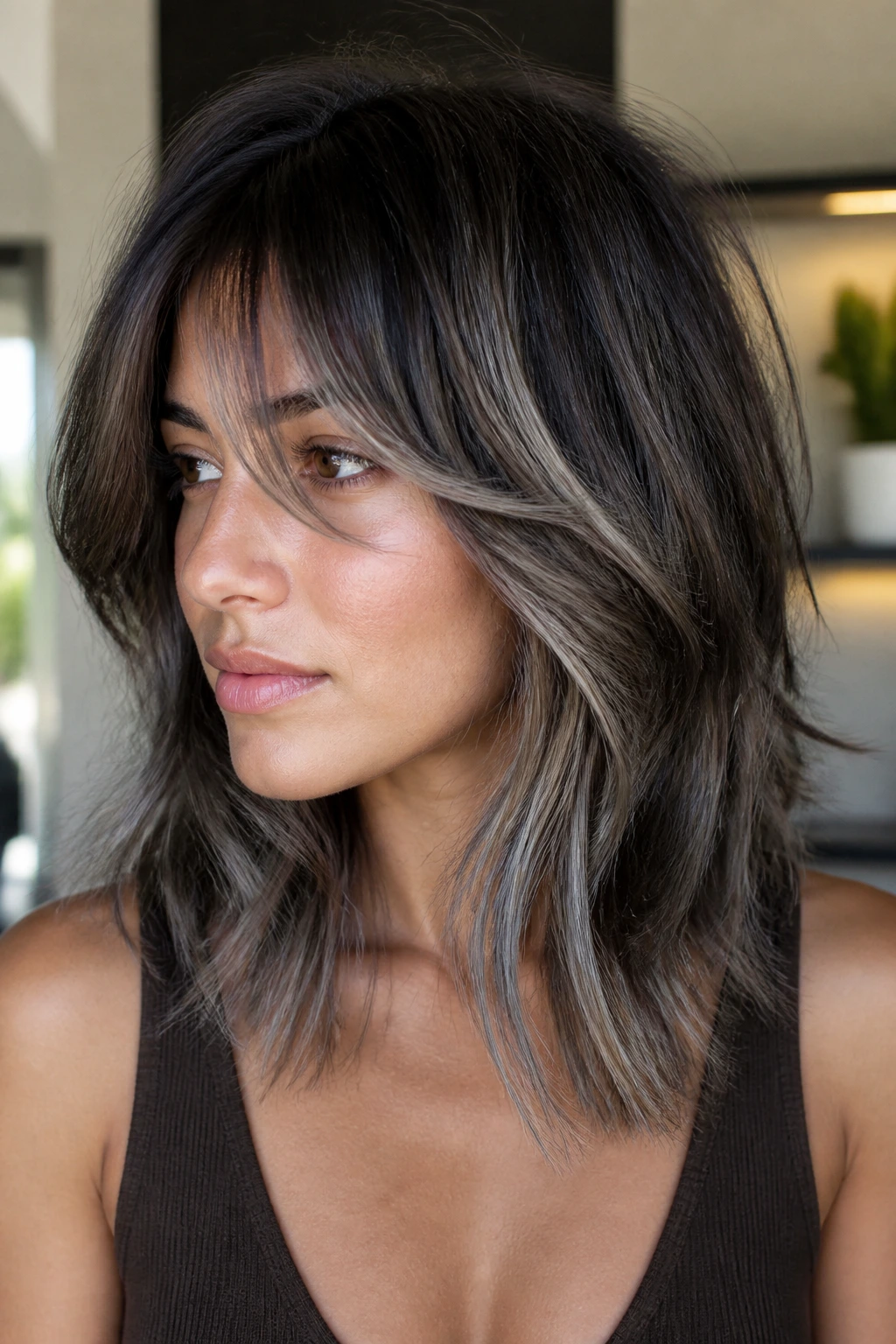
Smoky ash balayage has a lived-in feel that suits a shag better than a polished cut. The layers move, the texture breaks up the color, and the ash tone keeps the blonde from turning loud. On dark hair, that combination is a relief.
This look is especially good if you air-dry a lot. The irregular texture of a shag helps the balayage show without needing heat tools every morning. A little sea-salt spray, a bit of mousse, and the layers do the rest.
The root should stay deep enough to hold the smoke effect. If the lift is too bright, you lose the moody finish that gives the style its edge.
23. Warm Caramel Streaks on a Sleek Bun
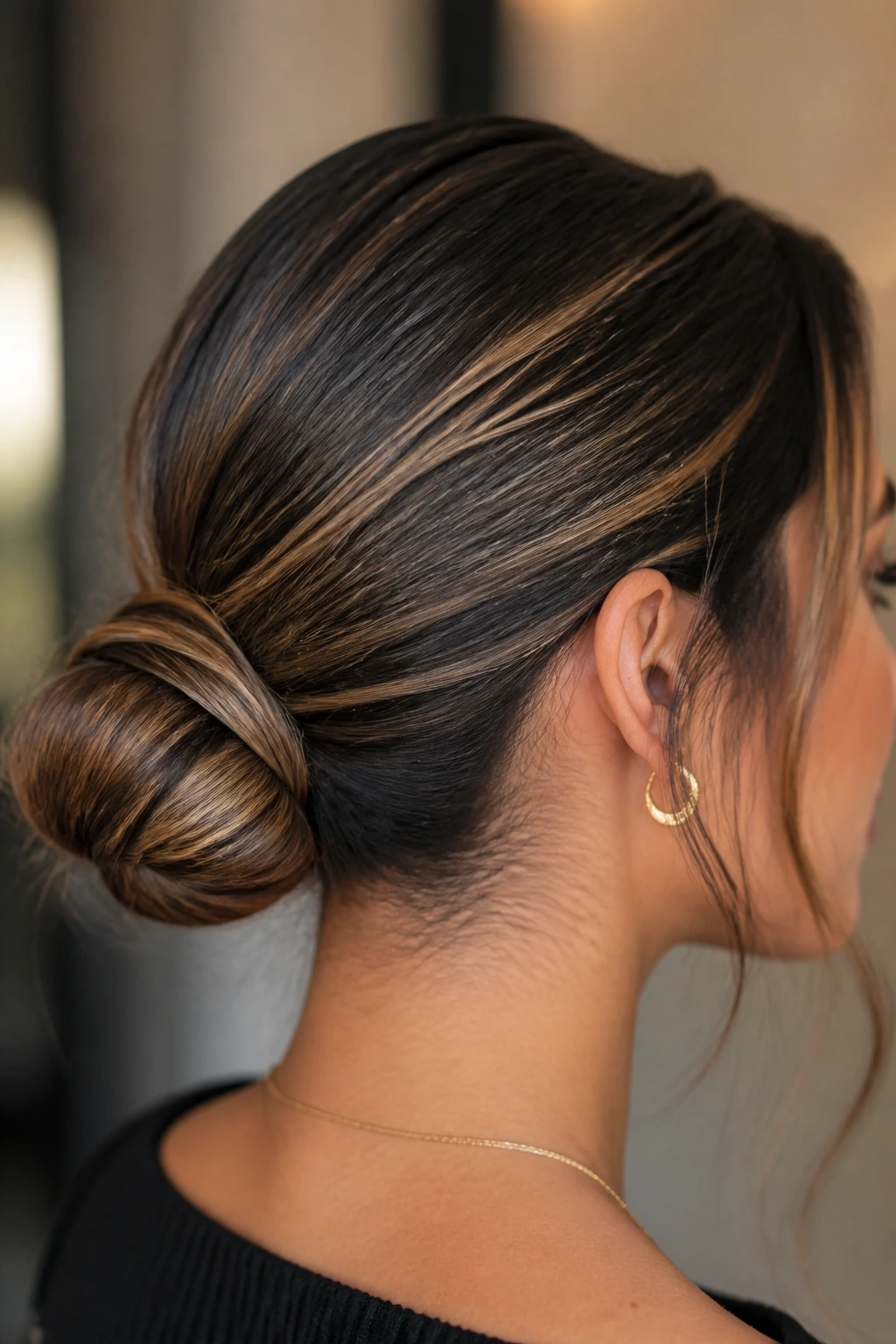
A sleek bun is usually about shape and shine, but caramel streaks can make the style feel less severe. The lighter pieces sit near the hairline, temple, and nape, so even when the bun is tight, there’s still some life around the face.
This works best if the streaks are subtle and blended. You do not need chunky contrast here. Caramel should look like a glow, not a stripe. When the bun is polished, the color reads as deliberate. When it’s a little loose, the streaks soften the whole thing.
It’s a good choice for winter dinners, office days, or any moment when you want your hair off your neck but still want the blonde to show up.
24. Bright Blonde Ends on a Long Cut
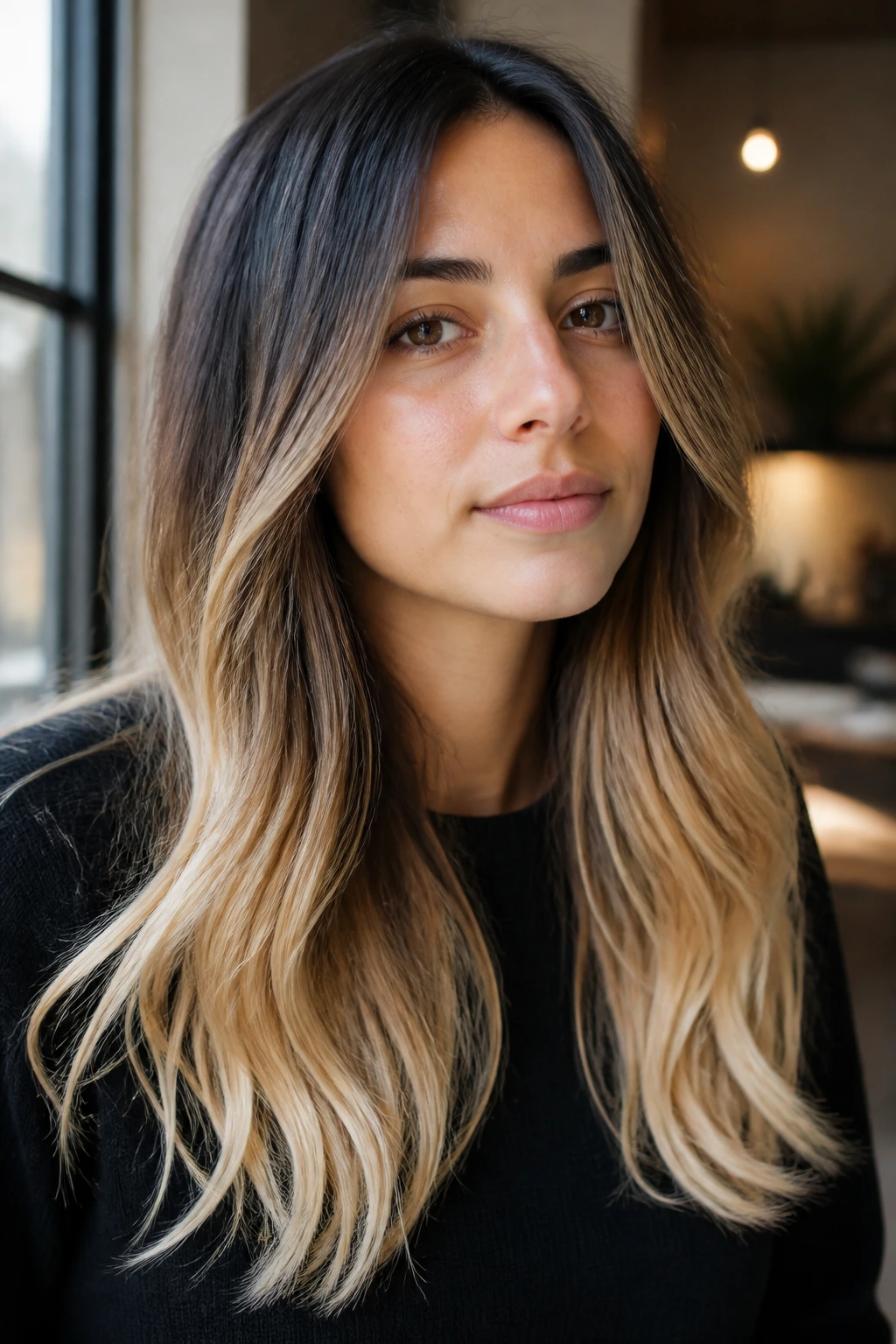
Bright ends can make long dark hair feel lighter without touching the whole head. The darker roots and mid-lengths keep the weight, and the pale ends give you that sense of lift that long hair sometimes loses under winter layers.
The trick is making the transition smooth. If the bright section starts too suddenly, it looks clipped on. If the fade is gradual, the ends feel sun-kissed even in cold weather. A long cut with soft layers or a U-shape helps the blonde sit properly.
This is one of the bolder choices on the list, and that’s fine. If you like contrast and don’t mind a little maintenance, the effect is clear every time you move.
25. Soft Bronze and Blonde Melt on Dark Hair
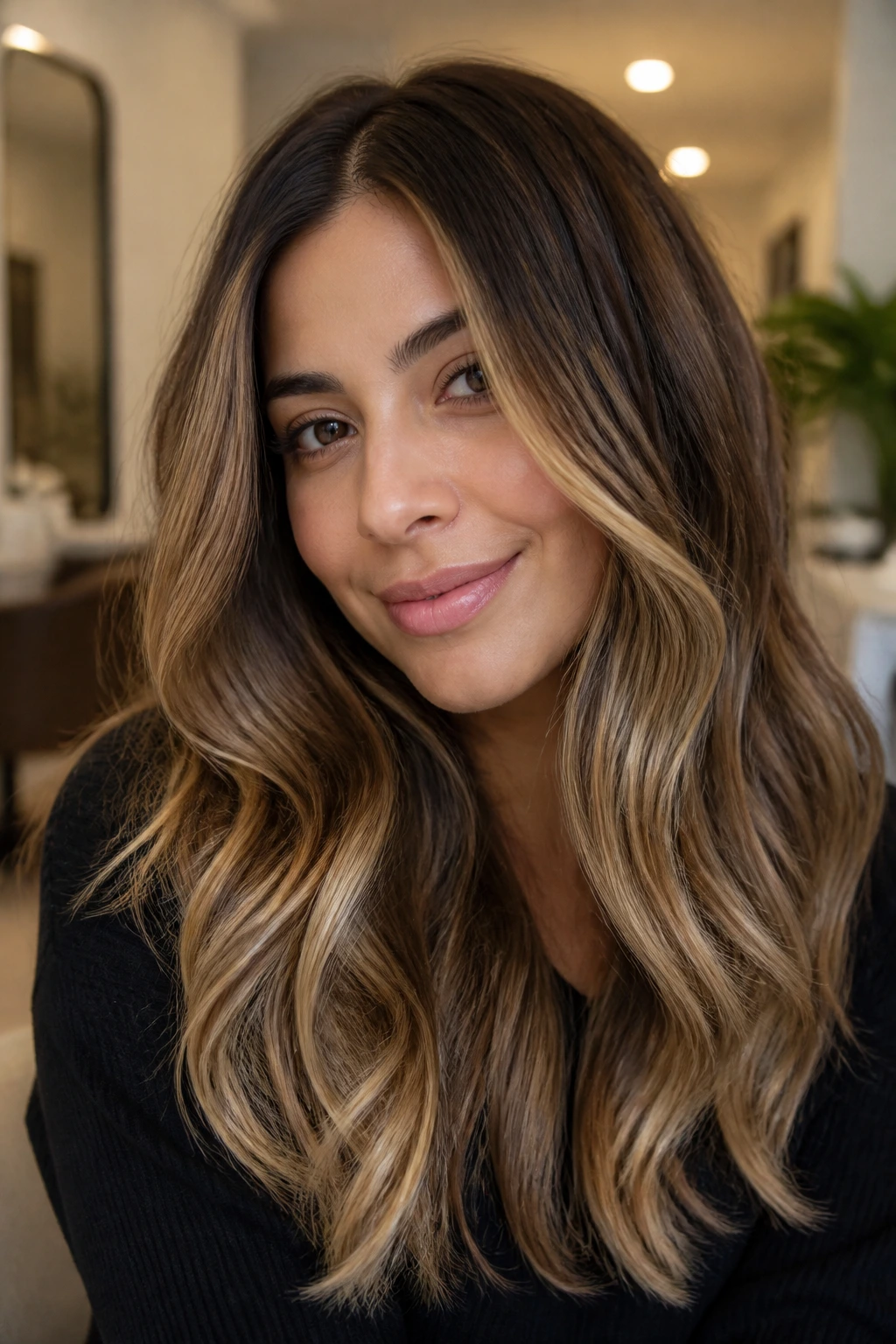
A bronze-to-blonde melt is the quietest way to work blonde into dark hair without making the result feel harsh. Bronze near the root eases into beige blonde through the lengths, so the shift looks smooth instead of striped. It’s the kind of color that makes dark hair look richer, not lighter for the sake of it.
This is the style I’d point to first for someone who wants dimension more than drama. It flatters waves, straight hair, and softer curls, and it holds up well when the weather turns dry. The blend matters more than the brightness level. If the handoff between bronze and blonde is clean, the whole head looks expensive in the everyday sense of the word: neat, finished, believable.
On a darker base, this melt is less about showing off the blonde and more about letting it appear where the light already wants to land. That’s the smart move.
Why Dark Hair and Blonde Placement Keep Winning in Winter
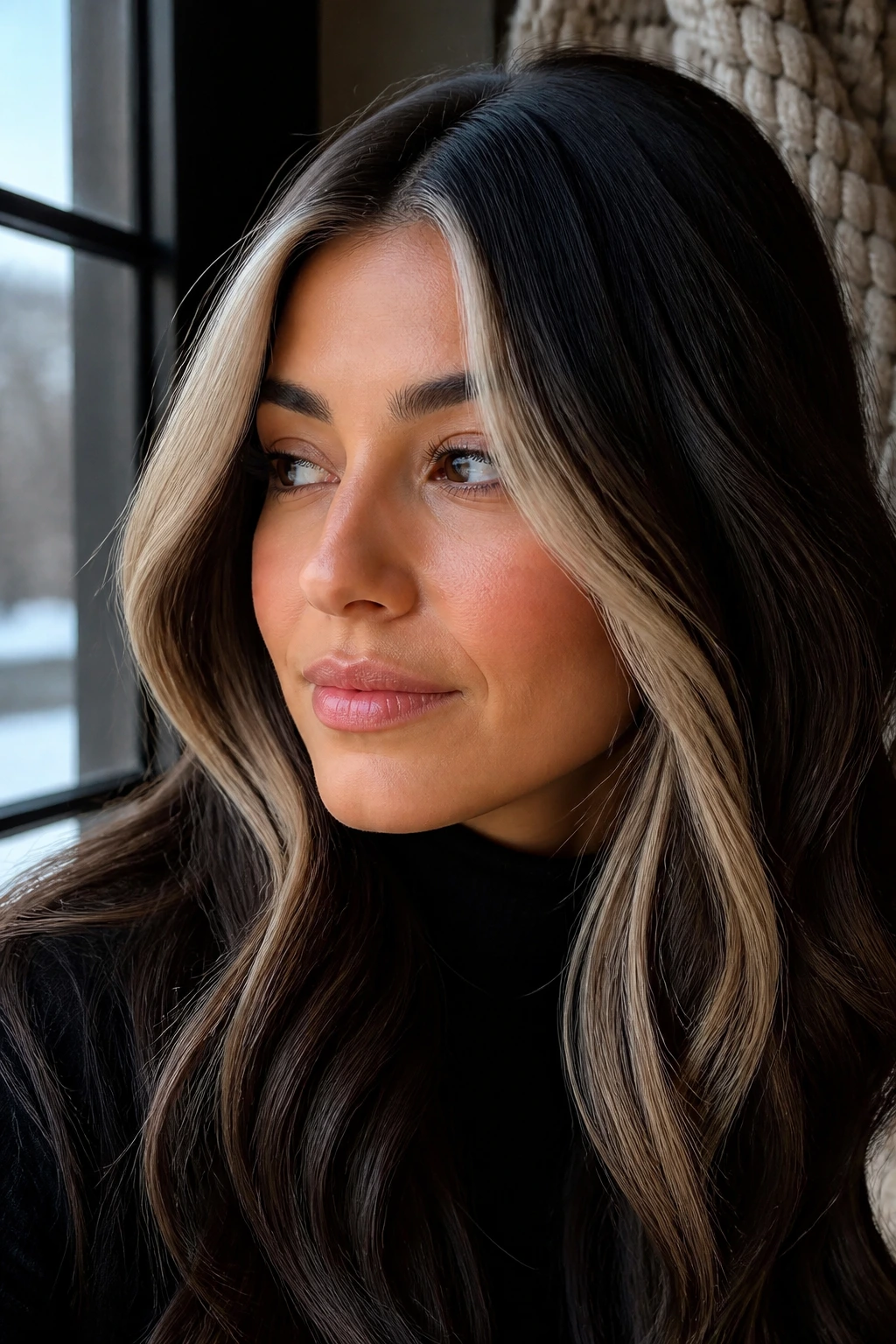
Dark hair gives blonde a frame. That alone changes everything. A bright piece on a deep base looks sharper than the same shade on a lighter canvas, so you get more payoff from less lightening.
Cold weather also changes the way color reads. Gray skies can flatten brown hair, and indoor lighting can turn a warm blonde into something a little brassy if the tone is off. Beige, honey, ash, champagne, and smoked-down blondes tend to hold their shape better because they stay readable across different lighting. That’s why these placements keep showing up: they survive real life.
If you’ve ever stepped outside with a wool coat, a scarf, and flat hair, you know the problem. A few light pieces near the face fix more than people expect. They don’t just brighten color. They bring the haircut back into focus.
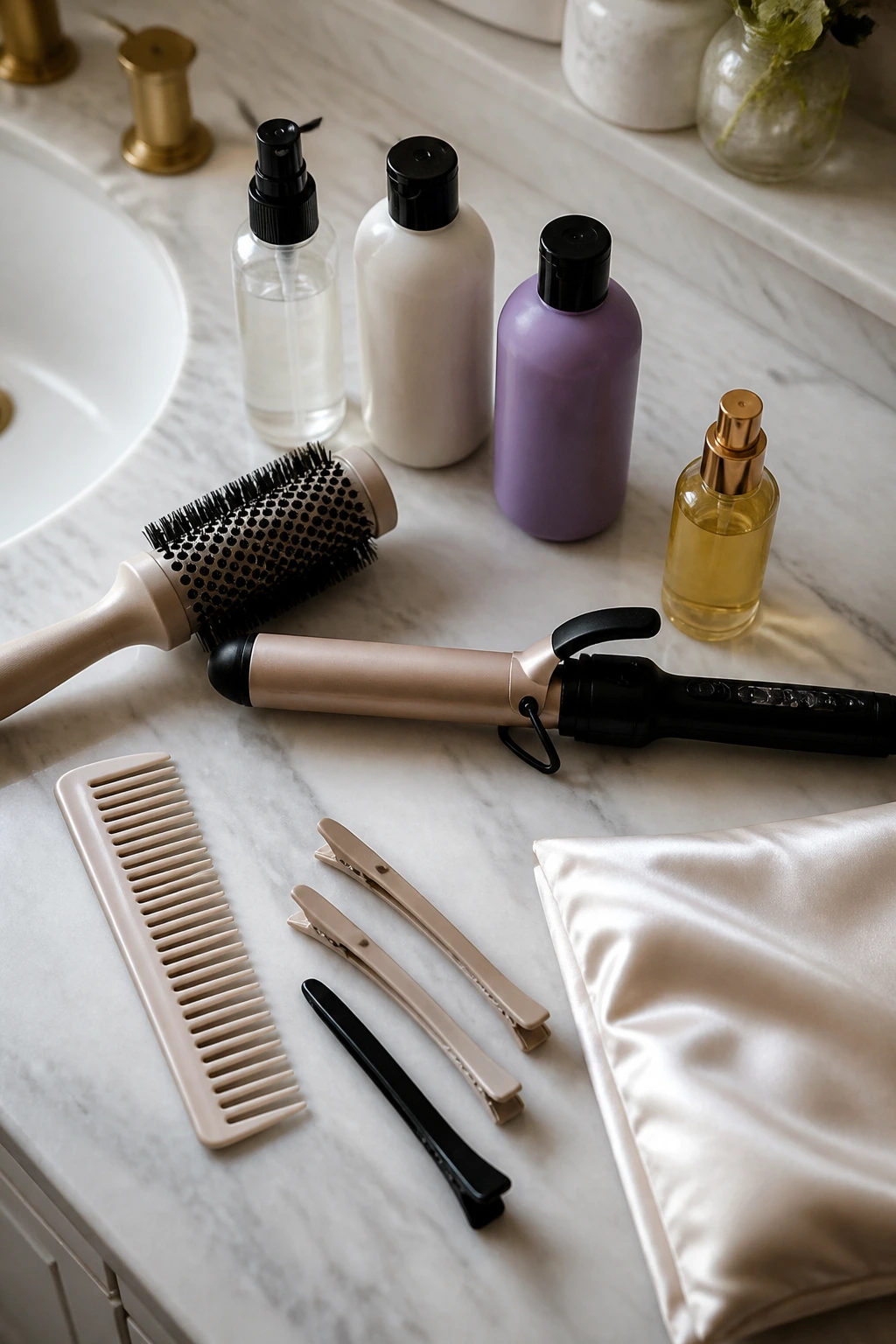
Essential Tools for These Looks
-
Heat protectant spray: Use it before blow-drying, curling, or flat ironing. Blonde pieces on dark hair show damage faster than the darker base.
-
Color-safe shampoo and conditioner: These keep toner from slipping too fast and help the lighter sections stay glossy.
-
Purple or blue toning shampoo: Purple helps blonde stay clear; blue can help if your dark hair tends to pull orange. Use it sparingly, not every wash.
-
Round brush: Good for face-framing layers, curtain bangs, and blowout styles that need a smooth bend.
-
Curling iron or wand, 1 to 1.25 inches: Loose waves show dimension better than tight ringlets for most of these styles.
-
Wide-tooth comb: Handy for detangling highlighted hair without ripping through the lighter, more fragile pieces.
-
Sectioning clips: Useful when you’re styling money pieces, braids, or hidden panels and need the light strands to sit where you want them.
-
Lightweight hair oil or serum: A pea-sized amount on the ends keeps blonde pieces from looking dry and rough.
-
Silk or satin pillowcase: Not glamorous, but it cuts down on friction, which matters when your ends are lighter than your roots.
How to Pick the Right Blonde Tone for Your Dark Base
Start with your base color, not your dream photo. If your hair is nearly black, icy platinum is a bigger lift and a bigger commitment. If your hair is dark brown, beige, honey, champagne, and toasted tones usually sit more naturally. That’s not a rule carved in stone. It’s a practical place to start.
Cool blondes — ash, mushroom, silver-beige — are useful when your skin reads pink, neutral, or cool and your hair tends to pull orange in the lightening process. Warm blondes — honey, caramel, butter, toffee — flatter deeper skin tones and can make the whole style feel softer. Neutral blondes sit in the middle and are safer when you’re unsure.
Texture changes the answer too. On straight hair, hard contrast shows fast. On curls and waves, the eye blends the tones more easily. So a bright blonde that feels loud on pin-straight hair may look balanced on a curly shag. The haircut is part of the color choice. Always.
Smart Salon Notes to Bring to the Chair
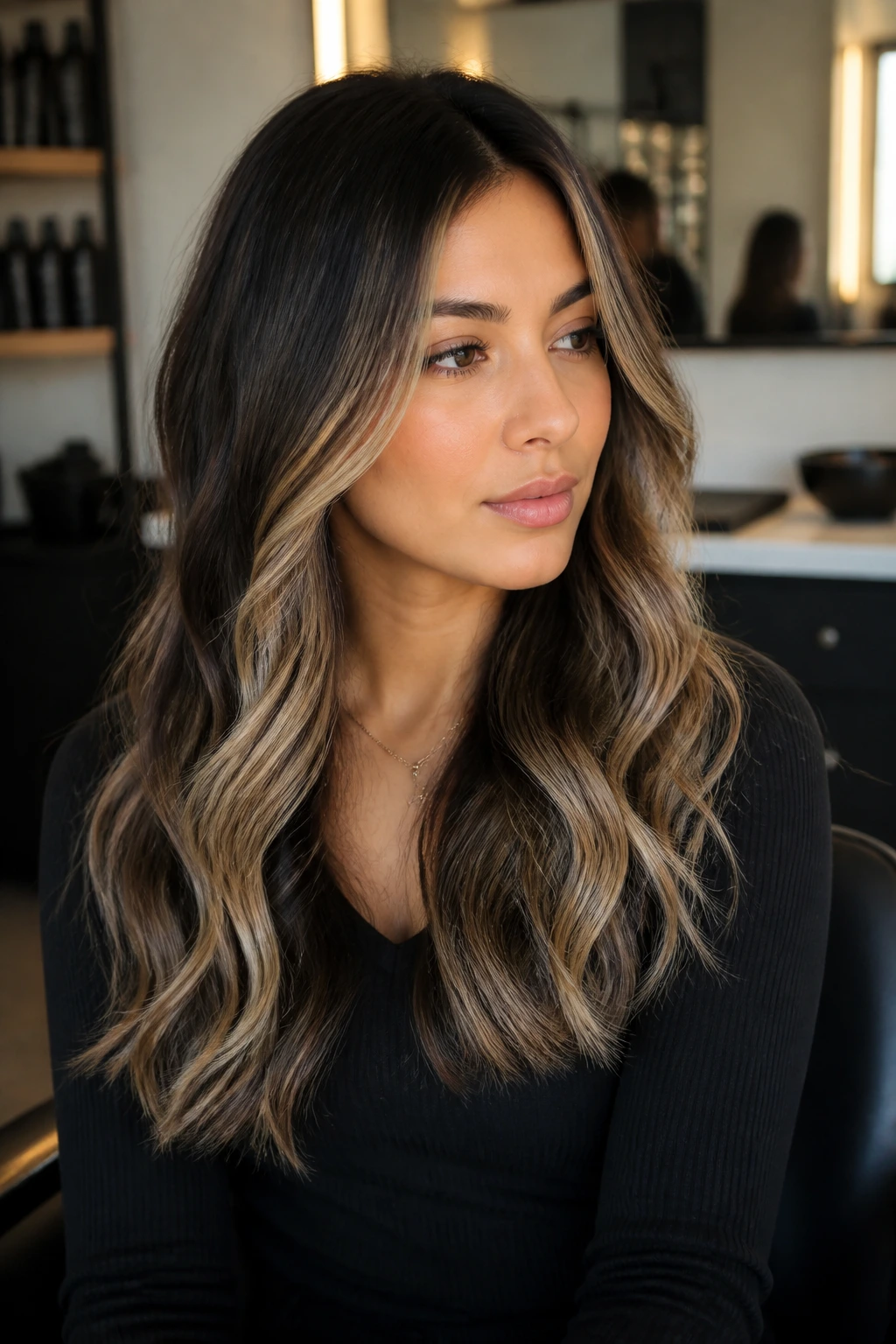
The salon conversation goes better when you speak in specifics. “Blonde” is a starting word, not a plan. If you already know you like a money piece, balayage, babylights, or hidden panels, say that. If you know you want a root shadow, say how dark you want to keep it.
Bring two or three photos, but point out what you actually like in each one. Maybe it’s the tone in one, the face frame in another, and the way the ends stay dark in the third. That helps the colorist build a real plan instead of copying a picture that only works on someone else’s texture and base level.
A few useful things to mention:
- How often you’re willing to come back for toner or highlights
- Whether you usually air-dry, blow-dry, or wear your hair up
- If your hair is already dry or chemically treated
- Whether you want contrast at the front, the ends, or the whole head
That last part matters. A lot. Blonde placement is the entire game here.
Practical Tips for Keeping the Look Sharp at Home
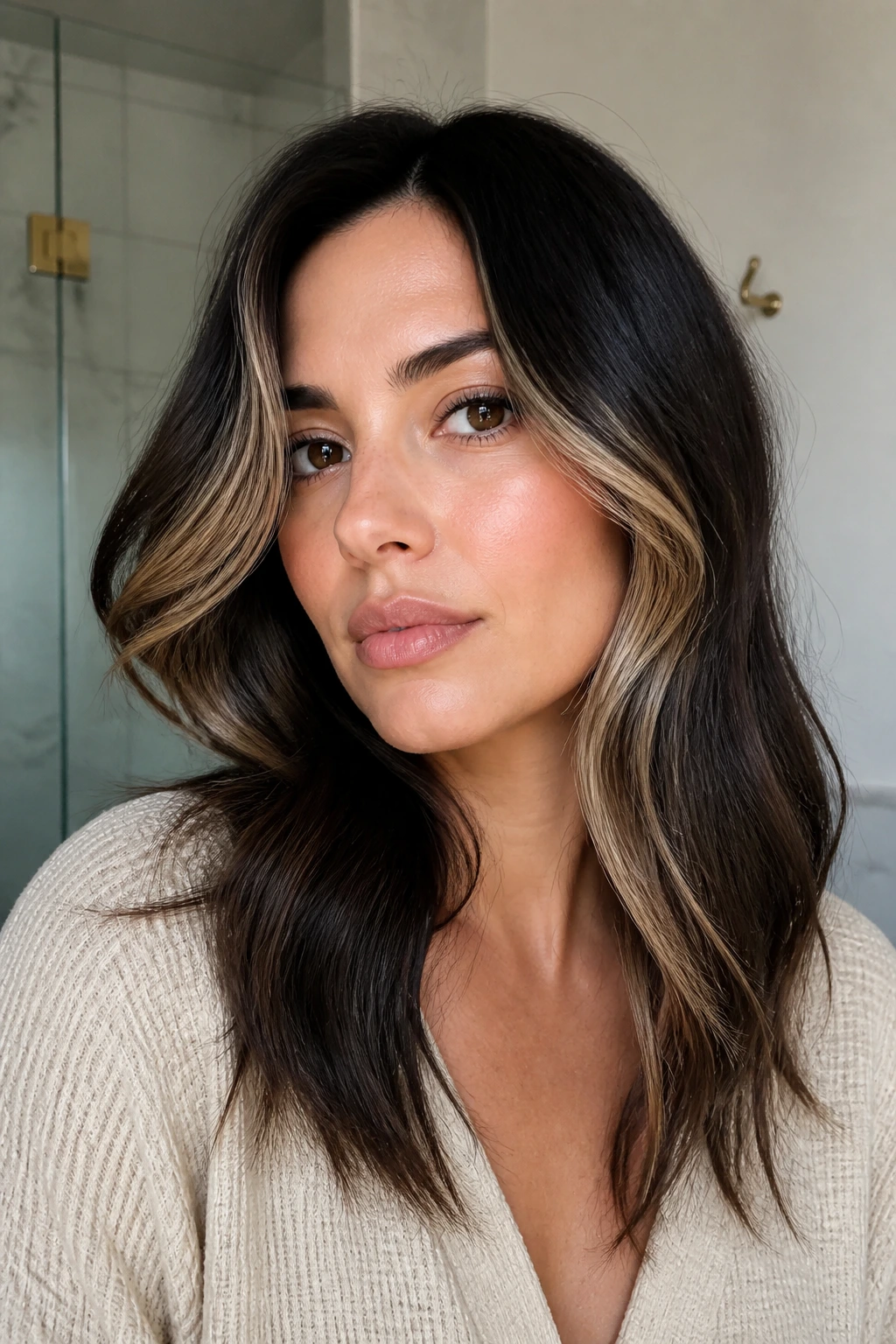
Tone with restraint. Purple shampoo is useful, but too much of it can leave highlighted hair flat and chalky. Once every week or two is enough for many people, and some only need it once the brass starts to show.
Style the hair in the direction the color wants to show. Face-framing pieces need lift around the crown or a clean part. Balayage through waves needs movement, not a stiff curl. If the style hides the color, it will look dull no matter how good the dye job is.
Use heat, but don’t fry the ends. A medium heat setting and a heat protectant do more for blonde-on-dark hair than blasting everything on high. Dry blonde pieces get rough faster, and rough ends catch the eye for the wrong reason.
Book trims on time. Lighter ends show split ends sooner. If your shape starts to fray, the blonde looks tired even when the tone is still good.
Common Mistakes That Make Blonde on Dark Hair Look Off
-
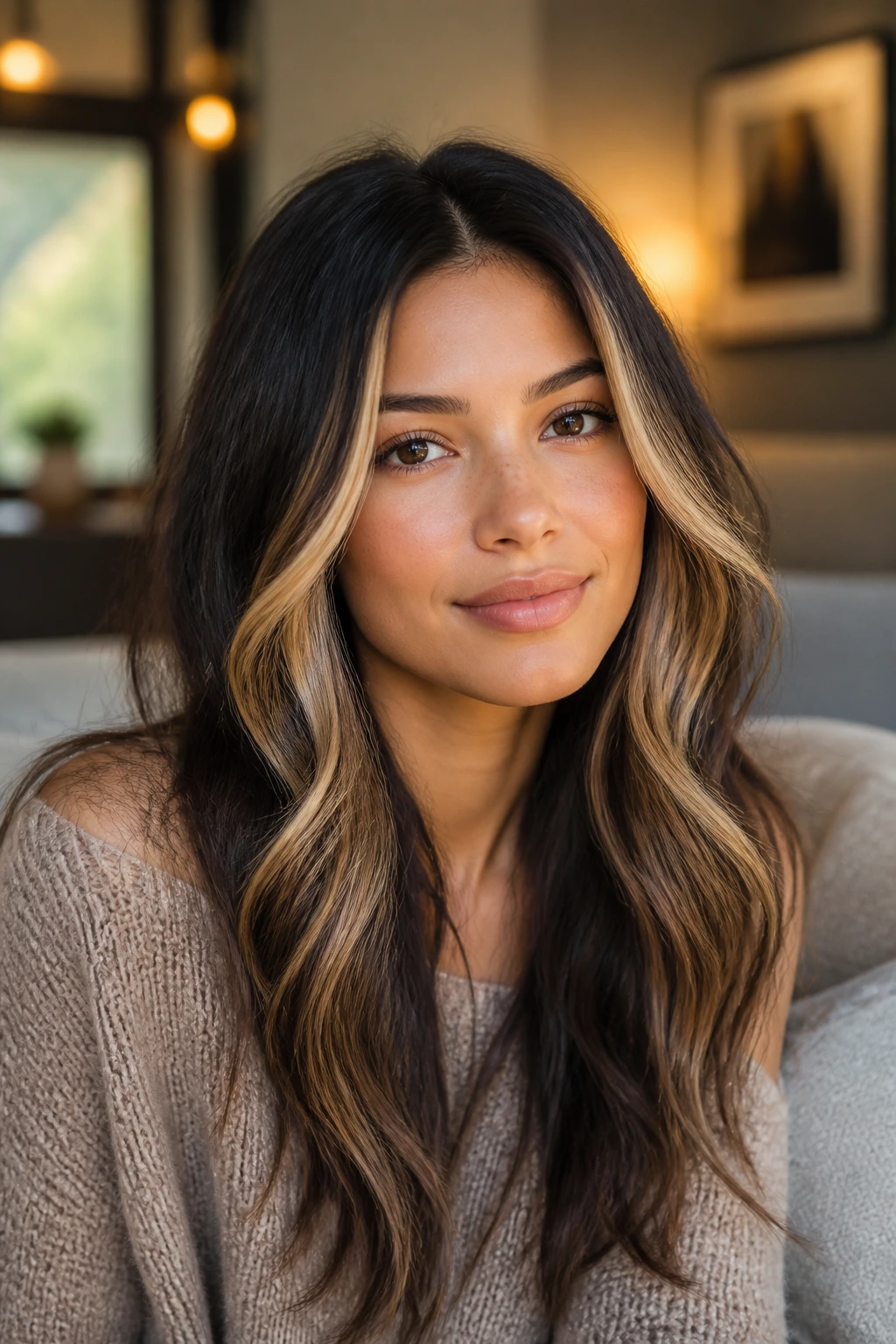
Going too light too fast: If dark hair is pushed to platinum in one aggressive session, the ends can feel dry before the tone is even right. The fix is patience and staged lifting, especially on previously colored hair.
-
Choosing the wrong blonde tone for the base: A yellow blonde on dark hair can read brassy, while a cool ash blonde on warm skin can look a little flat. Match the tone to both your undertones and your natural base.
-
Ignoring the haircut: Blonde on a one-length, heavy cut can look like painted stripes. Layers, bends, and shape help the color move.
-
Using purple shampoo like a daily cleanser: It can over-tone light pieces and make them look dull. Use it only when the brass starts to show.
-
Forgetting the root story: A hard line at the scalp grows out fast and looks busy. Root shadow, balayage, or softer placement buys you time.
-
Skipping heat protection: Blonde pieces show frying, snapping, and roughness fast. If you flat iron or curl without protection, the dry ends will tell on you.
Variations and Alternatives to Try
Soft-Commitment Face Frame: Keep the blonde to the front two sections and a few thin pieces around the part. This is the easiest way to test contrast without fully changing the whole head.
Cool Smoke Blend: Use ash, mushroom, and silver-beige tones through the mid-lengths. It suits dark hair that leans naturally cool and looks especially clean with straight styling.
Warm Honey Sweep: Ask for honey and caramel ribbons through waves or curls. This version softens dark hair and works well if your wardrobe leans cream, camel, and brown.
Curly Placement Only on the Outer Layer: On curls, keep the lightening on the visible outer ring of the shape. It preserves the curl pattern and stops the highlights from disappearing inside the texture.
Short-Hair Brightening: For bobs and pixies, keep the blonde near the fringe, crown, and ends. Short cuts need concentrated placement or the color vanishes when the hair is moving.
Low-Maintenance Melt: Blend bronze at the root into beige blonde toward the ends. This is the best option if you want fewer obvious grow-out lines and a softer finish.
Wash-Day, Toner, and Touch-Up Timing
Most blonde-on-dark styles need a little routine, not constant fussing. Toner usually holds for several weeks, though porous hair can lose it faster. If your blonde starts looking too warm or too dull, that’s the signal to refresh, not to stack on more purple shampoo.
A general rhythm helps:
- Toner or gloss: Every 4 to 8 weeks, depending on how fast your blonde shifts
- Partial highlights or money-piece refresh: About every 6 to 10 weeks for higher-contrast looks
- Trim: Every 8 to 12 weeks if the ends are light and prone to dryness
- Deep conditioning: Once a week, especially if you heat style often
If you wear your hair up a lot, watch the areas around the ponytail and bun line. Those spots rub more and can lose shine first. A small amount of leave-in conditioner on the ends before tying hair back helps more than people expect.
Frequently Asked Questions
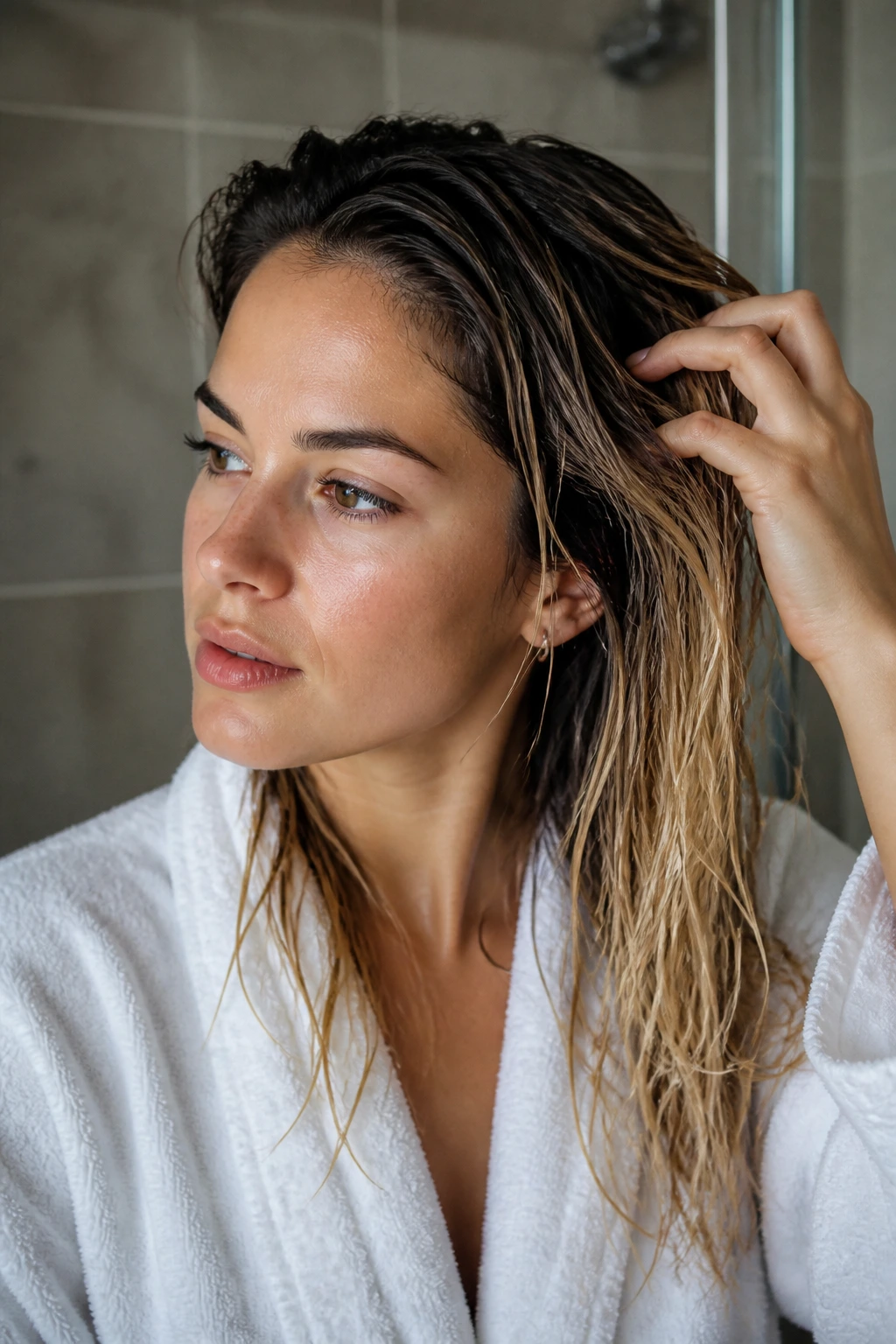
Can dark hair really go blonde without looking striped?
Yes, but placement matters more than amount. Balayage, money pieces, and rooty highlights usually look softer than an all-over block of blonde, especially on dark bases.
Which blonde tone looks best on dark hair in winter?
Beige, champagne, honey, mushroom, and smoked-down ash tones tend to work well because they hold up in flat light. Pure yellow blonde can look harsher than expected under winter lighting.
Is platinum blonde a bad idea on dark hair?
Not bad, just demanding. Platinum takes more lifting, more toner, and more upkeep than softer blondes. If you want the look, ask for placement that keeps the platinum in smaller zones.
Does curly dark hair suit blonde highlights?
Absolutely. Curls show dimension beautifully when the lighter pieces follow the curl pattern instead of fighting it. Caramel, silver-beige, and face-framing highlights usually work well.
How do I stop blonde pieces from turning brassy?
Use color-safe shampoo, limit hot tools, and refresh with toner or gloss when the shade starts to warm too much. Blue shampoo can help if your hair pulls orange; purple helps when it drifts yellow.
What if I wear my hair in a bun most days?
Choose brighter pieces at the hairline, nape, and face frame. Those areas still show when the rest of the hair is tied up, so you’re not hiding the color every morning.
Can I do this at home?
For subtle face-framing accents or temporary color, maybe. For real lightening on dark hair, a salon is the safer route. Dark pigment can turn orange fast, and damaged ends are expensive to fix.
How often should blonde on dark hair be trimmed?
Every 8 to 12 weeks is a good range for most people. If the ends are very light or your hair is dry, trim a bit sooner so the blonde doesn’t start looking frayed.
Will a shadow root make the style look less blonde?
It makes the blonde look more intentional. A soft root shadow gives the eye a place to rest and usually makes the lighter pieces look brighter by contrast.
A Blonde Finish That Still Feels Like You
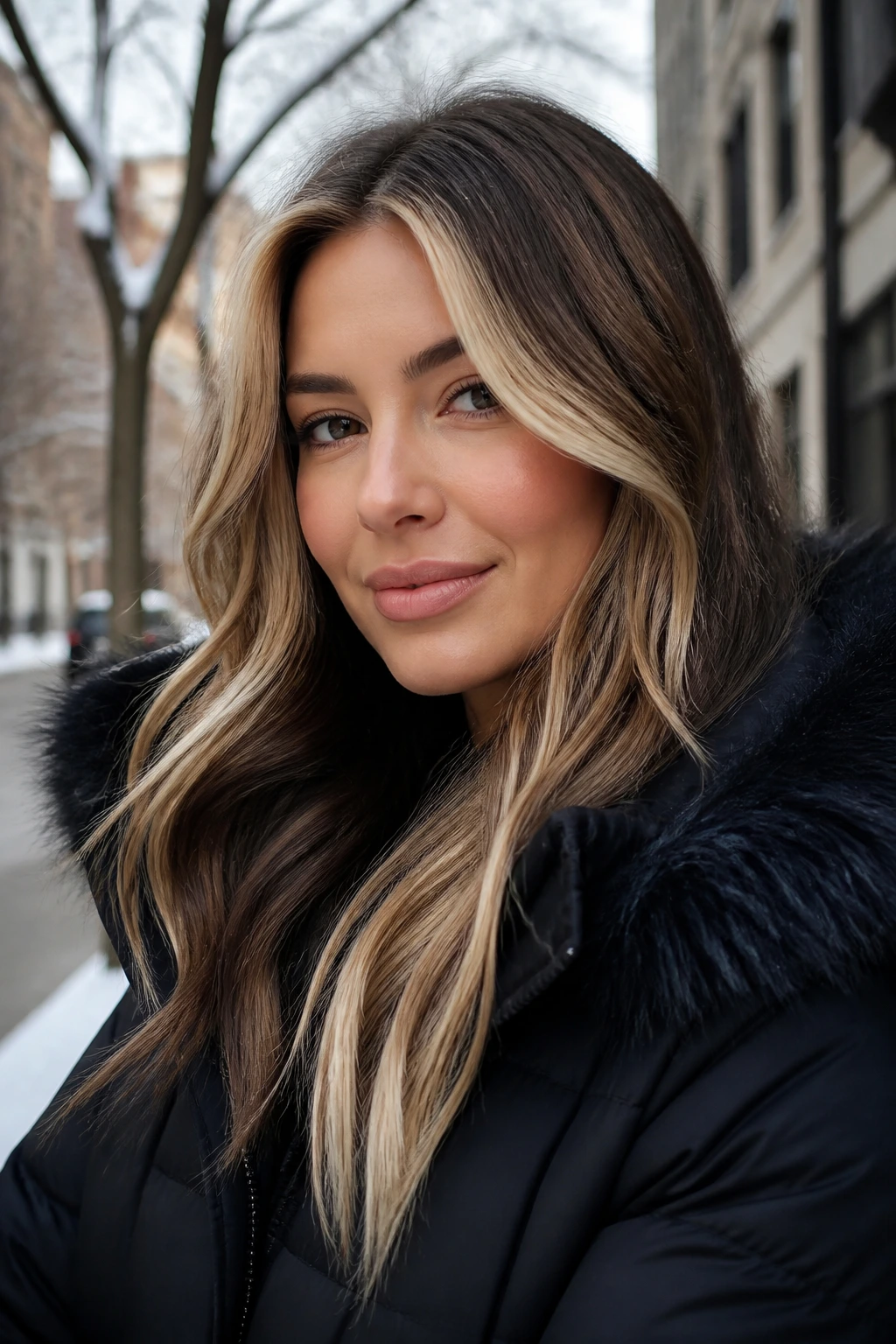
The best blonde on dark hair doesn’t erase the base. It uses it. That’s why these looks keep holding up in cold weather: the dark keeps the blonde honest, and the blonde keeps the dark from sinking into the background. There’s a nice tension there, and that tension is the whole point.
If you want a version that grows out politely, start with money pieces, balayage, or a rooted melt. If you want something sharper, go for platinum front pieces, frosted tips, or hidden panels that flash when the hair moves. Either way, the haircut and the placement should talk to each other. That’s where the good stuff happens.
Pick the version that fits how you actually wear your hair, not the one that only works in one perfect photo. The right blonde will look even better when it’s brushed, tied back, tucked into a coat, and living a real life.